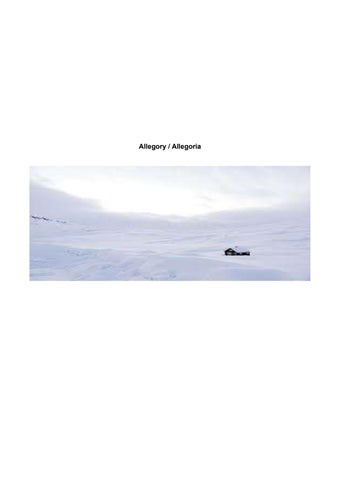
Allegory /Allegoria
Diane Seuss è nata in Indiana e cresciuta in Michigan. È autrice di varie raccolte poetiche, tra le quali Frank: Sonnets (2021), vincitrice del premio Pulitzer e Four-Legged Girl (2015), a sua volta finalista per il premio Pulitzer e pubblicata in italiano nel 2021 da Ensemble. Insegna al Kalamazoo College dal 1988, dove si è laureata. Ilpoemetto qui presentato è apparso perla prima volta sul numero di ottobre 2022 della rivista Poetry.
I loved the north. I remember that.
The quality of light, yet I don’t have the will to describe it.Thimbleberries, things out of fairy tales.
Green water overpowering the night. That impersonal bashing sound. Cold fingers combing through stones. Looking for something. I don’t remember what. Blue fingers. Lips. Ablue garment I called my power shirt. Green-blue. Big enough it floated in the wind and barely touched me. Grief that I had to leave and everything leaving represented, an ache in my guts, work, a premonition, but still the belief I would one day return. It would all be here waiting for me, unchanged. But even the body of water grows tired of itself.
Amavo il nord. Lo ricordo. La particolare qualità della luce, che non ho volontà bastante a descrivere. Lamponi, cose emerse da una fiaba. Acque verdi che sopravanzano la notte. Il battito impersonale. Dita fredde che scapigliano le pietre. In cerca di qualcosa. Non ricordo cosa. Dita blu. Labbra. Un abito blu che chiamavo lamia maglia portafortuna. Blu oltremare. Grande abbastanza da galleggiare nel vento e quasi non toccarmi. La pena di dovermene andare e tutto quello che andarsene rappresentava, una fitta alle viscere, lavoro, una premonizione, ma ancora la fede che un giorno sarei tornata.Tutto sarebbe rimasto a attendermi, immutato. Ma anche un corpo d’acqua finisce perstufarsi disé.
I yearned only for what I had.
I am tempted to list those things, but the time for listing is over.
I’ll mention that there was a monastery. Monks with long beards who made jam from wild berries and baked heavy loaves of bread. In theirliterature they wrote of winter as their season of suffering. There are worse things than winter, I wanted to say, handing them money for bread.
I wanted to lift my shirt and show them my long scar.
When I was stillbleeding, I changed my tampon in the woods behind the monastery and left the used one behind like the scat of a wild animal. Blood in the air, the scent of it like wet pennies. Tearing into those loaves. The wind with its one-track mind. It had broken me down and starved me.
Bramavo solo quello che già avevo. Sono tentata di fare una lista di quelle cose. ma il tempo di compilare liste è finito. Dirò di sfuggita che c’era un monastero. Monaci dalle barbe folte preparavano conserve di bacche selvatiche e infornavano pesanti filoni di pane. Nei loro scritti parlavano dell’inverno come stagione di tormento. Esistono cose peggiori dell’inverno, avrei voluto dire, porgendogli i soldi peril pane. Avrei voluto sollevare la maglietta e mostrargli la mia lunga cicatrice. Quando ancora sanguinavo, cambiavo l’assorbente nei boschi accanto il monastero e mi lasciavo dietro quello usato come lo sterco di un animale selvatico. Sangue nell’aria, l’odore come quello di monetine bagnate. Scendeva in lacrime sopra quei filoni. Il vento con la sua mente monomaniacale. Mi aveva frantumato e portato alla fame.
It was a place filled with plotless stories, music without melody. How can I explain. I’m sure you’ve heard discordant music, but that’s not what I mean. And you’ve read stories in which nothing happens. Maybe composed of a series of low-grade epiphanies. Or flamboyant description that in the end comes to nothing. Sooner or later, those authors all died of syphilis. The tubercular ones were the meaning-makers, as if meaning would keep them alive. But meaning, in a gale, is the first to go. In the north, all forms stood for themselves. There was no need to fillthem with anything. Chalices in which wine would be superfluous. And every moment a form, a string of tongueless bells.
Era un posto riempito di storie prive di costrutto, musica senza melodia. Come spiegarlo. Di sicuro avete ascoltato della musica dissonante, manon è quello che voglio dire. E avrete letto storie in cui non capita niente. Forse composte da una serie di epifanie di second’ordine. O descrizioni magniloquenti che alla fine non portano a niente. Presto o tardi, tutti i loro autori sono morti di sifilide. I tubercolosi furono i costruttori di senso, come se il senso avesse potuto mantenerli in vita. Ma il senso, nella burrasca, è il primo a andarsene.Al nord, ogni forma bastava a sé. Non c’era bisogno di riempirle d’altro. Calici in cui il vino sarebbe superfluo. E ogni momento una forma, una fila di campanelliammutoliti.
There is a poetry of rage and a poetry of hope. Each fuels the other, looks in the mirror and sees the other. Or wields the other. Isn’t it funny to imagine hope, not much more than a toddler, wielding rage in its fist like a cudgel?
When I was in college and working on a paper about Hawthorne’s story “My Kinsman, Major Molineux,” I had to find “cudgel” in a dictionary. We were to explicate the symbol of the cudgel. Later it would be the gold doubloon in Moby-Dick. What is “explicate,” I wondered. What is “cudgel”? Dictionaries then were musty and heavy and old. You had to go to them.They did not cometo you. When I was north, I read books with flimsy pages. Books without symbols. Only facts. And photographs, not drawings. I did not have to rise to them, or kneel at their feet. When the house burned, struck by lightning, they burned with it.
C’è una poesia della rabbia e una della speranza. Una alimenta l’altra, guarda allo specchio e vede l’altra. O impugna l’altra. Non è buffo immaginare la speranza, un moccioso, stringere in pugno la rabbia come un randello? Quando ero al college lavoravo a una tesi sopra “Il mio parente, Maggiore Molineux,” il racconto di Hawthorne, dovetti cercare “randello” neldizionario. Dovevamo esplicitare il simbolismo del randello. Più tardi sarebbe toccata aldoblone d’oro in Moby-Dick. Cosa significa “esplicitare,” mi domandavo. Cos’è un “randello”? I dizionari erano ammuffiti e pesanti e vecchi. Dovevi andare da loro. Non erano loro a venire da te. Quand’ero del nord, leggevo libri dalle pagine sottili. Libri senza simboli. Solo fatti. E fotografie, non disegni. Non dovevo innalzarmi alla loro altezza, né prostrarmi ai loro piedi. Quando la casa è bruciata, colpita da un fulmine, sono bruciati con lei.
The air in the north was cold and thin. There were enemies but not tyrants then. Ghost towns and towns. Ships and shipwrecks. Ships and mirages of ships. Who could tell the difference?
Aherd of white deer whose ghosts, after the deer were shot, looked as they had in life, white, their eyes rimmed pink.
L’aria al nord era fredda e sottile.
C’erano nemici, ma non tiranni, allora. Città fantasma e città. Navi e relitti naufragati. Navi e miraggi di navi. Chi avrebbe saputo vedere la differenza?
Una tormadi cervi albini i cui fantasmi, dopo che i cervi sono stati abbattuti, apparivano uguali a in vita, bianchi, con gli occhi cerchiati di rosa.
Sandhill cranes flew over, their calls like bones rattling in a wooden box. It seemed as if one gravedigger covered the whole region, his face bashed in by his own shovel.
At a bar called Chum’s I shot pool with the locals, drank myself under the table. Whatever filled my glass was colorless and lethal. No one spoke to me, as people in the north did not speak tostrangers, and I was a stranger. One murky country song played over and over until I began tobelieve it was the only song in the world. During the day, the light in the trees was green-gold. That’s all I’m going to say about it. There are too many poems about light.
Le gru canadesi volavano alte, i richiami come ossa sferraglianti in una scatola di legno. Sembrava come se un becchino avesse ricoperto l’intera regione, la faccia infossata dal suo stesso badile. Aun bar, il Chum, giocavo a biliardo con i locali, mi sbronzavo fino a sotto il tavolo.
Tutto quelloche mi riempiva il bicchiere era letale e incolore. Nessuno mi parlava, la gente nel nord non parla agli estranei, e io ero un’estranea. Una cupa ballata country suonava a ripetizione cominciai a credere fosse la sola canzone rimasta nelmondo. Durante il giorno, la luce suglialberi era verde e dorata. Non intendo parlarne oltre. Ci sono troppe poesie intorno alla luce.
Whatever the north was, I miss it.
My life since has grown thick without it.
Thick, like sorghum syrup, with experience. Heavy with memory’s tonnage, such a drag, such a load. It has no place here. Be, or leave.
I wish I was less, a recipe composed of a single ingredient. I once knew a singer with a voice like that.
The high, thin sound of the white plastic flutes we were forced to play in elementary school. Each note the same as the last, and each instrument the same as the next, like a lineup of factory-raised chicken eggs.
The thin-voiced singer moved to Ireland. Bartended. Smoked a pack a day. Some would say her voice was ruined, husky now, dragging itself through the lower registers. Many thought we looked alike but I couldn’t see it. Now that her long hair is frizzed by time, her garden unruly, her hem scraping the floor, and her voice raw and low as something that echoes up from an open pit mine, I see the resemblance.
Qualunque cosa fosse, ilnord mimanca. Nel mentre la mia vita si è fatta densa in sua assenza. Densa, come lo sciroppo di sorgo, di esperienza. Pesante del bastimento della memoria, tutto un carico e scarico. Qua non ha posto. Stacci, o vattene. Speravo di essere meno, ricetta composta da un solo ingrediente. Una volta conoscevo una cantante con una voce simile. Il suono esile e acuto del flauto diplastica bianca che alle elementari eravamo costretti a suonare. Ogni nota uguale alla precedente, e ogni strumento uguale al vicino, come una batteria di uova di gallina da allevamento intensivo. La cantante dalla voce esile si trasferì in Irlanda. Barista. Fumava un pacco al giorno. Qualcuno disse che la sua voce andò in rovina, arrochita, ora si trascina a fatica neibassi registri. Molti pensavano ci somigliassimo ma io non l’ho mai visto. Ora che i suoi capelli lunghi sono aggrovigliati dal tempo, il suo giardino inselvatichito, il suo tossire raschia il pavimento, e la sua voce è cruda e bassa come qualcosa che echeggia dalla bocca aperta di una miniera, vedo la somiglianza.
In the north, there was not much to buy and little to sell but for bread, and jam, and meat pies wrapped in wax paper. I collected materials from the woods floor, and using a toy hammer and tiny gold nails built a boat that would carry a message out into water. I enjoyed building it andcomposing the message, which was not unlike every other message sent into water. It was a child’s message, really. I rolled it into a scroll, and encased it in a plastic film cannister, and attached it to the boat with waterproof wood glue, but as soon as I launched it into deep water, and watched it drift and bob toward sunset, I lost faith in it, or interest. Once it sailed away, it seemed to have little to do with me, or nothing at all to do with me.
Al nord, non c’era molto da comprare e meno da vendere tolto il pane, e le conserve, e i pasticci di carne avvolti in carta cerata. Raccoglievo l’occorrente dal terreno dei boschi, e grazie a un martello giocattolo e minuscoli chiodi dorati costruii una barchetta che portasse un messaggionell’acqua. Mi divertii a costruirla e a scrivere il messaggio, che non era diverso da qualsiasi altro messaggio consegnato all’acqua. Il messaggio diuna bambina; davvero. Lo avvolsi in una pergamena, e lo chiusi in un cilindro di plastica, e lo attaccai alla barca con colla impermeabile per il legno, ma appena la varai nell’acqua alta, e la osservai virare e tagliare in direzione del tramonto, ci persi ogni fede, o interesse. Una volta salpata, sembrava avere così poco a che farecon me, o proprio niente a che fare con me.
During the plague, which has become a way of life, I collected the ends of bars of Ivory soap, worn too thin for bathing or hand-washing, but useful maybe laterwhen things like soap begin to disappear off grocery shelves, or what’s left of the money dries up. I imagine tethering the scraps together with rubber bands I’ve saved and lassoed to the glass door handle that leads to the attic. One long winter of the plague a raccoon lived there, in the attic. I could hear its claws as it wandered in circles over my head. My ceiling, its floor. I know you’ve lived it, too. You understand that you can cross a hundred bridges but there is no way to go north again, by which I mean it’s time to put to bed, like the row of the giant’s children in their matching nightcaps, our allegories of innocence.
Durante la pandemia, diventata uno stile divita, collezionavo le code delle saponette Ivory, troppo smagrite per farsi un bagno o lavarsi le mani, ma utili forse quando poi le cose come il sapone iniziarono a sparire dagli scaffali dei supermercati, i pochi risparmi rimasti inaridivano. Immaginavo di comporre i rimasugli insieme con elastici che avevo tenuti in salvo e legato alla maniglia di vetro della porta della soffitta. Un lungo inverno di pandemia ci viveva un procione, nella soffitta. Potevo sentirne le unghie mentre girava in cerchio sulla mia testa. Il mio soffitto, suo pavimento. So che anche tu l’hai vissuta. Puoi capire che puoi anche attraversare un centinaio di ponti ma non c’è via ditornarsene al nord, voglio dire che è tempo di mettere a letto, in fila ordinata come le figlie dell’orco nei loro coordinati berretti da notte, le nostre allegorie d’innocenza.