Circulation Manager Leo Phillips subs@constructionmaguk.co.uk
Website: constructionmaguk.co.uk
Twitter: @constructionukm
LinkedIn: @constructionmaguk
PLATFORM_ & HGP CELEBRATE
TOPPING OUT AT SWEETFIELDS, LEEDS:
451-HOME BUILD TO RENT DEVELOPMENT REACHES MAJOR MILESTONE
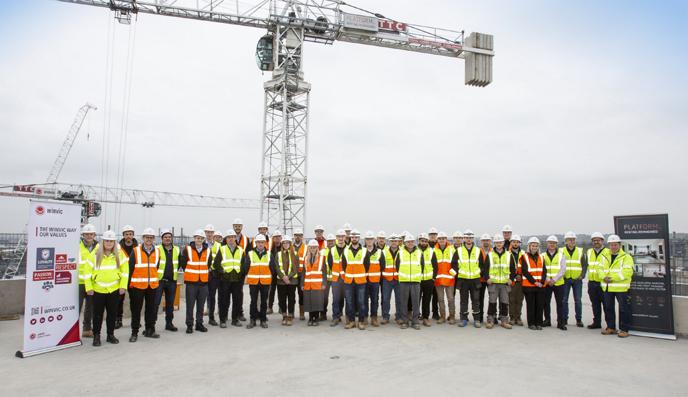
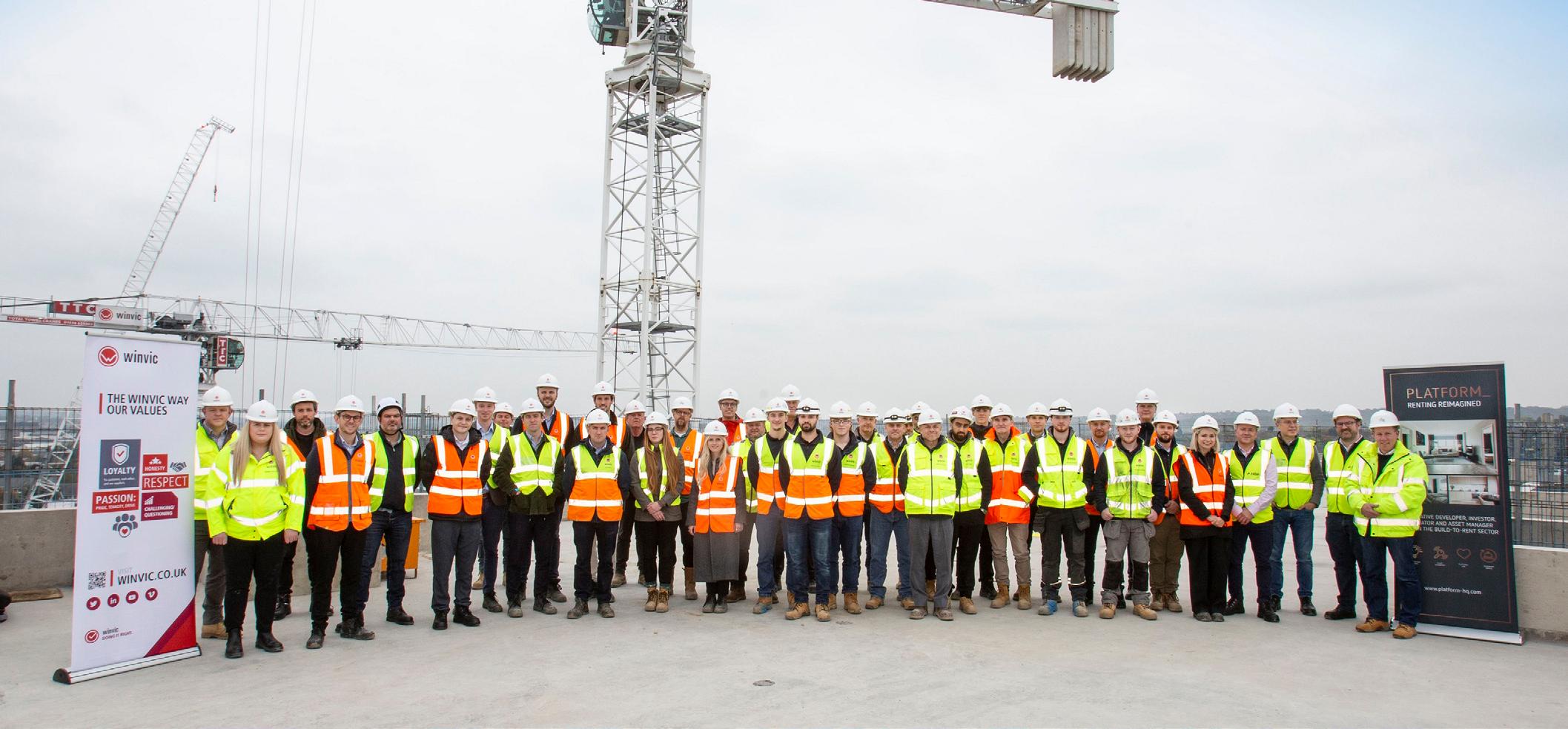
PLATFORM_, in partnership with Housing Growth Partnership (HGP), has marked the topping out of its 451home Build to Rent (BTR) development at Sweetfields, Leeds, a key step in delivering high-quality, professionally managed rental homes to the South Bank Regeneration area.
Constructed by Winvic Construction Ltd, the first phase of Sweetfields offers studios, one-, two-, and three-bedroom apartments designed for renters, alongside amenities including landscaped public spaces, a new Asda Express, and the reinstated Commercial Inn. Homes are built to EPC B or higher, featuring air source heat pumps, solar panels, green roofs, and energy-efficient heating and lighting.
Winvic has created employment and learning opportunities for over 100 local workers, apprentices, and students, alongside community and charity initiatives. Residents will benefit from energy-efficient, low-carbon homes with EV charging points and smart in-home technologies.
Phase 1 now moves into internal fit-out and façade works ahead of practical completion in early 2027. Phase 2, delivering an additional 540 homes, is due for planning submission early next year. Sweetfields is set to become one of Leeds’ largest Build to Rent communities, raising the standard for sustainable, professionally managed rental housing.
HENRY BROTHERS STARTS
WORK ON £8M POLICE
STATION REFURBISHMENT
Magherafelt-based contractor
Henry Brothers has started work on a 16-month scheme to refurbish Stechford Police Station in Birmingham.
This is the first major refurbishment of the building since it was opened in the 1970s and involves creating additional parking, upgrading safety and security systems, modernising office and meeting facilities, upgrading refreshment and toilet areas, providing a bespoke locker room, new victim care facilities, and an expansion to the public contact office, as well as new lift installations to make the whole building fully accessible.
It is the second project that Henry Brothers is currently undertaking for West Midlands Police Authority and follows start on site last month for a £9 million refurbishment at Wolverhampton Police Station.
Both were awarded to Henry Brothers under the Pagabo Refit and Refurbishment Framework.
Henry Brothers will employ local people including apprentices, ploughing money back into the local economy.
Cash for the £8 million critical works comes from West Midlands Police Authority making better use of its estate, reducing energy consumption and other cost savings that have made the authority more efficient and more effective, such as the introduction of robotics to automate administrative processes including artificial intelligence to answer all nonemergency calls.
The refurbishment will deliver better conditions for victims and witnesses, provide officers with a modern workplace, and safeguard the longterm future of the building.
TRANSFORMING WARWICK HOSPITAL: PULSE CONSULT COMPLETES PHASE ONE
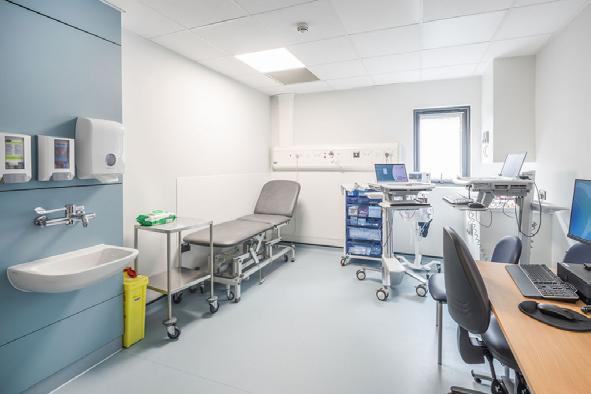
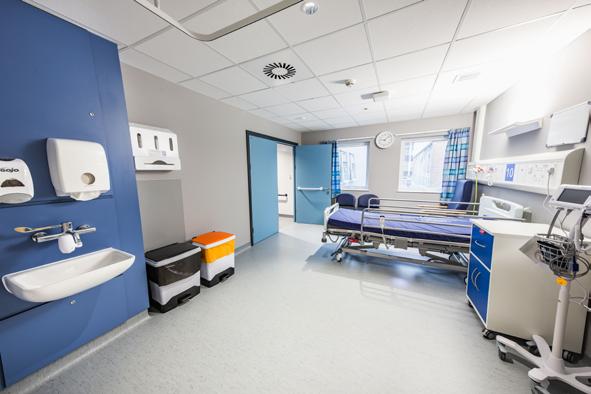
Pulse Consult has completed Phase One of Warwick Hospital’s major redevelopment, enhancing patient accessibility, staff experience, and on-site amenities.
The newly redeveloped main entrance on Lakin Road now provides a welcoming, modern environment, improved food and retail offerings, and a multifunctional ground floor.
Facilities include the main reception, outpatient pharmacy, patient advice and liaison service (PALS), a ‘Changing Places’ facility, and a new charity hub.
Appointed through the South Warwickshire University Hospitals NHS Foundation Trust (SWFT) Framework, Pulse Consult worked closely with SWFT and developer Noviniti to deliver the project within a live hospital environment.
Adrian Thomas, Associate Director at Pulse Consult, said: “Delivering a fully fitted ground floor in a live hospital presented significant challenges, from diverting existing data infrastructure to decanting multiple departments. Effective stakeholder engagement and collaboration ensured seamless delivery.”
Phase Two, due to start after Winter 2026/27, will open two new hospital wards with treatment rooms, clinic spaces, and waiting areas, expanding clinical capacity and supporting same-day surgical recovery.
Built to BREEAM Excellent standard, the project demonstrates a strong commitment to sustainability, energy efficiency, and longterm environmental performance.
MCAVOY AWARDED PLACE ON NHS COMMERCIAL SOLUTIONS FRAMEWORK
Leading offsite manufacturer McAvoy has, for the first time, secured a place on Lot 2: Modular & Prefabricated Building Services, within the NHS Commercial Solutions’ £1bn Modular & Prefabricated Building Solutions Framework.
Through this four-year award, public sector clients will be able to access
McAvoy’s full suite of expertise to support the delivery of modular buildings across healthcare, education and a wide range of public sector facilities. This includes the design, supply, delivery, installation and maintenance of McAvoy’s high-quality, sustainable offsite modular buildings, whether capital purchased or hired, and associated services.
WINVIC APPOINTED TO MAJOR M&S LOGISTICS
FACILITY AT AXIS WORKS, AVONMOUTH
Winvic Construction Ltd has been appointed by Stoford and Epta Development Corporation (EDC) to deliver a new 390,000 sq. ft logistics facility for Marks & Spencer (M&S) at Plot 5, Axis Works, Avonmouth. The highspecification facility, pre-let to M&S on a 20-year lease and forward funded by LondonMetric for £74 million, is due for completion by summer 2026.
Designed to BREEAM Excellent and EPC A standards, the building incorporates sustainability features including rainwater harvesting, a roof-mounted PV system, LED lighting, airsource heat pumps, EV charging infrastructure, and green roof cycle shelters.
Internally, the facility will house 900m² of freezer chambers (-18°C to -20°C) and 20,000m² of chiller areas (+1°C to +3°C),
featuring insulated panels, high-density floors with electric heater mats, airtight seals, and GEA temperature monitoring systems. Two on-site generators, ventilation systems, rapid-rise doors, and insulated loading docks ensure uninterrupted coldchain operations.
Civil engineering works include the installation of three culverts beneath a new access road, allowing continued water flow and vehicle access, alongside prefabricated vertical drainpiles and Menard piling solutions to optimise foundations.
HENRY BOOT CONSTRUCTION APPOINTED FOR NEW ENERGYEFFICIENT HOMES
IN CHESTERFIELD
Henry Boot Construction has been appointed by Chesterfield Borough Council to deliver 18 energy-efficient homes in Mastin Moor, supporting the council’s drive to expand its affordable housing supply. Work is now underway.
The development is among the first to be supported by the East Midlands Combined County Authority’s (EMCCA) Brownfield Housing Fund, a government-backed initiative unlocking stalled residential sites across the region.
Thirteen homes will be built on Miller Avenue and five on Edale Road, comprising seven four-bedroom and eleven two-bedroom properties, all allocated to families on the council’s housing register. Each home is designed to achieve an A-rated energy performance, with solar PV panels, air-source heat pumps, private gardens, off-road parking, electric vehicle charging points, and bat and bird boxes installed across all plots.
Mat Clarke, Head of Construction at Henry Boot, said: “We’re proud to support Chesterfield Borough Council in delivering affordable, energyefficient homes for local families, continuing our work in the area after the Badger Croft development.”
Mayor of the East Midlands Claire Ward joined a site visit to mark the start of construction, highlighting the project as a model for inclusive growth and sustainable communities. EMCCA’s Brownfield Housing Fund is part of a wider commitment to deliver over 2,000 homes in the region, contributing to the Mayor’s goal of 100,000 new homes by 2035.
WILLMOTT DIXON COMPLETES LANCASHIRE’S NEW PENDLE POLICE
STATION: £25.6M FACILITY SET TO OPEN SPRING 2026
Willmott Dixon has handed over Lancashire’s new £25.6m Pendle Police Station, marking a major milestone in the county’s policing infrastructure. The three-storey Carr Road facility in Nelson replaces older stations in Colne and Nelson, providing a modern environment for officers and supporting the Police and Crime Commissioner’s commitment to keeping a station open in every borough.
The handover ceremony included Lancashire Police Chief Superintendent Steve Rides, Police and Crime Commissioner Clive Grunshaw, senior Willmott Dixon management, and other key stakeholders. The station will host response and neighbourhood teams, investigations, a public front counter, and an associated multi-storey car park. Construction was procured through Procure Partnerships.
Mike Poole-Sutherland, North West Director for Willmott Dixon, said: “It has been a pleasure to work with Lancashire Constabulary and our local supply chain to deliver this important project. Around £11.8m of the spend was within 30 miles of the site, 70% of labour was local, and the project created new opportunities for residents, apprentices, and T-level students.”
Chief Superintendent Steve Rides added:
This facility gives our officers and staff the tools and environment they need to keep Pendle safe. We’re proud of the collaboration that has brought us here and look forward to opening in early 2026.
Clive Grunshaw, Police and Crime Commissioner, said: “This new station represents a major investment in community safety and modern policing across Lancashire. I’m excited to see it opening soon.”
Andy Robinson, director of architecture at Pick Everard, highlighted the building’s sustainability, targeting a BREEAM ‘Very Good’ rating, and its design for operational efficiency and community connection.
Pendle Police Station reinforces Willmott Dixon’s growing portfolio of blue light projects, including redevelopments and new facilities for police forces and fire services across England.
Rehlko: Powering the Future of Portable Energy
Kohler’s energy division is evolving — introducing Rehlko, a bold new brand focused on innovation, independence and reliability.
Backed by the proven expertise of SDMO Industries, Rehlko continues to deliver:
• Robust, portable power solutions
• 100% repairable and compliant equipment
• User-friendly, safety-assured designs
Our production site in France, trusted distribution networks and experienced teams remain at the heart of our operations, ensuring continuity and quality.
This brand change marks a new chapter in our commitment to faster innovation and better service, tailored to your needs on-site and beyond.
From Autumn 2025, the Kohler name will gradually transition to Rehlko — same trusted power, renewed energy.
Bricks & Blocks
BUILDING WITH CONFIDENCE: WHY MICHELMERSH BRICKS FIT EVERY PROJECT
Choosing the right brick is one of the most defining decisions in any project. Across contemporary regeneration schemes, affordable housing, heritageled developments and complex urban masterplans, Michelmersh bricks continue to demonstrate how thoughtful material selection can shape identity, enhance context and support long-term performance. A series of recent projects shows how well-matched products can strengthen architectural intent while responding to the demands of place, character and community.
The Old Boathouse
At The Old Boathouse in Taplow, Napier Clarke Architects used Floren bricks to help reimagine a disused riverside site while maintaining the character of its historic setting. Two heritage buildings remain central to the development, including an Edwardian boathouse listed in the local conservation plan.
Forest Road in Waltham Forest shows how materiality can mediate between varied architectural conditions.
Its proportions shaped a terrace of six gable-ended longhouses, where Florens Pollux and Polaris bricks provide a refined palette of whites and greys. Set in light stretcher bond, the brickwork reflects on the Thames, bringing brightness and permanence while allowing the restored boathouse to anchor the scheme in its riverside context.
Chobham Manor
Chobham Manor in the Queen Elizabeth Olympic Park illustrates how brick selection can contribute to the coherence of a large-scale neighbourhood. Designed by Make in collaboration with lead
architects PRP, the award-winning development delivers 859 homes across a wide range of typologies, with a strong emphasis on family living. Tree-lined avenues, shared courtyards and generous gardens create moments of calm within a dense urban plan, supported by cohesive public realm and community-focused amenities. Blockleys Black Smooth bricks help underpin this sense of unity, allowing different building types to sit comfortably together while reinforcing the long-term vision for an inclusive and enduring residential quarter.
Forest Road
Forest Road in Waltham Forest shows how materiality can mediate between varied architectural conditions. Designed by Gort Scott for Pocket Living, the 90-home development sits between Victorian terraces and a busier main road, opposite the William Morris Gallery.
The Old Boathouse
Chobham Manor
Forest Road
Across these projects, Michelmersh bricks respond to diverse architectural briefs with clarity and purpose.
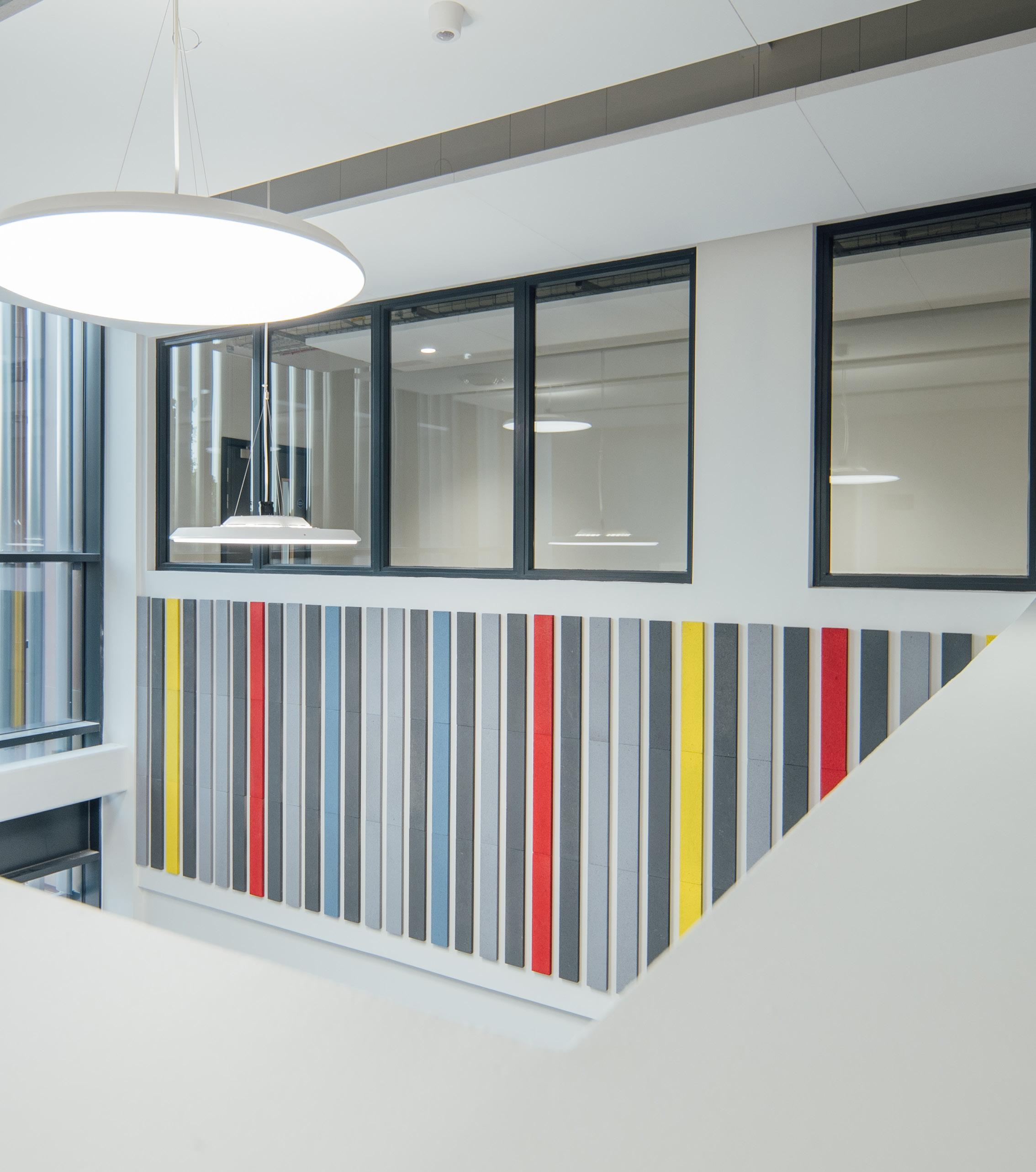
Floren Tartufo brickwork, laid in English Garden Bond, brings rhythm and subtle shadow through vertical recesses. A carefully considered mix of white, grey, plum, pink and red tones, anchored by a darker brick base, reflects the area’s diversity while maintaining a unified frontage. Across stair cores, landscaping and outbuildings, expressive brick bonding such as hit-and-miss panels and protruding courses enhances a strong architectural identity that remains rooted in local context.
King George’s Gate
At King George’s Gate in Tolworth, material selection helps transform an 11-acre site that had remained empty for nearly twenty years. The project provides 211 apartments surrounded by upgraded infrastructure, public realm and rooftop gardens, with sustainability supported by air source heat pumps. Here, 400,000 Freshfield Lane Selected Dark Clay Bricks were chosen for their durability and rich tonal variation. Dark red hues with subtle undertones of orange, purple and brown complement traditional London characteristics while supporting
a forward-looking development that aligns contemporary amenities with the surrounding urban fabric.
Manor and Braganza
Manor and Braganza in Kennington demonstrates how Michelmersh bricks can bridge heritage and modernity. Durkan’s approach retains the Victorian terrace frontage while introducing contemporary apartments, duplexes and townhouses behind. Freshfield
Lane’s First Quality Multi, Selected Dark and Danehill Yellow bricks ensure the new architecture remains in harmony with neighbouring structures. The development’s crafted hit-and-miss brick facades allow natural light into internal corridors, combining aesthetic quality with thoughtful detailing. With a BREEAM Very Good rating and a mix of private, intermediate and social housing, Manor and Braganza shows how the right brick specification can support sustainability, inclusivity and architectural continuity.
Across these projects, Michelmersh bricks respond to diverse architectural briefs with clarity and purpose. Whether reinforcing heritage character, defining new neighbourhoods, supporting design or enhancing visual identity, each example shows how the right brick choice can strengthen a project’s narrative and performance. For architects, developers and designers seeking materials that work hard both technically and contextually, Michelmersh provides a portfolio that meets the needs of places shaped by history, community and longterm beauty.
Visit: www.mbhplc.co.uk
King George’s Gate
Manor and Braganza
Drainage & Plumbing
MANAGEMENT OF DEAD LEGS AND BLIND ENDS IN WATER SYSTEMS
By Roy Sullivan, Senior Consultant, Water Hygiene Centre
Building managers have a legal duty to ensure water systems are safe, as required by the Health and Safety at Work Act 1974, the Management of Health and Safety Regulations 1999, COSHH 2002, HSE ACoP L8, HSG274 Part 2 and the Department of Health’s HTM 04-01. A critical part of controlling Legionella and other waterborne pathogens is the effective management of dead legs and blind ends in pipework.
What Are Dead Legs and Blind Ends?
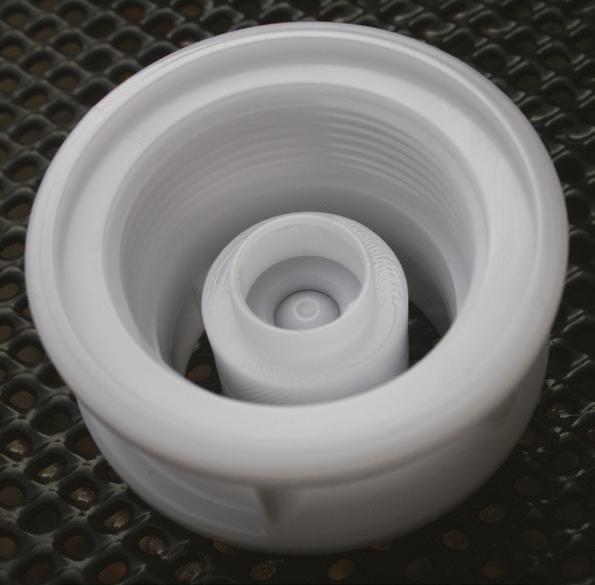
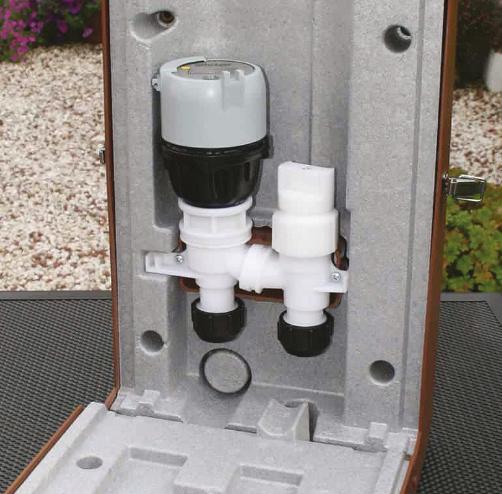
HTM 04-01 Part B defines a dead leg as pipework leading to a fitting through which water passes only infrequently. These spurs promote stagnation and should be kept as short as practicable— generally no more than 3 metres from the circulation pipe to the outlet, measured along the pipe centre line. Pipework should be insulated to maintain temperature control.
A blind end, defined by HSG274 Part 2, is a closed-off pipe where no water flows at all—for example, where a basin has been removed and the supply pipe capped.
Both conditions allow water to stagnate, encouraging biofilm growth.
Biofilms provide a protective environment for microorganisms such as Legionella and Pseudomonas aeruginosa, allowing them to multiply and contaminate the wider system.
How Should They Be Managed?
Stagnation significantly increases microbiological risk. Effective management focuses on keeping systems clean, maintaining flow, and ensuring hot water is hot and cold water is cold. Key actions include:
1. Keep risk assessments current Legionella risk assessments, schematic drawings and as-fitted drawings must be reviewed regularly. BS8580-1:2019 outlines triggers for reassessment, including system changes, building use alterations, ineffective controls, new construction work and changes in personnel. Where none of these apply, a planned review schedule is still required.
2. Manage roomuse changes
When a room with a water outlet is repurposed and the outlet removed, estates teams must ensure associated pipework is taken out completely— back to the main distribution loop— to prevent dead legs. In healthcare, the Water Safety Group (WSG) should monitor such changes.
3. Control low-use outlets
Where outlets remain in place but see little use, a flushing regime must be implemented.
HSG274 Part 2 recommends weekly flushing, while HTM 04-01 may require more frequent activity depending on risk. Once established, flushing must be sustained and accurately recorded.
4. Manage unoccupied new builds and refurbishments
New or refurbished areas may sit empty between completion and occupation, effectively becoming large dead legs. A robust flushing and microbiological sampling regime should be in place throughout this period, overseen by the estates or FM team and aligned with an agreed Project Water Safety Group protocol.
5. Involve water safety specialists early in design
Early engagement with the WSG and estates teams helps ensure proposed systems minimise dead legs and blind ends. A dedicated Project Water Safety Group should oversee risk assessments, design decisions and governance throughout construction.
6. Ensure clarity on final equipment installation
Designs must account for whether equipment such as water coolers, washing machines or specialist devices will actually be installed. If uncertain, water supplies to these points should be excluded from the main contract and added later if required.
7. Maintain robust commissioning records
Comprehensive commissioning data— including flow rates, temperatures, disinfection certificates, flushing records, risk assessments, schematics and asfitted drawings—must be provided at handover for any new build, extension or refurbishment.
Roy Sullivan, Senior Consultant, Water Hygiene Centre
PILKINGTON UK BRINGS
END-OF-LIFE
GLASS RECYCLING TO ST
HELENS TOWN CENTRE REGENERATION
INITIATIVE
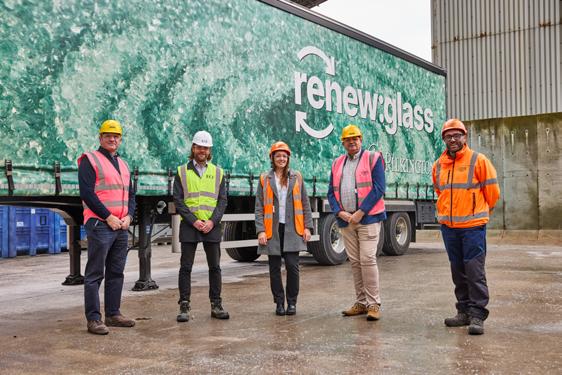
Pilkington United Kingdom Limited, part of the NSG Group, has helped to lower carbon and reduce waste in the once-in-a-generation regeneration of St Helens town centre, by recovering glass from former buildings and recycling it for new and retrofitted buildings in the first phase development.
Working alongside the main contractor, VINCI Building, which is delivering the scheme on behalf of St Helens Borough Council and its regeneration partner ECF – a venture between Homes England, Muse and L&G, the firm recovered 7.34 tonnes of glass from buildings being demolished as part of the town’s transformation. The amount is roughly the same as the annual glass recycling of 150 average households.
Instead of going to landfill, the glass has been melted down and used to create new float glass, a process that saved 5.13 tonnes of CO₂e emissions, along with 8.8 tonnes of virgin raw materials.
The glass was recovered from two key sites being cleared in the town centre: the Hardshaw Centre, St Helens’ shopping centre which stood for 40 years, and the town’s main bus station as part of early regenerative work.
Demolition contractor Bradley Group supported the project by collecting and removing the glass from site, while Pilkington UK assessed the glass, advised on its removal, and coordinated the processing for reuse.
Pilkington UK recycled the glass via its renew:glass scheme, which aims to increase the amount of flat glass that is recycled.
The initiative highlights how collaboration between industry and local authorities can deliver practical environmental outcomes.
The work also supports NSG Group’s Science Based Targets Initiative, which outlines the company’s commitment to lowering greenhouse gas emissions by 30% by 2030 and achieve carbon neutrality by 2050.
INSTALLIO RAISES
£1.75 MILLION
SEED ROUND TO ACCELERATE UK CLEAN-ENERGY TRANSITION
Installio, the tech-driven heat pump and clean energy installation specialist has announced it has raised £1.75 million in Seed funding to accelerate national rollout. The round is led by Verb Ventures and is oversubscribed by 2X.
Installio is already partnering with energy providers and retailers like E.ON, Aira, and Good Energy, contractors, housebuilders and housing associations to deliver large-scale clean-energy retrofit programmes with consistent standards and full compliance.
Government programmes are set to channel more than £13 billion into home-energy retrofits, including heat pumps, over the coming years.
Analysis from the Centre for Net Zero shows the heat pump subsidy delivers a strong value of return, generating £1.24 in societal benefits for every £1 of net government cost. But installation capacity remains the key constraint.
Installio’s technology-enabled model addresses this bottleneck directly, acting as the delivery partner that ensures clean-energy systems are installed fast, compliantly, and at scale.
COSTAIN AWARDED BIODIVERSITY CONTRACTS BY MANCHESTER AIRPORTS GROUP
Costain has been selected to conduct two biodiversity studies for Manchester Airports Group (MAG).
The studies at Manchester Airport and East Midlands Airport will support the development of a comprehensive, qualitative biodiversity baseline at each location. They will help enable the delivery of MAG’s nature targets outlined in its new Sustainability Strategy, supporting its overall sustainability ambitions and future growth.
Costain’s experts in sustainability and geographic information systems (GIS) will manage and conduct a range of physical and digital surveys covering more than 1,500 hectares of grassland, ponds, scrubland and urban habitats, to help establish a biodiversity baseline at each site.
Costain will record habitat areas, types and conditions whilst its GIS experts will accurately measure each site’s biodiversity value relative to the UK statutory biodiversity metric set out by the Department for Environment, Food & Rural Affairs.
Costain has a strong track record of delivering environmental benefits across its infrastructure projects.
For example, the A30 dualling scheme between Chiverton and Carland Cross, which opened for traffic last year, is predicting a biodiversity net gain of 20%.
The team’s in-house sustainability experts have also created a tool to identify and ‘design out’ potential carbon hotspots at the earliest possible stage of infrastructure projects.
The studies at Manchester Airport and East Midlands Airport will support the development of a comprehensive, qualitative biodiversity baseline at each location.
INCO CONTRACTS MARKS 15TH ANNIVERSARY WITH RECORD £60M YEAR
Inco Contracts, which is headquartered in Cannock and boasts regional bases in Cardiff, Stevenage and Warrington, has grown from a one-man start up to a construction powerhouse delivering hundreds of complex refurbishments projects every year.
Since the management buyout in 2020 by David Cotterill and Sam Norton, the business has accelerated rapidly, expanding its nationwide coverage and creating 21 new jobs across the firm.
These include the appointments of Adam Bidhendy to lead its Cardiff office and Billy Sneddon to drive forward an education division that has already delivered £3m of contracts.
Inco Contracts has also strengthened its internal capability, with new marketing and administration hires to provide the foundations for further growth.
Today, Inco Contracts works across the industrial, educational, commercial and office fit-out sectors, building an equally impressive reputation for taking on sports complexes and high-profile heritage projects.
To close out its 15th-anniversary year, Inco Contracts brought its teams and partners together for a special away day and two supplier golf events in support of its Foundation.
Sam Norton and David Cotterill
COMPRESSIBILITY, COMPETENCE AND THE FUTURE OF FIRE SAFETY: WHY FIRE SAFETY DEPENDS ON TRAINING, NOT JUST TECHNOLOGY
By Katie Wills, Product Development and Specification at Grayson
In the aftermath of the Grenfell Tower fire, few areas of construction have faced more scrutiny than passive fire protection, and rightly so. Over recent years, I’ve spent much of my time working in educational settings, meeting the next generation of installers and working with specifiers, and witnessing our sector reconsider how cavity barriers and fire-stops actually perform, not just in ideal laboratory conditions but in the unpredictable reality of real buildings.
It might sound like a minor technicality, but compressibility is far from trivial. It’s a measure of resilience. We all know that buildings are not static; they move, breathe and change over time. Concrete shrinks as it dries, steel expands and contracts, structures settle and shift. A cavity barrier that cannot move with the building around it risks developing tiny gaps, openings that allow smoke and flames to pass through the compartment they are supposed to protect. Compressible cavity barriers change that equation. By maintaining consistent contact with surrounding materials, they preserve the integrity of the fire seal through years of movement, vibration and settlement. They don’t just perform on the day of installation; they continue to perform throughout the building’s lifespan. That long-term reliability is what genuine fire safety should be about.
Meanwhile, despite this real-world context, zero-compression cavity barriers remain widely used on projects. I understand why; from a subcontractor’s point of view, frictionfitted barriers appear convenient. They are straightforward to fit, they don’t push against the brickwork during construction, and they make installation appear simple and efficient. In an industry where time pressures are tight, what’s easiest to install is naturally appealing. However, over time, as buildings settle and materials shift, a zero‐compression fitted barrier may separate from the structure, leaving a gap no one sees until the worst happens. The system might pass its inspection the day it’s installed, but will it still perform five or ten years down the line?
I firmly believe we still under-invest in training. I regularly visit training facilities and meet apprentices who are installing cavity barriers. They are keen, motivated and technically
capable, but too often their training focuses on “tick-box compliance” rather than understanding the why. Why compressibility matters, why installation detail matters and why a cavity barrier must stay in contact over time. At Grayson, we support training facilities with resources, and I believe the industry must make training of installers and specifiers a priority if we are to shift from compliance to real performance.
It’s time to move away from legacy working methods and towards current, performance-led specifications. It’s time to move away from simply supplying products and assuming they will work – we must ensure they are installed correctly by people who understand why they matter. Training, specification and industry-wide guidance must align.
If the industry could agree on a clearer standard or guidance around compressibility on cavity barriers, designers, insurers and contractors would have greater confidence that the products they choose will perform for the full lifetime of the building, not just on test day. In short, true fire safety isn’t just about box-ticking or compliance; it’s about foresight, engineering integrity and designing for the real world.
Website: grayson-gb.com
THE FUTURE OF PLASTERING: WHY HUMAN SKILL WILL ALWAYS MATTER
SOLUTIONS TO FIX CONSTRUCTION SKILLS CRISIS OUTLINED BY CSJ
The Centre for Social Justice (CSJ) has released a report titled, ‘Skills to Build: Fixing Britain’s construction workforce crisis.’ After speaking to several organisations and having roundtables to garner a wide understanding of the sectors’ perspectives and needs, they have proposed twenty-six recommendations that will fix the issues underpinning the skills crisis.
‘Skills to Build’ is written in two parts, the first focusing on the construction industry and the second on education and training. Each part has five sections, which introduce the key elements of the review.
Some of the best recommendations for builders include:
• Ensuring the planning process enables projects to begin more quickly, so that workforce planning is more stable and sustainable
• Support employers by implementing a cross-government review of construction industry regulations.
• CITB reform
• Embedding high quality employability skills and experiences within secondary education
• Pilot a regional construction work experience scheme
• Tackle the shortage of construction teachers in Further Education (FE), for example, increasing bursaries for construction, planning and the built environment
• Reform benefit rules to incentivise participation in vocational training and work in shortage occupations
Following The Times’ recent coverage on jobs most and least at risk from automation, plastering was recognised by Microsoft as one of the UK’s safest professions in the age of AI. For a sector often portrayed as slow to evolve, that recognition is both reassuring and revealing.
The Construction Industry Training Board (CITB) estimates the UK will need over 225,000 additional construction workers by 2027, with plastering firmly among the trades in highest demand. While the craft may be safe from automation, its future still relies on sustained investment in people, training and modern techniques.
Plastering remains a trade where judgement, precision and adaptability set the standard. Every finish reflects the skill of someone who understands materials, conditions and the subtle adjustments required to achieve quality. Technology can support this expertise – through digital measuring tools, improved estimating software and more sustainable materials – but it cannot replicate the craft itself.
For young people and career changers, plastering offers longterm security, creative satisfaction and visible impact. And for the wider industry, it’s a reminder that skilled trades are modern, essential and deeply rewarding.
The ongoing challenge is attracting and training enough people. At British Gypsum and Isover, part of Saint-Gobain Interior Solutions, we’re investing in the next generation through initiatives such as the Thistle Partnership Scheme, which supports colleges nationwide, and the Site-Ready Skimming Course, delivered with the prison system to help offenders gain recognised qualifications.
Our Build Better Academy blends online learning with hands-on training, while partnerships with Women into Construction, Construction Youth Trust and YouthBuild Ventures UK widen access and opportunity.
Plastering may be “AI-proof,” but the industry cannot stand still. As standards evolve and the UK moves toward net zero, skilled plasterers trained in modern methods are more vital than ever. Innovation will shape the tools – but human craftsmanship will continue to define quality.
To explore how the construction industry is closing the skills gap and supporting future generations of skilled workers, visit the Building Better Hub or watch Episode 1 of Building Better: The Industry Skills Gap on YouTube.
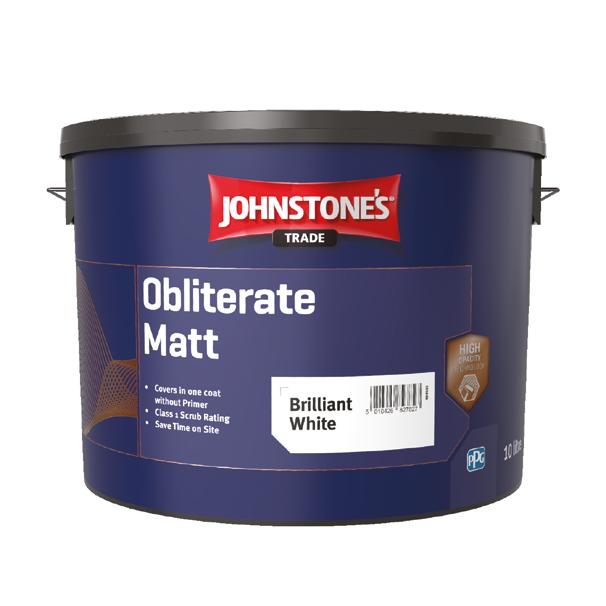
Johnstone’s Trade Obliterate Matt Emulsion A True One Coat Solution
A premium quality interior wall and ceiling paint with a flat matt finish to give unrivalled* opacity in just one coat. Unlike traditional emulsions that may require two, or even three, coats for full coverage, this product offers immediate hiding power. It’s perfectly suited for new build and redecoration projects in high footfall areas in both domestic and commercial spaces, thanks to its durability. Obliterate Matt is designed to help you finish jobs faster and improve efficiency. Offering time saving solutions on site.
Visit www.johnstonestrade.com to find out more
*Compared to other PPG Matt Emulsion formulations
BAUER TECHNOLOGIES SECURES
SPECIALIST PILING CONTRACT FOR THE DOVETAIL BUILDING, LONDON
Bauer Technologies has been awarded the specialist piling and geotechnical works package for The Dovetail Building, a striking new 24-storey mixed-use development located in the City of London.
Commissioned by Deconstruct UK Ltd on behalf of client Brockton Everlast, the project represents a significant addition to London’s premium office and retail landscape, featuring a threelevel basement and high-specification tower structure designed to meet modern sustainability and performance standards.
Bauer Technologies’ scope of work is being delivered in two distinct phases to facilitate archaeological investigations by the Museum of London Archaeology (MOLA).
The first phase, - running from November 2025 to February 2026 - will involve the extraction of redundant piles and the installation of approximately two-thirds of the new secant wall.
The second phase, scheduled for June to September 2026, will focus on installing a front-of-wall cased CFA secant pile line along the party boundary, and completing the foundation and bearing piles, including temporary works for the tower cranes and gantry.
In keeping with Bauer Technologies’ strong commitment to sustainable construction, the project will incorporate a wide range of carbon-reducing initiatives. These include the use of lowcarbon reinforcement steel, concrete incorporating blended cement, supplied from a local batching facility, and 100% HVO fuel for all site plant. Bauer has also implemented waste-reduction measures to optimise material efficiency and minimise environmental impact throughout the project’s lifecycle.
BREEDON APPOINTED SURFACING CONTRACTOR FOR MAJOR A47 TUDDENHAM PROJECT
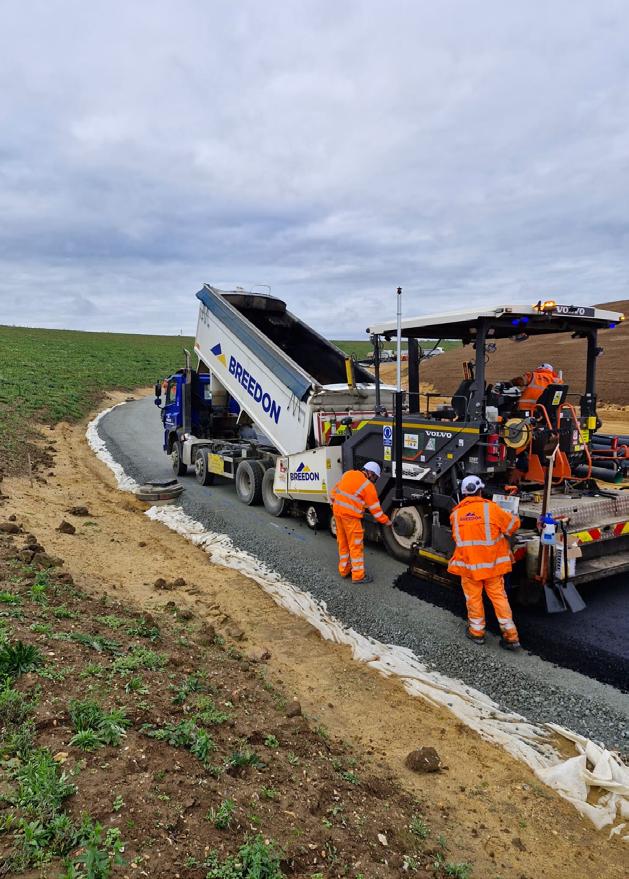
Essential construction materials provider Breedon Group plc has been announced as the surfacing contractor for the A47 North Tuddenham to Easton project, and will lay 195,000 tonnes of asphalt along the new East Anglia road.
The £250m project, being delivered by Galliford Try for National Highways, involves constructing a new 9km dual carriageway between Norwich and Dereham, and is aimed at improving safety and reducing congestion for the region’s road users.
Breedon’s Surfacing Solutions team will deliver and lay 195,000 tonnes of asphalt over the course of the project, with their works scheduled to be completed in April 2027.
All asphalt will be supplied from their Longwater Asphalt plant, located just five miles from site – boosting the project’s carbon reduction goals through reduced material haulage.
It comes after Breedon announced the completion of a significant £3.5m
upgrade to the Norfolk plant, allowing it to support many of the region’s major road and infrastructure projects.
Breedon Surfacing Solutions is one of the UK’s largest surfacing contractors, delivering end-to-end solutions tailored to a wide range of environments – from commercial developments and local roads to major highways and airport runways.
Ed Thompson, Breedon Surfacing Solutions General Manager for England and Wales, said: “We’re proud to be supporting Galliford Try and National Highways on such an important infrastructure project for the region.
“With our Longwater site so close to Tuddenham, this is a great example of how local capability combined with national strength can deliver projects more efficiently and sustainably.”
Breedon is using GPS technology as part of the work, with a dedicated eight-person surfacing gang, supported by project and operational specialists. This reduces the number of operatives
required on site, helping improve both accuracy and safety.
The project forms part of Breedon’s wider commitment to ‘Making a Material Difference’ – investing in sustainable projects, supporting UK infrastructure, and delivering projects that benefit local communities.
WE PROTECT WHAT MATTERS
We’re huge stockists of fire and safety glass, offering fast delivery from local branches. Our team provides technical help and specification support, with options for supply-only or supply-and-fit to suit your project and budget needs.
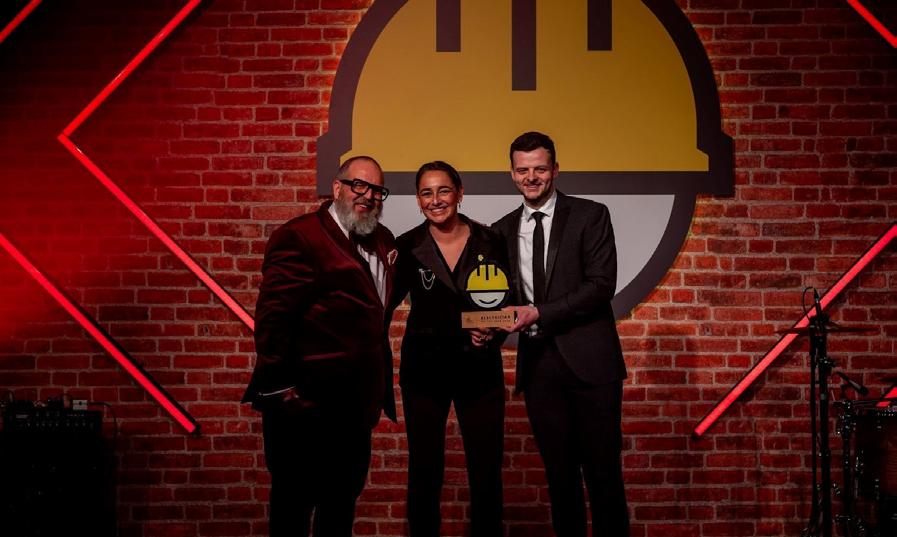
ELECTRICIAN TURNS TOOL THEFT TRAUMA INTO TATTOO AND TRIUMPHS AT ON THE TOOLS AWARDS
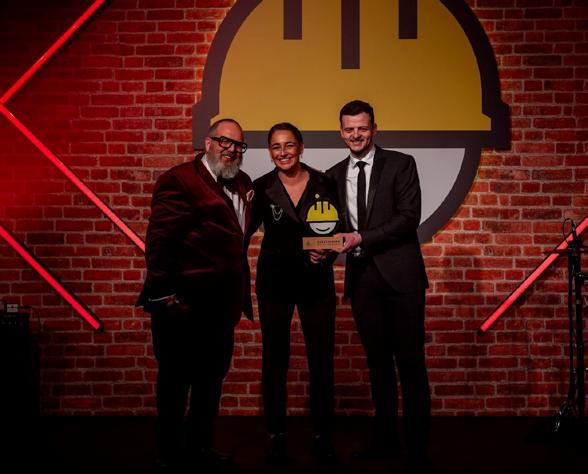
Electrician Gina York has taken dedication to a whole new level; she got a tattoo of the On The Tools logo after a dramatic encounter with tool theft, and has now been crowned Electrician of the Year at the 2025 On The Tools Awards, supported by headline sponsor Jewson and category sponsor CEF.
Gina’s commitment to her trade is not just professional: it’s personal.
Following a shocking tool theft incident while attending a tool theft rally in London, an event supported by On The Tools, Gina decided to get a tattoo of the iconic Barry Head from the On The Tools logo on her right arm, marking her devotion to her craft and the construction community.
The On The Tools Awards 2025 celebrated the very best of the UK’s trade community, bringing together over 450 industry leaders, sponsors, and tradespeople for a night of recognition, connection, and celebration.
The awards ceremony showcased a remarkable display of commitment from across the trades, with Gina’s story capturing hearts for its courage, creativity, and celebration of the trade community.
SELECT HONOURS FELLOW ELECTRICAL TRADE ASSOCIATION
ECA WITH LIFETIME ACHIEVEMENT AWARD
The Electrical Contractors’ Association (ECA) has been recognised for more than a century of exceptional service to the electrotechnical industry after receiving the prestigious Lifetime Achievement Award from SELECT at its 125th Anniversary Grand Ball.
The award was presented in front of 300 guests at the Glasgow Marriott Hotel on Friday 14 November, at an event hosted by TV and radio personality Fred MacAulay and sponsored by the Scolmore Group.
DOUBLE TRIUMPH FOR KEENAN RECYCLING AT IVECO MISSION AWARDS 2025
Keenan Recycling has secured two of the most prestigious accolades at the IVECO Mission Awards 2025, winning both the Alternative Fuels Award and the coveted Overall Mission Award.
These honours recognise Keenan Recycling’s pioneering work in cleaning up the UK’s heavy transport landscape by operating one of the greenest food waste truck fleets in the country, powered by 100% biomethane created from the very food waste they collect.
The IVECO Mission Awards, held in Birmingham and attended by more than 150 industry leaders, celebrate organisations carrying out high-impact, mission-driven work across waste management, utilities, construction, delivery, and sustainable transport. Entries are judged by an expert panel assessing environmental performance, operational excellence, and innovative vehicle use.
Judges praised Keenan Recycling for delivering a real-world circular economy model and dramatically cutting emissions with their fleet of 10 IVECO Eurocargo CNG trucks—running on biomethane produced through anaerobic digestion, the fleet achieves up to 95% CO₂ reduction compared to diesel equivalents.
The IVECO Mission Awards recognise mission-driven businesses using IVECO vehicles to deliver the toughest jobs.
Events & Awards News
WILLMOTT DIXON HOSTS EXCLUSIVE
PREVIEW OF OPEN DOORS 2026 AS INDUSTRY PREPARES FOR RECORDBREAKING ANNUAL INITIATIVE
Willmott Dixon CEO Graham Dundas starts the tour by describing his own career journey from trainee to CEO.
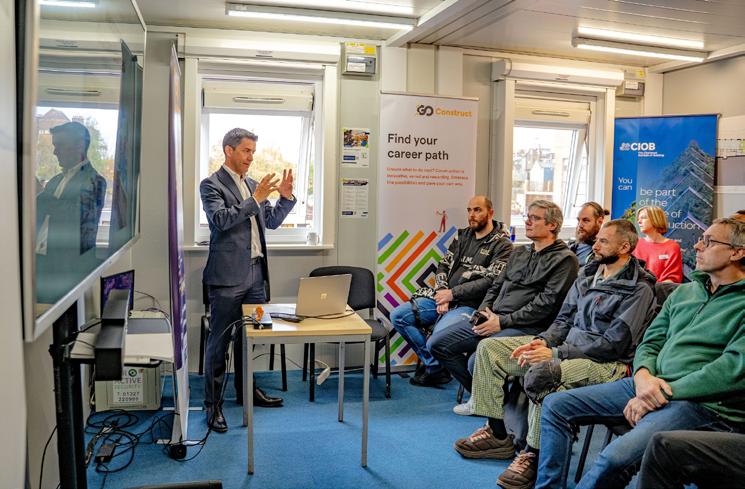
Willmott Dixon hosted a behindthe-scenes tour of its £48.8 million Queen Mary University of London project as part of an exclusive preview for Open Doors 2026, the UK’s leading construction industry careers initiative taking place 23-28 March.
The event, delivered in partnership with Build UK at the seven-storey School of Business and Management development in London’s East End, welcomed Construction Management students from the local Global Banking School who experienced first-hand the breadth of career opportunities available in modern construction.
Students heard about the different roles involved in delivering the complex university project before changing into PPE to see the site in action, gaining real-world context for their studies whilst exploring career pathways in an industry that needs to recruit around 50,000 extra workers each year to meet demand.
Willmott Dixon will open project sites across the country during the weeklong programme in March, showcasing the diversity of modern construction careers across its portfolio of sustainable schools, housing regeneration schemes, and cutting-edge commercial developments.
The event demonstrated the authentic engagement that has made Open Doors increasingly successful, with last year’s programme attracting a record 7,000 visitors. The initiative directly addresses one of construction’s most pressing challenges, with the industry requiring approximately 240,000 additional workers by 2029 according to CITB’s Construction Workforce Outlook report.
The Queen Mary University of London project exemplifies the type of transformational development that Willmott Dixon will showcase during Open Doors 2026. The development will offer high-quality, flexible learning and teaching spaces whilst contributing to the wider enhancement of Mile End Road and the improvement of public spaces.
BIOPHILIC DESIGN BECOMES CRITICAL:
GLOBAL CHANGE-MAKERS UNITE IN WESTMINSTER FOR LANDMARK CONFERENCE
Over 200 change makers descended from all over the world on Westminster for the second Biophilic Design Conference, powered by the Journal of Biophilic Design, marking a pivotal moment in the Design world.
Under the theme ‘Policy, Place, Planet – Biophilic Design for a Regenerative Future,’ the one-day event united over 35 speakers, 20 innovator exhibitors, and more than 400 international designers, practitioners, researchers, psychologists, architects - in person and online - in an inspiring day of dialogue, innovation, and action. Located in the heart of Government
just steps from Parliament, at Central Hall Westminster, the Biophilic Design Conference successfully delivered its aims to shift perception and inspire action at the highest levels.
The rhythm of the day was impactful and focused with a mix of over 35 mini-TED talks, panel discussions and debates on a wide spectrum of themes including governance, sensory design, planning, the economics of biophilic design, wellbeing, Eco urbanism and biomaterials.
With climate urgency and shifting social priorities, the Biophilic Design
Conference 2025 armed all participants with a breadth of content across design, planning, ecology, health, education, and policy to truly question how Biophilic Design can become the foundation for how we live, build, govern and grow, to lead the change and help define what comes next.
Highest Standard of Quality and Performance
Fully Compliant
Documentation and Certification
Technical Support
“Operates in a different league”
- Procurement Manager
and
RECYCLED AGGREGATES –HAVE WE REACHED THE END OF THE ROAD OF TRYING?
The UK has long been recognised as a leader in the use of recycled aggregates.
The Mineral Products Association’s development of the Quality Protocol (QP) for Aggregates from Inert Waste has provided a robust framework for achieving “end of waste” status. While sustainability and circularity are high priorities across Europe, many EU countries still lack such frameworks, with some even operating systems that effectively restrict the use of recycled aggregates.
Here in the UK, the Quality Protocol has offered clear guidance for years, specifying input materials and the processing and testing required to meet the necessary standards. One might assume that, with these measures in place, the challenge has been overcome. Regrettably, this is not the case.
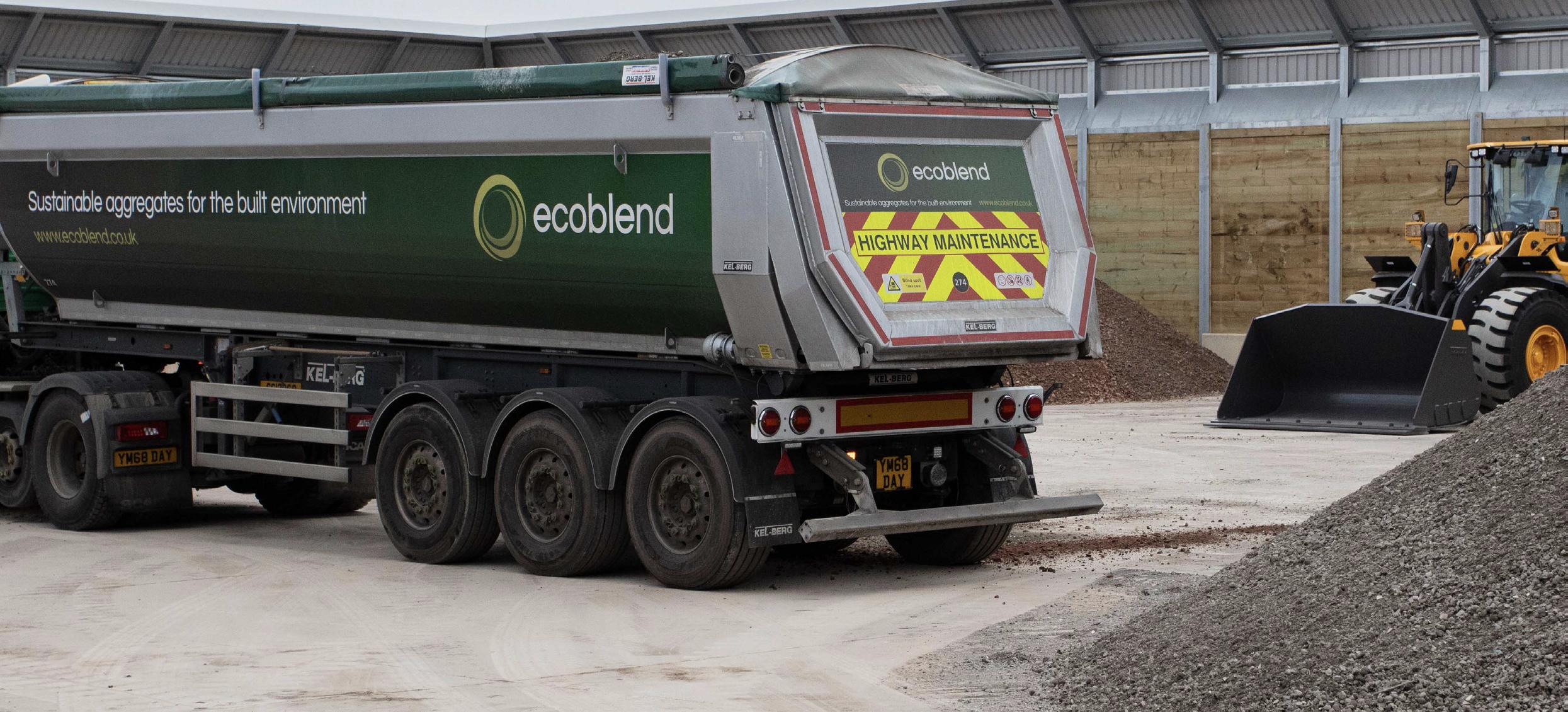
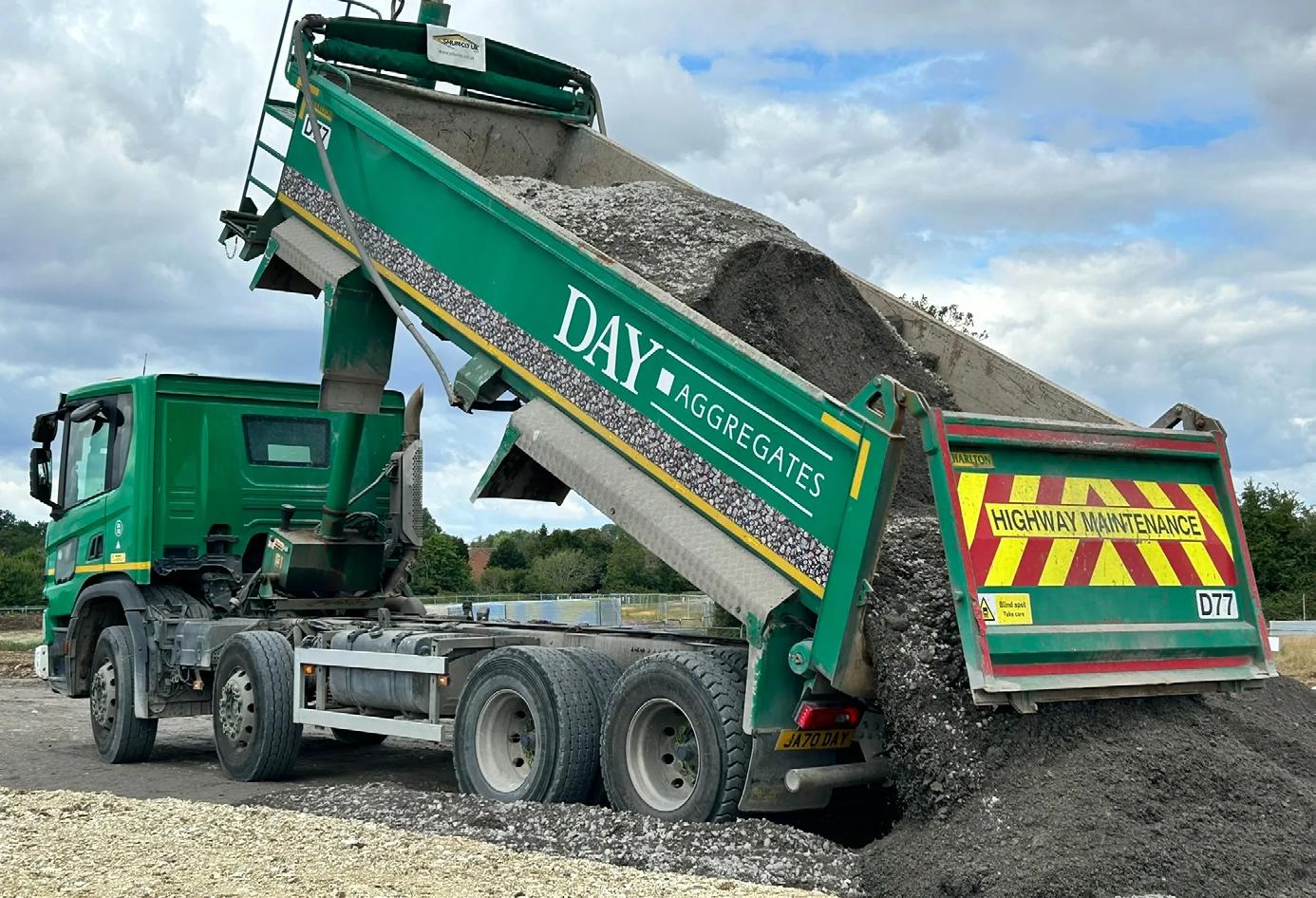
Both industry partners and local authorities continue to encounter barriers to the wider adoption of recycled or manufactured aggregates. Recent projects (that we won’t name) have insisted on primary aggregates, despite the availability of high-quality recycled options. This approach keeps quarries busy, but does it truly serve our shared sustainability goals?
If councils are committed to sustainability, why does this commitment
often seem to stop at the Highways department? What underlies this resistance to recycled aggregates? In our view, the core issue is quality assurance or, more precisely, the lack of it, combined with a shortage of skilled materials engineers to enforce compliance.
Unfortunately, some recycling companies treat recycled aggregates as a disposal route for unsuitable waste, and some contractors are willing to purchase lower-quality material if the price is right.
This makes it difficult for authorities and engineers, often working with limited resources, to distinguish between highquality and substandard products. Faced with these challenges, many simply choose the path of least resistance: using natural resources.
This reluctance is not due to a lack of specifications or standards, these are well established, thanks to Highways England. The real challenge lies in supply chain discipline and documentation. The solution is straightforward: robust supply chain management and a shared commitment to quality. Contractors and clients should insist on comprehensive, up-to-date documentation from recyclers, not just a grading sheet from years ago, but a full set of conformity documents, as outlined in the MPA framework.
For councils, this means specifying clear requirements for recycled aggregates, including compliance with British Standards, provision of test results from accredited laboratories, and evidence of certified quality management systems. For suppliers, it means investing in rigorous processing, transparent reporting, and continuous improvement. We understand the historical preference for playing it safe. However, if we are serious about increasing the use of recycled aggregates, both industry and councils must work together to insist on and deliver quality.
This is a message we have championed for many years, with notable successes. Yet, a significant part of our sector remains resistant to change. This leaves us with a shared challenge: how do we move forward together, overcoming reluctance and building confidence in recycled aggregates as a reliable, sustainable choice?
Let’s open the conversation between councils, industry partners, and all stakeholders to ensure that recycled aggregates are not just an option, but a trusted part of the future of construction in the UK.
Adam Day
Mental Health & Wellbeing News
FMB SUPPORTS JOINT SURVEY TO IMPROVE MENTAL HEALTH IN CONSTRUCTION
The Federation of Master Builders (FMB) is joining forces with the Construction Leadership Council (CLC) and the Builders Merchants Federation (BMF) to help shape a new Mental Health Joint Code of Practice (JCOP) for the UK construction and building materials sectors.
The CLC, supported by the University of Warwick, has launched a new consultation survey to gather views from across the industry on the primary causes of poor mental health and what the sector can do to address them. The findings will inform the new JCOP, which aims to create a consistent standard for managing mental health in the workplace across all parts of the industry.
Construction continues to experience some of the highest rates of poor mental health and suicide among UK sectors. The survey seeks to identify both the root causes and effective interventions to support better wellbeing for everyone in the construction sector.
Brian Berry, Chief Executive of the Federation of Master Builders, said: “Improving mental health in our industry must remain a top priority. Everyone working in construction deserves a working environment that supports their wellbeing. The pressures facing small builders, from tight deadlines to financial uncertainty can take a real toll. It is vital that the new Joint Code of Practice reflects the lived experience of those on the ground. I urge all FMB members and others in the sector to take part in this important consultation and help shape a healthier future for our industry.”
Simon Meadows from Sheffield Loft Conversions is just one example of the many FMB members that go above and beyond through charity work and community support. The two- time award-winning member has made mental health advocacy his mission, taking on gruelling charity challenges while championing apprentices and supporting those who need it most in the construction industry.
The survey is open to anyone working in the UK construction or building materials sectors. Responses will remain anonymous, and completing the first section takes approximately six minutes, with an optional second section for more detailed feedback.
To take part in the consultation, visit the Construction Leadership Council’s Mental Health Survey.
ORBIT HOMES HOSTS ANNUAL ‘BUTTY AND BREW’ MENTAL HEALTH AWARENESS EVENTS TO SUPPORT CONSTRUCTION COLLEAGUES
Construction workers across the Midlands, East and South of England took time out for a ‘Butty and Brew’ recently as part of annual events from affordable housebuilder, Orbit Homes, to raise awareness of mental health in construction.
Hosted at three of Orbit Homes’ developments – Levett View in Hastings, Micklewell Park in Daventry and Mill View in Dereham, the events were designed to create a safe space for open conversations around mental health.
The ‘Butty and Brew’ events included mental health awareness sessions delivered by specialist trainers. Construction colleagues were also shown how to access the emergency mental health support services available to them, should they or colleagues ever need help, and given tips to manage their day-to-day wellbeing both at home and the workplace.
Orbit Homes also lead another safety campaign for construction colleagues, ‘Look after your mates’, designed to further reinforce existing health and safety procedures by encouraging construction colleagues to continue to take care of their own and each other’s physical and mental health.
LEFT: Orbit Homes colleagues and construction workers in Midlands at one of the housebuilder’s annual ‘Butty and Brew’ mental health and wellbeing events, hosted at Micklewell Park in Daventry.
EMOTIONAL WELLBEING
MENTAL HEALTH RELATIONSHIPS
LONELINESS
TRAUMA SUPPORT
BULLYING
LOSS & BEREAVEMENT
SUICIDAL THOUGHTS
PHYSICAL WELLBEING
ILLNESS INJURIES
ADDICTIONS
SLEEP
DIET & NUTRITION
EXERCISE
HORMONE SUPPORT
FINANCIAL WELLBEING
FINANCIAL SUPPORT BENEFIT ENTITLEMENT BUDGETING DEBT MANAGEMENT
TAX & CIS
LEGAL ADVICE
TRAINING & CSCS FEES
Insurance BUILDING CONFIDENCE: THE IMPORTANCE OF CONSTRUCTION INSURANCE
In the dynamic world of construction, where projects range from towering skyscrapers to intricate infrastructure, risk is an inherent part of the process. From unforeseen delays to accidents on-site, the construction industry faces a myriad of challenges that can disrupt timelines, inflate costs, and jeopardise reputations. This is where construction insurance becomes an indispensable tool, offering a safety net that protects businesses, employees, and stakeholders alike.
At Gallagher, we understand the unique risks faced by the construction sector. With decades of experience in providing tailored insurance solutions, we are committed to helping businesses navigate the complexities of risk management, helping to ensure that projects are completed on time and within budget.
Why Construction Insurance Matters
Construction projects are multifaceted, involving numerous stakeholders, heavy machinery, and significant financial investments. This complexity brings with it a range of risks, including:
• Property Damage: Construction sites are vulnerable to damage from natural disasters, vandalism, or accidents. Without adequate coverage, the financial burden of repairing or replacing damaged property can be overwhelming.
• Third-Party Liability: Accidents involving third parties, such as injuries to passers-by or damage to neighbouring properties, can result in costly legal claims.
• Employee Safety: Construction sites are high-risk environments. Ensuring the safety and wellbeing of workers is not only a legal obligation but also a moral one. Insurance can provide coverage for medical expenses and compensation in the event of workplace injuries.
• Project Delays: Delays caused by unforeseen circumstances, such as adverse weather or supply chain disruptions, can lead to financial losses. Insurance can help mitigate these risks by covering additional costs incurred.
Tailored Solutions for Every Project
No two construction projects are the same, and neither are their insurance needs. At Gallagher, we specialise in creating bespoke insurance programmes that address the specific risks of each project. Our comprehensive range of construction insurance solutions includes:
• Contractors’ ‘All Risks’ Insurance: Covering physical loss or damage to construction works, materials, and equipment, this policy ensures support that your project remains on track, even in the face of unexpected setbacks.
• Public and Employers’ Liability Insurance: Protecting your business against claims from third parties and employees, this coverage helps safeguard your reputation and financial stability.
• Professional Indemnity Insurance: For contractors and consultants, this policy provides protection against claims arising from professional negligence, offering peace of mind for all parties involved.
• Surety Bonds: These bonds guarantee the performance of contractual obligations, providing assurance to project owners and stakeholders.
The Gallagher Difference
What sets Gallagher apart is our commitment to understanding your business and delivering solutions that align with your goals. Our team of construction insurance specialists works closely with clients to identify potential risks, develop effective risk management strategies, and provide ongoing support throughout the project lifecycle.
Moreover, we recognise that insurance is just one piece of the puzzle. That’s why we offer a holistic approach to risk management, combining insurance solutions with specialist advice on health and safety, compliance, and organisational wellbeing. By investing in the health, financial security, and career growth of your workforce, we help you build a resilient and successful business.
Conclusion
In an industry where uncertainty is the only certainty, construction insurance is not just a necessity, it’s a strategic investment. By partnering with Gallagher, you gain access to a wealth of expertise and resources, empowering you to tackle challenges with confidence and focus on what you do best: building the future.
For more information on how Gallagher can support your construction projects, scan the QR code.
The information provided is offered as insurance industry guidance and provided as an overview of current market risks and available coverages and is intended for discussion purposes only. This article is not intended to offer legal advice or client-specific risk management advice. Any description of insurance coverages is not meant to interpret specific coverages that your company may already have in place or that may be generally available. General insurance descriptions provided do not include complete insurance policy definitions, terms, and/or conditions, and should not be relied on for coverage interpretation. Actual insurance policies must always be consulted for full coverage details and analysis.
Gallagher offers the strength and positioning of a global insurance group, combined with the personalised care and attention of a local UK broker. With a rich history dating back to 1927, we believe we have the expertise and experience to meet your construction insurance needs.
CONNECT WITH A
For further information, please scan the QR code.
Training & Education News
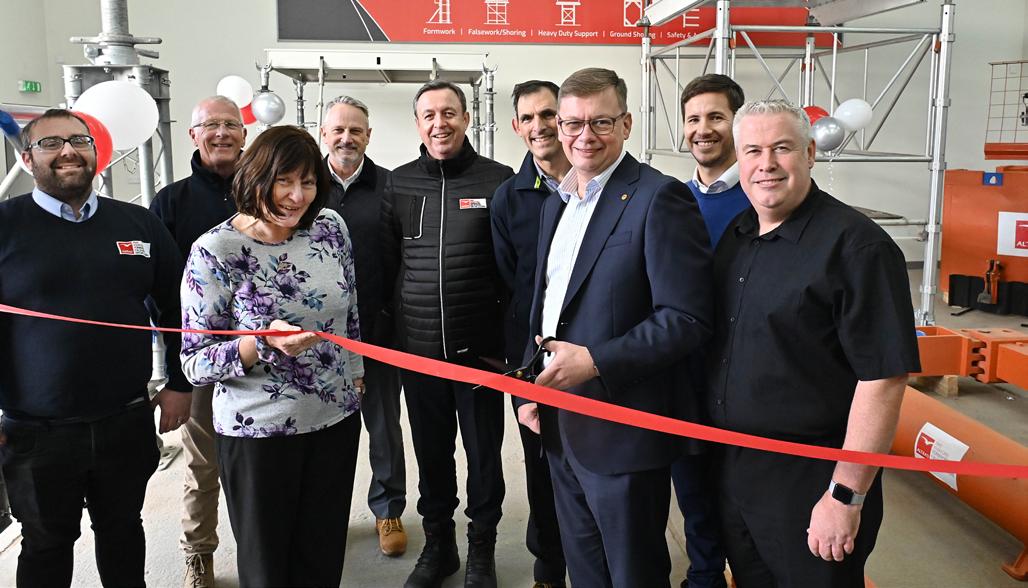
ALTRAD RMD KWIKFORM OPENS SECOND TRAINING ACADEMY IN ALDRIDGE
CONSTRUO LAUNCHES
‘REFER
& EARN’ RECRUITMENT APP
Construo, the global collaborative platform for the construction sector, has launched its innovative mobile service, ‘Construo Refer & Earn’. The app allows anyone to earn cash rewards for referring candidates to open construction roles, while companies gain access to a wider pool of skilled talent more quickly.
The platform transforms recruitment by turning entire communities into on-demand recruiters. Users can browse live job vacancies, share referral links with their network, and earn a reward when a candidate they refer is successfully hired and stays in the role.
The app addresses one of the most pressing challenges in the
construction industry: sourcing skilled people efficiently. By activating thousands of potential referrers, employers can fill even the most challenging positions faster, costeffectively, and with a broader reach.
Benefits extend across the board: individuals earn money, companies benefit from a performance-driven recruitment channel, and the sector gains a scalable, technologyenabled solution to the ongoing skills shortage. Construo builds on its existing platform, which already connects professionals in over 100 countries, enabling collaboration, knowledge sharing, and commercial connections.
Visit https://go.construo.io/download
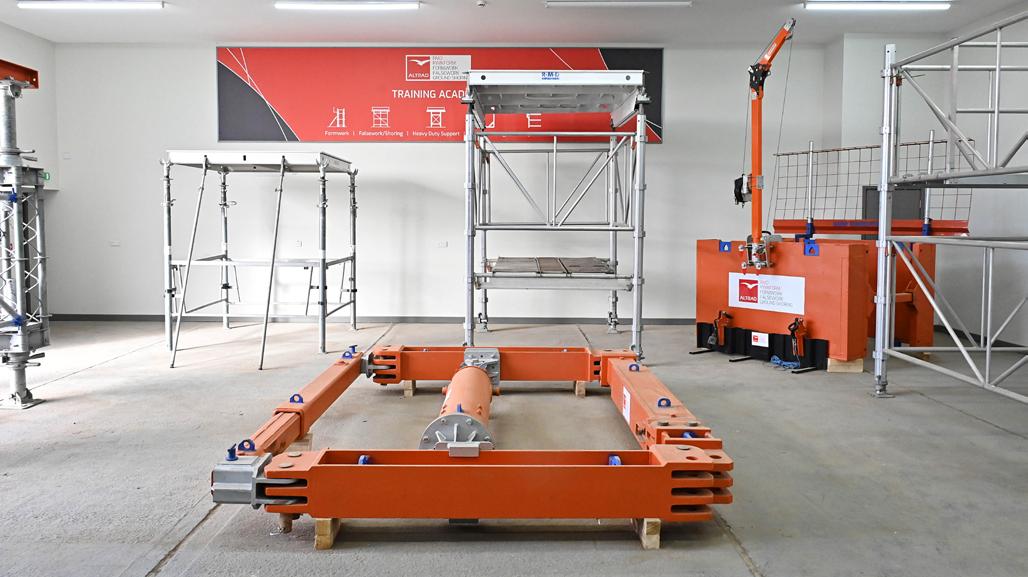
Altrad RMD Kwikform has opened its second dedicated Training Academy at the company’s head office in Aldridge, West Midlands, building on the success of its original facility in Skelmersdale. The Aldridge Academy strengthens the company’s long-term commitment to skills, safety, and technical excellence across the construction sector.
The facility includes purpose-built training zones, a live demonstration area, and digital learning resources designed to replicate real-world site conditions. Employees and customers can develop their expertise in above- and below-ground temporary works systems, gaining handson experience with innovative equipment and engineering solutions.
Managing Director Mark Pickard said: “Opening the Aldridge Academy is a key milestone in our investment in people and the future of the industry.
By expanding training capacity, we can give our teams and customers the opportunity to enhance their technical knowledge, improve safety, and apply best practices on projects nationwide.
The two academies form a connected network, providing accessible training for Altrad RMDK staff and clients across the UK. Combined, they enable continuous professional development, ensuring technical proficiency and industry innovation. The Aldridge Academy also offers specialised courses for contractors, project managers, and engineers, covering regulatory compliance, safety protocols, and innovative construction techniques.
Training & Education News
CITB’S NEW ENTRANT SUPPORT TEAM
HELPS OVER 1,500 APPRENTICES ENTER CONSTRUCTION IN SIX MONTHS
UNIVERSITY OF SALFORD PARTNERS WITH UNITED INFRASTRUCTURE TO LAUNCH CENTRE FOR RETROFIT
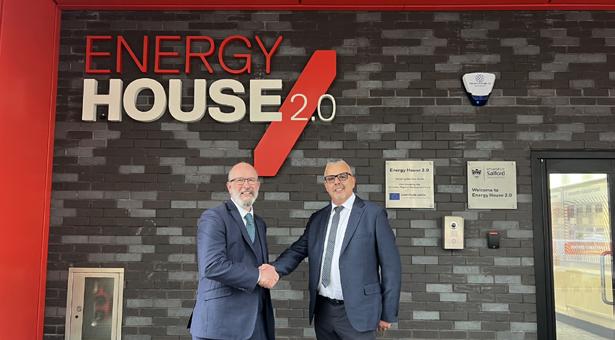
The University of Salford has partnered with United Infrastructure to create a full-scale 1930s retrofit property at Energy House 2.0, the world-leading research facility. The project aims to test retrofit solutions for older UK housing, focusing on insulation upgrades, low-carbon heating, and smart technologies.
With 65% of UK homes built before 1990, the research will inform industry, homeowners, and communities on effective, costefficient retrofit measures to reduce carbon emissions. The project, funded with £600k from the Garfield Weston Foundation, will provide practical, data-driven solutions to support the government’s £13 billion retrofit initiative.
Professor William Swan, Director of Energy House Labs, said: “Working with United Infrastructure allows us to bring real-world construction expertise into a controlled research environment, accelerating practical retrofit strategies for the UK’s housing stock.”
Salford also offers an MSc in Sustainable Buildings, giving students access to Energy House 2.0 and industry-tested methods for energy efficiency, low-carbon retrofit solutions, and smart technologies.
The Construction Industry Training Board (CITB) has reported that its New Entrant Support Team (NEST) supported 1,521 apprenticeship starts between April and September 2025, up 61% from 943 in the same period last year. Over 9,200 employers were engaged with the programme—a 48% rise from 2024—showing growing interest in recruiting apprentices.
CITB’s NEST simplifies finding, recruiting, and retaining apprentices for employers, particularly SMEs, helping remove barriers to employment.
The programme aligns with CITB’s Strategic and Business Plans and the UK’s construction workforce needs, with the sector requiring an additional 47,860 workers each year.
As part of the government’s £600 million investment in construction skills, CITB plans to fund over 40,000 industry placements annually for Level 2 and Level 3 learners, including NVQs, BTECs, T Levels, and advanced apprenticeships. The NEST programme will also double in size, further supporting employers to recruit and retain talent.
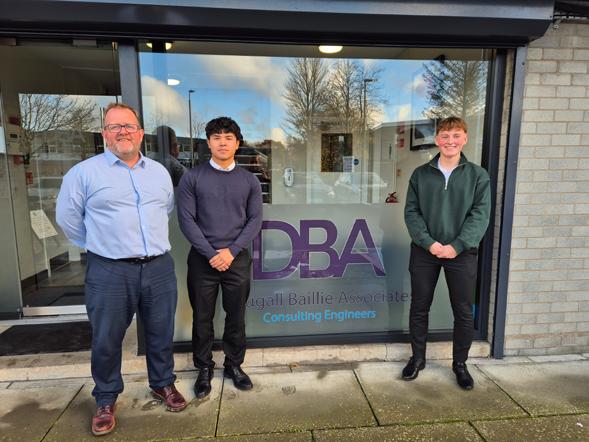
DOUGALL BAILLIE ASSOCIATES CONTINUES GRADUATE APPRENTICE INTAKE IN CIVIL ENGINEERING
East Kilbride-based engineering consultancy Dougall Baillie Associates (DBA) has welcomed two new civil engineering graduate apprentices and one technician apprentice for the upcoming academic year. This marks the sixth consecutive year the firm has supported alternative routes into the profession.
The graduate apprentices will study at the University of Strathclyde while contributing to the firm’s road and infrastructure projects, combining real-world experience with academic learning. Technician apprentice Elliot Hughes will undertake a twoyear part-time HNC at Springburn Campus, Glasgow College.
Scott Macphail, DBA Director of Civil Engineering, praised the intake: “These young people are talented, dedicated, and ready to contribute to the industry while avoiding student debt.
“Graduate apprentices bring both practical experience and academic learning, which is invaluable to the firm and the wider profession.”
POLYPIPE BUILDING SERVICES
EQUIPS FUTURE ENGINEERS WITH REAL-WORLD SKILLS
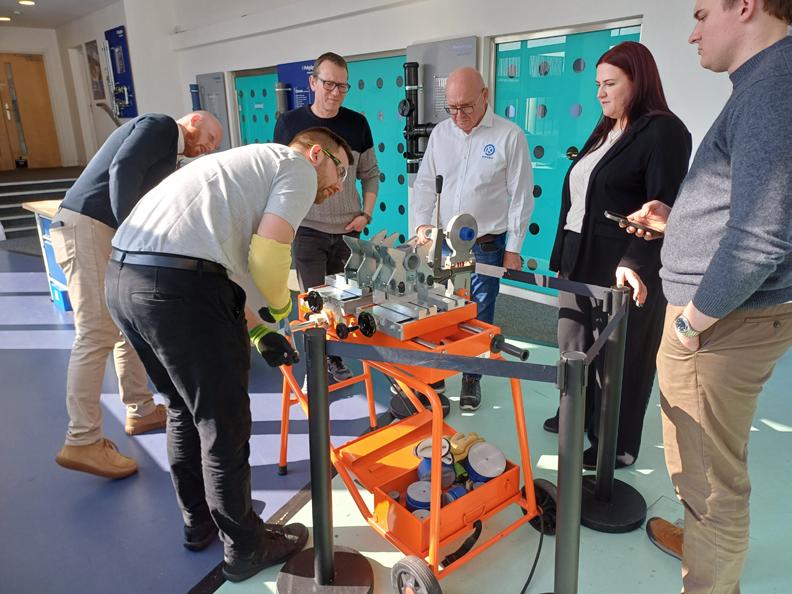
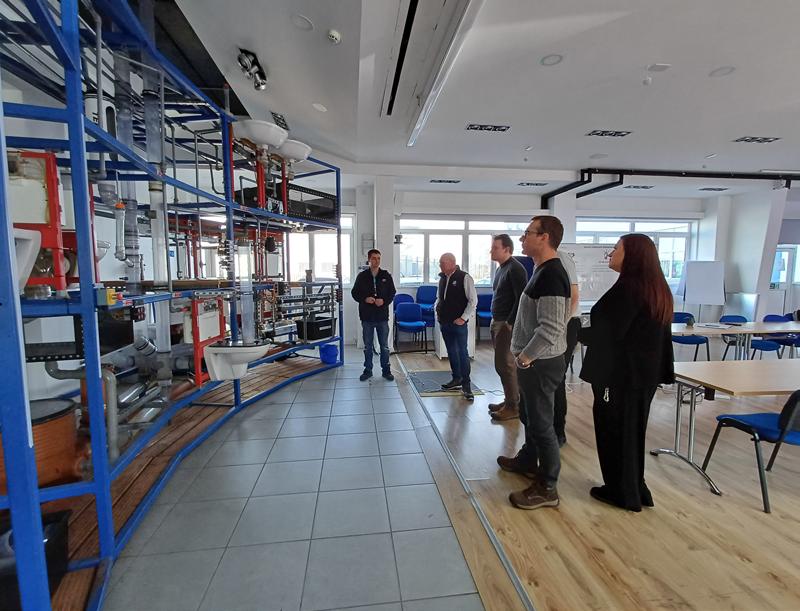
Polypipe Building Services is helping to bridge the gap between education and employment by providing handson training for the next generation of building services engineers at its Aylesford training centre.
Designed to complement collegebased learning, the sessions give engineers, designers and specifiers direct experience working with modern drainage and water supply systems, including plastic soil and waste, HDPE, MLCP and prefabricated assemblies. These materials are now commonplace in the industry, yet are still underrepresented in many traditional plumbing and heating courses. As such, the company is calling for an industry-wide shift in how the sector trains and equips its next generation of professionals.
Through the sessions, Polypipe is helping new and experienced plumbing professionals understand how modern systems are designed,
UNIVERSAL AV UPGRADES SIMPLY LEARNING TRAINING FACILITIES
North East-based Universal AV has transformed Simply Learning’s Jarrow training site, enhancing the learning environment for construction, utilities, engineering, and manufacturing students. Recognising that the existing AV setup was outdated and hampering teaching effectiveness, Universal AV proposed a full upgrade.
The project replaced old projectors with Sony commercial-grade LED displays—75” in larger rooms, 65” in smaller ones—offering crystal-clear visuals, easy HDMI connectivity, and plug-and-play simplicity. The upgrades complement Simply Learning’s heavily practical teaching style, which relies
on dry-erase boards and interactive instruction.
Claire Irving, Managing Director at Simply Learning, said: “The collaboration with Universal AV has truly elevated our training experience. The improved AV allows tutors to deliver lessons more clearly and smoothly, enhancing learner engagement and understanding.”
Mark Atkinson, Branch Manager at Universal AV, added: “Sometimes you’re in the right place at the right time to make a tangible difference. Simply Learning’s commitment to high-quality, practical education meant our upgrades could immediately impact the learner
fabricated and installed, giving them the confidence and practical knowledge to step onto site fully prepared for the demands of contemporary construction.
Recent sessions at Aylesford have welcomed participants from leading consultancies and education providers, including Buro Happold, Foster + Partners, Stantec and Waltham College.
With partnerships including CIBSE, SoPHE YEN and leading consultancies, Polypipe Building Services’ training programme forms part of its wider commitment to collaboration across the sector. The company believes that a more joinedup approach between manufacturers, educators and professional bodies is essential if training standards are to keep pace with modern construction.
To discover the range of training sessions, email: buildingservices. technical@polypipe.com
experience. It’s been rewarding to see the space brought up to a standard that reflects the dedication of both staff and students.”
The upgraded facilities now offer a professional, functional, and modern training environment, providing learners with a more engaging experience and supporting the delivery of vital construction and technical skills.
A CONCRETE STEP TOWARD LOW-CARBON CONSTRUCTION
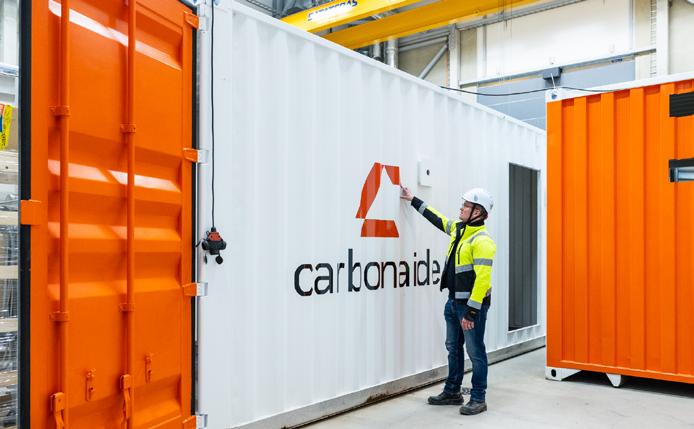
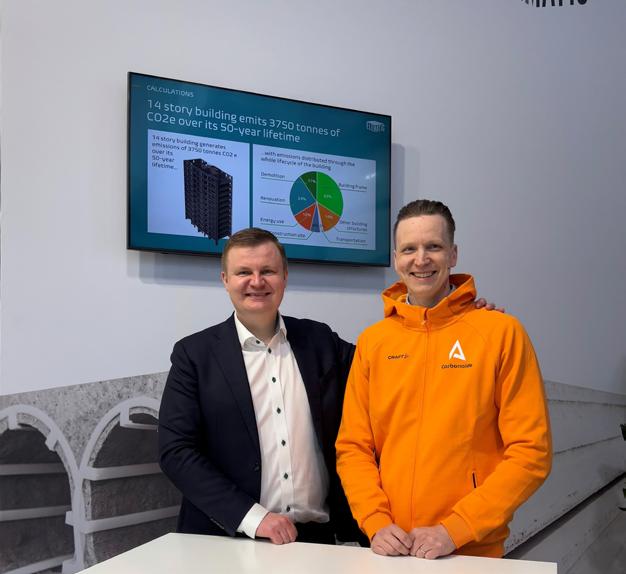
Lipa-Betoni becomes the world’s first precast concrete manufacturer to adopt Carbonaide® carbon storage technology.
Lipa-Betoni is making history in Finland as the first precast concrete manufacturer to integrate Carbonaide® technology into its factory operations. This groundbreaking innovation permanently stores CO₂ in concrete, reduces cement use, and dramatically lowers the carbon footprint—paving the way for a new era of low-carbon construction. Pilot operations are set to begin in early 2026, with full-scale production to follow soon after.
Driving Decarbonization in Construction
The European construction industry is on the brink of a major transformation. Rising carbon taxes and evolving building regulations are pushing companies to quantify material emissions, integrate CO₂ storage, and document recyclability. Those who act early gain a competitive edge while meeting regulatory requirements.
“We are proud to be pioneers in this globally significant transition,” says Satu Lipsanen, CEO of Lipa-Betoni. “This upgrade covers our factory’s full capacity, allowing us to supply low-carbon concrete elements widely starting in 2026.”
From Pilot to Production: Launching in 2026
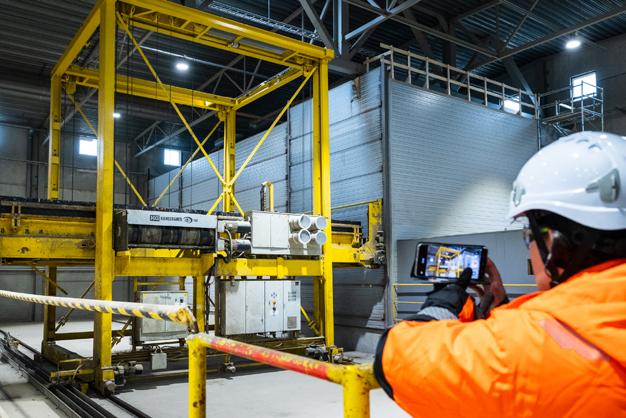
Lipa-Betoni’s factory upgrade is underway in Finland, where Carbonaide’s systems are being integrated into full-scale element production. The project includes module manufacturing, tank installations, and system integration. Pilot operations begin at the start of 2026, with full production shortly after.
Elematic has developed a specialized sealing solution for the factory’s curing chambers (patent pending), ensuring safe use of CO₂ during production.
“We are now entering the precast concrete industry with Lipa-Betoni,” explains Tapio Vehmas, CEO of Carbonaide.
“This first full factory integration also strengthens our collaboration with Elematic, allowing rapid rollout to Europe’s construction markets.”
Teppo Voutilainen, CEO of Elematic, adds: “Carbonaide’s technology offers our customers a more efficient, loweremission way to manufacture precast concrete while reducing costs. We can fully support its integration into existing factories.”
By combining Elematic’s equipment and automation expertise with Carbonaide’s CO₂ treatment process, the collaboration enables the production of sustainable concrete elements that permanently store carbon.
Cutting Costs While Cutting Carbon
Carbonaide’s technology offers measurable benefits for both sustainability and profitability:
• Up to 20% reduction in cement usage
• 60% emissions reduction in element production during phase one
• Annual savings of €120,000–€250,000 at €80 per ton of CO₂
• Potential further savings if cement prices rise to €135 per ton by 2026
Beyond cost savings, the method accelerates manufacturing, reduces climate impact, and meets growing industrial demand for low-carbon construction solutions. Remarkably, this approach even makes carbonneutral concrete production possible—a world first.
COO
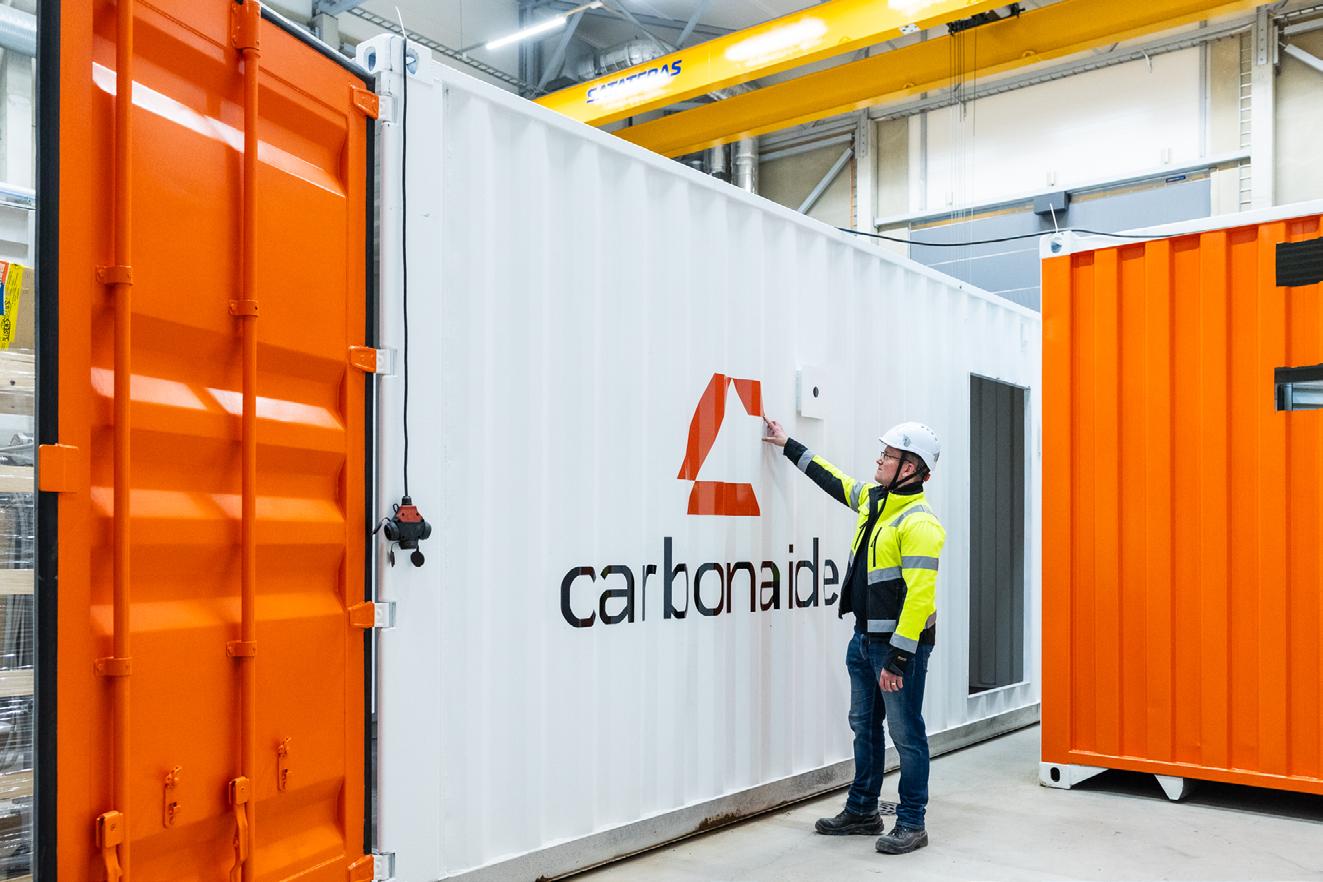
Carbonaide modules and
Jonne Hirvonen Jarno Artika
CEO Satu Lipsanen
CEO Teppo Voutilainen and CEO Tapio Vehmas
Tools, Plant & Equipment News
FRESH PERSPECTIVES ON COMPACT EQUIPMENT
Six months into her tenure as President of Yanmar Compact Equipment (CE) North America, Anna Christine Sgro brings a wealth of experience and a fresh outlook to a market in flux. Having held leadership roles at Volvo CE, Strongco, and Ritchie Brothers, she now sees the compact equipment segment anew, where Yanmar CE is carving out a reputation for reliability, customer focus, and environmental commitment.
“The market is becoming more crowded with lower-priced entrants who compete on cost rather than long-term reliability and lifecycle value,” says Sgro. Yet she sees opportunity: “Customers want reliability – machines that don’t break down and don’t have to go back to the dealership. That’s where Yanmar scores highly.” She also notes the growing influence of rental channels, retail entrants like Home Depot and Lowe’s, and the slower-than-expected shift towards electrification.
Sgro emphasises discipline and longterm thinking. “At Yanmar, we are being thoughtful in how we manage costs and pricing, working to minimise volatility for our dealers and customers wherever possible. Supporting dealers and end users through challenging conditions as well as periods of growth is what customer centricity means in practice.”
She is reimagining dealer models, exploring digital and direct-tocustomer opportunities, and identifying overlooked sectors such as agriculture. “Too often, manufacturers build brilliant machines that nobody buys, because nobody asked the customer what they wanted in the first place,” she says.
Her priorities include restructuring the commercial team, strengthening dealer support, modernising the compact track loader facility, and improving processes to simplify dealer interactions. “Resilience through tough times builds loyalty and trust,” she reflects.
If we protect our key investments and prioritise the customer now, when the market recovers, we will come out stronger.
Her message is clear: Yanmar CE stands for reliability, quality, and genuine customer focus. “Looking after customers is still a real passion of mine, because I’ve lived it,” she says.
WHAT CAN BE DONE BY OEMS TO ENCOURAGE TILTROTATOR ADOPTION AND PURCHASE IN THE UK
The construction industry is constantly seeking ways to increase efficiency, productivity, and safety on site. While excavators remain central to earthmoving, attachments like tiltrotators are transforming their precision and versatility.
James Venerus, General Manager Product Marketing at Komatsu Europe, explains how OEMs can accelerate tiltrotator adoption through closer collaboration with manufacturers and simplified integration that prioritises the operator.
Long standard in Scandinavia, tiltrotators are now in growing demand across Europe. The UK has been slower to adopt, due to hardware costs, installation complexity, and industry mindset. As adoption accelerates, OEMs have a responsibility to make the transition seamless.
Deep collaboration with tiltrotator manufacturers enables quality-assured, factory-integrated solutions. On the Komatsu PC220LC/LCi-12, this resulted in a “smart” Plug & Play system with minimal connections, programmable control levers, and integrated tiltrotator functionality, reducing installation time and ensuring reliability.
Intuitive operation is equally important. Intelligent Machine Control 3.0 simplifies rotation, tilting, and attachment orientation, making excavation easier for operators new to tiltrotators.
OEMs must listen to customer needs, address operational challenges, and deliver integrated solutions that cut costs and complexity.
By working closely with tiltrotator manufacturers, they can make this technology more accessible, preparing customers for the future.
Anna Christine Sgro
Tools, Plant & Equipment
HOW BRIGGS & STRATTON IS DRIVING ELECTRIFICATION IN CONSTRUCTION WITH ITS VANGUARD COMMERCIAL BATTERIES
The construction industry is one of many industries moving towards electrification. Contractors, rental companies and OEMs are facing pressures around noise, emissions and reliability, and electrification provides a solution to many of these issues.
The challenges are particularly evident in the rental sector. Fleet managers rely on equipment that can be integrated from site to site easily. Traditional batterypowered systems can be slow to charge and have reduced runtime, resulting in OEMs facing similar pressures and in need of power systems that offer reliability, lower emissions and long-term serviceability.
Vanguard, Briggs & Stratton’s brand for commercial power solutions, has become a revolutionary supplier of a game-changing battery system. Its 48V 1,5kWh swappable battery pack (Si1.5) is designed to meet construction’s commercial challenges.
The battery also supports sensible procurement decisions, as understanding the total cost of ownership is essential when making power purchases. Beyond the upfront price of the machine, rental companies and contractors need to consider fuel costs, maintenance, downtime, and the lifespan of a machine. Swappable battery systems directly address these factors. Interchangeable batteries and rapid charging reduces downtime and maintenance needs,
while standardising power sources across machines lowers management complexities. Over the lifetime of the equipment, this can lead to significant savings, making electric alternatives not just a sustainable choice, but a financially smart one.
Sjoerd Van de Velde, Managing Director at Briggs & Stratton EMEA said: “On job sites, operators work in emissions sensitive environments and deal with noisy equipment, whilst also have challenges with the downtime of machinery. A move to electrification as the standard in construction will simplify these day-to-day issues.”
Charging speeds of the Vanguard battery reach 80% in just 45 minutes using high performance chargers, so uptime is guaranteed. Durability remains a focus of the battery, helping to withstand pressures from job sites.
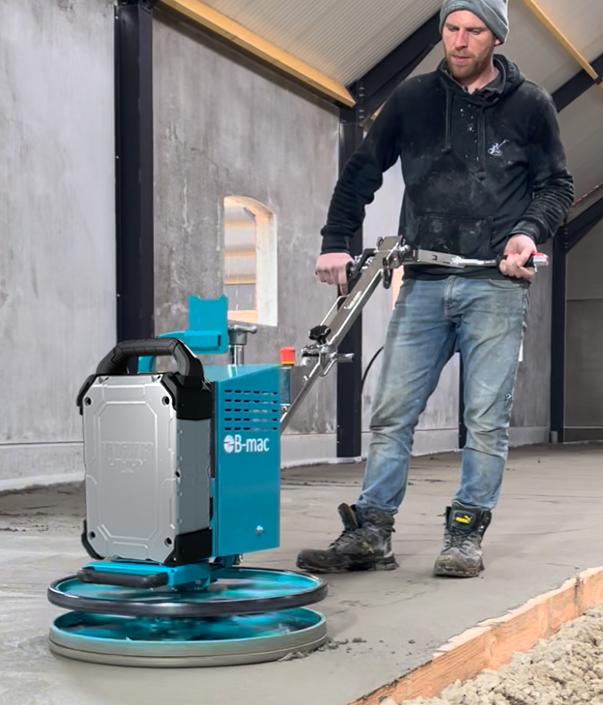
B-mac, a Belgium-based manufacturer, uses the Vanguard swappable battery to improve indoor operations for its finishing trowel. Concrete finishing demands uninterrupted runtime, especially on surfaces that cannot wait for a battery to recharge. The swappable battery allows for continuous operation, which is vital in this field. The reduced noise and vibration improves communication and operator satisfaction. Emission-free operation allows work to take place in enclosed spaces, where engine-powered machines are unsuitable.
The B-mac electric trowel demonstrates how Vanguard supports varied
application. Each machine benefits from consistent runtime, fast charging and reliable power. These capabilities translate into higher productivity and a more versatile approach to indoor finishing.
An additional example is Muck-Truck, which has taken similar electrification steps with its E-Max wheelbarrow. The Vanguard Si1.5 battery was selected for its efficient swappable design, adaptability and performance.
The battery helps deliver the power needed for challenging terrain, heavy loads and steep slopes, whilst also offering zero-emission operation and lower noise than traditional engines. This makes it ideal for residential zones and noise-sensitive environments. For rental companies, reduced downtime and rapid battery charges help maximise its effectiveness and user satisfaction.
Together, B-mac and Muck-Truck show how Vanguard is driving meaningful progress in construction electrification. The Si1.5 swappable battery ensures fast-charging, reliability, and easy management when combined with Briggs & Stratton’s expert support. This delivers peace of mind for OEMs and operators that they have the best equipment for their needs.
Sjoerd Van de Velde, Managing Director at Briggs & Stratton EMEA said: “With Vanguard’s swappable and highperformance batteries, downtime is no longer an issue for users. Not only do the batteries benefit the environment, but they allow for smarter, faster and more confident work with less issues.”
From concrete finishing to material transport, Vanguard’s technology demonstrates that the next wave of construction machinery can be cleaner, quieter and more efficient, without compromising on power or performance.
While swappable batteries are ideal for reducing downtime and efficiencies, Briggs & Stratton also offers a wide range of Vanguard fixed battery packs to suit different machine types. Whether for continuous heavy-duty usage or for smaller, specialised equipment, Briggs & Stratton has power solutions suitable for a variety of needs.
B-mac
Muck-Truck
Tools, Plant & Equipment Hire
AIR & HYDRAULIC TOOL HIRE
The APP Group consists of Air Power Products (Compressed Air Specialist) and Procut Engineering (CNC Precision Engineering) and APP Site Services (Site Supplies and Tool Hire). The group benefits from a full-service department with a wealth of air and hydraulic tool knowledge. We provide an excellent service, not only with the range of products but with the level of care each order is given and the speed with which we can deliver.
The main focus of the business is the hire department for construction tools. The hire fleet has been built up over a long period of time and the tools are always fully serviced and inspected before every hire.
We have a range of tools and associated products available to hire which include Rebar Cutters, Rebar Benders, Hydraulic Splitters, and Pneumatic Picks.
Rebar Cutters
We have a range of hydraulic rebar cutters to suit both factory and on-site applications that can cut up to 40mm Rebar. Designed for professionals that need to cut high tensile rebar in all environments.
Rebar Benders
We have a range of hydraulic rebar benders to suit both factory and on-site applications that can bend up to 40mm Rebar. Designed for professionals that need to bend high tensile rebar in all environments.
Concrete Splitters
Splitters are handheld demolition devices which controllably split material with the use of hydraulic pressure. They are used when larger conventional demolition devices are ruled out due to their excessive dust, vibration, and flying debris.
Concrete Combi Shears
The combi shears are the ultimate in handheld demolition. The interchangeable jaw sets mean that this machine is incredibly versatile and can cut and crush a wide range of materials.
Pneumatic Picks
We don’t just sell & hire the H11, We have a full range of medium duty demolition picks.
Whatever your scenario we have an option for you…
Above are just a few machines we have to offer. For our full range give the office a call on 01909 519 519. Most tools are available for Same Day or next day delivery.
Site Spillage
As well as the hire fleet APP Site Services offer a range of site spillage solutions including the mobile spill kit. If you need further information on the range of spillage solutions we have to offer, please visit the website appsiteservices.co.uk
PPE Solutions
As part of the full package, we also stock a range of PPE equipment and workwear for our customers. If you are looking for gloves or a mask to go with your hire or purchase we have got you covered.
www.appsiteservices.co.uk
Tel: 01909 519 519
Tools, Plant & Equipment Hire
CAN YOU STILL GO GREEN, AND NOT GO ALL ELECTRIC?
Atlas Copco Rental UK and Ireland address the demands on industry to comply with emission targets, whilst still renting the right equipment to get the job done.
The construction industry has a tall order to help meet the UK’s net-zero targets. Therefore, considerations on practices, materials and equipment are all being scrutinised in an effort to adopt the most sustainable practices, that address emission targets but also enable projects to be safe, profitable and efficient.
You’ve long known that purchasing equipment for some tasks can have its benefits but for equipment such as air compressors where demand may vary from project-to-project rental is often the preferred route. An additional benefit is that it doesn’t lock organisations into potentially aging technology, especially when it comes to zero emissions construction equipment, an area that is quickly evolving.
To this end, when looking to hire temporary compressed air many firms will look to electric machines. However, electric may not always be an option – especially in remote locations and depending on requirements it may not be the most cost-effective.
So, let’s first look at the location. If your project site is in an urban location with reliable grid access then typically, electric is preferred as diesel engines contribute to greenhouse gas emissions and other pollutants such as nitrogen oxides. Electric is also often chosen in built up areas due to the significant reduction in noise emissions, with some machines up to five decibels quieter owing to the fact they don’t have a noisy and vibrating internal combustion engine. Electric compressors also have fewer moving parts, which in turn has an added benefit of increased intervals between servicing, with far less maintenance being required.
With so many positives you may not even consider diesel, but there are instances where electric may not be the best option. For instance, if your project site is more remote or in an area where power is unreliable the benefit of having an inbuilt motor that can run self-sufficient away from the grid is a boon to keep your project running to schedule. And, if you need a machine that can easily transport around a site then diesel could again be an advantage over electric. As whilst there are electric compressors in the rental market that are built to move like a diesel machine, you still have to contend with cable management and the associated safety risks. Where diesel machines have long been designed to be easy to transport and supply air where needed with a quick start up time.
Therefore, if you do need to use diesel, many manufacturers and rental providers are there to support you, having made changes to reduce emissions. Such as through meeting stringent Stage V engine compliance by reducing harmful gasses. You may also want to look into machines which utilise fossil-free fuels such as HVO (hydrotreated vegetable oil) and opt for machines that have eco-modes that reduce fuel consumption.
Ultimately, the choice between going electric or diesel will depend on onsite power availability and output requirements.
So, whereas electric equipment offers significant operational advantages such as lower running costs, improved air quality, and reduced noise and emissions, they can be less costeffective on construction sites with limited or no access to reliable electricity or where high-power, heavyduty applications require the higher output of diesel-powered units. And in such an instance, to ensure that you can still maintain net zero targets, you should look to work with a rental company that can offer diesel-powered units that are energy efficient and have features that are emission compliant.
TIME TO RETHINK FUNDING: WHY SMARTER PROCUREMENT IS KEY TO UNLOCKING PUBLIC SECTOR DECARBONISATION
When the Prime Minister stood at COP29 last year reaffirming the UK’s ambition to cut emissions by 81% by 2035, the public sector was cast as the engine of delivery. With an estate responsible for around 10% of the nation’s building emissions – and oversight across housing, education, healthcare and infrastructure – its influence is undeniable. But according to Pagabo’s latest whitepaper, Driving Decarbonisation in the Public Sector, confidence is worryingly low. Only one in four public sector stakeholders believes the 2035 target is achievable on current terms.
This is not due to a lack of intent. Most organisations now have strategies in place, and more than half feel they made meaningful progress last year. Instead, the sector is grappling with a more stubborn barrier: funding. And not simply how much of it exists, but how it is accessed, distributed and deployed.
Fragmented funding equals fragmented progress
Pagabo’s research highlights the issue starkly. Eight in ten public sector professionals cite inadequate funding as their biggest challenge, followed closely by competing organisational priorities and the inherent complexity of ageing estates. Yet digging deeper reveals that the core problem is structural.
Short bidding windows, heavy administrative loads and competitive processes naturally favour organisations with stronger internal resources. Smaller councils and stretched NHS trusts often
find themselves locked out. Of those who have applied for funding, 69% report challenges ranging from insufficient grants to project scopes that simply did not meet rigid criteria. Almost half admit they are unclear on what funding options even exist.
The result is a cycle of stop-start, short-term projects shaped around funding deadlines rather than strategic decarbonisation plans.
The delivery window dilemma
Even when funding lands, unrealistic delivery timeframes hamper progress. While a 12-month window may work for smaller interventions, it is wholly misaligned with major capital works –particularly in a climate of procurement bottlenecks and supply chain strain. Councils and NHS bodies repeatedly cite the disconnect between government expectations and construction realities, from lengthy procurement processes to seasonal operational constraints.
Here, the funding challenge collides directly with procurement. Without accessible, flexible routes to market, organisations are left scrambling to secure contractors and achieve compliance within timelines that make meaningful decarbonisation almost impossible.
Procurement: the missing link in the decarbonisation debate
The conversation around decarbonisation funding often overlooks a fundamental truth: procurement determines whether
money accelerates progress or stalls it. Pagabo’s report reveals that in threequarters of cases, cost still outweighs sustainability in procurement decisions. This disconnect between ambition and delivery is where decarbonisation efforts falter.
Procurement models that embed sustainability from the outset – through frameworks, early contractor engagement and aggregated demand –can fundamentally shift outcomes.
They streamline routes to market, reduce wasted bids, and give public bodies the confidence to plan long-term rather than react to short-term funding pots.
This shift is especially critical as organisations move beyond the “easy wins” such as LED upgrades and solar installations. The next wave of decarbonisation – fabric improvements, heat networks, complex retrofit –requires specialist expertise, innovation and scale that only collaborative, framework-based procurement can unlock.
Aligning policy, funding and delivery
With 84% of respondents saying government decisions heavily influence their approach – yet over half believing current policy is insufficient – it is clear that ambition alone will not deliver net zero. What the sector needs is longterm, consistent funding aligned with procurement cycles, underpinned by clear communication and realistic delivery windows.
Decarbonisation is achievable. But the path forward lies not only in expanding funding, but in redesigning the mechanisms that translate funding into outcomes. Smarter, sustainability-led procurement is the enabler that can move the public sector from rhetoric to real, measurable progress.
For further information about Pagabo, visit www.pagabo.co.uk
Karen Carter, Director of National Delivery
Exhibition SPATEX 2026 – WATER LEISURE DOESN’T GET BETTER THAN THIS!
Celebrating 30 years as the UK’s ONLY dedicated water leisure show, SPATEX 2026 - the BIG anniversary edition promises to be unmissable. From wellness suites, saunas, steam rooms and swimming pools to hot tubs, ice baths, water features and enclosures, SPATEX 2026 is a must-attend event for anyone involved in construction. Free, and open to all, the expo runs from Tuesday 3rd to Thursday 5th February at the Coventry Building Society Arena. Join us to expand your horizons and learn how to enhance your projects in 2026.
Six ways SPATEX 2026 can help you
1. The UK’s biggest water leisure showcase under one roof – If it comes under the wet leisure umbrella, you can be sure to find it at SPATEX 2026. As the BIGGEST showcase of water leisure ever held in this country, you can view, touch and discuss a galaxy of hot tubs, swimming pools, spas, swim spas and ice baths, many water-filled and in action. See, and compare a host of new innovations, products and services from over 125 exhibiting companies, including all the leading water leisure manufacturers and suppliers from around the world, plus many new companies. The glittering showcase will include every aspect of water leisure, plus all the ancillary equipment (eg tiling, paving, chemicals, lighting, heating, and ventilation) for both the commercial and domestic sectors.
2. Let inspiration rub off on you: SPATEX is bursting with trends and ideas of how adding water to a project can literally transform it. A New Product Zone provides a useful spotlight on the innovations set to make headlines in the pool season ahead. See the practical application of some of these groundbreaking innovations - BSPF (the British Swimming Pool Federation) will be hosting the SPATA and BISHTA Awards at a lavish gala dinner on the Tuesday evening, showcasing the best examples of design, construction, and installation. Photos of the winning projects will also be on display on stand H21, providing design inspiration and a bounty of ideas.
3. Free training and CPD accredited workshops – SPATEX will host a freeto-attend double seminar programme featuring a diverse range of topics. The programme includes the ISPE (Institute of Swimming Pool Engineers) workshop programme in Arena 1 where CPD points and certificates of attendance are issued to all attendees.
Here’s a taste: kicking off proceedings in Arena 1 on Tuesday there’s a talk on the Advantages of Stainless-steel pools,
followed by a talk later in the day on How to Build a One-Piece Pool. On Wednesday - Exploring how advancements in low-voltage LED systems, DMX control integration, and smart automation are shaping the next generation of pool lighting design. See www.spatex.co.uk for full details of the seminar programme.
4. Save money, time and energy: SPATEX 2026 puts sustainability and energy efficiency at the heart of its proceedings. It’s crucial to consider energy-saving strategies during the design phase, making this event essential for architects, builders, and specifiers. You can explore the newest energy-efficient products, including variable speed pumps, heat retention covers, LED lighting, air source heat pumps, and highly insulated onepiece pools. It’s a topic that will be further reinforced in topics aired in the two seminar arenas.
5. Industry Hub – 2026 sees the introduction of an exciting new initiative –esteemed industry associations, such as the BSPF (British Swimming Pool Federation) and RLSS UK (Royal Life Saving Society UK) will all be conveniently situated on one large stand (adjacent to seminar Arena 2). Representatives from each association will be on hand to offer visitors a plethora of information and guidance specific to each of their specialisms.
6. The BIG water leisure conversation - Bring your plans with you – there’s no better place to seek impartial advice from a variety of specialists, and all for free. If you need pointing in the right direction, please come to the Help Desk at the entrance to the Hall.
The show also offers visitors the chance to attend several networking events, including the SPATEX Networking Party on Wednesday at 5pm, with free drinks, a light bite to eat, and lots of industry chat. We look forward to welcoming you.
SPATEX provides 2,000 free car parking spaces for its visitors at Coventry Building Society Arena –centrally located, it is within twohour drive time of 75 per cent of the population.
Register for free here: www.spatex.co.uk
Cresta Leisure
Waxman Tiles
People On The Move
PULSE CONSULT BOLSTERS BOARD TO ACCELERATE GROWTH
Leading construction consultancy
Pulse Consult has strengthened its leadership team with the promotion of Jonathan Aldworth and Tom Howells to its board, underscoring the company’s focus on growth and commitment to its people.
The appointments place Jonathan and Tom directly into ownership positions within the business, joining a growing and diverse leadership team. The company says the moves are aimed at retaining skilled professionals, recognising established talent, and providing clear pathways into ownership and senior leadership, roles often difficult to reach in the construction sector.
Jonathan Aldworth, who has progressed through the business since 2017, and Tom Howells, a healthcare project specialist, will take on strategic responsibilities at a time when demand for complex construction projects is growing across the UK.
Progressing from a project manager role, Jonathan Aldworth has overseen high-value projects across a variety of sectors, including heritage schemes, higher education, and housing.
In his new role, Jonathan will lead Pulse’s expanding East of England hub, which includes Nottingham, Leicester, King’s Lynn and Lincoln.
The company says the moves are aimed at retaining skilled professionals, recognising established talent, and providing clear pathways into ownership and senior leadership, roles often difficult to reach in the construction sector.
Jonathan will continue to build on the strengthening of local partnerships, drive operational excellence, and accelerate regional development.
Tom Howells brings over seven years of experience at Pulse and extensive expertise in managing complex healthcare projects. In his new role, Tom will lead Pulse’s healthcare sector strategy, continue to grow sector experience nationally, drive innovation in client solutions, and help the company meet the growing national demand for healthcare infrastructure.
With Jonathan and Tom joining Pulse’s board, the leadership team continues to evolve, building on the recent appointment of director Sophia Stylianou in its growing hotels division, alongside other key senior appointments in Birmingham, London, and within its expanding project controls offering.
GRAHAM
INTERIOR FITOUT APPOINTS SEAN MCNIFF AS MANAGING DIRECTOR
GRAHAM’s Interior Fit-Out division has announced the appointment of Sean McNiff as its new Managing Director. Sean steps into the role after serving as Operations Director, where he supported the division’s growth and helped strengthen delivery across major projects.
Sean joined GRAHAM in April 2019 as a Design Manager, bringing more than 15 years of experience in architecture and project delivery. Over the past six years, he has progressed through senior leadership roles, contributing to the development of the division’s operations and client project delivery.
As Operations Director, Sean led major initiatives, including expanding GRAHAM’s presence in the London fit out market and building relationships with clients— his leadership has been central to the success of many high-profile projects across the UK, including HMRC’s Regional Centre in Belfast and major CAT B Workplace Schemes including Deloitte Edinburgh, EE Newcastle and Leeds Trinity University.
In his new role, Sean will lead the continued growth of the Interior Fit-Out division, overseeing a team of more than 100 employees based across the UK.
Bellrock has appointed Dan Weiss as Managing Director of its Consulting business. In his new role, he will be responsible for developing Bellrock’s property
Other leadership roles include Chief Operating Officer of a £120m / 3500-person delivery business and Managing Director of Sodexo’s Property Professional Services
“It is a privilege to join Bellrock at such a pivotal time. As a private equity-backed business with ambitious growth plans, Bellrock is not only scaling rapidly but doing so with purpose - disrupting the market, investing in cuttingedge technology like Concerto and Mobiess, and positioning itself as both a trusted advisor and an employer of choice. I’m looking forward to working with the team to build on that momentum and deliver even greater value to our clients.”
Roofing & Cladding
INDUSTRY SPECIALISTS WARN OF RISKS AFTER LANDMARK CLADDING DEADLINE BROUGHT FORWARD
The government’s Remediation Acceleration Plan imposes legally binding deadlines to ensure that unsafe cladding on high-rise buildings in England is fully remediated by 2029, intensifying pressure on manufactures to deliver faster, safer, and fully compliant façade solutions.
The Plan requires all buildings 18m or taller to have unsafe cladding fixed by the end of 2029, with a 2031 deadline for those between 11 and 18m. Building owners and landlords who miss these deadlines will face unlimited fines, criminal prosecution, and even be bypassed, enabling public agencies to intervene and complete works directly.
This landmark legislation places urgent demands on the sector. Every contractor, developer, and manufacturer must work at pace while meeting the critical needs for competency and compliance on every project.
“As industry leaders in façade solutions, we advocate the highest standards of technical accuracy and compliance across
Matt Castles, Head of Technical Support at EQUITONE by Etex
every project,” explains Matthew Castles, Head of Technical Support at EQUITONE by Etex.
“The Plan prioritises resident safety and is therefore a bold, but necessary move. However, speed must not compromise long-term performance. Independent certification will be critical to safeguard against errors and ensure systems perform as intended.”
Liam Blears, National Commercial Manager at FSi Promat by Etex, added: “We welcome the acceleration to remove unsafe cladding, combustible insulation and poorly installed cavity barriers, but its success depends on effective implementation and accessible funding. Concerns about protecting vulnerable leaseholders and infrastructure readiness
Liam Blears, National Commercial Manager at FSi Promat
remain. To help contractors deliver safe, compliant recladding on time, early engagement is key. We’re here to support with technical information and compliance, to make sure that contractors really can get it right first time.” Liam concludes.
Matt Castles continued: “For specifiers and contractors, it’s critical to lean on your supply chain. Across the Etex Group we provide technical and specification support, and at EQUITONE we also have a network of recommended installers, which will help to minimise delays and costly rework.”
More than £1bn in new funding has been made available to support the acceleration. With local authorities and agencies being given new powers to lead remediation if building owners and landlords fail to act. This is backed by regional Remediation Acceleration Plans with dedicated resources.
The bill also introduces a National Remediation System, which will ensure accountability for building owners, landlords and the supply chain. With shorter timescales and increased fire safety reassessment, early engagement, upskilling, and robust test technical guidance will be vital.
EQUITONE and FSi Promat, part of the Etex Group, remain committed to driving technical excellence through collaboration, training, CPD, sitebased toolbox talks, and digital tools to support timely, compliant delivery.
Visit: www.etexgroup.com/en
GRIT S5
SAFETY WELLINGTON
Key features:
• 100% Waterproof
• Key reflective areas
• Composite toe cap
• Comfortable, cushioned and removable PU footbed
• Robust functional heel kick
• Energy absorbing heel
• Available in sizes: Men’s UK 6-13 and Women’s: UK 4-8 EN ISO 20345:2022+A:2024
• Certified to Ankle Protection (AN)
• Outsole certified and tested to new maximum Slip Resistance (SR)
• Fuel and oil-resistant outsole
• Performance ladder grip tested to New Ladder Grip Standard (LG)
• Outsole heat resistant to 300°C
• Certified to Cold Insulation (CI) at -17°C
• Certified to Heat Insulation (HI) at 150°C
TURNING CONSTRUCTION WASTE INTO OPPORTUNITY
By John O’Dwyer, Associate Director, Environmental Sustainability at Powerday
The construction industry remains one of the largest contributors to the UK’s waste problem, accounting for over 60% of total waste generated nationwide. In 2024 alone, the sector produced an estimated 100 million tonnes of waste, and while a significant portion of this is recovered, only about a third is recycled, and even less is reused.
Policy is playing an increasingly pivotal role in shaping how the UK construction industry manages waste not just as a compliance issue, but as an opportunity for innovation.
The UK government is tightening Extended Producer Responsibility (EPR) regulations, which shift accountability up the supply chain. Manufacturers and suppliers are increasingly being held responsible for the end-of-life impact of the products and materials they sell. In addition to this, Landfill Tax continues to rise, making disposal a cost burden and recovery as the financially smarter option.
A fundamental obstacle to the waste burden lies in the initial stages of the material lifecycle design. Many construction materials currently in use or being demolished were not created with end-of-life reuse or recycling in mind which leaves a problem on our hands. Without embedding circular economy principles, such as material passports and design for disassembly into early project stages, effective waste reduction
will remain a challenge. But we are noticing changes for the better where considerations are now being taken at the design stage and end of life potential is being considered from the get-go.
The introduction of Circular Economy Statements in the UK planning process is a key catalyst, helping to embed circular principles from the earliest stages of design and construction. Sustainability is no longer an afterthought it is a central conversation among contractors, architects, and planners throughout the project lifecycle.
Innovation in waste processing technologies is advancing too, enabling more efficient separation and recovery of recyclable materials from complex waste streams. Facilities are increasingly equipped with technologies, like optical sorters and trommels, improving both the quality and quantity of materials diverted from landfill. Moreover, partnerships across the supply chain are critical to closing the loop, turning recovered materials into inputs for new products rather than secondary downcycled waste.
Looking ahead, emerging technologies such as artificial intelligence and robotics hold considerable promise for transforming waste sorting even further. These tools could enhance speed and accuracy in handling increasingly diverse material streams.
Additionally, chemical recycling technologies offer potential breakthroughs for plastics that have traditionally been difficult to recycle mechanically, allowing materials to be broken down into their basic chemical components and reused at a higher value.
At Powerday, the leading waste management & recycling services serving London and across the UK, we operate three advanced processing facilities equipped with optical sorters, trommels, and smart separation tech. This allows us to extract high-purity recyclables from mixed waste. Through partnerships with innovators like Turmec and downstream recyclers, we are turning waste into new products, not problems.
We have seen firsthand how technology and collaboration are reshaping waste management. Since opening our first Materials Recycling Facility in 2006, we have invested heavily in innovation to achieve 100% landfill diversion. Yet despite major strides in recycling and recovery, challenges persist particularly in cities like London, where construction waste management is under increasing pressure and there is little room for segregation onsite.
Closed-loop recycling is central to a zero-waste approach. For example, we work with Protec to recycle plastic sheeting into new protection boards and with PDA Plastics to reprocess old uPVC into usable materials. Glass collected from sites are crushed and recycled by Saint-Gobain, allowing new windows to contain up to 30% recycled content. Even energy recovery is being done smarter, with more waste-to-energy material now staying in the UK, reducing transport emissions and supporting local infrastructure.
Ultimately, sustainable construction cannot be achieved in isolation. From design to demolition, every link in the value chain must be flexible to change. With the right collaboration and innovation, the UK can not only meet its net-zero targets but also lead the world in circular construction practices.
Trusted Cloud Accounting. Built for Construction.
Whether you're a growing contractor or a large-scale firm, Sage Intacct Construction can you help you build smarter. Take control of your construction finances—minimise risk and maximise efficiency with real-time job costing and automation.
For further information, please scan the QR code
Why choose Sage Intacct Construction?
Automate AP/AR processes and gain 20–40% in work e ciency.
Reduce average month-end close time by 25–50%.
Minimise busy work and increase time spent on analysis and strategy by 25–75%.
Track actual and committed costs in real-time across multiple projects and entities.