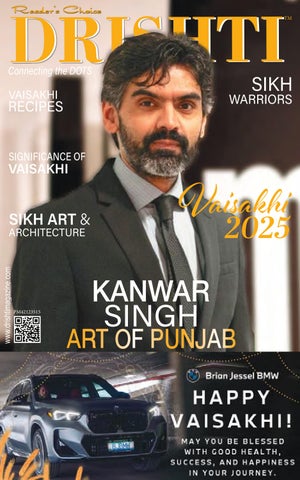
2025 Vaisakhi
KANWAR














DRISHTI
Vaisakhi 2025




e views expressed in the articles of this Magazine are solely of their writers. It is not mandatory or complusary for the Publisher and/or the Editor of this publication to be in agreement with these views. e whole matter in this magazine has been taken from approved and accepted sources, and while publishing the same, every care has been taken, but even in case there is any aw or error, the Publisher and/or the Editor will not be responsible for it. e readers are advised to get all information from the sources directly and not through this magazine. Any reproduction of this magazine, editorial content, images or advertisement
or

in any form, without prior written permission from the Publisher.

• 128 Street and 78 Avenue at Aggarwal Grocery Hub
• Enjoy free slushies, pose for family photos, and more Saturday, April 19 from 9 am to 5 pm
The Significance of
Vaisakhi V
aisakhi, also commonly known as ‘Baisakhi,’ is one of the most prominent and celebrated festivals in the Indian subcontinent, particularly among Sikhs and Hindus. While many people celebrate it because it marks the beginning of the harvest season, not everyone knows that this festival has deep roots and signi cant spiritual, cultural, and historical importance.
Music, traditional attire, food preparation, Kirtans, and togetherness—this Vaisakhi, let’s embrace them all, observed with great
by POOJA VALEJA
enthusiasm and devotion, especially in Punjab,India, and within Sikh communities worldwide.
Let us start by understanding its historical and spiritual signi cance.
e Birth of the Khalsa (Sikhism): is day is
associated with the Sikhs with the creation of the Khalsa, the collective body formed by Guru Gobind Singh Ji, the tenth Sikh Guru, in 1699. Following the initiation ceremony, Guru Gobind Singh Ji established the Khalsa.
He provided its members with the Five Ks (Kesh, Kara, Kanga, Kachera, and Kirpan), which symbolize the core principles of Sikhism. e formation of the Khalsa marked a pivotal moment in Sikh history, emphasizing courage, equality, and sel ess service. Vaisakhi, therefore, serves as a time for Sikhs to remember and celebrate this historical moment while rea rming their faith and commitment to the teachings of Guru Nanak, the founder of Sikhism.
Let’s know the Agricultural Signi cance that also gives it the name- Harvest Festival. e northern Indian subcontinent has vast acres of farms. India is also known as a farmers’ nation.
Vaisakhi marks the harvest season, and for most rural Indians, it is
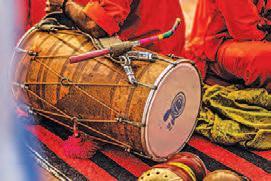
primarily recognized for the ripening of rabi crops, such as wheat, barley, and mustard. Farmers celebrate Vaisakhi in gratitude for a good harvest and pray for future prosperity. In regions like Punjab, this harvest festival is accompanied by joyous celebrations,dances, and rituals that express gratitude for the abundance of the earth’s produce. And when it calls for a celebration, how can Punjabis and Sikhs resist the inviting sound of the dhol and the sacred prayers of the gurudwara?
Traditionally, this day
begins with a visit to the Gurdwara, listening to the Guru Granth Sahib, o ering prayers, and enjoying the delicious langar. Times have changed, and Sikhs and Punjabis are now scattered all over the world.
However, the love and connection with God is so sacred that it cannot be altered. Many countries around the globe, such as the United Kingdom, the United States, Canada, Australia, and South Africa, celebrate this special day beautifully, proudly ying the ag of Khalsa high and keeping their hands ready to help anyone in need.
In today’s modern world, one can still enjoy the celebration of Vaisakhi by embracing traditional practices. Let’s nd out: • Visiting the Gurudwara during Vaisakhi: For most people, this day starts with an early morning visit to the Gurdwara, where the
Guru Granth Sahib is read in a ceremony called the Akhand Path. is ceremony typically lasts 48 hours and concludes with a unique service on Vaisakhi morning.
• Processions and Nagar Kirtans
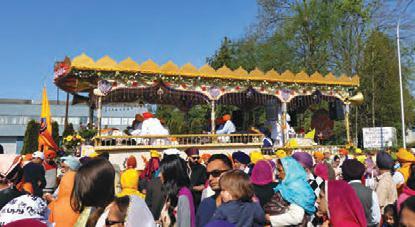
On Vaisakhi, many Sikh communities organize processions known as Nagar Kirtans. ese events feature a procession of the Guru Granth Sahib, led by the Panj Pyare, and are accompanied by music, chanting, and devotional songs. e procession moves through the streets as Sikhs sing hymns of praise to God, rea rming their commitment to the teachings of the Gurus.
• Langar Sikhs from all walks of life, regardless of caste, creed, or social status, gather to
share a nutritious meal. Langar promotes the principles of equality, humility, and sel ess service. On Vaisakhi, the langar symbolizes sharing and community, and many Sikhs volunteer to help prepare and serve the food.
• Sweets and O erings
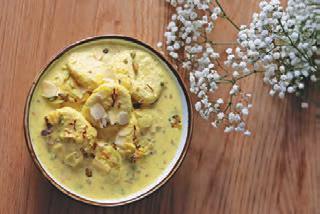
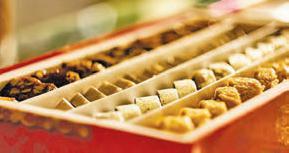
When it comes to celebration, how can Indian households resist preparing sweets? Popular items include kheer, halwa, and other sweets made from rice, jaggery, and fruits. O erings of fruits and Kada Prashad are made in the gurudwara and homes as part of the rituals.
• Traditional Sikh Clothing is vibrant festival demands the most traditional yet colorful clothing. Men o en wear
turbans, and the colors are typically bright, re ecting the joy and vibrancy of the harvest season. Men may wear kurta-pajamas or dhotis, while women traditionally wear salwar kameez, o en in bright colors like yellow, orange, and red, symbolizing festivity and devotion. In India, men wear Pathanis, and women don the traditional Patiala salwar. e men, while performing the traditional Bhangra, they wear tehmats, similar to dhotis. Whether big or small, in India or abroad, at your own home, at a cousin’s place, or even a friend’s place, enjoy this festival as a celebration of independence, courage, and strength in believing that together you will always have success and enjoy the true spirit of the Vaisakhi.
EXTRA SAVINGS CELEBRATE
on traditional tastes

Sikh Art and Architecture
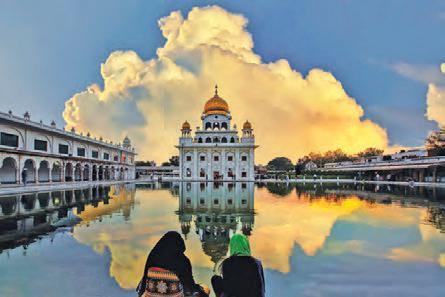
e Harimandir Sahib (Golden Temple):
When coming across the terms Sikh art and architecture, there is one building which seems unanimous in all mindsthe Harimandir Sahib (otherwise known as the Golden Temple), in Amritsar, Punjab. And indeed, art according to the Sikh mind can be seen as culminating through- this amazing structure. Although some have interpreted the Golden Temple as a later form imitating the Mughal style of architecture, what it represents in fact, is both Muslim and Hindu forms of art and architecture, as it truly is the most striking example of the hybridity in terms of Sikhs bringing together the most signicant aspects of Muslim and Hindu styles of architecture. And what are these unique and amazing features?
To begin with, the very crux of the temple itself
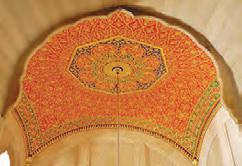
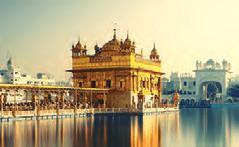
arises from the big tank, or “waters of life” area which was originally located by the rst Sikh Guru, Guru NankDevJi, as being a majestic site for re ection and meditation. From this one spot, the shrine itself sprouted, much like a lotus ower as it is o en described as, upon which its entire glorious re ection can be seen in the crystal clear waters. e exterior of the shrine itself is covered entirely with golden plates and marble, whereas the inside is covered with fresco paintings, detailed designs of art inlaid in marble, of varying textures, colors, and hues. e two storied shrine is topped by a golden dome which is also designed to resemble
the lotus symbol. Once inside, and past the large hall, is where the presence of the Guru Granth Sahib Ji emanates, resting under a fully and gorgeously decorated canopy. And yet, although the golden aspect of the shrine itself is what amazes most, it is the architectural layout of its surroundings which is just as impressive. e entrance gate to the temple for example, which is comprised of the models of Rajput and Bengal Mughal Chhatri style, is 10 feet by 8 feet piece embossed with panels in which the backside is decorated with glorious ivory artwork consisting of images such as birds, lions, tigers, etc. e art itself which is
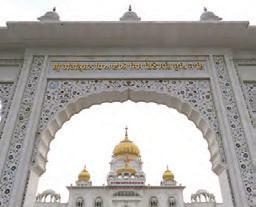
contained within the Golden Temple also re ects the diverse and open nature of Sikhism as it consists of Hindu mythological themes, as well as including Rajput, Persian, and Mughal in uences. It is indeed no wonder that the Golden Temple incorporates such intrinsic architecture and art, all the way down to the minutest details. As the key site for Sikh religious spirituality, its historic beginnings and its gorgeous displays hold deep meaning and connections to Sikhs and even non-Sikhs around the world.
Sikh Gurdwaras:
As can be seen with the architectural layout of the Harimandir Sahib, every gurdwara in the world has its own speci c qualities which are signi cant to Sikhism. One such quality seen in any Sikh Gurdwara is that there are entrances on all four sides, which signify the Sikh belief that
all peoples of the world are welcome in any gurdwara in the world, regardless of their sex, caste, creed, or religion. Just as there are four entrances in a gurdwara, so does each gurdwara contain a “deorhi,” or entrance gateway. e “deorhi” itself is an impressive structure and large in size as it o en serves as an o ce or “da ar.” In terms of the overall shapes of the gurdwara’s around the world, there are four basic shape types: the square, the rectangular, the octagonal, and the cruciform. In terms of overall size in a storey, gurdwara’s can range from one to nine storeys in length. One signi cant quality which all gurdwara’s have is the dome on the very top. Most o en white in colour, the domes sometimes may be outlined in brass or a copper-gilt shielding. In any case, the dome may also sprout from a oral base, much like
Mount Kailasa in the Hindu tradition.
e Five Takhts:
Takht, the Persian word for a throne, refers to the ve Sikh Takhts which represent the Sikh thrones of religious spirituality and authority. Located across Punjab and even Maharashtra, the ve thrones are comprised of the following: Sri Akal Takht Sahib in Amritsar, Punjab; Takht Sri Harmandar Sahib in Patna, Bihar; Takht Sri Kesgarh Sahib in Anandpur, Punjab; Takht Sri Hazur Sahib in Nanded, Maharashtra and Takht Sri Damdama Sahib in Talwandi Sabo, Punjab. ough each of the ve Takhts is a key site for Sikh religious authority, the throne located in Amritsar (and directly across the Golden Temple) holds more precedence as the ultimate site of authority on all issues concerning the Sikh religion.
Initially built by Guru Har Gobind Singh Ji, the Sri Akal Takht Sahib in Amritsar was originally representative of a resistant force to oppressive Mughal forces in the seventeenth century.
Anandpur Sahib Temple and Forts:
Although most think of Sri Kesgarh Sahib when discussing Anandpur Sahib,
there are in fact, a number of amazing structures contained in this city including some key Sikh Gurdwara’s as well as Forts. One of the most signi cant, and well known of these structures, is of course, the Sri Kesgarh Sahib. As one of the ve thrones of the Takht, Sri Kesgarh is indeed a sight to behold. Built in 1699, the massive pure white building was the site for the last living Guru, Gobind Singh Ji’s creation of the Khalsa Panth through the initiation of the “Panj Pyaras.” Inside Sri Kesgarh Sahib, the Sri Guru Granth Sahib is located in the main hall; and behind this main hall, in the middle, and protected

behind a glass, there contain 12 relics associated with Guru Gobind Singh Ji and other Sikh martyrs. Another beautiful Gurdwara in Anandpur is the Gurdwara Guru De Mahal, of which the foundation was laid by Guru Tegh Bahadur Ji. Although the name implies one set structure, the Gurdwara is in fact comprised of a number
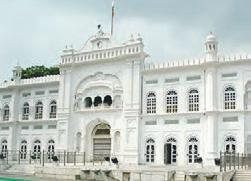
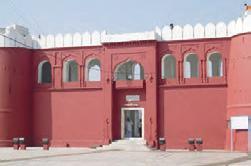
of individual buildings and Gurdwaras including Gurdwara Bohra Sahib, Manji Sahib and Damdana Sahib. In addition to the many Gurdwara’s located in Anandpur, there are also a great number of forts, which each have historical signi cance in themselves. e greatest of these forts, was the Anandgarh Sahib Fort. With the laying of its foundation on March 31, 1689, the fort became the main refuge and living ground for Guru Gobind Singh Ji. Indeed, due to its impressive and solid structure, of which was next to impossible to penetrate, Guru Gobind Singh Ji spent sixteen years amidst this area. Another fort, the Lohagarh Sahib Fort, is located two kilometres away from Sri Kesgarh Sahib and is also considered to be the second most formidable of the Sikh forts. Although during the time of Guru Gobind Singh Ji, the fort was utilized as an arms manufacturing factory, today, the fort
is more a site of peace and tranquility as it now contains gorgeous green elds and a garden. Another important fort, which was built by the tenth Sikh guru, Gobind Singh, Ji, and before it became the Sikh temple Kesgarh Sahib, was the Kesgarh Fort. Much like the Anandgarh Sahib Fort and the Lohagarh Sahib Fort, the Kesgarh Fort was also a site for protection for the Sikh Guru and his Khalsa army during the tumultuous times of wars between the Sikhs and the Mughals. Indeed, because he spent twenty ve years of his life in Anandpur, it was necessary for Guru Gobind Singh Ji to protect himself, his Khalsa army, and all Sikhs in the area.
Haveli:
In addition to the architectural structures of the Sikh gurdwara’s, the simple structure of the village haveli’s an homes are indeed
worth mentioning. ough in earlier times for the Sikhs in Northern Punjab, their homes could be easily described as mud huts, while the elites lived in elaborate haveli’s in modern times. e term haveli can also refer to a simple village home. O en times, the doorway leading to the haveli will be a massive sized door, studded with nails for secure protection, Once inside, the living room for the males re what most visible, whereas the second storey contains the more private rooms for the women, the kitchen, bathroom, etc. At the very top of the house, contains the baradari, which is only useful during festive seasons, weddings, etc. And every room is equipped with windows with netting (jallies), as well as wooden doors. One speci c haveli which demonstrates the
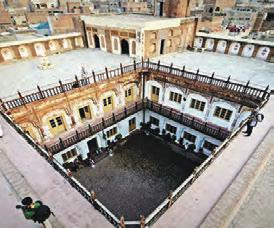
overall beauty of the structure, was that of Naul Nihal Singh’s who was the grandson of Maharaja Ranjit Singh and ruler over the sovereign Sikh empire for a short period of time. Located inside the Mori Gate, Nau Nihal Singh’s Haveli was rectangular in size, although very large overall.
Although the massive four storey structure also included a basement. It was the fourth oor which was most impressive. e fourth oor, otherwise called the “Shish Mahal“, which was in remembrance of, and a duplication of, the palaces of the Mughals. e roof of the haveli is amazingly intricate, as it was divided into a number of geometrical compartments, in which each one was further tted in by a small size mirror. To add further to the roof’s beauty, the middle of the roof was embossed with an image of the sun.
Credits: South Asian Studies Institute, University of the Fraser Valley


AMAR RANDHAWA
A KEEP MOVING FORWARD
n extensive history of working with elected government o cials and serving on various positive community initiatives, has led me to truly appreciate life as a journey, not a destination. e work I do today is my meaning and purpose.
“My healing journey has enabled me to support others nonjudgementally and compassionately.”
by J.M. LEE
My healing journey has enabled me to support others non-judgementally and compassionately. I accepted my struggles and worked diligently to address them, enabling me to assist individuals in living their best lives and connecting with their authentic selves.
ere is no greater joy for me than seeing individuals struggling with addiction or mental health challenges nally nd joy and peace in their lives. I’m grateful to witness rsthand families heal, children having their
“When someone is deep in their struggles, they resist feeling emotions and sometimes numb themselves with harmful coping mechanisms and substances. Addressing past traumas is critical to moving forward in anyone’s healing journey.”


fathers back, parents reunited with their children & renewed relationships with loved ones.
As a certi ed Recovery Coach, I support individuals in identifying and addressing barriers, developing plans that cater to their unique needs, and connecting them with resources to help them achieve their recovery goals. e vast majority of the time, mental health issues and addictions are concurrent challenges. An integral part of my journey has
been the incorporation of mindfulness, meditation, and self-care practices into my daily life. Having received training in various mindfulness modalities, including MindfulnessBased Stress Reduction (MBSR), I’m able to share these practices with hundreds of individuals.
For many individuals, it starts with being vulnerable, learning to manage reactions rather than suppress emotions, and developing self-love. In his book Man’s Search for Meaning, Victor Frankl
states that between stimulus and response, there exists a space, and in that space, we have the power to choose our response.
When someone is deep in their struggles, they resist feeling emotions and sometimes numb themselves with harmful coping mechanisms and substances. Addressing past traumas is critical to moving forward in anyone’s healing journey. In my work, I will identify and incorporate the necessary support for individuals, which may include but is not limited to counseling, nutrition and physical wellness, mindfulness, treatment options, and community connections.
Too many people are struggling in silence. Ego, pride, shame, and community or cultural conditioning prevent

individuals from opening up and seeking the support they need in their darkest hours. Our community stakeholders must continue to unite to break the stigma surrounding mental health and addictions. Connection is vital; genuine relationships make one feel safe and supported. I’m grateful to be part of an army of brothers who are always there to support, upli , and inspire those in need. We have fun, we laugh, we share when we’re struggling, and we can simply be ourselves - at times, that’s all one needs.
My experience working as a Case Manager/ Group Facilitator at Together We Can (TWC), the largest non-pro t addiction and mental health treatment center in Canada, has enabled me to interact closely with clients’ families and their employers. is role has brought a profound


recognition of the need to support the loved ones of struggling individuals. Too o en, families nd it di cult to understand a loved one’s addiction, and fall into the trap of co-dependency, and developing unhealthy boundaries. Part of our work also involves connecting families with the necessary support they might need, such as counseling and support groups. Additionally, I am proud to serve as a board member of the South Asian Community Hub (SACH), which o ers wrap-around services for individuals and families confronting health and social challenges. It truly takes a village.
For anyone struggling
out there, you are never alone. You may think there is no hope, but I’m here to tell you that nothing is permanent, not even our struggles. I learned that I needed to step out of my comfort zone, accept my challenges, ask for help when needed, and be willing to put in the necessary work to improve my life. By confronting our demons, we can move forward by developing a growth mindset—and become unstoppable in pursuit of our goals. Finding purpose in life and being able to help others is truly a gi . If you or a loved one is struggling, please contact me anytime at 604 401 3640 or amar@facilitatingchanges.ca

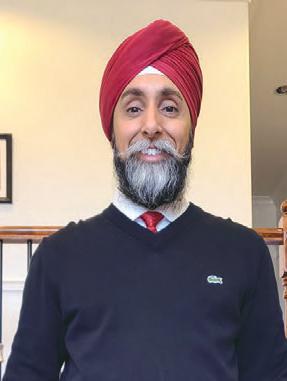
HARMOHANJIT (HARMAN) SINGH PANDHER
A talented writer and storyteller, Pandher is the author of five children’s books that proudly celebrate Sikh and South Asian heritage and contributions to Canada.
TEACHER-WRITER BY PROFESSION, DEDICATED COMMUNITY SERVANT DRIVEN BY PASSION
by J.M. LEE
Harmohanjit (Harman) Singh Pandher was born on December 6, 1976, in Vancouver, BC. e Pandher family
relocated to Burnaby on Christmas Day that same year, and Pandher has made Burnaby his home ever since. He attended Second Street Community School, Khalsa School, and Cariboo Hill Secondary School before earning his
As part of the 2021 BC Multiculturalism and Anti-Racism Awards, the Province of BC honored Pandher with the Intercultural Trust Award for his outstanding efforts in building intercultural trust and reducing racism and hate among communities.

Bachelor of Arts in English Literature and Bachelor of Education degrees from the University of British Columbia, and his Post Graduate Certi cation in Inclusive Education from Queen’s University.
A er completing his student teaching stint at Burnaby’s Capitol Hill Elementary, Pandher was

hired by the Burnaby and Surrey School Districts as a teacher-on-call. He has been a teacher in the Surrey School District since 2002. With over two decades of classroom experience, including 19 years at Beaver Creek Elementary in Surrey’s Newton area, Pandher is now utilizing his skills as a Learning Support Teacher at École Élémentaire KB Woodward in the Whalley area of Surrey. Pandher has also made a tremendous di erence outside the classroom through a long list of community service e orts. He is the co-founder and Chair of the SACH South Asian Community Hub Society. is non-pro t organization helps individuals overcome cultural,
linguistic, and systemic barriers to accessing mental health counseling, addiction treatment, housing support, and other vital services. anks to the e orts of Pandher and the other co-founders, SACH employs a dedicated outreach team that assists community members in need throughout the Lower Mainland. SACH –which also stands for its Safe, Accepting, Compassionate, and Holistic values – has a working partnership with the BC Ministry of Social Development and Poverty Reduction. It has received funding from the BC Ministry of Mental Health and Addictions, which has now been integrated back into the BC Ministry of Health.
Pandher’s community service has been signicantly enhanced by his political involvement. He served as an elected School Trustee from 2011 to 2018 and was Vice Chair of the Burnaby Board of Education. Pandher was the rst turbaned Sikh elected to any political o ce in BC history. Pandher has participated on numerous governmental and community boards, including the College of Massage erapists of BC, the College of Complementary Health Professionals of BC, the Punjabi Language Education Association of BC, the Foundation for a Path Forward, the SONG Creative Mentorship Association of Greater Vancouver, the Burnaby Village Museum Community Advisory Committee, Burnaby Neighbourhood House, Burnaby Multicultural Society, and New Vista Society.
He has received recognition for his exceptional service to the community. As part of the 2021 BC Multiculturalism and Anti-Racism Awards, the Province of BC honored Pandher with the Intercultural Trust Award for his outstanding e orts in building intercultural trust
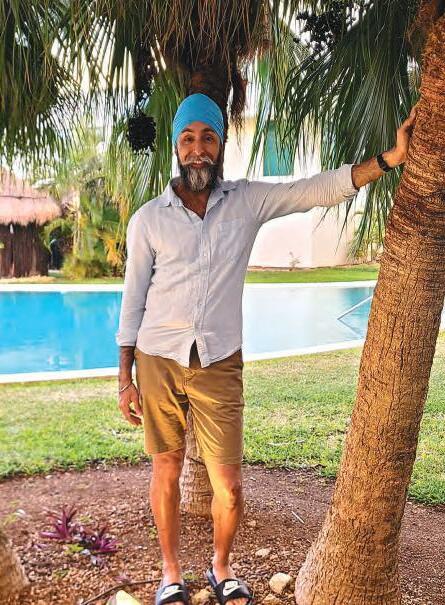
and reducing racism and hate among communities. A talented writer and storyteller, Pandher is the author of ve children’s books that proudly celebrate Sikh and South Asian heritage and contributions to Canada. ese titles include Sugar; Steel and the Maple Leaf: e Poems of a Young Sikh Canadian; Gurpreet Goes to Gurdwara: Understanding the Sikh Place of Worship; Welcome to Paldi: A Place for Everyone; Once Upon the Golden Temple: A Journey to Sri Harmandir Sahib; and I Am Sikh. He is
also a regular writer of educational literacy resources for Pearson Canada.
A rm believer in the positive power of volunteerism and the Sikh concept of seva, Pandher has dedicated countless hours to serving his community. For the past twenty years, he has coached youth basketball, soccer, and badminton, while also raising awareness about critical issues such as mental health, addiction, homelessness, food insecurity, and racism.


BUILDING BRIDGES AND SHAPING POLICIES RAJVIR RAO
by J.M. LEE
Rajvir, one of the rst from BC South Asian women of descent to work for a cabinet minister on Parliament Hill, has spent over two decades behind the scenes as a strategic advisor to policymakers, elected o cials, and
C-Suite executives. She is driven by her passion for bridging divides and understanding how people connect to shape policies. Her dedication to fostering an inclusive and equitable society arises from her early recognition that active
Her involvement with the Young Liberals of Canada at Simon Fraser University provided her with foundational moments to share ideas, develop skills in policy communication, and gain a deep understanding of politics.
participation and advocacy within the system are essential for driving change. She serves as the Intergovernmental Relations and Public A airs Director for the City of Burnaby. Early Challenges and Inspirations
Born and raised in Surrey, British Columbia, Rajvir is a rst-generation Canadian who witnessed her Sikh community facing constant discrimination, racism, and barriers while striving to assimilate. ese experiences inspired her to embark on a quest for advocacy and change. Her involvement with the Young Liberals of Canada at Simon Fraser University provided her with foundational moments to
share ideas, develop skills in policy communication, and gain a deep understanding of politics.
Transformative Projects
In 2000, Rajvir worked as a summer student for Hon. Herb Dhaliwal on the application to support the declaration of the rst Sikh Heritage site in Canada. is project allowed her to connect with many of the rst Sikh families in BC, hear their stories, and learn about their rich heritage. ese experiences resonated profoundly and laid the groundwork for her dedication to public service. e designation of the Gur Sikh Temple in Abbotsford as a National Historic Site of Canada in 2002 marked a signi cant milestone in her early e orts.
A Career of Collaboration Collaborative e orts across various sectors de ne Rajvir’s career journey. She has closely worked with all levels of government and the private sector, including organizations such as Metro Vancouver, Burnaby Re nery, and BC Housing. As a visible minority, her success has involved overcoming signi cant barriers and shattering glass ceilings. Rajvir has developed resilience and determination despite challenges and setbacks,

In 2000, Rajvir worked as a summer student for Hon. Herb Dhaliwal on the application to support the declaration of the first Sikh Heritage site in Canada. This project allowed her to connect with many of the first Sikh families in BC, hear their stories, and learn about their rich heritage.
drawing from valuable lessons and experiences. Community Service and Mentorship
Deeply committed to community service, Rajvir has served as President and as a member of the Board of Directors for the International Association of Public Participation Canada. She currently chairs the Diversity, Equity, and Inclusion Committee at the Burnaby Board of Trade and mentors future leaders through the Leaders of Tomorrow program with the Vancouver Board of Trade.
Educational Achievements and Personal Life
Rajvir holds a BA in Political Science from Simon Fraser University and an MA in Con ict Analysis and Management, also from Royal Roads University. Additionally, she is a Certi ed Executive Coach from Royal Roads University. She is married and a proud mother of two daughters, Reha and Indi. Rajvir’s inspiring journey from advocacy to leadership highlights her commitment to creating inclusive spaces for minority groups in key policy decisions and promoting equity through dedicated public service.

K EMPOWERING THE YOUTH THROUGH VISIONARY LEADERSHIP KANIKA MEHRA
anika Mehra, with over seven years of experience in the nonpro t sector, is a passionate and visionary leader dedicated to empowering youth and promoting equitable opportunities within marginalized and
by J.M. LEE
underserved communities. Central to her work is a profound belief in the potential of young people and the transformative power of inclusive, community-centered programming.
Since joining Progres-
sive Intercultural Community Services (PICS) in 2018, Kanika has been central in developing and expanding youth-focused initiatives that address immediate needs and long-term growth. Her work is rooted in a
commitment to equity and social impact, ensuring that services meet the unique challenges faced by immigrant, racialized, and low-income youth.
rough her leadership, programs are designed to respond to barriers and build bridges—toward education, employment, and meaningful social participation.
Kanika leads several impactful initiatives focused on career development, mental wellness, leadership, and community engagement. Her programs equip youth with essential tools—from job readiness training and resume development to mentorship, life skills workshops, and access to professional networks.
ese services are especially vital for those facing systemic challenges, including newcomers, racialized youth, and young people disconnected from traditional support systems. By centering youth voices and experiences, she ensures the programs are culturally responsive, accessible, and empowering.
Her work also emphasizes social-emotional development, recognizing that success involves more than academic or
Her leadership combines operational excellence with a steadfast sense of purpose rooted in her own lived experiences and a profound understanding of the communities she serves.
professional achievement. rough resilience-based workshops and mental health support, participants are encouraged to explore their identity, manage stress, and build con dence. is holistic approach re ects Kanika’s broader vision—to nurture the whole person, not just their career path. Community connection is at the core of everything she does. Kanika actively collaborates with schools, local employers, government partners, and grassroots organizations to ensure that programming re ects the needs and aspirations of the youth it serves. Whether through communitybased service learning, volunteer pathways, or peer mentorship opportunities, she fosters environ-
ments where young people feel recognized, valued, and supported. Beyond programming, Kanika strategically contributes to PICS’s business development e orts. Her ability to forge strong partnerships, secure funding, and advocate for youth-centered policies has facilitated the ongoing growth and sustainability of the youth portfolio. Her leadership combines operational excellence with a steadfast sense of purpose rooted in her own lived experiences and a profound understanding of the communities she serves.
Holding several professional designations such as PMP, PMI-RMP, PMI-PBA, and PMI-ACP, Kanika o ers strategic insight and practical execution. Her leadership style is collaborative and empathetic, rooted in authenticity and a steadfast commitment to social justice.
Kanika Mehra is not only creating programs; she’s cultivating spaces for transformation. rough her work, she helps build a generation of empowered, future-ready youth who will lead, in uence, and upli the communities that raised them.




LALI PAWA
LEADING WITH HEART, MOVING WITH PURPOSE
by J.M. LEE
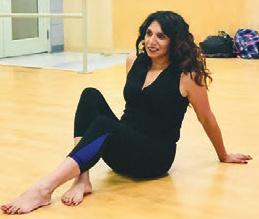
Lali Pawa is a woman of many talents—a community leader, legal director and advocate, educator, dancer, and, above all, a devoted mother. One central commitment has guided her life: ensuring her
children always feel loved, supported, and empowered. Her children have remained her greatest priority and proudest accomplishment throughout her journey. Every step she has taken—whether in
One central commitment has guided her life: ensuring her children always feel loved, supported, and empowered. Her children have remained her greatest priority and proudest accomplishment throughout her journey.
service of her community or in pursuit of her passions—has been deeply rooted in love and the desire to create a nurturing legacy for her family. Currently, Lali serves as the Executive Director of the South Asian Legal
Currently, Lali serves as the Executive Director of the South Asian Legal Clinic of British Columbia (SALCBC), where her leadership is having a significant impact.
Clinic of British Columbia (SALCBC), where her leadership is having a signi cant impact.
SALCBC acts as a lifeline for many South Asian communities confronting systemic and cultural barriers to justice. Under Lali’s guidance, the clinic o ers accessible and culturally sensitive legal support on issues including family law, child custody, domestic violence, racial discrimination, workers’ rights, mental health, and more. Before her current role,
Lali spent over 17 years at the Justice Education Society as the BC Program Manager and Team Lead. In that position, she led teams focused on legal literacy and civic empowerment, helping individuals throughout British Columbia understand their rights and responsibilities within the legal system. Her commitment to accessible education and community empowerment has garnered her the respect of colleagues, partners,


and clients.
In addition to her legal and community work, Lali is deeply committed to promoting Sikh education and cultural awareness. As a proud Sikh, she previously served as the BC Coordinator for the Sikh Research Institute (SikhRI), where she organized and facilitated workshops and events to


enhance the understanding of Sikh heritage, values, and history. She remains actively involved in initiatives that deepen community engagement and help younger generations connect with their identities and traditions. For Lali, these e orts are not only about education—they are about honoring her roots and ensuring that the beauty and richness of Sikh values are preserved and celebrated.
Lali’s soul shines on the dance oor beyond her professional work. She is the Founder and Artistic Director of Rangeela Dance School, one of Canada’s rst Bhangra and Bollywood fusion schools, which she established in the 1990s. Rangeela has become a vibrant hub for cultural expression and creativity, with locations across the country. Lali has taught thousands of students, mentored performers, and judged competitions throughout North America. Her classes combine traditional South Asian dance forms with modern movement, and she continues to teach Bhangra and Bollywood tness with the City of Surrey and the YMCA. She also possesses extensive experience in Classical, Jazz, Hip Hop, Contemporary, and Ballet styles.
rough her dance classes, legal advocacy, and educational initiatives, Lali nds ful llment in work that makes a di erence. She lights up when helping others—whether it’s a client navigating a legal crisis, a student learning their rst routine, or a young person discovering pride in their cultural identity. Her drive stems not from recognition but from purpose—from the knowledge that she is upli ing others, building community, and living her values.
Lali Pawa is a woman who navigates life with strength, intention, and compassion. Her journey is a beautiful blend of service and self-expression, always rooted in her deep love for her family and community. Whether she is advocating for justice, preserving cultural heritage, or sharing the joy of dance, Lali inspires everyone around her—with her achievements and her heart.



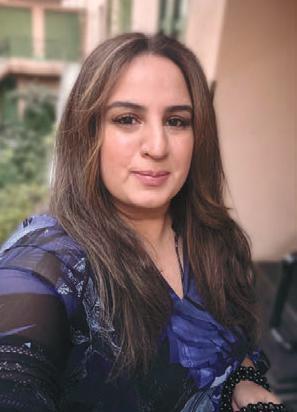
KIRN GILL
THE ART OF PERSEVERANCE: A JOURNEY TO SELF-DISCOVERY THROUGH PAINTING
by J.M. LEE
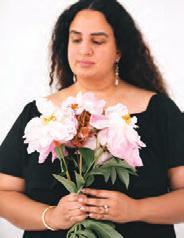
For Kirn Gill, art has always been a signicant part of her identity. Growing up in an immigrant family, she never viewed art as a viable career. Her family couldn’t understand what
a career in art would like it, and the world of art seemed unattainable. Yet, from a young age, she was drawn to painting, discovering moments of tranquility in her creativity.
“Showing up for yourself is essential to artistic success.
“It’s about mastering your craft, believing in your dream even when no one else does, and overcoming fear, doubt, and anxiety.”
“I didn’t know any artists, especially not Indian artists, and I had no one to show me that art could be a career,” she re ects. “Yet, I always had this quiet longing to create.”
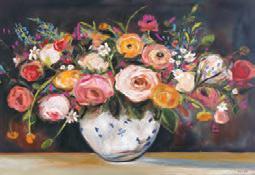
Today, Gill is an accomplished artist recognized for her landscapes and floral paintings. Her work is featured in high-end home decor shops and partners with interior designers. She channels her passion using oil and acrylic paints, believing art should evoke emotions—excitement, passion, or calm.

DRISHTI

As a woman of color, Gill’s experience in the art world was shaped by the absence of representation. ere were no faces like hers in the spaces she admired, making it di cult to believe she truly belonged. Over time, she learned that representation isn’t merely about seeing someone who
resembles you—it’s about understanding that anyone, regardless of background, can create and thrive.
Today, Gill is an accomplished artist recognized for her landscapes and oral paintings. Her work is featured in home decor shops and partners with
interior designers. She channels her passion using oil and acrylic paints, believing art should evoke emotions—excitement, passion, or calm.
“I want my art to upli people somehow,” she says. “Art should always evoke emotions.”
Despite her love for

art, Gill’s journey was not straightforward. Although she dreamed of attending Emily Carr University of Art and Design, she found the idea of being in an environment where no one resembled her—intimidating. Consequently, she pursued a history degree and aspired to become a teacher.
“I didn’t believe in myself,” she admits. “I didn’t see anyone who resembled me in the art world, so I remained in the background.”
Life had a di erent plan, however. At an art exhibit, she met her husband, and through him, the art world began
to open up. Initially, she painted only once a year while accompanying him to galleries. Gradually, she tapped into her own creative vision—an energy that had been dormant for years.
“ e shi occurred when I recognized that I had my own voice, a vision I hadn’t allowed myself to express,” she says.
Becoming a mother marked another turning point. rough self-reection, Gill discovered the strength to pursue her artistic dreams. A pivotal moment occurred when she walked into Michaels and allowed herself to invest in high-quality art
supplies. is small decision solidi ed her belief in herself as an artist. “I realized I could be an artist and never looked back.”
Gill emphasizes that showing up for yourself is essential to artistic success. “It’s about mastering your cra , believing in your dream even when no one else does, and overcoming fear, doubt, and anxiety.”
Despite balancing family and career challenges, Gill has discovered ways to manage both. She dedicates her weekends to her children while nurturing her passion. Her work is now showcased across Vancouver and Vancouver Island, a testament to her perseverance and self-belief.
“Becoming a mother has taught me a great deal about sel essness and love,” she says. “However, I also hope to demonstrate to my children that anything is possible, even if their path doesn’t resemble anyone else’s.”
Gill’s journey demonstrates that anyone can forge their own path, regardless of background, with belief, persistence, and courage.


RIDGECREST DAIRY:
A COMMITMENT TO QUALITY AND COMMUNITY
by SURBHI GOGIA
“Suppose you’ve ever wondered why the paneer at your favorite restaurant tastes more affluent and authentic than what you make at home. In that case, there’s a good chance it’s Ridgecrest’s “white magic” that makes the difference.”
A
t a time when Canadian businesses faced economic uncertainty, there has never been a stronger call to support homegrown enterprises. While recent trade tensions have fueled renewed interest in buying local, some businesses have long championed this philosophy. Ridgecrest Dairies Ltd., based in Mission, British Columbia, is a testament to Canadian cra smanship, producing
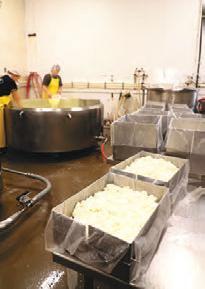
high-quality, all-natural dairy products from local farms. Ridgecrest Dairy is synonymous with premium dairy production, specializing in artisan paneer, ghee, and yogurt. Staying true to its commitment to quality, the company takes pride in o ering products free of arti cial additives, allowing the natural avors of milk to shine.
is dedication to purity is perhaps best exempli ed in
“Our specialty is producing all-natural dairy products from non-homogenized whole milk,” explains Steve Saccomano, one of the company’s three owners.

their paneer, a staple ingredient in Indian cuisine. Suppose you’ve ever wondered why the paneer at your favorite restaurant tastes more a uent and authentic than what you make at home. In that case, there’s a good chance it’s Ridgecrest’s “white magic” that makes the di erence. e paneer is directly supplied to restaurants from Mission to the Lower Mainland.
Ridgecrest refuses to cut corners by eschewing modi ed milk ingredients, gums, starches, and stabilizers to favor milk’s pure, unaltered avor. “Our

restaurants, and customers come to us. ere’s always a market for high-quality, artisan-style products. We are not a large company with hundreds of employees. We are a relatively small operation with 15 employees, but we serve our niche market.”
specialty is producing all-natural dairy products from non-homogenized whole milk,” explains Steve Saccomano, one of the company’s three owners.
Ridgecrest Dairy has been in operation for almost four decades. Saccomano’s journey with Ridgecrest began ve years ago when he acquired the business from the Verdonk family. With a background deeply rooted in dairy farming, he recognized an opportunity to build upon the operation. “ e company we purchased was already established, and we saw the potential to expand it. We sell directly to
Steve’s journey from dairy farmer to dairy plant operator resembles cra ing artisan cheese, blending tradition, science, and patience to create a masterpiece. e tradition in Ridgecrest Dairy’s operations stems from the values of hard work he learned from his family, who owned a dairy farm in Ontario. e practice of creating artisan products is inherited from his Italian grandparents, who lived on the same farm as his family. Growing up on a farm in Ontario, Saccomano cultivated a strong work ethic, learning the importance of dedication and
teamwork. “Back then, dairy farming was labor-intensive—everything was done by hand. Cleaning barns, feeding cows, carrying buckets—it instilled a deep passion for the industry,” he recalls.
Beyond tradition, Saccomano brings a scienti c approach to dairy processing. With a background in business management, animal science, and agricultural nance, he has dedicated over three decades to helping farmers thrive. A er relocating to British Columbia in 1989, he collaborated with BC’s Dairy Herd Improvement Association. He later engaged in agricultural nance, advocating for sustainable farming practices.
“Agriculture is vital to our economy and community,” he states. “Farming is essential to our identity, with more than 65% of Chilliwack’s land safeguarded in the Agricultural Land Reserve (ALR). I have collaborated closely with the Chilliwack Economic Partners Corporation (CEPCO) to enhance the economic bene ts of agriculture in our region.”
As Canadian farmers face economic uncertainties, Ridgecrest Dairy stays
resilient by prioritizing local sourcing and distribution. “We anticipate and hope for minimal impact from international tari s, due to the fact that many of our suppliers are locally sourced,” Saccomano notes.
Ridgecrest has established a strong presence in the South Asian market. It ramps production ahead of Vaisakhi to satisfy the growing demand for paneer, yogurt, and ghee. e company also actively participates in community events, including sponsoring Vaisakhi luncheons.
Beyond business, Saccomano’s commitment to community extends to his work in autism advocacy. As the father of a son diagnosed with autism, he understands the challenges families face. is inspired him to found
Agriculture for Autism. Over the past 16 years, this foundation has raised over $1 million to support families in the Fraser Valley.
“We o er essential services such as early childhood programs, young adult support, and parent groups right here in Chilliwack,” he explains. “What began as a simple walk for autism has evolved into a community-wide initiative, including a golf tournament, shing derby, and more.”
With steadfast dedication to quality and community, Ridgecrest Dairy sets a standard for Canadian businesses. As economic landscapes shi , the company stays committed to sustainable practices, local partnerships, and artisanal excellence.
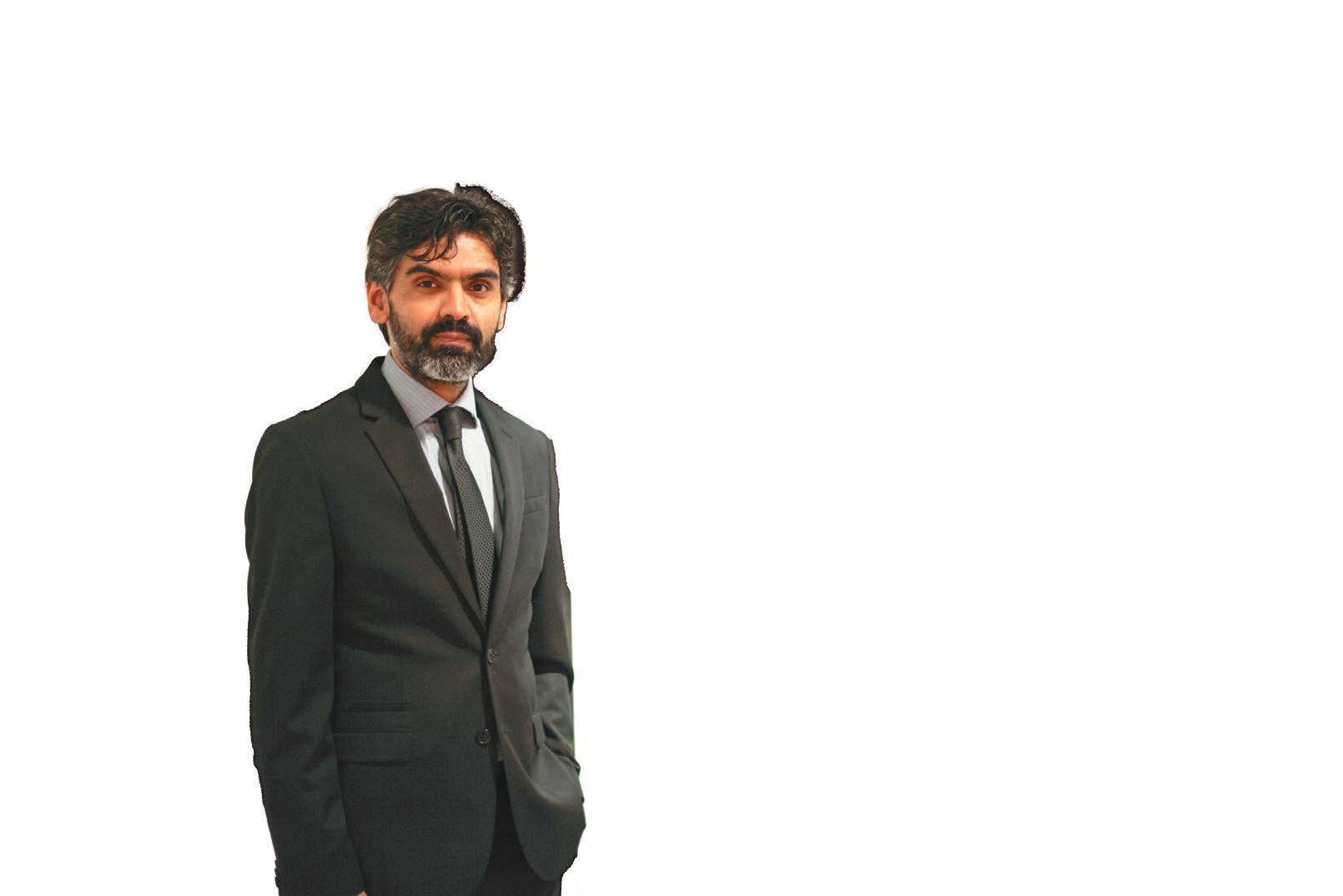
KANWAR SINGH ART OF PUNJAB
“The concept of Miri Piri in Sikhism is central to all of my work; my art is as political as it is religious because in Sikhism both are intertwined out of necessity.”
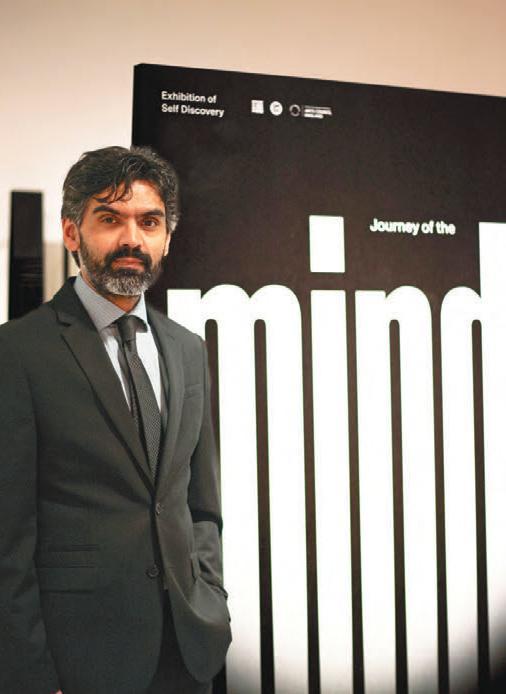
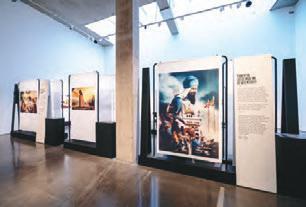
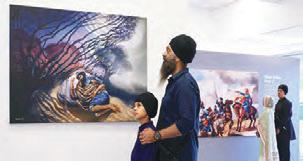
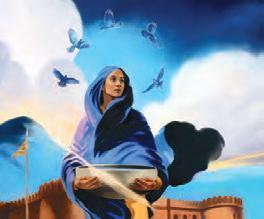
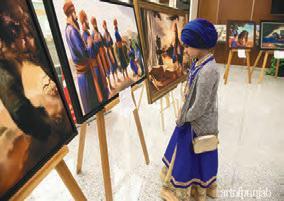
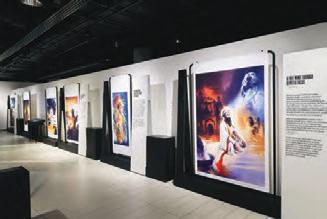
Kanwar Singh is globally recognized as a painter of Sikh history. His paintings have been exhibited in prominent galleries worldwide, including the Virasat-e-Khalsa Museum in Punjab, the Arnol ni Art Gallery in Bristol, UK, and a permanent exhibition in Slough, England, which
by J.M. LEE
houses over 40 of his works in a 7,000-squarefoot gallery space. Kanwar launched his company, Art of Punjab, in 2006 with a resolve to create a comprehensive body of artwork focusing on the history of the Sikhs, starting with the life of Guru Nanak, the founder of the religion. His paintings encompass
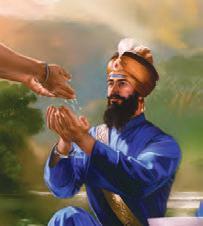
ve hundred years of history, focusing on the lives of the ten Sikh Gurus, the creation of the Khalsa, and Sikhism’s many great heroes, past and present, such as Baba Deep Singh, Mai Bhago, and Jaswant Singh Khalra. He captures quintessential moments that, over centuries, have forged a dynamic Sikh community,
“I was born in Punjab, but my family migrated to England when I was seven and then to Canada when I was seventeen. I lost my connection to my origins, and in the West, I always felt like a guest in someone else’s culture and history.”
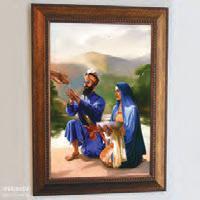
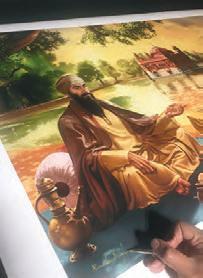
from its humble origins in Punjab to its current political and spiritual standing as the world’s h-largest religion. e artist continues to build a legacy of work that gives Sikh history a prominent place on the walls of our homes and in the hearts of future generations. e artist expresses that his primary motive was to create artwork that evokes a stronger sense of
cultural and spiritual identity connected to historical roots for anyone who identi es as a Sikh, regardless of where they live. Kanwar Singh shares, “I was born in Punjab, but my family migrated to England when I was seven and then to Canada when I was seventeen. I lost my connection to my origins, and in the West, I always felt like a guest in
Photo credits:Silk Road Production
Kanwar Singh has always been grateful to the many people who have supported his journey as a Sikh artist and hopes to continue that work for as long as he can, since Sikh history offers him many incredible subjects he has yet to explore.
someone else’s culture and history.”
Although today the artist considers himself a proud Canadian living and working in Toronto, his artistic fascination with Punjab stems from his family’s deep Sikh roots, which trace back to Guru Arjun Dev Ji, the h Sikh Guru who completed the construction of the Harimandir Sahib and compiled the rst complete Sikh holy text, the Adi Granth.
“My father’s family is from the village of Kot Dharam Chand Klan, near Taran Taran. He has traced

our ancestry back to a gure named Manas, along with his son Kapoor and his grandson Ladha, who were all devotees of Guru Arjun. ey were local farmers who did seva in the construction of the sarovar
at Gurudwara Taran Taran a er Guru Arjun purchased the surrounding land for the establishment of a new Sikh community there.”
e artist grew up in Amritsar and the nearby village of Jalalabad. He










spent considerable time at his maternal grandparents’ farm and recalls visiting Goindwal Sahib (established by Guru Angad) and Kahdoor Sahib (established by Guru Amar Das).
“My mother would take me to Goindwal Sahib and Kahdoor sahib regularly and when
we lived in Amritsar, one of my earliest memories is taking part in the Kar Seva at Harimandir Sahib when the sarovar was drained and cleaned.”
Like many Sikhs, his family le Punjab a er the events of Operation Blue Star and the worsening of the political situation in Punjab.
“My father worked abroad but owned a hotel very near Harimandir sahib, which my grandfather helped to run. We lived in an area called Lawrence Road and we were well established in the city, but everything changed a er 1984. I only have vague memories of that time but I remember that my mother and I were afraid to leave our house for a week and we had little food and water, until eventually my grandfather was able to come get us and take us to the village.”
e events of 1984 le a strong impression on the artist and have been a driving motivation in his paintings which have strong political undertones running alongside the spiritual themes.
“ e concept of Miri Piri in Sikhism is central to all of my work; my art is as political as it is religious because in Sikhism both are intertwined out of necessity. If I create a painting of Guru Arjun giving the people the gi of the Adi Granth, a text in the common
language of Punjab, it speaks to freeing peoples’ connection to their religion from the grip of a priesthood who up to then jealously guarded understanding of all Indian religious texts by keeping them in Sanskrit, a language only the priestly caste were allowed to learn.
e same goes for paintings of Sikh Saheeds such as Baba Banda Singh Bahadur who fought for our Sovereignty or Jaswant Singh Khalra who died defending human rights.”
e artist continues to work on new projects and exhibit his art internationally. Since the launch of the permanent gallery in Slough, his work has been presented as a traveling exhibition across the UK at the Kelvingrove Art Gallery and Museum in Glasgow, Arnol ni Art Gallery in Bristol, e New Art Exchange in Nottingham, and Cromwell Place in London. e next planned shows will take place across
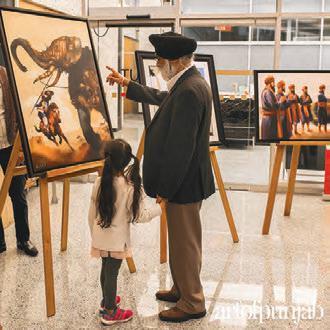
North America, with the rst stop in New York City. In addition there are several Gurdwara’s who have supported Kanwar Singh’s artwork with prominent displays at the Gurdwara Singh Sabha East London, Gurdwara
Siri Guru Gobind Singh Ji in Telford UK, Gurdwara Sahib, Leamington & Warwick, Guru Nanak Gurdwara Smethwick and many others.
Kanwar hopes that his art will be a vehicle for Sikhs to explore their own
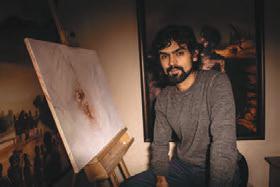
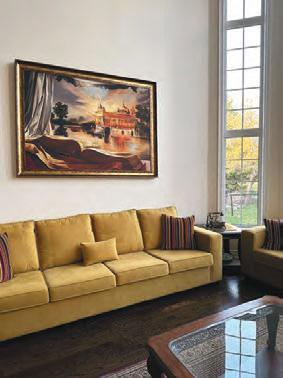
rich heritage as well o ers an opportunity for non-Sikhs to learn what Sikhism o ers all of us as religious and cultural identity in the world. As well as creating the art, the artist takes a hands on
approach to every print that he creates.
“A er I nish a painting, my next goal is to create a uniquely beautiful ne art print. I carefully select the best paper and canvas types to
suit my classical style of painting. I then personally print every piece in my studio using the highest quality inks so that colours are as rich and vibrant as the original painting. I’m honored when people give a place in their home to my creative visions and I do everything in my power to give them something unique which they can treasure, including limited edition canvas prints which I hand sign. To me this goes back to the Sikh principle of Kirat Karni, to work hard and honestly, and thank the people who have enabled me to spend my life working as an artist.’
Kanwar Singh has always been grateful to the many people who have supported his journey as a Sikh artist and hopes to continue that work for as long as he can, since Sikh history o ers him many incredible subjects he has yet to explore.
To see the artists’ full collection of art and available ne art prints, you can visit his online gallery at artofpunjab.com.


Show featured an impressive roster of manufacturers, dealers, and commercial and retail businesses, showcasing custom builds and in-store displays. Over 300,000 square feet of display space spanned a packed lower Exhibition Hall, Level 1 entry displays, and Jack Poole Plaza. Featured attractions
to exclusive showcases, these elements brought the event to life and cra ed unforgettable moments for car enthusiasts and families. ey were designed to inspire, educate, and entertain, transforming the Vancouver Auto Show into more than just a display—it was an elevated experience!




















ARIES
(March 21 - April19)
is period will be fruitful for Aries. At the outset, the Sun, Saturn, Rahu, Mercury, and Venus are aligned in your twel h house, indicating promising prospects for international travel. You should also anticipate an increase in the number of journeys. However, you might experience an unexpected rise in spending, which could present challenges. Furthermore, physical

TAURUS (April

GEMINI
(May
You will have an excellent time during this period. On the one hand, the presence of ve planets—Sun, Mercury, Saturn, Venus, and Rahu—in your eleventh house—will create a Panchagrahi Yoga, indicating a substantial rise in your income. Financial gains from various sources may even surprise you. In your romantic relationships, with their ups and downs, you might develop an interest in Geminis may face uctuations. Mars will be in your sign, which might make you more irritable. Managing this tendency is essential, as it could create business and personal relationship issues. Mars will transition into your second house around the third, its debilitated sign, Cancer. is could lead to bitterness and anger in your speech, so keeping this in check is crucial; otherwise, you might encounter additional
778-891-4965
issues could jeopardize your health, so exercising caution is essential. You may also need to travel for business purposes. Expect changes in romantic relationships, while marriage may face di culties. Lord Jupiter will be in your second house, bringing good fortune to your family. He will then aspect your sixth, eighth, and tenth houses, which could help ease tensions
20 - May 20)
more than one person. is may be less favorable for marital relationships as your partner’s health declines. Still, love in the relationship will remain strong. Family life will bring feelings of contentment and satisfaction. Your health should generally be good, but be attentive to minor health issues. is period could pose signi cant challenges for students. For those who are employed, it looks promising. Individuals in business may
21 - June 20)
complications. e in uence of nearly six planets in the fourth and tenth houses may also put extra strain on family life. Jupiter’s aspect on the fourth house will assist in managing speci c situations. While you may face more expenses, your nancial situation should improve in the latter half of this period due to anticipated revenue growth. Ignoring health concerns could lead to more serious problems later, so address them. is period

with opponents, eliminate challenges, cultivate enthusiasm for religious activities, and lead to favorable job outcomes. Mars will begin in your third house but transition to your fourth house in Cancer, its debilitated sign. is shi could create tension in family relationships and potential health concerns for your mother.
identify pro t opportunities. You might need an excellent mentor to help you overcome your challenges. When your wishes come true, you’ll feel happy and gain self-condence. With Jupiter in your sign, all your endeavors will likely thrive, bringing you joy and many bene ts. Later in this period, you might achieve success in overseas travel endeavors. Wow, what a grand time for you all…best wishes!
will pose many challenges for students, and success will come only with substantial e ort. It’s wise to proceed with caution regarding work and business matters. However, on a positive note, the lord of fortune in the tenth house will yield results akin to Rajyoga. is timeframe o ers opportunities for international travel, so if you’re hoping to go abroad, prepare yourself and keep working hard; you could achieve success.

CANCER (June 21 - July 22)


According to the stars, Cancerians may encounter mixed fortunes during this period. Jupiter will be in your eleventh house, enhancing your luck by in uencing the h, seventh, and ninth houses. ere is a fair chance of making money with enough luck. Your romantic relationships will also bene t from this time, providing peace. Moreover, as Jupiter alleviates marital di culties, Leos should expect some ups and downs. e Sun, Saturn, Rahu, Mercury, and Venus will all be in your ninth house at the start, which could adversely a ect your health. While you may experience some unexpectedly positive changes, staying vigilant about your health is crucial. Mars will reside in the eleventh house at the beginning of this period and will move to the twel h house on April 3, leading to Virgo, this period could yield average results. Ketu will remain in your sign, and at the start, the Sun, Mercury, Saturn, Venus, and Rahu will all occupy the seventh house. us, you may face challenges at work. According to the April-May Horoscope 2025, marital relationships could experience tension and con icts. You and your partner may encounter health issues, which might
the bonds between spouses will strengthen. ere are promising signs of growth in the business sector, and long-distance travel is likely to pay o handsomely during this time. Students looking to study abroad may nd the opportunity they desire. is timeframe may also be bene cial for individuals preparing for competitive exams. Financially, it looks promising, though your father may have health
LEO (July23 - August 22)
higher expenses and a greater focus on your well-being. ere is a possibility for extended travel, even international trips. e Sun will enter your ninth house on April 14, enhancing your honor and reputation. You may achieve a notable status in society, recognized or celebrated during this time. Your social standing will improve due to the Sun’s placement, increasing your in uence and status. Your
VIRGO (Aug 23 - Sept 22)
a ect your mood. However, this period holds promise for love relationships. You will likely strengthen your bond and advance toward marriage. e time will be advantageous for those employed. However, many challenges lie ahead, and progress can only be made by confronting and overcoming them. ose in the business sector may also face numerous di culties. With several planets in the seventh house creating
concerns. e planetary transits could a ect your relationships with siblings and even lead to health issues for them. You might also experience ups and downs regarding your health. During this period, you could successfully travel abroad and are likely to succeed in purchasing a signi cant property. You will have the support of senior o cials in your professional life, which will be advantageous.
role at work will strengthen, but business people should be cautious, as challenges may persist. Avoid legal issues. In marital relationships, problems may occur, and your relationship with in-laws is stormy. Romantic relationships may face obstacles, but improvements are anticipated later. is period might present nancial challenges, but students are likely to achieve success in their studies.
disruptions in business, it’s wise to avoid con icts with multiple business partners. Instead, aim for more professional, peaceful meetings and friendly discussions to further the business. is period will prove demanding for students. You may embark on a journey right from the onset of this period. Your nancial situation is likely to remain favorable. Make sure to maintain excellent marks.

LIBRA (Sept 23 -
Oct 22)


Libras should exercise caution. e ruler of your sign will remain in the sixth house throughout this time, along with the Sun, Mercury, Saturn, and Rahu, which could cause some illness. is may result in physical issues and illnesses that could trouble you. You should be vigilant, as this is a nancially challenging moment due to the likelihood of increased expenses. e upcoming is period is expected to be slightly favorable to you, but in other cases, take some caution. Rahu, Mercury, Venus, Saturn, and the Sun will be in the h house from the beginning of this period, with Ketu in the eleventh. You can expect a signi cant gain in your income, which will enhance your nancial status; nevertheless, health di culties, particularly Sagittarius, expect mixed results during this period. At the beginning, ve planets—Rahu, Mercury, Venus, the Sun, and Saturn, will be in your fourth house. is may lead to some dissatisfaction within the family. Ketu will be in the tenth house, which could result in a lack of focus at work, potentially causing problems. ose involved in business might experience uctuations, as Mars will be in the seventh house at the
period is favorable for married individuals, allowing you both to enhance your marital life. However, this time might be tough for those in romantic relationships. Your love life may remain problematic, requiring signi cant e ort to maintain your relationship. For those employed, this period may prove to be challenging. It’s crucial to stay alert at all times to prevent any issues. Entrepreneurs can
SCORPIO (Oct
23 - Nov 21)
those involving the digestive system, may arise. Marital relationships will improve, with spouses expressing greater harmony and understanding. According to the stars, love relationships might encounter shi s. Sometimes, your relationship feels lovely and romantic, but troubles can occur. You may develop an interest in more than one person, causing tension in your relationship. Relations
SAGITTARIUS (Nov
22 -
Dec 20)
start of this period and will later move to the eighth house. Be extra mindful of your health. Regarding marital relationships, you may encounter trials from the outset, and your spouse’s health issues may create additional concern. is time is expected to be favorable for romantic relationships. You will openly express and accept your feelings towards your partner. Your romantic relationship may lead to marriage; sometimes, you
look forward to successful outcomes and growth in their business pursuits. It is advisable to remain cautious, as this period might continue to present nancial di culties. is could also be a demanding time for students, so you should dedicate yourself and focus on your studies. Nevertheless, those aspiring to travel internationally have a strong chance of achieving their goals and realizing their ambitions.
between families are likely to be positive during this period. To succeed, students must devote their full attention to their academics. ose currently employed may experience a change in work, which may lead to a better career opportunity. ose in business should have successful periods with high income from their operations. Students looking to travel overseas may be successful in their endeavors.
might even nd yourself in a secret relationship. Financially, this period is likely to be average. e rst half may see an increase in spending. Still, the second half could also raise income, improving your nancial situation. Students are expected to experience ups and downs. Steady and ongoing e orts, along with hard work, are likely to bring you success. Foreign travel is also possible, so you must prepare for that.






CAPRICORN (Dec 21 - Jan 19)
e stars indicate a lucrative period for Capricorns, and you may achieve signi cant success in various areas. You will engage in religious activities with Ketu in your ninth house. Signs of possible pilgrimages may lead you to temples or sacred sites. Since your sign lord, Saturn, is in your third house, you might feel laziness; however, if you remain proactive, you can maintain your health.

Nonetheless, you should be prepared for any health issues that may arise. For those who are employed, positive results are anticipated. You should manage your workplace behavior and strive to perform at your best. For business owners, this period is expected to be average. If you can control your anger, you can accomplish much and see growth in your business. Financially, you will do well,
AQUARIUS (Jan 20 -
is period will be ideal for you, Aquarius, on money matters. Still, caution will also be necessary in other areas. An indication of both good and bad times with your family. A family member’s health could decline. Financial gains are in store for you, while those employed should be wary of any conspiracies and may nd success in e orts to change jobs. is month is expected to be favorable for those in

PISCES (Feb
Feb 18)
business, with signi cant progress in your work. Keep putting in the e ort on your part. is indicates that students will experience ups and downs throughout this period. Many situations will continue to pose challenges to your academic pursuits. You must take fresh actions daily to overcome these challenges; only then can you expect your education to progress positively. ere will also be variations in
19 - March 20)
According to the stars, those born under the sign of Pisces will likely experience some elevator rides of non-stop ups and downs during this period. From the start, a planetary alignment involving ve planets, the Sun, Mercury, Venus, Saturn, and Rahu, will be present in your sign, bringing joy and challenges. You may encounter changes in your health and behavior. Additionally, there may be ongoing con ict in your
marriage that requires signi cant e ort to resolve. Regarding romantic relationships, this period seems weak; however, with the grace of Jupiter, marital relationships could eventually improve. ere could be favorable conditions for starting new business ventures. You can initiate a new business or introduce new activities that bene t your existing business. Workers can expect full cooperation
facing fewer economic challenges and lower expenses. Your family will likely be peaceful and happy, although your attitude could cause some issues. is period will favor love, and you may meet someone new. For married people, the month could be challenging for you. Con icts and disputes could arise. Students should anticipate excellent results in their studies.
married relationships. Health issues could disrupt you and your spouse. In particular, your spouse may face health problems, so be sure to take care of them. Family interference might a ect romantic relationships. You may gain new insights from your close friends regarding this matter. Stay focused on managing your relationships. ere’s a possibility of going overseas a er the rst week of April.
from their colleagues, leading to improved output. In this context, you can establish a strong and advantageous position in your work, which could o er substantial bene ts. is period will be nancially reasonable, especially in the second half, which may bring good news. Students might face challenges and need to prioritize their health. Family life will likely remain a mix of sweet and sour.






Ragas
While attending a sermon at any Sikh temple throughout the world, one will bare witness to the tradition of ragas while listening to kirtan (the singing of the Guru’s sacred hymns). Ragas speci cally set the guidelines and rules as to what directions notes should be taken and whether they should be bent, etc. e scale according to the ragas consists of ve, six, or seven tones. And during a normal day of Sikh congregation at any gurdwara, there will o en be a speci c raga for the morning, a ernoon, and evening kirtans. In total, there are thirty one ragas each with their own title such as: Asa, Bairari, Basant, Gauri, Tilang etc. ose who perform the ragas during the kirtan are called Sikh ragis.
Traditional
Musical Instruments
Saaj
Upon entering any Sikh gurdwara and while listening to the recital of the Guru’s hymns through the kirtan, one will notice the use of a variety of instruments. ese instruments in Punjabi are called Saaj. e types of instruments which are o en used during kirtan can be divided into two categories: there are the svaravad, or note instruments, and then there are the tal vad, or rhythm instruments. e svaravad category includes such instruments as the sitar (a seven stringed instrument), sarod, bansari and harmonium. Instruments under the tal vad category include the tabla (two small drums which stand upright and are played mostly by each palm and ngers), mridanga (a longer, single drum, much like the tabla), and cymbals.
Taus
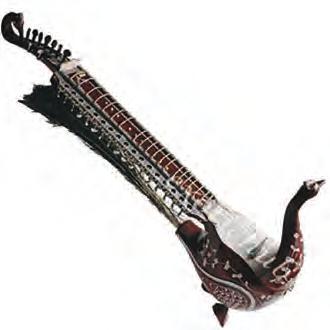
Said to have been created by the great grandson of the h Sikh Guru, the taus, which is Persian for peacock, is a combination of two Sikh instrumentsthe sarangi and the sitar. Painted in
Sarangi
order to re ect its namesake, the taus is o en displayed in the same extravagant and vibrant colours of the peacock. Upon its ngerboard, there consist nineteen metal frets, which are elliptically shaped and tied with a cord made of cotton or silk.
In order to play the taus, a person must be seated, accompanied by the bow which is made of a round wooden stick, the hair of a horse’s tail, a wooden bridge and screw. e taus is used during the recitations of the kirtan as it projects sound very much like the human voice. As will be seen with the next instrument, because the taus was so large in size and thus heavy to carry for his troops, Guru Gobind Singh Ji created a scaled down version of the taus called the dilruba.
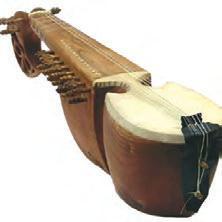
e sarangi is another instrument which falls under the svaravad category. e instrument’s name can refer to two aspects, either “sau rang,” meaning 100 colours or “sa rang,” colours whatever it touches. Either way, the terms are be tting as the sixth Sikh guru, Har Gobind Singh Ji, promoted the use of the instruments especially for dhadee’s, who were heroic ballad singers. Because of the di culties in playing the instruments e ectively (it is played with the ngernails, and not the ngers), the dhadee’s role should not be underestimat ed, as their tales of heroism are regaled through amazing, and di cult to play, instrumental aids.
Rabab
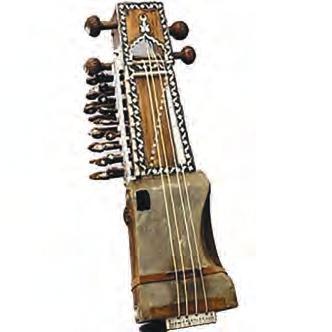
Part of the lute family of instruments, the rabab is utilized primarily in Northern India. With its origins tracing back to 950 CE, the rabab is o en played during classical dance performances, or in partnership with the tabla. Much like the violin, the rabab can be played two ways, either by plucking the strings, or by bowing the strings.
In terms of its physical appearance, the rabab consists of a dense body, a longer neck, with a metal ngerboard, followed by four melody strings, as well as a number of vibrating strings.

Dilruba
A 200 year old instrument which is most popular in the North West region of Punjab, Uttar Pardesh and Maharashtra, the dilruba (or esraj as it sometimes called) so closely resembles both the sitar and
sarangi that instrumentalists can easily intertwine to play all three. Literally translating as a “robber of the heart,” the Dilruba has a neck consisting of 18 strings in whole, and the process of tuning the dilruba is similar to how the sitar is tuned. In addition to the 18 strings, the dilruba also consists of metallic frets, which can be moved to form unique sounds.
ough the dilruba can be found in areas such as Bengal, within the Sikh context, the instrument’s origins have been attributed to the tenth Sikh Guru, Gobind Singh Ji. It was said that in creating the dilruba, the Guru wanted to make a lighter weight instrument than the Taus, which was a much heavier instrument at the time, and thus, too heavy for the Sikh Khalsa army to carry.

Harmonium
Another instrument which is o en used during the kirtan performances in any Sikh gurdwara, is the harmonium, which is a keyboard instrument resembling the reed or pipe organ. First invented in the
mid 19th century by the Frenchman Alexandre Debain, the harmonium did not reach its full popularity until the late 19th and early 20th centuries when it became a common presence in the churches.
With a sound similar to that of an accordion, the sound from the harmonium is produced as the air is blown out through the individual reeds. In the Indian tradition of playing the harmonium, the player will use one hand to pump the bellows of the harmonium, and the other hand to play the keys on the keyboard. Within the Sikh tradition, as played to perform the kirtan, the harmonium is almost always accompanied by the tabla.
Credits: South Asian Studies Institute, University of the Fraser Valley
























Early Sikhs
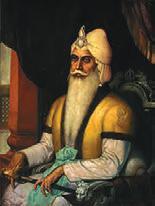
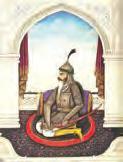
Born in 1780 in what is present day Pakistan, Maharaja Ranjit Singh, otherwise famously known as the “Lion of Punjab,” took over his father Maha Singh’s role as the Sukerchakia misl leader at the young age of twelve. And under his leadership, Ranjit Singh was able to unite the separated Sikh states into one large Sikh empire. A er he assumed the title of Maharaja on Baisakhi day, April 12, 1801, Ranjit Singh declared that the city of Lahore would serve as his capital. roughout his reign, Ranjit Singh dealt with a number of con icting forces such as the Afghans, and even the British. And although he was illiterate in the traditional sense, his
brilliance could not be ignored as he controlled every aspect of his court, from the most miniscule details. Indeed, Ranjit Singh’s Sikh kingdom was comprised of great intelligence systems which would challenge the European’s own systems of intelligence and knowledge. Just as he was renowned for his intelligence and thirst for knowledge, so was Ranjit Singh known for his extravagance and lavish lifestyle. Public darbars were regular displays in the Sikh kingdom, which provided the Maharaja a chance to display his wealth, power, and knack for all the arts. e forging of the Sikh military under Ranjit Singh was yet another attribute to the success of the Sikh kingdom during the late 18th and early 19th century. Indeed, Ranjit Singh was able to challenge any world military forces as he utilized French and other European o cers as his own generals. Because Ranjit Singh’s role was crucial to the unifying of the Sikh kingdom, once he died in 1839, so did the Sikh kingdom fall apart in disunity, thus providing the British ample opportunity to annex Punjab in 1849.
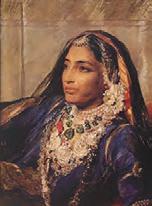
(1817-1863)
Rani Jindan Kaur (the youngest wife of Maharaja Ranjit Singh and mother of the last Sikh ruler of Punjab, Maharaja Duleep Singh), was one of the last ghting forces against British power usurping the Sikh kingdom. ough British authorities disliked her immensely because of her rebellious and courageous spirits, nothing could stop Rani Jindan from organizing an uprising against the British presence in Punjab between 1848-49. Knowing full well the ghting nature of the Rani, the British even banned her presence during the signing of the Treaty of Bharowal, which was essential to the British rule over Punjab. And still at the height of British power in Punjab, the Rani did not dissuade from her endeavours, as she even developed
Maharaja Ranjit Singh (1780-1839)
Rani Jindan Kaur
elaborate plots and schemes to murder British o cials such as the British Resident as well as members of the Regency Council. Despite her e orts to hinder British power in Punjab, without greater leadership such as there was earlier with Ranjit Singh, there was very little that could be done to thwart British dominance. Once the British had learned of her incessant plots and scheming, she was forced to reside at the Chunar Fort on April 6, 1849. And yet, even such e orts at imprisoning her were unsuccessful as the Rani escaped under the disguise and ed to Nepal on April 27th of the same year where she was granted permission to stay (a er agreeing to pay a monthly allowance of RS 1000). Amazingly enough, the Rani’s enthusiasm would still not lessen as she still continued to send letters from Nepal to key gures in Punjab, encouraging them to rise up and ght the British. Ultimately however, despite her best e orts, her zeal, enthusiasm, and courage, none of the Rani’s e orts came to fruition. And thus, as she had become weaker in her older age, the Rani was granted permission to enter England and stay with her son Duleep Singh (where he was now residing following his conversion to Christianity) until her death in 1863.
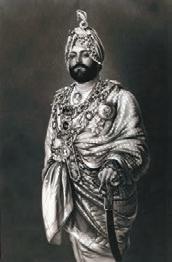
Prior to the British annexation of the Sikh Empire, Maharaja Duleep Singh, the son of former Maharaja Ranjit Singh, served as the last Sikh ruler over the sovereign state of Punjab. A er the death of Ranjit Singh, the entire Sikh empire was sent into turmoil trying to come to terms with who would succeed him.
A er his half-brother, Maharaja Sher Singh’s succession to the throne, Duleep Singh was thrown into the forefront. When the British annexed Punjab, Duleep Singh was separated from his mother Rani Jindan Kaur, and forced to live in the care of Dr. John Login. Subsequently, the British
wanted to present Duleep Singh as anglicized as possible, thus, he was converted to Christianity. When in 1854, Duleep Singh decided to return to India, and converted back to Sikhism as he had rediscovered its history and religious texts, the British tried to stop him. Indeed, in one attempt, Duleep Singh was stopped in Aden and forced to return. Tragically, he would not be able to set foot in Punjab again with the exception of two occasions, to visit his mother in order to return her to London, and then to spread the ashes of Rani Jindan Kaur in 1863.
Maharaja Duleep Singh (1838-1893)
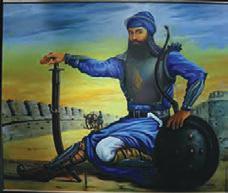
Banda Singh Bahadur (1670-1716)
Born on October 16, 1670 in the village Rajouri in Kashmir, Banda Singh Bahadur was a great Sikh warrior during the time of the last living Sikh Guru, Guru Gobind Singh Ji. Even Banda Singh’s early life consisted of intense sports that exhibited his physical strength and endurance. Banda Singh Bahadur is a great gure within Sikhism, not only because of his skills as a warrior, but for the spiritual life and experience he also lived. Sports such as wrestling, horseback riding, and hunting were some of the major hobbies he engaged in at a young age. One such hunting experience however, altered Banda Singh Bahadur’s views quite drastically. A er watching a mother deer and her aborted child writhe in pain a er he had shot them, Banda Singh decided to live his life as a sadhu, a nomadic and spiritual
Sikh Warriors
meditator who lived only on charity. In September of 1708, in a meeting with Guru Gobind Singh Ji, Banda Singh attempted to persuade the Guru through his occult powers and was shocked to nd no such powers a ected the Guru. And thus, Banda Singh fell to his feet and declared himself in servitude to the Guru and Sikhism only. Eventually, Guru Gobind Singh Ji would accord Banda Singh with the title of military lieutenant, and under such a title, Banda Singh’s impact would indeed be great. Although Banda Singh would eventually be captured and tortured until death by the Mughals in 1716, through the course of his military life under the Khalsa and Guru Gobind Singh Ji, Banda Singh Bahadur would still succeed in handicapping the Mughal administration and military forces.
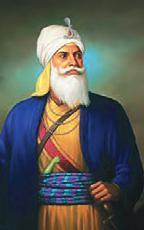
Born in 1718 in the village Ahluwal near Lahore, a village which was originally established by his ancestor, Sadda Singh, Jassa Singh was the son of Badar Singh. When Badar Singh died in 1723 when Jassa was only ve years old, his mother entrusted him to the care of Mata Sundri, the widow of Guru Gobind Singh Ji. Under the care of Mata Sundri, Jassa Singh gained many skills including combat, the reading and reciting of Sikh scriptures, and reciting Hari-Kirtan. When Nawab Kapur
Jassa Singh Ahluwalia (1718-1783)

Singh appointed Jassa Singh as his successor, the Khalsa, in delight, honoured the occasion by giving Jassa Singh the title of “Sultan-ul-Qaum,” meaning “King of the whole people.” With the title of King of Lahore under his belt, Jassa Singh engaged in many signicant battles, though not every battle was a success. One such tragic battle, the battle “Wadda Ghalughara,” (“big attack”) occurred on February 5, 1762 when Ahmad Shah Abdali launched a surprise attack on Jassa Singh and the Sikhs. In this battle, Jassa Singh sustained over sixty four wounds as Ahmad Shah was able to defeat the Sikhs, and in the end, continued on a rampage by ordering all Indians to be killed on site. By the end of the day, there lay 20,000 Sikhs slaughtered on the eld. But Jassa Singh and his army of Sikhs were able to recover from the tragedy and subdue Ahmad Shah during his eighth invasion into India. A er Jassa Singh and his army forced Ahmad Shah and his troops to retreat, the Sikhs then launched an o ensive attack into the Afghan camp, thereby rendering Ahmad Shah helpless once and for all.

Mai Bhago
e female Sikh warrior, Mata Bhag Kaur, otherwise known as Mai Bhago, was born in the village of Jhabal in Amritsar, Punjab. She lived during the tumultuous times of the nal Sikh Guru, Guru Gobind Singh Ji when tensions with the Mughals had reached its climax. Mai Bhago was brought up from birth with the values of Sikhism, and thus throughout her life, she adhered to, and promoted such values. us, in 1705, she was distraught to hear that her fellow villagers had deserted Guru Gobind Singh Ji in Anandpur when forced to confront certain di culties. Using her persuasive and passionate nature to her advantage, Mai Bhago demanded that the deserters join her, under her lead, and nd Guru Ji in order to seek forgiveness. e band of Sikhs under Mai Bhago’s
leadership had travelled across the Malwa region and were descending upon the doab region, or the pool of khidrana, where they were attacked by Mughal forces which were in search of Guru Gobind Singh Ji. Mai Bhago fought valiantly, showing great strength under adversity, and with the help of the Guru, whose skills with the arrows were infamous, both sides together forced the Mughals to retreat. Following the battle, Guru Gobind Singh Ji kept Mai Bhago in his presence as his personal body guard, and Mai Bhago accepted such an honour with full veracity, even choosing to dress in male attire. Upon the death of the nal Guru, Mai Bhago dedicated herself to a life of meditation, relocating further south to Jinvara.
Credits: South Asian Studies Institute, University of the Fraser Valley

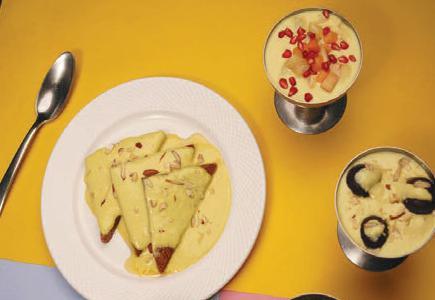
Rabri
BY KARAMJYOT KAUR
A Traditional Indian Dessert
Ingredients
• 1 litre full fat milk
• 3-4 tablespoons sugar
• 2-3 green cardamom pods (crushed or powdered)
• Few strands of sa ron (soaked in 1 tablespoon warm milk)
• 2 tablespoons chopped almonds and pistachios (or nut of your choice)
• 1 teaspoon rose water (optional, for avor)
Method: •Take a heavy bottomed pan or kadhai and put 1 litre full-fat milk in it. Heat the milk on a medium heat and allow it to boil, stirring from time to time.
• Let the milk slow-cook, stirring constantly to avoid it burning till it thickens the extent of one-third of the original volume.
• Add sugar and ground cardamom pods to the thickened milk and stir.
• Add the sa ron milk at this time for a lovely yellowish color and the aroma.
• Add the chopped
pistachios and almonds.
• Let the Rabri cook for the remaining 5-7 minutes, then turn o the ame. Add rose water or kewra water for a good fragrance (optional).
• Let it rest for some time at room temperature for cooling.
• Serve Rabri cold.
• Garnish with some chopped nuts and a few threads of sa ron and serve.
• Rabri can be served alone or with Jalebi, Malpua, or Gulab Jamun as a special dessert.




BY KARAMJYOT KAUR
Sugar-Free Sabudana Kheer- A Healthy Dessert
Ingredients
• Sabudana (Tapioca Pearls) – ½ cup (soaked for 2-3 hours)
• Milk – 3 cups cream
• Natural Sweetener –4-5 nely chopped dates or 2 teaspoons of jaggery powder
• Cardamom Powder –½ teaspoon
• Nuts: 8-10 chopped almonds and cashews
• Raisins – 1 tbsp (optional for sweetness)
• Sa ron Strands – A few optional strands for color and avor
• Ghee – 1 teaspoon (for roasting nuts)
Method:
• Soak the sabudana in water for two to three hours, or until it becomes so and u y.
• Heat milk slowly in a heavy pan. Keep it on the ame and stir occasionally to prevent it from sticking to the bottom.
• Once the milk begins to boil, add the soaked sabudana.
• Stir and sauté over medium heat for 8 to 10 minutes, or until the pearls become translucent.
• Grind the dates if you plan to add them, or chop them nely before including them.
• If using jaggery powder, add it a er switching o the
heat to prevent curdling.
• Blend thoroughly to ensure the sweetener dissolves.
• Include cardamom powder, sa ron strands, and ground nuts.
• Heat thoroughly for an additional 2-3 minutes.
• Dry roast the almonds, cashews, and raisins in 1 tsp ghee in another small pan.
• Mix it into the kheer to add crunch and avor.
• Serve and enjoy Turn o the gas and let the kheer cool for a while.
Serve hot or chilled, as preferred.








Paneer bu er masala
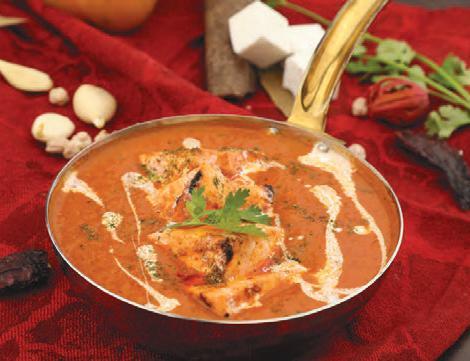
BY KARAMJYOT KAUR
Ingredients
• 200 g of paneer, cut into cubes
• 2 pureed tomatoes
• 1 nely chopped medium onion
• 1 tsp ginger-garlic paste
• 1 tbsp butter
• 1 tbsp oil
• 1 tsp cumin seeds
• 1/2 tsp turmeric powder
• 1 tsp red chili powder
• 1 tsp coriander powder
• 1/2 tsp garam masala
• 1 tbsp cashew paste (for richness)
• 1/2 cup fresh cream
• 1/2 tsp kasuri methi (dried fenugreek leaves)
• Salt, as per taste
• Water, as required
Method: • In a pan, add butter and oil and heat on medium ame, add cumin seeds and let them crackle.
• Add the nely chopped onion and fry until golden brown. is step is crucial for enhancing the richness of the avor.
• Add the ginger-garlic paste and sauté it until the raw smell vanishes. is should take about a minute.
• Add tomato puree, mix it well, and continue to cook for about 7-8 minutes, stirring occasionally until the oil separates from the mixture.
• Add turmeric powder, red chili powder, coriander powder, and salt; mix thoroughly and let it cook for about 2 more minutes
to allow the spices to blend together.
• For 2-3 minutes, add cashew paste to the gravy. It is essential to achieve a smooth and creamy texture for the gravy at this stage.
• Now gently add the paneer cubes and roll them to ensure they are well coated with the masala.
• Add fresh cream and mix well. Let it cook on a very low ame for about 3 to 4 minutes to enhance all its avors.
• Crush kasuri methi between your palms and
sprinkle it into the curry. Add garam masala and give it a nal good stir.
• Allow it to rest for a minute or two before serving. It tastes much better that way.
• And voila! Hot, steaming, and ready to go, it can be enjoyed with naan, paratha, or basmati rice.
Arthritis steals my strength. Every. Single. Day.
I’m so stiff in the mornings; my day doesn’t start until noon. I have to nap every afternoon, and I use a cane full time.
- Anna S.
Help take back what arthritis has stolen. Learn more at arthritis.ca/steals
VAISAKHI RECIPES
Ingredients
1 cup fresh fenugreek leaves (methi), nely chopped
1 cup green peas (matar), boiled or frozen 1/2 cup fresh cream (malai)
1 large onion, nely chopped
1 medium-sized pureed tomato
1 chopped green chili (as desired)
1 teaspoon ginger-garlic paste
2 tablespoons oil or ghee
Spices:
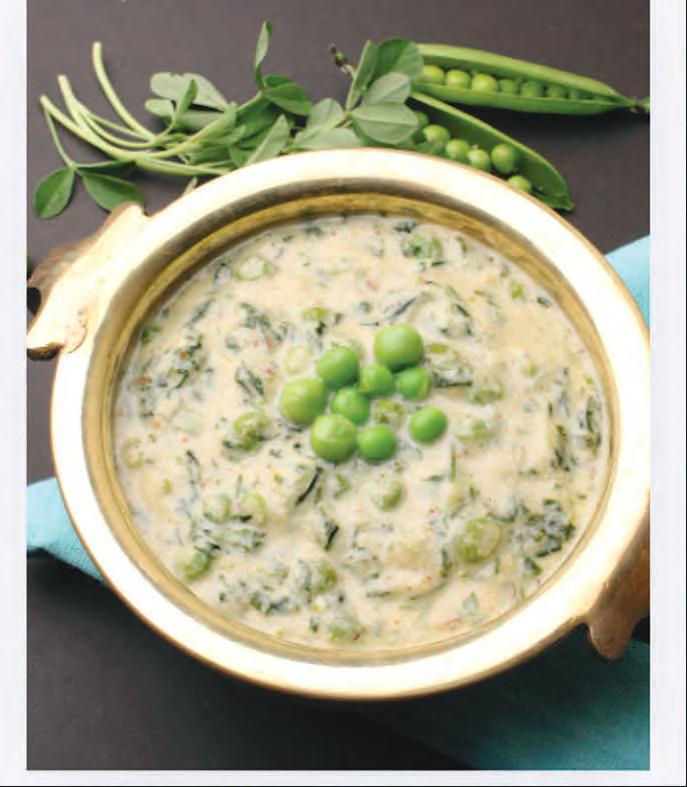
1/2 teaspoon cumin seeds (jeera)
1/2 teaspoon turmeric powder (haldi)
1 teaspoon coriander powder (dhaniya powder)
1/2 teaspoon garam masala
1/2 teaspoon red chili powder
Salt to taste
Other Ingredients:
1/2 cup milk (optional for richness)
10 to 12 cashew nuts, soaked and blended into a smooth paste. Water as required
Finely chop the leaves and soak them in salt water for 5 to 10 minutes to reduce bitterness. Heat oil or well-melted ghee in a frying pan over medium heat.
Add the cumin seeds; when they begin to splutter, add the nely chopped onion and fry until golden brown. Add the ginger-garlic paste and sauté for one minute over medium heat until the raw smell dissipates. Add turmeric powder, coriander powder, chili powder, and salt. Add the pureed tomatoes and cook until the oil separates from
Finally, add boiled/frozen green peas and mix well. Add the cashew paste and mix well. Incorporate the fresh cream into the mixture.
If you desire a richer texture, add milk, mix well, and cook the curry on a low ame for 5 to 7 minutes.
Sprinkle garam masala on it and fold thoroughly. Adjust the consistency by adding a bit of water, if necessary.
Remove the ame and let it sit for a while.
Enjoy it with your loved ones!

CARAMELISED ONION,
BALSAMIC & FIG CHUTNEY
This is so easy to make and tastes awesome as part of a cheeseboard or even with some grilled meat. The background spice flavour really works with the sweet figs.
Ingredients:
1 tablespoon olive oil
2 red onions, nely sliced
125 ml balsamic vinegar
100ml red wine vinegar
250g light muscovado sugar
2 teaspoons root ginger, peeled and grated
1 lemon, juice and zest
1 teaspoon ground mixed spice
1 teaspoon cinnamon powder
1 cinnamon stick
1/4 teaspoon black pepper, coarsely ground
900g ripe gs (around 12 large ones), cut into 1/8ths
Method
1. In a heavy based casserole pan gently heat the olive oil and add the onions.
2. A er around 10 minutes

BY ANJALI PATHAK
Makes: around 1kg Takes: Over 1 hour
the onions will have so ened. Add in the remaining ingredients apart from the gs.
3. Bring to the boil and reduce to a simmer and leave for 30 minutes or until the chutney has turned syrupy.
4. Add the gs to the chutney and stir well before leaving to cook for another 30 minutes. ey should go all pulpy.
5. In the meantime sterilise your jars. Wash them in warm soapy water and pop in a cold oven set to 150°C/300°F/gas 2 for 10 minutes to dry out.
6. When your chutney is ready carefully remove your sterilised jars with oven gloves and ll them with the piping hot chutney. Be really careful as the chutney is crazy hot!
7. Seal immediately and leave to cool. is chutney will last about 6 months but always check the lid to see if anything unsavoury is growing on there. If there is then check the chutney before eating.














OUTSTANDING INDIVIDUALS HONOURED WITH CORONATION MEDAL


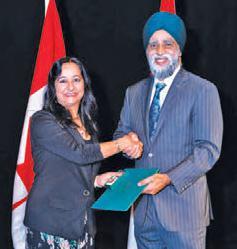
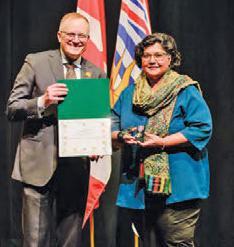
Gordon Houston, Manjit Lit, Zahra Esmail and Alison Silgardo, have been awarded the prestigious Coronation Medal, a Canadian honor commemorating the Coronation of His Majesty King Charles III. This distinguished accolade is awarded to individuals who have contributed significantly to Canada and their home province of British Columbia.
Gordon Houston, CAIB President, WBI Home Warranty Ltd.
Manjit Lit, Founder Universal Homes
Zahra Esmail Alison Silgardo





Save on Foods Scottsdale Food Drive for Guru Nanak Food Bank was organized by Jas Randhawa, Category Manager of Pattison Food Group, and his team.




“LOVE ALL FEED ALL”
Mission of Guru Nanak’s Free Kitchen
Guru Nanak’s Free Kitchen (GNFK) is a Sikh-faith-led volunteer organization that was established in 2007. Every Saturday and Sunday, GNFK serves 500 meals to those in need in Vancouver’s Downtown Eastside. Volunteers prepare langar at the Gurudwara Sahib and distribute it.
Our objective is to enrich lives through the Sikh principles of Guru Nanak Dev Ji: earning an honest living (Kirat Karnee), meditating (Naam Japna), and
sharing/sel ess service (Wand Shakna). ese principles are deeply rooted in our spiritual heritage.
e GNFK team operates on the concept of “Love All Feed All". Guru Nanak Dev Ji laid the foundation of seva, and we extend this universal philosophy to the world. is project is not missionary in nature; it is an opportunity to extend the true Sikh spirit of helping those in need, regardless of caste, colour, creed, gender, economic
status, or religion.
In addition to the weekly langar seva, GNFK organizes several outreach events throughout the year, such as Food Rescue Program, Valentine’s Day Event, Mother's Day Simran, School Supplies Drive, Cupcake Event (celebrating Guru Nanak Dev Ji’s Gurpurb), and a Toy Drive.
Over the years, we have successfully served indigenous communities, emergency homeless shelters, women's shelters, transition homes, modular homes, and many inner-city
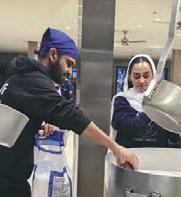
in the Greater Vancouver area. GNFK volunteers have built strong relationships with many organizations over the years and work closely with them to provide necessities such as food, toys, personal use items, hygiene products, and clothing through these outreach initiatives. Giving back to the community has helped foster a deeper sense of gratitude, empathy and humility. It has also enhanced a real sense of purpose and connection to the community.
GNFK primarily relies on community donations, grant programs, and sponsors. We also run fundraising campaigns and collaborate with other nonpro ts when the need is immediate and critical, such as disaster relief. Our permanent location at 245 East Hastings, Vancouver, is currently undergoing extensive renovations.
Once fully operational,

langar and support will be available for the community at this location.
GNFK’s seva is all about giving without expecting anything in return. It’s about compassion, empathy and making a positive impact on the lives of others. Every contribution, no matter how small, can help create a better, more caring world. Over the years, many GNFK volunteers have shared their personal experiences of witnessing the impact of GNFK's e orts on the lives of people. Many volunteers have inspired friends and family to help give back, who also play a signicant role.

e GNFK team extends a sincere thank you to all the incredible volunteers, sangat, donors, and the community for their immense support over the years. e seva is only possible due to their commitment, support and of course Guruji’s grace. rough these collective e orts, we hope to ensure continued support and provide food for those in need.
Anyone interested to take part in the seva, can visit our website and sign up for volunteer opportunities. For seva opportunities, please contact: 604 -617 -7382
Gurunanaksfreekitchen @gmail.com Gn .org



NOVEMBER 14,