
BY KEVIN SINGER*
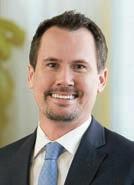
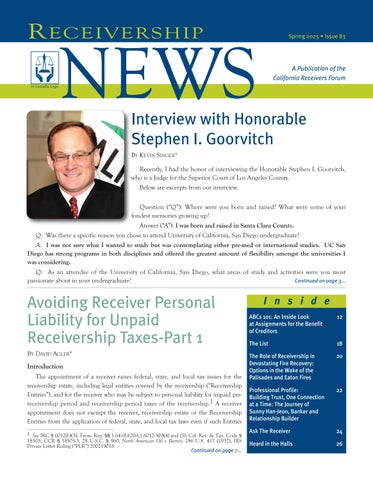
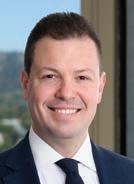
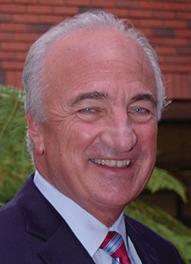
Recently, I had the honor of interviewing the Honorable Stephen I. Goorvitch, who is a Judge for the Superior Court of Los Angeles County.
Below are excerpts from our interview.
Question (“Q”): Where were you born and raised? What were some of your fondest memories growing up?
Answer (“A”): I was born and raised in Santa Clara County.
Q: Was there a specific reason you chose to attend University of California, San Diego undergraduate?
A: I was not sure what I wanted to study but was contemplating either pre-med or international studies. UC San Diego has strong programs in both disciplines and offered the greatest amount of flexibility amongst the universities I was considering.
Q: As an attendee of the University of California, San Diego, what areas of study and activities were you most passionate about in your undergraduate?
BY DAVID AGLER*
Introduction
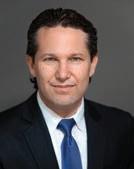
The appointment of a receiver raises federal, state, and local tax issues for the receivership estate, including legal entities covered by the receivership (“Receivership Entities”), and for the receiver who may be subject to personal liability for unpaid prereceivership period and receivership period taxes of the receivership.1 A receiver appointment does not exempt the receiver, receivership estate or the Receivership Entities from the application of federal, state, and local tax laws even if such Entities
1 See IRC § 6012(b)(3); Treas. Reg. §§ 1.641(b)-2(b),1.6012-3(b)(4) and (5); Cal. Rev. & Tax. Code § 18505; CCR § 18505-3; 28 U.S.C. § 960; North American Oil v Burnet, 286 U.S. 417 (1932); IRS Private Letter Ruling (“PLR”) 200219018.
Continued on page 7...
Continued on page 3...
BY DOMINIC LOBUGLIO*
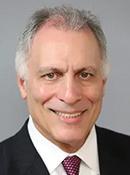
*Dominic LoBuglio is a CPA and has provided forensic accounting and taxation services to receivers for 40 years. He has served CRF since its inception as a board member and officer for LA/OC and the State.
This is the eighth issue I have had the privilege of publishing, and I want to thank the people who have made consistent contributions.
When I told Kevin Singer that I was very concerned that we continue to profile judges, he promised to keep Receivership News well supplied with interviews. Kevin has kept that promise and provided an outstanding conversation with Judge Steven Goorvitch , a California native who attended UC San Diego and Berkeley School of Law.
Our regular columnists Peter Davidson and Ryan Baker keep us current with receivership issues and receivership news. In this issue, Peter explains different reasons for appointing receivers as well as selling real estate located outside of California. Ryan brings us up to date with all the recent changes in the CRF.
Making sure our writing is top of the line is the job of our Co-Editors Michael Muse-Fisher and Blake Alsbrook, with final touches by our Associate Editor and proofreader Craig Collins.
This issue also brings us new insights from a variety of writers. Michele Vives provides a recap of the education program ABCs, 101: An Inside Look at Assignments for the Benefit of Creditors, produced by her team at The Douglas Wilson Companies together with Christopher Hawkins, James Hill and Gary Rudolph of Fennemore. If you have an idea for a program and/or a willingness to produce a program, please contact Oren Bitan.
We also have a perceptive exploration from Mark Adams of The Role of Receivers in Devastating Fire Recovery, and a highly technical commentary from David Agler providing guidance along the slippery slope of avoiding personal liability for unpaid receivership taxes.
In this issue, we present a professional profile of board member Sunny Han-Jeon , Senior VP and Relationship Manager at East West Bank’s Specialty Deposit Services Group.
Let’s welcome three new members to our board of directors, Michael Gomez, Jackson Wyche, and David Weinberger
Much appreciation is also due to our advertisers. We could not produce these newsletters without their continued support.
As always, we are always looking for articles from our members. The deadline for submissions to our next issue is June 15, 2025. It is a great way to share your experiences, gain exposure, and promote our mission of providing a forum for open communication and education.
If you missed any issues of Receivership News, downloads for most back issues are available on CRF’s website: crf.memberclicks.net/receivershipnews-articles . Readers are encouraged to cite, copy, and use Ask the Receiver and Receivership News articles and information.
Please enjoy this issue.
Receivership News
Published by California Receivers Forum PO Box 10
Manhattan Beach, CA 90267 714-632-6800 • Receivers.org
Publisher Dominic LoBuglio dominic@lscpa.net
Co-Editors
Blake Alsbrook balsbrook@ecjlaw.com
Michael Muse-Fisher mmusefisher@buchalter.com
Associate Editor
Craig Collins
Associate Publishers
Mia Blackler
Kevin Singer
Contributing Columnists
Ryan Baker
Heard in the Halls
Peter Davidson Ask the Receiver
Officers
Michael Muse-Fisher Chair
Benjamin King Chair-Elect
Mia Blackler
Treasurer
Ryan Baker
Secretary Gary Rudolph Program Chair
Dominic LoBuglio
Immediate Past Chair
Graphic Design & Layout
R.R. Altamirano, LLC
Production Services
Group Concepts
Web Services Group Concepts
Bay Area
Mia Blackler
Gerard Keena
Los Angeles/
Orange County
Blake Alsbrook
Kyra Andrassy
Ryan Baker
Oren Bitan
Jake Diiorio
Steve Donell
Michael Gomez
Teresa Gorman
Sunny Han-Jeon
Benjamin King
Dominic LoBuglio
Richard Munro
Richard Ormond
Kevin Singer
David Weinberger
Jackson Wyche
Sacramento Valley
Mike Brumbaugh
Michael Muse-Fisher
Scott Sackett
San Diego
Daniel Miggins
Gary Rudolph
Michele Vives
Receivership New s is published by the California Receivers Forum, a not-for-profit association. Articles in this publication express the opinions of their authors and do not necessarily reflect the views of the directors, officers or members of the California Receivers Forum. Articles are intended as a source of general information and should not be construed as specific advice without further inquiry and /or consultation with professional counsel.
© Copyright 2025. California Receivers Forum. All rights reserved
All publishing and editorial decisions, including the publishing and placement of advertising content, are reserved for Receivership News based upon the Receivership News editors’ and publisher’s exclusive judgment and sole discretion. Such decisions are based on multiple factors, including, but not limited to, the content, style, professionalism, format, nature of material, timeliness, space limitations, and relevance to the Receivership News recipients, taking into consideration the California Receivers Forum’s mission. The mission is to provide a forum for open communication and education concerning all legal, procedural and administrative aspects of judicially appointed receivers and to raise the level of professionalism in this area through education of members and dissemination of information (both for the courts and within the membership).

Michael Muse-Fisher
*Michael MuseFisher is a Shareholder at Buchalter, a Professional Corporation. He regularly represents receivers across all receivership types.
BY MICHAEL MUSE-FISHER* AND BLAKE ALSBROOK*
We are into a new year, and everything makes perfect sense… or not. It feels like we have gone through two years’ worth of insanity in the first three months of 2025. But, at least the stock market is going strong… oh… wait… wrong on that front too. Well, at least we have the good and reliable Receivership News. Like other issues, this issue is fantastic.
Before getting into the details of this Issue of Receivership News, let me begin by introducing the new officers of the California Receivership Forum. Benjamin King, a partner at Loeb & Loeb LLP, is this year’s Chair of CRF, and I can say with utmost confidence he is going to do a phenomenal job. Chair Elect is Mia Blackler, a partner at Lubin Olsen & Niewladomski LLP, followed by Ryan Baker, Vice President at Douglas Wilson Companies as Treasurer, Gary Rudolph , a Director at Fennemore as Secretary, and Oren Bitan, Shareholder at Buchalter, APC as Program Chair. This group is top notch and the CRF is lucky to have them. Please join me in welcoming them as the new officers.
Turning to this issue of Receivership News, in a word it is extraordinary. The Honorable Stephen I. Goorvitch, is the newest presiding judge in the writs and receivers Department 82 of the Los Angeles Superior Court. His interview provides some fascinating insights into his background studies, his career as an attorney, and now his role as a Receivership Judge in one of the busiest courts in the country. He is also a graduate of UC Berkeley Law School and he spent time living in Japan, so for me personally, he seems like a kindred spirit.
Judge Goorvitch...
Continued from page 1.
A: I quickly gravitated towards international studies and majored in sociology. I studied overseas in Japan during part of my junior year and lived in the International House during my final year of college.
Q: Did you know from an early age that you were going to pursue law?
A: It was something I had considered, but I first explored other options. I was accepted into PhD programs in sociology; I took the foreign service exam; and I
Also in this issue you will get to learn more about Sunny Han-Jeon . Board members of the CRF already know how wonderful a person she is, and now you will too. Particularly, her professional history and her skills as a hula hooper.
Next, turn to the tag team efforts of Michele Vives and Ryan Baker of Douglas Wilson, on the one hand, and Christopher Hawkins, James Hill, and Gary Rudolph of Fennmore, on the other hand, as they provide a detailed dissection of Assignments for the Benefit of Creditors… or as they describe it “The ABCs of ABCs.”
Additionally, David Agler, a retired principal of Crowe currently practicing as a sole practitioner, provides the first part of a two part series of “Avoiding Receivership Personal Liability for Unpaid Receivership Taxes,” as he goes through a thorough, and I mean thorough, analysis of tax issues for which every receiver should be mindful.
Further in you will have a chance to read Mark Adam’s pertinent article discussing the Role of Receivership in Devastating Fire Recovery, which he wrote following the devastation of the Palisades and Eaton Fires. Mark explains how a health and safety receiver can be an invaluable tool in navigating solutions arising from such horrible destruction.
Finally, a special thanks goes out to Peter Davidson and his always incredible “Ask the Receiver” segment where he discusses the scenarios where a receiver can be appointed that are not mentioned in Code of Civil Procedure § 564, as well as Ryan Baker for his always enjoyable, Heard in the Halls.
Sit back, relax, and dive into the world of receiverships. You deserve it.
accepted a position as a high school teacher in Japan for one year through the Japan Exchange and Teaching Program. Afterwards, I decided that a career in academics or the State Department was not for me, so I went to law school. The law always interested me, and I like that the profession involves research and writing and analysis but in a practical setting. I was persuaded by the notion that “You can do a lot with a law degree,” and had planned to pursue a career in international law.
Continued on page 4...
Continued from page 3.
Q: I see you continued on at the University of California, Berkeley School of Law. Was that your top pick and was there a professor who made a lasting impression on you and why?
A: Berkeley offered a lot of educational options, and at the time, in-state tuition was substantially lower than that of comparable law schools. Also, both my parents had gone to UC Berkeley for graduate school so there was a family connection. My favorite professor was Eleanor Swift, who taught evidence. I enjoyed her class so much I started thinking about a career in litigation.
Q: After graduation, you worked as an attorney at the SEC Division of Enforcement for 3 years. What types of cases did you handle and did this experience have any influence on the trajectory of your career?
A: I wanted to pursue a career in public service and was fortunate enough to get hired by the SEC Division of Enforcement. I handled civil investigations involving insider trading, accounting and financial fraud, market manipulation, fraudulent broker-dealer practices, and commercial bribery.
Q: From 2001 to 2003 you were a law clerk for the Honorable Nora M. Manella in the Central District of California and a law clerk for the Honorable Rosemary S. Pooler in the Second Circuit. Did you enjoy your time serving as a law clerk, and what lessons did you take with you.
A: Clerking for any judge is the best job in the law. I was fortunate to work for two of the best judges—and best people—in the world. Both positions were excellent training for becoming a judge (though at the time I did not think I would ever become a judge myself).
Q: You then joined O’Melveny & Myers LLP from 2003 to 2007. While working at this firm, what types of cases did you primarily work on?
A: I had wanted to remain in public service, but unfortunately, there were hiring freezes when I finished my last clerkship. At the same time, I had some excellent opportunities in the private sector and joined O’Melveny & Myers. I represented clients in civil securities and business litigation cases and conducted internal investigations and related corporate governance proceedings for public companies. In connection with this work, I represented companies and audit committees in DOJ and SEC investigations.
Q: For the next 9 years, until your appointment to the bench, you were a U.S. Attorney in the Central District of California. What prompted you to go from private practice back into public service.
A: My heart has always been in public service. While I appreciated the opportunities at O’Melveny & Myers, I decided to return to the public sector. When I was at the SEC, I worked on parallel cases with various U.S. Attorneys’ Offices, which made me interested in becoming a federal prosecutor. After spending one year in the General Crimes Section of the U.S. Attorney’s Office, I spent the next eight years in the Major Frauds Section prosecuting fraud cases.
Q: In 2015, Governor Edmund G. Brown, Jr., appointed you to be a Superior Court Judge. Did you have an opportunity to meet the Governor and what were your impressions of him?
A: Unfortunately, no, I did not get to meet Governor Brown. But I wrote Governor Brown a letter after I had been on the bench about three years. I respect Governor Brown because he became Mayor of Oakland after serving as Governor. I wrote, “I am honored to have been appointed by someone who cares about the substance and impact of the position rather than the title or prestige of the position.” To me, that is an important part of being a judge, doing justice in every case, regardless of the size of the case, because every case is important to the litigants. Ironically, I received the call about the appointment on Friday the 13th, which has always been a lucky day for me.
Q: Since your 2015 appointment, what types of cases have you been primarily handling?
A: During my first three years, I served as a criminal court judge in Lancaster, California. Afterwards, I spent about two years handling law and motions at the Personal Injury Hub. Then, I spent three-and-one-half years as an Independent Calendar Court judge at the Stanley Mosk Courthouse. I handled law and motions, as well as trials, in non-personal injury civil cases. I have been in Writs & Receivers for about one year.
Q: What are your general thoughts on appointing Court Receivers? We heard you specifically requested to work in the Los Angeles County Superior Court Writs and Receivers Department.
Continued on page 5...
Continued from page 4.
A: Code of Civil Procedure section 564(b) identifies the circumstances under which a receiver may be appropriate. Of course, receivers may be necessary to preserve assets or operate a business while the parties are attempting to resolve their case. But more important, I appreciate receivers who can “do the heavy lifting” and help manage the case in connection with the parties. The most successful receivers are the ones who bring me solutions and stipulations rather than problems and disputes.
Q: What are some of the factors that persuade you to an appointment of Court Receiver or Partition Referees?
A: I consider each request on a case-by-case basis, so it is difficult to answer this question. However, the first questions I always ask are: “Why do we need a receiver?” and “Does appointment of a receiver make financial sense given the nature/size of the receivership estate?” The best motions are the ones that answer those questions clearly at the outset.
Q: What qualifications do you like to see in the receivers that you appoint to your cases?
A: I always solicit input from the parties and encourage them to stipulate to a receiver that everyone likes (or, at least, can work with). If the parties cannot agree, I consider the receivers’ background and experience, especially in matters that are similar to those at issue in the particular case. I consider billing rates to ensure that the costs do not unduly diminish the receivership estate, though if a receiver has unique and necessary experience, I might select that person even if the billing rate is higher than that of other receivers.
Q: What are your thoughts on ex parte motions to appoint a receiver?
A: Ex parte applications are reserved for cases where there is exigency or an immediate threat of irreparable harm. While there may be cases where it is appropriate, I prefer noticed motions so I may carefully consider all relevant factors, including the other parties’ views, in deciding whether to appoint a receiver.
Q: On motions to appoint receivers, what types of arguments tend to be most persuasive to convince you to appointment a court receiver?
A: Every case is different, but I am most persuaded by a true need to appoint a receiver, and by a receivership estate that will support the cost. I am sensitive to the costs
associated with receiverships and consider that in deciding whether to appoint them.
Q: What is the most common mistake you see in motions to appoint a receiver?
A: When the parties do not identify potential receivers and provide sufficient information concerning their qualifications/billing rates. I prefer to handle as much as possible at one hearing rather than continuing the hearing and ordering the parties to provide this information. The moving party should include this information, but it is also helpful if a party opposing a motion to appoint a receiver provides this information “in the alternative,” in the event I grant the motion.
Q: Once you have appointed a receiver, how much communications and updates would you like to receive from your receiver?
Continued on page 6...

Court appointed fiduciary,manager, consultant and nationwide specialists for lodging,foodservice, resorts,bars,nightclubs and mixed-use real estate since 1985.

Contact: Dennis Gemberling CHA, CFBE, FMP, FCSI President
Continued from page 5.
A: It depends on the nature of the receiver’s duties and the relationship amongst the parties. I generally ask the receiver and the parties what schedule makes sense for their case. Usually, they agree on a four-to-six month time period for updates with an option for the receiver to file an ex parte application if anything urgent arises in the interim. However, every case is different. I have ordered reports as soon as one month from appointment and as late as nine months from the prior report.
Q: What is your position on receivers bringing ex parte motions when there are urgent issues that could impact the receivership estate?
A: I am fine with ex parte applications under those circumstances assuming there is exigency. However, I would prefer that receivers provide at least two to three days’ notice, if possible, to give time for the parties to file a response and for me to read everything before the hearing.



Q: When do you want to see receivers who are not attorneys retain counsel?
A: It depends on the nature of the receivers’ duties and the relationship amongst the parties. There are cases in which receivers may need to retain counsel or be lawyers themselves, but it may not be necessary in other cases. The latter is especially true if the receivership estate is relatively small and cannot support the costs of an attorney.
Q: What is the one piece of advice you’d like to share with anyone that is going to appear before your Department?
A: Don’t assume that I know all the facts of your case and come to hearing prepared to discuss them. I like to have a discussion with the parties. If I ask a question, never say, “It’s not my case.” If you are appearing on the case, it is your case.
Q: What do you like to do when you are not working as a Judge?
A: Ask me next year! I am still getting up to speed on my new assignment, so I tend to work on the weekends. However, I enjoy spending time with my four-legged children: An English bulldog who was rescued from a puppy mill and a stray cat who somehow persuaded me to let him live inside the house.
*Kevin Singer is the President of Receivership Specialists with offices throughout the Southwest.
Mr. Singer has been a Court Appointed Officer in over 550 cases in the last 24 years.
Avoiding Receiver Personal Liability...
Continued from page 1.
are in financial trouble, are insolvent, or are in bankruptcy. Receivership Entities are generally required to file federal, state, and local tax returns, pay applicable federal, state, and local tax liabilities for both the receivership period and prereceivership periods, and satisfy information reporting requirements such as filing IRS forms K-1, W-2 or 1099.2
The failure to properly address tax issues by the receiver can adversely affect the administration of the receivership case and substantially reduce distributions to claimants in the receivership case. Tax mistakes or oversights by the receiver can result in: (1) prolonging the administration and closing of the receivership case; (2) increased receivership administration costs; (3) increased receivership taxes, including tax penalties and interest owed by the receivership; (4) imputed payment liability imposed on Receivership Entities that are taxed as partnerships for federal and California income tax purposes;3 (5) loss of receivership tax refunds;4 (6) loss of valuable tax elections; (7) loss of valuable tax attributes such as net operating loss and tax credit carryovers, tax basis, or the loss of other receivership tax benefits; (8) suspension of a Receivership Entity under state laws for failure to file tax returns and pay taxes; 5 (9) failure to subordinate tax claims; and (10) other adverse receivership consequences that result in the reduction of the receivership’s assets that are available for distribution to claimants.
The failure to properly address tax issues by the receiver can also have personal adverse tax consequences for the receiver. Although a receiver is generally not personally liable for unpaid taxes of an insolvent receivership, depending on the facts and circumstances of the receivership case, a receiver can be personally liable for unpaid receivership tax liabilities where such tax liabilities are not paid because the receiver breaches his or her fiduciary duties and obligations, including but not limited to the failure by the receiver of an insolvent receivership to comply with tax liability payment priorities such as using available receivership assets to pay nontax claims ahead of higher priority tax claims.6
2 See IRC Section 6012(b)(3); Treas. Reg. Sections 1.641(b)-2(b),1.60123(b)(4) and (5); R&T Section 18505; CCR Section 18505-3; 28 U.S.C. 960; North American Oil v Burnet, 286 U.S. 417 (1932); IRS Private Letter Ruling (“PLR”) 200219018.
3 See IRC § 6225 and the Treasury Regulations thereunder.
4 See IRC § 6511.
5 See Rev. & Tax. Code § 23301.
6 See 31 U.S.C. § 3713; 28 U.S.C. § 959, 960; Holywell v Smith, 503 U.S.
This article is divided into two parts. The first part of the article discusses receiver tax notification requirements, and receiver tax reporting requirements. The second part of this article, which will appear in the next edition of this publication, will discuss receiver personal liability issues for unpaid receivership taxes.
Although this article will primarily focus on federal income and California income/franchise tax issues, receivers should also focus on the application of other receivership federal, state, local, and foreign taxes, including but not limited to employment/payroll taxes, sales and use taxes, property taxes, excise taxes, withholding taxes, transfer taxes, gross receipt taxes and fees, and value added taxes. Depending on the facts of the receivership case, the failure to pay one or more of these taxes may also result in personal liability for the receiver.
A court appointed receiver is a fiduciary for federal income tax and California income/franchise tax purposes and as a fiduciary is often required to report the receiver’s appointment to the Internal Revenue Service (“IRS”) on IRS Form 56, and to the California Franchise Tax Board (“FTB”), within 10 days of the appointment (the “Tax Notification Requirements”).7 If the receiver satisfies the Tax Notification Requirements and is in control or possession of all or substantially all of the assets of the Receivership Entities (all of the assets in the case of a receiver appointed for an individual), the receiver steps into the shoes of the receivership estate and the Receivership Entities for federal income and California income/franchise tax purposes, and assumes the powers, rights, duties, and privileges of such taxpayer Entities with respect to the taxes imposed by the Internal Revenue Code and the California Revenue and Taxation Code.8
Under these circumstances the receiver is treated by the IRS and the FTB as if the receiver is the taxpayer Receivership Entity for federal and California tax purposes. The receiver has both the right and the responsibility to undertake all actions the taxpayer Receivership Entity is required to perform. For
47 (1992); In re San Juan Hotel Corp,, 847 F. 2d 931 (1st Cir. 1988); U.S. v Marshall, 798 F. 3d 296 (5th Cir. 2015); SEC V Credit Bancorp Ltd., 27 F. 3d 127 (2nd Cir. 2002); Lehman Bros. Bank, FSB v. Beverly Hills Funding, Inc., 456 F. Supp. 2d 1211 (C.D. Utah 2006); and U.S. v Jung Joo Park, 389 F. Supp. 3d 561 (N.D. Ill 2019).
7 See IRC § 7701(a)(6); IRC §§ 6036 and 6903; Treas. Reg. §§ 1.60361(a)(2) and 301.6903-1(a) and (d); Rev. & Tax. Code § 19089.
8 See IRC § 6903; Treas. Reg. § 301.6903-1(a). Continued on page 8...
Continued from page 7.
example, the receiver is required to file returns and pay any taxes due on behalf of the taxpayer Receivership Entity.9
The satisfaction of the Notification Requirements allows the IRS and the FTB to immediately assess but not immediately collect receivership taxes from the receivership estate or the Receivership Entities.10 The appointment of the receiver stays the collection of receivership taxes (with certain exceptions) until the receivership case is terminated.11 The receiver’s tax powers, rights, duties, and privileges terminate for federal income and California income/franchise tax purposes when the receiver files an IRS Form 56 and an FTB notification form notifying the IRS and the FTB of the termination by the court of the receiver’s appointment.12 The statute of limitations for assessment and collection of receivership taxes is extended for the period of time assessment and collection of receivership taxes by the IRS and the FTB is stayed.13
The failure of the receiver to timely notify the IRS and the FTB of the Receiver’s appointment may cause the IRS and/or the FTB to send tax notices, including tax liability deficiency and collection notices, to the Receivership Entities’ last known address, rather than to the receiver. This can result in the failure of the receiver to: (1) receive receivership tax deficiency and tax collection notices, and to pay, reserve for, or otherwise account for receivership federal and California tax liability resulting in potential personal liability exposure to the receiver; (2) miss IRS or FTB correspondence, response or court filing deadlines, tax election deadlines, tax refund deadlines, or other tax deadlines; (3) cause the IRS or the FTB to mistakenly initiate tax collection actions against the Receivership Entities (liens, levies, asset seizures) that would be stayed if the IRS or the FTB were notified of the receivership; and (4) extend the statute of limitations for collection of receivership taxes by the IRS and FTB, including taxes owed by the receiver.
The failure of the receiver to notify the IRS and the FTB of the termination by the court of the receiver’s appointment, can cause the IRS and the FTB to continue to treat the receiver as the taxpayer for the Receivership Entities for federal and California tax purposes, including for purposes of imposing personal liability on the receiver for unpaid receivership taxes.
9 See IRC §§ 6012 (b)(2) and (b)(3), and 6903 and the Treasury Regulations thereunder; Rev. & Tax. Code § 18505; C.C.R. § 18505-3.
10 See IRC §§ 6871 and 6872 and the regulations thereunder.
11 See IRC § 6873 and the Treasury Regulations thereunder.
12 See IRC § 6903 and the Treasury Regulations thereunder
13 See IRC § 6872.
8 | Spring 2025
The term “all or substantially all of the assets” as applied to a receiver fiduciary is not defined in the IRC or the Treasury Regulations and depends on the facts of the receivership case. In Private Letter Ruling 200219018, the IRS held that a receiver did not have possession or control of substantially all of the assets of a corporation where the owners of the company diverted assets to foreign companies out of the reach of the receiver. CCR section 18505-3 provides that a “receiver of the rents and profits appointed to hold and operate a mortgaged parcel of real estate but not in control of all the property or business of the mortgagor, and a receiver in partition proceedings, are not required to render returns of income.”
A receiver that is in control or possession of all or substantially all of the assets of the Receivership Entities (all of the assets of an individual under a receivership) is required to continue to file federal income and California franchise/income tax returns and pay applicable federal income and California franchise/income taxes for the Receivership Entities for both the receivership period and for pre-receivership periods.14 For federal income and California income/franchise tax purposes, the receivership estate is not taxed as a separate taxable entity unless the receivership estate qualifies as a taxable qualified settlement fund (“QSF”) or other taxable settlement fund or trust.15 The receiver appointment does not affect the prereceivership federal and California income tax entity characterization of the Receivership Entities as a taxable C corporation or a nontaxable pass-through tax entity such as a partnership, S corporation or a disregarded tax entity (single member limited liability company or grantor trust), the Receivership Entities’ tax accounting method or tax reporting year (calendar or fiscal tax year), or terminate the Receivership Entities’ affiliated /consolidated tax return group status.16
The Receivership Entities are required to file federal income and California income/franchise tax returns and pay any applicable federal and California taxes for both the receivership period and pre-receivership periods and to comply with other tax requirements such as information reporting requirements
14 See IRC §§ 6012 (b)(2) and (b)(3), and 6903 and the Treasury Regulations thereunder; Rev. & Tax. Code § 18505; Holywell v Smith, 503 U.S. 47 (1992); PLR 200219018; C.C.R. § 18505-3.
15 See IRC §1399; Treas. Reg. §§ 1.641(b)-2(b).
16 See IRC §§ 1361(c)(3) and 1399; In re Majestic Star Casino, LLC, 716 F.3d 736 (3rd Cir. 2013); In re Conex Holdings, LLC, 518 B.R. 792 (Bankr. Ct. Del. 2014); Gulley v Commissioner, T.C. Memo 2000-19 (2000); Rev. Rul. 63-104, 1963-1 C.B. 172; PLR 200219018.
Continued on page 9...
Continued from page 8.
(filing IRS Forms K-1, W-2 for employees, and 1099s). Receivership Entities that are pass-through tax entities for federal and California income tax purposes are required to continue to pass-through such Entities’ tax items (taxable income, deductions, gains, and losses) to the tax owners of such Entities who are required to report and pay applicable federal income and California franchise/income taxes with respect to such pass-through tax items.17 Unlike federal income tax laws that do not tax income of a Receivership Entity that is an S corporation (other than an S corporations that was previously taxed as a C corporation) or tax income of a limited liability company (“LLC”) that is taxed as a partnerships or a disregarded tax entity, California imposes an annual 1.5% tax ($800 minimum tax) on S corporation taxable income and a gross receipts fee on gross receipts of an LLC ($800 minimum tax), which tax or gross receipts fee is required to be paid by the Receivership Entity.
17 See IRC §§ 6031 and 6041.




A receiver appointed during a Receivership Entity’s tax year is required to file tax federal and California tax returns for the entire tax year of the Receivership Entity. A receiver that is terminated by the court prior to the end of the Receivership Entity’s tax year is not required to file federal and California tax returns for a continuing Receivership Entity. Under these circumstances, the receiver should make sure that: (1) all receivership period estimated taxes, employment taxes, withholding taxes, and other taxes imposed on a daily, weekly, monthly or quarterly tax basis are timely paid to taxing authorities; and (2) the receiver provides the successor officers and directors of the Receivership Entity with an accounting of, or access to, all receivership termination year tax and financial information required to timely file accurate tax returns and pay federal and California taxes for the tax year the receivership terminates.
Depending on the facts of a receivership case, a receiver may be unable to file a federal income tax return or California franchise/income tax return for a Receivership Entity









Continued from page 9.
(especially for pre-receivership periods) because the Receivership Entity has no financial or tax books or records, or the books and records of the Receivership Entity (or Entities) are grossly deficient, fraudulent, erroneous, or otherwise unreliable or verifiable. Under these circumstances the receiver may have to reconstruct the Receivership Entity’s books and records to the best of the receiver’s ability and file a fully disclosed federal and California tax return with best estimates of the Receiver Entity’s tax items, and tax liability (if applicable).
The nonexistent or poor state of the books and records of the Receivership Entity may qualify as reasonable cause for abatement of Receivership Entity late filing tax penalties but may not excuse the receiver from failing to file federal and California tax returns for the Receivership Entity. As discussed in Part 2, the Anti-Injunction Act (IRC § 7421) prohibits the receivership court from overriding the federal tax rules regarding the requirement of the receiver to file federal income tax returns.
In IRS Revenue Ruling 84-123, the IRS held that a receiver or trustee of a corporation that is in bankruptcy, receivership, or dissolution, or an assignee, by order of a court of competent jurisdiction, by operation of law or otherwise, may be relieved from filing federal income tax returns for the period after dissolution of the taxpayer corporation has occurred when it has ceased business operations and has neither assets nor income. If a corporation meets the criteria set forth in Rev. Rul. 84-123, the trustee, receiver, or assignee is required to comply with the filing procedure set forth in IRS Revenue Procedure 84-59, to obtain relief from the federal tax return filing requirements.18
If the Receivership Estate qualifies as a QSF, the QSF will be a separate taxable entity for federal and California income tax purposes.19 The QSF is required to file federal and California income tax returns and pay applicable federal and California income taxes with respect to the QSF’s tax items.20 The transfer of possession or control of the receivership assets to the receiver QSF is treated as a taxable transfer of assets by the Receivership Entities to the QSF for federal income and California franchise/income tax purposes.21 The QSF is not subject to federal and California income tax with respect to the
18 See Rev. Rul. 84-123, 1984-2 C.B. 244; and Rev. Proc. 84-59, 1984-2 C.B. 505.
19 See IRC § 468B; and Treas. Reg.§ 1.468B-2.
20 See Treas. Reg. § 1.468B-2.
21 See Treas. Reg. § 1.468B-3.
Page 10 | Spring 2025
assets deemed transferred to the QSF for federal and California income tax purposes (i.e., the assets are received tax free by the QSF) and such assets will have a fair market value tax basis.22 The establishment of a taxable QSF may require the Receiver to file federal and California income/franchise tax returns for both the transferor Receivership Entities and the transferee QSF.
A QSF is defined as a fund, account, or trust that satisfies all of the following requirements:
1. It is established pursuant to an order of, or is approved by, the United States, any state (including the District of Columbia), territory, possession, or political subdivision thereof, or any agency or instrumentality (including a court of law) of any of the foregoing and is subject to the continuing jurisdiction of that governmental authority.
2. It is established to resolve or satisfy one or more contested or uncontested claims that have resulted or may result from an event (or related series of events) that has occurred and that has given rise to at least one claim asserting liability (i) under the Comprehensive Environmental Response, Compensation and Liability Act of 1980 (“CERCLA”), (ii) arising out of a tort, breach of contract, or violation of law, or (iii) designated by the IRS Commissioner in a revenue ruling or revenue procedure. And,
3. The fund, account or trust is a trust under applicable state law, or its assets are otherwise segregated from other assets of the transferor (and related persons).
The following liabilities are excluded for purposes of QSF requirement 2 above: (a) a liability that arises under a workers compensation act or a self-insured health plan; (b) an obligation to refund the purchase price of, or to repair or replace, products regularly sold in the ordinary course of the transferor’s trade or business; (c) an obligation of the transferor to make payments to its general trade creditors or debtholders that relates to a Title 11 or similar case (as defined in IRC § 368(a)(3)(A)), or a workout; or (4) a liability that is designated by the IRS Commissioner in a revenue ruling or a revenue procedure.23
A receiver cannot elect out of QSF federal and California income tax treat treatment with one exception.24 If there is
22 See Treas. Reg.§ 1.468B-2 (b) and (e).
23 See Treas. Reg.§ 1.468B-1.
24 See Treas. Reg. § 1.468B-1(k); U.S. v Brown, 348 F. 3d 1200 (10th Cir. 2003).
Continued on page 11...
Avoiding Receiver Personal Liability...
Continued from page 10.
only one transferor of assets to the receiver, the transferor can make a grantor trust election (“GTE”) which treats the receivership as a grantor trust (a pass-through tax entity) for the benefit of the transferor for federal and California income tax purposes, rather than as a taxable QSF. If a GTE is made, the transferor is treated as the grantor of the trust (receivership) and continues to be treated as the owner of the assets of the trust for federal and California income tax purposes. As grantor/owner of the receivership assets, the transferor is required to file federal and California income tax returns and pay applicable for federal and California income tax with respect to receivership tax items incurred during the administration of the receivership case.25
If the Receiver is not required to file federal income and California income/franchise tax returns, but the receiver has control of receipts or income of a Receivership Entity, or
25 See IRC §§ 671-678 and the Treasury Regulations thereunder.
makes payments on behalf of a Receivership Entity, the receiver should comply with all federal and California tax reporting and withholding requirements. The receiver should also provide the officers, directors, or other representatives of the Receivership Entity with an accounting of all receivership tax and financial information required for the Receivership Entity to timely file accurate tax returns and pay federal and California taxes for the tax period(s) the receivership operates, and to otherwise comply with federal, state, and local tax laws.
*David Agler practices law as a sole practitioner in Sherman Oaks, California. Mr. Agler is a retired Principal of Crowe LLP. Mr. Agler has extensive experience in tax planning for acquisitions, reorganizations, and dispositions of solvent and insolvent businesses, including bankruptcy and receivership reorganizations and liquidations, assignments for the benefit of creditors, and debt workouts.
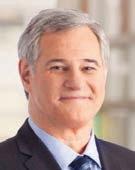

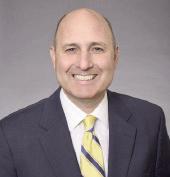
BY Douglas Wilson, Michele Vives and Ryan Baker of The Douglas Wilson Companies; and Christopher Hawkins, James Hill and Gary Rudolph of Fennemore.*
Workout specialists have many avenues and options when it comes to companies or assets facing distress. Many in the workout community are familiar with receiverships and the various alternatives that owners and creditors may utilize, from bankruptcy proceedings to court-appointed trustees and out of court wind-downs. Often, creditors weigh the benefits of these alternatives to assess the most cost-effective and swift process forward. One alternative to consider is an Assignment for the Benefit of Creditors — commonly known as an “ABC.”
ABCs, while less common than receiverships, can offer many benefits to an insolvent entity and to its creditors. This article introduces some of the key elements of an ABC, offering considerations for utilizing an ABC in distress scenarios and real-life best practices from a recent ABC assignment.
An ABC is a voluntary process whereby a debtor agrees to have its assets liquidated without the expense or intervention of a court. This process is conducted by an independent third party fiduciary chosen by the debtor. Often this fiduciary — the “Assignee” — is selected with creditor support in an effort to maximize the value of the debtor’s assets for the benefit of all known creditors.
In essence, an ABC is a device available to liquidate a business — often swiftly — under the supervision of the Assignee. This Assignee has powers similar to those of a trustee in a bankruptcy proceeding, though with some critical differences.
According to the American Bar Association (ABA), an
ABC “can be the most advantageous and graceful exit strategy” for some distressed businesses. The ABA further explains this may especially be true in instances where the goals are:
• (1) to transfer the assets of the troubled business to an acquiring entity free of the unsecured debt incurred by the transferor; and,
•(2) to wind down the company in a manner designed to minimize negative publicity and potential liability for directors and management.
There are several elements that make an ABC a prudent option in these scenarios. The first is that lack of court involvement tends to minimize publicity and can reduce the headline risk often brought by public court filings. The second is the selection process for the Assignee, who is chosen firsthand by the debtor. This means the Assignee may bring specific experience to the workout including previous ABC work or expertise in a particular business sector or asset type. Finally, the lack of a court process often leads to a much more timely completion of the assignment versus a bankruptcy proceeding; this can further expedite the return of value to creditors.
ABC’s are creatures of state law, which means they vary significantly from state to state. Some states’ ABC’s laws are considered by practitioners to be much more user friendly than others. California’s ABC statute appears to be the most used, and is not limited to entities organized (or even headquartered) in California. Historically, ABCs were governed by common law, prior to being codified in the early part of the 20th century. Later, in California, many of the statutes were repealed with only a few statues remaining today.
Continued on page 13...
Continued from page 12.
In California, Code of Civil Procedure section 493.010 provides basic definitions with additional procedures defined under Code of Civil Procedure section 1802 and Commercial Code section 9-309, as well as Civil Code section 1954.1, Code of Civil Procedure section 493.040, Code of Civil Procedure section 1800 and Civil Code section 3439.
An ABC is not for every scenario, and distressed entities may weigh the considerations around utilizing an ABC process versus going through the bankruptcy process and bankruptcy protection.
Among the major differences between an ABC and a bankruptcy filing is the lack of Court involvement and oversight in most aspects of an ABC proceeding as compared to the typical requirement in a bankruptcy proceeding of needing to obtain court approval. Another
key difference is the ability for the debtor to choose the assignee, whereas in a Chapter 7 proceeding the trustee is assigned at random (albeit in some circumstances, subject to an election by creditors). Generally, Assignees in ABC proceedings perform the same functions and carry out the same actions administering the ABC estate similar to how Bankruptcy Trustees perform their roles to hold, liquidate, and distribute proceeds of assets for the benefit of creditors.
The advantages and disadvantages of bankruptcy proceedings (both Chapter 7 and Chapter 11), and ABC proceedings can be succinctly summarized as follows:
Automatic stay on filing—extended time to assume/reject leases and contracts, or to bring actions.

Continued from page 13.
Possible sale of assets at liquidation prices quickly—with protection of court order to provide buyer with free and clear title.
Provides forum to determine disputed claims and eliminate debt on assets.
Provides a clean break under court supervision between debtor and new purchasing entity.
Lower legal fees than Chapter 11, albeit with little to no control by debtor over the process.
2. Disadvantages
Trustee appointed automatically (chosen randomly from panel trustees).
Loss of control over outcome (appointed trustee drives the process).
Maximizing value can be difficult (trustee charged with duty to liquidate assets expeditiously).
Eliminates any hope of company’s viability (no right to keep operating unless special order entered authorizing continued operations).
Public liquidation on notice to the public and all creditors and parties in interest (including ownership/equity security holder).
Trustee has broad powers of examination, as do creditors and other parties in interest, and trustee has power to bring avoiding actions (e.g., preferences, fraudulent conveyances, debtor’s actions against insiders and third parties).
1. Advantages
Automatic stay stops all collection efforts on pre-petition accounts and all litigation.
Continued on page 15...







Continued from page 14.
Defers debt payments other than operating expenses which must be paid and kept current.
Maintains chance of reorganization and rehabilitation of entity/enterprise as a going concern.
Allows company to control liquidation or reorganization without appointment of a trustee.
Extends time to assume/reject leases and executory contracts, and provides ability to reject unfavorable leases and executory contracts; and provides ability to assume/assign/sell favorable ones.
Generally provides debtor the ability to sell property free and clear of liens and claims.
Provides the debtor the possibility of recovering preferences and fraudulent conveyances.
Gives the debtor the ability to “cram down” nonconsenting classes, including undersecured secured debt, under a plan of reorganization.
Discharges debt through a confirmed plan.
Give debtor the ability to obtain of post-petition financing on a priority basis, including priming liens.
More flexibility than Chapter 7 liquidation proceedings under control of an assigned trustee.
Brings finality to process through a confirmed Chapter 11 plan.
All business is conducted in a “glass house,” loss of confidentiality, court and creditor review of operations and administration of estate.
Post-petition expenses must be kept current.
Many creditors will require C.O.D. to continue to supply goods and services post-petition.
Creditor consent, by class, required for treatment under a plan of reorganization.
Added costs of legal and accounting professionals, including for the creditors’ committee, which can be substantial.
Restricted use of incoming revenue, i.e., “cash collateral” Court process and noticing requirements slows down implementation of decisions and actions.
As noted above, an ABC proceeding is a voluntary process whereby a debtor agrees to have its assets liquidated, without the expense or intervention of a court, by an independent third party fiduciary chosen by the debtor, often with creditor support, in an effort to maximize the value of its assets for the benefit of all the debtor’s creditors.
1. Advantages:
Assignments are usually less costly than bankruptcy or receiverships, and provide for a less cumbersome process—without court oversight and involvement.
The debtor can choose the Assignee responsible for the ABC process.
The Assignee exercises flexibility and business discretion in the method of liquidating assets.
Secured creditors are relieved of the legal costs and risks associated with their own foreclosures and sales of their collateral with dispositions of the collateral at a faster pace in a cooperative forum.
Consent to the ABC by unsecured creditors is not necessary since under common law the assignment proceeding is deemed to benefit all unsecured creditors through equality of treatment.
2. Disadvantages:
Lack of basic bankruptcy and receivership court protections, including no automatic stay and no discharge.
No court protection of Assignee (i.e., no Barton Doctrine protections or judicial immunity of Assignee)
An operating business generally ceases to exist at the conclusion of the ABC (like in a Chapter 7 case).
All assets are liquidated or abandoned.
No court supervision, although state court is available for avoidance litigation. (C.f., Sherwood Partners Inc. v. Lycos Inc. , 394 F.3d 1198, (9th Cir. 2005) ruling that the Bankruptcy Code preempts state ABC laws giving ABC assignees preference avoidance powers—but which has been criticized by some California courts of appeal which
Continued on page 16...
Continued from page 15.
declined to follow the federal case. See e.g. , Credit Managers Ass’n of California v. Countrywide Home Loans, Inc. , 144 Cal. App. 4th 590 (2006), review denied; Haberbush v. Cummins Family Ltd. Partnership , 138 Cal. App. 4th 1630 (2006).).
No provision for “Sale Orders Free and Clear of Liens”
No right to cure lease and executory contract defaults or to assign leases and contracts but assignee does have some statutory rights to deal with landlords and delay transfer of possession as needed to liquidate assets of assignor.
No cap on landlord claims like in bankruptcy.
Ipso facto clauses are enforceable and may result in termination of contracts/leases.
Board and shareholder approval may be required— impractical for publicly held corporations.
Assignees under the Commercial Code have the rights of a lien creditor, meaning the Assignees will take priority over unperfected creditors if they exist.
Conclusion of Pros and Cons Analysis: Ultimately, an Assignee generally has more flexibility in the case of an ABC proceeding when compared to a Bankruptcy Trustee administering a Chapter 7 estate or a debtor-in-possession operating in a Chapter 11 reorganization environment, which can be a benefit or downside depending on the facts in a specific case.
The Assignee in an ABC is responsible for liquidation of assets and returning any remaining value to creditors, but as in a receivership, must also maintain certain business functions in order to achieve this objective. Some upfront considerations include:
• What is the assignor’s structure? Can the entity be assigned?
• Where are the assets located? What types of assets are owned?
• What is the established cost basis of the assets?
• How will the Assignee be compensated? Is there enough value to compensate the Assignee?
• Will there be tax considerations such as sales tax, payroll taxes, federal and state taxes related to
employees, goods and services provided by the distressed entity?
• Will employees and their expertise be needed during the liquidation process?
• Who are the creditors?
• Will there be service providers needed?
• Who will serve as the team to support the Assignee? This may include counsel, claims processors and liquidation agents.
An Assignment for the Benefit of Creditors was utilized as the mechanism for winding down former online retail giant Zulily, which declared insolvency in December 2023.
With assets spanning four categories — physical inventory, mechanical assets, intellectual property and a pending antitrust lawsuit — there were many considerations upfront for the Assignee, Douglas Wilson Companies, and its legal counsel, Fennemore.
Based on the experience, the assignment team identified a number of steps to a successful resolution:
Assess corporate structure and identify key leaders: It is important to understand upfront the Assignor’s corporate structure, employees, and purpose for pursuing an ABC approach versus the other available remedies. This allows the Assignee to identify potential pitfalls and develop a successful team for the assignment. Equally important is working with the entity’s leadership including any directors, officers and counsel, as well as key division leaders such as those overseeing human resources, IT, operations and accounting. These functions often serve as important assets during the ABC assignment.
Assess assets: This includes all assets across all relevant locations. In the case of Zulily, this included inventory located in two 750,000 square-food warehouses in Ohio and Nevada; conveyors, racking infrastructure and equipment, IP
Continued on page 17...
Continued from page 16.
such as the Zulily name, brand and copyrights; and an antitrust lawsuit that was pending at the time of assignment.
Build a team: The team should include legal resources that can both support ABC structural needs as well as insolvency needs, which are not always the same.
Address tax issues: The Assignee must confirm all taxes — payroll, sales, federal and state — are paid in full prior to the Assignment date and must be aware of any ongoing or potential audits. These audits may go on for up to three years after the most recent tax filing.
Identify key service providers: These may be essential during the wind-down process and may include insurance providers, software subscriptions and any other ongoing services that are needed during the wind-down, particularly as to data preservation. Alternatively, if these services are no longer needed, it is important to discontinue them to avoid incurring unnecessary costs.
advance. WARN Act and related compliance requirements may apply both on the federal and state levels. It is important that the Assignor has complied and has notified employees accordingly in relevant cases.
In the case of the Zulily Assignment, a comprehensive employee strategy was critical to the success of the resolution. Existing employees were essential to the wind down process, and it was important for the Assignee to understand the employees’ roles, compensation structure, and willingness to continue working during the liquidation process.
If there will be a management services agreement utilized, the Assignee must understand employee benefits, as they will be billed back to the ABC entity. A reimbursement budget and schedule should be established with the Assignor if possible to establish the reimbursement process upfront.
Additionally, the Assignee should understand the Worker Adjustment and Retraining Notification Act (WARN) if it applies, as this federal law requires employers to provide written notice before mass layoffs or plant closings. The notice must be given at least 60 days in
Because creditors can vary in type, size and location, an Assignee should understand the makeup of creditors upfront, including how many there are and which types of creditors exist. Most ABC’s do not involve a Creditor Committee. Zulily, however, did involve one. As a best practice, the Assignee should work closely with the committee, which often represents the largest creditors.
The creditor types are critical as some financial institutions may hold reserves for returns of physical goods and may have pre-set timelines for returns and/or purchase disputes.
Questions to ask:
Is there working capital available? This may be needed to fund the Assignee’s operational costs, cover due diligence and any fees associated with liquidation, and may be negotiated in the form of a pre-assignment fee.
What are the asset types? Where are they located? In the case of Zulily, there were corporate offices in Seattle as well as two 750,000 square foot distribution centers in Nevada and Ohio. If assets are widespread across multiple states, the Assignee may need to register the ABC entity in each of the states and enlist counsel to explore ABC regulations and employment law in each state.
What is the value of the assets? The Assignor must provide a full list of assets and their estimated value, which can then be discounted based on the liquidation value. This value will be needed in order to determine whether the Assignee’s costs and compensation can be covered.
Who controls movement of funds within the distressed entity? The Assignor has to agree to established protocols on how on-going payments are approved and who has access to
on page 19...
W HILE THERE IS NO COURT - APPROVED LIST OF R ECEIVERS , THE FOLLOWING IS A PARTIAL LIST OF R ECEIVERS WHO ARE MEMBERS OF THE C ALIFORNIA R ECEIVERS F ORUM AND HAVE THE INDICATED EDUCATIONAL EXPERIENCE . I NCLUSION ON THIS L IST SHALL NOT BE DEEMED AN ENDORSEMENT OF ANY OF THE NAMES LISTED BELOW BY THE R ECEIVERSHIP N EWS , THE C ALIFORNIA R ECEIVERS F ORUM , OR ANY OF ITS R EGIONAL C OUNCILS . T HIS IS A PAID ADVERTISEMENT .
Bay Area
SVl David Bradlow 415-206-0635 bradlow@davidbradlow.com
V
≠▲zvb Dennis Gemberling 800-580-3950 DPG@perrygroup.com
Vl▲zwb; Michael Kasolas 415-992-5806 mike@kasolas.com
S l ▲ w Douglas Wilson 619-641-1141 dwilson@douglaswilson.com
Sacramento Valley
SnVl▲b Michael C. Brumbaugh 916-417-8737 mike@mbi-re.com
nlV▲vwb; Scott Sackett 916-930-9900 scott.sackett@efmt.com
lV▲ Kenneth Weaver 916-812-8090 ken@classicrealtyconsultants.com
Santa Barbara/Ventura Marcelo Bermudez 213-453-9418 mb@marcelobermudezinc.com
San Diego Area
S
≠l▲wb; Michael Essary 619-886-4116 calsur@aol.com
b Jon Fleming 858-793-6000 jon.fleming@legacyreceiver.com
V
≠▲zvb Dennis Gemberling 800-580-3950 DPG@perrygroup.com
Sl▲wb; Richardson “Red” Griswold 858-481-1300 rgriswold@griswoldlawsandiego.com
b Kristin Howell 858-373-1240 kristinh@meissnercres.com
nV
≠lt▲zvb Richard Munro 949-910-6600 richard@invenz.com
▲ v w Michele Vives 619-641-1141 mvives@douglaswilson.com
SnV≠▲zv Joel B. Weinberg 310-385-0006 jweinberg@usisg.com
S l ▲ w Douglas Wilson 619-641-1141 dwilson@douglaswilson.com
Los Angeles/Orange County/Inland Empire
SVl▲zvb; Blake Alsbrook 310-273-6333 balsbrook@ecjlaw.com
SVl▲ Albert Altro 310-809-5064 albertaltro@traversellc.com
SnV≠ Eric Beatty 909-243-7944 epb@epblegal.com
S l ▲ w ; Ryan Baker 949-439-3971 rbaker@douglaswilson.com
Snl▲zb Marc Brooks 818-519-5588 marcbrooks2021@outlook.com
Los Angeles/Orange County/Inland Empire
Joe Corcoran 619-641-1141 jcorcoran@douglaswilson.com
James F Davidson 949-417-5708 jdavidson@avantadvisory.com
SnV≠ltb; Peter A. Davidson 310-273-6333 pdavidson@ecjlaw.com
nV≠lt▲zb; Stephen Donell 310-689-2175 steve.donell@fedreceiver.com
V≠▲zvb
Dennis Gemberling 800-580-3950 DPG@perrygroup.com
Jeffery Golden 714-966-1000 jgolden@wgllp.com
b David Goodrich 714-966-1000 dgoodrich@wgllp.com
Brett Hitchman 949-200-9712 leeann@hitchmanfiduciaries.com
SnV≠lt▲zvb Byron Z. Moldo 310-281-6354 bmoldo@ecjlaw.com
nV≠lt▲zvb Richard Munro 949-910-6600 richard@invenz.com
b Carl Petta 626-966-4049 cgpetta@earthlink.net
Kevin Randolph 909-890-4499 krandolph@fennemorelaw.com
SnV≠lt▲zvb John Rey 562-500-7999 rpmqmp@aol.com vw Eric Sackler 310-979-4990 ericsackler@gmail.com
SV≠l▲z Thomas Seaman 949-265-8403 tom@thomasseaman.com
Vl▲vb Phil Seymour 310-612-9800 phil@swgrp.com
Patrick Sharples 714-293-2792 psharples@kwcommercial.com
Tony Solomon 310 909-5450 tony.solomon@marcusmillichap.com
SVt David Stapleton 213-235-0601 david@stapletoninc.com
▲ v w Michele Vives 619-641-1141 mvives@douglaswilson.com vb Michael Wachtell 213-891-5460 mwachtell@buchalter.com
SnV≠▲b David D. Wald 310-230-3400 dwald@waldrealtyadvisors.com
SVb Robert C. Warren 714-863-1694 robert.warren@investorshq.com
▲zvb David Weinberger 818-970-0915 david@swgrp.com
SnV≠▲zvb Joel B. Weinberg 310-385-0006 jweinberg@usisg.com
S l ▲ w Douglas Wilson 619-641-1141 dwilson@douglaswilson.com
S This symbol indicates those who completed up to 14 hours of advanced receivership education at the Loyola V, Complex Case Symposium in January 2013.
n This symbol indicates those who facilitated and attended the Loyola V, Complex Case Symposium in January 2013.
V This symbol indicates those who completed 9 hours of education at the Loyola VI Symposium in January 2015.
≠ This symbol indicates those who facilitated and attended the Loyola VI Symposium in January 2015.
l This symbol indicates those who completed 9 hours of education at the Loyola VII Symposium in March 2017.
t This symbol indicates those who facilitated and attended the Loyola VII Symposium in March 2017.
▲ This symbol indicates those who completed 6 hours of education at the Loyola VIII Symposium in January 2020.
z This symbol indicates those who facilitated and attended the Loyola VIII Symposium in January 2020.
w This symbol indicates those who completed 6 hours of education at the Loyola IX Symposium in April 2022.
v This symbol indicates those who facilitated and attended the Loyola IX Symposium in April 2022.
b This symbol indicates those who completed 6 hours of education at the Loyola X Symposium in January 2024.
; This symbol indicates those who facilitated and attended the Loyola X Symposium in January 2024.
Cherubim “Lizzie” Hurdle 980-330-1705 traffic.connect@outlook.com Loyola I-IV symbols have been deleted.
Continued from page 17.
ABCs... the financial accounts. The Assignee may work with any existing bank to replace financial approval rights with the Assignee.
With increasingly complex workout scenarios in today’s market including entities that operate in multiple states spanning assets in a variety of locations, workout professionals should always consider whether an ABC is worthwhile. While an ABC carries some of the same benefits as receivership and bankruptcy, it may also offer additional flexibility that can be appealing to both creditors and debtors in some cases, as well as some risks.
Douglas Wilson Companies is based in San Diego, CA. The company provides specialized business and problem resolution services, including receivership and other fiduciary services, including Assignments for the Benefit of Creditors.

The following publications provide additional information and perspective on Assignments for the Benefit of Creditors:
1. “California Assignments for the Benefit of Creditors Desk Guide.” Published by the State Bar now CLA, edited by Peter Califano.
2. “General Assignments for the Benefit of Creditors: The ABCs of ABCs,” written by Geoffrey Berman. Published by the American Bankruptcy Institute.
Fennemore is a full service business law firm with 20 offices around the Western United States. The firm has a large commercial insolvency practice, with particularly deep experience representing fiduciaries like receivers in federal and state court, bankruptcy trustees and ABC assignees.


Baker is the Vice President of DWC.
BY MARK ADAMS*
California Receivership Group (CRG) and I have remediated a number of fire-damaged properties over the last twenty-years. Based on that experience, I propose that the California Receivers Forum is uniquely capable of making a major contribution to rehabilitation efforts after the Palisades and Eaton Fires without spending a dollar.
We all know and have talked to family, friends, and colleagues who have lost their homes during the recent fires in Southern California. The most heartbreaking part of these conversations is listening to people who are completely unprepared and untrained to try to navigate the dangerous shoals of insurance companies who want to deny or not pay claims; of banks, whose only concern is that the mortgage get paid no matter what; and of contractors, both scrupulous and unscrupulous, just so they can rebuild their homes and return to some semblance of normalcy.
As receivers, we deal with insurance companies, banks, and contractors all day, every day. But even after twenty-five years of experience, I find it hard to spot all the land mines that one might face in an effort to do the right thing. Imagine the stress for the thousands of homeowners who have never had to deal with these issues before!
Skill and experience are talents that we, as receivers, can provide. But there’s another, unique aspect that only a receiver can bring to property recovery: super priority for the receiver’s certificate.
An example will illustrate this point: a young family of my acquaintance (husband, wife, and baby) bought a house in Altadena in September 2023, less than two years ago, for $1 million. They put their life savings into a 25% down payment, with the remaining cost covered by a $750,000 bank loan secured by a first deed of trust on the property. Their house is now gone, and they are living with relatives on the other side of town.
After intense negotiations, their insurance company finally paid out $400,000—but the payment was made to the lender, not to them. So, the mortgage lender is still owed $350,000 and is demanding immediate resumption of mortgage payments when the ninety-day moratorium expires.
It’s impossible to imagine this young couple getting bank financing subordinate to the remaining loan balance to rebuild their home (1,500 square feet x $200 per square foot is a $300,000 rebuilding cost).
This scenario is a recipe for disaster for this young family and for the entire community. There’s not enough government aid to thwart this result, and certainly charity is not a solution. But the super-priority provided to a receiver’s certificate may be the answer.
As receivers, we know that if our appointing judge grants super-priority to a certificate, that certificate becomes, in effect, a new first trust deed on the property. (County of Sonoma v. Quail, 56 Cal.App.5th 657 (2020), A CRG case in which the California Supreme Court denied review; and City of Sierra Madre v. Suntrust Mortgage Inc. 32 Cal.App.5th 648 (2019))
We also know that there are lenders willing to lend on the basis of super-priority who would not otherwise lend. For example, no lender would provide secondary financing behind a $350,000 first trust deed on a parcel in a community as devastated as Altadena or the Pacific Palisades.
Super-priority lenders, on the other hand, would look at the parcel, see that before the fire, the house was worth $1 million, figure that a post-fire house would be worth at least 50-60% of what it was before ($500,000-$600,000), and then make a $300,000 super-priority loan (a 50-60% loan-to-value ratio) to complete it.
Would the underlying lender complain? Of course. Banks are notoriously short-sighted in these situations. They would ignore the fact that their current asset, a $350,000 loan on a devastated property, is virtually worthless. A smart lender would see that the super-priority loan would actually enhance the value of their asset; that asset (the loan) would then be a lien on a $500,000 or $600,000 house. And if the rebuilt house sold for more, the entire loan could be paid.
So, it can be anticipated that underlying lenders will complain. But in the health and safety receivership context, the underlying lender does not ultimately control what happens. A Superior Court judge will have that control in either granting or denying the receivership petition. The court
Continued on page 21...
Continued from page 20.
will hear all parties before issuing its decision for a receivership—but the decision ultimately rests in the hands of the judge. And in my twenty-five years of experience, judges are not impressed with any parties, including lenders, trying to thwart the remediation of community blight.
So, how does a health and safety receivership meet these desperate community needs? Through expertise in dealing with insurance companies, lenders, and contractors; and through delivery of mortgage capital to rebuild via super-priority.
The legal foundation for health and safety receiverships is California Health and Safety Code Section 17980.7. That section lays out a comprehensive set of procedures for the appointment and work of a health and safety receiver.
Cities and counties initiate the process by filing an expedited petition for appointment of a health and safety receiver. In the petition, they nominate a receiver who is either accepted or rejected by the court. All parties with a recorded interest in the property must receive notice of the petition, and all interested parties may appear and argue at the appointment hearing.
Once the receiver is appointed, the first step is to file an oath and bond. The receiver then takes control of the property in accordance with the court’s order. The receiver arranges the super-priority financing against the property and hires engineers, contractors, and (in these cases especially) environmental mitigation experts. The receiver will submit recommendations to the court, and usually after a hearing based on declarations, the court will approve those recommendations via court order. With the funding contained in such an order, the receiver can begin the hard work of rebuilding the home.
Once the home is rebuilt, the owner must pay the receiver’s lien. This payment is sometimes made in cash, but it is more often handled by refinancing the certificate and underlying loan. Refinancing becomes relatively easy after the property is rebuilt. In this hypothetical case, the combined debt would be $650,000—the original loan balance of $350,000 plus the receivership lien of $300,000. (Note that this is $100,000 less than the original loan, due to the insurance paydown to the lender.)
This path can be replicated for any house destroyed by any of the fires. There are two vital components to this proposal:
First, any health and safety receivership would be filed only on behalf of homeowners who consent to it. This is
not a time for anything but voluntary action by the owner. If they do not want to take advantage of the program, that is their right.
Second, I would impose a principle that CRG lives by each and every day: a property should pay its own cost of repair. In other words, while California law allows courts to charge the cost of a receivership to the owner, the receiver in these cases would have to agree to take their fees out of the property—and not through a personal order against an owner. It would be unseemly, bordering on ethically wrong, to further burden people who have lost everything they own.
It is important to note where the fires have taken place and the impact that might have on receivership. For instance, the Eaton fire principally occurred in unincorporated portions of Los Angeles County, and therefore, it would be the County Counsel who would file the petition. That is great news because Los Angeles County has one of the best track records in the state in terms of usage of health and safety receiverships.
Indeed, County Counsel could file a petition to appoint a receiver on any property in the County. But counties typically defer to incorporated cities regarding work within their boundaries, and Pacific Palisades is in the City of Los Angeles. In contrast to the County, the City of Los Angeles has very little experience with health and safety receiverships. As an alternative, perhaps an agreement could be reached that the County could also file on City of Los Angeles properties.
It is certainly not easy for communities to recover from tragedies like the Palisades or Eaton fires. Some communities never do recover—which would be a separate tragedy. I encourage policymakers to consider this proposal. It would have no cost to the City or the County other than the staff time to prepare the petitions. And if the members of the California Receivers Forum all jump in to do their part, CRF can help to rebuild thousands of homes in the coming years.
*Mark Adams is the President of California Receivership Group. He innovated the health and safety receivership remedy in California twenty-five years ago. With experience in more than 350 successful receiverships in multiple states, he is considered a leading authority in the field, both in California and nationally
Mark Adams


As Senior Vice President and Relationship Manager at East West Bank’s Specialty Deposit Services Group, I have the privilege of working closely with court-appointed fiduciaries nationwide. My role centers on providing tailored banking solutions for Professional Fiduciaries, State & Federal Receivers, Restructuring Professionals, Liquidating Trustees, Chapter 11 Trustees, Chapter 7 Trustees, Attorney Referred Debtor’s in Possession and others managing complex financial matters. While the technical aspects of my work are important, my focus has always been on building meaningful, lasting relationships— relationships built on trust, empathy, and partnership.
My journey into banking was not a straight path. I was born in Seoul, South Korea, and immigrated to the San Gabriel Valley when I was a child. Soon after arriving in the States, my parents operated a liquor store in Koreatown. Rain or shine, I spent weekends taking the bus from San Gabriel to Koreatown, where I would, along with my siblings, stack shelves, take inventory, and assemble six-packs of canned drinks. But being at the store also had its perks.
There, I had my fair share of celebrity sightings. Most notably, our store was located around the corner from Stevie Wonder’s recording studio, and we regularly served his team. Those early experiences shaped my work ethic and taught me the value of strong community connections.
Growing up, I dreamt of being a teacher. I studied English at Cal State Los Angeles, earned my teaching credential, and even studied abroad at Oxford. Living with a host family in England was transformative, broadening my perspectives and fostering a lifelong appreciation for learning. But life had other plans. While attending college, I took a job as a bank teller, thinking it would just be a temporary role. Instead, it sparked a passion for helping clients solve problems and meet their financial goals. I rose through the ranks, from new accounts officer to loan officer, to branch manager, to regional manager, and ultimately into my current position, specializing in banking for fiduciaries and receivers.
One of the most significant shifts in my career came when I moved from serving ultra-high-net-worth clients to focusing primarily on deposit accounts for court-appointed fiduciaries. Initially, my career revolved around comprehensive financial services for affluent families, but I found a new and equally rewarding challenge in supporting fiduciaries—professionals who shoulder immense responsibility in managing assets during periods of financial distress or legal proceedings. This pivot allowed me to develop specialized expertise and offer a level of service that fiduciaries can trust.
What I love most about my work is the personal connections I build. Every client brings a unique story, and I take the time to learn about their families, hobbies, and community involvement. My approach is holistic—it’s never just about a single transaction but about creating a partnership that lasts a lifetime. Many of my clients have become friends, and I take pride in being someone they can count on, whether for banking advice or simply a conversation about life.
Continued from page 22.
One of the pivotal moments in my career came in 2008 during the financial crisis. The Chairman of a major bank invited me to join a new venture aimed at attracting ultrahigh-net-worth clients. I was a branch manager at the time, doing well and part of the bank’s CEO Circle for top performance. Taking the offer was a leap of faith—I had no desk, no office, and only my personal cell phone. But I embraced the challenge, hitting the pavement to network, build relationships, and bring some of the region’s wealthiest clients to the bank. Many of those connections remain strong today.
This experience also introduced me to the world of receiverships and restructuring, a niche that I found both challenging and rewarding. Over the years, I’ve become known as a “rainmaker” for my ability to attract and retain top clients. My efforts have led to the organic growth of the bank’s fiduciary services, positioning us as a trusted partner for professionals managing complex financial situations. My methods are as diverse as they are effective—from networking at conferences to striking up conversations in restaurants, and even the traditional approach of cold calling local companies. My ability to meet and connect people has always been a strength. I make new connections wherever I go. From friends-turned-clients I have met while hiking or while sitting beside guests at restaurants, I enjoy meeting new people and learning how I can help others. Some of the highlights of my meetings include meeting Andrea Bocelli, one of my favorite artists, while on a call with a client.
I see one of the most important aspects of my job as supporting my clients, which I mainly do by helping them foster new connections with others. Whether introducing clients who form successful business partnerships or simply making helpful referrals, I find joy in fostering connections that benefit everyone involved. On a few occasions, I’ve even played matchmaker, helping clients find love and happiness—a role I take great pride in!
Outside of banking, my life is filled with family and hobbies that keep me grounded. My husband and I have two wonderful children. Our son, a former competitive powerlifter, works as an operations and sales manager in the roofing industry, while our daughter is in her final year of Stanford Law School and preparing to clerk for a Ninth Circuit judge. As a family, we share a love for the outdoors,

often camping along the California coast and reminiscing about our snowboarding trips to Mammoth—though I’ll admit I was always the slowest on the slopes.
I also have a quirky passion for all things beauty and skincare. Learning about the latest products and trends excites me, though I’m still not sure where this hobby began. I also pride myself on staying active by hiking, doing hot yoga, and being a diligent hula hooper—an exercise I enjoy while watching Korean dramas.
What has kept me motivated throughout my career is the belief that challenges are opportunities for growth. I’ve learned that resilience, adaptability, and a positive attitude can overcome even the most daunting obstacles. Life is a journey filled with lessons, and I embrace each experience with curiosity and gratitude.
Through my years as a professional, I’ve learned the following lessons: Work hard, stay focused, and don’t be afraid to ask for help. Find mentors, be a team player, and approach every opportunity with a smile. Importantly, remember that it’s okay to say no and to be selective about where you invest your time and energy.
Looking ahead, I remain dedicated to serving professional fiduciaries and receivers with the highest level of care and professionalism. I’m also passionate about mentoring young professionals and giving back to the community. Life has a way of surprising us, and I’m excited to continue building meaningful connections and making a positive impact—both in banking and beyond.
BY PETER A. DAVIDSON*
I am involved in pending litigation and would like to get a receiver appointed. The facts of the case, however, don’t exactly fit into the types of cases enumerated in Cal. Civ. Pro. Code §564(b). Is there some other basis for getting a receiver appointed?
QDepending on the facts, there are many types of cases where a receiver can be appointed that are not specified in §564(b). Many are statutory. For example: to enforce an order of the family court, Cal. Fam. Code §290; to deal with health and safety code violations, Cal. Health & Safety Code § 17980(c); in unfair competition cases, Cal. Bus. & Professions Code §17203; upon the filing of a complaint for involuntary dissolution of a corporation, Cal. Corp. Code §6513; to manage a long term health care facility, Cal. Health & Safety Code §1327; in escheat proceedings, Cal. Civ. Pro. Code § 1422; after judgment, to sell a liquor license, Cal. Civ. Pro. Code § 708.630(b) and in aid of execution, Cal. Civ. Pro. Code §708.620, among others.
AWhile not apparent, Cal. Civ. Pro.Code §564(b)(9) can be a basis for appointing a receiver, if a receiver was previously appointed in a case with your fact pattern or claims. Section 564(b)(9) states a receiver can be appointed: “In all other cases where necessary to preserve the property or rights of any party.” This language is the result of an amendment to the statute in 2001. Prior to the amendment the statute read (then §(b)(8)): “where receivers have heretofore been appointed by the usages of courts of equity.” The Law Revision Commission Comments to §564 make clear that the language change was merely made “to insert more readily understandable language” and, importantly: “This is not a substantive change.” As a result, if you can find a similar case where a court appointed a receiver you can legitimately argue the court has the ability to do so in your case. Some examples where this section has been used include: Takeba v. Superior Court, 43 Cal. App. 469 (1919), where a receiver was appointed to preserve perishable property pending litigation; McLame v. Placerville & S.V.R.Co., 66 Cal. 606 (1885), appointing a receiver to take possession of property that was subject to a trust. It can also serve a statutory basis for the appointment of an ancillary receiver, along with comity. Recently, a court relied on the section, in a nuisance case, to appoint a receiver to take possession of and demolish a “megamansion” built without required permits and unsafe to


homes on the hillside below it. Had the city acted, a receiver likely could have been appointed under Cal. Health & Safety Code § 17980.7. But, because the city had failed to take action, the down slope neighbors sued for fraud and nuisance and obtained the appointment. Bedrosian v. Hadid, 2021 WL 821504 (2021).
QI am a California state court receiver in a family law case. The divorcing couple owns property in Virginia and Michigan. I know, generally, that in order for me to sell the property I would have to be appointed ancillary receiver in each state. Is there a cheaper, more efficient, way for me to sell the property without being appointed ancillary receiver and having to deal with three courts.
AThere might be. The reason an ancillary receiver is generally needed for a receiver to deal with out of state assets is because a state court receiver’s authority is restricted to the territorial jurisdiction of the appointing court. As Clark states: “An order appointing an equity receiver derives its efficacy from the sovereignty which created the court and cannot, therefore, directly operate on property outside the boundaries of the sovereignty which created the court.” 1 Clark on Receivers, §294.3 (3rd Ed. 1959). See, Booth v. Clark, 58 U.S. 322 (1854), Melvin v. Carl, 118 Cal. App. 249 (1931). Clark notes, however, that if the title holder executes a deed transferring the property to the receiver, the receiver can deal with and sell the out of state property because he is then the owner. Clark, supra. at §294.9. Continued on page 25...
Continued from page 24.
In Rozan v. Rozan, 49 Cal. 2d. 322, 330 (1957) the California Supreme Court recognized this rule stating: “A court in one state cannot directly affect or determine title to land in another.” It went on, citing numerous cases: “It is well settled, however, that a court, with the parties before it, can compel the execution of a conveyance in the form required by the law of the situs and that such a conveyance will be recognized there.” Id.; Beeler v. Beeler, 193 Cal. App. 2d 548, 549 (1961) (“But the law is well settled that when the court has jurisdiction over the parties it can require them to execute conveyances to lands in another state in order to effectuate its decree relating to the respective rights of the parties to the property.”).
Therefore, if the parties to the case are cooperative, have them execute deeds transferring title to you as receiver. Once title is in your name, you can deal with the property as any other owner can. If one of parties refuses to voluntarily execute the deeds, you can ask the court to order them to do so, based on the above authority, in order for you to efficiently deal with the property. If the party still refuses to execute the deeds, the court has the option of holding them in contempt until they do so, or appointing an elisor to execute the deeds on their behalf. Blueberry Properties LLC v. Chow, 230 Cal. App. 4th 1017,1020 (2014).
MICHAEL G. KASOLAS, CPA
Michael Kasolas Company Office: 415-992-5806
Email: mike@kasolas.com
Is pleased to announce the successful completion of his duties as Chapter 11 Trustee
In re: Twila McEachin Lankford for the administration, sale of a multi-family residential building, refinance of single family residential property, plan confirmation, and final administration of the bankruptcy plan
This is all consistent with the underlying concept that a receiver’s sale does not convey “legal” title, but rather good equitable title, enforced by an injunction against suit, and a state court injunction is only enforceable in the state issued. See, SEC v. American Capital Investments, Inc. 98 F.3d 1133,1144 (9th Cir. 1996), abrogated on other grounds, 523 U.S. 83, 93-94 (1998) (“When a court of equity orders property in its custody to be sold, the court itself as vendor confirms the title in the purchaser. Neither the court nor [the receiver] gives a legal title to the purchaser because neither the court nor its officer has legal title to give…A court of equity acts by a process of injunction against the owner and against the parties to the suit and protects the purchaser against interference and assures him quiet title and quite enjoyment.”). Where the party, however, transfers legal title by deed to the receiver, the situation is different, because then the receiver has “legal” title to the property, not equitable title, and can, therefore, deal with it as the owner.
United States Bankruptcy Court Northern District of California Oakland Division
DOUGLAS WILSON
Douglas Wilson Companies (619) 641-1141
dwilson@douglaswilson.com
Is pleased to announce his appointment as Receiver for
AB/DCP Portland Hotel Property Owner, LLC to manage and stabilize the hospitality asset and ultimately complete its sale.
Circuit Court of the State of Oregon, County of Multnomah
RYAN BAKER
Douglas Wilson Companies (619) 641-1141
rbaker@douglaswilson.com
Is pleased to announce his appointment as Receiver for
CTC Office 2 LP. to stabilize and optimize the performance of the assets.
Superior Court of California County of Los Angeles
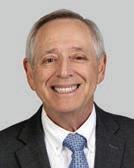
DENNIS P. GEMBERLING
Perry Group International (800) 580-3950
dpg@perrygroup.com
Is pleased to announce his appointment as Receiver for
MK Scottsdale South LLC d/b/a Motel 6 Scottsdale South Superior Court of Arizona, Maricopa County
BY RYAN BAKER*
Welcome to the latest edition of Heard in the Halls. Please provide your snippets of news, questions or comments about receivership issues or the professional community by telephone, mail, fax, or email to: Ryan C. Baker at Douglas Wilson Companies, 19200 Von Karman Ave, Suite 400, Irvine, California 92612; Phone (213) 550-2242; Fax: 800757-3668 (800-pls-don’t), Email: rbaker@douglaswilson.com.
Here is what we have Heard in the Halls …
l Exciting Updates Coming to the California Receiver’s Forum (CRF):
l Oren Bitan Becomes CRF’s New Program Chair: The one and only Oren Bitan (Shareholder at Buchalter), has agreed to be CRF’s new program chair! Known for his sultry voice as well as being the host of the original Receiver’s Feud Gameshow at NAFER’s yearly conferences, Oren is well positioned to take on the duty of delivering insightful, educational and entertaining programming throughout 2025. In addition, Oren will also be responsible for chairing the Loyola XI Symposium, CRF’s biennial education conference which will take place in January 2026. Oren will be stepping into big shoes left by Gary Rudolph (Director at Fennemore), who now moves on to be the Secretary for CRF. We thank Gary for his hard work during 2024 bringing us wonderful and timeless educational panels such as “How to Tackle Nuisance Properties”, “A Receiver’s Superpowers” and “The ABCs of ABCs”. As we move forward, we can expect a lot of great and exciting things from Oren in the coming year!
l Against Advice from Counsel, Kyra Andrassy Accepts the Mantle of Membership Chair: The indefatigable Kyra Andrassy (Partner at Raines Feldman) has accepted the position to be the CRF’s newest Membership Chair. Kyra takes over for Dan Miggins (VP at Hilco Real Estate), who helmed the position for nearly three years. Thank you to Dan for your tireless work and we’re excited for Kyra’s new leadership as CRF moves into 2025 and beyond!

l Three More Members Added to the Board of Directors: The CRF Board also welcomes three new members to the Board of Directors: Michael Gomez, Jakson Wyche and David Weinberger. Michael Gomez is an AV Rated attorney with Frandzel, Robins Bloom & Csato, L.C. who focuses his practice in the areas of bankruptcy, debtor and creditor rights, commercial litigation, and business litigation. Jackson Wyche is an attorney with Receivership Specialists, which specializes in receiverships, partition referee appointments, and chapter 11 bankruptcy trustee appointments. David Weinberger is President of The Seymour | Weinberger Group, and has 22 years of experience brokering real estate transactions, specializing in selling properties for court-appointed Receivers, Partition Referees, Chapter 7 Trustees, Corporate Fiduciaries, Executors, and Trustees of Trust and Probate estates. We are truly excited about the experience and drive that Michael, Jackson (insert Michael Jackson pun here), and David bring to the Board!
l A New Year, a New CRF Board!: The peaceful transfer of power has happened! Ben King (Partner at Loeb and Loeb) has ascended to the CRF’s chair and has welcomed his new unchecked power over the CRF in 2025 with glee. Don’t expect a slew of executive orders. Instead, a steady, but firm, hand from Ben can be expected. Michael Muse-Fisher (Partner at Buchalter) moves to Immediate Past Chair and will be hoping Ben builds on, instead of dismantles, his legacy. The one and only Mia Blackler (Partner at Lubin Olson) has become
Continued on page 27...
Continued from page 26.
Vice-Chair, with yours truly as the new treasurer, Gary Rudolph has become the Secretary, and Oren Bitan the new Program Chair.
l Receivership Hotspots: Your columnist has a question for you: What asset type are you seeing most of your (or your client’s) receivership appointments over? Is it office, hotels, operating businesses, industrial, multifamily, broken construction, partnership disputes, other? Please email me with where you’re seeing receivership hotspots and I can publish the non-scientific results in the next HitH column. From my own experience, we all know commercial office is in distress, but interestingly we are also seeing significant hotel and multifamily distress. Let me know what you’re seeing!
l Real Estate Receivership’s Crystal Ball: A Recap of CRE Update and 2025 Outlook Education Panel: On February 5, 2025 Colliers hosted a lunch and learn titled “CRE Update and 2025 Outlook,” at their offices in San Francisco. The panel went over the office, retail, capital, industrial and multifamily markets for the San
Francisco area. A noticeable increase in activity and trade volume has occurred and in 2024 buildings sold for approximately 98% of asking price—a noticeable increase compared to 92% in 2023. Thank you to Colliers for hosting the event and a BIG thank you to our presenters for sharing their expertise: Payam Nejad, Kevin Colombo, Julie Taylor, Darren Kuiper, Nick Ousman, and Dustin Dolby.
l Spread the Word: Know someone thinking about getting started in the receivership industry? Well tell them there’s already enough competition. Ahem, just kidding, instead steer them to www.receivers.org to order a past Loyola program 4-disc DVD set for $75 teaching receivership Basics and including sample pleadings.
*Ryan Baker has been a Receiver for nearly 15-years and is with Douglas Wilson Companies. Mr. Baker has overseen receiverships of nearly every flavor including operating companies, rents and profits, construction, environmental contamination, regulatory, post judgment, and many, many others.