BY KEVIN SINGER*
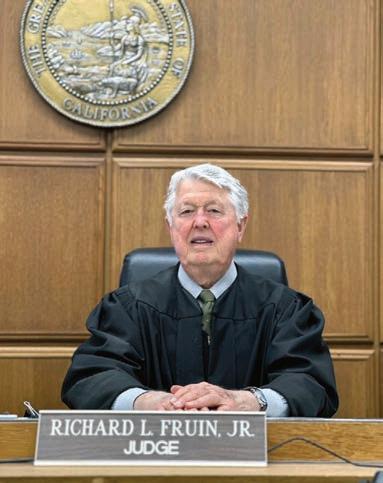
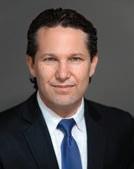
Recently, I had the honor of interviewing the Honorable Judge Richard L. Fruin, Jr. who is a well-known and highly respected Judge for the Los Angeles County Superior Court.
Below are excerpts from our interview.
Question (“Q”): Where were you born and raised? What were some of your fondest memories growing up?
Answer (“A”): I was a Navy brat. My father was a Navy doctor. I grew up on military bases in various states. My memories include long-distant car trips— parents, four children and our dog—visiting my grandfather’s farm in Illinois. As a teenager, I was a page in the U.S. House of Representatives and otherwise worked on Capitol Hill in Washington, D.C.
Q: As an attendee of the University of Pennsylvania, what areas of study and activities were you most passionate about in your undergraduate studies?
A: I matriculated to UPenn as an architecture student, but I changed my major to economics, and took most of my classes in the Wharton School. I was on the crew and fencing teams.
BY KYRA ANDRASSY*
In May, the California Receivers Forum continued its partnership with the California Bankruptcy Forum by organizing three panels on receivership issues at the annual California Bankruptcy Forum in Santa Barbara.
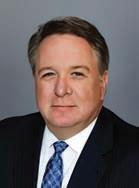

Kathy Phelps of Raines Feldman Littrell LLP, Brad Foster of FTI Consulting, and Matthew Pham of Allen Matkins Leck Gamble Mallory & Natsis LLP kicked off the conference on Friday with a lively panel on the
Continued on page 6...
BY DOMINIC LOBUGLIO*
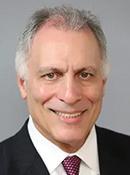
Dominic LoBuglio
*Dominic LoBuglio is a CPA and has provided forensic accounting and taxation services to receivers for 40 years. He has served CRF since its inception as a board member and officer for LA/OC and the State.
As I read through this issue’s articles, I continue to be impressed by the talent in our membership.
Our regular columnists are always an interesting read. Peter Davidson is a master in receivership law. Ask the Receiver continues to keep us abreast of prominent cases affecting receivers. Ryan Baker’s column Heard in the Halls reports on the changes at Stanley Mosk’s Writs and Receivers Department and the mergers of prominent insolvency firms.
We have two articles covering education programs recently presented by CRF. Kyra Andrassy produced three education programs that CRF presented at the California Bankruptcy Insolvency Conference in Santa Barbara. Her article provides a recap of these initiatives, which cover the use of the bankruptcy code in equity receiverships, commercial real estate receiverships, and the different types of receiverships, illustrating how and when they are used.
If you missed our program on AI presented by Richard Munro and Ashwin Rangan , be sure to read their article Artificial Intelligence – 9 Things You Should Know to embrace AI and enhance the effectiveness of your receiver practice.
Oren Bitan and Danielle Mayer pose the question When Does Seeking the Appointment of a Receiver Make More Sense Than Bankruptcy? I thought the answer was always, but apparently it is not quite that simple.
Once again, Kevin Singer presents an interview with a judge. This issue features Judge Richard L. Fruin, Jr., a well-known and highly respected Judge of the Los Angeles Superior Court.
We proudly feature a profile of Douglas Wilson, a long-time supporter of CRF. His prominence as a receiver is unsurpassed. The story of how he achieved such success since his first receivership assignment in 1990 is fun and interesting.
I want to acknowledge the wordsmanship of our editors Michael MuseFisher and Blake Alsbrook . I want to thank our advertisers who make this publication possible: BUCHALTER; DAWGS VACANT PROPERTY SECURITY; DOUGLAS WILSON COMPANIES; ERVIN COHEN & JESSUP LLP; GEFFEN REAL ESTATE; PERRY GROUP; PLAYA VISTA PROPERTY MANAGEMENT INC; NATIONAL FRANCHISE SALES; ERIC SACKLER & ASSOCIATES, and THE SEYMOUR WEINBERGER GROUP.
If you missed any issues of Receivership News, downloads for substantially all of our issues are available on CRF’s website: https://receivers.org/receivershipnews/receivership-news-issues/ . As Peter Davidson suggests in his column, “Readers are encouraged to cite, copy, and use Ask the Receiver and Receivership News articles and information.”
Please enjoy this issue and have a wonderful summer.
Receivership News
Published by California Receivers Forum PO Box 10
Manhattan Beach, CA 90267 714-632-6800 • Receivers.org
Publisher Dominic LoBuglio dominic@lscpa.net
Co-Editors
Blake Alsbrook balsbrook@ecjlaw.com
Michael Muse-Fisher mmusefisher@buchalter.com
Associate Editor
Craig Collins
Associate Publishers Mia Blackler Kevin Singer
Contributing Columnists
Ryan Baker Heard in the Halls
Peter Davidson Ask the Receiver
Officers
Michael Muse-Fisher Chair
Benjamin King Chair-Elect
Mia Blackler
Treasurer
Ryan Baker
Secretary
Gary Rudolph Program Chair
Dominic LoBuglio Immediate Past Chair
Graphic Design & Layout
R.R. Altamirano, LLC
Production Services
Group Concepts
Web Services Group Concepts
CRF DIRECTORS
Bay Area
Mia Blackler
Gerard Keena
Joseph Zagajeski
Central California
Christopher Seymour
Los Angeles/ Orange County
Blake Alsbrook
Kyra Andrassy
Ryan Baker
Oren Bitan
Jake Diiorio
Steve Donell
Teresa Gorman
Sunny Han-Jeon
Benjamin King
Dominic LoBuglio
Richard Munro
Richard Ormond
Kevin Singer
Sacramento Valley
Mike Brumbaugh
Michael Muse-Fisher
Scott Sackett
San Diego
Daniel Miggins
Gary Rudolph
Michele Vives
Receivership New s is published by the California Receivers Forum, a not-for-profit association. Articles in this publication express the opinions of their authors and do not necessarily reflect the views of the directors, officers or members of the California Receivers Forum. Articles are intended as a source of general information and should not be construed as specific advice without further inquiry and /or consultation with professional counsel.
© Copyright 2024. California Receivers Forum. All rights reserved.
BY MICHAEL MUSE-FISHER* AND BLAKE ALSBROOK*
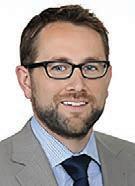
Michael MuseFisher is a Shareholder at Buchalter, a Professional Corporation. He regularly represents receivers across all receivership types.
Summer is now in full swing, and we here at Receivership News believe it to be our duty to provide the best poolside reading material in the nation, if not the world, to our members. So here it is: Put down that cold Mai Tai and pick up Ryan Baker ’s newest gossip about the seismic shifts going on at Stanley Mosk Courthouse! More a historical biography type? Stop grilling those dogs and read about the rise to fame of two legends: Hon. Richard L. Fruin, Jr. and our own Douglas Wilson , who are both featured heavily in this issue. And, for you self-help buffs, jump into a hammock and let Oren Bitan and Danielle Mayer’s article help you cool off and learn why receivership is so much better than bankruptcy.
As an aside, for those of you who missed our Spring issue of Receivership News , I wanted to congratulate my Co-Editor, Michael Muse-Fisher , for being anointed Chair of CRF. Huzzah good sir!! After his appointment to that lofty and demanding role, however, Muse promptly departed for Barbados, which is where I understand he is now summering (and working hard in preparation for Les Voiles de Saint-Tropez Regatta, where he will be in the fall)… (in case his clients are reading this, I made that all up). Given Muse’s ongoing sabbatical, he asked that I write the Co-Editors’ comments for this sizzling summer issue, and I was happy to oblige. A huge thanks to all of the folks who pitched in to make this installment possible.
The Los Angeles Superior Court (Stanley Mosk), is unique in California in that it has three (3) dedicated writs and receivership courts. One can chalk this up to the sheer size of the Los Angeles Superior Court system – it is not only the largest superior court system in California, it is the largest in the nation.
For eight years, the Honorable Mary H. Strobel (ret.) has presided as a judge in the writs and receivers department (Department 82), and for nearly seven years, the Honorable Mitchell L. Beckloff (ret.) has presided as a judge in the writs and receivers department (Department 86). Sadly for us practitioners (but maybe not for the Judges), Judge Strobel and Judge Beckloff recently retired, on June 12, 2023, and April 5, 2024, respectively. Judges Strobel and Beckloff epitomized the role of Judge. They were both extremely thorough, considerate, and well versed in the various legal
and factual issues thrown their way. Moreover, they did not shy away from making difficult decisions. Even if they ruled against you, you know you received a full and fair opportunity to be heard, and that the Judges’ decisions were reached after a full consideration of all the facts and legal issues.
Over the years, the California Receivers Forum has been fortunate to have Judge Strobel and Judge Beckloff share their wisdom and judicial guidance as panelists and contributors to Receivership News. We will deeply miss their role as Judges, but all is not lost. They are have joined Signature Resolution to take on roles as a mediator, arbitrator, judge pro tem, and judicial referee. Notwithstanding their new roles, we are hopeful that Judge Strobel and Judge Beckloff will not be strangers to the California Receivers Forum. Thank you for all that you have done, and all the best to your new adventures.
All publishing and editorial decisions, including the publishing and placement of advertising content, are reserved for Receivership News based upon the Receivership News editors’ and publisher’s exclusive judgment and sole discretion. Such decisions are based on multiple factors, including, but not limited to, the content, style, professionalism, format, nature of material, timeliness, space limitations, and relevance to the Receivership News recipients, taking into consideration the California Receivers Forum’s mission. The mission is to provide a forum for open communication and education concerning all legal, procedural and administrative aspects of judicially appointed receivers and to raise the level of professionalism in this area through education of members and dissemination of information (both for the courts and within the membership).
Continued from page 1.
Q: Was there a specific reason you chose to attend University of Pennsylvania undergraduate?
A: I went to Pennsylvania because it offered a broad curriculum and also because it was close to home (we then lived at NAS Lakehurst, New Jersey).
Q: Did you know from an early age that you were going to pursue law?
A: No, I wanted to be an archaeologist, then an architect, but law was always in the back of my mind.
Q: I see you continued on at the University of California, Berkeley School of Law. Was that your top pick and was there a professor who made a lasting impact on you and why?
A: Yes, Berkeley was my pick as a law school. It was a premium education, and at that time very inexpensive. Perhaps Dean William Prosser, the torts guru, was my most memorable professor.


Q: I see you were one of the founders of the Roundhouse Marine Teaching Center in 1979 and continued as the Director for over 40 years. How did you get involved in this organization and what is its primary mission?
A: We live near the beach. I thought we should have a nearby aquarium to learn about the marine environment.
Q: In 1995, Governor Pete Wilson appointed you to be a Superior Court Judge. Did you have an opportunity to meet the Governor and what were your impressions of him?
A: No. I interviewed with Governor Wilson’s judicial appointments secretary (John Davies).
Q: Since your 1995 appointment, what types of cases have you been primarily handling?
A: I was four years at the Compton Courthouse doing criminal, six months as a pro tem on the Court of Appeal, 2nd Appellate District, Division 7 and then 22 years in the Mosk Courthouse presiding as an individual calendar judge doing civil litigation. I am also certified to conduct cases under the California Environmental Quality Act.
Q: In 1996, you began teaching legal classes at Compton high school. What inspired to take on this endeavor and was it rewarding?
A: Compton High School was close to the Compton Courthouse. I wanted Compton students to experience and understand our justice system.
Continued on page 5...
Continued from page 4.
Q: In 1999 you were a co-author of Judicial Outreach on a Shoestring: A Working Manual. What is this book about, and what inspired you to take on this project?
A: Judicial Outreach—explaining the work of the courts to audiences—has been a special interest. At the time, I was chair of the ABA’s (American Bar Association) Judicial Division and was inspired by outreach programs developed by judges in other states. The book described the outreach programs, so that readers could imitate the programs in their communities.
Q: Has you seen changes in the Judiciary over the years and what are some of the positives and negatives?
A: Yes. Diversity has increased female and minority representation on the bench. Judicial education is better. The improvements in electronic research and communication has improved the quality of judicial services.
Q: What are your general thoughts on appointing Court Receivers?
A: Being able to appoint Court Receivers is often essential to obtaining a fair judicial result.
Q: What are some of the factors that persuade you to appointment of Court Receiver or Partition Referees?
A: I use Receivers to resolve property disputes by arranging the sale of the properties at a fair price.
Q: What qualifications do you like to see in the receivers that you appoint to your cases?
A: Understanding the legal requirements of selling properties under court supervision, having actual experience in selling properties, and being able to work with contentious attorneys.
Q: On motions to appoint receivers, what types of arguments tend to be most persuasive to convince you to appointment a court receiver?
A: Find a good receiver and stick with him or her.
Q: Once you have appointed a receiver, how much communications and updates would you like to receive from your receiver?
A: The communications between the court and a receiver varies case-by-case. Usually I rely on the recommendation made by receivers after they have viewed the property and met with the principals.

Q: When do you want to see receivers who are not attorneys to retain counsel?
A: Only when the circumstances require the application of unusual statutory procedures.
Q: What is the one piece of advice you would like to share with anyone that is going to appear before your Department?
A: I need parties to tell me the true facts—be accurate, have support, and think about what practical options are available.
Q: What do you like to do when you are not working as a Judge?
A: Swim, read books, write in a diary, visit grandchildren.
Thank you for taking the time to participate in this interview with Receivership News.
Continued from page 1.
use of the Bankruptcy Code in equity receiverships. Despite the 8 a.m. start time, it was standing room only as they talked about when the Bankruptcy Code is useful in equity receiverships and when it is not. They described the utility of drawing on the Bankruptcy Code for such things as claims procedures, the sale of assets, the allowance of secured claims, and the approval of settlements. However, the equities of a receivership are sometimes at odds with the Bankruptcy Code. As an example, the panelists discussed how the Bankruptcy Code’s distribution methodology is generally disfavored in equity receiverships, where investors are often prioritized over other unsecured creditors. In federal equity receiverships, you can draw on the Bankruptcy Code when it would further the equitable goals of a receivership and ignore it when it would not.
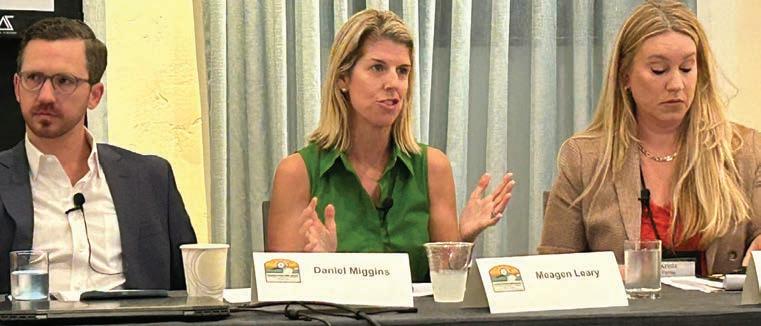
Following that panel was a timely panel on commercial real estate receiverships, with Krista Freitag of E3 Advisors, Meagen Leary of Duane Morris, and CRF board member Daniel Miggins of Hilco Real Estate. With the pressures on commercial real estate in an environment with high interest rates, vacant office space, and a difficult regulatory environment, commercial real estate
receiverships are proving to be a useful tool in certain circumstances. The panelists discussed when receiverships can be helpful and when there might be preferable alternatives. Meagen Leary, who typically represents secured creditors, explained how she counsels her clients holding defaulted loans against commercial real estate. Daniel Miggins shared his perspectives and explained how the utility of a receivership will depend on the type of loan and the class of property.
Krista Freitag gave the receiver’s perspective, including the advantages and disadvantages of a receivership and the limitations of what a receiver can do. Given the rise in commercial real estate receiverships, the topic was a useful one.
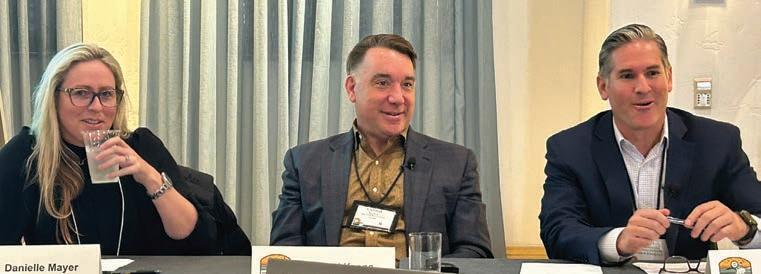
On Saturday, early risers Danielle Mayer of Buchalter, Ori Blumenfeld of Levinson Arshonsky Kurtz & Komsky, LLP, and CRF board member Gerard Keena of Bay Area Receivers Group spoke about the different types of receiverships and how and when they are used. They discussed the role of a receiver in different situations and the fiduciary obligation owed by a receiver, who is typically considered an agent of the court. They discussed how receivers can be useful in business disputes, battles over ownership and disposition of real property, cases involving fraud, and the enforcement of judgments, to name just a few. The panel was a great introduction to the world of receiverships.
The California Receivers Forum looks forward to continuing this partnership with the California Bankruptcy Forum in the years to come.

BY ASHWIN RANGAN* AND RICHARD MUNRO*
Artificial Intelligence (AI) and its latest evolution into generative AI represents a seminal moment in the history of technology. Many people are excited by the prospect of a future where humankind is assisted by infinitely knowledgeable machines, rendering a powerful and potent combination. Equally, many people fear the ramification of AI and risks to property, intellectual property and reputation. Some of these negative connotations have been shaped by dystopian tropes including books, like “2001: A Space Odyssey” written by Arthur C. Clarke in 1968 and the Terminator series of films, each depicting a future where humankind is controlled by cybernetic organisms, or Cyborgs.
How should receivers and fiduciaries approach AI – glass half empty or glass half full?
We submit that receivers and fiduciaries should embrace AI and its potential applications enthusiastically. We advocate that AI is meant to be used, especially to define and develop new applications for handling tedious analytical work. AI applications promise to do such work much quicker and more accurately. Such applications can expose revealing data insights and trends, particularly where fraud is involved.
Here are 9 things that you need to do and know, to embrace AI applications and enhance the effectiveness of your receiver and fiduciary practice.
Gen AI is easily accessible today. These are called “models”, in the AI vernacular. You can use free models, like
Continued on page 8...
LOS ANGELES (213) 891-0700
SAN FRANCISCO (415) 227-0900
Shawn Christianson | Brandon Carr
SACRAMENTO/NAPA VALLEY (916) 945-5170
Transactional
Continued from page 7.
Anthropic with its conversational interface called Claude, or PerplexityAI, or OpenAI with its ChatGPT conversational interface… just to name a few. The key is to get started. Using Gen AI is the easiest way to experience it.
Gen AI is only a tool. Admittedly a very advanced tool, but a tool nonetheless. It does not judge you for how you use it. And, no one is an expert at using this tool. In fact, gaining expertise is so hard that it has been given an exotic name – Prompt Engineering. So, when prompted to interact with the conversational interface, be bold. Ask those edgy questions you are yearning to ask. You are likely to be amazed by the answers. Use different modes of prompting including words, pictures etc.
The “Gen” in Gen AI stands for “generative”. In other words, the machine is generating outputs. The way it does so is by associating words, from your prompting inputs to the vast engines it runs in the background. The more context you give the machine, the better it knows how to associate your prompts with its knowledge databases in the background. Precision in your requests is likely to generate better quality results.
Gen AI models are increasingly multimodal. They can
take text inputs and deliver image outputs, image inputs and deliver full-motion video outputs, and full-motion video inputs to create text output. When you provide inputs, specify how you want to see the output.
Understand what you are asking Gen AI models to do to ensure a higher quality and accurate response. If you smell anything fishy in the answers you receive, validate results from other sources. In fact, verification is always a good idea. Remember that Gen AI is “generative.” It is using word association to deliver ‘bestfit’ answers. It does not know good from bad, right from wrong, legal from illegal, moral from immoral…
Gen AI is steadily getting good at taking a series of tasks and transforming them into an automated series of tasks, gluing together “workflows.” Today, you can transform routine and mundane tasks, reducing, if not fully eliminating, the need for human touch.
7. Use AI to see “Hidden Patterns”
Advanced AI can help you with previously “impossible tasks.” For example, you can sample huge amounts of data to identify questionable transactions, uncover frauds and suspicious financial flows, gaining valuable insights into large datasets.
8.
AI applications carry risks associated with false negatives and positives arising from poorly or loosely defined search parameters, sparsely populated datasets or inherent biases in datasets. Use AI wisely. Results, if not vetted and validated before further use, can easily harm reputations for brands and people.
First, we had an abacus, next we had logarithmic tables, next the slide rule, then handheld electronic calculators, most recently spreadsheets and databases running on personal computers, and now we have AI and its generative applications. Each advance was a monumental leap forward
Continued from page 8.
in technological enablement and capability. Each advance enabled financial and other professionals to gain a productivity edge. Early adopters gained a competitive advantage.
AI is a huge opportunity for accounting and audit professions, receivers and other fiduciaries to accelerate their capabilities to crunch big data, gleaning hitherto hidden insights from data, especially from complex, unstructured, big data.
Finally, AI is here to stay. AI represents the next seminal moment in tech history. Embrace its uses and applications or risk being less effective than competitors. Jump in today, sign up for a subscription to a major AI model and start using it. Make it safe for your teams to access and to use. Gen AI adoption is rapidly advancing. It is set to be as ubiquitous as your favorite search engine.
The question is: How far along are you on the adoption curve?
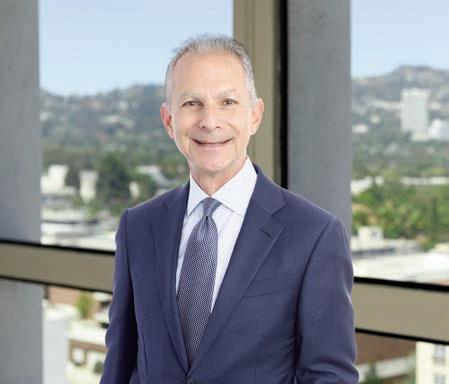
*Ashwin Rangan is Managing Director of The Insightful Group. Until recently, Ashwin served as Chief Innovation & Information Officer with ICANN, the Internet Corporation for Assigned Names and Numbers. ICANN is uniquely responsible for the security, stability and resiliency of the Internet globally.
Prior, Ashwin served as Chief Information Officer with large Fortune 500 companies, like Rockwell International, Walmart and Bank of America. Ashwin is a speaker, writer, thought-leader and consultant in subjects at the leading edge of technologies – particularly cybersecurity, quantum computing and AI.
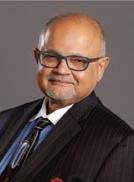
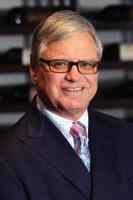
*Richard Munro is the CEO of Invenz, Inc. and is routinely appointed as an equity receiver, post-judgment receiver, and as a provisional director in complex cases. His background includes experience as an international CEO and CFO of consumer goods companies, and as a corporate director having served on many public, private, private equity and multinational corporate boards. He is also a Fellow Chartered Accountant of Australia and New Zealand. Richard has always had a strong interest and curiosity into new and emerging technology applications such as AI, and global geopolitical matters that have, and are dramatically shaping the future.
BY OREN BITAN* AND DANIELLE M. MAYER*
The court appointment of a receiver can provide a viable alternative to traditional workouts or bankruptcy. A receiver is a tool that can assist creditors in recovering funds in default or help troubled companies avoid bankruptcy. A receiver can be especially beneficial where the equitable powers of the court can be utilized to maximize the value of an asset or to maintain the status quo. In these situations, a receivership may be an effective tool for creating, or preserving, value where all else has failed.
A receivership is created by court order but is not a legal action. It is a remedy in a pending action. A creditor can petition the court to appoint a receiver in order to

protect assets or a business. This is done during a pending action such as shareholder/partner disagreements, family law issues, health and safety issues, or foreclosure of a deed of trust. A receivership is a protective measure that shelters assets or a business while some other problem is tackled. The court hands over certain assets or an entire business to the receiver and authorizes his or her actions. The receiver specifically does not settle the disputes at hand (although a receiver can often help resolve specific issues).
Generally speaking, the main goals of a receivership are to: (1) protect and maintain property or assets while litigation is pending; (2) maximize profits for the benefit of the receivership estate to avoid liquidation or bankruptcy; (3) enforce compliance with government standards and regulations; and (4) if necessary, hire new management or other professionals to run the business more efficiently and profitably.
Receivers have a broad array of powers fashioned by the appointing court, based on the circumstances of the case, typically including the power to open and maintain bank accounts, enter into leases and contracts, to hire professionals as needed, and to engage in any other business activity that is deemed necessary and reasonable to ensure the maintenance of the property while litigation is pending.
Given the breadth of a receiver’s potential powers, the receiver’s role can include assessing a company’s viability and existing debt in order to develop a strategy to repay what is owed and hopefully turn the company around without completely liquidating the company. In this scenario, the ultimate goal is to bring the business into a period of financial recovery. That said, the appointing court may empower the receiver to take possession of and sell property or other assets as a way to pay creditors and reduce debt, as well as to collect company income as part of the turnaround process.
Continued on page 11...
Court-appointed receivers, as independent fiduciaries, offer professional input and a fresh perspective that the parties may be likely to trust. Because a court-appointed receiver works to preserve the company’s property and other assets, both parties’ interests are represented and a mutually favorable outcome can often be reached much more quickly and easily than under bankruptcy.
When managing the assets and liabilities of a company under litigation is beyond the scope of bankruptcy, receivership is preferred. A receiver can develop and implement strategies for paying company debts or selling assets with a simpler process that is typically unavailable
under bankruptcy. Debt restructuring and improved asset management may secure more money for creditors, lenders, and owners, which can potentially save a company from liquidation.
A receiver with specialized skills can be appointed to assist the business. For example, a receivership over a large commercial property can have a receiver with real estate or property management experience appointed.
Also, a receiver may hire the necessary professionals to bring a company back into the black. These professionals can run the gamut of skills needed to run a business including, but not limited to, lawyers, property managers, real estate brokers, business professionals (i.e. CEO/CFO/CRO), tax professionals/accountants, tax advisors, healthcare professionals, or importantly professionals with specialized expertise in the industry the receivership concerns (i.e. cannabis).




Continued from page 11.
Further, the receiver can sell assets as necessary or enter into contracts to create cash flow, pay employees and vendors, or engage in any number of business activities necessary to make the company or assets financially viable.
The party seeking the receiver can also include other powers of the receiver in the appointment order. The order appointing the receiver is the bible of the powers and duties of the receiver and can be tailored to the needs of that particular receivership.
When there are not enough funds or assets available for the insolvent company to afford filing for bankruptcy, creditors and lenders may seek a receivership. Although the receiver charges a fee for administering the business, receivership is generally considerably less expensive than funding a bankruptcy proceeding. A receiver’s rates are often lower than a bankruptcy trustee’s rates, which can keep the costs down. Further, receiverships require fewer hearings, filing requirements, and fees, which translates into lower court costs and expenses for each party.

Court appointed fiduciary,manager, consultant and nationwide specialists for
since 1985.

Contact: Dennis Gemberling CHA, CFBE, FMP, FCSI President
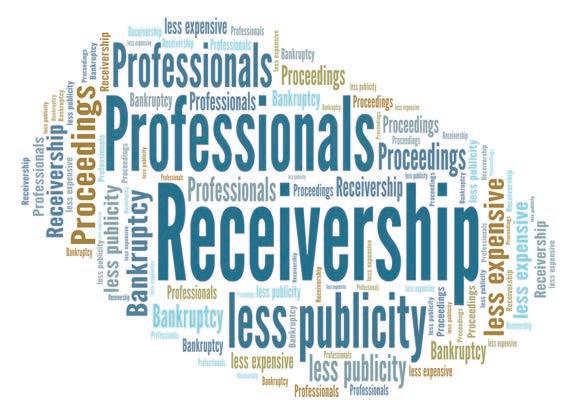
A company under bankruptcy is required to file reports of their assets, liabilities, and finances with the court. Under receivership, however, detailed financial disclosures are typically not required. The California Rules of Court do not require filing of interim reports (and where Superior Court judges ask that such reports be filed, they may be redacted). Further, state court pleadings are filed in the individual county where the case is pending, meaning they are generally less readily available to the public. Receiverships, therefore, minimize negative publicity and avoid the stigma associated with bankruptcy that could tarnish a company’s reputation and result in a loss of customers.
Bankruptcy imposes significant procedural requirements on all parties. Conversely, receiverships require fewer hearings and less documentation than bankruptcy, as mentioned earlier. The ABI Journal explains that with a receivership “there is no Section 341 creditors’ meeting, no requirement to file a plan and disclosure statement, no solicitation process or confirmation hearing.” Receivership thus streamlines and expedites the court proceeding, allowing all parties to reach a mutually agreeable outcome more quickly.
Continued on page 13...
Continued from page 12.
There are few orders related to a receivership that are appealable. First, the appointment of a receiver is appealable, but such an appeal can only stay the receiver’s appointment where an appropriate bond is posted by the appellant. Second, a sale of assets is appealable, but, again, any such appeal does not stay the sale order unless an appropriate bond is posted. Third, the receiver’s final report and accounting is appealable. Other than these events, much of the receiver’s actions are not appealable, given that orders approving such action are considered interlocutory, thereby giving greater latitude to a receiver and more certainty to the parties.
There are many more options to appeal in a bankruptcy. Importantly, this can slow down the proceedings.

There are also a number of advantages for receivership professionals. First, it is easier for receivership professionals to get paid. The parties typically only have ten (10) days to object to interim receiver reports. Once the ten days have passed, the receiver can be paid, although all fees and costs are subject to the final report and accounting, but if the interim reports are not objected to, the ability to challenge later is that much more difficult.
Also, there is great deference paid to receivers and their business judgment. Since receivers are courtappointed neutrals, the court views them as an arm of the court. Therefore, courts are more willing to approve of the work done by a receiver. As a court-appointed receiver, it is much easier to seek instructions from the
Continued on page 14...



Deters Break-ins | Prevent theft, vandalism and occupation. DAWGS are reinforced with heavy duty steel.
No Lock Boxes or Key | DAWGS coded door guards provide managed access to the property 24/7.
Added Curb Appeal | DAWGS neutral powder coating material blends in and allows for easy graffiti removal.
Modular Design | DAWGS modular design makes them perfect for doors and windows of all shapes and sizes.
No Safety Concerns | Agents can sell/rent properties quicker when they feel safe and have reliable, managed access when showing properties
Continued from page 13.
court ex parte, thereby reducing the time to get into court and any potential adverse impacts on the receivership estate or parties. And, as discussed supra, few actions of the receiver are appealable.
One issue, often arising out of a lack of knowledge, is buyers of assets might not place as much confidence in a state court order as a federal bankruptcy. The federal bankruptcy court can also strengthen the
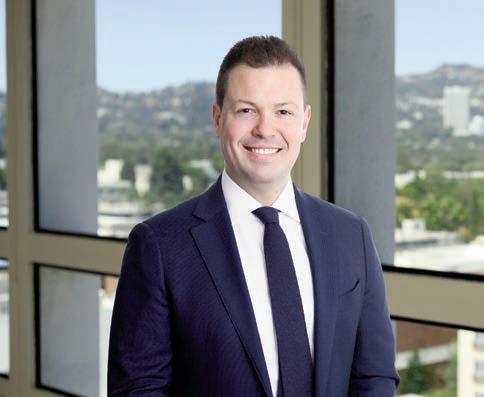
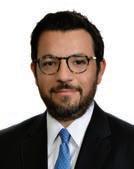
*Oren Bitan is a shareholder based in Buchalter’s Los Angeles office and a member of its Litigation department. He is also the chair of the firm’s Fiduciaries, Receivers & Trustees group. Oren has represented state and federal court receivers in hundreds of equity, real estate, and health & safety receiverships, and has assisted in the recovery of hundreds of millions of dollars in assets for secured creditors. Oren has also worked in tandem with law enforcement to recover monies for victims of fraud in Ponzi scheme receiverships.
protection from creditors, because there is an automatic stay in bankruptcy proceedings that benefits the debtor and a trustee.
Court availability can also be a factor. Some counties, like Los Angeles, are very impacted and noticed motions may only be available many months out. Often, bankruptcy courts have more hearings and greater calendar availability. The amount of court intervention needed should be considered when weighing a receivership versus bankruptcy.
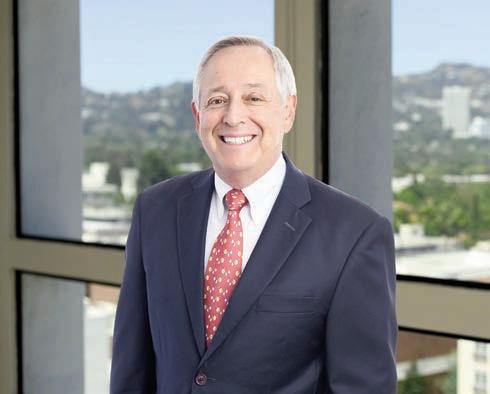
*Danielle M. Mayer is senior counsel in Buchalter’s Los Angeles and Orange County offices and a member of its Litigation department. Danielle has experience representing state and federal court receivers in the execution of their duties in many equity, real estate, and health & safety receiverships. Ms. Mayer has obtained receivers on behalf of banks, creditors, and other businesses. She also has experience with other pre- and post-judgment remedies.

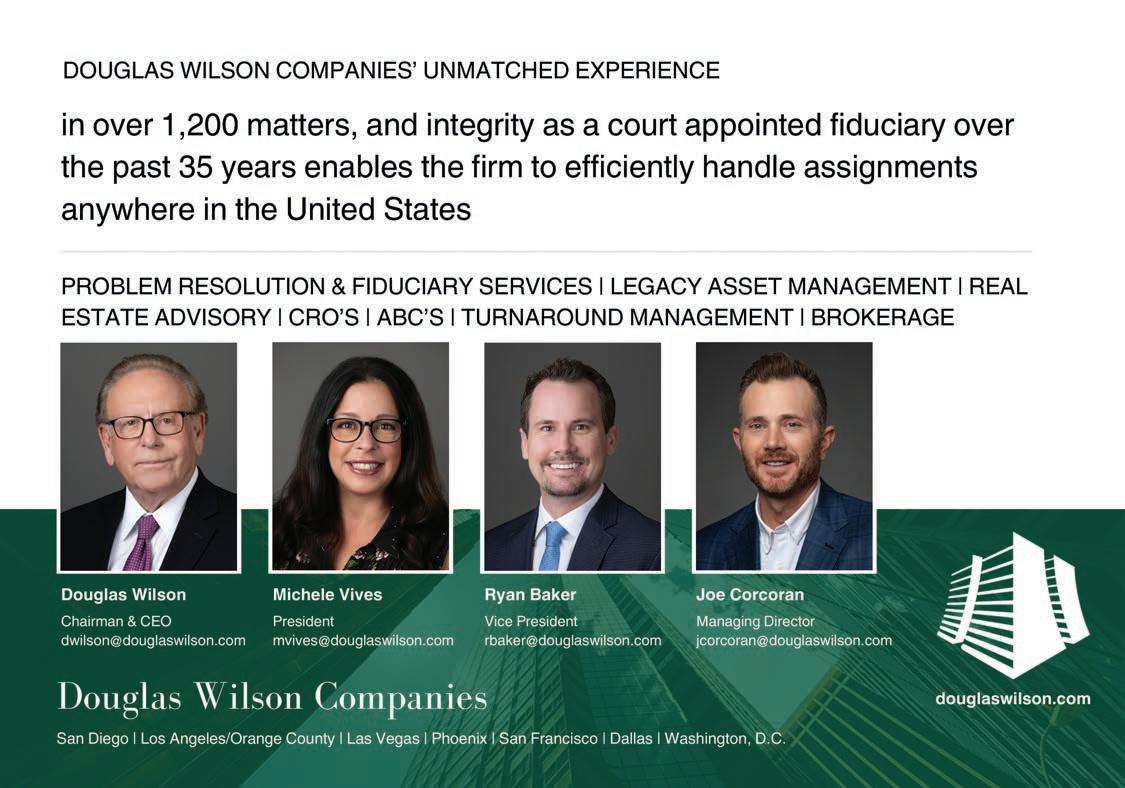
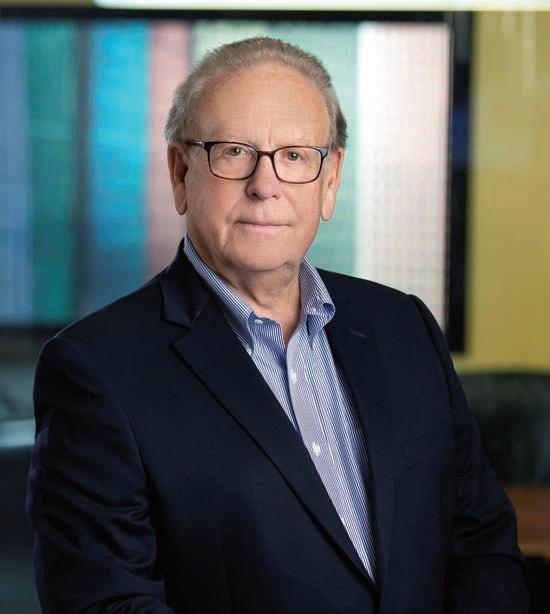
I came to the West Coast from Chicago by way of Denver, and likewise made it to the receivership community through a winding avenue: real estate development. Never having taken a business or law class, my background was in design, finance, development and construction.
Born and raised in Oak Park and Glen Ellyn, Illinois, my childhood was based on a spirit of adventure. My mother, who hailed from England and was very outgoing as a pioneer skier and tennis player, flew airplanes in her 20s, which was an extraordinary calling for a young woman of her time. Starting when I was six, she and my father (who didn’t fly), took our family on an annual winter trip by train from the suburbs of Chicago to the mountains of Colorado or Utah where we’d stay in a family-run lodge, and ski for two weeks, exploring a terrain and region that was vastly different from that to which we were accustomed in our dayto-day lives.
Perhaps as a result of these regular family adventures, I’ve always treasured a balance of family and staying involved in the many travels and activities of my own family: my wife,
Kathleen, and our three sons, Nich, Alex and Michael, and now our two daughters-in-law and four growing grandchildren. We all enjoy sports, travel and being active and I believe that if you do things with your kids that they want to do and enjoy, that provides an opportunity for them to want to be with you. To that end, we were always very focused on group activities like ski trips, fishing trips in Canada, traveling to Mexico on excursions and striking that balance my mother had always embodied between working hard and playing hard all along the way.
I graduated from the University of Denver with a Bachelor of Arts and started a job working for my first mentor, Joe Cannell, who was the owner of the Southern California-based interior design firm Cannell & Chaffin. With a focus on designing the interiors of high-rise offices, law firms and other professional settings. The firm’s clientele included many of the who’s who in and around Denver, from accounting firms to banks, private clubs, brokers and developers.
The leadership of many of the prominent local businesses happened to be also present on the boards of the clubs our firm designed, which taught me early the value of professional relationships and how to grow and build upon those relationships. To this day, our business continues to grow based on referrals, relationships and networks as one often leads to another.
After working for Cannell & Chaffin, I decided I not only wanted to work on designing and furnishing buildings — I wanted to build them. In the early 80s, Kathleen and I moved to San Diego to embark on a major endeavor that would satisfy that ambition and propel me into the world of development.
Through a partnership with my second mentor, John Whitney of Charlton Raynd Ventures, we developed what amounted to be the largest development of its kind in San Diego: Symphony Towers. This 1.2 million square foot, mixed-use urban site is home to not only the Symphony, but also to the University Club as well as a variety of office, event and hospitality spaces. It was a success in and of itself, and led to the founding of Douglas Wilson Companies (DWC) in 1989. What was interesting about the project is at
on page 16...
Continued from page 15.

the same time while this large-scale development took shape in San Diego, my friends back in Denver were all going broke as a result of the Energy Crisis. This very powerful lesson ultimately led me from development to the world of receiverships as I observed the critical significance of economic cycles.
In 1990, I had my first receivership assignment. It was for a roughly 25,000-square foot office building in Kearny Mesa, near San Diego. About two weeks later, I was in a meeting with a bank in Los Angeles and they asked me what I did. I told them I was a receiver, and described the assignment I was working on at the time. That was my interview for the next assignment. Today, I’ve done more than 1,200 assignments in 33 states with a value in excess of $15 billion.
One assignment I talk about quite a lot involved completing a partially built office building in Washington, D.C. It was a real test of my skills and my background as someone who knows how to put together complex high-rise development projects. This particular building, “Half Street,” was only 30 percent built. There was a buyer — a large, top-5 institutional life insurance company — engaged, with a deal contingent on the completion of the building to a certain set of specifications. It was during the depths of a recession, and the buyer didn’t really want the deal to go through, but we made sure we built it to the specifications of the purchase agreement.
Performing the role of a developer under a carefully crafted receivership order gave me all the powers and authorities to be successful, and we completed the 500,000 square foot office building. The deal went through and the bank recovered all of its money. It was a complex and rewarding recovery.
With the booms and busts I saw throughout the 1970s, 80s, 90s and 2000s, I saw firsthand as a developer the opportunities presented by capital-rich economies as well as the extreme need during downturns for fiduciaries who are experts in not only real estate but also business and financial operations. As a developer, we are well-versed in complicated situations and know how to avoid conflict and find common ground. We learned the value of a third-party neutral who is not threatening, but can be affirmative, assertive, and who can add authority. The role of the receiver is to not be judgmental or special.
There are lots of fun and interesting stories throughout the economic cycles from office buildings to taking over ski resorts to other partially completed construction projects including residential real estate. In addition, I’ve taken on numerous assignments for operating companies — one was a seafood company, another was a lumber company; yet another was a major food manufacturer and distributor of

Continued from page 16.
Italian cheese and food products with multiple manufacturing, distribution and storage facility operations. In some cases, the receiver is there to try to repair the operations and in others, the goal is to oversee a very orderly liquidation.
Today, nearly 70% of our business is in these types of workout assignments in sectors other than real estate. As a full-service platform, we deal with all kinds of issues in the world of workouts, turnarounds, operating companies and partnership disputes to provide a variety of roles ranging from Special Master to Chief Restructuring Officer and Assignment for the Benefit of Creditors. Our roots in real estate helped us develop relationships that in many cases have led to assignments the turnaround needs when the economy falters.
On whatever side of the economic cycle, I’ve tried to instill in my business organization a collaborative spirit and to create an environment that is not self-centered, but is built on collaboration and unity and teamwork. I also learned the value that comes with quality work.
Early in my journey to become a receiver and fiduciary it occurred to me that mentorship is a critical part of what we do. The California Receivers Forum (CRF) and other organizations throughout California have afforded us the opportunity to nurture and foster other practitioners. As a longtime participant in and sponsor of CRF activities, events and educational programs, I have enjoyed this wonderful format for the receivership community to collaborate, learn and share.
This year, Douglas Wilson Companies celebrates 35 years in business, and I am celebrating 34 years of receivership assignments. I am proud of our company’s ability to never be stagnant; to bring in new and fresh talent as our business evolves and to reflect the needs of our clients.
Today, our receivership work continues in a range of matters from a near billion-dollar Ponzi scheme investigated by the SEC to the liquidation of online retail giant Zulily through an Assignment for the Benefit of Creditors (ABC). The variety of work speaks to the diversity of the firm, the complexity of the matters and the talent of our new leadership.
Over the years, I’ve traveled extensively for business and for pleasure, including a trip to the Yukon one year to go fly fishing in a remote location accessible only by float plane. It
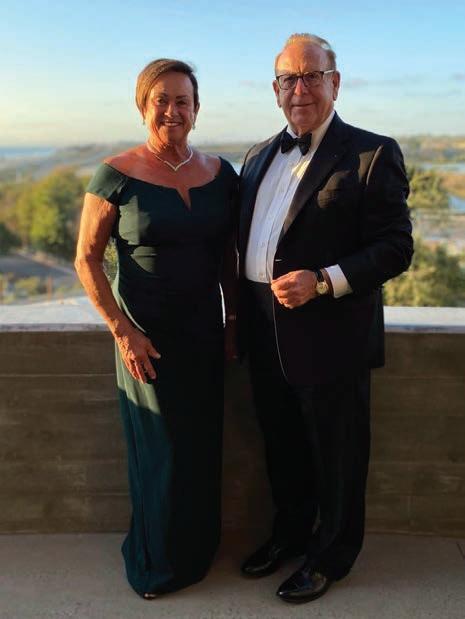
was an amazing adventure in the middle of nowhere. Another year our family traveled to Ireland, where two of my sons surfed off the coast in between excursions through small towns to locate and visit with extended family members from my father’s side.
Throughout my career, Kathleen has been my partner in everything I’ve done. We’ve been married for 47 years and she has always been the most engaging, outgoing and supportive partner, as well as the grounding presence for our family as she approaches all things with humility and grace.
As I reflect on three and a half decades as a receiver, fiduciary and turnaround expert, I realize that like many in this community, I didn’t set out to hold this role and I haven’t done it alone. In growing upon the 35-year heritage of DWC, I have focused consciously on grooming a very talented team of individuals who will one day carry my legacy into the future.
As the economic cycles continue, so too will the need for our skills and presence as unbiased problem-solvers in the months and years to come.
BY PETER A. DAVIDSON*
I am a receiver for a partnership. I was appointed pursuant to a stipulation between the current partners and a secured creditor. After an extensive investigation, I have sued the former managing partner and her mother to recover fraudulent transfers, for breach of fiduciary duty and for usurping partnership opportunities. They are contending, in defense, that I cannot maintain my lawsuit because my appointment is not valid, because the current partners, having purportedly wrongfully removed the former managing partner, had no right to stipulate to my appointment. Can they attack my appointment in this manner?
AQOrders and judgments can be attacked in two ways. Directly, by writ or appeal, or, sometimes, collaterally. A collateral attack attempts to avoid the effect of an issued order or judgment. Collateral attacks are disfavored because the law wants finality of orders and judgments. This is especially true regarding orders appointing receivers. Orders appointing receivers are directly appealable. Cal. Code of Civil Procedure § 904.1(7); Raff. v. Raff , 61 Cal. 2d 514, 518 (1964). To directly appeal, one must be a party or an intervener. Collateral attacks on receivership orders are only permitted if the appointing court lacked jurisdiction to make the appointment, which is rarely the case. Mines v. Superior Court, 216 Cal. 776, 780-81 (1932) (“[T]he court had jurisdiction to appoint a receiver, it is not now possible to argue that it was in error in making the order…the contemplated action of the court below must be tested by the principles governing collateral attack, and it is only where the orders are totally void that collateral attack is permissible.”); Mesnager v. DeLeonis, 140 Cal. 402,404 (1903) (If the court had jurisdiction, collateral attack on an order appointing receiver is improper); see also, Posey v. Fargo, 187 La. 122,131 (1937) (“Whenever the court has jurisdiction of the subject matter and of the necessary parties, its actions in regard to the appointment of a receiver, whether erroneous or not, cannot be questioned in a collateral proceeding… The fact that a receiver is appointed by consent does not render his authority subject to collateral attack in another jurisdiction…” [citations omitted]). These same rules apply in federal court. Pacific Coast Pipe Co. v. Conrad City Water


Co., 245 F. 846, 848 (9th Cir. 1917) (rejecting an attack on a receiver’s appointment) (“We are discussing the power of the court to act, not the wisdom of its actions. If the state court erred in its findings of fact or conclusions of law, or improvidently exercised its discretion, those are considerations for an appellate court; with them we are not concerned. On the face of the record the court had jurisdiction and in a collateral attack upon its judgment we are not at liberty to inquire further.”).
Therefore, because it appears the court that appointed you had jurisdiction to do so, the defendants cannot collaterally attack your appointment in your lawsuit against them. The prohibition on collateral attacks applies in other contexts. For example, defendants cannot defend against the appointment of an ancillary receiver by challenging the validity or wisdom of the foreign receiver’s appointment, nor can an appointment be attacked by creditors of the entity placed into receivership.
QI have a client who owes money to the IRS. While I know the IRS likely has a tax lien, my understanding was it just waits until a taxpayer’s property is sold and then gets paid out of escrow. Instead, here, the IRS has filed suit and is asking the court to appoint a receiver to take my client’s property and sell it. I thought receivers can’t be appointed if there is an adequate remedy at law, which would be the case here, since the IRS Continued on page 19...
Continued from page 18.
could get a judgement for what it contends it is owed and then attempt to collect on its money judgment. The US Attorney on the case disputes this, saying the IRS has a statutory right to have a receiver appointed. Why don’t the general rules concerning a receiver’s appointment apply?
AThe general equitable rules concerning the need for a receiver don’t apply because there are specific statutory provisions allowing the IRS to obtain a receiver to enforce its lien or protect its interests. A federal tax lien arises when any “person” liable for any federal tax fails to pay the tax after demand by the government. 26 U.S.C. §6321. The lien is automatic and “silent” and is effective from the date the tax is assessed. The IRS often records a Notice of Federal Tax Lien, but that is not needed for the lien to attach. The Notice is only to notify possible purchasers or transferees and to obtain
priority over later secured creditors. Tax liens are not selfexecuting. The IRS must either bring suit to foreclose the lien under 26 U.S.C. § 7403 or assert administrative levy under 26 U.S.C. § 6331.
26 U.S.C. § 7402(a) gives “district courts…such jurisdiction to make and issue in civil actions…orders appointing receivers…and to render such judgments and decrees as may be necessary or appropriate for the enforcement of the internal revenue law.” In cases brought to enforce federal tax liens “the court may appoint a receiver to enforce the lien, or, upon certification by the Secretary during the pendency of such proceedings that it is in the public interest, may appoint a receiver with all the powers of a receiver in equity.” 26 U.S.C. § 7403(d).
US v. Newman , 2023 WL 6976481,__F. Supp. 3d__ (D. Maine 2023) highlights a situation where a receiver was
Continued on page 21...

W HILE THERE IS NO COURT - APPROVED LIST OF R ECEIVERS , THE FOLLOWING IS A PARTIAL LIST OF R ECEIVERS WHO ARE MEMBERS OF THE C ALIFORNIA R ECEIVERS F ORUM AND HAVE THE INDICATED EDUCATIONAL EXPERIENCE . I NCLUSION ON THIS L IST SHALL NOT BE DEEMED AN ENDORSEMENT OF ANY OF THE NAMES LISTED BELOW BY THE R ECEIVERSHIP N EWS , THE C ALIFORNIA R ECEIVERS F ORUM , OR ANY OF ITS R EGIONAL C OUNCILS . T HIS IS A PAID ADVERTISEMENT .
Bay Area
SVl David Bradlow 415-206-0635 bradlow@davidbradlow.com
V
≠▲zvb Dennis Gemberling 800-580-3950 DPG@perrygroup.com
Vl▲zwb; Michael Kasolas 415-992-5806 mike@kasolas.com
S l ▲ w Douglas Wilson 619-641-1141 dwilson@douglaswilson.com
Sacramento Valley
SnVl▲b Michael C. Brumbaugh 916-417-8737 mike@mbi-re.com
nlV▲vwb; Scott Sackett 916-930-9900 scott.sackett@efmt.com
lV▲ Kenneth Weaver 916-812-8090 ken@classicrealtyconsultants.com
Santa Barbara/Ventura Marcelo Bermudez 213-453-9418 mb@marcelobermudezinc.com
San Diego Area
S≠l▲wb; Michael Essary 619-886-4116 calsur@aol.com
b Jon Fleming 858-793-6000 jon.fleming@legacyreceiver.com
V
≠▲zvb Dennis Gemberling 800-580-3950 DPG@perrygroup.com
Sl▲wb; Richardson “Red” Griswold 858-481-1300 rgriswold@griswoldlawsandiego.com
b Kristin Howell 858-373-1240 kristinh@meissnercres.com
nV≠lt▲zvb Richard Munro 949-910-6600 richard@invenz.com
▲ v w Michele Vives 619-641-1141 mvives@douglaswilson.com
SnV≠▲zv Joel B. Weinberg 310-385-0006 jweinberg@usisg.com
S l ▲ w Douglas Wilson 619-641-1141 dwilson@douglaswilson.com
Los Angeles/Orange County/Inland Empire
SVl▲zvb; Blake Alsbrook 310-273-6333 balsbrook@ecjlaw.com
SVl▲ Albert Altro 310-809-5064 albertaltro@traversellc.com
SnV≠ Eric Beatty 909-243-7944 epb@epblegal.com
Los Angeles/Orange County/Inland Empire
S l ▲ w Ryan Baker 949-439-3971 rbaker@douglaswilson.com
Snl▲zb Marc Brooks 818-519-5588 marcbrooks2021@outlook.com
James F Davidson 949-417-5708 jdavidson@avantadvisory.com
SnV≠ltb; Peter A. Davidson 310-273-6333 pdavidson@ecjlaw.com
nV≠lt▲zb; Stephen Donell 310-689-2175 steve.donell@fedreceiver.com
V≠▲zvb Dennis Gemberling 800-580-3950 DPG@perrygroup.com
Jeffery Golden 714-966-1000 jgolden@wgllp.com
b David Goodrich 714-966-1000 dgoodrich@wgllp.com
Brett Hitchman 949-200-9712 leeann@hitchmanfiduciaries.com
SnV≠lt▲zvb Byron Z. Moldo 310-281-6354 bmoldo@ecjlaw.com
nV≠lt▲zvb Richard Munro 949-910-6600 richard@invenz.com b Carl Petta 626-966-4049 cgpetta@earthlink.net
Kevin Randolph 909-890-4499 krandolph@fennemorelaw.com
SnV≠lt▲zvb John Rey 562-500-7999 rpmqmp@aol.com
vw Eric Sackler 310-979-4990 ericsackler@gmail.com
SV≠l▲z Thomas Seaman 949-265-8403 tom@thomasseaman.com
Vl▲vb Phil Seymour 310-612-9800 phil@swgrp.com Tony Solomon 310 909-5450 tony.solomon@marcusmillichap.com
SVt David Stapleton 213-235-0601 david@stapletoninc.com
▲ v w Michele Vives 619-641-1141 mvives@douglaswilson.com vb Michael Wachtell 213-891-5460 mwachtell@buchalter.com
SnV≠▲b David D. Wald 310-230-3400 dwald@waldrealtyadvisors.com
SVb Robert C. Warren 714-863-1694 robert.warren@investorshq.com
▲zvb David Weinberger 818-970-0915 david@swgrp.com
SnV≠▲zvb Joel B. Weinberg 310-385-0006 jweinberg@usisg.com
S This symbol indicates those who completed up to 14 hours of advanced receivership education at the Loyola V, Complex Case Symposium in January 2013.
n This symbol indicates those who facilitated and attended the Loyola V, Complex Case Symposium in January 2013.
V This symbol indicates those who completed 9 hours of education at the Loyola VI Symposium in January 2015.
≠ This symbol indicates those who facilitated and attended the Loyola VI Symposium in January 2015.
l This symbol indicates those who completed 9 hours of education at the Loyola VII Symposium in March 2017.
t This symbol indicates those who facilitated and attended the Loyola VII Symposium in March 2017.
▲ This symbol indicates those who completed 6 hours of education at the Loyola VIII Symposium in January 2020.
z This symbol indicates those who facilitated and attended the Loyola VIII Symposium in January 2020.
w This symbol indicates those who completed 6 hours of education at the Loyola IX Symposium in April 2022.
v This symbol indicates those who facilitated and attended the Loyola IX Symposium in April 2022.
b This symbol indicates those who completed 6 hours of education at the Loyola X Symposium in January 2024.
; This symbol indicates those who facilitated and attended the Loyola X Symposium in January 2024.
S l ▲ w Douglas Wilson 619-641-1141 dwilson@douglaswilson.com Loyola I-IV symbols have
Continued from page 19.
appointed to protect and foreclose an IRS tax lien. The IRS asserted the taxpayer owed substantial personal income tax and was the responsible party for unpaid employment trust fund taxes. The taxpayer’s principle asset was his home, which had two mortgages senior to the IRS lien, both of which were in default. The government filed suit to foreclose its lien and moved to have a receiver appointed to take possession of the home and sell it. It claimed a receiver was needed because the mortgage holders were seeking to foreclose, which would wipe out the tax lien and, because of accruing interest on the mortgages, the equity securing its lien was shrinking every day. The court granted the motion and appointed a receiver to list and sell the home. It cited a number of circuit court decisions that: “When a request is made for an appointment of a receiver under [26 U.S.C. § 7403(d)], the Government needs only to make a prima facie showing that a substantial tax liability probably exists and that the Government’s collection efforts may be jeopardized if a receiver is not appointed. Together, 26 U.S.C. §7402(a) and 7402(d) provide courts with ‘broad discretion to appoint a receiver to liquidate property subject to federal tax liens to assist the United States in collection of taxes’.” (citations omitted) Id. at *5.
While the court stated there is no definition of what “substantial” tax liability in the statute means, because the taxpayer owed at least $325,000 that would be “substantial”
under any definition. It did note the distinction between “nominal” and “substantial” damages. “Nominal damages” being symbolic and “substantial damages” being compensatory. Id. at*12, fn.3. The court found the pending foreclosure was sufficient evidence that the IRS’s collection efforts could be jeopardized, justifying a receiver’s appointment. Id. at *7.
These IRS Code provisions are not the only federal statutes authorizing the appointment of receivers. For example, where the United States files a civil action on a claim for a debt there are specific prejudgment remedies available to the government which differ from state court remedies courts would otherwise look to under Federal Rule of Civil Procedure 64. 28 U.S.C. §3101 sets forth the grounds that must be met to use these remedies and contains a special “Notice” that must be give the defendant. The available remedies include: attachment, receivership, garnishment and sequestration. The government has its own attachment statute, 28 U.S.C. § 3102, which is broader then California’s attachment statute. It allows attachments not only on contract claims, as in the California statute, but also “(b)(2) in an action against a debtor for damages in tort” and “(b)(4) in an action to recover a fine, penalty or tax.” There is also a separate receivership statue, 28 U.S.C. § 3103. Interestingly, that statute limits a receiver’s compensation to “not exceeding 5 percent of the sums received and disbursed by him…unless the court otherwise directs.” 28 U.S.C. § 3103(g).
Perry Group International (800) 580-3950
dpg@perrygroup.com
Is pleased to announce the completion of his duties as Receiver for
Armaan Investments LLC
d/b/a Quality Inn Martinez
Superior Court of California County of Contra Costa
NOTE: Readers are encouraged to cite, copy and use Ask the Receiver and Receivership New s articles and information. However, please provide appropriate attribution when you do so. If you copy or use articles in pleading, cite to them (and maybe attach copies, as some courts may not have access to them). Failure to cite articles relied on could lead to the imposition of sanctions. Makhnevich v. Arrowood Indemnity Company, 2024 WL 1020577 *2 ( S.D.N.Y. 2024).
*Peter A. Davidson is a Senior Partner of Ervin Cohen & Jessup LLP a Beverly Hills Law Firm. His practice includes representing Receivers and acting as a Receiver in State and Federal Court.
BY RYAN BAKER*
Welcome to the latest edition of Heard in the Halls. Please provide your snippets of news, questions or comments about receivership issues or the professional community by telephone, mail, fax, or email to: Ryan C. Baker at Douglas Wilson Companies, 19200 Von Karman Ave, Suite 400, Irvine, California 92612; Phone (213) 550-2242; Fax: 800757-3668 (800-pls-don’t), Email: rbaker@douglaswilson.com
Here is what we have Heard in the Halls …
• Changing of the Guard at Stanley Mosk’s Writs and Receivers Department: Things have been switching up in the Writs and Receiver’s Department in the Downtown Los Angeles Superior Court. In June of last year, Judge Mary H. Strobel retired from her post after a decade on the bench and was replaced by Judge Curtis Kin (profiled in Receivership News’ Spring 2024 issue).
• Judge Mitchell L. Beckloff, who presided over the famed Department 86 in the Writs and Receiver’s department of the Stanley Mosk Courthouse, left the bench on April 5 of this year (I highly recommend Receivership News’ profile on Judge Beckloff, Winter 2020 Issue 67). Judge Beckloff was a good friend of the CRF, having been the keynote speaker for Loyola IX. We will miss Judge Beckloff’s diligence, wit, and personability! For you litigators, Judge Beckloff is now a mediator and arbitrator with Signature Resolutionhttps://signatureresolution.com/neutral-CPT/honmitchell-beckloff-ret/.
• Stepping in to fill Judge Beckloff’s shoes is Judge Stephen Ira Goorvitch (inside scoop: even though Judge Goorvitch replaces Judge Beckloff, he will be in Department 82 and Judge Curtis Kin will be in Department 86). Your columnist heard through the grapevine that Judge Goorvitch, while new to receiverships, is very well prepared and understands the process almost implicitly. A quick Google search also finds Judge Goorvitch graduated magna cum laude from the University of California, San Diego – no easy feat –where he was a member of Phi Beta Kappa. He received his J.D. from the University of California, Berkeley

School of Law, where he was Executive Editor of the California Law Review and served on the Moot Court Board. It gets even more interesting as he worked at the SEC, Division of Enforcement from 1998-2001, prosecuting financial fraud cases. He was appointed to the bench in 2015 by Governor Edmund G. Brown, Jr.
• Extra! Extra! Merger Announcements Here!: Congratulations are in order as two storied insolvency firms that have separately gone through mergers this year. First, effective January 16, 2024, CRF board member Kyra Andrassy and the rest of the Smiley WangEkvall bankruptcy/fiduciary representation practice group joined Raines Feldman Littrell LLP, expanding Raines Feldman’s Orange County office. Raines Feldman has approximately 80 lawyers and is based in Century City with offices in Orange County, Chicago, and New York. Kyra joins fellow CRF member Kathy Phelps and together they represent state and federal court receivers, with a specialty in federal equity receiverships.
• Not to be outdone, San Diego based Sullivan Hill combined with Fennemore, effective February 1. Sullivan Hill’s commercial insolvency lawyers practice bankruptcy, receivership, ABC, and out-of-court workouts, and now have access to Fennemore’s nearly 20 offices across the Western US, with more than 300 lawyers across all disciplines. CRF members include Jim Hill, Gary Rudolph, Kathleen Cashman Kramer, and Chris Hawkins .
Continued on page 23...
from page 22.
• Get Your Face Melted by the Mood Lifters: Come see and support CRF’s very own Ben King whose Rush Tribute Band – the Mood Lifters – will be playing at the Lighthouse Cafe in Hermosa Beach on Sunday, September 8. Yours truly can confirm Ben’s guitar skills will leave you in awe and your mood lifted.
• CRF Makes a Strong Showing at CBF: Once again the CRF reinforced its strong partnership with CBF hosting three panels at the yearly conference held at the Ritz Carlton Bacara in Santa Barbara on May 16 through 19. Many thanks to our very own Kyra Andrassy for leading the charge and organizing the receivership-related panels at the CBF!
• Getting Updated on the Corporate Transparency Act and Its Impact on Receiverships: The CRF’s Education Committee hosted another great educational panel on June 18 with panelists Susan Uecker from Uecker & Associates, Inc., Randy McCalla from Lubin Olson Niewiadomski LLP, and Scott Sackett from Fiduciary
Management Technologies extolling the nuances of the Corporate Transparency Act and how it might effect Receiver’s and corporate reporting. The CRF’s education series goes on a brief Summer break and will be back in September with more receivership-education goodness. Keep an eye out for CRF emails for more details!
• Spread the Word: Know someone thinking about getting started in the receivership industry? Well tell them there’s already enough competition. Ahem, just kidding, instead steer them to www.receivers.org to order a past Loyola program 4-disc DVD set for $75 teaching receivership Basics and including sample pleadings.
*Ryan Baker has been a Receiver for nearly 15-years and is with Douglas Wilson Companies. Mr. Baker has overseen receiverships of nearly every flavor including operating companies, rents and profits, construction, environmental contamination, regulatory, post judgment, and many, many others.