The Post Office will not forward your magazine. Do not count on getting the Journal unless you notify us directly of address changes by the 15th of the month preceding the month of issue. Please do not telephone address changes. Email changes to changes@fwrj.com, fax to 352-241-6007, or mail to Florida Water Resources Journal, 1402 Emerald Lakes Drive, Clermont, FL 34711
Membership Questions
FSAWWA: Casey Cumiskey – 407-979-4806 or fsawwa.casey@gmail.com
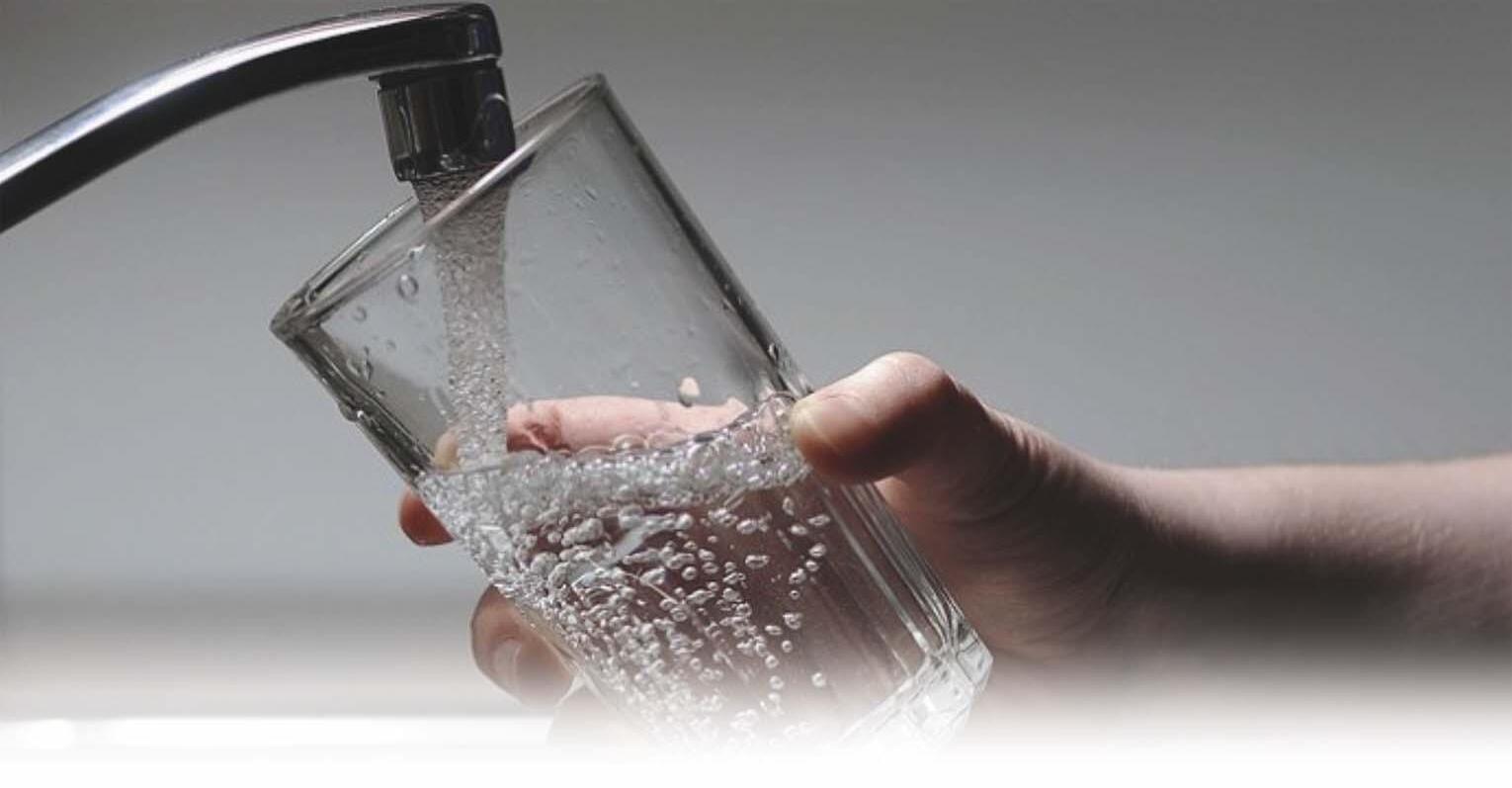
Well Water Users Have Fewer Water Quality Concerns Than Those Relying on Municipal Water, Consumer Opinion Study Shows
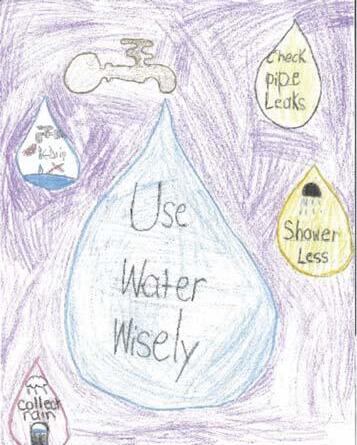
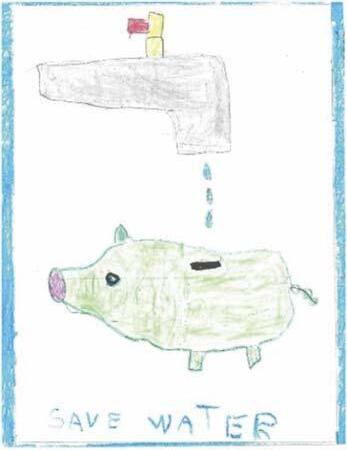
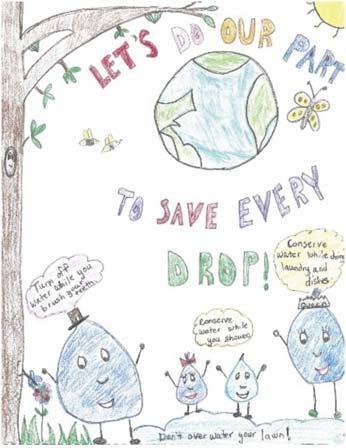
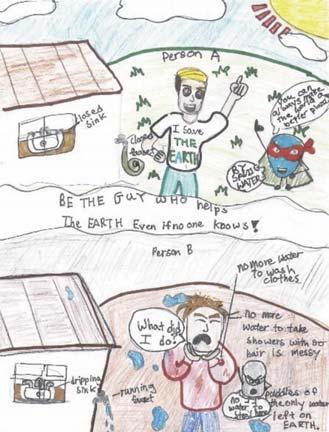
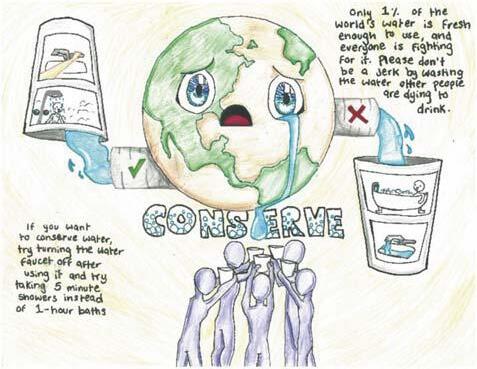
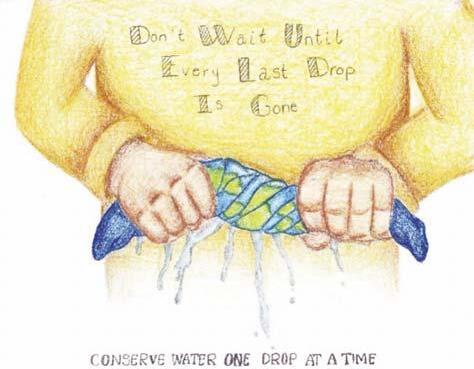
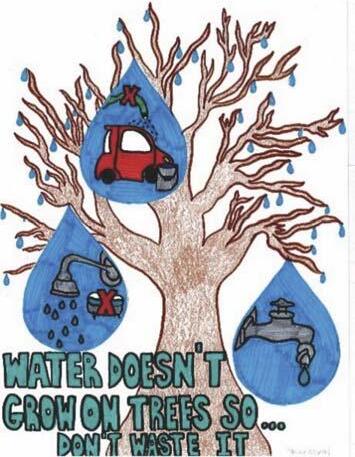
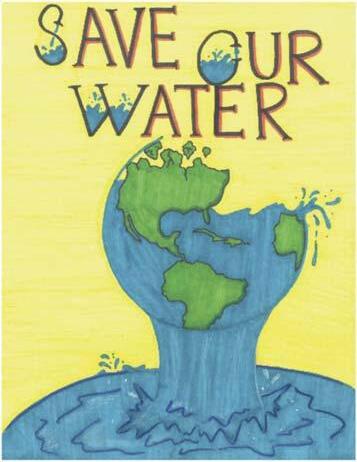
Drop Savers Poster Contest Winners Announced—Melissa Velez
FSAWWA Reaches a Rocky Mountain High at ACE19 in Denver
Display Board Honors Hurricane Michael Responders—Debbie Wallace
Potable Reuse Commission: Helping Plan for Florida’s Future Water Needs
WEF HQ Newsletter: Cybersecurity Fundamentals Guide for Water and Wastewater Utilities Now Available—Michael Arceneaux and Jennifer Lyn Walker
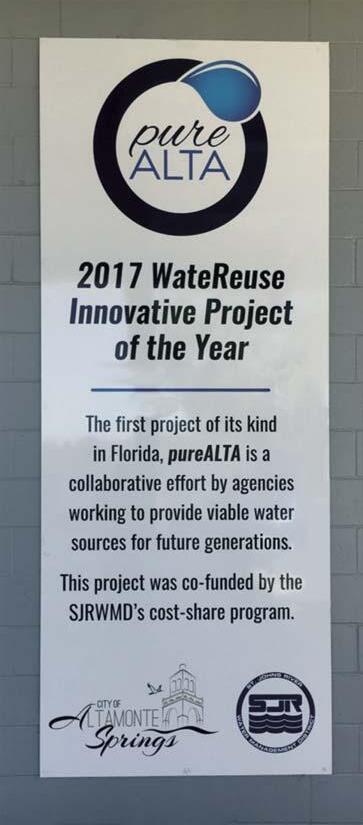
Small Community Leads Central Florida in Potable Water Reuse Implementation
News Beat
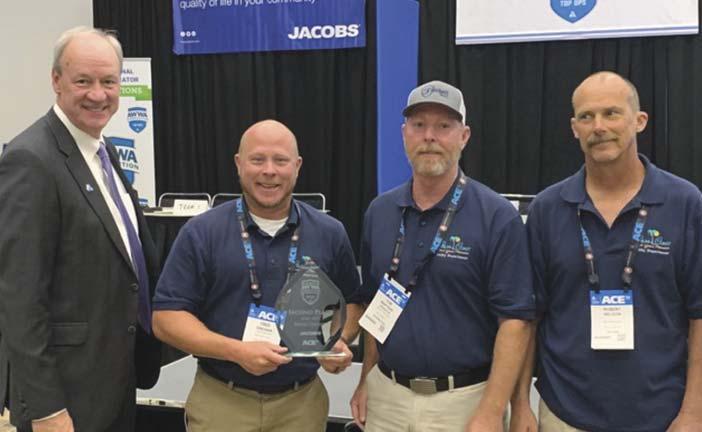
Florida Team Takes Second Place at Top Ops During ACE19
Once Upon A Flush—Shea Dunifon
Technical Articles
6 Groundwater Nanofiltration Plant Addresses Color and Disinfection Byproducts for Flagler County—Phillip J. Locke, Eric A. Smith, and Mark Ralph
The Unique Raw Water Supply Distribution System at the Heart of a Total Water Management Plan—Stephen Riley, Andrew R. May, and Michael Dykes
Wastewater Chlorination Systems: A Holistic Approach Toward Design and Construction— Sussette Irizarry
33 FWPCOA State
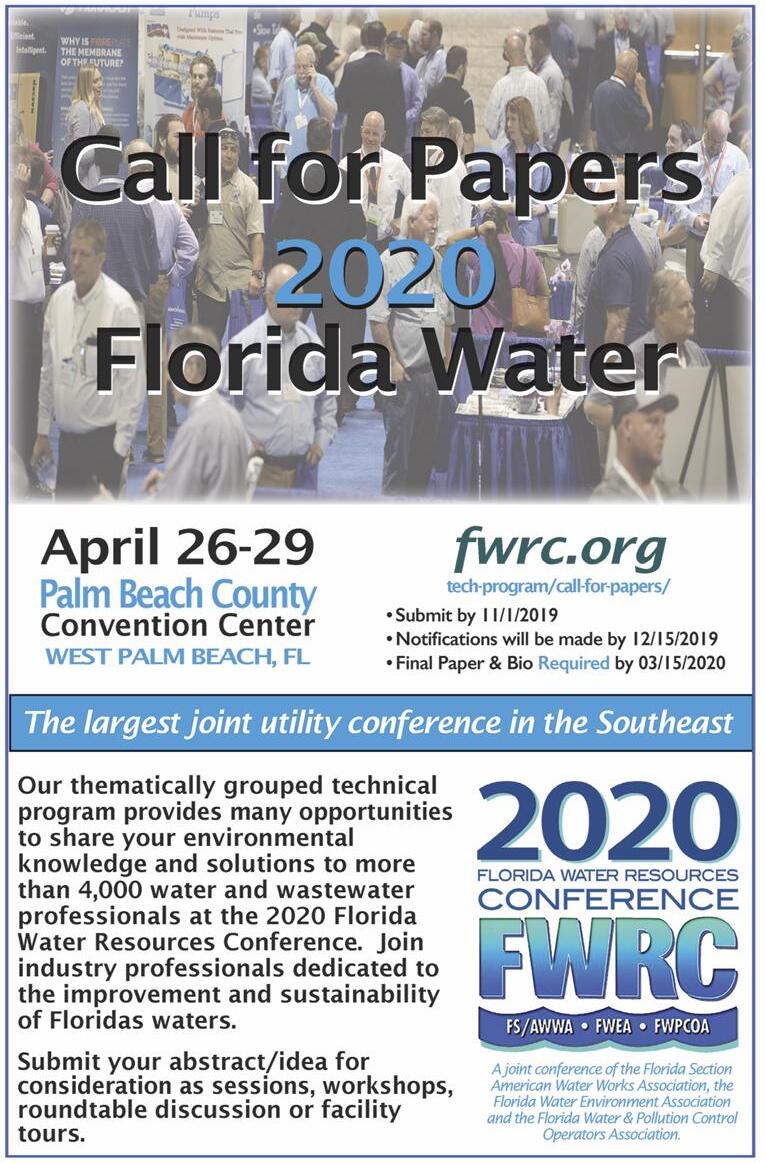
41 Florida Water Resources Conference Call for
54 TREEO Center
Speaking Out—Michael F. Bailey
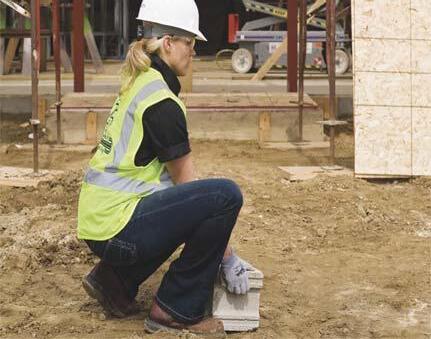
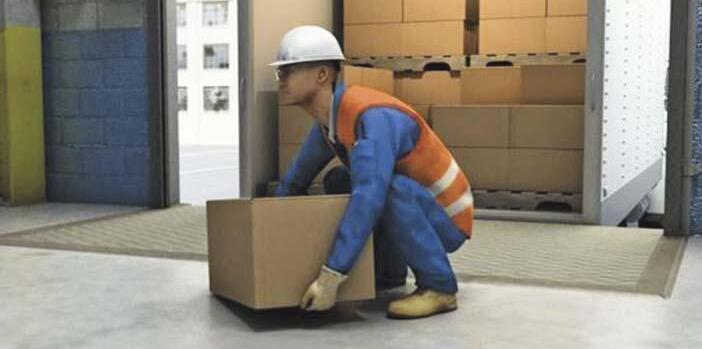
Let’s Talk Safety: Take a Load Off With Tips
Well Water Users Have Fewer Water Quality Concerns Than Those Relying on Municipal Water, Consumer Opinion Study Shows
Study also reveals well water users are more likely to have in-home water filtration
Americans are clearly concerned about their overall quality of life being affected by the environment, according to the 2019 Water Quality Association (WQA) consumer opinion study, and their concern has grown since the last survey in 2017. The independent survey was conducted by Applied Research-West Inc. in January 2019. The study offers a look into Americans’ attitudes and concerns about their water.
Americans whose households rely on well water are far less concerned about the quality of their water supply than those using municipal water, according to the study. It also shows that more well water drinkers consider in-home water filtration a necessity rather than a luxury.
The major findings of the study include:
S A quarter of the households (25 percent) in America are very concerned about the quality of their household’s water supply, and another quarter (26 percent) are concerned. This is an increase from the 2017 study, when less than one-fifth (18 percent) were very concerned about the quality of their household’s water supply, and an additional onequarter (24 percent) were concerned.
S Concern regarding the safety of tap water (48 percent) has grown significantly since the 2017 study.
S Four out of five (80 percent) households get municipal water, 12 percent have well water, and 8 percent don’t know the origin.
S Over half of the households claim knowledge of contaminants in their water supply, including very knowledgeable (13 percent) and somewhat knowledgeable (43 percent).
S Both users of municipal water (54 percent) and well water (52 percent) are not totally confident that their water supply is safe. Most Americans are somewhat knowledgeable about what contaminants might be found in their water supply, and unaided, almost half identify lead as the primary substance of concern. Consumers identifying lead as a contaminant has grown significantly from previous studies.
S In this year's report, almost half (47 percent) identify lead on an unaided basis. In comparison, one-third (33 percent) identified lead in the 2017 report.
S On an aided basis, the majority are aware that
lead (88 percent) and chlorine (80 percent) might be found. Slightly fewer mentioned arsenic (69 percent), radium (56 percent), and pharmaceuticals (56 percent). The majority of Americans have bought some sort of water (bottled, etc.)
Three-fifths of the people on well water said they consider their water safe (60 percent), versus half of the respondents on municipal water. Almost one-third (31 percent) on well water have little concern about their water, while 23 percent on municipal water have little concern.
The study also showed that 53 percent of those on well water consider a water filtration system a necessity rather than a luxury, compared to 43 percent of those on municipal water. This study presents the findings of a national online survey conducted between Jan. 1 and Jan. 30, 2019. A total of 1,405 adults over 18 and living in private households were interviewed. A random sampling procedure was used, and the survey results are accurate within +/-2 percent. The results are representative of all adults over 18 in the United States. S S
Groundwater Nanofiltration Plant Addresses Color and Disinfection Byproducts for Flagler County
Phillip J. Locke, Eric A. Smith, and Mark Ralph
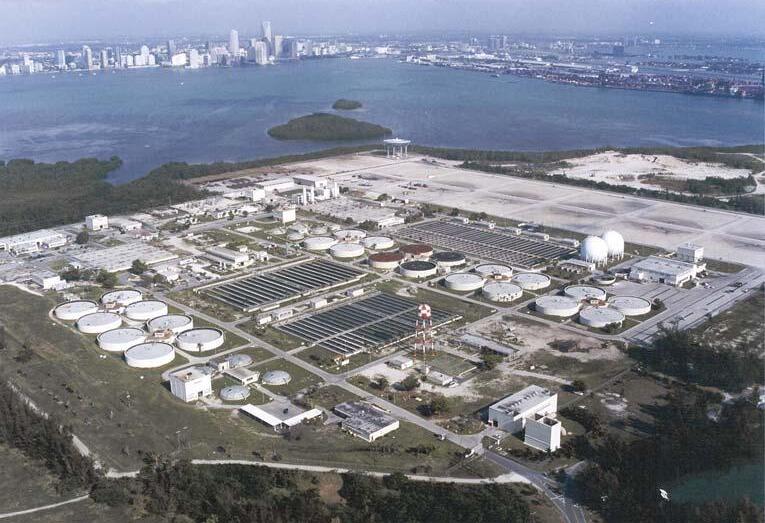
Flagler County (county) owns and operates the Plantation Bay Water Treatment Plant (plant), which was constructed in the 1980s. The plant has a design capacity of 756,000 gal per day (gpd) and utilizes four groundwater wells to produce average-day and maximum-day flows of 232,000 gpd and 377,000 gpd, respectively. While all of the wells are moderately high in total hardness (~325 mg/L as calcium carbonate [CaCO 3 ]), two of the
wells also yield water with high color that frequently approaches 90 color units.
Phillip J. Locke, P.E., is senior project manager with McKim & Creed Inc. in Clearwater. Eric A. Smith, P.E., is an engineer II with City of Daytona Beach. When the article was written, Mark Ralph, P.E, was a senior project manager with McKim & Creed Inc. in Daytona Beach.
The lime softening treatment process utilized at the plant is ineffective in removing the color, and this condition has resulted in frequent complaints from customers and the inability to use these wells. Additionally, the plant has had past exceedances of the U.S. Environmental Protection Agency (EPA) disinfection byproduct (DBP) mean contaminant level of 80 µg/L for total trihalomethanes (TTHMs). Both the color and DBP formation issues stem from natural organic matter (NOM) in the wells, resulting in total organic carbon (TOC) levels as high as 25 mg/L.
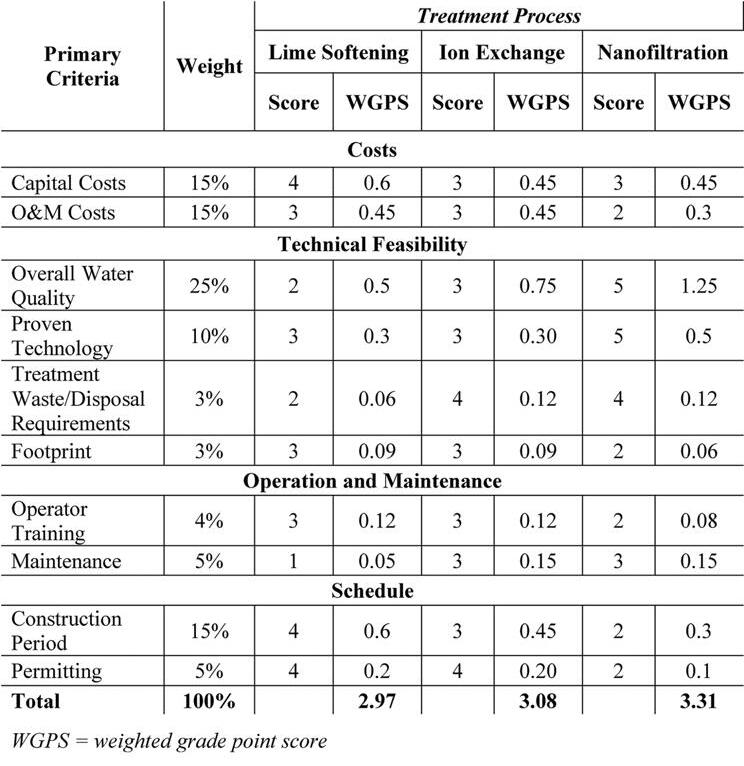
An alternatives evaluation was performed to determine the best treatment solution to address the water quality issues. A weighted treatment (1 = lowest ranking; 5 = highest ranking) decision matrix was developed for these potential alternatives, as shown in Table 1.
Based on results from the evaluation, nanofiltration (NF) was selected for implementation to remove organics, color, and hardness, and to reduce DBP formation potential. Concurrent with preliminary and final design, a pilot test was conducted using the well with the highest organics and color. The county is moving forward with replacing the current treatment process with a low-pressure NF treatment system, as NF is ideally suited for the removal of dissolved constituents, such as TOC and hardness.
This article presents the findings from the pilot test and discusses the design of the new NF treatment system.
Pilot Study
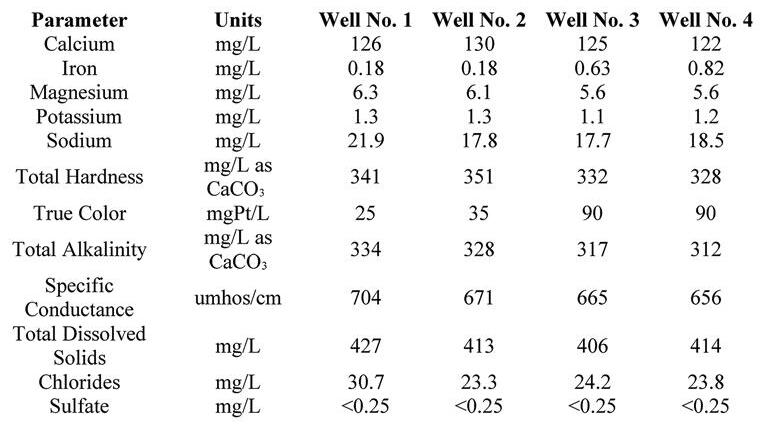
The plant has four production wells that have varying high levels of iron, ammonia, sulfides, color, TOC, and hardness. Groundwater quality data from the wells is shown in Table 2.
Pilot testing was performed to confirm
Table 1. Weighted Treatment Decision Matrix
that the proposed treatment process will produce a quality effluent meeting or surpassing treatment goals of the new water treatment project. Based on the groundwater quality presented in Table 2, the pilot study aimed to reduce the following groundwater constituents:
S Iron – High levels of iron in the source water contribute to color within the water and are likely the source of the majority of customer complaints received by the county.
S Hardness – With an average hardness of 338 mg/L as CaCO 3 , the plant source water is considered very hard (>180 mg/L as CaCO 3 ), according to the U.S. Geological Survey (USGS) hardness classification.
S Color – In groundwater, color may be attributed to a variety of sources, including metallic ions, organic acids, or dissolved plant materials. Color in the water has been the most common complaint from customers.
S TOC – This is a measure of organic matter in water and becomes a major concern when the source water is chlorinated, potentially forming DBPs, such as trihalomethane (THM) and haloacetic acid (HAA).
A pilot unit was designed to address these constituents and produce high-quality potable water. The pilot study simulated the performance of the components of a full-scale system. The primary objectives of the pilot study were to:
1. Demonstrate the filter media operating parameters, including:
a. Iron removal efficiency
b. Filter head loss as a function of run time
c. Approximate filter run length
2. Determine the chemical feed rates to meet the water’s oxidant demand to the extent possible.
a. Ability to remove TOC with a goal less than 1 mg/L
b. Hardness removal efficiency
c. Comparison of NF membrane performance with Dow® ROSA NF membrane model simulation
d. Transmembrane pressure as function of run time
e. Confirm that the antiscalants chemical feed rates recommended by the manufacturer avoid fouling membrane
f. Approximate run length before cleanin-place (CIP) is required
4. Demonstrate that the proposed equipment can meet the following water quality objectives:
a. TOC below 1 mg/L and near detection limit
b. Filter effluent iron below mean contaminant level and NF permeate iron near detection limit
c. Manganese <0.05 mg/L
d. Total hardness < 150 mg/L
e. Total sulfides < 0.01 mg/L
f. Ammonia, nitrogen converted to monochloramine
It was determined that the well with the highest color and organics (Well No. 4) would be used for pilot testing. This well was selected to ensure a conservative design approach. Additionally, due to the high levels of color and organics, Well No. 4 was not being used for production purposes and, therefore, provided access for the pilot trailer. A blend of the various wells was considered; however, the existing piping and valving in-
Table 2. Groundwater Quality Data (May 2012)
pilot plant.
frastructure limited the blending opportunities.
The pilot unit consisted on the following treatment schemes:
Filtration
A 3-ft-diameter by approximately 7-fttall filter column was utilized. Its main purpose was to remove iron and other suspended solids. To aid in the removal of iron, an injection point was included upstream of the filter. Prior to filtration, a small dosage of sodium hypochlorite was added to precipitate iron for downstream filtration. It should be noted that the low dosage was used to form monochloramines and to limit the formation of DBPs. The filter was set up to monitor differential pressure across the filter, and valves were provided so that filter backwash could be performed at predetermined differentials.
Nanofiltration System
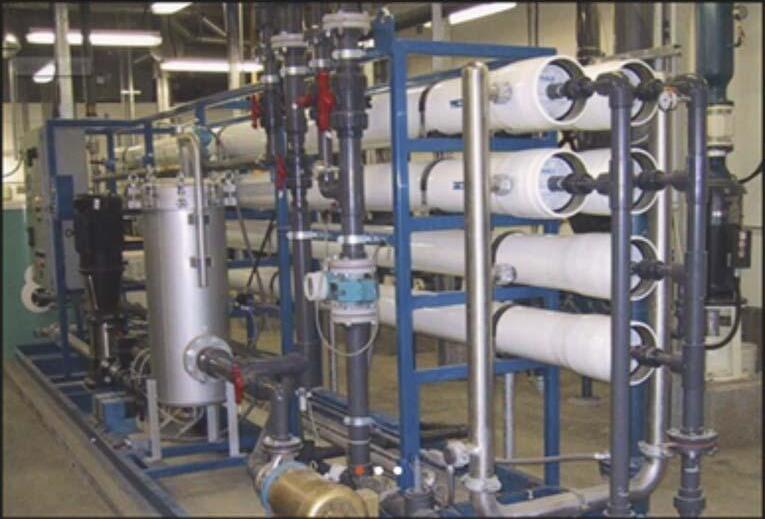
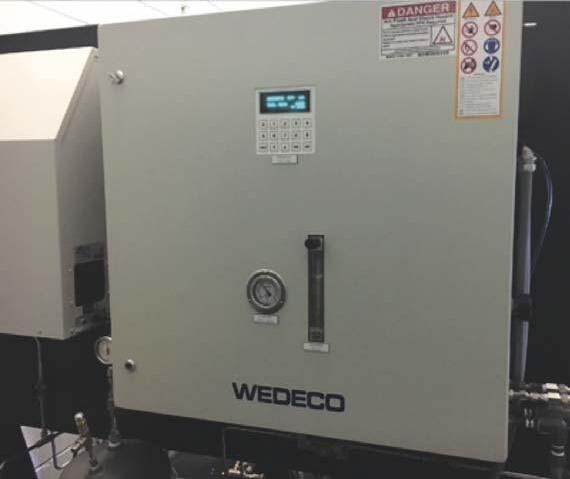
The NF was the main treatment process used to decrease the concentration of iron, organics (DBP precursors), color, and hardness in the filter effluent. Upstream of the NF system, sodium metabisulfite was added for dechlorination, and antiscalant was added to reduce the potential for scaling, especially at the tail end of the second-stage membrane elements. The NF system included a 5-micron cartridge filter for filtering out any particulates in the filter effluent. The system also utilized a high-pressure pump to push water through the NF membranes. A two-stage configuration was utilized with a 2/1 array. The first stage incorporated Dow NF90 - 4040 membrane elements, while the second stage utilized the “more open” Dow NF270 - 4040 membrane elements.
ChemScan
A Chemscan®spectroscopic analyzer was also utilized with this pilot to provide online testing of color, TOC, and iron levels in the raw water and permeate water.
Pilot Study Performance
The pilot unit treating water from Well No. 4 was started on Aug. 29, 2017, and ran until Oct. 31, 2017. During operation of the unit, approximately 19 gal per minute (gpm) of raw water were fed to the NF skid, which produced an average of 14.2 gpm of permeate and 4.7 gpm of concentrate. In an effort to match the current operation of the plant, the pilot unit was operated on average for eight hours a day. Grab samples were pulled multiple times throughout the pilot study
Table 3. Pilot Study Results
and sent to a laboratory for independent analysis.
The following is a brief description of how the pilot performed with respect to the primary objectives listed previously.
Iron Removal
Based on laboratory results, the iron in the filter effluent averaged approximately Fe = 0.25 mg/L entering the NF membrane system, while the NF permeate iron was below the detection limit of approximately Fe < 0.03 mg/L. Thus, the NF average approximate removal of the NF influent iron was at least 88 and 89 percent, respectively, based on the laboratory and field results.
Total Organic Carbon Removal
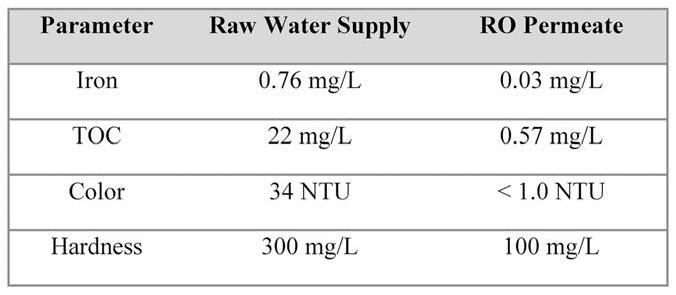
The NF membrane skid provided excellent removal of organics based on laboratory results, lowering the approximate concentration of TOC = 22 mg/L in the raw water and filter effluent to below the detection limit of approximately TOC < 0.57 mg/L in the NF permeate.
Calcium, Magnesium, and Hardness Treatment
The raw water hardness (avg = 310 mg/L as CaCO3) was effectively decreased with the two-stage NF membrane system to an average permeate of 105 mg/L as CaCO3.The hardness of 105 mg/L as CaCO3 is classified as a moderately hard water by USGS; thus, the hardness was reduced by approximately 66 percent.
Total Dissolved Solids
The two-stage NF membrane was demonstrated to effectively decrease the total dissolved solids (TDS). The raw water averaged TDS of approximately TDS = 390 mg/L, while the TDS in the NF permeate averaged
approximately TDS = 160 mg/L. The TDS was lowered by approximately 61 percent.
Conductivity
The raw water conductivity, which as measured by the laboratory averaged approximately 600 ® mho/cm, was lowered by the two-stage NF system to an average in the NF permeate of approximately 260 ® mho/cm; thus, the NF membranes decreased the conductivity by approximately 57 percent.
Color
The average raw water color based on the Chemscan was approximately 33.9 = Pt - Co color units, whereas the color wheel produced raw water readings of approximately 30 color units. Because all of the color wheel readings for the NF permeate were “0” color units, the Chemscan unit, with its multiwavelength analyzer, could discern minor differences in color for the NF permeate effluent. The average, including these points, was approximately 1.1 Pt - Co color units, with a range of approximately <1.0 – 1.8 Pt - Co color units.
Pilot Study Summary
The pilot study demonstrated that a twostage NF membrane system provided excellent organics removal, while decreasing the hardness to acceptable levels. The organics removal from the NF process lowered the Well No. 4 TOC from approximately 22 mg/L to below detectable limits. The DBP formation potential testing was performed on the NF permeate and indicates that the county will now be able to consistently meet DBP regulations. The results of the pilot study are included in Table 3.
It’s noted that toward the end of pilot
Continued on page 10
testing, permeate flow from the second stage was significantly reduced, and scaling was indicated. Both an alkaline and acid CIP were performed to restore membrane performance; however, the membranes never fully recovered. It appears that the reduced performance after the CIP was the result of iron fouling (not targeted with the CIP) that occurred throughout the pilot operation. The iron fouling likely occurred due to inconsistent operation resulting from Hurricane Irma. Additionally, it’s noted that, in order to facilitate daily pilot operation, county staff was utilized to start and stop the unit. Several instances occurred in which chemical levels were not checked prior to starting the system, resulting in a chemical running out while the rest of the system ran. This likely contributed to iron fouling.
Design Considerations
Based on the pilot testing and the design team’s experience with other facilities having similar water quality, the treatment processes will include oxidation, pressurized multimedia filtration, dechlorination, pH adjustment, antiscalent, cartridge filtration, membrane softening, permeate stabilization, and disinfection. The system will include a two-stage NF system with an overall recovery of approximately 80 percent. A partial NF bypass stream
is planned and will be used to add pH and alkalinity to the permeate water, resulting in lower chemical usage and operational costs.
Since the chloride levels of the water supply are so low (~25 mg/L), the concentrate from the NF system will be beneficially used for reuse water irrigation, with no damage to plants, grass, and other landscaping. The concentrate will be blended with the reclaimed water to supplement the county’s reclaimed water system that is used to irrigate the Plantation Bay Country Club. This approach to concentrate reuse also provides the benefit of eliminating the need for deep well injection or surface water discharge.
The new treatment facility will include a membrane softening treatment process designed to improve water quality by removing hardness, organics, color, and other contaminants. The NF process will include three skids capable of producing a combined 756,000 gpd of finished water. The process will be expandable to 1 mil gal per day (mgd) as demands increase.
A brief description of the major components of the reverse osmosis (RO) process is provided.
Booster Pump Station
An inline booster pump station will be constructed and will include three pumps to provide ample feed pressure to the pressurized filters so that a minimum of 20 pounds
per sq in. (psi) are available at the suction side of the NF feed pumps.
Filtration
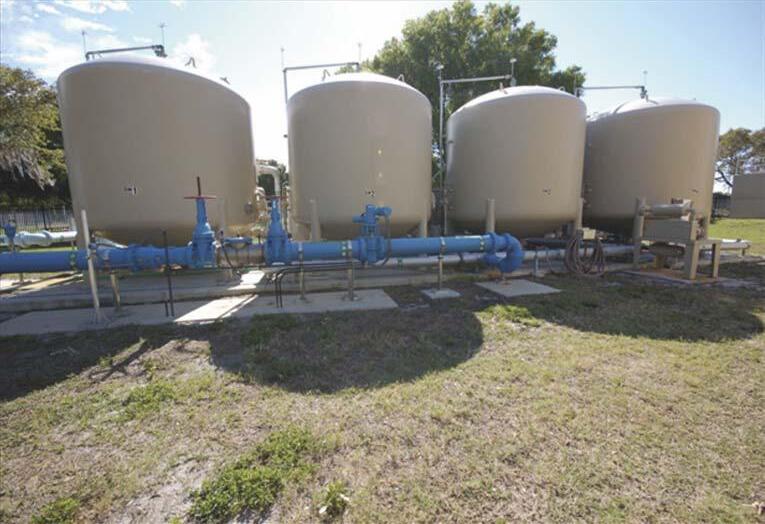
Three vertical pressure filters will be installed upstream of the RO skids as a means of pretreating the raw water. The filters will mainly serve to remove iron so as to mitigate iron fouling, which typically occurs on the lead elements of the first NF stage. Sodium hypochlorite will be used as an oxidant to aid in iron removal.
Softening and Color Removal
Via a membrane separation process, the NF membranes will treat the filtered water to meet all drinking water standards. The NF will remove the color and will allow some hardness and alkalinity to pass through the process, thereby reducing costs associated with post-treatment stabilization. The NF skids will include 5-micron cartridge filters to further protect the membranes and highpressure feed pumps to provide approximately 90 psi at the membrane inlet. A CIP skid will provide for periodic cleaning using high pH solutions for biofouling and lowering pH solutions to remove scaling.
Chemical Treatment
As previously mentioned, chemicals will be added throughout the treatment process as a means of enhancing the overall treatment and end-water quality. The chemicals that will be used for the new treatment process include the following:
S Oxidant – Sodium hypochlorite will be added to the raw water line prior to the vertical pressure filters to aid in iron removal.
S Dechlorination – The filtered effluent will be dechlorinated, using sodium metabisulfite prior to introduction into the NF membranes.
S Antiscalant – To protect the membranes from scaling, an antiscalant will be added to the filtered effluent ahead of the RO treatment process.
S Caustic – Sodium hydroxide will be added to the RO permeate stream to increase the pH and alkalinity.
S Additional space will be provided for a future chemical as needed.
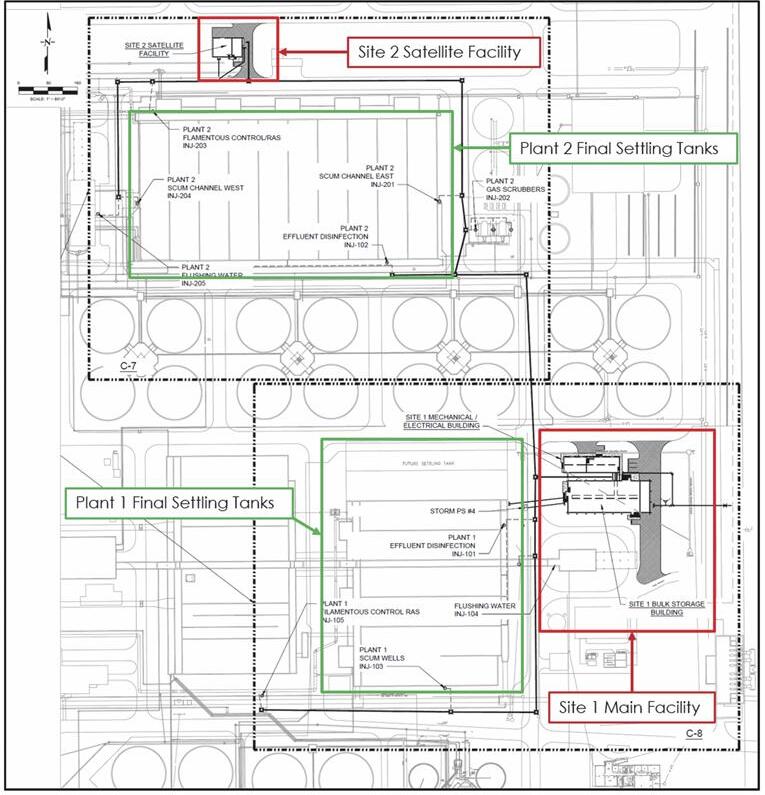
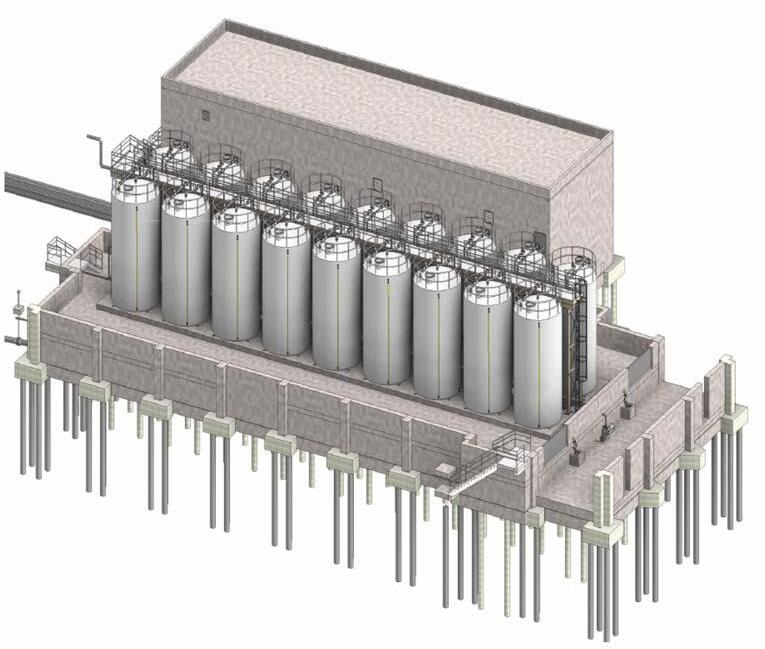
The project also includes a new prefabricated metal building, replacement of the existing filter backwash pumps, yard piping modifications, site improvements, instrumentation, and electrical improvements. Construction and commissioning are scheduled for completion by mid-2020. S S
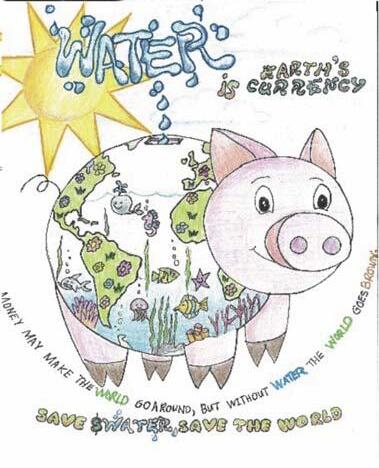
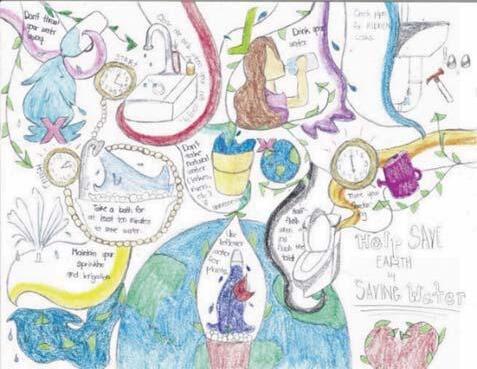
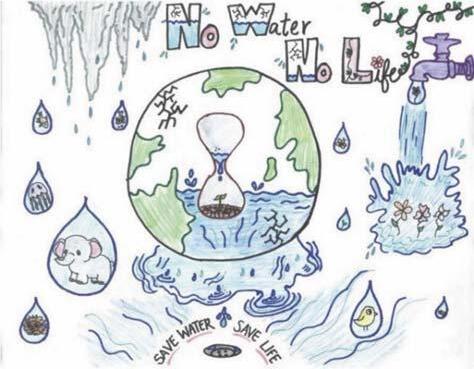
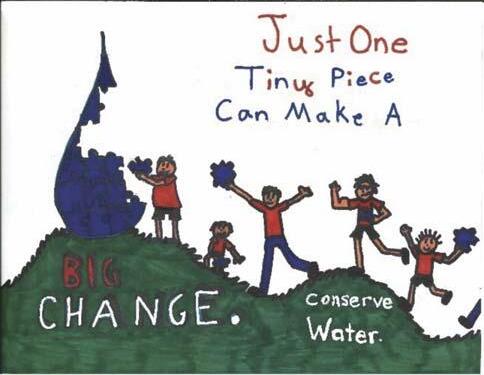
Drop Savers Poster Contest Winners Announced
Melissa Velez
Every year the Florida Section of the American Water Works Association (FSAWWA) sponsors the "Drop Savers” Water Conservation Poster Contest. Students from Kindergarten to 12th grade are encouraged to create a poster depicting a water conservation idea, in slogan form, drawing form, or both. The contest allows students to promote water awareness and the importance of water conservation in their daily routines.
Posters are designated under one of the following categories:
Division 1 - Kindergarten and First Grade
Division 2 - Second and Third Grade
Division 3 - Fourth and Fifth Grade
Division 4 - Middle School: Grades 6, 7, and 8
Division 5 - High School: Grades 9, 10, 11, and 12
S Poster are drawn on 8 ½ x 11-in. white paper (horizontally or vertically).
S Each poster must portray a water conservation idea in a slogan, drawing, or both. Students may use crayons, paint, color pencils, or markers. No highlighters, photos, or computer graphics are permitted.
S Students must work on posters individually; otherwise, posters will be disqualified.
S Only original artwork will be accepted (i.e., no trademarked or copyrighted materials).
The responsibility of the Drop Savers Committee is to invite and provide each water utility in Florida with the guidelines for running their own poster contest. Once water utilities select their winners, they send the first-place winner’s poster to the committee, where they will participate in the state competition.
This year, there were over 100 posters from 29 water utilities that participated in the contest. The prizes for this year included:
S First-Place Winners:
• $100 Amazon gift card• Plaque displaying the poster
• $40 gift card for a pizza party• Calendar displaying the poster
• Note cards displaying the poster• Water conservation kit
• Tote bag• Certificate
S Second-Place Winners:
• $75 Amazon gift card• Calendar displaying the poster
• Note cards displaying the poster • Water conservation kit
• Tote bag• Certificate
S Third-Place Winners:
• $50 Amazon gift card• Calendar displaying the poster
• Note cards displaying the poster • Water conservation kit
• Tote bag• Certificate
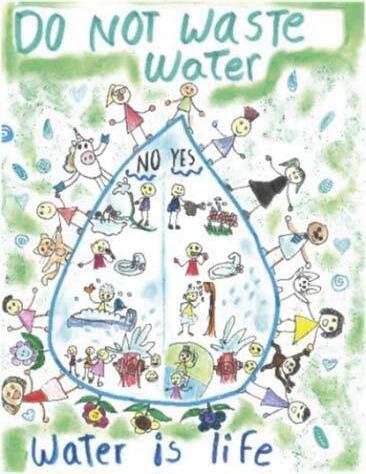
The winning Drop Savers posters are pictured here.
Melissa Velez, P.E., LEED AP, is an engineering manager at Black & Veatch in Coral Springs. S S
DIVISION 1 –FIRST PLACE
Town of Davie Valeria Miranda
DIVISION 1 –SECOND PLACE
City of Hollywood Brittany Cardenas
DIVISION 1 –THIRD PLACE
City of Oldsmar Eric Tatarzewski
DIVISION 2 –FIRST PLACE
City of Oldsmar
Isabella Jackson
DIVISION 3 –FIRST PLACE
City of Hollywood
DIVISION 2 –SECOND PLACE
City of Boca Raton
Nora Qiao
DIVISION 3 – SECOND PLACE JEA
Hannah Suyat
DIVISION 2 – THIRD PLACE
DIVISION 3 – THIRD PLACE
Town of Davie
Anabia Anwar
Village of Wellington
Colton Osterberg
Adam Flietstra
DIVISION 4 – FIRST PLACE
Town of Davie
Sophia Fermin
DIVISION 4 – SECOND PLACE
City of Sunrise
Andrea Castejon
DIVISION 5 – FIRST PLACE
St. Johns County Utility
Caitlyn Oravetz
DIVISION 5 –SECOND PLACE
Town of Davie
DIVISION 4 –THIRD PLACE
City of Margate
Shira Azulay
DIVISION 5 – THIRD PLACE
Orange County
Alyssa Budhu
Zona Desousza
Operators: Take the CEU Challenge!
Members of the Florida Water and Pollution Control Operators Association (FWPCOA) may earn continuing education units through the CEU Challenge! Answer the questions published on this page, based on the technical articles in this month’s issue. Circle the letter of each correct answer. There is only one correct answer to each question! Answer 80 percent of the questions on any article correctly to earn 0.1 CEU for your license. Retests are available. This month’s editorial theme is Disinfection and Water Quality. Look above each set of questions to see if it is for water operators (DW), distribution system operators (DS), or wastewater operators (WW). Mail the completed page (or a photocopy) to: Florida Environmental Professionals Training, P.O. Box 33119, Palm Beach Gardens, Fla. 334203119. Enclose $15 for each set of questions you choose to answer (make checks payable to FWPCOA). You MUST be an FWPCOA member before you can submit your answers!
Earn CEUs by answering questions from previous Journal issues!
Contact FWPCOA at membership@fwpcoa.org or at 561-840-0340. Articles from past issues can be viewed on the Journal website, www.fwrj.com.
The CEU Challenge appearing in the July 2019 issue (page 46) was incorrectly identified as a wastewater credit course. It is approved by the Florida Department of Environmental Protection for drinking water and water distribution CEU credit only
The Unique Raw Water Supply Distribution System at the Heart of a Total Water Management Plan
Stephen Riley, Andrew R. May, and Michael Dykes (Article 1: CEU = 0.1 DS/DW02015348)
1. Water demand projections for the 2020 through 2040 planning period were based on a historical maximum daily to average daily flow ration of a. 1.05.b. 1.25.c. 1.35.d. 1.45.
2. Which of the following is not listed as a South Grid supply well measure taken to protect wellfields from further water quality decline?
a. Acidizationb. Increasing spacing between new wells
c. Reducing pumping ratesd. Plugging off lower zones
3. Which of the following processes reduces sulfides at the Main Street Water Treatment Plant?
a. Chlorinationb. Spray aeration
c. Ozonationd. Chlorine dioxide
4. The JEA is considering _____________ among the water supply options for capacity beyond the Southside Integrated Piping System (SIPS).
a. indirect potable reuseb. system pressure reduction
c. conservation ratesd. potable water aquifer storage and recovery
5. The current total water management plan (TWMP) system was ineffective at distributing water to South Grid areas because
a. river-crossing pipelines are undersized.
b. south Grid back pressure was too high.
c. main Street pumping systems have been out of service.
d. north Grid wellfields have exceeded consumptive use permit (CUP) limits.
Wastewater Chlorination Systems: A Holistic Approach Toward Design and Construction
1. The 2012 rationale given for recommending conversion from chlorine gas to sodium hypochlorite included
a. cost reduction.
b. operational simplicity.
c. health and safety.
d. that existing equipment was unreliable.
2. Regulatory requirements for the Central District Wastewater Treatment Plant (CDWWTP) mandate a minimum total residual chlorine of _____ mg/L after 15 minutes contact time.
a. 0.5b. 1 c. 1.5d. 2
3. The basis of design report assumed a _____ percent sodium hypochlorite (NaOCl) solution.
a. 5.5 b. 10.5 c. 12d. 15
4. The additional fiberglass reinforced plastic tank installed to contain chemical spills is referred to as a ___________ tank.
a. redundantb. bulk retention
c. scavengerd. recovery
5. The NaOCl yard piping material was high-density polyethylene inserted into ___________ containment piping.
a. galvanized
b. polyvinyl chloride (PVC)
c. ductile irond. stainless steel
FSAWWA Reaches a Rocky Mountain High at ACE19 in Denver
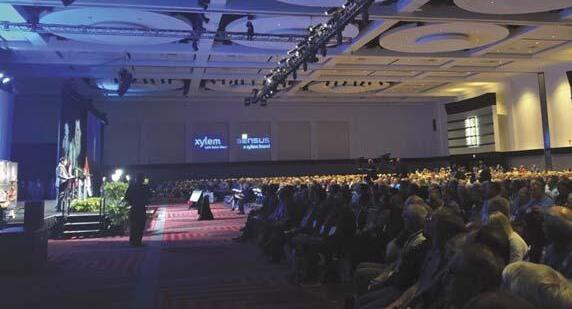
Many officers, members, and the executive director of the Florida Section American Water Works Association (FSAWWA) traveled to the 2019 AWWA Annual Conference and Exhibition (ACE19) that was held June 19-12 in Denver at the Colorado Convention Center. The photos here show the many events they attended that were held at the conference.
Peggy Guingona (left) and Rick Harmon, Florida Water Resources Journal editor, welcome FSAWWA members to their seats up front at the opening general session.
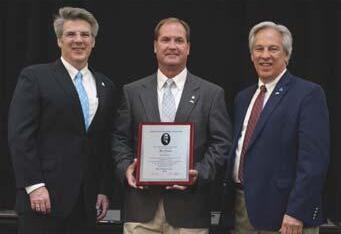
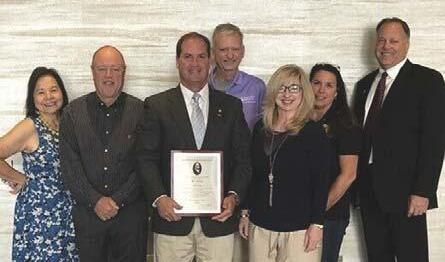
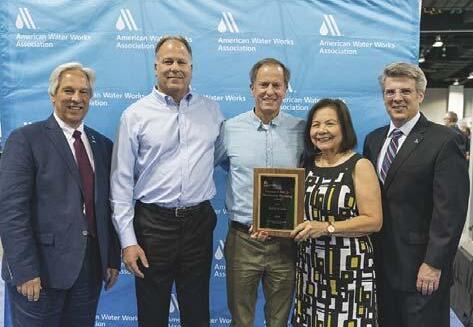
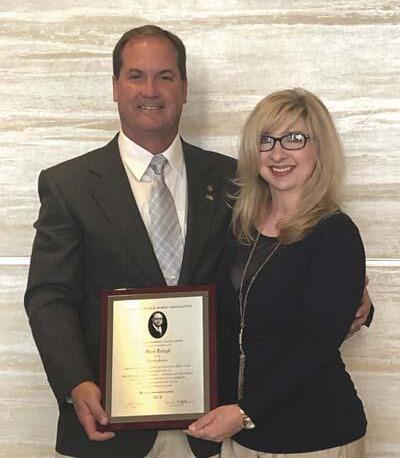
Mark Lehigh (holding plaque) receiving his George Warren Fuller Award at Wednesday’s Fuller Award breakfast held at the Hyatt Regency Denver from (left) David LaFrance and (right) David Rager.
Mark Lehigh (holding plaque) displays his AWWA George Warren Fuller Award. He’s pictured with (front row) Peggy Guingona, Richard Anderson, and Kim Lehigh and (back row) Pat Lehman, Terri Holcomb, and Mike Bailey.
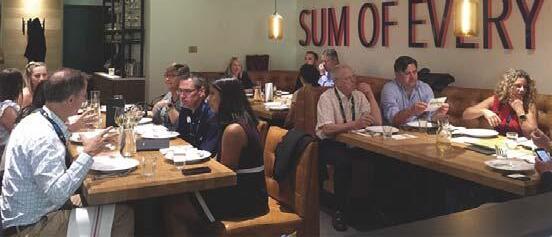
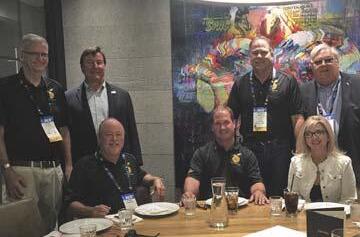
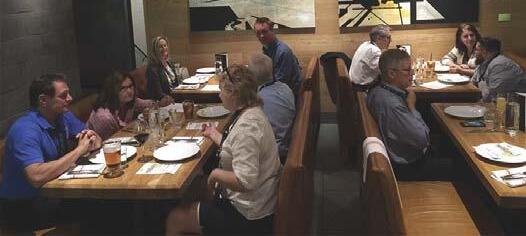
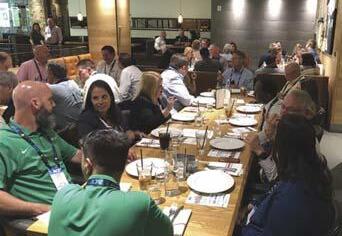
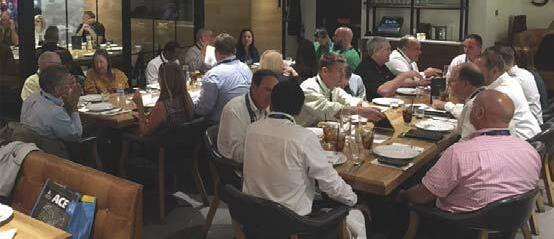
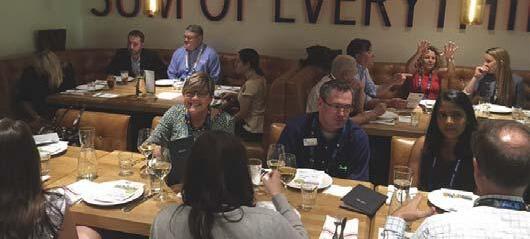
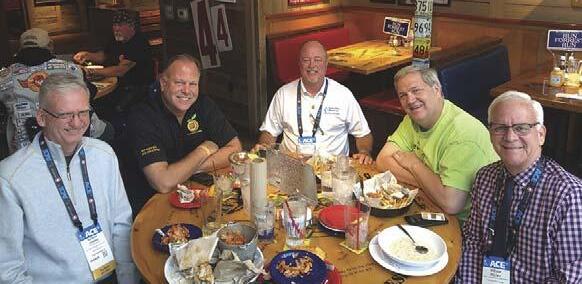
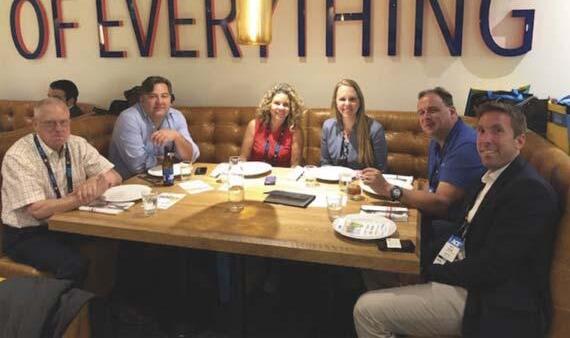
FSAWWA conference attendees at the section lunch at Earls Kitchen + Bar in downtown Denver.
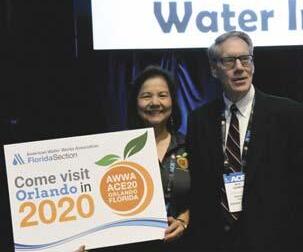
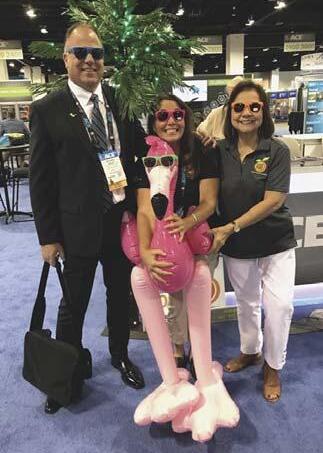
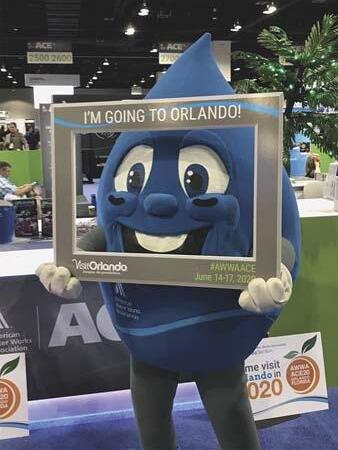
The ACE20 booth at the AWWA Pavilion in the exhibit hall promotes next year’s conference in Orlando with flamingo mascot “Flash” and AWWA’s mascot, Eddy (right).
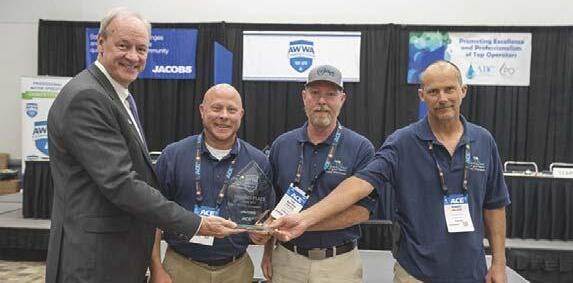
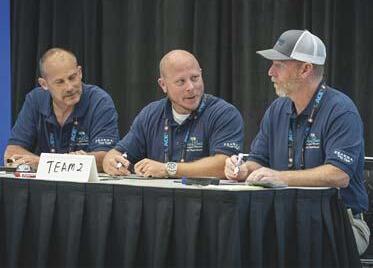
The photo (at left) shows the City of Palm Coast’s Water Buoys team (from left: Robert Nelson, Fred Greiner, and Tom Martens) in action at Top Ops and (top) receiving the second-place trophy from Jim Williams, AWWA president-elect.
FSAWWA members receive the 2018 Nicholas S. Hill Jr. Award for membership excellence, flanked by (far left) David Rager and (far right) David LaFrance, at the Celebration Stage.
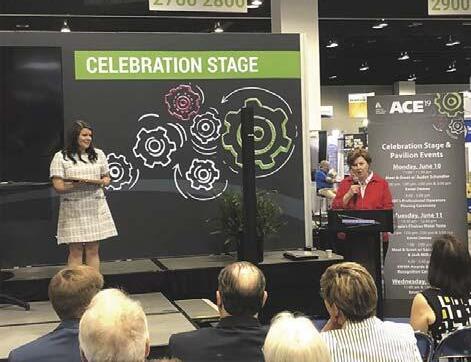
Paula MacIlwaine, AWWA deputy executive director (with microphone), emcees the awards ceremony at the Celebration Stage in the exhibit hall.
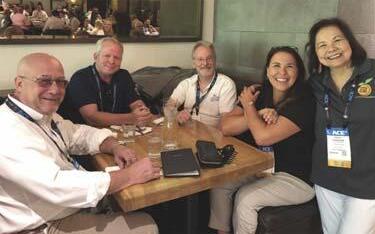
FSAWWA on the town!
Display Board Honors Hurricane Michael Responders
Debbie Wallace
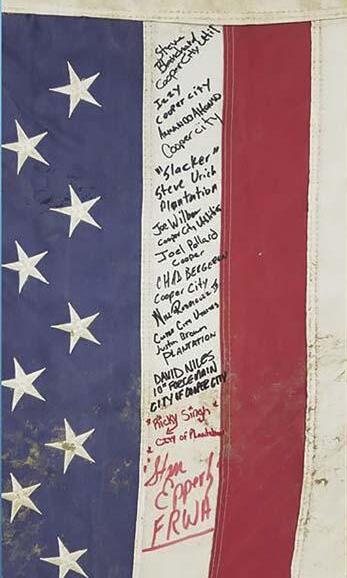
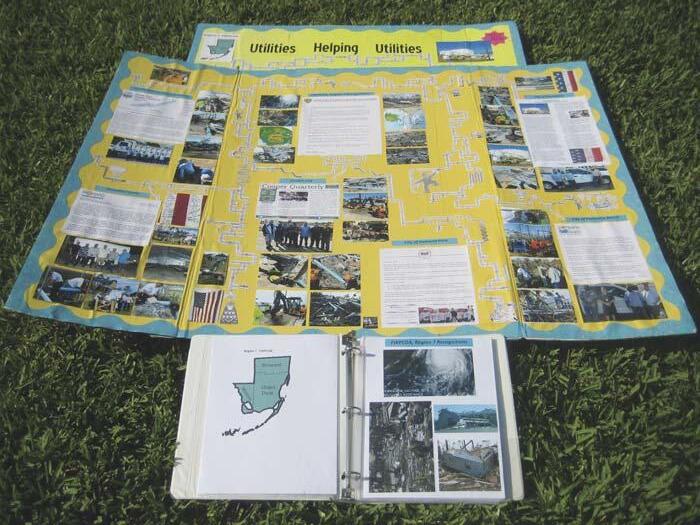
Region 7 of Florida Water and Pollution Control Operators Association (FWPCOA) has constructed a display board to recognize cities and utility professionals from the regions who gave of their time, talents, and equipment to help with Hurricane Michael disaster relief in the panhandle after its October 10 landfall in Mexico Beach.
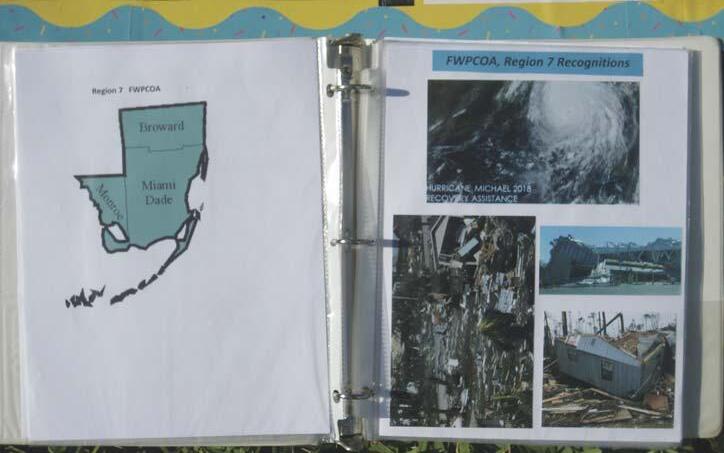
The display includes an article from each city, surrounded by photos sent from participating utility crews. The cities are connected via pipes (some with leaks) depicting “utility helping utility” connections and the devastated leaky areas. Photos and city correspondence are also shown in an accompanying photo binder.
The board was on display in the Region 7 FWPCOA booth at Broward Water Matters Day on March 9, 2019, held at Tree Tops Park in Davie. The professional utility responders were recognized, and the display was also exhibited at the Region 7 picnic held at C.B. Smith Park on July 27. A luncheon meeting is also planned in Marathon on Sept. 21, 2019, where those respondents from the Keys will be recognized.
To put the work of the responders in perspective, Hurricane Michael totally demolished Mexico Beach and surrounding areas. After ten days, the area was still without power, water, and sewer service. Cries for help were sent out and five municipalities from FWPCOA’s Region 7 sent crews to help. The City of Plantation, Cooper City, Broward County, and the City of Pompano Beach joined Florida Keys Aqueduct Authority workers, who were already onsite. The City of Oakland Park also sent needed generators and pumps.
With over a third of the water and sewer system totally washed away and another large portion broken, this was almost a total infrastructure rebuild. Responder crews brought generators, pumps, pipe, tools, and needed expert help.
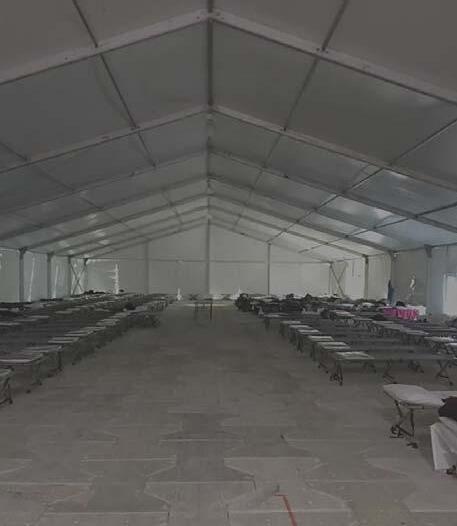
The display board recognizes utility responders from the region who left the comforts of home, with running water, working sewers, and electricity, to travel into a virtual war zone to live without utilities, and to sleep on cots— barracks style—as they helped restore the infrastructure. Hats off and a big salute goes out
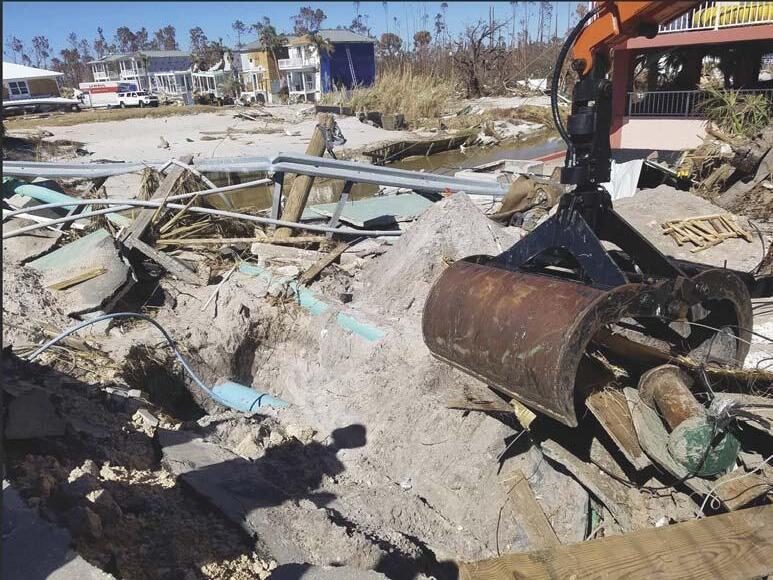
Heavy equipment helps to clean up debris.
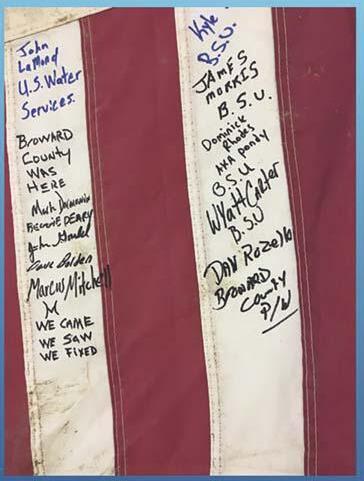
Responders from Broward County signed their names to a fallen flag as a show of connection to those affected by the hurricane.
A flag signed by City of Plantation employees to show their unity of purpose.
to these professional utility responders as we recognize them for their expert help.
Region 7 knows that crews from all Florida FWPCOA regions went to help and would like to give a shout out to some of those utility professionals as well.
S City of Plantation: Justin Brown, Ricci Singh, and Steve Urich.
S Cooper City : Chad Bergeron, Steve Blanchard, Joel Pollard, Martin Niles, William Rodriguez, Izzy Sepulveda, Armando Alfonso, and Joe Wilbur.
S City of Pompano Beach: Garron McGee, Bill Collins, John Bernat, and Eric Bryant.
S Keys Aqueduct Authority : Brian O’Conner, Matt Mansueto, Dylan Moore, Aaron Anker, Mick O’Conner, and Bryan O’Berry.
S Broward County : David Bolden, Anthony Reid, Reggie Deary, John Gould, Dan Rozelle, and Mark Darmanin.
S City of Oakland Park : Chris Lips coordinated sending pumps and generators.
And thank you to the other organizations that were on standby: Key Largo, City of Fort Lauderdale, City of Hollywood, Miami-Dade County, and City of Sunrise.
We all help our fellow utility departments get lifesaving utilities back up and running because we care about the citizens of Florida. That’s what professional utility emergency responders do!
Debbie Wallace is secretary of Region 7 in FWPCOA. S
Photo book.
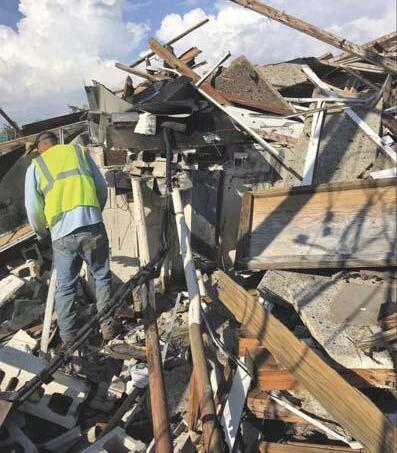
Responder clearing rubble and debris to get to broken and uprooted utility pipes.
Display board and photo book.
Sleeping quarters for responders.
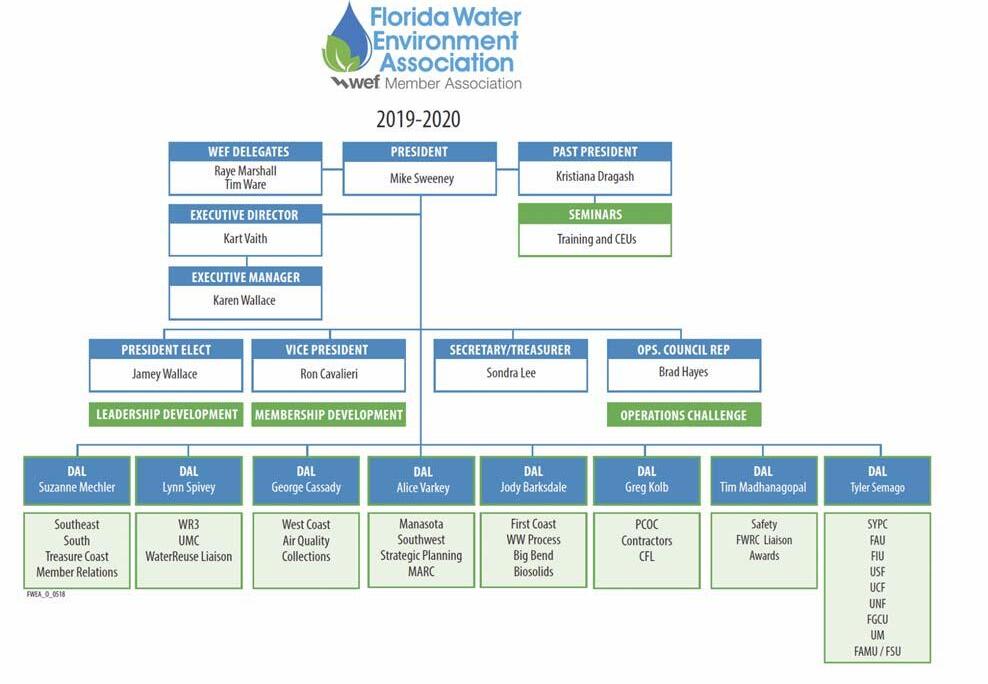
AMichael W. Sweeney, Ph.D. President, FWEA
re you curious as to how our FWEA board is formed? What is it like serving on a board of a large organization? How could one serve as a board member? To begin, how our board is managed has very few differences from most association board of directors—or many for-profit companies, for that matter. The direction and responsibility for the management of the organization, as well as its annual budget, policy decisions, and strategic planning, are among the main responsibilities of a board of directors. These responsibilities are taken on by experienced members who are committed to each other and the membership. From the outset, we need to describe and pay homage to our chapters and committees (C&Cs), which are the lifeblood of FWEA. Its nine chapters are organizational geographic regions of the state and they provide opportuni-
FWEA FOCUS
All Aboard!
ties to engage members in a multitude of activities. Each has a chair and vice chair, and may have other designated leaders to direct specific functions of that chapter. Chapters vary in size (from 20 to almost 350 members), but size doesn’t matter when it comes to trying new ideas or getting things done.
Currently, there are 15 standing committees representing practically all major facets of what interests FWEA members and what a major member association of the Water Environment Federation (WEF) should focus on. Chairs and vice chairs also lead each committee. The C&Cs first drew me to FWEA involvement and they have ample capacity to be creative and resourceful in the service of our members with educational and networking opportunities.
So, allow me to present our board structure and assignments this year and summarize its functions.
Directors at Large
Due to having many C&Cs, coordination and communication is essential and comes from the directors at large (DALs) leadership. The DALs are voting members of the board
and are appointed each year by the FWEA president. The board determines the number of DALs in any given year and the bylaws limit us to a total of eight. Currently, we have all eight DALs seated and they oversee the C&Cs. Student chapters are all under one DAL and they have grown in the past years. The trend lately has been to adjust the number of DALs to help spread the responsibility and provide more opportunities for leadership and communication. With the help of the DALs and the secretary/treasurer, budgets are monitored and annually prepared and presented for approval to the board from each of the C&Cs. We refer to them as business plans and they include projected income and expenses associated with seminars, fundraisers, socials, and other events.
Executive Committee
The Executive Committee (Ex Comm) is comprised of the secretary/treasurer, vice president, president-elect, past president, and president. The executive director of operations is an appointed position and is considered part of the Ex Comm. The Ex Comm serves as a vetting forum for issues to bring to the board.
The president does not run the board, or FWEA itself; the president’s role is primarily as a steward guiding the board and following the bylaws and policies. The board is responsible for making, directing, and implementing policy. The ultimate legal responsibility for the actions of the association rests with the board; the day-to-day management and board support are the responsibilities of the executive manager, who is nonvoting and a parttime paid staff member.
Utility Council
The FWEA Utility Council (FWEAUC) is a “specially constituted entity” and part of the association. The council has its own board of directors and dues structure, yet it’s part of FWEA and its constitution and bylaws. The council addresses the strategic goal of achieving sound public policy by supporting effective wastewater legislation and regulations, as well as policy at the federal, state, regional, and local levels. The chair of the council is also a member of the FWEA board.
Representatives and WEF Delegates
An Operators Council representative is a board position that assures our tie to operator members and the Florida Water and Pollution Control Operator Association (FWPCOA). The annual Operations Challenge at the Florida Water Resources Conference (FWRC) is a distinct highlight at the event, and the winners advance to the international competition at the Water Environment Federation Technical Exhibition and Conference (WEFTEC).
The Florida Section of the American Water Works Association (FSAWWA) is another strategically important partner, along with FWPCOA.
Two WEF delegates serve as our representatives to the house of delegates and are appointed by the president. They serve three-year staggered terms.
Board Transition
In April of every year, FWEA goes through an annual leadership transition that has been followed for the past seven decades. A nominating committee is convened every year to develop the slate to present to our membership at large for their approval at our annual meeting and luncheon held at FWRC. This committee consists of the three most recent past presidents (who continue as eligible voting members) and the immediate past president serves as the chair of the committee. They convene and recommend at least one name for each elective office
about to become vacant. The committee frequently solicits input from the board members and C&C chairs and nominations are made with a view towards diversity (firm representation, type of professional, etc.)
How to Get On Board
As you can see, our board structure is a long-standing hybrid of elected and appointed positions. The transition process is designed for
continuity to preserve consistent application of policies and largely reflects WEF’s approach. If you are interested in getting (or advancing) on the board, it begins with an expression of interest, which follows your record of active and productive involvement in C&Cs. I hope that you conclude that a blend of various appointed and elected positions, starting with the C&Cs, offers numerous opportunities to lead and potentially contribute at the board level. S S
The Unique Raw Water Supply Distribution System at the Heart of a Total Water Management Plan
Stephen
Riley, Andrew R. May, and Michael Dykes
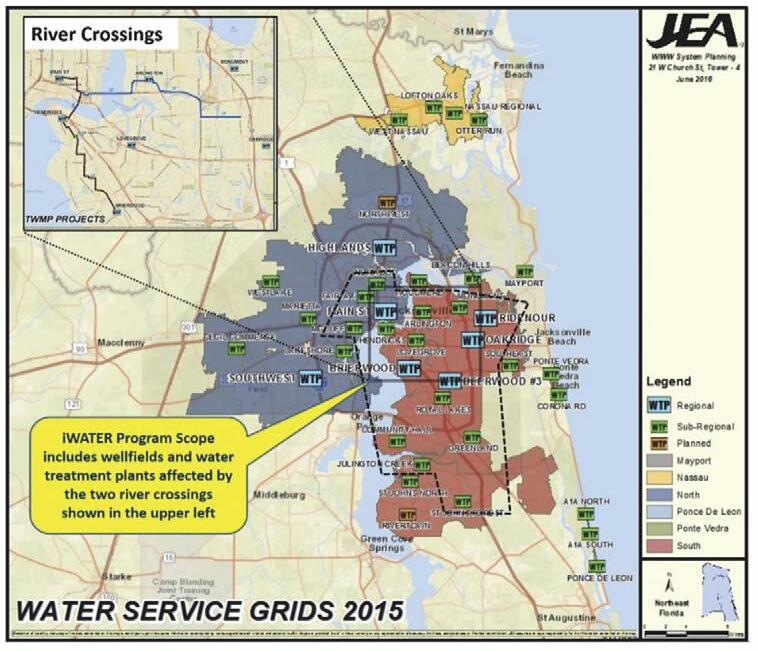
Acommunity-owned utility located in northeast Florida, JEA has a drinking water production system that serves approximately 337,000 water customers in Duval County and parts of adjacent Clay, Nassau, and St. Johns counties. The water supply system consists of six service grids (Figure 1) containing 38 water treatment plants (WTPs), 147 Floridan aquifer production wells, and more than 4,000 mi of transmission and distribution mains. The two largest service grids, the North Grid and South Grid, are physically separated by the St. Johns River.
The system relies on groundwater from the Floridan aquifer for its raw water supply and the potable water production capacity has been challenged in its service area south
and east of the St. Johns River (South Grid), which is also JEA's highest customer growth area. The South Grid is served by 12 WTPs interconnected by the transmission main grid. Each WTP has its own Floridan aquifer wellfield, each with a consumptive use permit (CUP) from the St. Johns River Water Management District.
Seven of the 12 wellfields are especially stressed because of production demands, and JEA considers them “wellfields of concern.”
Additionally, many of the South Grid wellfields were approaching their maximum CUP groundwater pumping allocation. In the early 2000s, JEA understood that alternatives needed to be explored to meet the future needs of its service area.
Stephen Riley, P.E., is a project manager with Jacobs in Orlando. Andrew R. May, P.E., is a professional engineer with JEA in Jacksonville. Michael Dykes, P.E., is vice president with Jacobs in Jacksonville.
Total Water Management Plan: Phase 1
In the 2000s, early development of JEA’s total water management plan (TWMP) included construction of two potable water pipeline crossings of the St. Johns River to transfer water from the North Grid to the South Grid. This water transfer supplemented the drinking water supply on the South Grid to boost the sustainability of its raw water source, and assisted in managing each WTP’s wellfield CUP allocation. Two aspects of the system constrained its ability to transfer water:
1. The North Grid potable water was pumped from a single location (Main Street WTP) into the two river-crossing pipelines and then repumped on the South Grid at high pressure directly into the South Grid pressurized finished water distribution system at three locations in the very northern section of the South Grid. Repumping the water at high pressure into the distribution system limited the amount that could be transferred.
2. The connectivity of these three feedpoints, referred to as interties, was too localized and could not deliver water throughout the South Grid as was needed to supplement the water supply and operate the wellfields within the allowable CUP allocations.
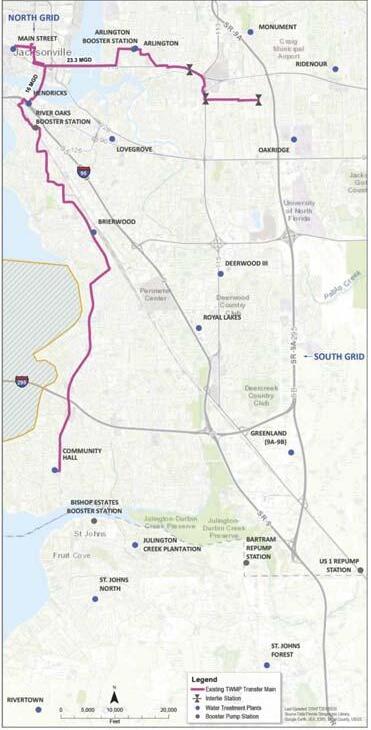
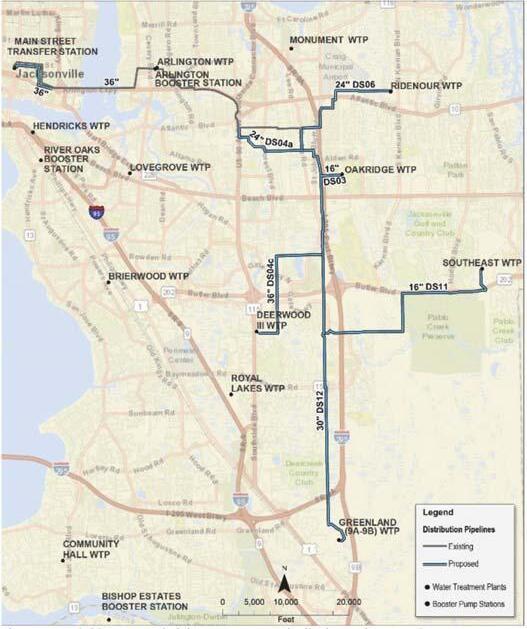
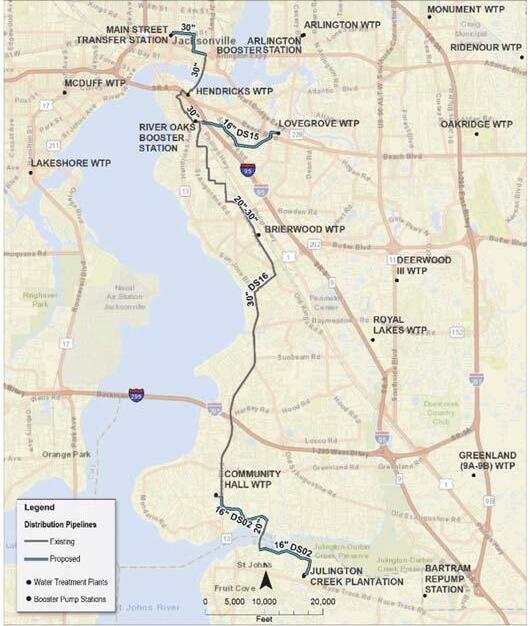
The existing TWMP transmission system includes the two St. Johns River pipeline crossings: the East River Crossing and South River Crossing (Figure 2). At the Main Street WTP, six transfer pumps deliver water into the two pipes crossing the river to the South Grid. Based on a flow velocity of 5 ft per second (fps), the East
Figure 1. JEA Water System
River Crossing pipe has a capacity of 23 mil gal per day (mgd) and the South River Crossing pipe has a capacity of 16 mgd, for a total capacity of 39 mgd. The water pressure is boosted on the East River Crossing by the Arlington Booster Station and on the south by the River Oaks Booster Station. Water repumped by the Arlington Booster Station is pumped into the South Grid pressurized transmission system through three interties. Water repumped from the River Oaks Booster Station is conveyed at low pressure to the Brierwood WTP, where it’s treated and pumped into the South Grid transmission system. It partially serves to feed water to the southern-located Community Hall WTP, where it’s repumped into the South Grid transmission system.
The current system actually transfers approximately 11 mgd to the South Grid (8 mgd through the East River Crossing pipeline and the Arlington Booster Station), and approximately 3 mgd through the River Oaks Booster Station. This is well below the maximum capacity of the two river-crossing mains.
Initiated planning was done by JEA in 2014 to determine the ability to meet South Grid water demand through 2040. Since the current TWMP system was having difficulty overcoming the backpressure from the South Grid WTPs and was ineffective at distributing water to meet demands in the South Grid growth areas, an alternative approach was needed to maximize the capacity of the two pipelines and realize the original TWMP performance objectives.
Sustainability of Local Wellfield Sources
Under JEA's CUP, the allowable withdrawals from the South Grid wellfields are lower than customer demands. The JEA’s CUP required the wellfield allocations in the South Grid to be reduced incrementally starting in 2014, when the TWMP
river-crossing pipes were fully operational, through 2021. To make up the deficit, JEA developed the TWMP to import and distribute water from its North Grid to the WTPs in the South Grid to supplement supply. North Grid wells have better water quality, are not at risk of quality degradation from poorer quality water in the lower Floridan aquifer, and are the highestcapacity wells in the JEA system. Also, implementation of the TWMP was a condition of JEA’s CUP.
To protect its wellfields from further water quality decline, JEA's first course of action was to modify its operational and design standards for its South Grid supply wells, including reducing pumping rates; plugging off the lower zones of the wells to fend off the deeper, poor-quality water; and increasing the spacing between new wells to reduce concentrated stresses on the aquifer. Diligent design and operations practices offer the best approach (but no guarantee) for sustaining the withdrawal of high-quality groundwater from the South Grid wellfields. It was understood by JEA that the Floridan aquifer, like all resources, was limited, and responsible development of alternatives to protect it were needed.
Water Demand Projections
Jacobs conducted an expedited analysis for future water demand needs to determine the amount and location for additional water supply. It used the parcel-level population database and associated water use consumption factors for the land use categories to calculate population-based water demand projections for the 2020 through 2040 planning period.
Water demands were projected for the JEA South Grid service area in five-year increments from 2020 through 2040. For projections of future maximum day flow (MDF), the ratio of the MDF to the average day flow (ADF) was multi-
plied by the future-predicted ADF. The WTP production records were analyzed to calculate the systemwide MDF-to-ADF ratio of 1.45, and this factor was used for future planning.
Continued on page 32
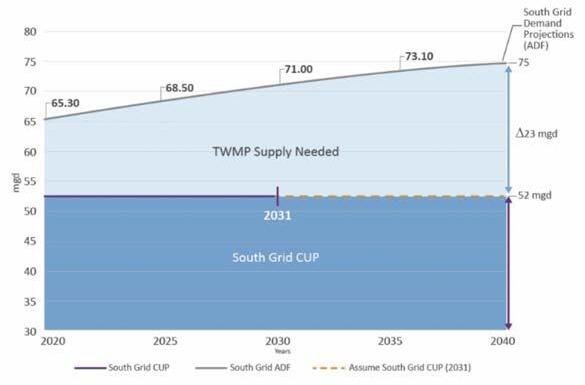
Figure 3. South Grid Supply Needs Met by the Total Water Management Plan
Figure 4. South Grid Demands: Maximum Day Flow
Figure 2. Current Total Water Management Plan (Phase 1)
Average Day Demands
The 2031 end-of-permit South Grid CUP allocation is 52 mgd, ADF. The primary source water for the TWMP is the Main Street WTP wellfield and its end-of-permit CUP allocation is 23 mgd, ADF. Under the TWMP, the Main Street WTP wellfield is dedicated to South Grid water transfer. The sum of the South Grid wellfield allocations and the Main Street WTP wellfield allocation is 75 mgd, ADF (Figure 3); this allocation is equal to the projected ADF demand of 75 mgd for the South Grid through 2040. To maintain South Grid CUP compliance, a minimum of 23 mgd would need to be transmitted through the TWMP. To meet the TWMP objectives, a plan was needed to transport the North Grid water to the South Grid where needed, for both water supply quality sustenance and CUP compliance.
Maximum Day Demands
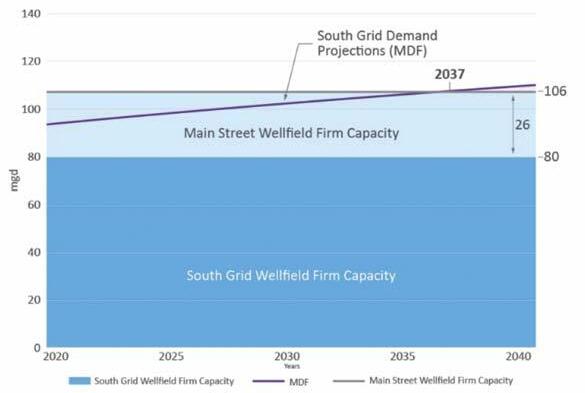
While CUP compliance focuses on not exceeding groundwater allocations based on ADF, JEA, as a water utility, must meet the MDF demands of its South Grid customers. The estimated maximum sustainable capacity of the South Grid wellfields is 80 mgd after modifications, rehabilitation, and backplugging (also part of the TWMP) and then factoring in the firm capacity, where the largest capacity well in each wellfield is out of service. The estimated firm pumping rate for the Main
Street WTP wellfield is 26 mgd, for a combined South Grid and Main Street WTP wellfields firm pumping capacity of 106 mgd. This value is slightly lower than the projected 2040 MDF of 109 mgd (Figure 4).
Total Water Management Plan, Phase 2: Southside Integrated Piping System
The Southside Integrated Piping System (SIPS) is JEA’s new piping network program that reaches across two counties. Working with JEA, Jacobs identified an alternative plan to increase the capacity of the TWMP transfer system by converting it to a lower pressure operation, repurposing the transmission piping to dedicated transmission service, and extending the transfer piping to deliver raw water to the South Grid WTPs rather than directly into the high-pressure potable water transmission system. This alternative would enable delivery of additional raw water to specific South Grid WTPs, where the wellfields were vulnerable to quality degradation without the risk of overpumping those wells or exceeding their CUP groundwater withdrawal limits.
The transferred water would be pumped out to the South Grid customers using each WTP’s high-service pumps. By importing the raw water through the high-service pumps to each South Grid WTP, JEA could use treatment, storage, and high-service pumping capacity that
has been available but unused because of the WTP’s CUP wellfield withdrawal limits.
The South Grid system is a gridded system with multiple treatment plants and pumping stations delivering high-pressure water to customers, resulting in zones of blended water and WTP high-service pumping systems “competing” against each other. To determine supply capacity requirements to the South Grid wellfields, the following approach was used:
1. Run JEA’s treated water transmission model under 2040 ADF conditions to determine the required output from each South Grid WTP to meet demands within its area of influence.
2. Compare the WTP’s output under ADF conditions to its CUP allocation.
3. Compare the WTP’s output under MDF conditions to its wellfield maximum firm capacity.
4. Develop a plan to bring TWMP water to supplement the local wellfield supply where WTP output exceeds its wellfield CUP allocation and/or maximum capacity.
The hydraulic model was used to evaluate the transmission and pumping system. The model was updated to include projected demands at the land parcel level based on the geographic information system (GIS) growth data furnished by JEA. This effort produced a morecomplete allocation of demands throughout the model network than existed in JEA’s prior version of the model. The model was used to identify deficiencies with regard to service pressure pipe flow velocities and head loss, fire flow capacity, and water age.
To develop the conceptual design of the SIPS distribution piping, JEA's hydraulic model was used to predict the future customer demands from each of the South Grid WTPs. All 12 WTPs and their high-service pump stations were modeled at their operating pressures to predict the optimum production rate based on discharge pressure, customer demands, and water transmission capacity. The optimum production rate was then used to determine the supplemental supply required from the SIPS to achieve wellfield CUP compliance and meet MDF demands. With this information, the supplemental raw water demands for each WTP were established and a hydraulic model of the raw water distribution piping was used to size and route the low-pressure transfer distribution mains.
Increased Use of Restrained Capacity
Water supply, WTP, and water transmission system capacities were evaluated for their surplus and deficiency limits. While some WTPs, such as Deerwood III, have large areas of influ-
Continued on page 34
Figure 5. Water Treatment Plant Water Supply Versus Treatment Capacity
For further information on the school, including course registration forms and hotels, visit: http://www.fwpcoa.org/FallStateShortSchool
SCHEDULE
CHECK-IN:August 11, 2019 1:00 p.m. to 3:00 p.m.
CLASSES:
Monday – Thursday........8:00 a.m. to 4:30 p.m. Friday........8:00 a.m. to noon
P Wednesday, August 14, 11:30 a.m. P
ence, no single WTP can serve the entire South Grid. Additionally, the existing CUP has capacity limits for each WTP that also limit the capacity of the WTP’s production. If the WTP capacities are greater than the wellfield’s capacities, additional raw water could be supplied to maximize the use of the WTP’s rated capacity.
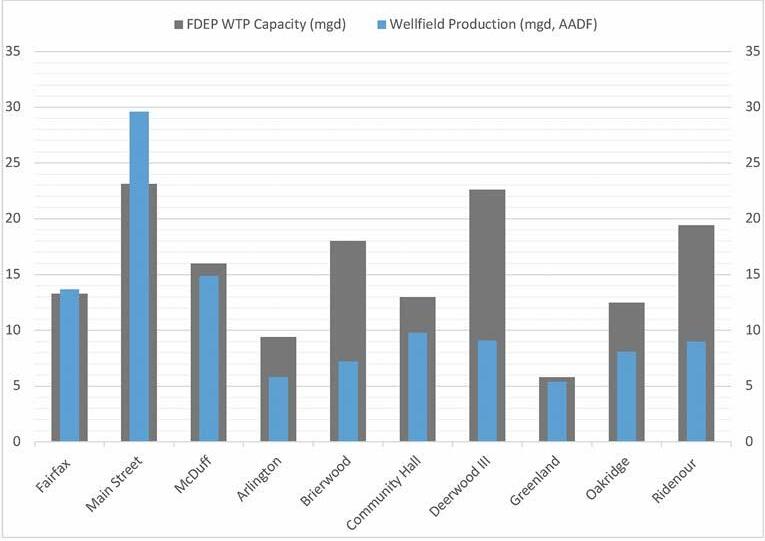
Each JEA WTP has a capacity rating established by the Florida Department of Environmental Protection (FDEP) and wellfield CUP allocation (Figure 5). The WTP capacity is expressed in terms of meeting the MDF and the capacity is based on the firm capacity (largest unit out of service) for wells, pumps, and treatment equipment. The total WTP capacity of the South Grid is 155 mgd, which is much greater than the 2040-projected MDF of 109 mgd.
The figure shows that the North Grid wellfields for the Main Street, Norwood, and McDuff WTPs closely matched or exceeded the WTP’s rated capacity, and the South Grid wellfield capacities were significantly lower than the WTP’s capacity rating. An objective of the SIPS is to deliver North Grid water to these underused South Grid WTPs and make better use of JEA’s restrained investment in the capacity of these WTPs.
Conceptual Plan for the Southside Integrated Piping System
For the 2040 analysis, constraints in the existing (2018) model were removed, including the following:
S Removal of the three TWMP high-pressure interties. The transmission main serving the interties would be repurposed for low-pressure delivery of SIPS water to the South Grid WTPs. Each of the two river-crossing mains would be extended to distribute water to the wellfields of concern (Figures 6 and 7).
S Water transmitted through the SIPS would come from the Main Street WTP as a baseload flow. The SIPS flow would be distributed (untreated) and pumped under low pressure to selected South Grid WTPs, where it will be blended with water from the local wellfields to meet the balance of the South Grid demands, including MDF, peak hour, and fire flows. The SIPS and local wellfield water would be treated at each receiving WTP to include sulfide oxidation and disinfection.
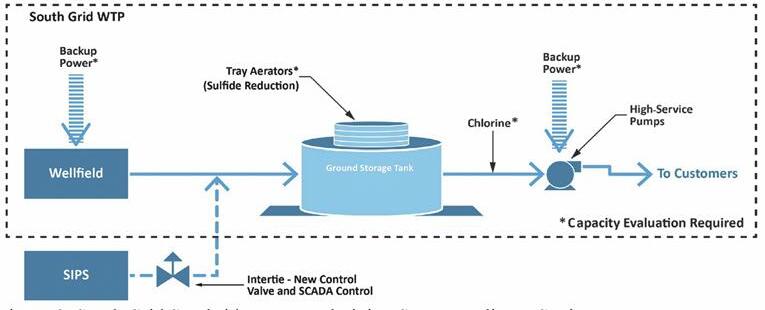
S A new water delivery station would be needed between the SIPS mains and the existing WTPs (Figure 8). At each receiving WTP, the new intertie station will consist of a flowmeter and rate-of-flow control valve. The supervisory control and data acquisition
(SCADA) system would require configuration to monitor the flow and control the feed valve. A SCADA-based flow control plan would be needed to manage and control the flows delivered throughout the TWMP distribution network. The primary objective of the flow control plan would be to deliver adequate flow to each WTP so the wellfields are not pumped in excess of their annual groundwater withdrawal allocation.
S Conversion of older TWMP transmission mains between the Hendricks WTP and Brierwood WTP to a fully dedicated lowpressure, raw water SIPS transmission main. This conversion required disconnecting existing distribution mains at this transmission main (already completed by JEA) and making new connections to the treated water distribution network.
S A new treated water low-pressure water main would be constructed from Community Hall WTP (Figure 2) to feed into the ground storage tanks at the Julington Creek Plantation WTP in St. Johns County. The existing 20-in. main crossing Julington Creek would be converted to a low-pressure treated water main to complete the transfer system to the Julington Creek Plantation WTP. A new project was
Continued on page 36
Figure 6. Southside Integrated Piping System East Distribution Main Network
Figure 7. Southside Integrated Piping System South Distribution Main Network
recommended to construct a low-pressure transfer pump station and water main to convey treated water from Community Hall WTP to the Julington Creek Plantation WTP ground storage tanks.
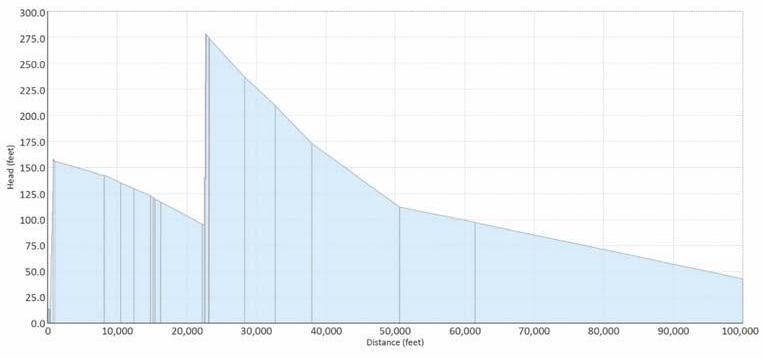
S The modeling exercise determined that the existing booster pump stations were wellsuited to pump water to the southern extremes of the South Grid service area. As part of the modeling analysis, it was determined that each booster pump station could provide sufficient head and flow to reach the top of the existing tray aerators at the receiving WTP’s ground storage tanks. The hydraulic gradeline of the east leg of the SIPS distribution main is shown in Figure 9. The two transfer pumping sources are in the Main Street WTP first, followed by boosting at the Arlington Booster Station.
Water Treatment Plan
Sulfide reduction is performed at the Main
Street WTP through ozonation and tray aeration, which partially removes sulfide. Chlorine is not applied at the Main Street WTP to prevent chlorinated disinfection byproduct formation in the SIPS distribution system.
The travel time of the raw water to the most distant delivery points (Community Hall and Greenland WTPs) may take weeks and it’s not possible to predict the water quality once it arrives at these distant locations. The impact on the raw water quality following introduction of high levels of oxygen from ozonation and tray aeration at the Main Street WTP is also unknown. Water quality monitoring was recommended to monitor for any biogrowth activity and taste and odor formation.
Phase 2 Implementation Plan
A $90 million program has begun to construct the SIPS transfer system over the next seven years. When complete, and coupled with a comprehensive wellfield rehabilitation and
backup well construction plan, the SIPS program is expected to meet the growing South Grid water demands through 2040.
Beyond the Southside Integrated Piping System
As an extension of the TWMP, JEA initiated the integrated water supply testing, evaluation, and rehabilitation (iWATER) program to develop the facilities and operational plans for water supply, treatment, and transmission within the South Grid area.
Under iWATER, JEA plans to increase water supply capacity and reliability in the Main Street, Norwood, and McDuff wellfields through wellfield rehabilitation. The Norwood and McDuff wellfields, located on the North Grid, would supply additional water to the TWMP transfer system. In addition to improving capacity, well and wellhead rehabilitation with the new equipment would improve system reliability.
As described previously, SIPS maximization using the Main Street and South Grid wellfields as the water supply source is predicted to meet South Grid demands for about 20 years. Beyond 2040, supply to the SIPS may be increased by supplementing Main Street supply with raw water from the McDuff and Fairfax wellfields. The limiting factor will become the transmission capacity of the twin river-crossing pipelines. Additionally, relying solely on the SIPS carries risk, should any of the key components be lost, including the Main Street Transfer Station and either, or both, of the river-crossing pipelines.
Options are being considered to meet capacity needs beyond those obtained from SIPS. These options could include increased conservation measures, new water supply alternatives (such as backup and emergency wells on the South Grid), and indirect potable reuse. A hybrid alternative composed of new backup/emergency wells for reliability, along with indirect potable reuse, will also be evaluated based upon aquifer recharge through rapid infiltration basins or injection wells, followed by extraction wells for raw drinking water supply.
The indirect potable reuse concept requires advanced treatment to treated wastewater, followed by injection of the water back into the aquifer. Aquifer recharge has the potential to provide JEA with a significant source of fresh water supply for partial recovery to help meet emergency (river-crossing outages) or seasonal peak demands. The additional treatment processes needed to produce water for injection into the aquifer were recently studied and successfully piloted at JEA’s Southwest and Buckman Water Reclamation facilities; however, future work remains for full-scale permitting and capacity allocation offset acceptance. S S
Figure 9. East River-Crossing Hydraulic Gradeline: Main Street Water Treatment Plant to Greenland Water Treatment Plant
Figure 8. South Grid Southside Integrated Piping System Delivery Station
Test Yourself
What Do You Know About Water/Wastewater Operator Certification?
Donna Kaluzniak
1. Per Florida Administrative Code (FAC) 62699, Treatment Plant Classification and Staffing, any person in onsite charge of the actual operation, supervision, and maintenance of a domestic wastewater or water treatment plant or water distribution system, including the person in onsite charge of a shift or period of operation during any part of the day, is defined as a(n)
a. certified professional.
b. licensed agent.
c. operator.
d. technician.
2. Per the Florida Department of Environmental Protection (FDEP) Drinking Water, Domestic Wastewater, and Water Distribution System Operator Certification Program Handbook (OCP Handbook), operator certification is completed in two steps: the examination process and the licensing process. One of the minimum eligibility requirements to take an exam for a treatment plant operator class C or distribution system operator 3 level license is successful completion of a department-approved training course, taken no more than
a. one year prior to the examination date.
b. three years prior to the examination date.
c. five years prior to the examination date.
d. 10 years prior to the examination date.
3. Per the FDEP OCP Handbook, what types of general educational development (GED) certificates are considered equivalent to a high school diploma required to take the exam or obtain an operator license?
a. Any online or correspondence school.
b. The GEDs issued by the American Council on Education through the Florida Department of Education.
c. Programs that offer credit for life experiences or courses taken while in high school.
d. Programs that offer a ranking system as a way of determining graduation criteria.
4. Per FAC 62-602, Water or Domestic Wastewater Treatment Plant Operators and Distribution System Operators, what current license must an applicant hold in order to take the exam for a class A treatment plant operator license?
a. Class B treatment plant operator license
b. Class C treatment plant operator license
c. Class D treatment plant operator license
d. No current license is necessary.
5. Per the FDEP OCP Handbook, a licensure application must be completed after passing the required operator exam. This licensure application documents actual treatment plant or distribution system experience. In order to obtain a class B treatment plant or level 2 distribution system operator license, how many hours of actual experience must an applicant have?
a. 2,080 hoursb. 4,160 hours
c. 6,240 hoursd. 10,400 hours
6. Per FAC 62-602, experience required for licensure as a water or wastewater treatment plant operator includes
a. experience in the construction or design of water or wastewater treatment plants.
b. experience in wastewater systems where septic tanks, filter beds, or lagoons are the sole means of treatment.
c. performance of process control at a water or wastewater treatment plant as an employee, volunteer, or contractor.
d. performance of well drilling for water treatment plants.
7. Per FAC 62-602, experience required for licensure as a water distribution system operator excludes
a. adjusting pumps or control valves to regulate distribution system flows or pressures.
b. cleaning or disinfecting finished water storage tanks.
c. installing, maintaining, repairing, or replacing water mains and appurtenances.
d. repair and maintenance of irrigation systems or fire protection systems.
8. Per the FDEP OCP Handbook, when completing the licensure application, who is allowed to sign under “supervisor signature” on the “experience verification” section?
a. Anyone in a management position at the utility.
b. A Florida-licensed professional engineer.
c. A human resources manager.
d. Only an FDEP-licensed operator.
9. Per FAC 62-602, if the employment experience is not verified by a licensed operator, an applicant for an operator license must submit a reference from
a. a Florida-licensed professional engineer. b. a peer who is a licensed operator of the same type to verify the experience of the applicant.
c. any FDEP-licensed operator.
d. the executive director of a utility or city manager of a municipality.
10. Per the FDEP OCP Handbook, operator licenses must be renewed every two years. Continuing education units (CEUs) are required for license renewal. How many hours of continuing education contact time are required for operators to earn one CEU? a. 1 hourb. 5 hours c. 10 hoursd. 40 hours
Answers on page 66
Reference used for this quiz:
• Florida Department of Environmental Protection (FDEP) web page, Water and Domestic Wastewater Operator Certification Programhttps://floridadep.gov/water/certificationrestoration/content/water-and-domesticwastewater-operator-certification-program.
• FDEP Drinking Water and Domestic Wastewater Water Distribution System Operator Program Handbook (OCP Handbook), May 2019 (Available on webpage above).
• FAC 62-602, Water or Domestic Wastewater Treatment Plant Operators and Distribution System Operators
Send Us Your Questions
Readers are welcome to submit questions or exercises on water or wastewater treatment plant operations for publication in Test Yourself. Send your question (with the answer) or your exercise (with the solution) by email to: donna@h2owriting.com.
Potable Reuse Commission: Helping Plan for Florida’s Future Water Needs
The use of Florida’s fresh water resources is becoming stressed as the demand for water increases. To meet this growing need, while protecting water resources and related natural systems, requires the development of nontraditional water supplies.
Potable Reuse Commission
Potable reuse is an emerging alternative water supply option that can help to safely meet Florida’s future water needs by providing resiliency during natural drought cycles for decades to come. WateReuse Florida had convened the Potable Reuse Commission (PRC), a diverse group of representatives from utilities; water resources; business, industry, and agriculture; and
public health, to create a consensus-driven partnership to develop the framework for the implementation of potable reuse in Florida. The PRC is supported by the Florida Department of Environmental Protections (FDEP) and the majority leader of the Florida House of Representatives, and its recommendations, proposed legislation, and regulatory path have been submitted to policy makers and regulators for consideration.
In Florida, areas that have existing water resource constraints or where a water resource constraint is projected to develop during the next twenty years, have been designated by the state’s five water management districts as water resource caution areas. Currently, 67 percent of Florida resides within a water resource caution area, resulting in modifications to how water resources are
managed. Factors, such as increased water demands and impacts to natural systems from groundwater withdrawal, drive the need to restore water levels and natural systems.
Mission
The mission of PRC is to develop a framework for potable reuse implementation in Florida that will augment future water supply and support water quality initiatives. The commission will advise elected officials and regulatory agencies on statutory and regulatory challenges, and present consensus-based solutions.
Goals
There are four primary outcomes of the potable reuse framework:
S Facilitate the expansion of potable reuse to supplement withdrawals from the natural system, while protecting the investment of public dollars.
S Develop recommendations for legislation, rule development, and incentives for potable reuse.
S Identify benefits of potable reuse to environmental restoration and economic development.
S Establish potable reuse fact sheets for statewide consistency in public education.
The PRC will produce documents that succinctly summarize recommendations, resolve issues, and serve as briefing materials for elected officials and regulatory agencies.
Membership
The PRC is comprised of eleven members, with the president-elect of WateReuse Florida serving as the chair of the commission. This initiative is a collaborative partnership with the Florida Section of the American Water Works Association (FSAWWA) and Florida Water Environment Association (FWEA). These organizations will fill three vice-chair seats to reflect their leadership roles, providing representation from all three associations.
The remaining seven seats characterize the stakeholders directly or indirectly affected by the implementation of potable reuse in Florida. To leverage their expertise and experience in potable reuse, FDEP and the water management districts will serve as ex-officio members and act as advisors to the commission.
The membership represents the following:
S WateReuse Florida
S FWEA
S FSAWWA
S Agriculture
S Florida Department of Health
S Environmental groups
S Public health/medical state universities
S Associated Industries of Florida
Guiding Principles
The commission will abide by the following principles:
S Offer a consensus-based effort by water professionals and a diverse stakeholder group to identify and address technical, regulatory, and implementation barriers to potable reuse in Florida.
S For the 2019 legislative session, the PRC will provide the underlying statutory framework for the implementation of potable reuse.
S The PRC will provide leadership in developing the regulatory framework for implementation of potable reuse as an alternative water supply option (right water, right time, and right place).
Meetings and Events
Meetings and events of the PRC will be publicly noticed in the Florida Administrative Register (FAR) to provide opportunity for stakeholder participation. Agendas and meeting summaries will be posted at www.watereuseflorida.com.
As the need for additional information arises, the chair will direct a commission member to lead topic discussions within a working group. The working group is an open forum to assimilate technical information and address any questions or issues put specifically to the working group from the PRC.
News and other information about potable reuse can be found at the website. S S
Cybersecurity Fundamentals Guide for Water and Wastewater Utilities Now Available
Michael Arceneaux and Jennifer Lyn Walker
Jennifer Lyn Walker
Water and wastewater utilities provide critical lifeline services to their communities and their regions. Supporting these vitally important functions requires secure information technology (IT) and operational technology (OT), yet the sector’s IT and OT networks continue to face an onslaught of threats from cybercriminals, nation states, and others.
To support the sector in its cybersecurity goals, and in response to the continually evolving threats, the Water Information Sharing and Analysis Center (WaterISAC) has just published a newly updated resource, “15 Cybersecurity Fundamentals for Water and Wastewater Utilities.”
The updated guide contains dozens of best practices, grouped into 15 main categories, that water and wastewater systems can
implement to reduce security risks to their IT and OT systems. Each recommendation is accompanied by links to corresponding technical resources. In sum, the guide connects users to the information and tools needed to take a dive deep into this important issue.
Cybersecurity Fundamentals
Here is a summary of the 15 fundamentals.
S Perform asset inventories . You can only protect what you know about. Knowing your environment is a basic requirement of a sound cybersecurity program.
S Assess risks . Once assets inventories are completed, OT and IT risk should be assessed, considering the likelihood a threat will occur and the degree of impact the threat will cause to the organization.
S Minimize control system exposure . Protect the control system environment from outside, untrusted networks. This involves network segmentation, traffic restrictions, and encrypted communications.
S Enforce user access controls . Users on a network should have no more access than
they need to do their jobs. Apply rolebased access controls and the principle of least privilege, including limited use of administrator rights to prevent users from accessing systems and files that they are not authorized to access.
S Safeguard from unauthorized physical access . If adversaries can gain physical access to your equipment, they can compromise it. Nontechnical, physical security controls can restrict physical access to IT and OT environments.
S Install independent cyber and physical safety systems . Cyberattacks can result in physical effects. To protect critical assets from such “blended” threats, utilities should consider nondigital engineering solutions, such as independent cyber and physical safety systems.
S Embrace vulnerability management . Largely informed by asset inventory and risk assessments, vulnerability management involves the need to identify and remediate cybersecurity gaps and vulnerabilities before the bad guys exploit them.
S Create a cybersecurity culture . Cybersecu-
rity is everyone’s responsibility, from the break room to the boardroom. Effective cybersecurity starts at the top; to affect positive behavioral changes, involve every executive, board member, and employee in cybersecurity awareness and training.
S Develop and enforce cybersecurity policies and procedures (governance) . Create, disseminate, and operationalize clear and actionable organizational policies and procedures regarding cybersecurity expectations. The fundamentals in this guide can be used to begin developing policies that are most relevant to each organization.
S Implement threat detection and monitoring. You will not find it if you are not looking. The importance of configuring detailed logging and reviewing system logs to detect active threats in your environment cannot be overstated.
S Plan for incidents, emergencies, and disasters. Plan ahead for maintaining business continuity and resilience. Emergency response plans (ERPs) will be required by America’s Water Infrastructure Act (AWIA) beginning in 2020.
S Tackle insider threats . The insider threat is a people problem, not a technology problem; however, not all insider threats are malicious. Mitigate this organizationallevel threat by understanding behavioral indicators that predicate an insider threat and apply appropriate training and technology controls to deter an incident.
S Secure the supply chain . The supply chain/vendor relationship is a common threat vector for cyberattacks and must be intentionally managed through security and vulnerability testing and risk assessments.
S Address all smart devices . When unsecured internet of things (IoT) and mobile devices are connected to networks, they create holes (often to the internet) that may not have previously existed. Cisco’s “2018 Annual Cybersecurity Report” states that few organizations view IoT as an imminent threat, yet adversaries are exploiting weaknesses in connected devices to gain access to industrial control systems that support critical infrastructure.
S Participate in information sharing and collaboration communities . Share information with others. Utilities can learn from each other by getting involved in WaterISAC, InfraGard, and similar communities. Cyber-mature utilities can significantly help the community and sector by sharing their experiences.
About WaterISAC
WaterISAC is a nonprofit water and wastewater sector organization dedicated to protecting sector utilities from all hazards. It disseminates threat advisories, reports, and mitigation resources to help utilities prevent cyber and physical security incidents and to recover from disasters.
WaterISAC draws information from federal and state law enforcement and many pri-
vate-sector sources to create products that are relevant to the water and wastewater sector. Membership includes a free 60-day trial and is open to utilities, consulting firms, sector associations, and state agencies. More information is available at www.waterisac.org.
Michael Arceneaux is managing director and Jennifer Lyn Walker is cybersecurity risk analyst at WaterISAC in Washington, D.C. S S
TFSAWWA at ACE19 in the Mile High City FSAWWA SPEAKING OUT
Michael F. Bailey, P.E. Chair, FSAWWA
he 138th American Water Works Association Annual Conference and Exposition (ACE19) was held June 9-12 in Denver. It was a success by all measures, with more than 12,000 water professionals in attendance, over 500 presenters, and a massive exhibit floor filled with interesting and inno-
vative products and services from around the world.
Opening General Session
I find myself really excited and inspired by our profession every time I attend one of these conferences, and particularly with the keynote speakers at the opening general session. This year was no exception, with Auden Schendler, senior vice president of sustainability at Aspen Skiing Company, delivering the address about climate change and how it could affect our profession. Regarding the water industry, he noted that “the work you’re doing is the physical manifestation of
loving your neighbor,” and I couldn’t agree more.
Of course, the Florida Section had frontrow seats at the opening session, thanks to Peggy Guingona, our executive director, and because Florida will host next year’s ACE (more on that later).
Competitions and Awards
The Florida Section was well-represented at the conference and made its mark at the Top Ops competition and with other section recognitions.
Speaking of Top Ops, the City of Palm Coast team, Water Buoys, earned second
Opening general session at ACE19.Some of the conference attendees at the FSAWWA luncheon.
The Florida Section accepts the Nicholas S. Hill Jr. Award. From left are David Rager, AWWA president; Mike Bailey, FSAWWA chair; Jay Madigan, FSAWWA Membership Engagement and Development Council vice chair; Peggy Guingona, FSAWWA executive director; and David LaFrance, AWWA chief executive officer.
From right to left are Mike Bailey, Pat Lehman, “Flash,” and Richard Anderson, all in Florida shades!
place at the event. For those of you who haven’t seen it, the Top Ops competition is a fast-paced question-and-answer tournament for AWWA section teams of water operators and laboratory personnel. The teams compete by answering a broad range of technical questions and math problems, and the one scoring the most points in the championship round is awarded the Top Ops championship. The Water Buoys team has won this event so many times that they’re probably not satisfied with second place, but I still think it’s quite an achievement on the national stage, and they’re to be congratulated!
The Florida Section also came in strong by winning the Nicholas S. Hill Jr. Award for 2018. This award is earned by achieving the highest percentage of net membership growth among all of the sections, and a big round of applause goes out to the Membership Committee and Casey Cumiskey, FSAWWA training coordinator/membership specialist!
Mark Lehigh of the Hillsborough County Water Resources Services Department received the George Warren Fuller Award for his distinguished service to the water supply field in commemoration of the sound engineering skills, brilliant diplomatic talent, and constructive leadership that characterized the life of George Warren Fuller. Mark has a long history of dedicated service to FSAWWA, having served as section chair, and is currently the section’s general policy director. Thanks Mark, and congratulations!
Section Luncheon
The Florida Section hosted its annual
luncheon at ACE on Monday, June 10, to welcome the Florida folks to Denver and encourage networking among the section members. The lunch was held at Earl’s Kitchen + Bar and 82 members and guests were in attendance, including past chairs Luis Aguiar, Pat Lehman, Jeff Nash, Richard Coates, Jackie Torbert, Rob Teegarden, Richard Anderson, and Mark Lehigh. A great time was had by all, and thanks again to Peggy Guingona for putting it all together.
ACE20 in Orlando
Hopefully, all the Florida members had a chance to stop by the ACE20 booth in the AWWA Pavilion area of the exhibit hall to check out the fun and tropical atmosphere that was created with six-foot palm trees, Florida-themed giveaways, and “Flash,” the resident flamingo.
As you probably know, the Florida Section is hosting ACE next year in Orlando, and the booth was set up to promote what will surely be a hugely successful national conference. The really adventurous attendees got their photographs taken with “Flash,” complemented by a frame provided by Visit Orlando, a company that helps people plan their visit. Thanks to everyone who stopped by, and thanks to Terri Holcomb, the Public Affairs Council chair, and all the volunteers who set up and hosted the booth!
So this seems like a good place to close by saying “well done” to AWWA and the Rocky Mountain Section for an excellent 138th ACE.
And look out Orlando—here comes FSAWWA and ACE20! S S
Carollo, Hazen & Sawyer, HDR, Jacobs, Kimley-Horn, and VTScada were the generous sponsors for the section lunch.
Mark Lehigh and his wife, Kim, pose with his Fuller Award.
Flash (left photo) and Eddy (right photo), AWWA's mascot, help to promote ACE20, which will be held in Orlando.
Small Community Leads Central Florida in Potable Water Reuse Implementation
The Altamonte Springs facility is the first of its kind in the state
According to recent studies conducted by the Central Florida Water Initiative, groundwater sources alone will not meet future freshwater demands for area residents. To address this looming issue, central Florida water utilities will need to begin diversifying their water supplies. There are several options water utilities can consider when expanding their drinking water sources, including surface water, groundwater, and desalination. One opportunity that is gaining popularity across the United States is potable water reuse.
The city of Altamonte Springs, located in Seminole County, was one of the first in the area to actively address its water challenges by investigating drinking water reuse. The municipality implemented a pilot program, funded in large part by a grant provided by
the St. Johns River Water Management District (SJRWMD). The pilot, called the pureALTA project, was designed with two primary goals: to serve as a platform for future potable water reuse efforts in Altamonte Springs, and to educate the 45,000 residents about the benefits of potable water reuse.
The pureALTA Project
The project is an advanced treatment facility in Altamonte Springs that treats reclaimed water by employing an advanced treatment train that results in municipal drinking water. The city worked with Carollo Engineers and Xylem to develop an ozone and biologically active filtration (O 3 /BAF)-based advanced water treatment train that also includes ultrafiltration (UF) membranes, gran-
ular activated carbon (GAC) filtration, and an ultraviolet advanced oxidation process (UV AOP).
This solution was chosen over reverse osmosis (RO)-based systems that typically have high capital and operating costs and the added burden of brine disposal. The pureALTA treatment process begins with reclaimed water, which is then treated to meet or exceed drinking water quality standards without using expensive, energy-consuming RO.
The innovative network of two advanced water treatment processes is handled by the integrated O3/BAF system, featuring a GSO 30 ozone generator, XA underdrain, and IMS 200 media retainer technologies.
The system treats approximately 28,000 gallons per day (gpd) and uses an O 3 :(total organic carbon [TOC]+nitrite) ratio to set the ozone dose. The city monitors system performance with analytics equipment, including NiCaVIS (upstream of process) and CarboVIS (downstream of process).
Altamonte Springs.
Pilot Results
The integrated process set the tone for the performance of the entire treatment train. The TOC reduction across the system ranges from 25 to 37 percent; more importantly, it operates as a successful barrier for the UF membranes. Through one year of operation, the UF did not require any maintenance cleans and only performed a single clean-in-place. This compared to most membrane operations that typically require cleanings every six months.
Another positive outcome is the improvement in ultraviolet transmittance (UVT) averages across the process (from 71 to 86 percent), which also significantly enhanced the performance of the UV AOP system and reduced the overall operating costs of the UV reactor.
Based on the results of the pilot project, the city could build on this success and develop a full-scale system with the potential to create about 5 percent of its daily water demands, reducing stress on the aquifer.
“We may be a smaller city, but our philosophy has always been to think outside the box when it comes to meeting the needs of our residents and conserve our natural resources,” said Frank Martz, Altamonte Springs city manager.
Benefits to the Community
Altamonte Springs frequently conducts educational tours at the pureALTA facility, hosting groups ranging from middle- and high-school students to water utility personnel from around the U.S.
The city has also developed the Altamonte Springs Science Incubator (AS2 I) program, which it offers as a hands-on science, technology, engineering, and math (STEM) learning experience for Seminole County students.
The program offers field trips to Lake Lotus Park, which includes the regional water reclamation facility and its certified environmental laboratory, and the pureALTA project site, with discussions of treatment processes, safety, drought, and the importance of diverse water supplies.
A Toast to Altamonte Springs
Altamonte Springs and the pureALTA project have won two prestigious awards.
The 2018 International Water Association Project Innovation Award recognized the city as the only U.S. project with a top award in the water technology and infrastructure category for its forward-thinking applications and solutions to advance clean and safe water goals.
The project also received the 2017 Water Reuse Innovative Project of the Year at the 32nd annual WateReuse Symposium. The award recognizes new and innovative solutions for expanding the use of recycled water and the creation of future models that advocate the implementation of water reclamation nationwide.
“We are extremely proud of the hard work and committed efforts from our city staff and partners, and are honored to accept these prestigious awards,” said Martz.
S S
Main menu for the integrated O3/BAF solution that has several preloaded control strategies the owner can select.
An ozone generator.
Placard at the pureALTA project commemorating the 2017 WateReuse Innovative Project of the Year Award.
This column addresses safety issues of interest to water and wastewater personnel, and will appear monthly in the magazine. The Journal is also interested in receiving any articles on the subject of safety that it can share with readers in the “Spotlight on Safety” column.
LTake a Load Off With Tips for Safe Lifting LET’S TALK SAFETY
ifting and carrying objects is an everyday occurrence for workers in many occupations. Safe lifting techniques should be stressed at all workplaces, but are commonly overlooked. Most people just want to finish the job quickly, even if that means moving heavy objects in unsafe ways. In doing so, workers can become injured and have to miss work for extended periods of time.
Back and lifting injuries are a leading cause of missed work days. According to 2014 data from the Bureau of Labor Statistics, overexertion in lifting or lowering caused an average of 12 days away from work (30 percent more than the overall average), and was the fifth highest rate of days missed per 10,000 full-time workers.
Designing for Safety
The Occupational Safety and Health Administration (OSHA) has evaluated ways to help prevent lifting injuries. It specifies two types of controls: engineering and administrative. Engineering controls are used to redesign the workstation to minimize lifting hazards; administrative controls include carefully selecting and training workers so that they can perform their jobs safely.
Engineering Controls
S Redesigning the weight being lifted to help make it easier to lift the item with the presence of handles, use of baskets, or stabilizing the package being handled.
S Adjusting the height of the object being moved.
S Installing mechanical aids, such as pneumatic lifts, conveyors and/or automated material handling equipment.
Administrative Controls
S Strength-test all workers. Studies have shown strength testing can prevent up to one-third of all work-related injuries. Through the strength-testing process, employers can discourage employees from performing tasks that exceed their strength capacities.
S Use physical conditioning and stretching programs to reduce the risk of muscle strain.
S Employees should be trained to utilize proper lifting techniques that place minimum stress on the lower back.
S Post signage around the facility reminding workers to lift safely.
Even if you don’t lift heavy objects often at work, you are still susceptible to an injury. You can strain your back lifting something as light as a screwdriver if you are not careful.
An improper lifting technique can lead to serious and possibly permanent back, leg, and arm pain. A poor lifting technique can cause both acute injury and serious chronic effects. Whether you work in an office environment or in the field, you may encounter instances where heavy lifting is involved. Even if the item you are lifting is not something that is perceived to be heavy, it’s always important to keep in mind the following tips as you plan to lift, move, and lower an object.
Plan the Lift Before You Start
Prior to moving the load from point A to point B, take a minute to evaluate the situation.
Know the Load and Surroundings
S Check the weight of the load by slightly tipping or pushing it.
S Ensure that the load is stable. Repack or secure the load or ask for assistance if the load is unstable.
S Use mechanical equipment if the load is too heavy.
S Ensure that the path of travel is clear of items that might cause you to trip and fall.
Lifting the Load
S Face the load with your feet shoulder-width apart.
S Bend your knees, not your back!
S Keep your back straight and your head up.
S Rest the load on your bent knee as you prepare to stand.
S Position the load close to your body.
Moving the Load
S Keep the load as close to your body as possible.
S Pay attention to where you are going.
S Avoid bending and twisting your back; turn with your feet when you need to change direction.
S If you can’t see over the load, find another means to transport it.
S Face the direction you are walking. If you need to turn, stop and turn in small steps and then continue walking.
S Keep your eyes up. Look slightly upward when lifting to help you maintain a better position of the spine.
Lowering the Load
S Use leg muscles—never your back—when lowering the load.
S Set the load on a table or in another location that is at waist level.
S Watch your fingers when lowering the load.
Moving Heavy Loads
S Pushing is always easier on your back than pulling.
S When pushing, keep your elbows close to your body and use your leg muscles instead of your arm and back muscles.
S Wear shoes that have good support and traction.
S If a load is very heavy, ask another employee to help you.
Be aware of the early warning signs of back strain. If you experience back pain, such as burning or shooting pain, numbness, or a tingling sensation, seek immediate medical attention.
Things to Avoid
Just as important as following safe lifting techniques, avoiding unsafe behavior can help you to avoid injury.
Here are a few things to avoid while lifting:
S Never hold your breath while you lift an object. Exhaling out when lifting an object is the proper technique to use.
S Don’t use a partial grip on an object. Always use two hands!
S Never obstruct your vision with an object you are carrying. Keep the object at midsection level, from the midthigh to midchest. This is your “power zone,” where an injury is less likely to happen
S Never forget to wear your personal protective equipment, such as gloves for grip or shoulder pads to cushion the load.
By practicing these safe lifting techniques, and avoiding bad lifting habits, you and your staff can stay health and on the job. Since lifting injuries are so common, and detrimental to productivity, the importance of safe lifting techniques cannot be overstated and should be treated seriously in every industry.
For additional information go to www.osha.gov. S S
Wastewater Chlorination Systems: A Holistic Approach Toward Design and Construction
Sussette Irizarry
The Miami-Dade County Water and Sewer Department (WASD) currently operates three wastewater treatment plants that serve one of the largest metropolitan areas in the United States. On any given day, WASD provides water and wastewater service to nearly 2.3 million residents and thousands of visitors throughout the county. The largest facility at WASD is the Central District Wastewater Treatment Plant (CDWWTP), which was constructed in 1956. Currently, CDWWTP is a secondary treatment facility consisting of headworks, high-purity oxygen activated sludge biological treatment facilities (oxygen-generating system, oxygen train tanks, final clarifiers, and return activated sludge [RAS] pumps), and disinfection. Miami-Dade County entered into a consent decree with the U. S. Environmental Protection Agency (EPA), which has mandated improvements to a variety of processes throughout WASD’s wastewater infrastructure.
Among WASD’s assets identified for improvements were the chlorine gas disinfection facilities at CDWWTP and it elected to replace
the existing chlorine gas disinfection system with a liquid sodium hypochlorite (NaOCl), or bleach, system that is safer to handle than gas or liquid chlorine and will improve overall plant health and safety. The NaOCl will be transported by delivery trucks to CDWWTP, where it will be stored in a main bulk storage building. Metering pumps at the main facility will serve as part of the NaOCl feed system for various injection points throughout the plant. The NaOCl storage system will also include a second ancillary site for additional storage.
The CDWWTP chlorination project provides an example of the design and construction challenges of transforming an existing chlorine gas disinfection system to a NaOCl dosing system. The design and construction process was a collaborative effort among the design team, construction team, and WASD staff. Design challenges included providing a functional design layout of the NaOCl storage and feed system, which considers adequate storage and accommodates system maintenance. The building layout and yard piping were some of the most important design ele-
Sussette Irizarry is a project manager with Stantec in Coral Gables.
ments of the project. During construction, equipment testing and integration of the process control equipment and instrumentation were some of the greatest challenges. The CDWWTP chlorination project will provide the design teams with a holistic approach toward designing chlorination disinfection facilities and an overview of the project.
Background
In 2013 Miami-Dade County initiated execution of an aggressive program schedule identified in the federally mandated consent decree, with EPA and the Florida Department of Environmental Protection (FDEP) committing to rehabilitation and improvement projects of the county’s wastewater collection, transmission, and treatment systems. This includes improvements at each of the wastewater treatment plants (WWTPs) owned and operated by WASD.
Three WWTPs (North District, Central District, and South District) are currently operated by WASD, and CDWWTP, located in Virginia Key, is its oldest existing WWTP. The plant has undergone numerous expansions and upgrades from its original permitted capacity of 47 mil gal per day (mgd) as a modified activated sludge process to its current configuration as a 143-mgd high-purity oxygen activated sludge facility. The raw wastewater that is pumped to the central plant is hydraulically split into two treatment plants: Plant 1 and Plant 2. Plant 1 has a treatment capacity of 60 mgd based on annual average daily flow (AADF), and Plant 2 has a treatment capacity of 83 mgd based on AADF. Although the treatment capacities are different, the treatment processes used are identical. The treatment process used at the central plant consists of pretreatment (grit removal), high-purity oxygen activated sludge process, secondary clarification, and basic disinfection using chlo-
Figure 1. Central District Wastewater Treatment Plant (2012 Existing Conditions Report)
rine. An aerial view of CDWWTP is shown in Figure 1.
The original chlorine facilities, one at each plant, consisted of one-ton cylinders, chlorinators, and evaporators. Liquid chlorine was pulled from the cylinders to chlorine evaporators, where the liquid chlorine was converted to chlorine gas. The chlorine gas was then fed to the chlorinators, which regulated dosing and contained the ejectors where the chlorine gas was mixed with a small flow of secondary clarifier effluent. The CDWWTP holds a domestic wastewater facility permit issued by FDEP that requires the effluent to meet basic disinfection requirements, which is a minimum chlorine residual of 0.5 mg/L after a contact time of 15 minutes. The NaOCl feed system was designed to meet these permit requirements.
In 2012 MWH (now Stantec) completed an evaluation of CDWWTP that documented the existing condition of assets throughout the facility. The 2012 report indicated that there was a need for converting the chlorination facilities from chlorine gas to NaOCl in order to improve overall plant health and safety constraints, as well as equipment that was nearing its useful life. Failure of the existing chlorine gas storage system could lead to an unregulated discharge of chlorine gas and expose plant personnel and the public to chlorine gas. In 2015 Gannet Fleming developed a basis of design report (BODR) for the new chlorination facilities that provided a summary of the equipment and NaOCl injection points. The following unit processes were identified in the BODR as injection points utilizing 10.5 percent NaOCl:
S Disinfection of effluent from Plant 1 and Plant 2
S Filamentous control (RAS dosing) for Plant 1 and Plant 2
S Flushing water for Plant 1 and Plant 2
S Scum wells on the final clarifiers at Plant 1 and Plant 2
S Digester gas scrubbers at Plant 1 and Plant 2
The BODR provided a basis for the required chlorine dosage for each injection point, siting of the new facilities, and overall operation of the new chlorination facilities. The BODR also established requirements for the size and material of the NaOCl storage tanks, pump selection for the NaOCl feed system, and yard piping.
Design Approach and Challenges
Due to the need to implement this project quickly and meet EPA milestone dates, detailed design was structured between progressive de-
sign phases, including a 60 percent design charrette and a final 100 percent design submittal. Workshops were held with the client and the project management team at each phase of the design to ensure that the client was aware of any design changes and approved the overall design. The design process was essentially an integrated approach among the design team, the client’s project management team, and the client. During design, various changes occurred to the layout of the new chlorination system to accommodate logistics of system maintenance and process control. During detailed design it was decided that the chlorination facilities would consist of only two sites: one main storage facility (site 1) and one satellite facility (site 2), as shown in Figure 2.
One significant design challenge was to accommodate structural loads of the NaOCl storage tanks at the main storage facility. In order to accommodate the structural needs of the tanks, the main facility (site 1) was split
into two buildings: the bulk storage building and the mechanical/electrical building. Based on the plant’s average daily demand, 16 fiberglass reinforced plastic (FRP) NaOCl storage tanks (20,000 gal each) were required to be stored at the main facility. The tanks are arranged in a back-to-back configuration along two rows, with a common center spill containment trench and an elevated walkway between the tanks, providing common access to the top of all tanks. One of the additional FRP tanks, also referred to as a scavenger tank, serves to contain possible chemical spills, and any retained chemical in the scavenger tank can be placed into service to the metering pumps serving the NaOCl feed system. Space has also been reserved for two additional tanks to be installed in the future to allow expansion of feed capabilities.
The bulk storage building is divided into the tank area and the truck bay. Truck deliver-
Continued on page 50
Figure 2. Overall System Site Plan
ies are received on the east side of the bulk storage building. The main mechanical/electrical building consists of 11 diaphragm metering pumps and two NaOCl transfer pumps, which replenish the satellite facility. There are also spill pumps at the main facility: two spill pumps for the containment trench, and one spill pump to transfer spills or accumulated liquids from the truck bay sump to the containment trench.
The satellite facility (site 2) has two 2,500gal storage tanks and 10 diaphragm metering pumps. During detailed design it was decided that the storage tanks would be made of highdensity polyethylene (HDPE) material. The facility has provisions to fill the tanks via truck deliveries, which may be used at the discretion of the chief plant operator. The site 2 satellite facility serves ancillary plant processes, where the injection points are closer to site 2.
Other challenges included additional hardening design considerations for storm surge protection. The 2015 BODR required flood protection walls for the chlorination facilities. During detailed design the flood protection walls were raised to 20.3 ft in accordance with WASD design criteria requirements for sea level rise. The main chlorination storage facility represents a critical asset
within the central plant and disruption of services due to flooding would impact the plant from meeting permit requirements for disinfection. Illustrated in Figure 3 is a 3D depiction of the NaOCl site 1 facility.
The 2015 BODR also specified provisions for yard piping. Reliability of the liquid chemical feed system was essential, and a combination containment piping/chemical line system design was used for most of the chemical conveyance yard piping during detailed design. The yard piping plan incorporated singlewalled HDPE piping for the chemical lines, which is pulled through polyvinyl chloride (PVC) containment piping. In order to accommodate this configuration, the yard piping plan incorporated straight lines as much as possible, with terminations at junction boxes, also referred to as chemical vaults.
Leak detection was also incorporated into these vaults. Liquid-level detection in the vault is used to signal to the operator when a leak is registered in the yard piping. The chemical vaults have a completely sealed floor and a traffic-rated leakproof lid, which minimizes the amount of rainwater entering the vaults. When a leak is detected at a vault, maintenance personnel can identify the leak origin and deal with the affected chemical line independently of the rest. Each injection point also has two
lines, allowing one line to be placed out of service during a pipe replacement, but not interrupting service.
Engineering Services During Construction
The CDWWTP chlorination project also presented many challenges during construction. As part of the implementation plan and schedule, WASD invested in the prepurchase of equipment, including a remote telemetry unit (RTU). The CDWWTP has a network of RTUs within a process monitoring and control system (PMC). The RTUs are connected to WASD’s overall supervisory control and data acquisition (SCADA) system. Control of the automated processes for the new chlorination facilities are provided by the RTUs and the auxiliary panels are located between the RTU panels and all field devices and instrumentation. In the event of metering pump failure, the standby pump will automatically turn on and adjust its speed to the set points. Any automatic control functionality is provided through the RTUs.
A programmable logic controller (PLC)based panel with human machine interface (HMI) display contains the programming logic for the system. During construction Stantec provided engineering services that included assistance with start-up of new equipment and testing of the SCADA equipment. The design specifications include control strategies for all main areas of the chlorination facilities, including but not limited to the tank-filling operations, metering pumps, storage tanks, and yard piping leak detection. This testing process during construction includes final integration and point-to-point tests to ensure functionality of all inputs and outputs with the process control equipment and instrumentation. Coordination meetings were held during construction to review start-up logistics and identify adjustments to the control strategies based on maintenance personnel input.
Another challenge during the construction phase was the development of an operation and maintenance (O&M) manual. The chlorine facilities introduced a brand-new process within the plant’s existing O&M, and coordination with WASD staff was critical to ensure that the O&M was tailored to operational needs. Workshops were held to discuss O&M content, including dosage requirements for the various injection points. Disinfection efficiency at the plant effluent varies as a function of chlorine dosage, contact time, and effluent turbidity.
Regulatory requirements for the CDWWTP
Figure 3. Site 1 Main Facility (3D Model)
mandate a minimum total residual chlorine (TRC) limit of 0.5 mg/L after a 15-minute chlorine contact time. To comply with this regulatory requirement, a target chlorine residual of 1 mg/L is recommended. In the case of the new metering pumps for the new chlorination system, feed adjustments are manually controlled. The new pumps require speed adjustment to maintain the target chlorine residual level, increasing the speed to attain a higher residual and reducing the speed to attain a lower residual. The O&M identified both storage and dosage requirements.
The site 1 (main facility) was placed into operation in December 2017 and site 2 (satellite facility) was placed into operation in July 2018.
Conclusion
The CDWWTP chlorination project is an example of the design and construction challenges encountered from transforming an existing chlorine gas disinfection system to a NaOCl dosing system. The design layout of the NaOCl storage and feeding system was a critical component of the detailed design. It was important to understand the structural needs of the NaOCl tanks and determine an efficient layout that was functional for plant personnel. Equipment testing and integration of instrumentation were some of the greatest challenges during construction. Coordination with WASD staff was also critical during development of the O&M manual. Overall design workshops and construction meetings were the most essential tools throughout the entire project, focusing on understanding the project goals and client needs.
Acknowledgments
We would like to express our sincerest gratitude to the Miami-Dade Water and Sewer Department for the opportunity to work on this project. This project was a collaborative effort across various design disciplines, including coordination with the program management and construction management (PMCM) consultant team representing the owner (WASD) on the consent decree program.
References
• “Existing Conditions Report: Upgrades to the Central District Wastewater Treatment Plant.” MWH (now Stantec). 2012 (pdf).
FWRJ COMMITTEE PROFILE
This column highlights a committee, division, council, or other volunteer group of FSAWWA, FWEA, and FWPCOA.
Biosolids Committee
Affiliation: FWEA
Current chair:
Alexander K. Kraemer, product manager, Thermal Process Systems Inc.
Scope of work:
S Education
S Participation
S Collaboration
The mission of the Biosolids Committee is to promote education, networking, and sound public policy in the field of biosolids, while advocating proper management of biosolids by utilities, haulers, land appliers, and other biosolids end users. Every year the committee develops technical education seminars and routinely conducts conference calls to keep its membership informed. The committee also coordinates with the WEF Residuals and Biosolids Committee to disseminate national information to local members.
Recent accomplishments:
The committee aims to provide quality technical seminars for attendees to learn new information and interact with peers and leaders in their field, ultimately providing a platform to have positive impacts on professionals in the industry.
The committee recently held its 2019 full-day technical seminar at the Robert W. Saunders Sr. Public Library in Tampa. Recognized experts from WEF, Florida Department of Environmental Protection, the consulting industry, local utilities, and equipment manufacturers presented several topics, including regulatory updates, national perspectives on biosolids management, technology trends, land application and nutrient management planning, biosolids management strategies, and case studies.
higher this year from previous seminars, which can be attributed to the growing interest in the field, combined with the committee’s reputation for delivering quality programs.
Current projects:
Learning Something New – The committee is using more-effective ways to accomplish things and gain more knowledge about subjects and concepts, which all benefit our members. The quarterly webinars is one of many examples where the committee can share the content of a technical seminar, while also providing a platform to exchange proven ideas.
Future work:
Student Outreach – The committee would like to enhance its outreach to students. The discussions involve scheduling committee meetings at colleges and universities, specifically at institutions from which our members graduated. These meetings would have the intention of increasing networking between the committee members and leadership and students majoring in biosolids-related subjects.
Group members:
S Vice chair: Tony Pevec, P.E., B.C.E.E. – McKim & Creed
S Membership: George Dick, P.E. –Gresham Smith
S Webmaster: Blake Merrell – Merrell Brothers
S Secretary: Nandita Ahuja, P.E. –Hazen & Sawyer
S Special projects: Tung Nguyen, P.E. –Arcadis S S
• “Basis of Design Report.” Gannet Fleming. June 2015 (pdf).
The attendance was significantly
S S
C FACTOR
Are You Certified?
AMike Darrow President, FWPCOA
ugust is Water Professionals Month!
Our Publicity Committee has put forth an effort across the state to promote this. The goal of this campaign is to bring recognition to our hard-working members and their service to the community and draw attention to the many fine folks and disciplines that keep things flowing!
Part of being a water professional is to ensure that we have the knowledge, abilities, and ethics to perform our tasks. Certifications are one way to do that. There are many roles in the water industry, all working together, such as treatment operators, system operators, inspectors, coordinators, technicians, mechanics, meter readers, customer service representatives, and engineers. At FWPCOA we offer voluntary certification in many of these areas, as well as state licensing-required course work and many continuing educational units (CEUs) training classes. We offer different ways to obtain these, including state short schools, regional short schools and classes, on-the-road courses (that come to your utility), and the FWPCOA Online Institute. All of these provide training to hone your skills or advance your career.
Many of us need certifications or licenses in our craft, and we should never stop learning something new or different. I believe these certifications go a long way to help us achieve goals and be more professional. Knowledge is a good thing, and the training that FWPCOA provides comes at a very reasonable cost—especially for what you’re getting!
Check our website for upcoming training opportunities at www.fwpcoa.org. These classes help promote good skills and offer ideas for your daily activities to help you accomplish your mission. Use them to your advantage!
Utility Maintenance Level II and III Courses
You may not know this, but FWPCOA has developed a course for plant mechanics and lift station technicians. Developed by association members David Pachucki and Bob Case, and taught by them (as well as by Ric Romanoff), this class is presented in a weeklong short school format, both at the state level and for regional short schools. This course gives you the certificate you need to have if you’re a lift station techy.
The entry-level III and the intermediatelevel II exams will be given by the FWPCOA voluntary certification board on a specified examination date. The board will issue a voluntary certification when the applicant satis-
fies all of the qualifications for the class of certification being applied for. The association reserves the right to deny access to the certification exam by an unqualified applicant.
These voluntary certification courses are designed for utility maintenance mechanics and technicians who provide plant, pump, and lift station maintenance. Each course is 30 hours in length and includes the course manual published by FWPCOA. The level III course covers many topics, including pumps, motors, basic electrical, controls, backflow prevention and cross connection control, types of maintenance programs, valves, safety, and more. The level II course covers several topics, including pumping and hydraulics, electrical systems, principles of lubrication, crane and hoist safety, shift alignment and vibration analysis, math, and confined space.
The cost of these courses is very reasonably priced as a benefit of membership, which will help you in the task of being more professional.
Requirements
Level III:
A) Must be at least 18 years of age.
B) Must attach a copy of a high school diploma or equivalent.
C) Must have accumulated at least one year (2,080 hours) of documented “hands-on” experience in the field.
D) Must successfully complete the FWPCOA level III technology training course.
E) Must pass the level III written exam.
Level II:
A) Must have an FWPCOA level III certification.
B) Must have accumulated three years (6,240 hours) of documented “hands-on” experience in the field.
C) Must successfully complete the FWPCOA level II technology training course.
D) Must attach a copy of an unexpired standard first aid or cardiopulmonary resuscitation (CPR) card.
E) Must pass the level II written exam.
If you’re interested in becoming a qualified instructor for these courses, please fill out our instructor bio, which can be found at www.fwpcoa.org, and contact our committee chair at util-maint@fwpcoa.org or the training office at training@fwpcoa.org.
This course is very popular and I highly recommend it to strengthen your tool box, in combination with your own work experiences and with our highly successful wastewater collection system operator certifications C, B, or A. You will become one very-well-rounded wastewater lift station professional.
New Training
Wastewater Treatment Plant Operator Class B Course
Our very knowledgeable Region IX director, Scott Ruland, has developed and completed the FWPCOA wastewater treatment operator B course and manual. This will help many members advance their abilities and achieve Florida Department of Environmental Protection (FDEP) state licensing. This course will also be used for the required qualifications for the FDEP state exam and licensing in wastewater treatment. This class will be added to our successful Online Institute for enrollment and use anytime it’s convenient for you at http://go.flextraining.com.
Scott also developed our popular, FDEPapproved drinking water treatment plant operator class B course and manual. Great job, Scott! Our thanks go to you for your hard work in moving the profession forward!
Wastewater Collection C System Operator Manual in Development
The FWPCOA board of directors unanimously approved funding for the creation of our own Florida-geared training manual for wastewater collection system operators. The cost for development of the training manual and support materials was $37,500. The association is moving away from the California State University at Sacramento (CSUS) printed manual for this course. The CSUS manuals have had numerous issues recently and the association felt it was time to develop a printed manual of its own based on our actual short school training. Our training for system operators includes the book and the training course in the total fee. Rim Bishop, FWPCOA secretary/ treasurer, said, “I hope this will be the first manual in what eventually will become an FWPCOA library for all training programs.”
A review committee is now being formed for development of other printed manuals, and the task will include updating the look and use of the old training books. This will keep future updating of the manuals in FWPCOA control (instead of relying on CSUS) as important changes come to the industry and for specific disciplines.
Upcoming Events
August State Short School: Fort Pierce
Every August we offer the fall state short school, which will be held in Fort Pierce again this year. The school will be on August 12-16 at Indian River State College.
Course work activities at this year’s short school are in the areas of system operations for water distribution, wastewater collection, stormwater management, reclaimed water distribution levels, treatment operations for facility management and supervision, process control and troubleshooting, technical and utility maintenance practices for backflow repair and testing, basic electrical and instrumentation, utility maintenance levels III and II, and customer service training.
Contact Shirley Reaves for more information at training@fwpcoa.org or at www.fwpoca.org.
Board of Directors Meeting and Luncheon
There will be a state board of directors meeting open to all members on August 11 at 9:30 a.m., and the FWPCOA annual award luncheon will be held on August 14. Our awards committee will again this year find it challenging to select this year’s recipients, with so many talented folks out there.
Both events will be held at Indian River State College in Fort Pierce. More details can be found on the association website.
We hope to see you there—and be professional in all you do! S S
August
September
FWPCOA TRAINING CALENDAR
October
November
December
Course registration forms are available at http://www.fwpcoa.org/forms.asp. For additional information on these courses or other training programs offered by the FWPCOA, please contact the FW&PCOA Training Office at (321) 383-9690 or training@fwpcoa.org.
FWRJ READER PROFILE
Robert Case
City of St. Petersburg
Work title and years of service.
I have been a utility maintenance mechanic with the city for 13 and a half years. Before that I worked for Florida Power (now Duke Energy) for 26 and a half years as a mechanic, planner, maintenance supervisor, and project implementation manager.
What does your job entail?
I started with the city at the Cosme Water Treatment Plant as a mechanic working on all of the mechanical equipment and some of the electrical equipment. I did coupling alignments on all of the pumps and motors, along with the gearboxes (both vertical and horizontal), which were having trouble with vibrations and some broken shafts. After aligning the equipment, that problem went away, but there were also some major pump problems and I rebuilt a number of the high-service pumps.
I then transferred to a wastewater plant, where we rebuilt five of its automatic backwash filters and realigned all the blowers they were severely out of alignment to the point that the couplings were breaking, but this solved the problem. I also ran a lot of piping for different systems.
Then, I then transferred to lift stations where we work on all of the equipment associated with them. We do troubleshooting on any of the problems that come up. We are now doing lift station rehabilitations in-house, where we are doing total rehabs, for both wet wells and dry wells.
What education and training have you had?
I graduated from Largo High School then went to some classes at the Pinellas Technical Education Center where I learned welding, oxygen/acetylene torch welding, cutting, burning, and safety. I also took the machine shop course where I learned to operate the lathe, milling machine, surface grinder, and other shop machines. I also have years of on-the-job training.
What do you like best about your job?
I like the people that I work with, as well as my supervisor. We all work together as a team and that makes it fun to go to work each day. I enjoy passing down my lifetime of experience to the younger generation (that is, the ones who want to learn) so that someday when I retire they will be able to carry on and continue with all that we do now.
What professional organizations do you belong to?
I belong to FWPCOA.
How has the organization helped your career?
The FWPCOA has given me the opportunity to share my experiences with others in the industry by becoming an Instructor and teaching utility maintenance through the classes that they offer statewide. I am glad to be a part of such a wonderful organization.
What do you like best about the industry?
I like being a part of an industry that serves the people of our state. We all work together as a team and can keep the water and wastewater in our state flowing the way it should and keep our citizens safe and satisfied.
What do you do when you’re not working?
I enjoy spending time with my wife and doing projects together. We enjoy going out to eat and sometimes cooking together. I also enjoy hunting with all three of my sons and visiting with the grandchildren. When I can, I enjoy my Harley-Davidson motorcycles. S S
News Beat
Heather Denny , strategy and process leader for Wells Global, a company that designs and builds critical power supply systems, has joined the board of directors of McKim & Creed Inc.
“As a board member, Heather will be extremely valuable in sharing her construction expertise with our growing design-build business and serving as a mentor and role model for women who are leaders and potential leaders,” said John T. Lucey Jr., president and CEO of McKim & Creed.
Denny built her career at McDonald York Building Co., becoming the fifth president in the history of the company in 2010. In 2013 she was named CEO, and five years later joined Wells Global to lead strategies for the growth of clients and employees.
“Heather is a powerful consensus builder, an effective problem solver and an outstanding communicator. Her expertise in construction and design-build and her background in civil engineering will be instrumental in advising our leadership team as we plan for the future,” said Lucey.
Denny serves on the boards of Triangle Family Services; the Triangle Chapter of the American Red Cross; the John Rex Endowment; North Carolina State University Civil, Construction, and Environmental Engineering; and Union Bank. She has also held leadership positions on the North Carolina CEO Summit executive board, Durham Chamber of Commerce, City Club Raleigh, Habitat for Humanity, Urban Land Institute, and Triangle Commercial Real Estate Women.
“It’s an honor to be part of the McKim & Creed board,” said Denny. “I am a North Carolina State civil engineering graduate, so McKim & Creed has been a known institution for many years. I look forward to being a part of the continued success and growth of the company, especially as it relates to my involvement with women’s leadership development and the design-build section of the business.”
In addition to Denny and Lucey, McKim & Creed’s board of directors includes Mark Mulhern, senior vice president and CFO of Highwoods Properties Inc.; Ken Garcia, president and cofounder of PrecisonLender; Fred Day, retired president/CEO of Progress Energy; and company founders Herbert P. McKim Jr., P.E., PLS, and Michael W. Creed, P.E., Ph.D.
Continued on page 58
Edwards
Florida Team Takes Second Place at Top Ops During ACE19
Water Buoys, from the City of Palm Coast Utility Department, received second-place honors in the Top Ops competition at the American Water Works Association Annual Conference and Exposition (ACE19), held in June in Denver.
The team members successfully challenged 17 other water treatment plant teams from other parts of the United States. The 2019 team members were Fred Greiner (captain), Tom Martens, and Robert Nelson. They were coached by Peter Roussell, a team member for many years.
The competition has a fast-paced question-and-answer format, with questions on a broad range of topics, including basic science, hydrology, water distribution, public health and sanitation, plant maintenance, safety, and process control. The mission of this competition is to recognize and promote excellence in all aspects of water operations, giving operators the opportunity to showcase their knowledge and talents. The contest encourages continuing education through study for this intense competition.
The team has competed at the national
News Beat
Continued from page 56
David Eike, P,E, has joined McKim & Creed’s Tampa Bay office as a senior manager specializing in electrical and instrumentation (E&I) systems and wireless communications.
Eike has more than 30 years of extensive design and management experience with E&I systems, supervisory control and data acquisition (SCADA) systems, and electrical systems that enable water and wastewater facilities to operate efficiently and effectively.
“During his career, David has built a strong reputation for excellence in E&I system design and implementation, as well as overall electrical engineering. His clients benefit from his decades of experience, his indepth knowledge of water and wastewater
level 14 times since it was formed in 2004.
The team also competed in Florida and won its 13th championship in April at the 2019 Florida Water Resources Conference in Tampa, winning the title after a hardfought contest against two other water treatment teams from around the state.
For more information about the team or the contest, contact Peter Roussell at 386986-2374.
systems, and his leadership and relationshipbuilding skills,” said Mike Stoup, P.E., electrical and instrumentation group manager with McKim & Creed.
Eike has a degree in mechanical engineering from Washington University and is a member of the International Society of Automation (ISA). He is a licensed professional engineer in Florida, Georgia, Kentucky, Missouri, and Illinois.
k
The Water Quality Research Foundation has approved two new research project concepts to begin request for proposal (RFP) development. Task forces will be recruited in the coming months for each of the two new concepts, with the first tasks to develop an RFP and then vet the proposals received. The RFP development and proposal vetting process takes approximately six to 12 months, depending on the project’s complexity. The WQRF board of directors will then give final approval for the research to move forward with researchers as recommended by the task force. The proposed projects include:
S Emerging Contaminants Consumer Study . The project will determine which emerging contaminants are already known by consumers, and to what degree the marketing of a point of use/point of entry (POU/POE) product that is proven to reduce these contaminants will influence a purchase decision. The task force is anticipated to begin work this summer, with funding approval in 2020.
S Case Studies of POU/POE Use for Safe Drinking Water Act (SDWA) Compliance . The study will compile a list of small community systems using POU/POE systems for compliance to SDWA, compile a database and summary report of existing case studies on use of POU/POE solutions for compliance, and publish a gap analysis of any future research needs to support the use of POU/POE treatment for compliance to SDWA. The task force is anticipated to begin work this fall, with funding approval in 2020. S S
From left to right: Jim Williams, AWWA president-elect, with Water Buoys team members Fred Greiner, Tom Martens, and Robert Nelson.
Edwards
FWEA CHAPTER CORNER
Welcome to the FWEA Chapter Corner! The Member Relations Committee of the Florida Water Environment Association hosts this article to celebrate the success of recent association chapter activities and inform members of upcoming events. To have information included for your chapter, send details to Megan Nelson at megan.nelson@ocfl.net.
Florida Stockholm Junior Water Prize Winner Announced
Chuck Olson
The Stockholm Junior Water Prize (SJWP) is the world's most prestigious youth award for water-related science projects. The prize taps into the unlimited potential of today's high school students as they seek to address current and future water challenges. The SJWP was founded in 1997 by the Stockholm International Water Institute (SIWI) to complement the Stockholm Water Prize. In the United States, the Water Environment Federation (WEF) and its member associations, such as the Florida Water Environment
Association (FWEA), organize the regional, state, and national SJWP competitions, with support from Xylem Inc. The U.S. winner receives a $10,000 prize and an all-expenses-paid trip to Stockholm, Sweden, where he or she represents the U.S. at the international competition held during World Water Week.
Each year a group of judges, as part of the FWEA Public Communications and Outreach Committee (PCOC), selects a Florida winner for the SJWP. The FWEA sponsors the student’s trip to the national contest.
Helena Jiang, an incoming senior at Buchholz High School in Gainesville, was
selected as the Florida winner of the 2019 competition. Helena was selected for her project, “Bioinspired Colorimetric Sensors for Detecting Organic Pollutants in Water.” She represented Florida at the national competition in June at Ohio State University in Columbus. As in previous years, there was a wide variety of highly sophisticated water-related science projects by the competitors. Many of the projects involve years of research by the students, going back as far as middle school, and the research often continues following the competition.
A special thanks goes out to the following judges, who reviewed 16 papers before selecting Helena and runner-up Michael Chen:
S Emilie Moore, Tetra Tech
S Stacey Coonts, South Florida Water Management District
S Julie Karleskint, Hazen & Sawyer
S Kerstin Lesley Kenty, Jacobs
S Zachary Loeb, University of Central Florida student and past Florida SJWP winner
S Tim Madhanagopal, Orange County Utilities
Lastly, a very special thanks to Frank Wyche, who again served as a judge and for several years served as the SJWP state coordinator. This year Frank worked with Emilie, who has taken over as the state coordinator, and together they ensured another successful SJWP for FWEA.
The SJWP competition is open to all high school students in grades 9-12 who have reached the age of 15 by August 1 of the competition year, and have conducted a waterscience research project. More information about the SJWP can be found at www.wef.org/sjwp.
To participate in the Florida SJWP and other activities of the Public Communications and Outreach Committee, please contact me at colson@eacconsult.com.
Chuck Olson, P.E., is a senior project manager with EAC Consulting Inc. in Fort Lauderdale. S S
Helena Jiang poses with her award-winning project.
Once Upon A Flush
Shea Dunifon
“Where does your wastewater go?” is the most common question the South Cross Bayou (SCB) Water Reclamation Facility education staff asks K-12 students in Pinellas County. Whether middle or high schoolers are visiting SCB for a facility tour or the education staff is speaking to elementary children at a school or public outreach event, it’s a question we always ask. It’s also a question that everyone working in our industry should be asking the public, especially the next generation of water/wastewater employees.
Where Does it Go?
We asked over 75 students in grades K12 where they thought their water went after they flushed, turned off the faucet, took a bath or shower, etc., and 17 percent said “I don’t know,” or simply shrugged. Another 62 percent responded that their water went “to the ocean” or to another body of water, like a river or lake, or perhaps, as one first grader said, “It goes deep, deep, like really deep, underground.”
While there is humor in hearing some of the responses that come from students, the majority don’t know the correct answer. Only 11 percent of those that answered said that wastewater goes to a sewer. Yet, less than half of those who answered correctly knew that the sewer went to a wastewater treatment facility.
The most common responses included shrugs, scrunched-up faces, confused looks, and some of the most creative verbal answers, including a few personal favorites like: “space,” and “back into the toilet,” or “my teacher never told me.”
It’s only after we remind the students that the water has to go somewhere and “to think of all the fish, turtles, dolphins, and people that would otherwise have to swim in the brown tides at the beach” that their curiosities are peaked. For young children, especially those in grades K-5, this is the perfect opportunity to introduce a topic our industry has shied away from discussing for far too long: our sewers.
Creating a Sewer Model
In the summer of 2018, after hearing a high schooler mention a famous Disney movie that features a scene with a clownfish
Continued on page 62
A group of middle school students enrolled in Carwise Middle School’s Science, Technology, Engineering, and Math (STEM) Academy are trying out the sewer model after learning about “unflushables” in the sewer system.
escaping down a sink drain and into the ocean, the following question was posed: “How can we explain where wastewater goes in a way that everyone can understand?”
Approaching a Pinellas County Utilities senior engineer with a sketch of a sewer system as though looking from an aerial view with the street and landscapes removed, discussions began as how to best build such a model.
Considerations for the model included:
S The model needed to be transportable (i.e., to go to schools and/or public outreach events).
S The model needed to be interactive to keep the attention of younger children.
S The model needed to be as realistic as possible.
S The model needed to be versatile; it would be used for various ages (i.e., such as showing laterals to homeowners).
The final model was built by a senior engineer and includes the “plumbing” for nine buildings, sewer mains, and a pump station. Two electrical equipment technicians (EET) automated the pump station to include a
level sensor in the wet well, which is connected to a human-machine interface (HMI) programmed to automatically pump when it reaches the desired capacity. The HMI is attached to a stand designed by an electronic mechanical technician (EMT) out of interlocking polyvinyl chloride pipes, which allows it to be adjusted for height, with the ability to tilt the HMI up or down for smaller children. The HMI can be set to pump automatically or manually, which also allows opportunities for students to see and interact with screens similar to what SCB’s pump station crews see every day.
To use the model, participants simply pour a clean glass of water into the dark blue pipe (this simulates clean tap water entering a building) and watch as the water comes out the lateral pipe “dirty” (colored with food dye). Each building is assigned a color (red, blue, yellow, green, pink, purple, neon blue, or neon green), so that when all of the colors mix in the pump station they are a black/brown color.
Participants can watch the clear water as it flows into the building and exits dyed to enter the sewer main to mix with all of the dyed waters, and collect at one pump station.
The pump station allows participants to see how utilities use technology to automate their processes, as well as monitor them remotely.
A Model Success
Since its debut at the St. Petersburg Science Festival in October 2018, over 5,000 people have seen the sewer model at their schools, public outreach events, and even the 2019 Florida Water Resources Conference in Tampa. The model is popular among small children, but even middle-schoolers have been observed to fight over “who gets to pour the last cup of clean water.”
While the model was designed to teach the public about where its water goes and how a basic sewer system works, it has proved to be quite versatile. The model can be adapted to teach homeowners about laterals, storm sewer overflows, water-industry careers (especially those in pump stations), awareness of aging infrastructures, and the importance of preventing clogs in the sewer system by keeping trash out of the wastewater stream.
As far as popularity goes, the model has been a hit with not only schools, but it has been used in conjunction with Touch-ATrucks that feature sewer camera trucks and crane trucks. It was also featured by Pinellas County Schools in its ‘Science Rocks!’ video in October 2018.
The model has also inspired a few future projects, including an interactive model of the indoor plumbing of a home/building and a tabletop display of a leaking lateral that has been damaged by tree roots. Each new project adds another piece to the “Once Upon a Flush” story that all professionals in the water/wastewater industry should be telling, as well as challenging their communities to share.
Acknowledgments
This model would not have been possible without the support of Mike Engelmann, P.E.; Ryan Kinsler, EET; Adam Crittenden, EMT; and Mike McRorey, EET/engineering specialist. They are all proof that public education is not only a team effort, but a cause that our industry can enthusiastically support.
Shea Dunifon is the education coordinator at Pinellas County Utilities South Cross Bayou Water Reclamation Facility in St. Petersburg. S S
The South Cross Bayou dream team members who made the sewer model possible are (left to right) Mike Engelmann, P.E; Mike McRorey (EET); and Ryan Kinsler (EET). Not pictured: Adam Crittenden (EMT).
CLASSIFIEDS
CLASSIFIED ADVERTISING RATES - Classified ads are $20 per line for a 60 character line (including spaces and punctuation), $60 minimum. The price includes publication in both the magazine and our Web site. Short positions wanted ads are run one time for no charge and are subject to editing ads@fwrj.com
POSITIONS AVAILABLE
Reiss Engineering delivers highly technical water and wastewater planning, design, and construction management services for public agencies throughout Florida.
Reiss Engineering is seeking top-notch talent to join our team!
Available Positions Include:
Business Development Leader – Tampa Area Client Services Manager
To view position details and submit your resume: www.reisseng.com
CITY OF WINTER GARDEN –POSITIONS AVAILABLE
The City of Winter Garden is currently accepting applications for the following positions:
EXPERIENCED & TRAINEES/LABORERS
- Collection Field Tech – I, II, & III
- Distribution Field Tech – I, II, & III
- Public Service Worker II - Stormwater
Please visit our website at www.cwgdn.com for complete job descriptions and to apply. Applications may be submitted online, in person or faxed to 407-877-2795.
Aquatic Weed Technician/Storm Water Operator
The North Springs Improvement District is searching for a Storm Water Operator. Individual must have their aquatic license or be willing to obtain their aquatic license. Must possess a valid Florida driver’s license to drive our district vehicles and pass a pre-employment drug test. Individual needs to physically be able to operate boats, lawn equipment, apply herbicides, and other chemicals to the District waterways. Please email Mimi Ortega at MireyaO@nsidfl.gov with your resume and application.
WATER AND WASTEWATER TREATMENT PLANT OPERATORS
U.S. Water Services Corporation is now accepting applications for state certified water and wastewater treatment plant operators. All applicants must hold at least minimum “C” operator’s certificate. Background check and drug screen required. –Apply at http://www.uswatercorp.com/careers or to obtain further information call (866) 753-8292. EOE/m/f/v/d
MAINTENANCE TECHNICIANS
U.S. Water Services Corporation is now accepting applications for maintenance technicians in the water and wastewater industry. All applicants must have 1+ years experience in performing mechanical, electrical, and/or plumbing abilities and a valid DL. Background check and drug screen required. -Apply at http://www.uswatercorp.com/careers or to obtain further information call (866) 753-8292. EOE/m/f/v/d
Manatee County Utilities - Career Opportunities
Manatee County Government is seeking Industrial Control Technicians to become part of our Utilities Department. Join our team and earn a comprehensive benefits package including generous time off, pension and career development training. For further details apply online at: https://www.governmentjobs.com/careers/manateecounty
Positions Available
City of Titusville Water Resources
Great community – great team!
Senior Utility Engineer, Laboratory Services Assistant, Technical Services Foreman, Utility Field Technician, Industrial Electrician, Maintenance Mechanic, Crew Leader, Equipment Operator, Service Worker. Apply at www.titusville.com
Career Opportunity for Wastewater Operator
Toho Water Authority is the largest provider of water, wastewater and reclaimed water services in Osceola County. As a Wastewater Operator you will be expected, among other specific job duties, to have the ability to do the following; Maintain compliance and operations of Wastewater Treatment Plants, conduct facility inspections, perform maintenance on equipment, and ensure normal operations. As well, you will need to have the ability to evaluate water systems, fulfill recordkeeping, documentation and reporting requirements.
We know that the strength of our organization depends upon a high performing, diverse workforce. That is why we offer a total rewards package with competitive pay and benefits that allows us to attract the talent we need to succeed. Our Total Rewards Package includes 100% of the premium cost for the employee’s individual health insurance plan and the employee’s individual dental insurance plan. In addition, vision and group life insurance; a 401a retirement and employer matched contributions; an on-site wellness center; generous paid leave; employee assistance program, recognition awards, safety incentives, tuition reimbursement, shift differential, and more. Visit www.tohowater.com to review the full job description and submit an employment application for consideration.
Career Opportunity for Water Chief Operator
Toho Water Authority is the largest provider of water, wastewater and reclaimed water services in Osceola County. As Water Chief Operator you will be expected, among other specific job duties, to have the ability to do the following; Complete and submit the Discharge Monitoring Reports (DMR’s) to the Florida Department of Environmental Projection (FDEP) per regulations, ensure accuracy of all reports, utilize the Hach Wims system to create plant specific DMR’s for submission as needed, maintain records, and utilize the work management system. As well you will be responsible for preparing gain sharing reports; participating in the budget review process, overseeing payroll, and ensuring proper facility coverage.
We know that the strength of our organization depends upon a high performing, diverse workforce. That is why we offer a total rewards package with competitive pay and benefits that allows us to attract the talent we need to succeed. Our Total Rewards Package includes 100% of the premium cost for the employee’s individual health insurance plan and the employee’s individual dental insurance plan. In addition, vision and group life insurance; a 401a retirement and employer matched contributions; an on-site wellness center; generous paid leave; employee assistance program, recognition awards, safety incentives, tuition reimbursement, shift differential, and more. Visit www.tohowater.com to review the full job description and submit an employment application for consideration.
Project Manager, Senior (Licensed)
Naples, Florida
Salary - $73,347 - $94,468
Position Closes on: 08/31/2019
The Public Utilities Engineering & Project Management Division is seeking a professional Project Manager, Senior (Licensed) to perform professional engineering work involving the design, review, and oversight of various water and wastewater related construction projects to ensure compliance with all applicable laws and standards.
Minimum Qualifications:
Bachelor’s degree in Civil Engineering, Environmental Engineering, Electrical Engineering, Geology, or closely related field; supplemented by seven (7) years previous experience and/or training that includes civil engineering, engineering design, engineering plan review, computer-aided design (CAD) operations, surveying, and experience in area of assignment, such as transportation engineering, engineering review, land development, stormwater management, or other area of assignment; or any equivalent combination of education, training, and experience which provides the requisite knowledge, skills, and abilities for this job. Must possess and maintain valid State of Florida Professional Engineer (P.E.) license or obtain one within six (6) months of hire; or possess and maintain other equivalent valid licenses depending upon area of concentration as a Building Architect, a Landscape Architect, a Professional Geologist, or obtain within six (6) months of hire. May possess PE from another state but must obtain a Florida Professional Engineer license within 12 months from date of hire.
Collier County, located in beautiful Southwest Florida on the Gulf of Mexico enjoys a year-round perfect climate, blue skies, spectacular sunsets, hundreds of miles of soft white sand beaches, and unlimited recreational opportunities.
Interested candidates please apply online at www.colliergov.net/jobs
Collier County Government is an Equal Opportunity Employer and maintains a Drug Free Workplace. Veterans and their spouses/ families may receive preferential treatment.
INDUSTRIAL ELECTRICIAN – WATER AND WASTEWATER OPERATIONS (FULL-TIME)
The Broward County Water and Wastewater Services – Operations Division (WWOD) is seeking highly qualified candidates for:
SALARY: $23.9421 - $38.2118
LOCATION: Water and Wastewater Operations Division, 2555 Copans Road, Pompano Beach, FL 33069
DEPARTMENT: Public Works
To view and apply for this position, please visit: www.broward.org/careers
Wastewater Treatment Plant Operator
Salary Range: $47,675. - $90,281.
The Florida Keys Aqueduct Authority is hiring 2 WWTP Operators. Minimum Requirements: Must have a Florida Class “C” WWTPO license or higher. Responsibilities include performing skilled/technical work involving the operation and maintenance of a wastewater treatment plant according to local, state and federal regulations and laws. An employee in this classification must have the technical knowledge and independent judgment to make treatment process adjustments and perform maintenance to plant equipment, machinery and related control apparatus in accordance with established standards and procedures. Salary is commensurate with experience and license classification. Benefit package is extremely competitive! Must complete on-line application at http://www.fkaa.com/employment.htm EEO, VPE, ADA
Water Distribution Lead Operator
City of Clearwater Government is hiring now for a Water Distribution Lead Operator!
Salary: $ 37,027 - $57,716 Annually
Qualified candidates must have a Water Distribution Level II Operator’s license.
APPLICATIONS SHOULD BE FILED ONLINE AT: http://www.myclearwater.com
MINIMUM QUALIFICATIONS: Possession of a state of Florida Water Distribution level II license and CDL Class “A” driver’s license is required.
POSITIONS WANTED
Samuel Diaz - Seeking a trainee position in Water- Holds C Water certificate- needs time in plant to obtain a license. Prefers Palm Beach or vicinity. Contact at 1823 SW Congress Place, Boynton Beach, FL 33426. 561-650-4391
Bennett Williams - holds FL Double C license. Seeking a position in Lee County, Ft. Myers area. Contact at 900 Leeland Heights Blvd., West Lehigh Acres, FL 33934. 774386-4136
LOOKING FOR A JOB? The FWPCOA Job Placement Committee Can Help!
Contact Joan E. Stokes at 407-293-9465 or fax 407-293-9943 for more information.
Sarasota County Government’s Public Utilities department is growing and expanding by leaps and bounds which is why we’ve been granted 11 new positions for fiscal year 2020 starting on October 1, 2019. Join this exceptional, dedicated and high-performing team and be a part of our exciting new programs including the Heavy Construction Team and F.O.G. program.
Enjoy great benefits including Health, Dental, Vision, and Life Insurance, Short-Term and Long-Term Disability, Flexible Spending Accounts, Employee Assistance Program (EAP), Florida Retirement System (FRS) and many, many more! Award-winning wellness program including free gyms and classes at multiple Sarasota County Government locations.
New Upcoming Positions
Project Manager/Administrator IV
Business Professional I
Skilled Trades Worker II – Wastewater Equipment Operator III – Utilities Operations
Compliance Maintenance Specialist III Manager II – Wastewater Equipment Operator III – Solid Waste
Apply online at www.scgov.net/jobs
1. C) operator.
Test Yourself Answer Key
Per FAC 62-699.200(11), Treatment Plant Classification and Staffing – Definitions, “OPERATOR” means any person who is in onsite charge of the actual operation, supervision, and maintenance of a domestic wastewater or water treatment plant or water distribution system and includes the person in onsite charge of a shift or period of operation during any part of the day. Operator also means any person operating an electronic control system. Such persons shall be licensed in accordance with Chapter 62-602, FAC.”
2. C) five years prior to the examination date.
Per the FDEP Drinking Water, Domestic Wastewater, and Water Distribution System Operator Certification Program Handbook(OCP Handbook), under minimum examination eligibility requirements for water, wastewater and/or water distribution operators examinations, “C class or 3 level:
• Have a high school diploma or equivalent.
• Document successful completion of a department-approved training course taken no more than five years prior to the examination date.”
3. B) The GEDs issued by the American Council on Education through the Florida Department of Education.
Per the FDEP OCP Handbook, “The Florida Department of Environmental Protection operator certification program only accepts general educational development (GED) issued by the American Council on Education through an approved GED administrator. In Florida, the approved GED administrator is the Florida Department of Education through its network of public schools and adult education centers. So, before you spend your time and money for a diploma that may not be accepted by the program, please contact the operator certification program for prior approval. We may be reached at (850) 245-7500. To learn more about GEDs please visit the American Council on Education webpage.”
4. A) Class B treatment plant operator’s license
Per FAC 62-602.270(1)(c), Eligibility for Operator Examinations, “Treatment plant operators must be currently licensed as follows:
1. Licensed as a Class B operator to take the Class A examination.
2. Licensed as a Class C operator to take the Class B examination.”
Display Advertiser Index
5. C) 6,240 hours
Per the FDEP OCP Handbook, “To be licensed, you must have the correct number of hours of actual work experience required and pass the appropriate type and class examination:
Class A or level 1 - 10,400 hours
Class B or level 2 - 6,240 hours
Class C or level 3 - 2,080 hours”
6. C) performance of process control at a water or wastewater treatment plant as an employee, volunteer, or contractor.
Per FAC 62-602.250, Criteria for Determining Eligible Experience, “(1) Experience necessary for treatment plant operators to meet the requirements of Rule 62602.300, FAC, shall include performance of process control . . . while working at a domestic wastewater or water treatment plant or electronic control system as an employee, volunteer, or contractor . . .
(6) Experience for treatment plant operators excludes:
(a) Experience in wastewater systems where septic tanks, filter beds, or lagoons are the sole means of treatment;
(b) Experience in water systems used for swimming;
(c) Experience in construction or design of treatment plants, or well drilling;
(d) Experience in the installation or servicing of water softening or conditioning devices installed in residences or commercial establishments for the purpose of altering the aesthetic quality of the public water supply;
(e) Experience limited solely to driving a sludge truck, monitoring an electronic surveillance system, facility maintenance, or laboratory work; and,
(f) Periods of employment as directors of public works, utility managers, regulatory inspectors, or in other occupations, which do not include the experience as defined in this rule section.”
7. D) repair and maintenance of irrigation systems or fire protection systems.
Per 62-602.25,0 Criteria for Determining Eligible Experience, “(7) Experience necessary for water distribution system operators to meet the requirements in Rule 62-602.300, FAC, shall include . . . (a) Cleaning (swabbing, pigging, scraping, or air purging) water mains; installing, tapping, repairing/replacing, pressure testing, or disinfecting water mains and appurtenances (including fittings, valves, and hydrants); cleaning or disinfecting finished-water storage tanks; operating or adjusting pumps or control valves as necessary to regulate water distribution system flows or pressures; evaluating and interpreting water quality measurements in water distribution systems and troubleshooting to determine causes of water quality complaints; and estimating and justifying water distribution system operation and maintenance budgets . . . (8) Water distribution system operator experience excludes work on or for a potable water system that is not a department-regulated public water system and excludes work on fire protection systems; irrigation systems; or gas, oil, or steam piping systems.”
8. D) Only an FDEP-licensed operator
Per the FDEP OCP Handbook, under the licensing process section, “When completing the employment verification page on the certification application, please complete all sections. Only licensed FDEP water and wastewater operators can sign under the supervisor signature.”
9. B) a peer who is a licensed operator of the same type to verify the experience of the applicant.
Per FAC 62-602.420(1)(d), Applications for License, “If the employment experience is not verified by a licensed operator, an applicant for a treatment plant operator license must provide a reference from a peer who is a licensed operator of the same type (water or domestic wastewater) to verify the type of experience of the applicant. If the employment experience is not verified by a licensed operator, an applicant for a water distribution system operator license must provide a reference from a peer who is either a licensed water treatment plant operator or a licensed water distribution system operator to verify the type of experience of the applicant.”
10. C) 10 hours
Per the FDEP OCP Handbook, under Frequently Asked Questions Concerning Continuing Education, “CEU is a continuing education unit given for continuing education. CEUs may be given in the form of classroom time or a seminar, self-study programs, and conferences. For operators, one CEU equals 10 hours of continuing education contact time.”