Business Office: 1402 Emerald Lakes Drive, Clermont, FL 34711
Web: www.fwrj.com
General Manager: Michael Delaney
Editor: Rick Harmon
Graphic Design Manager: Patrick Delaney
Mailing Coordinator: Buena Vista Publishing
Published by BUENA VISTA PUBLISHING for Florida Water Resources Journal Inc.
President: Richard Anderson (FSAWWA) Peace River Manasota Regional Water Supply Authority
Vice President: Joe Paterniti (FWEA) Clay County Utility Authority
Treasurer: Rim Bishop (FWPCOA) Seacoast Utility Authority
Secretary: Rim Bishop (FWPCOA) Seacoast Utility Authority
Moving?
The Post Office will not forward your magazine. Do not count on getting the Journal unless you notify us directly of address changes by the 15th of the month preceding the month of issue. Please do not telephone address changes. Email changes to changes@fwrj.com or mail to Florida Water Resources Journal, 1402 Emerald Lakes Drive, Clermont, FL 34711
Membership Questions
FSAWWA: Casey Cumiskey – 407-979-4806 or Casey@fsawwa.org
FWEA: Laura Cooley, 407-574-3318, admin@fwea.org
FWPCOA: Darin Bishop – 561-840-0340
Training Questions
FSAWWA: Donna Metherall – 407-979-4805 or Donna@fsawwa.org
FWPCOA: Shirley Reaves – 321-383-9690
For Other Information
FDEP Operator Certification: Ron McCulley – 850-245-7500
FSAWWA: Kim Kowalski – (407) 979-4814
Florida Water Resources Conference: 267-884-6292
FWPCOA Operators Helping Operators: John Lang – 772-559-0722, oho@fwpcoa.org
FWEA: Laura Cooley – 407-574-3318, admin@fwea.org
Websites
Florida Water Resources Journal: www.fwrj.com
FWPCOA: www.fwpcoa.org
FSAWWA: www.fsawwa.org
FWEA: www.fwea.org and www.fweauc.org
Florida Water Resources Conference: www.fwrc.org
Age of AI—Joe Curcillo
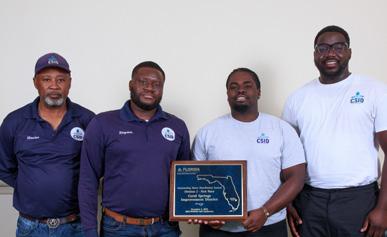
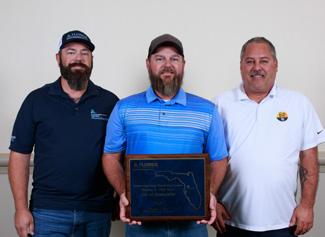
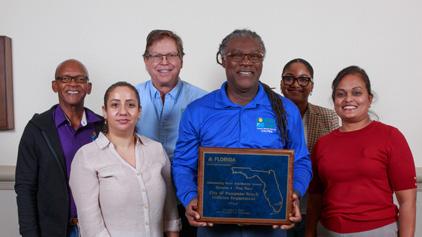
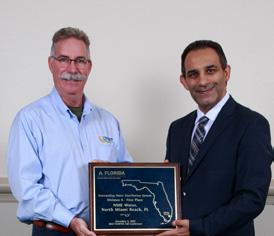
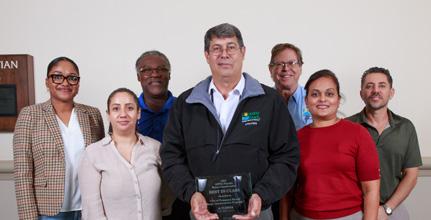
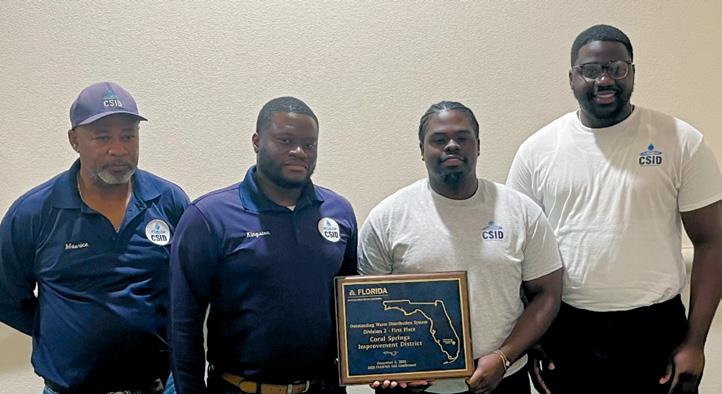
CSID Field Department Named Water Distribution System of the Year
News Beat
Technical
Enhancing a Reclaimed Water System With Pressure-Driven Modeling, Zoning Strategies, and Targeted Pressure Management—Nam Nguyen, Roberto Rosario, and Christopher Baggett
Education and Training
Columns
Speaking Out—Tyler Tedcastle
C Factor—Kevin G. Shropshire
Let’s Talk Safety: Avoid Harm From Laboratory Hazards
FWEA Focus—Joan Fernandez
Test Yourself—Charles Lee Martin Jr.
Classifieds
Display Advertiser Index
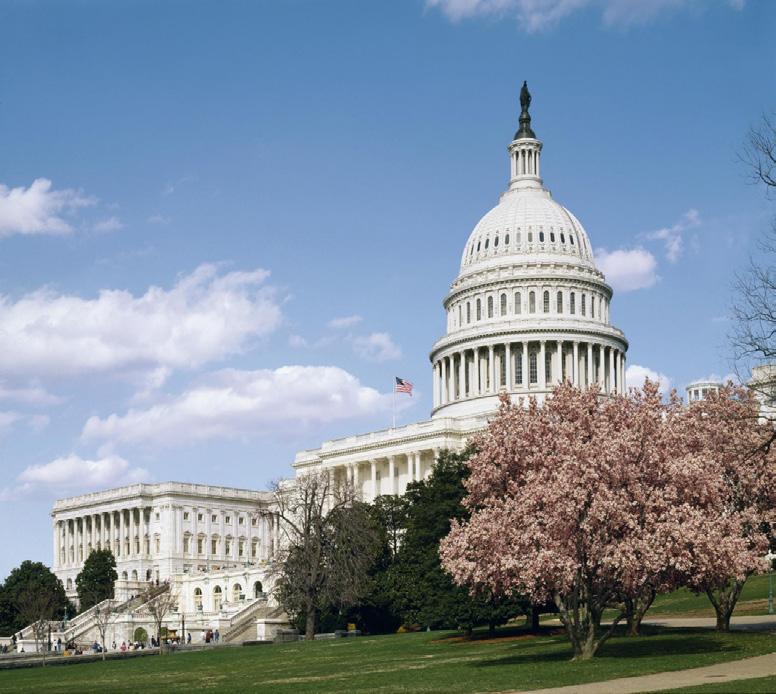
AWWA Testifies Before Congress on Need for PFAS Liability Protection for Water Utilities
In a recent hearing in Washington, D.C., before the U.S. House Committee on Energy and Commerce’s Subcommittee on Environment, the American Water Works Association (AWWA) stressed the importance of protecting water utilities and their customers from liability for pollution created by per- and polyfluoroalkyl substances (PFAS) manufacturers.
The hearing, “Examining the Impact of EPA’s CERCLA Designation for Two PFAS Chemistries and Potential Policy Responses to Superfund Liability Concerns,” stems from the U.S. Environmental Protection Agency (EPA) decision to classify perfluorooctanoic acid and
perfluorooctane sulfonic acid as hazardous substances under the Comprehensive Environmental Response, Compensation, and Liability Act (CERCLA), commonly known as Superfund. The hazardous designation could leave utilities responsible for costly PFAS cleanups, despite their role as passive receivers of these chemicals.
Protecting Utilities From Liability
In his testimony, Tracy Mehan, AWWA executive director of government affairs, emphasized the urgent need to protect water and wastewater utilities and the communities
they serve from financial liability for PFAS contamination they did not create.
“Water utilities do not manufacture, use, or profit from PFAS, yet recent EPA rulemaking exposes them to significant financial and legal liability under CERCLA,” Mehan testified. “When utilities are forced to spend limited resources on litigation or cleanup costs, ratepayer funds must be diverted from replacing aging infrastructure, complying with Safe Drinking Water Act requirements, and performing other essential functions.”
To address these concerns, AWWA is advocating for passage of the Water Systems PFAS Liability Protection Act (H.R. 1267), a bipartisan legislation providing water and wastewater utilities with a narrowly tailored exemption from PFAS liability except in cases of negligence or willful misconduct.
“The CERCLA was designed to ensure that polluters fund cleanup of contaminated sites. An exemption for water and wastewater utilities would further strengthen the ‘polluter pays’ principle by preventing PFAS manufacturers from shifting their cleanup costs onto utilities and the communities they serve,” Mehan added.
Expert Witnesses Support the Industry
In collaboration with water sector partners, AWWA has been working to educate Congress about the burden that CERCLA liability potentially presents for utilities.
Other witnesses at the hearing included:
S Susan Bodine, partner, Earth & Water Law
S Lawrence W. Falbe, chair, International Council of Shopping Centers Environmental and Land Use Policy Committee
S Emily Donovan, cofounder, Clean Cape Fear
The recording of the hearing and submitted written testimony is available at www.awwa.org.
S
Manta Rays Create Mobile Ecosystems, Study Finds
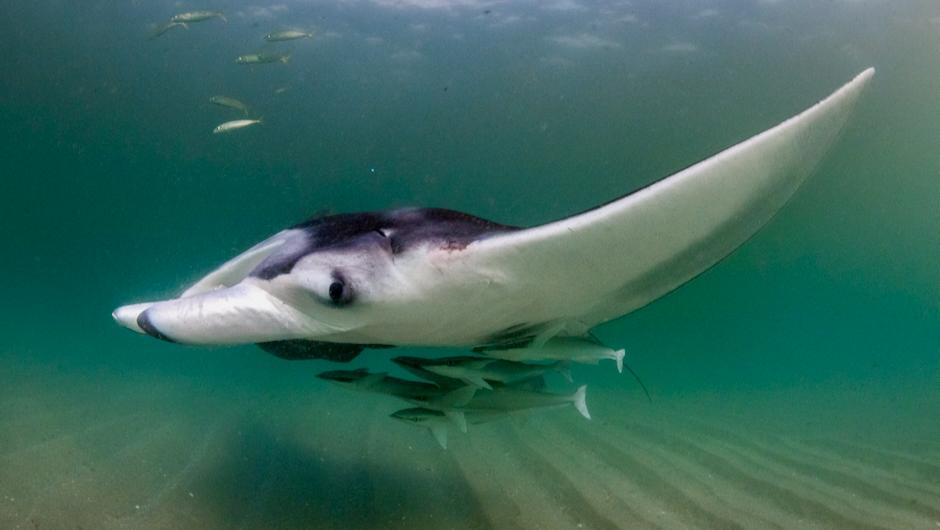
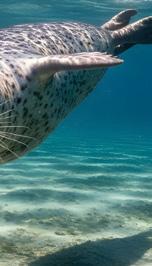
A new study from the University of Miami Rosenstiel School of Marine, Atmospheric, and Earth Science and the Marine Megafauna Foundation finds that young Caribbean manta rays (Mobula yarae) often swim with groups of other fish, creating small, moving ecosystems that support a variety of marine species.
South Florida—particularly along Palm Beach County—serves as a nursery for juvenile manta rays. For nearly a decade, the Marine Megafauna Foundation has been studying these rays and documenting the challenges they face from human activities near the coast, such as boat strikes and entanglement in fishing gear, which can pose significant threats to juvenile mantas
“Using video footage collected between 2016 and 2021, we analyzed 465 videos to better understand which species swim with manta rays and how they interact,” said Emily Yeager, lead author of the study and a doctoral candidate in the department of environmental science and policy at the Rosenstiel School. “We looked at which fish were present, how many there were,
and where they tended to gather—often around the manta’s gills, eyes, wings, and tail.”
The study found that four families of teleost fish, the largest group of ray-finned fishes, regularly associate with young mantas. The most frequent companions are remoras—also known as suckerfish—attaching themselves to larger animals using a suction-like dorsal fin.
Other fish that commonly accompany mantas include species important to Florida’s fisheries, such as jacks and cobia.
“Understanding ecological interactions among species is essential to conserving the marine environment,” said Catherine Macdonald, an associate professor in the department of environmental science and policy and the director of the Shark Research and Conservation Program at the Rosenstiel School. “Our results suggest that these species may be interdependent and form long-lasting and relatively stable relationships, creating mobile ecosystems where fish may mature,
Because south Florida is a busy area for boating and recreational fishing, juvenile manta rays are especially vulnerable to being struck by boats or caught in fishing lines. The study underscores the importance of responsible boating to help safeguard manta rays and the communities of fish they support.
“Slowing down in areas where mantas are known to feed near the surface is a simple but crucial step toward protecting these young rays,” said Jessica Pate of the Marine Megafauna Foundation, a coauthor of the study. “Responsible boating and fishing can help protect these species and their critical ecological interactions long term.”
“The findings provide valuable insights for marine conservation and policy, showing that manta rays act as living habitats that support biodiversity in coastal waters.” Yeager added.
The research was supported by the University of Miami’s Maytag Fellowship and a Florida Sea Grant–Guy Harvey Fellowship held by Ph.D. candidate Emily Yeager.
The study, “Stability and Spatial Variance of Mobula Yarae-Associated Fish Aggregates in South Florida,” was published in the journal, Marine Biology, in December 2025. The authors include Emily Yeager, Jessica Pate, Julia Saltzman, Christian Pankow, and Catherine Macdonald. S
Juvenille Atlantic manta ray swimming over sandflat with remora symbionts in south Florida. (photo: Bryant Turffs)
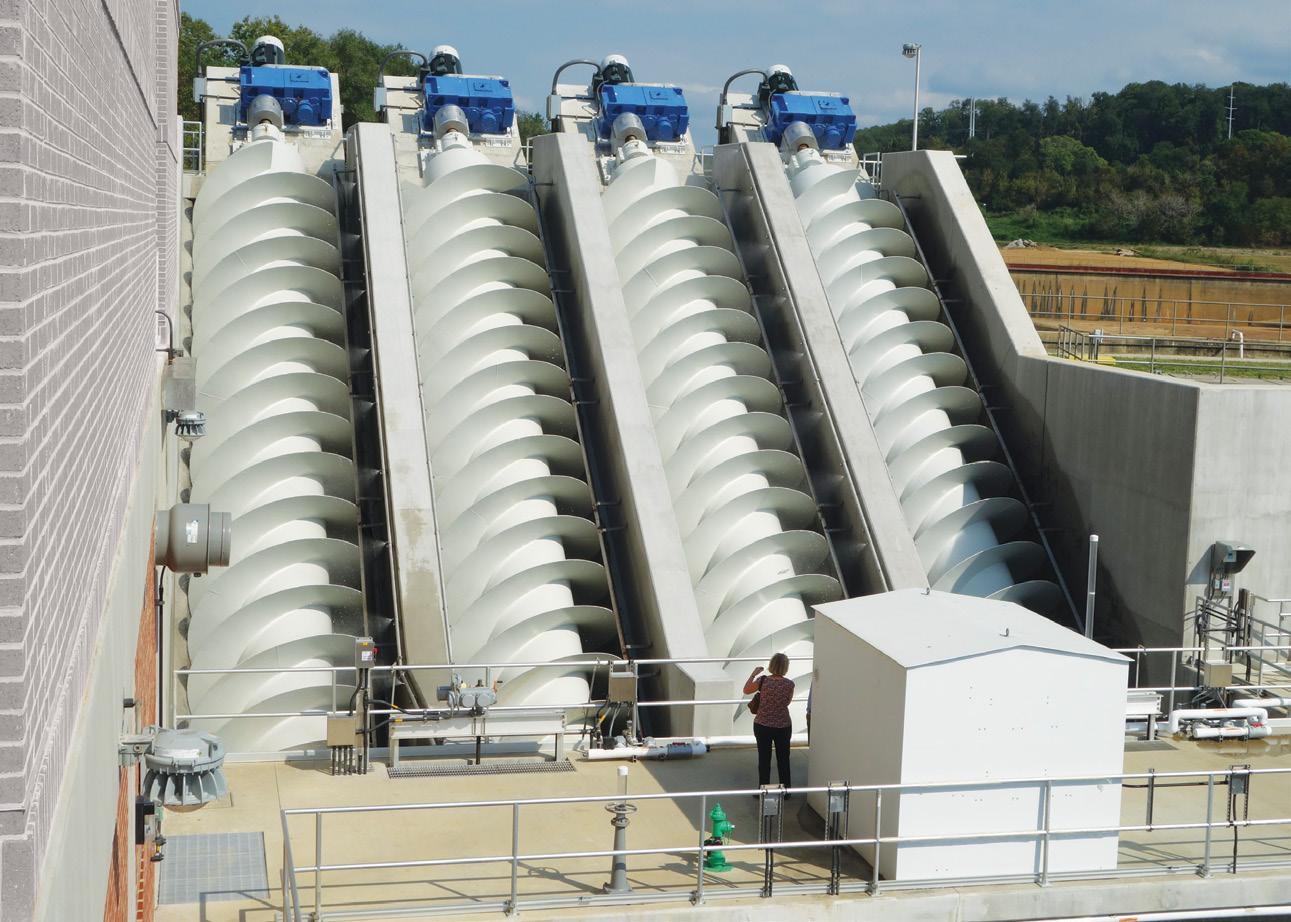
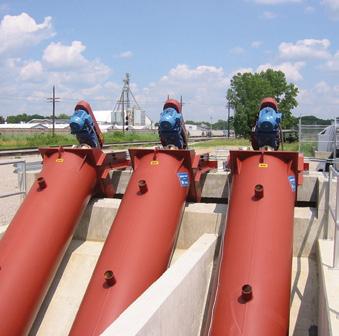
LOOKING FOR A SCREW PUMP UPGRADE THAT’S BABA-COMPLIANT?
LAKESIDE REPLACES ALL BRANDS & TYPES… AND MEETS REQUIREMENTS.
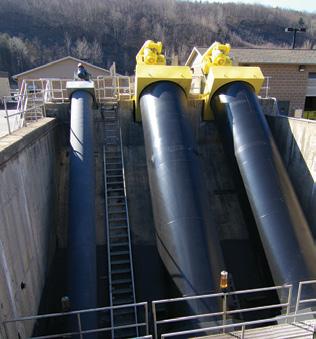
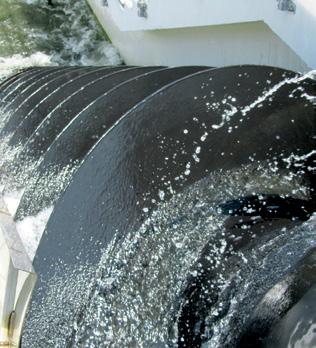
Lakeside’s screw pumps offer the ideal and cost-effective “drop in” replacements for less reliable designs. Improve pumping performance and reduce maintenance costs with our superior dual upper bearing design and heavy-duty self-aligning lower bearing designs. For decades we’ve been the go-to source for replacing all screw pump brands. Replacements typically require little or no structural modifications. It’s what you expect from Lakeside Equipment—known for nearly a century for efficient and dependable operation in all wastewater, drainage and industrial applications.
Cleaner Water for a Brighter Future®
Speak to one of our experts at 630.837.5640, email us at sales@lakeside-equipment.com, or visit www.lakeside-equipment.com for more product information.
Enhancing a Reclaimed Water System With Pressure-Driven Modeling, Zoning Strategies, and Targeted Pressure Management
Nam Nguyen, Roberto Rosario, and Christopher Baggett
Pinellas County owns and operates the reclaimed water (RCW) transmission and distribution system in North County (county), which is a public access reuse network in which RCW is primarily used for spray irrigation of lawns, landscaping, and golf courses. During peak demand periods, the system experiences operational challenges, including low pressures, constrained supply, and customer noncompliance with irrigation restrictions.
This study presents a data-driven approach to address the issues by integrating pressure-driven hydraulic modeling, strategic zoning, and targeted pressure management to improve overall efficiency.
A calibrated pressure-driven hydraulic model of the RCW transmission and distribution system was developed to simulate local demand as a function of local pressure— an approach that more accurately reflects irrigation behavior under variable spatial and temporal conditions than traditional demand-driven models. This model enables detailed analysis of how deviations from target pressures affect irrigation rates, particularly during peak-demand periods when pressures are typically lowest, providing more meaningful insight that utilities may use to guide operational improvements.
Strategic zoning of the overall service area was assessed as a cost-effective operational enhancement. Two zoning configurations, a five-zone and a two-zone scenario, were simulated using proposed isolation and supervisory control and data acquisition (SCADA)-integrated open/close control valves to enable time-based irrigation scheduling in which zones were sequentially activated with only one zone active at a time. Both scenarios demonstrated significant improvements, with minimum pressures increasing by more than 15 pounds per sq in. (psi) without requiring new transmission mains or pump station upgrades.
Additional performance gains were achieved through the integration of a planned inline booster station, which further elevated pressures in hydraulically disadvantaged
zones. Implementing these measures would enable the county to activate zones sequentially, lower peak concurrent demand, reduce the pressure variability across the system, and increase the minimum service pressures.
As a potential future improvement, the study recommends outfitting some of the open/close control valves near the highservice pump stations with pressure-reducing capabilities, i.e., pressure control valves, to selectively reduce pressures in zones closest to the sources. Reducing delivery pressures to align more closely with target levels helps ensure that actual irrigation rates match intended rates. This adjustment is expected to reduce over-irrigation, particularly for customers who use fixed-schedule irrigation systems designed for lower pressures than what is delivered, rather than irrigation control through soil moisture or applied irrigation depth. Furthermore, monitoring RCW usage against zone-specific volumetric irrigation needs would enable the county to stop irrigation once targets are met. This volume-based control strategy would promote more equitable distribution of limited RCW supplies during drought conditions and support the county’s transition toward precision irrigation aligned with regional water conservation goals.
These findings demonstrate that integrating pressure-driven modeling, operational zoning, and targeted pressure management provide a scalable, data-informed framework for optimizing RCW distribution, supporting both system resilience and longterm regional water conservation objectives. Because demand in the model varies with pressure, predicted postimprovement performance will better align with actual system behavior.
Water Reclamation
Water reclamation refers to the process of reclaiming water from a variety of sources to treat and reuse for beneficial purposes, including agriculture, irrigation, potable
Nam Nguyen, EIT, is engineer I; Roberto Rosario, P.E., is lead project engineer I; and Christopher Baggett, P.E., is SE OWG system planning leader, with Wright-Pierce Inc. in Tampa.
water supplies, groundwater replenishment, industrial processes, and environmental restoration (U.S. Environmental Protection Agency [EPA], 2019). The RCW systems are recognized as an essential component of sustainable water resource management, particularly for regions facing water scarcity and growing demand, and RCW utilities face well-recognized challenges in balancing system supply, distribution pressures, and customer expectations. It is well known that utilities must manage not only the quantity of RCW available, but also how pressure differences within distribution networks directly influence use, system equity, and infrastructure performance. Limiting RCW delivery to the needed volume and preventing overuse is a central objective.
The county’s RCW transmission and distribution system illustrates the challenges faced by public access reuse networks. Serving over 6,300 active customers through two pumping stations and approximately 177 mi of pipeline, the system experienced significant pressure drops and supply constraints during peak irrigation periods. These conditions, accompanied by customer noncompliance with watering restrictions, resulted in overirrigation in portions of the system and insufficient pressure in other portions. Such inequality in RCW supply throughout the system can undermine the conservation potential of the system and highlight the need for smart data-driven management strategies. Historically, many RCW models have been constructed using demand-driven approaches that assume usage at specific points in the network is independent of pressure. These approaches; however, are known to overestimate system performance after improvements because they fail to Continued on page 10
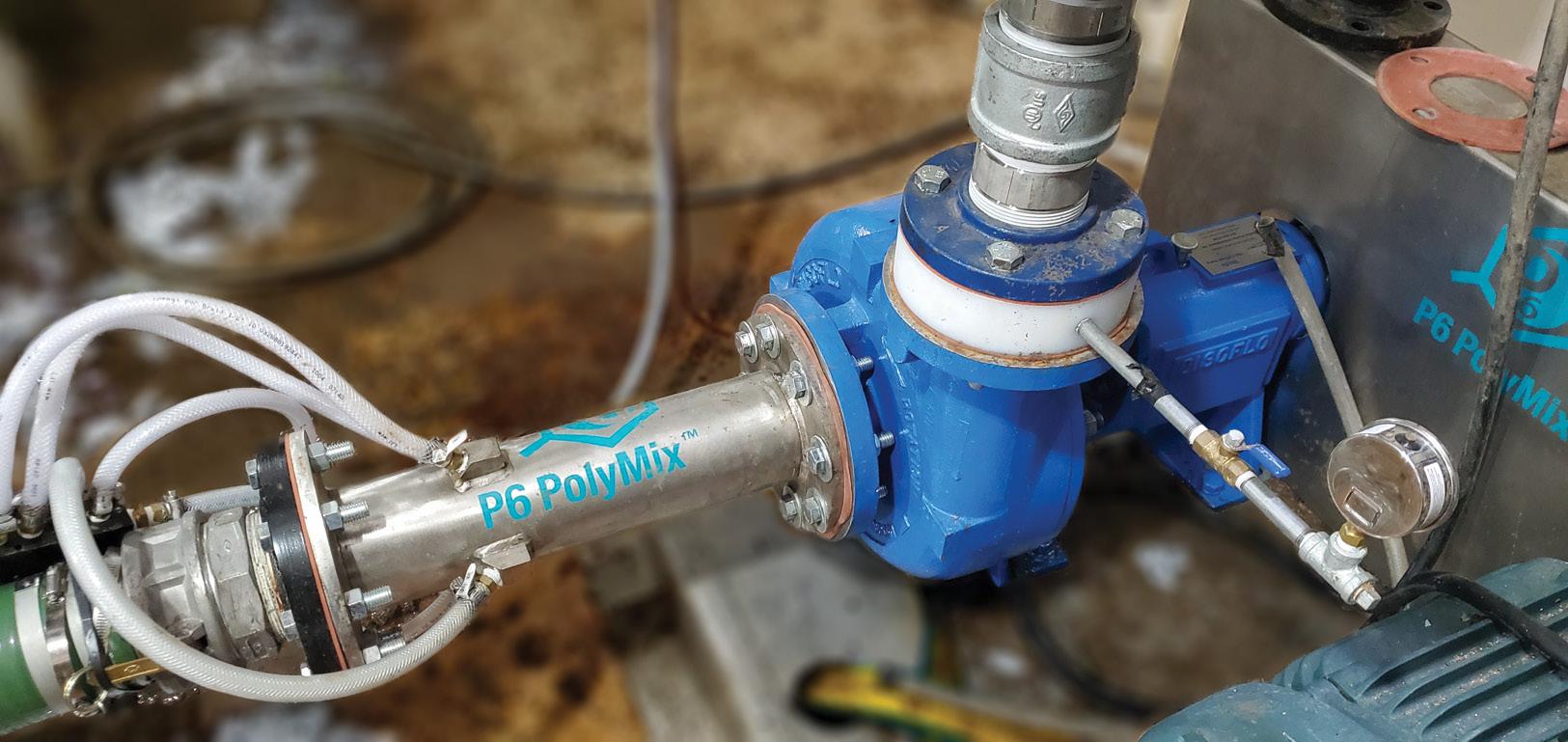
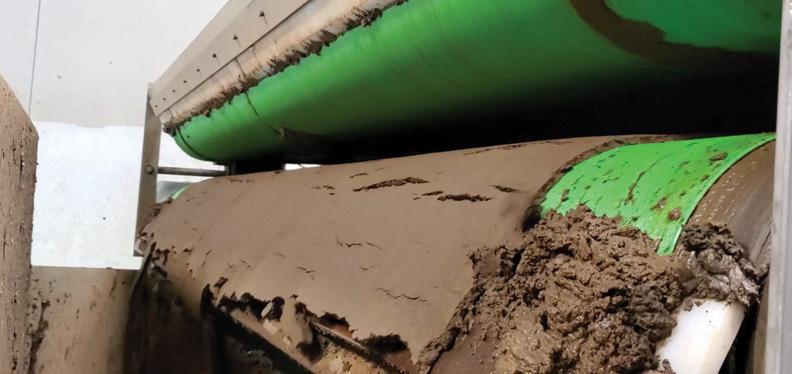
1. POLYMER REDUCTION: P6 PolyMix® Systems reduce polymer consumption by providing complete polymer/sludge mixing in a shear-sensitive manner. This patented mixing process allows long-strand polymer chains to remain intact and unbroken and wastewater floc to remain intact and unsheared. Typical applications result in a 25-50% REDUCTION IN POLYMER CONSUMPTION, thus saving the customer thousands of dollars in polymer expenses. By not breaking up the polymer chains, the dewatering equipment will experience less fouling, providing more reliability and reducing equipment cleaning costs.
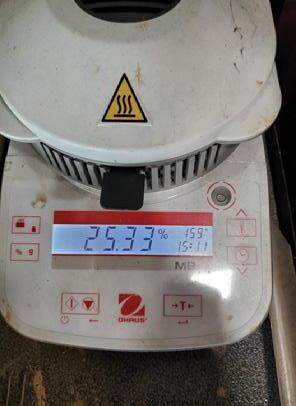
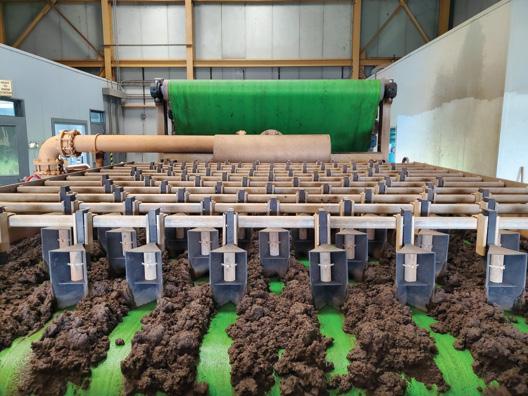
2. DRIER CAKE SOLIDS: P6 PolyMix® technology optimizes the polymer and sludge mixing process, allowing INCREASE DEWATERED SOLIDS CONCENTRATION and INCREASED PERCENT SOLIDS CAPTURED. This unique mixing process results in more efficient sludge hauling, allowing customers to transport less water and more dewatered cake off-site.
3. ELIMINATION OF PUMP MAINTENANCE: P6 PolyMix® technology reduces pump parts and maintenance by utilizing the abrasion-resistant Discflo pumping principles of Boundary Layer/Viscous Drag. This principle can save the customer thousands of dollars in parts and maintenance over the lifetime of the equipment. All P6 PolyMix® systems in the municipal market include a 10-YEAR (extendable to 20 years) 100% WET END WEAR WARRANTY, No other pump manufacturer in the industry provides a wear warranty, let alone a 20-year wear warranty!
4. PUMPS & MIXES: P6 PolyMix® technology uses the unique principles of Boundary Layer/Viscous Drag for mixing polymer versus a mixer/check valve; this, paired with its unique InjeX™ polymer injection mixing chamber, is designed for MINIMAL POLYMER DEGRIDATION, allowing for maximum polymer savings. The hydraulic shear forces within the mixing pump provide a complete homogeneous wastewater polymer slurry fed to the dewatering equipment without breaking the long chain polymers or reducing floc size.
5. LOWER OPERATING PRESSURE AND INSTALLED HORESPOWER: P6 PolyMix® technology dramatically reduces the operating pressure by reducing back pressure within the piping system due to eliminating mixer/check valves. In some applications, customers have had a 75% REDUCTION IN PRESSURE Lower pressure allows the feed pump to operate at lower horsepower. HORSEPOWER SAVINGS OF UP TO 50% OR MORE are possible by installing a P6 PolyMix® system. Customers can see substantial long-term energy savings and reduced upfront capital costs associated with lower installed horsepower.
6. HOW IS IT APPLIED: P6 PolyMix® systems entirely replace bulky, expensive, outdated traditional sludge feed pumps. You can now replace thousands of dollars in equipment and regain valuable real estate space by switching to P6 PolyMix® and utilizing its unique compact design, patented process for eliminating mixer/check valves, and ultra-efficient polymer mixing process. Contact us to learn how P6 PolyMix® can revolutionize the efficiency of your BELT FILTER PRESSES, GRAVITY BELT THICKENERS, ROTARY THICKENERS, SCREW PRESSES, AND CRENTIFUGES.
Continued from page 8
account for demand increases that occur when pressures rise following infrastructure upgrades. This issue has been documented in irrigation system research (Lamaddalena & Pereira, 2007) and in RCW applications (Baggett et al., 2007). In the latter study, a system in east-central Florida—supplied by a long, linear transmission line with a single pressure source—exhibited demand patterns that could not be accurately calibrated until
the demand-driven model was converted to a pressure-driven one.
Customers near the source used disproportionately higher volumes due to high pressure, while remote areas experienced very low pressures and frequent complaints. This experience, and subsequent applications, demonstrates the practical necessity of pressure-driven modeling in RCW systems. In addition to modeling, operational zoning was implemented as a practical strategy for
improving equitable distribution of supply. By segmenting the service area into distinct irrigation zones and controlling flow through SCADA-integrated control valves, utilities can reduce concurrent demand, improve system pressures, and better allocate limited RCW supplies.
System Overview
The county’s RCW system is supplied primarily by the William E. Dunn Water Reclamation Facility, which has a permitted capacity of 9 mil gal per day (mgd) and an average daily flow of approximately 6.94 mgd.
The system comprises two main subsystems: the Innisbrook RCW System and the Primary North County RCW System. The Innisbrook system serves the Innisbrook golf community, while the Primary system provides for the rest of the county’s service area and interconnects.
The RCW system currently faces significant operational challenges, particularly during peak irrigation months. One of the
Continued on page 12
1The gross irrigation need value is calculated based on annual net irrigation depth requirement of 28 in /year as referenced from The Institute of Food and Agricultural Sciences (IFAS) Figure 2 and an assumed gross-to-net irrigation efficiency of 85 percent (IFAS, 2024).
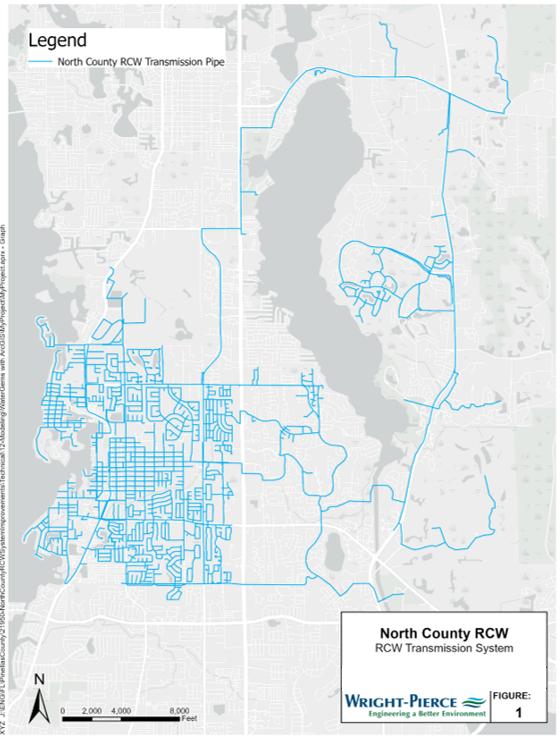
Figure 1. Primary North County reclaimed water transmission and distribution system.
Table 1. Values in Calculating Demand
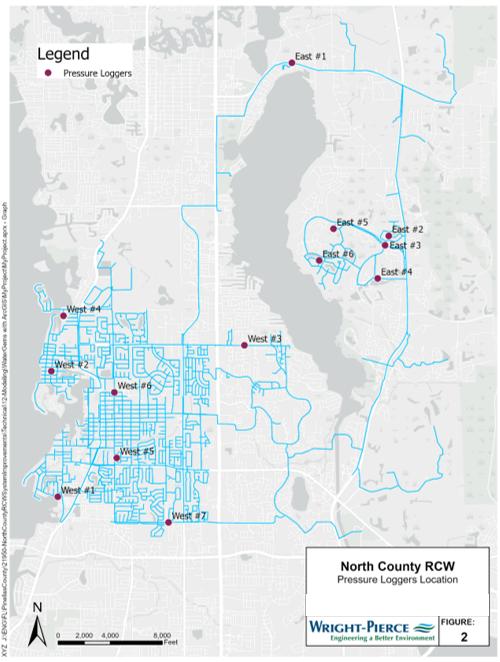
Figure 2. Pressure loggers location.
Continued from page 10
most pressing issues is maintaining sufficient service pressures. The county’s level of service (LOS) goal for RCW delivery is 45 psi, but 50 psi is preferred. During high-demand periods, however, pressures frequently fall below this threshold, sometimes reaching as low as 15 psi. These low-pressure conditions not only lead to customer complaints, but also compromise the effectiveness of irrigation systems, which can lead to gaps in irrigation lawn coverage.
Compounding the pressure issue is the limited availability of RCW during drought conditions. The county has reported that minimum daily RCW supply can drop to around 3.5 mgd, which is often insufficient to meet concurrent demand across the entire service area.
These challenges make it increasingly difficult for the county to meet its LOS goals and uphold its commitment to water conservation. The current system lacks the operational flexibility to respond dynamically to fluctuating demand and supply conditions, which results in uneven service and missed opportunities for conservation. Figure 1 illustrates the Primary North County RCW System.
Methodology and Modeling Approach
Pressure-Driven Hydraulic Modeling
To evaluate and improve the performance of the RCW system, a pressure-driven hydraulic model was developed to simulate system behavior under peak demand conditions. This modeling approach was selected to better reflect the operational realities of RCW distribution, particularly the pressuresensitive nature of irrigation systems and the need for conservation-focused analysis.
The relationship between irrigation system flow rate and pressure at the point of delivery is commonly expressed by the following equation:
Where:
• Q = volumetric flow rate (gal per minute [gpm])
• P = supply pressure (psi)
• K = resistance coefficient
For a simple orifice, K depends on the effective discharge area and the coefficient of discharge; however, when applied in irrigation system modeling, K represents more than an orifice property—it is effectively a resistance coefficient that captures the combined effects
SCADA PDD Model
Figure 3. West #3 2809 Cinnamon Boulevard pressure comparison.
Figure 4. East #3 Pinellas Trail Lansbrook pressure comparison.
SCADA PDD Model
Figure 5. East #4 Maintenance Road Lansbrook pressure comparison.
of frictional losses, local (minor) losses, and outlet characteristics. Because sprinklers and emitters discharge to the atmosphere, the supply pressure essentially represents the system’s differential pressure. By solving the equation for K:
K=Q/P0.5
the resistance coefficient can be determined using the target (reference) flow and pressure of an irrigation system. Substituting the reference values into the equation provides a practical form to relate delivered flow to available pressure:
Q=Qr(P/Pr)α
where:
• Q = delivered demand (gpm)
• Qr = reference or target demand (gpm)
• P = available pressure (pounds per sq in. gauge [psig])
• P r = reference pressure (psig) required to deliver the full demand
• α = pressure exponent, typically 0.5
This is the formulation used in the Bentley WaterGEMS pressure-dependent demand model (Wu, Wang, Walski, Yang, Bowdler, and Baggett, 2006).
In high-pressure zones, irrigation systems may operate above their design thresholds, leading to excessive water use and runoff; conversely, low-pressure zones may experience under-irrigation, resulting in customer dissatisfaction and uneven landscape coverage. By modeling these pressure-dependent behaviors, pressuredriven modeling reveals areas of overuse and inefficiency that would otherwise be masked in a demand-driven modeling framework. This insight is essential for designing operational strategies that reduce waste and promote equitable distribution of RCW.
The advantages of pressure-driven modeling are further demonstrated in a hydraulic model calibration subheading, where simulation results are compared against SCADA data and prior model iterations that applied the demand-driven approach. These comparisons highlight how pressure-driven analysis more accurately captures system
behavior under variable pressure conditions, particularly during peak demand.
Hydraulic Model Update
The hydraulic model was updated using Bentley WaterGEMS and integrated with the county’s geographic information system (GIS) data to reflect the most recent physical layout and connectivity of the RCW system. Pipe inside diameters, rather than nominal diameters, were applied to more accurately determine respective velocities. Other characteristics, such as material, age, and expected velocity ranges were also considered to estimate initial Hazen-Williams C-factors, which were later refined during calibration. These adjustments often reduce the overall calibration effort.
To simulate irrigation demand, parcellevel data were used to estimate peak weekly and daily irrigation volume based on the pervious area. While meter data were available for many parcels, the geospatial allocation method provided broader coverage, including parcels without meters or with missing usage
Continued on page 14
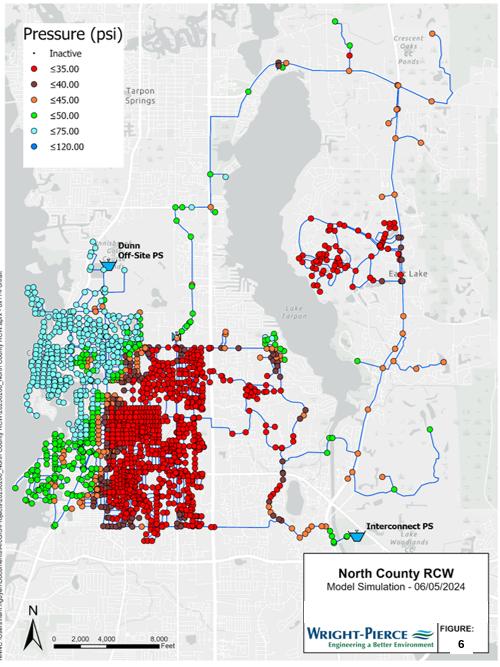
Figure 6. Calibrated model predicting minimum pressure.
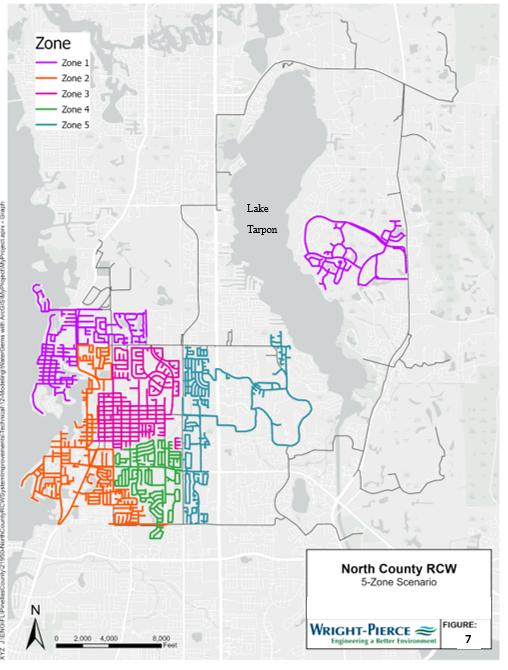
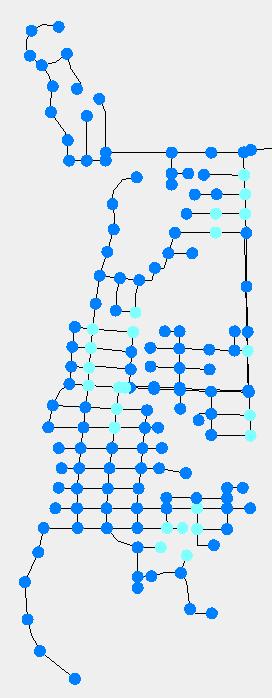
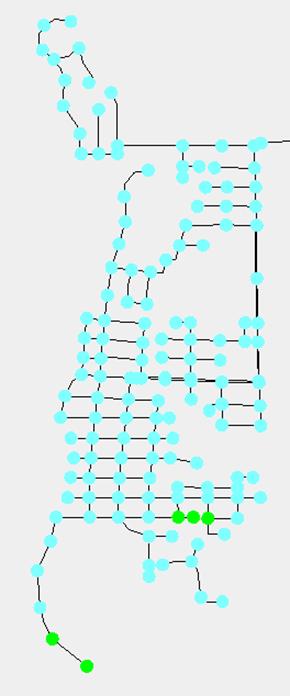
Figure 7. Five-zone scenario configuration.
Continued from page 13
records. This approach also supports future planning by accounting for potential demand from undeveloped or inactive parcels, making the model a more versatile tool for longterm system management and conservation forecasting. Table 1 summarizes the values used in calculating customer demand.
Customer parcel locations and addresses were geocoded using ESRI’s ArcGIS Pro Geocode Addresses Tool. After geocoding, the parcels were visually inspected, and any discrepancies in location were manually corrected. The geocoded parcels were then imported into the model using the WaterGEMS Model Builder Tool and assigned to the RCW system using the WaterGEMS Load Builder Wizard with the nearest junction method.
Hydraulic Model Calibration
To calibrate the model, a 24-hour extended period simulation (EPS) was developed using a pressure-driven demand (PDD) modeling framework. As part of this effort, the overall system demand was established by defining the typical target (or reference) pressure and demand for an individual irrigation system at each node, the number of active customers assigned to each node, and a percent on value for each hour.
The simulation was based on a previously selected 24-hour period and employed a dynamic demand model in which irrigation flow varied as a function of pressure. This approach was chosen to better reflect the behavior of spray irrigation systems, which are highly sensitive to pressure fluctuations, particularly in RCW networks with pronounced pressure gradients.
To enhance model accuracy and parameters, including Hazen-Williams C values, they were adjusted to improve alignment between field-recorded and model-simulated pressures and flows. The refined pressuredriven model results were then compared to historical data recorded on Nov. 8, 2017, as documented in a previous master plan report, as well as to outputs from an earlier model iteration that employed a demand-driven modeling approach. The use of this historical dataset was driven by project schedule constraints; however, additional field data collection is proposed to support future model refinement and validation. Figure 2 shows the locations of pressure loggers installed in the county’s RCW system in 2017.
Figures 3 through 5 provide a summary of the pressure comparisons at selected pressure loggers. These results demonstrated that the PDD model agreed well with the observed data. In addition, the agreement validates
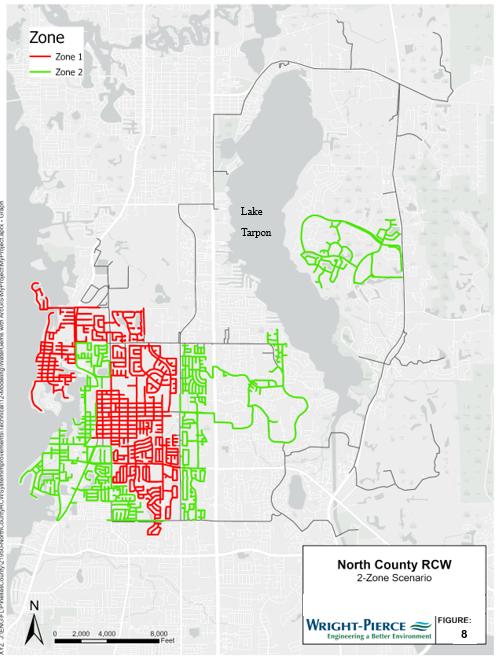
Figure 8. Two-zone scenario configuration.
Table 2. Zoning Approach Summary
both the PDD and the time-varying percent on approaches. Additional field testing is proposed to future validate other areas of the system.
Overall System Evaluation
The EPS scenario was then configured using data from June 5, 2024, identified as the peak demand day during the study period from January 2023 to December 2024. This simulation captured hourly variations in flow and pressure across the system, providing a rigorous test of the model’s predictive capabilities. The calibrated model served as the foundation for evaluating zoning strategies and pressure management interventions, with a focus on improving service levels and supporting water conservation objectives.
The pressure-driven model captured the nonlinear relationship between pressure and irrigation flow, revealing areas where low pressure led to under-irrigation and where elevated pressure contributed to excessive water use. These insights are critical for RCW systems, where pressure gradients are common and conservation is a priority. By aligning more closely with observed data, the PDD model demonstrated its effectiveness in identifying operational inefficiencies and guiding targeted improvements. This improved accuracy enables more effective evaluation of zoning and pressure management strategies to optimize water use and enhance system reliability.
Figure 6 shows the model-predicted minimum pressures at the service connection points after calibration. Overall, most of the system pressures were predicted below 40 psi, with some as low as 15 psi, falling below the county’s LOS pressure goal, which required system improvement to maintain the pressure level and accommodate the current demand. These results are referred to as the baseline model, which serves as the reference condition for evaluating proposed improvements. To address the problem, an irrigation zones strategy in the county’s RCW system was proposed through the installation/ identification of control and isolation valves. This was identified after discussion with the county as a potential solution to maintain high pressures in the RCW system and to better distribute RCW supplies among customers during drought conditions.
The following section will discuss in detail the approach used.
Zoning Strategy for Pressure Optimization
To improve pressure distribution and support water conservation within the county’s
RCW system, zoning was evaluated as a key operational strategy. By segmenting the service area into distinct irrigation zones and controlling when each zone receives RCW, the county can reduce simultaneous demand, stabilize system pressures, and better allocate limited supply—especially during drought conditions.
Zoning Configurations
S Five-Zone Configuration. The service area is divided into five smaller zones, each irrigating on a separate day of the week. This configuration significantly reduces the number of active customers at any given time, offering greater control and increasing minimum pressure in the active portion of the system.
Continued on page 16
Two zoning configurations were developed and analyzed using the calibrated pressuredriven model:
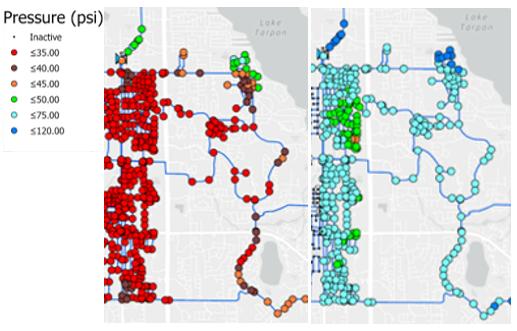
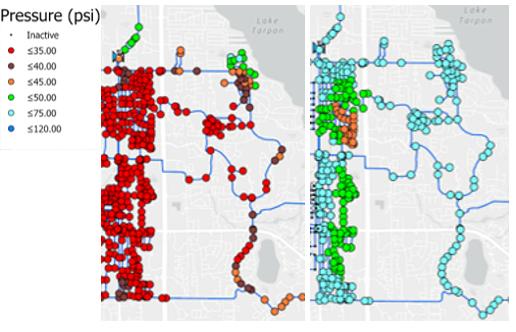
Figure 9. Modeled minimum pressures in hydraulically disadvantaged area comparison between baseline model (left) and five-zone scenario (right).
Figure 10. Modeled minimum pressures in hydraulically disadvantaged area comparison between baseline model (left) and two-zone scenario (right).
S Two-Zone Configuration. The service area is divided into two large zones, each irrigating on alternating days. This approach simplifies operations, but results in higher concurrent demand within each zone.
For each scenario, it was assumed that customers within each zone would only irrigate once per week to be consistent with irrigation restrictions that are occasionally issued for this RCW system. The zones have been delineated to ensure that, to the extent possible, the irrigation demand in each zone
is approximately equal, ensuring balanced distribution across the system. Figures 7 and 8 provide a visual representation of each scenario.
To enable effective management of the irrigation zones, the study proposed the installation of control valves and closing of isolation valves. The control valves are proposed to be integrated with and managed through the county’s SCADA system and serve to open a pathway for RCW to flow from the main transmission line to the zones, based on the irrigation schedule. This configuration provides the county with comprehensive control over the system,
enabling flexible irrigation management in response to available supply and seasonal demand fluctuations.
The SCADA integration allows the county to manage irrigation zones remotely and in real time. Time-based scheduling ensures that only one zone is active during designated irrigation hours, reducing peak demand and improving pressure consistency. This operational flexibility supports conservation by aligning water delivery with actual need and thereby reducing overuse.
Time-based irrigation scheduling also enhances supply distribution during drought conditions. By controlling when and where irrigation occurs, the county can ensure that RCW is delivered equitably across the service area, avoiding competition between zones and supporting more-predictable demand management. Zones can be activated using control valve stations configured to slowly pressurize areas in a safe manner.
For the model simulation, the five-zone scenario operates over a five-day simulation period, while the two-zone scenario runs over a two-day simulation period. Both scenarios repeat the conditions of the selected model date of June 5, 2024. Each zone is assigned a unique day for irrigation, during which the valves for that zone remain open. Irrigation adheres to the county’s restrictions, permitting operation between 6:00 p.m. and 8:00 a.m. the following day.
Pressure Improvement
Model simulations for both zoning configurations demonstrated notable improvements in system pressure compared to the baseline model. Figure 9 illustrates the pressure differences between the baseline model and the five-zone scenario in a hydraulically disadvantaged area, while Figure 10 demonstrates a similar comparison between the baseline and the two-zone configuration. In both cases, a substantial portion of the system achieved pressures above the county’s LOS goal of 45 psi.
The two-zone configuration resulted in increases in pressures of approximately 10 to 12 psi across most of the RCW system; however, the five-zone configuration achieved more-pronounced gains, with pressure improvements exceeding 15 psi in hydraulically disadvantaged areas. These enhancements were realized without the need for new transmission mains or pump station upgrades. Table 2 provides a comparison summary between two zoning approaches.
Figure 11. Modeled minimum pressures in the Crystal Beach area without targeted pressure management (left) and with targeted pressure management (right).
Booster Integration and Targeted Pressure Management
Advanced Strategies
While zoning configurations provided the most significant improvement in system pressures, additional targeted strategies were also evaluated. The county is currently constructing an inline booster station near the intersection of Alderman Road and Belcher Road. Model simulations incorporating the booster station showed increases of 3 to 5 psi in hydraulically disadvantaged areas, with average gains of 5 psi in the eastern portion of the system and 3 psi in the west. These gains further elevated minimum service pressures above 40 psi in most areas, even during peak irrigation periods.
Beyond the booster station, pressurereducing valve (PRV) stations represent a critical next step in pressure management. By outfitting zone inlets with PRVs, delivery pressures can be reduced to target levels more closely aligned with customer irrigation system design requirements. This is especially important in RCW systems, where overpressurization directly translates into over-irrigation. Customers using time-based irrigation controllers often apply water volumes far exceeding turfgrass requirements when pressures are higher than their system design assumptions (Dukes et al., 2024).
The implementation of PRV stations aligns with international best practices in potable water networks, where district metered areas (DMAs) are often created to segment systems into manageable hydraulic units. The DMAs not only aid in pressure regulation, but also provide enhanced monitoring of flow, pressure, and losses (Khalil, 2020). Translating the DMA concept into RCW systems could allow utilities to track RCW balance, manage seasonal shortages, and enforce volumetric allocation.
These enhancements—zoning, booster integration, and selective pressure reduction— represent a flexible framework for managing pressures dynamically across the RCW system.
Targeted Pressure Management Example
To demonstrate the targeted pressure management approach, model simulations were performed for the Crystal Beach area of the RCW system, both with and without a PRV. In the simulation with a PRV, the pressure setting was adjusted iteratively to ensure that the lowest pressure in the most remote area remained above the LOS goal throughout the entire simulated irrigation period. Figure 11 shows the modeled minimum pressures before and after pressure management was implemented using a PRV. This area, located
close to the treatment plant, experiences a water application depth higher than the calculated gross irrigation need of 0.63 in./day, as shown in Table 1.
Table 3 compares the predicted irrigation water volume usage in the area with and without the PRV. As shown, the total water volume decreased by 14 percent following the implementation of targeted pressure management. This reduction helps preserve water supply, particularly for remote areas that are farther from the RCW high-service pump station and typically experience lower pressures. By eliminating over-irrigation, this approach ensures more efficient water use. The impact of this reduction can be predicted using the PDD modeling approach; however, it would not be possible using a demand-driven modeling approach (Baggett et al., 2007).
Performance Evaluation and Water Conservation Impact
The performance of both zoning scenarios was evaluated in terms of pressure improvements, irrigation volumes, and alignment with available supply. Both the twozone and five-zone scenarios demonstrated significant gains, with minimum system pressures increasing by more than 10 and 15 psi, respectively; however, the five-zone scenario provided better systemwide balance by reducing the number of customers irrigating concurrently, thereby maintaining higher pressures during peak demand.
Model results indicated that net irrigation volumes in both scenarios slightly exceeded the county’s reported minimum RCW supply of about 3.5 mgd during drought conditions. The five-zone scenario offered the greatest opportunity for aligning irrigation volumes with available supply, particularly when combined with daily monitoring of zone-specific usage and enforcement of volumetric targets. Adjusting irrigation depths to recommended values (0.63 in. per application) further reduces excess consumption and improves distribution equity across zones, which is expected to be achieved through targeted pressure management. Comparisons of these zone and pressure management approaches are shown in Table 4.
As shown in Table 3, the baseline scenario displays the widest variation in application depth. This reflects the current system condition, where RCW distribution is uneven due to areas with inadequate pressure and some lack of adherence to allowable irrigation windows. The net daily irrigation volume is aligned with the available supply because the system is constrained by supply limitations. In contrast, the five-zone scenario with pressure management achieves the most even distribution of RCW. This option is better aligned with the available supply during drought periods than the zone options without pressure management. The associated application depth range is also consistent with the recommendation to irrigate infrequently at
Continued on page 18
Table 4. Comparison of Irrigation Volume, Depth, and Daily Supply for Zoning Scenarios
Table 3. Predicted Irrigation Water Volume Usage in Crystal Beach
0.5 to 0.75 in. during extended drought periods in Florida when wilting turf growing in a sandy soil is observed (Dukes et al., 2024).
These results mirror findings in potable water systems where pressure management through PRVs has been shown to cut system losses (leakage) by about 20 percent or more in systems with higher pressures and significant leakage, while also improving service consistency for customers (Thornton et al., 2008). Although RCW systems are not focused on leakage reduction, the underlying hydraulic principles remain relevant: pressure management reduces wasted RCW, thus reserving more for the customers.
Conclusions and Future Directions
This study demonstrates that an integrated approach combining pressure-driven hydraulic modeling, zoning strategies, and targeted pressure management can substantially improve RCW system performance without requiring major infrastructure expansion.
Key conclusions include:
S Pressure-driven modeling can provide a realistic representation of system behavior, particularly as supply pressures deviate from the target range (both higher and lower).
S Zoning strategies can effectively reduce simultaneous peak demand and raise minimum pressure levels within active zones, resulting in a more balanced and equitable distribution of supply across the customer base.
S Pressure management integration includes:
o Booster stations that can increase pressures in hydraulically disadvantaged areas.
o Selective PRV stations that can reduce pressures in existing high-pressure areas.
S Volume-based irrigation management, supported by zone-specific monitoring, can align actual consumption with conservation targets and reduce over-irrigation.
Future investigation and advancements include:
S Extending DMA concepts (e.g., flow monitoring and pressure control) to RCW systems could provide enhanced monitoring of flows and pressures while supporting equitable allocation of scarce supplies.
S Promote broader adoption of smart irrigation technologies, encouraging customers to install soil moisture sensors and weather-responsive controllers. These tools help align irrigation schedules
with actual landscape needs, improving efficiency and supporting conservation goals (Dukes et al., 2009).
S Integrate SCADA with real-time flow and pressure sensors, combined with predictive analytics, to dynamically adjust pressures and irrigation windows.
S Optimize the water-energy nexus by monitoring pressures at strategic locations in the RCW system and reducing pump station discharge pressures, when possible, to save energy (Li et al., 2007).
S Augment supply with stormwater harvesting or managed aquifer recharge to supplement RCW during drought. (Pearson et al., 2024).
Collectively, these measures position Pinellas County to improve service reliability, maximize the beneficial use of RCW, and advance regional water conservation objectives. The framework developed here offers a scalable schema for other utilities facing similar challenges in managing RCW distribution systems.
References
1. Baggett, C., Li, G., & Horvath, J. (2007). “Pressure-Based Modeling for Reclaimed Water Systems.” World Environmental and Water Resources Congress 2007: Restoring Our Natural Habitat. https://www. researchgate.net/publication/269192379_ Pressure-Based_Modeling_for_ Reclaimed_Water_Systems. Accessed 25 Sept. 2025.
2. Cardenas, B., & Romero, C. C. (Nov. 14, 2024). “Net Irrigation Requirements for Florida Turfgrass Lawns: Part 3 –Theoretical Irrigation Requirements.” Ask IFAS – Powered by EDIS. https://edis.ifas. ufl.edu/publication/AE482.
3. Dukes, Michael D., and Bernard Cardenas. (2024) “Summary of UF/IFAS Turf and Landscape Irrigation Recommendations.” EDIS, University of Florida IFAS, 2024, edis.ifas.ufl.edu/publication/AE436.
4. Dukes, M. D., Shedd, M .L. & Davis, S. L. (2009). “Smart Irrigation Controllers: Operation of Evapotranspiration-Based Controllers.” 1. EDIS. 2009(2). https://doi. org/10.32473/edis-ae446-2009.
5. EPA. (2019). “Basic Information About Water Reuse.” U.S. Environmental Protection Agency. https://www.epa.gov/ waterreuse/basic-information-aboutwater-reuse.
6. EPA (2020). “Relieve Pressure and Reduce Water Waste from Spray Sprinklers.” https://www.epa.gov/sites/default/
7. Khalil, Ahmed. (2020). “Pressure Management in Water Distribution Networks.” International Journal of Latest Research in Engineering and Technology, vol. 9, no. 9, pp. 1-8. www.ijlrp.com/ papers/2020/9/1191.pdf. Accessed Sept. 18, 2025.
8. Lamaddalena, N., Pereira, L.S. (2007). “Pressure-Driven Modeling for Performance Analysis of Irrigation Systems Operating on Demand.” Agricultural Water Management, 90(2–3), 153–163. https://doi.org/10.1016/j. agwat.2007.02.004.
9. Li, G., & Baggett, C. (2007). “Real Time Operation Optimization of Variable Speed Pumping Stations in Water Distribution Systems by Adaptive Discharge Pressure Control.” World Environmental and Water Resources Congress 2007: Restoring Our Natural Habitat.
10. Mahdavi, P., Yazdi, J. (2022). “Pressure Management in Water Distribution Networks Using Optimal Locating and Operating of Pressure Reducing Valves.” In: Kim, J.H., Deep, K., Geem, Z.W., Sadollah, A., Yadav, A. (eds) Proceedings of 7th International Conference on Harmony Search, Soft Computing and Applications. Lecture Notes on Data Engineering and Communications Technologies, vol 140. Springer, Singapore. https://doi. org/10.1007/978-981-19-2948-9_11.
11. National Research Council. (2012). “Water Reuse: Potential for Expanding the Nation’s Water Supply Through Reuse of Municipal Wastewater.” National Academies Press.
12. Pearson, J., Tsegaye, S., & Missimer, T. M. (2024). A Comprehensive Approach to an Urban Water Reuse System to Meet Irrigation Demand and Conserve Water:” City of Cape Coral, Fla., USA. Water Reuse, 14(4), 527–545. https://doi. org/10.2166/wrd.2024.031.
13. Reader-Harris, M. (2015). “Orifice Plates and Venturi Tubes.” (pp. 127-186). Springer.
14. Thornton, J., Sturm, R., & Kunkel, G. (2008). “Water Loss Control.” McGraw Hill Professional.
15. Wu, Z., Wang, R., Walski, T., Yang, S., Bowdler, D., Baggett, C. (2006). “Efficient Pressure Dependent Demand Model for Large Distribution System Analysis.” 8th Annual International Symposium on Water Distribution System Analysis. S
Operators: Take the CEU Challenge!
Members of the Florida Water and Pollution Control Operators Association (FWPCOA) may earn continuing education units through the CEU Challenge! Answer the questions published on this page, based on articles in this month’s issue. Circle the letter of each correct answer. There is only one correct answer to each question! Answer 80 percent of the questions on any article correctly to earn 0.1 CEU for your license. Retests are available.
This month’s editorial theme is Water Supply and Alternative Sources. Look above each set of questions to see if it is for water operators (DW), distribution system operators (DS), or wastewater operators (WW). Mail the completed page (or a photocopy) to: Florida Environmental Professionals Training, P.O. Box 33119, Palm Beach Gardens, Fla. 33420-3119, or scan and email a copy to memfwpcoa@gmail.com. Enclose $15 for each set of questions you choose to answer (make checks payable to FWPCOA). You MUST be an FWPCOA member before you can submit your answers!
Enhancing a Reclaimed Water System With a Pressure-Driven Modeling, Zoning Strategies, and Targeted Pressure Management
1. What is the primary use of reclaimed water (RCW) in Pinellas County’s North County system?
a) Drinking water
b) Spray irrigation of lawns, landscaping, and golf courses
c) Industrial cooling
d) Fire suppression
2. What is the county’s preferred level of service goal for RCW delivery pressure?
a) 15 pounds per square inch (psi)
b) 35 psi
c) 45 psi
d) 50 psi
3. What is a key benefit of strategic zoning in the RCW system?
a) Reduces water temperature
b) Increases minimum pressures without new transmission mains
c) Eliminates all customer complaints
d) Removes the need for supervisory control and data acquisition (SCADa) integration
4. What is the recommended gross irrigation need for one irrigation day per week?
a) 0.63 inches (in.)/day
b) 0.54 in./day
c) 1.35 in./day
d) 0.37 in./day
5. What future advancement is recommended for RCW systems?
a) Removal of all control valves
b) Use of untreated water
c) Adoption of smart irrigation technologies and SCADA integration
d) Elimination of zoning strategies
Nam Nguyen, Roberto Rosario, and Christopher Baggett (Article 1: CEU = 0.1WW02015465)
2026 FWPCOA OFFICERS AND COMMITTEE CHAIRS
For more information on officers and committee chairs, visit the association website at www.fwpcoa.org.
CORPORATE OFFICERS
• President Kevin Shropshire (321) 221-7540 president@fwpcoa.org
• Vice President Scott Ruland vice-pres@fwpcoa.org
• Secretary-Treasurer Rim Bishop (561) 627-2900, ext. 314 sec-treas@fwpcoa.org
• Training Coordinator Shirley Reaves (321) 383-9690 training@fwpcoa.org
• Webmaster Robbie Duarte webmaster@fwpcoa.org
FWRC/FWRJ BOARD APPOINTMENTS
• Trustee Kevin Shropshire president@fwpcoa.org
• Trustee Patrick Murphy pmurphy@plantcitygov.com
• Trustee Scott Ruland vice-pres@fwpcoa.org
• Member Rim Bishop (561) 627-2900, ext. 314 sec-treas@fwpcoa.org
• Member Glenn Whitcomb backflow@fwpcoa.org
The City of Stuart remembers David Peters with great admiration and gratitude for his many years of dedicated service. Although our colleague and friend is no longer with us, his influence on our organization and community endures. He leaves behind a legacy of leadership, professionalism, and an unwavering commitment to working on behalf of the public.
Born and raised in Ohio, Dave carried his Midwestern warmth, work ethic, and pride with him throughout his life. As a loyal fan of the Ohio State Buckeyes and a baseball enthusiast, he loved cheering on his teams and sharing that passion with those around him. Above all, Dave was a devoted family man who cherished every moment spent with his wife, children, and grandkids, finding his greatest joy in the time he shared with them.
Dave began his career with the city more than 25 years ago, starting with the management of water, wastewater, and sanitation services. Over time, he took on the role of director of utilities and engineering and the public works department, where he was responsible for overseeing 15 divisions of public services. Although he officially retired in 2020, Dave remained an integral part of the city, offering guidance through leadership transitions and working on special projects until early 2025.
Dave’s contributions to the city’s water systems and environmental initiatives were transformative. He spearheaded the design and construction of the city’s reverse osmosis treatment facility, which improved water quality and reliability for residents. Under his direction, the city also became home to Florida’s first and largest perfluorinated chemical treatment facility, which
In Memoriam
David D. Peters 1953 - 2025
in the city’s leadership in the landmark per- and polyfluoroalkyl substances/perfluorooctanoic acid lawsuit, pushing for water safety accountability at local, state, and national levels.
Additionally, Dave oversaw the successful completion of the city’s decade-long sanitary sewer expansion project, which provided significant benefits, including environmental protection and long-term infrastructure sustainability. He also led the transformation of the city’s wastewater treatment facility into a water reclamation facility, conserving millions of gallons of water annually by reusing treated wastewater for irrigation in parks, medians, and the local golf course. Under his leadership, the city won
2004, and 2019, reflecting his commitment to providing the community with high-quality water.
Dave’s work extended beyond just water systems. He led water quality restoration projects for local waterways like Poppleton and Haney creeks, ensuring these natural resources remain protected for future generations. He also introduced a comprehensive single-stream recycling program and launched the Neighborhood Cleanup Program in partnership with Martin County’s HazMobile. These initiatives help to keep the community clean and safe.
In addition, Dave was a passionate advocate for community education, creating programs and events to teach local students about
water treatment and conservation. One notable example was Water Fest, where utilities, community partners, and the local school district teamed up to provide hands-on activities centered around water-related processes.
Within the organization, he facilitated “Water’s Worth It” boot camps to ensure employees stayed current with the latest water treatment methods and had the opportunity to tour facilities and engage with coworkers who operate and manage the systems.
He also developed the city’s beloved recycling and water conservation mascots, “Sammy Sailfish” and “Sammi Sailfish,” who continue to promote ecofriendly practices among residents and businesses.
Dave’s connection to the city’s iconic water tower was particularly meaningful. Much like the tower itself, Dave was a constant, reliable presence— steadfast, dependable, and always mindful of the city’s duty to its residents.
On Nov. 5, 2025, the city formally dedicated the water treatment plant during a dedication ceremony, renaming it the David D. Peters Water Treatment Facility in recognition of his lasting contributions (see page 23). As part of the ceremony, a beautiful laurel oak tree, donated by Kimley-Horn and Associates, was planted in commemoration.
Dave’s contributions to the city have left an indelible mark on both its infrastructure and community. His unwavering commitment to excellence in public service, innovative water treatment solutions, and environmental stewardship will continue to inspire all who had the honor of working alongside him, as well as future generations of utility professionals.
He is dearly missed. S
City of Stuart Dedicates David D. Peters Water Treatment Facility
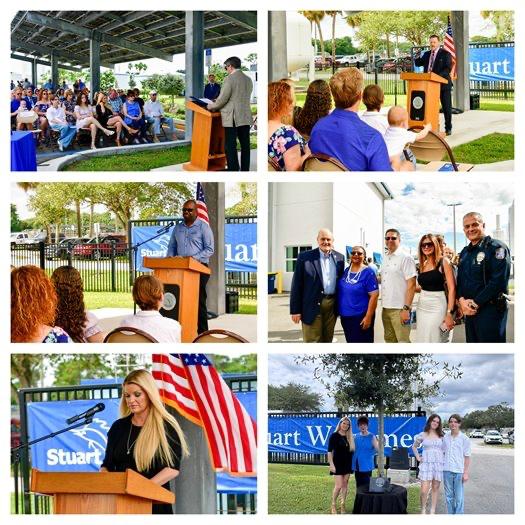
The City of Stuart proudly celebrated the dedication of the David D. Peters Water Treatment Facility, honoring a man whose vision and leadership shaped the city’s commitment to clean, safe, and sustainable drinking water.
Campbell Rich, City of Stuart mayor, welcomed attendees and reflected on Peters’ enduring impact on Stuart’s growth and environmental responsibility. “David believed that providing safe and reliable water was more than a duty—it was a
legacy,” the mayor shared. “His leadership helped ensure that future generations of Stuart residents will always have access to clean, high-quality water.”
Additional remarks were delivered by Milton Leggett, public works director; Peter Kunen, utilities and engineering director; Louis “Joly” Boglioli, interim city manager; Mark Miller of Kimley-Horn; and Mike Woodside, water plant superintendent, each sharing stories of Peters’ dedication, innovation, and mentorship.
The ceremony concluded with heartfelt words from David’s daughter, Stephanie Morris Pearce, who expressed gratitude to the city for honoring her father’s life and work.
The newly dedicated facility stands not only as a cornerstone of the city’s water infrastructure, but also as a living tribute to a man whose passion for service and excellence continues to inspire all who follow in his footsteps. S
Top row (left) is Campbell Rich and (right) Louis “Joly” Boglioli, both addressing the dedication ceremony crowd. Center row (left) is Milton Leggett and (right) Paul Nicoletti, former city attorney and city manager; Eula Clarke, city commissioner; David Dyess, former city manager; Pinal Gandhi-Savdas, Community Redevelopment Agency executive director; and Flamur Zenelovic, City of Stuart police chief.
Bottom row (left) is Stephanie Morris Pearce and (right) Stephanie Morris Pearce, Denise Peters, Addie, and Cam.
Top row (left) is Campbell Rich and (right) Louis "Joly" Boglioli, both addressing the dedication ceremony crowd. Center row (left) is Milton Leggett and (right)
Get Ready for the 2026 Florida Water Resources Conference
Mish Clark
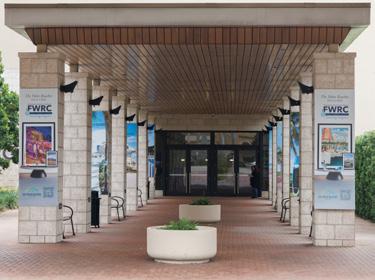
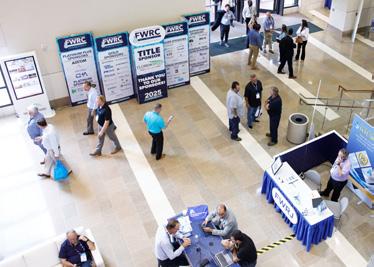
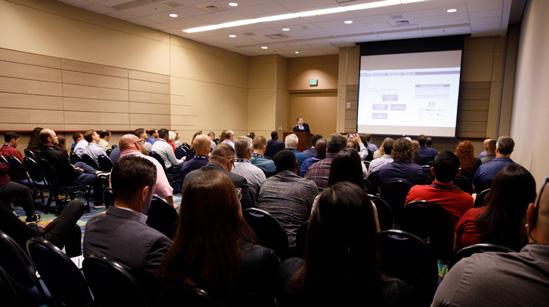
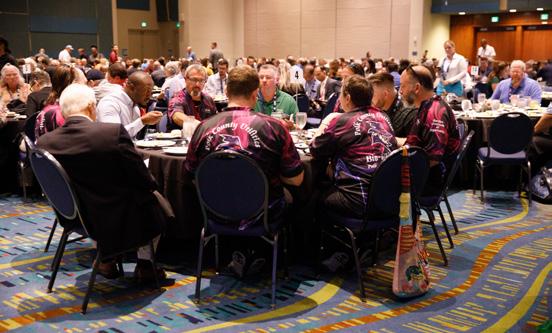
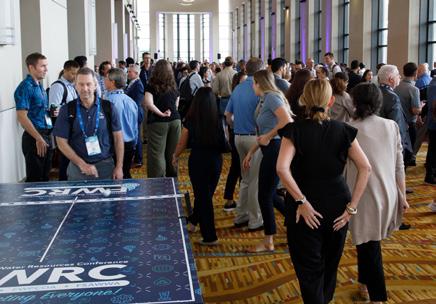
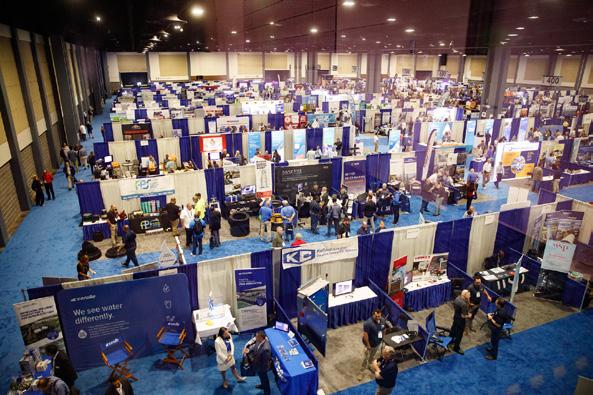
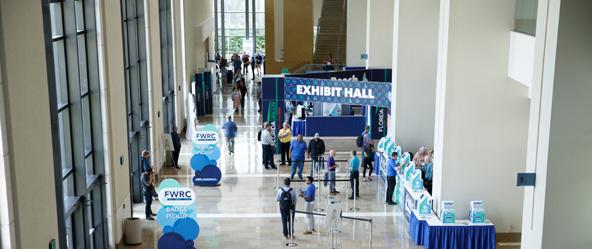
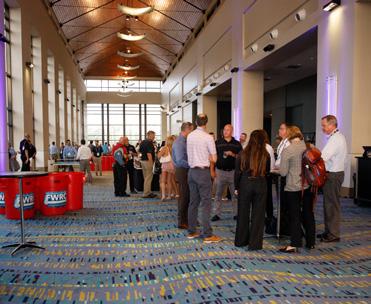
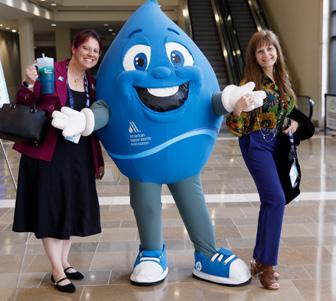
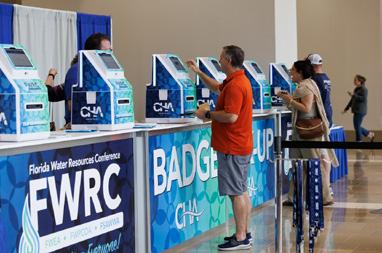
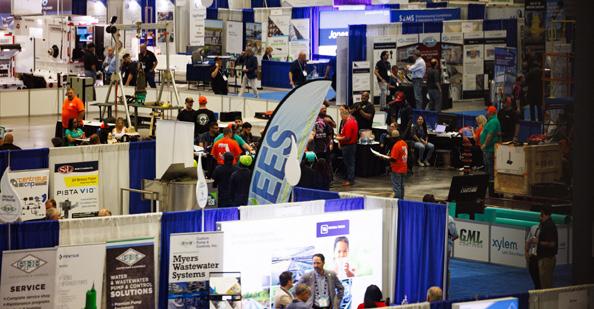
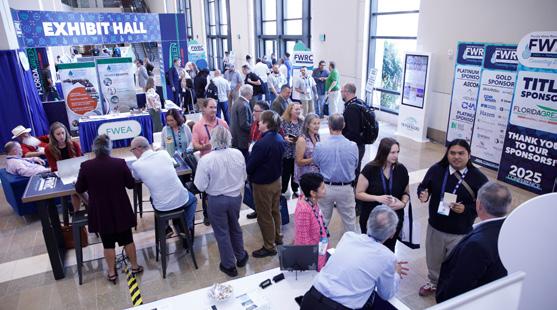
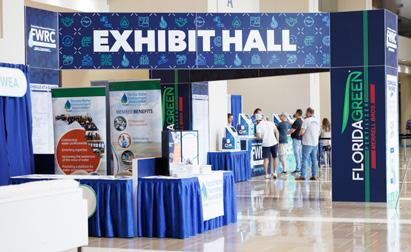
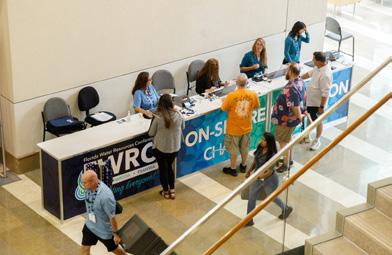
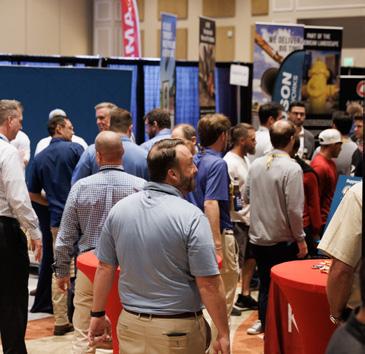
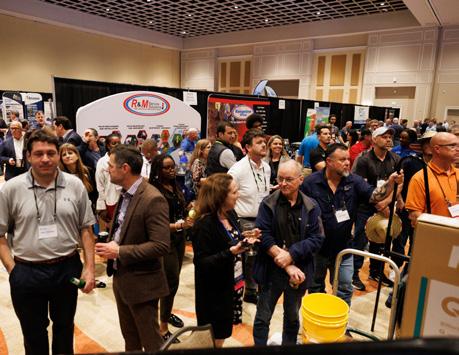
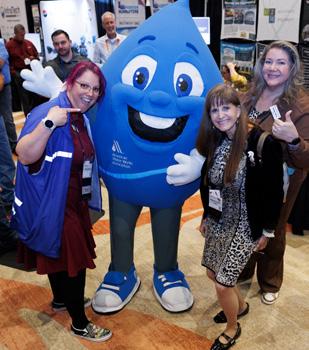
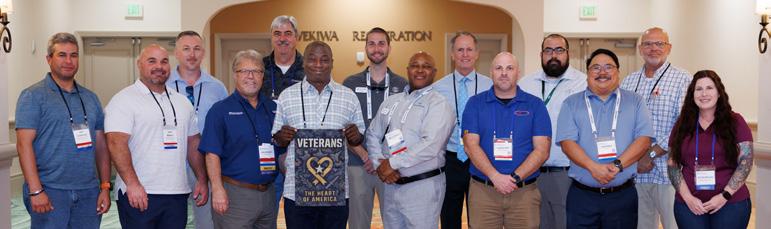
The Florida Water Resources Conference (FWRC) returns to the Ocean Center in Daytona Beach, April 26–29, 2026, bringing together professionals from across the water resources industry. Attendee registration opened on Dec. 8, 2025, and tickets are now on sale. We encourage early registration to take advantage of presale ticket pricing. The exhibit hall sold out mid-December and the waitlist is ongoing. Sponsorships continue to sell, and with the introduction of the new Experience Center in 2026, additional high-exposure sponsorship opportunities are now available.
What’s New at the 2026 Florida Water Resources Conference?
Enjoy the following experiences at the conference.
Experience Center
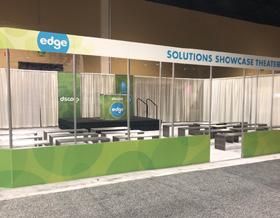
We’re excited to introduce the 2026 FWRC Experience Center, your go-to destination to connect, exchange ideas, and spark innovations with fellow water professionals. Entrance to the Experience Center is included with your attendee ticket. This dynamic space brings together interactive displays, expert insights, and collaborative opportunities designed to elevate conversations and inspire progress across our industry.
Ripple Effect Hub
Connecting people, ideas, and innovation— one ripple at a time. This dynamic space brings together workshops, panels, and collaborative sessions designed to spark conversation and inspire fresh thinking across the water community. Step in, engage, and be part of the ripples that lead to real impact. Schedule and more details to be released soon.
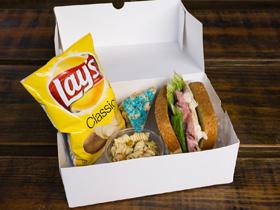
Boxed Lunch and Salads
Onsite boxed lunches and salads will
be available for $22 (plus tax) and must be purchased in advance, along with your attendee ticket. Grab your lunch, relax, and keep your energy up while exploring exhibits, attending sessions, and connecting with fellow attendees.
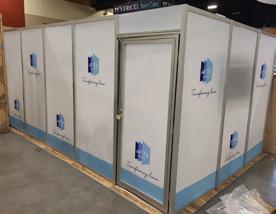
Private Meeting Rooms
Designed for focused conversations, strategic planning, and one-on-one collaboration, these dedicated spaces provide a professional, quiet environment where you can connect with colleagues, meet with clients, or host small group discussions, all within the heart of the conference. Sign up is onsite and first come, first served.
Mentor Mingle
Tailored to connecting young professionals with tenured industry professionals, this is a unique opportunity to connect, learn, and grow with fellow water workers. Whether you’re
seeking guidance, sharing your expertise, or exploring new career paths, this event brings together mentors and mentees in an engaging, interactive setting. More details and applications coming soon.
Headshot Lounge
We’re excited to introduce the all-new Headshot Lounge. This dedicated space gives attendees the opportunity to refresh their professional image with a high-quality headshot. Whether updating your LinkedIn profile or company bio, our onsite photographer is ready to help you look your best. First come, first served.
Interactive Photo Mosaic Wall
The Photo Mosaic Wall is the perfect way to engage with other attendees and create unforgettable memories. Simply snap your photo at one of the kiosks and instantly become part of
a larger, evolving image. Attendees can visit the wall throughout the conference to see the image come to life.
Awards Wall
Celebrate excellence in water resources at the Florida Water Environment Association (FWEA) and FWRC Awards Wall honoring the achievements, innovation, and dedication of individuals and organizations making a meaningful impact in the water community. Explore the stories behind each award, recognize the leaders shaping our industry, and be inspired by the accomplishments that drive progress and innovation.
To learn more about the Experience Center, you can visit www.fwrc.org/attend/experiencecenter to get up-to-date details.
Continued on page 26
Sunday Training Workshops
Looking to earn additional continuing education units (CEUS) or professional development hours (PDHs)? Take advantage of the new programming from 8:00 a.m. to 5:00 p.m. One-day tickets for Sunday are 50 percent off a regular one-day ticket. To learn more about the specific schedule visit www.fwrc.org/ learn/training-workshops.
Who Should Attend the 2026 Florida Water Resources Conference?
The conference is designed to benefit water industry professionals, including:
S Academics - Communicate your research results and learn about other research being conducted in your area of interest.
S Consultants - Demonstrate the power and dynamics in your client work and continue to learn from others in the water resources industry.
S Managers, Directors, and Policy MakersDiscover new technologies and innovations for your utility/organization.
S Operations, Maintenance, and Compliance Professionals - Discover new technologies and what’s happening in the water resources industry.
S Practitioners - Show what is being done in your organization and learn what’s happening in the water sector.
S Public Officials and Regulatory MembersMeet water professionals who provide comprehensive information on every aspect of water usage.
S Educators - Introduce your students to the water industry and share your efforts for the future of water.
S Students - Share your research, get feedback, and network with the professionals.
Why Attend?
Attending FWRC offers a unique opportunity to:
S Network with thousands of individuals in the water resources industry in person.
S Explore the latest updates on innovative topics from industry leaders, researchers, and expert practitioners.
S Learn about the benefits of industry-leading products.
S Be inspired by practical applications and technologies from colleagues.
S Enhance your knowledge on the latest work and research to apply to your organization.
S Expand and strengthen your skill set and framework with hands-on workshops.
S Earn educational credits at hot-topic technical sessions.
S Present your research, project, and/or new product or technology to receive valuable feedback.
Have You Booked Your Attendee Registrations?
As we return to Daytona Beach in 2026, the conference offers a prime opportunity to connect with the professionals who manage, design, and operate across the water resources industry.
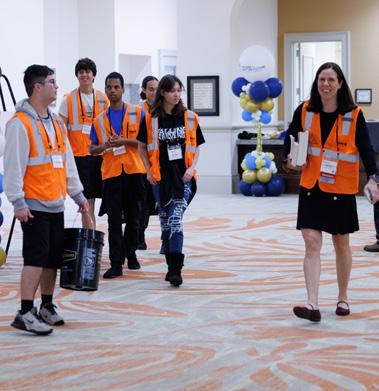
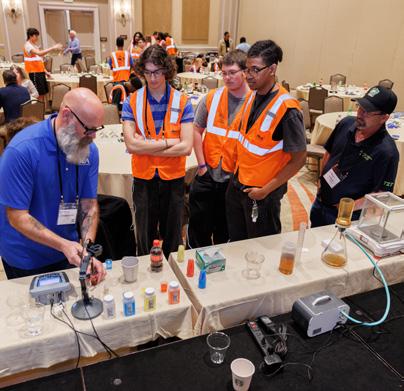
There is access to technical papers being presented at sessions and workshops, and involvement in the Operations Challenge and Top Ops Competition. University students can participate in the student competitions. With the popular Women of Water Forum, young professionals sessions, the new Experience Center and much more, there is something for everyone attending FWRC.
Register today at www.fwrc.org! Don’t forget: prices increase March 21, 2026.
Where to Reserve Sponsorships or Book Attendee Registrations
Visit www.fwrc.org today.
We’re looking forward to seeing everyone in Daytona Beach this April 26-29 at the Ocean Center!
Mish Clark is executive director of the Florida Water Resources Conference. Please do not hesitate to reach out at 267.884.6292. S
What is the MAC?
Tyler Tedcastle Chair, FSAWWA
Florida Section. The MAC represents all service providers in our industry. I had the opportunity to serve as the AWWA young professionals (YP) liaison to the MAC while serving on the YP Committee, followed by two terms on the AWWA MAC.
With this column I would like expand on what this council provides the membership at both the association and section levels.
or services to the water industry, including manufacturers, manufacturers’ representatives, distributors, consulting engineers, testing laboratories, and contractors. The MAC is made up of 20 service provider members with dedicated spots for a Young Professionals Committee member, the director at large – service provider (AWWA board position), and a representative from the Water and Sewer Distributors of America.
Members serve three-year terms, with the option to re-up for a second consecutive term. The MAC provides responsible representation for, and involvement of, service provider members in AWWA; develops programs and activities for service provider members and encourages their membership and participation in AWWA; and provides policy input and develops response and commitment within the framework of AWWA on matters affecting service provider members. The MAC also has liaisons on the additional AWWA councils (Water Utility, Standards, Technical and Education, Public Outreach, and International) for enhanced collaboration and knowledge sharing across our industry.
AWWA MAC Committees
As part of the council, the MAC has separate committees:
Communications Committee. Produces and distributes the MACYAK (MAC’s quarterly newsletter), supports AWWA publications, and advertises the MAC’s activities and opportunities to the association.
Industry Outreach Committee. Promotes the engagement of service providers and section MACs throughout the association.
S Innovation and Sessions Committee. Organizes MAC-hosted events at AWWA conferences and coordinates with the Innovation Hub at the AWWA Annual Conference and Exposition (ACE).
S Awards Committee. Facilitates the John Lechner Award and innovation awards and coordinates the Water Industry Lunch at ACE.
AWWA MAC Awards
The association MAC provides awards for individual achievement and innovation:
S Lechner Award of Excellence. The Lechner Award is an individual award of excellence to recognize a section service provider member who has demonstrated exemplary service to the drinking water community and to AWWA’s mission and goals. The
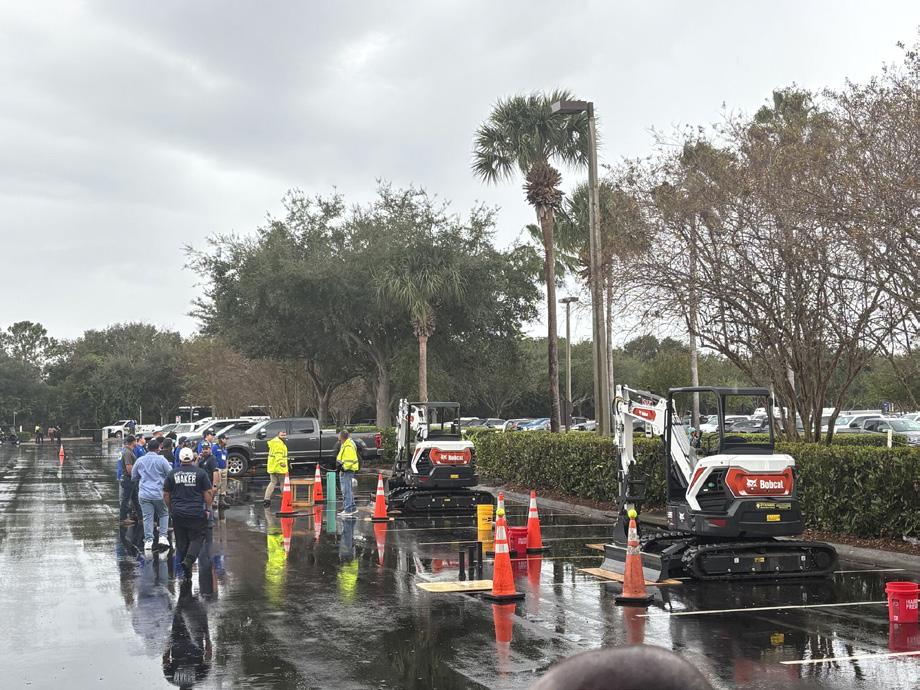
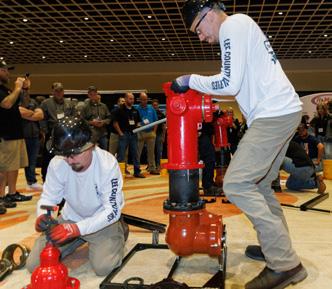
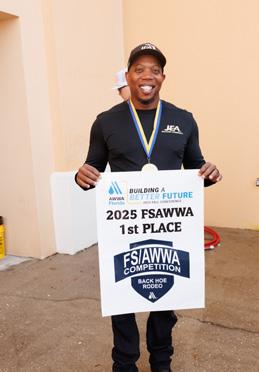
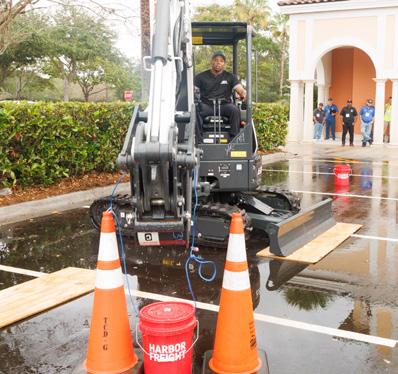
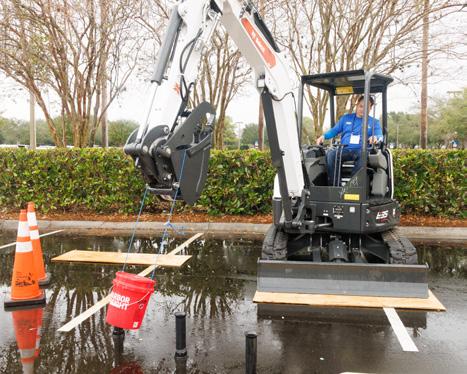
Backhoe Rodeo at the 2025 FSAWWA Fall Conference.
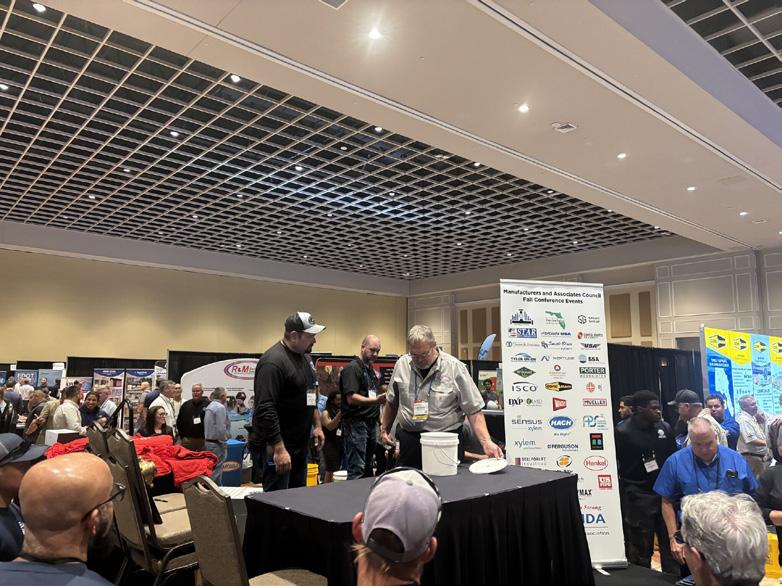
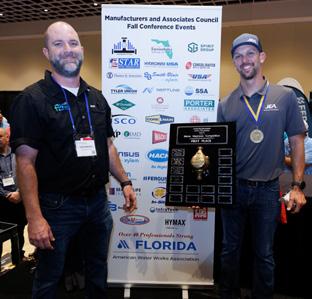
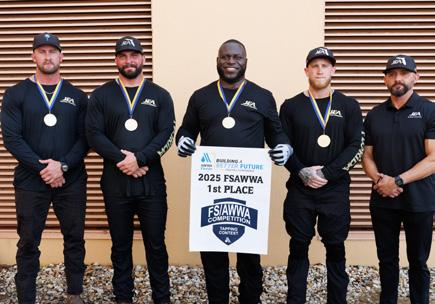
Meter Challenge at the 2025 FSAWWA Fall Conference host by the MAC.
AWWA sections have the opportunity to further recognize individual achievements by submitting the section winner as a candidate for this award.
S Innovation Awards. The two innovation awards are to recognize members for fulfilling the vision of the Innovation Initiative. The current vision of the initiative is “to inspire and implement innovative thinking and best practices” within the water industry. These annual awards are for those who have inspired or implemented an innovative idea, best practice, or solution to address a challenge facing the industry, with significant positive results. One award will be presented to a utility and one award will be presented to a service provider (nonutility) or individual AWWA member.
FSAWWA MAC
individuals who represent an expanding variety of products and services vital to the water industry. The MAC currently has over 40 members from the section representing a diverse range of companies, equipment, and technologies. While traditionally the MAC’s major focus was helping with the FSAWWA Fall Conference, it has expanded its responsibilities and now offers training as well from the New Technology and Training Committee. two committees: S
the MAC membership, the NTTC is set up to provide specialized training for water industry professionals via webinar series or in-person, hands-on opportunities. The trainings meet all Florida Department of Environmental Protection requirements to provide professional development hour/continuing education unit credits for those attending. The MAC currently has the webinars scheduled quarterly, with the in-person training available on request. The MAC also hosts an annual symposium at the FSAWWA Fall Conference, comprised of two sessions: a morning session
sponsorship opportunities, organizing the Operations Challenge, conducting training sessions, and assisting with the poker tournament, golf event, and BBQ.
For both the AWWA and Florida Section MAC, the volunteers and water professionals involved are critical to our industry. Members of the MAC are very knowledgeable about their specific technology or products. From widgets to pipes to construction and lab work, the MAC’s expertise is invaluable for helping with the design, construction, training, and operation of distribution systems and treatment
If you are a service provider interested in volunteering or becoming more involved with
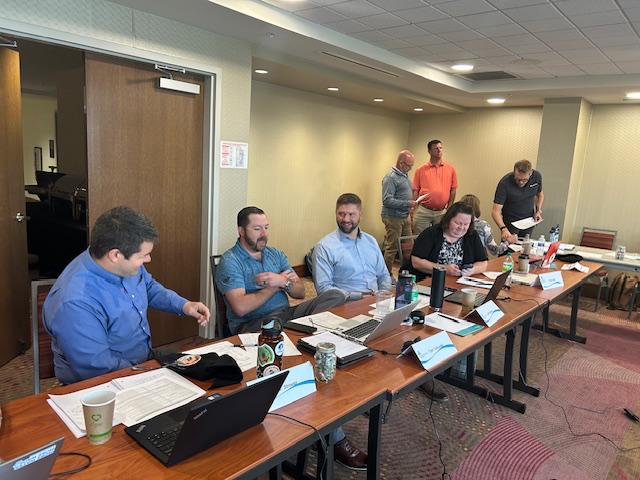
April 2024 associate MAC meeting in Austin, Texas.
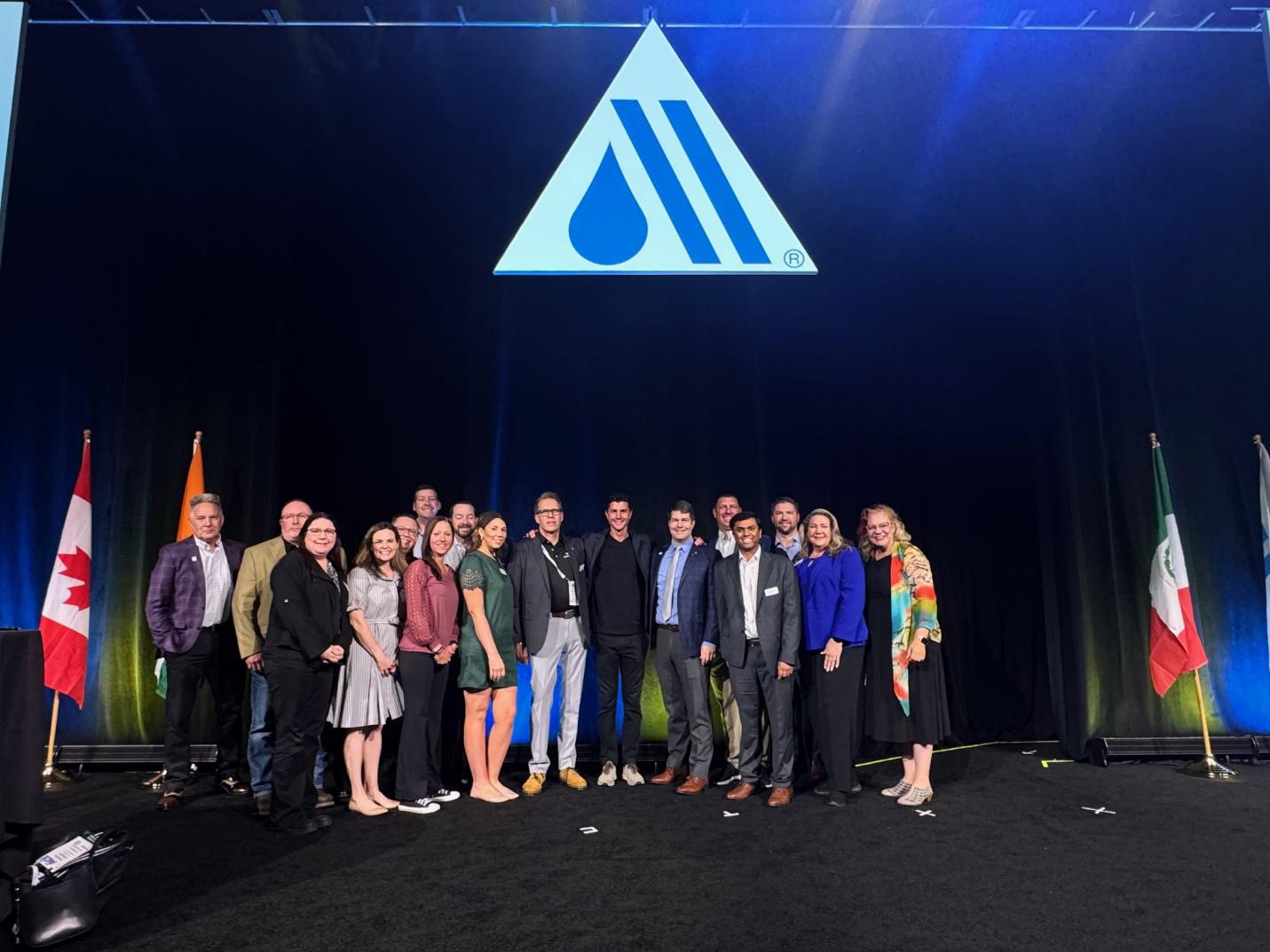
The AWWA MAC at the 2024 Water Industry Lunch at Annual Conference and Exposition.
2025-2026 FSAWWA BOARD OF GOVERNORS
EXECUTIVE COMMITTEE
Tyler Tedcastle, P.E. Chair
Carter & VerPlanck, a DXP Company 601 S.E. 10th Avenue Pompano Beach, Florida 33060 E: ttedcastle@cviwater.com
Peace River Manasota Regional Water Supply Authority
9415 Town Center Parkway Lakewood Ranch, Florida 34202 E: randerson@regionalwater.org
Fred Bloetscher, Ph.D., P.E. Section Director-Elect
Florida Atlantic University P.O. Box 220265 Hollywood, Florida 33022
Emilie Moore, P.E.
General Policy Director
Black & Veatch
1715 N. Westshore Blvd., Suite 725
Tampa, Florida 33607
E: mooree@bv.com
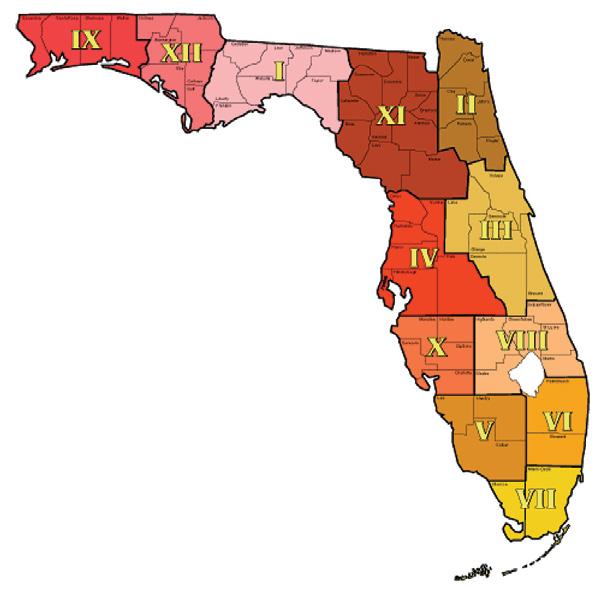
Florida Section AWWA by Region
COUNCIL CHAIRS
Courtney Dantone Contractors Council Chair
Archer Western|The Walsh Group E: cdanton@walshgroup.com
Patrick Williamson, PMP Manufacturers and Associates Council Chair
Badger Meter 2920 Eunice Avenue 4545 W. Brown Deer Road E: pwilliamson@badgermeter.com
Larry Miller
Member Engagement and Development Council Chair
St. Johns County Utility Department 1205 State Road 16 St. Augustine, Florida 32084 E: lmiller@sjcfl.us
TBA Operators and Maintenance Council Chair
Keeli Carlton
Public Affairs Council Chair
Seminole County 200 W. County Home Road
Sanford, Florida 32773
E: kcarlton@seminolecountyfl.gov
Mike Stoup, P.E.
Technical and Education Council Chair
McKim & Creed 1365 Hamlet Avenue Clearwater, Florida 33756
E: mstoup@mckimcreed.com
Tara Lamaroureux, P.E. Water Utility Council Chair City of Casselberry 95 Triplet Lake Drive Casselberry, Florida 32707
E: tlamoureux@casselberry.org
REGION CHAIRS
Jennifer Porter
Region I Chair (North Central Florida) City of Tallahassee 435 N. Macomb Street Tallahassee, Florida 32301
E: jennifer.porter@talgov.com
Emory Hayden-Kaplan, P.E.
Region II Chair (Northeast Florida) CDM Smith 4651 Salisbury Road, Suite 420 Jacksonville, Florida 32256
E: haydenkaplanea@cdmsmith.com
Ben Yoakum, Ph.D., P.E.
Region III Chair (Central Florida)
Orange County Utilities 9150 Curry Ford Road Orlando, Florida 32825 E: benjamin.yoakum@ocfl.net
Nicole Thomas, P.E., PMP Region IV Chair (West Central Florida) Tampa Bay Water 2575 Enterprise Road Clearwater, Florida 33763 E: nthomas@tampabaywater.org
Reshma Thummadi, P.E.
Region V Chair (Southwest Florida) AECOM 4415 Metro Parkway, Suite 404 Fort Myers, Florida 33916 E: reshma.thummadi@aecom.com
Emeliz Torres, P.E.
Region VI Chair (Southeast Florida) Black & Veatch
4226 N. Dixie Highway, Unit 97 Oakland Park, Florida 33334 E: TorresE@bv.com
Catalina Lopez Velandia, P.E.
Region VII Chair (South Florida) Miami-Dade Water and Sewer Department 3071 S.W. 38th Avenue Miami, Florida 33146 E: catalina.lopez-velandia@miamidade.gov
Wesley Oehmig, P.E.
Region VIII Chair (East Central Florida) HDR Engineering Inc. 1475 Centrepark Blvd., #230 West Palm Beach, Florida 33401 E: wesley.oehmig@hdrinc.com
Tyler Puckett, P.E.
Region IX Chair (West Florida Panhandle)
HDR Engineering Inc. 25 W. Cedar Street, Suite 200 Pensacola, Florida 32502-5945 E: tyler.puckett@hdrinc.com
Heather Ripley, P.E.
Region X Chair (West Central Florida)
Kimley-Horn 1514 Broadway, Suite 301 Fort Myers, Florida 33901
E: heather.ripley@kimley-horn.com
Elayne Nash, EI
Region XI Chair (North Florida) Jacobs 643 S.W. 4h Avenue
Gainesville, Florida 32608
E: Elayne.Nash@jacobs.com
Hayden Brown, P.E.
Region XII Chair (Central Florida Panhandle)
Barge Design Solutions
120 Richard Jackson Blvd., Suite 200 A Panama City Beach, Florida 32407
E: hayden.brown@bargedesign.com
TRUSTEES
Cristina Ortega Castineiras, P.E., ENV SP Trustee
HDR Engineering Inc.
8333 N.W. 53rd Street, Suite 302
Doral, Florida 33166
E: Cristina.ortega@hdrinc.com
Andrew Greenbaum Trustee
Sarasota County Public Utilities 1001 Sarasota Center Blvd. Sarasota, Florida 34240
E: greenbaumal@bv.com
Bina Nayak, Ph.D. Trustee
Pinellas County Utilities 1620 Ridge Road
Largo, Florida 33778
E: bnayak@pinellascounty.org
Mike George Trustee
R&M Service Solutions 11820 Uradco Place, #103 San Antonio, Florida 33576
E: mgeorge@rmservicesolutions.com
Mark McDowell Trustee
InfraTech Group 2920 Eunice Avenue Orlando, Florida 32808
E: mark@infratechgroup.com
SECTION STAFF
Kim Kowalski
Executive Director
Florida Section AWWA 1320 Tennessee Avenue
St. Cloud, Florida 34769
P: (407) 979-4814
E: kim@fsawwa.org
Peggy Guingona
Section Administrator
Florida Section AWWA 1320 Tennessee Avenue
St. Cloud, Florida 34769
P: (407) 979-4820
E: peggy@fsawwa.org
Casey Cumiskey
Membership Specialist/Certification Coordinator
Florida Section AWWA 1320 Tennessee Avenue
St. Cloud, Florida 34769
P: (407) 979-4806
E: casey@fsawwa.org
Donna Metherall
Training/Events Coordinator
Florida Section AWWA 1320 Tennessee Avenue
St. Cloud, Florida 34769
P: (407) 979-4805
E: donna@fsawwa.org
Jenny Arguello
Section Coordinator
Florida Section AWWA 1320 Tennessee Avenue
St. Cloud, Florida 34769
P: (407) 979-4804
E: jenny@fsawwa.org
We’re excited to introduce the FWRC Experience Center for 2026—your go-to destination to connect, exchange ideas and spark innovation with fellow water professionals. This dynamic space brings together interactive displays, expert insights and collaborative opportunities designed to elevate conversations and inspire progress across our industry.
Entrance to the Experience Center is included with your Attendee Ticket.
This dynamic space brings together workshops, panels and collaborative sessions.
A unique opportunity to connect, learn and grow with fellow water professionals.
and
available for $25 and must be purchased in advance
Interactive Photo Mosaic Wall
Awards Wall
Boxed Lunches
Salads
Attendees can refresh their professional image with a high-quality headshot.
The Ripple Effect Hub
Private Meetings Rooms Mentor Matchup
Boxed Lunch or Salad Headshot Lounge
April 26-29, 2026
SUNDAY TRAINING WORKSHOPS
Looking to earn additional CEUs and PDHs?
Purchase a 1-day Sunday Ticket (at a 50% reduced price from a Monday or Tuesday 1-day ticket). Take advantage of the Sunday Training Workshops being offered in 2026.
SUNDAY, APRIL 26 ,2026
(8:00AM TO NOON)
CHEMICAL SAFETY
This training will cover chemical safety topics including state and federal regulations, safety data sheets, PPE and exposure routes, and safe handling of drinking water and wastewater chemicals.
SURFACE WATER TREATMENT
This workshop will focus on the basic concepts of surface water treatment including water sources and treatment, reservoirs and intakes, coagulation and flocculation, sedimentation, filtration, and disinfection.
SUNDAY, APRIL 26 ,2026
(1:00PM TO 3:00PM)
HOW TO WRITE A LCRI SERVICE LINE REPLACEMENT PLAN
This workshop will provide some guidance on what the required sections are in a service line replacement plan and will offer some ideas on how to complete the sections.
OPERATIONAL MATH
This training will cover basic math problems common to water and wastewater treatment.
SUNDAY, APRIL 26 ,2026
(1:00PM TO 5:00PM)
MECHANICAL SAFETY
This workshop will cover mechanical safety training topics including off-site pipe prep and installation, Hydrant Safety, MOT set ups for Job Sites, and lock out tag out.
MEMBRANES
This workshop will cover the basics of membrane care and cleaning to increase the life and efficiency of membranes.
WASTEWATER COLLECTION SYSTEMS
This training will cover some of the basic concepts of a wastewater collection system, such as wastewater system inspecting and testing, safe procedures, lift station and equipment maintenance, pipeline cleaning and maintenance, pipeline repair and rehabilitation, and wastewater math.
AI APPLICATIONS FOR FLORIDA WATER UTILITIES
This workshop will provide an overview of real-world applications of AI for different utility needs from technology solutions to effective communication, fostering innovation and improving operational efficiency.
TECHNICAL PROGRAM
APRIL 27, 2026 - MONDAY MORNING
TECHNICAL PROGRAM
APRIL 28, 2026 - TUESDAY MORNING
STAY UP-TO-DATE!
28, 2026 - TUESDAY AFTERNOON
Florida’s Water Supply: Resources, Challenges, and the Path Forward
Florida’s water supply system is one of the most dynamic and carefully managed in the United States. With more than 23 million residents, a thriving tourism sector, and extensive agricultural production, the state depends on a diverse network of rivers, lakes, wetlands, springs, and aquifers to meet its growing water demands. Although Florida is rich in natural water resources, its population growth, climate variability, and environmental pressures are intensifying the need for strategic, long-term water supply planning.
This article provides a comprehensive overview of Florida’s water resources, current supply and demand trends, key challenges, and the strategies shaping the state’s water future.
Florida’s Water Resources
Florida’s water supply is built on a foundation of interconnected natural systems that support both human and ecological needs.
Surface Waters
Florida’s surface waters include an extensive network of various waterways and estuaries that play a central role in the state’s hydrology. Major river systems, such as the St. Johns, Suwannee, Apalachicola, and Kissimmee, provide essential flows for drinking water, irrigation, and habitat. Wetlands—including the Everglades—act as natural filtration systems, improving water quality and moderating flood impacts. These waters also support recreation, fisheries, and tourism, making them vital to Florida’s economy and environmental identity.
Springs
With more than 1,000 freshwater springs, Florida hosts one of the largest concentrations of springs in the world, discharging millions of gallons of clear water each day into the Floridan aquifer. They support unique ecosystems, provide recreational opportunities, and act as indicators of aquifer health. Declining spring flows and nutrient pollution have raised concerns about long-term sustainability, prompting statewide restoration and protection initiatives.
Aquifers
The Floridan aquifer is one of the most productive aquifer systems globally and supplies drinking water to roughly 10 million Floridians. Its vast limestone formations store and transmit enormous volumes of groundwater. In south Florida, the Biscayne Aquifer provides high-quality water to millions. but it’s highly vulnerable to saltwater intrusion. Other regional aquifers, such as sand and gravel and surficial systems, support local supplies and agricultural operations. These aquifers form a multilayered groundwater system that requires careful management to prevent overwithdrawal and contamination.
Water Supply and Demand Trends
Florida’s water demand continues to rise, driven by population growth, economic expansion, and agricultural needs.
Public Supply
Public supply is the fastest-growing water use category in Florida. Rapid population growth and urban development have increased demand for water for drinking, irrigation, and commercial use. Seasonal tourism adds additional pressure, particularly in coastal regions where demand spikes during winter months. Utilities must balance these needs with the protection of natural systems, often requiring investments in alternative water supplies and conservation programs.
Agriculture
Agriculture remains one of the largest water use sectors, especially in central and south Florida where citrus, sugar cane, vegetables, and nursery crops dominate production. Irrigation efficiency has improved through microirrigation and precision agriculture, but agricultural withdrawals still represent a significant portion of statewide demand. Balancing agricultural needs with environmental protection continues to be a central challenge for water managers.
Commercial, Industrial, and Power Generation
Commercial and industrial uses, including manufacturing, food processing, and mining, require reliable water supplies to support economic activity. Power generation facilities depend on large volumes of water for cooling. While efficiency improvements have reduced per-unit water use, overall
demand remains substantial due to Florida’s growing economy and energy needs.
Environmental Flows
Maintaining adequate flows for wetlands, rivers, estuaries, and springs is essential for ecological health. Environmental water needs are increasingly recognized as a core component of water supply planning. Minimum flows and levels (MFLs) help ensure that human withdrawals do not compromise critical habitats or degrade water quality.
Challenges Facing Florida’s Water Supply
Population Growth
Florida’s population growth—among the highest in the U.S.—places continuous pressure on water resources. New developments often replace natural recharge areas with impervious surfaces, reducing the ability of a water source to replenish itself. Utilities must plan decades ahead to secure sustainable supplies while accommodating millions of new residents.
Climate Variability
Florida’s climate is characterized by alternating wet and dry periods, but climate change is amplifying extremes. Prolonged droughts reduce groundwater recharge and increase competition for limited supplies. Sea level rise threatens coastal aquifers by pushing saltwater inland, requiring utilities to shift withdrawals or invest in desalination technologies.
Water Quality Degradation
Nutrient pollution from agriculture,
septic systems, and stormwater runoff contributes to harmful algal blooms, fish kills, and declining water clarity. Emerging contaminants, such as per- and polyfluoroalkyl substances and microplastics, pose additional challenges. Protecting water quality requires coordinated efforts across regulatory agencies, utilities, and local governments.
Ecosystem Stress
Overwithdrawal of groundwater can reduce spring flows, lower lake levels, and alter wetland hydrology. These changes disrupt wildlife habitats, reduce biodiversity, and impair recreational value. Maintaining ecological integrity is a central goal of Florida’s water management framework, requiring careful monitoring and adaptive management.
Artificial Intelligence Data Centers
Artificial intelligence (AI) data centers require massive amounts of electricity, which generate intense heat, requiring millions of gallons of water per day to run the mechanical cooling systems. Approximately 80 percent of the water used by data centers is evaporated as steam.
The bipartisan Environmental and Energy Study Institute reports that AI data centers can consume up to 5 million gallons per day, equivalent to the water use of a town populated by 50,000 people, which is more than 1 billion gallons a year.
The U.S. has more data centers than any other country, according to datacenters. com—nearly 4,000. Florida alone already has more than 120 data centers, making it the fourth largest data center hub in the U.S. after Texas, California, and New York.
The state is preparing for this influx of data centers, with some utilities implementing tariffs to manage costs associated with their water and energy use. The Florida Public Service Commission recently approved new tariffs that require large-load customers to pay in advance for the expected energy they say they are going to use.
There are ongoing discussions about the environmental impacts of these centers and the need for regulations and legislation to address water usage and long-term sustainability.
Water Management and Regulatory Frameworks
Florida Department of Environmental Protection
The Florida Department of Environmental Protection (FDEP) sets statewide water policy, oversees water quality standards, and coordinates long-term planning efforts. The agency develops the Florida Water Plan, a comprehensive document that outlines the state’s efforts to protect, preserve, and enrich Florida’s water resources. It includes district performance measures, water quality standards, and water management plans. The plan is developed in cooperation with water management districts, regional water supply authorities, and other entities.
The FDEP also implements water resource regulations and collaborates with regional districts to ensure consistent management across the state.
Water Management Districts
Florida’s five water management
Continued on page 40
districts—Northwest, Suwannee River, St. Johns River, Southwest, and South Florida— play a central role in water supply planning. They develop regional plans that identify future water needs, evaluate supply options, and outline conservation strategies. Districts also establish MFLs, issue water use permits, and manage restoration projects.
Local Utilities
Utilities are responsible for delivering safe, reliable drinking water to communities. Their work includes maintaining treatment plants, distribution systems, storage facilities, and reclaimed water networks. Utilities also implement conservation programs, conduct leak detection, and invest in infrastructure modernization to reduce losses and improve resilience.
Strategies for Ensuring Long-Term Water Security
Alternative Water Supplies
To reduce reliance on traditional groundwater sources, Florida’s alternative water supplies include brackish groundwater, surface water, stormwater, reclaimed water, potable reuse, aquifer storage and recovery (ASR), and desalination, among others. These sources are essential for meeting the state’s future water demands and are being developed to reduce reliance on fresh groundwater.
Brackish Groundwater
Brackish groundwater is a significant source of water supply in Florida. The Upper
Floridan aquifer is used for reverse osmosis source water, blending with shallower fresh aquifer groundwater. The Lower Floridan aquifer contains fresh to brackish water in northeastern Florida, while in south Florida, it is saline and used to dispose of effluent from wastewater treatment processes.
Stormwater
Stormwater is increasingly recognized as a viable alternative water supply source. The state’s updated stormwater rules, including Senate Bill 7040, have introduced performance-based requirements for stormwater systems, mandating measurable reductions in nutrient pollutants and total suspended solids. These systems are now required to achieve at least an 80 percent reduction in the average annual postdevelopment total suspended solids load, with specific targets for nitrogen and phosphorus reductions based on the condition of the receiving body.
This new rule encourages innovation in system design and aims to ensure meaningful water quality improvements. It also includes specific criteria for redevelopment projects, allowing for tailored compliance paths under certain conditions.
Stormwater impoundments, which store stormwater runoff during the wet season, can be used as harvesting units during the dry season.
Reclaimed Water
Reclaimed water, which is recycled wastewater treated for nonpotable uses, is also a significant alternative water supply. The water has been thoroughly treated, at least to
the secondary level, for reuse. This treatment, which includes sedimentation, oxidation, filtration, disinfection, and more, removes harmful organisms and substances, such as bacteria and viruses.
Potable Reuse
Florida is a national leader in potable reuse, with extensive regulations and practices in place to ensure the safe use of treated wastewater for human consumption. As of 2020, the state utilized 884 million gallons a day of reuse water for various beneficial purposes, including irrigation, industrial uses, and indirect and direct potable reuse.
Indirect potable reuse involves the introduction of highly treated recycled water into an environmental buffer, such as a surface reservoir or groundwater aquifer, before it is used as drinking water. Direct potable reuse is the direct introduction of treated recycled water into a drinking water system.
Aquifer Storage and Recovery
The process of ASR recharges, stores, and recovers water in an aquifer. There are more than 30 ASR systems operating throughout the state, utilizing approximately 100 wells. These systems are used for the storage of potable drinking water, partially treated surface water, groundwater, and reclaimed water. Surface water is collected during times when water is plentiful (typically during the wet season in Florida), treated to meet applicable water standards, and then pumped into an aquifer through a well. Water can be stored and subsequently recovered and distributed for various purposes, such as
Continued on page 42
water supply or ecosystem restoration. Most ASR facilities in Florida store water in the Upper Floridan aquifer.
This process offers the potential to store large quantities of water without the need for expansive tracts of land that would be required for above ground storage facilities. An ASR system can also provide large volumes of water over long periods of time, increasing water supplies during seasonal and multiyear droughts.
Desalination
Desalination converts salty water into fresh water, A desalination plant removes salt and other minerals from ocean water, using reverse osmosis or thermal distillation, to make the water suitable for drinking and irrigation. It’s a method used in many places in Florida, but it is costly and can compromise the environment.
Conservation and Efficiency
Water conservation remains one of the most cost-effective strategies for reducing demand. Utilities promote high-efficiency fixtures, smart irrigation controllers, rainwater harvesting, and Florida-Friendly Landscaping™ and offer rebates or tax incentives for residents and businesses implementing water-saving practices. Industrial and agricultural users are adopting precision technologies to optimize water use and reduce waste.
Public Education
Utilities and state agencies invest in public education campaigns to raise awareness about the importance of water conservation
and how individuals, businesses, and corporations can play a role in reducing their water usage. Florida enforces regulations on water use to ensure that businesses and individuals are not overusing or wasting water, including regular inspections, fines for violations, and requiring permits for large water users.
Landscaping
The state also promotes sustainable landscaping practices that require less water, such as using native plants and grasses, installing efficient irrigation systems, and promoting Xeriscape, a type of landscaping designed for areas with lower water supply or prone to drought.
Financial Incentives
Florida offers various tax incentives for individuals and businesses that invest in water-saving technologies, including rebates for installing low-flow toilets, showerheads, and other water-efficient technologies. The Florida Water Star™ program also provides financial incentives for homeowners and companies installing water-saving appliances and landscaping.
Protection of Natural Systems
Restoring wetlands, springs, and river systems helps improve water quality, enhance recharge, and support biodiversity. Establishing MFLs and water reservations ensures that ecological needs are considered alongside human demands. Statewide nutrient-reduction programs aim to curb pollution at its source.
Infrastructure Modernization
Aging water and wastewater infrastructure poses risks to reliability and water quality. Utilities are investing in pipe replacement, advanced metering infrastructure, treatment plant upgrades, and resilience improvements to withstand extreme weather events. These investments help reduce water loss and improve long-term system performance.
The Bipartisan Infrastructure Law has provided more than $50 billion to the U.S. Environmental Protection Agency for water infrastructure investments, with a portion allocated to Florida through the FDEP division of water restoration assistance. This funding is distributed through low-interest loans and is used to support programs eligible under the Clean Water State Revolving Fund (SRF) and Drinking Water SRF rules.
Outlook for Florida’s Water Future
Florida’s water supply is abundant, but vulnerable. The state’s ability to sustain its water resources will depend on continued investment in alternative water supplies, strong regulatory oversight, protection of natural recharge areas, and widespread adoption of advanced water use efficiency technologies. With active planning and innovation, and significant legislation and regulation, Florida can meet the needs of its growing population while preserving the ecosystems that make the state unique.
The state’s water suppliers will continue to create and implement innovative solutions to increase the state’s freshwater supply and its resilience to water supply challenges. S
2025 FSAWA Fall Conference: Building A Better Future
Kim Kowalski
The Florida Section of the American Water Works Association (FSAWWA) celebrated its 99th year of commitment and dedication to the world’s most precious resource by hosting its 31st Fall Conference, with the theme, “Building A Better Future,” from November 30 to December 3 at the Rosen Shingle Creek Resort.
This year’s event attracted 2600 attendees, including operators, water utility executives and managers, engineers, educators, manufacturers, consultants, students, and others from the water profession. A total of 228 exhibit booths were sold.
There were lots of opportunities to
network and meet old and new colleagues alike at the continental breakfasts, meet and greet receptions, committee meetings, Poker Night, Topgolf event, the annual business luncheon, and our annual BBQ Challenge and reception to welcome FSAWWA’s incoming chair for 2026, Tyler Tedcastle.
Opening General Session
The opening general session (OGS) on Monday afternoon is one of the conferences must-attend events and has been a part of the conference since 2013. Lisa Wilson-Davis, FSAWWA chair, welcomed the attendees to the OGS and introduced Heather Collins, AWWA president and visiting officer. Collins presented an update on association events and priorities.
OPENING GENERAL SESSION
The keynote speaker was Dr. Heather O’Leary, associate professor at the University of South Florida and an award-winning transdisciplinary scholar of the human dimensions of water, with a Ph.D. from the University of Minnesota. Dr. O’Leary began by explaining the field of anthropology and how her research projects trace water knowledge across physical sources to scientific interpretation, public consumption, and policy. As one example, she demonstrated how turning fish kill data into sound (think of a song) builds data literacy in the face of discrimination and science skepticism. Dr. O’Leary’s presentation not only looked at science, but the need for public outreach and engagement in light of our growing water future.
BBQ Challenge and Incoming Chair’s Reception
On Monday evening, the conference held the 11th BBQ Challenge, open to all attendees. It was also an opportunity to introduce and welcome the incoming FSAWWA chair, Tyler Tedcastle (for more information, see page 60.)
Technical Program
Each year, through the dedicated efforts of Dr. Fred Bloetscher, an excellent technical program is presented. Specialty workshops, through the efforts of Dr. Bina Nayak, were offered on Monday, as they have been in the past. The Monday workshops were:
S Legislative and Regulatory Updates
S Cybersecurity in the Water Sector
S Artificial Intelligence in the Water Sector
S Water Quality in Distribution Systems
S Utility Systems Symposium: Wastewater Collection Systems
S Geographic Information Systems/Asset Management
S Developing a Capital Improvement Plan in a Competitive Market
S Potable Reuse Communications
S Water Supply Planning Across Florida
S Utility Systems Symposium: Water Distribution Networks
The technical sessions on Tuesday and Wednesday focused on the conference theme. The sessions included:
Lisa Wilson-Davis welcomes attendees to the opening general session.
Heather Collins, AWWA president, updates attendees on association events.
Dr. Heather O’Leary in action. Attendees at the opening general session.
S Reuse Opportunities
S Per- and Polyfluoroalkyl Substances (PFAS) Treatment
S Lead and Copper
S Navigating the Changing Tides of Membrane Technology
S Asset Management
S PFAS Disposal
S Communicating About Water
S Construction Management
S Workforce Planning
S Water Treatment
S National Legislative and Regulatory Updates
S Water Conservation Symposium: Building a Smarter Conservation Future
Exhibits
The exhibit hall, which had 228 booth spaces between the exhibit hall and the exhibit hall prefunction space, allowed attendees to network and learn about the latest and most innovative products and services in the water industry. Company representatives were available daily to help attendees solve their problems and meet future challenges.
Meetings
2024-2025 FSAWWA Board of Governors
The FSAWWA Executive Committee held its meeting on Sunday morning, November 30, followed by the board of governors meeting in the afternoon, with 33 board members present and other active volunteers attending. This is where the real work of the section is planned for the following year.
There was one special guest from AWWA who was present:
S Heather Collins, AWWA president
Other Section-Related Meetings
The FSAWWA’s councils and committees also held meetings. There’s a group for almost every water topic. Meetings are also held at other events throughout the year.
This year marked the second Veteran’s Connect Coffee Hour, an informal meetup in which FSAWWA members who are veterans can meet and discuss how to get more veterans involved with the section.
Another event at the conference was the Top Ops Competition held Monday, December 1, from 1 to 3 p.m. Top Ops is often referred to as the “College Bowl” of the water industry, offering an exciting, fast-paced challenge. A moderator poses a variety of technical questions and math problems, with the team earning the most points in the championship round taking home the win. This year’s winner was Bonita Springs Utilities.
High School Academy Students Learn About Careers in Water
For the 10th year, the FSAWWA High School Academy Initiative Committee invited
high school students from Heritage High School Academy of Environmental Water in Palm Bay and University High School in Orlando to attend the conference.
This initiative supports an education program that will provide a career for a high school graduate—not just a job. The committee’s goal is to have “job-ready” high school graduates who may not be able to (or want to) go to college.
The goals of the initiative are to:
S Understand and communicate the need for operators.
S Support the development of new and existing operators.
As part of the initiative, FSAWWA supports three technical high schools in Florida that provide four years of coursework and training to prepare students to take the Class C license operator exam.
Around 80 students attended the conference on Tuesday, December 2, accompanied by school staff, and section volunteers participated!
Continued on page 47
TECHNICAL PROGRAM
Attendees exiting the technical sessions hallway.
MEETINGS
HIGH SCHOOL ACADEMY
Continued from page 45
Awards
The section’s annual business luncheon and awards ceremony celebrated the current roster of statewide officers and inducted the new officers for 2025-2026. Awards were also
RECAP OF 2025 FSAWWA FALL CONFERENCE
given for the best papers and outstanding volunteers in the water field. See page 52 for more information.
Contests
Several contests, with both team and individual competitors, were held.
WATER TASTE TEST
“Best of the Best” Water Taste Test
A statewide tap water taste contest was held at the conference. The competition brings together all the regional state winners to compete for the “Best of the Best” Water Taste Test title. The judging is all subjective and is not scientific in any way.
Continued on page 48
First place winners are (left to right) David Katz, Ava McClimon, and Sam Laing with UCF.
Water Bowl contestants in action.
WATER BOWL
Shea Dunifon, doing her part as the emcee.
The four judges (left to right) are Tyler Tedcastle, Joe Paterniti, Heather Collins, and Chi Ho Sham.
Florida Keys Aqueduct Authority representative with the trophy.
Attendees at the water taste test.
RECAP OF 2025 FSAWWA FALL CONFERENCE
Continued from page 47
The regional winners were:
S Region I – Talquin Electric
S Region II – City of St. Augustine
S Region III – City of Winter Park
S Region IV – Pasco County
S Region V – City of Cape Coral Utilities
S Region VI – City of Pompano Beach
S Region VII – Florida Keys Aqueduct Authority
S Region VIII – Martin County Utilities
S Region IX – Regional Utilities
S Region X – Englewood Water District
S Region XI – Gainesville Regional Utilities
S Region XII – Bay County Utilities
The judges were:
S Heather Collins, AWWA president
S Joe Paterniti, FWEA past president
S Tyler Tedcastle, FSAWWA incoming chair
S Dr. Chi Ho Sham, AWWA past president
All the judges based their scores on the taste, color, odor, and clarity of the 12 samples, one from each region.
The event emcee was:
S Shea Dunifon, JEA
Talquin Electric was declared the winner, which will represent the Florida Section AWWA at the taste test competition at ACE26, AWWA’s Annual Conference and Exposition, to be held June 21-24, 2026, in Washington, D.C.!
Water Bowl
The University of Central Florida (USC) retained the champion title at the 2025 Young Professionals Water Bowl and has been the champion for the past 10 years. There were three teams, two from University of Central Florida (UCF) and one team from Florida Atlantic University, that competed for the title in the single elimination format.
The contest is modeled after the classic “College Bowl” television quiz. Team members were asked questions about the water industry, encompassing water chemistry, operations, and the design of treatment systems.
Elizabeth Page, Young Professionals Committee chair, with the help of other volunteers, facilitated the event.
Poster Contest
Maedeh Yazdani Arani from the University of South Florida (USF) was the 2025 Fresh Ideas
POSTER CONTEST
poster competition winner. Her poster’s title: “Advancing Public Health Through Nationwide Cumulative Risk Modeling of U.S. Drinking Water Quality.”
By winning the competition, Jessica receives a trip to ACE26, to be held in June in Washington, D.C. She will compete with contest winners from other AWWA sections across the United States, Canada, Mexico, and Puerto Rico.
Operator Events
Hydrant Hysteria
Hydrant Hysteria is a fast paced two-person competition to determine who can assemble a fire hydrant in the fastest time. Two or more teams go head-to-head while assembling the hydrant to see who will be crowned Hydrant Hysteria champion. In 2025, there was only one women’s team that participated, which was from Clay County Utilities Authority.
Event
Winners for Women
First Place: Clay County Utilities Authority
Event
Winners for Men
First Place: Clay County Utility Authority
Second Place: City of West Melbourne
Third Place: Lee County
Facilitators for this event were:
S Seth Daniels, Clow Valve
S Mike George, R & M Service Solutions
Meter Challenge
The Meter Challenge is a competition where participants receive a bucket of meter parts for a specific water meter to assemble against the clock. After assembly, the meter must work correctly and not leak. Three to six miscellaneous parts are included in the bucket to make it more interesting.
Maedeh Yazdani Arani with her winning poster.
HYDRANT HYSTERIA Women’s team in action.
Meter Challenge Winners
First Place: Luke Byous - JEA
Second Place: Gilberto Garcia - JEA
Third Place: Matt Jeffers - Clay County
As the first-place winner, Byous qualified to attend ACE26 in Washington, D.C., to compete in the AWWA competition.
Helping to facilitate the event were:
S Mike George, R & M Service Solutions
S Josh Anderson, Florida Pipeline Sales
S Eric Ingram, JEA
Tapping Contest
Using skill, dexterity, and speed, teams of four compete for the fastest time as they perform a quality drill and tap of pipe under pressure. Two taps are allowed per team. The Fun Tap is the simpler version of the two contests.
Ductile Iron Tap Winners
First Place: JEA Water Boys
Fun Tap Winners
First Place: Lee County
Second Place: Hillsborough County Third Place: Sarasota County
The first-place winner, from JEA, qualified to compete at ACE26 in Washington, D.C.. in June in the AWWA competition.
The following helped with the success of the tapping competitions:
S Mike Spriggs, A.Y. McDonald
S Josh Anderson, Florida Pipeline Sales
S Randy Ellis, JEA
S Ladd Chain, Fortiline Waterworks
S Ryan Ward, Mueller
METER CHALLENGE
First-place winner Luke Byous (right). First-place JEA team members with their trophy and medals.
DUCTILE IRON TAP
FUN TAP
First-place Lee County team members.
Lee County team in action.
BACKHOE RODEO
First-place winner Sammy Howard.
One of the backhoe rodeo tasks.
Another of the contest tasks.
BUSINESS LUNCHEON AND AWARDS CEREMONY
Passing the Gavel
Tyler Tedcastle, incoming 2025-2026 section chair, receives the gavel from the outgoing chair, Lisa Wilson-Davis.
Continued from page 49
Backhoe Rodeo
Backhoe operators show their expertise by executing challenging lifts and drops of various objects at the fastest time.
The judges for the event were:
S Josh Baur, Florida Pipeline Sales
S Nic Coster, City of Melbourne
S Siddharath Patel, Plummer
Backhoe Rodeo Winners
First Place: Sammy Howard, JEA
Second Place: Cody Foster, Hillsborough County
Third Place: Sterling Bradford, Hillsborough County
Operators Competitions Information
Operator competitions are always held at the annual FSAWWA Fall Conference. Everyone is welcome to join the competitions, which are open to public and commercial field operators working in Florida. Contact Mike George at (352) 2009631 for more information.
FSAWWA Annual Business Luncheon and Awards Ceremony
At the lunch, which is another networking opportunity for conference attendees, the section held its yearly business meeting, honored and recognized FSAWWA members for their contributions in meeting section goals, and inducted Tyler Tedcastle as the incoming section chair.
Topgolf Event
To wind down after the conference, our destination was Topgolf. A venue to entertain colleagues and clients with delicious food and drinks, it was a good time for all!
The fundraising social benefited three FSAWWA philanthropies:
S AWWA Water Equation
S Roy Likins Scholarship Fund
S Water For People
Kim Kowalski is the executive director of the Florida Section AWWA. S
Lisa Wilson-Davis gives opening remarks at the business meeting and Jason Parrillo gives the convocation.
Attendees at the annual business meeting.
Tyler Tedcastle receiving his crown from Lisa Wilson-Davis. Tyler Tedcastle gives his incoming chair speech.
Section staff with Tyler Tedcastle, 2025-2026 section chair (front row center), and Heather Collins (back row, third from left), AWWA president.
Conference Sponsors
The section thanks all the sponsors for their generous support of the conference.
Diamond Sponsors
AECOM
Airvac
American Atkore
Baxter & Woodman
Carollo Engineers
Carter & VerPlanck, a DXP Company
Cha Companies
Chen Moore & Associates
Core and Main
Crom Corporation
Environmental Equipment Services
Ferguson Waterworks
F.J. Nugen Inc.
Hazen and Sawyer
Hydra Service Inc.
Infratech Group
Jacobs
Kimley-Horn and Associates Inc.
Klir
Mead & Hunt
MWH Constructors Inc.
National Metering Services Inc.
PCL Construction Inc.
Phillips Heavy Civil Inc.
Plummer
Public Utility Management and Planning
R & M Service Solutions & Rangeline Group
Sigma Corporation
Stantec
Sundt Construction
Wager Company of Florida Inc.
Wascon Inc.
Wharton-Smith Inc.
Wright-Pierce Inc.
Meet and Greet Sponsors
Platinum Sponsors
Barney’s Pumps
Black & Veatch
Blue Planet Environmental Systems Inc.
CS3 Waterworks
CSA Group
Dewberry Engineering Inc.
DN Tanks
Empire Pipe & Supply
Flovac Inc.
Fortiline Waterworks
General Control Systems
Globaltech Inc.
H2M Architects & Engineers
Harry Warren Inc.
HDR Engineering Inc.
ISCO Industries
Kamstrup
Kennedy Jenks
Performance Services
Spirit Group
Specified Sales Associates
Test Gauge Inc.
Tetra-Tech Inc.
VT Scada by Trihedral
WSP USA Inc.
Gold Sponsors
Atlantic Pipe Services LLC
Barge Design Solutions
Ring Power
SIP Industries
Sensus, a Xylem Brand
Star Pipe Products
Xylem
Young Professionals
Lunch Sponsors
Florida Aquastore
ANNUAL SECTION AWARDS
The Florida Section of the American Water Works Association (FSAWWA) recognized and honored outstanding individuals and organizations at the annual business and awards luncheon on December 3. It was a great way to acknowledge and celebrate the contributions of those who have demonstrated excellence and dedication in the water industry.
Congratulations to all the recipients whose achievements contribute to the advancement and success of the water industry in Florida.
The following were honored for their service to the Florida Section:
Felicity Appel, Region I Chair 2021-2025
Hardy, Region IX Chair 2020-2025
Andrea Netcher, Region III Chair 2021-2025
Jay Madigan, Trustee 2021-2025
LANDMARK AWARDS
The FSAWWA gives this award to various facilities or structures serving as components of water systems that have historical significance and may, as such, be candidates for an AWWA Water Landmark or a Florida Section Water Landmark.
To qualify for this important recognition, the facility or structure should have been in service and operational for 50 or more years. Wells, pumps, and piping may qualify if deemed to be of paramount significance.
City of Pompano Beach Pump House No. 1 Constructed 1926
Region IV Chair 2023-2025
PICTURED
Duane Gilles, Operators/Maintenance Council Chair 2022-2025
Water Utility Council Chair 2022-2025
Michael Condran,
Heath
Monica Wallis,
Pictured (left to right) are Carel Bent, Richard Johnson, and Renuka Mohammed.
AWWA GEORGE WARREN FULLER AWARD
Emilie Moore, P.E., PMP, ENV SP Black & Veatch
Emilie Moore, the Florida Section’s Fuller Award recipient, embodies the principles of the George Warren Fuller Award, especially demonstrating constructive leadership, research, and organizational skills in promoting the water profession. She has been an active Florida Section volunteer since joining in 1997, truly advancing the mission and goals of the section and AWWA.
Our Fuller Award recipient credits her mom for engaging her volunteer spirit at an early age, her dad for fostering dedication to doing the best you can while you can, and all her family and friends for providing encouragement and support to give back through volunteering.
Emilie is a senior project manager with Black & Veatch. She is a proud graduate of the University of Florida (Go Gators!), graduating in 1991 with a bachelor of science degree in environmental engineering, and is also a graduate of the University of Kansas (Go Jayhawks!), graduating in 2007 with a master of science degree in engineering management. Emilie is a licensed Florida professional engineer, project management professional, and an Envision Sustainability Professional (ENV SP).
Emilie’s home region of Region IV holds a special place in her heart as it’s the springboard for her involvement in FSAWWA. During the mid2000s, she served on the section’s Technical and Education Council (TEC) as Distribution Division chair. Beginning in 2009, she became involved in the Region IV Model Water Tower Competition. Emilie chaired the regional competition in 2010 and 2011, and in 2011 she was awarded a FSAWWA Distinguished Service Award by the Public Affairs Council for her work with the competition. Emilie attributes FSAWWA mentor Kim Kunihiro for encouraging her involvement in section-level activities and Ari Copeland (a former Region IV vice chair) for encouraging her to run for Region IV vice chair in 2012. After serving as Region IV vice chair, Emilie served as Region IV chair from 2014 to 2015 and has endless gratitude to the Region IV family for supporting the region and section with countless volunteer hours and close friendships. She has held the following positions on the FSAWWA Executive Committee: treasurer, vice chair, chair-elect, and in 2022, section chair.
When asked about leading FSAWWA in 2022, Emilie responded with, “FSAWWA provides opportunities at all levels to engage professionals in growing and improving our water industry. We all are doing our part in this large team to provide the best drinking water to our communities. I hold FSAWWA’s mission of uniting us and providing solutions to effectively manage water, the world’s most important resource, close to my heart. It’s an honor to work with all of you in helping Florida lead the nation with the best drinking water.”
Emilie is a native Floridian living in St. Petersburg and treasures time spent with her family and friends, traveling to new destinations stateside and overseas, and anything outdoors, from beekeeping to camping to open-water swimming.
Please help us congratulate Emilie Moore on receiving the 2025 AWWA George Warren Fuller Award.
Josh Anderson Florida Pipeline Sales
This award honors the Manufacturers/Associates Council (MAC) member or honorary member who has contributed the most to the success of the FSAWWA Fall Conference.
Josh Anderson was recognized as the MAC Daddy for his outstanding dedication and invaluable contributions to the Fall Conference. A longtime MAC volunteer, Josh has been instrumental in the success of the conference’s operator events. As the Operator Events Committee chair, he oversees both indoor and outdoor competitions, ensuring seamless execution year after year. For over a decade, Josh has coordinated with vendors to secure essential materials and donations, playing a key role in making these events possible.
The operator competition events at the Fall Conference— including Backhoe Rodeo, Meter Challenge, Fun Tap, Ductile Iron Tap, and Hydrant Hysteria—continue to thrive under his leadership. His dedication and hard work have left a lasting impact on the MAC and the water community, making him truly deserving of this honor.
Josh Anderson (center) with the MAC Daddy Award.
This award is named in honor of Allen B. Roberts Jr., who worked diligently as the Florida Section’s executive director to improve the status of the section by providing valuable leadership.
The FSAWWA is proud to recognize Richard Anderson of Peace River Manasota Regional Water Supply Authority as the recipient of the Allen B. Roberts, Jr. Award for Outstanding Service to the Florida Section AWWA.
Richard is being honored for his tireless dedication to the Florida Section and his longstanding commitment to advancing FSAWWA’s mission through numerous leadership roles and years of selfless service. Throughout his involvement with the section, Richard has consistently stepped forward to lead, support, and strengthen FSAWWA programs, initiatives, and volunteer efforts.
His service has been marked by a willingness to take on responsibility, guide teams through challenges, and mentor fellow members, all while maintaining the highest level of professionalism. Richard’s institutional knowledge, steady leadership, and collaborative approach have played a meaningful role in shaping the success and continuity of the section.
Through his work with Peace River and his unwavering commitment to FSAWWA, Richard exemplifies the spirit of the Allen B. Roberts Jr. Award. His leadership, dedication, and service have left a lasting impact on the Florida Section and the water community it serves.
Richard Anderson Peace River Manasota Regional Water Supply Authority
AWWA GEORGE WARREN FULLER AWARD
MAC DADDY AWARD
ALLEN B. ROBERTS JR. AWARD
DR. EDWARD SINGLEY AWARD OF EXCELLENCE
Jay Madigan Graham Inc.
The FSAWWA is proud to present the Dr. Ed Singley Award of Excellence to Jay Madigan in recognition of his exceptional leadership, service, and commitment to the water industry and to FSAWWA.
Jay’s contributions extend well beyond technical expertise; they reflect deep dedication to people, purpose, and service. Through his leadership of the Water Equation (WE) Walk, Jay has helped shine a light on the importance of clean water, community engagement, and charitable giving, bringing together industry professionals in support of meaningful causes that align with AWWA’s mission.
In addition, Jay has been a driving force behind the start of FSAWWA’s Veterans Initiative, championing opportunities to support veterans transitioning into the water profession. His efforts are helping to raise awareness, create pathways for employment, and honor the service of those who have served our country, strengthening both the association and the industry.
Jay Madigan exemplifies the spirit of the Dr. Ed Singley Award through his selfless service, visionary leadership, and lasting impact on FSAWWA and the water community. His dedication continues to inspire others to lead with purpose and to give back in meaningful ways.
ROBERT L. CLAUDY AWARD
This MAC award is named in honor of Robert L. Claudy, who was a past chair of FSAWWA and is a big supporter of the Fall Conference and the Roy Likins Scholarship program. Claudy emphasizes the significance of continued support and volunteerism within the FSAWWA community.
The FSAWWA is proud to recognize Mike George as the recipient of the Robert L. Claudy Award, presented by the MAC.
Mike is being honored for his tireless dedication and unwavering commitment to the success of the FSAWWA Fall Conference. His involvement began years ago with hands-on support of the conference’s outdoor competitions, where his reliability, professionalism, and willingness to step in wherever needed quickly became evident. Mike went on to play a key role in supporting the BBQ competition, helping to ensure one of the conference’s most popular events runs smoothly year after year.
As the Fall Conference has grown, so too has Mike’s level of involvement. Today, his contributions extend well beyond individual events, as he now assists with the overall operation and execution of the entire conference. His behind-the-scenes efforts, problemsolving mindset, and dedication of time and energy have been instrumental in elevating the conference experience for attendees, exhibitors, and volunteers alike.
Mike George exemplifies the spirit of the Robert L. Claudy Award through his dedication, professionalism, and steadfast support of FSAWWA. His commitment has made a lasting impact on the Fall Conference and the Florida Section, and his service continues to strengthen the water community across the state.
Hasseler Specified Sales Associates
Bradley Hasseler, MAC secretary, is recognized with the Charles E. Hogue Award for his outstanding dedication and leadership. He has played a role in the New Technology and Training Showcase, giving presentations and sharing his expertise to advance innovation, education, and collaboration within the water industry. His commitment and service exemplify the values of Charles E. Hogue and make a lasting impact on the Florida Section.
YOUNG PROFESSIONAL OF THE YEAR AWARD
This recognition highlights Ana’s exceptional dedication and meaningful contributions to the growth and success of young professionals within the FSAWWA community.
Ana has been instrumental in organizing impactful networking and training opportunities through her role as Region VI’s Special Events Committee cochair and as an active member of the FSAWWA Young Professionals Committee. Ana’s contribution to the Region VI Model Water Tower Competition, Drinking Water Contest, and Broward Matters Day events were highly impactful. Ana also led the planning and execution of the 2025 YP Summer Seminar, one of the most successful seminars to date. We look forward to continuing to work with Ana. Her commitment, enthusiasm, and leadership continue to elevate the next generation of industry professionals.
Jay Madigan with the Dr. Edward Singley Award trophy.
Mike George R & M Service Solutions
Bradley
Brad Hasseler (center) with his Charles Hogue Award.
Ana Julia Delarme Salome
CHARLES HOGUE AWARD
COUNCIL CHAIR AWARDS OF EXCELLENCE
This award honors distinguished service by a council or committee chair who has made the most significant contribution to the council.
Engagement/ Development Council
REGIONS VOLUNTEER OF THE YEAR AWARD
This award honors individuals who contributed their time and talent to the success of their region.
Member
Elizabeth Page
Technical and Education Council
Nick Claudio Water Utility Council
Michele Duggan
Operators/ Maintenance Council
Andrew Greenbaum
Public Affairs Council
Mike Fowler
Region II
Alina Muruniak
Region VI Angelica Viloria
Region III Rhea Dorris
Region IV Courtney Dantone
Region V Gunjan Nayak
Region VII
Diego Barrios
Region X Jennifer Briggs
Region VIII
Peter Kunen
Region IX Tyler Puckett
PUBLIC AFFAIRS COUNCIL ADVOCATE AWARDS
FSAWWA PUBLIC ADVOCATE OF THE YEAR AWARD
Wyman Duggan, Florida House – District 12
The FSAWWA Public Affairs Council Public Advocate of the Year Award honors an individual outside the immediate water industry (and outside of FSAWWA) for strengthening public relations and awareness of Florida’s water future by advocating, communicating, and/or educating for local and/or statewide issues.
This award seeks to recognize people, such artists, teachers, public officials, board members, and leaders of nonprofits, that complement the FSAWWA’s mission to build public trust.
This first award goes to Wyman Duggan, Florida House – District 12.
“Finding the Source of Lead in Blood”
• David A. Cornwell, Cornwell Engineering Group and University of Florida
• Ben Swaringen, Cornwell Engineering Group
• Nancy McTigue, Cornwell Engineering Group
• Jean-Claude Bonzongo, University of Florida
• George Kaminov, University of Florida
Accepting the award is Ben Swaringen.
FSAWWA INDUSTRY ADVOCATE OF THE YEAR AWARD
Clifton Mullis City of Winter Springs
The award goes to Clifton Mullis with the City of Winter Springs.
The Industry Advocate of the Year award recognizes an individual inside the water industry. This individual strengthens public relations and awareness of Florida’s waters and our water future by advocating, communicating, and/or educating for local and/or statewide issues. This award seeks to recognize the people who do not perform public/external affairs, outreach, education, public information, or similar roles 10 percent or more of the time as part of their job duties; it is specifically for water professionals who advocate for the industry by positively representing the utility and industry because they recognize the need to make a difference.
BEST PAPER AWARDS
“Enhancing Reclaim Water System WIth a Pressure-Driven Modeling, Zoning Strategies, and Targeted Pressure Management”
• Nam Nguyen, Wright-Pierce Inc.
• Roberto Rosario, Wright-Pierce Inc.
• Christopher Baggett, Wright-Pierce Inc.
Accepting the award are Roberto Rosario and Nam Nguyen.
“Screening Corrosion Control Inhibitors Using Traditional and Alternative Bench-Scale Methods”
• Samuel Laing, University of Central Florida
• Steven J. Duranceau, University of Central Florida
Accepting the award are Samuel Laing and Dr. Steven Duranceau.
WATER DISTRIBUTION SYSTEM AWARDS
An award is given to a utility with outstanding performance during the preceding year that deserves special recognition by the section. The criteria for these awards shall be based on, but not limited to, the following:
S Must be a member of AWWA (organization or individual) S Actively supports the activities of the Florida Section
Division 2 – Coral Springs Improvement District
Left to right are Maurice Anderson, Kingston Maloi, Ray Oxable, and Petterson Pierre-Louis.
Division 5 – City of Boca Raton Utilities Department
Left to right are Lee Duerr, Mona Boyd, Kara Mills, and Jimmy Georgievski.
The scholarships are awarded each year by the section to outstanding graduate or undergraduate college students enrolled in an accredited Florida institution who are pursuing a degree related to the drinking water industry. The scholarship is named for the late Roy Likins, former president of Palm Coast Utility Corporation and a lifelong member of AWWA, who served as section chair and secretary-treasurer, as well as Region IX chair with the Florida Water and Pollution Control Operators Association. The total for scholarships awarded was $55,000.
S Completed the questionnaire S Demonstrates high standards and integrity
The following utilities earned the first-place award in their respective divisions.
Division 3 – City of Zephyrhills
Left to right are Eric Martin, C.J. Funnell, and John Bostic III.
Division 6 – Broward County Water & Wastewater Services
Pictured are Clive Haynes and Maria Loucraft.
Division 4 – City of Pompano Beach Utilities Dept.
Left to right are Carel Bent, Mirta Santos, Richard Johnson, Elvis Turnbull, Mondy Claude, and Renuka Mohammed.
Division 7 - Lee County Utilities Water Distribution
Pictured are Jordan Brown and Daniel Labelle.
Division 8 – North Miami Beach Water
David Katz, University of Central Florida
Pictured are Karim Rossy and Hamid Nikvan.
ROY W. LIKINS SCHOLARSHIP
Maedeh Yazdani Arani, University of South Florida
Nimisha Gautum, University of South Florida
Sebastian Hernandez, Florida Atlantic University
WATER CONSERVATION
Best in Class (Comprehensive) City of Pompano Beach “Water Conservation Program”
Best in Class (Single) Orange County Utilities “Irrigation Consultation Program”
AWARDS FOR EXCELLENCE
Best in Class (Comprehensive) Pinellas County Utilities “One Water Pinellas”
Best in Class (Single) Florida Governmental Utility Authority (FGUA) “Our Community, Our Seniors, Our Water”
Best in Class (Single) Toho Water Authority “Toho Efficiency Program – TEP”
Show of Excellence City of Plantation Utilities “Smart Water Initiative: Monitoring Efficiency and Sustainability”
award.
Daniel Pollio accepts the
Left to right are Gracie Overstreet, John Waryas, Sheila Shetters, and Rodney Tilley.
Left to right are Diana Esponosa, Matthew Rihs, Alyson Byrne Escribano, and Scott Towler.
Left to right are Isiah Jackson, Dr. Frank Roberson, and Jeremy Waugh.
Left to right are Mondy Claude, Mirta Santos, Elvis Turnbull, Larry Teich, Richard Johnson, Renuka Mohammed, and Brandon Powers.
Jose Camacho, Florida Atlantic University
Grayson Geiger, University of Florida
Nimna M. Marakkata Manage, University of Central Florida
Sabrina Roggero, Florida Polytechnic University
Jennifer Hanapole, Florida Atlantic University
Mileisha Velazquez, University of Florida
Grill, Greet, and Celebrate the Incoming Chair!
The 11th annual BBQ Challenge and Incoming Chair’s Reception at the Rosen Shingle Creek Resort was a smashing success! The outdoor event at the hotel provided a spacious open-air venue perfect for gathering and celebrating the evening, creating an atmosphere that combined music, networking, and delicious food and drinks for over 1,000 attendees. A beautiful evening set the stage for a memorable close to the day’s events.
The occasion also served as a celebration for Tyler Tedcastle, the incoming FSAWWA chair, who will be leading the section in 2026. Lisa Wilson-Davis, the outgoing FSAWWA chair, took the opportunity to express her gratitude to everyone for attending and extended her congratulations to Tyler. It was a memorable and
enjoyable event that brought together members of the water community in a festive and supportive atmosphere.
Musical entertainment from Rick Hutton, Carlo Jo Jackson, and Nicole Thomas enhanced the 2025 BBQ. Having talented individuals like Rick, Carlo Jo, and Nicole showcasing their skills as guitarists and vocalists added a vibrant and entertaining element to the evening.
Event Sponsors
The FSAWWA Contractors Council and the following companies sponsored the complimentary beverages:
S Archer Western/The Walsh Group
S Barney’s Pumps
S Crom Corporation
S Cypress Construction & Coating Inc.
S GML Coatings LLC
S Heritage Concrete Construction
S Sunstate Trench Safety
S Warren Environmental
The FSAWWA Contractors Council and the following companies sponsored the meal’s sides:
S Archer Western/The Walsh Group
S Behrens Environmental Noise Control
S Crom Corporation
S Cypress Construction & Coating Inc.
S Electric Services Inc.
S Heritage Concrete Construction
S ISCO Industries
S Kiewit
S Moss-Kelley Inc.
S North Lake Electric
S Petticoat-Schmitt Civil Contractors
S PreCon Corporation
S Providence Construction Development Company
S PSI Pipeline Supply
S Sunstate Trench Safety
S TSC Jacobs
The FSAWWA Contractors Council and the following company sponsored the music:
S Cogburn Bros Inc.
The sponsors played a crucial role in making the 2025 BBQ event a great success. Their support contributed to the overall positive experience for attendees. There is nothing like an ice-cold drink and some delicious sides to complement great BBQ to add to the enjoyment for all attendees.
Tyler Tedcastle, incoming FSAWWA chair, addresses the crowd.
Rick Hutton, Nicole Thomas, and Carlo Jo Jackson provide the entertainment.
The hotel special event lot accommodates the large BBQ attendance.
Event Chairs and BBQ Teams
With cochairs Drew Gumieny, Ted Dundas, Mike George, and Richard Anderson leading the way, the event was in capable hands. Seventeen teams participated in this year’s contest with the goal of earning the title of “Grand Champion.” All the teams brought their best skills, recipes, and techniques to the table.
They all competed for top honors in chicken, pork butt, pork ribs, beef brisket, and overall champion, and the companies that sponsored the teams were:
S Azuria
S Bonita Springs Utilities
S Charlotte County & Jones Edmunds
S City of West Palm Beach
S Core & Main
S F.J. Nugent & Associates Inc.
S Ferguson Waterworks
S Freese Nichols
S Garney Construction
S Halff
S Hillsborough County
S Kimley-Horn/Mead & Hunt
S Peace River Manasota Regional Water Supply Authority
S PCL Construction
S Wade Trim & Seminole Tribe
S WASCON
S Wharton-Smith Inc.
Judging of all the meat entries was conducted before
the official opening to ensure that the best in each category and the grand champion were accurately determined. There were 16 volunteer judges this year, ranging from consultants, manufacturer representatives, utility personnel, and section staff. Thank you to all the volunteer judges!
BBQ Winners
Mike George announced the results at the end of the evening. Honors went to the following teams:
Top Honors
S People’s Choice Award:
Bonita Springs Utilities
S 2025 BBQ Grand Champion: Kimely-Horn
First-Place Honors
S Chicken: Peace River
S Pork Ribs: Kimley-Horn/ Mead Hunt/Sundt
S Pork Shoulder: Bonita Springs Utilities
S Beef Brisket: Kimley-Horn/ Mead Hunt/Sundt
Congratulations to all and kudos to the teams competing this year!
The collaboration and friendly rivalry among these pitmasters contributed to the overall success and enjoyment of the 2025 BBQ contest. The combination of great food, fun, music, and locale contributes to its success.
The 12th Annual BBQ Challenge returns during the 2026 FSAWWA Fall Conference being held again at the beautiful Rosen Shingle Creek Resort—this year made even more memorable as we celebrate FSAWWA’s 100year anniversary. Attendees can anticipate another round of great food and enjoyable experiences.
Make sure to stay tuned for news and updates so you don’t miss out on the excitement! S Mike George announces the winners of the BBQ Challenge.
Team Kimley-Horn, Mead Hunt/Sundt
2025 BBQ Grand Champion
First-Place Pork Ribs
First-Place Beef Brisket
Team Bonita Springs Utilities
First-Place Pork Shoulder
People’s Choice Award
Team Peace River First-Place Chicken
The Flow of AI
Kevin Shopshire President, FWPCOA
very day, more science fiction becomes science fact. Artificial intelligence (AI) was the topic of science fiction and space movies when I was young. Now it’s intertwined into most of our activities.
S Did that last word you typed have a squiggle under it? AI caught that for you.
S Did that last typo get corrected as you cruised along typing? AI caught that for you.
S Did your driving directions change on your phone during your trip? AI did that for you, too.
S Did your web search give you information about AI for a C Factor column? AI just gave you topics within the web browser,
and it offered to type your article within the word processing program. It also offered to type your email to the editor when you were making excuses for another late submittal!
So, this all sounds great, right? The convenience is spectacular! But how could this possibly relate to our water and wastewater operator colleagues?
Water Use and AI
A few of our many duties include protecting our environment, our communities, and our source waters. All AI requires massive computing, which requires massive data centers, which requires massive cooling. The most cost-effective data center cooling (besides building in arctic areas) currently uses evaporating water to cool air flowing through the processes. Water is also needed for fossil fuel electricity generation.
So where is this water coming from? Reclaimed water would be a great source and considered “beneficial reuse.” Unfortunately, reclaimed water may not be piped to the area where they’re building the AI data center. I’m told by AI that the average AI data center requires a minimum of 200 acres and up to 5 million gallons per day (mgd) of water flow. Does your municipality have a spare 200 acres available and 5 mgd within your reclaimed service area?
Many years ago, I worked for a municipality that had a television ratings company build a data center. The company connected to our reclaimed water system, and built a couple of 0.75-million-gallon tanks for storage. The tanks were filled at night, to try not to affect the residents, as it would nearly eliminate all reclaimed pressure when filling them. The residents that were already restricted to irrigation times lost nearly all irrigation pressure, and reminded us thusly. This facility was only a few acres, but nearly
completely consumed our reclaimed water production when needed.
Also, a facility looking for 200 spare acres probably won’t be too close to a populated area, for the sake of property costs. Where will the 5-mgd water flow come from? Who else needs 5 mgd of fresh water? Oh, maybe 10 to 50,000 humans?
Researching this column, I see more and more small communities are being affected by this emerging business trend.
It’s Our Job to Protect Our Citizens
Maybe there are no AI data centers being built in your municipality—yet! We need to follow legislation and attend our local commission meetings. A business that can afford a 200-acre facility can also afford to be involved on a political level to obtain its goals.
I’m not implying we stand roadside waving signs, as AI probably won’t give us the online news coverage we’re looking for, but we need to be informed and involved. This technology is already here, and will be requiring (not requesting) the infrastructure to support it. We need to ensure our source waters are protected and available for our citizens to consume, for our wildlife to enjoy, and for our farmers to irrigate their crops.
There are many 5-year, 10-year (and longer) growth plans for municipalities. Let’s get involved to ensure we have source water for our immediate needs before our convenience needs.
Do you have children? I do, and I want them to enjoy the clean drinking water we currently are blessed to have.
By the way, AI just recommended a different topic to write about, and for some reason, politely refused to “open the pod bay doors.”
After all this talk about technology, I thought you’d enjoy a few nature images of our Indian River Lagoon in Rockledge. While these waters may not be our source waters, they are affected by what we do with our source waters.
Be safe out there! S
In Memoriam
Joseph “Joe” Cheatham
1950 - 2025
The Florida water community mourns the loss of Joseph “Joe” Cheatham, who passed away on Dec. 1, 2025, in Tallahassee. He was a respected leader and mentor whose career spanned more than five decades in wastewater operations and management. Joe dedicated his life to advancing water reclamation and public service across Florida, leaving a legacy of professionalism and unwavering commitment to protecting the state’s water resources.
Joe was born Oct. 24, 1950. He earned a bachelor’s degree in environmental engineering technology from the University of Florida and pursued continuing education through Florida Water Environment Association (FWEA) programs, reinforcing his expertise in advanced wastewater treatment processes and regulatory compliance.
He began his career at Gainesville Regional Utilities, serving nearly 29 years as water reclamation facilities manager. He later took on the role of wastewater director for Collier County Public Utilities (1999–2005) and concluded his professional career as wastewater operations manager for the City of Tallahassee, guiding teams with integrity and mentoring operators throughout the underground utilities and public infrastructure department.
Beyond his day-to-day duties, Joe was an active contributor to FWEA and the Water Environment Federation (WEF). He played a key role in the inaugural WEF Operations Challenge Committee, helping set standards for operator training across the United States.
Joe received many awards and recognitions, including the WEF William D. Hatfield Award, which recognizes outstanding performance in wastewater treatment plant operations and leadership; several FWEA Outstanding Service Awards for decades of volunteer service and contributions to Florida’s water environment community; a WEF Life Membership for more than 35 years of dedicated membership and service to the water profession; and numerous commendations for mentorship and operator training excellence,
reflecting his commitment to professional development across Florida utilities.
He found deep joy in his faith community at Trinity Methodist, especially singing in the choir, and he loved sharing local history while giving tours at Pebble Hill Plantation. A lifelong fan of the Florida Gators, Joe cheered with steadfast loyalty and pride.
Joe cherished time spent with loved ones. He looked forward to visits with his grandchildren in Houston and treasured time spent in the mountains of North Carolina, a place he truly loved. He also adored his dogs, who were constant companions and brought him comfort, joy, and laughter throughout his life.
He is survived by his wife, Joni Cheatham; his son, Jonathan Cheatham (Valen Cheatham); his daughters, Kimberly Cheatham (Jason Lombard) and Jennifer Cheatham; his grandchildren, Addison Cheatham and Olivia Cheatham; his children’s mother, Retta Cheatham; his brother, Buddy Cheatham; and nephew, Tim.
Joe will be remembered for his kindness, humility, and the steady, understated way he showed love to those around him. His legacy lives on in the countless lives he touched through simple acts of generosity and unwavering support.
In lieu of flowers, donations may be made in Joe’s memory to Pebble Hill Plantation, 1251 US-319 South, Thomasville, GA 31792. S
LET’S TALK SAFETY
This column addresses safety issues of interest to water and wastewater personnel, and will appear monthly in the magazine. The Journal is also interested in receiving any articles on the subject of safety that it can share with readers in the “Spotlight on Safety” column.
Avoid Harm From Laboratory Hazards
Water utility operators and personnel work in laboratory environments on a daily basis to complete process tests, compliance monitoring, and even optimization tasks. According to the Occupational Safety and Health Administration, these professionals are a part of more than 500,000 workers who are employed in laboratories in the United States. Being in a laboratory can leave workers exposed to many hazards, including chemical, biological, and radioactive materials, as well as physical dangers.
When in a laboratory, keep yourself safe by remembering these important steps:
S Think safety first.
S Know emergency responses.
S Know what you’re working with.
S Use the smallest possible amounts.
S Follow all safety procedures.
S If you don’t know—ask!
Think Safety First
Always conduct yourself in a professional manner with constant self-awareness. Avoid cluttering workspaces, walkways, or work materials blocking exits to prevent safety hazards or a simple mix-up caused by disorganization. Do not store food in laboratory refrigerators. Properly label chemical waste and in-use solutions with specific contents, and keep the label on the container.
Engaging in horseplay or pranks can have devastating consequences in a laboratory.
Dispose of chemical waste according to institutional guidelines, ensuring that hazardous waste is segregated and labeled properly. Never pour chemicals down the drain (unless specifically instructed to do so) as this can cause environmental contamination. Avoid working alone in the lab, especially with hazardous chemicals, to ensure assistance is available in case of an emergency.
Know Emergency Responses
Always alert others working in the laboratory immediately when a spill occurs or of an emergency situation. Do not clean up spills unless you are trained to do so. When cleaning up spills, remember to always wear personal protective equipment (PPE). The supplies for cleaning up spills and any associated paperwork should be located in the immediate vicinity of the laboratory. Every lab should have eye washing stations that are maintained properly in case of chemical ocular exposure. Know the location of fire extinguishers and safety showers, if available.
Know What You’re Working With
Always know the hazards for each material that is being used; if you’re unsure, check the industry’s Safety Data Sheet, which is a standardized document that provides essential information regarding the properties, hazards, and safe handling of chemicals. When working with aerosols or volatile chemicals, use a fume hood. Fume hood sashes should be kept closed as much as possible, and do not store chemicals in fume hoods.
Remember, it’s better to be safe than sorry—treat every chemical as if it were hazardous.
Use the Smallest Possible Amount
Use the smallest amount of chemicals possible, but never return chemicals to the reagent bottles. Never mouth a pipette; always use a bulb. Be aware of the various chemical exposure routes: dermal contact, inhalation, ingestion, ocular exposure, and injection.
Follow All Safety Procedures
Wear proper PPE and follow personal safety practices at all times when working in a laboratory. Lab coats, gloves, and safety glasses should be worn as appropriate. Shorts, tank tops, and sandals or other open-toed shoes should not be worn in the laboratory. It’s best to secure any jewelry, loose clothing, or long hair before working to prevent any entanglement from occurring. Always wear proper eye protection when using chemicals.
If You Don’t Know—Ask!
In all situations, ask for assistance and instruction if you are unsure of any of the following:
S Emergency procedures
S Laboratory rules
S Safety information
S Chemical locations
S Proper disposal of chemicals
S How to complete a task
These practices are all part of a good company safety culture. Always follow these
rules and you’ll keep the laboratory safe for you and other workers.
Resources
For more information go to:
S www.osha.gov
S www.labsafety.org
S www.cdc.gov
S
FDEP Highlights 2025 Achievements Supporting Florida’s Economy, Environment, and Way of Life
The Florida Department of Environmental Protection (FDEP) recently highlighted its continued success in conserving and protecting Florida’s natural resources.
In 2025, FDEP advanced forward-thinking policies and strategic investments while supporting the communities and industries that depend on them. From restoring America’s Everglades and conserving working lands to improving water quality and air protections, FDEP strengthened the natural resources that drive Florida’s economy, protect communities and infrastructure, and preserve the state’s iconic landscapes.
“Florida’s environment is not separate from our economy; it is the foundation of it,” said Alexis A. Lambert, FDEP secretary. “Florida has made strategic, forward-thinking investments that protect our air, water, and land while ensuring Florida remains a place where both communities and commerce can thrive. I look forward in the coming year to continue turning Florida’s environmental commitments into measurable results.”
Here are some of DEP’s most significant environmental accomplishments from 2025.
Restoring Natural Florida
Florida Accelerates Everglades Restoration With Landmark Agreement
In July 2025, the state of Florida and the U.S. Department of the Army reached a landmark agreement allowing the state to take the lead on constructing key components of the federally funded Comprehensive Everglades Restoration Plan. The agreement also accelerates
the completion of the Everglades Agricultural Area (EAA) Reservoir, often called the “crown jewel” of Everglades restoration, by five years, from 2034 to 2029.
Key milestones in 2025 include completion of the 10,000-acre Caloosahatchee (C-43) Reservoir; groundbreaking for the Blue Shanty Flow Way to deliver clean water south across the Tamiami Trail and into Florida Bay; the Lake Hicpochee Project to reduce harmful discharges to the Caloosahatchee Estuary; and the EAA Reservoir Inflow Pump Station, one of the largest in Florida, which will move approximately 3 billion gallons of water per day from Lake Okeechobee.
Seafloor Mapping Completed for Entire Florida Coast
The FDEP has largely completed mapping the seafloor along the entire Florida coast, from nearshore to the continental shelf. Funded with $100 million in 2021, the project will also produce a statewide high-resolution digital elevation model, the first of its kind for any state, to guide coastal management, emergency response, navigation, environmental science, habitat restoration, and resilience planning.
Water Quality Advances With Updated Basin Management Action Plans
Twenty-eight nutrient Basin Management Action Plans were updated across the state, providing a science-driven, adaptive framework to reduce nutrient pollution in Florida’s rivers, lakes, estuaries, springs, and aquifers. Developed in collaboration with local
governments, state agencies, utilities, and other key stakeholders, each plan sets clear pollutionreduction goals and identifies targeted projects and strategies to improve water quality over the long term.
Conserving Florida’s Landscapes
Anniversary of Florida Forever, Securing 200th Conservation Easement
Last year marked the 25th anniversary of Florida Forever, the state’s landmark program dedicated to conserving Florida’s native vegetation, watersheds, working landscapes, and critical wildlife habitats.
Since 2019, Florida has invested more than $1.4 billion in land conservation, protecting over 390,000 acres and completing 21 Florida Forever projects. In 2025 alone, FDEP protected nearly 107,000 acres across 42 projects through 98 conservation easements and fee-simple acquisitions, totaling nearly $433 million. This year, FDEP will secure its 200th conservation easement through the Florida Forever program. The FDEP now protects nearly 400,000 acres of working farms, forests, and ranches through conservation easements that allow private landowners to retain ownership while permanently limiting development.
Florida’s Award-Winning State Parks Attract Millions of Visitors
The Florida Park Service is the only park system in the United States to win the National Gold Medal for Excellence in the Field of Park and Recreation Management four times. In
2025, Florida’s 175 state parks welcomed more than 25 million visitors.
Florida state parks continue to grow thanks to the Florida Forever program. In Walton County, 2,480 acres within the Upper Shoal River Florida Forever Project will become a new state park and connect nearby conservation lands, including buffer areas around Eglin Air Force Base. In Polk County, 74 acres within the Catfish Creek Florida Forever Project will expand Allen David Broussard Catfish Creek Preserve State Park with more than 6,000 feet of frontage along Lake Pierce.
Two of Florida’s state parks made the Top 10 Beaches List for 2025: Delnor-Wiggins Pass State Park in Naples and St. Andrews State Park in Panama City. Both feature sugar white sand, abundant wildlife, and top-tier amenities for visitors to enjoy.
Protecting Florida’s Natural Resources
Florida Marks Fifth Straight Year of Clean Air
Florida has met all National Ambient Air Quality Standards for the fifth consecutive year, making it the most populous state in the U.S. to achieve this distinction. This milestone reflects
the success of strong air quality monitoring, effective pollution controls, and collaboration with partners at every level. Florida is also on track to meet the new national standards for fine particulate matter based on current monitoring data.
Expanding Safe Drinking Water Supplies Through Potable Reuse
In 2025, FDEP completed rulemaking to implement the recommendations of the Potable Reuse Commission, establishing a regulatory framework for advanced treated water to be safely used as a supplemental source for public drinking water systems. As Florida’s population grows, these rules ensure treated water meets or exceeds all state and federal drinking water standards, supporting a reliable and sustainable supply for communities across the state.
Investigations to Protect Florida’s Natural Resources
In 2025, FDEP’s Environmental Crimes Unit made 36 felony and 78 misdemeanor arrests, issued 48 resource warnings, and recorded three civil infractions. Notable cases included a multiagency investigation in Nassau County into illegal dumping and burning near wetlands
and the dismantling of an unauthorized sewage disposal operation in Polk County.
“Forever Chemicals” Removal at Fire Training Facilities
The FDEP completed large-scale removal actions at Hillsborough Community College and Palm Beach State College to address perand polyfluoroalkyl substances contamination in soil and groundwater. The projects were prioritized to reduce exposure risks and protect nearby surface water bodies.
Petroleum Restoration Program Expands Funding
In 2025, Florida significantly expanded cleanup efforts at petroleum-contaminated sites statewide. By opening funding eligibility to all program-qualified discharges, the FDEP Petroleum Restoration Program made more than 19,000 sites eligible for state-funded rehabilitation. As a result, over 6,000 new sites are now actively moving through cleanup, and more than 13,000 sites, which represent 67 percent of all eligible discharges, have achieved closure, helping protect groundwater, support redevelopment, and accelerate environmental restoration across Florida. S
FWEA FOCUS
Water Supply and an Introduction to FWEA 2026 Leadership Development Workshop
AJoan Fernandez President, FWEA
s Florida continues to grow and evolve, ensuring a reliable and sustainable water supply remains one of the most critical challenges facing our communities. From traditional groundwater sources to alternative supplies, such as reuse and conservation-driven strategies, water professionals across the state are working diligently to secure Florida’s water future.
At the same time, the success of these efforts depends not only on sound engineering and planning, but also on strong, forward-thinking leadership. Developing leaders who can navigate technical complexity, regulatory change, and public expectations is essential to our industry’s long-term success. In that spirit, FWEA remains committed to strengthening our organization by investing in its current and future leaders through initiatives such as the annual Leadership Development Workshop. Through this program, FWEA continues to build a strong, engaged leadership community that
supports our mission and advances Florida’s water environment.
Introduction to the FWEA Leadership Development Workshop
The 2026 FWEA Leadership Development Workshop is designed to strengthen the organization by building informed, engaged, and collaborative leaders who understand both FWEA’s mission and how it operates. Held annually (typically each February), this workshop provides an important opportunity for newly appointed chapter and committee leaders to learn more about the organization at the start of their leadership term.
The agenda intentionally begins by grounding participants in FWEA’s recent accomplishments, organizational structure, and leadership legacy. By reflecting on past successes and hearing from former presidents, attendees gain a deeper appreciation for the foundation that has shaped FWEA and the responsibility that comes with guiding its future.
A key focus of the workshop is developing practical leadership skills through transparency and knowledge sharing. Sessions on financial summaries, budgeting, business planning, and the life cycle of FWEA events provide participants with a clear view of how ideas move from concept
to execution. These discussions demystify the operational side of the organization and empower leaders to contribute more effectively, whether they are planning technical sessions, managing committees, or supporting major conferences and initiatives. By understanding the “how” behind FWEA’s success, participants are better equipped to lead with confidence and accountability.
The workshop also emphasizes collaboration, mentorship, and continuity within the organization. Updates on scholarship initiatives, mentorship programs, sponsorship efforts, and students and young professionals activities highlight FWEA’s commitment to developing a strong leadership pipeline. Breakout discussions focused on successes and challenges create space for open dialogue, idea exchange, and collective problem solving. These interactive sessions encourage participants to learn from one another and identify opportunities for improvement across committees and programs. Finally, the Leadership Development Workshop is as much about connection as it is about content. Networking opportunities, shared meals, and social activities are intentionally woven into the agenda to foster relationships and strengthen trust among FWEA leaders. Together, these elements reinforce the workshop’s core intent: to build a cohesive, knowledgeable, and forward-thinking leadership community that will continue to advance FWEA’s mission and support
Florida’s water and wastewater environment for years to come.
In my March column, I will provide a summary of this year’s workshop and highlight key takeaways and outcomes.
Water Supply
Here is a summary of what Florida has been doing on water supply issues based on current state and regional actions.
Water Supply Planning
Florida’s approach to water supply continues to balance growth with resource protection through regional planning and development of alternative sources. The Florida Department of Environmental Protection and the state’s five water management districts work together on regional water supply plans that guide future water supply development and resource protection, recognizing that traditional freshwater sources like groundwater may not meet future needs without conservation and alternative water supply projects. These plans incorporate strategies including reclaimed water, brackish groundwater, aquifer recharge, and surface reservoir storage
to help ensure sustainable water availability for communities and ecosystems.
Financial Support
A major focus statewide has been on financial support for water supply and quality initiatives. In 2025, Gov. Ron DeSantis announced large investments, including more than $112 million in grants for water quality and supply projects, with about $50 million earmarked specifically for alternative water supply development. These funded projects are expected to expand reclaimed water use, enhance aquifer recharge, and promote conservation, producing millions of gallons of new usable water per day once operational. Total state investments for water resource protection and alternative supply development have reached hundreds of millions of dollars over recent years.
Water Management Districts
At the regional level, water management districts are advancing long-term planning and funding efforts to meet future needs. For example, the South Florida Water Management District recently approved the Central Florida Water Initiative Regional Water Supply Plan, projecting water demands through 2045 and outlining a
diverse portfolio of supply development and conservation projects to avoid future shortages. Districts are also actively offering cost-share funding opportunities for alternative water supply and conservation projects, encouraging local governments and utilities to collaborate on solutions that diversify water sources and protect freshwater resources.
Infrastructure
On the infrastructure side, Florida is expanding new water treatment and alternative supply facilities to build resilience and meet growing demand. Such projects reflect broader efforts to combine traditional water supply systems with innovative treatment and source diversification to support both daily operations and long-term sustainability.
I leave you with two quotes that expound on the qualities of leadership. As always, I welcome your questions, ideas, and collaboration on any initiative you’re passionate about. Whether you want to discuss a column or article topic, get involved with FWEA activities, or simply connect, feel free to reach out. You can contact me anytime at fernandezji@cdmsmith.com or at 954.882.9566. S
Joe Curcillo
Five Ways to Protect Your Bottom Line in the Age of AI
Artificial intelligence (AI) has moved from shiny headline to background noise. It drafts reports, crunches numbers, and spits out answers before you finish your coffee. Impressive, sure. But here’s the truth: AI doesn’t carry consequences. It doesn’t look a client in the eye. It doesn’t feel the ripple effects of a decision. And it sure doesn’t take responsibility for your bottom line.
If the answer the machine generates tanks your revenue, alienates customers or members, or erodes trust, you’re the one left holding the bill. That’s why strategy—and the leadership behind it—matters more than ever. No algorithm owns the outcome. You do.
So let’s move past the hype. Here are five deliberate moves you can make right now to protect your bottom line—and lead beyond the prompt.
Sit With the Fog
AI thrives on clarity. You ask, it answers. But authentic leadership lives in the fog—messy, high-stakes decisions where tradeoffs collide.
Budgets, hiring, strategic shifts. These aren’t clean equations; they’re ambiguous, political, human. AI can draft a neat pro/con list. Your job is to pause and ask: What’s missing? Who wins? Who loses? What happens next?
If you skip this step, the hidden costs will show up later as disengagement, member churn, or bad investments.
Picture a board reviewing a new initiative.
The AI-generated summary makes the case sound airtight, but the leader who slows down and asks “What does this mean for our youngest members?” or “What will this signal to partners two years out?” is the one saving the organization from a six-figure mistake.
Do This Now
At your next meeting, call a “Fog Check.” Ask three questions:
S What’s missing?
S Who wins?
S Who loses?
Don’t let the quick answer become the wrong one.
Keep Ethics at the Center
AI just optimizes; doesn’t care if the answer is fair, inclusive, or aligned with your mission. That’s your job.
Associations and businesses don’t just move fast—they’re trusted to move correctly. Shortcuts that ignore ethics show up later as lawsuits, reputational hits, and fractured relationships. That’s not a side issue; i’s a direct strike on your bottom line.
We’ve all seen organizations save weeks of effort by letting AI automate outreach—only to discover the model baked in subtle bias that alienated the very people they most needed to reach. The “time savings” evaporated into months of damage control.
Do This Now
Before green-lighting an AI-driven idea, ask: Does this align with our values? Would I defend this decision five years from now? If not, stop.
Think in Systems, Not Silos
AI speeds up silos: the marketing group automates campaigns, the finance department accelerates forecasts, and the operations center runs smoothly. It all looks good until those isolated wins collide.
Generalist leaders—the ones who see the whole map—know that a $10,000 savings in accounting isn’t a win if it creates a $100,000 problem in member experience.
Your job isn’t to celebrate local brilliance— it’s to orchestrate the system. Otherwise, the hidden costs will eat your margin alive.
Think about your own teams. When IT rolls out a new platform without consulting HR, the disruption isn’t just technical—it’s cultural. AI multiplies the risk when every department starts adopting tools in isolation.
Do This Now
Assign a “system scanner” to your next initiative meeting. Their role: flag downstream impacts before final sign-off.
Synthesize, Don’t Just Search
Anyone can search. AI makes that trivial. But leadership isn’t about collecting inputs—it’s about creating meaning.
Think of a conductor: every instrument makes noise on its own, but only with synthesis does it become music. Same with leadership— you’re the one who connects the dots between data, context, and lived experience.
That’s where margin lives. It is not in the draft AI that spits out, but in the connections only you can make.
Leaders who notice that a single line in a
market report echoing a member’s frustration last week are doing more than analysis; they’re weaving lived reality into strategy. That’s not a “nice to have.” It’s the difference between a good idea and a profitable one.
Do This Now
Before proceeding, demand at least one hidden link between data, feedback, and longterm strategy in your next planning session.
Protect the Human Work
AI will keep getting faster, but that’s not the threat. The danger is forgetting the work only humans can do.
Machines don’t build trust, they don’t mentor, they don’t sense when silence in a room means resistance. That’s the work that keeps members engaged, employees loyal, and revenue steady.
Don’t outsource it. Double down on it. Make time for mentoring, storytelling, and coaching. That’s not soft work—it’s bottomline protection. When people feel seen and supported, they stay. Retention is the margin. Trust is currency.
Do This Now
Block 30 minutes this week for a conversation that’s not about tasks—only trust. Meet with a stakeholder, employee, or partner—your choice.
Horizon Check
You don’t need to outrun AI. You need to hold the horizon and lead beyond it.
The leaders who thrive now aren’t the ones who chase speed or shiny tools. They’re the ones steady enough to sit in ambiguity, disciplined enough to keep ethics central, wide-eyed enough to think in systems, skilled enough to synthesize, and human enough to protect the work only people can do.
That’s what holding the horizon means: keeping your eyes fixed on long-term direction while navigating the fog of daily complexity. AI can generate, but only leaders deliver. Protecting your bottom line isn’t about the machine. It’s about doing the five things the machine never will—not tomorrow, but today.
Joe Curcillo is the maestro of integration— a strategist, speaker, and author of Beyond the Prompt: Leading with Purpose in the Age of AI, part of the Generalist’s Advantage Leadership Series. A former trial attorney turned leadership advisor, he helps leaders cut through noise, break silos, and lead with clarity. The book is on Amazon, but he offers it free at www.joecurcillo.com. S
Treatment Math? Test Yourself
Charlie Lee Martin Jr., Ph.D.
1. The pump horsepower (hp) required to pump 550 gallons per minute (gpm) of water to a height of 313 feet with a pump with an efficiency of 70 percent is
a. 25 hp.
b. 19.8 hp.
c. 13.9 hp.
d. none of the above.
2. The motor hp required to pump 1000 gpm of water to a height of 750 feet with a pump efficiency of 70 percent and a motor efficiency of 85 percent is
a. 318.3 hp.
b. 189 hp.
c. 100 hp.
d. none of the above.
3. The wire-to-water efficiency for a pump with an efficiency of 75 percent and a motor with an efficiency of 90 percent is
a. 67.5 percent.
b. 60.2 percent.
c. 55.5 percent.
d. all the above.
4. The capacity of a pump that pumps 7 feet from a wet well that is 10 wide and 10 feet deep in 3 minutes and 30 seconds is
a. 1,362 gpm.
b. 1496 gpm.
c. 1000 gpm.
d. none of the above.
5. The flow rate in gpm of a flow rate of 1.5 cubic feet per second (cfs) is
a. 500 gpm.
b. 800 gpm.
c. 673.2 gpm.
d. none of the above.
6. The average velocity of water in a channel that is 1.5 feet wide and 2.5 feet wide with a rate of flow of 12.2 cfs is
a. 4.0 feet per second (fps).
b. 3.2 fps.
c. 1.5 fps.
d. none of the above.
7. The average velocity of water in a 6-inch pipe with a flow of 450 gpm is
a. 7.11 fps
b. 9.11 fps.
c. 5.11 fps.
d. none of the above.
8. The chlorine dose when a chlorinator feeds 20 pounds of chlorine per day with a flow rate of 650,000 gallons per day is
a. 2.5 mg/l.
b. 3.00 mg/l.
c. 3.70 mg/l.
d. none of the above.
9. The chlorine demand for water that is dosed with 3.8 mg/l of chlorine resulting with a chlorine residual of 1.2 mg/l is
a. 2.6 mg/l.
b. 2.0 mg/l.
c. 1.5 mg/l.
d. none of the above.
10. The pounds (lbs) of chlorine used to disinfect water dosed with 175 gallons of hypochlorite as a 2.5 percent chlorine solution is
a. 36.5 lbs.
b. 40.6 lbs.
c. 30.0 lbs.
d. none of the above.
Answers on page 82
References used for this quiz:
• Small Water System Operation and Maintenance CSUS, 6th Edition
CSID Field Department Named Water Distribution System of the Year
The water distribution department of the Coral Springs Improvement District (CSID) has been honored with the 2025 Water Distribution System of the Year – Division 2 Award by the Florida Section of the American Water Works Association. This achievement reflects the team’s dedication to maintaining a reliable and efficient system, supported by a robust geographic information system database, timely meter replacements, and diligent system upkeep.
The commitment of the department members to addressing customer concerns with professionalism and a smile—along with their consistent willingness to go above and beyond their job duties—truly embodies the level of service CSID strives for.
Congratulations to this outstanding team on its well-deserved recognition. S
The Florida Department of Environmental Protection (FDEP) announced the award of $25 million for 14 projects that will directly improve water quality in the Indian River Lagoon. By focusing on septic-to-sewer conversions, advanced wastewater treatment, and stormwater upgrades, these projects are expected to reduce nutrient pollution by an estimated 214,000 pounds of total nitrogen and 23,000 pounds of total phosphorus each year.
“Through targeted projects and strong partnerships, we are making tangible progress in restoring the Indian River Lagoon," said Alexis A. Lambert, FDEP secretary. “By improving water quality and habitats, we are protecting the environment while supporting the economic vitality of the communities that rely on the lagoon.”
As part of this effort, up to 500 septic tanks will be connected to central sewer systems, one of the most effective actions for reducing nutrient loading to the lagoon. Since 2019, Florida has invested $796 million in 209 projects and more than 40 of them are already complete and contributing to cleaner water.
“Effective restoration is about timing and precision,” said Dr. Mark Rains, Florida’s chief science officer. “By using data to guide where and when projects are implemented, we can maximize environmental gains and ensure the lagoon recovers efficiently and sustainably.”
Gov. Ron DeSantis has recommended an additional $408 million for targeted water quality improvements to achieve significant, meaningful, and measurable nutrient reductions in key waterbodies, including the lagoon.
A list of Indian River Lagoon Water Quality Improvement Grant projects selected for Fiscal Year 2025-26 can be found at ProtectingFloridaTogether.gov/Grants. S
C L A S S I F I E D S
CLASSIFIED ADVERTISING RATES - Classified ads are $22 per line for a 60 character line (including spaces and punctuation), $60 minimum. The price includes publication in both the magazine and our Web site. Short positions wanted ads are run one time for no charge and are subject to editing. ads@fwrj.com
POSITIONS AVAILABLE
Utilities Plans Examiner Coordinator
$72,705 - $112,531/yr.
Utilities Treatment Plants Mechanic I
$51,148 - $71,970/yr.
Utilities Lift Station Operator II
$62,171 - $87,479/yr.
Apply Online At: http://pompanobeachfl.gov Open until filled
Water/Wastewater Project Manager
CivilSurv Design Group, Inc. (CivilSurv) is a well-established civil and environmental engineering firm with a long history of delivering high-quality municipal water and wastewater solutions throughout Florida. As we continue to grow, we are seeking an experienced Water/Wastewater Project Manager to join our team and play a key leadership role in project delivery, client service, and technical excellence. The preferred location for this role is our corporate headquarters in Lakeland. However, remote applicants located in the Tampa St. Petersburg, Orlando, Port St. Lucie, or Vero Beach areas will also be considered.
Please visit the Careers page of our website for additional details and information on how to apply: https://www.civilsurv.com/careers
District Administrator
St Johns Improvement District is seeking applications for an Administrator. Minimum Requirements: Experience in Public Works, Water Control Operations, Mechanical Systems, or related fields; knowledge of Sunshine Law and Public Records Law compliance requirements; Technical knowledge of pumps, engines, gates, dewatering systems, and water control structures; Valid DL. See RFQ 2026-003 for full requirements. https://www.stjid-fl.com/jobs.html; o: 772-564-2797. Submissions must be received by February 25th.
NOW HIRING!
Water & Wastewater Positions
• Utilities Director
• Operations Manager
• Utilities Maintenance Supervisor
• Chief Operator Project Manager
• Plant Operator I -II
• Utilities Field Technician I-II
Apply Online Today! -www.davie-fl.gov
City of Melbourne
Water Treatment Operator C, B, A or Trainee
Class C $44,640 – 74,996
Class B $46,649 – 78,371
Class A $48,748 – 81,898
Trainee
– 63,270
Learn more and apply online at www.melbourneflorida.org https://www.governmentjobs.com/careers/melbourneflorida
Okeechobee Utility - Executive Director
Salary Range: $125,000 - $225,000
The Okeechobee Utility Authority is seeking an experienced, Executive Director to lead the operations, planning, and administration of our water and wastewater utility serving the community while ensuring regulatory compliance, financial sustainability, and high-quality customer service.
For job description and outline of benefits go to ouafl.com
Submit a résumé and cover letter to hrmanager@ouafl.com
Billing Systems Manager
Supervises and coordinates staff. Manages utility billing systems and AMI operations, ensuring accurate account setup, meter readings, billing, and data integrity. Responsibilities include developing and improving procedures, coordinating with internal divisions, 3rd party vendors, and external water utilities, and leading special projects. Must have 2 yrs experience with utility billing systems,1 yr experience utilizing a work order system and experience coordinating a daily meter route. Salary: $69,746.30 Annually. To apply: https://www.governmentjobs.com/careers/citrusfl/jobs/5158157/ billing-systems-manager
January
and Reuse
May .....................Operations and Utilities Management
June ....................Biosolids Management and Bioenergy Production
July .....................Stormwater Management; Emerging Technologies
August ................Disinfection; Water Quality
September..........Emerging Issues; Water Resources Management
October ..............New Facilities, Expansions, and Upgrades
November...........Water Treatment
December ...........Distribution and Collection
Technical articles are usually scheduled several months in advance and are due 60 days before the issue month (for example, January 1 for the March issue).
The closing date for display ad and directory card reservations, notices, announcements, upcoming events, and everything else including classified ads, is 30 days before the issue month (for example, September 1 for the October issue).
For further information on submittal requirements, guidelines for writers, advertising rates and conditions, and ad dimensions, as well as the most recent notices, announcements, and classified advertisements, go to www.fwrj.com or call 352-241-6006.
Continued from page 71
1. B) 19.8 hp.
The pump hp required to pump 550 gpm of water to a height of 313 feet with a pump with an efficiency of 70 percent is 19.8 hp.
2. A) 318.3 hp.
The motor hp required to pump 1000 gpm of water to a height of 750 feet with a pump efficiency of 70 percent and a motor efficiency of 85 percent is 318.3 hp.
3. A) 67.5 percent.
The wire-to-water efficiency for a pump with an efficiency of 75 percent and a motor with an efficiency of 90 percent is 67.5 percent.
4. B) 1496 gpm.
The capacity of a pump that pumps 7 feet from a wet well that is 10 wide and 10 feet deep in 3 minutes and 30 seconds is 1496 gpm.
5. C) 673.2 gpm.
The flow rate in gpm of a flow rate of 1.5 cfs is 673.2 gpm.
6. B) 3.2 fps.
The average velocity of water in a channel that is 1.5 feet deep and 2.5 feet wide with a rate of flow of 12.2 cfs is 3.2 fps.
7. C) 5.11 fps.
The average velocity of water in a 6-inch pipe with a flow rate of 450 gpm is 5.11 fps.
8. C) 3.70 mg/l.
The chlorine dose when a chlorinator feeds 20 pounds of chlorine per day with a flow rate of 650,000 gallons per day is 3.70 mg/l.
9. A) 2.6 mg/l.
The chlorine demand for water that is dosed with 3.8 mg/l of chlorine resulting with a chlorine residual of 1.2 mg/l is 2.6 mg/l.
10. A) 36.5 lbs.
The pounds of chlorine used to disinfect water dosed with 175 gallons of hypochlorite as a 2.5 percent chlorine solution is 36.5 lbs.