The Post Office will not forward your magazine. Do not count on getting the Journal unless you notify us directly of address changes by the 15th of the month preceding the month of issue. Please do not telephone address changes. Email changes to changes@fwrj.com, fax to 352-241-6007, or mail to Florida Water Resources Journal, 1402 Emerald Lakes Drive, Clermont, FL 34711
Membership Questions
FSAWWA: Casey Cumiskey – 407-957-8447 or fsawwa.casey@gmail.com
In September 2017, Frost & Sullivan completed an analysis of the North American municipal biosolids market and made forecasts through 2021. The report emphasized that energy recovery and add-on technologies (e.g., solids hydrolysis technologies) will drive what is estimated will be an annual rate of growth of 9 percent. The team compiling the report interviewed numerous stakeholders in the biosolids management profession, including Ned Beecher of the North East Biosolids & Residuals Association (NEBRA). The key findings were:
S The North American municipal biosolids market is expected to grow from $1,696 million in 2016 to $2,615 million by 2021, recording a compound annual growth rate (CAGR) of 9 percent.
S Thermal hydrolysis and drying are the key processes experiencing the strongest growth. Reducing sludge volume and lowering transportation costs will drive demand.
S Future equipment selection will be influenced by the trends of nutrient and energy recovery. Implementation will be top-down.
S Advanced technologies and processes will create more opportunities for companies outsourcing biosolids management to oversee the complexity of the operations, driving market growth.
S Upgrades and rehabilitation of aging biosolids processing facilities will drive the biosolids market in the United States. It is expected to grow from $1,493 million in 2016 to $2,325 million by 2021, recording a CAGR of 9.3 percent.
S Landfill bans on organics will foster codigestion of substrates, enabling increased biogas production and capture.
S The waste-to-energy initiative will drive the biosolids market in Canada, which is expected to grow from $203 million in 2016 to more than $289 million by 2021, recording a CAGR of 7.3 percent.
S Canada is likely to see a surge in biosolids production due to the implementation of stringent policies and awareness of biosolids as a renewal resource.
S Class A biosolids are becoming more of a standard, as laws are becoming stricter and there is greater flexibility in their use as a finished product.
S Except for a few national players, the biosolids outsourcing market is fragmented, with strong regional players.
None of this is surprising to those in the field, but it’s good to see the market analysts get it right. In most regions, anaerobic digestion and biogas utilization continue to advance slowly, but steadily, building on recent successful commissioning of merchant facilities.
Biosolids and residuals compost markets will continue to grow, with strong demand and increasing interest in soil health. (The important role of biosolids and other organic residuals in regenerative agriculture is noted in a new book by David Montgomery, a MacArthur Fellow and professor at the University of Washington, entitled, Growing a Revolution: Bringing Our Soil Back to Life). While federal leadership in addressing greenhouse gas (GHG) emissions has dwindled, states and regional efforts continue apace, with California leading the way with aggressive GHG reduction goals and a proactive healthy soils initiative in which biosolids will play an important role.
Nutrients and microconstituents will remain the leading challenges in biosolids and residuals recycling in the Northeast and other parts of the continent (Florida is wrestling with nutrient issues especially), but at the same time, like elsewhere across North America, specialized uses of highly treated biosolids products continue to expand. High-profile, exceptionalquality biosolids programs in Chicago, Seattle, and Washington, D.C., continue to lead the way in integrating local products in community gardens, urban landscaping, and stormwater green infrastructure.
Continued on page 6
The processing of solids in most sewage sludge incinerators will keep up with the demand, as the market has adjusted and prices have stabilized since the 2016 challenges with new U.S. Environmental Protection Agency (EPA) air emissions regulations and incineration capacity. This is important, in particular in the Northeast, where many of the North American sewage sludge incinerators are located.
Nutrients
Biosolids and residuals management programs continue to wrestle with nutrient management, especially phosphorus (P). This year will likely see further refinements and interpretations of regulatory efforts to control P application and runoff that impacts surface water quality.
The U. S. Water Alliance, which has the moniker of "One Water," promoted the development of statewide nutrient reduction utilities for "addressing nutrient pollution in our nation's waters" in a report released in September 2017 (along with the National Association of Clean Water Agencies and the Water Environment Federation} on the concept of a statewide institution or utility that would offer new financing, governance, and operational functions to advance state nutrient reduction strategies. Such an entity would be required to work with the support and participation of agriculture, water utilities, environmental and business interests, and the public, to be successful. The report has been well-received, garnering interest in water and agriculture policy circles for its innovative approach and emphasis on collaboration among stakeholders. This is a key part of the work to further develop agricultural-utility alliances and partnerships. It's an interesting concept and a pr actical call to action.
While it continues to monitor and provide input toward ensuring that biosolids and residuals are treated in a balanced way in nutrient regulation schemes, NEBRA proposes that regulatory agencies and policymakers dialogue with the fertilizer industry, because reducing net importation of nutrients is an ultimate, long-term solution to addressing the increasing overabundance of P in soils. To that end, for several years, the U. S. Composting Council and others
have been engaging in discussions with the Association of American Plant Food Control Officials (AAPFCO), a group of state fertilizer regulators, to encourage consideration in policy discussions of composts and other soil amendments that contain P. Ideally, the use of such locally produced materials will be incentivized, recycling P and other nutrients to meet fertilization needs, before more P is imported into the region.
With particular focus on guidance for the plant nutrient regulations in Massachusetts, NEBRA is continuing efforts to advance understanding (including potential research) on biosolids P dynamics and availability in New England.
Microconstituents
In 2017 public awareness of per- and polyfluoroalkyl substances (PFAS) mushroomed. Leading the headlines were industrially contaminated sites in Hoosick Falls, N.Y.; Bennington, Vt.; and Merrimack and Pease Tradeport, N.H. State efforts to establish safe drinking water standards led to legislative and regulatory agency debates and investigations to understand the extent and significance of PFAS contamination and potential human health impacts. The PFAS are being found in many, many places in North America, and now, in 2018, this topic continues to grow.
New funding from Congress will be helping the Department of Defense address PFAS contamination around military sites across the U.S., but there remain many uncertainties about the level of health impacts, the fate and transport of PFAS in the environment, mitigation options, and even analytical capabilities for measuring various PFAS in media other than drinking water. In some instances, regulatory reactions are outpacing the level of scientific knowledge.
Since the beginning of 2017, NEBRA has been tracking the PFAS concerns with relation to biosolids and residuals management, proactively working to advance understanding.
Training and Outreach
Expertise in biosolids management has been leaving the field—that is, retiring—at an increasing rate. Several career-long experts on biosolids science and management have left key regulatory agencies in the past year. The balance of biosolids knowledge continues to shift even more heavily into the private sector, and university and regulatory agency knowledge is now more limited than at any time.
Advancing academic knowledge of biosolids and residuals management is being explored through occasional, or better yet, ongoing funding of local research and demonstration projects.
Legislation and Regulation
Since 2018 is an election year, politics will be ever-present, potentially even having some impacts in the biosolids and residuals management world. In Vermont, one vocal citizen concerned about septage and biosolids applications to soils is running for governor, and in New Hampshire, the state representative who has led public concerns about PFAS is running for U. S. Congress. In both states, there are several bills that have been filed that could have long-term impacts on biosolids and residuals management and affect legislation elsewhere.
This article is reprinted with permission from the North East Biosolids & Residuals Association. S S
Dragash Takes Office as 2018-2019 FWEA President
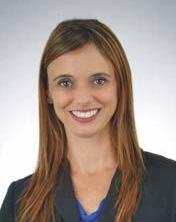
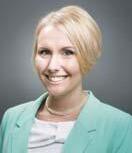
Kristiana Sartore Dragash, P.E., has begun her term as president of the Florida Water Environment Association (FWEA), following her election at the association’s annual meeting on April 17.
Dragash graduated from the University of South Florida in summer 2008 with a bachelor of science degree in civil engineering. Upon graduation, she worked with Greeley and Hansen in Tampa, primarily designing large- and small-diameter pipelines throughout the state. She began her involvement with FWEA in 2009 as the secretary for the West Coast Chapter and immediately was inspired and encouraged by the
welcoming atmosphere and camaraderie. In 2010 she cofounded the Manasota Chapter of FWEA, serving members of Sarasota, Manatee, Highlands, Hardee, and Desoto counties.
In summer 2012 she joined Carollo Engineers Inc. in Sarasota and shifted her focus to planning and hydraulic modeling of collection and distribution systems. She is now an associate and project manager at Carollo and has calibrated collection and distribution system models for clients all over the state. She has completed a wide range of projects with the company, including real-time
modeling, asset management, corrosion studies, and nitrification response and mitigation plans. She can solve any problem with the right modeling scenario and Excel spreadsheet.
Dragash was the first recipient of the FWEA Young Professional of the Year award and was appointed to serve as a director at large on the board of directors in 2014.
She is a native Floridian and lives in Lakewood Ranch with her husband, Rod, of 12 years, and their three-year-old son, Brody. They are expecting another little one around Thanksgiving of this year!
Aside from engineering, Dragash is passionate about helping people reduce their exposure to harmful chemicals in their homes and everyday products. She has an essential oil for anything that life might throw her way. S S
2018-2019 FWEA Board of Directors
Michael Sweeney President Elect
James J. Wallace Vice President
Lynn Spivey Director at Large
Paul Steinbrecher Utility Council President
Bradley Hayes Operations Council Representative
Tim Madhanagopal Director at Large
Tyler Smith Semego Director at Large
Sondra Winter Lee Secretary/Treasurer
Tim Harley Past President
Raynetta Curry Marshall WEF Delegate
Jody Barksdale Director at Large
George Cassady Director at Large
Gregory Kolb Director at Large
Lindsay Marten-Ellis Director at Large
Ron Cavalieri WEF Delegate
Suzanne Mechler Director at Large
Karen Wallace Executive Manager
Kartik Vaith Executive Director of Operations
2018-2019 FWEA Officers, Chairs, and Advisors
The following officers, directors, committee chairs, chapter chairs, and student chapter advisors began their terms at the beginning of the FWEA annual meeting in April.
BOARD OF DIRECTORS
PRESIDENT
Kristiana Dragash, P.E. Carollo Engineers Inc. 941-371-9832 kdragash@carollo.com
PRESIDENT ELECT
Michael Sweeney, Ph.D. Toho Water Authority 407-944-5129 msweeney@tohowater.com
VICE PRESIDENT
James J. Wallace, P.E. Jacobs Engineering Group 904-636-5432 jamey.wallace@jacobs.com
SECRETARY/TREASURER
Sondra Winter Lee, P.E. City of Tallahassee 850-891-6123 Sondra.Lee@talgov.com
PAST PRESIDENT
Tim Harley, P.E.
St. Johns County Utility Dept. 904-209-2626 tharley@sjcfl.us
WEF DELEGATE
Ron Cavalieri, P.E. AECOM Technical Services Inc. 239-278-7996 Ronald.cavalieri@aecom.com
Dr. Steven Duranceau, P.E. 407-823-1440 steven.duranceau@ucf.edu
UNIVERSITY OF FLORIDA
Dr. John Sansalone 352-373-0796 jsansal@ufl.edu
UNIVERSITY OF MIAMI
Dr. James Englehardt 305-284-5557 jenglehardt@umiami.edu
UNIVERSITY OF NORTH FLORIDA
Dr. Chris Brown, P.E. 904-620-2811 Christopher.j.brown@unf.edu
UNIVERSITY OF SOUTH FLORIDA
Dr. Sarina Ergas 813-974-1119 sergas@usf.edu
FAMU/FLORIDA STATE UNIVERSITY
Dr. Youneng Tang 850-410-6119 ytang2@eng.fsu.edu
FLORIDA GULF COAST UNIVERSITY
Dr. Simeon Komisar 239-590-1315 skomisar@fgcu.edu
Test Yourself
What Do You Know About Biosolids?
Donna Kaluzniak
1. According to Florida Administrative Code (FAC) 62-640, Biosolids, the definition of biosolids includes
a. screenings and grit removed from the preliminary treatment components of domestic wastewater treatment facilities.
b. solid, semisolid, or liquid residue generated during the treatment of domestic wastewater in a domestic wastewater treatment facility.
c. solids removed from pump stations and lift stations.
d. wastes removed from portable toilets and wastes removed from holding tanks associated with boats and marinas.
2. Per FAC 62-640, facilities that land-apply biosolids must submit a treatment facility biosolids plan with a Florida Department of Environmental Protection (FDEP) permit application. The plan must identify
a. a primary site for biosolids land application and at least 10 alternate land application sites.
b. each permitted biosolids application site where the facility’s biosolids are to be land-applied.
c. potential biosolids land application sites with a priority ranking.
d. the specific dates during which land application of biosolids will occur.
3. Per FAC 62-640, what type of plan must be submitted to FDEP with the permit application for an agricultural site for land application?
a. Agricultural performance plan (APP)
b. Crop fertilization and selection plan (CFSP)
c. Nutrient management plan (NMP)
d. Vector elimination plan (VEP)
4. Per FAC 62-640, biosolids used for land application are classified as Class AA, A, or B. Which three requirements determine the classification?
a. Odor production, pathogen reduction, and vector attraction reduction.
b. Pathogen reduction, vector attraction reduction, and parameter concentrations.
c. Total solids, total volatile solids, and metals concentration.
d. Vector attraction rates, pH, and volatile acid/alkalinity ratio.
5. FAC 62-640 references 40 CFR 503, Standards for the Use or Disposal of Sewage Sludge, throughout the rule. Per 40 CFR 503, there are several ways to meet the vector attraction reduction requirements. One method requires that the mass of the volatile solids in the sewage sludge shall be reduced by a minimum of
a. 11 percent.b. 18 percent.
c. 25 percent.d. 38 percent.
6. Per FAC 62-640, biosolids that are distributed and marketed as fertilizer must meet the criteria for which class of biosolids?
a. AAb. A
c. Bd. C
7. Per FAC 62-640, Class B biosolids shall only be applied to
a. agricultural sites.
b. land reclamation sites.
c. public access roads.
d. restricted public access sites.
8. Per FAC 62-640, the maximum application quantity of biosolids for land reclamation projects shall be limited to
a. 20 dry tons/acre.
b. 30 dry tons/acre.
c. 50 dry tons/acre.
d. 100 dry tons/acre.
9. Per FAC 62-640 and 40 CFR 503, the frequency of biosolids monitoring for land application varies from monthly to annually, depending upon
a. rainfall amounts and biosolids storage capacity.
b. the amount of biosolids generated in dry tons/year.
c. the size of the land application site, or sites, in acres.
d. the treatment plant capacity, annual average daily flow.
10. Per FAC 62-640, a groundwater monitoring program shall be established by the site permittee and approved by FDEP for land application sites when the application rate in the NMP exceeds
a. 100 lbs/acre/year of plant-available nitrogen.
b. 200 lbs/acre/year of plant-available nitrogen.
c. 300 lbs/acre/year of plant-available nitrogen.
d. 400 lbs/acre/year of plant-available nitrogen.
Answers on page 58
References used for this quiz:
• FAC 62-640, Biosolids
• 40 CFR 503, Standards for the Use or Disposal of Sewage Sludge
• U.S. EPA Biosolids website: www.epa.gov/biosolids
• U.S. EPA: A Plain English Guide to the EPA Part 503 Biosolids Rule, 1994 (available at www.epa.gov/biosolids)
Send Us Your Questions
Readers are welcome to submit questions or exercises on water or wastewater treatment plant operations for publication in Test Yourself. Send your question (with the answer) or your exercise (with the solution) by email to donna@h2owriting.com.
Facility Start-up Risks: A Contractor’s Perspective
Mike Alexakis
The construction of a water or wastewater treatment facility can pose many challenges and risks for all parties involved in the process. The owner, engineer, and contractor have a shared responsibility, in varying degrees, for the proper execution of the design to achieve the final desired outcome. Risks from key items, such as budget, schedules, quality control, safety, and unforeseen conflicts, are present for the majority of the construction duration.
Process start-up, though, carries the type of risk that can either deem the project a success or severely impact the final outcome, affecting scheduling, relationships, reputation, safety, and compliance. In order for the process to be a success, collaboration must serve as the backbone to properly communicate all requirements and needs.
Plant personnel and owner representatives are key to the success of the start-up process. The new treatment process must meet all the needs of the end user. There will likely be restrictions with the current or new facility that may limit the boundaries of the start-up process. This information needs to be shared
and discussed before the start-up plan is executed. A few items to consider include:
S Areas within the plant to remain online during the start-up process
S What personnel need to be available for startup operations
S Key players that can sign off on completed work or make decisions on behalf of the owner
S Allowable working hours during the start-up phase
S Key personnel to receive manufacturer training
S Available plant staff to “shadow” start-up technicians so a better understanding of the process can be gained
S Water source for filling of structures (reclaimed, potable, etc.)
S What chemicals need to be purchased?
• Will the contractor or the owner purchase them?
S “Seeding” source and the equipment and manpower needed to transfer it
S If working in a water plant, is there a restriction on the bacteriological clearance the company is to utilize?
• Who will perform sampling and testing?
S Discharge of “testing” water
S Conduct a prestart-up safety review
If the owner, or his or her representative, properly communicates the needs and requirements expected for the commissioning process, the engineer and the contractor will be one step closer to making the process a success.
The role of the engineer of record (EOR) is to assist the contractor in understanding the intent of the contract specifications, the design, and the plant operation. Understanding this intent prior to starting will influence success and reduce risk. A proactive approach by the EOR to these key preliminary tasks can set the tone for the rest of the start-up process:
S Confirm start-up testing durations, hours of operation, sign-off requirements, and main plant operation for the new process.
S Perform early review of the control description with the owner, the integrator, and the contractor to eliminate potential problems or conflicts.
S Review input/output (I/O) and terminations prior to completing the building rough-in and panel installation to eliminate costly changes later.
S Provide support during the start-up phase when conducting cable termination reviews, supervisory control and data acquisition (SCADA) screen checkouts, and start-up of equipment to help work through “bugs” and issues prior to implementing a facility-wide start-up.
S Submit final permit documents in a timely manner to speed up the process of Florida Department of Environmental Protection clearance and placing the plant in service.
S Coordinate how the documentation of testing during start-up will occur.
S Establish set points and ranges for equipment and process functionality.
Finally, it’s up to the contractor to ensure that all requirements of the contract documents are constructed to the applicable standards. A successful start-up begins with power and integration and ends with permit compliance and performance of the system. It’s imperative that the electrician and integrator are closely coordinating with all manufacturers once onsite. The contractor leads the effort in the field by bringing all parties together and by focusing on these early tasks:
S Present a start-up plan with detailed information on how each process will be checked out and started up.
S Complete all precommissioning activities, including hydrotesting and circulating water through the process successfully.
S Create a start-up schedule organized by the manufacturer and according to process needs.
S Create a training schedule.
S Obtain certificates of proper installation from the manufacturers/vendors prior to starting up the equipment.
S Organize and track all written approvals (“sign-offs”) from the engineer and the owner on all successful equipment and process start-up tasks that are completed.
·S Review permit compliance and deliverables.
·S If starting up a water plant, discuss the timeline of bacteriological testing with all parties to ensure that the samples and testing don’t “time out.”
S Formulate a plan for spare parts and operation and maintenance manual turnover.
S Set an aggressive schedule for completion of the punch list.
A facility start-up is the culmination of months or even years of work and efforts by the owner, engineer, and contractor. During this final stretch, it’s important for all parties to maintain or raise the pace to ensure that the start-up will be a success and that risk among all parties is minimized.
Managing the risks during start-up requires the efforts of the entire project team and the owner should communicate the needs, requirements, and restrictions of both the staff and the process. The engineer can provide a better understanding of the new design and intent of functionality of the new process, while keeping all parties involved within the guidelines and restrictions of permitting. Finally, the contractor has the opportunity to turn the vision, intent, and concept that the engineer and owner worked so hard for into reality. Openness and communication are true keys to project success.
Contractors Council Seeks Assistance With Events
If you’re interested in learning more about the Contractors Council, please send an email to malexakis@whartonsmith.com. With one more workshop and the upcoming BBQ competition at the FSAWWA Fall Conference in 2018, there are a lot of ways to help and contribute.
Mike Alexakis is senior project manager with Wharton-Smith Inc. in Sanford and is the FSAWWA Contractors Council vice chair. S S
The Value of Sausage Making FSAWWA SPEAKING OUT
ABill Young Chair, FSAWWA
s a long-time student of political science and public administration, I am extremely interested in how our local, state, and federal governments work. As an employee of a public utility, I know very well how the laws and rules of regulation can, and do, impact our business.
One of my favorite quotes is, “Laws are like sausages—it’s better not to see them being made.” While this may be true, AWWA offers an excellent opportunity to observe and even participate in our lawmaking process. I’m pretty sure I don’t want to go to a sausage processing facility, but I’ve been to Washington, D.C., and Tallahassee, and it’s really not so bad. In fact, AWWA and the Florida Section have developed an approach that makes it both constructive and enjoyable.
Every spring, AWWA hosts its Water Mat-
ters! Fly-In, held in our nation’s capital. Hosted by the association’s Water Utility Council, the Fly-In is the focal point for the association’s grassroots lobbying efforts. It serves to not only advance the water community’s legislative goals, but it also further establishes AWWA members and staff as sources of information on water issues.
I recently returned from Washington after my third Fly-In, and I can tell you that the power and influence exhibited by the association membership is truly impressive. Typically, day one starts with a very informative briefing on the various issues that we are facing and helpful tips on the most effective way to articulate our message to those in Congress and their staffs. The positive power in this room would make you very proud to be a member of AWWA. This year, the Florida Section was very well represented by Lisa Wilson-Davis, Kevin Carter, Chris Pettit, Mike Bailey, Chuck and Hillary Weber, Tyler Tedcastle, Mark Kelly, myself, and our section executive director, Peggy Guingona.
After the briefing, we all headed to Capitol Hill to attend scheduled meetings with key senators and representatives. Many of us make it a point to stop by our local congressperson’s
office to discuss timely issues and strengthen our relationship. Again, the association does a wonderful job by providing us with issue papers to provide clear and concise details on the issues we are advancing.
This year, our major issues regarded continued support for water infrastructure and source water protection. These initiatives are strengthened through legislative support for the Water Infrastructure Finance and Innovation Act (WIFIA) finance program and the huge farm bill, which includes major impacts on water conservation and critical cooperation with the farming community.
In addition, we are also able to inform these lawmakers of the importance of our profession. For instance, every one dollar invested in water or wastewater infrastructure increases our long-term domestic product by 3.65 dollars. Each job in water or wastewater construction or rehabilitation creates 3.68 more jobs in the United States. Conversely, not reinvesting in our nation’s water infrastructure would cost manufacturers and other businesses more than $7.5 trillion (yes, trillion) in lost sales and $4.1 trillion in lost gross domestic product through 2040.
This year we also cohosted a joint briefing in the Senate building and a reception at the Library of Congress with other water associates. This spirit of cooperation and the “One Water” concept are alive and well!
I should also point out that your Florida Section has employed a similar advocacy model in Tallahassee as well, and undoubtedly, it has been every bit as successful as the national Fly-In. We can all be proud of these efforts and should remember to give a note of gratitude to Lisa and our Utility Council for making sure we are successful in Washington and in Tallahassee.
We are being heard, and we are making a difference! S S
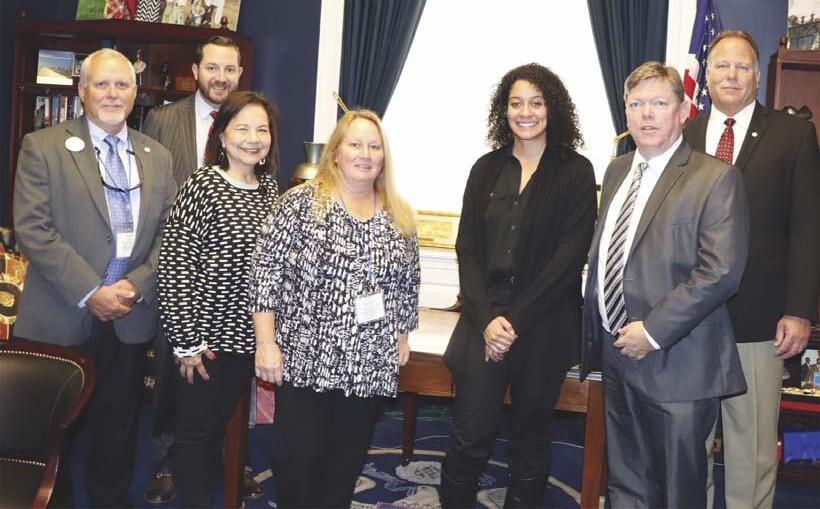
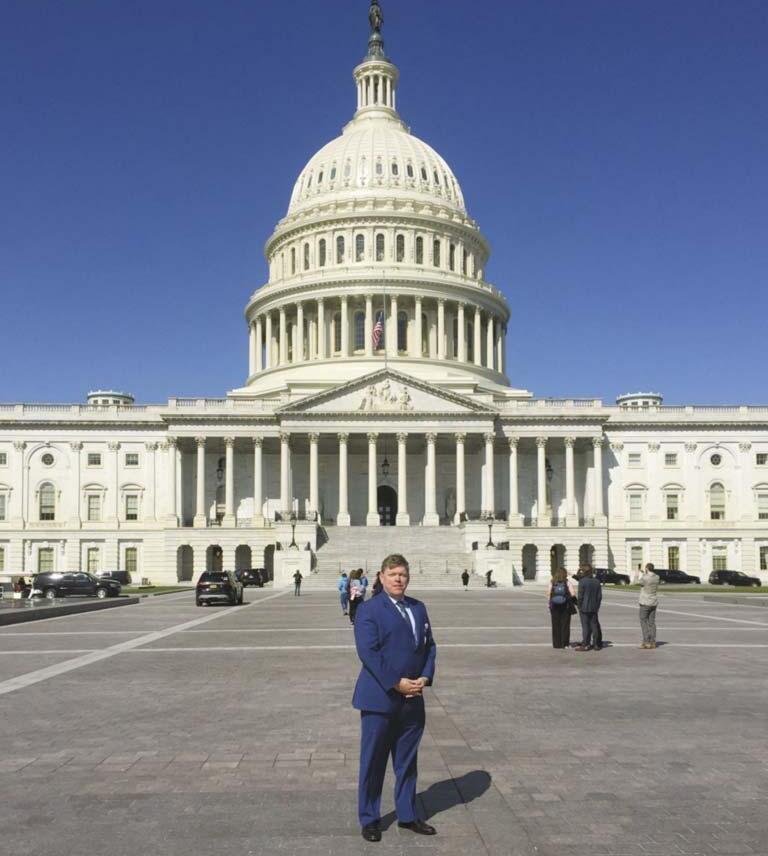
Participants in the Fly-In include (left to right): Mark Kelly, Tyler Tedcastle, Peggy Guingona, Lisa Wilson-Davis, Mo Del Villar (legislative fellow for Congresswoman Frederica S. Wilson from Florida’s 24th District), Kevin Carter, and Mike Bailey.
July
FWPCOA TRAINING CALENDAR
SCHEDULE YOUR CLASS TODAY!
August
at http://www.fwpcoa.org/forms.asp.
please contact the FW&PCOA Training Office at (321) 383-9690 or
Kevin Carter
Broward County Water and Wastewater Services
Work title and years of service.
I’ve been the assistant to the director at Broward County Water and Wastewater Services for almost three years. We are in several Broward County cities, but our administrative offices are in Pompano Beach. I have more than 25 years of experience in the water resources field.
FWRJ READER PROFILE
What does your job entail?
I primarily work as our legislative and intergovernmental affairs person at the federal, state, and local level. In many ways I see my role as a scout looking for new opportunities and challenges that our utility will see in the future. My duties also include special projects and coordination across our five divisions. So, depending on the day, I get to work with our construction engineers, chief operators, accountants, water managers, and of course, our information technology group (though that is usually a call for help!)
What education and training have you had?
I have a bachelor of science degree in agriculture (majoring in animal science) from Ohio State University and a master of science degree in marine biology from Nova Southeastern University in Davie. Plus, I have more than 25 years of learning every day!
What do you like best about your job?
Most definitely, the people! I work at a great utility and it starts at the top with great leadership from our director, Alan Garcia. We have more than 400 dedicated employees and we all work within the tremendous Broward County family. With more than 50 water utilities in the lower east coast, I enjoy interacting with south Florida’s abundant and diverse water professionals.
Working with the FWEA and AWWA utility councils is a collaborative effort, and I get to interact with all of the great people in both of these organizations. I also like the opportunities I have to work with elected officials on water topics, as they have a “full plate” dealing with all sorts of societal issues.
What professional organizations do you belong to?
I’m currently vice-chair of the AWWA Utility Council (UC), a member of the FWEAUC board of directors, and vice-chair of the FWEA Water Resources, Reuse, and Resiliency Committee. I am past board member of the Florida Stormwater Association and also a member of Florida Section AWRA.
How have the organizations helped your career?
Again—the people! Working in a state as large and diverse as Florida, we are able to all learn from each other and work together to continually provide the best service to our customers. I enjoy presenting at and participating in our excellent conferences and talking about water—even into the evening.
What do you like best about the industry? Water = Life. Being in an industry that provides the basic needs for our communities to thrive is a true privilege. Just take a look at the statistics on waterforpeople.org and you will be reminded that clean, available water is not to be taken for granted.
What do you do when you’re not working?
I love living in south Florida! I have been here for more than 28 years and enjoy anything on or near the ocean, including boating, fishing, watersports, or dining at some local seafood restaurant and enjoying the view. We have an incredibly diverse mix of cultures here and I love immersing myself in all the great music, arts, and food.
I like all sports and sometimes I get to the gym (but not enough!). I am also an adjunct professor at Broward College. Most importantly, I’m a proud dad of my son, Derek, who just finished his freshman year at Florida Atlantic University (Go Owls!).
S S
Kevin attends the 2018 AWWA Water Matters! Fly-In, held in Washington, D.C.
Members of the Florida Water and Pollution Control Operators Association (FWPCOA) may earn continuing education units through the CEU Challenge! Answer the questions published on this page, based on the technical articles in this month’s issue. Circle the letter of each correct answer. There is only one correct answer to each question! Answer 80 percent of the questions on any article correctly to earn 0.1 CEU for your license. Retests are available.
This month’s editorial theme is Biosolids Management and Bioenergy Production. Look above each set of questions to see if it is for water operators (DW), distribution system operators (DS), or wastewater operators (WW). Mail the completed page (or a photocopy) to: Florida Environmental Professionals Training, P.O. Box 33119, Palm Beach Gardens, Fla. 33420-3119. Enclose $15 for each set of questions you choose to answer (make checks payable to FWPCOA). You MUST be an FWPCOA member before you can submit your answers!
Earn CEUs by answering questions from previous Journal issues!
Contact FWPCOA at membership@fwpcoa.org or at 561-840-0340.
Articles from past issues can be viewed on the Journal website, www.fwrj.com.
Miami-Dade Water and Sewer Sludge Thickening and Dewatering Centrifuge
Pilot Studies at Two of the Southeast’s
Largest
Wastewater Treatment Plants
Manuel Moncholi, Terry Goss, Brian Stitt, and Ismael Diaz (Article 1: CEU = 0.1 WW)
1. Struvite results from highly soluble ____________ concentration in digested biosolids when adequate ammonia and magnesium are present.
a. nitrogen
b. orthophosphate
c. calcium
d. carbonate ion
2. Centrifuges separate solids from liquids by creating ____________ force.
a. gravitational
b. gravimetric
c. centrifugal
d. centripetal
3. The Metcalf and Eddy fifth edition lists __________ total solids expected for anaerobically digested waste activated and primary sludges.
a. 22 to 25 percent
b. 24 percent
c. 15 to 30 percent
d. 95 percent
4. For which following sludge is gravity thickeners poorly suited?
a. Primary sludge
b. Waste activated sludge
c. Lime treated sludge
If paying by credit card, fax to (561) 625-4858 providing the following
(Expiration
d. Combined sludge
5. At the Central District Wastewater Treatment Plant, ____________ is added to the dewatering feed, primarily for struvite control.
a. ferric sulfate
b. ferric oxide
c. ferric chloride
d. polymer
C FACTOR
Emergency Response Planning: It’s Time!
WMike Darrow President, FWPCOA
ell, it’s that time of year again—the time to review your emergency response planning. As you know, every water and wastewater utility across our great state is required to have a plan for all types of emergencies, especially since the hurricane season starts the first of June. Now is the perfect time to start reviewing your current utility or treatment plant emergency plan.
There are numerous types of emergencies that could impact your ability to service your customers. Make sure you include them in your plan and review them as well. Some uncommon issues and events to plan around are:
S Vandalism and sabotage
S Service interruptions
S Drought
S Storms and hurricanes
S Fires
S Spills
S Supervisory control and data acquisition (SCADA) breeches
We deal with a lot of issues daily that can impact customers’ service or our ability to serve
them, including line breaks and operational and lift stations issues. There seems to be a problem every day somewhere and we are very good at taking care of these issues as they come in, no matter the day or time. We are the “silent sentinels” (coined by Jeff Poteet, past FWPCOA president) of fixing these issues. But we must plan for uncommon issues, like the ones I mentioned, to ensure manageable responses to address them. Some key emergency response planning that should be updated annually include:
S Utility system information
S Personnel assignments and roles
S Emergency contact notification listing
S Equipment readiness
S Written agreements
S Training and practice
Utility system information – Develop a listing of each treatment and pumping component and all equipment in your system. Address the size and flow capacity, power voltages, amperages and backup power, fuel storage, and the runtimes for backup power or pumping capacity. Remember to include mapping, both on paper and the ability to use geographic information systems in the field, to help address field issues and locations. Also, review and update your operation and maintenance manual for each plant you are reasonable for. Review standard operating procedures (SOPs) to plan for typical and abnor-
mal events. Each event may have very different planning and SOPs to help overcome that event’s situation.
Personnel assignments and roles – Review your staffing and shifts for events like storm and post-storm operations. Split your team to have 24/7 coverage and have operators and maintenance staff to operate and maintain the water and wastewater systems. This coverage will give adequate response to incoming calls or alarms for SCADA to address the issues. Make sure to assign and follow the chain of command for notifications and decision making. Have an organization chart for each group to help with roles and inform others of their duties. Effective communication of issues, problems, and responses are perhaps the most important things in getting through an event. Hold communication and planning meetings well in advance to inform all parties and collect input for roles and responsibilities.
Emergency contact notifications – List and update all the contacts you need to take care of the business at hand, like internal team members and leadership, critical customers, regulatory agencies and statewatch offices, emergency contractors and vendors, chemical suppliers, and mutual aid partners, like Florida's Water/Wastewater Agency Response Network (FlaWARN). This will help you respond better and quicker when needed.
Team members should furnish their contact information. Also, all employees should de-
velop and review their own family evacuation plan and/or home protection plan. It’s very important for a team member’s family to be taken care of, so the team member can work effectively.
Equipment readiness – Make sure each piece of equipment is ready to work for any event, and test and maintain all of them well in advance for readiness. If you find that equipment or units are down or not working properly, make it a priority to get them back up and running before the event. Make sure there are repair parts in stock or equipment vendors available to help complete the repairs needed.
Written agreements – Gather the agreements needed for contracts used for services or suppliers annually. Often, agreements expire or change, so reviewing them will place you in a better spot to react. Look for areas of weakness and consider new contracts that will improve your ability to repair or rebuild. Review contracts for emergency backup water or wastewater interconnections, which could be a lifesaver. Lastly, update and review terms in mutual aid partnerships, like FlaWARN, for execution. Define roles and responsibilities for the partnership.
Training and practices – Review your staff positions and make sure they know their roles and expectations, and then address training where lapses are most needed. Emergency training is given by many skilled organizations out there. The FWPCOA has coursework in this area and continually assists in any way to help out where needed. I know we all get busy in our professional and personal lives, but practice of these plans and SOPs is another way to make sure you are ready to determine where the lapses are. Lessons learned post-event can help out with identifying what worked and what needs improving.
Our goal is for continuous operations and service of a water or wastewater system before, during, and after an event. It seems like expectations are even higher on us after last year’s Hurricane Irma. Planning, team members, and funding are needed now more than ever. Storm season is upon us and affects us mainly in July, August, and September in our part of the state. Florida’s operators, mechanics, and technicians have a lot of experience in this area; input from all of them should be crafted into your plan. If you have a chance, review last year’s “2017 FWPCOA Hurricane Irma: Lessons Learned Survey Results” list; it’s on our website at www.fwpcoa.org.
Here’s to your continuous service to customers and your organization’s successful operations. My thanks and gratitude go out to each and every one of you who serves his or her com-
munity so well. Keep up the effort and good things will happen.
See you in the field!
Online Institute Update
There is less than one year remaining in the 2019 license renewal cycle, so I encourage all operators to finish earning their CEUs.
– Tim McVeigh
The Online Institute presently has 82 active courses and 232 registered students, which is 46.6 percent of capacity. As the year continues and time to get CEUs decreases, more operators will get their CEUs online. So what are you waiting for?
Use the following link for the course listings: http://fwpcoa.clubexpress.com/docs.ashx ?id=259919 or Email Tim for questions at ProgAdmin@fwpcoa.org.
Some popular online short courses include:
S Stormwater C
S Wastewater Collection C
S Water Distribution Levels 2 and 3
S Wastewater Class C Treatment Plant Operator
S Class C Drinking Water Treatment Plant Operator
S Class B Treatment Plant Operator
A Wastewater Class B Treatment Plant Operator course is now in development. S S
For further information on the school, including course registration forms and hotels, visit: http://www.fwpcoa.org/FallStateShortSchool
SCHEDULE
CHECK-IN:August 12, 2018 1:00 p.m. to 3:00 p.m.
CLASSES:
Monday – Thursday........8:00 a.m. to 4:30 p.m. Friday........8:00 a.m. to noon
P Wednesday, August 15, 11:30 a.m. P
TALK SAFETY
This column addresses safety issues of interest to water and wastewater personnel, and will appear monthly in the magazine. The Journal is also interested in receiving any articles on the subject of safety that it can share with readers in the “Spotlight on Safety” column.
Walk on the Mild Side: Avoiding Slips, Trips, and Falls
Aslip, trip, or fall at work can lead to injuries—and even death. In 2015, injuries from these accidents resulted in 229,190 cases involving days away from work, and 724 workers died, according to the 2016 edition of the National Safety Council chartbook, “Injury Facts.” These sobering statistics are a stark reminder that workers need to know how to prevent slips and trips.
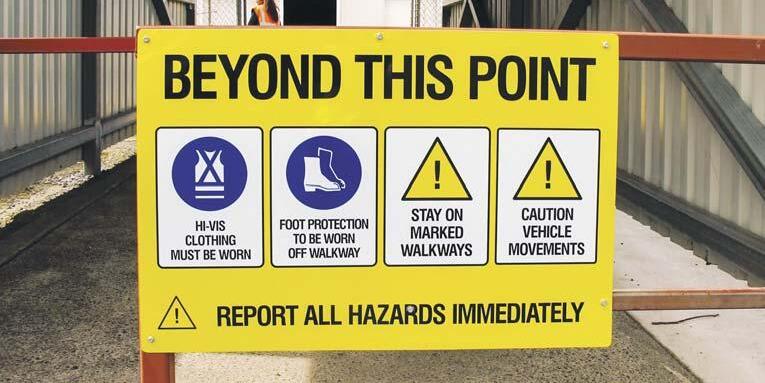
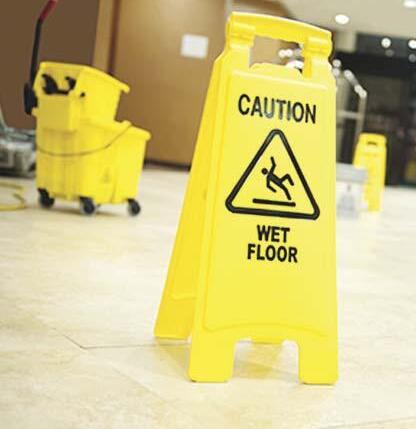
Water and wastewater utilities, by their nature, have many potential hazards that can cause slips, trips, and falls. These include slippery surfaces from water or liquid chemicals, and tripping hazards, such as hoses, power cables, and irregular surfaces. These types of incidents account for 15 percent of all accidental deaths and are the cause of 25 percent of all reported on-the-job injuries.
Reasons for Slips
Slips occur when there is too little friction or traction between feet (footwear) and the walking or working surface, resulting in a loss of balance. Surfaces and situations that can cause slipping include the following:
S Metal surfaces, such as ramps and gang planks
S Mounting and dismounting vehicles, ladders, and equipment
S Loose, irregular surfaces, such as gravel
S Highly polished or waxed floors
S Transitioning from one surface to another, such as concrete to tile
S Sloped, uneven, or muddy walking surfaces
S Loose, unanchored rugs or mats
S Loose floorboards or shifting tiles
S Wet, muddy, or greasy shoes
S Dry product or wet spills
S Natural hazards, such as ice, sand, leaves, and other plant debris
Reasons for Trips
Trips happen when the moving foot of a person strikes an object, causing loss of balance. Situations and materials that contribute to trips include the following:
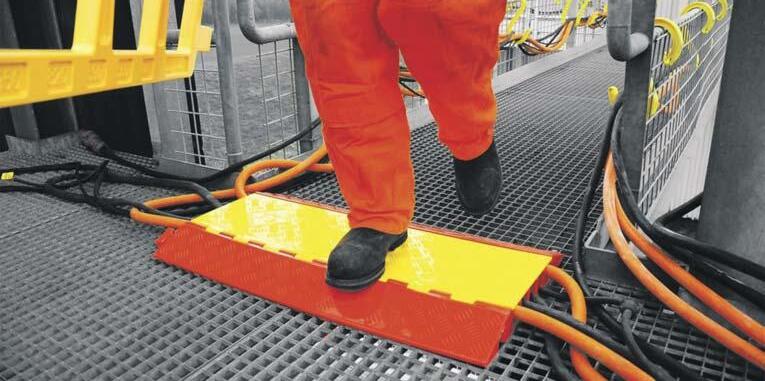
S Uncovered hoses, cables, wires, or extension cords across aisles or walkways
S Clutter or obstacles in aisles, walkway, and work areas
S Open cabinet, file, or desk drawers and doors
S Changes in elevation or levels—as little as a ¼-in. difference can cause a trip
S Unmarked steps or ramps
S Rumpled or rolled-up carpets or mats, or carpets with curled edges
S Irregularities in walking surfaces
S Thresholds or gaps
S Missing or uneven floor tiles and bricks
S Uneven surfaces or objects protruding from walking surfaces
S Environmental conditions, such as poor lighting, glare, shadows, excess noise, or temperature
S Bulky personal protective equipment, including improper footwear
Reasons for Falls
The Centers for Disease Control and Prevention states that falls can happen in all occupational settings, and circumstances associated with fall incidents in the work environment can involve the following:
S Slippery, cluttered or unstable walking/ working surfaces
S Unprotected edges
S Floor holes and wall openings
S Unsafely positioned ladders
S Misused fall protection
To reduce the risk of falling at work, the Occupational Safety and Health Administration (OSHA) recommends paying attention to your surroundings and walking at a pace that’s suitable for the surface you’re on and the task you’re performing. Additionally, walk with your feet pointed slightly outward, make wide turns when walking around corners, and use the handrails on stairs.
Know Your Surroundings: Institutional Control Measures
Inadequate awareness of irregularities is a major contributor to most accidents. The human factor may be exacerbated by illness, poor vision, medications, or fatigue. Tripping and slipping can also be the result of carrying or moving cumbersome objects or too many objects at one time; walking while distracted by food, or cellphones or other handheld devices; taking unapproved shortcuts; and rushing.
There are many things that a company’s management and workers can do to ensure a safer workplace, including the following:
S Practice good housekeeping; maintain clear, tidy work areas free of clutter.
S Contain work processes to prevent discharge, splatter, or spillage of liquids, oils, particles, and dust onto walking surfaces.
S If obstacles can’t be moved, mark them and reroute traffic around them.
S Secure all electrical and phone cords out of traffic areas; tape them to the floor or place them beneath a ramp.
S Keep work areas, aisles, stairwells, and pathways well lit.
S Mark or highlight step edges and transition areas (changes in elevations) with reflective tape and/or signage.
S Install slip-resistant floors in high-risk areas.
S Provide hand rails along narrow or uneven walkways and stairs.
S Provide effective drainage on work platforms.
S Keep aisles and passageways clear of obstructions and in good repair.
S Clear outside areas of natural hazards, such as leaves, loose gravel, and snow. Treat slippery surfaces, such as ice, with sand or salt.
S Ensure that mats and carpets have nonskid backing and the edges aren’t curling up.
S Install warning signs or hazard cones in areas prone to slipping, tripping, and falling hazards.
Footwear Makes a Difference
Worn out, inappropriate, or improperly fitting footwear is responsible for about 25 percent of slip and fall accidents. Oversized shoes allow the foot to slide and lose contact inside the shoe. This increases the risk of heels catching the edge of a stair tread and reduces the ability to regain control if the shoe slides on a slick surface.
People walk heel first, so make sure to check shoe heels for signs of wear. Badly worn heels are particularly risky; as the heel material wears away, a hard, smooth surface (often plastic or wood) is exposed and becomes the first point of contact with the floor.
Flat-soled shoes help reduce slips and falls by maximizing the surface area in contact with the floor and minimizing the risk of catching or tripping on a stair tread; for example, shoes with a 2-in. raised heel reduce contact with the floor by 40 percent. For snowy conditions, shoes or boots with hard rubber soles and deep cleats are appropriate; however, they do not perform as well indoors. Slip-resistant shoes for wet or oily surfaces feature a multidirectional tread pattern to minimize hydroplaning and a softer rubber sole to help grip hard-surfaced floors.
Personal Control Measures
All workers should take these steps every day and at all times for a safer workplace:
S Follow safe routes—no shortcuts!
S Don’t wear sunglasses in low-light areas.
S Don’t carry items that obstruct your view.
S Use guardrails and handrails.
S Slow down and pay attention to where you are walking!
For more information, see OSHA’s recommendations on slips and falls at https://www.osha.gov/SLTC/etools/hospital/h azards/slips/slips.html, or visit the National Safety Council website on fall prevention at http://www.nsc.org/safety_home/HomeandR ecreationalSafety/Falls/Pages/Falls.aspx. S S
FWEA FOCUS
Setting Up for a Successful 2018-2019!
IKristiana S. Dragash, P.E. President, FWEA
t is a surreal experience to be writing my first article as FWEA president for the Florida Water Resources Journal. I have read this magazine for the past 10 years and have been thrilled to receive opportunities to contribute to it. Now I get to write an article each month for a year? Pinch me!
Board of Directors Changes
For my first message to you I wanted to summarize and explain a few of the important changes and improvements that the FWEA board of directors (BOD) implemented to start off the 2018-2019 fiscal year.
You may have noticed a couple more names than expected when the new directors at large (DALs) were announced at our annual meeting at the Florida Water Resources Conference (FWRC) in April. That’s because the BOD added two new DAL positions to the board this year— increasing their number from six to eight. Why the increase, you ask? Well, in addition to the two new committees created last year—the Manufacturers and Representatives Committee (MARC) and Contractors Committee—we also saw the need to create new liaison roles to facilitate better communication between FWRC and the WateReuse Association. Having two additional DALs will make it easier to support the new committees, fill new roles, and give more support to our existing chapters and committees. For my part, I’m confident that increasing the number of DALs will lighten the load for everyone, improve overall communication, and increase support for chapters and committees.
Students and Young Professionals Involvement
The next change is especially important to me as it will benefit our association and young professionals (YPs) in countless ways. The past chair of the Student and Young Professionals Committee (SYPC), Tyler Smith Semego, is now one of our DALs. She will support the committee and the eight student chapters:
S Florida Atlantic University
S Florida International University
S University of Miami
S University of Florida
S University of South Florida
S University of Central Florida
S Florida Gulf Coast University
S Florida Agricultural & Mechanical University/Florida State University
In part, this change will support the continued success of the Student Design Competition (SDC). This annual event is one of the largest line items on FWEA’s budget and requires significant coordination among board members, the SDC organizers, universities and student chapters, faculty advisors, and even local chapters.
Aside from its importance from a financial investment perspective, this competition gives students real-world experience and the opportunity to network with professionals and (hopefully) find the right fit in our industry. In fact, many of the participants in SDC wind up becoming engaged leaders in the association on both the local and state levels.
Simply put, making the past chair of the committee a DAL will streamline communications and coordination between the SYPC and the BOD for one of our most important annual events. Previously, student chapters were assigned to the same DALs as the local chapter. While most of the DALs are pretty familiar with the SDC, none of them are as familiar with it as the past chair of SYPC. Putting all of the student chapters under one DAL creates a single point of contact, someone who is intimately familiar with SDC, thereby improving communications between the faculty advisors and SYPC and BOD. Since SDC and FWRC somehow seem to always happen around graduation time, we will all benefit from
Tyler Smith Semego
more efficient communications among the faculty advisors, SYPC, BOD, and FWRC organizers. In addition, Tyler will work with the other DALs, SYPC, and local chapters to make sure that universities get consistent information about SDC from FWEA, either through presentations to universities or in the course of our normal communication. Our goal is to provide a level playing field so each university has an equal chance of success in the competition—including playing matchmaker between universities and utilities that have projects the universities can tackle.
Succession Planning
As if the previous items I mentioned weren’t reason enough to be excited, there’s more! Succession planning is a key to success in our industry. Many of our seasoned professionals are retiring, and while new engineers are entering the field, there is a significant experience gap across the industry and in our association. With the past chair of SYPC serving as a DAL, the BOD will have an escalator of talented and passionate young professionals who will become experienced with the policies, procedures, and internal operations of BOD.
Serving on the BOD has given me a broad view of this incredible association and has opened my eyes to the hundreds of outreach, professional development, and member appreciation events that take place each year throughout the state. I am extremely excited to watch new YPs grow into their roles and get to see the strengths, weaknesses, successes, and challenges that our association faces.
So, why is this so important to me? Succession planning and empowering leaders and YPs hits close to home, to say the least. I am in this position because of past FWEA leaders who have lifted me up, believed in me, and empowered me. I cannot put into words the growth I have experienced over the past four years of serving on this board. I am grateful for this experience and the chance to continue serving an association that has done so much for me personally and professionally.
I could not be any more excited to give that same experience and opportunity to more YPs. The future of our association is extremely bright and it’s of the utmost importance that, as leaders and managers, we take a minute to remember where we came from and extend our hand to help those in the next generation find their greatness. S S
News Beat
HDR subcontracted with New England Fertilizer Company (NEFCO) to complete facility design and construction of a biosolids processing facility for the Solid Waste Authority of Palm Beach County. Responsibilities for the project include the overall management of the permitting, design, procurement of engineered equipment, providing field staff during construction, and holding an electrical subcontract and subconsultant agreement for assistance with permitting and site development.
Highlights of the design-build project include:
S Eliminates land application of biosolids
S Creates a useful product
S Utilizes landfill gas
S Serves multiple wastewater treatment plants
S Will generate revenue
The facility consists of biosolids receiving, storage, and processing areas, along with electrical, mechanical, and administrative areas, all of which are totally enclosed within a single 27,800-sq-ft precast concrete building. Adjacent to the building are two 250-dry-ton product storage silos, two regenerative thermal oxidizers (RTOs) with a 137-ft by 7.5-ft diameter steel stack, two cooling towers, two building odor control scrubbers, and standby generation equipment. The process consists of thermally drying the biosolids with the use of two triple bypass dryers and the appropriate supporting equipment. The dryer and RTOs are fueled with landfill gas and backed up by natural gas.
The $27.8 million biosolids processing facility uses 100 percent landfill gas to process up to 600 wet tons per day of biosolids generated at five wastewater treatment plants in the county. The drying system uses two rotary drum dryers designed to utilize landfill gas, and natural gas or propane gas as fuel sources for heating the drying gas stream. A burner is employed with a smart valve system that employs multiple operational curves to ensure that the correct air-to-fuel ratio is utilized depending on the fuel source selected. Landfill gas with methane concentrations between 50 and 60 percent is combusted in the burner, generating the 30 to 40 mil BTU/hr per dryer of drying energy required. The process produces a high-grade, marketable organic fertilizer for horticultural applications. The process is safe and sustainable and can produce a revenue stream. Using the landfill gas makes use of a byproduct that was wasted, as well as reducing air emissions at the landfill. S S
Miami-Dade Water and Sewer Sludge Thickening and Dewatering Centrifuge
Pilot Studies at Two of the Southeast’s
Largest Wastewater Treatment Plants
Manuel Moncholi, Terry Goss, Brian Stitt, and Ismael Diaz
Miami-Dade County embarked on a biosolids planning effort in 2006 and produced a final biosolids master plan in 2008. The goal of the plan was to determine a path forward for Miami-Dade Water and Sewer Dept. (MDWASD) to process biosolids in an efficient and effective manner that would meet future growth and upcoming regulatory requirements in the state of Florida.
Several capital programs and a decade later, MDWASD is in the mist of constructing, design, and planning aspects of that biosolids master plan that so fundamentally showed that, through better technology, new philosophies in biosolids treatment, better appreciation for the environment, and purpose of the end product, there was a more sustainable way.
One of the early key observations of that biosolids master planning effort was that sludge gravity thickening in the constantly hot and humid conditions of south Florida is very prone to septic conditions. These conditions manifest in poor sludge thickening (lower thickened sludge concentrations), a high solids rejection rate (poor solids capture), and frequent process upsets, resulting in the bulking of the sludge blanket. In essence, gravity thickeners are primarily designed for primary, lime, and combined sludges, but poorly suited for waste activated sludge (WAS), producing lower sludge underflow concentration and lower solids recovery (WEF MOP No. 8, fifth edition, 2008).
Miami-Dade County’s experience with normal operation of sludge gravity concentrators has been a constant battle to fight process failure, rather than an opportunity of optimizing a process for better performance. The solution and design consideration proposed was the basis of a multiplant design-build project with mechanical thickening of sludge to 5 to 6 percent total solids (TS) from the current 2 to 4 percent TS thickened sludge concentrations. As a part of the MDWASD consent decree with the U.S. Environmental Protection Agency (EPA), the utility agreed to rehabilitate its exist-
ing gravity thickening process at its South District Wastewater Treatment Plant (SDWWTP) and Central District Wastewater Treatment Plant (CDWWTP). In the progression of initial planning efforts at the behest of the utility’s operations staff, process engineers, and local regulators, the plan changed from rehabilitation of the existing thickening process to something proven to work in hot and humid climates, be easier to properly operate and maintain, and produce much higher thickened sludge concentrations in a stable process.
The debate concerning rotary drum thickeners, gravity belt thickeners. and thickening centrifuges went on throughout the basis of the design period. Due to their high throughput, space considerations, and the utility’s familiarity with dewatering centrifuges to allow for similar operations and maintenance, centrifuges were selected as the technology to design around for thickening (WEF MOP No. 11, sixth edition, 2008). This in turn deemed that careful study of centrifuges was merited based on concerns over the specific sludge conditions and downstream process impacts at both plants.
In tandem with changes to sludge thickening, the anaerobic digestion process at each plant is being modified from two-stage mesophilic anaerobic digestion (with heated and mixed primary digesters and unheated, minimally mixed secondary digesters) to singlestage mesophilic anaerobic digestion at CDWWTP and acid-gas mesophilic anaerobic digestion at SDWWTP, with all rehabilitated digesters having the capacity for heating and mixing. As the thickened sludge concentration would be higher, the study incorporated mesophilic anaerobic digestion at steady state under these high-feed solids condition at a 20day detention time, as these would be the proposed future design condition.
Due to the equipment age and the vast improvements in energy efficiency of newer, lighter machines, the dewatering centrifuges were slated for replacement as part of the consent de-
Manuel Moncholi is chief of the operations program management division at MiamiDade Water and Sewer Dept. and a Ph.D. candidate at Florida International University in Miami. Terry Goss is biosolids practice leader at AECOM Water in Raleigh, N.C., and Brian Stitt is senior project manager at AECOM Water in Miami. Ismael Diaz is project manager at Gannett Fleming in Miami.
cree. The ripple effect of the aforementioned process changes impact-digested sludge concentrations, and potentially, sludge dewaterability. The pilot study included the testing of the future dewatering feed sludge conditions on both the dewatering centrifuge design considerations and final dewatered sludge quality and quantity to achieve a 24 percent cake solids concentration, with 95 percent solids capture rate.
Facility Background
The SDWWTP is located in the southeastern portion of Miami-Dade County and serves its southern and southwestern portions. The plant is a high-purity-activated sludge secondary treatment facility, with a permitted capacity of 112.5 mil gal per day (mgd).
The SDWWTP produces only WAS, and wasting is controlled using a modulating valve and flow meter that is tapped off at the return activated sludge pumps. The WAS is mixed with polymer in the piping and sent to four 55-ft-diameter gravity thickeners with 13-ft side water depth. The gravity thickeners thicken the solids to 2 to 3 percent total solids (TS) before being stabilized in twelve 105-ft-diameter anaerobic digesters, each with a nominal operating volume of 1.5 mil gal.
The digesters are arranged in three clusters of four digesters per cluster, where two digesters per cluster operate as primary digesters and two
operate as secondary digesters. Digester Cluster 3 normally operates with two of the digesters acting as sludge storage tanks before dewatering. Digester 9 is located in Cluster 3 and acts as a primary digester that discharges to Digester 10, which acts as a secondary digester. The digested biosolids are further dewatered using four Alfa Laval PM 75000 centrifuges, which achieve 18 to 22 percent TS. The sludge fed to the centrifuges is currently conditioned using a dry polymer-type system.
The CDWWTP, located on Virginia Key, is the oldest existing sewer treatment plant operated by MDWASD and was originally constructed in 1956. The CDWWTP is a high-purity oxygen-activated sludge secondary treatment facility, with a permitted capacity of 143 mgd. The plant has two separate liquid processing streams: Plant 1 is rated at 60 mgd average daily flow (ADF) and Plant 2 is rated at 83 mgd ADF.
The CDWWTP produces only WAS, which is mixed with polymer in the piping and sent to eight 55-ft-diameter gravity thickeners with a 13-ft side water depth. Both Plant 1 and Plant 2 contain four gravity thickeners each. The gravity thickeners thicken the solids to 2 to 4 percent TS before being stabilized in twenty-four 105ft-diameter anaerobic digesters, each with a nominal operating volume of 1.5 mil gal, operated under two-stage mesophilic conditions. Plant 1 consists of two digester clusters, each with four digesters, and Plant 2 consists of four digester clusters, each with four digesters. The digested biosolids are further dewatered using Alfa Laval DS 706 centrifuges, which achieve greater than 25 percent TS. The sludge fed to the centrifuges is currently conditioned using a dry polymer-type system. Ferric sulfate is also added to the dewatering feed primarily for struvite control.
The CDWWTP also receives primary sludge and WAS from the North District Wastewater Treatment Plant (NDWWTP). The sludge transfer building at NDWWTP houses four sludge transfer pumps with variable speed drives. The pumps are used to pump sludge through two 16-in. force mains. The force mains are parallel for about 10 mi before they join at an interconnection. From the interconnection, sludge can be directed to the sewage collection system of CDWWTP (Force Main #2) or to an extension of one 16-in. force main that continues another 6 mi, where it discharges to the gravity sludge thickeners located at Plant 2 of CDWWTP (Force Main #1). The sludge from NDWWTP contains an exorbitant amount of rags, plastics, and grit, which have historically been problematic for CDWWTP sludge thickening operations. Screening of NDWWTP
sludges will be implemented to remedy this operational challenge.
Design Considerations for Sludge Thickening and Dewatering Centrifuges
In general principle, a centrifuge behaves similarly to clarifiers and gravity thickeners in that physical separation of solid from liquid is a result of gravity and can be aided by metal coagulants and organic polymers, which increase particle density and promote flocculation. The advantages of centrifuges to enhance the rate or settling, sludge concentration, and solids recovery is a result of centripetal forces being thousands of times greater than the gravitational force experienced in a clarifier. The hydraulic capacity of a centrifuge can be expressed as a function of the centrifuges dimensions and the acceleration force experienced within the centrifuge due to the speed of rotation of the centrifuge, as shown in Equation 1 (WEF MOP No. 8, fifth edition, 2008).
Equation 1
Where:
S = theoretical hydraulic capacity (cm2); l = centrifuge bowl’s effective clarifying length (cm);
w = centrifuge bowl’s angular velocity (rad/s);
g = acceleration from gravity (m/s2); r1 = radius from centrifuge centerline to the liquid surface in the centrifuge bowl (cm); r2 = radius from centrifuge centerline to the inside wall of the centrifuge bowl (cm).
The equation helps in determining the maximum hydraulic capacity for a size of a machine and operational settings. Sizing a facility assists in calculating a minimum number of units to achieve a hydraulic throughput. Unfortunately for design and operations, centrifuge performance is additionally dependent on the input sludge conditions, polymer dose, metal salt dosing, pumping considerations, and other factors. Due to the variability of sludges between treatment plants, even those with the same treatment processes and influent wastewater characteristics that determine the realworld number of centrifuges to successfully process a plant’s sludge to both a certain sludge concentration and solids recovery, while managing chemical and power costs pilot testing, is essential (WEF MOP No. 8, fifth edition, 2008).
Pilot Study Overview and Objectives
To better establish performance criteria for the new thickening and dewatering centrifuges, a nearly year-long centrifuge thickening, diges-
Continued on page 32
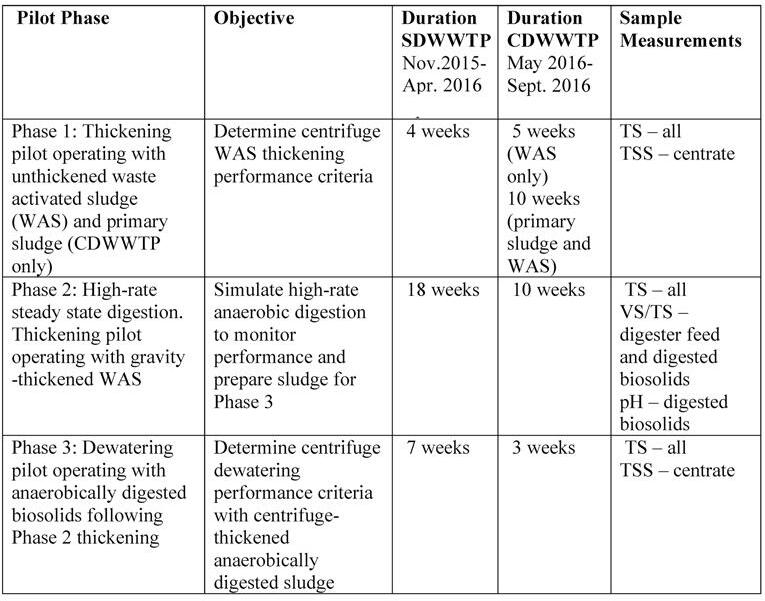
Table 1. Summary of Pilot Testing Phases
Continued from page 31
tion, and centrifuge dewatering pilot study was conducted at SDWWTP and CDWWTP. The pilot study was set up to simulate future thickening, digestion, and dewatering operating conditions to establish thickening and dewatering performance criteria. The pilot operation was conducted in three distinct phases at each plant, as outlined in Table 1, with critical samples taken throughout each phase pertinent to understanding equipment performance and setting design criteria.
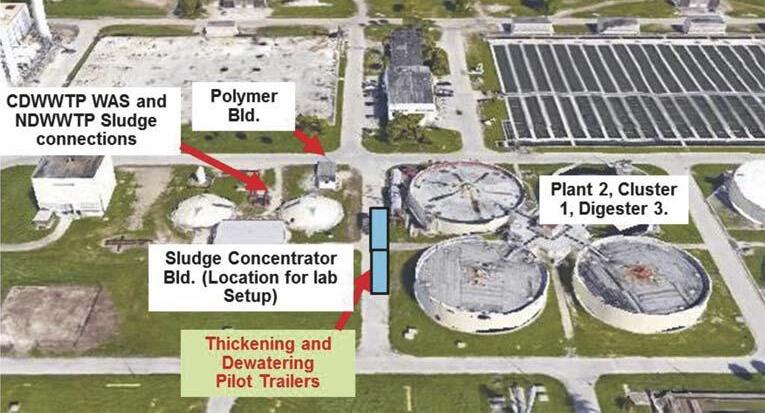
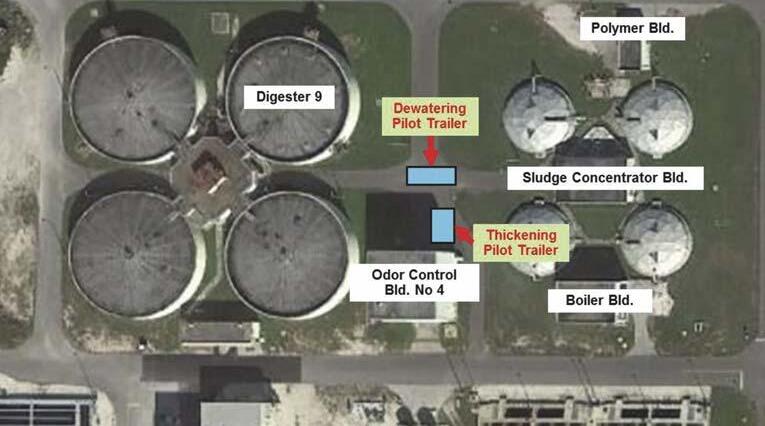
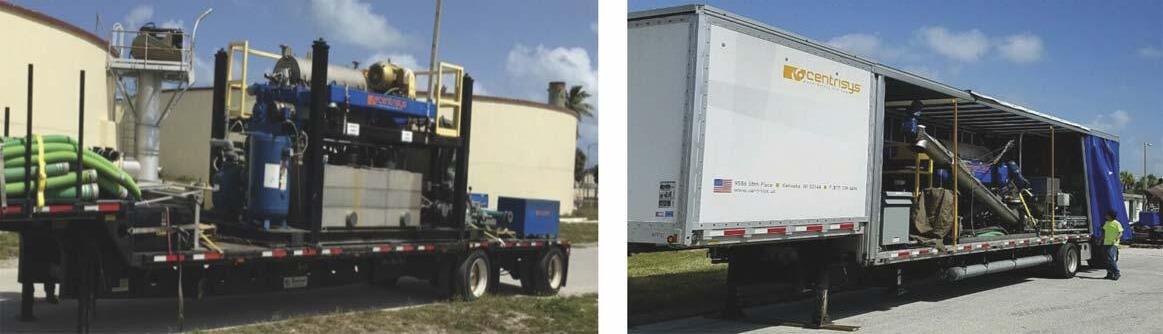
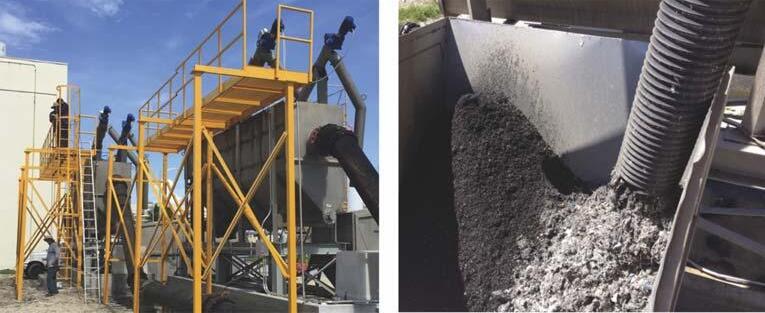
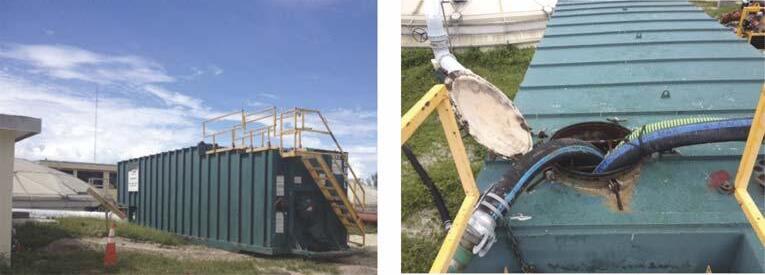
Figures 1 and 2 show a plan view layout of the sites and identify the locations for the centrifuge thickening and dewatering pilot trailers. Figure 3 provides photos of the pilot testing trailers, which were selected after a competitive bidding process. The program management and construction management (PMCM) team oversaw the piloting effort, with outstanding support from SDWWTP staff.
Periodic samples collected throughout the pilot operation were all analyzed for TS. During Phases 2 and 3, the PMCM team regularly monitored the volatile solids (VS) content of the thickened sludge fed to the digester and digested biosolids samples. Digested biosolids pH was measured and the centrate samples were analyzed for total suspended solids (TSS). College interns were trained to perform the sampling and laboratory analysis throughout the duration of the pilot testing period.
South District Wastewater Treatment Plant Phase 1: Thickening Pilot Testing
The Phase 1 piloting operation was based on feeding unthickened WAS to the pilot thickening centrifuge. The purpose of the Phase 1 operation was to determine the optimum polymer design conditions and performance of the centrifuge thickening. The
Figure 1. Central District Wastewater Treatment Plant Pilot Site Plan Showing Centrifuge Installation
Figure 2. South District Wastewater Treatment Plant Pilot Site Plan Showing Centrifuge Installation
Figure 3. Photos of Pilot Equipment: Thickening (left) and Dewatering (right) (courtesy of Centrisys)
overall target for the centrifuge thickening performance, as stated in the basis of design and specifications, was to thicken the WAS to 5.5 percent TS while maintaining greater than 95 percent solids recovery; determining the necessary polymer dose to achieve this performance is also important. Parameters that were adjusted for the centrifuge thickening included the pool depth, bowl speed, and differential scroll speed (Goss, et al.).
Thickening Pilot Testing: No-Polymer Operation
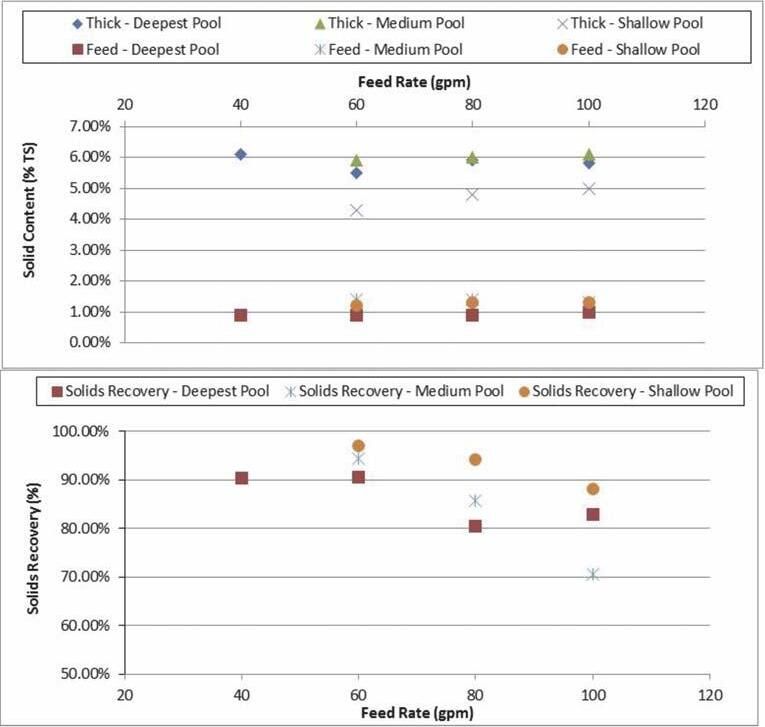
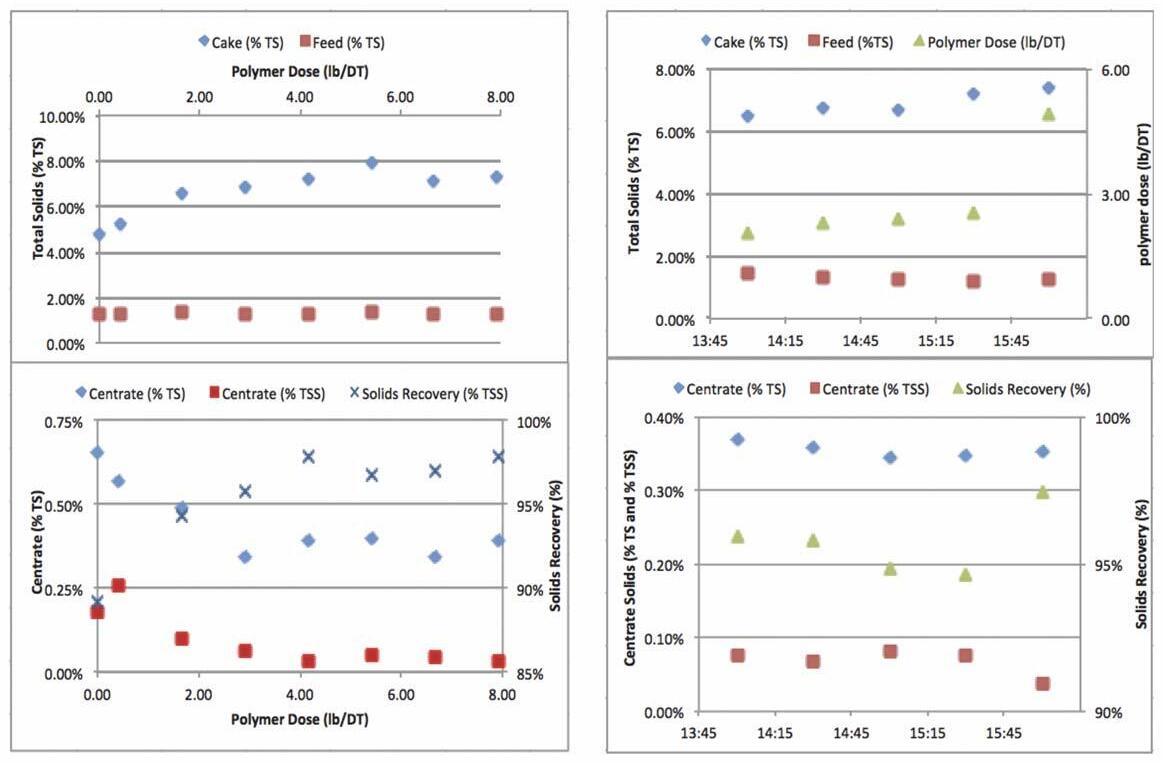
The system initially started up on lower sludge flows, with no polymer injection. Figure 4 summarizes the operation, without polymer, for a medium bowl speed equal to 2,590 revolutions per minute (rpm) and differential speed of 12 rpm, with flow rates ranging from 40 to 100 gal per minute (gpm).
This operation showed that it was possible to thicken the sludge up to 6 percent TS without the use of polymer, but at higher throughputs (above 60 gpm), the solids recovery was sacrificed. The tests were conducted at a deep pool depth, a medium pool depth, and a shallow pool depth. The trend shows that, at the shallowest pool depth, solids recovery improved, but total thickened solids were sacrificed. The thickened solids concentration at the deep and medium pool depths were nearly the same, but it should be noted that the feed solid content was lower when testing the deepest pool depth (0.9 percent TS),while the feed solids were closer to 1.4 percent solids when testing the medium pool depth. If testing was done on the same feed solids concentration, it would be expected that the solids would be thicker at the deepest pool depth.
Results of the testing without polymer indicated that it’s possible to maintain the desired thickened TS concentrations without the use of polymer. Although the operation without polymer may sacrifice solids recovery, future operation at this condition may be desired when sludge production is below design capacity, as it could reduce operation and maintenance costs associated with polymer consumption.
Thickening Pilot Testing: Emulsion Polymer Setup and Initial Testing
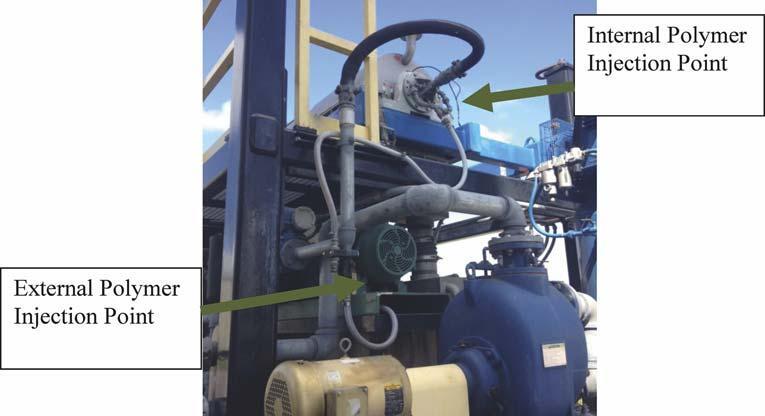
The pilot unit was set up to allow injection of polymer at two locations, as illustrated in Figure 5, either directly into the bowl of the unit (internal injection) or in the sludge feed line upstream of the centrifuge inlet (external injection). Polymer flow was measured during each sampling event using a calibration column located on the pilot trailer.
The initial polymer used was PRAESTOL®
K144-L, which is a cationic, high-molecularweight emulsion polymer. Polymer dosage, using internal injection, was slowly increased at a constant throughput of 100 gpm, while visually monitoring the clarity of the centrate. The testing was conducted at the shallowest pool depth and a differential speed of 12 rpm. Once
polymer was added, the bowl speeds were reduced from 2,590 rpm to between 1,900 to 2,100 rpm to keep the thickened solids from being too thick. The results showed that, with the increased polymer dosages and reduction in bowl speed, the thickened solid content re-
Continued on page 34
Figure 4. No-Polymer Operation, Medium Bowl Speed (2,590 rpm)
Figure 5. Thickening Polymer Injection Point
mained steady, but the solids recovery improved.
Once relatively clear centrate was achieved, the flow rate to the machine was increased to maximize throughput, while optimizing solids recovery (based on visual observations of centrate quality). In addition, other cationic, high-molecular-weight emulsion polymers were tested in the machine and
optimization testing showed that the polymer worked the best.
Thickening Pilot Testing: Dry Polymer Setup
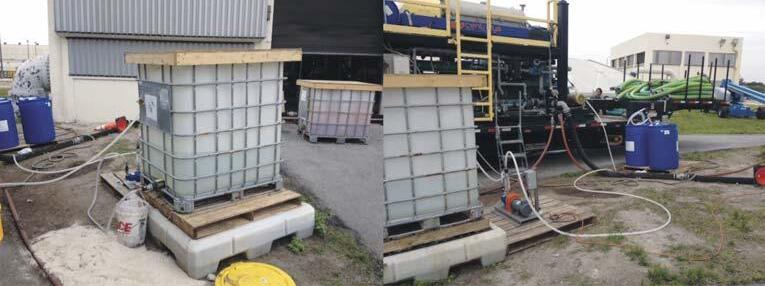
The Centrisys thickening unit contains an emulsion polymer system and is not set up with the provisions to operate on dry polymer, so a creative solution was required to facilitate testing dry polymer in the pilot centrifuge. In order to allow the testing, one of the SDWWTP poly-
mer makeup systems (not currently in use), was used to make up the dry polymer solution, which was pumped to a tote that was connected to a dedicated portable pump to meter the dry polymer solution into the centrifuge. Photos of the setup are provided in Figure 6. The pump on the trailer used for emulsion polymer was too small to pump the dry polymer solution. A calibration curve was developed for the polymer pump by a series of bucket tests conducted at different pump speeds and the curve was compared to the theoretical zero pounds per sq in. (psi) pump curve, which showed good convergence. The dry polymer used for testing was Polydyne C-3283, which is the polymer the plant currently uses in its dewatering centrifuges.
Thickening Pilot Testing: Results
Pilot tests were run to further determine results for the centrifuge thickening operation. The results from the optimization trials showed that good performance could be achieved with medium bowl speeds of 2,400 to 2,600 rpm. At a lower flow rate of 100 gpm, an emulsion polymer dose of 1 pound per dry ton (lb/DT) showed good results, but as the flow was increased to 150 gpm, at least 2 lb/DT were needed. The higher polymer dose requirements at higher flows also correlated to the point where external polymer injection provided better results than internal polymer injection.
The polymer curves and flow curves conducted during the performance testing period were to further test the limits for the operational parameters. Additional performance testing was conducted in March 2016 using the plants dry polymer (Polydyne C-3283). The purpose was to repeat the November 2015 testing, but with dry polymer that more closely represents future operation.
Thickening Pilot Testing: Polymer Curve Results
Polymer curve tests were conducted by maintaining a constant volumetric throughput of sludge feed to the centrifuge, but changing the polymer dose to measure the impact. With the exception of changing polymer dose, all other parameters on the centrifuge remained the same for each polymer curve test. In November 2015, three different polymer curves were generated for the 144-L emulsion polymer at 100, 150, and 170 gpm WAS flow rates through the pilot centrifuge. In March 2016, an additional 144-L emulsion polymer curve was conducted at 130 gpm and several dry polymer curves were conducted at 130, 150, and 170 gpm.
Continued on page 36
Figure 7. Emulsion Polymer: 130 and 150 gpm WAS Feed, Medium Bowl Speed
Figure 6. Temporary Dry Polymer Setup
Continued from page 34
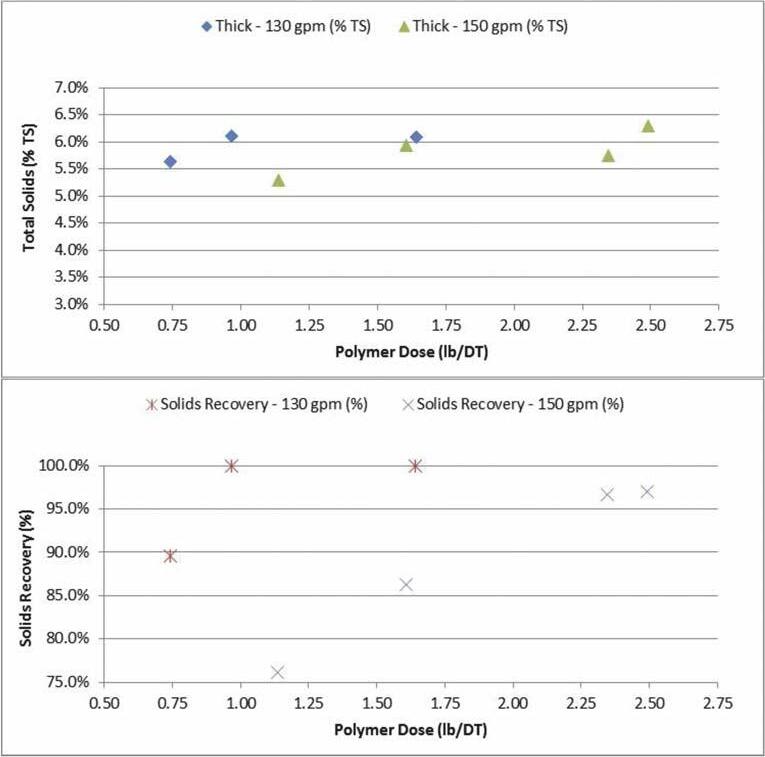
Figure 7 also shows the data for emulsion polymer curves at the 130 and 150 gpm WAS feed, conducted at medium bowl speed (2,400 to 2,600 rpm). At 130 gpm WAS feed, the curve was conducted with internal polymer injection, and at 150 gpm WAS feed, the curve was conducted with external polymer injection. The concentration of the WAS during this testing ranged from 1.1 to 1.5 percent TS.
As shown in Figure 7, at 130 gpm WAS feed with internal emulsion polymer injection and a deep pool depth, good performance is obtained for polymer doses greater than 1 lb/DT active achieving close to 6 percent TS. At polymer doses greater than 1 lb/DT active, close to 100 percent solids recovery was also achieved. Exceeding 1 lb/DT or up to 1.6 lb/DT active did not have much of an impact on the solids concentration or the solids recovery.
At 150 gpm WAS feed, with external emulsion polymer injection and a shallow pool depth greater than 5 percent, TS was achieved for all polymer doses tested. The solids recovery exceeded 95 percent for the two highest dosing points when active dosing was greater than 2.3 lb/DT.
The dry polymer curve for the WAS flow rate of 130 gpm, with both internal and external dry polymer injection, is shown in Figure 8 for a medium bowl speed of 2,586 rpm and deep pool depth. The polymer concentration during these tests was approximately 0.8 percent TS. An additional 130 gpm WAS polymer curve, also shown in Figure 8, used a 0.4 percent TS polymer solution (with internal dry polymer injection) at a bowl speed of 2,408 rpm and deep pool depth. For all tests, the feed averaged 1.2 to 1.4 percent TS.
For internal dry polymer injection with a 0.8 percent TS polymer solution, greater than 5.5 percent TS was achieved for all polymer doses tested; however, only greater than 95 percent recovery was achieved at polymer doses greater than 5 lb/DT. For external dry polymer injection with a 0.8 percent TS polymer solution, the active polymer dose ranging from 4.3 to 6.7 lb/DT did not show significant differences in centrifuge performance in terms of solids content. The thickened solids content ranged from 6.5 to 6.6 percent TS and the solids recoveries were greater than 95 percent for all samples. The TSS sample analyzed for 4.3 lb/DT may also have had an error and it was noted that the centrate was visually dirtier than the samples with high polymer dosages.
For internal dry polymer injection with a 0.4 percent polymer solution, greater than 5.5 percent TS was achieved for all polymer doses
Figure 8. Dry Polymer: 130 gpm WAS Feed, Internal and External Injection, Medium Bowl Speed
Figure 9. Dry Polymer: 150 gpm, Internal and External Injection, Medium Bowl Speed
tested, and at polymer doses greater than 3.8 lb/DT, the solids recovery was near the 95 percent target. The thickening pilot results show that at 130 gpm WAS feed, approximately 5 lb/DT of the dry polymer is required to maintain greater than 95 percent recovery, but at the settings tested, the thickened sludge exceeds the needed solids content and approaches 7 percent TS. Further optimization would be required to maintain the target of 5.5 percent TS, such as lowering the pool depth.
The dry polymer curves for the WAS flow rate of 150 gpm with both internal and external dry polymer injection is shown in Figure 9 for a medium bowl speed of approximately 2,585 rpm and deep pool depth. The polymer concentration during these tests ranged between 0.7 to 0.8 percent TS. For all tests, the feed averaged 1.2 to 1.3 percent TS.
For internal dry polymer injection, greater than 5 percent TS was achieved for all polymer doses tested; however, none of the points achieved greater than 95 percent recovery. Flocs were observed in the centrate for the external polymer injection testing, so it was evident that this flow was too high for the internal polymer injection to work efficiently. For external injection, greater than 6 percent TS was achieved for all polymer doses tested. The solids recovery, however, was only greater than 95 percent for the highest active polymer dose, which was 5.3 lb/DT. It may have been possible to get more optimal performance (closer to 5.5 percent TS with greater than 95 percent solids recovery) with a shallower pool depth.
Thickening Pilot Testing: Extended Operation Results
After generating the polymer, flow, and bowl speed curves, the unit was operated several days at a constant flow rate with optimized settings to test the stability of the operation throughout the course of a day. During November 2015, these tests were conducted using the 144-L emulsion polymer at a WAS flow rate of 135, 165, and 200 gpm. In March 2016, the extended operation testing with dry polymer was repeated twice at 135 gpm. Samples were collected during these trials approximately once every hour.
The results with emulsion polymer were stable throughout the course of a run, but the results with the dry polymer showed more fluctuation with solid recovery degradation over time. It was planned to again repeat the 135 gpm extended operation testing using the dry polymer; however, the gearbox on the progressing cavity-thickened sludge pump failed before this testing was completed. Due to the lead time to repair it, it was not possible to conduct the ad-
ditional testing in the schedule for the project. It is believed that limitations in the setup and lack of mixing on the polymer tote contributed to the poor performance for the extended operation testing with dry polymer. The concentration of polymer samples collected throughout the extended run varied between 20 to 40 percent on both days tested.
A comparison of the extended operation at 135 gpm with emulsion and dry polymer is depicted in Figure 10. The runs with dry polymer at 4 to 7 lb/DT active polymer dosages were conducted with a deeper pool depth than the run with emulsion polymer conducted at 2 to 3 lb/DT active polymer dosages. The deeper pool depth is likely the reason the solid content was higher with the dry polymer testing than the emulsion polymer testing. The feed WAS concentration during all three runs ranged from 1.1 to 1.5 percent TS.
The thickening pilot testing showed that the centrifuge could reliably produce solids at 5 to 6 percent TS and achieve greater than 95 percent solids recovery. Testing was conducted using both dry and emulsion polymers. The dry polymer required 5 to 7 lb/DT active dosing compared to 1 to 3 lb/DT active based on the emulsion. It was also possible to thicken the sludge to 5 to 6 percent TS without the use of polymer, but this reduced hydraulic throughput
by about 50 percent to allow solids recoveries to remain above 90 percent.
South District Wastewater Treatment Plant Phase 2: Continuous Thickening Pilot Operation
During Phase 2 operation, mechanically thickened sludge was fed to Digester 9 to simulate future high-rate digestion conditions and to increase the solids content of the digested biosolids for the Phase 3 dewatering pilot operations. The feed to the thickening pilot was switched to gravity-thickened sludge to increase solids loading through the thickener to increase the turnover rate in Digester 9. This mode of operation started in December 2015, continued through March 2016, and remained running in parallel with the dewatering piloting conducted in Phase 3. During Phase 2 operation, the thickening centrifuge was fed approximately 100 to 150 gpm of sludge from the gravity concentrator and operated continuously. Figure 11 summarizes the centrifuge performance during the Phase 2 operation. On March 21, 2016, the feed was switched back to the unthickened WAS when the additional thickening testing using dry polymer was conducted.
Continued on page 38
Figure 10. Extended Thickening Operation at 135 gpm
During Phase 2 operation, the feed from the gravity concentrators averaged 2.2 percent TS, but ranged between 1.5 to 3 percent TS. The concentration in the gravity concentrator measured by the pilot staff compared closely with the concentration based on the plant records. The thickened solids content averaged 6.2 percent TS but fluctuated between 5 to 7 percent TS. During the Phase 1 operation, it was found that the hydraulic pressures inside the machine would increase over time, likely due to grit building up in the machine, and would shut down on an alarm if pressures reached too high of a level. In order to mitigate this, the machine was operated at a lower speed, with higher polymer doses for most of the Phase 2 operation, which allowed for the unit to operate continuously. Weekly cleaning and routine maintenance was conducted throughout the operation.
Throughout the Phase 2 operation, the solids content in Digester 9 was increased to approximately 3.5 percent TS. In comparison during this period, the other operational digesters operated at 1.5 to 2 percent TS, as shown in Figure 12.
During the Phase 2 operation period, Digester 9 averaged approximately 46 percent volatile solids reduction (VSR) with raw undigested sludge averaging 87 percent VS/TS and digested biosolids averaging 77 percent VS/TS. Gas production averaged 16 cu ft (ft 3 )/lb VSR throughout the four months of operation. The solids retention time (SRT) in the digesters averaged a little more than 30 days and the solids loading rate (SLR) averaged 0.11 lb VS/ft 3 /day.
When comparing the pilot data to the plant’s other digesters, the VS feed matched the plant records, but the digester SRT was shorter at approximately 20 days and the digested biosolids VS content was slightly lower with the plants VSR during this period, averaging approximately 42 percent. Thus, it appears that operating digestion with longer SRT and higher thickened sludge increased the VSR by about 4 percent, reducing the biosolids for downstream dewatering and beneficial use.
It was desired to have Digester 9 at a new steady state before starting the dewatering piloting, so dewatering was targeted to start after approximately three digester SRTs had been achieved. Figure 13 confirms that the dewatering performance testing was conducted after three digester turnovers were achieved in Digester 9. The data in Figure 12 showed that the concentration in Digester 9 reached a consistent value of approximately 3.5 percent TS by March 2016.
Figure 12. Digester Concentration Comparison, Digester 9 Versus Plant Records
South
District Wastewater
Treatment Plant Phase 3: Dewatering Pilot Testing
The purpose of the Phase 3 operation was to determine the optimal design conditions and performance of the dewatering centrifuge using the thickened biosolids fed from Digester 9. The overall target for the centrifuge dewatering performance as stated in the basis of design and specifications was to dewater the thickened digested biosolids to 20 percent TS, while maintaining greater than 95 percent solids recovery. The necessary polymer dose to achieve this performance is also important to determine. The draft specifications indicate that the active polymer dose should be less than 25 lb/DT. Textbook values for anaerobically digested WAS-only biosolids are not readily available, as most anaerobic digesters in the industry digest WAS blended with primary sludge. The Metcalf and Eddy (M&E) fifth edition (2014) lists 16 to 25 percent TS expected for untreated WAS and lists 22 to 25 percent TS expected for anaerobically digested combined WAS and primary. For both untreated WAS and anaerobically digested WAS and primary, the polymer consumption is expected to be 15 to 30 lb/DT active, and solids recoveries are expected to be 95 percent or greater.
Dewatering Pilot Testing: Emulsion Polymer Initial Testing
The initial testing started with emulsion polymers on March 2, 2016. Five cationic, highmolecular-weight emulsion polymers were tested in order to select the most effective twopolymer types for further testing. The emulsion polymers were able to achieve 22 to 25 percent TS. Based on visual observation of cake dryness and centrate quality, Centrisys proceeded with purchasing more of the two-candidate emulsion polymers (PRAESTOL 274 FLX and 290 FLX).
Dewatering Pilot Testing: Dry Polymer Setup
The centrifuge trailer has a dry polymer feeding system that was rarely used and required some effort to make it functional. The polymer blending system did not provide adequate mixing of the dry polymer and left unmixed and residual portions of polymer in the tank; the dry polymer feed pump, however, provided suitable control to deliver a dry polymer solution to the centrifuge. The SDWWTP also had a dry polymer makeup system that was no longer used, but was functional. Initially, dry polymer solution was metered from the plant’s makeup system directly to the dewatering centrifuge; however, the plant’s polymer pumps
Continued on page 40
Figure 13. Digester 9 Turnover Progress During Phase 2 Operation
Figure 14. Compiled Dry Polymer Curves from Digester 9
Continued from page 39
could not adequately control the polymer feed for testing.
In order to conduct the testing, a hybrid of both systems was used. A polymer solution that was made up using the plant’s system was pumped into the dry polymer solution hopper on the Centrisys pilot dewatering centrifuge. The Centrisys pump was then used to meter the polymer to the centrifuge. The dry polymer used for the dewatering testing was Polydyne C3283, which is currently used for SDWWTP dewatering centrifuges.
Dewatering Pilot Testing: Polymer Injection Location Optimization
Polymer injection location in the biosolids is important in getting proper biosolids flocculation for the desired dewatering. Several injection locations were tested using the plant’s dry polymer. A mixed injection system, which included dosing a portion of the polymer in a static mixer in the interconnecting hose and the rest of the polymer injected at the grinder on the pilot trailer, was initially found to be the best method for polymer injection based on visual observations of the centrate clarity. Later testing found that injecting polymer directly into the feed tube of the centrifuge provided better centrate quality. The first few weeks of testing were based primarily on the mixed polymer injection and the later testing was conducted using primarily the feed tube injection point.
Dewatering Pilot Testing: Polymer Curve Results
Polymer curve tests were conducted by maintaining a constant volumetric throughput of digested biosolids feed to the centrifuge by changing the polymer dose to measure the impact. With the exception of changing polymer dose, most of the other parameters on the centrifuge remained the same for each polymer curve test. During some of the tests, however, the differential speed was adjusted to increase cake solids, while still trying to maintain goodquality centrate based on visual observations. Testing showed that reducing the differential speed would increase cake solids, but could sacrifice centrate quality and solids recovery. Polymer curve tests were conducted using both emulsion and dry polymer with both mixed and feed tube polymer injection. All of the dry polymer curves conducted on thickened biosolids from Digester 9 are presented in Figure 14 and the data depict the injection point and polymer concentration.
For the majority of the dry polymer testing, the targeted polymer concentration was 0.8
Continued on page 42
Figure 15. Compiled Emulsion Polymer Curves from Digester 9
Figure 16. Extended Operation Using Dry Polymer
percent, but actual concentrations were measured daily throughout testing, and solution concentration appeared to vary from day to day. In addition, the team conducted testing with a more dilute dry polymer concentration. The red circle in Figure 14 denotes the area targeted for optimization with dry polymer. All of the emulsion polymer curves conducted on thickened biosolids from Digester 9 are presented in Figure 15.
The polymer testing curves showed that SDWWTP digested biosolids did not dewater to the level anticipated in the preliminary design (>20percent TS) at active polymer doses of 25 lb/DT. Using the plant’s dry polymer (Polydyne C-3283), it was difficult to dewater to greater than 18 percent TS unless the active polymer dose was above 50 lb/DT. Dryer cake could be produced using emulsion polymer, but high polymer doses were also required. For the dry polymer, using feed tube injection versus the external or mixed injection allowed for lower polymer doses, while still maintaining recoveries above 95 percent.
Dewatering Pilot Testing: Extended Operation Results
In addition to polymer curve tests, the dewatering centrifuge was operated several days at a constant flow rate to test the stability of operation throughout the course of a day. Three tests were conducted at 50 gpm: two with dry polymer and one with 274-FLX emulsion polymer. Two tests were conducted at 75 gpm: one with dry polymer and one with 274-FLX emulsion polymer.
The extended runs using dry polymer are shown in Figure 16. The data showed stable performance with high recoveries (>98 percent) for lower active polymer doses of 19 to 23 lb/DT, as compared to results from the polymer curve testing. The dewatered cake solids during the ex-
tended operation tests averaged 17 to 17.5 percent TS at 50 gpm feed flow, with 19 to 22 lb/DT active polymer dose. At 75 gpm, with an active polymer dose of 23 lb/DT, the dewatered cake solids averaged 16 to 16.5 percent TS.
The extended runs using emulsion 274 FLX polymer are shown in Figure 17. The data showed stable performance with high recoveries (>96 percent) for active polymer doses of 37 to 44 lb/DT. The dewatered cake solids during these tests averages 20.5 to 21 percent TS at 50 gpm feed flow, with 44 lb/DT active polymer dose. At 75 gpm, with an active polymer dose of 37 lb/DT, the dewatered cake solids averaged 19.3 to 19.6 percent TS.
The Phase 3 dewatering testing showed that 16 to 18 percent TS cake could be achieved with 20 to 30 lb/DT active dosing of dry polymer. The pilot testing showed that the dewatered cake solids were lower than the preliminary design value of 20 percent TS, with a presumed 25 lb/DT active polymer when using dry polymer. Dryer cake at 20 to 22 percent TS could be produced using emulsion polymer, but required higher dosages above 40 lb/DT active.
The Struvite Complex
Struvite accumulation and fouling has historically been one of the major maintenance issues for SDWWTP operations, consuming resources for continuous pipe cleaning to maintain steady, uninterrupted operation of the existing digestion and dewatering process. Struvite is magnesium ammonium phosphate (MgNH4PO4(s) or MAP) and results from highsoluble orthophosphate concentrations in the digested biosolids when adequate ammonia and magnesium are present.
The potential for struvite formation is expected to increase in the future, with improved thickening prior to anaerobic digestion; more-
over, increasing the orthophosphate concentration in the biosolids has been reported to reduce dewatering performance in terms of lower cake solids and higher polymer dosing requirements (Kopp et al., 2016).
Goss et al. (2017) presented the results from the centrifuge thickening piloting, digestion high-rate piloting, and centrifuge dewatering piloting at SDWWTP. The SDWWTP Digester 9 was isolated to receive mechanically thickened sludge (from a pilot-thickening centrifuge) to simulate future high-rate anaerobic digestion. The digester was operated in this manner to allow it to reach a steady state with mechanically thickened sludge. The solids content in Digester 9 was increased from 2 to 2.5 percent TS to approximately 3.4 to 3.5 percent TS.
Once three digester SRT turnovers were achieved in Digester 9, pilot centrifuge dewatering testing was conducted, but the results showed that only 18 percent TS could be achieved, with active dry polymer dosages of 20 to 30 lb/DT. The initial goal was to achieve greater than 20 percent TS, with greater than 95 percent solids recovery, using an active dry polymer dose of less than 25 lb/DT.
Since it was desired to improve dewatering and mitigate the maintenance issues associated with struvite fouling, SDWWTP staff evaluated methods for struvite control, which could also enhance dewatering. In the AirPrex® process, struvite is crystallized directly from the biosolids stream from an anaerobic digester prior to dewatering. The precipitation of struvite prior to dewatering is one potential method to achieve both improved dewatering and reduced maintenance costs. The objective of the pilot study presented here was to demonstrate the technology at SDWWTP and document the struvite precipitation and centrifuge dewatering performance results. The AirPrex pilot testing was conducted after a series of thickening, digestion, and dewatering pilot testing was completed at SDWWTP (Goss et al., 2017).
Background on Struvite Formation
Precipitation from MAP is a common problem in wastewater treatment plants, which can foul piping and equipment. Struvite typically forms in plants that contain anaerobic digesters with upstream biological phosphorous removal. Struvite precipitation occurs when the release of orthophosphate and ammonia from cell hydrolysis during anaerobic digestion reacts with magnesium ions at pH conditions that are conducive for struvite formation (pH of 7.5 to 10). Struvite accumulation tends to occur at locations where pressure is low and carbon dioxide (CO2) is released from the solution, thus
Figure 17. Extended Operation Using Emulsion Polymer
increasing the pH. Unwanted struvite fouling has traditionally been solved by manual cleaning, dilution, and dosing an iron salt to precipitate the phosphorous, or using an antiscaling agent to lower the pH.
The following chemical equation dictates struvite formation (Snoeyink et al.):
Under these conditions, the activities {Mg2+}{NH4+}{PO43-} can increase above the solubility product or solubility equilibrium, defined at KSO, causing struvite precipitation. The common places for struvite accumulation are locations where pressure is low and CO2 is released from the solution, thus increasing the pH (Snoeyink et al.).
For every kilogram of phosphorus recovered, 7.9 kilograms of dry struvite are produced. Typically, magnesium concentration in the wastewater or in the anaerobic digester is at a lower molar ratio than the phosphorous, so magnesium is generally the limiting reagent for unintended struvite formation; therefore, the addition of a magnesium salt is required and a common feature of most controlled struvite precipitation and removal processes.
AirPrex Process
The AirPrex process was developed and patented by Berliner Wasserbetriebe (Germany) in collaboration with the Berlin Institute of Technology. In this process, struvite is crystallized directly from the biosolids stream out of an anaerobic digester, rather than from centrate, as is the case with more-developed struvite crystallization processes, such as the Ostara Pearl process. A general process flow diagram for the AirPrex process is provided in Figure 18.
AirPrex Piloting at South District Wastewater Treatment Plant
The AirPrex piloting was conducted in April 2016 and the AirPrex-treated biosolids were dewatered using a pilot dewatering centrifuge. The reactor was equipped with aerators that strip out CO2 to increase the pH to between 7.9 and 8.2. The aeration also provides circulation of the struvite crystals inside the reactor, which grow until they reach a sedimentation point and settle to the bottom of the coneshaped reactor. Magnesium chloride was also dosed to the reactor as a 30 percent liquid solution and the dosing was set to be proportional to the orthophosphate concentrations and biosolids flow. For the pilot operation, the mag-
Continued on page 44
Figure 18. Typical AirPrex Process Flow Diagram (Courtesy of CNP Corp.)
Figure 19. AirPrex Pilot and Frac Tank
Figure 20. Digester 9 Solids Concentration
nesium chloride dosing rate was set at 1.8 gal per 1,000 gal of digested biosolids (Stitt et al., 2017).
During the pilot period, the AirPrex unit operated continuously, with a digested biosolids flow that ranged from 8 to 12 gpm, and the treated sludge was stored in a mobile frac tank equipped with mechanical mixers that provided a buffer and storage between the AirPrex system and pilot centrifuge. The frac tank was filled continuously during operation, but since the dewatering pilot throughput was up to four to 10 times the flow rate of the AirPrex pilot, the pilot dewatering unit needed about two to four hours of operation time to empty the frac tank. Photos of the pilot unit reactor and frac tank are provided in Figure 19.
The feed to the dewatering pilot was set up to allow testing of both the AirPrex and nonAirPrex-treated digested biosolids in the same day, which allowed for consecutive testing to be conducted to determine the impact of the technology on the dewaterability of the digested biosolids. The objective of the demonstration was to verify the performance of the technology in terms of:
S Percent of orthophosphate removal from the digested biosolids
S Change in dry cake solids against the baseline
S Change in polymer consumption compared to the baseline
S Ability to generate MAP (struvite) that can be recovered
Specified dewatering requirements were to achieve greater than 20 percent TS, with greater than 95 percent solids recovery at an active polymer dose of 25 lb/DT or less (MWH, January 2016).
The AirPrex reactor was first fed digested biosolids from Digester 9 on April 4, 2016, and the dewatering centrifuge first started processing AirPrex-treated biosolids on April 5, 2016. Digester 9 was chosen since it was being operated as a pilot digester, which was receiving mechanically thickened sludge for four months prior to the start of testing. The first week of dewatering operation was performed to optimize the dewatering centrifuge for the AirPrextreated biosolids. After a few days of operation, however, it was noted that the feed solids to the centrifuge from Digester 9 were decreasing rapidly. It was found that a flush valve was left open for several days that allowed water to fill Digester 9, diluting the digester.
Based on the trend shown in Figure 20, it appears that dilution started at the end of March 2016, reducing the concentration in Digester 9
Figure 21. AirPrex Nutrient and pH Monitoring
from 3.3 to 3.5 percent TS down to 2 percent TS. Because of the dilution, the feed to the AirPrex reactor was switched from Digester 9 to Digester 10 on April 12, 2016. Digester 10 was acting as a secondary digester that was receiving only mechanically thickened digested sludge from Digester 9 and the concentration in the digester was steady at approximately 2.5 percent TS.
AirPrex Performance Data
Daily sampling was conducted from the AirPrex reactors to monitor the orthophosphate and ammonia concentrations, as well as the pH of the inflow feeding the AirPrex unit and the outflow, which fed the frac tank (and was the feed for the AirPrex-treated biosolids dewatering testing). Centrate samples from the dewatering unit were also collected for a period of time to monitor both ammonia and orthophosphate concentrations, as well as pH. Figure 21 summarizes the data monitored during the AirPrex testing, and a vertical red line was added to the figures to depict the point where the feed to the AirPrex unit was switched from Digester 9 to Digester 10.
The data did not show a large difference in the orthophosphate concentrations when switched from Digester 9 to Digester 10; however, the ammonia concentration in Digester 9 decreased over time, as the digester was diluted. When switching to Digester 10, both the ammonia concentration and the pH of the inflow biosolids increased. When operating with feed biosolids from Digester 9, the pH averaged 7.6, but when switched to Digester 10, the pH averaged 7.8. The results from Figure 21 also show that the centrate orthophosphate and ammonia concentrations, as well as the pH, measured similar values and followed the trends of the AirPrex outflow biosolids.
After the first day of AirPrex operation, the process was optimized and approximately 91 percent orthophosphate reduction was maintained throughout the pilot reactor (ranging from 89 to 93 percent), reducing the concentration from approximately 200 mg/L down to less than 20 mg/L. In addition, the AirPrex process also provided a 14 to 16 percent reduction in ammonia concentration. Table 2 provides the average orthophosphate and ammonia concentrations in and out of the AirPrex pilot reactor throughout the test. The data broken down for the period when testing was conducted from Digester 9 and Digester 10 are also presented in Table 2.
From the reactor, the struvite collected in the cone was sent to a grit washer, but limitations in the pilot setup showed that the struvite recovered was in a crude form and present with sludge and other debris. Pictures of the struvite
product are provided in Figure 22. Furthermore, the grit washer was located in the test trailer beside the reactor and the struvite had a tendency to accumulate in the interconnecting hose. The grit washer was also oversized for the application, so some seed sand had to be added to provide enough pressure for the auger’s pressure sensor to be activated. For a full-scale application, the grit washer would be placed directly underneath the reactor and more time would be available to seed the system with struvite.
Dewatering Results
The majority of the dewatering testing with Airprex was conducted with the same dry polymer used in the plant’s existing dewatering centrifuges and previously used in the dewatering tests (Polydyne C-3283) at a targeted concentration of 0.4 percent TS. Some additional testing was also conducted with Polydyne emulsion polymer based on recommendations from onsite jar testing.
The first week of dewatering operation, using sludge from Digester 9, was performed to optimize the machine for the AirPrex treated biosolids, but because of the dilution issue, the results could not be directly compared to the previous pilot dewatering testing conducted without AirPrex pretreatment. Optimization included adjusting pool depths, bowl speeds, differential speed, and polymer dosing. The initial dewatering results were, however, promising and results of greater than 21 percent TS were being achieved, compared to 18 percent TS prior to starting the AirPrex pilot. Because of the dilution in Digester 9, it was decided to conduct sequential testing with and without AirPrex-treated digested biosolids to gauge the impact of the technology on dewaterability of SDWWTP digested biosolids. Since the concentration in Digester 9 was diluted, the feed to the AirPrex unit and to the pilot centrifuge was switched from Digester 9 to Digester 10 on April 12, 2016, and the remainder of the
Continued on page 46
Figure 22. Recovered Struvite Product
Table 3. Summary of Dry Polymer Curve Tests from Digester 10
Table 4. Optimal Settings for Flow Based on the Polymer Curves from Digester 10
Continued from page 45
AirPrex and centrifuge pilot dewatering tests were conducted using the digested biosolids from Digester 10.
Dry Polymer Curve Testing
In order to better gauge the impact that the AirPrex treatment had on the dewaterability of the digested biosolids from Digester 10, several dry polymer curve tests were conducted at 45, 60, and 80 gpm, with and without AirPrex pretreatment. The flow rate, feed concentrations, dry polymer concentration, and dates for these tests are summarized in Table 3. For all of the tests the bowl speed was maintained at 93 percent, which is equal to 3,100 rpm.
All of the dry polymer curves conducted with and without AirPrex on the digested biosolids from Digester 10 are summarized in Figure 23. The data for all three polymer curves show that, with AirPrex pretreatment, the sludge dewatering was improved, allowing close to a 3 percent increase in the dry solids content at the same polymer dosing rate. The data also show that the driest cake achievable without AirPrex pretreatment can be achieved with AirPrex pretreatment at a lower polymer dose. When comparing the trends with and without AirPrex, however, it can be seen that, without AirPrex, the optimal polymer dose, meaning the point where additional polymer dose does not improve cake solids, is lower. Table 4 summarizes
Continued on page 48
Figure 23. Summary of All Digester 10 Dry Polymer Curves With and Without AirPrex
Figure 24. Centrifuge Operation With Dry Polymerat 60 gpm, April 14, 2016 (right), and at 80 gpm, April 15, 2016 (left)
Continued from page 46
the optimal point based on the polymer curves with and without AirPrex treatment.
The data show that, with lower throughputs, lower differential speeds can be maintained and dryer cake can be produced with AirPrex treatment, compared to operation without AirPrex treatment. The results also indicated that, with AirPrex treatment, up to 21 to 23 percent TS cake could be achieved, with recoveries at or above 93 percent when a 30 to 32 lb/DT active polymer dosage rate was used. This is compared to operation without AirPrex, showing that 18 to 20 percent TS cake can be achieved with recoveries at or above 95 percent when a 29 to 30 lb/DT active polymer dosage rate was used.
Extended Operation Testing
In order to test the stability of dewatering operation for the AirPrex-treated digested biosolids, several extended operation tests were conducted at 45, 60, and 80 gpm using digested biosolids from Digester 10. For all of the tests, the bowl speed was maintained at 93 percent (3,100 rpm) and polymer concentrations were
approximately 0.4 percent TS. With the tests conducted at 60 and 80 gpm, the testing started with an extended run on non-AirPrex-treated biosolids based on the optimal settings and then switched to AirPrex-treated biosolids to see the impact over the course of the run.
On April 14, 2016, an extended operation test was conducted at 60 gpm, targeting the optimal setting from Table 4, and the results are summarized in Figure 24. When running on the non-AirPrex-treated biosolids, with a differential speed of 3.3 rpm and a polymer dose of 27.6 lb/DT active, the centrifuge dewatered the biosolids from approximately 2.4 to 18.9 percent TS, with a solids recovery of 97.7 percent. When the centrifuge feed was switched to AirPrex-treated biosolids at the same polymer dose (27.6 lb/DT active), but with a lower differential speed of 2.5 rpm, the dewatered cake solids increased to 20.1 percent TS (starting with a 2.5 percent TS feed) and recoveries were maintained at 98.2 percent. Further increasing the polymer dose to 31 lb/DT active improved the dewatered cake solids to 21.3 percent TS, and recoveries were near 100 percent. Because of the high recovery, the differential was further re-
duced to 2.3 rpm, but this did not show improvement in dewatering, and recoveries were still at 98.5 percent. During the run on April 14, 2016, the non-AirPrex-treated feed averaged 2.4 percent TS and the AirPrex-treated feed averaged 2.5 percent TS; the polymer concentration averaged 0.42 percent TS. The results, based on the optimal setting, matched the results indicated by the previously conducted polymer curve, shown in Figure 23.
On April 15, 2016, an extended operation test was conducted at 80 gpm, and the results are summarized in Figure 24. The test again targeted the optimized setting outlined in Table 4, but the testing was further expanded to gauge the impacts on the differential speed and polymer dose on dewaterability. The test started with non-AirPrex-treated biosolids using the optimized differential speed settings (3.1 rpm) and polymer dose settings (31.4 lb/DT) for the AirPrextreated biosolids. At these settings, up to 19.3 percent TS cake was produced, but recovery was only 83.6 percent. When the differential was increased to 4.2 rpm and the polymer dose was reduced to 28.4 lb/DT, the dewatering was reduced to 18.3 percent TS, but recoveries improved to
Figure 25. Dry Polymer Curve and Extended Operation Data, Central District Wastewater Treatment Plant, Waste Activated Sludge Only
93 percent. When switching to the AirPrextreated biosolids, without adjusting any of the centrifuge parameters, the dewatered cake solids improved to 19.9 percent TS and recoveries improved to 98.1 percent. Lowering the differential to 3.2 rpm with the same polymer dose increased the dewatered cake solids to 20.7 percent TS, and recoveries were still high at 97.1 percent.
Finally, when adjusting the differential speed and polymer to the optimized AirPrex setting outlined in Table 4 (3.1 rpm and 31.2 lb/DT active), the dewatered cake solids improved to 21.3 percent TS, with recoveries of 97.3 percent, showing slightly better results than indicated by the previously conducted polymer curve (Figure 23). Throughout the testing, the feed biosolids concentration (both with and without AirPrex treatment) averaged 2.5 percent TS and the polymer concentration averaged 0.43 percent TS.
On April 16, 2016, an extended operation test was conducted at 45 gpm right after conducting the 45-gpm polymer dose test with AirPrex-treated sludge. The testing showed that, when operating at a 1.5 rpm differential speed and an active polymer dose of 31.1 lb/DT, dewatering up to 23 percent TS, with recoveries at 95 percent, were possible. The marginal increase in differential speed allowed the recoveries to improve to 95 percent, compared to operation at 1.4 rpm differential speed. The feed solids concentration during this run averaged 2.4 percent TS and the polymer concentration averaged 0.44 percent TS.
Central District Wastewater Treatment Plant Phase 1: Thickening Pilot Testing
Thickening
Pilot Setup
Thickening in the pilot unit was tested without polymer, with emulsion polymer, and with dry polymer. The pilot unit was set up to allow injection of polymer at two locations, as illustrated in Figure 5, either directly into the bowl of the unit (internal injection) or in the sludge feed line upstream of the centrifuge inlet (external injection). Polymer flow was measured during each sampling event using a calibration column located on the pilot trailer.
The emulsion polymer used for testing was PRAESTOL K144-L, a cationic, high-molecularweight emulsion polymer. Two different dry polymers were also tested, including the dry polymer currently used in the CDWWTP gravity concentrators (SNF Polydyne Clarifloc SE1138) and dry polymer currently used in the CDWWTP dewatering centrifuges (SNF Polydyne Clarifloc SE-1141).
Thickening Pilot Testing: Central District
Wastewater Treatment Plant Waste Activated Sludge
For the CDWWTP WAS-only thickening operation, the system was set up and operated with emulsion polymer, dry polymer, and without polymer. Polymer curve tests were conducted by maintaining a constant volumetric throughput of sludge feed to the centrifuge, while changing the polymer dose. With the exception of changing the polymer dose, all other parameters on the centrifuge remained the same for each polymer curve test. After generating the polymer curves, the unit was operated several days at a constant flow rate, with optimized settings to test the stability of operation throughout the course of a day.
The testing showed that the centrifuge, operating on CDWWTP WAS only, could reliably thicken the WAS from 0.9 to 1.3 percent TS to 5 to 6 percent TS, and achieve greater than 95 percent solids recovery. Testing was conducted using both dry and emulsion polymers. The dry polymer required 3 to 4 lb/DT active dosing compared to 0.6 to 3 lb/DT based on the emulsion. It was also possible to thicken the sludge to 5 to 6 percent TS without the use of polymer, but this reduced hydraulic throughput by about 25 percent to allow solids recoveries to remain above 95 percent. Examples of polymer curve data and extended operation data collected are provided in Figure 25 (Stitt et al., 2018).
Thickening Pilot Testing: North District Wastewater Treatment Plant Primary and Waste Activated Sludge
When the pilot operation initially began in May 2016, the 6-mi, 16-in. line from the interceptor that allowed NDWWTP sludge to be fed to CDWWTP gravity thickeners was out of service, so pilot testing of NDWWTP sludge could not begin until this was brought back in service. In addition, the amount of debris and
grit in the sludge from NDWWTP, which have historically been problematic for CDWWTP operations, was exacerbated during the piloting period, since the primary sludge degritters at NDWWTP were out of service for a replacement.
In order to provide a solution to minimize the impact of rags and grit for an interim period before the consent decree projects were to be implemented, MDWASD operations installed two Lakeside Raptor® screens, shown in Figure 26 on the receiving pipe for NDWWTP sludge. The unit contains a screening system and an aerated grit chamber that provides removal of both rags and grit to a dumpster. The NDWWTP sludge from the screens was directed to one of the CDWWTP gravity concentrators.
Testing of the NDWWTP sludge started at the end of June 2016 and testing ultimately continued through mid-September 2016. During the testing period, daily plant records for NDWWTP sludge production and transfer operations were provided to the PMCM team, which included information of flow to Force Main #1 and the solids concentration. The preliminary design for NDWWTP sludge concentration was 0.75 percent TS average, with a range from 0.5 to 1 percent TS, but data collected showed that the NDWWTP concentration was typically less than 0.5 percent TS.
Initial testing was conducted mostly on NDWWTP primary sludge since a large proportion of the WAS was directed to Force Main #2 to the influent of CDWWTP due to limitation in the piping. On Aug. 29, 2016, after some piping modifications were made, all NDWWTP sludge began going through Force Main #1, and this mode of operation remained throughout the duration of the pilot, which concluded on Sept. 15, 2016. The combination of thin sludge
Continued on page 50
Figure 26. Central District Wastewater Treatment Plant Lakeside Raptor Screens for North District Wastewater Treatment Plant Sludge
and the high proportion of primary sludge made thickening in the pilot centrifuge very difficult.
Although the CDWWTP WAS-only sludge was easily able to thicken in the pilot centrifuge, NDWWTP primary sludge and WAS, which was more dilute, was difficult to handle and thicken reliably. After testing NDWWTP primary sludge and WAS alone, using multiple parameters, a stable operation could not be maintained. Initial attempts to blend NDWWTP primary and WAS with CDWWTP WAS, using an in-pipe blending system, were also unsuccessful.
Because of the difficulties with NDWWTP primary and WAS operation, a separate frac tank and recirculation pump were rented to allow a buffer for NDWWTP primary and WAS and for better control of blending CDWWTP WAS and also NDWWTP primary and WAS. When NDWWTP sludge was blended with CDWWTP sludge in the blend tank, shown in Figure 27, stable operation could be maintained in the centrifuge, and greater than 5.5 percent TS-thickened sludge with greater than 95 percent solids recovery could be achieved. The dry polymer required 1.5 to 3 lb/DT active dosing compared to 2 to 3 lb/DT, based on the emulsion. The testing showed that including a blend tank to mix CDWWTP and NDWWTP sludge would be important for future operation to be successful. Example data collected for thickening CDWWTP and NDWWTP sludge blend are provided in Figure 28.
The setup used during the pilot, however, had several limitations with regard to capacity, tank mixing, and flow metering that should not be issues in a full-scale system. Because of the limitations, there were some variations noted for day-to-day operation. In addition, during the time of testing, the feed pump on the pilot centrifuge was wearing out and close to failure due to excessive wear on the stator from grit. Because of these issues, it was not possible to con-
Figure 28. Central District Wastewater Treatment Plant and North District Wastewater Treatment Plant Polymer Curve and Extended Operating Testing Data
Figure 27. Central District Wastewater Treatment Plant and North District Wastewater Treatment Plant Blend Tank
Figure 29. Continuous Thickening Operation
duct an extended operation run for more than two to three hours at a time.
Central District Wastewater Treatment Plant Phase 2: Continuous Thickening Pilot Operation
Centrifuge-thickened sludge was fed to Plant 2, Cluster 1, and Digester 3 (the test digester) to simulate future high-rate single-stage mesophilic anaerobic digestion conditions and to increase the solids content of the digested biosolids for the dewatering pilot operations. Near-continuous operation began in mid-June and the team maintained continuous operation through mid-August, but performance testing on CDWWTP and/or NDWWTP sludge continued to be conducted during normal workday hours, with operation switching to CDWWTP WAS only for overnight and weekend operations. A manifold was set up to allow switching between NDWWTP and CDWWTP sludges and was also used initially to blend the sludges. Mechanical problems with the unit, specifically the thickened cake pump, limited the throughput and the operation time. The stator in the thickened sludge pump had to be replaced several times throughout the duration of the pilot. For the stable period (shown in Figure 29), the thickened solids content to the digester averaged 6.3 percent TS (with a 2.3 lb/DT active polymer dose) and the VS content of the raw sludge being fed to the digester averaged 86 percent VS/TS. The solids content in the test digester was increased to approximately 2.8 to 3 percent TS. For comparison, the rest of the digesters operating at CDWWTP were being fed gravity-thickened sludge at approximately 3.8 percent TS with a VS content of 83 percent VS/TS, and the other operational digesters operated at an average of 2.2 percent TS. The VSR estimations during this period ranged from 50 to greater than 70 percent, while the digester was approaching a steady state.
Central District Wastewater
Treatment Plant Phase 3: Dewatering Pilot Testing
The purpose of the dewatering pilot operation was to determine the optimal design conditions and performance of the dewatering centrifuge using the thickened biosolids fed from the test digester. The overall target for the centrifuge dewatering performance, as stated in the basis of design and specifications, was to dewater the thickened digested biosolids to greater than 24 percent TS, while maintaining greater than 95 percent solids recovery. The necessary
polymer dose to achieve this performance is also important to determine.
The draft specifications indicate that the active polymer dose should be less than 25 lb/DT. The M&E fifth edition (2013) lists 22 to 25 percent TS expected for anaerobically digested WAS and primary sludge, with the polymer consumption expected to be 15 to 30 lb/DT active polymer dose and solids recoveries expected to be 95 percent or greater. The CDWWTP currently doses ferric sulfate at a rate of 1.9 gal per 1000 gal of sludge ahead of the centrifuges for struvite control. This practice is planned to continue in the future, so a temporary ferric dosing system was also included with the pilot.
Dewatering Pilot Testing: Setup
For the dewatering pilot, the system was set up and tested with emulsion and dry polymer, as well as ferric sulfate conditioning, similar to the current CDWWTP dewatering operation. The majority of the testing was conducted using the plant’s dry polymer, which is more representative of the future design; however, some limited testing was also conducted using emulsion polymer to provide a comparison.
The initial dewatering operation was dedicated to optimizing the machine for the sitespecific operation. Adjustable parameters included the pool depth, bowl speed, and differential scroll speed. The pool depth was adjusted manually through adjustment of the outlet weir plate and throughout all of the dewatering operation, and the system was operated with the B weir plate, which corresponds to the second deepest pool depth. For most of the dewatering operation, the centrifuge also oper-
ated at the highest bowl speed of 3,350 rpm. It was also found that injecting polymer directly into the feed tube was the best injection point, compared to other polymer injection locations tested.
Initial testing started with emulation polymers on Aug. 11, 2016. Three cationic, highmolecular-weight emulsion polymers were tested in order to determine the top polymer type for further testing. The emulsion polymers were able to achieve 21 to 26 percent TS with greater than 95 percent solids recovery, but required higher polymer doses than listed in the specifications (>30 lb/DT). Since the emulsion polymer dosing requirements were high compared to the specification requirements and the basis of design is for a dry polymer, only limited further testing was conducted using emulsion polymer.
The dry polymer used for all of the dewatering testing was Polydyne Clarifloc C-SE-1141, which is currently used for CDWWTP dewatering centrifuges. This dry polymer testing used for the duration of the pilot was optimized to start performance testing on Aug. 17, 2016.
Dewatering Pilot Testing: Polymer Curve Testing
Polymer curve tests were conducted by maintaining a constant volumetric throughput of digested biosolids feed to the centrifuge, while changing the polymer dose to measure the impact. With the exception of changing polymer dose, most of the other parameters on the centrifuge remained the same for each polymer curve test.
Polymer curve tests were conducted pri-
Continued on page 52
Figure 30. Central District Wastewater Treatment Plant Dewatering Polymer Curve Testing With and Without Ferric (data, left; photo of cake, right)
marily on dry polymer with feed tube polymer injection. Testing was mostly done with ferric sulfate dosing, but testing without dosing ferric sulfate was also done as a comparison. The data for this comparison are shown in Figure 30. The cake solids ranged from 23.5 to 26.3 percent TS, with the addition of ferric sulfate. Without the addition of ferric sulfate, the cake solids were 3 to 4 percentage points lower, ranging from 21 to 24 percent TS. The difference in solid content was visibly noticeable, as can be seen in Figure 30. Without the addition of ferric sulfate, the solids recovery was also noticeably worse than operating with ferric sulfate.
Dewatering Pilot Testing: Extended Operation Results
In addition to polymer curve tests, the dewatering centrifuge was operated for two days at a constant flow rate to test the stability of operation throughout the course of a day. Two tests were conducted at 80 gpm using dry polymer. Throughout the course of the test, it was desired to maintain constant settings; however, periodic adjustments were made based on visual observations of both the dewatered solids concentration and the centrate quality. The pilot field staff collected samples during these trials approximately once every 30 minutes to one hour, depending on the total duration of the particular test.
One extended run using dry polymer is shown in Figure 31. Performance during this run was stable, with dewatered cake solids averaging 25 percent TS and solids recoveries averaging over 98 percent for all samples collected. The feed during this run was consistent, averaging 3 percent TS. The differential speed was held at 3 rpm during the five hours of operation. The power consumption averaged about 0.19 kilowatt (kW)/gpm. The polymer concentration during this run averaged 0.8 percent and the active polymer dose averaged 25.8 lb/DT.
The results of the dewatering piloting indicate that the centrifuge dewatering unit will be able to achieve a total cake solids of >24 percent TS and solids recovery requirements of >95 percent. The testing showed that >24 percent TS cake could be achieved with 25 lb/DT active dosing of dry polymer and a ferric sulfate dose equal to 1.9 gal ferric sulfate per 1,000 gal of sludge. Testing conducted without the use of ferric sulfate conditioning showed that dewatering performance was reduced by 2 to 4 percent TS in cake solids and that the solids recovery percentages were lower. The centrifuge could achieve 26 to 28 percent TS with emulsion polymer, but the polymer dosages are
higher and almost double that of the desired maximum of 25 lb/DT active.
Conclusions
Throughout the pilot studies at SDWWTP and CDWWTP, two plants with identical treatment processes, the results clearly show how site-specific sludge conditions drive the thickening and dewatering process performance, and pilot testing for the design of sludge thickening and dewater is a crucial step in properly designing and setting plant expectations.
The SDWWTP Phase 1 thickening testing showed that the centrifuge could reliably produce solids at 5 to 6 percent TS and achieve greater than 95 percent solids recovery. Testing was conducted using both dry and emulsion polymers. The dry polymer required 5 to 7 lb/DT active dosing compared to 1 to 3 lb/DT, based on the emulsion. It was also possible to thicken the sludge to 5 to 6 percent TS without the use of polymer, but this reduced hydraulic throughput by about 50 percent to allow the solids recovery to remain above 90 percent.
During SDWWTP Phase 2, the solids content in Digester 9 was increased from approximately 2 percent to approximately 3.4 to 3.5 percent TS, and the VSR in Digester 9 averaged 46 percent with a digester SRT of approximately 30 days. During the same period of time, the other digesters at the plant received gravity-concentrated sludge at 1.5 to 3 percent TS, and averaged approximately 42 percent VSR, with a digester SRT of approximately 20 days. The increase in VSR was likely due to the longer SRT and higher solids concentration.
The SDWWTP Phase 3 dewatering testing showed that 16 to 18 percent TS cake could be achieved with 20 to 30 lb/DT active dosing of dry polymer. The pilot testing showed that the dewatered cake solids were lower than the preliminary design value of 20 percent TS, with a presumed 25 lb/DT active polymer when using dry polymer without sludge pretreatment. Dryer cake at 20 to 22 percent TS could be produced using emulsion polymer, but required higher dosages above 40 lb/DT active.
It was found that removal of orthophosphate through struvite recovery within the digestion process resulted in a two- to four-point increase in the cake solids in the downstream dewatering process, compared to operation without struvite recovery and similar active polymer dosages. The conclusion of the pilot determined that, to achieve a greater than 20 percent cake solids (up to 22 percent cake solids, in fact) was achieved with AirPrex pretreatment, as compared to 19 percent without pretreatment, using 25 to 35 lb/DT active polymer
dosages. The CDWWTP Phase 1 WAS-only thickening testing showed that the centrifuge, operating on CDWWTP WAS only, could reliably produce solids at 5 to 6 percent TS and achieve greater than 95 percent solids recovery. Testing was conducted using both dry and emulsion polymers. The dry polymer required 3 to 4 lb/DT active dosing compared to 0.6 to 3 lb/DT, based on the emulsion. It was also possible to thicken the sludge to 5 to 6 percent TS without the use of polymer, but this reduced hydraulic throughput by about 25 percent to allow solids recoveries to remain above 95 percent.
Although the CDWWTP WAS-only sludge was easily able to thicken in the pilot centrifuge, NDWWTP primary sludge and WAS, which was more dilute, was difficult to handle. After testing the NDWWTP primary sludge and WAS alone, stable operation could not be maintained. Initial attempts to blend NDWWTP primary and WAS with CDWWTP WAS using an in-pipe blending system were also unsuccessful.
Because of the difficulties with NDWWTP primary and WAS operation, a separate tank was rented to allow a buffer for NDWWTP primary and WAS, and for better control of blending CDWWTP WAS, and NDWWTP primary and WAS. When NDWWTP sludge was blended with CDWWTP sludge in the blend tank, stable operation could be maintained in the centrifuge and greater than 95 percent solids recovery was achieved. The dry polymer required 1.5 to 3 lb/DT active dosing compared to 2 to 3 lb/DT, based on the emulsion. The testing showed that including a blend tank to mix CDWWTP and NDWWTP sludge is important for future operations to be successful.
The near-continuous operation of CDWWTP Phase 2 began in mid-June and the team maintained continuous operation through mid-August, but mechanical problems with the unit, specifically the thickened cake pump, limited the throughput and the operation time. For the stable period, the thickened solids content to the digester averaged 6.3 percent TS (with a 2.3 lb/DT active polymer dose) and the VS content of the raw sludge being fed to the digester averaged 86 percent VS/TS. The solids content in the test digester was increased to approximately 2.8 to 3 percent TS. For comparison, the rest of the digesters operating at CDWWTP were being fed gravity-thickened sludge at about 3.8 percent TS, with a VS content of 83 percent VS/TS, and the other operational digesters operated at an average of 2.2 percent TS. The VSR estimations during this
period ranged from 50 to greater than 70 percent, while the digester was approaching a steady state.
The results of the CDWWTP Phase 3 dewatering piloting indicate that the centrifuge dewatering unit will be able to achieve total cake solids of >24 percent TS and solids recovery requirements of >95 percent. The testing showed that >24 percent TS cake could be achieved, with 25 lb/DT active dosing of dry polymer and a ferric sulfate dose equal to 1.9 gal ferric sulfate per 1,000 gal of sludge. Testing conducted without the use of ferric sulfate conditioning showed that the dewatering performance was reduced by 2 to 4 percent TS in cake solids and that solids recovery percentages were lower. The centrifuge could achieve 26 to 28 percent TS with emulsion polymer, but the polymer dosages are higher and almost double that of the desired maximum of 25 lb/DT active.
Overall, the pilot testing was used to set the necessary performance criteria for a designbuild package. The CDWWTP testing also showed the importance of including a blend tank to be able to successfully manage and thicken the highly variable sludge quality from the primary, and WAS from NDWWTP. The dewatering portion of this pilot at SDWWTP accentuated the importance of properly identifying possible dewatering challenges, namely the impact of high struvite potential, and that to achieve the performance goals, extra considerations may need to be added to the design. The pilot results as a whole highlight the importance of piloting to determine operational difficulties and to refine design performance criteria.
Acknowledgments
The team would like to thank all of the plant staff at SDWWTP and CDWWTP, especially Leo Pou, Francois Saint-Phard, Mike Garcia, and David Hall for their outstanding support during this pilot testing. The team would also like to thank the staff from Centrisys and CNP Corp. for their commitment to making the testing a success. We also thank the interns Gabriela Aramayo, Alejandro Cepero, Andres McEwen, and Yareliz Negron, from Florida International University, and Kate Ireland, from University of Miami, who helped make this project possible by monitoring pilot operations, collecting samples, and running numerous laboratory tests.
References
• American Public Health Association, American Water Works Association, Water Environment Federation. “Standard Methods for the Examination of Water and Wastewater.” 20th edition, 1999.
• Goss C., Stitt B., Moncholi M., Abu-Orf, M., Diaz I. (2017). “Piloting to Establish Performance Conditions at Miami’s South District WWTP.” Proceedings of the 2017 WEF Residuals and Biosolids Management Conference, Water Environment Federation, Alexandria, Va.
• Kopp, J., Yoshida, H., Forstner, G. (2016). “Impact of Hydrolysis and Bio-P Removal Processes on Biosolids Dewaterability and Polymer Consumption in the Dewatering Process.” Proceedings of the 2016 WEF Techni-
cal Exhibition and Conference, Water Environment Federation, Alexandria, Va.
• Snoeyink, V., Jenkins, D. (1980). Water Chemistry. John Wiley and Sons Inc., New York, N.Y.
• Stitt B., Goss T., Moncholi M., Abu-Orf M., Diaz I. (2018). “Enhanced Dewatering with Struvite Recovery: Pilot Testing of AirPrex® Technology at Miami’s South District Wastewater Treatment Plant.” Proceedings of the 2017 WEF Residuals and Biosolids Management Conference, Water Environment Federation, Alexandria, Va.
• Stitt B., Goss T., Diaz I., Moncholi M. (2018). “Overcoming Obstacles with a Difficult to Handle Sludge: Centrifuge Piloting at Miami’s Central District Wastewater Treatment Plant.” Proceedings of the 2018 Florida Water Resource Conference, Daytona Beach, Fla.
• Water Environment Federation Press (2010). Manual of Practice No. 8: Design of Municipal Wastewater Treatment Plants. 5th edition.
• Water Environment Federation Press (2008). Manual of Practice No. 11: Operation of Municipal Wastewater Treatment Plants. 6th edition. S S
Figure 31. Extended Operation Using Dry Polymer
Welcome to the FWEA Chapter Corner! The Member Relations Committee of the Florida Water Environment Association hosts this article to celebrate the success of recent association chapter activities and inform members of upcoming events. To have information included for your chapter, send details to Lindsay Marten at Lindsay.Marten@stantec.com.
FWEA Southeast Chapter and AWWA Region VI Host Walk for Water and Water Test
Demonstration at Broward Water Matters Day
Isabel Botero and Tara VanEyk
On March 23, the Southeast Chapter of the Florida Water Environment Association (FWEA) and AWWA Region VI gathered for an afternoon of environmental awareness as we resolved to enlighten Broward County residents about the importance of water resources in our community. Water is undoubtedly one of the world’s most underappreciated and overutilized resources. The Broward Water Matters Day Festival is an annual effort conceived to promote the responsible use of water.
The event hosts engaging activities that are designed to convey the finite nature of our water resources, the consequences of frivolous consumption, the dangers of unsanitary water conditions, and the relative privilege we enjoy in a land of abundance. While most residents will never fully appreciate the unseen contributions of the water professionals who sustain the steady flow of clean water to their
homes, those who attended the festival were able to hear directly from the experts in our booth. There are few events in Broward County as unabashedly focused on educating the public, and even fewer manage to merge their mission with the primary criterion that each learning opportunity also be filled with fun. The brilliance of the festival is its masterful disguise of education beneath the veneer of entertainment. The importance of maintaining a robust water supply was illustrated through the Walk for Water activity. Residents enjoyed the competitive exercise of carrying water jugs through the course. The activity, while fun, is designed to give participants a small example of normal life for people in developing countries or water-scarce areas who often carry water long distances to use it for drinking and bathing.
Continued on page 56
Left to right: Pranoti Kikale (Globaltech), Isabel Botero (Black & Veatch), David Schuman (Glabaltech), Monique Durand, Tara VanEyk, and Nandita Ahuja (Hazen and Sawyer) volunteer at the FWEA/AWWA booth.
Monique Durand (Hazen and Sawyer) educates young participants on the importance of the Walk for Water and what it represents.
The team of volunteers includes (top row): Kevin Carter, Tim O’Neil (CMD Smith), Dr. Ben Chen (Chen Moore & Associates), and Eric Antmann (Hazen and Sawyer), and (bottom row): Melissa Cairo (CDM Smith), Nandita Ahuja (Hazen and Sawyer), Tara VanEck, Melody Gonzalez (Florida International University student member), and Ashley Dirou (Grundfos Pumps).
Call for Nominations Announced for 2018 WateReuse Awards
The WateReuse Association (WRA) has announced that it’s accepting nominations for the 2018 Awards for Excellence in Water Reuse. The awards celebrate communities, businesses, public-private partnerships, nonprofit organizations, and individuals that are making significant contributions toward advancing the adoption of water reuse in their communities or elsewhere.
The awards program recognizes individuals and projects that have made significant contributions in support of greater adoption of water reuse. Recipients are successfully advancing the development of alternative water supplies or developing a novel approach to meet water needs through the use of water reuse systems and/or approaches.
Is your community or business making a significant contribution toward advancing water recycling, or do you know of an organization or individual making a significant contribution toward advancing water reuse? If so, please nominate them for the 2018 WateReuse Awards for Excellence.
New Categories in 2018
The award categories have been modernized to showcase and celebrate the wide range of innovative ways in which water reuse is being deployed across the United States, and the individuals and organizations leading these efforts.
Award Guidelines
Any WRA member may self-nominate or nominate someone else. Unless otherwise noted, award eligibility requires WateReuse Association membership.
The nomination package consists of the following:
1) A summary description of the nomination (up to 250 words)
2) A maximum of five pages of supporting text
3) A maximum of five pages of supplemental documentation (photos, maps, graphs, etc.)
4)A link to a one-minute video to support the nomination (encouraged, but optional)
Award Categories
Community Water Champion
This award recognizes utilities and/or local government entities that ensure a safe, reliable, locally controlled water supply through the development of water recycling treatment facilities, infrastructure, and/or other water reuse projects. Awardees in this category showcase exemplary water reuse projects, systems, and/or facilities that demonstrate the value of water reuse to the community served by them.
To be eligible for this award, facilities/projects must be in operation at least six months. Up to three awards may be given.
Eligible for Nomination:
S Drinking water, wastewater, recycled water or a stormwater management utility
Excellence in Action
This award recognizes consumers of recycled water, including utility customers, commercial enterprises, government agencies, nongovernmental organizations, or partnerships between utilities and their customers, to showcase how recycled water is used for commercial operations, watershed restoration projects, irrigation, or other projects. Awardees in this category showcase exemplary water reuse projects, systems, and/or facilities that demonstrate the value of water reuse to the community served by them.
To be eligible for this award, facilities/projects must be in operation at least six months. Up to three awards may be given.
Eligible for Nomination:
S Recycled water consumer or customer (industrial facility or operation, commercial building, residential building, farm or livestock operation, and landscape irrigator)
S Onsite decentralized system (industrial facility or operation, commercial building,
residential building, farm or livestock operation, and landscape irrigator)
S Commercial enterprise, business, or industry
S Public-private partnerships between utilities and customers
Transformational Innovation
This award recognizes technological advances, research breakthroughs, and/or innovative practices that advance the adoption, implementation and/or public acceptance of recycled water. Awardees in this category can be pilot or full-scale projects, or research for which follow-on demonstration projects are planned. Nominations should detail how the innovation/research has the potential to transform the water recycling industry.
Up to two awards may be given.
Eligible for Nomination:
S Reuse-related businesses
S Equipment and product manufacturers
S Demonstration or pilot projects
S Drinking water, wastewater, recycled water, or stormwater management utility
Advocacy Achievement
This award recognizes individuals and/or organizations for significant achievements in advancing policy reforms (including legislative or and regulatory) that facilitate greater adoption, implementation, or acceptance of recycled water and/or has provided exemplary service to the water reuse sector. Individuals and/or organizations nominated for this award should have demonstrated leadership, creativity, and persistence in supporting recycled water projects.
Up to three awards may be given.
Eligible for Nomination:
S Individuals (employed/affiliated with a member organization)
S Federal, state and local lawmakers (WRA membership not required)
S Individuals employed by government agencies (WRA membership not required)
Continued on page 56
Tara VanEyk and Kevin Carter (Broward County Water and Wastewater Services) facilitate the Walk for Water.
Continued fron page 54
We even made taking water surveys an enjoyable experience by sending the kids who attended the festival through a factfinding obstacle course and handed out prizes.
We demonstrated the use of water testing kits amidst a setting of jam-packed booths, energetic crowds, and lines of food trucks selling delectable things to eat. At other booths, residents were taught how to properly select plants to create environmentally friendly nature scapes, and given practical tips on fertilizing and applying pesticides. Long-term sustainability of our water usage was emphasized by encouraging
Continued fron page 55
State Sections Outreach and Education
This award recognizes significant success in advancing public acceptance of recycled water. Short-term campaigns, educational programs, and events are eligible. The award application should describe various components of water reuse public education programs, including curriculum, classroom instruction, tours, onsite participation, peripheral materials developed, age groups covered, and how the outreach enhances a better appreciation of water resources, management, and conservation.
The program should be in operation for a minimum of one year.
Eligible for Nomination:
S Drinking water, wastewater or recycled water or stormwater management utility
S Local, state, and federal government agencies (WRA membership not required)
S WateReuse state sections
S Water reuse-related business
Melissa Cairo (CDM Smith) educates young residents on the characteristics of potable water through the Water Monitoring Challenge water sample testing.
homeowners to make their yards less dependent on water.
The festival lasted from 9 a.m. to 3 p.m. for our dedicated team of volunteers and chapter members. Each year the Broward Water Matters Day Festival grows larger than the year before.
Our team delights in the experience of educating the community and we are enthusiastically awaiting next year’s festivities.
Isabel Botero, P.E., is a project manager with Black & Veatch in Coral Springs and Tara VanEyk, P.E., is senior principal engineer with Hazen and Sawyer in Hollywood.
S Recycled water consumers (WRA membership not required)
S Nongovernmental organizations
Up and Comer
This award recognizes a professional with less than 10 years in the recycled water industry for his/her leadership in the industry and commitment to pursuing water recycling as a career path.
Eligible for Nomination:
S Individuals with less than 10 years in the recycled water industry (WRA membership not required)
WateReuse President’s Award
This award recognizes an individual who has significantly contributed to the advancement of water reuse through exceptional service and leadership. This award is given at the discretion of WRA’s president.
The 2018 WateReuse Awards for Excellence recognize:
S Water utilities that are embracing water recycling to meet local supply challenges.
Manasota Chapter Volunteer Receives Award
Linda Maudlin received the FWEA Service Award at this year’s Florida Water Resources Conference. Her contributions to the advancement of the organization include being the founding secretary for the Manasota Chapter.
Linda works diligently to set up and take event registrations; shows up early for event setup and stays for cleanup; prepares luncheon menus, sign-in sheets, poster boards, and check requests; drafts newsletter sections; and basically runs the chapter from behind the scenes. Thank you, Linda! S S
S Businesses that are turning to water recycling to bolster their bottom line and meet sustainability goals.
S Customers that are using reclaimed water for critical processes andneeds.
S Individuals that are demonstrating exceptional leadership in helping to spearhead a national movement toward the greater reuse of water.
Before preparing a nomination, please read the award guidelines, available at www.watereuse.org, to verify nominee eligibility. The nomination package consists of an online nomination form and supporting documentation, including a video submission (if available).
Due Dates
Award nominations are due June 27 and the winners will be notified by July 31. The 2018 WateReuse Awards for Excellence will be presented during the 33rd Annual WateReuse Symposium, being held September 9-12 in Austin, Texas. S S
LIFT Program Expands With Water Technology Innovation Clusters
Morgan Brown
The Water Environment Federation (WEF) is an avid supporter of innovation in the water sector. In fact, one of WEF’s critical objectives is to “establish the conditions that promote accelerated development and implementation of innovative technologies and approaches.”
As part of this initiative, WEF and the Water Research Foundation (WRF) jointly created the Leaders Innovation Forum for Technology (LIFT) program more than five years ago to help facilitate the adoption of water technologies and move innovation into practice.
As LIFT’s newest addition, WEF is coordinating a nationwide network of water technology innovation clusters, which were originally developed by the U.S. Environmental Protection Agency (EPA). The clusters program will be run as a LIFT focus group, led by Bryan Stubbs, executive director of the Cleveland Water Alliance, and Aayushi Jain, market transformation associate for the Los Angeles Cleantech Incubator.
What are Water Clusters?
Water technology innovation clusters are regional groupings of businesses, government, research institutions, and other organizations focused on innovative technologies to provide clean and reliable water. The Federation will facilitate cluster communications, advise cluster organizations, enable collaboration among clusters, and identify water programs that support cluster activities.
Clusters have a key role to play in addressing the nation’s pressing water issues because they:
S Spur innovation. Clusters create a situation where companies and organizations can easily share ideas and solutions.
S Accelerate the development of new technologies
Connections within clusters lead to partnerships between businesses and researchers, facilitating the transfer of new technologies to the market.
S Streamline the adoption of new technologies. Clusters provide companies with easier access to test beds and partners for pilot studies and encourage communication among companies and regulators.
The clusters in the network are:
S AccelerateH2O - Texas
S Akron Global Water Alliance - Akron, Ohio
S BlueTechValley - Fresno, Calif.
S Cleveland Water Alliance - Northeast Ohio and Lake Erie Basin
S Confluence Water Technology Innovation Cluster - Southwest Ohio/Northern Kentucky/Southeast Indiana
S Current - Chicago
S H2OTECH - Southeastern U.S.
S Los Angeles Cleantech Incubator
S The Maritime Alliance - San Diego
S North East Water Innovation Network - New England
S Prosper Portland - Oregon
S PureBlue - Seattle
S Sustain OC - Irvine, Calif.
S The Water Council - Milwaukee
S WaterNEXT - Alberta, Canada
S Water Technology Innovation EcosystemPhiladelphia
S WaterStart - Las Vegas
S WaterTAP - Ontario, Canada
Building on Past Efforts
While the program is a new addition to LIFT, the clusters have been involved in the WEF Technical Exhibition and Conference (WEFTEC) for the last several years. Members of the water technology innovation clusters, under the auspices of EPA, have had formal meetings at the conference and have been showcased in several sessions within the WEFTEC Innovation Pavilion.
In 2017, cluster leaders from the New England Water Innovation Network (NEWIN), Current, The Water Council, and the Los Angeles Cleantech Incubator participated in a lively panel discussion titled, “How Can I Benefit From a Water Innovation Cluster?” Panelists talked about how clusters support pilot projects, foster collaboration between utilities and universities, and link entrepreneurs with advisors and customers.
At WEFTEC 2017, an Innovation Pavilion session, “The Water Council’s BREW (Business – Research – Entrepreneurship – in Wisconsin) Accelerator,” held a business-pitching session modeled after the successful television show “Shark Tank.” The BREW participant companies pitched for three to five minutes, after which a panel grilled them about their business model, technology, intellectual property, marketing strategy, and more. Nothing was off limits in these lightning-fast pitches.
In a third session, the Cleveland Water Alliance discussed the Erie Hack, which is Lake Erie’s first water innovation competition. The Cleveland Water Alliance partnered with DigitalC, a civic technology collaboration organization, to hold this competition. The Erie Hack brought together more than 100 partner organizations and 200 participants — coders, developers, engineers, data experts, and water
Continued on page 58
Test Yourself Answer Key
From page 11
1. B) solid, semisolid, or liquid residue generated during the treatment of domestic wastewater in a domestic wastewater treatment facility.
Per FAC 62-640.200(6) Definitions:
“‘Biosolids’ means the solid, semisolid, or liquid residue generated during the treatment of domestic wastewater in a domestic wastewater treatment facility, formerly known as ‘domestic wastewater residuals’ or ‘residuals.’ Not included is the treated effluent or reclaimed water from a domestic wastewater treatment plant. Also not included are solids removed from pump stations and lift stations, screenings and grit removed from the preliminary treatment components of domestic wastewater treatment facilities, other solids as defined in subsection 62-640.200(31), F.A.C., and ash generated during the incineration of biosolids. Biosolids include products and treated material from biosolids treatment facilities and septage management facilities regulated by the department.”
2. B) each permitted biosolids application site where the facility’s biosolids are to be land-applied.
Per FAC, 62-640.300(1)(b) General Requirements:
“The Treatment Facility Biosolids Plan, Form 62640.210(2)(a), effective Aug. 29, 2010, hereby adopted and incorporated by reference, shall be submitted with the permit application to identify sites where the facility’s biosolids are permitted to be land-applied.”
3. C) Nutrient Management Plan (NMP)
Per 62-640.500 Nutrient Management Plan: “A site-specific NMP shall be submitted to the department with the permit application for an agricultural site.”
4. B) Pathogen reduction, vector attraction reduction, and parameter concentrations.
Per FAC 62-640.200(9)(10)(11) Definitions:
“(9) ‘Class A biosolids’ means biosolids that meet the Class A pathogen reduction requirements of paragraph 62-640.600(1)(a), F.A.C., the vector attraction reduction requirements of paragraph 62640.600(2)(a), F.A.C., and the parameter concentrations of paragraph 62-640.700(5)(a), F.A.C. (10) ‘Class AA biosolids’ means biosolids that meet the Class AA pathogen reduction requirements of paragraph 62-640.600(1)(a), F.A.C., the vector attraction reduction requirements of paragraph 62640.600(2)(b), F.A.C., and the parameter concentrations of paragraphs 62-640.700(5)(a) and (b), F.A.C. (11) ‘Class B biosolids’ means biosolids that meet the Class B pathogen reduction requirements of paragraph 62-640.600(1)(b), F.A.C., the vector attraction reduction requirements of paragraph 62640.600(2)(a), F.A.C., and the parameter concentrations of paragraph 62-640.700(5)(a), F.A.C.”
5. (D) 38 percent
Per 40 CFR 503.33(b)(1) Vector Attraction Reduction:
“The mass of volatile solids in the sewage sludge shall be reduced by a minimum of 38 percent (see
calculation procedures in ‘Environmental Regulations and Technology—Control of Pathogens and Vector Attraction in Sewage Sludge’, EPA-625/R92/013, 1992, U.S. Environmental Protection Agency, Cincinnati, Ohio 45268).”
6. A) AA
Per FAC 62-640.850(1) Distribution and Marketing of Class AA Biosolids:
“Distributed and marketed biosolids or biosolids products shall meet the requirements for Class AA biosolids as defined in subsection 62-640.200(10), F.A.C.”
7. D) restricted public access sites.
Per FAC 62-640.700(12)(a) Requirements for Land Application of Class AA, A, and B Biosolids: “Class B biosolids shall only be applied to restricted public access areas. The public shall be restricted from the application zone for 12 months after the last application of biosolids.”
8. C) 50 dry tons/acre
Per FAC, 62-640.800(1)
“The maximum application quantity of biosolids for land reclamation projects shall be limited to 50 dry tons/acre with such one-time reclamation project to be accomplished within a one-year period on any acre of a land reclamation site. When composted biosolids or biosolids blended with other soil amendment materials are used, only the biosolids portion of the blended product shall count toward the 50 dry tons/acre limitation.”
9. B) the amount of biosolids generated in dry tons/year.
Per FAC, 62-640.650(3)(a)4. Monitoring, Record Keeping, Reporting, and Notification: “4. Treatment facilities that land-apply or distribute and market biosolids shall monitor microbial parameters and the parameters listed in subparagraph 62-540.650(3)(a)3., F.A.C., as follows: a. For biosolids that are distributed and marketed under the provisions of Rule 62-640.850, F.A.C., the minimum frequency of monitoring shall be once per month.
b. For biosolids treatment facilities that land-apply biosolids, the minimum frequency of monitoring shall be in accordance with sub-subparagraph 62640.650(3)(a)4.c., F.A.C, but at least quarterly.
c. For all other biosolids that are land-applied, the minimum frequency of monitoring shall be in accordance with the following table:”
BIOSOLIDS GENERATED MONITORING (DRY TONS PER YEAR)FREQUENCY
Greater than zero but less than 160Once per year. Equal to or greater than 160 but less than 800Once per quarter. Equal to or greater than 800 but less than 8,000Once per 60 days. Equal to or greater than 8,000Once per month.
10. D) 400 lbs/acre/year of plant-available nitrogen
Per FAC 62-640.650(3)(c)1. Monitoring, Record Keeping, Reporting, and Notification: “A groundwater monitoring program shall be established by the site permittee, and approved by the department for land application sites when the application rate in the NMP exceeds more than 400 lbs/acre/year of plant available nitrogen.”
Continued fron page 57
professionals — from nearly every major city around the lake to work on its greatest challenges, especially harmful algal blooms. As a follow-up to the Erie Hack, the Cleveland Water Alliance branched out into another water innovation competition, the Internet of H2O Challenge. This competition seeks to leverage next-generation networking and sensor technology to monitor and manage nutrients in Lake Erie and beyond. The goal was to generate robust and resilient nutrient monitoring pilots with the potential to scale across the Great Lakes. The alliance partnered with DigitalC, as well as US Ignite, which spurs the creation of next-generation applications and smart cities, and the National Science Foundation. Other participants include the Great Lakes Observing System, IBM, City of Sandusky, Bowling Green State University, Heidelberg University, AT&T, EPA, Great Lakes Commission, NOAA, Limnotech, and others to focus the Erie Hack’s energy on developing a resilient monitoring system for nutrients.
Moving Innovation Forward
Water technology innovation clusters are uniquely making a difference at a local and regional level. Even though each cluster is a separate entity located in various regions, this overall program brings together the cluster leaders so that they can work on a larger national scale. For example, the cluster leaders previously have worked together to produce such reports as “Overcoming Barriers to Water Innovation in the U.S.” and “Building a Successful Technology Cluster.” These resources are beneficial not only to existing clusters, but also to those seeking to create a cluster in their region.
The WEF staff is excited to take on this program set up by EPA and to continue to build valuable innovative programs for its members through LIFT and the WEFTEC Innovation Pavilion.
For more information on the water technology innovation clusters program, visit www.wef.org/techclusters.
Morgan Brown is water innovation cluster manager at the Water Environment Federation (Alexandria, Va.). She can be reached at mbrown@wef.org. S S
ENGINEERING DIRECTORY
ENGINEERING DIRECTORY
EQUIPMENT & SERVICES DIRECTORY
EQUIPMENT & SERVICES DIRECTORY
- 941-845-1030
Fax – 941-845-1049 prademaker@cecmotoru.com
• Motor & Pump Services Test Loaded up to 4000HP, 4160-Volts
• Premier Distributor for Worldwide Hyundai Motors up to 35,000HP
• Specialists in rebuilding motors, pumps, blowers, & drives
• UL 508A Panel Shop, engineer/design/build/install/commission
• Lift Station Rehabilitation Services, GC License # CGC1520078
• Predictive Maintenance Services, vibration, IR, oil sampling
• Authorized Sales & Service for Aurora Vertical Hollow Shaft Motors
Motor & Utility Services, LLC
CLASSIFIEDS
CLASSIFIED ADVERTISING RATES - Classified ads are $20 per line for a 60 character line (including spaces and punctuation), $60 minimum. The price includes publication in both the magazine and our Web site. Short positions wanted ads are run one time for no charge and are subject to editing ads@fwrj.com
Positions Available
CITY OF WINTER GARDEN –POSITIONS AVAILABLE
The City of Winter Garden is currently accepting applications for the following positions:
• Wastewater Plant Operator – Trainee
• Solid Waste Worker I, II & III
• Collection Field Tech – I, II, & III
• Distribution Field Tech – I, II, & III
• Public Service Worker II - Stormwater
Please visit our website at www.cwgdn.com for complete job descriptions and to apply. Applications may be submitted online, in person or faxed to 407-877-2795.
Utilities, Inc.
WATER TREATMENT PLANT OPERATOR
Utilities, Inc. is seeking a Water Operator for the Pasco County area. Applicant must have a minimum Class C FDEP Water license. Applicant must have a HS Diploma or GED & a valid Florida driver’s license with a clean record. To view complete job description & apply for the position please visit our web site, www.uiwater.com, under Contact Us, select the Employment Opportunities tab. The job is listed under Operations –Holiday.
Utility Compliance/Efficiency Manager
$78,836 - $110,929/yr.
Utilities Maintenance Supervisor
$58,829 - $82,778/yr.
Analytical/QA Specialist
$52,821 - $74,325/yr.
Utilities Storm Water Foreman
$47,911 - $67,414/yr.
Utilities System Operator II & III
$39,415 - 55,463/yr.; $41,387 - $58,235/yr. Apply Online At: http://pompanobeachfl.gov Open until filled.
UTILITIES TREATMENT PLANT OPERATOR
On Top of the World is now accepting applications for a State certified treatment plant operator, seeking full time employment to join our team. All applicants must hold at least a minimum FDEP Class “C” Wastewater Treatment Operator’s License. Must be able to work weekends. Valid FL driver’s license with acceptable driving history is required. Salary ranges from $16.57 to $26.44 based on experience.
Please forward resume to Ritzy_norindr@otowfl.com
Please apply in person or visit our website at WWW.OnTopoftheworld.com
On Top of the World Parkway Maintenance 2025 Denmark Street Clearwater FL 33763
Phone: 727-799-3270
Hours of applications Monday to Friday from 8am to 1pm.
Okaloosa County BCCWWTP Operator A, B, C or Apprentice
MINIMUM TRAINING AND EXPERIENCE:
High school diploma or GED; Class "A" Commercial Driver License is preferred. Requires a valid driver license.
Apprentice: Work experience that demonstrates mechanical aptitude is preferred; or an equivalent combination of training and experience that provides the required knowledge, skills and abilities. Must obtain a Class 'C' Wastewater Operator certificate issued by the State of Florida within 24 months of hire.
Salary Range: Apprentice ($10.54 - $13.65) Hourly
Class C: Possession of a Class 'C' Wastewater Operator certificate issued by the State of Florida; one (1) year experience with wastewater operations.
Salary Range: Class C ($14.34 - $18.70) Hourly
Class B: Possession of a Class "B" Wastewater Operator certificate issued by the State of Florida; three (3) years experience with wastewater operations.
Salary Range: Class B ($15.26 - $19.93) Hourly
Class A: Possession of a Class "A" Wastewater Operator certificate issued by the State of Florida; five (5) years experience in wastewater operations. Must be computer literate.
Salary Range: Class A ($18.43 - 24.15) Hourly
You can apply online or review the full job description at www.myokaloosa.com. For more information, please contact Human Resources at 850.689.5870.
GREAT place to further your career and enhance your life!
CSID offers…
• Salary levels are at the top of the industry
• Health Insurance that is unmatched when compared to like sized Districts
• Promotions from within for qualified employees
• Continuing education courses to develop your skills and further your growth
• Retirement plans where an employee can earn 18% of their salary by contributing toward their future
The Coral Springs Improvement District is seeking qualified employees in the following fields
Wastewater Plant Lead Operator:
Applicants must have a valid Class A wastewater treatment license and a minimum of 3 years supervisory experience.
The lead operator operates the Districts wastewater plant; assists in ensuring plant compliance with all state and federal regulatory criteria and all safety policies and procedures. Reports directly to the WTTP Chief Operator. Provides instruction and leadership to subordinate operators and trainees as assigned.
This is a highly responsible, technical, and supervisory position requiring 24 hour availability. Exercise of initiative and independent judgment is required in providing guidance and supervision for continuous operation.
Salary range: $62,000 - $72,000. Salary to commensurate relative to level of experience in this field.
Wastewater Plant Operator:
Applicants must have a valid Class C or greater wastewater treatment license. Position requires performance of all duties in compliance with applicable policies, procedures, and standards necessary in the operation of a wastewater treatment plant.
Salary range: $44,990. - $64,170. Salary to commensurate relative to level of license and years of experience in this field.
Drinking Water Plant Operator:
Applicants must possess a valid Class C or greater drinking water treatment license and experience in Reverse Osmosis/Nano Filtration treatment processes is preferred however is not required. Position requirements include, but are not limited to, knowledge of methods, tools, and materials used in the controlling, servicing, and minor repairs of all related R.O. water treatment facilities machinery and equipment.
Salary range: $44,990. - $64,170. Salary to commensurate relative to level of license and years of experience in this field.
Field Technician:
Applicants must have knowledge of various equipment including driving a truck, back hoe/loader and general hand tools. Participate in the repair and maintenance of water and wastewater distribution lines.
Must obtain FDEP level “3” WATER DISTRIBUTION OPERATOR license within 12 months of employment.
Salary range: $34,320. - $45,254. Salary to commensurate relative to level of license and years of experience in this field.
Benefits:
Excellent benefits which include health, life, disability, dental, vison and a retirement plan which includes a 6% non-contributory defined benefit
and matching 457b plan with a 100% match up to 6%. EOE. All positions require a valid Florida Drivers license, high school diploma or GED equivalent and must pass a pre-employment drug screen test Salaries for the above position based on level of licensing and years of experience.
Applications may be obtained by visiting our website at www.csidfl.org/resources/employment.html and fax resume to 954-7536328, attention Jan Zilmer, Director of Human Resources.
Water Conservation/Recycling Coordinator
This position is responsible for the administration of the water conservation and solid waste recycling customer education programs for the City. Salary is DOQ. The City of Winter Garden is an EOE/DFWP that encourages and promotes a diverse workforce. Please apply at http://www.cwgdn.com
Minimum Qualifications:
• Bachelor’s of Science in Environmental Science
• Three (3) years of experience in water conservation, recycling and/or related environmental management field.
• Considerable knowledge of water, irrigation, conservation and recycling methodologies and processes.
• Valid Florida driver’s license.
Water Wastewater Engineer III Wanted
Mathews Consulting, a Baxter & Woodman company, has a rewarding opportunity for a fulltime Water/Wastewater Engineer III in our West Palm Beach, FL office. The position will be in our Water/Wastewater Group. The Water/Wastewater Engineer III will assist with managing projects, developing business, serving clients and designing pump stations, water and wastewater projects. The successful applicant will be provided with a rewarding combination of design and fieldwork assignments and excellent career development opportunities. For more information, please visit www.baxterwoodman.com/careers/current-openings
Reiss Engineering, Inc.
Looking for an opportunity to make a difference?
Looking for a dynamic team environment where you can manage and lead projects to success?
Reiss Engineering is seeking top-notch talent to contribute and make a difference for our people, our clients, and our community! Reiss Engineering delivers highly technical water and wastewater planning, design, and construction management services for public agencies throughout Florida.
To see open positions and submit a resume to join our team, visit www.reisseng.com.
Aquatic Weed Technician
The North Springs Improvement District is searching for an Aquatic Weed Technician. Individual must be willing to obtain their aquatic license. Must possess a valid Florida driver’s license to drive our district vehicles and pass a pre-employment drug test. Individual needs to physically be able to operate boats, lawn equipment, apply herbicides, and other chemicals to the District waterways. You may obtain an application at https://nsidfl.gov/employment-opportunities.php and email your application and resume to MireyaO@NSIDFL.Gov . Excellent benefit package and FRS pension plan.
Water Distribution Field Operator
The North Springs Improvement District is searching for a water distribution and wastewater collection field operator. Applicant must obtain a level 3 water distribution license within 24 months or already be licensed by the Florida Environmental Protection Agency. You may obtain an application at https://nsidfl.gov/employment-opportunities.php and email your application and resume to MireyaO@NSIDFL.Gov. Excellent benefit package and FRS pension plan.
Engineering Inspector II & Senior Engineering Inspector
Involves highly technical work in the field of civil engineering construction inspection including responsibility for inspecting a variety of construction projects for conformance with engineering plans and specifications. Projects involve roadways, stormwater facilities, portable water distribution systems, sanitary pump stations, gravity sewer collection systems, reclaimed water distribution systems, portable water treatment and wastewater treatment facilities. Salary is DOQ. The City of Winter Garden is an EOE/DFWP that encourages and promotes a diverse workforce. Please apply at http://www.cwgdn.com.
Position Requirements:
Possession of the following or the ability to obtain within 6 months of hire:
(1) Florida Department of Environmental Protection (FDEP) Stormwater Certification and an (2) Orange County Underground Utility Competency Card. A valid Florida Driver’s License is required.
• Inspector II: High School Diploma or equivalent and 7 years of progressively responsible experience in construction inspection or testing of capital improvement and private development projects.
• Senior Inspector: Associate’s Degree in Civil Engineering Technology or Construction Management and 10 years of progressively responsible experience, of which 5 years are in at a supervisory level.
WATER AND WASTEWATER TREATMENT PLANT OPERATORS
U.S. Water Services Corporation is now accepting applications for state certified water and wastewater treatment plant operators. All applicants must hold at least minimum “C” operator’s certificate. Background check and drug screen required. –Apply at http://www.uswatercorp.com/careers or to obtain further information call (866) 753-8292. EOE/m/f/v/d
MAINTENANCE TECHNICIANS
U.S. Water Services Corporation is now accepting applications for maintenance technicians in the water and wastewater industry. All applicants must have 1+ years experience in performing mechanical, electrical, and/or pluming abilities and a valid DL. Background check and drug screen required. -Apply at http://www.uswatercorp.com/careers or to obtain further information call (866) 753-8292. EOE/m/f/v/d
Career Opportunity Operator A, B, and C for Wastewater Treatment Plant Toho Water Authority
This is your opportunity to work for the largest provider of water, wastewater, and reclaimed water services in Osceola County. A fast-growing organization, Toho Water Authority is expanding to approximately 95,000 customers in Kissimmee, Poinciana and unincorporated areas of Osceola County. You can be assured there will be no shortage of interesting and challenging projects on the horizon!
As an Operator, you will be expected, among other specific job duties, to have the ability to do the following:
• Maintain compliance and operations of Wastewater Treatment Plants;
• Conduct facility inspections, perform maintenance on equipment, and ensure normal operations;
• Evaluate water systems; and
• Fulfill recordkeeping, documentation, and reporting requirements.
Candidates are required to hold the following certifications: Class “A”, “B” or “C” Wastewater Operators License, and Valid Class E Florida Driver’s License. Toho Water Authority offers a highly competitive compensation package, including tuition reimbursement, on site employee clinic, generous paid leave time, and retirement 401a match. If you are a driven professional, highly organized, and looking for a career opportunity at a growing Water Authority, then visit the TWA webpage today and learn how you can join our team! Visit www.tohowater.com to review the full job description and submit an employment application for consideration.
City of Groveland Class “C” Water Operator
The City of Groveland is hiring a Class "C" Water Operator. Salary Range $ 29,203-43,805 DOQ. Please visit groveland-fl.gov for application and job description. Send completed application to 156 S Lake Ave. Groveland, Fl 34736 attn: Human Resources. Background check and drug screen required. Open until filled EOE, V/P, DFWP
City of Wildwood
Wastewater Treatment Plant Operator: Looking for a licensed operator to join our professional team at one of the fastest growing cities in Florida. Must hold at least a Class “C” license. Valid Driver’s license a must. Pay Range: $27,000 - $43,000/yr DOE Open Until Filled. Applications online www.wildwood-fl.gov or City Hall, 100 N. Main St, Wildwood, FL 34785 Attn: Melissa Tuck. EEO/AA/V/H/MF/DFWP.
TOHOPEKALIGA WATER AUTHORITY TWA, Kissimmee, FL - EXECUTIVE DIRECTOR
Bachelor's degree in Environmental or Civil Engineering or a related field. Must also have at least seven (7) years of progressively responsible experience in water/wastewater/stormwater utility operations; utility engineering and planning; utility financial management; or related fields, some of which has been in a supervisory and managerial capacity; or an equivalent combination of education, training and experience that provides the required knowledge, skills and abilities. A Master's degree in Environmental Engineering, Public or Business Administration is preferred. Apply at www.srnsearch.com Questions may be directed to (850) 391-0000 or info@srnsearch.com.
Pluris Wedgefield, Inc. (“Pluris”) a FSAWWA award winning Utility and recognized innovative leader in the wastewater & drinking water treatment industry is seeking applications for a Florida certified wastewater & drinking water operator to join our team. Pluris is located on the East coast of Florida in close proximity of major beaches such as Cocoa Beach, major attractions such as Walt Disney World, Universal Studios and Sea World including the Space Coast featuring NASA and Space X. Pluris offers a competitive employee compensation package and would consider a relocation allowance for the right candidate. Please email your resume to jkuhns@plurisusa.com.
Plant Maintenance Worker
POSITION FUNCTION:
Under the direction of the Maintenance Supervisor, performs duties necessary to support the Maintenance Division in performing routine or preventative maintenance at water and wastewater facilities to include, but not limited to, routine checks, painting, mowing, weed eating, oil pump bearings, grease floats, cleaning out lift stations, running generators, cleaning grit screens, and odor control methods.
*For more information, or to apply, please visit www.hainescity.com
Meter Technician
Position Function:
Under the direction of the Maintenance Supervisor, performs duties necessary to support the Maintenance Division in inspecting, testing, installing, maintaining and repairing water meters and related radio transmission systems.
*For more information, or to apply, please visit www.hainescity.com
CDM Smith is growing in Florida!
We have three new Senior Project Manager openings within our Water Practice Group. These positions are located in our Boca Raton, Ft. Myers and Orlando locations. Responsibilities include:
• being the point of contact for municipal projects within the specific geography
• managing complex multi-disciplined projects and project teams
• effectively working with key technical specialists to develop and delivery projects
Minimum Qualifications:
• Bachelor's Degree in Engineering with at least 12 years of experience
• Registration as P.E. in Florida and a Masters Degree are preferred.
We attract the best people in the industry, supporting their efforts to learn and grow. We strive to create a challenging and progressive work environment. We provide career opportunities that span a variety of disciplines and geographic locations, with projects that our employees plan, design, build and operate—as diverse as the needs of our clients. CDM Smith is an Equal Opportunity/Affirmative Action employer. All qualified applicants will receive consideration for employment without regard to race, color, religion, sex, national origin, disability, or protected veteran status.
Please visit our website at www.cdmsmith.com or contact Bernadette Klaft, Sr. Recruiter at klaftbr@cdmsmith.com for more information on these and other openings.
UTLITIES MANAGER
The Dunes Community Development District located in Palm Coast, FL, is seeking a Utilities Manager to direct the operations of the Utilities Division, including water, wastewater, reclaimed irrigation and stormwater management systems. The successful applicant will supervise the installation, operation, maintenance and preservation of all of the District’s utility facilities and equipment. Must be a self-starter who possess superior communication, managerial and team building skills. Must possess a Bachelor’s Degree in Engineering, Environmental Sciences or related discipline. A minimum of 5 years of responsible management experience is required. A Professional Engineer’s license and/or a Florida Water or Wastewater Treatment Plant Operator’s license is preferred. Excellent benefits. Salary Range $105,000 - $125,000. Position open until filled. Send resume to: District Manager, Dunes CDD, 101 Jungle Hut Road, Palm Coast, FL 32137; by fax at 386-447-9858; or on-line at service@dunescdd.org. EOE/DFWP
Water Production Operations Supervisor
The City of Melbourne, Florida is accepting applications for an Operations Supervisor at our water treatment facility. Applicants must meet the following requirements: High School diploma or G.E.D., preferably supplemented by college level course work in mathematics and chemistry. Five years supervisory experience in the operation and maintenance of a Class A water treatment facility. Possession of a Class A Water Treatment Plant Operator license issued by the State of Florida. Must possess a State of Florida driver’s license. Applicants who possess an out of state driver’s license must obtain a Florida license within 10 days of employment. Must have working knowledge of nomenclature of water treatment devices. A knowledge test will be given to all applicants whose applications meet all minimum requirements. Salary commensurate with experience. Salary Range: $39,893.88$67,004.60/yr., plus full benefits package. To apply please visit www.melbourneflorida.org/jobs and fill out an online application. The position is open until filled. The City of Melbourne is a Veteran's Preference /EOE/DFWP.
Electronic Technician
The City of Melbourne, Florida is accepting applications for an Electronic Technician at our water treatment facility. Applicants must meet the following requirements: Associate’s degree from an accredited college or university in water technology, electronics technology, computer science, information technology, or related field. A minimum of four (4) years’ experience in the direct operation, maintenance, calibration, installation and repair of electrical, electronic equipment, and SCADA systems associated with a large water treatment facility. Experience must include field service support and repair of PLC’s, HMI, SCADA, programming VFD’s, switchgear and working in an industrial environment. Desk/design work does not count toward experience. Must possess and maintain a State of Florida Journeyman Electrician License. Must possess and maintain a valid State of Florida Driver's license. Applicants who possess an out of state driver’s license must obtain the Florida license within 10 days of employment. Salary commensurate with experience. Salary Range: $40,890.98$68,680.30/yr., plus full benefits package. To apply please visit www.melbourneflorida.org/jobs and fill out an online application. The position is open until filled. The City of Melbourne is a Veteran's Preference /EOE/DFWP.
THE CITY OF DAYTONA BEACH
“The World’s Most Famous Beach” UTILITIES DIRECTOR
Annual Salary Range: $90,365.88$156,937.20 DOQ OPEN UNTIL FILLED
Seeking a candidate, under the administrative direction of the City Manager, to provide executive level administration and direction for functions to include, but not limited to, all phases of the municipal water and sewer utilities, and administration of operational budgets. Plans, organizes, directs and controls within a broad policy guided by laws, codes, rules and regulations. Responsibility extends to appraising adequacy of facilities and equipment for performing services. Responsible for supervising the activities related to the City in accordance with policies determined by City management and applicable regulatory practices.
MINIMUM QUALIFICATIONS (Education, Training,
and Experience):
Bachelor’s Degree in Engineering, Business Management or related; supplemented by minimum ten years’ experience in the management of water resources including the operation of water/wastewater, and the managerial aspects of the work.
LICENSES AND CERTIFICATIONS:
Requires ability to obtain and maintain valid Florida Driver’s License. Prefer State Certifications of Class “A” in Water and Wastewater Operations and Florida Professional Engineer license.
For complete posting and instructions to apply, please go to www.codb.us/jobs
EEO/AA/ADA/VET Employer
City of Largo
Assistant Director, Environmental Services
Highly responsible work with managerial, administration, and professional duties within the City's Environmental Services Department. Duties include responsibility for the operation of the City's Wastewater Reclamation Facility, collections system, reclaimed water system, and IPP and FOG programs. The posi-tion requires a Bachelor Degree in Engineering, Environmental Sciences, Public Administration, or related field and at least 7 years of related experience. Starting salary range is $66,500 - $83,000.
For more detailed information and application instructions, please go to: www.largo.com/jobs
Positions Wanted
STEVEN OLES – Holds a Florida B Wastewater & C Water license with several years of experience. Prefers the Leesburg area, within 20 miles. Contact at 28014 Hollondel Rd. Okahumpka, Fl 34762
PAUL T. JONES - Passed his “C” Wastewater test and holds certification and needs hours in plant for “C” Wastewater license. Prefers the tri-county area: Orange, Volusia, Seminole or Osceola County's. Contact at 5632 Lunsford Dr., Orlando, FL 32818. 407-915-1529
SIMON JAMISON - Seeking a “C” Water position. Has passed test and needs hours in plant to obtain license. Prefers Palm Beach County area or an hours travel time in each direction. Contact at 3023 Alcatraz Trace, Unit 201, Palm Beach Gardens, FL 33410. 561-307–2512