Newsletter_60_ESTNL_May_2022

Page 1


Dear EST members,

2022 marks the 30th anniversary of EST, and when this newsletter reaches you, we only have a couple of weeks left before we hopefully meet many of you at our 10th Congress in Oslo.

This newsletter introduces a new section, which we call the Research Incubator. We hope you enjoy it, and we encourage members to submit planned or new projects.

We also hope members enjoy the contribution from our Ukranian members Iryna Odrekhivska and Oleksandr Bondarenko who give an account of Translation Studies in Ukraine.

In the Hot Topics section Jan Pedersen and Giselle Spiteri Miggiani give an overview of topics in audiovisual translation

No less than two emerging voices share their research: Francisco Pérez Escudero and Jessica P Belisle Hansen.

As this is a May Newsletter, we list this summer’s summer schools on top of our usual reports from the past translation events

As always, we are grateful to EST members and colleagues who have contributed to this Newsletter. We are looking forward to your ideas, suggestions, comments and contributions for the November 2022 Newsletter via secretarygeneralest@gmail.com

See you at #EST22Oslo Elisabet,Claudine and María

Elisabet Tiselius Stockholm University
Claudine Borg University of Malta
María Abad Colom OsloMet University

Word from the President

Dear EST members,

In the EST Executive Board, we are all very excited at the prospect of meeting up, unmasked, with many of our colleagues for the 10th EST Congress in Oslo in less than month from now. The organisers and the members of the Scientific Committee have been working round the clock to prepare the programme, which is now out and looks very exciting.

The Congress marks the 30th anniversary of the foundation of EST. It was Professor Mary Snell-Hornby who took the initiative by calling a conference in Vienna in 1992. I am hoping she will send us some words of greeting to commemorate the anniversary, which we can play as part of the General Meeting on June 22.

After a report on activities and a statement of our financial situation, the GM will elect the members of the next Executive Board. After six years as President, I will step down, but fortunately an experienced Board Member (Elisabet Tiselius) has declared her candidacy to take over the Presidency and, importantly, the current Vice President, Secretary General and Treasurer are all willing to continue for another three-year period. As there are also several candidates for ordinary membership of the Board, there is the possibility ahead both for fine continuity and for exciting renewal. The GM will be streamed to give all EST members a chance to vote and participate in the event.

Another high point of the GM will be the announcement of the winner of the competition to organise the 2025 Congress. All I can say here is that we have a winner, and we look forward to the announcement and presentation. The GM will also include the announcement of the winner(s) of the Young Scholar Prize for the best PhD submitted in the last three years. Professor Aline Remael has chaired the YSP Committee and will motivate the award(s). As you will see inside the Newsletter (p. 7), Vice President Luc van Doorslaer has succeeded in establishing an Open Access agreement with Routledge and Benjamins, and the first winners of the EST Open Access Prize have been found.

Another new initiative taken by the editors of the Newsletter is the EST Research Incubator (see p. 13). This is a great opportunity for researchers to present their research to our community at an early stage, when they may still be looking for partners or feedback, or if they merely wish to communicate what they are currently working on.

Finally, I wish to thank Professor Malgorzata Tryuk from the University of Warsaw for representing EST during the first three years of our cooperation with the Danica Seleskovitch association. Elisabet Tiselius has been elected to succeed her.

Best wishes for a fantastic Congress 2022 and a wonderful summer.

ArntLykkeJakobsen EST President May2022

Initiatives by the Board

10th EST Congress June 22–25 2022 in Oslo, Norway

Final Countdown to #Est22Oslo!

Registration is now closed, and the organizers are delighted to announce that 444 participants have registered for the congress; most of them (390) will meet physically in Oslo, while 54 will attend digitally. Many of the participants are EST members (42%), and we are happy to report that many PhD and master’s degree students will also be attending (26%).

Keynote speakers Jemina Napier and Michael Cronin will be joined by two outstanding local guest speakers: Cristina Gómez-Baggethun from the University of Oslo and Hanne Skaaden from Oslo Metropolitan University, who will hold presentations about the translator as multiple mediator and the regulation of multilingual facilitation in institutional encounters, respectively. In addition, María Laura Spoturno (Universidad Nacional de La Plata/CONICET) will hold a virtual pre-congress guest lecture on June 10 on Self-translation, Exile and Des-exile: Alicia Partnoy as a Woman Activist Writer in the US and Argentina.

The program is now available, so make sure to check out the congress website and its social media! The website also includes practical information on travel requirements to Oslo, transport to and from the venues, accommodation (including special hotel rates), health emergencies and medical assistance, COVID tests and COVID certificates.

We would like to remind participants that they are invited to join one of the four pre-congress workshops that will be held in the afternoon of June 21: decolonizing translation studies, emotions and translation, translation studies and/in Wikipedia, and global translation zones and peripheries in the history of translation. Registration will remain open until all the workshops are full, so you can still book a seat if you haven’t done so yet!

We are also excited about the warm response that the reception at the Oslo City Hall and the Congressional Dinner has received, and we look forward to finally getting together with colleagues from all over the world to continue Advancing Translation Studies.

See you in Oslo!

#Est22Oslo hf.uio.no/est https://www.facebook.com/est22Oslo https://twitter.com/Est22Oslo https://www.instagram.com/est22oslo/ Contact us: local-est@ilos.uio.no

Elections for the EST Board 2022-2025

The candidatures for the EST Executive Board for the period 2022-2025 can now be found in the Members area of the EST website (log in and then go to Intranet – EST Congress 2002 and General Meeting in Oslo – Candidacies for the EST Board 2022-2025). Details about the voting procedure will also be published there before the Congress, and the notice with the link to access the GM virtually and participate in the elections will be included in the email digest immediately preceding the Congress as well as at the General Meeting on the afternoon of June 22 in Oslo itself, which is when the elections will be held The voting will be done digitally, but provisions can be made for anyone attending without an electronic device.

Kristina Solum ÁlvaroLlosaSanz ChairsoftheOrganizingCommittee

EST Travel Grants for the Oslo Congress

The ad-hoc EST Travel Grant Committee awarded grants of EUR 500 each to 22 early-stage scholars who will be presenting their research at the EST Congress in Oslo. Congratulations to all of the recipients! We are looking forward to seeing you in June and learning more about your work.

Call for Contributions to the Emerging Voices Column

The column we lauched a year ago, Emerging Voices in Translation Studies, has two contributions this time: one by Francisco Pérez Escudero and the other by Jessica P Belisle Hansen. As you know, the column is dedicated to research by PhD students or recent PhD graduates. We would like to invite EST members to encourage current or recent students to contribute. We welcome a maximum of three contributions in each issue. Contributions about a PhD dissertation or current project can be accepted from current PhD students or recent PhD graduates who finished their studies within the previous 12 months.

Texts should be no longer than 600 words each (incl. bibliography) and are to follow the guidelines available on the EST intranet for the ‘Emerging Voices Column’ section in the EST NL, available when you are logged in at the members section of our website.

Call for Contributions to the EST Research Incubator

In January we launched a call for a new initiative we have labeled The EST Research Incubator. Hanna Risku is first out with her newly-started project ‘Rethinking translation expertise: a workplace study (Retrex)’ Write to us if you would like to share information about a planned or new project and benefit from contacts with other researchers in the EST community. Contributions should be around 200-500 words and are to be sent to secretarygeneralest@gmail.com. More information here.

List of Book Series

As members know, EST keeps track of translation journals. We now also have a list of book series in T&I, which can be viewed on our website in the same online form as the journals. You can find the list here. If you would like a book series to be included please send an e-mail to secretarygeneralest@gmail.com

Publications from EST Congresses

If you know of any publications that originated in EST Congresses and are not yet listed on our website here, please let us know by sending the details to secretarygeneralest@gmail.com

The 2022 Directory of Members

The updated directory of members has been posted on our Intranet. It includes details of members who paid their fees for 2022 and have requested that their names be listed in the directory. If you want to update your details, please send an e-mail to secretarygeneralest@gmail.com.

Reminder: Discounts from Publishers for EST members

The Society has arranged for members to have regular discounts on books from John Benjamins, Multilingual Matters, Rodopi (currently an imprint of Brill), Routledge and Bloomsbury. For more details, discount codes and an updated list, please check out our Intranet

Communication Channels and Policies

New publications in Translation Studies come to our attention in various ways (e.g. publishers' websites, information from members through channels such as our online forms and e-mail). Notices about new books that our volunteers manage to scan appear in the biannual Newsletter and most also appear in our social media streams. Notices about new publications do not appear in the biweekly email digest, which for reasons of space focuses on time-sensitive information such as calls for conference submissions, calls for papers, and job opportunities. Please use the online forms accessible from the EST website or from the links listed below if you have information relevant to Translation Studies that you would like to have distributed via our channels.

Reminder: Announcements of Events and Other TS-Related News Items

Thank you for sending us information about books, journal calls for papers, conferences and other news items to post in our Facebook group and Twitter feed. All you need to do is fill in the appropriate form and hit submit. You can also find links to all forms on the EST homepage

For announcements of new issues and journal calls for papers: https://goo.gl/forms/hUBT58u8Ejmfi3vC2. For conference announcements and conference calls for papers: https://goo.gl/forms/gdrywrMnaToopn9B2. For general announcements not covered by the other forms: https://goo.gl/forms/wt4lHLg9mCWxiWD43. We are looking forward to hearing from you.

The International Network of Doctoral Programmes in Translation Studies (ID-TS)

ID-TS: the next steps

The current ID-TS community of 19 member programmes has survived rough times and learned to operate virtually, but the pandemic seems to have taken its toll on international networking, since we received no new applications in the latest round. In the past few months we have, however, managed to review the membership of all current members. The review procedure was carried out by the ID-TS evaluation committee (Brian James Baer, Debbie Folaron, Zuzana Jettmarová, Sharon O’Brien, Maria Piotrowska, Sara Magro Ramos Pinto, Julia Richter, Christopher Rundle, Rafael Schögler, and Rachel Weissbrod) under the very capable guidance of the chair of the committee, Professor Christina Schäffner, to whom we, on behalf of the entire ID-TS network, wish to express our gratitude. All programmes have received their recommendations, and the ID-TS board has discussed more general suggestions and remarks. This ethos of constant improvement and benchmarking will help us further develop our activities.

The next ID-TS activity will take place in Graz. Doctoral students of the University of Graz are planning a two-day on-site conference on 9 and 10 June 2022 with the keynote speaker Professor Dilek Dizdar. The topic of the conference will be “Reflexivity and self-referentiality” and will aim to encourage participants to reflect on their position within their PhD-related research process and the generation of new knowledge.

During the past year we have seen members encounter academic restructurings, political challenges, and other difficulties. We hope the network can also function as a support mechanism for members who encounter hardship and difficulties and also serve as a collective and collegial community that can give moral support and share knowledge and best practices.

One such opportunity for sharing is the traditional training workshop for supervisors we are again organizing as a pre-Congress event at the EST Congress in Oslo. This year, the topic is “Re-thinking Research Ethics: Decolonizing Translation Studies?” hosted by

Professor Brian James Baer (Kent State University, USA). This workshop, held on 21 June, will explore the ethical implications for translation- and interpreting-related research of postcolonial critiques of the geo-politics of knowledge and increasing calls for academe to address issues of equity and social justice. Representatives of member universities have priority to this free event, but if space is available others are also welcome to join us. The final deadline for registering was 10 May 2022.

In Oslo, the ID-TS network will once again hold its general assembly. Prior to that, in May and June, electronic elections for the new board will be held. Most members of the current board, including the chair and the secretary, who have been in those positions from the creation of the network, are now stepping down. We are looking forward to welcoming a new board, with lots of energy and new ideas to take the network to the next level. Candidatures from all member universities were invited. The new board will be announced in Oslo. We wish all the best for the new board.

Nike K. Pokorn DepartmentofTranslationStudies,FacultyofArts UniversityofLjubljana

Kaisa A. Koskinen Languages,FacultyofInformationTechnologyand Communication Sciences TampereUniversity

EST Activities

Summer

School Scholarship Committee

Alexandra Assis Rosa ChairoftheSummerSchoolScholarship Committee

The deadline for applications for the Summer School Scholarship has just closed. We are looking forward to vetting the applications for the 2022 summer schools.

Wikicommittee

KyriakiKourouni

Chair of the EST Wikicommittee

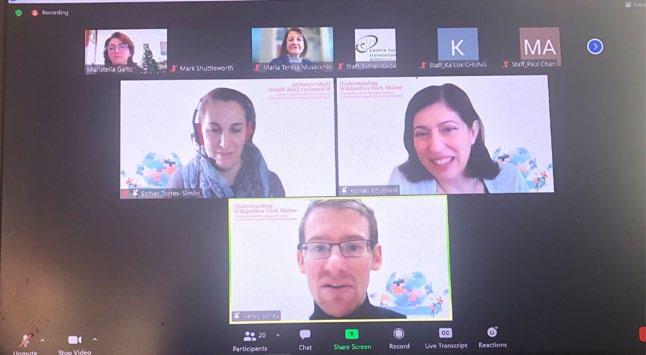
We have had a productive few months: In December 2021, the Wikicommittee team presented the paper “Introduction to emerging translation roles via Wikipedia translation” at the International Conference “Understanding Wikipedia’s Dark Matter: Translation and Multilingual Practice in the World’s Largest Encyclopedia”, organised by the Centre for Translation (Hong Kong Baptist University) and Department of Translation, Interpreting and Intercultural Studies (Hong Kong Baptist University).

During spring semester 2022, students at the University of Padova have been busy processing EST entries. They are now revising 11 entries in groups and also editing/revising and/or adding content to the entry on specialized translation. They are expected to submit a reflective essay on their experience as part of their course. The tasks are coordinated by Maria Teresa Musacchio in collaboration with the

Wikipedians-in-residence at the University of Padova.

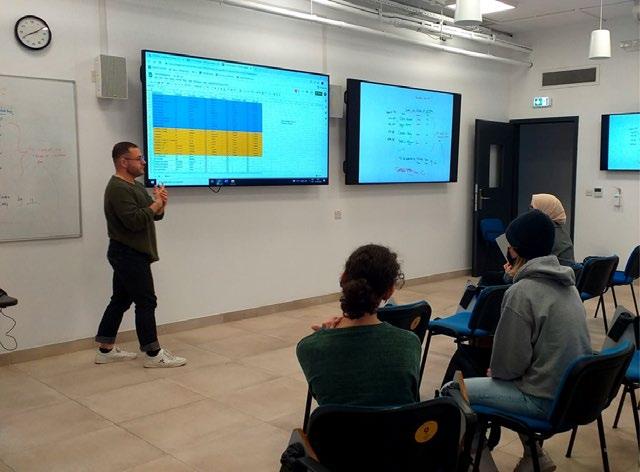
In March 2022, Stockholm University organized its third annual editathon, this time on site and also in hybrid form. Students, staff and representatives from Wikimedia Sweden gathered to increase the number of articles on Translation Studies in Swedish and English. The editathon has become a popular tradition of the Institute for Interpreting and Translation Studies (TÖI) in Stockholm.

In March 2022, and in celebration of Women’s Day, the theme of this year’s Translation Project held in the context of the Master in Translation and Terminology Studies at University of Malta wasVisibilityto WomeninTranslation. The current cohort of students translated over forty entries on women in translation as well as a few other entries on translation in general. The project was held between the 7th and 11th March in collaboration with the EST Wikicommittee and the Maltese Wikipedia Community, and was coordinated by Dr Claudine Borg.

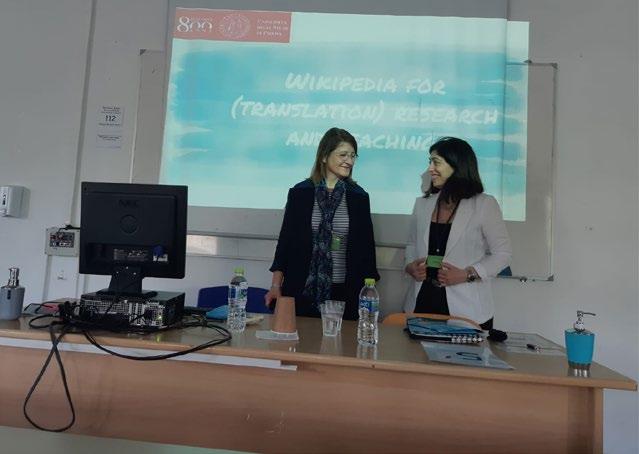
In May 2022, undergraduate students at the School of English Language and Literature at the Aristotle University of Thessaloniki attending the course Translation Methodologyhad the opportunity to become familiar with Wikipedia translation for the purpose of enriching content on Translation Studies. A few days later, participants attending the Wikipedia Translation Workshop within the framework of the International Symposium on Theoretical and Applied Linguistics (ISTAL25) showed interest in joining forces for future editathons and translatathons on Translation Studies. Both events took place in collaboration with the Wikimedia Community User Group Greece and in with the valuable presence of Maria Teresa Musacchio from the University of Padova.

What’s next? Our pre-conference workshop Translation Studies and/in Wikipedia at the 10th EST Congress: Advancing Translation Studies this June!

Looking forward to (e-)seeing you in Oslo! Kyriaki Kourouni

Book Purchase Grant Committee

MügeIşıklarKoçak,

We are sad to report that no applications were submitted for this year’s book purchase grant.

The Book Purchase Grant is awarded annually to enable an academic institution to purchase TS publications. The aim of the grant is to enhance translation research in new contexts where Translation Studies books (e-books) and journals (e-journals) as well as research software are lacking for different reasons.

When ranking applicants, besides financial situation and expectations, we look at a) current research and motivation, or b) launching a new program and motivation as by and large weighing the same. We encourage reapplications as they provide good insight into the work and development of the applicant.

We encourage our members to prepare their application for 2023.

Details on how to apply are available on the EST website.)

Young Scholar Prize Committee

The Young Scholar Prize Committee is happy to report that they received a large number of submissions for the 2022 prize. The present chaos in the world notwithstanding, young scholars have continued exploring, researching and expanding the fields of Translation and Interpreting Studies. This has resulted in new topics, innovative perspectives, newly adapted methodologies and novel theoretical frameworks. Reading and assessing the many entries for this year’s prize has been a challenge and a pleasure. The YSP Committee has drawn up its shortlist and is engaged in its final reading.

The winner or winners will be announced at the Oslo EST Congress during the EST General meeting on 22 June 2022.

Translation Prize Committee

The EST Translation Prize is awarded every second year to the most deserving project to translate key texts in Translation Studies (including research on interpreting and localization).

The Translation Committee encourages EST members to already start thinking about a project for the 2022 edition. Please spread the word about the possibility to make Translation Studies research available in more languages.

The next deadline is 1 October 2022. For details on how to apply for the prize, please visit the EST website.

Open Access Prize Committee

The committee received a total of seven applications submitted by:

- Hu Bei (Target)

- Laura Gasca Jiménez (Translation and Interpreting Studies)

- Cornelia Griebel (Translation, Cognition & Behavior)

- Álvaro Marín García (Translation, Cognition & Behavior)

- Jack McMartin (Translation Studies)

- Mary Nurminen (Translation, Cognition & Behavior)

- Minhua Liu (Translation, Cognition & Behavior)

One prize is awarded for a contribution in a Routledge journal, another one for an article in a Benjamins journal. As there was only one application for a Routledge journal, the committee unanimously decided that the article by Jack McMartin and Paola Gentile clearly met the quality criteria. In the category of the Benjamins journals, the committee awarded the prize to the publication by Bei Hu.

The winners are:

Bei Hu (2020) ‘How are translation norms negotiated? A case study of risk management in Chinese institutional translation.’ Target 32 (1), p. 83-122.

Jack McMartin & Paola Gentile (2020) ‘The transnational production and reception of “a future classic”: Stefan Hertmans’s War and Turpentine in thirty languages’, Translation Studies 13 (3), p. 271-290.

All applicants have been informed. The publishers will make the publications freely accessible as soon as possible. The prizes, with the support of both John Benjamins and Routledge, will be officially awarded at the General Meeting during the EST Congress in Oslo.

Triangulating Translation Studies in Ukraine: Research – Education

– Engagement with the Industry

In the Ukrainian cultural milieu, translation has always been a catalyst of social change and played a strategic role in shaping the Ukrainian identity, contributing to innovation and debunking dominant imperial and Soviet narratives. It is not surprising that throughout the 20th century translation became a focal point of Ukrainian scholarship in the humanities: starting with the Ukrainian-language publication of the monograph The Theory and Practice of Translation by Oleksandr Finkel (1929) and the elaborate introduction of the first university course Methodology of Translation in the academic year 1932-1933 at Kyiv University. A period of great productivity in the 1960s–1980s, with significant historiographic and conceptual endeavors in translation by Viktor Koptilov, Maryna Novikova and Roksolana Zorivchak, led to the turning epoch of the 1990s, when the ‘silenced’ texts of the earlier proscribed Ukrainian translators and scholars re-entered the discourse. New translations of democratic Ukraine thus opened up a whole new array of ideas, topics and genres.

Since 1991, the translation studies landscape has developed broadly and advanced greatly in Ukraine. A large-scale research project ‘Translation in Ukraine (1991-2021): Trends, Directions and Sociopolitical Challenges’, which was developed in synergy by an all-Ukrainian team of translation scholars, has crystallized that the thirty-year period of independent Ukraine was entirely and explicitly translational. Combining insights from studies on Ukrainian audiovisual, legal, business, medical and institutional translation along with reflections on the presence of translation in Ukrainian-language creative industries, the project has brought to the fore that translation has become a dominant force of distancing from the Soviet past and a capacity-building instrument for the European integration.

The education programs in various Ukrainian translatology centers have also been empowering. With major departments in translation studies in Kyiv, Kharkiv and Lviv, over 40 new translation chairs were also set up in the universities of other large Ukrainian cities in order to better leverage intellectual resources and increase knowledge transfer. To provide a ‘helicopter view’ on the relevant research profiles, Kharkiv school of translation at Karazin University has garnered the most attention in the areas of Ukrainian translation historiography and didactics, whereas translation departments at Taras Shevchenko University of Kyiv deal primarily with the problems of stylistics, pragmatics and discourse studies of Ukrainian literary translation. The Lviv-based department of translation studies, named after the most prolific 20th-century Ukrainian translator Hryhoriy Kochur, focuses on the sociology and hermeneutics of Ukrainian translation, translatorship and translatorial activism in Ukrainian cultural history, as well as on the current challenges of cross-cultural communication.

A range of non-formal educational initiatives has also been instrumental in raising the analytical-interpretive skills and sociopolitical awareness about translation over the past decade in Ukraine. Among other things, it led to the establishment of the Ukrainian Association of Translators and Interpreters (UATI), the Ukrainian Translator Trainers’ Union (UTTU), the Lviv-based Forum of Translators and other specialized institutions, as well as putting on a new footing the translation projects run by the Ukrainian Institute, PEN Ukraine and the office of “Lviv – UNESCO City of Literature”.

The Ukrainian translation industry is presently open to participation from abroad in terms of collaboration and translation activities. Less than a dozen Ukrainian companies have been ISO-17100 certified to provide high-quality linguistic services both in Ukraine and abroad. Many Ukrainian companies have become members of professional localization communities (GALA, ELIA etc.) and regularly contribute in the spheres of industryacademia cooperation, translation technologies, etc. The Ukrainian translation and localization community has become strong enough to launch private initiatives: translation summer schools, master classes and mini-courses on the basics of IT localization, game localization, audiovisual translation, etc.

Successful localization is determined by a great understanding of the culture, language, and business practices of the locale. There are some major problems with this in Ukraine that need to be considered: market immaturity; still insignificant numbers of translation companies certified according to international standards; and linguistic problems related to the post-colonial status of the country (relatively weak positions of the national [Ukrainian] language, and thus - active interference at all language levels, the predominance of established Russianisms over correct Ukrainian counterparts, etc.). Localization has allowed for the translation industry to evolve and develop innovative technology. Over the last five years, the translation community has shown significant progress in mastering technologies, including those designed for localization. Ukrainian developers offer competitive platforms for both linguistic work (translation, editing, etc.) and translation management and localization projects.

Due to the highly technological and dynamic character of the localization industry, relevant academic courses are still rather rare, and a few private educational initiatives (e.g. the Summer School of Translation https://translationschool.pro/) are not able to fully fill the existing gaps. The lack of solid cooperation between the academic and translation communities leads to different perceptions of the professional profile of the localizer and his/her professional, technical and linguistic competencies. However, the ‘maturation’ of the localization services market, standardization of the rules of the game and more active integration into the global localization community will promote the service among Ukrainian and foreign customers, which will ultimately affect the country's well-being.

All in all, the Ukrainian translation space is a fascinating example of the shifting geometry of power, language and resistance, which – at times –does not easily fit into more reductive categories of mainstream translation theories. It shows great promise for a prospective continental focus in translation studies.

Ukraine has translated its Self while translating European cultural products. And now, Ukraine is translating the cultural values of Europe in its present-day war for the European future to come.

IrynaOdrekhivska IvanFrankoNationalUniversityofLviv,Ukraine

Oleksandr Bondarenko CEOatTranslatelLtd,translationandlocalizationcompany, VolodymyrVynnychenkoCentralUkrainianStatePedagogicalUniversity,Kropyvnytskyi,Ukraine

Hot Topics in Translation Studies: Audiovisual Translation

Subtitling with machines

The subtitling process has always evolved in leaps and bounds when it comes to both processes and norms. This is very much due to the close ties between subtitling and technology, for machines have always been a part of subtitling. And it has continued to be true ever since “M.N. Trapp registered a patent for a ‘device for the rapid showing of titles for moving pictures other than those on the film strip’” in 1909 (Ivarsson 2002: 7). Each new technical innovation, such as talking movies, television, personal computers, cable TV, template files, video on demand etc., has led to a concomitant development of subtitling processes and norms, as the latter develops to accommodate the new realities of the former (and the needs of the viewers) (Pedersen 2020).

We are now in the middle of another such a leap (or is it a bound?) as, belatedly, machine translation (MT) is making inroads into subtitling. I say belatedly, because MT is definitely old hat in other forms of translation. Despite early efforts (by e.g. Volk & Harder 2007), the nature of subtitles has made it difficult to use this technology in subtitling. This, in turn, depends on the well-known constraints of subtitling, in particular the shift from speech to writing, and those of time and space. The use of fast-paced master template files has, however, taken care of the first constraint, as the input to the MT software is now in writing, rather than speech. The increase in reading speed in the last couple of decades has taken care of the second constraint, as not as much condensation is needed to meet Netflixtype reading speeds of 17 characters per second and above (Pedersen 2018: 87).

So, the technical obstacles to using MT in subtitling are not as formidable as they once were, and the incentives for using it are there. The exponential increase in streaming services with ever-expanding catalogues is one reason, and the increased demands for accessibility, like

directives such as the EU digital standards (EN 301 549) and WCAG 2.1, is another. While it is true that other forms of audiovisual translation, notably dubbing (which is also undergoing a development towards automation), is also on the increase, more subtitles are needed – and fast!

More and more subtitling companies are thus turning to MT, as the software quality increases. Interlingual MT subtitles still need the human touch, however, and that is where the newish task (or even profession) of the post-editor enters the picture. In this way machine-translated and postedited (MTPE) subtitles, where humans and machines work together, make it possible to keep up with the quantitative demands.

But what about the qualitative demands? Are MTPE subtitles as good as those produced by humans making use of the older processes? And what are MTPE subtitles like? Do they differ from the oldfashioned ones, and will that drive another norm change?

In order to find out, we conducted a comparative study of MTPE subtitles and subtitles produced using only master template files (Hagström & Pedersen Forthcoming/2022). Both sets of subtitles were handled by professional subtitlers, acting either as posteditors, in the first condition, or as subtitlers, in the second. We found significant differences between the two sets of subtitles. Most strikingly, the quality of MTPE subtitles was much lower; they contained seven times more errors, as measured by the FAR model (Pedersen 2017).

What I find more interesting than the poorer quality of the MTPE subtitles is that they showed several characteristics that were different from the traditional subtitles The MTPE subtitles were faster (more subtitles per minute), more oral (retaining what is often seen as redundant oral features), less coherent (more incomplete sentences and a more telegraphic style), less complete (leaving out pertinent information) and with less meticulous punctation (including failing to signal speaker shifts) and line breaks (for example, at syntactically and/or semantically inappropriate places) than human-translated subtitles. The most

fascinating thing about this research was that the differences existed even though professional subtitlers were responsible for both sets of subtitles.

It is hard to say whether these differences were caused by the MT software, or from the subtitlers acting as posteditors, or a combination of the two. After all, we are seeing humans and machines working together here, and the process is new: the subtitlers presumably need more education and/or experience in their new roles as posteditors. It could be that these differences will disappear when the machines and humans get better at their respective tasks, and at working together. If not, the norms are likely to change, as the viewers will have to adapt to this partly new kind of subtitles, produced with the aid of this new kind of machine.

References

Ivarsson, Jan. 2002. “Subtitling through the Ages: A Technical History of Subtitles in Europe”. Language International, 14, 2: 6–10

Hagström, Hanna & Jan Pedersen. Forthcoming/2022. “Subtitles in the 2020s: The influence of machine translation”. Journal of Audiovisual Translation.

Pedersen, Jan. 2017. “The FAR model: Assessing quality in interlingual subtitling”. Journal of Specialised Translation. 28: 210–229. https://www.jostrans.org/issue28/art_pede rsen.pdf

Pedersen, Jan. 2018. “From old tricks to Netflix: How local are interlingual subtitling norms for streamed television?” Journal of Audiovisual Translation 1, 1: 81–100. https://www.jatjournal.org/index.php/jat/ar ticle/view/46

Pedersen, Jan. 2020. “Audiovisual Translation Norms and Guidelines”. In The Palgrave Handbook of Audiovisual Translation and Media Accessibility, Bogucki, Ł. and Deckert, M. (eds.), 417–436. London: Palgrave Macmillan. Volk, Martin & Søren Harder. 2007. “Evaluating MT with Translations or Translators. What Is the Difference?”. Proceedings of MT Summit. Copenhagen. https://aclanthology.org/2007.mtsummitpapers.66.pdf

The dubbing metamorphosis.

Where do we go from here?

The boom of streaming content is fuelling the demand for dubbing in several languages, even in those territories where viewers are less accustomed to localized content. Emerging localization trends such as English-language dubbing are slowly becoming the norm (Hayes 2021; Sánchez Mompeán 2021; Spiteri Miggiani 2021). In 2021, Netflix alone experienced a 120% growth in dubbing with 5 million dubbed minutes a high number when compared to the 7 million subtitled minutes of content (Slator 2022). The volume is such that the industry is reporting a localization talent shortage, which refers mainly to translators (Green 2018; Deck 2021; MESA 2022). Over-the-top platforms are bursting with international content; the surge in nonEnglish language shows and the possibility to choose a preferred translation mode and target language have been real game changers. All this has revolutionised the way viewers approach and consume screen translation. The localization industry has had to adapt rapidly to this dubbing revolution (Ranzato & Zanotti 2019), while ensuring quality and binge-watching satisfaction levels.

These are the changes that the audience and media entertainment industry are experiencing, but what about the practitioners? The latter are also experiencing an on-going revolution happening backstage: the so-called cloud turn in audiovisual translation (BolañosGarcía-Escribano & Díaz Cintas 2020). This is having an impact both on the professional and educational landscape (Bywood 2020; Díaz Cintas & Massidda 2019). The shift to cloud dubbing is partly dictated by the growing market demand and the need to make localization practices and workflows faster and more effective. This shift has been accelerated by the pandemic, mainly due to the need to have voice talents record target language versions remotely, from other territories and workstations, rather than in dubbing facilities. However, cloud dubbing is not only about remote recording. It also refers to the migration of entire localization workflows to the cloud and therefore dubbing management systems that also include scripting, translation, adaptation and collaborative tools. In the case of an end-to-end dubbing system, such as ZOOdubs (ZOOdigital), the entire dubbing workflow (from project setup to client product delivery) is accommodated on the same cloud-based platform. A shared collaborative space hosts the various professionals assigned to a dubbing project,

a specific role and a language stream, in the case of translators. So, what is changing for translators and does this shift to the cloud have an impact on their practices?

For starters, tools such as the rhythm band support text synchronization in the script adaptation phase and enable more focus on linguistic and cultural transfer (Spiteri Miggiani, forthcoming). Working on such platforms also comes with challenges, as many established translators must unlearn old ways and adjust to translating in a confined space, with input segmented into text bites. They also need to get used to the translated text moving beneath the visuals, as opposed to the more traditional blank, static Word file. However, this same structured translation space minimizes process-oriented errors tied to the practical aspects of dubbing scripts. Moreover, such platforms facilitate team communication and collaboration via video chats, forums, and shared glossaries, therefore also mitigating the feeling of a solitary work experience. Translators and dubbing managers are no longer burdened with multiple deliverable exchanges (scripts, video material, metadata files, KNPs and so on), making the entire process more time- and cost-effective (Chaume & los Reyes Lozano 2021; Spiteri Miggiani, forthcoming).

Another significant shift that is emerging as a result of cloud dubbing workflows is the interchangeability of translators and adapters. In traditional dubbing countries, the dubbing script preparation is often split into two distinct phases carried out by different professionals (Spiteri Miggiani 2019). The ‘combined’ approach, which is the one that cloud workflows accommodate, has an impact on the role of translators and the skill set required. Linguistic and cultural skills in both the source and target language are essential, over and above technical skills and technological know-how. Exceptions arise when projects rely on a pivot translation that is provided instead of the original language. In this case, translators are often not proficient in the source language and culture and consequently focus only on the adaptation.

But there is yet another dubbing innovation underway that will shake up the translators’ world and radically change the approach to dubbing. Research scientists have developed AI technologies that can manipulate lip articulatory movements on screen to match the translated target text (Yang et al. 2020; Flawless). In other words, a lip-to-word adaptation technique rather than the word-to-lip adaptation technique that has so far characterised the translation and adaptation process in dubbing. At this stage, it is still too early to determine which translation and adaptation specifics might be affected.

Dubbing has earned a global spotlight in the ever-evolving localization scene and an exciting journey is ahead. So, where do we go from here and what does this dubbing revolution imply for trainers and academics? The current state of play seems to suggest the urgent need for translation programmes to incorporate or provide further training in translation for dubbing alongside other translation modes. This would address the shortage of translators in this field. At the same time, it would highlight academia’s

responsiveness to constantly evolving industry demands, a necessary approach in such a profession-oriented area of study and research.

References

Bolaños-García-Escribano, A and Díaz Cintas, J. 2020. “The cloud turn in audiovisual translation”. In The Palgrave handbook of audiovisual translation and media accessibility, L. Bogucki and M. Deckert (eds.), 519-544. Cham: Palgrave Macmillan. Bywood, L. 2020. “Technology and audiovisual translation”. In The Palgrave handbook of audiovisual translation and media accessibility, L. Bogucki and M. Deckert (eds.), 503-514. Cham: Palgrave Macmillan.

Chaume, F & de los Reyes Lozano, J. 2021. “El doblaje en la nube”. In Modalidades de traducción audiovisual, B. Reverter Oliver, J.J. Martínez Sierra, D. Gonzales Pastor and J. F. Carrero Martín (eds.), 1-15. Granada: Comares.

Deck, A. 2021. “Lost in translation: The global streaming boom is creating a severe translator shortage”. Rest of world journal. https://restofworld.org/2021/lost-intranslation-the-global-streaming-boom-iscreating-a-translator-shortage/ Díaz Cintas, J. & Massidda, S. 2019. “Technological advances in audiovisual translation”. In The Routledge handbook of translation and technology, M. O’Hagan (ed.), 255-270. New York: Routledge. Flawless. https://www.flawlessai.com/ Green, S. 2018. “How digital demand is disrupting dubbing”. M&E journal. https://www.mesaonline.org/2018/03/15/jo urnal-digital-demand-disrupting-dubbing/ Hayes, L. 2021. “Netflix disrupting dubbing. English Dubs and British Accents”. Journalof Audiovisual Translation, 4(1), 1-26. MESA Media & Entertainment Services Alliance. 2022. “The Talent Crunch - Does it Exist and can it be Addressed?”. Content workflow management workflow conference, 22 March 2022. https://www.mesaonline.org/conferences/c ontent-workflow-management-forum-2022/ Ranzato, I. & Zanotti, S. 2019. “The dubbing revolution”. In Reassessing Dubbing I. Ranzato & S. Zanotti (eds.), 1–14. Amsterdam/Philadephia: John Benjamins. Sánchez-Mompeán, S. 2021. “Netflix likes it dubbed”. Language & Communication, 80, 180–190.

Slator. 2022. “Netflix COO reveals scale of dubbing and subtitling operations”. https://slator.com/netflix-coo-reveals-scaleof-dubbing-subtitling-operations/ Spiteri Miggiani, G. 2019. DialogueWritingfor Dubbing. London: Palgrave Macmillan. Spiteri Miggiani, G. 2021. “English-language dubbing: challenges and quality standards of an emerging localisation trend”. The JournalofSpecialisedTranslation, 36: 2-25. Spiteri Miggiani, G Forthcoming. “Cloud studios and scripts: evolving workspaces and workflows in dubbing”.

Yang, Y , Shillingford, B , Assel, Y , Wang, M , Liu, W., Chen, Y., Zhang, Y., Sezener, E., Cobo, L C., Denil, M , Aytar Y & de Freitas, N. 2020. “Large-scale multilingual audio visual dubbing”. https://arxiv.org/pdf/2011.03530.pdf ZOOdigital. https://www.zoodigital.com/

Emerging Voices in Translation Studies

A panoramic view of research in audiovisual translation: A historical, bibliometric and webometric analysis

The main objective of my PhD thesis, which I defended at the University of Alicante, Spain, on the 29th of October 2021, was to analyse audiovisual translation (AVT) research as a subfield of Translation and Interpreting Studies (TIS) by examining research publications worldwide until December 2020, both synchronically and diachronically, with quantitative and qualitative methods. My supervisors were Javier Franco Aixelá (University of Alicante) and María Dolores Olvera Lobo (University of Granada).

I used a list of 192 bibliometric, webometric, altmetric and network indicators, as well as their related techniques, which were applied to data extracted mainly from the BITRA database (Bibliography of Interpreting and Translation; Franco Aixelá 2001-2022), supplemented with other sources such as the Translation Studies Bibliography (TSB), Web of Science, Google Scholar and Scopus.

An extensive section on the history of AVT was produced as a result of the need to contextualise the research, bringing forward new data on the origins of this professional activity, such as a document (El mundo cinematográfico 1913) on the technical requirements of intra- and interlingual intertitles (then called titles), another dealing with quality (Emerson & Loos 1918), and two others (Qiu & Li 2012; Chen 2012) that situate the origin of surtitles in the 1950s, 30 years earlier than most authors. I have proposed a classification of 14 AVT modes based on the two traditional channels (audio and visual) plus one that has not been included in the past: the tactile

In spite of its youth, AVT is the third most researched specialisation within TIS, just after literary translation and interpreting, and it has experienced an exponential increase in the years from 2006 to 2015. Subtitling and dubbing are the most frequently researched and cited modes, but accessibility is the one growing the fastest in the current decade. The top five journals with more publications on AVT are JoSTrans - TheJournalofSpecialised Translation, Perspectives:Studiesin TranslationTheoryand Practice, Meta, inTRAlinea and LinguisticaAntverpiensia, NewSeries(LANS). The documents with the highest rate of citations per year are: Díaz Cintas & Remael (2007) in subtitling; Delabastita (1989) in dubbing; and Linde & Kay (1999) in accessibility.

English is the most common language of publication, and also the language receiving the most citations per document, but citations of publications in Spanish, French and Catalan are growing. The most commonly used and cited type of document are journal articles, followed by book chapters, but books get the most citations per document. I have proved that a citation window of 5-6 years is necessary in this field to calculate the impact factor, not the usual 2 or 3 years. The country publishing the most documents is Spain, followed by Italy and the United Kingdom. Open access is higher in AVT than in the rest of TIS, and it is growing much faster, as is coauthorship, although over three-quarters of authors have also published on their own.

Female researchers publish more documents than men, and twelve women are among the twenty authors with the highest number of publications, but the most citations and the highest h and g indexes are attributable to male researchers. However, network analysis shows that the most co-cited authors are women, and a new indicator created by me places ten women among the twelve most influential authors in recent years. LinkedIn, Twitter and Facebook are more common in professional than researchrelated contexts, and most top authors have ORCID and ResearchGate profiles.

It is therefore expected that in the near future the main protagonists of AVT research will be accessibility, open access, co-authorship, the Mediterranean and female researchers

References

Chen, Ying 陈颖 (ed.). 2012. "Yuèjù wǔtái měishù" "越剧舞台美术" [Scenic art in Yue opera]. Dōngnánwǎng东南网 [Southeast Network]. 19-12-2013.

http://www.fjsen.com/zhuanti/201312/19/content_13183708_all.htm

Delabastita, Dirk. 1989. "Translation and Mass Communication: Film and T.V. Translation as Evidence of Cultural Dynamics". Babel 35(4): 193-218. DOI: 10.1075/babel.35.4.02del.

Díaz Cintas, Jorge & Aline Remael. 2007. AudiovisualTranslation:Subtitling Manchester: St. Jerome.

El Mundo Cinematográfico. 1913. "Subtítulos de películas". El mundo cinematográfico 35: 3-4. http://repositori.filmoteca.cat/bitstream/ha ndle/11091/9766/Num_035.pdf.

Emerson, John & Anita Loos. 1918. "Photoplay Writing: On the Sub-title and the Speech". PhotoplayMagazine 14(2): 88-89. https://archive.org/details/pho1314chic.

Franco Aixelá, Javier. 2001-2022. BITRA: BibliografíadeInterpretaciónyTraducción https://dti.ua.es/es/bitra/. DOI: 10.14198/bitra.

Linde, Zoe de & Neil Kay. 1999. The SemioticsofSubtitling. Manchester: St. Jerome.

Qiū, Yìchū丘亿初 & Zhàobāng Lǐ 李兆邦 2012. "Hànjù jiùshì tán" "汉剧旧事谈" [Olf stories on Han opera]. Beijing: Zhōngguó xìjù wǎng xiéhuì 中国 戏剧网协会 http://www.xijucn.com/html/hanju/201210 02/40349.html

For decades now, policy makers have suggested that video technology is an efficient means to provide interpreting services. In Norwegian public discourse, video technology has generally been considered to provide participants with visual and auditory access to each other and to be a better option than the telephone. Research, however, has shown how participants in video-mediated interaction in fact have asymmetric access to co-participants and their surroundings (Arminen et al. 2016; Heath & Luff 1993), which in turn may cause participants’ actions to become fractured from the interactional ecology (e.g. Hansen 2020; Luff et al. 2003). Combining insights from multimodal conversation analysis and ethnography, my article-based doctoral dissertation shows how interpreting is accomplished interactionally in videomediated environments and how discourse on video-mediated interpreting, such as that expressed in government documents and interviews with practitioners, relates to the interactional accomplishment of interpreting (Hansen 2021).

In order to explore the organization of interpreting in video-mediated environments, I made video recordings of various meetings in Norwegian hospitals (Hansen 2016; Hansen 2021). While the meetings varied regarding length, number of participants and purpose, in all encounters interpreters with formal qualifications were situated at a different location than the other participants and participated in the interaction using video technology. Some of the encounters were recorded from both the hospital ward and from the interpreter’s studio, providing unique insight into the unfolding of videomediated interaction (Hansen 2021). In addition to video recordings, I collected ethnographic data including field notes, interviews with stakeholders and government documents (e.g., the hearing note to a draft law, a Norwegian official report as well as various reports and guidelines).

Multimodal conversation analysis reveals how the multimodal organization of spoken

language interaction becomes emphasized in video-mediated interpreting (Buzungu & Hansen 2020; Hansen 2020; Hansen & Svennevig 2021). Participants rely on embodied resources in interaction, although they may not create an interactional space that gives them visual access to each other (Hansen 2021). Participants’ lack of visual access to each other may cause complications in the interaction, for instance when turnallocating gestures go unnoticed and when misunderstandings arise and require clarification. Meta-talk could be a way to reduce the asymmetries in this complex, multilingual, mediated interaction. However, participants were not found to meta-communicate about visual space (Hansen 2020). Features of the videomediated environment, such as delay and lack of mutual visual access, may limit which resources participants have available for the organization of interpreting. Participants can overcome some challenges by adapting their actions to the settings, for instance through the temporary suspensions of longer turns (Hansen & Svennevig 2021), by creating an interactional space that is appropriate for the activities they are carrying out (Hansen 2020) and by meta-communicating (Hansen 2020; Hansen & Stokoe 2022).

Government documents, while in favor of increased use of video technology for providing interpreting services, do not sufficiently address the complexity of interpreting in video-mediated environments. The concept of interpreting is used in documents to address both interpreting as an interactional activity and interpreting as service provision. The documents shift between the notions when constructing an argument for increased use of video technology, yet do not distinguish clearly between the two. The documents construct an argument partially based upon media ideologies (i.e. people’s beliefs about media; see Gershon 2010). While government documents use the comparison between media to construct a rationale for increased use of video technology to provide interpreting, practitioners’ narratives demonstrate how technology is relevant for the accomplishment of their work (Hansen 2021).

The combination of analytical approaches in the doctoral thesis demonstrates how technology as a workspace is not just a matter of efficient service provision but fundamentally alters the resources that participants have available to establish understanding in interaction (Hansen 2021).

References

Arminen, I., Licoppe, C., & Spagnolli, A. (2016). Respecifying Mediated Interaction. ResearchonLanguageandSocial Interaction: Orders of Interaction in MediatedSettings49(4), 290–309. https://doi.org/10.1080/08351813.2016.12 34614

Buzungu, H. F., & Hansen, J. P. B. (2020). Bridging divides in the interpreting profession. International Journal of InterpreterEducation. 12(2): 57–62

Gershon, I. (2010). Media ideologies: An introduction. Journal of Linguistic Anthropology20(2), 283–293. https://doi.org/10.1111/j.15481395.2010.01070.x

Hansen, J. P. B. (2016). Interpretingata distance. MA dissertation, University of Oslo. Retrieved from: https://www.duo.uio.no/handle/10852/515 69

Hansen, J. P. B. (2020). Invisible participants in a visual ecology: Visual space as a resource for organising videomediated interpreting in hospital encounters. Social Interaction. Video-Based StudiesofHumanSociality3(3). https://doi.org/10.7146/si.v3i3.122609 Hansen, J. P. B. (2021). Video-mediated interpreting.Theinteractional accomplishmentofinterpretinginvideomediated environments. PhD dissertation, University of Oslo.

Hansen, J. P. B., & Stokoe, E. (2022) Attack of the 50 Foot Zoom Presenter: Visualaccessandthenewetiquetteof video-mediated events. Retrieved from: https://elizabethstokoe.medium.com/attack-of-the-50-footzoom-presenter-visual-access-and-the-newetiquette-of-video-mediated-events1867a8fb9f3f

Hansen, J. P. B., & Svennevig, J. (2021). Creating space for interpreting within extended turns at talk. Journal of Pragmatics182. 144–162.

https://doi.org/10.1016/j.pragma.2021.06. 009

Heath, C., & Luff, P. (1993). Disembodied conduct: interactional asymmetries in video-mediated communication. In G. Button (Ed.), TechnologyinWorkingOrder. StudiesofWork,Interaction,and Technology (pp. 35–54). London: Routledge.

Luff, P., Heath, C., Kuzuoka, H., Hindmarsh, J., Yamazaki, K., & Oyama, S. (2003). Fractured ecologies: Creating environments for collaboration. HumanComputerInteraction:TalkingAbout ThingsinMediatedConversations18(1-2), 51–84.

https://doi.org/10.1207/S15327051HCI181 2_3

The EST Research Incubator

Rethinking translation expertise: a workplace study (Retrex)

2021-2024,fundedbytheAustrianScience Fund(FWF),Project33132

Projectlead:HannaRisku,Universityof Vienna,Austria

Projectteam:JelenaMilosevic,Daniela Schlager

For several decades, there has been an ongoing discussion in translation studies about what it takes to be a good, competent or professional translator. The notion of translation expertise or competence has been theorized widely, with recent conceptualizations being mostly inspired by expertise studies in cognitive psychology. Empirical research in this area has mainly taken place in experimental settings and has resulted in valuable findings about the cognitive differences between translators with different levels of experience. However, the question of what

translation expertise means in authentic workplace settings has so far been underresearched. To contribute to an understanding of how translation expertise is understood and constructed by working professionals, this research project is informed by translation workplace studies and approaches the topic from a qualitative, ethnographic perspective.

The objective of this research project is to explore the working professionals’ ‘lived’ translation expertise, which is assumed to differ from the perspective that has been established by translation process research. Experts are viewed as social actors that construct expertise in interaction with other social actors and tools, and the social, performative and situated aspects of expertise are placed in the foreground. This project investigates how translation expertise is socially constructed and rationalized in the workplace, which notions of expertise emerge and how they manifest themselves in day-to-day working life. This includes questions of possible contradictions between what people say they do and what they actually do,

strategic interests underlying the expertise discourse and potential conflicts between different constructs of expertise.

To approach the emic perspective as closely as possible, the project follows an ethnographically oriented multi-case research design with a deep, multi-faceted analysis of a few selected translation agencies. To grasp different dimensions of lived expertise (actual workplace praxis, rationalizations of the social actors involved, and normative descriptions), a combination of participant observations, interviews, focus groups and document analysis will be used to gather the data.

The empirical insights into the lived expertise of working professionals will offer new perspectives for Translation Studies and might prove fruitful for theoretical reconceptualizations of translation expertise.

For more information, see https://socotrans.univie.ac.at/retrex/

Past TS Events

CTER 2022, March 17-18 (online)

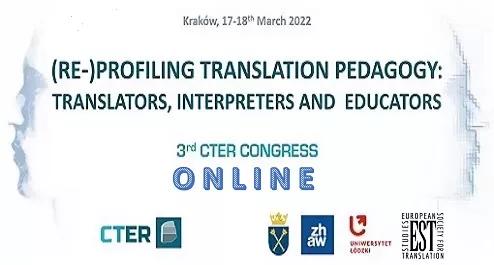
The Jagiellonian University, the University of Łódź and the Zurich University of Applied Sciences hosted the 3rd CTER Congress under the auspices of the Consortium for Translator Education Research (CTER). The Congress, which was endorsed by EST, had the theme (Re-)Profiling Translation Pedagogy: Translators, Interpreters and Educators. Although originally planned to be held at the Jagiellonian University in Kraków, Poland, from March 17-18, the local organizing committee decided to switch to online modality because of the continued uncertainty associated with the corona pandemic. In retrospect, the decision was a very wise one because of the invasion of neighboring Ukraine. A presentation by two Russian colleagues was not included in the final program and, in an inspiring example of fortitude, a keynote speaker gave his talk from the cellar of his university in central Ukraine. Throughout the two days, participants referred to the importance of training language professionals and coming up with solutions to avoid miscommunication and to help refugees cope.

The themes dealt with in the keynotes ranged from shaping the future in a new context for language professionals to how translation internships can be a win-win for industry and academe. There were more than 40 presentations organized into thematic sessions in two parallel tracks over the two days of the Congress, with presenters logging in from all over Europe, the UK, Morocco, Qatar, India, the US, Mexico, and China. Maria Piotrowska, Mariusz Marczak and their team can be proud of having organized and hosted such an interesting and stimulating event despite the challenging conditions. Information about the Congress, including the book of abstracts, can be found on the CTER website. A selection of the contributions will appear in a special issue of the Interpreter and Translator Trainer, expected in September 2023. We are looking forward to reading those as well as to hearing more about plans for the 4th CTER Congress in due time.

MaureenEhrensberger-Dow,ESTSecretaryGeneral

Danica Seleskovitch prize and commemoration

On March 12, 2022, the Danica Seleskovitch Association could finally hold their commemoration of the 100-year anniversary of the birth of Danica as well as the presentation of the Danica Seleskovitch prize to Barbara Moser-Mercer. The ceremony was originally planned for 2021, but had to be postponed due to the pandemic.

For the 100-year anniversary, collaborators and students of Professor Seleskovitch held talks revolving around the many facets of her work as an interpreter, a teacher, and a theorist. Her impact in different areas of interpretation and translation as well as her global influence was elaborated in different talks.

Barbara Moser-Mercer was awarded the prize for her research on the cognitive and neuro-cognitive aspects of interpreting as well as her work for training interpreters at the University of Geneva and her work for interpreters in conflict zones through the InZone project. In her speech, Barbara stressed the importance of training for all interpreters.

TS Initiatives

Summer schools

In chronological order:

FUSP – Nida Centre for Advanced Research on Translation Summer School 2022. Fondazione Unicampus San Pellegrino (online). 23 May – 3 June 2022. https://bit.ly/369lZ3n

Humanised technology, automated creativity: bridging illusory divides in translation. Ca' Foscari University of Venice. 6 – 10 June 2022. https://www.unive.it/pag/44649

PhD Summer School 2022. Department of Translation and Interpreting & East Asian Studies of the Universitat Autònoma de Barcelona. 27 – 30 June 2022. https://jornades.uab.cat/escola_doctorat/en

IBN TIBBON Doctoral and Teacher Training Translation Studies Summer School (DOTTSS) 2022 Department of Translation and Interpreting, University of Granada, 27 June – 8 July 2022. Guest professor: Professor Maria González-Davies (University Ramon Llull, Barcelona). http://www.dottss.eu/current-summer-school/

SISU Translation Research Summer School 2022 (TRSS) (online). Baker Centre for Translation and Intercultural Studies, Shanghai International Studies University, 27 June – 8 July 2022. https://bit.ly/36SgVkp

CETRA Summer School 2022 (online): 33rd Research Summer School. University of Leuven, Belgium, 22 August – 2 September 2022. Chair Professor: Kaisa Koskinen (Tampere University, Finland). https://www.arts.kuleuven.be/cetra/summer_school

Report from the Translation Studies Bibliographies

Report on BITRA – May, 2022

Javier Franco Aixelá, Javier.Franco@ua.es

A few figures as of May 2022

Language of entries (not exhaustive)

Main subjects (not exhaustive)

Distribution by format

Prospects and comments

BITRA has grown in 2022 at a similar rate to 2021. At this pace, by the end of 2022 BITRA should comprise ca. 89,000 entries, with about 8,900 of them (10%) mined for impact.

More noteworthy figures:

1) With 49,289 abstracts, over 56% of BITRA entries (over 74% for the 2001-2022 period) are covered in this very important regard.

2) A total of 8,735 documents (10% of the records) have been mined for their citations. The resulting over 120,000 citations and reviews assigned, including 33,370 (38%) entries with at least 1 citation to them detected, make BITRA a powerful tool for bibliometrics in our interdiscipline.

TSB - Translation Studies Bibliography

Recent developments

The Translation Studies Bibliography (TSB, see https://www.benjamins.com/online/tsb), edited by Yves Gambier and Luc van Doorslaer, has been supported by EST and its members from the start in 2004. The bibliography does not include everything published on translation, but has developed selection criteria for the inclusion of scholarly publications in collaboration with its international editorial board. At the moment it systematically covers 77 TS journals and 51 TS book series. More detailed information about the criteria and coverage can be found on the TSB website. Additionally, translation-related material from non-TS publications can also be included. All publications (except for reviews) are provided with an English abstract and keywords.

Thanks to the collaboration with the ‘TSB China Center’ at Guangxi University, almost 1,000 selected Chinese publications have been added over the past two years. Since 2020, the University of Tartu (Estonia) has also become an important new partner supporting the data input. What most catches the eye on the TSB website is the new look of the search and browse function. Publication details now also include a DOI and additional information about the record provided by Kudos, if available. In addition, the system makes more frequent use of hyperlinks, which opens up new ways to browse through the bibliography. The advanced search function has a wider range of operators, changing automatically according to the type of search field, and includes extra search fields, such as ISBN. Dropdown lists for specific search fields display the available search options and immediately show the number of publications that share a specific property. Users can more easily subset or sort their result list and with one click, they can copy-paste the main publication details of an individual record.

Researchers who want to contribute to the TSB by suggesting relevant publications can register on the separate data entry site, where step-by-step instructions will guide them through the submission process. All EST members are of course invited to create a personal user account and share their suggestions with us.

LucvanDoorslaerandYvesGambier,TSBeditors DominiqueVanSchoor,TSBeditorialassistant

EST-endorsed events

You are welcome to get in touch with us if you are planning an event which you would like us to endorse: secretarygeneralest@gmail.com.

Upcoming TS Conferences

The list below is based on the EST list of conferences on the website. Thanks to David Orrego-Carmona for regularly compiling the list for us.

Date

01/06/2022

03/06/2022

Name

23rd Annual Conference of the European Association for Machine Translation

Audiovisual Translation and Minority Cultures

06/06/2022 Gender & Translation: Gendering Agency and Activism in Translation and Interpreting

09/06/2022 ”Positionierungen | Positionings" PhD conference

13/06/2022

13/06/2022

15/06/2022

15/06/2022

15/06/2022

22/06/2022

25/06/2022

Voix réduites au silence dans l'Histoire : traduction, genre et (auto)censure / Voces silenciadas en la Historia : traducción, género y (auto)censura

Socio-economic approaches to literary translation

10th International Conference of the Iberian Association for Translation and Interpreting Studies (AIETI): Transstextual and cultural navigation/Circum-navegações transtextuais e culturais

Intralingual Translation: Language, text and beyond

6th ESTIDIA Conference, Dialogue-shared experiences across space and time: cross-linguistic and cross-cultural practices

10th EST Congress – Oslo 2022

10th Asia-Pacific Translation and Interpreting Forum (APTIF10) – Collaboration in the World of Translation and Interpreting

27/06/2022 Transius Conference in collaboration with IAMLADP’s Universities Contact Group (UCG)

30/06/2022 Shakespeare, Austen and audiovisual translation: The classics translated on screen Roma

30/06/2022 On the Conflicting Universals in Translation: Translation as Performance in East Asia

01/07/2022

International Symposium for Young Researchers in Translation, Interpreting, Intercultural Studies and East Asian Studies

04/07/2022 New Trends in Translation and Technology (NeTTT'2020)

07/07/2022 Translation in Exile: Motives, Effects & Functions

13/07/2022 Performative & Experiential Translation: Meaning-Making through Language, Art and Media

29/08/2022

ESSE Conference – Translating and Analysing Charles Darwin and Darwinism in(to) European Languages (1859-2022)

01/09/2022 Crossing Borders Via Translation(s)

16/09/2022 CIUTI. The Role of Translation and Interpreting in Society and Citizenship

22/09/2022 Translation in Transition 6

28/09/2022 Concept Systems and Frames in Terminology 2022

29/09/2022 Code-Switching in Arts

02/11/2022

The translation of cultural references: transversality and new trends. 8th Lucentino Conference. Globalization, understanding and translation of cultural references: transversality and new technologies

03/11/2022 Linguistic Diversity, Terminology and Statistics

07/11/2022 Languages & the Media – Media Localization: Welcome Back to the Future

Country Link

Belgium Site

Italy Site

Italy Site

Austria Site

France Site

France Site

Portugal Site

Israel Site

Spain Site

Norway Site

China Site

Switzerland Site

Italy Site

France Site

Spain, online Site

Greece Site

Austria Site

UK Site

Germany Site

Italy Site

Peru Site

Czech

Republic Site

Austria Site

Hungary, online Site

Spain Site

Latvia Site

Belgium Site

24/11/2022 Theories and Realities in Translation and wRiting 7. Translate, Write, Simplify.

07/12/2022

Third HKBU International Conference on Interpreting

05/01/2023 MLA Forum on Translation Studies on the relationship between translation and extraction

03/03/2023 Multilingualism in Translation (the English-speaking world, 16th century – present)

25/05/2023 NPIT 6 - 'Unstated' mediation: On the ethical aspects of non-professional interpreting and translation

05/07/2023 Media For All 10: Human agency in the age of technology

30/08/2023 Emotions, Translation and Encountering the Other. 15th World Congress of Semiotics: Semiotics in the Lifeworl

28/09/2023 Taboo in language, culture, and communication

29/09/2023 Enseigner la traduction et l’interprétation à l’heure neuronale

Italy Site

Hong Kong Site

USA Site

France Site

Cyprus Site

Belgium Site

Greece Site

Italy Site

Belgium Site

GlobalInsightsintoPublicService Interpreting Theory,PracticeandTraining

By: Riccardo Moratto and Defeng Li (eds.)

TranslatingandInterpretinginAustralia and New Zealand. DistanceandDiversity

By: Judy Wakabayashi and Minako O'Hagan (eds.)

The Translation of Violence in Children’s Literature ImagesfromtheWestern Balkans

TheRoutledgeHandbookofConference Interpreting

CorpusExplorationofLexisandDiscourse in Translation

By: Meng Ji and Michael P. Oakes (eds.)

Chinese Cinemas in Translation and Dissemination

By: Haina Jin (ed.)

AnalysingEnglish-Arabic Machine Translation GoogleTranslate,Microsoft Translator and Sakhr By: Zakaryia Almahasees

Gender and Translation:NewPerspectives. NewVoicesforTransnationalDialogues By:EleonoraFedericiandJoséSantaemilia (eds.)

TheRoutledgeHandbookofTranslation and Media

By: Esperança Bielsa (ed.)

JoginderPaul:TheWriterlyWriter By: Chandana Dutta (ed.)

SimultaneousInterpretingfromaSigned LanguageintoaSpokenLanguage: Quality, CognitiveOverload,andStrategies By: Jihong Wang

Traducción,competenciaplurilingüe y españolcomolenguadeherencia(ELH)

By: Laura Gasca Jiménez

ExploringtheImplicationsofComplexity ThinkingforTranslationStudies By: Kobus Marais and Reine Meylaerts (eds.)

ContestingEpistemologiesinCognitive TranslationandInterpretingStudies By: Sandra L. Halverson and Álvaro Marín García (eds.)

AnthologyofArabicDiscourseon Translation By: Tarek Shamma and Myriam SalamaCarr (eds.)

WhenTranslationGoesDigital.Case Studies and Critical Reflections By: Renée Desjardins, Claire Larsonneur and Philippe Lacour (eds.)

EnhancingVideoGameLocalization ThroughDubbing By: Laura Mejías-Climent

ImprovingtheEmotionalIntelligenceof Translators.ARoadmapforan ExperimentalTraining Intervention By: Séverine Hubscher-Davidson and Caroline Lehr

CorporainTranslationandContrastive ResearchintheDigitalAge.Recent advancesandexplorations

By: Julia Lavid-López, Carmen Maíz-Arévalo and Juan Rafael Zamorano-Mansilla (eds.)

Introduction to Healthcare for RussianspeakingInterpretersandTranslators

By: Ineke H.M. Crezee, Johanna Hautekiet and Lidia Rura

EinsatzpotenzialemaschinellerÜbersetzung inderjuristischenFachübersetzung

By: Kerstin Rupcic

Aspectosdelatraducciónbiosanitaria español–alemán/alemán–español

By: Rocío García Jiménez and María-José Varela Salinas

Sistemasfraseológicosencontraste. Enfoquescomputacionalesydecorpus By: Gloria Corpas Pastor, María Rosario Bautista Zambrana and Carlos Manuel Hidalgo-Ternero (eds.)

Conaleyafavorylarealidadencontra By: Cristina Kleinert

Genderissues.Translatingandmediating languages,culturesandsocieties By: Eleonora Federici and Stefania Maci (eds.)

TranslatingItalyfortheNineteenthCentury TranslatorsandanImaginedNationinthe EarlyRomanticPeriod1816-1830s By: Mirella Agorni

TranslationandStyleintheOldGreek Psalter. What Pleases Israel's God By: Jennifer Brown Jones

Ashortguidetopost-editing.

By: Jean Nitzke and Silvia Hansen-Schirra

TranslationPoliciesinLegaland InstitutionalSettings

By: Marie Bourguignon, Bieke Nouws, and Heleen van Gerwen (eds.)

Enseignerlatraductiondanslescontextes francophones

By: Tiffane Levick and Susan Pickford (eds)

Littéraire,nonlittéraire.Enjeux traductologiquesd’uneproblématique transdisciplinaire

By: Isabelle Collombat (ed.)

TranslatingRenaissanceExperience

By: Anja Müller-Wood, Tymon Adamczewski and Patrick Gill (eds.)

Enmásdeunsentido:Multimodalidady construccióndesignificadosentraducción einterpretación.

By: Celia Martín de León and Gisela Marcelo Wirnitzer (eds.)

TheEnglishLanguageofNavalArchitecture ALinguisticApproach

By: Anca Ionescu and Floriana Popescu

Theatre Translation. TheoryandPractice By: Massimiliano Morini

ReadingOtherPeoples’Texts Social IdentityandtheReceptionofAuthoritative Traditions

By: Ken S. Brown, Alison L. Joseph and Brennan Breed (eds.)

TranslatingMolièrefortheEnglish-speaking Stage.TheRoleofVerseandRhyme

By: Cédric Ploix

Losgrandesretosentornaalatraducción ylainterpretaciónenlaeraactual

By: María Fernández de Casadevante Mayordomo and Elvira Izquierdo SánchezMigallón (eds.)

Fundamentos teórico-práticosparael ejerciciodelatraducción

By: Celia Rico Pérez

TranslationundExil(1933–1945)I.Namen und Orte. Recherchen zur Geschichte des Übersetzens

By: Aleksey Tashinskiy, Julija Boguna and Tomasz Rozmysłowicz (eds.)

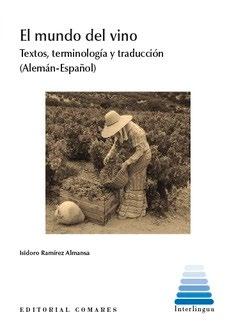
El mundo delvino.Textos,terminologíay traducción(alemán-español)

By: Isidoro Ramírez Almansa

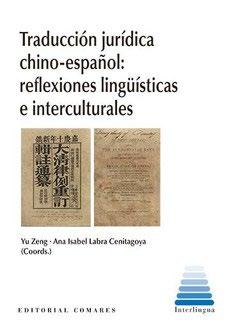
Traducciónjurídicachino-español: reflexioneslingüísticaseinterculturales

By: Yu Zeng and Ana Isabel Labra Cenitegoya (eds.)

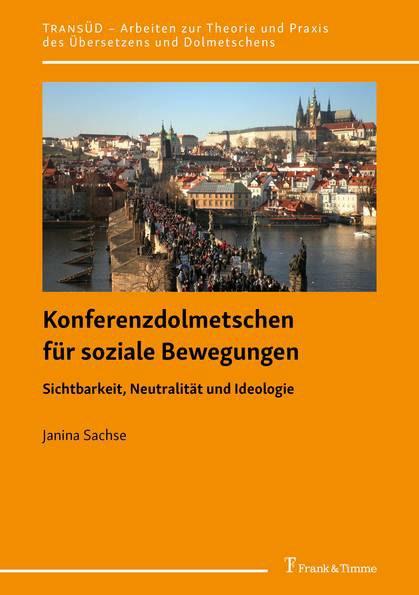
Konferenzdolmetschen für soziale Bewegungen.Sichtbarkeit,Neutralitätund Ideologie

By: Janina Sachse

Investigación traductológicaenla enseñanzayprácticaprofesionaldela traducciónylainterpretación

By: Chelo Vargas-Sierra and Ana Belén Martínez López (eds.)

AdministrativeReports.ACorpusStudyof the Genre in the EU and Polish National Settings

By: Katarzyna Wasilewska

Translation Under Communism

By: Christopher Rundle, Anne Lange and Daniele Monticelli (eds.)

Languesetlangagesjuridiquestraduction ettraductologie,didactiqueetpédagogie

By: Renaud Baumert, Albane Geslin, Stéphanie Roussel and Stéphane Schott (eds.)

Von Paris nach Kairo: Wissenstransfer im Paris-Bericht Rifā‘a Rāfi‘ aṭ-Ṭahṭāwīs By: Hildegard Maria Mader

Panorámicadelainvestigaciónen traducciónaudiovisual:Análisishistórico, bibliométricoywebmétrico

By: Francisco Pérez Escudero

„ImOriginalgehtvielverloren“. Warum Übersetzungenoftbessersindalsdas Original

By: Sylvia Reinart

Traductologieetlanguedessignes By: Florence Encrevé (ed.)

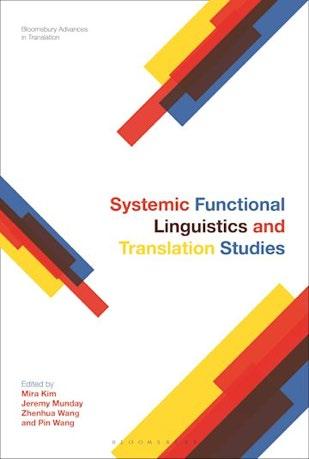
SystemicFunctionalLinguisticsand Translation Studies. By: Mira Kim, Jeremy Munday, Zhenhua Wang and Pin Wang (eds.)

TranslationimWandel:Gesellschaftliche, konzeptuelleunddidaktischePerspektiven By: Gernot Hebenstreit and Philipp Hofeneder (eds.)

Vladimir Nabokov et la traduction By: Julie Loison-Charles and Stanislav Shvabrin (eds.)

Kognitionstranslatologie:Dasverbale ArbeitsgedächtnisimÜbersetzungsprozess

By: Jie Li

Metáfora,terminologíaytraducción

By: Carmen Mateo Gallego-Iniesta

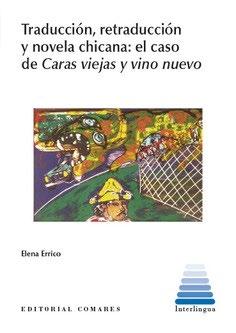
Traducción,retraducciónynovelachicana

By: Elena Errico

IlanStavans,traductor

By: Mª Carmen África Vidal Claramonte

Retos e incertidumbres: sobre la traducción deliteraturaenlenguasibéricas

By: Marta Kacprzak and Gerardo Beltrán Cejudo (eds.)

Traduccióneinterpretaciónenentornos institucionales/Translationand InterpretinginInstitutionalSettings

By: Adelina Gómez González-Jover and Raquel Martínez Motos (eds.)

Latraduccióndemasculinidadesgayenla teleficción:análisismultimodaldeldoblaje latinoamericanoypeninsulardelaseriede televisiónLooking.

By: Iván Villanueva Jordán

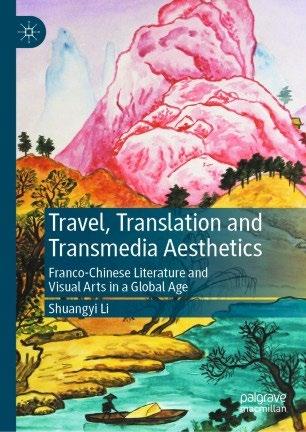
Travel,TranslationandTransmedia Aesthetics Franco-Chinese Literature and VisualArtsinaGlobalAge

By: Shuangyi Li

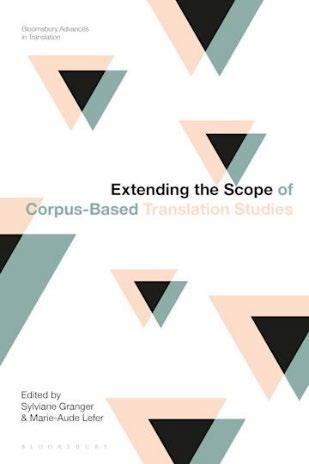
ExtendingtheScopeofCorpus-Based Translation Studies

By: Sylviane Granger and Marie-Aude Lefer (eds.)

Translation and Social Media CommunicationintheAgeofthePandemic

By: Tong King Lee and Dingkun Wang (eds.)

LorcainEnglish:AHistoryofManipulation throughTranslation

By: Andrew Samuel Walsh

Laterminologíaanatómicafrancés-españollatín

Informationsintegrationinmehrsprachigen Textchats:DerSkypeTranslatorim SprachenpaarKatalanisch-Deutsch

By: Felix Hoberg

TranslationandContemporaryArt TransdisciplinaryEncounters

By: MªCarmen África Vidal Claramonte

TheRoutledgeHandbookofTranslation andMethodology

By: Federico Zanettin and Christopher Rundle (eds.)

PolyglotfromtheFarSideoftheMoon The Life and Works of Solomon Caesar Malan(1812–1894)

By: Lauren F. Pfister (ed.)

TranslatingChange Enhanced Practical Skills for Translators

By: Ann Pattison and Stella Cragie

TheRoutledgeHandbookofAudio Description

By: Christopher Taylor and Elisa Perego (eds.)

TheRoutledgeGuidetoTeaching TranslationandInterpretingOnline

By: Cristiano Mazzei and Laurence JayRayon Ibrahim Aibo

MappingtheTranslator AStudyofLiangShiqiu

By: Liping Bai

LanguageasaSocialDeterminantof Health: TranslatingandInterpretingthe COVID-19 Pandemic

By: Federico Marco Federici (ed.)

ExploringtheTranslatabilityofEmotions Cross-CulturalandTransdisciplinary Encounters

By: Susan Petrilli and Meng Ji (eds.)

MetacognitiveTranslatorTraining. Focus on Personal Resources

By: Paulina Pietrzak

RechercheimTranslationsprozess

By: Susanne Hagemann

Delahipótesisalatesis: traductologíaylingüísticaaplicada

By: Miguel Ibáñez Rodríguez and Carmen Cuéllar Lázaro (eds.)

La visibilidad del traductor en los tratados deagricultura,agronomía,viticulturay vinificación(1773-1900)

By: Manuela Álvarez Jurado

TheTranslationofIrony ExaminingitsTranslatabilityintoNarratives By: Alícia Moreno Giménez

La Place des traducteurs

By: Anne-Rachel Hermetet and Claire Lechevalier (eds.)

e-ExpertSeminarSeries:LGBTQI+issues inmodernlanguagesandtranslation education

By: Soledad Díaz Alarcón and Marga Navarrete

KeyThemesandNewDirectionsin SystemicFunctionalTranslationStudies

By: Bo Wang and Yuanyi Ma (eds.)

LanguageDynamicsintheEarlyModern Period

By: Karen Bennett and Angelo Cattaneo (eds.)

Le vin et ses émules Discours oenologiquesetgastronomiques

By: Eva Lavric, Cornelia Feyrer and Carmen Konzett-Firth (eds.)

Medio-translatology.Conceptsand Applications By Feng Cui and Defeng Li (eds.)

Government Translation in South Korea. A Corpus-basedStudy

By: Jinsil Choi

ZwischentranslatorischerKonditionierung undalteristischerKontingenz.Revisionen derBeziehungvonTranslationund Verantwortung

By: Ruth Katharina Kopp

EncounteringChina’sPast.Translationand Dissemination of Classical Chinese Literature By: Lintao Qi and Shani Tobias (eds.)

MultilingualRoutesinTranslation

By: Maria Sidiropoulou and Tatiana Borisova (eds.)

Translation,ReceptionandCanonizationof TheArtofWar.RevivingAncientChinese StrategicCulture By: Tian Luo

AStudyontheInfluenceofAncient Chinese Cultural Classics Abroad in the TwentiethCentury

SystemicFunctionalInsightsonLanguage andLinguistics

By: Christian M.I.M. Matthiessen, Bo Wang, Yuanyi Ma and Isaac N. Mwinlaaru

HedgesinChinese-EnglishConference Interpreting ACorpus-based Discourse AnalysisofInterpreters’RoleDeviation

By:

TheoryandPracticeofTranslationasa VehicleforKnowledgeTransfer/ Théorie et pratiquedelatraductioncommevéhicule de transfert des connaissances

By: Carmen Expósito Castro, María del Mar Ogea Pozo and Francisco Rodríguez Rodríguez (eds.)

Guíadesubtituladoinclusivoengalego: Indicaciónstécnicaselingüísticaspara subtitularnunhalinguaminorizada

By: Mercedes Martínez Lorenzo

Interpretaredaeversol’italiano. Didattica e innovazioneperlaformazione dell’interprete/Interpretingfromandinto Italian.TeachingandInnovationin interpretereducation

By: Mariachiara Russo (ed.)

ENTIopen,online,multilingual encyclopedia oftranslationandinterpreting studies(TIS)

Curated by: AIETI

Cognitive Linguistic Studies

DevelopmentsinCognitiveTranslationand InterpretingStudies

Volume 8, no 2 (2021)

Strictly speaking, the study of cognitive aspects of translation and interpreting is rather young, though it builds on a long tradition of empirical work in contemporary Translation and Interpreting Studies (TIS). The subdiscipline is young in the sense that a more concerted effort to study the process of translating started as late as the 1980s, though targeted studies of interpreting began to emerge earlier, around the mid-1970s. The following two decades saw rapid development, aided both by the advancement of empirical methodologies and by comprehensive growth in neighbouring disciplines within cognitive science. Nonetheless, it is also important to note that the earliest cognitively oriented studies of translation and interpreting appeared before the dawn of cognitive science in the 1950s, and the earliest identified publication was an article on the psychology of translation published in 1910.

Following on, through the development over the past five or so decades up to the present, CTIS has grown to encompass a continuously expanding community of researchers, a sharply increasing number of publications of different types, dedicated journals, a number of thematic or special journal issues, international or regional associations or networks, and several series of conferences devoted to cognitive studies of translation and interpreting.

The development sketched above might suggest that CTIS is approaching the point where it could be considered an autonomous subdiscipline of the broader field. Autonomy as such is not necessarily an objective, but questioning a subdiscipline’s status provides a means of taking a closer look at the specific trajectory of its historical development. Looking for and at potentially shared ‘problems, approaches, and objectives’ may

be revealing. In the introduction, we consider some epistemological and methodological issues within CTIS and situate the contributions to this special issue within this landscape.

LANS-TTS

InterpreterResearchandTraining - The ImpactofContext

Edited by: Katalin Balogh, Esther de Boe and Heidi Salaets

Volume 20 (2021)

Although the notion of context is omnipresent in research in interpreting studies (IS), especially in community settings, and defines the ways in which interpreting is being practised, researched and trained, it has not yet been recognized or defined as a topic in its own right, at least not within IS. Starting from some theoretical notions on the concept of context, this article moves on to discuss different levels of context, namely, geographical, socio-institutional and interactional. By means of examples from a variety of settings in community interpreting (CI), it shows how the different levels of context interact, and, in these ways, have an impact on CI practice, research and training.

Journal of Audiovisual Translation

TestingTimes

Edited by: Pilar Orero and David Hernández Falagán

Volume 4, no 2 (2021)

That COVID-19 touched all walks of life is an understatement. With the risk of sounding frivolous, compared with other impacts, COVID-19 had direct implications in research, and particularly in funded research activities with a strict schedule. Luckily, in the field of audiovisual translation we do not require any live samples or animals to be fed while in lockdown. Still, experimental programmed tests with people required alternative approaches. This special issue presents the social distancing challenges faced in usercentric research methodologies when human interaction is required.

Éclats

Traduirel’Autre,

Edited by: Bénedicte Coste and FrançoisClaude Rey

Volume 1, 2021.

Le premier numéro de notre revue traite de traduction et adaptation : notre comité de rédaction a souhaité s’emparer de ce qui est tout à la fois une thématique, une activité, un objet de recherche et, bien sûr, une interrogation. Qu’est‑ce que la traduction, que faisons‑nous lorsque nous traduisons ? Conscients qu’il n’existe nulle définition absolue, nous avons pensé la traduction à partir de l’altérité et, surtout, de l’exemple, des pratiques et du propos de la traduction. Les six articles suivants proposent chacun une réflexion tirée de l’exemple, des exemples ô combien multilingues.

Yearbook of Translational Hermeneutics

EngagingwithTranslation.NewReadings ofGeorgeSteiner's"AfterBabel".

Edited by: Marco Agnetta, Larisa Cercel, and Brian O'Keeffe

Volume 1 (2021)

The first issue of the Yearbook of Translational hermeneutics (YTH) is dedicated to a ‘classic’ representative of the hermeneutic approach to translation studies, namely George Steiner, who passed away in February 2020. Published under the auspices of the Research Centre Hermeneutik und Kreativität, this issue is devoted to a celebration of Steiner’s 90th birthday (2019) and to the 45th anniversary of “After Babel”, which first appeared in 1975. “After Babel” has not lost its power to galvanise contemporary research in translation and interpretation studies even today. This installment of the Yearbook of Translational Hermeneutics hosts a dozen scholars’ engagements with Steiner’s work, as well as a supplement

devoted to tributes to the author, book reviews and a discussion (forum).

Qorpus

TraduçãoeLiteraturaComparada

Edited by: Andréa Cesco and Sheila Maria dos Santos

Volume 11, no 3 (2021)

Neste dossiê temático, “Tradução e Literatura Comparada”, composto por quinze artigos, duas traduções, uma resenha e uma entrevista, busca-se oferecer ao leitor uma fecunda discussão sobre a relação entre as disciplinas de Estudos da Tradução e Literatura Comparada, onde temas como a análise de traduções literárias, sob um viés interdisciplinar, a relação entre Literatura Comparada e Estudos da Tradução, a tradução de escritores-tradutores e a relação entre tradução e criação poética, a literatura traduzida e a formação do cânone, a tradução enquanto representação do sistema cultural, entre outros que os permeiam, são abordados.

Bridge: Trends and traditions in translation and interpreting studies.

Translation in Time and Time in Translation.

Volume 2, no 2 (2021)

Translation Studies is a vivid discipline in which time plays an important role. At first, it takes some time to ascertain basic knowledge about either translation or interpreting, or both. We then practice some time to become perfect at the profession and invest more and more time to improve and polish our work. When researching the field of translation and interpreting, we plan our research projects, and time is again a required element

influencing our perseverance to obtain the desired results. Time also uncovers the changes in translation studies which help us to study, compare, and understand the past, present and future of translation and interpreting, as well as to immerse ourselves into the unknown aspects the field offers. Research innovates the traditional thinking about translation and interpreting and makes a tradition out of the innovation the field always welcomes. This special issue titled “Translation in Time and Time in Translation” is inspired by theme of the Tradition and Innovation in Translation Studies Research IX – annual international PhD conference organised by the Department of Translation Studies at CPU in Nitra. Therefore, we want to reflect tradition and innovation of translation studies research through the prism of time, be it directly through researching topics in translation history, but also indirectly, bringing forth new and original thoughts.

Linguistica Antverpiensia

InterpreterResearchandTraining - The ImpactofContext

Edited by: Katalin Balogh, Esther de Boe and Heidi Salaets

Volume 20 (2021)

This thematic issue shines the spotlight on the concept of context in interpreting in community or public-service settings. As Vlasenko (2019) puts it, “from a research point of view, a focus on context brings to the fore the sociological, anthropological and political aspects of translation and interpreting as embedded social practices” (pp. 437–438). In its communicative sense, context is considered “a resource deployed in concrete socially-situated meaningmaking action” (Blommaert et al., 2018, p. 2), located at the “intersection of language/discourse and social structure” (Blommaert, 2001, p. 14). In line with this, community interpreting (CI) can be viewed as a specific type of “meaning-making action” that is deeply embedded in this intersection of language and social structures in a particular legal, political, economic orcultural context (Pöchhacker, 2016, p. 160). In the day-to-day practices in which interpreters are involved, issues of culture, language and power continuously intersect (Cho, 2021, p. 2).
Atelier de traduction

Lalittératurevertepourlajeunesseau prismedelatraduction

Edited by: Muguraş Constantinescu and Mirella Piacentini

Volumes 35-36 (2021)

Comme on l’avait déclaré dans notre appel, le numéro double 35-36 de la revue Atelier de traduction, ayant pour dossier thématique « La littérature verte pour la jeunesse au prisme de la traduction » veut faire suite au numéro double 33-34, dédié à la relation entre écologie et traduction. Nous nous sommes proposé dans le présent numéro d’étudier la traduction de la littérature pour la jeunesse en tant que genre traversé par la pensée écologique pour raffiner et approfondir toute la problématique spécifique qui en découle. Nous nous sommes également proposé de garder le sens large de la notion d’écologie, à la fois scientifique, politique, littéraire, culturelle, philosophique ou autres.

Status Quaestionis

Italian-NorwegianDialogue. Communication and Narration Between Grammar and Culture

Edited by: Elizaveta Khachaturyan

Volume 21 (2021)

L’idea di questo volume è nata nel 2019. Lo scopo era di riunire sotto lo stesso tet-to, offertoci dal comitato scientifico ed editoriale di StatusQuaestionis, gli studiosi che lavorano sull’italiano e sul norvegese. Ispirati da numerosi studi sul sistema verbale in prospettiva interlinguistica, abbiamo scelto il verbo come tema centrale da investigare. Questi studi (tra altri: Bylund 2011; Bylund e Jarvis 2011; Korzen 2005, 2007, 2017; Caballero e Paradis 2015, 2018), oltre a rilevare i tratti tipici dei sistemi linguistici che distinguono le lingue germaniche dalle lingue romanze, dimostrano come le diversità di carattere

linguistico influiscano sulla struttura testuale (Korzen 2007; Bylund 2011) e sulla struttura narrativa (Caballero e Paradis 2015), quasi imponendo al parlante l’uso di certe forme. Di conseguenza, un ruolo importante viene assegnato alla figura del parlante – utente della lingua – che sia il narratore che usa il testo per raccontare una storia, l’informante che costruisce il testo “a richiesta” o il traduttore che cerca di trasmettere in un’altra lingua il messaggio comunicativo e le sue sfumature. Come dimostrato negli studi precedenti, le divergenze rilevate al livello linguistico possono dare accesso ai meccanismi cognitivi. Allo stesso tempo, possono anche illustrare il legame tra lingua e cultura, legame che sta alla base delle competenze linguistiche di ogni parlante.

Revista Tradumàtica

Estudidelainteracciópersona-ordinador entraduccióiinterpretació:programarii aplicacions

Edited by: Maarit Koponen, Lucas Nunes Vieira and Nicoletta Spinolo

Volume 19 (2021)

Digital tools are changing not only the process of translating and interpreting, but also the industry as a whole, societal perception of and research in translation and interpreting. This Tradumàtica Special Issue collects research on some of these topics, highlighting the importance of furthering research on human-computer interaction in translation and interpreting studies.

Nuevasperspectivasdeinvestigaciónenla traducciónespecializadaenlenguas Cadernos de literatura em Tradução

EspecialTibete

Edited by: Shelly Bhoil

Volume 24 (2021)

A história da tradução no Tibete não apenas demonstra um nexo político e cultural unido entre a atividade da tradução e o discurso de identidade, mas também as habilidades literárias excepcionais adquiridas pelos tibetanos no processo de tradução, bem como catalogação metódica de cerca de 4.500 textos e 73 milhões de palavras do cânone budista indiano para o tibetano. Duas das obras lexicográficas tibetanas – Mahavyupatti e Madhyavyupatti – criadas no século IX para padronizar a terminologia com diretrizes para tradutores, ainda estão vigentes na tradição budista tibetana. Muitos textos indianos preciosos, laboriosamente e amorosamente traduzidos para o tibetano, agora só são mantidos vivos através de suas versões tibetanas, que foram ousadamente contrabandeadas pelos tibetanos como suas posses mais queridas durante sua árdua jornada de fuga do Tibete através do nevado Himalaia. Os tibetanos certamente têm uma das histórias de tradução mais impressionantes do mundo e até mesmo um destino maior com a tradução desde seu exílio em 1959, quando passaram a ser traduzidos para línguas mundiais.

Journal of Audiovisual Translaion

SharingKnowledgeBetweenAcademiaand theIndustry:AudiovisualTranslationand AccessibilityResearchforPractice

Edited by: Tiina Tuominen and Hannah Silvester

Volume 4, no 3 (2021)

Audiovisual translation and accessibility research have huge potential to transform and improve the work of practitioners in these areas. However, research publications are not necessarily designed to address the practical implications of research, or to be accessible to practitioners outside academia. This special issue is for practitioners, and it aims to demonstrate how research can be useful to them. The research projects presented in the articles serve practical purposes in a variety of ways, from proposing analytical models to aid in selecting translation strategies to exploring developments in working practices. Vibrant collaboration between all stakeholders in AVT and

accessibility could bring benefits to both research and practice. The introduction discusses some of the challenges involved in making such exchanges happen and examines how those challenges could be overcome.

inTRAlinea

SpaceinTranslation

Edited by: Lucia Quaquarelli, Licia Reggiani and Marc Silver

Volume (2021)

The studies collected in this special issue are the result of a long-term collaboration between three institutions – the Dipartimento di Studi Linguistici e Culturali of the Università di Modena e Reggio Emilia, the Centre des Recherches Pluridiscplinaires Mutilingues of the Université Paris Nanterre and the Dipartimento di Interpretazione e Traduzione of the Università di Bologna –which has led to the organization of conferences, workshops and joint publications focusing on the status (nature, function) and the cultural and political impact of the act of translation.

Traduire

Regardssurl’interprétation

Edited by: Noëlle Brunel, Elaine Holt, Lydia Salazar Carrasco and Émilie Syssau

Volume 245 (2021)

Dans ce numéro, qui examine le métier de l’interprète sous ses multiples facettes, la pratique en conférence occupe peu de place – certainement en raison de la crise sanitaire qui a mis un frein aux réunions internationales – et laisse la part belle à l’interprétation en milieu judiciaire, médical et social. Vous voulez en savoir davantage sur les différentes techniques (simultanée, consécutive, de liaison, à distance) et ainsi mieux appréhender les articles du numéro ? La fiche métier disponible sur le site de la Société française des traducteurs (SFT) vous dira tout.

Translation Matters

PicturebooksandGraphicNarrativesin

Translation

Volume 3, no 2 (2021)

Picturebooks and graphic narratives, as profoundly multimodal forms of literature, have been raising challenges for translators since long before multimodality became the buzzword that it is today. Both have been around for a long time – since at least the end of the nineteenth century (Alderson, 1986; Bader, 1976; Kaindl, 1999, Kukkonen, 2014; Zanettin, 2008) – and have been amply translated. Indeed, it was translation that enabled them to spread around the world to become the global phenomena they are today. But, as translator training has, till very recently, been resolutely centred on the verbal, translators have often lacked the kind of visual literacy that would enable them to do justice to the various dimensions at play in these kinds of texts; and as a consequence, many of the translations of picturebooks in circulation have received damning quality critiques.

JoSTrans

Communitiesofpracticeandtranslation

Issue 37 (2022)

While communities of practice formed by translators and/or interpreters have recently attracted growing interest from TIS scholars, this issue offers new and original perspectives on the topic by focusing on individuals who were not trained as translators or interpreters and are engaged in translation and interpreting in various under-researched settings.

The issue opens with the guest editors’ introduction (Cadwell, Federici, O’Brien), which explains the concept of communities of practice (CoP) and their underlying characteristics, such as sharing, a sense of identity, interactions, mutual engagement, learning, etc., as well as emerging topics and future directions. The research presented in this issue spans various settings, regions and CoPs: civilian interpreters working for Spanish military missions in Afghanistan (Ruiz Rosendo); bilingual French-English reports in the Ici Radio-Canada newsroom (Davier); journalists, correspondents and translators in the Le Courrier des Balkans portal site (Tatar Anđelić); bilingual medical experts involved in medical terminology translation (Wermuth, Walravens, and Lambot); inmates and staff of multilingual Spanish prisons (Valero-Garcés); development workers in Vietnam (Nguyen); cultural mediators from an NGO assisting migrants in Italian healthcare settings (Radicioni and Ruiz Rosendo), and local government workers in Japan (Forde, Cadwell, and Sasamoto). The issue is nicely complemented by an interview with Patrick Cadwell on communities of practice with further insights into the themes of the issue.

Last by not least, we present our revamped reviews section comprising critical reviews of five books: Şerban and Yue Chan’s edited volume on opera translation (Bennett); Bogucki and Deckert’s edited volume on AVT and media accessibility (Dore); Fernández’s book on translating the crisis (Martínez Pleguezuelos); Scarpa’s monograph on specialised translation (Vandepitte), and Riggs’ monograph on journalistic translation (van Doorslaer).

Autotraducción,AméricaLatinayla diásporalatina

Edited by: Rainier Grutman and María Laura Spoturno

Volume 15, no 1 (2022)

La memoria histórica y cultura del continente americano está marcada por la diversidad lingüística y cultural así como por la violencia ejercida hacia esa misma diversidad. La anulación directa y velada de lo diferente en pos del ideal de una homogenización y unos imaginarios de nación impuestos por cierta mayoría se cuestionan y visibilizan fuertemente hoy en día. En esta edición especial dedicada a la “Autotraducción, América Latina y la diáspora latina” se aprecia cómo esta práctica escritural e identitaria amplía el escenario de confrontación entre las lenguas y las identidades minorizadas. La autotraducción no debe considerarse solo en su dimensión lingüístico-textual producto del famoso multi/plurilingüismo, sino que debe tenerse en cuenta su espectro político, donde se refleja el desbalance de las lenguas.Con este número editado de manera rigurosa y comprometida por Rainier Grutman y María Laura Spoturno, se podrá revisar paisajes conocidos e inéditos de este interesante fenómeno llamado autotraducción. En el número se podrá revisitar sus diversas conceptualizaciones y límites, indagar en las experiencias de los autores que se autotraducen, observar los diferentes estudios de casos donde se ilustran situaciones de autotraducción que involucran las lenguas indígenas o de poesía judeoespañola en América Latina. Igualmente, conocer casos actuales de autotraducción donde se hace presente el español en países ajenos a esta lengua como Canadá, la autotraducción académica en Brasil o la autotraducción en medios digitales, son aspectos que abren nuevas posibilidades de acercarse al asunto en este mundo globalizado.s
Atelier de traduction

Traductionettraductologie:lafinde l’histoire?

Edited by: Christian Balliu, Mathilde Fontanet and Nicolas Froeliger

Volume 37 (2022)

La septième édition de la Traductologie de plein champ avait interrogé la nouvelle extension du mot traduction avec la montée de l’informatique et d’Internet pour remettre en question l’unité même de la traduction et de la traductologie. Assistonsnous simplement à la fin d’une époque ou, de manière plus fondamentale, l’émiettement de notre activité ne risque-til pas à terme de mener à sa disparition pure et simple ? Ce débat peut être éclairé à différentes sources et l’histoire de la

traduction, souvent négligée dans les cursus en traductologie, peut fournir à cet égard des pistes de réflexion intéressantes. En effet, une approche historique permet d’inscrire la réflexion dans une perspective épistémologique large, dans une vision diachronique qui contextualise notre activité dans un environnement sociologique, voire anthropologique, expliquant la mouvance des concepts. L’histoire de la traduction situe le moment présent dans le cours de l’évolution des idées et des sociétés, dans le cadre de la transmission des savoirs, et constitue un observatoire privilégié des pratiques sociales et culturelles. Elle montre que la discipline est indissolublement liée à une conception du monde variable selon les époques et les latitudes. Scruter l’histoire de la traduction permet enfin de relier auteurs, mouvements et théories, de mettre en évidence la subjectivité du traducteur (le traducteur engagé) et la labilité des dénominations et définitions, d’élargir le plan de réflexion au-delà du champ de la linguistique et de montrer la caducité des affirmations péremptoires. Elle est une cure de modestie et de jouvence, indissociable d’une réflexion approfondie sur le présent de notre activité. Et sur l’invention nécessaire de son avenir.

Translationplus:theaddedvalueofthe translator

Issue 14 (2021)

In an era where the advancement of automated translation seems to blur the edges between professional and amateur translation, the translation profession appears to be suffering an existential crisis (low status and uncertain future). However, this is not the whole picture since a parallel universe seems to loom large on the horizon. This parallel universe hosts “premium-market translators”, an expression that distances itself from standard translation and mainly refers to those translators who, super-endowed with a divine gift from Saint Jerome, work in environments such as high finance, banking and marketing. In other words, a parallel world where a professional translator can thrive. This issue of Cultus attempts to zoom in on this world and serves as a catalyst for theoretical reflections and practical personal experiences on ‘premium translation’ or better on the translator plus. In other words, the focus is on the value that translators and interpreters may add to the collaborative production of verbal and written texts. In 2013, Romero Fresco, borrowed the expression “universal design” from architecture, and underlined the role of the translator as an active collaborator in the filmmaking process. Much earlier Wilss

(1977: 74) had warned against the danger of misinterpreting the author's real intentions because of the absence of contact between the translator and the producer of the original text. Both contributions, in different contexts and time, seem to point to an almost kuhnian shift in the profession. A pro-active role for the translator, from the initial assignment to the very end of the translatorial collaborative-based process, now seems to be an inevitable consequence of the tumultuous changes in the translation service market.

The Interpreters' Newsletter Delarichessethématiqueet méthodologiqueeninterprétationde dialogue/Thematicandmethodological richnessindialogueinterpreting

Edited by: Natacha Niemants and Anne Delizée

Volume 26 (2021)

Depuis la fin des années 1990, la recherche en interprétation de dialogue (ID) s’est penchée sur un large éventail d’interactions interprétées et s’est notamment intéressée aux types d’interactions qui ne sont généralement pas catégorisés dans l’interprétation de services publics (ISP), tels que les émissions-débats ou les négociations d’affaires. La recherche a clairement établi que l’ID est un objet complexe qui ne consiste pas à transposer dans une autre langue un texte émis depuis une perspective monologique dont le sens serait prédéterminé (Mason 2006). Sa complexité découle au minimum de la co-construction de la dynamique interactionnelle et relationnelle, ainsi que de la co-négociation dialogique du sens, qui est par sa nature indéterminé (Carston 2002). L’interprète, comme les autres interactants, participe à ces phénomènes de co-construction d’un terrain conversationnel commun (Davidson 2002) et il1 le fait tant par des restitutions de la parole d’autrui que par des actions de coordination implicite et explicite de l’échange (Wadensjö 1998), concepts que Baraldi/Gavioli (2012 : 3) ont développés en proposant une nouvelle distinction entre « basic and reflexive coordination ». La complexité de l’ID est encore accentuée par les spécificités qui caractérisent chaque secteur d’intervention, auxquelles s’ajoutent celles des paires de languescultures impliquées dans les échanges.
The Translator

Local,Regional,andTransnational Identities in Translation: The Italian Case.

Volume 27, no 3 (2021)

This special issue features a dialogue among scholars in comparative literature, national literatures, or translation studies and translators. Our joint aim is to explore the role played by translation in the international circulation of texts that challenge expectations of ethnic, cultural and linguistic homogeneity within national literatures. Through distant and close readings that draw on sociology of translation, world literature and literary criticism, among other approaches, the contributions investigate how translation is embedded in texts marked by cultural and linguistic specificity; which ones, among these texts, are selected for translation; and the agency of translators, writers, editors and publishers in this process. Particular attention is paid to how ethnic representations are crafted in translation, to the aesthetic, social and political implications of these choices, and to the use of translation as a device to negotiate individual and collective identities. The focus is contemporary Italy. Individual case studies consider the mediation of internal and external linguistic alterity for foreign readership, the treatment of local idiosyncrasies on a global scale, the role of (self) translation in the articulation of transnational identities, and the strategies used by writers, translators, editors and publishers to position their texts in different literary contexts. The translation and international circulation of Italian texts –mostly fiction, but also theory – become a testing ground to explore the refractions of non-hegemonic identities, especially those ascribed to the subnational and the abovenational. The dialogue between scholars and translators aims to contribute to current debates on questions of translatability in relation to world literature, on the formation of national and transnational literary canons, and on the changes brought by globalisation to national and international book markets.

Cultus

Translation, Cognition & Behavior

Thematic Section:Advancingexperimental research in audiovisual translation

Introduction by: Stephen Doherty

Volume 4, no 2 (2021)

The multimodal processing of external audiovisual stimuli is commonplace in our everyday audiovisual experiences and communications, yet the processing elicited by audiovisual translation (AVT) products remains unique and complex. More specifically, to effectively and efficiently process the rich multimodal information contained in typical monolingual video, viewers must simultaneously process overlapping static and dynamic verbal and non-verbal information embedded into auditory and visual sensory inputs in order to form a coherent understanding of what is being presented to them. When AVT products are added, for example, subtitles or captions, viewers face a unique processing demand, as they must process and interpret an additional layer of largely textual information, akin to the reading process in static text, albeit in a more dynamic and spatiotemporally limited manner. Further, the sensory perception processes required to deal with the multimodal stimuli inherent in video also differs from everyday scene perception in the outside world as viewers must interpret various cinematic codes that require deductive and inductive reasoning.
META

Archives de traduction

Volume 66, no 1 (2021)

For archival scientists, the archive is both a source of research objects and an object of research. The current issue of Meta adopts this perspective to explore archives as repositories of the evidence of translation and as sites that shape our understanding of the translation process, the translation profession, and the lives of translators. Over the past decades, translation research has grown in complexity and relevance through a series of encounters with other disciplines, such as sociology, anthropology, linguistics, cognitive sciences, history, and intercultural studies (Gambier 2006: 31). The archive enriches this dialogue, firstly, by offering an invaluable trove of primary sources for such inquiry, and secondly, by presenting a new vector through which to measure, critique, and conceptualize translation practice, its function and status in societies past and present. Researchers comb the archive for materials most relevant to their own investigation, yet a single source lends itself to a variety of readings: a translation draft of a poem, for example, will stimulate a literary scholar to decode its variations and intertextual references, a sociologist will use it when sketching out the translator’s habitus and professional milieu, the cognitive scientist may detect the operation of memory and environment, a linguist its stylistic patterns or sociolinguistic phenomena, and so on. Crucially, the materials encountered in the archive, or their absence, provoke questions about the value accorded to some translators over others. Who is collected, how, why, and by whom?
Parallèles

Womentranslatorsofreligioustexts

Volume 34, no 1 (2022)

At the present moment, concerns with women’s rights and violations thereof, as well as with humanity’s faulty track record with respect to equality (a term which is often vehiculated but insufficiently conceptualised) are frequently present in the public sphere, including in academia. Thus, our decision to invite contributions specifically on women translators of sacred and other religious writings appears to find a natural place in the chorus of voices currently speaking out against real or perceived injustices. It is true that one of the reasons which motivated us to embark on the project was the factual observation that little is known about contributions by women to the transmission, via translation, of holy and other religious texts. We therefore set out to study the phenomenon, with the help of scholars –mostly women, but also men – who could shed light on women’s participation. However, while we do seek to give more visibility to women’s endeavours and to contribute to the writing of a more complete history of religious translation in which men and women both have a role to play, our take is that the right to translate is, above all, a responsibility. Translating religious writings and, especially, holy texts, is no easy task. Greater numbers of women around the world are now in a position to undertake it, and more men as well. After all, although the hierarchies of institutionalised religions have traditionally been occupied by men, these men are a small minority and any generalisations suggesting that most or even all men have had rights, privilege and power, while women – construed as a homogeneous group, which clearly they are not – were all of them oppressed, are unhelpful as well as misleading.
Journal of World Literature

World Literature In and For Pandemic Times

Edited by: David Damrosch

Volume 7, no 1 (2022)

Each year, an issue of JWL is based on a theme raised in a summer session of the Institute for World Literature. Our topic for

this issue has an experiential basis as much as a scholarly one. Our 2020 session was to be held at the University of Belgrade, but Covid-19 changed that plan, and we shifted to meeting virtually. As we made our revised arrangements, I recalled hearing from Orhan Pamuk that he was nearing completion of a novel based on a plague epidemic in Istanbul in the late nineteenth century, and I invited him to join in for a plenary session on the subject. Though he was still working on the novel, its English translation was already well along, and he kindly gave us a draft chapter to share with our participants. The novel was published the following spring in Turkish (Veba Geceleri, 2021); the English translation (NightsofPlague) is forthcoming in October 2022. The draft he shared at the Institute has a particular interest in itself, as it didn’t end up appearing in the finished novel.

That session became the nucleus of this special issue on World Literature in and for Pandemic Times, which has a continuation in JWL’s next issue, as more excellent essays came in than could fit in a single issue. This issue begins with an edited transcript of the conversation with Orhan Pamuk at our virtual IWL meeting. This is followed by the draft chapter from Nights ofPlague, courtesy of the author. Then come six essays on the theme of world literature in, and for, pandemic times. In the first of these, Mads Rosendahl Thomsen looks at ways in which literature can help us think about the contradictory blend of nationalism and universalism seen in responses to the global crisis of Covid19. Four essays follow that discuss creative responses to pandemic times: Luis Medina Cordova’s account of Latin American microcuentos; Javid Aliyev on a collaborative Portuguese hypertext novel; a comparative analysis by Anhiti Patnaik of two collections of literary responses to the Covid-19 pandemic, one from India, the other from the United States; and Danielle Terceiro’s comparison of two recent graphic novels dealing with medical crises during World War One. The issue concludes with Delia Ungureanu’s searching meditation on the possibility for times of solitude and isolation to inspire revolutionary literary and cultural change.
Translationandintermedialityinchildren’s andyoungadults’literature:origins, developmentandnewtrends

Volume 14 (2022)

The diversity of text types and the difficulties faced by translators have meant that these studies are in a constant state of flux. With regard to the translation of children’s and young people’s literature (CYPL), an additional factor is the complex framework of this literary system, which has given rise to the many different lines of research that currently abound in the field of CYPL translation. Let us not forget that children’s literature has become an inexhaustible source of creativity, formats and genres, and this inventiveness has proven a real challenge for translators charged with the task of making these works available for other languages and cultures. For these reasons, in this article we propose a chronological and thematic bibliographical overview of this field of research, which is peripheral, but at the same time complex and highly topical, the translation of children’s and young people’s literature.

La main de Thôt

La traduction littéraire et SHS à la rencontredesnouvellestechnologiesdela traduction:enjeux,perspectivesetdéfis

Edited by: Amélie Josselin-Leray and Carole Fillière

Volume 9 (2021)

Les technologies de la traduction sont aujourd’hui largement intégrées dans le quotidien des traducteurs (Pym, 2011), et la traduction automatique (Champsaur, 2013), en particulier la traduction automatique neuronale (Forcada, 2017, Rossi & Chevrot, 2019), est à l’origine de changements de grande ampleur dans le métier. Le numéro 9 de La Main de Thôt a pour objectif de refléter les questionnements, les pratiques et les enjeux nés du croisement entre les nouvelles technologies de la traduction, terme générique regroupant ici outils de Traduction Assistée par Ordinateur (TAO) ou mémoires de traduction, corpus électroniques et Traduction Automatique (TA), et les domaines spécifiques de la traduction littéraire et de la traduction en Sciences Humaines et Sociales. Ces domaines de la traduction, traditionnellement associés au biotraducteur, sont souvent perçus comme incompatibles avec la technologie. En ce qui concerne la traduction littéraire, par exemple, Youdale (2021 : 1) parle

d’ambivalence vis-à-vis de la technologie, voire d’antagonisme. Il constate un peu plus loin (17) qu’il semble communément acquis que les outils de TAO et de TA ne sont tout simplement pas « appropriés » pour la traduction littéraire.

Traduction: d'un monde à l'autre.

Edited by: Agnès

April-June 2022

Traduire, « c’est dire presque la même chose », selon les mots de l’écrivain italien Umberto Eco. Il existe un monde dans ce presque. Traduire, c’est se confronter à l’autre, au différent, à l’inconnu. C’est souvent le préalable indispensable pour qui veut accéder à une culture universelle, multiple, diverse. Ce n’est donc pas un hasard si la Société des Nations s’est saisie de la question dès les années 1930, en envisageant la création d’un Index Translationum.

Repris par l’UNESCO en 1948, cet Index a permis le premier recensement des ouvrages traduits dans le monde. Lancé deux ans plus tard, le programme des Œuvres représentatives s’employait de son côté à traduire des chefs-d’œuvre de la littérature mondiale. Le soutien apporté aujourd’hui par l’UNESCO à la publication d’un lexique de mots issus des langues autochtones du Mexique intraduisibles en espagnol s’inscrit dans la continuité de ces efforts.

Alors qu’on annonçait leur disparition dès les années 1950, les traducteurs – et plus souvent encore les traductrices – n’ont jamais été aussi nombreux qu’aujourd’hui. Les machines élaborées au lendemain de la guerre n’ont pas eu raison de cette profession de l’ombre. Pas plus que les moteurs de traduction, devenus l’ordinaire de nos conversations mondialisées, même s’ils ont contribué à changer le métier.

C’est que la langue ne se résume pas à un vecteur de communication. Elle est cela, et bien plus encore. Elle est ce que les œuvres, écrites ou orales, font d’elle, contribuant à forger ce que l’on nomme parfois le génie de la langue et que les applications les plus performantes ne peuvent restituer.

Car traduire, c’est questionner les impensés de la langue, affronter ses équivoques, mettre au jour des richesses, des écarts et

MONTI
Le Courier de l’Unesco

des niveaux de sens qui se révèlent dans le passage d’une langue à l’autre. C’est aussi, à travers cette confrontation à l’autre, questionner sa propre langue, sa culture, soi-même. Aussi est-il essentiel de préserver la vitalité du multilinguisme afin que chacun puisse dire, penser dans la langue qui est la sienne. C’est tout l’enjeu de la Décennie internationale des langues autochtones (2022-2032) qui attire l’attention sur la situation critique de nombreuses langues, menacées de disparaître.

Dans une époque travaillée par la quête d’identité, la traduction reste un irremplaçable antidote au repli sur soi. Car sans elle, comme l’écrivait l’auteur francoaméricain George Steiner, « nous habiterions des provinces entourées de silence ».

World Literature Studies

TranslationandCreativity

Edited by: Ivana Hostová and Mária Kusá

Volume 1 (2022)

This issue takes creativity and translation as its two core topics. The contributions position themselves to these themes in various ways, ranging from addressing creativity in translation on the theoretical level, through the employment of methodologies creatively appropriated from other disciplines and applied to hybrid objects of study, to the inquiries into interactions between humans and technologies and persisting hierarchies of power. The composition of the volume, addressing such topics as dance, troubadour poetry, neural networks or queer perspectives in translation studies, encourages the reader to embrace the cross-pollination of research objects and methodologies.

Translation in Society

TranslatingtheExtreme

Edited by: Luc van Doorslaer and Jack McMartin

Volume 1, no 1 (2022)

This article outlines some main developments that have led to the recent emergence of research on the ‘sociology of translation.’ Such research adopts approaches from the broader social sciences, particularly sociology, but is also directly related to the so-called ‘cultural turn’ within translation studies. The scope of translation research has subsequently expanded to include cultural and powerrelated issues, creating common ground with the social sciences both in terms of how translation is conceptualized and the methods used to study it. Translation has come to be understood as a socially situated relation with difference, just as translation practitioners and researchers have been understood as complex, situated agents acting within and across the social spheres that condition cross-cultural, multilingual exchange. This orientation opens the way for new discoveries at the intersection of translation studies and the social sciences – work Translation in Society seeks to advance.

The topic of this special issue ‘Translating the extreme’ was chosen to reflect how social approaches to translation can be used to address the most pressing issues of our times – issues characterized by extreme relations of difference between social groupings and extreme consequences when translation between them fails. Invited contributors, all eminent voices in their respective fields of TS and sociology, address the extreme from diverse angles, illustrating the conceptual, methodological and empirical richness of social approaches to translation.

XLinguae

Audiovisual translation and Media Accessibility: Innovation in audiovisual translation

Edited by: Mikołaj Deckert and Łukasz Bogucki

Volume 15, no 2 (2022)
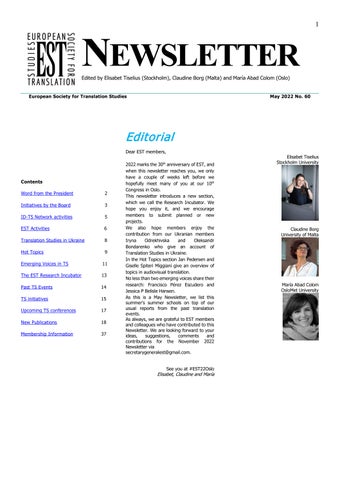
Membership Information

The membership fee is EUR 35 per year for full members and EUR 80 for a threeyear period. It is EUR 75 for supporting members (sponsors). It is due by 31 March each year but late payments are always welcome.

To renew your membership, please follow our instructions on the EST website

About the EST Newsletter

We’re on the Web! Check us out at: www.est-translationstudies.org European Society for Translation Studies

TheESTNewsletteris published twice a year, in May and November. It is basically a vehicle for communication between EST members and a catalyst for action, rather than a journal. It provides information on EST activities and summarizes some of the information available on the EST website, the EST Twitter account and Facebook group – you are invited to go to those sites for information that is more specific and up-to-date. The Newsletter reports on research events and presents suggestions on EST matters and research issues. All comments and suggestions from readers are welcome. All correspondence relating to the Newsletter should be sent to: secretarygeneralest@gmail.com

Turn static files into dynamic content formats.

Create a flipbook
Issuu converts static files into: digital portfolios, online yearbooks, online catalogs, digital photo albums and more. Sign up and create your flipbook.