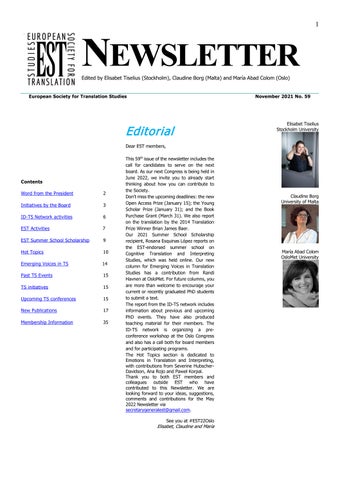
NEWSLETTER
Edited by Elisabet Tiselius (Stockholm), Claudine Borg (Malta) and María Abad Colom (Oslo)
Dear EST members,
This 59th issue of the newsletter includes the call for candidates to serve on the next board As our next Congress is being held in June 2022, we invite you to already start thinking about how you can contribute to the Society.
Don’t miss the upcoming deadlines: the new Open Access Prize (January 15); the Young Scholar Prize (January 31); and the Book Purchase Grant (March 31). We also report on the translation by the 2014 Translation Prize Winner Brian James Baer
Our 2021 Summer School Scholarship recipient, Rosana Esquinas López reports on the EST-endorsed summer school on Cognitive Translation and Interpreting Studies, which was held online. Our new column for Emerging Voices in Translation Studies has a contribution from Randi Havnen at OsloMet. For future columns, you are more than welcome to encourage your current or recently graduated PhD students to submit a text.
The report from the ID-TS network includes information about previous and upcoming PhD events. They have also produced teaching material for their members. The ID-TS network is organizing a preconference workshop at the Oslo Congress and also has a call both for board members and for participating programs.
The Hot Topics section is dedicated to Emotions in Translation and Interpreting, with contributions from Severine HubscherDavidson, Ana Rojo and Paweł Korpal. Thank you to both EST members and colleagues outside EST who have contributed to this Newsletter. We are looking forward to your ideas, suggestions, comments and contributions for the May 2022 Newsletter via secretarygeneralest@gmail.com
See you at #EST22Oslo Elisabet,Claudine and María



Elisabet Tiselius Stockholm University
Claudine Borg University of Malta
María Abad Colom OsloMet University

Word from the President
Dear EST members,
It is very gratifying to report that the Scientific Committee for the upcoming Oslo 2022 EST Congress has received close to 600 abstract submissions. While this is wonderful testimony to the global interest in Translation and Interpreting Studies, it also presents quite a challenge. In view of the extraordinary interest, the Scientific Committee and the Congress Organizers are currently considering various options for increasing the planned maximum number of panels and papers, including adding an extra half day to the Congress. But even with an extra half day (should this turn out to be a possibility), there will still be fierce competition to have abstracts accepted, and many will unfortunately end up having to be rejected, either by the panel conveners or by the Scientific Committee - purely for capacity reasons.
The present issue of the EST Newsletter carries a call for candidacies for the EST Board. After six years as your President, I shall be stepping down. A couple of other members have announced that they will be stepping down because of other commitments They, like me, are looking forward to handing over the Board responsibilities to energetic and creative colleagues with new ideas for the Society, but we will all miss the constructive work and lively interactions with fantastic colleagues.
Three years ago, the Board decided to offer travel grants to young researchers (Ph.D. students and recent postdocs) in view of the high travel costs involved in getting to Stellenbosch. This year, the Board has again decided to offer 20 grants, at 500 euros each, to bring down travel and accommodation costs for young researchers who might not otherwise be able to attend the Congress. The grants and the criteria by which they will be awarded will soon be advertised, both on the EST and the Oslo2022 websites, by a Travel Grant committee, which will of course also select the winners. Be sure to check out further information which will soon be available on the websites.
We are still keeping our fingers crossed that we can all meet face to face in Oslo and that any remaining travel restrictions in the world will have been lifted by June 2022. Should this dream turn out to be unrealistic and potential participants are barred from physical access to the Congress, the Board and the organizers will jointly consider how this unhoped-for situation can best be dealt with.
Hoping to see you in Oslo in June.
ArntLykkeJakobsen EST President November 2021
Initiatives by the Board
10th EST Congress June 22–24 2022 in Oslo, Norway
Road to Oslo 2022

The organizing committee is delighted to report that the call for papers for the 10th EST congress was a great success. Five hundred and seventyeight abstracts for poster and paper presentations have been submitted to the 49 panel themes of the congress and are now under review. Notification of acceptance will be sent by December 20, 2021.
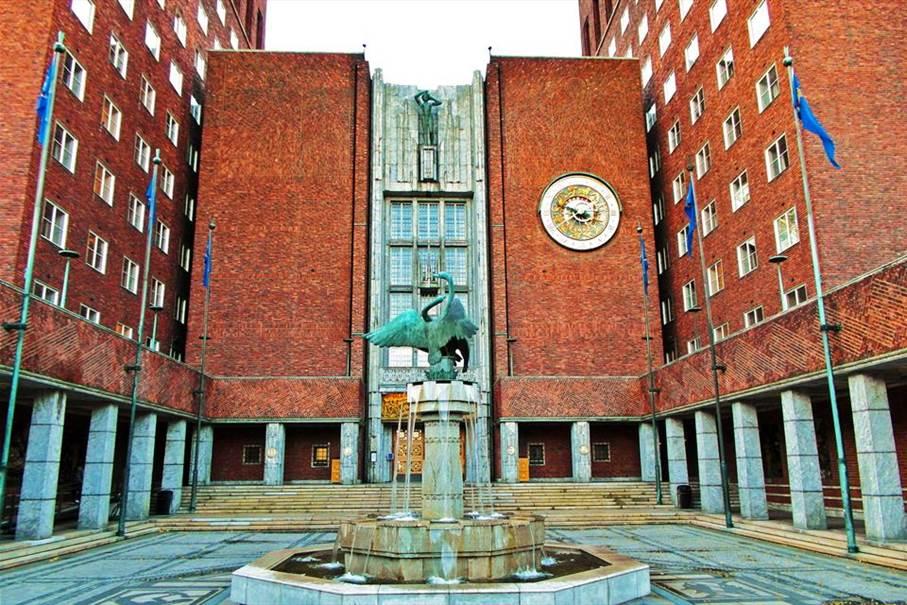
We are also happy to announce one of our first social activities: a reception at the Oslo City Hall on the evening of June 23. Oslo City Hall is the iconic building where the Nobel Peace Prize is awarded every year, and it is decorated by great Norwegian art from 1900-1950, with motifs from Norwegian history, culture and working life.
We will soon come back with the names of two local guest speakers who will join Jemina Napier and Michael Cronin. Stay tuned!


EST Travel Grants for the Oslo Congress
Junior researchers (Ph.D. students and recent postdocs) will be able to apply for travel grants for the Oslo Congress. Colleagues can apply for 500 euros each. More information will be provided soon both on the EST website and on the Oslo 2022 congress website. The grants will be reviewed, and successful applicants selected by a Travel Grant committee.
Photo by visit Oslo
KristinaSolum ÁlvaroLlosaSanz ChairsoftheOrganizingCommittee
We are delighted to report that shortly after our last Newsletter went into press on May 27 2021, EST signed a Memorandum of Understanding with the International Association for Translation and Intercultural Studies (IATIS). Our two organizations work to exchange information of interest for our members among other things. A copy of the memorandum is posted in the members section of our website (you need to be logged in)
Call for contributions to the
Emerging
Voices Column
We are grateful to Laura Ivaska and Randi Havnen who have already contributed to our new column, Emerging Voices in Translation Studies, which is dedicated to research by PhD students or recent PhD graduates. We hope members will encourage their current or recent PhD students to contribute. We welcome a maximum of three contributions in each issue. Contributions about a PhD dissertation or current project can be accepted from current PhD students or recent PhD graduates who finished their studies within the previous 12 months. Texts should be no longer than 600 words each (incl. bibliography) and follow the guidelines for the ‘Emerging Voices Column’ section in the EST NL available when you are logged in at the members section of our website. Login here
List of book series
As members know, EST keeps track of translation journals. We are now also compiling lists of book series in T&I, which can be viewed on our website in the same online form as the journals. You can find the list here. If you would like a book series to be included, please send an e-mail to secretarygeneralest@gmail.com
Publications from EST Congresses
If you know of any publications that originated in EST Congresses and are not yet listed on our website here, please let us know by sending the details to secretarygeneralest@gmail.com.
The 2021 directory of members
The updated directory of members has been posted on our Intranet. It includes details of members who paid their fees for 2021 and have requested that their names be listed in the directory. If you want to update your details, please send an e-mail to secretarygeneralest@gmail.com
Reminder: discounts from publishers for EST members
The Society has arranged for members to have regular discounts on books from John Benjamins, Multilingual Matters, Rodopi (currently an imprint of Brill), Routledge and Bloomsbury. For more details, discount codes and an updated list, please check out our Intranet
Communication channels and policies
New publications in Translation Studies come to our attention in various ways (e.g. publishers' websites, information from members through channels such as our online forms and e-mail). Notices about new books that our volunteers manage to scan appear in the biannual Newsletter and most also appear in our social media streams. Notices about new publications do not appear in the biweekly email digest, which for reasons of space focuses on time-sensitive information such as calls for conference submissions, calls for papers, and job opportunities. Please use the online forms accessible from the EST website or from the links listed below if you have information relevant to Translation Studies that you would like to have distributed via our channels.
Reminder: announcements of events and other TS-related news items
Thank you for sending us information about books, journal calls for papers, conferences and other news items to post in our Facebook group and Twitter feed. All you need to do is fill in the appropriate form and hit submit. You can also find links to all forms on the EST homepage.
For announcements of new issues and journal calls for papers: https://goo.gl/forms/hUBT58u8Ejmfi3vC2. For conference announcements and conference calls for papers: https://goo.gl/forms/gdrywrMnaToopn9B2. For general announcements not covered by the other forms: https://goo.gl/forms/wt4lHLg9mCWxiWD43.
We are looking forward to hearing from you.
Call for candidatures for the EST Board
Candidates are hereby invited for the EST Executive Board for the period 2022-2025. Nominations are open for all positions on the Executive Board: President, Vice-President, Secretary-General and Treasurer, as well as five additional members. A number of members of the current Board are planning to step down, and several are planning to stand for re-election (a representative of the EST Congress 2025 committee will also be ex officio on the next Board). The elections for all of the open positions will take place as part of the EST General Meeting in Oslo in June 2022. We warmly encourage candidatures for the incoming board from all EST members. Collective candidatures, where several members present themselves for complementary positions, are also invited. Candidatures should include a biographical note, photo, and mission statement, not exceeding 300 words in all, and should be sent to the EST Secretary General Maureen Ehrensberger-Dow at secretarygeneralest@gmail.com no later than April 20, 2022.
Information about the candidatures will be distributed to the EST members at the beginning of May 2022. Candidatures will also be possible from the floor of the Congress, as has happened on previous occasions. The Executive Board nevertheless urges all candidates to prepare written candidatures and to send them in before April 20, 2022, well before the Congress, so that all members have the opportunity to make an informed choice. Proxy votes can be organized as per the EST constitution (i.e. members who cannot attend the Congress can send written proxy votes to a member who will attend). It should be noted, however, that an online electronic system will be used for both onsite and offsite voting.
The International Network of doctoral programmes in Translation Studies (ID-TS)
ID-TS Network activities in 2021
Despite all the obstacles that have recently hampered travel and academic exchange in person, the ID-TS network has nevertheless found different ways to maintain contact with its member programmes.
ID-TS graduate events and conferences
After a very successful online graduate conference organised by the doctoral students of Boğaziçi University in November 2020, we decided for a more modest event in 2021. In November 2021 doctoral students of the University of Ljubljana organised an online and open graduate event, which started with a keynote speech by Dr Sergey Tyulenev (University of Durham, UK) with the title “Studying the ‘Dark’ Side of Translation: Translation and (Counter)Intelligence”, and was followed by a round table, where Dr Tyulenev talked with five advanced doctoral students. The round table focused on methodological issues encountered in TS research - in general and in the time of pandemic.
Another, more ambitious graduate event is going to happen next year: doctoral students of the University of Graz are planning a twoday on-site conference in Graz on 9 and 10 June 2022 with Professor Dilek Dizdar as keynote speaker. The topic of the conference will be “Reflexivity and self-referentiality” and will aim to encourage participants to reflect on their position within their PhD-related research process and the generation of new knowledge.
Teaching material
Two video blogs by Kaisa Koskinen and me were created for the benefit of doctoral supervisors and doctoral students focusing on the so-called creative methods. In the first video we talk about the linguistic landscape method adapted for TS research; in the second video blog the so-called “love and break-up letter method”, initially developed in usability research and adapted for TS, is described and discussed. Both videos are available in the members' area of the IDTS webpage.
EST pre-congress workshop
Just before the EST conference in Oslo, the ID-TS network will organise a pre-congress workshop which will be held by Brian James Baer (Kent State University, USA) and will focus on how to teach research ethics to TS doctoral students. The workshop will be free of charge to all participants from ID-TS network member institutions. Others are also welcome!
Call for new members of the ID-TS Board of Management
With the EST congress in Oslo the mandate of the current board of management will come to an end. Four out of five members of the board are not running again, including Kaisa and me. We are currently encouraging all ID-TS representatives to step forward and run for these positions. It is indeed a worthwhile endeavour!
2022 call for new members of the ID-TS network
The ID-TS network has managed to renew and complete the ID-TS evaluation committee. We are very grateful to all 11 members of the committee, who are willing to volunteer their time, experience, and expertise to this task, and especially to Professor Christina Schäffner, who has agreed again to chair the committee.
At the moment the ID-TS network consists of 19 members from 12 different countries, and is a lively community of individuals dedicated to upholding high standards in TS doctoral studies. If your institution and the PhD programme is not yet an ID-TS member, you are cordially invited to join us. The deadline for submitting new applications is 1 March 2022, and the results will be announced on 1 May 2022. For more details, see our website
Encourage your institution to join us and thus participate in sharing our resources and initiatives!
Nike K. Pokorn DepartmentofTranslationStudies,FacultyofArts UniversityofLjubljana
Kaisa A. Koskinen Languages,FacultyofInformationTechnologyand Communication Sciences TampereUniversity
EST Activities
Summer School Scholarship Committee

Alexandra Assis Rosa ChairoftheSummerSchoolScholarship Committee
Intensive summer school courses for researchers preparing to do a doctoral dissertation in Translation Studies are slowly recovering from the COVID-19 pandemic. So, our committee has once again received and vetted applications.
The members of the Committee are:
Barbara Ahrens (Cologne University of Applied Sciences, Germany),
Alexandra Assis Rosa (Chair, University of Lisbon, Portugal),
Ilse Feinauer (Stellenbosch University, South Africa),
Maria Piotrowska (Pedagogical University Krakow and Jagiellonian University, Poland),
Franz Pöchhacker (Uniersity of Vienna, Austria), and Sonia Vandepitte (Ghent University, Belgium).
Two applications were received and Rosana Esquinas was selected. It was about time another scholarship was granted. Three cheers!
Wikicommittee

KyriakiKourouni
Chair of the EST Wikicommittee
The EST Wikicommittee was set up at the beginning of 2017. It is the result of an EST Board initiative to improve the quality of information on the web about translation and Translation Studies. Participation is open to all. The priorities of the Committee include:
-Creation of new articles to fill gaps
-Improvement of existing articles -Tagging articles of interest to the project -Provision of up-to-date information about concepts and terminology
-Translating entries into more languages -Creation and consistent use of relevant categories
Participation may also include organizing training events or Edit-a-thons. In the works are: a presentation of our work so far has been accepted at UnderstandingWikipedia’s Dark Matter: Translation and Multilingual Practice in The World's Largest Online Encyclopaedia, a conference organised by Hong Kong Baptist University; Edit-a-thons to take place in March 2022 to celebrate International Women’s Day and provide visibility to women and/in Translation/ Translation Studies, following the success of Editathons last March (if you are interested, you can find the corresponding report available at the "Past TS Events" section in the May 2021 Newsletter); and the preconference workshop for #EST22Oslo!
In the meantime, we are happy to endorse training events and Edit-a-thons and we invite article writers and editors to record their participation and progress by making appropriate additions to the Wikiproject page . Twitterers are also warmly encouraged to tweet new articles under the hashtag #tswikiproject.
Book Purchase Grant committee

MügeIşıklarKoçak, Chair of EST BPG Committee
DeadlineforapplicationsMarch31 2022
The Book Purchase Grant is awarded annually to enable an academic institution to purchase TS publications. The aim of the grant is to enhance translation research in new contexts where Translation Studies books (e-books) and journals (e-journals) as well as research software are lacking for different reasons.
I would like to take this opportunity to urge new applicants to apply and previous ones to re-apply for the EST Book Purchase Grant 2022 (deadline March 31).
Details on how to apply are available on the EST website.)
Young Scholar Prize Committee
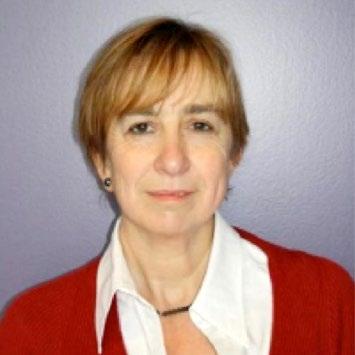
Aline Remael ChairoftheYoungScholarPrizeCommittee
The submission date for the EST Young Scholar Prize (YSP) is drawing near: January 31, 2022. The winner or winners will be announced at the EST congress in Oslo, which will take place from 22 to 24 June of the same year.
And yes. Henceforth there will be more than one winner. Given the popularity and importance of the Young Scholar Prize for the careers of young academics the EST Board has decided to increase the prize money from €3,000 to €6,000.
The top prize for the winner of the YSP will remain as it is: €3,000. How the additional €3,000 is allocated will depend on the merit of the submissions that the committee receives. It may well be that we have two winners who will then both receive €3,000. However, past experience has shown that we sometimes receive PhDs that make it to the YSP shortlist although not to the very top, and they merit more recognition than
they have received to date. We therefore also envisage the option of awarding a second and a third Young Scholar Prize.
Hopefully this excellent news will be an incentive for you to do the extra work that the submission of your thesis requires. Moreover, the financial aspect of the prize may be attractive and will certainly be a bonus for any young scholar at the outset of their career. However, being awarded the prize is probably more important in itself: It entails international recognition of your work on the basis of the careful reading and evaluation by experienced researchers in the field of Translation and Interpreting Studies.
Please consult the EST website for submission details and more practical information
We look forward to receiving your contributions.
Translation Prize Committee

Isabelle Robert Chair of the Translation Prize Committee
2014 EST Translation Prize Winner published the translated book
Brian James Baer published the book Fedorov’s Introduction to Translation Theory, for which he won the 2014 EST Translation Prize. As the editor and translator of the book, Brian James Baer explains that this is the first Englishlanguage translation of Andrei Fedorov's seminal work Introduction to Translation Theory (1953). Annotated with a 50-page scholarly introduction, this edition is the culmination of over three decades of Soviet writing on translation, beginning with the 1919 volume Principles of Literary Translation, but with roots extending into the pre-revolutionary period. Filled with examples from English, French and German, as well as other languages, the volume
includes historical chapters comparing translatorial thought in the West and in Russia, theoretical chapters informed by a materialist philosophy of language, followed by detailed chapters outlining general textual orientations (informational documentary, agitational-propagandistic, and artistic), which are then aligned with specific text types. It ends with an appendix on the history and translation of verse forms. A student of the Russian formalist Yuri Tynianov and a mentee of the philological translator Adrian Frankovsky, Fedorov aproaches theory from the standpoint of a practitioner while arguing for the value of theory in informing the practitioner's decision-making. Weaving together formalist, functionalist and Marxist concepts, this volume should compel a rethinking of some of the basic tenets of current histories of the field.

Open Access Prize Committee

ChairoftheOpenAccessPrizeCommittee
As in most other disciplines, free access to publications is also important in Translation Studies. The EST Open Access Prize, launched in cooperation with well-known publishing houses, allows an article to be made freely available in one of their otherwise subscription-only journals. The first Open Access prizes will be awarded during the EST Congress in Oslo in 2022.
Participating journals
– Benjamins: Babel, Interpreting, Journal of Internationalization and Localization (JIAL), Target, Translation Cognition & Behavior, Translation & Interpreting Studies, Translation Spaces, Translation & Translanguaging in Multilingual Contexts; for the second edition of the Award, the new journal Translation in Society will also be added.
– Routledge: Asia Pacific TIS, The Interpreter & Translator Trainer, Perspectives, Translation Studies, The Translator.
Eligibility and documentation
– The online-first version of your article was published in one of the participating journals in 2019, 2020 or 2021.
– Only one submission per (co-)author is allowed. In the case of multi-authored articles, it is the corresponding author who submits the article. You must also inform all co-authors before the submission.
– Together with the article, the corresponding author shall submit a motivational statement of max. 500 words, explaining why you think the article deserves the Open Access Prize.
The Open Access Prize Committee will assess all submissions from the perspective of the excellence of the scholarly contribution (originality, significance, theoretical and methodological rigor). As an auxiliary criterion, the potential impact on the career of the applicant may be taken into account. Applicants should consider these criteria when writing their motivational statement.
Timeline
October 2021: call for submissions Deadline for submission: applications must be submitted electronically to the EST Secretary General in the period of January 1–15, 2022.
June 22–24, 2022: prizes awarded at the EST Congress in Oslo For more details, download the call for applications here
Brian James Baer Winner of 2014 EST Translation Prize
Luc van Doorslaer
ESTSummer School Scholarship Report
Participation in the 2021 Summer School on Cognitive Translation & Interpreting Studies
I received the 2021 EST Summer School Scholarship to attend the First International Summer School on Cognitive Translation & Interpreting Studies, hosted by the Laboratory for Multilectal Mediated Communication & Cognition (MC2 Lab) of the Department of Interpreting & Translation of the University of Bologna (Italy) and the IUED Institute of Translation & Interpreting of the ZHAW University of Applied Sciences (Switzerland) online via the University of Bologna. The school was endorsed by the European Society of Translation Studies (EST) and the network of Translation, Research, Empiricism, Cognition (TREC).
This summer school was held online between 14 and 25 June 2021 and was aimed primarily at students in the final year of an MA or in the initial years of a PhD program related to translation, interpreting, and/or cognition. To apply for a place, we had to write a statement of purpose that summarized our interest and motivation, relevance of our recent or current activities as well as our academic interests.
Due to the situation caused by the COVID-19 crisis, the best and safest option for everybody was to hold the school online. It would have been a wonderful experience to meet the rest of the students and the faculty members “in real life” in Italy. Nevertheless, the organizing team did their best to provide us with tools to keep in touch with each other though virtual coffee rooms and daily exchange sessions at the end of scheduled classes to get to know each other during these two thought-provoking weeks. Moreover, each student had two individual tutoring sessions per week with different professors from the Summer School. Professors were assigned to students according to the research interests and projects previously expressed in our statements of purpose as part of the application process. I had the pleasure to have individual tutorial sessions with Prof. Sandra L. Halverson, Prof. Ricardo Muñoz, Prof. Sijia Chen, and Prof. Christopher Mellinger. These tutorial sessions gave me the opportunity to share my doubts and ask for advice. As a result, I received very enriching and constructive feedback on my proposal that would help me to improve the quality of my research.
The Summer School was host to 29 students and 12 faculty members in the field of Translation Studies. More than 10 universities from different continents were represented in this diverse group, an impressive multicultural and heterogeneous group that created the perfect atmosphere. During the school, classes were divided into the following diverse modules which were delivered by outstanding experts: Translation Studies Prof. Ricardo Muñoz Martín; Psychology Prof. Bogusława Whyatt; Linguistics Prof. Sandra L. Halverson; Neuroscience Prof. Alexis Hervais-Adelman; Research Methods Prof. Elisabet Tiselius; Research Concepts and Design Prof. Sijia Chen; HCI and Workplace Research Prof. Maureen Ehrensberger-Dow; Statistics Prof. Christopher D. Mellinger
Apart from our daily classes, we had exchange sessions in small groups, which led us to discuss with other students what we had learned that day and address questions that emerged during our discussion or during the lectures. Thanks to these exchange groups, we had the opportunity to address some questions to professors that then would be answered during the following lecture or through e-mails. The faculty members that worked at the exchange sessions were Serena Ghiselli, Christian Olalla-Soler, Nicoletta Spinolo, and Álvaro Marín. The dynamics of these sessions at the end of each day allowed a constant exchange that enriched the knowledge of all the parties involved, while, at the same time, made participants feel part of a research community.
One of the things that I liked the most was the possibility of working in a multicultural group with students from different backgrounds and academic levels. Some of the students had already finished their PhD and were working in fascinating projects as young academics, and this also gave me the hope to think that having your PhD done is just the beginning of your career. Besides, we shared bibliographic references that we thought could contribute to each other’s research. I must confess that when I started doing research, I thought that academia was a closed and narrow space, but these kinds of courses helped me realize that I may be wrong. It’s very beautiful to share your research and get to know students and scholars that are also passionate about research in the field of TIS.
At the end of the Summer School, participants could receive two types of certificates. The first was a Certificate of Attendance for those who attended most of the classes and exchange sessions. The second, a Diploma of Completion was – for me – the culmination of the Summer School. To get this Diploma of Completion, we had to write a paper between 3,000 and 5,000 words long that covered the introduction, materials, and methods parts of a regular article. This diploma was the best excuse to put into practice what we had learned and apply it to our research proposal. Thus, I did not hesitate and sent in my proposal right away. Once it was sent, two members of the Summer School faculty assessed our texts, wrote suggestions, and gave it a pass/no pass. With a pass, the writers of the best proposals will have the chance to submit an improved version to publish on the Summer School’s website and optionally present a poster at the 3rd International Conference on Translation, Interpreting & Cognition (ICTIC 3) which was held at the beginning of November 2021. As I said above, it was the best excuse to work on my research and try to present it at an international congress, which will contribute to my doctoral path.
In conclusion, as a third-year doctoral student, I approached the Summer School as a place where my ideas about Cognitive Translation & Interpreting Studies would be challenged. While attending the Summer School, I was working on one of the experiments of my PhD in which I research translation, audiobooks, and emotions, and I cannot thank all these renowned scholars enough for the time they devoted to reading my proposal. Together, we went over my research proposal and discussed approaches to data collection, methodological issues, realistic timeframes, and expectations. I personally found this Summer School extremely useful and enriching. I am sure that the rest of the students feel the same, since we enjoyed a stimulating exchange of views with peers and experts. Thanks to this experience, I now have the necessary knowledge to test the data collection method that best contributes to my research, as I am planning to carry out the final experiment of my PhD in the coming months.
I would like to end by saying a big thank you to the European Society of Translation Studies for the grant and their wonderful work on promoting research through different initiatives such as this one. Undoubtedly, one of the best decisions I made in the crazy year of 2020 was to become a member of the EST.
Hot Topics in Translation Studies: Emotions
Emotions and the affective side of Translation and Interpreting

Severine Hubscher-Davidson TheOpenUniversity
What do we mean by “emotions”, and what makes them a hot topic in translation and interpreting studies (TIS)? While some scholars choose not to differentiate between emotions and affects, preferring to use the terms interchangeably in order to show fluidity of conceptual boundaries (Ahmed 2004), in psychological discourse “affect” is commonly used to refer to free-floating moods, sensations, and sense perceptions whereas “emotion” refers to more specific feelings in response to a triggering event (Quigley et al. 2014). Regardless of the term that scholars employ, it is clear that the increasing focus on emotional and affective experience in recent years has allowed for the emergence of productive openings in various fields, TIS included.
The so-called “affective turn”, which has already been questioning dominant paradigms since the mid-1990s in many areas of the humanities and social sciences, has become a particularly vibrant stream of thought. There is much evidence for such a turn in TIS: the organisation of panels dedicated to this theme at international conferences; the recent publication of substantial monographs tackling translators’ emotions (e.g. Koskinen 2021; HubscherDavidson 2017); and an increasing number of published journal articles addressing the embodied, intuitive, and sensorial experiences of translators and interpreters (e.g. Baldo 2019; Hokkanen 2017; Ruiz Rosendo 2020).
This recent, lively, and widespread scholarly interest in the affective side of translating and interpreting, however, may seem surprising in some respects. After all, thinking about emotions is nothing radically new and translation and interpreting (T&I) practitioners and researchers have long been interested in emotions and their impact: for many decades scholars have explored stress, anxiety, empathy, creativity, and later motivation, confidence,
job satisfaction, and many other related topics. Rather than reinventing the wheel however, this recent “turn” towards affectivity can be viewed as a return to and complication of previous theories, insights, and analyses in order to bring about new understanding, inspiring continuing efforts to rethink the interrelations between the cognitive and the social, and exploring the implications of emotions for various aspects of T&I work.
An important contribution of the affective turn for the study of T&I is the suggestion that we should be sceptical of the (previously dominant) idea that reason and emotion are sharply distinct and mutually exclusive categories or the positivist notion that the former is more valuable and research-worthy than the latter. Emotions are no longer considered disruptive of reason but mutually constitutive, and evidence abounds of the key role that multidimensional, cultural, embodied, and mediated emotions play in decision-making behaviours (Zembylas 2016: 542). Perhaps more importantly for TIS, emotion research has the potential to shed new light on the intersections of the cognitive and social, thus bridging the long-standing divide between proponents of translation as a cognitive activity and those who primarily view translation as a social activity. While some connections have recently been made between these perspectives (see for example Risku et al.’s 2017 work on translators’ socio-cognitive processes), in many ways TIS still struggles to move beyond its label as a heterogeneous and fragmented field (Chesterman 2019; Gambier 2021). Through this new lens, however, the emotions of translators and interpreters can be understood as part of and shaped by the relations, ideologies, and discourses that take place in their particular social/cultural settings, alongside cognitive phenomena that they attempt to process and regulate. Sociological and psychological aspects are inextricably linked and there are rich opportunities to consider how emotions work to bridge this relationship between the mental and the social.
The study of T&I can also provide new vantage points from which to explore the intricacies and complexities of affect. First, there is renewed interest in investigating affect from a cultural perspective, with emotion scholars wondering what happens when affects are “translated” as representations, or how emotions can serve as a means to relate to others if they are, in
fact, cultural interpretations (Frykman and Povrzanović Frykman 2016: 15). TIS could be a source of inspiration for and feed into these fruitful discussions. Second, there is an increasing need for a nuanced and diverse investigation of the role of emotion across a variety of modes (visual, audio, gestural...) and genres (narrative, non-fiction...). Here again, TIS has the potential to make a significant contribution. A recent example of a multicultural study addressing these points was carried out by Perdikaki and Georgiou (2020) who explored the affective responses of professional subtitlers to sensitive audiovisual content. Amongst other findings, they noticed that intense emotions could facilitate translation performance via experiential and embodied processes, hence shedding light on an important thread of thinking in affect theory. Further engagement with this hot topic could thus be a powerful catalyst for new ways of thinking and theorising, both in TIS and beyond.
References
Ahmed, Sara. 2004. The Cultural Politics of Emotions. Edinburgh: Edinburgh University Press.
Baldo, Michela. 2019. “Translating affect, redeeming life. The case of the Italian queer transfeminist group ideadestroyingmuros”. The Translator 25(1): 13-26.
Chesterman, Andrew. 2019. “Consilience or fragmentation in Translation Studies today?” Slovo.Ru: Baltic Accent 10(1): 9–20.
Frykman, Jonas and Povrzanović Frykman, Maja. 2016. “Affect and material culture: Perspectives and strategies”. In Sensitive Objects - Affect and Material Culture, J. Frykman and M. Povrzanović Frykman (eds), 9-28. Lund: Nordic Academic Press.
Gambier, Yves. 2021. “Approaches to a historiography of Translation Studies”. In The Situatedness of Translation Studies, L. van Doorslaer and T. Naaijkens (eds), 1733. Amsterdam: Brill Rodopi.
Hokkanen, Sari. 2017. “Analyzing personal embodied experiences: Autoethnography, feelings, and fieldwork”. Translation & Interpreting 9(1): 24-35.
Hubscher-Davidson, Séverine. 2017. Translation and Emotion A Psychological Perspective. London: Routledge.
1
Koskinen, Kaisa. 2020. Translation and Affect: Essays on Sticky Affects and Translational Affective Labour. Amsterdam: John Benjamins.
Perdikaki, Katerina and Georgiou, Nadia. 2020. “Investigating the relation between the subtitling of sensitive audiovisual material and subtitlers’ performance: An empirical study”. JoSTrans – Journal of Specialised Translation 33: 152–175.
Quigley, Karen. S., Lindquist, Kristen A. and Barrett, Lisa. F. 2014. “Inducing and measuring emotion and affect: Tips, tricks, and secrets”. In Handbook of Research Methods in Social and Personality Psychology, H. T. Reis and C. M. Judd (eds), 220–252. Cambridge: Cambridge University Press.
Risku, Hanna, Rogl, Regina and Milosevic, Jelena. 2017. “Translation practice in the field: Current research on socio-cognitive processes”. Translation Spaces 6(1): 3-26.
Ruiz Rosendo, Lucía. 2020. “The role of the affective in interpreting in conflict zones”. Target 33(1): 47–72.
Zembylas, Michalinos. 2016. “Making sense of the complex entanglement between emotion and pedagogy: Contributions of the affective turn”. Cultural Studies of Science Education 11(3): 539-550.
Le cœur a ses raisons que la raison ne connaît point
Exploring the role of emotion in CTIS

AnaMaríaRojoLópez UniversityofMurcia1
Emotions are emerging as a hot topic in translation and interpreting, drawing the attention of professionals, educators and researchers alike. In particular, a surge of studies focused on emotional processes within Cognitive Translation and Interpreting Studies (CTIS, henceforth) has brought them to the fore (cf. Rojo 2017). Translators and interpreters are affected by emotions, which are at times triggered by work-related conditions and at times elicited by the source text (ST) or the discourse. The core question is how emotions affect cognitive processing. And, most importantly, can emotional effects be modulated?
Results suggest that the value (valence), intensity (arousal) and (in)congruence of emotion influence translators’, interpreters’ and consumers’ affective states, their allocation of cognitive resources, and their ways of processing. Positive emotions facilitate creative and flexible thinking, leading to more original translations, while negative emotions focus attention and promote analytical thinking, minimizing errors (Lehr 2014; Rojo & Ramos 2016). Furthermore, positive ST emotions favor involvement and focusing attention on it whereas negative emotions favor the allocation of resources to the target text (Lehr & Hvelplund 2020). Valence also conditions translators’ affective states and strategic behavior: Framing a topic (e.g., the pandemic) in negative terms leads to greater negative affectivity and a greater inclination to alter (either by mitigating or emphasizing) the content of the text than positive framing does (Rojo & Naranjo 2021).
Emotional effects may be modified or neutralized. The congruence between the emotions elicited by ambient music and by the ST induces a general positive state that prevails over the specific valence of both
Investigación and FEDER/UE funds (grant number FFI2017-84187-P)
text and music, broadening the focus of attention and fostering flexible and more creative thinking (Naranjo & Rojo 2021). Similarly, the time to find a translation solution is shorter when the ideological content of the ST is congruent with the translator’s ideology, and longer when it is incongruent, but the intensity of beliefs and political stance matter (Rojo & Meseguer 2021; Rojo & Ramos 2014).
Results also suggest a role for some factors that mediate the effect of affective states on translation and interpreting performance and reception. Affect-related personality traits can predict successful performance (e.g., Hubscher-Davidson 2013; 2020; Lehka-Paul 2018; Bontempo & Napier 2011) and regulate emotional effects. For instance, self-esteem and trait anxiety may modulate the effect of stress by time pressure constraints. Self-esteem seems to act as a protective factor against stress-regulating levels of salivary cortisol and trait anxiety. Yet the impact of self-esteem on performance is not necessarily positive. Under tight time constraints, translation students with higher self-esteem make more mistakes than those with lower self-esteem and higher trait anxiety (Rojo, Cifuentes & Espín 2021).
Professional expertise may also modulate emotional impact. Experienced interpreters seem to minimize the negative impact of stress on performance better than novices do (Korpal 2017). They are also better at regulating the effect of negative feedback and use it as motivator to correct behavior (Rojo & Ramos 2018), but intensity and duration of the emotional experience play a substantial role. Sustained periods of working with victims may lead to higher anxiety, burnout or even vicarious trauma in community interpreting (Mehus & Becher 2016).
Language competence and choice of language mediate emotional experience. Students appear to have more problems regulating the effects of stress when interpreting into their less proficient language (Tiselius & Englund Dimitrova 2019; Rojo, Foulquié, Espín & MartínezSánchez 2021). Choice of language also modulates audiences’ emotional response to translations. Results on audio description (AD) reveal that the use of subjective and metaphorical language influences the audience’s perception of emotionally-laden and highly poetic filmscompared with a more neutral and objective AD (Ramos & Rojo 2014). Similarly, metaphorical translations of idiomatic expressions cause
stronger heart rate responses than their non-metaphorical counterparts (Rojo, Ramos & Valenzuela 2014).
Attention and concentration are key predictors of translation performance (Rojo & Alarcón 2020) which may modulate emotional impact. Focusing on task performance can muffle emotional response by restraining the processing of emotional ST content (Rojo & Naranjo 2021). Attentional responses may modulate physiological responses to affect, such as heart rate or cortisol reactivity (Rojo, Ramos & Espín 2021).
Emotion research in CTIS has taken giant steps in recent years, but a number of pending challenges still lie ahead. Cognitive and affective processes are inextricably linked, but further research is needed to uncover how they interact in translation and interpreting, and what factors mediate the interplay. Methodological challenges are also the focus of debate, with a need for increased ecological validity and standardized criteria for emotion measurement, stimuli selection, performance assessment, and guidelines for ethical practices. The study of emotions may still be in its infancy, but now that hot, emotional processes and cold, reason-based processing are finally aligned on the CTIS research agenda, the pace of progress may be speedier than ever.
References
Bontempo, Karen and Napier, Jemina. 2011. “Evaluating emotional stability as a predictor of interpreter competence and aptitude for interpreting”. Interpreting 13 (1): 85-105. https://doi.org/10.1075/intp.13.1.06bon
Hubscher-Davidson, Séverine. 2013. “Emotional intelligence and translation: a new bridge”. Meta 58 (2): 324e346. https://doi.org/10.7202/1024177ar
Hubscher-Davidson, Séverine. 2020. Translation and Emotion: A Psychological Perspective. New York and London: Routledge.
Korpal, Pawel. 2017. Linguistic and Psychological Indicators of Stress in Simultaneous Interpreting. Poznań: Wydawnictwo Naukowe UAM.
Lehka-Paul, Olha. 2018. “Between translation process and product: Personality and translator’s behavior during selfrevision”. In Translating boundaries: Constraints, limits, opportunities, D. Renna and S. Barschdor (eds.), 21-48. Stuttgart: Ibidem Verlag.
Lehr, Caroline. 2014. The influence of emotion on language performance – Study of a neglected determinant of decisionmaking in professional translators. PhD dissertation, University of Geneva.
Lehr, Caroline and Hvelplund, Kristian T. 2020. “Emotional experts: influences of emotion on the allocation of cognitive resources during translation”. In Multilingual Mediated Communication and Cognition, R. Muñoz Martín and S. Halverson (eds.), 4468. New York: Routledge.
Mehus, Christopher J. and Becher, Emily H. 2016. “Secondary traumatic stress, burnout, and compassion satisfaction in a sample of spoken-language interpreters”. Traumatology 22 (4): 249-254. https://doi.org/10.1037/trm0000023
Naranjo, Beatriz and Rojo López, Ana M. 2021. “The effects of musical (in)congruence on translation”. Target 33 (1), 132-156. https://doi.org/10.1075/target.19076.nar
Ramos Caro, Marina and Rojo López, Ana M. 2014. “Feeling audio description: exploring the impact of AD on emotional response”. Translation Spaces 3: 133-150. https://doi.org/10.1075/ts.3.06ram
Rojo López, Ana M. 2017. “The role of emotions”. In Handbook of Translation and Cognition, J. Schwieter and A. Ferreira (eds.), 369-385. Hoboken: John Wiley & Sons.
Rojo López, Ana M. and Alarcón Alarcón, Carmen M. 2020. “Can translators be judged by their intelligence?” In Multilingual Mediated Communication and Cognition, R. Muñoz Martín and S. Halverson (eds.), 90132. New York: Routledge.
Rojo López, Ana M., Cifuentes Férez, Paula and Espín López, Laura. 2021. “The influence of time pressure on translation trainees’ performance: testing the relationship between self-esteem, salivary cortisol and subjective stress response”. PLOS ONE 16 (9): e0257727. https://doi.org/10.1371/journal.pone.02577 27
Rojo López, Ana M., Foulquié Rubio, Ana I., Espín López, Laura, and Martínez-Sánchez, Francisco. 2021. “Analysis of speech rhythm and heart rate as indicators of stress on student interpreters”. Perspectives 29 (4): 591-607.
https://doi.org/10.1080/0907676X.2021.19 00305
Rojo López, Ana M. and Meseguer Cutillas, Purificación. 2021. “The effect of attitude towards Catalonia’s independence on response latency when translating
ideologically conflicting press headlines”. Onomázein, Special Issue on Emotions in Translation and Interpreting 8: 128-145. https://doi.org/10.7764/onomazein.ne8.02
Rojo López, Ana M. and Naranjo, Beatriz. 2021. “Translating in times of crisis: A study about the emotional effects of the COVID19 pandemic on the translation of evaluative language”. Journal of Pragmatics 176: 2940.
https://doi.org/10.1016/j.pragma.2021.01. 018
Rojo López, Ana M. and Ramos Caro, Marina. 2014. “The impact of translators’ ideology on the translation process: a reaction time experiment”. MonTI. Monografías De Traducción e Interpretación, Special issue 1: 247-271. https://doi.org/10.6035/MonTI.2014.ne1.8
Rojo López, Ana M. and Ramos Caro, Marina. 2016. “Can emotion stir translation skill? Defining the impact of positive and negative emotions on translation performance”. In Reembedding Translation Process Research, R. Muñoz Martín (ed.), 107-130. Amsterdam: John Benjamins.
Rojo López, Ana M. and Ramos Caro, Marina. 2018. “The role of expertise in emotion regulation: exploring the effect of expertise on translation performance under emotional stir”. In InnovationandExpansion in Translation Process Research, I. Lacruz and R. Jääskeläinen (eds.), 105-129. Amsterdam: John Benjamins.
Rojo López, Ana M., Ramos Caro, Marina, and Espín López, Laura. 2021. “Audio described vs. audiovisual porn: cortisol, heart rate and engagement in visually impaired vs. sighted participants”. Frontiers in Psychology 12: 661452. https://doi.org/10.3389/fpsyg.2021.661452
Rojo López, Ana M., Ramos Caro, Marina, and Valenzuela Manzanares, Javier. 2014. “The emotional impact of translation. A heart rate study”. Journal of Pragmatics 7: 31-44.
https://doi.org/10.1016/j.pragma.2014.07. 006.
Tiselius, Elisabet and Englund Dimitrova, Birgitta. 2019. “Asymmetrical language proficiency in dialogue interpreters”. Translation, Cognition and Behavior 2 (2): 305-322.
https://doi.org/10.1075/tcb.00031.tis
Interpreters’ emotions and the psychological impact of interpreting

PawełKorpal
AdamMickiewiczUniversity,Poznań
It seems that emotion has always been an integral part of interpreting practice. As early as the Nuremberg trials (1945-46), which marked the emergence of simultaneous interpreting, the interpreter’s job was described as nerve-racking (Gaskin 1990: 38) and requiring extraordinary concentration even during stressful encounters (Gaiba 1998: 72). As part of their services, interpreters listened to various testimonies, which could lead to significant emotional strain (Gaiba 1998: 72). Gaiba even reports how “a replacement was sometimes needed because an interpreter would break down and was not able to continue” (Gaiba 1998: 72). This quite vividly points to the psychological impact of interpreting and the challenging nature of the profession.
The emotional distress inherent in interpreting has also been evidenced in empirical research. For example, Mehus and Becher (2016) showed in a survey study that interpreters may be susceptible to secondary traumatic stress. This means that interpreters can be traumatised by the stories of people they interpret for. Interpreters may also be at risk of occupational burnout (Watson 1987; Dean and Pollard 2001). The emotional burden of community interpreting seems self-evident; interpreters often work in settings which can provoke an emotional response to the interpreted content. For instance, interpreters working in hospitals may need to communicate bad news when they liaise between a doctor and a patient. They may witness aggressive behaviour or conflicts between a doctor and a patient’s family. Similarly, court interpreters may need to listen to and interpret testimonies of victims of serious crimes, such as rape or sexual
abuse. Not only do interpreters need to listen to these accounts, they also have to verbalise them in the target language, often using the first person, as if these horrendous acts happened to them. In general, community interpreters may be prone to emotional stress and vicarious trauma. Aside from community interpreting, working as a conference interpreter may also induce emotional responses. For example, conference interpreters provide their services at medical conferences where patient cases are often discussed in great detail. Research on emotion in conference interpreting has intensified in recent years. For example, as a team of scholars from Adam Mickiewicz University, Poznań, we tested whether interpreters experience emotion when rendering affect-laden content in simultaneous interpreting (Korpal and Jasielska 2019). We also conducted a pilot study to see whether interpreting directionality influences emotion processing (Korpal and Jankowiak 2021). We have just started a new project in which we will extend our initial research to test the effect of other selected variables on the experience of emotion in the process of interpreting. We hope to contribute to research on interpreters’ emotions by pinpointing the specific factors that may affect the way emotional content is perceived, processed and rendered by conference interpreters. Empirical research on interpreter’s emotion and distress provides valuable insight into the emotional risks of working as an interpreter. However, in my opinion, identifying these challenges is only an initial step that should be followed by efforts that would mitigate these risks. Research on emotion in interpreting could equip interpreters with specific tools and coping strategies that would reduce their stress (Korpal and Jankowiak 2021). By emphasising the psychological impact of interpreting, interpreting scholars can educate clients not only on the challenges involved in the profession but also on interpreters’ need for support. Mehus and Becher (2016) note that medical interpreters are rarely included in the system of supervision and support even though “an interpreter is intimately involved in the interactions that take place in therapy” (Mehus and Becher 2016: 253). Further research, using focus groups and interviews,
could concentrate on the types of support that would be most appropriate and helpful for interpreters (Mehus and Becher 2016). For example, organising debriefing meetings for court or medical interpreters could help them process the emotions resulting from witnessing traumatic events at work. Interpreters could also benefit from regular therapy sessions that would enable them not only to talk about their experiences but also to learn how to counter the negative impact of working in a trauma-related environment. I believe that testing these opportunities should be perceived as one of the main goals of empirical research on emotion in both community and conference interpreting.
References
Dean, Robyn K. and Pollard, Robert Q. 2001. “The application of demand-control theory to sign language interpreting: Implications for stress and interpreter training”. Journal of Deaf Studies and Deaf Education 6(1): 114.
Gaiba, Francesca. 1998. The Origins of Simultaneous Interpretation: The Nuremberg Trial. Ottawa: University of Ottawa Press.
Gaskin, Hilary. 1990. Eyewitnesses at Nuremberg. London: Arms and Armour Press.
Korpal, Paweł and Jasielska, Aleksandra. 2019. “Investigating interpreters’ empathy: Are emotions in simultaneous interpreting contagious?” Target 31 (1): 2-24.
Korpal, Paweł and Jankowiak, Katarzyna. 2021. “On the potential impact of directionality on emotion processing in interpreting”. Onomazein, Special Issue 8: 43-60.
Mehus, Christopher J. and Becher, Emily H. 2016. “Secondary traumatic stress, burnout and compassion satisfaction in a sample of spoken-language interpreters”. Traumatology 22 (4): 249-254.
Emerging voices in Translation Studies
A multimodal approach to sight translation as an interpreting method and as interaction

I wish you a very warm welcome to Oslo 2022!
Randi Havnen
OsloMetropolitanUniversity
On April 30th, 2021, I defended my doctoral thesis “Sight translation – safe translation? Exploring meaning-making from a multimodal perspective” at Oslo Metropolitan University, Norway. Oslo Metropolitan University offers a BA in interpreting in public services and my research is situated in this context. The thesis is article- based and contains three single- authored articles and a synopsis.
Sight translation has traditionally been approached from a linguistic, monologic perspective (Havnen, 2019, Vargas-Urpi, 2019). However, besides being frequently used exercises in interpreting training, it is also a method used in face-to-face interaction as a method on its own (Chen, 2015). In the literature, sight translation is often referred to as hybrid, between translation and interpreting in relation to the start text being written and the product spoken. So far little attention has been given to this modal shift from writing to speech beyond the linguistic and production differences in spoken and written language. The perspectives in research on sight translation are well documented in the first article in my dissertation, which is a review article (Havnen, 2019)
My primary interest in this matter was twofold – firstly I was curious as to how interpreters deal with non-linguistic, typically written meaning-making resources when translating – such as structural elements and graphic resources (Havnen, 2020), secondly, how the interaction is affected when a document made for reading becomes an interpreter-mediated spoken text for a listener (Havnen, 2021).
To address these questions, a text was designed with ‘Areas of Interest’ to see how
three professional interpreters transferred such resources. Briefly summed up, they often did not include such aspects from the text – for example none of them attended to the footnote in the text. The shifts from writing to speech and the influence on meaning-making were analysed from a social semiotic and metafunctional perspective (Kress & Van Leeuwen, 1996, 2001).
The text was read in a simulated face-toface meeting in a typical public office environment, with participants that were in real need of an interpreter in a non-scripted role play. Three sessions were filmed from two angles. The analytical framework used to analyse this interaction was that of multimodal (inter)action analysis (Norris, 2004, 2019).
My findings when exploring sight translation from novel perspectives are that there is a lot more to sight translation in face-to-face interaction than language – on the level of translation and interaction. These perspectives are also transferable to various modes of translation – which is thoroughly illustrated in the recently published volume Translation and Multimodality: Beyond Words, edited by Boria, Carreres, NorigaSánches and Tomalin (2020)
The concept of rhythm in both of the abovementioned analytical frameworks has been of particular interest to me, as it is understood as a cohesive resource not only in audible modes (van Leeuven, 2005) but also on the level of actions (Norris, 2011). The distortion of interactional rhythm, I argue in my thesis, might influence agency and focus, and thereby threaten secure communication in sight-translated interaction.
One of the goals of my thesis was to use the research to inform practice. Throughout my work on the thesis, I was in the lucky position of being able to discuss results and thoughts with my students, getting feedback on my take on sight translation, a view they expressed that they could relate to. Several of the students have realised that they have been too focused on verbal actions, and too little on the interaction – both between interlocutors and between various semiotic resources and their interplay in meaningmaking.
References
Boria, Monica, Ángeles Carreres, María Noriega-Sánchez and Marcus Tomalin, (eds). 2020. Translation and Multimodality: Beyond Words. London: Routledge.
Chen, Wallace. 2015. "Sight Translation." In The Routledge Handbook of Interpreting, edited by Renée Jourdenais and Holly Mikkelson, 144-53. London: Routledge Taylor & Francis Group
Havnen, Randi. 2019. "Multimodal and Interactional Aspects of Sight Translation –a Critical Review." FITISPos International Journal - Public Service Interpreting and Translation 6 (1): 91-106.
Havnen, Randi. 2020. "Where Did the Footnote Go? How the Change of Mode in Sight Translation Affects Meaning-Making." The Journal of Specialised Translation 34: 78-99.
Havnen, Randi. 2021. "Fight for Focus: Attention and Agency in Sight-Translated Interaction." Perspectives [online] https://doi.org/10.1080/0907676X.2021.18 92785
Kress, Gunther, and Theo Van Leeuwen. 1996. Reading Images: The Grammar of Visual Design. London: Routledge.
Kress, Gunther, and Theo Van Leeuwen. 2001. Multimodal Discourse: The Modes and Media of Contemporary Communication. London: Arnold Hodder.
Norris, Sigrid. 2004. Analyzing Multimodal Interaction: A Methodological Framework. London: Routledge.
Norris, Sigrid. 2011. "Tempo, Auftakt, Levels of Actions, and Practice: Rhythm in Ordinary Interactions." Journal of Applied Linguistics 6 (3): 333 - 356.
Norris, Sigrid. 2019. Systematically Working with Multimodal Data: Research Methods in Multimodal Discourse Analysis. Hoboken, NJ: John Wiley & Sons.
Van Leeuwen, Theo. 2005. Introducing Social Semiotics. London: Routledge.
Vargas-Urpi, Mireia. 2019. "Sight Translation in Public Service Interpreting: A Dyadic or Triadic Exchange?". The Interpreter and Translator Trainer 13 (2): 1-17.
Past TS Events
In June of 2021, the EST-endorsed event the International Summer School of Cognitive Translation and Interpreting Studies was held online. Twenty-nine students from fifteen countries participated in the two-week long event. Among the students was also the EST summer school scholarship recipient, and a full report of the summer school can be read above
TS initiatives
EST-endorsed events
EST has endorsed the 3rd CTER Congress, (Re-)Profiling the Translator and Translation Pedagogy, to be held in Kraków from March 17–18, 2022. More information about the congress is available here.
You are welcome to get in touch with us if you are planning an event which you would like us to endorse: secretarygeneralest@gmail.com
Upcoming TS conferences
The list below is based on the EST list of conferences on the website Thanks to David Orrego-Carmona for regularly compiling the list for us.
Please note that due to the current COVID-19pandemic,manyconferenceshavebeencancelled,rescheduledorputonhold.Toaccessthenews aboutspecificconferences,pleasevisittherespective websites
Date
01/12/2021
02/12/2021
IVe Colloque International sur la Traduction Économique, Commerciale, Financière et Institutionnelle / 4th International Conference on Economic, Commercial, Financial and Institutional TranslationICEBFIT 2020 Egypt Site
FIT World Congress – A World without Barriers: The Role of Language Professionals in Building Culture, Understanding and Peace Cuba Site
02/12/2021 2021 CEL/ELC Conference: Languages and rights for an inclusive society
03/12/2021
15/12/2021
International Conference on Translation and Interpreting of Specialized Discourses: Theoretical and Practical Approaches to Accessibility
Understanding Wikipedia’s Dark Matter: Translation and Multilingual Practice in the World’s Largest Online Encyclopaedia
15/12/2021 TechLing 2021-UVigo-T&P VI International Conference on Language, Linguistics and Technology
10/02/2022 Second OPEN Forum: “Innovation for Access: Best practices”
Belgium Site
Spain Site
Hong Kong Site
Spain Site
Belgium Site 11/02/2022 Unlimited! 3 Innovation for Access: New Interactions
10/03/2022 NEMLA, panel on Transfiction: The Fictional Eye of Translation Studies
17/03/2022 3rd CTER Congress, (Re-)Profiling the Translator and Translation Pedagogy
24/03/2022
31/03/2022
Belgium Site
USA Site
Poland Site
43rd GERAS International Conference – Multimodality and Multimediality in English for Specific Purposes France Site
ATISA X: Translation, Interpreting and Movement(s) – Biennial Conference of the American Translation and Interpreting Studies Association
04/04/2022 Retranslation in Context V
USA Site
Hungary Site
07/04/2022 Tralogy3 – Human Translation and Natural Language Processing: Forging a New Consensus? France Site
21/04/2022 I International Symposium on Specialized Translation and Interpretation
28/04/2022 ‘Book Diplomacy’ in the Cultural Cold War: Interdisciplinary Perspectives
10/05/2022 Museums as Spaces of Cultural Translation and Transfer
Poland, online Site
Netherlands Site
Estonia Site
Date Name
11/05/2022 What’s the matter in Translation?
12/05/2022
9th International Colloquium on the History of Specialised Ibero-Romance Languages (CIHLIE)
19/05/2022 TRICKLET conference 2022, Model building in empirical translation studies
20/05/2022 35th International CerLiCO Conference – To Phrase and to Re-phrase: Bis Repetita?
25/05/2022 History and Translation: Multidisciplinary Perspectives. The inaugural conference of the HT Network
13/06/2022
15/06/2022
Voix réduites au silence dans l'Histoire : traduction, genre et (auto)censure / Voces silenciadas en la Historia: traducción, género y (auto)censura
10th International Conference of the Iberian Association for Translation and Interpreting Studies (AIETI): Transstextual and cultural navigation/Circum-navegações transtextuais e culturais
15/06/2022 Intralingual Translation: Language, text and beyond
22/06/2022 10th EST Congress – Oslo 2022
27/06/2022 Transius Conference in collaboration with IAMLADP’s Universities Contact Group (UCG)
30/06/2022 Shakespeare, Austen and audiovisual translation: The classics translated on screen Roma
30/06/2022 On the Conflicting Universals in Translation: Translation as Performance in East Asia
04/07/2022 New Trends in Translation and Technology (NeTTT'2020)
21/07/2022 Literature, Culture, and Translation: 2nd International Symposium on Han Suyin
22/09/2022 Translation in Transition 6
France Site
Spain Site
Germany Site
France Site
Estonia Site
France Site
Portugal Site
Israel Site
Norway Site
Switzerland Site
Italy Site
France Site
Greece Site
Singapore Site
Czech Republic Site
Books

SystemicFunctionalLinguisticsand Translation Studies
By:
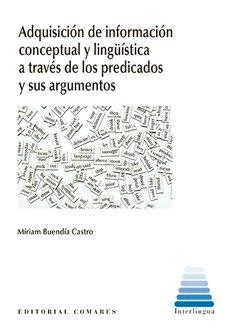
Adquisicióndeinformaciónconceptualy lingüísticaatravésdelospredicadosysus argumentos
By:
Míriam Buendía Castro
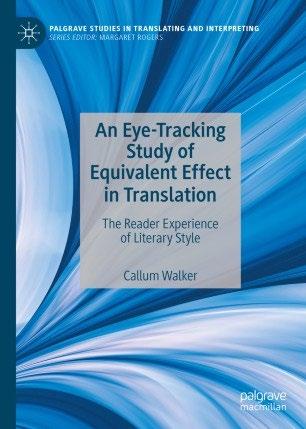
AnEye-TrackingStudyofEquivalentEffect in Translation. The ReaderExperienceof LiteraryStyle
By: Callum Walker
IntralingualTranslationofBritishNovels. A MultimodalStylisticPerspective
By: Linda Pillière
Ilpoteredellelingua. Comunicazione, narrazione,manipolazione(II)
By: Mariadomenica Lo Nostro and Rosaria Minervini (eds.)
Terminologiecomparéeettraduction. Approcheinterdisciplinaire
By: Héba Medhat-Lecoq
TheRoutledgeHandbookofTranslation and Health
By: Şebnem Susam-Saraeva and Eva Spišiaková (eds.)
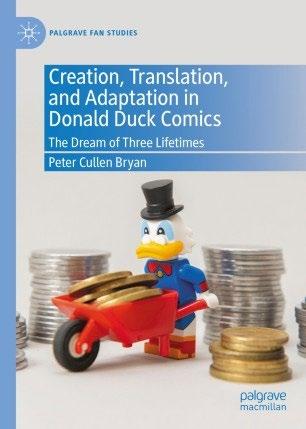
Translation,andAdaptationinDonaldDuck Comics
By: Peter Cullen Bryan
Traduire,unengagementpolitique?
By: Florence Xiangyun Zhang and Nicolas Froeliger (eds.)
Mira Kim, Jeremy Munday, Zhenhua Wang and Pin Wang (eds.)
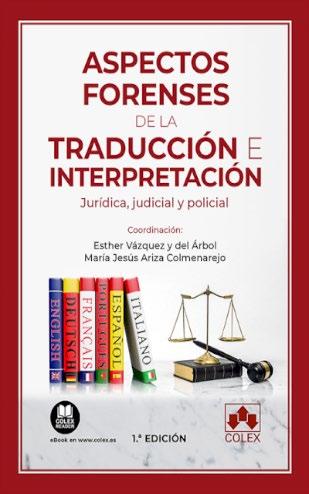
Aspectosforensesdelatraduccióne interpretaciónjurídica,judicialypolicial
By: Esther Vázquez y del Árbol and María Jesús Ariza Colmenarejo (eds.)

SimultaneousInterpretingfromaSigned LanguageintoaSpokenLanguage. Quality, CognitiveOverload,andStrategies
By: Jihong Wang
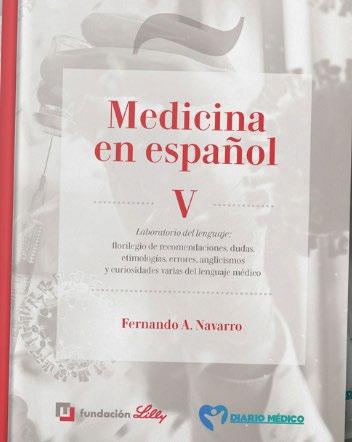
MedicinaenespañolV
By: Fernando A Navarro
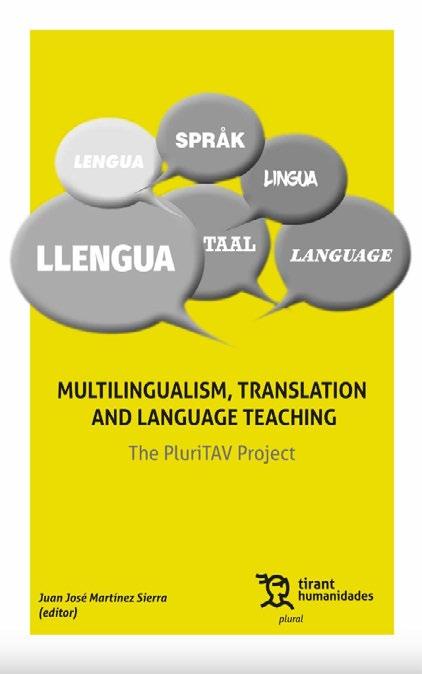
Multilingualism,translationandlanguage teaching. ThePluriTAVProject By: Juan José Martínez Sierra (ed.)
EmpiricalStudiesofTranslationand Interpreting The Post-Structuralist Approach
By: Caiwen Wang and Binghan Zheng (eds )

The Dawn of the Human-Machine Era. A ForecastofNewandEmergingLanguage Technologies. By: Dave Sayers et al.
ChangingParadigmsandApproachesin InterpreterTraining. Perspectivesfrom CentralEurope
By: Pavol Šveda (ed.)

Autotraduzione.Pratiche,teorie,storie. By: Fabio Regattin (ed.)
QueeringTranslationHistory Shakespeare’sSonnetsinCzechandSlovak Transformations By: Eva Spišiaková
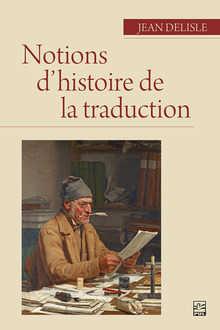
Notions d'histoire de la traduction
By: Jean Delisle
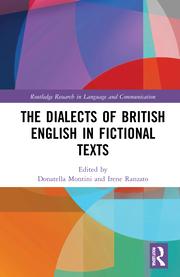
TheDialectsofBritishEnglishinFictional Texts
By: Donatella Montini and Irene Ranzato (eds)
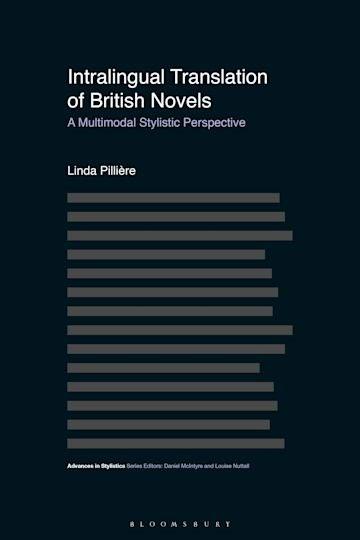
IntralingualTranslationofBritishNovels. AMultimodalStylisticPerspective By: Linda Pillière
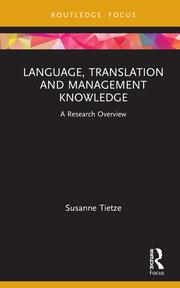
Language,TranslationandManagement Knowledge. A Research Overview By: Susanne Tietze
Journalistic Translation Research Goes Global
By: Roberto A. Valdeón (ed.)
TranslatingCultures An Introduction for Translators,InterpretersandMediators By: David Katan and Mustapha Taibi
EnglishandTranslationintheEuropean Union. UnityandMultiplicityintheWakeof Brexit By: Alice Leal
TheRoutledgeHandbookofTranslation andtheCity
By: Tong King Lee (ed.)
TranslatingandInterpretinginKorean Contexts. EngagingwithAsianandWestern Others
By: Ji-Hae Kang and Judy Wakabayashi (eds.)
Intercultural Communication in Interpreting. Power and Choices
By: Jinhyun Cho
LanguagesintheCrossfire. InterpretersintheSpanishCivilWar (1936–1939)
By: Jesús Baigorri-Jalón
Theatre Translation A Practice as Research Model By: Angela Tiziana Tarantini
Schwerlesbargleichtexttreu?
By: Jutta Seeger-Vollmer
Latraducciónpedagógicaenlaformación del traductor-intérprete(francés-español)
By: Tanagua Barceló Martínez, France Brousse Lamoureux, Iván Delgado Pugés, Victoria García, Francisca García Luque and Isabel Jiménez Gutiérrez

FeminismosyTraducción(1965-1990) By: Pilar Godayol
TestingandAssessmentofInterpreting RecentDevelopmentsinChina By: Jing Chen and Chao Han (eds.)
Cultural Transfer Reconsidered. TransnationalPerspectives,Translation Processes,ScandinavianandPostcolonial Challenges
By: Steen Bille Jørgensen and Hans-Jürgen Lüsebrink (eds.)
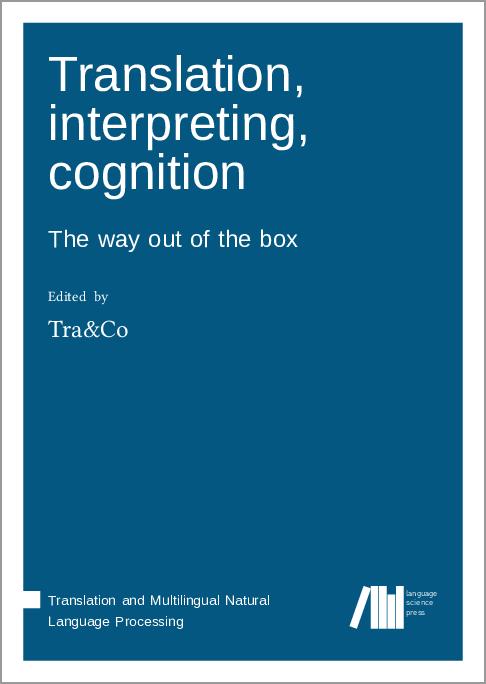
Translation,interpreting,cognition The wayoutofthebox By: Tra&Co (eds.)
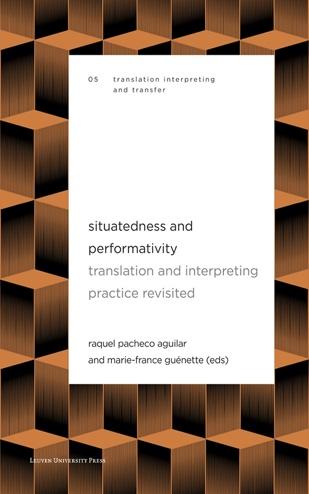
SituatednessandPerformativity
TranslationandInterpretingPractice Revisited
By: Raquel Pacheco Aguilar and MarieFrance Guénette (eds.)
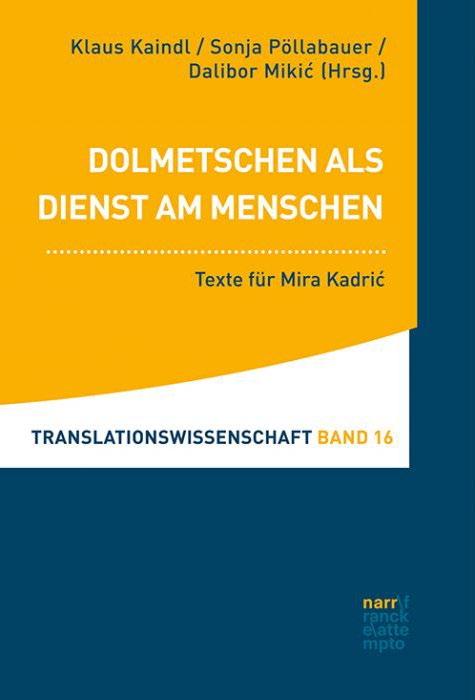
Dolmetschen als Dienst am MenschenTexte für Mira Kadric
By: Klaus Kaindl, Sonja Pöllabauer and Dalibor Mikic (eds.)

Les expertstraducteurs-interprètesen milieujudiciaire
By: Dorina Irimia
TheoryandDigitalResourcesforthe English-SpanishMedicalTranslation Industry
By: López Rodríguez, Clara Inés and Beatriz Sánchez Cárdenas
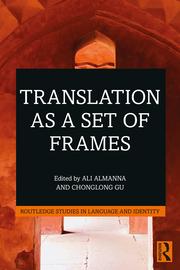
Translation as a Set of Frames By: Ali Almanna and Chonglong Gu (eds.)
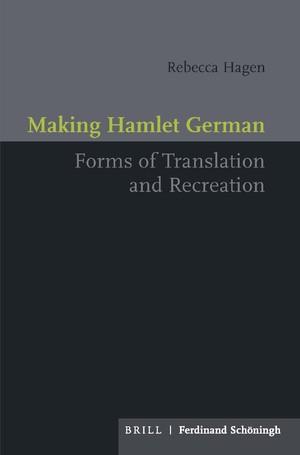
MakingHamletGerman Forms of Translation and Recreation By: Rebecca Hagen
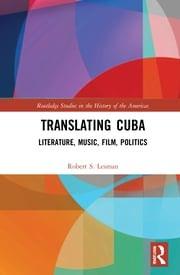
TranslatingCuba Literature,Music,Film, Politics By: Robert S. Lesman
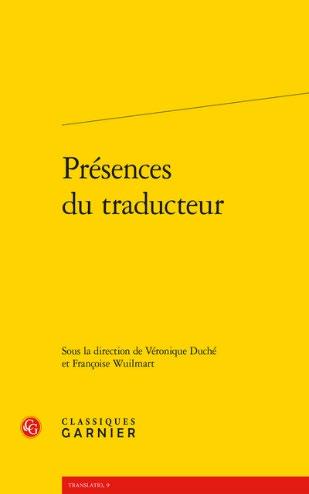
Présences du traducteur By: Véronique Duché and Françoise Wuilmart (eds.)
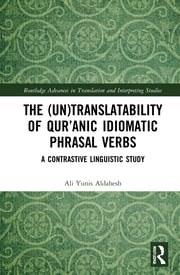
The(Un)TranslatabilityofQur’anic Idiomatic Phrasal Verbs. A Contrastive LinguisticStudy By: Ali Yunis Aldahesh
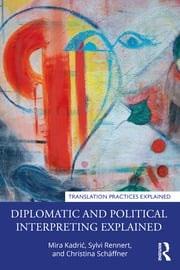
DiplomaticandPoliticalInterpreting Explained
By: Mira Kadrić, Sylvi Rennert and Christina Schäffner
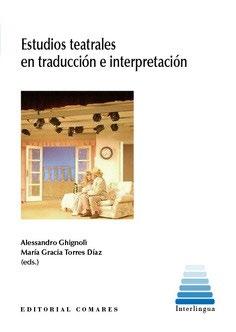
Estudios teatrales en traducción e interpretación
By: Alessandro Ghignoli and María Gracia Torres Díaz (eds.)
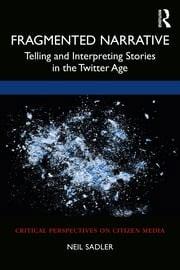
FragmentedNarrative. Tellingand InterpretingStoriesintheTwitterAge By: Neil Sadler
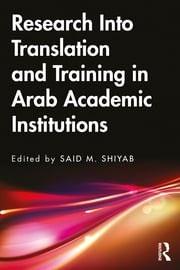
Research Into Translation andTrainingin Arab Academic Institutions By: Said M. Shiyab (ed.)
ForeignLanguageTraininginTranslation andInterpretingProgrammes
By: Astrid Schmidhofer and Enrique Cerezo Herrero (eds.)

FathomingTranslationasDiscursive Experience TheorizationandApplication By: Chunshen Zhu

Fundamentosnocionalesytraductológicos paralatraduccióndetextosturísticos promocionales
By: José María Castellano Martínez
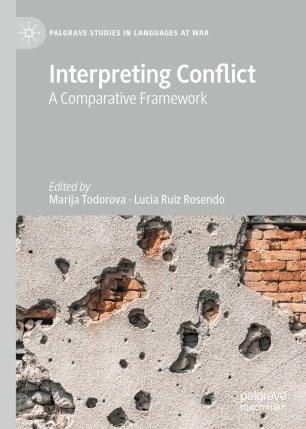
InterpretingConflict AComparative Framework
By: Marija Todorova and Lucía Ruiz Rosendo (eds.)
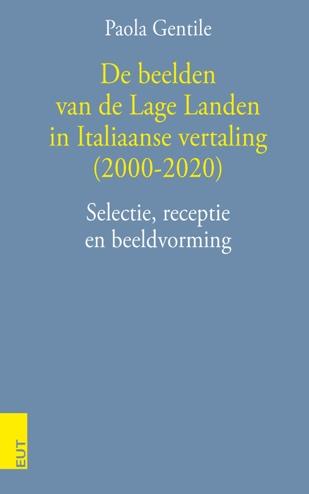
DebeeldenvandeLageLandenin Italiaansevertaling(2000-2020). Selectie, receptieenbeeldvorming.
By: Paola Gentile

Translation 101 Guíadesupervivencia paratraductoresnoveles.
By: Speroni Antonella Sofia and Julieta Soledad Olivero
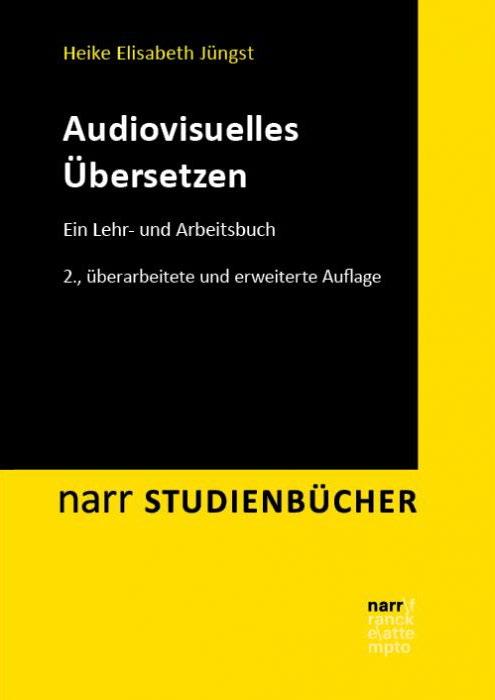
AudiovisuellesÜbersetzen Ein Lehr- und Arbeitsbuch
By: Heike E. Jüngst
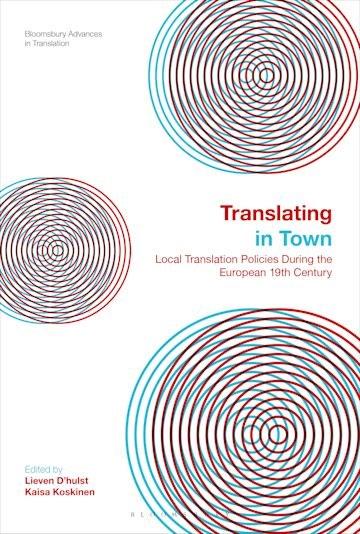
TranslatinginTown Local Translation PoliciesDuringtheEuropean19thCentury By: Lieven D’hulst and Kaisa Koskinen (eds.)
ReadingIndiainaTransnationalEra TheWorksofRajaRao
By: Rumina Sethi and Letizia Alterno (eds.)
TheQur’an,Translationandthe Media A Narrative Account By: Ahmed S. Elimam and Alysia S. Fletcher
Die dänischen Eufemiaviser und die RezeptionhöfischerKulturim spätmittelalterlichenDänemark – The EufemiaviserandtheReceptionofCourtly Culture in Late Medieval Denmark By: Massimiliano Bampi and Anna Katharina Richter
TranslatingAsymmetry – RewritingPower By: Ovidi Carbonell i Cortés and Esther Monzó-Nebot (eds.)
QualitätbeiderLokalisierungvon Videospielen By: Nathalie Thiede
ModernApproachestoTranslationand Translation Studies By: Mehmet Cem Odacioglu (ed.)
TranslatingFear – Translated Fears UnderstandingFearacrossLanguagesand Cultures
By: Teresa Maria Menano Seruya, Maria Lin Moniz and Alexandra Ambrósio Lopes (eds.)
DevelopingInformationCompetencein TranslatorTraining
By: Urszula Paradowska
Translation,InterpretingandCulture Old Dogmas,NewApproaches
By: Emília Perez, Martin Djovčoš and Mária Kusá (eds.)
Normatividad,equivalenciaycalidadenla traduccióneinterpretacióndelenguas ibéricas
By: Katarzyna Popek-Bernat (eds.)

ExplorationsinEmpiricalTranslation Process Research
By: Michael Carl (ed.)
Police Interviews Communication challengesandsolutions
By: Luna Filipović (ed.)

Laadaptacióncinematográficadesdeuna perspectivatraductológica. Nuevas vías de investigación
By: Francisca García Luque
ManualforBeginningInterpreters A ComprehensiveGuidetoInterpretingin ImmigrationCourts
By: Oliver Strömmuse

Les métaphoresdelatraduction
By: François Géal and Touriya Fili-Tullon (eds.)
TheRoutledgeCourseinArabicBusiness
Translation. Arabic-English-Arabic By: Mahmoud Altarabin

Parinstants,lesolpenchebizarrement. Carnets d'un traducteur.
By: Nicolas Richard
Empiricalstudiesintranslationand discourse
By: Mario Bisiada (ed.)
OnTranslatingModernKoreanPoetry
By Jieun Kiaer, Anna Yates-Lu and Mattho Mandersloot
The Translation of Realia and Irrealia in Game Localization Culture-Specificity betweenRealismandFictionality
By: Silvia Pettini
Laéticaprofesionaldeintérpretesy traductores
By: Edna Cerf (ed.)
CognitiveProcessingRoutes in ConsecutiveInterpreting. A CorpusassistedApproach By: Xiaodong Liu
La audiodescripcióndelaimagenala palabra Traducción intersemiótica de un texto multimodal
By: María J. Valero Gisbert
Machine Translation Manifesto By: Max Deryagin, Miroslav Pošta and Daniel Landes
Audiovisual Translation as Trans-Creation A collection of essays
By: Angela Sileo (ed.)
TheRoutledgeHandbookofTranslation History
By: Christopher Rundle (ed.)
(Re)CreatingLanguageIdentitiesin Animated Films.DubbingLinguistic Variation
By: Vincenza Minutella
TranslationandtheGlobalCity Bridges andGateways By: Judith Weisz Woodsworth (ed.)
TheRoutledgeHandbookofLiterary Translingualism
By: Steven G. Kellman and Natasha Lvovich (eds.)
TranslationCompetenceandLanguage Contrast – A Multi-MethodStudy By: Iryna Kloster
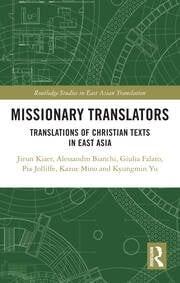
MissionaryTranslators Translations of Christian Texts in East Asia By: Jieun Kiaer, Alessandro Bianchi, Giulia Falato, Pia Jolliffe, Kazue Mino and Kyungmin Yu
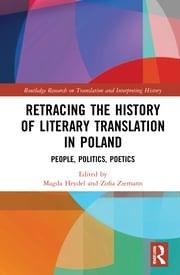
RetracingtheHistoryofLiteraryTranslation in Poland People,Politics,Poetics By: Magda Heydel and Zofia Ziemann (eds.)
TranslatorInnenalsSprachlehrerInnen EignungundEinsatz By: Katerina Sinclair
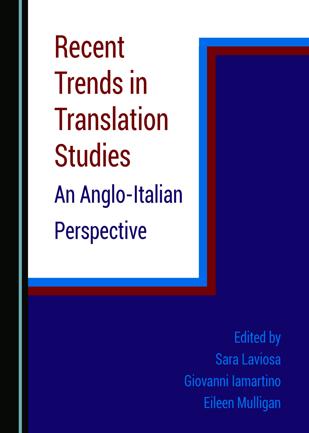
Recent Trends in Translation Studies. An Anglo-ItalianPerspective By:
Sara Laviosa, Giovanni Iamartino and Eileen Mulligan (eds.)

TranslatingNamesinHarryPotter
By: Despoina Panou
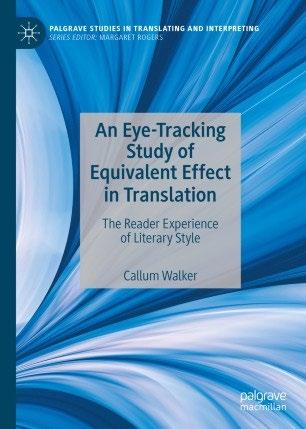
AnEye-TrackingStudyofEquivalentEffect in Translation TheReaderExperienceof LiteraryStyle By: Callum Walker
TheoretischeTranslationsforschung
Translation – Lehre – Institution By: Raquel Pacheco Aguilar
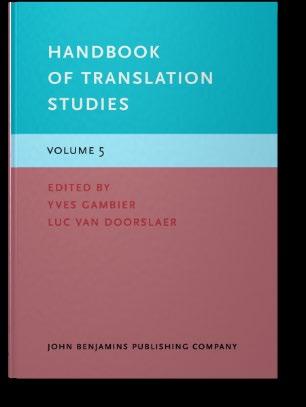
Handbook of Translation Studies – Volume 5
By:
Yves Gambier and Luc van Doorslaer (eds.)
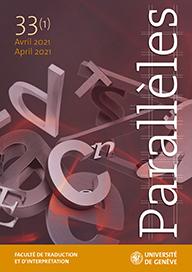
Parallèles
Legallanguageandlegaltranslation:Past and Present
Edited by: Michael Schreiber and Cornelia Griebel
Volume 33, no. 1 (2021)
This special issue of Parallèles contains revised versions of papers presented at an international workshop held at the University of Mainz in Germersheim. It deals with the historical, theoretical and practical aspects of legal language and legal translation. Legal translation is not a new topic in translation studies. Since the 1990s, there have been a number of important publications, including research-based monographs offering different perspectives on legal translation (e.g., Šarčević, 1997; Wiesmann, 2004; Griebel, 2013), edited volumes and conference proceedings (e.g., Sandrini, 1999; Schena & Snel Trampus, 2000; Prieto Ramos, 2018), special issues of journals (e.g., Schwab, 2002; LaneMercier et al., 2014; Dullion & Prieto Ramos, 2018) and textbooks (e.g., Gémar, 1995; Bocquet, 2008; Stolze, 2014)
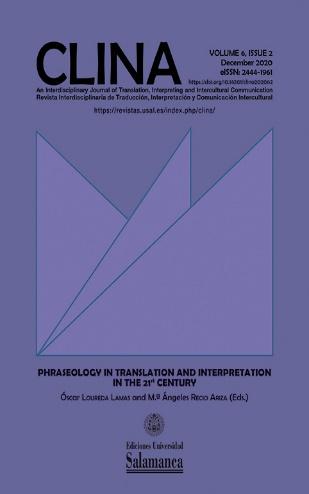
PhraseologyinTranslationand Interpretationinthe21stCentury
Edited by: Óscar Loureda Lamas and M.ª Ángeles Recio Ariza
Volume 6, no. 2 (2020)
La traducción e la interpretación son, en última instancia, formas de la comunicación. Por ello deben considerarse primariamente actividades complejas orientadas a la reconstrucción en una lengua de representaciones mentales comunicadas ostensivamente por medio de signos de otra lengua (Hatim y Mason, 1995, y Gutt, 1991). En estos procesos comunicativos se manejan dos tipos de recursos lingüísticos: unos que pertenecen a una técnica libre, con los que se construyen discursos sin más condiciones que las posibilidades establecidas por las reglas de las lenguas, y otros que pertenecen a una comunicación repetida, que comprende unidades con un alto grado de fijación o con una restricción combinatoria dada en las lenguas y en los discursos.
EnglishinAudiovisualTranslation Research:SynchronicandDiachronic Perspectives
Edited by: Maria Pavesi, Serenella Zanotti and Frederic Chaume (eds). 2021.
Volume 34, no 1 (2021)
Research enquiry on audiovisual translation (AVT) is booming. This is surely in response to the increasing global circulation of audiovisual products, the growing centrality of screens in contemporary life and viewers’ ensuing request for translations. But still more galvanising is the enduring fascination with the transformative and creative processes that allow the transfer of audiovisual texts across language divides and make AVT a unique case of traduction totale (Cary 1960). As such texts are embedded in a multimodal context, translation intervenes weaving new interconnections between words and images and sounds. It engages with all levels of language, concurrently accommodating psychological and sociolinguistic features conveyed by voices, while respecting facial expressions, gestures, postures, as well as intellectual and moral behaviours (Cary 1960: 112).
CLINA
Textus
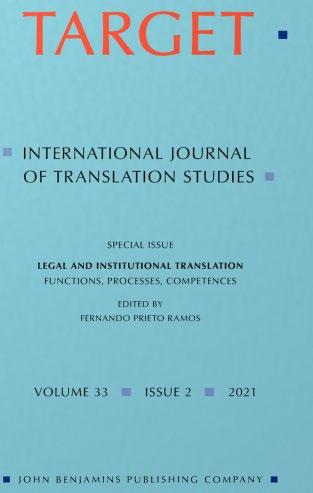
Target
Legalandinstitutionaltranslation Functions,processes,competences
Edited by: Fernando Prieto Ramos
Volume 33, no 2 (2021)
Since the first academic journal issue on legal translation was published in the late 1970s (Gémar 1979), this field of study, now well-established as Legal Translation Studies (LTS), has become one of the most prominent and prolific within Translation Studies (TS) (see, e.g., the Bibliography of Interpreting and Translation [BITRA] statistics on publications). The identity and disciplinary recognition of LTS have been supported by a growing wealth of research on the specific issues and methods of legal translation (Prieto Ramos 2014a; Biel 2017), and by the central position of this specialization in both the public and the private translation sectors. In fact, legal translation constitutes a top segment of the translation industry (see, e.g., Verified Market Research 2020) and a key area for the translation services of multilingual institutions.
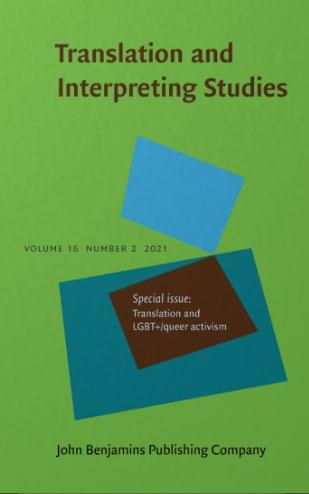
Translation and Interpreting Studies
TranslationandLGBT+/queeractivism
Edited by: Michela Baldo, Jonathan Evans and Ting Guo
Volume 16, no 2 (2021)
This issue has been a long time in the making: we started working on it in 2018, in what seems like a different world. The coronavirus pandemic looms large over the editing of this volume, as well as the growing effects of global heating such as 2020's wildfires in California and New South Wales, and other events such as the Black Lives Matter protests that took place in the summer of 2020, the women's protests against the ban on abortion in Poland in November 2020 and January 2021, and the legalization of abortion in Argentina in December 2020, the result of five years of mass protest marches by the Latin American grassroots feminist movement Ni Una Menos [Not one woman less] that fights against gender-based violence (or "machista violence," to use their definition). None of these events is specifically LGBT+ related (although lesbians, trans* people and transvestites came to the Ni Una Menos marches following the 2017 International Women's Strike as affirmed by Gago 2020), but all have had effects on LGBT+ and queer people, and highlight the importance of understanding LGBT+ and queer activism intersectionally, in other words, in relation to other positions, be that gender, race or location. In these difficult situations, queer activism also demonstrates solidarity and offers signs of hope: a recent story that comes to mind is the Sisters of Perpetual Indulgence, an LGBT+ group based in San Francisco who dress as nuns, who have been handing out facemasks in order to prevent the spread of COVID-19 (Herrera 2020). At the same time, LGBT+ rights have recently been under attack in some places: the U.S. launched a series of attacks on transgender rights, for instance, and Poland, which has been attacking LGBTQI* rights activists for peacefully protesting, has declared some areas 'LGBT free zones,' an action which has brought censure from the current head of the European Commission, Ursula von der Leyden (Rankin 2020).
The Interpreter and Translator Trainer
Languagesoflowdiffusionandlow resources:translationresearchandtraining challenges
Edited by: Bogusława Whyatt and Nataša Pavlović
Volume 15, no 2 (2021)
The first article introduces a special issue of The Interpreter and Translator Trainer devoted to the much under-researched issue of translating languages of low diffusion (LLDs). Here we explore a plethora of aspects which have rarely been discussed in Translation Studies in general and, in particular, regarding translator training, such as linguistic diversity, variations in the terminology concerning LLDs, effects of unequal power relations between languages, language and translation policy, acute problems with language access in crisis situations and challenges for translator trainers. We present the contributions to this special issue, the first three of which focus on various directionality-related issues and the way they affect the information needs of translators, their stylistic choices and L2 phraseology. The remaining four articles focus on unique problem areas involving LLDs: International Sign (IS) interpreters, socialisation into the profession as an LLD translator, literary translators working with LLDs and the need to include indirect translation in translator education. We conclude with a call to legitimise indirect translation as a research topic in the context of LLDs, and we point to other unexplored aspects of translating LLDs and languages of low resources (LLRs) deserving further attention.
Translation Studies
Translation in India
Edited by: Hephzibah Israel
Volume 14, no 2. (2021)
How has translation been envisaged and what function has it been assigned historically in the multilingual terrains of India within South Asia? This special issue considers translation as one amongst a range of writing, textual and cultural practices to explore how ideas broadly associated with and constitutive of translation may have been articulated in a variety of cultural and historical contexts. Each contribution focuses on specific translation projects as key historical events where attitudes to languages and the multiple speakers associated with them were tested and contested, transformed or endorsed, expressly articulated or covertly suggested through translation. Throughout, these analyses are framed by discussions of the professed and practiced multilinguality of translators, texts and audiences as vital parts of wider cultural histories.
The relationship between multilingualism and translation has been a topic of some research within translation studies in the Western academy though it still requires more in-depth study not only in Western contexts but also in other regions of the world, such as South Asia. The most common understanding of the term “multilingualism” points to an ability to function simultaneously in more than one language. Rainer Grutman (2020, 341) further observes that it is usually assumed that the multiple languages share the same space, whether that is a “public space in an officially multilingual country such as Switzerland” or a multilingual book, sharing space on the page, or in the case of multilingual individuals, sharing “brain space”. Important for the focus of this special issue, multilingual realities of societies, individuals and texts have been used to review notions of translation that have been understood as premised upon, and thereby promoting, a monolingual carving up of the world. However, rather than considering multilingualism as an exceptional feature of some regions of the world where it challenges the demand for
translation, scholars have been increasingly identifying multilingual contexts as ubiquitous, and translation as integral to all multilingual realities: “At the heart of multilingualism, we find translation. Translation is not taking place in between monolingual realities but rather within multilingual realities” (Meylaerts 2016, 519). Translation is, therefore, no longer seen in ontological opposition to multilingualism, made redundant by the simultaneous presence and knowledge of multiple languages.
Journal of World Literature
ContemporaryCongoleseLiteratureas World Literature
Edited by: Julien Jeusette and Silvia Riva
Volume 6, no 2. (2021)
“Penser le monde à partir de l’ Afrique” (Mbembe and Sarr 2017) – to think the world from the perspective of Africa. Achille Mbembe’s article, which concludes the volume Écrirel’ Afrique-Monde, advocates for a shift: not only to stop viewing Africa as a peripheral and marginalized continent but also to imagine, create, and reflect the world from an African point of view. Mbembe goes further and considers, more boldly, that “there is not a part of the world whose history does not contain somewhere an African dimension”. Moreover, as he declares with Felwine Sarr in the introduction of the book, “there is no longer any African or diasporic question that does not at the same time refer to a planetary question”. The world is intertwined, and Africa is one of its moving centers. In this regard, the Congo DRC, formerly the Belgian Congo, with its abundance of natural resources, is often viewed as one of the primary hubs enabling the world markets to function. “The Congo is at the center of the world since 1884 [the date of the Berlin Conference],” declares the writer Fiston Mwanza Mujila (Maveau). This special issue endorses this perspective but departs from both an economic focus and the vision of Congo as a “failed State” (Nay 2013) to consider Congolese literary production at the crossing of worlds and languages, mainly contemporary literature published after 2000.
CTSspring-cleaning:Acriticalreflection
Edited by: Maria Calzada Perez and Sara Laviosa
Special issue no 13 (2021)
The introduction of corpora in descriptive and applied translation and interpreting studies goes back to the 1990s, when the corpus linguistic approach was making considerable progress in descriptive and applied language studies. Twenty-five years on, Corpus-Based Translation and Interpreting Studies (CTIS) is a wellestablished field of interdisciplinary research worldwide. Its growth goes hand in hand with technological advancements, which make it possible to design, create and share monolingual and multilingual spoken, written and multimodal corpora as resources for theoretical, descriptive and applied research in both translation and interpreting studies. We believe this is the right time to pause and reflect on the achievements and criticalities of this variegated area of scholarship and practice in order to look to the future with renewed confidence and awareness of the challenges that lie ahead.
MonTI
Perspectives
Perspectivesoninterpreting
Edited by: Roberto A.
Valdeón
Volume 29, no. 4 (2021)
The first article serves to introduce the papers in this special issue, devoted to interpreting studies. Over the past decades, interpreting has gained recognition as an academic field, typically as a branch of translation studies. The paper starts with a brief historical overview of this practice, with a focus on the early modern and the modern periods, and provides references to some of the research conducted in other fields as well. The next section offers a very brief survey of the modes and settings in which interpreting currently takes place, including simultaneous, consecutive and community interpreting. The article also serves to highlight the diversity of themes, languages, theoretical and methodological approaches, and geographical origin of the authors
The Translator
Fernando Pessoa and Translation
Edited by: Jerónimo Pizarro and Paulo de Medeiros
Volume 26, no 4 (2020)
This special issue of The Translator focuses on Fernando Pessoa, one of the greatest Modernist writers. Initially celebrated as a poet, the posthumous publication of his
prose masterpiece, Livro do Desassossego [TheBookofDisquiet], has greatly contributed to his name being safely inscribed in the canon of world literature. Pessoa wrote in many genres in English and French, besides Portuguese. And he was also deeply engaged with questions of translation. This is an area that calls for much critical reflection and this issue aims at presenting a more systematic approach to Pessoa and questions of translation. In doing so, it also offers a significant example of the multiple ways in which the study of translation and translational approaches can be applied to and illuminate the work of an author whose profile and reception are at once part of a national canon and profoundly transnational. Just as studying Pessoa’s texts from the perspective of translation studies can yield significant new insights into is practice, so too, reflecting on Pessoa’s multiplicity can hopefully open up some avenues for further enriching the varied approaches to research on translation.
Mutatis Mutandis
Nuevasperspectivasdeinvestigaciónenla traducciónespecializadaenlenguas románicas:aspectoscomparativos,léxicos, fraseológicos,discursivosydidácticos
Edited by: Giuseppe Trovato
Volume 14, no 2 (2021)
Los estudios en torno a la traducción especializada gozan de un auge notable a la altura del año 2021, pues se han dedicado numerosos esfuerzos investigadores a esta parcela de la traducción que, dicho sea de paso, representa el sector más requerido desde el punto de vista de la actividad professional.
Multilingua
Non-humanagencies,theenvironment, andthematerialityofindigenouslanguages
Edited by: Laura Siragusa and Pirjo K. Virtanen
Volume 40, no 4. (2021)
Communication, an apparently intangible practice, does in fact affect the way people engage with their social worlds in very material ways. Inspired by both ethnographic and archival-driven research, this special issue aims to fill the gap in studies of language materiality by addressing entanglements with other-thanhuman agencies. The contributions of this special issue on verbal and non-verbal communicative practices among Indigenous peoples and ethnic minorities in the Global North and the South interpret language materiality as practice- and processoriented, performative, and embodied relations between humans and other-thanhuman actors. The articles cover three major sub-themes, which ostensibly intertwine to a greater or lesser degree in all the works: (in-)visible actors and elements-related language; language materiality narrating and producing sociality; and the emotions and affect of language. The topic of this special issue, the materiality of languages, manifested in multiple engagements with the environment, proves particularly critical at the moment, given the current environmental crisis and the need to comprehend in more depth social relations with numerous other-than-human agencies
Traduire
Desjeuxetdesmots
Edited by: Carine Bouillery, MarieCéline Georg, Isabelle Meurville and Raphaël Rouby
Volume 244 (2021)
Les traducteurs et traductrices sont parfois de grands enfants ! C’est pourquoi nous avons le plaisir de vous présenter un numéro de Traduire un peu spécial, consacré pour la première fois aux jeux vidéo et de société, deux secteurs parfois méconnus (voire peu reconnus !). Cette première incursion dans le monde de la localisation permettra, nous l’espérons, de mettre en lumière un pan par définition très ludique de la profession. Bienvenue dans les coulisses d’une spécialisation exigeante et passionnante, terrain de jeu de toutes celles et tous ceux qui aiment s’amuser avec les mots

JoSTrans
TeachingTranslationandInterpretingin Virtual Environments
Edited by: Séverine Hubscher-Davidson and Jérôme Devaux
Volume 36b (2021)
Interest in online teaching and learning has grown rapidly since the start of the global COVID-19 pandemic. As universities across the world decided to transfer their teaching provision online, translation and interpreting (T&I) educators faced the daunting task of delivering their courses effectively in this new mode. Common challenges included: designing and administering suitable assessments, ensuring student engagement, and fostering peer collaboration and interaction. Research in the field of online and distance learning provides a rich source of information to address these challenges, and yet, it remains underexplored despite its potential to inform and enhance T&I teaching practices. We introduce this
special issue by presenting some fruitful research areas that could provide new directions for T&I pedagogy and improve our students’ remote learning experiences in the future. It is against this backdrop that the special issue was conceived. Contributions cover teaching translation and interpreting at a distance, and contextual issues and trends resulting from the act of teaching T&I online
Translation Spaces
TransnationalImageBuilding - Linkingup TranslationStudies,ReceptionStudiesand Imagology
Edited by: Paola Gentile, Fruzsina Kovács and Marike van der Watt
Volume 10, no 1 (2021)
This special issue develops research trajectories initiated during the panel titled “Transnational image building and reception: linking up Translation Studies, Reception Studies and Imagology” and presented at the 9th EST Congress held in Stellenbosch, South Africa (9–13 September 2019). This session combined imagological perspectives with insights on the reception, selection, representation and promotion of translated cultural products.
With the panel, our main objective was to expand the boundaries of imagology – the study of ethnic or national stereotypes and commonplaces (Leerssen n.d.) – by integrating it with a transnational perspective. Though imagology’s objective has always been to analyze –diachronically and synchronically – images and ethnotypes in literary representations, Leerssen (2016) has pointed to the strong need to open up this circle and zero in on the ways in which these representations are created and mediated by the agents operating in transnational cultural spaces. However, relatively few researchers have sought to show how translation does this, despite the central role translation plays in shaping cultural images across national and cultural borders. As Flynn, van Doorslaer and Leerssen point out:
“though it is the stated purpose of Imagology to trace ethnotypes and tropes
across time and space as they become manifest in literary representation, how such manifestations are mediated by translation and its agents […] has as yet remained largely unexplored.” (Flynn, van Doorslaer and Leerssen 2016, 8)
Des mots aux actes
Traductologie,philosophieet argumentation
Edited by: Florence Lautel-Ribstein
Volume 10 (2021)
Les auteurs de ce recueil, dont la plupart ont participé aux deux journées d’études du groupe CoTraLiS du Laboratoire Textes et Cultures de l’université d’Artois des 21 juin 2019 et 11 décembre 2020, présentent ici leurs travaux récents à l’interaction de la philosophie et de la traductologie en tentant de suivre un itinéraire thématique commun : argumentation philosophique, traduction de l’argumentation et argumentation traductologique. Ce numéro aborde donc conjointement l’argumentation traductologique et son fondement philosophique ainsi que l’argumentation philosophique et les diverses problématiques traductives qu’elle engendre.
Comme l’affirmait Henri Meschonnic, dont nous reproduisons ici un texte-clé, « La traduction met […] en jeu la théorie du langage tout entière et celle de la littérature ». Les notions aristotéliciennes d’idée, de jugement et de raisonnement sont ici revisitées ainsi que les notions d’argument dans le discours, ceci à travers le prisme de la pensée de plusieurs grands philosophes, comme Schleiermacher au xixe siècle, Ernst Cassirer ou Jean Bollack au xxe siècle, ou encore le sémiologue Roland Barthes. D’autre part, cette argumentation philosophique sert de socle à la formulation de possibles théorisations de la traduction, jusqu’à celle de la métaphore, elles-mêmes susceptibles de donner naissance à de nouveaux concepts ou de nouvelles typologies d’analyse en traductologie.
La seconde partie de ce numéro aborde les processus de traduction qui tentent de rendre justice à l’argumentation des textes philosophiques présentés tout en mettant
le mieux possible en lumière les divers types de raisonnement et de concepts rencontrés au sein de ces philosophies. Seront retracés ainsi les parcours d’exemples de traduction de penseurs de l’Occident comme Merleau-Ponty, Ernst Bloch ou Paul Valéry, et de l’Orient comme le grand philosophe bouddhique japonais Dōgen. Pour finir ce périple, nous nous attarderons à l’ère précolombienne sur les textes nahuas avec leurs commentateurs en quête d’une pensée, d’une forme de discours sur la raison, peut-être davantage qu’une philosophie.
Jean-René Ladmiral, qui nous offre un panorama synthétique et stimulant de l’analyse de la double problématique de cet ouvrage dans une longue introduction, nous prévient ainsi d’entrée de jeu : « […] la traduction est un paradigme philosophique de toute communication, sinon même de toute relation […] ». Et de reprendre à son compte une belle formule d’Aristote, presque ironique, en amont de nos réflexions :
L’être vient au dire de multiples façons.
Ce sont quelques-unes de ces approches que nous allons à présent commenter.
Archives de traduction
Edited by: Anthony Cordingley and Patrick Hersant
Volume 66, no 1 (2021)
For archival scientists, the archive is both a source of research objects and an object of research. The current issue of Meta adopts this perspective to explore archives as repositories of the evidence of translation and as sites that shape our understanding of the translation process, the translation profession, and the lives of translators. Over the past decades, translation research has grown in complexity and relevance through a series of encounters with other disciplines, such as sociology, anthropology, linguistics, cognitive sciences, history, and intercultural studies (Gambier 2006: 31). The archive enriches this dialogue, firstly, by offering an invaluable trove of primary sources for such inquiry, and secondly, by presenting a
new vector through which to measure, critique, and conceptualize translation practice, its function and status in societies past and present. Researchers comb the archive for materials most relevant to their own investigation, yet a single source lends itself to a variety of readings: a translation draft of a poem, for example, will stimulate a literary scholar to decode its variations and intertextual references, a sociologist will use it when sketching out the translator’s habitus and professional milieu, the cognitive scientist may detect the operation of memory and environment, a linguist its stylistic patterns or sociolinguistic phenomena, and so on. Crucially, the materials encountered in the archive, or their absence, provoke questions about the value accorded to some translators over others. Who is collected, how, why, and by whom? These issues are examined in the articles of this issue of Meta, the first attempt in the field of translation studies to interrogate the status of translation archives from diverse perspectives
Journal of World Literature
World Literature and Cinema
Edited by: Michael Wood and Delia Ungureanu
Volume 6, no. 3 (2021)
This issue of the Journal of World Literature seeks to bring together two fields of study that have much in common, but that have been largely separate in practice. Literary scholars rarely discuss films apart from occasional direct adaptations, and while world cinema has sometimes looked at the theoretical framing developed in world literature studies, neither discipline has thought more generally beyond its respective medium. Yet writers, painters, musicians, and filmmakers hardly ever think in terms of disciplinary boundaries, and they do not develop their art with a tunnel vision. Modern writers have all grown up in an expansive mediascape, while many filmmakers have had extensive literary training. The essays in this issue aim to move beyond adaptation studies and intermedial studies to look more closely at how ideas circulate between media, creating for literary and film studies
something of the complexity and openness to each other that the different media themselves have long enjoyed.

The Translator
Flexiblemultilingualstrategiesinasylum andmigrationencounters
Edited by: Katrijn Maryns, Philipp Sebastian Angermeyer and Mieke Van Herreweghe
Volume 27, no 1 (2021)
Owing to increasing societal heterogeneity, contemporary institutions and organisations routinely face clients whose hybrid linguistic repertoires pose a challenge to established communicative practices and resources. In response to the specific linguistic needs and resources of the participants in these contexts and to practical considerations such as time constraints or availability of language assistance, ‘standard’ multilingual practices (in which the use of professional interpreters or mediators is institutionally expected or required) are challenged by a range of alternative multilingual communication strategies. These multilingual strategies can be defined as communication support strategies that can be performed either by people (interpreters, language brokers, intercultural mediators), technologies (Google Translate, DeepL) or instruments (multilingual websites, brochures) (Rillof, Van Praet, and De Wilde 2014). While strategies, such as the use of a lingua franca, a non-professional interpreter (often a relative or acquaintance of the client) or translation technology are prevalent in many sites of cross-cultural multilingual contact, they remain largely under the radar and are given little if any consideration in language policy and practice (Antonini et al. 2017; Rudvin and Carfagnini 2020).
META
Palimpsestes
Lapenséefrançaisecontemporainedansle monde:réceptionettraduction
Edited by: Isabelle Génin and Bruno Poncharal
Volume 35 (2021)
Dans le sillage de Palimpsestes 33, ce nouveau numéro de la revue du TRACT poursuit le projet de cartographie de la réception de la pensée française contemporaine au prisme de la traduction en l’élargissant à d’autres langues que l’anglais. Ce volume s’articule en trois grandes parties regroupant onze articles en français et en anglais.
La première partie regroupe quatre articles ayant chacun trait à un aspect de la réception de la pensée française en Chine, elle offre un vaste panorama des caractéristiques de cette réception en même temps que des analyses détaillées de problèmes de traduction.
Dans la deuxième partie, qui comprend également quatre articles, nous nous déplaçons en Grèce, en Finlande et en Argentine sur les traces de Barthes, Derrida, Foucault et Lacan. Les articles ici réunis appuient tous leurs analyses sur une étude du paratexte et font entendre la voix des différents acteurs de la traduction chercheurs, traducteurs, éditeurs, critiques.
Enfin, dans la dernière partie, on trouvera trois articles qui mettent au premier plan le contexte politique, les enjeux éthiques et épistémologiques de la traduction. La traduction peut être envisagée comme un espace conflictuel, mettant en jeu des rapports de force inégaux entre cultures dominantes et cultures dominées, centre et périphérie.
Membership Information
The membership fee is EUR 35 per year for full members and EUR 80 for a threeyear period. It is EUR 75 for supporting members (sponsors). It is due by 31 March each year but late payments are always welcome.
To renew your membership, please follow our instructions on the EST website
About the EST Newsletter

We’re on the Web! Check us out at: www.est-translationstudies.org European Society for Translation Studies
TheESTNewsletteris published twice a year, in May and November. It is basically a vehicle for communication between EST members and a catalyst for action, rather than a journal. It provides information on EST activities and summarizes some of the information available on the EST website, the EST Twitter account and Facebook group – you are invited to go to those sites for information that is more specific and up-to-date. The Newsletter reports on research events and presents suggestions on EST matters and research issues. All comments and suggestions from readers are welcome. All correspondence relating to the Newsletter should be sent to: secretarygeneralest@gmail.com