











Columbus, OH - www.elsolmagazine.com - Marzo 8/22, 2024 FREE Bilingual
¿Quiénes son los personajes famosos de los 88 condados de Ohio? Who are the famous people from Ohio’s 88 counties?







2 El Sol Magazine Marzo 8, 2024 Las opiniones publicadas en esta revista por sus colaboradores y anunciantes son de la exclusiva responsabilidad de sus autores. PHONE: 614 607 1464 www.OHelsolmagazine.com info@ohelsolmagazine.com WILSON HERNANDEZ Fundador-Editor The opinions published in this magazine by its collaborators and advertisers are the sole responsibility of their authors. ADVERTISING

3 El Sol Magazine Marzo 8/22, 2024 ADVERTISING
Presidentes, caminantes lunares y actores: ¿Quiénes son los personajes famosos de los 88 condados de Ohio?
Presidents, moonwalkers and actors: Who are the famous people from Ohio’s 88 counties?
Ohio es el lugar de nacimiento de presidentes, actores, deportistas y personajes históricos. ¿Pero quién es la persona más famosa de tu condado?
Aquí hay una lista de las personas más famosas que nacieron y/o crecieron en cada uno de los condados de Ohio.
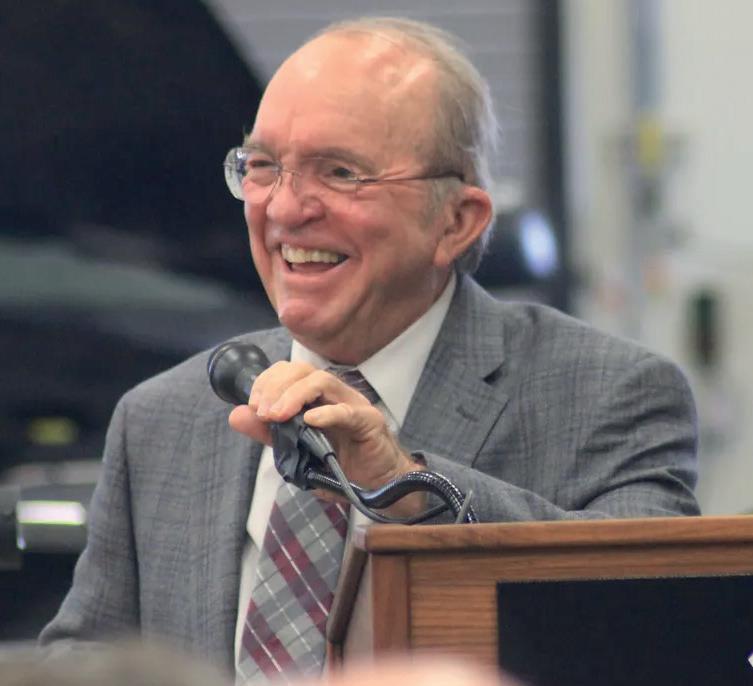
Condado de Adams: Jack Roush
Ohio is the birthplace of presidents, actors, athletes and historical figures. But who is the most famous person from your county?
Here’s a list of the most famous person who was born and/or raised in each of Ohio’s counties.
Roush es el fundador y actual director ejecutivo de Roush Fenway Keselowski Racing, también conocido como RFK Racing, un equipo de carreras de NASCAR que cuenta con ocho campeonatos en las tres principales divisiones de NASCAR, según su sitio web. Creció en Manchester, Ohio.
Adams County: Jack Roush
Roush is the founder and current CEO of Roush Fenway Keselowski Racing, also known as RFK Racing, a NASCAR racing team that boasts eight championships in NASCAR’s top three divisions, according to its website. He was raised in Manchester, Ohio.
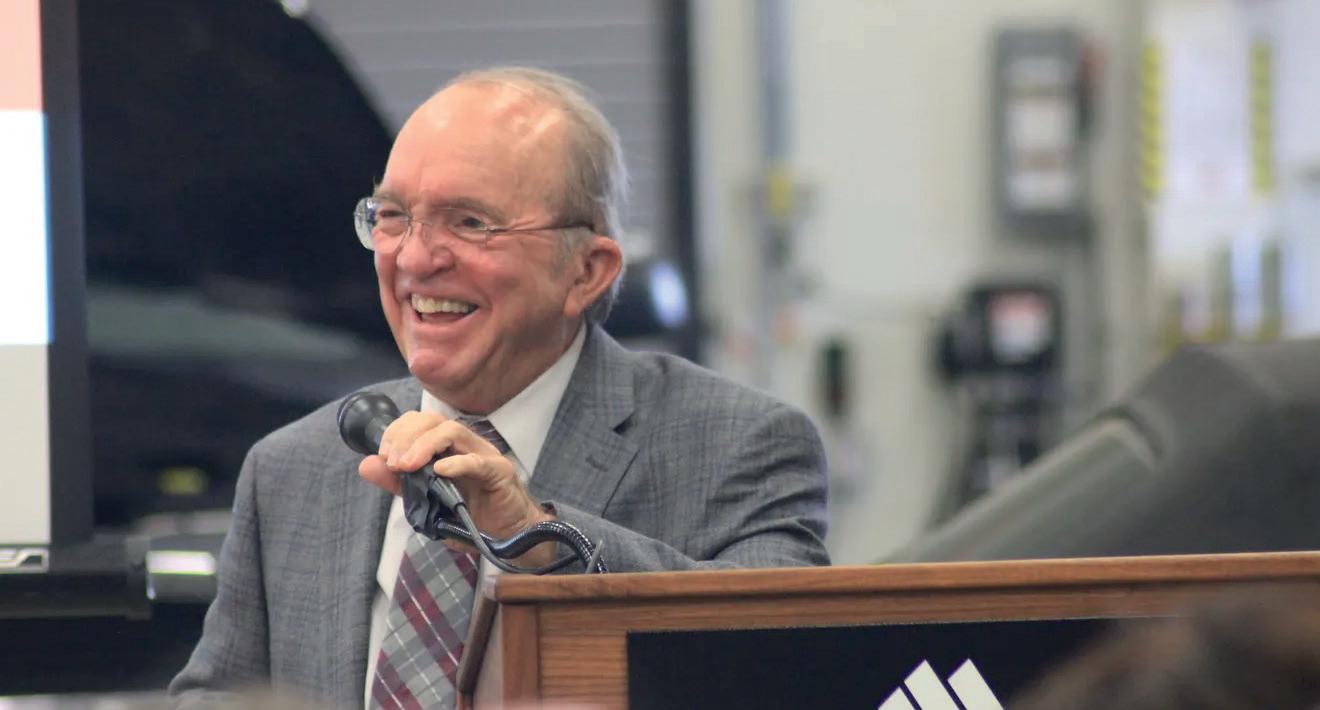
Condado de Ashland: Ernest Cline
Cline es el autor de Ready Player One, un bestseller del New York Times que Steven Spielberg convirtió en una exitosa película en 2018. Cline coescribió el guión de la película. Nació en Ashland en 1972.
Ashland County: Ernest Cline
Cline is the author of Ready Player One, a New York Times bestseller that was turned into a blockbuster hit movie by Steven Spielberg in 2018. Cline co-wrote the movie’s screenplay. He was born in Ashland in 1972.

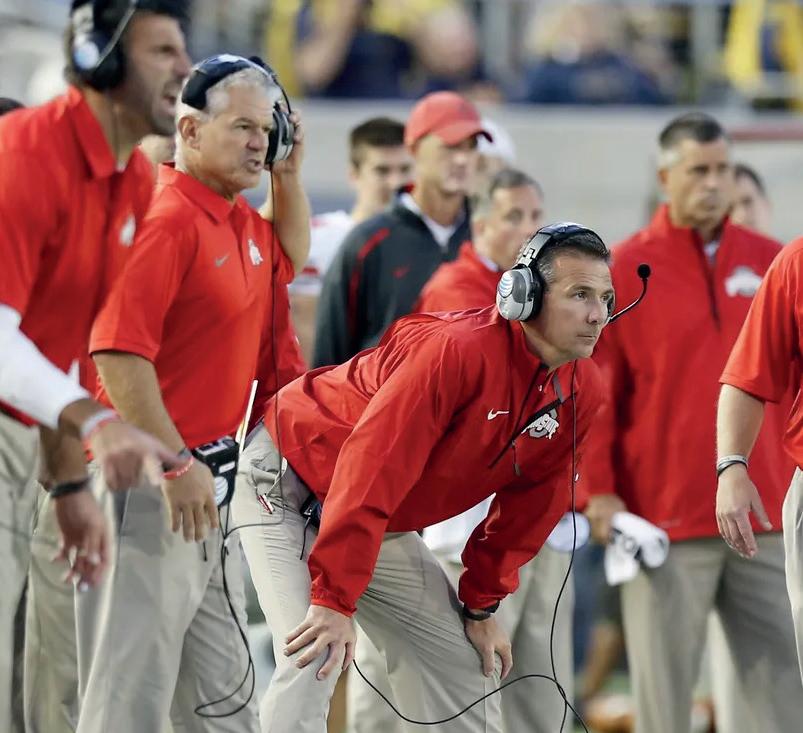
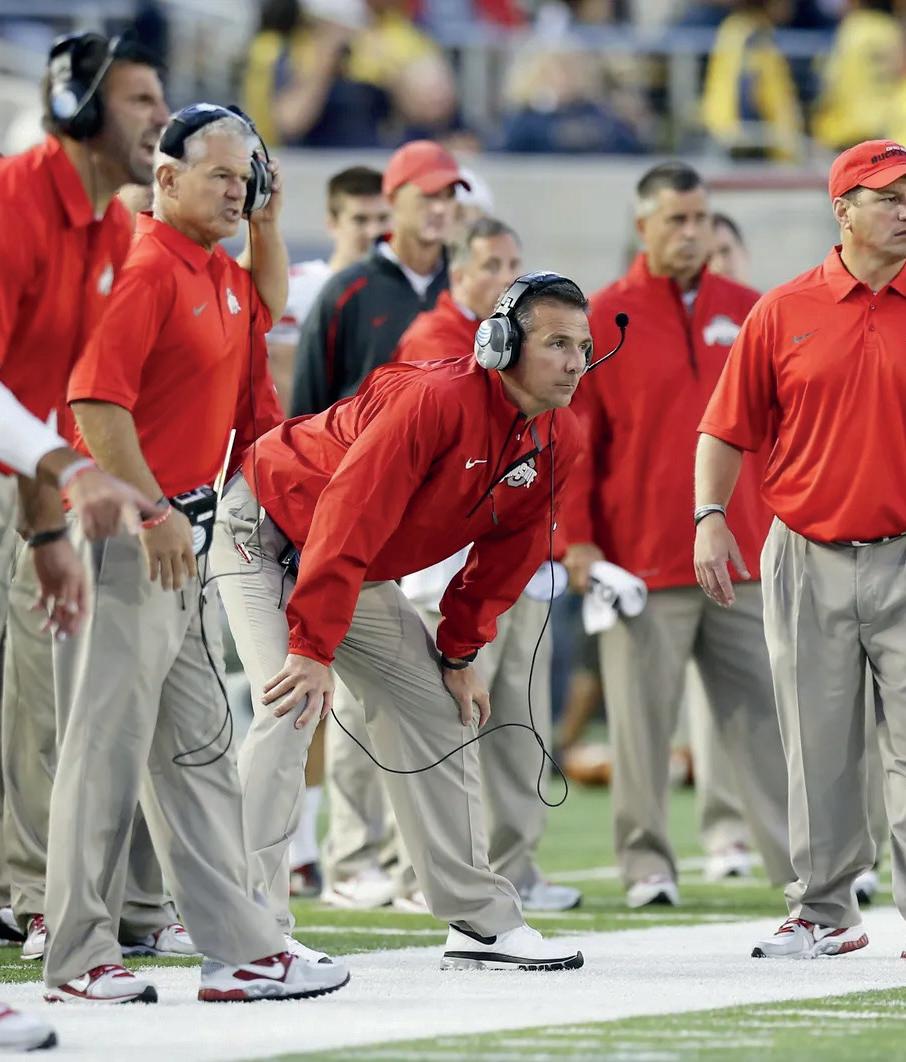
Condado de Ashtabula: Meyer urbano
Meyer es entrenador de fútbol universitario y de la NFL, más conocido por su período de seis años como entrenador en jefe de fútbol de la Universidad Estatal de Ohio. Fue criado en Ashtabula.
Ashtabula County: Urban Meyer
Meyer is a college and NFL football coach, most well-known for his sixyear stint as Ohio State University’s head football coach. He was raised in Ashtabula.

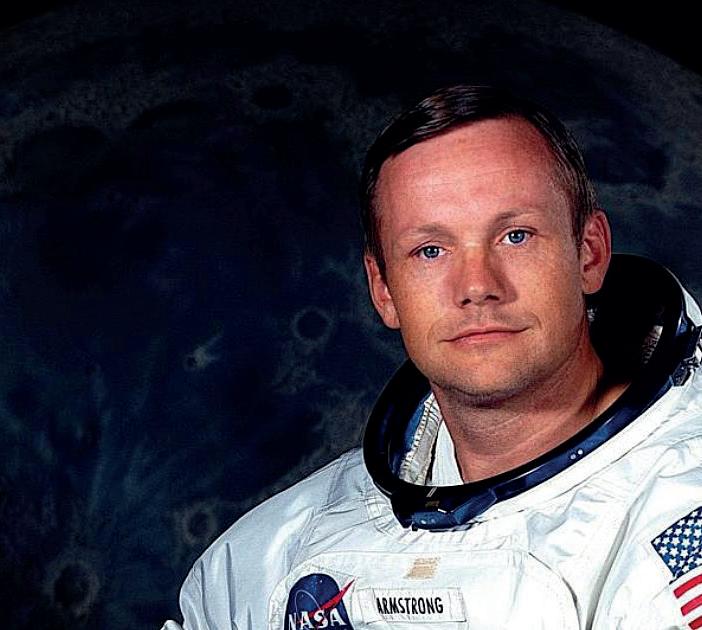
Condado de Auglaize: Neil Armstrong
Armstrong fue un astronauta estadounidense y la primera persona en caminar sobre la luna. Nació en Wapakoneta en 1930.
Auglaize County: Neil Armstrong
Armstrong was an American astronaut and the first person to walk on the moon. He was born in Wapakoneta in 1930.
4 El Sol Magazine Marzo 8, 2024 OHIO
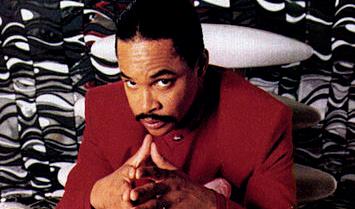
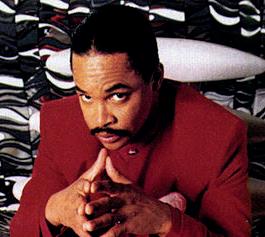
Condado de Butler: Roger Troutman
Troutman fue un músico estadounidense que fundó la banda Zapp, grupo pionero en el género musical funk. Nació en Hamilton, Ohio, en 1951.
Butler County: Roger Troutman
Troutman was an American musician who founded the band Zapp, a group that pioneered the funk genre of music. He was born in Hamilton, Ohio in 1951.
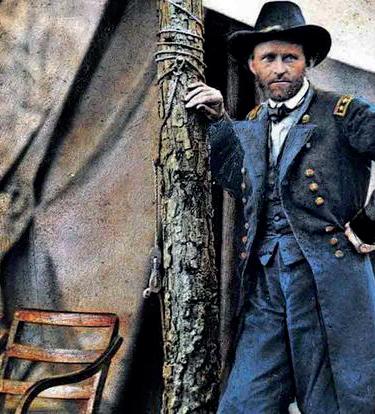
Condado de Clermont: Ulysses S. Grant
Grant fue el decimoctavo presidente de los Estados Unidos y el comandante general del Ejército de la Unión durante la Guerra Civil. Nació en Point Pleasant, Ohio en 1822.
Clermont County: Ulysses S. Grant
Grant was the 18th president of the United States and the commanding general of the Union Army during the Civil War. He was born in Point Pleasant, Ohio in 1822.
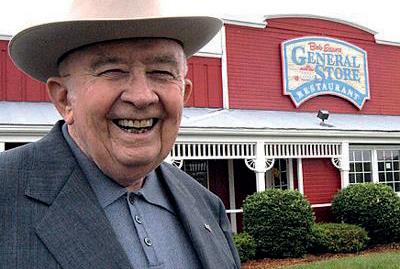
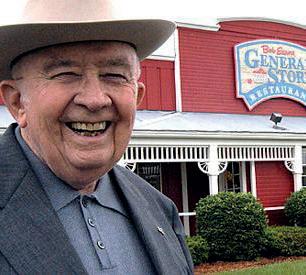
Condado de Gallia: Bob Evans
Evans era un restaurantero que convirtió su pequeño restaurante en Gallipolis en una cadena de restaurantes nacional que lleva su nombre. Creció en Gallipolis, Ohio.
Gallia County: Bob Evans
Evans was a restauranter who turned his small diner in Gallipolis into a national restaurant chain that bears his name. He grew up in Gallipolis, Ohio.

Condado de Clark: John Leyenda
Legend es un músico, actor y productor ganador de un premio Grammy conocido por su sencillo “All Of Me” y sus múltiples álbumes de R&B. Nació en Springfield, Ohio, en 1978.
Clark County: John Legend
Legend is a Grammy award-winning musician, actor and producer wellknown for his single “All Of Me” and his multiple R&B albums. He was born in Springfield, Ohio in 1978.
Condado de Guernesey: John Glenn
Glenn fue astronauta, piloto y el primer estadounidense en orbitar la Tierra. También fue el tercer estadounidense en el espacio. Nació en Cambridge, Ohio en 1921.
Guernsey County: John Glenn
Glenn was an astronaut, pilot and the first American to orbit the Earth. He was also the third American in space. He was born in Cambridge, Ohio in 1921.


Condado de Hamilton: Steven Spielberg
Spielberg es un director de cine, productor y guionista que alcanzó la fama por primera vez con Tiburón (1975). Ha dirigido una gran cantidad de películas clásicas estadounidenses como Jurassic Park, E.T. el Extraterrestre y En busca del arca perdida. Nació en Cincinnati, Ohio, en 1946.
Hamilton County: Steven Spielberg
Spielberg is a movie director, producer and screenwriter who first achieved fame with 1975’s Jaws. He has directed a slew of classic American movies like Jurassic Park, E.T. the Extra-Terrestrial and Raiders of the Lost Ark. He was born in Cincinnati, Ohio in 1946.
5 El Sol Magazine Marzo 8/22, 2024 OHIO
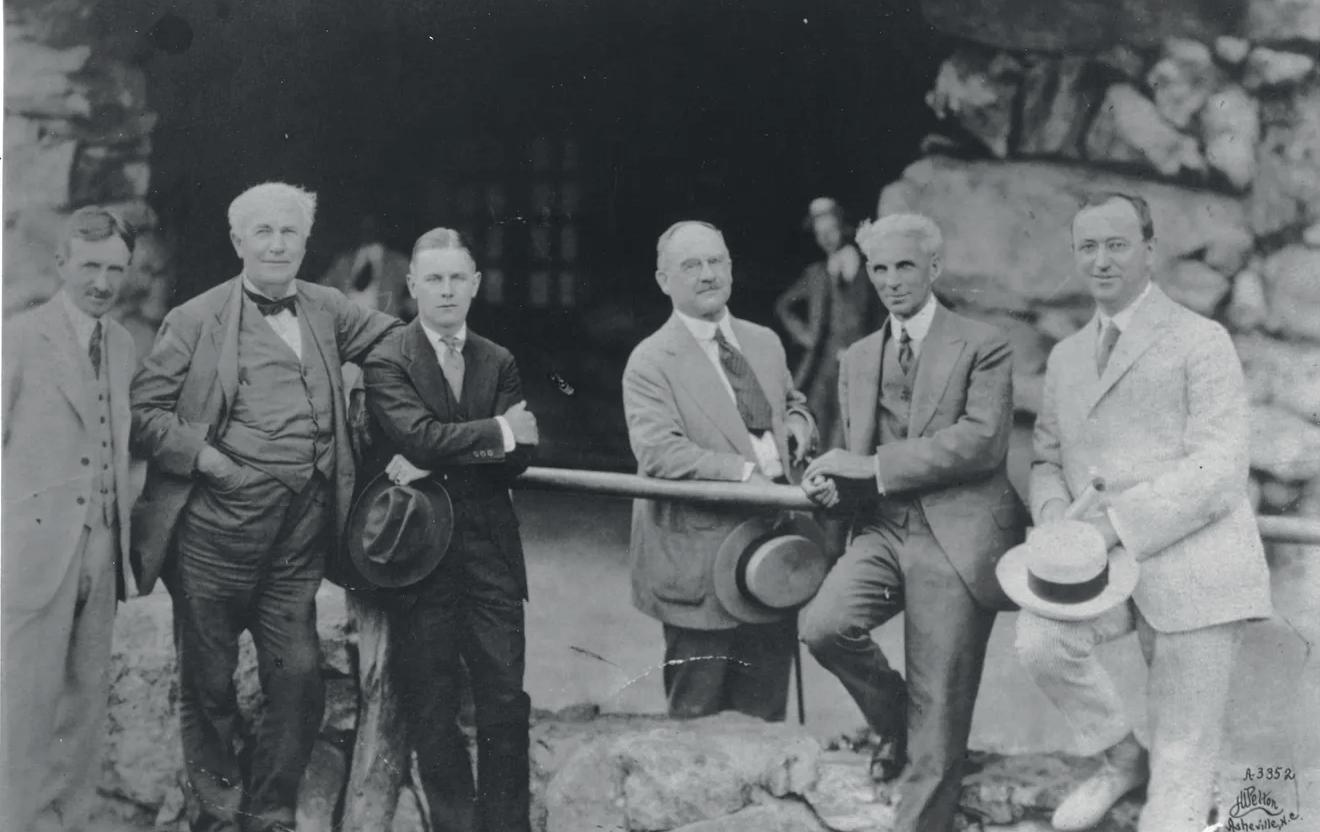
Condado de Columbiana: Harvey Firestone
Firestone fue el fundador de Firestone Tire and Rubber Company. Nació en Columbiana en 1868.
Columbiana County: Harvey Firestone
Firestone was the founder of the Firestone Tire and Rubber Company. He was born in Columbiana in 1868.

Condado de Summit: LeBron James
James es un jugador de la NBA de Los Angeles Lakers y muchos lo consideran uno de los mejores jugadores de baloncesto de todos los tiempos. Ha ganado cuatro partidos de campeonato de la NBA y apareció en ellos 10 veces. Nació en Akron en 1984.
Summit County: LeBron James
James is an NBA player for the Los Angeles Lakers and considered by many to be one of the greatest basketball players of all time. He’s won four NBA championship games and appeared in them 10 times. He was born in Akron in 1984.
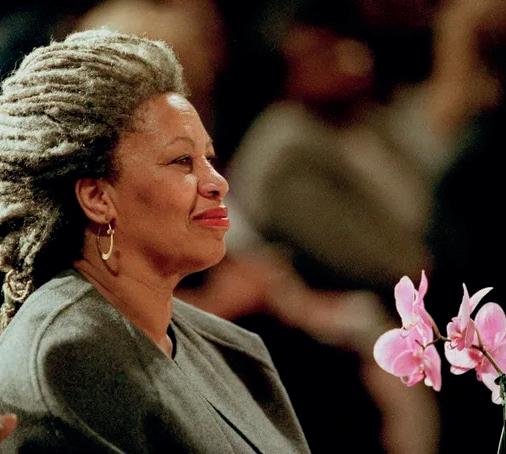
Condado de Lorain: Toni Morrison
Morrison fue una novelista y editora cuyo trabajo más famoso fue su novela Beloved, sobre una esclava fugitiva perseguida por el fantasma de su hija muerta. También recibió el Premio Nobel y la Medalla de la Libertad. Nació en Lorain, Ohio en 1931.
Lorain County: Toni Morrison
Morrison was a novelist and editor whose most famous work was her novel Beloved about an escaped slave haunted by the ghost of her dead daughter. She is also a Nobel Prize and Medal of Freedom recipient. She was born in Lorain, Ohio in 1931.
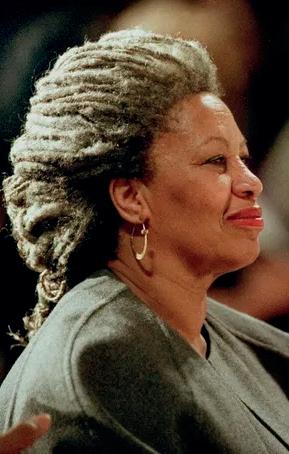

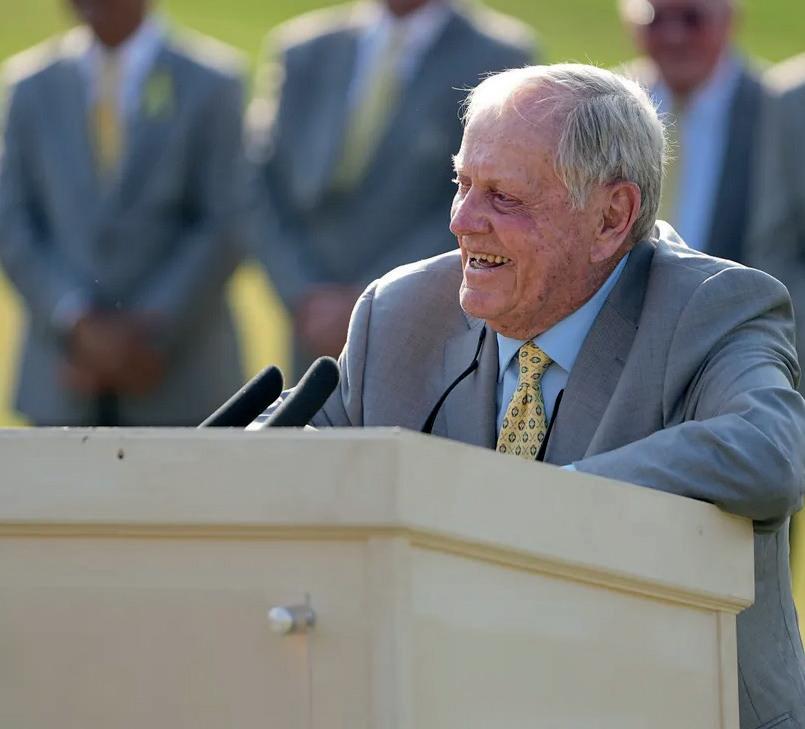
Condado de Franklin: Jack Nicklaus
Nicklaus es un golfista profesional retirado considerado por muchos como uno de los mejores golfistas de todos los tiempos. Nació en Columbus, Ohio en 1940.
Franklin County: Jack Nicklaus
Nicklaus is a retired professional golfer considered by many to be one of the greatest golfers of all time. He was born in Columbus, Ohio in 1940.
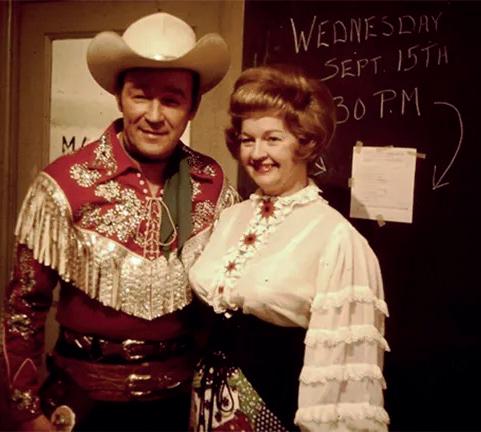
Condado de Scioto: Roy Rogers
Rogers era actor, cantante y homónimo de la cadena de comida rápida Roy Rogers. Protagonizó una gran cantidad de programas de televisión y películas occidentales durante la década de 1950. Se crió en Portsmouth.
Scioto County: Roy Rogers Rogers was an actor, singer and the namesake of the Roy Rogers fast food chain. He starred in a large number of western television shows and films during the 1950s. He was raised in Portsmouth.
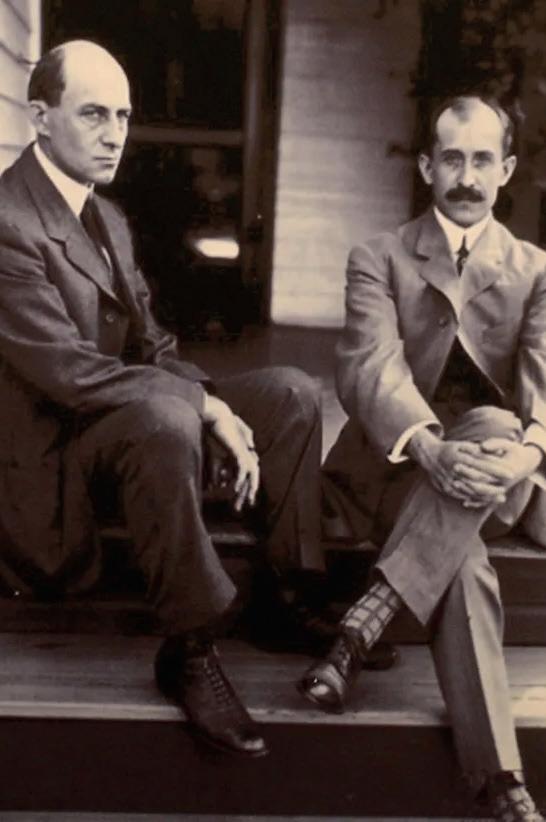
Condado de Montgomery: Orville Wright
Wright era la mitad de los hermanos Wright, mecánicos de bicicletas que diseñaron, construyeron y volaron el primer avión del mundo a principios del siglo XX. Nació en Dayton en 1871.
Montgomery County: Orville Wright
Wright was one half of the Wright Brothers, bicycle mechanics who designed, built and flew the world’s first airplane in the early 20th century. He was born in Dayton in 1871.

6 El Sol Magazine Marzo 8, 2024 OHIO









7 El Sol Magazine Marzo 8/22, 2024 ADVERTISING
Equipo de policía de Columbus protege los derechos de los manifestantes
Columbus police team protects protester rights
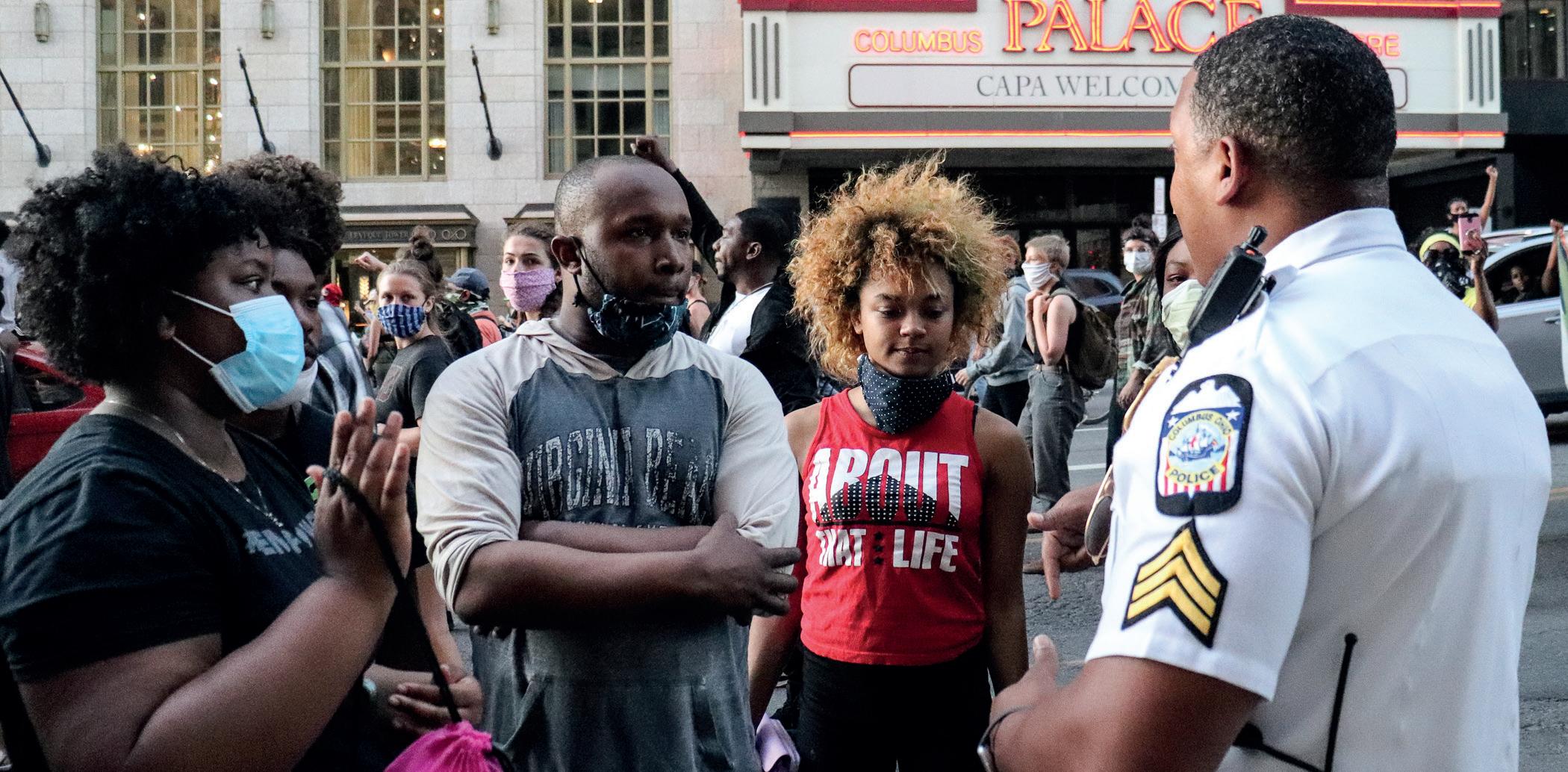
Araíz de la anulación del juicio en el caso de un ex ayudante del sheriff del condado de Franklin acusado de matar a un hombre negro, casi 100 personas salieron a las calles en Short North exigiendo justicia.
A lo largo de su ruta se unió a ellos un grupo que vestía chalecos azules brillantes sobre sus uniformes de policía de Columbus. Los oficiales se mantuvieron a un lado, asegurándose de que todos pudieran compartir sus pensamientos pacíficamente.
Durante casi cuatro años, la sombra de la respuesta de la policía de Columbus a las protestas y disturbios civiles de 2020 ha flotado en el aire en eventos similares. Pero un equipo de oficiales de Columbus centrado en fomentar el diálogo ha estado trabajando durante los últimos dos años para reparar ese daño.
Los agentes suelen recibir pago de horas extras cuando asisten a protestas como miembros del equipo de diálogo porque la mayoría de los agentes realizan el trabajo fuera de
sus funciones laborales normales. Los miembros del equipo de diálogo de la División de Policía han asistido a más de 100 protestas, eventos y festivales cada año con el objetivo de aliviar las tensiones y evitar que las situaciones escale hasta el punto en que se necesite una respuesta policial más contundente.
El equipo de diálogo en Columbus es la única unidad de este tipo en Ohio y uno de los pocos equipos de diálogo en el país. Con más de 50 miembros, todos voluntarios, Columbus tiene la unidad de diálogo más grande del país, Cmdr. dijo Duane Mabry. Ahora los departamentos de todo el país miran a Columbus como líder en cómo abordar mejor eventos y protestas a gran escala. Mabry dijo que el equipo también responde consultas de agencias de costa a costa interesadas en aprender más después de que la policía de Columbus se presentara en una conferencia nacional de policía en 2023.
In the wake of a mistrial in the case of a former Franklin County Sheriff’s deputy accused of killing a Black man, nearly 100 people took to the streets in the Short North demanding justice.
Joining them along their route were a group wearing bright blue vests over their Columbus police uniforms. The officers stood off to the side, making sure everyone was able to share their thoughts peacefully.
For nearly four years, the shadow of the Columbus police response to 2020’s protests and civil unrest has hung in the air at similar events. But a team of Columbus officers focused on encouraging dialogue has been working for the last two years to undo that damage.
Officers typically receive overtime pay when they attend protests as members of the dialogue team because most of the officers are doing the work outside of their normal job duties.
Members of the Division of Police’s dialogue team have attended more
than 100 protests, events and festivals each year with a goal of diffusing tensions and preventing situations from escalating to the point where a more forceful police response is needed.
The dialogue team in Columbus is the only unit of its kind in Ohio and one of only a few dialogue teams in the country. With more than 50 members, all who volunteered, Columbus has the largest dialogue unit in the country, Cmdr. Duane Mabry said.
Now departments around the country are looking to Columbus as a leader in how to better approach large-scale events and protests.
Mabry said the team also fields inquiries from agencies from coast to coast interested in learning more after Columbus police presented at a national police conference in 2023.
8 El Sol Magazine Marzo 8, 2024 ADVERTISING
La baja tasa de desempleo de Ohio alcanza un
récord de duración
Ohio’s low jobless rate hits record for length
La tasa de desempleo de Ohio nunca ha sido tan baja durante tanto tiempo.
La tasa de desempleo del estado fue del 3,7% en enero, frente al 3,6% en diciembre, según los datos de desempleo estatales publicados el viernes.
Han pasado 14 meses consecutivos en los que la tasa de desempleo de Ohio ha estado por debajo del 4%, el período más largo en datos que se remonta a 1976, dijo el estado el lunes.
“La tasa de desempleo de Ohio subió al 3,7%, pero sigue siendo una tasa mucho más baja de lo habitual para el estado”, dijo Ben Ayers, economista senior de Nationwide, en una nota de investigación el lunes. “La falta de mano de obra sigue siendo un problema apremiante para muchos empleadores, ya que eleva los salarios y frena la producción. La fuerza laboral de Ohio se estancó durante la segunda mitad de 2023 y hasta enero, lo que restringió aún más la oferta laboral y limitó el crecimiento”. En mayo y junio la tasa fue del 3,3%, la más baja registrada. Ha habido momentos en el pasado en los que la tasa de desempleo estuvo por debajo del 4%, pero nunca durante tanto tiempo.
Parte del problema es que los mercados laborales siguen siendo ajustados. El estado dijo que había 212.000 trabajadores desempleados
en enero, una cifra superior a la de los últimos meses, pero aún así un nivel históricamente bajo.
De hecho, Ayers dijo que hay un 50% más de ofertas de trabajo que habitantes de Ohio desempleados. “La tasa de participación de la fuerza laboral sigue estancada justo por debajo del 62% y muestra pocas señales de volver a las tendencias prepandémicas”, dijo. “Como resultado, sigue habiendo alrededor de 1,5 puestos vacantes por cada trabajador desempleado en Ohio, lo que demuestra que persisten las duras condiciones laborales”.
La creación de empleo en Ohio se ralentiza en 2023
Los datos de empleo revisados muestran que Ohio agregó 47,700 puestos de trabajo entre enero de 2023 y enero de 2024, la menor cantidad desde la pandemia. El año anterior, el estado añadió 119.000 puestos de trabajo y el año anterior, 146.000 puestos de trabajo. Además de menos empleos en 2023, las ganancias recientes se han concentrado en solo un puñado de sectores.
El año pasado, el sector que cubre la atención de salud y la educación privada sumó 35.000 empleos y el sector de gobierno local, estatal y federal sumó 17.700 empleos.
Ohio’s unemployment rate has never been so low for so long.
The state’s unemployment rate was 3.7% in January, up from 3.6% in December, according to state unemployment data released Friday. It has now been 14 straight months that Ohio’s unemployment rate has been below 4%, the longest stretch in data going back to 1976, the state said Monday.
“The Ohio unemployment rate ticked higher to 3.7%, but this remains a much lower rate than usual for the state,” Ben Ayers, senior economist for Nationwide, said in a research note on Monday. “Lack of labor remains a pressing issue for many employers, driving up wages and holding back production. The Ohio labor force stagnated over the second half of 2023 and into January, further restricting labor supply and limiting growth.”
In May and June the rate was 3.3%, the lowest on record. There have been times in the past when the unemployment rate has been below 4%, but never for this long.
Part of the issue is that labor markets remain tight. The state said there were 212,000 unemployed workers in January, higher than what it’s been the past few months, but still historically low.
In fact, Ayers said there are 50% more job listings than unemployed Ohioans.
“The labor force participation rate remains stuck just below 62% and shows little sign of returning to prepandemic trends,” he said. “As a result, there continues to be about 1.5 job openings for every unemployed worker in Ohio – evidence of lingering tight labor conditions.”
Ohio job gains slow in 2023
Revised jobs data show Ohio added 47,700 jobs from January 2023 to January 2024, the fewest since the pandemic.
In the prior year, the state added 119,000 jobs and the year before that, 146,000 jobs.
On top of fewer jobs in 2023, the recent gains have been concentrated in just a handful of sectors.
Last year, the sector that covers health care and private education added 35,000 jobs and the local, state and federal government sector added 17,700 jobs.
Several sectors actually lost jobs, including construction (1,900 jobs), professional and business services (5,000 jobs), finance (2,900 jobs), and trade, transportation and utilities (4,800 jobs).
9 El Sol Magazine Marzo 8/22, 2024 OHIO
SPORT
Liverpool y Manchester City le mostraron a la Premier League lo que se perderá cuando Jurgen Klopp se vaya al final de la temporada.
Anfield acogió un típico choque de titanes de alto octanaje en el último encuentro de la máxima categoría inglesa entre Klopp y Pep Guardiola antes de que el técnico del Liverpool dimitiera.
No es de extrañar que Guardiola diga que dormirá mejor cuando su rival de toda la vida ya no se interponga en su camino.
Comparó al Liverpool con un “tsunami”, ya que los campeones defensores tuvieron que esforzarse mucho para sobrevivir a largos períodos de presión en la segunda mitad.
“Comparó al Liverpool con un “tsunami”, ya que los campeones defensores tuvieron que esforzarse mucho para sobrevivir a largos períodos de presión en la segunda mitad”.
“Dios mío, vienen de todas partes”, dijo Guardiola después del empate 1-1 el domingo que mantuvo al Liverpool, segundo clasificado, un punto por delante del City, tercero. El Arsenal terminó el fin de semana en la cima de la clasificación por diferencia de goles, pero la victoria de los londinenses por 2-1 en Brentford el sábado pareció una trama secundaria en comparación con el último y posiblemente último choque entre Klopp y Guardiola. John Stones le dio al City la ventaja en la primera mitad y Alexis Mac Allister empató desde el punto de penalti después del descanso. Eso solo contó parte de la historia de un encuentro emocionante, en el que Luis Díaz perdió una gran oportunidad de adelantar al Liverpool y Phil Foden y Jeremy Doku dispararon al palo para el City. En el tiempo de descuento, Klopp pensó que al Liverpool se le debería haber concedido un penalti por el desafío de Doku a Mac Allister, solo para que el VAR desestimara las apelaciones. “¿Por qué el chico del estudio VAR pensaría que eso no es claro y obvio? ¿Qué debes almorzar si crees que eso no es claro y obvio? Dijo Klopp.

Klopp y Guardiola ofrecen otro clásico
Klopp, Guardiola serve up another classic
Liverpool and Manchester City showed the Premier League what it will be missing when Jurgen Klopp walks away at the end of the season. Anfield played host to a typically fullblooded, high octane clash of titans in the last English top-flight encounter between Klopp and Pep Guardiola before the Liverpool manager stands down. No wonder Guardiola says he will sleep easier when his long-time rival is no longer standing in his way. He likened Liverpool to a “tsunami” as the defending champions had to dig deep to survive long periods of pressure in the second half.
“Oh my God, they come from everywhere,” Guardiola said after a 1-1 draw on Sunday that kept secondplace Liverpool one point ahead of City in third.
Arsenal ended the weekend top of the standings on goal difference, but the Londoners’ 2-1 win at Brentford on Saturday felt like a sub plot in comparison to the latest and possibly last clash between Klopp and Guardiola.
John Stones gave City a first-half lead and Alexis Mac Allister leveled from the penalty spot after the break. That only told part of the story of a thrilling encounter, which saw Luis Diaz miss a big chance to fire Liverpool ahead and Phil Foden and Jeremy Doku hit the woodwork for City. In stoppage time, Klopp thought Liverpool should have been awarded a penalty for Doku’s chesthigh challenge on Mac Allister, only for VAR to dismiss appeals.
“Why would the guy in the VAR studio think that is not clear and
“In stoppage time, Klopp thought Liverpool should have been awarded a penalty for Doku’s chest-high challenge on Mac Allister, only for VAR to dismiss appeals”.
obvious? What must you have for lunch if you think that is not clear and obvious?” Klopp said.
10 El Sol Magazine Marzo 8, 2024
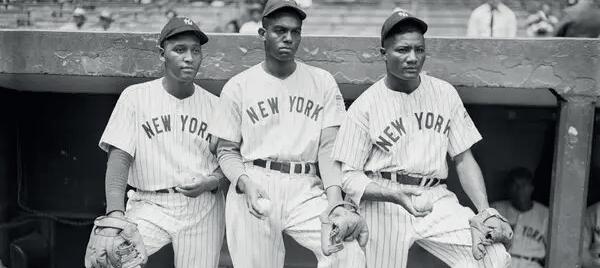
El número de jugadores negros de las Grandes Ligas sigue siendo bajo, pero es posible que haya mejoras en camino
Number of Black major leaguers remains low, but improvement may be on the way
Durante gran parte de la infancia de Lee Allen Jr., el béisbol parecía bastante lejano a él.
Los Royals de la Major League Baseball jugaron en su ciudad natal, Kansas City, Missouri, pero Allen, que es negro y vivía en el centro de la ciudad, no encontró muchas oportunidades de béisbol hasta finales de sus años de escuela secundaria. En enero de 2020, Allen, de 17 años, fue invitado a uno de los programas de desarrollo de la MLB, la DREAM Series, donde por primera vez fue puesto frente a cazatalentos y entrenadores para mostrar sus habilidades en un entorno competitivo.
Cuatro años más tarde, Allen estaba en el campo del Complejo de Entrenamiento Jackie Robinson en Vero Beach, Florida, vistiendo un uniforme de béisbol morado, blanco y dorado que representaba a la histórica universidad negra Prairie View A& M University, con los ojos puestos en una carrera profesional. Más de 200 destacados HBCU estuvieron allí para el Andre Dawson Classic de la MLB, un torneo universitario para jugadores que esperan algún día llegar a las ligas
mayores y tal vez ayudar a dar paso a una nueva generación de estrellas afroamericanas.
“Poder estar aquí y mostrar mis talentos frente a estos cazatalentos y otros muchachos que nos miran al siguiente nivel”, dijo Allen, ahora jugador de cuadro junior de los Panthers, “se siente genial para mí porque sé que esas son metas que puedo alcanzar y están ahí”.
Ese es el objetivo de la MLB, que enfrenta cifras históricamente bajas de jugadores negros en las mayores. Un estudio realizado por el Instituto para la Diversidad y Ética en el Deporte de Florida Central encontró que los jugadores afroamericanos representaban solo el 6,2% de los jugadores en las plantillas del día inaugural de la MLB en 2023, frente al 7,2% en 2022. Ambas cifras fueron las más bajas desde que comenzó el estudio en 1991, cuando el 18% de los jugadores de la MLB eran negros. Ese es también el porcentaje más bajo de participación afroamericana entre cuatro de los cinco principales deportes profesionales (NBA, NFL, MLB, MLS) fuera de la Liga Nacional de Hockey, donde más del 90% de sus jugadores son blancos.
For much of Lee Allen Jr.’s childhood, baseball seemed quite far from him. Major League Baseball’s Royals played in his hometown Kansas City, Missouri, but Allen – who is Black and lived in the inner city – didn’t come across many baseball opportunities until late in his high school years. In January 2020, a 17-year-old Allen was invited to one of MLB’s development programs, the DREAM Series, where for the first time he was put in front of scouts and coaches to display his skills in a competitive environment.
Four years later, Allen stood on the field at the Jackie Robinson Training Complex in Vero Beach, Florida, wearing a purple, white and gold baseball uniform representing the historically Black college Prairie View A& M University, his eyes set on a pro career.
More than 200 HBCU standouts were there for MLB’s Andre Dawson Classic, a collegiate tournament for players hoping to one day crack the major leagues – and perhaps help usher in a new generation of African American stars.
“Being able to be out here and showcase my talents in front of these
scouts and other guys who’s looking at us at the next level,” said Allen, now a junior infielder for the Panthers, “it feels great for me because I know that those are goals that I can reach, and they’re there.”
That’s MLB’s aim as it faces historically low numbers of Black players in the majors. A study done by The Institute for Diversity and Ethics in Sport at Central Florida found African American players represented just 6.2% of players on MLB opening day rosters in 2023, down from 7.2% in 2022. Both figures were the lowest since the study began in 1991, when 18% of MLB players were Black. That’s also the lowest percentage of African American participation among four of the five major professional sports – NBA, NFL, MLB, MLS – outside of the National Hockey League, where more than 90% of its players are white. MLB has tried to address that with a series of grassroots diversity initiatives. There are signs of progress at the pro level. Between 2012 and 2021, 17.4% of first-round picks were African American players.
11 El Sol Magazine Marzo 8/22, 2024 DEPORTES

Cómo se fortalecieron las pandillas de Haití
El primer ministro de Haití fue visto por última vez en Puerto Rico, negociando su regreso a una patria presa de la violencia y controlada por gánsteres fuertemente armados. Con su destino en el aire y la situación en Haití deteriorándose día a día, el mundo se pregunta si el país caerá completamente en la anarquía o si se restablecerá alguna apariencia de orden.
¿Qué está pasando en Haití?
Es fácil achacar este último espasmo de violencia en la primera república negra libre de Occidente a la pobreza de larga data, el legado del colonialismo, la deforestación generalizada y la interferencia europea y estadounidense. Sin embargo, una serie de expertos dijeron a The Associated Press que la causa inmediata más importante es más reciente: la creciente
How Haiti’s gangs got stronger
dependencia de los gobernantes haitianos de las pandillas callejeras. Haití no ha tenido un ejército permanente ni una fuerza policial nacional sólida y bien financiada durante décadas.
Las intervenciones de las Naciones Unidas y de Estados Unidos han ido y venido. Sin una tradición sólida de instituciones políticas honestas, los líderes haitianos han estado utilizando a civiles armados como herramientas para ejercer el poder. Ahora, el Estado se ha debilitado fatalmente y las pandillas están interviniendo para ocupar su lugar. Los líderes de las pandillas realizan conferencias de prensa. Y muchos los ven como futuros interesados en las negociaciones sobre el futuro del país.
Haiti’s prime minister was last seen in Puerto Rico, negotiating his return to a homeland gripped by violence and controlled by heavily armed gangsters. With his fate in the air and the situation in Haiti deteriorating by the day, the world has been left to wonder whether the country will fully descend into anarchy or whether some semblance of order will be restored.
What is going on in Haiti?
It’s easy to blame this latest spasm of violence in the West’s first free Black republic on longstanding poverty, the legacy of colonialism, widespread deforestation, and European and U.S. interference.
However, a series of experts told The Associated Press that the most important immediate cause is more recent: Haitian rulers’ increasing dependence on street gangs.
Haiti hasn’t had a standing army or a well-funded and robust national police force for decades.
United Nations and American interventions have come and gone. Without a solid tradition of honest political institutions, Haitian leaders have been using armed civilians as tools for exercising power. Now, the state has grown fatally weak and gangs are stepping in to take its place.
Gang leaders hold news conferences. And many see them as future stakeholders in negotiations over the country’s future.
A 1990s embargo was imposed after the military overthrew President Jean-Bertrand Aristide. The embargo and the international isolation devastated the country’s small middle class, said Michael Deibert, author of two books on Haiti.
12 El Sol Magazine Marzo 8, 2024 INTERNATIONAL
Trump y Biden visitan Texas para presentar a los votantes sus enfoques de inmigración
Trump and Biden visit Texas to pitch voters on their dueling immigration approaches
Aorillas del mismo Río Grande, pero a 300 millas de distancia, el presidente Joe Biden y su rival republicano Donald Trump inspeccionaron el jueves la frontera entre Estados Unidos y México y discutieron desde la distancia sobre quién es el culpable del fallido sistema de inmigración del país y cómo solucionarlo. .
La inmigración se ha convertido en un tema central en la campaña presidencial de 2024, que se espera que sea una revancha entre Biden y Trump, y cada hombre busca utilizar los problemas fronterizos para su propia ventaja política. Sus itinerarios eran notablemente similares: llegaron a Texas con media
hora de diferencia. Cada uno eligió un lugar óptimo para exponer su punto de vista, recibió información sobre operaciones y problemas, caminó por los matorrales junto al Río Grande y habló directamente con el público. Sus comentarios incluso se superpusieron en el tiempo por un tiempo. Pero ahí terminaron los paralelismos. Biden trató de resaltar la necesidad de un proyecto de ley bipartidista de seguridad fronteriza que fue rechazado por los republicanos por orden de Trump, y rotundamente pidió al favorito republicano que se uniera a él para apoyar un impulso del Congreso para obtener más fondos y restricciones más estrictas.


On the banks of the same Rio Grande but 300 miles apart, President Joe Biden and GOP challenger Donald Trump on Thursday surveyed the U.S.-Mexico border and tussled from a distance over who is to blame for the nation’s broken immigration system and how to fix it.
Immigration has emerged as a central issue in the 2024 presidential campaign, which is widely expected to be a Biden-Trump rematch, and each man is seeking to use the border problems to his own political advantage.
Their itineraries were remarkably similar: They arrived in Texas within a half-hour of one another. Each
chose an optimal location from which to make his point, got a briefing on operations and issues, walked along the scrub brush by the Rio Grande and spoke directly to the public. Their remarks even overlapped in time for a bit.
But that’s where the parallels ended. Biden sought to spotlight the necessity of a bipartisan border security bill that was tanked by Republicans on Trump’s orders, and flat-out asked the Republican front-runner to join him in supporting a congressional push for more funding and tighter restrictions.

13 El Sol Magazine Marzo 8/22, 2024 IMMIGRATION

Su horario de trabajo como adulto joven puede dañar su salud décadas después, encuentra un estudio



Your work schedule as a young adult may harm your health decades later, study finds
Las desventajas inmediatas de un horario de trabajo errático son claras: es posible que esté cansado todo el tiempo o que pierda tiempo con sus seres queridos.
También pueden estar en juego consecuencias más nefastas a largo plazo, según una nueva investigación sobre las asociaciones entre los patrones de trabajo en la edad adulta joven y los resultados de salud en el futuro.
Múltiples estudios han demostrado cómo las horas de trabajo irregulares pueden dañar la salud general y la vida social, pero el nuevo artículo analiza la relación a través de un enfoque de “ciclo de vida”, observando cómo los patrones de trabajo afectan la salud a lo largo de la edad adulta en lugar de hacerlo en un momento determinado. El nuevo informe, publicado el miércoles en la revista PLOS ONE, definió un horario de trabajo
estándar que comienza a las 6 a.m. o más tarde y termina a las 6 p.m. Un horario de trabajo nocturno significaba comenzar a las 2 p.m. o más tarde hasta la medianoche, mientras que los horarios nocturnos eran turnos a partir de las 21 horas. o más tarde y terminaba a las 8 a. m. Los participantes tenían horarios “variables” si tenían turnos divididos o rotativos u horarios irregulares. Aproximadamente tres cuartas partes de los patrones de trabajo que observamos no se ajustaban estrictamente al trabajo estable durante el día durante nuestros años laborales”, dijo el Dr. Wen-Jui Han, único autor del estudio y profesor de la Escuela Silver de Trabajo Social. en la Universidad de Nueva York, en una entrevista realizada por la revista.
The immediate cons of an erratic work schedule are clear-cut: You may be tired all the time or missing out on time with loved ones. More dire long-term consequences may also be at play, according to new research on the associations between work patterns in young adulthood and health outcomes later in life. Multiple studies have shown how irregular work hours can harm overall health and social life, but the new paper views the relationship through a “life-course” approach, observing how work patterns affect health throughout adulthood instead of one point in time.
The new report, published Wednesday in the journal PLOS ONE, defined a standard work schedule as beginning at 6 a.m. or later and ending at 6 p.m. An evening work schedule meant starting at 2 p.m. or later until midnight, while nighttime schedules were shifts
starting at 9 p.m. or later and ending by 8 a.m. Participants had “variable” schedules if they had split or rotating shifts or irregular hours.
“About three-quarters of the work patterns we observed did not strictly conform to working stably during daytime hours throughout our working years,” said Dr. Wen-Jui Han, the sole author of the study and professor at the Silver School of Social Work at New York University, in an interview conducted by the journal.
“This has repercussions,” added Han, who specializes in social welfare policy with an emphasis on children and families. “People with work patterns involving any degree of volatility and variability were more likely to have fewer hours of sleep per day, lower sleep quality, lower physical and mental functions, and a higher likelihood of reporting poor health and depressive symptoms at age 50.
14 El Sol Magazine Marzo 8, 2024 SALUD
El lado bueno del divorcio, según los expertos
The bright side of divorce, according to experts
Amy Mazur pasa vacaciones y vacaciones con sus hijos y su padre, incluso después del divorcio.
“Es mucho menos estresante para mis hijos... y para mí”, dijo Mazur, trabajador social clínico en Brooklyn, Nueva York.
Su relación con su exmarido no es la imagen que a menudo se pinta de la vida después del divorcio, pero es lo que funciona mejor para su familia, dijo. El matrimonio había comenzado en la edad adulta y cuando ya no funcionó para las personas en las que se convirtieron, dijo que encontraron una manera de amarse y apoyarse mutuamente mientras ya no estaban casados. Según datos recientes, las tasas de divorcio han tenido una tendencia constante a la baja en los Estados Unidos, pero los matrimonios que terminan siguen siendo una experiencia común y perturbadora. La mayoría de las personas probablemente no se casan pensando en el divorcio, pero para aquellos que se encuentran en uno, hay maneras de fomentar la compasión mutua y, en última instancia, construir algo más fuerte, dijeron los expertos.

Lamentando la perdida
Un divorcio puede ser amistoso y aun así estar marcado por la pérdida y el dolor, dijo Rebecca Hendrix, terapeuta matrimonial y familiar en Nueva York.
Está la pérdida de la vida que construyeron, incluida la casa en la que vivieron juntos, un nombre que pudieron haber compartido y las rutinas que desarrollaron, agregó. Y luego están los vínculos emocionales. “Esta es tu familia. Te has unido a esta persona, para bien o para mal, incluso si discutes todo el tiempo”, dijo Hendrix. “Incluso si ya ha llegado a su fin y ambos no están contentos, todavía estás apegado a esta persona”.
Uno de los mayores obstáculos con los que lucha la gente, Marissa Nelson, terapeuta matrimonial y familiar con sede en Washington, DC, es el dolor por la pérdida de la visión que tenían para su vida. Como ocurre con cualquier otro tipo de pérdida, es importante encontrar apoyo para superar las emociones que acompañan al duelo, como la ira, la tristeza y la dificultad para alcanzar la aceptación, dijo Hendrix.
Amy Mazur spends holidays and vacations with her kids and their father, even after a divorce. “It is so much less stressful for my children … and for myself,” said Mazur, a clinical social worker in Brooklyn, New York. Her relationship with her exhusband isn’t the picture that’s often painted of life after divorce, but it’s what works best for her family, she said. The marriage had begun in young adulthood and when it no longer worked for the people they grew into, she said they found a way to love and support one another while no longer being married. Divorce rates have been steadily trending downward in the United States, according to recent data, but marriages ending are still a common, disruptive experience. Most people probably don’t head into marriage anticipating divorce — but for those who find themselves in one, there are ways to encourage compassion for one another and ultimately build something stronger, experts said.
Grieving the loss
A divorce can be amicable yet still marked by loss and grief, said Rebecca Hendrix, a marriage and family therapist in New York.
There is the loss of the life you’ve built, including the home you lived in together, a name you may have shared and the routines you developed, she added. And then there are the emotional ties.
“This is your family. You have bonded with this person, for better or worse, even if you argue all the time,” Hendrix said. “Even if it’s kind of run its course and you both are not happy, you’re still attached to this person.”
One of the biggest hurdles Washington, DC-based marriage and family therapist Marissa Nelson sees people struggle with is grief over the loss of the vision they had for their life.
As with any other kind of loss, it’s important to find support to move through the emotions that come with grief, such as anger, sadness and difficulty reaching acceptance, Hendrix said.
15 El Sol Magazine Marzo 8/22, 2024 LIFESTYLE

16 El Sol Magazine Marzo 8, 2024 ADVERTISING
