Адрес: Greater Boston Jewish Russian Center 29 Chestnut Hill Avenue Brighton, MA 02135
Телефон: 617-787-2200 617-787-4693
E-mail: exodus@shaloh.org
Website: www.Shaloh.org
Exodus Magazine Boston Edition is published monthly by the GREATER BOSTON JEWISH RUSSIAN CENTER
December 2024 - February 2025 Issue 88
Registration Number 770
Circulation 4,000
Подписка: $ 18 Printed in USA
то веселья слышны", - снова удивляется
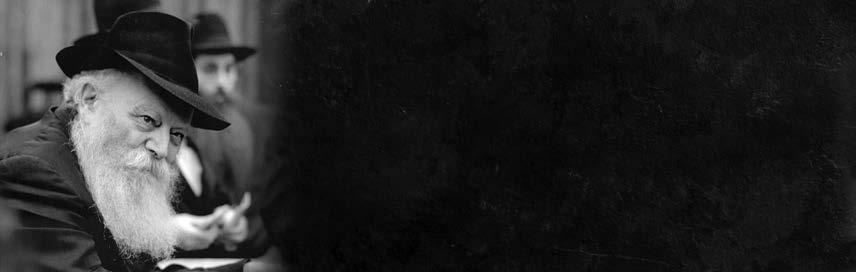
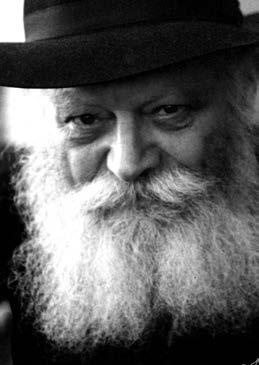
"Это мы сегодня отмечаем день освобождения из тюрьмы Первого Ребе ХАБАДа, рабби Шнеура-Залмана", - отвечает сын. "Сынок, - встревоженно спрашивает мать, - ты уверен, что ты попал в хорошую компанию?.." Да, такова традиция, что движение Х АБАД-Любавич, принесшее миру свет хасидизма, прошло нелегкий путь сквозь тюремные застенки - отметившись и в отчетах царской охранки, и в протоколах ГПУ, и в материалах КГБ.
Все началось в 1798, когда основоположник хаси-
МУДРОСТЬ,
ВОДА И ИСТИНА
один из главных компонентов ханукальной истории. В молитве "Аль-анисим", описывающей события Хануки, мы читаем: “В дни Матитьяу, сына Йоханана-Первосвященника из семьи Хасмонеев, и его сыновей; когда встало злодейское царство греков на народ Твой, Израиль, намереваясь заставить евреев забыть Твою
вдумчиво, вглубь, вовнутрь, то можно увидеть то, на что раньше не обращал внимания. Не наклейку “Made in China”, а кое-что поважнее. Можно сказать, ни много ни
мало – сам принцип устройства мирозданья!
Дело в том, что традиционное объяснение ханукальной традиции, заключающееся в том, что мы зажигаем Mенору, потому что две с половиной
пожарников может привести к тройной передозировке счастья...
серьезно, есть, действительно, нечто особенное в мерцающем пламени, в этом зримом колыхании тепловой энергии. Мудрецы даже говорят, что взгляд на
увенчавшее это восстание чудо – все это ради того, чтобы обогатить наш национально-культурный арсенал новой традицией! Заповедью о зажигании
огней, которая не была включена в шестьсот тринадцать заповедей Торы. Потому что в это время в мире сгустилась духовная тьма, бороться с
таким образом, учит нас совершенно новому взгляду на
Подготовка
•
дополнительную ветвь, стоящую отдельно от
ОСНОВНЫЕ ПРАВИЛА:
1. Зажигать Менору каждый вечер.
2. Предавать огласке чудо Хануки.
3. Принято сидеть возле горящих Ханукальных огней около получаса (Исключение составляет пятница, когда торопятся закончить последние приготовления к Шаббату).
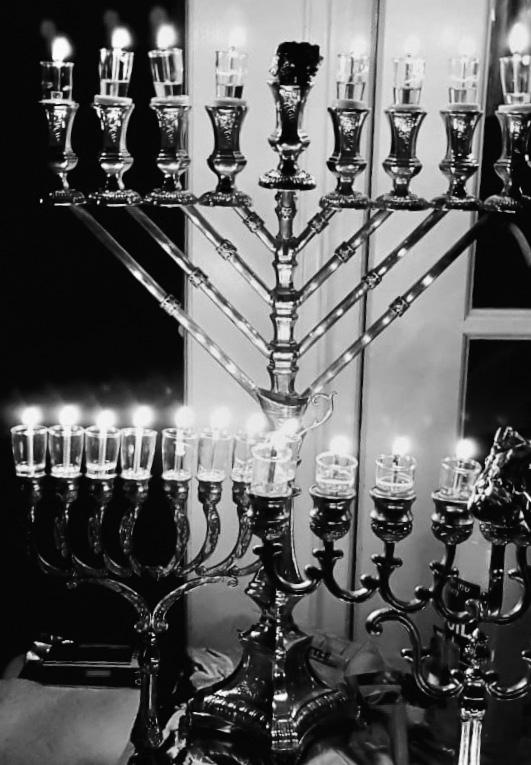
свечи Шамаш («Помощник»). Ханукальную Менору зажигают маслом или восковыми свечами. Поскольку чудо Хануки связано с оливковым маслом, предпочтительнее зажигать именно оливковым маслом. Стараются пользоваться хлопковыми фитилями, так как они горят ровным пламенем. Поскольку Ханукальная Менора - главный предмет выполнения заповеди, стараются, чтобы она была красивой (часто дают детям раскрашивать Меноры для Хануки). В дополнение к восьми ветвям Меноры должна быть девятая
наступления темноты. В субботу вечером ханукальные огни
КАК ЗАЖИГАТЬ СВЕЧИ?
1. Залейте масло или вставьте свечи
слева от первой, а затем добавляйте по одному огоньку каждую ночь
налево.
2. Соберите всю семью вокруг Меноры.
3. Зажгите свечу Шамаш и возьмите ее в правую руку. (Левши
руке.)
4. Стоя произнесите соответствующие благословения.
5. Зажгите свечи. Каждую ночь сначала зажигайте новую (самую
свечу и продолжайте зажигать слева направо. (Свечи в Меноре мы расставляем справа налево, а зажигаем их - слева направо.)
Среда, 25 декабря | 25 Кислева | Первая ночь Хануки Установите
правом углу Меноры.
Прочтите все три благословения (см. справа)
Зажгите свечу
Четверг 26 декабря | 25 Kислева | Вторая ночь
•
• Произнесите первые два благословения (см. «Благословения» справа).
• Зажгите свечи, начиная с крайней левой.
Пятница, 27 декабря | 26 Кислева | Третья ночь Хануки и Шаббат Особые инструкции перед Шаббатом Перед заходом солнца, прежде, чем зажигать Субботние свечи, разместите и зажгите огни Меноры. Используйте достаточное количество масла или свечи большего размера, чтобы они горели не менее 30 минут после наступления темноты.
• Поместите три свечи с правой стороны Меноры.
• Произнесите первые два благословения (см. «Благословения» справа).
• Зажгите свечи, начиная с крайней левой.
• После Ханукальных огней зажгите Cубботние свечи.
Суббота, 28 декабря | 27 Кислева | Четвертая ночь Хануки, после окончания Шаббата
Елена Касимова
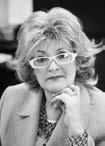
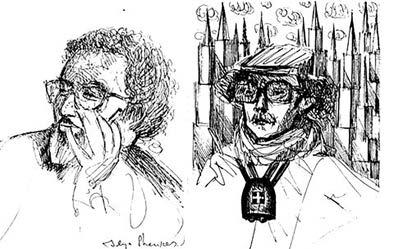
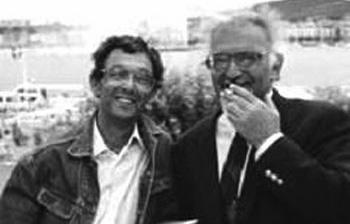
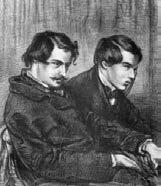
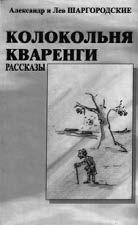
В Женеве в возрасте 90 лет скончался писатель Лев Шаргородский, один из братьев литературного дуэта «Александр и Лев Шаргородские». Вспоминаю наш с ним разговор, который я вела по телефону примерно лет 10
лет прожить без рассказов братьев Шаргородских?! Теперь мне с трудом верится, что я не была знакома изначально со словами, написанными ими. Словами, такими близкими и родными, затрагивающими потаенную струну, щемящий звон которой роднит всех евреев. Ну, вот, взять хотя бы это: «Много лет я проходил мимо бабушки – молодой, загорелый, в рваных сандалиях и слушал эту певучую еврейскую речь, этот чудный язык, от которого исходил запах уюта, фаршированной рыбы, семейного очага, маминой ладони. Он был пропитан теплом, горьким юмором и печальной иронией. Язык моей молодости, который я не знал. И ощущал только его музыку, его щемящую мелодию. Из-за него, может, я и приезжал в Ригу, – в Ленинграде на нем не говорили. Старые евреи предпочитали ломаный русский. ...На Взморье я купался не столько в заливе, сколько в ласковых волнах идиша. Они баюкали меня, успокаивали, уносили в какую-то неведомую страну, где нет печали. Со Взморья я привозил с собой еврейские слова, интонации, они согревали меня где-то до ноябрядекабря в моем суровом городе.
теперь ушел и он… И вот, как-то, много лет тому назад мне попался на глаза их рассказ «Колокольня Кваренги», после прочтения которого я поняла, что просто обязана взять интервью у Льва Шаргородского.
Позвонила в Швейцарию и поговорила со Львом,прекрасным собеседником, обладателем чувства не просто юмора, а еврейского юмора, над формулой (рецептом, концепцией, парадигмой – по-английски – you name it, по-русски - выбирайте, что нравится) которого бьются многие специалисты. Думаю, что после прочтения записи нашей беседы, читателю откроется секрет не только еврейского юмора, но юмора по-шаргородски.
- Лев, расскажите, пожалуйста, о семье, в которой Вы родились, о городе, где проходило Ваше становление.
- Как Вы, наверное, догадываетесь, я родился в совершенно замечательной семье. Мой отец родом из маленького местечка под Винницей, называемого Мясковка. Из этого местечка, население которого едва ли насчитывало тысячу человек, по подсчетам мясковских исследователей, вышли 37 докторов наук, из них 2 члена-корреспондента Академии Наук, видные деятели в области металлургии и т.д.
- А также отец писателей Шаргородских.
- Ну, да… Семья отца была очень богатой: у них была коза. Живая коза! Для времен начала советской власти владельцы козы считались богачами, и поэтому, чтобы искупить свое буржуазно-еврейское происхождение,
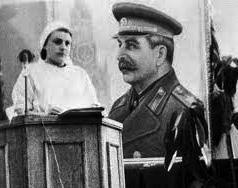
А что удивительного - хотели же они отравить Сталина! А для того, кто мог отравить Сталина, ничего не стоило отравить
начальству. Затем Тимашук написала «куда следует», нисколько не сомневаясь в своей правоте.
Подробный отчет кардиолога, через начальника охраны тов. Власика и министра МГБ тов. Абакумова, лег на письменный стол вождя, который, прочитав его, поставил лаконичную резолюцию «В архив» и сделал вид, что забыл об этом недоразумении.
В результате, Тимашук понизили в должности, а Жданов скоропостижно скончался, не покидая санатория.
тем активнее он конфликтовал со всем миром, сживая со свету своих врагов.
В эту категорию
попадали все лица, которых невозможно было причислить к друзьям, так как у Иосифа Виссарионовича их не было вообще.
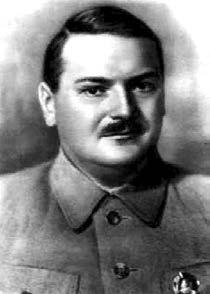
В период «ленинградского дела» Сталин пристальное следил за членом Политбюро А. Ждановым, который до смерти надоел вождю. Неизвестно,
Через четыре года Сталин, находясь в поисках причины, чтобы начать полномасштабную войну против евреев, вспомнил об этом случае и решил начать «дело
смертного пациента.
Видимо оттого, что у
врачей не было никакой работы, было решено
систем.
ДУША МОЯ - ИЕРУСАЛИМ!
– Живя в Женеве, вы с Александром
Контрабандное послание Слейтера в 1925 году
бумажный шарик, засунутый под зубные протезы освобожденного товарища-заключенного – побудило Дойла взяться за это дело в последний раз. Когда в 1927 году выяснилось, что убийцей был племянник мисс Гилкрист, с которым она поссорилась из-за документов, Дойл стал всячески распространять эту информацию и добиваться пересмотра дела.
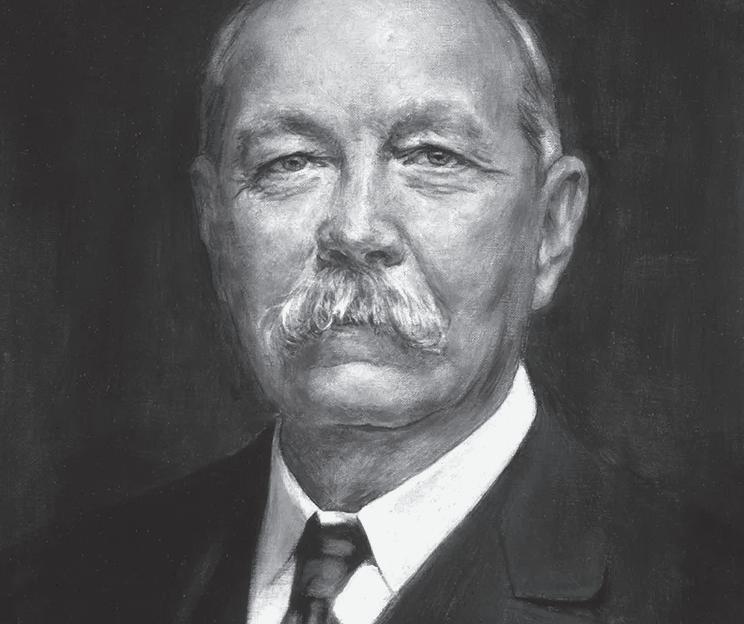
В сентябре 1927 г. Конан Дойл добивается встречи с премьер-министром Великобритании Джеймсом Макдональдом, в котором нашёл влиятельного союзника. Результатом их встречи стало заявление от 10 ноября 1927 г., в котором госсекретарь Шотландии сообщил, что принял решение об освобождении Оскара Слейтера. Через четыре
Дорогие друзья,
Когда Слейтера выпустили «за хорошее поведение», даже не думая его реабилитировать, Конан Дойл был вне себя от гнева. Он написал с десяток статей, после чего Оскара всетаки оправдали и даже выплатили ему шесть тысяч
время интенсивно
дном и на маленьком огне
сливочное или кокосовое масло.
AgarkovBoris 1 Tevet 1 January
Agroskin Ilya 28 Shevat 26 February
AgroskinRakhil 6 Tevet 6 January
AkselerodIsrail 11 Tevet 11 January
AntonovskayaAleksandra21 Kislev 22 December
AranskayaOlga 5 Tevet 5 January
AronchikShimon23 Shevat 21 February
Aronov Raisa 15 Kislev 16 December
Aronova Raya 6 Shevat 4 February
BabitskiyAvraham 27 Tevet 27 January
BakalinskiyAleksandr26 Shevat 24 February
Baram Vevl 21 Tevet 21 January
Barkan Blyuma1 Shevat 30 January
Barshai Yevsei30 Shevat 28 February
BarshteynEsfir 6 Kislev 7 December
Bavly Donald Albert 29 Tevet 29 January
Beilin Adelle25 Kislev 26 December
Beker Peter 18 Tevet 18 January
Bekker Riva 19 Tevet 19 January
BerdichevskayaAriadna3 Shevat 1 February
Berenshtein Zoya 16 Kislev 17 December
BerkovichAnna 7 Tevet 7 January
Berlin Rachil6 Shevat 4 February
Berlin Yuri 2 Tevet 2 January
Bikson Shaina 20 Tevet 20 January
BlayvasBoris 2 Tevet 2 January
Block Marilyn8 Kislev 9 December
BotvinnikSofia 26 Shevat 24 February
Breger Chana13 Kislev 14 December
Breslav Gittel 16 Kislev 17 December
BrombergSemen 12 Tevet 12 January
Brook Maria 20 Tevet 20 January
Brook Monya 5 Tevet 5 January
BrudniyIon 17 Shevat 15 February
BrudnoGalina22 Shevat 20 February
Busler Anna 1 Kislev 2 December
Buzik Leva 2 Tevet 2 January
CherninYakov8 Kislev 9 December
ChernyakAlexander26 Shevat 24 February
ChernyavskiyZakhar 8 Tevet 8 January
Chesin Feiga 1 Shevat 30 January
ChestuhinNikolay27 Kislev 28 December
ChigrinskayaRaisa 13 Kislev 14 December
Dashevsky Lev 15 Tevet 15 January
DavidenkoNadezhda6 Kislev 7 December
DavidovichLida 29 Tevet 29 January
DavidsonRakhil23 Shevat 21 February
Dayen Esther 23 Tevet 23 January
Dayn Michael12 Kislev 13 December
Deych Lev 13 Tevet 13 January
Dikler Malvina3 Shevat 1 February
DimontSima 7 Kislev 8 December
DoroshenkoAlexander3 Kislev 4 December
Drizik Dmitri26 Shevat 24 February
Dubenskiy Lev 22 Shevat 20 February
DubinskyTzvi Hirsh 14 Tevet 14 January
DulskayaValentina19 Kislev 20 December
DymkovSolomon22 Kislev 23 December
DzhurinskayaMalka20 Kislev 21 December
EdelmanEsther24 Kislev 25 December
ElentukhLina 11 Shevat 9 February
ElentukhNochum18 Shevat 16 February
EngelsonSonia 21 Shevat 19 February
ErusalimskayaMilka Rudi 15 Tevet 15 January
EsterkinSimon26 Kislev 27 December
EydelmanLeonid 9 Tevet 9 January
FabricantElia25 Shevat 23 February
FabrikantElia25 Shevat 23 February
FayermanAnna 10 Tevet 10 January
FayermanYona2 Shevat 31 January
Fayner Aron 24 Tevet 24 January
Feldman Etya 6 Kislev 7 December
FeldmanMirel19 Shevat 17 February
FeldmanYakov10 Kislev 11 December
FleyshmanVilyam 26 Tevet 26 January
Fred Polina 16 Tevet 16 January
Freyman Akiva 4 Shevat 2 February
Frid Debora30 Kislev 31 December
FrimermanFrida7 Kislev 8 December
FrimermanIsroel 21 Tevet 21 January
FruminaSusana 24 Tevet 24 January
Frush Enta22 Shevat 20 February
Fuksman Leya 2 Shevat 31 January
FuksmanPinchas3 Shevat 1 February
FurmanGalina11 Kislev 12 December
GadaevEsther 1 Tevet 1 January
GafanovichKhana9 Shevat 7 February
Geisberg Riva 29 Tevet 29 January
Gekht Lazar 22 Tevet 22 January
Gekht Vera 4 Tevet 4 January
Geller Solomon28 Shevat 26 February
GelmanYefim20 Kislev 21 December
GeltmanBentzion 10 Tevet 10 January
GendlerChaya13 Kislev 14 December
GershmanDavid23 Kislev 24 December
GibermanPolina6 Kislev 7 December
Giller Vladimir14 Shevat 12 February
GilmanAlexander 3 Tevet 3 January
GincharAleksander19 Kislev 20 December
GofmanGrigoriy9 Shevat 7 February
Goftarsh Mira 28 Tevet 28 January
Goldin Michael17 Kislev 18 December
GolmshtokSofia12 Shevat 10 February
Golod Marina28 Shevat 26 February
GolubchikSemion28 Shevat 26 February
GommershtadtBoris23 Kislev 24 December
GorelikDmitriy 7 Tevet 7 January
GorelikRakhil24 Kislev 25 December
GorelikYakov14 Shevat 12 February
GorelitsVladimir3 Kislev 4 December
Gorenshteyn Fanya 6 Tevet 6 January
GorodnitskiyMark 26 Tevet 26 January
GozmanMichael 14 Tevet 14 January
GranovskyMichael 16 Tevet 16 January
Green Leon Eliyahu 7 Tevet 7 January
Greenberg Marnam Reyza 3 Kislev 4 December
Grin Yakov 18 Tevet 18 January
Gritz Anna11 Kislev 12 December
GrobshteynNatan1 Kislev 2 December
GuralnikTamara 27 Tevet 27 January
GurevichAnatoliy5 Kislev 6 December
GurevichMaria14 Kislev 15 December
Gurevich Raya 2 Tevet 2 January
GurevitchEsther Leah 7 Tevet 7 January
GurshmanSavely 23 Tevet 23 January
Hitrik Zachar16 Shevat 14 February
HolodenkoPesya 11 Tevet 11 January
Isurin Samuil15 Shevat 13 February
Itkin Tsalya8 Kislev 9 December
Itskin Iosif 4 Tevet 4 January
Kachka Chaim19 Shevat 17 February
Kalyuzhny Etya 27 Kislev 28 December
KanevskiyYakov21 Shevat 19 February
KarpovskyHirsh 11 Tevet 11 January
Karpovsky Maya 22 Shevat 20 February
Katz Sofia17 Shevat 15 February
KavalertzikJoseph8 Kislev 9 December
KazakovaLilya26 Kislev 27 December
KeselmanPeter17 Shevat 15 February
KhavkinaMargarita14 Shevat 12 February
Khayut Anna28 Kislev 29 December
Khayut Avrohom26 Shevat 24 February
Khazan Dovid5 Shevat 3 February
KholodenkoDavid12 Kislev 13 December
KholodenkoMoshe 16 Tevet 16 January
Kigel Arkadiy28 Shevat 26 February
Kigel Israel 13 Tevet 13 January
KitaygorodskayaAlla13 Shevat 11 February
KlebanovDavid15 Shevat 13 February
Klimovskaya Kira 29 Tevet 29 January
Klimovsky Manya 8 Shevat 6 February
Klyukgaupt Manya 22 Shevat 20 February
Knobel Abba8 Shevat 6 February
Kofman Moishe29 Kislev 30 December
Kofman Sarah17 Shevat 15 February
KoifmanZalman26 Shevat 24 February
KomarovskiyGalina23 Shevat 21 February
KonevskyShimon10 Kislev 11 December
KorsunskyAbram 23 Tevet 23 January
KostovetskayaMusya29 Shevat 27 February
Kostrak Moishe7 Shevat 5 February
Kotlarova Genya 3 Shevat 1 February
KotlyarovGenadiy2 Kislev 3 December
KoyshmanAlexander20 Kislev 21 December
KozhushnyanMikhail22 Shevat 20 February
Krayzler Arkadiy 7 Tevet 7 January
Kremer Sophia6 Shevat 4 February
Krishtal Val 8 Tevet 8 January
Kritz Brocha28 Shevat 26 February
Kritz Mikhail15 Shevat 13 February
Kroll Ella11 Kislev 12 December
Kukes Gisya13 Shevat 11 February
KupermanSimon29 Kislev 30 December
Kusaev Ilya 12 Kislev 13 December
Kutikov Aron 30 Kislev 31 December
Kutikov Valeri8 Shevat 6 February
LadyzhenskayaMiriam5 Shevat 3 February
LakovitskyOlga 11 Tevet 11 January
LangmanAnna17 Kislev 18 December
Lapido Tsezar23 Shevat 21 February
Lapsker Moisei 29 Tevet 29 January
Laskin Eugenia 16 Tevet 16 January
LavitmanRosalia16 Shevat 14 February
LevikovaLilya8 Shevat 6 February
Levit Sofia7 Kislev 8 December
Levitas Lev 28 Tevet 28 January
Levy Nina 6 Tevet 6 January
LeybovichIrina23 Shevat 21 February
Lifshits Minna8 Kislev 9 December
LikhtmanEkaterina 23 Tevet 23 January
LitovskyAlexander30 Shevat 28 February
Litvak Arkadiy 4 Tevet 4 January
Litvin Valentin14 Kislev 15 December
Lobanov Aron 13 Shevat 11 February
LobanovaRaisa24 Shevat 22 February
LubomirskiyKalman 29 Tevet 29 January
LubomirskiyMotel 7 Tevet 7 January
LuvishchukSamuel 26 Tevet 26 January
LyanskyaInna23 Kislev 24 December
LyubarskyValeriy13 Kislev 14 December
Margolin Tatyana 30 Adar 1 28 February
MatusovskiyRaisa 22 Tevet 22 January
MelnikovMikhail 15 Tevet 15 January
MeylakhovAleksander 4 Tevet 4 January
MeylakhovaRimma 18 Tevet 18 January
MeylichFelix25 Shevat 23 February
MeylichJoseph8 Kislev 9 December
MikhalevaNina2 Shevat 31 January
MilyavskiyYankel22 Kislev 23 December
Mitnik Leonid 13 Tevet 13 January
Mitnik Victor13 Kislev 14 December
MogilevskySarah 9 Tevet 9 January
MoldavskyLeah 23 Tevet 23 January
Mostovoy Peter13 Shevat 11 February
MounitsMendel5 Shevat 3 February
NarinskyBoris28 Kislev 29 December
NarinskyGeorgii 3 Tevet 3 January
NeplokInna22 Kislev 23 December
NeplokYefim6 Shevat 4 February
NisenzonEric 14 Kislev 15 December
Obrant Raya 9 Shevat 7 February
OchakovskyYoudko27 Kislev 28 December
OstrovskayaRivekka 1 Tevet 1 January
OzerskiyPeter 1 Tevet 1 January
Pais Channa25 Shevat 23 February
PalatnikRivka 29 Tevet 29 January
PartenskyRakhil15 Kislev 16 December
Pekar Khaya 6 Kislev 7 December
Perel Mikhael28 Kislev 29 December
PevznerChaya Liba28 Kislev 29 December
Peysel Rasel14 Shevat 12 February
PilyampolskayaFaina27 Shevat 25 February
Pipko Rita 11 Kislev 12 December
Podberezina Roza 3 Tevet 3 January
PolnarevIsay 13 Kislev 14 December
Polur Shmil 12 Tevet 12 January
PolyakovaNina6 Kislev 7 December
PovorozhnukMaria15 Shevat 13 February
RabinovichGitta 9 Tevet 9 January
Rabkin Boris 29 Tevet 29 January
Rachlis Shifra 10 Tevet 10 January
Rakhlis Hersh 10 Tevet 10 January
Rakhlis Huna 10 Tevet 10 January
Rakhlis Izzi 10 Tevet 10 January
Rakhlis Nakhemni 10 Tevet 10 January
Rakhlis Neta 10 Tevet 10 January
Rakhlis Rosa 10 Tevet 10 January
Rakov FreemanJoan 15 Tevet 15 January
RapoportBlyuma3 Shevat 1 February
RaskinaBronya19 Kislev 20 December
RayevskyMichael 4 Tevet 4 January
Reichman Asya 14 Shevat 12 February
RekhtmanValeriy 23 Tevet 23 January
RismanMichael 12 Tevet 12 January
Rivkin Ella 27 Tevet 27 January
RodkinSonia 28 Tevet 28 January
Rodman Yunya 27 Shevat 25 February
Rosenfeld Asya 16 Kislev 17 December
RosenfeldJakob4 Kislev 5 December
RosenzweigMendel17 Kislev 18 December
RozenfeldSemen3 Shevat 1 February
Rozenman Dora 10 Shevat 8 February
Rozenvayn Nekhama14 Kislev 15 December
Rozhnatovsky Zoya 18 Kislev 19 December
Rubinshtein Anton 5 Tevet 5 January
RubnichHenya17 Shevat 15 February
SavelskiVladimir 7 Tevet 7 January
SchmidtMark26 Shevat 24 February
SeletskayaRochel30 Kislev 31 December
SeletskyMyron 6 Tevet 6 January
SemenovaSofia19 Shevat 17 February
ShafirovichIda18 Kislev 19 December
Shane Tevya 20 Kislev 21 December
ShapiraDina 5 Tevet 5 January
ShapiroMottel 18 Tevet 18 January
ShapiroZlata25 Kislev 26 December
SharshunskiyYankel17 Kislev 18 December
SheinmanPolina30 Shevat 28 February
ShermanAnna14 Shevat 12 February
ShermanInna24 Kislev 25 December
Sherman Yuri 3 Kislev 4 December
ShevelenkoLubov 7 Tevet 7 January
ShevelenkoShulim 4 Tevet 4 January
Sheyn Yakov30 Adar 1 28 February
ShichmanterDavid 3 Tevet 3 January
Shifon Yakov13 Kislev 14 December
Shifrin Chaya27 Shevat 25 February
Shigel Sara 4 Tevet 4 January
ShkolnikBronislava 7 Tevet 7 January
Shleifer Maya 23 Kislev 24 December
ShleiferSamuel 27 Tevet 27 January
ShnayderAleksandr 27 Tevet 27 January
Shnayder Aron 12 Shevat 10 February
ShnaydermanNaum2 Kislev 3 December
ShneiderMyron13 Kislev 14 December
ShneiderVictor 11 Tevet 11 January
ShneidermanDavid9 Shevat 7 February
ShrayberArkadiy10 Kislev 11 December
Shraybman Yeva 8 Tevet 8 January
ShugalDina 14 Tevet 14 January
ShugolJoseph20 Shevat 18 February
ShulkinMichael27 Shevat 25 February
ShumyacherChaya18 Kislev 19 December
ShumyacherMusya18 Kislev 19 December
ShumyacherZachar18 Kislev 19 December
Shved Sima23 Kislev 24 December
Silkis Zilya 12 Tevet 12 January
Sklyar Efim12 Kislev 13 December
SkorochodLuba 16 Tevet 16 January
SmagarimskayaNechama28 Shevat 26 February
Smushkina Etka 14 Kislev 15 December
SoibelisIsrael 23 Tevet 23 January
SokiryanskiyMark 14 Tevet 14 January
Sokol Ludmila 6 Tevet 6 January
SolodarLeonid 14 Tevet 14 January
Sorkin Iosif22 Kislev 23 December
Sorkin Olga29 Shevat 27 February
Sorkin Yosef23 Kislev 24 December
SorkinaOlga29 Shevat 27 February
Soybelis Mitya 18 Kislev 19 December
StarkovnikMalka27 Shevat 25 February
StolyarSimon18 Kislev 19 December
SukharenkoLina6 Kislev 7 December
SuppornikDaniil 25 Tevet 25 January
SuppornikRohel 26 Tevet 26 January
Syrkin Arnold11 Shevat 9 February
Taksir Raisa7 Shevat 5 February
TanenbaumNaum17 Shevat 15 February
TanfilyevDavid 9 Tevet 9 January
TeishevMaxim1 Shevat 30 January
Tendler Asya 12 Shevat 10 February
TendlerMikhail17 Shevat 15 February
TraininaAnna3 Shevat 1 February
TrotskayaRosalia13 Shevat 11 February
TsalyukMark2 Kislev 3 December
TseytlinRachil 25 Tevet 25 January
Tsirkin Samuel15 Kislev 16 December
Tsirkin Samuel16 Kislev 17 December
TulchinskyRachil3 Kislev 4 December
TurovskyAnatoly11 Kislev 12 December
TverskayaMusya23 Kislev 24 December
TverskayaMusya24 Kislev 25 December
UrmanBoris 22 Tevet 22 January
UrovitskayaGalya25 Kislev 26 December
VaninovLiya3 Shevat 1 February
VarshavskySofia 11 Tevet 11 January
Vaysband Roza 14 Shevat 12 February
Velinzon Aron 29 Tevet 29 January
VernikovElya19 Shevat 17 February
VernikovGalina16 Shevat 14 February
VinitskiyInna23 Shevat 21 February
Vishnever Margarita 28 Tevet 28 January
VishnevskayaTsilya5 Kislev 6 December
VolfsonSholom29 Kislev 30 December
VoloshinovaLilia29 Kislev 30 December
VoschinNikolay9 Shevat 7 February
Vyrovlyanskay Rochel Leah 25 Shevat 23 February
VyrovlyanskyKhatzkel 5 Tevet 5 January
VysokyNaakh 3 Tevet 3 January
VysokyShlomo 11 Tevet 11 January
WeisbergLeonid14 Kislev 15 December
Yaglom Akiva 4 Tevet 4 January
YangarberVictor10 Shevat 8 February
ZaborovskyNikolay30 Shevat 28 February
Zaetz Elena28 Kislev 29 December
ZakutaJanna15 Shevat 13 February
ZaltsmanZakhar12 Shevat 10 February
Zandel Raya 30 Kislev 31 December
ZarkhinGrigoriy5 Shevat 3 February
ZatulovskyVladimir14 Kislev 15 December
ZaytzevBoris 8 Tevet 8 January
ZelfondBronya2 Shevat 31 January
ZhermuskaLiliya23 Shevat 21 February
ZhuravlevaNatalia23 Kislev 24 December
Zilber Samuel16 Kislev 17 December
ZolotorevskayaBerta21 Kislev 22 December
EvEry NatioN with its MissioN
Iwas gratified to read in your letter about your progress not only to enrich your knowledge of Judaism but, in accordance with the teaching of our Sages that the essential thing is the deed – translating this knowledge and inspiration into the daily experience of Torah and Mitzvoth. Needless to say, since the Torah is "Our life and the length of our days," and the Mitzvoth are the things Jews live by – the experience of Torah and Mitzvoth must be a continuous process, and cannot be relegated to certain days in the year, such as Shabbat and festivals.
With regard to various points and questions raised in your letter, it is, of course, difficult to explain such things adequately by correspondence. However, I will mention several salient points, after a brief introduction:
If one considers the world in which we live, the world at large, as well as the small world, namely man, it becomes evident that there is no uniformity, but many differences, both external as well as internal. Moreover, everything and every person has its own purpose or task, and this does not make anyone any more or less important, for all are important in the totality of things, just as every limb or organ of a body is important. Indeed, if one member would wish to change his function, it would not only disturb his own personal harmony, but would also disturb the total harmony. Imagine, for a moment, what would happen if the brain would wish to do the work of the heart to pump blood; it certainly would be disastrous, for even an extra tiny drop of blood in the brain would be dangerous, whereas the heart must always have an ample supply of blood. Similarly, if the heart would wish to do the work of the digestive organs, where even a tiny speck of food would be dangerous in the heart, and so on.
The same is true in regard to the Torah and Mitzvoth, as well as in regard to the destiny of the Jewish people, and its place in the family of nations. For reasons best known to G-d Himself, He wished that there should be many nations in the world, but only one Jewish people, a people who should be separated and different from all the other nations, with a destiny and function of its
own. Even in the future Messianic era, as has been prophesied by our Prophets, there will be a distinction between the Jewish people and non-Jews, where the Jews will retain the 613 Mitzvoth, whereas the gentiles have to observe only seven commandments with all their ramifications, which is also no small thing, as explained in various sources.
The above, I trust, will answer your question why should a Jew separate himself, and not be involved in the world at large. Indeed, if a Jew should completely separate himself from the world, it would be contrary to the Torah, since among the Mitzvoth which a Jew is duty bound to fulfill there is also the Mitzvah that he should try to do all he can to encourage the environment in which he lives that it will be permeated with the awareness of the above mentioned seven commandments given to the children of Noah, that these Divine commandments with all their ramifications should be implemented in the daily life. However, this does not mean that a Jew should take over functions which are not his, for the results would be as disastrous as in the analogy of the human body mentioned above. It is due to the failure to realize this, with the resulting
confusion, that there is such a great incidence of intermarriage, etc., but it is difficult to dwell at length on such painful matters.
I will only emphasize the point that one's personal convenience, desire or gratification is no justification to involve oneself in something which is wrong, especially to involve another person, least of all a loved one, into such a situation. Even if the other party is agreeable, and sincerely so. For no person has a right to harm a second person, even if the latter desires to be harmed.
I trust you will not take amiss my writing on something which appears to be at first glance a personal and intimate matter, but since you wrote to me and brought the matter to my attention, I have no right to pass over it in silence. I would strongly urge you to consult an orthodox Rabbi, whose guidance would be in accordance with the Will of G-d as is clearly spelled out in the Code of Jewish Law, and to inform him of all the aspects and details of the matter, with a view to rectifying it. No doubt the Rabbi would also wish to later discuss the matter with your wife. You may rest assured that acting in accordance with our Torah called Toras Chaim, the Law of Life the true guide in life, will be of real benefit to all concerned.
In conclusion, I hope that you will accept the above in the spirit that it is offered, stemming from a deep concern which has to permeate one person for another, especially as the commandment of love your fellow as yourself is one of the great principles of our Torah. I would have been greatly remiss if I had not written to you the above, although it necessarily had to be conveyed in very brief terms, all too brief in relation to the importance of it.
Now that we are in the auspicious days of Chanukah, recalling the struggle and triumph of Jews over the forces of Hellenism and assimilation which had threatened the very existence of our people, every Jew can take heart from the message and inspiration of Chanukah to overcome all difficulties regardless of the odds, as is emphasized in the special Chanukah prayer recalling the victory of the few over the many, and the physically weak over the mighty and strong.
From the Rebbe's letters
made you think
optiMisM for a Bright NEw world
Yoseph Janowski
The United States and China just reached an agreement that nuclear weapons will be controlled by humans and not by artificial intelligence. This is good news that bodes well for the world, knowing that leaders of powerful nations are keeping in mind the importance of trying to minimize the risk of nuclear war.
What could go wrong with artificial intelligence? Everything. Because sometimes intelligence itself is not sufficient — even human intelligence.
There is a famous story that years ago, Russia almost started a nuclear war, because erroneous messages were received that the US had launched missiles against Russia. But the Russian officer stationed at the computer hesitated. Something, some insight or intuition, told him that this wasn’t true information, that there was a mistake here, and so he decided not to launch a nuclear missile against America.
Human intelligence. It’s a wonderful thing, but sometimes it’s not enough. Sometimes we need to reach deeper.
The Rebbe once spoke about what we can learn from what the Nazis did in World War Two. He said that it was very surprising. How could a nation like Germany, who were well-versed and world leaders in all the humanities, ethics, philosophies and so on – how could such a sophisticated, highly intelligent nation bring about the holocaust? And, as I remember it, the Rebbe answered that the reason is because they mistakenly relied on their intelligence, and not on subservience to a Higher Power. Their intelligence told them that it’s wrong to murder humans. But the same intelligence rationalized that certain people weren’t in the category of human beings, and therefore it was acceptable (and even necessary) to exterminate them. Had they been subservient to G-d, then “Do not murder” would be absolute.
Intelligence can accomplish amazing things. We can discover secrets of the universe and cures for humanity, and create computers that revolutionize our way of accessing information and processing it, and the way we interact with one another. Our human intelligence accomplishes a lot, but when
it’s unguided, when it is not subservient and obedient to the Creator of the world, the One who created human intelligence to begin with and provides its operating blueprint in the form of the Torah, then intellect can cause a holocaust.
There are ideologies on the right and on the left, including a whole spectrum ranging from extreme right to extreme left. A person can look at all this and be befuddled. Who is just? Who really knows what they’re talking about? Which ideology is actually going to benefit humanity? It’s tremendously complex for us to try to navigate it with intellect alone.
Sometimes when there is a court case, opposing lawyers can each offer twenty-five reasons why their side is right. But then the judge has to look at all the intelligent arguments, and decide the case based on the established law and principles of justice.
G-d, Creator of the world, gave the world the Torah, with guidance and laws that will benefit them, and which ultimately will benefit the world. And at Mount Sinai. G-d told Moses the Noahide laws, to tell all nations. These laws bring peace to the world.
The month of Kislev commemorates two stories of illumination and redemption: The 19th day of Kislev, when the first Chabad Rebbe was informed that he would be freed from jail (where he had been imprisoned
for false charges). He went on to spread his teachings of Chassidus, which brought much light and understanding of G-d and His Torah. And Chanukah, when we commemorate the miracle of how one small cruse of pure oil — enough for just one day, lasted eight days. And now each night of Chanukah we add one light, to illuminate the outside world with an awareness of G-d’s miraculous intervention, “in those days, and in our time.”
Though there is a lot of doom and gloom, we can see some light when adversarial nations like China and the US are making efforts to enhance peace and stability for the benefit of all humanity. And at the same time Israel stands firm in its convictions that evil and terrorism must be eradicated, and, despite world pressure and condemnation, pursues a path that many recognize is a service to all humanity. Even previously ambivalent and hostile nations are becoming friendly and coming to Israel’s assistance. Perhaps these are signs that the Redemption is on its way, closer than we think.
I believe we are on the threshold of a wonderful new reality, where people will be focused on helping one another and when, as the prophet Isaiah says, “the entire world will be filled with knowledge of G-d, just as the waters cover the sea.” May it happen very soon. EM
ChaNukah iN hiNdsight
Jonathan Sacks
The Talmud tells us that in the first century, in the last days of the Second Temple, a Rabbi called Yehoshua Ben Gamla established a network of schools throughout Israel. The result of this was that from the age of six, every child in the country received a publicly-funded universal education. This was the first education system of its kind anywhere in the world, and also a clear indication of the now familiarly Jewish commitment to education and to ensuring our children are literate in their heritage. According to the Talmud, Rabbi Yehoshua ben Gamla’s memory is blessed, because without his intervention the Torah would have been forgotten in Israel. Without him, there would have been no survival of Judaism and ultimately no Jews.
What Rabbi Yehoshua Ben Gamla and the other Sages understood, and what was not understood at the time of Chanukah itself, was that the real battle against the Greeks was not a military one, but a cultural one. At the time, the Greeks were the world's greatest in many fields. They were unparalleled in their advances in art, in architecture, in literature, in drama, in philosophy. Even today, their achievements have never been surpassed. But Jews nonetheless believed, and surely history has borne this out, that there is within Judaism, within ancient Israel and still within its heritage to today, something special. Something worth fighting for. Judaism, with its emphasis on the sanctification of life, and the belief that every human being was created in G-d's image, held eternal truths that we could not abandon. This was the unique distinction between the culture of the Greeks and the world of Torah and Judaism. As a result, Jews have always known that the real battle is not necessarily fought on the physical battlefield with physical weapons, but rather in the hearts and minds of future generations.
So Judaism, and the Jewish people, became a faith and a nation no longer focusing on its military heroes, but on its spiritual ones. It became a civilization rooted in texts, and in teachers, and in houses of study. We became the people whose heroes were teachers, whose citadels were schools, and whose passion was learning and the life of the mind.
The end result was that Judaism did survive and thrive throughout the centuries, whereas Ancient Greece, the Greece of Athens, the Greece of Alexander the Great, declined. In fact, it was only a short time after the events of the Chanukah story that Greece began its decline, and Rome rose to take its place.
That is the message of Chanukah, and to articulate our story, we focus in a rather beautiful and symbolic way on just one tiny detail of the original chain of events: That one cruse of pure, undefiled oil was found by the Maccabees among the wreckage and defilements of the Temple, just enough to light the Menorah until more oil could be sourced.
One of the most interesting aspects of this shifting perspective from the original way of telling the story to the current way is reflected in the name of the festival itself. Chanukah, from the word chanuch, means re-dedication. That is what the Maccabees did to the Temple. They rededicated it, as described in the books of Maccabees. Yet over time, Chanukah became connected to the word chinuch , a word meaning education. What we re-dedicated was not a physical building - the Temple - but living embodiments of Judaism, namely our children, our students, the people to whom we teach and hand on our heritage and
values.
From being the festival of a military victory, Chanukah became the festival of a spiritual and civilizational one.
I believe this history of our history has a message for us all. It teaches us this fundamental truth, as relevant to our lives today as ever before: To defend a country physically you need an army, but to defend a civilization you need education, you need educators, and you need schools. Those are the things that kept the Jewish spirit alive and the Menorah of Jewish values burning throughout the centuries in an everlasting light. Often what seems at the time to be the headline news, the military victory, is, in the hindsight of history, secondary to the cultural victory of handing your values on to the next generation.
If we do that, we will ensure that our children, and theirs, light up the world. EM
Rabbi Dr. Sir Jonathan Sacks, of blessed memory, was the former Chief Rabbi of the UK and the Commonwealth and a member of the House of Lords. He was a leading academic and respected world expert on Judaism. He was the author of several books and thousands of articles, appeared regularly on television and radio, and spoke at engagements around the world.
wErE thE MaCCaBEEs BarBariaNs?
Tzvi Freeman
Let’s start with a few facts. While it’s true that Alexander brought an era of true progress and prosperity to the ancient world, those values weren’t necessarily Greek values. Consider this speech which legend attributes to him—a speech no Greek could have imagined:
...I wish all of you, now that the wars are coming to an end, to live happily in peace. All mortals from now on shall live like one people, united and peacefully working forwards a common prosperity. You should regard the whole world as your country—a country where the best govern, with common laws and no racial distinctions. I do not separate people, as many narrowminded others do, into Greeks and barbarians.
I’m not interested in the origin or race of citizens. I distinguish them only on the basis of their virtue. For me, each good foreigner is a Greek, and each bad Greek is a barbarian. If ever there appear differences among you, you must not resolve them by taking to arms; you should resolve them in peace. If need be, I shall act as your negotiator. You must not think of G-d as an authoritarian ruler, but you should consider Him as common father, so that your conduct will resemble the uniform behavior of brothers who belong to the same family. For my part, I consider all— whether they be white or black—equal, and I would like you to be not only the subjects of my commonwealth, but also participants and partners. Within my powers, I shall endeavor to fulfill all my promises. You should regard the oath we have taken tonight as a symbol of love...
To the Greeks, anyone who was not a member of a small group of tribes on the tip of the Aegean peninsula was a barbarian and of inferior stock, worthy only to be a slave. And that included Macedonians such as Alexander. Amongst Athenians, only
one who owned land and was born of an Athenian father and mother could be considered a citizen. Even craftsmen and entrepreneurs were considered inferior sorts for men, unworthy of citizenship. True, Alexander was trained by a Greek teacher, none other than Aristotle. Yet, in his biography of Alexander, Peter Green writes:
Aristotle and Alexander maintained a close relationship while student and teacher. Surprisingly, in later years, Aristotle’s and Alexander’s relationship deteriorated because of their opposing views on foreigners. Aristotle regarded foreigners as barbarians, while Alexander did not mind intermixing cultures.
Alexander and the Hellenistic dream of universal peace was, then, not so much Greek, but much closer to an earlier orator of a much different era, the prophet Isaiah, who spoke of the ultimate Jewish emperor:
He shall judge between the nations and reprove many peoples, and they shall beat their swords into plowshares and their spears into pruning-hooks; nation shall not lift sword against nation, nor shall they learn war anymore.
Such progressive universalists were the ancient Jews that they alone among the nations fostered a concept not only of universal peace, but of universal law. The code is often called the seven laws of Noah, although it entails far more than seven prohibitions. Adin Steinsaltz, in a widely discussed essay, describes the Noahide approach as “a formula for no more than peace,” providing “a basis for conversation among religions without the expectation of compromise between or reconciliation of claims.”
All this makes it even more surprising that it was the Jews, far more than any other people, who rebelled against and undermined Alexander’s dream. And to celebrate that, yet?
The key, I believe, was best stated by Rabbi Jonathan Sacks, in his book The Dignity of Difference. In the chapter “Exorcising Plato’s Ghost,” he describes the flip side of universalism: the obliteration of diversity, the loss of individuality, and the breeding of anomie in the place of community.
The two examples of progress that you cite, science and globalism, are poignant in this regard. The benefits of science and technology are precious to us all, but after the horrors of the 20th century, none of us can ignore its pernicious tendency to dehumanize
and devalue human life. Ironically, as science progresses, it becomes better equipped to justify a purely utilitarian world, where humans are reduced to just another utility.
As for globalism—yes, it has defeated the worst of poverty in many parts of the world; brought greater resilience to our economy (so they say); and it’s nice to have avocados, kiwis and passion fruit at any season of the year—but look at what this has done to cultural diversity. In his time, Alexander offered Greek statues and temples for all; today we offer Superman, Mickey Mouse and McDonald’s. With both peace offerings, the same caveat applies: Acceptance of our culture implies abandonment of your own. Whether you are Japanese, Swahili, Inuit or Patagonian, this will be the new pseudoculture of your children, and your own will be lost. You pay for peace with your own soul.
Oh so poignant are the words of Chief Dan George, of the Suquamish tribe in the Pacific Northwest:
I wanted to give something of my past to my grandson. So I took him into the woods, to a quiet spot . . .
I sang.
In my voice was the hope that clings to every heartbeat.
I sang.
In my words were the powers I inherited from my forefathers.
I sang.
In my cupped hands lay a spruce seed—the link to creation. I sang.
In my eyes sparkled love. I sang.
And the song floated on the sun’s rays from tree to tree.
When I had ended, it was if the whole world listened with us to hear the wolf’s reply. We waited a long time but none came.
Again I sang, humbly but as invitingly as I could, until my throat ached and my voice gave out. All of a sudden I realized why no wolves had heard my sacred song. There were none left! My heart filled with tears. I could no
longer give my grandson faith in the past, our past.
At last I could whisper to him: “It is finished!”
“Can I go home now?” he asked, checking his watch to see if he would still be in time to catch his favorite program on TV.
I watched him disappear and wept in silence. All is finished!
So, it is all finished. Who cares? What difference will it make? Humanity can survive without the Squamish legends and myths. True, we can survive. But in what way will we be human?
As Rabbi Sacks asks, is a human an abstract ideal, a cookie-cutter form, a way in which we are all the same, live the same, celebrate the same, want the same and die the same? Or is a human defined by his unpredictability, his unique sense of “I,” a creature of destiny and purpose that no other being in the universe shares, whose pleasure
and pain, sadness and joy describe one individual’s experience of life and one alone?
That is where things went haywire between the Hellenists and the Maccabees: Not over culture and art, geometry and literacy— those we embraced and even preserved, just as we welcomed the promise of peace between nations. It was the caveat that we were not willing to swallow. Our temple was to remain a Jewish temple, our homes Jewish homes, and our Torah a Jewish Torah. The Greeks, and those Jews who mimicked them, saw that as a stubborn impediment to progress. They saw the recalcitrants as shortsighted retrogrades. But the truth is that Jewish wisdom sees much further. The future is not a soliloquy, but a symphony. Peace is not uniformity, but a rich orchestra of many instruments.
The Jewish people have made many valuable contributions to humankind, but this is one of their most vital: That it is okay to be different, to cherish your identity, even to die for it—because in truth that is all you
have. It is all you have, because without it you are redundant: you may as well have never been born. On Chanukah we wish to share that with all other peoples, to show them that even as the majority culture swamps your life with its commercially hyped symbology, narratives and melodies, you can still bear proudly the traditions of your own proud heritage and know who you are. And so we celebrate that victory, the victory of the survival of the unique, the personal and the human within the vast melting pot of globalism.
Look at this miracle: An anomaly among the nations, as time progressed we became not less tribal, but more so. Like an ingot of iron in the crucible of history, our identity became yet more indestructible, yet more timeless and eternal. Timeless, because we belong to modernity as much as we belong to our ancient roots; eternal, because in essence we do not change. Why? Because we were born as a people not out of geography or circumstance, but out of a mission, and that
sense of purpose has kept us always alive and unique. And so it should be with every human being: Let his or her unique mission— not that of the sitcom stars, not that dictated by social norms, not that demanded by conformity to modern, Western standards— but the role that distinguishes this one person from every other creature in the universe, let that vitalize all that he or she does.
Earlier I compared the universal law for all people, the laws of Noah, to Alexander’s promise of peace between nations. The distinction, however, is crucial: Alexander asked that “your conduct will resemble the uniform behavior of brothers who belong to the same family.” We would rather have each of those brothers and sisters express his or her uniqueness within that one large family. The minimalism of the laws of Noah serves as a guideline not for conformity, but for harmony of diverse parts.
Perhaps this is what guided Micah, a later prophet, to reiterate the words of Isaiah, yet with an embellished encore, one that speaks to the individual as well as the whole:
He shall judge between many peoples and reprove mighty nations far-off; and they shall beat their swords into plowshares, and their spears into pruning-hooks. Nation shall not lift sword against nation, nor shall they learn war anymore.
They shall dwell each man under his vine and under his fig tree, and no one shall make them move, for the mouth of the L-rd of Hosts has spoken.7
May the lights of Chanukah transform the darkness to light, so that we may truly progress into a future in which every human being is valued, and war is unthinkable. EM
future tense MOSHIACH MUSINGS
The original times of spiritual and material bliss did not require any special effort or exertion. There was no need for waging battles or self-sacrifice. Even the “street,” the outside world, was not dark or obstructive. The light inside the Holy Temple illuminated even the outside. Thus there was an equal number of lights every day, for when everything runs normally there is no need for supplementary activities. In a difficult period, however, a period that necessitated battles against enemies from both within and without, a period of assimilationists (Hellenizers) who cared for neither the Sanctuary nor independence and tried to blend into alien cultures and lifestyles, self-sacrifice became the order of the day. These were the trying times that brought us the mitzvah of Chanukah lights.
When darkness pervades the “outside” and threatens to penetrate the homes, it is not enough to illuminate one’s own quarters. One must bring light into the street as well, to dispel its darkness. The Chanukah lamp, therefore, is lit when it is dark, and specifically “by the door of one’s house on the outside,” in order to illuminate the outside.
It will not do to kindle lights on the table on which we eat or work, and then to open the door to allow the light to shine outward as well. The light must be lit “by the door,” that is, one must exert efforts to illuminate the street.
Rabbi Tzvi Freeman, a senior editor at Chabad.org, is the author of Bringing Heaven Down to Earth and more recently Wisdom to Heal the Earth. To subscribe to regular updates of Rabbi Freeman's writing or purchase his books, visit Chabad.org. Follow him on Facebook @RabbiTzviFreeman.
Moreover, the lights of the previous night are not sufficient. One cannot be content with having maintained yesterday’s level and status. There must be a continuously progressive ascent, rising ever higher and higher, until darkness is dispelled altogether.
BEliEf iN MiraClEs?
by Rabbi Dan Rodkin
QWhy don't we see miracles today like in Biblical times or the story of Chanukah? I don’t mean amazing daily occurrences like childbirth or the sunrise, which might be classified as miraculous. I’m talking about open, in-your-face, supernatural miracles like in the old days. What happened? Did G-d go into hiding or something?
In a way, yes, G-d did go into hiding. In the early days, G-d was like a loving parent of a young and undeveloped child, very apparent and obviously looking after us. He spoke to us to give us directions; He intervened by doing miracles to save His children from harm. The wicked were punished immediately, and the righteous rewarded. That was the era of humanity's infancy. We had yet to develop the spiritual tools to relate to G-d in any subtle or sublime way, so He spoon-fed us with open miracles.
As humanity developed spiritually, so G-d withdrew His open manifestations in our lives. As a parent allows his child more and more freedom, so G-d removed His open interference in world affairs. But of course, while parents may not interfere, they never really withdraw their love and attention. They oversee every move their growing child makes, and quietly influence their child's life direction, albeit from the sidelines. Similarly, as time has moved on, G-d is just as present as before, pulling the strings of history and human destiny this way and that, but not in such an obvious and obtrusive way as through a miracle. He hides behind the coincidences and daily occurrences that seem on the surface to be quite normal. But on reflection, they are not - the hand of G-d is clearly there.
In a fascinating letter to a group of Jewish scientists, the Rebbe shared the following insights:
As for the matter of miracles, as it affects the daily life, the Torah view is clear: It rules that "one should not rely on a miracle," but at the same time it requires every Jew to be permeated with complete faith that G-d acts through nature, and also "above"
nature. This is also the plain meaning of the verse: "And G-d, your G-d, will bless you in all that you do." It is necessary to do (not rely on miracles), yet ultimately the blessing comes from G-d. To think otherwise would also be contradictory to the three daily prayers. The blessings of prayers are clearly based on the conviction that G-d can interfere with nature, e.g., heal the sick and bless the crops, etc., even where the natural factors are unfavorable. Unless one believes in G-d's omnipotence and personal interest in every individual's daily life, there is no sense in praying to Him, and asking Him for His blessings…
Contemporary science no longer lays claim to absolutes; the principle of probability now reigns supreme, even in practical science as applied in common daily experiences. Certainly in such realms as the origin of the universe, the origin of life on earth, and the origin of the species, where theories are based on speculative extrapolation, and even more so in the realm of pure science, where everything is based on assumed premises (IF we assume that, etc., then it follows, etc.)scientists do not deal with certainties.
Over the last two centuries, humanity went through an adolescent rebellion. We threw off the yoke of our Heavenly Parent and sought independence. Belief in G-d was seen as a childish crutch and an immature myth. But our generation, having learnt from the adolescent mistakes of modern history, is starting to mature. We are realizing that our Divine Parent's values are not so bad after all. And we as a generation are seeking to reconnect with G-d and true spirituality — not as children who need miracles to convince us, but as spiritual adults, who can discern the magic behind the everyday, and the Divine within the mundane. We are finally coming of age.
Perhaps this new thirst for G-d is the greatest miracle of all. EM
Rabbi Dan Rodkin is the Executive Director of the Greater Boston Jewish Russian Center. You can Ask the Rabbi at rabbi@shaloh.org.
No MissiNg liNk
Yosef Y. Jacobson
All portions of Torah are filled with numerous blank spaces. Take a look at any portion in your printed Chumash and you will see at every new topic a letter pei or a letter samach
There are two exceptions, the portions of Vayeitzei and Miketz – both lengthy portions and they both lack these breaks. The entire portion is written as a run-on sentence, with no “space” to breathe.
This is strange. Vayeitzei is one of the longer portions in the Torah and it covers twenty full years in the life of Jacob, years filled with diverse encounters, experiences, and tribulations. Why is there not a single space in the entire portion?
It was Rabbi Yehudah Aryeh Leib Altar, the second Rebbe of the Ger dynasty, known as the Sefas Emes, who offered a marvelous explanation.
The portion begins with these words: “And Jacob left Be'er Sheba (where his parents lived in the south of the Holy Land) and traveled to Harran.” Harran was a city in ancient Mesopotamia, located today in Southern Turkey, on the border of Syria and Iraq. Jacob leaves the cocoon of his parents, an environment infused with the Abrahamic vision of life, and travels to Harran, where he would live with a deceitful father-in-law, Laban, and would endure many a trial. The portion ends, two decades later, with Jacob leaving Laban and returning to the Holy Land: “And Jacob went on his way and Divine angels encountered him.”
What allowed Jacob to maintain his moral and spiritual equilibrium throughout his two decades in exile? Why did the first Jewish refugee not assimilate and forfeit his spiritual identity?
The answer is hinted in the Torah by the omission of any space throughout his journey from the Holy Land and back there. From “And Jacob left Be'er Sheba,” in the opening of Vayeitzei, through “Jacob went on his way and Divine angels encountered him,” at the end of Vayeitzei, there was no chasm. Geographically, Jacob left Be'er Sheba in the Holy Land, he departed from Isaac and Rebecca and their Divine-centered world; but in his mindset, there was no gulf between the two. He knew he is on a journey, he was sent
on a mission, and he will return.
Jacob never lost touch with where he came from, and thus never got lost in the vicissitudes of his exile life. "He who has a why to live for can bear almost any how," Friedrich Nietzsche said. When you know who you are and the task that lay before you, the changing circumstances do not override your inner anchor. There is a uniform serenity that pervades your life.
This portion captures the long drama of Jewish exile. Jacob is the first Jew to leave his parents’ cocoon and recreate Jewish life on foreign soil; his descendants would be forced to do so numerous times throughout their history.
What is the secret of the descendants of Jacob to be able to endure millennia of exile and yet remain firmly etched in their identity as Jews? The late astrophysicist, Professor Velvl Greene, who worked many years for NASA, once related the following story.
Many years ago, Dr. Greene shared, a
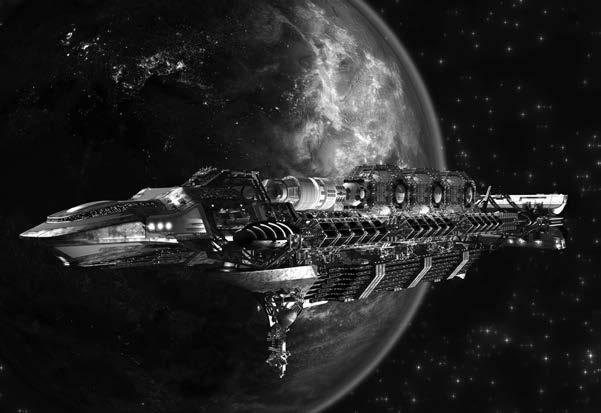
noted scientist delivered a lecture at a Space Science Conference on the broader aspects of the National Aeronautics and Space Administration Program in the USA. Among other things, the lecturer drew a parallel between the problems which will face space explorers in the future and our current conditions on earth.
Using a hypothetical manned voyage to the nearest star, Alpha Centauri, as an example, he emphasized the remarkable engineering, biological and sociological problems that would be encountered during the execution of this enterprise. Since the star is 4.3 lightyears away, a spaceship traveling at 1,000 miles per second would require more than 800 years to get there and another 800 years to get back. Any original crew we launched would not survive for even a fraction of the mission's duration. Instead, we would have to "man" the capsule with men and women who would have children who would carry on the mission. These children would themselves have children, continuing this for 1,600
years. Ultimately, after many generations, the remote progeny of the original crew would complete the mission.
This interstellar spaceship would have to be completely self-sustaining and selfsupporting. But the lecturer pointed out that the engineering and technical problems are only one side of the coin. In the spaceship, the crew would have to learn to tolerate each other, generation after generation. They would have to learn, and learn quickly, that you don’t blow up only part of a spaceship.
And then the speaker touched on a key topic: Would the fiftieth generation, after a thousand years, still share the aspirations of their pilgrim fathers who set out from earth so long ago? How, indeed, can you convey to a generation still unborn the basic information about where they came from, where they are going, why they are going there, how to get there, and how to get back?
One of the scientists stood up, and to my surprise and delight, declared: “If we could figure out how the Jewish people managed to survive these thousands of years, we’d have
our answer!”
The scientist was on target. To a Jew, this story is no mere fantastic flight of imagination; it captures our millennialong narrative. Almost four millennia ago, Abraham heard a call to become a blessing for all mankind. Over three thousand years ago, at Mount Sinai, we were launched with specific instructions and suitable maps. And we were told that we ought to transmit this mission to our children and grandchildren, for generations to come. The task was to bring healing and redemption to the world.
We were charged with the mission to reveal that the universe has a soul, that humanity has a soul, that each of us has a soul. That we are living in G-d’s world, and our mission is to transcend our superficial shells and reveal the infinite oneness that unites us all.
For more than a hundred generations we knew where we came from, where we were going, why we were traveling, who was the Project Officer, and how to get back. We had no real difficulty in transmitting this intelligence unbroken from generation
to generation—even to generations who were not physically present during “takeoff” at Sinai. How? Because the Torah, our Divine logbook, contained macro and micro guidance. Notwithstanding all challenges, this logbook has met the only real criterion of the empirical scientists—it worked. Our presence demonstrated that it worked.
As long as we did not allow an interruption in the transmitting of the Torah from generation to generation, the mission and the people remained intact.
But somehow, not too long ago, a “space” emerged in the middle of this long and incredible journey. A generation of "astronauts" arose who decided that they could write a better logbook. They thought the original was old-fashioned, restraining, complicated, and irrelevant to the problems of modern times. They lost their "fix" on the celestial reference points.
Many of them know something is wrong, but they could not pinpoint the malfunction and get back on course. Our mission today is to teach by example how there is indeed no gorge and no gulf between Sinai and modernity. It is one continuous uninterrupted chain, and—unlike with Darwinism—there is no missing link. The glorious narrative of our people is that we never allowed for an inter-generational gap. The same Shabbos our grandmothers celebrated 3000 years ago, we still celebrate. The same tefillin my great grandfathers donned in Georgia 300 years ago, I still wrap today in New York. The same texts Jewish children in Florence and Barcelona were studying 700 years ago, my children study today.
Abraham began the story, Moses consolidated it, and we will complete it. EM
Rabbi Yosef Yitzchak (YY) Jacobson is one of America’s premier Jewish scholars in Torah and Jewish mysticism. He is a passionate and mesmerizing communicator of Judaism today, culling his ideas from the entire spectrum of Jewish thought and making them relevant to contemporary audiences. Rabbi Jacobson founded and serves as dean of TheYeshiva.net.
Exodus Magazine Holiday Companion
CHANUKAH
Dec 25, 2024 - Jan 2, 2025
How to Chanukah
Pre-Holiday to-do list
• Acquire or make a Menorah
• Stock up on oil and wicks, or candles (44 candles/wicks are needed in total for the eight nights of Chanukah)
• If using oil, make sure to have a candle (pref. beeswax) to use as a shamash each night (8 shamash candles total)
• Plan to buy or make some Chanukah treats, such as donuts and latkes
• Have some draidels and Chanukah gelt handy
Primary Observances:
1. Light the Menorah each night
2. Celebrate and publicize the miracle
3. Spend quality time around the Menorah
What is a Menorah? A Menorah has eight holders for oil or wax candles and an additional holder, set apart from the rest, for the Shamash (“attendant”) candle. The Chanukah lights can either be oil or wax candles. Since the miracle of Chanukah happened with olive oil, an oil Menorah is preferable, and olive oil is the ideal fuel. Cotton wicks are preferred because of the smooth flame they produce. Since the Menorah is a mitzvah article, it is customary to use a beautiful one, though any candles will do as long as they are arranged in a straight row. In addition to the eight spots for the Chanukah candles, there should also be a place for the Shamash, the candle that is used to kindle the other lights – which sits a bit higher or lower than the other candles to separate it. There is a tradition to use beeswax candles for the Shamash.
Where to light it? Set up the Menorah in a central doorway. Place it on a chair or small table near the doorpost that is opposite the Mezuzah. This way, when you pass through the doorway, you are surrounded by two mitzvot – the Mezuzah and the Menorah. Ideally, the Menorah lights should be between 12 and 40 inches off the ground. You can also set up your Menorah on a windowsill facing the street, provided that the window is less than thirty feet above ground-level. Make sure the Menorah is on a sturdy, fireproof surface that is out of the reach of children and not near curtains or other flammable materials
Who should light it? All family members should be present at the time of the nightly Menorah lighting. In some families, each person lights their own Menorah. Children should also be encouraged to light their own Menorahs.
Chanukah is...
Chanukah is an eight-day festival that commemorates the miracles surrounding the rededication of the Holy Temple and the Maccabean Revolt against the oppressive Seleucid Empire in the 2nd Century BCE. It is known as the “festival of light,” and celebrates the idea of illuminating the darkness.
The Chanukah Story
On the 25th of Kislev in the year 139 BCE, the Maccabees liberated the Holy Temple in Jerusalem, after defeating the vastly more numerous and powerful armies of the Syrian-Greek king Antiochus IV. (This was the first great miracle of Chanukah.)
The victorious Jews repaired, cleansed and rededicated the Temple to the service of G-d. But all the Temple’s oil had been defiled by the pagan invaders; when the Jews sought to light the Temple’s menorah (candelabra), they found only one small cruse of ritually pure olive oil fit for Temple use. Miraculously, the one-day supply burned for eight days, until new, pure oil could be obtained. (This was the second great miracle of Chanukah.)
For assistance in making your Chanukah plans and for updates about community Chanukah events for families, kids and adults, visit visit shaloh.org/Chanukah or contact us.
When to light it? It is customary to light the Menorah shortly after sunset. In some communities, the Menorah is kindled after nightfall (approximately thirty minutes after sunset). Either way, the Menorah must contain enough fuel to burn for at least thirty minutes after nightfall. Standard Chanukah candles only last approximately 30 minutes. If using those candles, then you should light after nightfall. On Shabbat, the times are a bit different:
Chanukah + Shabbat. Slightly different rules apply when Chanukah coincides with Shabbat. On Friday, we light the Chanukah candles before lighting the Shabbat candles, and we make sure to use longer candles that will burn for at least thirty minutes after dark. On Saturday night, we light the candles after Shabbat is over, after reciting Havdallah.
LIGHTING THE MENORAH
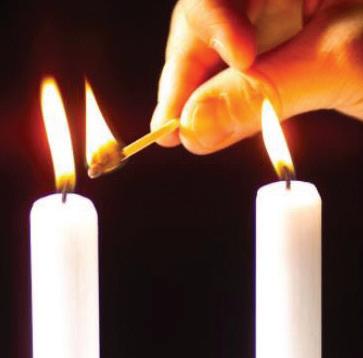
1. Arrange the lights on the Menorah. On the first night, place one candle on the far right of the Menorah. On the following night, add a second light to the left of the first one, and then add one light each night of Chanukah –moving from right to left.
2. Gather everyone in the house around the Menorah.
3. Light the Shamash candle and hold it in your right hand. (Lefties hold it in your left hand.)
4. While standing, recite the appropriate blessings.
5. Light the candles. Each night, light the newest (left-most) candle first and continue lighting from left to right. (We add lights to the Menorah from right to left, while we light from left to right.)
Wednesday, Dec 25 | 24 Kislev | The 1st Night of Chanukah
• Place one candle on the right side of the Menorah
• Recite all three blessings (see Blessings to the right)
• Light the candle
Thursday, Dec 26 | 25 Kislev | The 2nd Night of Chanukah
Set up and light the Menorah after nightfall
• Place two candles on the right of the Menorah
• Recite the first two blessings (see Blessings to the right)
• Light the candles, starting from the left one
Friday, Dec 27 | 26 Kislev | The 3rd Night, Chanukah + Shabbat
Special pre-Shabbat instructions:
Light the Menorah before sunset, before lighting Shabbat candles
Use enough oil and/or longer lasting candles so they burn for at least 30 minutes after nightfall
• Place three candles on the right of the Menorah
• Recite the first two blessings (see Blessings to the right)
• Light the candles, starting from the left one
Saturday, Dec 28 | 27 Kislev | The 4th Night, Chanukah After Shabbat
Special post-Shabbat instructions:
Set up and light the Menorah after nightfall, after Shabbat is over (after Havdallah)
Place four candles on the right of the Menorah
• Recite the first two blessings (see Blessings to the right)
• Light the candles, starting from the left one
Dec 29 - Jan 1 | 28 Kislev - 2 Tevet | Nights 5 - 8
• Set up and light the Menorah after nightfall
• Place the appropriate number of candles for each night on the right side of the Menorah
Recite the first two blessings (see Blessings to the right)
• Light the candles, starting from the left one
The Chanukah Blessings
The blessings are recited before lighting the Menorah. The third blessing is recited only on the first night (or the first time lighting the Menorah this Chanukah).
Blessed are You, Lord our G‑d, King of the universe, who has sanctified us with His commandments, and commanded us to kindle the Chanukah light.
Blessing #2
Ba ruch A tah Ado nai E lo hei nu Me lech ha olam she a sa ni sim la avo te nu ba‑ya‑mim ha‑hem bi‑zman ha‑zeh. Blessed are You, Lord our G‑d, King of the universe, who performed miracles for our forefathers in those days, at this time.
Blessing #3
Recited on the first night only (or the first time lighting the Menorah this Chanukah)
Ba ruch A tah Ado nai E lo hei nu me lech ha olam she heche ya nu ve ki yi ma‑nu ve‑higi‑a‑nu liz‑man ha‑zeh. Blessed are You, Lord our G‑d, King of the universe, who has granted us life, sustained us, and enabled us to reach this occasion.
The Moshiach Connection
The lights of Chanukah derive from those of the Sanctuary, but there are some basic differences: The lights in the Sanctuary were always of the same number, but on Chanukah we add a new light every evening. The lights in the Sanctuary were lit expressly in daytime, “toward evening,” but the lights of Chanukah are lit after sunset. The lights of the Sanctuary were lit indoors, but the lights of Chanukah one ought to place “by the door of one’s house, on the outside.” When darkness pervades the “outside,” it is not enough to illuminate one’s own quarters. One must bring light into the street as well, to dispel its darkness. The Chanukah lamp, therefore, is lit when it is dark, and specifically facing outward in order to illuminate the outside. And in this situation, we can’t be complacent; there must be a continuously progressive ascent, rising ever higher and higher, until darkness is dispelled altogether. Just as in those days following the victory of Chanukah “they kindled lights in Your holy courtyard,” through this mindset we shall merit to kindle lights in the Temple with the coming of Moshiach.