Адрес: Greater Boston Jewish Russian Center 29 Chestnut Hill Avenue Brighton, MA 02135
Телефон: 617-787-2200 617-787-4693
E-mail: exodus@shaloh.org
Website: www.Shaloh.org
Exodus Magazine Boston Edition is published monthly by the GREATER BOSTON JEWISH RUSSIAN CENTER
February - March 2025 Issue 89
Registration Number 770
Circulation 4,000
Подписка: $ 18 Printed in USA Мнения,
7 октября стал поворотной точкой для всего еврейского народа. Он показал, что для победы перед лицом новых угроз нам нужно не только мужество, но и единство. Сегодня, когда Израиль сражается на фронтах, а евреи в диаспоре сталкиваются с беспрецедентным всплеском антисемитизма, мы не можем позволить себе разобщенность.
Каждый еврей, вне зависимости от страны проживания, несет ответственность за будущее нашего народа. Наш голос, наш
(World Zionist Congress - WZC). Что такое Всемирный сионистский конгресс и почему важно голосовать за №12 - BeYachad - Together for Israel?
Всемирный сионистский конгресс – это «парламент еврейского народа», который раз в пять лет собирает представителей еврейских общин со всего мира. Конгресс принимает решения о том, кто будет руководить важнейшими государственными структурами,
Почему важно голосовать за №12 - BeYachadTogether for Israel?
k
k
k
k
на Земле Израиля
k Развитие еврейского образования как залога
еврейского будущего
k Борьба с антисемитизмом в США
k Помощь солдатам-одиночкам
k Организация туристических и волонтерских поездок в Израиль для укрепления связи евреев диаспоры с Израилем
Как проголосовать?
Выборы пройдут с 10 марта по
BeYachad - Together for Israel (№12) –
ПИТИЕ
СОЗНАНИЕ
врейский закон предписывает еврею – существу в славянской мифологии непьющему – напиться в праздник Пурим до такой кондиции, чтобы не отличать слова "проклят Аман" от "благословен Мордехай". Как показывает двадцатичетырехвековая практика, задача эта нам вполне по силам.
Может показаться, что мы таким образом пробуем избавиться от какого-то панического страха перед врагом-Аманом. Ведь мы пытаемся его "запугать" трещотками и топотом во время чтения Свитка Эстер, "уши" его грызем в виде пирожков-хоменташей (в чем нас в свое время глумливо "изобличил" преподобный диакон-сексот Кураев). И вот вдобавок даже имя его (Амана, не диакона) стараемся размыть в сознании, мутя его (сознание) хмельным забытьем.
Ну, объяснять невменяемым, что слово хоменташ, означающее "пирожок с маком", по созвучию лукаво прикинулось "аманскими ушами", мне даже как-то неловко. Но что до остальных анти-аманских акций, то при всей их внешней несерьезности подтекст они несут в себе весьма нешуточный...
В объяснении обычая подавать на пуримский стол креплах (треугольные пельмени) упоминается, что это практикуется вообще-то три раза в году – в дни, когда "бьют": накануне Йом Кипура (когда принято отвешивать друг другу символические "удары" кожаным ремнем), в день Ошана-Раба (последний день праздника Суккот, когда бьют об пол ивовыми ветками) и в Пурим, когда "бьют" Амана. Мистический смысл этих побивательных ритуалов – смягчение Гвурот (аспектов Высшей Строгости), в то время как вершится Высший Суд. Креплах же, в которых тесто обволакивает мясную начинку, символизируют возобладание Хесед (Милосердия) над Гвурой (Строгостью). Это
3. Благотворительность: сделайте пожертвование для нуждающихся.
4. Праздничная трапеза.
Четверг, 13 марта, | 13 Адара | Пост Эстер (6:03 – 19:22) Пост, от рассвета до заката, проводится в память о трехдневном посте, объявленном по просьбе Эстер перед тем, как она, рискуя жизнью, обратилась к царю Ахашверошу с просьбой спасти еврейский народ. Этот пост также связан с персональным постом царицы Эстер 13-го Адара: она проводила его в то время, когда евреи сражались со своими врагами. Беременные или кормящие женщины, а также те, у кого имеются проблемы со здоровьем, от поста освобождаются.
Четверг вечером, 13 марта | 14 Адар | Вечер Пурима ПЕРВОЕ ЧТЕНИЕ «МЕГИЛАТ ЭСТЕР» Слушая чтение «Мегилат
Пятница, 14 марта | 14 Адара | День Пурима Следующие традиционные обычаи соблюдаются в Пурим днем. Поскольку в этом году Пурим выпадает на пятницу, все эти обычаи следует выполнить до начала Шаббата в 18:32.
1. ВТОРОЕ ЧТЕНИЕ «МЕГИЛАТ ЭСТЕР» Слушая чтение «Мегилат Эстер», мы вновь переживаем чудесные события Пурима. Всякий раз, когда упоминается имя Амана, мы шумим трещoтками и топаем ногами, чтобы «заглушить» его злое имя. → Посетите публичное чтение Мегилы – указание адресов и времени чтения Мегилат Эстер на сайте chabadrc.com/megilla
2. «МИШЛОАХ МАНОТ» - «Подарки с угощением»
Отправляя в Пурим друзьям подарки, мы тем самым подчеркиваем, насколько важны для нас еврейское единство и дружба. Как правило, мужчины посылают подарки мужчинам, а женщины - женщинам.
Отправка этих подарков должна осуществляться через третье лицо. Дети – самые лучшие и благодарные посланники: они с восторгом передают подарки нашим друзьям.
→ В день Пурима отправьте хотя бы один подарок хотя бы одному другу. Подарок должен содержать как минимум два вида готовых к употреблению продуктов (например, выпечку, фрукты, напитки).
3. БЛАГОТВОРИТЕЛЬНЫЕ ПОЖЕРТВОВАНИЯ НУЖДАЮЩИМСЯ Забота о нуждающихся - постоянная обязанность еврея, а в Пурим – это особая заповедь праздника. Даже маленькие дети должны выполнять эту мицву. → Сделайте пожертвование хотя бы двум (желательно больше)
(желательно конфиденциально) или через представителя общины, который собирает и распределяет средства.
4. ПРАЗДНИЧНАЯ ТРАПЕЗА Как и во время других еврейских праздников, в день Пурима проводится особая праздничная трапеза,
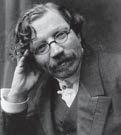
(18591916), он же Соломон Рабинович Это классик, который не нуждается
стаи литературоведов оттачивали на этой благодатной теме свои более или менее острые перья, поэтому я лучше расскажу вам его любимый (как утверждает Р. Виккерс, главный редактор киевского юмористического журнала «Блин») анекдот: Еврейская семья приезжает в Швейцарию. Они останавливаются у большого фонтана, и старый еврей говорит:
— Дети мои, посмотрите на этот фонтан! Как он похож на нашу жизнь! — Чем похож, дедушка?
— А Б-г его знает!» Плюс: несмотря на то, что шолом-алейхемовские реалии от нас уже достаточно
на
других тяжкую обязанность играть в гольф, ходить в ночные клубы и вообще развлекаться, что он полагал «утонченной
всего лишь небольшая часть «юмористической коллекции» Азимова, сопровождается весьма любопытными наблюдениями касательно природы смеха, и не только. «Хорошо рассказанный качественный анекдот, — утверждает он, — способен гораздо лучше высветить проблемы политики, философии, литературы, чем это сделает нудная
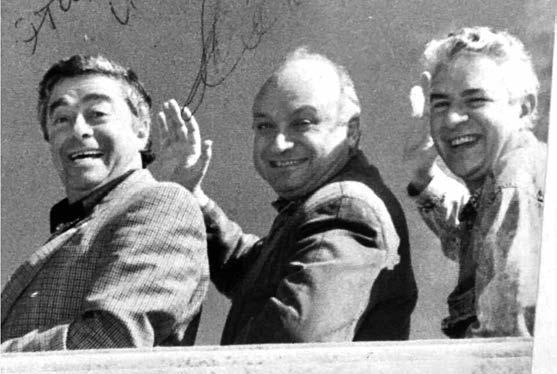
ЭИльченко, перевернули с ног на голову все представления об отечественном юморе. Один за кулисами, двое на сцене. И всегда на контрасте. Высокий и Низкий. Лёд и Пламя. Газ
вам
Романа Карцева от 2013 года. - Роман Андреевич, когда вы впервые ощутили свое призвание?
- В школе. У нас была директриса, Прасковья Григорьевна. 130 килограммов живого веса. Она замечательно ко мне относилась, но иногда била. За дело, я ведь шкодный был. Как даст по шее - и я улетал. Перед выпускными
сфотографировались.
Она пожаловалась: «Ой, как плохо я получилась!» А я и скажи: «Как в жизни». Она обиделась. Сказала: «Это уже не смешно». И ушла к себе в кабинет. Вот тогда-то я понял, что юмор - штука ответственная, он требует чувства меры. И пошел извиняться. А потом я хотел пойти в армию…. - Неужели?
- Очень. Ей-богу! Хотел! Но у меня астигматизм. Меня проверял глазник. Он показывал своей указкой на «Ш», я говорил «М», вместо «Н» - «Х», а на «З» говорил «Б». Глазник хохотал и приговаривал: «Ничего, будешь снайпером». Снайпером я не стал, пошел на швейную фабрику «Молодая гвардия»
«По-моему, смешно», - говорю. «Вы что же, - продолжает
что
студенческом театре миниатюр «Парнас-2». Однажды гастролировавший в Одессе Аркадий Исаакович посмотрел наш спектакль «Я иду по улице», и пригласил меня в свой Театр миниатюр. Он же попросил ввести меня в какую-то миниатюру, и я начал вводиться. Зарплату мне положили 88 рублей. 8 высчитывали за бездетность, 25 стоил угол, который я снимал, на 10 я кормил Жванецкого, который приехал позже. Потом я переманил туда Витю Ильченко. Мы так вместе и держались - три одессита.
понимаете в юморе, чем я?» «Видимо, да», - сказал я и пошел писать заявление об уходе. Полтора года я скитался с симфоническим оркестром, куда
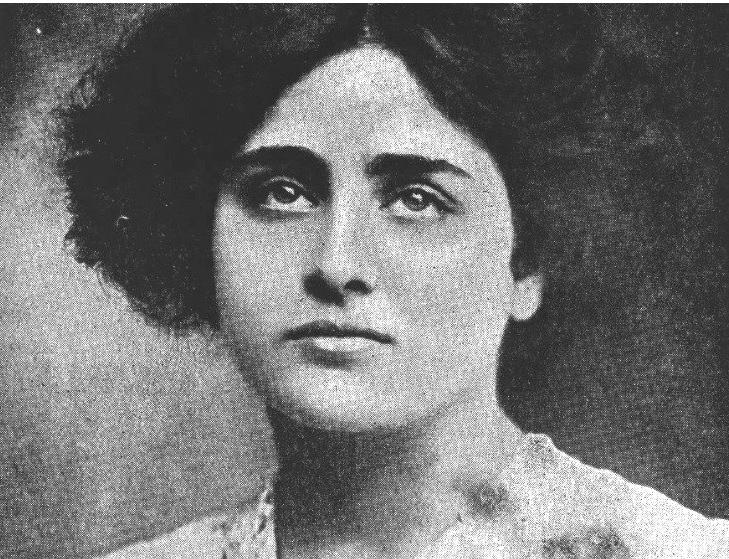
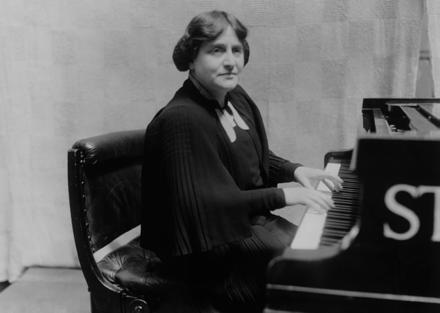
Еврейская пианистка
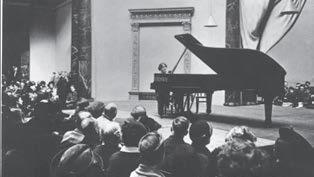
мировой войны победу над фашизмом обеспечивали не только военное мастерство и техника. Важную роль в поддержании боевого духа — как на фронте, так и в тылу — сыграли искусство и музыка. Ярким примером этого стала британская пианистка еврейского происхождения Майра Хесс, имя которой стало известно далеко за пределами Великобритании. А ведь неожиданно для себя самой. А ведь до этого момента в ее биографии не было ничего героического, необычного.
Юлия Майра, младшая из четырех детей, родилась в Лондоне 25 февраля 1890 года в еврейской семье. Самуэль Гесс, ее дед по отцовской линии, был ортодоксальным евреем из Эльзаса. В 1847 году он основал текстильную фабрику в Ист-Энде Лондона. Здесь же он женился на Элис Кэнтор, англичанке еврейского происхождения. Семья была религиозной и регулярно посещала синагогу Далстон в Лондоне. Отец Майры Фредерик Соломон присоединился к расширяющейся семейной фирме и в 1884 году женился на Лиззи Джейкобс (в синагоге Бэйсвотер). Родители Майры были религиозными людьми и каждый вечер в пятницу дома после синагоги отмечали Субботу. Детям запрещалось кататься на велосипеде в Субботу, считалось, что велосипед – это транспортное средство, а путешествовать в Субботу запрещено. Майра, и ее братья и сестры, конечно, сердились на родителей за этот запрет. Но еврейское воспитание было настольно сильным, что даже к концу жизни Майра прекрасно помнила и могла прочитать наизусть Кидуш (благословение над вином во время Субботней трапезы)
и другие традиционные еврейские тексты. Несмотря на полученное еврейское воспитание,
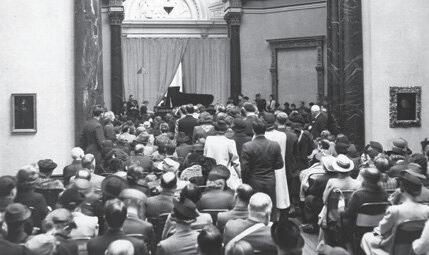
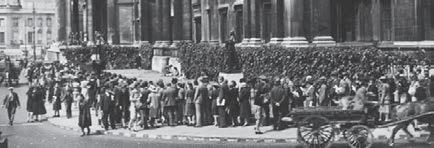
Кларка, публика, посещавшая концерты, изголодалась по музыке большe, чем по еде. Среди слушателей были и «новобранцы в касках, и пожилые дамы со слуховыми трубками, и государственные служащие, и студенты, в общем, люди всех возрастов и сословий».
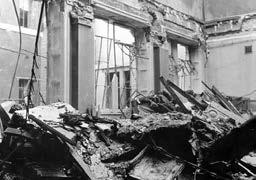
Концерты, организованные Майрой Хесс, проходили на протяжении всей войны, включая время бомбардировок, каждый день с понедельника по пятницу, без перерывов и иск лючений. Несколько раз во время воздушных налетов
концерты приходилось переносить в подвалы Галереи. А во время одного из концертов бомба взорвалась в середине исполнения
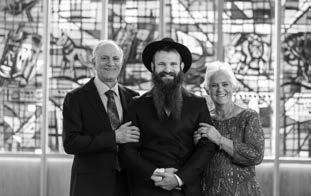
Судьба каждого еврея неповторима. Встретив человека в традиционной еврейской одежде, мы едва ли можем представить, какой путь он преодолел, чтобы прийти к еврейскому образу жизни.
Сегодня я хочу рассказать вам о человеке, чье возвращение к своим корням было
Позвольте представить: Яаков Ши. - Яаков,
мне недосягаемыми, их изучение требовало огромных усилий.
формируют контакт между сценой и залом. Посмотрите любую юмористическую
реагируют мгновенно, и более искренне смеются. Конечно, у
ченко были миниатюры, которые более непосредственно воспринимали как раз мужчины, например, «Ликероводочный завод» или «Теория относительности». А женщины... Даже удивляюсь иногда - со сцены о них такое несут, а они над собой хохочут. «Слабый» пол, надо сказать, в этом отношении более раскрепощенный и свободный. И не только в зале, но и в жизни. - Ощущаете за спиной горячее дыхание молодых и гениальных?
- Болезненная тема. Смешно сказать, но я практически не знаю нового
поколения, работающего в моем жанре. Юмор остался, а сатира исчезла. И драматизм исчез. От этого стало как-то скучно. Молодые сейчас рассказывают анекдоты, делают пародии, смешат публику клоунадой. Но
личностей
Рассказы о необычном
– Дед, хватит валяться! – вскричал Томер, увидев лежащего на постели Шмуэля. – Я отвезу тебя в больницу. Пусть сделают все проверки.
– Больница не поможет. Причина моей болезни совсем в другом.
– Дед, разве ты врач, чтобы себе диагноз ставить?
– Имей терпение, тогда узнаешь, в чем причина моей болезни.
– Ладно, имею, – сказал Томер, усаживаясь на стул рядом с постелью. – Рассказывай. И дед начал рассказывать. Не спеша, со всеми подробностями.
Много лет Шмуэля преследовал страшный сон. Земля под ногами начинает осыпаться, образуя воронку. Он бежит, стараясь вырваться из засасывающей пучины, но воронка растет быстрее. Вот он уже на краю,
в черную жадную бездну. Уф-ф-ф!
Шмуэлю всегда удавалось очнуться до падения. Он садился, нащупывая холодный пол дрожащими ступнями, тяжело дышал, пытаясь успокоить бешено колотящееся сердце. Заснуть после такого пробуждения не удавалось, да Шмуэль и не пытался. Меньше всего
Белостока. Занимались в старинной синагоге, огромном здании,
Нарев из Данцига шли баржи с товарами. У пристаней Тыкоцина
в Белосток и окрестные городки. Еврейской общине было
Yakov Bassin
Rozalya Borodovskaya
Yevgeniya Froyman
Lyolya Kliot
Boris Krutanov
Rem Prasov
Aleksandra Shnayder
Отмечаем
AbramishviliShalva9 Nisan 7 April
AbramovaFaina8 Nisan 6 April
Abramovskaya Raisa25 Adar 2 25 March
AdlershteynEugene22 Adar 22 March
Ainbinder Etya 29 Adar 29 March
Aleksandrovich Lev 11 Nisan 9 April
AlperinSofia12 Adar 12 March
AltshullerBentzion11 Adar 2 11 March
AronzonEleonora10 Adar 2 10 March
AsushkinaJudith26 Adar 26 March
AuskernEsfir24 Adar 24 March
AuskernSamuil23 Adar 23 March
AverbackJoseph8 Adar 2 8 March
BergelsonMikhail17 Adar 1 17 March
BermanMoisey5 Nisan 3 April
BermanSarah24 Adar 24 March
BeschinskyVladimir22 Adar 22 March
BesherIda22 Adar 1 22 March
BlumentalEtta28 Adar 2 28 March
BregerIsaak15 Adar 1 15 March
Broverman Betya 3 Nisan 1 April
BurdmanRakhil8 Nisan 6 April
CharnayaBella9 Adar 9 March
ChesinBoruch2 Adar 2 2 March
Chiquiar-Rabinovich Hayim6 Adar 2 6 March
DanzigAvraham8 Adar 2 8 March
DimontChana17 Adar 1 17 March
DubenskayaSofia18 Adar 18 March
DubinskyDaniel20 Adar 20 March
DukhovniyAvram1 Nisan 30 March
DvorzhetsLeonid1 Adar 2 1 March
ElgartUri21 Adar 2 21 March
Entov Vladimir6 Nisan 4 April
ErbeigelSemyon24 Adar 24 March
Esenin-Voltin Alexander 6 Adar 2 6 March
EsterkinIda11 Adar 11 March
FabrikantZelda11 Adar 2 11 March
Fayner Lenya 18 Adar 18 March
Feigina Genya 14 Adar 14 March
FeldmanSolomon9 Nisan 7 April
FeldmanVladimir22 Adar 1 22 March
FidlerBasia24 Adar 2 24 March
FishelevichIda15 Adar 1 15 March
FishmanEduard17 Adar 1 17 March
FreymanMeyer6 Adar 2 6 March
FurmanLipa14 Nisan 12 April
GafanovichEduard20 Adar 20 March
GalperAbraham5 Adar 5 March
Galper Sarra 3 Nisan 1 April
GannJoseph13 Adar 2 13 March
GellerGenrikh27 Adar 27 March
Gershteyn Lev 26 Adar 26 March
GimelbergMichael12 Nisan 10 April
GinzburgMark27 Adar 2 27 March
GoldbergIzrail21 Adar 1 21 March
GozmanMaria13 Adar 1 13 March
GubermanEvgeniya3 Adar 3 March
GurevichChaya9 Nisan 7 April
GurevichMoisey19 Adar 1 19 March
GurevichSaul7 Adar 7 March
GutermanVladimir24 Adar 1 24 March
IoffeLazer1 Nisan 30 March
IskovitchEsfir2 Adar 1 2 March
Jakobson Tatyana 14 Nisan 12 April
Kagan Roza 22 Adar 2 22 March
KalichsteinChana24 Adar 2 24 March
KaluzhnyNaum28 Adar 2 28 March
KanterBoris12 Nisan 10 April
Katz Abram8 Adar 8 March
KhinkisFenia14 Nisan 12 April
KirnosMordko7 Adar 7 March
KoldertgevaBerta5 Adar 2 5 March
KoltoniucBluma8 Adar 8 March
KotelAlexander2 Adar 1 2 March
KozhushnyanRachil15 Adar 15 March
KravetsBronya1 Nisan 30 March
KreydinLeonid24 Adar 2 24 March
KriegelSheldon29 Adar 2 29 March
KrishtalIsrael24 Adar 2 24 March
KritzmanVictor23 Adar 2 23 March
KupsikGeyman22 Adar 2 22 March
KurinaLeah7 Nisan 5 April
KusaevUchaiy8 Adar 8 March
LebedinskayaFaina1 Nisan 30 March
Leshchinskaya Lyubov11 Nisan 9 April
Lifshits Anton 1 Adar 2 1 March
LivshitsLiya19 Adar 19 March
LoibergMikhael5 Nisan 3 April
LoibergVita2 Nisan 31 March
Luban Aleksander 2 Nisan 31 March
Lubomirskaya Miriam8 Adar 1 8 March
LuvishchukGalina27 Adar 2 27 March
Lyak Grigoriy17 Adar 2 17 March
LyubarskayaEmma21 Adar 21 March
MalkovGirsh9 Adar 1 9 March
MargolinLeonid27 Adar 27 March
MariaskinMendel16 Adar 16 March
MashalovBoris22 Adar 2 22 March
MedvedovskyBoris15 Adar 2 15 March
MeldungAbram6 Nisan 4 April
Melenevskaya Sarah17 Adar 17 March
Merkovich Sheina Leah 17 Adar 17 March
Milyavskaya Roza 3 Adar 3 March
MinderAnatoliy28 Adar 1 28 March
MonisovaDusya17 Adar 2 17 March
NoginskiChava14 Nisan 12 April
NotkinaLyuba3 Adar 1 3 March
NovikAtzmon1 Adar 1 March
Ochakovsky Fanya 29 Adar 1 29 March
Pesochinskiy Chaya Freyda 3 Adar 3 March
PesochinskySarah10 Adar 1 10 March
PetrovskayaRevekka22 Adar 1 22 March
PevznerFaina7 Nisan 5 April
PeyselZalman23 Adar 23 March
Pinkhasov Dora 1 Nisan 30 March
PinskyBenyamin26 Adar 26 March
PodberezinaZhanna11 Nisan 9 April
Polyakov Lev 2 Adar 1 2 March
RapoportEvgeniy3 Adar 3 March
RapoportShlomo25 Adar 25 March
RavinskiyGennady18 Adar 2 18 March
ReinFaina8 Nisan 6 April
Riger Tzvi 19 Adar 2 19 March
RikunDavid24 Adar 2 24 March
RivkinDavid17 Adar 2 17 March
RivkinGrigoriy1 Adar 1 March
RodFaina24 Adar 2 24 March
RodkinLilya5 Adar 5 March
RodkinOleg8 Nisan 6 April
RodkinSolomon14 Nisan 12 April
RosenfeldAvraham2 Adar 1 2 March
RosenfeldGolda18 Adar 18 March
Rosenman Roza 17 Adar 2 17 March
RoyfmanShayndel1 Nisan 30 March
RoyzinaSvetlana15 Adar 2 15 March
RozentalYuliy26 Adar 2 26 March
Rozhnyatovskaya Feyga4 Nisan 2 April
Rubinov Marc 19 Adar 1 19 March
RubinshteinTsilya2 Nisan 31 March
RudnitskayaAnna12 Adar 1 12 March
SamishevEduard8 Adar 2 8 March
Samuelson Ivy 27 Adar 27 March
ScheinerLeibel1 Adar 2 1 March
ShaenzonChava7 Nisan 5 April
ShafiroEduard17 Adar 1 17 March
ShaneEdith2 Adar 1 2 March
ShapiroAvitai7 Nisan 5 April
ShechterMeir16 Adar 16 March
ShekhvitsKhana13 Adar 13 March
Shichmanter Fanya 18 Adar 2 18 March
ShifonSolomon25 Adar 1 25 March
ShmuklerRafail21 Adar 21 March
Shmuklerman Sara 6 Adar 6 March
ShpitsMoishe6 Nisan 4 April
Shrayber Mara 10 Adar 10 March
ShteyngardtTatiana13 Adar 1 13 March
ShugarmanRichard7 Nisan 5 April
ShulkMichael12 Nisan 10 April
ShulmanMark16 Adar 16 March
Shvartsman Betya 7 Adar 1 7 March
SirotaYosif2 Nisan 31 March
SklyarKlara3 Adar 3 March
SlifkaAlfred7 Adar 2 7 March
SlutskayaGoda18 Adar 18
March
VyrovlyanskayaDesha13 Nisan 11 April
VyrovlyanskayaGisya13 Nisan 11 April
Vyrovlyanskaya Tzipa Basya 26 Adar 26 March
WojcickiLior5 Adar 1 5 March
YakubovichNina13 Nisan 11 April
YanovskyShmuel23 Adar 1 23 March
YastrebnerShprinia21 Adar 21 March
ZadovaAnna13 Nisan 11 April
ZaikaSulamif26 Adar 26 March
Zaks Inna8 Adar 8 March
ZaretskyYuryi2 Nisan 31 March
ZaytzevChana17 Adar 1 17 March
ZazovskayaEsfir15 Adar 15 March
ZeligerIrina27 Adar 27 March
ZhadanovskyNaum2 Nisan 31 March
ZolotorevskayaGiny16 Adar 2 16 March
The OperaTing Table
Israel, instead of pressing on with its task, has busied itself with proving that they are indeed murderers! What a waste of time and energy. Everyone knows what they are; they themselves openly state their bloody goals. And this never has and will not make any difference. Politics do not run on truth or Justice; it has its own protocol, and “diplomatic” conduct is the only measure of acceptability. And through striving for such acceptability, all that has been achieved is another day wasted, and time, energy and money diverted from its proper place. Worst of all, we delude ourselves into thinking something concrete has been achieved —that now the world knows they are not at all nice people!
What is Israel waiting for? How many meetings, conferences, consultations, must be held before the army is allowed to do its job? A politician will never change his stripes; especially those few who were instrumental in Israel’s withdrawals and political defeats in the past, and who know full well what their obstructionism is leading to now. They fear neither man or G-d; they are interested only in perpetuating their positions. The only possible way to get them to admit their mistake is to publicize exactly who caused the unnecessary loss of lives by obstructing the campaign. Perhaps their fear of losing their seats at the next election will have some effect.
In the meantime, if they are too weak to withstand pressure from non-Jews, if their Jewish pride is not equal to the task of assuring Israel’s security, we ask each of them: Do the Jewish people a favor and go home for the duration! Keep your government salaries and pensions, keep your chauffeured cars, keep your coveted positions of honor — just do not mix into things out of your area of expertise. Let the experts do their job, and let them decide security matters. And it is the unanimous opinion of the military that this operation must be fully carried out and properly concluded...
But the politicians continue to haggle, and Jewish soldiers continue to die. As on so many previous occasions, a war was
prematurely ended before the military could finish their job; and military victories were turned into political defeats. Let us say, for the sake of argument, that the operation should not have been started. But once the army has been committed, let them finish!
A parable: A patient lying on the operating table. A fearful person comes in, sees a few drops of blood flow, and begs the doctors to halt the operation until the patient will recover his strength. At the second operation, the same thing: Delay it for another time, make the operation in “installments “ No sane person would suggest such a thing. The patient needs the operation, for without it there is danger to life. No normal person would tell the experts, the doctors, how to perform the operation.
The analogy is clear: The terrorists are a danger to the three million Jews in the Land of Israel. They must be excised and rendered impotent. One operation was mounted. Politicians, weak creatures, fearful of the spectre of their own insecurity, wanted to halt it in mid-term. When the army rightfully claimed they must finish the operation, a howl of protest went up and the operation
was halted. When the situation became so intolerable that another operation had to be mounted, the politicians again interfered. And a third time.
“Peace for the Galilee” is the fourth operation. Everyone agreed it was necessary. Hundreds of Jewish soldiers sacrificed their lives to assure the security of Israel and her citizens. But again the same warped logic, which, if its consequences were not so tragic, would be ludicrous. The terrorist threat will not be eliminated once and for all. The wound is to be left festering with all its deadly bacteria intact — they are only to be shifted from one place to another. Afterwards, who knows? Another conference, another round of interminable talks, more scurrying around to cull favor and assent from every petty government in the UN? You are experimenting with the lives of over three million Jews! Have the consequences of the past not taught anything?
In the final analysis, it is the responsibility and within the powers of just one or two people to ignore the advice of faint-hearted politicians and finish the job quickly and without fuss. The U.S.A. does not want to be publicly consulted. Its administration does not need or want the headache of getting involved, and then later having to justify its actions. As long as it is not publicly held culpable it does not object to Israel’s completion of the operation — and the sooner the better.
Success is assured when, together with the threat of physical weapons, the Jewish army goes into battle with its true strength — “We rely upon and invoke the Name of the L-rd our G-d.” The unsurpassed merit Jewish soldiers have of being prepared to literally sacrifice their lives to protect the Holy Land and the Holy people who dwell therein is itself enough to bring open miracles from G-d. When “we raise our banner in the name of our G-d,” when we follow the directives of G-d given in His holy Torah, we merit a full and lasting peace. Then, very soon, we will greet our righteous redeemer, when “peace and tranquility will be in his days” and “nation will not raise sword against nation.” EM
From the Rebbe's letters
The grand TurnarOund
The (civilized) world ganged up against the Jews. With support in all the right places – on the streets, in the chambers of government bodies and in the ivory tours – they became convinced that this problematic people and their questionable allegiance to their faith and their homeland had to be eliminated. A plan was hatched. The stage was set. But all of a sudden things started to unravel, the truth began to emerge, and those who sought their downfall found themselves under attack. And then, with a little help from a powerful yet unpredictable ruler, the Jews gained the upper hand and things completely turned around.
Sound familiar? This could be Haman’s plot 2,500 years ago, or Hamas and friends in 2025.
Then, like now, the events didn’t exactly happen overnight. Things progressed gradually over a number of years, while the contextual events that set the stage were decades in the making. But when the dramatic turnaround unfolded, things did seem to turn around all of a sudden.
On October 7 the enemies of the Jews tried to wipe them out. While they did manage to inflict a terrible wound, the trauma of which we are still dealing with, they did not succeed in destroying us, or even weakening us. In fact, they made us stronger, while their own position is crumbling, losing support and elections around the world – despite their pathetic propaganda to the contrary. Everywhere you look, if you look at the facts on the ground, the enemies of Israel are absolutely humiliated.
Hamas has been crushed, and the IDF is not even close to being done, hampered only by the remaining hostages. Hezbollah is decapitated – just the other day finally managing to organize a massive funeral for their fallen leader, as the Israeli Air Force orchestrated a low altitude flyby right overhead to remind them who’s in charge. Iran, the sponsor of all this evil, is whipped into sudden silence and fear, waiting to see what is coming next. And Syria, out of nowhere, has completely disintegrated.
In a truly historic moment, Israel is poised to permanently change the reality on its borders and the entire Middle East – if only
the politicians will stay out of the way and let the security experts make the right decisions. In the debate over what to do with Gaza, the hypocrisy of the entire issue has been exposed: If they are refugees, then why won’t anyone take them in? And if they are native Gazans, then how are they refugees? The US President is pushing a win-win scenario where they would relocate to other countries, and most of them would gladly go to a better life away from their terrorist overlords. Israel’s “friendly” neighbors and their supporters only want them to stay so they can continue to serve as pawns and human shields in their war against Israel’s existence. But their opposition is weakening under pressure and the bright light of the truth.
The Gaza question is but one detail that demonstrates how the shadow war is now out in the open, begging the world to pick a side. Suddenly the tables are turned. Israel’s accusers are now themselves being accused of hypocrisy and antisemitism. Those who fabricated a baseless claim of genocide against Israel are now themselves exposed for supporting the actual genocide of the Jewish people.
Everywhere we look, things are turning around. The Houthis attacked ships and Israel. Reportedly the US is planning to proactively intensify and escalate attacks against the Houthis soon. The ICC issued arrest warrants against Netanyahu and Gallant. The US is now imposing sanctions against the ICC. Antisemitic protests swept across American universities. The US is now instituting strong measures to stop
it, including legislation against hate in education, threatening to block government funding for schools and programs, and canceling visas of foreign students who participate in the protests. Iran has been surviving economically and supporting its terror proxies by selling oil to China via third parties. The US is now reinforcing new sanctions, including sanctioning third parties who facilitate Iran’s oil sales.
There’s a feeling in the air, a feeling that the world is changing, quickly, miraculously. This extends also beyond events that directly affect Israel and the Jewish people. The Ukraine-Russia war seemed to have no way of ending. Now the US is negotiating with Russia, and there is optimism for a deal. Negotiations to reduce nuclear weapons had stalled. Now the US wants to meet with Russia and China to reach an agreement.
It seems like in a few short months we have been thrust into a whole new world order, a new reality. And the turnaround is showing no signs of slowing down. The transformation is also happening on a personal level. People are different. We are becoming more aware. We are recognizing the supernatural nature and source of all this change. And that is perhaps the ultimate turnaround, and perhaps the purpose behind it, to reach a time where the knowledge of G-d fills the earth like the water covers the sea.
May we all see, very soon, the ultimate turnaround with the coming of Moshiach. A time of world peace. A time that the world has been waiting for. EM
Yoseph Janowski
The bOOk Of The exile
Adin Even Yisrael Steinsaltz
Purim is an extraordinary festival in the Jewish calendar. One can point to numerous details – in Jewish Law, custom, and historical attitude – that distinguish it from all the other festivals. This otherness is apparent not only in the character that was granted to this festival in later generations, but mainly in its most primary source: the Scroll of Esther itself.
The different nature of the Purim customs, and of the Scroll of Esther, can be seen even from its comparison with the one other Jewish festival that is closest to it, both historically and symbolically – Hanukkah.
Although the Books of Maccabees did not become part of the canonized Bible, they nevertheless belong to the philosophical and stylistic “milieu” of the Biblical books – in the events that they relate, in the character of the main figures, and in the kind of the religious-national issues that loom in their background. Compared with them, the Scroll of Esther seems to be almost on the other side of the gap between the sublime and the ridiculous: the pompous, fickle Ahasuerus; the wicked, petty Haman; Esther, whose ascent to greatness is reminiscent of the Cinderella myth; and the righteous Mordechai, who gets entangled in the court intrigues of an Oriental tyrant.
The clue to all these puzzlements may be found in one single point: Purim is the Festival of Exile, and the Scroll of Esther is the Book of Exile. In a sense, the Book of Esther is the prototype, the basic mold of the life of the Jewish people in exile. The whole story of the Book of Esther, the figures and the events – which look like a simplistic melodrama and a mythic tale, detached from reality – take on a true, serious, even tragic meaning when looked upon as the mirror of Jewish history not only at the time of Mordechai and Esther, but also throughout Jewish history in exile.
Ahasuerus – the great king who rules over “a hundred and twenty seven provinces,” “upon the land and upon the isles of the sea,” who spends most of his days in drunken parties and in harems, who almost inadvertently issues a decree “to destroy, to kill, and to cause to perish all Jews” without considering all its possible
implications – is he a mere creature of the imagination? Almost no generation goes by without us encountering him, in one form or another. He may indeed be an insignificant, ridiculous figure; but even the most foolish and weak of tyrants can bring about a terrible suffering upon the Jewish people in exile.
As for Haman, one does not have to search too far and wide in order to find him, again and again, very real and very threatening. Here, in the Scroll of Esther (and surely, in the Midrashic literature that ornates it) Haman is a comic figure; but in our history it is accompanied by so many tears and so much blood. Haman’s speech of hatred -“There is a certain people scattered abroad and dispersed among the peoples in all the provinces of your kingdom, and their laws are diverse from those of every people, neither do they keep the king’s laws; therefore, it is not befitting the king to tolerate them” (Esther 3:8) – has not been greatly improved in the course of the 2,500 years that have elapsed since. In minor variations, it is repeated to this day by various Hamans: reactionaries and socialists, left-wingers and right-wingers throughout the world. We no longer laugh at the wretched figure of this street speaker, of this former hairdresser and bath attendant, or wall painter, or chicken-grower: rather, we are afraid of him.
Only a very profound outlook, which on the one hand sees the Jewish future, and on the other, is based on a strong, unshakeable faith, could have caused the Scroll of Esther
to be included among the canonized books of the Bible; for this scroll is the essence of Jewish life in exile, and of the faith that behind all external causes, hides the “guardian of Israel.” The Scroll teaches us that the Jewish people must learn to live this sort of life, and that it must expect miracles of this kind: not miracles like the parting of the Red Sea, done “by a mighty hand and by an outstretched arm,” but rather hidden within the tortuous, winding ways of history. And within all this, one must believe that “relief and deliverance will arise to the Jews,” and that in moments of distress, assimilation and masks will be of no avail, even for those who sit in the king’s own palace; and that despite everything, there is hope.
The story of the Scroll of Esther is to continue so long as exile continues to exist, and so long as the world keeps operating the way it does – namely, with the “hiding of the Face” and “the hiding of the Name.”
May there soon come the days in which we will no longer understand the serious part of the Scroll, in which we will be able to read it truly light-heartedly, knowing that it is but a myth from bygone times that will never return. EM
Rabbi Adin Even Yisrael Steinsaltz, of blessed memory, is internationally regarded as one of the leading rabbis of the last century. The author of many books, he is best known for his monumental translation of and commentary on the Talmud. To learn more visit his website, steinsaltz.org.
The War behind The War
Yosef Y. Jacobson
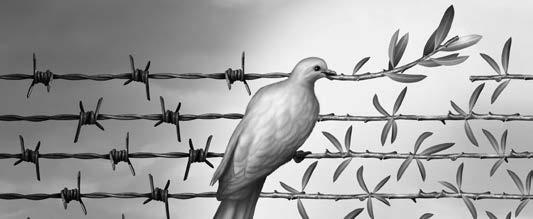
Two groups have made an attempt to divorce commandment no. 1 from commandment no. 6 – to sever the idea of a Creator, who conceived the world for a moral purpose, from the imperative to honor the life of another human being. The first group was comprised of the philosophers of the Enlightenment during the 18th and 19th centuries, the second of religious leaders in many and diverse ages. The result for both was moral defeat.
The thinkers of the Enlightenment ushered in the Age of Reason and the modern secular era, founded on the belief that the great ideal of “You shall not murder” did not require the prerequisite of “I am the Lord Your G-d” in order to be sustained. Religion was not necessary to ensure moral behavior; reason alone, without G-d, would guide humanity into an age of liberty and to the achievement of moral greatness. The sixth commandment could operate successfully independent of the first.
While religion embodied the vision of man standing in a continuous relationship with G-d, the essence of the Enlightenment represented the vision of man without G-d. It was a vision already introduced during the first days of creation near the Tree of the Knowledge of Good and Evil, by the most sophisticated animal of the time, the serpent. “You shall be like G-d," it promised Eve. Man could, and ought to, replace G-d. Left to his own (de)vices, the thinking went, the human being will achieve greatness.
But the Holocaust spelled the end of this grand faith in the promise of human progress based on human reason. In Auschwitz, the belief that modern man felt a natural empathy for others was ruined forever.
The gas chambers were not invented by a primitive, barbaric and illiterate people. To the contrary, this people excelled in sciences and the arts, but nevertheless sent 1.5 million children, and 4.5 million adults, to their deaths solely because they had Jewish blood flowing in their veins. SS guards would spend a day in Auschwitz, gassing as many as 12,000 human beings, and then return home in the evening to pet their dogs and laugh with their wives. As the smoke of children ascended from the crematoriums, these
charming romantics would enjoy good wine, beautiful women and the moving music of Bach, Mozart and Wagner. They murdered millions of innocents in the name of a developed ethic, and they justified genocide on purely rational grounds.
In "Schindler’s List," there is a scene during the liquidation of the Krakow Ghetto where a little girl hiding in a piano is shot dead by an SS guard. As her little angelic body lay in a river of blood, another guard sits down to play the piano.
First SS guard: Was ist das? Ist das Bach?
Second SS guard: Nein. Mozart.
First SS guard: Mozart?
Second SS guard: Ja. And they both marvel at the exquisite music.
This was Nazi Germany at its best.
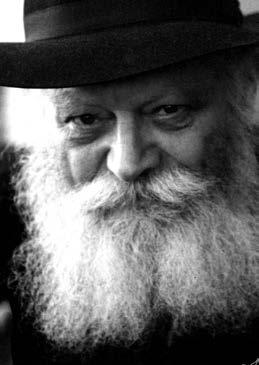
Elie Wiesel, who gripped the world’s imagination with his book "Night," a personal testimony of life and death in Auschwitz, once asked the Lubavitcher Rebbe, who himself lost many members of his family in the Holocaust, how he could believe in G-d after Auschwitz. If G-d existed, Wiesel
asked, posing the single greatest challenge to faith, how could He ignore 6 million of His children de-humanized and murdered in the cruelest of fashions?
The Rebbe shed a tear and then replied, “In whom do you expect me to believe after Auschwitz? In man?”
This must remain one of the lasting legacies of Auschwitz. If there is any faith at all left after the extermination of 6 million people, it must glean its vitality from something transcending the human rationale and its properties. If morality is left to be determined exclusively by the human mind, it can become a morality that justifies the guillotine, the gulag and the gas chamber. As Dostoevsky famously put it in "The Brothers Karamazov," “Where there is no G-d, all is permitted.”
The atheist philosopher Bertrand Russell wrote: “I cannot see how to refute the arguments for the subjectivity of ethical values [resulting from atheism], but I find myself incapable of believing that all that is wrong with wanton cruelty is that I don’t like
it.” Russell’s point is critical.
Without G-d, we cannot objectively define any behavior as good or evil. As difficult as it is to entertain, no one can objectively claim that gassing a mother and her children is any more evil than killing a mouse. It is all a matter of taste and opinion. The validity and effectiveness of “You shall not murder” can be sustained only if it is predicated on the foundation of faith in a universal moral creator who gave humanity an absolute and unwavering definition of what constitutes good vs. evil.
Professor Abraham Joshua Heschel, who escaped Warsaw a few weeks before it was invaded and lost most of his family in the Nazi Holocaust, captured this sentiment succinctly: “If man is not more than human, then he is less then human.” Either we climb to a place beyond ourselves, or we are likely to fall to a place below ourselves. When the vision of the sacred dies in the soul of a person, he or she is capable of becoming a servant of the devil.
But this is far from the whole picture.
While the Enlightenment abandoned commandment no. 1 in favor of no. 6, various religions over the ages abandoned no. 6 in favor of no. 1. Theirs has been the atrocious belief that as long as you believe in the Lord, or in Allah, you can kill and maim whomever you brand an "infidel." Whether it is a business executive in New York, or a teenager eating a slice of pizza in Jerusalem, or a child on the first day of school in Beslan, or a commuter in Madrid, or a tourist in Bali, or a Chabad couple in Mumbai, if the person is not a member of your faith, G-d wants him or her to die. For the religious fundamentalist, "I am the Lord your G-d" has nothing to do with "You shall not murder."
This is the greatest perversion of faith. When thousands can rejoice gleefully in the torture of Jewish babies, in the rape and beheading of Jewish women, as the Hamas monsters did on October 7th, 2023, while millions of others celebrated, is the most vile desecration of Allah.
Faith that does not inculcate its followers with the sanctity of every single human life desecrates and erodes the very purpose of faith, which is to elevate the human person to a state beyond personal instinct and prejudice. If you delete “You shall not murder” from religion, you have detached yourself from “I am the Lord your G-d.” To believe in G-d means to honor the life of every person created in the image of G-d. What the juxtaposition of the two commandments is telling us is that you can’t believe in G-d and murder.
Conversely, if you truly believe that taking the life of another human is wrong -- not just because you lack the means or motive to do so or are afraid of ending up in jail, but because you recognize the transcendent, inviolable value of life -- that's just another way of saying you believe in G-d. For what confers upon human life its radical grace, its transcendent sanctity and its absolute value if not the living presence of G-d imprinted on the face of the human person?
3,336 years ago, Judaism, in the most ennobling attempt to create a society based on justice and peace, established its principle code in the sequence of the two commandments
–“I am the Lord your G-d/You shall not murder.” A society without G-d can become monstrous; a society that abandons the eternal and absolute commandment “You shall not murder” is equally evil. Both are capable of burning children alive during the day and then retiring to sleep with a clear conscience.
The Talmud captures this notion in an intriguing fashion.
The Talmud cites a tradition that when Israel approached Sinai, G-d lifted up the mountain, held it over the people's heads and declared: “Either you accept the Torah, or be crushed beneath the mountain.” (The Talmud bases this tradition on the verse in Exodus, “And they stood beneath the mountain.”)
This seems ludicrous. What worth is there to a relationship and a covenant accepted through coercion?
The answer is profoundly simple. What G-d was telling the Jewish people is that the creation of societies that honor life and shun cruelty is dependent on education and on the value system inculcated within children of the society. The system of Torah, G-d was suggesting, was the guarantor for life and liberty. If you reject the morality of Torah, if you will lack the courage and conviction to teach the world that “I am the Lord your G-d” and that I have stated unequivocally “You shall not murder,” the result will be humanity crushed under a mountain of tyrants.
Seventy-five years since Auschwitz and after two decades of incessant Islamic terrorism, the mountain is hanging over our heads once again. Shall we embrace the path of divinebased morality? Shall we never forget that religion must always be defined by “You shall not murder?” EM
Rabbi Yosef Yitzchak (YY) Jacobson is one of America’s premier Jewish scholars in Torah and Jewish mysticism. He is a passionate and mesmerizing communicator of Judaism today, culling his ideas from the entire spectrum of Jewish thought and making them relevant to contemporary audiences. Rabbi Jacobson founded and serves as dean of TheYeshiva.net.
TOrah is nOT (JusT) a Manual fOr life
Tzvi Freeman
Intuitively, it sounds so neat and simple. You’ve got a life. It’s confusing. Here’s the manufacturer’s manual.
Tells you what buttons to press when and what combinations to avoid at all costs. Explains how to get the best out of life and what to do when things go wrong. Covers every exigency. Comes with a post-lifetime guarantee.
And it’s from The Manufacturer. How could you go wrong?
But the logic doesn’t work. If He’s The Manufacturer, why couldn’t He manufacture a product that doesn’t need a manual?
Think about it: When’s the last time you landed on a website or downloaded a new app that needed a manual? This century? Silicon Valley can learn to create intuitive user interfaces and the Creator of the Universe hasn’t figured it out?
So it must be the other way around. The Torah wasn’t written to show you how to live. You were given a life so you could understand Torah.
Your life, its frustrations, anticipations, exasperation, and elation—all of that is a commentary on the Torah. You could never grasp a thing of this divine wisdom if you didn’t go through absolutely everything you ever went through.
So yes, Torah provides instructions. The word “Torah” means “instructions.” But not instructions to find peace, tranquility, love, and success. Instructions to learn from life and discover within it infinite light.
Moses said as much to the angels. When G-d was about to give the Torah to the Jews, the angels demanded first dibs. They screamed, “You’ve hidden this precious treasure since way before the world was created—and now You’re handing it over to these icky, walking meat patties? Place the glory of Your Torah in the heavens where it belongs!”
To which Moses responded (I paraphrase), “Did you angels ever go down to Egypt?”
“Do you dwell among foreign nations who worship the craft of their hands?”
“Do you slave at a dumb job six days a week so that you could release your soul to freedom and delight with your family and friends on the seventh?”
“Do you have mothers and fathers, children and siblings, husbands and wives, and all the other turbulent relationships that forever step out of equilibrium?”
“Do you have nagging, instinctual urges that drive you nuts and threaten to destroy you from within?”
Without a life on earth, you cannot appreciate Torah. What you learn won’t belong to you. You won’t have the context. Life is the stage upon which Torah unfolds. Life on earth. Deep earth.
It’s also clear from another story. When Moses asked the people if they were ready to enter into a covenant with G-d, one that entailed a lot of stipulatory dos and don’ts
known as Torah, they answered, “We will do and we will understand!”
As a certain cynic quipped—as quoted in the Talmud:
Crazy, impetuous Jews! They put their mouths before their ears! They should have first asked what’s entailed by this covenant, read the fine print, and only then decided. They should have said, “If it looks good, we’ll sign. If not, we won’t sign.”
Instead, they rush in like fools exclaiming, “We will do! We will do!” Only when it was too late did they find out what’s involved. But in truth, this is wisdom. You only understand when you first do. Experience is the master instructor. Try the ice cream. Then
join the discussion about it. Live a life of Torah. Then you will be able to understand the One who gave it to you.
The Torah, as the angels pointed out, preceded creation. Elsewhere, we are given a figure of two thousand years. Yes, we all know that doesn’t make sense. There was no time before the universe was created.
What they meant is that even if the entire universe never came to be, even if there was no space and no time, even then there would still be Torah. Because Torah is beyond time and space. Torah is G-d being at self.
Have you ever been “at self”? That’s the state at which everything is just as it is supposed to be. Everything is good. You are good, the moment is good, and nothing has to change for eternity. Because it is eternity.
Only that for us humans this eternity doesn’t last very long. But you get the idea. There’s a state you can’t share with anyone else in the world. Because this state is you. It is you being at self.
You can share things about yourself. You can share things you want people to think about you. But you can’t share you.
G-d, however, shares with us His Torah. And at the core-essence of that Torah is His infinite, unbounded, unknowable self being at self. That’s what He shares with us.
How does He do it?
Say you were a teacher. A brilliant, deepthinking, teacher who has pondered the meaning of life for 70 years. And you’re teaching some young kids. Your deepest desire is that these children should grow to attain at least as profound an understanding of life as you.
How do you do it?
You tell them stories. At least, they think these are stories. But really they are rich and elaborate parables. Every twist and nuance of these parables overflows with nuggets of wisdom that you acquired through great effort. And now you hand them over to these kids, sugar-coated in a delicious fantasy.
Over their lifetime, your students will grow with your stories, returning to them again and again, unfolding them, unpacking them, uncovering the wondrous gems hidden in their folds. Until, one day, some of them, the
ones who try the hardest, will look out at the world and see it with the depth you saw when you taught them those stories. And perhaps even more.
The Author of the story of your life did yet better. He put you inside the parable. It is this world.
Those who live the parable as though it were just a life gain nothing. Those who live life knowing that it is just a parable, they discover that which the most supreme angel in the highest heaven can’t come close to imagining.
That’s all Torah does. Rashi calls Torah “the primordial parable.” Meaning that it is a parable about the One who preceded the world. Torah renders your life a story about G-d.
G-d decides whether there should be light or darkness, life or death, existence or nothing at all. When you live with Torah, every moment of life becomes another decision. Those same decisions. Because darkness is the default in this world. Light is a choice. So is life. So is the choice that life is real and that it belongs to you.
You meet evil face to face, and you choose the courage to stare it down. You hit rock bottom, and you choose to understand this pit as a tunnel. You choose to take charge of your life and make it your life.
Here, on deep earth, you drag yourself across the muddy swamps of life, crawl up its rocky precipices, and swim against its fierce currents so that you can sip in a few words of Torah wisdom. You wrestle with it, ingest it, digest it, metabolize it as your own sinews and bones, change your life through it, transform who you are, and then transform again each day for a lifetime as you learn more and more—then you have Him.
For this, all the universe was made. Every detail of it. EM
Rabbi Tzvi Freeman, a senior editor at Chabad.org, is the author of Bringing Heaven Down to Earth and more recently Wisdom to Heal the Earth. To subscribe to regular updates of Rabbi Freeman's writing or purchase his books, visit Chabad.org. Follow him on Facebook @RabbiTzviFreeman.
future tense
MOSHIACH MUSINGS
Our Sages have said, "Even if all the other festivals will be annulled Chanuka and Purim will not be annulled. For Chanuka and Purim were given to Israel by the merit of their own deeds. The future revelation of Divinity will be so intense that the revelation currently evinced by the festivals will be as insignificant as a midday candle. Purim, however, will be the exception, because the Purim miracle was called forth by the year-long self-sacrifice of the Jewish people of that time. (They could have averted Haman's decree by apostasy.) Their self-sacrifice evoked a Divine reaction so sublime that even in the future time it will never be annulled.
Purim thus celebrates man’s involvement with the physical reality of G-d’s creation. The use of material substances in context of man’s service of-and relationship with-G-d, imbues these substances with spirituality. It sublimates them to their Divinely intended purpose. Purim manifests the intrinsic oneness of the universe which is rooted in the Oneness of its Creator. This, indeed, is the ultimate purpose of creation: to manifest its Divine origin by converting this world into a fitting abode for G-dliness. This is man’s mission for which he was created, and especially in the time of the exile, the time of our dispersion throughout the world. The achievement of this goal is the ultimate bliss of the Messianic era when “the earth shall be full with the knowledge of G-d as the waters cover the sea... and the glory of G-d shall be revealed and all flesh shall see together...” (Isaiah 11:9 and 40:5). Our efforts towards that end will hasten this goal and bliss, to happen very speedily in our days.
puriM On friday?
by Rabbi Dan Rodkin
QThis year’s Purim festival falls on Friday? Are there any differences in how we celebrate Purim because it is so close to Shabbat?
Purim falling on a Friday is a somewhat unusual but not a completely rare occurrence. Outside of Jerusalem, not much changes when Purim coincides with Friday. However, in Jerusalem (and in cities historically considered "walled cities"), Purim is celebrated on Shushan Purim, which falls the day after Purim, making things a bit more complicated.
For those of us outside Jerusalem, Purim on a Friday mostly requires some planning to ensure we can fulfill all the mitzvot in their proper time while still preparing for Shabbat. The Megillah (Book of Esther) is read Thursday night and Friday morning, and both mishloach manot (food gifts) and matanot la'evyonim (charity for the poor) should be given during the daylight hours on Friday.
The primary challenge is when to hold the festive Purim meal. Ideally, we don’t want to eat a full meal too close to Shabbat, so we can approach the Shabbat table with a hearty appetite. The best solution is to have the Purim meal on Friday morning, before midday. It’s also a good idea to have all Shabbat cooking finished by Thursday night, so your transition from Purim to Shabbat isn't stressful.
When Shushan Purim falls on Shabbat in Jerusalem, the celebrations extend over a three-day period. The mitzvot of reading the Megillah and giving gifts to the poor are observed on the fourteenth of Adar, just like in other cities.
On Shabbat, the fifteenth of Adar, a second Torah scroll is taken from the Sanctuary, and the portion from Parshat Beshalach recounting the war with Amalek is read. The Al Ha-Nissim prayer is added to both the Amidah and Grace After Meals.
The Sages prohibited the reading of the Megillah on Shabbat to avoid the risk of
inadvertently carrying the Megillah scroll in the public domain while searching for someone to read it—a violation of Shabbat laws. The Sages also determined that if the Megillah cannot be read at its proper time, it should be read earlier rather than later, so it is read on the fourteenth of Adar.
On Sunday, the sixteenth of Adar, the festive Purim meal is held, and gifts of food are exchanged. The mitzvah of eating the festive meal is delayed until Sunday because of the tradition not to mix one celebration (Shabbat) with another (Purim). The giving of matanot la'evyonim and mishloach manot on Shabbat is also prohibited, as it could lead to accidental violations of the Shabbat laws regarding carrying. Gifts to the poor are therefore given on the fourteenth, while the sending of mishloach manot is delayed until the sixteenth. However, it is customary for residents of walled cities to send a few mishloach manot to friends on the fourteenth, in keeping with the Purim spirit.
The Rebbe emphasized that when Purim falls on a Friday, it extends into a threeday celebration in Jerusalem, reaching into Sunday. As this marks an extended celebration for the Holy City of Jerusalem, we should also join in the spirit of celebration and remember Jerusalem on the Sunday after Purim. When the Jewish people went into exile after the destruction of the First Temple, they vowed never to forget Jerusalem and to raise it above all joyous occasions.
It is therefore fitting for Jews everywhere to make the Sunday following Purim a particularly joyous day. This can be done through activities that bring joy, such as Torah study—which rejoices the heart— spreading happiness among fellow Jews in the spirit of loving-kindness, and even giving gifts to friends and the poor, just as we do on Purim. Special gatherings to strengthen the Jewish soul in the spirit of Jerusalem are also encouraged. EM
Rabbi Dan Rodkin is the Executive Director of the Greater Boston Jewish Russian Center. You can Ask the Rabbi at rabbi@shaloh.org.
The face Of evil
Jonathan Sacks
We can become mind-blind, thinking that the way we – our society, our culture, our civilization – see things is the only way, or at least that it is the way everyone would choose if given the chance. Only a complete failure to understand the history of ideas can explain this error, and it is a dangerous one. When Montezuma, ruler of the Aztecs, met Cortes, leader of the Spanish expedition in 1520, he assumed that he was meeting a civilised man from a civilized nation. That mistake cost him his life, and within a year there was no Aztec civilization anymore. Not everyone sees the world the way we do, and, as Richard Weaver once said: “The trouble with humanity is that it forgets to read the minutes of the last meeting.”
This explains the significance of an unusual command in the Torah connected to Purim. The Israelites had escaped the seemingly inexorable danger of the chariots of the Egyptian army, the military high-tech of its day. Miraculously the sea divided, the Israelites crossed, the Egyptians, their chariot wheels caught in the mud, were unable either to advance or retreat and were caught by the returning tide.
The Israelites sang a song and finally seemed to be free, when something untoward and unexpected happened. They were attacked by a new enemy, the Amalekites, a nomadic group living in the desert. Moses instructed Joshua to lead the people in battle. They fought and won. But the Torah makes it clear that this was no ordinary battle:
Then the Lord said to Moses, ‘Write this on a scroll as something to be remembered and make sure that Joshua hears it, because I will completely blot out the name of Amalek from under heaven.’ Moses built an altar and called it The Lord is my Banner. He said, ‘The hand is on the Lord’s throne. The Lord will be at war with Amalek for all generations.’ Ex. 17:14-16
This is a very strange statement, and it stands in marked contrast to the way the Torah speaks about the Egyptians. The Amalekites attacked Israel during the lifetime of Moses just once. The Egyptians oppressed the Israelites over an extended period, oppressing and enslaving them and starting a slow genocide by killing every male Israelite child. The whole thrust of the narrative would suggest that if any nation would become the symbol of evil, it would
be Egypt.
But the opposite turns out to be true. In Deuteronomy the Torah states, “Do not abhor an Egyptian, because you were a stranger in his land” (Deut. 23:8). Shortly thereafter, Moses repeats the command about the Amalekites, adding a significant detail: Remember what the Amalekites did to you along the way when you came out of Egypt. When you were weary and worn out, they met you on your journey and attacked all who were lagging behind; they had no fear of G-d … You shall blot out the name of Amalek from under heaven. Do not forget! Deut. 25:17-19
We are commanded not to hate Egypt, but never to forget Amalek. Why the difference? The simplest answer is to recall the Rabbis’ statement in The Ethics of the Fathers: “If love depends on a specific cause, when the cause ends, so does the love. If love does not depend on a specific cause, then it never ends.” The same applies to hate. When hate depends on a specific cause, it ends once the cause disappears. Causeless, baseless hate lasts forever.
The Egyptians oppressed the Israelites because, in Pharaoh’s words, “The Israelites
are becoming too numerous and strong for us” (Ex. 1:9). Their hate, in other words, came from fear. It was not irrational. The Egyptians had been attacked and conquered before by a foreign group known as the Hyksos, and the memory of that period was still acute and painful. The Amalekites, however, were not being threatened by the Israelites. They attacked a people who were “weary and worn out,” specifically those who were “lagging behind.” In short: The Egyptians feared the Israelites because they were strong. The Amalekites attacked the Israelites because they were weak.
In today’s terminology, the Egyptians were rational actors, the Amalekites were not. With rational actors there can be negotiated peace. People engaged in conflict eventually realize that they are not only destroying their enemies: they are destroying themselves. That is what Pharaoh’s advisers said to him after seven plagues: “Do you not yet realize that Egypt is ruined?” (Ex. 10:7). There comes a point at which rational actors understand that the pursuit of self-interest has become self-destructive, and they learn to co-operate.
It is not so, however, with non-rational actors. Emil Fackenheim, one of the great post-Holocaust theologians, noted that towards the end of the Second World War the Germans diverted trains carrying supplies to their own army, in order to transport Jews to the extermination camps. So driven were they by hatred that they were prepared to put their own victory at risk in order to carry out the systematic murder of the Jews of Europe. This was, he said, evil for evil’s sake.
The Amalekites function in Jewish memory as “the enemy” in Lee Harris’ sense. Jewish law, however, specifies two completely different forms of action in relation to the Amalekites. First is the physical command to wage war against them. That is what Samuel told Saul to do, a command he failed fully to fulfil. Does this command still apply today?
The unequivocal answer given by Rabbi Nachum Rabinovitch is ‘No’. Maimonides ruled that the command to destroy the Amalekites only applied if they refused to make peace and accept the seven Noahide
laws. He further stated that the command was no longer applicable since Sennacherib, the Assyrian, had transported and resettled the nations he conquered so that it was no longer possible to identify the ethnicity of any of the original nations against whom the Israelites were commanded to fight. He also said, in The Guide for the Perplexed, that the command only applied to people of specific biological descent. It is not to be applied in general to enemies or haters of the Jewish people. So the command to wage war against the Amalekites no longer applies.
However, there is a quite different command, to “remember” and “not forget” Amalek, which we fulfil annually by the reading the passage containing the Amalekites command as it appears in Deuteronomy on the Shabbat before Purim, Shabbat Zachor (the connection with Purim is that Haman the “Agagite” is assumed to be a descendant of Agag, king of the Amalekites). Here Amalek has become a symbol rather than a reality.
By dividing the response in this way, Judaism marks a clear distinction between an ancient enemy who no longer exists, and the evil that enemy embodied, which can break out again at any time in any place. It is easy at times of peace to forget the evil that lies just beneath the surface of the human heart. Never was this truer than in the past three centuries. The birth of Enlightenment, toleration, emancipation, liberalism and human rights persuaded many, Jews among them, that collective evil was as extinct as the Amalekites. Evil was then, not now. That age eventually begat nationalism, fascism, communism, two World Wars, some of the brutal tyrannies ever known, and the worst crime of man against man.
Today, the great danger is terror. Here the words of Princeton political philosopher Michael Walzer are particularly apt: Wherever we see terrorism, we should look for tyranny and oppression … The terrorists aim to rule, and murder is their method. They have their own internal police, death squads, disappearances. They begin by killing or intimidating
those comrades who stand in their way, and they proceed :[to do the same, if they can, among the people they claim to represent. If terrorists are successful, they rule tyrannically, and their people bear, without consent, the costs of the terrorists’ rule.
Evil never dies and – like liberty – it demands constant vigilance. We are commanded to remember, not for the sake of the past but for the sake of the future, and not for revenge but the opposite: a world free of revenge and other forms of violence.
Lee Harris began Civilization and its Enemies with the words, “The subject of this book is forgetfulness,” and ends with a question: “Can the West overcome the forgetfulness that is the nemesis of every successful civilization?” That is why we are commanded to remember and never forget Amalek, not because the historic people still exists, but because a society of rational actors can sometimes believe that the world is full of rational actors with whom one can negotiate peace. It is not always so.
Rarely was a biblical message so relevant to the future of the West and of freedom itself. Peace is possible, implies Moses, even with an Egypt that enslaved and tried to destroy us. But peace is not possible with those who attack people they see as weak and who deny their own people the freedom for which they claim to be fighting. Freedom depends on our ability to remember and, whenever necessary, confront “the eternal gang of ruthless men,” the face of Amalek throughout history. Sometimes there may be no alternative but to fight evil and defeat it. This may be the only path to peace. EM
Rabbi Dr. Sir Jonathan Sacks, of blessed memory, was the former Chief Rabbi of the UK and the Commonwealth and a member of the House of Lords. He was a leading academic and respected world expert on Judaism. He was the author of several books and thousands of articles, appeared regularly on television and radio, and spoke at engagements around the world.
Exodus Magazine Holiday Companion
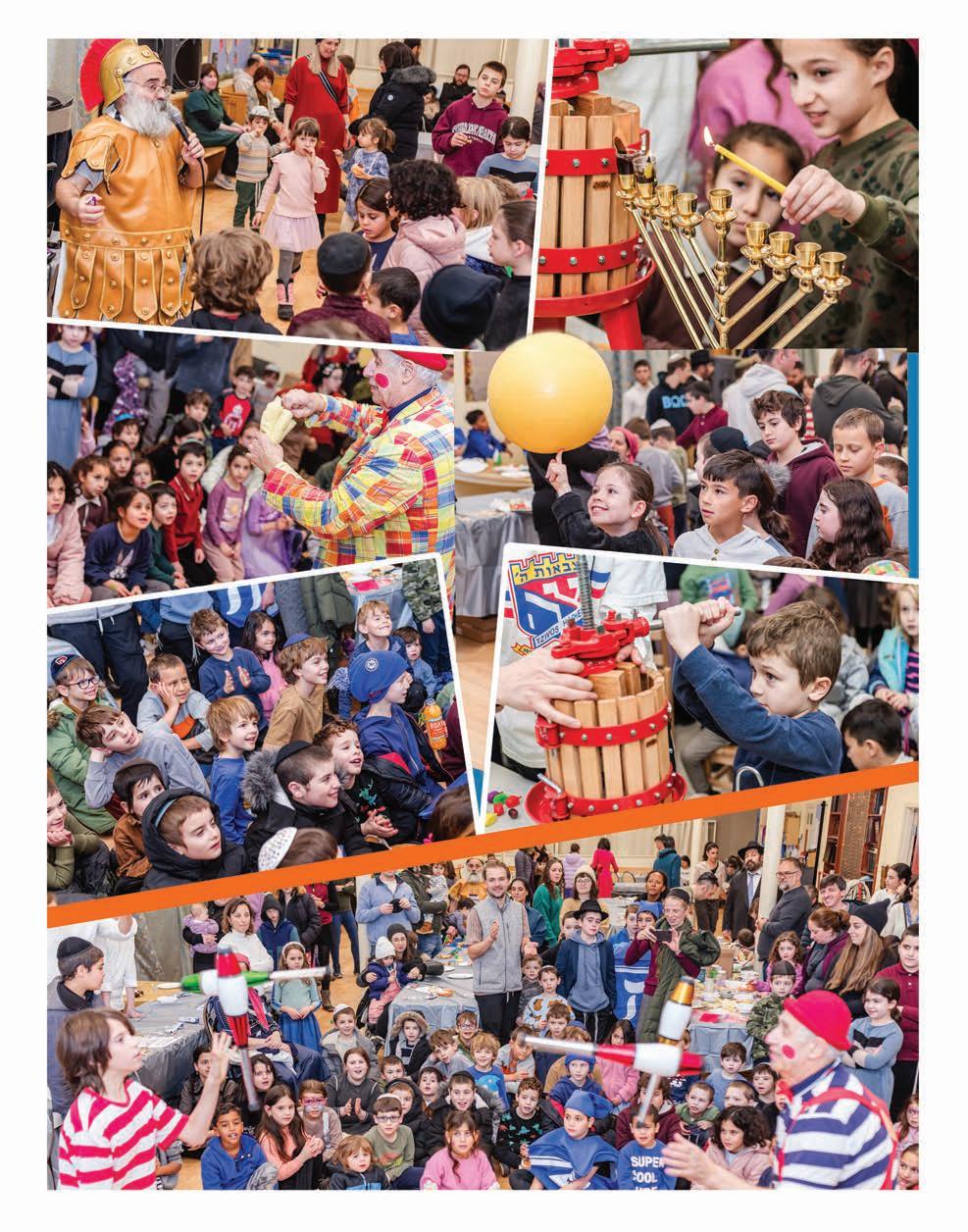
Celebrate Purim
March 13-14, 2025 All times displayed in this guide are for the
How to Purim
Pre-Holiday to-do list
• Plan to hear the Megillah twice –on Purim night and on Purim day
• Prepare for the festival meal.
• Prepare food items for Mishloach Manot gift packages
• Plan to make charitable contributions to the poor
Primary Observances:
1. Megillah – listen to the Megillah (twice)
2. Mishloach Manot – send food gift packages
3. Charity – give financial gifts to the needy
4. Festive Meal
Thursday, March 13 | 13 Adar | Fast of Esther (5:31am to 7:17pm)
A fast is observed from daybreak to nightfall in commemoration of the threeday fast called at Esther’s request before she risked her life to appeal to King Achashveirosh to save the Jewish people. The fast also commemorates Esther’s fasting on the 13th of Adar, as the Jews fought their enemies.
Pregnant or nursing women and people in ill health are exempt from fasting.
Thursday evening, March 13 | 14 Adar | Purim Night
Megillah Reading #1
We relive the miraculous events of Purim by listening to a public reading of the Megillah. Whenever Haman’s name is mentioned, we use noise-makers and stamp our feet to “drown out” his evil name.
→ Attend a public reading of the Megillah
It is also customary to be festive and have a small “unofficial” feast this evening.
THE MITZVAH OF HEARING THE MEGILLAH can only be fulfilled by attending a live reading of the Megillah from an original scroll written by an expert scribe on parchment (similar to a Torah scroll).
→ For a list of Megillah reading times and locations visit RussianBoston.org
Purim is...
Purim is a joyous holiday that commemorates the miraculous salvation of the Jews in the times of the Persian empire (356 BCE). King Ahasuerus’s prime minister, Haman, plotted “to destroy, kill and annihilate all the Jews… in a single day.” Haman cast lots (“purim” in Persian) to determine the date of his scheme, which is what gives the festival its name.
The Purim Story
Jewish morale was at an all-time low, the Temple was destroyed, the nation conquered and dispersed in foreign lands, and the blight of assimilation had set in. Just then, and enemy arose to carry out his evil plans. Haman, descended from the Jew-hating tribe of Amalek, devised a scheme to solve “the Jewish problem” once and for all by annihilating every Jewish man, woman and child throughout the world, in a single day. It almost worked. Were it not for Mordechai, Esther, the other heroes involved (including Jewish children) – and, of course, the hidden hand of Divine providence...
continued →
For assistance in making your Purim plans and for updates about community Purim observances and events for families, kids and adults, contact Greater Boston Jewish Russian Center at (617) 787-2200.
Friday, March 14 | 14 Adar | Purim Day
The following Purim customs are observed during the day of Purim.
Because this year Purim falls on Friday, all of these observances should be completed well before Shabbat begins (6:32pm).
1. Megillah Reading #2
We relive the miraculous events of Purim by listening to a public reading of the Megillah. Whenever Haman’s name is mentioned, we use noise-makers and stamp our feet to “drown out” his evil name.
→ Attend a Megillah reading – for times & locations visit RussianBoston.org
2. Gifts of Food
On Purim, we emphasize the importance of Jewish unity and friendship by sending gifts of food to friends. It is proper that men send to men and women to women. Sending these gifts should be done through a third party. Children, in addition to sending their own gifts of food, make enthusiastic messengers.
→ Send at least one gift package containing at least two kinds of ready-toeat foods (for example, pastry, fruit, beverage), to at least one friend on Purim day.
3. Charitable Gifts to the Needy
Concern for the needy is a year-round Jewish responsibility. On Purim, particularly, it is a special mitzvah to remember the poor. The mitzvah is best fulfilled by giving directly to the needy. Even small children should fulfill this mitzvah.
→ Give gifts of money to at least two (preferably more) needy people. You can give the money directly (preferably discreetly), or through a community representative who collects and distributes the funds to the needy.
4. The Festive Meal
As on all festivals, Purim is celebrated with a special festive meal during the day, when family and friends gather together to rejoice in the Purim spirit.
→ Join a Purim Banquet
Purim and Jerusalem
When Purim occurs on a Friday, as it does this year, it becomes an extended Purim for the Holy City of Jerusalem, extending into Sunday. The city of Jerusalem celebrates “Shushan Purim,” which is the day after Purim, and since this year it would occur on Shabbat, Purim celebrations in Jerusalem are pushed off until Sunday.
When the Jews went into exile, after the destruction of the First Temple, they vowed never to forget Jerusalem, and remember it and remember it even in their most joyous occasions – as we do by breaking a glass during the Jewish wedding ceremony, among other customs associated with remembering Jerusalem.
The Rebbe writes that it would therefore be appropriate for Jews everywhere to make the Sunday following Purim (March 16 this year) a particularly joyous one by adding activities that produce joy, such as studying Torah which brings joy to the heart, spreading joy among Jews in the spirit of loving one’s fellow, and if suitable or necessary through Mishloach Manot gifts to friends and gifts to the poor, and particularly through gatherings to strengthen Judaism in the spirit of Jerusalem. In this way we identify ourselves still more with Jerusalem, to which we turn every day in our prayers, both facing Jerusalem and mentioning Jerusalem. May we be blessed to experience “light, joy, gladness and honor” just as in the days of Mordechai and Esther as told in the Megillah – blessings in our personal lives, in our spirits, and ultimately in the rebuilding of the Temple in Jerusalem with coming of Moshiach.
The Purim Story
It is a story of great courage and selfsacrifice, first and foremost by Queen Esther and Mordechai and ultimately by the whole Jewish nation. For throughout the duration of the whole year, not one single Jew chose to convert, even to save his life. The nation was awakened to a wholehearted return to the Jewish path, and throughout the year strengthened their faith and observance. In the merit of this, the plans of Mordechai and Esther to overturn the evil decree were successful, and the Jews were able to rise up against their enemies. Eventually, these events led them to returning to the Land of Israel and rebuilding the Holy Temple.
Fun Purim Facts
Purim Is a Persian Word
The word “purim” means “lots” in ancient Persian. The holiday was thus named since the evil Haman had thrown lots to determine when he would carry out his diabolical scheme.
Funny Foods
G-d’s involvement in the Purim miracle was hidden; it appeared as if our people’s salvation came by way of natural means. To reflect this, the day is celebrated with delicacies where the delicious filling is hidden inside dough. Classic hamantaschen are a sweet threecornered pastry filled with poppy seeds, and meat-filled kreplach are traditionally cooked and served in chicken soup at the festive meal.
Purim Comedy
In keeping with the absurdity theme of the day, people (especially learned Jews) share “Purim Torahs,” in which silliness and scholarship mesh into a dizzying blend of witty (and sometimes absurd) exegeses.