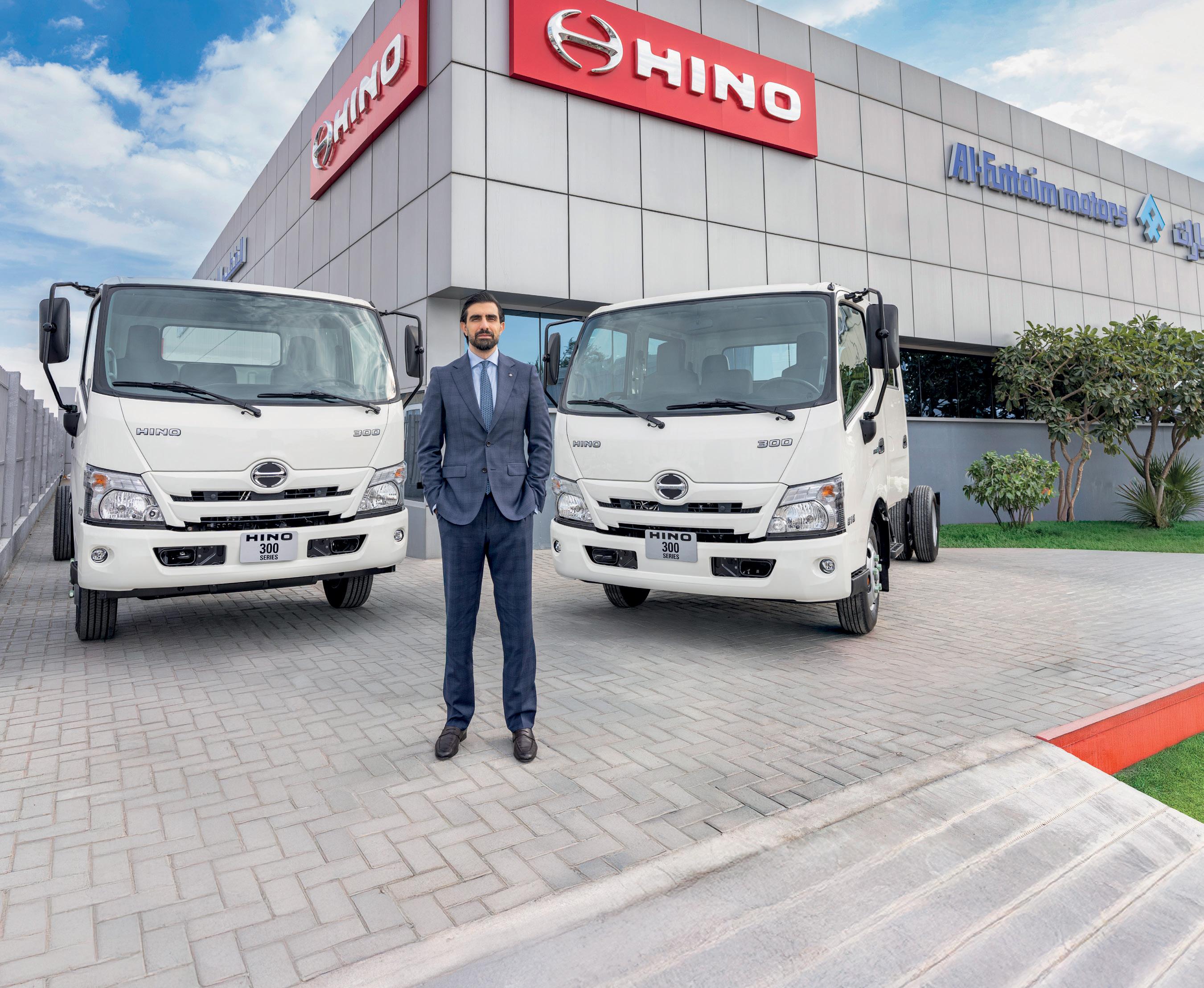
Hino and Al-Futtaim raise the bar and the roof with the launch of the New Euro
*Full-page Advertisement – CMME
ruck & Fleet ME Full-Page Specification
Artwork size: 240 mm (w) x 300 mm (h)
Bleed - +10mm
Color Mode : CMYK
Resolution: 300 dpi
format : High-Res PDF
Construction Machinery ME
Full-page Specification
Artwork size: 240 mm (w) x 300 mm (h)
Bleeds: 5 mm
Color Mode: CMYK
Resolution: 300 dpi
THAT’S
ALL FOLKS; A HUGE THANK YOU TO ALL OF YOU!
format: High-Res PDF
*Newsletter Banner
GROUP
MANAGING DIRECTOR RAZ ISLAM raz.islam@cpitrademedia.com
+971 4 375 5471
DIRECTOR OF FINANCE & BUSINESS OPERATIONS
SHIYAS KAREEM shiyas.kareem@cpitrademedia.com
+971 4 375 5474
EDITORIAL
EDITORIAL DIRECTOR JASON SAUNDALKAR jason.saundalkar@cpitrademedia.com
+971 4 375 5475
HEAD OF CONTENT ANIRBAN BAGCHI anirban.bagchi@cpitrademedia.com
+971 50 945 6963
ADVERTISING
728px x 90px, 500px x 80px, 420px x 350px
PNG / JPG / GIF
Hyperlink
*Email Campaign – Truck & Fleet
Approved mailer designed by the client plus the following. FROM (usually the client’s Company name)
Thirteen years ago, I finally got what I wanted. A magazine that explored the fleet sector in the Middle East. Back then, T&FME looked like a car magazine but read like the many construction titles in the market. As much as I love the heavy sector, and those that know me, know that I grew up on construction sites driving trucks and vans, it always irked me that I would go into meeting after meeting and see blank face after blank face when I tried to explain that we wanted to write about their cars too. It was just as tough then to get van content too! (My first thank you goes to Henrique and the MB Vans Sprinter team for breaking our duck.)
phone could hail you a cab in minutes. I’m also proud we made the case for greater protection of drivers and other road-users right from the start. Thank you to our regular collaborators and industry heavyweights like Thomas Edelmann, Vishal Pandey, Hans Wising, Dheeraj Satta, Richard Hall, Stanislav Betin, Ger Regan, Martin Roberts, Diana Ali, Zain Peracha, Farida Timiset, Morad Hedna, Ramez Hamdan, Adel Mir, and the many others that have been at the end of the phone for the magazine, awards and events over many years.
SALES MANAGER SADAF SHAH sadaf.shah@cpitrademedia.com
+971 4 433 2856
STUDIO
ART DIRECTOR SIMON COBON simon.cobon@cpitrademedia.com
All e-mailers must be in HTML format where images are coded with 'Absolute URL'.
SOCIAL MEDIA EXECUTIVE FRANZIL DIAS franzil.dias@cpitrademedia.com
WEB DEVELOPMENT
The width of the designed mailer must not be more than 700 pixels and at 72DPI. restrictions on the mailer ’s height.
SENIOR DIGITAL MANAGER ABDUL BAEIS abdul.baeis@cpitrademedia.com
WEB DEVELOPER UMAIR KHAN umair.khan@cpitrademedia.com
FINANCE
CSS and form fields are not allowed as most e-mail clients don't recognize them. cases like these, a dedicated landing page must be provided by the client and linked on the HTML mailer.
Things changed in the third year after we got the IVECO Daily on the cover, and the Nissan Navara a few issues later (my next thank you goes to Anirban Bagchi for taking my spot in Spain while I reviewed the XP and NP launch). The first Truck and Fleet Conference was soon to follow and we were finally hitting our stride as a magazine for those selling, buying and driving anything that was used in a professional fleet. I couldn’t be prouder of what we have achieved at T&FME. We were talking about mobility and new energy vehicles long before there were chargers installed at your local shopping mall and your
ebsite MPU Banners
300px x 250px, 600px x 500px
PNG / JPG / GIF
Hyperlink
I would like to thank the team at CPI, particularly Raz for giving us the greenlight; Simon, who always makes it look like the best mag in the market; Maks our incredible photographer; and, of course, Brian who has helped make it such a success in recent years. And there have been many others that need mentioning; Stian Overdahl, Jerusha Sequeira, Percival ‘Pip’ Manalaysay, Andy Pitois, Bipin Soneji, Paul Godfrey, Jason Saundalkar, Phinson Mathew George, Franzil Dias and Priyanka Raina. Finally, I would like to thank you: our amazing readers and followers. This will be my last issue, but I’m sure T&FME will continue to thrive as it did the first time I took my hands off the steering wheel. See you soon.
CREDIT CONTROL EXECUTIVE CAMERON CARDOZO cameron.cardozo@cpitrademedia.com +971 4 375 5499
FOUNDER DOMINIC DE SOUSA (1959-2015)
banners are included make sure that they are NOT in flash/SWF format
STEPHEN WHITE HEAD OF CONTENT, MOBILITY & CAPITAL ASSETS
The publisher of this magazine has made every effort to ensure the content is accurate on the date of publication. The opinions and views expressed in the articles do not necessarily reflect the publisher and editor. The published material, adverts, editorials and all other content are published in good faith. No part of this publication or any
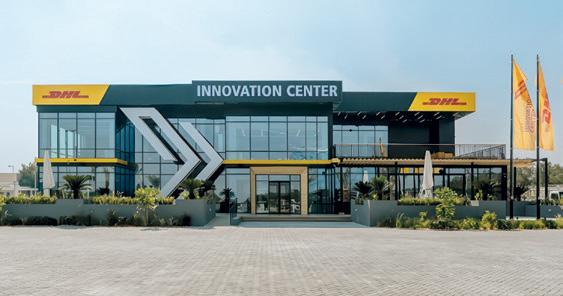
DHL opens next-gen Innovation Center and €120m contract logistics hub in Dubai South
ELECTRIFICATION
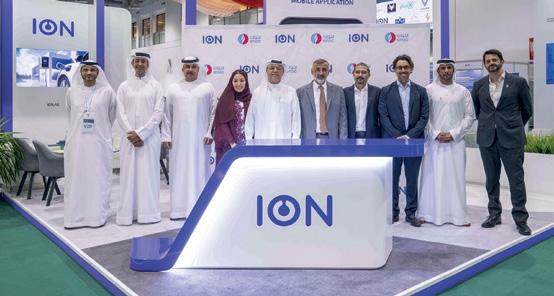
ENOC and ION join forces to expand ultra-fast EV charging network in Sharjah
FLEET
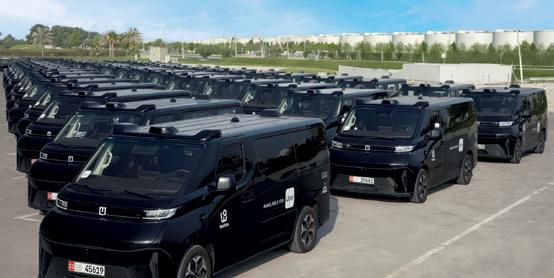
WeRide and Uber start first fully driverless Robotaxi service in the Middle East
INTERVIEW
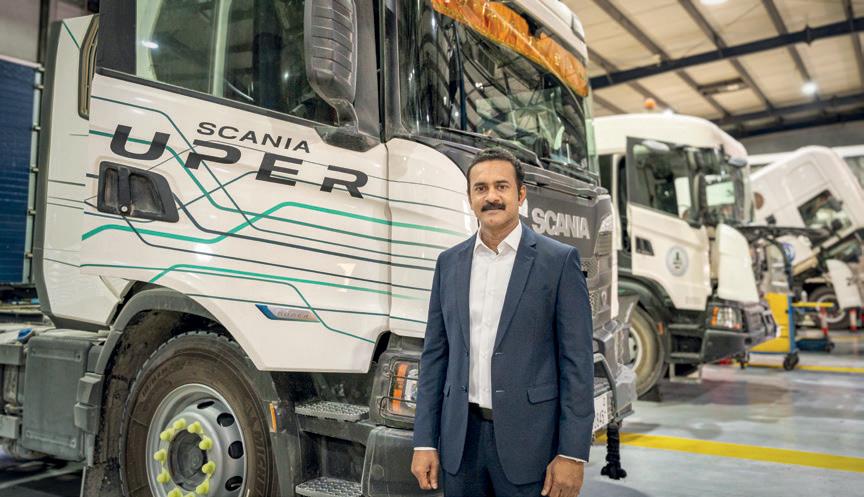
Inside Al Shirawi: Driving service excellence
Santhosh Varghese talks to T&FME about Al Shirawi’s aftersales evolution
FLEET
Top 5 tips from OnStar to save time and navigate traffic with confidence
With the right habits and real time support every drive becomes less about delays and more about staying confident, calm, and in control
FLEET
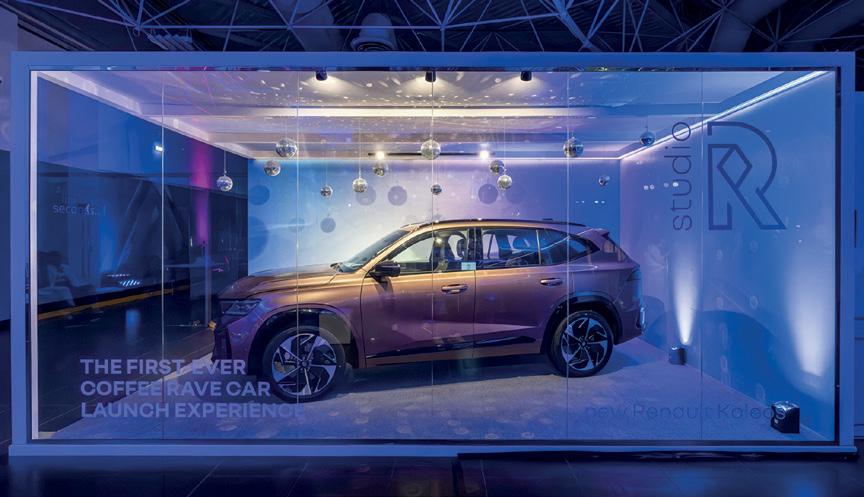
Intelligence is the new horsepower AW Rostamani on how Renault is redefining performance for the UAE
FLEET
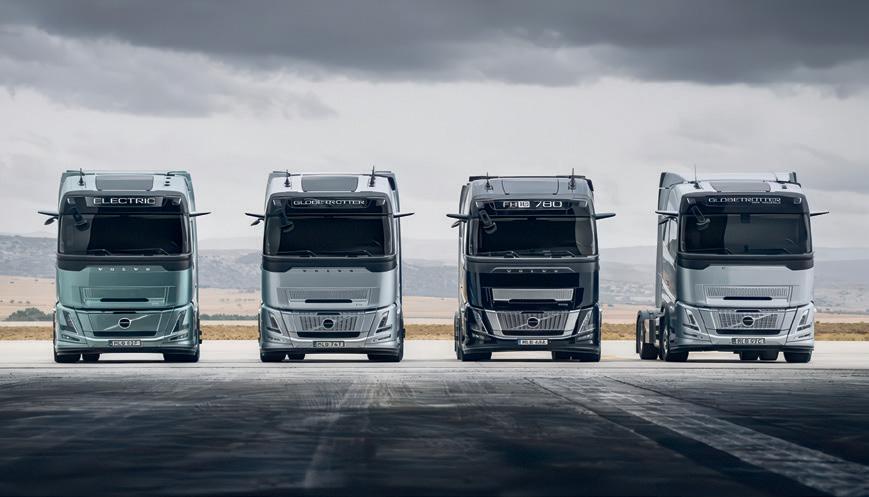
Volvo leads European heavy truck market for second consecutive year with 19% market share in 2025
Swedish heavyweight’s FH Aero truck especially popular in the 16t and above segment, as brand increases its market share in the category
EVENT
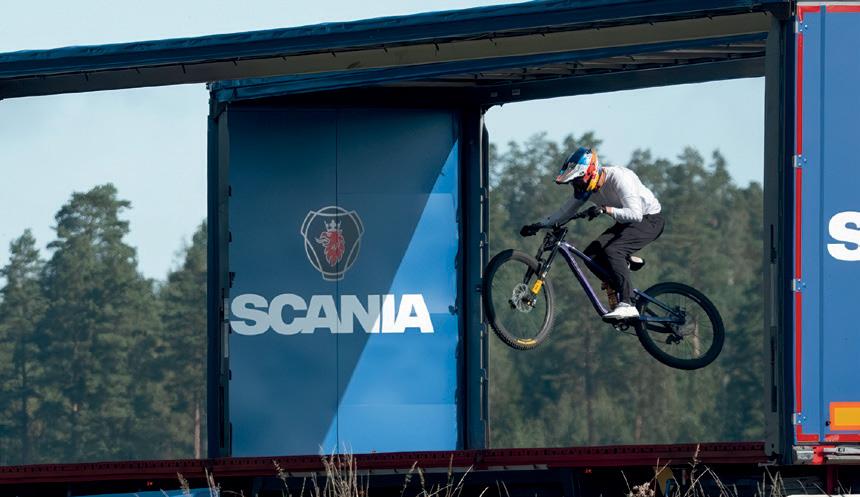
Scania says autonomous transport “is not far away – it’s already here” Scania pushes autonomous transport forward with high-Precision Red Bull stunt and expanded on-road trials
FEATURED NEWS
DRIVE YOUR BUSINESS FORWARD EFFICIENTLY WITH
6THSTREET.COM LAUNCHES FAST FASHION SERVICE IN BAHRAIN / AJEX OPENS SAUDI ARABIA’S FIRST GMP-GXP / SCANIA ANNOUNCES RAFT OF EXECUTIVE BOARD CHANGES
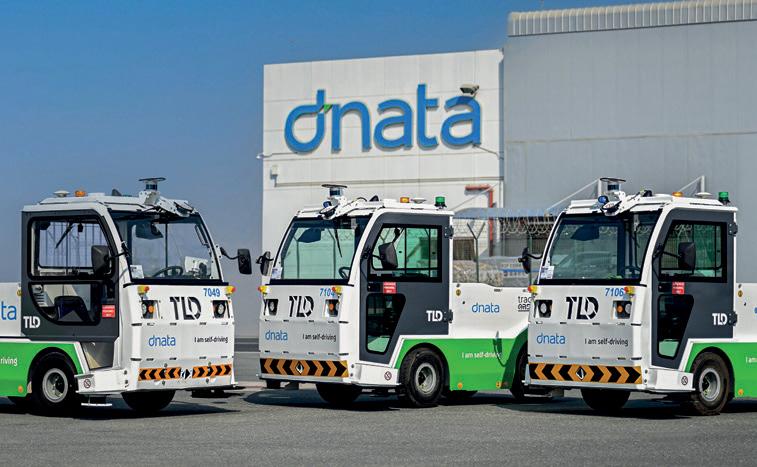
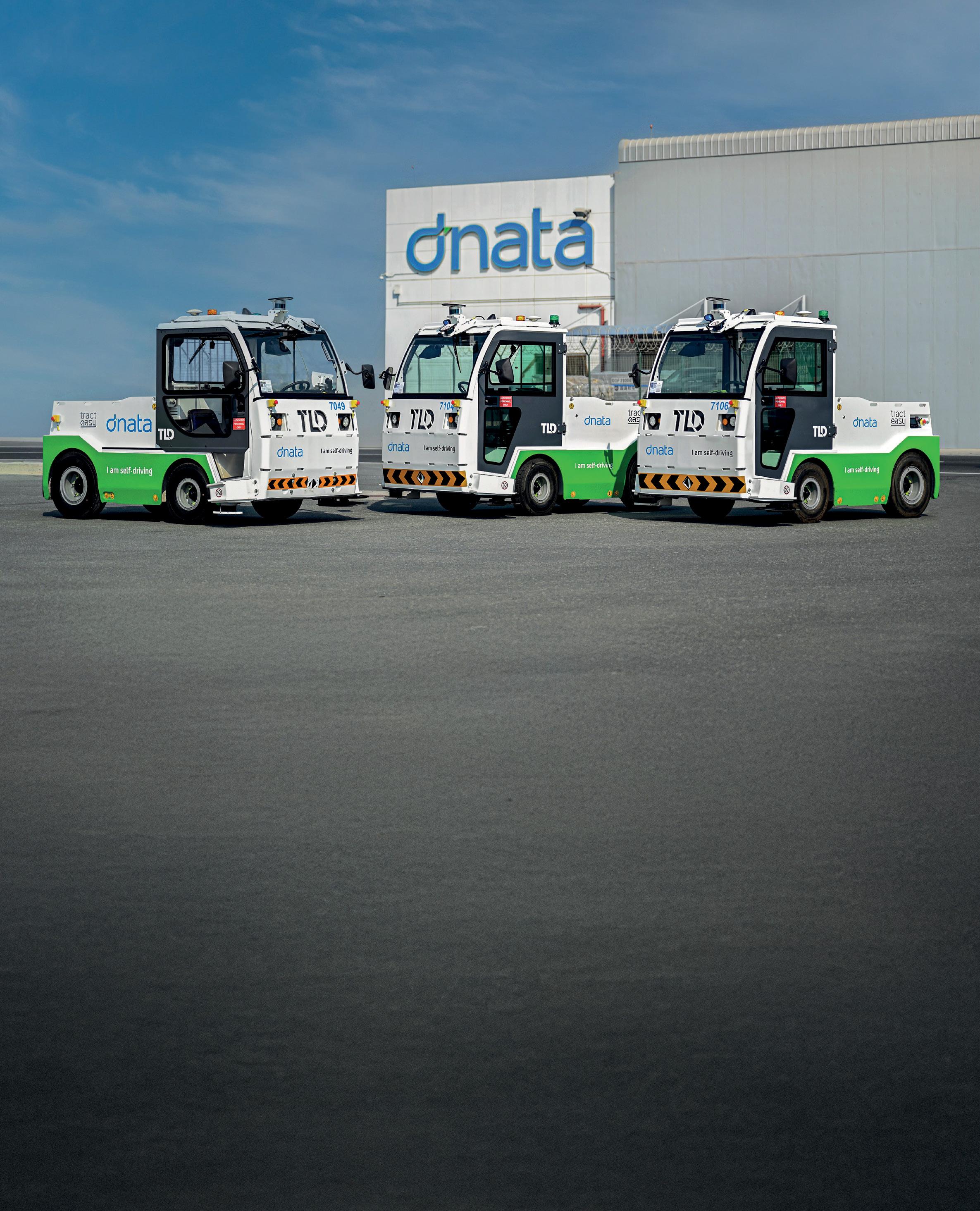
dnata deploys 100-plus ground support vehicles for Dubai Airshow NETWORK
DNATA PROVIDED EXTENSIVE ON-GROUND LOGISTICS AND TECHNICAL SUPPORT FOR THIS YEAR’S DUBAI AIRSHOW AT DUBAI WORLD CENTRAL (DWC)
FLEET
The company deployed 111 motorised assets, including pushback tractors, ground power units, passenger steps, and air conditioning units, to maintain seamless operations throughout the week-long event.
“There’s an entire choreography behind every aircraft movement at the Dubai Airshow,” said Jaffar Dawood, Divisional Senior Vice President – UAE Airport Operations at dnata.
“Our teams have supported this event for many years, and
we apply the same focus and precision that we bring to our day-to-day airport operations.”
Supporting one of the world’s largest airshows required dnata to coordinate the movement of heavy equipment between DXB and DWC, while keeping both airports fully operational.
This complex operation is managed by dnata Technical Services, which uses a fleet of articulated trucks and low-bed trailers, backed by dnata Logistics, to ensure flawless transfers.
“Our priority is to keep both
airports running seamlessly while managing a live event of this scale,” Dawood said.
“It’s about precise coordination between our ground handling, logistics and technical teams to ensure that every flight continues on schedule.”
As a founding member of the oneDXB Sustainability Alliance — in collaboration with Dubai Airports and flydubai — dnata is also playing a major role in the Sustainability Showcase, the first initiative of its kind on the global airshow circuit.
Of the 111 ground support assets at DWC, 14 are dedicated to sustainabilitythemed displays, including: The TLD TPX-100-E electric towbarless aircraft tractor; The Oshkosh AeroTech Commander 15i electric loader; The TLD ABS-580-E electric passenger step; and The solarpowered Aviramp Continental passenger boarding ramp.
“This collaboration demonstrates how Dubai’s aviation community is driving sustainability through realworld innovation,” said Dawood.
BMI FORECASTS ELECTRIC TRUCKS WILL REACH NEARLY 46% OF NEW SALES THIS YEAR IN CHINA AND 60% NEXT YEAR
6THSTREET.COM LAUNCHES FAST FASHION SERVICE IN BAHRAIN
FLEET
Digital fashion and lifestyle retailer 6thStreet.com, a brand under the UAEbased Apparel Group, has announced the launch of its 90-minute delivery service in Bahrain. This new offering aims to redefine fashion shopping convenience by enabling near-instant gratification for style-conscious consumers, whether they’re preparing for a last-minute event or gifting on the go.
The launch aligns with 6thStreet. com’s commitment to seamless shopping experiences and cutting-edge retail innovation. The express delivery service underscores the platform’s ambition to set new benchmarks for speed, reliability, and customer satisfaction in the GCC’s booming e-commerce landscape.
The new 90-minute delivery window is designed to elevate customer satisfaction by matching modern expectations of immediacy and responsiveness. This functionality is particularly geared toward impulse shoppers and urgent purchase needs— transforming the way customers interact with fashion online.
The 6thStreet.com app, available on Android and iOS, gives users access to a vast selection of 1,200+ global and regional brands, including names like Nike, Crocs, ALDO, Steve Madden, Skechers, Clarks, and Charles & Keith. Customers can browse curated collections, receive personalised recommendations, and track their orders in real time. With the 6thStreet Promise, customers are assured of key shopping values: 100% genuine products, on-time delivery, and price assurance. Flexible payment methods and a transparent return policy further enhance consumer confidence.
truckandfleetme.com
AJEX OPENS KSA’S FIRST GMP-GXP FACILITY
LOGISTICS
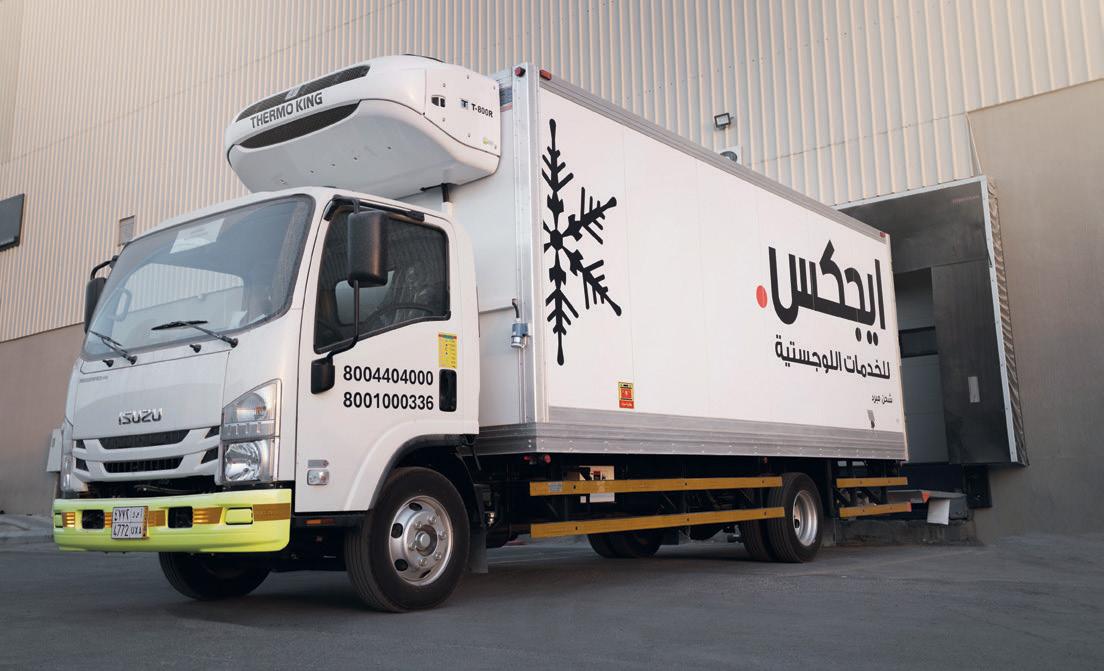
AJEX Logistics Services has inaugurated Saudi Arabia’s first and only GMP-GxP certified logistics depot, positioning the company as a pioneer in the Kingdom’s fast-growing healthcare and life sciences logistics sector.
The purpose-built 3,000m² facility, located in Riyadh, is designed to support compliant, temperature-controlled storage and distribution for pharmaceutical and healthcare products. Its launch marks a major milestone for AJEX as it strengthens its footprint in Saudi Arabia and enhances national cold chain infrastructure.
The announcement was made on the sidelines of CPHI Frankfurt 2025, the world’s largest pharmaceutical event, where AJEX showcased its latest temperaturecontrolled logistics solutions.
GxP refers to globally recognised best practices that govern the development, manufacturing, and distribution of regulated products — including Good Manufacturing Practices (GMP), Good Clinical Practices (GCP), and Good Storage Practices (GSP).
“The only facility of its kind currently operational in the Kingdom,
this investment positions AJEX as a unique partner for pharmaceutical companies seeking to enter or expand within Saudi Arabia and the Gulf’s rapidly evolving market,” said Justyna Lehmann, Senior Director Cold Chain & Healthcare at AJEX.
“The depot in Riyadh gives local and international manufacturers a new level of confidence.”
CHEVROLET: WE HAVE HAD AN ELECTRIC 2025
MANUFACTURERS
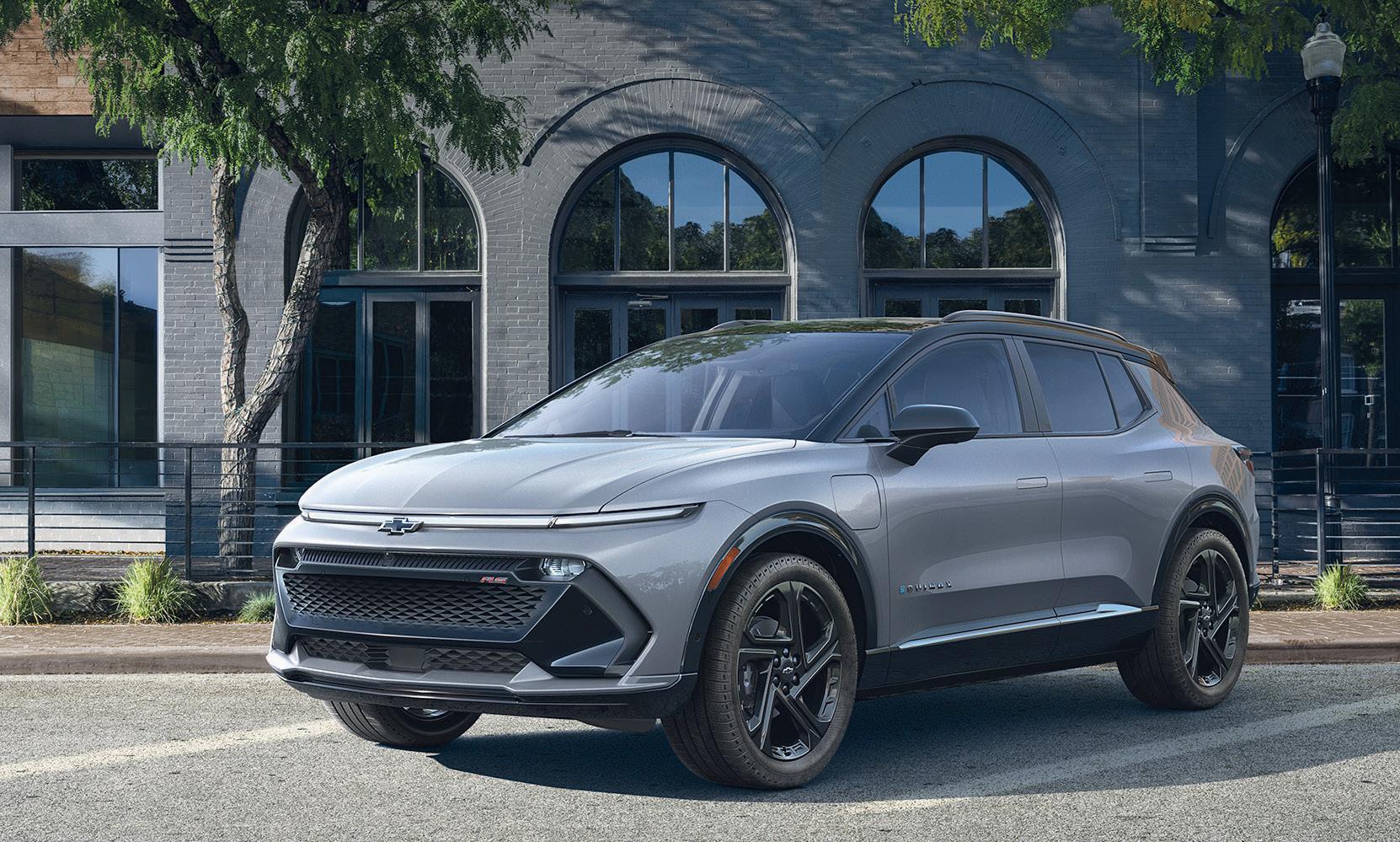
Chevrolet Middle East says it has accelerated its regional electrification strategy with the launch of four new electrified models in less than twelve months. One of the brand’s fastest and most ambitious product transformations to date.
The new lineup spans the Spark EUV, Equinox EV, Captiva EV and Captiva Plugin Hybrid (PHEV), offering
Middle East drivers a wider range of affordable, accessible and lifestyle-ready electric mobility options. Chevrolet says the rollout underscores its commitment to delivering “innovation to everyone, everywhere, every day”.
Leading the charge is the Spark EUV, positioned as one of the most attainable electric vehicles (EVs) in its class. The city-focused model delivers 101 hp, 180 Nm of torque
and up to 360 km of driving range (NEDC). Drivers can recharge via home charging options or top up 50 km of range in 10 minutes using a 50 kW DC fast charger.
Chevrolet is also targeting younger first-time buyers with five themed styling kits including Retro, Gaming and Adventure. The model is priced from AED 79,900 including VAT and comes with a 3-year/100,000 km vehicle warranty and an 8-year/160,000 km battery warranty.
The new Equinox EV enters the market as a fully electric, family-friendly SUV built around space, technology and long-range capability. The Captiva EV, meanwhile, produces 201 hp and offers an estimated 415 km of electric range. DC fast charging enables an 80% charge in 45 minutes.
ALM BACKS ABU DHABI SPARTAN CHAMPIONSHIP
DISTRIBUTORS
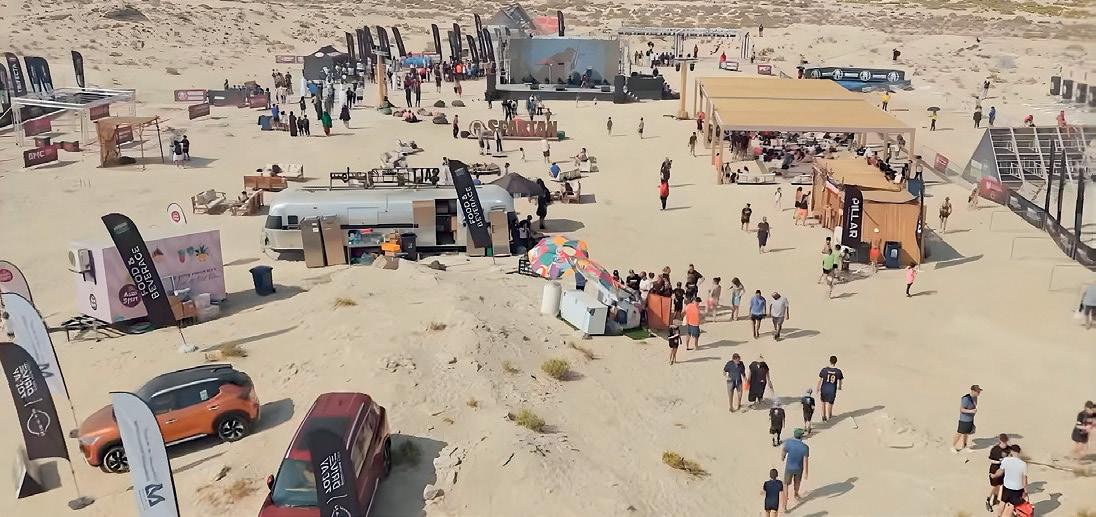
Al Masaood Automobiles is once again taking pole positiomajor supporter of Abu Dhabi’s sporting landscape after serving as the Official Automotive Partner of the 2025 Abu Dhabi Spartan World Championship Weekend. The authorised distributor for Nissan in
Abu Dhabi, Al Ain and Al Dhafra supported the elite endurance event, which took place from 20–23 November in Al Wathba Desert and drew top athletes, international participants and community racers from around the world.
The sponsorship is the latest activation under Al Masaood
Automobiles’ recently renewed partnership with the Abu Dhabi Sports Council (ADSC) and reflects a shared commitment to strengthening the emirate’s position as a global sporting hub. The company has long backed initiatives that promote active living, youth development and community engagement across the capital.
Across the four-days, Al Masaood Automobiles showcased the Nissan Magnite, Nissan X-Trail and Nissan Patrol at the Spartan village, giving visitors the chance to explore the models. The company also provided mobility support for the event’s operational teams, ensuring seamless movement of people and equipment across the expansive site.
SCANIA ANNOUNCES RAFT OF EXECUTIVE BOARD CHANGES
MANUFACTURERS
Scania has announced three key appointments to its Executive Board as the company adapts its organisational structure to accelerate performance, respond to shifting market conditions and sharpen long-term competitiveness.
DHL EXPRESS AND REGENT EXPLORING E-SEAGLIDER CARGO OPERATIONS
FLEET
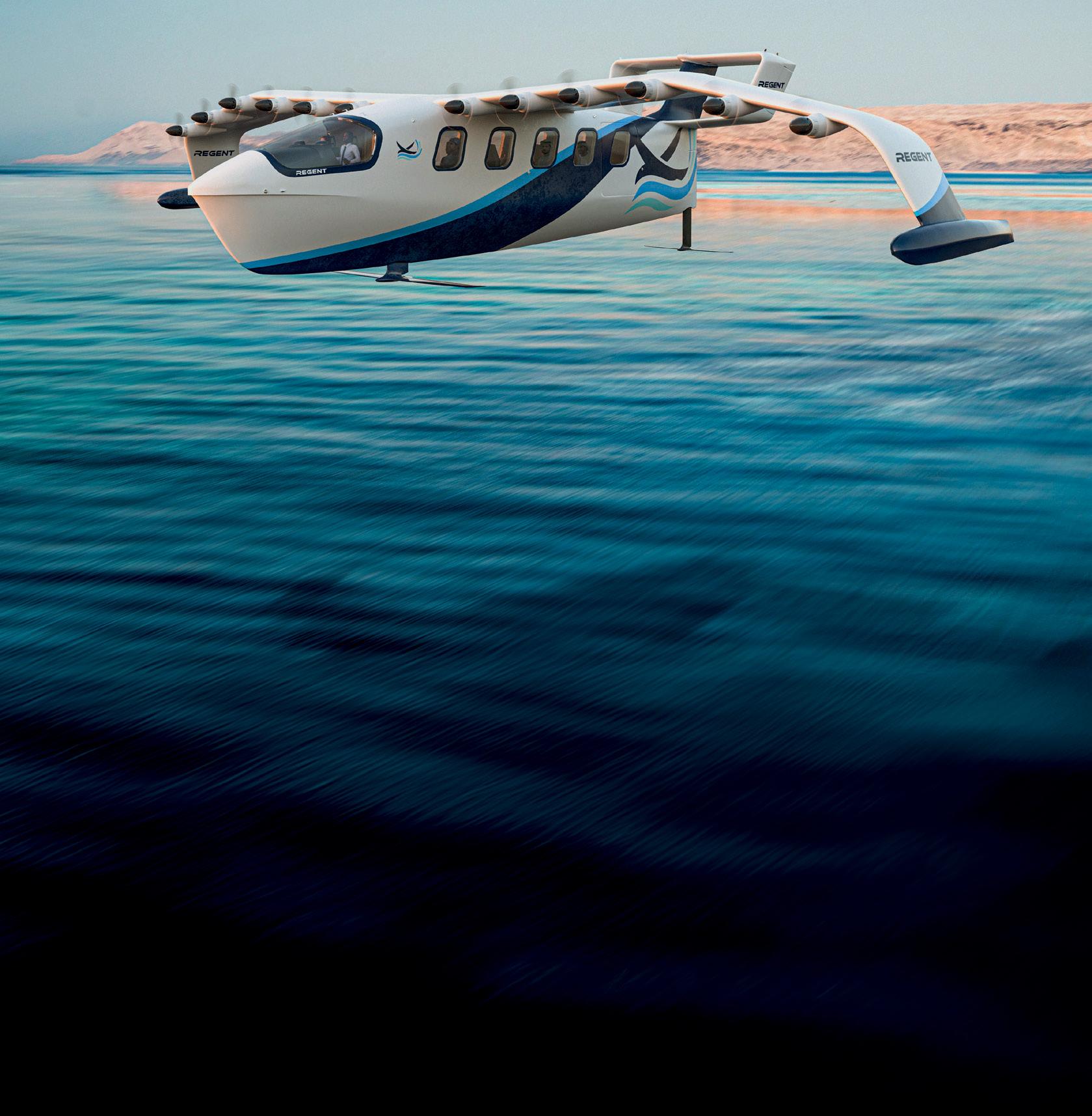
DHL Express has signed a strategic Memorandum of Understanding (MoU) with REGENT Craft, the US-based developer of all-electric Seaglider vessels, to explore deploying the cuttingedge craft for sustainable regional cargo transport.
REGENT’s Seaglider is a next-generation vessel that operates a few metres above the water’s surface
using wing-in-ground (WIG) effect aerodynamics. The result is a craft that combines the speed of an aircraft with the accessibility and cost efficiency of maritime operations—delivering highspeed, all-electric transport with zero emissions.
Beginning January 2026, DHL Express will evaluate the Seaglider’s potential to enhance its short-haul, coastal, and island logistics
operations across the Middle East. Pending successful trials and network modelling, DHL will consider expanding Seaglider deployment to other global markets.
“This collaboration marks another important milestone as we build a more sustainable and connected global logistics ecosystem,” said Billy Thalheimer, Cofounder and CEO of REGENT.
The truck and bus manufacturer is undergoing a broad organisational review as it navigates rapid industry change driven by new technologies, regionalisation and evolving market dynamics. Scania says the restructuring aims to strengthen value creation, boost agility and simplify internal processes.
From 1 January 2026, Scania will merge Sales and Marketing with Commercial Operations to create a single commercial entity: Scania Commercial.
The unit will be led by Stefano Fedel, who becomes Executive Vice President and Head of Scania Commercial. Fedel, who joined Scania in 2001, currently serves as EVP and Head of Sales and Marketing and brings extensive experience across markets and functions.
Camilla Dewoon has been appointed Executive Vice President and Head of Scania Group China effective 1 January 2026. Dewoon has been with Scania since 1998. Scania is also combining its Strategy and Corporate Management unit with Communications and Sustainability to establish a new function: Strategy and Communications. The role will be led by Anna Carmo e Silva as EVP Communications.
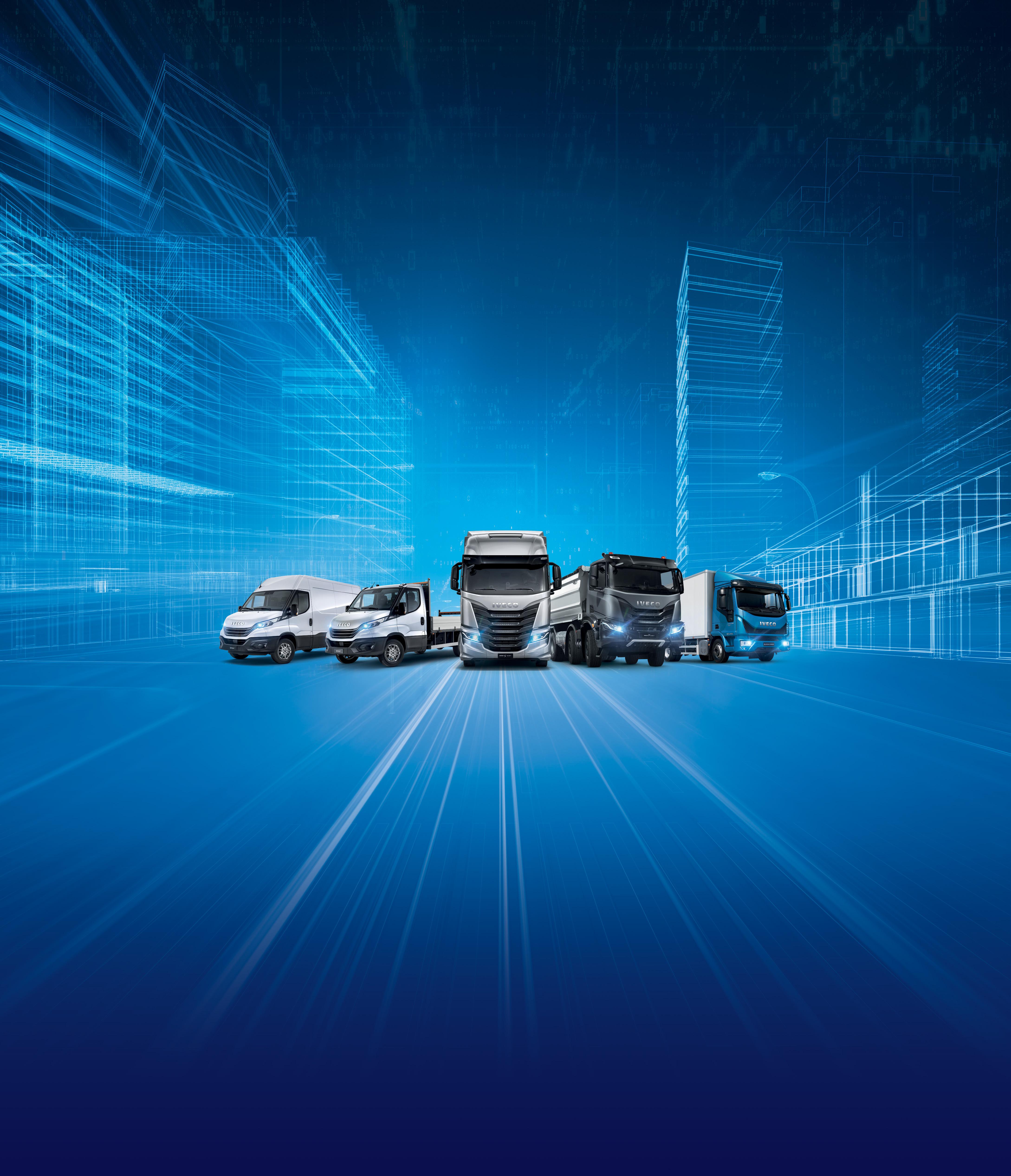
Drive the road of change.
Full offering
- Full range vehicles with the most advanced technologies
- Highly customized product driven by market needs and optimized Total Cost of Ownership
High capillarity of aftersales
- Repair and Maintenance contracts and competitive warranty conditions
- Origin 100% IVECO Parts and a widespread network coverage
European technology
- High quality complete line-up in terms of tonnage, power, torque, safety, ergonomics
- High performance and robust trucks for extreme Off-road conditions
Customer centricity
- Comfort, ergonomics and the latest safety technology to make on board easier
- Driver Style Evaluation tool on Heavy ON-road range and optimized vehicle design to improve customer profitability
JEEP
LAUNCHES
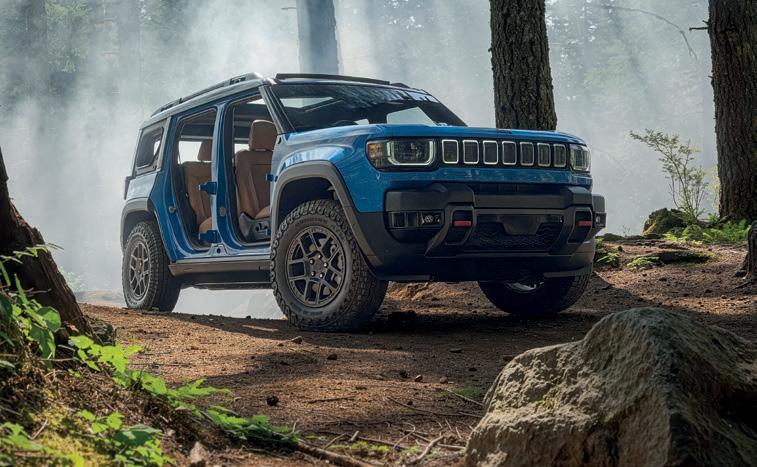
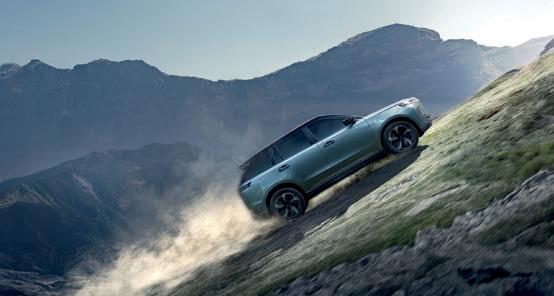
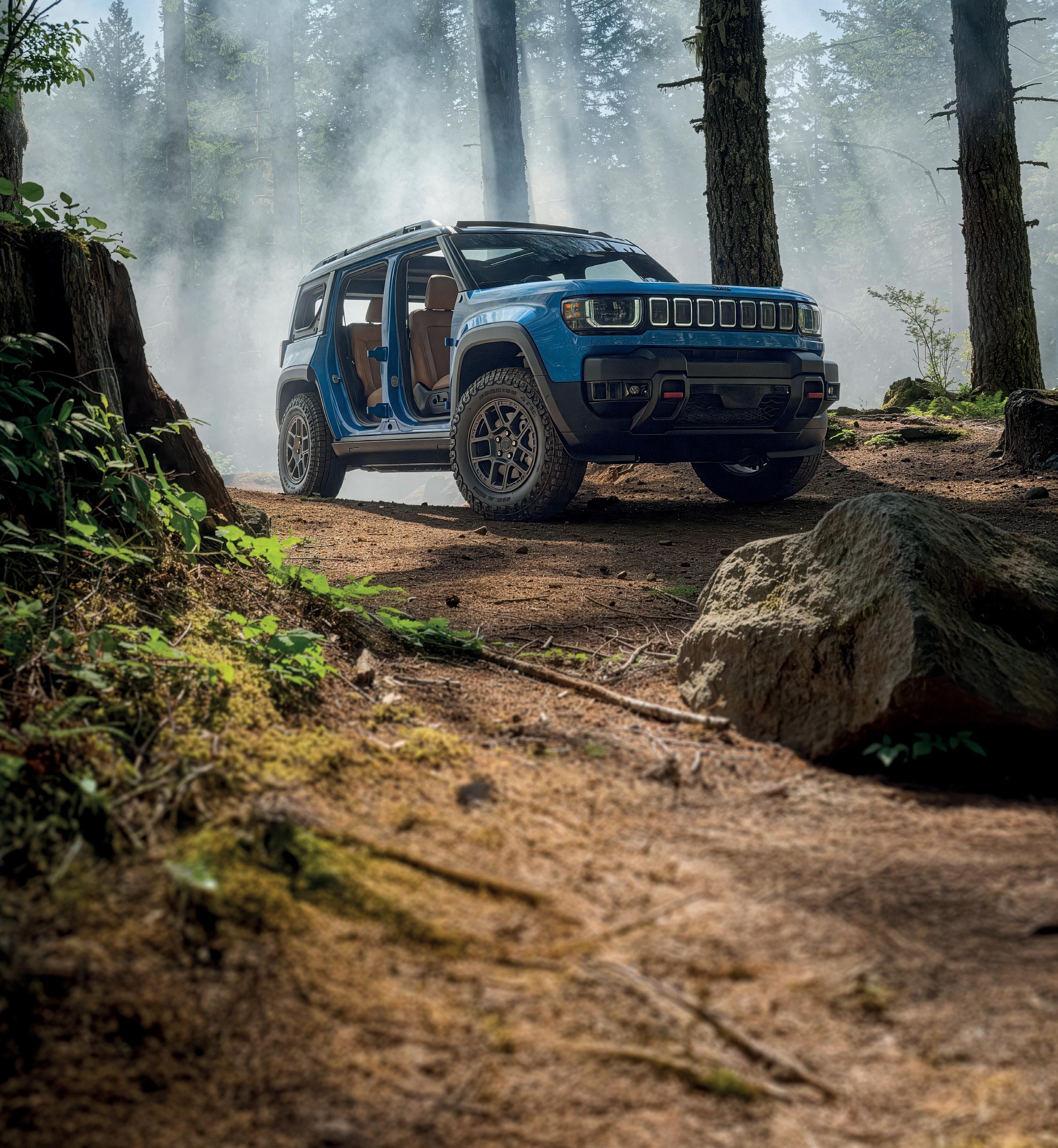
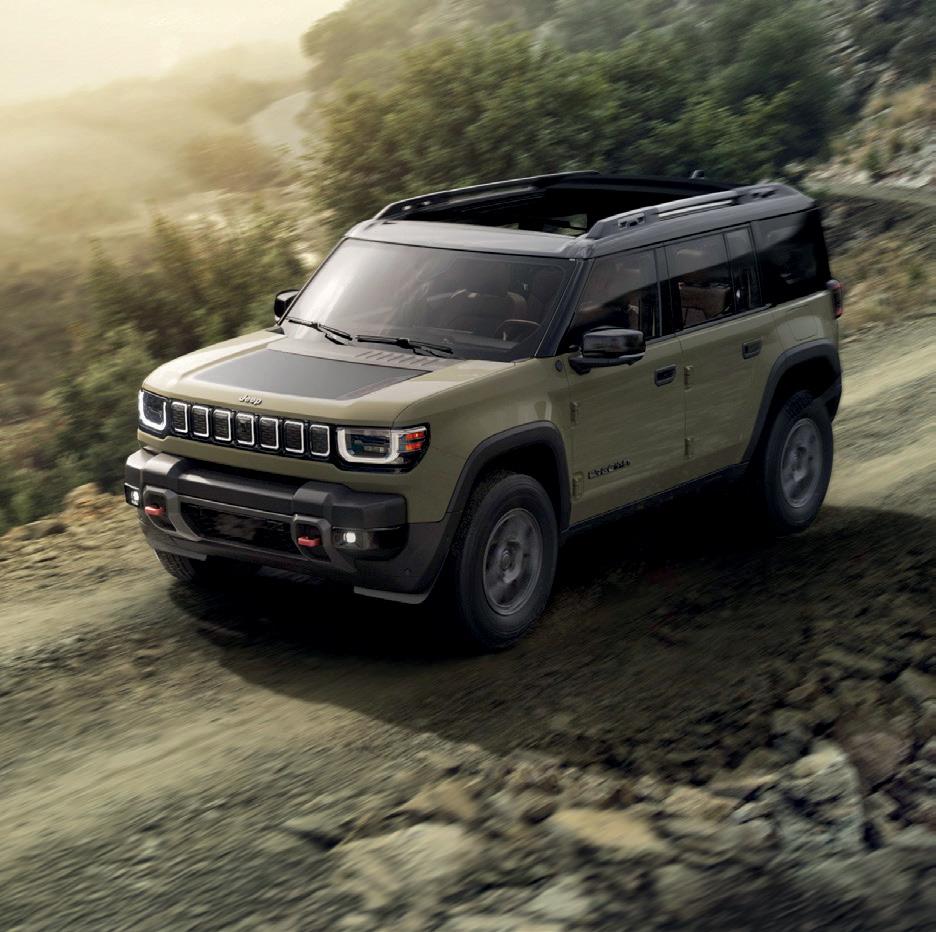
Jeep debuts the world’s first fully electric Trail Rated SUV
Jeep is making its boldest move yet into electric mobility with the launch of the 2026 Jeep Recon, the first and only fully electric Trail Rated SUV in the industry. Purpose-built on a dedicated electric platform, the Recon unites Jeep’s legendary 4x4 character with next-generation EV engineering, delivering a drivetrain designed not just for efficiency but for real, uncompromising off-road adventure.
Powered by Stellantis-designed electric drive modules that produce 650 hp (485kW) and 620 lb-ft (841Nm) of instant torque, the Recon accelerates from 0–60 mph in just 3.6 seconds (0-100 km/h in 3.8 seconds) while retaining the rugged capability the brand is
known for. Its estimated 250-mile (400km) all-electric range ensures it can balance wilderness exploration with weekday practicality.
Production begins early next year at the Toluca Assembly Plant, with initial launches in the U.S. and Canada, ahead of a global rollout.
Jeep has built the Recon’s offroad credibility around its new all-electric architecture, pairing high-output EDMs with the latest generation of the brand’s SelecTerrain traction management system. The Moab trim enhances low-speed control with a 15:1 final drive ratio, delivering substantial torque multiplication for technical terrain and enabling precise throttle modulation. Off-road performance is
further strengthened through an electronic locking rear differential that ensures power flows equally across the axle when required. Large-diameter half shafts and reinforced CV joints are engineered to handle the chassis’ high torque loads, while a suite of highstrength steel underbody shields protects the 100 kWh battery pack across challenging terrain. The Recon offers 33-inch tyres, 9.4 inches of ground clearance, and off-road geometry that includes a 34-degree approach angle, 34.5-degree departure angle and a 23.5-degree breakover angle.
The Selec-Terrain system includes Rock mode for the Moab trim, tailoring throttle response for controlled movement over
uneven surfaces and enabling a two-pedal driving technique that allows for careful modulation between brake and throttle. Rock mode also incorporates a hill-hold function to prevent rollback when the driver transitions between pedals. Additionally, low-speed Selec-Speed Control maintains a set speed on steep inclines or descents, allowing the driver to focus solely on steering.
The 2026 Recon pairs unmistakable Jeep styling cues with EV-first details, combining upright proportions, illuminated seven-slot grille rings and U-shaped signature lighting with modern aerodynamic touches. True to the brand’s openair heritage, it offers a dual-pane sunroof as standard, with the
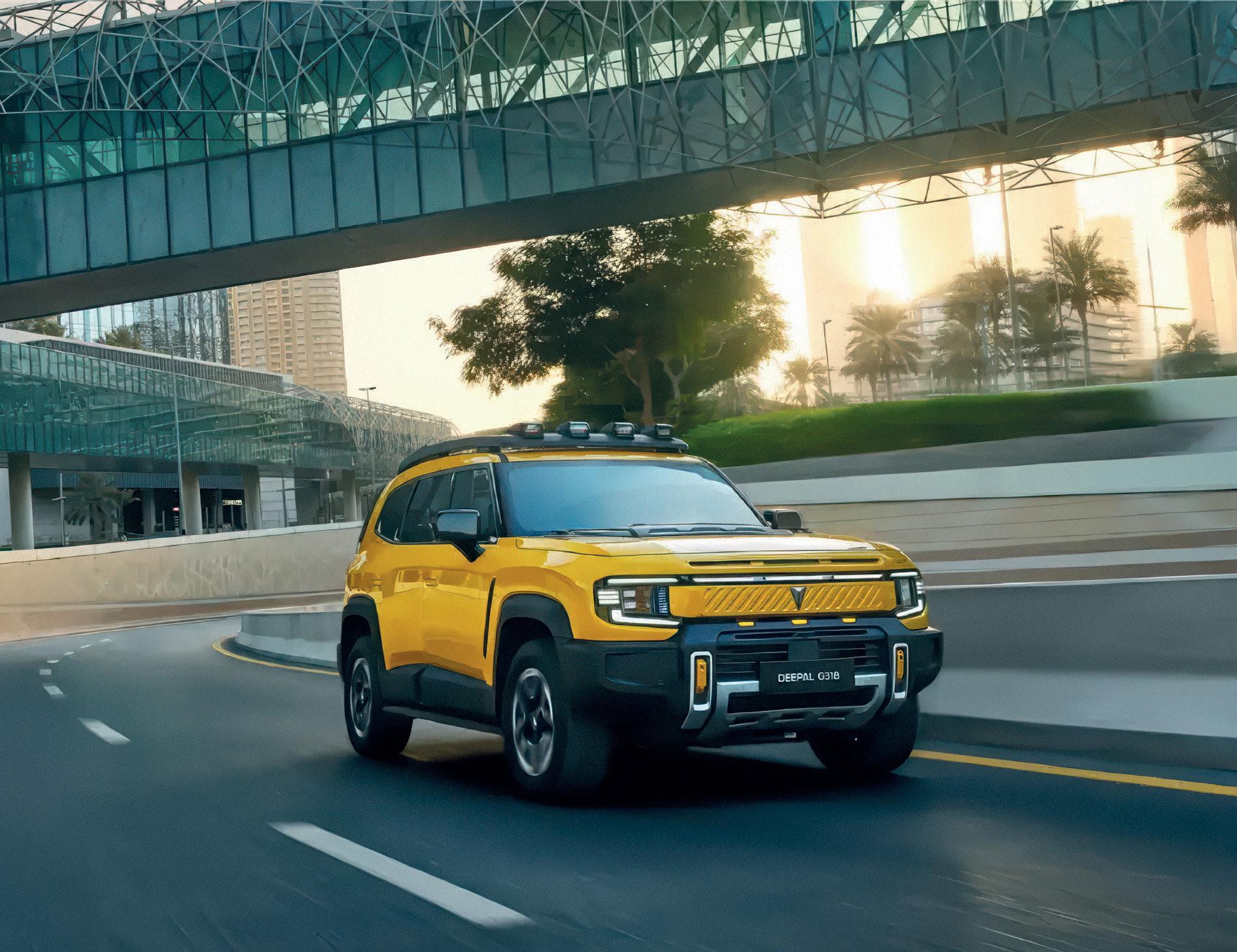
DEEPAL REVEALS G318 SUPER HYBRID SUV
NEW HYBRID MAKES ITS REGIONAL DEBUT IN DUBAI, THE BRAND’S THIRD LAUNCH IN LESS THAN A YEAR
THE FIRST ELECTRIC TRAIL RATED SUV
The 2026 Jeep Recon blends authentic Jeep capability with a ground-up electric architecture engineered for real off-road performance.
ADVENTURE, ELECTRIFIED
With removable doors, open-air design options and instant torque, the Recon ushers in a new era of EV freedom and 4x4 capability.
Sky One-Touch Power Top available for those who want maximum exposure to the outdoors. The Recon is also the only EV designed with removable doors, rear quarter glass and swinggate glass staying true to Jeep’s adventurous identity.
Gloss Black accents on the grille, pillars and window trim give the SUV a defined visual contrast, while
SPECIFICATIONS
expressive exterior colour options range from vibrant, adventure-inspired hues to rugged utilitarian tones and refined neutrals. Wranglerinspired LED taillamps and a swing gate carrying a full-size spare complete its off-road silhouette, further reinforcing its capability.
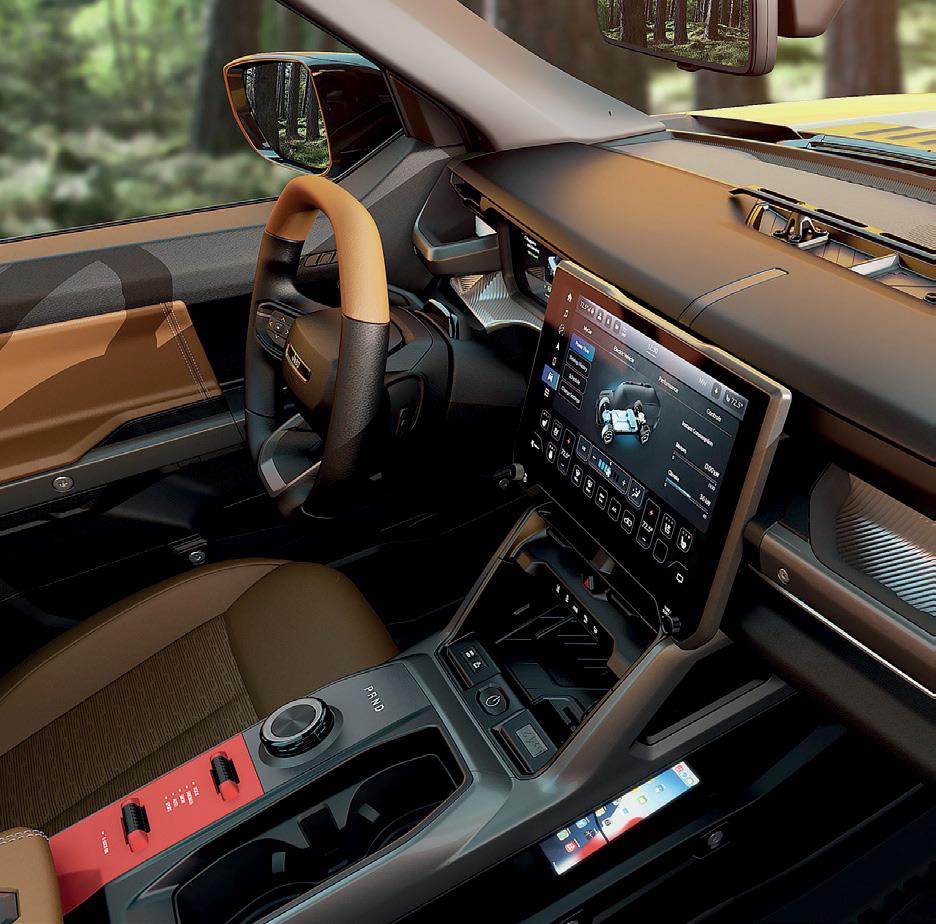
Inside, the Jeep Recon balances ruggedness with modern digital sophistication.
DEEPAL has expanded its regional line-up with the launch of the all-new DEEPAL G318 in partnership with Al Tayer Motors, its exclusive UAE distributor. The model made its regional debut on November 18 at Nara Oasis within the Nara Desert Escape in Dubai, the brand’s third launch in less than a year. Positioned as a “Super Hybrid” SUV built for both urban versatility and full-scale off-road capability, the G318 integrates the latest advances in DEEPAL’s electrified powertrains, intelligent driving features and rugged design philosophy.
“We are committed to bringing intelligent, efficient, reliable, and designdriven mobility solutions to the Middle East and Africa,” said Xiao Feng, General Manager of Changan Automobile’s Middle East and Africa Division. “The launch of the DEEPAL G318 reflects this vision, delivering advanced technology and wideranging capabilities to match the evolving needs of drivers in this vibrant region.”
Following the success of the S05 and S07, the DEEPAL G318 builds on the brand’s electric and hybrid momentum with a model engineered for adventure, long-distance comfort and daily practicality. With a starting price of AED 129,900, the G318 arrives with a six-
year/150,000 km vehicle warranty and eight-year/150,000 km battery warranty.
Ashok Khanna, CEO of Al Tayer Motors, said the latest launch demonstrates the distributor’s commitment to expanding sustainable mobility in the UAE. “The DEEPAL G318 is a game-changer for customers seeking adventure without compromising on environmental responsibility or cutting-edge technology. We are excited to continue building momentum for the brand.”
The G318 adopts DEEPAL’s new ‘Meteorolite Cutting’ design language: sharp, sculpted surfaces inspired by natural metallic forms.
SPECIFICATIONS
Motor Dual-output EREV/ 1.5l petrol Power 316 kW Torque 572Nm
0–100 km/h 5.9secs (dual-motor variant)
Speed 185km/h (AWD version)
AED 129,900
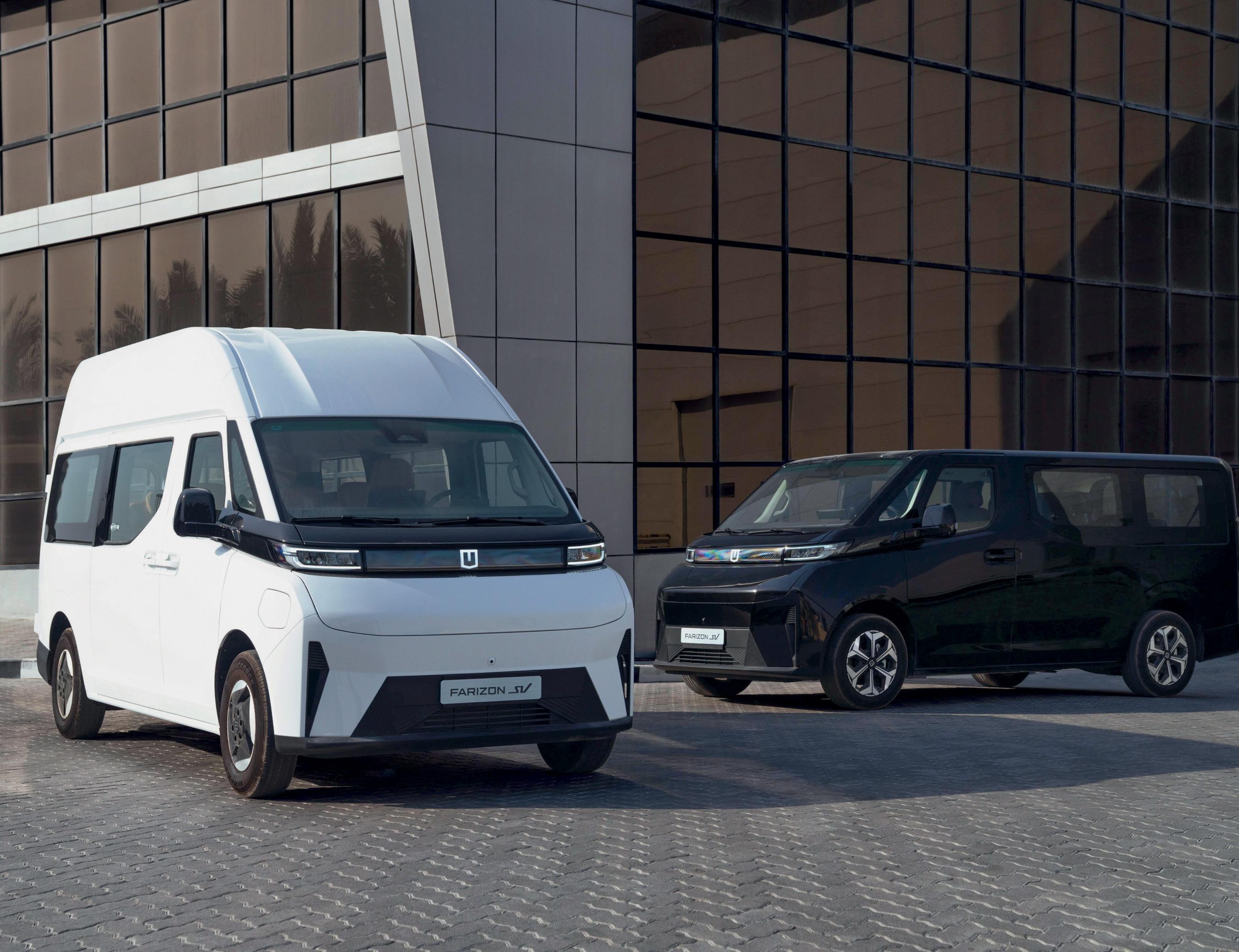
BROADENING MY FARIZONS
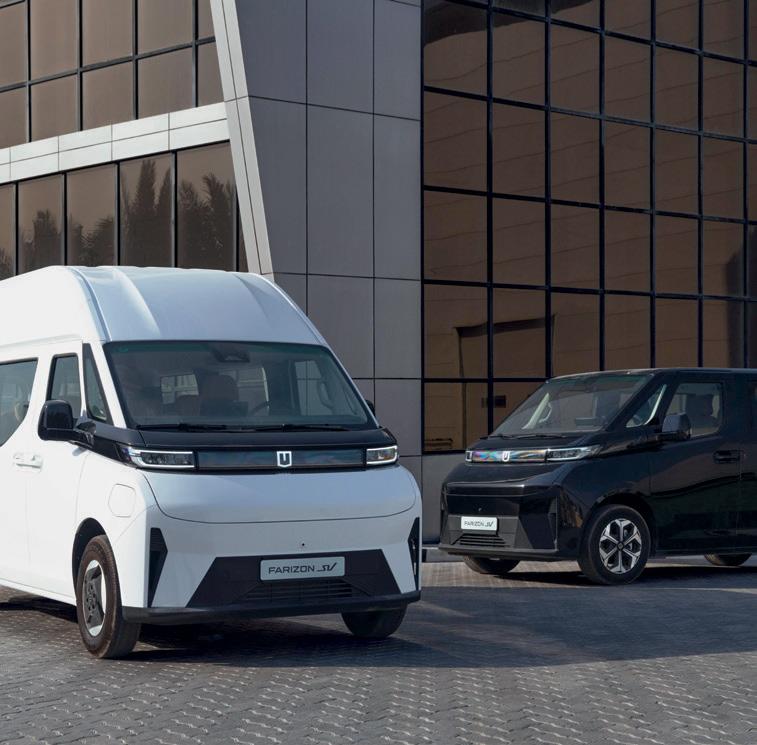
T&FME spends a surprising week behind the wheel of the Farizon
SV
As key handovers go, T&FME has had some real corkers in recent months. There was the trip to South Korea to take Kia’s PV5 out into the mountains. There was journey both forwards and backwards in time with the eSprinter in October.
Unlike those influencer-friendly settings, my Farizon SV people-mover test drive began in a much more straightforwardly, in a quiet early morning handover at our office car park in Dubai, where the SV sat waiting in full shuttle configuration under already-warm desert sunlight. And that was fitting in its own way: the Farizon SV
isn’t here for theatrics. It’s here to work.
But that doesn’t mean it lacks presence. Much like the CityRay’s understated design, the SV keeps things clean and deliberate. No oversized lighting signatures, no faux-premium touches just. This is a modern, honest, EV-first people mover that understands its job. What I learned over the next seven days was simple: the Farizon SV may not try to be a lifestyle object, but it is absolutely engineered around how people actually move around cities like Dubai.
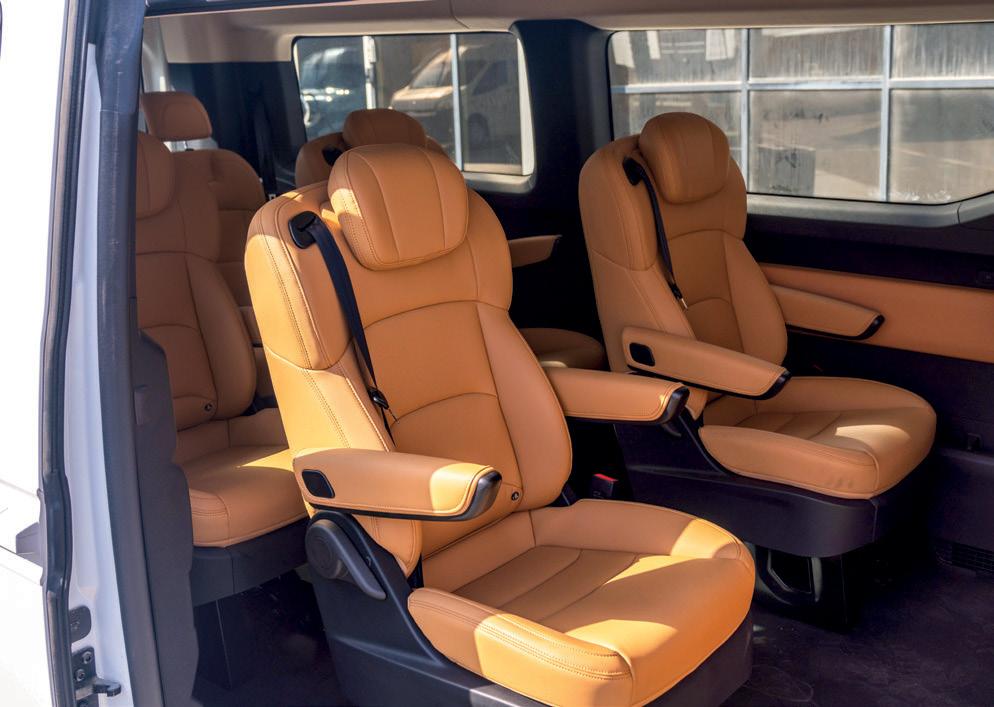
Climbing into the SV, the first big surprise is refinement (as noted by the CPI Trade Media team I shuttled about). Compared with other electric vans I’ve tested, the Farizon sits in a sweet spot: more comfortable than
The cabin is tall, airy and genuinely welcoming”
the eSprinter, less design-obsessed than the PV5, and more spacious than both.
The cabin is tall, airy and genuinely welcoming. My passengers instantly notice the generous headroom and the wide cabin footprint. The seats in my test vehicle were well-bolstered without being stiff, and the ride quality is seriously impressive. Over speed bumps, construction patches and Dubai’s occasional uneven asphalt, the SV remained composed and cushioned in ways other van-based shuttles rarely manage.
Air-conditioning — the make-or-break line for any vehicle in this region — was outstanding. Even in the very back row, cabin temperatures stabilised quickly. That’s not
always the case in converted passenger vans, but the SV benefits from its purpose-built EV architecture. Fit and finish sit in that “quietly clever” zone. Not luxurious, but well chosen and functional. You won’t find gimmicks; you will find thoughtful practicality.
The Farizon SV doesn’t chase acceleration numbers. I would appreciate more response during slow speed pick-up but its tuning leans toward smoothness at low speeds which is ideal for hotel shuttles, school runs, airport transfers and corporate mobility. Steering is light, visibility is excellent and road noise is conspicuously low. Compared with the PV5 (which feels more ambitious and “tech-forward”) and the eSprinter (which still carries its commercial roots), the SV positions itself as the calm middle ground.
Over a week of mixed use the SV felt consistently predictable. Passengers commented on the quietness, especially at lower speeds, although like other EV vans it does generate wind roar on highways. Regenerative braking is subtle, range performance was respectable even with relatively heavy A/C loads (note: this was not a summer stint), and charging matched the spec sheet without drama.
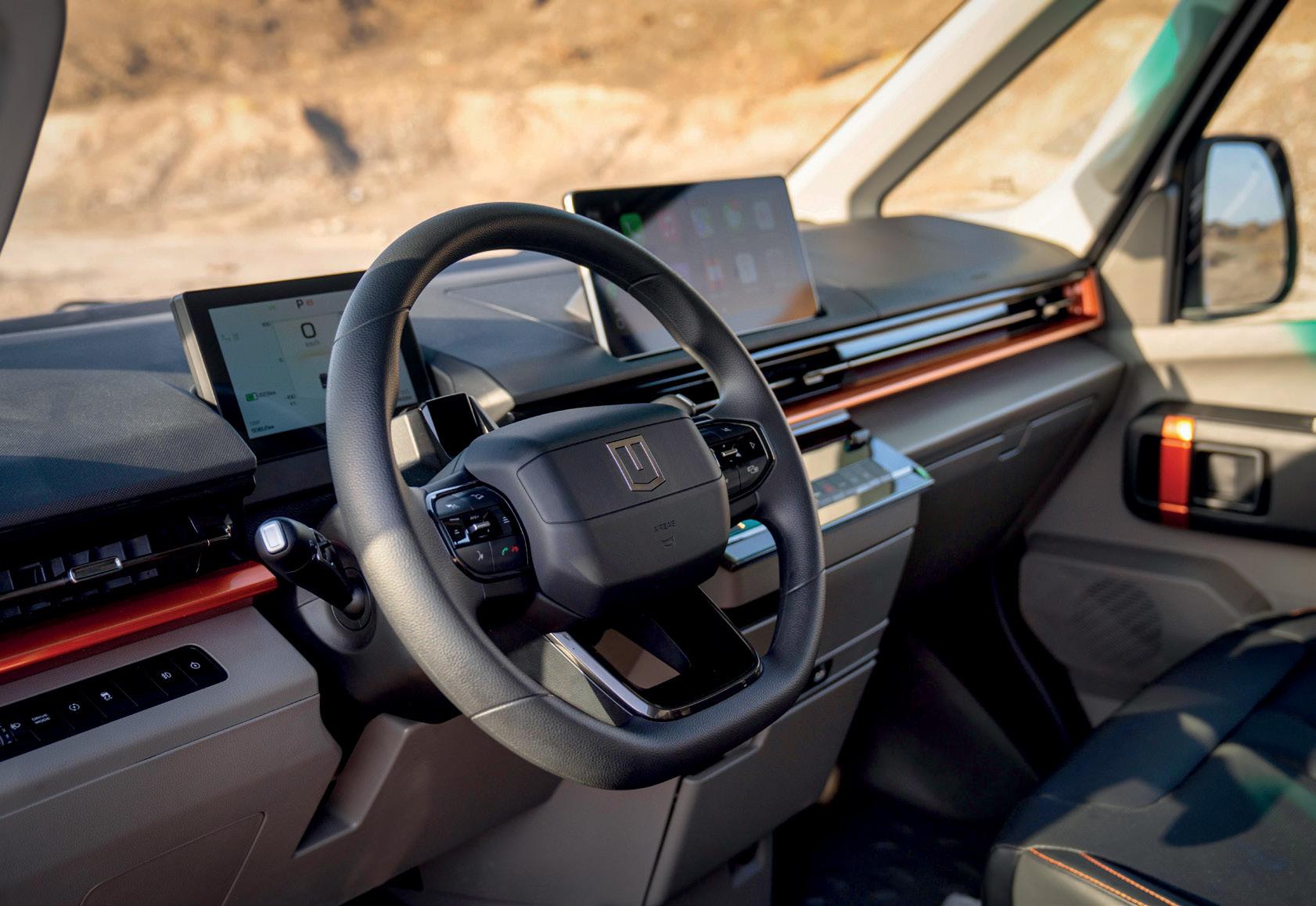
The Farizon SV reveals a surprisingly cohesive digital, Android-assisted layer. The infotainment system is simple, modern and far better integrated than early-stage Chinese EVs used to be. Connectivity is stable, driver-assist features behave logically; lane assist is helpful rather than an interfering wheel grabberand the digital dash is clear without being overloaded. The Kia PV5 definitely leads in this department — Kia’s UI polish is excellent — but Farizon really is not far behind. The eSprinter, by comparison, remains functional rather than intuitive, although we know that will change in the upcoming range updates and launches. For now, Farizon’s advantage is consistency; nothing feels half-baked.
Across the entire week, this became the defining takeaway: the Farizon SV is exceptionally good at being a people mover. Whether carrying adults and luggage to the airport, running errands across Dubai, or transporting colleagues between meetings, the SV kept passengers comfortable, cool and quiet. This is where Farizon’s smooth ride really stands out. Where the eSprinter can feel busy and firm, and the PV5 occasionally verges on too sporty, the SV hits that relaxed shuttle sweet spot.
The cabin layout is flexible, the stepin height is easy for passengers of all ages, and the overall sense of space gives the vehicle an immediately approachable
feel. It never feels like a converted cargo van — because, fundamentally, it isn’t.
Steering is light, visibility is excellent and road noise is conspicuously low”
The SV is impressive, but there are still aspects that would benefit from refinement. The suspension, while generally excellent, can feel slightly floaty at higher speeds when the van is fully loaded. Low-speed pedal calibration occasionally hesitates or bites too quickly. Interior storage is limited for both drivers and passengers. Charging performance is good but not exceptional, and the PV5 retains a slight edge in faster recharge times. And while Farizon is building its regional footprint, fleets will naturally look for reassurance around aftersales, parts availability and long-term support. But then Careem is a fan, and Jameel Motors is determined to provide top-quality support.
Viewed from a fleet-management perspective, the SV is a highly compelling
option. What it lacks in marketing flash it more than makes up for in operational realism: stable range, a quiet cabin, a relaxed ride, easy passenger access and low driver fatigue. For airport shuttles, hotels, schools, mobility operators and corporate fleets, these factors matter far more than styling flourishes.
If the Kia PV5 is the “digital ecosystem” van, and the current eSprinter is the “heritage engineering” van, the Farizon SV positions itself as the comfort-first workhorse: the van you scale without drama and deploy without needing to rethink your entire operational model.
Verdict: a quietly confident contender
The Farizon SV didn’t try to charm me with an iced latte and influencer lighting — and it didn’t need to. Over a week in Dubai, it did exactly what a well-engineered people mover should do: carry people quietly, comfortably and efficiently, with zero fuss. It doesn’t chase premium, it doesn’t chase gimmicks, and it doesn’t pretend to be something it isn’t. It just works — and in the world of fleet mobility, that’s often the highest praise. In a region where air-conditioning performance, comfort, reliability and total cost of ownership dominate the conversation, the Farizon SV stands out as a deeply practical and surprisingly refined electric people mover. A genuinely impressive, quietly confident contende. And clear proof that Farizon is a van brand to watch.
QUIET REFINEMENT
Farizon’s SV brings quiet refinement and shuttle-ready practicality to Dubai’s growing EV landscape.
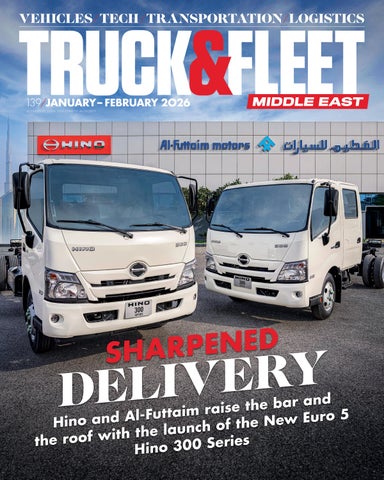
SHARPENED
DELIVERY
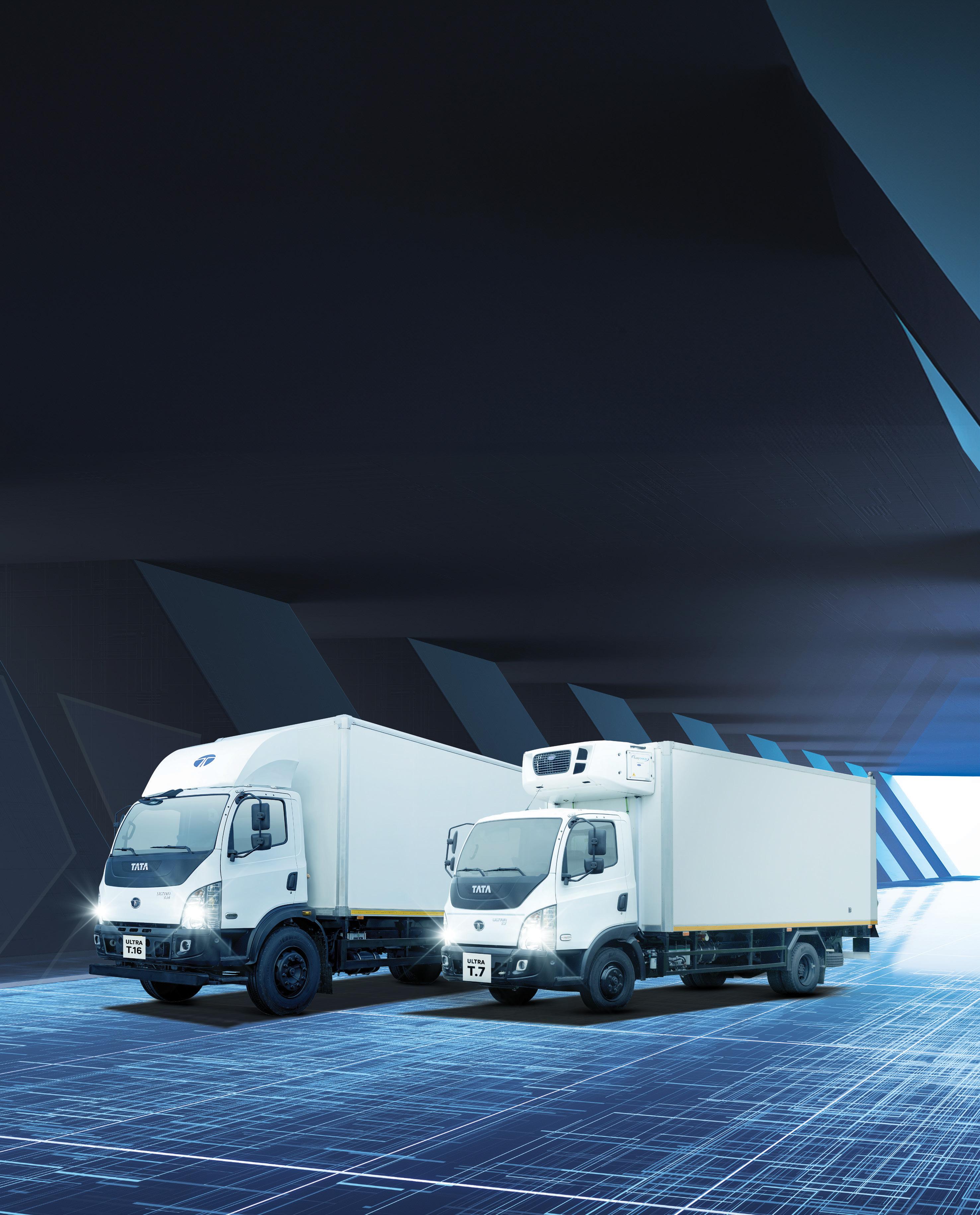
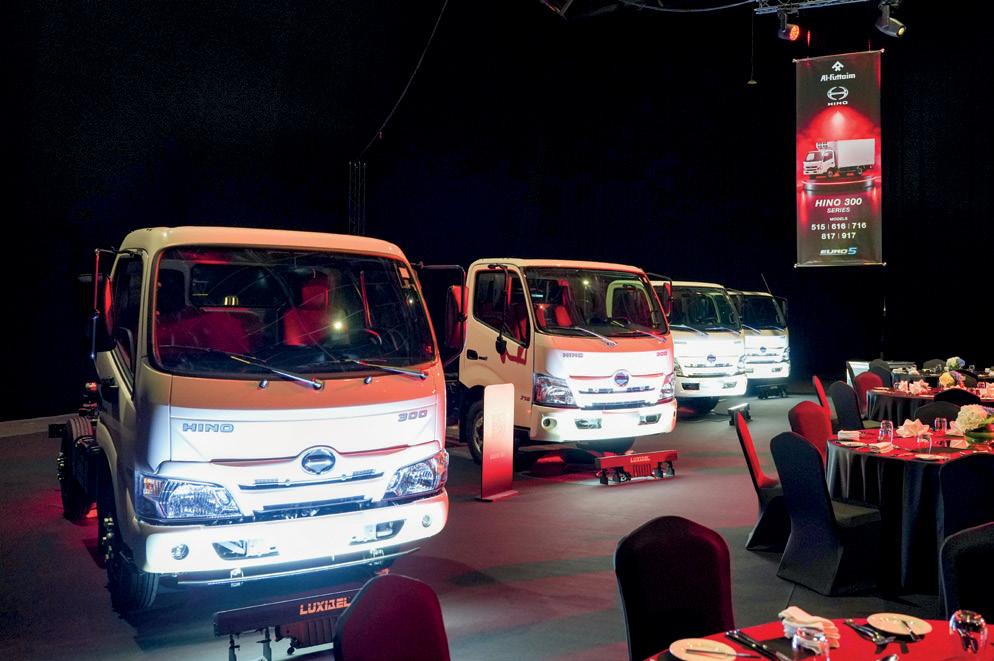
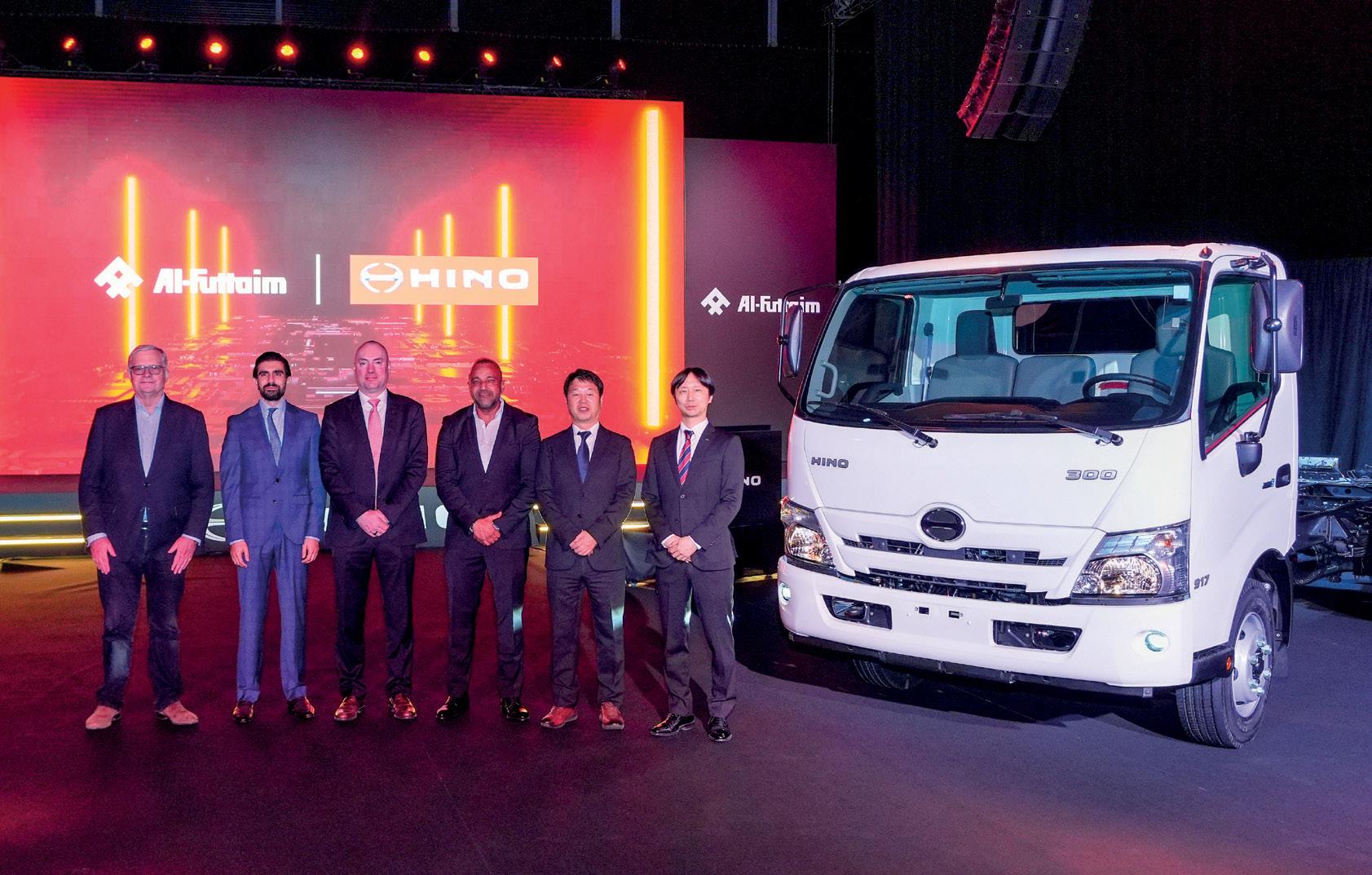
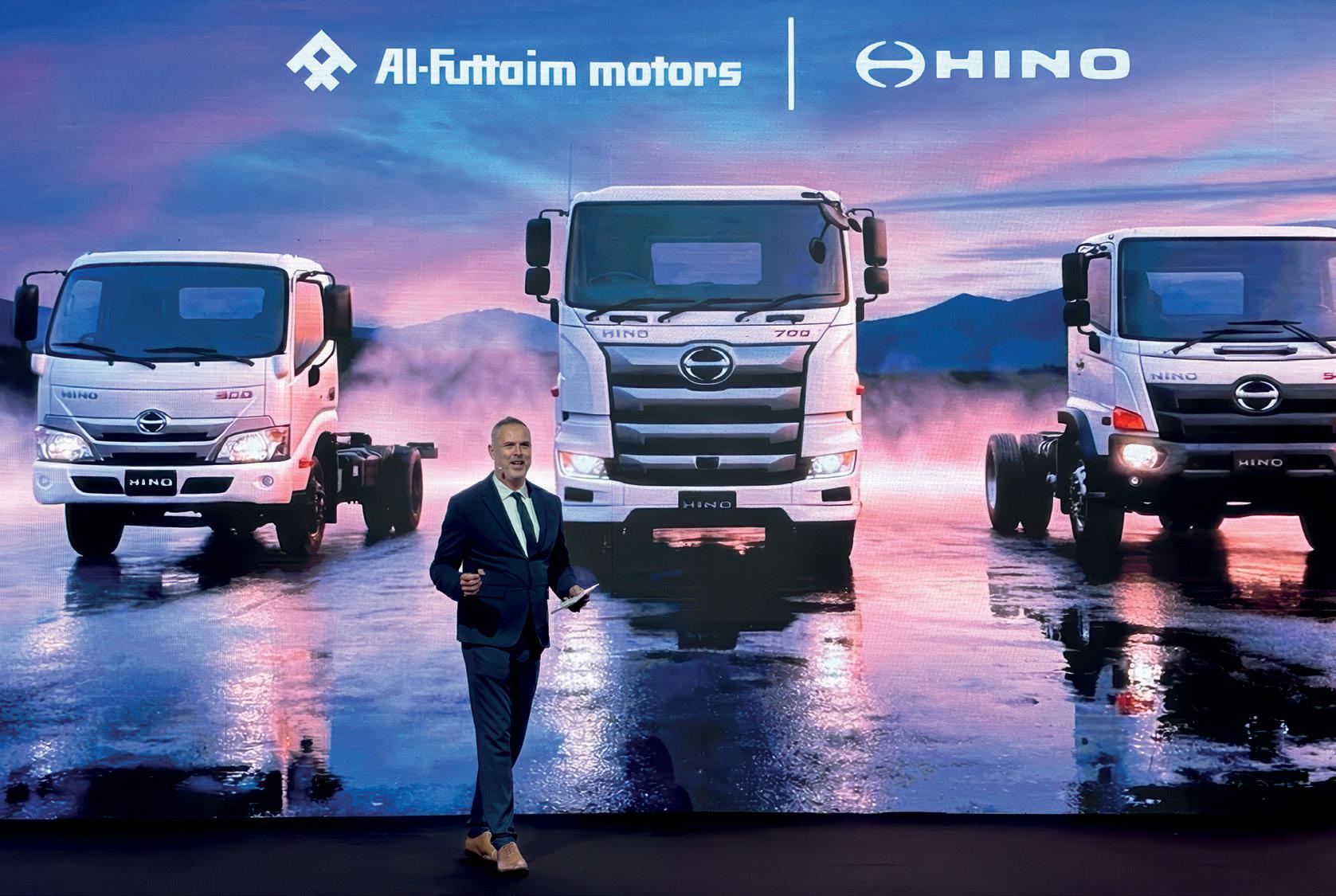
Hino and Al-Futtaim raise the bar and the roof with the launch of the New Euro 5 Hino 300
Series
Like the swarm of drones that ended their Hino 300 Series Euro 5 launch event, AlFuttaim and Hino have been working, coordinating and buzzing the market with their range of light duty last milers and haulers for many years.
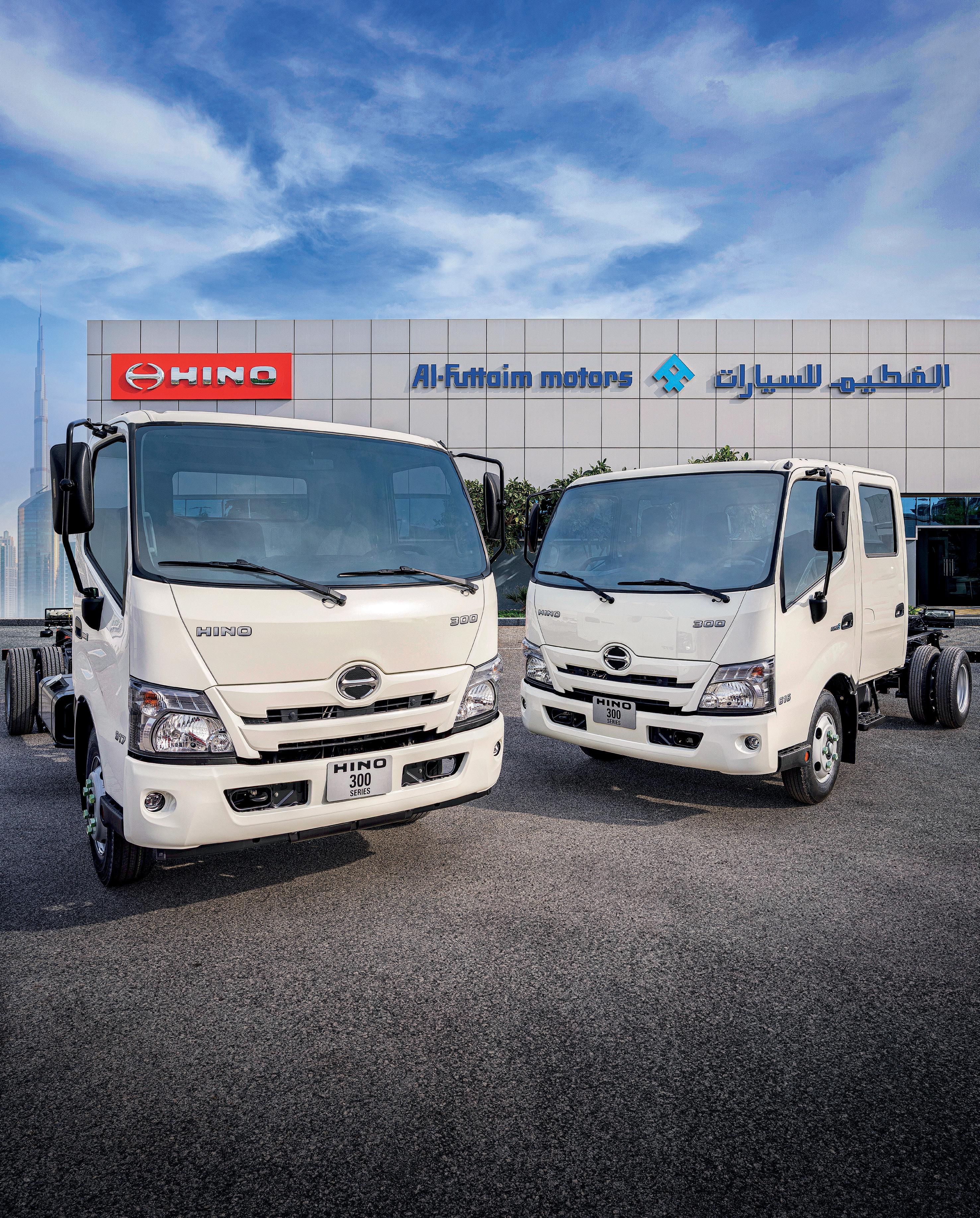
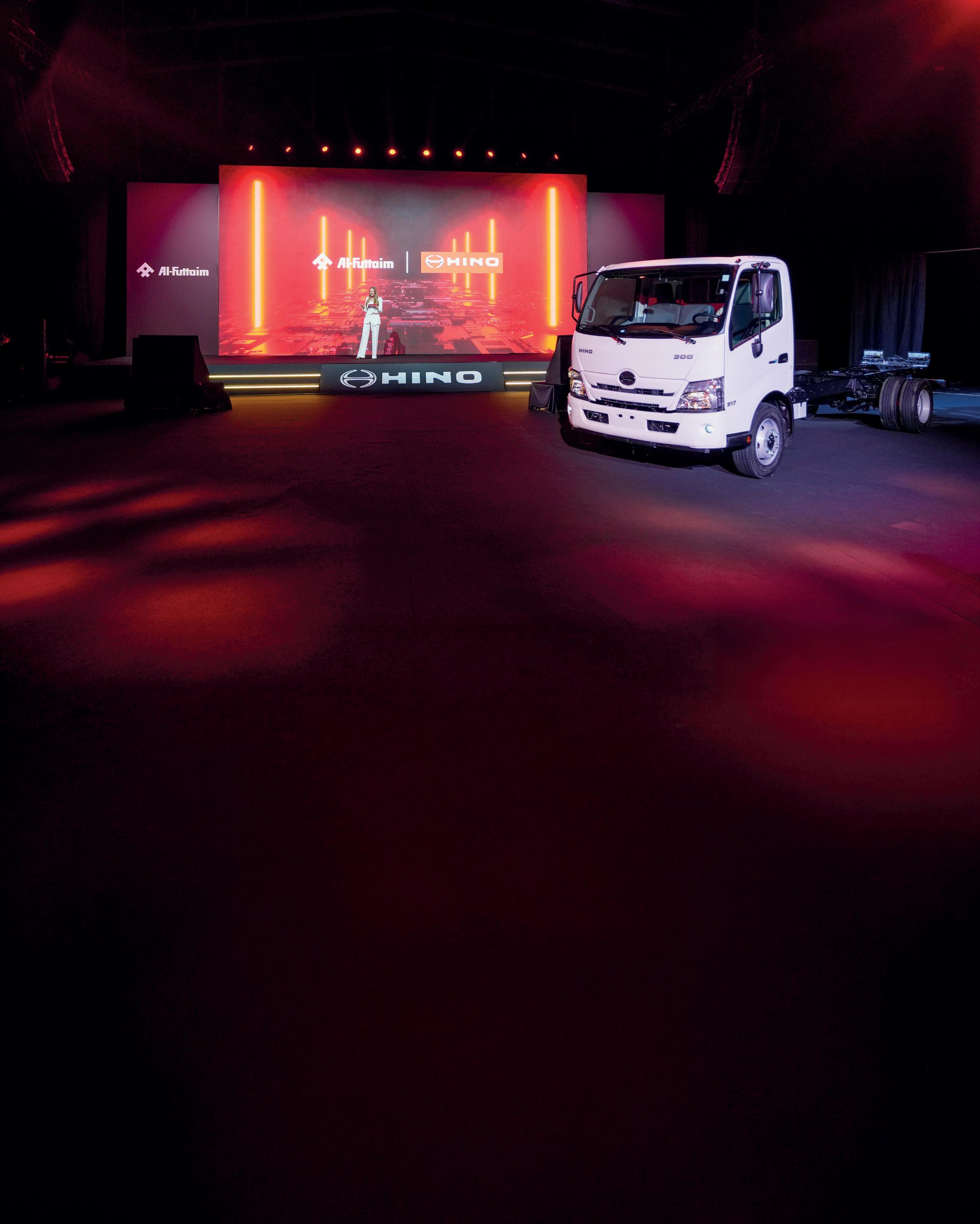
December’s unveiling of the new Hino 300 Euro 5 inside the Festival Plaza in Dubai, a serious upgrade on one of the market’s most popular LCVs, carried exactly that sense of urgency and optimism; signalling not only the arrival of a cleaner, more capable
light-duty truck, but the continuation of a partnership that has shaped the UAE’s fleet ecosystem for more than half a century.
From the moment 200-plus guests stepped into the venue, the atmosphere blended anticipation with familiarity.
Executives from Hino Motors Middle East stood shoulder-to-shoulder with Al-Futtaim leaders, long-standing customers, and employees whose careers have unfolded alongside the brand’s own development in the region. Their conversations and remarks made it clear just how deeply Hino trucks
This event transcends the idea of launching a new product”
are woven into the nation’s economic fabric. Whether moving fresh produce before dawn, supporting construction activity under the midday sun, enabling airport operations, or powering the constant pulse of last-mile delivery, Hino has become one of the quiet, indispensable forces keeping the UAE moving.
And the new Euro 5 model doesn’t disrupt that legacy: it strengthens it, ‘sharpening’ everything that operators already appreciate while preparing the platform for the future.
The evening’s programme began with an address by Masaaki Yamamoto, Head of
Product for Hino Light Duty Trucks. He laid out the company’s engineering philosophy with clarity: each new generation of the 300 Series must offer something meaningful to operators, whether through durability, comfort, efficiency, or the balance of all three. Yamamoto paid particular tribute to Al-Futtaim, acknowledging its pivotal role in growing Hino’s regional presence and delivering the level of service that underpins the brand’s reputation for dependability.
“The Hino 300 is more than just our newest light-duty truck,” he told the audience. “It represents our continuous effort to deliver products that truly support our customers’ businesses,” said Yamamoto.
He also dedicated a moment to recognise Al-Futtaim’s contribution to the brand’s growth, adding: “Your commitment, your passion, and your leadership in the market are the reasons why Hino continues to grow and evolve.”
That sentiment was echoed by Taro Nagano, Managing Director of Hino Motors Middle East, who framed the Euro 5 launch as a defining point in a decades-long alliance.
“This new model represents not only a technological step forward, but also another major chapter in our long-standing partnership with Al-Futtaim,” he said. “Their dedication, professionalism, and customerfirst approach have enabled every Hino customer to operate their vehicles with complete confidence and peace of mind.”
“Together with Al-Futtaim, we remain fully committed to supporting your businesses, maximising your uptime, and ensuring your continued success with this new Euro 5 model.”
Few commercial vehicles in the region enjoy the reputation of the Hino 300 Series. Across industries — from logistics and FMCG distribution to construction, retail and aviation — the model has earned its status through consistency and resilience. Operators trust it because the truck has proven itself under extreme heat, long operational hours and the unpredictabilities of urban mobility.
Its compact proportions and tight turning circle make it ideal for congested city routes, while its robust chassis and flexible body configurations allow it to adapt to a wide spectrum of applications. In many cases, fleet operators view the 300 Series not as a generic light truck, but as a purpose-built platform that can be tailored to whatever the job demands. It is this dependable foundation that Hino has now elevated into the Euro 5 era.
A Sharper Driving Experience
The transition to Euro 5 is far more than an emissions story. For Hino’s engineers, it was an opportunity to rethink the truck’s responsiveness, power delivery and efficiency in real-world UAE conditions.
The new engine now produces 165 PS, up from 155 PS, and torque has increased from 422 Nm to 466 Nm, giving the truck noticeably stronger acceleration and more confident behaviour under load. Drivers will feel the difference when pulling away from junctions, navigating inclines or negotiating heavily loaded delivery routes—precisely the environments where productivity gains matter most.
Behind the scenes, a more advanced emissions strategy ensures the engine runs cleaner without losing its familiar Hino character. The system manages emissions at two stages: within the combustion process itself and through an upgraded particulate
This is a major chapter in our longstanding partnership with Al-Futtaim”
filtration approach. The result is a cleaner burn, reduced environmental impact and smoother day-to-day performance.
Paired with these updates is a refined automatic transmission designed for greater durability and better compatibility with the new engine’s power curve. The redesigned sequential shift lever allows drivers to tap into manual control whenever the terrain or load demands it. It is intuitive, responsive and especially beneficial for operators new to commercial vehicles.
Inside the cabin, the updates continue. The dashboard has been redesigned with clearer Euro 5 indicators and information displays, giving drivers faster access to DPR status, fuel levels, temperature readings, trip metrics and shift position. Hino’s goal is simple: improve driver awareness, reduce operational errors and support consistent, efficient use in sectors where trucks are on the move nearly every hour of the working day.
A Century of Engineering Excellence
Hino’s reputation has always been built on endurance - endurance of the product, of the brand and of the trust customers place in the badge. The Euro 5 Hino 300 Series continues that journey, drawing on more than 100 years of engineering evolution. From its origins in the 1910s to its global expansion in the 20th century, Hino has spent decades finetuning its approach to safety, fuel efficiency, drivability and manufacturing discipline.
Today, the 300 Series rolls off the line at Hino’s Hamura plant in Tokyo, while
HINO REFINES ITS RANGE
From its origins in the 1910s to its Tokyo manufacturing hub today, Hino continues to refine its century-long engineering journey.
its medium and heavy-duty counterparts are produced at the Koga facility. Under the Toyota Group umbrella, Hino benefits from access to one of the world’s most sophisticated automotive engineering ecosystems, yet, it maintains its specialised focus on commercial vehicles. The Euro 5 model is a direct product of that lineage: not simply a regulatory update, but a notable achievement in durability and refinement.
Human Stories Behind the Brand
If the technical presentation anchored the night, the emotional centre came from an unexpected place: the personal story of Khadija Salim Surror Juma, a sales administrator whose enthusiasm for engineering and driving has made her a standout ambassador for the brand. Her passion began with cars, but curiosity, and the supportive environment within Al-Futtaim, led her to experience truck driving firsthand.
When described on stage, her first time behind the wheel of the new Hino 300 Euro 5 was met with palpable enthusiasm. She spoke of the truck’s refinement, the smoothness of its acceleration and the stability it offers on the road. To her, the new model felt “stronger and smarter,” a clear evolution of the engineering she already respected.
Her story captured what spec sheets often cannot: the connection between driver and machine, and the pride that comes from operating something engineered with human experience in mind.
The Euro 5 model sharpens everything”
“I was really surprised by how refined the truck was,” she told the audience. “I really felt the evolution; the smoother acceleration, the stability and the way the truck carries itself on the road. It felt stronger and smarter.”
She highlighted the cabin’s ease and comfort: “With the elevated seating, the wide windshields and the ergonomic layout, it’s actually as comfortable as a passenger vehicle… I could really sense the refinement of the Euro 5 engine — the reduced noise, the smoother power delivery and the overall efficiency.”
And when asked whether the truck was difficult to drive, her answer drew smiles across the room: “Absolutely not. It was easier to drive than my own car. It’s precise, stable on the road, and makes you feel confident while driving it.”
A legacy for the future
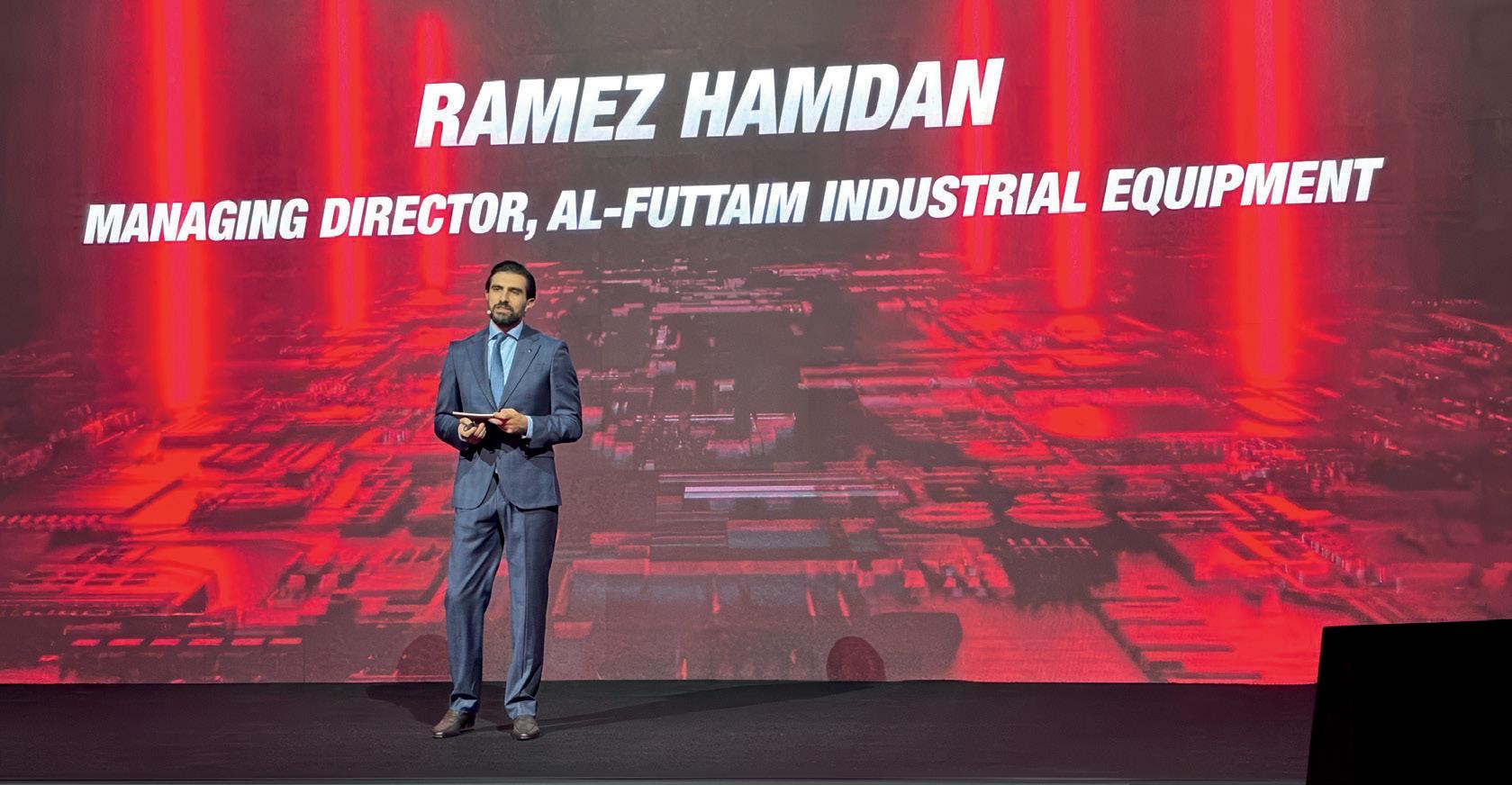
The evening closed with remarks from Ramez Hamdan, Managing Director of Al-Futtaim Industrial Equipment, who brought the narrative full circle. He reflected on the early days of Hino’s journey in the UAE, when the country’s infrastructure, climate and operating conditions demanded immense durability from commercial vehicles. AlFuttaim recognised Hino’s potential from the beginning and worked hand-in-hand with the brand to set standards that would ultimately define the fleet landscape for decades.
Hamdan positioned the Euro 5 launch as a significant step forward; a continuation of a collaboration built on trust, engineering resilience and an unwavering commitment to customer success. Hino trucks, he said, have become a central pillar of the UAE’s commercial vehicle market because they deliver what operators value most: reliability, efficiency and long-term value.
And as the UAE accelerates toward cleaner transport, smarter fleet management and expanded logistics capacity, the new Hino 300 Euro 5 arrives at precisely the right moment.
“This event transcends the idea of launching a new product,” Hamdan said. “It is a celebration of a partnership that extends for more than 50 years.”
He described how Al-Futtaim recognised Hino’s potential from early UAE development days, choosing a brand capable of handling high temperatures, long-duty cycles and demanding operating conditions.
“We built a base of trust… which is still firm to this day, and will continue,” he added. “Hino 300 Series trucks have become a backbone of our fleet landscape.”
POWERING THE LAST MILE
Whether carrying fresh goods before dawn or powering last-mile delivery, Hino remains one of the quiet, indispensable forces keeping the UAE moving.
THE BACKBONE OF UAE BUSINESS
“Hino trucks have become a backbone of the UAE’s fleet landscape — and that foundation remains as strong as ever,” said Ramez Hamdan.
Images: Mohamed Ghoname
| Al-Futtaim
DRIVER CRISIS FACING A
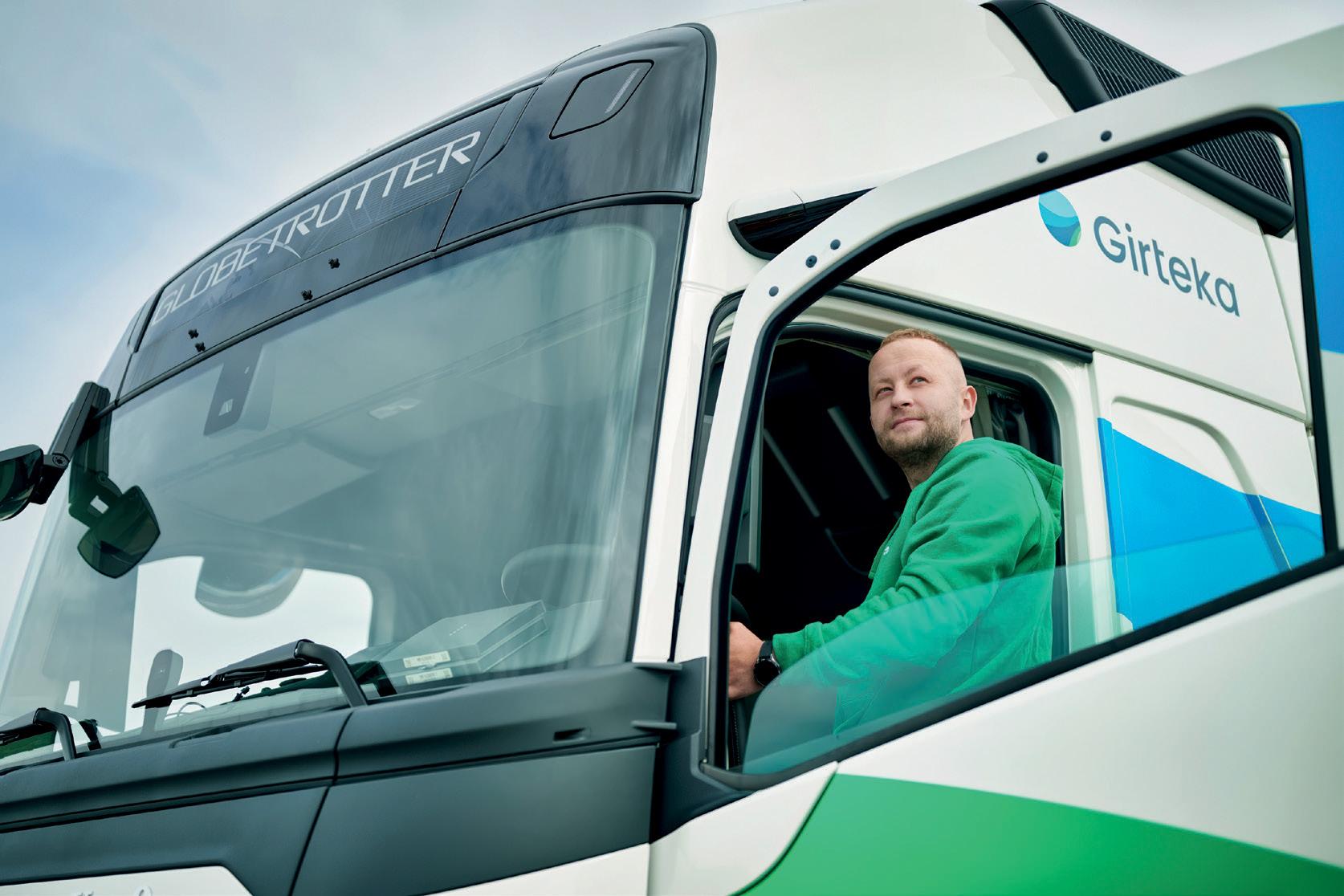
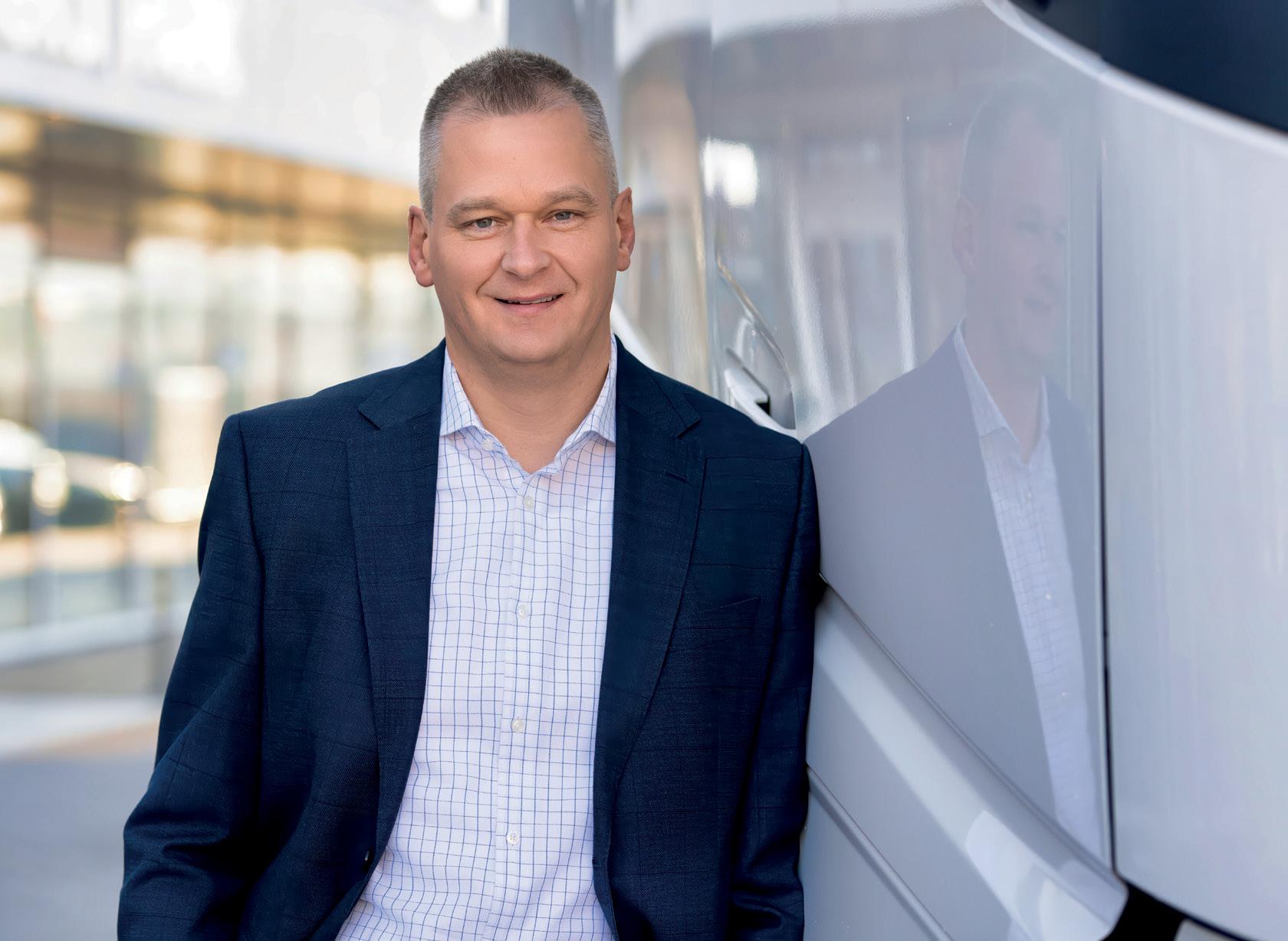
A drivers’ shortage across Europe needs a long-term people strategy, says Girteka Transport’s CEO Mindaugas Paulauskas
Europe’s transport system is facing an unprecedented challenge: a shortage of professional drivers that is already disrupting supply chains across the continent. As of 2024, over 426,000 truck driver positions remain unfilled in the EU, and the number is expected to almost double by 2028. Behind these figures lies a complex mix of factors — from tightening visa rules and an ageing workforce to the declining appeal of the profession among younger generations. Unless industry and policymakers act together, Europe’s economic engine risks slowing down not from lack of goods, but from lack of people to move them.
Beyond Motivation: Why Regulation Has Become the Real Bottleneck
Mindaugas Paulauskas, CEO of Girteka Transport, says the real bottleneck today is legal rather than motivational. Visa rules and work permit requirements have become significantly stricter compared to just a few years ago. “For a company operating across Europe at our scale, these constraints affect how quickly we can onboard qualified drivers, even when the talent is there.”
In Europe, the profession is becoming less attractive to younger generations, as many experienced and talented drivers are retiring, leaving for better-paid or less stressful jobs in the sector, or due to health reasons. For the younger population, the appeal of the possibility to travel and flexibility is not attractive or enough to consider a job as a Truck Driver.
Mindaugas emphasizes – unless there is meaningful policy action across the European Union, the situation will most likely worsen. Current political trends are moving toward tighter labour mobility and migration controls, which limit access to professional drivers from outside the EU. Without regulatory changes reflecting the realities of the transport sector and a long-term approach to making this career path more appealing, the shortage will not ease on its own.
Investing in drivers must be a long-term strategy
Investing in drivers is not a question of short-term market conditions – it must be a long-term strategy. According to
Mindaugas Paulauskas, the only way to retain drivers, maintain stability, and service quality is to focus on people at the core of all operations: their wellbeing, safety, working conditions, satisfaction, and professional growth.
“Many of our drivers join from different countries, where training standards or truck operating requirements may vary, so it is our responsibility to provide them with the skills needed to operate at a consistently high European level. We are always investing in our drivers and will continue to do so. For example, in 2026 we plan to invest around €300,000 into our training centers in Poznan and Šiauliai to strengthen competencies in areas such as load handling, temperature control, and safety systems,” – tells M. Paulauskas. “Rest, health, and safe working conditions are not “extras.” They directly influence performance, safety, and even how clients and other drivers perceive us. In the long run, ignoring wellbeing or the physical constraints the industry is facing right now only creates bigger problems for everyone: the drivers, the companies, and the transport sector as a whole.”
One of the key directions of Girteka’s strategy and building its competitive advantage is investment in the fleet. Drivers operate modern trucks – with an average age of just two years. The key criteria for vehicle selection are both operational efficiency and the company’s commitment to ensuring driver comfort and safety.
“For professional drivers, the truck isn’t just a vehicle – it’s their workplace. We take that seriously, which is why we focus on making sure it is safe, comfortable, and equipped with the latest technologies on the market,” emphasizes Mindaugas Paulauskas.
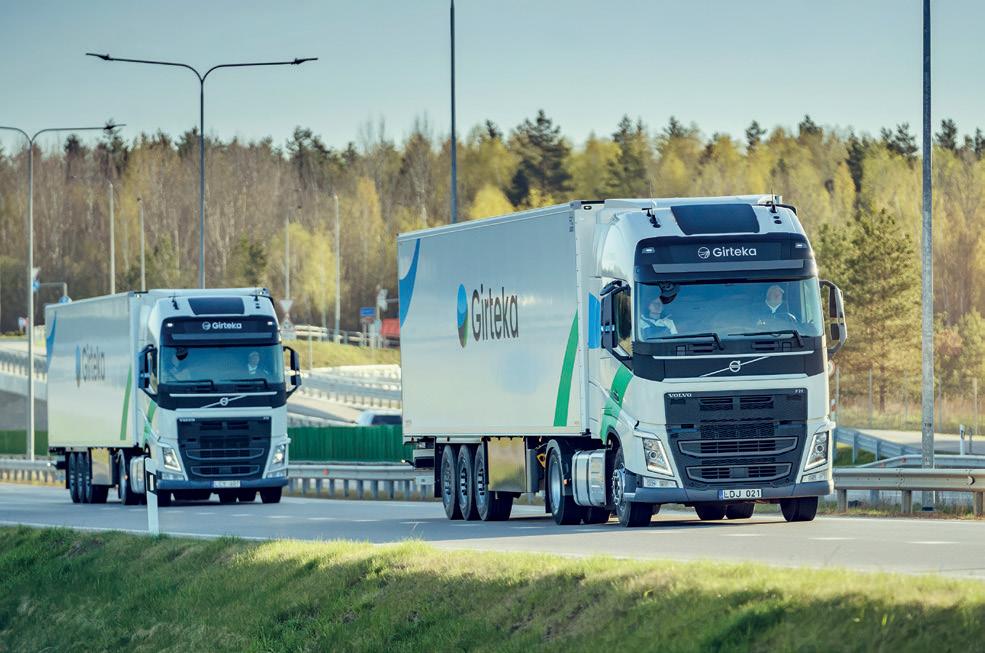
Thus the modernization of the fleet is one of the key pillars of the long-term company’s strategy. At the beginning of the year, the company signed an agreement with Volvo Trucks for the purchase of 2,000 Volvo FH and FH Aero units, equipped with advanced solutions enhancing driving and rest comfort for drivers. Thanks to financing from OP Corporate Bank, Girteka plans further fleet upgrades between 2025–2026, adding 8,000 trucks and trailers, which will contribute to improving driver safety,
efficiency, and workplace comfort.
Mindaugas states that driver wellbeing is not a cost – it’s an investment, in fact one of the best you could make: “Drivers spend long hours on the road, and if we expect them to deliver at the highest standards, we need to give them the conditions to do so, at least as much as we can.”
Modern trucks improve physical comfort, safety, and day-to-day working conditions for drivers. Features like automation and integrated digital tools reduce fatigue and make tasks easier. From an operational perspective, a modern fleet also improves efficiency, reliability, and fuel performance – it benefits both for the driver and for the business.
More Than Money
In retaining drivers, social factors matter a great deal. It’s crucial not only to polish a position of great employer, but also to motivate drivers to stay in the company long term. “Drivers are our colleagues, and just like all of us want to feel appreciated at work, have proper rest, and live a life outside of the job,” says M. Paulauskas. Girteka puts a strong focus on respectful communication, work-life balance, and creating a supportive environment, especially since with more than 10,000 drivers, the company is truly multicultural.
Pay is still important, Mindaugas says, but without respect and the
right conditions, no salary will keep people in the long run.
“For us, drivers’ well-being is a priority because it reflects on everything from road safety to their performance to service quality.”
Yet, M. Paulauskas says Girteka doesn’t face a shortage of interest –drivers actively apply to join Girteka, and many come through referrals from
The shortage will not ease on its own”
existing employees. “We see the tendency among drivers who previously were employed at Girteka willing to join our team back as they notice significant improvements in our working conditions compared to just a few years back.”
A Collective Responsibility
M. Paulauskas addresses the shared responsibility of the drivers’ shortage crisis.
“Without regulatory changes reflecting the realities of the transport sector and a long-term approach to making this career path more appealing, the shortage will not ease on its own,” he says.
In M. Paukauskas point of view, there are several areas where policymakers could make a practical difference.
One of the options could be easing legal requirements for non-EU drivers. It would help address the shortage in a realistic, long-term way. In the short term, better alignment on load weight rules and stronger support for intermodal transport could improve efficiency and help companies operate with the workforce they already have while longterm solutions are being built: “Naturally, any such measures need to be aligned with infrastructure capacity, safety standards, and company strategies, but if implemented thoughtfully, I believe they can ease the pressure,” says M. Paulauskas.
LEGAL BLOCKS FOR FLEETS
Mindaugas Paulauskas, CEO of Girteka Transport, says the real bottleneck today is legal rather than motivational.
MAKING IT EASIER TO DRIVE
Could a relaxing of the rules governing the import of labour ease Europe’s fleet driver crisis?
Just as important, these discussions should not only take place in Brussels but also involve logistics companies and industry leaders directly, so that policy reflects real-world challenges, current perspectives, and feasible solutions, not just theory, but also in practice.
“Just like road infrastructure is not in our hands, customer facilities also have a major impact on how drivers experience their workday. Basic things like rest areas, showers, waiting rooms, or secure parking depend on how sites are managed, and this is exactly where partnership is needed.”
M. Paulauskas points out that it should be a shared effort - transport companies and customers discussing and acting together. “Otherwise, as customer expectations keep rising, driver shortage keeps deepening, and fewer people choose the profession of a truck driver, we will face even bigger challenges as an industry. At the moment, drivers’ conditions are acknowledged, but real cooperation is
We are always investing in our drivers”
still catching up,” M. Paukauskas sums up. Girteka’s in-house Drivers Academy is multi-benefitial, such as smooth drivers onboarding, vide variety of trainings and above all, it ensure consistent standards and professional growth. Drivers Academy is focused on skill development to ensure every well-equipped for the road. Trainings are wide variety, covering everything
from load securing and handling to mastering documentation procedures, it also specialized training in eco-driving techniques and safe driving practices, including instruction on how to effectively use Telematics systems. “For newcomers, it makes a big difference - they can integrate faster, feel supported, and build the competencies needed for high-quality operations. For experienced drivers, it’s a place to refresh and upgrade skills as technology and customer expectations evolve. Having this internally is a real advantage, because it shows we are serious about giving people the knowledge and skills to grow,” tells M. Paulauskas.
As M. Paulauskas puts it, drivers are the future of transport. Without investing in drivers’ skills, working conditions, well-being, and development prospects, the industry will not sustain itself. The companies that recognise this today will be the ones still operating successfully a decade from now.
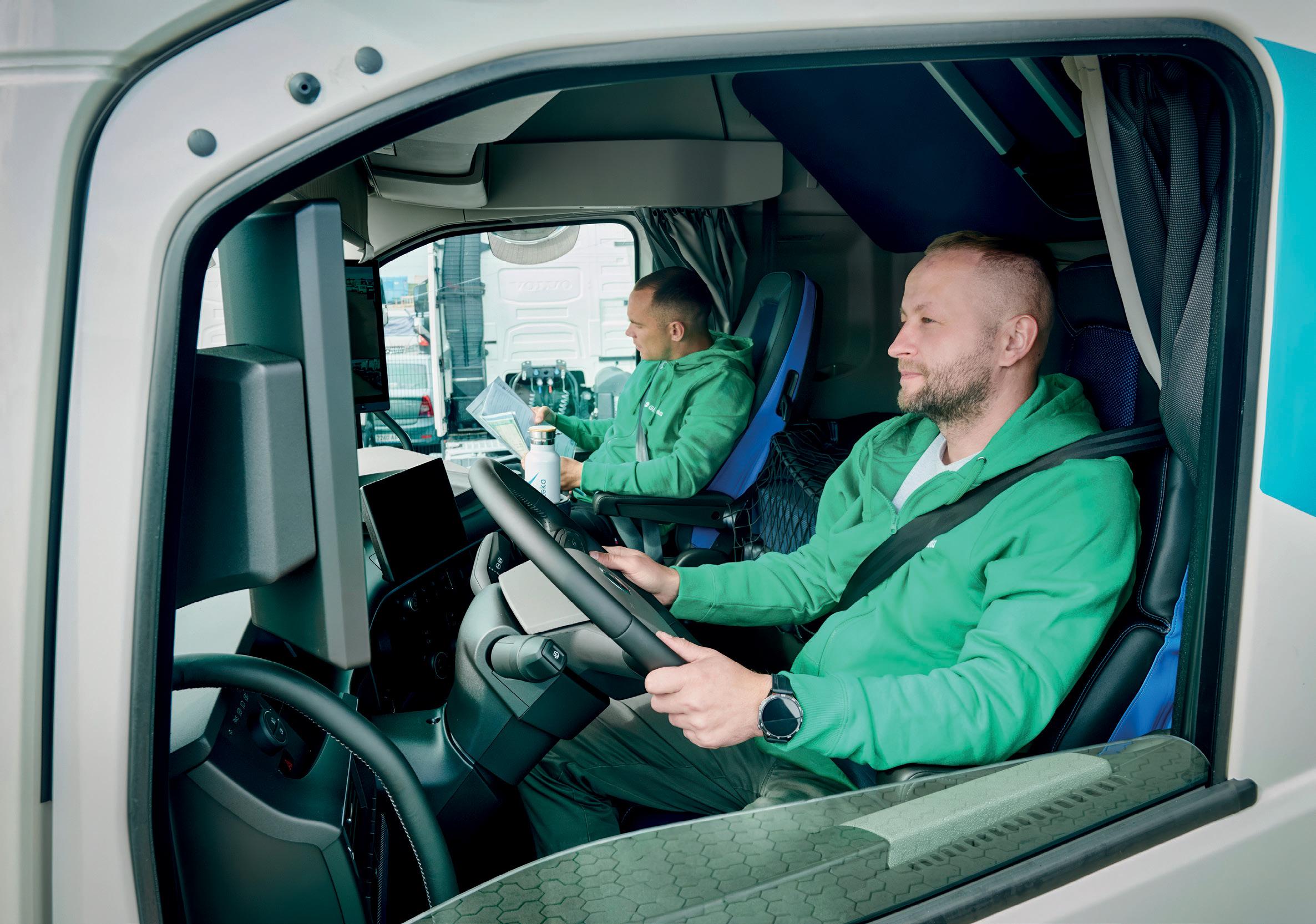
DEALING WITH AN INTERNATIONAL DRIVER FLEET
“Many of our drivers join from different countries, where training standards or truck operating requirements may vary,” says Paulauskas.
THE FUTURE IS
SUPER
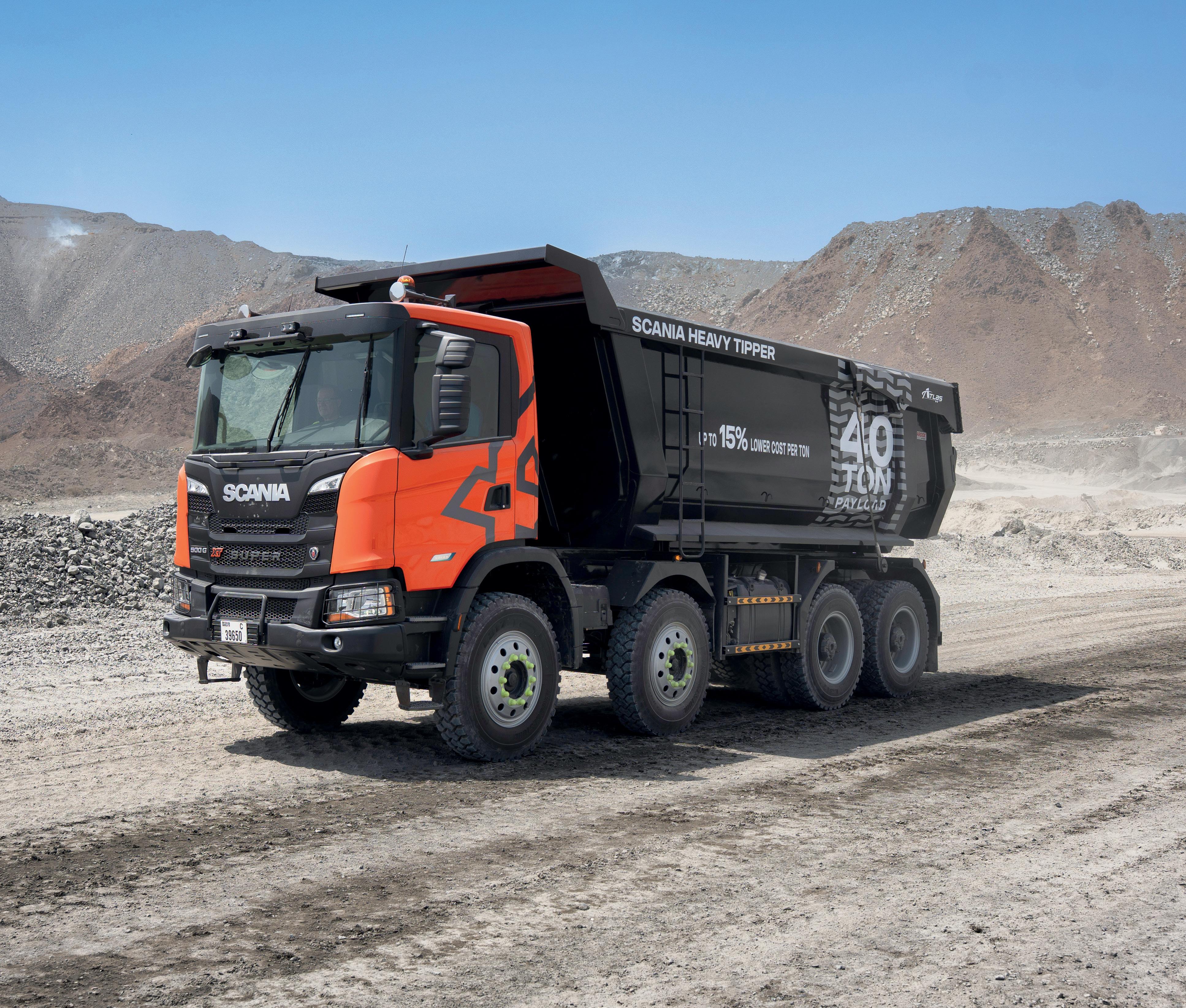
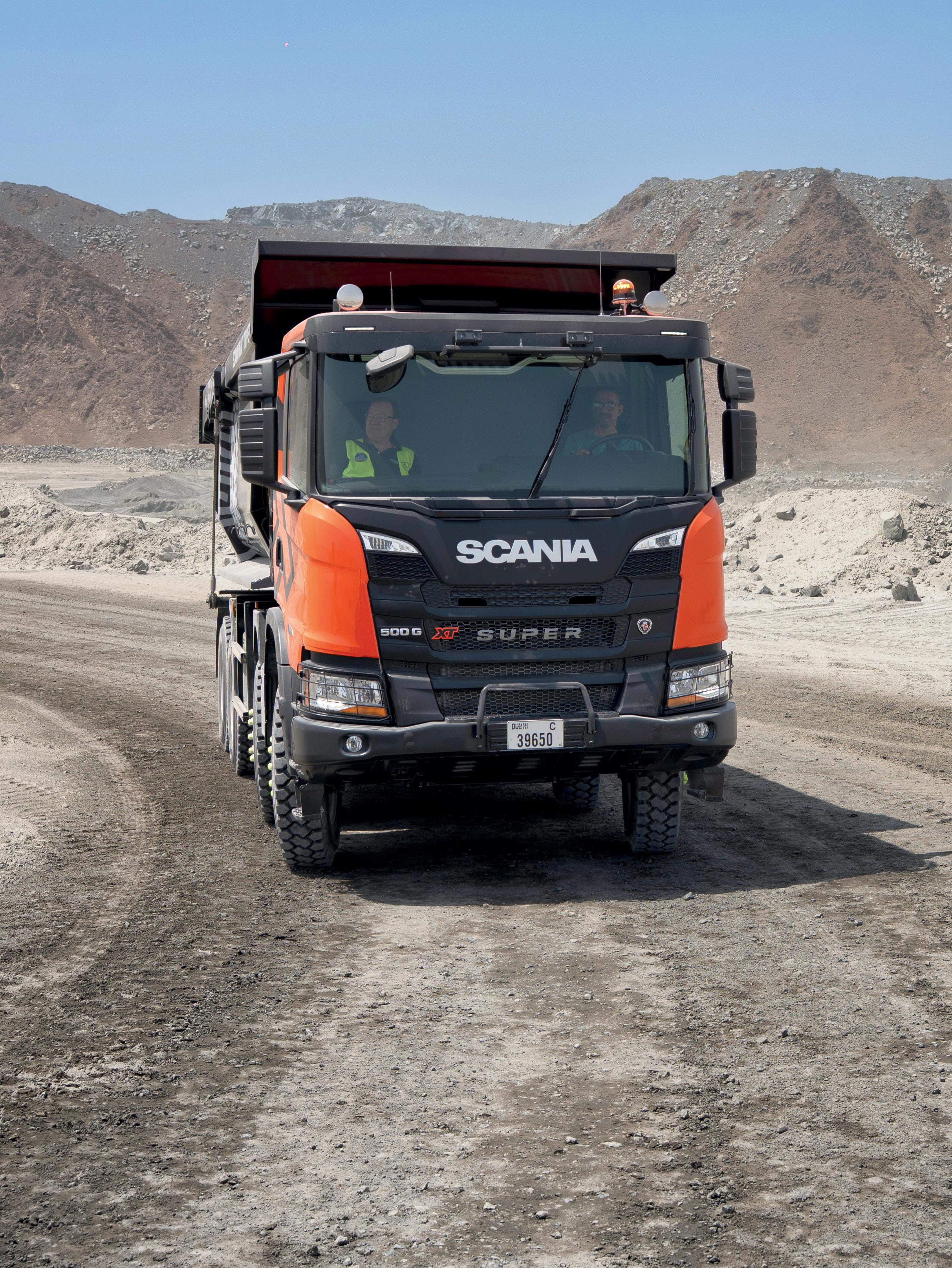
IT&FME looks at how Scania’s new Heavy Tipper has been engineered for the region’s most extreme work
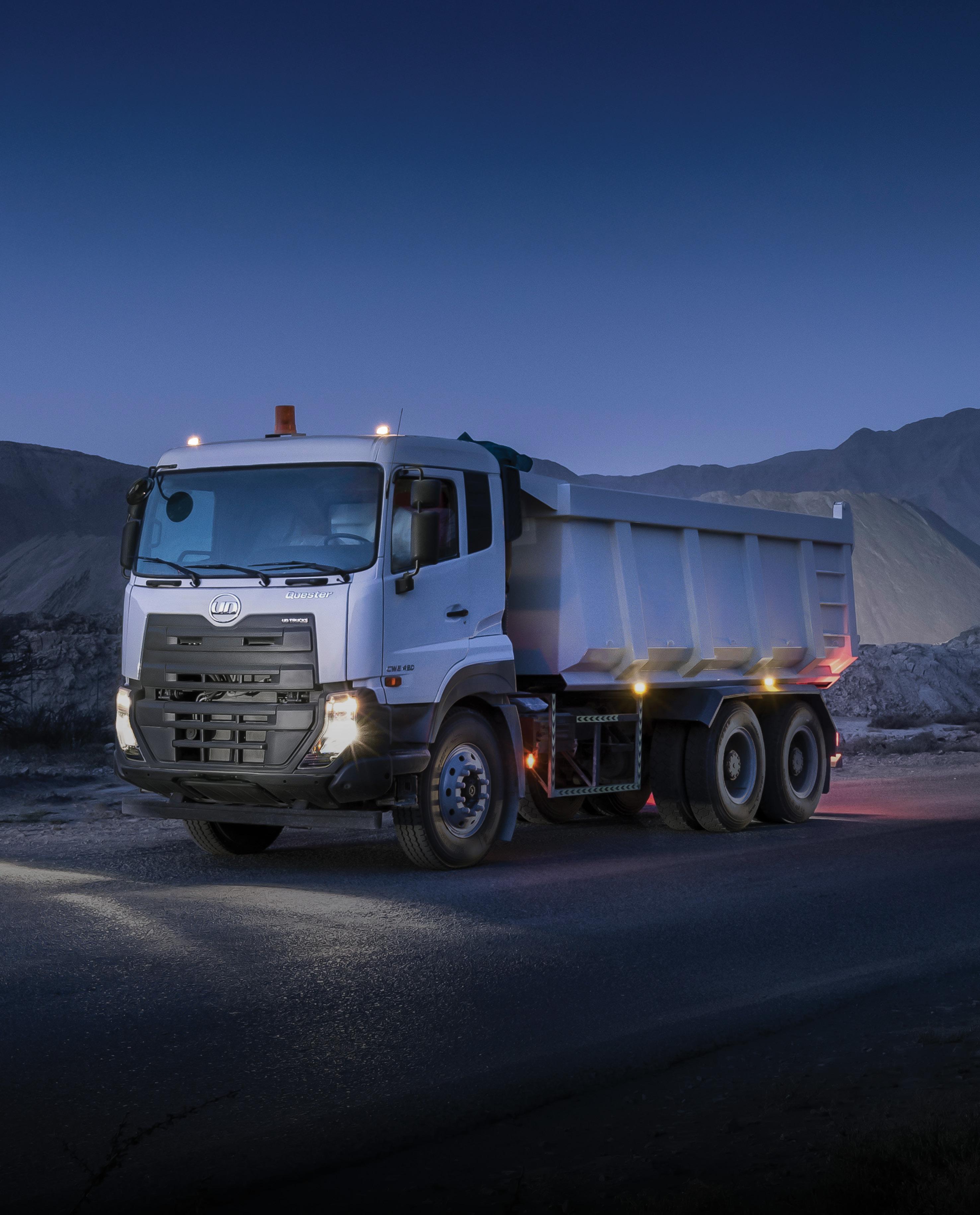
n the quarries of Fujairah and the mining belts of Saudi Arabia, trucks endure a level of mechanical punishment that few global markets can replicate. Extreme heat, abrasive dust, steep haul roads and long operating hours combine to create conditions that challenge every component, every weld and every design decision.
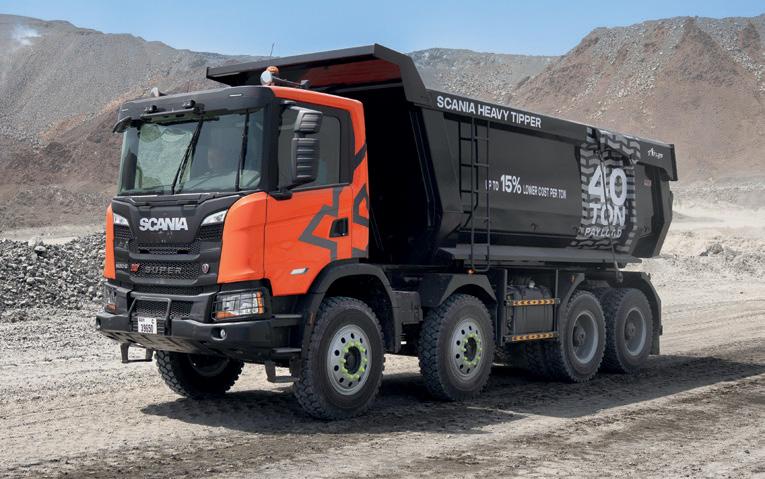
Into this environment, Scania has introduced a truck that has rapidly distinguished itself: the Scania Heavy Tipper. Built on decades of Scandinavian
engineering expertise, but refined and reinforced to withstand GCC realities, the Heavy Tipper has become one of the most capable, durable and efficient haulage machines working in the region today.
Unlike conventional heavy-duty trucks that are merely adapted for mining or quarrying work, the Heavy Tipper has been engineered from the outset for extreme duty. Scania’s approach begins with structural enhancements that address the specific forces encountered in off-road hauling. The chassis and underpinnings
The future is Super. And now it’s 8% better”
deliver up to 25% higher load-bearing capacity than standard equivalents, while the powertrain benefits from up to 40% additional robustness. Steering and braking systems are fortified for repeated heavy loading on steep gradients, and the rear bogie is capable of supporting 38 tonnes in an 8x4 configuration, or 49 tonnes when configured as a 10x4. These reinforcements are complemented by high-mounted brake chambers that help protect against dust and debris, a skid plate that shields the cooling system and
front-end components, and heavy-duty body brackets designed to absorb the continuous shock loads of quarry operations.
The Middle East’s harsh environment also demands a specialised approach to airflow and cooling. Scania has adapted the Heavy Tipper with features such as a high-mounted air intake that draws cleaner air above the dust line, and a vertical exhaust positioned to prevent heat and fumes from interfering with bodywork or payload. Reinforced axle gears, enhanced cooling protection and dust-resistant braking arrangements complete a package that is designed to operate reliably where temperatures rise above 45°C and airborne particles permeate every surface. These engineering decisions are not theoretical—they directly address issues that operators have struggled with for decades in the region’s extractive sectors.
At the heart of the Heavy Tipper’s performance is Scania’s latest engine technology, led by the new-generation Scania Super platform. The 13-litre Super engine delivers outstanding lowrev torque and fuel efficiency, offering at least an 8% improvement over Scania’s previous 13-litre units. As Scania emphasises in its launch material, “The future is Super. And now it’s 8% better.”
For operations requiring even more muscle, the Heavy Tipper can be equipped with Scania’s iconic 16-litre V8 range, which reaches up to 770 hp, making it the strongest commercial engine available globally. Combined with the Opticruise Heavy-Duty gearbox, the truck delivers smooth, consistent pulling power in situations where gear-hunting or torque loss can significantly affect productivity and fuel consumption. Scania’s low-rev, high-torque philosophy ensures the truck retains traction and mechanical stability even on shifting, uneven ground.
Payload efficiency is another decisive advantage. Scania’s Heavy Tipper achieves a balance between high payload and optimised tare weight that is rare in the sector. In its 8x4 configuration, the truck offers a gross vehicle weight of 60 tonnes with a payload of up to 38 tonnes, while the 10x4 variant extends capacity to a 71-tonne GVW.
This capability directly affects cost-pertonne performance, one of the most critical metrics for quarry and mining operators, customers can cut TCO by more than 60% and fuel consumption by close to 70%.
Gear shifts are effortless, it’s very powerful”
In high-volume environments where fuel and maintenance costs account for the bulk of operating expenditure, gains of this magnitude can reshape the economics of an entire fleet.
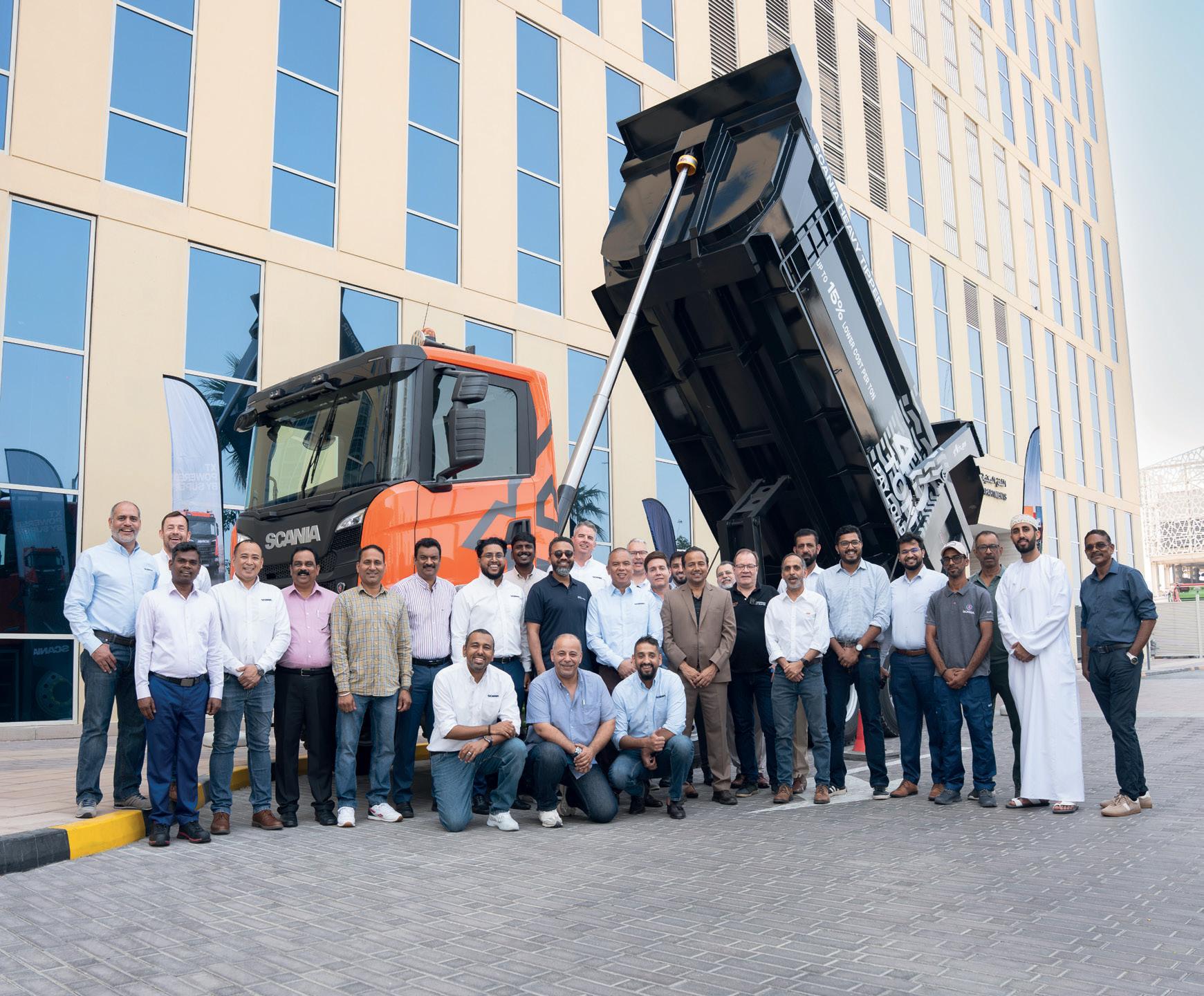
Driver feedback from field sessions has reinforced the Heavy Tipper’s operational advantages. During Scania’s hands-on training programme in Fujairah, drivers reported immediate improvements in smoothness, control and braking performance. Agostino Dias, Driver Training Manager at SATA Oman, explained that the
exhaust brake was so effective that it allowed him to manage descents almost entirely without using the foot brake. “Gear shifts are effortless, it’s very powerful, and the exhaust brake is so strong that you hardly ever need to touch the foot brake,” he said. “It’s far better than the older generation of trucks.”
Such feedback underscores the extent to which the truck’s drivability translates into both safety and reduced wear on components.
Inside the cab, Scania’s design philosophy prioritises operator confidence
BUILT FOR HEAVY DUTY
Reinforced components, superior cooling protection and high-torque engines make the Heavy Tipper one of the most durable trucks in the Middle East quarrying sector.
DRIVER-FOCUSED PERFORMANCE
and safety. The cab meets the demanding criteria of the Swedish cab crash test—one of the world’s toughest—and integrates features such as side-curtain airbags, intuitive controls and optimised visibility for off-road operation. The introduction of the Street Smart / Smart Dash digital system brings a new level of intelligence to the Heavy Tipper, transforming it into a connected asset capable of delivering real-time diagnostics, remote updates, route-specific mapping and seamless integration with fleet management tools. Scania describes this digital leap as “your window into the future,” a reflection of how connected services now play a central role in controlling operating costs and maintaining uptime.
Reliability extends beyond design and into serviceability. Scania’s modular engineering means many components are shared across product families, enabling faster repairs and easier parts availability. Globally, Scania maintains 95% parts availability within 24 hours, and in mining and quarrying contexts the company supports operators with field workshop units and dedicated service depots along haul routes. This mirrors the approach used in demanding European mines such as Garpenberg, where technicians routinely perform engine changes in as little as six hours; a benchmark that demonstrates how the Heavy Tipper has been engineered with maintenance in mind.
For Middle Eastern operations far from urban centres, the ability to keep trucks running without extended
downtime is a competitive advantage as important as fuel efficiency or payload.
Training also forms a critical part of the ecosystem surrounding the Heavy Tipper. Scania Middle East has invested heavily in driver and technician programmes that emphasise safer operation, mechanical sympathy and consistent driving practices. According to Morne Botha, Scania Middle East’s Service Director, “Our
Fleets can cut TCO by more than 60%”
training is about giving drivers the tools to operate more efficiently and safely.”
In application, this means better fuel economy, reduced component strain and a longer operational lifespan for each vehicle.
Taken together, these engineering, performance and support characteristics make the Scania Heavy Tipper a formidable proposition for GCC operators. It is a truck built to withstand the daily brutality of quarrying and mining, yet refined enough to deliver measurable gains in efficiency, payload and operating cost. In a region where equipment is pushed harder and longer than almost anywhere else in the world, Scania has produced a truck that does more than keep up—it sets a new standard for what a heavy tipper should be.
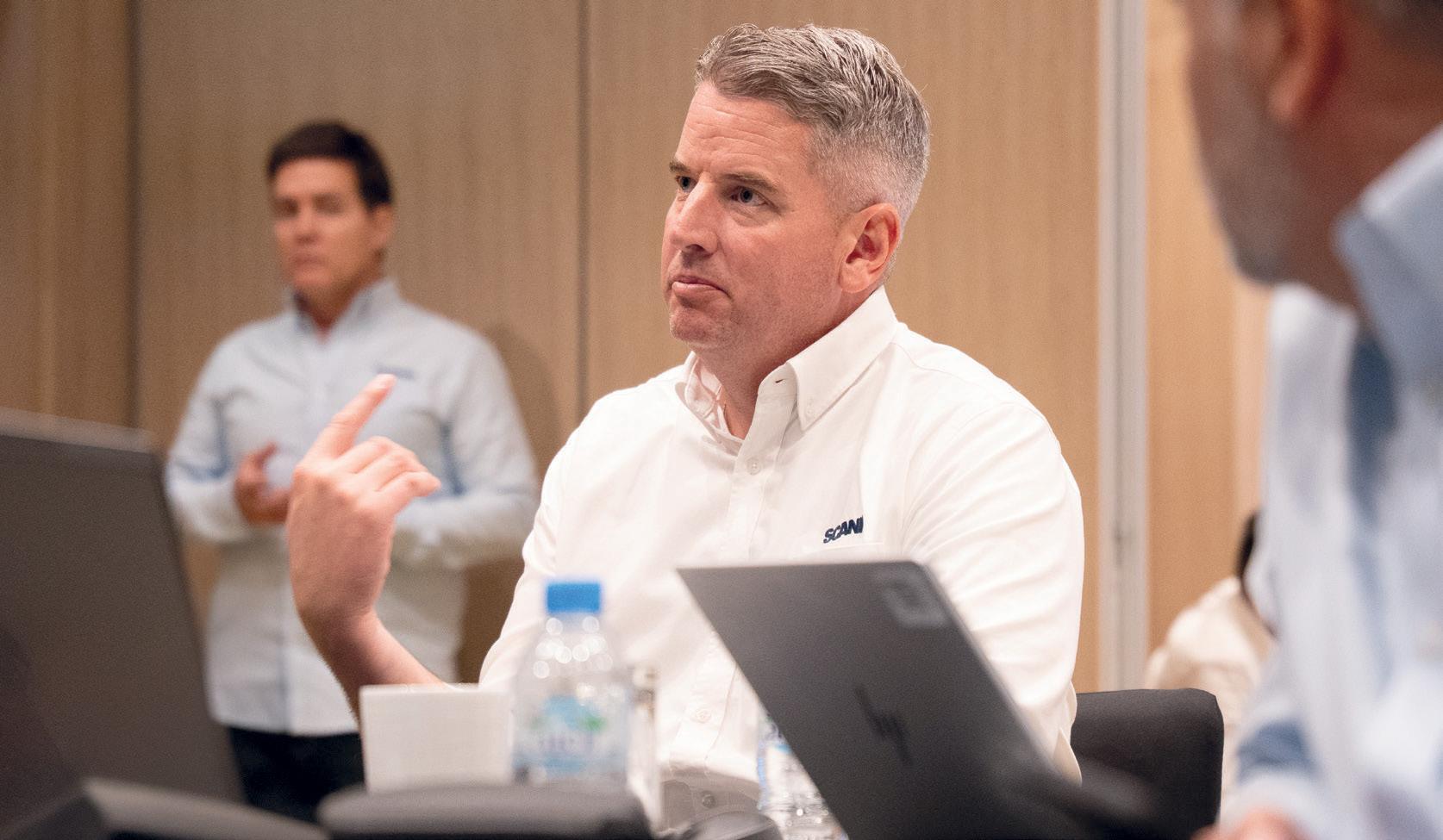
“This is a proven product with characteristics that help our customers reduce costs. In this segment, where aggregate margins are tight, reducing operational costs is key,” says Juan Ocampo, Managing Director of Scania Middle East. “By acquiring a Heavy Tipper, customers can cut total cost of operation by more than 60% and fuel consumption by close to 70%. That translates to lower emissions and a major environmental contribution. This is an important milestone for the region.”
Drivers will appreciate the truck’s smooth gear shifts and exceptionally strong exhaust braking, giving them greater control in challenging terrain.
HANDS-ON IN FUJAIRAH
Scania’s Heavy Tipper has undergone real-world training and testing in the mountains of Fujairah, showcasing its power and stability on steep, dusty haul roads.
SCANIA EXPANDS HYDROGEN AND ELECTRIFICATION FLEET TESTING
NEV TRUCKS
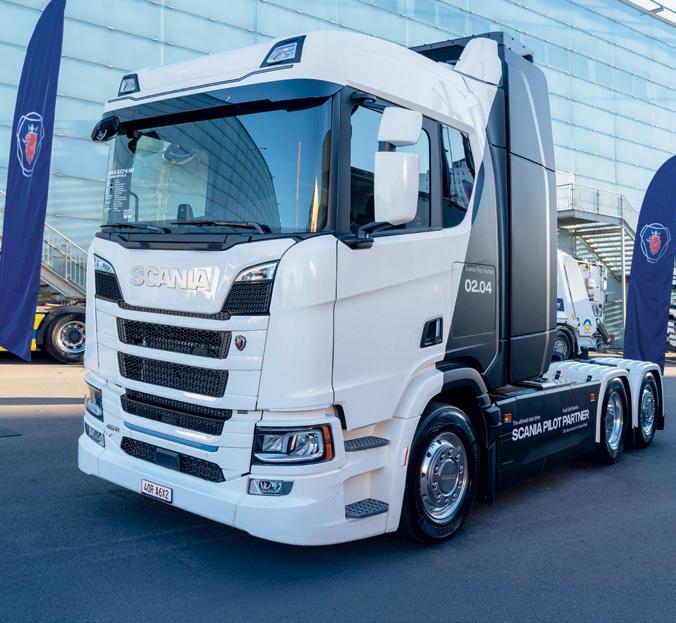
Scania is taking its sustainable transport strategy to the next level through its Pilot Partner initiative, a customer collaboration programme designed to test and evaluate realworld decarbonisation technologies — including hydrogen fuel cell trucks — under daily operational conditions.
Launched in 2021, the Scania Pilot Partner initiative sees Scania work with selected customers.
While battery-electric vehicles remain the cornerstone of Scania’s long-term strategy, the company says it is committed to exploring all viable energy pathways to accelerate the shift towards fossil-free transport.
At Transport.CH in Bern, Scania showcased its ongoing partnership with Asko Norge AS, a leading logistics provider and long-time Scania collaborator, to test hydrogenpowered trucks in business operations. The project will assess the vehicles’ technical performance, operational feasibility, and commercial potential as part of Scania’s wider commitment to sustainable transport innovation.
“By testing in real transport environments, we learn what works best in practice and how to accelerate progress,” said Tony Sandberg, Head of Scania Pilot Partner.
The hydrogen trucks combine electric powertrains with advanced hydrogen systems. Initial trials have shown promising results, with ranges of up to 1,000 kilometres per refuelling and emissions limited to water vapour.
BRIDGESTONE CHAMPIONS TYRE SAFETY AT BAKER HUGHES HSE EVENT
TYRES
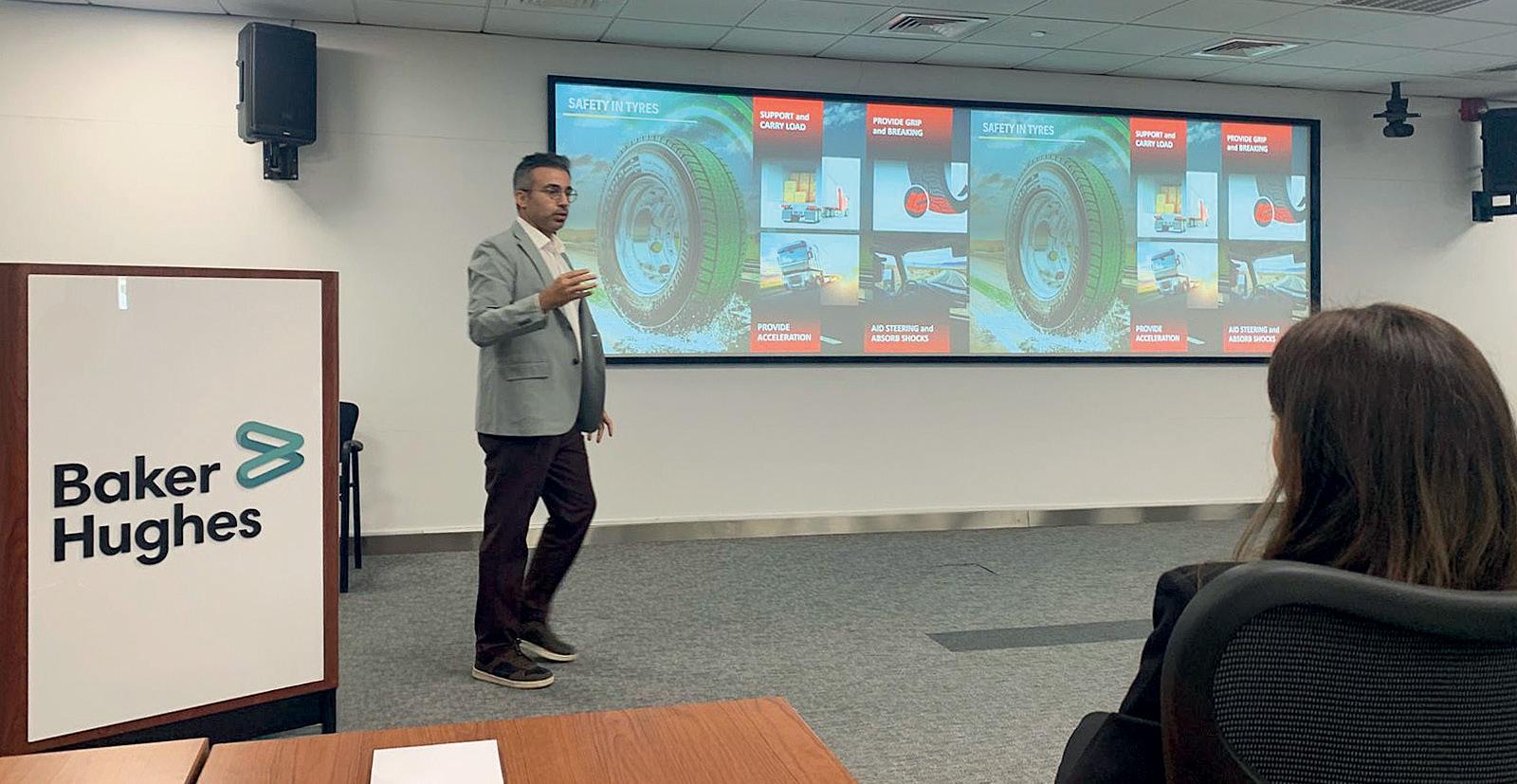
Bridgestone Middle East & Africa said it is the first line of defence when it comes to road safety and sustainable fleet operations during its powerful presence at the recent Baker Hughes Overland Transportation Safety HSE Event, held in Dubai.
The event, which brought together major fleet operators, logistics experts, and HSE professionals, served as a vital platform to share insights and strategies for improving transport safety standards across the region.
Berk Berksoy, Fleet Solutions OEM & Retread Manager at Bridgestone MEA, took centre stage during the conference, delivering a keynote that tackled the pressing issue of tyre safety and its central role in achieving safe, efficient, and sustainable fleet operations.
“As the first line of defence for heavy vehicles on UAE roads, the importance of high-performance tyres cannot be overstated,” Berksoy told attendees.
“Bridgestone’s innovations are engineered to meet the region’s climate and commercial needs, offering fleet operators powerful tools like predictive maintenance and real-time
monitoring for improved safety.”
In his address, Berksoy noted the unique and often harsh operating conditions faced by UAE and wider GCC fleets. From extreme heat that accelerates tyre wear, to inconsistent road conditions and long-haul distances, fleet operators must juggle high safety expectations with tight margins and intense pressure to deliver.
STELLANTIS PARTNERS WITH POWER TRIO
AUTONOMOUS VEHICLES
Stellantis has announced a new collaboration with NVIDIA, Uber Technologies, and Foxconn to jointly develop and deploy Level 4 (driverless) autonomous vehicles for robotaxi services worldwide.
The initiative builds on Stellantis’ recently announced partnership with Pony.ai in Europe and positions the automaker at the forefront of efforts to deliver safe, efficient, and scalable autonomous mobility solutions.
The four companies will
leverage their respective expertise to develop a new generation of driverless vehicles: Stellantis brings global vehicle engineering and manufacturing capabilities.
NVIDIA contributes its advanced autonomous driving software and AI computing architecture.
Foxconn supports hardware and systems integration.Finally, Uber will operate the robotaxi services, initially deploying 5,000 Stellantisbuilt vehicles in select cities, starting in the United States.
Pilot programmes are expected to ramp up over the coming years, with Start of Production (SOP) targeted for 2028. The collaboration will utilise Stellantis’ AV-Ready Platforms — the K0 Medium Size Van and STLA Small — which integrate NVIDIA DRIVE AGX Hyperion 10 architecture. The system features NVIDIA’s safety-certified DriveOS operating system and fullstack Drive AV software designed specifically for Level 4 autonomy.
These platforms are engineered for flexibility, allowing adaptation to both passenger and commercial mobility applications. Key features include advanced sensor suites, redundant safety systems, and high-performance computing to ensure reliability and cost efficiency for service operators.
“Autonomous mobility opens the door to new, more affordable transportation choices for customers,” said Antonio Filosa, CEO, Stellantis.
THE EMERGING AFTERMARKET
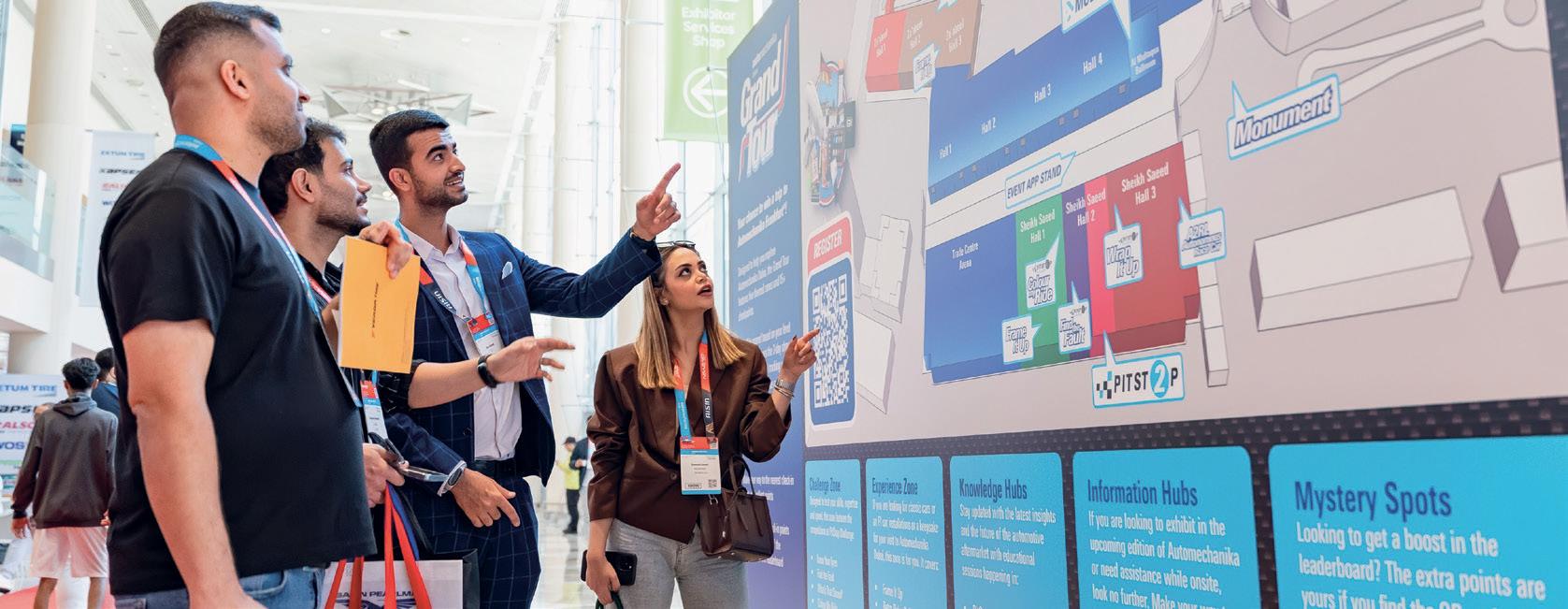
Automechanika Dubai 2025: An aftermarket showcase for decarbonisation, innovation and trade
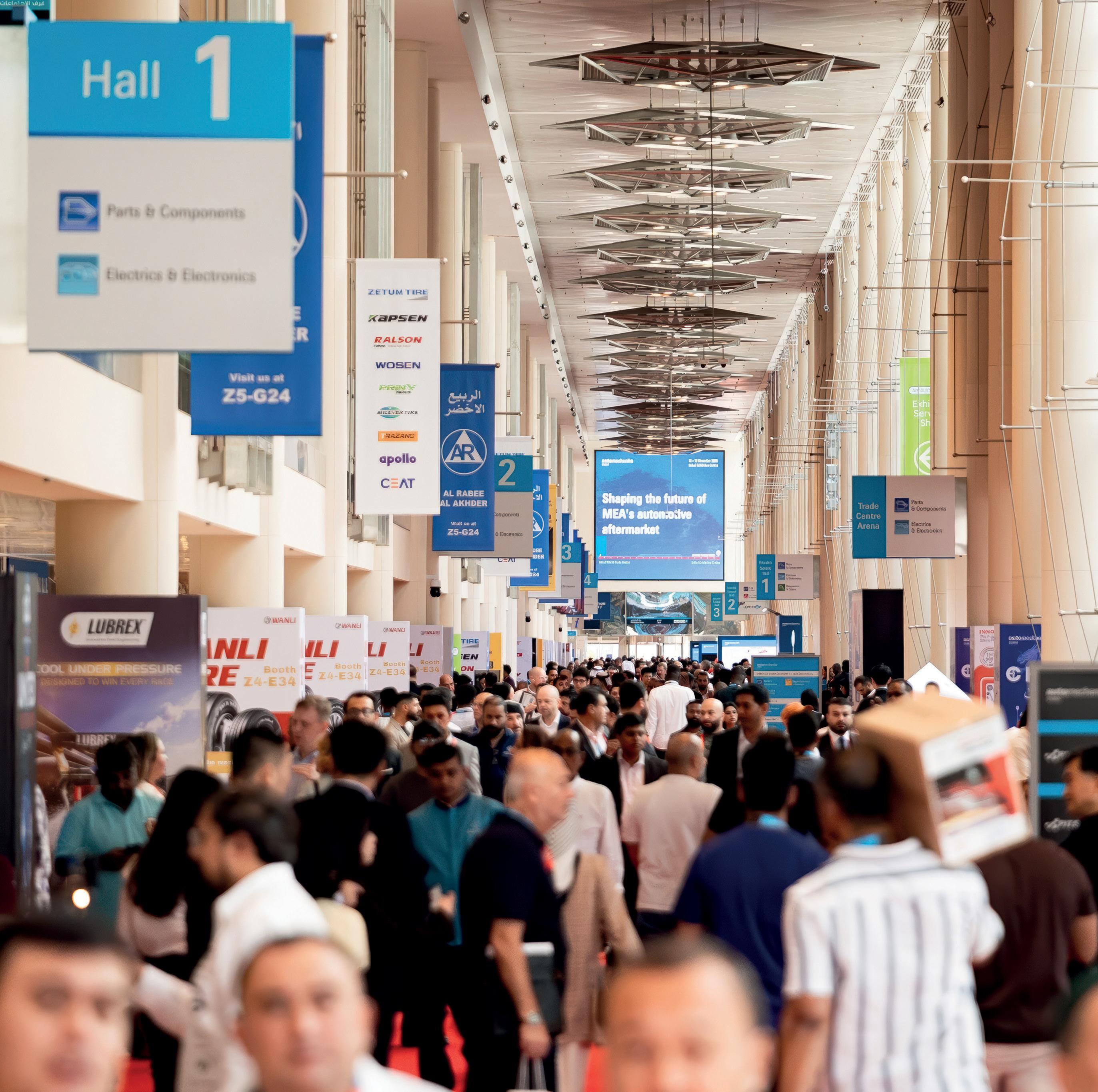
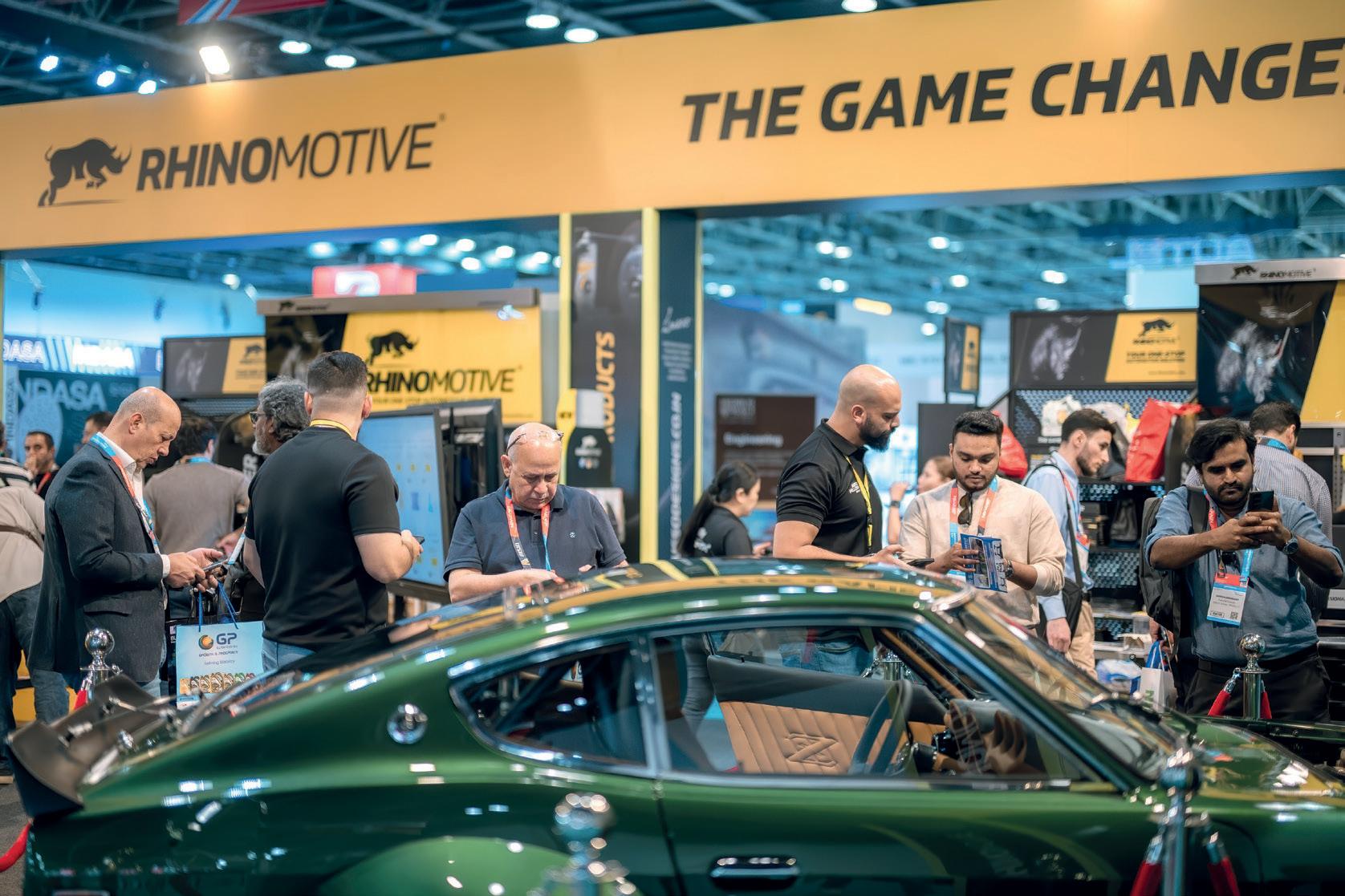
This used to be a small regional show. When the doors of the Messe Frankfurt Middle Eastrun Automechanika Dubai 2025 closed on 11 December at the Dubai World Trade Centre, the final numbers and atmosphere, the vibe, was that this now an event that is confident in its place in the global marketplace.
With more than 2,300 exhibitors from over 60 countries spread across 20 halls and more than 92,000 m² of exhibition space, this edition set a new benchmark for scale, diversity and industry ambition.
The 22nd-edition show proved to be a now typical dynamic convergence of tradition and transformation — where spare-parts suppliers and tyre vendors stood alongside cutting-
Fleet transformation has seen notable increases”
edge EV innovators, digital-mobility startups, and policymakers steering the region toward sustainable mobility.
One of the standout themes of 2025’s event was the increasing importance of electrification and decarbonisation. In a 26 November pre-event announcement, organisers emphasised that Automechanika Dubai would “showcase the UAE’s drive to decarbonisation through alternative-
energy vehicles,” positioning the event as a strategic platform to support the country’s push toward cleaner transport.
The fair appropriately reflected that ambition. As electric vehicle (EV) adoption in the UAE continues to accelerate at pace, supported by forward-looking government strategies, underscored by the UAE Net Zero 2050 Strategy, corporate fleet electrification, and consumers increasingly opting for smarter, technology-first vehicles, the Emirates are entering a critical phase in its electric mobility transition, with EV adoption rising rapidly on the back of government targets, which, under the National Electric Vehicle Strategy, are targeting an increase in EVs to 50% of all vehicles on the roads by 2050, corporate fleet electrification and strong consumer interest in next-generation vehicles.
According to Roland Berger research, close to 24,000 EV units were sold in the UAE in 2024, and with industry estimates from bodies such as Positive Zero suggesting EV sales are expected to jump from 3% today to 30% by 2030, the country is accelerating towards a cleaner transport future.
In addition, fleet transformation has also seen notable increases, with Dubai’s Roads and Transport Authority aiming for all taxis and limousines to be electric or hydrogen-powered by 2040, public buses by 2050, and Dubai Taxi targeting full electric or hybrid adoption by 2027.
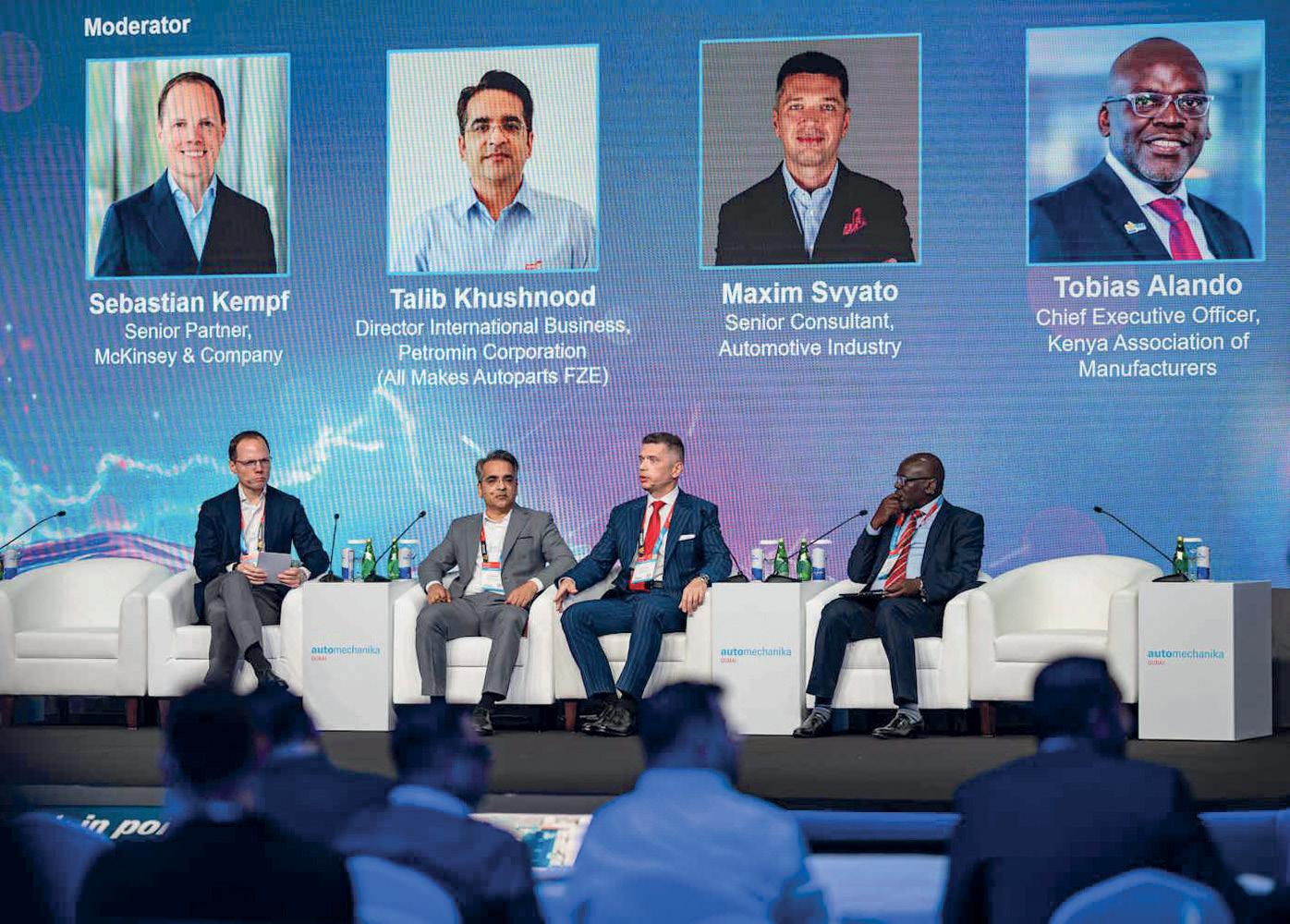
However, one of the major challenges to EV adoption is the lack of public charging infrastructure. In PwC’s 2024 report, The future is electric: A strategy for EV adoption in the UAE, it states that in 2023, the UAE had deployed around 2,000 public EV charging points, of which over 65% were slow chargers. However, to meet the targets set under the National Electric Vehicles Policy, the UAE will need approximately 45,000 charging points by 2035. At the current installation rate, only about 10,000 will be in place, highlighting a significant gap between infrastructure growth and future demand. These challenges and opportunities were explored during Innovation4Mobility, a two-day conference held at the Al Multaqua Ballroom that addresses the next frontier of mobility beyond electrification, with a strong focus on regional innovation, data-driven ecosystems, and sustainable transformation.
Early sessions at Innovation4Mobility directly addressed the country’s decarbonisation, infrastructure and energy priorities, and will include a keynote from Eng. Mozza Al Nuaimi, Engineering Expert - Water Electricity and Renewable Energy Sector, Ministry of Energy & Infrastructure.
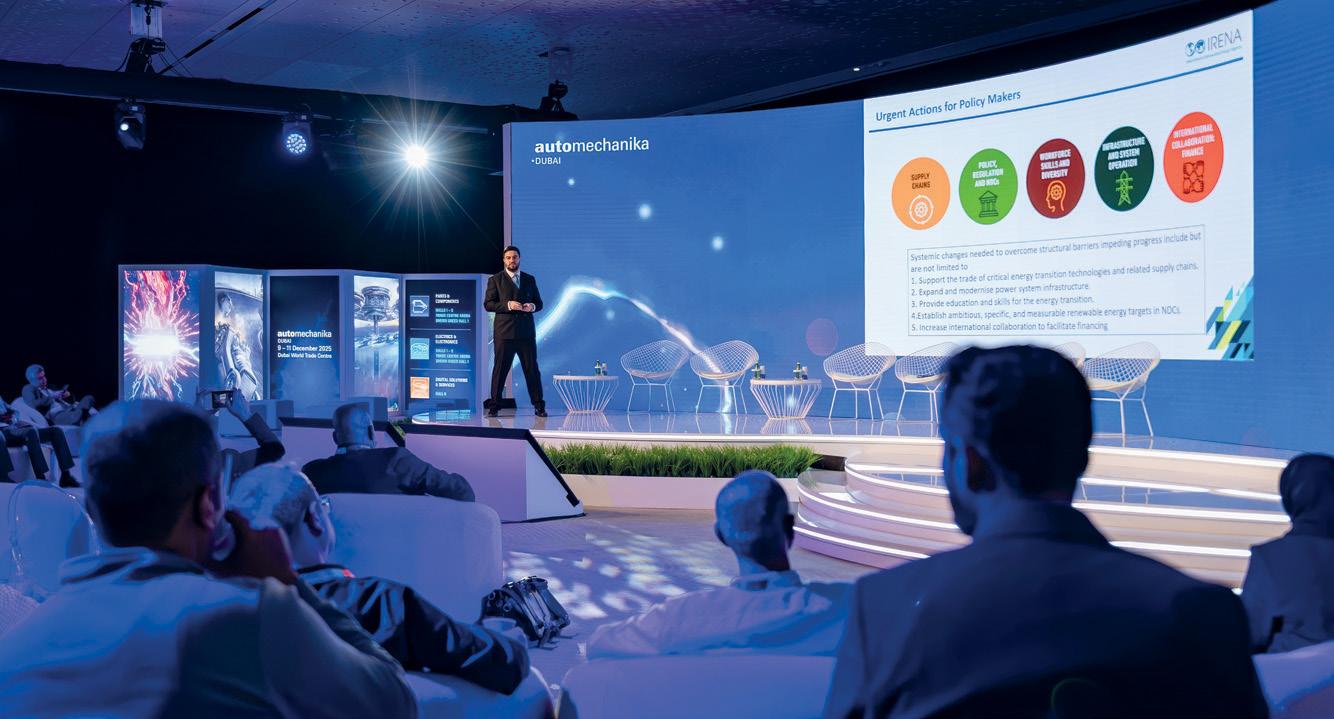
The opening session, Renewables and Mobility: Powering the road to decarbonisation was led by Abdullah Abou Ali, International Renewable Energy
The aftermarket is no longer just about replacing parts”
Agency (IRENA), where he will discuss how mobility will change with the shift to alternate energy vehicles – especially EVs which is a global priority and significant area of investment within the UAE.
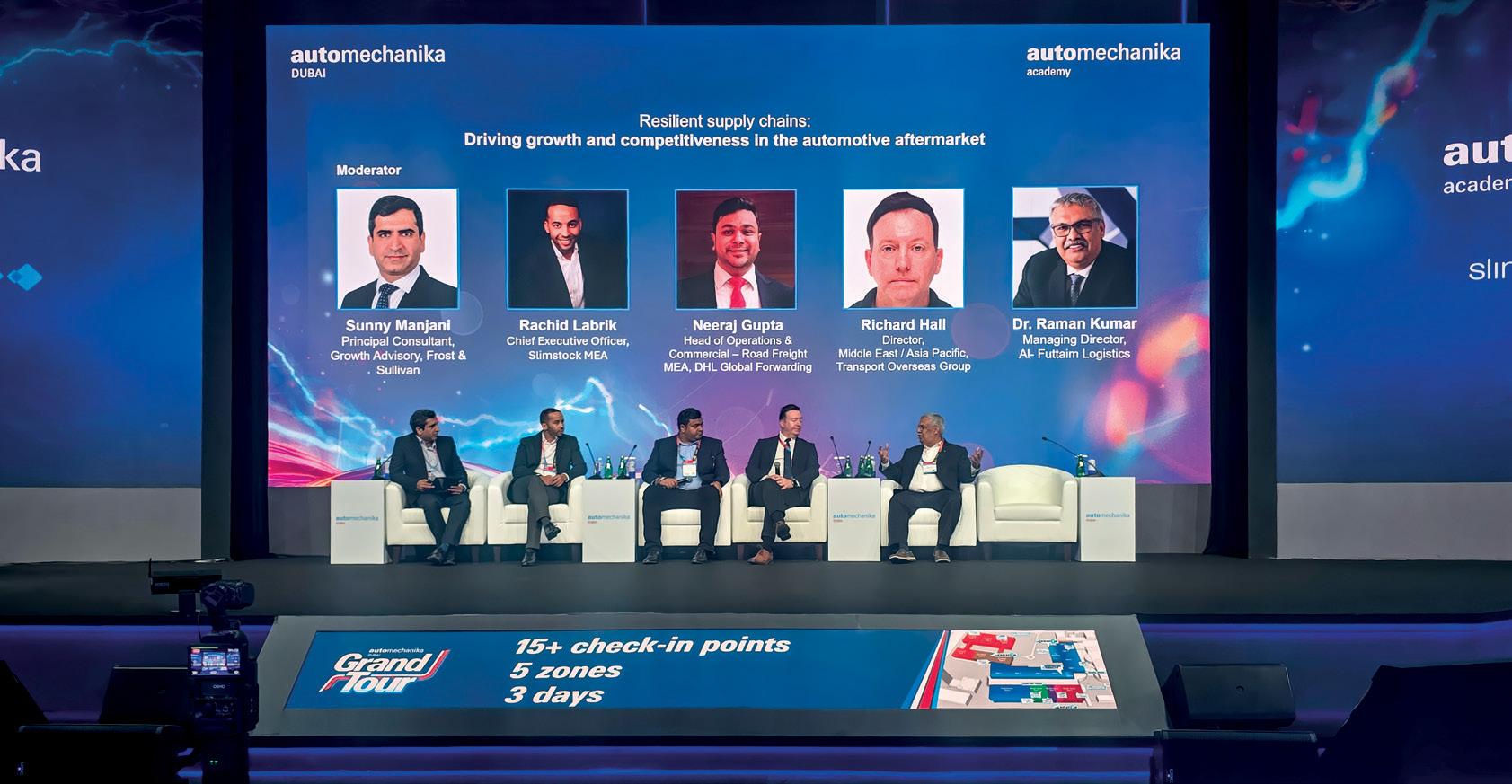
This was followed by a panel featuring Faisal Rashid, Supreme Council of Energy and Rashid Al-Manai, Chief Executive Officer, LODD Autonomous, highlighting how the UAE’s innovationfriendly policies and infrastructure are
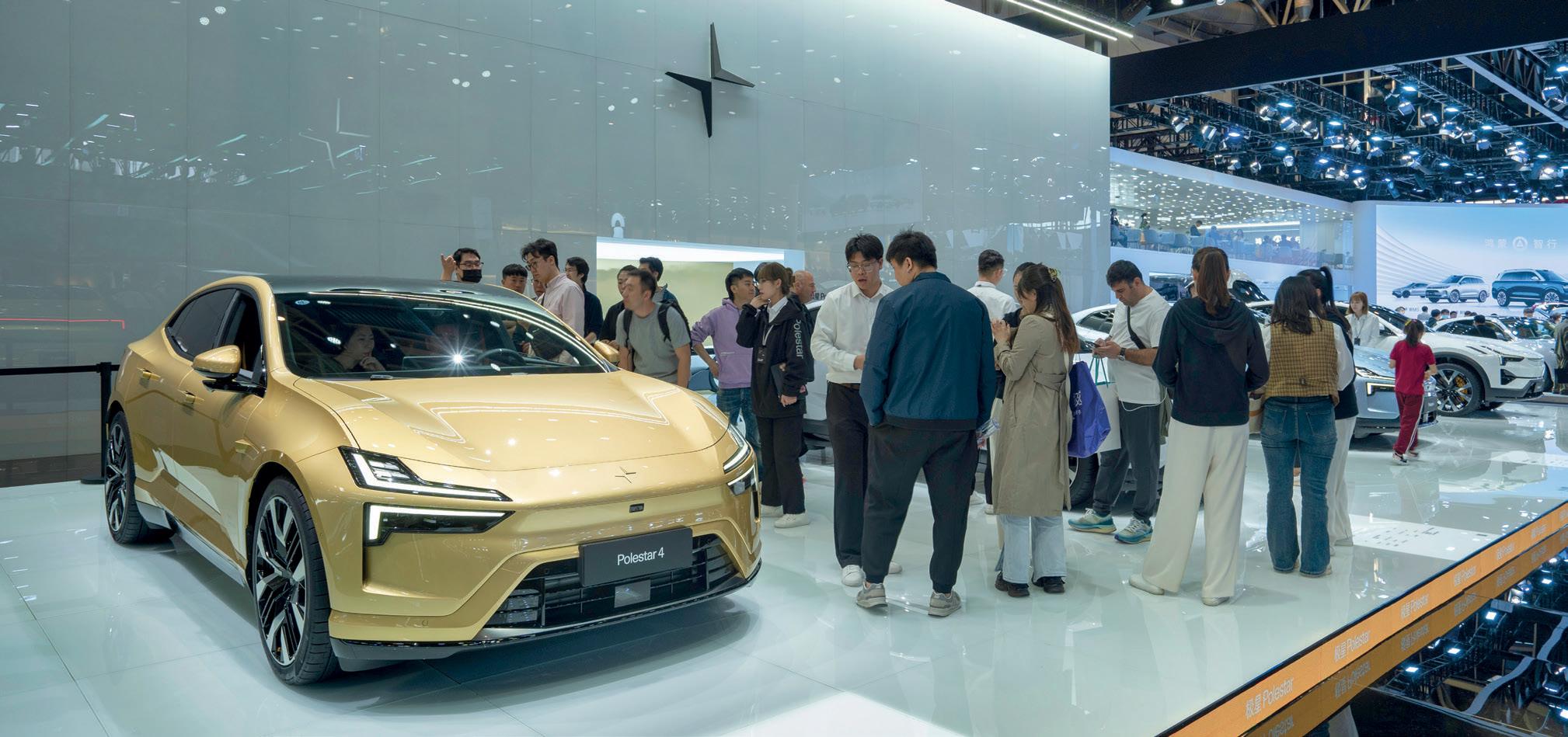
SAME SHOW, NEW OPPORTUNITIES Automechanika still creates new commercial opportunities for suppliers targeting Middle East, Africa and South Asia markets.
enabling EV and mobility pilots.
Addressing mobility infrastructure, Gaurish Wagle, Masdar City, outlined the evolution of mobility infrastructure, while Vijeet Raj Singh, ADNOC Distribution, will discuss grid integration, interoperability and commercial models accelerating EV charging expansion as part of the session Scaling EV charging infrastructure – From pilot projects to national rollouts.
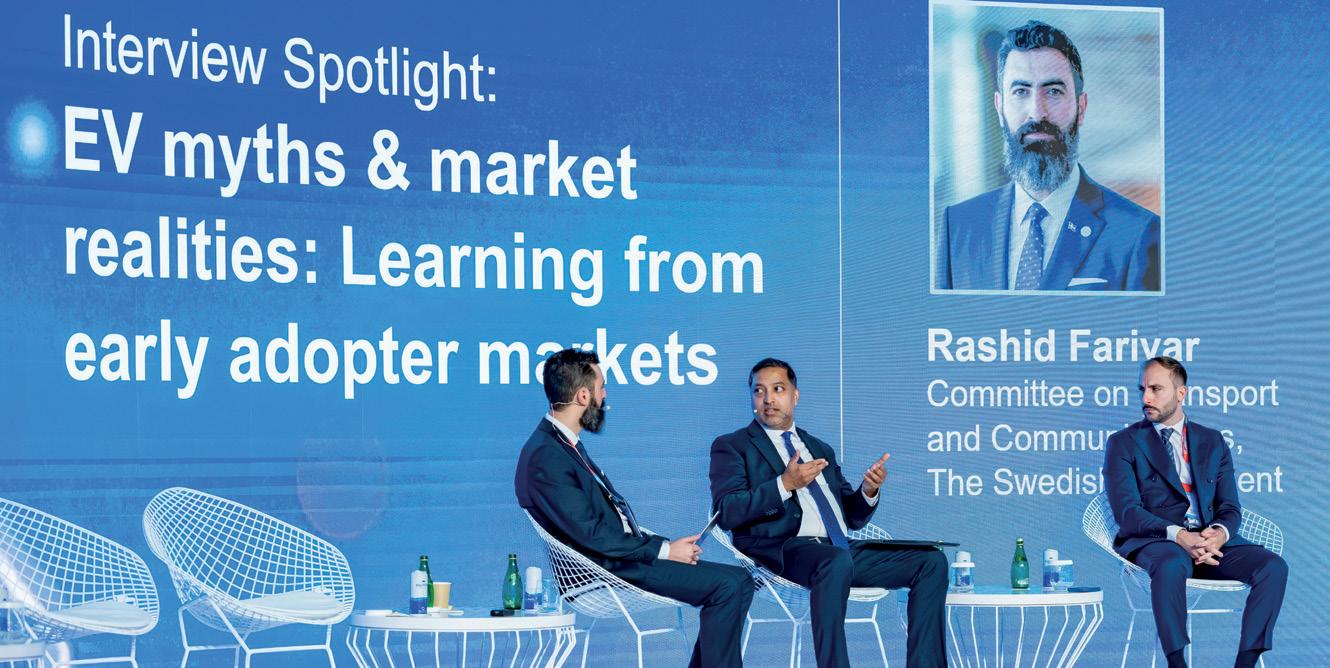
International expertise will also inform the UAE’s path forward, with a dedicated session led by Rashid Farivar, a member of the Swedish Parliament, outlined the lessons from Europe’s early EV-adopter markets, covering incentives, infrastructure planning and supply chain development. The conference also addressed consumer perspectives through insights from AW Rostamani Group, Roberto Colucci, focusing on EV adoption trends, common misconceptions, and the need for reliable, accessible charging networks.
Tommy Le, Show Manager, Automechanika Dubai, said: “The UAE has reached a critical moment in its electrification journey. The ambition is clear, but scaling the infrastructure and commercial models needed for mass EV adoption requires coordinated action across government, industry, and technology providers. Automechanika Dubai is where this dialogue becomes action. Through Innovation4Mobility and our year-round industry engagement, we are committed
to accelerating the UAE’s shift to cleaner, smarter and more sustainable transport.”
The UAE has reached a critical moment in its electrification journey”
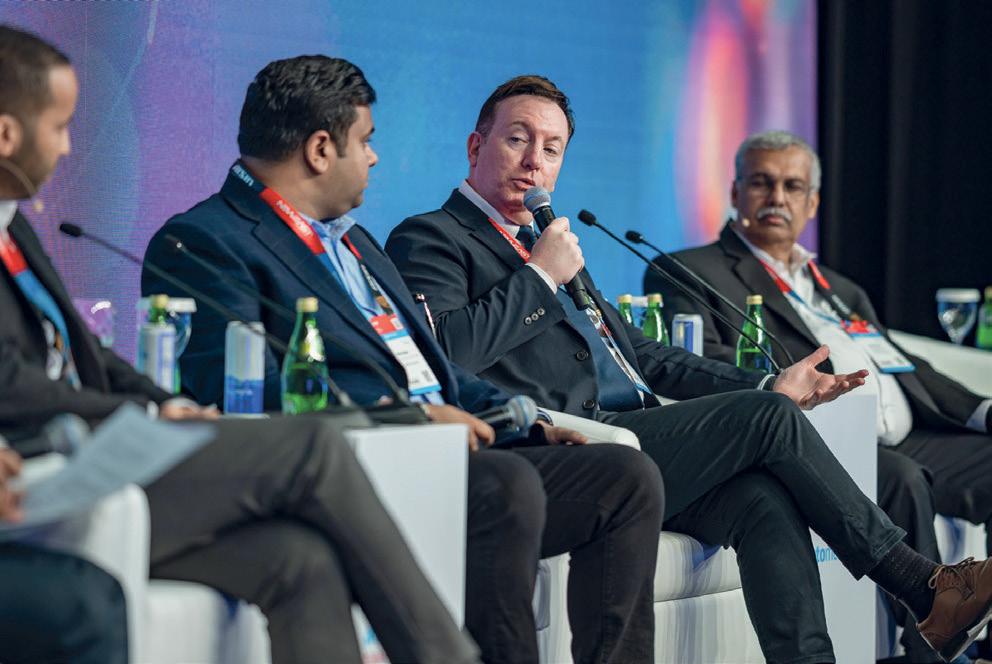
During the two-day Innovation4Mobility conference, industry players, government representatives and infrastructure stakeholders convened to debate and plan the future of mobility: from scaling charging networks to integrating renewable energy, from regulatory frameworks to fleet electrification strategies.
As the region shifts toward an envisaged target of 50% EV penetration by 2050, according to the national strategy referenced at the conference, the aftermarket sector
now sees itself as a critical enabler of that transition supporting vehicles not just with parts, but with energy, maintenance infrastructure, and digital solutions.
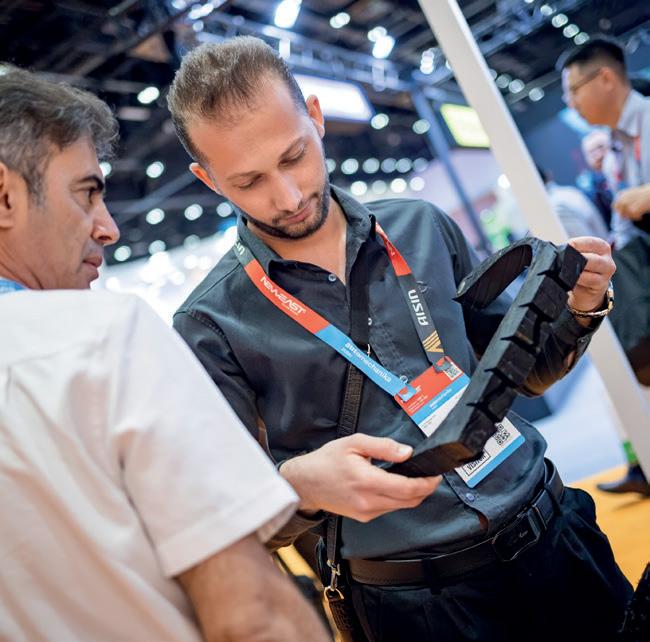
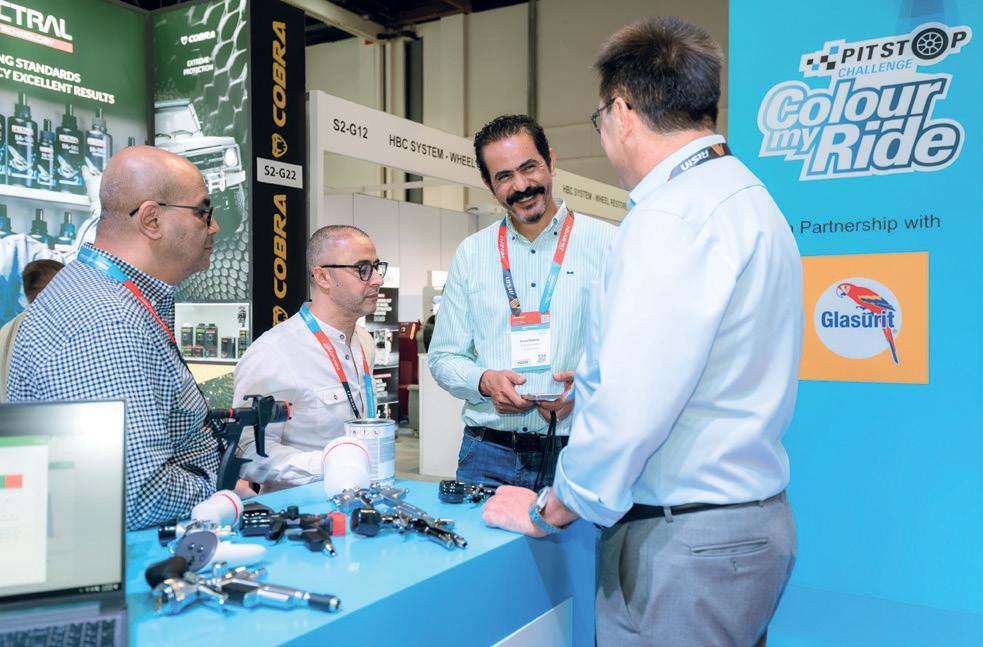
Beyond electrification, Automechanika Dubai 2025 reaffirmed its status as the most internationally diverse aftermarket event in the MEA region. The 2,300+ exhibitors represented more than 60 countries, and 20 dedicated international pavilions covered everything from legacy parts and components to tyres, batteries, diagnostics, workshop equipment, digital systems and customisation.
For supply-chain stakeholders, fleet operators and workshop owners, this breadth meant one thing: access to global innovation and best practices — under one roof. From Tier-1 OEM suppliers to independent aftermarket specialists, the show provided a unique window into the technologies, materials, and systems shaping the future of mobility across continents.
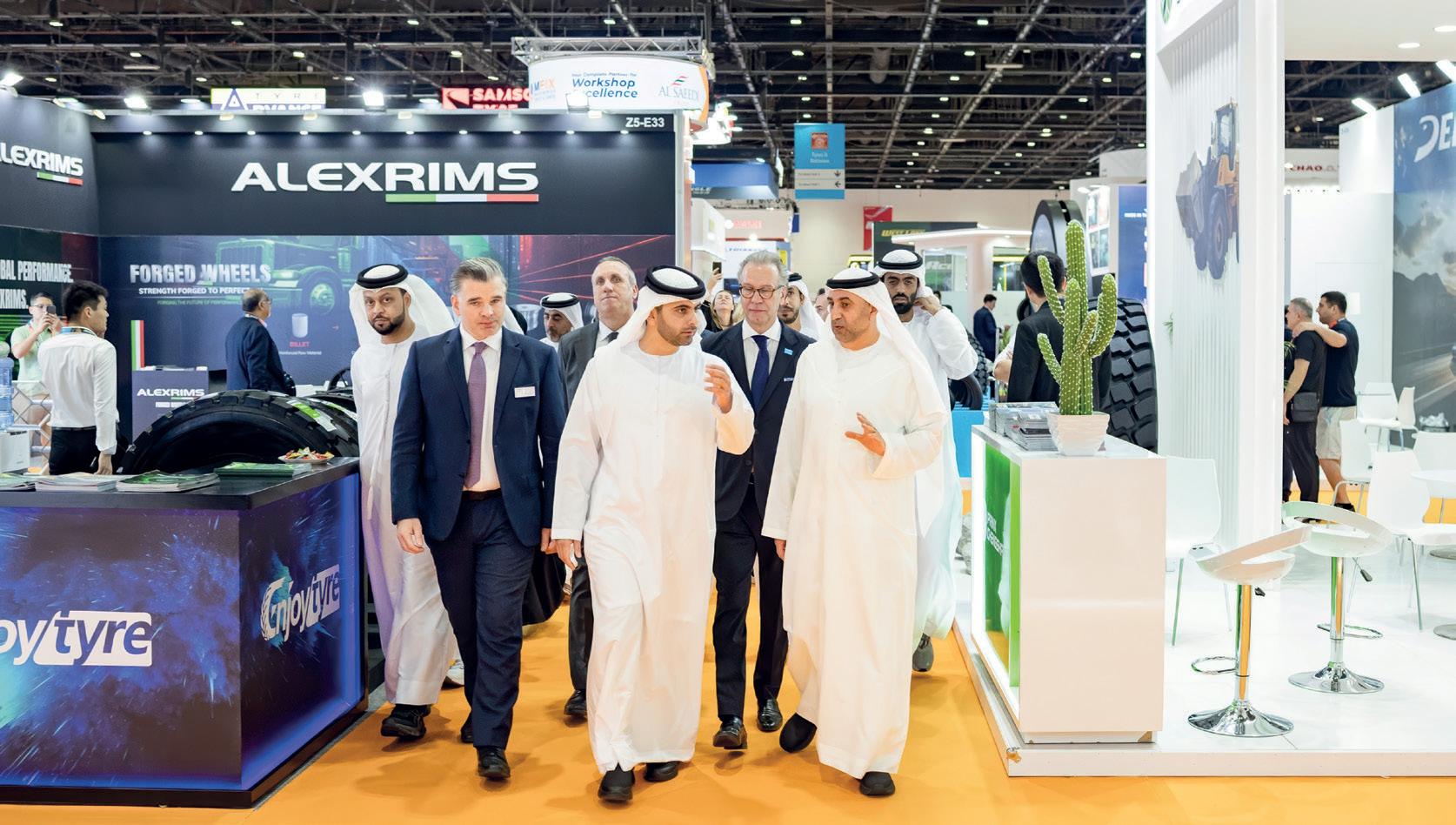
The presence of strong governmental support including the involvement of the Ministry of Energy and Infrastructure and the Roads and Transport Authority Dubai (RTA) underscored the strategic importance of the event. With bodies such as the African Continental Free Trade Area (AfCFTA) participating as Supporting Associations, the show’s influence extended beyond the Gulf positioning Dubai as a continental hub linking African, Middle Eastern, and Asian markets.
Automechanika Dubai 2025 offered more than displays, it provided learning, debate and glimpses of what’s next. The show’s conference tracks and workshop programmes brought together experts on sustainability, remanufacturing, EV maintenance, digital retail, AI diagnostics, fleet management and workshop automation.
For fleet operators, workshop owners, and aftermarket professionals, these sessions highlighted the growing complexity of maintaining modern vehicles in a market undergoing rapid change, and the need to invest in skills, tools and infrastructure accordingly.
The “Innovation4Mobility” discussions underscored that future workshops will need to accommodate not just traditional combustion-engine vehicles, but electric and hybrid fleets with all the new requirements in charging, battery care, diagnostics and compliance.
For parts suppliers and OEMs,
Automechanika Dubai 2025 delivered exposure to a global, multi-regional audience and real pathways into emerging markets across Africa, the Gulf, and South Asia. For fleet operators and service providers, it revealed new tools, technologies and strategies to adapt to changing vehicle demographics. For policymakers and industry stakeholders, the fair reaffirmed the UAE’s and the region’s ambition to combine growth with sustainability.
The aftermarket must evolve with smarter diagnostics”
Most importantly, the fair demonstrated that the aftermarket is no longer just about replacing parts, it is evolving into a holistic ecosystem encompassing energy infrastructure, digital services, environmental standards, and customer-centric mobility solutions.
As the last exhibitors packed up and the lights dimmed on Automechanika Dubai 2025, one message was clear: the automotive aftermarket is on the brink of transformation.
With electrification, digitalisation,
global integration and regulatory change all underway, the next few years will demand agility, investment — and vision. For those who attended, the fair wasn’t just a snapshot of today’s industry; it was a preview of tomorrow’s opportunities. If there was a recurring sentiment among participants — from suppliers to fleet owners, (including DHL) to regulators — it was this: the future is already here, and the aftermarket must evolve to meet it.
EXPLORING EMERGING TECH
Fleet operators, distributors and workshop owners were encouraged to use the show to evaluate new partners and explore emerging technologies.
WHEN EV SALES
MEET REALITY
PwC research proves that existing charging infrastructure is falling behind the sales of electric vehicles
On the face of it, electric vehicles (EVs) are no longer a fringe technology. They’re very much an industrial reality; reshaping supply chains, business models and consumer expectations at a scale unseen since the diesel revolution. But if you are an EV owner in Riyadh, Rome or Rio, you’ll be accustomed to juggling your driving needs with your charging needs.
Have no fear, you are not alone. PwC’s eReadiness 2025: EVs Charging Ahead in
a Broadening Market report shows, global growth is now accompanied by caution. The failure of the auto-industry and governments to keep pace with new EVs means that sales are set to slow as drivers face the realities of being an EV owner.
Across the 40 markets PwC tracks, EV sales surged 42 percent year-on-year in the first quarter of 2025, reaching a record market share. But as report co-author Patrick Amberger notes, this transition is uneven: “The electric mobility transition is happening at different speeds around the world.”
Cost and convenience are the most commonly cited reasons”
Recent global data underscores that volatility. According to Rho Motion figures cited by Reuters, global battery-electric and plug-in hybrid sales hit 2.1 million units in September 2025, a 26 percent increase year-on-year — the highest ever monthly total. China accounted for roughly two-thirds of all deliveries.
Yet just a month earlier, Gulf Today reported that growth had slowed to 15 percent in August, marking one of the weakest months in two years. For all its
THE SHOCK OF THE EVERYDAY
From Riyadh to Rome, drivers face the same challenge: the everyday realities of charging are beginning to outweigh the excitement of early adoption.
record-breaking highs, the EV industry is starting to experience the cyclical pressures familiar to any maturing sector: subsidy fatigue, supply-chain strain, and the return of affordability as the deciding factor.
The Price Barrier Remains
PwC’s survey reveals the hard truth: “Nearly half of those surveyed say the overall price of the vehicle was the deciding factor.” EV ownership, the firm notes, still skews affluent. Average household income among EV owners sits at €105,000,
compared with €87,000 for potential buyers and €57,000 for sceptics. As Amberger’s team notes: “For the global EV market to keep growing, the price of new vehicles, as well as the cost of maintaining them, will need to become more competitive.”
More than 60% of EV owners globally would consider buying a used EV as a next car (an increase of 10 percentage points from 2024), the survey also reveals.
“Here, again, cost and convenience are the most commonly cited reasons. A reduced insurance premium (58%) is
OEMs should boost certified preowned programmes”
the top motivation cited by EV owners, followed by the lower depreciation value of the vehicle and lower upfront costs. Less than half (40%) also like the fact that used EVs are immediately available (a reflection perhaps of the supply chain difficulties that have hampered production and delivery of new models in recent years, and that could be exacerbated as trade tariffs come into effect).”
“In Europe, Norwegian drivers show the most interest in purchasing a used EV, no doubt because of their government’s
goal to stop the sale of new ICE vehicles by 2025. For several years, EV sales have been strong in Norway, and in 2024, EVs accounted for 90% of the new cars sold there; meaning a robust inventory of used EVs will be available in the future.
Japan and Malaysia are among the countries where EV owners are increasingly open to used EV models: “Improved battery warranty, safety and occupational health certifications are key factors in incentivising customers, as is the transparency in prior service and maintenance history provided by the original equipment manufacturer (OEM).”
Although the total cost of ownership of an EV is already lower than that of a comparable internal combustion engine (ICE) vehicle, the upfront transaction price continues to be a more relevant factor for consumers: “Nearly half of those surveyed say the overall price of the vehicle was the deciding factor for their purchasing decision. Automakers seem to be responding. Chinese automakers have now made significant inroads into the global consumer EV market with dependable, competitively priced vehicles. European carmakers are also striving to meet the demand for affordable EVs.”
For fleets, the argument to buy remain a case of intense scrutiny of their capital expenditure and residual values. While total cost of ownership continues to tilt in EVs’ favour, few operators in
DRIVER DISCREPANCY
the Middle East can ignore the up-front price premium — especially in economies where fuel remains cheap and plentiful.
The electric mobility transition is happening at different speeds around the world”
T&E warns that regulators assumed drivers operated in electric mode 84 percent of the time, while the actual data shows the figure is closer to a far lower 27 percent.
Charging Time is the New Range Anxiety
The second friction point is no surprise. PwC found that 50 percent of respondents cited charging duration as their top concern, followed by battery lifetime (40 percent) and range (35 percent).
Interestingly, the study shows a shift in expectation: 52 percent of drivers now say a 300-to-400 kilometre range is acceptable if they can recharge in under 30 minutes.
In practical fleet terms, that half-hour
threshold is the new battleground. It defines whether delivery vans make their next slot, or whether a construction site’s equipment cycle runs on schedule. For logistics companies juggling high-density routes and regional temperatures, depot charging, ultrafast corridors and predictive scheduling are becoming the decisive variables.
Another defining theme of eReadiness 2025 is the maturing EV ecosystem. PwC reports that 54 percent of EV owners purchased a home-charging solution bundled with their car — up sharply yearon-year. More strikingly, over 60 percent said they would consider buying a used EV next time, a 10-point jump from 2024.
That appetite points to a market entering its second stage. As the authors write: “OEMs should boost certified pre-owned programmes by clearly communicating battery state of health, providing battery-specific warranties and launching flexible finance offers for used EVs.”
In fleet and rental contexts, that guidance reads like a business-model manual: battery-health transparency, lifecycle guarantees, and used-fleet remarketing are quickly becoming the differentiators between success and stagnation.
For the Gulf states, PwC’s findings carry both challenge and promise.
“The lower appetite for switching from ICE vehicles to EVs in the United Arab Emirates and Saudi Arabia can be explained by their ready and cheap supply of fossil fuels,” the report notes.
Yet it also points to momentum beneath the surface: “Saudi Arabia’s major
investments in renewable energy generation suggest that a transition to e-mobility in the coming years will accelerate.”
That duality captures the regional moment perfectly. Fuel prices remain a comfort blanket; infrastructure and incentives are still developing. But with giga-projects targeting decarbonisation and national fleets under scrutiny, the transition’s logic could be impossible to ignore.
The PHEV Wake-Up Call
Not every electrified solution deserves its halo. A new Transport & Environment (T&E) investigation, Smoke Screen: The Growing PHEV Emissions Scandal, reveals that plug-in hybrids may be emitting up to five times their official CO₂ figures in real-world use.
T&E warns that regulators assumed drivers operated in electric mode 84 percent of the time, while data shows the figure closer to 27 percent. The result: real-world emissions of 135 g CO₂/km — barely 19 percent below traditional combustion engines.
As the report states: “This persistent underestimation of PHEV emissions directly benefits manufacturers by helping them meet CO₂ targets more easily.”
For fleet buyers, particularly in highmileage or high-temperature markets, this is a crucial caution. The PHEV may promise compliance, but in daily operations it risks delivering neither true sustainability nor operational efficiency.
The combined insights of PwC, media coverage and T&FME’s own discussions from a regional perspective are leading to a new phase in the transition era. With early adopters now passing the torch to domestic and fleet owners we are reaching the point where execution matters. As do the economics and rigmarole of ownership.
Globally the existing charging infrastructure is falling behind the sales of vehicles. As discussed at the Farizon launch last month, and the MercedesBenz Vans showcase this month, owners need the ecosystems that make EV operations viable, not just aspirational.
For fleets and logistics businesses across the GCC, business-model innovation must extend to charging-as-a-service, battery-leasing and uptime guarantees. Technology selection has to fit duty cycles — urban delivery, quarry transport, inter-city haulage — rather than
Carmakers are striving to meet the demand for affordable EVs”
chasing trend curves. Policy frameworks will determine who leads: incentive continuity, residual-value clarity, and public-private infrastructure partnerships are the catalysts. And ecosystem development, from battery recycling to second-life applications, is where regional value creation will truly occur.
PwC’s eReadiness 2025 report closes with an observation that might have been written for every fleet manager reading this magazine: “This growth represents a
significant opportunity for incumbents, start-ups and companies eager to capitalise on changes in the way we move.”
The opportunity is undeniable, but so is the need for strategic discipline. For the Middle East, where cheap fuel still tempts inertia, the challenge is to turn enthusiasm into infrastructure, and pilots into policy.
The electric era has arrived. The question now is not if, but how well fleets, dealers and infrastructure partners execute on its promise.
CHARGING INFRASTRUCTURE FALLS BEHIND EV sales continue to surge globally, but PwC warns that charging infrastructure is struggling to keep pace — creating a widening gap between ambition and on-the-ground reality.
EASING PAIN POINTS
VW and MAN host eTruck fleet forum
to tackle problems of sustainable freight transport head on
What are the pain points for fleets that have been early adopters of electric vehicles? This was the main topic of conversation when Volkswagen Group Logistics and MAN sat with fleet customers last month in an attempt to help logistics companies, commercial vehicle manufacturers, shippers and charging infrastructure providers to work together to dispel existing reservations and find solutions for sustainable freight transport.
Volkswagen Group Logistics and MAN Truck & Bus said that they want to jointly drive forward the electrification of road freight transport. The motto of the event was: ‘Together for sustainable logistics, together for zero emissions.’
“After all, making the transition to more climate-friendly drive systems a reality across Europe requires the efforts of all stakeholders. It can only be done together,” said the two companies in a shared statement.
Simon Motter, Head of Volkswagen Group Logistics: “In Group Logistics, we are continuously working to minimise the
Making the transition requires the efforts of all stakeholders”
environmental impact of our transport operations. In addition to optimising our processes, our cross-brand initiative goTozero impact logistics focuses on sustainable technologies and energies as key levers for greater climate protection.
“In land transport in particular, the CO₂ emissions of diesel trucks are particularly high in relation to transport performance. That is why we see battery-electric vehicles as the most suitable technology for a more climate-friendly commercial vehicle fleet. Cooperation both within the Group and with our partners is crucial: our common goal is to
protect the climate and conserve resources.”
Automotive supplier logistics is characterised by a high degree of standardisation. In many cases, load carriers with a height of one metre are used here.
A loading space height of a good three metres therefore allows three such load carriers to be stacked on top of each other. This requires trucks with a particularly low fifth-wheel height, known as ‘lowliners’ or ‘ultra-tractors’. Since the launch of its battery-electric eTGX and eTGS models in October 2023, MAN has been the only manufacturer to offer lowliner trucks.
Since early 2025, MAN electric trucks have reliably covered over five million kilometres in daily use in the fleets of major European logistics service providers. This underlines the practical suitability of the vehicles for a variety of transport tasks.
MAN’s eTruck generation features a modular battery system that allows customers to choose between range and payload. Over 80% of all truck applications, from construction site and swap body transport to automotive logistics, can
TGE ENTERS SERVICE
The MAN TGE is proving itself as one of the most versatile and dependable vans in the emergency services sector, with demand rising across Europe. MAN Truck & Bus currently holds orders for around 1,800 MAN TGE ambulance vehicles in twelve countries, with more than 700 units already delivered and in active service. From Romania to Ireland and Poland to Spain, the TGE has earned its reputation as a robust, adaptable, and modern platform for ambulance conversions. Thanks to its strong
PUSHING THE TRANSITION
Volkswagen Group Logistics and MAN are working with fleets to identify real-world barriers to electrifying long-haul freight; and to push the transition from early adoption to scalable operations.
be covered by MAN eTrucks.
Our common goal is to protect the climate”
‘The first customers have already driven well over 100,000 kilometres with an MAN eTGX in just over a year. This shows that the battery trucks are reliable and practical. And more and more customers are coming to the same conclusion: we currently have around 1,000 orders for our eTrucks, and the trend is rising,’ explains Friedrich Baumann, MAN Executive Board Member for Sales and Customer Solutions.
technical foundations, extensive customisation options, and close collaboration with specialised bodybuilders, the TGE is fast becoming a trusted name in rescue and patient transport operations.
MAN’s approach—working hand-in-hand with local body manufacturers—has enabled tailored solutions for each national emergency service. The brand’s partnership with Falck, one of Europe’s largest emergency service providers, exemplifies this. Falck operates the MAN TGE in Denmark, Germany,
Poland, Sweden, and Spain, leveraging its comfort, reliability, and ease of configuration across diverse fleet requirements.
Inside, the MAN TGE combines a digital driver’s cockpit, ergonomic Comfort Plus seat, and MAN Media Van infotainment system for an intuitive and fatiguefree driving experience. Advanced assistance features enhance safety on the road, while optional adjustable air suspension and variable load heights make patient loading and unloading easier and safer. With front-, rear-, or
‘In Germany, we have extended the toll exemption for zero-emission trucks until 2031. This is an important signal that gives our customers the necessary predictability. However, small and medium-sized enterprises need to be given more support in the form of financing programmes. The expansion of the charging infrastructure also needs further impetus in the form of faster approval procedures and the expansion of the electricity grids,’ adds the MAN Sales Director. The financing programmes are designed to enable economically sound but often not very capital-rich companies to make the transition, for example through loans or guarantees.
The Nanno Janssen haulage company from Leer already has 35 battery-electric trucks in its fleet and more eTrucks on the way, including 15 MAN eTGX models. Managing Director Nanno Janssen reports on practical experience at the MAN Truck Forum in Munich: ‘Long-distance transport with electric lorries is already possible today in Europe. Now it’s a matter of scaling up the technology.’
all-wheel drive (4x4) options, the TGE delivers reliable performance in any weather or terrain. A central vehicle control unit links the ambulance’s onboard systems directly with vehicle electronics, ensuring fast and reliable operation of mission-critical functions.
Whether responding to emergencies in urban centres or navigating rural terrain, the MAN TGE’s blend of technology, durability, and flexibility makes it the vehicle of choice when it matters most.
Initial goes mobile in KSA ON WHEELS TECHIES
Initial has introduced the Kingdom’s first mobile engineering service designed specifically for small and medium enterprises (SMEs), delivering fast, data-driven building maintenance backed by artificial intelligence, predictive analytics and real-time asset monitoring.
Unveiled at the Smart Built Environment Forum in Riyadh, the new mobile engineering services division replaces traditional on-site maintenance arrangements with a flexible, rapid-response model aimed at improving uptime, reducing costs and increasing service accessibility for businesses across Saudi Arabia.
The company’s approach deploys roaming engineering teams supported by AI-powered diagnostics and IoT sensors, enabling faster decisionmaking, higher first-time fix rates and optimised resource utilisation. Initial
says the service gives SMEs access to the same level of engineering support typically enjoyed by large corporates, but with significantly greater efficiency.
At the centre of the offering is Initial’s 24/7 Service Operations Center, a digital command hub that monitors client assets in real time. When a system requires attention, engineers are dispatched immediately with full access to asset histories, technical manuals and the parts required to complete a first-time fix. This integrated process is designed to minimise downtime, speed up response times and improve overall building performance.
GPS-tracked engineering vehicles provide nationwide coverage, including remote areas and multi-site portfolios.
Reactive tasks are managed through instant dispatch, while predictive and preventive works are planned using automated alerts and data-led insights. Every visit
We have the people, systems and expertise to fulfil the market need”
is recorded digitally and supported with imagery, reporting and compliance documentation to ensure full transparency.
The mobile engineering division supports a wide range of sectors including restaurants, clinics, schools, warehouses, retail stores and offices. Services span MEP and HVAC support, fabric repairs, fire, water and electrical compliance, lighting upgrades, preventive maintenance and asset monitoring.
“We saw a clear gap in the market and the growing frustration from SMEs,” said Jason Ruehland, Group CEO of Initial. “We have the people, systems and expertise to fulfil the market need. Mobile engineering finally gives SMEs the speed and reliability large corporations have long enjoyed. Our goal is simple: take care of people and buildings by delivering the basics exceptionally well while continuously innovating.”
NEXT ISSUE: AUTOMECHANIKA FULL REVIEW, ZF ON GETTING CLOSER TO THE MARKET, HEC 2026 PREVIEW, AND MUCH MORE