



www.gorillahammers.com
www.gorillahammers.com
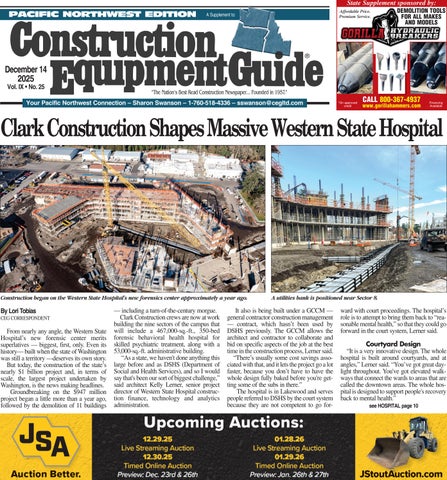
By Lori Tobias CEG CORRESPONDENT
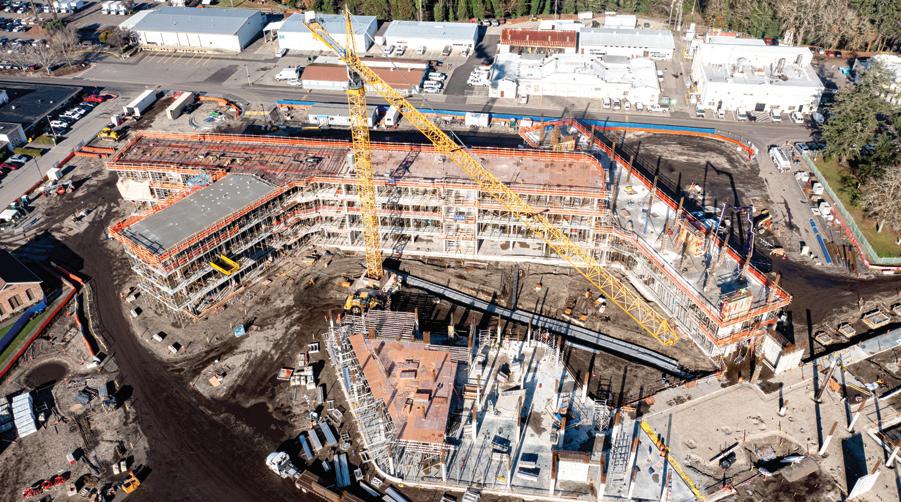
From nearly any angle, the Western State Hospital’s new forensic center merits superlatives — biggest, first, only. Even its history— built when the state of Washington was still a territory —deserves its own story.
But today, the construction of the state’s nearly $1 billion project and, in terms of scale, the largest project undertaken by Washington, is the news making headlines.
Groundbreaking on the $947 million project began a little more than a year ago, followed by the demolition of 11 buildings
— including a turn-of-the-century morgue.
Clark Construction crews are now at work building the nine sectors of the campus that will include a 467,000-sq.-ft., 350-bed forensic behavioral health hospital for skilled psychiatric treatment, along with a 53,000-sq.-ft. administrative building.
“As a state, we haven't done anything this large before and as DSHS (Department of Social and Health Services), and so I would say that's been our sort of biggest challenge,” said architect Kelly Lerner, senior project director of Western State Hospital construction finance, technology and analytics administration.
It also is being built under a GCCM — general contractor construction management — contract, which hasn’t been used by DSHS previously. The GCCM allows the architect and contractor to collaborate and bid on specific aspects of the job at the best time in the construction process, Lerner said.
“There’s usually some cost savings associated with that, and it lets the project go a lot faster, because you don’t have to have the whole design fully baked before you're getting some of the subs in there.”
The hospital is in Lakewood and serves people referred to DSHS by the court system because they are not competent to go for-
ward with court proceedings. The hospital’s role is to attempt to bring them back to “reasonable mental health,” so that they could go forward in the court system, Lerner said.
“It is a very innovative design. The whole hospital is built around courtyards, and at angles,” Lerner said. “You’ve got great daylight throughout. You've got elevated walkways that connect the wards to areas that are called the downtown areas. The whole hospital is designed to support people's recovery back to mental health.”



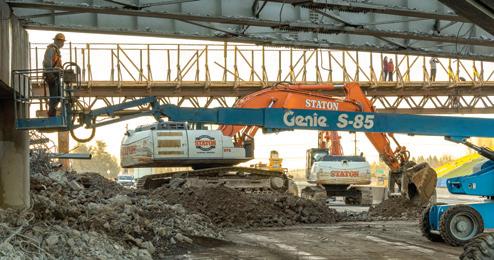
The Oregon Department of Transportation (ODOT) announced on Nov. 12, 2025, the substantial completion of all major elements of the OR 217 Auxiliary Lanes Project — delivered on time after four years of planned construction.
ODOT said it worked to improve safety and address longstanding bottlenecks on OR 217 while also completing key connections in the adjacent bicycle and pedestrian network. The agency expects that the improvements will decrease crashes on the highway by 20-30 percent and save more than 73,000 hours of travel time every year.
The total project cost is $174 million primarily funded through the Keep Oregon Moving
transportation package (House Bill 2017). The city of Beaverton and Washington County also contributed money toward the project.
Kerr Contractors Oregon served as the project’s general contractor.
Major project accomplishments:
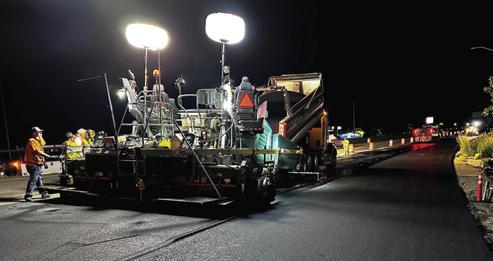
• Placed more than 19,000 tons of asphalt and added 5 mi. of new auxiliary lanes, resulting in less congestion, increased merging distance and a safer highway with fewer crashes.
• Built a new southbound frontage road between Allen Boulevard and Denney Road. The new frontage road decreases highway merging, making trips safer for drivers.
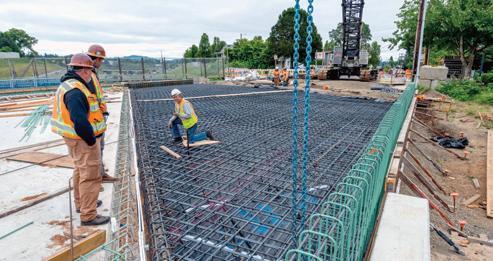
• Rebuilt the Hall Boulevard overpass in
Tigard, including wider sidewalks and bicycle lanes, ADA-compliant sidewalk ramps and increased earthquake resilience.
• Widened the Hall Boulevard overpass in Beaverton by 19 ft. to support a new sidewalk and bike lanes and fill in a missing link in the bicycle/pedestrian network. This work was in partnership with the City of Beaverton.
• Widened the sidewalk on the Denney Road overpass by 4.5 ft. to accommodate two-way bicycle and pedestrian traffic.
The project also:
• Widened and reconfigured ramps at six interchanges.
• Added four sound walls.
• Widened shoulders to accommodate emergency response vehicles.
• Built nine retaining walls.
• Installed 2,100 ft. of protective fencing and 23,000 ft. of guardrail.
• Installed 19,000 ft. of pipes and 18 storm swales and retention ponds.
Final touches and clean-up work will continue over the next several weeks. Final landscaping will continue into next spring as weather permits.
(All photos courtesy of Oregon Department of Transportation.)
• Connected the Fanno Creek Trail to Allen Boulevard, in partnership with the city of Beaverton, to complete the north/south parallel bicycle and pedestrian network.
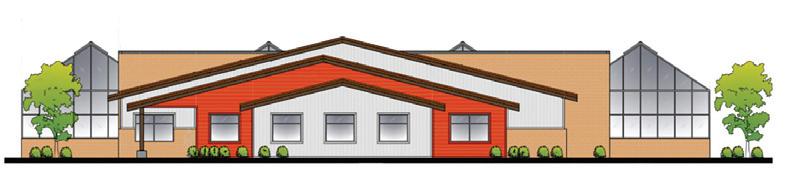
Development of Washington State University’s new Plant Growth Facility at Wenatchee is moving forwardwith help from a newly selected design-build team rooted in regional agriculture.
Following a competitive process that drew interest from 16 teams, WSU Facilities Services selected builder Absher
Construction, a Puyallup-headquartered company with offices in Wenatchee, and Flad Architects, a national firm whose principal architect for the project is Wenatchee-based.
“This is a special project for all of us,” said Aaron Binger, project executive of Absher. “It hits home: We can see the impact to our neighbors who are in the orchard business. We understand the importance of combining science with agriculture here in the Wenatchee Valley.”
Founded in 1940, Absher is a large construction firm that builds projects for federal, transportation, educational, multiunit housing, recreation and commercial customers. Absher built the Elson S. Floyd Culture Center at WSU Pullman in 2017.
Flad Architects is a national planning and design firm with offices in 10 cities across the country, including Seattle. A top-ranked company for scientific laboratory architecture, Flad collaborated on the design of the Chateau Ste. Michelle WSU Wine Science Center in 2013.
The two companies are working with scientists at WSU’s Tree Fruit Research and Extension Center to plan and build the new $18 million Plant Growth Facility. Replacing 70-
“We understand the importance of combining science with agriculture here in the Wenatchee Valley.”
Aaron Binger Absher Constrruction
year-old greenhouses, the facility will incorporate modern technology and controlled environments to support new studies of plant growth, pest resistance and environmental stressors.
Expected to begin in spring 2026, construction is supported by a $10 million allocation from the Washington State Legislature’s 2025-27 capital budget. Northwest Nursery
Improvement Institute, AgWest Farm Credit, Mike and Kathy Hambelton, Rainier Fruit Co., H.R. Spinner, Stemilt Growers and other industry partners have pledged more than $1.5 million to aid the project. The remaining costs of construction are being supported by royalties from WSU’s Cosmic Crisp apple variety, WA 38.
Lee Kalcsits, center research team lead and endowed chair of environmental tree fruit physiology and management, acknowledged donors as well as the Washington Tree Fruit Research Commission, Washington State Tree Fruit Association and Northwest Horticultural Council for their advocacy of research infrastructure improvements in Wenatchee and across the WSU system.
“Thanks to their support, we are one step closer to a new facility which will support tree fruit-focused research and Extension programs,” Kalcsits said. “These facilities will promote collaboration, help us attract talented personnel and allow us to better serve our industry partners.”
Research at the center embraces a host of specialties, from breeding and physiology to examination of insect pests, bacteria and viruses.
“All of that research will now be adjacent so the scientists can collaborate on what these trees need to grow and progress through their strengths and stresses in state-of-theart greenhouses and grow houses,” said Ben de Rubertis, principal architect of Flad.
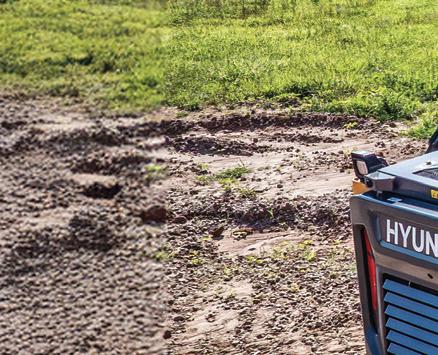



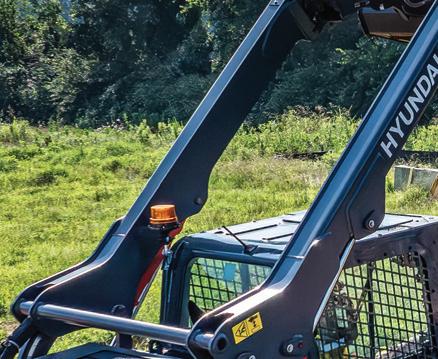
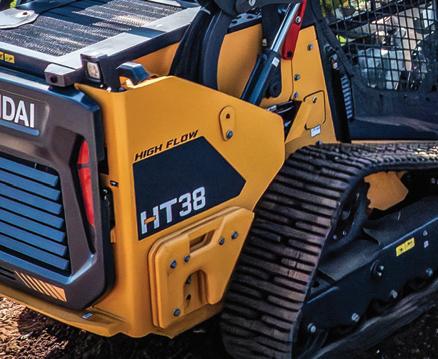
Meet the contractor-strong, feature-rich machine that’s ready to carry the load for your crew. The all-new Hyundai HT38 CTL delivers 115 HP, a 3,807-lb. rated operating capacity, and 10’9” of lift height. All backed by Hyundai’s 3-year / 3,000-hour warranty.
What sets it apart? The features others charge extra for come standard:
•Hi-Flow Hydraulics
•Torsion Suspension
•Reversible Fan
•Lift-Arm Float
•Auto Self-Leveling
•Rearview (Backup) Camera

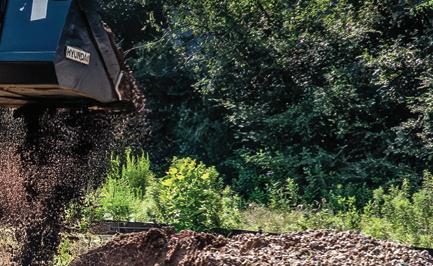
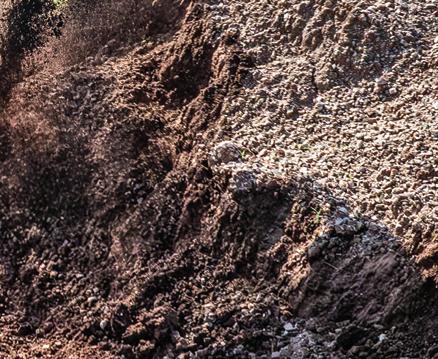
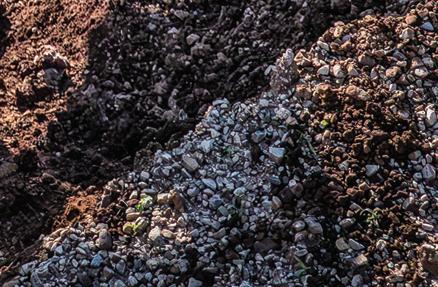
No wonder so many first-time Hyundai users become longtime fans. See the Hyundai difference yourself at your local dealer, or na.hd-hyundaice.com.
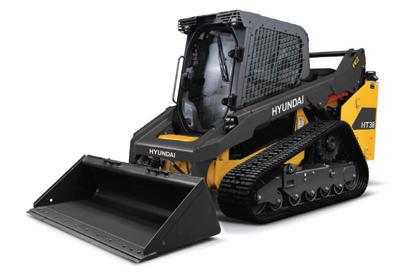
•Pressurized Cab with Heat & A/C•Bluetooth + 8” Smart Touch Display
•Ride Control



Idaho officials broke ground on Oct. 14, 2025, on a two-year, $20 million project designed to upgrade and modernize the nearly 100-year-old Ridenbaugh Diversion Dam on the Boise River, according to idahocapitalsun.com.
Nampa and Meridian Irrigation District officials are replacing and upgrading the dam, which is just east of Barber Park, a popular destination for people who float the Boise River each summer.
Gov. Brad Little called the dam “a powerhouse in the Treasure Valley,” adding that the project will ensure farmers continue receiving much-needed irrigation water, idahocapitalsun.com reported.
“This project in particular will be a modernization into the 21st century, but it also has a safety and a fish aspect to it,” Little said. “So, this is not just a pure irrigation project. It really checks all the boxes for what’s important in Idaho.”
Some of the funding for the $20 million dam project comes from $30 million that Little and the Idaho Legislature set aside during the 2025 legislative session for water infrastructure projects.
The irrigation district received approximately $10.7 million from the Idaho Water Resource Board, which was a portion of the $30 million for water infrastructure projects. The irrigation district also received an approximately $4.7 million Bureau of Reclamation Watersmart Grant, according to idahocapitalsun.com.
The dam’s purpose is to raise the water level, allowing Boise River water to be diverted into the Ridenbaugh Canal. From there, it is delivered to farms and lawns across the Treasure Valley for irrigation.
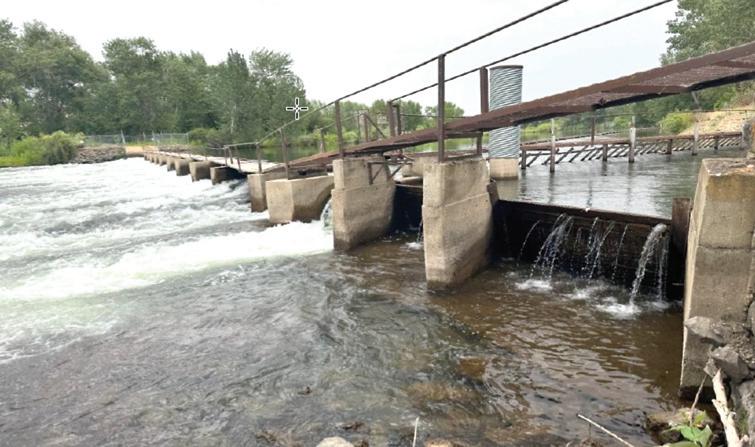
is going to be modernized and replaced.
Officials said the existing dam, which dates to the 1930s, is antiquated.
A crew of three must install and remove 20-ft.-long boards by hand — even in bad weather — to raise the water level, accord-
ing to idahocapitalsun.com.
A new automated system that includes gates and an 80-ft. weir extending from the crest gate to the north riverbank will replace that system.
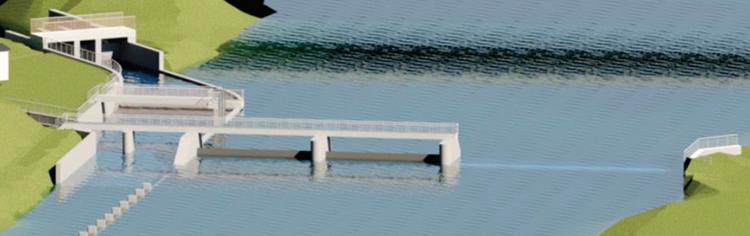
Two-stage temporary cofferdams will be constructed in the Boise River to dewater one side of the river and allow flow through the other side, according to the Idaho Water Resource Board. A curved concrete intake will be constructed on the south bank. The new intake structure will include a sediment settling basin and gate to minimize sediment going into the canal.
The intake structure will be fitted with six trash rack screens and a conveyor belt to clean the screens. On the left half of the river, two automated 40-ft. crest gates will be mounted to the river bottom, allowing floating debris to be flushed downstream in a safe manner.
“We’re hopeful that our new facility will enable us to distribute irrigation water through the valley for another 100 years,”
Donald Barksdale, president of the Nampa and Meridian Irrigation District, said at the groundbreaking ceremony.
Crews also will install a screen designed to prevent adult fish from entering the canal, according to idahocapitalsun.com.
Greg Curtis, water superintendent of the Nampa and Meridian Irrigation District, said the project cost won’t exceed $20.7 million, and crews hope to finish it by spring of 2027.
Construction work will be performed during the winter to avoid the summer river floating season at Barber Park, Curtis said. Work begins on one side of the river immediately and will continue until March or April. At that point, the old boards will be put back in the dam.
Construction work will resume on the river’s other side in October 2026 and continue until completion.
(All photos courtesy of the Idaho Department of Water Resources.)
Sunstate Equipment Co. LLC announced on Oct. 30, 2025, the acquisition of Trenchman Shoring, a trench safety equipment rental provider serving the greater Seattle, Wash., metroplex.
This strategic expansion strengthens Sunstate’s presence in Washington and reinforces its commitment to delivering \rental solutions across the region.
Through this integration, customers gain access to Sunstate’s multi-state branch network, service and support, an expanded selection of rental equipment and technology enhancements that ensure a seamless customer experience. While Trenchman Shoring’s team will continue delivering the same friendly service customers trust, they will now have the added resources and support of a larger organization.
“We are excited to welcome Trenchman Shoring to the Sunstate family,” said Norty Turner, Sunstate president and CEO. “This acquisition expands our trench shoring capabilities and strengthens our ability to support customers across the region with enhanced expertise, faster response times and
a broader lineup of safe, reliable solutions. Together, we’re making it even easier for our customers to get the trench equipment and support they need across the Pacific Northwest.”
Trenchman Shoring is a full-service trench and excavation safety provider based in Olympia, Wash., with an additional yard in Pasco, Wash. The company specializes in on-site consultation, equipment rental and safety training tailored for utility contractors, municipalities and civil-infrastructure projects. With a shared commitment to excellence, both Sunstate and Trenchman Shoring have built trusted reputations in the construction rental industry, prioritizing customer service and strong, people-first relationships. Sunstate’s decades of experience providing high-quality equipment and customer-
centric rental solutions align with Trenchman Shoring’s deep-rooted dedication to expert service in the Seattle market.
"Joining Sunstate allows us to grow and expand without compromising what matters most — safety, service and our people,” said Brian Garlinghouse, founder of Trenchman Shoring. “Our customers can expect the same trusted team and expertise but now supported by Sunstate’s expanded network and resources. This is a win for our employees, our customers and the future of our business."
Arizona-based Sunstate Equipment was founded in 1977. In 2017, Sumitomo Corp., a global investment firm, purchased full interest shares.
For more information visit sunstateequip.com.
Kent, WA
(800) 669-2425
Rochester, WA (800) 304-4421
Spokane, WA (800) 541-0754
Boise, ID (800) 221-5211
Pocatello, ID (800) 829-4450
Billings, MT (800) 735-2589
Columbia Falls, MT (800) 434-4190
Missoula, MT (800) 332-1617
Eugene, OR (800) 826-9811
Portland, OR (800) 950-7779








































COLUSA
1960 Highway y 20 Colusa, CA 95932
DIXON
793 N First Street
Dixon CA95620
Phone: (9916) 649-00
DOS PALOS
2173 Blossom Street
Dos Palos, CA 93620
Phone: (209) 392-216
MERCED
600 S. State Highway y Merced, CA 95341
Phone: (209) 383-58





REDDING
2535 Ellis Street
Redding, C 96001
Phone: (530) 458-216
Phone: (530) 245-9000
STOCKTON
1340 W. Charter Way y
Stockton, C 95206
Phone: (209) 944-5500
STRATTFORD
20280 Main St.
Stratford, CA 93266
Phone: (559) 947-3301
TURLOCK
1215 West Glenwoo Avve
Tuurlock, C 95380-5703
Phone: (209) 634-1777






827 Nort Teehama St
Willows, CA 95988
Phone: (530) 934-3382
YUBA CITY
3056 Colusa Highway y Yuba City CA 95993
Phone: (530) 923-7675
1455 Glendale Avve. Sparks, NV 89431
Phone: (775) 358-5000





HARRISBURG
230 Sommerville Avvenue
Harrisburg, O 974446 Phone: (541) 995-2262
HILLSBORO
185 W Main St. Ext.
Hillsboro, O 97123
Phone: (503) 648-4178
MADRAS
36 NW A Street
Madras, OR 977441
Phone: (541) 475-2253












Road reall, OR 97371 ne: (503) 363-2332
(503) 981-0151








A key factor in creating the campus is biophilic design, that is, the focus on nature and the patients’ ability to interact with the outdoors. It’s also the most innovative part of the design, Lerner said.
It’s also a net-zero energy facility, designed to produce as much energy as it uses and will feature both rooftop solar panel systems and ground mount systems, one each on the east and west sides of the campus.
“It is a fully electric hospital, so we're not using natural gas anywhere,” Lerner said. “What we're trying to do is reduce all greenhouse gas emissions. This is part of Washington's larger mission towards reducing all of our greenhouse gases to mitigate climate change.
“We’re connected to Tacoma Power, and all of this energy will be going back into the grid. This is a larger-scale project of this type than Tacoma Power has ever had before. This project has a lot of firsts; this is the first zero net energy hospital of this scale in the world.”
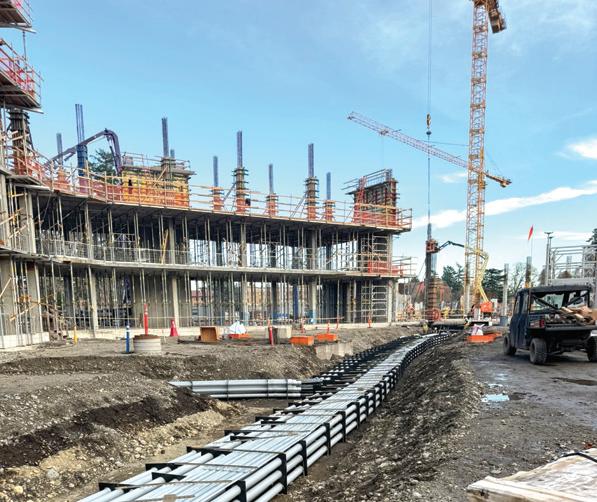
The hospital building itself is built on a concrete-structured, post-tension slab. The slab is poured in place and is embedded with steel cables sheathed in sleeves.
“They pour the slab and then, when the concrete reaches a certain strength, they put tension on the cables, and that means the slabs can be much thinner, so it is a much





thinner, lighter structure,” Lerner said.
The building will feature an aluminum veil-like façade, allowing people to see out but protecting the face of the building and the windows.
“It has a cool basket weave look to it that


harkens back to the indigenous population that was all over Washington and along the coast and rivers before any Europeans colonized the area,” Lerner said.
The administration building is separate from the hospital and is built with cross-laminated timbers from trees taken down on the site and fabricated by a company in Oregon.
“Cross-laminated timber is a very sustainable way of building, and it uses smaller trees,” Lerner said. “It is a fairly carbon sequestering approach. If you look at crosslaminated timbers, there's all kinds of reasons why it's more sustainable.”
The project has had a huge impact on the construction industry and relies largely on contractors from the Pacific Northwest, Lerner said.
“This is a huge investment in our future. This is a state-of-the-art behavioral health facility that’s really going to pay off for future generations. It is a huge-scale project; it's a huge investment, but it's a huge investment for the future of behavioral health in Washington.” CEG
(All photos courtesy of the Washington State Department of Social and Health Services.)