
WELCOME TO THE SIXTH FORM
o An exciting period of growth – our largest Sixth Form ever
o Excellent examination results – 84% A*-B; 51% A*-A; 92% gaining places at their first-choice universities
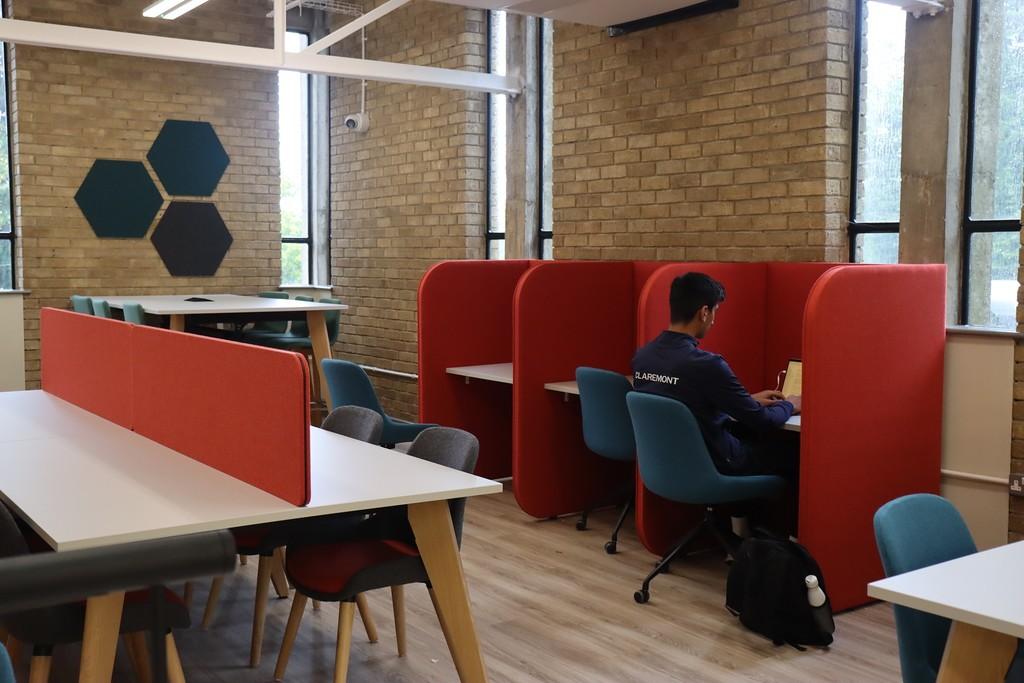
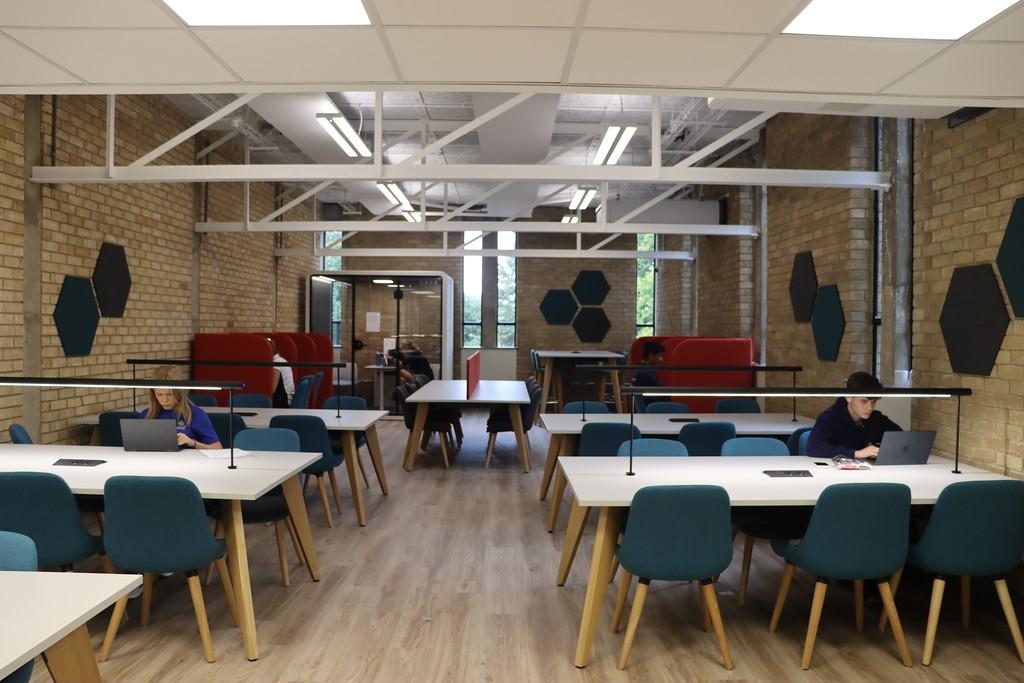
o Vibrant sixth form centre – study space, quiet working area and cafeteria
James Grabowski– Head of Sixth Form (jgrabowski@claremont.surrey.sch.uk )
Rebecca Rixon – Head of Year 12 (rrixon@claremont.surrey.sch.uk)
Caroline Cahillane – Head of Year 13 (ccahillane@claremont.surrey.sch.uk)
School Captains
Isla S & James W
Vice Captains:
Amerleigh P & Tom O
Senior Prefects:
Melina, Ruby H & Leo– Academic
Conall C & Emily I – Co-curricular
Josh C & Ella W– Pastoral
Isla B, Josh B & Holly G – Communication & Fundraising
Elvy C & Victor I - Environment
Ms Afsar SF1 safsar@claremont.surrey.sch.uk
Mr Rocca/ Mr Patel SF2 nrocca@claremont.surrey.sch.uk apatel@claremont.surrey.sch.uk
Mr Grace SF3 agrace@claremont.surrey.sch.uk
Ms Jackson SF4 ajackson@claremont.surrey.sch.uk
Ms Ritchie SF5 mritchie@claremont.surrey.sch.uk
Ms Leslie SF6 eleslie@claremont.surrey.sch.uk
Mr Yeoman SF7 myeoman@claremont.surrey.sch.uk
Mr Pinks SF8 apinks@claremont.surrey.sch.uk
Mr Batterbee SF9 cbatterbee@claremont.surrey.sch.uk
Mrs Cox SF10 gcox@claremont.surrey.sch.uk
Mrs Moghul SF11 smoghul@claremont.surrey.sch.uk
Mrs Michael SF12 rmichael@claremont.surrey.sch.uk
o Sports, fitness and outdoors clubs
o Fine Art Life Drawing Class
o Languages Film and Classics
o School Production
o Chess and programming
o STEP and MAT, EPQ support
o University Life Skills
o Economics
o Video-making
o Young Enterprise
o School Council
o Journalism
o Languages
o Debating society
o Medical society
o Law society
o Outreach
o Duke of Edinburgh

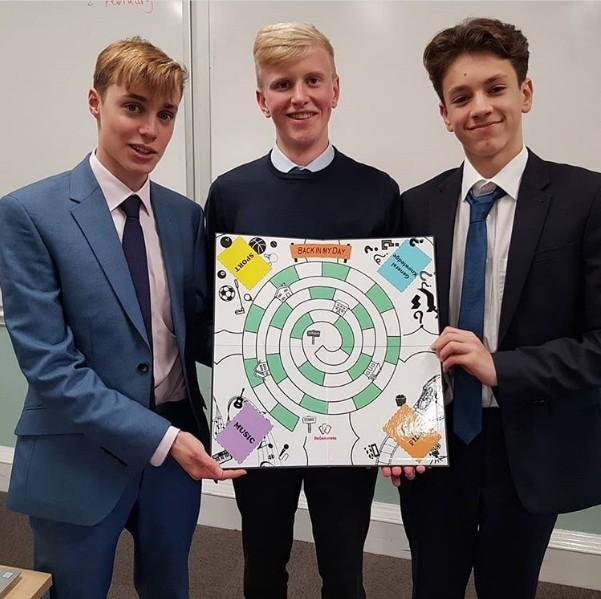

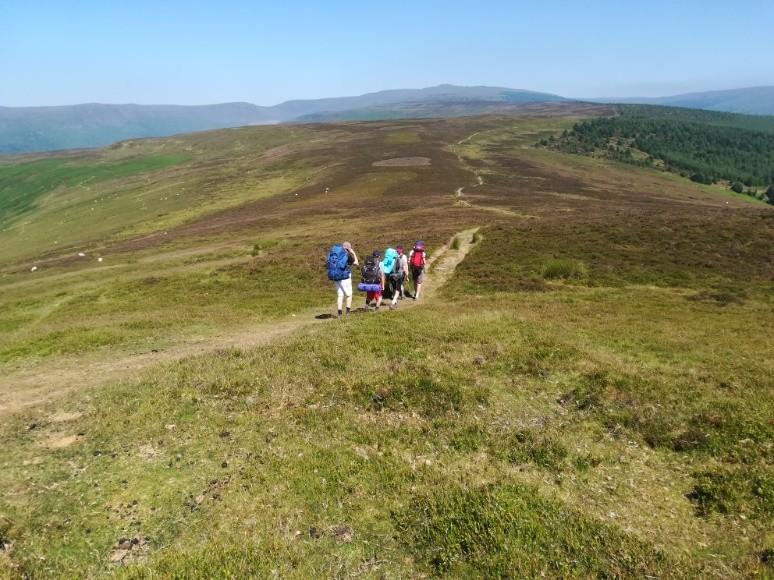



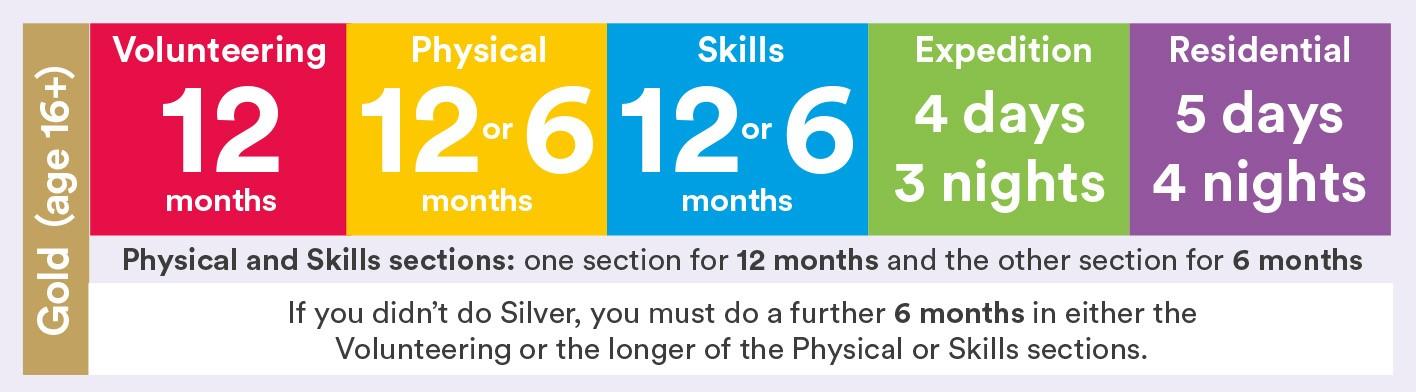
Start your Gold DofE
• So why should you do your DofE? It’s hard to list all the benefits of achieving your Gold Award, so here’s a quick snapshot:
– You’ll gain skills that employers value, which you can easily reference on your CV
– Stand out from the crowd by highlighting activities that are related to your future career or studies in college, university and job applications
– Get healthier and happier
– Meet incredible people and make lasting friendships
– Have amazing new experiences
– Find talents you didn’t know you had
– Become more confident and independent
– Make memories that will last a lifetime
– Have fun.

“As an actor I know how much Award holders’ experiences and the skills they’ve developed matter. Without determination and passion I wouldn’t be where I am today.”
Benedict Cumberbatch, actor.

“Life doesn’t naturally happen, you’ve got to get involved. What better way to do that than do your DofE. As an employer I want to work with people who have a range of skills and can see things through.”
Deborah Meaden, entrepreneur and Dragons’ Den investor
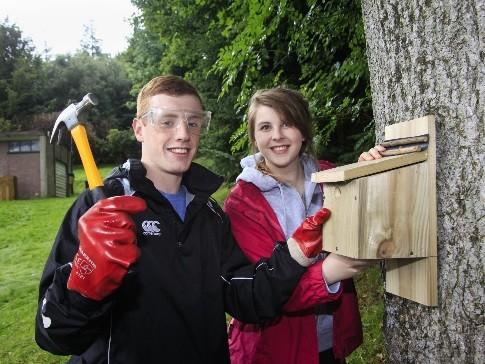
• There’s loads to choose from - most activities can count towards your DofE.
• Maybe you want to try something new? Or get better at something you’re already doing? Your DofE can be whatever you want it to be.
• Activities for each DofE section take a minimum of one hour a week over a set period of time, so they can fit in around your studies and life outside school.


• School starts at 8.25am
• 3 or 4 A level choices – 6 or 7 periods per subject
• Wednesday afternoon sport (team or individual)
• Assemblies are compulsory – house, sixth form and whole school
• Tutor time – lower and upper sixth combined, group activities and 1 to 1 tutorials
• PSHE: once a week
• Joyce Grenfell Programme – two lessons a week

• Careers delivered via PSHE, tutor time and one to one appointments– bookable system
• Work experience – lower sixth – further information later in the year
• Mentor programme – upper and lower sixth to support younger pupils
• Subject support clinics – lunchtimes or after school Absences must be reported by parents (email or call to main absence line)
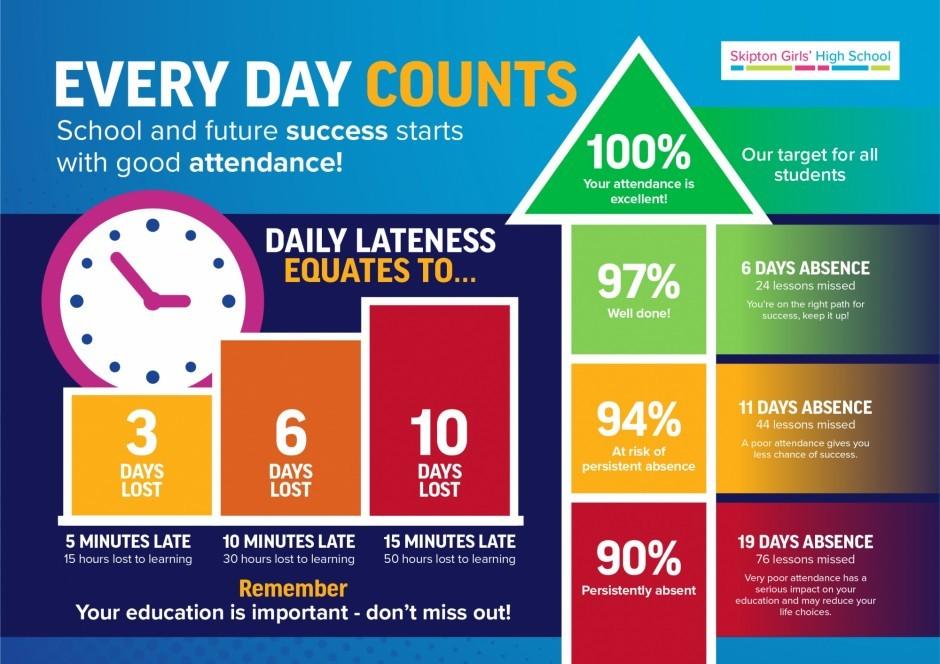
• Excellent attendance and punctuality are essential for students’ success at school; establishing positive life habits that enable students to achieve their full potential.
• Research has found that students with 95% attendance will achieve a grade higher on average than a student with 85% attendance. If a student misses 10% of lessons, then a student can expect to drop a grade.
• Through attending regularly, students can:
o Engage in essential learning and other school social events.
o Build friendships and develop social groups.
o Develop life skills necessary for future success
IS DESIGNED TO:
• foster independent study, research and extended writing skills in preparation for university.
• gain additional qualifications outside of A-level subject choices
• allow students to gain extra points towards their overall UCAS score
• support the expectation from universities that students can demonstrate independent thinking, intellectual curiosity and an interest in the subject that they wish to study.

The sixth form programme takes place during a double period (Monday p4&5) and offers a range of options including:
• Extended project qualification (EPQ)
• English Speaking Board: advanced certificate in spoken English (Level 3)
• CISI Level 2 award in the fundamentals of financial services
• Teaching English as a foreign language (TEFL)
• STEM gold crest award
• LAMDA/Performing arts qualification
• Sports coaching qualification
• Sign Language



23 September – Captain Imogen O’Brien (Force Atlantic: World’s Toughest Row)
6 November – Lewis Dartnell on women in wartime Paris. (Astrobiologist)
5 December – Ewan Bireny (Human Genome)

‘I have always wanted to study law at university, so have taken advantage of the many academic enrichment opportunities that have been on offer. I have attended lunchtime/after school events and lectures, that have developed my interest and understanding, not to mention enhanced my UCAS application!’


‘Undertaking the EPQ allowed me to develop key skills that I will build upon at university. For example, how to evaluate the reliability of of sources and how to reference accurately.’
‘I picked the advanced certificate in spoken English as my option for the JGP. I don’t find public speaking easy but decided to challenge myself with this option, as I felt the skills would be useful for the future. I am proud of the distinction I achieved.’

The academic enrichment competition allowed me to explore an area of interest relating to my proposed area of study at university, and was something I mentioned on my UCAS application and at interview.’
Any work that you do to improve your A Level results that is not set by your teachers.
Students should be doing additional work in order to thrive in their sixth form academic careers
This is what you are taught in lessons

This is the work you need to do independently
“80% of the difference in how well pupils do at school is dependent on what happens outside the school gates” (Save the Children 2013)
o Dedicated 'assessment roadmap' to exam success - parental feedback every half-term – three parents' evenings, six academic reviews (three of which include written feedback) and exam grade cards following every mock exam series
o Target grades in each subject that are aspirational but realistic
o For the first half term– all lower sixth must be on school site from 8.25am –4pm until they have earnt a privilege pass – to ensure good study habits are embedded from the start.
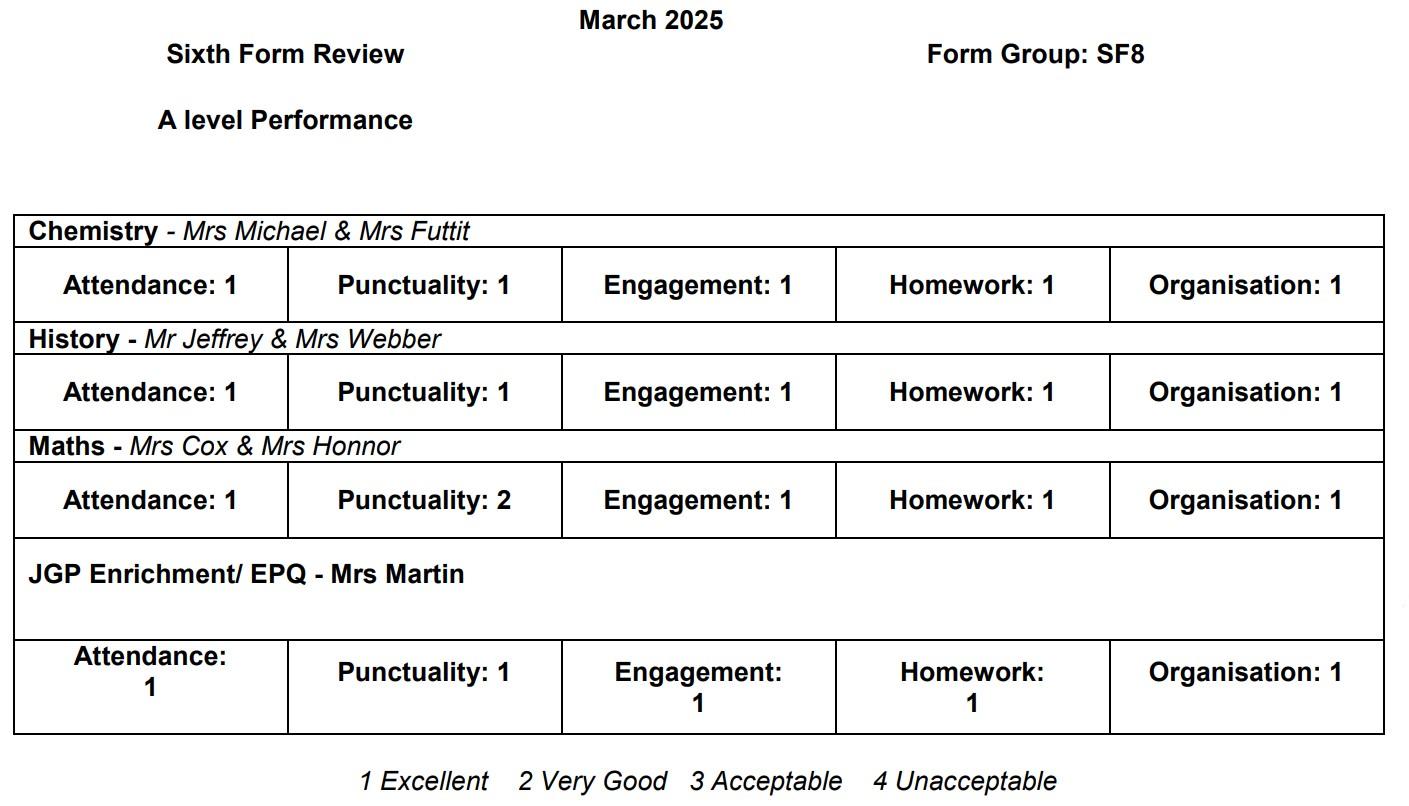
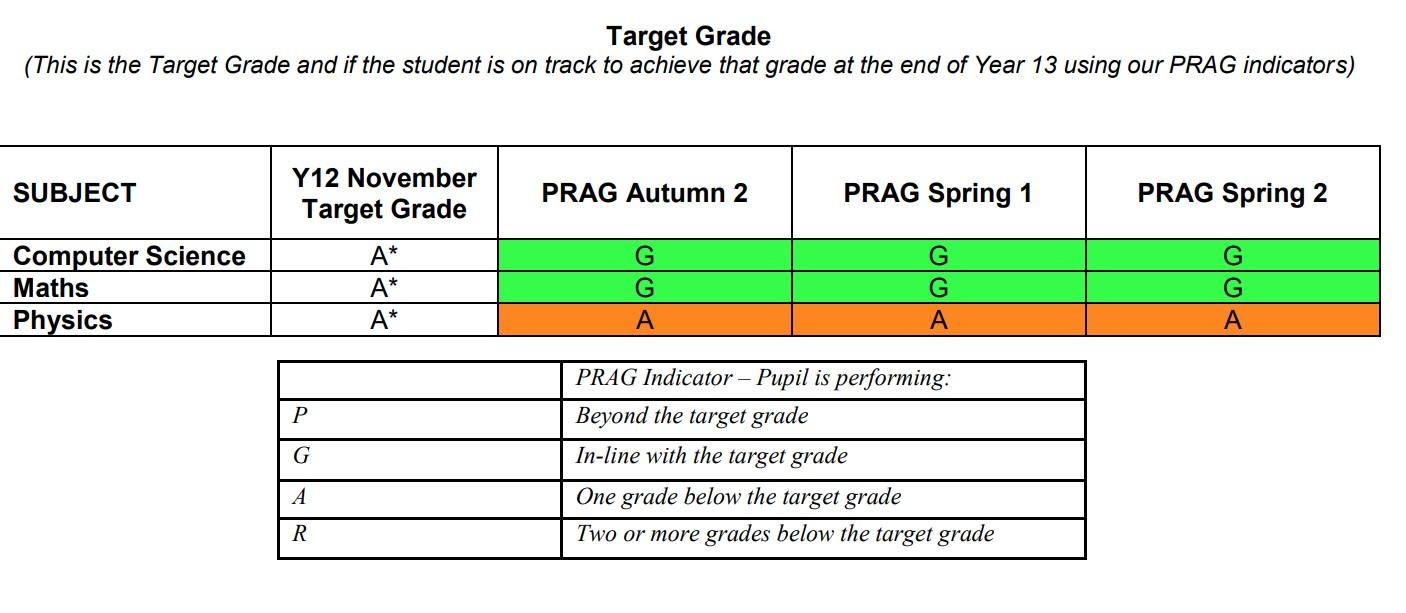
• To reward those students who consistently ‘get it right’
• To encourage those students who have not yet developed the independence and work skills required to succeed in the sixth form.
• To drive up the quality of students’ attitude to learning, attendance, punctuality and adherence to dress code.
There are three levels of privilege pass (Gold, Silver, Bronze), depending on:
• Performance in subjects, attitude to learning, attendance, punctuality, meeting deadlines and dress-code.
• Reviewed based on academic reviews and head of year discretion.

Gold:
They can leave early on any day, if they do not have further lessons or an after-school commitment.
Students can leave the school site at lunch but must sign in and out to do so.
Parental permission will need to be provided for this. A Microsoft form will be sent home in due course.
Silver:
Students can leave the school site at but must sign in and out to do so.
Bronze:
Students must be on site between 8.25am and 4pm every day.
The Sixth Form dress code reflects the values of our school. Sixth Form students act as role models for younger students and ambassadors for the school. The school’s expectations are that students in the Year 12 and 13 understand that the Sixth Form is a serious learning environment and that they take a mature and responsible approach towards how they present themselves.

Our supporting future pathways programme helps guide our sixth form students as they make choices about future careers and higher education.
Sixth form isn’t just about examination outcomes, it’s about preparation for the journey beyond. We make this an integral part of the Claremont sixth form experience.
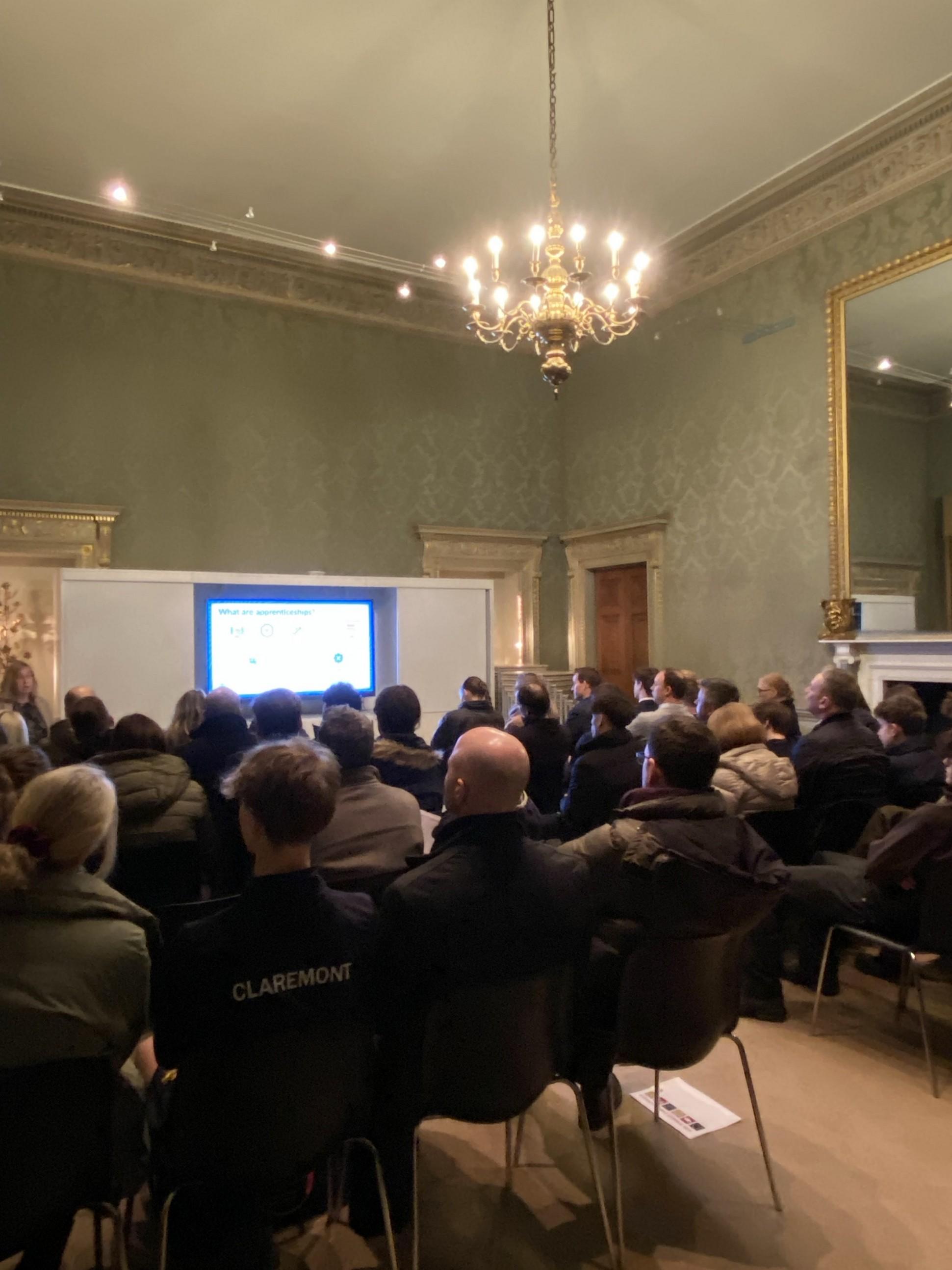
•Access to 1 to 1 bespoke careers advice through an appointment booking system
•Introduction to Unifrog and regular time to make use of the platform
•PSHE sessions focusing on next steps
•Psychometric testing via the Unifrog platform
•UCAS guidance on selecting universities and applying
•Careers/Higher Education Evening – 12 February
•UCAS talk from a visiting university speaker
•Visiting speakers and workshops
• Access to 1 to 1 bespoke careers advice through an appointment booking system
• Guidance on university course/apprenticeship choice and the application process
• UCAS and Personal statement support
• Art Foundation year and Conservatoire application support
• Overseas universities application support
• Entry to all pre-admissions tests
• Interview support and interviews with external interviewers where appropriate
• Work closely with students and parents where there are any difficulties
• Full support to all students in August after the results are released and to any student applying post A level.
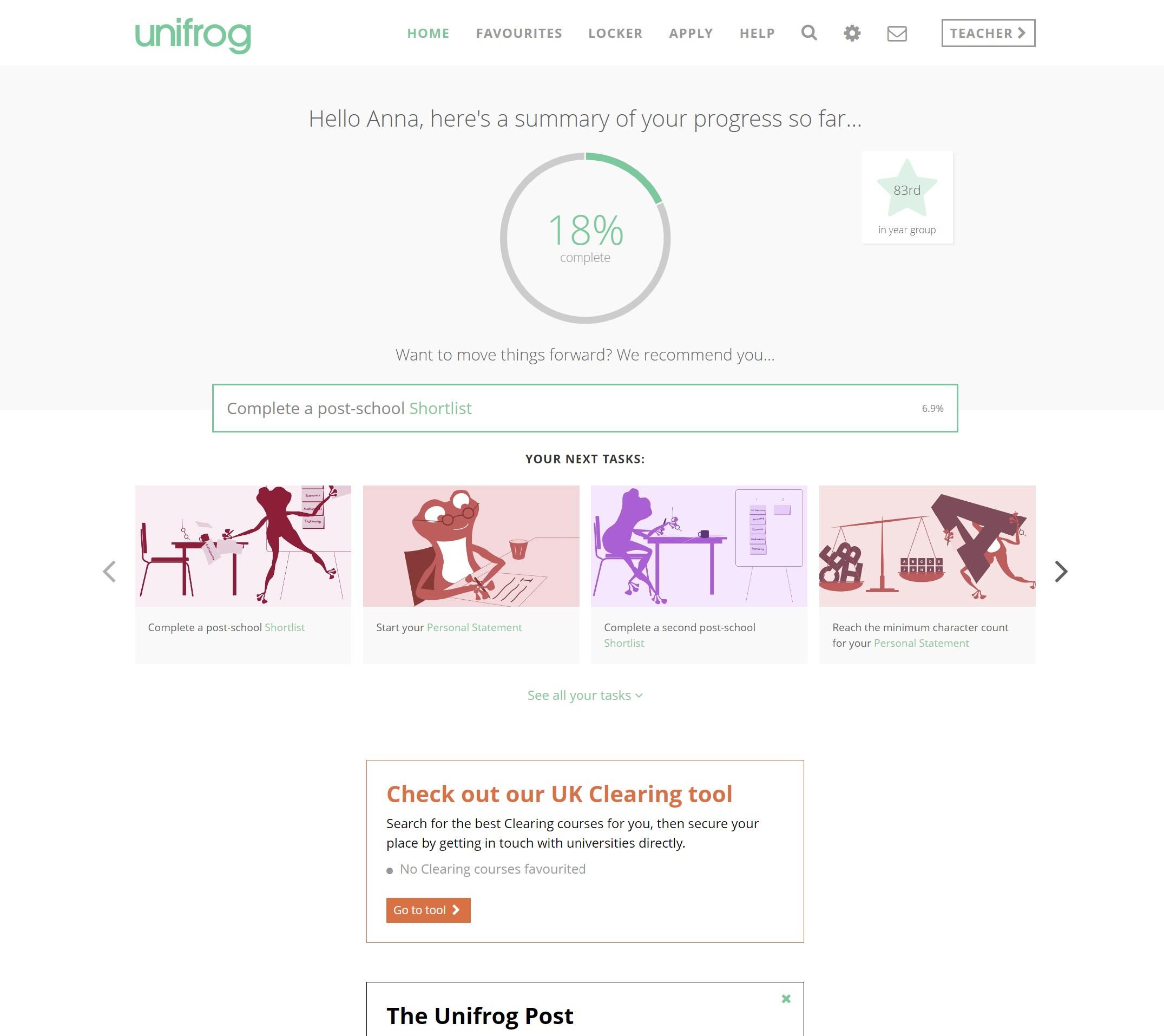
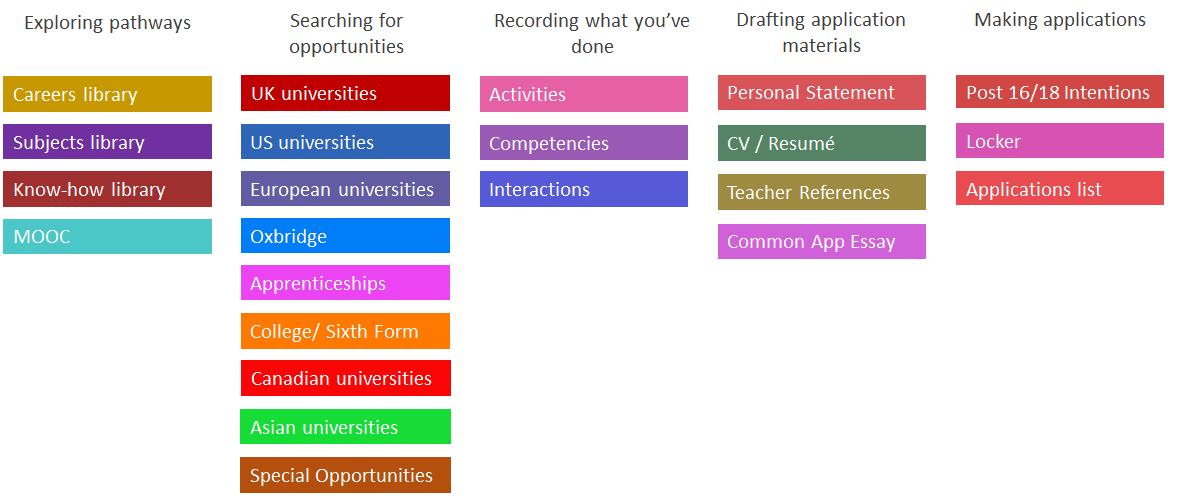
The Unifrog platform is designed to support learners in making the most informed decisions about their futures and has a range of tools.
Each student has their own personal account that provides a wide range of information related to their interests and aspirations.

• Mrs Wigley – Head of Student Futures
• lwigley@claremont.surrey.sch.uk
• Mrs Jones – Higher Education and Oxbridge Co-ordinator
• cjones@claremont.surrey.sch.uk
• Mrs Rixon – Head of US and Overseas Universities
• rrixon@claremont.surrey.sch.uk
• Located in the Student Futures Hub, near White Cottage.
How to change subjects?
• A subject drop form must be completed by student and parent THEN

• signed by HODs of subject dropping AND the subjects they are continuing PLUS HOD of subject they wish to join if applicable.
• Finally, it will need sign off from their tutor
• No subject drops until after 22 September. ALL drops of 4th subject to be completed by half term or at the latest after November assessments.
Other help needed?
• Speak to the tutor, sixth form team, the IN team or care centre staff
• Students can ask any of the above people for a referral to the school counsellor