CAITLIN MURRAY 2 Message from the Director Mensaje de la Directora
ROBERTO TEJADA 6 Zoe Leonard: Al río / To the River The Chinati Foundation, October 2024–July 2025 La Fundación Chinati, octubre de 2024 – julio de 2025
ERICA COOKE AND JULIAN ROSE 30 Latent Permanence: On Donald Judd’s Concrete Buildings Permanencia latente: sobre los edificios de hormigón de Donald Judd
ROBERT ARBER, JOHN BEECH, AND TIM JOHNSON 44 “Energy Is Eternal Delight”: A Conversation on David Rabinowitch “La energía es un deleite eterno”: una conversación sobre David Rabinowitch
REBECCA SIEFERT 50 Lauretta Vinciarelli and the Arena of Influence Lauretta Vinciarelli y la arena de la influencia
CAITLIN MURRAY 58 Art in Context , Part I: Opening Remarks Arte en contexto , parte I: discurso de apertura
NATHAN YOUNG AND CAITLIN MURRAY 68 The Ch’íná’itíh (Chinati) Intertribal Noise Symposium: A Conversation with Nathan Young El Simposio Intertribal de Noise Ch’íná’itíh (Chinati): una conversación con Nathan Young
ZADE WILLIAMSON 74 Conservation Report Informe sobre la conservación
HALEY LEVIN 76 Education Report Informe sobre la educación
Artists in Residence 2024–2025 80 Troy Montes Michie
Artistas en Residencia 2024–2025 82 Willie Binnie
84 Leslie Cuyjet
86 dean erdmann
90 Membership Edition: Katharina Grosse Edición para los afiliados: Katharina Grosse
92 The Year in Public Programs El año en programas públicos
98 Staff News Noticias sobre nuestro personal
99 Internship Program Programa de prácticas
100 Funding and Membership Financiación y Afiliación
103 Board of Trustees and Staff Junta directiva y Personal
104 Colophon and Image Credits Colofón y Atribuciones de imagen
This year, the Chinati Foundation has continued our commitment to gathering voices in ways reflective of Donald Judd’s vision for Chinati, where he hoped that “art, all of the arts, in fact all parts of the society, have to be rejoined, and joined more than they ever have been.” Since October 2024, we’ve proudly hosted two symposia, a series of readings and conversations on Zoe Leonard’s Al r í o / To the River , and a weeklong Grassland Restoration Practicum, alongside many other programs and events.
Last fall, Chinati opened the first institutional exhibition of Zoe Leonard’s Al río / To the River in the Americas. Leonard’s work, which consists of photographs taken along the 1,200mile stretch where the Rio Grande/ Río Bravo is used to demarcate the international boundary between Mexico and the United States, was installed across three buildings of Chinati’s campus. Leonard’s installation offered a compelling formal language through which to examine the convergence of ecological, cultural, architectural, historical, and artistic concerns that shape Chinati today. In conjunction with Al río / To the River , we hosted artists, archaeologists, poets, historians, and curators, whose contributions are outlined in the “Year in Public Programs” section of this newsletter. These programs provided vantages from which to consider the confluence of interests that characterize Leonard’s work. It is from La Junta de los Rios, sixty miles south of Marfa where the Conchos River and Rio Grande meet, that we learn confluence promotes both ecological and cultural richness.
Este año, la Fundación Chinati ha reafirmado su compromiso de reunir voces de manera que reflejen la visión de Donald Judd para Chinati, donde anhelaba que “el arte, todas las artes, de hecho todas las partes de la sociedad, volvieran a unirse, y más profundamente de lo que nunca lo han estado”. Desde octubre de 2024, hemos tenido el honor de acoger dos simposios, una serie de lecturas y conversaciones en torno a Al río / To the River , de Zoe Leonard, y un programa de Prácticas de Restauración de Praderas de una semana, entre otros muchos programas y eventos.
El pasado otoño, Chinati inauguró la primera exposición institucional en América de la obra Al río / To the River , de Zoe Leonard. La obra —compuesta por fotografías tomadas a lo largo de los 1.931 kilómetros donde el Río Bravo/Rio Grande marca la frontera entre México y Estados Unidos— se instaló en tres edificios del campus de Chinati. La instalación de Leonard ofreció un lenguaje formal poderoso desde el cual examinar la convergencia de preocupaciones ecológicas, culturales, arquitectónicas, históricas y artísticas que hoy conforman Chinati. Junto con Al río / To the River , recibimos a artistas, arqueólogos, poetas, historiadores y comisarios de arte, cuyas contribuciones se detallan en la sección “El año de programas públicos” de esta publicación informativa. Estos programas ofrecieron miradas diversas desde las cuales considerar la confluencia de intereses que caracteriza la obra de Leonard. Es desde La Junta de los Ríos —a unos noventa y siete kilómetros al sur de Marfa, donde se encuentran el Río
Conchos y el Río Bravo— que aprendemos que la confluencia promueve tanto la riqueza ecológica como la cultural. En marzo de 2025, Chinati se asoció con el artista y académico Nathan Young
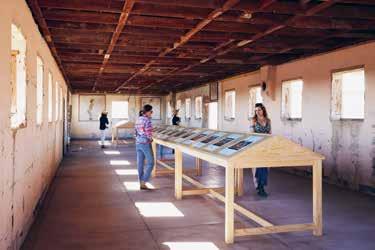
In March 2025, Chinati partnered with the artist and the scholar Nathan Young and the Marfa-based curatorial platform Atomic Culture to present the Ch’íná’itíh (Chinati) Intertribal Noise Symposium, a weekend of performance and dialogue. As Young describes in this volume, the goal of the symposium was to “create a site of cultural convergence, experimentation, and agency.” Young conceived of the symposium as a gathering, bringing together a community of artists around sound, while also attuning a new community of listeners to the expansive, adaptive, and culturally resilient qualities of noise. At Chinati, where artists have installed work in the context of architecture and land, Young reminds us that “sound can be both material and spatial when played in the right context.” The integration of art, architecture, and land—as exemplified by Donald Judd’s 100 untitled works in mill
y la plataforma marfeña de conservación Atomic Culture para presentar el Simposio Intertribal de Noise Ch’íná’itíh (Chinati), un fin de semana con performances y diálogos. Como describe Young en esta edición, el propósito del simposio fue “crear un lugar de convergencia cultural, experimentación y capacidad de acción”. Young concibió el simposio como un encuentro que reuniera a una comunidad de artistas en torno al sonido, al tiempo que sintonizaba a una nueva comunidad de oyentes con las cualidades expansivas, adaptativas y culturalmente resistentes del noise . En Chinati, donde los artistas han instalado sus obras en relación con la arquitectura y la tierra, Young nos recuerda que “el sonido puede ser tanto material como espacial cuando se presenta en el contexto adecuado”.
La integración de arte, arquitectura y paisaje —ejemplificada por las 100 obras sin título en aluminio en bruto de Donald Judd— fue el foco del simposio
aluminum—was the focus of Art in Context: Art, Architecture, and the Middle Landscape , a two-part symposium cohosted by Chinati and the Rice School of Architecture in April. One point of inspiration for developing this symposium was a study of two previous Chinati symposiums: Art in the Landscape , from 1995, and Art and Architecture , from 1998. These convenings set the precedent for discussions of Judd’s work and the scope of concerns he established for Chinati. There, artists, architects, and historians gathered to address a general topic resulting in a rich diversity of sometimes consonant, sometimes dissonant, positions and methodologies.
With this precedent in mind, each of the participants of this year’s symposium addressed how context impacts our experience of art and architecture, with lectures by the architects
Arte en Contexto: arte, arquitectura y el paisaje intermedio , copresentado por Chinati y la Escuela de Arquitectura de la Universidad de Rice en abril. Una de las inspiraciones para desarrollar este simposio fue el estudio de dos encuentros anteriores en Chinati: Arte en el paisaje (1995) y Arte y arquitectura (1998). Aquellas reuniones establecieron el precedente para los debates sobre la obra de Judd y el alcance de las preocupaciones que definió para Chinati. Allí, artistas, arquitectos e historiadores se reunieron para abordar un tema común, generando una riqueza de posturas y metodologías a veces disonantes, a veces en armonía.
Siguiendo ese ejemplo, los participantes del simposio de este año reflexionaron sobre cómo el contexto transforma nuestra experiencia del arte y la arquitectura, con ponencias de los arquitectos Carme Pigem, Tatiana Bilbao y Alberto Kalach, y conversaciones con los artis -
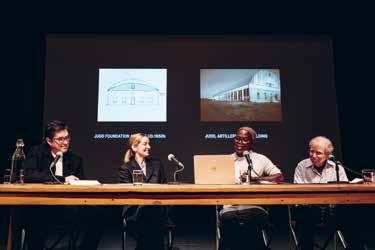
Carme Pigem, Tatiana Bilboa, and Alberto Kalach and conversations with the artists Larry Bell and Christopher Wool. A panel discussion with the art and architecture historians Shantel Blakely, Erica Cooke, Julian Rose, and Richard Shiff focused on Judd’s vision for the integration of his 100 untitled works in mill aluminum, the former artillery sheds in which they are housed, and the land on which the buildings were sited. Additionally, the symposium addressed site and landscape, turning from Land art and, instead, addressing the concept of the titular Middle Landscape. Key to this discussion was the consideration, articulated by the landscape architects Rosetta Elkin, Maggie Tsang, and Isaac Stein, that Chinati, although located in the Chihuahuan Desert, is sited on land heavily damaged by previous military use. Here, it proved productive to explore a concept that provides alternatives
tas Larry Bell y Christopher Wool. Una mesa redonda con los historiadores del arte y la arquitectura Shantel Blakely, Erica Cooke, Julian Rose y Richard Shiff se centró en la visión de Judd para la integración de sus 100 obras sin título en aluminio en bruto, los antiguos cobertizos de artillería que las albergan y el terreno sobre el cual se sitúan. Además, el simposio abordó el tema del emplazamiento y el paisaje, no desde el arte de la tierra ( Land art ), sino desde la idea del Paisaje Medio, el Middle Landscape que da nombre al encuentro. Fundamental para esta reflexión fue la observación, articulada por los arquitectos paisajistas Rosetta Elkin, Maggie Tsang e Isaac Stein, de que Chinati, aunque ubicado en el desierto de Chihuahua, está asentado sobre tierras fuertemente dañadas por el uso militar anterior. Resultó fértil, entonces, explorar un concepto que proponga alternativas a las narrativas binarias del paraíso rural y del poder urbano,
to conventional binary narratives of rural arcadia and urban power, neither of which apply to Judd’s work in Marfa.
Later in April, as the weather began to warm, we hosted our second Grassland Restoration Practicum. The practicum provided a small group of local participants a paid opportunity for direct mentorship and fieldwork in the techniques of grassland stewardship on Chinati’s grounds. In this weeklong program, regional experts working in soil science, biology, conservation, land and water management, and agronomy demonstrated methods to promote healthy grasslands utilizing the six courtyards of Dan Flavin’s untitled (Marfa project) as a case study. Fundamental to the pedagogy was the understanding that our experience of the art at Chinati is intertwined with our experience of the land, necessitating
ninguna de las cuales se ajusta a la obra de Judd en Marfa.
Más tarde en abril, con el inicio del calor, organizamos nuestras segundas Prácticas de Restauración de Praderas. Este programa brindó a un pequeño grupo de participantes locales una oportunidad remunerada de mentoría directa y trabajo de campo en técnicas de gestión de praderas en los terrenos de Chinati. A lo largo de la semana, expertos regionales en suelos, biología, conservación, gestión de agua y tierra, y agronomía compartieron métodos para promover praderas saludables, utilizando los seis patios del untitled (Marfa project) [sin título – proyecto Marfa] de Dan Flavin como caso práctico. Un principio fundamental de esta pedagogía es la comprensión de que nuestra experiencia artística en Chinati está entrelazada con nuestra experiencia de la tierra, lo cual exige una aproximación cuidadosa y consciente a la conservación. Como
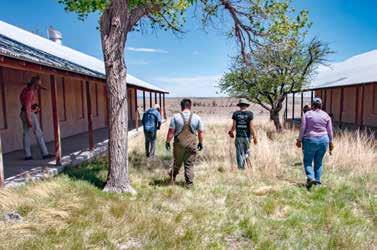
a careful and considered approach to conservation. As Sterry Butcher beautifully reminded us in her reflection of last year’s practicum, “Turns out, people do care. They care about each other, and they care about the land. Turns out there’s a lot of room for optimism.”
We are grateful to our members, Director’s Circle, Board of Trustees, and all of our guests for providing us with the ability to support Chinati’s vitality by gathering in all these ways. Each year, through the newsletter, we also gather in print to give voice to our recent work and to deepen our understanding of the art and artists that shape the Chinati Foundation. We thank you for joining us in these pages and hope you will join us as a member of Chinati.
Caitlin Murray
nos recordó bellamente Sterry Butcher en su reflexión sobre las prácticas del año pasado: “Resulta que a la gente sí le importa. Se preocupan los unos por los otros, y se preocupan por la tierra. Resulta que hay mucho espacio para el optimismo”.
Agradecemos profundamente a nuestros miembros, al Círculo de la Directora, a la Junta Directiva y a todos nuestros visitantes por permitirnos apoyar la vitalidad de Chinati al reunirnos de todas estas maneras. Cada año, a través de esta publicación informativa, también nos reunimos en papel para dar voz al trabajo reciente y profundizar en la comprensión del arte y los artistas que dan forma a la Fundación Chinati. Gracias por acompañarnos en estas páginas. Esperamos que también lo hagan como miembros de Chinati.
Caitlin Murray
THE CHINATI FOUNDATION
OCTOBER 2024–JULY 2025
LA FUNDACIÓN CHINATI
OCTUBRE DE 2024 – JULIO DE 2025
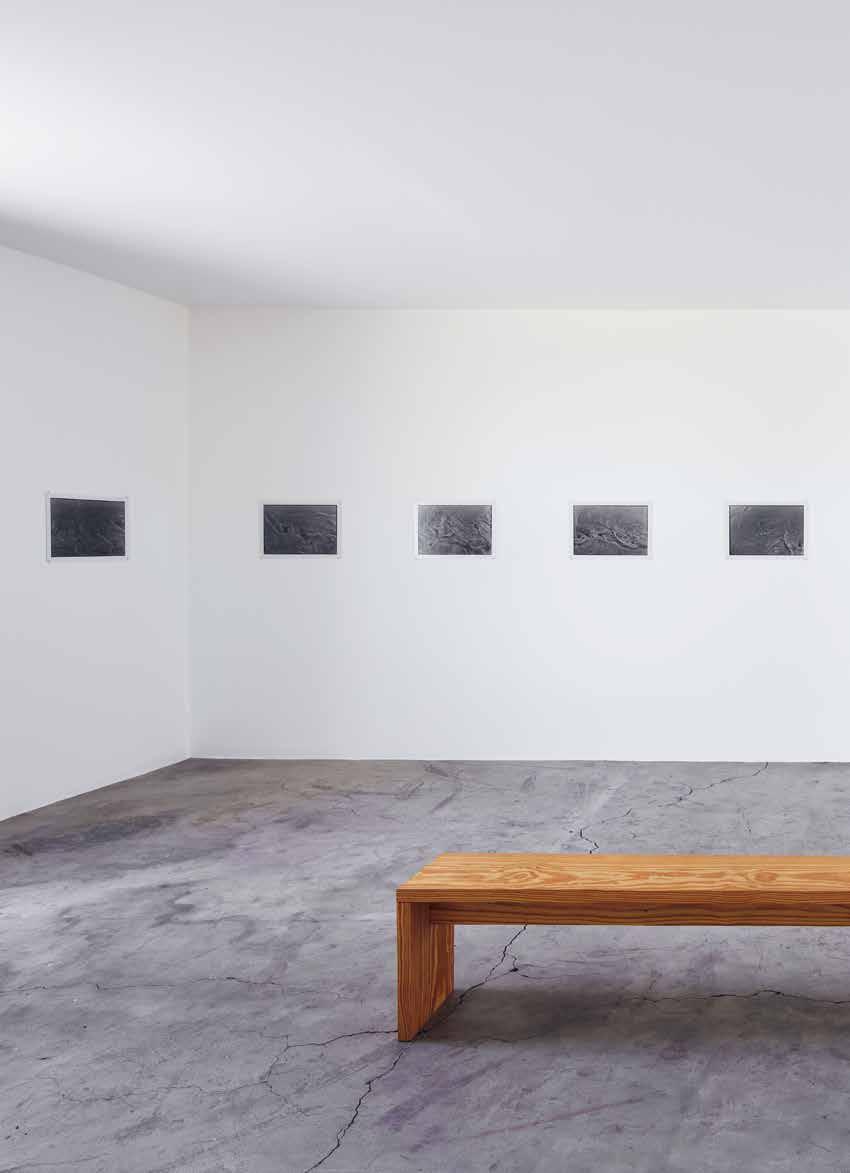
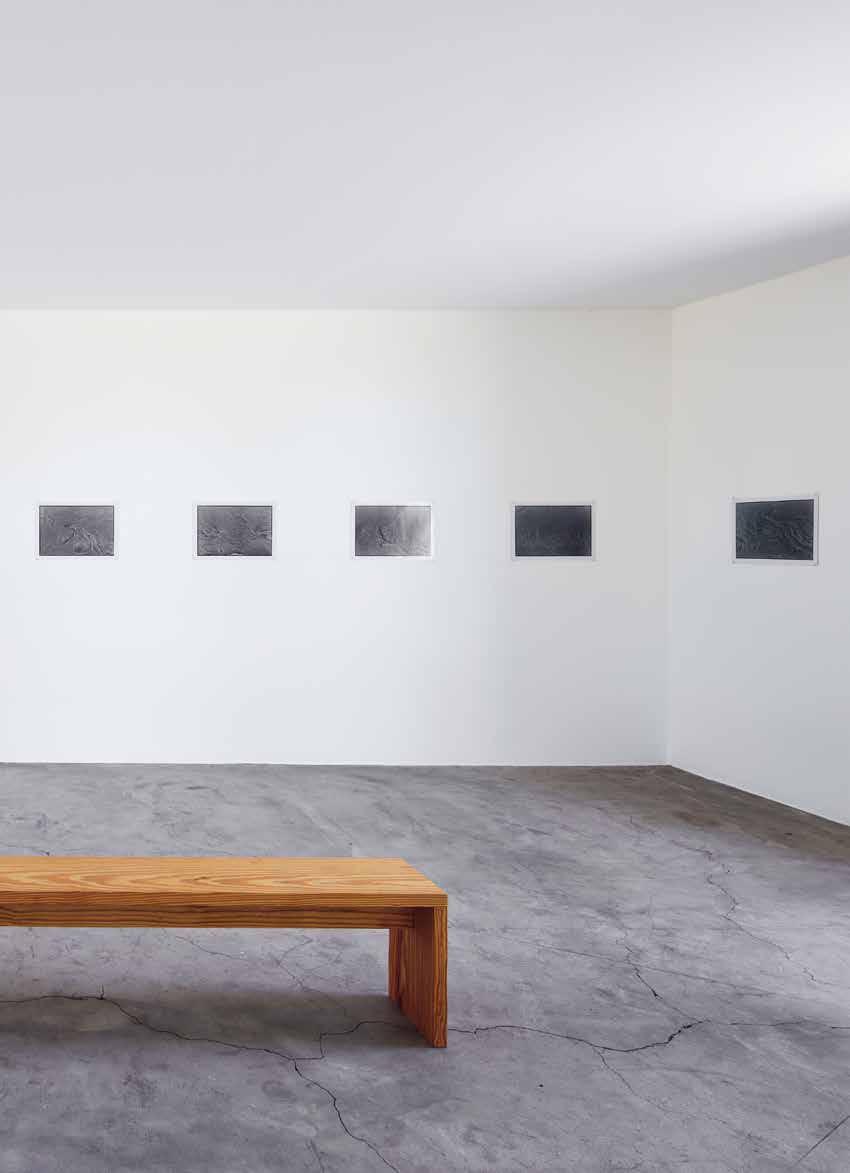
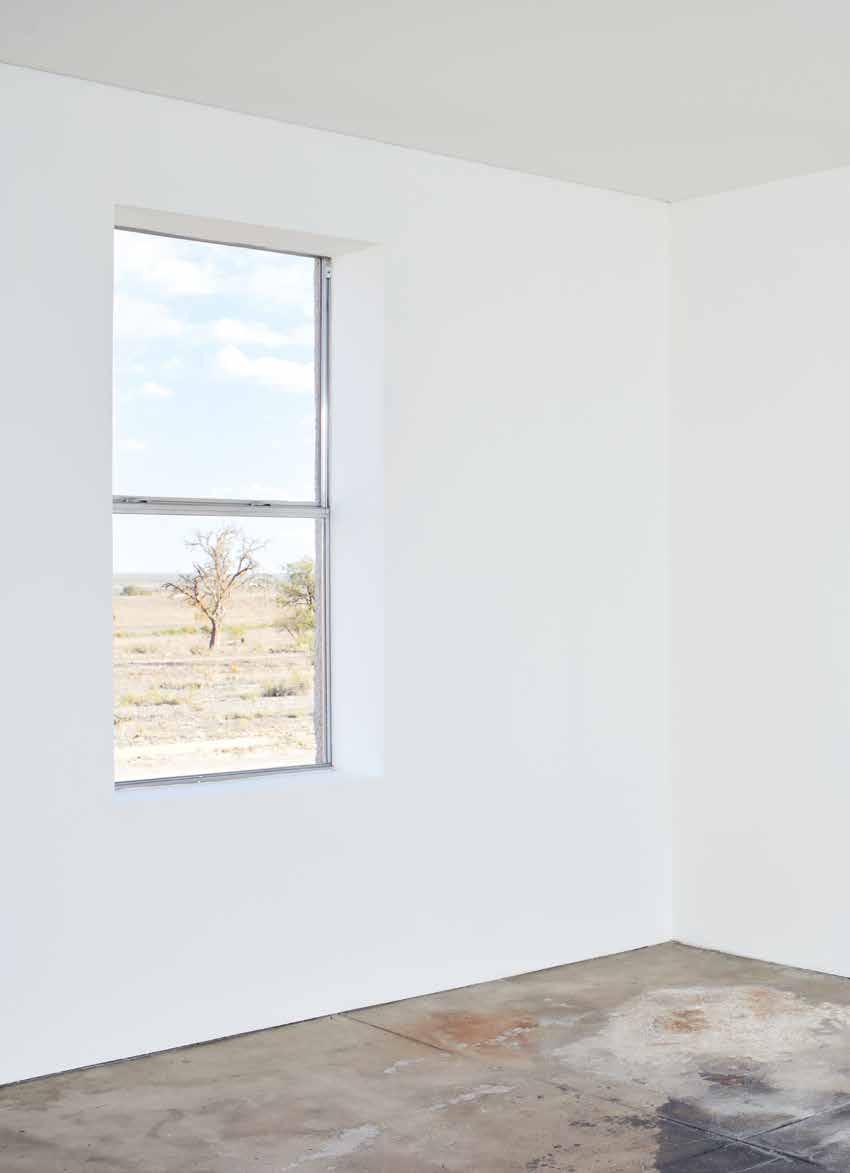
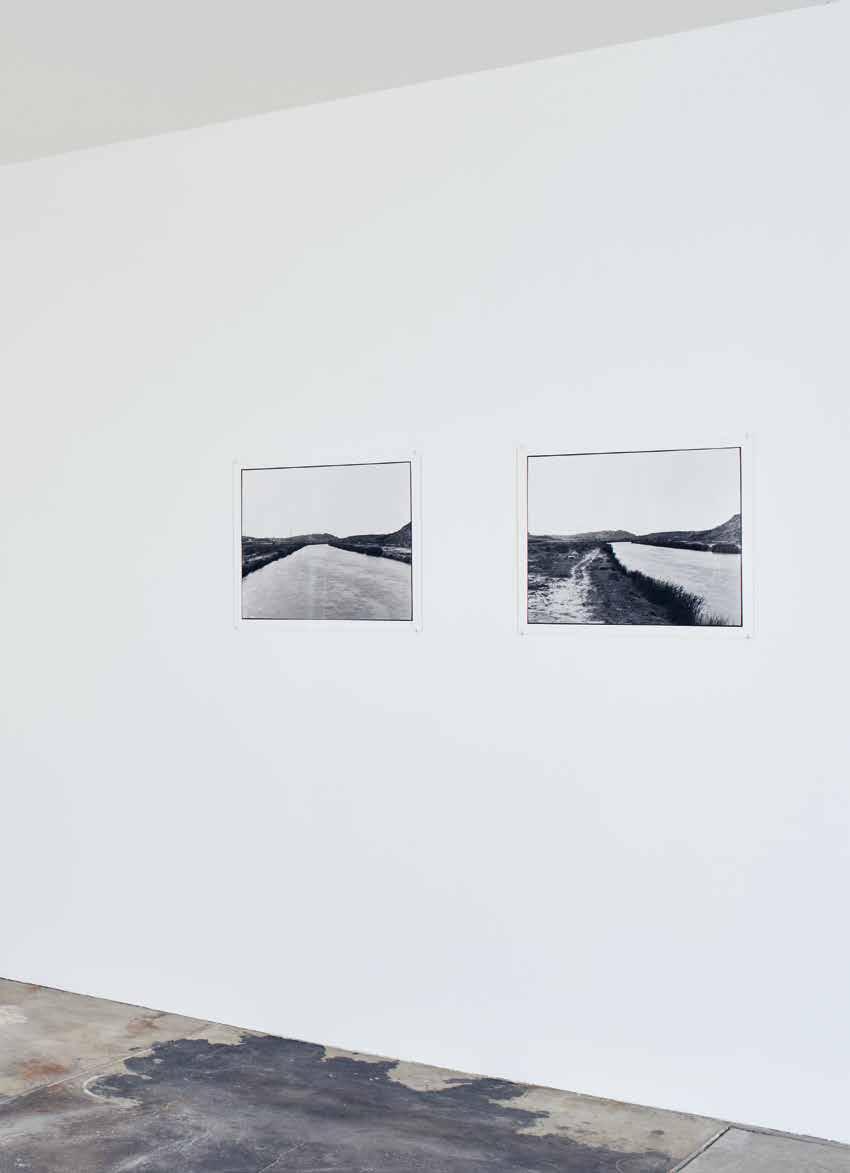
PAGES 4–29: ZOE LEONARD: AL RÍO / TO THE RIVER . INSTALLATION VIEWS, THE CHINATI FOUNDATION, 2024, AND ZOE LEONARD, AL RÍO / TO THE RIVER (DETAILS), 2016–22. GELATIN-SILVER PRINTS, C-PRINTS, AND INKJET PRINTS / PÁGINAS 4–29: ZOE LEONARD: AL RÍO / TO THE RIVER . VISTAS DE LA INSTALACIÓN, LA FUNDACIÓN CHINATI, 2024, Y ZOE LEONARD, AL RÍO / TO THE RIVER (DETALLES), 2016–22. IMPRESIONES EN GELATINA DE PLATA, IMPRESIONES CROMOGÉNICAS E IMPRESIONES DE INYECCIÓN DE TINTA
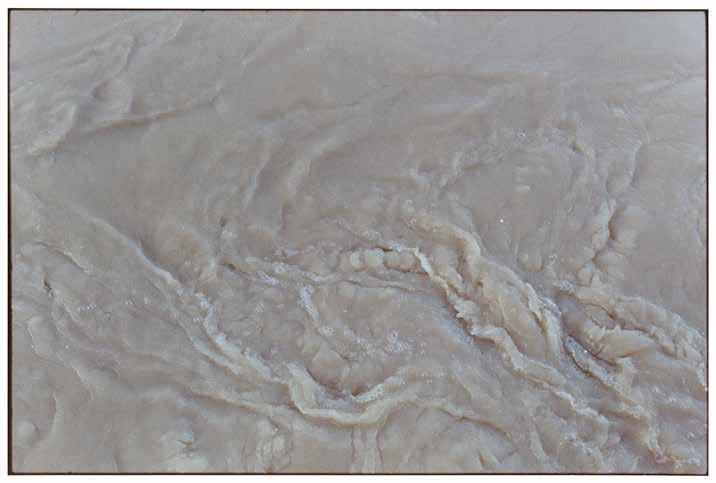
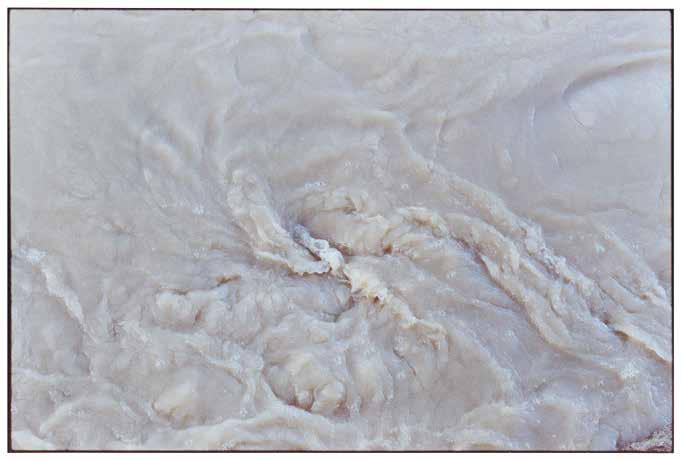
From a high-angle view overlooking a segment of the river in proximity to its bank—and so perched on firm ground as to avoid slipping, on a boulder maybe, or a landing, at any rate in very close communication— the photographer obtains a surging choreography of the water below, a series of waves given to ripples and furrows and pockets of air, now suggesting tiny amulets or overlays, now veins or blemishes or scar tissue, along a sort of membrane, a primordial skin now retracting in pulses that coalesce, shudder, and let loose. The images register first as if in black and white, but they soon surrender perceptible orbits of slate, foam, fossil gray, and olive-green shades suddenly insinuating, as from an aerial view, the wild ridges of an otherworldly geological map.
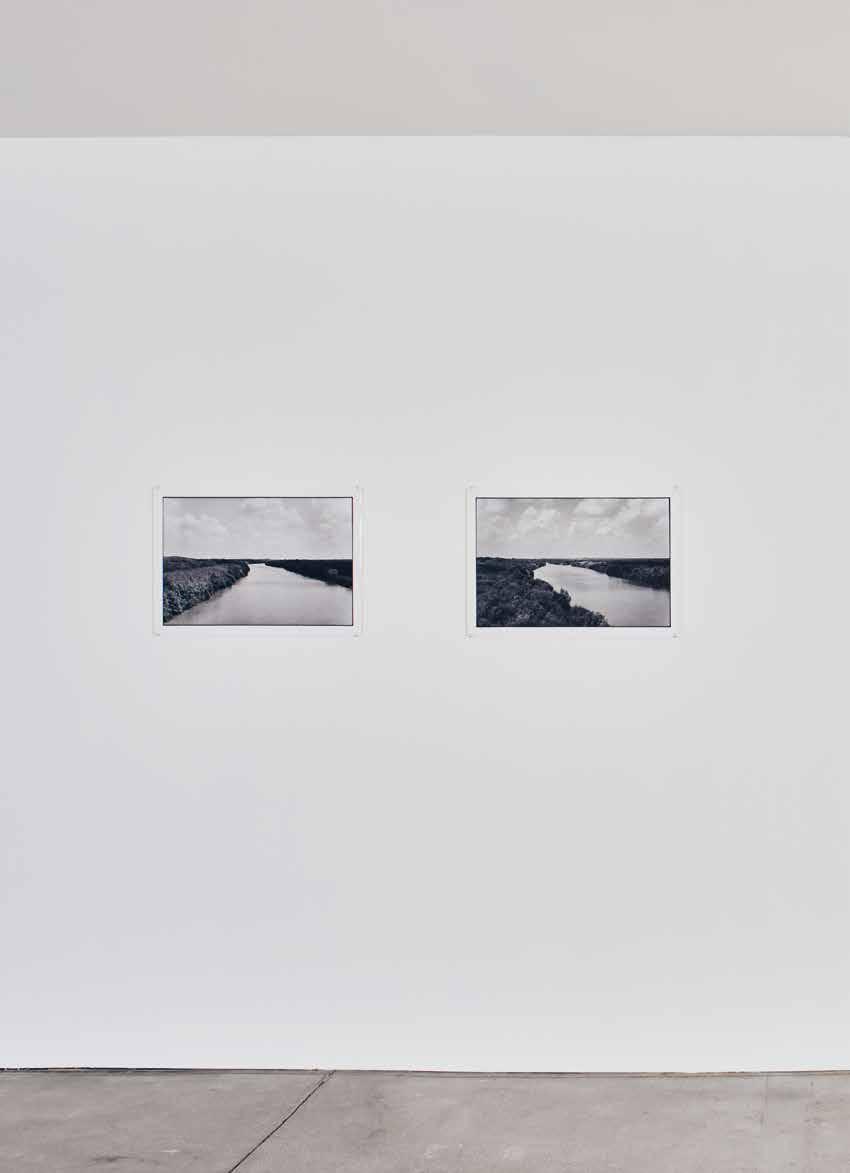
Water, dermis, land. This sequence of color photographs by the US artist Zoe Leonard, abstracted from the flow of the Rio Grande/Río Bravo, its meanders defining the Texas–Mexico borderlands, serves as a prelude to the capacious yearslong project Al río / To the River , an open work that, from 2016 to 2022, involved extensive travel and field work along the 1,200 mile stretch of the river from Ciudad Juárez and El Paso to the Gulf of Mexico by way of Boca Chica, beyond Brownsville. In the process, Leonard made an artwork comprising several hundred photographs, some in color—like the abstract river surfaces or another sequence of extreme close-ups, the florescent pink of the low-lying pitaya cactus— even as the overwhelming majority are black-and-white prints in various formats and configurations. In their totality, they register scenes and situations—geographic, technological, economic, cultural, sociopolitical— along the binational river habitats, as well as the grandeur of the landscape, touched and untouched by human art and industry, brimming with the everyday life of its inhabitants and of those in transit. In addition to museum and gallery exhibitions, essential to the meaning of the vast work that is Al río / To the River , is a book in two volumes: The first features Leonard’s more than 285 photographs variously sequenced across three hundred pages, a landscape, too, in elongated print format, but devoid of any captions or checklist. 1 The second is a volume of writings authored by a host of collaborators including the environmental historian C. J. Alvarez, the journalist Cecilia Ballí, the art historians Darby English, Esther Gabara,
Desde un ángulo de visión elevado que domina un tramo del río cercano a su orilla —y tan encaramada sobre terreno firme para evitar resbalones, tal vez sobre una roca o un pequeño rellano, en todo caso en comunicación muy estrecha— la fotógrafa capta una coreografía impetuosa del agua que fluye abajo, una serie de olas que se disuelven en ondas, surcos y bolsas de aire, insinuando ahora diminutos amuletos o superposiciones, ahora venas, marcas o tejido cicatricial, sobre una especie de membrana, una piel primordial que se contrae en pulsos que se fusionan, se estremecen y se sueltan. Las imágenes se manifiestan al principio como si fueran en blanco y negro, pero pronto revelan órbitas perceptibles de pizarra, espuma, gris fósil y tonalidades verde oliva que de pronto insinúan, como desde una vista aérea, los pliegues salvajes de un mapa geológico de otro mundo.
Agua, dermis, tierra. Esta secuencia de fotografías en color de la artista estadounidense Zoe Leonard, abstraídas del flujo del Río Grande/Río Bravo, cuyos meandros definen las tierras fronterizas entre Texas y México, funciona como un preludio al amplio proyecto de años titulado Al río / To the River , una obra abierta que, entre 2016 y 2022, implicó extensos viajes y trabajo de campo a lo largo de los 1.931 kilómetros del río, desde Ciudad Juárez y El Paso hasta el Golfo de México mediante Boca Chica, más allá de Brownsville. En ese proceso, Leonard creó una obra compuesta por varios cientos de fotografías, algunas en color —como las superficies abstractas del río o una secuencia de primeros planos extremos del rosa fluorescente del cactus pitaya que crece a ras del suelo— aunque la gran mayoría son impresiones en blanco y negro en diversos formatos y configuraciones. En su conjunto, estas imágenes registran escenas y situaciones —geográficas, tecnológicas, económicas, culturales y sociopolíticas— a lo largo de los hábitats binacionales del río, así como la majestuosidad del paisaje, tocado y no tocado por la industria y el arte humanos, rebosante de la vida cotidiana de sus habitantes y de quienes están en tránsito. Además de las exposiciones en museos y galerías, parte esencial del significado de esta vasta obra que es Al río / To the River es un libro en dos volúmenes: el primero presenta más de 285 fotografías de Leonard, dispuestas en distintas secuencias a lo largo de trescientas páginas, un paisaje también en formato impreso alargado, pero sin pies de foto ni lista de obras. 1 El segundo volumen reúne textos de una serie de colaboradores, entre ellos el historiador ambiental C. J. Álvarez, la periodista Cecilia Ballí, los historiadores del arte
and Josh T Franco, and the poets Dolores Dorantes and Natalie Diaz, to name only a handful of the more than twenty-five collaborators.2 The writers and scholars were invited to imagine their contributions in diagonal relation to Leonard’s photographic work. The “two-volume structure of Al río / To the River was conceived,” writes its editor, Tim Johnson, “as a method as well as a structure, implicitly inviting conversation and comparison, allowing for different points of view to exist alongside and in relation to each other.”3
Encounter, interface, recordkeeping. These principles have long been at the center of Leonard’s elective affinities and practice. At the onset of a previous work, the large-scale decade-long undertaking Analogue , the artist related how she had begun taking pictures of storefronts in the neighborhoods of her New York childhood and adolescence where she lived first along the “edges of Harlem” and later “at sixteen, in 1977” on the Lower East Side. From 1998 to 2009, Leonard made over fifteen thousand photographs into a grid-based sequence of 412 photographs creating a vast record of store facades—“the bodegas, the butcher, the linoleum store”—or the display of objects for sale in public space pertaining to residual small-scale economies, both at home and abroad in her travels. In an inspired account of this series, and of Leonard’s corpus in terms of photographic practice today, the art historian George Baker expands on the meanings of the film medium within a then-nascent digital ecosystem, and on the wager of Leonard’s commitment to the analogical: an intensified identification with the camera-generated account and filmic recordkeeping to which the artist laid claim in the late 1990s, a “specific moment in history—the end of the mechanical age, the beginning of the digital era.”4 For Baker, Leonard’s determination to re-enchant the analog image confirmed a technological “lateness” that in turn inaugurated an affective and corporeal “openness” to the world. Baker writes of this photography understood, in light of the Analogue series, “as inherently relational— affective and loving—its operations not just the indexical fixative of the double or the trace, but the unending (desiring) quest for similarity, comparison, connection, and analogy.” That is, Baker aligns “openness” in a system that relates reception to displacement, to endlessly mutable forms, to
Darby English, Esther Gabara y Josh T Franco, y las poetas Dolores Dorantes y Natalie Diaz, por nombrar solo a algunos de los más de veinticinco colaboradores.2 A estos escritores y académicos se les invitó a imaginar sus contribuciones en una relación diagonal con la obra fotográfica de Leonard. “La estructura en dos volúmenes de Al río / To the River fue concebida”, escribe su editor Tim Johnson, “tanto como un método como una estructura, invitando implícitamente al diálogo y la comparación, permitiendo que distintos puntos de vista existan uno al lado del otro y en relación mutua.” 3 Encuentro, interfaz, registro. Estos principios han estado desde hace tiempo en el centro de las afinidades electivas y la práctica artística de Leonard. Al comienzo de una obra anterior, la ambiciosa empresa de una década titulada Analogue [Analógico], la artista relató cómo había comenzado a tomar fotografías de escaparates en los vecindarios de su infancia y adolescencia en Nueva York, donde vivió primero en las “afueras de Harlem” y más tarde “a los dieciséis, en 1977”, en el Lower East Side. De 1998 a 2009, Leonard tomó más de quince mil fotografías e hizo en una secuencia de 412 imágenes dispuestas en cuadrícula: un extenso registro de fachadas de tiendas —“las bodegas, la carnicería, la tienda de linóleo”— y de objetos expuestos para la venta en el espacio público, pertenecientes a economías residuales de pequeña escala, tanto locales como extranjeras durante sus viajes. En una interpretación inspirada de esta serie, y del corpus de Leonard en relación con la práctica fotográfica contemporánea, el historiador del arte George Baker profundiza en los significados del medio fílmico dentro de un ecosistema digital entonces naciente, así como en la apuesta que supone el compromiso de Leonard con lo analógico: una identificación intensificada con el relato generado por la cámara y el registro fílmico que la artista reclamó como suyo a fines de los años noventa, un “momento específico en la historia: el fin de la era mecánica, el inicio de la era digital.” 4 Para Baker, la determinación de Leonard de devolver la magia a la imagen analógica confirma una “tardanza” tecnológica que, a su vez, inaugura una “apertura” afectiva y corporal hacia el mundo. Baker escribe sobre esta fotografía entendida, a la luz de la serie Analogue , “como inherentemente relacional —afectiva y amorosa—, sus operaciones no son solo el fijador indiciario del doble o la huella, sino la búsqueda (deseante) sin fin de la similitud, la comparación, la conexión y la analogía”. Es decir, Baker vincula esta “apertura” a un sistema que relaciona la recepción con el desplazamiento, con formas infinitamente mutables, con la interconexión,
connectedness, enclosure, and layers of reflection in the interplay of likeness and desire. “To receive, for Leonard, is to want to bring the new object close, almost to draw it into the void of one’s camera—to incorporate the image, again, like one internalizes a lost object. And in the photographs, we feel this drive everywhere enacted: physically, corporeally, psychically,” he stated.5
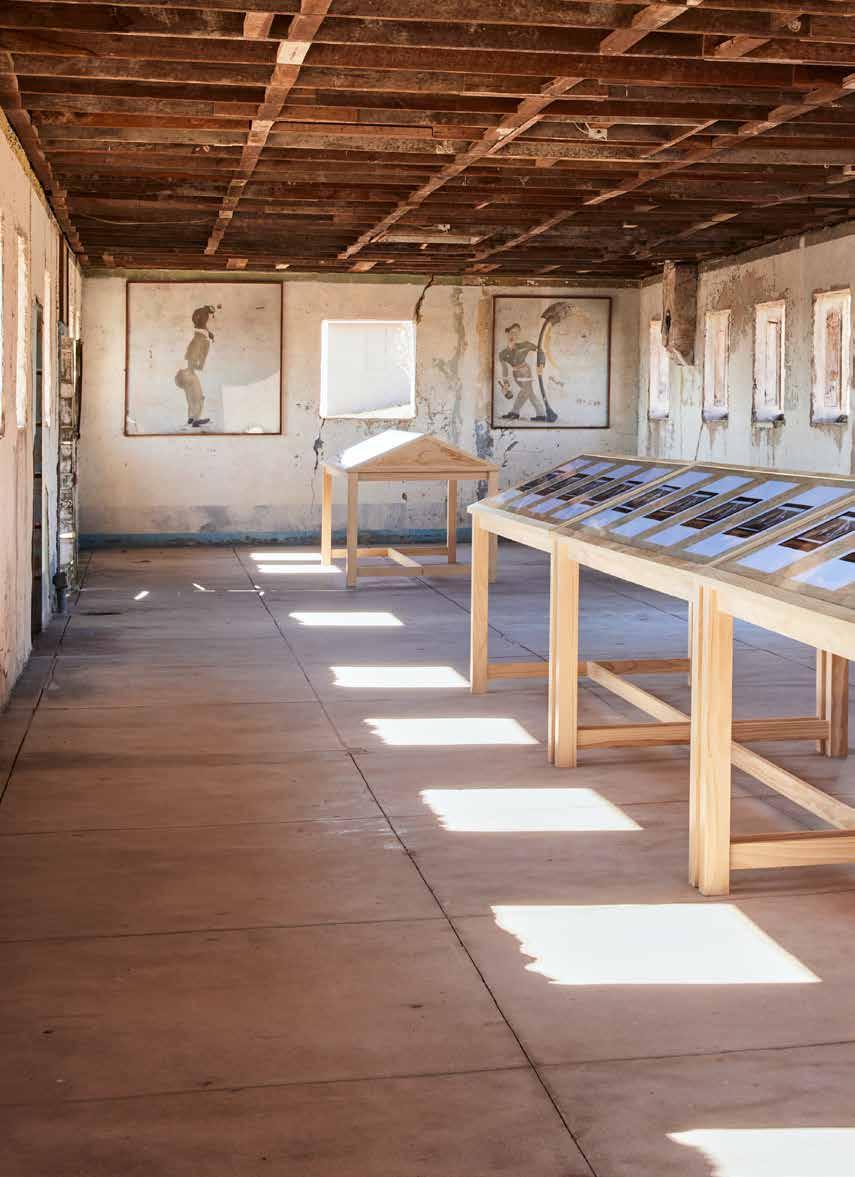
In the first of three galleries of the presentation of Al río / To the River at the Chinati Foundation, Leonard appeals to the sheer physical attributes of the river, in the grammar of minimalist repetition. In a horizon line traversing the overbright gallery space, twenty-four photographs align the four walls in sequences of eight and four—the hours of a day. In one riversurface image, the eddies appear to amalgamate even as they recoil in the same pull and plunge forming a row of clusters held together as though the current depended on such forms of cooperation. In the variable flows, in the turbid stress and spinning release, the literal and iterative registers of succession so merge and transfigure in patterns commensurate with a viewer’s qualities of attention as to collapse the division between the particular—a detail—and its totality. In this regard, Al río / To the River, designed to be viewed in three
el confinamiento y las capas de reflexión en el juego entre semejanza y deseo. “Recibir, para Leonard, es querer acercar el nuevo objeto, casi atraerlo hacia el vacío de su cámara: incorporar la imagen, de nuevo, como se internaliza un objeto perdido. Y en las fotografías sentimos este impulso activarse en todas partes: física, corporal y psíquicamente”, escribió. 5 En la primera de tres galerías que conforman la presentación de Al río / To the River en la Fundación Chinati, Leonard apela a los atributos físicos del río, empleando la gramática de la repetición minimalista. A lo largo de una línea del horizonte que atraviesa el espacio sobreiluminado de la galería, veinticuatro fotografías se alinean en las cuatro paredes en secuencias de ocho y cuatro: las horas de un día. En una de las imágenes de la superficie del río, los remolinos parecen amalgamarse incluso cuando retroceden en el mismo impulso de atracción y hundimiento, formando una hilera de agrupaciones mantenidas unidas como si la corriente dependiera de esa forma de cooperación. En los flujos variables, en la tensión turbia y la liberación giratoria, los registros literales y repetitivos de la sucesión se funden y transfiguran de tal modo en patrones acordes con las cualidades de atención del espectador, al punto de colapsar la división entre lo particular —un detalle— y su totalidad. En este sentido, Al río / To the River , concebido para ser contemplado en tres
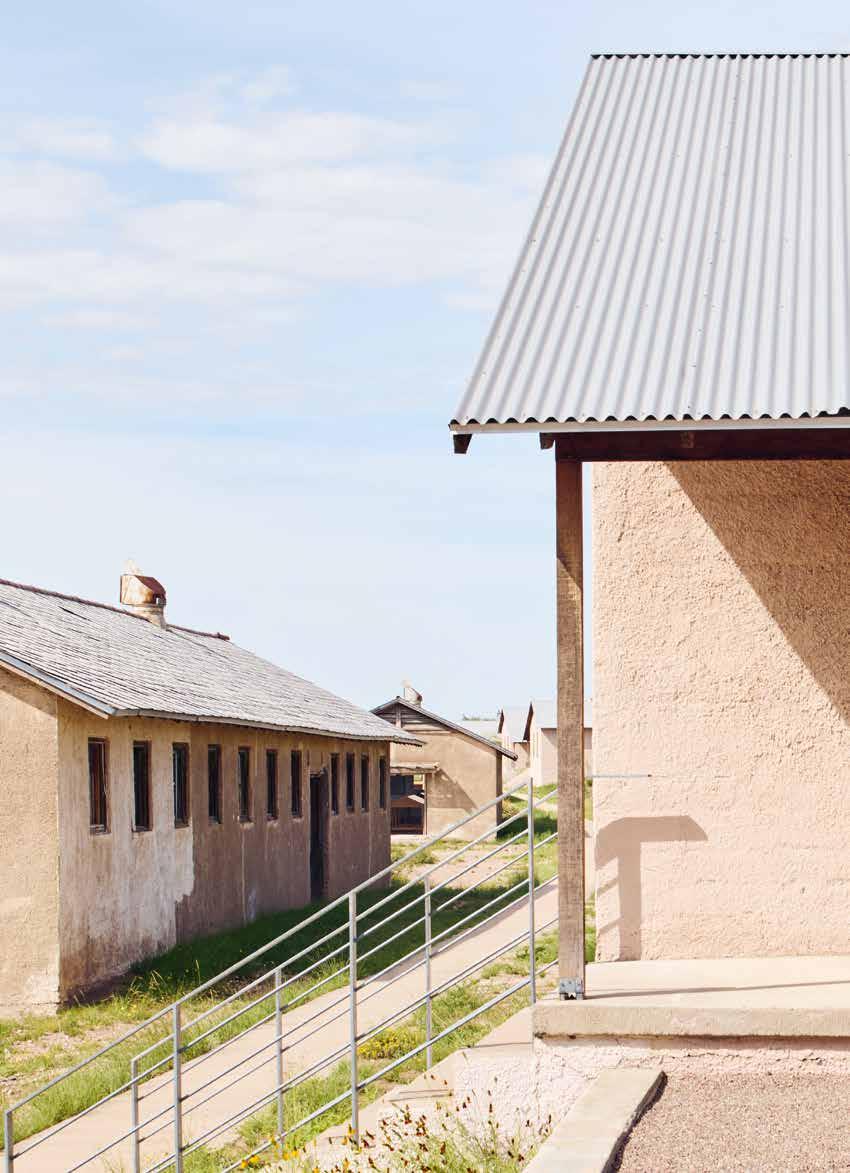
different buildings among those comprising the grounds of the Chinati Foundation—formerly Camp Albert, a US military base established in 1911 to patrol the US–Mexico border, later Camp Marfa, and eventually Fort D. A. Russell—further reverberates with past and present meanings imbuing its location of display in direct proximity to the US Customs and Border Protection offices and Big Bend Sector headquarters adjoining the Chinati grounds. In critical relationship as well to neighboring works by Donald Judd, John Chamberlain, Dan Flavin, and Robert Irwin, among others, Leonard’s photographic narratives mark the dividing line between the safeguarded realm of artworld display and speculation, even in the expanded field of Marfa, and the material, geopolitical, and environmental contradictions that specify the Texas–Mexico borderlands.
In the second building, Leonard’s images follow a discontinuous succession of places where the Rio Grande/ Río Bravo is made to serve as international boundary between the United States and Mexico, at the American Diversion Dam just above the US–Mexico border in El Paso. The series makes visible a staggered itinerary along the river’s course, through waterways and wetlands leading to the Rio Grande Valley and the Gulf
edificios distintos dentro del terreno que ocupa la Fundación Chinati —anteriormente Campamento Albert, una base militar estadounidense establecida en 1911 para patrullar la frontera entre EE. UU. y México, más tarde Campamento Marfa, y finalmente Fuerte D. A. Russell— resuena también con los significados del pasado y del presente que impregnan el lugar de exhibición, en proximidad directa con las oficinas de Aduanas y Protección Fronteriza de EE. UU. y la sede del Sector Big Bend, adyacentes al recinto de Chinati. En relación crítica con las obras vecinas de Donald Judd, John Chamberlain, Dan Flavin y Robert Irwin, entre otros, las narrativas fotográficas de Leonard marcan la línea divisoria entre el ámbito resguardado de la exhibición y especulación del mundo del arte —aun dentro del campo expandido de Marfa— y las contradicciones materiales, geopolíticas y medioambientales que caracterizan la región fronteriza entre Texas y México. En el segundo edificio, las imágenes de Leonard siguen una sucesión discontinua de lugares donde el Río Grande/Río Bravo sirve como frontera internacional entre Estados Unidos y México, en la presa American Diversion justo al norte de la línea fronteriza en El Paso. La serie visibiliza un itinerario fragmentado a lo largo del cauce del río, atravesando canales y humedales que conducen al Valle del Río Grande y al Golfo de México. Entre los lugares fotografiados se encuentran puntos
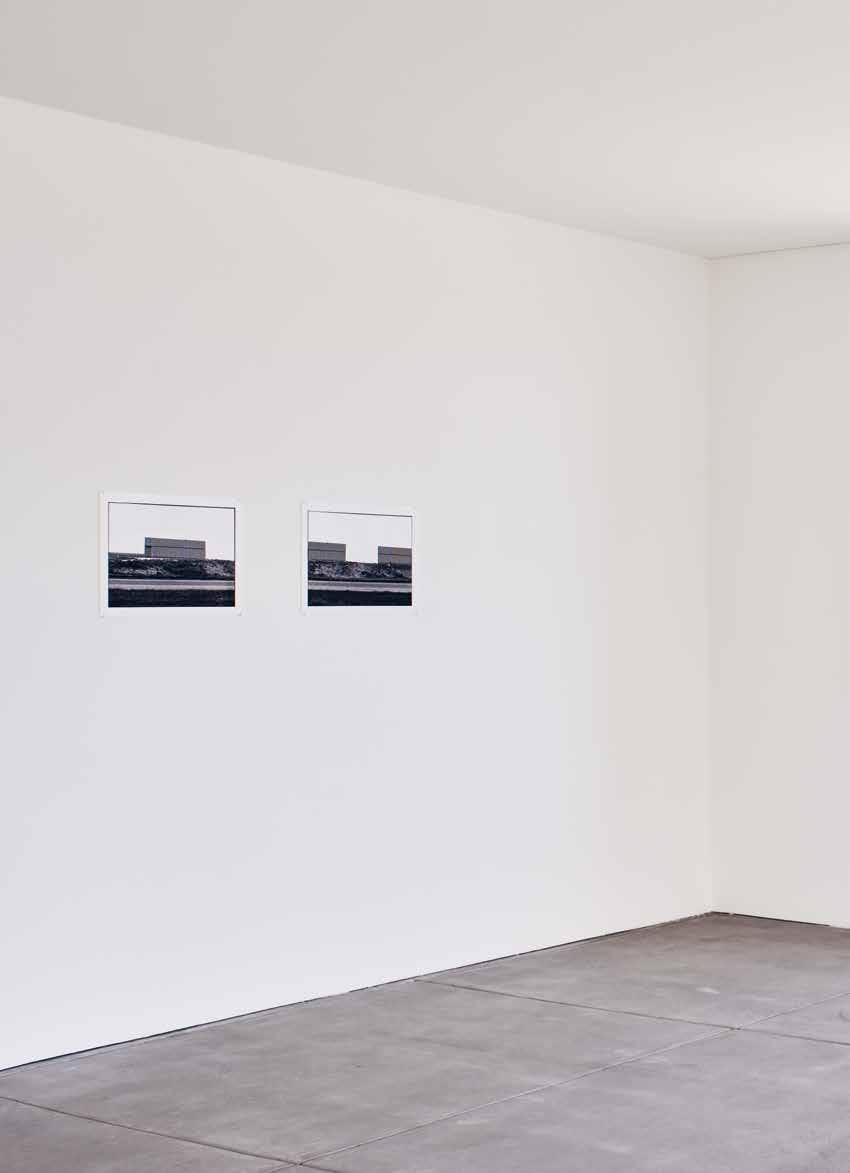
of Mexico. Among the places photographed are points around the twenty-eight international bridges and border crossings, which include “two dams, one hand-drawn ferry, and twenty-five other crossings that allow commercial, vehicular and pedestrian traffic.”6 The photographs register as well the intersecting urban and industrial sprawl—namely “the border construction during the twentieth and twenty-first centuries” that the environmental historian C. J. Alvarez classifies as “compensatory building … designed to mitigate the unintended consequences of previous building projects.”7 In a lens perspective that has no particular purchase on a heightened sense of eventfulness, nor on a relation of detachment to the “man-altered landscape” specified by exponents of the New Topographics, for instance, so many of the images in Al río / To the River render the middle distance from a standpoint, a certainty “in person,” so to speak.8 In this sense, active viewership resembles a form of embodied hesitation at the intervals—now unambiguous, now indiscernible—that open up between the built world, the natural landscape, and social processes along the border zone.
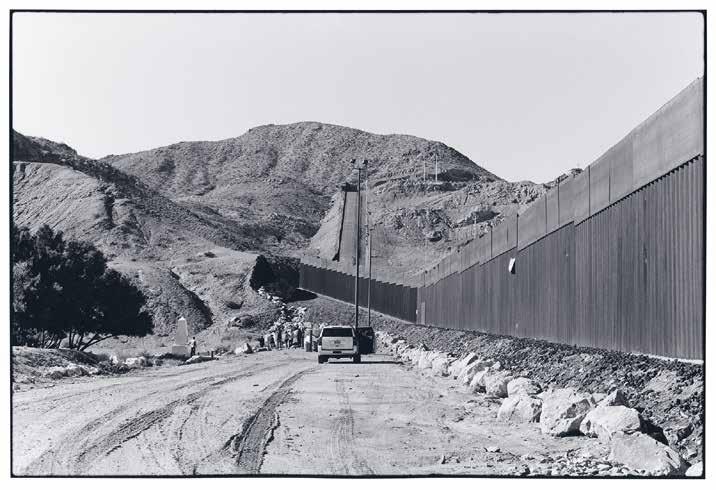
Steel metal grates of the border wall cut through slopes of the high desert
en torno a los veintiocho puentes y cruces fronterizos internacionales, que incluyen “dos presas, un ferry manual y otros veinticinco cruces que permiten el tránsito comercial, vehicular y peatonal.” 6 Las fotografías registran también la expansión urbana e industrial entrecruzada, particularmente “la construcción fronteriza durante los siglos XX y XXI” que el historiador ambiental C. J. Álvarez clasifica como una “arquitectura compensatoria… diseñada para mitigar las consecuencias no previstas de proyectos constructivos anteriores.” 7 Desde una perspectiva fotográfica que no pretende resaltar un dramatismo puntual, ni tampoco establecer una distancia crítica frente al “paisaje modificado por el ser humano” —como lo proponían, por ejemplo, los exponentes de la Nueva Topografía— muchas de las imágenes de Al río / To the River representan la media distancia desde un punto de vista directo, una certeza “en persona”, por así decirlo. 8 En este sentido, la mirada activa se asemeja a una forma de vacilación encarnada en los intervalos — ya inequívocos, ya imperceptibles— que se abren entre el mundo construido, el paisaje natural y los procesos sociales a lo largo de la zona fronteriza. Rejas de metal del muro fronterizo cortan las pendientes del terreno del alto desierto cerca de El Paso, donde un todoterreno y un grupo de visitantes, ensombrecidos por el terreno y la construcción, se aproximan al Monumento de Límite Número
terrain near El Paso where an SUV and a group of visitors, overshadowed by the land and construction, approach the Boundary Monument One, “erected in 1855 by the EmorySalazar surveyors.” 9 The marker, now managed by the International Boundary and Water Commission, bears a plaque that specifies the “Boundary of the United States of America,” while a neighboring image captures at close range a section of zigzagging wall restricting access to the monument, with a banner on display from the privately funded organization “We Build the Wall.”
Present viewing confers on images realities unavailable to the time of their making that are undeniable now, such as a press release of April 26, 2023, from the offices of Damian Williams, the United States Attorney for the Southern District of New York, announcing the sentences issued to Brian Kolfage and Andrew Badolato by United States District Judge Analisa Torres “for their respective roles in carrying out a scheme to defraud hundreds of thousands of donors in connection with an online crowdfunding campaign known as ‘We Build The Wall’ by soliciting donations using false statements and then stealing the resulting donations.”10
These images contrast with another set of photographs from the side of
Uno, “erigido en 1855 por los topógrafos Emory-Salazar”. 9 El marcador, ahora gestionado por la Comisión Internacional de Límites y Aguas, ostenta una placa que señala el “Límite de los Estados Unidos de América”, mientras que una imagen cercana captura un tramo del muro en zigzag que restringe el acceso al monumento, junto a una pancarta de la organización privada “We Build the Wall” [Construimos el muro]. La contemplación actual otorga a las imágenes realidades que no estaban disponibles en el momento en que fueron tomadas y que hoy resultan innegables, como el comunicado de prensa del 26 de abril de 2023 emitido por la oficina de Damian Williams, Fiscal de los Estados Unidos para el Distrito Sur de Nueva York, anunciando las condenas dictadas por la jueza de distrito Analisa Torres contra Brian Kolfage y Andrew Badolato “por su participación en un esquema para defraudar a cientos de miles de donantes en relación con una campaña de micromecenazgo en línea conocida como ‘We Build The Wall’ mediante la solicitud de donaciones a partir de declaraciones falsas y el robo de los fondos recaudados”.10
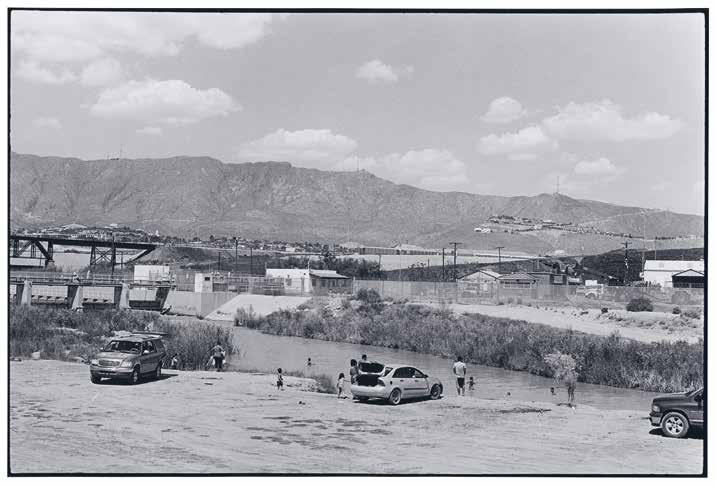
Estas imágenes contrastan con otra serie de fotografías tomadas desde el lado de Ciudad Juárez, una línea del horizonte que une el Monte Cristo Rey en la lejanía con una red de infraestructuras —secciones de la presa estadounidense rodeadas de almacenes industriales,
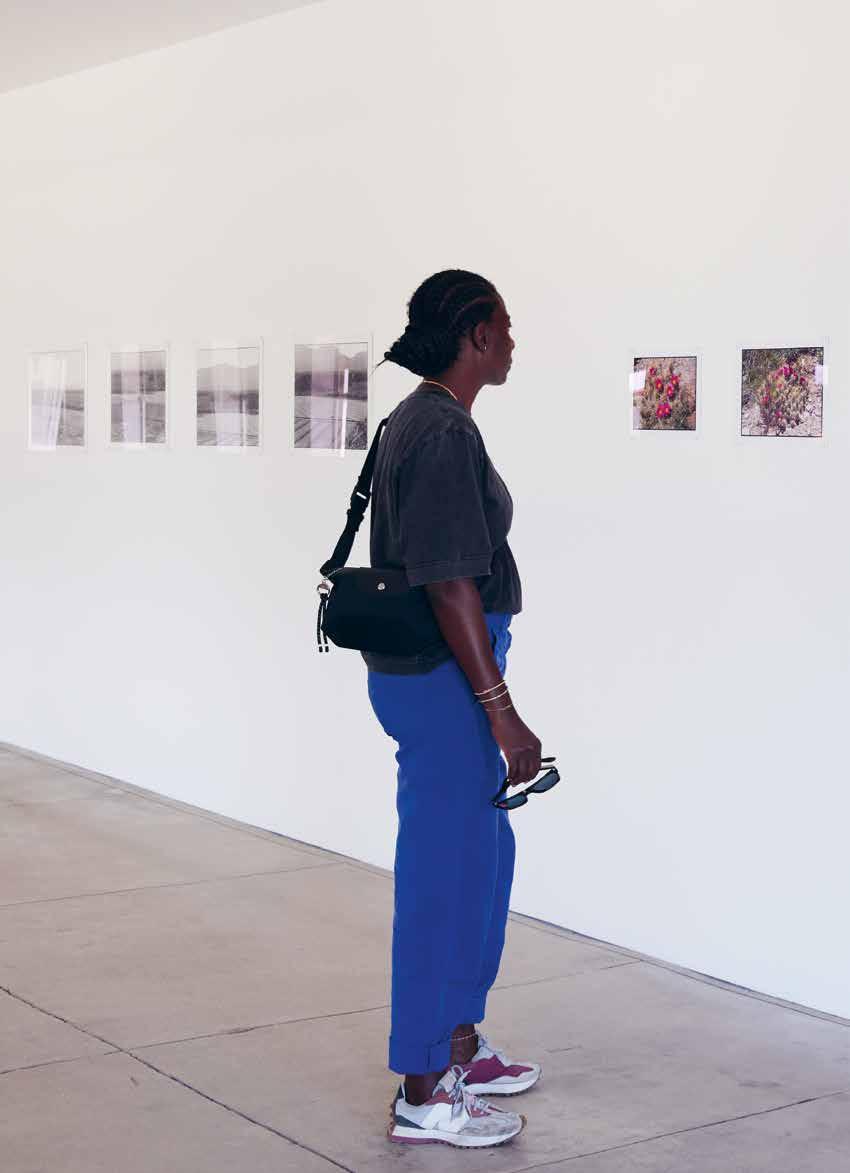
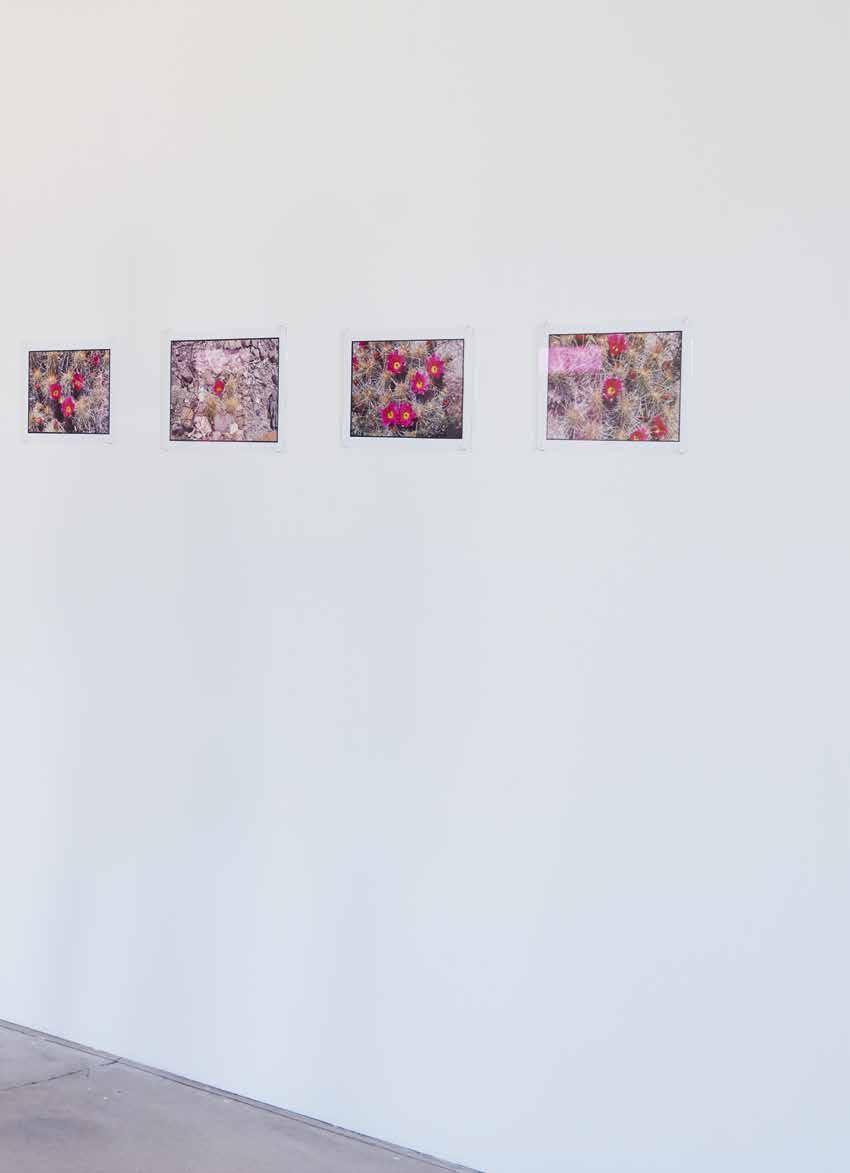
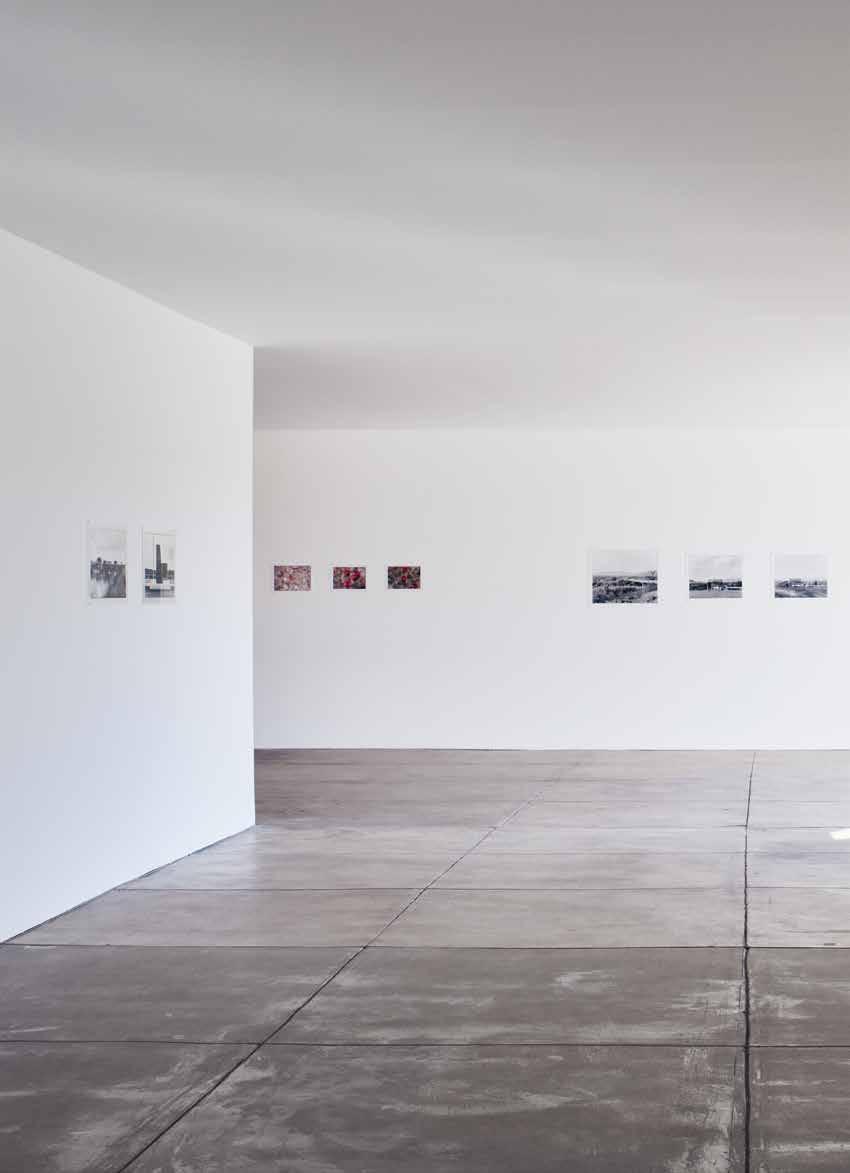
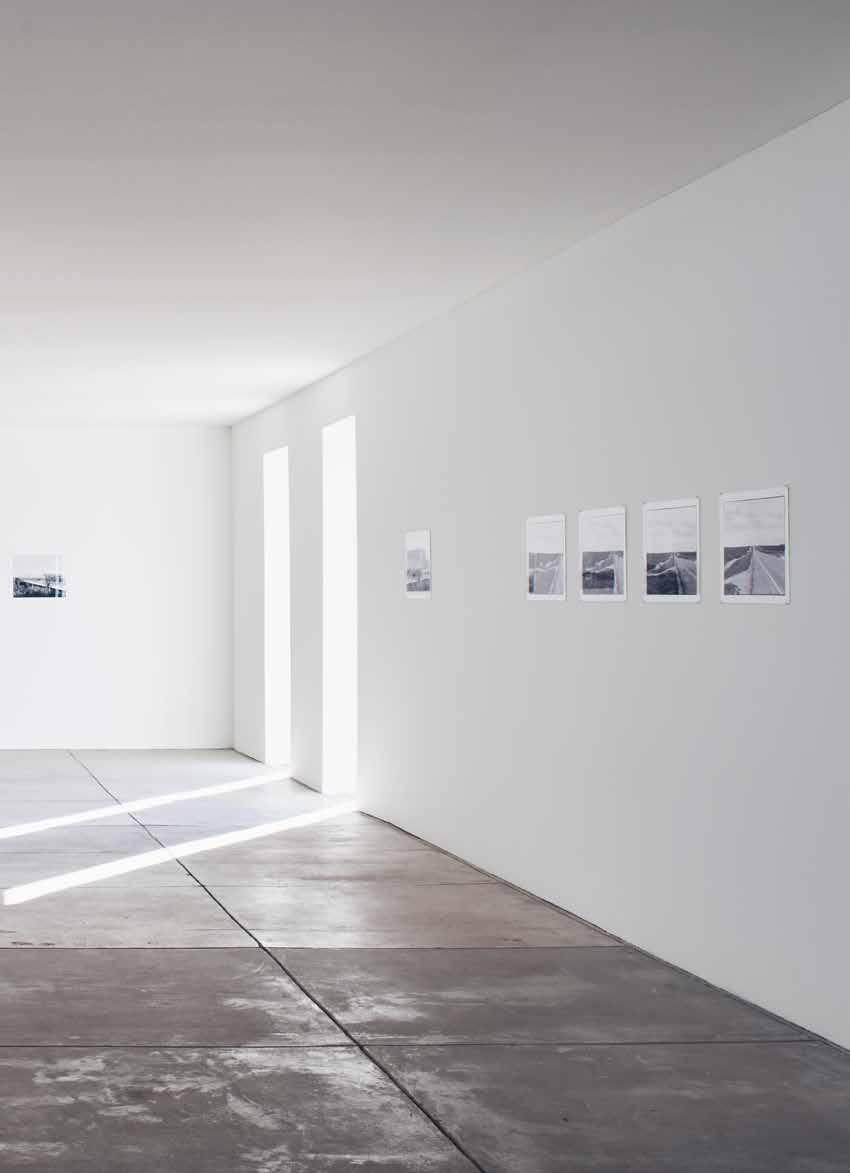
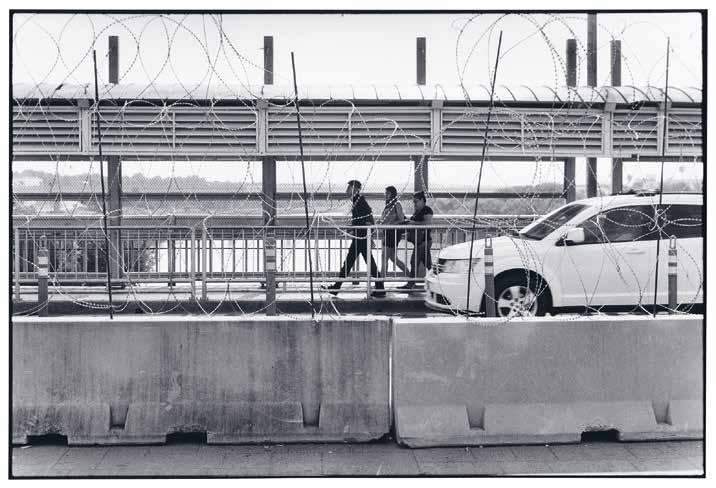
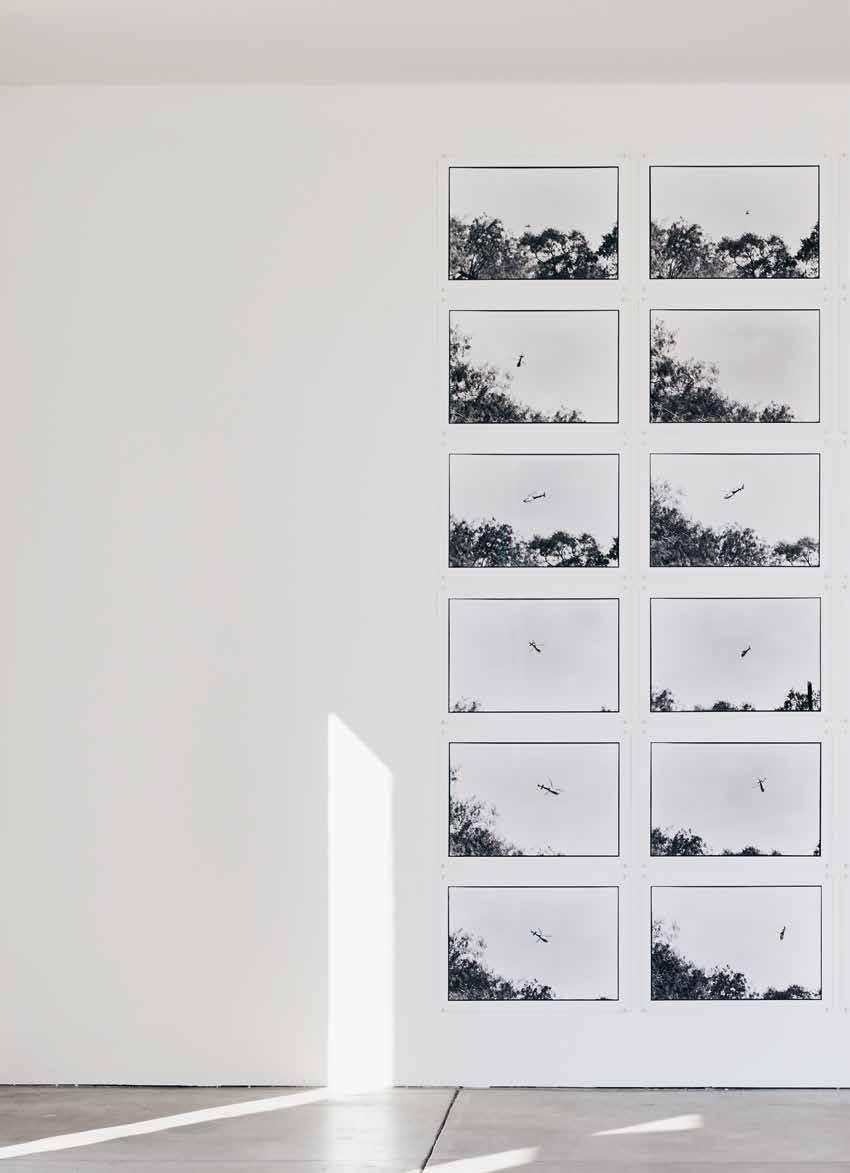
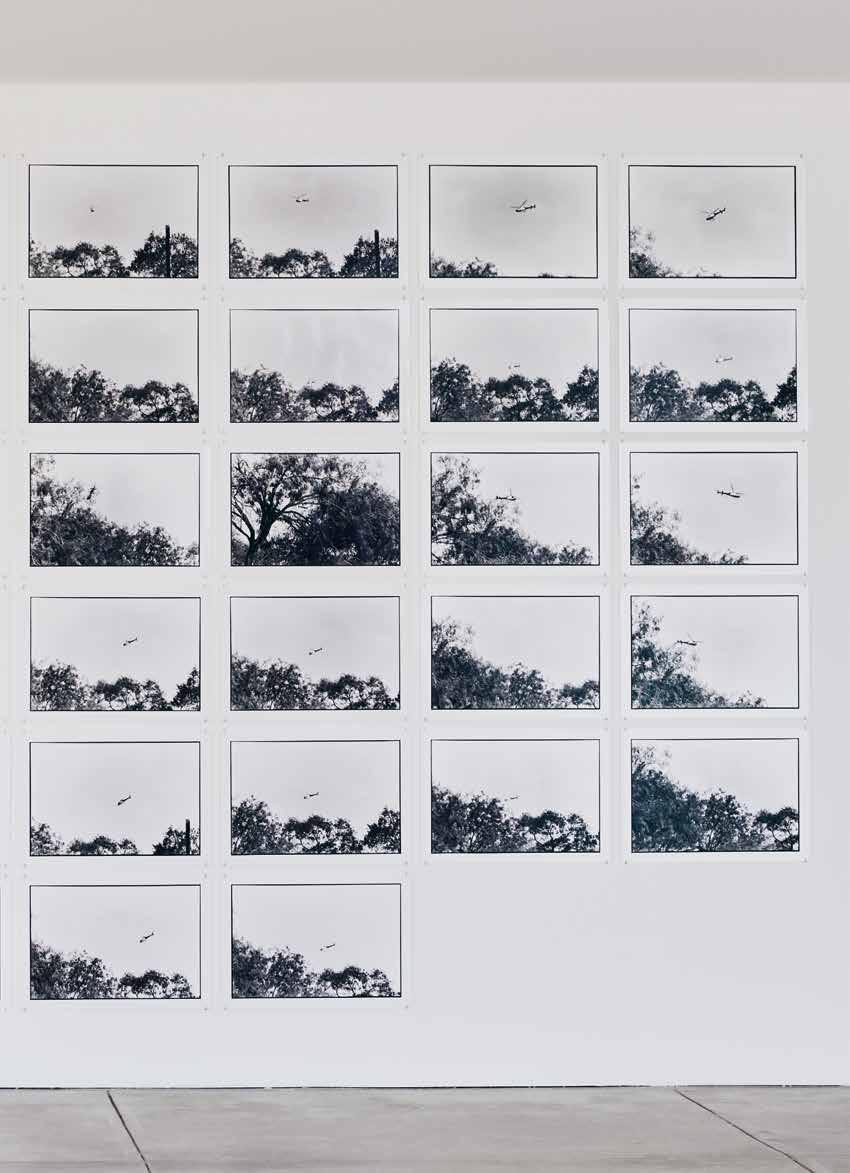
Ciudad Juárez, a horizon line that joins Mount Cristo Rey in the far background to the network of engineering—sections of the American Dam surrounded by industrial warehouses, bridges, and chain-link fences—the river below providing a patch of public beach behind Casa de Adobe, a heritage site and museum devoted to material culture and photography of the Mexican Revolution. Throughout the series, compositions along the riverbanks reveal material disparities between one side and the other, as well as visual collisions between protected natural environs, commercial works of civil engineering, the infrastructure of trade, subsistence farming, and large-scale agriculture, along with the ever-pervasive manifestations of border security and the surveillance apparatus. Covering one gallery wall is a grid comprised of thirty-four photographs that track a helicopter circling the sky above the crest of several river-adjacent trees, a storyboard whose last two absent frames serve to suggest those who go missing and perish in a terrain hostile to human crossing, possibly contesting such commonplace occurrences in the borderland field of vision, in that the implied cinematic action is deprived of its structural culmination, the grid incomplete and truncated. On a riverbank road near McAllen,
puentes y vallas de alambre— mientras que el río debajo ofrece un pequeño tramo de playa pública detrás de la Casa de Adobe, un museo patrimonial dedicado a la cultura material y la fotografía de la Revolución Mexicana. A lo largo de la serie, las composiciones a orillas del río revelan las disparidades materiales entre un lado y el otro, así como las colisiones visuales entre entornos naturales protegidos, obras de ingeniería civil, la infraestructura del comercio, la agricultura de subsistencia y a gran escala, junto a las omnipresentes manifestaciones de la seguridad fronteriza y el aparato de vigilancia. En una pared de la galería se despliega una cuadrícula compuesta por treinta y cuatro fotografías que siguen a un helicóptero que sobrevuela las copas de unos árboles a la vera del río, una suerte de guión gráfico cuyos dos últimos fotogramas ausentes sugieren a quienes desaparecen y perecen en un terreno hostil para el cruce humano, posiblemente impugnando la habitualidad con la que se perciben estos episodios en el campo visual fronterizo, ya que la acción cinematográfica queda privada de su culminación estructural, la cuadrícula incompleta y truncada. En un camino ribereño cercano a McAllen, Texas, un escuadrón de vehículos de la Patrulla Fronteriza ha rodeado una furgoneta blanca, y la secuencia de imágenes representa la detención y traslado del grupo que ha sido acorralado
Texas, a squad of Border Patrol vehicles has surrounded a white van, the cluster of images depicting the detention and removal of the huddled and apprehended, a duration of migrant time in view of a police tower just beyond a nearby railroad-track crossing. The ethnographer Ruben Andersson has described how speed and stasis together compose the time of migration, the economically engineered durations that link “cross-border movement and waiting.” Technologies of control, working steadily to outpace the action of migrants and asylum seekers, ever amplify the velocity of “real-time intelligence,” for which lens-based surveillance systems serve as legitimating reason for the escalation of patrolling and militarization along the US–Mexico divide. States that fund border agencies and outsource defense companies to run detention centers produce something like “state time” palpably distinct from “subjective time.” In this scenario, a “quest for speed is intimately tied up with the concept of risk” and the temporal modalities of risk, in turn, define “time-space compression” that further motivates “large investments in new information sharing systems,” making border zones an “information channel, communicating up, sideways, and down in a chain of
y aprehendido, una duración del tiempo migrante a la vista de una torre de vigilancia policial más allá de un cruce ferroviario cercano. El etnógrafo Ruben Andersson ha descrito cómo la velocidad y la inmovilidad componen juntas el tiempo de la migración, las duraciones económicamente diseñadas que entrelazan “el movimiento y la espera transfronterizos”. Las tecnologías de control, que actúan sin cesar para superar en ritmo a los migrantes y solicitantes de asilo, amplifican sin descanso la velocidad de la “inteligencia en tiempo real”, para la cual los sistemas de vigilancia basados en imágenes funcionan como justificación para la expansión del patrullaje y la militarización a lo largo de la frontera entre México y Estados Unidos. Los estados que financian a las agencias fronterizas y subcontratan empresas de defensa para gestionar los centros de detención producen algo parecido a un “tiempo estatal” claramente distinto del “tiempo subjetivo”. En este escenario, la “búsqueda de velocidad está íntimamente ligada al concepto de riesgo” y las modalidades temporales del riesgo, a su vez, definen una “compresión tiempo-espacio” que motiva aún más “grandes inversiones en nuevos sistemas de intercambio de información”, convirtiendo a las zonas fronterizas en un “canal informativo que comunica hacia arriba, lateralmente y hacia abajo mediante una cadena de señales”. En el régimen espacio-temporal
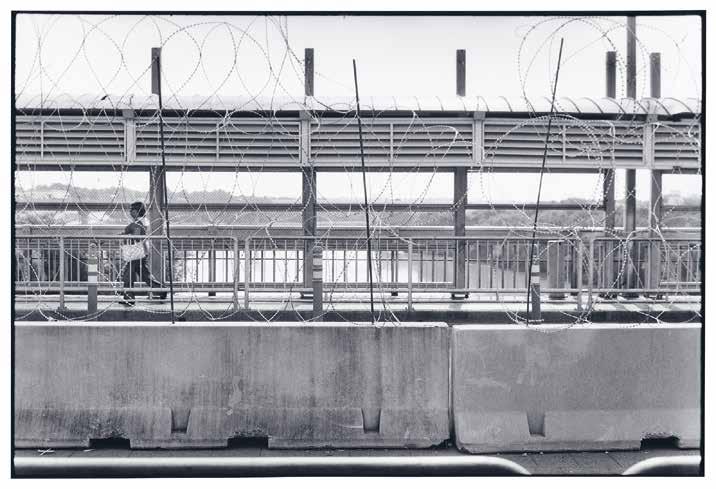
signals.” In the time-space regime of globalization, “the possibilities of anticipation, interception, and deferral opened up by compression and speed have led to precisely the opposite reality for those who are targeted: a world of slowness and stasis,” Andersson wrote.11
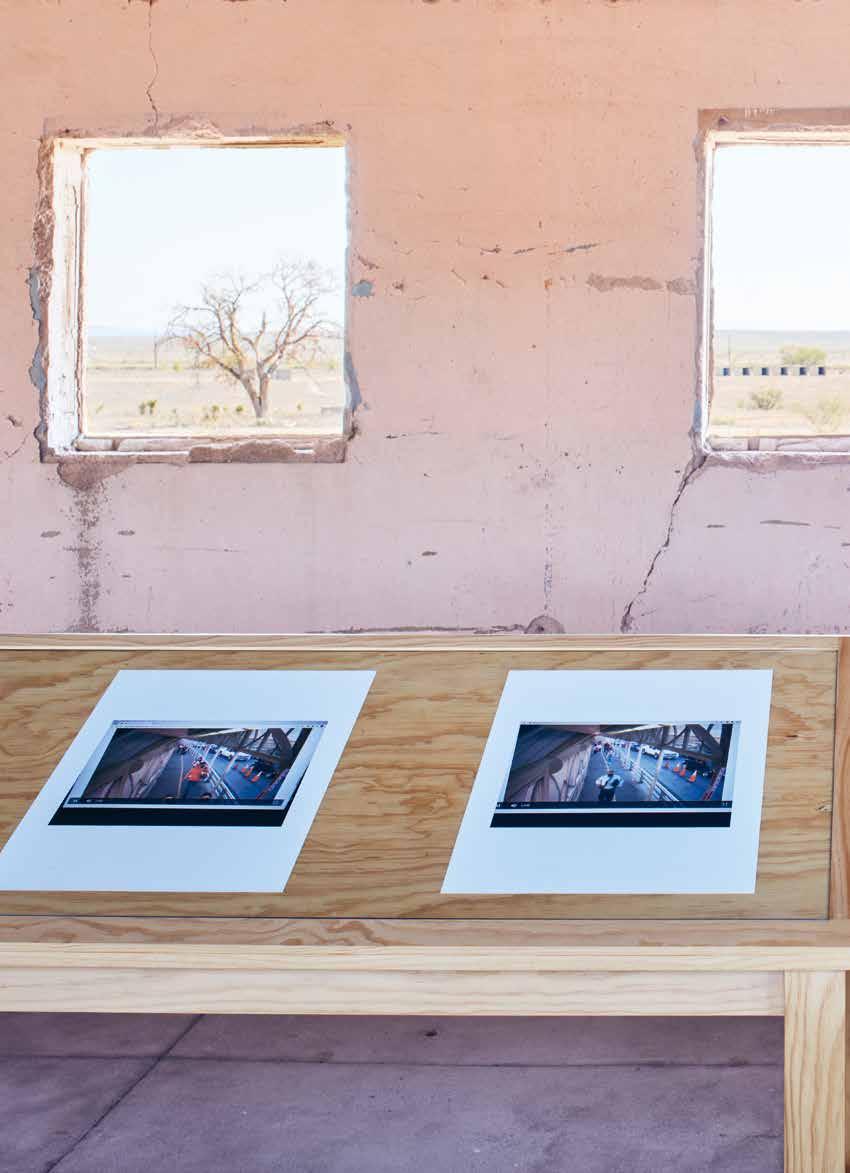
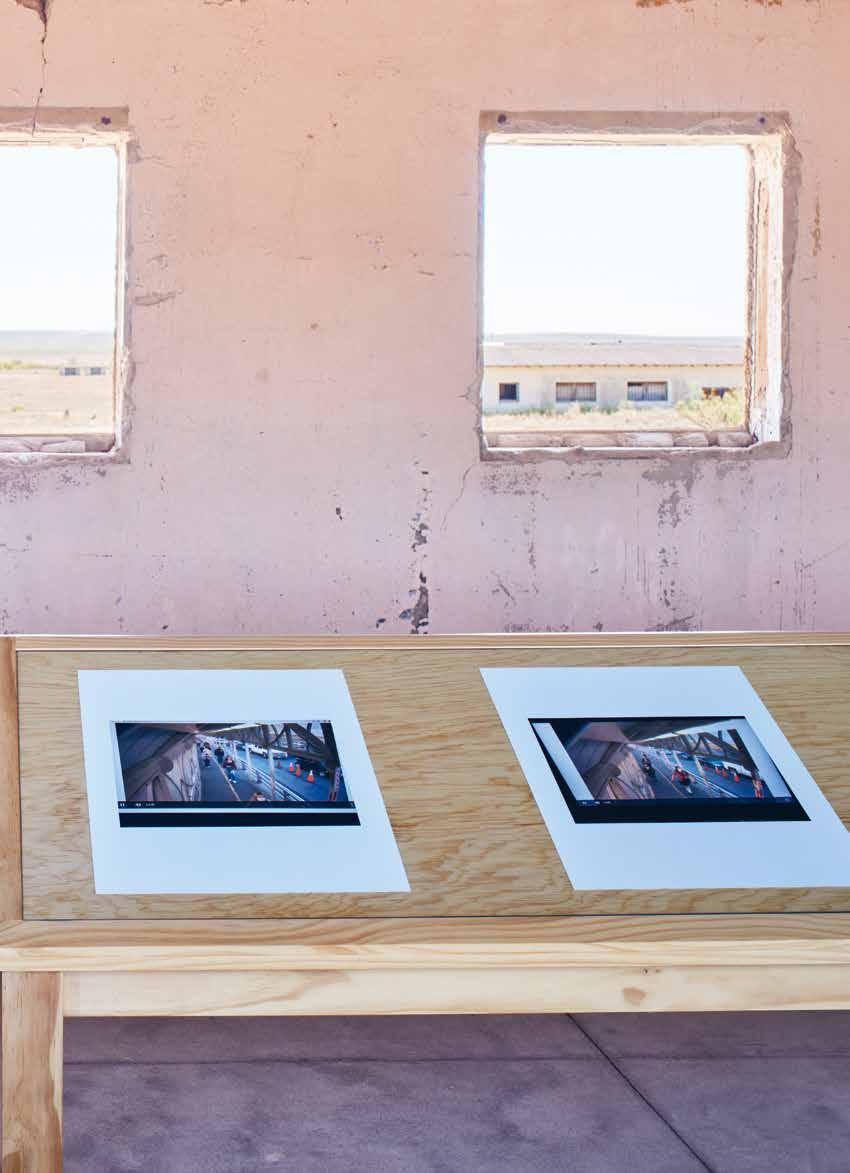
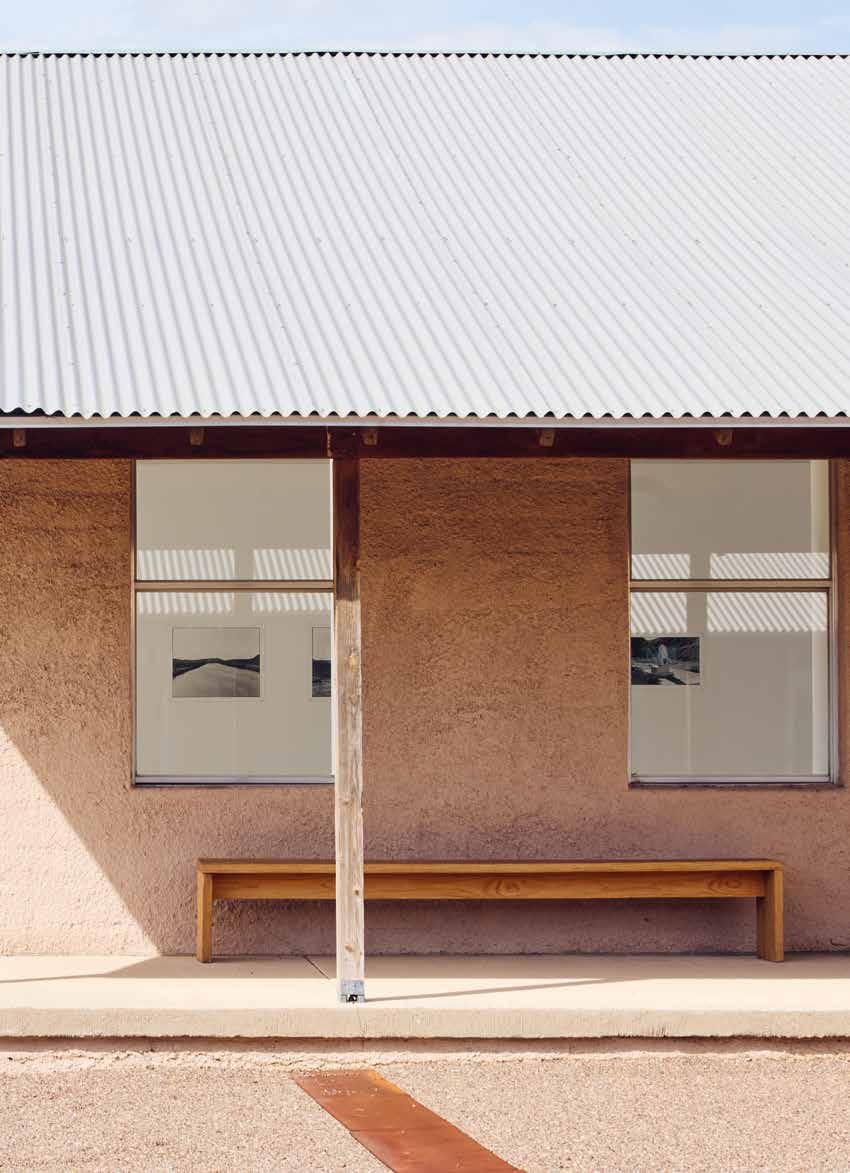
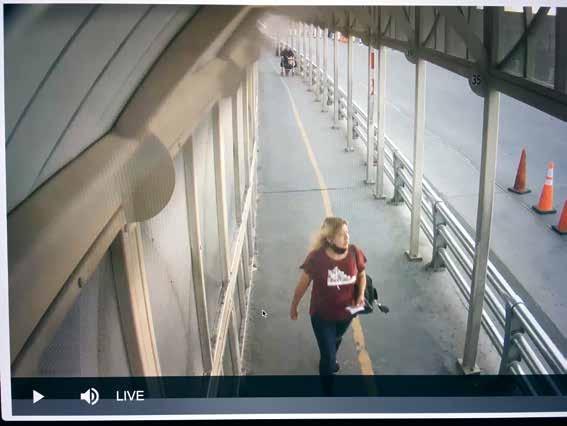
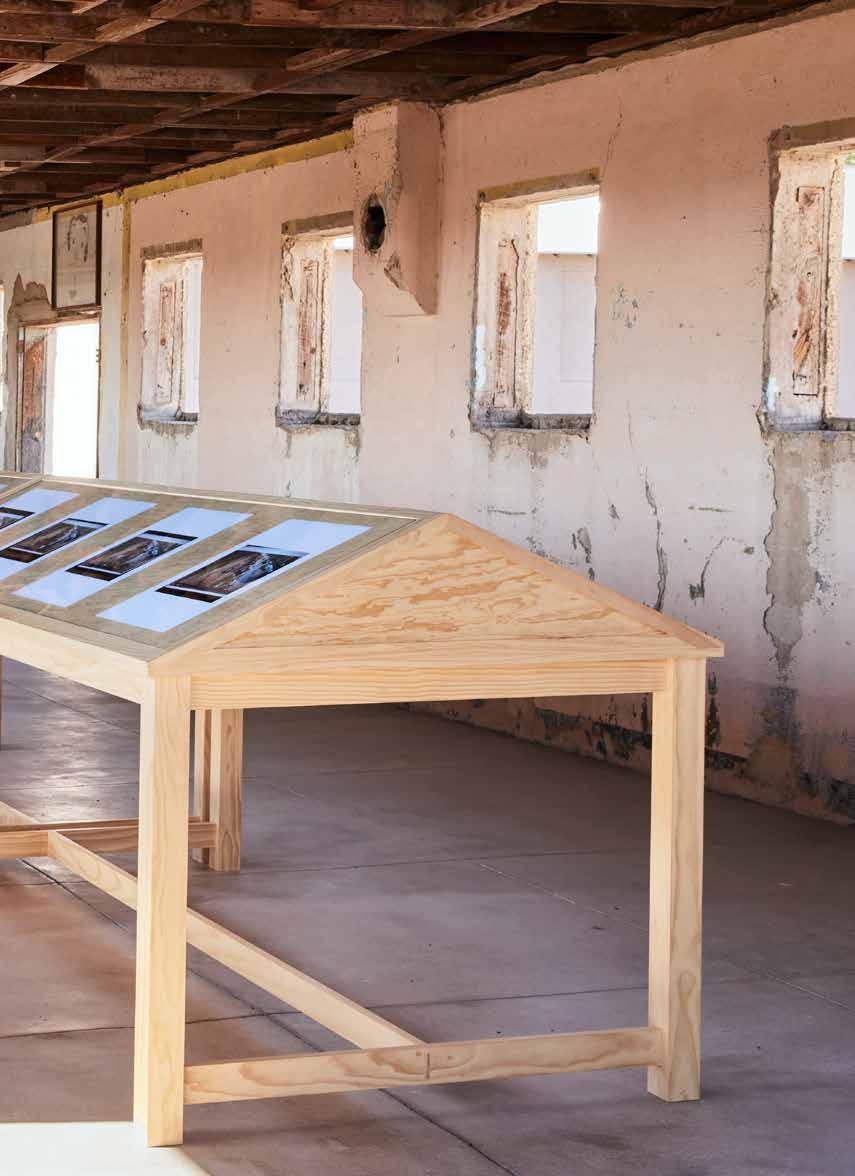
As a technology of “lateness,” in Baker’s definition, and her camera no less extricable from the image system and its state-convenient information channels, Leonard detains the relentless flow of real-time streaming video to offer for viewing ink-jet prints of photographs that capture her laptop computer screen, its search window open to a live border-cam feed whose surveillance lens is aimed at pedestrians crossing from Juárez to El Paso on the Paso del Norte International Bridge. Whether alone or in group configurations, some of the subjects wear surgical masks, in a time-stamp of the coronavirus pandemic, depicted beside the adjacent lane for vehicles, the visual field betraying the warp of the surveillance camera, and a degree of pixelation, with the LIVE legend and streaming bar on the lower end of the pictured screen. Displayed in the third exhibition building, these prints are encased in a row of wooden vitrines that alter the viewing experience from that of the horizon line or grid
de la globalización, “las posibilidades de anticipación, intercepción y diferimiento que abre la compresión y la velocidad han conducido a la realidad precisamente opuesta para quienes son blanco de estas medidas: un mundo de lentitud y estancamiento”, escribió Andersson. 11 Como una tecnología de “tardanza”, según la definición de Baker, y con su cámara no menos inextricable del sistema de imágenes y de sus canales informativos convenientes para el Estado, Leonard detiene el flujo implacable del video en tiempo real para ofrecer a la vista impresiones de inyección de tinta de fotografías que capturan la pantalla de su laptop, con la ventana de búsqueda abierta a la transmisión en vivo de una cámara fronteriza cuya lente de vigilancia apunta a los peatones que cruzan de Juárez a El Paso por el Puente Internacional Paso del Norte. Ya sea solos o en grupos, algunos de los sujetos llevan mascarillas quirúrgicas, en una marca temporal de la pandemia de coronavirus, retratados junto al carril adyacente para vehículos, el campo visual traicionando la distorsión de la cámara de vigilancia y cierto grado de pixelación, junto con la leyenda LIVE [en vivo] y la barra de transmisión en la parte inferior de la pantalla fotografiada. Exhibidas en el tercer edificio de la exposición, estas impresiones se muestran en una fila de vitrinas de madera que alteran la experiencia de visualización de la línea del horizonte o la cuadrícula a
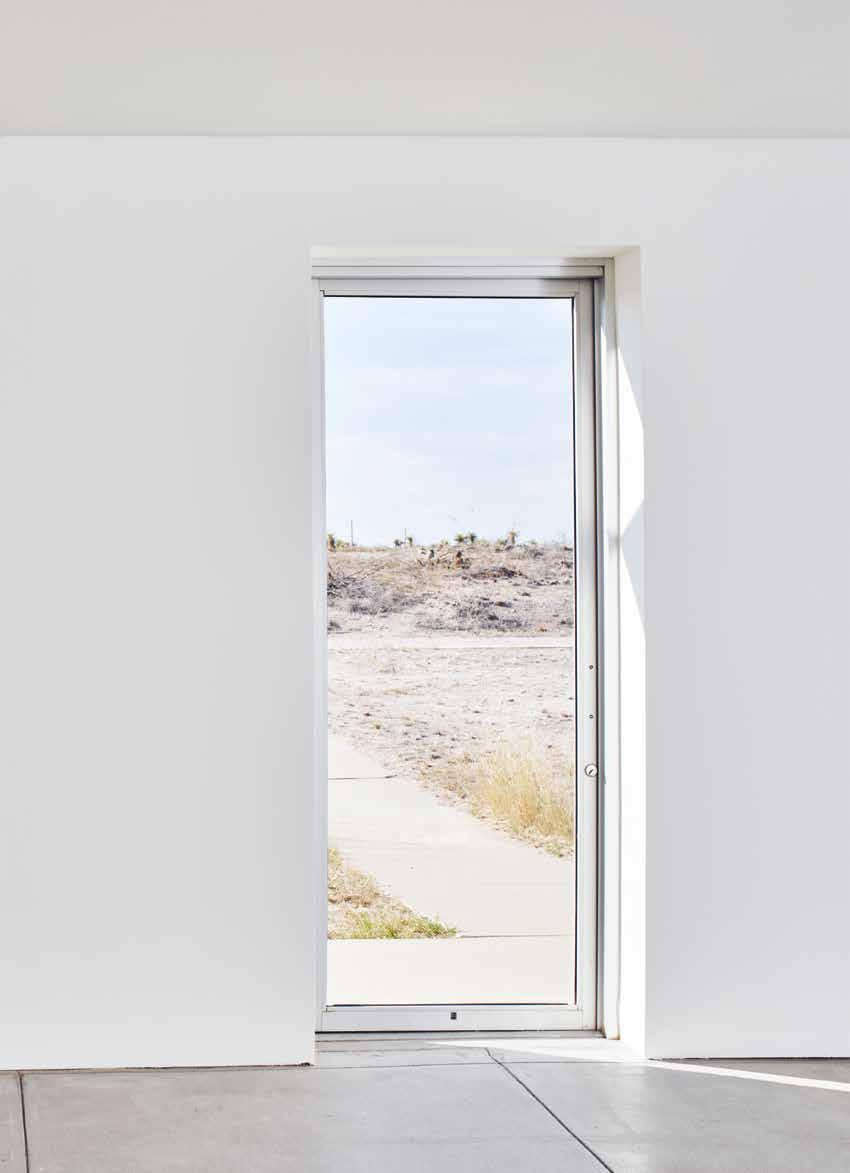
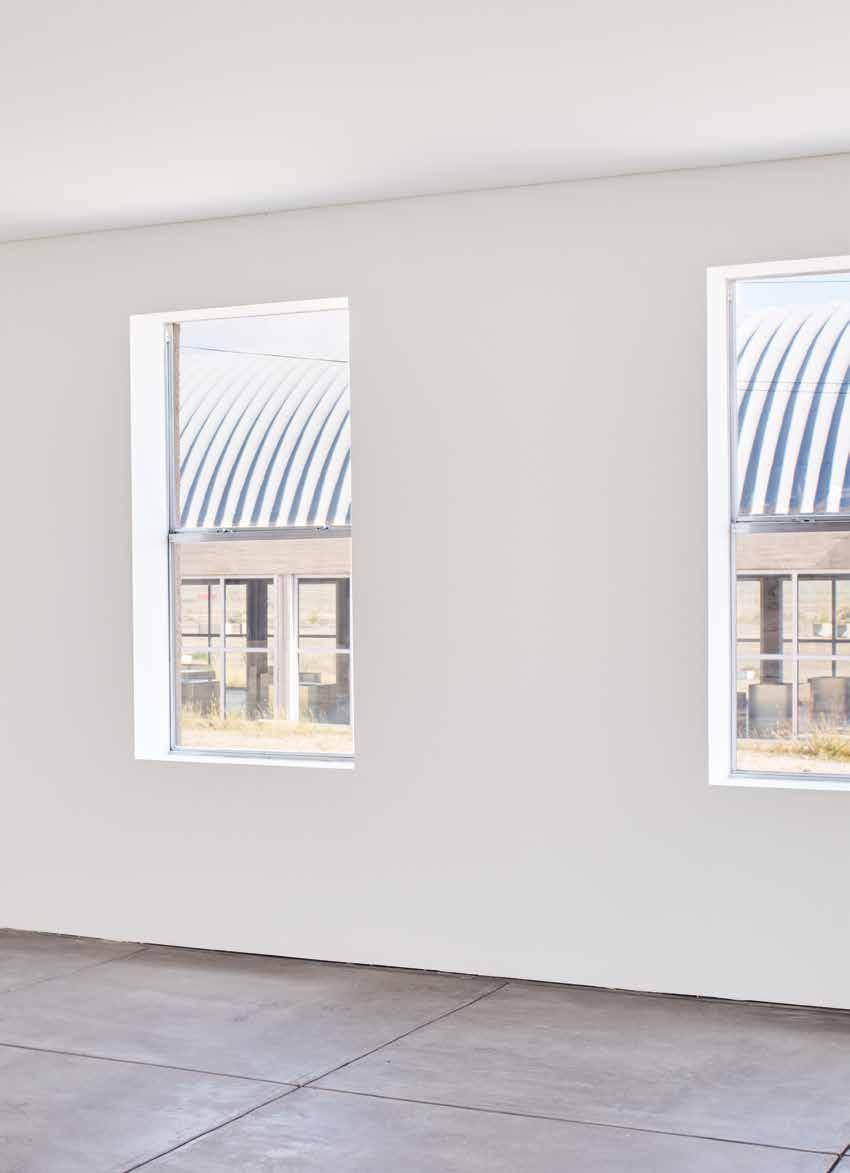
to a form of display associated with specimen observation, “such as the work’s being like an object or being specific,” in the language Donald Judd used to describe art-world specific objects.12 In a critical collision for the viewer, several of Judd’s 15 untitled works in concrete (1980–84) can be discerned in the faraway distance through the open windows of the Chinati exhibition space. More than the other buildings on Chinati’s grounds, all of which are the remnants of a United States military base, this weathered building, without windows and doors, serves as a frame that blurs residual histories and material actualities—a lateness in the sense George Baker attributes to Leonard’s practice, now amplified across the political geography of technological excess in Homeland Security surveillance techniques that join ground sensors, drones, dirigibles, and radar to fixed and mobile video systems.
To cut a pathway, a through line across the totality of images in Al río / To the River , the complexity of cultural processes and interdependence they compel, is to be overcome by the consciousness of an effort that seeks the exhaustive account, the drive to identify and the inclination to know, the desire to make all that is calculable a question
una forma de presentación asociada a la observación de especímenes, “como que la obra sea como un objeto o que sea específica,” en palabras que Donald Judd usó para describir los objetos específicos del mundo del arte. 12 En una colisión crítica para el espectador, varias de las 15 obras sin título en hormigón (1980–84) de Judd pueden distinguirse en la lejanía a través de las ventanas abiertas del espacio expositivo de Chinati. Más que los demás edificios en los terrenos de Chinati, los cuales son los remanentes de una base militar de Estados Unidos, este edificio desgastado, sin ventanas y puertas, funciona como un marco que difumina historias residuales y materialidades reales: una tardanza en el sentido que George Baker atribuye a la práctica artística de Leonard, ahora amplificada a través de la geografía política del exceso tecnológico en técnicas de vigilancia del Departamento de Seguridad Nacional que unen sensores terrestres, drones, dirigibles y radares a sistemas fijos y móviles de video.
Abrirse paso a través del total de imágenes en Al río / To the River —la complejidad de los procesos culturales y la interdependencia que exigen—, es verse sobrecogido por la conciencia de un esfuerzo que persigue el registro exhaustivo, el impulso por identificar y la inclinación a saber, el deseo de convertir todo aquello calculable en un asunto de descripciones. “Me doy cuenta de que soy
of description. “I find myself unable to settle on a single description or subject position,” writes Leonard to the Chicano art historian Josh T Franco, “the river is both singular and plural.”13
To so concede to the obligatory impasse, to Al río / To the River ’s epistemological challenge that subsists in the intervals, is to return to the opening frames on the riverbank contractions, ripples, and the promise of ceaselessly flowing water. And it is a turn to recent news by Rachel Lee of the Wilson Center relating the conditions of extreme drought and overextraction that “have also caused tension for those dependent on the Rio Grande at the border, as competing water users struggle to meet their own needs” and compliance with a 1944 water-sharing treaty between the United States and Mexico that “governs water allocation from the Rio Grande and Colorado River.” 14
According to a 2024 report, between 2017 and 2023, 1,107 human lives have perished by drowning in the Rio Grande, a “graveyard for migrants, many of whose deaths are never recorded by authorities on either side of the border.”15
And as of April–May 2025, militarization in the region has again reached newer unthinkable levels of escalation. In rapid succession the Department of the Interior “transferred 170 miles of the Roosevelt Reservation—a 60-foot-wide federally owned strip of
incapaz de conformarme con una sola descripción o punto de vista”, escribe Leonard al historiador del arte chicano Josh T Franco, “el río es a la vez singular y plural.” 13
Ceder ante el impasse obligatorio, al desafío epistemológico que subsiste en los intervalos de Al río / To the River , es regresar a los fotogramas iniciales en la ribera del río: las contracciones, las ondulaciones y la promesa del agua que fluye sin cesar. Y es también volverse hacia las noticias recientes de Rachel Lee, del Wilson Center, que describen las condiciones de sequía extrema y sobreextracción que “también han causado tensiones para quienes dependen del Río Grande en la frontera, ya que los usuarios en competencia luchan por satisfacer sus propias necesidades” y por el cumplimiento de un tratado de 1944 entre Estados Unidos y México que “regula la asignación del agua del Río Grande y el Río Colorado”. 14
Según un informe de 2024, entre 2017 y 2023, 1.107 vidas humanas perecieron ahogadas en el Río Grande, un “cementerio para migrantes, muchas de cuyas muertes nunca son registradas por las autoridades en ninguno de los dos lados de la frontera”. 15
Y desde abril–mayo de 2025, la militarización en la región ha vuelto a alcanzar niveles de escalada impensables. En rápida sucesión, el Departamento del Interior “traspasó 170 millas [274 kilómetros] de la Reserva Roosevelt —una franja de tierra de propiedad federal de 60 pies [18 metros] de ancho a lo largo de la frontera entre Nuevo México y México”—,
land along the border between New Mexico and Mexico” while “the International Boundary and Water Commission (IBWC) transferred land that “begins at the American Dam in El Paso and extends 63 miles southeast to Fort Hancock, Texas,” both of which the government has christened “National Defense Areas.” Border journalist and author Melissa del Bosque writes that all persons “detained in these militarized zones”—be they migrants, activists, or artists—face “federal trespassing charges for being on a military installation.”16
In Al río / To the River , single photographs and sequences so escalate as to match the immensity of the river surround, its industrial and natural environments, the physical markers of sprawling financial networks and systems of militarization that turn the technologies of surveillance, law enforcement, custody, and detention into joint political and economic orders that profit from global displacement, from laboring bodies and migratory lives, next to everyday acts of tenacity within a structure inclined to dehumanize. In the wave contractions, surface and depth conflate as provisional extensions of the material and human processes for which the eddies are a correlative—the lifeways that double as effect and cause of the river environs, whether on display or hidden from view.
mientras que “la International Boundary and Water Commission [Comisión Internacional de Límites y Aguas] (IBWC) cedió terrenos que ‘comienzan en la presa American Dam en El Paso y se extienden 63 millas [101 kilómetros] al sureste hasta Fort Hancock, Texas’”, espacios que el gobierno ha rebautizado como “Áreas de Defensa Nacional”. La periodista fronteriza y autora Melissa del Bosque escribe que todas las personas “detenidas en estas zonas militarizadas” —sean migrantes, activistas o artistas— se enfrentan a “cargos federales por invasión de propiedad privada de una instalación militar”. 16
En Al río / To the River , tanto las fotografías individuales como las secuencias se intensifican hasta igualar la inmensidad del entorno fluvial, sus entornos industriales y naturales, los marcadores físicos de redes financieras expansivas y sistemas de militarización que convierten las tecnologías de vigilancia, cumplimiento de la ley, custodia y detención en órdenes políticos y económicos que se benefician del desplazamiento global, de los cuerpos que trabajan y las vidas migrantes, junto a actos cotidianos de tenacidad dentro de una estructura que tiende a deshumanizar. En las contracciones de las olas, la superficie y la profundidad se entrelazan como extensiones provisionales de los procesos materiales y humanos para los cuales los remolinos son un correlato: los modos de vida que funcionan como efecto y causa de los entornos del río, ya sean visibles o permanezcan ocultos a la vista.
Roberto Tejada es autor de obras sobre historia de los medios y del arte, incluyendo National Camera: Photography and Mexico’s Image Environment [Cámara nacional: la fotografía y el entorno de la imagen de México] (2009) y Celia Álvarez Muñoz (2009), así como de una colección de ensayos sobre arte y cultura latinx titulada Still Nowhere in an Empty Vastness [Todavía en ninguna parte en un vacío inmenso] (2019). Entre sus libros de poesía se encuentran Carbonate of Copper [Carbonato de cobre] (2025), Why the Assembly Disbanded [Por qué se disolvió la asamblea] (2020), Exposition Park [Parque de exposiciones] (2010) y Mirrors for Gold [Espejos por oro] (2006). Fue galardonado con la Beca de la Fundación Conmemorativa John Simon Guggenheim en Poesía (2021) y actualmente es Profesor Distinguido Hugh Roy y Lillie Cranz Cullen en la Universidad de Houston, donde enseña escritura creativa e historia del arte.
El apoyo para la obra de arte ha sido proporcionado por la Fundación Graham para Estudios Avanzados en Bellas Artes, la John Simon Guggenheim Memorial Foundation, la Galerie Gisela Capitain, en Colonia, y Hauser & Wirth, en Nueva York
Roberto Tejada is the author of media and art histories, including National Camera: Photography and Mexico’s Image Environment (2009) and Celia Alvarez Muñoz (2009), as well as the collected essays on Latinx art and culture, Still Nowhere in an Empty Vastness (2019). His poetry collections include Carbonate of Copper (2025), Why the Assembly Disbanded (2020), Exposition Park (2010), and Mirrors for Gold (2006). Awarded a John Simon Guggenheim Memorial Foundation Fellowship in Poetry (2021), he is the Hugh Roy and Lillie Cranz Cullen Distinguished Professor at the University of Houston where he teaches creative writing and art history.
Support for the artwork has been given by the Graham Foundation for Advanced Studies in the Fine Arts, John Simon Guggenheim Memorial Foundation, Galerie Gisela Capitain, Cologne, and Hauser & Wirth, New York.
1 The exhibition Zoe Leonard: Al río / To the River featured at the Musée d’Art Moderne Grand-Duc Jean (2022) was organized in collaboration with the Musée d’Art Moderne de Paris–Paris Musées (2022), curated by Suzanne Cotter and Christophe Gallois, and traveled to the Museum of Contemporary Art Australia, Sydney (2023). Related gallery exhibitions have been presented at Hauser & Wirth, New York (excerpts from Al río / To the River, 2022), Capitain Petzel, Berlin (2022), and Galleria Raffaella Cortese, Milan (2023/2024); for the publication, see Zoe Leonard et al., Al río / To the River, ed. Tim Johnson (Hatje Cantz; Mudam Luxembourg; Musée d’Art Moderne GrandDuc Jean, 2022).
2 The full list of collaborators includes C. J. Alvarez, Ariella Aïsha Azoulay, Cecilia Ballí, Carolyn Boyd, Remijio “Primo” Carrasco, Alfredo Corchado, Yuri de la Rosa, Natalie Diaz, Dolores Dorantes, Darby English, Álvaro Enrigue, Catherine Facerias, Nadiah Rivera Fellah, Josh T Franco, Esther Gabara, Adolfo GuzmanLopez, Angela Kocherga, Land Arts of the American West, Elisabeth Lebovici, Aimé Iglesias Lukin, José Rabasa, Cameron Rowland, Inocencio Lugo Ruiz, Benjamin Alire Sáenz, Roberto Tejada, and Karla Cornejo Villavicencio.
3 Tim Johnson, “Editor’s Note,” in Al río / To the River, 16, 17.
4 Zoe Leonard, “Out of Time,” artist questionnaire by George Baker, October, no. 100 (Spring 2002): 89, 95.
5 George Baker, Lateness and Longing: On the Afterlife of Photography (University of Chicago Press, 2023), 56, 57.
6 “Texas–Mexico Border Crossings,” Texas Department of Transportation, https://www. txdot.gov/projects/projects-studies/statewide/texas-mexico-border-crossings.html.
7 C. J. Alvarez, “A Brief History of the River,” in Al río / To the River, 25.
8 William Jenkins, New Topographics: Photographs of a Man-Altered Landscape, exh. cat. (International Museum of Photography at George Eastman House, 1975).
9 National Park Service, Chamizal National Memorial, https://www.nps.gov/places/boundary-monument-one.htm#:~:text=Boundary%20Monument%201%20 was%20erected%20on%20the%20international%20boundary%20to,Mexican%20 state%20of%20Chihuahua%20meet.
10 The press release also states that: “Damian Williams, the United States Attorney for the Southern District of New York, announced that BRIAN KOLFAGE and
1 La exposición Zoe Leonard: Al río / To the River presentada en el Musée d’Art Moderne Grand-Duc Jean (2022) fue organizada en colaboración con el Musée d’Art Moderne de Paris- Paris Musées (2022), comisariada por Suzanne Cotter y Christophe Gallois, y viajó a otros lugares como el Museum of Contemporary Art Australia, Sydney (2023). Se han presentado exposiciones relacionadas en galerías como Hauser & Wirth, Nueva York (extractos de Al río / To the River , 2022), Capitain Petzel, Berlín (2022), y Galleria Raffaella Cortese, Milán (2023/2024); para la publicación, véase Zoe Leonard et al., Al río / To the River , ed., Tim Johnson (Hatje Cantz; Hauser & Wirth, Nueva York). Tim Johnson (Hatje Cantz; Mudam Luxembourg; Musée d’Art Moderne Grand-Duc Jean, 2022).
2 La lista completa de colaboradores incluye a C. J. Álvarez, Ariella Aïsha Azoulay, Cecilia Ballí, Carolyn Boyd, Remijio “Primo” Carrasco, Alfredo Corchado, Yuri de la Rosa, Natalie Diaz, Dolores Dorantes, Darby English, Álvaro Enrigue, Catherine Facerias, Nadiah Rivera Fellah, Josh T Franco, Esther Gabara, Adolfo Guzman-Lopez, Angela Kocherga, Land Arts of the American West, Elisabeth Lebovici, Aimé Iglesias Lukin, José Rabasa, Cameron Rowland, Inocencio Lugo Ruiz, Benjamín Alire Sáenz, Roberto Tejada y Karla Cornejo Villavicencio.
3 Tim Johnson, “Editor’s Note” [Nota del editor] en Al r í o / To the River , p. 16, p. 17.
4 Zoe Leonard, “Out of Time” [Fuera de tiempo], cuestionario para artistas de George Baker, October , núm. 100 (primavera 2002): p. 89, p. 95.
5 George Baker, Lateness and Longing: On the Afterlife of Photography [Tarde y añoranza: sobre el más allá de la fotografía] (University of Chicago Press, 2023), p. 56, p. 57.
6 “Texas–Mexico Border Crossings” [Pasos fronterizos entre Texas y México], Texas Department of Transportation, https:// www.txdot.gov/projects/projects-studies/ statewide/texas-mexico-border-crossings. html.
7 C. J. Álvarez, “A Brief History of the River” [Una breve historia del río] en Al r í o / To the River , p. 25.
8 William Jenkins, New Topographics: Photographs of a Man-Altered Landscape [Nueva topografía: fotografías de un paisaje alterado por el hombre], catálogo de la exposición (International Museum of Photography at George Eastman House, 1975).
9 National Park Service, Chamizal National Memorial, https://www.nps.gov/places/ boundary-monument-one.htm#:~:text=Boundary%20Monument%201%20was%20 erected%20on%20the%20international%20 boundary%20to,Mexican%20state%20 of%20Chihuahua%20meet.
10 El comunicado de prensa también afirma que: “Damian Williams, Fiscal de los Estados Unidos para el Distrito Sur de Nueva York, anunció que BRIAN KOLFAGE y ANDREW BADOLATO fueron sentenciados hoy por la Juez de Distrito de los Estados Unidos Analisa Torres. KOLFAGE fue condenado a 51 meses de prisión, y BADOLATO fue condenado a 36 meses de prisión, por sus respectivos papeles”, Oficina del Fiscal de los Estados Unidos para el Distrito Sur de Nueva York, “Two Sentenced To Prison For ”We Build The Wall’ Online Fundraising Fraud Scheme” [Dos condenados a prisión por el fraude de la recaudación de fondos en línea “Construimos el muro”], comunicado de prensa, https://www.justice.gov/usao-sdny/pr/two-sentenced-prison-we-build-wallonline-fundraising-fraud-scheme.
11 Ruben Andersson, “Time and the Migrant Other: European Border Controls and the Temporal Economics of Illegality” [El tiempo y el otro inmigrante: los controles fronterizos europeos y la economía temporal de la ilegalidad], American Anthropologist 116, núm.
ANDREW BADOLATO were sentenced today by United States District Judge Analisa Torres. KOLFAGE was sentenced to 51 months in prison, and BADOLATO was sentenced to 36 months in prison, for their respective roles,” United States Attorney’s Office for the Southern District of New York, “Two Sentenced To Prison For ‘We Build The Wall’ Online Fundraising Fraud Scheme,” press release, https://www.justice.gov/ usao-sdny/pr/two-sentenced-prison-webuild-wall-online-fundraising-fraud-scheme.
11 Ruben Andersson, “Time and the Migrant Other: European Border Controls and the Temporal Economics of Illegality,” American Anthropologist 116, no. 4 (December 2014): 795–809; see also Ruben Andersson, Illegality, Inc: Clandestine Migration and the Business of Bordering Europe (University of California Press, 2014).
12 Donald Judd, “Specific Objects,” Arts Yearbook 8 (1965): 74–82. Reprinted in Donald Judd: Complete Writings 1959–1975 (The Press of the Nova Scotia College of Art and Design, 2005), 181–89.
13 Zoe Leonard, email to Josh T Franco, in Josh T Franco, “Bridgeless (Notes for Zoe and Tim),” Al río / To the River, fn. 15, 133.
14 Lee continues: “This situation, however, is arguably more contentious. Since 1992, Mexico’s water deliveries to the US have been irregular. The current five-year cycle that ends in October 2025 is no different, as the US has only received a little over a year’s worth of water thus far. Texas’ agricultural sector has faced significant setbacks from deficient deliveries. Due to the lack of water, the state’s last sugar mill shut down last year. Its citrus industry is also under threat. As a result, Texan politicians have repeatedly threatened to impose sanctions on Mexico. The US State Department’s Bureau of Western Hemisphere Affairs also stated that it would cut Colorado River water deliveries to Tijuana. The recent $280 million grant agreement dedicated to providing economic relief to Rio Grande Valley farmers has only mitigated some tension. To make up for past shortfalls, Mexico has used its own storage from the Amistad and Falcon Reservoirs—two major water sources located and shared at the border that are experiencing record lows. Such last-minute decisions have provoked tension in downstream districts, where Mexican residents and farmers are already facing their own domestic water issues,” Rachel Lee, “Water Security at the US–Mexico Border,” April 1, 2025, Wilson Center, https://www.wilsoncenter.org/article/water-security-us-mexico-border-part-1-background#:~:text=Water%20security%20has%20been%20 a,River%20and%20the%20Rio%20Grande; “US Rejects Mexico’s Request for Water as Trump Opens New Battle Front,” The Guardian, March 20, 2025, https://www. theguardian.com/us-news/2025/mar/20/ tijuana-mexico-water-trump
15 Miriam Ramírez, “Río Bravo: El caudal de los mil migrantes muertos,” El Universal, December 8, 2024, https://interactivos.eluniversal.com.mx/2024/migrar-unico-camino/rio-bravo.html; Melissa del Bosque et al., “Drownings and Deterrence in the Rio Grande,” Lighthouse Reports, copublished with The Washington Post and El Universal, December 8, 2024, https://www.lighthousereports.com/investigation/drowningsand-deterrence-in-the-rio-grande/#:~:text=Our%20data%20on%20drownings%20 reveals,increasingly%20dying%20in%20 the%20river.
16 Melissa del Bosque, “A New Phase in Border Militarization: Trump’s ‘National Defense Areas,’” The Border Chronicle, May 8, 2025, https://www.theborderchronicle. com/p/a-new-phase-in-border-militarization.
4 (diciembre de 2014): pp. 795–809; véase también Ruben Andersson, Illegality, Inc: Clandestine Migration and the Business of Bordering Europe [Ilegalidad, Inc: migración clandestina y el negocio de crear fronteras en Europa] (University of California Press, 2014).
12 Donald Judd, “Specific Objects” [Objetos específicos], Arts Yearbook 8 (1965): pp. 74–82. Reimpreso en Donald Judd: Complete Writings 1959 –1975 [Donald Judd: los escritos completos 1959 –1975 ], (The Press of the Nova Scotia College of Art and Design, 2005), pp. 181–89.
13 Zoe Leonard, correo electrónico a Josh T Franco, en Josh T Franco, “Bridgeless (Notes for Zoe and Tim)” [Sin puentes – notas para Zoe y Tim], Al r í o / To the River , nota a pie de página 15, p. 133.
14 Lee continúa: “Esta situación, sin embargo, es posiblemente más conflictiva. Desde 1992, las entregas de agua de México a Estados Unidos han sido irregulares. El actual ciclo quinquenal, que finaliza en octubre de 2025, no es la excepción, ya que Estados Unidos solo ha recibido poco más del equivalente a un año de agua hasta ahora. El sector agrícola de Texas se ha enfrentado a importantes contratiempos debido a las entregas deficientes. Por la falta de agua, el último ingenio azucarero del estado cerró el año pasado. Su industria citrícola también está en peligro. Como resultado, los políticos texanos han amenazado repetidamente con imponer sanciones a México. Asimismo, la Oficina para Asuntos del Hemisferio Occidental del Departamento de Estado de Estados Unidos ha declarado que reducirá las entregas del Río Colorado a Tijuana. El reciente acuerdo de subvención por 280 millones de dólares destinado a proporcionar alivio económico a los agricultores del Valle del Río Grande solo ha aliviado parte de la tensión. Para compensar los déficits anteriores, México ha recurrido a sus propias reservas en las presas Amistad y Falcón —dos fuentes importantes de agua ubicadas en la frontera y que experimentan niveles históricamente bajos—. Estas decisiones de último momento han provocado tensiones en los distritos aguas abajo, donde los residentes y agricultores mexicanos ya se enfrentan a sus propios problemas hídricos nacionales”, Rachel Lee, “Water Security at the US–Mexico Border” [Seguridad del agua en la frontera entre EE.UU. y México], 1 de abril de 2025, Wilson Center, https://www. wilsoncenter.org/ article/ water-security-us-mexico- border-part1ackground#:~:text=Water%20security%20 has%20been%20a,River%20and%20the%20 Rio%20Grande; “US Rejects Mexico’s Request for Water as Trump Opens New Battle Front,” The Guardian , March 20, 2025, https:// www.theguardian.com/us-news/2025/ mar/20/tijuana-mexico-water-trump
15 Miriam Ramírez, “Río Bravo: El caudal de los mil migrantes muertos,” El Universal , el 8 de diciembre de 2024, https://interactivos. eluniversal.com.mx/2024/migrar-unico-camino/rio-bravo.html; Melissa del Bosque et al., “Drownings and Deterrence in the Rio Grande” [Ahogamientos y disuasión en el Río Grande], Lighthouse Reports, copublicado con The Washington Post y El Universal, el 8 de diciembre de 2024, https:// www.lighthousereports.com/investigation/ drownings-and-deterrence-in-the-riogrande/#:~:text=Our%20data%20on%20 drownings%20reveals,increasingly%20 dying%20in%20the%20river.
16 Melissa del Bosque, “A New Phase in Border Militarization: Trump’s ‘National Defense Areas’” [Una nueva fase en la militarización fronteriza: las ‘Áreas de Defensa Nacional’ de Trump], The Border Chronicle , el 8 de mayo de 2025, https://www. theborderchronicle.com/p/a-new-phase-inborder-militarization.
When Donald Judd entered into a contractual agreement with the Dia Art Foundation in 1979, the “Marfa project,” Dia funded not only the purchase of Fort D. A. Russell in Marfa and the transformation of many extant buildings on this 340-acre defunct army base but also commissioned Judd to create new artworks intended to be permanently on view there. This approach yielded many of the Chinati Foundation’s best-known installations, including Judd’s 100 untitled works in mill aluminum, housed in two former artillery sheds, and his 15 untitled works in concrete, situated outdoors on the grounds. But with Dia’s support, Judd also produced eighteen artworks—thirteen horizontal progressions, three vertical stacks, and two freestanding works (the U and V channel pieces)—that never found a permanent home during his lifetime. Several years after fabricating these artworks, Judd explored installing them in a series of new concrete buildings he designed for a site on the western edge of the fort’s grounds. Judd’s plan to build from the ground up consisted of a rectangular plot of land subdivided into a twelve-square
Cuando Donald Judd firmó un contrato con la Dia Art Foundation en 1979 para el “proyecto Marfa”, Dia financió no solo la compra del Fuerte D. A. Russell en Marfa y la transformación de muchos de los edificios existentes en esta base militar abandonada de 1.376 kilómetros cuadrados, sino que también encargó a Judd la creación de nuevas obras de arte destinadas a exhibirse allí de forma permanente. Este enfoque dio lugar a algunas de las instalaciones más conocidas de la Fundación Chinati, incluidas las 100 obras sin título en aluminio en bruto, ubicadas en dos antiguos cobertizos de artillería, y las 15 obras sin título en hormigón, situadas al aire libre en los terrenos. Pero con el apoyo de
grid, with ten buildings occupying the squares on the perimeter and two squares left open in the center [fig. 3]. A brief construction phase from 1987 to 1988 resulted in two incomplete concrete structures, and from 1989 until Judd’s death in 1994 no further work was done on the buildings or the installation of these eighteen works, which have remained without a permanent context for viewing at Chinati.
Dia, Judd también produjo dieciocho obras —trece progresiones horizontales, tres pilas verticales y dos obras independientes (las piezas en forma de canal U y V)— que nunca encontraron un lugar permanente durante su vida. Varios años después de fabricar estas obras, Judd exploró la posibilidad de instalarlas en una serie de nuevos edificios de hormigón que diseñó para un emplazamiento en el extremo occidental del terreno del fuerte. El plan de Judd de construir desde cero consistía en una parcela rectangular de tierra subdividida en una cuadrícula de doce cuadrados, con diez edificios ocupando los cuadrados del perímetro y dos cuadrados abiertos en el centro [fig. 3]. Una breve fase de construcción de 1987 a 1988 dio como resultado dos estructuras de hormigón incompletas, y desde 1989 hasta la muerte de Judd en 1994 no se avanzó más en los edificios ni en la instalación de estas dieciocho obras, que aún no cuentan con un contexto permanente para su exhibición en Chinati.
Aquí, Erica Cooke y Julian Rose reconsideran el legado de estas obras y exploran las implicaciones de los planes de Judd para instalarlas en edificios de nuevo diseño y construcción.
Here, Erica Cooke and Julian Rose reconsider the legacy of these works and explore the implications of Judd’s plans to install them in newly designed and constructed buildings.
JULIAN ROSE: I’m thrilled to join you for this conversation because I think Judd’s plans for these ten concrete buildings represent the precise intersection of our research interests. On the one hand, this was the only time in his life that he designed ground-up buildings to house specific artworks, so the project represents a watershed in his thinking about exhibition spaces. On the other hand, the eighteen works themselves—and the thirteen horizontal progressions, in particular—are crucial for understanding how Judd thought about his work in relation to the surface of the wall, and for how he thought about the relationship between two and three dimensions more generally.
The concept of the “room”—an enclosed unit of space that establishes the context for the artwork within— has been important for both of us in understanding Judd, so I’d like to begin there. When do you think the room became important for Judd? Was it when he first moved off the wall and onto the floor, from his early paintings and reliefs to his first freestanding works? Or was it later, when he moved back to the wall with his stacks and progressions?
ERICA COOKE: The general literature on Judd often wants to find “origin” works that define transitional
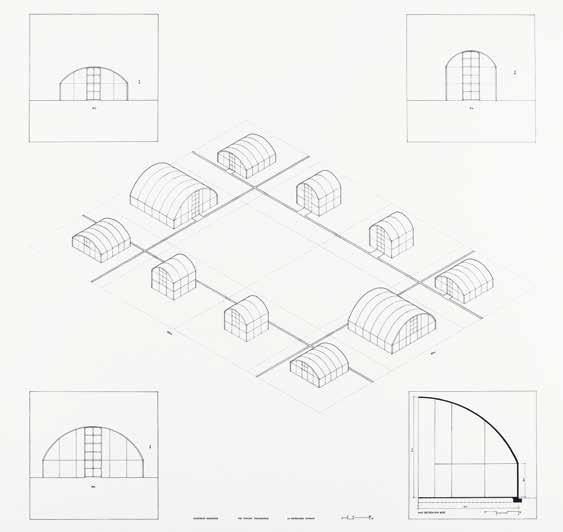
3. CLAUDE ARMSTRONG AND DONNA COHEN, AXONOMETRIC DRAWING FOR DONALD JUDD’S CONCRETE BUILDINGS AT THE CHINATI FOUNDATION, 1987. INK ON
PAPER. 42 × 42 IN. / CLAUDE ARMSTRONG Y DONNA COHEN, DIBUJO AXONOMÉTRICO PARA LOS EDIFICIOS DE HORMIGÓN DE DONALD JUDD EN LA FUNDACIÓN CHINATI, 1987.
DE CALCO. 106,7 × 106,7 CM
JULIAN ROSE: Me entusiasma participar con usted en esta conversación porque creo que los planes de Judd para estos diez edificios de hormigón representan la intersección precisa de nues -
moments in his career. But when I think about Judd first exploring what it means to install his work in a room— engaging with that concept of a continuous space defined by walls, floor,
tros intereses de investigación. Por un lado, fue la única vez en su vida que diseñó edificios desde cero para albergar obras específicas, por lo que el proyecto representa un punto de inflexión en su forma de pensar sobre los espacios de exhibición. Por otro lado, las dieciocho obras en sí —y las trece progresiones horizontales, en particular— son fundamentales para entender cómo Judd concebía su obra en relación con la superficie de la pared, y cómo pensaba la relación entre lo bidimensional y lo tridimensional en general. El concepto de la “sala” —una unidad de espacio cerrado que establece el contexto para la obra de arte que contiene— ha sido importante para ambos en la comprensión de Judd, así que me gustaría empezar por ahí. ¿Cuándo cree que la sala se volvió importante para Judd? ¿Fue cuando dejó la pared y pasó al suelo, desde sus primeras pinturas y relieves hasta sus primeras obras exentas? ¿O fue más tarde, cuando volvió a la pared con sus pilas y progresiones?
ERICA COOKE: La literatura general sobre Judd a menudo intenta encontrar obras “de origen” que definan momentos de transición en su carrera. Pero
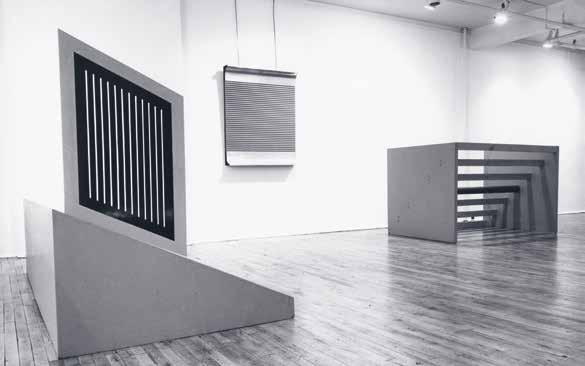
and ceiling extending along horizontal and vertical axes—what comes to mind is more of a constellation of objects as seen in Judd’s solo exhibition at Green Gallery, in 1963, when he installed a combination of floor and wall-bound works [figs. 1, 2].
JR: What was it about that show in particular?
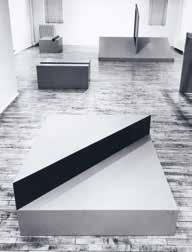
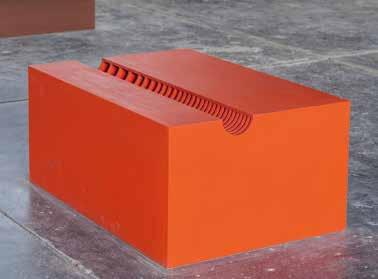
EC: To begin with, the extraordinary spatial complexity of several of the objects themselves. This installation included the cadmium-red box with semicircular slats subdividing its interior [fig. 4]. That work really creates tension between internal and external space because the internal divisions substantiate a space within a space, raising the question of whether an object can be both container and contained.
It’s shown next to what we could call one of Judd’s first “reliefs,” where he has attached curved galvanized steel to the top and bottom edges of a painted plywood rectangle [fig. 5]. Judd claimed that he resorted to these materials after he had attempted, but failed, to suitably curve the edges of a canvas. With untitled (1961), he’s asking, What does it mean when an object is affixed to the wall, but also appears to project off the wall and enter space?
Then, also hanging on the wall, there are three woodblocks that Judd had used to make prints—which were not themselves on view. Many people don’t know that these blocks were included in the show because they were not photographed, but I think they made a crucial conceptual contribution to this constellation I’m describing [fig. 7]. They are very much about the notion of sequential disclosure:
cuando pienso en Judd explorando por primera vez lo que significa instalar su obra en una sala —interactuando con ese concepto de un espacio continuo definido por paredes, suelo y techo que se extiende a lo largo de ejes horizontales y verticales—, lo que me viene a la mente es más una constelación de objetos como se ve en su exposición individual en la Green Gallery, en 1963, cuando instaló una combinación de obras en el suelo y en la pared [figs. 1, 2].
JR: ¿Qué tenía de especial esa exposición?
EC: Para empezar, la extraordinaria complejidad espacial de varios de los objetos en sí. Esta instalación incluía la caja de color rojo cadmio con listones semicirculares que subdividen su interior [fig. 4]. Esa obra realmente crea tensión entre el espacio interno y el externo, porque las divisiones internas consolidan un espacio dentro de otro espacio, planteando la pregunta de si un objeto puede ser tanto contenedor como contenido.
Se muestra junto a lo que podríamos llamar uno de los primeros “relieves” de Judd, donde ha fijado acero galvanizado curvado en los bordes superior e inferior de un rectángulo de madera contrachapada pintada [fig. 5]. Judd afirmó que recurrió a estos materiales después de haber intentado, sin éxito, curvar adecuadamente los bordes de un lienzo. Con sin título (1961), se pregunta: ¿Qué significa un objeto cuando está fijado a la pared, pero también parece proyectarse y entrar en el espacio? Luego, también colgadas en la pared, hay tres planchas de madera que Judd había utilizado para hacer grabados, los cuales no estaban en exhibición. Mucha gente no sabe que estas planchas fueron incluidas en la muestra
to experience these three works is to absorb the fact that you are seeing three distinct variants of a woodblock, or rather three different ways that the artist has carved lines into woodblocks of identical dimensions. Each is considered an individual work, but, within the space of the gallery, they seemingly exist together as a whole.
JR: That seems like an important idea to capture as we think about Judd extending his work into the room: How do these things on the wall exist independent of each other, but also together?
EC: I’m imagining myself back in time—in New York City circa 1963— visiting the Green Gallery. There is no privileged view of any given work; instead, I must move around the room and gather manifold viewpoints—not only of each artwork, but of artworks in relation to each other, and then in relation to the room itself. And my encounter with this spatial context is much more uninhibited than it would be in a traditional exhibition of painting and sculpture in 1963 because Judd made a radical decision to not place his works on pedestals or inside of vitrines or within frames. He wished for the viewer to have a much more direct encounter with the work of art.
porque no fueron fotografiadas, pero creo que hicieron una contribución conceptual crucial a esta constelación que estoy describiendo [fig. 7]. Se centran profundamente en la noción de revelación secuencial: experimentar estas tres obras es absorber el hecho de que estás viendo tres variantes distintas de una plancha de madera, o más bien, tres maneras diferentes en que el artista ha tallado líneas en bloques de madera de dimensiones idénticas. Cada una se considera una obra individual, pero, dentro del espacio de la galería, aparentemente existen juntas como un todo.
JR: Esa parece una idea importante a capturar mientras pensamos en Judd extendiendo su obra hacia el espacio de la sala: ¿Cómo existen estas cosas en la pared de manera independiente, pero también como parte de un conjunto?
EC: Me imagino a mí misma retrocediendo en el tiempo —en la ciudad de Nueva York, hacia 1963—, visitando la Green Gallery. No hay una vista privilegiada de ninguna obra en particular; en cambio, debo moverme por la sala y reunir múltiples puntos de vista, no solo de cada obra, sino de las obras entre sí, y luego en relación con la sala misma. Y mi encuentro con este contexto espacial es mucho más libre de lo que sería en una exposición tradicional de pintura y
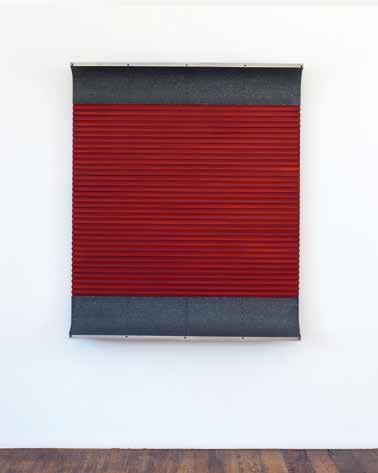
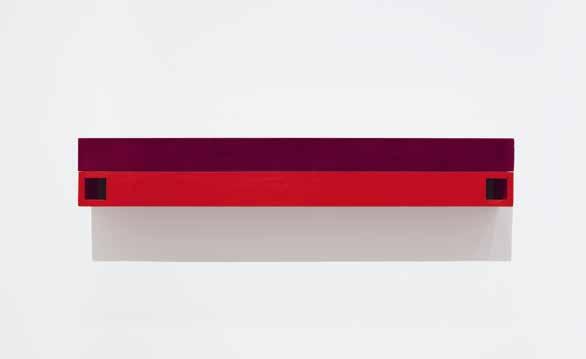
JR: The idea of the room also predisposes a mobile, embodied viewer. It’s not just that the room is an envelope of space, there’s a sense that the work is somehow activating that entire field of space. And the boundaries of the room—walls, floor, and ceiling—establish the horizons for the experience of viewing the work. As soon as Judd is moving beyond an individual object into this space of the room, architecture is no longer just in the background, the way it is when a painting hangs on the wall— the gallery architecture becomes a crucial part of how you experience the artwork.
I’ve always wondered why Judd, who by the mid-1960s was so vehemently antipainting and so insistent on making work in what he called “real space,” continued to make works like the stacks and progressions that were installed on the wall of the gallery. But you’re helping me understand why the wall would have been incredibly important precisely for Judd’s exploration of space. Late in his life, he wrote very explicitly about space as something that had to be made. It’s not just out there, an ambient medium, it’s something that must be defined by an artist or architect. And when I look at the stacks or progressions, I see space created by the interplay between work and wall. If a work is just sitting somewhere on the floor in the middle of the gallery, I think its spatial context gets a little fuzzy. Even in a visual sense, when you look at archival images of galleries during the 1960s, most of these
escultura en 1963, porque Judd tomó la decisión radical de no colocar sus obras sobre pedestales, ni dentro de vitrinas ni enmarcadas. Él deseaba que el espectador tuviera un encuentro mucho más directo con la obra de arte.
JR: La idea de la sala también presupone un espectador móvil y corporal. No se trata solo de que la habitación sea un envoltorio de espacio, hay una sensación de que la obra está activando todo ese campo espacial. Y los límites de la sala —paredes, suelo y techo— establecen los horizontes para la experiencia de ver la obra. En cuanto Judd comienza a ir más allá del objeto individual hacia este espacio de la sala, la arquitectura ya no está simplemente en el fondo, como lo está cuando una pintura cuelga en la pared: la arquitectura de la galería se convierte en una parte crucial de cómo se experimenta la obra. Siempre me he preguntado por qué Judd, quien a mediados de los años 60 era tan vehementemente antipintura y tan insistente en hacer obras en lo que él llamaba “espacio real”, seguía haciendo obras como las pilas y progresiones que se instalaban en la pared de la galería. Pero usted me está ayudando a entender por qué la pared habría sido increíblemente importante precisamente para la exploración espacial de Judd. Al final de su vida, escribió de forma muy explícita sobre el espacio como algo que debía ser creado. No es simplemente algo que existe ahí, un medio ambiental, sino algo que debe ser definido por un artista o arquitecto. Y cuando miro las pilas o progresiones, veo espacio creado por la interacción entre la obra y la pared.
Si una obra simplemente está situada en algún lugar del suelo, en medio de la galería, creo que su contexto espacial se vuelve un poco difuso. Incluso visualmente, cuando observas imágenes de archivo de galerías durante los años 60, la mayoría de estos espacios tenían paredes blancas impecables —nuevos paneles de yeso agregados cuando se convirtieron en galerías— pero suelos viejos de madera desgastados que mostraban muchas huellas de lo que había sido el espacio anteriormente. Así que, la pared funciona como un campo espacial preconfeccionado y claramente definido en el que Judd puede intervenir.
spaces had crisp white walls—this would have been new sheetrock added when they were converted to galleries—but old beat-up wood floors that showed a lot of traces of whatever the space had been used for previously. So, the wall functions as a prepackaged, clearly defined field of space that Judd can intervene in.
EC: Al hablar de la constelación de objetos de esta muestra de 1963, olvidé mencionar una de las piezas más significativas: la progresión púrpura y roja a la que Judd se refería como su “primera” progresión [fig. 6]. Para esta pieza, Judd incorporó una tubería industrial que había encontrado en la calle Canal y hablaba de las formas en que esta obra se proyectaba desde la pared. Esta noción de proyección se volvió clave en la manera en que Judd abordó la pared a lo largo de toda su obra.
JR: Ese es un término sugerente porque en los dibujos arquitectónicos e ingenieriles, “proyección” se refiere al problema de representar un objeto
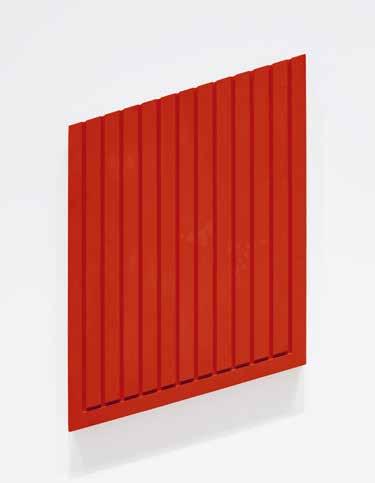
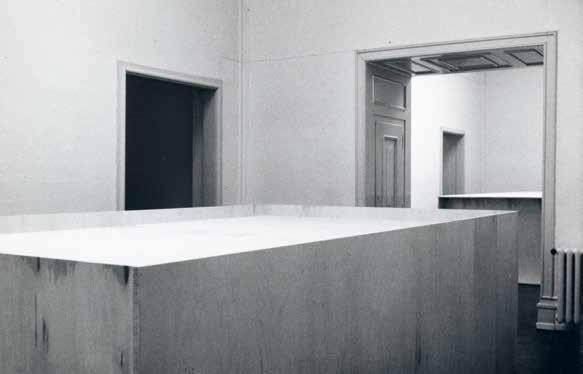
EC: When talking about the constellation of objects from this 1963 show, I forgot to mention one of the most significant pieces: the purple and red progression that Judd referred to as his “first” progression [fig. 6]. For this piece, Judd incorporated an industrial pipe that he had found on Canal Street and spoke about the ways in which this work projected from the wall. This notion of projection became key for how Judd approached the wall throughout his oeuvre.
JR: That’s a suggestive term because in architectural and engineering drawings “projection” refers to the problem of representing a three-dimensional object on a two-dimensional surface. Technically speaking, for example, a floor plan isn’t just the shape of a
tridimensional en una superficie bidimensional. Técnicamente hablando, por ejemplo, un plano de planta no es simplemente la forma de un edificio dibujada en papel, sino que es como si el edificio flotara en el aire y se proyectara esa forma hacia abajo sobre el suelo, casi como si arrojara una sombra. Así que, una vez que “proyección” entra en nuestro vocabulario, creo que la pared deja de ser simplemente un soporte físico; es un plano de referencia, una superficie que registra huellas del espacio más allá; más ampliamente, forma parte de una operación que media entre lo bidimensional y lo tridimensional.
EC: Hemos estado hablando sobre paredes, pero ya que mencionó los planos, estoy pensando en otro cambio importante en el uso del espacio por parte
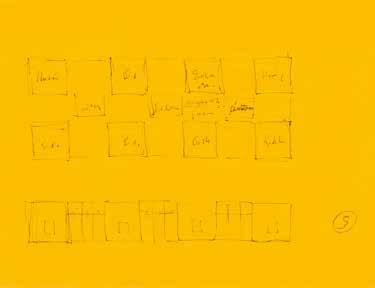
de Judd. Cuando exponía en galerías y museos en los años setenta, usaba los planos de planta de esos espacios para colocar sus obras de antemano, y a veces incluso para determinar el tamaño y la forma de las obras expuestas, como las cinco cajas de contrachapado diseñadas para ajustarse a las salas de la Kunsthalle Bern en 1976 [fig. 8]. Estaba pensando en estas exposiciones como salas completas, o secuencias de salas, que él habitaba. Me pregunto si podría relacionar cómo Judd usaba planos de planta para exposiciones temporales con su ideación para los edificios de hormigón. ¿Estaba pensando en estos edificios literalmente como salas independientes?
building drawn on a piece of paper, it’s as if the building was floating in the air and you projected that shape downward onto the ground, almost like casting a shadow. So once “projection” enters our vocabulary, I think the wall is no longer just a physical support, it’s a plane of refence, a surface that registers traces of space beyond; more broadly, it’s part of an operation that mediates between two and three dimensions.
EC: We’ve been talking about walls, but since you mentioned plans, I’m thinking of another important shift in Judd’s use of space. When he exhibited at galleries and museums in the 1970s, he would use floor plans of those spaces to place his work ahead of time and sometimes even to inform the size and shape of the exhibited works, such as the five plywood boxes designed to fit the rooms at Kunsthalle Bern in 1976 [fig. 8]. He was thinking of these exhibitions as whole rooms, or sequences of rooms, that he was inhabiting. I wonder if you could relate how Judd made use of floor plans for temporary exhibitions with his ideation for the concrete buildings? Was he thinking about these buildings as literally freestanding rooms?
JR: That’s an interesting question. You might expect Judd to move from New York City to Marfa and go nuts— within general constraints of logistics and budget, he had a lot of freedom. He could have started designing new kinds of spaces, really idiosyncratic or radically experimental configurations
JR: Es una pregunta interesante. Uno podría esperar que Judd, al mudarse de la ciudad de Nueva York a Marfa, se desatara: dentro de los límites generales de logística y presupuesto, tenía mucha libertad. Podría haber comenzado a diseñar nuevos tipos de espacios, configuraciones verdaderamente idiosincráticas o radicalmente experimentales para la instalación de su obra. En cambio, lo que se ve es que Judd se sentía muy cómodo con volúmenes rectilíneos (es decir, salas) como las unidades espaciales básicas tanto para exhibir como para vivir. Los primeros diseños de Judd para edificios construidos desde cero —que yo sepa— fueron casas con patio de principios de los años setenta, como la Casa Luján o La Catorcena [fig. 9]. Y estas eran básicamente conjuntos de salas independientes dispuestas alrededor de un patio.
De manera similar, en 1985 realizó un dibujo que llamó “un plano para un museo” [fig. 10]. Desafortunadamente, no hay información en el archivo del artista que indique si esto fue concebido para un emplazamiento específico o relacionado con otro proyecto, pero plantea
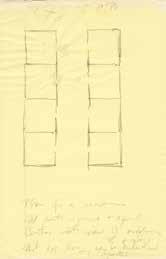
for the installation of his work. Instead, what you see is that Judd is very comfortable with rectilinear volumes (i.e., rooms) as the basic spatial units for exhibiting and living. Judd’s earliest designs for ground-up buildings— to my knowledge—were courtyard houses from the early 1970s like Casa Lujan or La Catorcena [fig. 9]. And these were basically collections of freestanding rooms arranged around a courtyard.
Similarly, he produced a drawing in 1985 that he called “a plan for a museum” [fig. 10]. Unfortunately, there’s no information in the artist’s archive of whether this was envisioned for a specific site or related to another project, but it raises a fascinating question: What would Judd’s ideal museum be like? The answer seems to be a strict grid of adjacent rooms. Here he’s drawn eight connected galleries, but because it’s a grid, this spatial concept would be infinitely extensible.
EC: It’s important to note that these adjacent rooms are not directly connected; instead of moving from one into the next, you must go back out into the corridor.
JR: Exactly. It’s not an enfilade of galleries, which has been common in museums since the eighteenth century. My suspicion is that galleries you could pass through would not really have been defined enough for Judd—they’re not self-contained units of space, more like hallway/room hybrids. I think for Judd a room has only one door.
EC: Which at Chinati is what Judd aimed to create with his concrete buildings: He wanted self-contained units of space, with one point for entry and exit. Even when he included living spaces in some of these buildings, he did not create an adjacent room to the exhibition space; instead, he stacked the living space above the exhibition space, so one room above the other. And if you have two doors in a room, you have one less complete wall. While Judd went through various iterations of placing artworks in these concrete buildings, he seems to have always imagined artwork on three walls, one per wall.
JR: Are there any precedents for that in his previous exhibition history?
EC: I’m thinking of Judd’s show at Leo Castelli’s eponymous gallery in 1971 when he installed galvanized iron
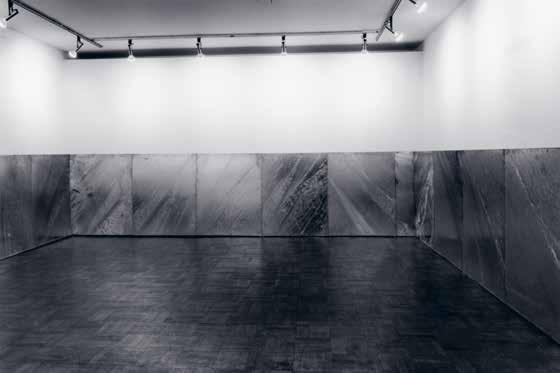
una pregunta fascinante: ¿Cómo sería el museo ideal de Judd? La respuesta parece ser una estricta cuadrícula de salas adyacentes. Aquí ha dibujado ocho galerías conectadas, pero dado que es una cuadrícula, este concepto espacial sería infinitamente extensible.
EC: Es importante señalar que estas salas adyacentes no están conectadas directamente; en lugar de pasar de una a otra, hay que salir nuevamente al pasillo.
JR: Exactamente. No es una enfilade de galerías, como ha sido común en los museos desde el siglo XVIII. Sospecho que las galerías por las que se puede pasar no habrían estado lo suficientemente definidas para Judd, no son unidades espaciales autosuficientes, sino más bien híbridos entre pasillo y sala. Creo que para Judd, una sala solo tiene una puerta.
EC: Es precisamente lo que Judd intentaba crear en Chinati con sus edificios de hormigón: quería unidades de espacio autónomas, con un solo punto de entrada y salida. Incluso cuando incluía espacios habitables en algunos de estos edificios, no creaba una habitación adyacente al espacio de exposición; en su lugar, apilaba el espacio habitable sobre el espacio de exposición, una habitación encima de la otra. Y si tienes dos puertas en una sala, pierdes una pared completa. Aunque Judd pasó por varias repeticiones al ubicar obras en estos edificios de hormigón, parece que siempre imaginó obras de arte en tres paredes, una por pared.
panels on three sides of the gallery to effectively embrace the room [fig. 11]. When asked if these could be considered “murals,” he answered: “No, it’s a wall environment.” That term was not a given in the 1970s; no artist was saying, “I’m creating wall environments.” But of course, Judd—who rejected “sculpture” in favor of his own term “specific object”—would likewise reject “murals” in favor of “wall environments” because “mural” came with historical baggage. And murals are pictorial and flat, while Judd strived for three dimensions—three dimensions that his objects possessed when seen in relation to the wall.
JR: That’s brilliant because it emphasizes that the room is a three-dimensional matrix of space. If you only activate a corner, or two adjacent walls—or, God forbid, only one wall—your intervention is not truly spatial. The viewer needs to feel enveloped, which requires work on three walls.
EC: We seem to agree that Judd conceived of the concrete buildings as a series of freestanding rooms, with “room” being understood here in the sense we’ve been defining it: a self-contained unit of clearly defined space, analogous to what he encountered at Green Gallery or Castelli or Kunsthalle Bern, or what he sketched in that museum plan from 1985.
JR: And I think that helps explain why Judd ran into problems when he
JR: ¿Hay precedentes de eso en su historial expositivo?
EC: Pienso en la exposición de Judd en la galería epónima de Leo Castelli en 1971, cuando instaló paneles de hierro galvanizado en tres lados de la galería para, efectivamente, abrazar la sala [fig. 11]. Cuando le preguntaron si esas obras podían considerarse “murales”, respondió: “No, es un entorno de pared”. Ese término no era habitual en los años setenta; ningún artista decía: “Estoy creando entornos de pared”. Pero, por supuesto, Judd —quien rechazó el término “escultura” en favor de su propio término “objeto específico”— también rechazaría “murales” en favor de “entornos de pared” porque “mural” arrastra un bagaje histórico. Y los murales son pictóricos y planos, mientras que Judd aspiraba a las tres dimensiones, tres dimensiones que sus objetos adquirían al ser vistos en relación con la pared.
JR: Eso es brillante porque subraya que la sala es una matriz tridimensional de espacio. Si solo activas una esquina, o dos paredes adyacentes —o, Dios no lo quiera, solo una pared— tu intervención no es verdaderamente espacial. El espectador necesita sentirse envuelto, lo cual requiere intervención en tres paredes.
EC: Parece que estamos de acuerdo en que Judd concibió los edificios de hormigón como una serie de salas independientes, entendiendo “sala” en el sentido que venimos definiendo: una unidad
moved from their design to their construction. He had essentially finished the design by the spring of 1987, and he made sporadic efforts over the following two years to get them built. The process was extremely tortured, and there’s no need to recount all the details here—in 2016 the scholar Richard Gachot put together an extraordinarily complete history of the concrete buildings, including a catalog of all the extant drawings of them by Judd and others, which was published in Volume 21 of this newsletter. For our purposes, I think it’s enough to simply say that Judd was not able to build these structures as he envisioned them.
EC: What was the problem?
JR: I would describe it as a problem of geometry versus structure. From the beginning, Judd wanted the roofs of these buildings to be barrel vaults. That’s a kind of elemental architectural form—just a single curve extruded along the length of the building—that Judd was obsessed with. I’ve tried to trace the origins of this obsession elsewhere in my writing on Judd’s architecture but suffice it to say that it combined a kind of classical simplicity—it’s common in both Roman and Renaissance architecture—with vernacular associations, because metal versions are very common in military, industrial, and agricultural buildings. In fact, a Quonset hut is basically a barrel vault placed directly on the ground, and it’s likely that Judd lived in one while he was stationed at Kimpo Air Base in Korea. He may well have even built some or supervised their construction. We’ll never know exactly what Judd did during his time in the military—he told different people different things over the years, and his military personnel file was sadly among those destroyed in a major fire at the National Personnel Records Center in St. Louis in 1973—but it’s clear from photos of Kimpo that the Quonset hut was one of the primary building types used there [fig. 12].
Judd’s most effective use of the barrel vault is in the Artillery Sheds at Chinati. Structurally speaking, a Quonset hut is like a tent, in that it has a curved steel superstructure that gets covered with corrugated metal sheets. In other words, the structure is separate from the spatial enclosure. For the Artillery Sheds, Judd used metal sheet that’s corrugated in both directions, and the vertical corrugations are very deep, which means that the vault is self-supporting and there are
autosuficiente de espacio claramente definido, análoga a lo que encontró en la Green Gallery, o en Castelli o en la Kunsthalle Bern, o lo que bosquejó en aquel plano del museo de 1985.
JR: Y creo que eso ayuda a explicar por qué Judd se topó con problemas cuando pasó del diseño a la construcción. Básicamente había terminado el diseño en la primavera de 1987 e hizo esfuerzos esporádicos durante los dos años siguientes para llevarlo a cabo. El proceso fue extremadamente tortuoso, y no hace falta relatar aquí todos los detalles: en 2016, el académico Richard Gachot elaboró una historia extraordinariamente completa de los edificios de
no internal supports required. Most vaults produce lateral thrust—i.e. the weight of gravity tends to push their bases outward, which is why you see all those flying buttresses on Gothic cathedrals—but the steel Judd used for the Artillery Shed roofs is so light, relatively speaking, that the bottom of the vaults could just be tucked inside the existing roof parapet without placing excessive strain on the building below. All of which is to say that for the Artillery Sheds, Judd came up with this incredibly elegant solution, where a simple geometry functions perfectly as an architectural structure when built from his chosen material. The concrete buildings are entirely
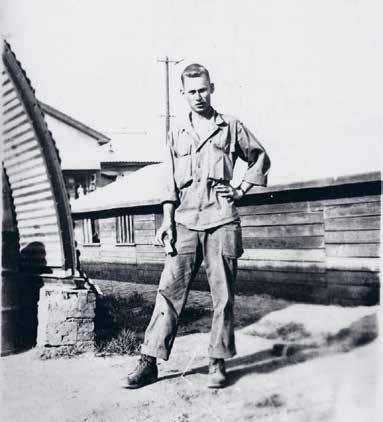
hormigón, incluyendo un catálogo de todos los dibujos existentes de Judd y otros, que fue publicada en el Volumen 21 de esta publicación informativa. Para nuestros fines, creo que basta con decir que Judd no logró construir estas estructuras tal como las había concebido.
EC: ¿Cuál fue el problema?
JR: Yo lo describiría como un problema de geometría versus estructura. Desde el principio, Judd quería que los techos de estos edificios fueran bóvedas de cañón. Esa es una forma arquitectónica elemental —una sola curva extruida a lo largo del edificio— que obsesionaba a Judd. He intentado rastrear los orígenes de esa obsesión en otros escritos míos sobre la arquitectura de Judd, pero
basta con decir que combinaba una especie de simplicidad clásica —es común en la arquitectura romana y renacentista— con asociaciones vernáculas, ya que las versiones metálicas son muy comunes en edificios militares, industriales y agrícolas.
De hecho, una cabaña Quonset es básicamente una bóveda de cañón colocada directamente sobre el suelo, y es probable que Judd viviera en una mientras estaba destinado en la base aérea de Gimpo, en Corea. Incluso pudo haber construido algunas o supervisado su construcción. Nunca sabremos exactamente qué hizo Judd durante su tiempo en el ejército —les contó cosas distintas a distintas personas a lo largo de los años, y su archivo de personal militar fue, lamentablemente, uno de los que se perdieron en un gran incendio en el Centro Nacional de Registros de Personal en St. Louis en 1973—, pero está claro, por las fotos de Gimpo, que la cabaña Quonset era uno de los tipos de construcción principales allí [fig. 12].
different [fig. 13]. A barrel vault made from concrete is going to produce a huge amount of lateral thrust. Judd could have solved this problem by placing the vault directly on the ground, especially if he was willing to tweak the geometry. There’s a shape called a parabolic vault that eliminates lateral thrust by transferring all the gravity load directly downward. But it doesn’t have the simplicity Judd was looking for—as its name implies, it’s shaped like a parabola, and Judd wanted his vault to be a section of a circle. We know he studied a design for these buildings that used a parabolic vault, and he rejected it.
EC: And either way, if the vault was placed on the ground, it would not
El uso más eficaz que hizo Judd de la bóveda de cañón fue en los Cobertizos de Artillería en Chinati. Estructuralmente hablando, una cabaña Quonset es como una tienda de campaña, en el sentido de que tiene una superestructura de acero curvada que se recubre con láminas metálicas acanaladas. En otras palabras, la estructura es independiente del cerramiento espacial. Para los Cobertizos de Artillería, Judd utilizó lámina metálica acanalada en ambas direcciones, y las acanaladuras verticales son muy profundas, lo que significa que la bóveda es autoportante y no requiere soportes internos. La mayoría de las bóvedas producen empuje lateral —es decir, el peso de la gravedad tiende a empujar sus bases hacia afuera, razón por la cual se ven todos esos arbotantes en las catedrales góticas—, pero el acero que Judd usó para los techos de los Cobertizos de Artillería es tan liviano, relativamente hablando, que las bases de las bóvedas pudieron simplemente encajarse dentro del parapeto existente del techo sin ejercer una carga excesiva sobre el edificio inferior. Todo lo cual quiere decir que, para los Cobertizos de Artillería, Judd ideó una solución increíblemente elegante, donde una geometría simple funciona perfectamente como estructura arquitectónica al construirse con el material elegido por él. Los edificios de hormigón son completamente diferentes [fig. 13]. Una bóveda de cañón hecha de hormigón va a generar una enorme cantidad de empuje lateral. Judd podría haber resuelto ese problema colocando la bóveda directamente sobre el suelo, especialmente si estuviera dispuesto a ajustar la geome -
really be a room, would it? There would not be vertical walls on two sides of the building.
JR: Exactly. So, the final design Judd produced shows each of these buildings as a thin circular concrete vault resting on top of equally thin vertical concrete walls, with no added reinforcement in the corner where the two meet, despite that fact that the weight of the concrete roof means there will be tremendous force concentrated at that corner joint. From an engineering perspective, that’s a physical impossibility. You might as well be looking at an M. C. Escher drawing.
EC: Are you saying that Judd’s sketches for these buildings somehow don’t constitute architecture?
JR: Not quite. And I also want to be clear that this isn’t an issue of expertise. So many opportunities for productive dialogue are lost because egos get involved and an architect says, “Artists don’t know how to build anything,” or an artist says, “Architects only think about function.”
I think these concrete buildings show us something fundamental about Judd’s priorities. This is almost an epistemological issue, a question of what conceptual framework he thought was best for looking at the world. Judd was deeply interested in space, proportion, and geometry, but I think he had zero interest in structure. I see this as similar to Judd’s feelings about representation. It’s not that the project of representing the world on canvas is inherently uninteresting or has never produced great art, but Judd associated it with what he called the “European tradition,” and he firmly believed it was a dead end for contemporary artists. He told an Art in America interviewer in the mid-1970s, “I have no use for it … I’m in no way interested in any kind of representation.” If someone had thought to ask, I bet he would have said something similar about structural engineering.
And I should just add preemptively here that, yes, Judd famously gave a rave review in Arts Magazine to the 1964 MoMA exhibition 20th Century Engineering . That comes up a lot in conversations about Judd and architecture simply because it’s one of the relatively few texts he devoted to buildings. I would just say I think he liked how those engineering projects looked; he wasn’t praising their technical achievements as such. In his
tría. Existe una forma llamada bóveda parabólica que elimina el empuje lateral al transferir toda la carga de gravedad directamente hacia abajo. Pero no tiene la simplicidad que Judd buscaba; como su nombre indica, tiene forma de parábola, y Judd quería que su bóveda fuera un segmento de un círculo. Sabemos que estudió un diseño para estos edificios que utilizaba una bóveda parabólica, y lo rechazó.
EC: En cualquier caso, si la bóveda estuviera colocada directamente sobre el suelo, no sería realmente una sala, ¿verdad? No habría paredes verticales en dos lados del edificio.
JR: Exactamente. Así que el diseño final que Judd produjo muestra cada uno de estos edificios como una bóveda de hormigón delgada y circular descansando sobre muros verticales de hor -
own words: “Much of the engineering [in the exhibition] is better architecture than most architecture.”
EC: I understand why Judd rejected parabolic arches, but I do not understand his insistence on concrete for these buildings. Why not adobe or wood or a material more suited to this type of construction and continuous with historical materials used at Fort D. A. Russell?
JR: I suspect Judd wanted concrete for its surface qualities—its lack of visible texture and for its overall seamlessness. Now that you mention it, I can’t ever remember seeing a stack or a progression that Judd installed on a brick wall, or a surface with any kind of texture.
Whatever his interest in concrete, it wasn’t the kind of “truth to materials”
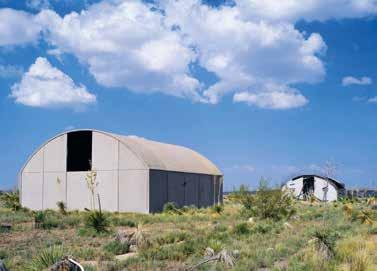
migón igualmente delgados, sin ningún refuerzo adicional en la esquina donde se encuentran, a pesar del hecho de que el peso del techo de hormigón genera una fuerza tremenda concentrada en esa unión. Desde el punto de vista de la ingeniería, eso es una imposibilidad física. Es como estar viendo un dibujo de M. C. Escher.
EC: ¿Está diciendo que los bocetos de Judd para estos edificios no constituyen arquitectura?
JR: No exactamente. Y también quiero dejar claro que esto no se trata de un tema de conocimientos técnicos. Se pierden muchas oportunidades de diálogo productivo cuando los egos se interponen y un arquitecto dice: “Los artistas no saben construir nada”, o un artista dice: “Los arquitectos solo piensan en la función”.
Creo que estos edificios de hormigón nos revelan algo fundamental sobre las
prioridades de Judd. Es casi una cuestión epistemológica, una pregunta sobre qué marco conceptual consideraba más adecuado para mirar el mundo. Judd estaba profundamente interesado en el espacio, la proporción y la geometría, pero creo que no tenía ningún interés en la estructura. Lo veo como algo similar a sus sentimientos sobre la representación. No es que el proyecto de representar el mundo en un lienzo sea inherentemente poco interesante o que nunca haya producido gran arte, sino que Judd lo asociaba con lo que él llamaba la “tradición europea”, y creía firmemente que era un callejón sin salida para los artistas contemporáneos. Le dijo a un entrevistador de Art in America a mediados de los años setenta: “No me sirve de nada... No estoy interesado en ningún tipo de representación”. Si alguien le hubiera preguntado, apuesto a que habría dicho algo similar sobre la ingeniería estructural. Y debería añadir preventivamente aquí que, sí, Judd elogió notablemente la exposición del MoMA de 1964 20th Century Engineering [La ingeniería del siglo XX] en Arts Magazine . Esa referencia aparece mucho en conversaciones sobre Judd y la arquitectura, simplemente porque es uno de los pocos textos que dedicó a los edificios. Yo solo diría que creo que le gustaba cómo se veían esos proyectos de ingeniería; no estaba elogiando sus logros técnicos como tales. En sus propias palabras: “Gran parte de la ingeniería [en la exposición] es mejor arquitectura que la mayoría de la arquitectura”.
attitude, coming from Constructivism, that is sometimes associated with Minimalism. There is one of these buildings currently standing with the vault partially complete, and my understanding is that so much rebar was required to make the geometry work that it’s less a cast concrete roof than a woven steel lattice with a concrete appliqué.
But speaking of surfaces, I want to make a broader point too. Judd detested postmodern architecture, which is all about decorative surfaces unrelated to their interior use; instead, he claimed to want buildings where the exterior genuinely expressed the interior volume of space. And it’s just occurring to me now, for the first time, that that’s kind of an odd thing to say. When I first read that statement, my thought was, Oh yeah, that’s the old idea of structural transparency where the work should reveal its own logic of construction—a core principle
EC: Entiendo por qué Judd rechazó los arcos parabólicos, pero no entiendo su insistencia en usar hormigón para estos edificios. ¿Por qué no adobe, madera u otro material más adecuado para este tipo de construcción y que tuviera continuidad con los materiales históricos utilizados en el Fuerte D. A. Russell?
JR: Sospecho que Judd quería hormigón por sus cualidades superficiales, por su falta de textura visible y por su continuidad general, sin juntas. Ahora que lo menciona, no recuerdo haber visto nunca una pila o una progresión instalada por Judd sobre una pared de ladrillo o sobre una superficie con algún tipo de textura. Fuera cual fuera su interés por el hormigón, no era el tipo de actitud de “verdad a los materiales”, proveniente del constructivismo, que a veces se asocia con el minimalismo. Actualmente hay uno de estos edificios en pie con la bóveda parcialmente completada, y tengo entendido que se necesitaron tantas barras de refuerzo para que la geometría
of modernism. But Judd’s statement has nothing to do with structure—it’s purely about geometry. He couldn’t care less about how the form is put together or how it stands up if what you see on the outside is what you get on the inside in terms of space
EC: Maybe there’s an analogy to the way Judd used mathematics in the progressions themselves. Many people think of Judd’s progressions in terms of the three different types of mathematical sequences that he used: double numbers, inverse numbers, and Fibonacci numbers [fig. 14]. But Judd was not invested in the mathematics in and of itself; he was interested in it as the default geometry available to him. These sequences existed like readymades for Judd.
funcionara que no se trata tanto de un techo de hormigón vaciado como de una celosía de acero tejido con una aplicación de hormigón. Pero, hablando de superficies, también quiero hacer una observación más amplia. Judd detestaba la arquitectura posmoderna, que gira en torno a superficies decorativas sin relación con el uso interior; en cambio, él afirmaba querer edificios donde el exterior expresara genuinamente el volumen interior del espacio. Y se me acaba de ocurrir ahora, por primera vez, que eso es algo curioso de decir. La primera vez que leí esa afirmación, pensé: Ah, claro, esa es la vieja idea de la transparencia estructural, donde la obra debe revelar su propia lógica constructiva: un principio central del modernismo. Pero la declaración de Judd no tiene nada que ver
But I want to get back to the works that would have been inside these buildings. Do you see anything in Judd’s designs that suggest how he thought about the ideal viewing conditions for, say, the thirteen progressions?
EC: Judd’s “first” progression from 1963 was a very small work—of a more domestic scale at approximately thirty-three inches long and five inches in height and width. For the majority of his Chinati progressions, Judd chose the length of twenty-one feet— which is the longest length that he ever used for progressions—so they are truly large-scale works. They’re going to require, if not a custom-built exhibition space, at least an unusually large wall. We also know that Judd had a tendency for creating
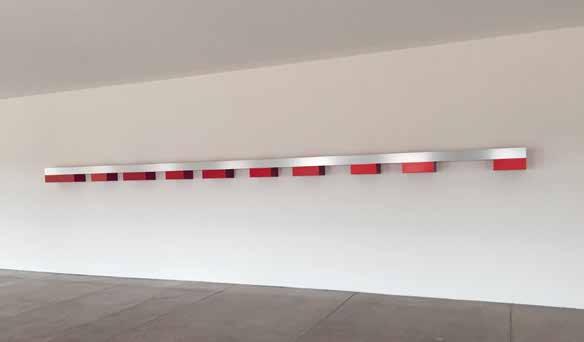
He was not applying mathematics to resolve a problem but rather absorbing mathematics to produce distinct patterns for his objects. The very act of Judd resisting the desire to invent his own sequences—and instead applying “found” mathematics—tells us a lot about his ethos. Why invent more when so much already exists that is ready for use?
JR: I think that’s a great comparison. Whether we’re talking about the rectangular prism for the room or the extruded semicircle of the barrel vault, I think Judd found certain preexisting spatial configurations out in the world that he was happy to adapt to his own work. It was only when he tried to build from the ground up, and suddenly had to design both structure and space simultaneously, that he got into trouble.
con la estructura: se trata puramente de geometría. Le importa un bledo cómo está hecha la forma o cómo se sostiene si lo que se ve por fuera es lo que hay por dentro en términos de espacio. Le resultaba indiferente cómo se ensamblaba la forma o cómo se sostenía, siempre y cuando lo que se viera por fuera, fuesa lo mismo que se obtenía por dentro en términos de espacio
EC: Tal vez haya una analogía con la forma en que Judd usaba las matemáticas en las progresiones mismas. Mucha gente piensa en las progresiones de Judd en términos de los tres tipos distintos de secuencias matemáticas que utilizó: números dobles, números inversos y números de Fibonacci [fig. 14]. Pero Judd no estaba interesado en las matemáticas por sí mismas; le interesaban como la geometría predeterminada disponible para él. Estas secuencias exis -
tían como readymades para Judd. No estaba aplicando las matemáticas para resolver un problema, sino absorbiéndolas para producir patrones distintivos para sus objetos. El mero hecho de que Judd resistiera el deseo de inventar sus propias secuencias —y que en su lugar aplicara matemáticas “encontradas”— nos dice mucho sobre su ética. ¿Para qué inventar más si ya existe tanto preparado para usarse?
JR: Creo que es una gran comparación. Ya sea que estemos hablando del prisma rectangular de la sala o del semicírculo extruido de la bóveda de cañón, creo que Judd encontró ciertas configuraciones espaciales preexistentes en el mundo que estaba feliz de adaptar a su propia obra. Solo cuando intentó construir desde cero —y de repente tuvo que diseñar tanto la estructura como el espacio al mismo tiempo— fue cuando empezó a tener problemas. Pero quiero volver a las obras que habrían estado dentro de estos edificios. ¿Ve algo en los diseños de Judd que sugiera cómo pensaba sobre las condiciones ideales de visualización para, digamos, las trece progresiones?
correspondences in his large-scale works. For example, his “topographic objects”—a term coined by the scholar James Lawrence—are large-scale, predominantly outdoor works with nested walls in which the outer wall of the object is leveled with the horizon line and the inner wall is aligned with the slope of the land. This idea of walls within a singular form relating to each other, one via the topography of the land and the other by a kind of abstract and universal orientation of the horizon line, leads me to this question: Could we think about a similar correspondence between the progressions and the concrete buildings?
This correspondence is not site specific in the sense that the term is often used—for example, Richard Serra’s indelible relationship between site and object when he wrote, “To remove
EC: La “primera” progresión de Judd, de 1963, era una obra muy pequeña, de una escala más doméstica, de aproximadamente ochenta y cuatro centímetros de largo por trece de alto y ancho. Para la mayoría de las progresiones en Chinati, Judd eligió una longitud de seis metros y medio —la longitud más extensa que jamás usó para estas obras—, por lo que son verdaderamente de gran escala. Van a requerir, si no un espacio expositivo hecho a medida, al menos una pared inusualmente grande. También sabemos que Judd tenía una tendencia a crear correspondencias en sus obras de gran escala. Por ejemplo, sus “objetos topográficos” —un término acuñado por el académico James Lawrence— son obras de gran escala, predominantemente al aire libre, con muros anidados en los que el muro exterior del objeto está nivelado con la línea del horizonte y el muro interior está alineado con la pendiente del terreno. Esta idea de muros dentro de una forma singular que se relacionan entre sí —uno a través de la topografía del terreno y el otro mediante una orientación abstracta y universal hacia la línea del horizonte— me lleva a esta pregunta: ¿Podríamos pensar en una correspondencia similar entre las progresiones y los edificios de hormigón? Esta correspondencia no es site-specific en el sentido en que a menudo se utiliza el término: por ejemplo, en la relación indeleble entre emplazamiento y objeto
the work is to destroy the work.” Judd considers the site as both contingent and fixed, which the scholar and curator Jeffrey Weiss explored in his thorough essay Sense of Site for the 2020 MoMA exhibition catalogue. So, we must ask, what kind of permanence would Judd have been anticipating when thinking about siting these progressions within the concrete buildings?
Think of Judd’s first permanent piece—and his first topographic object—that he placed outdoors on the grounds of the residence for Joseph and Emily Pulitzer in 1971 [fig. 15]. Although this 1971 piece is unique, Judd took this principle of nested walls—one leveled and one sloped—and repeated it elsewhere such as outdoors for Skulptur Projekte Münster in 1977 [fig. 16]. Could it be said then that the Pulitzer piece is iterative? That it exists both there and elsewhere, since Judd adapted this principle for topographic objects in other sites?
JR: That example is very helpful for me in thinking about the Chinati Foundation. We know that “permanence” was a foundational concept for Judd—part of his explicit rationale for Chinati was that artworks could not be experienced properly in temporary exhibitions. But it’s counterintuitive to think about these thirteen progressions as “permanent” since they were made with no site in mind. What if part of Judd’s version of permanence is what you’re calling the correspondence? If the reciprocal relationship between the works and the buildings is what provides a kind of fundamental constant, perhaps Judd’s vision was always to keep iterating within that framework, experimenting with a succession of
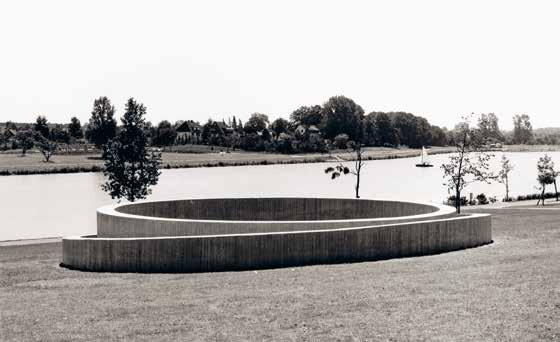
que Richard Serra expresó cuando escribió: “Quitar la obra es destruir la obra”. Judd considera el emplazamiento como algo a la vez contingente y fijo, algo que el académico y comisario de arte Jeffrey Weiss exploró en su ensayo detallado Sense of Site [El sentido del emplazamiento] para el catálogo de la exposición del MoMA en 2020. Así que debemos preguntarnos, ¿qué tipo de permanencia habría estado anticipando Judd al pensar en ubicar estas progresiones dentro de los edificios de hormigón?
Piense en la primera obra permanente de Judd —y su primer objeto topográfico— que colocó al aire libre en la residencia de Joseph y Emily Pulitzer en 1971 [fig. 15]. Aunque esta obra de 1971 es única, Judd tomó este principio de muros anidados —uno nivelado y otro inclinado— y lo repitió en otros lugares, como al aire libre para el Skulptur Projekte Münster en 1977
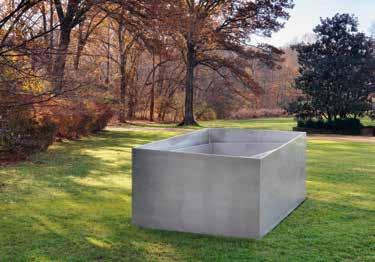
different specific installations and reinstallations.
Could it be, too, that there’s a kind of latent permanence in Judd’s work? What if there were certain spatial configurations—relationships to the wall and the floor and the space of the room—already embedded within these large-scale progressions? That may explain why Judd waited six or seven years to design rooms for them because, in his mind, the spatial parameters for these pieces were already established within the work themselves.
EC: This notion of latent permanence is fascinating. In that same essay, Weiss wrote about how Judd came back to his Münster piece ten years later. Around 1987, he asked the city of Münster whether he could expand upon his initial 1977 work with a design for three additional topographic objects (again, all concrete cylinders with nested walls). I would argue that this unrealized proposal to the city of Münster shows how Judd investigated site over time. It is difficult to say that this installation or that installation is finite, at least when Judd was alive, because of his ongoing activities in space.
And that seems suggestive in thinking of Judd’s role as an architect. What did it mean for him to truly develop a site over time? If Judd’s practice is ultimately about establishing relationships—of showing how things belong together—then there is an organic temporality to these relationships.
JR: Absolutely. We should consider Judd’s architectural practice
[fig. 16]. ¿Podría decirse entonces que la obra de los Pulitzer es una repetición? ¿Que existe tanto allí como en otros lugares, ya que Judd adaptó este principio para objetos topográficos en distintos emplazamientos?
JR: Ese ejemplo me resulta muy útil para reflexionar sobre la Fundación Chinati. Sabemos que la “permanencia” fue un concepto fundamental para Judd; una parte de su razonamiento explícito para Chinati era que las obras de arte no podían experimentarse adecuadamente en exposiciones temporales. Pero resulta contraintuitivo pensar en estas trece progresiones como “permanentes” ya que fueron hechas sin un emplazamiento específico en mente.
¿Qué pasaría si parte de la versión de permanencia de Judd fuera lo que usted llama correspondencia? Si la relación recíproca entre las obras y los edificios es lo que proporciona una especie de constante fundamental, tal vez la visión de Judd siempre fue seguir repitiendo dentro de ese marco, experimentando con una sucesión de instalaciones y reinstalaciones específicas diferentes. ¿Y si también existiera una especie de permanencia latente en la obra de Judd? ¿Qué pasaría si hubiera ciertas configuraciones espaciales —relaciones con la pared, el suelo y el espacio de la sala— ya incorporadas en estas progresiones a gran escala? Eso podría explicar por qué Judd esperó seis o siete años para diseñar salas para ellas, porque, en su mente, los parámetros espaciales de estas piezas ya estaban establecidos dentro de la propia obra.
EC: Esta noción de permanencia latente es fascinante. En ese mismo ensayo,
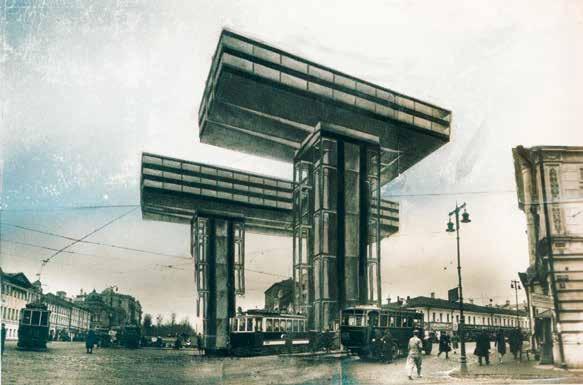
as a dynamic process of iterative configurations arrived at through experimentation. Today, I think it’s tempting to look at some of the better-known installations at Chinati as inevitable. To me, the installation of the 100 untitled works in mill aluminum in the sheds feels so close to perfect that it’s not hard to assume that Judd conceived those works specifically for that space. But when Dia initially purchased the two artillery sheds for Judd in 1979, he did not have a clear vision of what to install in these buildings; documentation from this period shows many
Weiss escribió sobre cómo Judd volvió a su obra en Münster diez años después. Alrededor de 1987, le preguntó a la ciudad de Münster si podía ampliar su obra original de 1977 con un diseño para tres objetos topográficos adicionales (nuevamente, todos cilindros de hormigón con muros anidados). Yo diría que esta propuesta no realizada a la ciudad de Münster muestra cómo Judd investigaba el emplazamiento a lo largo del tiempo. Es difícil decir que esta instalación o aquella instalación sean definitivas, al menos mientras Judd estaba vivo, debido a su actividad constante con el espacio.
experiments, including with pieces by John Chamberlain that eventually ended up in the Marfa Wool & Mohair Company building in town. It was trial and error until he arrived at the current configuration. And that’s why I think of permanence as latent, in the sense that there’s something in the work, as Judd conceives of it, that does call out for a particular condition of display—perhaps even an affinity for a certain architecture—but those qualities must be teased out; they can only be found through experimenting with different possibilities.
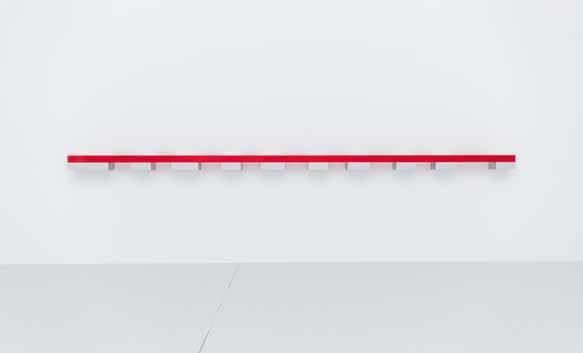
Y eso parece sugerente al pensar en el papel de Judd como arquitecto. ¿Qué significaba para él desarrollar verdaderamente un emplazamiento a lo largo del tiempo? Si la práctica artística de Judd consiste, en última instancia, en establecer relaciones —en mostrar cómo las cosas pertenecen unas con otras— entonces hay una temporalidad orgánica en esas relaciones.
JR: Totalmente. Deberíamos considerar la práctica arquitectónica de Judd como un proceso dinámico de configuraciones repetitivas logradas mediante la experimentación. Hoy en día, creo que resulta tentador ver algunas de las instalaciones más conocidas en Chinati como inevitables. Para mí, la instalación de las 100 obras sin título en aluminio en bruto en los cobertizos parece tan cercana a la perfección que no cuesta imaginar que Judd concibió esas obras específicamente para ese espacio. Pero cuando Dia adquirió inicialmente los dos cobertizos de artillería para Judd en 1979, él no tenía una visión clara de lo que iba a instalar en esos edificios; la documentación de ese periodo muestra muchos experimentos, incluyendo las obras de John Chamberlain que eventualmente terminaron en el edificio de la Marfa Wool & Mohair Company, en el pueblo. Fue un proceso de prueba y error hasta llegar a la configuración actual. Y por eso pienso en la permanencia como algo latente, en el sentido de que hay algo en la obra, tal como la concibe Judd, que sí exige una condición particular de exhibición —quizá incluso una afinidad con cierta arquitectura— pero esas cualidades deben extraerse; solo pueden encontrarse a través de la experimentación con distintas posibilidades.
EC: Pero entonces, ¿cómo deberíamos pensar los edificios de hormigón, en los que Judd nunca pudo llevar a cabo ese proceso?
JR: De alguna manera, creo que las dos estructuras de hormigón parcialmente construidas que actualmente se encuentran en los terrenos de Chinati son pistas falsas. Como traté de dejar claro, no creo que Judd haya llegado nunca a una idea arquitectónica viable, dadas las combinaciones de materiales y geometrías que quería. El hecho de que una de las estructuras existentes tenga techo se debe, una vez más, en gran parte al uso heroico del refuerzo de acero. Podrían “terminarse” ahora con otros materiales o con la ayuda de ingeniería más sofisticada —casi cualquier cosa puede construirse con suficiente tiempo y dinero— pero no creo que eso constituya una realización fiel de la visión de Judd.
EC: But then how should we think about the concrete buildings, in which Judd was never able to carry out that process?
JR: In a way, I think the two partially built concrete structures currently standing on Chinati’s grounds are red herrings. As I tried to make clear, I don’t think Judd ever arrived at a workable architectural idea given the combination of materials and geometry he wanted. The fact that one of the existing structures does have a roof is, again, thanks largely to the heroic use of steel reinforcement. They could be “finished” now with other materials or with the aid of more sophisticated engineering—almost anything can be built with enough time and money—but I don’t think that would constitute fulfilling Judd’s vision. I’m not even sure it’s appropriate to describe the buildings as “unfinished.” That implies a work that was only left incomplete because of some external circumstance, like the artist’s death. I think it’s more accurate to think of these buildings as a kind of speculative architecture, a spatial thought experiment. If you’ll allow a moment of polemics: In 1924, El Lissitzky, who we know Judd admired, drew an extraordinary design for what he called a horizontal skyscraper [fig. 17]. It raised provocative questions about the evolution of urban space, about new modes of collective inhabitation produced by large buildings, about the future of architecture—but no one would ever call it “Lissitzky’s unfinished skyscraper project.”
EC: That still leaves practical questions about the future of the works Judd considered installing in the buildings. Given that the stated mission of the Chinati Foundation is the permanent installation of large-scale artworks, where does that leave us with these thirteen progressions, three stacks, and U and V channel pieces? They belong to the Marfa project that Judd initiated with the Dia Art Foundation in 1979, but they don’t have a permanent context within the architecture or landscape of the Chinati Foundation. For example, the progressions have been exhibited at Chinati in 2016 in one of the barracks reserved for temporary exhibitions. They have also been loaned—one of these progressions was included in the 2020 retrospective Judd at the Museum of Modern Art, New York; and seven were included in the 2023 exhibition
Ni siquiera estoy seguro de que sea apropiado describir los edificios como “inacabados”. Eso implicaría una obra que quedó incompleta solo por alguna circunstancia externa, como la muerte del artista. Creo que es más preciso pensar en estos edificios como una especie de arquitectura especulativa, un experimento de pensamiento espacial. Si me permite un momento de polémica: en 1924, El Lissitzky, a quien sabemos que Judd admiraba, dibujó un diseño extraordinario para lo que llamó un rascacielos horizontal [fig. 17]. Planteaba preguntas provocadoras sobre la evolución del espacio urbano, sobre nuevos modos de habitabilidad colectiva producidos por grandes edificios, sobre el futuro de la arquitectura, pero nadie lo llamaría “el proyecto inacabado de rascacielos de Lissitzky”.
Dan Flavin | Donald Judd: Doha at Qatar Museums [figs. 18, 20]. Likewise, the untitled (1980) and the untitled (1982) U and V channel pieces have been exhibited in the Ice Plant in downtown Marfa in 2016 [fig. 19]. This group of eighteen works are now out in the world, so to speak, and garnering distinct exhibition histories that situate them apart from Chinati. I believe that it makes sense to exhibit these works at Chinati and elsewhere; in essence, to maintain Judd’s sense of adaptability and contingency.
JR: Agreed. For all the reasons that we discussed, I have trouble envisioning a definitive solution to the placement of these works, whether
Doha en los Museos de Qatar en 2023 [figs. 18, 20]. De manera similar, las obras untitled (1980) [sin título] y untitled (1982) [sin título] de los canales U y V se exhibieron en la Ice Plant en el centro de Marfa en 2016 [fig. 19]. Este grupo de dieciocho obras está ahora, por así decirlo, en el mundo, y acumulando historias de exhibición que las sitúan fuera de Chinati.
Creo que tiene sentido exhibir estas obras tanto en Chinati como en otros lugares; en esencia, mantener el sentido de adaptabilidad y contingencia de Judd.
JR: Estoy de acuerdo. Por todas las razones que discutimos, me cuesta imaginar una solución definitiva para la ubicación de estas obras, ya sea dentro de una versión reestructurada y recién construida de los edificios de
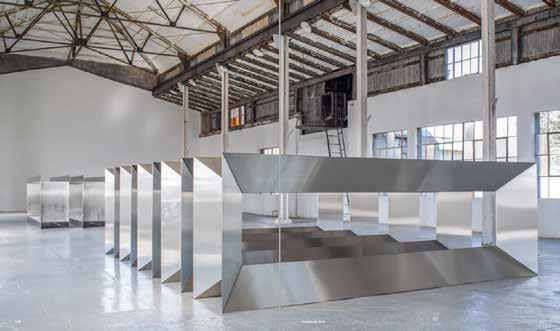
EC: Eso todavía deja preguntas prácticas sobre el futuro de las obras que Judd consideraba instalar en esos edificios.
Dado que la misión declarada de la Fundación Chinati es la instalación permanente de obras de arte a gran escala, ¿dónde deja eso a estas trece progresiones, tres pilas y las piezas denominadas canal en U y canal en V? Estas pertenecen al proyecto de Marfa que Judd inició con la Dia Art Foundation en 1979, pero no tienen un contexto permanente dentro de la arquitectura o el paisaje de la Fundación Chinati.
Por ejemplo, las progresiones se exhibieron en Chinati en 2016 en uno de los barracones reservados para exposiciones temporales. También han sido prestadas: una de estas progresiones se incluyó en la retrospectiva Judd de 2020 en el Museo de Arte Moderno de Nueva York; y siete se incluyeron en la exposición Dan Flavin | Donald Judd:
that would be inside of a reengineered and newly built version of the concrete buildings, or anywhere else. I think a strong argument can be made for continuing to exhibit these eighteen works in different configurations. To keep iterating, to keep generating surprises and disrupting viewers expectations, is probably the closest thing to fulfilling Judd’s vision.
Erica Cooke is a historian and curator of modern and contemporary art who worked on the 2020 retrospective Judd at the Museum of Modern Art, New York. She is currently curator for the collection of His Excellency Sheikh
Qatar.
Julian Rose is a historian and critic of art and architecture His latest book, Building Culture (2024), explores the architecture of art museums.
hormigón, o en cualquier otro lugar. Creo que se puede argumentar sólidamente a favor de seguir exhibiendo estas dieciocho obras en diferentes configuraciones. Continuar repitiendo, seguir generando sorpresas y romper las expectativas del espectador es, probablemente, lo más cercano a cumplir con la visión de Judd.
Erica Cooke es historiadora y comisaria de arte moderno y contemporáneo. Participó en la retrospectiva Judd de 2020 en el Museo de Arte Moderno de Nueva York. Actualmente es comisaria de la colección de Su Excelencia el Jeque Jassim Bin Abdulaziz Al-Thani, en Catar.
Julian Rose es historiador y crítico de arte y arquitectura. Su libro más reciente, Building Culture [Construir la cultura] (2024), explora la arquitectura de los museos de arte.
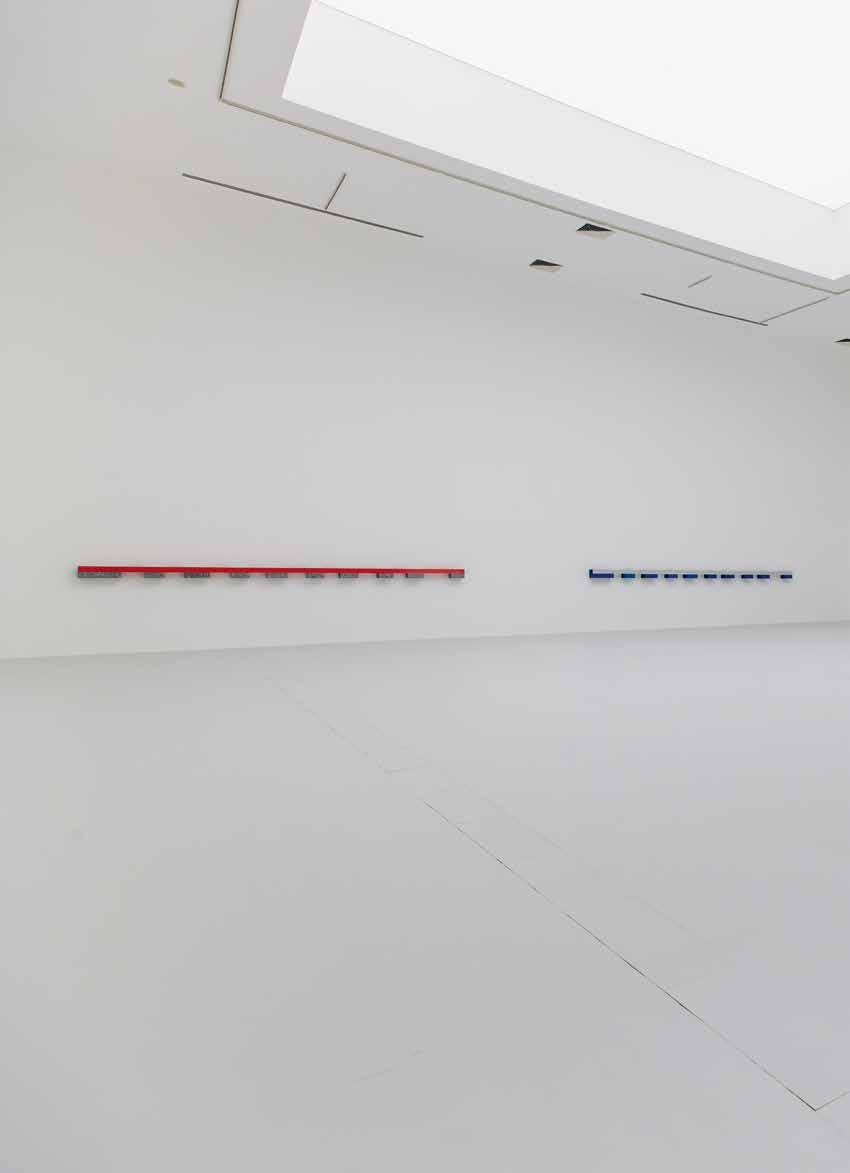
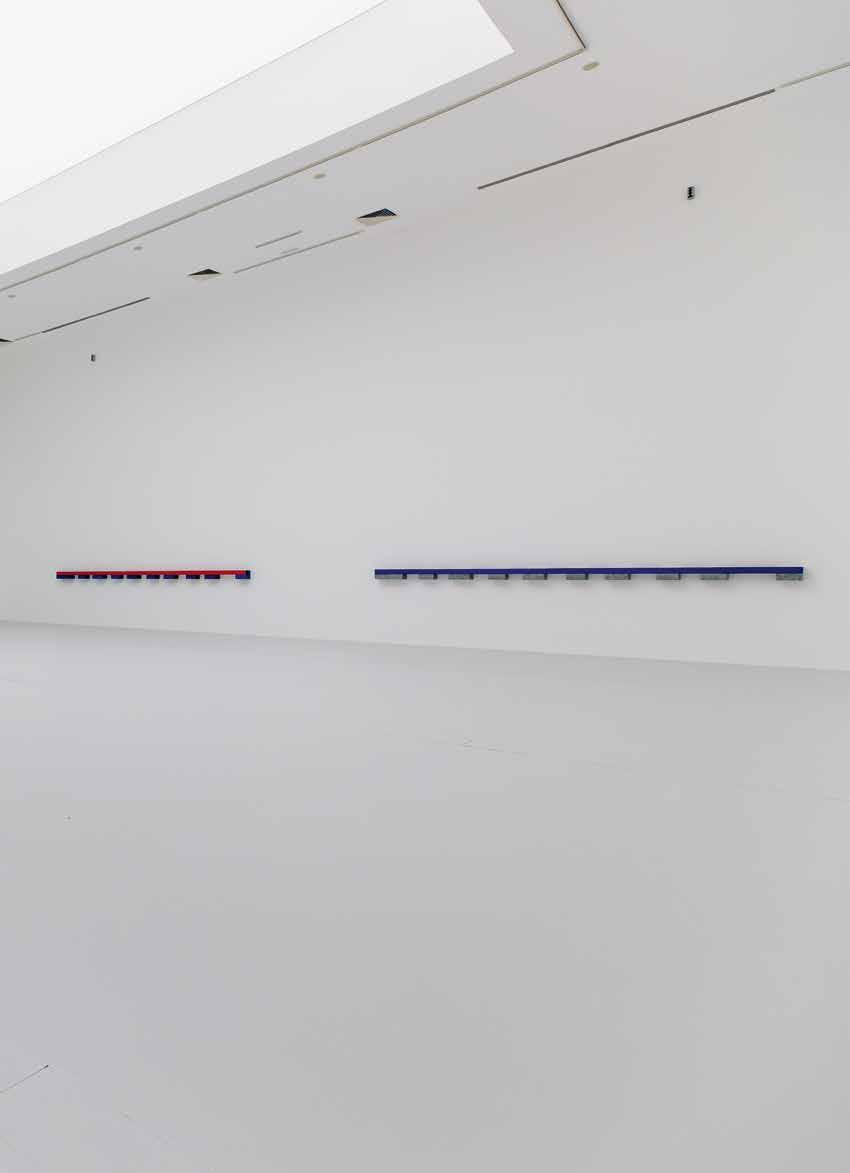
ROBERT ARBER, JOHN BEECH, AND TIM JOHNSON
Donald Judd met David Rabinowitch after visiting an exhibition of his at the Yale University Art Gallery in the spring of 1973, initiating a friendship that would last until Judd’s death in 1994. Rabinowitch is represented in the Chinati Foundation’s permanent collection with multiple works, including Elliptical Plane in 3 Masses and 4 Scales III (1973–75), which Judd installed in the northwest corner of the Arena. In 2007, Chinati presented two exhibitions of Rabinowitch’s work simultaneously, Fluid Sheet Constructions and Related Drawings, 1963–64 and The Pinto Canyon Group, 1979–1983: Plans, Drawings, and Models . Rabinowitch also participated in Chinati’s 2008 symposium The Writings of Donald Judd What follows is a conversation between the printer Robert Arber, the artist John Beech, and the poet Tim Johnson in memory of Rabinowitch, who died in late 2023 [fig. 1].
TIM JOHNSON: We all had the pleasure of knowing David Rabinowitch, whose work I know we admire tremendously. He was a font of knowledge and a good friend to each of us. He also was delightfully eccentric, as an artist and thinker. His work
Donald Judd conoció a David Rabinowitch después de visitar una exposición suya en la Galería de Arte de la Universidad de Yale en la primavera de 1973, iniciando una amistad que perduraría hasta la muerte de Judd en 1994. Rabinowitch está representado en la colección permanente de la Fundación Chinati con varias obras, incluida Elliptical Plane in 3 Masses and 4 Scales III [Plano elíptico en 3 masas y 4 escalas III] (1973–75), que Judd instaló en la esquina noroeste del edificio Arena. En 2007, Chinati presentó dos exposiciones simultáneas de la obra de Rabinowitch: Fluid Sheet Constructions and Related Drawings, 1963–64 [Construcciones de láminas fluidas y dibujos relacionados, 1963–64] y The Pinto Canyon Group, 1979–1983: Plans, Drawings, and Models . [El grupo del Cañón Pinto 1979–1983: planos, dibujos y maquetas]. Rabinowitch también participó en el simposio de Chinati de 2008 titulado The Writings of Donald Judd [Los escritos de Donald Judd].
Lo que sigue es una conversación entre el impresor Robert Arber, el artista John Beech y el poeta Tim Johnson en memoria de Rabinowitch, quien falleció a finales de 2023 [fig. 1].
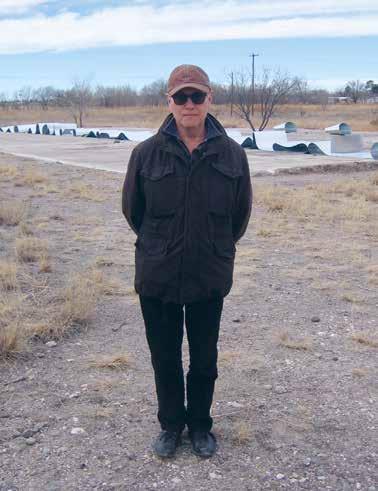
remains a big inspiration for me, as I imagine it is for you too. Delight is a word I frequently associate with David, who was an avid reader of William Blake, who wrote, “Energy is eternal delight.” Like Blake, I think of David as erudite without being the least bit academic. His art, like his understanding of art history and philosophy, was rigorous but at the same time highly singular, characterized by the energy of his own curiosity and inquiry.
Robert, you produced a large body of print works with David. Can you tell us about the work you made together and anything you remember about David’s process? And will you tell us about the book of Blake’s that he “gifted” to you?
ROBERT ARBER: I have worked with a lot of characters in my printing career, and David Rabinowitch certainly stands out among that group. On one hand, he was easy to work with but yet demanding, which sounds contradictory. He knew what he wanted and what was good. As I remember, there was not a lot of erasing or, in the case of drawing on a litho stone, very little scratching back into the surface after the first drawing [fig. 2]. David’s personality filled the room with a pleasantness as well as a kind of feverish intensity. I recall that he wanted a key to the print shop so that he could come in the middle of the night if inspired. Valerie, my wife, axed that idea since we lived above the shop at the time and would certainly have been awakened. One thing that set David apart was most of the prints we collaborated on were drawn on stone and then, after the edition was completed, David hand-colored each impression [figs. 3, 4]. Hand coloring is not common and truly makes each impression unique.
There was a story with each edition. I think of him as part visual artist, part poet. While he was working at the print shop, he asked if I had any books by William Blake; by chance, I had an old college paperback textbook tucked away in my library. I handed the book to him and he said “perfect.” With crayon and colored pencil in hand, he went about adding lines from Blake’s The Marriage of Heaven and Hell on all of the impressions I had printed for him. David was not a neat and tidy artist. The William Blake book I loaned him got covered in smudges and fingerprints. After finishing the hand coloring, he returned the paperback to me and signed the
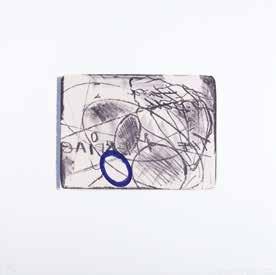
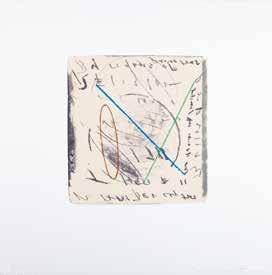
TIM JOHNSON: Todos tuvimos el placer de conocer a David Rabinowitch, cuya obra sé que admiramos profundamente. Fue una fuente de conocimiento y un buen amigo para cada uno de nosotros. También era deliciosamente excéntrico, como artista y como pensador. Su obra sigue siendo una gran inspiración para mí, como imagino que también lo es para ustedes. “Deleite” es una palabra que frecuentemente asocio con David, un ávido lector de William Blake, quien escribió: “La energía es un deleite eterno”. Al igual que Blake, pienso en David como en alguien erudito sin ser en lo más mínimo académico. Su arte, al igual que su comprensión de la historia del arte y la filosofía, era riguroso pero a la vez sumamente singular, caracterizado por la energía de su propia curiosidad e indagación.
Robert, usted realizó una gran cantidad de grabados en colaboración con David. ¿Puede hablarnos de la obra que hicieron juntos y de algo que recuerde del proceso de David? ¿Y nos hablará del libro de Blake que le “regaló”?
ROBERT ARBER: He trabajado con muchos personajes a lo largo de mi carrera como impresor, y David Rabinowitch sin duda destaca entre ellos. Por un lado, era fácil trabajar con él, pero al mismo tiempo era exigente, lo cual suena contradictorio. Sabía lo que quería y lo que era bueno. Según recuerdo, no había muchas correcciones o, en el caso de los dibujos sobre piedra litográfica, muy pocos retoques o raspaduras sobre la superficie después del primer dibujo [fig. 2].
La personalidad de David llenaba la habitación con una agradable calidez, además de una especie de intensidad febril. Recuerdo que quería una llave de la imprenta para poder venir en plena noche si se sentía inspirado. Valerie, mi esposa, descartó rápidamente esa
inside, “To Robert, with love, David” [fig. 5]!
TJ: Robert, it seems like David used your print shop as a launch pad. I don’t think he related to the printing process as strictly reproductive but also as a portal for discovery and invention. There’s that great photograph of David standing on your flat files. He didn’t do anything by half measure, nor did he think or behave conventionally. I wonder if you could share some thoughts about the prints in the Jerusalem Suite (2009), which you produced with him, or any of the monoprints you made together?
RA: An interesting thing about the Jerusalem Suite was that it was printed from a stone that had a chipped corner. David liked the chip
idea, ya que en aquel entonces vivíamos encima de la imprenta y sin duda nos habría despertado. Algo que distinguía a David era que la mayoría de los grabados en los que colaboramos fueron dibujados directamente sobre piedra y, una vez terminada la edición, David coloreaba a mano cada ejemplar [figs. 3, 4]. El coloreado manual no es común y realmente hace que cada impresión sea única.
Cada edición venía acompañada de una historia. Pienso en él como una combinación de artista visual y poeta. Mientras trabajaba en la imprenta, me preguntó si tenía algún libro de William Blake; por casualidad, tenía un viejo libro de texto de tapa blanda de mis tiempos universitarios guardado en mi biblioteca. Le entregué el libro, y me dijo: “Perfecto.” Con ceras de colores y lápices de colores en mano,
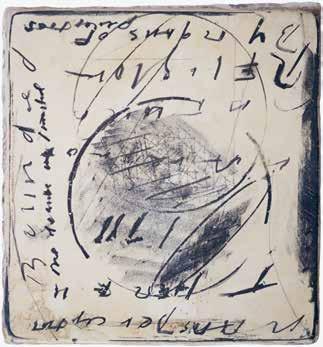
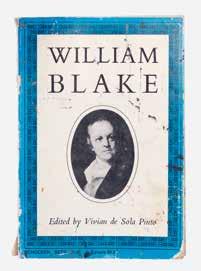
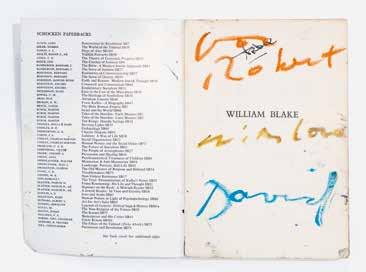
and emphasized it by rubbing crayon on the edge of the stone. When he hand colored the prints, he oriented each work so the chip appeared in all four corners, upper left, lower left, upper right, and lower right. I find his handwriting difficult. Maybe you could come by and try to decipher each title, which might add a lot to the Jerusalem Suite story. I wish I knew why it’s entitled the Jerusalem Suite ! Mostly, I’m struck by David’s constant invention and fearlessness. There is a marriage of wild abandon and mastery in his work. He pushed
se dedicó a añadir versos de El matrimonio del cielo y el infierno de Blake en todas las impresiones que yo había estampado para él. David no era un artista pulcro ni meticuloso. El libro de William Blake que le presté terminó cubierto de manchas y huellas digitales. ¡Tras terminar de colorear a mano, me devolvió el libro de bolsillo y firmó en el interior: “Para Robert, con amor, David” [fig. 5]!
TJ: Robert, parece que David usaba su imprenta como una plataforma de lanzamiento. No creo que él entendie -
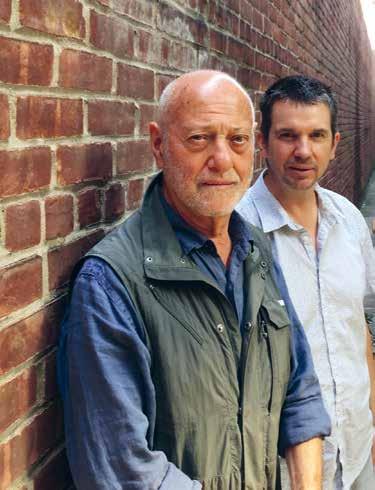
boundaries of scale and the concept of collage, and incorporated a variety of unusual printshop methods like Rubylith and stencil board. David was one of a kind.
TJ: John, he always spoke of your work with great affection. I’m curious to know when you first encountered David’s work and if you remember your early response to it?
JOHN BEECH: In 1985 at the Berkeley Art Museum. Untitled (2 Scales and 2 Masses) (1973), a small steel sculpture, lay on an expanse of concrete floor. It struck me as a very charged work. I had never seen anything like it before. However particular its aspect, the work remained free from categorization. Its apparent systematic planning seemed to signal an unknown logic. Over time, the qualities of stillness, wonder, and what I can only describe as inevitability that I perceived in this work, I wished to somehow be present in my own work. I can’t think of a body of artwork that more assuredly offers this than David’s.
TJ: John, how did you come to know David? What was your relationship like?
JB: By way of Peter Blum, David’s longtime gallerist and ardent supporter, in 2005 [fig. 6]. In addition, my link to David came through Richard Bellamy and his son Miles. David spoke often about Richard, how he had been instrumental during David’s early years in New York. David possessed an uncommon intensity, an attribute that came with a challenging component at times. He had a vast kindheartedness. For the last seventeen years of David’s life, I was privileged to be his friend. Aside
ra el proceso de impresión como algo meramente reproductivo, sino también como un portal hacia el descubrimiento y la invención. Hay una fotografía genial de David de pie sobre sus planeros. No hacía nada a medias, ni pensaba ni se comportaba de manera convencional. Me pregunto si podría compartir algunas reflexiones sobre los grabados de la Jerusalem Suite [Colección Jerusalén] (2009), que produjo con él, o sobre alguno de los monotipos que hicieron juntos.
RA: Algo interesante sobre la Jerusalem Suite es que fue grabada a partir de una piedra que tenía una esquina astillada. A David le gustaba ese desperfecto y lo enfatizó frotando ceras de colores sobre el borde de la piedra. Cuando coloreó a mano los grabados, orientó cada uno de manera que la astilla apareciera en las cuatro esquinas: superior izquierda, inferior izquierda, superior derecha e inferior derecha.
Su caligrafía me resulta difícil de leer. Quizá podría usted venir y tratar de descifrar cada título, lo cual podría aportar mucho a la historia de la Jerusalem Suite . ¡Ojalá supiera por qué se titula Jerusalem Suite !
Lo que más me impresiona de David es su constante invención y su falta de miedo. Hay en su obra una unión entre el desenfreno salvaje y la maestría. Empujó los límites de la escala y del concepto del collage , e incorporó una variedad de técnicas poco comunes en la imprenta, como el uso de Rubylith y cartón para estarcido. David era único.
TJ: John, él siempre hablaba de su trabajo con mucho afecto. Siento curiosidad por saber cuándo fue la primera vez que encontró la obra de David y si recuerda usted su reacción inicial.
JOHN BEECH: En 1985, en el Museo de Arte de Berkeley. Untitled (2 Scales and 2 Masses) [Sin título (2 escalas y 2 masas)] (1973), una pequeña escultura de acero, yacía sobre una gran extensión de suelo de hormigón. Me pareció una obra con una gran carga. Nunca había visto algo parecido. Por más particular que fuera su aspecto, la obra se mantenía libre de cualquier categorización. Su aparente planificación sistemática parecía señalar una lógica desconocida. Con el tiempo, las cualidades de quietud, asombro y lo que solo puedo describir como inevitabilidad que percibí en esa pieza, quise que de alguna manera estuvieran presentes en mi propia obra. No puedo pensar en un conjunto de obras que ofrezca eso con más certeza que el de David.
from myself, and certainly yourself, Tim, there were other artists, Heiner Thiel, Matthew Tyson, Michael Voss, and Lael Marshall, who shared this place of closeness and mutual respect with David. As I gathered it, David’s relationship with Donald Judd had been without disparity. David told me that Judd had found him very good company and that their conversations could go on for hours.
My first visit to David’s East Village studio had an unusual beginning: “John, I may have to disinvite you.” I was briefly thrown before David explained that my comment about his grand piano resembling a whale was so in line with his own feelings about it that he might have to lie down. This was, of course, something of a joke. Yet beneath lay David’s wish to convey how actively he felt the resonance of so much around him. And by extension, the suggestion that we had something in common.
Time spent together frequently centered around dinners, often among friends. There were memorable times together in nature: in the Finger Lakes region of New York state, in the ocean off Montauk, or within the majestic Big Bend National Park along the Rio Grande.
David would speak lovingly about his parents, how they encouraged his and his twin brother Royden’s interest in art. Often, too, about his grandfather Horace Joseph Calverley, who made the saw cuts along pencil guidelines drawn out by David on the Tool Handle Construction wall sculptures from 1965. David treasured a blue, glazed-ceramic Möbius strip made by his mother that he kept out on a table adjacent to his studio.
It was typical that David would have a particular subject on his mind, such as “mankind has made no progress,” or “in art there are infinite roots but only one truth.” He might talk at length, drawing on history and philosophy, accompanied by a hefty dose of humor, often involving David teasing himself about his practical inabilities. He would be quick to point out when someone else said something “really profound” or “highly funny.” David delighted in the role of messenger, broadcasting his admiration for the ideas of his intellectual forebears. He said he had a photographic memory as a young man that made it easy to retain text. Once when I asked about his reading list, he replied: “It’s not my reading list, it’s the reading list.”
My art draws, in part, upon the manmade world, referencing overlooked
TJ: John, ¿cómo llegó a conocer a David? ¿Cómo era su relación?
JB: A través de Peter Blum, su galerista de muchos años y ferviente defensor, en 2005 [fig. 6]. Además, mi vínculo con David también vino por medio de Richard Bellamy y su hijo Miles. David hablaba a menudo de Richard, de cómo fue una figura clave durante sus primeros años en Nueva York.
David poseía una intensidad poco común, un atributo que a veces venía acompañado de cierta dificultad. Tenía una inmensa bondad de corazón. Durante los últimos diecisiete años de la vida de David, tuve el privilegio de ser su amigo. Además de mí, y ciertamente de usted, Tim, hubo otros artistas —Heiner Thiel, Matthew Tyson, Michael Voss y Lael Marshall— que compartieron con David esa cercanía y respeto mutuo. Por lo que entendí, la relación de David con Donald Judd carecía de discrepancias. David me dijo que Judd lo encontraba una compañía muy grata y que sus conversaciones podían extenderse durante horas.
Mi primera visita al estudio de David en el East Village tuvo un comienzo insólito: “John, puede que tenga que desinvitarle”. Me desconcertó por un momento antes de que David explicara que mi comentario sobre su piano de cola, que dije que se parecía a una ballena, coincidía tanto con su propia percepción que sentía que tendría que acostarse. Esto, por supuesto, era en parte una broma. Pero detrás de ella estaba el deseo de David de expresar cuán profundamente sentía la resonancia de todo lo que lo rodeaba. Y, por extensión, la sugerencia de que compartíamos algo en común.
El tiempo que pasábamos juntos solía girar en torno a cenas, a menudo entre amigos. Hubo momentos memorables en la naturaleza: en la región de los Finger Lakes en el estado de Nueva York, en el océano frente a Montauk, o dentro del majestuoso Parque Nacional Big Bend, a lo largo del Río Grande. David hablaba con cariño de sus padres, de cómo alentaron su interés por el arte y el de su hermano gemelo Royden. También hablaba con frecuencia de su abuelo, Horace Joseph Calverley, quien realizaba los cortes de sierra siguiendo las líneas de lápiz trazadas por David en las esculturas de pared Tool Handle Construction [Construcción de mangos de herramientas] de 1965. David atesoraba una cinta de Möbius de cerámica vidriada azul hecha por su madre, que mantenía sobre una mesa junto a su estudio.
Era típico de David tener un tema particular rondándole la mente, como
objects from the industrial landscape or ad hoc furniture. David said that he viewed his work as largely informed, in visual terms, by the natural world, with several obvious exceptions such as Romanesque church buildings in Europe. Nevertheless, he pointed out that our approaches had many similarities. I registered anew that David’s work had had a big impact on my own development.
TJ: John, you’ve described David’s work as being free of categorization, particular, and yet, it seems to relate to systemic planning and logic. I also see David’s work in this way. Honestly, I sometimes struggle, intellectually, to understand how his work reconciles these qualities. My experience of David’s work isn’t scientific, although he definitely involved himself with physics and physical properties. One might reasonably suppose that work with these interests would function didactically, or illustratively, and yet David’s doesn’t. Individually, the works retain their quiddity, their particularity as you’ve said, which is to say, they remain art in a fundamental, almost essential way. I suspect this relates to his use of “scales,” which are physically instantiated by the work, and which, by extension, could theoretically apply to the world beyond the work. Or perhaps it relates to the way titles function in his work. The titles describe the physical qualities and conditions of the work and yet, in our experience, the titles obviously can’t substitute for experience. We’re left with the objects as they are, something existing alongside our scientific knowledge but simultaneously exceeding it. I wonder if you can elaborate on this, and perhaps share some examples of David’s work that stand out for you as exemplary.
JB: My attempt here, my own observations more than any wider explanation, is fitting for the consideration of Elliptical Plane in 3 Masses and 4 Scales III , in the Chinati Foundation’s collection [fig. 7]. The properties that can be described—drilled holes, abutment, material—collectively instill an awareness of presence, while registering as familiar in the sense of reminding the viewer of other systems of human logic, such as diagrams in mathematics. The interpretation of the work remains open; there’s no clear purpose to this purposeful-seeming system of logic, no particular subject of contemplation. Except perhaps to illuminate the essential fact that we all exist in the face of uncertainty.
“la humanidad no ha progresado en absoluto” o “en el arte hay raíces infinitas, pero solo una verdad”. Podía hablar extensamente, apoyándose en la historia y la filosofía, acompañado de una buena dosis de humor, a menudo burlándose de sí mismo por sus limitaciones prácticas. Señalaba con rapidez cuando alguien decía algo “realmente profundo” o “extremadamente gracioso”. David disfrutaba del papel de mensajero, transmitiendo su admiración por las ideas de sus predecesores intelectuales. Decía que en su juventud tenía una memoria fotográfica, lo que le facilitaba retener textos. Una vez, cuando le pregunté por su lista de lecturas, me respondió: “No es mi lista de lectura, es la lista de lectura”.
Mi arte se nutre, en parte, del mundo hecho por el ser humano, haciendo referencia a objetos pasados por alto del paisaje industrial o a mobiliario improvisado. David decía que concebía su obra como mayormente influenciada, en términos visuales, por el mundo natural, con algunas excepciones evidentes, como los edificios de iglesias románicas en Europa. No obstante, señalaba que nuestros enfoques compartían muchas similitudes. Me di cuenta, una vez más, de que la obra de David había tenido un gran impacto en mi propio desarrollo.
TJ: John, ha descrito la obra de David como libre de categorización, particular, y sin embargo, parece estar relacionada con la planificación sistémica y la lógica. Yo también percibo así la obra de David. Honestamente, a veces me cuesta, intelectualmente, entender cómo su obra concilia esas cualidades. Mi experiencia con la obra de David no es científica, aunque él sin duda se implicó con la física y las propiedades físicas. Uno podría suponer razonablemente que una obra con esos intereses funcionaría de manera didáctica o ilustrativa y, sin embargo, la de David no lo hace. Cada obra mantiene su esencia, su particularidad, como bien ha dicho usted, lo que significa que permanece como arte en un sentido fundamental, casi esencial. Sospecho que esto tiene que ver con su uso de “escalas”, que están físicamente encarnadas por la obra y que, por extensión, podrían aplicarse teóricamente al mundo más allá de la obra. O tal vez tiene que ver con la forma en que funcionan los títulos en su obra. Los títulos describen las cualidades físicas y condiciones de la obra y, sin embargo, en nuestra experiencia, es evidente que no pueden sustituirla. Nos quedamos con los objetos tal como son, algo que existe junto a nuestro conocimiento científico, pero que al mismo tiempo lo excede. Me pregunto si podría
David’s work encompasses something general about the condition of being alive. There is no mannerism, no coercion. I feel the works keep the viewer close, rather than offering some transcendent trajectory away from the here and now. All meaning is to be found in the ordinary. The word ordinary is misleading: it is only routine in its ongoingness, and in all other ways, it is astounding, though we are often prone to forgetting this obvious point in our daily lives. For me David’s works manifest not only the condition of lucidity but also of excitement and vulnerability. He really wasn’t capable of making anything inauthentic. I think the viewer feels immediate trust in David’s work.
David was emphatic that all art had the requirement to “expose reality.” Art could only be considered valid when it revealed Truth. Not relative truth, but absolute. Art is the vehicle to illuminate the human condition as one of awe. David would claim, with a half-jesting smile, possession of an “extra sense” that allowed him to register when an artwork was lacking in this respect.
When contemplating the backdrop of a turbulent world, David would speak of art as “a hierarchy that is all we’ve got.” I think this was his way of saying
profundizar en esto, y quizá compartir algunos ejemplos de la obra de David que considere ejemplares.
JB: Mi intento aquí —mis propias observaciones más que una explicación más amplia— es adecuado para considerar Elliptical Plane in 3 Masses and 4 Scales III [Plano elíptico en 3 masas y 4 escalas III] de la colección de la Fundación Chinati [fig. 7]. Las propiedades que pueden describirse —agujeros perforados, yuxtaposición, material— en conjunto infunden una conciencia de presencia, mientras se registran como familiares en el sentido de recordar al espectador otros sistemas de lógica humana, como los diagramas en matemáticas. La interpretación de la obra permanece abierta; no hay un propósito claro en este sistema de lógica que aparenta ser intencional, ningún tema específico de contemplación. Salvo, quizá, el de iluminar el hecho esencial de que todos existimos frente a la incertidumbre. La obra de David abarca algo general sobre la condición de estar vivo. No hay manierismo, ni coerción. Siento que sus obras mantienen al espectador cerca, en lugar de ofrecer alguna trayectoria trascendente que lo aleje del aquí y el ahora. Todo significado se encuentra en lo ordinario. Pero la palabra ordinario puede ser engañosa: solo es rutinaria
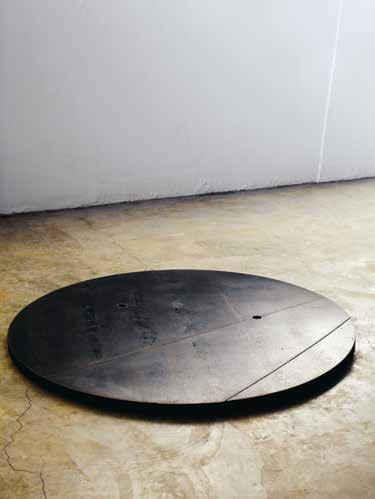
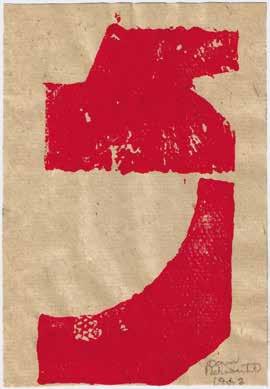
that art offered a measure of grounding, perhaps even reassurance—a truth in an unfathomable universe. He established his works as distinct “groups,” not “series,” which he felt implied some kind of extraneous sequence. He had a commitment to “invention”; a condition necessary for a work of art to be, if he was talking about one of his own, “decent.” A group could give rise to an enormous array within the group. David might later say something contradictory, as a way of shaking off restrictive characterizations about his art.
In a message I received in 2022, David wrote about his fascination with Charles Darwin: “I am committed to everything Darwin was and stood for: the man, his stature as a profound artist in prose, his extraordinary humility, his exalted levels of insight regarding exploration in the face of radically differing kinds and qualities of evidence. He became for me an archetype of what a human being should and could strive towards.”
David’s “teachers” were artists, philosophers and scientists he lionized, but had not met: Cezanne, Giacometti, Tatlin, Matisse, Picasso, Pollock, Spinoza, Lucretius, Newton, Blake, to name a few. He also loved James Brown, Muddy Waters, Etta James, and Thelonious Monk, and felt a fervent connection to jazz music. Shakespeare and Bach were David’s most revered artists. He did once meet
en su continuidad, y en todos los demás sentidos, es asombrosa, aunque a menudo tengamos tendencia a olvidar este punto evidente en nuestra vida cotidiana. Para mí, las obras de David manifiestan no solo una condición de lucidez, sino también de entusiasmo y vulnerabilidad. Realmente no era capaz de hacer nada inauténtico. Creo que el espectador siente una confianza inmediata ante la obra de David. David insistía en que toda obra de arte tenía la obligación de “exponer la realidad”. El arte solo podía considerarse válido cuando revelaba la Verdad. No una verdad relativa, sino absoluta. El arte es el instrumento que permite mostrar la condición humana como algo digno de asombro. David decía —con una sonrisa medio en broma— que poseía un “sentido extra” que le permitía detectar cuando una obra carecía de esta cualidad. Al contemplar el telón de fondo de un mundo turbulento, David hablaba del arte como “una jerarquía que es todo lo que tenemos”. Creo que era su forma de decir que el arte ofrecía una medida de estabilidad, quizá incluso de consuelo: una verdad dentro de un universo insondable.
Establecía sus obras como “grupos” distintos, no “series”, ya que sentía que ese término implicaba algún tipo de secuencia ajena. Tenía un compromiso con la “invención”; una condición necesaria para que una obra de arte fuera, si hablaba de una obra suya, “digna”. Un grupo podía dar lugar a una enorme variedad dentro de sí mismo. David po -
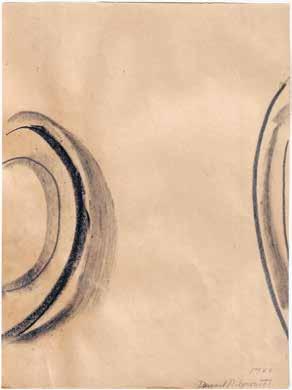
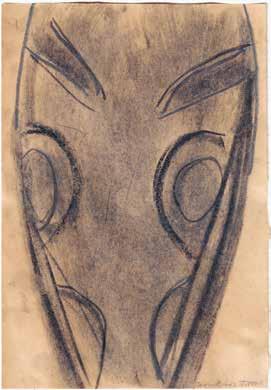
Miró, “the greatest artist I have ever been in the presence of.” And Beckett, in passing in the aisle of a train somewhere in Northern Europe. Drawing was David’s primary means for creating work. There are several categories of drawing within his practice. Working drawings, plan drawings, and template drawings all functioned as loci along the way to the eventual fabrication of a sculpture; the latter category being on a 1:1-scaled heavy paper to be used by the technician at a metalworks factory. David didn’t consider the template as artwork per se. I was given one of these by Miles Bellamy in memory of his father in 1998. I later took it to show David, who immediately signed it to me. Other groups of drawings are based on distinct themes, such as The Ottonian Construction of Vision Drawings of the 1980s, with their architectural origins. The floating blocks of black markings seem exposed, as if giving precedence to the spirit of the buildings over their solidity, albeit while maintaining a sense of structural order. What great drawings. The Carved Woodblock Monotypes , from 1962, are small hand-pressed prints that David made as a young man in Canada [fig. 8]. Through strong color and form, they divulge with great beauty the limitless potential for variety that I believe so guided and enthralled David. The shapes seem prescient of the kind of forms
día, más tarde, decir algo contradictorio como forma de sacudirse cualquier caracterización restrictiva sobre su obra. En un mensaje que recibí en 2022, David escribió sobre su fascinación por Charles Darwin: “Estoy comprometido con todo lo que Darwin fue y representó: el hombre, su estatura como un artista profundo en prosa, su humildad extraordinaria, sus niveles exaltados de percepción respecto a la exploración frente a tipos y calidades radicalmente distintos de evidencia. Se convirtió para mí en un arquetipo de lo que un ser humano debería y podría aspirar a ser”. Los “maestros” de David eran artistas, filósofos y científicos a los que admiraba profundamente, pero que no había conocido en persona: Cézanne, Giacometti, Tatlin, Matisse, Picasso, Pollock, Spinoza, Lucrecio, Newton, Blake, por nombrar algunos. También adoraba a James Brown, Muddy Waters, Etta James y Thelonious Monk, y sentía una conexión ferviente con la música de jazz. Shakespeare y Bach eran, para David, los artistas más venerados. Conoció una vez a Miró, “el artista más grande ante cuya presencia he estado”. Y a Beckett, de paso, en el pasillo de un tren en algún lugar del norte de Europa. El dibujo era el medio principal de David para crear su obra. Dentro de su práctica artística, existen varias categorías de dibujo. Los dibujos de trabajo, dibujos de plano y dibujos plantilla funcionaban como puntos clave en el camino hacia la fabricación final de una escultura; esta última categoría se realizaba en papel
grueso a escala 1:1 y era utilizada por el técnico en una fábrica de metalurgia. David no consideraba estas plantillas como obras de arte en sí mismas. En 1998, Miles Bellamy me regaló una de ellas en memoria de su padre. Más tarde se la llevé a David, quien la firmó inmediatamente a mi nombre.
that David came to in his sculpture of the late 1960s.
Once when in Toronto, I visited the crest poles in the Royal Ontario Museum at David’s recommendation. The four massive vertical carvings in red cedar, made by the Nisga’a and Haida peoples of British Columbia, date to the 1860s. The staircase built around the tallest of the poles allows for a close viewing of the eighty-foothigh totem. David included praise for the manner in which they had been installed in the museum, which only increased his elation in viewing them. He made drawings in 1960 of the masklike faces covering the surface of the totems [figs. 9, 10]. When I returned to New York, I printed up black-and-white photographs I had taken of the carvings and gave them to David. They are amongst the first art that David responded strongly to as a child—and were a major influence on the direction his life and art would take.
Robert Arber is a fine-art printer and graduate of the Tamarind Institute. He opened Arber & Son Editions in 1973 in New Mexico and moved the printshop to Marfa in 1998.
John Beech is an Anglo-American artist living in New York. He was an Artist in Residence at the Chinati Foundation in 1998.
a poet and editor and owner of the Marfa Book Company.
Otros grupos de dibujos están basados en temas distintos, como The Ottonian Construction of Vision Drawings [La construcción ottoniana de los dibujos de la visión] de los años ochenta, con su origen arquitectónico. Los bloques flotantes de marcas negras parecen expuestos, como si dieran prioridad al espíritu de los edificios por encima de su solidez, aunque sin perder el sentido del orden estructural. Qué grandes dibujos. Los Carved Woodblock Monotypes [Monotipos tallados en madera], de 1962, son pequeños grabados hechos a mano que David realizó siendo joven en Canadá [fig. 8]. A través del color y la forma intensos, revelan con gran belleza el potencial ilimitado de variación que, creo, tanto guiaba y fascinaba a David. Las formas parecen anticipar el tipo de volúmenes que David desarrollaría en su escultura a finales de los años sesenta.
Una vez, estando en Toronto, visité los postes heráldicos del Royal Ontario Museum por recomendación de David. Las cuatro esculturas verticales monumentales en cedro rojo, realizadas por los pueblos Nisga’a y Haida de la Columbia Británica, datan del siglo XIX. La escalera construida alrededor del poste más alto permite observar de cerca el tótem de veinticuatro metros de altura. David elogió la manera en que fueron instalados en el museo, lo cual solo aumentó su entusiasmo al contemplarlos. En 1960, hizo dibujos de los rostros enmascarados que cubren la superficie de los tótems [figs. 9, 10]. Cuando regresé a Nueva York, imprimí en blanco y negro las fotografías que había tomado de las tallas y se las regalé a David. Estas esculturas se encuentran entre las primeras obras de arte que impactaron profundamente a David cuando era niño —y fueron una influencia determinante en el rumbo que tomarían su vida y su arte.
Robert Arber es impresor artístico y es licenciado por el Instituto Tamarind. Fundó Arber & Son Editions en 1973 en Nuevo México y trasladó el taller de impresión a Marfa en 1998.
John Beech es un artista angloamericano que vive en Nueva York. Fue Artista en Residencia en la Fundación Chinati en 1998.
Tim Johnson es poeta, editor y propietario de Marfa Book Company.
For most visitors to Marfa, the journey to this remote town that looms large in the art-world imagination is akin to a pilgrimage to pay respects at the altar of JUDD. This was certainly my experience. But as they say, “if you know, you know,” and once you know about Lauretta Vinciarelli, an architect, artist, and Judd’s professional and romantic partner from about 1976 to 1986, you will see the town and Donald Judd’s accomplishments in a new light [fig.1]. On a 2023 research trip to Marfa, for example, I was excited to stay in one of the Chinati Foundation apartments. Hanging on the wall in the bedroom was a framed print advertising a 1983 Judd show at the Knight Gallery in Charlotte, North Carolina. In a miniscule font in the lower right-hand corner, I nearly missed her initials: “LV” [fig. 2]. It brought to mind similar prints that Vinciarelli executed for Judd in the early 1980s, but in a larger sense, the piece represented, to me, her widespread imprint—hidden in plain sight—on Marfa, one of the spaces, in addition to New York, where she lived and worked with Judd during the time they were together.
Vinciarelli and Judd met at a dinner party in New York, and from the beginning, they recognized a shared intellectual interest in many subjects related to art and architecture as well as a love for travel.1 The couple visited Europe on multiple occasions in the late 1970s and early 1980s. In the summer of 1981, they made their way through a dizzying itinerary of cities from Iceland to Ireland, Germany, Scotland, and Italy, where they stayed in Palermo, Syracuse, Orvieto, Scopello, and Rome, the
Para la mayoría de los visitantes de Marfa, el viaje a esta remota localidad —que ocupa un lugar destacado en el imaginario del mundo del arte— se asemeja a una peregrinación para rendir homenaje en el altar de JUDD. Sin duda, esa fue mi experiencia. Pero como suele decirse, “si lo sabes, lo sabes”, y una vez que conoces a Lauretta Vinciarelli, arquitecta, artista y pareja profesional y sentimental de Donald Judd desde aproximadamente 1976 hasta 1986, comienzas a ver el pueblo —y los logros de Judd— bajo una nueva luz [fig. 1]. En un viaje de investigación a Marfa en 2023, por ejemplo, me entusiasmó hospedarme en uno de los apartamentos de la Fundación Chinati. Colgado en la pared del dormitorio había un cartel enmarcado anunciando una exposición de Judd en 1983 en la Knight Gallery de Charlotte, Carolina del Norte. En la esquina inferior derecha, con una tipografía diminuta, casi pasé por alto sus iniciales: “LV” [fig. 2]. Me recordó impresos similares que Vinciarelli realizó para Judd a principios de los años ochenta, pero en un sentido más amplio la pieza representaba, para mí, su huella extendida —
* N. de la T.: He mantenido la palabra original Arena en el título Lauretta Vinciarelli and the Arena of Influence , ya que en inglés tiene un doble sentido. Por un lado, Arena se refiere a un edificio concreto con ese nombre; por otro, también significa “ámbito” o “campo” de influencia. Esta ambigüedad se ha considerado relevante para preservar el sentido original del título.
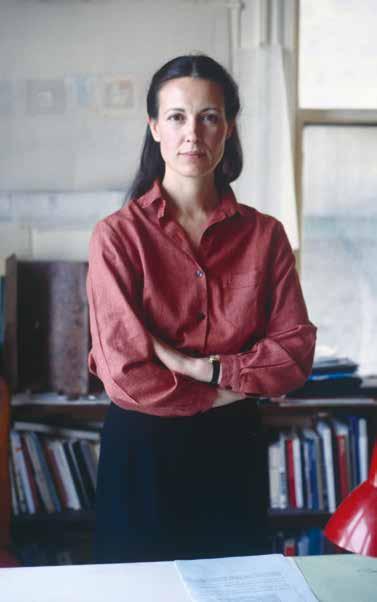

site of Vinciarelli’s formative years. Receipts housed in the Judd Foundation Archives show that while in Rome in July 1981, Judd purchased several books on architecture, including one on Filippo Brunelleschi. As he later recalled: “I taught myself to appreciate the architecture of Brunelleschi and Alberti. I was interested in their buildings before I had a chance to see them. I still appreciate them.”2 In an essay on Judd’s concrete buildings published in the 2016 Chinati Foundation newsletter, Richard Gachot suggested that Judd may have “learned much” from the Italian architect Aldo Rossi.3 While his name does not appear in Judd’s writings or interviews, Rossi loomed large in Italy, and Vinciarelli spoke of his conception of monuments in a New School lecture of 1978.4 Rossi had in fact worked as a teaching assistant to Carlo Aymonino and Ludovico Quaroni, with whom Vinciarelli would later study at La Sapienza University in Rome. In an effort to understand the Italian influence in Marfa, and on the development of Judd’s thinking about architectural space during that time, scholars may have inadvertently overlooked a source closer to home.
Vinciarelli was born, in 1943, in Arbe (then a part of Italy) and spent much time in the small, idyllic town of Gradoli, in the Italian province of Viterbo located near Lake Bolsena. Vinciarelli was also, in many ways, a product of Rome where her family also lived. A student in the architecture program at La Sapienza in the late 1960s, she was a participant in the 1968 student protests and graduated in 1971, only one year after the Italian feminist group Rivolta Femminile was founded. While Vinciarelli was not involved with this group, it was an important part of the broader social context in which she (and a cohort of women in the architecture program at La Sapienza who have since been dubbed “ le ragazze degli anni 60 ” operated.5 Vinciarelli herself broke gender barriers as the first woman to have drawings acquired by the Museum of Modern Art’s Department of Architecture and Design, in 1974, and as one of the first women hired to teach in Columbia University’s Housing Studio, in 1978.
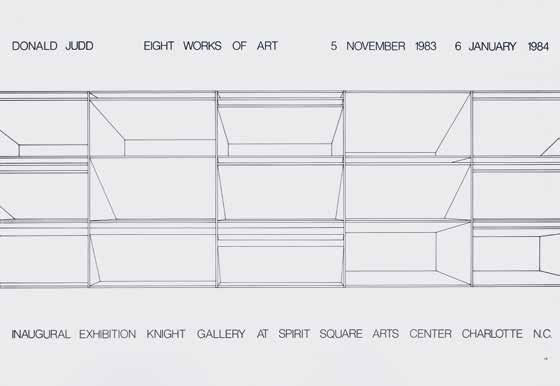
LAURETTA VINCIARELLI, POSTER FOR
JUDD EXHIBITION EIGHT WORKS IN THREE DIMENSIONS , KNIGHT GALLERY, CHARLOTTE, NORTH CAROLINA, NOVEMBER 5, 1983–JANUARY 6, 1984, AND (AT LEFT) DETAIL OF LAURETTA
INITIALS ON THE POSTER / LAURETTA VINCIARELLI, PÓSTER PARA LA EXPOSICIÓN DE DONALD
OCHO OBRAS EN TRES DIMENSIONES , EN LA KNIGHT GALLERY, CHARLOTTE, CAROLINA DEL NORTE, EL 5 DE NOVIEMBRE DE 1983–6 DE ENERO DE 1984, Y (A LA IZQUIERDA) DETALLE DE LOS INICIALES DE LAURETTA VINCIARELLI EN EL PÓSTER
oculta a plena vista— sobre Marfa, uno de los espacios, además de Nueva York, donde vivió y trabajó con Judd durante el tiempo que estuvieron juntos. Vinciarelli y Judd se conocieron en una cena en Nueva York y, desde el principio, reconocieron un interés intelectual compartido por muchos temas relacionados con el arte y la arquitectura, así como un amor por los viajes. 1 La pareja visitó Europa en múltiples ocasiones a finales de los años setenta y principios de los ochenta. En el verano de 1981, recorrieron un itinerario vertiginoso de ciudades, desde Islandia hasta Irlanda, Alemania, Escocia e Italia, donde se alojaron en Palermo, Siracusa, Orvieto, Scopello y Roma, esta última, ciudad en la que Vinciarelli pasó sus años formativos. Los recibos conservados en los archivos de la Fundación Judd muestran que, durante su estadía en Roma en julio de 1981, Judd compró varios libros sobre arquitectura, incluido uno sobre Filippo Brunelleschi. Como recordaría más tarde: “ Me enseñé a mí mismo a apreciar la arquitectura de Brunelleschi y Alberti. Me interesaban sus edificios incluso antes de tener la oportunidad de verlos. Todavía los aprecio.” 2 En un ensayo sobre los edificios en hormigón de Judd, publicado en la publicación informativa de la Fundación Chinati en 2016, Richard Gachot sugirió que Judd pudo haber “aprendido mucho” del arquitecto italiano Aldo Rossi. 3 Aunque su nombre no aparece en los escritos ni en las entrevistas de Judd, Rossi tenía una fuerte presencia en Italia, y Vinciarelli habló sobre su concepción de los monu -
In New York, Vinciarelli was involved in intellectual circles such as Peter Eisenman’s influential Institute of Architecture and Urban Studies (IAUS), where she was the first and only woman granted a solo exhibition, also in 1978, and participated in the ReVisions Study Group, which formed under the auspices of the IAUS. In her few but potent writings, she considered the way architectural space, everyday life, and theory overlap—looking at, for example, the vital safety networks that women created in public spaces, from rural Italy to the South Bronx. Like many of her generation, she explored the possibilities of “visionary architecture” ( l’architettura disegnata ) at the intersections between architectural drawing and theory—projects that, much like her later watercolor paintings, were described by K. Michael Hays as “not architecture but evidence that it exists” due to their poetic qualities.6
My research has revealed the ways in which Vinciarelli and Judd impacted one another’s work and ways of thinking about design, from their collaborations on the unrealized projects for Cleveland (1984) and Providence (1986), which combined aspects of large-scale abstract sculpture, architecture, and urban planning, along with furniture design and the adaptation and restoration of existing buildings, which can be seen throughout the spaces of Marfa as well—in short, barely scratching the proverbial surface of how Judd’s
mentos en una conferencia en The New School en 1978. 4 De hecho, Rossi había trabajado como asistente de enseñanza de Carlo Aymonino y Ludovico Quaroni, con quienes Vinciarelli estudiaría más tarde en la Universidad La Sapienza de Roma. En un intento por entender la influencia italiana en Marfa, y en el desarrollo del pensamiento de Judd sobre el espacio arquitectónico durante ese período, es posible que los estudiosos hayan pasado por alto una fuente mucho más cercana.
Vinciarelli nació en 1943 en Arbe (entonces parte de Italia) y pasó mucho tiempo en el pequeño e idílico pueblo de Gradoli, en la provincia italiana de Viterbo, cerca del Lago de Bolsena. Vinciarelli fue también, en muchos sentidos, un producto de Roma, donde también residía su familia. Estudió arquitectura en La Sapienza a finales de los años sesenta, participó en las protestas estudiantiles de 1968 y se graduó en 1971, solo un año después de la fundación del grupo feminista italiano Rivolta Femminile. Aunque Vinciarelli no formó parte de este colectivo, sí fue una figura dentro del contexto social más amplio en el que ella —junto con otras mujeres en el programa de arquitectura de La Sapienza, a quienes más tarde se conocerían como “le ragazze degli anni ’60” — se desenvolvía. 5 Vinciarelli rompió barreras de género al convertirse en la primera mujer en tener dibujos adquiridos por el Departamento de Arquitectura y Diseño del Museo de Arte Moderno (MoMA) en 1974, y en una de las primeras mujeres contratadas para enseñar en el Housing
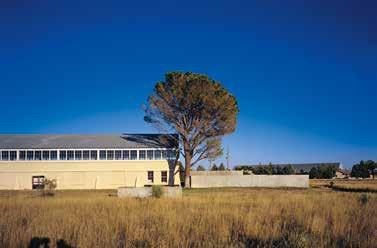
architectural legacy is beautifully intertwined with Vinciarelli’s work of the late 1970s to the late 1980s. And yet, in the early years of my research, I became increasingly aware of how any mention of Vinciarelli’s collaborations as well as her personal relationship with Judd were virtually absent from the Judd literature. This research, and the 2019 Judd Foundation exhibition organized at 101 Spring Street, New York, have been important correctives to give Vinciarelli her due credit and help us understand Judd’s work more deeply, more comprehensively—to get closer to knowing “The Whole Judd,” to quote an essay by Marianne Stockebrand.7 Here, I consider the ways in which Vinciarelli helped shape the now-celebrated spaces of Marfa, taking the Arena as a case study [fig. 3].
In April 1980, the Dia Art Foundation purchased the Arena building, outside of Marfa, which was formerly used as an airplane hangar during World War I, then later as the gymnasium at Fort D. A. Russell. The building became known as the Arena, according to Judd, “because when the fort was closed after World War II the gym floor was removed for the scarce wood and sand laid so as to have an indoor area in which to ride horses.”8 The building itself, made of adobe with a galvanized, corrugated iron roof, is similar to the hangars at La Mansana de Chinati but includes service quarters and a small, separate courtyard building outside at the south end that was originally covered with a pitched roof. 9 A lofted space above the kitchen and bathroom was patched and painted and a new wooden stairway was created for access. The interior has a light, ethereal atmosphere—as Judd wrote, “It’s a large and beautiful space, due mostly to the ceiling of trusses and the clerestory and to the new floor, with
Studio de la Universidad de Columbia en 1978.
En Nueva York, Vinciarelli estuvo involucrada en círculos intelectuales como el influyente Institute of Architecture and Urban Studies (IAUS) [Instituto de Arquitectura y Estudios Urbanos] de Peter Eisenman, donde fue la primera y única mujer en tener una exposición individual, también en 19 78, y participó en el grupo de estudio ReVisions, organizado bajo el auspicio del IAUS. En sus pocos pero potentes escritos, reflexionó sobre la forma en que el espacio arquitectónico, la vida cotidiana y la teoría se entrelazan, analizando, por ejemplo, las redes vitales de seguridad que las mujeres crean en los espacios públicos, desde la Italia rural hasta el South Bronx. Como muchos de su generación, exploró las posibilidades de la llamada “arquitectura visionaria” ( l’architettura disegnata ) en la intersección entre el dibujo arquitectónico y la teoría, proyectos que, al igual que sus posteriores acuarelas, fueron descritos por K. Michael Hays como “no es arquitectura, sino prueba de que la arquitectura existe”, debido a sus cualidades poéticas. 6
Mi investigación ha revelado cómo Vinciarelli y Judd influyeron mutuamente
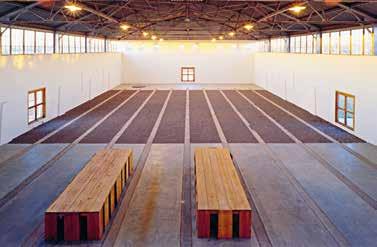
the old lines of concrete” [fig. 4].10
The floor, originally hardwood on top of concrete strips, was cleaned up and the spaces in between the concrete strips were filled in with gravel. Concrete was also poured at the south end for the kitchen and the bathroom and at the north end to create a smaller work space. In a 1985 interview, Judd recounted how the decisions to organize these spaces evolved: “Those two areas were given, one at either end, and in figuring it out, it occurred to me that with the change of another bay—and also, I think Lauretta volunteered a suggestion or two there, adding another bay or taking one away—that the area of gravel and the area of concrete would be the same.”11
Judd’s casual comment, made in 1985 (near the end of their relationship), acknowledged that Vinciarelli was, at the very least, involved in conversations about the interventions at the Arena. Beyond decisions about dividing concrete and gravel into bays, there are several other components that demonstrate Vinciarelli’s involvement in this project, most notably the courtyard bathhouse in the rear of the
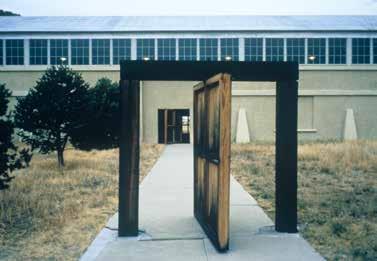
en su trabajo y en su forma de concebir el diseño, desde sus colaboraciones en proyectos no realizados para Cleveland (1984) y Providence (1986), que combinaban aspectos de la escultura abstracta a gran escala, la arquitectura y la planificación urbana, junto con el diseño de mobiliario y la adaptación y restauración de edificios existentes —visible también en muchos espacios de Marfa—; en resumen, apenas arañando la proverbial superficie de cómo el legado arquitectónico de Judd se entrelaza maravillosamente con la obra de Vinciarelli de finales de los setenta a finales de los ochenta. Y, sin embargo, en los primeros años de mi investigación, me fui dando cuenta de cómo prácticamente no se mencionaban las colaboraciones de Vinciarelli ni su relación personal con Judd en la literatura sobre él. Esta investigación, junto con la exposición organizada en 2019 por la Fundación Judd en el número 101 de la calle Spring, en Nueva York, han sido correctivos importantes para otorgarle a Vinciarelli el reconocimiento que merece y ayudarnos a entender la obra de Judd de manera más profunda y completa, para acercarnos más a conocer a “Judd en conjunto”, para citar un ensayo de Marianne Stockebrand. 7 En este sentido, aquí reflexiono sobre las formas en que Vinciarelli contribuyó a moldear los ahora célebres espacios de Marfa, tomando el edificio Arena como caso de estudio [fig. 3].
En abril de 19 80, la Dia Art Foundation compró el edificio del Arena, a las afueras de Marfa. Anteriormente se había utilizado como hangar de aviones durante la Primera Guerra Mundial, y más tarde como gimnasio del Fuerte D. A. Russell. El edificio pasó a conocerse como Arena , según Judd, “porque cuando se clausuró el fuerte después de la Segunda Guerra Mundial, se retiró el suelo del gimnasio debido a la escasez de madera, y se colocó arena para crear un espacio cerrado donde se pudiera montar a caballo”. 8 El edificio en sí, hecho de adobe con un
building and the so-called pivot doors and gates at several sites [fig. 5]. The story behind these doors, their conception and development, has been discussed many times, albeit without mention of Vinciarelli. Judd described the doors in his essay on the Arena as such: “The doors are aligned, are quartered, and rotate. Two are free-standing outside, opposite the axes of the building,” and in an interview of 1985, he recalled how the doors at the Chamberlain Building (“the one-quarter swiveled … then one-half of a door”) led to the idea of a swiveling gate.12 Stockebrand recounted that Judd replaced the original doors with “revolving doors which he designed himself,” and when asked in a 1993 interview about them, Judd said, “The doors that swivel were invented for [the library at La Mansana], not for the Arena. It was a good idea so I made them over. The gates, I guess, in a way were invented for the Arena.”13 Gachot proposed that it was Rossi’s influence, suggesting Judd “possibly borrowed his signature four-square door/window.”14 Meanwhile, Vinciarelli recalled that the pivot doors/gates were “something that I studied very much and is part of our collaboration and was adopted for this building.”15 Judd connected the origins of the design to the most reductive form of the grid in an interview of 1985: “As a form, it goes way back. It basically has to do with grids … I guess the quartering is the simplest form of a grid.”16 The grid played a key role in the genesis of many of Vinciarelli’s projects in the 1970s, including her Homogenous Grid series (begun c. 1973) and the Non-Homogenous Grid series (1973–74), but a more convincing connection can be seen in her design for a set of gates in her Project for a Productive Garden in an Urban Center in Southwest Texas (c. 1979) [fig. 6]. Here, the two free-standing gates are made with a quartered grid and are aligned along an axis in a way similar to their position at the Arena. She described the project in her lecture at Columbia University in 1995: “This space is contained by four sides of architecture and two gates—never built but elements were used in other circumstances.” 17 She then goes directly into a conversation about the Arena, implying the design was incorporated there instead. From the Block to the Arena to the Chamberlain Building, these pivot doors and gates are one of the more distinctive architectural features of Judd’s Marfa.
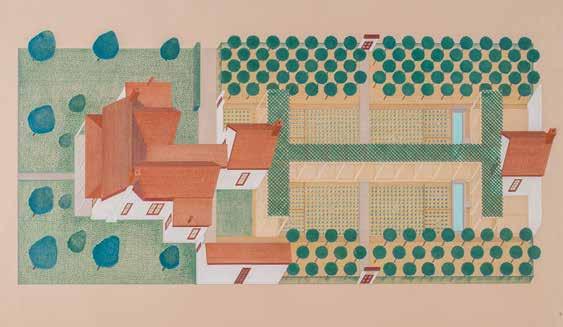
techo de lámina galvanizada y acanalada, es similar a los hangares de La Mansana de Chinati, pero incluye cuartos de servicio y un pequeño edificio independiente con patio en el extremo sur, que originalmente estaba cubierto por un techo a dos aguas. 9 Un espacio tipo altillo sobre la cocina y el baño fue reparado y pintado, y se construyó una nueva escalera de madera para acceder. El interior tiene una atmósfera ligera y etérea, como escribió Judd, “es un espacio grande y hermoso, debido principalmente al techo con cerchas, al claristorio y al nuevo suelo, con las antiguas líneas de hormigón” [fig. 4]. 10 El suelo, originalmente de madera sobre franjas de hormigón, fue limpiado y los espacios entre las franjas se rellenaron con gravilla. También se vertió hormigón en el extremo sur, para la cocina y el baño, y en el extremo norte para crear un espacio de trabajo más pequeño. En una entrevista de 19 85, Judd explicó cómo fueron tomando forma estas decisiones de organización espacial: “Esas dos áreas estaban dadas, una en cada extremo, y al pensarlo, se me ocurrió que, al cambiar una crujía —y también, creo que Lauretta hizo una o dos sugerencias allí, añadiendo una crujía o quitando una—, el área de gravilla y el área de hormigón serían iguales”. 11
Ese comentario casual de Judd, hecho en 19 85 (cerca del final de su relación), reconoce que Vinciarelli participó, al menos, en conversaciones sobre las intervenciones en el edificio Arena. Más allá de las decisiones sobre dividir el hormigón y la gravilla en crujías, hay otros elementos que demuestran la implicación de Vinciarelli en este proyecto, en especial el baño en el patio trasero del edificio y las llamadas puertas y portones giratorios en varios sitios [fig. 5]. La
In her 1978 lecture at the New School, Vinciarelli described how a “sequence of French doors,” which she noted are connected to the “Mexican tradition,” were incorporated into her plans for a museum (commissioned by Judd) to house a collection of his works.18 There is evidence of a zambullo , which is similar to the pivot doors/gates found at Marfa, described in a Project Report about the Pueblo of Laguna, a site in New Mexico: “The arrival of the Spanish brought the introduction of the zambullo , a pintle door. … The pins are carved as extensions to the hand-planed door and are fitted to rotate freely in the set-in threshold and lintel.”19 In the same New School lecture, Vinciarelli also mentioned the phenomenon of the medieval “door of the dead,” and city gates found in Italian cities such as Umbria, which mark the entrance to the city and establish a threshold between inside/outside and may partly derive from ancient triumphal Roman arches. The inner pivot doors permit entrance to the building itself, but the outer pivot gates are stand-alone and unconnected to any wall, marking instead the distinction between the Arena and the rest of the Marfa compound [fig. 7]. In this way, they are clearly more symbolic or metaphorical than functional. Vinciarelli had mentioned in her New School lecture the ways in which doors (and windows) help define the axis of the project, and how door frames, specifically, can provide clarity of concept and articulate the different spaces.20 Above all, the door/gate reinforces a duality between open and enclosed space that characterizes both Judd’s and
historia detrás de estas puertas —su concepción y desarrollo— ha sido comentada muchas veces, aunque sin mención de Vinciarelli. Judd describió las puertas en su ensayo sobre el edificio Arena de la siguiente manera: “Las puertas están alineadas, divididas en cuatro, y giran. Dos son independientes y están ubicadas fuera, opuestas a los ejes del edificio”, y en una entrevista de 19 85, recordó cómo las puertas del Edificio Chamberlain (“un cuarto giraba… luego la mitad de una puerta”) llevaron a la idea de un portón giratorio. 12 Stockebrand señaló que Judd reemplazó las puertas originales por “puertas giratorias que él mismo diseñó”, y cuando se le preguntó en una entrevista de 19 93 sobre ellas, Judd dijo: “Las puertas que giran fueron inventadas para [la biblioteca en La Mansana], no para el edificio Arena. Era una buena idea, así que las repliqué. Los portones, supongo, de alguna forma fueron inventados para el edificio Arena”. 13 Gachot propuso que fue una influencia de Rossi, sugiriendo que Judd “posiblemente tomó prestado su característico diseño de puertas/ventanas divididas en cuatro”. 14 Mientras tanto, Vinciarelli recordó que las puertas/portones giratorios eran “algo que estudié profundamente y que forma parte de nuestra colaboración y fue adoptado para este edificio”. 15 Judd relacionó el origen del diseño con la forma más reducida de la cuadrícula en una entrevista de 19 85: “Como forma, se remonta bastante atrás. Básicamente tiene que ver con cuadrículas… Supongo que dividir en cuartos es la forma más simple de una cuadrícula”. 16 La cuadrícula tuvo un papel clave en el origen de muchos de los proyectos de Vinciarelli en los años 70, incluyendo su serie Homogenous Grid [Cuadrícula homogénea] (comenzada alrededor de 19 73) y la serie
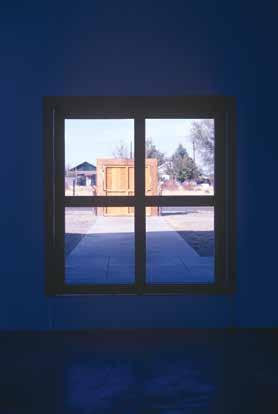
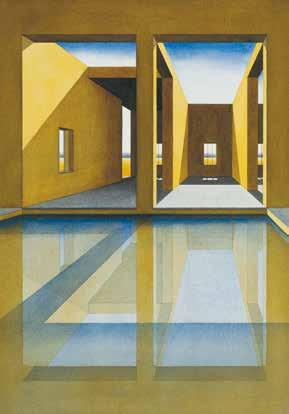
Vinciarelli’s works in art and architecture, representing a synthesis of their shared aesthetic and architectural sensibilities [fig. 8]. As Judd put it, in his characteristically practical way, the pivot doors “giv[e] you a really open space, if you want one.”21 The dynamic between open and enclosed spaces was at the heart of Vinciarelli’s work across her career, intersecting with the art-historical origins of her watercolors. Referencing the iconography of the Annunciation scene in Italian Renaissance painting, she explained: “You have a division … there is a Virgin and an angel, and they occupy two different spaces. The space of the Virgin is more enclosed, and here it comes from a window or something much more open, the divine messenger—that is, the angel … this is a binary space.”22 The open and enclosed courtyard was a central theme in Vinciarelli’s architectural work and teaching, too, and it may have influenced Judd’s interventions with (and writings about) the small courtyard bathhouse in the back of the Arena [fig. 9].
In Judd’s 1989 essay on the Arena, written a few years after he and Vinciarelli separated, Judd mentioned that opposition between open and enclosed spaces several times: “The courtyard mediates between the building and the natural surroundings, between enclosure and complete openness.”23 For the bathhouse behind the Arena, the plaster building’s
Non-Homogenous Grid [Cuadrícula no homogénea] (1973–74), aunque una conexión más convincente puede verse en su diseño de un conjunto de portones en su Project for a Productive Garden in an Urban Center in Southwest Texas [Proyecto para un jardín productivo en un centro urbano en el suroeste de Texas] (alrededor de 19 79) [fig. 6]. Allí, los dos portones independientes están hechos con una cuadrícula dividida en cuartos y están alineados en un eje de forma similar a su posición en el edificio Arena. Ella describió el proyecto en una conferencia en la Universidad de Columbia en 19 95: “Este espacio está contenido por cuatro lados de arquitectura y dos portones; nunca se construyó, pero algunos elementos fueron usados en otras circunstancias”. 17
Luego pasa directamente a hablar del edificio Arena, dando a entender que el diseño fue incorporado allí en su lugar. Desde La Mansana, pasando por el edificio Arena, hasta el Edificio Chamberlain, estas puertas y portones giratorios son uno de los rasgos arquitectónicos más distintivos del Marfa de Judd. En su conferencia de 19 78 en la New School, Vinciarelli describió cómo una “secuencia de puertas francesas”, que señaló estaban relacionadas con la “tradición mexicana”, fueron incorporadas en sus planos para un museo (encargado por Judd) destinado a albergar una colección de sus obras. 18 Existe evidencia de un zambullo , que es similar a las puertas/portones giratorios encontrados en Marfa, descrito en un informe de proyecto sobre el Pueblo de Laguna, un empla -
original pitched roof was removed and window openings were walled up, resulting in what is essentially an “open cube” surrounded by an adobe wall that was adjusted (adobe bricks filling in gaps, walls plastered) to maintain a consistent height and surface treatment all around.24 “Enclosures are necessary in West Texas,” Judd stated, “so I designed a courtyard including the foundation and surrounding it, with a bath at the center.”25
Vinciarelli described the process in slightly different terms in a 1995 lecture at Yale University: “There was a sort of building that was almost totally ruined, and the courtyard was materialized by a simplification of this building.” 26 Vinciarelli investigated the courtyard type in Marfa in two sets of perspective drawings from the late 1970s and early 1980s: The Seven Courtyards and Courtyard Building for Donald Judd , published together in Arts + Architecture magazine in 1981. As she explained, “These seven drawings, part of my ongoing research on the architectural theme of the courtyard, occupy territory between finished architectural projects and pure architectural statements.”27
The courtyard building type was often combined with the pergola and elements of the hortus conclusus (Latin for “enclosed garden”) in Vinciarelli’s work at the time.28 Like a courtyard, an enclosed garden offers shade and respite from the heat by incorporat -
zamiento en Nuevo México: “La llegada de los españoles trajo la introducción del zambullo, una puerta de pivote… Los pasadores están tallados como extensiones de la puerta trabajada a mano y se encajan para rotar libremente en el umbral y el dintel encastrados”. 19 En la misma conferencia de la New School, Vinciarelli también mencionó el fenómeno de la “puerta de los muertos” medieval, y las puertas urbanas encontradas en ciudades italianas como Umbría, que marcan la entrada a la ciudad y establecen un umbral entre el interior y el exterior, posiblemente derivadas en parte de los antiguos arcos triunfales romanos. Las puertas pivotantes interiores permiten la entrada al edificio en sí, pero las puertas pivotantes exteriores son independientes y no están conectadas a ningún muro; marcan, en cambio, la distinción entre el edificio Arena y el resto del complejo de Marfa [fig. 7]. De este modo, son claramente más simbólicas o metafóricas que funcionales. Vinciarelli había mencionado en su conferencia en la New School las formas en que las puertas (y las ventanas) ayudan a definir el eje del proyecto, y cómo los marcos de las puertas, específicamente, pueden aportar claridad conceptual y articular los diferentes espacios. 20 Por encima de todo, la puerta o portón refuerza una dualidad entre el espacio abierto y el espacio cerrado que caracteriza tanto la obra artística como arquitectónica de Judd y Vinciarelli, representando una síntesis de sus sensibilidades estéticas y arquitectónicas compartidas [fig. 8]. Como expresó Judd, con su manera típicamente práctica, las puertas pivotantes “te dan un espacio realmente abierto, si así lo deseas”. 21
La dinámica entre espacios abiertos y cerrados fue central en la obra de Vinciarelli a lo largo de su carrera, en diálogo con los orígenes histórico-artísticos de sus acuarelas. Explicó, aludiendo a la iconografía de la escena de la Anunciación en la pintura del Renacimiento italiano: “Hay una división... está la Virgen y un ángel, y ocupan dos espacios distintos. El espacio de la Virgen está más cerrado, y aquí entra algo desde una ventana o algo mucho más abierto, el mensajero divino —es decir, el ángel— ... se trata de un espacio binario”. 22 El patio abierto y cerrado fue un tema central en la obra arquitectónica y la enseñanza de Vinciarelli, y puede haber influido en las intervenciones de Judd (y en sus escritos) sobre la pequeña casa de baños en la parte trasera del edificio Arena [fig. 9]. En su ensayo de 19 89 sobre el edificio Arena, escrito unos años después de su separación de Vinciarelli, Judd mencionó varias veces esa oposición entre espacios abiertos y cerrados: “El patio
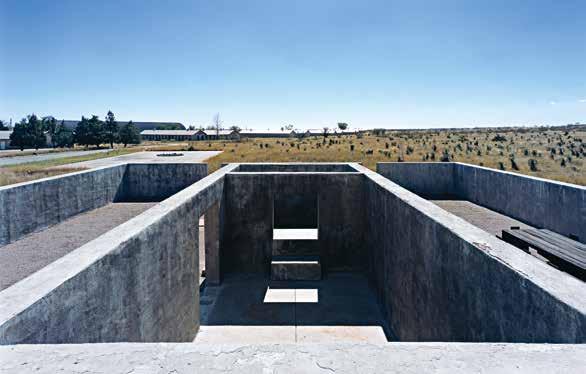
ing elements of water and greenery; although the bathhouse at the Arena lacks the lush vegetation and shade of a hortus conclusus , the conceptual drawings she made on this theme may have informed interventions at the Arena.
Vinciarelli’s collaboration with the architect Leonardo Fodera, the Puglia Project (1975–77) , is another possible influence on the Arena’s exterior courtyard bathhouse. In fact, Judd purchased her Puglia Project series of thirteen ink-and-Prismacolor drawings on Mylar in 1977, and Vinciarelli recalled that she was “extremely honored that he bought it … and I think that these drawings influenced him” [fig. 10].29 As she reminded her audience during her 1978 lecture at the New School, in dry regions such as Puglia or Marfa, water is a rare, “exceptional” element; for that reason, Vinciarelli explained, it was more appropriate to design a narrow channel of water—like a horse’s trough, as she described it—in a basin painted blue, in order to give the illusion of deeper water; the water gathered in the channel could then be recycled.30 This explanation describes the integration of water elements at the Arena and the pool at the Block, both constructed in the 1980s during their time together.
Memories of the bathhouse courtyard at the Arena seem to resurface in Vinciarelli’s later watercolors, reminiscent of the grand, ancient structures of the Eternal City in which she was raised [fig. 12]. “Rome is indelibly present in my heart,” Vinciarelli once mused, “for its uniquely magnificent
media entre el edificio y el entorno natural, entre el encierro y la apertura total”. 23 Para la casa de baños detrás del edificio Arena, se retiró el tejado a dos aguas original del edificio de yeso y se tapiaron las ventanas, resultando en lo que es esencialmente un “cubo abierto” rodeado por un muro de adobe que fue ajustado (ladrillos de adobe rellenando huecos, paredes enlucidas) para mantener una altura y tratamiento superficial consistentes en todo su perímetro. 24 “Los recintos son necesarios en el oeste de Texas”, afirmó Judd, “así que diseñé
spaces, like the Pantheon and the Early Christian churches, which have magic light and simple, powerful shapes.”31 In a lecture later in life, she emphasized her aim to construct “the simplest architecture as possible … something more solid and massive.” 32 This kind of language might call to mind large-scale minimalist sculpture, and the architectural connections are difficult to ignore. As Gachot rightly noted, for “the essential form, [Judd] looked to the typological and the vernacular,” citing Vinciarelli’s
un patio que incluyera los cimientos y lo rodeara, con una bañera en el centro”. 25 Vinciarelli describió el proceso en términos algo distintos en una conferencia de 19 95 en la Universidad de Yale: “Había una especie de edificio que estaba casi totalmente arruinado, y el patio se materializó mediante una simplificación de este edificio”. 26 Vinciarelli investigó el tipo de patio en Marfa en dos series de dibujos en perspectiva de finales de los años 70 y principios de los 80: The Seven Courtyards y Courtyard Building for Donald Judd [Los siete patios y el edificio con patio para Donald Judd], publicadas juntas en la revista Arts + Architecture en 19 81. Como explicó, “Estos siete dibujos, parte de mi investigación continua sobre el tema arquitectónico del patio, ocupan un territorio entre proyectos arquitectónicos terminados y declaraciones puramente arquitectónicas”. 27 El tipo de edificio con patio solía combinarse con la pérgola y elementos del hortus conclusus (latín para “jardín cerrado”) en la obra de Vinciarelli de esa época. 28 Al igual que un patio, un jardín cerrado ofrece sombra y refugio del calor al incorporar elementos de agua y vegetación; aunque la casa de baños del edificio Arena carece de la vegetación frondosa y la sombra de un hortus conclusus , los dibujos conceptuales que hizo sobre este tema pueden haber influido en las intervenciones en el edificio Arena.
La colaboración de Vinciarelli con el arquitecto Leonardo Fodera, el Puglia Project [Proyecto Apulia] (1975–77), es otra posible influencia sobre la casa de baños en el exterior del edificio Arena.
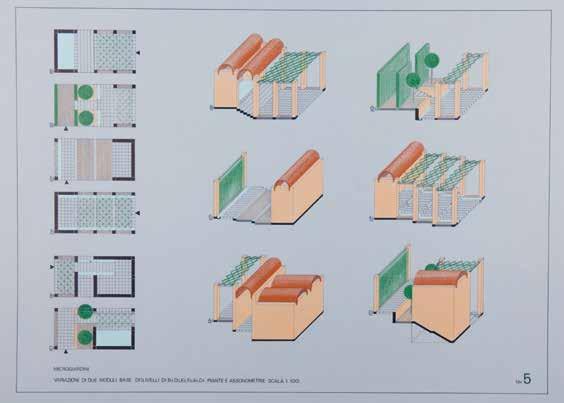
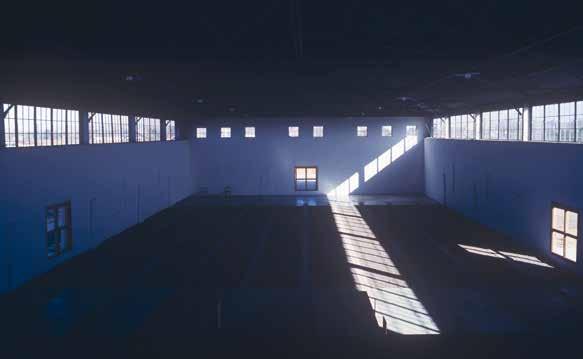
Columbia colleague Kenneth Frampton as a possible influence.33 While Judd may have been interested in Frampton’s writings about critical regionalism, a more direct connection would be Vinciarelli herself who was steeped in these architectural traditions and spoke frequently about
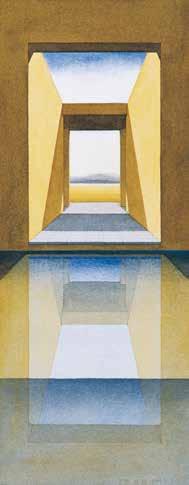
De hecho, en 19 77 Judd compró su serie del Puglia Project , trece dibujos en tinta y Prismacolor sobre Mylar, y Vinciarelli recordó que se sintió “profundamente honrada de que la comprara... y creo que estos dibujos lo influenciaron” [fig. 10]. 29 Como recordó a su audiencia durante su conferencia de 1978 en la New School, en regiones secas como Apulia o Marfa, el agua es un elemento raro, “excepcional”; por esa razón, explicó Vinciarelli, era más apropiado diseñar un canal angosto de agua —como un abrevadero para caballos, según lo describía— en una pila pintada de azul, para dar la ilusión de una mayor profundidad del agua; el agua recogida en el canal podía entonces reciclarse. 30 Esta explicación describe la integración de elementos acuáticos tanto en el edificio Arena como en la piscina de La Mansana, ambos construidos en la década de 19 80 durante su tiempo juntos.
Los recuerdos del patio de la casa de baños en el edificio Arena parecen resurgir en las acuarelas posteriores de Vinciarelli, evocando las grandes estructuras antiguas de la Ciudad Eterna en la que creció [fig. 12]. “Roma está indeleblemente presente en mi corazón,” reflexionó Vinciarelli una vez, “por sus espacios singularmente magníficos, como el Panteón y las iglesias paleocristianas, que tienen una luz mágica y formas simples y poderosas”. 31 En una conferencia ya en la última etapa de su vida, enfatizó su objetivo de construir “la arquitectura más simple posible... algo más sólido y macizo.” 32 Este tipo de lenguaje puede evocar la escultura minimalista a gran escala, y las conexiones arquitectónicas son difíciles de ignorar. Como señaló acertadamente Gachot, para “la forma esencial,
[Judd] miró hacia lo tipológico y lo vernáculo,” citando al colega de Vinciarelli en Columbia, Kenneth Frampton, como una posible influencia. 33 Aunque Judd pudo haber estado interesado en los escritos de Frampton sobre el regionalismo crítico, una conexión más directa sería la propia Vinciarelli, profundamente inmersa en esas tradiciones arquitectónicas y que hablaba con frecuencia sobre las tipologías constructivas, en particular la del patio y el hortus conclusus . Como recordó a Rainer Judd y Barbara Hunt McLanahan en una entrevista de 2008: “Este tipo de arquetipos y tipologías se estudiaban mucho en Italia.” 34
building typologies and the courtyard typology and hortus conclusus in particular. As she reminded Rainer Judd and Barbara Hunt McLanahan in a 2008 interview, “These sorts of archetypes and types were very much studied in Italy.”34
In these ways, the Arena highlights Vinciarelli and Judd’s shared beliefs about the importance of reusing and adapting existing buildings, and of considering history, type, site, and climate. But to ignore the long history of Vinciarelli’s study of, drawing of, and teaching of the courtyard typology before and during her time with Judd—to ignore the long history of open and enclosed spaces, especially courtyards, in Italian building practices, studied closely by Vinciarelli and her peers at La Sapienza University in the 1960s—does a serious disservice to Vinciarelli and to our understanding of the architecture of Marfa [figs. 11, 13].
As is the case with many creative collaborations, this is not a simple matter of assigning or denying credit to one person or another but rather acknowledging the rich cross-fertilization of ideas that produced the spaces we now visit, study, and cherish. To do right by Judd and to appreciate his work in all its complexity, we must consider not only how Vinciarelli but also the architects Donna Cohen and Claude Armstrong, the carpenters Celedonio Mediano and Alfredo Mediano, the numerous local adobe craftsmen, and perhaps even Aldo Rossi, contributed to the realization of Donald Judd’s vision for the Chinati Foundation.35
De esta forma, el edificio Arena pone de relieve las creencias compartidas de Vinciarelli y Judd sobre la importancia de reutilizar y adaptar edificios existentes, y de considerar la historia, la tipología, el emplazamiento y el clima. Pero ignorar la larga trayectoria de estudio, dibujo y enseñanza de Vinciarelli sobre la tipología del patio, antes y durante su tiempo con Judd —ignorar la larga historia de los espacios abiertos y cerrados, especialmente los patios, en las prácticas constructivas italianas, estudiadas de cerca por Vinciarelli y sus colegas en la Universidad de La Sapienza en los años sesenta— es una grave injusticia para Vinciarelli y para nuestra comprensión de la arquitectura de Marfa [figs. 11, 13].
Como ocurre con muchas colaboraciones creativas, no se trata simplemente de asignar o negar el crédito a una persona u otra, sino de reconocer el rico cruce de ideas que dio lugar a los espacios que hoy visitamos, estudiamos y valoramos. Para hacer justicia a Judd y apreciar su obra en toda su complejidad, debemos considerar no solo cómo Vinciarelli, sino también los arquitectos Donna Cohen y Claude Armstrong, los carpinteros Celedonio Mediano y Alfredo Mediano, los numerosos artesanos locales del adobe, y quizás incluso Aldo Rossi, contribuyeron a la realización de la visión de Donald Judd para la Fundación Chinati. 35
Rebecca Siefert es profesora asociada de historia del arte en Governors State University, en University Park, Illinois, y copresidenta del grupo afiliado SAH Women in Architecture . Su investigación se centra en las mujeres en la arquitectura desde finales de los años sesenta hasta los años noventa, el impacto de las residentes y activistas en la vivienda pública de Chicago y la pedagogía de la historia del arte. Su monografía sobre Lauretta Vinciarelli, Into the Light: The Art and Architecture of Lauretta Vinciarelli [Hacia la luz: el arte y la arquitectura de Lauretta Vinciarelli], se publicó en 2020.
NOTAS
1 Lauretta Vinciarelli, entrevistada por Rainer Judd y Barbara Hunt McLanahan, el 25 de febrero de 2008, transcripción, Proyecto de Historia Oral, Judd Foundation, Marfa, Texas.
Rebecca Siefert is an associate professor of art history at Governors State University, University Park, Illinois, and the coassociate chair of the SAH Women in Architecture Affiliate Group. Her scholarship centers on women in architecture from the late 1960s through the 1990s, the impact of women residents and activists on Chicago public housing, and art history pedagogy. Siefert’s monograph on Lauretta Vinciarelli, Into the Light: The Art and Architecture of Lauretta Vinciarelli, was published in 2020.
1 Lauretta Vinciarelli, interview by Rainer Judd and Barbara Hunt McLanahan, February 25, 2008, transcript, Oral History Project, Judd Foundation, Marfa, Texas.
2 Donald Judd, interview by Gunnar Jóhannes Árnason, Ingólfur Arnarsson, and Pétur Arason, July 1992, Donald Judd Interviews, eds. Flavin Judd and Caitlin Murray (Judd Foundation and David Zwirner Books, 2019), 814.
3 Richard Gachot, “Donald Judd: The Concrete Buildings,” Chinati Foundation Newsletter 21 (October 2016): 29.
4 “Lauretta Vinciarelli Lecture,” 1978, Giuseppe Zambonini Papers, New School Archives and Special Collections Digital Archive, accessed December 11, 2024, http:// digitalarchives.library.newschool.edu/index.php/Detail/objects/KA0130_OA_14. There is a photograph in the New School Archives of Judd, Vinciarelli, and Zambonini together, suggesting Judd was present for Vinciarelli’s lecture.
5 These women were honored in an eponymous conference at La Sapienza University, organized by Dina Nencini, Laura Fabriani, Carla Ghezzi, Francesca Angela Guida, and Mariangela Ludovica Santarsiero, “Roma: Le ragazze degli anni 60 nell’architettura e nelle arti,” June 20, 2024.
6 Franco Purini, an architect of Vinciarelli’s generation who was also a graduate of La Sapienza, had a significant influence on his contemporaries in the realm of l’architettura disegnata; K. Michael Hays, “Not Architecture But Evidence That It Exists: A Note on Lauretta Vinciarelli’s Watercolors,” in Brooke Hodge, ed., Not Architecture But Evidence That It Exists: Lauretta Vinciarelli Watercolors (Princeton Architectural Press, 1999): 121–30.
7 Marianne Stockebrand, “The Whole Judd,” Chinati Foundation Newsletter 17 (October 2012): 3–15.
8 Donald Judd, “Arena,” in Donald Judd: Architektur (Westfälischer Kunstverein, 1989), 82.
9 Marianne Stockebrand, “Donald Judd: Arena, 1980–1987,” in Chinati: The Vision of Donald Judd, ed. Marianne Stockebrand (The Chinati Foundation, 2010), 132.
10 Judd, “Arena,” 83.
11 Donald Judd, interview by Pilar Viladas, 1985, Donald Judd Interviews, 552.
12 Judd, “Arena,” 83; Interview by Viladas, 551.
13 Stockebrand, “Donald Judd: Arena, 1980–1987,” 132; Donald Judd, interview by Regina Wyrwoll, for the television documentary Bauhaus, Texas, (October 4–5, 1993), Donald Judd Interviews, 857.
14 Gachot, “Donald Judd: The Concrete Buildings,” 29.
15 Lauretta Vinciarelli, “Donald Judd and His Work in Marfa, TX,” lecture, February 27, 1995, School of Architecture, Yale University, Lectures and Presentations (RU 880), Manuscripts and Archives, Yale University Library, https://archives.yale. edu/repositories/12/resources/2841.
16 Interview by Viladas, 550–51.
17 Lauretta Vinciarelli and Silvia Kolbowski, “Marfa, Texas: Don Judd’s Place of Architecture,” Noontime Lecture Series,
2 Donald Judd, entrevistado por Gunnar Jóhannes Árnason, Ingólfur Arnarsson y Pétur Arason, en julio de 1992, Donald Judd Interviews [Las entrevistas de Donald Judd] eds. Flavin Judd y Caitlin Murray (Judd Foundation and David Zwirner Books, 2019), p. 814.
3 Richard Gachot, “Donald Judd: The Concrete Buildings” [Donald Judd: los edificios en hormigón], Publicación informativa de Chinati 21 (octubre de 2016): p. 29.
4 “Lauretta Vinciarelli Lecture” [Conferencia de Lauretta Vinciarelli] 1978, de los documento¡s de Giuseppe Zambonini, Archivos y colecciones especiales digitales de la New School , consultado el 11 de diciembre de 2024, http://digitalarchives.library.newschool. edu/index.php/Detail/objects/KA0130_ OA_14. Existe una fotografía en los archivos de la New School en la que aparecen Judd, Vinciarelli y Zambonini juntos, lo que sugiere que Judd estuvo presente en la conferencia de Vinciarelli.
5 Estas mujeres fueron homenajeadas en una conferencia homónima en la Universidad La Sapienza, organizada por Dina Nencini, Laura Fabriani, Carla Ghezzi, Francesca Angela Guida y Mariangela Ludovica Santarsiero, “Roma: Le ragazze degli anni 60 nell’architettura e nelle arti”, 20 de junio de 2024.
6 Franco Purini, arquitecto perteneciente a la generación de Vinciarelli que también se graduó por La Sapienza, tuvo una influencia significativa en sus contemporáneos en el campo de l´architettura disegnata ; K. Michael Hays, “Not Architecture But Evidence That It Exists: A Note on Lauretta Vinciarelli´s Watercolors” [No es arquitectura, sino prueba de que la arquitectura existe: una nota sobre las acuarelas de Lauretta Vinciarelli], en Brooke Hodge, ed., Not Architecture But Evidence That It Exists: Lauretta Vinciarelli Watercolors (Princeton Architectural Press, 1999): pp. 121–30.
7 Marianne Stockebrand, “The Whole Judd” [Judd en conjunto], Publicación informativa de Chinati 17 (octubre de 2012): pp. 3–15.
8 Donald Judd, “Arena”, en Donald Judd: Archi tektur (Westfälischer Kunstverein, 1989), p. 82.
9 Marianne Stockebrand, “Donald Judd: Arena, 1980–1987,” en Chinati: The Vision of Donald Judd [Chinati: la visión de Donald Judd], ed. Marianne Stockebrand (The Chinati Foundation, 2010), p. 132.
10 Judd, “Arena”, p. 83.
11 Donald Judd, entrevistado por Pilar Viladas, en 1985, Donald Judd Interviews [Entrevistas de Donald Judd], p. 552.
12 Judd, “Arena,” p. 83; entrevistado por Viladas, p. 551.
13 Stockebrand, “Donald Judd: Arena, 1980–1987,” p. 132; Donald Judd, entrevistado por Regina Wyrwoll, para el documental televisivo Bauhaus, Texas, (4–5 de octubre de 1993), Donald Judd Interviews [Las entrevistas de Donald Judd], p. 857.
14 Gachot, “Donald Judd: The Concrete Buildings” [Donald Judd: los edificios de hormigón], p. 29.
15 Lauretta Vinciarelli, “Donald Judd and His Work in Marfa, TX” [Donald Judd y su obra en Marfa, Texas], conferencia, el 27 de febrero de 1995, Escuela de Arquitectura, Universidad de Yale, Conferencias y Presentaciones (RU 880), Manuscritos y Archivos, Bibilioteca de la Universidad de Yale, https://archives. yale.edu/repositories/12/resources/2841.
16 Entrevistado por Viladas, pp. 550-51.
17 Lauretta Vinciarelli y Silvia Kolbowski, “Marfa, Texas: Don Judd’s Place of Architecture” [Marfa, Texas: el lugar de la arquitectura de Don Judd], serie de conferencias Noontime, Parte IV, “Public Space: What Is It? Whose Is It? Where Is It?” [El espacio público: ¿Qué es? ¿De quién es? ¿Dónde está?], el 10 de noviembre de 1995, El Centro Buell para el Estudio de la Arquitectura Americana de la Escuela Superior de Arquitectura, Planificación y Conservación, Universidad de Columbia.
18 “Conferencia de Lauretta Vinciarelli”, 1978.
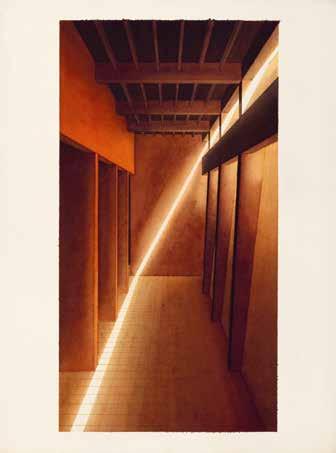
Part IV, “Public Space: What Is It? Whose Is It? Where Is It?,” November 10, 1995, The Buell Center for the Study of American Architecture at the Graduate School of Architecture, Planning and Preservation, Columbia University.
18 “Lauretta Vinciarelli Lecture,” 1978.
19 Marjorie Baer and Ann Baggerman Frej, Pueblo of Laguna: A Project Report (US Dept. of the Interior, National Park Service, Historic American Buildings Survey/Historic American Engineering Record, 1983), 39.
20 ” Lauretta Vinciarelli Lecture,” 1978.
21 Interview by Viladas, 551.
22 Lauretta Vinciarelli, lecture, March 5, 2009, Spitzer School of Architecture at the City College of New York, DVD.
23 Stockebrand, “Donald Judd: Arena, 1980–1987,” 133.
24 Stockebrand, “Donald Judd: Arena, 1980–1987,” 132, 133.
25 Judd, “Arena,” 83.
26 Vinciarelli, “Donald Judd and His Work in Marfa, TX.”
27 Lauretta Vinciarelli, “Artist/Architect: Courtyard Studies,” Arts + Architecture 1, no. 2 (Winter 1981): 36, 37.
28 Vinciarelli mentions the hortus conclusus in her New School lecture and later in the interview by Rainer Judd and Barbara Hunt McLanahan.
29 Vinciarelli, interview by Rainer Judd and Barbara Hunt McLanahan.
30 “Lauretta Vinciarelli Lecture,” 1978.
31 Lauretta Vinciarelli, interview by Hyun Suk Yu, June 10, 1997, transcript, private collection.
32 Lauretta Vinciarelli, lecture, March 5, 2009, Spitzer School of Architecture at the City College of New York, DVD.
33 Gachot, “Donald Judd: The Concrete Buildings,” 29.
34 Vinciarelli, interview by Rainer Judd and Barbara Hunt McLanahan.
35 To paraphrase the title of the book Chinati: The Vision of Donald Judd
19 Marjorie Baer y Ann Baggerman Frej, Pueblo of Laguna: A Project Report [Pueblo de Laguna: un informe de proyecto] (Departamento del Interior de los EE. UU., Servicio de Parques Nacionales, Estudio de edificios históricos estadounidenses/Registro histórico de ingeniería estadounidense, 1983), p. 39.
20 “Conferencia de Lauretta Vinciarelli”, 1978.
21 Entrevistado por Viladas, p. 551.
22 Lauretta Vinciarelli, conferencia, el 5 de marzo de 2009, Escuela Spitzer de Arquitectura en la City College de Nueva York, DVD.
23 Stockebrand, “Donald Judd: Arena, 1980–1987,” p. 133.
24 Stockebrand, “Donald Judd: Arena, 1980–1987,” p. 132, p. 133.
25 Judd, “Arena,” 83.
26 Vinciarelli, “Donald Judd and His Work in Marfa, TX” [Donald Judd y su obra en Marfa, Texas].
27 Lauretta Vinciarelli, “Artist/Architect: Courtyard Studies” [Artista/Arquitecta: estudios de patios], Arts + Architecture 1, núm. 2 (invierno de 1981): p. 36, p. 37.
28 Vinciarelli menciona el hortus conclusus en su conferencia en la New School y luego al ser entrevistada por Rainer Judd y Barbara Hunt McLanahan.
29 Vinciarelli, entrevistada por Rainer Judd y Barbara Hunt McLanahan.
30 “Conferencia de Lauretta Vinciarelli”, 1978.
31 Lauretta Vinciarelli, entrevistada por Hyun Suk Yu, 10 de junio de 1997, transcripción, colección privada.
32 Lauretta Vinciarelli, conferencia, el 5 de marzo de 2009, Escuela Spitzer de Arquitectura en la City College de Nueva York, DVD.
33 Gachot, “Donald Judd: The Concrete Buildings” [Donald Judd: los edificios de hormigón], p. 29.
34 Vinciarelli, entrevistada por Rainer Judd y Barbara Hunt McLanahan.
35 Para parafrasear el título del libro Chinati: The Vision of Donald Judd [Chinati: la visión de Donald Judd].
Below is an edited transcript of the opening remarks of Part I of the symposium Art in Context: Art, Architecture, and the Middle Landscape , co-hosted with Rice University School of Architecture, held at the Crowley Theater in Marfa, Texas, from April 4 to 6, 2025. Videos of the weekend’s lectures, conversations, and panels can be found on the Chinati Foundation’s website, and a forthcoming publication will include transcriptions of the proceedings of Parts I and II of the symposium.
A continuación, se presenta una transcripción editada del discurso de apertura de la parte I del simposio Arte en Contexto: arte, arquitectura y el paisaje intermedio , coorganizado con la Escuela de Arquitectura de la Universidad de Rice, llevado a cabo en el Teatro Crowley de Marfa, Texas, del 4 al 6 de abril de 2025. Los videos de las conferencias, conversaciones y mesas redondas del fin de semana están disponibles en el sitio web de la Fundación Chinati, y una próxima publicación incluirá las transcripciones de las sesiones de las partes I y II del simposio.
As Donald Judd wrote in his essay “21 February 1993,” “There has been almost no discussion of space in art, nor in the present. The most important and developed aspect of present art is unknown. This concern, my main concern, has no history. There is no context; there are no terms; there are not any theories. There is only the visible work invisible.”1
Como escribió Donald Judd en su ensayo “21 February 1993” [21 de febrero de 1993], “Casi no ha habido discusión sobre el espacio en el arte, ni en el presente. El aspecto más importante y desarrollado del arte actual es desconocido. Esta preocupación, mi preocupación principal, no tiene historia. No hay contexto; no hay términos; no hay teorías. Solo existe la obra visible invisible.” 1
For me, the questions that will be asked in this symposium relate to one of the most fundamental concerns of Donald Judd’s work itself, namely, the making of space, and how this grew to include art, architecture, and landscape, and how those integrated concerns necessarily include context.
Following the tradition of previous Chinati symposia, of which this is the seventh, our purpose this weekend and in Part II, to be held at Rice University in November 2025, is to attempt a history, a context, and the development of terms and theories— to make Judd’s accomplishments and the accomplishment of others in these arenas more visible. 2 My focus in
Para mí, las preguntas que se abordarán en este simposio se relacionan con una de las preocupaciones más fundamentales de la obra de Donald Judd: la creación del espacio, y cómo esta preocupación se amplió para incluir el arte, la arquitectura y el paisaje, y cómo estas preocupaciones integradas incluyen necesariamente el contexto. Siguiendo la tradición de los simposios anteriores de Chinati —este es el séptimo—, nuestro propósito este fin de semana y en la parte II, que se celebrará en la Universidad de Rice en noviembre de 2025, es intentar construir una historia, un contexto, y el desarrollo de términos y teorías: hacer más visibles los logros de Judd y los de otros en estos ámbitos. 2 Mi enfoque en este discurso de apertura es el espacio en la obra de Judd, pero otros de los aquí reunidos este fin de semana abordarán el espacio, y el contexto, en sus propias obras, ya sea desde lo teórico o lo práctico, desde lo histórico o desde el presente. Además, este simposio también parte de una idea fundamental para la Fundación Chinati: la creación de espacios donde el arte, la arquitectura y la tierra
these opening remarks is on space in Judd’s work, but others of us gathered here this weekend will address space, and context, in their own work, be it theoretically or practically, historically or in the present.
Moreover, this symposium also takes as fundamental to the Chinati Foundation the making of spaces where art, architecture, and land become a whole. For me, a radical realization of this wholeness can be experienced in Judd’s 100 untitled works in mill aluminum (1982–86), installed by Judd in two former artillery sheds (adjacent to Marfa, and its ranching culture and economy) on the damaged land of the former Fort D. A. Russell in the Chihuahuan Desert, sixty miles north of the Rio Grande.
My attempt and my hope for all of us this weekend is to come to a better understanding of what Judd meant when he said that space is made, and to embark upon a definition of terms without reliance on tropes, platitudes, or vagaries, and, above all, to appreciate why this matters to us now and in our future endeavors, here and elsewhere.
To begin, we find Judd’s assertion that “space is made” in his 1994 essay “Some Aspects of Color in General and Red and Black in Particular.” I have long considered “Some Aspects of Color” a companion to his wellknown 1964 essay “Specific Objects,” but whereas in “Specific Objects” Judd focused on the accomplishments of a few fellow artists of the 1960s, identifying new developments in art, differentiating them from traditional modes of painting and sculpture, in “Some Aspects of Color,” Judd elucidates his own achievements, with emphasis on his contributions to the making of space.
To interpret what Judd meant by “space is made,” I want to discuss two passages where this phrase appears, starting with an excerpt from his essay “21 February 1993”:
There is no neutral space, since space is made, indifferently or intentionally, and since meaning is made, ignorantly or knowledgeably. This is the beginning of my concern for the surroundings of my work. These are the simplest circumstances which all art must confront.3
Next, a slightly longer passage from “Some Aspects of Color”: Space is made by an artist or architect; it is not found and packaged. It is made by thought. Therefore most buildings have
se convierten en un todo. Para mí, una realización radical de esta totalidad puede experimentarse en las 100 obras sin título en aluminio en bruto (1982–1986) de Judd, instaladas por él en dos antiguos cobertizos de artillería (adyacentes a Marfa y a su cultura y economía ganaderas), sobre la tierra deteriorada del antiguo Fuerte D. A. Russell, en el Desierto de Chihuahua, a noventa y siete kilómetros al norte del Río Bravo. Mi intento, y mi esperanza para todos nosotros este fin de semana, es alcanzar una mejor comprensión de lo que Judd quiso decir cuando afirmó que el espacio se hace, y emprender una definición de términos sin depender de tópicos, lugares comunes o vaguedades y, por encima de todo, apreciar por qué esto nos importa, aquí y ahora, y en nuestros proyectos futuros, tanto en este lugar como en otros.
—
Para empezar, encontramos la afirmación de Judd de que “el espacio se hace” en su ensayo de 1994 “Some Aspects of Color in General and Red and Black in Particular” [Algunos aspectos del color en general y el rojo y el negro en particular]. Desde hace tiempo considero “Some Aspects of Color” como un texto complementario a su conocido ensayo de 1964 “Specific Objects” [Objetos específicos], pero mientras que en “Specific Objects” Judd se centró en los logros de algunos artistas de los años sesenta, identificando nuevos desarrollos en el arte y diferenciándolos de las formas tradicionales de la pintura y la escultura, en “Some Aspects of Color”, Judd elucida sus propios logros, poniendo énfasis en su contribución a la creación del espacio.
Para interpretar lo que Judd quiso decir con “el espacio se hace”, quiero hablar de dos pasajes en los que aparece esta frase, comenzando con un extracto de su ensayo “21 February 1993”:
No hay espacio neutral, puesto que el espacio se hace, ya sea de manera indiferente o intencionadamente, y puesto que el significado se hace, ya sea de manera ignorante o conscientemente. Este es el principio de mi preocupación por los entornos de mi obra. Estas son las circunstancias más simples a las que todo arte debe enfrentarse. 3
A continuación, un pasaje un poco más extenso de “Some Aspects of Color”: El espacio lo hace un artista o un arquitecto; no se encuentra ni se empaqueta. Se hace con el pensamiento. Por eso, la mayoría de los edificios no tienen espacio. La mayoría de las personas no son conscientes de esta ausencia. No les molesta una confusión y una nada
no space. Most people are not aware of this absence. They are not bothered by a confusion and a nothingness that is enclosed. Of course they don’t miss real space and don’t desire it. Sometimes when they are traveling they enter a cathedral, recognize space, and thank God instead of the architect. Some people recognize and want what they never knew existed. A few people have said to me, and one has written, that my work together made space of a room, made architecture, and even that it made a “spiritual” space. Space is so unknown that the only comparison is to the beliefs of the past.4
Judd believed that space was new in art and had only been developed as a main aspect of art in the 1960s. While I suspect other contributors to the symposium may suggest alternative origins, in his writings, Judd charted a brief historiography of the development of space in art, noting Constantin Brancusi and Jean Arp as precursors, followed by Jackson Pollock, David Smith, and Lee Bontecou. Of his contemporaries, he found space developed most notably in the works of John Chamberlain, Claes Oldenburg, Richard Serra, and Larry Bell—describing Bell’s glass works as containing “a visible space, modified by a phenomenological aspect that has become an important new aspect.”5
Much more could and should be discussed about Judd’s thinking on how space can be made, ignorantly or knowledgeably, intentionally, or indifferently, but today I am going to very briefly explore a few examples of how Judd made space in his own works, both internally and externally, for the indoors and outdoors, and finally through his 100 untitled works in mill aluminum installed in the Artillery Sheds at the Chinati Foundation. For Judd, space was made by thought. It is thought that takes a general space and gives it particularity and definition. The particularity and definition of the space surrounding the work, became for him, as Judd said, crucial to the work itself, with as much thought going into the installation as into a piece itself.
I want to begin with a consideration of Judd’s understanding of space that is so fundamental that it requires repeated attention. In fact, Richard Shiff, a speaker at this symposium, addressed the following point in his introduction to the panel discussion for Chinati’s 1995 symposium, Art
que está encerrada. Por supuesto, no echan de menos el espacio real ni lo desean. A veces, cuando viajan, entran en una catedral, reconocen el espacio y le dan gracias a Dios en lugar de al arquitecto. Algunas personas reconocen y desean lo que nunca supieron que existía. Unas pocas personas me han dicho, y una lo ha escrito, que mi obra en conjunto creó espacio en una sala, creó arquitectura, e incluso que creó un espacio “espiritual”. El espacio es tan desconocido que la única comparación posible es con las creencias del pasado. 4 Judd creía que el espacio era algo nuevo en el arte y que solo se había desarrollado como un aspecto central del arte a partir de la década de 1960. Aunque sospecho que otros participantes del simposio pueden sugerir orígenes alternativos, en sus escritos Judd trazó una breve historiografía del desarrollo del espacio en el arte, señalando a Constantin Brancusi y Jean Arp como precursores, seguidos por Jackson Pollock, David Smith y Lee Bontecou. Entre sus contemporáneos, Judd consideró que el espacio se desarrolló de manera más notable en las obras de John Chamberlain, Claes Oldenburg, Richard Serra y Larry Bell, describiendo las obras en vidrio de Bell como poseedoras de “un espacio visible, modificado por un aspecto fenomenológico que se ha convertido en un nuevo aspecto importante.” 5 Mucho más podría —y debería— discutirse sobre el pensamiento de Judd respecto a cómo el espacio puede hacerse, ya sea de manera ignorante o conscientemente, ya sea de manera intencionada o indiferentemente. Pero hoy quiero explorar brevemente algunos ejemplos de cómo Judd creó espacio en sus propias obras, tanto interna como externamente, en espacios interiores y exteriores, y, finalmente, a través de sus 100 obras sin título en aluminio en bruto instaladas en los Cobertizos de Artillería de la Fundación Chinati. Para Judd, el espacio se hacía con el pensamiento. Es el pensamiento el que toma un espacio general y le da particularidad y definición. La particularidad y la definición del espacio que rodea la obra se convirtieron para él, como dijo Judd, en elementos cruciales de la obra en sí, ya que se pensaba tanto en la instalación como en la pieza en sí misma. Quiero empezar con una consideración sobre la comprensión del espacio por parte de Judd que es tan fundamental que requiere de una reiterada atención. De hecho, Richard Shiff, uno de los ponentes de este simposio, abordó el siguiente punto en su introducción a la mesa redonda del simposio de Chinati
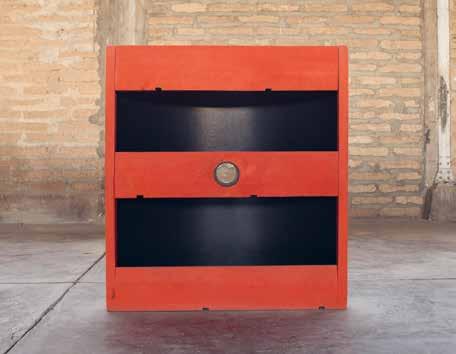
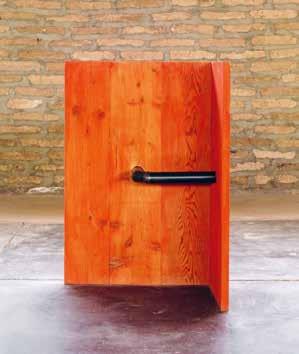
in the Landscape . I am indebted to Richard’s work on Judd and to these previous symposium contributions, which have greatly informed my thinking and remarks today.
As Judd wrote in “Some Aspects of Color,” because space is so unknown, unconsidered, unstudied, a discussion of space would have to begin with a rock. Of a given singular rock, Judd asks:
How large is it? Is it on a level surface? Does it rest on the surface or does it perch? If it isn’t on a level surface, the tilted
de 1995, Art in the Landscape [El arte en el paisaje]. Estoy en deuda con el trabajo de Richard sobre Judd y con estas contribuciones anteriores al simposio, que han conformado en gran medida mi pensamiento y mis observaciones de hoy. Como escribió Judd en “Some Aspects of Color”, debido a que el espacio es tan desconocido, tan poco considerado, tan poco estudiado, una discusión sobre el espacio tendría que comenzar con una roca. Sobre una roca singular dada, Judd se pregunta:
¿Qué tamaño tiene? ¿Está sobre una superficie nivelada? ¿Des -
surface approaches a second entity. Is the rock symmetrical? If not, does it face away or toward the tilted surface? Is the top of the rock pointed, rounded, flat but symmetrical with the sides, flat but broader than the sides, so that the rock is a thick plane parallel to the surface, level or tilted? That is, in general, in what way does the rock create space around itself? It is a definition of space, a center of space, in one way a core of space.6
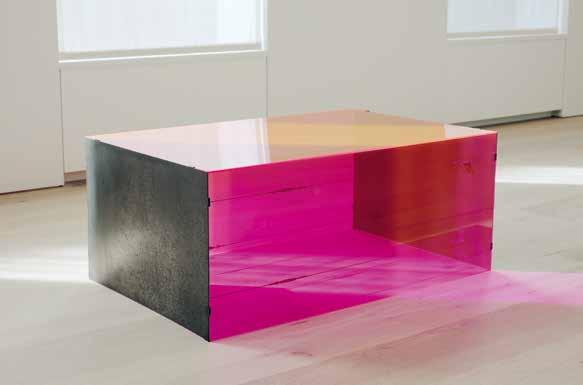
cansa sobre la superficie o se posa sobre ella? Si no está sobre una superficie nivelada, la superficie inclinada se aproxima a una segunda entidad. ¿La roca es simétrica? Si no lo es, ¿mira hacia o se aleja de la superficie inclinada? ¿La parte superior de la roca es puntiaguda, redondeada, plana pero simétrica con los lados, plana pero más ancha que los lados, de modo que la roca sea un plano grueso paralelo a la superficie, ya sea nivelada o inclinada? Es decir, en general, ¿de qué manera la roca crea espacio a su alrededor? Es una definición de espacio, un centro del espacio, en cierto modo un núcleo del espacio. 6
Veamos dos obras de 1962, las primeras obras de Judd en tres dimensiones [figs. 1, 2]. En una, tenemos una obra que Judd hizo para la pared, pero al verla ubicada directamente en el suelo, determinó que era satisfactoria. Esta fue su primera obra exenta en tres dimensiones. Aunque es decididamente más frontal que la otra pieza, la primera la concibió desde el principio como tridimensional, en ambas obras existe el espacio contenido por la propia tubería, así como el espacio del recinto de la Masonita redondeada a la izquierda y los paneles de madera unidos a la derecha.
En estas obras, Judd desechó lo totémico, lo antropomórfico y el objeto abstraído. Como dijo de la segunda pieza: “El ángulo recto no está de pie ni sentado... no hay forma de creer que sea una figura abstraída o un objeto abstraído.
NEW YORK, APRIL 11–MAY 9, 1970 / DONALD JUDD, SIN TÍTULO, 1970. HIERRO GALVANIZADO POR INMERSIÓN EN CALIENTE. QUINCE UNIDADES, CADA UNA DE 152,4 × 122 CM; DOS UNIDADES, CADA UNA DE 152,4 × 10⁴ CM Y UNA UNIDAD DE 52,4 × 33 CM
Let’s look at two works from 1962, Judd’s first works in three dimensions [figs. 1, 2]. In one, we have a work Judd made for the wall, but seeing it situated directly on the floor, he determined it satisfactory. This was his first free-standing work in three-dimensions. Although decidedly more frontal than the other piece, the first he conceived of from the beginning as three-dimensional, in both works there is the space contained by the pipe itself, as well as the space of the enclosure of the rounded Masonite on the left and the joined wood panels on the right.
In these works, Judd jettisoned the totemic, anthropomorphic, and the abstracted object. As he said of the second piece, “The right angle doesn’t stand or sit … there is no way to believe it to be an abstracted figure, or an abstracted object. All sides are equal,” he noted, with “scarcely an inside and an outside, only the space within the angle and the space beyond the angle.”7
Moreover, his movement of the work from the wall to the floor, and the removal of the pedestal altogether, was innovative, new in ways both physical and cosmological. Now commonplace, the action was at the time revolutionary; by the touching of surfaces, space around the work itself came into being, and with it, context. With these advancements, space became one of the main aspects of Judd’s work. “My work on the floor,” he wrote, “was a new form, creating space amply and strongly.”8
To this end, it’s important to consider a body of work, referred to colloquially as the “turnbuckle pieces,” first made in 1965 [fig. 3]. These pieces consist of wire and metal turnbuckles that support three Plexiglas sides and two steel endplates from the inside, without glue or welding. In these works, the interior space is exposed, and one can also see through the work itself
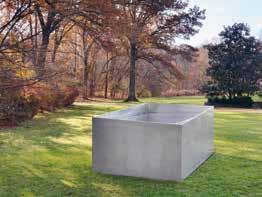
5. DONALD JUDD, UNTITLED, 1971. STAINLESS STEEL, OUTER RECTANGLE: 54 ½–68 ½ (H.) CONFORMING TO THE SLOPE OF THE LAND × 97 ½ × 145 ½ IN.; INNER RECTANGLE: 54 × 81 × 129 IN. JOSEPH AND EMILY RAUH PULITZER HOUSE / DONALD JUDD, SIN TÍTULO, 1971. ACERO INOXIDABLE, RECTÁNGULO EXTERIOR: 138,4–174 CM DE ALTO, CONFORME A LA PENDIENTE DEL TERRENO × 247,7 × 369,5 CM; RECTÁNGULO INTERIOR: 137,2 × 205,7 × 327,7 CM. CASA DE JOSEPH Y EMILY RAUH PULITZER
Todos los lados son iguales”, señaló, “apenas hay un interior y un exterior, solo el espacio dentro del ángulo y el espacio más allá del ángulo”. 7
Además, su traslado de la obra de la pared al suelo, y la eliminación total del pedestal, fue algo innovador, nuevo en sentidos tanto físicos como cosmológicos. Aunque hoy nos parezca común, en su momento esta acción fue revolucionaria; mediante el contacto de las superficies, el espacio alrededor de la obra misma cobraba existencia, y con él, contexto. Con estos avances, el espacio se convirtió en uno de los aspectos centrales de la obra de Judd. “Mi obra en el suelo”, escribió, “fue una nueva forma, creando espacio de manera amplia y poderosa.” 8
Con este propósito, es importante considerar un conjunto de obras conocido coloquialmente como las “turnbuckle pieces” [piezas de tensores], realizadas por primera vez en 1965 [fig. 3]. Estas piezas están compuestas por tensores
from one side to the other. Moreover, the Plexiglas sheets cast colored light onto the floor surrounding the work. Through its transparency and cast light, the room enters the piece, and the piece enters the room.
By 1970, Judd began to develop works that directly addressed the context of given indoor and outdoor settings. Certainly, his invention of the stack, in 1965, was a major step in this direction, with the height of a stack being partially determined by the height of a given wall. Much more could be said here, but what I want to focus on now is Judd’s move from working with part of a room to engaging an entire room. Untitled, from 1970, is made from sixty-inch-high galvanized iron sheets, which Judd divided to fit the dimensions of the room, in this instance, at the Leo Castelli Gallery [fig. 4].
As Judd wrote of the work in “Some
de alambre y de metal que sostienen tres lados de Plexiglás y dos placas de acero en los extremos, todo desde el interior, sin utilizar pegamento ni soldadura. En estas obras, el espacio interior queda expuesto, y también se puede ver a través de la pieza de un lado al otro. Además, las láminas de Plexiglás proyectan luz coloreada sobre el suelo que rodea la obra. A través de su transparencia y la luz proyectada, la sala entra en la pieza, y la pieza entra en la sala.
—
Ya en 1970, Judd comenzó a desarrollar obras que abordaban directamente el contexto de espacios interiores y exteriores específicos. Sin duda, su invención de la pila, en 1965, fue un paso importante en esta dirección, ya que la altura de una pila venía determinada en parte por la altura de una pared dada. Mucho más podría decirse al respecto, pero lo que quiero destacar ahora es el paso de Judd de trabajar con una parte de una sala a comprometerse con la totalidad del espacio.
Sin título, de 1970, está hecha con planchas de hierro galvanizado de ciento cincuenta y dos centímetros de alto, que Judd dividió para ajustarse a las dimensiones de la sala, en este caso, en la Galería Leo Castelli [fig. 4]. Como escribió Judd sobre esta obra en “Some Aspects of Color”: “En 1970 hice lo que usualmente se describe como una pared de hierro galvanizado que rodeaba tres lados de una sala. Esta es una sala entera.” 9 No se trataba solo de una obra que ocupaba el espacio de una sala completa, sino que, de hecho, la obra era la sala entera. —
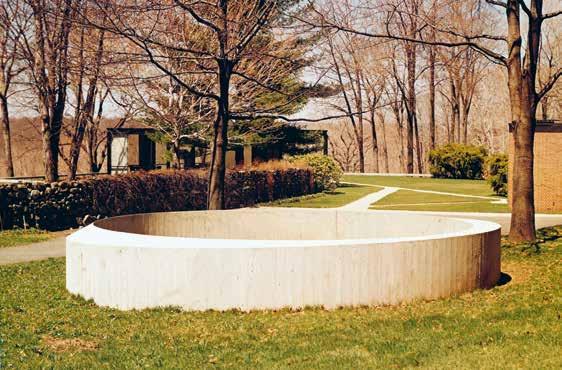
Aspects of Color”: “In 1970 I made what is usually described as a galvanized iron wall which went around three sides of a room. This is a whole room.”9 Not just a work that occupies the space of a whole room, but the work was in fact, the whole room.
—
The following year, Judd created two pieces for the outdoors that related to the specific topography of the site on which they were installed. In this piece in stainless steel made for the grounds of the home of Joseph and Emily Pulitzer in St. Louis, Judd nested two boxes within each other, with the top of the outer box level and the top of the inner box following the slope of the land [fig. 5]. This piece was not only Judd’s first work outdoors, but it was also his first site-specific piece. It is in this work that Judd begins to consider the relationship of level and slope as
Al año siguiente, Judd creó dos obras para el exterior que se relacionaban con la topografía específica del emplazamiento en el que fueron instaladas. En esta pieza de acero inoxidable realizada para los terrenos de la casa de Joseph y Emily Pulitzer en St. Louis, Judd anidó dos cajas una dentro de la otra: la parte superior de la caja exterior se mantenía nivelada, mientras que la parte superior de la caja interior seguía la pendiente del terreno [fig. 5]. Esta obra no solo fue la primera que Judd realizó al aire libre, sino también su primera pieza site-specific . Es en esta obra donde Judd comienza a considerar la relación entre el nivel y la pendiente como elementos centrales en su atención al emplazamiento dado. Aunque utilizaba principalmente la simetría en su obra, este desarrollo permitió a Judd explorar la asimetría. “Dado que está relacionada con el terreno sobre el que
its “power” lies in this “polarization.” It is two things but one thing.11 —
While in the two previous pieces, Judd created topographically specific works, which facilitate what the curator Jeffrey Weiss has called “embodied seeing,” a work from a few years later, begun in 1976, allows one to enter enclosed space through the construction of rectilinear adobe walls that create corridors in relationship to existing buildings and define a large courtyard that is discrete from the rest of the grounds [fig. 7].12 As Judd wrote of the adobe walls at the Block, his home and studio in Marfa: “The two walls and two areas, one sloped and the other level, make a work.”13 Here, the outer adobe wall built on the property line is level, while the interior adobe wall
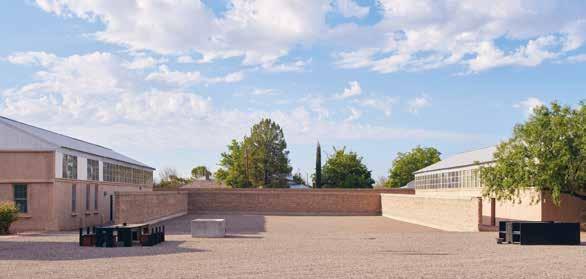
central elements of his consideration of a given site. Although primarily utilizing symmetry in his work, this development allowed Judd to explore asymmetry. “Since this is related to the land on which it is placed,” Judd wrote, referring to the Pulitzer piece, “it is a reasonable asymmetry.”10 Judd fabricated another piece, also from 1971, in concrete for the grounds of Philip Johnson’s Glass House in New Canaan, Connecticut [fig. 6]. In this work, one side of the cast concrete follows the line of level and the other side tilts according to the slope of the land. As Richard Shiff has written of this piece: Here a single object in the land creates two spaces of different character inside and outside its vertical surfaces. At the same time, the canted top surface of the oddly bilateral ring appears to perform two movements at once:
se coloca,” escribió Judd refiriéndose a la pieza para los Pulitzer, “es una asimetría razonable.” 10 Judd fabricó otra pieza, también en 1971, en hormigón, para los terrenos de la Glass House [Casa de vidrio] de Philip Johnson en New Canaan, Connecticut [fig. 6]. En esta obra, un lado del hormigón vaciado sigue una línea nivelada, mientras que el otro lado se inclina de acuerdo con la pendiente del terreno. Como ha escrito Richard Shiff sobre esta pieza: Aquí, un solo objeto en el paisaje… crea dos espacios de carácter distinto dentro y fuera de sus superficies verticales. Al mismo tiempo, la superficie superior inclinada de este anillo curiosamente bilateral parece ejecutar dos movimientos a la vez: su “fuerza” radica en esta “polarización”. Es dos cosas, pero una sola cosa. 11
—
follows the slight slope of the land as it nears an arroyo. Judd considered this a work of art and architecture. It was art in that it followed ideas realized in a variety of locations and materials including in the two previous examples. It was also architecture in that it defined and created a functional space that produced occasions for use. The intertwining of art and architecture in one material work was a rarity for Judd. He believed that the distinction between art and architecture was important. Architecture for Judd was functional, whereas art was “partly the assertion of someone’s interest regardless of other considerations.”14
Now, I want to briefly return to Judd’s first example of the singular rock. “Yet,” Judd questioned, “what if a second rock is placed nearby?” He continued:
Mientras que en las dos piezas anteriores, Judd creó obras topográficamente específicas, que facilitan lo que el comisario de arte Jeffrey Weiss ha denominado “ embodied seeing ” [percepción encarnada], una obra de unos años más tarde, iniciada en 1976, permite entrar en un espacio cerrado mediante la construcción de muros de adobe rectilíneos que crean pasillos en relación con los edificios existentes y definen un gran patio discreto del resto del terreno [fig. 7]. 12 Como Judd escribió sobre los muros de adobe en la Mansana, su casa y estudio en Marfa: “Los dos muros y las dos zonas, una inclinada y la otra nivelada, forman una obra”. 13 Aquí, el muro exterior de adobe construido en el límite de la propiedad está nivelado, mientras que el muro interior de adobe sigue la ligera pendiente del terreno al acercarse a un arroyo. Judd consideraba esto una obra de arte y arquitectura. Era arte en el sentido de que seguía ideas realizadas en diversos lugares y materiales, como en los dos ejemplos anteriores. También era arquitectura porque definía y creaba un espacio funcional que producía ocasiones para su uso. La combinación de arte y arquitectura en una obra material era una rareza para Judd. Para él, la distinción entre arte y arquitectura era importante. Para Judd, la arquitectura era funcional, mientras que el arte era “en parte la afirmación del interés de alguien al margen de otras consideraciones”. 14
—
Ahora, quiero volver brevemente al primer ejemplo de Judd de la roca singular. “Sin embargo”, se preguntaba Judd, “¿qué pasa si se coloca una segunda roca cerca?” Continuó: No estoy describiendo cómo comenzó una discusión primitiva sobre el espacio hace miles de años, sino cómo podría comenzar una discusión primitiva mañana, si esta civilización fuera lo suficientemente avanzada como para soportarlo. ¿A qué distancia están las dos rocas? ¿Es una más grande que la otra? Dos rocas del mismo tamaño y el espacio entre ellas es una situación muy diferente a la de una roca pequeña y una grande con el mismo espacio entre ellas. ¿Tienen las rocas la misma forma o una es puntiaguda y la otra redonda? 15 —
Como se aprecia en la obra de hormigón núm. 1, en el extremo norte del tramo de un kilómetro de sus quince obras de hormigón sin título en la Fundación Chinati, cuando dos objetos están próximos, definen el espacio intermedio [fig. 8]. En lugar de varias obras independientes instaladas a lo largo de los 1.376 kiló -
I’m not describing how a primitive discussion of space began thousands of years ago, but how a primitive discussion might begin tomorrow, if this civilization were advanced enough to bear it. How far apart are the two rocks? Is one larger than the other? Two rocks of equal size and the space between them is a situation which is very different from that of a small rock and a large rock with the same space between. Do the rocks have the same shape or is one pointed and the other round?15
As seen in concrete work No.1 at the northern end of the one kilometer stretch of his 15 untitled works in concrete at the Chinati Foundation, when two objects are close together, they define the space in between [fig. 8]. Instead of several independent works installed across the 340 acres of what had been Fort D. A. Russell, Judd, instead, conceived of one-large scale, singly titled work, simultaneously consisting of fifteen individual works, themselves consisting of various numbers of units. The individual units comprising each group have the same exterior measurements of 2.5-by-2.5-by-5 meters and are made from concrete slabs that are each twenty-five centimeters thick. Judd sited the work to, as he said, “avoid one protruding knoll and to end before another, extending one kilometer, aligned north to south.”16 These groups of works in concrete developed over time in a layered set of relations. As Weiss has written, there is “the relation of parts to the whole in the case of each structure and configuration; the relation of each work to the others; and the relation of the entire sequence to the land, views of which the boxes crop and frame.”17 The land, of course, includes the Marfa plateau, the mountains, and the existing buildings, as well as new buildings that have appeared in the years since Judd finished the work. Additionally, in this work, one sees Judd’s remarkable understanding of the interconnection between space and light. While it is a truism that light is a fundamental part of what defines space, in the 15 untitled works in concrete, we know and feel this intrinsic connection powerfully at the same time. As Marianne Stockebrand has beautifully written of this experience, “One realizes that not only the forms but also the distances between the elements in each of these works are a function of light.”18
—
metros cuadrados de lo que había sido el Fuerte D. A. Russell, Judd, en cambio, concibió una obra a gran escala, de título único, formada simultáneamente por quince obras individuales, a su vez compuestas por varios números de unidades. Las unidades individuales que componen cada grupo tienen las mismas medidas exteriores de 2,5 por 2,5 por 5 metros y están hechas de losas de hormigón de veinticinco centímetros de grosor cada una. Judd situó la obra para, según dijo, “evitar una loma saliente y terminar ante otra, que se extiende un kilómetro, alineada de norte a sur”. 16 Estos grupos de obras en hormigón se desarrollaron a lo largo del tiempo en un conjunto de relaciones estratificadas. Como ha escrito Weiss, existe “la relación de las partes con el todo en el caso de cada estructura y configuración; la relación de cada obra con las demás;
At the same time that Judd was realizing his 15 untitled works in concrete, he was also making a new large-scale body of work that was developed concurrently with the renovation of two former artillery sheds on the grounds of Fort D. A. Russell to the west of his works in concrete [fig. 9]. To suit the installation of the works of art, Judd removed the existing garage doors on the east and west sides of the buildings, adding quarter-framed windows, which as he said, changed the main axis of the buildings, making the wide shallow space of the buildings, from one glass facade through to the other, the main axis [fig. 10]. This alteration allowed for natural light to become a primary aspect of the architecture and the experience of the work itself. Moreover, the landscape surrounding the sheds became
Al mismo tiempo que Judd realizaba sus 15 obras sin título en hormigón, también estaba creando una nueva serie de obras a gran escala que se desarrolló simultáneamente con la renovación de dos antiguos cobertizos de artillería en los terrenos del Fuerte D. A. Russell, al oeste de sus obras en hormigón [fig. 9]. Para adaptarse a la instalación de las obras de arte, Judd eliminó las puertas de garaje existentes en los lados este y oeste de los edificios y añadió ventanas con marcos de un cuarto, lo que, según él, cambió el eje principal de los edificios, convirtiendo el amplio espacio poco profundo de los edificios, desde una fachada de vidrio hasta la otra, en el eje principal [fig. 10]. Esta alteración permitió que la luz natural se convirtiera en un aspecto primordial de la arquitectura y de la experiencia de la obra en sí. Además, el paisaje que rodea los cobertizos
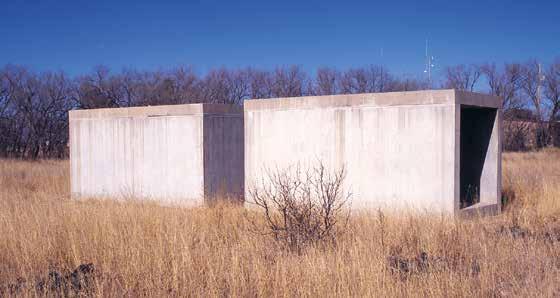
y la relación de toda la secuencia con el terreno, cuyas vistas recortan y enmarcan las cajas”. 17 El terreno, por supuesto, incluye la meseta de Marfa, las montañas y los edificios existentes, así como los nuevos edificios que han aparecido en los años transcurridos desde que Judd terminó la obra. Además, en esta obra se aprecia la notable comprensión de Judd de la interconexión entre el espacio y la luz. Si bien es una obviedad que la luz es una parte fundamental de lo que define el espacio, en las 15 obras sin título en hormigón, conocemos y sentimos al mismo tiempo esta conexión intrínseca de forma poderosa. Como Marianne Stockebrand ha escrito maravillosamente sobre esta experiencia: “Uno se da cuenta de que no solo las formas, sino también las distancias entre los elementos de cada una de estas obras son una función de la luz”. 18
integral, with views to the east of Judd’s 15 untitled works in concrete and the mountains beyond.
In his 100 untitled works in mill aluminum, we see the combination of his ways of making space expressed in one large-scale installation [fig. 11]. There is the interior and exterior space of pieces placed directly on the floor, the relationship of each unit to each other and to the site itself, in this case, the repurposed buildings and the land that surround them, and the relationship of the material, mill aluminum, to the natural light, an inseparable part of the work. In this piece, the making of space is inextricably connected to the integration of art, architecture, and land. The parts—art, architecture, and land—are not subordinate to the whole.
As Judd wrote in his essay “Local History,” from 1964: “The wholeness of a piece is primary, is experienced
se convirtió en parte integral, con vistas al este de las 15 obras sin título en hormigón de Judd y las montañas más allá. En sus 100 obras sin título en aluminio en bruto, vemos la combinación de sus formas de crear espacio expresadas en una instalación a gran escala [fig. 11]. Está el espacio interior y exterior de las piezas colocadas directamente sobre el suelo, la relación de cada unidad entre sí y con el propio emplazamiento —en este caso, los edificios reconvertidos y el terreno que los rodea—, y la relación del material —el aluminio en bruto— con la luz natural, parte inseparable de la obra. En esta pieza, la creación de espacio está indisolublemente ligada a la integración del arte, la arquitectura y el terreno. Las partes —el arte, la arquitectura y el terreno— no están subordinadas al todo.
Como escribió Judd en su ensayo “Local History” [Historia local], de 1964: “La totalidad de una pieza es lo principal, es
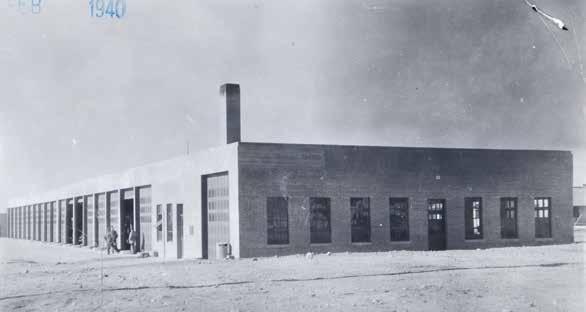
first and directly. It is not something understood through the contemplation of parts.”19 Shiff rightly connects Judd’s insistence on wholeness to his precept that thought and feeling are not distinct, writing that “Judd wanted something more, something new. He produced his art as a way of preserving a unity of thought and feeling, reason and sensation, the whole works.”20
For me, we find the “whole works” in Judd’s 100 untitled works in mill aluminum. We experience and continue to experience on each encounter
lo que se experimenta primero y directamente. No es algo que se comprenda a través de la contemplación de las partes”. 19 Shiff conecta acertadamente la insistencia de Judd en la totalidad con su precepto de que el pensamiento y el sentimiento no son distintos, y escribe que “Judd quería algo más, algo nuevo. Produjo su arte como una forma de preservar la unidad del pensamiento y el sentimiento, la razón y la sensación, la obra en su totalidad”. 20
Para mí, encontramos la “obra en su totalidad” en las 100 obras sin título en aluminio en bruto de Judd. Experimen -
“something more” and “something new” through Judd’s sensitivity to the making of space.
This symposium takes this achievement as the foundation for reflection on Judd’s accomplishments in making space, while also engaging in the still very necessary activity of creating the context, terms, and theories for how space is made be it through art, architecture, landscape, or their integration.
tamos y seguimos experimentando en cada encuentro “algo más” y “algo nuevo” a través de la sensibilidad de Judd hacia la creación del espacio. Este simposio toma este logro como base para reflexionar sobre los logros de Judd en la creación de espacios, al tiempo que se dedica a la actividad, aún muy necesaria, de crear el contexto, los términos y las teorías sobre cómo se crea el espacio, ya sea a través del arte, la arquitectura, el paisaje o su integración.
NOTAS
1 Escrito el 21 de febrero, el cumpleaños del padre de Judd, Roy C. Judd. Donald Judd, publicado por primera vez en “21 February 1993” [21 de febrero de 1993], Donald Judd: Large-Scale Works [Donald Judd: obras a gran escala], catálago de exhibición (Pace Gallery, 1993), pp. 9–13. Reimpreso en Donald Judd Writings [Los escritos de Donald Judd], eds. Flavin Judd y Caitlin Murray (Judd Foundation and David Zwirner Books, 2016), p. 833.
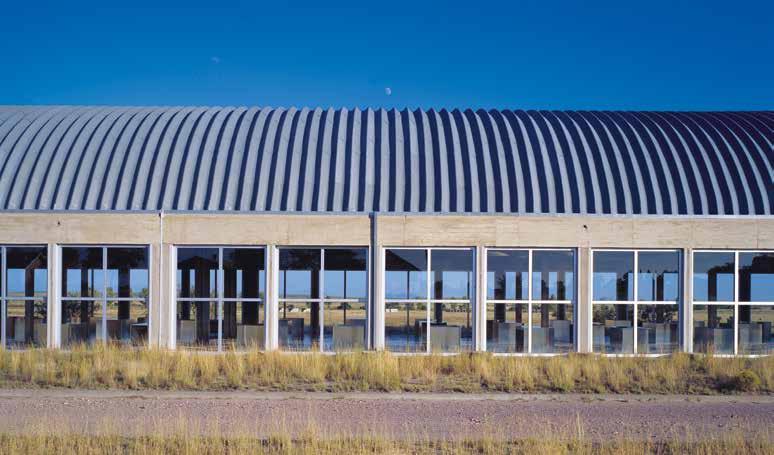
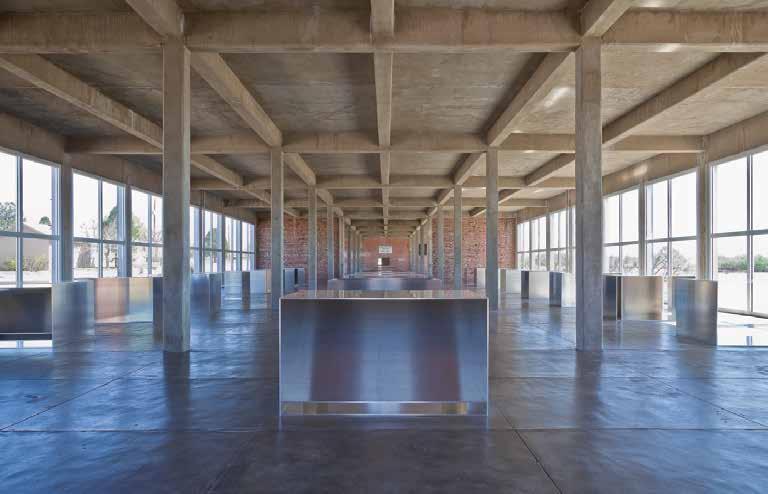
2 Los simposios anteriores organizados por la Fundación Chinati, desde el más antiguo hasta el más reciente, incluyen Art in the Landscape [El arte en el paisaje](1995), Art and Architecture [Arte y arquitectura] (1998), Light in Architecture and Art: The Work of Dan Flavin [La luz en la arquitectura y el arte: la obra de Dan Flavin] (2001), It’s All in the Fit: The Work of John Chamberlain [Todo depende del ajuste: la obra de John Chamberlain] (2006), The Writings of Donald Judd [Los escritos de Donald Judd] (2008) y The Chinati Foundation Master Plan [El plan maestro de la Fundación Chinati] (2017).
3 “21 February 1993” [21 de febrero de 1993], Donald Judd Writings [Los escritos de Donald Judd], p. 811.
1 Written on February 21, the birthday of Judd’s father, Roy C. Judd. First published in Donald Judd, “21 February 1993,” Donald Judd: Large-Scale Works, exh. cat. (Pace Gallery, 1993), 9–13. Reprinted in Donald Judd Writings, eds. Flavin Judd and Caitlin Murray (Judd Foundation and David Zwirner Books, 2016), 833.
2 Previous symposiums organized by the Chinati Foundation from earliest to most recent include Art in the Landscape (1995), Art and Architecture (1998), Light in Architecture and Art: The Work of Dan Flavin (2001), It’s All in the Fit: The Work of John Chamberlain (2006), The Writings of Donald Judd (2008), and The Chinati Foundation Master Plan (2017).
3 “21 February 1993,” Donald Judd Writings, 811.
4 First published in Donald Judd, Some Aspects of Color in General and Red and Black in Particular (Sikkens Foundation, 1993). Reprinted in Donald Judd Writings, 833, 834.
5 Donald Judd Writings, 836.
6 Donald Judd Writings, 834.
4 Publicado por primera vez en Donald Judd, Some Aspects of Color in General and Red and Black in Particular [Algunos aspectos del color en general y el rojo y el negro en particular] (Sikkens Foundation, 1993). Reimpreso en Donald Judd Writings [Los escritos de Donald Judd], p. 833, p. 834.
5 Donald Judd Writings [Los escritos de Donald Judd], p. 836.
6 Donald Judd Writings [Los escritos de Donald Judd], p. 834.
7 Donald Judd Writings [Los escritos de Donald Judd], pp. 838–839.
8 Donald Judd Writings [Los escritos de Donald Judd], p. 841.
9 Donald Judd Writings [Los escritos de Donald Judd], p. 840.
10 Donald Judd, publicado por primera vez en “Marfa, Texas,” House & Garden , abril de 1985, pp. 154–163, pp. 220–21. Reimpreso en Donald Judd Writings [Los escritos de Donald Judd], p. 426.
11 Richard Shiff, publicado por primera vez en “Sensuous Thoughts” [Pensamientos sensoriales], Donald Judd: The Multicolored Works [Donald Judd: las obras multicolores], ed. Marianne Stockebrand (Yale University Press, 2014), pp. 106–56. Richard Shiff, reimpreso
7 Donald Judd Writings, 838–39.
8 Donald Judd Writings, 841.
9 Donald Judd Writings, 840.
10 First published in Donald Judd, “Marfa, Texas,” House & Garden, April 1985, 154–63, 220–21. Reprinted in Donald Judd Writings, 426.
11 First published in Richard Shiff, “Sensuous Thoughts,” Donald Judd: The Multicolored Works, ed. Marianne Stockebrand (Yale University Press, 2014), 106–56. Reprinted in Richard Shiff, Sensuous Thoughts: Essays on the Work of Donald Judd, eds. Tim Johnson and Caitlin Murray (Hatje Cantz; Marfa Book Co., 2020), 225.
12 See Jeffrey Weiss’s excellent essay “Sense of Site” in Judd, ed. Ann Temkin (Museum of Modern Art, 2020), 188–206.
13 Judd, “Marfa, Texas,” Donald Judd Writings, 430.
14 First published in Donald Judd, Möbel Furniture (Arche Verlag, 1986), 1–3. Reprinted in “On Furniture,” Donald Judd Writings, 451.
15 Judd, “Some Aspects of Color in General and Red and Black in Particular,” Donald Judd Writings, 834, 835.
16 Judd, “21 February 1993,” Donald Judd Writings, 813.
17 Weiss, “Sense of Site,” 200.
18 Marianne Stockebrand, “Freestanding Works in Concrete, 1980–1984,” in Chinati: The Vision of Donald Judd, ed. Marianne Stockebrand (The Chinati Foundation, 2010), 71.
19 Donald Judd, “Local History,” Arts Yearbook 7 (1964): 23–35. Reprinted in Donald Judd Writings, 129.
20 First published in Richard Shiff, “What Judd Knows,” Donald Judd, eds. Kristin Bell, Anna Gray, and Alexandra Whitney (Steidl and David Zwirner, 2011), 19–63. Reprinted in Shiff, Sensuous Thoughts, 128.
en Sensuous Thoughts: Essays on the Work of Donald Judd [Pensamientos sensoriales: ensayos sobre la obra de Donald Judd] , eds. Tim Johnson y Caitlin Murray (Hatje Cantz; Marfa Book Co., 2020), p. 225.
12 Véase el excelente ensayo de Jeffrey Weiss “Sense of Site” [El sentido del emplazamiento] en Judd , ed. Ann Temkin (Museum of Modern Art, 2020), pp. 188–206.
13 Judd, “Marfa, Texas”, Donald Judd Writings [Los escritos de Donald Judd], p. 430.
14 Donald Judd, publicado por primera vez en Möbel Furniture (Arche Verlag, 1986), pp. 1–3. Reimpreso en “On Furniture” [Sobre los muebles], Donald Judd Writings [Los escritos de Donald Judd], p. 451.
15 Judd, “Some Aspects of Color in General and Red and Black in Particular” [Algunos aspectos del color en general y el rojo y el negro en particular], Donald Judd Writings [Los escritos de Donald Judd], p. 834, p.835.
16 Judd, “21 February 1993” [21 de febrero de 1993], Donald Judd Writings [Los escritos de Donald Judd], p.813.
17 Weiss, “Sense of Site” [El sentido del emplazamiento], p. 200.
18 Marianne Stockebrand, “Freestanding Works in Concrete, 1980–1984” [Obras independientes en hormigón, 1980–1984] en Chinati: The Vision of Donald Judd [Chinati: la visión de Donald Judd], ed. Marianne Stockebrand (The Chinati Foundation, 2010), p. 71.
19 Donald Judd, “Local History” [Historia local], Arts Yearbook 7 (1964): pp. 23–35. Reimpreso en Donald Judd Writings [Los escritos de Donald Judd], p. 129.
20 Shiff, publicado por primera vez en “What Judd Knows” [Lo que Judd sabe], Donald Judd , eds. Kristin Bell, Anna Gray y Alexandra Whitney (Steidl and David Zwirner, 2011), pp. 19–63. Shiff, reimpreso en Sensuous Thoughts [Pensamientos sensoriales], p. 128.
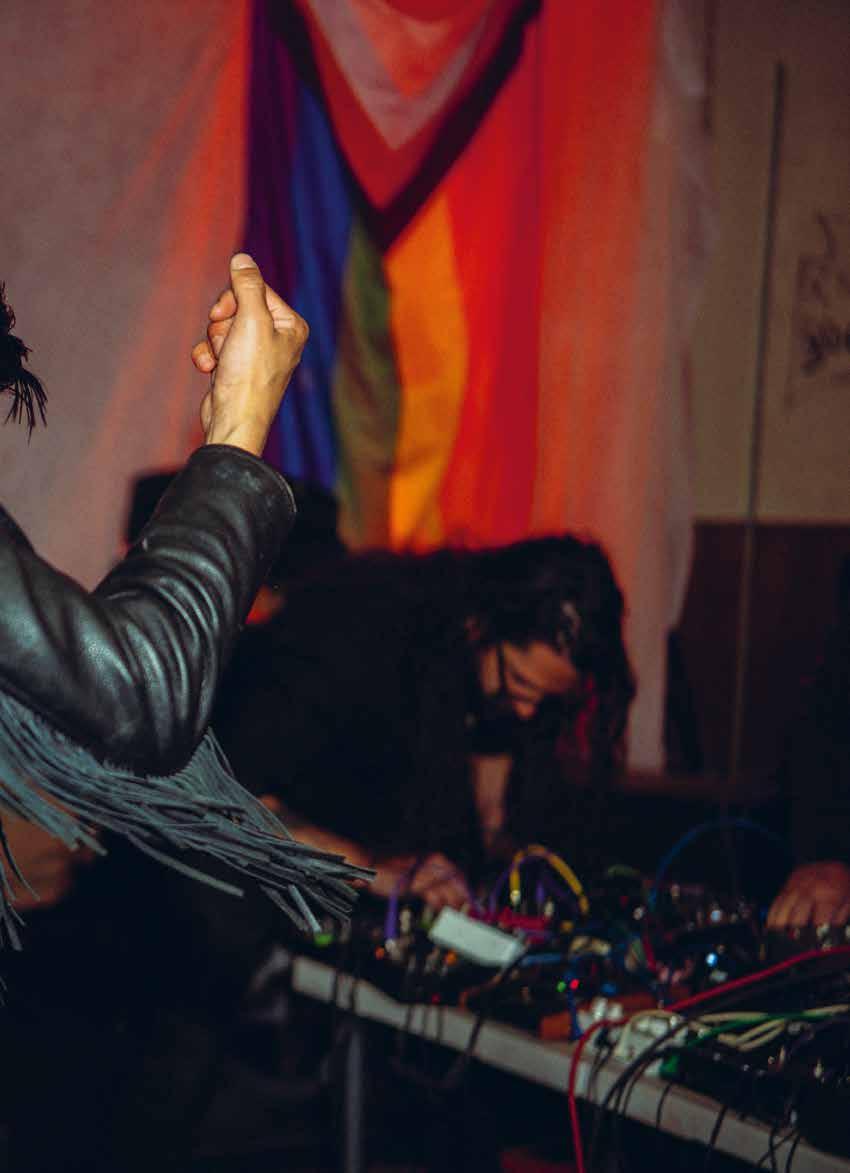
La siguiente conversación reflexiona sobre el Simposio Intertribal de Noise
Ch’íná’itíh (Chinati), celebrado en Marfa del 14 al 16 de marzo de 2025. La directora de la Fundación Chinati, Caitlin Murray, y Nathan Young —artista, académico, compositor y fundador del Simposio Intertribal de Noise — dialogan sobre el desarrollo y futuro del simposio, así como sobre la propuesta que este plantea en torno al ruido, la capacidad de acción sonora, la resistencia indígena, el diálogo y la reunión.
The following conversation reflects on the Ch’íná’itíh (Chinati) Intertribal Noise Symposium held in Marfa, March 14–16, 2025. The Chinati Foundation’s director Caitlin Murray and Nathan Young, an artist, scholar, composer, and founder of the Intertribal Noise Symposium, discuss its development and future, and the proposal it provides for noise, sonic agency, Indigenous resistance, dialogue, and gathering.
CAITLIN MURRAY: Nathan, quiero reflexionar sobre el Simposio Intertribal de Noise Ch’íná’itíh (Chinati), que coorganizó este año junto con Atomic Culture y la Fundación Chinati. Disfruté mucho con todas las actuaciones y también me inspiró su conversación pública con Candice Hopkins, así como todas las conversaciones que surgieron entre los eventos, que me parecieron muy diversas. Experimenté el programa como un conjunto diverso de propuestas sobre qué es el noise , cómo se produce y cómo nos afecta. Me pregunto si podría empe-
CAITLIN MURRAY: Nathan, I want to reflect on the Ch’íná’itíh (Chinati) Intertribal Noise Symposium, which you co-organized with Atomic Culture and the Chinati Foundation this year. I really enjoyed all the performances and was also inspired by your public conversation with Candice Hopkins, as well as by all the conversations that took place between events, which I found to be broad ranging. I experienced the program as a diverse set of proposals about what noise is, how it’s made, and how it affects us. I wonder if you could start by telling me what drew you to noise, what it means for you now, and if you relate to it as a condition, a genre, a theme, or some combination of these?
NATHAN YOUNG: Noise, for me, has always been a place of great potential, and it has definitely always been mysterious to me. I guess that’s why I’ve devoted so much time to it. I see noise as all of the things you mentioned—a condition, a genre, and a theme—sometimes all at once.
zar contándome qué le atrajo del noise , qué significa para usted ahora y si se relaciona con él como una condición, un género, un tema o alguna de estas combinaciones.
NATHAN YOUNG: El noise , para mí, siempre ha sido un lugar de gran potencial, y definitivamente siempre ha tenido algo de misterioso. Supongo que por eso le he dedicado tanto tiempo. Veo el noise como todas las cosas que ha mencionado: una condición, un género y un tema, a veces todo a la vez. Mi relación con el noise comenzó en los años noventa con la música de rock y sigue evolucionando hoy en día. Crecí
* N. de la T.: En este documento, el término noise se conserva en inglés cuando hace referencia a un género musical, una práctica estética o una categoría conceptual dentro del arte contemporáneo y los estudios sonoros. Esto se hace para diferenciarlo del término general ruido, que se traduce al español únicamente cuando se refiere a sonidos no deseados en un contexto cotidiano. Esta distinción permite mantener la precisión terminológica y respetar el uso especializado del término en el ámbito artístico y académico.
My relationship with noise began in the 1990s with rock music and is still evolving today. I grew up listening to noise steadily creep into popular music, eventually emerging as what we think of as “noise music” today. That progression from popular music to noise music is foundational for me—it’s where it all started. More recently, what has probably had the most profound effect on my art practice and concept of noise is my experience traveling and playing live music—first with the artist-composer Raven Chacon in Postcommodity and then becoming immersed in the Midwest world of noise music and “outsider” art. During that time, composing music collectively and starting a record label were my first real attempts to engage with ideas about sound, noise, and music. I was just beginning to think about how to push sound in different directions, across mediums, while exploring its limits in a real and tangible way. That journey ultimately led me to create the Intertribal Noise Symposium and deepened my engagement with Indigenous sonic agency. Those experiences—experiments, really—along with growing up deeply Native American in Oklahoma, where music is the driving force of everything we do spiritually and culturally, shaped my approach to noise in both theoretical and practical ways.
My work draws extensively from my experiences with peyote music, harsh-noise music, and, eventually, contemporary composition and scholarly texts. Now, I’m trying to center my art practice around thinking sonically—letting sound be the core of my creative process.
One of the texts that really shaped how I think about noise is Jacques Attali’s 1977 Noise: The Political Economy of Music . Attali doesn’t just see noise as unwanted sound—he sees it as a cultural and political force, something that disrupts the status quo. That idea really sums up how I approach noise at the Intertribal Noise Symposiums. To me, noise isn’t just a genre of music, it’s a dynamic cultural practice that creates space for resistance, dialogue, and transformation. It pushes back against dominant ideas about sound and society.
In the context of the Intertribal Noise Symposium, noise serves as an expansive theme because it resists easy definition—noise is slippery. I’m not thinking of noise just as a genre but noise as a framework for listening, one that can embrace abstraction,
escuchando cómo el noise se infiltraba poco a poco en la música popular, hasta emerger como lo que hoy entendemos como “música noise ”. Esa progresión, de la música popular hacia el noise , es fundamental para mí, es donde todo empezó.
Más recientemente, lo que probablemente ha tenido el efecto más profundo en mi práctica artística y en mi concepto de noise ha sido mi experiencia viajando y tocando música en vivo, primero con el artista y compositor Raven Chacon en
confusion, and multiplicity—just to name a few things. The Symposium brings together artists who approach noise from vastly different cultural and aesthetic backgrounds, creating a space where sound is continually redefined through Indigenous perspectives and experimental practices. Noise within the Symposium is as much about sound as it is about disrupting normative conditions of listening and belonging. In the Symposiums, I am trying to create a site
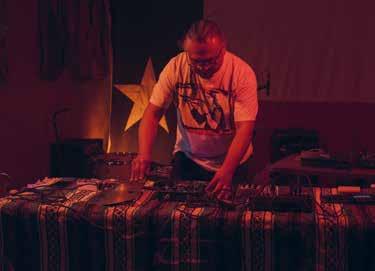
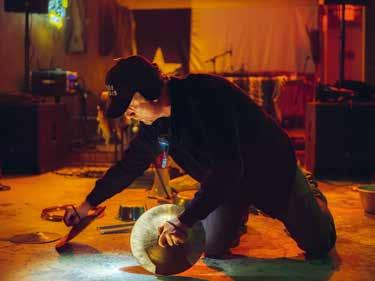
Postcommodity y después al sumergirme en el mundo de la música noise del medio oeste y del arte “marginal”. Durante ese tiempo, componer música colectivamente y fundar un sello discográfico fueron mis primeros intentos reales de involucrarme con ideas sobre el sonido, el noise y la música. Estaba empezando a pensar en cómo llevar el sonido en diferentes direcciones, a través de distintos medios, explorando sus límites de una forma real y tangible.
Ese camino me llevó finalmente a crear el Simposio Intertribal de Noise y pro -
fundizó mi compromiso con la capacidad de acción sonora indígena. Esas experiencias —experimentos, en realidad— junto con haber crecido profundamente vinculado a mi identidad indígena en Oklahoma, donde la música es la fuerza que impulsa todo lo que hacemos espiritual y culturalmente, moldearon mi enfoque hacia el noise tanto en lo teórico como en lo práctico.
Mi obra se nutre ampliamente de mis experiencias con la música del peyote, la música harsh-noise [ruido extremo] y, con el tiempo, de la composición contemporánea y los textos académicos. Ahora, intento centrar mi práctica artística en pensar desde lo sonoro: dejar que el sonido sea el núcleo de mi proceso creativo.
Uno de los textos que realmente moldeó mi forma de pensar sobre el noise es Noise: The Political Economy of Music [Ruidos: ensayo sobre la economía política de la música] de Jacques Attali, publicado en 1977. Attali no ve el noise solo como un sonido no deseado: lo concibe como una fuerza cultural y política, algo que interrumpe el statu quo . Esa idea resume bastante bien cómo abordo el noise en los Simposios Intertribales de Noise . Para mí, el noise no es solo un género musical, es una práctica cultural dinámica que crea espacio para la resistencia, el diálogo y la transformación. Se enfrenta a las ideas dominantes sobre el sonido y la sociedad.
of cultural convergence, experimentation, and agency.
CM: Two things that I understood almost immediately—especially after Kite’s ensemble performance featuring violin, harp, bells, and bowls, but also with Bob Bellerue’s performance with kitchen bowls, marbles, and even a pillow—was that noise and volume are not synonymous, and noise is not necessarily a way of producing unease. On the other hand—as with your performance as Waves of Dust
En el contexto del Simposio Intertribal de Noise , el noise funciona como un tema expansivo precisamente porque resiste una definición fácil: el noise es escurridizo. No pienso en el noise únicamente como un género, sino como un marco para la escucha, un marco que puede abarcar la abstracción, la confusión y la multiplicidad, solo por nombrar algunos aspectos. El simposio reúne a artistas que abordan el noise desde trasfondos culturales y estéticos muy diversos, creando un espacio en el que el sonido se redefine continuamente a través de perspectivas indígenas y prácticas experimentales. El noise en el simposio tiene tanto que ver con el sonido como con la disrupción de las condiciones normativas de escucha y pertenencia. En los simposios, intento crear un lugar de convergencia cultural, experimentación y capacidad de acción.
CM: Dos cosas que comprendí casi de inmediato —especialmente después de la actuación polifacética de Kite con violín, arpa, campanas y cuencos, pero también con la actuación de Bob Bellerue usando cuencos de cocina, canicas e incluso una almohada— fueron que el noise y el volumen no son sinónimos, y que el noise no es necesariamente una forma de generar incomodidad. Por otro lado
with Kole Galbraith and Mesa Ritual’s performances—noise can absolutely be loud and definitely has the capacity to test our physical limits. So noise, as I understand it, exists on a continuum whose openness provides us with opportunities to reflect on our expectations, aesthetic and otherwise, concerning noise and raises questions of the roles art and music play in our lives. Noise is almost sculptural since distance and space play a role in its apprehension and, like sculpture, it has physical presence. This relation to space and context is one of the reasons the Symposium worked so well at Chinati. I wonder if you might share some of your own reflections on the performances at Chinati and how they relate to this question of what noise is and how it relates to space and context.
NY: The Intertribal Noise Symposium at Chinati really highlighted how noise can take on so many forms— subtle, overwhelming, meditative, or confrontational. Each performance explored noise differently, depending on the materials used and how the sound interacted with the space. Kite’s ensemble performance was minimal and quiet while still being powerful. I felt immersed in a soundscape. Drawing from Oglála Lakh ˇ óta symbolism, Kite is translating dreams into visual scores and performances.
—como ocurrió en su actuación como Waves of Dust [Olas de polvo] junto con las actuaciones de Kole Galbraith y Mesa Ritual— el noise puede ser absolutamente estridente y sin duda tiene la capacidad de poner a prueba nuestros límites físicos.
Así que el noise , según lo entiendo, existe en un continuo cuya apertura nos da oportunidades para reflexionar sobre nuestras expectativas —estéticas y de otro tipo— respecto al noise , y plantea preguntas sobre los roles que el arte y la música desempeñan en nuestras vidas. El noise es casi escultórico, ya que la distancia y el espacio influyen en cómo se percibe y, al igual que la escultura, tiene una presencia física. Esta relación con el espacio y el contexto es una de las razones por las que el Simposio funcionó tan bien en Chinati.
Me pregunto si podría compartir algunas de sus reflexiones sobre las actuaciones en Chinati y cómo se relacionan con esta pregunta sobre qué es el noise y cómo se vincula con el espacio y el contexto.
NY: El Simposio Intertribal de Noise en Chinati realmente puso énfasis en cómo el noise puede adoptar muchas formas: sutil, abrumador, meditativo o agresivo. Cada actuación exploró el noise de manera distinta, dependiendo de los materiales utilizados y de cómo el sonido interactuaba con el espacio. La actuación polifacética de Kite fue minimalista y silenciosa, pero aún así po -
In her performance, the delicate instruments and resonant materials encouraged deep listening and introspection, exemplifying how noise isn’t just about volume—it’s about intention and context.
Bob Bellerue’s performance took a very different but related approach, using everyday objects to create a dynamic, tactile sound experience. It was beautiful to see these everyday things resonating together and so loudly! His performance felt sculptural, shaped by the physical interaction between objects and space. Both Bob and Kite’s performances made me think about how sound can be both material and spatial when played in the right context.
KILT/Mesa Ritual, a supergroup led by Raven Chacon and featuring William Fowler Collins from Mesa Ritual and Bob Bellerue from KILT, took a completely different approach— intense, loud, heavily layered, and physically enveloping. Their performance was intense, pushing the audience’s physical limits, almost like a form of sonic resistance. Their sound invoked, for me at least, a space not unlike a brutal, windswept western landscape—harsh, unyielding, and saturated with the dark, expansive energy.
The Waves of Dust set, a harsh-noise project with myself, Kole Galbraith, and Warren Realrider, leaned
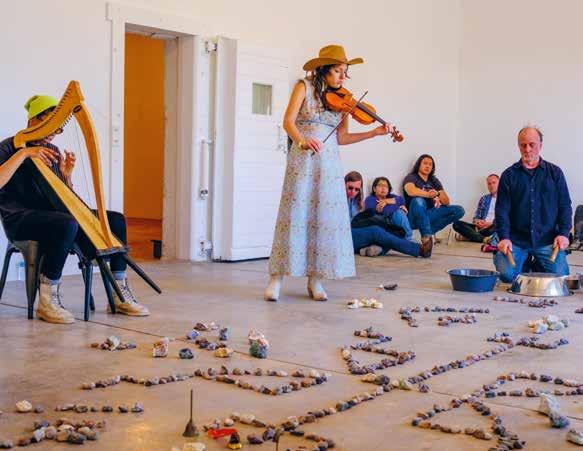
derosa. Me sentí inmerso en un paisaje sonoro. Basándose en el simbolismo de Oglála Lakh ˇ óta, Kite está traduciendo sueños en partituras visuales y actuaciones. En su actuación, los instrumentos delicados y los materiales resonantes fomentaban una escucha profunda e introspectiva, ejemplificando cómo el noise no se trata solo de volumen, sino de intención y contexto.
La actuación de Bob Bellerue tomó un enfoque muy diferente, pero relacionado, al utilizar objetos cotidianos para crear una experiencia sonora dinámica y táctil. ¡Fue hermoso ver cómo estas cosas cotidianas resonaban juntas, y tan fuerte! Su actuación tenía una cualidad escultórica, moldeada por la interacción física entre los objetos y el espacio. Tanto la actuación de Bob como la de Kite me hicieron pensar en cómo el sonido puede ser tanto material como espacial cuando se presenta en el contexto adecuado. KILT/Mesa Ritual, un supergrupo liderado por Raven Chacon y que incluye a William Fowler Collins de Mesa Ritual y a Bob Bellerue de KILT, adoptó un enfoque completamente diferente: intenso, ruidoso, con múltiples capas y físicamente envolvente. Su actuación fue intensa, llevando al límite físico a la audiencia, casi como una forma de resistencia sonora. Su sonido evocaba, al menos para mí, un espacio parecido a un paisaje del oeste brutal y azotado por el viento: áspero, implacable y cargado de una energía oscura y expansiva. La interpretación de Waves of Dust , un proyecto de harsh-noise que comparto con Kole Galbraith y Warren Realrider, se inclinó hacia elementos máximos y estridentes en nuestro intento colectivo de capturar la naturaleza expansiva del noise : mostrar cómo puede contener mucha información a la vez, casi como contar una historia a través del sonido. Nuestro nombre proviene de una historia pawnee que describe una ola de polvo que aparece antes de que llegue una enorme manada de bisontes. Intentamos evocar ese tipo de sensación cuando tocamos juntos, tratando de crear algo con ese tipo de poder.
Pensamos mucho en cómo se utilizaría cada espacio en Chinati, trabajando estrechamente con Atomic Culture para asegurarnos de que el entorno complementara el sonido. Los espacios de Chinati están pensados para el arte, y nos pareció natural expandir esa idea hacia el sonido. No solo llenamos los espacios con noise : consideramos cómo se movería el sonido a través del lugar y cómo lo experimentarían los oyentes. El noise no es solo una explosión de sonido: está moldeado por el entorno, casi como una escultura. Eso fue lo que hizo el Simposio de Chinati tan especial:
toward maximal and loud elements in our attempt to collectively capture noise’s expansive nature—showing how it can carry a lot of information at once, almost like telling a story through sound. Our name comes from a Pawnee story that describes a wave of dust emerging before a huge herd of buffalo appear. We are trying to evoke this kind of feeling when we play together, trying to create something that has that kind of power. We put a lot of thought into how each space at Chinati was used, working closely with Atomic Culture to make sure the setting complemented the sound. Chinati’s spaces are meant for art, and it felt natural to expand that idea into sound. We didn’t just fill rooms with noise—we considered how sound would move through the space and how listeners would experience it.
Noise isn’t just a blast of sound—it’s shaped by the environment, almost like a sculpture. That’s what made the Symposium at Chinati so special— the architecture and landscape let the sound become part of the experience, merging art and noise in a way that felt natural and intentional.
CM: One of the key terms that you and Candice Hopkins discussed in your conversation during the Symposium was “sonic agency.” How would you define sonic agency and how does it relate to noise and the Intertribal Noise Symposium?
NY: Sonic agency, as I understand and engage with it, and I have to acknowledge the work of Brandon Labelle here in his 2020 book, Sonic Agency: Sound and Emergent Forms of Resistance, refers to the capacity of sound to act as a force of cultural expression, resistance, and transformation. It’s about recognizing sound—not just as an aesthetic experience—but as a medium through which communities assert identity, challenge dominant narratives, and engage in acts of sovereignty. During my conversation with Candice at the Symposium, we talked a lot about how sound can be a form of Indigenous resistance and storytelling—especially in situations where visual representations have been taken over or suppressed. Candice drew from her curatorial work and pointed to projects like Dispatch , a collaboration with her husband, Raven Chacon. I see Dispatch as a multimodal composition that uses sound to explore a wide range of ideas—from states of being (ontology) to the conditions
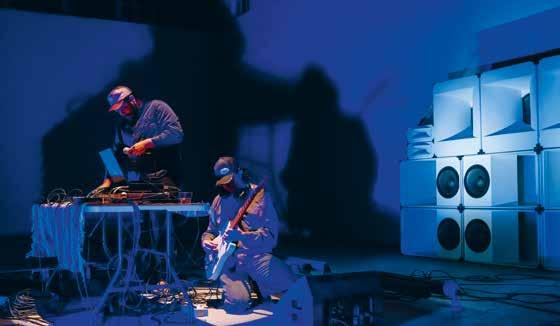
la arquitectura y el paisaje permitieron que el sonido se convirtiera en parte de la experiencia, fusionando arte y noise de una manera natural e intencionada.
CM: Uno de los términos clave que usted y Candice Hopkins discutieron durante su conversación en el Simposio fue “capacidad de acción sonora”. ¿Cómo definiría la capacidad de acción sonora y cómo se relaciona con el noise y con el Simposio Intertribal de Noise ?
NY: La capacidad de acción sonora, tal como la entiendo y con la que me involucro —y aquí tengo que reconocer el trabajo de Brandon LaBelle en su libro de 2020, Sonic Agency: Sound and Emergent Forms of Resistance [La capacidad de acción sonora: sonido y formas emergentes de resistencia]— se refiere a la capacidad del sonido para actuar como una fuerza de expresión cultural, resistencia y transformación. Se trata de reconocer el sonido no solo como una experiencia estética, sino como un medio a través del cual las comunidades afirman su identidad, desafían las narrativas dominantes y participan en actos de soberanía. Durante mi conversación con Candice en el Simposio, hablamos mucho sobre cómo el sonido puede ser una forma de resistencia indígena y de narración de historias, especialmente en situaciones donde las representaciones visuales han sido apropiadas o suprimidas. Candice habló desde su experiencia como comisaria artística y mencionó proyectos como Dispatch , una colaboración con su esposo, Raven Chacon. Para mí, Dispatch es una composición multimodal que usa el sonido para explorar una amplia gama de ideas, desde los estados del ser (ontología) hasta las condiciones necesarias para el resurgimiento cultural o incluso la
needed for cultural resurgence or even insurrection. Ultimately, I feel it’s about Indigenous sovereignty. We also talked about how composition has informed Candice’s curatorial practice. This really comes through in her latest curatorial project with Raven, Impossible Music , which challenges conventional ideas of what music can be. It’s a great example of how composition has shaped the way she thinks about curating sound-based works—seeing them not just as presentations but as dynamic, layered experiences.
CM: You’ve told me in the past that language advocacy played a role in your development as an artist and academic. I’m curious to know if Native language advocacy also played a role in the development of your thinking around the Intertribal Noise Symposiums, either literally or metaphorically, in terms of supporting Native voices.
NY: My journey as an artist and academic began with Native-language revitalization—though at the time, it was more commonly framed as preservation. This path was first shaped by my mother, who, as the chair of the Symposium on the American Indian at Northeastern State University, was deeply involved in advocating for Native languages. Growing up in that environment, I became aware of the importance of language preservation early on.
Later, while in college, I became more directly involved. As an animator, I worked with language teachers and students to create Cherokee language animations that served as teaching
insurrección. En última instancia, siento que se trata de soberanía indígena. También hablamos sobre cómo la composición ha influido en el ejercicio de Candice como comisaria artística. Esto se manifiesta claramente en su proyecto de comisariado más reciente con Raven, Impossible Music [Música imposible], que desafía las ideas convencionales de lo que la música puede ser. Es un gran ejemplo de cómo la composición ha moldeado su forma de pensar sobre el comisariado de obras basadas en el sonido, viéndolas no solo como presentaciones, sino como experiencias dinámicas y estratificadas.
CM: Me ha contado en el pasado que la defensa del idioma jugó un papel importante en su desarrollo como artista y académico. Siento curiosidad por saber si la promoción de las lenguas nativas también influyó en el desarrollo de su pensamiento alrededor de los Simposios Intertribales de Noise , ya sea de forma literal o metafórica, en términos de apoyo a las voces indígenas.
NY: Mi trayecto como artista y académico comenzó con la revitalización de lenguas nativas, aunque en ese momento era más común hablar de preservación. Este camino fue trazado por primera vez por mi madre, quien, como presidenta del Simposio sobre el Indio Americano en la Universidad Estatal del Noreste, estaba profundamente involucrada en la promoción de las lenguas indígenas. Al crecer en ese entorno, tomé conciencia muy pronto de la importancia de preservar el idioma.
Más tarde, ya en la universidad, me involucré más directamente. Como animador, trabajé con profesores y estudiantes para crear animaciones en lengua cheroqui que sirvieran como herramientas
tools. These projects were designed to make the language more accessible and engaging for kids and young learners, using digital storytelling to bring traditional sounds and words to life. I saw how these animations not only helped students learn but also sparked excitement and pride in their heritage.
Through these experiences, I came to a profound realization: There is nothing more fundamentally “decolonizing” than thinking in your Indigenous language—especially when that language has been actively suppressed or even outlawed. Speaking, thinking, or dreaming in a language that was once prohibited is, to me, the most powerful assertion of agency and presence.
This understanding continues to shape my practice and the way I approach the Intertribal Noise Symposium. I see
didácticas. Estos proyectos estaban diseñados para hacer que el idioma fuera más accesible y atractivo para niños y jóvenes, utilizando la narración digital para dar vida a sonidos y palabras tradicionales. Vi cómo estas animaciones no solo ayudaban a los estudiantes a aprender, sino que también generaban entusiasmo y orgullo por su herencia.
A través de estas experiencias, llegué a una profunda comprensión: no hay nada más descolonizador que pensar en tu propia lengua indígena—especialmente cuando esa lengua ha sido activamente reprimida o incluso prohibida. Hablar, pensar o soñar en un idioma que alguna vez fue prohibido es, para mí, la afirmación más poderosa de capacidad de acción y presencia. Esta comprensión sigue moldeando mi práctica artística y la manera en que abordo el Simposio Intertribal de Noise . Veo el noise no solo como sonido o mú -
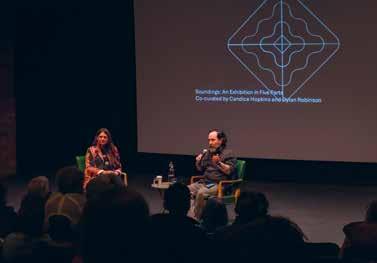
noise not just as sound or music but as a developing lexicon—a kind of language that is constantly evolving. The way noise is expressed within the symposium feels like witnessing a new mode of communication emerge from these long dialogues that the sound emerges from. Noise music is deeply rooted in freedom, resistance, and the articulation of experiences that are often silenced or marginalized. It’s like watching a language take shape—a language that doesn’t conform to conventional structures that can be deeply meaningful and transformative. In this way, noise parallels the resurgence of Indigenous languages. It’s a way of reclaiming space, asserting identity, and challenging imposed norms. I think back to the songs, words, and sounds that were once prohibited under federal policies aimed at erasing Native identity. These acts of linguistic and musical
sica, sino como un léxico en desarrollo, una especie de lenguaje en constante evolución. La manera en que el noise se expresa dentro del simposio es como presenciar el surgimiento de un nuevo modo de comunicación que brota de estos largos diálogos sonoros. La música noise está profundamente arraigada en la libertad, la resistencia y la articulación de experiencias que a menudo han sido silenciadas o marginadas. Es como ver cómo se forma un lenguaje, uno que no se ajusta a las estructuras convencionales pero que puede ser profundamente significativo y transformador. En ese sentido, el noise corre en paralelo al resurgimiento de las lenguas indígenas. Es una forma de reclamar espacio, afirmar identidad y desafiar las normas impuestas. Pienso en las canciones, las palabras y los sonidos que alguna vez fueron prohibidos bajo políticas federales diseñadas para borrar la identidad indígena. Estos actos
erasure were simply developed to silence Indigenous voices. Today, noise practices presented at the Symposium become more than artistic expressions—they are acts of resistance. They reclaim sonic practices that were suppressed, creating the conditions to imagine the unimaginable. This is essential because our understanding of Indigenous sound—how it might have functioned as an instrument of agency for our ancestors—has become so narrow and incomplete.
The Symposium itself embodies this philosophy. It’s a space where sound becomes a shared language—a way for Indigenous artists to communicate complex ideas and cultural memories without adhering to Western aesthetic standards. Noise becomes a metaphor for the vitality of language itself—expansive, adaptive, and deeply rooted in cultural resilience.
In Justis Brokenrope’s work under the Wathécˇa Records moniker and Warren Realrider’s project to digitize his family’s audio archive, I see a clear connection to this idea of reclaiming sound as a living, breathing practice. Justis’s efforts to gather, share, and restore the work of Native folk and rock reflect the importance of reconnecting with unknown or unheard sonic heritages and making them accessible to wider audiences. Warren’s project, where he is digitizing over two hundred hours of his grandfather’s home recordings of Pawnee songs, church music, and other social and religious events, is another powerful example of how sound functions as a cultural archive—I feel like these media are portals to worlds that have the ability to shift our expectations and understandings of where we are coming from as American Indians.
I also have to say, I can’t help but mention the current political climate we’re navigating. Just two weeks before the Symposium, the US president signed a presidential order designating English as the official language of the United States. To me, this underscores the importance of understanding, studying, and learning Native languages and fostering linguistic diversity more broadly. In this context, the Symposium—where noise is explored not just as an aesthetic but as an evolving form of communication—becomes even more useful and essential. The Symposium is an ongoing exploration of how sound can function as a living, dynamic language that challenges the normative constraints of what sound— and language—can be.
de borrado lingüístico y musical fueron simplemente intentos de silenciar las voces indígenas. Hoy en día, las prácticas de noise presentadas en el Simposio son algo más que expresiones artísticas: son actos de resistencia. Recuperan prácticas sónicas que fueron reprimidas y crean las condiciones para imaginar lo inimaginable. Esto es esencial porque nuestra comprensión del sonido indígena —de cómo pudo haber funcionado como instrumento de capacidad de acción para nuestros antepasados— se ha vuelto tan limitada e incompleta.
El propio Simposio encarna esta filosofía. Es un espacio donde el sonido se convierte en un lenguaje compartido: una forma en la que artistas indígenas comunican ideas complejas y memorias culturales, sin adherirse a los estándares estéticos occidentales. El noise se convierte en una metáfora de la vitalidad misma del lenguaje: expansivo, adaptable y profundamente enraizado en la resiliencia cultural. En la obra de Justis Brokenrope bajo el nombre de Wathécˇa Records y en el proyecto de Warren Realrider para digitalizar el archivo sonoro de su familia, veo una conexión clara con esta idea de reclamar el sonido como una práctica viva y palpitante. Los esfuerzos de Justis por recopilar, compartir y restaurar la obra de artistas nativoamericanos de música de folk y de rock reflejan la importancia de reconectarse con herencias sonoras desconocidas o no escuchadas, y hacerlas accesibles a públicos más amplios. El proyecto de Warren, en el que está digitalizando más de doscientas horas de grabaciones caseras de su abuelo —que incluyen cantos pawnee , música religiosa y otros eventos sociales y espirituales— es otro ejemplo poderoso de cómo el sonido funciona como archivo cultural. Siento que estos medios son portales a mundos que tienen la capacidad de transformar nuestras expectativas y comprensiones sobre de dónde venimos como indígenas en los Estados Unidos. También debo decir que no puedo evitar mencionar el clima político que estamos atravesando. Apenas dos semanas antes del Simposio, el presidente de EE. UU. firmó una orden ejecutiva designando el inglés como idioma oficial del país. Para mí, esto subraya la importancia de comprender, estudiar y aprender las lenguas originarias, y de fomentar una diversidad lingüística más amplia. En este contexto, el Simposio —donde el noise se explora no solo como una estética, sino como una forma de comunicación en evolución— se vuelve aún más útil y esencial. El Simposio es una exploración continua de cómo el sonido puede funcionar como un lenguaje vivo y dinámico que desafía las restricciones normativas de lo que el sonido —y el lenguaje— pueden ser.
CM: In your conversation with Candice, you said that “art is about possibilities,” which is a beautiful and inspiring thought. Your work as an organizer of Intertribal Noise Symposium seems to suggest that you also think that art can be about community. I recognize, at the same time, that you may consider your work as an artist, your work as an organizer, and your work as an academic as distinct activities pursued by the same person. How do these things relate for you?
NY: I don’t really separate my roles as an artist, organizer, and academic—they’re just different ways of exploring the same questions. At the heart of it all is the idea that art is about possibilities. It’s about opening up space to imagine, reimagine, to disrupt, to create something unexpected. It’s difficult, don’t get me wrong. The challenge really lies in the possibilities.
When I’m organizing the Intertribal Noise Symposium, it’s not just about putting on an event—it’s about bringing the community together around sound. It’s a place where people from different backgrounds come together to listen, perform, and think about what sound can do or might be doing. The Symposiums aren’t just performances—they’re gatherings, where sound acts as an anchor and connector. Everyone presenting in the Symposium has dedicated their life to sound in one way or another.
And as an academic, I think of my writing and research as another way to expand on those ideas. It’s not just theory for the sake of theory— it’s trying to understand why these sounds matter so much to me and to others, how they interact with culture, bringing people together, and how it works as a form of memory. It’s about practicing how sound can act as resistance, as history, as presence.
To me, sound is endless. That’s the beauty of it. It doesn’t fit neatly into one role or one way of thinking. It’s constantly shifting, evolving, pushing at boundaries. Whether I’m creating, organizing, or writing, I’m chasing that endlessness—because I feel that’s where all of these possibilities are.
CM: You have now hosted, or cohosted, six different Symposiums, with many different lineups in different places. What’s next for you, and for the Intertribal Noise Symposium series?
NY: Ideally, I would like to see the Symposium connecting with Indigenous
CM: En su conversación con Candice, usted dijo que “el arte trata sobre posibilidades”, lo cual es una idea hermosa e inspiradora. Su trabajo como organizador del Simposio Intertribal de Noise parece sugerir que también piensa que el arte puede tener que ver con la comunidad. Al mismo tiempo, reconozco que tal vez considere su obra como artista, su trabajo como organizador y su trabajo como académico como actividades distintas realizadas por la misma persona. ¿Cómo se relacionan entre sí para usted?
NY: No suelo separar mis roles como artista, organizador y académico; son simplemente formas distintas de explorar las mismas preguntas. En el centro de todo está la idea de que el arte trata sobre posibilidades. Se trata de abrir un espacio para imaginar, reimaginar, interrumpir, crear algo inesperado. Es difícil, no me malinterprete. El verdadero desafío está precisamente en esas posibilidades. Cuando organizo el Simposio Intertribal de Noise , no se trata solo de montar un evento, se trata de reunir a la comunidad en torno al sonido. Es un espacio donde personas de diferentes contextos se encuentran para escuchar, actuar y reflexionar sobre lo que el sonido puede hacer o ya está haciendo. Los Simposios no son solo actuaciones: son encuentros, donde el sonido actúa como ancla y conector. Todas las personas que participan en el Simposio han dedicado su vida al sonido de una manera u otra.
Y como académico, veo mi escritura y mi investigación como otra forma de expandir esas ideas. No es teoría por el simple hecho de hacer teoría; es tratar de entender por qué estos sonidos importan tanto, para mí y para otros; cómo interactúan con la cultura, cómo reúnen a las personas, y cómo funcionan como forma de memoria. Se trata de practicar cómo el sonido puede actuar como resistencia, como historia, como presencia. Para mí, el sonido no tiene fin. Esa es su belleza. No encaja fácilmente en un solo rol o en una sola forma de pensar. Está en constante cambio, evolución, superando los límites. Ya sea creando, organizando o escribiendo, siempre estoy persiguiendo esa infinitud, porque siento que ahí es donde habitan todas esas posibilidades.
CM: Usted ya ha organizado, o coorganizado, seis Simposios, con programas muy diversos en distintos lugares. ¿Qué es lo próximo para usted y para la serie del Simposio Intertribal de Noise ?
NY: Idealmente, me gustaría que el Simposio se conectara con comunidades sonoras indígenas en nuevos territorios
sound communities in new places—not just in North America but anywhere there are Indigenous people, growing into something truly expansive, where sound continues to act as a bridge across communities and cultures. I want to better understand the larger Indigenous sound world, creating a platform that is about exchange, collaboration, and building something that feels collective and shared. It’s about amplifying Indigenous voices on a global scale while respecting the unique sonic landscapes of each place.
The challenge—and the opportunity—is to do this in a way that isn’t exploitative or reductive, it’s about creating real connections that feel meaningful on both sides. I don’t know what form exactly it will take yet, but that’s what makes it exciting. It might look different in each place,
—no solo en América del Norte, sino en cualquier lugar donde haya pueblos indígenas— y que creciera hasta convertirse en algo realmente expansivo, donde el sonido siga actuando como puente entre comunidades y culturas. Quiero comprender mejor ese mundo sonoro indígena más amplio, creando una plataforma que se base en el intercambio, la colaboración y la construcción de algo que se sienta colectivo y compartido. Se trata de amplificar las voces indígenas a escala mundial respetando los paisajes sonoros únicos de cada lugar. El desafío —y la oportunidad— es hacerlo de una forma que no sea explotadora ni reductiva, sino crear conexiones reales que sean significativas en ambos lados. Aún no sé con exactitud qué forma tomará, y eso es justamente lo emocionante. Tal vez se vea distinto en cada lugar, según los artistas, las comunidades y el contexto. Para mí es fundamental
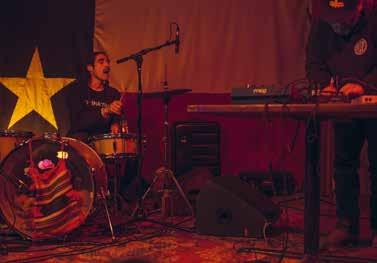
depending on the artists, the communities, and the context. It’s important to me that the Symposium is evolving rather than becoming static or predictable. The point is to stay open, to keep listening, and to follow where the sound leads.
Caitlin Murray is the director of the Chinati Foundation.
Nathan Young (Delaware, Kiowa, and Pawnee; born 1975, Tahlequah, Oklahoma) is an artist, curator, and scholar working across sound, video, performance, socially engaged art, and experimental music to explore Indigenous sonic agency. A cofounder of the collective Postcommodity and a PhD candidate in Native American art history at the University of Oklahoma, Young makes work that draws on the spiritual and the political to challenge dominant narratives. He is the founder of the Intertribal Noise Symposium and a 2024–2025 recipient of the Foundation for Contemporary Arts John Cage Award.
que el Simposio siga evolucionando, en lugar de volverse algo estático o predecible. La clave está en mantenerse abierto, seguir escuchando y dejar que el sonido marque el camino.
Murray es
Nathan Young (de origen Delaware, Kiowa y Pawnee; nacido en 1975 en Tahlequah, Oklahoma) es artista, comisario de arte y académico. Trabaja en los campos del sonido, el video, la performance , el arte socialmente comprometido y la música experimental, para explorar la capacidad de acción sonora indígena. Cofundador del colectivo Postcommodity y candidato a doctorado en historia del arte indígena en la Universidad de Oklahoma, su obra combina lo espiritual y lo político para desafiar narrativas dominantes. Es fundador del Intertribal Noise Symposium y recibió el premio John Cage Award de la Foundation for Contemporary Arts para el periodo 2024—2025.
Zade Williamson joined the Chinati Foundation as an intern in the conservation department in February 2025. Shortly after arriving at Chinati, restoration work began on Robert Irwin’s untitled (dawn to dusk) , one of the first major conservation initiatives since the installation opened in 2016. Below, Williamson reflects on his experience assisting with the complicated process of replacing a panel of scrim, the opaque fabric that creates the passageways throughout the space.
—
Robert Irwin’s untitled (dawn to dusk) is a total work of art. The landscape, the building, and the rows of scrim all lend equally to the experience, requiring the same care and attention from a conservation and preservation standpoint.
The work is divided into two spaces: a dawn and a dusk, a light and a dark. An essential element of the piece is the scrim passageways that define the otherwise bare interior of the building. Irwin selected the scrim himself—a lightweight, semitransparent, polyester fabric often used in stage or set design. The effect of the scrim is disorienting; when situated on the dark side of the building, looking through passageways of black rows of scrim, the delicate fabric becomes transparent. And while visits to the space are led by docents, visitors occasionally lose spatial awareness, making accidental contact with the scrims and warping the fabric.
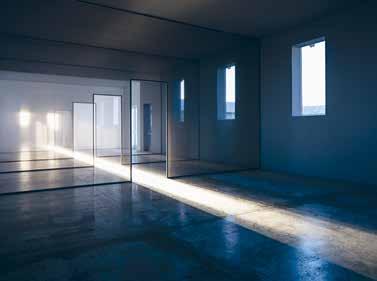
Zade Williamson se unió a la Fundación Chinati como becario en el departamento de conservación en febrero de 2025. Poco después de llegar a Chinati, comenzó el trabajo de restauración de untitled (dawn to dusk) [sin título (el amanecer al atardecer)] de Robert Irwin, una de las primeras iniciativas de conservación a gran escala desde que se inauguró la instalación en 2016. A continuación, Williamson reflexiona sobre su experiencia asistiendo en el complejo proceso de reemplazo de un panel de tejido ligero, la tela opaca que crea los pasillos dentro del espacio.
—
Untitled (dawn to dusk) de Robert Irwin es una obra de arte total. El paisaje, el edificio y las filas de tejido ligero contribuyen por igual a la experiencia, y requieren el mismo cuidado y atención desde el punto de vista de la conservación y la preservación.
La obra está dividida en dos espacios:
As a result, when I arrived in Marfa for my internship, one of the dark transitional scrims required replacement. Chinati contracted two experts in the installation of Irwin’s work in scrim to help undertake the effort: Jeff Jamieson, a key member of the design and construction team of untitled (dawn to dusk) , and Anna Grace Irwin, daughter of Robert Irwin, who installed many of the scrim walls during the project’s construction in 2015. The Chinati conservation technician Lucita Bockelie made up the fourth member of our team and was my advisor.
Our work began this spring in the middle corridor of the building. Conservation work demands a clean environment, a unique challenge given Marfa’s climate. Dust, rocks, and goatheads—the thorny seed pods that plague the landscape—are constant intruders, presenting a danger
un amanecer y un atardecer, una luz y una oscuridad. Un elemento esencial de la pieza son los pasillos de tejido ligero que definen el interior, de otro modo desnudo, del edificio. Irwin eligió personalmente el tejido ligero: una tela de poliéster semitransparente y liviana, usada comúnmente en escenografía o diseño de escenarios. El efecto del tejido ligero es desorientador: cuando se está en el lado oscuro del edificio y se observa a través de los pasillos de tejido ligero negro, la tela delicada se vuelve transparente. Aunque las visitas al espacio están llevadas a cabo por guías, los visitantes a veces pierden la noción del espacio, lo que lleva a contactos accidentales con el tejido ligero y a la deformación de la tela.
Como resultado, cuando llegué a Marfa para mis prácticas, uno de los tejidos ligeros de transición del lado oscuro necesitaba ser reemplazado. Chinati contrató a dos expertos en la instalación de obras de Irwin en tejido ligero para ayudar en la tarea: Jeff Jamieson, miembro clave del equipo de diseño y construcción de untitled (dawn to dusk) , y Anna Grace Irwin, hija de Robert Irwin, quien instaló muchas de las paredes de tejido ligero durante la construcción del proyecto en 2015. La técnica de conservación de Chinati, Lucita Bockelie, fue la cuarta integrante de nuestro equipo y mi asesora.
Nuestro trabajo comenzó esta primavera en el corredor central del edificio. El trabajo de conservación exige un entorno limpio, un desafío particular dadas las condiciones climáticas de Marfa. El polvo, las piedras y las espinas de goathead —las vainas espinosas que invaden el paisaje— son intrusos constantes que representan una amenaza para la tela. Se realizaron varias rondas
to the fabric. Several rounds of vigilant cleanings took place to mitigate these factors.
Once the area was prepared, working together as a team, we removed the damaged scrim. The material is held in place by an interior frame of thin wood—painted black to create a seamless effect in the space—and secured with an even row of staples, each carefully placed by hand more than ten years ago. Removing these staples damaged the frame, and the hundreds of holes had to be refilled and sanded down so as not to snag the delicate fabric during reinstallation.
With the frame repaired, we turned to the fabric. With great care, we laid the new scrim out on butcher paper. Together, we carefully inspected the scrim for holes and unevenness. This was the second time we evaluated the fabric. Previously, Chinati’s conservation team had reviewed the many rolls delivered to Chinati from the factory in Germany. We approved only one out of every six rolls of scrim for use. Upon final review, this scrim passed. As a team, we lifted the scrim to Anna Grace, who stood above us on scaffolding to reach the twelve-foot ceiling. She stapled the scrim to the center point of the ceiling frame, the first of many hundreds placed throughout the week. She continued to move side to side along the ceiling, placing staples as she went. Lucita assisted from the ground, pulling the fabric to the desired tension. The goal was to provide enough draping so that Anna Grace could ensure the correct tautness of the scrim: not too tight to introduce snags and not too loose to introduce a ripple. Jeff followed closely behind, advising where the next staples should go.
Once securely attached to the top of the ceiling, Anna Grace proceeded with a similar system, stapling the remaining vertical frames against either wall and the horizontal frame at floor level. As the scrim is stretched taut, it begins to resemble a transparent portal rather than draped curtains. Finally, a doorframe is set into the floor anchors and stapled to the solid wall of scrim. It is the tautness of the fabric, combined with the long lines of staples on the doorframe’s edges, that keeps the opening in place. Jeff precisely cut the doorway with a razor blade, making the passageway through the space.
In the pursuit of preserving this experience for future Chinati conservators, each of our steps was meticulously documented. In this way, we
de limpiezas meticulosas para mitigar estos factores.
Una vez preparado el área, procedimos como equipo a retirar el tejido ligero dañado. El material está sujeto por un marco interior de madera delgada — pintado de negro para crear un efecto homogéneo en el espacio— y asegurado con una fila uniforme de grapas, cada una colocada a mano hace más de diez años. Al quitar estas grapas, se dañó el marco, y los cientos de agujeros tuvieron que ser rellenados y lijados para no enganchar la tela delicada durante la reinstalación.
Con el marco reparado, nos concentramos en la tela. Con sumo cuidado, extendimos el nuevo tejido ligero sobre papel de carnicero. Juntos, inspeccionamos cuidadosamente el tejido ligero buscando agujeros o irregularidades. Esta era la segunda vez que evaluábamos la tela. Previamente, el equipo de conservación
can rest assured that as long as there are those willing to care for it, Irwin’s untitled (dawn to dusk) will remain a fixture in this desert landscape, just as he intended.
Jeff, Anna Grace, and Lucita understand the ethos of Irwin’s work. Having just arrived at Chinati, I initially felt out of place and unsure of how to help. I quickly realized, however, that my role was anticipatory. Observation and close attention were required to know what tool was needed before Jeff or Anna Grace verbalized it. Understanding the thought process of an installer, fabricator, or artist is a crucial aspect of the conservator’s role, interpreting the artist’s intent while upholding a duty to preserve it faithfully. Each piece in Chinati’s collection is considered through the lens of the artist, with Irwin’s installation being no exception. Although not the
de Chinati había revisado los múltiples rollos enviados desde la fábrica en Alemania. Solo uno de cada seis rollos fue aprobado para su uso. Tras una revisión final, este rollo fue aprobado. Como equipo, levantamos el tejido ligero hasta Anna Grace, quien se encontraba sobre un andamio para alcanzar el techo de 3.7 metros de altura. Ella grapó el tejido ligero al punto central del marco del techo, la primera de las muchas centenas de grapas colocadas durante la semana. Continuó moviéndose lateralmente a lo largo del techo, colocando grapas a medida que avanzaba. Lucita ayudaba desde el suelo, tirando de la tela para alcanzar la tensión deseada. El objetivo era lograr una caída adecuada que permitiera a Anna Grace tensar correctamente el tejido ligero: ni demasiado tenso para evitar enganches ni demasiado suelto para evitar ondulaciones. Jeff la seguía de cerca, aconsejando dónde colocar las siguientes grapas.
Una vez asegurada la parte superior al techo, Anna Grace procedió con un sistema similar para grapar los marcos verticales restantes contra ambas paredes y el marco horizontal al nivel del suelo. A medida que se tensa el tejido ligero, comienza a parecerse más a un portal transparente que a una cortina colgante.
Finalmente, se coloca un marco de puerta anclado al suelo y grapado a la pared sólida de tejido ligero. Es la tensión de la tela, combinada con las largas filas de grapas a los bordes del marco de puerta, lo que mantiene estable la abertura. Jeff cortó con precisión la puerta con una cuchilla, creando el pasadizo a través del espacio.
Con el objetivo de preservar esta experiencia para futuros conservadores de Chinati, cada uno de nuestros pasos fue documentado meticulosamente. De este modo, podemos tener la certeza de que, mientras haya quienes estén dispuestos a cuidarla, untitled (dawn to dusk) de Irwin seguirá siendo una presencia fija en este paisaje desértico, tal como él lo imaginó.
case for other works, in this instance, the materiality of the piece does not reflect the integrity of the total work, and damaged material can be removed and replaced to retain the authenticity of the space.
I have spent significantly more time in untitled (dawn to dusk) than I have in any other installation on the grounds. Between the restoration and general upkeep, I’ve had the unique opportunity to see the entirety of the day unfold within the building’s walls. It is an ever-shifting, almost living space, never the same. As much as I have grown to love the work and all of its intricacies and specifics, seeing others experience it has been equally special.
Jeff, Anna Grace y Lucita comprenden el espíritu de la obra de Irwin. Al llegar a Chinati, inicialmente me sentí fuera de lugar y sin saber cómo ayudar. Sin embargo, rápidamente entendí que mi papel era anticipatorio. Se requería observación y atención para saber qué herramienta sería necesaria antes de que Jeff o Anna Grace la pidieran. Comprender el proceso mental de un instalador, un fabricante o un artista es una parte fundamental del rol de un conservador, interpretando la intención del artista mientras se cumple con el deber de preservarla fielmente. Cada obra en la colección de Chinati se considera a través de la lente del artista, y la instalación de Irwin no es una excepción. Aunque no sucede con otras obras, en este caso, la materialidad de la pieza no define la integridad de la obra total, y el material dañado puede ser retirado y reemplazado para mantener la autenticidad del espacio. He pasado significativamente más tiempo en untitled (dawn to dusk) que en cualquier otra instalación del recinto. Entre la restauración y el mantenimiento general, he tenido la oportunidad única de ver el transcurso del día completo dentro de las paredes del edificio. Es un espacio en constante cambio, casi vivo , nunca igual. Por mucho que haya llegado a amar la obra y todas sus complejidades y particularidades, ver a otros experimentarla ha sido igual de especial.
If asked to represent Marfa on film, what would you capture?
Scroll Instagram, and you’ll find countless tourists posting the same handful of images—the Palace Theater, Donald Judd’s 15 untitled works in concrete, an airstream, the train tracks. Ask local students this same question, and you’ll be amazed by their answers: long car rides to Odessa softball tournaments, walks with their date to the park, a urinal, their truck, grocery aisles wandered
Si le pidieran representar a Marfa en una película, ¿qué capturaría?
Desplácese por Instagram y encontrará innumerables turistas publicando las mismas imágenes de siempre: el Teatro Palace, las 15 obras sin título de Donald Judd en hormigón, una caravana airstream , las vías del tren. Pero hágales esta misma pregunta a los estudiantes locales y le sorprenderán sus respuestas: largos viajes en coche a torneos de sóftbol en Odessa, caminatas al parque con su pareja, un urinario, su camioneta, los pasillos del supermercado recorridos después de clases, las señales y estructuras iluminadas por la luz de la tarde (incluyendo un escritorio roto que ha estado en el bordillo todo el año), su camioneta, otra vez.
Hace dos años, Adele Powers —exeducadora de Chinati y actual profesora de arte en la escuela secundaria del distrito independiente escolar de Marfa— abrió la puerta a una colaboración continua entre ambas instituciones. Cada primavera, sus estudiantes dedican una unidad a trabajar con
after school, signs and structures hit with afternoon light (including a broken desk that’s been on the curb all year), their truck, again.
Two years ago, former Chinati educator and current Marfa ISD highschool art teacher Adele Powers opened the door for an ongoing collaboration between the two organizations. Each spring, her students spend a unit with our education department engaging with a medium they would not otherwise be able to access, either for lack of resources or teacher bandwidth.
This year, in conjunction with the exhibition of Zoe Leonard’s Al río / To the River, our department designed an analog photography curriculum.
The unit began with an ambitious project conceived by the former director of education Michael Roch: the construction of a fully equipped darkroom in an unused space at the high school. Our department installed a twelve-foot sink, six enlargers, ventilation, and blackout curtains. Our
nuestro departamento de educación en un medio al que, de otra manera, no tendrían acceso, ya sea por falta de recursos o de tiempo del profesorado. Este año, en conjunto con la exposición Al río / To the River, de Zoe Leonard, nuestro departamento diseñó un plan de estudios de fotografía analógica. La unidad comenzó con un proyecto ambicioso concebido por el exdirector de educación Michael Roch: la construcción de un cuarto oscuro totalmente equipado en un espacio desocupado de la escuela secundaria. Nuestro departamento instaló un fregadero de casi cuatro metros, seis ampliadoras, ventilación y cortinas opacas. Aunque el tiempo con los estudiantes fue limitado, el cuarto oscuro quedará como un recurso duradero para futuras generaciones y entusiastas de la fotografía en la escuela secundaria.
Para mediados de marzo, llegaron los estudiantes. Los de sexto grado comenzaron con fotogramas y cianotipos, mientras que los de noveno construyeron cámaras estenopeicas. Los alumnos
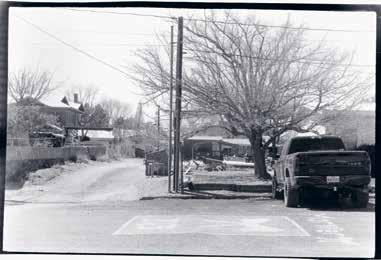
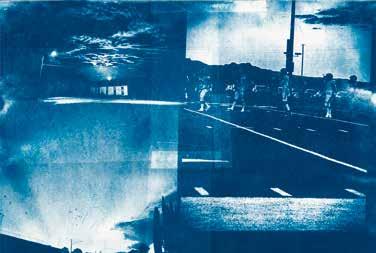
time spent with students was limited, but the darkroom will remain a lasting resource for future classes and highschool photography enthusiasts. By mid-March, the students arrived. Sixth graders started with photograms and cyanotypes, while ninth graders built pinhole cameras. Upperclassmen in Advanced Art received a 35mm camera, a few rolls of film, a crash course in camera settings, and were sent off with the instruction to finish a roll of thirty-six exposures by next class, and then thirty-six the next class, and the next.
Several stand-alone portraits boast remarkable subtlety. On most students’ contact sheets, the first frame depicts a sincere headshot followed by the same subject sporting a goofy face. The same dynamic arose in our Warholesque Polaroid shoot with sixth graders; among the backdrops, accessories, and costumes are subtle pictures
mayores del curso de Arte Avanzado recibieron una cámara de 35 mm, algunos rollos de película, una introducción exprés a la configuración de la cámara y la instrucción de terminar un rollo de treinta y seis exposiciones antes de la próxima clase, y luego otro rollo para la siguiente, y así sucesivamente.
Varios retratos individuales destacan por su notable sutileza. En la mayoría de las hojas de contacto de los estudiantes, el primer fotograma muestra un retrato sincero, seguido por la misma persona haciendo una cara graciosa.
La misma dinámica surgió en nuestra sesión de Polaroids estilo Warhol con los estudiantes de sexto grado; entre los fondos, accesorios y disfraces, aparecen imágenes sutiles de reflexión, alegría y compañerismo. Son emociones escolares que el público adulto puede recordar muy bien.
En un proyecto posterior, se les pidió a los estudiantes de sexto y noveno que
of thoughtfulness, joy, togetherness. These are the schooltime feelings that older audiences can recall well.
A later project asked sixth and ninth graders to choose an image saved to their desktop and create a cyanotype. For ninth graders, this meant favorite musicians, athletics, pets, friends.
For sixth graders? Grainy webcam selfies, a portrait of Abraham Lincoln from social studies, ancient memes, shorse (shark horse), and an emoji farting. Nothing could represent them better.
The photography unit culminated with a public art show at the Marfa Public Library complete with hot dogs, a piñata, lemonade, local journalists, and a student-made playlist featuring Limp Bizkit, Afroman, and Katy Perry, among others.
The show’s ethos wasn’t far from Zoe Leonard’s Al río / To the River. Marfa is ripe for editorializing, but these
eligieran una imagen guardada en su escritorio digital y crearan un cianotipo. Para los de noveno, esto significó músicos favoritos, deportes, mascotas, amistades. ¿Y para los de sexto? Selfies de webcam granuladas, un retrato de Abraham Lincoln del curso de estudios sociales, memes antiguos, un shorse (mitad tiburón, mitad caballo), y un emoji tirándose un pedo. Nada los podría representar mejor. La unidad de fotografía culminó con una exposición pública en la Biblioteca Pública de Marfa, con perritos calientes, una piñata, limonada, periodistas locales y una lista musical hecha por los estudiantes con canciones de Limp Bizkit, Afroman y Katy Perry, entre otros. El espíritu de la muestra no estaba lejos del de Al río / To the River de Zoe Leonard. Marfa es terreno fértil para el exceso editorial, pero estas fotos no caen en eso. Dicen la verdad —la verdad de los estudiantes— y, posiblemente, presentan
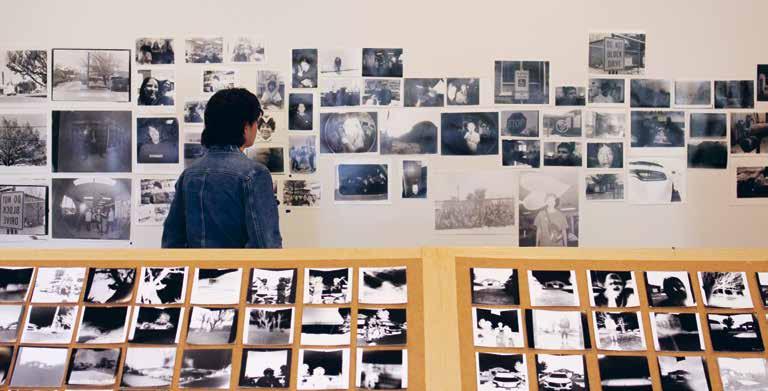
photos don’t. They tell the truth—the students’ truth—and arguably present the most honest perspective our town has to offer. As Leonard says, “Where you look from is always half the picture.”
It would be a mistake to say photography gave these students a voice.
Fundamental to our education program is the belief that they already have one. With the right tools, these art initiatives empower students to capture how they see the world. Two of our most important tools are trust, established with local schools over decades, and drive, the effort to provide something special.
Our Marfa community is intimate enough to aim for a level of individualized enrichment unique among US museum-education models, but this
la perspectiva más honesta que nuestro pueblo puede ofrecer. Como dice Leonard, “El lugar desde donde se mira siempre es la mitad de la imagen”. Sería un error decir que la fotografía les dio una voz a estos estudiantes. Un principio fundamental de nuestro programa educativo es la creencia de que ellos ya la tienen. Con las herramientas adecuadas, estas iniciativas artísticas permiten que los estudiantes capten cómo ven el mundo. Dos de nuestras herramientas más importantes son la confianza —cultivada con las escuelas locales durante décadas—, y el compromiso, el esfuerzo de ofrecer algo especial.
Nuestra comunidad en Marfa es lo suficientemente íntima como para aspirar a un nivel de enriquecimiento individualizado único entre los modelos educativos de museos en Estados Unidos. Pero este
place has always invited people to find their vision. Judd is one example; Zoe Leonard is another. When we point, click, and share artistic visions, community is created. Thank you to everyone who helped provide such a memorable experience for the students: Juan Martinez, the brilliant shop teacher who taught across the hallway and thought we were crazy; Michael Roch for his vision; Synsorae Eutsay for her essential contributions; Adele Powers for her trust and enthusiasm; and all the students for letting us share their work here.
lugar siempre ha invitado a las personas a encontrar su visión. Judd es un ejemplo; Zoe Leonard es otro. Cuando apuntamos, disparamos y compartimos visiones artísticas, se crea comunidad. Gracias a todas las personas que ayudaron a brindar una experiencia tan memorable para los estudiantes: a Juan Martínez, el brillante maestro de taller que enseñaba al otro lado del pasillo y pensaba que estábamos locos; a Michael Roch por su visión; a Synsorae Eutsay por sus contribuciones esenciales; a Adele Powers por su confianza y entusiasmo; y a todos los estudiantes por permitirnos compartir aquí su obra.
2024–2025
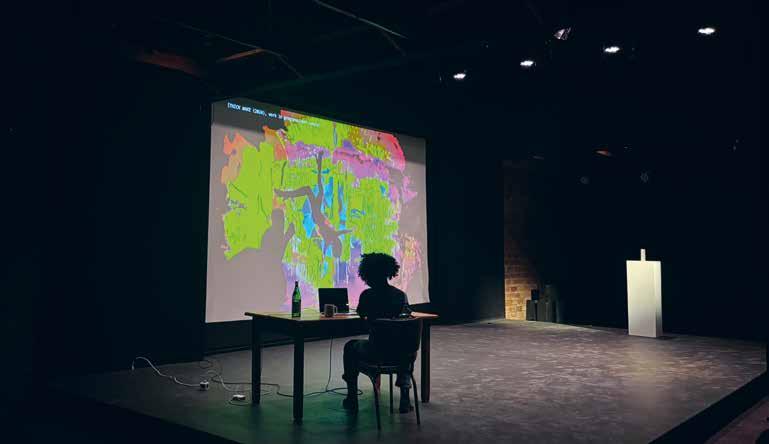
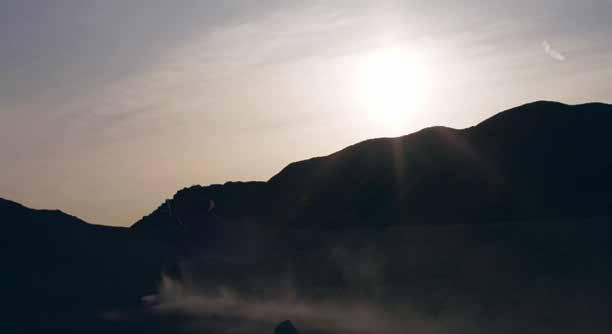
JULY–AUGUST 2024
JULIO–AGOSTO DE 2024
Troy Montes Michie is an interdisciplinary artist, painter, and educator. Frequently using collage as a methodology, Montes Michie engages with photographic archives to trouble the depiction of groups targeted for oppression. Employing an array of materials deriving from a wide variety of sources, Montes Michie, in works of vertiginous beauty and critical complexity, investigates the influence of print media in mass culture, disrupting codes of representation that fetishize members of these groups.
Troy Montes Michie (born 1985, El Paso, Texas; lives and works in New York) has had solo exhibitions including Rock of Eye at the Contemporary Arts Museum Houston and the California African American Museum, Los Angeles, and Dishwater Holds No Images at Company Gallery, New York. Other recent group exhibitions include those at ICA Los Angeles; the Worcester Art Museum, Massachusetts; the Momentary, Arkansas; and Philbrook Museum of Art, Oklahoma; among many others. His work was featured in the 2019 Whitney Biennial. Awards and residencies include Recess Art, the Emerging Artist Grant, and Skowhegan School of Painting and Sculpture. His work is included in numerous public collections including the Philbrook Museum, Oklahoma; Whitney Museum of American Art, New York; RISD Museum, Rhode Island; Ulster Museum, North Ireland; and the Zabludowicz Collection, London. He is a lecturer in visual arts at Princeton University.
Troy Montes Michie es artista interdisciplinario, pintor y educador. Montes Michie, que utiliza frecuentemente el collage como metodología, trabaja con archivos fotográficos para cuestionar la representación de grupos históricamente oprimidos. Al emplear una variedad de materiales provenientes de múltiples fuentes, crea obras de belleza vertiginosa y complejidad crítica que investigan la influencia de los medios impresos en la cultura de masas, interrumpiendo los códigos de representación que fetichizan a los miembros de estos grupos.
Troy Montes Michie (nacido en 1985, en El Paso, Texas; vive y trabaja en Nueva York) ha realizado exposiciones individuales como Rock of Eye [A ojo] en el Contemporary Arts Museum Houston y en el California African American Museum de Los Ángeles, y Dishwater Holds No Images [El agua de lavar los platos no contiene imágenes] en la Company Gallery, Nueva York. Otras exposiciones colectivas recientes incluyen el ICA de Los Ángeles; el Worcester Art Museum, Massachusetts; The Momentary, Arkansas; y el Philbrook Museum of Art, Oklahoma, entre muchos otros. Su obra fue presentada en la Bienal del Whitney en 2019. Ha recibido becas y residencias como Recess Art, Emerging Artist Grant y Skowhegan School of Painting and Sculpture. Su obra forma parte de colecciones públicas como las del Philbrook Museum (Oklahoma), Whitney Museum of American Art (Nueva York), RISD Museum (Rhode Island), Ulster Museum (Irlanda del Norte) y Zabludowicz Collection (Londres). Es profesor de artes visuales en la Universidad de Princeton.
SEPTEMBER–OCTOBER 2024
SEPTIEMBRE–OCTUBRE DE 2024
Willie Binnie began his residency at Chinati by taking Polaroid photographs of cemeteries, car washes, adobe ruins, and a high-school football game. From there, his studies of daily life in Marfa moved mediums— to oil on canvas and acrylic on paper. For his open studio during Chinati Weekend, Binnie showcased finished works alongside studies and works in progress of the Border Patrol aerostat with a smiley face, a snowman painted on canvas with a matching sculpture made of concrete, and the “Black Sun,” a recurring image in his work.
Scottish American artist Willie Binnie (born 1985, Dallas, Texas; lives and works in Williamstown, Massachusetts) has been a visiting lecturer at Williams College since 2019. He received his BA from Pitzer College in 2008, and his MFA from Southern Methodist University in 2014. His work has been exhibited nationally and internationally with notable exhibitions including Lure of the Dark: Contemporary Painters Conjure the Night at MASS MoCA (2018), North Adams, Massachusetts; the deCordova Museum 2019 Biennial, Lincoln, Massachusetts; and the inaugural exhibition at the Bunker, the Collection of Beth Rudin DeWoody, West Palm Beach, Florida (2019). He has completed residencies at the Robert Rauschenberg Foundation, Captiva, Florida (2014) and at the Bemis Center for Contemporary Arts, Omaha, Nebraska (2020). Binnie cofounded Beefhaus, an artist-run project space and community center in the Expo Park neighborhood of Dallas, which supported exhibitions, screenings, and performances from 2013 to 2018. In the wake of Hurricanes Irma and Maria in 2017, he cofounded the Puerto Rican artist residency program at MASS MoCA—an ongoing, fully funded fellowship for visual artists and writers from Puerto Rico.
Willie Binnie comenzó su residencia en Chinati tomando fotografías Polaroid de cementerios, autolavados, ruinas de adobe y un partido de fútbol americano escolar. A partir de ahí, sus estudios sobre la vida cotidiana en Marfa cambiaron de medio: del óleo sobre lienzo al acrílico sobre papel. Para su estudio abierto al público durante el Fin de Semana de Chinati, Binnie presentó obras terminadas, junto con estudios y obras en curso, incluyendo una imagen del aerostato de la Patrulla Fronteriza con una carita feliz, un muñeco de nieve pintado sobre lienzo acompañado de una escultura de hormigón, y el “Black Sun” [Sol negro], una imagen recurrente en su obra.
Willie Binnie, artista escocés-estadounidense (nacido en 1985, en Dallas, Texas; vive y trabaja en Williamstown, Massachusetts), es profesor visitante en la Williams College desde 2019. Obtuvo su licenciatura en artes de la Pitzer College (2008) y su maestría en bellas artes por la Southern Methodist University (2014). Su obra ha sido expuesta a nivel nacional e internacional, con exposiciones destacadas como Lure of the Dark: Contemporary Painters Conjure the Night [El encanto de la oscuridad: pintores contemporáneos invocan a la noche] en MASS MoCA (2018), North Adams, Massachusetts; la Bienal 2019 del deCordova Museum, en Lincoln, Massachusetts; y la exposición inaugural de The Bunker: The Collection of Beth Rudin DeWoody [El búnker: la colección de Beth Rudin DeWoody], en West Palm Beach, Florida (2019). Ha realizado residencias en la Fundación Robert Rauschenberg, Captiva, Florida (2014) y en el Bemis Center for Contemporary Arts, en Omaha, Nebraska (2020). Cofundó Beefhaus, un centro comunitario y espacio de proyectos gestionado por artistas en el barrio de Expo Park en Dallas, que apoyó exposiciones, proyecciones y actuaciones desde 2013 hasta 2018. Tras los huracanes Irma y María en 2017, cofundó un programa de residencias para artistas puertorriqueños en MASS MoCA, una beca continua y totalmente financiada para artistas visuales y escritores de Puerto Rico.
JANUARY–FEBRUARY 2025
ENERO–FEBRERO DE 2025
Leslie Cuyjet spent her time in Marfa continuing her daily writing practice and reflecting on the role of documentation in her life as a dancer and performer. Near the end of her residency, Cuyjet presented a performance at the Crowley Theater during which she shared texts, images, and video from the hard drive where she stores the documentation of her work, alongside various creative writing, administrative documents, home videos, and family photographs. Cuyjet sat at a small desk onstage, facing away from the audience and toward a screen where images and films were projected; on the opposite side of the stage, Cuyjet placed the hard drive itself on a plinth. During the performance, Cuyjet quoted Renee Green’s essay “Other Planes of There”: “Having the chance, the opportunity to read and think one’s own thoughts. This in itself is huge. To sit undisturbed in one’s own room, wherever that may be. To be free of laboring for another. Stupendous!”
Leslie Cuyjet (born 1981; lives in Brooklyn, New York) is an award-winning performer and choreographer. Her dances often integrate text, video, and live performance while interrogating the performing body, personal legacy, and dance history. She is also a writer, editor, and cofounder of the Authentic Movement collective, Duvet, which all play a role in shaping her interdisciplinary artistic practice. She has performed and collaborated with Jane Comfort, Cynthia Oliver, Niall Jones, Yanira Castro, Will Rawls, David Gordon, Narcissister, and Kim Brandt, among others. Cuyjet’s work has been presented at The Kitchen, New York; The Shed, New York; MoMA PS1, New York; The Chocolate Factory, New York; and Center for Performance Research, New York. Recent honors include Foundation for Contemporary Arts Grants for Artists, Princeton Hodder Fellowship, and an Outstanding Choreographer/Creator “Bessie” Award for her 2021 work, Blur
Durante su residencia en Marfa, Leslie Cuyjet continuó con su práctica diaria de escritura y reflexionó sobre el papel de la documentación en su vida como bailarina e intérprete. Cerca del final de su estancia, presentó una performance en el Teatro Crowley donde compartió textos, imágenes y videos del disco duro donde guarda la documentación de su obra, junto con escritos creativos, documentos administrativos, videos caseros y fotos familiares. Cuyjet se sentó en un pequeño escritorio en el escenario, de espaldas al público y frente a una pantalla donde se proyectaban imágenes y películas; del lado opuesto del escenario colocó el disco duro sobre un pedestal. Durante la performance , citó el ensayo de Renée Green Other Planes of There [Otros planos de allí]: “Tener la posibilidad, la oportunidad, de leer y pensar los propios pensamientos. Esto en sí es enorme. Sentarse sin ser molestada en una habitación propia, dondequiera que esté. Estar libre de trabajar para otro. ¡Estupendo!”
Leslie Cuyjet (nacida en 1981; vive en Brooklyn, Nueva York) es una galardonada intérprete y coreógrafa. Sus obras integran texto, video y performances en vivo, mientras interrogan el cuerpo en escena, el legado personal y la historia de la danza. También es escritora, editora y cofundadora de Duvet, del colectivo de Authentic Movement, que forman parte de su enfoque interdisciplinario. Ha actuado y colaborado con Jane Comfort, Cynthia Oliver, Niall Jones, Yanira Castro, Will Rawls, David Gordon, Narcissister y Kim Brandt, entre otros. La obra de Cuyjet ha sido presentada en The Kitchen, en Nueva York; The Shed, en Nueva York; MoMA PS1, en Nueva York; The Chocolate Factory, en Nueva York; y el Center for Performance Research, en Nueva York. Recientemente recibió una beca de la Foundation for Contemporary Arts, la beca Hodder de Princeton y un premio Bessie como Creadora/Coreógrafa Destacada por su obra de 2021, Blur
MAY–JUNE 2025
MAYO–JUNIO DE 2025
Artist dean erdmann spent their twomonth residency at Chinati working across documentary, research, and sculpture. Their multifaceted practice draws on areas of interest as varied as their medium. While in Marfa, erdmann researched geopolitics in the Permian Basin, the use of sand in fracking, and the role of the desert in housing infrastructure such as detention centers, prisons, and military bases. In June, erdmann gave an artist talk at Marfa Book Company, which explored through lines in their work, including a project currently in development, Artemis Moon Rocket Regolith
For the piece, they plan to use a lunar regolith simulant, which simulates a sand high in silica found on the moon, to make glass objects. To this end, erdmann built relationships with astronomers at the McDonald Observatory and attended the International Rocket Engineering Competition in Midland, Texas. The artist intends to return to the Trans-Pecos region to continue this ongoing research.
dean erdmann (born 1980, California; lives and works between San Diego, California, and New York) was a 2018–2020 Vera List Center for Art and Politics Fellow, 2019 Urban Glass Fellow, 2013 California Community Foundation Fellow, and recipient of a Center for Cultural Innovation grant. Their work has been exhibited at ONE Archives, Los Angeles; MexiCali Biennial; Hammer Museum, Los Angeles; REDCAT, Los Angeles; 21st Century Museum of Contemporary Art, Kanazawa, Japan; Spiral Hall, Tokyo; Kavi Gupta Berlin; the Sheila Johnson Design Center, Morrisville, New York; Torrance Art Museum, California; and Public Fiction, Los Angeles; among many others. Their public commission for the LA K-line Leimert Park Station opened fall 2022. In 2024, their first international solo exhibition, 38 , opened at Louche Ops, Berlin, and their work was included in Scientia Sexualis (2024), part of Getty’s Pacific Standard Time at the Institute of Contemporary Art Los Angeles. They are a Creative Glass Fellow at Wheaton Arts. They are an assistant professor of visual arts at University of California, San Diego.
Le artista dean erdmann pasó su residencia de dos meses en Chinati trabajando en los campos del documental, la investigación y la escultura. Su práctica multifacética abarca intereses tan diversos como los medios que emplea. Durante su estancia en Marfa, erdmann investigó la geopolítica en la Cuenca Pérmica, el uso de la arena en el fracking y el papel del desierto como infraestructura para centros de detención, prisiones y bases militares. En junio, erdmann ofreció una charla en la Marfa Book Company, donde exploró temas recurrentes en su trabajo, incluido un proyecto en curso titulado Artemis Moon Rocket Regolith [Regolito del cohete lunar Artemis]. Para esta obra, planea usar una simulación de regolito lunar —una arena rica en sílice similar a la encontrada en la Luna— para fabricar objetos de vidrio. En este contexto, erdmann estableció vínculos con astrónomos del Observatorio McDonald y asistió a la Competición Internacional de Ingeniería de Cohetes en Midland, Texas. Le artista tiene la intención de regresar a la región del Trans-Pecos para continuar con esta investigación.
dean erdmann (nacide en 1980, California; vive y trabaja entre San Diego, California, y Nueva York) fue becarie del Vera List Center for Art and Politics (2018–2020), becarie de Urban Glass (2019), de la California Community Foundation (2013), y recibió una beca del Center for Cultural Innovation. Su obra ha sido expuesta en ONE Archives, en Los Ángeles; la MexiCali Biennial; el Hammer Museum, en Los Ángeles; REDCAT, en Los Ángeles; el 21st Century Museum of Contemporary Art, en Kanazawa, Japón; el Spiral Hall, en Tokio; en Kavi Gupta, en Berlín; el Sheila Johnson Design Center, en Morrisville, Nueva York; el Torrance Art Museum, en California; y Public Fiction, en Los Ángeles, entre otros. Su encargo público para la estación Leimert Park de la línea K del metro de Los Ángeles se inauguró en otoño de 2022. En 2024, su primera exposición individual internacional, 38 , se presentó en Louche Ops, Berlín, y su obra fue incluida en Scientia Sexualis (2024), parte de Pacific Standard Time de Getty en el Institute of Contemporary Art Los Angeles. Actualmente es becarie de vidrio creativo en Wheaton Arts y profesore asistente de artes visuales en la Universidad de California en San Diego.
Each year, the Chinati Foundation presents a limited-edition artwork to members who join at the Partner level or above. The 2025 Membership Edition is by Katharina Grosse—a 1999 Chinati Artist in Residence internationally recognized for her site-specific work sprayed directly onto architecture, interiors, and landscapes.
Approaching painting as an experience in immersive subjectivity, Grosse uses a spray gun, distancing the artistic act from the hand and stylizing gesture as a propulsive mark. During her 1999 residency at the museum, Grosse employed this technique to color the interior of the Locker Plant exhibition space in vibrant, cloudlike forms and mists of color.
Recently, Grosse has exhibited at Carriageworks, Sydney; the National Gallery, Prague; and Gagosian, Britannia Street; as well as at Art Basel 2025, where Grosse painted the public square Messeplatz, the largest urban installation of her career. Grosse’s work can be found in the collections of the Centre Pompidou, Paris; the Kunsthaus, Zurich; the Museum of Modern Art, New York; as well as other institutions.
Past Membership Edition artists include Eric N. Mack, Lucy Skaer, Sarah Crowner, Leslie Hewitt, Sarah McEneaney, Rosa Barba, Rosy Keyser, Erin Shirreff, Sterling Ruby, Matthew Day Jackson, Nate Lowman, Charline von Heyl, Zoe Leonard, Rupert Deese, Kate Shepherd, and Claes Oldenburg, among others.
Cada año, la Fundación Chinati presenta una obra de arte de edición limitada a los afiliados que se unen al nivel de Socio o superior. La edición para los afiliados del 2025 es de Katharina Grosse, artista en residencia de Chinati en 1999 y reconocida internacionalmente por sus obras site-specific , pintadas con espray directamente sobre arquitectura, interiores y paisajes.
Grosse aborda la pintura como una experiencia de subjetividad inmersiva y utiliza una pistola pulverizadora, distanciando el acto artístico de la mano y estilizando el gesto como una marca impulsora. Durante su residencia en el museo en 1999, Grosse empleó esta técnica para colorear el interior del espacio expositivo Locker Plant con formas vibrantes, similares a nubes, y neblinas de color.
Recientemente, Grosse ha expuesto su obra en Carriageworks, Sídney; la Galería Nacional de Praga; y Gagosian, en Britannia Street; así como en Art Basel 2025, donde Grosse pintó la plaza pública de Messeplatz, la mayor instalación urbana de su carrera. La obra de Grosse se encuentra en las colecciones del Centro Pompidou de París, el Kunsthaus de Zúrich, el Museo de Arte Moderno de Nueva York y otras instituciones.
Los artistas de las anteriores ediciones para los afiliados incluyen a Eric N. Mack, Lucy Skaer, Sarah Crowner, Leslie Hewitt, Sarah McEneaney, Rosa Barba, Rosy Keyser, Erin Shirreff, Sterling Ruby, Matthew Day Jackson, Nate Lowman, Charline von Heyl, Zoe Leonard, Rupert Deese, Kate Shepherd y Claes Oldenburg, entre otros.
Katharina Grosse
Untitled , 2025
Sin título , 2025
Offset print on archival paper Impresión offset sobre papel permanente Edition of 50 + 5APs
Edición de 50 + 5 pruebas de la artista
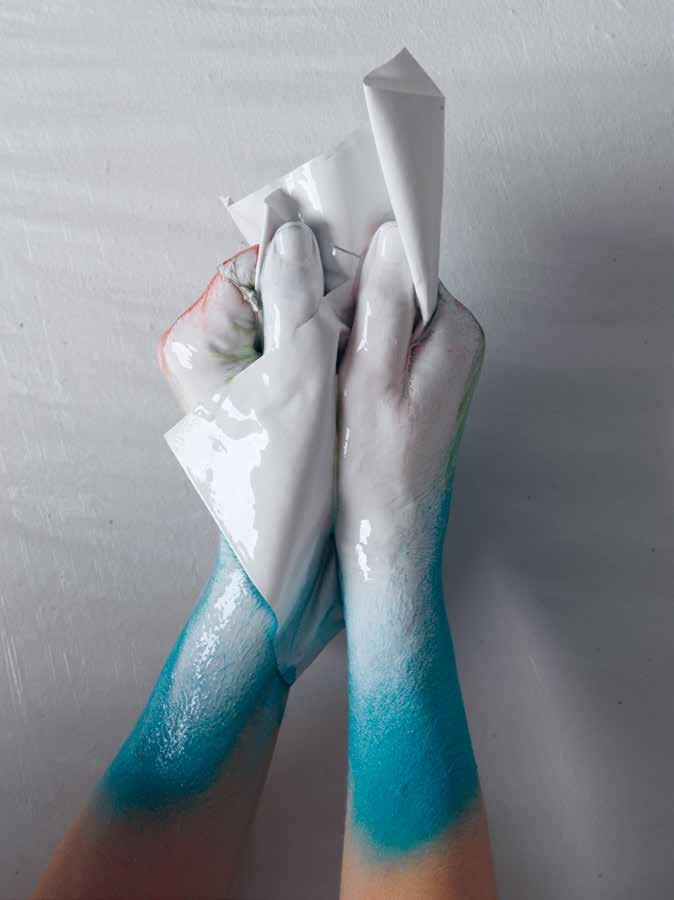
Each year, the Chinati Foundation presents programs and workshops that establish links between Marfa, its surrounding communities, and a broad range of people and organizations—artists, writers, musicians, architects, cultural institutions, and universities in the United States and abroad.
CHINATI WEEKEND 2024
October 11–13, 2024
FIN DE SEMANA EN CHINATI 2024 11–13 de octubre de 2024
In October 1987, Donald Judd began the tradition of inviting friends and collaborators to Marfa for an “Open House,” consisting of special exhibitions, talks, music, and meals. Now called Chinati Weekend, this year featured the opening of the exhibition of Zoe Leonard’s Al río / To the River ,
Cada año, la Fundación Chinati presenta programas y talleres que establecen vínculos entre Marfa, sus comunidades circundantes y una amplia gama de personas y organizaciones: artistas, escritores, músicos, arquitectos, instituciones culturales y universidades de los Estados Unidos y del extranjero.
En octubre de 1987, Donald Judd inició la tradición de invitar a amigos y colaboradores a Marfa para unas “Jornadas de puertas abiertas”, que incluían exposiciones especiales, charlas, música y comidas. Ahora conocido como Chinati Weekend [Fin de semana de Chinati], este año el evento incluyó la inauguración de la exposición Al río / To the River de Zoe Leonard, un estudio abierto al público con el artista residente de Chinati Willie Binnie, una cena benéfica y los siguientes programas, todos gratuitos y abiertos al público.
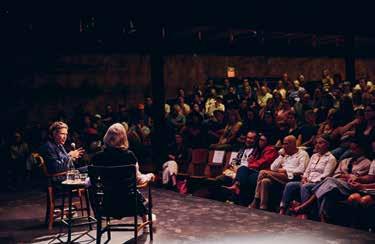
an open studio with Chinati Artist in Residence Willie Binnie, a benefit dinner, and the following programs, all of which were free to the public.
Kim Gordon October 11, 2024
Musician and visual artist Kim Gordon, whose 2024 album, The Collective , was nominated for a Grammy for Best Alternative Album, performed an experimental work for guitar accompanied by a Tony Oursler film projection. Gordon performed previously at Chinati Weekend 2007 as a member of the band Sonic Youth.
Conversation between Zoe Leonard and Lynne Cooke October 12, 2024
Artist Zoe Leonard and Lynne Cooke, senior curator in the department of modern and contemporary art at the National Gallery of Art, discussed Leonard’s Al río / To the River , on
Kim Gordon 11 de octubre de 2024
La música y artista visual Kim Gordon, cuyo álbum The Collective de 2024 fue nominado a un Grammy en la categoría de Mejor Álbum Alternativo, presentó una obra experimental para guitarra, acompañada por una proyección de video de Tony Oursler. Gordon ya había participado en el Fin de semana de Chinati en 2007 como integrante de la banda Sonic Youth.
Conversación entre
Zoe Leonard y Lynne Cooke 12 de octubre de 2024
La artista Zoe Leonard y Lynne Cooke, comisaria principal de arte del departamento de arte moderno y contemporáneo en la National Gallery of Art, conversaron sobre la obra Al río / To the River de Leonard, expuesta en Chinati de octubre de 2024 a julio de 2025. La conversación abordó el desarrollo de
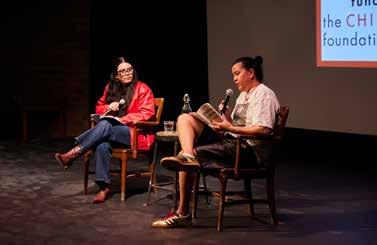
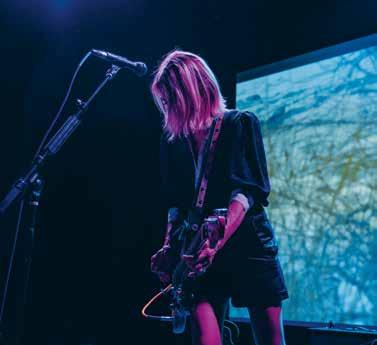
view at Chinati from October 2024 to July 2025. The conversation addressed the work’s development, formal concerns, and the decisions that informed its installation at Chinati.
Readings by Natalie Diaz and Dolores Dorantes
October 12, 2024
Poets Natalie Diaz and Dolores Dorantes gave a bilingual—Spanish and English—reading from Dorantes’s book-length poem, Copy . Diaz also read, “The First Water Is the Body,” a poem which appeared in her Pulitzer Prize–winning book, Postcolonial Love Poem (2020).
la obra, sus preocupaciones formales y las decisiones que influyeron en su instalación en Chinati.
Lecturas de Natalie Díaz y Dolores Dorantes
12 de octubre de 2024
Las poetas Natalie Diaz y Dolores Dorantes ofrecieron una lectura bilingüe —en español e inglés— del libro-poema Copy [Copia] de Dorantes.
Diaz también leyó “ The First Water Is the Body ” [El primer agua es el cuerpo], poema incluido en su libro Postcolonial Love Poem [Poema de amor poscolonial] (2020), ganador del Premio Pulitzer.
PERFORMANCE BY LAURA ORTMAN, TOM CARTER, RACHEL OROSCO, AND MATEO GALINDO
December 8, 2024
ACTUACIÓN DE LAURA ORTMAN, TOM CARTER, RACHEL OROSCO Y MATEO GALINDO
8 de diciembre de 2024
With local gallery ¿Tierra Y Qué?, Chinati copresented an evening of experimental and improvisational music by Laura Ortman, Tom Carter, Rachel Orosco, and Mateo Galindo at the Arena. Ortman closed the evening with a mesmerizing performance for violin.
En colaboración con la galería local ¿Tierra Y Qué?, Chinati copresentó una velada de música experimental e improvisada con Laura Ortman, Tom Carter, Rachel Orosco y Mateo Galindo en el edificio Arena. Ortman cerró la noche con una hipnótica actuación para violín.
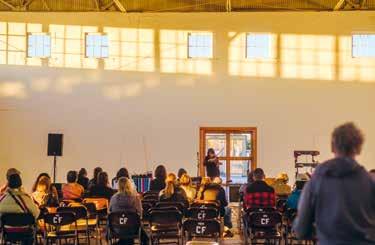
FIVE ARCHITECTURAL CASE STUDIES OF THE CHINATI FOUNDATION
December 7, 2024
CINCO CASOS PRÁCTICOS DE ARQUITECTURA DE LA FUNDACIÓN CHINATI
7 de diciembre de 2024
In collaboration with the department of architecture at Monash University in Melbourne, Australia, Chinati presented the exhibition Five Architectural Case Studies of the Chinati Foundation . Lecturer, curator, and practicing architect James Bowman Fletcher curated the exhibition of architectural models and drawings by the department’s students of five installations at the Chinati Foundation. Bowman Fletcher gave a brief talk to visitors about each of the models and drawings.
En colaboración con el departamento de arquitectura de la Universidad Monash en Melbourne, Australia, Chinati presentó la exposición Cinco casos prácticos de arquitectura de la Fundación Chinati . James Bowman Fletcher —profesor numerario, comisario de arte y arquitecto en ejercicio— comisarió la muestra de maquetas y dibujos arquitectónicos realizados por estudiantes del departamento sobre cinco instalaciones de la Fundación Chinati. Bowman Fletcher ofreció una breve charla a los visitantes sobre cada una de las maquetas y dibujos.
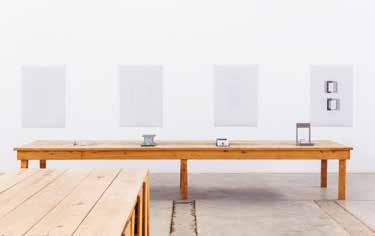
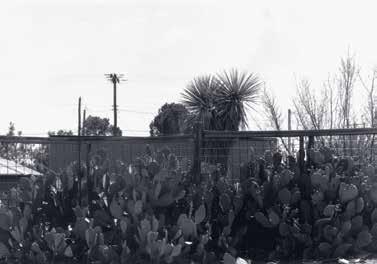
PINHOLE CAMERA WORKSHOP
March 3, 2025
TALLER DE CÁMARA ESTENOPEICA
3 de marzo de 2025
Inspired by Zoe Leonard’s Al río / To the River , which features more than 150 silver-gelatin photographs, this pinhole camera workshop offered participants an opportunity to deepen their understanding of photographic techniques and processes. In this daylong event, participants built their own pinhole cameras, took photographs on Chinati’s grounds, and printed their pictures on-site at Chinati’s Art Lab.
Inspirado en Al río / To the River de Zoe Leonard, que presenta más de 150 fotografías en gelatina de plata, este taller de cámara estenopeica ofreció a los participantes la oportunidad de profundizar en técnicas y procesos fotográficos. Durante este evento de un día, los participantes construyeron sus propias cámaras estenopeicas, tomaron fotografías en los terrenos de Chinati e imprimieron sus imágenes en el Laboratorio de Arte de Chinati.
CH’ÍNÁ’ITÍH (CHINATI) INTERTRIBAL NOISE SYMPOSIUM
March 14–16, 2025
SIMPOSIO INTERTRIBAL DE NOISE CH’ÍNÁ’ITÍH (CHINATI)
14 -16 de marzo de 2025
In March 2025, Chinati hosted the Ch’íná’itíh (Chinati) Intertribal Noise Symposium, a gathering of American Indian and First Nations experimental sound artists. Over three days, sound artists from the United States and Canada gathered for performances and conversation across multiple venues.
Reflections by founder of the Intertribal Noise Symposium, Nathan Young, can be found in this volume (p. 68).
En marzo de 2025, Chinati fue sede del Simposio Intertribal de Noise Ch’íná’itíh (Chinati), una reunión de artistas sonoros experimentales de comunidades indígenas de Estados Unidos y Canadá. Durante tres días, artistas sonoros se reunieron para actuaciones y conversaciones en varios espacios. Se pueden encontrar en este volumen las reflexiones de Nathan Young, fundador del Simposio Intertribal de Noise , (p. 68).
KELLY LYTLE HERNÁNDEZ AND CAMERON ROWLAND
IN CONVERSATION
March 21, 2025
CONVERSACIÓN ENTRE KELLY LYTLE HERNÁNDEZ Y CAMERON ROWLAND
21 de marzo de 2025
Kelly Lytle Hernández, author and Thomas E. Lifka Endowed Chair in History at UCLA, joined artist Cameron Rowland in a conversation conceived to accompany Zoe Leonard’s exhibition Al río / To the River . Together, Rowland and Hernández discussed the impact of the Haitian Revolution on the development of US immigration policy.
Kelly Lytle Hernández, autora y profesora titular de la Cátedra Thomas E. Lifka de Historia en UCLA, se unió al artista Cameron Rowland en una conversación concebida para acompañar la exposición Al río / To the River de Zoe Leonard. Juntos, Rowland y Hernández hablaron del impacto de la Revolución Haitiana en el desarrollo de la política migratoria de Estados Unidos.
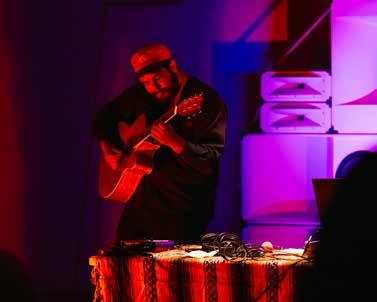
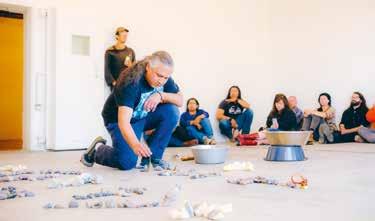
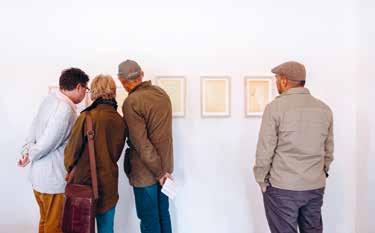
ART IN CONTEXT: ART, ARCHITECTURE, AND THE MIDDLE LANDSCAPE
April 4–6, 2025
EL ARTE EN CONTEXTO: ARTE, ARQUITECTURA Y EL PAISAJE INTERMEDIO
4-6 de abril de 2025
In April, Chinati and the Rice School of Architecture copresented Part I of Art in Context: Art, Architecture, and the Middle Landscape . More than twenty speakers in the fields of art, architecture, engineering, environmental history, and landscape architecture gathered to discuss the role of context in the experience of art and architecture, with a focus on Donald Judd’s 100 untitled works in mill aluminum (1982–86).
Friday
Opening remarks by Caitlin Murray Keynote address by Carme Pigem
Saturday
Conversation between Shantel Blakely, Erica Cooke, and Richard Shiff, moderated by Julian Rose
Keynote address by Tatiana Bilbao
Conversation between Rosetta S. Elkin and Isaac Stein, moderated by Maggie Tsang
Keynote address by Alberto Kalach
En abril, Chinati y la Escuela de Arquitectura de Rice copresentaron la Parte I de El arte en contexto: arte, arquitectura y el paisaje intermedio . Más de veinte ponentes en los campos del arte, la arquitectura, la ingeniería, la historia ambiental y la arquitectura del paisaje se reunieron para hablar del papel del contexto en la experiencia del arte y la arquitectura, con énfasis en las 100 obras sin título en aluminio en bruto (1982–86) de Donald Judd.
Viernes
Discurso de apertura de Caitlin Murray
Discurso inaugural de Carme Pigem
Sábado
Conversación entre Shantel Blakely, Erica Cooke y Richard Shiff, moderada por Julian Rose
Discurso inaugural de Tatiana Bilbao Conversación entre Rosetta S. Elkin e Isaac Stein, moderada por Maggie Tsang
Discurso inaugural de Alberto Kalach
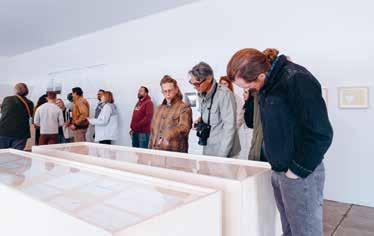
Sunday
A landscape walk and discussion with Jim Martinez at Chinati’s Artillery Sheds
Larry Bell in conversation with Randy Kennedy
Conversation between Pat Arnett, Erik Olsen, Maggie Tsang, and Troy Schaum moderated by Stephen Martin
Christopher Wool in conversation with Anne Pontégnie, moderated by Tim Johnson
Closing Remarks by Troy Schaum and Igor Marjanovicˇ Part II of the symposium will take place at Rice University in November 2025.
Caitlin Murray’s opening remarks for the symposium can be found in this volume (p. 58).
Domingo
Caminata y conversación paisajística con Jim Martínez en los Cobertizos de Artillería
Larry Bell en conversación con Randy Kennedy
Conversación entre Pat Arnett, Erik Olsen, Maggie Tsang y Troy Schaum, moderada por Stephen Martin
Christopher Wool en conversación con Anne Pontégnie, moderada por Tim Johnson
Palabras de clausura de Troy Schaum e Igor Marjanovicˇ
La Parte II del simposio se llevará a cabo en la Universidad Rice en noviembre de 2025.
El discurso de apertura de Caitlin Murray para el simposio se encuentra en este volumen (p. 58).
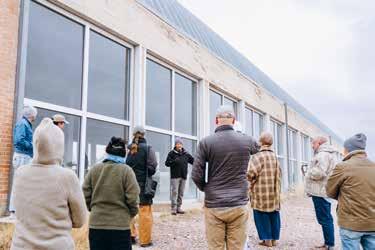
FULL MOON MINDFULNESS WALK
April 12, 2025
CAMINATA DE MINDFULNESS DURANTE LA LUNA LLENA 12 de abril de 2025
Education intern Synsorae Eutsay hosted a Full Moon Mindfulness Walk in April. Eutsay’s background in guided and walking meditation informed the development of the program at Chinati. During the April full moon, participants gathered in the library for a grounding breath exercise before walking Donald Judd’s 15 untitled works in concrete (1980–84). In silence, the group moved among the works, beautifully illuminated by the moon, and then regathered to reflect on the exercise.
La becaria de educación Synsorae Eutsay organizó una caminata de mindfulness durante la luna llena en abril. Su experiencia en meditación guiada y caminando sirvió de base para el desarrollo del programa en Chinati. Durante la luna llena en abril, los participantes se reunieron en la biblioteca para realizar ejercicios de respiración antes de caminar en silencio entre las 15 obras sin título en hormigón (1980–84) de Donald Judd. En silencio, el grupo se desplazó entre las obras, bellamente iluminadas por la luna, y luego se reunió para reflexionar sobre el ejercicio.
GRASSLAND RESTORATION PRACTICUM
April 14–18, 2025
PRÁCTICAS DE RESTAURACIÓN DE PRADERAS
14 -18 de abril de 2025
TIMO PARIS PANEL
June 12, 2025
MESA REDONDA DE TIMO PARIS 12 de junio de 2025
In 2025, Chinati hosted its second Grassland Restoration Practicum. A group of participants from the Trans-Pecos region were taught skills essential to preserving the ecological diversity of the Chihuahuan Desert region. In addition to training sessions with regional experts, participants worked on restoration projects at Chinati’s campus; visited Mimm’s Ranch, where they were hosted by the Borderlands Research Institute and Dixon Water Foundation; were introduced to birding and rock-weir building at the Alamito Creek Preserve with Rio Grande Joint Venture; and visited the Chihuahuan Desert Research Institute and the Sul Ross Herbarium and greenhouse.
En 2025, Chinati organizó su segunda Prácticas de Restauración de Praderas. Un grupo de participantes de la región Trans-Pecos aprendió habilidades esenciales para preservar la diversidad ecológica del desierto de Chihuahua. Además de sesiones de capacitación con expertos regionales, los participantes trabajaron en proyectos de restauración en el campus de Chinati; visitaron la hacienda de Mimm, donde fueron recibidos por el Borderlands Research Institute [Instituto de Investigación de Zonas Fronterizas] y la Dixon Water Foundation [Fundación Dixon del Agua]; se iniciaron en la observación de aves y la construcción de presas de piedra en el Alamito Creek Preserve [Reserva del Arroyo Alamito] junto a la Rio Grande Joint Venture [Sociedad Conjunta del Río Grande]; y visitaron el Chihuahuan Desert Research Institute [Instituto de Investigación del Desierto de Chihuahua], así como el Herbario y el invernadero de Sul Ross.
MARFA MOMENTS, MARFA ISD HIGH SCHOOL PHOTOGRAPHY ART SHOW
May 2, 2025
MOMENTOS DE MARFA , EXPOSICIÓN DE FOTOGRAFÍA DE LA ESCUELA SECUNDARIA DEL ISD DE MARFA 2 de mayo de 2025
Chinati educators collaborated with Marfa ISD instructors to teach a photography workshop that included introductions to cyanotypes, pinhole cameras, photograms, 35mm film, and Polaroid portraiture. The resulting exhibition, Marfa Moments , featured the work of more than fifty students from the 6th-grade art class, Art I, and Advanced Art. An exhibition opening at Marfa Public Library invited the public to meet the student artists, enjoy hot dogs, and break a handmade piñata.
Haley Levin, education coordinator, reflects on the experience in this volume (p. 76).
Los educadores de Chinati colaboraron con instructores del Distrito Escolar Independiente (ISD) de Marfa para impartir un taller de fotografía que incluyó introducciones a cianotipos, cámaras estenopeicas, fotogramas, película de 35 mm y retratos con Polaroid. La exposición resultante, Momentos de Marfa , presentó obras de más de cincuenta estudiantes de las clases de arte de sexto grado, Arte I y Arte Avanzado. La apertura de la exposición en la Biblioteca Pública de Marfa invitó al público a conocer a los jóvenes artistas, disfrutar de perritos calientes y romper una piñata hecha a mano.
Haley Levin, coordinadora educativa, reflexiona sobre la experiencia en este volumen (p. 76).
Drawing on unique disciplines, though united in their interest in dance, Timo Paris, breakdancer and artist, joined architect Nicolas Hünerwadel and artist Grisha Coleman in a conversation about space, movement, and consciousness in architecture, digital technology, and the visual arts.
Apoyándose en disciplinas únicas pero con un interés común en la danza, el bailarín de breakdance y artista Timo Paris se unió al arquitecto Nicolas Hünerwadel y la artista Grisha Coleman en una conversación sobre el espacio, el movimiento y la conciencia en la arquitectura, la tecnología digital y las artes visuales.
CHONG CUY, KATHERINE HUBBARD, ZOE LEONARD, AIMÉ IGLESIAS LUKIN, AND ROBERTO TEJADA
June 7, 2025
FESTIVAL DEL AGAVE: CONVERSACIÓN CON JOSÉ ESPARZA CHONG CUY, KATHERINE HUBBARD, ZOE LEONARD, AIMÉ IGLESIAS LUKIN Y ROBERTO TEJADA 7 de junio de 2025
The Chinati Foundation and Americas Society presented a conversation with José Esparza Chong Cuy, Katherine Hubbard, Zoe Leonard, and Roberto Tejada in partnership with Agave Festival Marfa. The conversation, moderated by Aimé Iglesias Lukin, director and chief curator, Americas Society, addressed Leonard’s exhibition Al río / To the River . Participants discussed the installation of Leonard’s work at Chinati, the meanings of its title, and its relationships with photographic and cinematic history, among other topics.
An essay by Roberto Tejada on Al río / To the River can be found in this volume (p. 6).
La Fundación Chinati y la Americas Society presentaron una conversación con José Esparza Chong Cuy, Katherine Hubbard, Zoe Leonard y Roberto Tejada en colaboración con el Festival del Agave Marfa. La conversación, moderada por Aimé Iglesias Lukin, directora y comisaria principal de arte de la Americas Society, abordó la exposición Al río / To the River de Leonard. Los participantes hablaron de la instalación de la obra en Chinati, el significado del título y sus relaciones con la historia de la fotografía y el cine, entre otros temas. Un ensayo de Roberto Tejada sobre Al río / To the River se encuentra en este volumen (p. 6).
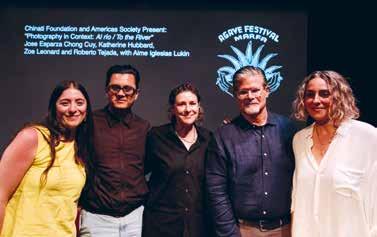
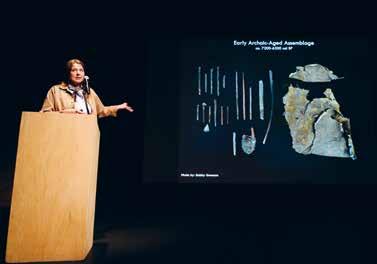
AGAVE FESTIVAL: ERIKA BLECHA
June 7, 2025
FESTIVAL DEL AGAVE: ERIKA BLECHA
7 de junio de 2025
The Chinati Foundation and Agave Festival Marfa presented a talk by Erika Blecha, an archaeologist at the Center for Big Bend Studies. Blecha discussed recent findings at the San Esteban Rockshelter, including the discovery of an intact atlatl, woven mats, and a bracelet decorated with shells from the Pacific Ocean or Gulf of California, all dating to around 6500 BCE. The rockshelter, situated along the Alamito Creek—a tributary of the Rio Grande/Río Bravo—is located approximately fifteen miles southeast of Marfa. Blecha also shared a preview of her recent research, which attempts to establish a picture of San Esteban’s environmental history from the late Pleistocene through the present.
La Fundación Chinati y el Festival del Agave Marfa presentaron una charla de Erika Blecha, arqueóloga del Center for Big Bend Studies [Centro de estudios del Big Bend]. Blecha habló sobre hallazgos recientes en el refugio rocoso de San Esteban, incluyendo el descubrimiento de un atlatl intacto, esteras tejidas y una pulsera decorada con conchas del Océano Pacífico o el Golfo de California, todos fechados alrededor del año 6500 a. E. C. El refugio rocoso, ubicado a lo largo del arroyo Alamito —afluente del Río Grande/Río Bravo— se encuentra aproximadamente a veinticuatro kilómetros al sureste de Marfa. Blecha también compartió un adelanto de su investigación actual, que busca reconstruir la historia ambiental de San Esteban desde el Pleistoceno tardío hasta la actualidad.
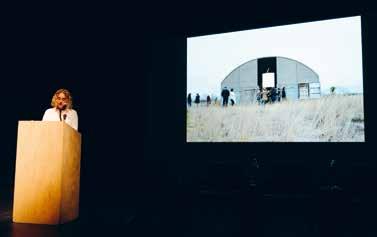
SUMMER SHAKE-UP
June 2025
SUMMER SHAKE-UP
Junio de 2025
Chinati offered four weeks of art classes as part of Marfa Public School District’s Camp Summer Shake-Up, providing instruction, stability, and mentorship for over seventy students. As part of the program, free breakfast and lunch were served daily at the school cafeteria. Chinati Education staff also planned and organized the program on behalf of the school, coordinating numerous local nonprofits. Instructors led kids ages 4–14 in movement-based curriculum. Also involved was this year’s high-school intern Daniela Fernandez, a participant in our Los Bújos program, which is a viable employment and professional skill-building opportunity for local teens.
Chinati ofreció cuatro semanas de clases de arte como parte del programa Camp Summer Shake-Up del Distrito Escolar Público de Marfa, brindando instrucción, estabilidad y mentoría a más de setenta estudiantes. Como parte del programa, se sirvió desayuno y almuerzo gratuito todos los días en la cafetería escolar. El equipo educativo de Chinati también planificó y organizó el programa en nombre de la escuela, coordinando con numerosas organizaciones locales sin ánimo de lucro. Los instructores guiaron a niños de entre 4 y 14 años en actividades basadas en el movimiento. También participó Daniela Fernández, becaria de secundaria de este año y miembro del programa Los Bújos, una oportunidad profesional y laboral para adolescentes locales.
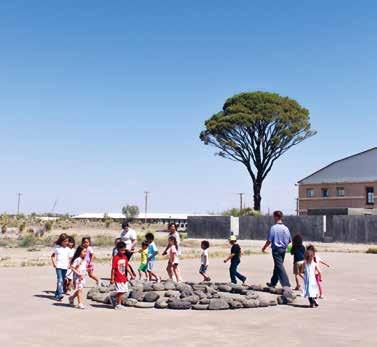
Hannah Goldfarb joined the Chinati Foundation in March 2025. She moved to Marfa from Minneapolis, Minnesota, where she most recently worked at the Walker Art Center as the marketing and public relations coordinator. Goldfarb studied political science, urban studies, and media and cultural studies at Macalester College, in St. Paul, Minnesota, before rediscovering her appreciation for modern art at the Walker, whose collection includes numerous Judd works, a Claes Oldenburg icon Spoonbridge and Cherry , as well as several other pieces by artists with permanent installations at Chinati.
Haley Levin came to Chinati in fall of 2024 as an intern in the Education Department. At the culmination of her internship, Levin moved into a full-time, permanent position as the education coordinator. In her current role, she has led Summer Shake-Up, facilitated numerous K–12 school visits, and organized the annual Marfa Independent School District student
Hannah Goldfarb se incorporó a la Fundación Chinati en marzo de 2025. Se mudó a Marfa desde Minneapolis, Minnesota, donde trabajó recientemente en el Walker Art Center como coordinadora de marketing y relaciones públicas.
Goldfarb estudió ciencias políticas, estudios urbanos y estudios de medios y cultura en Macalester College, en St. Paul, Minnesota, antes de redescubrir su aprecio por el arte moderno en el Walker, cuya colección incluye numerosas obras de Judd, la icónica Spoonbridge and Cherry [Puente de cuchara con cereza] de Claes Oldenburg, así como varias piezas de artistas con instalaciones permanentes en Chinati.
Haley Levin llegó a Chinati en otoño de 2024 como becaria en el Departamento de Educación. Al finalizar sus prácticas, Levin asumió un cargo permanente y a tiempo completo como coordinadora de educación. En su función actual, ha liderado el programa Summer Shake-Up , facilitado numerosas visitas escolares de estudiantes de K–12 y organizado la exposición anual de arte estudiantil del distrito escolar independiente de Marfa. Levin es una artista en ejercicio que trabaja principalmente en pintura

art show. Levin is a practicing artist working primarily in painting and sculpture. She received her BFA in studio art and art history with a specialty in community engagement from Washington University in St. Louis.
In June 2025, Rachel May Smith joined the Chinati Foundation as chief operations officer. Smith comes to Chinati with a wealth of experience at arts and culture organizations. Previously, Smith served as public programs manager at the Sundance Institute and director at the Corita Arts Center, both in Los Angeles. Most recently, Smith worked as the director of Summer Arts, an arts education program in the California State University system. There, she led initiatives to expand access, modernize operations, and reinvigorate the program’s statewide visibility.
y escultura. Obtuvo su licenciatura en bellas artes en arte de estudio e historia del arte con una especialización en compromiso comunitario de la Universidad de Washington en St. Louis.
En junio de 2025, Rachel May Smith se incorporó a la Fundación Chinati como directora de operaciones. Smith llega a Chinati con una gran experiencia en organizaciones culturales y artísticas. Anteriormente, se desempeñó como gerente de programas públicos en el Sundance Institute y directora en el Corita Arts Center, ambos en Los Ángeles. Más recientemente, trabajó como directora de Summer Arts, un programa de educación artística del sistema de la Universidad Estatal de California. Allí lideró iniciativas para ampliar el acceso, modernizar las operaciones y revitalizar la visibilidad del programa a nivel estatal.
Since 1990, the Chinati Foundation’s Internship Program has provided hands-on museum experience to more than 300 students, recent graduates, and young professionals from a variety of backgrounds and disciplines.
Desde 1990, el programa de prácticas de la Fundación Chinati ha proporcionado una experiencia práctica en el museo a más de 300 estudiantes, recién licenciados y jóvenes profesionales de diversas procedencias y disciplinas. Muchos de ellos han seguido carreras fascinantes y variadas. Durante las prácticas remuneradas que duran de seis meses a un año, los becarios se familiarizan con diversos aspectos del funcionamiento diario del museo, trabajando con el personal, los artistas residentes, los académicos visitantes, los donantes, los estudiantes y los profesionales museísticos. Se ofrecen prácticas en los ámbitos de la educación, la conservación y el desarrollo y las comunicaciones; cada una de ellas tiene como objetivo asignar a los becarios proyectos significativos que creen una experiencia sustantiva, educativa y profesional durante su estancia en Chinati. Nuestro programa de prácticas cuenta con el generoso apoyo de una subvención de #startsmall. Los becarios reciben alojamiento en el recinto del museo y prestaciones médicas. Chinati fomenta las solicitudes procedentes de comunidades que han estado históricamente subrepresentadas en la administración de las artes.
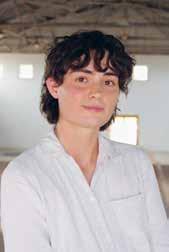
Many have gone on to pursue fascinating and diverse careers. During paid internships lasting six months to one year, interns gain exposure to various aspects of the museum’s daily operations, working with staff, resident artists, visiting scholars, donors, students, and museum professionals. Internships are offered in education, conservation, development, and communications; each aims to assign interns with meaningful projects that create a substantive, educational, and professional experience during their time at Chinati. Our Internship Program is generously supported by a grant from #startsmall. Interns are provided housing on the museum’s grounds and medical benefits. Chinati encourages applicants from communities that have been historically underrepresented in arts administration.
INTERNS BECARIOS
2024–2025
Synsorae Eutsay
Education / Educación
Melissa Gardner
Conservation / Conservación
Alexandra Howard Development / Desarrollo
Joy Smythe-Macaulay Development / Desarrollo
Zade Williamson
Conservation / Conservación
The Chinati Foundation is grateful to those who have supported us with donations, large and small, over the past year. Our donors and members provide crucial funding that sustains our mission: to care for the collection and present it to a broad public; to build community and support artists through public programs, artist residencies, educational activities, and exhibitions; and to steward the architecture and the land that Donald Judd conceived as integral to Chinati. An asterisk (*) indicates that a donor is also a Chinati member.
Member benefits include free admission throughout the year, a discount on items purchased at the Chinati bookstore, a complimentary copy of the annual newsletter, recognition in the annual newsletter, and invitations to special programs, symposia, and workshops.
Each year, an internationally recognized artist creates a limited-edition artwork for members who contribute $1,200 or more (see p. 90).
The following contributions to our general operating fund were given from June 15, 2024, to June 15, 2025.
La Fundación Chinati agradece a quienes nos han apoyado con donaciones, grandes y pequeñas, durante el pasado año. Nuestros donantes y afiliados aportan una financiación crucial que sustenta nuestra misión: cuidar la colección y presentarla a un público amplio; crear comunidad y apoyar a los artistas a través de programas públicos, residencias artísticas, actividades educativas y exposiciones; y administrar la arquitectura y el terreno que Donald Judd concibió como parte integral de Chinati.
El asterisco ( * ) indica que el donante es también afiliado de Chinati.
Entre las ventajas para los afiliados se incluyen la entrada gratuita durante todo el año, un descuento en la compra de artículos en la librería de Chinati, un ejemplar gratuito de la publicación informativa anual, el reconocimiento en la publicación informativa anual e invitaciones a programas especiales, simposios y talleres.
Cada año, un artista de renombre internacional crea una obra de arte de edición limitada para los afiliados que contribuyan con 1.200 dólares o más (véase p. 90).
Entre el 15 de junio de 2024 y el 15 de julio de 2025 se realizaron las siguientes contribuciones a nuestro fondo general de operaciones
LIFETIME GIVING OF $1,000,000+
DONACIÓN VITALICIA DE +1,000,000$
Anonymous
Shari and John Behnke
The Brown Foundation, Inc.
Lee and Mike Cohn*
Arlene J. and John W. Dayton*
Vernon and Amy Faulconer
Mack and Cece Fowler*
Franck Giraud and Gonzague De Luze
The Estate of James B. Gregory
Patrick Lannan and The Lannan Foundation
Anthony and Celeste Meier*
Leonard and Louise Riggio, The Riggio Foundation
The Ruth Stanton Foundation #startsmall
Still Water Foundation
DIRECTOR’S CIRCLE
CÍRCULO DE LA DIRECTORA
Chuck and Kate Brizius
Brian Espinoza and Ivan Serdar
Kathleen Irvin Loughlin and Christopher Loughlin
John and Lisa Runyon
Annabel Thompson
Charlotte Vignon and Nicolas Cattelain
$100,000–$499,999
Bob and Nora Ackerley
The Brown Foundation, Inc.
$50,000–$99,999
Anonymous
Lee and Mike Cohn*
John W. Dayton*
Prentice Farrar and Alline Ford
Brown Foundation
The Horace W. Goldsmith Foundation
Sam Hamilton and Jennifer Chaiken*
Moody Foundation
National Endowment for the Arts
Neil Subin*
Texas Historical Commission
$10,000–$49,999
Anonymous
Milton and Sally Avery Arts Foundation
Christopher Bass and Kelley Mandor
Douglas Baxter and Brian Hastings*
David Booth and Heather Pesanti*
Gabe Catone and Bruce Cohen*
The Donald and Carole Chaiken Foundation
Lori and Alexandre Chemla
J. Patrick Collins*
Chad and Maggie Dayton*
Miguel and Marcela Fernandez*
Laura and John Fisher, in Honor of Tony Meier
Mack and Cece Fowler*
Hauser and Wirth
Humanities Texas
Linda A. and George B. Kelly*
The Dorothea L. Leonhardt Foundation Inc.
City of Marfa
Anthony and Celeste Meier*
Robbie Mourmans-Ramaekers
Rebecca and Christian Patry*
Emily Rauh Pulitzer
Rea Charitable Trust
Noelle and Eric Reed*
Annabelle Selldorf and Tom Outerbridge*
Warren Skaaren Charitable Trust
Dana Tang
Terra Foundation for American Art
Texas Commission on the Arts
The Townsend Family Foundation
The Susan Vaughan Foundation
Judy Vetter*
Charlotte Vignon
Jed and Annabel Walentas*
$5,000–$9,999
Stuart and Marcella Bernstein
Contemporary Art Foundation*
The Cowles Charitable Trust
Michael and Dudley Del Balso
George and Mary Josephine
Hamman Foundation
Christopher Hill
Okey and Kathy Johnson
Raoul and Martha Kennedy
Anstiss and Ronald Krueck Foundation
Native Arts and Cultures Foundation
Brenda R. Potter
Matt Powell*
Wendy Rhode
Marianne Stockebrand
The University of Texas System
$1,000–$4,999
Sultan F. N. Abdulaziz
Benjamin Amis and James Poppell
Carl Andre and Melissa Kretschmer
Valerie and Robert Arber*
Diane Barnes and Jon Otis*
Peggy Drexler, PhD and Millard Drexler
The Peggy and Millard Drexler Family Foundation
David Droese*
Catherine Dueck, in Honor of David Dueck
Fred and Char Durham
Paul Echart and Robert Baldwin*
Tom Edens*
David Egeland and Andrew Friedman*
David Ericsson* exhibitions 2d*
Rand Falbaum*
James Flynn
Doree Friedman*
Constance Holt Garza
Goldman, Sachs and Co.
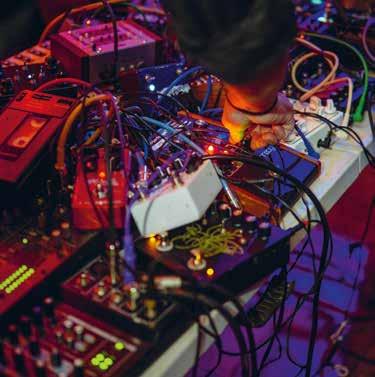
Larry Becker, in Memory of Rebecca Becker
Alexis and Jerry Bednyak Foundation
Larry Bell
Big Bend Banks, Marfa National Bank
Roger Black*
Suzanne Deal Booth
Elizabeth Bratton
Hilary Brown and Charles Read
Rachel Cobb and Morgan Entrekin
Louise Hallam Collins*
Paula Cooper
Dan and Suzanne Crowley
Sarah Crowner
John P. de Neufville
Joseph DiCristina
Laura Doll*
Keller Doss
Ricardo Gomes*
Joe Gonyea*
Fanchon and Howard Hallam
Bill Hamilton*
Sarah E. Harte and John S. Gutzler*
Kathy Heiner
Jamie and Carla Hine*
Nicolas Hünerwadel and Eunice Kuwornu
Jeff and Deborah Jamieson*
Elizabeth L. Johnson
Gregory Haynes Johnson*
Jenny and Mark Johnson
Buck Johnston and Campbell Bosworth*
Ben E. Keith Foundation
Sissy and Denny Kempner
Lorri Kershner
Rosy Keyser
King Land and Water
Vance Knowles
Charles Mary Kubricht and Ron Sommers*
Lance Larsen
Mary Leatherman*
Dana and Gregory Lee*
Charles R. Loban
Kathleen Irvin Loughlin and Christopher Loughlin
Jam Martin
Jim Martinez and Jim Fissel
Kathleen McDaniel and Kevin Flynn*
Caitlin Murray and Tim Johnson*
Elizabeth Murray
Manuel Navarro and Colt Melton*
Rafal Niemojewski
Urs Peter and Carol Flueckiger
Pohly Family
Lance Raney*
Dolores and Richard Ranhofer
Marcus and Amanda Ratliff*
James Reese*
Jody Rhone and Tom Pritchard*
Scott Rodger
Liz Rogers
Danna and Edward Ruscha
Lauren Ryan
Zoi Samourka
Nancy Sanders
Gary Sapp and Linda Velarde
John Sapp
Troy Schaum
Section House LLC
Randall Sharp*
Rose Sheehy
Richard Shiff*
Juliet Lea Hillman Simonds
Lindsay and Ford Smith*
Robin and Sandy Stuart Fund at The Chicago Community Foundation
Nick Terry and Maryam Amiryani*
Charlotte Throop and Mark Reynolds*
Michele Thursz*
Annabelle Tiemann
Steven Volpe*
Catherine Walsh
Andrew Warden*
Leslie B. Rubler Warner
Andrew Whited*
Sheri and David Wright*
$500–$999
Daphne Beal, in Honor of Rob Weiner*
Jeff Beauchamp*
Robert Bellamy
John and Anita Briscoe
Erin Caldwell*
Chauffeur Service Limousines
Bob Colaciello
Community Foundation of North Texas
Kelli Cargile Cook and Robert Cook*
Rhett Damon*
Susan Davidoff and Carl Ryan
Martha and Rupert Deese
Thomas and Joell Doneker*
Kael Fineout*
Friend of Chinati
Jamey Garza and Constance Holt Garza
Ginger Griffice and Chick Rabourn*
Jim Hanson
Steven Hays
Leslie Hewitt
Jane Hickie*
Porter Leland Huang*
Jane Hurt
Vilis Inde and Tom Jacobs
Jenny Laird
Emily Latour
Michael Mack
Juan Mangini*
Fred Martens and Anne Dette*
Cristina Mendez*
Duncan and Betty Osborne*
Elena Pena
William C. Perry and Paul A. Nelson Charitable Fund
The Joni and Gary Raba Family Foundation*
Nicole Rosenthal and Michael Hartnett
Jim and Sylvia Rothman*
Marilyn Sanders
Ivan Serdar and Brian Espinoza
Kate Shepherd and Miles McManus
Willamain Somma
Kyle Steed*
Alan Swerdloff*
Clayton Timbrell
Emily Leland Todd
Uncle Larry’s Fund
Caroline Waterlow, in Honor of Carolyn Pfeiffer
Erin Waters
Up to $499
Anonymous
Jean Aaron*
Katherine and Dean Alexander*
Rinne Allen
Justin Almquist
J. Rick Altemose*
Kevin Alter
Robin and Arthur Aufses
John and Greti Baez
Amanda Baldridge*
Holly Ballard*
Will Balthrope*
Lovedy Barbatelli*
Cody Barber
Paul and Ilene Barr*
Frank N. Bash
Polly and Robert Beal
Charles Beckendorf
David Beebe and Hilary Scruggs Beebe*
Mary L. Beebe and Charles Reilly
Barry Belkin*
Tima Bell
Clara Bensen
Susan Billings
Judith and David Birdsong*
John Blom*
Janara Bornstein*
Bruce and Marie Botnick
Agnes Bourne
Ani Bradberry
Udo Brandhorst
Andrea Brennan
Ben Brown
Eugene Bunge*
Timothy Caldwell*
Craig Campbell*
Kenneth Capps*
Kathy Cashiola
Mary and Louis Cashiola
Nicolas Cattelain*
Scott Chase
Lisa Chestnut*
Martha Christie*
Alison Clark*
Vicky A. Clark
Russell Clayton*
Tauna Cole-Dorn*
Marella Consolini and James Rodewald
Lauren Cooke
Lynne Cooke
Lily Corral
Sherrie Cox*
Jane and Robert Crockett
Pedro Cruz
Kerri Curtis*
Thalassa Curtis and Howard Williams*
Jay Dandy and Melissa Weber*
Joe and Wendy Davis*
Rosemary Davis*
Jan DeLozier*
Janina Dietzel*
Sharon Ditterline
Kathleen Donohue
Anna Dudek*
John Duke*
Robin and Glen Eisen
Jorge Diego Etienne*
R. Ken and Marilynn Evert*
Mary K. Farley
Lilliana Fields
Nicole Forde*
Jessica Forsythe, in Honor of Soraida Bedoya*
Richard Frank*
Friedman Benda LLC*
Dr. Lawrence A. Friedman
Margaret Friess*
Emily Galusha and Donald McNeil
Gianni Garzoli
Edward Gibbon*
Jill Ginsberg*
Laurel Gonsalves
Abel Gonzalez*
Larry and Sharon Graeber
Lewraine Graham*
Nancy and Brian Graham
Matthew Gray
Nyein Gray*
Andrew Grohe*
Chelsea Guerdat
Beau Gunderson*
W. Mark Gunderson*
Johanna Gurland and Mark Kaminsky*
Theodore C. Hadley*
Linda Hains
Susan J. Halbower*
Jesse Hamilton*
Bob Harmon*
Sandra Harper
Holly Harrison
Kelly Heather*
Mary Heiss and Harold C. Dorenbecher*
Brooke Hodge*
Kara Holekamp
Sam Hollands
Bill Holmes*
Tana Holt-Dumas*
C. M. Howard*
Nina Howard
Gitti and Sigi Huck
Braxton and Debra Huff
Douglas Humble
Veronica Ibargüengoitia*
Britta Jacobson*
Robert and Jean James
Katrina Jane*
Andres Jasso
Shareen Joel*
Christopher Johnson
Fred Johnson, III*
Maitland Jones and Perla J. Delson
Kathleen Ketterman*
Joel King*
Susan Kirr and Rusty Martin*
Margaret Kitchen
Daniel and Maggie Knott
Kristen Kohlstruk*
Aaron Kohn*
Frank Koller*
Rebecca and Alan Krasne*
Lisa Kravitz*
Kathrin Krupp*
Alex Kutulos
Robin Labbe
Carolyn Lawrence
Stephen Leet*
Sarah Len
Adam Lewis*
Jane and Rick Lewis*
Kari Litzmann*
Katia Lombardi*
Maureen MacManus*
Jeff Malzahn*
Billy, Crawford, Charles, Catching and Brooks Marginot*
Elizabeth Marrin
Jon and Betsy Martens*
Mike Martin and Emily Ricketts
David Martinelli*
Darlene and David Marwitz*
William McDonald and Janet Williams*
Margaret McLaughlin*
Kathleen McShane*
Robert Meckfessel*
Anita Meyer and Andrew Brown*
Tom Michael and Katherine Shaughnessy*
Mr. and Mrs. William A. Miller
Peter Molick
Matt Moore
Pedro Motta*
George P. Mueller
Elizabeth Murray
Liz Murray*
Eileen Myles*
Pat Brockie Naeve
Ann Marie Nafziger and Peter Stanley
George Neubert; Flatwater Art Foundation
Susan Nichols*
Kate and Stuart Nielsen
Jacqueline Northcut
Francisco Ortiz
Otherside
Leomina Park*
Linda Patrik and David Kaczynski
Alfonso Pelaez-Rovalo
Martin Penrose
John Richard Perea*
Phillip and Judy Periman*
Lauren Phillips
Steven Phillips*
Rand Pinson
Carina Plath*
Andrew Pohly
Rick Price*
Chick Rabourn
Zeke Raney*
Mitchell Rasor
Elizabeth Redding*
Ferrell G. Reed
Karen Renick
Rhotenberry Wellen Architects
Pat Richardson
David Richmond
James Robbins
Josh Robinson*
Seth Rodewald-Bates*
Gilberto Rodriguez
Julie Rogers
Sonoma Rohrbaugh
Brennan Rosales*
Stephen W. Rose
Isabel Rovalo
Kristin Rowley, in Honor of Bill Rowley
Valerie Santerli
Patrice Scatena*
Robert Schmitt*
Erin Schneider
John Scott
Beverly Serrell*
Nicolas Shake*
Susan Shanley, in Honor of Michael Sfregola*
Harry Shaw*
Meghan Shogan
Natasha Sigmund*
Jon and Diana Simard
Matthew and Florence Simms
Isabelle Smeall*
Josephine and Richard Smith
Jerry and Eba Sohn
Tucker Spitzer*
Frederick and Ann Page Stecker
Mary Suhm*
Daryl Tanner*
Shelby Taubenkimel
Chris Taylor and Ingrid Schaffner*
Barbara G. Teeter
Ann Temkin and Wayne Hendrickson
Bette P. and Ralph B. Thomas
Judy Thomas
Krista Thompson, in Honor of Helen Waters
The Thompson Fund
Lindy Thorsen-Nagel*
John Thurston*
Zane Ann Tigett
Don Tinling*
Max Tolleson
Ricardo Torres
Marc Treib*
John Tripp
Larry Turner
Irene Dumas Tyson*
Max Underwood*
Pradeep Uppari
Dr. Barry Vacker
Carolyn Vail, in Honor of Timothy Vail*
Chelsea Valentine
Michael Wallens*
Doug Warren and Pam Berry*
Dr. Anthony Watson*
Lisa Waud
David G. Weiss*
Liv Werthmueller*
Joanna and Lawrence Weschler
Danielle Wheeler, in Honor of Joel Wheeler*
Jeff White*
Elizabeth Willson*
Art and Kathy Wilson
Sebastian Winston*
Carol Wolkow-Price and Stan Price
Carson Wos
Malcolm and Marjorie Wright*
William P. Wright, Jr.
Melissa Yee*
Susan York and Chris Worth*
Dim Zayan
IN-KIND AND VOLUNTEER
AGRADECIMIENTOS EN ESPECIE Y VOLUNTARIOS
Aesop
Arturo Alferez
Joey Benton and SILLA
Big Bend Coffee Roasters
Cactus Liquor
Ross Cashiola
Harry Crofton
Rob Crowley
Tim Crowley
Belinda Dominguez
David Droese
Janet Enriguez
Faith Gay
Glazer’s Beer & Beverage
Agustin Gonzalez
Griselda Hinojos
Levi Hinojos
Tim Johnson
Judd Foundation
Jim Martinez
Maria Medrano
MUDLAB
Jacquelin Northcut
Linda Ojeda
Swarovski Optik
Rambler Sparkling Water
Lance Raney
RJ|NY
Southern Glazer’s Wine & Spirits
Peter Stanley
JUNTA DIRECTIVA
Douglas Baxter
New York City
Gabriel Catone
New York City
Lee Baumann Cohn
Chair / Presidente
Phoenix
J. Patrick Collins
Dallas
Chad Dayton
Saint Paul
Miguel Fernandez
El Paso
Mack Fowler
Houston
Franck Giraud
Rome
Sam Hamilton
Co-chair / Copresidente
San Francisco
George B. Kelly
Treasurer / Tesorero
Houston
Courtney J. Martin
Secretary / Secretaria
New Haven
Anthony Meier
San Francisco
Heather Pesanti
Austin
Noelle M. Reed
Houston
Annabelle Selldorf
New York City
Richard Shiff
Austin
José Noé Suro
Guadalajara
Steven Volpe
San Francisco
HONORARY TRUSTEES CONSEJO DIRECTIVO HONORARIO
Brooke Alexander (1937–2022)
Rudi Fuchs
Amsterdam
Franz Meyer (1919–2007)
Annalee Newman (1909–2000)
Sir Nicholas Serota
London
Brydon Smith (1938–2022)
Julie Bernal
Bookkeeper / Contable Lucita Bockelie
Collection Conservation Technician / Técnico de Conservación de Colecciones
Julie Carey
Visitor Services Manager / Responsable de atención al visitante
Sylvana Diaz
Director of Finance and HR / Directora financiera y de RR. HH. Rowdy Dugan
Facilities Manager / Responsable de instalaciones
Malinda Galindo
Director of Development / Directora de Desarrollo
J. D. Garcia
Visitor Services Coordinator / Coordinador de atención al visitante
Hannah Goldfarb
Communications Manager / Responsable de comunicaciones
Regina Gutierrez Housekeeper / Limpieza
Pearl Hesselden
Programs Manager / Responsable de programas
Sandra Hinojos
Administration Manager / Responsable de administración
Robert Lara
Facilities Associate / Auxiliar de instalaciones
Haley Levin
Education Coordinator / Coordinadora de educación
Miguel Leyva
Facilities Associate / Auxiliar de instalaciones
Stephen Martin
Director of Preservation and Planning / Director de preservación y planificación
Caitlin Murray
Executive Director / Directora ejecutiva
Jen Rowles
Development Manager / Responsable de desarrollo
Ben Shurley
Visitor Services Coordinator / Coordinador de atención al visitante
Logan Smith
Land Management Fellow / Becario de gestión de tierras
Rachel May Smith
Chief Operations Officer / Directora de operaciones
VISITOR SERVICES STAFF
PERSONAL DE ATENCIÓN AL VISITANTE
Shea Carley
Kathie Compton
Al Davis
John Ehrke
Mo Eldridge
Katy Rose Elsasser
Glen Hanson
Kyp Hinojos
Christine Jackson
Alex Kamelhair
David Lanman
Kat McKenna
Suzanne McLeod
Dillon Orr
Rory Parks
Janelly Pereira
Chelsea Quinlan
Nick Terry
Prepney Torres
COLOFÓN
Hannah Goldfarb
Caitlin Murray
Marfa, Editorial Team / Equipo editorial
Rutger Fuchs
Amsterdam, Graphic Designer / Diseñador gráfico
Miriam Halpern
Barcelona, Spanish Translator / Traductora al español
Donna Ghelerter
New York City, Copy Editor / Revisora de textos
Wilco Art Books
Amersfoort, Lithography, Printing, and Binding / Litografía, impresión y encuadernación
ACKNOWLEDGMENTS
AGRADECIMIENTOS
Justin Almquist
Bat Conservation International Borderlands Research Institute
Harry Crofton
Atomic Culture
Jocelyn Davis
Fort Davis National Historic Site
Hauser & Wirth
Robert Irwin Studio
Nicki Ittner
Judd Foundation
Zoe Leonard
Dr. Lynn Loomis
Marfa Independent School District
Jim Martinez
Rice School of Architecture
Rio Grande Joint Venture
Texas Master Naturalist
Troy Schaum
#startsmall
Sul Ross University
Rob Weiner
This publication has been generously supported by Emily Rauh Pulitzer. Esta publicación ha sido generosamente apoyada por Emily Rauh Pulitzer.
$15.—
Volume 30 / Volumen 30
October 2025 / Octubre de 2025
ISSN 1083-5555
©2025 The Chinati Foundation, the artists, and authors / La Fundación Chinati, los artistas y los autores
Cover: The Chinati Foundation, photo by Alex Marks, © Zoe Leonard; Inside front and back cover images: © Zoe Leonard, courtesy the artist, Galerie Gisela Capitain, and Hauser & Wirth; p. 2: The Chinati Foundation, photo by Alex Marks, © Zoe Leonard; p. 3 (left): photo by Sarah Vasquez; p. 3 (right): photo by Tina Rivera; pp. 4–29: installation images, The Chinati Foundation, photos by Alex Marks; works © Zoe Leonard, courtesy the artist, Galerie Gisela Capitain, and Hauser & Wirth; p. 30: courtesy Paula Cooper Gallery, New York; p. 31 (top): Claude Armstrong and Donna Cohen Papers, Judd Foundation Archives, photo © Judd Foundation; p. 31 (bottom): courtesy Paula Cooper Gallery, New York; p. 32 (top and bottom): courtesy Judd Foundation, photo © Judd Foundation; p. 33 (top): courtesy Judd Foundation; p. 33 (bottom): courtesy Judd Foundation, photo © Judd Foundation; p. 34 (top): courtesy Judd Foundation Archives; p. 34 (bottom left and right): courtesy Judd Foundation; p. 35: courtesy Judd Foundation; p. 36: courtesy Judd Foundation Archives, photo © Judd Foundation; p. 37: The Chinati Foundation; p. 38: The Chinati Foundation, photo by Florian Holzherr; p. 39 (top): courtesy Judd Foundation; p. 39 (bottom): courtesy Pulitzer Arts Foundation; p. 40 (bottom): courtesy Qatar Museums, photo by Ali Al Ansari, 2025; p. 41: The Chinati Foundation, photo by Alex Marks; pp. 42–43: courtesy Qatar Museums, photo by Ali Al Ansari, 2025; p. 44: courtesy Robert and Valerie Arber; p. 45: photos by Alex Marks, courtesy Arber & Son Editions; p. 46 (top): photos by Alex Marks, collection of Robert and Valerie Arber; p. 46 (bottom): courtesy John Beech; p. 48 (left): The Chinati Foundation; p. 48 (right): courtesy John Beech; p. 49: courtesy John Beech; p. 50: Lauretta Vinciarelli Papers, Judd Foundation Archives; p. 51: courtesy Judd Foundation; p. 52 (top left and right): The Chinati Foundation, photos by Florian Holzherr; p. 52 (bottom): Lauretta Vinciarelli Papers, Judd Foundation Archives; p. 53: Lauretta Vinciarelli Papers, Judd Foundation Archives; p. 54 (top left): Lauretta Vinciarelli Papers, Judd Foundation Archives; p. 54 (top right): from Clear Light: The Architecture of Lauretta Vinciarelli (2016), Peter Rowe, Camille Farey, and Michael Sorkin, courtesy Oscar Riera Ojeda Publishers, Hong Kong; p. 55 (top): The Chinati Foundation, photo by Florian Holzherr; p. 55 (bottom): Lauretta Vinciarelli Papers, Judd Foundation Archives; p. 56 (top): Lauretta Vinciarelli Papers, Judd Foundation Archives; p. 56 (bottom): from Clear Light: The Architecture of Lauretta Vinciarelli (2016), Peter Rowe, Camille Farey, and Michael Sorkin, courtesy Oscar Riera Ojeda Publishers, Hong Kong; p. 57: courtesy Estate of Lauretta Vinciarelli and TOTAH; p. 60 (top left and right): courtesy Judd Foundation, photo © Judd Foundation; p. 60 (bottom): courtesy Judd Foundation; p. 61 (top left): courtesy Judd Foundation Archives; p. 61 (top right): courtesy Pulitzer Arts Foundation; p. 61 (bottom): courtesy Judd Foundation Archives, photo by Eric Pollitzer; p. 62: courtesy Judd Foundation, photo by Alex Marks, © Judd Foundation; p. 63: The Chinati Foundation; p. 64 (top): National Archives; p. 64 (bottom): The Chinati Foundation; p. 65: The Chinati Foundation; pp. 66–73: The Chinati Foundation, photos by Rowdy Dugan; p. 74: The Chinati Foundation, photo by Alex Marks; p. 75: The Chinati Foundation, photo by Philipp Scholz Rittermann; pp. 76–78: work courtesy the student artists, exhibition opening
photos by Hannah Goldfarb; pp. 80–81: courtesy the artist and Company Gallery, New York; pp. 82–83: photos by Alex Marks; p. 84: photos by Caitlin Murray; p. 85 (left and right): courtesy the artist; pp. 86–87: courtesy the artist; p. 91: courtesy the artist; p. 92: The Chinati Foundation, photos by Alex Marks; p. 93 (top left): photo by Alex Marks; p. 93 (top right): The Chinati Foundation, photo by Rowdy Dugan; p. 93 (bottom): photo by James Bowman Fletcher; p. 94 (top left): The Chinati Foundation; p. 94 (right, top and bottom): The Chinati Foundation, photos by Rowdy Dugan; p. 95: photos by Sarah Vasquez; p. 96: photo by Sarah Vasquez; p. 97 (top and bottom left): The Chinati Foundation, photo by Sarah Vasquez; p. 97 (top and bottom right): The Chinati Foundation, photo by Hannah Goldfarb; pp. 98–99: photos by Pearl Hesselden; p. 101: The Chinati Foundation, photo by Rowdy Dugan
Donald Judd art © 2025 Judd Foundation / Artists Rights Society (ARS), New York / Obras de Donald Judd © 2025 Judd Foundation / Artists Rights Society (ARS), Nueva York
Donald Judd text © 2025 Judd Foundation / Artists Rights Society (ARS), New York / Textos de Donald Judd © 2025 Judd Foundation
Robert Irwin art © 2025 Robert Irwin / Artists Rights Society (ARS), New York / Obras de Robert Irwin © 2023 Robert Irwin / Artists Rights Society (ARS), Nueva York
Zoe Leonard art © 2025 Zoe Leonard / Obras de Zoe Leonard © 2025 Zoe Leonard
Richard Long art © 2025 Richard Long. All rights reserved, DACS, London / Artists Rights Society (ARS), New York / Obras de Richard Long © 2025 Richard Long. Todos los derechos reservados, DACS, Londres / Artists Rights Society (ARS), Nueva York
David Rabinowitch art © 2025 David Rabinowitch / Artists Rights Society (ARS), New York / Obras de David Rabinowitch © 2025 David Rabinowitch / Artists Rights Society (ARS), Nueva York
All other artwork © 2025 the artists / Todas las demás obras de arte © 2025 los artistas
All Chinati Foundation images ©2025 The Chinati Foundation / Todas las imágenes de la Fundación Chinati © 2025 La Fundación Chinati
COVER IMAGE
IMAGEN DE PORTADA
Zoe Leonard, Al río / To the River, 2016–22. Installation view, The Chinati Foundation, 2024 / Zoe Leonard, Al río / To the River , 2016–22. Vista de la instalación, La Fundación Chinati, 2024
INSIDE FRONT AND BACK COVER IMAGES
IMÁGENES DEL INTERIOR DE LA PORTADA Y LA CONTRAPORTADA
Zoe Leonard, Al río / To the River (detail), 2016–22 / Zoe Leonard, Al río / To the River (detalle), 2016–22