Center for Child Counseling is building the foundation for playful, healthful, and hopeful living for children, families, and communities
We envision resilient, thriving children in healthy families and safe communities
Our Values
Our values are born from love, family, opportunity, and ingenuity.
WeBelieveIn:
AWayofBeingwithChildren
The open and trusting nature of children is precious, calling us to nurture and respond to their needs through informed and thoughtful choice of our actions and words.
AHOPE-InformedFocus
We work to understand, prevent, and heal the impact of adverse childhood experiences (ACEs) and trauma on children’s health and relationships, building communities of awareness, equity, and action to promote positive childhood experiences (PCEs) and relational health
FightingontheFrontline
We pledge to support children in their most vulnerable moments as trusted first responders to family and community crisis.
HealingandResilience
We exist to bring healing to children and generations of families, building their resilience and strength to end cycles of trauma; likewise, we promise to care for our healers in their dedication and service to others.
ModelingSuccess
Our goal is to deliver success to our community and others through teaching, training, and replication of a proven approach to preventing ACEs and trauma
RelentlessInitiative
Center for Child Counseling is shaping the field by encouraging forward-thinking and out-front leaders who transform our practice with intelligence, heart, and integrity.
Center for Child Counseling: Building Trauma-Informed Communities
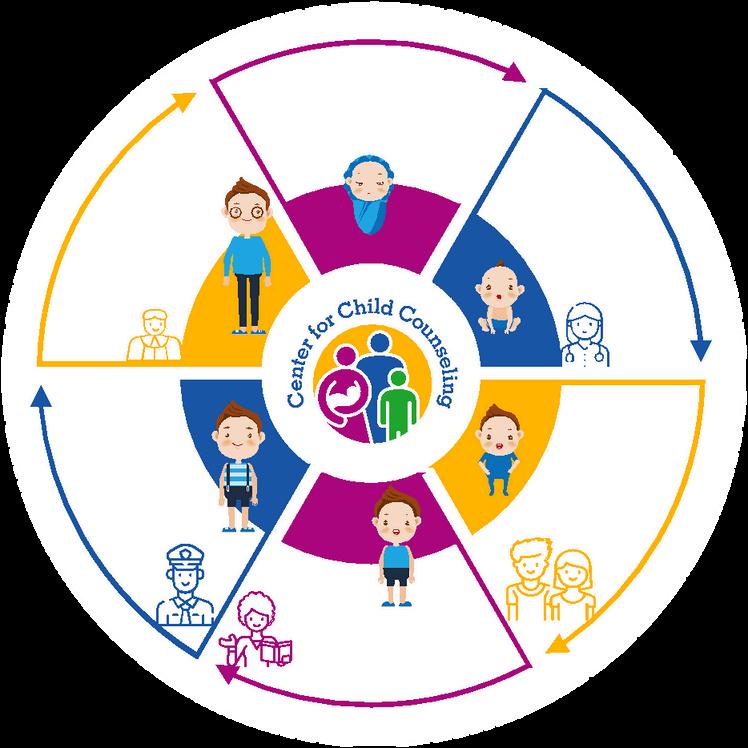
OUR GOAL: Create trauma-aware adults within our homes, schools, and community service centers who recognize and stop childhood trauma and abuse in its tracks, are part of the healing process, and ensure children grow healthy in mind and body.
Elio’ssisterfallsill,andhis parentsareforcedtowork extrajobstocareforher Eliolearnstomanagehis emotionswithonline therapy,whileMomand Dadreceiveparenting support
School
Elio’steachersunderstandheisin traumaafterhissisterdies They providehimcareandtimetodealwith fearandanger,reinforcingthe resiliencyskillsheislearningthrough therapy
People are ready to assume their place in a trauma-informed community.
The foundation for health throughout the lifespan is built in childhood. In Palm Beach County, thousands of children live with daily, chronic and toxic stress related to violence, abuse, poverty, and other adverse experiences. In the absence of healthy or 'buffering' relationships, this stress impacts physical and mental health, continuing the cycle of abuse, violence, and illness for generations.
At Center for Child Counseling, our overall goal is to build resilience in the most vulnerable children Our areas of expertise include Infant and Early Childhood Mental Health and childhood trauma, in addition to the general mental health services we provide for an array of behavioral concerns. A large part of our focus as an agency is on babies and young children because this period of life (prenatal to age 6) provides the foundation for health and learning throughout the lifespan.
Professional Training for Pediatric and Child-Serving Teams
Trauma-Informed. HOPE-Informed. Evidence-Based. Designed for Real-World Impact
Center for Child Counseling (CFCC) offers customizable, expert-led training packages designed for the professionals who work every day to support children’s health, safety, and well-being including pediatricians, nurses, mental health clinicians, social workers, medical assistants, care coordinators, school-based staff, and child-serving organizations of all kinds.
Grounded in the latest science on Adverse Childhood Experiences (ACEs), Positive Childhood Experiences (PCEs), and trauma- and HOPE-informed care, CFCC’s trainings give professionals the knowledge and tools needed to identify concerns early, strengthen protective factors, and build healing-centered relationships with children and families.
Flexible Training Options for Any Setting
Our training can be delivered in the format that best fits your organization’s workflow:
Live, In-Person Workshops: Interactive, relationship-based training with clinical experts. Live Zoom Workshops: Engaging, virtual sessions ideal for cross-site teams.
Self-Paced Online Modules: Available anytime for individual or organizational access.
Every training can be tailored to meet your team’s needs, with focus areas such as:
Trauma-informed and HOPE-informed practice
ACEs science and resilience-building
Behavioral and emotional health strategies
Sensory processing and regulation
Attachment and relationship-based care
Effective communication with children and caregivers
Supporting diverse developmental or medical needs
On-Demand Training for Busy Pediatric Professionals
Providers can access an expanded library of on-demand, self-paced modules through BeKidSafe.org, covering essential topics including:
Trauma-informed care in pediatric and educational settings
Early childhood development and mental health
Practical interventions for behavioral and emotional concerns
Parent and caregiver coaching strategies
Working with children who have complex developmental or medical needs
These modules make it easy for professionals to learn at their own pace while keeping clinical practice aligned with current evidence and best standards of care.
Whether through a customized in-person workshop, a virtual training, or on-demand learning, CFCC equips childserving professionals with practical tools, evidence-based strategies, and actionable skills that improve patient outcomes, enhance child and family relationships, and build stronger, healthier communities
Continuing Education and Professional Credits Center for Child Counseling is committed to supporting the ongoing professional development of pediatric and child-serving teams.
Continuing Medical Education (CME): Organizations can add CME credit to any training session for an additional $1,000 per session, providing valuable professional development opportunities for pediatricians and healthcare teams.
Continuing Education (CE) for Mental Health & Play Therapy Professionals: Center for Child Counseling is an Approved Provider with the Association for Play Therapy (APT) APT Approved Provider #09-263 and offers eligible training hours for play therapists and clinicians working with children.
CFCC is also a Florida Board–approved Continuing Education Provider (CE Provider #50-11511) for: Psychology
Clinical Social Work
Marriage and Family Therapy
Mental Health Counseling
Whether your team consists of physicians, nurses, mental health clinicians, social workers, counselors, or multidisciplinary pediatric professionals CFCC offers evidence-based training recognized across healthcare and
At the Center for Child Counseling, Play Therapy is not just a technique—it is the heart of our work. Play is the natural language of children and a therapeutic pathway that supports regulation, connection, and healing from adversity. As an Association for Play Therapy (APT) Approved Provider (Provider #09-263), we deliver high-quality, evidence-based continuing education rooted in nationally recognized best practices.
Leaders in Trauma-Informed, HOPE-Informed Care
Our team of Registered Play Therapists (RPTs) and Registered Play Therapy Supervisors (RPT-S) are national leaders in trauma-informed practice, the HOPE (Healthy Outcomes from Positive Experiences) framework, and Early Relational Health—the foundation of safe, nurturing, and attuned relationships between children and their caregivers.
We help professionals understand not only the impact of adversity and ACEs, but also how positive relationships, emotional safety, and responsive caregiving shape the developing brain and influence lifelong health. Through Play Therapy, we support the creation of Positive Childhood Experiences (PCEs) that strengthen resilience and buffer the effects of trauma, grief, loss, and chronic stress.
Expert Training for Clinicians and Child-Serving Professionals
Our clinicians bring extensive experience in trauma, early childhood mental health, grief and loss, attachment, and social-emotional development. They actively train and mentor practitioners locally and nationally, sharing practical strategies that integrate:
Trauma-informed and HOPE-informed Play Therapy
The science of Early Relational Health
Attachment and co-regulation
Developmentally responsive interventions
Healing-centered engagement with children and families
Flexible Learning: Live Workshops and On-Demand Courses
Whether you are looking to build foundational Play Therapy skills or advance your clinical expertise, CFCC offers live, virtual, and self-paced workshops on core and advanced topics, including:
Trauma and Play Therapy
Termination in Play Therapy
Child-Centered Group Play Therapy
Attachment, Regulation, and Play-Based Interventions Supporting Grief & Loss Through Play
Participants earn APT-approved CE hours and state CEUs, while gaining actionable tools they can immediately apply to create emotionally safe, healing-centered environments.
Building the Foundation for Lifelong Well-Being
Our approach blends Play Therapy with HOPE, PCEs, and Early Relational Health to ensure that professionals and organizations are equipped to provide care that not only treats symptoms, but transforms developmental trajectories By nurturing connection, strengthening caregiver-child relationships, and supporting resilience, we help build the foundation for lifelong health, emotional well-being, and thriving communities
Play Therapy Training
Training Options
Trauma- and HOPE-Informed Play Therapy Foundations
Training Objectives:
Explore how play is a natural language for children processing trauma.
Ways to integrate ACEs and PCEs into assessment and treatment.
Offer frameworks for embedding HOPE (connection, safe spaces, engagement in communities, and nurturing environments) in playroom activities.
Integrating Play Therapy in Nontraditional Settings
Training Objectives:
Using play interventions in schools, foster/kinship care, shelters, or pediatric offices.
Adapting techniques for spaces without a traditional playroom.
Building systems of care that allow play therapy to reach underserved children.
PACEs In the Playroom: Addressing Adversity and Trauma with Children
Training Objectives:
Overview of ACEs and Childhood Trauma.
Child Therapy Addressing Childhood Adversity and Trauma.
ACEs in the Playroom: Abuse.
ACEs in the Playroom: Neglect.
ACEs in the Playroom: Household Dysfunction.
ACEs in the Playroom: Supplemental ACEs.
Overview of PCEs study and outcomes.
Ways to integrate ACEs and PCEs into assessment and treatment.
Cost: $500 per training hour (including travel costs and APT CE credits).
Play Therapy Training
Training Options
Play Therapy with Families
Training Objectives:
Enhance Family Engagement through Play.
Develop Therapeutic Play Techniques for Family Dynamics. Integrate Play Therapy into Family Treatment Planning.
Small Group Play Therapy
Training Objectives:
Understand the Principles of Small Group Play Therapy. Develop Skills to Facilitate Therapeutic Play in Groups. Integrate Play Therapy into Group Treatment Planning.
Play Therapy through the Lens of Neuroscience
Training Objectives:
Explain the Neurobiological Basis of Play Therapy. Demonstrate Brain-Based Play Therapy Techniques. Integrate Neuroscience into Case Conceptualization and Treatment Planning.
Termination in Play Therapy
Training Objectives:
Develop Child-Centered Termination Strategies. Integrate Termination into Treatment Planning.
Cost: $500 per training hour (including travel costs and APT CE credits).
From Trauma to HOPE Training
Equipping professionals to understand ACEs, strengthen PCEs, and deliver trauma-informed care that transforms lives.
At the Center for Child Counseling, we believe that healing from adversity begins with understanding, action, and connection. Our From Trauma to HOPE training equips professionals with the knowledge and tools to recognize the impact of Adverse Childhood Experiences (ACEs) while intentionally building Positive Childhood Experiences (PCEs) that foster resilience, relational health, and lifelong well-being.
As national leaders in trauma-informed and HOPE-informed practice, we translate cutting-edge research into practical, accessible strategies that professionals can use immediately. Participants gain a deep understanding of:
The ACEs science and its implications for health, behavior, and development
The HOPE framework (Healthy Outcomes from Positive Experiences)
The role of Early Relational Health in shaping the developing brain
How PCEs buffer adversity and promote healing
Evidence-based strategies that strengthen connection, co-regulation, and emotional safety
Our trainings are designed for multidisciplinary teams across systems of care, including education, healthcare, early childhood, child welfare, social services, and community-based organizations.
Interactive,CustomizableTrainingOptions
Through live workshops, virtual sessions, and on-demand modules, participants walk away with actionable skills to:
Recognize and respond to trauma with compassion and clinical effectiveness
Integrate PCEs and HOPE practices into daily interactions and organizational culture
Strengthen relationships as protective buffers against adversity
Support regulation, safety, and connection in children and families
Promote resilience at the individual, family, and community levels
Each training is tailored to the needs of the audience ensuring relevance for pediatric teams, educators, caseworkers, counselors, childcare providers, and leadership teams seeking system-wide change.
MoreThanAwareness—APathwaytoTransformation
Our From Trauma to HOPE training moves organizations beyond simply identifying trauma toward actively creating environments where children feel safe, seen, soothed, and supported. We empower professionals to:
Shift practices
Strengthen relationships
Build resilience
Create cultures of HOPE
By integrating ACEs science with the HOPE framework, CFCC helps organizations transform their approach from reacting to trauma to proactively cultivating healing, resilience, and thriving communities.
HOPE and Trauma-Informed Care Training
Level
ACEs, Trauma, and Toxic Stress
1.5 Hours
Learning Objectives
Participants will learn...
About the ACE study, including outcomes and findings; Definition of toxic stress and its impact on the developing brain in early childhood and throughout the lifespan; Impact of early adversity on lifelong health, mental and physical; About the ACEs and Resilience Surveys; and The importance of creating trauma-informed and resilience-building practices based on the findings of the ACEs research.
Cost: $750
HOPE and Trauma-Informed Care Training
Training Options:
From ACEs to HOPE
4 Hours
Learning Objectives
Participants will learn:
About the PCE and ACE studies, including the ACE pyramid, which provides the conceptual framework for the study;
Outcomes and findings of the ACE study;
Definition of toxic Stress and its Impact on the developing brain in early childhood and throughout the lifespan;
Generational Trauma;
Impact of early adversity on lifelong health, mental and physical;
About the ACEs and PCEs Surveys, including participants' own scores;
The importance of creating trauma-informed and resilience-building practices based on the findings of
HOPE and Trauma-Informed Care Training
Training Options: Level
ACEs, Intergenerational Trauma and Racism
4 Hours
Learning Objectives
In this intensive workshop, participants will learn about:
Define terms and provide history relevant to race and racism
Describe the impact of Adverse Childhood Experiences and trauma in the context of race
Reflect on individuals' experiences with racism and racial trauma
Describe resiliency in the face of racism
Share opportunities for learning, growth, change, and healing
Cost: $2,000
HOPE and Trauma-Informed Care Training
Training Options:
Level
Healing the Healers
4 Hours
Learning Objectives
Defining the Role of a Healer/Helper Types and Causes of Stress
Biology and Physiology of Stress
Exploring ACEs & Their Relationship to Stress and Well-Being
Impacts of Stress: Burnout
Vicarious Trauma
Compassion Fatigue
Challenges Faced by Specific Groups of Helpers/Healers
Self-Care & Resilience Building
A Way of Being with Children
A Trauma- and HOPE-Informed Approach to Building Safety, Resilience, and Well-Being Across
Childhood
A Way of Being with Children, developed by the Center for Child Counseling, is a comprehensive, traumaand HOPE-informed curriculum designed to strengthen the way professionals support children across early childhood and elementary school years. Rooted in the science of ACEs, PCEs, early relational health, HOPE, and trauma-informed practice, this framework equips pediatric providers, early educators, childcare professionals, school staff, and child-serving organizations with practical strategies to create environments where children feel safe, supported, and able to thrive.
The curriculum guides pediatric practices, early learning centers, and community programs in creating trauma- and HOPE-informed systems of care by emphasizing that professionals and caregivers:
Understandtraumaanditsimpact: Teams develop a shared understanding of how stress, adversity, and trauma affect young children’s behavior, development, and relationships aligning the entire organization around a consistent, compassionate approach.
Believethathealinghappensinrelationships: Professionals and caregivers learn how warm, attuned, and predictable interactions support co-regulation, build trust, and strengthen the protective power of PCEs and Early Relational Health.
Ensureemotionalandphysicalsafety: Environments are intentionally structured to promote safety, connection, and routine, helping children meet developmental and emotional needs while reducing stress and dysregulation.
Supportchoice,control,andempowerment: Young children thrive when they have voice and agency. Providers learn how to offer developmentally appropriate choices and collaborate with families to nurture confidence, autonomy, and resilience.
Striveforculturalandlinguisticresponsiveness: Practices recognize and honor the cultural contexts of the children and families they serve, integrating approaches that support belonging and affirm identity.
ors to understanding what silience, regulate stress, and
A Way of Being with Children
TwoDevelopmentallyAlignedVersionsoftheCurriculum
Birthto5/PreK
A Way of Being with Children: A Trauma and HOPE-Informed Approach to Building Safety, Resilience, and Well-Being
Crafted for pediatric practices, childcare centers, PreK programs, and early childhood professionals, this manual integrates trauma-informed care, early childhood development, sensory processing, attachment, and HOPE-informed strategies.
Supporting co-regulation and emotional development
Understanding behavior through a trauma- and development-informed lens
Embedding PCEs in daily routines and interactions
This version is currently available as a manual-based curriculum, ideal for early learning teams or pediatric groups working with infants, toddlers, and preschoolers.
Elementary(Ages5–11)
A Way of Being with Children: A Trauma-Informed Approach to Building Resilience
This manual expands the framework for professionals working with school-age children, incorporating trauma science, emotional regulation strategies, communication skills, and practical tools drawn from leading experts, including Dr. Dan Siegel, Dr. Bruce Perry, and Dr. Tina Payne Bryson.
It supports professionals in:
Responding to challenging behaviors with empathy and effectiveness
Strengthening relationships with older children
Promoting regulation, problem-solving, and emotional literacy
Embedding PCEs in classrooms, after-school programs, and pediatric visits
Applying scenario-based strategies and scripts in real-world interactions
This version includes both the manual and on-demand learning modules, allowing flexible professional development at scale.
AUnifiedFrameworkforHealing,Resilience,andHope
Together, the two versions of A Way of Being with Children create a seamless, developmentally responsive approach from birth through elementary school—empowering child-serving professionals to:
Build emotionally safe, nurturing environments
Respond to trauma with compassion and skill
Strengthen protective factors and relational health
Support long-term well-being and resilience
This integrated framework equips pediatric systems, childcare centers, and schools to become truly trauma-informed, HOPE-informed, and relationship-centered, shaping brighter futures for the children and families they serve.
A Way of Being with Children
Training Options: A Way of Being with Children: A Trauma- and HOPE-Informed Approach to Building Resilience
4 Hours
Learning Objectives
1. Relationship-Centered, HOPE-Informed Care
Explain how secure attachment, adult–child relationships, and Positive Childhood Experiences (PCEs) support healthy development.
Identify how provider attitudes, communication, and cultural responsiveness influence family engagement.
2. Essential Knowledge on Development & Trauma
Summarize key principles of early brain development, regulation, and sensory processing.
Describe how trauma, stress, ACEs, and social determinants of health affect child behavior and development.
3. Practical Application in Pediatric Practice
Use trauma- and HOPE-informed strategies during clinical encounters to support regulation, communication, and caregiver guidance.
Apply reflective listening and compassionate limit-setting when addressing behavioral and emotional concerns.
4. Integration Into Pediatric Scenarios
Apply HOPE-informed approaches to common concerns such as big emotions, sensory challenges, and behavior issues