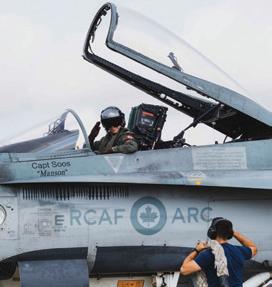
28 / WORDS ABOUT A BOOK The Red Line Reviewed By René R. Gadacz
30 / INSTRUMENTAL FACTS
Departures vs arrivals By Ed McDonald
50 / BOOKSHELF
Top aviation titles
52 / SERVICE CENTRE Deals and offers
54 / FLIGHT BAG Puzzle and questions
ON THE COVER
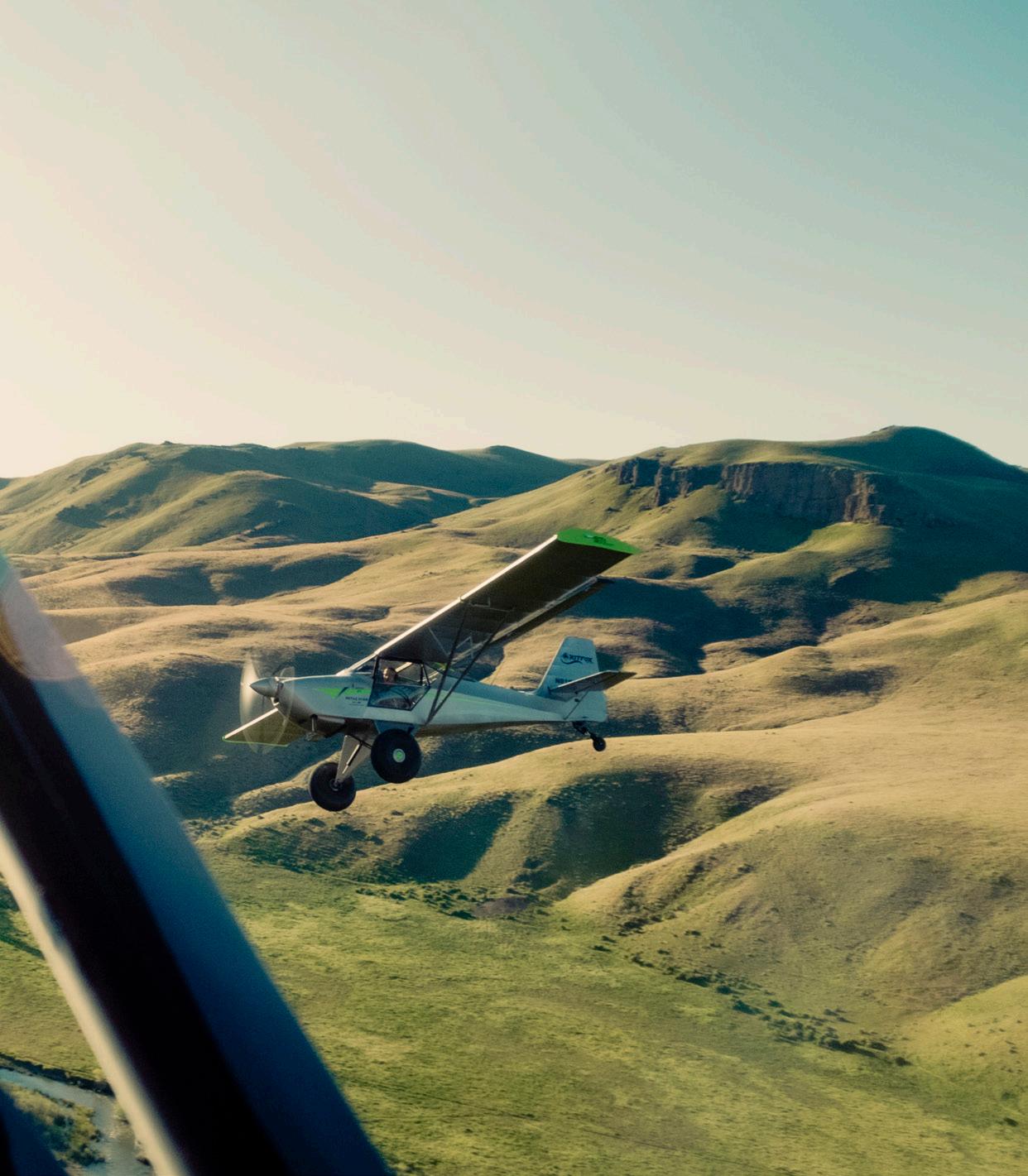
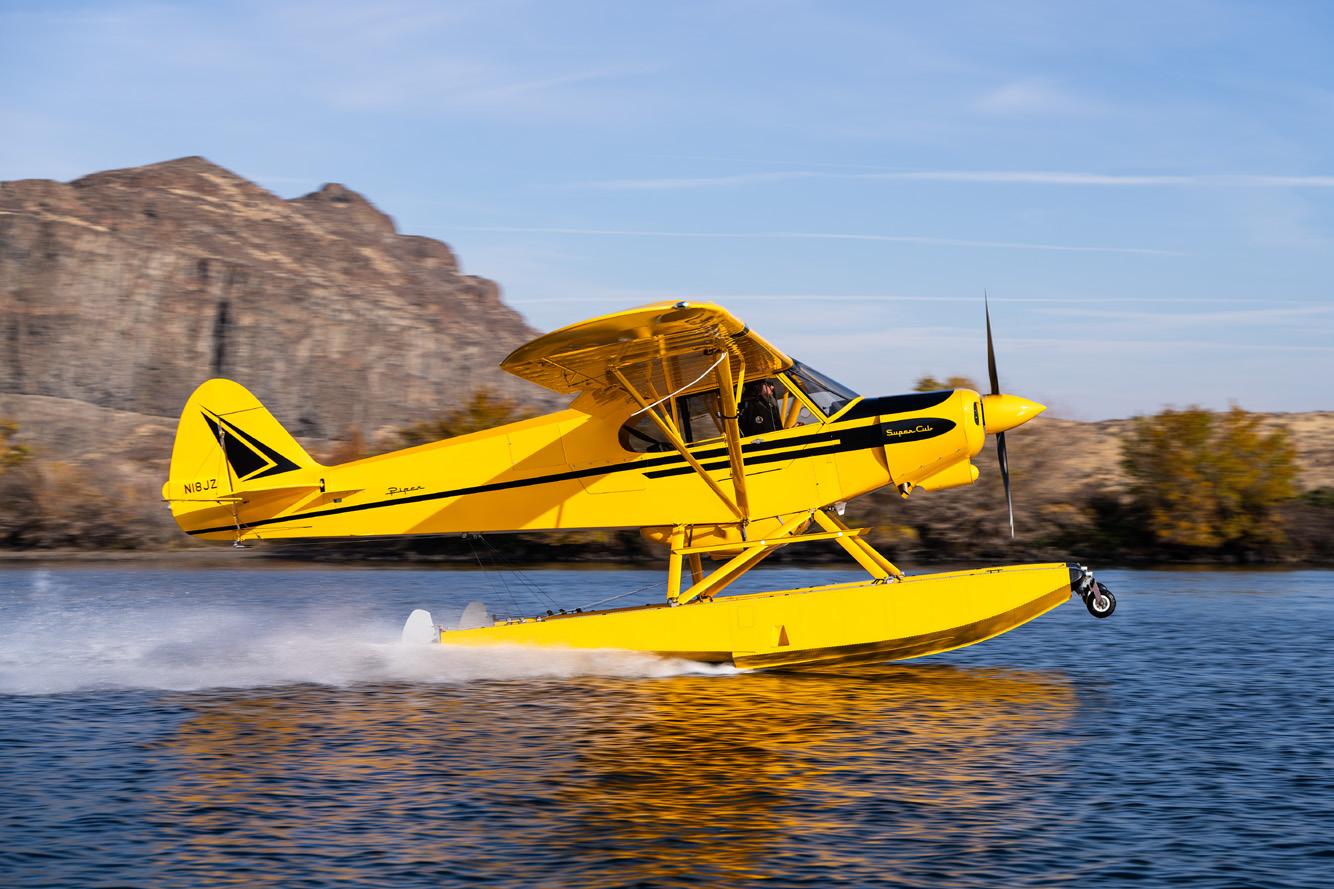
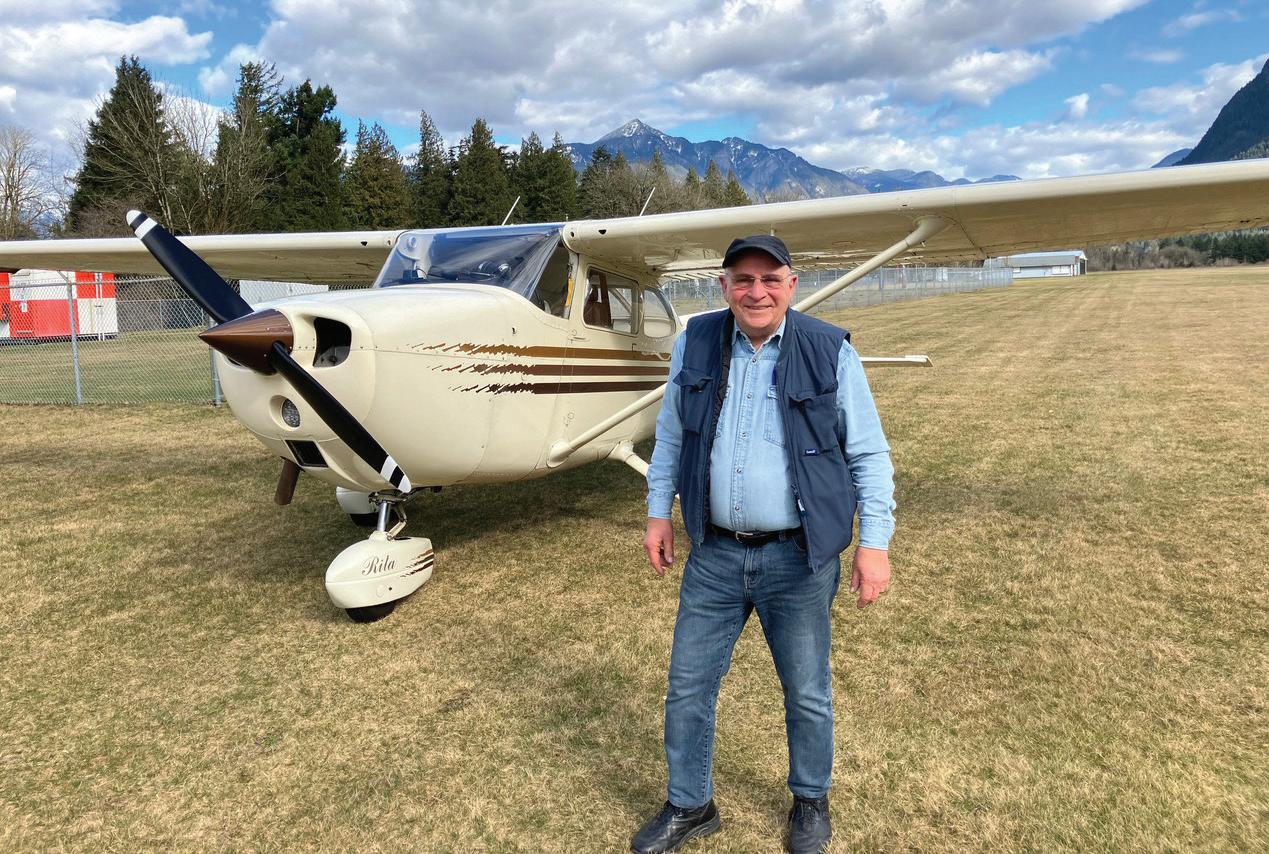
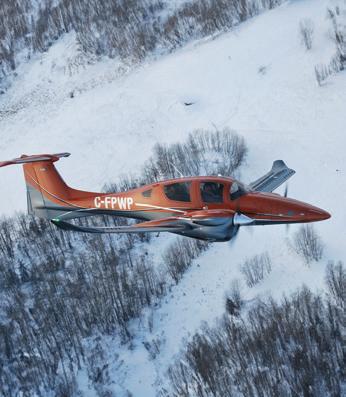
Author Richard Pittet demonstrates his skills as an aviation photographer, which complement his writing skills.
FEATURES
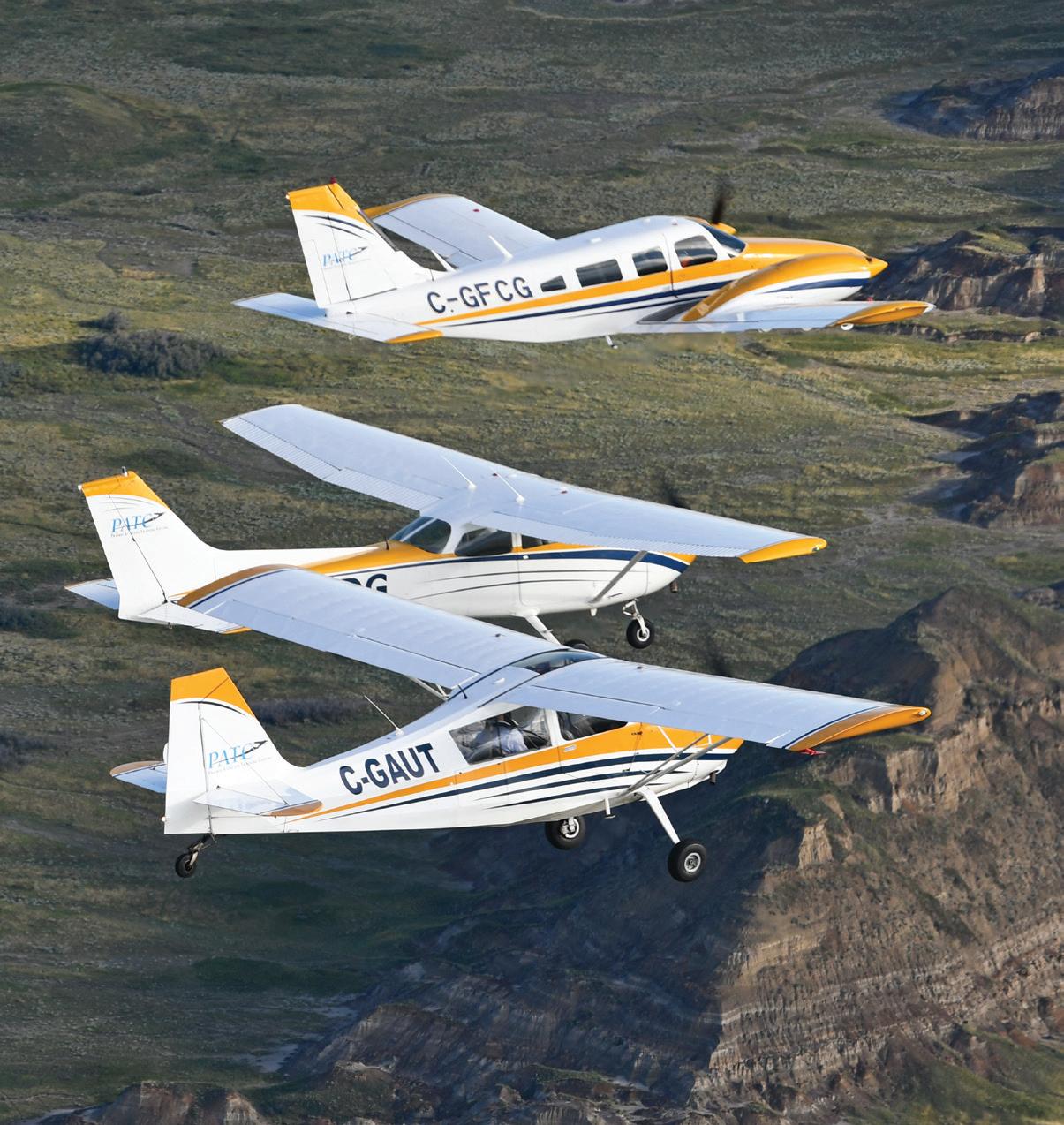
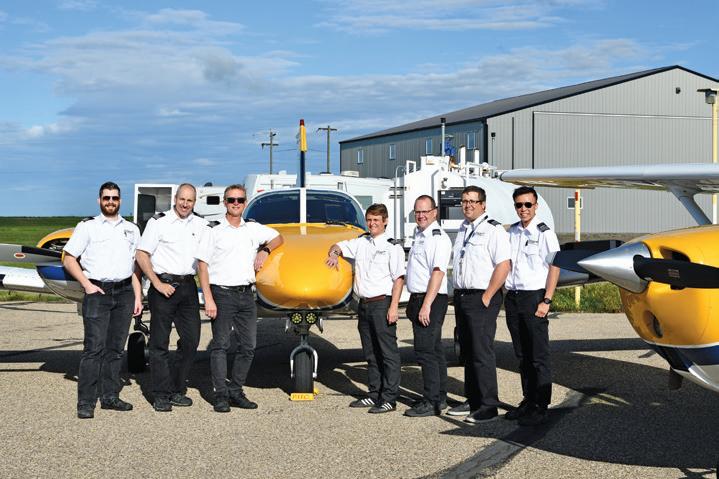
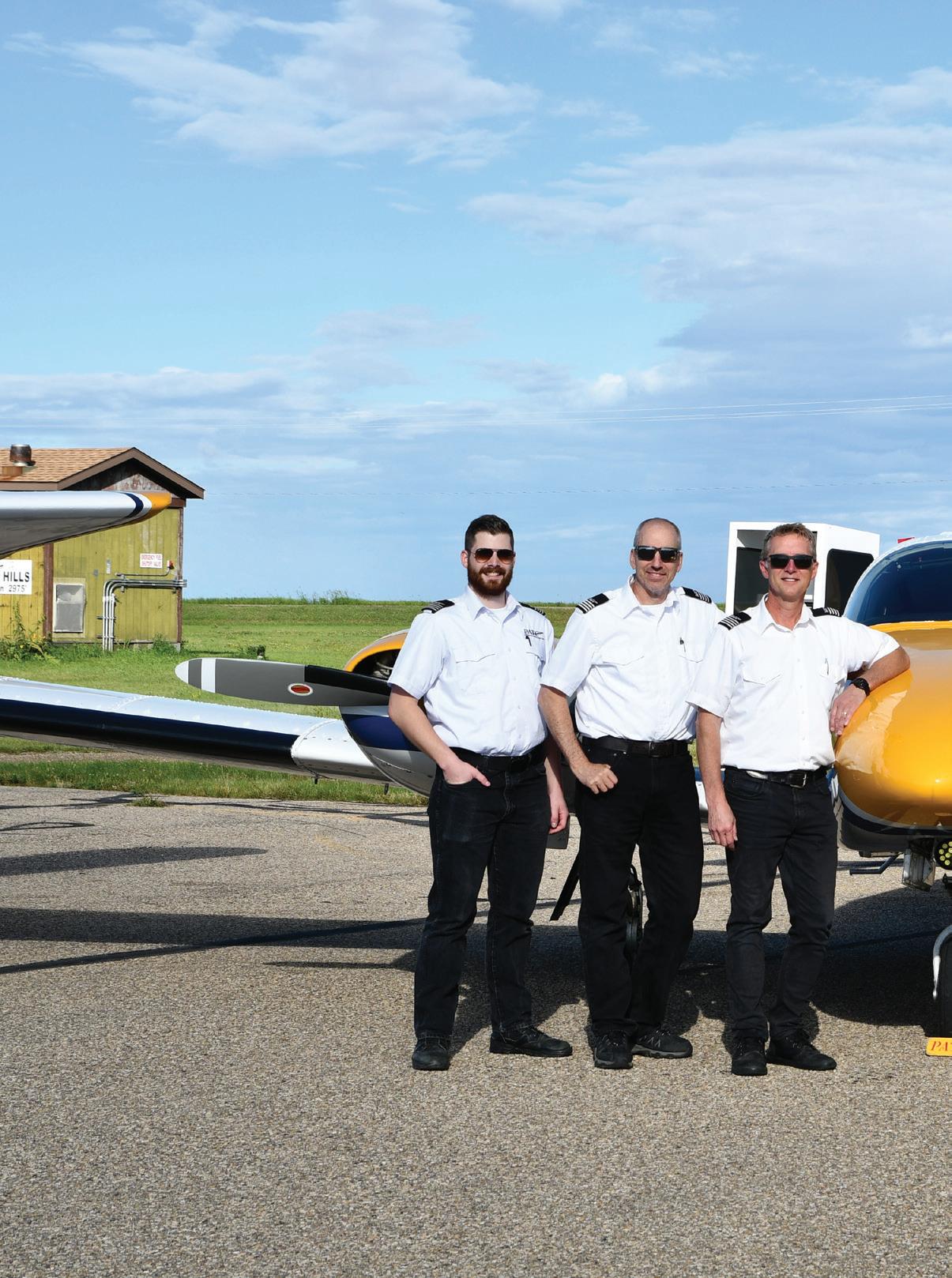
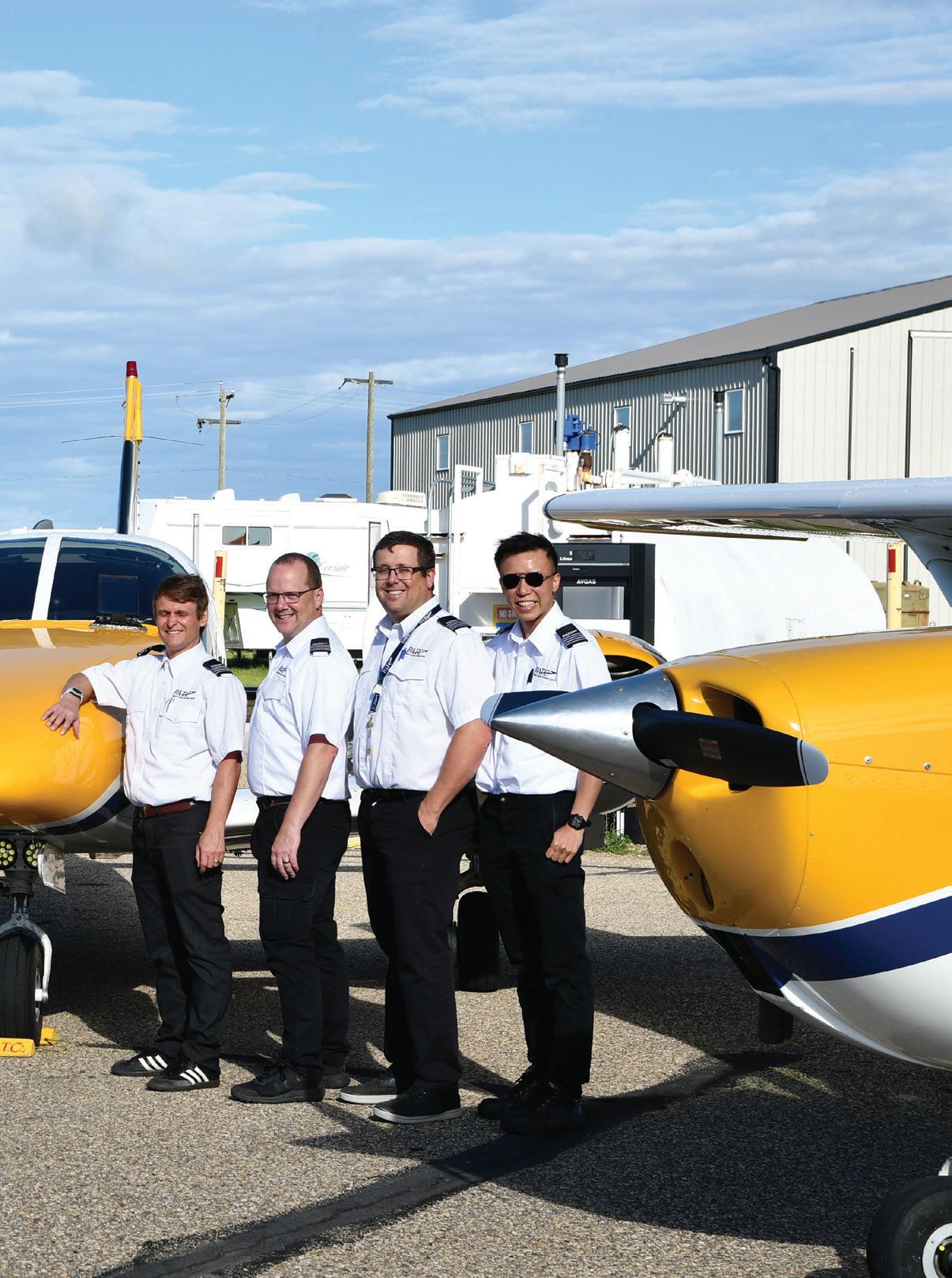
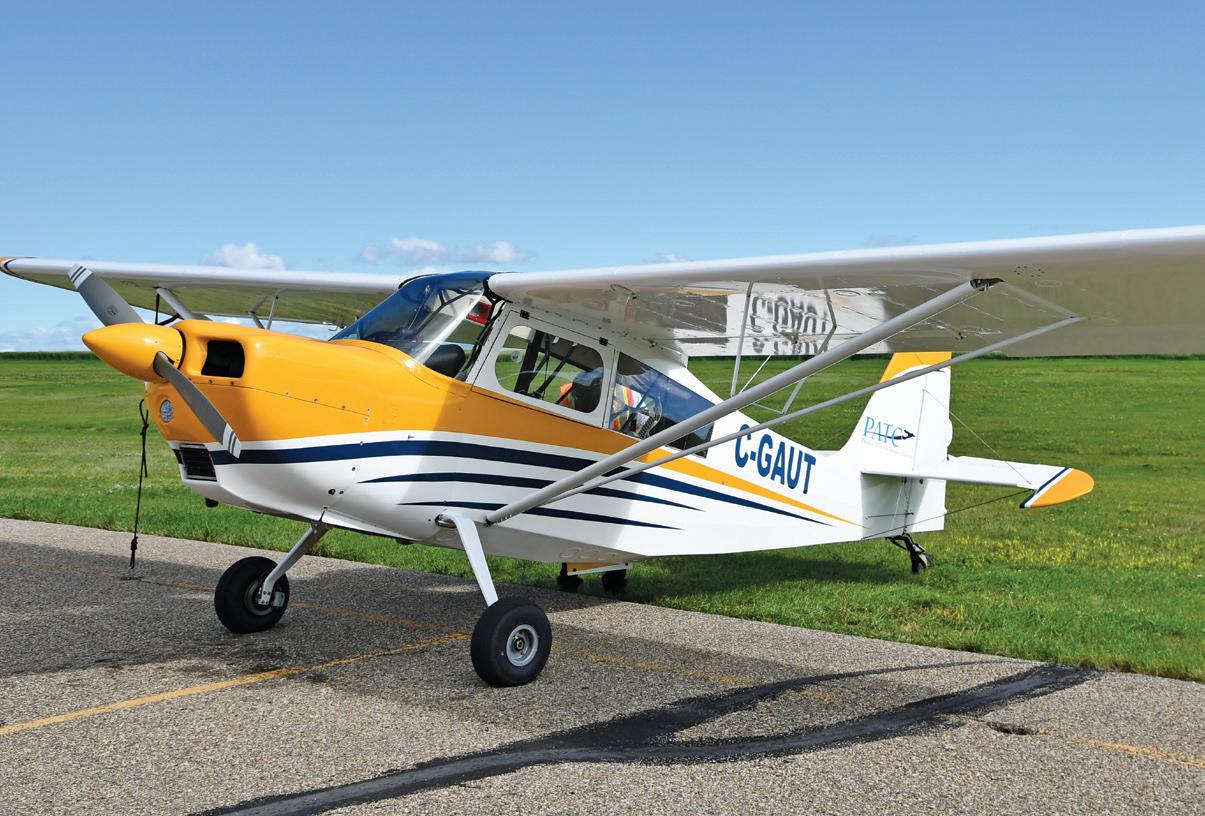
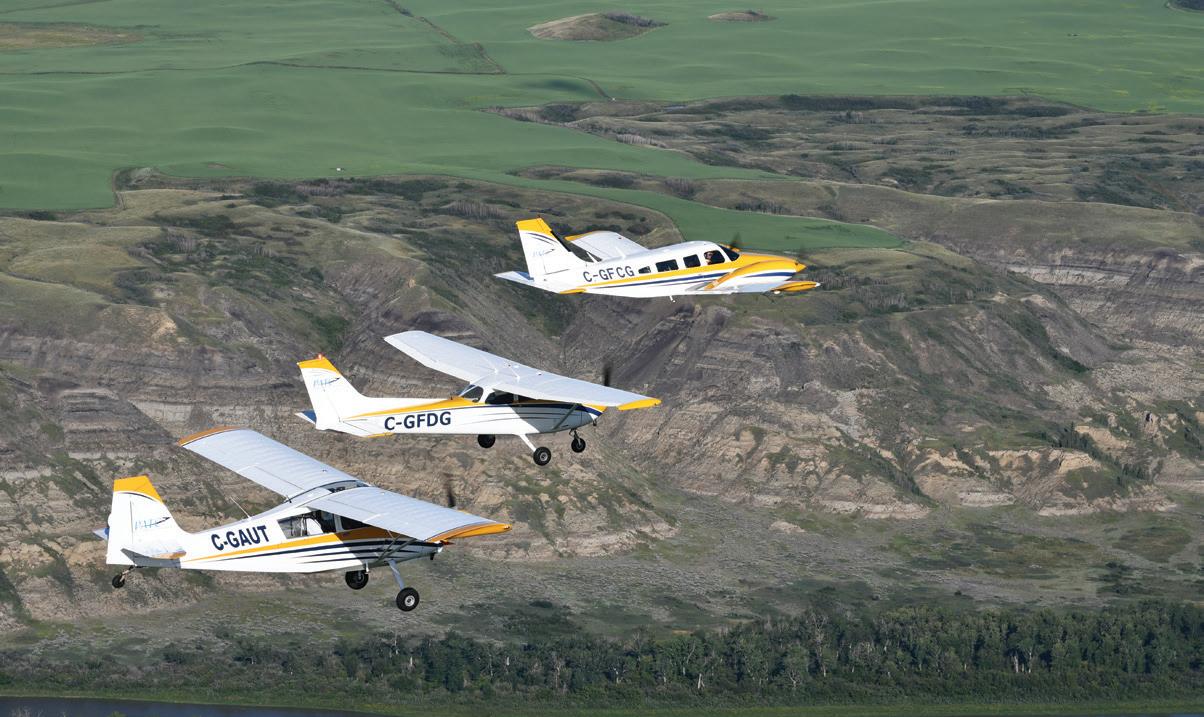
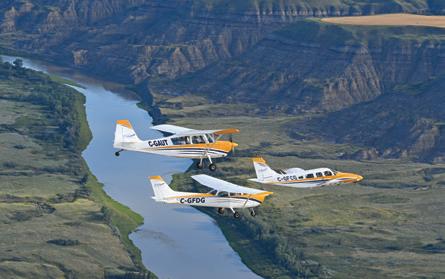
32 Prairie Aviation Training Centre
This aviation school’s alumni are often found in some of the world’s most inhospitable flying locales. By
Richard Pittet
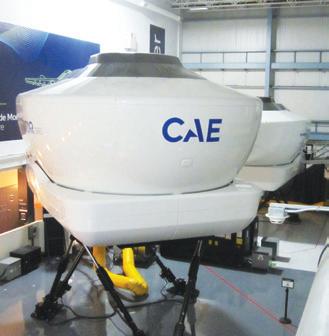
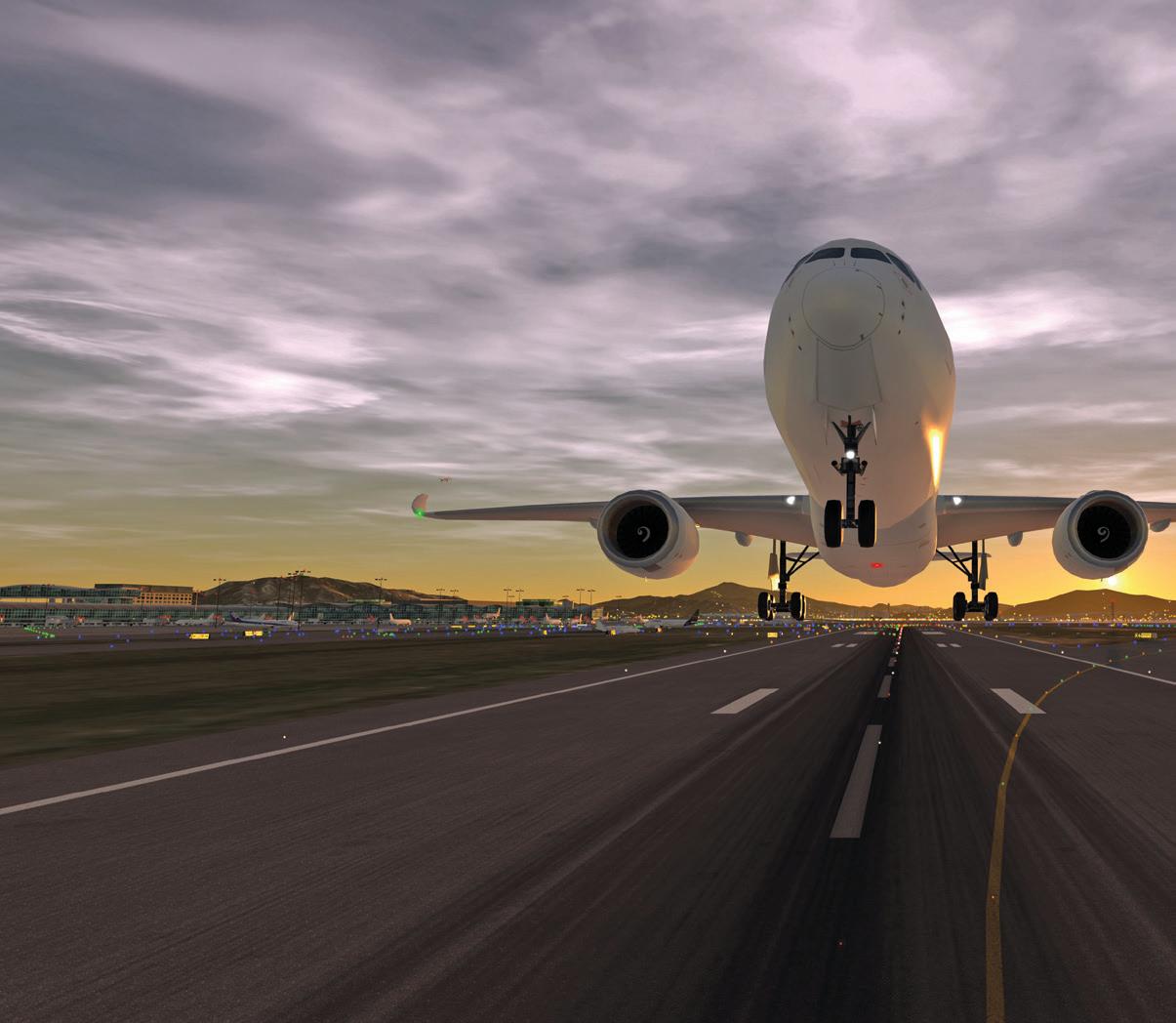
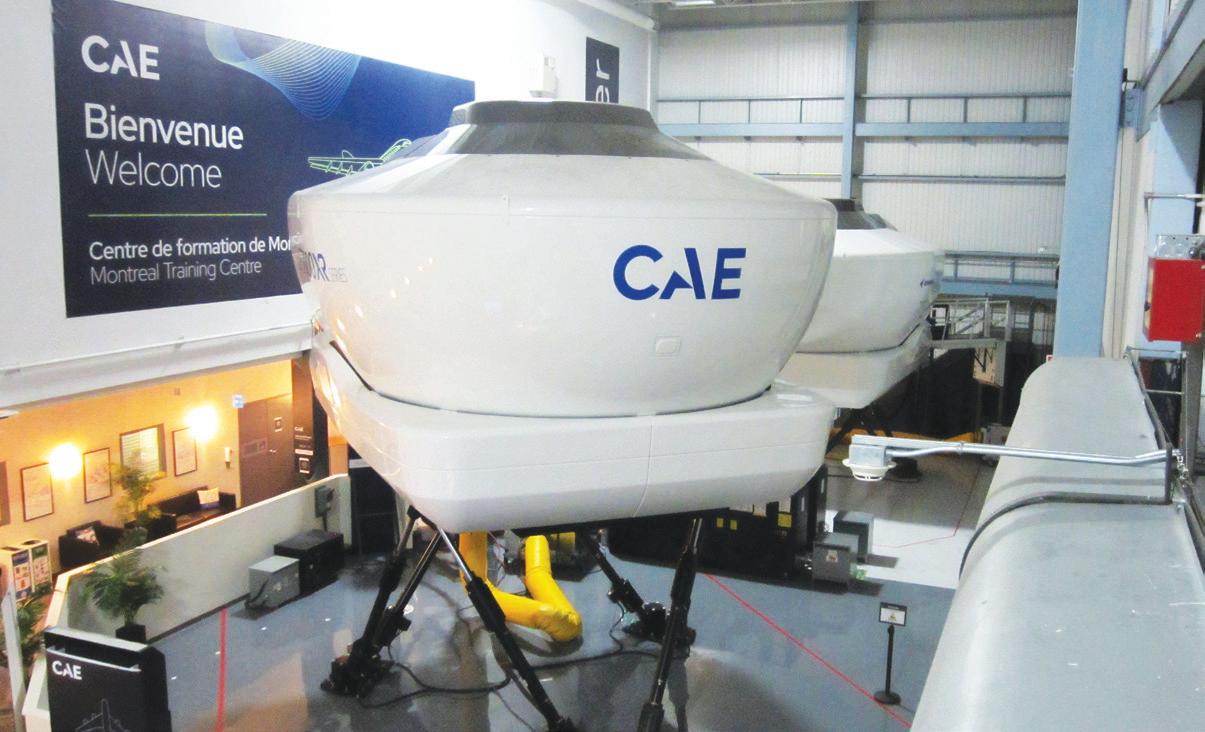
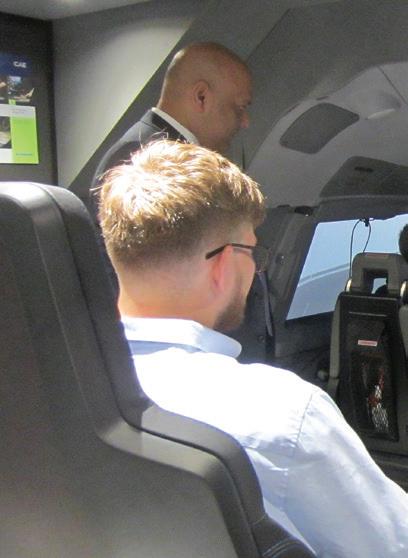
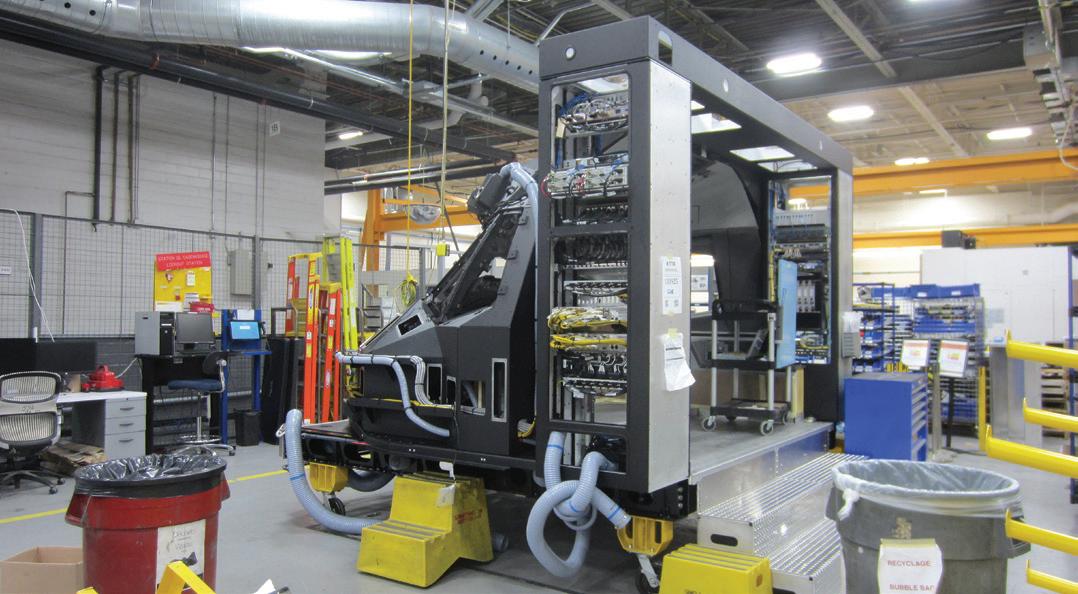
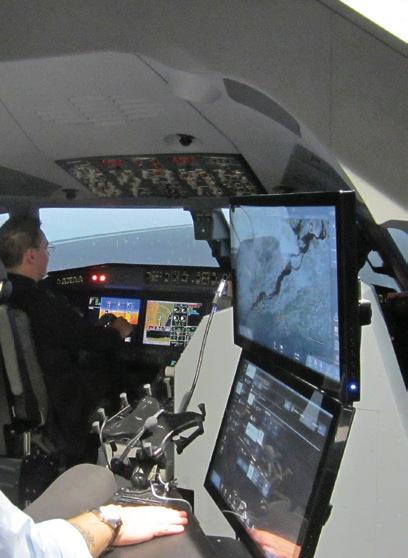
40 CAE’s Leap Forward in Flight Simulators
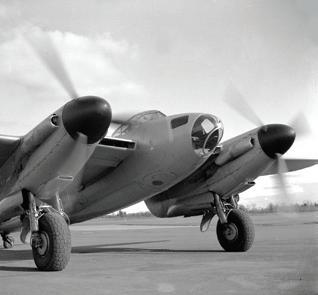
46 The Night
Intruder
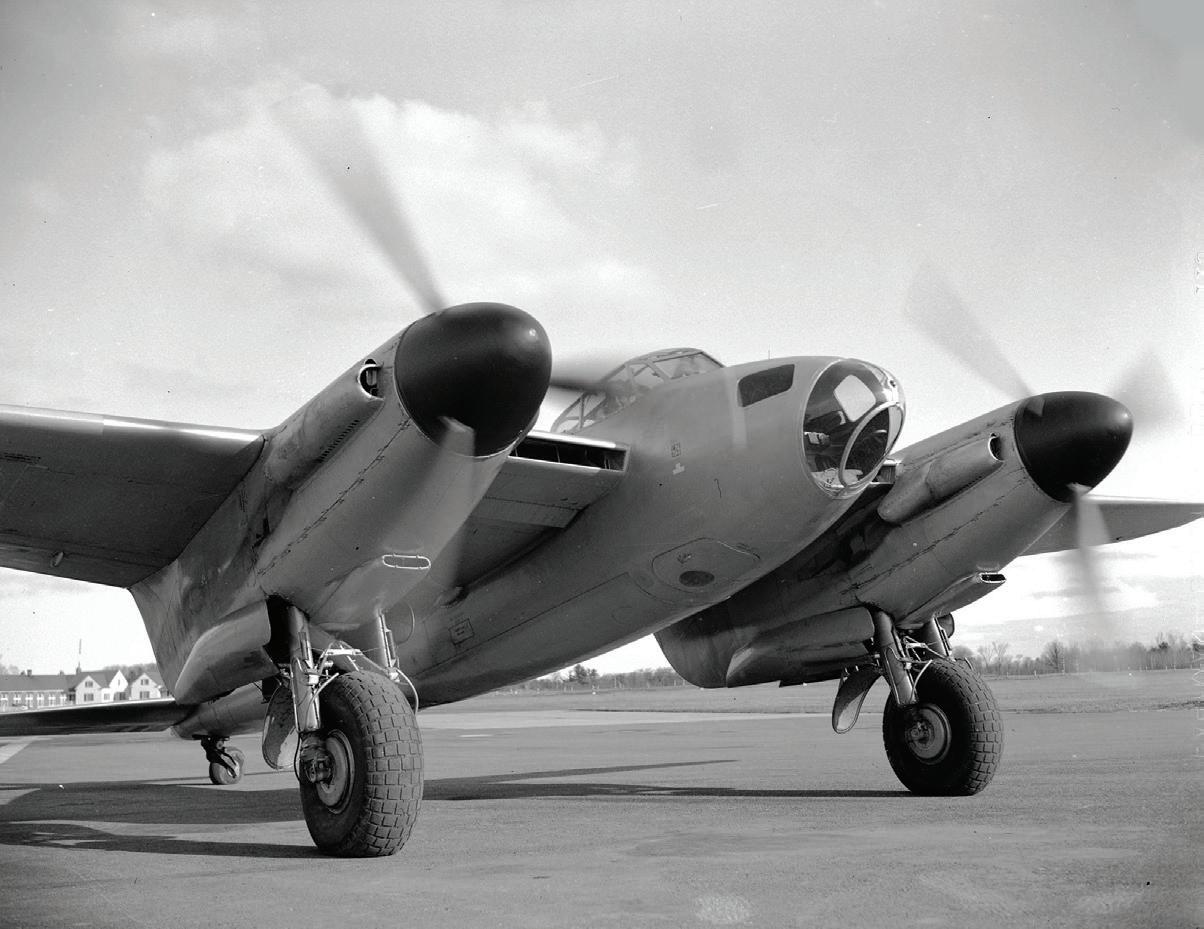
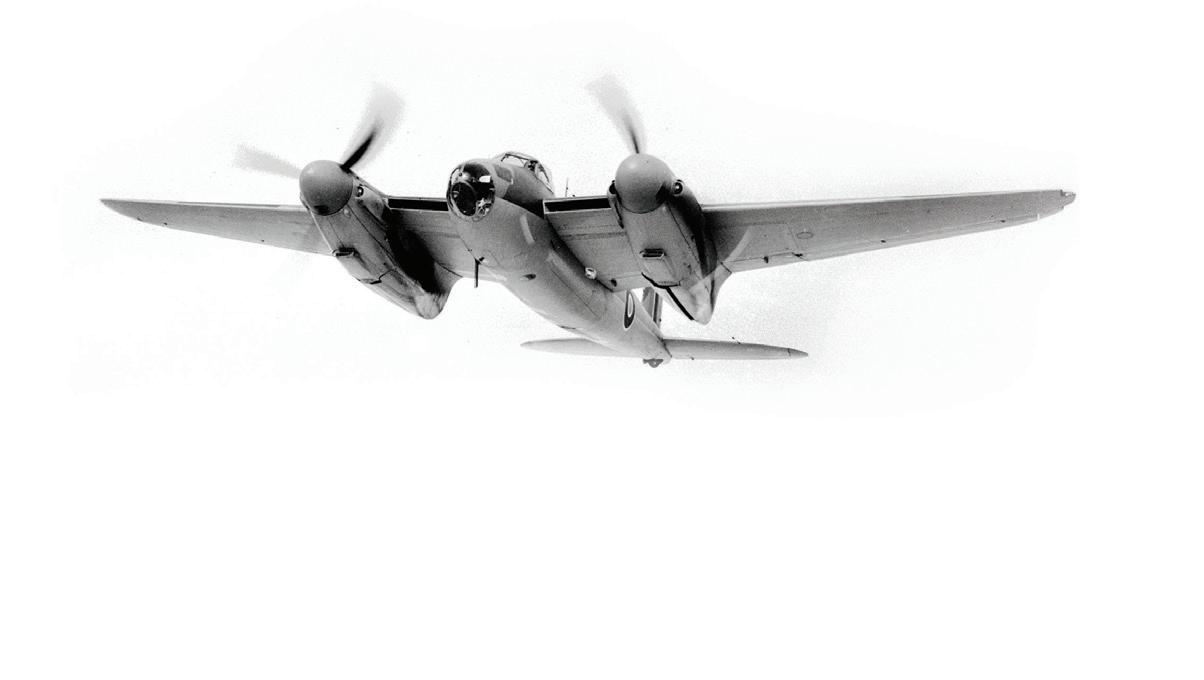
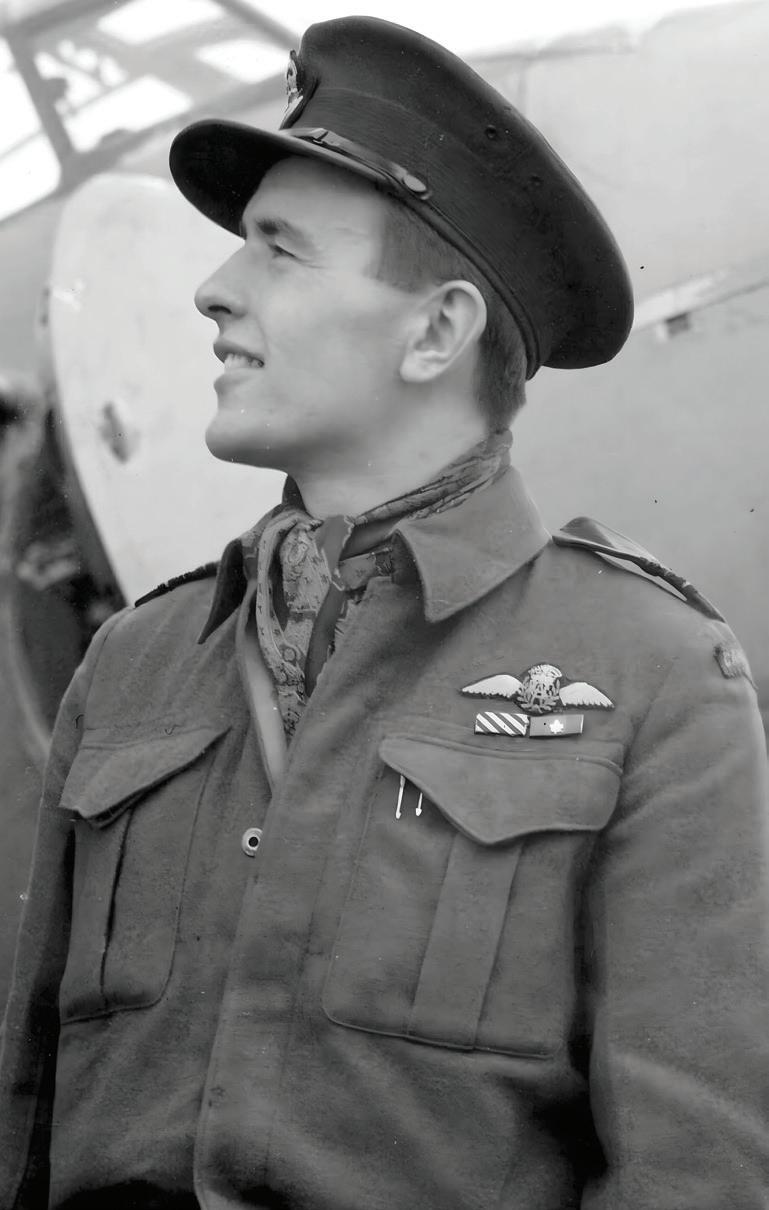
As we mark Remembrance Day, we have a look back at The Wooden Wonder. By Nathanael Reed
We profile two successful Canadian enterprises as they apply the latest technology to flight simulation and training. By Mireille Goyer
Stand on Guard — For Our Airfields
The United Kingdom has, per capita, more licensed pilots than Canada, a statistic I was surprised to learn of earlier this year. Given the number of Royal Air Force airfields and military surplus aircraft which were a legacy of the Second World War, it should not be all that surprising. Aviation played such a vital role in the survival of an independent Britain that it understandably inspired subsequent generations to take to the skies in pursuit of adventure.
During the last few days of August of this year I was fortunate to attend the LAA 2025 Rally, an annual fly-in, air and trade show sponsored by the United Kingdom’s Light Aircraft Association, held this year at the Leices-
tershire airport. I was able to speak with many local pilots about the state of general/recreational aviation in their country. I also had the pleasure of visiting a small private aerodrome just east of London, where I lunched with the owner of a flight school.
Alas, the news is not quite so rosy across the pond. The U.K. is losing aerodromes as the central government faces pressure to create new housing estates. Farmland is sacrosanct there, understandably so in a country with such a small landmass, so the authorities look elsewhere. Aerodromes not required for commercial aviation, typically created during the mid-century war years, appear to them as ideal opportunities for redevelopment.
With the writing on the wall, private and recreational pilots see airstrips on private farmland as a solution that can sustain their passion for flying. Indeed, many such airstrips already exist. Airplanes and other light aircraft with STOL characteristics are becoming more popular in the U.K. for this reason.
Presumably one would not think that we in Canada could face a similar fate, given the vast expanses of land that surround us. However, we would be mistaken. Many airports and aerodromes that were built or established in rural areas now find themselves in urban areas due to population growth. Aviators in Canada must remain vigilant to this.
Carbon-Free Flight
A LEAP FORWARD FOR SUSTAINABLE AVIATION IN B.C.
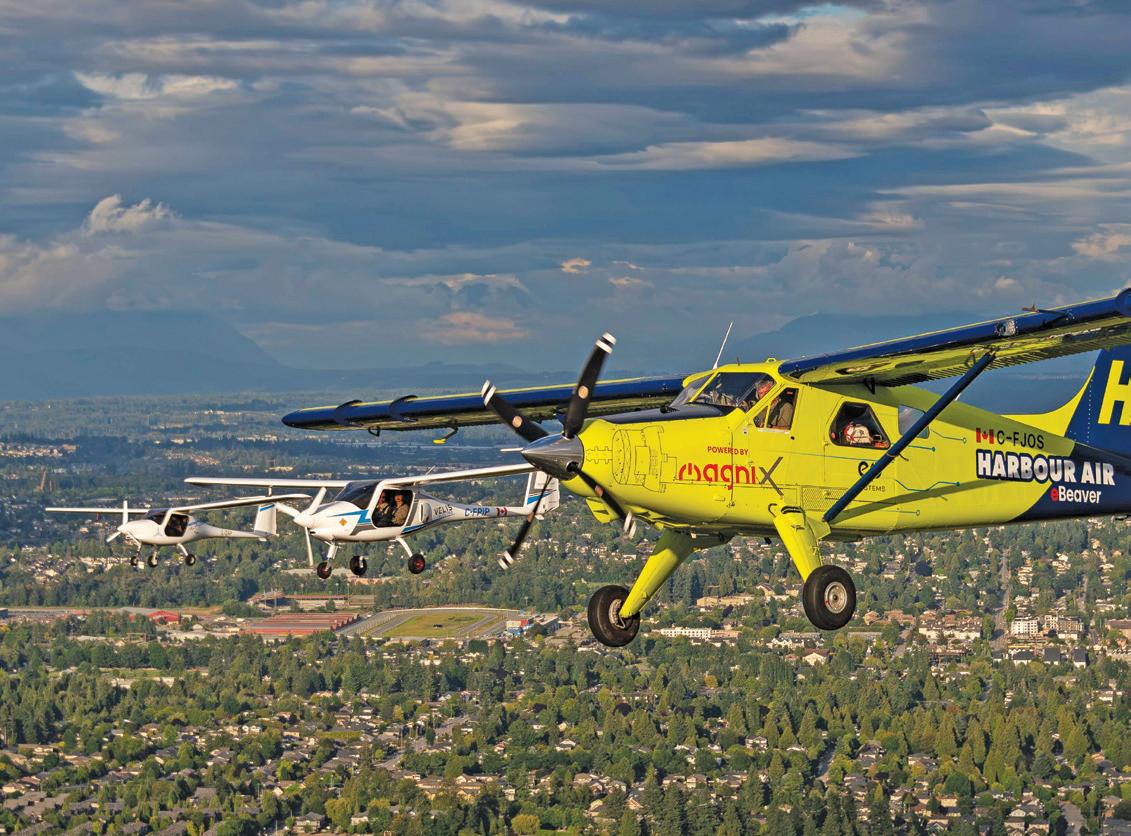
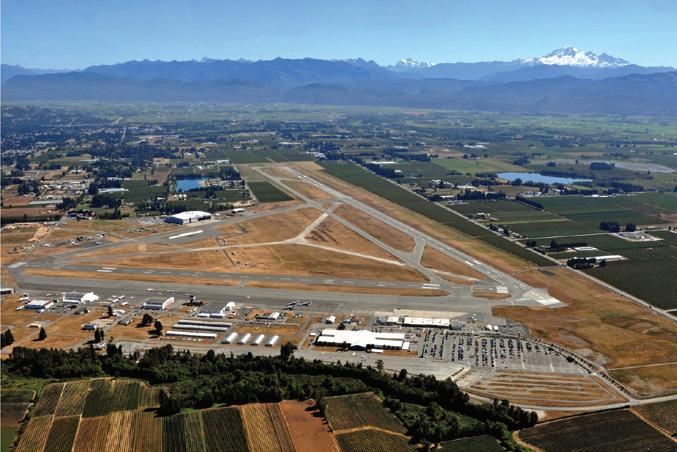
Pitt Meadows Regional Airport (CYPK) was the venue for a rare aviation event when three battery-electric airplanes took to the sky in a demonstration of carbon-free flight.
Two Pipistrel airplanes, one an Alpha Trainer and the other a Vilus Electro, were joined by Harbour Air’s de Havilland Beaver, dubbed the eBeaver, which sports a MagniX powerplant.
Mike Andrews, a Class 1 Flight Instructor, was instrumental in positioning Sealand Flight’s Pipistrel Velis Electro from its home base at Campbell River on Vancouver Island to the Lower Mainland for the event.
“Flying three electric aircraft together was an unforgettable honour — a milestone that showcases the progress and
capabilities of electric aviation, as well as Canada’s drive to be at the forefront of this new era of flight,” said Andrews. Given the limited range of the Electro, the aircraft’s wings were detached from the fuselage before being trucked to Pitt Meadows for the demonstration flight, hosted by the Aero Club of British Columbia. Sealand’s Vilus Electro was featured in the May/June 2025 issue of Canadian Aviator
The second Pipistrel, a privately owned Alpha Electro based at Pitt Meadows airport, is registered as an Advanced Ultralight Aircraft (AULA) and was piloted by owner James Douma and is based at Pitt Meadows airport. This aircraft was feature in the May/ June 2018 issue of Canadian Aviator.
The third aircraft, the eBeaver, made the non-stop flight from Harbour Air’s Sea Island base in Richmond with Harbour Air’s V-P for Maintenance Shawn Braiden at the controls.
Hosting the event was the Aero Club of British Columbia, led by club president Rick Alexander.
“Since 1915, starting with a single-seat Curtis pusher, the Aero Club of BC has been at the heart of Canadian aviation history, coordinating the construction of Vancouver’s airport on Sea Island in Richmond, training RCAF pilots, and eventually working with Pitt Meadows to build their airport where the club constructed its first building,” Alexander told Canadian Aviator.
Club members and invited guests
AIRMAIL
were treated with a flyby of the three aircraft over the airport before pilots Mike Andrews and Shawn Braeden gave presentations to attendees about how these aircraft are pioneering sustainable aviation in British Columbia.
“August 6th brought us full circle,” Alexander added later. “Our members and spectators, numbering around 200, stood together as the E-Beaver soared silently overhead in the absence of an engine’s roar — that’s 110 years of embracing aviation’s next breakthrough.”
While the eBeaver is not yet in commercial service pending further development, the Vilus Electro is already generating revenue while serving as a training aircraft for Sealand Flight.
That took me back...
As always, another packed issue of Canadian Aviator.
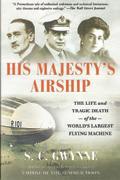
After reading the Sep/Oct issue, I just had to drop a line. Your article reviewing the book, His Majesty’s Airship, took me back to my youth. I grew up in Bedford, United Kingdom and attended the local squadron of the ATC (Air Training Corp, now Air Cadets) at RAF Cardington. We were always in awe of the gigantic hangars which housed these behemoths and the history that went with them. On Remembrance Day we would march to the church in Shortstown to attend a service at the mass grave for the passengers of that ill-fated flight.
Apparently, as the story goes, riggers, whose job was to crawl around the gas bags and repair any chafing, were initially given a knife and a parachute. However, as the R101 was so overweight, in order to reduce weight, they later had their parachutes taken away. Interestingly, the author Nevil Shute, whose full name was Nevil Shute Norway, was also an aeronautical engineer and was involved in the design of the R100. He was on board its flight to Canada.
On another note. In the article on the new SAR Kingfishers, it noted that they hope to have the aircraft dispatch in 30 minutes. It is interesting to note that, during the cold war, the RAF Vulcan bomber could be launched and in the air in about two minutes due to its rapid start system and the readiness of its crews.
Thank you for putting out such a great publication.
Alan Eames Montreal, Que.
Send us your letters. Canadian Aviator welcomes reader letters on topics of concern to Canadian pilots and the aviation industry. Please be brief, to the point and polite in your submissions. Email Steve Drinkwater steve@canadianaviator.com
TOBYN BURTON
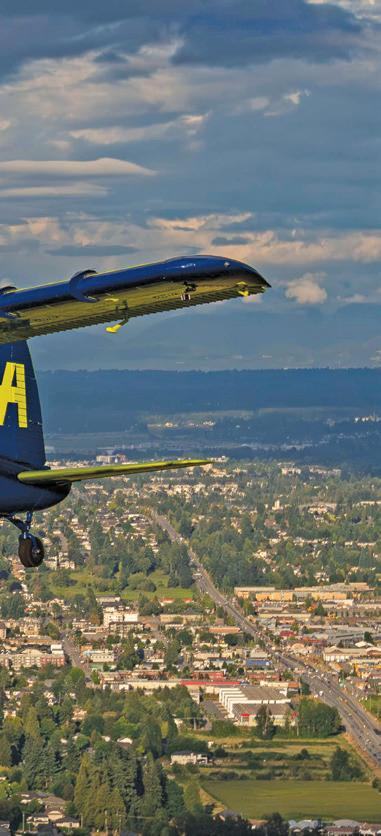
Three battery-powered electric aircraft over Metro Vancouver.
GEAR & GADGETS
Wall Poster
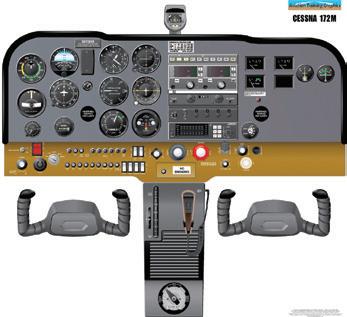
Do you have space available on your hangar wall? Or perhaps in your home office or rec room? If so, cover all or part of it with a 24-inch x 20-inch laminated poster of your favourite aircraft’s standard instrument panel. Images of a broad range of General Aviation aircraft are available, including Cessnas, Pipers, Diamonds and Cirrus. Produced by Aviation Training Graphics. Also available for several business aircraft and popular airline flight decks. About C$30$40, depending on version.
Learn more at, and available from, avworld.ca.
Tiedowns
Considered by many to be the best aircraft tiedown equipment on the market, the C100 Aircraft Anchoring System uses the “Claw,” a patented threepoint anchor that securely resists tension coming from any angle and is designed to withstand up to 1,200 pounds of force. Included in the carry bag are three Claw anchors, nine spikes, a hammer and 30 feet of rope. The kit weighs eight pounds. About C$200.
Learn more at, and available from, avworld.ca
Airplane Models
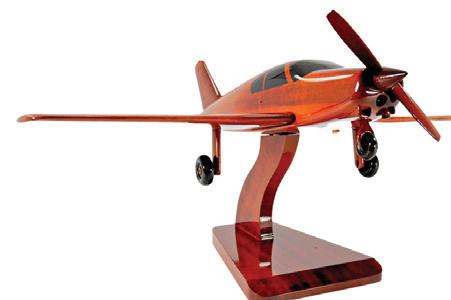
Looking for something to gift your aviator friend or family member? With Christmas just around the corner, consider a beautifully sculpted model of a favourite aircraft. Premium Wood Designs (PWD) of Palm Springs, California carries a wide range of handcrafted aircraft models made with solid mahogany and finished with a clear polyurethane high-gloss coating. From Cessnas to Pipers, from Van’s to King Airs, from warbirds to airliners, PWD carries a very wide selection, and they offer a money-back guarantee. About U$95.
Learn more at, and available from, premiumwooddesigns.com
Airspeed Prompter
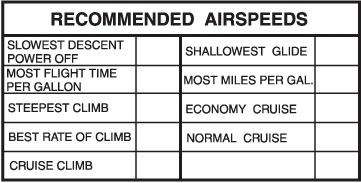
Have you been flying and needed to know the best airspeed for a given situation? Sure, reaching for the POH or AFM is an option, but is it readily accessible inflight? Does your POH or AFM even list all the airspeeds you might want? Why not affix a sticker on your panel that lists all the airspeeds you might need on short notice. Examples include MOST FLIGHT TIME PER GALLON, SHALLOWEST GLIDE and seven more. The stickers are made of vinyl, and measure 3.5 by 4.5 inches. Simply fill in the speeds applicable to your aircraft using an indelible marker. About C$5.50.
Learn more at, and available from, aircraftspruce.ca
Another West Coast Workaholic
AND HE DIED A HAPPY WARRIOR
Iam presently engaged in writing a biography of a well-known British Columbian coastal aviator who was one of the significant players during a most remarkable era in this province’s aviation history. As I proceeded with the research and listened to my client recall his many flying adventures, I was again reminded that this industry was once peopled by an amazing variety of colourful characters, both at the yoke and in the passenger seat. The other thought that came to mind was that the sterility of flying behind a locked door in company with a black box and a moving map display may well put an end to the hairy bush pilot genre of stories. Panicked by such a possibility, I have recorded here for posterity some of the gems from the local seaplane industry.
It is always good to start at the beginning, so here is a very abbreviated account of the first of the post Second World War aviation personalities.
Bill Sylvester was the man who created B.C. Air Lines, at one time the largest seaplane airline in the world with bases from Prince Rupert to Vancouver and throughout the B.C. interior. He was a workaholic; a trait earned from his youth in which he was the breadwinner for a near-destitute family. At the age of 12 the young Sylvester would hunt deer in the forest that stood, in those days, adjacent to Victoria’s Empress Hotel. That same stand of timber provided him a livelihood from creating firewood from the deadfalls and selling and delivering it throughout the city. His hard work earned him the attention of a rich American who owned a U-Drive business in Victoria. Sylvester ended up rejuvenating that struggling business and replacing the too often drunken manager. The business soon became Sylvester’s U-Drive, and it flourished. With a few extra dollars now in his pocket, Sylvester took flying lessons
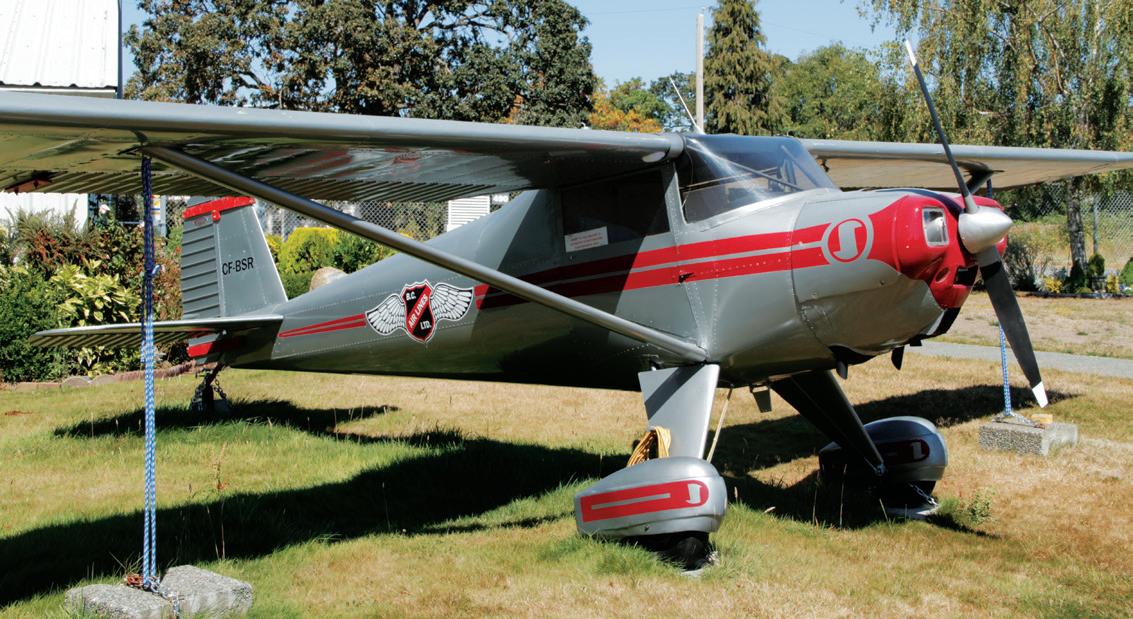
and bought two Luscombe 8E Sylvairs (Silvester’s Sylvairs), which he parked at the U-Drive location behind the Sussex Hotel in downtown Victoria during the war years (1939-1945). He would start up the two planes each morning to keep the engines in condition for that future day when he could establish a flying school and charter operation at Vancouver Airport.
Despite the young man’s enviable work ethic, perseverance and obvious business acumen, people found Sylvester amusing because of his simplistic style. He became one of Victoria’ s most colourful business characters.
A story told by a close friend characterizes Bill Sylvester. It seems his friend arrived at Sylvester’s house one day soon after Sylvester had emerged as a successful businessman with a few bucks to spare. He was found standing in front of a full-length mirror, stark
HANGAR TALK WITH JACK SCHOFIELD
A Luscombe 8E Sylvair in B.C. Air Lines livery.
naked except for his cigar, and wearing a pair of brand new, very expensive halfWellington boots. He proudly advised his friend, as he clomped around the house, that he had paid more for the boots than he had for his car.
Another amusing story that kept the small aviation community at YVR in stitches was the saga of Sylvester’s love life. He got into a fistfight with another pilot over the hand of a fair maid. Sylvester won the fight but ended up with a broken arm. Later, when his work ethic conflicted with his ability to court the young woman, he asked a young pilot he employed to take the girlfriend out to dinner and a show, as he had to work late. This happened on a regular basis and, guess what? Sylvester became the best man at his girlfriend’s wedding!
The definitive Bill Sylvester story was derived from a near tragedy. Sylvester did some of the flying during the early days of B.C. Air Lines. One day
he flew into a logging camp located at the mouth of a river. He picked up his logger passenger and taxied out into the river for takeoff. As he taxied downwind, a cap covering the rear float compartment fell off and several of the float compartments filled with water. When he commenced the turn into wind, the aircraft rolled over and sank. The two men scrambled onto the inverted pontoons and huddled onto the spreader bar hoping that someone witnessed the event, but nobody had seen it happen, and darkness was approaching as the submerged plane drifted out of the river mouth to sea.
Hours later, as hypothermia started to affect each of the men, a light appeared in the distance as a small boat made its way into the river. Sylvester took out his Zippo lighter and a 20-dollar bill from his wallet. He lit the bill and held it over his head shouting for help at the same time. The
boater, a young man returning from a fishing trip, spotted them and they were whisked off to a warm cabin to thaw out. Nobody at Vancouver Airport believed Sylvester’s story because they all agreed Sylvester would never light a 20-dollar bill on fire.
As a self-made man, Sylvester railed at the volume of work imposed on him by the Canadian Transport Commission and the Ministry of Transport, who were making new civil aviation regulations faster than he could keep up with them. The entrepreneur finally threw up his hands and was quoted yelling out one day, “This is bullshit — I’m out of here!” So he sold B.C. Air Lines, became very rich and retired back in Victoria for about two weeks, then started up a new outfit called Victoria Flying Services. He ran this business like a private club and, despite a later fatal stroke, died a happy aviator.
I don’t think they make them like that anymore.
Canadians Defended Britain in 1940
THEY THEN WENT TO ALASKA TO DEFEND THE USA | PART 1 OF 3
PREAMBLE:
It is now 86 years since Canada’s declaration of war with Germany. Two years later, after Japan’s attack and the devastation of Pearl Harbor in Hawaii, Canada declared war with Japan on December 8, 1941, the first nation other than the United States to do so.
Prior to the U.S. declaration of war with Japan on December 7, 1941, President Franklin Roosevelt had discussions with Canada’s Prime Minister William Lyon Mackenzie King respecting the probable hostilities with Japan and possible cooperation of the two countries in that event.
American President Roosevelt named Canada “The Aerodrome of Democracy” after it initiated the British Commonwealth Air Training Plan and began training over 130,000 Allied aircrew for service in the Second World War.
With the 1939 expulsion of Allied troops from Dunkirk, France, an invasion of Great Britain by Germany was expected. However, Reichsmarschall Hermann Goring declared that the Royal Air Force would first have to be obliterated.
On August 12, 1940, the Luftwaffe crossed the English Channel and attacked the British radar stations, bombed and strafed the RAF air stations, and engaged the RAF in the skies above southern England.
Many Canadian pilots served with the Royal Air Force, and the Royal Canadian Air Force’s No. 1 (Fighter) Squadron became one of the first units to engage the Luftwaffe.
On September 27, 1940, Canadian pilots shared in the defeat of the Luftwaffe’s last daylight attacks, solidifying the RCAF’s place of honour at the conclusion of the Battle of Britain on October 31, 1940.
While not a Canadian, it should be acknowledged that the last surviving Battle of Britain pilot was Group Captain John Hemingway, Royal Air Force, who passed away March 17, 2025, at age 105 years.
On the eve of his retirement in 1935, the Canadian Chief of General Staff Major-General A.G.L. McNaughton wrote a paper clearly stating the realities of defense in Canada. He reviewed the breakdown of the international order: the departure of Japan from the League of Nations, the rise of Hitler and Germany’s withdrawal from the League. Chastising the Canadian government for its failure to provide even a minimum standard of national defense, his report revealed that the Air Force strength had diminished between 1932 and 1935 to below 30 percent of the agreed minimums. MacNaughton was also gravely concerned that the proposed partition of Europe into an armed alliance was strongly reminiscent of 1914.
McNaughton fully realized the responsibility he had assumed by excluding from his paper any recommendations for the Land Forces within
Canada. He believed that a strong Air Force organization was the most urgent requirement, an essential element in the defence of the Pacific Coast. In McNaughton’s view, it was vital for the RCAF to be able to respond immediately and decisively to any attempt by the enemy to establish submarine or aircraft bases within an effective radius of action. He argued that the most probable contingency seemed to be Canada’s defence of her neutrality in a war which the United States might become engaged with a Pacific power.
McNaughton could not have been clearer in his criticism: “The requirements for Forces sufficient to discharge our obligations for the maintenance of our neutrality in the West are neither extensive nor very costly, and it seems to me that by their absence, we are taking a risk to our future wholly disproportionate to the interests at stake.”
A United States Congressional Committee voiced a warning that paralleled McNaughton’s evaluation. They concluded that it was entirely possible for a belligerent to attack the U.S. using a Canadian base, and
Canada Permanent Joint Board on Defence agreed that Canada would militarily assist in the defence of Alaska.
that Canada was not in a position to defend itself. They reasoned that if a nation hostile to the U.S. were to overfly Canada, or utilize Canada’s bases in order to mount an attack, this action would force the U.S. to take steps to defend Canada. The Canadian Department of External Affairs obtained a copy of the Congressional hearing and submitted it to Canada’s military for comment. Their reply was sympathetic to the U.S. viewpoint, stating that the U.S. was obligated to contemplate measures to protect itself from an attack, not by Canada, but via Canada.
An editorial in the Ottawa Evening Citizen sent out a clear message to Prime Minister MacKenzie King’s Liberal government. It pointed out that the United States had to look after its own interests and if Canada was not doing its share, it was because the government had virtually disbanded the Royal Canadian Air Force.
By the late 1930s the preparation for Canada’s defence of its west coast was becoming an increasingly urgent matter with the RCAF’s Jericho Beach Air Station being the sole defensive seaplane base, with no land airports north of the Sea Island Airport at Vancouver, British Columbia. This lack of defensive capability could no longer be ignored.
An RCAF Survey detachment was organised to explore possible sites for RCAF seaplane bases along the B.C. coast and would eventually choose five locations: Ucluelet and Coal Harbour on Vancouver Island, Bella Bella on the central coast, Prince Rupert and Alliford Bay on the Queen Charlotte Islands (now Haida Gwaii). By December 1941, all these stations were established, manned and active.
In meetings held in Washington, D.C., from December 1941 to January 1942, and later at the U.S. – Canada Permanent Joint Board on Defence meetings held in Ottawa, it was agreed that Canada would militarily assist in the defence of Alaska.
Canada had authorized the U.S. Army and Navy to establish such facilities that it required at the
mouth of the northwesterly railhead (Canadian National Railway) at Prince Rupert, B.C. in order to supply the needs of U.S. Forces in Alaska (the Alaska Highway was not usable until the end of 1942). The RCAF then became concerned that its Flying Boat Station at Seal Cove, Prince Rupert was inadequate to the defence needs of Prince Rupert in this expanded capacity. No land-based airport existed at Prince Rupert until 1961 so an alternative had to be found.
The United States had developed the Annette Island Airfield only 60 miles northwest of Prince Rupert but did not have air combat units to man it. The defence needs of both countries coincided.
At a meeting on March 6, 1942 in Seattle, Air Commodore L.F. Stevenson, Air Officer Commanding Western Air Command RCAF, suggested that it might be possible to temporarily deploy an RCAF fighter squadron to Annette Island. The U.S. Army commander of the Pacific Coast, Lieutenant-General John L. DeWitt, welcomed the proposal and on April 27, 1942, No. 115 Squadron, under the command of Squadron Leader Reyno, flew to Annette Island with the unit’s Bristol Bolingbrokes.
Western Air Command RCAF realized that the Bolingbrokes were of limited value as a defensive aircraft, but the unfinished airfield conditions at Annette Island precluded the deployment of P-40 Kittyhawks until conditions on the airfield were improved.
No 115 (F) Squadron undertook its move from RCAF Station Patricia Bay (near Victoria, B.C.) to Annette Island on May 5, 1942, but S/L Reno and his crews were astounded when they were met upon landing by an overzealous United States Customs official who, paralyzed by bureaucratic regulations, refused to allow the Canadians to leave their planes until they paid duty on their aircraft, armaments and equipment. A frenzy of communications erupted from this idiocy. The Canadian aircrews
were invited at the request of the government of the United States to defend Alaska against a hostile force of Japanese aggressors, and now the Royal Canadian Air Force was being held hostage by the U.S.
The problem was solved at the very top when the U.S. Secretary of State Cordell Hull signaled from Washington, D.C. that the Canadians at Annette Island were to be exempted from customs duty as ‘Distinguished Flying Visitors.’ In an aside to his aide, Cordell Hull suggested that after the war this customs agent be assigned to a remote location in the Philippines.
Several RCAF squadrons were eventually based at Annette Island, including 115(F) and 115(BR), 8 (BR), 118(F), 114(F) and 149 (BR). Other squadrons came and went enroute to RCAF operations in Alaska and in the Aleutian Islands.
The RCAF established “Y” Wing at Annette Island consisting of both 115(BR) and 118(F) Squadrons.
When the RCAF arrived at Annette Island, facilities were at a minimum. No hangars, or Squadron offices, or barracks were available, and tents were the order of the day. The U.S. Army on the island did all they could, but they were handicapped by the same shortages and lack of labour and supplies. “If you needed something, you made it yourself, stole it from the Yanks, or went without.”
RCAF “Y” Wing at Annette Island was also responsible for an RCAF detachment at Yakutat, Alaska. In June 1942 the P-40 Kittyhawks of RCAF No 111 (F) Fighter Squadron departed RCAF Station Patricia Bay and flew via an inland route through Prince George and Fort Nelson in B.C., then Watson Lake and Whitehorse in Yukon. No 111 (F) Squadron arrived at Yakutat, Alaska on June 8, 1942. At the same time, RCAF No 8 (BR) squadron’s Bristol Bolingbrokes departed RCAF Patricia Bay, flying up the B.C. coast and southern Alaska via Annette Island, Ketchikan, Wrangell and Juneau to Yakutat.
To be continued...
Flight Following
A PRIMER ON THIS VALUABLE ATC SERVICE
Summer brings a lot of aircraft out of the woodwork. While this issue comes out well after summer traffic, the service I am writing about this issue can be used any time of year, and a refresher for the VFR pilot and interacting with enroute ATC might be useful.
The main topic for this is colloquially known as “flight following.” The concept, in this case, is a VFR pilot in the enroute phase of flight contacting ATC. The principal purpose is to help alert a pilot to traffic, both IFR and other VFR aircraft, operating in the vicinity of one’s own aircraft.
Other purposes could involve severe weather that may crop up unexpectedly. While this is more likely to be heavy rain or thunderstorms in the summertime, winter can also bring some unexpected snowsqualls, and spring and fall may see fog arise. Controllers may have information on such weather events, as well as other items of note at airports, such as an unexpected runway closure at destination, etc.
that are not transponder-equipped. Similarly, controllers may not be able to see weather phenomena that preclude VFR flight. Only the biggest of clouds provide radar echoes that may register on controllers’ screens. Pilots being provided with flight following from ATC should not get complacent and assume controllers will see every issue that may affect their flight.
Next, we have to look at airspace. Obviously, Class D and above require
ority. Enroute ATC watching over Class E airspace is primarily focussed on IFR Control Service. This is the part of the job that is tasked with keeping IFR aircraft separated from each other, and usually includes some airports with IFR arrivals and departures. In the provision of that service, there are phone lines and hotlines used for coordinating air traffic movements with Towers, Flight Service Stations and other controllers in adjacent enroute or terminal airspace.
But before a pilot can make use of such a service, there are a few things to understand about it.
First off, in most areas of the country, this service can only be provided to aircraft with functioning transponders. The word “functioning” is doing a lot of lifting in that statement because if it’s inadvertently left in the “OFF” or “STANDBY” modes, controllers can’t see you, and neither can other aircraft equipped with TCAS or ADS-B In.
As such, even if you’re in contact with ATC, controllers are unlikely to know about an aircraft operating around you
contact with ATC. Class E and lower airspaces, where much of the enroute phase of flight will occur for many pilots, do not require pilots to be in contact with ATC. This brings with it its own pitfalls.
First off, a VFR aircraft in Class E airspace doesn’t require ATC permission to change altitude, turn around or whatever. If the pilot of that aircraft is not in contact with ATC, or simply doesn’t advise ATC of the planned action, it may come as a surprise to the controllers as well as other pilots. Again, a watchful eye must be kept, even if ATC points out traffic.
Controllers have a variety of tasks, and a hierarchy to them in terms of pri-
Control service to VFR aircraft comes next. This would include aircraft operating under Controlled VFR, such as those operating in controlled airspace above 12,500 where the classification is Class B and separation must be provided to VFR aircraft, the same as it is applied between IFR aircraft.
Next on the list is Flight Information Service. This includes weather, NOTAM, traffic and so forth, and is itself prioritized, first to IFR aircraft under the responsibility of the controller, and finally to VFR aircraft.
This means flight following is the low end of the workload. The unfortunate part of this is that flight following is the first of the tasks to be dropped if the workload for the other responsibilities increases too much.
Radar coverage can be a limiting factor for provision of traffic and severe weather information. The further away from a radar antenna you are, the higher you must fly to be seen. Ceilings may affect your ability to climb. If you’re operating far from an antenna, you and other traffic may not be visible.
If you have ADS-B Out, you’re much more likely to be seen by controllers. Some aircraft only have downward-fac-
ing antennas, which mostly limits their exposure to ADS-B receivers on the ground. Space-based receivers can often get at least intermittent signals for aircraft that don’t have sky-facing antennas, especially where aircraft operate over water.
How does a pilot make a request for flight following?
First, a pilot should make a standard “initial call.” Once you find the radio frequency, check in with the station you’re calling followed by your aircraft type and callsign (normally your civil aircraft registration). For example, “Moncton Centre, Warrior Golf India India Juliet.”
Wait for the controller to respond. A quiet radio doesn’t necessarily mean the controller isn’t busy coordinating flight data with someone else. Following an initial call like that, I’m usually looking
Once the controller responds, offer the information needed in the request. “India India Juliet is on a VFR flight plan from Point A to Point B, climbing through three thousand seven hundred for six thousand five hundred, request flight following.”
From here, the controller may indicate an inability to provide the service, or assign a discrete code to help track your aircraft. Do not activate the “IDENT” feature of your transponder unless, and until, specifically requested to do so.
It’s understood by controllers that you may have to leave the ATC frequency from time to time. Maybe you need to update your flight plan with FSS, or perhaps you’re going to cross through a Mandatory Frequency Area around an airport. Please don’t leave the ATC frequency without talking to ATC first.
for you in the near future.
If traffic is pointed out to you, there are two responses that controllers want: Either, “Traffic in sight,” or, “Looking for traffic.” Avoid phrases like, “with the traffic,” as it is ambiguous. Do you have the traffic in sight or do you have the traffic information that was just transmitted? Traffic showing on TCAS or ADS-B displays is helpful, but controllers really want to know when you have the traffic visually through the window.
When the service is no longer available — perhaps due to increasing workload, lack of surveillance coverage in your area, or whatever, the controller will use the phrase, “surveillance service terminated,” to indicate that they cannot watch over your flight any further.
Flight following is a useful service to a pilot, but its limitations and the respon
SWINGING WRENCHES WITH LIANA BUESSECKER
Let’s Rank My Favourite Workplaces
WAS IT THE NORTH? VANCOUVER? AUSTRALIA?
When I first became an Aircraft Maintenance Engineer (AME), I thought I’d get a job at an airline and live happily ever after. And I probably would have had it not been for COVID. I was placed on leave, during which time I moved cities, and companies, and positions, and I learned there’s so much more to aircraft maintenance than everything I thought I knew.
In my time with the airline I found my favourite position was while I was in Edmonton, a location known as an out-base, as a ramp mechanic. There was no hangar, no plethora of tools or parts at my disposal. I had an office, and a truck, and a small to-go toolbox filled only with the necessities.
When planes landed in Edmonton I’d speak to the pilots, check the oils and kick the tires. When they overnighted, I often had a scheduled list of tasks, all simple inspections, or maybe a quick component change. The majority of my job was troubleshooting and deferring defects until the plane would overnight in a hangar, usually Calgary, where they were equipped to handle larger jobs.
On occasion we had a plane break to the extent that it couldn’t fly, and those were the nights we bundled in insulated coveralls, parkas and headlamps, and worked in intervals to prevent frostbite from the beyondfrigid conditions. There was certainly complaining at the time, but I’d return in a heartbeat.
Throughout the years I had the privilege of experiencing four different bases with the company across Canada, and my absolute favourite place was Calgary. The weather was similar to Edmonton, but here we had a hangar, and the atmosphere of the employees
was unmatched. They were genuinely happy, which when you work in aviation long enough you realize is often hard to come by. We played foosball on our breaks and organized regular potluck dinners. The senior guys were eager and willing to teach the apprentices, and we were friends after working hours were over. Calgary gave me the best possible introduction to my career and also set my standards ridiculously high.
With nothing else considered, Vancouver was the best city. The weather was always ideal for working with the hangar door opens, and our view of the runway was spectacular. Getting to watch A380s take off while I pulled wrenches on a Dash-8 felt like glimpsing into the future of where I was certain I wanted to be. We would do two a.m. coffee runs to the terminal, and at the end of the night when the work was done, we could sit and listen to the rain.
When people ask where my favourite place to work was, I consider all this and more. And I realize everywhere offers something a little different, that you’ll always be able to find happiness as long as you’re looking, and in return you’ll leave pieces of yourself in every place you work.
I absolutely dreaded the days I worked on air tankers at remote northern airports where there was nothing but giant mosquitoes and wasps. Scrubbing baked-on retardant in 35∞ heat was miserable, and trying to pinpoint a leak on a bomb tank in the pouring rain was nearly impossible. But the tanker base manager made the most delicious brownies, one of the pilots always shared whatever he was cooking on the grill, the sunsets were unbeatable, and when the planes take off after working all night, nothing quite tops that feeling.
Some AMEs feel the need to compete for the worst story, the worst working
Abbotsford International Airport (CYXX) in British Columbia’s Fraser Valley. The author was based here for four years.
conditions and the most broken plane. As if being the one who stood waisthigh in a swamp, losing half your tools in the mud while you showered in hydraulic fluid gives you some sort of advantage. And when it comes my turn to share, I never quite know what to say.
Sure, I could tell you about washing planes in Western Australia — how the flies were so thick you couldn’t open your mouth to speak without risking swallowing one, which I did when I screamed because I realized I had a Huntsman spider on my hand. But I was in Western Australia, so that sort of trumps the unwanted insects.
I could reminisce about the prophub that wouldn’t depressurize and therefore soaked me head to toe in oil when I finally got it to release, but that was just another Tuesday. Maybe we could talk about the brake actuator that jammed and drained the contents of the reservoir inside the cockpit while I was
“Sure, I could tell you about washing planes in Western Australia — how the flies were so thick you couldn’t open your mouth to speak without risking swallowing one, which I did when I screamed because I realized I had a Huntsman spider on my hand.”
lying upside-down, leaving someone to find me in a pool of red liquid, but that turned out to be more funny than anything else.
Before I committed to my career I was warned away, was told if I insisted on working in the hangar, I should consider avionics because it’s cleaner. And it’s true that maintenance isn’t for the weak. You’ll work long hours, sometimes away from home for months on end, you’ll learn to taste-test leaking liquids and to use your tools in manners in which they were not intended for. But I think getting a little dirty means having a little more fun, as long as you
can always find that silver lining.
So I left the airline, and I found new adventures and new happiness. I discovered a world where I could work ramp maintenance with the best people in my favourite place. It took me a few years, but I learned with certainty that everything you’re doing now is leading you to where you’re supposed to be. And I’m more than happy that I can’t even compete for the worst story. Maybe I’ve experienced some unfortunate moments, but I wouldn’t be who I am if I spent my time dwelling instead of learning.
NORTHERN ADVENTURES WITH MICHAEL BELLAMY
Helicopter Medevacs
THERE’S NOTHING ROUTINE WHEN HELICOPTERS ARE INVOLVED
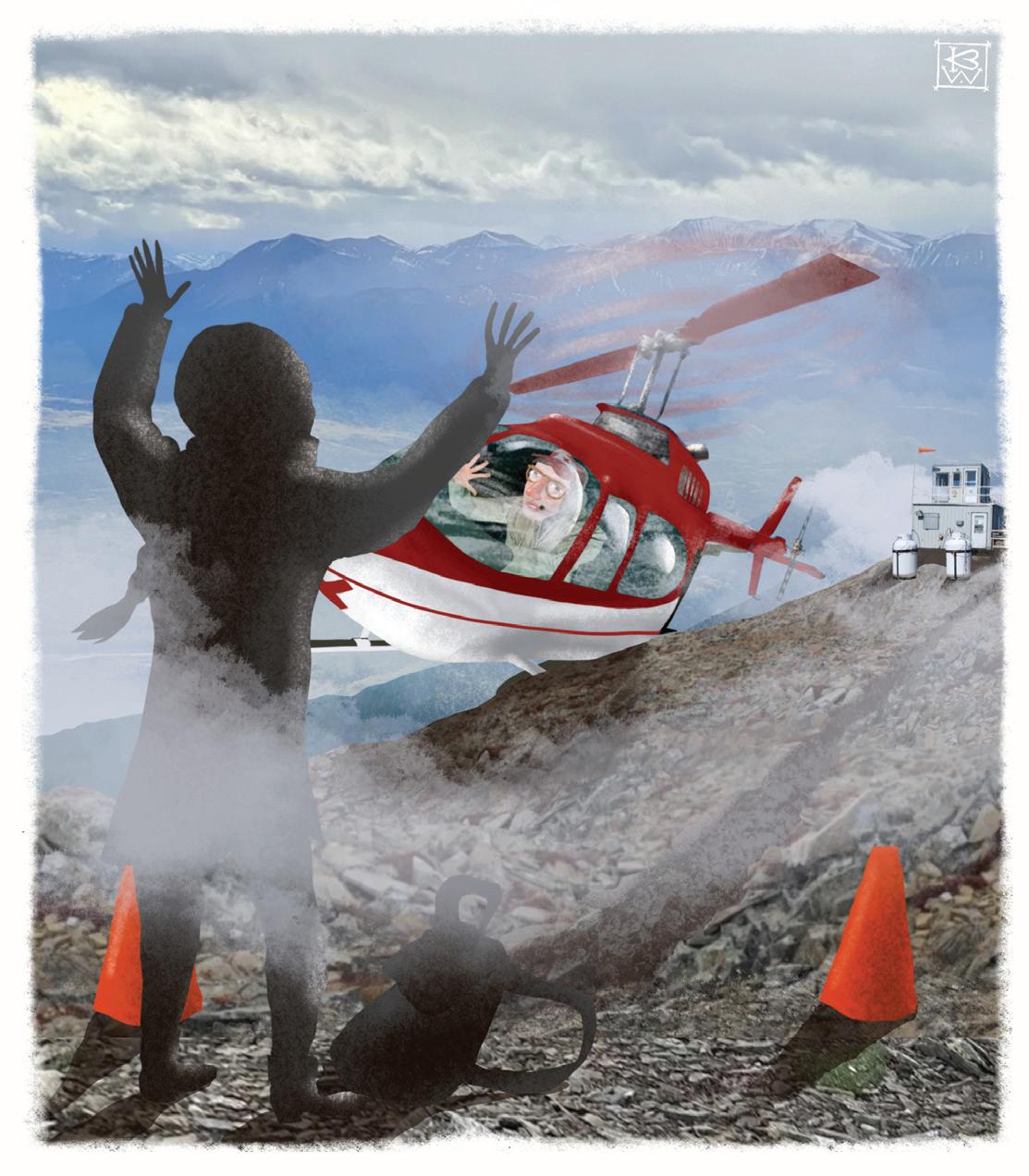
Many years ago, I was enjoying a tour by covering a base with a Bell Jet Ranger in Grande Cache, Alberta. That morning a request came in from the local Forestry office regarding a lone woman assigned to their fire lookout on top of Mount Hamell. They were asking if it were possible in this weather to fly there and then take her to the Grande Cache hospital. I looked outside to the mountains. Broken low cloud and rain shrouded the base of their tree lines. A quick check on the MET forecast showed much the same for the next few days. Forestry again called, confirming that, after conversing with a doctor and describing her symptoms, they felt she should get to a doctor soonest. Was it possible? The only way I was to find out, I decided, was to fly out and have a look.
I was very familiar with the Forestry lookouts and the mountain where this one was located was close to 6,800 feet up. Following the river I skirted Hamell, working my way north to the windward side. I was hoping that approaching from the north might provide a higher ceiling. Not this time; the only way I was going to get up there was to hover, nose close to the side of the mountain, then use the immediate terrain as reference. That was a procedure that I was familiar with and frequently used in British Columbia retrieving “tree fallers,” especially on the coast with frequent low cloud and rain. Getting back down from there only required a few hundred feet and, if old growth snags were prevalent, they only extended a few metres above the forest canopy and were comfortably avoided. Descending from this lookout’s altitude, though, would be another matter.
I was comfortable with my instrument rating. It had been called upon many times before, not only at airports, but also being able to fly out
of mountain whiteout conditions high in a wintery landscape. Drawing from the many departures I’d done from Hamell, I recalled the heading I would have to maintain which would give us the safest descent corridor to the Smoky River valley. The helicopter pad here was also on the edge next to the cabin, giving me a clear escape.
“Hopefully the patient would be able to walk,” I thought to myself, speculating about the operator.
“Ok, I have a plan, and drawing from an old aviation jest, So far there’s nothing but fear and common sense holding me back.”
Departure would have me relying on the instruments to do a let-down through the overcast and into the Smoky River gorge. A moderate rate of descent should ensure me that I would keep clear of shrouded obstacles and, once back in VFR conditions, allow me to easily follow the river back to Grande Cache.
Ok, I have a plan, and drawing from an old aviation jest, So far there’s nothing but fear and common sense holding me back.
Pulling into a hover I looked a bit higher in the windscreen, ensuring I had a reference, then pulled in some more torque. We started to work our way up. Initially it was unsettling, with hurried glances to the instruments then back to the terrain just a few metres away.
Eventually the rocks and patches of grass levelled here and there, and I recognized a few spots where
I thought I could possibly land if needed. The cloud was still dense. I crept on, still climbing.
A quick glance at the altimeter showed 6,400 feet. I was getting close. There was the pad! It was slightly brighter here; I looked up to see a nebulous glow from the sun, its harsh intensity almost defeated by the cloud cover.
After positioning the machine on the pad and before I had a chance to roll off the throttle, my passenger, with her head down, was making her way towards me. She quickly buckled in and, reaching for the headset, gave me a brief smile. Her face was pallid and strained.
Now for the easier part; my apprehension dissolving. I lifted the machine and pedal-turned in the hover until I had the course I wanted on the directional gyro, confirming it with the compass. I pulled torque and with nose down I threw it off into level flight, looking for 40 knots. We were immediately enveloped in cloud and with that soft glow from the sun no longer tempting me away from the instruments, I concentrated on the flight and power instruments. Maintaining the altitude until the airspeed crept to 80 knots, I started a descent. I was comfortable being on the dials and after what seemed like very long minutes, the Smoky River appeared through the rain-streaked windshield. Gratefully, I turned to follow the river back to Grande Cache, silently acknowledging my little Bell with some well-deserved praise.
I lowered the collective as we approached the Forestry pad. Alongside it a Forestry pickup waited for my passenger.
“Thank you so much,” her voice came over the intercom. When I turned to respond, gratitude and relief were written on her face. The same relief I’m sure was probably written on my face as well.
Circuit Safety
RECENT CIRCUIT FATALITIES CALL FOR A REVIEW
The summer uptick in General Aviation activity typically brings the disturbing news of yet another aircraft accident. Before the advent of GPS navigation, it wasn’t unusual for several airplanes each season to fail to arrive at their destinations. I know, because during my two tours flying the C-130 Hercules, it was often my mission to go out and help find these lost souls.
Sadly, some missing airplanes, what we then termed “Search Objects,” were never located. The introduction of 406 ELTs and the widespread use of ADS-B will hopefully all but eliminate a future of aircraft not arriving at their destinations.
But with hull losses and the associated fatalities trending downwards resulting from pilots getting lost is considered, a new causal factor is rearing its ugly head. It seems that handling accidents and incidents, which understandably spiked following the madness of COVID, haven’t abated at the rate many had hoped for.
Two recent occurrences merit a second look, if only to learn from the proverbial mistakes of others. The first event is the recent midair collision of a Cessna 172 and 152 doing circuits near Steinbach, Manitoba, on what appeared to be a perfect Sunday morning. The second involved a single, on or about to commence its final approach, appearing to have first stalled, then spun in from a low altitude. The pilot and her passenger sadly perished when their aircraft impacted the ground less than a mile from the runway at CYVG (Vermillion, Alberta).
It’s not surprising then that both tragedies occurred in what I consider to be the most potentially challenging phase of flight, namely the circuit. While airports with towers are not immune to these types of sad occurrences, a couple extra pairs of eyes watching the action and calling the game greatly increases flight safety. The immediate upside to this is
it allows pilots to focus more on flying their airplane, and less on scanning for traffic.
So it appears that the non-towered aerodromes we all know and love inherently pose the greatest threat to the GA community, at least where traffic in and around an aerodrome is considered.
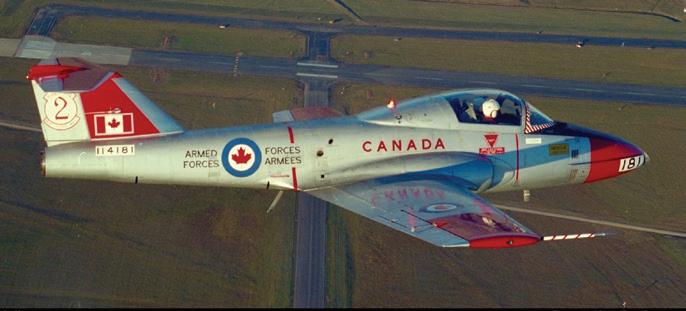
When I was a Qualified Flying Instructor in the RCAF, all Canadair CT-114 Tutor pilots based at Moose Jaw were required to know the exact ground references for overflight in what was known as The Pattern. Specific airspeeds, plus a combination of bank angles and “G” loads kept our radius of turns consistent, thereby virtually assuring everyone was where they were supposed be. Combined with the occasional “break out,” resulting from a loss of separation, what was frequently Canada’s busiest airport was also remarkably one of its safest.
Except as specified in the CFS, no such rules exist for what we simply know as The Circuit (if you speak RCAF or American, aka The Pattern). This means that we are all responsible for maintaining safe separation at uncontrolled aerodromes and thereby avoid triggering the cascade effect prevalent in so many crashes.
It starts with good radio (also known as RT) discipline. This is important at fields served by Aerodrome Traffic
Frequencies, but critical at those with Mandatory Frequencies (MFs). Your calls should be made with the goal of helping other pilots already in the circuit and those about to join it, to build an Air Picture that now includes you. Remember, position reports joining downwind and on final are compulsory, but additional broadcasts that aid in the safe and orderly flow of traffic are always an option. If things start getting a bit ropey, revert to common language, or consider breaking out and rejoining the parade, Moose Jaw style.
Next, while required at my former alma mater, many uncontrolled aerodromes incorrectly slip into the practice using local references in their own circuit work, then promote them as gospel to all pilots, itinerant and otherwise. Resident flying schools are all too often the biggest offenders here. As a result, many students and new pilots alike believe that all aircraft in the circuit are required to overfly the dairy farm on downwind, then turn base leg abeam the two dugouts beside the road, before rolling out on final over the dried-out slough.
Levity aside, these types of local references are useful for student pilots learning how to fly a circuit, but are by no means definitive in and of themselves. Instead, simply adjust your speed and
JAMES CRAIK
A CAF Canadair CT-114 Tutor training aircraft, similar to what the author trained and eventually instructed in.
size of circuit for the type of aircraft you are flying, as well as the traffic in the circuit that day. A Beechcraft Baron clocking 160 KIAS on downwind obviously will not play well with a Diamond DA-20 chugging along at a stately 85 knots. Always remember to yield the right of way to the aircraft lowest and least able to manoeuvre. Increase separation by going wide or, if safe to do, configuring early and adjusting your speed to align with local conditions and traffic, known also as fitting in.
Next, the importance of looking out. This is where high and low wing types each reveal their respective design flaws.
Consider the following: Both aircraft have a blind side, revealed during turns, so scanning for traffic before rolling into a turn is critical. Know that for the 10 or so seconds you are manoeuvring, you are essentially blind to spotting other
aircraft. Get in the practice of calling out traffic, if only to yourself, before rolling into a turn, and never initiate a manoeuvre with the hope of eventually seeing an “Unknown Rider,” to steal a term from the U.S. Navy.
Finally, the turn to final. I suggest starting with 20 degrees of bank, leaving the option of judiciously racking on up to 30 as required. The goal is perfect runway alignment, with the added benefit of making you all the easier to spot. At this point remember that you’re entering what is potentially the most threat laden part of a circuit – the final approach. It is here that airspeed is typically reduced and decreasing. It’s trickier to quickly manoeuvre the aircraft should it be required. Note that a crew’s attention is understandably fixed on the upcoming landing and not scanning for potential traffic on a “Tight Left Base.” I
also make a point of visually “clearing” the runway, scanning for other aircraft and wildlife, thereby not trusting radio calls alone. During C-130 operations in central Africa, this included watching out for baboons, who seemed particularly fond of hanging out in the touchdown zone, presumably to grade our landings.
Closer to home, at CEN4 (Foothills County), by simply actively scanning for any kind of traffic, I’ve successfully avoided colliding with the likes of deer, stray cattle, literally hundreds of gophers, bald eagles, flocks of geese (who had apparently stopped for directions) and, most importantly, embarrassing myself by triggering a CADORS event. Remember: Speed is life, so target your aircraft manufacturer’s recommended approach speed and don’t forget to correct for gusts. Fly each circuit like your life depended on it, because it does.
TALES FROM THE LAKEVIEW
Canada – U.S. Trade Friction
AND HOW AVIATION PLAYED A DOMINANT ROLE
History enthusiasts esteem the pioneers who pushed forward into Canada’s boreal forests, mountains and tundra wildernesses. Bush pilots and air engineers became legends of courage, toughness and persistence, and truly merited the glamour. However, the brazen exploits of another aviator breed, who never touched a muskrat pelt or inhaled the scents of musky blackfly-covered canvas tents, have been ignored.
Bootleggers, or illegal dispensers of what December 1929 Canadian aviators called “whoopee syrup,” suddenly needed air transport when ill-conceived temperance acts restricted booze sales south of the Canada-USA border. Fortunately, slightly wiser politicians had already repealed most of Canada’s restrictions by 1927. In the USA, the Eighteenth Amendment to the United States Constitution ratified January 16, 1919, brought satisfaction only to a general minority of Americans. Evangelical tub-thumpers and bottle breakers believed spirits destroyed social cohesion and weakened moral-religious purity. Hardcase groups such as the Woman’s Christian Temperance Union basked in contentment. Canadian entrepreneurs rushed to rescue their palate-parched neighbours.
Homebrewers rolled out their copper tubing and corporations like Corby Distillers on Ontario’s Bay of Quinte stepped up to produce 50,000 gallons of what must-have libationers named “hooch” every month. Single- and multi-engine airplanes of all configurations entered the picture. Shootouts and highspeed dogfights frightened conspirators, and near-powerless agents of the U.S. Treasury Department sometimes accepted bribes. Press accounts glorified aerial Robin Hoods who reaped $400 a month while exhausted fishermen, snippy bank clerks or frustrated school
teachers considered themselves fortunate to realize $35 for the same period. Canada became a prolific source of illicit moonshine rum, rye or beer, and hands across the border became cash over the line.
First World War ace William Avery Bishop predicted that a dry USA would welcome Canadians. Former Royal Flying Corps instructor and record-setting aviator Bertram Blanchard Acosta published his meditations on the “culture of aerial smuggling” in a 1933 five-part Brooklyn Daily Eagle newspaper series. Patiently, he explained how hapless out-of-work pilots became bootleggers only so they could survive in difficult times. As airplane designer Grover Loening added, airmen were “annoyingly independent” who revelled in mastery of the world below and considered themselves higher in status than the commonplace masses.
Mobsters such as Al Capone and his brother Frank joined the black-market
party and earned $100 million annually with a 20-aircraft fleet dominating airspace above the “dumb and lonely waters” of the Great Lakes. One aircraft, a Ford Tri-Motor, ploughed air furrows with a “pit” or baggage compartment holding 25 cases of Canadian whisky. The Capones associated with French-Canadian Blaise Diesbourg, who styled himself “King Canada,” rented farmers’ fields for landing space and cisterns to hide the product. Pilots lived every flight with hazards of blind night landings, short fields and overloads, or perhaps “…delayed a bit by grazing the branches of a tree.” If caught, they risked a two-year jail sentence. One trip could net over $2,000 profit although farming families sometimes awakened to ownerless unregistered airplanes abandoned and nestling with their Holsteins.
A pilot in 1929 believed airborne agents had finally overtaken him during a cross-border beer run. As he twisted
BUSH FLYING WITH ROBERT S. GRANT
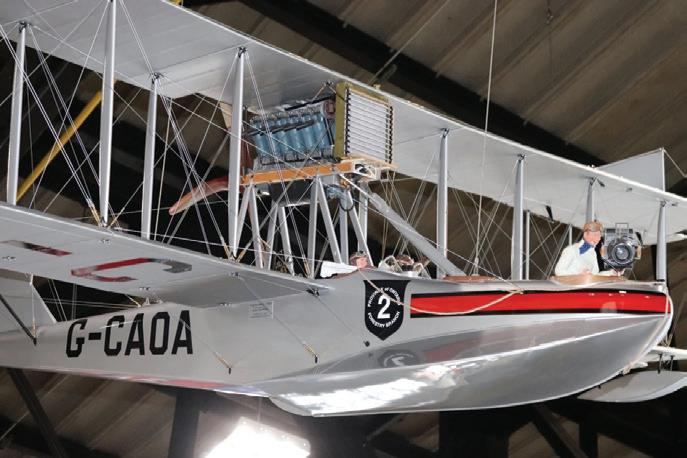
This Curtiss HS-2L Flying Boat is currently on display at the Canadian Bushplane Heritage Centre in Sault Ste. Marie.
KYLE DARBYSON/THE SAULT STAR
between thunderstorms in primordial darkness shattered, now and then by lightning flashes, he heard overtaking gunfire. Severe turbulence made his backbone take on the semblance of a hinge on a bar room door as the cannonade intensified. He feared his “sky moth” would be blown into tiny pieces floating downward toward the blackened Earth. Steep turning, diving and yawing desperately to escape to fly again, he ducked deeper into his bouncy habitacle, or cockpit, when an exceptionally loud cataclysm of sound overwhelmed the engine’s noise.
“Although the pop disturbed him, a gurgle gave the show away and, babbling with glee, he felt behind him where a case of beer was stored and found the tops blown off the bottles,” wrote a Canadian Aviation journalist in December 1929. “The rough passage had so shaken his effervescent cargo that each bump caused a couple more pops.”
Air trails between Vancouver, British Columbia and Seattle, Washington became invisible traffic lanes and so did routes from Manitoba to Minnesota and Illinois. Winnipeg. i.e., the “City of Snowballs and Highballs,” suited get-rich-quick schemers since the handy Assiniboine Golf Course and Stevenson Field (later site of today’s James Armstrong Richardson International Airport) provided access for promptly loaded liquids. Pilot James Michel acquired romanticized notoriety after eluding customs officials who thought themselves properly concealed and prepared to pounce. Michel landed without airstrip lights, transferred his goods to an idling automobile and tracked nobly away toward the heavens before the federal lawmen bumped into his flying machine.
Later, Chicago police captured Michel with illicit spirits. Fourteen seized cases marked as Canadian whisky and 22 sets of tailored clothes confirmed a brisk industry. At the time, low-income earners did not have abstention on their minds; instead,
they pondered the attractions of temporary escapes from their travails. A bottle of home brew sold for 50 cents and usually tested at 150 proof — almost four times stronger than whisky or gin.
Most professional pilots discouraged manifested alcohol regardless of where passengers purchased their multigrade liquids. American pilot C. S. Caldwell, who freelanced bush flying in Quebec, claimed the only freight he and colleagues detested was liquor. In 1928 at Rouyn, 214 miles northwest of Montreal, two pre-inebriated and prepaid prospectors arrived at his flying boat base. With their fares in hand, Caldwell had little choice except to place them in the Curtiss HS-2L’s front cockpit. No clinks or gurgles indicated forbidden tipplers and seat belts did not exist. Their initial experience of a takeoff caused a “sobering effect” which lasted until the first cached flask came to hand.
“I was not apprehensive until suddenly a quart bottle, seeming to me the size of a balloon, whizzed past the propeller and the fight began. I knew there was nothing which could be done but fly on,” he recalled “We struck one of those sudden gusts of wind and the machine dropped several hundred feet. Just exactly how it registered on their minds I never really knew, but they subsided to the bottom of the cockpit and I neither saw nor heard any more.”
Romantic sentiments aside, aerial smuggling’s enticements occasionally brought dire consequences. American sisters Juanita and Thelma McDaniels became enamoured with aviation, yet their pilot boyfriends neglected to lavish the attention they expected. Reported by the sultry lasses, fines and prison for the former lovers resulted and the sisters pranced away with 25 percent of a $1,200 reward in 1928 ($5,240 in today’s markets). Booze, however, modified their lives. Thelma, the younger, later lost her sight while consuming poisoned pick-me-ups, and Juanita married a deputy sheriff
who planned a trans-Atlantic hop until the contented couple attempted importation of 244 pints of beverage.
In another tragic situation, two police officers disappeared from patrol in a de Havilland DH-4. Weeks later, an ocean steamer crew replenishing water tanks reeled from an overwhelming odour emanating from a mound of beach sand. With a turtle shell as a shovel, they uncovered the murdered men and later located the aircraft. A scratched message on the fuselage read, “Dearest Mother: My time to die is here. Try to forget my face.”
A Los Angeles Times writer predicted that smuggling mind-altering sauces by air would likely become an interesting occupation, and so it proved. Although not as legitimate as the heroes who flew bush planes and mail planes, or barnstormers who dropped daredevil parachutists, the bootleg aeronauts fulfilled a purpose. When the 21st Amendment to the U.S. constitution ended Prohibition on December 5, 1933, in the United States, many notable benefits of the era were justified, including increased grape growing and yeast fermenting. Liver cirrhosis declined, infant mortality lessened and mental hospitals registered less inmates. As a political bonus, relations between Canadians and Americans improved dramatically.
In 1919, His Royal Highness Edward, Prince of Wales, toured the Dominions of Canada and Newfoundland prior to his ascension to the throne as King Edward VIII. Impressed, he departed the lands of maple syrup and codfish and carried home a humorous jingle as a gift for his tea-drinking fellow Brits:
Four and twenty Yankees, feeling very dry
Went across the border to get a drink of rye
When the rye was opened t he Yanks began to cry God bless America, but God save the King!
Think, and Act, Like a Pro
LEARNING FROM OTHERS’ MISTAKES IS PART OF IT
No matter what type of aircraft you fly, and regardless of the type of flying you do, performing with a professional mindset should never be an option. Professionalism is the seed from which safety grows. “Think like a professional” ought to be the approach every pilot takes with every flight they make.
What does professionalism mean to those aviators who have been recognized by the industry for their application of it? Their answers are clear and decisive. What follows is a summary of what many of them have to say. Doing everything right, every time, is a recurrent theme when pilots describe what it means to be professional. This assertion summarizes a keynote declaration: pilots need to be disciplined. Do everything the same way all the time, in every flight; there are no shortcuts when it comes to conducting procedures, and none should be sought. Pilots are taught
that things should be done a certain way for a reason: professionals stick to that way. Discipline allows for no deviations from the practiced and well-versed norms. Yes, the unexpected can happen and emergencies emerge. A response to an emergency doesn’t make a test pilot out of a professional. A disciplined pro has practiced responses to every possible scenario. When things go wrong, professionalism has prepared the way to doing things right.
Prepare for the unexpected. There is no excuse not to plan. Lack of it amps up the threat of poor performance. While even the best laid plans can go awry, the professionalism that comes from thoroughly putting in the time to plot every step of a flight lessens any inherent risk it might have. Professionals don’t accept anything less than being the best prepared they can be. They know that preparation equates directly to performance.
A professional wants to know everything they can about what they do. They ask questions. They seek more knowledge. They are committed to excellence. They want to develop their skills continually, and they want to constantly improve. They go beyond the minimums of what’s expected and required. They can never get enough information regarding what they do: they attend seminars, participate in forums, seek out advice, take in online learning and workshops, etc. They also endlessly practice so that second nature responses are a first professional ordinance. Any mistake they ever make is not one they forget; it’s one from which they learn and never make a second time.
A professional knows that they don’t know everything. They know that anyone who thinks that they know everything is probably someone who knows less than they should. A pro reads to know more. They learn from the mis-
takes of others, and they are hum ble to those mistakes because they know that “It could have been me.” Thus, they know not to take things for granted, because they know that nobody is infallible.
Professionals practice what they preach. They mentor. They are will ing to show and teach others. They encourage. They engage with others in the field, not least a younger gen eration following in their path. They offer helpful ideas and make useful suggestions. They lead by example and take responsibility for actions. Leadership, to them, is an honour for which they are happy to be flagbearers.
Professionalism entails self-assessing honestly, identifying shortcomings, and committing to sealing gaps and plugging holes in performance. Pros care utmost about safety and the spreading of a culture that promotes it. They communicate well, and dissolve communication barriers that may inhibit understanding between individuals. They do not preconceive, and they keep open minds regarding others’ perspectives. They behave with respect towards others.
Those who raise the bar of professionalism in the cockpit know that there is no such thing as the “perfect flight.” They are open to constructive criticism, knowing full well that advice is to their benefit and will make them better than they are. Thus, they embrace opportunities for personal growth from any direction from which it comes. They are passionate, resilient and serious about flying, and they are sensible and reasoned in how they conduct every flight. Any challenge they face is met with a “can do” attitude that is foundational to keeping them focused and sharp.
These are many of the characteristics that top professional pilots see as being what professionalism in the cockpit is about. “Professionalism and safety are synonyms,” is an affirmation that comes from many an aviation pro. It’s a statement that is well to be taken and should be upheld as every pilot’s objective to fulfil.
When Will I Be Too Old to Fly?
SOMETHING EVERY PILOT NEEDS TO CONSIDER — BEFORE IT’S TOO LATE
When is it time to hang up your pilot’s licence? That’s a good question and I don’t have the answer yet, but here are a few thoughts from an aging aviator.
This year I had a significant birthday, and I had benchmarked 2025 as the year to review my flying status and aircraft ownership. I first soloed and obtained a private pilot licence in 1964. It is now 61 years later and, as I write this, I still hold a Category 1 medical certificate, an Airline Transport Licence for fixed wing aircraft and a Commercial Pilot Licence for rotary wing aircraft. I also own a Cessna that I fly on a weekly basis. It’s been a great ride: first of all, learning to fly, then
10 years in commercial aviation, 31 years as a government pilot and now, in retirement, 17 years as a recreational pilot and aircraft owner.
So, what is the issue? Too often, in the past, I have watched senior aviators continue past their “best before date.”
As with food in the local grocery store, it may look okay, smell okay, feel okay and taste okay, but is SAFE to consume? In the aviation world, as is mentioned in the food example, the issue is SAFETY. At what point does an aviator become a risk to themselves and others? Yes, they may pass the medical requirements, but what about their currency, proficiency and decisionmaking capabilities?
As a former Transport Canada Inspector, we would occasionally come across an aviator who disregarded the medical, insurance and aircraft airworthiness specifications and would just continue flying in their senior years, despite not meeting the regulatory requirements. This of course is totally unacceptable, and the appropriate measures were taken. What happens at the local flying club when members watch a well-respected senior member start to decay in his or her proficiency? Is there a mechanism within the club or organization to approach the member and state their concerns? Or is it too hard to confront a friend and colleague and just let it
PHOTO SUBMITTED
The author with his treasured Cessna 172 at Hope airport (CYHE) in B.C.’s Upper Fraser Valley.
ride and think it will be okay?
“The system will take care of it!” Or will it? What role do family members play when they see a degradation in personal performance of good old Dad or Mom, the pilot? Flying means so much to them and if they blow the whistle or confront them it would likely be a disaster in family relations. These are hard questions, and they need to be addressed. For most of my aviation career, the organizations that I worked for had a requirement for frequent pilot training and pilot proficiency checks (PPC). This included annual ground schools on type-specific aircraft, simulator checks on some types, and an annual instrument flight check.
My advice in the flying club and family scenarios is to communicate the concerns to the person in question. Could it bring conflict, a bruised ego and bad feelings? The answer is yes, but the overriding issue is the safety of the individual, their passengers, other aviators who they may impact, and persons and property on the ground. Every aging pilot will reach a point where he or she must reflect on their fitness to fly and make the appropriate decision.
A recent example of a hard decision that I had to make was to turn down an offer to supply advanced float training to a pilot who had purchased a Cessna 206 amphibian. For many years, advanced float training was my forte and I have plenty of experience providing training on an amphibious
Cessna 206. I was pleased to be asked and would love to have complied with the request, but sadly I turned it down. Why? I’m confident I still have the flying skills to pass on to the new owner, but flying the aircraft is only part of the requirements of a competent float pilot. Dexterity in entering and exiting the aircraft while docking, beaching and ground handling an amphibian, in both normal and emergency operations, is an imperative prerequisite for a competent crew member. This consideration was part of my decision-making.
As part of my personal planning process, I recently employed a Class 1 instructor to conduct a proficiency flight test on me to assess my competency and to confirm my selfassessment that I was competent and fit to fly. The flight test was not only an assessment of my capabilities but, as always, it was a good learning experience and well worth the financial outlay. A secondary benefit is the endorsement in my logbook and a letter for the insurance company stating that I am still maintaining commercial pilot standards. In addition to my yearly pilot medical, I plan to make this PPC process an annual event.
An important factor not yet mentioned is to stay physically fit. I personally make sure that, in addition to other physical activities, I walk a minimum of five kilometres every day. This pursuit of physical fitness not only
Friday, November 14th 17:45 - 22:00 Pacific Vancouver Convention Centre West, Floor 3
Event details and registration:
strengthens and tones the body but is essential for good mental health.
Older pilots are not inherently unsafe. As a matter of fact, it is just the opposite. The years of experience these pilots have is invaluable. This is particularly true when compared to the new pilots who are just learning to fly or have just obtained their pilot licence and have yet to experience the trials and tribulations that years of experience are sure to bring. The trick is to ensure that their experience is being used wisely and that their competency is not taken for granted.
Each ‘senior’ pilot should have a plan. That plan should contain these minimum components: stay physically and mentally fit, have an annual training and pilot proficiency program, and fly frequently. This last item is particularly important in that pilot skills must be constantly used, or they will degrade. This is true no matter what age bracket you are in.
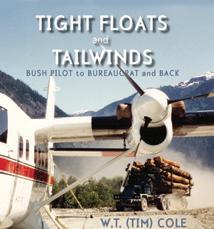
Finally, when the day comes that the senior pilot reaches the decision that it is time to hang up their headset for the last time, or their medical requirements cannot be met, they must accept it. Sure, there will be regrets, but think of the memories and all the great times that have been experienced that ground-bound individuals never had the privilege to encounter. To all you senior pilots, I extend to you the old bush pilot’s blessing: May you have tight floats and tailwinds.
WORDS ABOUT A BOOK
A REVIEW BY RENÉ R. GADACZ
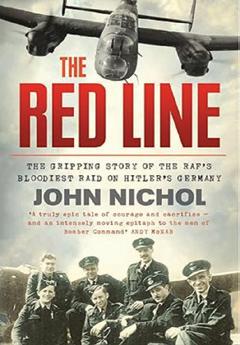
The Red Line: The Gripping Story of the RAF’s Bloodiest Raid on Hitler’s Germany
BY JOHN NICHOL
There’s renewed interest in the iconic Avro Lancaster bomber of the Second World War, and there are strong Canadian connections. Canadian Aviator (Jul/Aug 2024, p. 6) features a profile of the Canadian Warplane Heritage Museum of Hamilton’s ship FM213 named the Mynarski Memorial Lancaster (one of only two airworthy Lancasters in the world; only 17 remain of 7,377 built of which 430 were built in Canada). Calgary’s The Hangar Flight Museum displays ship FM136 (Jenkins’ Express), built in 1945 and acquired by the city in 1962. The RAF’s Bomber Command’s other major bomber in the war was the Halifax, likewise a formidable machine.
about the bombing of the latter city).
Former RAF Tornado navigator, Gulf War veteran and author John Nichol’s The Red Line is both well-researched military aviation history and epitaph to the supreme courage and sacrifice of those, including Canadians, who flew missions in these ships, particularly the Lancaster. This book is an account of Bomber Command’s disastrous March 30 – 31 1944 raid on the city of Nuremberg, described by Hitler as “the most German of German cities” and so a target of symbolic and strategic importance. The aim was to destroy German morale via area and saturation bombing, a tactic that was controversial even at the time.
Previous raids were on such targets as Berlin, Frankfurt, Cologne and others, followed by Dresden in February 1945 (much has been written
However, more men (average age 23) from RAF Bomber Command died on that one single night on the Nuremberg raid than the total RAF aircrew losses during the whole of the four-month-long Battle of Britain earlier in the war. Described as a “massacre,” “a thorough shambles,” and the “RAF’s worst night” of the war, the “chop rate” (as the aircrews called it) was catastrophic. The operation involved a total of 934 aircraft. The 795 targeting Nuremberg itself was comprised of 572 Lancasters, 214 Halifaxes and other support aircraft. In the space of less than two hours flying time over occupied Europe and deep into Germany, 95 bombers were lost and nearly 700 airmen were killed or later listed as missing. Zero hour for the bombing run itself was set as 01:10 on March 31, with the last bombs dropping on Nuremberg at 01:22. The entire 68-mile-long stream of bombers would arrive in five waves and would have 12 minutes to attack the city. The rate would be 57 aircraft per minute. That was the idea anyway.
The questions why this raid was so controversial and why The Red Line is an important account has two answers. Given the scale of the raid on Nuremberg, with aircraft and lives lost, there was little gain. Relative to raids on Hamburg, Berlin and other cities that killed tens of thousands, 75 civilians were killed, 256 buildings destroyed with 11,000 people displaced from their homes, some just temporarily. The city’s
industrial centre remained untouched (only a margarine and cable factory were destroyed) and the old city centre, with its historical buildings, remained intact.
The second reason the operation was a disaster was a combination of “...unusually bad luck and uncharacteristically bad and unimaginative (some say irresponsible) planning.” The latter entailed a “long straight leg,” that is, an undeviating route to target. The battle chart at Bomber Command would show “a line of red string” stretching from the North Sea straight over heavily flak-defended major German cities to Nuremberg. Senior officers, as did aircrew, understandably questioned this tactic, arguing it would give German radar the best chance to track the route, alert flak defenses with their radar-guided searchlights, guess the destination target and vector swarms of Luftwaffe night fighters to intercept.
The ‘bad luck’ was weather. Meteorological reports were in error: the night was cloudless (except over Nuremberg), cold and there was a full moon. Pilots claimed they could read their instruments by moonlight. In addition to being fully lit-up, aircraft condensation trails at any altitude were an invitation to be attacked. By the Luftwaffe’s own account, “...they did not enjoy a night like it for the remainder of the conflict.” (Nichol devotes a chapter to the German point of view). Nearly all the losses were caused by night fighters. Hence the massacre, and by the time the remaining dispersed and oftendamaged bombers reached Nuremberg, thick clouds rendered bomb-aiming almost impossible.
Nichol asks, “What of the men responsible for orchestrating such a
disastrous raid?” and writes, “Given the scale of the losses, some might find it surprising that there wasn’t an official inquiry into what went wrong.” Winston Churchill, in his history of the Second World War, admits Nuremberg was the heaviest loss in one raid. Arthur Harris, Chief of Bomber Command, who planned and sanctioned the raid, does not mention Nuremberg at all in his account of his war years. It was as if the raid didn’t matter — just a footnote in the greater scheme of things.
What makes The Red Line moving and spine-chilling at the same time are the personal stories and in-person interviews of individual surviving pilots, navigators, flight engineers, radio operators, gunners and bombaimers who, as members of various aircrews, flew on this raid and others. Some even completed the mandatory one tour/30 operational flights under similar circumstances, surviving unimaginable carnage, physical injuries and mental trauma that lasted the rest of their lives.
Their reminiscences including remarks and joking around are essentially the foundation of this book, skillfully woven into the narrative by Nichol. A long time in coming and involving years of campaigning and fundraising, the Bomber Command Memorial was unveiled on June 28, 2012, in London’s Green Park. As one veteran Lancaster pilot said at the event, “The memorial is not a celebration of our work; it is recognition of the sacrifice so many of our friends made.” Nearly 700 friends missed the bacon-andeggs meal served on the completion of the Nuremberg mission, as was the tradition after RAF air operations.
The Red Line: The Gripping Story of the RAF’s Bloodiest Raid on Hitler’s Germany
By John Nichol Harper
Collins, 2014, 298 pp. Available from The Aviator’s Bookshelf aviatorsbookshelf.ca
Departing an Airport
IT’S NOT THE WAY YOU ARRIVED
The IFR series has focused on instrument approaches. While getting into an airport in poor weather is important, equally important is how to safely depart in poor weather or in darkness. The next series of articles describe the various types of instrument departures and their characteristics from the most basic to the most complex.
There are a couple of key considerations applicable to all types of instrument departures. Aircraft are assumed to be airborne at Departure End of the Runway (DER) and once airborne are assumed to have a climb gradient of 200 feet per nautical mile, unless otherwise stated. This is the
climb gradient, not the rate of climb (what appears on the pilot’s vertical speed indicator).
For example, suppose the published climb gradient is 300 ft/nm and your aircraft climbs at 120 kts or 2 nm/ minute. The rate of climb that you need to see on your VSI would be 300 ft/nm x 2 nm/minute or 600 ft/minute.
Departure weather is based upon visibility. In the general aviation world, the lowest possible visibility for an instrument departure is ½ sm. Visibility is determined by the hierarchy of Runway Visual Range (RVR), reported ground visibility or pilot determined visibility. RVR and reported visibility are readily accessible when provided
but how does a pilot determine visibility in the absence of these two sources? Knowing that runway lights are spaced at 200-foot intervals, if one can see 13 lights looking down the runway then you have 2600 feet of visibility. Another method is knowing the length of the runway and how far down the runway you can see, either to the end or some other marker.
The most basic instrument departure is no instrument departure. Take, for example, Swift Current, Saskatchewan (CYYN). The aerodrome chart for this airport states that the instrument departures for both Runways 04 and 22 are “Not Assessed.” What does that mean?
There are two interpretations. The first is that a procedure designer has simply not assessed the runway for a departure and therefore cannot legitimately declare that a safe departure route exists — this is the case in Swift Current, as shown. The other is that the obstacle field is such that no instrument departure is possible, such as some mountainous airports. In the absence of published instrument departures, there are those who believe that flying the reverse of an instrument approach would serve as a safe departure. This is an exceedingly bad idea for several reasons. First, descent gradient of an instrument approach is steeper than the climb
gradient of an instrument departure, so there is guarantee that one will be able to clear obstacles during the climb. Secondly, positive track guidance is not available, which aids in maintaining a tighter departure path when compared to the track guidance available for an approach. Finally, with the proliferation of RNAV approaches and the elimination of conventional approaches, it is not possible to fly the reverse course of an RNAV approach anyway, making it a moot point.
Future articles in this series will cover diverse departures, route departures, Visual Climb over the Airport (VOCA) and, finally, the gold standard, Area Navigation or RNAV Departures.
PRAIRIE AVIATION TRAINING CENTRE
STORY AND PHOTOS BY RICHARD PITTET
Left to right: Mitchell Vander Ploeg; Michael Fox; Kalvin Hildebrant; David Trebesius, CFI; Dallas Derksen, PATC Director; Tim Neufeld; Ken Leung
REFLECTIONS OF A FORMER HUMANITARIAN RELIEF PILOT
In the early 1990s I had the great honour of flying the RCAF Lockheed C-130H Hercules at 435 Transport and Rescue Squadron. When not supporting the RCAF’s CF-18s in air-to-air refuelling missions or being deployed on SAR launches to find the lost or unlucky, humanitarian relief airlift was a major focus of the Chinthe Squadron In addition to Gulf War l and the wartorn Balkans, we became quite familiar with operations in sub-Saharan Africa, most notably Djibouti, Kenya, Ethiopia, Somalia and Rwanda.
During these aid missions our mighty Hercules would, with great drama, roar into town, frequently landing on what could only loosely be described as airstrips. When the four shrieking Allison turboprop engines were finally shut down and hatches opened, crews were usually greeted by some form of local welcoming committee. Sometimes everyone involved was surprised at what came next.
Despite our United Nation plaques and our stated intent of delivering only food — and not additional mayhem — it wasn’t uncommon for the recipients of aid of any kind to be suspicious of our true intentions. On one occasion this resulted in our Herc being surrounded by a platoon of infantrymen, their weapons levelled as a helicopter gunship circled overhead. Not quite the “Welcome to Kashmir” we’d hoped to receive.
Mercifully our relief flights weren’t always that exciting. But at times I thought that, from their perspective at least, the recipients of our help might be expecting the C-130 ramp to open, with our Mission Commander packing ‘heat,’ shouting, “Just unload the wheat, back away slowly… and nobody gets hurt.” Being unarmed, and from a country famous for apologizing, of course nothing could have been further from the truth.
Every night, back at our common operating airfield, we would witness the various aid organizations’ aircraft returning to roost. Unlike our high-flying Herc, their well-used Cessnas and
“Those of us from the Land of the Maple Leaf were understandably proud of delivering aid and relief to people who were often ravaged by a combination of war and famine.”
PATC uses its two Citabria 7GCBCs for aerobatic training.
miscellaneous other types often were sporting bullet holes. With minimal in-theatre support, these bush planes were miraculously returned to service, usually overnight, often Africa-style. Then the next day these same crews would fire up and take off again, sometimes returning with fresh bullet holes to show for their day’s work. Their dedication to the armed forces credo of “Mission-Men-Self” was truly inspiring — only these weren’t military pilots. Those of us from the Land of the Maple Leaf were understandably proud of delivering aid and relief to people who were often ravaged by a combination of war and famine. However, as soon as External Affairs (now known as Global Affairs) decreed that our mission was complete, we packed up and flew home; the others stayed. It was this group of aviators, those flying for the independent NGOs, who were the true heroes. Nearly 35 years later, the mission of these brave pilots remains unchanged: to help provide aid, comfort, and most of all, hope, for those who need it most.
PRAIRIE AVIATION TRAINING CENTRE: FAITH ON THE WING
The early 90s were not exactly a booming time for aviation in Canada, especially for anyone aspiring to a career as a professional pilot. The long-awaited hiring boom at the airlines was still three to five years away, made worse by the fact that nobody was really certain when, or even if, the heavy metal training mill would take flight again. Flying school enrolment was in steady decline. The military, reeling from budget cuts, would soon announce not one, but two programs to further reduce its pilot ranks. It was not what anyone would describe as a good-news story.
It was also likely a big surprise that amid all this palpable doom and gloom, a little flying school would suddenly pop up in Three Hills, Alberta. The first class of the Prairie Aviation Training Centre (PATC) launched in 1992 and comprised just 12 students and four Flight Instructors. At the time, they shared a single Cessna 150 and a lone 172. Not exactly what you’d regard as a powerhouse in modern flight training. Looking back, it was an enormously daring move, especially given the state of the industry at the time. Some might even say it bordered on an act of faith. But pay close attention to these little prairie towns and the people in them and then get ready to be surprised.
Today, in 2025, PATC is a going concern, literally bursting at the seams and eagerly awaiting the construction of a new $8.7-million Aviation Campus, set to open in 2026.
With a lofty goal of doubling pilot output from the college in the next few years, PATC confirms its raison d’être is really to train the next batch of Canadian aviation heroes few will ever hear of. These are the Mission Pilots, tasked with spreading not only the Gospel, but also help, hope and healing to those needing it most. You will find them flying for Mission Aviation Fellowship, which runs the flying school for Prairie College, as well as Aim Air, Ethos 360, Samaritan’s Purse and JAARS (Jungle Aviation and Radio Service).
Mission Aviation Fellowship (MAF), whose Canadian headquarters are in Guelph, Ontario, is a Christian aid organization which employs many of the college’s grads as Mission Pilots in over 30 countries, including Chad, South Sudan, the Democratic Republic of the Congo and Angola. PATC, although a division of Prairie College, operates under MAF management.
Prairie College has a Christian, faithbased focus. However, anyone interested in a career in aviation is welcome to apply for their two-year Associate of Arts in Mission Aviation program. PATC will take you from zero flight time to
PATC’s Cessna 210L on the ramp at Three Hills airport (CEN3) in Alberta.
a Commercial ticket — complete with multi-engine instrument rating, in just 24 consecutive months. But before taking to the skies, the Prairie curriculum requires that you spend the first eight months of your program focused on theology, with an emphasis on studying the Bible. This ensures PATC pilots have the schooling they need to serve in their second role, namely flying missionaries. Or, as they prefer to be called, Mission Pilots.
Unlike some other colleges, PATC also prefers that you arrive with zero flight time, completing your Private Pilot Licence in-house. The approximately $125,000 program fee is quite reasonable, considering it also covers the costs of a student residence and meal package. With the initial eight-month Bible study courses included, PATC told Canadian Aviator that most grads will take just over two years to finish their licences. PATC, incidentally, also qualifies for student loans.
How did a junior college in a small
town located 132 kms northeast of Calgary turn into what it is today? PATC would say by trusting in faith, hard work and the generosity of its many supporters, especially Mission Aviation Fellowship.
The PATC aircraft fleet has grown from just two basic trainers to include three Cessna Skyhawks, a pair of Citabria 7GCBC aerobatic taildraggers, a Cessna 182, a Cessna 210, plus a Piper Seneca II for multi-engine IFR training. PATC is currently rebuilding one of my favourite airplanes, a Cessna 206, soon to fly in the school’s distinct livery.
In addition to the school’s two Redbird flight simulators, they’ve just added Mixed Reality simulators built by Canada Training Solutions. These unique pilot training devices combine virtual and augmented reality into simulation experiences (think Starship Enterprise’s Holodeck meets Flight Training Device). PATC is one of seven Canadian Flight
Training Units participating in the Transport Canada Simulation/XR pilot project. Being located in southern Alberta (where the sunshine is often delivered courtesy of the wind), PATC also boasts a Redbird Xwind trainer, which helps students score well during flight tests conducted in, not surprisingly, crosswinds.
Unlike many flying schools, which are themselves clamouring for experienced teachers, PATC’s instructional staff and their combined 38,000-plus hours of logged time, offer practical and real-life flying knowhow, delivered by means of an equally rare 4:1 student to instructor ratio. Many of the faculty are themselves former Mission Pilots, meaning they literally know of what they speak. PATC has a Designated Flight Test Examiner on staff, able to conduct PPL and CPL flight tests, plus issue Aerobatic Flight Instructor accreditation.
Based at CEN3 Three Hills, PATC is uniquely situated in the same breezy part
Above: PATC uses this simulator for crosswind training. Right: The latest in flight school simulator training is the use of augmented reality (AR). This allows for a much more realistic visual training environment.
GETTING THE SHOTS
Throughout pilot training we’re taught to see and avoid other aircraft. This generally translates into maintaining visual separation. If one mile spacing from another airplane is good, then two is even better. Imagine then finding a group of non-military pilots who are willing to do just the opposite, being happy not only to see other airplanes in their airspace bubble, but then to manoeuvre even closer — really close — to another airplane. I give you the Flight Instructors of PATC.
A few days earlier
I’d emailed the school’s Managing Director, Dallas Derksen, a précis of what we’d cover in the one-hour briefing preceding our photo mission, asking that he circulate the information to the nine Instructor Pilots who’d be flying that day. Included were the fundamentals of formation:
how to fly in right echelon (chosen to give the PIC in each airplane the best visibility), the concepts of “stepping up” and “stepping down” in turns so as to maintain the same geometric plane, and finally techniques in rejoining the “gaggle” after takeoff. And most important of all, how and when to break out of the formation safely.
After startup and pre-takeoff checks, the formation taxied, lined up and took off from CEN3 Runway 30 with about five second spacing. The initial rejoin went perfectly, as did the flight’s general stationkeeping over the 45-minute air-to-air mission.
We’d previously discussed the visual reference points used to maintain an echelon position (which is trickier than you might think in three dissimilar types), callsigns and general flight discipline. While Photo 1 (a
Seneca ll flown by CFI David Trebesius) loafed along at just above its safe single engine speed, the difficult job of staying on “the wing” was given to the least powerful aircraft, specifically a Citabria in the Number 3 position. That crew literally did an amazing job!
Meanwhile, in the school’s Cessna 182 RG, callsign “Photoshop,” I lazily sat in the back seat, asking my captain, Kalvin Hildebrandt, to manoeuvre the retractable with such instructions as “Reduce airspeed a little,” “Move left
… a little more, please,” and the even more precise, “Just a little more bank please, Kalvin.” It soon became obvious who the real pros were, namely the guys doing the actual flying! In the end, the PATC gang pulled off the flight with the near perfect performance that only pros can deliver.
The images you see were shot on a Nikon D7500 with a Nikkor AF-S 70-300mm zoom lens. In the end my job was the easiest. All I had to do was grin, push the Nikon’s shutter release button, and capture the day.
of the prairies where the famous British Commonwealth Air Training Plan of Second World War fame decided to set up shop. What the BCATP saw was a land of mostly clear blue skies and long summer days. In other words, a perfect environment for aircrew training.
Today the college uses this same environment to its students’ flight training advantage, giving them real-life skills applicable in virtually any part of the world in which they might be called upon to serve. This means learning how to safely operate in the full range of climatic conditions: from sub-zero winter flying, punctuated by the occasional howling Chinook wind, to the challenges of working in a genuine high-density-altitude environment.
Put ‘W’ on the whisky compass and head into the Canadian Rockies, where the PATC instructional staff will make certain you have the knowhow to fly safely in the high country; that, and master the nearly lost art of map reading. All grads get more than just an introduction to grass strips, taking wing in the college’s two taildraggers. It’s in these same Citabrias that students’ personal stick and rudder skills get honed in the rapidly dying art of tailwheel flying. Add to that an Upset Training Module, a natural lead-in for students with an interest in aerobatics.
What is life like for Mission Pilots? YouTube is full of videos showing the conditions the likes of which these dedicated men and women routinely work in, ranging from nail biting arrivals on incredibly short mountain and desert strips, to plunking one onto runways barely distinguishable from the jungle they were carved out of.
The airline world where I harkened from is one of math and engineering solutions to virtually every performance problem. In contrast, the places Mission Pilots fly demand superior air sense, stick and rudder skills, plus nerves of steel. As I mentioned earlier, where courage is concerned, these guys are the real deal. Once on the ground, MAF pilots step into their role as Missionaries.
That said, not every PATC aviation grad is necessarily cut out for, nor are they expected to pursue, Mission Pilot employment. For those with more tradi-
“Put ‘W’ on the whisky compass and head into the Canadian Rockies, where the PATC instructional staff will make certain you have the knowhow to fly safely in the high country; that, and master the nearly lost art of map reading.”
tional aviation career aspirations, namely being employed as commercial pilots here in Canada, the school’s Multi-engine IFR training program meets that training requirement.
The airspace in and around CEN3 makes for easy instrument training, targeting the growing world of GPS-based RNAV approaches. Edmonton and Calgary terminals are also a short hop away, providing for real live ATC-centred practice. Best of all, and this is a big one to consider, uncontrolled CEN3 is mercifully devoid of the neverending ATC ground and tower delays that add little to a student’s skill set, instead needlessly running up the cost of pilot training.
PATC STAFF
Go back to 1999. Dallas Derksen, now Managing Director of PATC, attended a MAF presentation by a Mission Pilot who’d recently returned to Canada. It was right then and there when Dallas decided what he was on this Earth to do. His personal story has been repeated many times.
Five years later, having rounded up the money for training, Dallas returned to PATC for his commercial pilot licence and ratings. This led to a period of flight instructing before eventually returning to PATC in 2008. On loan from MAF since 2019, Dallas has flown as a Mission Pilot
in Uganda, the Democratic Republic of Congo, South Sudan and Mongolia. In the air he focuses on teaching Upset Recovery in either of the college’s two Citabrias.
Reporting to him is CFI David Trebesius, another PATC graduate and experienced Mission Pilot. Trebesius has served with Samaritan’s Purse in Kenya, logging over 1,000 hours in a Cessna 208 Caravan, flying throughout Uganda, South Sudan and Liberia.
The list goes on. Kalvin Hildebrandt, with thousands of hours logged flying over the Sahara, now focuses on teaching multi-engine IFR and mountain flying. Mike Fox was one of PATC’s first students and divides his time between flying a corporate Challenger business jet based at CYYC (Calgary) and conducting flight tests at the college as a DFTE.
Rick Rempel began his aviation career in 1999 as a medevac pilot with Flying Mission Services in Botswana before being promoted to Chief Pilot with Flying Mission Zambia. Greg Dole is another MAF pilot on loan to PATC, having spent over 10 years flying an amphibious Cessna Caravan off the rivers and lakes of Indonesia.
The dedicated souls responsible for ensuring that everything pilots break gets back into the air includes PATC resident AME Rob Barber and the PRM (Person Responsible for Maintenance), Bert Thomas. Barber has over two decades of experience working abroad, maintaining types as varied as the L-382 Hercules and the Convair 580. With his 40 years in the business, Thomas is considered a near legend in western Canadian aircraft circles and is said to “ooze airplane knowledge.”
In short, this is not your typical flight training unit staffed by newbies. Rather, it is one where instructors are truly qualified to pass on a degree of airmanship and knowhow that only comes from substantial, real-world experience. Prairie Aviation Training Centre and its dedicated staff deliver an experience that is arguably far more than just teaching people how to fly. Most of all, these remarkable people are truly devoted to their mission of flying airplanes in the service of their fellow man, and in the spreading of the Gospel.
Your Foremost Source in Aeronautics from FROM
THE GROUND UP, 30th
For over 80 years, the content of From the Ground Up as a literary benchmark that defines the multitude of theories associated to aeronautics. It describes the practices necessary to achieve the highest levels of distinction as safe, competent and skilled life-long aviators.
Through its evolving editions, many generations of readers have used this award-winning title as the foundation of their introduction to the concepts that require thorough understanding in advance of the sought-after hours of flying enjoyment that are the ultimate goal of all who seek to earn their wings and expand their knowledge of flight theory and practice.
The content of From the Ground Up may, at times, seem complex, but the pathway to learning the fundamentals of aeronautics is one that reaps much in the way of personal reward for all who pursue the goal of thoroughly understanding the subject. Indeed, it was by design that its original author, “Sandy” A. F. MacDonald — a man recognized as a “father” of what still stands today as the standard curriculum for ground school instruction — devised this aeronautical textbook to be comprehensive and current while conveying its material in such a way as to enhance the reader’s understanding of every written word.
Not one to permit his vast experience to allow for foregone conclusions, “Sandy” MacDonald’s meticulous care in the creation of From the Ground Up has become the hallmark for its widespread use and respect as the reference textbook of choice in hundreds of flying schools throughout Canada and around the world.
Its latest edition is the 30th Edition. A French-language version is also available under the title Entre Ciel et Terre Totalling over 400 pages of in-depth content formatted in a sequential, logical and easy-to-read fashion, the publication boasts over 360 graphics, charts, diagrams, illustrations and photos. An additional full-colour navigation chart and a sample weather chart are included.
All chapters are current in the latest technological and legislative aeronautical matters and cover such topics as The Airplane, Theory of Flight, Aero Engines, Aeronautical Rules & Procedures, Aviation Weather, Navigation, Radio & Radio Navigation, Airmanship, Human Factors, and Air Safety. From the Ground Up also includes an extensive index, glossary and a 200-question practice examination.
Since the 1940’s, virtually every student — civilian, military, commercial, recreational — who has ever learned to fly in Canada has used From the Ground Up as the primary ground school textbook from which they’ve learned everything one can learn about aeronautics, and about flying. Referred to as “the Bible” of ground school instruction, and updated with every frequent re-print, From the Ground Up has long been considered an essential resource for all with any interest whatsoever in the theory of flight, and in the practice of aviating.
Also available from Aviation Publishers
• From the Ground Up Workbook
• Canadian Private Pilot Answer Guide
• Canadian Commercial Pilot Answer Guide
• Canadian Instrument Pilot Answer Guide
• Instrument Procedures Manual
• Flying Beyond: for Commercial Pilots
• Unmanned: for RPAS Studies
• Flight Test Notes: for Flight Test Prep
For more information about all of our titles, visit us on the web or contact your local pilot supply
CAE’s Leap forward in flight simulators
Porter Airlines Partners with the Renowned Canadian Innovator
By Mireille Goyer
Porter Airlines is adding up to 100 Embraer E195-E2 jets to its fleet; 46 aircraft have already arrived. The E195-E2 is Embraer’s most technologically advanced airliner to date. An heir to Embraer’s military jet experience, the aircraft uses a fly-by-wire design and is potentially capable of fully automated takeoffs and landings with the proper options and pilot training.
Buying new aircraft is just the beginning. Efficiently training the workforce to operate the fleet safely is a real challenge. To address this, Porter and Embraer CAE Training Services (ECTS) recently deployed a built-in-Canada Embraer E195-E2 full-flight simulator at CAE’s Montreal training centre. The simulator uses CAE’s latest Prodigy Image Generator, which leverages gaming technology — more specifically, Epic Games’ Unreal Engine — to produce photorealistic renderings and seamless movement. Launched in November 2021, the latest Prodigy technology became qualified for insertion into full-flight simulators in 2024.
I recently had the opportunity to try it out. While at CAE’s Montreal Centre, I also visited the factory floor and got a taste of CAE’s experimental immersive pilot training app.
Flight simulators are not new, but they have come a long way since the French military commissioned the Antoinette company to develop the world’s first known flight simulator in 1909. The aim was to teach pilots how to maintain balance in response to external forces. Being France, the simulator involved half a wine barrel. It was mounted on a universal joint with flight controls, pulleys and stub-wings (poles). Instructors provided the “external forces.”
The next meaningful development came a few decades later when Ed Link, a piano manufacturer and pilot, decided to build a simulator to gain more flying experience regardless of weather conditions, aircraft readiness and instructor availability. The Link trainer also came with wings but required no external input. The motion platform featured generic working instruments and used inflatable bellows to simulate pitch and roll cues and a vacuum motor for yaw. It was the first known simulator to make instrument flight practice possible, which eventually led to its commercial success.
Left: CAE Prodigy is the Canadian company’s latest innovation in flight simulator technology.
By the mid-1930s, commercial flying meant taking on challenging weather conditions, and pilots were dying. The U.S. Army sought to learn more about the Link trainer. When Link flew in poor visibility, thanks to his simulator training to meet with them, they purchased six simulators. Some 10,000 units were eventually produced to train over 500,000 pilots.
Today’s simulators continue to address weather, aircraft and instructor challenges during flight training, but they do it with an increasing level of realism, both at the sensorial and visual level. Homegrown CAE is a global leader in simulator development and manufacturing. Their full-flight simulators are a staple in airline, corporate and military flight training facilities thanks to their accurate replication of aircraft and ongoing innovation. CAE manufactures “standard” full-flight simulators, from scratch to test, in just 55 days in its Montreal factory, the birthplace for all CAE simulators.
As any pilot knows, two challenges remain to make the full-flight simulator experience completely “real”: visuals and fear of death. CAE is getting much closer to overcoming the visual challenge with its new Prodigy technology.
Stepping inside the simulator, I was surprised by the minimalistic flight deck of the E195-E2. Of course, it was all-glass, but levers, switches and lights were noticeably fewer and less crammed together than is traditional with airliners, especially in the overhead area.
“The aircraft is really easy to fly,” Satesh Ramdeo, Porter’s Chief Pilot, explained. “It is one of the reasons Porter Airlines selected it. Today’s new pilots get to the commands with less experience than previously.”
All things are relative. Porter Airlines is looking for 1,500 hours total time and an Airline Transport Licence as a minimum for a First Officer position on the Embraer. Preference is given to candidates with E170 type variant and/or CAR 705 operational experience. However, they do consider everything and may select pilots without the ideal stated profile.
Above: The Embraer full-flight simulator at CAE’s Montreal Training Centre. As is the case with modern full-flight airliner simulators, no training is required in the actual aircraft, an important cost saving for the airlines.
Below: Inside the Embraer full-flight simulator.
Below:
“FOR
PORTER AIRLINES, THE CAE PRODIGY TECHNOLOGY WAS CENTRAL TO THEIR DECISION TO PARTNER WITH CAE.”
Operating the E195-E2 is indeed pretty straightforward. Program the Flight Management System (FMS), release the brakes, add the power, and fly the dot. There are only a few minutes of hand flying per flight; everything else is fully automated.
For Porter Airlines, the CAE Prodigy technology was central to their decision to partner with CAE. The visual accuracy helps build familiarity with new airport environments. For example, Kelowna, British Columbia, now offers a Required Navigation Performance – Authorization Required (RNP-AR) approach that comes quite close to the terrain. That could spook pilots who have never flown it. Now, every Porter pilot who flies into Kelowna Airport has already been there, at least in the simulator.
Porter has 4,200 hours of simulator time allocated per year, or about 20 hours a day. Initial pilots go through about 10 full-flight simulator sessions over two weeks. A key to success in this type of high-intensity flight training environment, where a session could be at 06:00 one day and 22:00 the next, is preparation. There is little time for figuring things out; it is about executing under strict time pressure.
The normal path to the full-flight simulator is to first become familiar with the aircraft systems and flight deck layout, usually within a classroom format. Second, pilots become familiar with the procedures as a pair flying the Instrument Procedure Trainer (IPT), a fairly crude motionless simulator. While timing can be a little bit looser during the first two guided phases, it is still far from leisurely.
Once upon a time we sat in front of a poster of the flight deck with checklists and approach plates to familiarize ourselves ahead of time and improve our chances for success. It took quite a bit of discipline and effort to build mental and muscle memory that way. It mostly worked, but with some caveats. For example, the reach distance to levers and switches is rarely the same on a poster as in real life. Of course, there is no feel sensation when actuating a lever on a poster — unless it has already been experienced and can be mentally relived. However, the exercise allowed us to know where to look and in which direction to reach before showtime. That made things easier.
This is the phase of pilot training that CAE’s immersive pilot training app aims to address. The app, designed for the Apple Vision Pro goggles, is still under development using the Bombardier Global 7500 platform, but it is already impressive.
Spatial computing brings true-to-life precision to flight deck interactions to prevent bad habits from forming. After the Apple Vision Pro headset completed its normal initialization duties, I was sitting in the left seat of the jet — real size — and reaching down and away to grab the power levers. What an effective way to accurately get familiar with the flight deck — on a personal schedule and at a comfortable pace. But there is a lot more to the app.
In “Exploration Mode,” a pilot can touch a specific control and view a description of that control in context. In “Guided Mode,” the user is led to learn the various procedures of the aircraft, guiding the pilot to the next action required to learn the sequences. In “Flight Deck Interaction Mode,” pilots can use the virtual flight deck to simulate any kind of interaction in a natural way and begin to train their
“THE APP, DESIGNED FOR THE APPLE VISION PRO GOGGLES, IS STILL UNDER DEVELOPMENT USING THE BOMBARDIER GLOBAL 7500 PLATFORM, BUT IT IS ALREADY IMPRESSIVE.”
CAE’s immersive pilot training app allows the trainee to “virtually” read, select and operate controls without an actual physical control panel being present.
muscle memory. In the real aircraft, for example, the main battery switch needs to be pulled before being flipped.
CAE’s immersive pilot training app was originally designed for self-guided training preparation at home or on the road, but navigating the app alone is not the only option. The app offers several levels of simultaneous interactions with the outside world and makes it possible to exchange with an instructor in a classroom environment. Its potential for enhancing other phases of the training experience, especially the traditional PowerPoint classroom experience, is obvious. For now, that is not the plan, according to Erick Fortin, Senior Director, Incubation, at CAE. However, he hinted that there is more to come and promised to keep Canadian Aviator in the loop.
As aviation evolves, so do the skills needed to operate flying machines. The time when learning to balance the plane was the main challenge is long gone. There were virtually no systems to manage or instruments to monitor then. Visual flight and compass tracking were the sole navigation methods.
Today’s pilots still need to “balance the plane” when the automated systems do not. But as they crisscross continents and oceans and tackle widely different flight environments, they need to acquire many more competencies than ever, as quickly as possible, to satisfy the safety and for-profit needs of their employers. Leveraging technology to empower learners is key to achieving this goal. Selecting CAE as its training partner was a no-brainer for Porter Airlines.
This page, clockwise from top left: Porter Embraer Jet at gate at CYVR; CAE Prodigy software provides a simulated image of an airport terminal; This image is what a pilot using the CAE Prodigy app would see on approach to an airport.
TheIntruderNight
The de Havilland Mosquito Mk.VI
BY NATHANAEL REED
THE WOODEN WONDER
Former British Prime Minister David Lloyd George once called fighter pilots the “cavalrymen of the clouds,” and rightly so, for who hasn’t attended an air show and thrilled to see a Supermarine Spitfire or Hawker Hurricane take to the skies? These iconic aircraft serve to remind us of how they were such a source of hope and encouragement to the war-weary people of Great Britain during their nation’s darkest hours. Although Canada was not solely responsible for designing and producing such historied fighter planes, one aircraft in particular is still regarded as partly our own — the de Havilland DH.98 Mosquito. Not only were more than a thousand of these fighter/bombers built in Downsview, Ontario, but six Canadian squadrons flew this magnificent aircraft as well.
The Mosquito was regarded by the Royal Air Force as a prestigious, state-of-the-art aircraft, faster than any other plane flying at that time and beautiful to fly “with well-arranged instruments and everything conveniently at hand.” (Frank Dell, Mosquito Down)
Designed by R.J. Mitchell and his team at de Havilland Aircraft, it was a versatile, multipurpose aircraft that served as a bomber, fighter, night-fighter and photo-reconnaissance plane. It was also unique in several respects.
It was made almost entirely of wood. Aluminum was in short supply at this time, and utilizing wood made them easier and faster to build. The fact that many of the woodworking manufacturers were lying idle because of the war made this option even more feasible.
The Mosquito boasted two 1635-horsepower V12 RollsRoyce Merlin engines, capable of reaching speeds of over 400 mph, making it even faster than the vaunted Spitfire. Its crew consisted of a pilot and navigator/bombardier.
The aircraft was produced in several variants, but later
versions (like the Mk. VI) came armed with four 20 mm Hispano cannons mounted underneath the aircraft, four .303 Browning machine guns in the nose, and up to four 500-pound bombs. Some versions were also equipped with radar for night flying.
Although it was a dream to fly, it did have a few idiosyncrasies. It was noted, for instance, that pilots had to get used to the higher approach speed when coming in for a landing, and the plane tended to swing to the left on takeoff. Most concerning, however, was the fact that crews found it a struggle to escape the cramped cockpit should the aircraft get into trouble.
The Mosquitos were specifically suited for night intruder missions, sorties that often took them deep into enemy territory. Many of these operations were aimed at disrupting the activities of aircraft that were heading out or returning from bombing missions. Enemy planes that were taking off or landing were especially vulnerable to Mosquitoes that were lying in wait. The Mosquito quickly became one of the most feared Allied warplanes, causing many German pilots to contract bad cases of what was referred to as “Moskitoschreck” (Mosquito terror).
THREE INTREPID MISSIONS
The Mosquito was an immediate hit with crews assigned to these superb machines. Its tremendous speed, elegant design and growing list of daring exploits helped put it front and centre in the public eye. Three of these audacious missions especially captured the imagination of the Canadian and British public: Operation Jericho (February 18, 1944) — Eighteen low-flying Mosquitos and three Hawker Typhoons blew holes in the walls of the notorious Amiens Prison in Holland, allowing 258 prisoners to escape, many of whom were awaiting execution.
“The Mosquito was a masterpiece of simplicity and effectiveness. It was a weapon that gave us an edge in every theatre of war.” — Winston Churchill
The Aarhus Air Raid — On 31 October 1944, 25 Mosquitos bombed the Gestapo headquarters in Denmark, killing between 150 and 200 members of the Gestapo and destroying most of their archives. This was regarded by the RAF as the most successful raid of its kind.
Operation Carthage (March 21, 1945), the last of these major operations involving Mosquito squadrons levelled the Gestapo headquarters in Copenhagen and set 18 prisoners free.
RUSSELL BANNOCK: THE BEST OF THE BEST
During the Second World War, more than 2,000 Canadians flew Mosquitos, including six Mosquito squadrons which were staffed primarily by Canadians. Among them were countless crew members who distinguished themselves for their skills, initiative and courage. One of these men was Wing Commander Russell Bannock, an Edmontonian who grew up hero-worshipping flyers like Wilfred Reid “Wop” May, a First World War ace and legendary bush pilot. Flying for Yukon Southern Air Transport, Bannock was able to earn his commercial pilot licence at the age of 19.
When the war in Europe broke out, Bannock was one of the first to enlist in the RCAF, and for the first four years of the war was assigned as a flight instructor in Trenton and then Agincourt. In tribute to Bannock’s service as an instructor, RCAF Major-General Colin Keiver stated, “The air force in the early years of the war kept the best pilots home to instruct, and the best of the best (Bannock) ended up teaching others how to instruct new pilots.” This practice went a long way in providing the RCAF with many of the best-trained flyers in the war.
Bannock’s life, however, dramatically changed one memorable afternoon when he witnessed a Mosquito aircraft being demonstrated in Ottawa.
“One thing that [the pilot] did which I had never seen done before. He did a loop and at the top of the loop he feathered both engines. In other words, he shut them down. He then completed the loop with no power on and landed right in front of everyone. That’s quite a miracle.” — R. Bannock
From that moment on, he thought of little else but going overseas and flying this incredible airplane.
Finally, in January 1944, he got his wish and was sent overseas as a combat pilot. There he was assigned to 418 Squadron (a Mosquito Squadron), and was partnered with Scottish navigator Robert Bruce, a grandson of the eighth Lord Elgin, a former Governor-General of Canada. Bannock and Bruce imme-
diately began flying intruder missions over Europe in their Mosquito Mk.VI attack fighter-bomber.
“Sitting side-by-side for four or five hours every night in a cramped cockpit in a life-ordeath struggle, naturally (we) became very close.” — R. Bannock
It’s a small wonder that Bannock achieved tremendous success during the war, considering that, by the time he got behind the controls of the Mosquito,
Russell Bannock in 1944. COURTESY
“It makes me furious when I see a Mosquito. I turn green and yellow with envy.” — Chief of the Luftwaffe High Command, Hermann Goring
he had already logged more than 2,000 hours of flying time as an instructor.
On 10 June 1944, Bannock downed his first enemy plane.
“The first one I destroyed happened when I was patrolling two German airfields. I noticed one of the airfields was lit up, so I started down doing right-hand circuits, knowing they were doing left-hand circuits. I spotted a German plane passing overhead, so I headed toward the approach point. This aircraft was a Messerschmitt Bf 110. Just before he landed, the pilot turned his navigation lights on, so we were able to attack him on the runway. We hit just as he was touching down, causing him to explode and catch fire. Suddenly, the whole airfield was lit up like the CNE on the Fourth of July. I’ve never seen so many coloured lights coming at me from all directions. We did a very tight 180 degree turn and got out of the area.”
— R. Bannock
Bannock’s greatest claim to fame, however, was his skill at intercepting V-1 rockets on their way to the interior of England. These pilotless flying bombs were creating devastation in London and other nearby cities, killing over 6,000 people and destroying approximately 25,000 buildings.
The V-1 flying bombs were about 20 feet long with a wingspan of 25 feet. With a set of wooden wings and a metal fuselage, it was powered by a pulsejet engine. It could fly at speeds of up to 400 mph and, with a 2000-pound warhead, packed a tremendous punch. In the last year of the war, several thousand of these terrifying buzzbombs were launched from coastal areas of France. Bannock maintained that the biggest challenge presented by the V-1s was catching these speedy missiles. In order to have a chance of intercepting them, Bannock would patrol at 10,000 feet, much higher than the incoming flying bombs, which flew at heights ranging from 300 to 5,000 feet. As soon as one
was launched, Bannock and Brown would head out on an intercept course, keeping an eye on it over their shoulders. When it was directly beneath them, they would go into a dive, sometimes achieving a speed of 430 mph, even faster than their prey. To keep the Mosquito straight, it took full rudder because of the torque effect. When they finally got behind the V-1, they would attack from a 30-degree angle to avoid being struck by debris when the missile exploded. Accurate deflection shooting (shooting ahead of the object) was critical, a skill Canadian ace Buzz Beurling mastered to perfection when defending the Island of Malta. Bannock, himself, was an expert in this area as well, having honed his skills when duck-hunting as a young man.
Between July 3 and 7, 1944, Bannock shot down a total of nine rockets, and his total for the month was 15, most, if not all, from a distance of less than 275 yards.
“The challenge was to actually shoot it out of the air without getting blown up in the process. If one got a piece of the rocket in your radiator, you would lose coolant. Once you shot one down, you would climb back up to 10,000 feet and look for another one.”
— R. Bannock
Although its speed and manoeuvrability gave Mosquito pilots a leg up on many of their German adversaries, it was still an extremely perilous occupation. It is estimated that approximately 1,000 Mosquito pilots and navigators lost their lives during combat and in accidents. Making their assignments even more dangerous was the fact that so many were involved in hazardous night raids and low-level strikes, both of which contributed to the risks pilots faced.
In little more than a year of combat, Bannock destroyed a total of 11 German aircraft and 19 V-1 rockets, making him Canada’s second highest-scoring ace and leading night fighter pilot. Among his
many awards were two Distinguished Flying Crosses and bars, and the Distinguished Service Order. He also served for a time as president of the Canadian Fighter Pilots Association and has been inducted into Canada’s Aviation Hall of Fame in Calgary.
One of the highlights of Bannock’s wartime experiences was when he was presented with the key to the city by London’s mayor, who dubbed him “the saviour of London.” Despite his incredible achievements, however, Bannock’s accomplishments have for the most part gone unrecognized in his native country, especially considering that only one Canadian fighter pilot, Buzz Beurling, downed more enemy aircraft.
After the war Bannock remained in aviation, serving as a test pilot for de Havilland of Canada, where he piloted the de Havilland Beaver bush plane on its maiden flight. Serving as the company’s sales rep, he was also principally responsible for the sale of 1,200 of these planes to the U.S. Army, helping the Beaver to become the most successful plane in Canadian aviation history.
Russell Bannock retired in 1978, but continued to operate Bannock Aerospace, an aircraft leasing and brokerage company, until his death at the age of 100 on January 4, 2020, in Toronto. His son, Michael Bannock, presently serves as president of Worldwide Aircraft Ferrying Ltd. in Mississauga, Ontario.
The Mosquito fighter/bomber lives on today as an integral part of Canada’s military heritage and history, as do the many pilots and navigators who flew this remarkable aircraft. Even its name seems uniquely Canadian, for we all know the unnerving experience of contending with a horde of mosquitos and can appreciate how apt the name was to the many Luftwaffe pilots who felt its sting on those dark night skies over Europe.
‘WHISPERING’ DUKE SCHILLER
This book is a compelling tribute to Clarence Alvin “Duke” Schiller, an under-celebrated pioneer in the field of aviation. It spans Schiller’s early life in Canada, detailing his journey from his birth in Iowa to his family’s resettlement in Cooksville, Ontario, and outlines his significant contributions to early aviation, including his time as a bush pilot and his service in multiple air forces.
AUTHOR: Tom Douglas
PRICE: $38.45 (includes shipping in Canada)
THE AVRO ARROW: FOR THE RECORD
The controversial cancellation of the Avro Arrow continues to inspire debate today. When the program was scrapped in 1959, all completed aircraft and those awaiting assembly were destroyed, along with tooling and technical information. Was abandoning the program the right decision? Brimming with information, this new edition also brings to light recently discovered documents that answer whether the U.S. government wished Canada to continue the development of what was considered the world’s most advanced interceptor aircraft. 323 pages with photos.
AUTHOR: Palmiro Campagna
PRICE: $49.99 (includes shipping in Canada)
BUSH HAWK
The Found family’s name is famous among bush pilots worldwide for having built a tough little freight-hauling aircraft designed for hard service in Canada’s wilderness. The author’s father, Sherman, along with his uncle Nathan (Bud) Found, and with financial backing from department store magnate John David Eaton, took on the Herculean task of gaining FAA certification for their dream aircraft.
AUTHOR: S.R. (Rick) Found
PRICE: $26.50 (includes shipping in Canada)
CROSSWINDS — A NOVEL
Bush pilot Scott Brandon forms a volatile alliance with Catherine McGregor, an executive jet pilot from California. Together they search in the Yukon for an old Lufthansa airliner that vanished in 1937. Their path of discovery takes them from the genesis of the Third Reich to the boardrooms of an American empire. Like mariners of old, a bond occurs understood only by those who share a passion for flight. NEW
AUTHOR: Michael Bellamy
PRICE: $44.50 (includes shipping in Canada)
THE NORTHERN HORIZONS OF GUY BLANCHET
The working life of the distinguished surveyor Guy Blanchet reflects the story of northern Canada in the first half of the 20th century. Beginning his career in the boreal forests of Alberta and Saskatchewan, using pack horses and dog teams, Blanchet went north to map large areas of the Barrens by canoe, and soon became caught up in pioneer northern aviation.
AUTHOR: Gwyneth Hoyle
PRICE: $31.95 (includes shipping in Canada)
HIS MAJESTY’S AIRSHIP
The tragic fate of the British airship R101 — which went down in a spectacular fireball in 1930, killing more people than died in the Hindenburg disaster seven years later — has been largely forgotten. In His Majesty’s Airship, S.C. Gwynne resurrects it in vivid detail, telling the epic story of great ambition gone terribly wrong. She was the lynchpin of an imperial British scheme to link by air the far-flung areas of its empire, from Australia to India, South Africa, Canada, Egypt and Singapore.
AUTHOR: S.C. Gwynne
PRICE: $36.50 (includes shipping in Canada)
NEW PRICE
AVIATION IN CANADA: FIGHTER PILOTS AND OBSERVERS, 1915-1939
This is a beautifully produced coffee table-size book. Solid Canadian history from start to finish, this authoritative book revives a key theme in Canada’s aviation heritage in a landmark year — the 100th anniversary of the end of the First World War.
AUTHORS:
Larry Milberry and Hugh A. Halliday
PRICE: $59.50 (includes shipping in Canada)
AIR CANADA — THE HISTORY
Air Canada: The History explores a modern miracle that has made commercial air travel in our country an everyday occurrence. The airline was born in 1937 as “Trans Canada Airlines,” a ward of the Canadian National Railway. Renamed “Air Canada” in 1964 to reflect its status as a jet-age airline, it survived devastating air crashes, financial deficits, self-serving politicians, strikes, privatization and the Airbus scandal. This is its story.
AUTHOR: Peter Pigot
PRICE: $49.95 (includes shipping in Canada)
THE MIGHTY MARTIN MARS
One of only five Martin Mars originally built, the giant flying boat Hawaii Mars is destined to join the B.C. Aviation Museum after its final flight. Join us on a historical journey through 65 years of operations, from 1945 U.S. Navy transport to 21st century initial attack firefighting.
AUTHORS: Wayne Coulson & Steve Ginter
PRICE: $32.00 (includes shipping in Canada)
MANY MORE TITLES TO CHOOSE FROM AT
CANADA’S AIR FORCE
THE ROYAL CANADIAN AIR FORCE AT 100
In Canada’s Air Force (hardcover), historian David Bercuson shares the history of the first one hundred years of the Royal Canadian Air Force, from its inception in 1924 to its centennial in 2024. Drawing on memoirs, diaries, unpublished histories, archival sources, interview transcripts and standard reference works such as The Bomber Command War Diaries, Bercuson traces the history of the RCAF as not only a fighting force but also a human institution.
AUTHOR: David J. Bercuson
PRICE: $66.50 (includes shipping in Canada)
BILLY BISHOP: THE COURAGE OF THE EARLY MORNING
This remarkably objective biography, written by Bishop’s son, is a warmhearted, entertaining and often surprisingly outspoken account of the escapades and heroics of a man of great courage. Eddie Rickenbacker once said, “Richthofen usually waited for enemies to fly into his territory; Bishop was the raider, always seeking the enemy wherever he could be found... I think he’s the only man I ever met who was incapable of fear.”
AUTHOR: William Arthur Bishop
PRICE: $30.95 (includes shipping in Canada)
LOACH PILOT
The Contras, the Sandinistas – and the Canadians? A gripping story of how a kid from Richmond, B.C. became a Canadian Forces pilot and deployed to Central America to fly helicopter missions at the end of the Contra War. ‘Loach pilots’ were born in the Vietnam War and were a rare breed by the early 1990s. Carnegie’s first tour was flying the LOH (Loach) CH-136 Kiowa helicopter when he was sent to Honduras and Nicaragua in support of the Contra demobilization.
AUTHOR: Bruce L. Carnegie
PRICE: $30.45 (includes shipping in Canada)
BRACE FOR IMPACT
The history of air accidents is a harrowing one. Yet today flying is the safest mode of transportation, thanks in no small part to the work of crash detectives. Whenever a plane falls from the sky, the investigators pick through the wreckage for the clues they need to decipher what happened to that flight. Before the invention of the ‘black box’ and the evolution of forensic accident investigation, the causes often remained a mystery.
AUTHOR: Peter Pigott
PRICE: $46.95 (includes shipping in Canada)
FROM FAR AND WIDE
In the early 20th century, Canada’s North was a mystery. In 1874, Canadian Prime Minister Alexander Mackenzie agreed to take up sovereignty of all the Arctic from the British, if only to keep the United States and Tsarist Russia out. But as the nation expanded east and west, the North was largely forgotten. From Far and Wide recounts exclusively the historic activities of the Canadian military in Canada's North. (Hardcover book – 312 pages with photos.)
AUTHOR: Peter Pigott
PRICE: $49.95 (includes shipping in Canada)
A TRADITION OF EXCELLENCE
The extraordinary history of Canada’s airshow teams is recorded in its entirety. Meticulously researched by a former Snowbird team leader, this 768-page hardcover book documents the scores of Canadian military air demonstration teams that have thrilled millions of airshow spectators for over 85 years. From the Siskins to the Golden Hawks to the Golden Centennaires and Snowbirds, every Canadian demonstration team is represented in the book.
AUTHOR: LtCol (Ret’d) Dan Dempsey
PRICE: $139.99 (includes shipping in Canada)
A MOST EXTRAORDINARY RIDE
In A Most Extraordinary Ride: Space, Politics, and the Pursuit of a Canadian Dream, Garneau chronicles his ascent from a mischievous teenager and rebellious naval midshipman to a decorated astronaut and statesman who represented Canada on the world stage – both on and off the planet. With candour and humour, Garneau describes the highs and lows of his life and career, including the awe he experienced first seeing the Earth from space, in this hardcover edition.
AUTHOR: Marc Garneau
PRICE: $59.50 (includes shipping in Canada)
CAVALRY OF THE AIR
In the trench warfare of WWI, it was soon clear that the calvary would be of little use. Soon, lances and sabres were replaced by silk scarves and machine guns. Combat on horseback was replaced by dogfights in the air. No technology changed more in the five years of the war, and none would have a bigger impact. From Great Britain to Canada to Australia and New Zealand, new heroes took the honour and dash of the cavalry to the air in flying machines – which would change the face of war forever.
AUTHOR: Norman S. Leach
PRICE: $34.95 (includes shipping in Canada)
FIRE EATERS
Throughout history, when threatened by wildfires, our only defense was to pray for rain and run – until aircraft changed the way we fight fires. Beginning with the Canadian “H-Boats” in 1924, aircraft have become indispensable in detecting and extinguishing wildfires. Fire Eaters tells the incredible stories of the Ontario Provincial Air Service, the first government aerial fire suppression organization in history; one of its pilots, Carl Crossley, who invented the water scoop-up and drop-off system; and the Canadair CL-215, the first purpose-built water bomber.
AUTHOR: Peter Pigott
PRICE: $34.95 (includes shipping in Canada)
FLIGHT BAG
Aviation Crossword Puzzle —Mooney Models —
Refresh Your Memory
BY GRAEME PEPPLER
1 When an aircraft accelerates, the attitude indicator will incorrectly show which of the following?
a. A pitch down attitude.
b. A pitch up attitude.
c. A turn towards the north.
d. A turn towards the south.
2 A radar altimeter will typically display altitude up to what level?
a. 2,500 ft AGL.
b. 25,000 ft ASL.
c. FL200.
d. 10,000 ft AGL.
3 When flying in the southern domestic airspace, when must a compass be recalibrated (or “swung”)?
a. At least once per year.
b. Once every 24 months or 50 hours of flight time, whichever comes first.
c. It need only be recalibrated if the aircraft is struck by lightning.
d. After every 100 hours of flight time.
4 For an ILS approach, where is the glideslope transmitter located?
a. 500 ft beyond the departure end of the runway.
b. At the runway centre point.
c. 750 ft to 1,250 ft beyond the approach threshold of the runway.
d. 100 ft before the approach threshold.
5 Which of the following weather products would provide a predicted environmental lapse rate at a station?
a. Terminal area forecast (TAF).
compass.
23 Often shouted during 13 ACROSS*
24 Present tense of 22 ACROSS.
26 The ‘G’ in GFA. DOWN
1 Weather with a very low ceiling?
3 One who makes decisions?*
4 The first one is a memorable event for a pilot.
5 Was done
7 Often shouted during 13 ACROSS* 10 Turned laterally. 12 A widely respected
b. Graphic area forecast (GFA).
c. Upper wind forecast (FB or FD).
d. Significant weather prognosis chart (SIGWX).
6 What does a sferics device display?
a. Echoes received from snow and rain.
b. The direction and distance to the origin of thunder.
c. The position of electrical discharges from lightning strikes and very heavy rain.
d. Areas of precipitation using signals received from a ground station.
7 What condition leads to the “black hole effect”?
a. When making a visual approach over dark terrain to a lit runway.
b. When blowing snow has caused the impression that the ground has merged with the cloud base.
c. When, because of snow-covered ground, the horizon becomes indistinct from the clouds.
d. When taking off from a highly lit environment directly into dark and featureless terrain.
8 To what navigation method does RNAV refer?
a. Navigating on any desired course (not just to/ from a beacon) using a combination of navigation signals.
b. Navigation by means of direct flight between VORs.
c. Navigation by means of GPS.
d. Navigation by means of deduced reckoning.
It’s PRIME TM time...
Step up to PRIMETM with a certified factory-new Continental® IO-370 engine as drop-in replacement or performance upgrade for your aircraft. Each one is built to the latest factory standards for the highest possible quality, and is offered with higher availability at an affordable price. Continental® IO-370 engines are now available for select Cessna aircraft, with a short lead-time and 2,200 hours TBO. Isn’t it time you stepped up to