![]()


IBy Stephanie Davis
f the last few years taught our industry anything, it's this: standing still isn't a strategy. Consumer habits are shifting fast, costs aren't getting any friendlier, and the playbook that worked even five years ago doesn't guarantee repeat performance.
The good news? Operators have never been more creative, more informed, or more willing to rethink how their businesses show up for today’s guests. That’s exactly where this issue lands, right at the intersection of foresight, flexibility, and smarter decision-making.
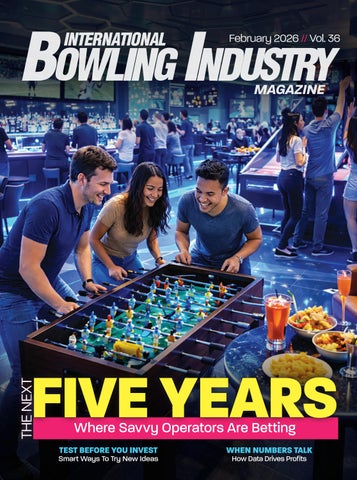
Our cover story, “The Next Five Years,” takes a clear-eyed look at where savvy operators are placing their bets to future-proof their businesses as market conditions continue to fluctuate. David Wallace of Turfway Entertainment digs into what’s changing beneath the surface: evolving demographics, higher expectations around food and beverage, smaller-footprint attractions, and spaces designed for connection. Drawing from years of hands-on experience across both new and established operations, Wallace outlines how operators are positioning themselves to stay resilient, relevant, and profitable no matter what the next few years throw their way.
That theme continues in this month’s What’s the Buzz with Brian Duke, who sits down with Frank Licausi of Amusement Connect. For years, many operators relied on gut instinct to guide decisions on game mix, pricing, and floor layout. Today, margins are tighter, and mistakes cost more. Licausi
explains how meaningful data, if used consistently, can help operators move from reacting to problems after the fact to fixing issues before guests ever notice. It’s a practical reminder that “busy” doesn’t always mean profitable, and that knowing your numbers is no longer optional.
Brandon Willey adds another strong layer with “Test Before You Invest,” a smart, grounded look at how operators can try new ideas without falling into the capital trap. Instead of locking into permanent changes too early, Willey shows how treating your center like a flexible testing ground, through pop-ups, short runs, and limited-time concepts, can deliver valuable insight before big dollars are on the line.
Taken together, these stories point to the same conclusion: the future belongs to operators who stay curious, stay disciplined, and stay willing to adjust. The next five years aren’t about abandoning what made your center successful; they’re about building on it with intention.
Here’s to asking better questions, making smarter bets, and keeping this industry moving forward.

s always, we love hearing from you. If your center has news, ideas, or lessons worth sharing, drop us a note. The best stories in this business are still being written, often right where you are.•
– Stephanie Davis, Publisher & Editor stephanie@bowlingindustry.com

For decades, running an arcade or family entertainment center meant relying on instinct. You could feel when a game was hot and sense when something wasn’t quite right. Maybe guests weren’t lingering, but the redemption counter stayed busy, and weirdly, margins somehow kept getting thinner. Frank Licausi knows that feeling well. He lived it.

Licausi and I have been friends in this industry for years, often chasing the same potential clients. I've always been impressed not only by his industry knowledge but also by his willingness to share information and help others. This month, he's sharing that hard-earned knowledge in my latest interview.
Before co-founding Amusement Connect eight years ago, Licausi spent decades on the operator side of the business. He started in coin-op vending in the late 1970s, expanded into video games in the early ’80s, and eventually owned and operated a large FEC in Kansas City. His perspective wasn’t shaped in boardrooms or pitch decks; it was shaped on location floors, in coin boxes, at redemption counters, and during late-night maintenance calls.
Today’s FEC environment is more competitive, expensive, and less forgiving. Games cost more. Labor costs more. Guests expect more. And the margin for error continues to shrink. What’s changing the equation isn’t just new attractions or better-looking spaces; it’s data.
A RE YOU REACTIVE OR PROACTIVE?
One of the biggest challenges Licausi sees across the industry isn’t a lack of effort or experience. It’s timing. “Most businesses are operating in a reactive mode,” he said. “And by the time you’re reacting to something, you’ve often already got a dissatisfied customer, or a problem that’s been costing you money longer than you realize.”
That’s where data changes the conversation


with Brian Duke
Games are running. Cards are swiping. The arcade feels alive. Things must be going well, right? Not necessarily. Too often, what looks like success is actually inefficiency in disguise, creating more work, tighter margins, and less profit to show for all that activity.
“What we see over and over is operators reacting to problems after the damage is already done,” Licausi said. Data changes that timeline. Instead of asking what just happened, operators can start asking what’s happening right now, and even what’s likely to happen next. That shift is why modern card systems, analytics tools, and reporting have quietly become some of the most valuable assets in an FEC, regardless of size customer arrives.”
Data only works if it’s usable. If it’s overwhelming, abstract, or sitting untouched, it’s not helping anyone. The metrics that matter most are the ones that drive operational decisions, and the real secret is using them consistently.
One of the most telling numbers is revenue per guest. Are guests walking in, swiping a card once or twice, and moving on? Or are they loading more value, reloading, and spending time in the building? Two centers with similar foot traffic can produce very different results depending on pricing, game mix, and how well guests are encouraged to keep playing.
Another key metric is revenue per game. With costs for new games consistently rising, guessing which games earn their keep is a risky proposition. Looking at weekly averages quickly reveals which machines justify their footprint and which ones do not. Licausi points out that this data often challenges assumptions. “Some games feel busy because they’re popular for short bursts,” he said. “But when you look at weekly performance, you realize they’re not carrying their weight.”


With Betson’s Full-Spectrum Arcade Support

Personalized Guidance
Expert advice tailored to your business goals and long-term success.

Extensive Industry Connections
Tap into our network of top arcade manufacturers and trusted partners.
NEW TO THE BUSINESS?
End-to-End Support
From game selection to financing, installation, and service, we are here to help.

No problem! We’ll help you get started and stay successful

Buying Arcade Games?
Need a Local Operator?
Let us connect the dots and keep your games earning
One of the clearest indicators of guest engagement is the card reload percentage, which measures how often guests return to the kiosk to add more value to their cards. "A good target is around 50%,” Licausi said. “If a reload rate is low, it’s usually because something in the buying process makes it harder than it should be.”
Sometimes the fix is surprisingly simple. Adjusting minimum reload amounts, clarifying bonus tiers, or creating upsell prompts can dramatically increase reload activity. “We’ve seen locations move from the teens into the 30%-range just by making small changes,” he said. “That’s meaningful revenue without adding a single new game.”
Redemption is another area where intuition often falls short. Many operators track ticket payout percentages but don’t dig deeper into the true cost of goods. A 30% payout rate is common across the industry, but that number alone doesn’t tell the whole story.
What matters is the wholesale cost of prizes and the consistency of item markups. "If you're running a two-to-one markup across the board, your final cost of goods should land around 15%,” Licausi explained. “If it’s higher than that, something’s off, and data helps you see exactly where.”
One of the most overlooked benefits of using data is making better decisions about floor space. Per-machine weekly averages quickly show which games are pulling their weight and which ones aren’t. When low-performing games stay on the floor, they take up space that could be making more money.
“We’ve seen operators remove games and actually increase total revenue,” Licausi said. "Because the floor started working as a system instead of a collection of machines." This also helps prevent revenue dilution; when a new game appears successful but is actually drawing players from existing games rather than expanding the overall market.
Modern card systems make it easier to see what's happening behind the scenes. Free credits at the desk are a lot like free drinks behind the bar—if no one's paying attention, profits quietly disappear. Today, employee-added credits and tickets can be automatically tracked with timestamps and user IDs, giving operators visibility without hovering over staff.
“It’s not about policing anyone,” Licausi said. “It’s about visibility. Just like a bar tracks comps in a POS system, arcades should know where credits are going.”
Not all cashless systems stop at end-of-day or end-ofmonth reports. More advanced platforms provide real-
time alerts that flag issues as they happen. When kiosks run low on cards, bill acceptors jam, or games sit idle too long, automated notifications let staff step in before guests ever notice. “The goal is to fix issues before they become guest complaints,” Licausi said. “Data lets you do that.”
Some systems allow operators to benchmark performance against similar locations regionally or nationally. That context helps clarify whether a problem is isolated to one center or part of a larger trend, a beneficial lens when making investment decisions.
As game prices continue to rise, access to meaningful performance data is becoming increasingly important. In platforms that aggregate historical data across many locations and games, operators can evaluate potential investments more accurately. Instead of relying on trade show buzz or anecdotal success stories, they can estimate break-even timelines based on real-world averages. “When you know roughly how long it should take a game to pay for itself,” Licausi said, “you make very different decisions.”
Despite all the analytics and automation, Licausi still believes success starts with fundamentals. “No amount of data fixes a broken game or an empty prize wall,” he said. “Technology works best when the basics are already solid.”
For operators evaluating new systems, Licausi recommends speaking with long-term users, not just recent installations, and calling the customer support lines of the companies being considered, especially during peak hours. This will provide a snapshot of how responsive they really are. For operators already using a cashless system, the message is even more direct: use the data! “If you’re not looking at the numbers,” Licausi said, “you’re leaving information on the table that equals money.”
Licausi dished out a lot of valuable information in our half-hour conversation, and I’ve tried to share as much as possible. Operators who understand their numbers and act on them are in a much stronger position to perform, adapt, and grow. Because in today's environment, guessing is expensive. Knowing is profitable—definitely words to live by for every operator.•

Brian Duke is an industry consultant who helps companies boost sales, strengthen connections, and stay competitive in family entertainment. A veteran of the FEC and arcade world, he is known for his big personality, deep industry know-how, and ability to connect with just about anyone. When he is working with IBI, Brian focuses on uncovering great stories, connecting with standout suppliers, and helping us shine a brighter light on the FEC side of the business, all while keeping things fun and real. Contact Brian at brianduke2012@gmail.com.


By Mark Miller
When youth participation at Heritage Lanes in Red Deer, Alberta, Canada, slipped to just 35 kids after the pandemic, proprietor Shelby Chrest knew his long-running model wasn't cutting it anymore. Before COVID, he could count on 80–100 young bowlers each season. But after several stagnant years and a steep decline, he decided to ask families directly what had changed.


Even with bowling’s reputation as an inexpensive activity compared to hockey, lacrosse, or basketball, monthly league fees were still out of reach for many households, especially those with multiple kids. Chrest realized affordability was no longer just a competitive advantage; it was the barrier. So, he made a bold move few proprietors would dare attempt: he scrapped the league format and rebuilt the entire program as a free youth bowling club.
Heritage Lanes secured local sponsors, ran small fundraising raffles, and reframed the season from competitive league play to organized, laid-back fun. Kids could bowl at one of three weekly time slots and were grouped by skill rather than strict age divisions. Some bowled once a week, others twice or three times; low pressure, high enjoyment.

The goal wasn't to churn out future champions. It was to give kids a place to show up, have fun, and build a routine with their families. The response? A tidal wave!

Participation exploded to nearly 250 youth in the first year, up from just 35. The following season drew around 225, and enrollment has remained strong. Even better, 75–80% of participants show up each week. Roughly 20% have also requested extra instruction and moved into competitive play, proving that a casual, low-cost entry point can naturally grow deeper engagement.
Chrest began hearing from parents who said the program changed the tone of their weekends. Families who previously couldn’t commit financially now had a shared Saturday morning ritual. Parents relaxed. Kids got moving. The environment shifted from purely recreational to something foundational, and something that got families talking again.
Unexpected bonuses followed. About 20 parents joined adult leagues for the first time. Birthday party bookings climbed. Food, beverage, and arcade revenue jumped during youth hours. And goodwill spread faster than any ad campaign could match.


For Chrest, the equation was simple: the old model was unsustainable—$10 of lineage per child wasn’t keeping the program alive. Betting on a free club wasn’t a financial risk; sticking with the old system was.
Chrest initially took some heat from fellow proprietors who thought he’d lost it. But when he presented his results at the Bowl Canada annual meeting, operators across the country started paying attention. Three centers piloted the model last season, and all tripled their participation almost immediately.
Proprietor Mike Frehlick ran the numbers at his 20-lane split house and realized that youth lineage accounted for less than 1% of overall revenue. In other words, eliminating fees wouldn't hurt the bottom line, but keeping fees might hurt long-term participation. He decided he had nothing to lose.


Before COVID, Plaza Bowling had around 250 youth bowlers. That number plummeted to 70. After switching to the free model and securing nearly a dozen sponsors, participation surged again, generating fresh buzz in the community. For Plaza, the program was more about reintroducing an entire generation to 5-pin at a time when attention spans and after-school schedules are stretched thin.

Owner Merlin Bunnage adopted the system as part of the center’s 25th anniversary. His house, with 24 ten-pin and six 5-pin lanes, saw its youth count rise from under 40 to around 70 almost immediately. Like the others, he found that growth brought new challenges, including staffing and volunteer needs, but the tradeoff was well worth it. Local businesses stepped up, including one sponsor who covered $5,000 worth of shirts. A feature on a local radio call-in show boosted sign-ups even more.
Despite Kelowna’s mild climate and abundant outdoor activities (which historically held numbers down), Bunnage saw an unmistakable pattern: families were excited to have an affordable, structured, weekly indoor activity again.
One of the biggest internal hurdles wasn’t money; it was mindset. Many long-time coaches and volunteers had always worked within a competitive league system. Shifting toward a casual, fun-first environment required retraining and reframing. Chrest emphasized that the free club wasn’t replacing competitive youth bowling; it was expanding the entry point.
When participation skyrockets from 35 to 250, volunteer needs rise fast. Heritage Lanes recruited league bowlers, enlisted parents, and created a Parent Society to qualify for gaming licenses, enabling casino and bingo fundraising that brings in additional government-supported revenue. Chrest also leaned on social media to reposition the program’s tone. Posts focused on smiling faces, energy, community, and celebration; not standings or averages.
The biggest misconception about free youth programs is that they drain revenue. For these Canadian centers, the opposite happened. Here’s why:
1. Kids bring parents—and parents spend. League bowlers, first-time visitors, birthday bookings, group events—the halo effect is real.
2. Recreational kids become competitive kids. Around 20% of Heritage’s youth voluntarily shifted into competitive programs—without pressure.
3. Today’s youth are tomorrow’s league bowlers. One center after another echoed the same message: free youth bowling is an investment in adult leagues five to ten years down the line.
4. The program builds community relevance. Sponsors want to support something that’s visibly helping local families. That visibility grows exponentially when hundreds of kids are suddenly involved.
5. The financial risk is low because youth leagues were never big earners. Multiple proprietors found that their youth lineage accounted for 1–2% of revenue. The impact of eliminating fees was negligible, while the benefits were massive.
The Canadian centers adopting this free club model are proving something important: when the financial barrier disappears, participation roars back to life. Kids who never saw themselves as athletes now feel welcome. Families who couldn’t consider a league now show up every week. Volunteers re-engage. Coaches adapt. Centers fill up with energy instead of empty lanes.
As Bunnage put it, this uses generosity and accessibility to grow the sport, strengthen the community, and build the next generation of bowlers. Most importantly, it flips the old Saturday-morning script. Instead of trying to protect a shrinking youth program, proprietors are now building programs that expand, excite, and endure.
For these centers, free wasn’t a loss. It was a launchpad!•

Mark Miller is a freelance writer, editor, and public relations specialist from Flower Mound, TX. He’s the author of "Bowling: America's Greatest Indoor Pastime," available at Amazon.com or directly from him at markmywordstexas@gmail.com.


How easy is it for people to spend money with you? Not how good your product is. Not how many people say they love you. The actual question is, from a consumer’s experience, how smooth is the path from “I’m interested,” “ To take my money?”
Consumers today have very little patience. If buying is difficult, they’re gone. Baymard Institute says the average online cart abandonment rate is around 70%. That means 7 out of 10 people who intend to buy never do. The top reasons aren’t price or lack of interest. It’s friction: extra steps, confusing rules, broken processes, and surprise restrictions at checkout. People often stop a transaction because the process is harder than it should be.
That’s why regularly testing your own website matters more than many operators realize. Darin Spindler, founder of Bowling Marketing Solutions, puts it simply: websites aren’t “set it and forget it.” He advises operators to regularly go through their own booking and checkout process the same way they routinely inspect lanes, kitchens, attractions, or equipment. If something feels confusing, broken, or inconsistent, it’s not a minor issue— it’s lost revenue. Broken digital experiences cost real money.
That brings me to my holiday shopping adventure, a real-world example of how buying friction quietly kills momentum. During Christmas, I was buying gifts for family members who live out of town. My first stop was an upscale steak restaurant that’s been an Ohio icon for decades. Bougie atmosphere, leather chairs, dim lighting the kind of place that screams “special occasion.” I visited their website, clicked on “Gift Cards,” and immediately received a message stating that their service was down for maintenance. Annoying, but fine. I tried again later. Same message. Tried the next day. Same message.
Baymard’s research shows that technical issues and checkout failures alone account for a massive share of abandoned purchases. When I tried calling, they were closed, so I left a message but never heard back. At that point, my excitement of giving this gift was gone, so I moved on to buying gifts for other people. Fast forward to a mild panic attack when I realized I still needed a gift for Pops and was nearly out of time.
By Stephanie Davis
I pivoted to a theater that hosts touring musicals and concerts. I carefully picked a show, selected seats, reviewed the price, and headed to checkout. That’s when the system told me I couldn’t buy tickets because my ZIP code wasn’t local. Apparently, only people who live in the area could purchase tickets online!
That kind of surprise rule is checkout kryptonite. Studies show that unexpected restrictions and requirements can drop conversion rates by 20–30% instantly. I called the theater, and the staff member had no idea this restriction even existed and couldn’t offer a workaround.
Desperate, I called my sister to see if I could use her credit card and pay her back. She agreed. Except then I learned that the credit card used would need to be physically presented at the willcall location. Downloadable tickets weren’t an option because my 85-year-old Pops still uses a flip phone, and the theatre website noted that they would only take mobile tickets on a device, not printed out.
I called the theater again. This time, I was instructed to disregard their website and chatbot and simply print the tickets, as “we take those all the time.” So, the official advice was to disregard the official instructions online.
I eventually bought the tickets, printed and mailed them, and paid my sister back. But if I hadn’t been under a deadline, I would’ve walked away, and for future gifts, I won’t go back. I’ll choose the easier option. That’s what most customers do.
Baymard’s research consistently shows that simplifying checkout alone could recover up to 35% of lost sales! Every extra step, unclear rule, broken link, or internal disconnect between your website and your staff quietly pushes revenue out the door. People don’t want perfect. They want it easy.
So, the real question isn’t whether guests like what you offer. Maybe it’s whether you’re making it effortless for them to say yes, and even easier to pay.•


Awell-run redemption operation is already baked into how most successful centers think about their arcade business. The challenge isn’t understanding its value; it’s managing the moving parts behind the scenes. With thousands of items in circulation, seasonal demand fluctuations, and constant pressure to do more with the same staff, operators are under pressure to run redemption smarter, faster, and with better insight than ever before.
Todd Maunsell, vice president of operations at Cinergy Entertainment Group, has spent more than two decades in the industry, including a long tenure with Main Event Entertainment before joining Cinergy ten years ago. Today, he helps oversee 10 locations across multiple states, with an 11th location planned to open in early 2027.
“We carry a lot of merchandise,” Maunsell explained. “At a single location, we can have seven to ten thousand units in stock.” To manage that volume, Cinergy followed a disciplined inventory process that included weekly counts and a detailed end-of-month inventory. While the process worked, it came with a significant time commitment. Weekly inventories took 15-20 labor hours, while monthly counts stretched to 30-35 hours per location. Even then, the data often reflected where the operation had been, not where it was in real time.
“By the time everything was counted and reviewed, we were looking backward,” Maunsell said. That reality pushed him to explore ways to reduce inventory time while gaining better visibility into merchandise performance. He found that opportunity at IAAPA, where BMI Merchandise officially launched its new RFID inventory system.
Watching the system in action, the potential time savings were immediately clear. The RFID system uses tagged merchandise and a handheld scanner to capture inventory wirelessly and in real time, dramatically reducing counting time while improving accuracy and visibility.
Seeing the system’s potential, Maunsell decided to act quickly. “We were opening a new location right after the show, so it made sense to move ahead with it immediately,” Maunsell said. “That way, we were getting merchandise into this new system right from the start."
The monthly inventory process was slashed from nearly 40 hours of staff time to just a few hours. “Time is such a commodity,” Maunsell emphasized, “and this system allows staff to focus on things that actually move the business forward instead of spending hours counting merchandise.”
By Stephanie Davis
From a financial standpoint, the return on investment was immediate. “Based on labor savings alone, the scanners will pay for themselves in one to two months,” he said.
With the system now implemented at one location, Cinergy plans to roll it out across all locations. The added benefit of greater accuracy is another win for Maunsell. Manual counts typically landed in the 85-90% range, while RFID pushes accuracy much closer to 99%. “That level of accuracy reduces stress and follow-up work,” Maunsell noted. “Managers have more confidence in the numbers and spend less time chasing discrepancies.”
“One of the biggest indicators for me was manager feedback,” he added. After their first RFID count, I got emails saying they were actually looking forward to doing inventory, even the dreaded New Year’s Eve count, because they realized how fast they could get it done. It’s one of those tools people actually like using.”
While the system is still new, Maunsell sees real-time visibility as its biggest long-term advantage. “We can check product levels without waiting for reports or interrupting operations,” he said. “That changes how you manage inventory day to day.”
That visibility becomes especially valuable during peak seasons and holidays, when demand can shift quickly. “As business fluctuates, we can make quicker reorder decisions and reassess inventory heading into busy times,” Maunsell said. “That’s where you really start to see the advantage.”
“At the end of the day, a strong redemption operation drives gameplay,” he added. “Anyone can put games on the floor. How you operate the game room and the tools you use to support it are what make it easier and more profitable.”
For Cinergy, RFID has changed how the operation uses time, data, and management attention, turning inventory into a strategic advantage instead of a necessary drain.•


Extend Your Play (featuring Square) drives an automatic prompt that allows guests to extend their pre-assigned bowling session either before it ends or immediately afterward. This ensures a smooth and uninterrupted gameplay experience and makes it easier for them to stay longer and bowl that extra game—while spending more, too.

Designed to Sell, Monetize, and Execute The Ultimate Bowling Entertainment Experience from QubicaAMF

“The UBA has helped us have a drastic increase in competitive bowling with an age group we have unsuccessfully attempted to target over the past 10 years.”
Tab and Tracy Golding, Northside Lanes, Winston Salem, NC

“The UBA has been a tremendous asset to our center—bringing in new guests, increasing off-peak revenue, and growing our league base. Their events run smoothly, boost food and beverage sales, and generate amazing word-of-mouth buzz.”
Jared McPherson, General Manager, Bowl America Shirley 727
“We love hosting UBA events. The bowler’s spending on food and beverage is significant, filling slots during slower times for us. Their tournament staff is easy to work with and is always a pleasure to host.”
Bill Cornell, owner High Point Bowling Center, High Point, NC
“The UBA bowlers come ready to bowl, eat and drink. Even though they are extremely competitive and have large prize funds, their philosophy is bowl and party, which equals excellent food and bar sales during UBA events. I highly recommend building a strong relationship with the UBA.”
Kathy Kubinak, General Manager, Laurel Lanes, Maple Shade, New Jersey
“The UBA has been hosting events at Triad lanes for many years. The UBA directors running the events are always helpful, ensuring we have everything we need for successful events. Our employees love hosting the UBA because of the atmosphere it brings into the center.”
Robert Klein, GM, Triad Lanes, Greensboro, NC


By David Wallace
If the past five years felt like a rollercoaster, marked by sudden surges in demand, changing consumer behavior, and constant fluctuations, the next five will be about sharpening your edge. Entire industries have been reshaped almost overnight by technology, shifting expectations, and the way people choose to spend their time and money. Bowling and family entertainment are no exception.
History shows that businesses that thrive aren’t the ones clinging tightly to what worked yesterday. They’re the ones willing to pivot and evolve. Companies that stayed nimble during previous economic swings, generational shifts, and tech booms capitalized on the changes. That’s why successful entrepreneurs keep an eye on where we’ve been, but they’re always watching where things are headed next.
As president and founder of Turfway Entertainment, I’ve spent years working alongside owners and operators, both as an operator and a consultant, helping centers tackle real-world challenges - from food and beverage performance to layout, staffing, and modernization. The insights that follow come directly from that hands-on experience across both new and established operations.
The tough reality is that traditional, singular attraction models are becoming increasingly difficult to sustain as a long-term strategy. Other vertical markets are experiencing this as well as traditional bowling centers. As traditional leagues have declined, many operators have successfully pivoted to casual, social leagues built around food, drinks, and flexible formats. It’s a smart move, but it’s not the whole answer. Today’s guests expect more than a league night; keeping them coming back means thinking beyond leagues altogether.
Here are some eye-opening facts:
• According to recent United States Bowling Congress (USBC) data, league bowlers skew significantly older than today’s casual guests.
• The average league bowler is now estimated to be age 55 or older.
• Surveys of United States Bowling Congress (USBC) championship participants show that approximately 70–72% of committed league bowlers are over age 50, while only about 3% are under 30.
Because there's a massive age gap in the industry, your casual guest, the one coming in for open play, corporate outings, social events, or birthday parties, is often in their 20s or 30s. Meanwhile, the leaguebased recurring revenue base is steadily aging out.
That reality forces a shift. As traditional leagues struggle to attract the younger guests who now drive food and beverage spending, operators are leaning harder into social gaming and micro-attractions. What’s emerging is a more sophisticated social sanctuary where bowling remains the anchor but no longer has to carry the entire load.
The real question over the next five years isn’t whether diversification matters; it’s how well operators elevate food, introduce the right mix of smaller attractions, and design spaces that encourage people to connect and stay longer.
The days of relying on frozen pizza and draft beer to drive secondary revenue are over. Everyone has to eat, but they don’t have to be entertained. By 2028, industry data suggests that food and beverage will shift from a supporting role to a primary driver of foot traffic.
The rise of the foodie/gamer is real. These guests don’t visit a venue and then happen to eat; they choose a venue because of the menu, and then they happen to play. Thanks to social media’s influence on Gen X, Millennials, Gen Z, and the upcoming Alpha generation, expectations are higher than ever. Guests want:

USBC-CERTIFIED DUAL-PURPOSE STRING PINSETTER FEATURING THE 360 TOUCHSCREEN CONTROLLER
Boost ST is in a class by itself. As the industry’s proven USBC-certified dual-purpose string pinsetter, Boost accommodates both the demands of league and tournament play and the high-volume activity of open play. Advanced sport technologies—including precise string length optimization, an intuitive touch-screen interface, and the 360 Controller—elevate performance, safety, operational efficiency, and the bowler experience. Boost is the world’s only cloud-enabled string pinsetter, ready to evolve with your business well into the future. Compatible with any major scoring system—and even better with Sync.
• Instagram-worthy craft cocktails
• Shareable, elevated plates
• Health-conscious options that rival local gastropubs
This is such a driving part of the business that, through our consulting work at Turfway Entertainment, we’ve added dedicated culinary and bar services departments to support operators looking to maximize this side of their business. Here are two solutions that have gained popularity among guests and other operators.
• Fork-Free Dining: Heavy bets should be placed on high-quality, handheld menu items that facilitate social flow. Think of gourmet sliders, elevated tacos, and skewered bites that don't interrupt the game.
• The Sip Economy: Alcohol margins remain the king of profitability. Operators are increasingly installing self-pour beer walls and hiring mixologists to create signature venue-themed cocktails.
The verdict: If your kitchen is an afterthought, your venue will be too. Enhance your culinary talent before upgrading other aspects of your facility.
With real estate costs rising, the massive 50,000-square-foot megacenter is becoming increasingly difficult to sustain. From 2025 to 2030, the winning strategy is density. Operators are turning to boutique attractions with a small footprint and high-throughput games that maximize revenue per square foot.
Guests are seeking variety and velocity. The attention span for a twohour, 10-frame game is waning among Gen Z and Alphas. They crave rapid-fire, round-based entertainment that allows them to rotate through multiple experiences in a single night. That's one reason arcades consistently generate some of the highest revenue per square foot if they're set up and maintained properly. Short play times, instant rewards, and repeatable experiences mirror the dopamine hit of swiping on a phone.

What’s Clicking with Guests: Arcades: Similar to bowling, arcades can reach all ages. They have been around forever, but have broad appeal across all ages as they continue to evolve to meet the needs of the new customer base. These are the MVPs of the next five years, provided they are set up and operated correctly. They require less space at 70 square feet per piece, do not require rental shoes (removing a major friction point), and offer shorter game times. This allows for a very popular and profitable ancillary attraction while keeping waiting groups engaged.
Tech-Augmented Darts and Mini-Golf: Traditional pub games are getting a gamified overlay (think auto-scoring darts or projectionmapped putting greens). These attractions command a premium price point while requiring minimal staffing. Be careful, however, as many are "bar-centric," and the synergy needs to be there to drive top-line revenues and bottom-line profitability.
Don’t Underestimate the Vibe: Swap underperforming party rooms and unused concourse space for open social gaming zones. A large arcade integrated with dining opportunities often generates considerably higher revenue per square foot than a party room that sits empty 95% of the time.
Remember, though, the key is openness. Entertainment thrives on energy, and energy comes from sound, light, and movement.
Isolated dining rooms tend to mute that effect, while open arcade and gaming concepts amplify it, creating a buzz that pulls guests in and keeps them engaged.

In an increasingly digital world, FECs are becoming fourth spaces distinct from home, work, and coffee shops; they are designed specifically for active social connection. The loneliness epidemic is real, and post-COVID reopening data proved it. Some properties saw revenue increases exceeding 200% as guests returned, craving shared experiences.
Guests don’t just want to play next to each other anymore; they want to play with or against others. Passive entertainment, like watching a movie, is losing ground to competitive socializing.
How some operators are leaning in:
Lounge-First Layouts: The settee-style seating of the past is being replaced by soft, living-room-style layouts. Lanes are being booked not just for the game, but for the couch with dining opportunities while they play. Operators are betting on furniture that encourages face-to-face conversation rather than everyone facing the pins.
Social-Centric Tech: Invest in scoring systems that integrate with guests' phones for global leaderboards, instant replay sharing, and selfie moments. Technology should facilitate the "bragging rights" economy. Brunswick and QubicaAMF have both gamified their systems, with significant results when used correctly.
The verdict: Stop selling frames and start selling parties. Design your layout so that a group of six feels comfortable staying for three hours, even if they only bowl for 45 minutes.
The successful FEC of 2030 will look less like a bowling alley and more like a boutique hotel lobby that happens to have games.
• The Vibe: A hybrid of a high-energy sports bar and an upscale lounge.
• The Tech: Invisible but omnipresent (mobile ordering, frictionless check-in, gamified loyalty programs).
• The Experience: A seamless flow between eating, drinking, and short-burst competitive gaming.
The next five years are about the density of experience. Place your bets on attractions that bring people closer together physically and menu items that keep them seated longer. The era of renting shoes is ending. The era of making memories has begun.•

Dave Wallace is the President and Founder of Turfway Entertainment. He has over 25 years in operations and has successfully opened 85+ properties to date for independent and franchised businesses. Dave is a speaker at industry conferences and events.


“Our experience here at Chatham Bowlerama with New Center Consulting, Inc. was very professional.
New Center Consulting, Inc. usually only deal with 10 pin, duck pin and candle pin scoring systems and pin setters. Glenn and his crew where excited for the challenge of getting the very old Mendes 5 pin machines at our centre to work with their scoring system.
It has been well worth changing the scoring system to Touch Score. Simplicity is the best way to describe Touch Score, ease of use for league bowlers and public bowlers a like.”


“We here at Chatham Bowlerama would suggest New Center Consulting, Inc. for installing Touch Score scoring system.”


By Brandon Willey
As a BEC operator, it’s likely you have experienced the moment when you spot a trend that looks like an easy revenue generator or guest experience win and your brain skips the test phase and jumps straight to making it a fixed, longterm part of the business. Whether it’s a new food concept, latenight format, or collaboration with a brewery down the street, that idea can quickly turn into equipment purchases, signage, staffing, vendor contracts, and maybe even a remodel.
That’s when the capital trap springs. Either you overcommit early to an idea that hasn’t proven itself, or you walk away from a potentially great concept because the investment feels too big before it’s had a chance to succeed.
The ideal move is to treat your business like a flexible platform for controlled experiments. With lanes, party spaces, and food and beverage that can pivot quickly, pop-up events, themed nights, and short-run social leagues allow you to test menu ideas, entertainment formats, and partnerships without making big commitments. Guests respond to novelty when it’s time-boxed and creates real urgency, while you gather real-world data quickly and only scale what earns the right to become permanent.


The easiest way to test new ideas is to run small, short-term experiments in three core areas of your business: food and beverage, entertainment formats, and partnerships. These are changes you can make within your existing operation to see what works before committing long term.
Experimenting with your menu and bar is often the fastest path to new revenue because it doesn’t require rearranging walls or adding new attractions. Limited-time offers like a seasonal entrée, a drink flight concept, or a new shareable built for groups let you test what guests will order—and what your operation can realistically support. The important part is resisting the temptation to judge success on sales alone.
A menu item can sell well and still be the wrong decision if it slows the kitchen, blows up ticket times, or creates waste that eats into margin. The test is as much about operational truth as guest interest. Can your team batch it? Does it require a new station? Does it stress your fryers at peak times? Can the bar execute quickly when your center is full? When you treat menu changes like experiments, you get to keep what works and discard what doesn’t.

• Singles, doubles, and four-person teams
• 100% handicap
• $300 per bowler • $1,200 per team
Limited availability — reserve early!
www.jackpotclassic.org
206.396.7468
greg.olsen@wsbpa.org
“Everyone
-CHRIS NASH, WSBPA, ZEPPOZ


wbpiprogram.com

• Discounted hotel rates from $64–$139 per night (plus daily resort fee)

Entertainment formats are another strong area for experimentation and can help uncover what new experiences guests are hungry for at the social and entertainment levels. Many centers focus on simply adding attractions, but a surprising amount of growth comes from changing how the same space is used.
A mini-tournament night, a lane-side hosted game, or a microcompetition series can change dwell time and increase spend without adding a single piece of equipment. The goal isn’t to throw something fun at the wall, but to learn which formats create repeat behavior and a distinct identity for your center. When a new concept clicks, it becomes a reason to visit on a Tuesday—not just a Saturday.
Partnerships and sponsorships can also open the door to growth you likely wouldn’t create on your own. The key is approaching them with the same discipline you’d use when testing menu items or new entertainment formats.
A local brewery collaboration, food truck pop-up, radio station promotion, influencer host, youth organization fundraiser, or corporate wellness partner can all look great on paper—but testing quickly shows what really matters. Does the partner bring the right audience? Does the experience feel like a good fit for your brand? And does the math still work after labor, discounts, and comps are counted?

A six- to ten-week short-run social league can create recurring revenue, build community, and improve midweek utilization. Leagues are powerful because they generate pre-commitment, create a social identity, and give partners a longer window to participate. That said, they can be administratively demanding and may not be the right fit for every market.
If your center doesn’t regularly run leagues, the operational load, from scheduling and communication to scoring, substitutions, prizes, and expectations, can be heavier than expected. If you’re new to it, borrow best practices, use templates, and design the league to be fun and frictionless for guests while staying manageable for your team.

Short-run partnerships help protect you from the “logo trap,” where a partner gets visibility, but your center doesn’t see meaningful gains in traffic or revenue.
Not every idea needs the same amount of time to prove itself. In most cases, testing happens across three timelines: a one-night pop-up, a four- to six-week run, or a six- to ten-week short-run league. The smartest approach is matching the timeline to the type of decision you’re trying to make.
A one-night pop-up is the quickest, cheapest way to learn. It’s perfect for testing a single menu item, running a trivia sponsor night, trying a flash pricing change, or seeing whether a DJ actually moves the needle beyond social media hype. The downside is that one night can be misleading. A holiday weekend, weather shift, or competing local event can distort results. To avoid this, repeat the pop-up across different nights over a few weeks to see whether demand is real or just a fluke.
A four- to six-week themed series is where reliable patterns start to emerge. A consistent Thursday night series, for example, gives guests a reason to build a habit and gives your team time to refine operations. You’ll learn what works in week one, improve by week two, and begin to see real results by week four.
The biggest risk with a longer run is creating a small but passionate group of guests who love it and get upset when it disappears. That’s why language matters. When guests know something is a limited-run experience, you can end it without backlash—and still bring it back later if the data supports it.
he difference between a fun event and a meaningful test is discipline. Before launching anything, write a single, simple hypothesis to force clarity: We believe X will drive Y for Z audience. From there, keep guest messaging tight. One hero item. One hero experience. One clear price. If you’re testing menu changes, compare a flight versus a single item. If you’re testing pricing, compare bundle A to bundle B instead of introducing multiple options and hoping staff can explain them correctly.
Most importantly, define success before you start. Decide which numbers matter: revenue per head, attach rate, labor percentage, food cost, ticket times, utilization changes, dwell time, guest satisfaction, or partner promocode redemptions. This way you don’t end the test with vague, subjective feelings instead of objective answers.
Centers that grow consistently don’t rely on perfect instincts. They rely on repeatable learning. Many failed events aren’t failures of the idea itself, but failures of execution and measurement caused by overcomplicated menus, underestimated training needs, missing POS tracking, or testing on the wrong night and drawing the wrong conclusions.
When you run small experiments often and evaluate them honestly, pop-ups and short-run formats become an ongoing R&D process that costs a fraction of permanent upgrades. You’ll still make capital investments, but only after the market has proven it wants what you’re proposing.
The takeaway is simple: prove demand first, then spend •

Brandon Willey, ICAE, is co-founder of the LBX Collective and Premier LBX Group, co-host of The LBX Daily Show, and founder and CEO of Hownd. Brandon has an intense passion for the attractions industry and extensive knowledge of location-based entertainment. Brandon is the former chair of IAAPA’s FEC Committee and now sits on the North American Manufacturers and Suppliers Committee. You can connect with him at LinkedIn.com/in/bwilley.


At Bowling Marketing Solutions, we help bowling centers like yours get more parties, leagues, and casual bowlers through proven, done-for-you marketing. From beautifully designed websites and targeted email campaigns to monthly promotions that keep your lanes busy - we handle it all.
And our difference? A responsive support team that executes fast - so you can stay focused on running your business while we drive traffic to your doors.

Campaigns that bring bowlers through your doors


Websites designed for bookings and growth Monthly Promotions built and delivered for you

“The response time is insane! Y’all are
Hannah Landrum, Tangi Lanes
“Always so quick in responding and so thorough with the details. Thank you!”
Diana Swartz, Daffodil Bowl

In the world of bowling, family-run centers are nothing new. But few families do it quite like the Nowaks. At Myrtle Beach Bowl, the word “family” stretches far beyond last names. It’s a story built on faith, trust, and an unusual level of harmony in an industry where working together can just as easily pull people apart.
At the head of it all is Larry Nowak, who came to Myrtle Beach in 1993 to manage the center and never left. What started as a career move soon became a calling. After years in management, Larry and his wife, Sandy, bought into the business in 2015, stepping into ownership with partners Tom and Molly Bridgeman.
Larry and Sandy built their life around bowling, and along the way, they built a family that includes not only their daughter, Heather, but several others who became “daughters by heart.” "Jessica, Tori, and Lindsey came to us in different ways," Larry says. "They started as employees: one in the snack bar and bar, one hosting birthday parties, one helping with accounting. Before long, they became family. We collected each other along the way."
Today, those four women form the leadership core of Myrtle Beach Bowl. Heather serves as general manager, Jessica is the assistant manager, Tori handles

By Paul Lane
communications and social media, and Lindsey keeps the numbers in line as the center’s accountant. Together, they run one of the busiest centers on the Carolina coast, and they do it with something most family businesses can only dream of: balance.
Spend an afternoon at Myrtle Beach Bowl and see teamwork flow naturally. Heather moves between the counter and back office with calm efficiency. Jessica double-checks lane schedules. Tori adds fun to each guest interaction and keeps social media buzzing with positivity. Nearby, Lindsey crunches numbers and keeps an eye on the budget. Her dad jokes that she "keeps me out of trouble." It could be chaotic, but somehow, it never is.
The Nowaks have turned shared responsibility into a rhythm. Everyone knows their role, respects each other’s space, and brings their strengths to the table. That family dynamic stems directly from Larry’s leadership philosophy, which he refers to as servant leadership. It’s rooted in his faith and belief that the best way to lead is to serve. “It took me a long time to realize I wasn’t the driver of the bus, and once I stopped trying to be, the right people and the right purpose found me,” said Larry.
Together, they form what he proudly calls “the dream team.” “They all have their strengths,” he says. “Heather’s got great warmth and vision, Jessica’s incredibly organized, Tori keeps everyone laughing, and Lindsey makes sure the numbers stay straight. They complement each other perfectly.”
Ask any of them what makes it work, and they’ll tell you the same thing: respect. “We don’t step on each other’s toes,” Heather says. “Everyone knows where their strengths lie, and we trust each other to handle it. That’s what keeps things running smoothly and keeps it fun.”
The easy flow didn’t happen overnight. Like most family operations, the Nowaks have had their share of disagreements, but they’ve built a culture where open communication wins out. “We talk things through. Everyone gets a say,” Larry says. “But once a decision’s made, that’s how we march. I learned a long time ago that you can have your vote, but once the call’s made, you move forward together.”
Over the years, this approach has shaped a workplace that feels more like a home. The staff looks out for one another, stepping in without hesitation when someone needs help. It’s an atmosphere built on trust and respect, where everyone feels valued and part of something bigger than their job.
T he ministry operates separately from the bowling center, but they are closely connected. Bowlers donate food or plastic bags used to repackage groceries. The center hosts raffles and fundraisers for the cause, while staff volunteer at distributions. “It’s not about charity; it’s about community,” Larry says. “We’ve been blessed, and we try to share that.”
D uring the pandemic, the family fed thousands each month. They worked outdoors in masks and gloves, handing out food and listening to stories that would bring tears to anyone's eyes. “Those were hard days,” Larry remembers. “But seeing people’s gratitude kept us going.”

The spirit of unity radiates through Myrtle Beach Bowl. Many employees have been there for decades, drawn to the sense of belonging the family has created. Guests notice it too—the warmth at the front counter, the laughter in the snack bar, and the familiar faces that make every visit feel personal.
“He leads by example,” Jessica says. “It’s never about who’s in charge — it’s about how we can serve people better.” And that mindset extends far beyond the building.
For years, the Nowaks and their team have led community outreach through Faith Outreach Ministries. This food program, which originated at their church, now serves thousands in the region. Launched in 2011 as a small pantry, it has grown into a major network supplying meals, essentials, and emergency relief.

aith Outreach remains a family affair. Even the youngest generation pitches in. Heather’s children, Larry’s grandsons, help with setup and cleanup when not in school. It’s a shared purpose that ties every generation together.
A fter decades in the business, Larry knows most family operations don’t last this long or stay this close. He believes the key is simple: everyone leads with love. “There’s no ego here,” he says. “Everyone does what they’re meant to do, and we all want the same thing: to make this place better for our guests and community.”
T hat sense of togetherness is what keeps Myrtle Beach Bowl thriving, not just as a business, but as a community hub where kindness is contagious. “We want people to feel like they belong here,” Heather says. “Whether you’re coming in to bowl, to volunteer, or just to grab a coffee, we want you to feel welcome.”
L arry couldn’t be prouder. “I’ve run a lot of centers in my life,” he says, “but this one’s different. This one’s family.” And for anyone walking through the doors of Myrtle Beach Bowl, that feeling is impossible to miss •

Paul Lane has an extensive background in marketing since 1960, especially in the international arena, in a career that spans more than 50 countries. This includes a 30-year tenure with AMF Bowling Inc. (1960-1990). Since 1990 he has worked as an independent contractor assisting more than a dozen major domestic and international companies in the bowling industry in a variety of marketing assignments.

Customer Service
919.799.7707
www.funtimefootwear.com
support@experthosiery.com
Expert Hosiery is a premiere supplier of high-quality socks to bowling centers and FECs. We pride ourselves in lifetime relationships. Socks variety includes white bowling socks, glow socks, theme socks, and custom logo socks. Our customers are our best testimonials! For orders, call, email or order online 24/7.

Sharon Hughes
256.845.1034
www.laymonhugheshosiery.com
laymonhughes@bellsouth.net
Being a BPAA preferred vendor we are proud to say we are an American family owed manufacturer of quality USA made socks. We are proud to offer many styles of bowling and skating socks to family entertainment centers around the USA and overseas as well. We do not have any minimum orders. Every size center can customize their order each time. We also do custom orders for your center or for special events throughout the year.

Sales Department
847.439.9400
www.avscompanies.com
sales@avscompanies.com
Providing best-in-class arcade and vending equipment with decades of unparalleled service. AVS Companies is the trusted choice for world-class amusement solutions.

Sales Department
800.524.2343
www.betson.com/bowling
Sales@betson.com
Betson Enterprises is the leading worldwide distributor of arcade equipment, parts, and service. A family-owned business offering revenue-generating solutions to its clients since 1934, Betson offers concept-to-completion solutions that maximize the profitability of our clients’ investments.

Sales Department
www.p1-ag.com
416.251.2122 GetAnswers@genda-americas.com
At Player One Amusement Group, we specialize in the sourcing and distribution of quality amusement and vending equipment for both commercial and retail customers. We provide end-to-end Total Solutions, from the design and planning of the space, to equipment selection, to best practices for merchandise and redemption counters. Each business is unique so P1AG customizes the appropriate services to meet your business needs.
www.newcenterconsulting.com
Glenn Hartshorn 248.375.2751 ghartsho@yahoo.com
Touch Score – A truly revolutionary scoring upgrade for legacy systems. STELTRONIC SCORING
www.steltronicscoring.com Sales Department
The world’s leading independent automatic scoring manufacturer since 1980.

Michael Postema
231.343.2043
The leader in the bowling industry for over 130 years, Brunswick Bowling provides products, services, and industry expertise for new and existing bowling centers.
Info@steltronicscoring.com
www.brunswickbowling.com
Info@brunswickbowling.com

www.qubicaamf.com Sales
804.569.1000 info@qubicaamf.com
QubicaAMF is the world’s largest manufacturer of bowling and mini bowling products. With our innovative products, we will help our customers fully unleash that potential to extend the bowling population, to reach the younger generations, to increase their spending, frequency of visits—and your revenue.
www.intercardinc.com


Joe Peplinski
970.376.3349
www.pursepegsllc.com
info@pursepegsllc.com
Bowling alleys can install Purse Pegs to their dining tables to provide guests a clean, secure place to hang their valuables while they bowl and dine. This small addition improves comfort, keeps walkways clear, and prevents belongings from getting dirty or damaged on the floor. Purse Pegs enhance the customer experience, making your venue more inviting and accommodating. It’s a simple upgrade that shows attention to detail and encourages repeat business through thoughtful, practical design.
Jon Holecz
203.671.1496


www.drinkslowandlow.com
jholecz@cooperspirits.com
Slow & Low is an award-winning lineup of ready-to-serve Old-Fashioneds, crafted for speed, consistency, and serious barquality. Ranging from 80 to 100 proof, it’s the ultimate plug-and-pour solution for high-volume accounts looking to serve premium cocktails without slowing down.
BOWLING CENTER INSURANCE
Bob Langley
Helping You Is What We Do Best!
864.527.1145
www.bowlingcenterinsurance.com
robert.langley@bbrown.com
With 30 years of experience and over 300 centers nationwide, we’ve mastered the art of insuring entertainment venues from bowling centers and movie theaters to axe throwing, roller skating, go-karts, mini golf, and more. Comprehensive policies include property, general liability, liquor liability, wind/hail protection, and Workers’ Compensation. As part of the sixth-largest (Independent Insurance) Broker in the U.S., we offer competitive quotes tailored to your needs. Contact us today and let’s get your coverage started!
W. Tyler Compton
www.ttminsurance.com
866.233.0266 tcompton@ttminsurance.com
Tilton, Thomas & Morgan Insurance Professionals has been insuring bowling and family entertainment centers for over 40 years. We support state and national organizations, including many state bowling associations and the BPAA. Through our years of experience and working with hundreds of proprietors across the country, we have developed a specialized program to ensure our clients have the correct coverages at a competitive price. We love insuring FUN, so call us today to see how we can help you!
WESTERN BOWLING PROPRIETORS INSURANCE
Cameron Linder
800.200.9998
www.wbpiprogram.com
contact@wbpiprogram.com
WBPI is the largest bowling center insurance program in the nation with more than 35 years of experience and 400 insured centers. Exclusively endorsed by eight state bowling proprietors associations, our staff of insurance partners and professional bowlers provide staff training, insurance education, advocacy, and business advice. No one fights harder for you! Contact us today for a competitive insurance quote!


www.decibel-studios.com
ravi@decibel-studios.com
guy@decibel-studios.com
Decibel Studios is an innovative global technology solutions company that designs, engineer, installs, and maintains custom controlled audio, video, lighting, show control and special effects systems, including augmented and virtual reality, 3D and 4D interactive theaters, for various entertainment, corporate, hospitality, retail and institutional groups.
www.dfxsoundvision.com


Andy Vasko
877.841.4590
www.kidsbowlfree.com
Andy.Vasko@kidsbowlfree.com
At BBBI our goal is to create new customers and profits for bowling centers through our time tested Kids Bowl Free Summer Bowing Program and our new League Development System featuring Fun Bowling Leagues for all ages.
Zach Boulanger
844.468.4144
www.bowlingleads.com
Zach@bowlingleads.com
We help bowling centers find new leads and turn them into raving repeat customers with our automated marketing system.
EBOWL.BIZ & BOWLRX.COM
Carey Tosello
541.549.0999
Digital marketing for bowling: BowlRx websites, Facebook for bowling, and more.
www.eBowl.biz
Carey@eBowl.biz
Chris Behling
815.519.9843
www.alleytrak.com
Chris@alleytrak.com
AlleyTrak is the complete lane reservation and management system designed specifically for bowling alleys. Manage your recurring events, leagues, parties, packages, along with many other features AlleyTrak has to offer. Save time by allowing guests to make reservations online 24/7.
PARTY DIRECT
Nancy Dye
www.partydirect.com
317.694.8413 nancy@partydirect.com
Elevate your party experience with Party Direct! From exquisite place settings to captivating decorations, delightful party favors, and premium tableware, we’ve got you covered. With our wide range of high-quality products, competitive prices, and hassle-free shopping, Party Direct is your ultimate destination for all your party supply needs. Create memorable celebrations effortlessly. Party Direct is your one stop source for all the party supplies you need to increase guest satisfaction and profitability!

Shelly Berry
800.900.7695
www.noveltybowlingstuff.com
sales@noveltybowlingstuff.com
Sierra Products is your exclusive source for bowling parties, including party favors, supplies and novelties. Bowling birthday party supplies include bowling pin sipper bottles, mini bowling pin candy containers, bowling coin banks, bowling party cups, napkins, novelty souvenir cups and much more. Most of our items can be personalized with your company’s logo, phone, website, etc.

800.638.6000
A&A Global has been delivering fun since 1938, helping businesses turn joy into revenue. With reliable, strategic support and a full range of toys, candy, novelties, and custom programs, we design the right mix to drive traffic, build loyalty, and create real results.
BMI MERCHANDISE
Sales Department
800.272.6375
At BMI Merchandise, we’re in the business of fun! And we take it pretty seriously!
www.bmimerchandise.com
Sales@bmimerchandise.com
For over 30 years, we have been the recognized leader in the amusement industry, providing the world’s top venues and brands with unique redemption products and services. The company has evolved into an industry pioneer and technologyforward company focused on improving efficiencies for family entertainment centers. BMI has proven itself to be a true partner with our hands-on commitment to distribute and merchandise a constantly changing mix of redemption products, the best brands and hottest licenses all while creating items integrated with the most advanced technology.
In addition to supplying innovative redemption merchandise, we also supply innovative technological solutions. Our proprietary AMRS™ system provides a 360°, streamlined solution to enhance productivity and maximize profits. It encompasses the design, planning, installation and fulfillment of redemption merchandise.


www.sureshot-redemption.com Corporate Sales
888.887.8738
Sales@sureshot-redemption.com
Sureshot is your ultimate destination for retail merchandise and redemption prizes. We feature a comprehensive assortment across all major categories, coupled with exceptional customer service, competitive pricing, and premium quality products. Discover our ongoing additions of unique items year-round. We also offer custom logo programs, automatic merchandise replenishment, assortment planning, and planogramming services. Trust Sureshot Redemption to consistently meet your needs with precision and reliability, especially with our Free Freight program. Call or email us for details!
REDEMPTION PLUS
Michael Nowak
888.564.7587
www.redemptionplus.com
Smile@redemptionplus.com
Redemption Plus is your go-to partner for all things redemption! From designing and merchandising exciting redemption centers to offering expertly crafted training resources and a broad selection of trend-worthy prizes, we’ve got you covered. With a fresh approach and top-tier service, we simplify your operations so you can focus on wowing your customers with unforgettable experiences!
Rhode Island Novelty has been in business since 1986 and is the leading Prize provider for the Redemption industry, offering the best case pricing, product selection, and performance. We keep it simple so you can focus on keeping your guests happy. With unmatched variety and value, partnering with us means saving time, reducing costs, and providing prizes that keep guests coming back again.

• A
• A tournament or fundraiser that put your center on the
• A hiring strategy that clicked
• A management move that strengthened your team
• Something
• How


Here’s to changing string length automatically!
Only EDGE String effortlessly operates at two different string lengths—a longer USBC-Approved length for certified competition and a shorter length optimized for casual play. Patented Adaptive String Length Technology seamlessly moves between string lengths based on the type of play, ensuring optimal frames-per-stop performance for every situation.
Protected by U.S. Patent No. 12,138,527 and patent(s) pending.
To learn more visit: