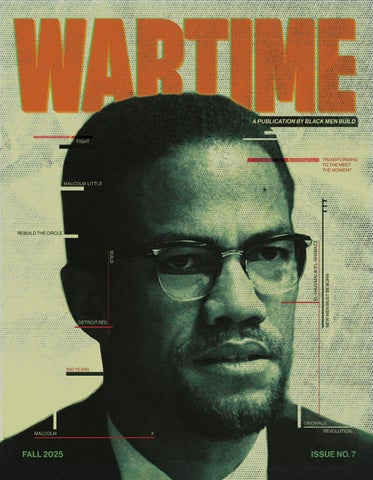
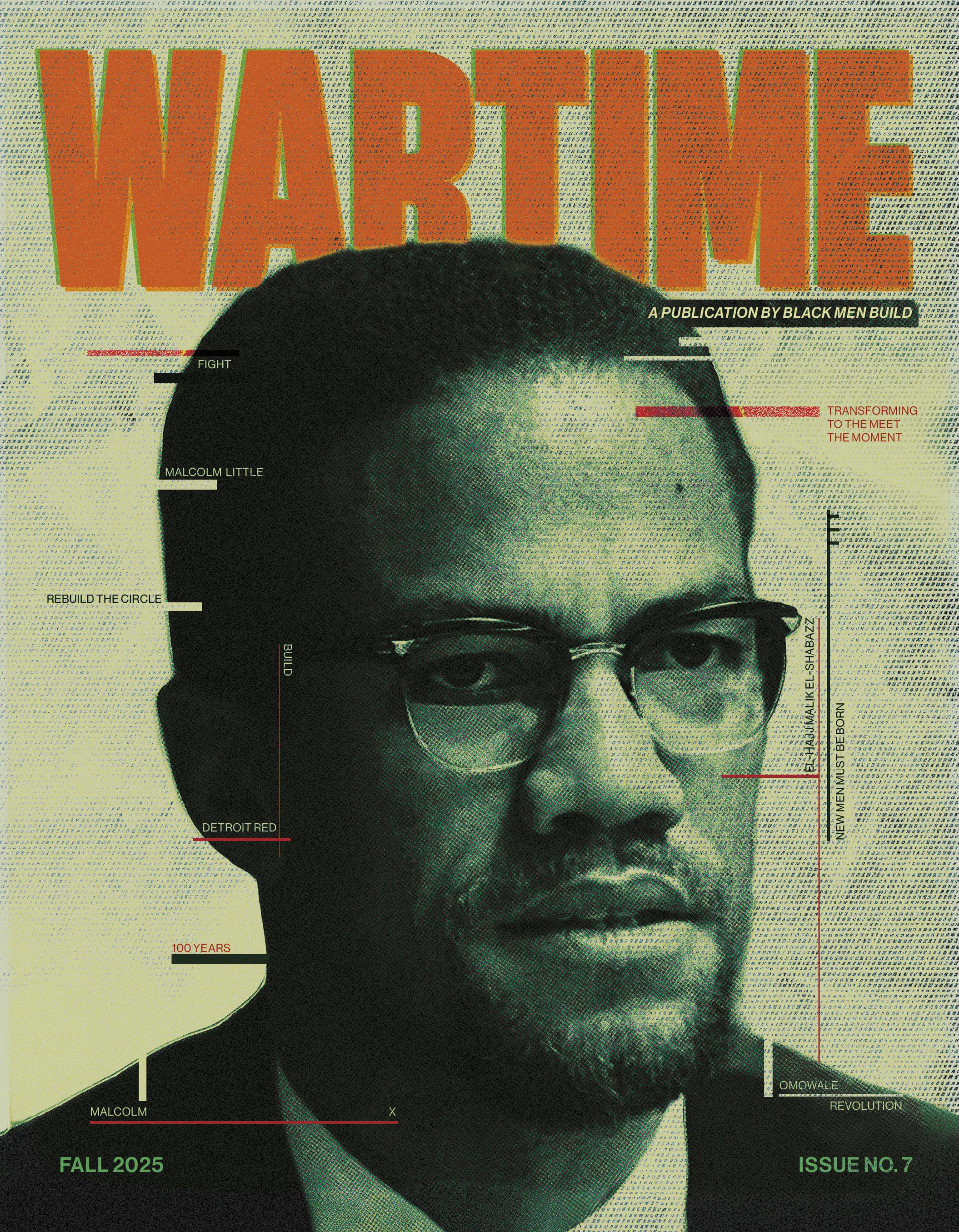
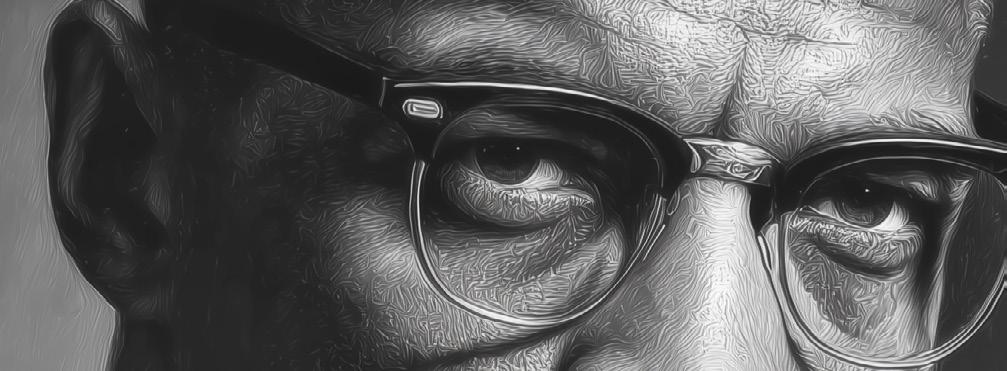
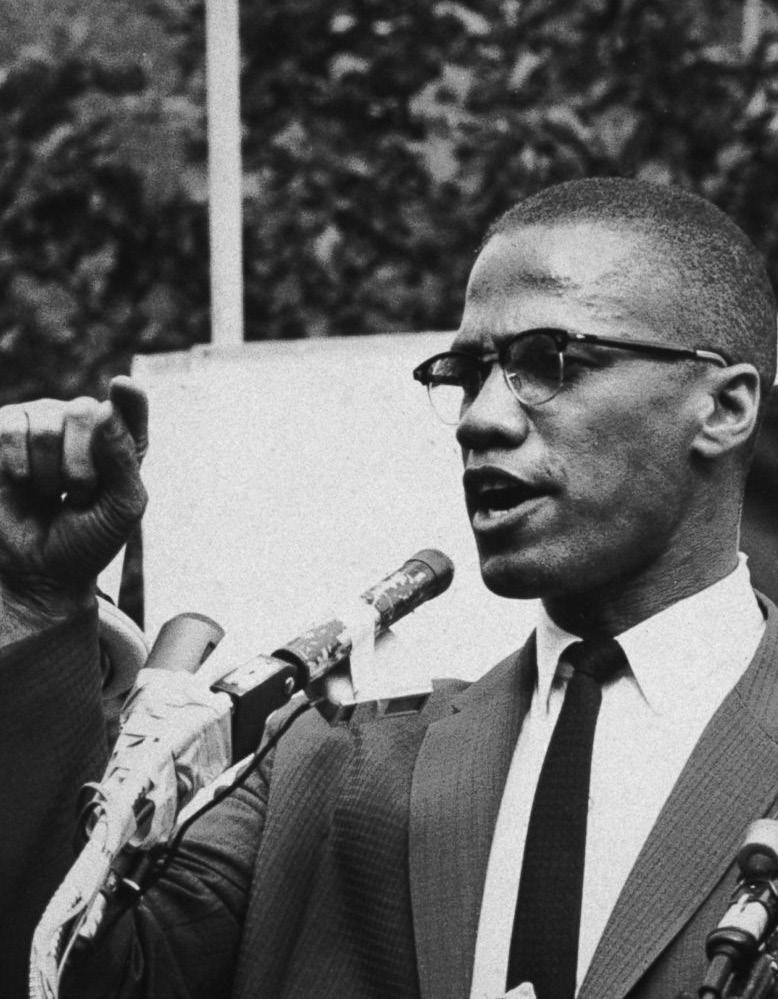
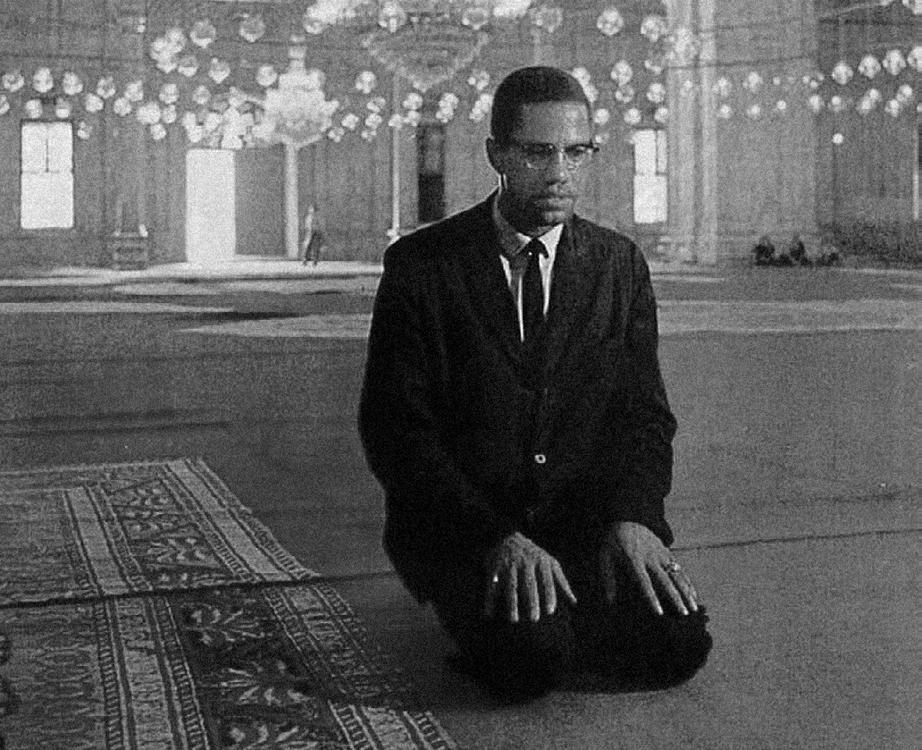
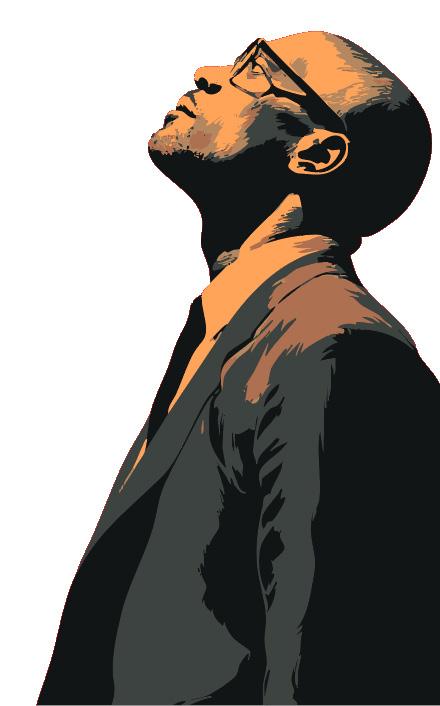
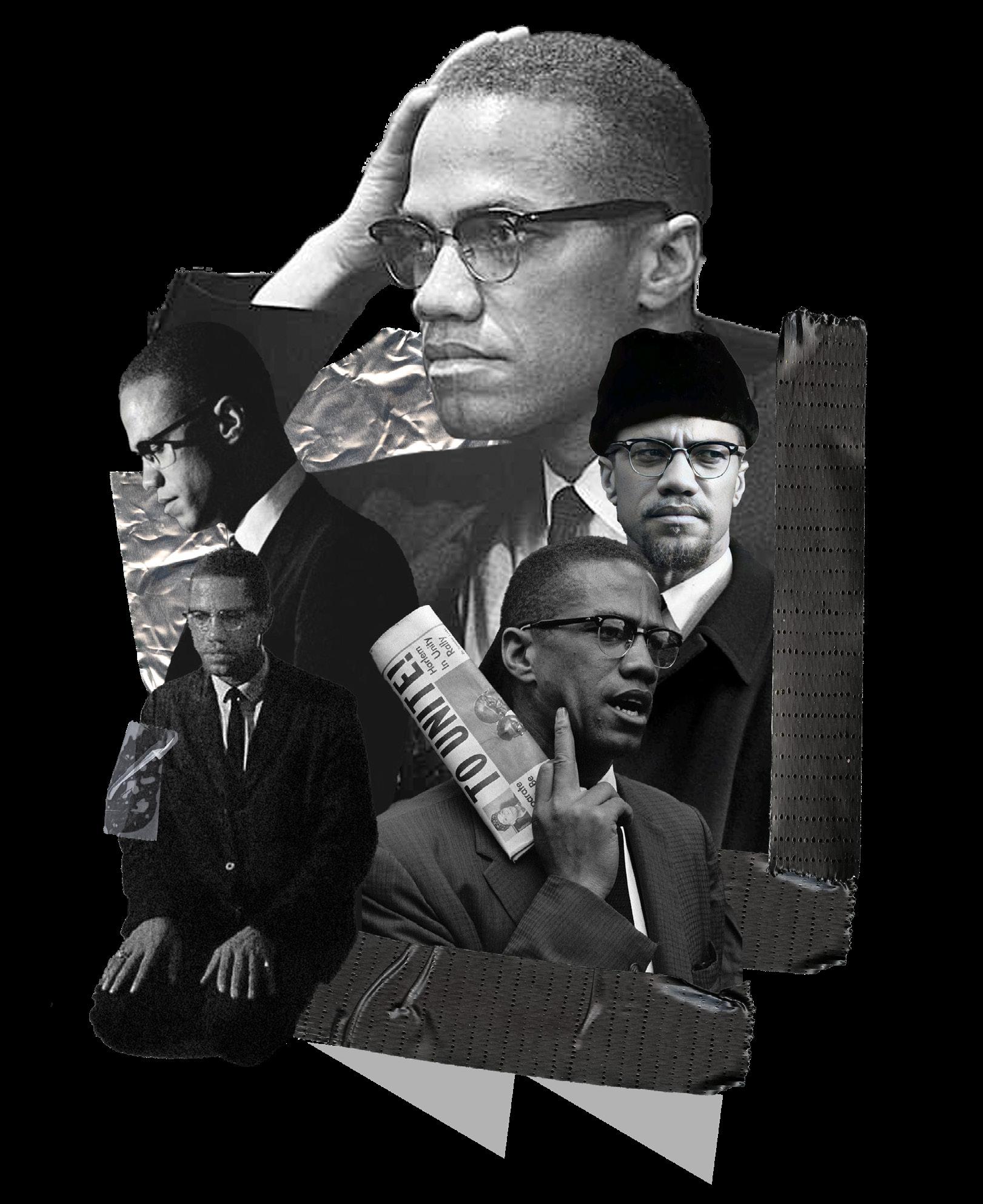
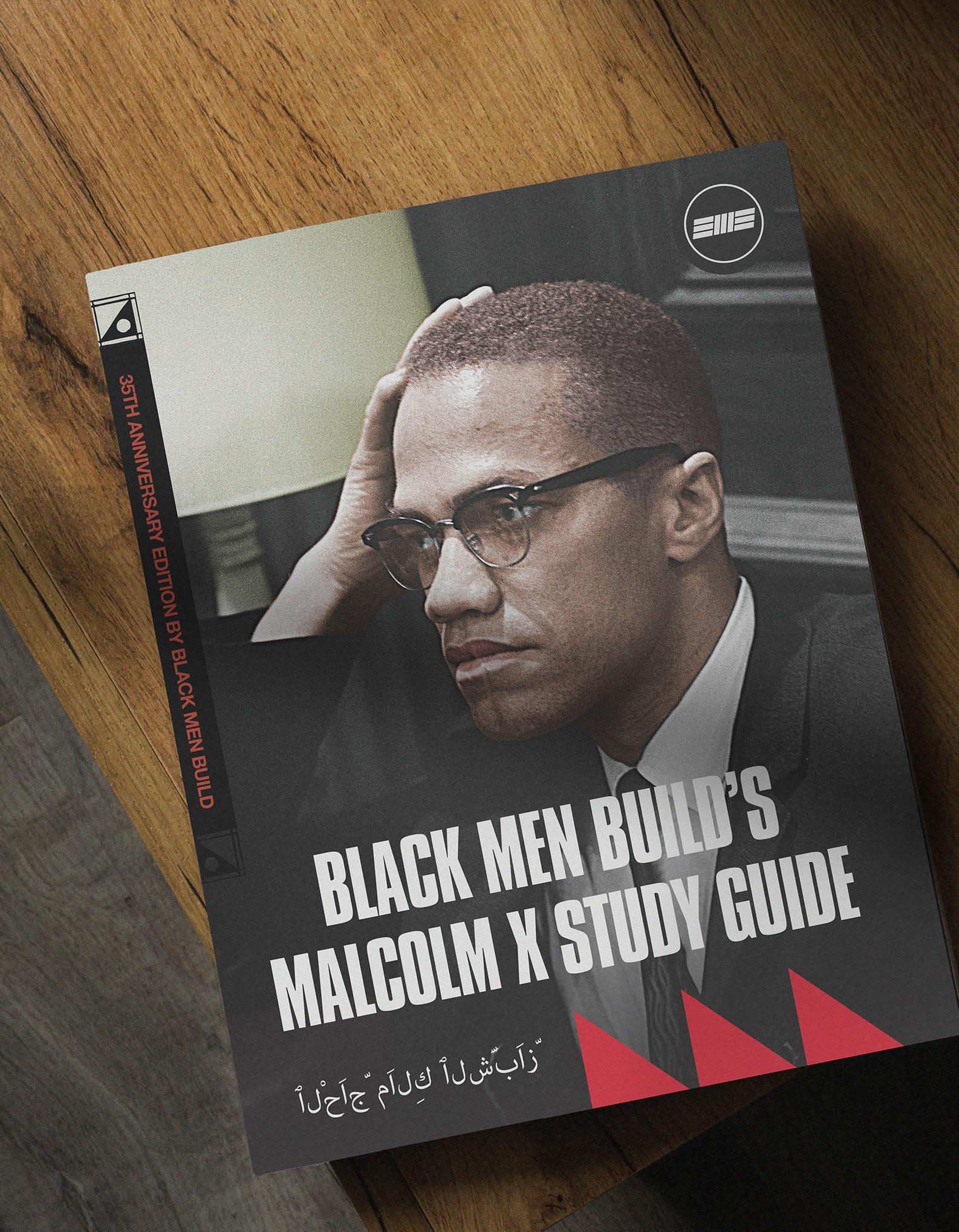
A war that we are not winning. We didn’t start this war, but we have to finish it. Our opposition is organized across countries and continents. To win, we must be organized. To be organized takes a process of discipline and aligning with our principles, our goals, our vision and our actions.
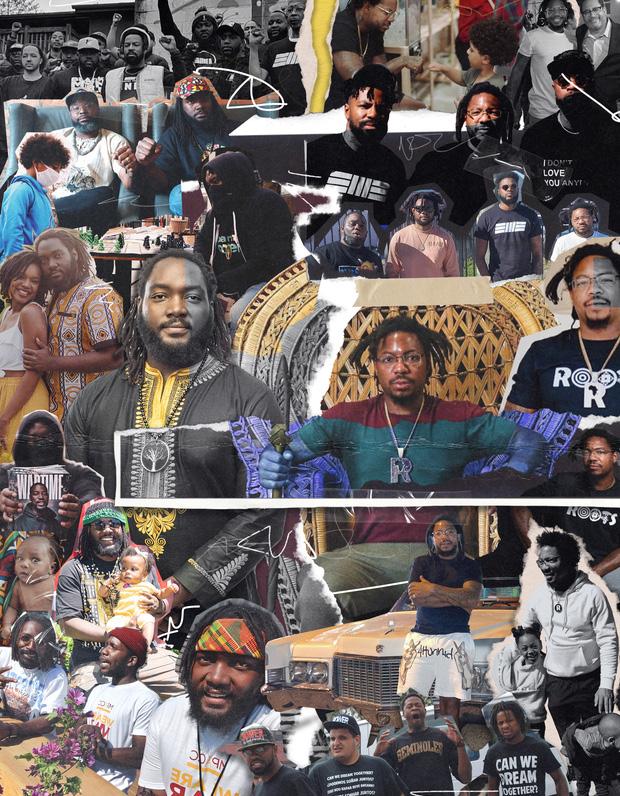
We are Black men working with Black men to serve our communities, to be critical thinkers, to speak truth, to teach others, and to build the social economic, political and spiritual tools needed to evolve and power our Black future.
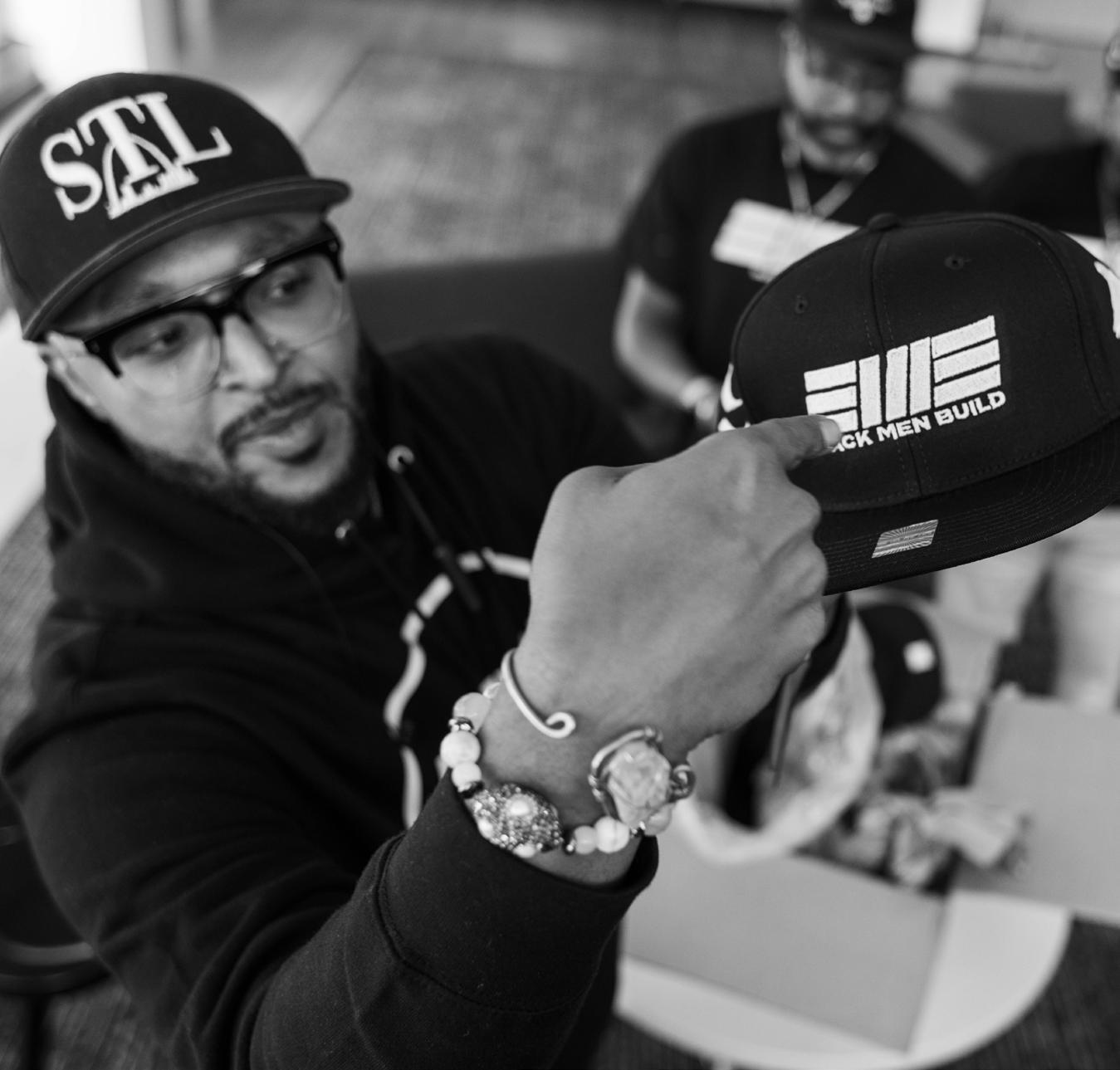
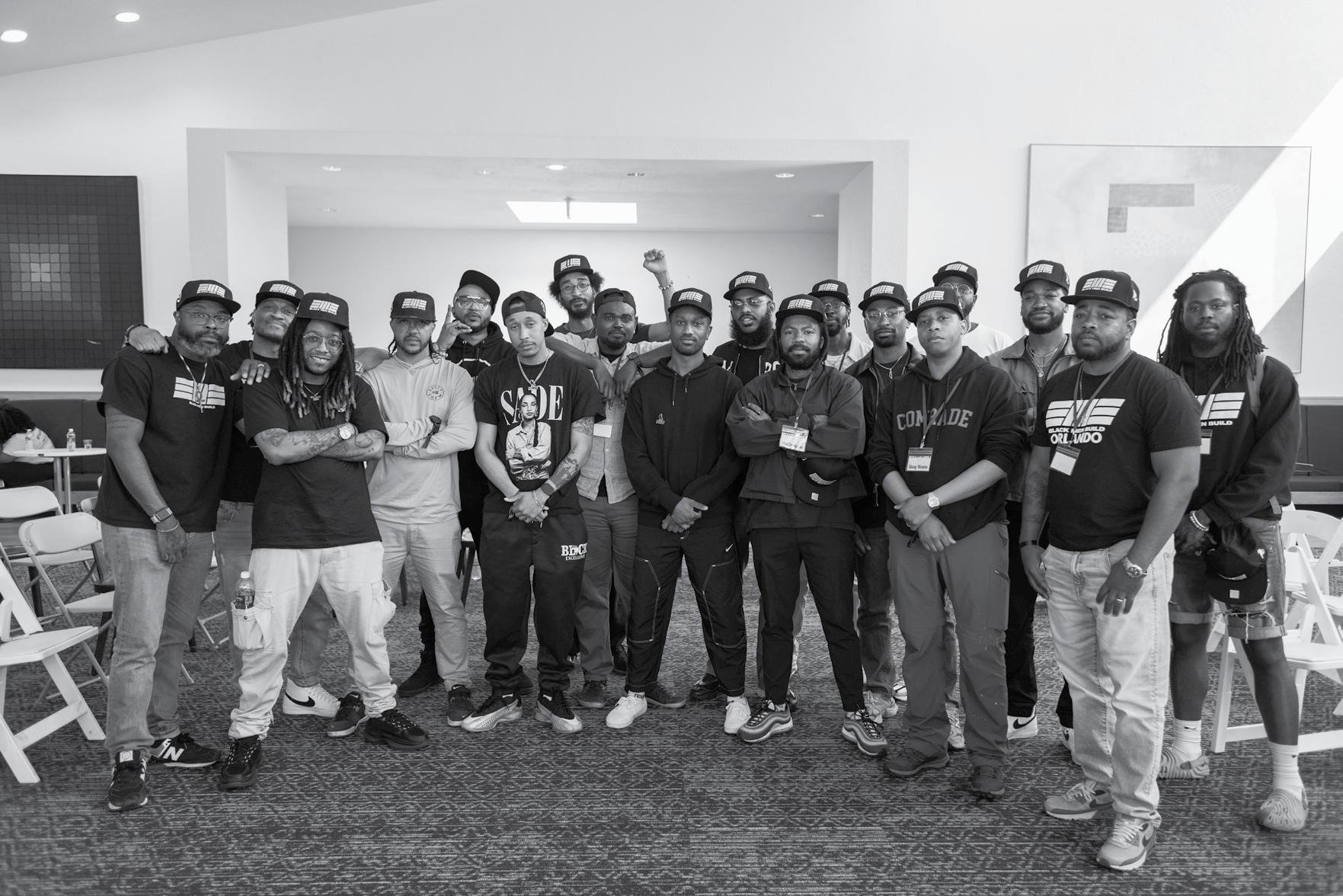
BMB is a wide group of Black men from all walks of life who have come together to take on issues that are challenging Black people.
ALIGNING WITH OUR VALUES IS THE FIRST STEP
1. 2. 3. 4. 5.
We are critical thinkers.
We are curious about this moment.
We are coming together to take an active, responsible role in freeing our communities.
We are transforming to meet the moment.
We are bonded with black women and all black people in the fight for true freedom.
*BLACK PEOPLE WHO CHOOSE TO FIGHT FOR THE ENEMY, OR USE OUR STRUGGLE FOR PERSONAL AND FINANCIAL BENEFIT NEED NOT APPLY.
SETTING THE STAGE
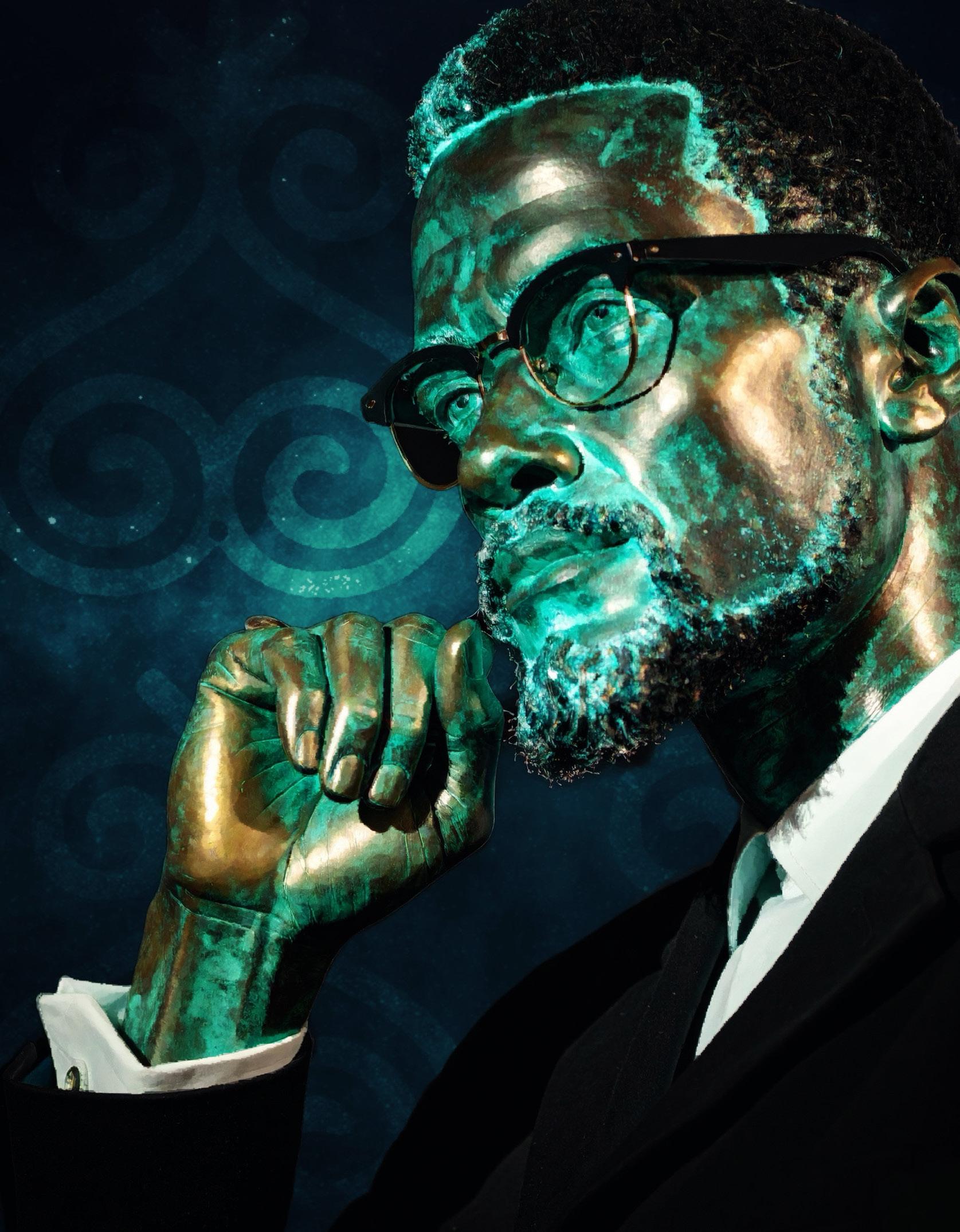
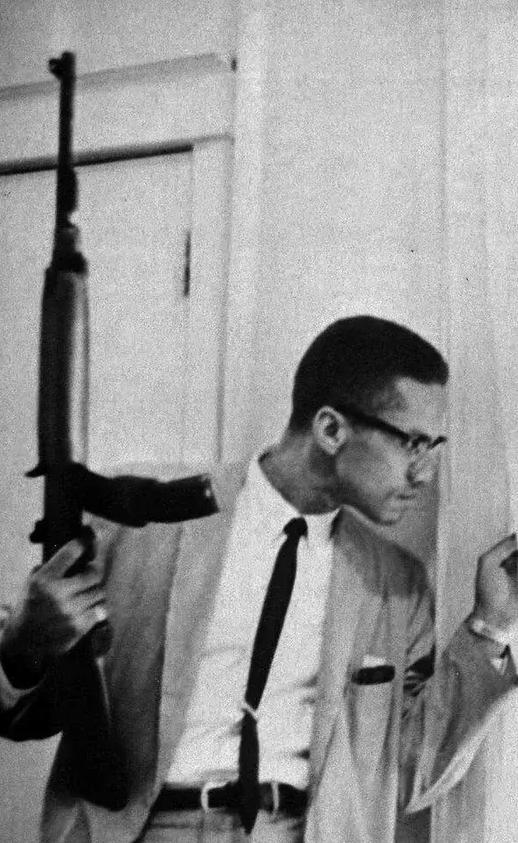
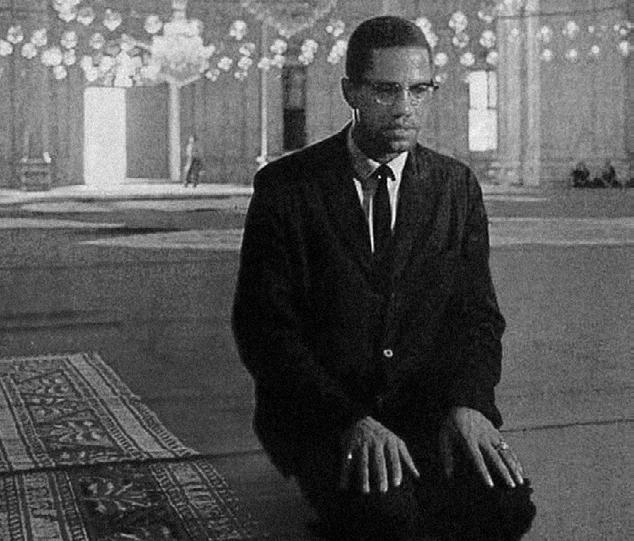
Malcolm X would demand that we understand the context we are living in. He would urge us to name what we are fighting for, what we are fighting against and to examine how those forces shape our relationships, especially as Black men.
At Black Men Build, we’ve spent the past 5 years centering this idea through our signature program: The Men’s Circle.
We believe that strong organizations are built on strong relationships. Rebuilding the circle is both an internal priority and a political one.
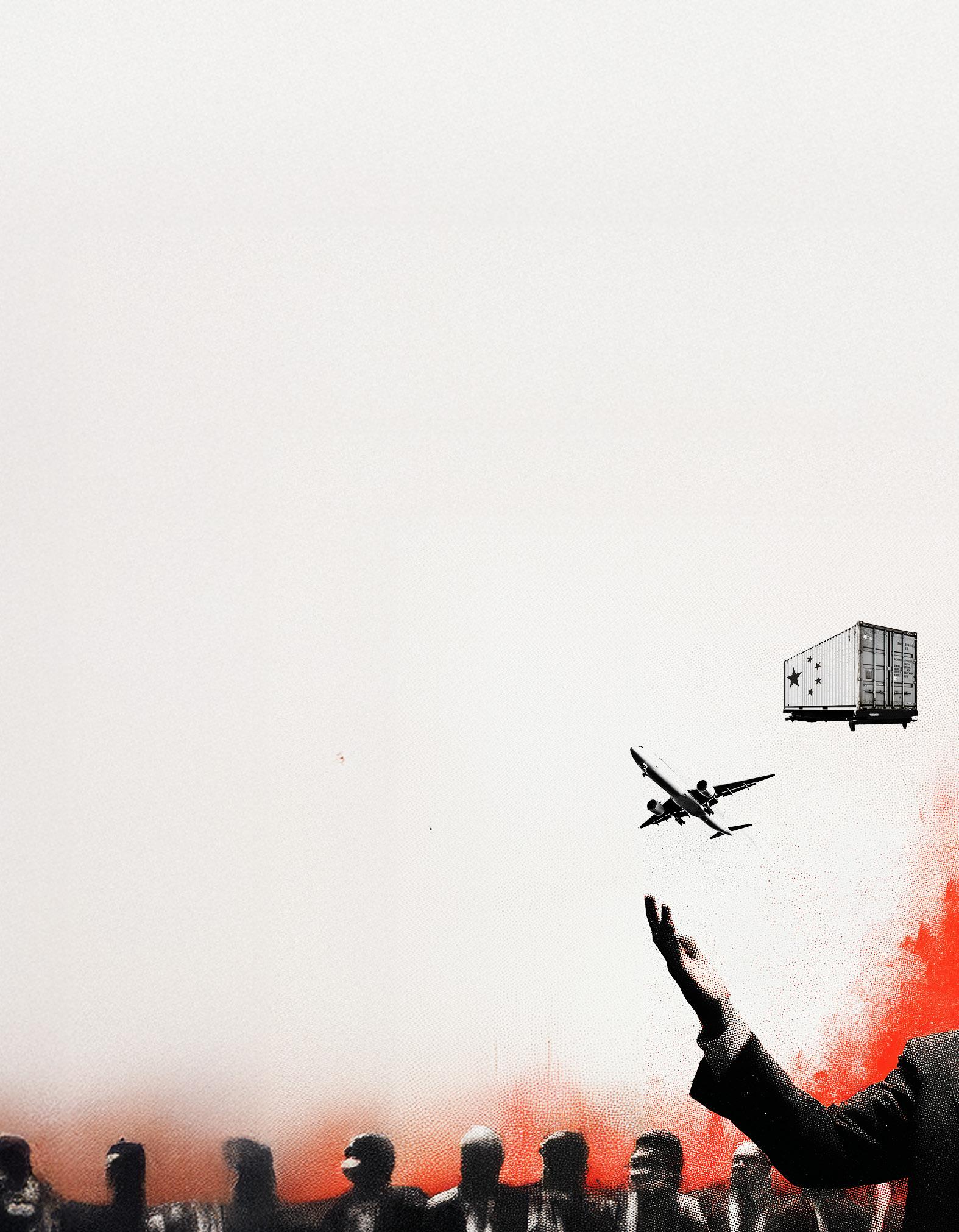
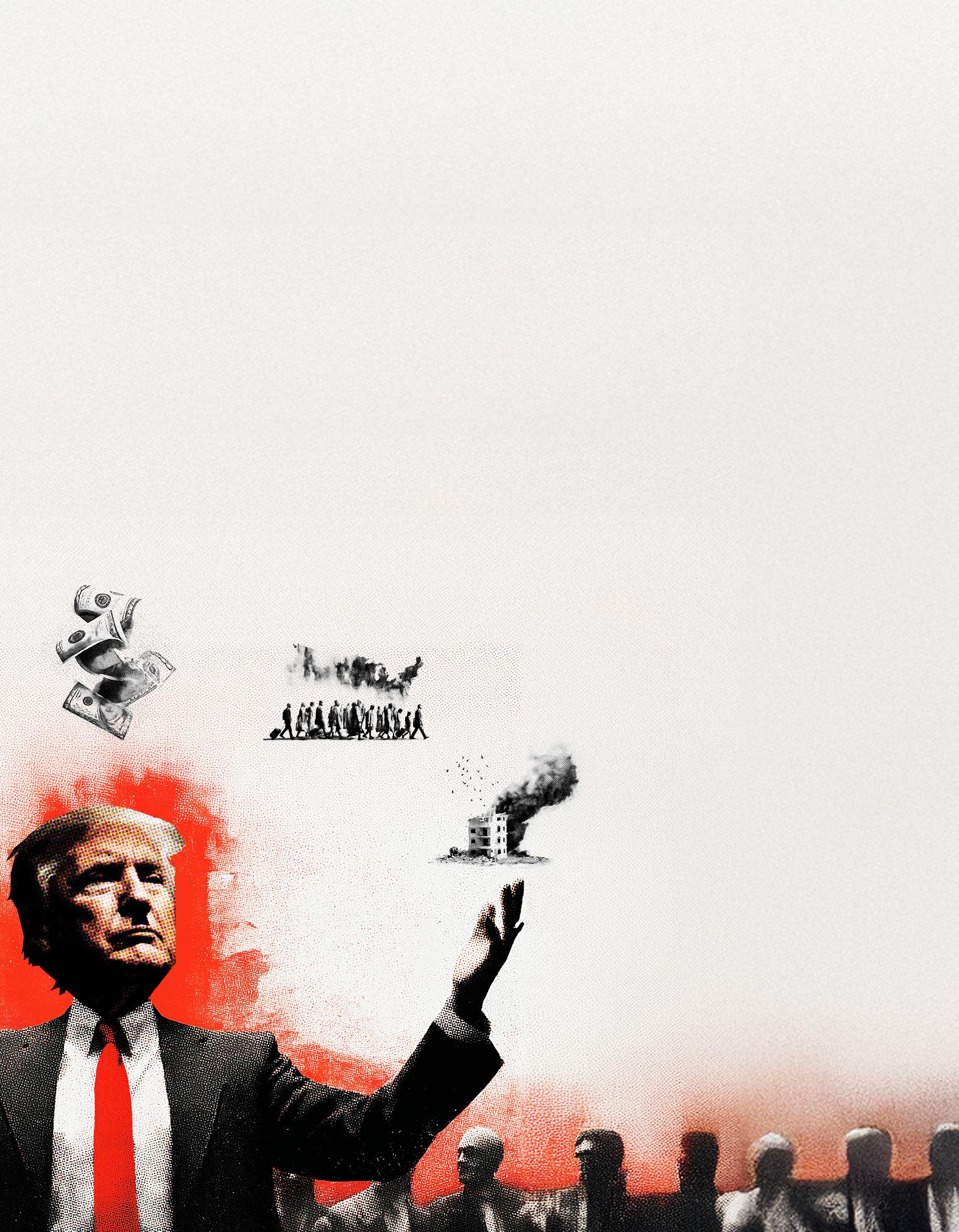
We invite you to read this opening section with that context in mind. We are living in a moment where the second Trump administration is unfolding exactly as we expected. The forces of white supremacy, fascism, and capitalist exploitation have not paused and neither can we.
We must understand the moment we’re in, so we can transform to meet it head on.
CREATING THE CONTEXT SECTION ONE LAYING OUT THE PROBLEM CREATING THE CONTEXT SECTION
LAYING OUT THE PROBLEM CREATING THE CONTEXT
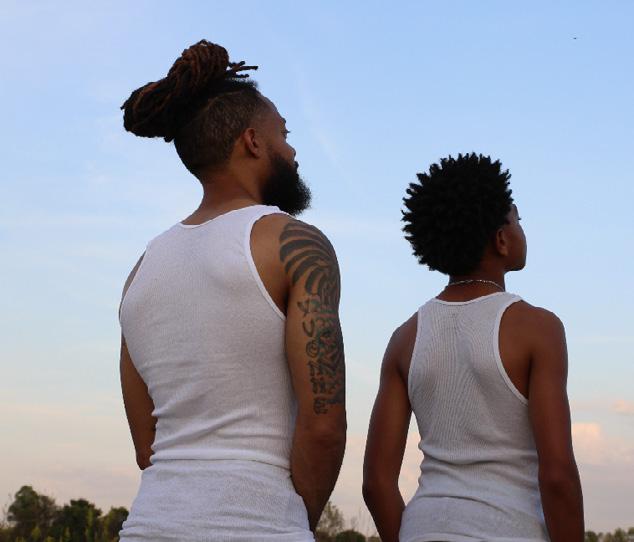
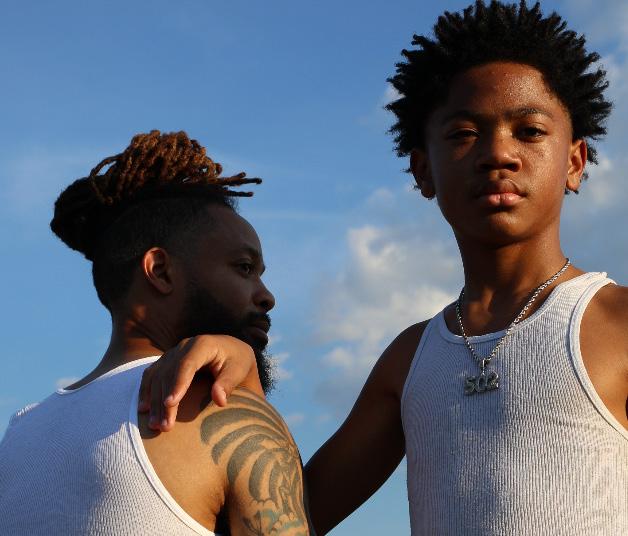
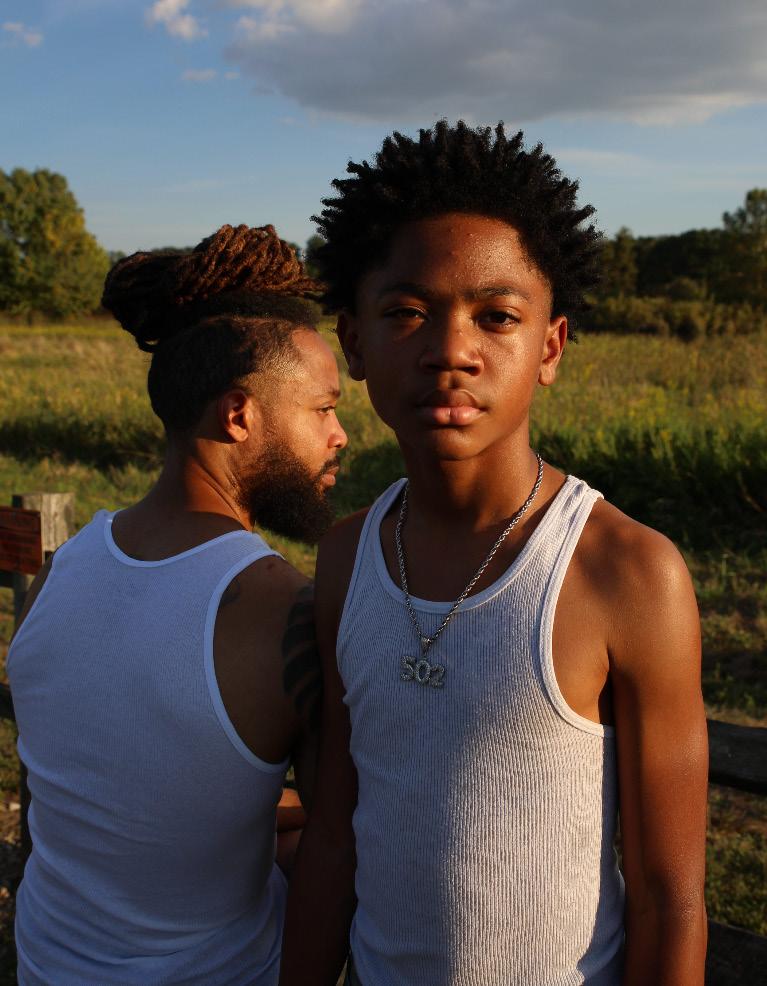
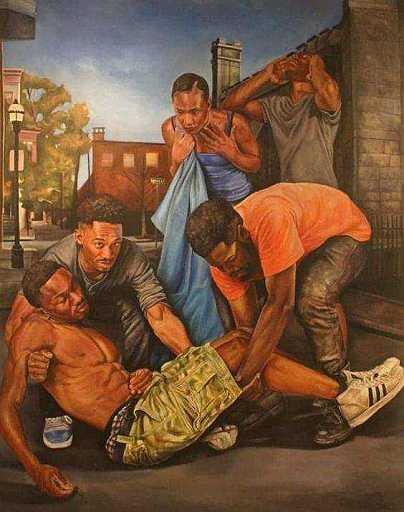
You People by Helen Kamilah Amon Bailey| Photography by Marshall Shorts
Ascendant
“The
Alloy” Acrylic on canvas 52” x 64” Sir’Ra
REBUILD THE CIRCLE
Our cities need us to rebuild the circle.
For the last five years, we’ve been building, brick by brick, brother by brother.
Across cities and communities, Black Men Build has been organizing for power, creating space for healing, growth, and transformation. From Miami to Milwaukee, LA to New York City, we’ve sat in circles, fought side by side, and lifted each other up in the face of systems designed to tear us down.
We’ve made progress. We’ve grown. And we’re proud of every brother and sister who has joined us in this fight.
But the work isn’t finished. It’s time to rebuild the circle.
It’s time to strengthen the bonds between us.
It’s time to join revolutionary Black organizations committed to love, accountability, and real power.
We’ve been building for five years and we’re calling on you to build with us.
The following footage is from our 2024 New Men Tour, where we brought our Men Circle from city to city and connected with hundreds of brothers across the country.
SCAN QR CODE TO WATCH OUR STORY
PHOTOGRAPHY BY PHILLIP LOKEN
FASCISM -
there’s a song by Bob Marley called “slave driver” where he sings “every time i hear the crack of a whip, my blood runs cold. i remember on the slave ship, how they brutalize our very souls.” this is what we mean when we say cracka. anyone crackin’ that whip to enforce the social, economic, and political system of slavery, is a cracka. and a lot of times it be our own people crackin’ that whip for massa. and these crackas wild. the way they been wildin’ over the past few centuries been called a lot of thingsfrom colonialism to white supremacy to fascism. for us tho, it’s always been that cracka shit. but before we get to these crackas we gotta talk about the predecessor, the creator of all crackascolonizers.
Desmond Tutu once said, “When the missionaries came to Afrika, they had the bible and we had the land. They said, ‘let us pray.’ We closed our eyes. When we opened them, we had the bible, and they had the land.” that line would be perfect if not for one important thing missing- them missionaries came with an army. they taught us in school to call them ”pilgrims,” ”pioneers,” and “explorers,” but never to call them “mass murderers,” “enslavers,” or “rapists,” which is exactly what they were.
before the colonizers came, there was no such thing as race in Afrika. colonizers used warfare, bribery, and trickery to divide and conquer the people into racial and ethnic groups. they created the artificial borders that have led to the conflicts we see today. colonizers love drawing up maps.
before colonizers came to Turtle Island (present day north amerikkka), 500 years before the united states even existed, indigenous people had a confederacy of nations practicing democracy under a constitution called the Great Law of Peace. colonizers came and nearly wiped them out. they were damn near driven to extinction by europeans spreading diseases (an early form of biological warfare), massacres, forced displacement, and policies and laws made to destroy cultures.
it’s worth noting there was this one colonizer, Thomas Morton, who wrote a book condemning the treatment of indigenous people. conservative puritans made it the first banned book in amerikkkan history. that white man then decided to ignore the laws of his fellow colonizers and started selling guns to indigenous people. shoulda been for the free but still, a lesson on allyship.
i’ll share another lesson i do with my middle and high school students. i’ll ask em, who knows what the definition of suicide is? every hand in the class will go up. then i’ll ask who knows what the definition of homicide is? and get the same result. final question, who knows what the definition of genocide is? and in a classroom of 20-30 kids, only a couple hands go up, if any. the fact that most school kids know the word for killing yourself and killing another but the idea of killing thousands, the act of killing millions of people, something well documented in this country’s
history, is unknown to them, tells you everything you need to know about the amerikkkan education system.
these colonizers came from a europe in decline. once called the dark ages cuz they was pissin’ and shittin’ in the streets (dirty ass europeans spreading diseases again). europe only survived that era by pillaging the world of its knowledge and resources-
“The African presence is the invisible thread in the tapestry of European history... The so-called ‘Renaissance’ or ‘Enlightenment’ in Europe was made possible by the subjugation of Afrika and the exploitation of its people and resources.” - Dr. John Henrik Clarke
THAT CRACka Shit
written by st. james valsin
Aimé Césaire teaches us that colonialism is a process that “... dehumanizes both the colonizers and the colonized” but i’d add these colonizers were already lacking the basic standards of humanity-
“Western culture developed out of a very hostile environment. Rocks, snow, ice, long periods when the ground was too hard to be worked, when nothing could be produced from the soil, hunting became too important; accumulating, hoarding, hiding, protecting enough to last through the winter, things falling apart in winter, covetous glances at one’s neighbor’s goods. Would three or four thousand years of that kind of survival influence a culture? Would
greed color itself into the total result, in a large way? Hunt, forage, store, hoard, hide, defend, the thing at stake!! Not very conducive to sensitivity, tenderness...”
the revolutionary dragon, George Jackson wrote these words in his book Soledad Brother. he speaks of nature and nurture but not in the competitive way we been taught. it’s not one vs the other but how does the one affect the other, how do they interact with each other to create people and culture. heightening the contradiction of who the fuck you callin’ savage; it’s a dialectical way of thinking. this was the brilliant mind of George Jackson, one of the most important intellectuals of the 20th century. he taught himself to read while fighting these crackas in the belly of the beast, where that colonizing ass cracka shit is concentrated, so they call em concentration camps in some places. but here we just call
em prisons. and those prisons are plantations but we’ll get to that part…
Nina Simone said “an artist’s duty is to reflect the times” and the artist that reflected my childhood, my generation’s time, more than anyone else was ‘Pac. i was first introduced to George Jackson by the music of Tupac Shakur, one the realest to ever live. unlike a lot of other rappers, then and now, he didn’t just rap about street life, drugs, and guns; his lyrics also had a hyperfocus on police and prisons. we called him the realest not just for his music, but cuz when he saw a couple crackas beatin’ on a Black man he pulled out his gun and shot em both. most of us ain’t know it back then but he was just following the revolutionary legacy of his Black Panther lineage. his mom, Afeni Shakur, was part of the Panther 21, a group of Black Panthers that were targeted, setup, arrested, and falsely prosecuted by the alphabet boys (nypd and fbi; what we now know to be cointelpro); his stepfather, Mutulu Shakur, was a member of the Black Liberation Army and a political prisoner for 37 years; his godmother and step-aunt, Mutulu’s sister, was the legendary revolutionary Assata Shakur; and his godfathers Jamal Joseph and Elmer “Geronimo” Pratt. considering what ‘Pac did when he saw a couple crackas beating on a Black man, i wonder what he woulda done if he saw what was happening to George Floyd… but i digress... on the intro to “Hold Ya Head” he name drops a couple political prisoners. among them was George Jackson who wrote-
“For a young black growing up in the ghetto, the first rebellion is always crime.”
when i first read that line, my entire childhood started to make sense. even tho George and i got five decades between us, his life and words hit home. even if they are unaware of it, crime is an act of rebellion. crime is when the people rebel against the economic oppression of high unemployment, low wages, and cracka ass bosses. it’s rebellion against the rent being too damn high, housing discrimination, and gentrification pushing us into ghettos and projects. and fa damn sho it’s rebellion against these crooked ass laws enforced by these runaway slave catchin’ crooked ass police. runnin from the police was such a sport, such a common pastime in the hood that it’s the title of the only song 2Pac and the Notorious BIG ever recorded together. but of course these corporate crackas stopped the song from ever being released. unfortunately, all of us ain’t always make it when runnin’ from the police. some got caught up. like a couple homies i grew up with, George was arrested at the age of 18 for armed robbery. we had 10-20-life laws. they put posters up in schools and parks as a constant reminder. decades prior they sentenced George to an indeterminate sentence of one year to life. that’s that cracka shit right there. so back to these colonizin’ ass crackas…
these colonizers ain’t know nothin’ bout the land they stole so with a gun and a crack of the whip they enslaved millions of Afrikans and shipped em to the amerikkkas to work the land. this where they act like our history started but we know that’s some bullshit. this just the colonizer transitioning to cracka status cuz wasn’t nothin’ left to colonize. now they had to cash in on the investment, now they gotta capitalize, cuz that whole settler-colonial shit was just business. the mayflower was funded by corporations. now, onto the next phase of the business plan- slavery.
a slave, by the colonizer’s definition, is a person who’s forced to work and is considered to be another person’s property. let’s break that downbeing forced to work, the exploitation of labor, is the foundation of this liberal democracy. the more than 400 years of slavery have been well documented but you know we ain’t make it easy for em. some strapped up like Harriet Tubman, Nat Turner, and John Brown clappin’ back at these crackas. Frederick Douglass who said “The relation of master and slave is one of violence—it is a war of the strong against the weak...” was ready to scrap with any cracka anytime anywhere and taught himself to read when a book in Afrikan hands was considered
contraband. and we zoes in 1804 showed these crackas just how far we’ll go if you push us. Dessaline gave the order to kill every white man, woman, and child on the island and they did just that (they wanna call that a genocide but we’ll disrespectfully diasagree cuz this was a fight to be free. and a few polish colonizers was spared cuz they wasn’t with the slave shit. they defected from the crackas to fight alongside the Afrikans and Tainos). crackas running from the Haitian revolution found themselves in the us and spread news
of the successful slave revolts happening not too far away. for this reason, crackers wrote the 2nd amendment. fears of slave rebellions and indigenous resistance had these crackas shook. especially considering the Haitian revolution officially began on August 21, 1791 and just a few months later on December 15, 1791 the united states ratified the 2nd amendment. the right to bear arms was written so crackas could keep their property in check.
so about that part… another person’s property, huh? they really thought they could own a whole damn human being. again, these crackas wild. anyways, personal property and ownership as we know it today is that cracka shit, a european concept-
“starting in the colonial era, private land ownership was a major attraction to european migrants (colonizers) who tried to escape feudalism in europe and sought freehold ownership in north amerikkka. private property was
viewed as a means to secure political and economic freedom. therefore, private property symbolizes the political and ideological beliefs upon which the united states is founded, and strong constitutional protection of private property was deemed necessary.” - lincoln institute of land policy
“...personal property developed within english common law, classifying land and structures as real property and movable items as personal property, or chattels.”- uc berkeley law
in other words, our modern understanding of personal property was the legal basis for chattel slavery. makes sense why only wealthy white male crackas was allowed to own property and only those that owned property could vote in amerikkka. we call this a plutocracy; not a democracy. property tax is that cracka shit. same property tax that ensures poor kids go to poor schools; same property tax that gave us the three-fifths compromise
transforming “...negroes into subjects of property,” and that same 3/5ths shit is what gave us the electoral college we use to elect the president. now we got a wannabe king of crackas for president in a country that fought a so-called revolutionary war to end the rule of british kings. this king of crackas, donald trump, is a chip off the old colonizin’ block. he inherited a real estate empire from his kkk daddy; got to be president the first go round even tho he lost the popular vote cuz he won that same racist ass electoral college we was talkin bout. this country never been a real democracy. some would say it was during reconstruction when Black folks got the right to vote but that would be sexist cuz women couldn’t vote during that period.ain’t been a single time in this country when everyone born here had unrestricted access to the voting booth. so how can we call this a democracy? then when the cracka king lost his bid for re-election, he sent a mob of armed crackas by the thousands to kill elected officials while they was certifying the votes.
in the words of Malcolm, this was “...the chicken comin’ home to roost.” after organizing countless coups and coup attempts round the world, the united states done finally did a coup on itself. these. crackas. wild. and they let him get away with it. like all the colonizin’ ass crackas that came before him, he will never be held accountable for his actions- braggin’ bout sexually assaulting women, hanging out with pedophiles, inciting an insurrection, all with no fear of consequence. this goes beyond privilege and entitlement. this that cracka shit. it’s sociopathic.
generation after generation of mass murderers and rapists who go to sleep at night thinking they did a great service to the world with all their conquering and colonizing. of course we gon end up with a president donald trump after all that. of course we gon end up with a country where a piece of every dollar we make and spend goes to funding genocides in Palestine and the Congo. obama had ya’ll believing racism was over while he bombed Black people round the world. us military presence
in Afrika more than doubled under the first black president and to this day he’s deported more people than any other president in history. obama was the height of neoliberalism. now in hindsight we can say after pulling that race card a trump card had to be the next play. the cracka king mighta finally woke some people up tho. trump’s second term got academics and liberal news talkin’ bout “the rise of fascism” but George Jackson been told us more than fifty years ago to settle our quarrels cuz “fascism is already here.” so what’s this fascism everybody keeps talkin’ bout like it’s somethin’ new? oh, it’s just that cracka shit again. let’s make it plain tho-
the word fascism comes from the term fasces, a roman symbol representing authority and the power to punish. today this same symbol is on display behind the podium in the us house of representatives btw. it became the name of the far-right wing italian party after the first world war. the textbook definition of fascism is a farright (conservative), ultranationalist (extreme belief in the superiority of
their own nation) political ideology characterized by authoritarianism (enforcement of strict obedience to authority), centralized autocracy/ plutocracy (a system of government where a single person or a small group holds absolute power), militarism (the belief or desire of a government or people that a country should maintain a strong military capability and be prepared to use it aggressively) and the suppression of individual rights and democratic government in favor of the perceived needs of the nation or race. and that cracka mussolini, the leader of the italian fascist party, who tried and failed to colonize Ethiopia, explicitly linked fascism with corporatism.
by that definition, the european settler colonial project (colonizers) and the amerikkan system of plantation slavery (crackas) was fascism. today, it’s the police state and prison industrial complex. it’s that “everybody can be a brand, everything can be a product, you gotta sell yourself” bullshit. this is why George Jackson said-
“We will never have a complete definition of fascism, because it is in constant motion, showing a new face to fit any particular set of problems that arise to threaten the predominance of the traditionalist, capitalist ruling class. But if one were forced for the sake of clarity to define it in a word simple enough for all to understand, that word would be ‘reform.’ We can make our definition more precise by adding the word ‘economic’… ‘economic reform’ comes very close to a working definition of fascist motive forces.”Blood in My Eye
the 13th amendment is a great example of fascism in the guise of economic reform. it completely changed the way amerikkka did business but it didn’t do away with the social (racism), economic (capitalism), and political (electoral college) system of slavery. it simply reformed them. we celebrate Juneteenth cuz lincoln ain’t free shit. Black people freed themselves. other side of that coin is the constitution ain’t abolish the plantation, it just replaced it with prisons. went from
chattel slavery to wage slavery; from plantation owners to executives and shareholders; overseers to security and prison guards; runaway slave catchers to police and ice. this is reform, the oppositional force to revolution. reform, a literal return to form.
like donald trump, he is amerikkka’s return to form. when they talk about book bans in public schools and libraries across the country, we remember the book bans that happened during settler colonialism, on slave plantations, and in the prison system from its inception to this day. when they get to redrawing districts to suppress the Black vote and building walls to militarize an imaginary border, we remember the scramble for Afrika and how colonizers love drawing up maps. when king cracka has a press conference to announce the militarization of cities with majority Black populations, we remember the 2nd amendment and crackas forming militias in fear of slave rebellions; we remember the MOVE bombing in Philly; the military response to the Ferguson uprising; Tulsa, Rosewood,
and so many others. when ice gets to snatching people off the streets, we think of kkk trading their hoods for badges and police snatching us off the block. when they perfected this prison shit so well they can build a concentration camp in the middle of nowhere seemingly overnight and give em cute lil nicknames like alligator alley and deportation depot… we go, oh yea, that’s that cracka shit. and the ancestors done been told us how to deal with these crackas.
A Shooter in More Than One Way
Malcolm X and the Cultural Arsenal
Written by Ekundayo Igeleke
War is spoken in the language of territory and treaties, of barricades and ballots. In Black America, there is no mistake that we are at war to free our communities from the violence of the U.S. Empire. This is also a war over truth. It is a war fought in the realm of culture. As Toni Cade Bambara, that soldier of the word, insisted, the task of the culture worker is to “make revolution irresistible.” This is not a metaphor. It is a strategy. It begins with the recognition, as Bambara did, that we are in a battle over the most fundamental question: what is the truth? Malcolm X understood this battlefield intimately. He knew that for a people to seize liberation, they must also seize the means of their own representation.
For him, culture was not a sidebar to the struggle; it was, as he declared at the founding of the Organization of Afro-American Unity (OAAU), “an indispensable weapon in the freedom struggle.” He called for a culture department because he knew that culture, in the words of Walter Rodney, is “a total way of life.” It is what we eat and what we wear; the way we walk and the way we talk. It is the binding agent of a people, the thread that connects us across oceans and time. To control a people’s culture is to control the story of who they are. To reclaim it is to forge a future with the raw materials of the past.
Into this fray, Malcolm carried a weapon that W.E.B. Du Bois had long ago sanctified: the unblushing power of propaganda. “All Art is propaganda and ever must be,” Du Bois declared. For him, the purpose was clear: to use his art as “propaganda for gaining the right of black folk to love and enjoy.” This was not a narrow, cynical tool, but a life-giving one—a propaganda that Black people could love, one that asserted the validity of their humanity against an empire unprepared to bear that truth. Malcolm took up this mantle. A big part of his strategy was to engage in a form of living propaganda, a radical re-education.
This is why the battle over art is so fierce. The ruling class has always known this. Our ancestor, Amiri Baraka points out that bourgeois philosophy works tirelessly to divide art from politics, to situate it in a “transient realm, beyond ideology.” They individualize it, de-classify it, seeking to remove colonized people from their own cultural roots and re-insert them through the sterile, isolating logic of neoliberal markets. The CIA funding the Congress for Cultural Freedom and other institutions of cultural production was not an anomaly. It was an admission that the terrain of ideas, of opera and painting and poetry, is a terrain of revolutionary struggle. It is a violent terrain where hegemony is won and lost.
Amílcar Cabral taught that “only societies which preserve their culture are able to mobilize and organize themselves.” He saw culture as the fertile ground from which the seeds of resistance sprout, determining a society’s chance of “progressing (or regressing).” Malcolm understood this as well. In addition to history and politics, Malcolm was a lover of jazz, poetry, and literature.
"Malcolm's legacy is not a relic. It is a living blueprint."
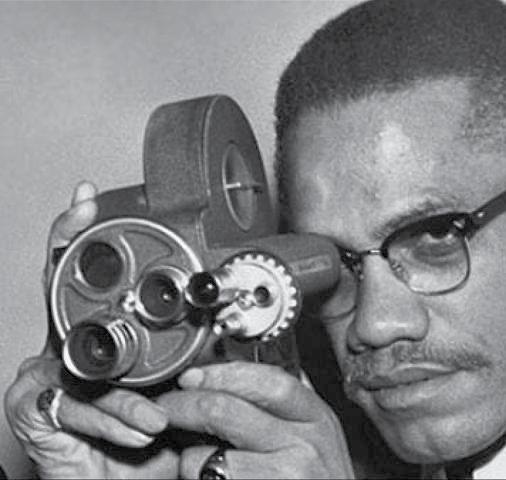
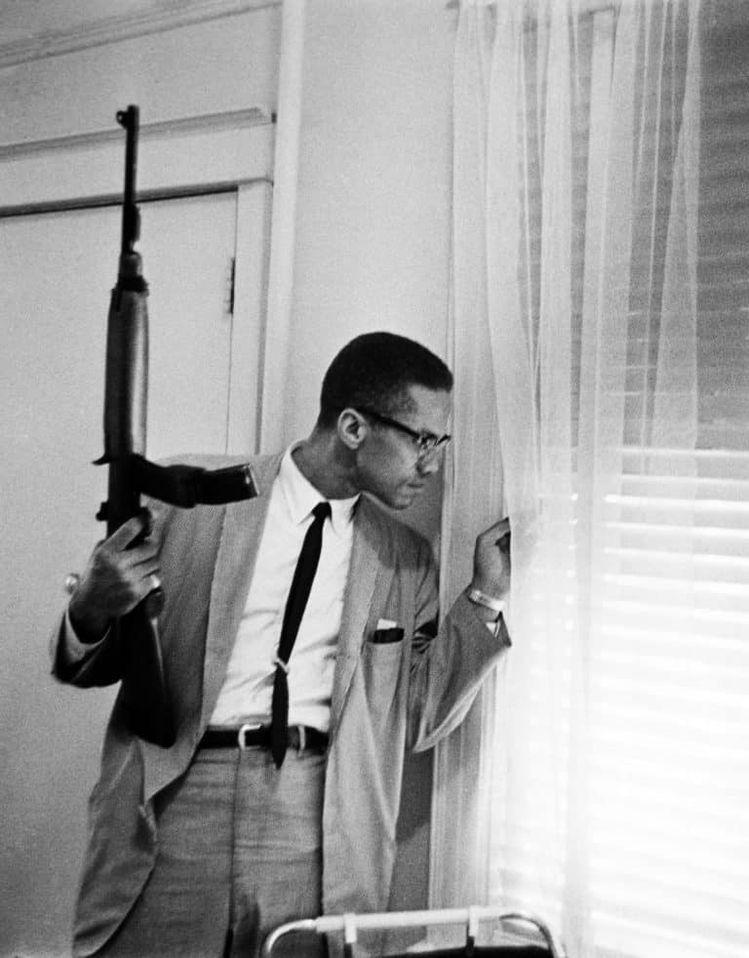
When we study Malcolm X, we study how to turn the master’s tools against the master’s house. Although none of these tools ever really belonged to the “master.” Malcolm He operationalized this doctrine not just with his words, but with his eyes, with his hands. People forget that Malcolm was a photographer. He engaged this artform as an act of cultural preservation and political mobilization. He understood the power of the image, the photograph, to craft an archive of dignity and self-determination. He was not just a subject of the lens; he was a silent partner, a visual strategist. He curated his own image, yes, but he also wielded the camera himself. By documenting his people and his travels, he prepared fertile ground for the continuity of a global Black struggle. He built an archive for a future that was still fighting to be born.
At a 1963 civil rights demonstration, Malcolm “brought along a 35-millimeter camera,” busily framing shots, telling a New York Times reporter, “If there were no captions for these pictures, you’d think this was Mississippi or Nazi Germany.” Here, the camera was a forensic tool, collecting evidence of a shared, global oppression. Later, touring Algiers, he learned out of a taxi window to capture the world, building his own visual database of the Pan-African landscape. This was not tourism; it was study, it was connection, it was the work of what Amilcar Cabral would call the very foundation of the liberation movement. It was a declaration that Black people would no longer be merely the object of the gaze, but the subject, the author, the archiver of their own story. This was the practice of being a “shooter” in both senses: one who captures a moment and one who is armed.
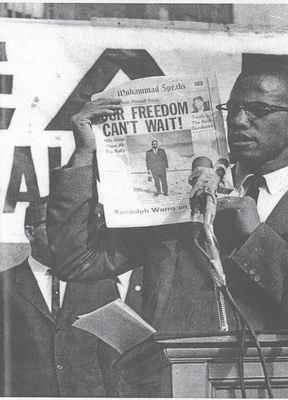
Along with other NOI brothers, he started the popular paper, Muhammad Speaks, which would circulate more than any other Black independent newspaper in the country. Again, Malcolm understood the power of cultural production in service of Black liberation.
Malcolm’s legacy is not a relic. It is a living blueprint. We see it today in the decentralized formations of artist collectives, in the toolkits shared online, in the statements signed by popular artists standing in solidarity with Gaza. When they pledge to use their artistic practices “as tools of liberation,” they are channeling the spirit of Malcolm’s OAAU culture department and the unflinching propaganda of Du Bois. They are recognizing, as he did, that the power to shape narrative is a unique responsibility in the fight for sovereignty, dignity, and selfdetermination.
Malcolm knew that the revolution would not be televised by its enemies. It will be documented, curated, and broadcast by its own people. It will be written in our poetry, sung in our music, and captured in our photos. The war is over the truth. And the truth, when forged in the fire of cultural resistance, becomes a weapon that is impossible to put down.
It becomes, as Bambara commanded, irresistible.
Beyond Civil Rights
Malcolm X’s Human Rights Vision and the Struggle for Black
Written by: Musa Springer
“If there is to be any proving of our humanity it must be by revolutionary means.” — Walter Rodney
“Do what must be done, discover your humanity and your love in revolution” — George Jackson
The European world, including the United States, has never recognized Africans and African descendant (Black) people as fully human. From the early interactions between Europeans and Africans on the Guinea coast and world-defining trans-Atlantic African enslavement, to Slave Codes, Jim Crow, and today’s ceaseless police killings, the colonial-capitalist state has always deemed our humanity as secondary to our roles as capital, laborer, and a problem. Within this system, Black existence is confined to limitations and conditional “rights” that can be granted, revoked, or ignored at will.
El Hajj Malik El-Shabazz, commonly known as Malcolm X, cut through this by refusing to frame the struggles of African descendant peoples within the narrow language of “civil rights.” He understood that civil rights were limited to the domestic terrain of U.S. law, bound by the same government and legal system that denied our Black humanity in the first place. Instead, he insisted on shifting toward a human rights framework — rights that are universal for all, inherent in our existence, and rooted in our reality as African people -- not privileges begged for and handed down by the state.
Human Rights vs. Civil Rights
For Malcolm, the distinction between civil rights and human rights was fundamental. Civil rights tied Black struggle to the U.S. Constitution and to appeals for recognition by the same state that is, by design, inherently racist. The U.S. Constitution was signed by the owners of enslaved Africans. As a legal and political framework, civil rights refers to a set of protections for equal treatment without discrimination, regardless of social characteristics like race, religion, sex, or disability. While these are obviously necessary legal guarantees, they are also a set of rights entirely established and administered by government laws, amendments, and institutions, based on liberal notions of ‘personal freedom’, individualism, and ‘access’ to various services and systems.
On the other hand, human rights exist outside the authority and strict confines of the U.S. government, or any governmental state for that matter. Human rights are inherent and inalienable, meaning they are rights and freedoms guaranteed to every person by merit of them simply being a person. They are entitlements to basic necessities like clean water, adequate housing, unrestricted healthcare, freedom from torture and slavery, and access to food; and conversely, they impose an obligation on governments to not obstruct or violate one’s fundamental human rights.
Human rights carry the weight of international law, of global struggle and solidarity which transcended
Humanity
national borders. Perhaps most importantly for Malcolm, human rights aligned with the broader African fight for liberation and the multitude of anti-colonial struggles taking place across the Global South. Writing to The Egyptian Gazette in August, 1964, Malcolm speaks clearly to the crux of this distinction while laying out his argument:
“The common goal of 22 million Afro-Americans is respect as human beings, the God-given right to be a human being. Our common goal is to obtain the human rights that America has been denying us. We can never get civil rights in America until our human rights are first restored. We will never be recognized as citizens there until we are first recognized as humans.”
He consistently situated the struggle of Africans in the U.S. alongside the global struggle against Apartheid. As he continued:
“Just as the violation of human rights of our brothers and sisters in South Africa and Angola is an international issue and has brought the racists of South Africa and Portugal under attack from all-other independent governments at the United Nations, once the miserable plight of the 22 million Afro-Americans is also lifted to the level of human rights our struggle then becomes an international issue, and the direct concern of all other civilized governments, we can then take the racist American Government before the World Court and have the racists in it exposed and condemned as the criminals that they are.”
This framing directly challenged U.S. hypocrisy in many ways. Malcolm relentlessly decried the brutality, degradation, and inhuman conditions our people have suffered daily, for centuries. In an interview with the International Socialist Review, he underscored the unprecedented nature of U.S. enslavement:
“...the type of slavery that was practiced in America was never practiced in history by any other country, [...] we were sold like we were an animal. Our human characteristics were not recognized at all. We became a commodity, nameless, language-less, godless commodity, subhuman..”
By highlighting the sheer dehumanization of Africans in America — from becoming pure commodities, the subhuman ‘chattel’ role forced upon us to Jim Crow and the systemic exploitation within the legal system— Malcolm saw the human rights struggle as dialectical and the most logical response to such a context. This move was strategic, especially for the United States. Routinely, talk by politicians, state actors, and international officials from Western nations of socalled “human rights” was little more than Cold War agitation, political lip service to condemn socialism abroad while denying basic dignity to African, Indigenous, and colonized peoples at home. Malcolm refused that contradiction and grounded it in material conditions. He insisted that police killings, lynchings, poverty, sexual violence, and cultural and economic exploitation and discrimination were human rights violations -- no different from colonial violence across Africa or Apartheid in South Africa.
The United Nations as a Strategic Arena
Malcolm’s decision to bring the struggle of Black people within the U.S. to the United Nations was not an appeal to its morality. He knew the UN was itself a contradictory institution, born out of European World Wars as a tool of imperialism.
The precursor to the United Nations was the League of Nations, established two decades prior in 1919 at the end of the first First Imperialist War, as Du Bois called it. Under the guise of alleged support for “self-determination of nations”, then U.S. President Wilson lobbied Europe for the creation of this early intergovernmental organization to manage a rapidly changing global economic and political system. As the economic and political power of the United States reached new heights during the period, so, too, did that of the Soviets. The League of Nations aimed to stifle the bubbling of socialism and a multipolar world.
Within the League of Nations, which Vladimir Lenin referred to as a “den of thieves,” large portions of the Earth were segmented and “mandated” to the wealthy colonial powers within the League, with Britain and France being “granted” most of the Middle East. In addition, the United Kingdom, France, Italy, and Japan remained “permanent members” of the League with additional powers within the formation, a key issue that would carry into the creation of the United Nations in 1945.
On the heels of millions of lives lost due to the Second European World War and the total depletion of European economic power, the United Nations emerged as a politically and economically strategic formation to save a gasping Europe. The most powerful and relevant body within the United Nations is the Security Council, made up of fifteen member states, including five permanent members that hold exclusive veto power to block UN resolutions: The U.S., U.K., France, Russia, and China.
These historical details helped create the contradiction that Malcolm sought to exploit. The same nations that dominated the UN during his time, were enforcing colonialism, waging imperial wars, and denying self-determination to the majority of the world, namely the U.S., U.K., France and their lackey states. From Iran to the Congo, they engineered coups against democratically elected
governments.. They cleared lands of revolutionary leadership for pillaging and exploitation. Rather than neutral arbiters of justice, they were the very powers denying self-determination to the majority of the world.
Malcolm understood something crucial: the UN was increasingly becoming a site of struggle. As African and Asian nations broke free from colonial rule, they entered the UN and began using it to challenge the very powers that created it. By 1960, named the “Year of Africa” first by activist Ralph Bunche then quickly by global media and movements, seventeen African nations had successfully struggled for independence and joined the UN. By 1964, when Malcolm founded the Organization of Afro-American Unity, the balance was steadily shifting. An Afro-Asian bloc was becoming a force that could no longer be ignored, passing resolutions against colonialism, demanding sanctions against South Africa, and calling out Western hypocrisy while the whole world watched.
Western powers looked upon this growing global alignment of colonized peoples with concern. U.S. Ambassador to the United Nations, Adlai Stevenson, stated in 1964, that the “dark nations” were “playing a skin game in the UN.” In an interview with International Socialist Review months later, Malcolm responded:
“[Stevenson] meant that people of the same skin color were banding together… in the UN against people with white skins. This is something to think about. Now this means that the United States representative to the United Nations, an international body, was alert enough, had sufficient foresight, to see that in this era that we’re living in right now, dark-skinned people were coming together, they were uniting, they were forming blocs – the Afro-Asian bloc, the Afro-Asian-Arab bloc, the Afro-Asian-Arab-Latin bloc, you know – and all these blocs were against him.”
This shifting balance made the UN a strategic battlefield. The Bandung Conference of 1955, which was attended by 29 Asian and African countries to build political unity and strategize a non-aligned movement against a colonial world, had already shown what was possible when colonized peoples spoke with one voice. The Non-Aligned Movement created new political spaces outside the Cold War binaries driven by the UN and U.S. Malcolm saw this clearly, arguing that only international pressure, particularly from newly independent African nations who understood viscerally what it meant to be denied humanity by European powers, could force the U.S. to recognize the humanity of its African-descended population.
For Malcolm, when an African brother’s blood was spilt in South Africa, it was no different than an African brother’s blood spilt in Mississippi, and a colonial soldier gunning down an African in Mozambique was equal to a colonial pig gunning down an African in Alabama. This wasn’t abstract solidarity. It was the recognition of a shared condition, a shared enemy, history, and power in international forums, and the basis of power in his approach.
Redefining Black Humanity and Pan-African Consciousness
At the heart of Malcolm’s intervention was redefining what it meant to be human, “Black” or “Negro”, and African. His redefinition was advanced and inseparable from his Pan-Africanism. The civil rights framework had in some ways trapped African descendant people in a perpetual state of petition, begging to be seen as ‘American’, pleading for inclusion into a nation that was necessarily built on our exclusion, and asking for ‘equality’ within an identity made in contrast to ours. Malcolm rejected this entire premise.
He deliberately used the term “AfroAmerican” to signify a larger, more precise and internationalist identity under which all African-descended peoples in the Western
Hemisphere, from Harlem to Haiti and Mississippi to Martinique, could join “into one united force.” At the Founding Rally of the Organization for Afro-American Unity, he stressed:
“When we say Afro-American, we include everyone in the Western Hemisphere of African descent. South America is America. Central America is America. South America has many people in it of African descent. And everyone in South America of African descent is an AfroAmerican. Everyone in the Caribbean, whether it’s the West Indies or Cuba or Mexico, if they have African blood, they are Afro-Americans. If they’re in Canada and they have African blood, they’re AfroAmericans. If they’re in Alaska, though they might call themselves Eskimos, if they have African blood, they’re AfroAmericans.”
This wasn’t just a semantic argument. Malcolm was fundamentally reorienting the terrain of African identity and struggle which had been previously dictated by our colonial captors. Whether the lynching tree or colonial whip, this collective African identity not only helped us recognize ourselves and one another fully, but also placed our shared colonial enemies on full display.
Driving this point home while speaking to Mississippi youth in 1964, Malcolm says this is our greatest source of strength for the future of our struggle at home:
“And today you’ll find in the United Nations, and it’s not an accident, that every time the Congo question or anything on the African continent is being debated, they couple it with what is going on, or what is happening to you and me, in Mississippi and Alabama and these other places. In my opinion, the greatest accomplishment that was made in the struggle of the black man in America in 1964 toward some kind of real progress was the successful linking together of our problem with the African problem, or making our problem a world problem.”
By situating Black people in the U.S. as part of a larger African diaspora, which is both historically and politically accurate, Malcolm challenged the fragmentation that colonialism had imposed on African identity and populations. The Middle Passage hadn’t just stolen bodies; it had attempted to sever consciousness, to make us forget we were one people. For Malcom, every border drawn by colonialism, every distinction between “African” and “African American,” and every hierarchy of house and field were tools of colonial division.
Thus, Malcolm’s Pan-Africanism was not romantic, and when he spoke of returning to Africa, he meant politically and culturally, not just physically. To redefine, and ultimately, reassert our humanity, then, was not simply to demand respect or equality from the U.S. state; it was a political, cultural, and material assertion tied to the self-determination of African descendant people and the sovereignty of the land of Africa, a move from the politics of‘recognition, “see us as human”, to the power of liberation, “we will take our humanity by revolutionary means”.
Conclusion
Malcolm X’s strategy remains both relevant and urgent today, perhaps more than ever. The liberal human rights discourse he sought to transform has only become more hollow. Notions of ‘human rights abuses’ are routinely weaponized by imperialists to justify invasions of Iraq and Libya, to impose sanctions that starve populations in Venezuela, Cuba and Zimbabwe, to cry crocodile tears about Muslims in China while bombing them in Somalia, to decry “women’s rights” in Iran while propping terror states in Syria and Afghanistan. Meanwhile, African descendant people in the U.S. continue to face the same fundamental denial of humanity and colonial violence today as we did yesterday: extrajudicial killings, incarceration that enslaves more Africans today than in 1850, routine police executions with impunity, poisoning of communities, superexploitation of labor, cultural denigration and
exploitation, abuse of our women and denial of reproductive rights, and so forth.
Today, many have carried this tradition on. The Black Alliance for Peace, for example, carries forward Malcolm’s vision through their ‘People-Centered Human Rights’ (PCHR) framework. Where the U.S. and its allies invoke human rights to justify military interventions, sanctions and regime change, PCHR reclaims this terrain by centering the struggles of the colonized, the workers, the oppressed majorities who make up most of humanity. Similarly, despite its overall liberal tendencies, the Reproductive Justice framework has used a human rights approach to struggle against the denial of bodily autonomy, abortion and contraception access, and healthcare for women and birthing people, on the basis that one’s individual autonomy is impossible without larger national liberation and sovereignty.
And in Palestine, as the U.S.-Zionist coalition continues its bloody genocide against a colonized people, Palestinians recognize that at the root of their struggle is the dehumanization inherent to the colonial system against which they’re fighting. Their struggle continues to show the clear contradictions in the UN, how their fundamental human right to resist colonization (alongside every other human right) has been trampled by colonial powers. They, too, are exposing the contradictions that Malcolm long diagnosed.
In our time, when the U.S. still claims moral authority while perpetrating daily human rights violations at home and abroad, Malcolm’s reframing of Human Rights has lost none of its relevance. By rejecting the narrow alleyway of civil rights in favor of human rights, by exposing the U.S. before the world, and by solidly linking our struggle to anti-colonial struggle everywhere, Malcolm placed our fight where it belonged: not as supplicants at the Amerikan table, but as part of the rising tide of the colonized world demanding not just freedom, but power.
SECTION TWO
HONORING MALCOLM X
In this section, we honor and learn from the many lives of Malcolm X:
Malcolm Little. Detroit Red. Malcolm X. El-Hajj Malik El-Shabazz.
One of our core values at Black Men Build is: We are transforming to meet the moment. No one embodies this value more clearly than Malcolm. Through each phase of his life, Malcolm responded to the world around him with growth, evolution, and courage.
Here, we’ll also explore his spiritual life, the role of faith in his transformation, and the way his belief systems sharpened his politics. But honoring Malcolm also means being honest: none of our leaders and none of us are above critique.
We also confront Malcolm’s patriarchal beliefs. We do this not to diminish his legacy, but to strengthen it and ourselves.
As Black men, we must be willing to unlearn patriarchy and step into new ways of being that serve our people more fully. Needless to say, transformation is a journey.
Nature of a Man
by Khamall Jahi | Photography by Iyana Hill
What is the nature of man?
The pressure really on when the world in ya hand, Ya see, they only want the answer, They don’t care where you stand, So I’m squaring up with life, But I will never throw in, My towel, I spin around, And now I’m doing my dance, The realest make me proud,
That’s why I’m showin my hands, Daps and pounds and smiles, If you know my mans, You know, I probably give a hug, If you assist a woman, Yes cis, it’s true i’m blue, But I was never hatin, I’m tendin to the fruits,
That’s why they call me husband, I’m black like all colors, That’s why they call me hueman, I prove it when I do it, then I keep it movin
My uzi weighs a ton and I ain’t never been stupid I’m only havin fun because I know to use it I make the best of life, til I’m salutin Anubis
My legacy’s the only way I’m making a new trip!
And I’m cool with that reality
I love too much to lose causally
I love too much to lose causalities
I love too much I lose savagery
I love too much in lieu of tragedy…
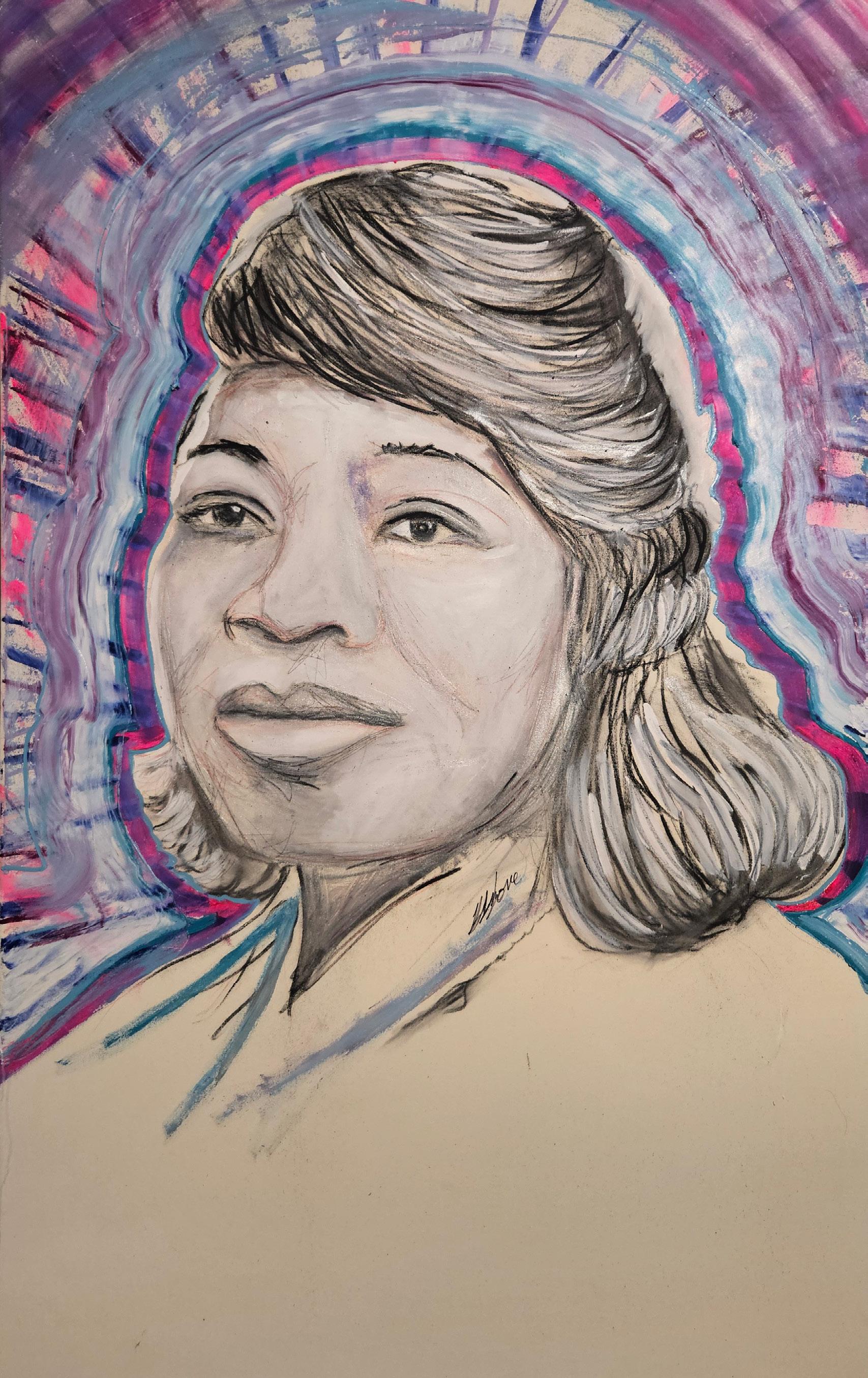
“BETTY SHABAZZ” MIXED MEDIA
48” X 80” BENJAMIN JONES
AND, STILL WE BUILD?
Let’s talk about Malcolm X — a hero with no cape, a man who carried the weight of a world that tried to break him, yet he stood unshaken.
My hero carved a path for me, for us, for our communities. Because of him, we will not be silenced. I will stand tall in public, my voice loud, my work undeniable. He taught me that even in struggle, even at your lowest, you are not your mistakes, you are not your labels.
You are greater, you are becoming better and better everyday. He told us never to hush our truth. He opened the eyes of generations, showed us how to push forward, how to rise when fear tries to squeeze our voices away. He showed me womanhood like manhood is measured by how boldly we love ourselves, by how fiercely we guard our families, by how we lift each other up.
I am my own royalty. I set my own table. I build my own doors. Watch as we open them wide for sisters and brothers to walk through. Whatever I dream, whatever I reach beyond the sky that is my limit, and that limit is endless. I write this as a Black woman for Black women and men it is never too late to rise, never too late to be great.
Jamyaa Randleston
SCAN QR TO ACCESS THE FULL PIECE
IN THE NAME OF ALLAH, THE BENEFICENT, THE MERCIFUL
In the early 1980s, New Afrikan Independence Movement freedom fighter Sanyika Shakur—then known as Monster Kody Scott of the Eight Tray Gangster Crips—was incarcerated at the Youth Training School in Chino, California. While behind bars, he met Imam Muhammad Abdullah, a devout Muslim and veteran of the Black Panther Party who conducted Islamic services. Initially, Sanyika and other Crips were dismissed from a service since their intention for attending was to discuss gang business; however, Sanyika respected the Imam for not reporting them to the staff since the Imam did not want to contribute to the state locking up our youth. In Monster: The Autobiography of an L.A. Gang Member, brother
Sanyika describes this event as leading droves of incarcerated New Afrikan youth to attend Islamic services where they learned about Islam and revolution. The Imam frequently taught them about the revolutionary spirit of Malcolm X, George Jackson, and Jonathan Jackson in our ongoing jihad (struggle) for Black liberation. He writes, “Islam is a way of life, just like banging. We could relate to what Muhammad was saying, especially when he spoke about jihad—struggle he encouraged us to ‘stand firm,’ ‘stay armed,’ and ‘stay black.’ He encouraged us not to shoot one another, if possible, but to never hesitate to ‘correct a pig who transgressed against the people.’ After every service let out, it was a common sight to see fifty to eighty New Afrikan youths mobbing back to their units shouting ‘Jihad till death!’ and ‘Death to the oppressor!’” (p. 220)
As seen in Sanyika’s reflections, the Imam employed an Islamic pedagogy of Black liberation inherited directly from Omowale el-hajj Malik El Shabazz that focused on uplifting the masses of our people. Spirituality is at the epicenter of this approach to struggle, which led to a radical transformation in Monster Kody Scott’s life, a moment that stuck with him and helped produce the revolutionary consciousness of Sanyika Shakur.
In reflecting on the life of Omowale el-hajj Malik El Shabazz during the year of his centennial, i am reminded of the Qur’anic edict that states, “The noblest among you in Allah’s sight is the one with the most taqwa (piety). Allah is All-Knowing, All Aware” (49:13). This excerpt defined much of Omowale el-hajj Malik’s work and ministry among our people centered around the Black poor, the working class, and the lumpenproletariat. It was a fierce spiritual critique of racial capitalism structured on uprooting the very foundations of our oppression as New Afrikans.
Omowale el-hajj Malik was a very spiritual man, as his Islamic faith was directly tied to revolution and the liberation of our people from his days as Minister Malcolm Shabazz to his transformation into Omowale el-hajj Malik El Shabazz. He famously said, “I believe in a religion that believes in freedom. Any time I have to accept a religion that won’t let me fight a battle for my people, I say to hell with that religion.” He wasn’t just Muslim, he was a revolutionary Muslim. Omowale was a true believer, standing up for all of our Black people. From his time in the Nation of Islam to his embrace of Sunni Islam and beyond, he truly believed that Allah (God) is on the side of the oppressed. The Prophet Muhammad (peace be upon him) said, “Whosoever of you sees an evil, let him change it with his hand; and if he is not able to do so, then [let him change it] with his tongue; and if he is not able to do so, then with his heart — and that is the weakest of faith.” (Hadith 34, An-Nawai’s Forty Hadith). Indeed, Omowale el-hajj Malik’s faith was the strongest, as he advocated for armed struggle and self-defense toward our fight for independence and self-determination. When he was asked what he thought about the Blood Brothers, a fictional gang the state claimed was attacking white people, he did not condemn them. He argued that if there is not such a formation, we desperately need one, proceeding to explain how the masses in Algeria successfully stood up to the French through armed struggle. And it is the masses of Black people—our brothers, sisters, and folks who white western society denigrates—in this occupied internal colony on Turtle Island who Omowale was teaching to rise up and lead the revolution. Omowale el-hajj Malik’s spirituality focused on the creation of a new world! He said we needed a version of Kenya’s Mau Mau in our struggle against the u.s. empire and critiqued the inherent violence of amerikkkanism. In the spirit of true self-determination, he did not care that this society called him or his progeny gangsters, thugs, or terrorists. The wisdom of his words speaks to the fact that we, like our dear suffering folks in Palestine, Congo, and Sudan, need strong resistance forces.
In line with the Qur’anic message, it was a piety—one’s commitment to the divine commandments of freedom, justice, equality, and the prophetic edict of obtaining it with one’s hands—that resisted the antiBlack elitist approach of u.s. culture. It is this divine strength that Frantz
Fanon sees in the lumpenproletariat who—when conscious—struggles with all they’ve got by any means necessary and demonstrates the strongest sense of piety as defined by Omowale el-hajj Malik El Shabazz’s pedagogy. It is this divine strength and revolutionary spirituality that inspired New Afrikan Muslim freedom fighter Safiya Bukhari, a veteran of the Black Liberation Army, to fulfill Allah’s plan for her life to escape from prison and fight for justice for our incarcerated people. It is this divine strength rooted in Omowale’s surviving Islamic pedagogy of Black liberation that led her from being a mere volunteer for the Black Panther Party Free Breakfast Program to obtain hours for her college sorority to her transformation of becoming a revolutionary soldier in the Black Liberation Army. It is this divine strength that inspired Lumumba Shakur to become a revolutionary nationalist and Muslim behind bars in the early 1960s after watching and reading about Malcolm X and being motivated by his father El-Hajj Salahdeen Shakur, which led to the birth of the revolutionary New Afrikan Shakur family. And it is this same spirit that we must build upon to mobilize our people today in the streets, the universities, the churches, the prisons, the masajid, and all realms of Black life! We must guide our lives with the light of revolutionary principles and totally reject assimilating into religious or secular justifications of the inherent violence or existence of the u.s. nation-state. When el-hajj Malik received the name “Omowale” from the Nigerian Muslim Students’ Society in 1964 and described it as the greatest honor he received, he linked his spirituality to the cultural dimensions of revolutionary struggle. He taught that we must return to Afrika culturally, which involves a complete separation of our spirituality from amerikkkanism and the objectives of our oppressors. As Afrikan organizers, we must remember the legacy of Omowale el-hajj Malik El Shabazz as an anti-capitalist Pan-Afrikanist revolutionary nationalist Muslim. In the tradition of Omowale el-hajj Malik El Shabazz, we need our pedagogy of liberation to refocus on the masses of our people who suffer the most and intertwines the spiritual, political, and cultural to bring an end to this wicked empire and the reigning of white world supremacy. This is a spirituality that resists and predates the violently anti-Black Enlightenment concepts of secularism and religion imposed upon Black faith and works toward a new world. As Salaam Alaikum and Free the Land!
IRONIES THE SAINT
the community. His life was a testament to constant transformation through critique, reflection, and integrity.
As a member of the Nation of Islam, Malcolm’s ideology was initially shaped by patriarchal beliefs, such as those expressed in the NOI’s “Message to the Black Man,” which envisioned a Black nation led by men with women supporting quietly from behind. However, these beliefs had consequences and were part of what led Malcolm to confront and eventually break with the Nation of Islam, particularly over the sexual exploitation of women and girls within the organization. Malcolm’s lived experiences and active participation in liberation struggles exposed him to powerful Black Nationalist and Communist women such as his mother Louise Little (UNIA), his sister Ella Collins (OAAU), comrades Vicki Garvin, Maya Angelou, Yuri Kochiyama, and elders like Queen Mother Moore (UNIA; CPUSA), Shirley Graham DuBois (NAACP; CPUSA) and Claudia Jones (West Indian Gazette; CPUSA). These revolutionary women shaped Malcolm’s evolving consciousness and challenged rigid gender roles and sexist practices within the Freedom Movement, making it clear that our struggle to transform society will involve transforming the foundations of how we relate to one another in community. Colonialism has always enforced harmful systems, including patriarchy, homophobia*, and transphobia*, across Africa and the Diaspora. These systems are historically embedded in the foundations of capitalism, from the sexual exploitation of women and girls on the plantations and industrial sweatshops of Europe and its colonies, to today’s cocoa plantations in Mali, garment factories in Haiti, and industrial mines in the Congo. They also persist through the genocidal pressures faced by Black men today—mass incarceration, lynching (police murder), sexual assault (stop and frisk), unemployment, lack of healthcare, gun violence, and suicide.
Yet, we must also ask ourselves: what of our queer African siblings who fight relentlessly for the freedom to be who they are and the love and belonging of community? What of our transgender African siblings
who challenge the colonizer’s pseudoscientific definitions of “man” and “woman” and the gender roles we are destined to play under their system that bred us like cattle? What genocidal pressures do they face? How does their position at the intersection of multiple forms of oppression inform their consciousness? And what lessons do their struggles and resilience offer our collective liberation movement? Malcolm loved what he called “bottom of the pile Negroes.” It is a love that resonates deeply with the legacies of ancestors like Marsha P. Johnson and Huey P. Newton, who fought fiercely against all forms of oppression and advocated for women’s and gay liberation.
• We are transforming to meet the moment.
• We are bonded with Black women and all Black people in the fight for true freedom.
• We are against patriarchy and heteronormative bullsh*t and we will be bold enough to say it with our chest.
• We embrace all processes of decolonization with our full hearts and maximum effort.
IRONIES OF SAINT
Written by BMB National Political Education Team
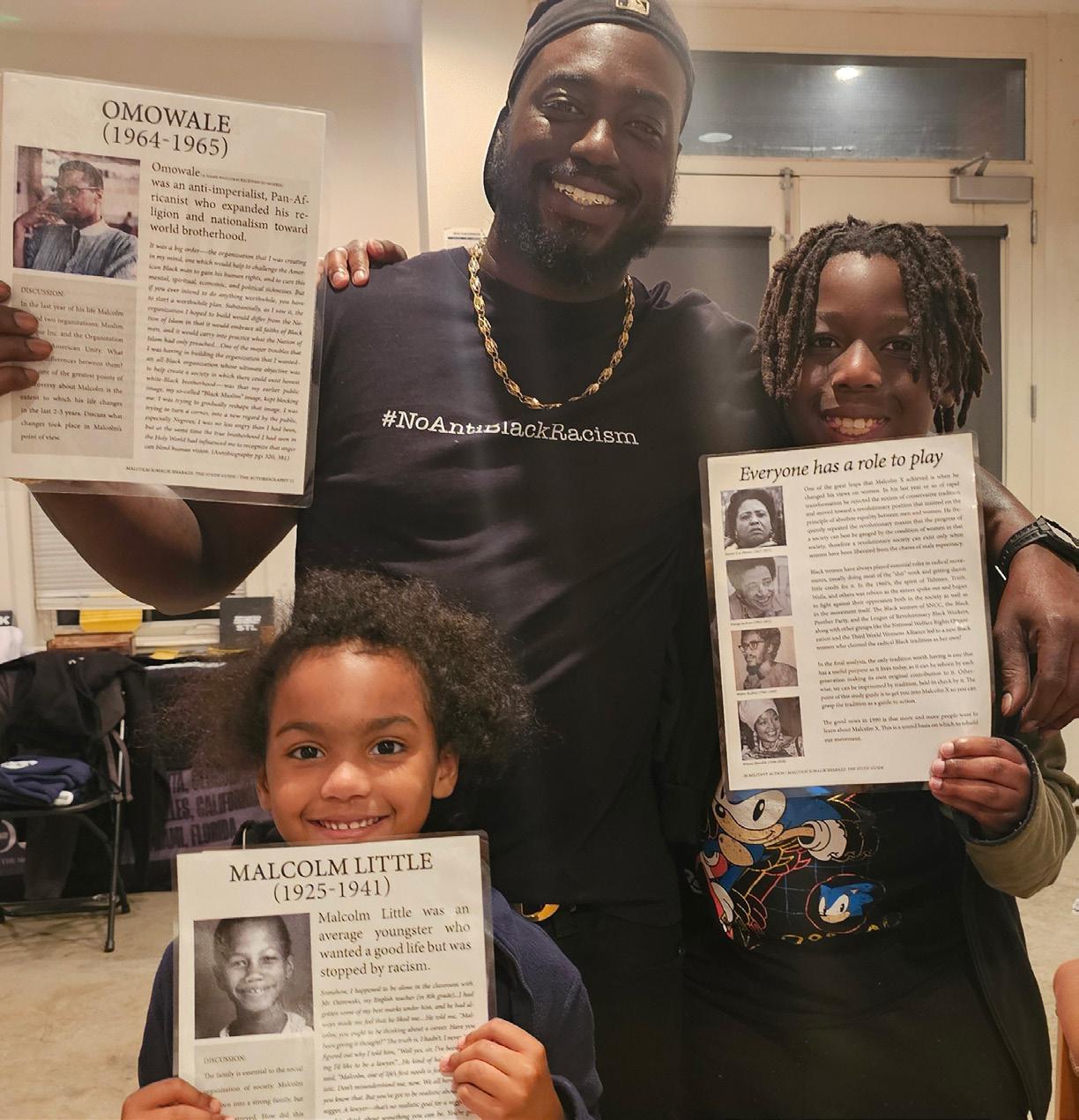
FROM THE MALCOLM X STUDY GUIDE
Black Men Build aims to decolonize our masculinity, so we can engage the fight for true freedom as connected, loving, and conscious Africans. We understand this society was built by us but not for us, and so what we are taught about the world, how we should exist in it, what is “natural,” and even what we believe it takes to “be a man” is imposed on us by the same oppressors we aim to defeat.
This means decolonization is a constant process, or as the elders say “freedom is a constant struggle.” We recognize patriarchy, homophobia, and transphobia are corrosive and antithetical to our liberation project. But this recognition is only one step. We understand this is a daily process of education and transformation at the individual and community level. We understand the stakes are life and death.
They always have been. Malcolm reminds us “The price of freedom is death.” Too many of our people pay that price without ever achieving freedom, especially our LGBTQ+ family.
“For the only great men among the unfree and the oppressed are those who struggle to destroy the oppressor.” — Walter Rodney, How Europe Underdeveloped Africa
To see full article and discussion questions, see the Peoples College x BMB Malcolm X Study Guide 2025 inspired by “Malcolm & Martin & America - Chapter 10 Nothing But Men” by James H. Cone and Excerpt from “Ironies of the Saint” by Farah Jasmine Griffin.
and robots impacted the lives of Black workers?; Are trade unions active contributors to the fight for Black liberation?; What is the role of Black organizations? Discuss the case of Assata Shakur; why is she forced to live in exile in Cuba?; Discuss the nature of triple oppression faced by Black women: race, class, and gender; What is the role of Feminism in the Black liberation movement? and more.
In 1990, many grassroots activists and youth sought a return to a more militant movement, continuously drawing from Malcolm X’s thought. Each generation since the 1960s, confronting unique struggles, has rediscovered Malcolm X, whose voice continues to inspire radical thinking. Brother Malcolm’s legacy endures through the love and respect of his people and freedom-loving people worldwide.
This study guide, as reprinted by BMB, was developed to provide context for us to extend the work of El Hajj Malik El Shabazz. It is our duty to study, practice, assess, and repeat [SPAR].
James Pope, Africa World Now 2025
MALCOLM X MALCOLM X MALCOLM X MALCOLM X MALCOLM X
SECTION THREE
HOW WE FIGHT
Now that we’ve laid out the context and honored Malcolm’s legacy, we turn to the present: How do we fight back?
We live under a fascist, anti-Black, anti-poor state. Our resistance must be intentional and organized. We provide clarity on political prisoners, who they are and how we can support them.
We know that organized people plus organized resources = power. So we must build our movement in solidarity with organizations on that same timing.
We share insights from our comrades at Cooperation Jackson and their Build & Fight formula, a model for constructing eco-socialism through grassroots institutions led by workingclass and oppressed people. We then go deeper into our analysis of the Trump administration and how we must respond.
And finally, we ask the question of what would Malcolm X be fighting for today? How do our actions align in the spirit of that fight?
This is a call to action and we’re the ones we’ve been waiting for.
In honor of the 100 years celebration of El Hajj Malik Al Shabazz
by Chris Hearn
Y’all said take the what, and leave the what?
My top shottas posted at the window
Trust we seeing yall, but yall not seeing us
Truth be told the scope got blurry
I had to readjust
Change the whole plan when we saw talking wasn’t freeing us all that ego is not freeing us
The devil tried to kill me on my pilgrimage
Of course he don’t agree w us
You could pay back everything you stole
It wouldn’t be enough
.. the only ones could really give us what we need, is Us
I pray the beach in Dakar
The first sand my babies feet can touch ..But keep it hush
You know they fixated on seeing us
Plus they eating up this red cap
Like Pizza Hut
They lying to us, or they leading us?
Imagine how your heart would break to learn your mind was different than your teacher was
SubhanAllah my God was not lying
But the preacher was
So many names to name but it could only be the one
Hundred years and however
More it take
In honor of the 100 years celebration of El Hajj Malik Al Shabazz by Chris Hearn
CLARIFYING POLITICAL PRISONERS
BY TOO BLACK
Facing a political landscape rooted in heightened repression and analytical confusion, the concept of the political prisoner (PP) is important to revisit. Traditionally, a PP is defined as an individual who is imprisoned because of their political beliefs and/ or actions challenging an existing power structure. African/Black people across the diaspora have several notable PP's (former or current) such as Nelson Mandela, Mumia Abu Jamal, Assata Shakur, and Martin Luther King.
Yet, since there is no universally recognized definition of a PP, we are presented with several challenges in understanding our connection to the phenomena: do we have a specific relationship to the existing power structure in a world overwhelmed by imperialism and neocolonialism? Does the political struggle in which the prisoner emerges matter, or is oppositional political activity against power sufficient? Nation-states have no incentive to define their own prisoners as political, so how do we relate to them across borders?
There have been longstanding debates among Black revolutionaries about what constitutes a PP. Some believe all prisoners are PP's simply by the nature of crime being political. Some believe there's a difference between social prisoners, political prisoners, and prisoners of war. Others see these definitions as overlapping with the terms like prisoner of conscience or a politicized prisoner. This debate will not be resolved here nor is it the aim. Whatever the definition, this is ultimately a question of who we claim and for what political objectives. Without context, our idea of a PP lies in the hands of those who have the power to define it and persuade
capital accumulation and domination. PP's are produced. As a necessity perialist. They are pro-people,
Thus, our PP's do not have the must call these reactionaries PP's ends as our own.
For African/Black people, our PP's martyrdom relative to the nature
Therefore, we do not honor the Klan, we honor the Black militias the confederacy, an imprisoned do not honor them, or anyone remotely clarity we need right now.
Too Black is a poet, scholar, er, and organizer. He is the the Black Myths Podcast, co-director of the documentary film The Pendleton 2: They Stood Up, and co-author book Laundering Black Rage: The ing of Black Death, People, Property, and Profits. He is based in Indianapo lis, IN.
others to adopt it. Liberal conceptions of PP's is what currently occupies the definition and leads to confusion. For instance, during the sentencing of a Jan. 6th rioter who pepper sprayed a police officer, U.S. District Judge Amit Mehta excoriated him for depicting their crime as a political act, “You are not a political prisoner…You’re not somebody who is standing up against injustice, who’s fighting against an autocratic regime…You’re not Alexei Navalny”, referring to the late Russian nationalist opposition leader and activist.
Alexei Navalny is a peculiar choice for an example of the ideal PP because he was always more embraced in the West than he ever was in his own country. A Levada Center February 2021 poll found he only had a 19 percent approval rating in Russia. Western media either neglects or offers apologia for his early associations with far right nationalists or his vile reference to Muslim immigrants as cockroaches. It took a WikiLeaks cable to reveal that Democratic Alternative (DA), the organization Navalny founded, received funding from the CIA carve-out, National Endowment for Democracy (NED).
The NED is known for its destabilizing efforts against countries the US deems as a
threat to its power. These transgressive efforts manifest through “pro-democracy” campaigns, which are really soft power fronts to fund puppet leaders for regime change in targeted countries, such as Cuba, Venezuela, Mali, Burkina Faso, and Niger. If any of the leaders engaged in these regime change actions were introduced to a jail cell by the government in power then technically they would qualify as a PP.
If what qualifies as a PP is simply persecution for being anti-government or anti-status quo, then Jan. 6 rioters, Alexei Navalny and paid regime change agents share the same cell as Assata Shakur and Mumia Abu Jamal. PP's like the Pendleton 2—who received 200 plus years upon fighting against the status quo of Ku Klux Klan prisoner guards—share the same cell with reactionaries who sympathize with the guards they defeated. This clearly demonstrates that a full hearted embrace of PP's no matter the cause may lead to confusion or all out diffusion of the term. We must embrace a common sense framework that serves our people.
The collective West is waging a 500-year war against Afrikan/Black people, based on
domination. Whenever our Black Rage becomes politically conscious enough to respond appropriately, our necessity to ending the war, our PP's virtues are anti-war, anti-capitalist, anti-colonial, and anti-impro-people, pro-peace, and pro-national liberation.
same political persuasion as a Jan. 6 protester or a Western-funded pro democracy stooge. If we PP's at all then we must recognize them as counter revolutionary PP's. They do not serve the same
PP's are our martyrs. This is true for the PP's of any colonized people. Colonized people define their nature of the political struggle.
dead slave master, we honor the martyrs who buried them under the plantation. We do not honor the militias armed by the reconstructionist government to end their wave of terror. From the viewpoint of slave master or captured klansmen may be a PP. They may even be considered martyrs. Regardless, we remotely like them. We merely honor the freedom fighters who got us here. Frankly, that's the only
filmmakhost of co-director Pendleton
co-author of the The WashProperty, Indianapo-
This year marks the centennial of Malcolm X’s birth. Like our ancestor, Black Men Build (BMB) is guided by the core principles of Black pride, self-defense, selfdetermination, economic empowerment, and international solidarity. We invite you to learn how our Hubs have embodied Malcolm’s spirit over the past year, incorporating his legacy into their organizing, community work, and political education.
Across the country, BMB Hubs have deepened their commitment to selfdetermination, especially in a time when the state cannot be relied upon. Hubs have built community power through grassroots organizing, mutual aid networks. We know we all we got and we can’t wait on any to save us, but we will continue to demand what is rightfully owed to our communities.
This work is grounded not only in Malcolm’s legacy but also in the unique histories of Black resistance and organizing within each city. From honoring local freedom struggles to building new political homes, Hubs have drawn from their city’s past while shaping the future. In doing so, they carry forward Malcolm’s teachings that guide their ongoing development and impact on the communities they serve.
BY DEMARIO AKA SEWATU
EMBODYING THE SPIRIT OF MALCOLM X – HUB UPDATE FOR WARTIME BMB
HUB: DETROIT
On May 16th, 2025, an F-3 tornado ripped through the historically Black, working-class neighborhoods of North St. Louis. The tornado sirens never went off. And, with the wind that followed, roofs were torn from homes, generations of family belongings were scattered on the streets, and decades of malicious neglect in North St. Louis by city and state officials could no longer be disguised as benign. We have been left vulnerable by design.
Yet, amid government abandonment, we are guided by a centennial: the birth of Malcolm X. Malcolm was not only an organizer; he was willing to be organized. His life reminds us that remembrance without action is empty. Honoring him means rebuilding people, not just buildings.
In that spirit, the STL chapter of Black Men Build anchored its field plan to Malcolm’s legacy: organizing neighbors, building new bonds of trust, and meeting immediate needs where the government failed-- both a response to disaster and a refusal of neglect.
We (Community) are the sirens ourselves! Sounding the alarm, demanding justice, and holding each other through the storm. We have not forgotten the lessons we learned after the Ferguson Uprising which is more than 10 years ago now. Solidarity is our only true safety net.
HONORING THE CENTENNIAL:
-2 Men’s Healing Circles: Tornado & Transformation — Honoring May 16th by linking disaster survival to personal growth Conflict Resolution as a liberatory practice.
-2 Wartime Roundtables: Political Education centered on Malcolm’s four stages of transformation.
-Black Liberation Media: Hub participation in “100 Years of Malcolm” series amplifying his legacy.
SELF DETERMINATION:
-Self-Deployed BMB STL disaster relief hub in north city (Ward 11) while standing in solidarity with “The Peoples Response”
-Expanded Mutual Aid through coat drive and community garden stewardship.
- Member Training in Somatics, Organizing 101, Podmapping, and Powerbuilding.
LEGACY:
-Expand our healing circles to black woman & youth
-Honor February 21st as a National Day of Service & Remembrance.
-Establish “Malcolm in May” as an annual observance with hubs and partners
BY THE ST LOUIS HUB
Malcolm was aware that what you read, listen to, even the spaces you occupy, are all a part of your diet.
What goes in, is what comes out.
Malcolm realized self determination was necessary to maintain a sound mind, body, and spirit.
Its the only way to remain equipped to fight for and love our people.
Holistic wellness is true safety and security.
And real sovereignty is having options to sustain healthy living.
What kind of power would we have if we had received that 40 acres and 2 mules?
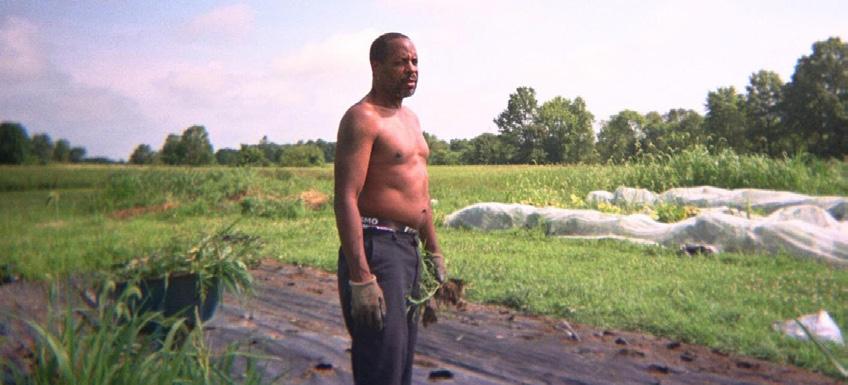
How powerful would the black farmer be if the stereotype around the watermelon never existed? We keep dreaming. We keep fighting.
The struggle has molded us into warriors.
We are the warriors in the garden
Under the moonlight, Malcolm is still our North Star.
meet the needs of our base. From Men’s Health 5K Run/ Walks, Monday Miles, and health screenings, to Back-toSchool Bookbag Giveaways and a successful Community Baby Shower, we are shaping intentional, sustaining programs for our community.
Most significantly, we waged our first comprehensive campaign, fighting for a Community Benefits Agreement (CBA) for Miami’s largest development project. This campaign was both a structure test and a power-building moment, allowing us to mobilize members, strengthen our coalition with unions and working-class communities, and demonstrate our capacity to lead.
Through this work, we honored Malcolm X’s charge: “I’m for truth, no matter who tells it. I’m for justice, no matter who it’s for or against.” This year’s journey culminated in our 1st Annual Remember Induction and Rededication, cementing our collective commitment to building power, self-reliance, and a future worthy of our people.
BMB HUB: COLUMBUS
BMB HUB: MIAMI
BLACK MEN BUILD LA MOVES IN THE SPIRIT OF MALCOLM
BMB HUB: LOS ANGELES
BY ANY MEANS: MILWAUKEE LEADERS MUST UNITE TO SAVE OUR YOUTH
and grow Temple No. 27 of the Nation of Islam (NOI).
The People have never forgotten Minister Malcolm’s righteous stand for Ronald Stokes and the other NOI members attacked by the LAPD on April 27, 1962. At a rally in Los Angeles, Minister Malcolm delivered one of his most scathing and fiery critiques of state sanctioned violenceduring his May 5, 1962 speech titled “The Black Revolution.” This would be one of his first speeches stating that African Americans should secure their rights “by any means necessary.”Los Angeles has not forgotten these wise words. The Watts Rebellion of 1965, The LA Rebellion of 1992, and the resistance to ICE Raids in 2025 are testaments to the lengths Angelenos will go to secure their rights and freedoms.
BMBLA works for community empowerment by any means necessary, taking whatever form the People need toward liberation and
where we start, but by how far we’re willing to evolve for our people and ourselves.
So, what is at stake right now? Everything. Our youth are growing up in a time of deep instability — under the weight of systemic racism, state surveillance, and economic collapse. We are living under a fascist state that has no interest in our survival, let alone our liberation. The next four years will demand more than slogans and statements. It will demand clarity, discipline, and courage.
What is the role of Black men in revolutionary times?
It is to lead with love and conviction. To be protectors, builders, and truthtellers. To organize, not just in protest, but in purpose. To model what it means to be strong enough to heal, humble enough to learn, and bold enough to fight. True masculinity, as Malcolm showed us, is rooted in service, accountability, and a deep love for our people.
justice. The People could see BMBLA brothers stepping up to take many active roles in our LA community: joining the LA Community Self-Defense Coalition,teaching sessions about imperialism, participating in coalitions boycotting Home Depot, paintinga community center, providing security for May Day marches, protesting the abduction of community members by ICE, convening both men’s and women’s healing circles, and more. We believe in the direct and internationalist struggle for Black liberation articulated by Minister Malcolm.
We build to make Malcolm proud.
BY ANY MEANS NECESSARY
BY ADÉ T.W. JACKSON, ESQ.
Black Men Build (BMB) is a continuation of that legacy. We are the sons and daughters of Malcolm — students of his discipline, his study, and his strategy. We understand the terrain we are living in. We know that survival requires organization, that safety requires unity, and that liberation requires power. Our task is to build that power together: politically, economically, and spiritually. To the brothers and sisters reading this: we need you. Join us. Step into this work. Be the bridge between generations. Be the hand that reaches back when a youngin stumbles. Be the one who shows that love and strength are not opposites, but they are the same weapon.
The circle is not gone; it’s waiting to be restored. Our ancestors built it. Malcolm strengthened it. Now it’s our turn to carry it forward, to rebuild it stronger, wider, and unbreakable. Milwaukee, the time is now. By any means necessary!
BY LANISHA MARTIN
BY AMADOU ANDRE
CARRYING MALCOLM’S
TORCH: ATLANTA HUB REFLECTION
CHRIS BUFFORD AND ATL HUB
targeted for speaking truth to power and for connecting the struggles of Black people in the U.S. to liberation movements across the world.
At Black Men Build Atlanta, we carry forward Malcolm’s torch by doing exactly what he urged-- building Black independent political power. Under the leadership of Bruce and Mustafa, our hub is deepening relationships with local campaigns and organizations that share our vision of self-determination. We are connecting with movements like the People’s Campaign to Stop Cop City, with groups committed to mental health and healing like Black Men’s Lab, and with religious institutions such as the mosque where Mustafa organizes, to bridge faith, organizing, and service.
Through these relationships, we are weaving together a network of Black-led institutions, campaigns, and community efforts that center the needs and power of our people. This is how we honor Malcolm, not through symbolism or nostalgia, but through the material practice of collective self-determination. Our goal is to build a strong base of Black men and allies in Atlanta who can shift the material conditions of our people, not only resisting the systems that harm us but constructing the foundations for a future where we can sustain ourselves politically, economically, and spiritually.
Malcolm’s legacy reminds us that liberation is not given; it is built. In Atlanta, Black Men Build is committed to carrying that torch forward, to organizing, educating, and building power so that the next generation of Black people can live with dignity, safety, and self-determination.
BMB HUB: NEW YORK CITY
WALK EM DOWN… AGAIN
by Asa Shaw & Brent Maximin
If you listen to the noise out there, you would think that somehow fascism is a new threat that appeared out of thin air. You might also think that somehow the fight against fascism isn’t any of our Black ass business. The right wingers try to paint anti-fascist struggle as a fringe movement, as some crazy white people shit. But Black people have been on the front lines of the fight against fascism for generations.
The truth is, fascism has been here. The truth is, we’ve been fighting it.
No matter how much we pretend that we can stay out of it, it only takes one look around to realize that we can’t. Our people are getting rounded up, handcuffed, and beaten. Again. Our neighborhoods are being terrorized. Again. Our history is being whitewashed and erased. Again. The time for standing on the sidelines and saying “damn, that’s crazy” is over.
Fighting military occupation in our cities is nothing we haven’t faced down before. ICE agents in army fatigues and face masks may be new, but we’ve had hostile state agents on our streets for decades. Huey Newton, Bobby Seale and the Black Panther Party implemented Copwatch in the 1960s. The Panthers didn’t cosplay as vigilantes, and they didn’t engage in adventurism. They took advantage of their legal right to openly carry weapons, and they stood alongside members of their community to monitor the pigs in Oakland. They tooled up - with weapons and law books - and kept their people safe.
The Black struggle against fascist repression hasn’t been isolated to the U.S. either. Our brothers and sisters in South Africa gave us a blueprint. They fought the fascists by building strong, disciplined organizations, by engaging in campaigns of mass disobedience and non-cooperation, and, yes, by knowing when and where to employ armed resistance, too.
We don’t only have to look to our ancestors for inspiration either. Right now, in this country, our people are showing what it means to be defiant in the face of a state-sponsored terror campaign. This summer, Los Angeles erupted in mass protests when ICE started ramping up their raids, and the people regularly disrupted ICE operations. In Chicago, comrades on the ground are putting up the kind of resistance that we should all be inspired by. Folks in Chicago have organized ICE watch patrols, organizers have put on trainings, and even teachers have stood ten toes down to stop their students from being snatched up.
There are a few things that Black folks should be doing right now in response to the changing conditions:
1. Don’t be a GDI (God Damned Individual). Join an organization.
Individual acts of resistance by our people are important, but without the accountability and direction that an organization provides, it’s easy to be co-opted or to view the liberation of our people as a series of good deeds, rather than a long-term struggle. There is safety and community in organization, which is something that will become increasingly necessary as the tactics of fascism grow more repressive.
2. Don’t be a party to fascism. Withdraw your consent.
I know Jesus teaches us to turn the other cheek, but he was not talking about turning the other cheek to your oppressor. He was talking about turning the other cheek for your people, to extend grace to your people.
Fascism ain’t our people, and it doesn’t deserve our grace.
We can’t afford to turn our cheek or avert our eyes from attacks on us or on other marginalized people. At some point, looking the other way becomes implied consent or cowardice. So, be aware of what the enemy is up to. Don’t give future generations any reason to think you were rocking with the Gestapo. Withdraw your consent from their activities as much as possible, especially your labor. Find the courage to speak up when something is foul. Show your friends, your community, and your neighbors that fascism dies when it enters your space.
3. Stop pretending to be on the fence. Choose a side!
The left and the right are not the same.
The insidious thing about liberalism is that it glorifies fakeness and “working across the aisle,” even when the other side’s position is a non-starter. It makes people believe the center is the most sensible place to be and that going too far left or too far right is equally irrational and belligerent.
Well, we call CAP.
Neutrality is a myth. If folks climbed to the top of the White House and surveyed the political field, they’d see that the so-called “center” in America clearly starts in the right’s territory. This is how you get Bill Clinton signing the crime bill, slashing social services, and saying we’re going to “end welfare as we know it,” all while Black folks are cheering him on and calling him the first Black president.
The left and the right are not the same!
As Black folks, we often feel pulled to occupy the moral high ground, to be this country’s moral conscience. That role requires us to perform forgiveness or act as the sensible political mediator. We are told we keep the country grounded in its values. This position is often occupied by the Black elite, but it seeps into the Black working class through conservative Christian etiquette and the experience of having to code-switch to survive in this country.
But that “morality” is actually a set of chains—not a set of virtues.
Being Black is a political designation more than a biological one, and Black people have always been part of the true left in this country. When the Black elite call us the moral conscience of America or frame our movements as a “battle for the soul of this country,” they’re really signaling to white folks that our movements are benign, that we are not seeking a material upheaval.
But we are. And always have been.
There are limitless examples of Black folks’ commitment to real struggle: The abolitionist movement to end slavery, The New Afrikan Independence Movement, The Combahee River Collective, The League of Revolutionary Black Workers, The Black Panther Party, The Southern Christian Leadership Conference, and of course, our Black shining prince Omowale El-Hajj Malik El-Shabazz’s (Malcolm X) organization, The Organization of Afro American Unity—these are people and movements that occupied space to the left of the American center.
If we are our ancestors’ wildest dreams, then we have always been our oppressors’ most terrifying nightmares—but only when we are clear about which side we are on.
They know that, historically, the best check on fascism has always been the left: the communists, the socialists, the revolutionary Black nationalists, and the anarchist forces. Our liberation movements have always led the vanguard of these forces. We have been here before. Our victory lies in drawing out the best our tradition has to offer and placing that at the feet of our people to use in service of the moment and in the service of our collective liberation.
The Black radical tradition is a river of struggle, urged forward by the winds of change, and its banks are widened by the growth of those committed. So…
Join the left.
Dive into the river.
Decide whether you will: Fulfill your generation’s mission or betray it.
CHRIS
BELOW IS JUST A PORTION OF THE INTERVIEW TO WATCH THE FULL INTERVIEW, SCAN THE QR CODE
What would Malcolm X do today?
Written by Joshua Ingrim BMB Miami and Randolph Carr
After a recent Wartime Roundtable at the Hub, two young high school students stayed behind, still deep in discussion about the life and legacy of Malcolm X. One of the elders sat with them listening, laughing, and gently pushing their thinking forward.
Both had attended a community teach-in and had been studying The Malcolm X Study Guide, recently updated by Black Men Build.
Jamal, a devout Muslim and standout student, is beginning to question and reinterpret some of the more conservative traditions he’s grown up with. Kimbe, slightly older and a youth organizer, brings a sharp focus to his study of PanAfricanism and political history. The two first connected through the Malcolm X Youth Debate League, where ideas are sharpened in public and transformation is always on the table.
As the elder spoke, offering stories, challenges, and reflections, he echoed the spirit of Babas like A. Peter Bailey, Bill Sales, and Muhammad Ahmad.
Together, their conversation reflected something deeper: what it means for young Black men to think critically, engage politically, and carry forward the legacy of Malcolm in this moment.
Jamal: I disagree with that brother at the Roundtable who said all our heroes were just speech makers. Malcolm wasn’t caught up on all them words. Malcolm was about action.
Kimbe: You can talk about it and be about it, too. Malcolm was a preacher; we know Minister Malcolm because of the words he said and how they inspired people. Have you read the Autobiography?
Jamal: Of course I’ve read the Autobiography, and I’ve listened to all his speeches. They didn’t kill brother Malcolm because of his speeches or even because he was a Muslim. They killed Malcolm because he wasn’t about turning the other cheek.
Elder: You can judge a man by the words he says, but you should also look towards the things he built… What did Malcolm build?
Jamal: Ahh, I see where you’re going — Malcolm built a mosque in almost every city he went to; he would share his words with the people on the street, he was reaching the brothers in prisons and…
Kimbe: Yeah(EXACTLY), he was reaching them and teaching them how to change their lives. He didn’t want us to be just victims of America; he would look at what’s going on today and say we have to do something.
Elder: Y’all are both right. What else did he build? As great as Brother Malcolm remains – we can’t just think of him as an individual; Malcolm wasn’t a selfish man.
Jamal: Well, he built programs. I remember hearing about Malcolm working with addicts and prisoners. My dad got locked up and got clean inside before I was born. He’s the one who gave me the Autobiography. Malcolm was solving all kinds of problems and serving the community. He lived for the people.
Elder: He did that alone? By himself?
Kimbe: No, he was an organizer. He inherited a tradition from his parents who were in the Universal Negro Improvement Association (UNIA). He had organizations that he joined and built. I read about the Organization of Afro American Unity.
Jamal: Yeah, that’s what I’m talking about – see they were about self-defense for our people, by any means necessary.
Kimbe: Exactly — but look at this (points to the pamphlet the elder is holding on the OAAU) — the pillars are, “Restoration, Reorientation, Education, Economic Security and SelfDefense.” It’s clearly about more than just self-defense.
Jamal: What did Brother Malcom mean by Restoration and Reorientation?
Kimbe: It’s about recognizing (Man, its about us getting back to being) African. Look at this program — The word “African” is mentioned 20 times in the Program for the OAAU. Let me read it to you:
“The Organization of Afro-American Unity welcomes all persons of African origin to come together and dedicate their ideas, skills, and lives to free our people from oppression.”
What are we fighting for?
It’s simple, we have to restore our identity and reorient our values.
Jamal: Right. You know my parents were raised in the Nation and made sure I understood Islam connected me to people around the world. I plan to make my pilgrimage to Mecca like El Hajj Malik el-Shabazz.
Kimbe: Bet that. I’ll meet you on the continent when you’re done. Make it an Afrikan world tour.
Jamal: Dawg. You just reminded me, at Theory Thursday they talked about Sister Betty Shabazz completing her hajj and traveling around Afrika after Malcolm’s assassination too. Black Men Build always uses her quote “Black Nationalism stood for the unity and dignity of Black people everywhere. Malcolm recognized Black people in America will never be free until Africa is free.” Malcolm was off civil rights in America and pushing human rights on the world stage.
Elder: Y’all young bloods too sharp. Let me add something: Restoration and reorientation were strategy, not sentiment. It’s Sankofa. For Malcolm, studying our past was the key to unlocking our future: “When you go back into the past and find out where you once were,” he argued, “you know that if you once did it, you can do it again; you automatically get the incentive, the inspiration and the energy necessary to duplicate what our forefathers formerly did.” To love Afrika and to love ourselves was a political precondition for power.
Kimbe: Minister Malcolm was a Pan-Africanist!
Elder: It is no accident that Nigerians named him Omowale, “the child who has returned.”
Jamal: I admire that Brother Malcolm was always so clear. In my next debate, I’m coming like Malcolm: “Brothers and Sisters, Friends and Enemies…”
Kimbe: “ just can’t believe everyone in here is a friend, and I don’t want to leave anybody out’.” Yeah, that should be mandatory. No question.
(They all erupt in laughter).
Elder: Take it to the substance. We have to go deep. What did I ask you? What did Malcolm build? You answer that and you’ll start getting some answers for what Malcolm would do today.
Jamal: Yeah, Malcolm was international, world-wide; but he was building something right here in the belly of the beast. He was a threat because he brought those things together. Malcolm was about action. Kimbe, you heard of RAM, yeah?
Kimbe: I know something about RAM. Mwaliimu Laurick recommended I read Muhammad Ahmad’s RAM: A Case Study of an Urban Revolutionary Movement In Western Capitalist Society. I’m just starting it, though.
Elder: Above and Below. OAAU and RAM. The aboveground work was only one half of a complete strategy. The OAAU was organizing a comprehensive network of committees to transform every facet of community life. Alongside it, RAM’s organizers worked on the problems Malcolm named but could not solve from a podium: repression, surveillance, and the need for a trained, professional cadre. RAM stressed strategy, security, and self-defense against the open and covert violence of white supremacists and the State.
Jamal: From Detroit Red to this? We don’t got too many Malcolms these days.
Kimbe: “We are transforming to meet the moment”. That’s what I believe. Look, J, we got work to do. This is how I look at it: we have to be willing to critique and self-critique, challenge and correct. Preserve what works; discard what doesn’t. Everything Malcolm was on required study, discipline, and organization. How can you function under pressure? Can you keep to the mission? Kill your ego. That’s what it takes. I learned that from you, Elder.
Elder: That’s right. With study came method. This method defines true leadership. In the tradition of Malcolm’s elders like Queen Mother Moore and heirs like Mumia AbuJamal, Malcolm’s aim was never to create followers. Great leadership is measured by the ability to develop the capacity for leadership in others. The organizer’s task is to build more organizers, transforming servants of the people into a disciplined force that can hold power accountable and build anew.
Jamal: And, it has to be said, Malcolm wasn’t about these brothers he would call Uncle Toms. I had to call this brother A FEW Tom the other day. Had the nerve to wear Kente and say Malcolm wanted Black billionaires and was “the most successful Black businessman.”
Kimbe: Malcolm wanted the Mau Mau in Harlem, not these new Uncle Toms. Malcolm warned of the new Uncle Tom who “wears a top hat. He’s sharp. He dresses just like you do. He speaks the same phraseology, the same language. He tries to speak it better than you
That’s facts! But make it plain for us Elder, what do you think Malcolm would be building?
He would be building organizations aiming to take an active and responsible role in freeing their communities (Value 3). He would teach Sankofa and Ubuntu in liberation schools; stand up the OAAU’s committee model; register every skilled worker into a technician bank; and send trained speakers into every corner of our community. He would back working-class leadership and insist on campaigns for housing, wages, and schools to aim past reform toward power. And he would make the international visible in the local: a rent strike in Harlem that speaks to land struggles in Kenya; a clinic campaign in Detroit that salutes Cuban doctors. Black nationalism, PanAfrikanism, and anti-imperialism are not three banners; they are one road—begin with who we are, build what we control, organize the class that moves the machinery, join hands with our people across borders, and confront empire.
Kimbe: Well, sounds like we got work to do. Too many folks tryna build Black Wall Street, when we need to be re-building the Black Nation. Wall Street was a damn slave market.
(nods) I’mma leave you brothers with some words from Malcolm: “You show me a capitalist, I’ll show you a bloodsucker”. And, next time, we gotta talk about the Fox and the
Peace to the 9s.
Photography by Phillip Loken
Photography by Phillip Loken
Black Men Build (BMB) is a grassroots membership organization whose mission is to give Black Men and their families all the tools necessary to become a powerful organized political force for liberation. We recruit, develop, and organize Black Men in ways that no other organization is doing with a commitment to love, grace, accountability, and power. We are bringing Black men into the movement for racial, gender, and social justice through healing, power-building campaigns, and political education.
Our vision is to be one of the country’s most powerful and effective Left political organizations, preparing and organizing Black Men and their families to win and govern.
Scan QR Code to become a member, sign our values pledge, or donate to our organization.
There is no better time than right now to join an organization that"s building power and fighting for a better future for our People.
We honor our brother, Danny Agnew, who made his transition on June 15, 2023, and our brother, Ernest Levert Jr., who joined the ancestors on January 8, 2025. Both were soldiers in the struggle, deeply committed to the principles of cooperation, self-determination, and the total liberation of our people.
Though they were called home too soon, the weight of their work was immense. Their impact on South Florida, Columbus, Ohio, and countless Black communities stands as a testament to a lifetime of principled dedication. Their legacy shames the inaction of the selfish and uncommitted.
While we still feel the sharp pain of their physical absence, we give thanks for covering us in the ancestral realm. We pledge to continue this struggle in their names and in the name of all our righteous ancestors who paved the way.
In your name, we fight In your name, we love deeply Peace after revolution!
Until we meet again, Ashe!
CONTRIBUTORS: THE VANGUARD OF THE WORK
EDITORS NOTES
Producing an issue in honor of someone so vital to Afrikan people worldwide has been both a profound pleasure and a formidable challenge. From 1952 until his untimely death in 1965, Malcolm X made an impact so immense you would think we were celebrating an elder on his 100th birthday.
How, then, do we capture such power in just eighty pages? The answer is that this issue is not defined by what is printed here, but by what lives in our hearts, our values, and our daily actions in the freedom struggle. This has been a true labor of love, made possible by the dedication of many.
We carry Malcolm and Betty’s legacy in our speech—in the courage to speak truth to power and make it plain. It is in our thoughtful, heated responses to ignorance; in the way we love our children and partners; and in our commitment to organization and deep loyalty to our comrades. This legacy is dedicated not only to the liberation of Afrikan people, but of all oppressed people worldwide.
Therefore, this issue is dedicated not just to Malcolm and Betty, but to our ancestors, our elders, our youth, and the unborn. Thank you, comrades, for your brilliance in capturing so much within these pages.
With love,
Ekundayo Igeleke Director of Education and Culture & Co -Editor-in-Chief
THE FOUNDATIONAL VISIONARIES
(CHIEF EDITORS)
| Ekundayo Igeleke| Co -Editor-in-Chief |
| Jeremy Herte | Co -Editor-in-Chief |
THE WORDSMITHS & ANALYSTS
(WRITERS, POETS, SCHOLARS)
| Jamil Abdul-Qaadir (Kam) | Writer |
| Asa Shaw | Writer |
| Brent Maximin | Writer |
| Ekundayo Igeleke | Writer | Jeremy Herte | Writer
| Helen Kamilah Amon Bailey | Writer |
| Khamall Jahi | Writer |
| Matty BMB NYC | Writer |
| Musa Springer| Writer |
| Nino Brown | Writer |
| Randolph Carr | Writer |
| Too Black | Writer |
| Joshua Ingrim | Writer |
| Demario aka Sewatu | Writer |
| Ashely Toussiant | Writer |
| Myeisha Bryant | Writer |
| National Political Education Team | Writer |
| St louis hub | Writer |
| Adé T.W. Jackson, Esq.| Writer |
| Amadou Andre| Writer |
| Lanisha Martin | Writer |
| Chris Bufford and ATL Hub | Writer |
GRAMMAR GODS THE VISUAL VANGUARD
(EDITORS)
| St James Valsin | Writer | | Jenell Igeleke Penn | Editor | | Orisanmi Burton | Editor |