Tough Times Call For True Partnership Let’s Play 20 Questions How The FOA Benefits 7-Eleven Franchisees Power In Numbers
E-Verify Program Policy And Procedures
Workers’ Comp Considerations For Franchise Owners How NCASEF Franchisees Are Changing Kids’ Health
The Power of The Power of
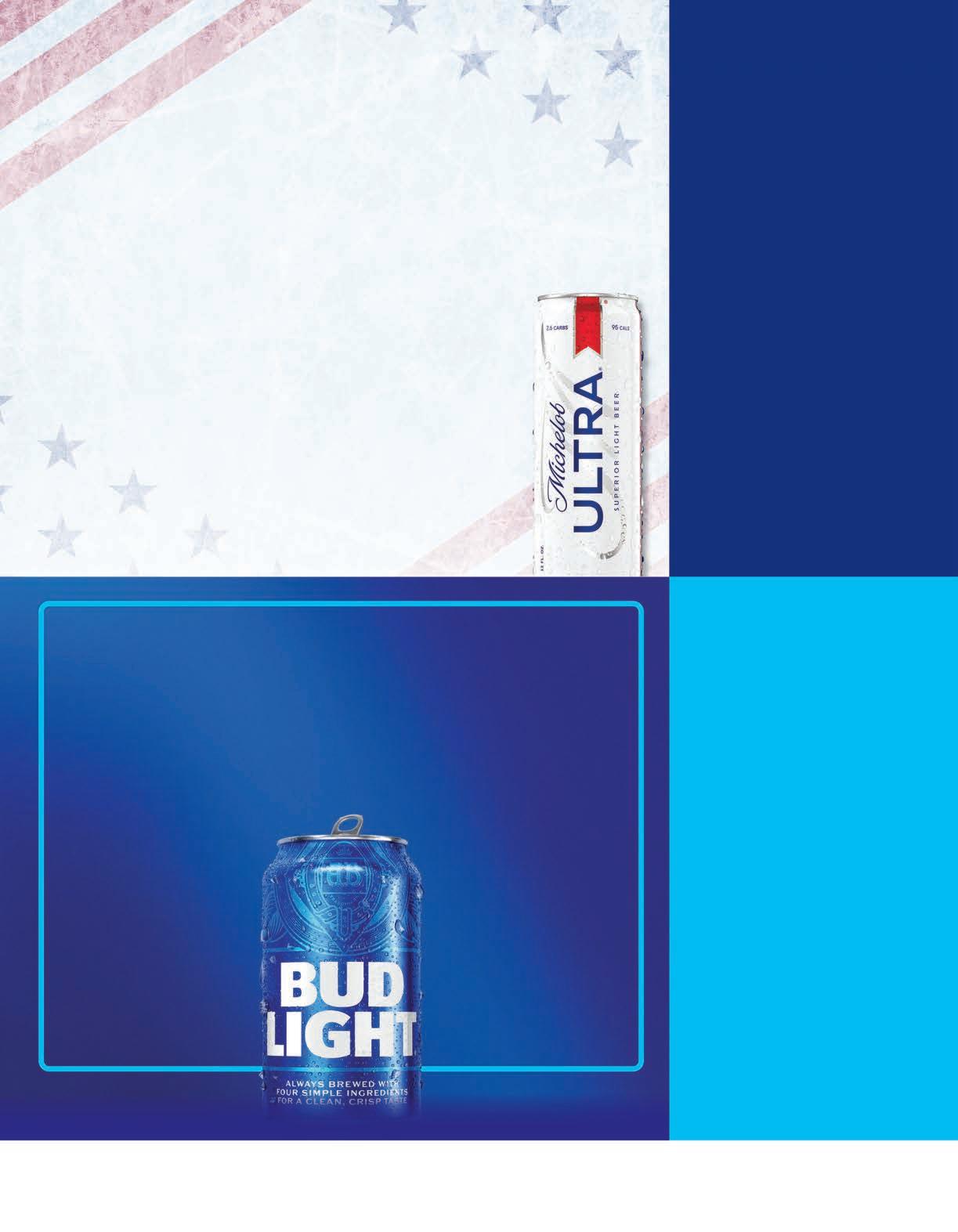
ULTRA® is the fastest-growing beer brand at 7-Eleven*
21.9M viewers are expected for the 2026 Winter Olympics**
Sukhi Sandhu, NCASEF Chairman
Member News
Global C-Stores
Driving Traffic
Convenience stores around the world adapted their strategies in the second quarter of 2025 to meet changing shopper expectations and economic pressures, reported NACS Daily. The latest NACS-NIQ Global Convenience Store Industry Report found that promotions played a critical role in driving foot traffic and supporting value growth across multiple regions. In Canada, for instance, promotional support increased by 10 percent, helping to lift overall dollar sales (excluding tobacco) by 10.3 percent—three times higher than the rest of the retail market. Expanded alcohol access regulations further boosted liquor sales by over 300 percent, while wine and beer also surged.
Across Europe, growth was slower, but retailers leaned on promotions in snacks, frozen foods, and perishables to attract shoppers making broader “meal mission” trips like dinner purchases, even as tobacco sales declined.
Argentina topped value growth with a 31.5 percent increase fueled by inflation, while Peru led unit growth at 15.1 percent thanks to rapid store expansion. The Philippines and Colombia also posted strong value gains due to promotions and private-
label success in key categories such as coffee and tobacco.
Globally, the data painted a picture of resilience and adaptation. Twenty countries saw improved value growth in Q2—double the number from the prior quarter—reflecting “a rapidly evolving convenience retail landscape” shaped by inflation, shifting consumer preferences, and regulatory shifts.
“Promotions played a critical role in driving c-store foot traffic and supporting value growth across multiple regions.”
Crossover Alcoholic Beverages Gain Momentum
Crossover alcoholic beverages— alcohol-infused versions of familiar non-alcoholic brands—are rapidly gaining traction in the convenience store channel, reported C-Store Dive. According to industry data, the category has grown from about $50 million in 2021 to more than $300 million today, fueled largely by younger consumers, especially Gen Z, who are drawn to recognizable brands experimenting with alcohol. These products blur the line between traditional soft drinks and ready-to-drink cocktails, offering a sense of novelty while
The National Coalition Office
The strength of an independent trade association lies in its ability to promote, protect and advance the best interests of its members, something no single member or advisory group can achieve. The independent trade association can create a better understanding between its members and those with whom it deals. National Coalition offices are located in Ceres, California.
3645 Mitchell Road Suite B Ceres, CA 95307 855-444-7711 nationaloffice@ncasef.com
NATIONAL COALITION OF ASSOCIATIONS OF 7-ELEVEN FRANCHISEES
NATIONAL OFFICERS & STAFF
Sukhi Sandhu NATIONAL CHAIRMAN 855-444-7711 sukhi.sandhu@ncasef.com
Nick Bhullar EXECUTIVE VICE CHAIR 626-255-8555 bhullar711@yahoo.com
Avanti Magazine is the registered trademark of The National Coalition of Associations of 7-Eleven Franchisees.
capitalizing on brand trust. For c-stores, the trend represents a lucrative opportunity to diversify beverage offerings and attract new demographics seeking convenience and variety.
However, the rise of crossover beverages also presents challenges for retailers. Merchandising requires careful execution to avoid consumer confusion, since alcoholic and nonalcoholic versions often share nearly identical branding and packaging. Compliance with alcohol regulations adds another layer of complexity, as stores must ensure proper placement and age-restricted sales. Despite these hurdles, industry experts believe the category’s rapid growth signals long-term potential, positioning crossover beverages as a key driver of innovation in the convenience retail sector.
Bank Profits Fuel Swipe Fee Reform
Surging profits at major U.S. banks—JPMorgan Chase, Citigroup, Wells Fargo, and PNC—are fueling renewed calls by the Merchants Payments Coalition (MPC) for Congress to address credit card swipe fees. These fees, which have climbed 70 percent since the pandemic and reached a record $187.2 billion in 2024, far outpace the slim 3 percent profit margins of merchants, driving up consumer costs by nearly $1,200 annually per family, the MPC stated.
Visa and Mastercard, which control 80 percent of the market, centrally set swipe fee rates and restrict processing to their networks, limiting competition. With profit margins at Visa and Mastercard exceeding 45 percent, the MPC
argued that the imbalance harms small businesses and consumers alike. The proposed Credit Card Competition Act would require large banks to enable processing over at least one unaffiliated network, a move expected to promote competition, improve security, and save merchants and consumers an estimated $17 billion annually.
“Surging profits at major U.S. banks are fueling renewed calls for Congress to address credit card swipe fees.”
Retailers Grapple With Coin Shortages
The U.S. Mint’s decision to phase out the penny is already rippling through retailers, who are facing unexpected shortages of the onecent coin well before production officially ends in 2026, reported Money. Stores like Sheetz in Pennsylvania and Kwik Trip in the Midwest are improvising with signs urging customers to use digital payments, round up for charity, or even trade in pennies for perks.
Some chains have adopted temporary policies like rounding down to the nearest nickel, but this comes at a steep cost—industry groups estimate convenience stores could collectively lose $1.2 million per day if rounding down became standard. Rounding up, meanwhile, risks legal complications tied to SNAP benefits, regulated product pricing, and state fuel signage rules. Going cashless isn’t a perfect solution either, as swipe fees can erode already thin margins, leaving retailers stuck between three costly and confusing options.
The shortage stems from the Treasury’s final order of penny blanks earlier this year, with production expected to cease once supplies run out in early 2026. Officials say eliminating the penny could save the government $56 million annually, aligning the U.S. with other countries that have already retired their smallest denominations.
But the transition is complicated by local laws: cities like San Francisco, New York, and Philadelphia, as well as states like Delaware and Oregon, require exact change, making rounding illegal. With Congress stalled on legislation such as the Common Cents Act, which would formally authorize rounding to the nearest nickel, retailers are left in limbo.
SNAP Rule Changes Could Cost C-Stores
$1 Billion
Proposed restrictions to the Supplemental Nutrition Assistance Program (SNAP) could saddle convenience stores with more than $1 billion in up-front costs, reported NACS Daily. A new “SNAP Restrictions Impact Analysis” released jointly by NACS, the National Grocers Association, and FMI—the Food Industry Association—estimates that compliance expenses across all food retail channels could exceed $1.6 billion, with convenience stores facing the steepest burden.
The report cites technology upgrades, software and POS modifications, and labor tied to new stocking and labeling rules as the biggest cost drivers. Ongoing compliance could add another $378.6 million annually for
Member News
continued from page 11 c-stores alone. NACS Director of Government Relations Margaret Mannion called the restrictions “unprecedented,” warning that without clear guidance and adequate time for implementation, the measures will raise costs for all consumers, not just SNAP participants.
Promotions & Product Mix Drive C-Store Loyalty
A new Acosta Group study finds that convenience store customers are increasingly motivated by curated product offerings and compelling promotions, with 63 percent visiting at least weekly and nearly 92 percent stopping in for food or
Aon & 7-Eleven: A Trusted Combo
beverages. The research further reveals that 26 percent of shoppers increased their trips this year, driven by convenience, assortment, and value, while promotions—especially buy-one-get-one-free deals—remain a powerful draw.
Shoppers are also highly engaged with marketing touchpoints, with 69 percent reading signage at the pump, 44 percent checking in-store displays, and nearly a quarter using retailer apps. Millennials and Gen X dominate the customer base,
“A new study finds that c-store customers are increasingly motivated by curated product offerings and compelling promotions.”
with men representing a notable majority, and 72 percent of all shoppers now make planned quick trips, presenting an opportunity for retailers to align with deliberate, value-driven behaviors.
Alcohol Sales Shift In C-Stores
Alcohol sales in convenience stores are undergoing a reshuffle as consumer preferences evolve, reported C-Store Dive. While overall alcohol consumption has dipped in recent years, beer remains the category’s anchor, generating more than $25 billion in annual c-store sales despite modest declines in both dollar sales (–1.6 percent) and case volume (–3.8 percent).
Import and craft beers are seeing incremental growth, but the real momentum is in domestic super premium brands, which have outpaced imports and crafts. At the same time, ready-to-drink (RTD) cocktails and spirits are driving category excitement. RTDs have surged as consumers seek convenience and variety, with premixed cocktails up nearly 56 percent in sales and 66.5 percent in case volume year-over-year. Spirits, particularly tequila, are also gaining traction thanks to improved quality, flavor innovation, and mixology versatility.
NACS Show Sets New Attendance Record
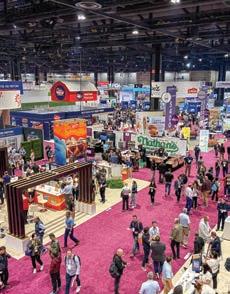
The 2025 NACS Show in Chicago drew 25,136 attendees from 73 countries, setting a new record for the city and marking the third consecutive year of recordbreaking attendance for the event, reported NACS Daily. Organized by the National Association of Convenience Stores, the show brought together retailers, suppliers, and industry leaders for four days of networking, education, and product showcases. Chicago’s McCormick Place provided the backdrop for a bustling expo floor featuring thousands of exhibitors showcasing new products as well as innovations in foodservice, technology, and convenience retail operations. This milestone follows record-setting events in Atlanta in 2023 and Las
Vegas in 2024.
Gummy Candy Sales Grow
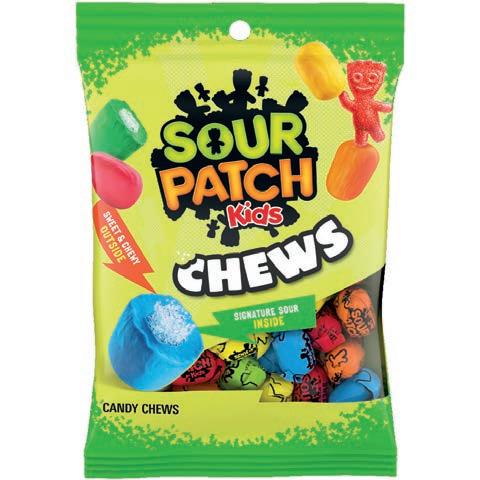
The U.S. non-chocolate candy market reached $12.9 billion in sales last year, with gummies and chewy treats leading the way, according to the National Confectioners Association. While Gen X currently drives the most unit sales, Millennials are poised to take the lead within two years, and Gen Z spending jumped 47 percent year-over-year, signaling a powerful shift in consumer habits. Across all age groups, gummies remain the top pick, followed by hard candy, lollipops, and licorice. Younger consumers are fueling demand
continued on page 41
Optimized our entire service team to continue serving you better. Introduced location-based policies for seamless service everywhere you go and grow.
Launched our digital wallet to continue serving you better with the latest technology. Stores wont be cancelled due to losses We have additional Loss prevention, Employee retention and compliance tools MARKED 20 YEARS AS YOUR OFFICIAL WORKERS’ COMP INSURANCE AND EPLI BROKER!
Contact us for any insurance questions: (847) 629-4711
Across the country, families are still feeling the pinch. Prices keep rising, paychecks aren’t stretching as far, and even though the government has reopened— and federal workers and SNAP recipients are finally receiving their pay and benefits again—the strain hasn’t lifted. For many households, recovery doesn’t happen overnight. Their local 7-Eleven remains more than a convenience store; it’s one of the few places they can count on to be open, stocked, and welcoming. As franchisees, we’re seeing the pressure our communities are under every single day.
Every day, customers seem to walk into our stores with tighter budgets. They’re making trade-offs, counting every dollar, and looking for value wherever they can find it. And while the cost of doing business keeps going up—from wholesale prices to credit card fees to utilities—our profit margins remain razor thin. Franchisees are working harder than ever just to keep up, serving their neighborhoods faithfully while absorbing more of the financial burden themselves.
“In moments like these, it becomes clear that our system’s strength depends on partnership—real partnership, not just in words but in actions.”
In moments like these, it becomes clear that our system’s strength depends on partnership— real partnership, not just in words but in actions. Franchisees, SEI, and vendors all play essential roles in keeping the 7-Eleven brand strong. But when times are tough, that strength is tested. It’s easy to talk about teamwork when sales are up and costs are down; it’s much harder when every line on the P&L feels like it’s pulling in the wrong direction.
The reality is that franchisees can’t shoulder these challenges alone. Rising product costs, inflationary pressures, and reduced customer spending all combine
BY SUKHI SANDHU NCASEF Chairman
“Rising product costs, inflationary pressures, and reduced customer spending all combine to create a situation where stores need flexibility, not rigidity, from the system above them.”
to create a situation where stores need flexibility, not rigidity, from the system above them. This is when SEI should be working closer with franchisees to find ways to relieve pressure and protect profitability. In the long-term, we need to be reviewing the Franchisee Agreement, focusing on franchisees’ net profitability and the health of the franchisee model. In the short-term, this means revisiting policies like the Gradual Gross Profit Split (GGPS), adjusting supply chain markups, and ensuring that promotional programs truly help stores drive traffic and sales, not just move product.
Our vendor partners are part of that solution, too. Many of them have stood with us through difficult times, offering strong promotions, supporting FOA trade shows, and helping franchisees identify new items that excite customers. Those relationships matter. Vendors who step up now, who understand that affordability drives volume and that franchisee success equals their success, will earn lasting loyalty.
At the same time, communication and transparency have never been more important. Franchisees need timely information about pricing changes, program updates, and supply issues so they can plan properly and make informed decisions. Too often, these conversations happen after the fact, leaving storeowners reacting instead of preparing. True partnership means making sure every franchisee has the knowledge and support to adapt quickly when circumstances change.
“When government services slow down or stop altogether, when families can’t rely on a paycheck or benefits, 7-Eleven stores remain open.”
Tough Times Call For True Partnership
We also need to recognize what our stores represent during times like these. When government services slow down or stop altogether, when families can’t rely on a paycheck or benefits, 7-Eleven stores remain open. Franchisees keep their doors unlocked, lights on, and coffee brewing, providing small comforts and daily essentials to communities that depend on them. That reliability is a core part of the 7-Eleven promise, but it comes at a cost that franchisees continue to bear.
So this is a moment for unity. For SEI
“None of us is as great as all of us together”
The best way to stay informed of the latest changes and challenges to our 7-Eleven system-and the convenience industry, in general-is to join your local Franchise Owner’s Association. FOAs help franchisees share ideas and concerns, and allow us to approach our franchisor and vendor partners with a unified voice. Becoming an FOA member also makes you a member of the National Coalition, which consists of all 41 FOAs nationwide.
To join your local organization, contact the FOA president closest to you, or follow the instructions below to fill out an online membership form. If you cannot find the FOA closest to you, contact nationaloffice@ncasef. com for more information. We welcome your participation!
to stand beside the franchisees who carry its brand every day. For vendors to strengthen their partnerships and look beyond short-term numbers to long-term relationships. And for franchisees to continue working together through their FOAs and NCASEF, making sure our collective voice stays strong and clear.
“When we act with fairness, empathy, and collaboration, we build trust that endures well beyond any crisis.”
The economy will recover—it always does. But the decisions we make during hard times reveal the kind of brand we truly are. When we act with fairness, empathy, and collaboration, we build trust that endures well beyond any crisis.
In times like these, the only way forward is together.
1. Log in to 7Help using 7Hub (secured) instore or using this link https:/7elevenna. service-now.com/from any external device.
2. In the search bar type “FOA.”
3. Select the popup suggestion “FOA/ PAC:FRANCHISE OWNERS ASSOCIATION.”
4. Type “NONE” in the “Current FOA” box if you are joining an FOA for the first time or you are not a member of any other FOA.
5. Type in the full name of the FOA that you wish to join (No abbreviation) in the “Future FOA” box.
6. Type in the amount of monthly dues as instructed per local FOA.
7. Type “Please enroll (store number) as a member of (name of the local) FOA.”
8. Repeat Step 7.
9. Press the green submit icon.
Franchisees Pack The 2025 NACS Show
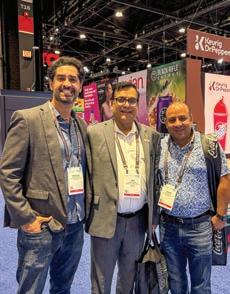
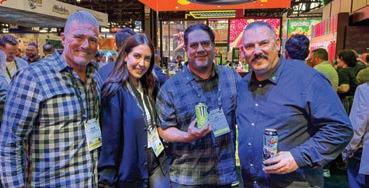
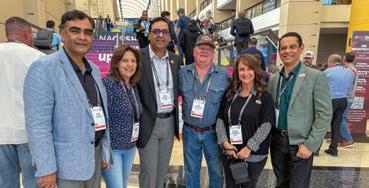
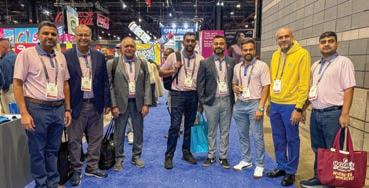
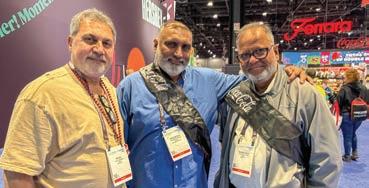
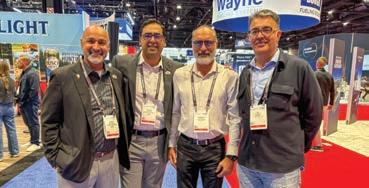
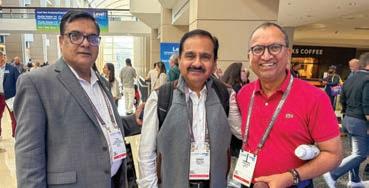
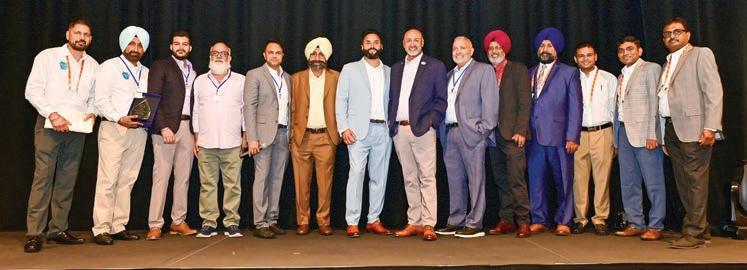
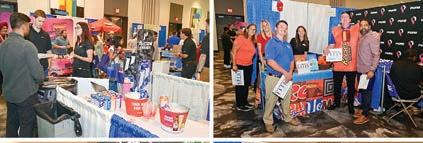
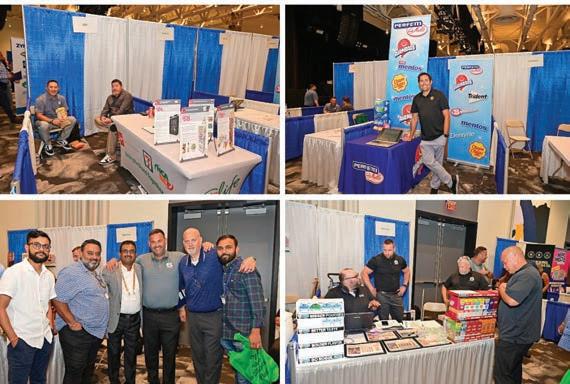
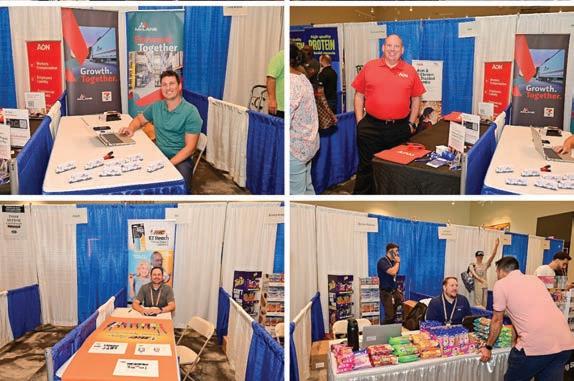
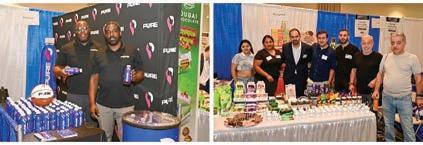
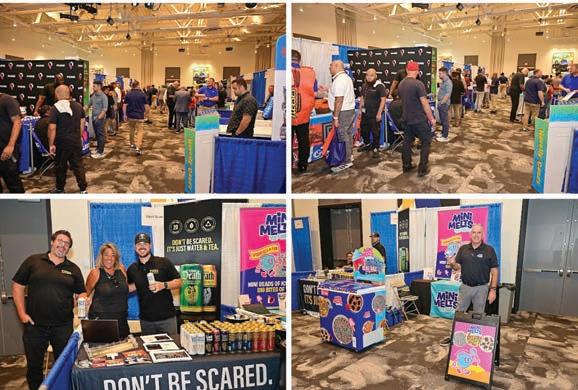
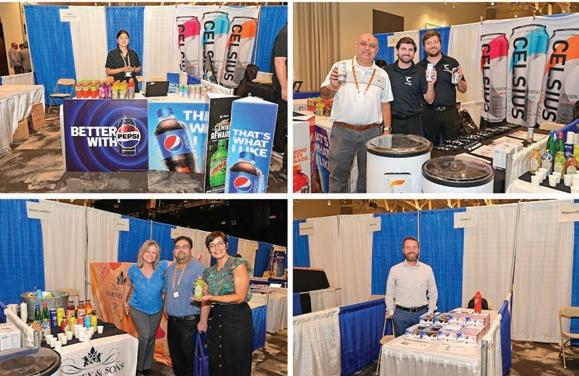
7-Eleven franchisees turned out in full force for the 2025 NACS Show, held October 14–17, 2025, at McCormick Place in Chicago. The massive event—which featured over 1,200 exhibiting vendors and 25,136 attendees—buzzed with energy as franchisees explored new products, met with vendors, and swapped ideas with other 7-Eleven operators from across the country. From innovative snacks to the latest tech and equipment, the show offered plenty of inspiration for store owners looking to stay ahead of the curve.
Do All Roads Lead To An IPO Of 7-Eleven, Inc.? Let’s Play 20 Questions
Twenty Questions originated as a spoken parlor game that encouraged deductive reasoning and creativity. It originated in the United States by Maggie Noonan and was played widely in the 19th century. It escalated in popularity during the late 1940s, when it became the format for a successful weekly radio quiz program.
In the traditional game, the “answerer” chooses something that the other players, the “questioners,” must guess. If a questioner guesses the correct answer, they win and become the answerer for the next round. If 20 questions are asked without a correct guess, then the answerer has stumped the questioners and gets to be the answerer for another round.
In its most recent quarterly Presentation Materials dated October 9, 2025, the parent company of SEI reported on the status of what it refers to as Management Initiatives. The first one mentioned on slide 25 is Pursue IPO of SEI by 2H 2026. Under Progress, the presentation states: Launched a project and the practical preparations for its materialization is making progress as scheduled
What are those practical preparations? At least part of the answer can be found in a 26-page PowerPoint presentation entitled Transformation of 7-Eleven, issued on August 6, 2025 which presents specific goals involving significant increases in revenue, gross profit and earnings per share, such that EBITDA grows by 45 percent or at the compound rate of 7 percent per year through 2030. The plan seeks to deliver shareholder returns far in excess of what has been experienced in the past, which is what triggered the unsuccessful ValueAct and ACT initiatives.
“These understandable and perfectly reasonable objectives to increase the financial performance of the company are grounded in attempting to do an IPO at the highest price possible.”
These understandable and perfectly reasonable objectives to increase the financial performance of the
BY ERIC H. KARP General Counsel to NCASEF
company are grounded in attempting to do an IPO at the highest price possible. There is nothing unusual or improper about that. But my concern is that the various initiatives which SEI’s parent company believes will create those conditions are likely to have a material and lasting impact on franchisees throughout the country.
In the previous issue of Avanti, my colleague, Thomas Ayres provided an overview of what would happen if there was an IPO. This included making capital available for system improvements and initiatives and the availability of additional information concerning the financial performance of the company. We continue with that theme by exploring the pathway to the intended IPO.
Here are my Twenty Questions:
SEI’s parent company aims to rebuild and offer distinctive food offerings through aggressive investment in stores and restaurants. This will involve expanding the number of stores with restaurants to more than 2,000 by 2030.
1.How much of this aggressive investment will be in franchised stores?
2.What is the projected cost of this conversion, and can it be accomplished without an IPO?
3.What provision will be made for franchised stores that are too small or too old to accommodate a restaurant format?
4.For franchised stores that are converted, will they operate under the same franchise agreement or some other document? What will be the specific terms and conditions of that arrangement?
The parent company aims to open 1,300 new large format stores by 2030.
5.Will these stores be made available for franchising and if so on what specific terms and conditions?
6.What commitments can be made to lessen the impact on existing stores in close proximity to the new large format stores?
7.What data was used to project that these new large format stores will generate average daily sales 45 percent higher than the existing portfolio of stores?
Play 20 Questions continued from page 19
Another stated goal is to redefine convenience with delivery in less than 30 minutes. This will involve expanding 7NOW’s geographic and service coverage as well as subscriptions for 7NOW Gold Pass to 8,500 stores by 2030.
8.What data demonstrates that 7NOW is an additional source of revenue for both franchised and company owned stores?
9.In light of the fact that 7NOW sales are an increasing percentage of revenue for every store in the system, are sales through that channel more or less profitable than in-store sales?
10.Will franchised stores share in subscription revenue and if so, on what basis?
For the most recent six months, SEI’s total store sales were down 7.8 percent year over year and revenue from operations was down 9.3 percent. But selling, general and administrative expenses were down 1.6 percent, resulting in a 5.5 percent increase in operating income. The goal of the parent company over the next five years is to continue in that fashion with expenses growing slower than top line revenue and gross profit.
“Can SEI commit that service and support to franchisees will not be reduced or compromised in light of these limits on expenses?
11.Can SEI commit that service and support to franchisees will not be reduced or compromised in light of these limits on expenses?
12.To what extent will this drive for higher operating income leading to an IPO come at the expense of franchisee gross profit, net income and resale value?
Another stated goal is to change the perception of the value and quality of products, especially food, by growing private brand revenue by an average rate of 6.5 percent per year through 2030. The data presented states that private brands have an average gross profit percentage of 51.3 percent.
13.What data demonstrates that private brands have an average gross profit 18.3 percent higher than nonprivate brand products?
14.Given the degree of its control over private brands, will SEI commit in a binding fashion to maintaining that advantage as private brand products grow?
15.In 2019, SEI stopped providing information from which franchisee gross profit could be calculated. When will it restore the disclosure of that information?
SEI’s parent company also announced an intention to maximize fuel vertical integration opportunities, yielding $400 Million additional EBITDA by 2030. For the first three months of FY 2025, CPG was down 1 percent and gas sales down 1.9 percent YOY. In the next quarter, CPG rose to an increase of 2.9 percent and sales dropped by 4.8 percent. According to the Brief Summary issued by SEI’s parent company, the average number of retail gallons of gas sold per store decreased for the last six consecutive quarters.
16.What percentage of the 8,214 stores with gasoline are franchised?
17.Do stores with gasoline have higher or lower merchandise sales, same store sales and numbers of customers?
18.Will SEI acknowledge that increasing profit on gasoline comes at the expense of franchisees, who are paid on the number of gallons pumped?
19.Why not moderate the drive for profit in a way that not only increases the number of gallons pumped but the number of merchandise sales to customers? Same store sales and the number of customers have each declined for the last 6 calendar quarters.
20.How will the proposed vertical integration of the gasoline business affect retail gasoline pricing and the number of gallons sold?
More than 56 percent of the stores in the system are franchised. Over the last six months, sales at company stores declined by 5.3 percent, while sales at franchised stores declined by only 0.1 percent and franchise commissions paid by franchisees increased by 3.7 percent. The franchisees in this system have a serious stake in its future, whether or not there is an IPO.
“The franchisees in this system have a serious stake in its future, whether or not there is an IPO.”
If SEI provides specific, detailed and written answers to these questions, I would be more than happy to surrender my space in the next issue of Avanti Magazine for those responses.
103852
106860
RedVolution ITEM#SLIN:
Chardonnay
Cabernet Sauvignon
How The Franchise Owners Association Benefits
7-Eleven Franchisees
Franchising has become a popular business model, allowing entrepreneurs to operate under established brands while benefiting from their reputation and operational support. Among these franchises, 7-Eleven stands out as one of the most recognizable convenience store brands worldwide. However, the success of
“The success of 7-Eleven franchisees is not solely attributed to the brand itself; the support provided by FOAs plays a significant role.”
7-Eleven franchisees is not solely attributed to the brand itself; the support provided by Franchise Owners Associations (FOAs) plays a significant role. This article examines the benefits that Franchise Owners Associations provide to 7-Eleven franchisees.
Collective Bargaining Power
One of the primary advantages of being part of a Franchise Owners Association is the collective bargaining power it offers to franchisees. By banding together, franchise owners can negotiate better terms with suppliers, vendors, and service providers. For 7-Eleven franchisees, this can mean reduced costs on inventory, promotional materials, and equipment, ultimately leading to increased profit margins.
“Franchise Owners Associations serve as a voice for franchisees, advocating for their interests at various levels.”
Advocacy and Representation
Franchise Owners Associations serve as a voice for franchisees, advocating for their interests at various
BY TEETO SHIRAJEE NCASEF Vice Chair
levels. This representation is crucial in discussions with SEI regarding policies, pricing strategies, and operational practices. In the case of 7-Eleven, the association can help ensure that franchisee concerns are heard and considered, promoting a more collaborative relationship between franchisees and corporate.
Training and Development
A well-informed franchisee is a successful franchisee. Franchise Owners Associations often provide training programs, workshops, and seminars that equip 7-Eleven franchise owners with the necessary skills and knowledge to run their businesses effectively. These educational resources cover a range of topics, including marketing strategies, customer service, inventory management, and financial planning, ensuring that franchisees are well-equipped to meet the challenges of operating a 7-Eleven store.
Networking Opportunities
Being part of a Franchise Owners Association allows 7-Eleven franchisees to connect with one another, fostering a sense of community and collaboration. These networking opportunities enable franchise owners to share best practices, troubleshooting tips, and innovative ideas that can enhance their operations. This camaraderie can be especially beneficial for new franchisees who may benefit from the experience and insights of seasoned owners.
Access to Resources and Support
Franchise Owners Associations often provide members with access to a wealth of resources, including marketing materials, operational guidelines, and legal advice. For 7-Eleven franchisees, having access to these resources can streamline operations and improve
“For 7-Eleven franchisees, having access to these resources can streamline operations and improve efficiency.”
efficiency. Furthermore, FOAs typically offer dedicated support during times of crisis or change—whether it’s navigating new regulations, managing supply chain disruptions, or addressing labor challenges. This ongoing assistance helps franchisees adapt quickly and maintain business continuity, even when market conditions shift unexpectedly.
Strength in Community Engagement
Another key benefit of joining an FOA is the opportunity to give back to the communities franchisees serve. Many FOAs organize charity golf tournaments, fundraising events, and local partnerships that benefit organizations like Children’s Miracle Network Hospitals and other regional causes. These initiatives not only
strengthen the reputation of 7-Eleven stores within their neighborhoods, but also bring franchisees, vendors, and customers together for a shared purpose. Participating in these efforts reinforces the core values of teamwork, compassion, and social responsibility that define the 7-Eleven brand.
In essence, Franchise Owners Associations are an indispensable part of the 7-Eleven ecosystem. They empower franchisees through collective strength, open communication, and shared knowledge, ensuring that
“In essence, Franchise Owners Associations are an indispensable part of the 7-Eleven ecosystem.”
independent operators never have to face challenges alone. By working together through their local FOAs and the National Coalition of Associations of 7-Eleven Franchisees (NCASEF), franchisees can build stronger businesses, create lasting partnerships, and contribute to the overall success of the 7-Eleven brand nationwide.
A Winning Showcase In Philadelphia
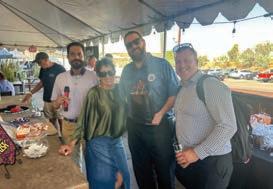
The Keystone FOA hosted its annual trade show on August 12, 2025, at the Live Casino Hotel in Philadelphia, led by FOA President Sukhi Thind. With 68 vendor booths and more than 300 guests, the event drew strong participation and marked another milestone for the organization. Vendors showcased a wide range of products, and attendees enjoyed generous raffle prizes and special order incentives that kept the energy high throughout the day.
The FOA recognized Coca-Cola as Vendor of the Year and G&B Amusements as Emerging Vendor of the Year, honoring their ongoing support and engagement with franchisees. The Keystone FOA also celebrated former Eastern Virginia FOA President and NCASEF Treasurer Romy Singh for his resilient leadership and service to franchisees at the national and local levels, while Eastern Virginia FOA Vice Presidents Inderjeet Singh and Vaibhav Bhatt attended to show their support.
A Sold-Out Day At The Races
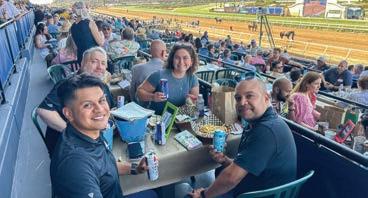
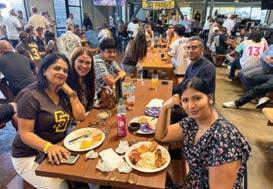
The San Diego FOA hosted its sold-out Day at the Races on August 22, 2025, at the Del Mar Thoroughbred Club, filling 41 shaded Clubhouse Terrace tables with 164 franchisees, vendors, friends, and family. Guests enjoyed a day of racing, camaraderie, and great food, thanks to the generous support of sponsors including Anheuser-Busch, Coca-Cola, Monster Energy, John Lenore, PepsiCo, Fairlife, BodyArmor, Hostess, Primo Brands, Savage Rabbit, Bucha Hard Kombucha, and I
Choose Global Inc. McLane, I Choose Global Inc., Mondelez International, and Perfetti Van Melle contributed snacks for goodie bags at every table, adding a personal touch to the day’s festivities. The event captured the spirit of the San Diego FOA—bringing together the franchisee community and their vendor partners for a memorable afternoon of fun at one of California’s most iconic racetracks.
San Diego FOA Celebrates Its Vendor Partners
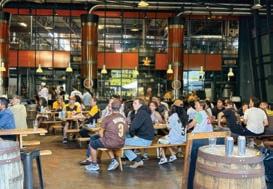
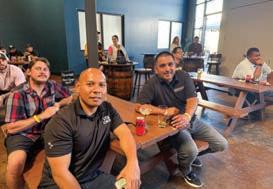
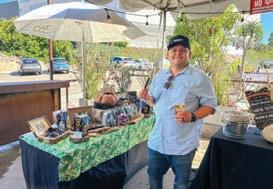
The San Diego FOA turned up the fun on October 2, 2025, hosting its lively Vendor Appreciation Day at Alesmith Brewing Company in sunny San Diego. Franchisees and vendors gathered for a laid-back afternoon packed with good vibes, cold drinks, and great eats. Sabor Catering Company served up a mouthwatering BBQ lunch, while guests cooled off with an assortment of beverages. The hit of the day? A donated ice cream cart from TCD TransCold that kept everyone smiling with sweet treats all afternoon. The celebration was all about saying a big, heartfelt
thank you to the vendors who help make San Diego FOA events like the Charity Golf Tournament and Holiday Party such a success, and who supply franchisees’ stores with great-selling products and fantastic deals. Among those who joined the festivities were AnheuserBusch, BeatBox Beverage, Bob Appetit, Coca-Cola, C4 Energy, Electrolit, Express Ice, Eternal Water, Fairlife, Gelato Water, June Shine, Jeff & Tony’s DSD, Liquid Death, McLane, Monster Energy, Red Bull, Sesh Products, SlamZees Beverage, TCD TransCold, TSL Brands, and Vita Coco.
E-Verify Program Policy And Procedures
7-Eleven, Inc. may take the position that under the 7-Eleven franchisee agreement, franchisees may be required to provide certification regarding wages, hours, and the eligibility of their employees to work in the United States, and pay the cost of outside auditors to verify the accuracy of the certification. We are required to register and use E-Verify for new hires or rehires. Please see below the processes of how to enroll in E-Verify, how to use E-Verify for new hires and rehires, and the consequences if we don’t do use this service.
“7-Eleven is required by the federal government to participate in E-Verify.”
1. Overview
E-Verify is a secure, web-based system operated by the U.S. Department of Homeland Security (DHS) in partnership with the Social Security Administration (SSA). The program allows employers to electronically verify the employment eligibility of newly hired employees and certain rehires.
7-Eleven is required by the federal government to participate in E-Verify. This requirement helps ensure that all employees are legally authorized to work in the United States and that the company remains fully compliant with federal employment laws.
2. Enrollment and Account Setup
Step 1: Visit www.e-verify.gov.
Step 2: Click “Enroll in E-Verify.”
Step 3: Complete the online enrollment form with the company’s legal information, Employer Identification Number (EIN), and contact details.
Step 4: Review and accept the DHS Memorandum of Understanding (MOU).
Step 5: Once approved, the company will receive a User ID and temporary password.
Step 6: Complete the required online training to activate the account.
Step 7: Assign user roles and ensure only trained, authorized individuals have access.
3. Verification for New Hires
BY RAJ SINGH NCASEF TREASURER
Federal regulations require that E-Verify cases be created no later than the third business day after the employee’s start date.
Process:
1. Complete Form I-9 (Employment Eligibility Verification) on or before the employee’s third day of work.
2. Log in to the E-Verify system.
3. Select “New Case.”
4. Enter employee information exactly as it appears on Form I-9.
5. Submit the case for verification.
6. Review the system response:
• Employment Authorized: No further action is required.
• Tentative Non-Confirmation (TNC): Inform the employee immediately and follow E-Verify procedures to resolve.
• Final Non-Confirmation: If unresolved, the case must be closed according to federal guidelines.
7. Document and close the case in the E-Verify system.
4. Verification for Rehires
If an employee is rehired within three years of the date of their previous Form I-9:
• The employer may use the existing Form I-9 if still valid, or complete a new one if information has changed.
• Log in to E-Verify and create a new case for the rehire.
• Follow the same steps as for a new hire.
• Ensure any changes in work authorization are updated on Form I-9.
5. Employer Responsibilities
• Do not use E-Verify to pre-screen job applicants.
• Use E-Verify only after the employee has accepted a job offer and completed Form I-9.
• Apply E-Verify procedures consistently for all new hires.
• Protect the confidentiality of
employee information at all times.
• Retain Form I-9 and E-Verify records according to federal retention rules.
• Follow required procedures if a TNC or Final Non-Confirmation is issued.
6. Training and Compliance
All employees who use E-Verify must complete mandatory DHS online training before accessing the system. Ongoing compliance checks will be conducted to ensure that:
• E-Verify cases are created in a timely manner.
• Documentation is accurate and properly retained.
• All actions are in accordance with federal employment verification laws.
7. Additional Resources
• E-Verify Official Website: https://www.e-verify.gov
• E-Verify Employer Hotline: 1-888-464-4218
• E-Verify Email: e-verify@uscis.dhs.gov
• USCIS Form I-9 Information: https://www.uscis. gov/i-9
8. Summary
E-Verify is a critical part of our hiring and onboarding process. By following these procedures, our organization complies with federal law, protects the integrity of our workforce, and ensures that all employees are legally authorized to work in the United States. Consequences of Not Using E-Verify for Hiring or Rehiring
While E-Verify is voluntary for many employers at the federal level, it is mandatory for certain industries, federal contractors, and in several states. Failing to use E-Verify where required—or failing to verify employment eligibility properly—can expose employers to significant legal, financial, and reputational consequences.
“If an employer hires an unauthorized worker and did not use E-Verify (when required or recommended), it can be seen as negligence or willful disregard of federal immigration laws.”
1. Legal and Regulatory Consequences
a. I-9 Non-Compliance
Even if E-Verify isn’t mandatory, all U.S. employers
must complete Form I-9 for every new hire. Not using E-Verify does not relieve employers of this obligation. If an employer hires an unauthorized worker and did not use E-Verify (when required or recommended), it can be seen as negligence or willful disregard of federal immigration laws.
b. State and Federal Penalties
Certain states (such as Arizona, Alabama, Mississippi, and others) require employers to use E-Verify. Noncompliance in these states can result in:
• Suspension or revocation of business licenses.
• Fines or penalties.
• Ineligibility for state contracts or incentives.
• If the employer is a federal contractor with an E-Verify clause, failure to use E-Verify can lead to contract termination or suspension from future federal projects.
2. Financial Consequences
a. Civil Fines
Hiring unauthorized workers, whether intentional or accidental, can result in substantial fines from U.S. Immigration and Customs Enforcement (ICE). These fines escalate based on the number of violations and whether they are repeat offenses.
b. Increased Audit Costs
If an employer is found to have hired unauthorized workers without proper verification, the business may be subjected to audits, investigations, and compliance reviews. Legal fees and operational disruptions add indirect financial burdens.
3. Reputational Damage
a. Public Exposure
ICE often publishes enforcement actions, including employer names, leading to public embarrassment and reputational harm. Customers, clients, or investors may lose trust in an organization that fails to comply with employment verification laws.
b. Loss of Business Relationships
Vendors or partners who require proof of compliance may sever ties with non-compliant employers. Some clients—especially in government, infrastructure, or security sectors—require strict hiring compliance as a condition for doing business.
4. Hiring and Workforce Risks
a. Risk of Workforce Disruption
If unauthorized workers are discovered after hiring, employers may be forced to terminate employees immediately. This can lead to staffing shortages, halted operations, and negative impacts on productivity.
b. Increased Scrutiny
Failure to use E-Verify, especially after prior violations, may flag the employer for ongoing monitoring by DHS or ICE, which can trigger repeated inspections.
5. Consequences for Rehiring Without E-Verify Rehiring employees presents additional risks:
• If an employer fails to reverify a previously terminated employee’s work authorization when rehiring after certain timeframes, it risks harboring unauthorized workers.
• If an employee’s status has changed or expired, rehiring without using E-Verify (or updating Form I-9) contributes to non-compliance and potential liability.
Key Takeaway
Even where E-Verify is not mandatory, using it demonstrates a good-faith effort to comply with federal immigration law. Employers that choose not to use E-Verify risk:
• Legal penalties
• Civil fines
• Business license loss
• Contract termination
• Public reputational damage Best Practices for Employers
• Use E-Verify whenever possible, even if optional.
• Train HR personnel on I-9 and E-Verify procedures.
• Keep accurate records of verification efforts.
• Stay updated on federal and state E-Verify requirements. By proactively using E-Verify, employers build a stronger legal defense, maintain ethical hiring standards, and protect their business from serious consequences.
Coca-Cola will roll out 7.5-ounce mini cans of its sodas—including Coke Zero Sugar, Cherry Coke, Sprite, and Fanta— to U.S. convenience stores early next year, reported Reuters. The smaller, lower-calorie cans, priced at $1.29, are designed to appeal to budget-conscious and calorie-aware shoppers. • Kwik Trip is phasing out pennies across its 900 convenience stores, with all cash transactions now being rounded down to the nearest five cents, reported WBAY The company said the change— prompted by the U.S. Mint’s decision to stop producing new pennies—will roll out gradually as each store’s penny supply runs out, ensuring customers paying with cash actually save a few cents per purchase. • On the final day of the 2025 NACS Show, the NACS Foundation partnered with Vontier Corporation and
FoodRecovery.org to recover and donate 120,380 pounds of leftover food and drinks—equivalent to over 100,000 meals—from 49 exhibitors to five Chicago-based organizations. • Wawa recently closed its last remaining standalone drive-thru store, located in Largo, Florida, reported C-Store Dive. The closure ends the retailer’s brief experiment with the drive-thru format, which began in 2020 as a test of new convenience models. • Oxxo recently completed 50 store rebrands in Texas and plans to convert more than 40 additional locations by 2026, reported C-Store Dive. The Latin American retailer, owned by FEMSA, is transforming former Delek convenience stores as it expands its U.S. footprint toward El Paso. • McDonald’s is losing traction with its lower-income customers, reported The
Washington Post. The fast-food giant said traffic among this group fell by “nearly double digits” as inflation and rising living costs squeeze budgets. • As alcohol consumption declines across the U.S., cannabis-infused beverages— ranging from THC seltzers to CBD teas—are gaining traction, with sales projected to grow from $1.1 billion to $5.6 billion by 2035 and major retailers like Target now testing the category, reported CBS News. • 7-Eleven, Inc. has partnered with InComm Payments and PenFed Credit Union to let customers make mobile cash deposits at participating stores, giving consumers a new way to add funds to their accounts without visiting a bank branch. To use the service, customers simply select “cash deposit” in the PenFed mobile app and complete the transaction at the register. • Despite continued on page 35
Power In Numbers
Running a successful 7-Eleven franchise offers a wealth of opportunities, but it also comes with its share of challenges—local market fluctuations, staffing issues, inventory management, and staying ahead of competitors. One of the most valuable steps you can take to support your business, gain a competitive edge, and build a strong network is joining your local 7-Eleven Franchise Owners Association (FOA). This collective not only provides resources and support, but also empowers you to be an active participant in shaping your franchise’s future.
“One of the most valuable steps you can take to support your business, gain a competitive edge, and build a strong network is joining your local 7-Eleven FOA.”
Here is an in-depth look at why becoming a member of your local FOA can be a game-changer for your store.
Peer Support and Practical Knowledge Sharing
Owning a franchise can sometimes feel isolated— especially if you are working solo or in a less active community. The FOA creates a platform where owners can connect regularly to share insights, ask questions, and discuss solutions to common challenges.
• Deep Benefits: You can learn from the successes and failures of your peers, saving time and avoiding pitfalls. For example, someone might have tested a successful local marketing campaign or efficient staffing method that you can adapt to your store.
• Community and Confidence: Hearing stories from others who have faced similar issues builds confidence
“Your association often receives proprietary tools, up-to-date marketing collateral, and operational updates directly from 7-Eleven corporate.”
BY MICHELLE NICCOLI NCASEF Vice Chair
and fosters a sense of camaraderie, reducing feelings of isolation and stress, especially during downturns or tough seasons.
Access to Exclusive Resources and Strategic Information
Your association often receives proprietary tools, upto-date marketing collateral, and operational updates directly from 7-Eleven corporate. These resources are tailored to meet the specific needs of your local market.
• Deep Benefits: You gain early insights into new product launches, promotional campaigns, or technology upgrades. Implementing these rivals gain access can significantly improve sales and customer satisfaction.
• Customized Support: Local associations can compile regional data, demographics, and competitor insights, allowing you to craft targeted strategies that resonate with your community.
Amplified Voice and Collective Advocacy
A single franchise owner has limited influence, but as a group, FOA members can advocate effectively:
• Deep Benefits: They can provide feedback to the franchisor on policy changes, operational challenges, or local community issues. Your collective voice can influence decisions about store design, product offerings, or support programs.
• Influence on Local Policy: If legislation or regulations threaten your business, the association can mobilize and lobby for favorable outcomes—something difficult to do alone.
Ongoing Professional Development and Training
Many FOAs partner with 7-Eleven to offer tailored training sessions, seminars, and workshops designed specifically for franchise owners and their staff.
• Deep Benefits: They can provide feedback to the franchisor on policy changes, operational challenges, or local community issues. Your collective voice can influence decisions about store design, product offerings, or support programs.
• Influence on Local Policy: If legislation or regulations
Turning Around A Struggling 7-Eleven
threaten your business, the association can mobilize and lobby for favorable outcomes—something difficult to do alone.
Networking Opportunities and Business Growth
Your local FOA is a powerful networking platform that connects you with other local business owners, community leaders, and stakeholders.
• Deep Benefits: Establishing relationships can lead to collaborations—such as joint promotions with nearby stores or community events that boost foot traffic.
• Local Authority and Loyalty: Being actively involved can position your store as a community hub, building trust and loyalty that outlast competitors. Relationships with local organizations can also lead to sponsorships or partnership opportunities.
Cost Savings Through Group Buying Power
Many franchise associations negotiate special discounts or favorable terms with suppliers, vendors, and service providers.
• Deep Benefits: These group discounts can lower costs for inventory, equipment, advertising, or utility services, directly improving your profit margins.
• Shared Resources: Some associations also coordinate bulk purchasing or shared marketing efforts, reducing individual costs and increasing efficiency. Support in Times of Crisis or Market Fluctuations
raising annual membership fees in 2024, Costco saw continued growth in 2025, with individual memberships climbing to 68.3 million from 63.7 million in 2024 and business memberships reaching 12.7 million, up from 12.5 million the prior year, reported The Detroit News. • Southeastern Grocers is piloting ShelfOptix, a robotpowered shelf intelligence subscription service that delivers real-time inventory insights without requiring retailers to own or operate the robots, reported Chain Store Age. With retail losses from shelf inaccuracies estimated at $1.7 trillion
When market conditions shift unexpectedly—whether due to economic downturns, natural disasters, or aggressive competitors—the FOA provides critical support.
• Deep Benefits: Peer advice on crisis management, resource pooling for emergency supplies, or collective advocacy can help you navigate uncertainty more effectively.
• Resilience Building: Knowing you are part of a support network reduces stress and increases your capacity to adapt, recover, and even thrive amidst adversity.
Why Membership Matters
Joining your local 7-Eleven Franchise Owners Association is more than just a convenience—it is a strategic investment in your store’s future. It unlocks access to exclusive resources, strengthens your voice in the franchise community, and provides vital support and knowledge to help you succeed.
“In a competitive landscape where every advantage counts, being part of a collective empowers you to innovate, adapt, and grow with confidence.”
In a competitive landscape where every advantage counts, being part of a collective empowers you to innovate, adapt, and grow with confidence.
annually, the service closes the gap between system data and shelf reality. • Amazon Prime members can now save 25¢ per gallon every Friday through December 26 by combining their standard 10¢ discount with a new 15¢ bonus, redeemable at participating Amoco, BP, and AM/PM stations via a linked Earnify account, reported USA Today. • Retailers are bracing for nearly $850 billion in merchandise returns in 2025—15.8 percent of annual sales—with online purchases driving higher return rates and Gen Z leading the charge with an average
of 7.7 returns per person, according to a new report by the National Retail Federation. • In Q2 2025, fast-casual and quick-service restaurants saw declining traffic as budget-conscious consumers shifted spending to value-driven grocery and convenience stores, with brands like Chipotle and McDonald’s struggling to maintain visit frequency amid rising prices and “slop bowl” fatigue, reported Placer.ai Blog. • The global self-checkout system market is projected to grow from $5.85 billion in 2025 to $17.47 billion by 2033, driven by retailers’ push for automation, AI continued on page 44
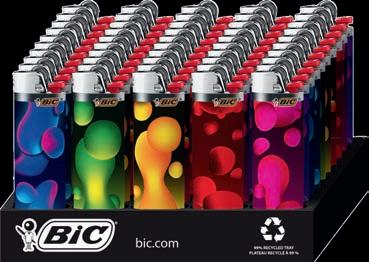
Lava Lighter FOD - 9/8/25 McLane – 995967
Coremark – 540388
Vibes Cones 6pk
#3 Cone SLIN at 7-Eleven SLIN - 326891
Vibes 1.25 Rolling Paper 50ct
#2 Rolling Paper SLIN at 7-Eleven SLIN - 326882
BY JOHN WALES Program Manager AON
Safety First: Workers’ Compensation Considerations For Franchise Owners
Running a 7-Eleven franchise is a fast-paced, high-touch business. You’re serving coffee before sunrise, restocking shelves after midnight, and managing a team that keeps everything humming throughout the day. But amid the hustle, one thing must never be overlooked: safety.
“Workers’ Compensation claims can be costly, not just financially, but in terms of morale, reputation, and operational disruption.”
Workers’ Compensation claims can be costly, not just financially, but in terms of morale, reputation, and operational disruption. Luckily, incidents are preventable with a proactive approach. Here are some tips to help prevent injuries in your stores.
Train Like You Mean It
Safety starts with knowledge. Employees should know how to protect themselves— and what to do when something goes wrong.
“Safety starts with knowledge. Employees should know how to protect themselves— and what to do when
Provide safety training during onboarding and reassess
Teach proper lifting techniques and ergonomics for
Post Workers’ Compensation rights and reporting procedures in plain view to comply with applicable laws. Encourage a culture of “see something, say something.” Encourage your team to take pride in their workplace. When employees feel informed, they act with
A Clean Store is a Safe Store
Slips, trips, and falls are common workplace injuries. How do you help prevent these incidents? Vigilance, consistency,
Mop up spills immediately and use wet floor signage.
• Keep aisles, exits, and storage areas clutter-free.
• Inspect mats, rugs, and flooring for wear and tear.
• Secure cords and wires to prevent tripping hazards.
• Check refrigeration units for leaks or condensation. If there is time to “lean,” there is time to “clean.”A spotless store isn’t just good for business, it’s good for your team’s well-being.
Equipment & Emergency Readiness
From hot food areas to electrical panels, your store is full of potential hazards. Stay ahead of them.
• Inspect equipment regularly for wear or malfunction.
• Ensure fire extinguishers are accessible and up to date.
• Train staff on fire response protocols and extinguisher use.
Late-night shifts and high foot traffic can expose your store to risk. Smart security can help reduce liability and keep your team safe.
• Maintain surveillance cameras, alarm systems, mirrors, and other visibility tools.
• Train staff on robbery prevention and de-escalation techniques.
• Establish clear protocols for reporting threats or incidents.
• Encourage a buddy system for overnight shifts.
• Keep emergency contacts posted and accessible. Safety isn’t just physical, it’s psychological. A secure environment promotes workplace trust and team morale.
Cold Storage Precautions
Freezers and coolers are essential, but come with their own risks.
• Provide gloves and slip-resistant footwear for freezer access (AmTrust has discounts available).
• Ensure freezer doors open easily from the inside.
• Limit time spent in cold storage to avoid frostbite.
• Train staff on safe stacking and retrieval of frozen goods.
• Encourage proper lifting techniques, even in the cooler. Cold zones come with red-hot risks, so attention is key.
“A well-documented and updated safety program shows that you care and helps you maintain compliance and safety.”
Document Everything
If an incident does occur, documentation is key.
• Ensure all employees are trained on incident reporting procedures.
• Maintain a log of injuries, near-misses, and safety audits.
• File Workers’ Compensation claims promptly.
• Review insurance policies annually for adequate coverage.
• Stay current on state-specific and other applicable Workers’ Comp requirements.A well-documented and updated safety program shows that you care and helps you maintain compliance and safety.
Final Word: Safety Is Strategy
In the convenience store business, speed is everything.
But safety is the foundation, and should not be rushed. By investing in training, cleanliness, security, and documentation, you’re not just safeguarding your team, you’re helping protect your brand, bottom line, and peace of mind as well.
So, grab that checklist, rally your crew, and make safety part of your culture. Because when your team feels safe, your business thrives.
Questions? Let’s Talk.
I am here to chat about any questions you may have regarding Workers’ Compensation insurance and safety readiness. Please reach out anytime—John.Wales@aon.com.
This information is provided for general informational purposes only and does not constitute individual legal, risk management, or safety advice. While care has been taken in preparing this document, this article is not a replacement or substitute for any applicable documents with the same subject matter. Aon accepts no liability for any loss incurred in any way by any person who may rely on this information. Recipients are responsible for the use to which they use this document.
Change Kids’ Health Change the Future®
Thanks to donations, Arkansas Children’s provided essential heart surgeries, opening up a world of possibility for Locke and his dad.
Locke, born with Tetralogy of Fallot, a congenital heart condition, received essential care at Arkansas Children’s, a member hospital of Children’s Miracle Network Hospitals®, His adoptive dad, Ben, had also battled a di erent heart condition as a baby. Knowing Locke would receive the same expert care Ben did gave his parents peace of mind. Now, Locke is a happy and healthy 6-year-old. His story shows how donations provide vital support in changing a kid’s health to build bright futures.
BY CHILDREN’S MIRACLE NETWORK HOSPITALS
Small Change, Big Impact: How NCASEF Franchisees Are Changing Kids’ Health
When a child needs help, every moment matters. Member hospitals of Children’s Miracle Network Hospitals (CMN Hospitals) are on the front lines, providing lifesaving care and support to kids and families. But they can’t do it alone; they do it with the help of partners like the National Coalition of Associations of 7-Eleven Franchisees (NCASEF). With a shared commitment to local communities, the collective effort of FOAs create an incredible ripple effect, transforming the lives of countless children.
Thank you for all the ways you raised funds this year—at events, the convention, and in-store. We are incredibly appreciative of your commitment to changing kids’ health to change the future, for all of us.
Another in-store campaign will take place during P6, through January 2026, offering customers the opportunity to round up at the pointof-purchase.
Your efforts directly fund crucial medical treatments, life-saving equipment, and research at local children’s hospitals. This support gives children the chance to live their healthiest lives. Your dedication ensures that every dollar you help raise makes a powerful difference, providing resources like specialized therapies and equipment that help children reach their full potential.
• Eastern Virginia FOA
• Greater Los Angeles FOA
• San Diego FOA
• South Texas FOA
• San Fran/Monterey Bay FOA
• Rocky Mountain FOA
• Columbia Pacific FOA
• Chicagoland FOA
• Midwest FOA
• Greater Oregon FOA
• Cal-Neva FOA
• Metro New Jersey FOA
• West Coast FOA
Every event you organize sends a powerful message of compassion and commitment to advancing pediatric healthcare.
“Your efforts directly fund crucial medical treatments, life-saving equipment, and research at local children’s hospitals.”
As the year comes to a close, please remember to remit funds by December 31, 2025. Funds can be sent to your local hospital or to the Children’s Miracle Network Hospitals national office using the below information:
Children’s Miracle Network Hospitals
Attn: Accounting - NCASEF/(FOA NAME) 205 W 700 S Salt Lake City, UT 84101
Making an Impact, One Event at a Time
Your tireless efforts and local events are crucial to providing essential support to kids in your local communities. We are incredibly grateful for the dedication shown by FOAs across the country. This year, you have gone above and beyond to support your local hospital. Thank you to the following FOAs for supporting your local hospital through an event:
• West Coast FOA
• Joe Saraceno FOA
• United Franchise Owners of Florida
• Southern California FOA
• NorCal United FOA
• South Nev/Las Vegas FOA
Looking Ahead
Your dedication continues to shape the lives of children across our communities. As we prepare for 2026, we encourage all FOAs to take the next step in planning for another successful year. Now is the time to:
• Invite your local hospital contact to a planning meeting.
• Share your 2026 event dates with your hospital contact. Early collaboration ensures alignment, streamlines logistics, and sets the stage for meaningful impact throughout the year.
Thank you for everything you do. Together, you are truly changing kids’ health to change the future.
Why is EPLI insurance critical for 7-Eleven Franchisees?
Employment-related risks — such as sexual harassment, wrongful termination, or discrimination — are among the most potentially damaging exposures for any business. Lawsuits related to employment practices can result in severe financial losses and lasting reputational harm. Employment practices liability insurance (EPLI) provides essential protection for 7-Eleven franchise owners.
What is EPLI Insurance?
EPLI provides protection against claims made by current and former employees. Coverage also extends to claims of discrimination and harassment made by third parties, including customers and vendors.
Why do 7-Eleven Franchisees need EPLI?
Employment-related lawsuits are becoming increasingly common and can impact businesses of any size. EPLI serves as a crucial safeguard, offering protection against a wide spectrum of employment-related claims. With the legal landscape constantly evolving and the risk of costly litigation on the rise, obtaining EPLI coverage helps you protect both your financial stability and your reputation. Marsh’s team of specialists can help you secure an effective EPLI policy that provides your franchise with protection for employment-related lawsuits.
Protect your business, your team, and your future — consider EPLI coverage as a critical part of your risk management strategy.
What types of claims are covered under an EPLI policy?
• Discrimination
• Harassment (sexual or otherwise)
• Failure to provide equal opportunity of employment
• Wrongful termination
• Retaliation
• Failure to employ or promote
• Negligent evaluation
• Libel, slander, or humiliation
• Infliction of emotional distress
• Wrongful failure to provide or enforce corporate policies
• Violation of an employee’s civil rights
Coverage highlights
Coverage offered by Marsh includes a broadened definition of an employee to include an individual who has filed an application for employment. Other benefits include:
• Third party liability coverage
• Immigration coverage endorsement sublimit, typically up to $150,000
• Workplace violence expense reimbursement endorsement, generally against a $250,000 sublimit
• Workplace violence expense reimbursement, typically with a $25,000 sublimit
for sour, spicy, and experimental flavors, as well as new textures like freeze-dried and liquid-filled varieties, while classic fruity flavors continue to anchor the category. With sales projected to hit $27.8 billion by 2030, the report states that
“The U.S. non-chocolate candy market reached $12.9 billion in sales last year.”
innovation in flavor and format is key to sustaining growth.
Health & Beauty Care Expands In C-Stores
The health and beauty care (HBC) category is growing in convenience stores, but much of that momentum is coming from unexpected places, reported Convenience Store News. Between January and June 2025, most HBC segments saw declines in unit volume but increases in dollar sales due to inflation. Vitamins and supplements were the notable exception, posting a 4.9 percent rise in unit volume and a 9.5 percent gain in dollar sales, according to NIQ.
Doug Middlebrooks of Advantage Solutions said vitamins, sexual health products, and first aid items are driving this growth. Lil’ Drug Store Products’ Ryan Lutes added that family planning and sexual health products—especially Cadence OTC’s Morning After Pill—are seeing “accelerated growth,” aided by new over-thecounter innovations like Haleon’s Eroxon and increasing access to birth control.
The surge in HBC sales also ties to a wave of pharmacy closures, which has opened the door for c-stores to fill the health access
gap in many communities. Major drugstore chains such as Rite Aid, CVS, and Walgreens have collectively shuttered thousands of locations, prompting shoppers to turn to convenience stores for everyday health needs. Retailers are being encouraged to focus on trusted national brands alongside newer, trend-forward ones, and to organize shelves by use and purpose— helping shoppers quickly find what they need while positioning convenience stores as reliable health and beauty resources.
Grocery Visits Grow
At Dollar General
Dollar General has expanded its presence in the grocery sector, accounting for one in five grocery store visits in the South during the second quarter of 2025, according to Placer.ai research. The chain’s grocery visit share has risen steadily since 2019, largely drawing shoppers away from traditional supermarkets such as Kroger and Albertsons while value competitors like Aldi have stayed stable or grown slightly.
Between 2019 and 2025, Dollar General’s grocery visit share jumped more than four points in the Midwest, three points in the Northeast, and nearly doubled in the West. The report attributes this momentum to Dollar General’s dominance in “in-and-out” trips—visits under ten minutes for essentials like milk, bread, and
snacks—which now represent 28 percent of all such short visits across grocery and value stores, up from 24.1 percent in 2019.
C-Stores Advised To Look Beyond Fuel
According to new data shared at the 2025 NACS Show, U.S. convenience stores saw fuel revenues fall 5.7 percent in 2024 to $501.9 billion, driven largely by a 6.5 percent drop in average gas prices. While fuel still accounts for more than half of total convenience store industry sales, the National Association of Convenience Stores (NACS) believes the long-term outlook requires c-stores to diversify their revenue stream, reported CSP Daily News. Categories such as packaged beverages, other tobacco products, and foodservice are becoming increasingly important, with foodservice in particular positioned as a growth engine. NACS also suggested that operators explore add-on services like car washes to offset shrinking fuel margins and to capture more consistent, highmargin sales.
NACS noted that profitability will also depend on controlling operating expenses, which rose 6.3 percent in 2024. Rising labor costs, utilities, and insurance are pressuring margins, making efficiency gains critical. Industry
“While fuel still accounts for more than half of total c-store industry sales, NACS believes the long-term outlook requires c-stores to diversify their revenue stream.”
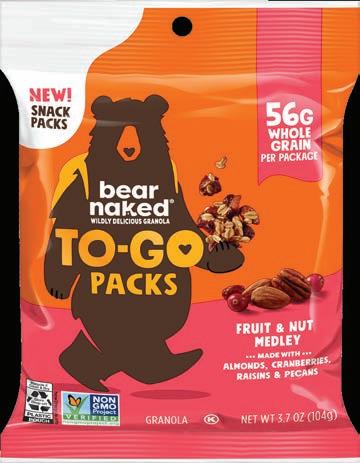
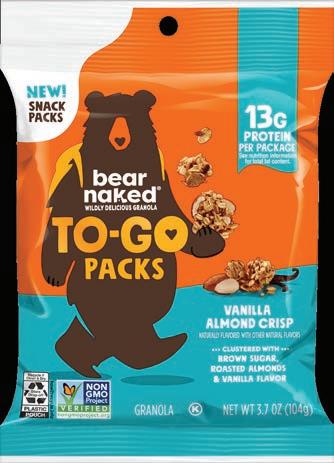
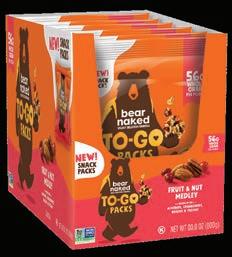
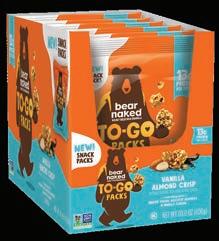
Introducing Bear Naked® To-Go Packs! They’re made from the finest, Non-GMO Project Verified ingredients in the most craveable flavors, your customers won’t be able to keep their paws off them!
integration, and digital payments to enhance customer convenience and reduce labor costs, reveals a new study by SNS Insider. • Snack maker Mondelez has invested over $40 million in a generative AI tool to cut marketing content production costs by 30 percent to 50 percent in order to accelerate ad creation and reduce reliance on traditional agencies. Mondelez expects that the tool will be capable of making short TV ads that would be ready to air as soon as the 2026 holiday season. • Grocery retailer Albertsons has partnered with AI firm Afresh to deploy advanced technology across all its banners—including Safeway, Vons, and Jewel-Osco—to optimize fresh department operations, reduce waste, and improve product availability in categories like produce, meat, and bakery, reported Store Brands. • Kraft
continued on page 44
leaders stressed that c-stores must adapt to shifting consumer behavior, including the rise of electric vehicles and changing fueling habits, by reimagining their role as community hubs for food, convenience, and services.
Amazon Debuts Budget Grocery Brand
Amazon has introduced a new private-label grocery line called Amazon Grocery, with most products priced under $5, reported CNBC. The brand, designed for cost-conscious shoppers, consolidates Amazon’s existing Happy Belly and Amazon Fresh lines under one name and features over 1,000 items spanning fresh produce, meat, seafood, snacks, dairy, and pantry staples.
Avanti Is Your Magazine
Avanti Magazine was created in 1981 by franchisees, for franchisees. It represents your voice within the 7-Eleven universe and requires your participation to remain relevant to the ideas, information, and knowledge floating about the franchisee community. You can contribute to the success of Avanti Magazine by submitting any of the following:
> Articles on any 7-Eleven topic that may be of interest to other franchisees.
> Your FOA events and Board meeting calendars.
> FOA event photos with a short description (who, what, where, when, and why).
> Store or community event photos with captions.
> Any combination of the above. Please send your submissions to avantimag@ncasef.com.
As former National Coalition Chairman Bill Schuessler famously said, “None of us is as great as all of us together, so let’s stay tightly knit together.”
The company said the brand was created to meet consumers’ growing need for affordability, emphasizing that the products “don’t compromise on quality or taste” while helping shoppers “stretch their grocery budgets further.” The launch comes as Amazon continues to streamline its grocery operations, recently closing all U.K. Fresh stores while expanding same-day delivery of fresh foods in the U.S.
GLP-1 Users Visit C-Stores
Consumers using GLP-1 medications such as Ozempic and Wegovy visit convenience stores at a rate five times higher than nonusers, largely because single-serve and portion-controlled items align with their dietary needs, reported CSP Daily News. Demographically, these shoppers skew younger,
Legislative Update
Merchants Push To Uphold Illinois Swipe Fees Ban
Attorneys representing merchants recently urged a federal judge to reject banks’ lawsuit challenging Illinois’ Interchange Fee Prohibition Act, which bans swipe fees on sales tax and tips. The Merchants Payments Coalition (MPC) argued that Visa and Mastercard—not banks—set swipe fees, and that it is unfair for merchants to pay fees on money that is passed directly to the state or employees. During oral arguments, Illinois Attorney General Kwame Raoul and attorneys for several retail associations supported the law, stating that card networks cannot evade state regulation by
Heinz recently lowered its full-year sales and profit outlook, citing historically poor consumer sentiment driven by inflation, reduced food stamp funding, and shifting preferences away from processed foods, reported Bloomberg. The company warned that these pressures are likely to persist beyond Q4, complicating recovery efforts as it prepares to split into two separate businesses. • Coca-Cola surpassed third-quarter revenue expectations with $12.46 billion in sales, driven by strong U.S. demand for zero-sugar drinks and Fairlife milk, alongside resilient international soda performance, reported Reuters. • UPS has eliminated 48,000 jobs—14,000 in management and 34,000 in operations—through layoffs and buyouts as part of a sweeping cost-
hiding behind banks. The law, originally scheduled to take effect in July 2025, was delayed for one year while litigation proceeds.
Tobacco Laws Tighten
Across Several States
Tobacco legislation continues to evolve nationwide, reported Convenience Store News. Arizona officially raised the minimum age for tobacco sales to 21, aligning state law with the federal standard. In California, the Riverside City Council enacted a 45-day moratorium on new tobacco retail permits following an investigation into illegal product sales. Colorado’s Eagle Town Council set a January 2026 start date for its flavored tobacco ban, joining 13 other cities with similar restrictions.
Maryland courts closed a “hemp loophole,” ruling that Delta-8 and Delta-10 THC are illegal except through licensed dispensaries, effectively ending their sale in convenience stores.
Michigan proposed a bill to expand and modernize tobacco tax codes, including a 32 percent tax on alternative nicotine products. New Jersey’s Sea Bright banned vape and THC product sales entirely, while Virginia updated its code to match state law decriminalizing youth possession but increasing penalties on adult sellers. In Wisconsin, lawmakers introduced a bill creating two cigarette categories with distinct tax rates—one for combustible products and another for heated tobacco.
cutting initiative that exceeded earlier projections, reported The Wall Street Journal. Despite a decline in third-quarter profit and revenue, the company reported better-than-expected results, attributing $2.2 billion in savings to restructuring efforts, automation, and reduced reliance on Amazon. • When it comes to foot traffic, coffee chains outperformed the broader quick-service restaurant sector in Q3 2025, with overall visits rising 1.4 percent year-over-year as QSR traffic fell 2.7 percent, according to a new Placer.ai study. Much of the category’s momentum came from emerging regional players, which posted double-digit to triple-digit visit gains, signaling that smaller chains are reshaping the competitive landscape heading into 2026. • The United States has dropped
out of the world’s top 10 most powerful passports for the first time, as the latest Henley Passport Index shows U.S. travelers now have visa-free access to 188 countries out of the 227 tracked by the index, down from its previous standing. Asian and European countries dominate the rankings, with Singapore, France, Germany, Italy, Japan, and Spain tied at the top, each offering visa-free entry to 194 destinations. • Walmart is expanding its use of RFID technology into fresh categories like meat, bakery, and deli, working with Avery Dennison to improve tracking in cold and highmoisture environments. The retailer said the technology will help cut food waste, give each product a digital identity for better freshness monitoring, and strengthen inventory accuracy across its continued on page 47
wealthier, and more likely to be parents—often motivated by postpregnancy weight management.
While their overall spending at convenience stores remains steady, their purchasing choices reflect a shift toward healthier, protein-rich, and hydration-focused products. As such, items like deli meats, yogurt, granola bars, bottled water, and sports drinks are gaining traction, while indulgent categories such as cookies, chocolate, beer, and energy drinks are seeing declines.
Despite their strong presence, GLP-1 users are not a guaranteed long-term customer base. Roughly two-thirds discontinue the medications within six months, citing high costs, side effects, or achieving their health goals.
Younger Generations Drive Spending Shift
Gen Z and Millennials now account for nearly one-third of all U.S. consumer spending—32 percent, to be exact—marking an 8-point jump since 2020, according to Numerator. The research, drawn from the company’s Generations Hub data, found that younger consumers are driving a major shift in where and how money is spent, while Boomers’ share of spending has dropped by almost 10 points in the same period.
Gen X households currently hold the largest share of consumer packaged goods (CPG), general merchandise, and quick-service restaurant spending at 34.1 percent, followed closely by Boomers at 33.7 percent and Millennials at 26.1 percent. Meanwhile, adult Gen Z’s share of CPG spending more than doubled in five years—from
2.6 percent in 2020 to 6.1 percent in 2025—reflecting the growing financial influence of the youngest adult consumers.
Oxxo Pilots Fuel-Free C-Stores
Mexican retail giant Oxxo recently launched a pilot program to test fuel-less convenience stores in the United States, marking a strategic shift as it expands its footprint beyond Mexico, reported C-Store Dive. The program aligns with parent company FEMSA’s broader vision following its acquisition of 249 Delek stores across Texas, New Mexico, and Arkansas. While most of those stores retained fuel agreements with Delek, Oxxo now has the flexibility to determine the format of future locations.
The company has begun opening stores in El Paso, Texas—one of the key markets from the Delek acquisition—though it has not disclosed the exact locations of the fuel-less pilots. This initiative reflects Oxxo’s core business model in Mexico, where only 571 of its 20,000+ global stores offer fuel.
Despite growing interest in fuel-less formats due to the rise of electric vehicles and demand for fresh food, U.S. retailers have struggled to make such stores profitable. Companies like Wawa, QuikTrip, and Choice Market have experimented with similar models, only to shutter many locations due to underperformance. At a recent industry event, NACS Research noted that the average convenience store would lose $700–$800 monthly without fuel sales.
Consumer Confidence Slips
In October, U.S. consumer confidence declined modestly, with the Conference Board’s index falling to 94.6 from September’s revised 95.6, reflecting growing unease about future financial prospects despite a slight improvement in current economic assessments, reported the Associated Press. The expectations index, which gauges short-term outlooks for income, business conditions, and employment, dropped to 71.5— well below the recession-warning threshold of 80—while the present situation index rose to 129.3.
Inflation remains the top concern among consumers, although mentions of tariffs have decreased. Recent government data showed mixed signals: gas prices surged while rent costs cooled, and although the economy continues to grow, hiring has slowed, with major companies like Amazon, Target, Meta, and Starbucks announcing significant layoffs.
The labor market’s fragility is further underscored by weak job growth and rising unemployment, now at 4.3 percent, the highest since October 2021. The September jobs report was delayed due to a government shutdown, but prior months saw downward revisions that erased 258,000 jobs from earlier estimates. Economists attribute the hiring slump to lingering effects of past interest rate hikes and Trump administration policies, including aggressive tariffs and federal workforce reductions. Many companies remain cautious, avoiding both hiring and firing amid uncertainty.
SEI NEWS
Seven & i Eyes Global Growth
Japan’s Seven & i Holdings is charting an ambitious growth strategy after fending off a $39 billion takeover bid from Canada’s Alimentation CoucheTard, reported Reuters. The company announced plans to pursue mergers, acquisitions, and strategic partnerships to expand its global footprint, with particular interest in Europe, the Middle East, Africa, and Latin America. It is also considering a North American stock listing to strengthen its international presence and investor appeal. Alongside these moves, Seven & i unveiled a ¥500 billion ($3.3 billion) share buyback program, signaling confidence in its longterm outlook..
Seven
&
i Doubles Net Profit
Seven & i Holdings said second-quarter net profit more than doubled to ¥72.79 billion ($476.7 million) from ¥30.85 billion a year earlier, beating analyst estimates, as stronger earnings at its convenience store businesses in Japan and overseas offset weaker sales, reported Morning Star. Revenue for the three months ended August 31 slipped to ¥4.523 trillion from ¥4.998 trillion, though still above forecasts, while operating profit for the overseas convenience store business rose to ¥71.44 billion and ¥67.26 billion for the domestic convenience store business. The company also raised its full-year net profit outlook to ¥265 billion
from ¥255 billion, even as it trimmed its revenue forecast to ¥17.086 trillion.
Seven & i’s Transformation Plan
Seven & i Holdings recently stated that despite a difficult consumer environment in both Japan and North America, its cost discipline and transformation strategy are beginning to deliver results, reported Convenience Store News. The company faces headwinds from inflation, shifting consumption patterns, and intensifying competition in Japan’s ready-to-eat foodservice market, while in the U.S., challenges include reduced store traffic, declining cigarette sales, cuts to SNAP benefits, and the
“Seven & i is repositioning 7-Eleven as a food-forward destination.”
ongoing impact of remote work.
CEO Stephen Hayes Dacus said these pressures are squeezing lowincome households in particular, but noted that early actions taken last year to tighten costs and restructure operations are now showing tangible improvements.
To adapt, Seven & i is repositioning 7-Eleven as a foodforward destination, expanding fresh offerings, elevating beverage quality, and strengthening its private-label portfolio. The
company is also investing in “New Standard Stores” with larger footprints, enhanced fuel options, and seamless delivery through its 7NOW platform. While revenue fell from ¥2.4 trillion ($15.8 billion) in Q2 FY2024 to ¥1.9 trillion ($13 billion) in the most recent quarter, Seven & i has adjusted its fullyear revenue target to ¥10.5 trillion ($69 billion).
Fundraising Drive To Support CMN Hospitals
SEI recently kicked off a nationwide in-store fundraising campaign in partnership with Children’s Miracle Network Hospitals (CMN Hospitals), inviting customers at participating 7-Eleven, Speedway, and Stripes locations to round up purchases or donate $1 at checkout from October 29, 2025, through January 6, 2026. The campaign will support pediatric care by funding lifesaving equipment and essential services at over 113 member hospitals across the U.S. Speedway stores will continue their year-round fundraising efforts, while customers can also donate directly online.
Since 1991, SEI has raised over $190 million for CMN Hospitals through events like the Miracle Tournament and Celebration Dinner, as well as through instore fundraising campaigns at participating 7-Eleven, Speedway and Stripes stores. Aimee J. Daily, Ph.D., President and CEO of CMN Hospitals, praised the company’s long-standing support,
continued from page 44
stores.
• Nestlé recently announced plans to cut 16,000 jobs—about 5.8 percent of its workforce—as part of a sweeping turnaround strategy, raising the company’s cost-savings target to 3 billion Swiss francs by 2027 in order to restore investor confidence, reported Reuters. • California will require restaurants with 20 or more locations to list major food allergens such as milk, eggs, shellfish, and tree nuts on menus starting in 2026, reported the Associated Press. Supporters say the measure will give millions of allergysensitive diners greater confidence when eating out, while the restaurant industry warns it could be costly and expose businesses to lawsuits. • PepsiCo’s Q3 revenue rose 2.6 percent to $23.94 billion, driven by strong beverage sales, including double-digit gains for Pepsi Zero Sugar and new Mountain Dew flavors, while the company trimmed underperforming products to sharpen its portfolio. • Alimentation Couche-Tard plans to sell 36 Circle K sites across 14 states, reported C-Store Decisions. The properties—20 feeowned and 16 leased—include both fuel and convenience-only stores. • Kroger and Uber Eats are expanding their partnership to let customers order groceries and restaurant meals from one platform beginning in early 2026, according to PR Newswire. The collaboration will connect Kroger Boost and Uber One memberships for shared rewards and free delivery, while integrating Uber Eats’ restaurant options directly into the Kroger app. • Chocolate makers expect cocoa prices to ease in 2026 after years of record highs, reported The Wall Street Journal Improved weather in major growing regions like West Africa and Ecuador is boosting crop yields, with the International Cocoa Organization forecasting a shift from a 500,000-ton deficit to a 150,000ton surplus, which could finally bring some relief to candy prices by next
Halloween. • Walmart has purchased the Monroeville Mall near Pittsburgh for $34 million and plans to demolish it to build a massive mixed-use development that will include retail, dining, and entertainment spaces, reported The New York Times. The project, expected to finish in 2029, marks Walmart’s first major step into becoming a landlord and developer. • Costco will soon begin selling the blockbuster weight-loss drugs Ozempic and Wegovy at more than 500 of its U.S. pharmacies, reported the New York Times. The $499 monthly price for Costco members matches what Novo Nordisk, the drugs’ manufacturer, already offers at CVS, Walmart, and through its own website. • Driverless trucks are already rolling across longhaul routes, raising big questions for insurers, reported Insurance Business Magazine. Experts warn that while these vehicles can diagnose problems, they can’t repair themselves—meaning maintenance lapses could ripple through the entire supply chain. Cybersecurity, data integrity, and unclear liability laws add more risk, leaving insurers cautious as they rethink how to price and underwrite autonomous fleets. • Rutter’s recently unveiled a bold new store concept that doubles as a sports bar, reported C-Store Dive. The 14,000-square-foot “1747 Bar & Gaming Lounge” features multiple TVs, a full bar, gaming terminals, and upscale design touches meant to create a social hub for adults rather than a typical convenience stop. • Wawa recently opened its first convenience store in West Virginia. The new location in Inwood marks the company’s 13th state of operation, with plans to open several more stores in Berkeley and Jefferson counties over the next five years as part of its broader East Coast expansion that now spans nearly every state in its growth plan except Tennessee.
noting that their contributions are vital to ensuring children receive top-tier care and reach their full potential..
“SEI recently debuted its limited-edition Midnight Driving Club apparel line.”
New Midnight Driving Club Collection
SEI recently debuted its Midnight Driving Club apparel line, a limited-edition collection designed to merge fairway fashion with street style. The line includes polo shirts, graphic tees, golf caps, and accessories that feature bold designs inspired by both the golf course and Japanese urban culture. Available exclusively through 7Collection. com, the collection reflects 7-Eleven’s strategy of extending its brand into lifestyle categories that resonate with younger, trend-driven consumers.
The company framed the launch as part of its ongoing effort to redefine convenience retailing through cultural crossovers. By pairing golfinspired silhouettes with streetwear aesthetics, 7-Eleven is positioning itself as more than a convenience store to capture attention in the fashion and lifestyle space.
Vendor FOCUS
Turn Up The Flavor With SOUR PATCH KIDS & CLIF!
CMondelēz, the company behind all your favorite candy and snacks, is proud to introduce two new ways to enjoy your SOUR PATCH KIDS and two flavors of CLIF Bars you won’t want to miss.
New SOUR PATCH KIDS Strips and SOUR PATCH KIDS Chews bring customer-favorite flavor profiles to two exciting new formats. In fact, “81 percent of consumers expect SPK strips to be
different than existing strips due to unique combination of format, flavor, and brand.”(1)
SOUR PATCH KIDS wins big on flavor with “+15 points for ‘Has a great flavor’ attribute” 2 vs. competitor products. And your customers are eager to try it; SPK “beats competitor by +20 points for awareness to trial conversion.”(2)
And, if you’re looking for great-tasting, high-volume snacks to power up your bottom line, reach for CLIF!
CLIF Bars Chocolate Chip has been a mainstay of snackers looking for something more from their snack for years, but Cookies & Creme is coming up fast with “24 percent incremental consumer reach among tested new flavors.”(3) And that reach translates into serious sales. “Cookies & Creme flavor is growing +25 percent $ Sales YoY since 2021.”(4)
Enjoy bigger candy profits with these new innovations from Mondelez.
7-Eleven franchisees can get a slice of the new, delicious ways to SPK and reach for more sales with CLIF by placing their order today.
Northern California FOA NorCal United (Central Valley FOA/ Greater Bay FOA/ Northern California FOA/ Sacramento Valley FOA) Trade Show
Sunrise Banquet Hall and Event Center
Vacaville, California
March 11, 2026
Phone: 707-344-6287
Charity Golf
Chardonnay Golf Club
American Canyon, California
March 12, 2026
Phone: 707-344-6287
Southern California FOA Trade Show
Pasadena Convention Center
Pasadena, California
March 31, 2026
Phone: 818-357-5985
Golf Tournament
Pacific Palms Resort
City of Industry, California
April 1, 2026
Phone: 818-357-5985
FOA EVENTS
Joe Saraceno FOA
3rd Annual Golf Tournament
Brookside Golf Club
Pasadena, California
April 8, 2026
Phone: 619-726-9016
4th Annual Trade Show
Santa Anita Park
Arcadia, California
April 9, 2026
Phone: 619-726-9016
Baltimore FOA 3rd Annual Golf Tournament
TriState Trade Show
Venue TBD
April 22, 2026
Phone: 443-506-8380
South Nev/Las Vegas FOA Golf Tournament
Revere Golf Club
Henderson, Nevada
May 6, 2026
Phone: 714-396-1003
Trade Show
Alexis Park
Las Vegas Nevada
May 7, 2026
Phone: 714-396-1003
FOA Of Greater
Los Angeles Trade Show
Ontario Convention Center
Ontario, California
May 6, 2026
Phone: 562-567-1660
Annual Golf Tournament
Black Gold Golf Club
Yorba Linda, California
May 7, 2026
Phone: 562-567-1660
Chicagoland FOA
Charity Golf Outing
St. Andrews Golf & Country Club
West Chicago, Illinois
May 12, 2026
Phone: 847-595-1596
Summer Expo
Venue TBD
May 14, 2026
Phone: 847-595-1596
Midwest FOA Golf Outing
Venue TBD
May 27, 2026
Phone: 847-971-9457
Trade Show
Venue TBD
May 28, 2026
Phone: 847-971-9457
South Texas FOA Trade Show
Canyon Golf Course
San Antonio, Texas
June 8, 2026
Phone: 623-533-2485
Charity Golf Tournament
Canyon Golf Course
San Antonio, Texas
June 9, 2026
Phone: 623-533-2485
San Diego FOA
Annual Charity Golf Tournament
Rancho Bernardo Inn
San Diego, California
June 10, 2026
Phone: 619-713-2411
Chesapeake Division FOA
Trade Show
Hotel Belvoir Springfield (Hilton)
Springfield, Virgina
June 11, 2026
Phone: 571-344-2781
San Fran/Monterey Bay FOA
Golf Tournament
Cinnabar Hills Golf Club
San Jose, California
June 16, 2026
Phone: 510-289-4948
Trade Show
Paradise Ballrooms: Banquet
Hall & Event Center
Fremont, California
June 17, 2026
Phone: 510-289-4948
Rocky Mountain FOA
Golf Tournament
Venue TBD
June 23, 2026
Phone: 719-661-1048
Trade Show
Venue TBD
June 24, 2026
Phone: 719-661-1048
Delaware Valley FOA
Trade Show
Venue TBD
July 1, 2026
Phone: 215-852-4738
Chicagoland FOA
Annual Picnic
Venue TBD
July 19, 2026
Phone: 847-595-1596
San Diego FOA
Trade Show & Vendor Party
AleSmith Brewing Company
San Diego, California
October 8, 2026
Phone: 619-672-1376
Chicagoland FOA
Winter Expo
Venue TBD
November 12, 2026
Phone: 847-595-1596
Midwest FOA
Holiday Show
Venue TBD
December 2, 2026
Phone: 847-971-9457
San Diego FOA
Annual Charity Golf Tournament
Rancho Bernardo Inn
San Diego, California
June 9, 2027
Phone: 619-713-2411
NCASEF BOARD MEETINGS
National Coalition Affiliate Meeting
The Westin Resort & Spa Puerto Vallarta
Puerto Vallarta, Mexico
February 3-4, 2026
National Coalition Board of Directors Meeting
The Westin Resort & Spa Puerto Vallarta
Puerto Vallarta, Mexico
February 5-6, 2026
NCASEF Board meetings are scheduled one per quarter. For information on Board Meeting sponsorship opportunities, please contact the National Office at 855-444-7711 or nationaloffice@ncasef.com
National Coalition Affiliate Meeting
Fairmont Olympic Hotel
Seattle, Washington
April 28-29, 2026
National Coalition Board of Directors Meeting
Fairmont Olympic Hotel
Seattle, Washington
April 30-May 1, 2026
FOA EVENTS
Midwest FOA
Holiday Show
The Westin Chicago Northwest
Itasca, Illinois
December 3, 2025
Phone: 847-999-5558
Michigan FOA
Holiday Party
Venue TBD
December 4, 2025
Phone: 517-219-5288
FOA Of Greater Los Angeles
Holiday Party
Diamond Palace Cuisine of India
Diamond Bar, California
December 6, 2025
Phone: 562-567-1660
United Franchise Owners Of Florida FOA
Holiday Party
National Coalition Board of Directors Meeting
New York Marriott Marquis
New York, New York
July 21, 2026
MARK YOUR CALENDAR! NCASEF 50th Annual Convention & Trade Show
The Javits Center
New York, New York
July 21-24, 2026
West Coast FOA
Holiday Party
Venue TBD
December 12, 2025
Phone: 718-820-6555 or 714-924-8000
Columbia Pacific FOA
Holiday Party
Venue TBD
December 12, 2025
Joe Saraceno FOA
Holiday Party
LA Banquets—Glenoaks Ballroom Glendale, California
December 13, 2025
Phone: 619-726-9016
Keystone FOA
Holiday Party Venue TBD December 13, 2025 Phone: 609-353-7872
Northern California
FOA NorCal United
Holiday Party
Venue TBD
Space Coast Convention Center
Cocoa, Florida
December 6, 2025
Phone: 207-415-0924
Phone: 503-998-5941
Rocky Mountain FOA
Holiday Party
Gaylord Rockies Resort & Convention Center Aurora, Colorado