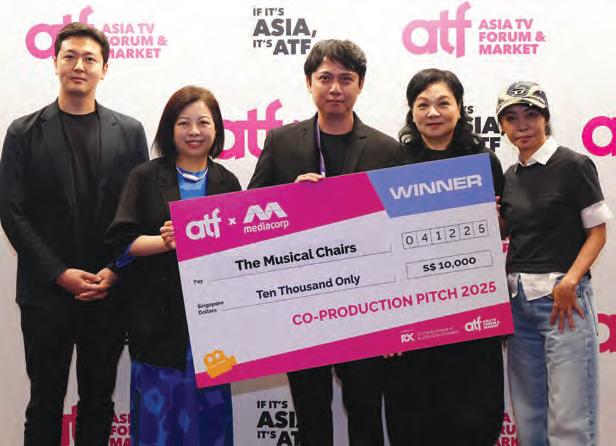
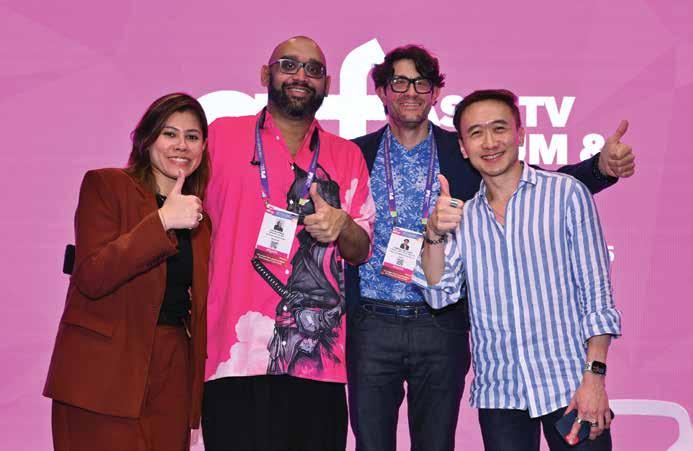
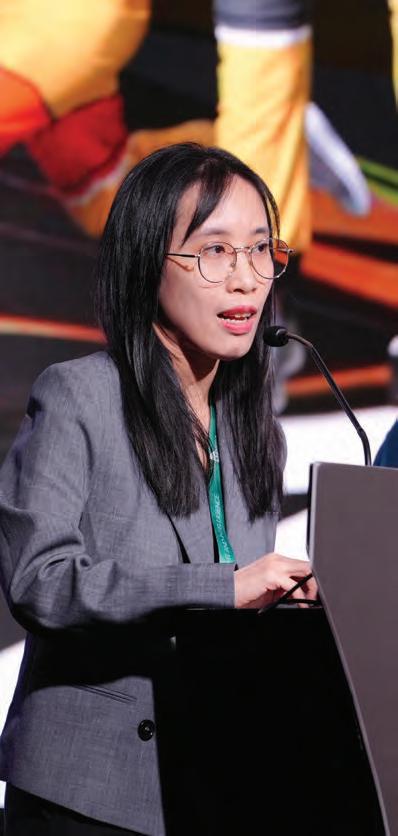
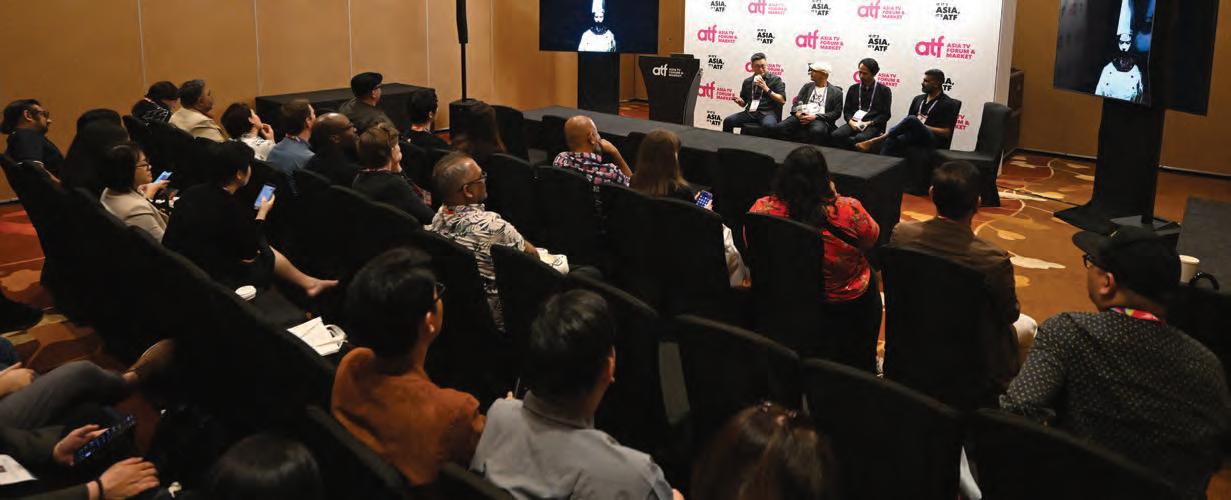
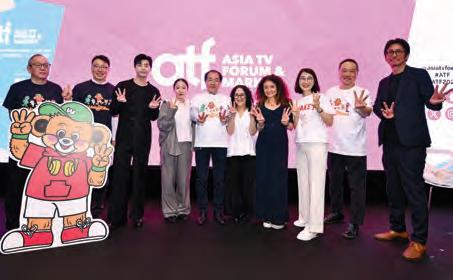
Following the success of the inaugural edition last year, Mediacorp and the Asia TV Forum & Market (ATF) today announced the winners of the 2025 ATF x Mediacorp Co-Production Pitch, which continues to spotlight outstanding storytellers and original content ideas from around the world.
Launched in August 2025, this year’s competition drew 75 eligible entries from 21 markets.
The strong international participation reflects the industry’s growing interest in co-producing Asian stories with global resonance. It also underscores
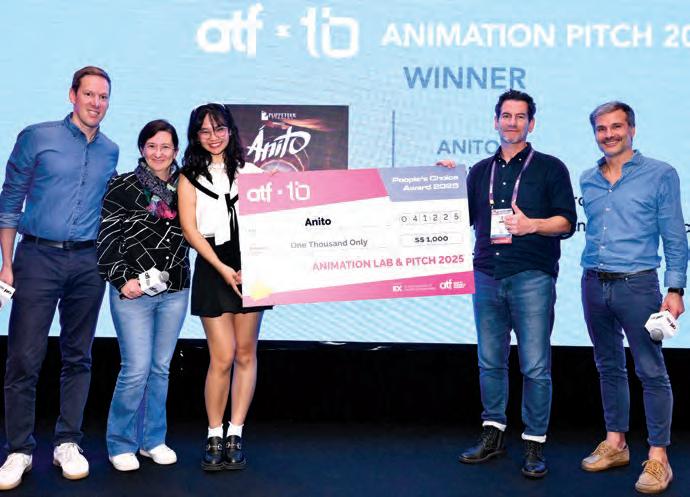
ANITO’S WELLEARNED VICTORY AT ATF X TTB ANIMATION LAB & PITCH 2025
Eight hopefuls from all across the world duked it out at the third iteration of the annual ATF x TTB Animation Lab & Pitch with fiery passion and the greatest conviction. The finalists hailed from Singapore, Malaysia, Philippines, New Zealand, Ireland, Italy, and Latvia and offered a wide range of themes—from warm and comfortable friendships to arduous journeys.
3D animation, 2D animation, and stop-motion were the choice of medium for some, while the format of each pitched production varied from full-feature documentary to a season of short, easily-digested episodes.
However, the commonality that they all shared was that each one had fought their way through over a hundred other contenders and showed the qualities that made them worthy of standing here today. A vote of popularity from the full house of audience decided the winning pitch by a small margin—Anito, a 3D animated feature-length film by creative producers Louie Mercader and François Belot of Philippinesbased Puppeteer Studios.
Mediacorp’s commitment, as Singapore’s national media network and leading content creator, to fostering creative exchange and strengthening Singapore’s position as a regional hub for content collaboration and coproduction.
Anito is about a 13-year-old boy who, trying to solve the mystery of his mother’s perpetually vanishing laundry, ends up in a fantastical spirit world. He finds himself on a journey with strange and wonderful creatures from Filipino folklore and ultimately in a position to decide the fate of his world and theirs. Louie received the cash prize of S$1,000 for their team.
Congratulations!
Winners of the ATF x Mediacorp Co-Production Pitch 2025 Blood Pact | Toei Company, Ltd.| Japan; Musical Chair | Raccoon Films | Thailand
Congratulations!
Winner of the ATF x TTB Animation Pitch 2025, People’s Choice Award
Anito | The Puppeteer Animation Studios, Inc. | Philippines
in-development
THE ART OF FUNDING YOUR FILM-MAKING DREAMS
Erik Gordon, Partner and Vice President at FilmHedge, led a session titled “We Have Money, We Want To Fund Your Movie” designed to demystify the process of film financing for new filmmakers.
Presented by ATF In-Development Club, it focused on practical strategies for securing funding for creatives.
Drawing on his experience raising over half a billion dollars globally for film and television, Erik provided actionable guidance on financing models, including debt versus equity, international pre-sales, domestic distribution, and minimum guarantees (MGs).
“FilmHedge is a FinTech platform that moves and acts like a bank, just a lot faster,” said Erik. “We institutionalise short term hybrid lending.” The platform also leverages proprietary AI-driven underwriting to provide early financing.
ERIK EMPHASISED THE IMPORTANCE OF A COMPLETE PROJECT PACKAGE, INCLUDING PRODUCERS, DIRECTORS, CAST, LOCATIONS, AND BUDGETS, RATHER THAN RELYING SOLELY ON THE SCRIPT.
Erik Gordon Partner and Vice President FilmHedge
Erik emphasised the importance of a complete project package, including producers, directors, cast, locations, and budgets, rather than relying solely on the script. He encouraged the strategic use of tax incentives and Section 181 benefits to maximise funding, citing features that his company has provided financing for such as Gus Van Sant’s Dead Man’s Wire and The Dutchman starring Kate Mara.
He stressed having the right education and understanding of the industry to avoid repeating the same mistakes. And that ultimately, projects must be bonded, emphasising this many times, as “most finance people don’t trust creators.”
in-development
THE PRICE OF PASSION: IS IT TOO EXPENSIVE?
“Is passion being exploited in the film industry?” This question was posed to a panel of industry veterans including: Justin Deimen, Managing Partner, Goldfinch International; Shamin Yusof, Film Producer, Skop Productions; and Damiano Malchiodi, Channels & Contents Managing Director, Canal+ Myanmar & Canal+ International.
The answer? A poignant ‘yes’ from Justin, a pragmatist’s ‘no’ from Shamin, and a measured ‘maybe’ from Damiano.
As a leading Malaysian producer, Shamin’s perspective has weight. “It’s not about passion being exploited. I think the film directors, the producers, and the filmmakers need to understand the economics of making a movie,” she said, describing the necessary evil of production financing. “And I don’t think we have to compromise the passion or authenticity of the story,” she added.
Damiano, on the other hand, stressed the need for compromise between creatives and executives: “We mustn’t be pretentious that we have to be ambitious on all our original creations,” he said, and advocated making art for a viable market.
Justin’s answer rings idealistic: “Yes, it’s being undervalued both on the economic level and on the cultural level because there’s no infrastructure and ecosystems around it.” However, he has stepped up to try and improve things, admittedly at the cost of his original artistic aspirations. “I think it’s a lot of our responsibility to train that next generation, and I’ve properly fit myself into that space where I want to be the one to find the money for the people,” he added.
A MASTERCLASS IN MICRO DRAMA
“Do you know where people are watching shows?” Timothy Oh, GM of SEA in COL, posed a question to the full house on the last session of Day 3 at ATF 2025. The answer? On the train, in the toilet, and everywhere else they can bring their phones to.
If you still think they’re a fad, this session made it clear: you’re just in time, but not by much. With billions of dollars in global demand and downloads surging from Latin America to Southeast Asia, COL’s Enoch Chen and Timothy Oh argued that microdrama needs to become a core strategy, not an experiment.
People are spending their fragmented minutes bingeing vertical, ultra-fast content, and most of what they’re consuming isn’t even local. That disconnect is a massive opportunity waiting to be claimed.
Case in point: China may be the blueprint with a US$6.9 billion market in 2024, but global market share estimates are already surpassing US$12 billion, with 950 million app downloads projected by 2025.
Producers got some tips too. Microdrama production isn’t traditional filmmaking as it’s lean, relentless and data-led. Shoots happen in days, not months. AI tools sit at the centre of the workflow. Testing and iteration never stop: if a series underperforms within 24 hours, it must be ready for reedit and relaunch. Viewers, not executives, now determine whether a title lives or dies.
Monetisation is getting aggressive. Subscription, payper-episode, ad-supported viewing, in-app purchases, embedded e-commerce–every path is on the table, and most markets require a flexible hybrid. For creators, the benefits are clear, with low budgets, rapid output, and massive openings for new writers, directors and actors.
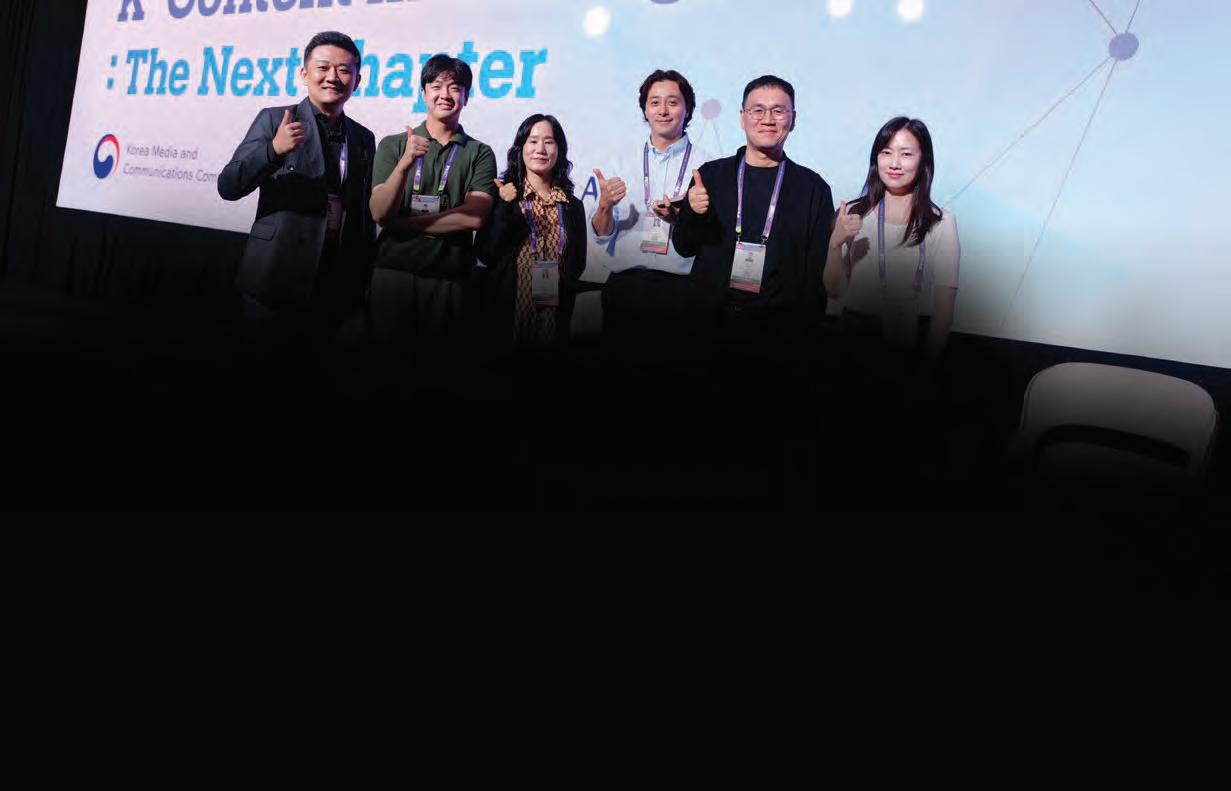
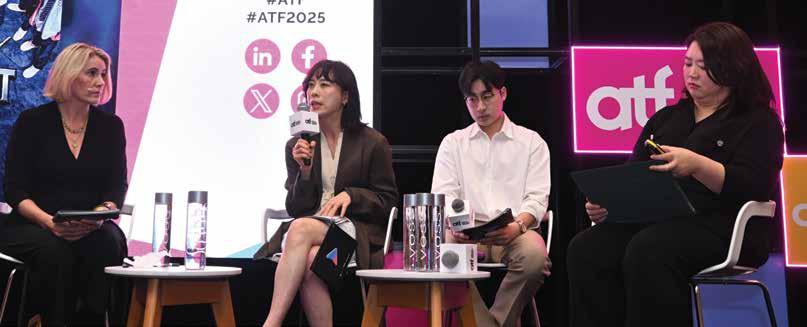
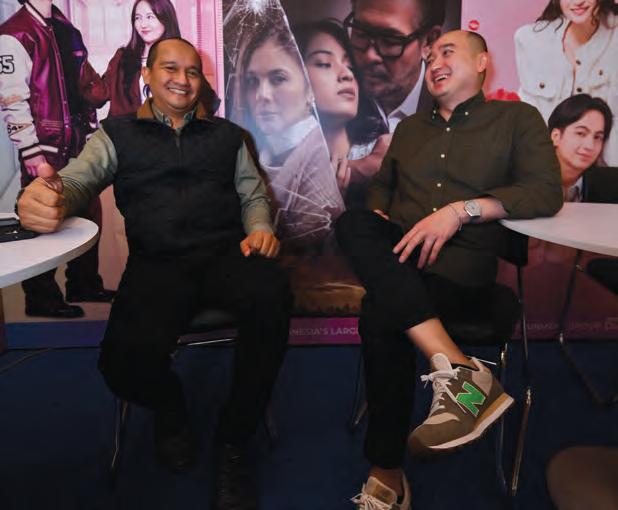
(L—R) Shamin Yusof, Film Producer, Skop Productions Sdn Bhd; Justin Deimen, Managing Partner, Goldfinch International; Damiano Malchiodi, Channels & Contents Managing Director, Canal+ Myanmar & Canal+ International; Yeo Kok Siew, GM, Sony Music Taiwan
The Key to a Kid’s Inner World Beyond KPop Demon Hunter
Asian IPs are rewriting the rules of kids’ entertainment, with Demon Slayer: Infinity Castle smashing box office records, KPop Demon Hunters landing on Netflix, and One Piece expanding its fandom through a global LEGO collaboration. But the real story, as shared by Adam Woodgate, VP, Research Solutions, The Insights Family, is how deeply today’s kids connect with culturally specific content, which are often more than broad, “globalised” franchises.
Adam noted that this generation has grown up in a world of borderless, algorithm-driven discovery. Kids in Japan gravitate toward emotional depth and craft; Indian audiences respond strongly to narratives centred on family, values and moral clarity; and Indonesian kids lean into shareability, humour and
community viewing. Despite their differences, they’re all seeking the same thing: stories that feel emotionally true. As Adam put it, “Friendship, loyalty, overcoming challenges, finding your identity… these are all the things that kids want to learn.”
Drivers of content choice mirror how kids spend their time, such as gaming, social video, creators, fandoms, and peer recommendations. That ecosystem explains why anime and gaming IPs such as Pokémon, Genshin Impact, Roblox and One Piece dominate global kid conversations.
For creators and distributors, the opportunity lies in embracing cultural specificity, building strong character universes, and designing formats that travel fluidly across screens, social platforms and merchandise.
Adam Woodgate VP, Research Solutions
The Insights Family
Europe’s Burgeoning Appetite for Asian Formats
A new epoch in the Asian unscripted format market has begun as European consumption surpasses Asian consumption of Asian unscripted formats, according to Clare Thompson, Non-Executive Director, K7 Media and Trang Nguyen, Manager (APAC, MEA), K7 Media. Some constant classics continue to perform steadily, while new concepts are finding a good hold in the market—novel treatments of classics have also broken open new avenues of possibility.
The top Asian format this year, said Clare, was the Japanese comedy gameshow genre, thanks to its characteristically simple, budgetfriendly concepts with enduring appeal that spans multiple seasons. She also noted that formats which include familiar concepts like childhood games have also been highly successful. One example is
Pick up your limited copy of the Show Daily for amazing reads and exclusive stats and information each day
the Chinese series, Floor Survival, which debuted in October this year on Youku.
Talent contest formats have also been picking up, but with the twist of East versus West as studios from both sides of the world collaborate to refresh this classic genre.
Generational journeys have also proven to be a popular theme as formats put participants from two different generations together to produce delightful interactions— Nippon TV’s Secret Little Assistant is one of the most successful in this category.
Cultural formats have trended handily as well—Perfect Glow is a competition format that pits Korean and Chinese beauty standards against each other, while The King of Nightmarket explores the Taiwanese night market scene.
Trang Nguyen (left), Manager (APAC, MEA) with Clare Thompson, Non-Executive Director, K7 Media
Korea
Bets Big on AI as Five New Titles Hunt for Global Partners
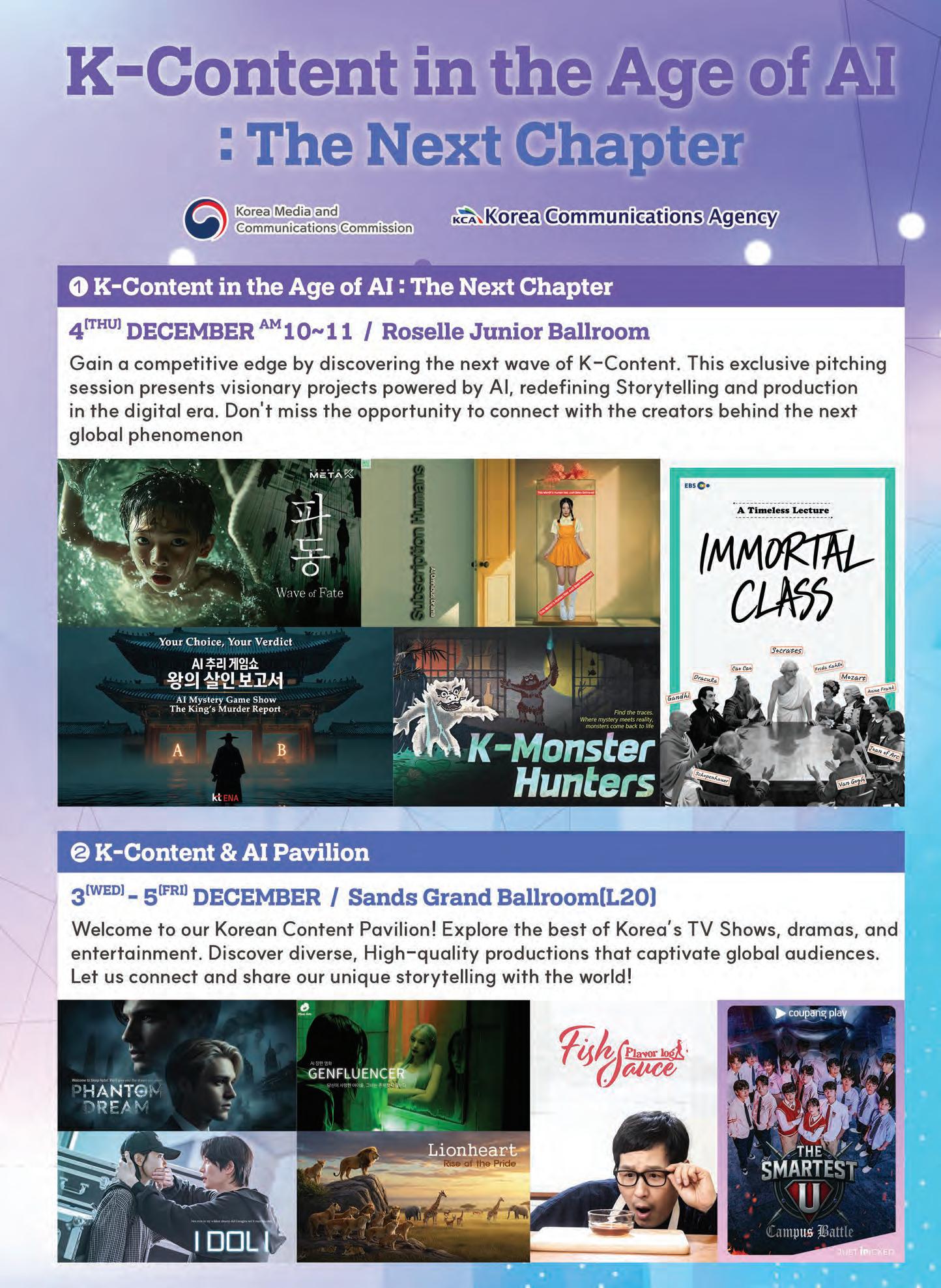
Five in-development Korean AI-driven projects were spotlighted, pushing AI from buzzword to production and offering a glimpse into the next generation of K-content.
Studio Meta-K kicked off with Wave of Fate, built on the webtoon Wave. The team demonstrated how AI can slash timelines and budgets, showing a zombie-on-vacation concept reel produced entirely with generative tools.
Founder KJ noted that while K-drama budgets have tripled in recent years, Meta-K can now deliver sequences in two weeks at a fraction of legacy production costs.
EBS followed with Immortal Class, introduced by Min Sung Won, turning historical icons like Socrates and Frida Kahlo into AI-generated lecturers. The concept reimagines education as interactive “lectures of the dead,” powered by fully synthetic performances.
From AI Omnibus Drama came Subscription Human, a six-episode sci-fi drama exploring grief, intimacy and AI companionship. The pitch leaned into a Black Mirror energy, with thought-provoking questions about humanity.
Next, Your Choice, Your Verdict from KT ENA delivered an interactive mystery format where viewers determine the outcome of a 500-year-old royal cold case across eight branching storylines. A 2026 multi-platform release is expected.
Gwangju MBC closed with the standout K-Monster Hunters, blending cultural anthropology, field exploration and AI creature reconstruction to revive forgotten Korean mythological beasts. It’s a concept visually polished enough to feel market-ready.
All five teams are actively courting collaborators and open to conversations.
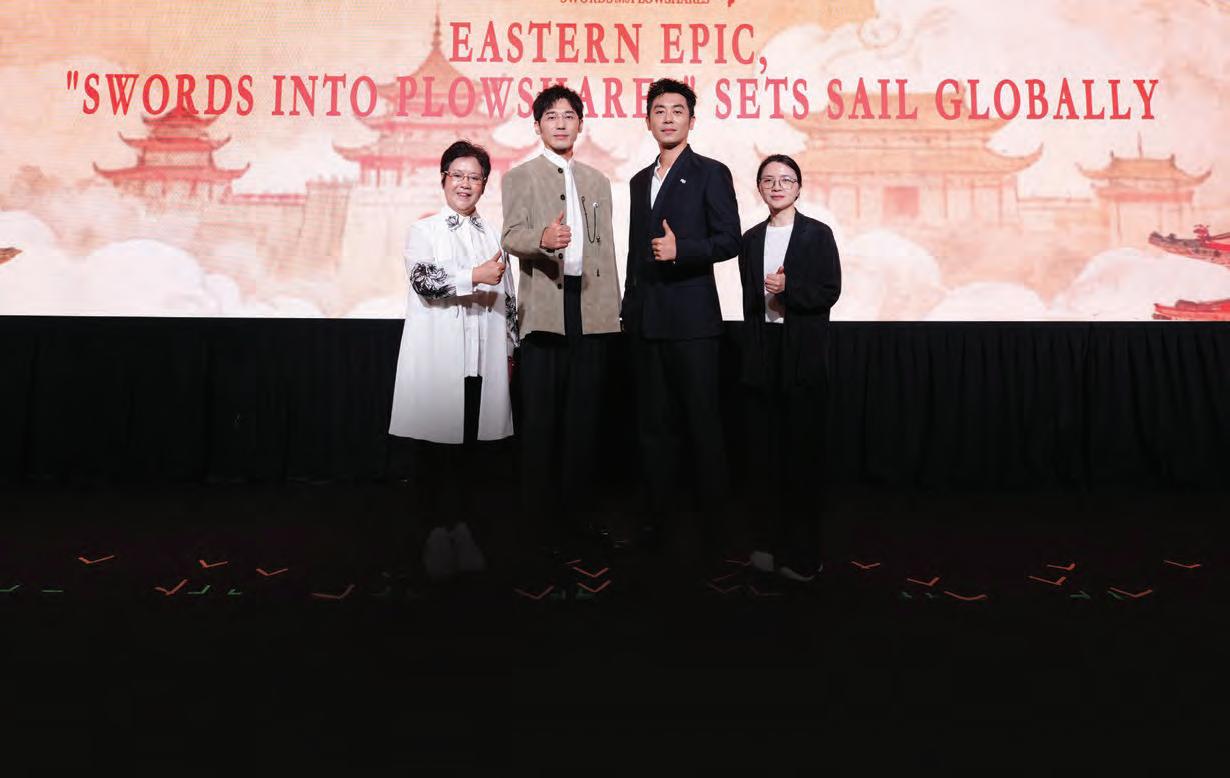
Huace Group’s grand content reveal at this year’s ATF 2025 highlighted their latest premium series, Swords Into Plowshares, alongside an opening speech by Zhao Yifang, Founder and Chairman of Huace Group and Wang Yan, Producer at Huace Group.
The historical drama series is set in China during the Five Dynasties and Ten Kingdoms period – an era of great
Swords Into Plowshares is Huace Group’s Biggest and Latest Series
political upheaval in ancient imperial China. Swords Into Plowshares specifically depicts the tail end of the period, when China was unified under the Song Dynasty.
The story revolves around the events of the King of Wu-Yue’s peaceful submission to the emperor of the Song Dynasty to prevent his people from dying in an unnecessary war. In a grand display of large-scale Chinese media production, the filming of Swords
Into Plowshares involved hundreds of set pieces and thousands of costumes over several years.
Actors Bai Yu and Zhu Yawen made a guest appearance at the showcase and expressed deep gratitude for the opportunity to both act in the series and promote it at ATF 2025. Swords Into Plowshares is currently in postproduction.
(L-R) Zhao Yifang, Executive Producer; Zhu Yawen, Artiste; Bai Yu, Artiste; Wang Yan, Producer
conference
Telling Thai Stories on a Global Stage
Thailand’s content showcase offered a snapshot of the country’s growing presence on the international entertainment scene, highlighting the creativity and capability behind the country’s screen industries.
The session presented a broad mix of Thai content, ranging from television series and globally adaptable TV formats to feature films, alongside a full range of supporting services across production and post-production. Together, these examples reflected the diversity of Thai storytelling and the scale of the industry behind it.
After H.E. Miss Sabeeda Thaised, Minister of Culture of the Kingdom of Thailand spoke on the importance of
Going Macro: Love for Micro-Dramas Surges Beyond China
marketplaces like ATF, the spotlight shifted to 19 of the country’s leading production companies, which were showcased in a dynamic presentation, outlining how Thai content is being developed and positioned for wider audiences. Highlights included upcoming historical fantasy series Scarlet Heart Thailand by GMMTV, Kantana Motion Pictures slate spanning original series Eng & Chang and Master of the House, and Khongthup Production’s BL titles like Doctor’s Mine and Ocean’s Heart
The programme concluded with a networking session accompanied by food and beverages, offering an opportunity for attendees to connect with Thai creators and industry players in an informal setting.
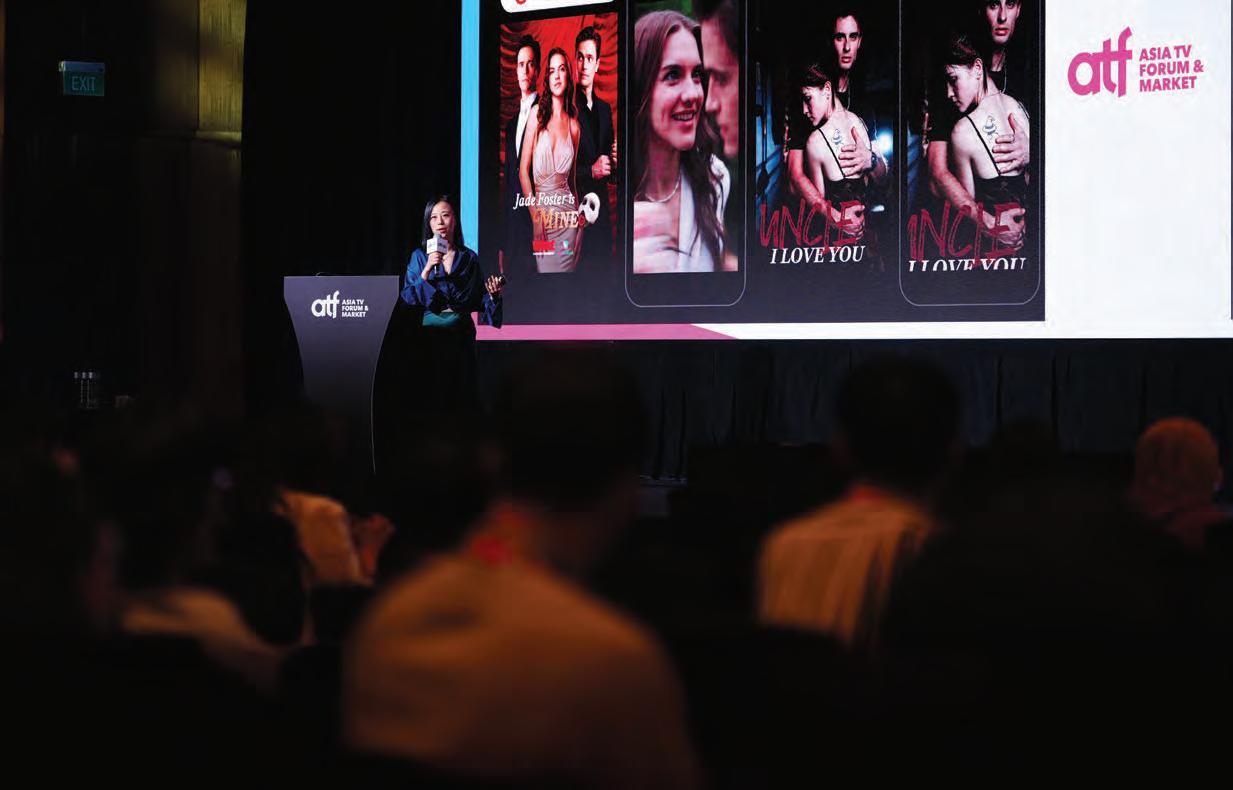
The global share of micro-drama production has risen from 5% in 2024 to 33% in 2025, according to Cassandra Yang, Co-Founder of RisingJoy. This unprecedented spike marks a big shift from the largely Chinese-dominated micro-drama industry to a more globally distributed supply and demand.
The burgeoning micro-drama industry is expected to reach US$12 billion growth by next year, continuing a 34% yearon-year growth rate – this projection includes over 17,000 new titles produced each month.
The Asian markets outside of China with the highest independent micro-drama app downloads were India, Indonesia, and Brazil. In contrast, Asian markets that led in in-app purchases were Japan, Korea, and Thailand.
The increase in local players across the world included countries such as Ukraine, India, and Türkiye. RisingJoy has joined their ranks with both English and Korean content in their latest collaboration with Vantage Entertainment. The Singapore-based company has expanded rapidly to over 20 countries and in over 50 apps, with ambitious plans to create micro-drama formats for foreign adaptation in collaboration with Malaysia-based production company, Double Vision in 2026. RisingJoy has also signed an agreement with MENA partners to begin collaboration in the same year.
AI animated micro-dramas have also seen some interest, with realistic AI micro-drama series like Doomsday: The New Breed and other fully 2D and 3D animated micro-drama series.
Cassandra Yang Co-Founder RisingJoy
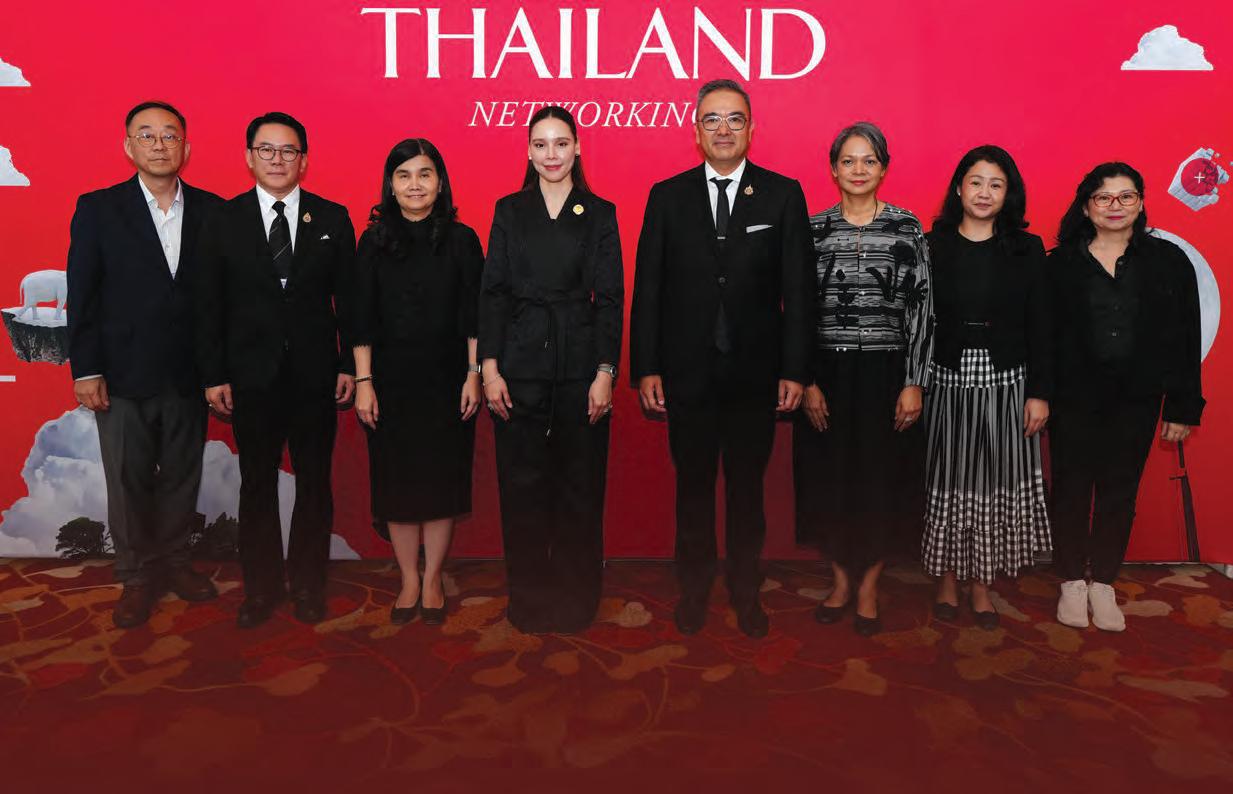
H.E. Miss Sabeeda Thaised, Minister of Culture of the Kingdom of Thailand (4th from left) with VIPs
A Banquet for Hungry Ghosts, the animated horror anthology rooted in Chinese food, folklore, and supernatural justice, took centre stage at a fireside chat featuring four key creatives driving the project across Asia. Representing Singapore, Ireland/India, Taiwan and Indonesia respectively, the panel comprised Ervin Han (Robot Playground Media), Gulshan David (Toonz Media Group), Mason Yao (Xanthos Animation), and Barkah Muhammed (Kuching Hitam).
Adapted from American-Chinese author Ying Chang Compestine’s cult horror collection, the feature assembles four standalone but thematically linked tales: Egg Fried Rice, Hot Pot, Beef Noodles, and Tang Yuan. Each dish becomes a story of greed, guilt, ancestral sin and karmic consequence, all narrated by a mysterious chef who acts as narrator, judge, jury and executioner. As the panel noted, food and horror share an “instinctive connection”: temptation, craving, and the things we consume (or that consume us).
During the panel, the creatives also explored how Eastern and Western horror diverge. Gulshan described Western horror as often “polarised by good-versus-evil frameworks,” while Eastern horror thrives on atmosphere. “You don’t even need to see the ghost for the fear to sit in your bones.”
A BANQUET FOR HORROR-HUNGRY FANS
The panel agreed that Southeast Asia’s horror lineage is deeply tied to folk rituals, ancestral beliefs and lived experiences, making it rich terrain for storytelling. The anthology format allows each region’s sensibilities to breathe, while animation frees the team to push beyond realism without losing emotional truth.
Charles Johannes, founder of Kucing Hitam, who was not at the panel session, said this about joining A Banquet for Hungry Ghosts. “This project speaks to us. The story has the same cultural spirit that drives Indonesia’s new wave of genre films—strong traditions, modern concerns, and the ability to reach audiences everywhere. We’re excited to work with an international team to grow this IP and bring it to viewers far beyond where it began.”
The transnational collaboration positions A Banquet for Hungry Ghosts as one of Asia’s most ambitious animated horror features to date, and is slated for a theatrical release in early 2027. Webtoon storylines are already simmering, the perfect side dish to keep the audience hungry.
NHK: 100 YEARS OF
INNOVATION & CREATIVITY
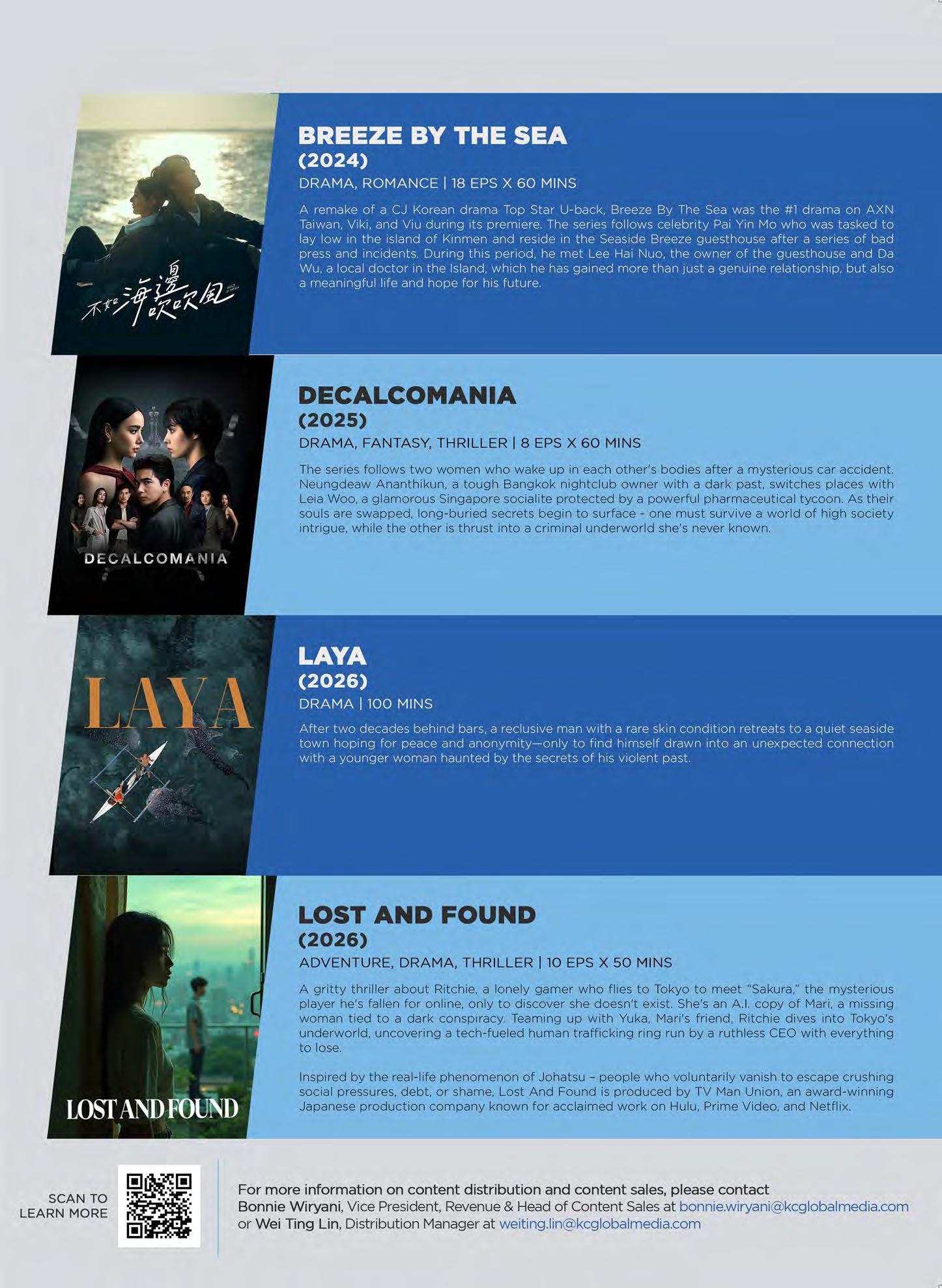
As part of the celebration of its 100th anniversary, NHK unveiled projects that push the boundaries of storytelling. Highlights include Queen of Mars, a futuristic sci-fi drama set in the year 2125, created using cutting-edge AI virtual production to deliver stunning visuals. Another highlight is a crosscultural adventure, Lost and Found, about a Singaporean gamer’s journey to find his online girlfriend in Tokyo, only to be drawn into the city’s dark underworld.
NHK also showcased children programme including i & Ai, which, in consultation with schools and educate, aims to educate children of responsible use of generative AI.
Beyond programming, NHK also presented an impressive IP extension of its design series, Design Ah! Neo, transforming it into a physical exhibition in a Tokyo museum. The show attracted an impressive 600,000 visitors and is set to travel to Hong Kong in June 2026.
(L-R) Ervin Han (Robot Playground Media); Mason Yao (Xanthos Animation); Barkah Muhammed (Kuching Hitam); Gulshan David (Toonz Media Group)
COUPANG DOUBLES DOWN ON REALITY AND HIGH-CONCEPT DRAMA
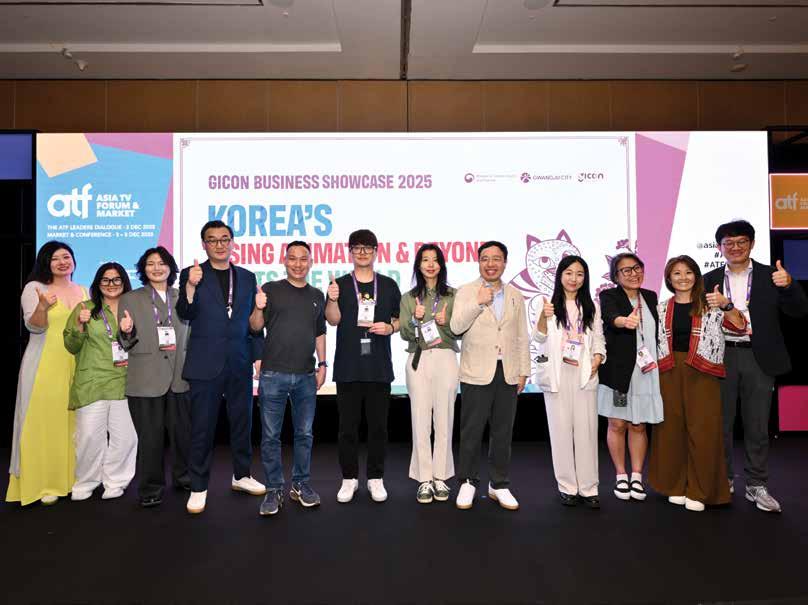
GICON SPREADS SEEDS FOR KOREAN CONTENT
KPop Demon Hunters has sparked renewed global interest in Korean content, and GICON highlighted five emerging studios riding this momentum.
5 Bricks introduced Hana & Molly, a 2D preschool fantasy launching in 2026 that helps young viewers navigate emotions through the adventures of a girl and her magical sock companion. Maro Studio presented Shining Star, a K-Pop animation developed with SM Entertainment, featuring proprietary technology for creating virtual idols.
Pingo Entertainment showcased Giga Builder, a 3D preschool series about critters terraforming Mars, now seeking global distribution.
Ultragreen Studio unveiled Space Express, a 2D sci-fi preschool comedy about an intergalactic delivery duo, open to co-production opportunities.
By Chance Film offered a change of pace with 3 Gen. Journey, a heartfelt documentary following three generations on an 80-day electric-vehicle road trip to reunite with their family in Hungary.
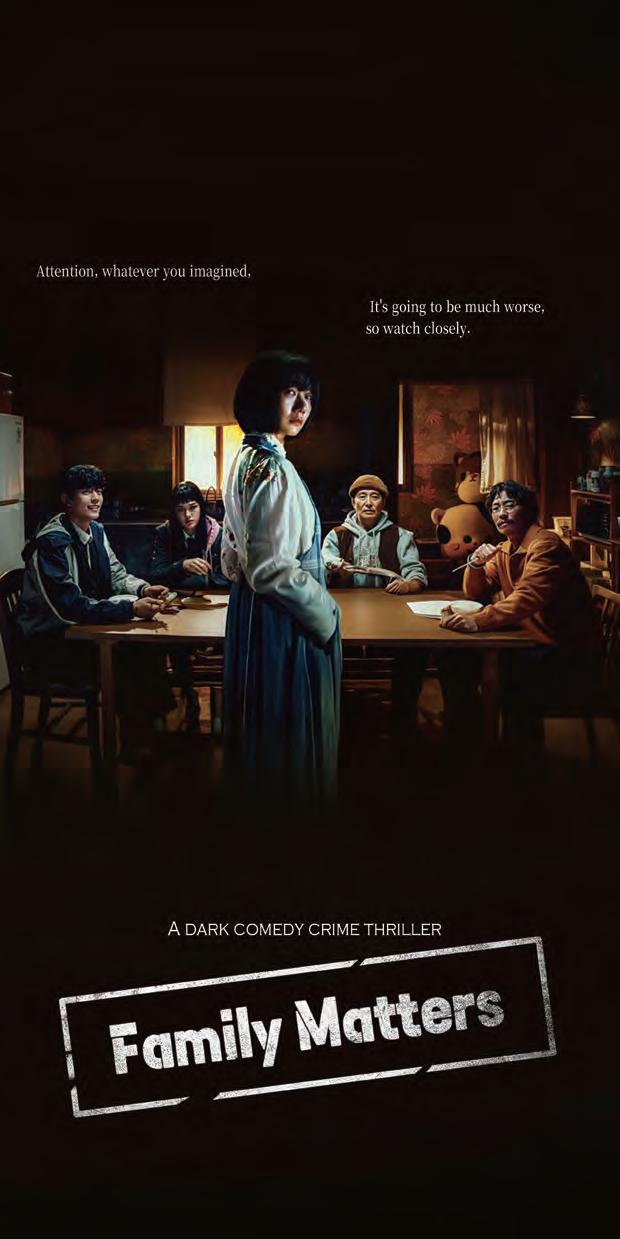
Coupang Play’s showcase, moderated by Vasha Wallace from Fremantle and sponsored by KOCCA, presented two standout originals that signal Korea’s growing ambition in unscripted formats and highconcept drama. The Smartest U: Campus Battle returned with a powerful Season 3 trailer, elevating its tournament of elite students with a medicalversus-engineering league and a new redemption round. Creator Jung-seon Kim calls it “Survivor for the smartest mind,” and its clean, universally appealing format positions it well for global adaptation.
On the scripted side, Coupang Play unveiled Family Matters, a six-part black comedy thriller starring Bae Doona. Chief Producer Christine Ahn highlighted its blend of grounded family drama, stylized tension, and sharp social commentary, while the series doubled its viewership weekly during its run—driven by its emotional core and justice-driven storytelling. The global format distribution is handled by Just IPicked; CEO Praise Shin added that the series carries a tone reminiscent of Umbrella Academy, Nikita, and Dexter
Together, these titles reinforce Coupang Play’s confidence in exporting bold, character-led Korean content internationally.
Vasha Wallace, EVP Global Acquisitions & Development, Fremantle (left), with
Christine Ahn, Chief Producer, Coupang Play
MEDIATOON DISTRIBUTION CAPTURES ASIAN MARKETS WITH SHANGHAI LAUNCHPAD
Frédéric Gentet, Head of Sales at Mediatoon Distribution credits the company’s Shanghai office for their proliferation across Southeast Asia and China, regions where its animation catalogue consistently performed well. The China-based launchpad has allowed the company to maintain long-term relationships in the industry and track evolving consumption habits, while leveraging long-standing ties with Japan and South Korea to sustain a strong pan-Asian presence across multiple animation styles and audience groups.
On genre development, Frédéric shared that comedy and adventure remain the company’s most reliable genres. However, Frédéric noted that demand for classic genres has been shifting towards character-led, visually distinctive storytelling. Buyers are now “prioritising brand strength, high-
SINGAPORE CALLING: BRIDGING EAST-WEST DRAMA
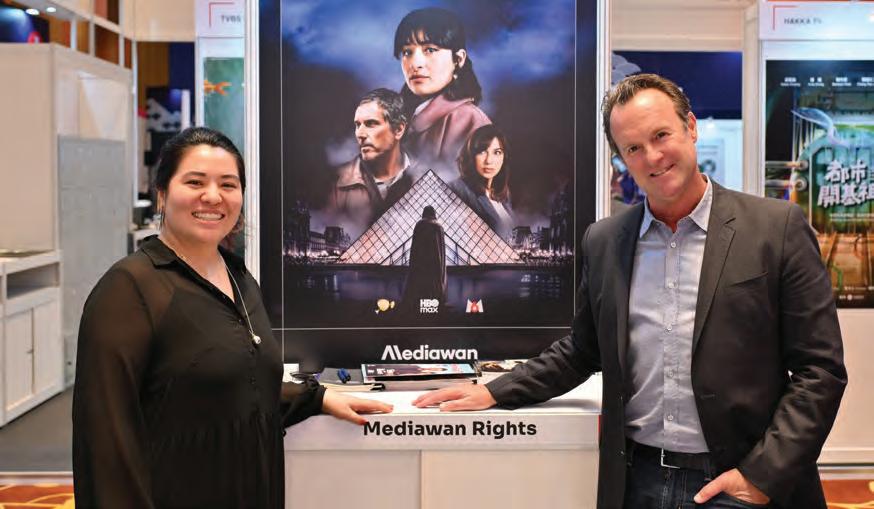
If Asia is the next entertainment frontier, then Singapore stands proudly at its gate. “Singapore’s position as the region’s media hub—hosting major broadcasters, streaming headquarters, and distribution companies—makes it perfect for bridging Western and Eastern markets while developing our content strategy,” said Glen Hansen, SVP International Distribution (APAC) at Mediawan Rights.
Drama and thriller are the company’s frontrunners; genres it describes as “universal languages transcending cultural barriers”. But unlike yesterday’s TV drama, today’s line-up leans into premium production. Fellow colleague, Nina Ycre, International Sales Manager explained, “We’ve evolved toward premium dramas with cinematic production values, plus strategically developing action series to meet explosive APAC streamer demand for high-octane, globally competitive content.”
That global mindset is balanced by local sensibility, one that goes beyond mere dubbing. The team is actively seeking out cultural resonance
quality localisation and originality,” reflecting both caution in acquisitions and competition for standout titles in increasingly crowded schedules.
He also observed growing interest in flexible rights packages, especially AVOD and FVOD, as children’s viewing habits become more fragmented across linear channels and digital platforms. This trend has intensified after the COVID years, when platform consolidation and audience dispersion make distribution more challenging.
Despite these pressures, Mediatoon has benefited from a robust slate of globally recognised IPs that provide stability and cross-generational appeal. Frédéric said this combination of heritage brands and fresh concepts remain central to navigating a complex but opportunity-rich Asian market.
and cross-border casting, pairing recognisable talent with regional relevance to create titles that open doors across multiple territories.
At ATF, the intention is one of collaboration and opportunity. “We’re eager to connect with everyone,
from pan-Asian platforms and regional streaming services to local broadcasters of all sizes. We believe premium English-language content with international production values can find audiences across diverse market segments,” echoed both Glen and Nina.
Frédéric Gentet Head of Sales Mediatoon Distribution
Mediawan Rights: Nina Ycre (left), International Sales Manager; Glen Hansen, SVP, International Distribution APAC
FEDERATION INTERNATIONAL SEEKS DEEPER COLLABORATION IN ASIA
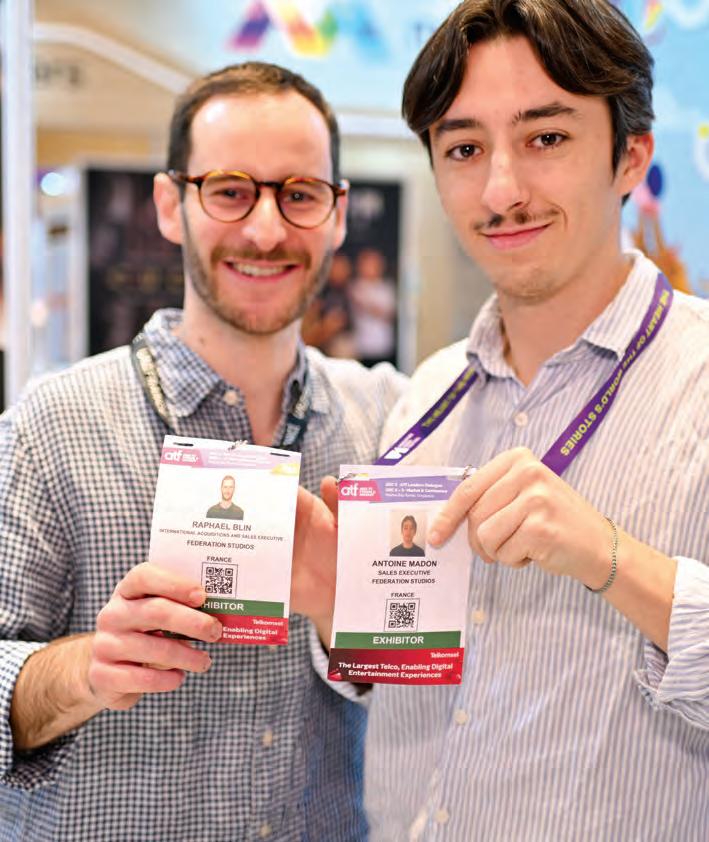
Antoine Madon, International Sales Executive at Federation International, shared that the company intends to continue prioritising Asia thanks to longstanding ties and a record of fruitful collaborations across China, Japan, Korea and India. Their recently announced partnership with TAICCA, unveiled at Series Mania, underscores a strategic push into co-production, format scouting and deeper regional distribution. According to Antoine, the ultimate goal is to maintain “a strong and agile presence across the region”.
Despite their eagerness to forge more partnerships, Antoine stressed discernment before entering into collaborations. When assessing new partnerships, he pointed out that pricing alone should not be the deciding factor. Engagement, strategic alignment and a partner’s ability to champion a title effectively has become paramount in an increasingly competitive environment.
As for buyers, Antoine avoided singling out favourites and instead believes that success stems from maintaining a flexible, wideranging network—from traditional broadcasters to niche platforms— each contributing to the company’s resilient and regionally attuned distribution strategy.
Drama remains Federation International’s best-selling genre, reflecting its strong catalogue and roots in scripted storytelling. Yet, the company’s slate has broadened significantly over the years, first into animation and kids’ content, then factual programming, and most recently, into cinema through its Ginger & Fed label. This diversification, Antoine noted, mirrors both market shifts and Federation’s own evolution, particularly as the group expands further into Englishlanguage production.
SWIPE UP FOR SNACKABLE STORIES
Storytelling is going vertical—literally! According to Redo Doron, Head of Contents & IP Distribution at MNC Contents, markets such as CIS, East Asia, and MENA present strong demand for Asian content and a growing appetite for short-form digital entertainment.
“Drama remains our best-selling genre, evolving from Korean adaptations into short-form storytelling through popular vertical micro-dramas,” Redo said. “This snackable content fosters instant emotional connections and drives strong social engagement among audiences.” Riding this wave, MNC has already produced more than 20 Indonesian adaptations, with more rolling out every week.
Data now drives everything from production to partnership, Redo said. “Buyers rely on audience analytics and performance metrics before making acquisition or co-production decisions,” Redo explained, noting that they now seek out deal packages that include multiple rights extensions for better monetisation opportunities.
Beyond content creation, the company is focussing on collaboration. “Aside from pricing factors, strategic partnerships such as co-production initiatives across Asia, will further strengthen our business presence and distribution network,” he added. While no one can predict what comes next, Redo noted that innovating with diverse content formats is key to staying abreast.
Federation International: Raphael Blin (left), International Acquisitions and Sales Executive; Antoine Madon, Sales Executive
MNC Contents: Sukma Archie (left), Chief of Content, IP & Library; Redo Doron, Head of MNC Contents/IP Distribution
DIALLING UP “D” IN THE DIASPORA
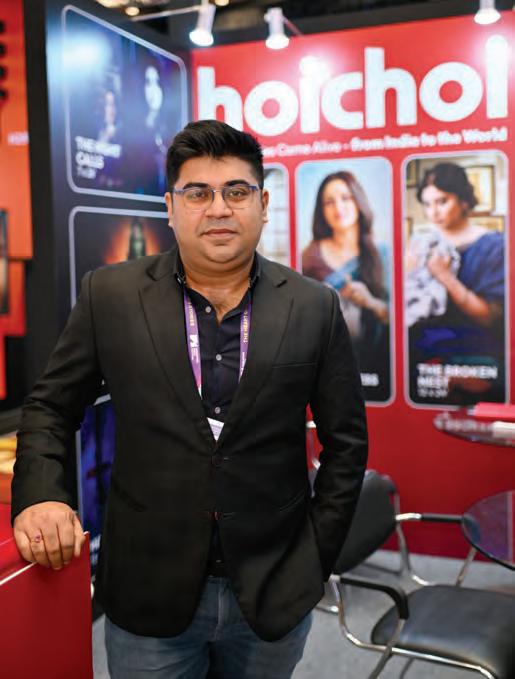
Distinctive storytelling quality, Discoverability, Distribution—these are the three factors, beyond pricing, that serve as yardsticks as Hoichoi Technologies Private Ltd build inroads to connect with Indian diaspora audiences and global viewers.
“We’re focusing on Southeast Asia and the MENA region—markets with strong Indian diaspora communities,” said Soumya Mukherjee, Hoichoi’s Chief Operating Officer. “Countries like Singapore, Malaysia, Indonesia, and the UAE offer immense potential not just as consumption hubs but also for co-productions. Our goal is two-fold: to better serve the diaspora and introduce non-native audiences to the emotional depth of Indian stories.”
Soumya observes that Asian buyers have evolved from content acquirers to audience builders. “They now seek
multi-genre, multi-language IPs that travel across borders with minimal adaptation. The mindset has shifted from ‘Will this work here?’ to ‘How can I make it work here?’,” he explained.
While female-led social dramas with globally resonating themes of empowerment, morality and desire remain the company’s strongest genre, he points out a growing interest in horror and thriller, attributing the shift to audiences’ appetite for “high-stakes, edge-of-the-seat entertainment that still feels emotionally grounded”.
To reach audiences more effectively, Hoichoi is investing in platform integrations, dubbing, and formatrights collaborations to enable content discoverability and accessibility. As Soumya puts it, “lasting loyalty comes from believability and emotional connection, not affordability”.
GIRL, BYE PRODUCTIONS BRINGS ASIAN-LED UNSCRIPTED TO GLOBAL STAGE
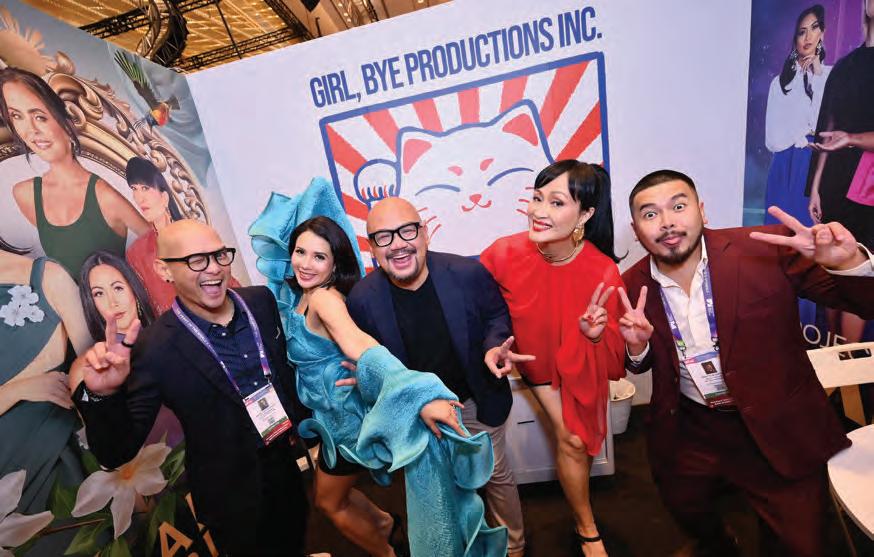
Girl, Bye Productions has set its sights firmly on APAC, MENA, and North America for the company’s new unscripted titles Manila Matriarchs and Project Empire, according to Cecilio Asuncion, Founder and Executive Producer.
He described the trio of regions as “the holy trinity for character-driven, aspirational unscripted,” each offering strong demand for elevated Asian stories. Cecilio added that APAC’s greatest value lies in its appetite for premium content rooted in Asian identity; MENA for its growing interest in glamorous, high-production-value docu-series; and North America for its large and loyal diaspora audiences seeking representation that feels authentic rather than tokenistic.
The company’s strongest-selling genres remain premium docu-series and elevated competition formats, but with a major shift in tone. “Premium used to mean glossy. Now it means authentic with depth,” he noted. Audiences have increasingly gravitated toward emotional intelligence, transparency and “intentional mess,” allowing the company’s signature approach of stylish realism to shine.
Beyond pricing, Cecilio emphasised partnership-driven promotion. Flexible rights, innovative payment models, and talent-led marketing support are central to how Manila Matriarchs and Project Empire will be positioned for buyers. Both shows are designed for seamless localisation, combining
cultural specificity with universal themes.
As for his favourite buyers, he praised those who rely on taste and data rather than trend-chasing. “Trends fade, but compelling women, bold narratives, and emotional stakes always win,” he said.
Girl, Bye Production: (L-R) Vincent De los Santos, Project Manager; Karylle Tatlonghari-Yuzon, Talent; Cece Asuncion, Executive Producer; Myrza Cinco Sison, Talent; John Felix Santos, Sales Associate
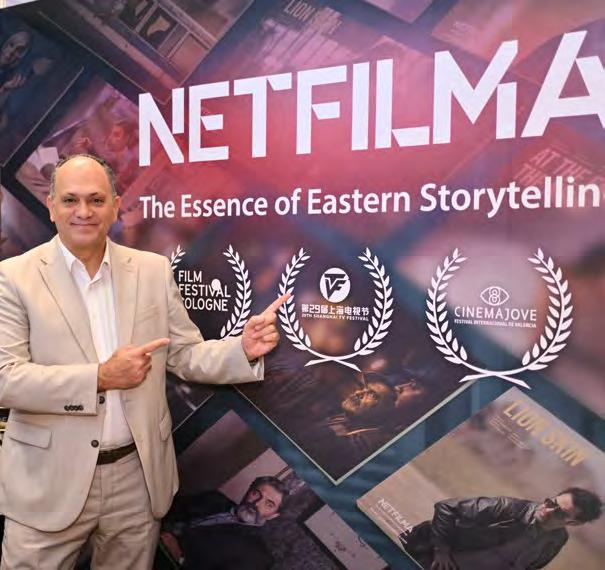
NETFILMA EYES HIGH-GROWTH ASIAN REGIONS FOR EXPANSION
“We are focusing on the Middle East, Central Asia, and emerging parts of Asia where demand for streaming content continues to grow strongly,” said Mazyar Tashakory, Founder and CEO of Netfilma. The company’s expansion strategy so far has centred on regions where digital adoption and subscription behaviour are accelerating, looking to satisfy audiences increasingly hungry for a broad mix of scripted entertainment.
Going into specifics, Mazyar explained that thrillers and character-led dramas continue to be Netfilma’s strongest performers due to their universal appeal. However, he noted a clear shift in buyer interest: “We’ve seen growing demand for true-crime and youth-driven stories,” he said, pointing to a wider move towards contemporary, reality-influenced narratives among regional platforms.
CULTURALLY ROOTED IP CAPTURES GLOBAL ATTENTION
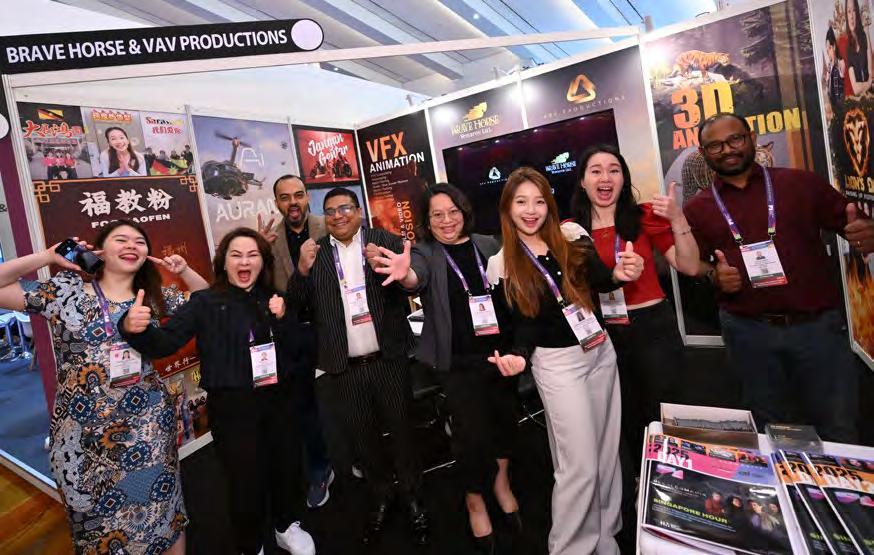
Demand for culturally rooted Asian storytelling is spiking across East and South Asia, China, Oceania and Europe. For Malaysian producer Vav Productions and Bangladesh’s Brave Horse Ventures, the surge represents their biggest opportunity yet.
“Our goal is to build long-term partnerships that elevate Southeast Asian storytelling globally, supported by cross-border co-production, cultural exchange, and talent development,” said Andrea Lau Li Ling, Director of Vav Productions, speaking jointly with Mohammad Mahbubur Rahman, Managing Director of Brave Horse Ventures. Both Malaysia and Bangladesh benefit from deep cultural heritage and abundant skilled labour, they add, and this pose advantageous as both markets push to supply original IPs to regions now actively seeking Asian stories.
The creative focus is shifting too. “Over time, we have evolved from musicfocused production into purposedriven storytelling that celebrates culture, youth empowerment, and community values,” they added, describing a slate that spans unscripted formats, music-led projects and a growing portfolio of AI-driven animation targeting global OTTs.
Beyond pricing, the company has placed particular importance on strong storytelling, reliable delivery, and the ability of a series to travel internationally. Long-term partnerships are essential, Mazyar added, especially with collaborators willing to embrace transparent communication and explore co-production models that enhance both creative and commercial potential.
Looking ahead at ATF, Mazyar highlighted a desire to collaborate with a broader range of industry partners. Netfilma aims to deepen its engagement with OTT executives, AVOD platforms, digital-first distributors and partners exploring technology-enhanced distribution. Such relationships, he said, are vital for experimenting with new business models and widening Netfilma’s footprint across fast-developing markets.
For the duo, partnership fit matters as much as regional expansion. “We prioritise creative alignment, longterm partnership value, and strong distribution potential,” they elaborated. That includes collaborators who embrace culturally grounded narratives and hybrid production models that blend conventional craft with AIenabled workflows.”
At ATF, they are looking to connect with OTT commissioners, coproduction partners, youth-focused edutainment platforms, in-flight distributors and brand-content leads exploring AI-animation and crossmarket creative campaigns. As they point out, the aim is to connect with stakeholders “committed to elevating Asian IPs and building culturally resonant stories”.
Mazyar Tashakory, Founder / CEO, Netfilma
Vav Productions & Brave Horse Ventures: Andrea Lau Li Ling Director (1st from left); Mohammad Mahbubur Rahman (4th), Managing Director
INDIAN CONTENT ADAPTS AS PROGRAMMING SHIFTS
Indian content is travelling through Asia on a different rhythm this year, shaped less by genre trends and more by shifting deal logic. The biggest change isn’t who is buying, but how they buy, says Rajat Agrawal, Chief Operating Officer of Ultra Media & Entertainment.
“Buyers have become innovative with their business collaboration modalities with a focus on more winwin situations and less risk rather than high risk high rewards,” he noted. That recalibration, he adds, has opened doors for experimentation and helped Indian content slowly reach untapped markets.
The shift is felt most clearly in programming expectations. “There is no specific genre which is bestselling,” Rajat said. Heartland stories once defined international appetite
for Indian titles, but the landscape is now increasingly genre-agnostic, mirroring broader platform behaviour across the region.
Against this backdrop, Ultra is leaning on its longstanding asset base to differentiate. Asian markets and the Middle East remain core targets for the company’s TV shows, while its films and newly announced animation projects are positioned for wider global traction.
“Primarily the volume of movies and TV episodes that we offer with a strong brand history and recollection even in the international market gives us an advantageous edge,” Rajat said. In an environment where risk is redistributed and buyer appetite is broadening, that catalogue depth continues to function as strategic leverage.
BUILDING EMOTIONAL IMPACT FOR ASIA’S SCREENS
For Indonesian studio Xtraitlab, the pressure point is clear: the region’s accelerated content cycle has raised the bar for originality and cross-cultural storytelling as opportunities for IP expansion multiply.
“Our greatest challenge is entering a competitive creative landscape in the digital era. Previously, we focused more on traditional storytelling, but demand has shifted toward high-impact visual stories that build emotional connection, cultural relevance, and global visibility especially in Asian markets,” said Muchamad Nur Wachid, Director of Sales and Marketing.
That shift also shapes where the company directs its efforts. “This opens a major opportunity: audiences seek fresh, cross cultural film concepts and IP collaborations,” Muchamad added, highlighting China, Japan and Korea as key targets–markets with mature production infrastructures and viewers actively seeking new perspectives. Across both film and series, action and romance continue to deliver the strongest traction for the studio.
Maintaining that momentum increasingly depends on precision in development.
“Beyond pricing, our priorities include strong creative direction, data driven approach, cultural relevance, and highquality production value,” Muchamad explained. Xtraitlab now leans heavily on audience insights to guide decisions from early concept work through marketing and distribution, aligning each project with the pace and expectations of Asia’s digitally driven audiences.
Rajat Agrawal Chief Operating Officer Ultra Media and Entertainment Pvt. Ltd.
Xtraitlab: Femy Runia (left), CEO; Muchamad Nur Wachid, Marketing and Sales Director
ONE 31 BLAZES TRAIL IN VIRGIN MARKETS WHILE GOING TOE TO TOE ON WORLD STAGE
Wutichai Namjaiprasert, Senior Assistant Vice President of International Business & Management at One 31 Company Limited, outlines a bold global strategy that puts Thai content on the world stage. The plan involves targeting three strategic regions: Asia Pacific, the Americas, and emerging territories in Australia, Europe, and Africa with a clear goal— to grow Thai storytelling into new markets while strengthening existing distribution networks.
In Asia Pacific, ONE 31 already enjoys a strong footprint, with dramas and variety shows resonating across multiple countries. In North and South America, the company is testing the waters by listing select titles and tracking audience responses to gauge future potential. Meanwhile, Wutichai sees untapped opportunities in virgin
SERVING UP NEW STORIES FOR UNDER-SERVED MARKETS
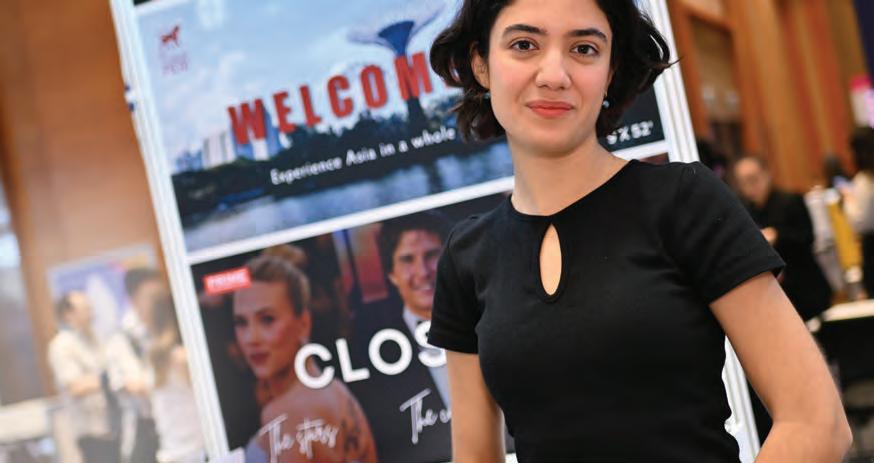
Prime Entertainment Group arrives at ATF with an eye on territories that global distributors often overlook as secondary. For Sales Manager Çağlasu Şenozan, that whitespace is where the next phase of growth sits.
“This ATF, we’re launching TO, and expanding partnerships with Pan-Asian platforms and smaller regional channels,” Çağlasu said. The priority list spans Australia and New Zealand, China, Japan, Singapore, South Korea, Taiwan, alongside the company’s long-standing partners in MENA and Central Asia.
aimed at diversifying both audience reach and revenue streams.
When it comes to programming, Wutichai emphasises a need to adapt with a regional approach. “Our bestselling genres depend on the country,” Wutichai explains. From dramas and sitcoms to variety and news, the company curates its offerings based on what resonates locally, while maintaining a distinctly Thai creative identity.
For Wutichai, the cornerstone of success lies in “premium quality content that delivers happiness to audiences of all ages and genders.” This blend of universal appeal and Thai authenticity, coupled with flexibility in licensing terms to suit market needs, defines ONE 31’s current momentum—and its ambition to position Thai entertainment as a
While Hollywood-centred factual entertainment and cinema documentaries continue to anchor Prime’s catalogue, the company is diversifying into areas that align with regional demand. Recent additions include the science–history investigation Mengele Remains, travel titles from the Slow Channel, and wildlife programming such as Kantauri
Managing APAC’s varied programming needs is not without its complications.
“The challenge lies in managing the different interests and requests from channels in APAC,” Çağlasu said. Even so, she points out that Prime’s broad, atypical portfolio is precisely what allows it to bridge regions and deliver distinctive factual voices to buyers seeking fresher, globally minded content.
“We prioritise originality, international diversity, and representation,” Çağlasu explained. The team is leaning into stories that broaden the range of voices on-screen, from eco-anxiety for children in The Song of Storms to identity-focused storytelling in Beyond the Borders: Latino Representation in Hollywood
Çağlasu Şenozan Sales Manager Prime Entertainment Group
Wutichai Namjaiprasert (莊子洋) SAVP International Business & Management One 31 Company Limited
IN THE BUSINESS OF BELLY LAUGHS
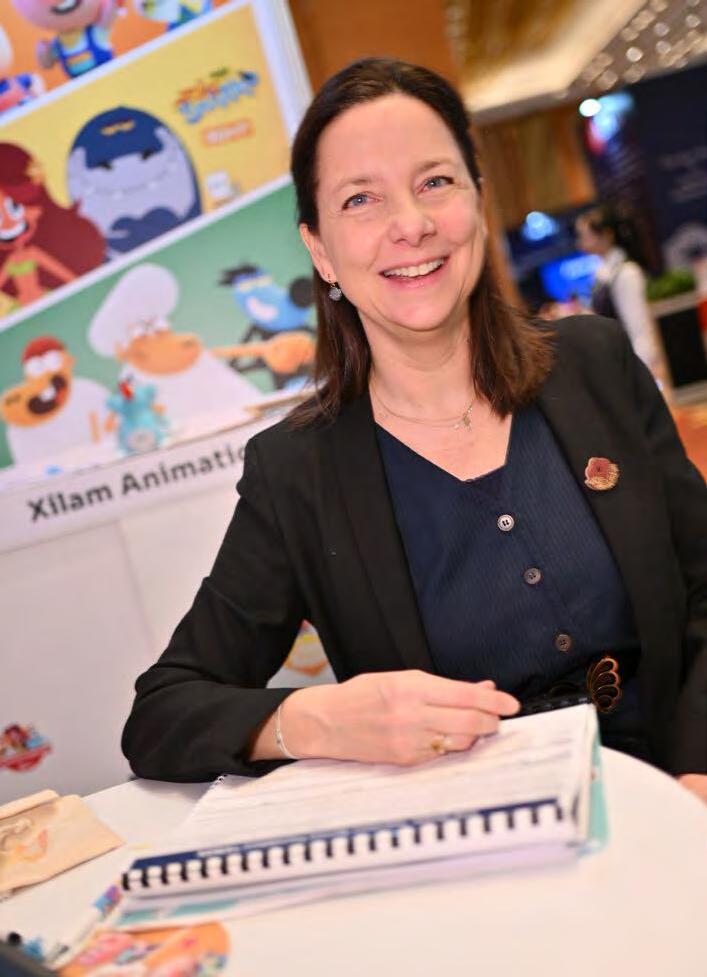
For Xilam Animation, laughter isn’t just entertainment—it’s a business model that transcends borders. “We’re looking to target the whole of the APAC market and ATF is the perfect place to meet key players from across the region, including those who don’t often travel to events in Europe,” said Céline Carenco, SVP, Media Sales Distribution.
And the appetite for laughter shows no sign of slowing. “Comedy is becoming increasingly popular amongst our partners’ acquisitions. Children need to have fun, and comedy series are the perfect answer!” Céline quipped. Indeed, slapstick comedy remains Xilam’s best sellers.
The company has seen strong popularity in India with Oggy and the
Cockroaches through an extended partnership with Sony Yay!, as well as Zig & Sharko, which is available on Sonic Nickelodeon. The studio’s preschool titles include Lupin’s Tales, and upcoming Piggy Builders! are also attracting attention, alongside its next comedy series Submarine Jim
For Céline, the real secret to sustaining laughter lies in long-term collaboration. “Working hand-inhand and communicating regularly is one of the keys to creating successful brands,” she said. “Having a 360-degree approach, including offering extra and bespoke types of content for platforms, is a great way to appeal to viewers, land expanded deals and increase brand awareness.”
SCIENCE SATIATES FROM SEOUL TO SAIGON
At ATF, Deutsche Welle (DW) is reading the room and finding audiences across Asia still hunger for knowledge. “We are primarily focusing on key Asian markets such as South Korea, Vietnam, Thailand, China, and Taiwan. These regions are developing rapidly, with strong demand for high-quality educational and factual content,” said Daniel Vogelgesang, Head of Distribution (Asia).
Science and environment programming remains DW’s calling card. Yet Daniel knows that longevity depends on evolution. “Audiences want stories that reflect their realities, so we increasingly focus on localised perspectives and region-specific storytelling,” he added. “With growing competition, tailoring content for local audiences ensures stronger engagement, making cultural adaptation and contextualisation just as important as production quality in today’s media landscape.”
As platforms multiply and consumption habits fragment, so do the rules of engagement. “The shift toward VOD and streaming has significantly changed licensing requirements,” Daniel noted.
“The era of simple TV-only licenses is over–rights must now cover multiple territories, platforms, and formats.”
Daniel Vogelgesang Head of Distribution Asia Deutsche Welle (DW)
Céline Carenco SVP, Media Sales Distribution Xilam Animation
THE STARS DESCEND
(L-R)Hong Huifang; Cynthia Koh; Pierre Png | Singapore
Bai Yu (left) with Zhu Yawen | China
Thaneth Warakulnukroh (left) | Thailand with Gladys Ng | Singapore
Yang Zhigang (left) with Yang Xuwen | China
Tantachj Tharinpirom | Thailand
P Ekkapop Tata | Thailand
Wes Lo | Taiwan
Zhang Ze Tong (left) | Malaysia with Cheryl Chou | Singapore
Shawn Thia | Singapore
Andrea Brillantes | Philippines
Hong Ling (left); James Seah | Singapore
Bao Shangen (left) with Wang Hongyi | China
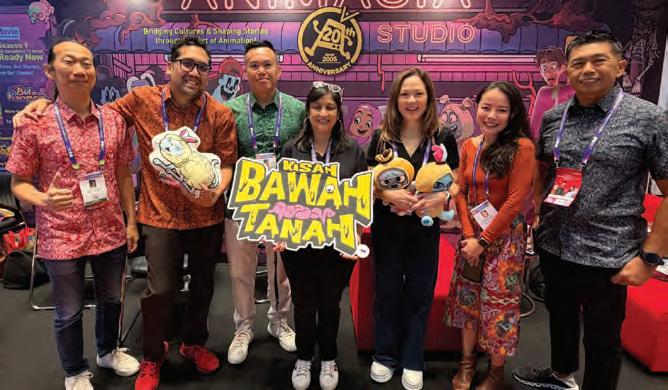
KISAH
BAWAH TANAH DIGS UP A NEW ERA OF REGIONAL COMEDY
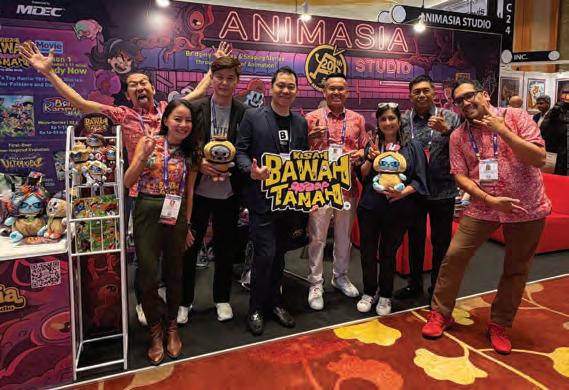
Kisah Bawah Tanah is a groundbreaking animated comedy series set to debut on ASTRO in Malaysia, Singapore, and Brunei, and on Boom in Thailand in 2026. Targeted at teens and young adults, it fills a gap in Southeast Asian animation by blending folklore, satire, and supernatural absurdity into a unique regional comedy. The ASTRO rollout will
feature cross-promotions, digital campaigns, and brand collaborations, expanding the series beyond the screen. Its partnership with Boom supports cross-cultural storytelling, showcasing Southeast Asia’s creative diversity and demonstrating the potential for local animation to resonate widely across the region and beyond.
SOUTHEAST ASIA LEVELS UP: CO-PROS
GO
MACRO WHILE MICRODRAMAS GO GLOBAL
Three major ASEAN media players—Double Vision, Astro Shaw, and the Philippines’ ABS-CBN—announced a co-production deal at ATF to produce three 10-hour drama series over the next two to three years. The shows will stream as iWant Originals and Astro Originals. The first project, entering production in late 2026, is a reboot of A Time for Us, the groundbreaking 2008 FilipinoMalaysian series. The modern reimagining follows Angela and Miguel as their investigations into family secrets and regional corruption collide across Malaysia and the Philippines.
Double Vision also announced its partnership with RisingJoy to enter the global microdrama market, becoming its first co-creator and investing to support international expansion and production.
An MoU was signed today, creating a strategic alliance uniting creativity, cutting-edge technology, and distribution prowess to build a stronger B2B ecosystem.
The collaboration leverages ChopChop’s high-tech production tools to boost production efficiency, BeLive’s streaming
infrastructure, NewUniverse’s expertise in micro-drama production, and more importantly, leveraging BeLive’s and New Univer’s business network to bring the creative content to a broader audience.
Over the next 12 months, the partners will co-produce approximately 50 micro-dramas.
(L-R): Ryan Jeong, Founder & CEO, NewUnivers Inc.; Kevin Ho, Founder & CEO, Chop Chop Systems; Latif Sim, Executive Director, BeLive AI Studios
With Boom
With ASTRO
(L-R): Cassandra Yang, Founder and CEO of RisingJoy; Ricky Ow, Co-Founder, RJ RisingJoy; Min Lim, CEO of Double Vision
MALAYSIAKOREA COLLAB— PUSHING BOUNDARIES
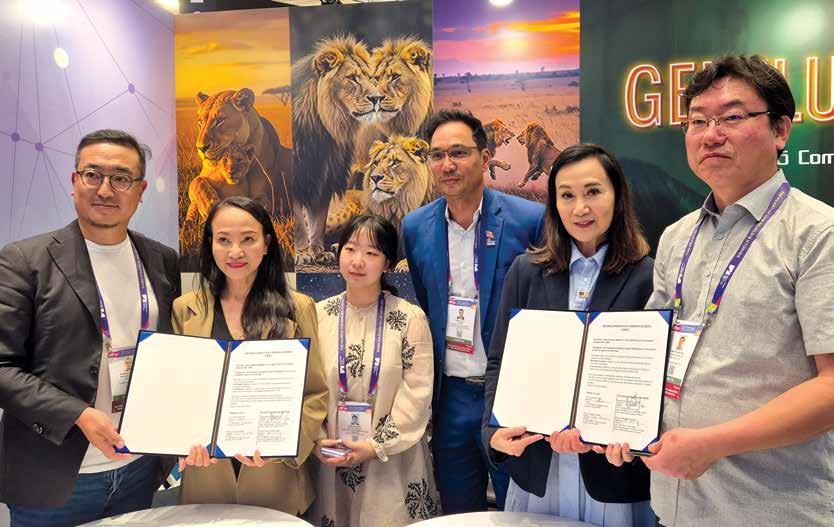
To elevate cross-border content creation, an MOU was signed between Malaysia’s Produksi Seni Duapuluh-Duapuluh Sdn Bhd and Korea’s Wildtale Co. Ltd. Under the agreement, Produksi Seni Duapuluh-Duapuluh will concentrate on content creation, filming, and talent engagement, while Wildtale Co. Ltd. will contribute its expertise in post-production and AI-driven delivery.
Supported by the National Film Development Corporation Malaysia (FINAS), this collaboration aims to elevate Malaysia’s content innovation and production capabilities to new heights.
BOMANBRIDGE STRIKES CO-PRO DEAL
International distributor, Bomanbridge Media, struck several major broadcast agreements for their brand-new, blue-chip wildlife series, The Secret World of Snakes The Secret World of Snakes (3 x 60’), a co-production between Bomanbridge Media, South Africa’s Lion Mountain Media and China Media Group (CMG), will debut in China on CMG’s CCTV 9 in early 2026. The threepartner has also been picked up by National Geographic for EMEA and Discovery Asia. The series is slated to air on Nat Geo from 2026 with Discovery expected to launch the series throughout Asia by Q1 2026.
GLOBAL STAGE, KOREAN BEAT: A NEW POWER PARTNERSHIP MEDIACORP FORGES AHEAD WITH CO-DEVELOPMENTS
Encore Films and Magic Image have signed a multi-series partnership at ATF 2025 to distribute premium Korea International Broadcasting Foundation–Arirang TV content internationally. The deal includes acclaimed titles The Senses of K-Culture and Sound Trek, expanding access to high-quality Korean cultural programming. Both companies aim to deepen global appreciation of Korean lifestyle and non-fiction storytelling while strengthening Arirang TV’s international presence. Leaders Ankur Bhasin and Hongdeog Jeon emphasised strong synergy and longterm plans to curate and distribute more Korean factual and cultural series worldwide.
Three new script co-development projects with regional creative powerhouses will be co-developed and shaped by Mediacorp, showcasing the company’s growing ambitions and continued commitment to developing premium Asian stories that resonate with audiences around the world. Fom concept to screen, this collab will blend creative perspectives to bring authentic and globally appealing Asian narratives to life. Supported by the Infocomm Media Development Authority (IMDA), these projects include Korean-language title Orange Boy from the North, as well as the Chineselanguage titles The Penrose Trap (回环), and Voyage Unknown (玩美邮轮 假期). Together, they spotlight Mediacorp’s ambition to collaborate across borders, languages, and genres, joining hands with celebrated writers and production houses to develop original stories with universal resonance.
(L—R) Yeom Sung Won, Marketing Director, Wildtale.Co.Ltd; Wendy Wong, Executive Director, Produksi Seni Duapuluh Duapuluh Sdn Bhd; Ma Kyung Seon, Assistant Manager, Korea Communications Agency; Dato’ Hans Issac, Chairman, National Film Development Corporation Malaysia (FINAS); Datin Nancie Foo, Executive Director, Produksi Seni Duapuluh Duapuluh Sdn Bhd; Choi Kyung Ryel, Production Director, Wildtale.Co.Ltd.
FROM PASSIVE TO PARTICIPATORY: REDEFINING ENTERTAINMENT FOR GEN ALPHA IN ASIA
From Passive to Participatory: Redefining Entertainment for Gen Alpha in Asia
Understanding Gen Alpha requires real-time insight into how they live, play, watch, and influence the world. The Insights Family tracks 140,000 kids (3–18) and 70,000 parents (1–16) annually across APAC.
With always-on data on media, gaming, fandom, and family decisions, we help entertainment companies see how kids aren’t just watching—they’re playing, remixing, and shaping content. In Asia’s mobile-first markets, Gen Alpha turns media into a participatory culture.
Here’s what content creators, distributors, and IP owners at ATF need to know: kids are actively creating and curating, not just consuming.
Source:The Insights Family, Kids 6-12,APAC averages (Australia,China, India, Indonesia,Japan, Philippines,South Korea (1August-31October 2025)
TOUCHSCREEN NATIVES, MOBILE-FIRST LIVES
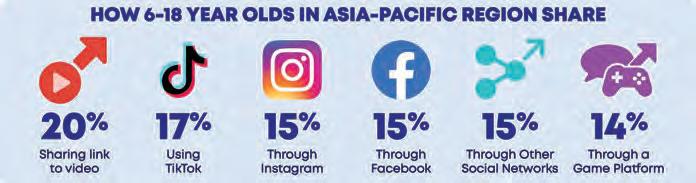
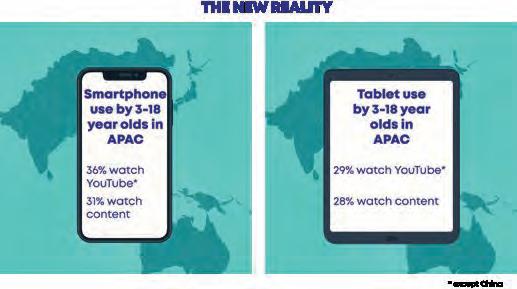
Kids’ entertainment is now driven by handheld screens, with teens in APAC the most mobile-first (94% smartphone use) and ages 3–12 close behind (82%, just below TV at 89%), making YouTube (and Bilibili in China) the essential gateway platforms for brand engagement.
Source:The Insights Family, Kids 6-12,APAC (Australia,China, India, Indonesia,Japan, Philippines,South Korea (1August-31October 2025)
Games, video, and social platforms all compete for the same screen time For 3–18-year-olds in APAC, the screen is online first, TV and games second.
WHAT THIS MEANS FOR THE INDUSTRY
Source:The Insights Family, Kids and teens 3-18,APAC averages (Australia,China, India, Indonesia,Japan, Philippines,South Korea (1August-31October 2025)
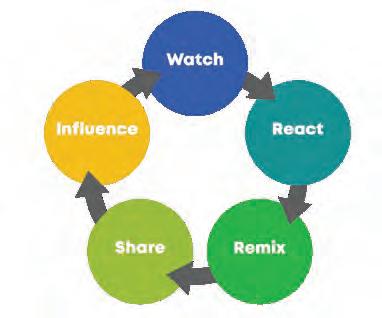
Gen Alpha doesn’t just consume content—they actively experience it. Growing up with mobile, touchscreen, and on-demand media, they co-view, co-create, and curate ecosystems around the brands, characters, and creators they love. Their remixes, shares, and recommendations shape culture and influence peers as demonstrated by ‘The Power Up Pathway’
2
KIDS AS THE NEW GATEKEEPERS
Source:The Insights Family, Kids 6-18,APAC averages (Australia,China, India, Indonesia,Japan, Philippines,South Korea (1August-31October 2025)
4
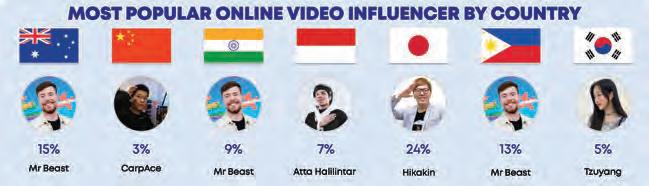
CREATOR CULTURE VS. STUDIO CONTENT
Studio content still matters, but creators capture daily attention because they feel personal and participatory.
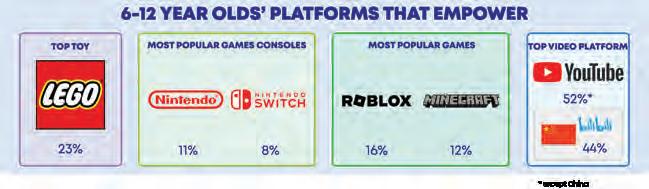
Story-sharing and participatory IPs drive engagement: Roblox, LEGO, and Nintendo let kids create and express themselves. Outside of China, YouTube dominates video consumption in APAC, with BiliBili leading in China.
Source:The Insights Family, Kids 6-12,APAC averages (Australia,China, India, Indonesia,Japan, Philippines,South Korea (1August-31October 2025)
Content that bridges professional production with creator authenticity
Creators capture daily attention because they feel personal and participatory. 19% of APAC kids first hear about content from influencers, and 42% say recommendations affect purchases.
Source:The Insights Family, Kids and teens 3-18,APAC (Australia,China, India, Indonesia,Japan, Philippines,South Korea (1August-31October 2025)
FOUR WAYS TO WIN WITH THE POWER-UP PATHWAY:
1. Make content interactive, not linear
2. Treat kids as co-creators and curators
3. Balance global IP with local relevance and creator energy
4. Build discovery across multiple touchpoints
In APAC’s mobile-first markets, Gen Alpha isn’t just watching entertainment, they’re building it.
Kids don’t just consume media. They share, recommend, and curate content, with peerto-peer discovery now rivalling algorithms across APAC.
Children increasingly influence family viewing, with parents reporting kid-led or shared choices. 23% of parents with children under 16 in the region say their kids drive what the family watches.
3
PLAY EQUALS ENGAGEMENT
Gen Alpha expects progression, challenge, and interactivity. They play to relax, create, compete, and express themselves, while social and shared play drives engagement. Even short-form video borrows game mechanics, e.g., likes as points
5
THE AI OPPORTUNITY
AI tools are creating unprecedented opportunities for personalised play and creative expression. Kids are experimenting with AI filters, avatar generators, and cocreation tools, transforming from viewers into active collaborators.
As one 13-year-old told us: “I can create characters for my stories.” Entertainment is rapidly becoming as unique as every kid’s fingerprint.
THE STREAMING GENERATION: HOW ASIA’S KIDS ARE SHAPING THE FUTURE OF TELEVISION
Television executives need to understand how Gen Alpha drives streaming growth in APAC. Growing up mobile-first and interactive, they favour creator-driven content and navigate a fragmented ecosystem, actively reshaping TV and setting the pace for streaming.
1
STREAMING IS KIDS’ DEFAULT SETTING
To make sense of this, you need real-time insight into how they behave and think. The Insights Family tracks 140,000 kids (3–18) and 70,000 parents (1-16) across APAC each year, delivering actionable intelligence on the lives, habits, and media choices of kids and teens.
For Gen Alpha, ‘television’ doesn’t mean a big screen in the living room, it means any screen, anytime, anywhere.
Smartphones and tablets empower kids to curate their own media lives
Source:The Insights Family, Kids and teens 3-18,APAC average (Australia,China, India, Indonesia,Japan, Philippines,South Korea (1August-31October 2025)
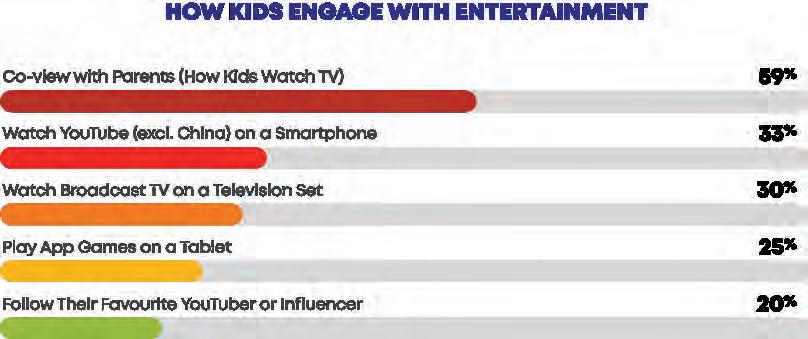
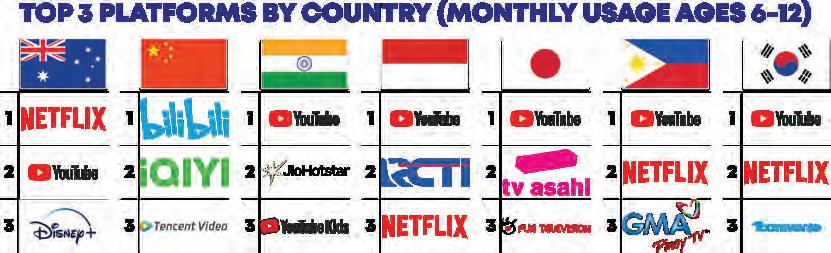
TV is as likely to mean streaming as it is broadcast (linear) television In APAC, broadcast TV remains the most popular way for 3–18-year-olds to use TV sets (30%), with streaming close behind at 27%. Over the past four weeks, YouTube (45%, excluding China), Netflix (35%), and YouTube Kids (20%), excluding China) led viewing, while in China 46% watched Bilibili.
Linear kids’ channels become background experiences, as streaming leads viewing in all territories.
TOP 5 SERVICES BY COUNTRY (MONTHLY USAGE AGES 3-18)
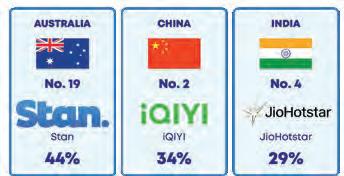
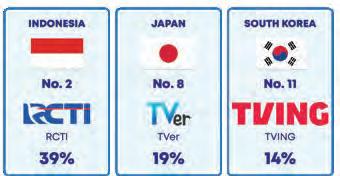
LOCAL STREAMING SERVICES (USED IN THE LAST 4 WEEKS AGES 3-18) Regional platforms like Stan, TVer, and TVING keep kids connected to local culture
Source:The Insights Family, Kids and teens 3-18,APAC (Australia,China, India, Indonesia,Japan, Philippines, South Korea (1August-31October 2025)
2
THE EXPECTATION OF INTERACTION
Gen Alpha doesn’t just watch, they interact. Gaming has redefined what kids see as fun.
WHAT ENGAGEMENT LOOKS LIKE NOW:
• TikTok: 31% of 10–18s watch dance/ music videos (up from 13%), 24% watch challenges (up from 11%)
• Sharing (Aug–Oct 2024): 41% of 13–18s shared selfies, 20% shared videos, 7% shared live videos
• Interactions: likes, comments, votes, polls; 40% of 6–18s often post opinions online (+11% Y/Y)
Source:The Insights Family, Kidsand teens 3-18, APAC average (Australia,China, India, Indonesia, Japan, Philippines,South Korea (1August-31October 2025)
WHAT THIS MEANS FOR ‘TELEVISION’:
Four Imperatives for Broadcasters and Platforms:
1. Make content interactive, not just watchable
2. Build spaces for co-viewing and co-creation
3. Combine creator authenticity with studio storytelling power
4. Use AI and gamification to deepen engagement
CO-VIEWING AND CO-CREATING
FROM PASSIVE TO PLAYFUL
The evolution from traditional viewing to active participation
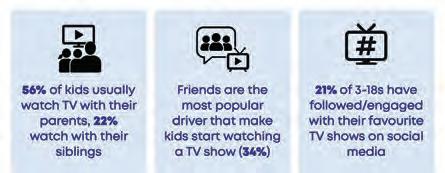
Screen time is increasingly social. Families co-view streaming series and YouTube/Bilibili videos, siblings collaborate, and peers co-create and remix.
THE SOCIAL SHIFT:
• Family co-viewing: 93% of parents with 1–16-year-olds watch TV as a family (81% weekly); 92% watch YouTube/Bilibili together (80% weekly)
• Kids create: 58% of parents create content with kids (38% weekly); 14% of kids make brand-related content while gaming or on social media
• Peer sharing: 25% of 3–18s share brands with friends; 13% discuss face-to-face outside school, 11% in school; 25% cite friends as a source for discovering new content, 16% siblings/family
HOW 3-18 YEARS OLD IN APAC ENGAGE WITH CONTENT
Source:The Insights Family, Kids and teens 3-18,APAC averages (Australia,China, India, Indonesia,Japan, Philippines,South Korea (1August-31October 2025)
Television is no longer simply a broadcast - it’s a conversation. And across Asia-Pacific, it’s kids who are starting and steering that conversation. For the Streaming Generation, the remote control has been replaced by creativity.
4
CREATOR CULTURE IS REWRITING THE RULES
Traditional studios no longer dominate kids’ attention. Creatordriven content sets new standards for authenticity and relevance.
WHY CREATORS WIN:
• They feel real. Kids see them as peers, not celebrities. 50% of 6-15 year olds in APAC want a sense of community, which influencers provide through active engagement.
5
WHY KIDS START WATCHING TV SHOWS
Source:The Insights Family, Kids and teens 3-18,APAC averages (Australia,China, India, Indonesia,Japan, Philippines,South Korea (1August-31October 2025)
• Online platforms like YouTube and Bilibili are redefining TV, not broadcast schedules.
NEW FORMATS, NEW RULES: CONTENT BUILT FOR HOW KIDS ACTUALLY WATCH
Traditional 22-minute episodes are just one option, and kids fluently switch between games, tutorials, and short vertical content.
THE FORMAT REVOLUTION:
• Game videos: 29% of APAC kids watch to learn from experts
• How-to videos: 13% watch tutorials for crafts, cooking, and self-learning; often blend education and entertainment
6
TOP VIDEO FORMATS
Source:The Insights Family, Kids and teens 3-18,APAC averages (Australia,China, India, Indonesia,Japan, Philippines,South Korea (1August-31October 2025)
• Short vertical content: under 60 second, mobile-first; 34% of kids outside China watch
DISCOVERY IS THE NEW CHALLENGE
Finding what to watch is harder than ever with so many platforms and creators.
• Peer discovery: 29% of 6–12s rely on friends; 19% on influencers/YouTubers
• Algorithms help, but rarely across platforms
• Broadcast risk: only 14% discover new content by channel surfing in APAC
CONTENT DISCOVERY BY 6–12 YEAR OLDS
Success requires building bridges between linear and digital experiences.
For more information, emailAdamWoodgateAdam.Woodgate@theinsightsfamily.com
Unscripted format acquisitions showed signs of returning, with the number for the first 10 months of 2025 already surpassing that of 2024
23 SEVEN THINGS YOU NEED TO KNOW ABOUT ASIA’S FORMAT ACQUISITIONS
The majority of TV format adaptations over the past 10 months (68%) were unscripted, compared to 32% scripted formats
Talent & Game Shows dominate unscripted adaptations, while Reality is gaining momentum
Mystery/Thriller led scripted adaptations, surpassing Romance as the most adapted scripted genre over the past 10 months
Top SCRIPTED Format Buyers: India, Thailand and Japan
Top UNSCRIPTED Format Buyers: India, Vietnam, The Philippines & Thailand
Over two-thirds (67%) of scripted remakes were released on streaming platforms
Scripted remakes favour regional stories, with over 50% originating from Asian formats, while unscripted adaptations draw from a more diverse, global pool of titles (62% non-Asian formats)
WHY ASIA IS THE WORLDS’ TOP HIGH-GROWTH OPPORTUNITY IN 2026
BY TONY GUNNARSSON, SENIOR PRINCIPAL ANALYST, OMDIA, TV, VIDEO & ADVERTISING
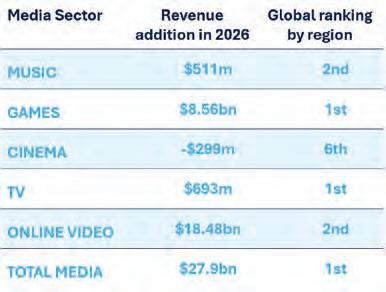
For Media & Entertainment businesses looking to grow revenue in 2026, the standout region to target is Asia & Oceania. Across all media types—here defined as the market for Music, Games, Cinema, TV and Online Video—Omdia data shows that the revenue total for Asia & Oceania will grow by $27.9bn in the year—from $331.8bn in 2025 to $359.7bn in 2026. That places the region in first place—just ahead of North America which will generate a $27.7bn revenue increase. Western Europe is some way back in third place with a $10bn increase in 2026.
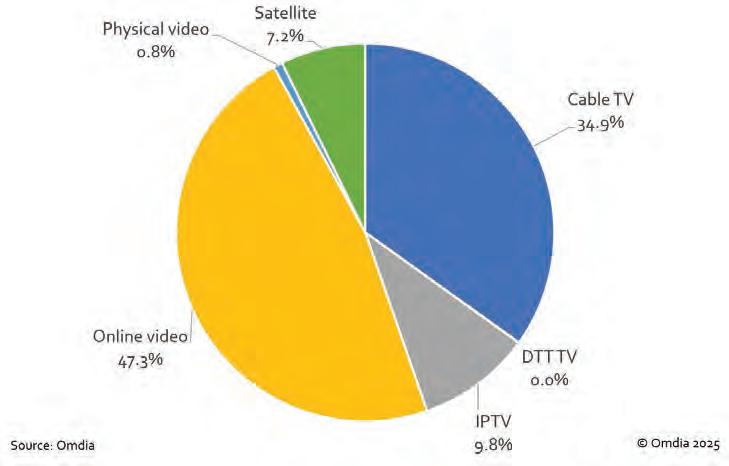
In 2026, Asia & Oceania will generate a grand total of $84 billion from TV & Video
Note: Premium online video only, excludes social video
A hefty $18.5 billion of the Asia & Oceania revenue increase will come from the online video sector. The region demonstrates robust growth drivers for online video, underpinned by key market fundamentals. Enhanced infrastructure development and technological advancement have created a solid foundation for digital content delivery, along with accelerated consumer adoption of smartphones and smart TV devices.
The availability of high-quality, locally relevant content has strengthened audience engagement and retention metrics. Strategic alliances between streaming platforms, telecommunications providers, and content production companies have also created synergistic value propositions that optimize market penetration and customer acquisition. These converging factors have collectively established a compelling growth trajectory for online video— and the wider M&E business— within the region.
Chart 1: Asia & Oceania: TV & Video revenue in 2026, in %
Table 1: Asia & Oceania: Revenue performance in 2026, by media type
TOP 10 FACTS ABOUT STREAMING IN ASIA
BY TONY GUNNARSSON, SENIOR PRINCIPAL ANALYST, OMDIA, TV, VIDEO & ADVERTISING
IN 2026, ASIA WILL HAVE MORE THAN 1 BILLION SVOD SUBSCRIPTIONS
Asia is the single largest market for streaming based on the number of SVOD subscriptions. In 2026, Asia as a region will exceed 1 billion subscriptions for the first time ever—more than any other region in the world!
INDIA IS ASIA’S SECOND LARGEST MARKET FOR STREAMING, AND IT IS RAPIDLY CATCHING UP WITH CHINA.
The recent successes of JioHotstar and JioCinema in rapidly acquiring subscriptions means India is now rapidly catching up with China. Up until recently, India’s total number of online video subscriptions was comparable with a third or less of China’s. In 2026, India will have close to 380 million subscriptions.
IN 2026, AMAZON & NETFLIX WILL COMMAND 50% OF THE JAPANESE STREAMING MARKET
At 60 million paid subscriptions in total, Japan is the third largest Asian streaming market and the overall seventh largest in the world. Amazon and Netflix are the market leaders, partly due to their investment in local Japanese content.
MICRO-DRAMAS WILL TAKE ASIA BY STORM!
In North America and Europe, free advertising streaming TV (FAST) is rapidly changing household TV and video viewing behaviour. However, in Asia, notably India and Southeast Asia, microdrama is redefining viewer engagement and creating new advertising opportunities.
IN SOUTHEAST ASIA, PREMIUM TV & VIDEO ENTERTAINMENT IS MOST POPULAR THROUGH BUNDLING BY LARGE NATIONAL TELCO OPERATORS.
More than 1/5 of all streaming subscribers across Southeast Asia get access to services like Netflix via their broadband, mobile phone or pay-TV subscriptions—attracted by promotional, discounted and subsidised access to premium streaming. Here, streaming is much less directto-consumer as through-my-telco.
2026: Online video subscriptions, regions as % of global total
Source: Omdia
4 10 1 5 9 6 3 7
IN 2026, CHINA WILL HIT A MAJOR MILESTONE AS SVOD SUBSCRIPTIONS SURPASS 400 MILLION.
The Chinese powerhouse streaming market continues to go from strength to strength: in 2026 China will have more than 400 million paid SVOD subscriptions, taken by 250 million SVOD households, each taking an average of 1.60 services.
OUTSIDE OF CHINA, NETFLIX REMAINS THE DOMINANT STREAMING SERVICE IN ASIA.
Netflix is still not directly available in China, but it is by all measures the global leader for streaming. At some 70 million paid subscriptions across Asia, Netflix is punching above its weight when it comes to producing Asia content—which it exploits not just in the region, but globally.
PARTNERSHIPS BETWEEN STREAMERS IS NOW CRITICAL—ASIA IS THE TESTING GROUND FOR NEW MODELS OF PARTNERSHIP
In fiercely contested market for streaming, with too many services and platforms for visual entertainment, partnerships between streaming services are now critical to success. In 2025, Asia saw a number of groundbreaking new partnerships—a regional pact between Viu and HBO Max, partnerships between Disney+ and Japanese streamers ABEMA, DMM and Hulu JP, a co-operation deal between TVING and Disney+ for both Japan and South Korea—which are highly likely to be copied around the world in 2026.
MOBILE IS THE KEY TO ASIA’S PREDOMINANTLY YOUNG TV VIEWERS OF THE FUTURE
Whereas FAST relies on smart TVs and arguably is already replacing traditional broadcast TV viewing, vertical video formats such as microdramas are taking off in Asia, partly driven by the region’s high base of mobile-first users.
NETFLIX DOES NOT RULE IT ALL—IN INDONESIA, THE LARGEST MARKET SHARE BELONGS TO VIDIO, A HOMEGROWN STREAMING SERVICE.
Indonesia stands out as the only market in the region where a local player, Vidio leads the SVOD market with over 5 million paid subscribers, thanks to its robust offering of sports and local content. However, social video platforms are its biggest competitors—notably TikTok
COPRODUCTION WITH ASIA: FIVE KEY TRENDS SHAPING GLOBAL COLLABORATION
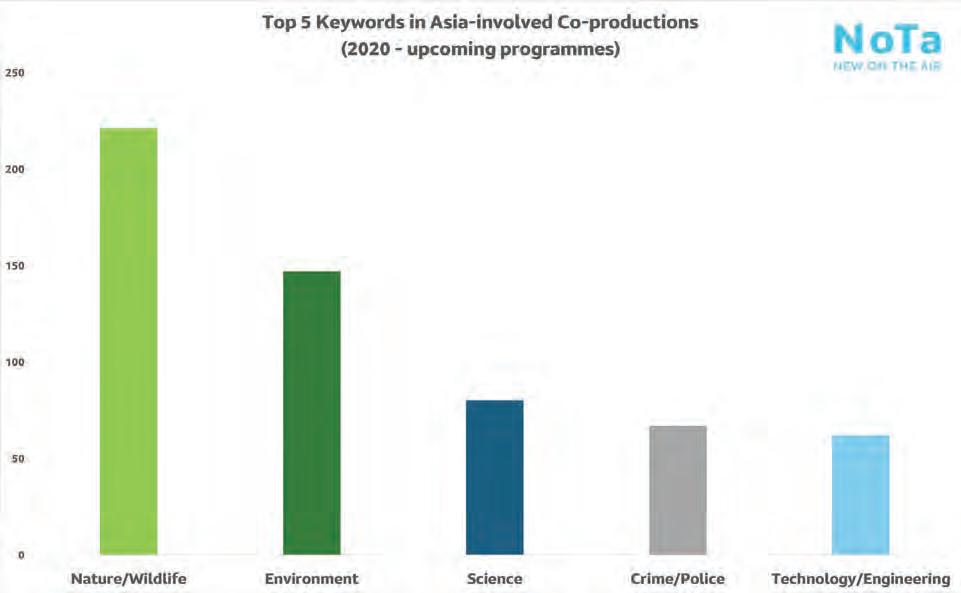
As international demand for diverse content grows, coproduction is an increasingly important strategy for reaching wider audiences and sharing costs and expertise. Below are five trends observed in coproductions involving Asian partners, based on series launched since 2020 and patterns we expect to shape projects after 2025.
NATURE & SCIENCE: STEADY GREENLIGHTS
Nature- and science-led factual series remain the most co-produced genre. Their universal appeal and shared ecological themes make them ideal for pooling resources and attracting international broadcasters. This category not only leads in volume but also delivers steady audience results across markets. SEVEN WORLDS, ONE PLANET
(2020)—co-produced by five countries, including China’s Tencent Video—stands as the most widely distributed Asia-involved coproduction, reaching 25 territories worldwide. Its 2025 Italian broadcast continues to perform strongly, exceeding the channel’s slot average by 30% among young adults at premiere.
TREND 2
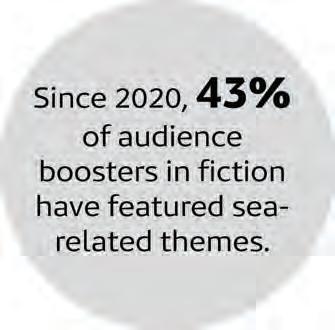
SEA & MARINE FICTION: A RECURRENT AUDIENCE BOOSTER
Marine settings—from oceanic thrillers to science-inflected dramas—have proven particularly effective in fiction, especially in collaborations with Japanese producers. The sea offers visual spectacle, high-stakes narratives, and cross-genre appeal (science, action, mystery), all of which enhance export potential. THE SWARM (2023), co-produced by
TREND
CULTURAL ENCOUNTERS: COMPELLING ENGAGEMENT FOR LOCAL MARKETS
Stories exploring cultural exchange often resonate with both local and international audiences. Building on the docuseries OUR STUDY OF LIFE – LIFE IN JAPAN (1999), the Japan–China co-production OUR TOKYO STORY follows foreign students in Japan, achieving nearly 40% market share among young adults during its Fuji TV premiere and sustaining strong ratings throughout the season. WHEN SOCRATES MET CONFUCIUS (2026, Jiangsu Satellite TV), a China–Greece–UK docuseries, presents philosophical dialogues between Greek and Chinese thinkers, featuring Kavvadas and other experts. Music-themed format VOICE BEYOND HORIZON (2026, Hunan TV; China–Kazakhstan) follows eight international musicians forming a “Silk Road Study Group.” The series will be broadcast simultaneously in both countries, sharing rights and allowing audiences to experience the spirit of cultural exchange together.
Contact:Anqi LIU aliu@glance-mediametrie.com
three European countries and Japan, reached 12 territories and boosted audiences in several markets. THE HEAD (2020) also continues its strong international run—its 2025 acquisition by Sweden’s TV6 delivered solid results among commercial audiences. These examples show how maritime stories continue to resonate widely with viewers worldwide.
TREND
4
DARKER TONES & THRILLERS: THE RISE OF BOLDER STORYTELLING
Since 2025, thrillers and suspense titles have surged, with post-2025 output surpassing 2021–2024 totals. Co-productions are enabling distributors and commissioners to explore bolder storytelling. The crime series BLOOD & SWEAT (Boat Rocker Rights), following a serial killer and set for 2026, exemplifies this trend as a Japan–Finland co-commission by WOWOW and Nelonen. WOWOW’s experience (TOKYO VICE) shows how national broadcasters can anchor noir and thriller projects with international partners. DECALCOMANIA and HEART ATTACK—thrillers with sci-fi and fantasy elements from Thailand–Singapore and Japan–US—explore surreal worlds. HEART ATTACK won the Silver Award for “Best Drama Series Made in Asia for a Regional or International Market,” at ContentAsia Awards 2025, underscoring the genre’s creative recognition.
LONG RUN ANIME & KIDS CONTENT LEAD IN VOLUME ONLINE; ORIGINALS LEAD IN IMPACT
Since 2024, anime and children’s content have led Asian co-production pipelines by volume on major streaming platforms, making them the most frequently licensed genres. However, in terms of audience impact and cross-market consumption, original scripted titles remain dominant. THE THREE-BODY PROBLEM on Netflix ranked first in total hours viewed among Asia-involved coproductions across six of seven markets— coming second in the Nordic region2— demonstrating that while anime leads in quantity, high-profile originals deliver the strongest viewer engagement.
by Glance Track globally new TV & VOD series launches & their ratings https://www.e-nota.com
HIGH-POTENTIAL UPCOMING ANIME— SELECT TITLES
Ampere Analysis identified that there are some common denominators in high-performing Anime titles in APAC. Classic titles in the most popular genres—Action & Adventure, Sci-Fi & Fantasy and Children & Family—have wide appeal, while renewed titles have already proven popular, so upcoming new seasons can also expect to perform well.
Dandadan: Season 3
Primary Genre: Sci-Fi & Fantasy
Title Type: TV: Renewal
All Commissioners: Aniplex, Dentsu, MBS, Shogakukan-Shueisha Productions
Announced Month: Sept-25
From Old Country Bumpkin to Master Swordsman: Season 2
Primary Genre: Action & Adventure
Title Type: TV: Renewal
All Commissioners: Klockworx, NBCUniversal Entertainment Japan, Nippon
Columbia, Square Enix, TV Asahi
Announced Month: Jun-25
Hypergalactic
Primary Genre: Children & Family
Title Type: Movie
All Commissioners: Toei Animation
Announced Month: Feb-24
Jujutsu Kaisen: Season 3
Primary Genre: Sci-Fi & Fantasy
Title Type: TV: Renewal
All Commissioners: Shueisha, Toho Animation, Tokyo Broadcasting System
Announced Month: Jul-25
Kindergarten Wars: Season 1
Primary Genre: Comedy
Title Type: TV: First Run
All Commissioners: Shueisha
Announced Month: Oct-25
For new first-run Anime titles, less conventional genres such as Comedy and Romance are now emerging too and can appeal to a new audience amid the overall rise in Anime’s popularity.
#6 #7
Obocchama-kun: Season 1
Primary Genre: Children & Family
Title Type: TV: First Run
All Commissioners: Sony Yay, TV Asahi
Announced Month: Oct-25
Re:ZERO -Starting Life in Another World: Season 4
Primary Genre: Sci-Fi & Fantasy
Title Type: TV: Renewal
All Commissioners: Kadokawa, TXN
Announced Month: Mar-25
Rurouni Kenshin: Meiji Kenkaku Romantan: Season 3
#8
#9 #10
Primary Genre: Action & Adventure
Title Type: TV: Renewal
All Commissioners: Aniplex, Fuji TV, Shueisha
Announced Month: Mar-25
Indeed, we are seeing an unprecedented number of Anime titles commissioned amid the global Anime boom. Given this, content provider, especially local streamers, must seize the opportunity to tap into the big pool of Anime fans in APAC.
Shin Samurai-den Yaiba: Season 2
Primary Genre: Action & Adventure
Title Type: TV: Renewal
All Commissioners: Aniplex, Shogakukan
Announced Month: Sept-25
Tamon’s B-Side: Season 1
Primary Genre: Romance
Title Type: TV: First Run
All Commissioners: Hakusensha, Kodansha, Shochikui
Announced Month: Jun-24
10 KEY TRENDS THAT WILL SHAPE THE CONTENT MARKET IN 2026
With a turbulent year for the media sector drawing to a close, Ampere Analysis looks back to look forward—by selecting the key statistics from 2025 that highlight the emerging trends set to shape the industry in 2026.
1
CONSOLIDATION REMOULDS THE INDUSTRY
2025 was characterised by major M&A activity. The year started with the launch of Jio Hotstar in India, then in June, Korea’s trade commission granted approval for a merger between TVing and Wavve. In Australia, local streamer Optus Sport was folded into Stan, and Southern Cross Media and Seven Network
2
announced their plans to merge. 2026 looks to be no different, with talks between Sky and ITV in the UK, and perhaps most notably, the potential sale of Warner Bros. Discovery, with Netflix, Paramount Skydance and Comcast the reported bidders. A deal with any of these players could have a significant
implication for the commissioning landscape. Since 2020, Warner Bros. Discovery has been the most prolific commissioner globally, delivering more than 7,000 series orders (around 7% of global commissions), while Netflix accounted for 4%, Paramount 3.7% and Comcast 2.9%.
2025 was also a year of unexpected distribution partnerships. Amazon struck deals with NBCUniversal and France Télévisions; TF1 partnered with Netflix; and WBD aligned with Toho Towa Group in Japan. Disney+ was at the centre of multiple tie-ups: having already struck a bundling deal with Max in the USA in 2024, the service agreed partnerships with ZDF in Germany, ITVX in the UK, and TVING/Wavve in South Korea. According, Ampere’s popularity metric, in South Korea, 57% of the top 500 titles in the market will be available to customers as part of this “double pass” bundle.
YOUTUBE CEMENTS ITS ROLE AS A HOME FOR LONG-FORM FILM AND TV CONTENT
The video service has been among the companies striking cross-media deals, inviting an increasing number of content owners to upload full length episodes onto the platform. Ampere Analysis’s global consumer tracker of 56,000 adults from Q3 2025 shows that 85% of Internet users watch YouTube each month Notably, nearly one in five (18%) now stream full-length movies and TV shows on the platform.
SPOTIFY BROADENS ITS PUSH INTO PREMIUM VIDEO
Recently, music streamer Spotify has introduced various initiatives to expand its video offering, ranging from fulllength music videos and uninterrupted video podcasts to enhanced monetisation tools for creators. Spotify has also partnered with the digital-first labels of broadcasters to bring some of their content to its platform, notably including a deal with Australia’s Network 10 News, and ITV and Channel 4 in the UK. APAC could be an enticing region for Spotify to expand this initiative: 17% of consumers in the region report having a Spotify subscription within their household. This makes it the third largest subscription service in the market, behind only YouTube Premium and Netflix
FAMILIARITY STEERS KIDS COMMISSIONING DECISIONS
The growth of YouTube has been particularly impactful in the kids’ space, where commercial broadcasters and streamers have scaled back much of their commissioning activity. In this landscape, familiar IP has become the safe bet. Between H1 2021 and H1 2025, half (47%) of global Scripted Children & Family TV commissions came from existing franchises, compared to an average 36% of commissions based existing IP across the board. Netflix leaned in this year, when it became the new global home of the Sesame Street franchise.
In June, Disney and NBCUniversal filed a lawsuit against the AI image generation engine Midjourney, marking the first time major studios have sought to enforce their copyrights against an AI company. With no meritsruling or settlement yet announced, the case look set to roll into 2026, with the industry keeping a close eye on the developments as the technology continues to develop at breakneck speed. Ampere Analysis will release its report on the state of AI In the Production Cycle in January 2026. 3 4 9 5 8 6 7 10
MICRO-DRAMAS FURTHER EXPAND THEIR AUDIENCE
Ampere found that across 2025, Micro-dramas’ (under 2 minutes) and ‘mini-dramas’ (up to 10 minutes) are gaining traction on social media, as short-form scripted platforms leverage vertical videos designed for phone viewing. One in 10 watch mini dramas on social media. This content resonates particularly with younger viewer, with 46% of audiences aged between 18—34.
ADVERTISING CONTINUES TO SHAPE STREAMING SERVICES’ CONTENT STRATEGY
Unlike broadcast TV, where scheduling dictates ad load, Ampere’s Advertising Analytics dataset shows US VoD platforms keep ad volumes steady, varying by less than 5% across the day. Instead, ad density is driven by the content itself: in streaming, content is the new prime time.
LIVE SPORT REMAINS A CORNERSTONE OF STREAMING GROWTH
Netflix continues to find success with its live sport offering. The bout between Saul ‘Canelo’ Alvarez and Terence Crawford was touted as the most watched fight of this century, reportedly being seen by 41.1m viewers, while Ampere found that its coverage of WWE amassed over 300m viewing hours on Netflix in H1 2025—despite being available in only the US, Canada, UK and South America. Netflix will look to replicate this success in APAC, having signed a deal with the World Baseball Classic (WBC) to exclusively stream all the games for 2026 in Japan.
AUSTRALIA’S SOCIAL MEDIA BAN SETS A TEMPLATE FOR GLOBAL REGULATORS
Lawmakers all over the world will look at Australia when the country introduces its social media ban, which raises the minimum age to create an account on social media accounts from 13 to 16. According to Ampere’s consumer survey, 93% of respondents in this age group use social media at least monthly.
AI ADVANCES WILL CONTINUE TO CAUSE CONTROVERSY
For more detail on any of these trends, visit ampereanalysis.com, or subscribe toAmpere’s weekly newsletter, TheAmp https://www.ampereanalysis.com/contact.
NON-ENGLISH STREAMING REVENUE SUCCESS RATE BY COUNTRY/REGION OF ORIGIN
South Korea has the highest content hit-rate, as measured by global streaming revenue (relative to other non-English speaking markets). Roughly one in three Koreanproduced, non-English titles released since 2022 has landed in the global top 20% of nonEnglish series and films by streaming revenue, giving Korea the most efficient “hit machine” in the non-English world.
This efficiency highlights the country/region’s leading role in the global streaming landscape and its capacity to capitalize on the growing demand for non-English programming. As global viewing of non-English shows proliferates, and Korean series are consistently among the most-watched non-English titles, Korea has become a priority hub for co-productions, format deals and franchise building. For buyers and investors, the data points to a market where the probability of backing an exportable hit is significantly higher than in most other non-English territories.
This chart shows which Asian production hubs are punching above their weight in turning local projects into global streaming revenue. Korea leads, Japan follows closely, and markets like Thailand, Taiwan and Malaysia are emerging as the next wave of exporters—all highly relevant to distributors, financiers and commissioners. Success Rate by Country/Region of Origin
ZDF STUDIOS: BUYERS KNOW WHAT THEY WANT, BUT ARE OPEN TO ADVENTURE
“IN MY EXPERIENCE SELLING FOREIGN LANGUAGE CONTENT, BUYERS HAVE BECOME MORE PICKY,”
said Nikolaus Sivaloganathan, Director of Drama at ZDF Studios. Over the years, buyers have increasingly focused on specific titles that they know they want and aren’t moved by any extra offerings in broad, value-added packages, he added.
This narrowed focus is further compounded by budget constraints that most clients have – they may not have room in their budget to gamble on new titles that aren’t crowd favourites. However, Nikolaus holds an optimistic outlook on offering new content in Asia and APAC, since buyers have never outright rejected new content and have always taken it as far as a thorough conversation. This
indication of sustained interest despite financial caution could be a positive sign for others offering foreign language content as well.
On collaboration and adaptability, Nikolaus explained that ZDF Studios was open to “any and all possibilities” for partnership — from IP development and adaptations to co-productions and acquisitions. The goal, he said, was clear: to continue creating local stories that resonated with global audiences.
Genre-wise, ZDF Studios continued to find enduring success with German crime series and TV movies — formats that have proven consistently popular with audiences worldwide. While the company has ventured further into English-language content, Nikolaus confirmed that crime dramas remain the cornerstone of ZDF’s distribution strength. By combining trusted genres with a willingness to explore international partnerships, ZDF Studios maintains a robust, forward-looking approach to global storytelling.
PLUG AND PLAY IS THE NAME OF THE GAME: GMA IN ASIA
“Fast, flexible, and market-ready” is a phrase that succinctly captures the essence of GMA’s network strategy, according to Rochella Ann Salvador, Assistant Vice President at GMA Network Worldwide Division. More specifically, to be effective at this essential strategy, GMA emphasises agility and market intelligence in their operations to handle a rapidly changing media landscape. Beyond maintaining relationships, said Rochella,
SUCCESS DEPENDS ON DELIVERING
AND USING MARKET INSIGHTS TO ALIGN EACH PITCH WITH AUDIENCE DEMAND.
Over the past three years, she observed that buyers across Asia had become more strategic and data-driven. Decisions were increasingly based on platform analytics, with greater emphasis on how content matched real audience behaviour. “Deals moved faster,” she noted, citing the growing demand for flexible rights packages, shorter approval cycles, and ready-to-air or easily localised content.
This shift also encouraged buyers to take more creative risks. According to Rochella, Asian and APAC buyers were now more open to fresh voices and distinctive narratives, provided the content could be localised effectively. This trend had worked in GMA’s favour, with Filipino dramas gaining traction for their emotional depth and universal appeal.
Looking ahead, Rochella said GMA’s most promising opportunities lay in expanding into untapped territories and building new partnerships with both traditional broadcasters and digital platforms. By combining speed, flexibility, and sharp market insight, GMA Network continued to position Filipino storytelling as a compelling, export-ready force in the global entertainment market.
Nikolaus Sivaloganathan Director, Drama ZDF Studios
Rochella Ann Salvador
ASIA’S NEW BUYING REALITY: TIGHTENING BUDGETS, LONGER DEAL CYCLES
The openness of Asian buyers to international content remains strong, but getting deals across the line has become more complex and often requires greater time and flexibility than before, according to Joyce Dröse, Sales Manager–Asia, Nordics, Africa & Inflight at Seven.One Studios International.
“WHAT
HAS CHANGED IS THE LEVEL OF OPPORTUNITY–BUDGETS ARE TIGHTER, AND THERE ARE MORE HURDLES IN TERMS OF RIGHTS, PRICING, AND COMPETITION,”
Joyce said. She cited the period drama Vienna Blood as an example, noting that it was picked up by BBC Asia and WOWOW in Japan after a few seasons had aired elsewhere.
Despite these challenges, Joyce observed that buyers’ core interests have largely stayed consistent, even amid market consolidation. There has been a stronger emphasis on local stories, while international content continues to perform when carefully positioned. “Western shows can work very well, but only if they are placed with the right partners and in the right slots … when you do, shows can really endure,” she added, referencing the studio’s gameshow You Deserve It, which has been on VTM in Vietnam since 2013.
Nevertheless, Joyce is optimistic and underscores the value of partnerships and persistence in navigating the region’s evolving landscape. Based in Germany, she works closely with Bomanbridge to bridge cultural and business expectations across Asia. “We are still unlocking new opportunities,” she said. “Our firstever format deal in Mongolia, a local production of Old People’s Home For Four Year Olds, proved that persistence pays off.”
BUYERS TURN TO DATA AS THE NEW CURRENCY OF CONTENT
As Asia’s entertainment ecosystem continues to mature, a clear trend has emerged: buyers becoming increasingly data-centric and ROIdriven in their decision-making. Shashank Singh, Lead – Syndication & Content Alliances at One Life Studios Pvt. Ltd., observed that the shift has been transforming how platforms across the region evaluate and acquire content.
“There’s a sharper focus on content that travels across multiple territories, strong local narratives with global appeal, and shorter deal cycles,” he said.
“BUYERS ARE ALSO ACTIVELY EXPLORING DIGITAL-FIRST CONTENT TO ADDRESS SHIFTING CONSUMPTION PATTERNS AND PLATFORM DIVERSIFICATION.”
That evolution, Shashank noted, has encouraged distributors to rethink how they approached partnerships. “The focus today is on identifying scalable business opportunities, data-driven audience insights, and long-term strategic partnerships. Content relevance, flexible deal structures, and maximizing IP value across platforms are critical,” he said. “Equally important is agility–adapting quickly to evolving audience behaviour, technological disruption, and regional regulatory frameworks.”
Shashank observed that Asian buyers were also showing a growing appetite for creative experimentation, having embraced new genres, hybrid formats, and fresh storytelling styles. “With the rapid rise of OTT, regional platforms are eager for unique voices and innovative concepts that stand out in competitive markets. They’re also more collaborative, co-creating with producers to align creative and commercial objectives,” he said.
Reflecting on trends at the Asia TV Forum, Singh added that collaboration was shaping the next phase of growth, emphasising the growing importance of cross-border partnerships and the blending of Asian sensibilities with global narratives.
Joyce Dröse Sales Manager
(Asia, the Nordics, Africa & Inflight) Seven.One Studios International
Shashank Singh Lead – Syndication & Content Alliances One Life Studios Pvt. Ltd.
EUROPE ADAPTS AS ASIA’S BUYERS ZERO IN
European storytelling has never gone out of style, but its buyers are getting choosier.
“THE DEMAND FOR EUROPEAN CONTENT HAS BECOME MORE SPECIFIC, WITH MANY PARTNERS NARROWING THEIR FOCUS TO CERTAIN GENRES SUCH AS CRIME, THRILLER, OR PERIOD DRAMA,”
said Qi Wang, VP of International Sales & Acquisitions at Beta Film GmbH.
For Beta Film, that shift was an invitation to sharpen its curation. “A well-curated, tailored lineup allows buyers to identify potential fits more easily,” he said, noting that clarity in programming now mattered as much as
creativity. The company’s strategy leans on stories with universal appeal.
“A number of clients are exploring new genres and formats while maintaining strong interest in distinctive European storytelling,” Qi said. That willingness to experiment, he added, often leads to creative crossovers and longer-term collaborations, especially with partners seeking programming that blends cultural identity with commercial reach.
With long-standing relationships providing stability across Asia, Beta Film sees its strength not just in exporting European content, but in anticipating what the region would want next. “These established relationships provide stability and valuable market insight, allowing the company to anticipate shifts in demand and adapt its content strategy effectively,” Qi said.
Qi Wang VP, International Sales & Acquisitions Beta Film GmbH
BLUE CHIPS STAY AFLOAT IN STREAMING SEA
According to Carlos Sevillano, CEO of Artico Distribution, the appetite for highend factual content remains resilient globally. “On the factual side, we still see a strong appetite for premium content, blue-chip natural history and topics related to the region,” he said.
The rapid growth of OTT and streaming platforms has opened new opportunities for rights holders.
“I WOULD SAY THE BIGGEST CHANGE COMES FROM THE TRANSITION TOWARDS DIGITAL PLATFORMS AND ON DEMAND CONSUMPTION, WHICH HAS CHANGED THE DEMANDS FROM TRADITIONAL LINEAR CHANNELS,”
Carlos noted. “Since documentaries appeal to very defined audiences, the rise of on-demand services focused on niche interests has allowed us to expand our footprint in the region while continuing to work closely with traditional TV partners.”
For Carlos, adapting to this new landscape means thinking long-term. Beyond relationship building, he focuses on strategic growth, content positioning, and value creation. He added that market intelligence involves staying ahead of commissioning trends to understanding audience behaviour, platform needs, and brand visibility—all critical factors central to remaining competitive in a rapidly evolving market.
Carlos Sevillano CEO Artico Distribution
CUTTING THROUGH THE NOISE
For Dynamic Television, clarity of purpose matters as much as connection. “In addition to relationship-building, it is crucial to listen carefully to our partners’ content needs,” said Gilda Demirtas, SVP International Sales.
“OUR MAIN GOAL IS TO CREATE AND DISTRIBUTE CONTENT THAT IS EASY TO MARKET, THAT KEEPS THE MARKETING COSTS LOW, WHILE STILL MANAGING TO CUT THROUGH THE NOISE AND REACH A WIDE GROUP OF AUDIENCE.”
This philosophy has guided the company’s approach to distribution in Asia, where Gilda finds buying habits remaining relatively stable. “We didn’t recognise a big change in the last three years,” she noted.
Even so, curiosity is quietly shifting the landscape. “Asia-Pacific buyers are getting slightly more curious and more open to content outside of the studio system,” she said. For independents, that openness offers new room to manoeuvre, particularly for content designed to travel easily across platforms and language barriers.
Gilda Demirtas SVP International Sales Dynamic Television LLC
MOVISTAR PLUS+ PUSH FOR SPANISHLANGUAGE DRAMA ACROSS ASIA VIVA COMMUNICATIONS SHARPENS FOCUS ON SYNERGY AND GLOBAL REACH
Movistar Plus+ International will be focusing on opening new Asian territories for Spanish-language content, according to Fabrizia Palazzo, Distribution Manager. She explained that as part of this initiative, the priority was “to hit new clients which will allow our Original series to be premiered in Asian countries,” reflecting a broader push to internationalise the brand’s strongest titles.
She further noted that buyer behaviour in Asia has remained broadly consistent, though traditional broadcasters have increasingly leaned towards locally produced hits, particularly Korean drama.
IN CONTRAST, NEWER DIGITAL PLAYERS HAVE SHOWN GREATER OPENNESS TO INTERNATIONAL STORYTELLING, SELECTING TITLES THAT ALIGN WITH THEIR EDITORIAL AMBITIONS RATHER THAN REGION-SPECIFIC TRENDS.
This shift, Fabrizia said, has made SVOD platforms important gateways for Spanish-language series seeking wider reach.
Fabrizia also added that Movistar Plus+’s strength lies in the quality and consistency of its original productions. The company’s dramas are rooted in local stories yet carry themes that travel easily across regions, supported by leading creative talent both on- and off-screen. This premium identity, she added, has become a recognised mark of trust for buyers.
As Asia’s platforms continue to diversify their catalogues, Fabrizia believes Movistar Plus+ is well positioned to meet rising curiosity for distinctive, character-led international content.
Viva Communications’ latest strategy—which centres on stronger collaborations, smarter content investment, and wider global visibility— includes a vital synergy across marketing and promotion, according to Vincent G. del Rosario, President and COO of Viva Communications. Vincent explained that alongside these factors, the company prioritises powerful, relevant storytelling. “Content is still king,” he said, noting that both production and acquisition remained key to strengthening the company’s IP slate.
He also observed that Asian buyers have become more aggressive, especially in securing pan-regional exclusivity. This shift has pushed Viva to stay nimble and to safeguard the value of its catalogue across multiple windows. At the same time,
VINCENT NOTED THAT BUYERS HAVE BECOME INCREASINGLY OPEN TO NEW FORMS OF CONTENT, WITH GENERATIONAL INCLUSIVITY NOW SHAPING COMMISSIONING CHOICES.
On ATF’s evolving role, Vincent suggested the market itself has remained steady, but the environment around it has changed. While the event continues to provide reliable ground for discussions, the pace of technological shifts demands greater readiness from distributors and producers alike.
To stay ahead, Viva is doubling down on its “Viva everywhere” approach—ensuring accessibility across platforms and territories while keeping its creative engine firmly rooted in stories with regional and global pull.
Fabrizia Palazzo Distribution Manager Movistar Plus + International
Vincent G. del Rosario President and COO Viva Communications, Inc.
According to Álvaro Lavín, CEO and Producer at Meridional Producciones, the Spanish company’s biggest shift in recent years brings distributors and sales agents into the creative process much earlier, ensuring that development, production, and distribution strategies are aligned from the outset. Álvaro highlighted that this evolving relationship with traditional partners has become essential for navigating an increasingly competitive global landscape.
Alongside this shift, the company has also intensified its focus on developing projects that connect Spain with Latin America, as well as wider European and Asian partners. Álvaro explained that this shift has made ATF a particularly strategic stop, as the company aims to meet potential co-producers and distributors capable of supporting its next slate of film and television projects.
Although this is his first visit to ATF, Álvaro noted that global buyers have increasingly turned their attention towards Asia. He expected the market to offer valuable insight into regional commissioning preferences, adding that understanding what resonates with Asian partners is of great interest to them.
HE ALSO OBSERVED THAT THE WORLDWIDE EXPANSION OF PLATFORMS HAS ENCOURAGED BUYERS TO EMBRACE CONTENT FROM DIVERSE ORIGINS,
reducing the emphasis on production geography and widening opportunities for international collaboration. This openness, he said, has made Asia a more accessible market for Spanish content than ever before.
ASIA’S SELECTIVE PALATE BELIES A ROBUST APPETITE
APAC BUYERS REMAIN OPEN TO NEW CONTENT, BUT FACE CONSTRAINTS IMPOSED BY PERFORMANCE TARGETS CENTRED ON ARPU AND RATINGS,
according to Tracy Ann Maleenont, Assistant to the Group COO at BEC World Public Company Limited. Experimentation has become less common, replaced by a focus on dependable concepts that can be scaled or adapted efficiently.
Tracy also noted that in becoming more discerning, these buyers now seek premium content with strong talent attached and shorter, more engaging formats suited to audiences with rapidly shifting preferences. The company has also seen a major shift in its relationships with distributors. The move from simple licensing to co-development and revenue-sharing models has made long-term strategic partnerships essential. This collaborative approach, Tracy added, has helped BEC tailor content for both linear and digital audiences while extending the global reach of Thai storytelling.
She added that the company owed its success in such a rapidly shifting environment to clear communication, strategic planning, and the ability to adapt quickly. These qualities, she explained, will only become more essential as the pace of change in Asian markets accelerates.
Despite APAC buyers being strategically conservative, Tracy still notes the strong demand for bold storytelling and genre variety, from star-driven dramas to BL and GL series. “Today’s viewers resonate strongly with authenticity and representation,” she said, highlighting how such stories have expanded BEC’s international fan base and created new revenue opportunities through products and live events.
Tracy Ann Maleenont Assistant to Group COO BEC World Public Company Limited
Marina Seresesky (Left) Screenwriter & Director
Álvaro Lavín (Right) CEO & Producer Meridional Producciones
NEW OPPORTUNITIES IN SHORT-FORM SURGE
The increasing consumption of serialised short-form content is one of the most noticeable shifts in viewing behaviour across Asia, and Onza Distribution is already recalibrating its slate to meet that demand.
“MICRO-DRAMAS ARE DEFINITELY HERE TO STAY. THEY SPEAK TO A NEW GENERATION, A NEW AUDIENCE, AND IT’S SOMETHING WE’VE BEEN EXPLORING OVER THE PAST FEW MONTHS,”
Álvaro Samper Ramírez Sales Executive Onza Distribution
said Sales Executive Álvaro Samper Ramírez. For the company, the format broadens its toolkit rather than rewrites it. “Our core strategy remains the same—it complements what we already do without changing the foundation we know works.”
That foundation rests on storytelling with reach as well as authenticity. “Beyond relationship building, the key factor for us is creating synergies through strong and universal storytelling,” Álvaro said. “We see ourselves as a reflection of our stories, and we believe content must cross borders and connect emotionally.”
He noted that buyer profiles across Asia have broadened as new platforms and formats emerge. “We navigate an industry that evolves rapidly, and buyers have become more diverse,” he said. “Buyers are more open to taking risks and exploring distinctive stories,” Álvaro added, though he pointed out that adaptability now determines whether a project finds a foothold in the region.
ATRESMEDIA’S ARMADA OF SPANISH CONTENT PLIES ASIAN WATERS
Asia has become increasingly receptive to Spanish content, according to Ismael Ramiro Moreno, Sales Manager at Atresmedia Sales, pointing to recent deals in Japan and China as evidence of strong demand for distinctive international storytelling. Titles licensed to outlets such as Hulu Japan, CCTV and NHK demonstrate what he described as “the region’s strong appetite for our stories”.
However, sailing blind is a foolhardy endeavour: Ismael warned that the buyer profile across Asia has evolved considerably in recent years.
TRADITIONAL BROADCASTERS HAVE UPDATED THEIR CONTENT STRATEGIES, WHILE REGIONAL AND LOCAL STREAMERS SEE INCREASING PROMINENCE IN THE MARKET.
This shift demands flexibility and Atresmedia’s wide-ranging portfolio— spanning mainstream hits and more ambitious limited series—has helped the team to navigate the new currents.
Speaking on their objective at ATF, Ismael said that the company has entered ATF to reinforce its regional presence and present a slate that reflects what he described as “the renowned Atresmedia seal of quality”. With a catalogue shaped by internationally recognised successes, the company aims to maintain its position as a key supplier of premium Spanish drama.
For him, ATF itself remains a valuable driver
of insight and innovation. Ismael explained that the market floor continues to spark ideas and generate important leads, while conference sessions offered clarity on emerging trends shaping both global and Asian viewing behaviour.
Mediawan Kids and Family has been steadily growing its partnerships across Asia, with focus on a few key markets. “South Korea, China and Australia are a In an increasingly competitive regional market, RTVE’s approach rests on three clear pillars–audience insight, strong IP and disciplined distribution. For Javier Quevedo, Head of Commercial International Strategy at RTVE, everything starts with intel.
“First of all, it is understanding buyers’ needs across the different regions and platforms/ TVs and trends all around the world,” he said. Just as crucial, he added, was having strong IP to maximise penetration and revenue alongside distribution strategy and brand credibility.
As platforms multiply and viewing habits shift, the company’s regional buyer
base evolves in tandem. “Asian buyers’ numbers have grown, as the industry is growing, especially with more platforms everywhere,” Javier noted.
“[THEY] SEEM TO BE MORE OPEN TO INTERNATIONAL CONTENT, AS LOCAL CONSUMERS ARE TOO.”
Genre-wise, RTVE leans on what travels. “Historical drama, thriller, police investigation, and detective stories are travelling worldwide,” he added. However, even with that broader interest, navigating the region requires nuanced precision. “Spanish Telenovelas are welcome in several countries, but [it is] still difficult in some others, due to religion, social issues, etc.,” Javier explained. “Different cultures and ways of living have an impact on consumers, no matter if it’s digital, Free TV, or Pay TV, etc.”
IN THE STREAMING SQUEEZE, DISTINCTION MATTERS
“Understanding the evolving market dynamics is key, particularly the continued shift from linear to streaming and the pressures this puts on traditional ecosystems,” said Vanda Rapti, EVP (Viaplay Select & Content Distribution) of Viaplay Group.
With cord-cutting accelerating across the region, she flagged a dramatic structural shift ahead. “There is an expectation that around 30 million subscribers (excluding China) will cut the cord over the next few years, representing roughly US$3.5 billion in transitioning revenues.”
Buyers’ behaviours are already changing, Vanda noted, as broadcasters are increasing their local commissions as they reposition for a hybrid future, while global streamers are widening their slate to include more distinctive European content. The result is fewer traditional linear buyers, but stronger demand from platforms that need premium, differentiated IP to anchor streaming bundles.
For Viaplay, this creates an opportunity to lean into creative deal structures and multi-layered rights partnerships, while sharpening the clarity of its brand offer. The rise in specialised viewing behaviour reinforces this approach.
“DUE TO THE PLETHORA OF BROAD CONTENT AVAILABLE, VIEWERS APPRECIATE THE CERTAINTY OF KNOWING THAT A BRAND OR SVOD OFFERING WILL ALWAYS HAVE A TYPE OF CONTENT THEY LIKE–WHICH ALSO SHORTENS THE BROWSING TIME,” SHE SAID.
The company’s focus on Nordic Noir and high-quality, character-driven content has helped the service stand out in a region that is prioritising distinctiveness over volume. On the factual side, Vanda pointed out the increasing popularity of sports documentaries, true crime and investigation documentaries.
Javier Quevedo Head of Commercial International Strategy RTVE
Vanda Rapti EVP, Viaplay Select & Content Distribution Viaplay Group
SOUTHEAST ASIA’S NEXT IMPENDING BREAKTHROUGH RELEVANCE IS SUBJECTIVE, A DIVERSE LIBRARY TRUMPS ALL
Anthony Eu, Producer at Mocha Chai Laboratories, believes that Southeast Asia is on the cusp of a broader breakthrough, with just a few standout hits needed to command wider attention from global platforms. This possibility, he elaborated, stems from major streamers who, having consolidated their successes in North Asia, are now testing opportunities in Southeast Asia, creating fresh openings for creators ready to meet higher production expectations.
In anticipation of this wave, the company has continued to prioritise story discovery and the development of new talent, noting that “truly groundbreaking ideas are not confined by budgets.”
ANTHONY EXPLAINED
THAT THE GOAL WAS TO BACK STORIES THAT THE INDUSTRY “CAN’T AFFORD TO IGNORE,” POSITIONING CREATIVITY RATHER THAN SCALE AS THE FOUNDATION OF FUTURE GROWTH.
He also observed that buyer behaviour across Asia had shifted significantly over the past three years. Buyers, he said, have become more open to unusual formats and distinctive voices, with preferences settling between universally polished and deeply local content. This middle ground has encouraged producers to push bolder narratives that still resonate regionally.
On the rise of micro-dramas, Anthony stressed that each format serves a different audience need.
While Mocha Chai’s strategies will continue to adapt, he noted that the company’s guiding principle remains unchanged: compelling storytelling—regardless of length or platform—will always shape the most engaging entertainment.
Rocío Cachero, International Sales Manager at Mediterraneo—Mediaset Group, said that the company prioritises catalogue depth and strategic positioning as key factors for success in today’s crowded content landscape. Rocío explained that relevance alone was no longer enough: “Each broadcaster and market has very specific needs,” she noted, adding that a diverse slate—from period dramas to procedurals, thrillers, and unscripted formats—have allowed the team to tailor proposals to each territory.
In recent years, Rocío has observed a marked shift in the behaviour of Asian buyers. Fiction, once a more limited space for imports, has attracted growing curiosity, with buyers now seeking carefully curated titles supported by proven results. Early success on platforms such as Netflix and Prime Video, or on major Spanish broadcasters, have become a powerful advantage when entering competitive Asian markets.
Rocío also confirmed that
APAC BUYERS ARE INCREASINGLY OPEN TO NEW INTERNATIONAL CONTENT, DRIVEN BY A GLOBAL RISE IN NONENGLISH-LANGUAGE VIEWING.
Spanish series, known for strong scripts and high production values, have performed especially well in genres with universal appeal— procedurals and thrillers among them.
Anthony Eu Producer Mocha Chai Laboratories
She further highlighted APAC as one of Mediterraneo’s most promising regions, with ATF serving as a vital hub for forging new partnerships. With expanding distributor and platform relationships, Mediterraneo anticipated significant growth potential as it continues to build visibility for Spanish content across Asia.
Rocio Cachero International Sales Manager Mediterraneo – Mediaset Group
AI-HUMAN LOCALISATION MODEL IS THE FUTURE OF INTERNATIONAL DISTRIBUTION
Scalability, speed, and cultural accuracy— Paula Ferrari, Co-Founder and CEO of Go Global, lauded the company’s ability to hit a high standard for all three with its hybrid model that pairs automation with expert human review. Specialising in AI-powered dubbing, subtitling, and voice-over, Go Global’s approach has allowed clients to scale efficiently across Latin American and European markets while maintaining localisation quality.
The market is also highly receptive to Go Global’s solution—over the past three years, Paula has observed
ASIAN BUYERS SHOWING GREATER INTEREST IN TECHNOLOGY-DRIVEN SOLUTIONS CAPABLE OF HANDLING HIGH VOLUMES WITHOUT COMPROMISING EDITORIAL STANDARDS.
Many partners, she said, now seek tools that could help them reach wider global audiences through rapid, tailored localisation. “Buyers are increasingly open to hybrid models like ours,” she noted, emphasising the region’s shift toward flexible, AI-assisted workflows.
She added that streaming growth is also a key factor in the increasing demand for international content, with buyers prioritising fast turnaround and accurate adaptation. This environment, she believes, has created lucrative opportunities for services designed to match the pace of digital distribution.
Yet, Paula also acknowledged a key concern: ensuring that automation does not eclipse human insight. While AI has transformed localisation, she stressed that relevance, clarity, and authenticity still depends on careful expert oversight—particularly as the industry accelerates.
LIQUID ROCK ENTERTAINMENT’S LONG-TERM STRATEGY FOR ASIA
“It’s not just about selling content—it’s about building franchises,” said Xavier Mas Urgell, Co-Founder of Liquid Rock Entertainment. Rather than simple content sales, Xavier explained that long-term brand potential is far more crucial to staying competitive in the Asian market for kids’ media. The company’s strategy involves identifying IP that travels well culturally, carries licensing opportunities, and sustains engagement across platforms. He noted that proven franchises with strong toy or preschool synergies were especially well positioned for expansion into Asia.
Xavier also observed that buyers across the region have become far more selective in recent years. Decisions are increasingly driven by data, brand fit, and multiplatform viability. Co-productions, he said, have grown more prominent as Asian partners seek global appeal “without losing cultural relevance”. This shift has encouraged a more globalised approach while maintaining strong local identity.
Buyers are indeed open to new content, Xavier added, but with a calculated mindset. Liquid Rock has thus focused on brands that combine strong creative foundations with demonstrable real-world success.
RISK REDUCTION IS A PRIORITY, FAVOURING IP WITH CLEAR PERFORMANCE INDICATORS AND ACTIVE FAN COMMUNITIES RATHER THAN UNTESTED CONCEPTS.
Looking ahead, Xavier flagged audience fragmentation as his biggest concern. With children distributed across countless platforms, building consistent visibility has become increasingly difficult. He also highlighted the declining impact of exclusivity in kids’ entertainment, warning that without stronger models, securing strategic investment and maintaining robust brand-building strategies would remain a mounting challenge.
Paula Ferrari Co-Founder & CEO Go Global
Xavier Mas Urgell Co-Founder Liquid Rock Entertainment
8 x 1 HOUR
STARRING CAN YAMAN (DAYDREAMER) , ED WESTWICK (GOSSIP GIRL) AND JOHN HANNAH (THE MUMMY)