Push the button to set your blowing force and relax your index finger for pleasant working.
DETACHABLE BLOWER TUBE & UNIVERSAL INTERFACE
Compact storage and universal connection for future accessories.
BOOST MODE
Unleash maximum power tackling stubborn debris.
ANGLED BLOWER TUBE & COMPACT DESIGN
Maximum working comfort, excellent maneuverability and less fatigue.
VARIABLE SPEED TRIGGER
With stepless speed adjustability, users can precisely match the blowing force to the task at hand.
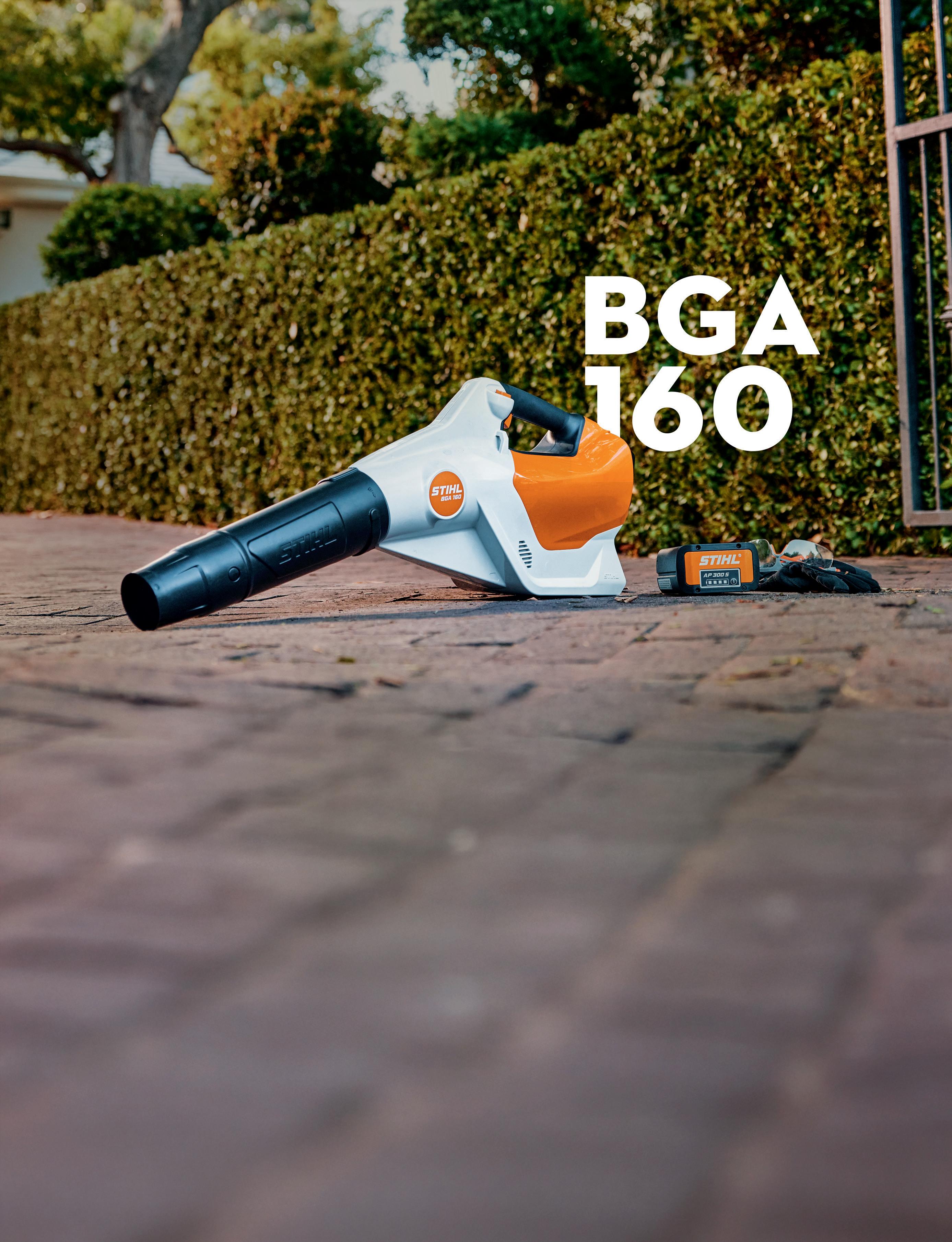
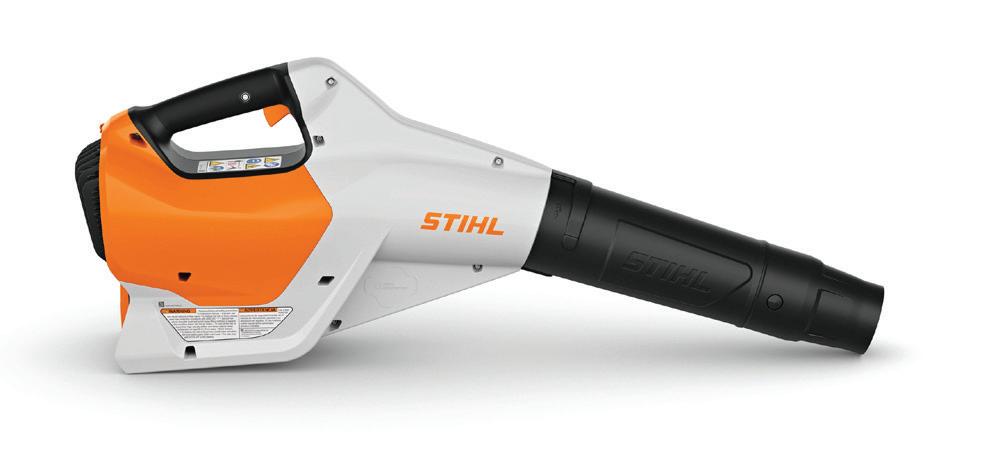
The BGA 160 blower offers innovative ergonomics for optimal user comfort.
The BGA 160 battery-powered blower features a constant running power capable of 569 CFM of air volume at the nozzle with no drop-off in power as the battery charge reaches depletion. The innovative and ergonomic shape of the angled blower tube provides a natural working position. The BGA 160 features an easy-to-use cruise control that allows users to set the speed and remove their finger from the trigger, so they can focus on the job at hand. With a virtually maintenance-free brushless motor and weather-resistant design, the BGA 160 is not only powerful but also built to stand the test of time.
By Mike Jiggens
Will new CFL rules impact turf fields?
Coming changes to some of the long-standing traditions of the Canadian Football League – most notably the reduction of the length of the playing field and end zones –have triggered plenty of discussion since the CFL’s recent announcement.
Purists have not embraced the changes that will see the field length reduced in length to 100 yards from 110 yards, starting with the 2027 season. The end zones are also being whittled down to 15 yards from 20 yards and goal posts are to be relocated from the goal line to the back of the end zones.
A much broader diatribe could be written about how these changes de-Canadianize the game, but the goal here is to look at how the coming field changes will impact existing college, high school and youth football fields throughout the country.
Changes at the professional level tend to have a trickle-down effect in which the college, high school and youth levels will inevitably have to comply. This is true in almost all sports. So, if the CFL is to change the dimensions of its playing fields, college teams must eventually follow suit so that players with a future at the pro level become accustomed to the shorter field sizes. Elite high school football
players eyeing advancement to collegiate play will need their secondary school years to prepare for the shorter dimensions on university fields. Naturally, it will all start at the youth level.
This brings up the question: What does this mean for all the artificial turf football fields that have been installed in recent years in municipalities, at high schools and on college campuses?
These fields have been constructed to current CFL standards – 110 yards long and with goal posts placed at the goal line. With few exceptions, the yard lines and corresponding numbers are sewn into the field. Like tattoos, they are permanent.
(Those)
Does this mean the municipalities and school boards that own these fields will have to tear them apart and stitch in new markings so that they correspond with the CFL’s whims? If so, they’re going to be saddled with a significant expense.
Municipalities and school boards currently contemplating the installation of an artificial turf football field may be taking a wait-and-see approach before making any kind of commitment. One must won-
der if the CFL’s looming field changes are carved in stone for the long term or if the league might one day revert to what Canadians have long accepted as the standard. Stadium attendance and television viewership will likely have some bearing on whether these changes stick.
The CFL field changes will have little impact on municipalities and school boards that have natural grass fields where all markings are simply painted in place. Their biggest challenge will be to reposition the goal posts, and that throws another potential wrench into things. Many high school sports fields double as venues for both football and soccer with soccer goal posts and football uprights designed as a single apparatus. Moving those to the far reaches of the football end zones creates a larger playing surface for soccer. Perhaps that isn’t a major concern, but one sport ends up impacting another.
Whether it’s folklore or fact, the story goes that U.S. football fields were once 110 yards long, but Yale University couldn’t accommodate such dimensions within its limited space and thus played on a field measuring 100 yards. Other schools opted to reduce the size of their fields in accordance with Yale, and that served as the birth of the 100yard field which continues to be the standard in the United States.
Maybe that will soon become the standard in Canada as well.
www.turfandrec.com
Reader Service
Print and digital subscription inquiries or changes, please contact Angelita Potal, Customer Service Tel: 416-510-5113 apotal@annexbusinessmedia.com
Mail: 111 Gordon Baker Rd., Suite 400 Toronto, ON M2H 3R1
Editor Mike Jiggens mjiggens@annexbusinessmedia.com
Advertising Manager Rebecca Lewis 519-400-0322 rlewis@annexbusinessmedia.com
Audience Development Manager Anita Madden 416-510-5183 amadden@annexbusinessmedia.com
Group Publisher Anne Beswick 416-410-5248 abeswick@annexbusinessmedia.com
CEO Scott Jamieson sjamieson@annexbusinessmedia.com
Printed in Canada ISSN 1186-0170
PUBLICATION MAIL AGREEMENT #40065710
SUBSCRIPTION RATES
Published 7 times a year – Jan/Feb, March, Apr/May, June/July, Aug/Sept, October, Nov/Dec
Canada – 1 year $35.70 CDN; 2 year $45.90 CDN; 3 years $56.61 CDN (plus applicable taxes; single-copy$7.00 CDN USA – 1 year $48.96 CDN HST 86717 2652 RT0001
Occasionally, Turf and Recreation will mail information on behalf of industry related groups whose products and services we believe may be of interest to you. If you prefer not to receive this information, please contact our circulation department in any of the four ways listed above.
All advertising is subject to the publisher’s approval. Such approval does not imply any endorsement of the products or services advertised. Publisher reserves the right to refuse advertising that does not meet the standards of the publication.
Attendance record broken at Equip Expo with almost 30,000
Equip Exposition posted another year of record attendance with nearly 30,000 registered attendees and double-digit growth in both landscaper and dealer audiences.
This year’s show, held Oct. 21-24 in Louisville, Ky., broke records in both attendance and exhibit space, and was named the “Greatest Trade Show of 2024” in the United States by Trade Show Executive magazine.
The trade show brings more than $30 million annually to Louisville.
N.S. tourism industry opposes golf courses in provincial parks
The head of Nova Scotia’s tourist industry association has sounded off against the provincial government, suggesting it’s preposterous that a new golf course project would be considered on provincial park property or on other protected areas.
At issue is a proposal to construct a new golf course on West Mabou Provincial Park land – a project the Nova Scotia government hasn’t ruled out. It’s been confirmed that the Ministry of Natural Resources is entertaining a proposal for golf course development for the provincial park site.
Ground broken for Landscape Ontario’s new training facility
Ground has been broken for the construction of a new Landscape Ontario training facility at the boundary between Halton Hills and Milton. The projected 24,000-square-foot facility will provide landscaper training that ranges from small engine repair to plant cultivation. It will also serve as the headquarters for Landscape Ontario’s GROW program.
Summerlea’s John Scott named superintendent of the year
30M
Amount of money
Louisville realizes from Expo
John Scott, superintendent at Summerlea Golf & Country Club in Vaudreuil-Dorion, Que., has been named the Canadian Golf Superintendents Association (CGSA)/ENVU superintendent of the year.
The announcement was made at the CGSA’s Fall Field Day on Oct. 7 at Club de Golf Laval Sur Le Lac in Laval-sur-le-lac, Que. The award recognizes a superintendent who demonstrates outstanding dedication, leadership, and service to both the golf profession and their community.
Royal Montreal, Rivermead, Rawdon, and Elm Ridge, before he came to Summerlea in 2002. He is widely respected for his dedication, mentorship, and commitment to volunteerism within the industry.
“John has brought honour to the profession through his leadership, expertise, and service,” Eric Ruhs, superintendent at Ottawa Hunt & Golf Club, said. “He is more than deserving of this recognition.”
Ruhs nominated Scott for the honour.
24,000 square feet
Projected size of LO facility
A CGSA member since 1984, Scott holds the accredited golf superintendent (AGS) designation and has served in numerous leadership capacities, including CGSA president in 2021 and president of the Quebec Golf Course Superintendents Association. He has also made significant contributions to turfgrass research as a board member of the Quebec Turfgrass Research Foundation.
“John has made a lasting impression on the golf industry,” CGSA president Braydon Gilbert said. “Through his unwavering dedication, tremendous support of the association, and humble leadership, he has helped guide the CGSA through many important years. He truly embodies what it means to be an ambassador for our industry.”
Scott’s career spans over four decades, with previous roles at
As the recipient of the 2025 superintendent-of-the-year honour, Scott receives:
• Travel and participation at the 2025 fall field day in Montreal
• All-access registration to the 2026 Canadian Golf Course Management Conference in Calgary
• An ENVU agronomic site visit and report
• A $5,000 ENVU plant protection package
• A trip for two to an ENVU educational golf event
“The entire ENVU team congratulates John on this well-deserved recognition,” Ryan Beauchamp, golf segment manager, ENVU Canada, said.
“His impact on turfgrass management and the industry is truly commendable.”
Scott will officially receive his award at the 2026 Canadian Golf Course Management Conference in Calgary on Feb. 24.
NTRF launched to provide unified voice for turf research
The National Turfgrass Research Foundation (NTRF) has announced its official launch as Canada’s leading national organization dedicated to turfgrass science, innovation, and environmental care.
“Good turf is the foundation for everything,” an NTRF media release proclaimed. “Without healthy turfgrass, the benefits we all value from great playing surfaces to vibrant parks and green community spaces simply wouldn’t be possible.”
Based at the Guelph Turfgrass
Institute, the NTRF is the unified voice for turfgrass research in Canada, connecting researchers, industry leaders, and communities nationwide. It is dedicated to turfgrass science, innovation, and environmental care.
Now expanded nationally, the NTRF is advancing turfgrass research to ensure every community and industry professional benefits. It fosters collaboration that protects green spaces and boosts environmental health, community vitality, and economic success across the turfgrass
community.
“Building on a trusted legacy from the Ontario Turfgrass Research Foundation (OTRF), founded in 1979, the NTRF stands on over 46 years of groundbreaking research, strong industry partnerships, and community collaboration,” the media release stated. “Our commitment to innovation and sustainability continues to grow, serving turfgrass communities nationwide.”
The foundation says turfgrass research is essential to the industry, providing the knowledge and tools that empower professionals to care for and protect the green spaces that
bring people together.
“We recognize the growing need for skilled turf specialists and are committed to supporting their development through ongoing research,” the release continued.
“By sharing these valuable resources, we prepare a dedicated workforce ready to nurture and enhance Canada’s green spaces –creating inviting, well-maintained places that benefit communities, associations, businesses, and all who invest in and value these vital environments across the country.”
Turfgrass shapes the spaces where people play, relax, and gather, including golf courses, sports fields, parks, playgrounds, and lawns. Beyond its natural
aesthetic value, turfgrass cools cities, cleans the air, manages water, traps pollutants, and stores carbon – making communities healthier and more connected.
“Together with your support, we are driving innovation for greener futures by advancing research that tackles key challenges such as climate resilience, pest control, and water conservation. By bringing together scientists, turf managers, planners, suppliers, and environmental advocates, the NTRF protects and nurtures green spaces that strengthen environmental health, community vitality, and economic success across Canada.
“As we launch this exciting new
1979
chapter, we invite partners from all fields to join us in shaping the future of turfgrass science – a greener, healthier Canada for generations ahead.”
The inaugural NTRF Fundraising Golf Classic, hosted by Keith Bartlett at Credit Valley Golf & Country Club in Mississauga, is scheduled for Aug. 17, 2026.
“Together, we’re growing more than just grass – we’re growing opportunities, connections, and greener futures. Join the NTRF today and seize the opportunity to help grow a greener Canada. Become an advisor, director, donor, partner, or sponsor and collaborate with our dedicated team.”
The year OTRF was founded
The evolution of robotic mowers
Autonomous mowers continue to be enhanced by technological improvements
By Mike Jiggens
Technological improvements continue to allow autonomous mowers to evolve.
Software upgrades have been made within the past year, allowing for more efficient mapping, and new research and development is enabling machines to have different numbers of cutting blades and allowing for lower mowing heights.
“It’s still a product that’s a work in progress,” Cody Cook, tech and robotics service specialist at Echo Power Equipment (Canada), said at September’s Canadian Sports Fields Association’s field day in Brantford.
“Even though we’re happy with it, we want to try to make it better.”
Echo autonomous mowers were demonstrated throughout the day at the Wayne Gretzky Sports Centre, giving field day attendees a close-up look at their capabilities. G.C. Duke Equipment Ltd. also demonstrated Husqvarna robotic mowers.
The latest breakthroughs in technology have allowed autonomous mowers to produce a better quality of cut than before, Cook said.
“The fact that I can run everything for this robot off a 1,200-watt inverter just shows how small are the power drives,” he said.
The Echo mower demonstrated at the park’s multi-purpose field was capable of mowing about three-quarters of an acre
between charges. A mower’s cutting time duration on a full charge is dependent upon the ground’s terrain, the mapping and the amount of its traversing.
“The idea is you’re using this in the middle of the night when nobody’s around, so you can let it cycle, let it run, let is cycle, let it run,” Cook said.
One of the biggest selling features of autonomous mowers is that they free up personnel to tackle other jobs while the machines are cutting fields. Cook said they address labour shortages and “never call in sick.”
Difficult to steal
Autonomous mowers are virtually theftproof. With real-time kinematic (RTK) positioning already in place, a mower taken from a field and placed in the back of a truck would trigger an alarm connected to a phone app.
“You’d know exactly where it’s going,” Cook said, noting that of all the Echo autonomous mowers put to work in Canada
and the United States, only one has ever been removed from a job site. Its GPS-tracking safeguards allowed it to be recovered in only a few hours.
The mower showcased at the field day also weighed about 187 pounds, adding a further challenge for would-be thieves.
The same unit was equipped with standard cutting heads which provided a mowing height range from 35 to 100 millimetres. Lower height heads are also available to allow for mowing as low as 12.5 millimetres.
It “very easily” meets FIFA cutting standards, Cook said.
“We’re trying to get it to the point where we can cut fairways.”
Golf courses are starting to embrace autonomous mowers for cutting roughs. Cook said two Canadian courses have gone fully autonomous with Echo products while a couple more are poised to begin in 2026.
“They’re up and running, and everything’s going well.”
Echo’s autonomous mowers are equipped with sonar which will detect obstacles
The latest in autonomous mowers were demonstrated in September at the Canadian Sports Fields Association’s field day in Brantford, Ont.
blocking its path, preventing physical contact to be made. The units can be programmed for a set period to wait out the obstacle. If a mower should become stuck, it will set off a phone alert.
Further enhancements to autonomous mowing continue to be presented, especially around battery technology, Cook said.
“Battery technology is always changing. With battery technology, we get better run time out of these machines, and the more run time you can get, the more productivity you can get.”
The autonomous mowers are intuitive enough to know when their battery life is almost spent and it’s time to return to their charging stations. If it’s positioned at the opposite end of a field from its charging station, it will accurately determine the time and battery life it needs to return to the station.
“It always gives itself a little extra leeway.”
Mowing in the rain
Paul Turner, manager of municipal sales at G.C. Duke Equipment Ltd., demonstrated a Husqvarna autonomous mower at the field day, explaining that battery capacity determines the length of time a robot can mow on a single charge. He noted a model that can mow for almost seven hours on a charge, equating it to that of an almost full workday.
“It’s all about battery time, and how quick you can mow depends on how many acres,” he said. “It gives a great quality of cut, and you can mow in the rain. It’s not afraid of the rain.”
During rain events, mowers can continue to work and not remain at their docking stations.
Turner said everything the operator needs is on the fleet app, noting where the mower is and what robot is cutting where. The information is available for a phone, tablet or computer.
“Without a doubt, they’re changing the game,” he said.
Turner said there are currently 16 different models of Husqvarna robotic mowers available on the market, and three to four new models are added each year. Available products include four-wheel-drive and articulated models as well as those that adhere to slopes of 50 to 60 degrees.
“You can run as many robots off a reference station as you want,” he said, noting a station can be set up somewhere in a city, allowing each robot to communicate with it within a 25-kilometre range.
“We have a mower for everything…every application… slopes, small areas. I really think it’s a game changer. The consistency is unmatched. It’s repeatable. The end users aren’t going to get mad at you. You’re never going to see a clipping on any field you mow with a robot. The idea is to see no clippings.”
Robotic mowers are meant to keep short grass short, Turner said. “We’re not coming in to knock off three inches.”
He added robotic mowers allow for less reliance on fertilizer and water.
“The nutrients going back down will produce a better stand of turf for you.”
Expo showcases new innovations
Record number of attendees check out latest equipment innovations at Kentucky event
By Turf & Rec staff
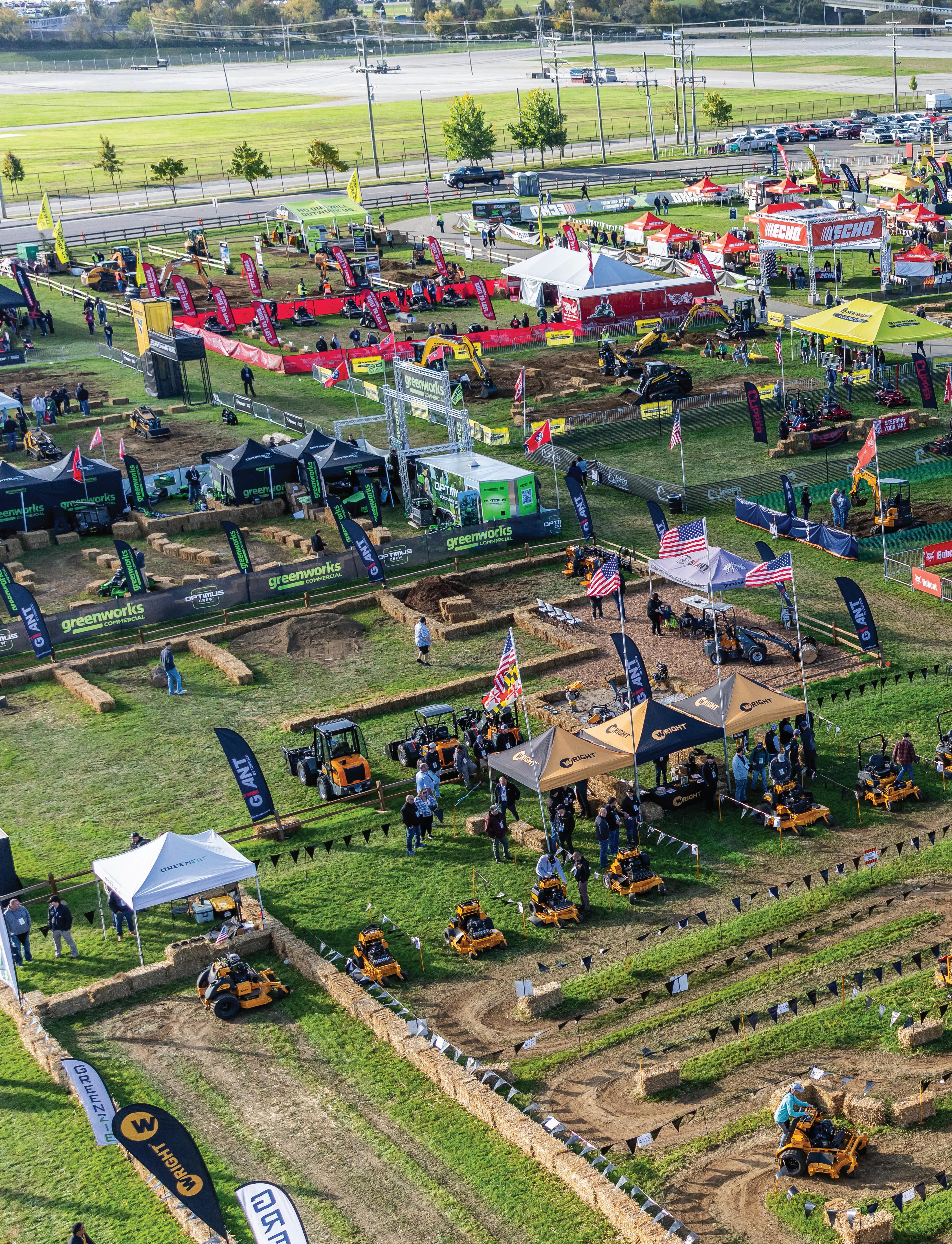
October’s Equip Expo in Louisville, Ky. celebrated another banner year, setting a new attendance record and showcasing the latest technological advances in landscaping equipment.
Almost 30,000 delegates attended what has become the third-largest trade show in the United States. A large contingent of Canadians were among the attendees who hailed from 52 different countries.
As the industry continues to trend toward battery-operated landscaping equipment, several manufacturers displayed their latest models indoors at the massive Kentucky Exposition Center and allowed attendees to test drive their equipment outdoors at the adjacent demonstration area. The indoor and outdoor spaces totalled more than 1.2 million square feet of exhibit area.
Products showcased at Equip Expo
Husqvarna, a leader in handheld landscaping equipment, showcased both its latest commercial battery-powered and fuel-injected chainsaws.
Its 550i XP saw is the company’s most powerful battery-operated mod-
el. The B540X battery extends run time to support longer bars and demanding cuts while the lighter B330X battery provides for more maneuverability for precision work.
The chainsaw also features a new graphical display that shows real-time battery levels, product health and status updates. The saw is expected to be on the market in early 2026.
Husqvarna’s 564 XP fuel-injected saw is designed for forestry and tree care work. Its refined design minimizes internal loads and has the lowest vibration levels of any of Husqvarna’s gas-powered chainsaws.
Stihl has teamed with Portable Winch Co., launching the APW6000 battery-powered winch. The collaboration combines Stihl’s battery technology with Canadian manufacturer Portable Winch Co.’s two decades of expertise in capstan winch design.
The APW6000 weighs just 29 pounds yet delivers up to 3,300 pounds of pulling power. The winch integrates Stihl’s electronics and control interface which is the same power unit used in Stihl’s MSA 300 chainsaws.
The product, unveiled at Equip Expo, is designed for such environmentally demanding work as forestry, tree care and construction. It features a three-speed system and brushless motor equivalent to four horsepower that is powered by Stihl’s AP Series batteries.
The winch is low-maintenance, emissions-free, and starts at the push of a button.
John Deere has expanded its Gator utility vehicle lineup with the
all-electric Gator GX and GX Crew.
Designed for light-duty commercial jobs and for rural property owners, the vehicles offer a quieter operating experience in comparison to gas or diesel-powered vehicles.
Its 51-volt lithium-ion battery provides instant torque and smooth acceleration while offering onboard charging. Its fewer moving parts require no fuel, no oil changes nor belt replacements.
A rear row of seats folds down to expand cargo space, allowing the Gator to easily transition between moving passengers and moving materials.
KIOTI Tractor has expanded its line of implements to meet the needs of contractors.
The implement updates span three key categories:
• Three-point implements, with a wider selection of tools that include box blades, rotary cutters, tillage options and mowers.
• Front-attach implements, including such high-demand attachments as pallet forks, bale spears and snow pushers.
• UTV implements that are versatile and include fertilizer spreaders and disc harrow combos.
Bobcat’s ZT6200 autonomous zero-turn mower provides a quieter, emissions-free alternative from the company’s gas-powered products. It provides a solution to labour challenges by completing repetitive mowing tasks without the need on an onboard operator.
Operators can plot a perimeter using a smartphone app while marking out areas to avoid. This allows the
1.2M
The square footage of the exhibit space at Equip Expo
mower to handle the most efficient route on its own.
Also showcased at Equip Expo were a variety of walk-behind, stand-on and zero-turn mowers, mini-track loaders, and turf renovation equipment including aerators, sod cutters, dethatchers and overseeders.
Billy Goat launched its Z3002 and X3002 Hurricane stand-on blowers that feature such sustained upgrades as stronger front axles, foam-filled caster tires and improved bearings to withstand tough commercial environments, a side-fill fuel tank with gauge for easy refueling and monitoring, and an updated operator console with a heavier throttle and choke cables for more reliable control.
Other upgrades include enhanced protection and durability and intuitive gate control that requires a short tap for minor
adjustments and a longer tap for full open and close, providing precise control over airflow.
Its simplified control system is no longer tied to the engine start and brake functions which streamlines the start-up sequence and boosts overall reliability.
New Holland Construction has launched myNewHollandConstruction, a digital platform of telematics and fleet management technology that allows fleet managers and company owners to more conveniently and effectively track and manage their connected machines.
“Telematics is an essential component for construction fleets and operations, as well as farmers, ranchers and producers,” says Jake Sickels, product manager for New Holland Construction North America. “Knowing where your machines
are, when they’re being used and how they’re performing provides peace of mind to operators and fleet managers alike.”
The platform delivers real-time telematics monitoring of machine utilization, performance and geolocation for instant visibility across fleets.
Hydro-Gear unveiled its Smartec hybrid commercial ZT system, a zero-turn mower that features both engine and battery capabilities. The hybrid model cuts gasoline consumption in half, allowing operators to mow all day without having to refuel. Emissions and maintenance are reduced, and the mower costs less than a fully electric machine.
The system delivers 40 horsepower to the deck, allowing blade speed to remain constant.
Other hybrid systems carry a separate generator for charging a battery to extend the machine’s
run time. The Smartec system relies on a three-in-one hybrid deck motor which acts like a mechanical deck spindle, electric deck motor or generator.
“In typical mowing conditions, a machine can run in EV mode up to 50 per cent of the time which also means you get 50 per cent savings on fuel and emissions,” says Scott Wilmoth, Hydro-Gear marketing manager.
Sunseeker introduced its first LiDAR-equipped robotic mower – the S4 – which was designed for wire-free deployment and precise mapping, addressing the demand for smarter, low-maintenance lawn care.
Built on the AllSense 3D-sensing architecture with 360-degree LiDAR and an AI camera, a 360-by-70-degree-wide field of view is delivered. This allows real-time 3D mapping and avoids omni-directional obstacles.
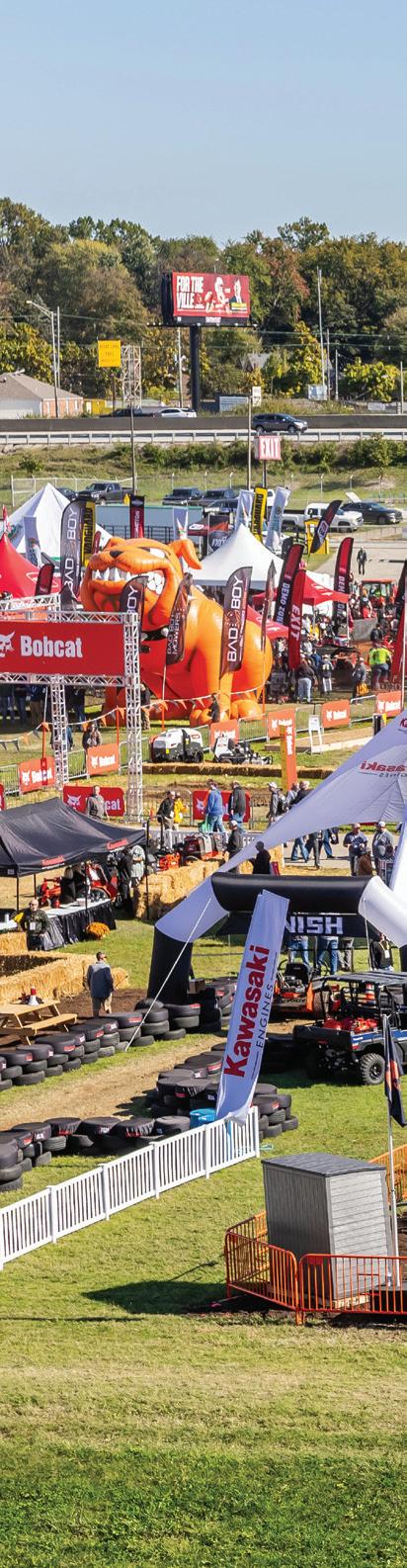
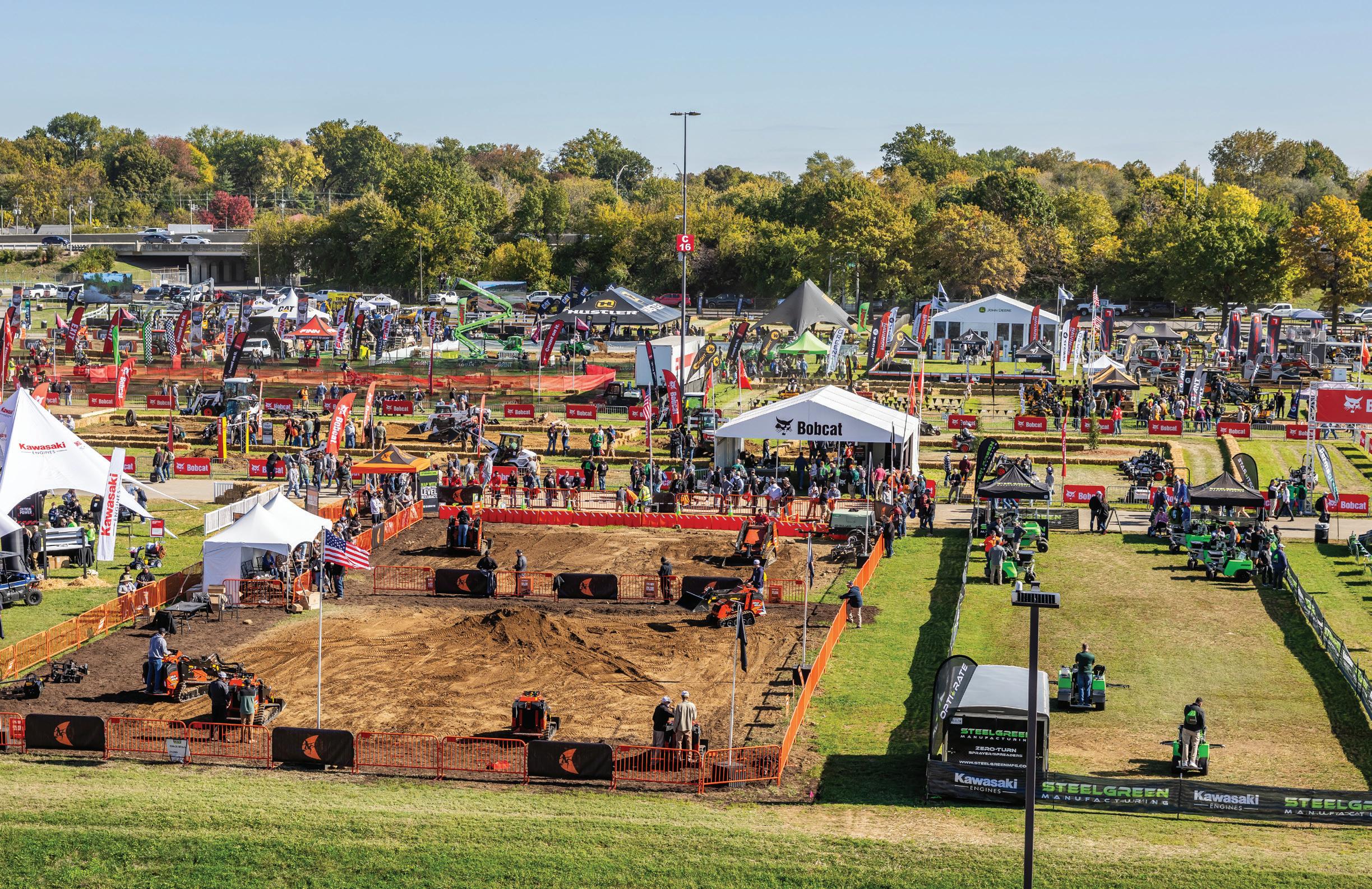
The outdoor demonstration area at Equip Expo in Louisville, Ky. drew thousands of “tire kickers” who test drove the various pieces of equipment exhibited.
Testing equipment to hold up to winter
How equipment is tested so it can withstand the challenges of Canadian winters
By Mike Jiggens
How do manufacturers of landscaping equipment for use during the winter months ensure their machinery stands up to extreme cold temperatures and challenging snow and ice conditions so that operators are confidant they’re ready to work when needed?
We asked Kubota, which is celebrating its 50th year in Canada in 2025, to answer these questions and more. The company has been winter testing its equipment for more than 30 years, but has more recently been conducting such tests at its dedicated cold weather testing facility in Timmins, Ont. Answers to our questions were provided by Nill Sauve, director of engineering and product solutions at Kubota’s Timmins facility.
How had equipment been tested prior to the opening of the test facility?
Thetford Mines in Quebec was the old facility, using parts of the municipal airport. There was lots of snow in the area and cold weather.
Describe the various types of testing done at the Timmins facility.
Cab warm-up tests, defrost tests and engine cold start tests are done. The cab warm-up test is done in tandem with the defrost test. Operator comfort-related testing is done
first thing in the morning, following an overnight “soak.” Essentially, the machine is left out in the cold to ensure optimal conditions in the morning to test the cab warm-up.
The remainder of the day will be focused on operational tests which are performed in every condition. The purpose is to ensure every feature and function available will act and perform like they would during the summer months. Things we take into consideration are things like technology changes – for example, like an LCD screen. Will they turn on in the cold weather? This is why we perform these rigorous tests.
What temperature ranges can be administered at the testing facility?
Temperatures can get down to minus 40 degrees Celsius. We can supplement with chamber testing in Japan or Oshawa at
Ontario Tech University. We can supplement conditions if need be.
Target range for functional testing is below minus 20. Some tests must be done at minus 30, like the cab test. If those conditions are not met, they will supplement with the above.
We wanted added consistency, which is why the move was made from Thetford Mines as the weather was not consistent.
How does the facility simulate such typical winter conditions as snow, freezing rain, ice and extreme cold?
Snow blowers and other machines can simulate snow, like that of ski hills. For freezing rain, they can use spray bottles
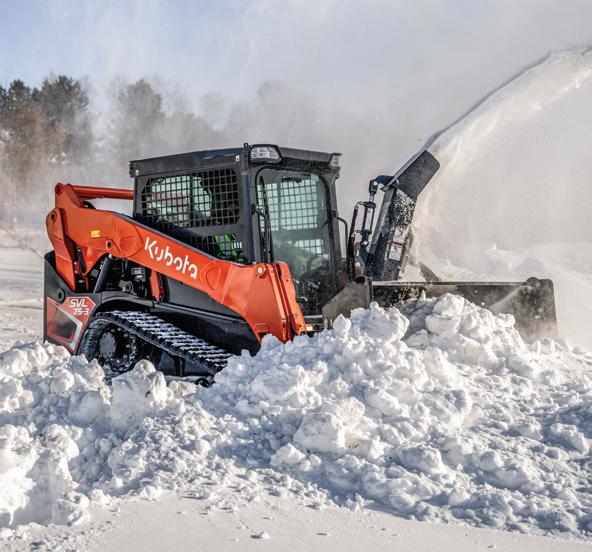
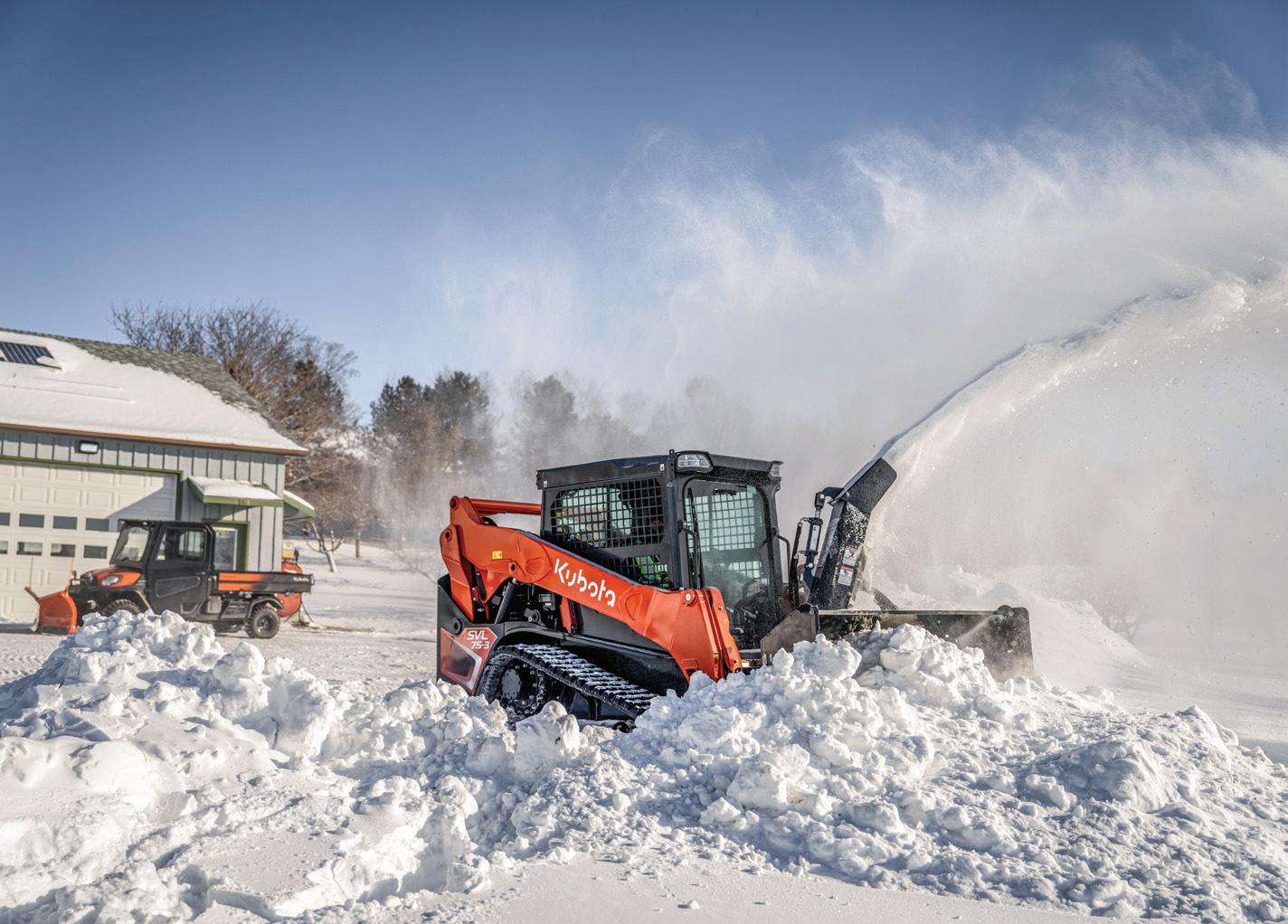
Equipment must adequately function during extreme winter conditions and keep operators comfortable and productive.
using calculations based on the windshield size and specs. We can simulate moisture and condensation based off the size of the cabin and test how long it takes to get rid of.
What components, specifically in tractors, utility vehicles and turf care equipment are looked at most stringently to ensure they can handle the rigours of winter?
Hook-ups for the machines where ice may build up around pins and couplers. Primarily, we test for operator comfort. Number two is functionality of the machine, like the couplers, and is the machine overly hard to use during the colder months? Third is main components – the main engine, LCD screens, etc.
How has testing led to improved materials and components that can better hold up during winter extremes?
Improvements include seals and seal compounds, ensuring there are minimal to no leaks, and the startability with equipment.
What improvements have been made to equipment based on the results of winter testing?
Rubber compounds have been adjusted for the Canadian market. Startability has been improved, reducing the amount of time a machine needs to come up to be able to be
used – “warm-up time.”
The cabs of Kubota machines are almost like hopping into your own car. That’s how quick we want to ensure these machines become operational.
There is also more reliability of components, and we’re able to compound learnings to result in more improvements.
What does customer feedback suggest about things to watch for?
Unintended movement, especially with hydraulic machines. This is quite challenging in the cold. We want to ensure this is minimized or completely removed.
Operator visibility, ensuring windows and mirrors are clear for proper use of the machine. That’s why you will often see Kubota machinery with defrost windows so they can operate safely.
What are the things customers want most in equipment they use in the winter?
Based on feedback from operators, customers want their equipment to function the same in all seasons. The slip factor as well – safety is a big factor.
What improvements have been made in recent years to ensure equipment holds up better during the winter months?
Operator comfort and reliability of components. It’s our major focus area and it’s a struggle for all OEMs in lieu of regulations and standards and emission components. Thanks to the level of testing we have done in the cold, we have stayed ahead in this area.
What new innovations are being considered for even greater winter reliability?
All OEMs are looking at alternative fuels and electrification. This is something that is being looked at and we will ensure this is tested and developed. It comes with its own set of challenges. Innovations include changing from analog to LCD displays.
What challenges still exist for equipment used primarily in the winter?
Warming of fluids for machinery. Any hydraulic machine needs warming, and they want to know how fast they can make this happen in the cold. Synthetic fluids have been a change to this as well.
Pace of technology and innovation with more electronic components which adds complexity to equipment.
Temperature variations seem to be increasing more than anything else. The inconsistency of the weather adds another layer onto the testing of equipment and the conditions at which they operate.
Bowling greens: What to know
They look like golf greens, but there are several differences
By Mike Jiggens
To the outsider, a lawn bowling green may look remarkably like a golf course putting green. The turf is mowed short, the surface is smooth, and it’s usually grown using bentgrass – a fine-textured, cool-season perennial grass – or another fine-leaf grass.
There are marked differences between a lawn bowling green and putting green playing surfaces. Golf greens tend to be undulated, forcing golfers to properly “read” how the bowl will roll toward the hole in terms of both speed and direction. Lawn bowling greens aren’t constructed in the same manner.
“A lawn bowling green has to be extremely flat so that when a bowl (the term for a lawn bowling ball) is bowled, it rolls true and allows the bowl to curl in or curl out, depending on what side the weight is on,” says Jason Winter, supervisor of turf and golf operations for the City of Brantford.
Lawn bowls are weighted heavier on one side, requiring bowlers to release the bowl in a manner so that it curls left or right at a precise pace towards its target.
The flat lawn bowling greens are crowned to within an eighth of an inch.
Winter was present each day during the construction of Brantford’s new lawn bowling green which opened for play in July at the city-owned Walter Gretzky Municipal Golf Course and Learning Centre. The former
superintendent at Kitchener’s Deer Ridge Golf Club was on site to ensure the root zone, drainage tile and gravel layer met with the green’s design. Twelve inches of root zone mix was placed atop an imported gravel base.
“The root zone we selected was an 80-20 sand/peat mix that provided a good growing medium for the sod, and the city is very happy how it turned out in the first year of it being open,” Winter says.
The Brantford green was sodded to 007 creeping bentgrass which was selected for its disease resistance, tolerance to traffic, dense canopy and for its less water-demanding performance in the summer. Bowling greens are usually grown to such fine-leaf grasses as bentgrass or fine fescues. Among Ontario’s bowling greens are several older surfaces that have become a mixture of bentgrass, poa annua and perennial ryegrass… “a hodgepodge of different varieties,” Winter says. “The fine-leaf grasses are preferred for lawn bowling greens.”
Ontario’s nearly 120 lawn bowling clubs prefer to keep their surfaces trimmed to a height of between .120 and .250 inches (three to six millimetres). Tournament-hosting clubs and those regarded as higher-end
facilities tend to mow toward the lower cutting height.
Winter says the new Brantford green was cut at a height of 4½ millimetres in its inaugural season.
“The new sod was cut higher for the initial season to ensure it had time to mature for the next season’s play.”
Golf superintendents have a good knowledge of maintaining turf at low mowing heights and will recommend to lawn bowling clubs the best slow-release fertilizers to use at preferred rates and frequencies. Winter says no more than 1¼ pounds of slow-release nitrogen will be used on the Brantford green over the course of a season. He says he does a lot of foliar spraying on the green but uses a granular slow-release fertilizer as a base.
Limited irrigation
Moisture management was key for the green to keep its playing surface healthy with minimal moisture required. Irrigation is limited during the season because greens play best when the turf begins to brown off and the surface becomes harder due to watering deficiencies.
“That’s when the green plays the best,” Winter says. “It becomes a bit of a balancing act to give it enough moisture to sustain life, but not so much that it makes the surface soft.”
Lawn bowlers understand that when a green starts to turn brown in colour, it means bowling will be good, he says, adding dry turf is better for managing disease.
“A golf green needs to be firm to receive a shot, but a lawn bowling green needs to be hard so that you get that perfect trueness of the bowl when it’s released, and it doesn’t leave a dent when it’s bowled. The firmer the better with a lawn bowling green.”
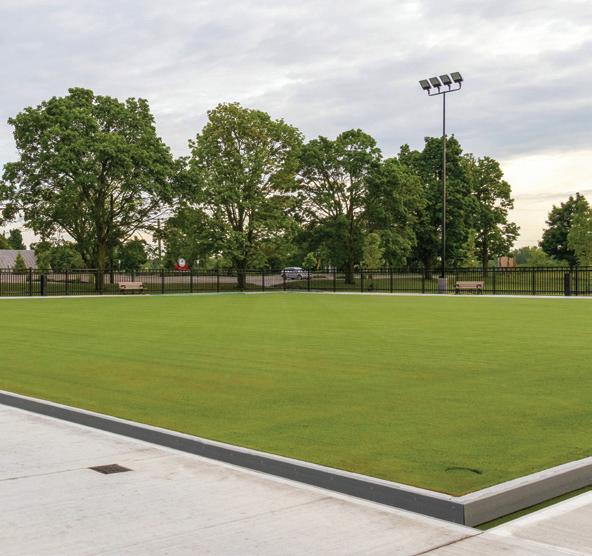
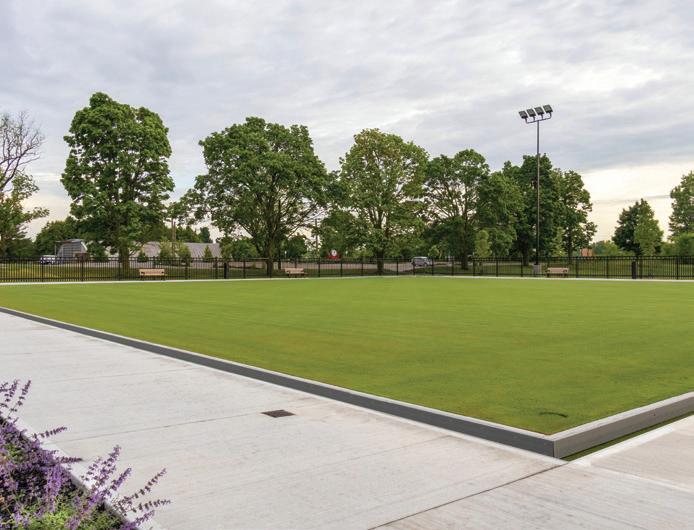
The new lawn bowling green at Brantford’s Walter Gretzky Municipal Golf Course and Learning Centre.
A bowling green’s “trueness” is a bowler’s foremost desire, Winter says, adding it goes hand in hand with smoothness and consistency.
“That’s really what they’re interested in so that when they release the bowl, they know it’s going to follow the line they release it on.”
Walk-behind reel mowers are used to cut the 120-foot by 120-foot greens. The surfaces are mowed diagonally, from corner to corner and alternated from the opposite corners for each mowing session.
“You don’t mow with the direction of the bowling,” he says. “This prevents the bowl from being influenced by any kind of grain.”
With each subsequent mowing event, the operator avoids cutting along the same path as the previous cut to prevent “burning in” of the turf. Bowlers alternate bowling from a north-south direction over a few days before switching to an east-west pattern.
“That helps to manage the traffic on the bowling surfaces.”
Most traffic occurs where the bowlers are standing. Alternating the bowling direction helps to manage stress on the surface and avoids areas of the green from becoming worn.
Maintenance of bowling greens is generally left in the hands of the individual bowling clubs which are largely administered by volunteers who have no formal agronomic training. Many clubs rely on the assistance of a local golf course superintendent who may be called upon to diagnose such irregularities as disease, weed or insect pressures. The superintendent will make recommendations about fertility, grooming practices and other necessary measures.
They will also point out things volunteers should watch out for and to be contacted if anything appears to be amiss.
If a green is built of a sandy mixture, localized dry spot tends to be a common problem, Winter says, adding insects will always be a threat.
“It’s important to manage fertility, adopt good cultural practices, and constantly monitor for any diseases you may get.”
To keep greens as pristine as possible, volunteers are advised to remove dew from the surfaces each morning, roll or “polish” greens frequently to stave off such diseases as dollar spot, regularly brush the turf, and delay irrigation for as long as possible to avoid overwatering.
Verticutting is done in the spring and fall while grooming, brushing and rolling are commonly done throughout the season. Topdressing is usually reserved for the shoulder seasons.
“It just doesn’t lend to a good playing surface with sand on it.”
GLAGS tops KEGS to retain Honey Cup
Rival associations square off for 17th annual event
honouring late golf superintendent
By Mike Jiggens
Losing only one of its six matches, the Greater London Association of Golf Superintendents (GLAGS) cruised to a decisive 11½ to 6½ victory over the neighbouring Kent-Essex Greenskeepers’ Society (KEGS) in October at the 17th annual Paul Brown Honey Cup competition, played at London’s RiverBend Golf Community.
The ENVU-sponsored event featured six match play contests in which 12 members of each team earned points for their prowess in best ball, alternating shots and scramble competitions. With a single point at stake for each of the six-hole segments, GLAGS’ dominance gave the team its sixth victory over the past seven years and an overall 11-6 series lead.
The event is named for the late Paul Brown, who was the longtime superintendent at the Sarnia Golf & Curling Club and who had a passion for beekeeping and honey production.
Each association was represented by six twosomes who played as partners. GLAGS won three of the six segments, tied two and lost only one.
Team members consisted of superintendents and industry supporters who, after playing golf, assembled as a group to enjoy a meal, share remembrances of Brown and talk shop.
Essex Golf & Country Club superintendent Chris Andrejicka, host of the 2024 Honey Cup matches, recalled a time several years ago when he and Brown played together in a tournament in San Antonio, Texas that coincided with the Golf Course Superintendents Association of America’s annual conference. Played amid cold temperatures and freezing rain, Brown produced a pair of “Elmer Fudd” hats for them to wear, complete with pull-down ear flaps.
Joel Henderson, who succeeded Brown as superintendent at the Sarnia club, said Brown’s wife Connie always ensured he had plenty of candy on hand for lengthy road trips to ensure her husband didn’t fall asleep on the way home.
ENVU’s Ryan Beauchamp, the company’s Canadian golf segment sales manager, praised those in attendance who wear the hat of both golf superintendent and club owner, noting they freely give up their courses “out of their own pockets” to serve as host venues for such industry events as the Honey Cup competition and individual GLAGS and KEGS outings.
“I don’t think it’s fair to take away the golf
course for a day when you could have made money from the public,” he said. “It’s a fine line giving it back to industry.”
Importance of mentorship
Superintendents representing both GLAGS and KEGS talked about the importance of mentoring younger workers. Andrejicka, who is retiring at the end of the season, said the practice of mentorship has changed since he initially broke into the industry, saying he began under the tutelage of a hard-nosed taskmaster before becoming one himself, suggesting that’s the way things were in the past.
“That’s how you learned back then,” he said. “I’ve tried to get away from that.”
Ontario Seed Company’s Todd Currie said he was mentored by Andrejicka when he first began in the golf industry, adding he has appreciated the amount of support he was provided over the years.
“It’s important to support the young men and women coming up in the industry,” Currie said.
Beauchamp, a former superintendent himself, said the profession can make for a
ENVU’s Ryan Beauchamp (right, holding championship belt) presents Honey Cup title to Kevin Collier, host superintendent of RiverBend Golf Community and his GLAGS teammates following their victory over KEGS at the 17th annual Paul Brown Honey Cup.
tough career.
“It’s like being a hockey coach,” he said. “You’re hired to be fired. If you can get to a point where you can retire, that’s kudos.”
Derek Brown, superintendent at Talbot Trails Golf Club, said he wouldn’t be where he is today without the support of such mentors as Beauchamp and other industry suppliers.
“Sometimes, the suppliers get beat on,” Brown said. “But they work hard for us, and we need to appreciate what they do.”
Ron Horvat, superintendent at Wardsville Golf Club, said he has been grateful for the support provided to him by Currie.
“He really helped me along this season,” he said. “Sometimes it’s just nice to have a guy like Todd there in the background and asking him, ‘Am I doing this right?’ There’s always changes out there we have to do.”
Tory Thompson, superintendent at Widder Station Golf, Grill & Tap House, said he’s come to appreciate the brotherhood of golf superintendents who willingly help one another in a time of need.
The 2026 Honey Cup will be played at Pointe West Golf Club in Amherstburg.
Honey Cup match results:
• Match 1: Mike Jiggens (Turf & Rec) & Ron Horvat (Wardsville Golf Club) of GLAGS tied 1½ to 1½ with Derek Brown (Talbot Trails) & Matt Erickson (Pointe West) of KEGS.
• Match 2: Kevin Collier (RiverBend) & Tory Thompson (Widder Station) of GLAGS tied 1½ to 1½ with Greg Brown (Maple City Golf Club) & Chris Andrejicka (Essex Golf Club) of KEGS.
• Match 3: Patrick Brennan (Fox Golf Club) & Fred Schmoelzl (Bluewater Golf Course) of GLAGS lost 2-1 to Joel Henderson (Sarnia Golf Club) & Ryan Beauchamp (ENVU) of KEGS.
• Match 4: Dave Kaminsky (Pine Knot Golf Club) & Scott Gardner (Echo Valley Golf Club) of GLAGS won 2-1 over Bryan Hunter (Seven Lakes Golf Club) & Sean Van Beurden (ENVU) of KEGS.
• Match 5: Wade Beaudoin (St. Thomas Golf Club) & Greig Barker (Highland Country Club) of GLAGS won 3-0 over Brad Hearn (Sutton Creek Golf Course) & Ryan Campbell (Ambassador Club) of KEGS.
• Match 6: Jamie Spencer (Echo Valley Golf Club) & Todd Currie (Ontario Seed Company) of GLAGS won 2½ to ½ over Dan Friesen (Orchard View Golf Club) & Gregg Menard (Wildwood Golf & RV Resort) of KEGS.
Absent 6 years, golf event returns
Canadian superintendents best their American rivals in match play competition
By Mike Jiggens
Shut down by the COVID pandemic, a 19-year-old tradition was resurrected in October, giving a pair of golf superintendents’ associations on either side of the Canada-U.S. border an opportunity to renew an old rivalry and earn bragging rights for the next 12 months.
The Fall Classic, a team match play competition that began in 2001, was restarted following a six-year absence. It featured 20 members of the Western Ontario Golf Superintendents Association (WOGSA) against an equal number of golfers representing the Western New York Golf Superintendents Association (WNYGSA) in a series of 10 individual matches in a Ryder Cup-like format.
Played at the Country Club of Buffalo, the Canadian team scored a resounding 24-14 win over their American rivals to bring the overall 20-year competition to 10 wins apiece. WOGSA has won the event six of the last seven times played.
“This is a great fun day that we have not done since 2019 COVID times, so we thought it was high time to bring this event back,” John Taylor, property manager at Grand Niagara Golf Club and WOGSA captain, said.
Play began under a steady drizzle which eventually yielded to sunny skies. Wet conditions at the outset prompted the “lift, clean and place” rule to be invoked and may have saved competitors some putting strokes on
the slick greens.
“I think I’m happy it wasn’t really hot and dry out there because I don’t think I would have kept the ball on the green today,” Taylor said.
He and his partner Jeremy Krueger, superintendent at Fort Erie’s Cherry Hill Golf Club, scored a decisive 4-0 victory over their U.S. opponents – one of two Canadian sweeps.
Four points were at stake for each of the 10 individual matches with a point apiece awarded for the winning twosome of six holes of scramble play and six holes of best ball. An additional two points were awarded
for each individual partner’s outcome in a final six holes of singles play.
A Canadian player – recently retired Cherry Hill superintendent John Gall – was loaned to the U.S. side to fill its roster. Another of the American team’s members failed to show, forcing one of the matches to be readjusted to a two-against-one singles competition in which the American golfer played the front nine holes against one of his Canadian opponents and the back nine against the other.
The first three of 10 matches were tightly contested before the Canadian team began to pull away, starting with the fourth match.
The Fall Classic Cup returned to Canadian soil in October for the first time since 2018 after the WOGSA team defeated its Western New York rivals 24-14 in Buffalo. Scott Dodson of the U.S. team, left, presents the cup to WOGSA’s John Taylor.
Only one of the final seven matches went in the Americans’ favour.
“We put these events together not for the competition, but just the same as everything we do with WOGSA,” Taylor noted in a post-tournament message to his team members. “It’s about getting guys together outside your own golf course or company to hang out with some guys doing the same thing we all are doing. Hopefully, you got to meet a few new people and maybe got a chance to discuss someone else’s problems for a change.
“It is a lot of work to put these things together, but the reward is seeing everyone show up on a lousy day and seeing guys having a beer and some food together and, hopefully, meeting a few new people along the way.”
The 2026 Fall Classic will be played at a yet-to-be-determined golf course in WOGSA territory.
Match results:
• Match 1: Mike Claydon and Nigel Rennie (Canada) tied 2-2 with John Fleck and Brian Conn (U.S.A.).
• Match 2: Ryan Scott and Ian McIsaac (Canada) won 2½ to 1½ over Adam Mis and Jim Baldwin (U.S.A.).
• Match 3: Corrie Almack and Angelo Capannelli (Canada) tied 1-1 with Trevor Ploetz (U.S.A.).
• Match 4: Paul Powers and Ken Malcolmson (Canada) won 3-1 over Gary Hughes and Drew Thompson (U.S.A.).
• Match 5: John Taylor and Jeremy Krueger (Canada) won 4-0 over Scott Dodson and Thad Thompson (U.S.A.).
25_010734_Turf_And_Rec_NOV_DEC_CN
• Match 6: Paul Peterson and Mike Jiggens (Canada) lost 3-1 to Eric Tuchols and Nick Ciaccio (U.S.A.).
• Match 7: Duane Schmitz and Steve Gruhl (Canada) tied 2-2 with Matt Borwick and R.P. Stringfellow (U.S.A.).
• Match 8: Dan Sliasas and Trevor Hunter (Canada) tied 2-2 with Kevin Lynch and Scott Hall (U.S.A.).
• Match 9: Jordan Brown and Ian Searles (Canada) won 2½ to 1½ over John Gall and Bob Kelly (U.S.A.).
• Match 10: Jeremy Julie and Tyler Szela (Canada) won 4-0 over Anthony Tosh and Gary Keppel (U.S.A.)
Using soil science to improve turf
By Dr. Sara Stricker & Mike Van Beek
When you think about turf performance, your mind might go straight to mowing heights, irrigation schedules, or other inputs. But the truth is, one of the most important parts of any turf surface is what’s underfoot. Soil is the foundation that supports turf health, root growth, and playability. Its texture, structure, and composition influence nearly every management decision a turf manager makes, from fertilizer timing to drainage design.
Understanding your soil’s quirks and capabilities can mean the difference between fighting against nature and working in harmony with it.
Soil texture
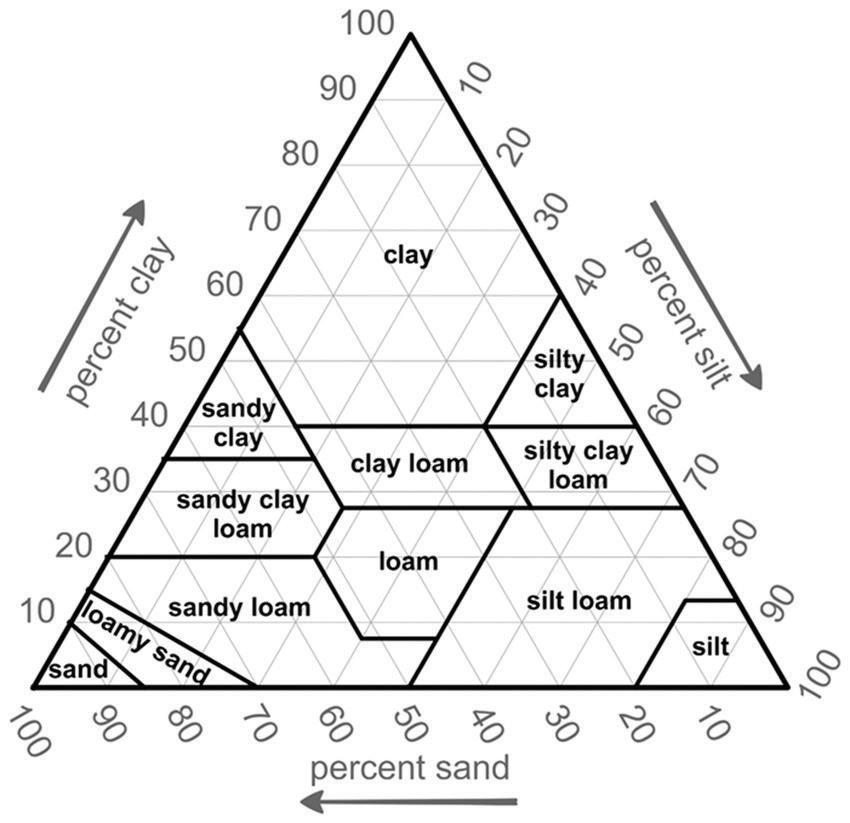
Every soil is made up of three basic mineral components: sand, silt, and clay. The proportions of these particles determine soil texture, which in turn dictates how water, air, and nutrients move through the profile. Sandy soils have large particles and wide pores. They drain quickly, resist waterlogging, and provide excellent oxygen for roots, but they struggle to retain moisture and nutrients.
Clay soils have tiny particles and narrow pores. They hold water and nutrients well but drain poorly and compact easily. Silt soils sit between the two extremes,
offering moderate water and nutrient retention, but they can crust or compact under heavy rain. Loams are when there is a balanced mix of sand, silt, and clay. Soil texture also plays a major role in how nutrients are stored and delivered to the turf.
Many golf courses, especially older ones, are built on native soils that may vary widely from one hole to the next. Others have sand-capped fairways or USGA-spec greens designed for predictable performance. Sports fields may be built on native soil or based on the Canadian Sports Fields Association (formerly Sports Turf Canada) construction manual. Regardless of design, understanding your soil’s dominant texture is the first step toward making informed agronomic decisions.
Sandy soils
Fast-draining sands dry out quickly, which can be both a blessing and a curse. Turf roots get plenty of oxygen, but the profile may not retain enough moisture between irrigation cycles. The key here is frequent, light watering and regular monitoring of volumetric water content using moisture sensors or handheld probes. Wetting agents are essential tools in sandy systems, helping to improve uniform wetting and prevent localized dry spots. Organic matter management is also critical, since adding or retaining organic content helps sandy soils store more water and nutrients.
Sandy soils, with their large pores and low cation exchange capacity (CEC), struggle to hold onto nutrients like nitrogen, potassium, and magnesium. For those managing sandbased greens or fairways, spoon-feeding is the name of the game. Smaller, more frequent fertilizer applications prevent nutrient loss through leaching and keep turf
supplied with a steady trickle of nutrition. Controlled-release fertilizers, stabilized nitrogen sources, and foliar feeding can help maintain consistent colour.
Clay soils
On the opposite end of the spectrum, clay soils act like a sponge. They hold onto water, often too well, leading to poor aeration and anaerobic conditions. When saturated, they can become sticky and unworkable; when dry, they bake into hard, cracked surfaces. Superintendents managing heavy soils often rely on aeration, sand topdressing, and subsurface drainage to improve air and water movement. Irrigation cycles should be longer but less frequent, allowing water to infiltrate deeply without keeping the surface constantly wet.
Since clay soils have high CEC values,
Soil is the foundation that supports turf health
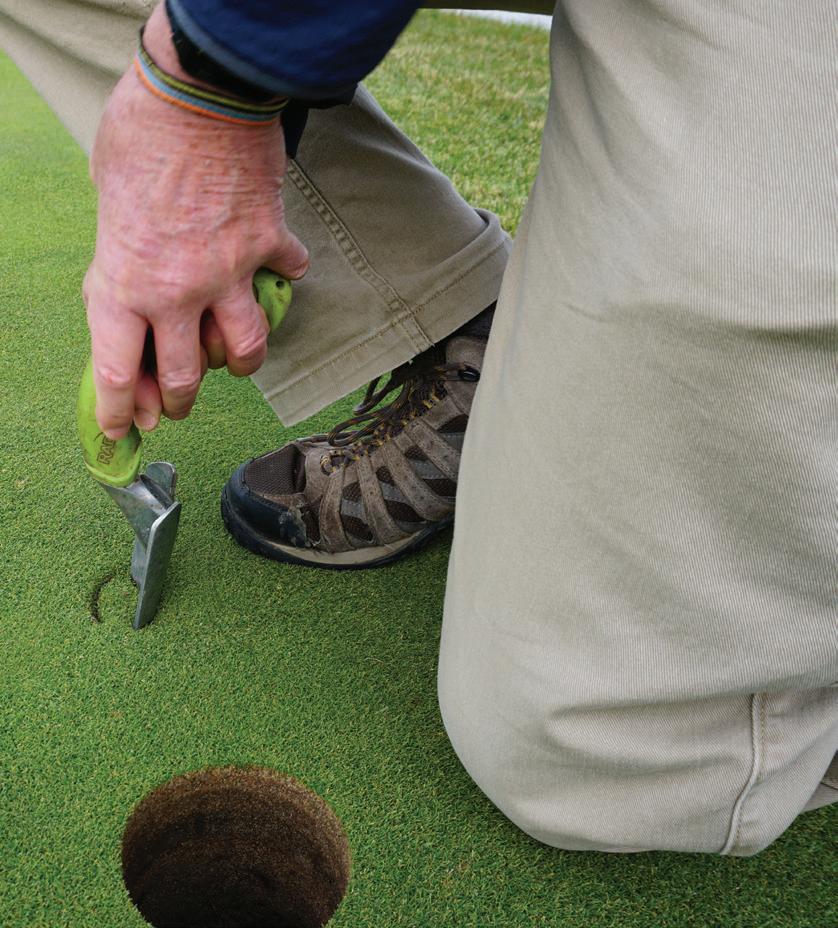
Soil testing doesn’t require fancy tools. Samples can be taken with a hand trowel.
Dr. Sara Stricker is the Guelph Turfgrass Institute’s communications co-ordinator. Mike Van Beek is an instructor of soil science for diploma for turfgrass management at the University of Guelph.
they can hold more nutrients but may also tie them up in forms unavailable to the plant. Clay soils can make some nutrients less available due to high pH or excessive binding to colloids. Aeration and organic matter incorporation can help improve nutrient accessibility. In these soils, turf managers should focus on managing pH and ensuring proper calcium-to-magnesium balance to avoid structural issues and nutrient antagonism. The use of gypsum can also improve soil structure and aid in leaching excess sodium, which is a common issue on courses using recycled or saline irrigation water.
Gathering a sample for soil testing
Before diving into numbers, it’s important to consider that a test is only as good as the sample behind it. Collecting soil properly ensures your results represent the true condition of the turf. You should collect a representative sample from the area you wish to
test, whether it be a home lawn or golf fairway, golf green, or sports field. To ensure that you have a representative sample:
• Take at least 10–20 cores/slices to a depth of 10–15 centimetres (4–6 inches), and be consistent with the depth you select.
• If you have an area of concern, assuming the site’s soil composition is consistent and you believe the unhealthy turf to be a nutrition concern, take samples from the area of concern and samples from the adjacent healthy area for comparison. Avoid mixing samples from drastically different areas (e.g., wet low spots with dry mounds).
• Discard the turf and thatch layer from the core/slice.
• Thoroughly mix the cores in a plastic pail.
• Take enough soil from the mixture in the pail to be tested (1–2 cups or 250–500 mL, approx. 375–750 g).
• Thoroughly air dry your sample for one to
three days by spreading on a flat surface (not all labs will ask for this to be done).
• Once dried, remove any other pieces of organic debris that may be present (i.e. visible roots/stems/leaves).
• Label the sample with information from the area sampled.
• Send the sample to a soil testing facility near you.
A consistent sampling strategy creates a reliable year-over-year baseline to track changes and guide long-term management. Sample at the same time each year, ideally in spring or fall when soils are neither saturated nor bone dry. Furthermore, always submit your samples to the same lab when possible. Different labs use different extraction methods, which can lead to incomparable results. Soil testing should be done regularly to monitor nutrient levels and adjust programs accordingly. Supplemental micronutrients may also be necessary, as
RESEARCH
sandy soils can quickly become deficient in iron, manganese, or zinc.
How to Interpret a soil test
Turf managers are constantly asked to make data-driven decisions but one of the most valuable pieces of data available is often misunderstood or under-utilized: the soil test. A proper interpretation of your soil test can help you save money, optimize inputs, and prevent both nutrient deficiencies and environmental losses. Whether you’re managing a USGA-spec green or native-soil lawn, understanding your soil test results is essential to fine-tuning fertility and ensuring consistent playability.
pH, nutrient levels, or organic matter content across the entire site as if they should match. Instead, focus on how those values change over time and how they respond to your management practices. For example, if you are planning a drill and fill operation, take soil samples before and after to understand how the process has altered your soil properties. The same approach applies when trialing new products or fertilizer programs. Track how the soil responds, rather than comparing your values to someone else’s.
If you’re not a soil scientist or agronomist, interpreting the raw numbers from a soil test can feel overwhelming. Soil is complex, and many interacting factors influence its ability to hold nutrients. Because of this, you should not expect every area of your property to behave the same way. Even from fairway to fairway on a golf course, subtle differences can occur, so it is not practical to compare
Some soil report results may include a low, medium and high rating which can be used to plan required fertilizer applications. Other reports may give numerical values (ppm or mg/L). Test results may include fertility recommendations, however, if not included, the results would need to be interpreted with some research or referred to a soil consultant for specific nutrient recommendations. Soil labs may differ in their testing methods which may influence results and sufficiency ranges. It is important to sample correctly at the same time of year and use the same lab so you can make annual relative comparisons.
Regular soil testing is a valuable tool to monitor trends in your nutrient management program. Basing your fertilizer program on soil test recommendations will allow you to see the cause and effect of the nutrient applications you make through the season. Above all, do not compare soil test values across different properties. This is not a competition! It is about understanding the nuances of your soils so you can make informed, site-specific management decisions.
Organic matter management
Organic matter, when managed correctly, is a turf manager’s ally. It improves structure, nutrient retention, and microbial activity. However, excessive thatch or black layer formation can lead to drainage and disease issues.
In sandy systems, where there’s little natural organic content, incorporating or maintaining organic matter is key. Topdressing with composted materials, maintaining healthy root systems, and reducing over-aeration (which accelerates decomposition) all help sustain structure and moisture retention.
Conversely, clay soils can accumulate excessive organic material near the surface. This can trap water, promote anaerobic conditions, and exacerbate black layer problems. Here, aggressive aeration and sand topdressing help dilute organic matter, restoring balance and improving infiltration. Many golf course superintendents have started to tract organic matter levels annually using methods such as the OM246 test to make data-driven adjustments to their programs, which can help avoid costly surprises in the future.
Stick with a uniform topdressing source and particle size distribution from year to year. If layering already exists, gradual remediation through deep-tine aeration or sand injection can help.
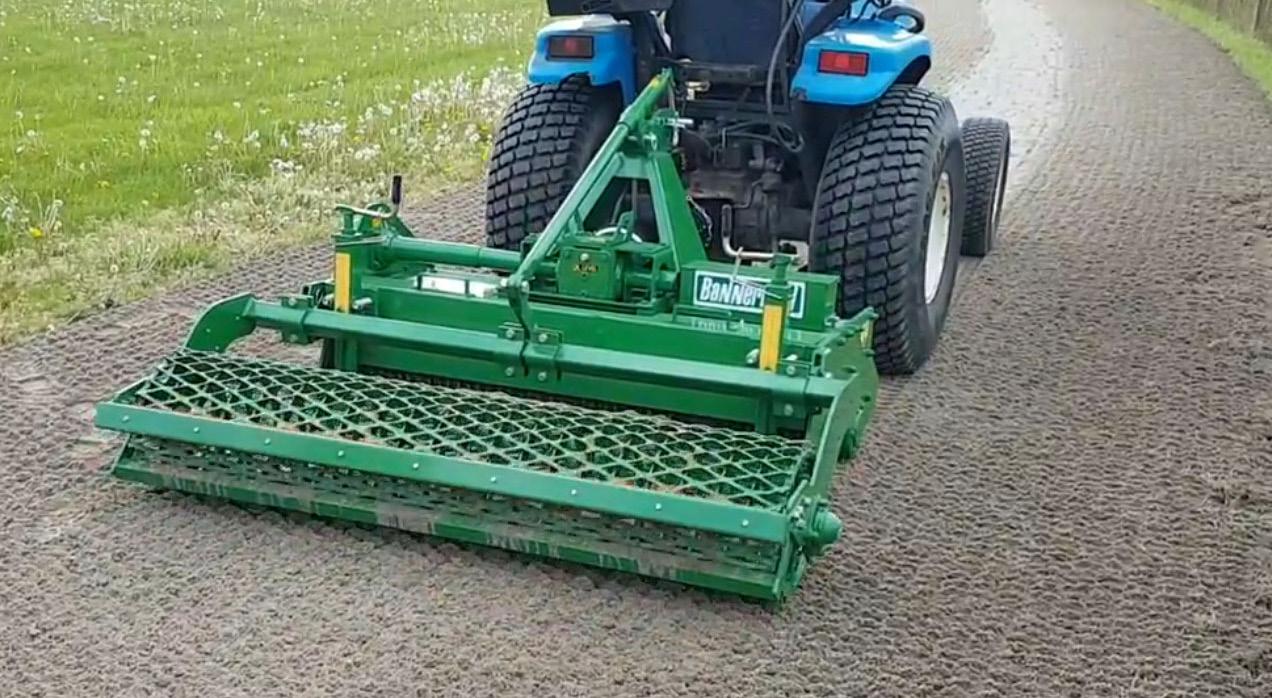
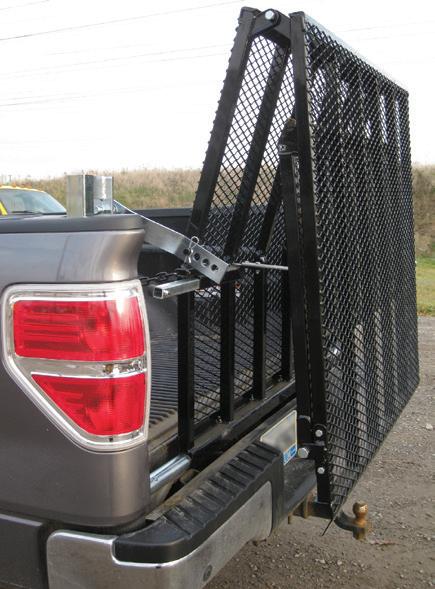
is easy to install with absolutely no welding required! It is powder coated black for durability during the winter, can easily be swapped between ramp and tailgate, has a universal fit for most major trucks, is lightweight constructed that is both tough and durable, and features spring-assisted folding. It can be used to load any and all equipment from large to small. Additionally, it can be used to load ATVs, motorcycles, furniture, appliances and more. New is a two-foot extension kit that is available and extends length of the loading ramp from eight feet to 10 feet.
bannermansportsturfmagic.com
Bauman
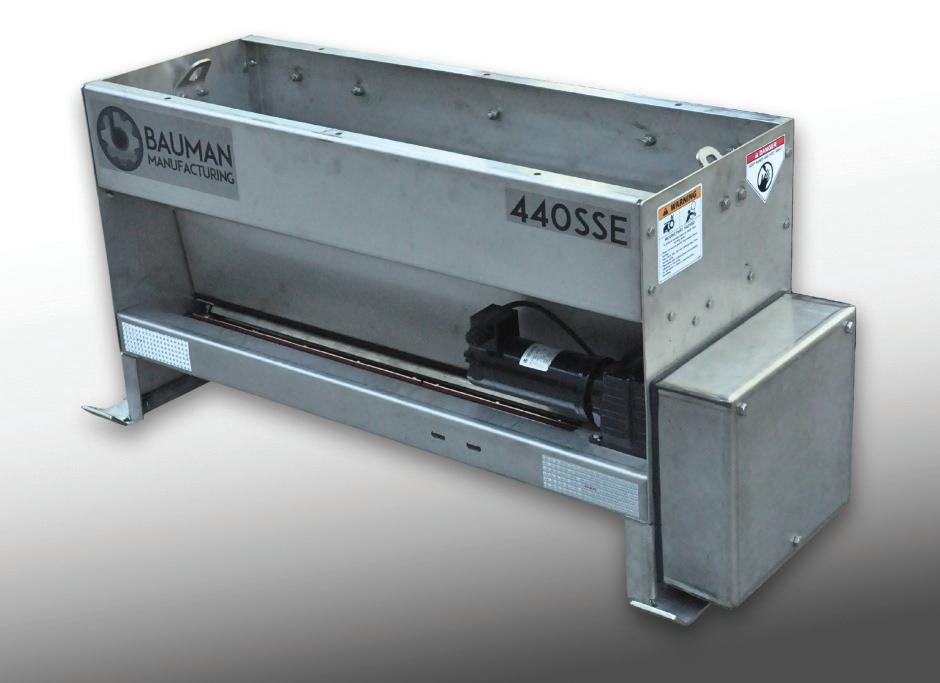
Built for durability and precision, this all new stainless-steel de-icing drop spreader delivers reliable performance in the harshest winter conditions. Its heavy-duty stainless construction resists corrosion from salt and chemicals, ensuring long life and easy maintenance. The drop-style design provides accurate, even distribution of de-icing materials with minimal waste—perfect for sidewalks, parking lots, and other controlled areas.
Upgrade your setup with the optional stainless-steel extension for increased capacity and efficiency and add the stainless lid to keep materials dry and protected during operation or storage. Tough, efficient, and built to last—this spreader is your go-to solution for professional winter maintenance.
baumanmfg.com
Precision overseeding for sports & golf turf
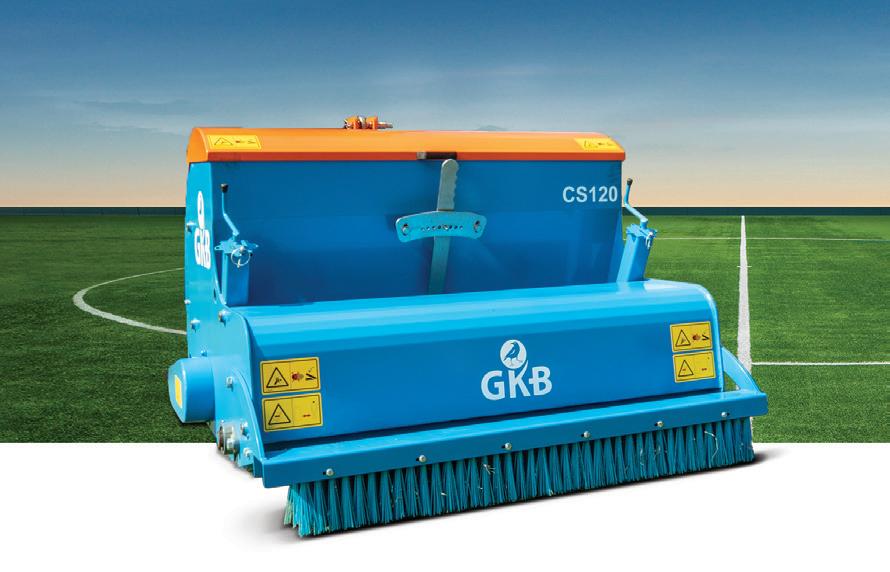
The GKB Combiseeder combines aeration, seeding, and brushing in one efficient pass, creating dense, healthy turf while reducing weeds without disturbing soil. Precision rollers and integrated brushes ensure optimal seed-to-soil contact, while user-friendly features like automatic seed shut-off, adjustable weight, and a high-capacity hopper make it ideal for sports fields and golf courses seeking sustainable, reliable turf care.
cleanturfcanada.com/combiseeder
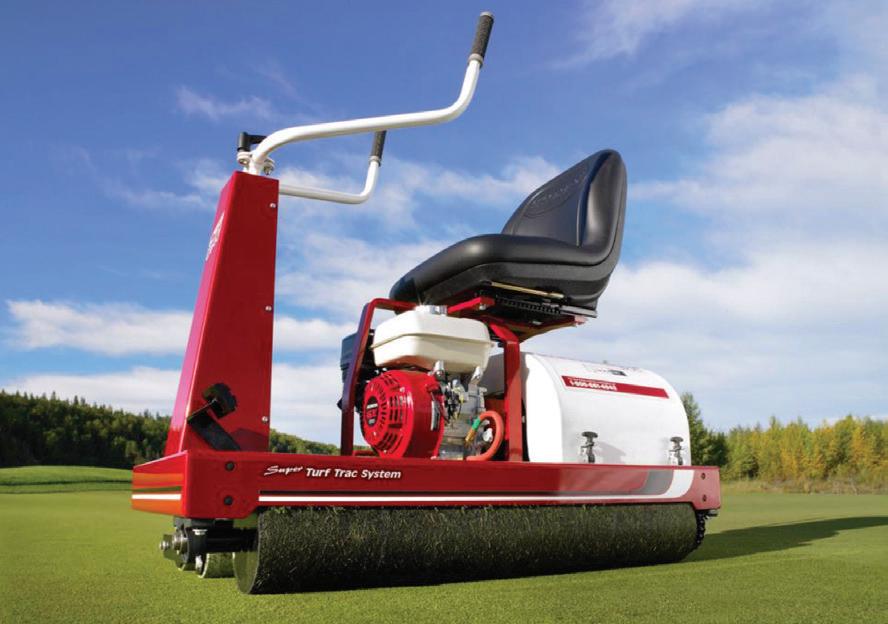
Wood Bay greenIRON 3900
Top courses demand - CONSISTENT, TOUR-QUALITY
GREENS. Roll your greens to perfection with our greensIRON 3900 golf greens roller. This is the top rated greens roller by golf course superintendents everywhere. Wood Bay Turf Technologies’ greensIRON 3900 turf roller will raise the standard of your greens to Tour quality.
FAST & EFFICIENT - ECONOMICAL OPERATIONS
- LOW MAINTENANCE
Golfers will love the smooth putting surfaces achieved with the greensIRON 3900 turf roller. The greensIRON golf turf roller also has a light footprint, lighter than a person making a putt. Load and unload with our supplied trailer in seconds.
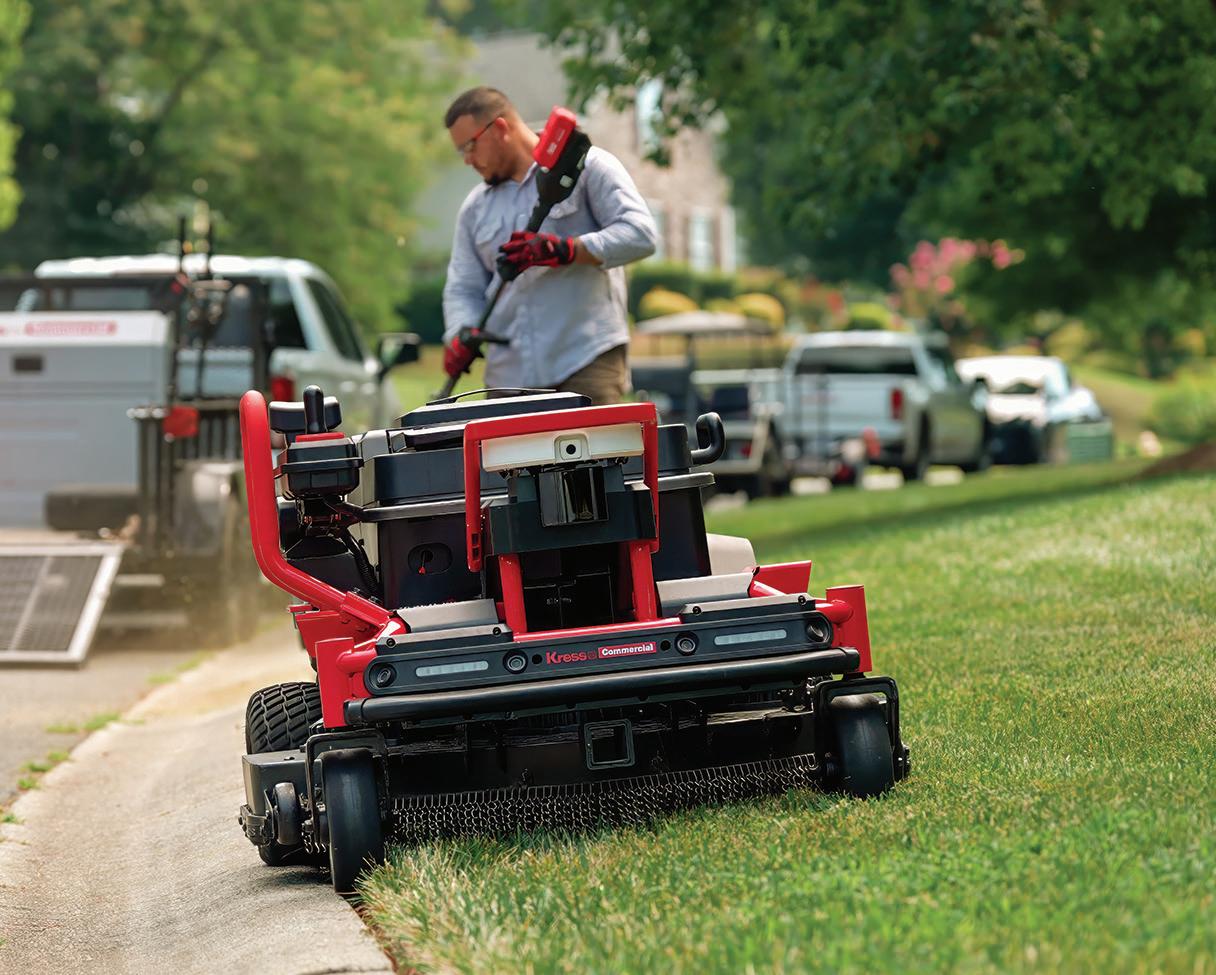
Kress Voyager is a 40” fully autonomous robotic mower that works alongside your crews to cover more ground. Voyager delivers constant power without compromise, minimal maintenance, and saves 80-85% of mowing operational costs. Centimeter-accurate navigation comes via the Kress RTKn network – no on-site beacon or antenna required. Incorporating all the safety features of an autonomous car, Voyager is the new benchmark for efficient, safe, productive landscaping. Manned mowing ends now with Kress Voyager. See Voyager in action at kress.com
STIHL TSA 500 - Battery CutQuik®
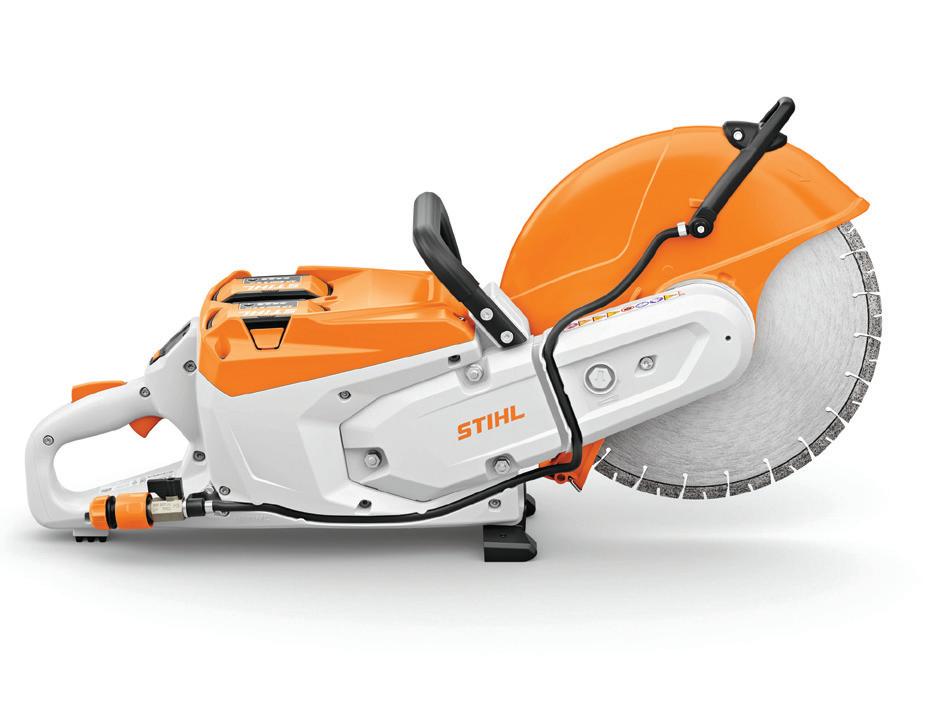
The New STIHL TSA 500 delivers 5 kW of cutting force with tool-free startup, smart airflow, and a 14” wheel for deep, clean cuts—no fuel, low maintenance, and IPX4 water resistance. stihl.ca
Achieve Professional Grade Fields with TinyMobileRobots Pro X
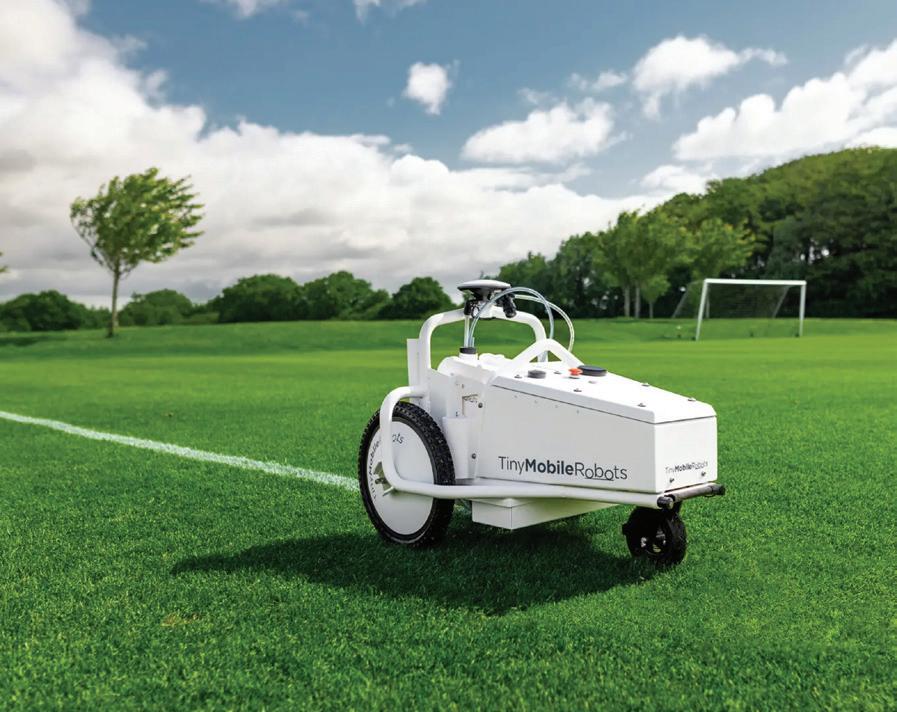
The Pro X by TinyMobileRobots is an autonomous, GPS-guided field marking robot designed to streamline complex field painting. Ideal for sports and event facilities, it turns a multi-field setup into a one-person job, with customizable templates and quick setup times. Built for accuracy and efficiency, the Pro X saves time and labor costs, ensuring perfectly marked fields with ease.
tinymobilerobots.com
Fibramulch
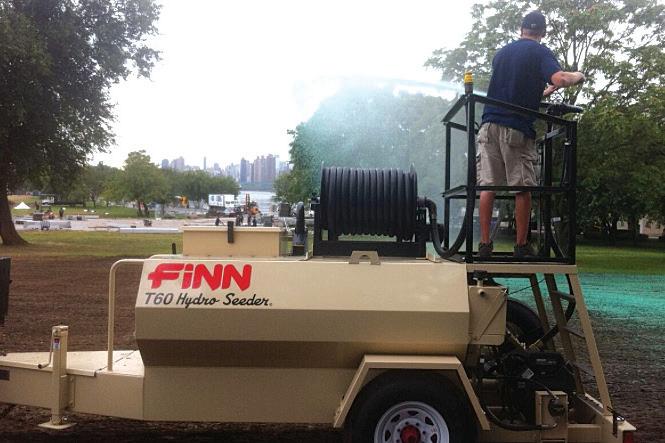
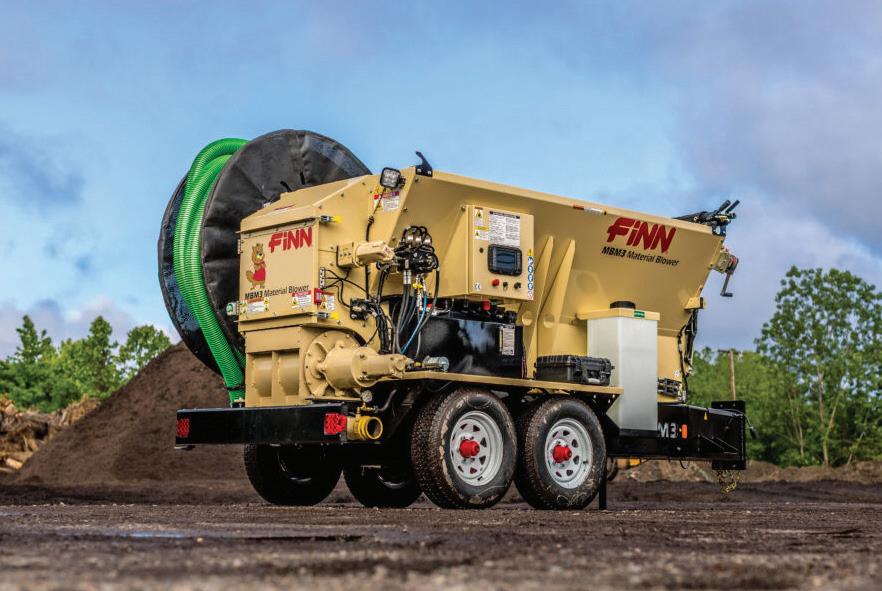
FIBRAMULCH presents the FINN MBM3—an all-new material blower with improved performance, intuitive features and great value. The MBM3 boosts efficiency and profitability while putting down playground mulch, wood chip, garden beds, soils and compost and is built on FINN’s 90-year legacy. Contact us for your erosion, sediment, slope, dust and landfill solutions. www.fibramulch.com
EXMARK LAZER Z X-SERIES - REDESIGNED
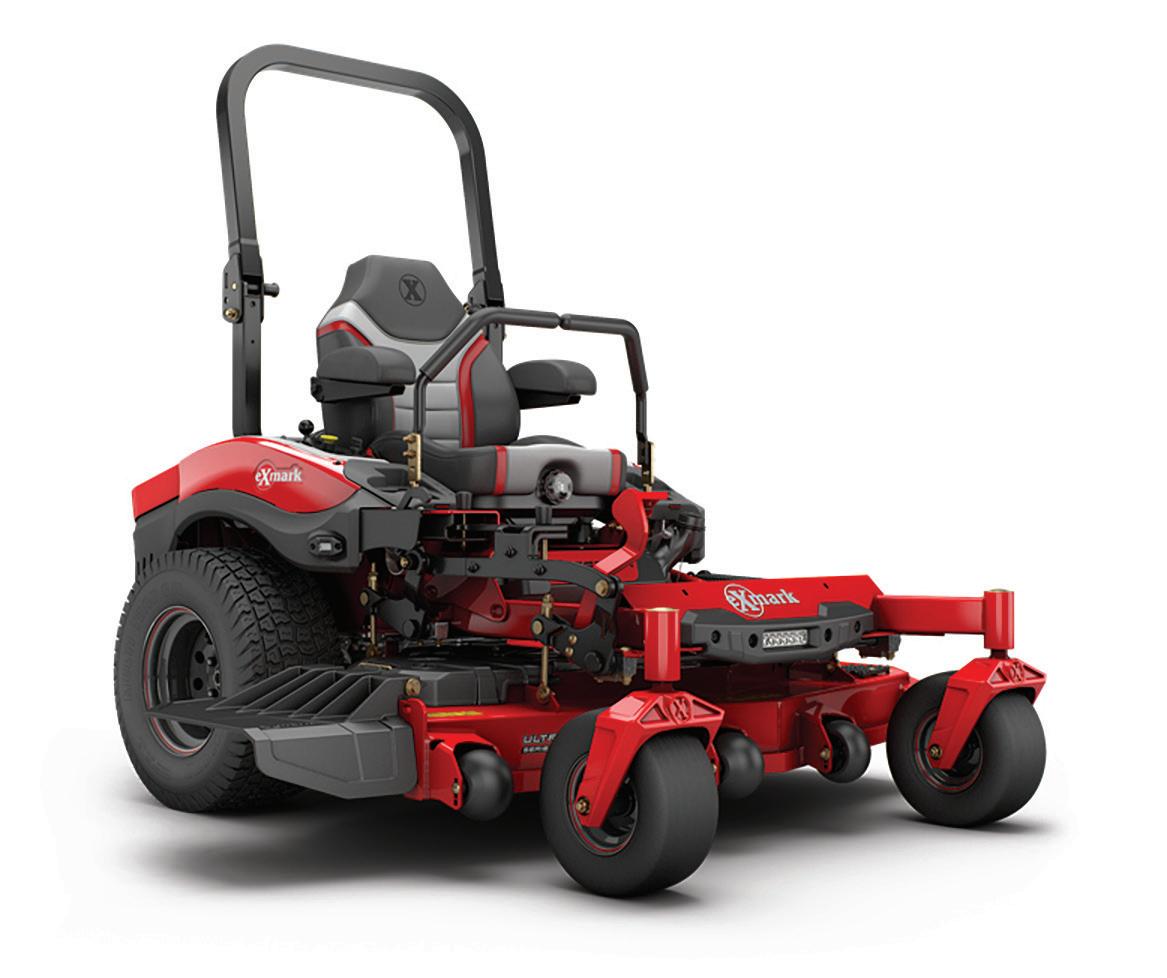
Lazer Z X-Series—the most durable, productive, and low-maintenance Lazer Z zero-turn mower ever built. Celebrating 30 years of innovation, the redesigned Lazer Z X-Series continues Exmark’s legacy of unmatched cut quality, durability, and productivity, offering options for every commercial and residential need. exmark.com/lazer-legacy
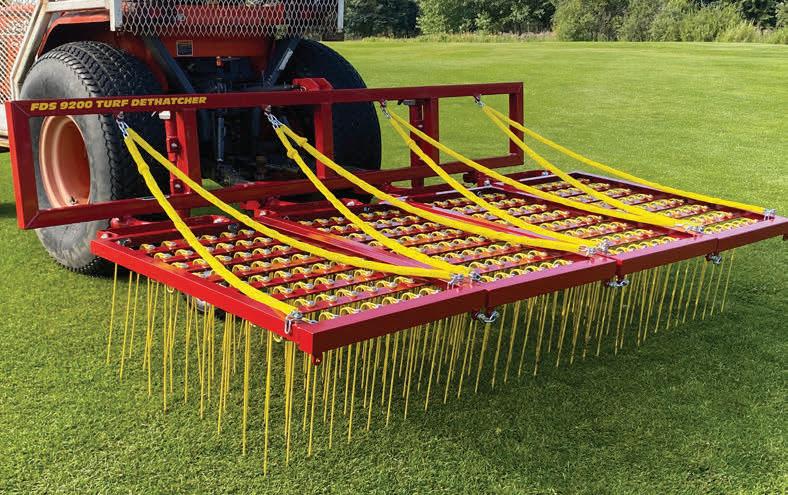
FDS 9200 - Turf Dethatcher & More
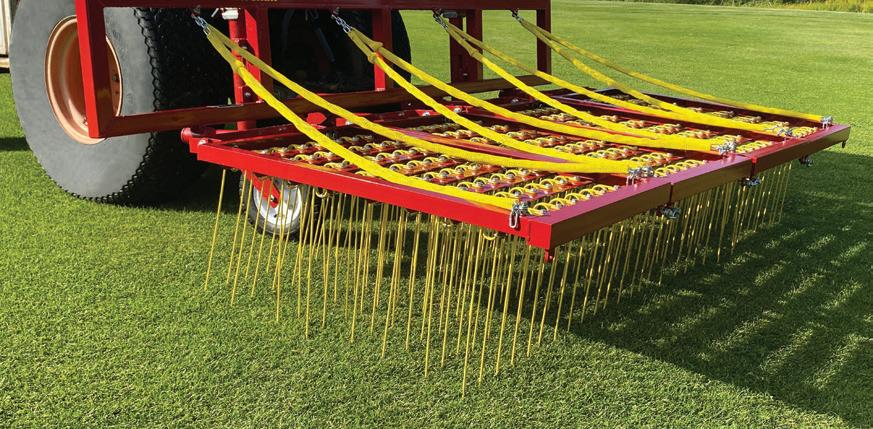
The FDS series is engineered to handle a variety of surfaces, from the contours and undulations of a golf course to the flat surfaces associated with multiple sports turf fields, dirt infields and even synthetic turf to maintain G-Ratings. ONE Piece of Equipment - ALL Field Types, That’s the FDS 9200.The economically priced unit can be mounted to a Quad ATV or a ThreePoint Hitch Tractor. In addition, the FDS 9200 quickly allows water and fertilizer to penetrate the root zone as well as quicker germination of all types of grass seed during over-seeding.
Check our all-surface demo video at: https://youtu.be/ jjgnusHaqO8 woodbayturftech.com/products/fds-series-turfdethatchers
The updated Third Edition of SportsFields: Design,Construction,andMaintenance is a comprehensive reference for professionals who are responsible for the design, construction, renovation, and maintenance of athletic facilities. This book contains illustrative examples of specific design elements of the most popular sports facilities. This Third Edition contains new chapters on safety, public relations, and professionalism for future sports field managers, as well as fresh drawings and photos that highlight innovative field layout, grading, irrigation, and drainage.
Health & Safety
By CCOHS
The Canadian Centre for Occupational Health and Safety (CCOHS) promotes the total well being of workers in Canada by providing information, training, education, systems and solutions that support health and safety programs and injury and illness prevention. www.ccohs.ca
Lighting the way to a safe holiday season
When the holidays arrive, groundskeeping crews often shift from mowing and mulching to hanging lights, trimming trees, and managing snow and ice. The festive season can introduce new safety hazards, from icy ladders and plunging temperatures to electrical and fire hazards.
Having an emergency plan in place, complete with first aid supplies and quick access to shelter or medical care, can make all the difference if something goes wrong. With the right preparation, you can celebrate the season safely while keeping worksites bright and beautiful. Here are a few common holiday hazards and tips to help keep your crew safe.
Ladders and lighting
Holiday decorating often involves working from heights to hang lights, wreaths, or banners. Whenever possible, prioritize preparation at ground level and use personnel lifts. If you must work from a ladder, it should be solid and stable. Be aware of any overhead electrical hazards such as power lines and never use an aluminum ladder near electricity.
Choose a stepladder that’s about a metre shorter than the highest point to reach and make sure all four feet are firmly planted on level, non-slippery ground. Always open the spreaders and shelves fully and keep a threepoint contact – one hand and two feet, or two hands and one foot. Overreaching or “walking” a ladder can cause it to tip, so climb down and reposition it instead.
If extension ladders are used outdoors, they should extend at least one metre beyond the roofline or point of contact and secured at the top and bottom. Set the ladder at a safe four-to-one angle (for every four feet of height, the base should be one foot out). Never leave ladders unattended
and don’t climb in windy or icy conditions. A fall protection plan may be required depending on the jurisdiction and the type of work being performed.
Before hanging lights or decorations, inspect all cords first for damage. Frayed wires, cracked sockets, or warm cords are warning signs that it’s time for replacement. Use lights and extension cords that are certified by a recognized agency such as CSA Group or Underwriters Laboratories. Outdoor decorations should only be plugged into outlets equipped with groundfault circuit interrupters to prevent electrical shock. Avoid overloading outlets or power bars, running cords through doorways or under carpets, and remember to turn off the power before leaving the site.
Fires and carbon monoxide
While stringing lights or trimming trees, it’s important to keep flammable materials away from heat sources. A dry tree can catch fire quickly, especially when placed near worn electrical cords or faulty outlets. To reduce the risk, water real trees regularly or opt for artificial ones.
Candles, lanterns, and heaters can add ambience but must be used carefully. Open flames should be kept at least a metre away from anything that can burn and never left unattended. Flameless LED candles are a safer choice. Ensure there’s a functioning smoke alarm, carbon monoxide detector, and fire extinguisher nearby.
Carbon monoxide is colourless, odourless, and can build up quickly when fuel-burning equipment such as generators, space heaters, or vehicles operate in enclosed or poorly ventilated areas. To prevent exposure, never run engines or gas-powered heaters indoors or near building air intakes, and make sure workspaces are well ventilated.
Working in cold conditions
Working outside during the holidays can mean dealing with low temperatures, wind, and moisture, which speed up heat loss from the body and make it harder to stay warm. Wind chill increases the risk of frostbite and hypothermia, especially when skin is exposed. Dressing properly in layers is the first line of defence: an inner layer that wicks moisture away, a middle layer for insulation, and a wind-resistant outer layer. Hats, mittens or insulated gloves, scarves or face coverings, and insulated, waterproof boots are also important. Staying dry is crucial because wet clothing loses its insulating power and can increase the risk of cold injuries.
Fatigue and empowering workers to speak up
Winter work is physically demanding. Heavy clothing, deep snow, and shorter daylight hours can slow workers down and increase fatigue. Tasks should be scheduled with rest breaks in mind, workers should be encouraged to pace themselves, and workloads should be adjusted so no one is rushing to finish before dark. Hydration and balanced meals also help maintain energy and body heat. Warm, non-alcoholic beverages are best; caffeine and alcohol can speed up heat loss and increase dehydration. Everyone on the crew is crucial to keeping the workplace safe. Identifying seasonal hazards and controlling the associated risks is key. Employers should provide training to recognize and respond to cold stress, proper ladder use, and electrical safety.
Keep safety top of mind when putting up festive lights.
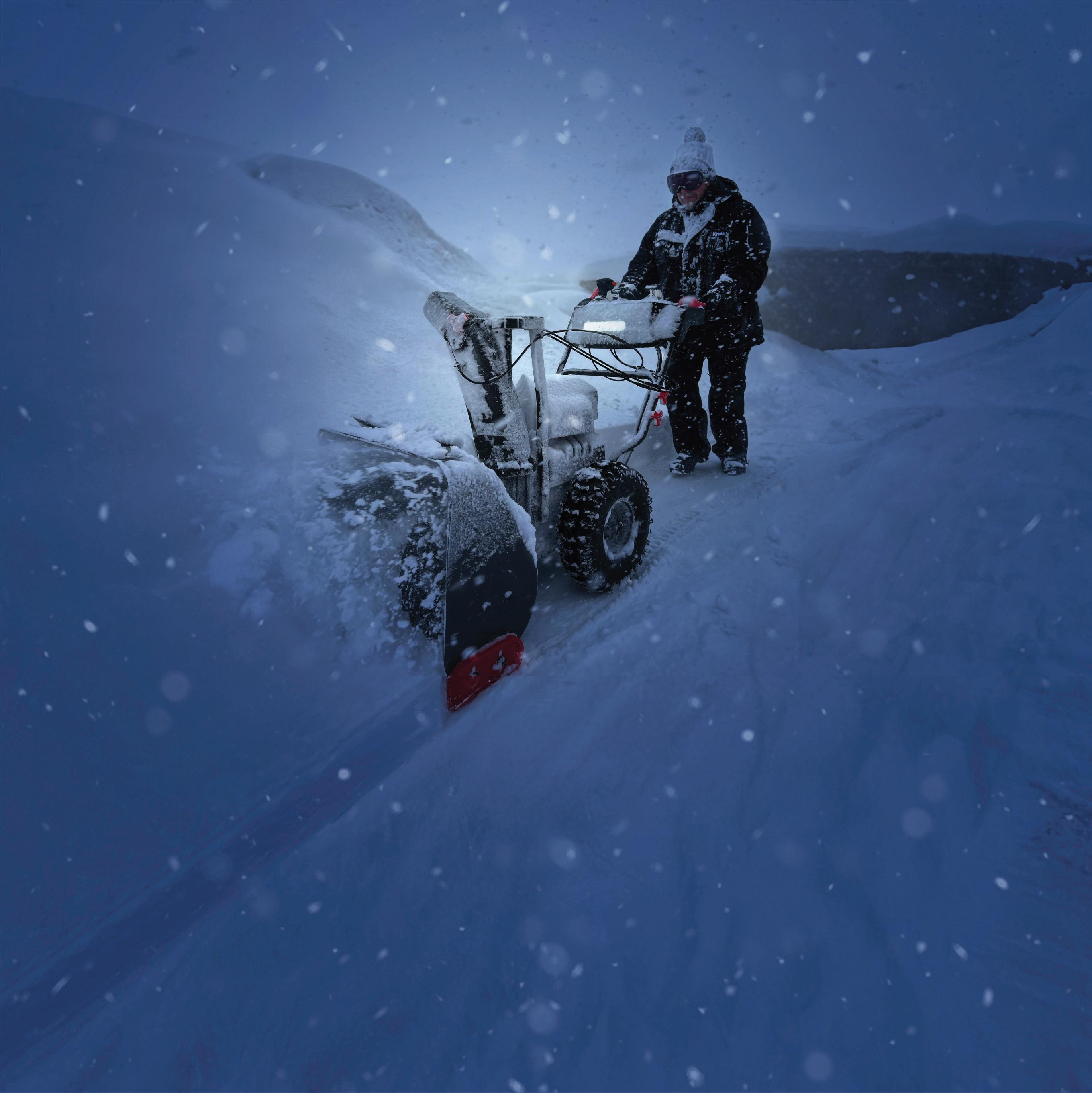
The Kress professional 2-stage snow blower delivers high performance in harsh winter conditions – clearing up to 8 inches off a 21-car parking area and precisely dropping it up to 52 feet away. All on a single charge.
See your local Authorized Kress Dealer and make this winter your most productive yet.
OUTDOOR POWER IS ALL WE DO.
50+ YEARS OF THE BEST IN OUTDOOR POWER EQUIPMENT.
ECHO does power your way. Gas Power. Battery power. Super power.
Built for pros. Trusted by pros. ECHO delivers the strength, precision, and endurance needed to keep your workday moving.
So, what’s the best for your workday? Only the best.