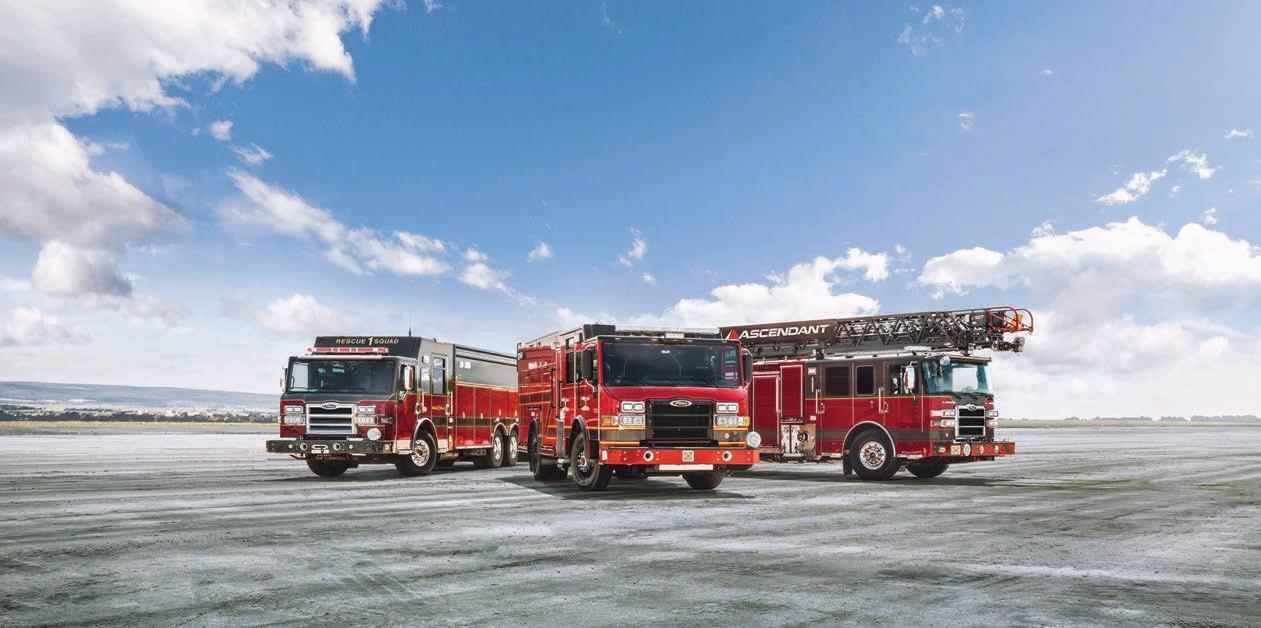
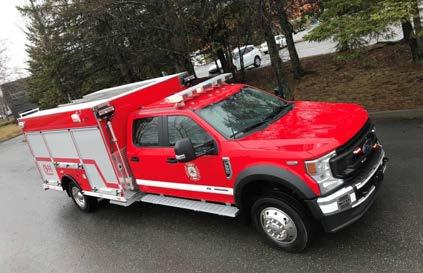
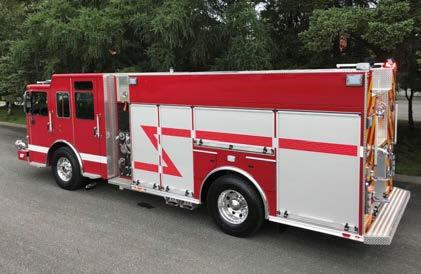
Commercial Emergency Equipment provides tailored lease-to-own financing programs designed specifically for fire departments and emergency service providers.
Our solutions help you manage cash flow more effectively without compromising on the equipment your team depends on.
Our financing and leasing programs are designed to work with your operational needs and budget cycles.
By preserving upfront capital and spreading costs over time, you can equip your department with the most advanced apparatus available today without deferring critical upgrades. Whether you're looking to replace aging vehicles or expand your fleet, our in-house financing options
FEATURES
10
COMMUNITY RISK
How socioeconomic data is key to fire safety in Canada By Len Garis and Lindsay Frei
16 THE POWER OF SMALL DETAILS
Why the most seemingly mundane tasks have significant meaning By Luigi Davoli
20
ADVANCING ARFF TRAINING
Draeger and FESTI teamed up to deliver two cutting edge simulators to firefighters in training
By Laura Aiken
22 TRANSITIONAL FIRE ATTACK EXPLAINED
Once controversial, this method is now widely recognized as a valuable tool in a firefighter’s tactical arsenal By Stephen Hilton.
26 UNDERSTANDING FIRE SERVICE CULTURE
To look at fire service culture’s internal and external influences, let’s examine two elements: the Power Distance Index (PDI), a concept used in cross-cultural psychology, and the three leadership styles By James Rychard
Pondering population projections
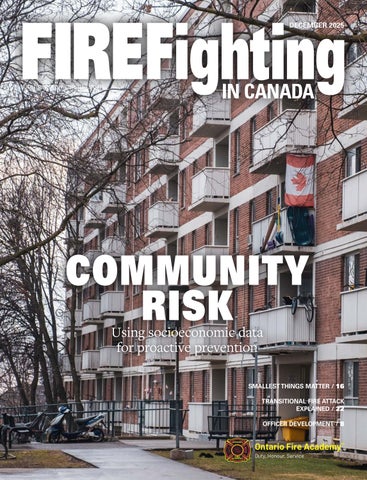
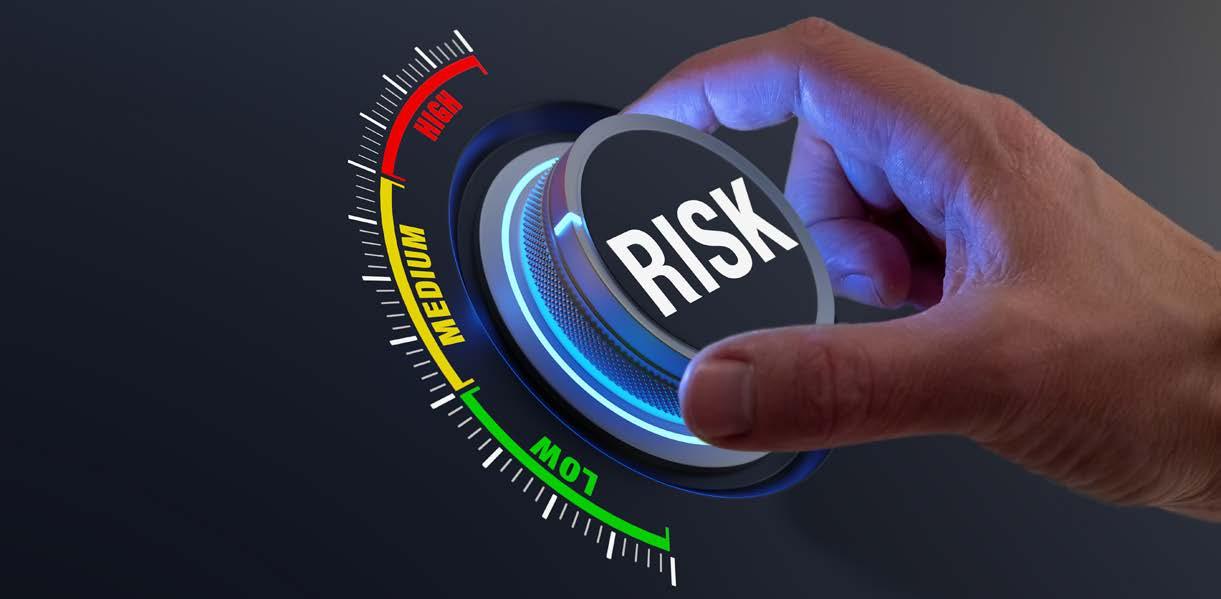
This edition’s cover story looks at using socioeconomic data to further your community risk reduction efforts. Attending to the vulnerable is clearly a critical component of life safety. Seniors, and the super seniors living past average life expectancies are amongst this core group and their numbers are booming. The fire service will need significant investments in capacity to prepar for a future where the population and its vulnerability are set to grow in tandem?
In 2023, Canadians aged 65 and up accounted for 18.9 per cent of the population, reported Statistics Canada. As of July 1, they comprised 19.5 per cent. In five years, that figure could rise to 21.4 to 23.4 per cent. That’s almost a quarter of the population, and some projections say they will be just that by 2040. As it stands, over one in four seniors reported to StatsCan that rising prices are affecting their ability to make ends meet. That’s a double-down on vulnerability. And if you want to triple down, consider that in the pool of super seniors aged 85 and older, just over two in three women and four in five men were still living in their communities
in 2021, with the remainder residing in health care facilities. That’s a lot of elderly living in residences in the community.
The definition of who is considered to be quite senior may need to change in the coming years. StatsCan’s projected life expectancy at birth for males in Canada in 2028/2029 ranges from 80.5 to 81.2, and 84.7 to 85.3 for females. In 2048/2049, this rises to 83.7 to 85.1 and 87.2 to 88.5, respectively. By 2073/2074, males are averaging 86.6 to 88.2 years, and females are projected to make it 89.7 to 91.1 years. The current life expectancy, as of 2023, for males is 79.5 and 83.9 for females. One can’t help but surmise what medical breakthroughs may push humans past their theoretical biological ceiling of 120 to 150 years…and what that might mean for population growth and the capacity to answer their call in an emergency.
As it is, StatsCan, using multiple projection scenarios, estimates the Canadian population, which sits at 40.3 million in 2024, to continue to increase over the next decades to between 45.2 million (low-growth) and 80.8 million (highgrowth) by 2074. Medium-growth sees us reach
59.3 million in 2074. That’s nearly another 20 million bodies in 50 years. It’s not that far away. My kids will be in their fifties. By some stroke of luck I could conceivably live to 95 and see the results of this demographic explosion myself.
Which draws me to my concluding question: is Canada charting a course for its emergency services to be able to manage these projections? And, one can only imagine the projected strain on the healthcare system with the amount of elderlies coming to fruition. What will that do to the already increasing volume of medical calls?
Tricky times, I say. The challenges won’t arrive nor be solved at the speed of Amazon Prime, but they will compound in complexity without a layering of solutions worked at over time. Part of that layering needs to be increased support of the municipalities, via the provinces, by the federal government funded by the taxpayers dependent on the first responders who serve them.
LAURA AIKEN Editor laiken@annexbusinessmedia.com
CANADA’S P&C INSURANCE INDUSTY
from Statistics Canada shows only 37% of residential fires had a working smoke alarm. Another 12% involved alarms that did not activate, and 13% had no alarm at all. Nearly three-quarters of residential fire fatalities occurred in homes without a working alarm. — Len Garis, Beyond Beeping, Fire Fighting in Canada
responded to 12 natural catastrophe losses in the first half of 2025, catastrophe being events causing more than $30 million in insured damage. Four of these were wildfires.
% of Canada was abnormally dry or in moderate to exceptional drought as of October 31st.
The year-to-date total area burned in Canada in 2025 is about 8.3 million hectares, over double the annual average from the past decade.
STATION TO STATION
Trailblazers and allies: Building an inclusive fire service culture at the FSWO 2025 Symposium
From Oct. 23 to 25, 2025, Fire Service Women Ontario (FSWO) held its annual FSWO Symposium in Oakville. The event, which sold out two weeks prior to its start, was FSWO’s largest in 16 years, bringing together over 200 fire service professionals eager to advance their careers and forge lasting connections.
A major theme throughout the threeday event was leadership, professional development and building an inclusive fire service culture. Key panels celebrated women in leadership, such as “Trailblazers in the Fire Service”, which showcased Deputy Chiefs Louise Hine-Schmidt (Ottawa), Kalpana Rajgopalan (Oakville), Samantha Hoffmann (Caledon) and Debrah Bergeson (Calgary), and “Allies in the Fire Service”, which featured fire chiefs committed to inclusion, discussing how allyship accelerates progress and breaks systemic barriers. Leadership development continued in special programs like “Dare to Command:
The FSWO symposium blended HOT sessions focused on fireground capabilities with extensive leadership and professional development discussions.
Effective Leaders”, which used virtual simulations to help junior firefighters practice incident command and rational decision-making, and “Commanding with Confidence”, which explored leadership fundamentals from a woman’s perspective and featured Deputy Chief Michele Fitzsimmons, FDNY’s highest-ranking female in fire operations.
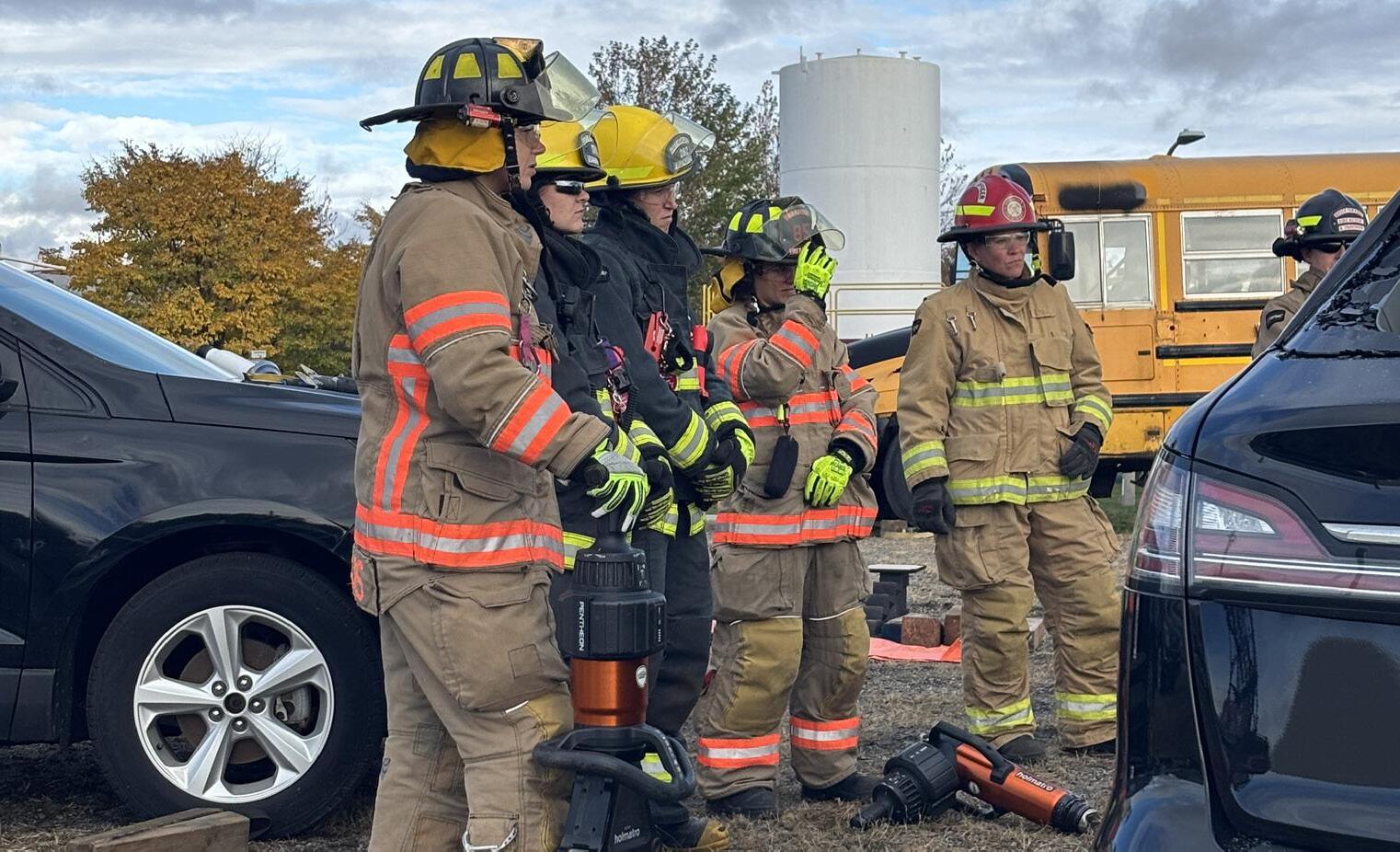
The event also featured extensive technical and hands-on operational training (HOT) that was designed to sharpen critical fireground capabilities. Throughout the courses, firefighters engaged in specialized skill refinement, including high-rise firefighting tactics, which covered improvised standpipes, exterior cladding fires and strategies for wind-impacted incidents. Other handson rescue sessions included the “rescue drag bonanza” and search and rescue training that utilized firefighter rescue survey data and focused on techniques like VEIS (Vent-Enter-Isolate-Search) and body mechanics for solo drags. Specialized technical skills included advanced auto extrication scenarios and solutions, focusing on advanced lifting principles and rapid extrication for new vehicle technology. Sessions also covered the mechanical advantage of the Halligan bar for forcible entry and advanced pump theory and practice
for complex scenarios, such as relay pumping and porta tank deployment. Further technical and hazard training addressed challenges such as forcible entry techniques for commercial doors, the hazards of lithium-ion batteries, and radioactive materials transport in Canada.
“This is no longer about proving women can do the job; it’s about proving that the fire service is stronger when everyone with the skill and the drive can serve,” said Ottawa Fire Service Captain Tracey Shields, president of FSWO. “This week in Oakville shows what the future looks like: rigorous training, exemplary leadership, and a generation of women ready to lead from the front.”
The 2025 symposium emphasized psychological resilience, health and overcoming specific barriers to inclusion. Wellness sessions included “Nutrition and Resiliency for First Responders,” which involved hands-on meal preparation to help shift workers manage cravings, and “Stronger from the Inside Out,” a practical workshop on improving hormone balance and gut health. Mental health was addressed through an eight-hour “Resilient Minds” course, designed to build psychological strength using tools like the 4R Action Toolkit. Other sessions focused on using somatic therapies and journaling to process trauma and integrate work-life stress. Inclusivity training covered more challenging topics, such as addressing biases related to sexual orientation and gender identity, discussing the legal and cultural support needed for gender transition in the fire service, and exploring ways for women to confront internalized sexism.
Each year, the FSWO Symposium skillfully combines essential, hands-on training with vital programs focused on leadership and resilience. By addressing courageous leadership, technical proficiency and comprehensive wellness, the 2025 event successfully provided a platform for breaking
systemic barriers and equipping attendees with the tools needed to lead with confidence and foster a more inclusive culture across the fire service. The 2026 FSWO symposium will be held Oct. 22-24 at FESTI.
- Brittani Schroeder
Markham launches cuttingedge DRAGO units to enhance emergency response
Ontario’s Marham Fire & Emergency Services successfully deployed two state-of-the-art auxiliary fire fighting units, which are known as “DRAGO”, as part of its commitment to modernize fire service delivery.
At 7.3 metres in length, each auxiliary unit is a nimble, high-performance support vehicle featuring advanced fire fighting tools and capabilities not typically found on traditional fire apparatus. The units can also be positioned where standard fire trucks cannot go such as tight spaces and uneven terrain.
“Safety First is the guiding principle we live by. The DRAGO unit gives our firefighters the capability to extinguish fires from the moment they arrive on the scene. This cutting-edge solution provides greater safety for firefighters and our community,” said Markham Mayor Frank Scarpitti in a press statement.
“We are thankful for the support of Mayor and Council to consider alternative ways to meet the challenges of modern fire fighting in a growing modern city,” said Markham Fire Chief, Chris Nearing, in the press release. “Providing our firefighters with the best education, training and firefighting equipment, not only protects our community, but also those who protect Markham.”
The DRAGO units have several key features including ultra-high pressure hose lines for fast and efficient fire attacks, a high-powered ventilation fan to clear smoke and toxins from large areas, and is also equipped with firefighter foam and its own 45,000 watt generator to power emergency lighting and equipment.
Markham fire crews underwent comprehensive training before the vehicles were put into operation. Since entering full-time service, the DRAGO units have successfully been deployed in three structure fires and one hazardous materials incident proving its value in enhancing safety and efficiency during realworld operations.
THE FIRE HALL BULLETIN
PROMOTIONS & APPOINTMENTS
STEPHANE MALO is the new fire chief and director of emergency management for Mississauga Fire and Emergency Services and the City’s Office of Emergency Management where he will oversee the strategic, financial, and daily operations of both. The role became effective Oct. 22. Malo brings nearly 30 years of progressive experience in fire and emergency services, and began his career as a firefighter with the City of Mississauga in 1996.
The Foothills Fire Department in Alberta welcomed KELLY STARLING as its new chief. Chief Starling formerly served as the fire chief in Claresholm and director of emergency services for the M.D. of Willow Creek and brings over two decades of his experience to his new post.
Innisfail Fire Department in Alberta has appointed firefighter JAYME HENDRICK as the town’s full-time chief. Hendrick comes to the position with a wealth of experience. With over 27 years working in public service. He joined Innisfail in May 2002 and has served as a captain for the past 18 years. In 2006, he began working with Edmonton Fire Rescue Services, where he recently retired as an acting captain from one of the busiest fire halls in North America after nearly 20 years of service.
The Town of Caledon in Ontario appointed RICHARD MURDOCH to the role of deputy chief. Murdoch brings nearly 30 years of experience from Brampton Fire and Emergency Services, where he served in a variety of leadership roles including acting fire chief, deputy chief of operations and training, and division chief of training.
RETIREMENTS
Caledon Fire and Emergency Services’ Deputy Chief of Operations, DAN ROWLAND, is set to hang up his helmet Dec. 5 after 37 years of service. He joined Caledon Fire as deputy chief in 2021. Prior to that he was a platoon chief with Brampton Fire and Emergency Services, where he spent 29 years. He is also a former director for Firefighters Without Borders.
Deputy Chief MIKE BENDER is retiring from the Eckville Fire Department in Alberta after 13 years of service. Bender has served with professionalism, leadership, and an unwavering commitment to community safety, noted a department Facebook post, and he has also been a respected mentor to firefighters.
Shaunavon District Fire & Rescue Department’s fire chief, MERRICK GOLDSTEIN, has retired after serving eight years in the leadership role. Goldstein has been with the department for a total of 21 years as a volunteer firefighter.
LAST ALARM
(Ret.) Chief WILLIAM (BILL) CLARK passed away on Sept. 25 after a long battle with colon cancer. Clark had a distinguished 42-year career with the Winnipeg Fire Department (later known as the Winnipeg Fire Paramedic Service), where he climbed the ranks from fire fighter and first responder, to director of training, deputy chief and finally acting chief of the WFPS
DONALD “BOB” ROBERT KONKLE, a retired fire chief, died at the age of 88 after a lengthy battle with dementia. Konkle retired in 1996 from the Ancaster Fire Department and his role as chief after 34 years. He passed away Oct. 22.
LEADERSHIP FORUM
By Chris Harrow, Director of Fire Services, Town of Minto and Township of Wellington North, Ontario
Chris Harrow is the director of fire services for the Town of Minto and Township of Wellington North in Ontario. He can be reached at c.harrow@mintofiredept.on.ca
OFFICER DEVELOPMENT: TAKE THE LEAD
Identifying firefighters who are ready and willing to advance into leadership roles requires not only recognizing potential, but also encouraging and persuading individuals to take on greater responsibilities. This transition is often met with peer pressure from the inside to not make the leap into leadership.
There is a big difference between taking on leadership roles in the career versus volunteer/paid on-call departments. Many career departments have the process itemized in collective agreements, making it a little more difficult to promote budding leaders. Paid on-call/ volunteers have a difficult time promoting exceptional leaders because many exceptional leaders already do extra duties in their communities. Asking them to take on more can be difficult.
No matter how your process is laid out, it is up to the leaders to make the education and mentorship easily available. Online learning, courses in their home departments or courses over longer periods to accommodate schedules are all options to help budding leaders build the skills they need. Drawing a hard line on course schedules and an unwillingness to work with your firefighters will only push away potential officers in your department.
Mentorship is a large part of the process for not only future officer, but the entire department. Implementing a bad or insufficient mentorship program can be detrimental to the entire department. The exact outline of a strong mentorship program is very difficult to establish. There is not one general method of
Employing people around us that “keep it real” and having a team that is not afraid to call you out if you are going down a bad path are two very important items for every officer to have.
implementing it. A strong mentorship program happens more organically, secondary to high morale department.
You cannot force someone into a mentorship role or an individual to accept a mentor for which they have nothing in common. Experience has shown that many mentorship relationships happen naturally. Good leaders in the fire department who are in touch with the vibe of their stations will see this happening and quietly, behind the scenes, support it. It might be a crew switch or strategically pairing up individuals at training or incidents. This can help your mentorship program flourish and strengthen the ability to hire new officers.
Another key part of bringing up future officers is having a good bi-lateral feedback program. This could be in the form of formal performance appraisals that municipalities complete. Or, probably more effective, are well laid out post incident analysis reports (PIAR) after all incidents. As a fire service, we don’t always give good feedback on a regular basis to our staff. This includes all our firefighters and our officers who run the calls. The incidents end and we miss the opportunity to learn from the valuable experience that occurred.
Bi-lateral means that the crew or others involved in the incident can give feedback to the officers in charge. It takes a good officer to accept the feedback and conduct a conversation into how everyone can learn and be better. Training existing officers on how to conduct feedback sessions can better the organization
as a whole.
A personal issue of mine is the ability for people to provide feedback to all positions in a department. Convincing members of the department that it is okay to give feedback; specifically negative feedback is very difficult because of the rank and titles many have. Good healthy discussions can take place regarding many issues and fear or retribution has no place in most of these discussions. Employing people around us that “keep it real” and having a team that is not afraid to call you out if you are going down a bad path are two very important items for every officer to have. It helps future officers learn that being a leader involves listening to feedback. It also teaches vulnerability. Allowing oneself to be vulnerable and admit when they have made a mistake is so vital. Showing your team you are as human as they are and can learn from your mistakes will go a long way to becoming a future leader.
Some of us old leaders are getting tired and ready to step aside for new thoughts and direction in the fire service. If you can leave and know you helped at least one person advance in their career, you can be satisfied you left a mark.
On the note of passing on to new leaders, this will be my last column for Fire Fighting in Canada. It has been an amazing run, one of my proudest accomplishments. Thank you to Laura and all the staff for all of their help; they are amazing people. And thank you to the readers of this magazine. I appreciate your feedback, both good and bad, and for reading the Leadership Forum.
By Len Garis, Lindsay Frei
COMMUNITY Risk
Deprivation data is key to proactive prevention in Canada
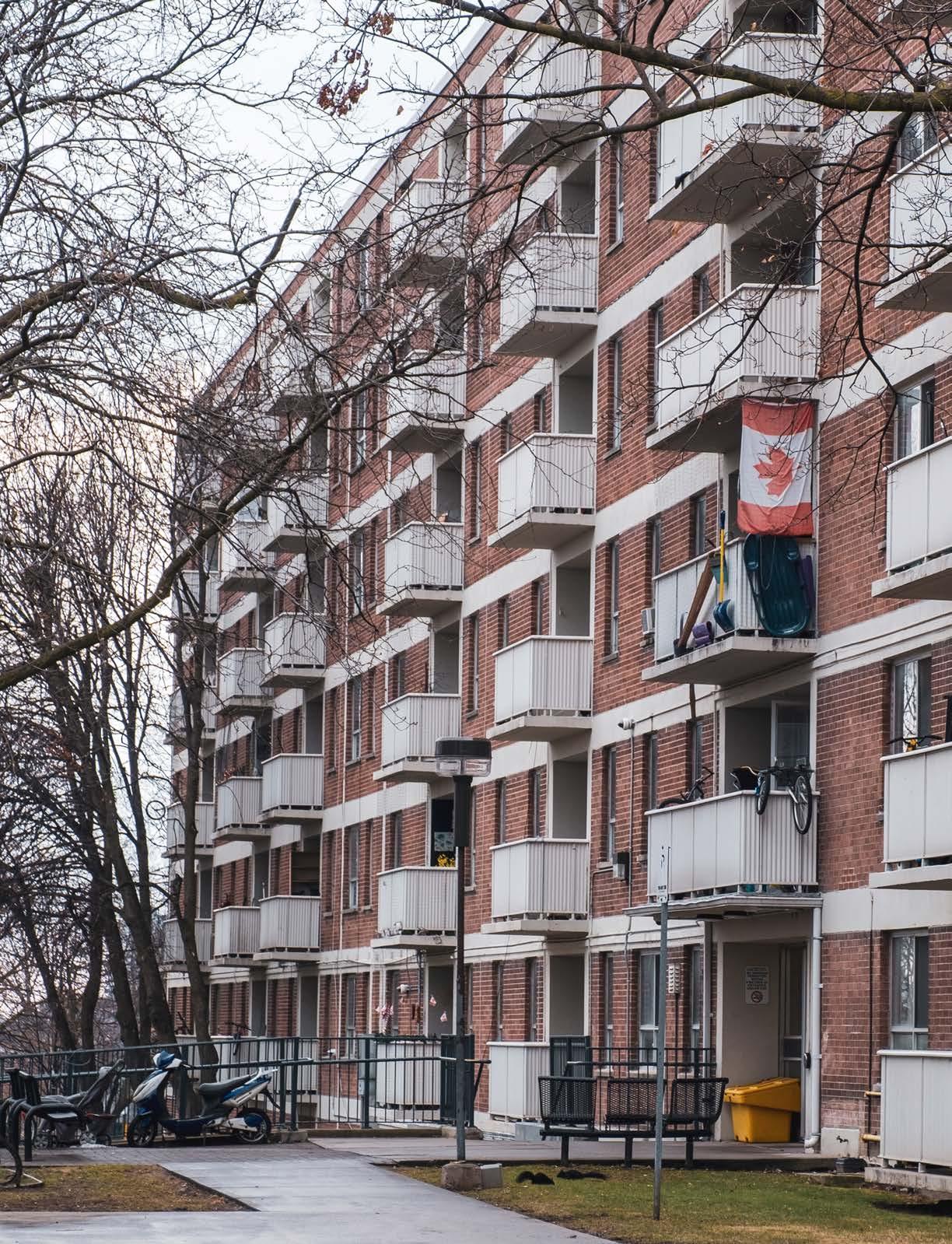
For Canadian fire services, the concept of community risk reduction is more than just a few words — it’s a strategic imperative. As outlined in NFPA standards, community risk reduction (CRR) moves beyond reactive emergency response to proactive prevention, aiming to reduce the frequency and severity of fires and their associated casualties. A critical yet often underutilized tool in this endeavor is the integration of deprivation data. International experience and emerging Canadian initiatives demonstrate that socioeconomic deprivation is a strong predictor of residential fire risk, injuries, and fatalities, offering a powerful lens through which to enhance CRR strategies.
The application of this approach empowers fire and emergency services to ensure communities have specialized and targeted education fire safety campaigns, resulting in fewer preventable fires, loss of property, and most importantly, the reduction of injuries and deaths.
THE GLOBAL LANDSCAPE: LEARNING FROM LEADERSI
The application of deprivation indices and socioeconomic factors to fire risk reduction is a growing practice internationally.
The United Kingdom stands out with a mature framework for applying deprivation indices to fire risk reduction. Their Index of Multiple Deprivation (IMD) is a composite measure encompassing seven domains, including income, employment, education, health and living environment. Research has consistently shown strong links between socioeconomic deprivation and fire-related injuries in England through spatial analysis. The “Greater London Burn Study” specifically highlighted a strong correlation between IMD and burn risk, demonstrating how UK fire and rescue services leverage IMD for geographic targeting of home safety visits.
Similar approaches are seen in other countries:
• Australia uses Socio-Economic Indexes for Areas (SEIFA), which have proven effective in predicting community vulnerability, with fire death and injury rates significantly higher in disadvantaged areas.
• New Zealand also employs Indices of Multiple Deprivation (IMD), developed from data across various government agencies. Their experience shows that fatal domestic incidents disproportionately occur in the most deprived areas.
• In Norway, research highlights that vulnerable groups, characterized by socioeconomic factors such as living alone, poverty, and low education, face a reduced ability to avoid, identify, and escape fire situations.
• Sweden integrates factors like low income and reliance on social assistance, which are associated with an increased risk of residential fire fatalities, while
higher education and employment correlate with lower risk.
• Spain links deprivation in basic needs, fixed incomes (often seen with the elderly), and lower educational levels to poor dwelling conditions and higher fire risk.
Beyond formal indices, a critical concern across many European countries is energy poverty. Experts believe that individuals experiencing energy poverty face higher fire risks due to factors like low-income, high-energy expenses, and often obsolete electrical installations in poor quality housing. Furthermore, in regions like France, India, and Africa, humancaused wildfire ignitions are prevalent and influenced by socioeconomic factors such as unemployment rates, agricultural activity, population density, and in urban areas, factors like crowded informal settlements with poor quality housing and reliance on traditional energy sources. This highlights how broader socioeconomic factors can significantly influence fire hazard across diverse environments.
THE CANADIAN CONTEXT: BRIDGING
In Canada, while the framework for applying deprivation indices to fire risk reduction is still developing, significant groundwork has been laid. Canada utilizes multiple indices, notably the Material and Social Deprivation Indices (MSDI). The MSDI is derived from census data and comprises separate material (covering income, education, and employment) and social (addressing living alone, single-parent families, and marital status) indices. It uses Dissemination Areas (DAs) as its geographic unit and is updated every five years with each census cycle. MSDI has historically been a widely cited area-based socioeconomic indicator in Canadian public health and social services planning. The newer Canadian Index of Multiple Deprivation (CIMD) 2021 also assesses dimensions of deprivation and marginalization at the DA level, designed for broad application in socioeconomic research, policy planning, and resource allocation.
A significant development in Canada is the emergence of fire community risk reduction dashboards. These powerful data visualization tools are being deployed to enhance CRR efforts. Notably, these dashboards are already active in British Columbia and Ontario, providing fire services with real-time, actionable insights into community risks. Furthermore, ongoing development for a pan-Canadian
application of these dashboards is underway, promising a national approach for data-driven risk reduction.
Despite these valuable tools, a key limitation in Canada has been the lack of a national protocol linking deprivation data directly to fire prevention planning.
However, promising initiatives highlight the potential of integrating this data. Systematic and consistent approaches in Surrey, B.C., have demonstrated remarkable success. A longitudinal assessment of the HomeSafe Fire Prevention Program in Canada, specifically in Surrey, showed significant success in decreasing fire rates, increasing functioning smoke alarms, and reducing fire casualties over a 12-year period. These peer reviewed rigorous evaluations underscore the effectiveness of systematic and consistent approaches to sustainable fire prevention.
A pivotal game-changer in the Canadian landscape is the forward-thinking regulation led by the Ontario Fire Marshal’s Office. This proactive measure requires local government fire services to develop and implement robust risk reduction practices, pushing CRR from a suggested best practice to a mandated requirement. This leadership is expected to significantly accelerate the adoption and integration of data-driven approaches, including the use of deprivation insights, across the province and potentially inspire similar regulations nationwide.
FORMAL AND INFORMALI
The application of deprivation data in CRR in Canada can be both formal and informal, influencing decision-making at various levels and guiding targeted interventions. Formal applications and interventions include:
Targeted prevention programs: By aligning national fire data with deprivation indices like MSDI or CIMD at the Dissemination Area level, fire services can create comprehensive datasets. This allows for the development of predictive models that identify high-risk areas and populations, enabling highly focused interventions.
Home safety visits: These are strategically prioritized in deprived areas. During these visits, firefighters or community safety volunteers actively install or check functioning smoke alarms and carbon monoxide detectors, directly addressing a critical fire safety component. Tailored fire safety education: Educational content and delivery methods are adapted to address specific vulnerabilities associated
with deprivation, such as language barriers, cultural practices, or economic constraints. Advice focuses on critical areas like fire escape planning, kitchen safety, and electrical safety.
Hazard mitigation: Direct identification and mitigation of fire hazards within homes, such as overloaded electrical outlets or unsafe heating practices, are crucial components of these visits.
Resource allocation and strategic planning: Deprivation data, often visualized through GIS overlays or integrated into CRR dashboards, provides powerful insights for optimal resource deployment.
This includes:
Geographic prioritization: Concentrating prevention efforts, such as educational campaigns and smoke alarm installation drives, in areas identified as most vulnerable.
Optimizing emergency response : Informing decisions on the strategic placement of fire stations, allocation of specialized equipment, and appropriate staffing levels to ensure adequate response capabilities in high-risk, deprived communities.
Policy development and advocacy: Strong statistical correlations between deprivation and fire risk provide compelling evidence for advocating for policy changes at municipal, provincial, and federal levels.
This includes:
Improved housing quality: Pushing for better housing standards, addressing issues like substandard wiring, lack of proper heating, or overcrowding that are often prevalent in deprived areas and contribute to fire risk.
Energy poverty initiatives: Advocating for programs to alleviate energy poverty, recognizing that this directly contributes to fire risk due to unsafe heating methods or outdated electrical installations.
Enhanced building codes: Recommending amendments to building codes that specifically address fire safety requirements in residential structures in vulnerable communities.
Performance measurement and evaluation: By systematically tracking fire incidents, injuries, and fatalities in relation to deprivation levels, fire services can rigorously evaluate the effectiveness of their CRR programs. This data-driven approach supports continuous improvement and demonstrates accountability, akin to the successful longitudinal assessment of the HomeSafe program in Surrey.
Informal applications include:
Situational awareness for responders: Although not formally integrated into every
The Pierce aftermarket team includes over 80 professionals ready to support you and your apparatus. This group of expert trainers, Pierce Master Technicians, and experienced customer service staff works alongside a dealer network that includes over 120 regional service facilities, more than 140 mobile service vehicles, and over 115 master technicians. Additionally, we inventory over $14 million in parts ready to ship on a moment’s notice. For support and service throughout the life of your apparatus, Pierce performs like no other.
piercemfg.com pierceparts.com
dispatch, an understanding of the socioeconomic characteristics of a neighbourhood can informally inform firefighters’ approach during emergency response, influencing initial considerations for search and rescue or potential challenges.
Tailored community engagement strategies: Awareness of socioeconomic challenges in certain areas leads to more empathetic and tailored messaging, addressing specific vulnerabilities such as language barriers or economic constraints that might hinder fire safety adoption.
Collaboration with social services: Recognizing the link between deprivation and fire risk fosters stronger collaboration with social services, public health agencies, and community organizations. This informal network allows for a more holistic approach to supporting vulnerable populations, addressing underlying socioeconomic factors that contribute to fire risk.
CONSIDERATIONS FOR A ROBUST CANADIAN PLATFORM
Drawing from global best practices and the insights gleaned from Canadian initiatives, key opportunities for a new Canadian platform for fire risk assessment and prevention could include:
• National data alignment: A crucial step could be to align national fire data with deprivation indices like MSDI or the CIMD 2021 at the Dissemination Area level, to create a comprehensive dataset for analysis, which would feed into CRR dashboards.
• Develop advanced risk-based models: Identifying opportunities to invest in developing predictive models utilizing z-scored deprivation indices, incident trends, and other socioeconomic variables, incorporating techniques seen internationally for more accurate risk profiling, including machine learning methods.
• Pilot intervention trials: Replicating successful models like the HomeSafe program in Surrey, Canada should conduct pilot intervention trials, such as home safety visits, stratified by deprivation quintiles to evaluate their effectiveness in deprived areas.
• Consider broader socioeconomic factors: Where formal deprivation indices may be limited, organizations should explore integrating other socioeconomic indicators into fire risk models, such as energy poverty indicators, as these significantly influence fire hazard.
• Leverage CRR dashboards: Actively promote and expand the deployment of CRR dashboards across Canada, building upon the successes in B.C. and Ontario, to facilitate data-driven decision-making at all levels of fire service.
By systematically integrating deprivation data into CRR strategies, Canadian fire services could move towards a more equitable and effective approach to fire prevention, ultimately saving lives and protecting communities. The insights from international experience, coupled with the proven success of local initiatives and the pioneering regulatory leadership, provide a clear roadmap for building a proactive and data-driven future for fire safety in Canada.
This article is the second in a series, highlighting actionable analytics used around the world in the advantages of incorporating strong data sources into developing preventative treatments for fire and emergency management services. The integration of various fire and Canadian Census data sets have been used in the Community Fire Risk Reduction Dashboard platforms used by both the provinces of British Columbia and Ontario to help with fire risk reduction planning. Statistics Canada is currently working with the Canadian Council of
Fire Marshals and Fire Commissioners to expand on these two platforms to provide a pan-Canadian tool.
References
• Statistics Canada uses the Canadian Index of Multiple Deprivation (CIMD) that is composed of four dimensions of deprivation and marginalization: residential instability; situational vulnerability; economic dependency; and ethno-cultural composition. Surveys and statistical programs - The Canadian Index of Multiple Deprivation (CIMD), July 8, 2025.
• Heng, J., Atkins, J., Clancy, O., Takata, M., Dunn, K., Jones, I. and Vizcaychipi, M. (2014). Geographical analysis of socioeconomic factors in risk of domestic burn injury in London 20072013. Burns: journal of the International Society for Burn Injuries, volume 41. https://www.researchgate.net/publication/270288358_Geographical_analysis_of_socioeconomic_factors_in_ risk_of_domestic_burn_injury_in_ London_2007-2013
• What is ‘energy poverty’? Energy pov-
erty refers to those households who struggle to afford to maintain consistent and comfortable temperatures in a home, or those who don’t have reliable access to affordable energy services.
• Institut National de Santé Publique du Québec. (March 2024). Material and social deprivation index 2021. (https://www.inspq.qc.ca/sites/default/ files/2024-04/3476-material-social-deprivation-index-guide-2021.pdf
• Al-Hajj, S., Thomas, L., Morris, S., Clare, J., Jennings, C., Biantoro, C., Garis, L. and Pike I. (2023). Community Fire Risk Reduction: Longitudinal Assessment for HomeSafe Fire Prevention Program in Canada. International Journal of Environmental Research and Public Health, 20 (14), 6369. https://doi. org/10.3390/ijerph20146369
• Fire Protection and Prevention Act (1997, C.4). Retrieved from the Province of Ontario website: Fire Protection and Prevention Act, 1997, S.O. 1997, c. 4 | ontario.ca
• Filho, W. L., Rebelatto, B. G., Salvia, A. L., Rampasso, I. S., Gatto, A., Barrioz, V., Aina, Y. A., Hunt, J. D., Anholon, R.,
Ribeiro, P. C. C., & Brandli, L. L. (2025). Addressing energy poverty: Regional trends and examples of best practice. Energy for Sustainable Development, 85, 101647. https://doi.org/10.1016/j. esd.2024.101647
• Mochida, T., Chapman, A., & McLellan, B. C. (2025). Exploring Energy Poverty: Toward a Comprehensive Predictive Framework. Energies, 18(10), 2516. https://doi.org/10.3390/en18102516
Len Garis is a retired Fire Chief for the City of Surrey, British Columbia, Research Associate – Community Health and Social Innovation Hub University of the Fraser Valley a member of the Affiliated Research Faculty at John Jay College of Criminal Justice in New York, and Associate Scientist Emeritus – BC Injury Research and Prevention Unit. Contact Hime at lwgaris@outlook.com or Leonard.Garis@statcan.gc.ca.
Lindsay Frei is a Project Manager with the Canadian Centre for Justice and Community Safety Statistics with Statistics Canada and is working on the development of the updated Community Fire Risk Reduction Dashboard. Lindsay has a B.A. in History with a concentration on Military History from the University of Victoria. Contact her at lindsay.frei@statcan.gc.ca.
By Luigi Davoli
THE POWER OF SMALL DETAILS
Building discipline, trust and professionalism in the fire service.
I remember watching the commencement speech that Admiral William McRaven gave to the 2014 graduating class of the University of Texas at Austin. Admiral McRaven started by saying, “If you want to change the world, start by making your bed.” These simple yet powerful words made me reflect on my time in the Canadian Armed Forces. Just as Admiral McRaven described his day, mine began with making my bed. My bed had hospital corners with each of the four corners folded to a perfect 45-degree angle. The sheets and blankets were pulled so tightly that a quarter could bounce off them. And the sheets had to be wrinkle-free even after I had slept in them—and I did sleep in my bed.
Making our beds might seem like a simple task that needs doing; however, it was a task that held significant meaning. Making our beds was about building discipline and pride, and starting your day with a straightforward task that sets the tone for everything else ahead. This concept applied just as much in the fire service. Small, seemingly routine tasks are plentiful in the fire service, from scrubbing toilets to packing a squared-away, flat hose bed. Even more crucial is ensuring your uniform is pressed with crisp creases and your shoes are polished to a shine. The small things we do reflect our approach to handling the small stuff.
To an outsider, many of those things might seem like simple chores. To those of us in the fire service, they form the foundation of pride, loyalty to service, trust and professionalism. These are all core elements that the Maltese Cross represents.
WHY THE SMALL THINGS MATTER
Here’s the thing: fires don’t care if you were sloppy or didn’t make your bed that morning. The raging inferno won’t care if you skipped your
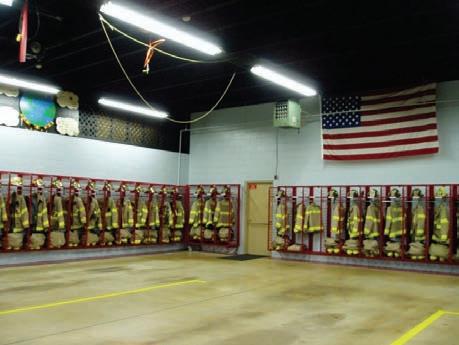
BELOW Keeping it neat and tidy makes for smoother operations on scene.
gear check or forgot to refuel the saw. But when the heat is rising, smoke is banking down and people are calling for help, those minor details become important.
An improperly packed hose bed may not flake out correctly. That dirty breathing apparatus could fail when you’re in a toxic, gas-filled environment. Stopping to refuel the saw can mean the difference between controlling the fire and losing the structure. Seconds are lost, and sometimes those seconds are the difference between saving a life and losing one.
Beyond the fireground, the small details speak volumes. If we look sharp in our uniform, the public trusts that we are sharp in every other part of the job as well. Administratively, taking the extra time and care ensures the smooth operation of the entire fire service. Carefully double-checking payroll entries guarantees everyone gets paid promptly. Verifying staffing assignments prevents shortages that could lead to trucks being out of service. Completing procurement orders accurately ensures equipment is available
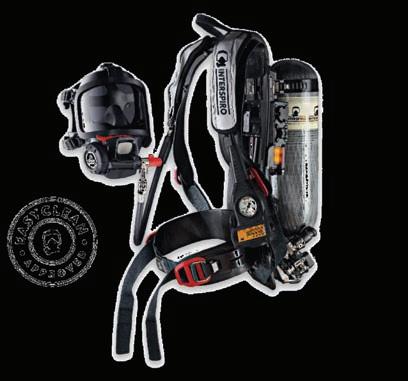
CANADIAN SAFETY EQUIPMENT IS PROUD TO BE A DISTRIBUTOR FOR THE INTERSPIRO RESPIRATORY PROTECTION LINE. THEIR STATE OF THE ART S9 INCURVE IS ONE OF THE MOST COMFORTABLE SCBAs YOU WILL EVER WEAR.
GIVE US A CALL AT 0182 OR EMAIL US AT INFO@CDNSAFETY.
No company has a richer history in respiratory protection than Interspiro. Their innovations have become industry standards, time and time again.
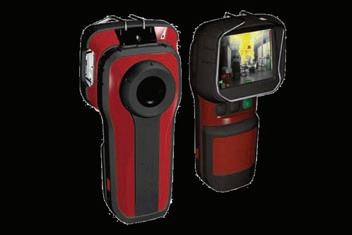
Themost advancedthermal imager for firefighting
Larger 3.5″ display for viewof the fire sceneand lightweightatjust830g(1.8
Extended dynamic temperature range to 1100˚C (2000 greaterscenedetail hotter fire scenarios
Enhanced feature setincluding laserpointer to aid communication, electronic compass for greaterscene awarenessandheat/coldseeker technology NFPA approved
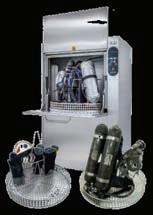
The Solo SCBA Decon/Washing machine was designed and built for one purpose only…to protect Fire Fighters from Cancer causing agents found in the Smoke and residue left on their SCBAs. As an added bonus it can clean Gloves, Boots and Helmets. In addition, it substantially lowers the time spent decontaminating firefighter equipment. The SOLO is the only SCBA decon machine that meets both NFPA and CSA standards (both Existing and Upcoming.
ü REDUCED HEALTH RISK
ü SAVES TIME 2/PKS IN 8 MIN ü EASY TO USE
Qualified by MSA, SCOTT, DRAEGER & INTERSPIRO for cleaning their SCBAs.
Five year standard Warranty
Ten Year limited Warranty
WASH/DECON TWO SCBAs
In 8 minutes. Also cleans, boots, gloves and helmets.
NOW AVAILABLE IN SINGLE OR THREE PHASE
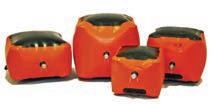
LOW – MEDIUM – HIGH PRESSURE AIR BAGS
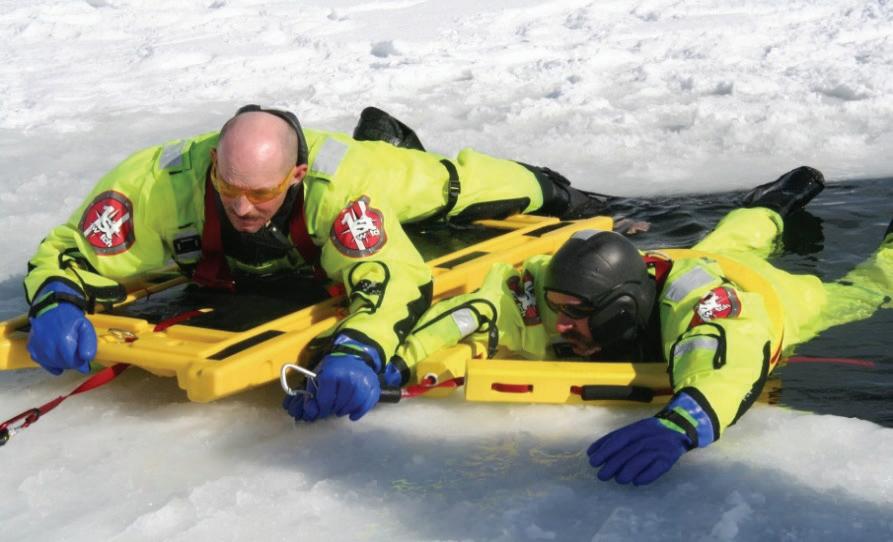
SLED WITH ICE RUNNERS RESCUE POLE TETHER LINE WITH REEL and more….
for frontline staff. The small details make a big difference.
ADMIRAL MCRAVEN’S LESSON BROUGHT TO THE FIRE STATION
The idea behind Admiral McRaven’s “always make your bed” speech is really about taking pride and having discipline in paying attention to details. This is what the fire station version of the Admiral’s lesson would look like:
• Making your bed turns into checking your gear. At the start of every shift, a gear check-in is required. Bunker gear, breathing apparatus, radios, tools, etc. Everything gets touched, inspected and tested. It is repetitive, but it is a guarantee that we are ready when the tones drop.
• Discipline in the small equals trust in the big. When you demonstrate to your crew that you care about the little things, such as gear checks, cleaning up and adequately documented paperwork, they understand that they can rely on you in the big moments, like pushing into a burning hallway or dealing with a serious personal issue.
• Pride in the details is your professional image. A tidy hose bed, a spotless rig, a crisp uniform and polished shoes are not about vanity. They show those we serve that we take this job seriously. Whether it’s a classroom full of children or the public watching us at a structure fire, they notice. They may not remember Firefighter Smith or Jones, but they will remember the fire service.
THE CASCADING EFFECT
The small things stack up, whether for the right or wrong reasons. Believe me, we want the right reasons. When everything is done properly, everything operates smoothly. The hose crosslay, which is packed neatly, deploys effort-
lessly and correctly. The rotary saw, which was properly inspected and maintained, starts on the first pull. Because you have drilled with your breathing apparatus many times, you can don it quickly as you charge the house with smoke pouring out and people trapped inside. Having learned the procurement process, you ensured vital life-saving equipment is available for the crews. When the details are ignored, the opposite occurs. Hose lines are kinked, saws will not start and equipment is unavailable; a community will doubt whether their fire department has everything under control. Even worse, lives may be put in jeopardy.
TRUST IN THE DETAILSI
The fire service relies heavily on trust, which is more important than even performance. When you trust someone, you can focus on achieving good performance. Simon Sinek is quoted as saying, “Prioritize trust over performance; performance almost always follows.” Building trust among crew members comes from small, consistent actions. For example, when your partner does a buddy check before entering, when the rookie quietly mops the bay floor, or when everyone is dressed sharply for the community event, it all sends a clear message. “You can count on me.”
Uniforms and shiny shoes serve as symbols. They are the external appearance that shows the community that we pay attention, hold ourselves to a standard, and will uphold that same high standard when we are called on their worst day.
LEADERSHIP
Good leaders understand that credibility begins with the small details. They don’t just talk about discipline or standards, they embody them. They are the first to check their gear, lend a hand with chores, or polish their shoes. When leaders present themselves well and attention is given to the small things, the crew follows suit. A chief officer who takes pride in their appearance appears professional and sets the tone for everyone:“This is the standard. This is who we are as a fire service.” When the public observes this throughout the fire department, their trust in the service increases even further.
A BIG IMPACT
Shining your shoes, pressing your uniform, maintaining the saw, or cleaning the truck – these tasks may seem menial and thankless, but they have far-reaching effects. They foster trust within the crew. They reassure the public that their firefighters are disciplined and professional. They demonstrate that we keep our equipment prepared so it will not fail when we need it. They help cultivate a culture where complacency is neither sought nor accepted. Instead, we continually aim to improve.
Admiral McRaven told the 2014 graduates that by making their beds, they could change the world. He is right! For firefighters, doing the small things right makes a difference. Our crews, our fire stations and our community rely on us. The fire service is built not on grand, heroic moments, but on a thousand small actions done right, day in and day out. These small details build discipline, pride, trust and professionalism – the very backbone of the fire service.
To paraphrase Admiral McRaven, if you want to change the fire service and protect the people who count on us, start with the small stuff. Do the little things right—every time, even when no one’s watching. In this job, the small things are never insignificant; they have a profound impact.
Luigi Davoli has spent the last 26 years serving in the fire service, building a career defined by dedication, leadership and heart. Davoli holds a master’s degree in of public safety, a certificate of fire service leadership, and an advanced certificate of fire service administration.
For over a century, Fort Garry Fire Trucks has built fire apparatus trusted by departments across North America. Every truck is engineered for the toughest road conditions and the most demanding calls — designed by Canada’s largest fire apparatus engineering team and backed by a legacy of durability, reliability, and innovation.
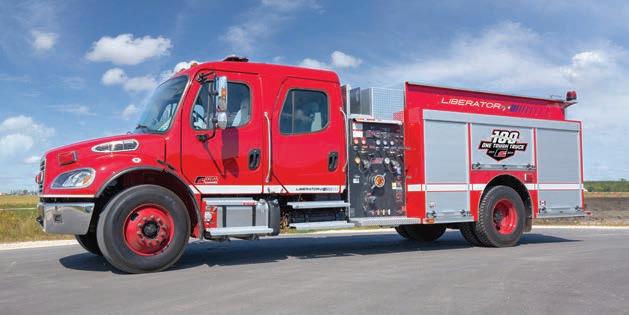
4-DOOR LIBERATOR SIDE CONTROL
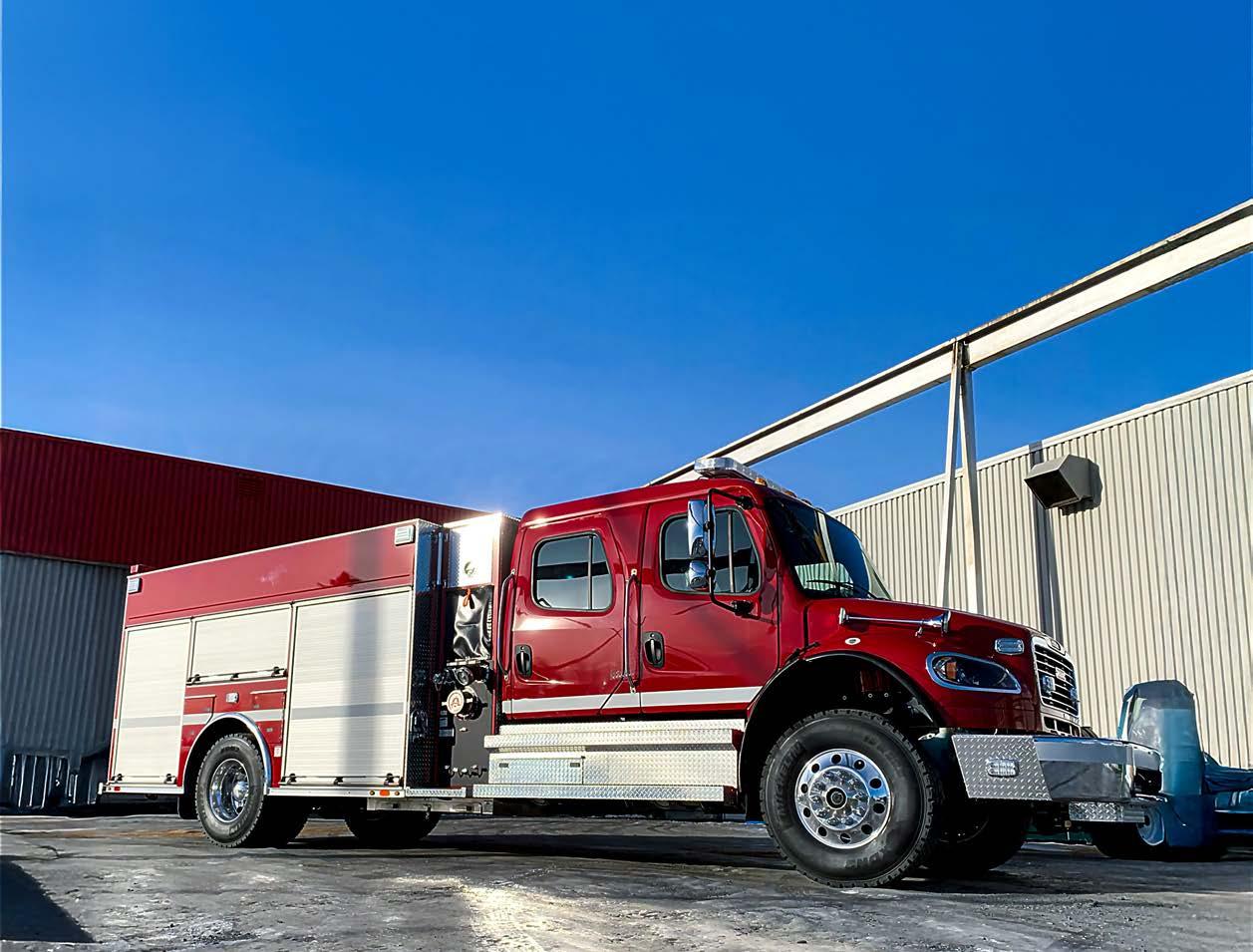
Built on a Freightliner M2 chassis with a 350 HP engine, the Liberator delivers compact power and proven performance.
Outfitted with a Hale midship pump, 800 I.G. water tank with foam system, and more than 178 cubic feet of storage, this aluminum-bodied apparatus
offers big capability in a smaller, highly maneuverable design.
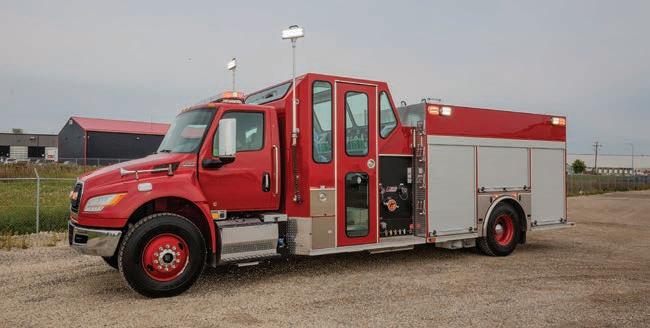
4-MAN CROWN WITH GENTILI LADDER
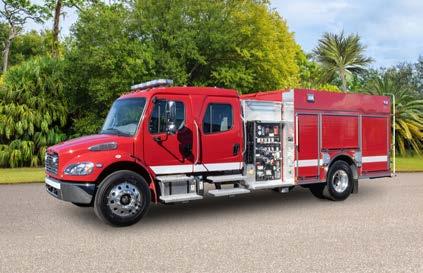
Featuring an International chassis and 350 HP engine, this pumper combines power and practicality. Equipped with a Hale DSD1250 pump, 800 I.G. foam tank, Gentili drop-down ladder rack, dual FRC floodlights, and 286 cubic feet of storage, the 4-Man Crown provides exceptional efficiency and accessibility on every scene.
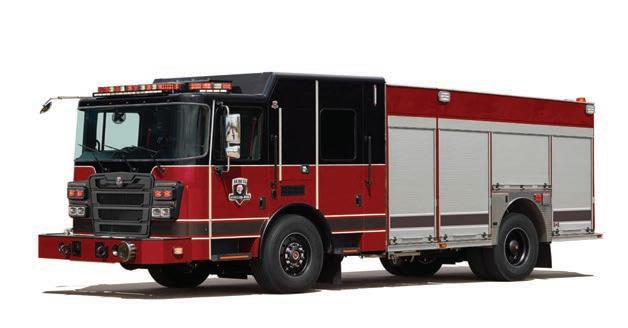
EMERGENCY RESCUE PUMPER –
HME 1871 & HME SPECTR II
Both models feature a Cummins L9 450 HP engine, Hale DSD1500 pump, 1,000 I.G. water tank, and Whelen emergency lighting.
HME 1871: traditional layout with an exposed side pump panel.
HME Spectr II: modern design with a roll-up door pump enclosure for added protection and clean operation.
Built for firefighters who demand strength, dependability, and performance — these are truly One Tough Truck
Proudly built in Canada. Trusted across North America. Call 1-800-565-3473 or visit www.fgft.com for complete specifications and delivery details.
FORT GARRY FIRE TRUCKS — ONE TOUGH TRUCK. BUILT TO SERVE.
Emergency Rescue Pumper Top Mount Enclosed International Chassis, 350 HP
Emergency Rescue Pumper Side Control HME SPECTR II Chassis, 450 HP
Emergency Rescue Pumper Side Control HME 1871 Chassis, 450 HP
4-Door Liberator Pumper Side Control Freightliner Chassis, 350 HP
By Laura Aiken
ADVANCING ARFF SYSTEMS
Draeger and FESTI partner on a new ARFF training system
YYZ: The three well-known letters representing Canada’s largest travel hub, Toronto Pearson Airport Authority. About 10 kilometres away lay 40 acres of elite firefighter training grounds known as FESTI: Fire and Emergency Services Training Institute.
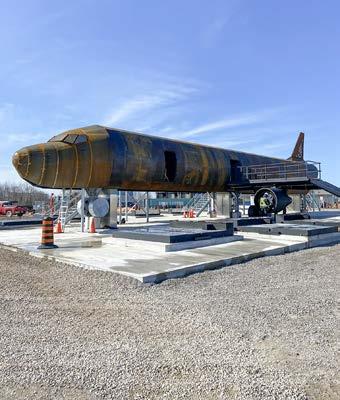
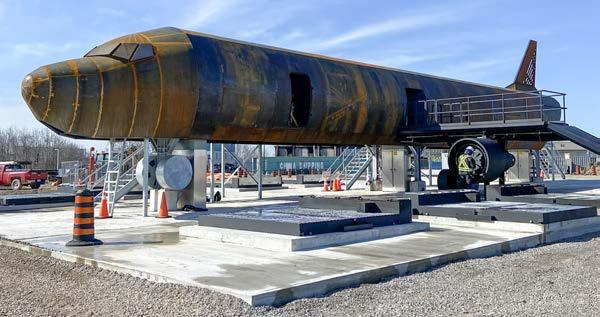
Two new ARFF training simulators by Draeger Safety Canada are the latest addition to FESTI’s expansive suite
SOLUTIONS
With 32+ years of experience, we help municipalities and corporations enhance fire safety, efficiency, and preparedness through Community Risk Assessments, Master Fire Plans, and Fire Department Training - All tailored to your needs.
informed decisions
solutions
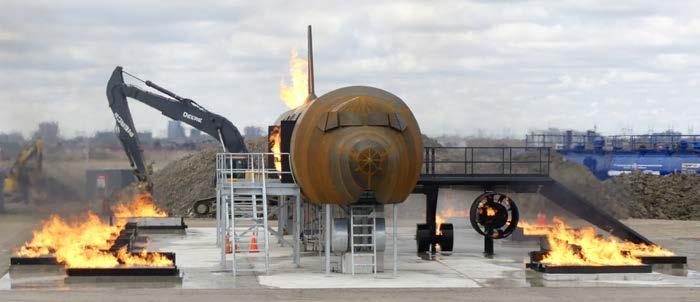
The Draeger Aircraft Fire Simulator
of facilities, one delivered in April and the other in September. The Draeger Aircraft Fire Simulator (AFS) meets training objectives such as fire truck positioning, fuselage cooling, hose management, extinguishing techniques, and interior cabin rescue scenarios. The APS uses propane (vapour for interior and liquid for exterior burners) for realistic fire simulations while to reduce air pollution and prevent groundwater contamination. There is a containerized control tower with advanced monitoring and safety features — they system is designed to meet the highest safety standards for trainees and operators, ensuring realistic and repeatable flame simulations.
The APS is compliant with ICAO Annex 14 and TC Canada Standard 323 for Toronto Pearson Fire.
Here’s a round up of AFS’ technical specifications:
Heat output
• Small AFS liquid: 13,000,000 BTU/hr
• Large AFS liquid: 24,000,000 BTU/hr
• Spill fire liquid: 156,000,000 BTU/hr
Dimensions
• Large AFS: 100’ x 60’ x 25’
• Small AFS: 60’ x 60’ x 25’
• Spill fire: 120’ x 70’ x 20’ (flame height)
Control tower features
• Containerized structure with 3x 20’ shipping containers
• Exterior viewing deck and interior viewing windows
• Utility space for electrical and control cabinets
• Heat pump for climate control
• LED lighting, alarm mast, and 360-degree external camera
Additional data
• Fireplaces: up to 12
• Smoke machines: up to 3
• Cameras: up to 9 for large APS
The Draeger Aircraft Fire Training Simulators are a cutting-edge compliment to FESTI’s unique space that is anchored by an award winning 35,000 square foot LEED certified main building, confined space building, rescue tower, burn building, aircraft mockups, machine rescue area, HAZMAT training site, and a Trans Canada rail car.
The simulator uses propane for fire simulations that reduce air pollution and groundwater contamination.
By Stephen Hilton
TRANSITIONAL fire attack explained
The science behind “hit it hard from the yard”
Fire fighting tactics in the fire service continue to evolve daily as new research, technology and hands-on experience reshape how fires are approached and fought. One type of fire tactic is the “transitional fire attack”. This tactic is an offensive strategy that enhances safety, efficiency and effectiveness on the fire ground. Although once controversial, this method is now widely recognized as a valuable addition to the firefighters’ tactical toolbox.
WHAT IS TRANSITIONAL FIRE ATTACK?
Transitional fire attack, often called “softening the target” or “hit it hard from the yard”, involves applying water from outside a structure fire before advancing inside to extinguish the flames. The main aim is to cool down the environment,
decrease the heat release rate (HRR) and slow fire spread, making conditions safer for firefighters and increasing the chances of survival and space for potential victims.
This tactic is not defensive; it’s an initial offensive move executed from the outside to quickly reduce fire intensity before shifting to an aggressive interior attack and search and rescue.
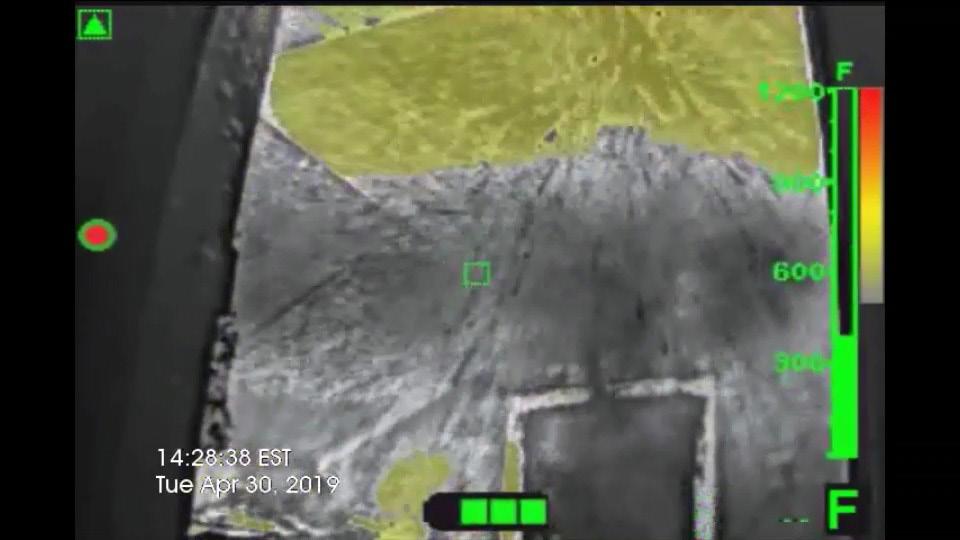
The initial crew on scene should conduct a rapid 360-degree assessment of the structure. Determine if the fire is self-venting; if so, this is the perfect opportunity to apply this tactic. If the fire isn’t self-venting, avoid breaking or breaching a window to create an opening for this method, as it would only introduce another flow path for the fire, which we want to prevent. If visible fire is venting from a window or door, use a static, straight or solid nozzle stream at a very steep angle to produce a sprinkler-like effect, allowing the water to run across the ceiling and down the walls to cover as much surface area as possible. We choose a static nozzle stream because it enables the heated gases and smoke to vent out of the window effectively. Rotating the nozzle or using a fog stream could entrain air and disturb the intended flow path through the window or door. Additionally, a straight or solid nozzle stream if preferred over a fog stream because it produces larger water droplets, which absorb heated gases faster, significantly lowering temperatures and reducing the risk of flashover. Temperatures can be reduced by up to two-thirds
PHOTO: STEPHEN HILTON
within seconds through the correct nozzle stream application.
Studies by Underwriters Laboratories (UL) and Fire Safety Research Institute (FSRI) have shown that applying the correct nozzle stream early, even from the exterior, quickly lowers the interior temperatures. This reduces the risk of flashover and structural collapse, increases the chances of trapped victims surviving until rescue, and indicates that a well-
placed exterior nozzle stream can significantly decrease flame volume and fire growth, buying valuable time for interior crews.
The transitional fire attack is also an excellent tactic to use on basement fires. As we know, basement fires are among the most dangerous and challenging situations for a fire crew. The stairwell can act like a chimney, pushing all the HRRs, flames, smoke and gases up to the top of the stairs, where the interior
attack crew is positioned uphill relative to the fire and directly in the fire’s path. When considering survivable space, there are essentially three zones or areas to evaluate in relation to the minimum thermal protective performance of our bunker gear or PPE. Our bunker gear offers approximately 17.5 seconds of protection before a firefighter risks a second-degree burn in flashover conditions. This rating is based on brand-new PPE.
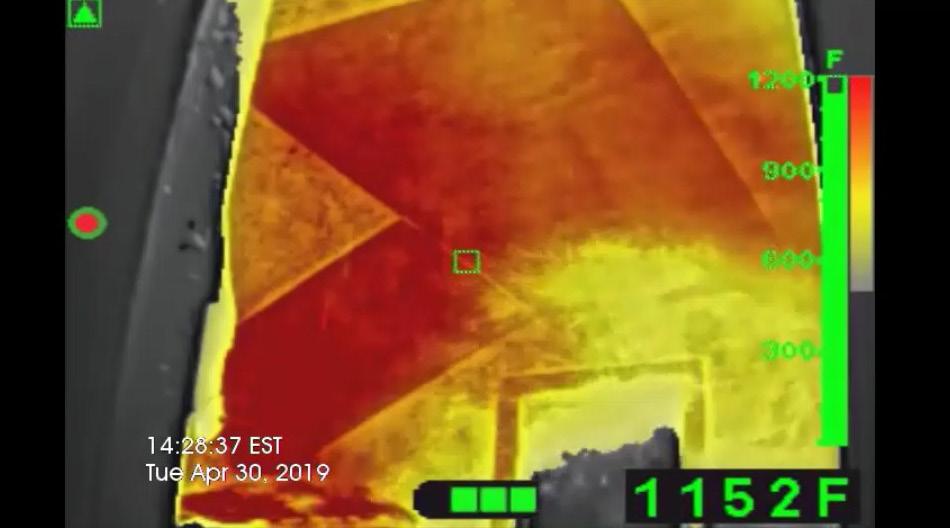
Flashover can occur between 900 and 1,200 degrees Fahrenheit (F) in a fully developed fire compartment. This typically happens in the upper zone where the heated smoke and gases are present. In the zone below the heated smoke, down to the neutral plane, temperatures can start to weaken the protection of your bunker gear, usually between 600 F and 900 F. Additionally, your attack hose line can begin to break down and char at 572 F.
Helmets are typically rated for 500 F for only five minutes at these temperatures. The final zone is located below the neutral plane down to the floor level. In this area, you can expect the polycarbonate of your SCBA mask to start failing at 290 to 600 degrees fahrenheit. With this in mind, third-degree burns will occur at 162 F, second-degree burns at 131 F,
The firefighter is applying a static solid nozzle stream into the venting window to knock down the fire.
PHOTO: STEPHEN HILTON
first-degree burns at 118 F, and finally, the skin feels hot at 111 F.
This is why the transitional fire attack tactic is so effective for the survivability of any victims inside the burning structure. It also creates accessible space for our fire attack crews while working within the fire. By using the fire nozzle stream from the exterior first to reduce temperatures by hundreds of degrees in seconds, it increases the chances that any potential victims can survive. Remember, the top three causes for victim fatalities are: toxic gases, heat and, finally, burns.
CONSIDERATIONS
While transitional fire attack offers many benefits, it must be used correctly. Here are some important considerations.
Stream selection is crucial. Only a static, solid or straight nozzle stream should be used to prevent entraining the fire, and the nozzle should be aimed at the steepest possible angle, targeting the ceiling or upper area of the fire compartment.
Training and coordination are equally important. Crews must be trained to understand when and how to use this tactic. Poor coordination can cause water to be applied at the wrong time when
crews are inside the structure, which can push heat and smoke onto firefighters in the fire compartment area. This is why clear communication between crews and incident command is essential to ensure that the exterior attack is followed by an organized interior transition.
Fire departments across North America have successfully implemented transitional fire attack. For example, volunteer departments, which are often limited in resources and manpower and sometimes experience staffing delays, use this tactic to gain control of the fire. They do this by having their attack crew approach the fire from the exterior to knock down the flames and shut down the hose line, then transition to the interior attack crew before the fire can reignite. This allows them to enter the structure under better and more sustainable conditions. Remember, you only have approximately 90 seconds, give or take, from the time water is applied, until the crew must transition into the structure to fully extinguish the fire before it reignites and temperatures rise again. This transition is very time-sensitive.
IN CONCLUSION
Transitional fire attack once faced criticism,
especially the belief that applying water from outside a fire compartment would push fire and heat into the structure. However, extensive studies and testing by fire research organizations such as UL and FSRI have disproven this myth. The reality is that proper nozzle water application reduces HRRs and cools the environment significantly, making interior operations safer for our firefighters, not riskier.
This type of attack is a science-backed, efficient and safe fire fighting technique when applied correctly. It is not meant to replace interior operations but serves as a smart addition to the toolbox when the situation calls for it. Fire service leaders and trainers should adopt this method as part of a modern, adaptable fire fighting strategy that focuses on life safety, fire control and firefighter survival.
Stay safe and keep training!
Stephen Hilton has 21 years in the fire service. He is currently working for the London fire department as a firefighter. He is a certified level II fire instructor working for Firestar Services and is a certified instructor with the IAFF Fireground Survival Program. He is a member of his department’s peer support team. You can reach Stephen at hilts6ff@yahoo.ca.
UNDERSTANDING FIRE SERVICE CULTURE
Power Distance Index and leadership styles
When we strive to understand the culture within the fire service industry, it’s important to consider both internal and external influences to gain a comprehensive understanding. It’s not just about the diverse and unique emergency operations that fire services encounter and how they are managed, but also the non-emergency situations. We must examine two elements: the Power Distance Index (PDI), a concept used in cross-cultural psychology, and the three leadership styles.
PDI is one of several cultural dimensions postulated by Dr. Geert Hofstede, professor of organizational anthropology and international management at the University of Maastricht, the Netherlands. If you have read Malcolm Gladwell’s best-seller Outliers: The Story of Success , you’ll stumble onto PDI. Although Gladwell wrote about PDI in his book to help explain why airplanes crash, there is a correlation between the fire service industry and the aviation industry: an explanation of how people in different cultures respect and value authority. Given that the fire service industry is paramilitary and hierarchical and has differing cultures inside the department, it seemed fitting to explore it further.
While working with IBM, Hofstede researched and collected data from more than 70 countries over four decades, examining what drove people apart when cooperation was necessary. His revolutionary study originated in the early 1960s when his “job was to travel the globe and interview employees, asking about how people solved problems and how they worked together and what their attitudes were to authority.” 2 In other words, he was tasked to ascertain the national cultural differences in IBM globally. Today, his mountain of data has been transformed into Hofstede’s Dimensions; one of these
dimensions, PDI, could help explain why some fire departments thrive and others do not.
When a culture expects subordinates to respect the directives of their superiors, it is said to have a high PDI. In the fire service, particularly during emergency situations, it is essential for firefighters and fire officers not to question the directives of the incident commander (IC) in order to effectively manage the situation. This practice not only ensures that all functions assigned to the incident are prioritized but also contributes to the overall safety of the scene itself.
The only caveat arises when safety concerns emerge; it is crucial that any new information is promptly communicated to the IC immediately to maintain the integrity of the scene’s operations. The IC, regarded as the most
Adapting your leadership approach to fit the situation at hand is key to getting the most out of your team.
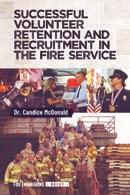
Successful Volunteer Retention and Recruitment in the Fire Service
$96.00 | Item #1593706067
Fire departments are facing one of their greatest modern challenges—recruiting and retaining the best talent. This book provides fire service leaders with the proven strategies, tools, and insights needed to build and sustain a strong, committed workforce. From understanding why volunteers leave to creating a game plan that overcomes organizational barriers, this resource addresses the core issues behind staffing shortages and provides actionable solutions for both volunteer and career departments.
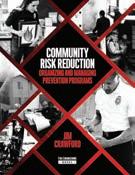
Community Risk Reduction: Organizing and Managing Prevention Programs
$109.00 | Item #1593706081
Community Risk Reduction (CRR) is not just prevention—it’s a strategic, data-driven process for assessing hazards, prioritizing risks, and implementing solutions that make communities safer. This book offers a complete guide for fire service leaders, prevention practitioners, and emergency response personnel. Drawing from decades of field experience and national standards, the author Crawford provides a clear roadmap for building and managing effective CRR programs, supported by real-world case studies, review questions, and actionable activities.
Aerial Operator Fundamentals
$96.00 | Item # 1593706074
Sets the new standard for aerial apparatus training and performance. FDNY veteran G. Howard Blythe delivers the definitive guide to mastering aerial operations—combining operational objectives, device-specific design knowledge, and proven tactics into one essential reference. This comprehensive resource explains not just how to operate, but why standard practices and design features matter on the fireground, enabling you to adapt to the complex and evolving challenges of modern fire operations.
knowledgeable on scene, serves as the authority figure; adherence to their directives is essential for effective situation management. This is why high PDI is necessary in emergency situations. The success of emergency management is primarily reliant on the authority figure’s ability to provide direction, discipline, and division of labour. Conversely, in situations that do not necessitate an authority figure for compliance or cooperation, the group flourishes as individual strengths are harnessed, enhancing the career well-being of firefighters and fire officers. Therefore, a low PDI proves advantageous.
According to Gallup, those “with higher career wellbeing are more than twice as likely to be thriving in their lives overall…[when] they know they have the skills and talents to be successful…and they know that when they accomplish something, the people around them are going to notice and appreciate it.”
This principle is supported by the IAFC-endorsed NFPA textbook Fire Officer: Principles and Practice . “It is still recognized that a rigid command and control process is required at emergency scenes – however, for a department to be successful today, employee empowerment, decentralized decision-making, and delegation in non-emergency activities are required.”
Dr. Ron Friedman, author of Great Place to Work , wrote in his second book Decoding Greatness that “…all humans – regardless of their age, gender, or culture – are born with three basic psychological needs: the need for belonging, autonomy, and competence.” This implies that to maximize the effectiveness of firefighters during non-emergency times, they must know and feel that they are valued and trusted for the work they can accomplish without micromanagement, allowing them to succeed and grow while at work.
An organization cannot develop and maximize its firefighters’ potential when the culture is solely a high PDI environment. While a high PDI is advantageous in high-pressure situations where life and safety are critical, a low PDI fosters the sharing of dissenting information, respectful disagreement, and assertiveness—creating an environment where no single individual solely determines the course of problem-solving.
We’ve examined culture, specifically its Power Distance Index, to help explain how firefighters and fire officers value and respect authority. Now, we need to turn to leadership styles to examine how the culture can function.
Kurt Lewin, who created the Research Centre for Group Dynamics, believed behaviour is caused by the interaction of the environment and individual traits. He focused his work on the study of groups and how they affect individual behaviour. Lewin postulated the three styles of leadership: authoritarian or autocratic, democratic or participative, and laissez-faire or delegative.
An authoritative leadership style involves providing clear expectations about what needs to be done, when it should be completed, and how it should be achieved. For the fire service, this is especially important in high-stakes emergencies. However, it does not foster creativity; in fact, it stifles it.
The second leadership style is a hands-off approach, allowing the group to make decisions: laissez-faire. This leadership style can lead to a lack of motivation among group members. Lewin found that when group members are highly qualified in specific areas, this approach can be effective. However, research revealed that group members demanded more from the leader, resulting in decreased overall cooperation.
Although it might appear that most people strive to be democratic leaders, when pressure is looming, such as a project or initiative that needs completion, a person might resort to one of two other styles. This is not because they consciously think about it but because they subconsciously react to the situation. Research has demonstrated that when in a reactive state, people lose the ability to think clearly and resort to what’s comfortable: dictating or taking a hands-off approach.
Nonetheless, the democratic leadership style is the most effective of the three. While research found that productivity was not as high as it was for authoritarian leaders, the quality of the work was significantly better. The group members understand that the final decision lies with the leader but are more engaged and motivated because they were invited to be a part of the process, making their contributions part of the final product.
The basic organizational structure for fire departments has remained unchanged for three centuries. Yet, to improve the fire service, the traditionally paramilitary structure needs to be reevaluated, incorporating unconventional practices and studies with the conventional. That means introducing best practices and studying other disciplines, such as psychology, especially in the context of improving culture. If the fire service wants to improve its culture to make it safer and healthier, then examining PDI and leadership styles together will create both short-term and long-term value.
In addition to being a firefighter and R2MR instructor from the city of Burlington, Ont., James Rychard is an advocate for mental and behavioural health in the fire service, sitting on multiple association committees. He can be reached at jaymzr007@hotmail.com.
Breathing apparatus from MSA Safety now certified as compliant to the 2025 NFPA Standard
MSA Safety’s latest edition of its self-contained breathing apparatus, the MSA G1 XR, has received U.S. government approval from the National Institute of Occupational Safety and Health (NIOSH) and certification from the Safety Equipment Institute (SEI) as compliant to the 2025 Edition of the National Fire Protection Association’s (NFPA) 1970 performance standard.
The 2025 Edition of the NFPA 1970 performance standard consolidates several prior standard editions, including 1981 and 1982, and mandates three primary upgrades to the SCBA. These upgrades, which are now available in the G1 XR 2025 Edition, include:
• A change in the end-of-service time indicator: An alarm bell on the SCBA will ring when the air supply in a cylinder is at 31 percent remaining for a 4500 pressureper-square-inch “PSI” system. Prior standard editions called for this alarm to ring when the air supply in a cylinder was at 35 percent remaining.
• A change in soft goods: All soft goods, including the straps and emergency breathing pouches, on an SCBA are now removeable by a firefighter for easy cleaning.
• New requirements to Bluetooth connection indicators: Located on either the SCBA’s control module or on the heads-up display inside the firefighter’s facepiece, this indicator confirms radio connection to the SCBA. The location of the indicator is dependent on the type of radio the firefighter is using for communication.
Fire-Dex to launch its first-ever fire investigation PPE
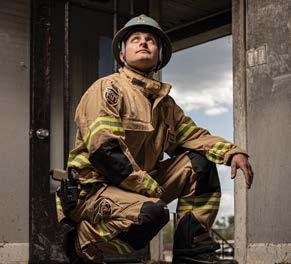
Fire-Dex is rolling out its new Fire Investigation PPE, its first protective ensemble designed specifically for fire investigators. The patent-pending fire investigation PPE bridges the gap between heavy turnouts and imperfect alternatives by balancing protection, mobility and breathability.
The fire investigation PPE incorporates key features like:
• Waterproofing covers specific areas to provide protection
where it’s needed and enhanced breathability where it’s not.
• Integrated knee pads for long stretches spent kneeling and climbing.
• Strategic venting panels, based on the same patent-pending technology found in Fire-Dex’s AeroFlex turnouts, designed to supercharge the garment’s breathability while still blocking particulates.
• Pass-Through pockets for easy access to firearms, ID or any other tools fire investigators need to carry or display.
• Phone Storage in a specialized waterproof pocket for easy, protected access.
Flir launches next generation of K-Series thermal cameras
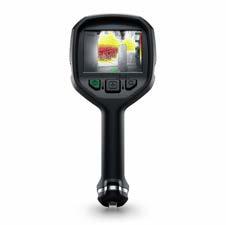
Flir launched the K75 and K85 thermal imaging cameras. Equipped with a larger display, the new K-Series thermal cameras provide critical information from first alarm, to clean-up, and postevent review. The simplified menu is designed to be easy to navigate, so that information is relayed in a timely manner.
Flir says the K-Series cameras provide instant colourization in any temperature to identify victims, structural risks, and fire behaviour. Several colourization modes are available to differentiate between specific temperature ranges.
Paired with the FLIR Responder App, additional features including media downloads and training is available.
GUEST COLUMN
By Arjuna George
Arjuna George (Fire Chief, Ret.) has transitioned his leadership and resilience expertise into coaching and consulting for the fire service community. Connect with him at silverarrowco.com or via arjuna@silverarrowco.com.
THE ROLE OF AI AND TRAINING
The role of a training officer can be overwhelming. You’re expected to plan, instruct, evaluate, innovate, motivate, document and possibly even respond to calls. Artificial intelligence (AI) isn’t here to take your job. It’s here to help manage the heavy administrative load and give you back more time for what matters most: connecting with your crews and preparing them to be sharp, confident and ready for anything.
WHY AI MATTERS IN FIRER TRAINING RIGHT NOW
Departments across Canada are being asked to accomplish more with fewer resources. Meanwhile, you are overwhelmed by spreadsheets, certification records, lesson plans, drills and policies. AI can streamline your workflow, generate training content in seconds and free your mind for the leadership tasks only humans can perform: building team trust and sharing wisdom.
REAL-WORLD WAYS TO USES AI IN FIRE TRAINING
1. Fast, custom scenario building
Need a scenario? AI tools can create a first draft in seconds. Just input your parameters and allow it to handle the heavy lifting.
A prompt example could be: “Create a first responder scenario involving a mountain biker thrown over an embankment, unconscious, with extensive injuries. Include environment, hazards, and vivid scene details for training purposes.”
You’ll receive a complete scenario draft, objectives, conditions, injects, curveballs and discussion questions ready
Some may view AI as a shortcut, but it can actually boost your productivity tenfold when used correctly.
to approve. By tweaking the prompt, you can adjust for recruits or seasoned crews.
2. Hyper-realistic images for drills
You can also utilize AI tools to create custom fire scene visuals in seconds.
A prompt to try out could be: “Generate a street view image of a two-storey house fire, with black turbulent smoke pouring from a second-floor bedroom window and light white smoke billowing from first-floor windows. Include a child’s playground on the lawn and a car in the driveway. The scene is before the fire department’s arrival.”
Use these images for size-up drills, smoke reading exercises, hazmat scenarios or tactical decision-making discussions.
3. Lesson planning/SOP drafting
AI can assist in creating training outlines, simplifying technical language and even helping with SOG writing. Try this prompt: “Write a 90-minute NFPA-aligned training plan on highrise standpipe operations, including objectives, setup, hands-on drills and evaluation criteria.” The important thing to remember is that you still bring the expertise, but AI saves you hours of time, allowing you to focus on refining and delivering the material.
4. Knowledge checks and quizzes AI significantly enhances the process of creating personalized quizzes, making it not only quick and efficient but also free of charge.
A prompt example might be: “Generate 30 questions and answers to test recruits on modern fire behaviour and flow path management, using NFPA and current fire science.” Utilize quizzes for
pre-course evaluations or post-training reinforcement.
5. Record-keeping and reporting
AI tools can also summarize attendance records, generate evaluation reports and document your entire training year. All you need to do is simply upload a department training document and enter a prompt like the one below.
“Summarize this year’s auto extrication drills, including total hours trained, objectives achieved, and equipment used. Create a table and a text summary for a report to the fire chief.”
IMPORTANT CONSIDERATIONSI WHEN USING AI
• Always review and verify any AI-generated content for accuracy and local standards.
• Protect private data and avoid uploading sensitive or identifiable information to AI tools.
• Use AI ethically; never as a substitute for human evaluation
• You don’t have to be a tech wizard to start using AI tools. Here are a few simple ways: Write your next scenario or drill briefing using a tool like ChatGPT; generate a custom fire scene visual for tabletop exercises; create a knowledge quiz for an upcoming training; summarize monthly training logs into a clean report draft; reword a technical SOG into plain language for easier learning.
By using AI to reduce the clerical load, we safeguard the mental bandwidth of our fire service leaders, allowing them to be more creative and have a greater capacity for human connection.
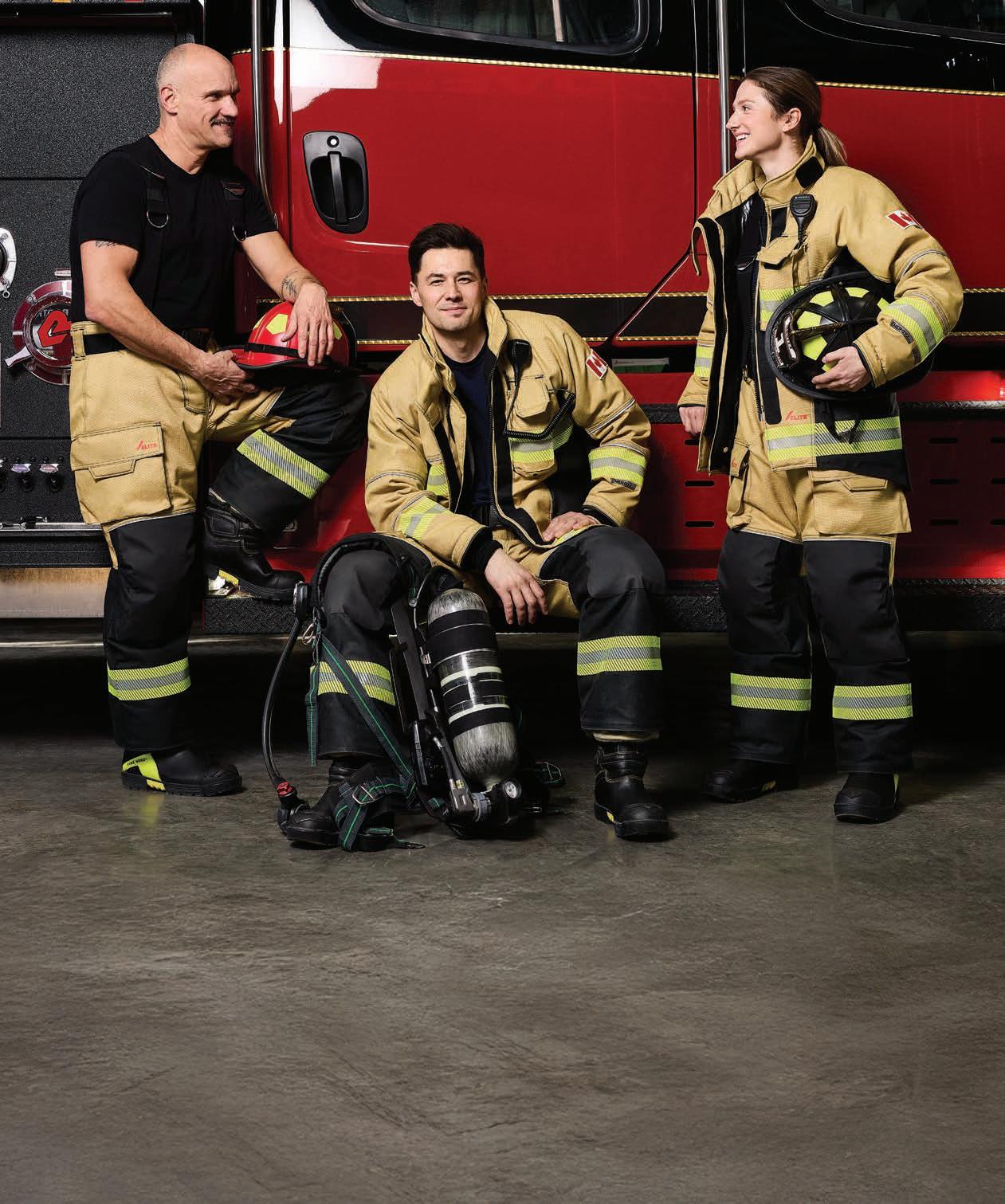
We’re not the only maker of firefighting gear — but we’re the only one that’s fully Canadian-owned and operated. And that makes a difference. For over 25 years, our priority has been the safety and wellbeing of our first responders and firefighters. You can see it in our relentless innovation and attention to detail. As long as Canadian firefighters are hard at work saving lives, we’ll be hard at work protecting theirs. Proudly Canadian. From ownership to every stitch.