Farmers are their own last defence against misinformation
PG. 19
SOYBEAN RESPONSE TO FUNGICIDES
Do varieties respond differently?
PG. 23
AAFC FIGHTING CANOLA PEST
The Cabbage Seedpod Weevil battle
PG.26
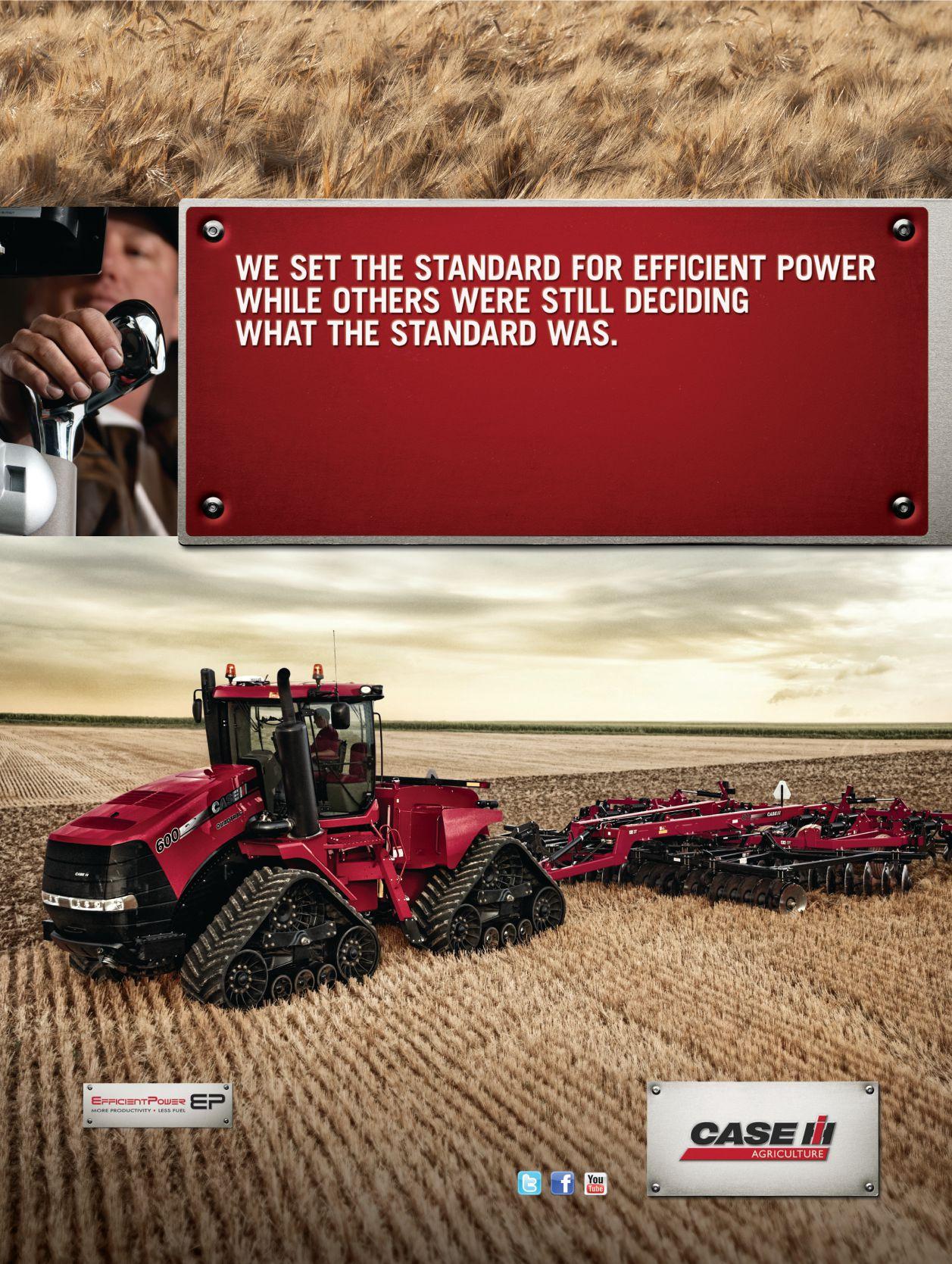
While some manufacturers are just moving to SCR (Selective Catalytic Reduction) technology to meet fuel and emissions needs, Case IH has been supporting it since the beginning. And with over 10,000 tractors in the field, our SCR track record is proven. In fact, in recent independent tests, * the Steiger ® 600 set a record for drawbar horsepower and fuel efficiency, outperforming the Deere 9630 across the entire powerband. To learn more about how you can be ready with the proven leader, visit caseih.com/efficient power.
TOP CROP
does it do for you? by Melanie Epp
Misconceptions about Soy By Lilian Schaer 6 | The Canadian Soybean Council
| Doubling up Pesticide Impact with Double Nozzles Testing new products and practices by Jeanine Moyer
Soybean response to Fungicides By Treena Hein
AAFC Studies damage and effects of the Cabbage Seedpod Weevil by AAFC
| The World of On-Farm Research
are their own last defence against misinformation By Amy
Petherick
Growing better Alfalfa by Treena Hein
New Dodge Ram By Howard Elmer Smaller Sectors Will Feel Impact By Tino Breuer
on the Farm By Richard Cressman From Waste to Fertilizer by D. Degenhardt, B. Drozdowski and R. Faught
SARA AVOLEDO | EDITOR
GETTING INVOLVED AND SUPPORTING YOUR COMMUNITY
In April of 2012 the Agricultural Adaptation Council (AAC) was notified that the current Canadian Agricultural Adaptation Program (CAAP) will expire in March 2014, and that there is no role for the regional councils in future federally funded programs. The federal government wants to centralize the services provided by AAC, and its provincial counterparts, to Ottawa and have them all run by the bureaucracy located there.
Although the current CAAP program remains open and thus the impact of this decision has not been felt as of yet, I would appeal to you, our readers, to seek out ways to help keep program administration at the provincial level and away from Ottawa.
If the AAC’s services are outsourced many groups are sure to suffer, especially smaller groups that have less access to funding on their own (see page 28 for more information on this).
The AAC is one of 14 councils across the country. The AAC is a not-for-profit, industry-led, arm’s-length delivery agency that administers government funding and is made up of 66 member organizations. These organizations are all agricultural, agri-business or rural in nature. Having this expertise within its membership and its board assists the AAC in funding projects that really make a difference in the Ontario agri-food industry.
One example of the great work the AAC is doing will be featured in an upcoming issue of Top Crop Manager (and another can be found on page 17 of this issue). The Ontario Forage Council has conducted research on forages and concluded that they are still a great bet to include in your crop rotations because forages bring a similar net return to corn, they can improve soil structure, reduce soil erosion, increase biodiversity and help minimize resistant weeds, just to name a few from the report findings.
The AAC has been around since 1995 and has approved 2,837 projects, which translates to a total of $230,541,320.04 in funding awarded. A portion of these projects and funding are awarded under the Canadian Agricultural Adaptation Program (CAAP). These projects help our industry to develop new ideas/products, respond to emerging issues and pilot solutions. The AAC has completed 184 CAAP projects totaling $23,404,951.50 in funding to date.
What’s more, 98 per cent of those surveyed recently have a positive overall impression of AAC — would 98 per cent say that about our federal government and its programs?
I would encourage you to learn more about the Agricultural Adaptation Council and other provincial councils if you aren’t already aware of what great work they do, and also to support them in any way that you can, including informing your local MP and MPP that you want your ACC and regional councils to stay in the provincial farming communities they serve best, not in Ottawa.
I look forward to continuing this conversation with you online.
TOP CROP
MANAGER
SEPTEMBER 2012, VOL. 38, NO. 10
EDITOR Sara Avoledo savoledo@annexweb.com
ASSOCIATE EDITOR David Manly dmanly@annexweb.com
EASTERN SALES MANAGER Steve McCabe • 519.400.0332 smccabe@annexweb.com
WESTERN SALES MANAGER Kevin Yaworsky • 403.304.9822 kyaworsky@annexweb.com
ACCOUNT COORDINATOR Alice Chen • 905-713-4369 achen@annexweb.com
MEDIA DESIGNER Katerina Maevska
GROUP PUBLISHER Diane Kleer dkleer@annexweb.com
PRESIDENT Michael Fredericks mfredericks@annexweb.com
PUBLICATION MAIL AGREEMENT #40065710 RETURN UNDELIVERABLE CANADIAN ADDRESSES TO CIRCULATION DEPT. P.O. Box 530, Simcoe, ON N3Y 4N5 e-mail: subscribe@topcropmanager.com
SUBSCRIPTION RATES Top Crop Manager West - 8 issuesFebruary, March, Mid-March, April, June, October, November and December - 1 Year - $44.25 Cdn. plus tax
Top Crop Manager East - 7 issuesFebruary, March, April, August, October, November and December - 1 Year - $44.25 Cdn. plus tax
Specialty Edition - Potatoes in Canada - February1 Year - $8.57 Cdn. plus tax
All of the above - $76.19 Cdn. plus tax
Occasionally, Top Crop Manager will mail information on behalf of industryrelated groups whose products and services we believe may be of interest to you. If you prefer not to receive this information, please contact our circulation department in any of the four ways listed above.
All advertising is subject to the publisher’s approval. Such approval does not imply any endorsement of the products or services advertised. Publisher reserves the right to refuse advertising that does not meet the standards of the publication. www.topcropmanager.com
Convenience and yield, in one easy-open package.
We’ve combined industry-leading DEKALB® genetics with Genuity® corn traits to create an all-in-one solution for you.
MARKETS AND MARKETING
WHAT THE CANADIAN SOYBEAN COUNCIL DOES FOR YOU
The promotion of Canadian soybeans in both domestic and export markets
by Melanie Epp
Founded in 2005, the Canadian Soybean Council (CSC) is a national organization that represents the major soybean growing regions of Canada: Ontario, Quebec and Manitoba. The three founding organizations include the Manitoba Pulse Growers Association (MPGA), Grain Farmers of Ontario (GFO) and La Fedration des producteurs de cultures commerciales du Quebec (FPCCQ). CSC’s mission is to promote high-value, traceable, safe and quality-assured Canadian soybeans in both export and domestic markets.
CSC’s main focus is the promotion of Canadian soybeans in both domestic and export markets and to that end, this past year, the three founding organizations conducted a strategic review with their members in order to increase participation and knowledge transfer among the provinces. The organization has chosen to focus less on government relations, lobbying and export market development than it did in the past.
To promote Canadian soybean markets, CSC has conducted a number of activities, including incoming and outgoing programs. “For the incoming programs,” says Nicole MacKellar, co-ordinator, “we invite delegates from countries with export markets that we see as either a potential to grow our market share, or where we are well established in that market and we
really want to further the relationship with them.”
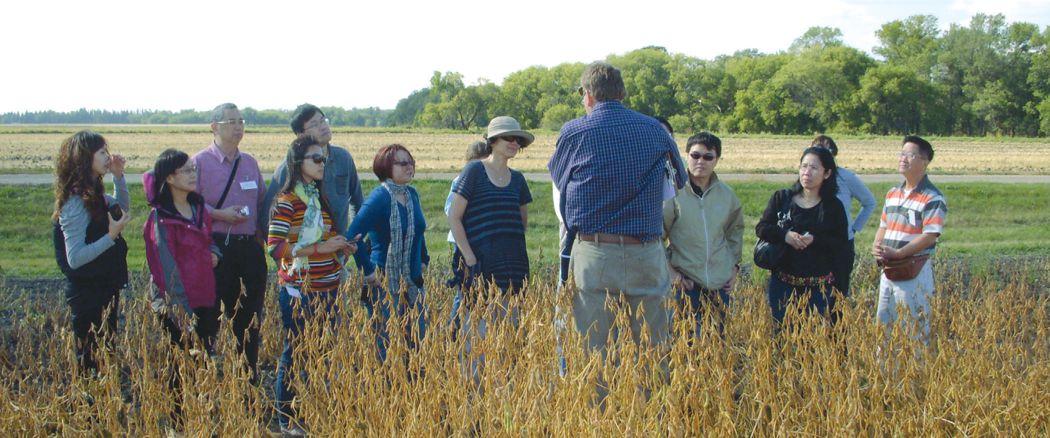
This past year, a group of visiting delegates got an opportunity to see soybean fields in Manitoba, Quebec, and Ontario, and to speak directly with soybean producers in those provinces. Delegates were also given the opportunity to visit soybean-processing plants, which allowed them to see firsthand the quality control systems that Canadian facilities have in place.
CSC’s main focus is the promotion of Canadian soybeans in both domestic and export markets
For outgoing programs, CSC takes delegates from across the soybean industry to countries around the world, markets where the CSC is looking to expand or where it sees potential growth. “We go over and host industry seminars in various export countries,” says MacKellar. “These seminars help to highlight Canadian soybean production capabilities and ad-
TOP: Incoming program delegates touring research plots in Manitoba.
vantages to those present.”
The theme of this year’s program was “Looking to the Future” and it included information on Canada’s points of differentiation, including our segregation system, environmental sustainability practices in soybean production and production protocols that ensure Canadian food-grade soybeans are of the highest quality. “All of the information verifies that our customers are being delivered the quality Canadian product that they were looking for,” says MacKellar.
Delegates also got the opportunity to visit several processing facilities within those export countries. “This is really a great opportunity for us as Canadians to have a better understanding of the quality and functional characteristics buyers are looking for and the production procedures that the buyers use to develop their products,” she says. “And it also gives us an opportunity to really talk one on one with the customer.”
This past year’s incoming programs saw visiting delegates from Thailand, Taiwan, Singapore and Malaysia. CSC’s outgoing programs were hosted in Japan, Singapore and Malaysia, as well as in Europe, which was a first for the organization. In Europe, CSC delegates met with processors, industry representatives and government officials to gather as much information as possible to bring back to share with those in the Canadian soybean industry.
“It was a bit different than the outgoing programs that we have done in Asia,” says MacKellar. “It was really more of a fact-finding mission. We were going to Europe to have a better understanding of the market and regulations and the practices that they have put in place that Canada, as an exporting country, would need to be adhering to.”
Domestic Production
Soybean production in Quebec has increased in the past few years. Most of Quebec’s soybeans are exported overseas, mainly to Asian and European markets, with the balance used in Ontario. Acreage in Quebec is expected to increase, not decline, creating a need for more export markets.
“If you look back a few years ago in Quebec, we were producing 2 to 300,000 tons. Now we’re getting closer and closer to a million tons,” says Ramzy Yelda, the marketing and market analysis director at FPCCQ. “Obviously, you need more market opportunities for all of this emerging product. And I think this is where the Canadian Soybean Council has been playing a bigger role.”
The story is similar in Manitoba. “We started out with very little soybean production in Manitoba, and we had remained that way for a few years,” says Mike Reimer of Manitoba Pulse Growers. “What CSC has allowed us to do was some of the market development work – the outgoing exploratory missions that we may not have been able to do otherwise, given that we are quite a small organization.”
“Through CSC we have been able to take advantage of those opportunities,” says Reimer. “We’re up to 7 or 800,000 planted acres this year, and that’s been a steady incline in the last four years, so certainly we have benefited from the worldwide, global exposure that CSC has provided us with.”
Both this year and in the future, CSC will be conducting further incoming and outgoing missions. “We feel that these are important programs that allow us to speak directly, one on one, with customers and really have an understanding of
what their needs are,” says MacKellar. “It is also an opportunity to share everything that we are doing, from our producer’s standpoint, in order to ensure that we’re providing export countries with the quality Canadian product that they are looking for.”
CSC will be developing several publications this year, as well.
The Canadian Soybean Dispatch will focus on informing buyers in exporting countries of new developments in the Canadian soybean industry and will communicate the results of the Canadian food-grade soybean crop.
Since The Dispatch will be tailored to the needs of the Asian market mostly, the CSC are also developing a brochure specifically for the European market. This brochure will provide a quick, visual overview of Canadian soybean production, and will be complemented by a promotional video for use in both incoming and outgoing activities.
Finally, CSC will be attending a number of upcoming trade shows, including the World Soybean Research Conference in South Africa, as well as the Soy and Grain Trade Summit in New Orleans.
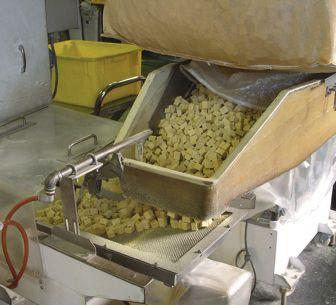
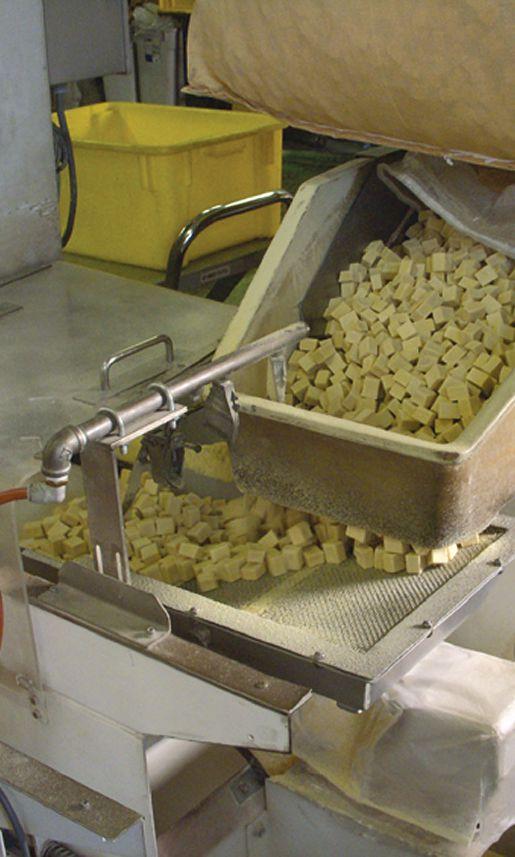
Pressing fried tofu to squeeze out any access oil, in Nagano Japan.
“Every day I get to walk outside and see what we’re building.
We can see our future when we step out our front door.”
– Jason Rider, Ontario
It’s time to tell the real story
Canadian agriculture is a modern, vibrant and diverse industry, filled with forward-thinking people who love what they do. But for our industry to reach its full potential this has to be better understood by the general public and, most importantly, by our industry itself.
The story of Canadian agriculture is one of success, promise, challenge and determination. And the greatest storytellers are the 2.2 million Canadians who live it every day. Be proud. Champion our industry.
Share your story, hear others and learn more at AgricultureMoreThanEver.ca
POWERED BY FARM CREDIT CANADA
PASSING ON THE FARM
Successful
farm succession cannot happen without communication
by Richard Cressman
Farm succession can be defined as the “passing of ownership and management from one generation to the next.” In the past, this process may have been called, “passing on the farm, or Dad is finally letting go, or the son is taking over. Family members can and do react in a variety of different ways when they hear the words farm succession. For some, particularly the younger generation (successor generation), there is excitement and anticipation. When it comes to parents, you never can predict how they will respond. Mother may be dreaming about travelling and spending more time with friends, family and grandchildren; father on the other hand may be dreading slowing down.
Farming is no longer a lifestyle that automatically provides a good living. Farming today is big business, it requires the ability to make difficult decisions, the ability to change and adapt, and the ability to develop and maintain a mental toughness for dealing with the day-to-day stresses.
To generate an income from farming often requires an investment of $1-$3 million and in some sectors even more. To have over $10 million invested in a farm business is no longer exceptional. Over the past 11 years, I have had the opportunity to work as a communication coach with families going through the succession process. Some families do it very well – it is virtually a seamless transition from generation to generation. Other families struggle to make the transition work. Why the difference? One word – communication! In families where communication takes place naturally, or is formalized through meetings, the succession process has a much greater chance of taking place in a seamless manner. When communication among family members is a struggle, and there is no formalized meeting structure, succession can become a long, drawn-out process. In this environment when decisions do get made, they are often made out of frustration and they are not well thought through. Good decision making requires excellent communication.
How do you start the process of farm succession?
It can be helpful to distill the succession process into three very basic, but pointed questions:
1. Can the farm financially support the retirement of Mother and Father and the added income needs of the successor generation?
2. Does the successor generation have a big enough dream/passion to pull them out of bed each working day for the next 15-25 years?
3. Can a deal be put together that will allow Mother and Father to sleep peacefully each and every night for the rest of their lives? As mentioned, these questions are basic and pointed, but they must be answered for an effective succession to take place.
To answer the first question, please seek out the advice of your accountant. The numbers must work before you even start thinking about succession.
The answer to the second question is more difficult to quantify. The following are some best practice suggestions for the successor generation:
1. Pursue a post-secondary education at the diploma or degree level. A degree in business or at least significant business courses will serve you well.
2. Take up employment away from the farm for a minimum of three years. Live away from Mother and Father. If you want to come home on weekends and holidays to help out, great.
3. Consider working for more than one employer during this period.
4. Start talking about your interest in coming home to farm while still holding down your job away from the farm. Dream about how you would like to run the farm. Draw up businesses plans – yes, more than one plan is good. Do budgets. This can be a time to do a lot of “fantasy farming” without fear of making mistakes. But please do not be tempted to short-circuit this experience away from the farm and come home early.
What is next?
Trusted advisors are essential. Your accountant is going to be the cornerstone to the success of your succession process. Having faith in your accountant is essential because you need him or her to provide tax advice, create shareholder agreements, critique budgets, give advice on life insurance needs, provide direction to your lawyer, and answer the many questions you will have. They are the heart and soul of the process. You will also need the involvement of your lawyer, your insurance agent and your lender(s). Situations may arise where you will need to ask other trusted farm advisors, such as veterinarians, for advice. Finally, do not discount the value of talking with other farmers and friends.
My first experience with farm succession was as a successor – my brother and I took over a 60-cow dairy farm from our father in 1975. We expanded to 125 cows over the next 15 years. That is when I had my second experience with succession – I transitioned out of the partnership. My brother and I still operate a seed business together that has been part of the family since 1975.
I am frequently asked, “Do we need a communication coach/facilitator?” Even though farming is big business, when it comes to making decisions, particularly around the topic of succession, emotions frequently trump logic. For example, Mother may have a different opinion on how the non-farming children should be treated regarding inheritances than what Father does. A non-farming child may feel that the parents are favouring sibling(s) who are going to stay on the farm. A daughter-in-law may feel that her husband is more dedicated and a harder worker than his younger brother. In another situation, a daughter-in-law may feel that her contribution on the farm is not being valued by her in-laws. If you are facing situations like these, engaging a skilled coach/facilitator may be an excellent decision. Everyone needs to be listened to. More importantly, everyone must feel they have been heard. Getting everyone’s thoughts and feelings out in the open at the beginning of the process,
CONTINUED ON PAGE 16
FORAGES AND FEED
GROWING BETTER ALFALFA
Thunder Bay Farmers find an ounce of fertility worth a pound of weed control
by Treena Hein
Are dandelions a good indicator that it’s time to throw in the towel on your alfalfa? “This may not be true, especially if alfalfa stand is still good,” says Dr. Tarlok Singh Sahota of the Thunder Bay Agricultural Research Station (TBARS), founded by the Ontario Ministry of Agriculture, Food and Rural Affairs in 1991, and operated by the Thunder Bay Agricultural Research Association since 2003. “I have seen, through research and through working with many farmers who have changed their fertilization practices, that better-fertilized alfalfa can compete well with dandelions. Alfalfa plant count, not dandelions, should be a criterion to keep or kill alfalfa.”
Indeed, the key to prolonging stands of alfalfa with good yield of quality feed, says Sahota, lies in providing an adequate supply of sulphur (S) and boron (B) each spring. Sahota has been raising concern about S deficiency on Ontario farmlands since 2004. “Folks in southern Ontario raised eyebrows then, but the same folks are now talking a lot about S,” he notes.
Sahota has found that application of 12 kg S and 0.4 to 0.8 kg B per acre can bring in $10 to $12 dollars return per dollar invested in these nutrients. “Farmers have reported high yields of better quality harvest and prolonged stand of alfalfa that lowered seed cost per acre every year,” he notes. “Using S and B also lowers other costs such as fuel and wear and tear of farm implements because the fields don’t need to be tilled as often.” Sahota says the application of S and B is even more important on rolling or sloped land where nutrients are more easily lost. Some farmers have also reported better dairy or beef herd health with this fertilized alfalfa.
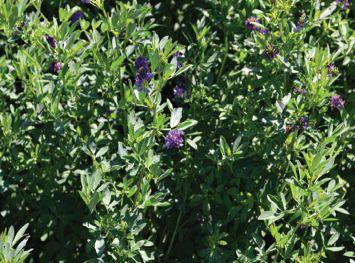
INSET: A healthy alfalfa (second harvest year) plant at bloom at TBARS supplied with recommended amounts of S and B. The bluish green leaves typical of a healthy alfalfa plant will not be seen without adequate S nutrition.
PHOTOS
COURTESY
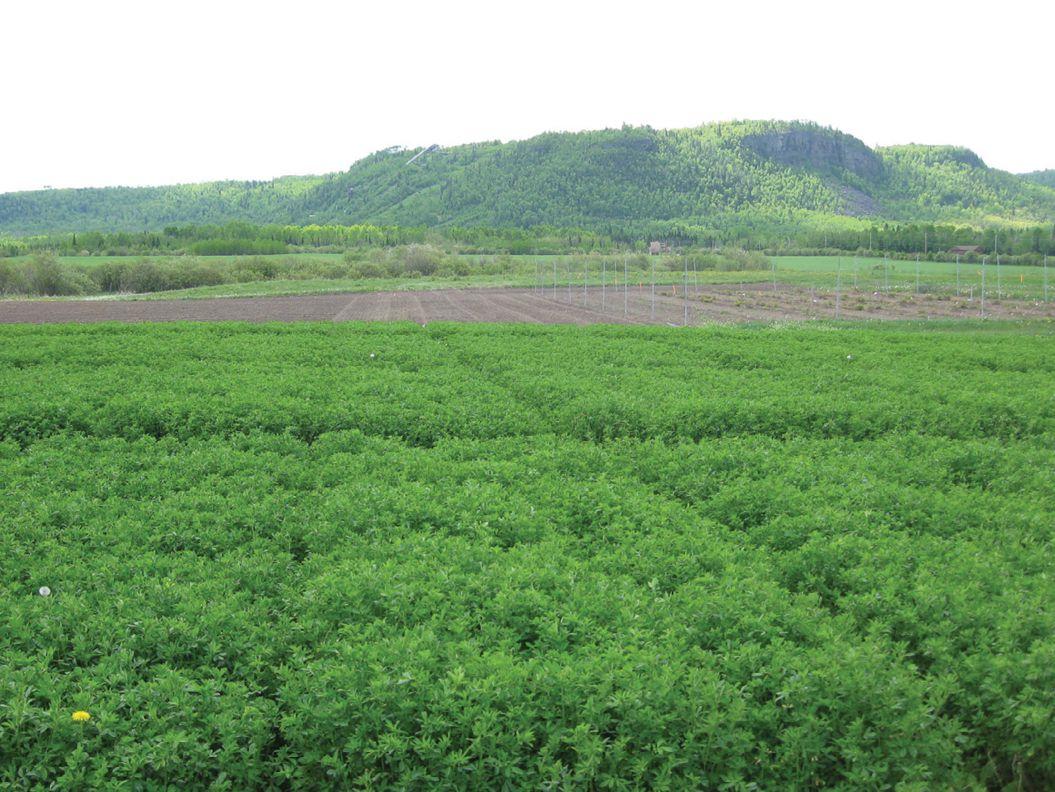
TOP: Alfalfa (second harvest year) plots at Thunder Bay Agricultural Research Station (TBARS) with one or two dandelion plants.
Because of you, Pioneer ® brand seed is planted on twice as many farms and twice as many corn and soybean acres as any other seed brand in Canada. But we don’t take our leadership role for granted. We take it personally.
We know serving growers is a privilege, not a job. We believe that leadership comes with a responsibility to work smarter and try harder. So we don’t stop at good enough. Or better than last year. And neither do you. That’s why together, we’re breaking barriers in yield, knowledge and success on your farm.
Because of you, Pioneer is here.
“Alfalfa is known to remove sizable quantities of S from soil,” Sahota explains. “In the case of S deficiency, the entire shoot, especially the top half, looks pale green. These symptoms are different from N deficiency symptoms, where the lower leaves first become pale green and then yellow.” Boron deficiency affects flowering and reduces seed set in alfalfa plants. As the deficiency becomes severe, the youngest upper alfalfa leaves become yellow to red. Growth can be stunted and winter hardiness reduced.
Sahota suspected S and B deficiency in several fields of alfalfa in the Thunder Bay area around 2004, especially in sandy soils and in stands older than two or three years. “With B, the soil test is not as reliable as a tissue test,” he notes. “Through a lot of testing, I can now say that most fields around Thunder Bay are deficient in available B.”
What to apply
Although it’s well known that ammonium sulphate or potassium sulphate is preferred to elemental S because the elemental form takes 12 to 18 months to be converted into the sulphate form (which is readily available to crop plants), Sahota wanted to see if this held true over the long term. He also wanted to test B fertility rates. “We tried to find an answer by comparing ammonium sulphate, urea and urea supplemented with elemental S, to equal the N and S from ammonium sulphate,” he says.
Several Thunder Bay area growers took part in the testing. To alfalfa fields in spring, they applied urea, ammonium nitrate and ammonium sulphate at different N rates, with and without B application. Two-thirds of the elemental S in this experiment was applied at seeding and one-third in the fi rst harvest year. “The first three harvest years (2005 to 2007) measured direct effects of the nutrients that were applied every year, and the later years (2008 and 2009) measured residual effects of the nutrients applied during the first three years,” Sahota explains.
In terms of results, the harvest of the fi rst year indicated that the application of elemental S gave no effect on yield (as expected), but from the second harvest year onwards, dry matter yields of alfalfa from ammonium sulphate and urea supplemented with elemental S (to equal N and S supply from ammonium sulphate) were similar to the application of elemental S. “However, elemental S isn’t necessarily a cheaper source of S, especially if it’s sold in small bags,” Sahota notes.
Beef farmer Bruce Forrest has been applying S and B since 2005. He says that this provided the alfalfa with better persistence and noted that the leaves seem to stay on better at harvest. “Before we used ammonium nitrate, then urea and now we use ammonium sulphate (that has S) and B,” he says. Dairy farmer John Grootenboer has also used ammonium sulphate and B since 2005, mixed with PK fertilizers. “You get a stronger alfalfa, a more vigorous plant, that can better withstand drought,” he observes. “And it works down the line – you’re feeding higher-nutrient material to the cattle and it helps with their health.”
“It’s now been determined that S deficiency is widespread on Ontario farms,” Sahota concludes. “I am reasonably sure that alfalfa growers all over the province could benefit from application of S and B.”
And dandelions and alfalfa?
“A farmer’s decision to rip off alfalfa fi elds is governed by the decline in alfalfa yield, or for rotational reasons,” Sahota notes. “Dandelions come to flowering at or just before alfalfa picks up growth. Since alfalfa has enough stored food in its crown and root,
it can compete well with dandelions, provided it has adequate stand, and that depends a great deal on fertility.”
Sahota noted in his long-term experiment that last year’s cold, wet spring resulted in great dandelion proliferation, “so much so that the alfalfa stems had to bend to come out of the dandelion leaves, but the plants did make it to a good, normal crop.” It was a good demonstration of how alfalfa starts growing when dandelions have already almost stopped their vegetative growth and have turned to flowering. “This means as long as you have at least five alfalfa plants per square foot/or a stem density of 40 to 55 per square foot in a three-year-old or older stand,” Sahota asserts, “you don’t have to rip alfalfa fields unless in your rotation of crops, it is an absolute necessity.” This study at TBARS is the only long-term study on S and B nutrition in alfalfa in Canada. “No other agricultural research facility has done this,” said Sahota.
His studies have also shown that application of manure to alfalfa fields increased dandelion infestation in alfalfa fi elds, so he notes “If S and B are applied every year, in addition to P and K, one doesn’t necessarily have to apply manure to alfalfa fields. In our long-term experiment, we didn’t find any benefit of manure application as compared to the treatment with S and B.”
Over the even longer term, Sahota says that as long as growers can maintain 0.20-0.25 percent S in alfalfa, he recommends that they can continue with alfalfa. “Time doesn’t seem to be limited as far as our experiments (now in their ninth year) have shown,” he notes.
DOUBLING UP PESTICIDE IMPACT WITH DOUBLE NOZZLES
Testing new products and practices to help control the factors that reduce pesticide effectiveness
by Jeanine Moyer
As a business, farming is all about efficiencies. The more efficient the operation, the stronger the bottom line – not to mention other benefits of efficiencies like labour, yield, equipment usage or feed conversion in livestock. Tom Wolf, research scientist with Agriculture and Agri-Food Canada, spends his days researching efficiencies in spray technology. His theory is the more efficient the spray application of pesticides, the better they will work.
Testing new technology
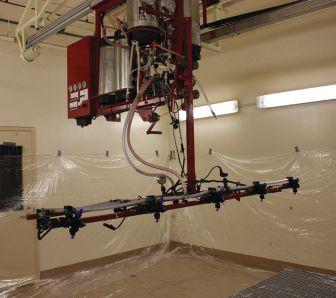
Maximizing pesticide potential means applying the pesticide exactly where it’s intended on the target plant, or to specifi c parts of the plant. Wolf explains that reducing drift and increasing spray deposition are the two most important factors to maximizing pesticide spray potential. Drift is determined by a number of factors, such as weather, boom height and travel speed. But what he’s most interested in is getting the best deposition, or pesticide placement, on targeted areas of the plant, because better deposition increases the effectiveness and quality of the spray. That’s why Wolf recently tested a new type of nozzle, the TeeJet AI3070, an asymmetrical double nozzle. Wolf and his team set out to determine how this new technology could increase pesticide deposition and help farmers create effi ciencies in spraying while maximizing their pesticides. Wolf and his team at the Agriculture
and Agri-Food Canada Saskatoon Research Centre in Saskatoon, Saskatchewan, are constantly testing new products and practices to help control the variable factors that reduce pesticide effectiveness. “There are so many factors we can’t control when spraying, so we rely on new products and testing to help,” says Wolf. “Double nozzles provide a greater diversity of droplet direction, hopefully leading to greater overall target coverage,” continues Wolf. Unlike conventional nozzles that only spray in one direction, double nozzles can spray both the front and back side of the target plant. Asymmetric nozzles, the latest development in double nozzles, further maximize the ability to spray in two directions by optimizing the leading and trailing nozzle angles.
Product testing
The TeeJet AI3070 asymmetric nozzle, manufactured by TeeJet Technologies. An innovative design that sprays forward at 30 degrees from the vertical, and backward at 70 degrees from the vertical to accommodate a wider range of forward travel speeds over traditional double nozzles.
Research testing of the AI3070 focused on total spray deposition over a range of travel speeds, boom heights and nozzle
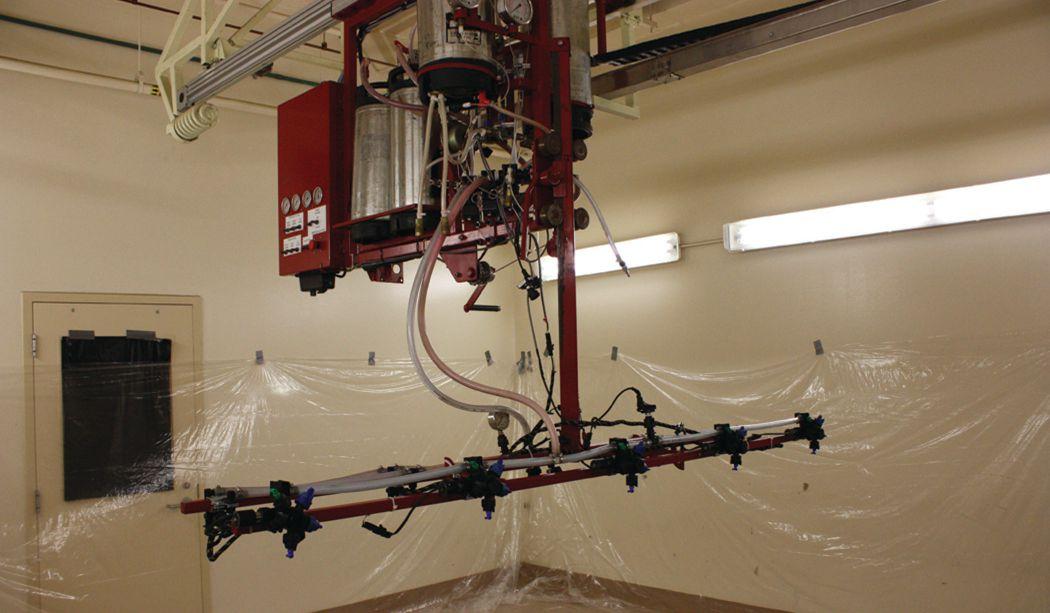
ABOVE: The track room in Saskatoon containing spray boom with which the testing is done.
PHOTO BY TOM WOLF
Performs
angles. Results were measured by the amount of pesticide spray deposited on the target.
The results indicated the asymmetric nozzle provided a more uniform application of pesticide spray when compared to traditional double nozzles. Test results concluded the nozzle was most effective at a lower boom height. Wolf’s team measured pesticide spray application at boom heights within the possible range for commercial applicators at 30 inches, 20 inches and 15 inches. The team concluded the lowest boom height, 15 inches, performed significantly better than the other heights tested and provided the greatest pesticide deposition on vertical targets.
“Deposition is not just a function of the spray nozzle technology, but the ground speed too,” says Wolf who also tested the effectiveness of the technology relative to ground speed. Even spray application of both the front and back side of the plant has traditionally been a challenge with double nozzles, with the forward nozzle depositing more than the backward-facing nozzle. Wolf’s study measured ground speed at 8, 10, 12, 14 and 16 kilometres per hour with results showing that the asymmetric nozzle provided uniform application at all speeds. In previous work with traditional double nozzles, faster travel speeds tended to decrease deposit uniformity.
Trials were also conducted adjusting the AI3070 nozzle angle to test the spray deposition of the front and rear sides of the target. Nozzles were tilted 10 degrees forward or backward off the intended vertical configuration. Results showed the 30-degree forward-facing and 70-degree backward-facing angle combination intended by TeeJet provided the best performance. Tim Stuenkel, global marketing and communications manager with TeeJet Technologies, explains the 30-degree angle forward and 70-degree angle backward facing are recommended by the manufacturer and were chosen to optimize surface coverage of the grain head in wheat and other small grains, while still providing control deeper in the canopy. The company also incorporated air induction technology to reduce fines and improve drift, resulting in a more efficient and higher-quality spray.
Further research trials indicated the asymmetric nozzle produced a wide spray fan, a desired feature providing good uniformity of application. The new asymmetric nozzle was also found to work well under a wide range of pressures and delivered desirable “coarse” spray qualities over the common pressure ranges.
Maximizing application on your farm
“Our research shows the asymmetric double nozzles achieve the best pesticide deposition when used at a low boom height, and [they appear] to
PASSING ON THE FARM
CONTINUED FROM PAGE 9
before sitting around the boardroom table in the accountant’s office can eliminate a lot of frustration and surprises. There is often a perception that if there is conflict before succession has taken place that succession will solve the problem. Wrong! Conflict is going to happen. It is how families deal with the conflict that is critical. Acknowledging that conflict is part of business and creating a strategy to deal with it should be part of the succession process as well.
The final question: Can a deal be put together that will allow Mother and Father to sleep peacefully each and every night? The succession process can take two to five years to put in place. One of the reasons is that Mother and Father frequently need this time
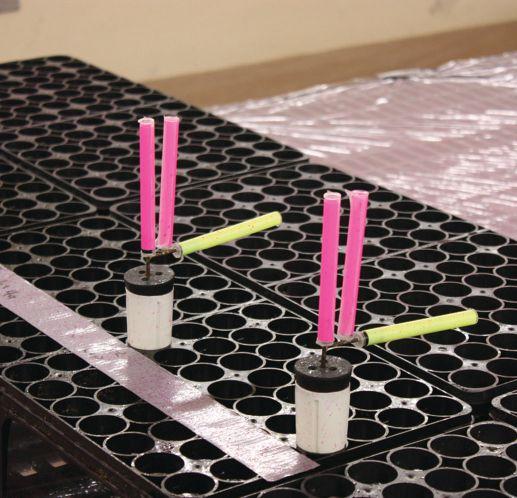
Vertical and Horizontal straws on this deposit sampler are used to capture deposits on the forward- and backward-facing sides, and the horizontally-oriented target respectively.
maintain good performance at fast travel speeds,” says Wolf.
“If farmers apply these results they will maximize the benefits of the new nozzle’s design.” And double nozzles are likely to provide the most benefit when applying fungicides since targeted coverage is especially important at specific crop stages.
“With more fungicides being applied in general in North America, along with the need for better control of diseases like fusarium in wheat, we’ve definitely seen a growing demand for twin-pattern, or double-nozzle, spray tips,” says Stuenkel. In fact, the AI3070 design was based in part on the results of university studies on spraying fusarium fungicides in wheat.
Double nozzles are manufactured by a variety of companies including TeeJet Technologies, Greenleaf Technologies, Hypro and Air Bubble Jet. Wolf recommends consulting manufacturer information for more details and product labels for nozzle recommendations.
“Good application contributes to better pesticide performance, especially those that depend on sufficient spray deposition on targeted areas of the plant,” says Wolf. Asymmetric double nozzles have only been around for a few years and Wolf believes the more they are tested, the more information will become available, enabling growers to make important management decisions, maximize their pesticide spray and efficiently run their operations.
period to feel comfortable that the successor generation has the ability, the required skill sets, the passion and the commitment to carry the business forward. They want to see results. The security of Mother and Father’s golden years are dependent upon a thriving business.
It may seem a bit radical to conclude an article on farm succession with this thought, but it is true: in certain instances, selling the farm might be the best decision for everyone.”
If Mother and Father agree that they will be able to sleep peacefully at night after a deal is finalized, then you are well on your way to having a successful transition of your farm business, whatever the details may be.
MISCONCEPTIONS ABOUT SOY
New outreach campaign to boost awareness of soy food in Canada
by Lilian Schaer
Arecently established Canadian marketing council, led by Soy 20/20, hopes to raise awareness of Canadian soy food products with several new initiatives. These include a new website, outreach efforts to dietitians and food industry professionals, and a market research study to gauge existing awareness and attitudes towards soy foods among Canadian dietitians.
The Canadian Soy Food Marketing Council, whose growing membership includes seed researchers and developers, seed companies, farmers, grain handlers, food and ingredient processors, and soy food and beverage manufacturers, was founded last fall to help position the Canadian soybean industry as a global leader in soy food innovation.
“The soy food category is underdeveloped in Canada and there are many opportunities to grow the soy industry in this country,” says Jeff Schmalz, president of Soy 20/20. As a council, we’re excited to be launching these new initiatives to promote soy foods in this country.”The primary goal of the Council is to grow demand for Canadian manufactured soy food products by advocating for the health benefits and nutritional advantages of soy foods, developing education and awareness initiatives, facilitating the flow of information among value chain partners and promoting the use of Canadian soybeans and soy protein as ingredients in food products. A key step in its new marketing plan is gathering information from dietitians to determine their awareness and knowledge of soy food through a multi-stage research study. The Council received support from the Canadian Agricultural Adaptation Program (CAAP), a federal initiative that aims to help the Canadian agricultural sector adapt and remain competitive. In Ontario, the regional component of CAAP is delivered by the Agricultural Adaptation Council (AAC).
The qualitative phase of the market research study, which has just been completed, involved one-on-one interviews with select dietitians from British Columbia to the Maritimes. This will be followed by a quantitative survey of 100 dietitians in both institutional and private practice settings across Canada.
One of the key goals is to gauge the dietitians’ current knowledge and understanding of soy food and beverages and determine where the gaps are, so that the proper information and resources can be provided to meet their needs. Dietitians are considered a well-respected and credible source of information related to health and nutrition, so the Council wants to keep them up to date with the most current details about soy and soy food products. The results of the research, expected later this summer, will serve as the basis for the Council’s efforts to clear up misconceptions about soy among dietitians. Work has already begun with the launch of a refreshed Soy For Life website this spring that features updated content, current health and nutritional information, and a blog at
www.soyforlife.ca. The blog includes regular posts by agricultural writer Karen Davidson and by Maxine Seider, a graduate student in the Department of Human Health and Nutritional Sciences at the University of Guelph.
The Council has also begun shooting footage for a new video that will follow soy from farm field to consumer plate using farms and soy food manufacturers in southern Ontario. The video will help consumers understand where their food comes from and the steps involved in growing, processing and preparing soy food.
“We’re going to use the visuals to explain farm to plate production on our website, through social media and media relations outreach and our presence at the Royal Agricultural Winter Fair,” says Nancy Cogger, director of business development for retail and food service with Soy 20/20. “We will take consumers into a farmer’s field and into a food processing plant to see what goes on, which most of us never get the chance to do.”
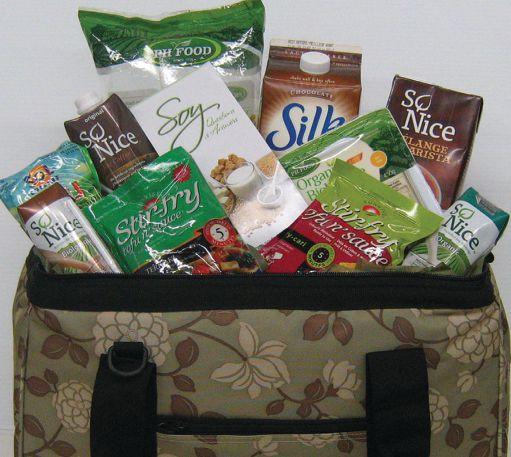
Additional promotional outreach is focused on journalists. A basket of Canadian soy food products was distributed (see picture) to approximately 60 food writers and media influencers in March to highlight new soy foods and make them aware of the newly available online resource. The consumer video is being complemented by a media tour this fall that will give food writers and other food industry professionals the chance to tour a soybean farm and a
CONTINUED ON PAGE 22
A basket of Canadian soy food products was distributed to food writers this spring to highlight new soy foods and promote the new www.soyforlife.ca website.
THE WORLD OF ON-FARM RESEARCH
Farmers are their own last defence against misinformation
by Amy Petherick
When it comes to on-farm field research, conflicting data runs free. In a world where public, industrial, and independent researchers alike widely dispute plot protocols and results, farmers need to keep a watchful eye out for “bad science” bandits.
When the smoke clears, experts can agree that farmers are their own last defence against misinformation. There’s a variety of source materials available across the country and almost everyone encourages farmers to consider a wide range of results before they draw conclusions. In the case of less variable technologies, such as macronutrient application or soil tillage, referring to historical data can compensate for smaller volumes of experimental references. But for rapidly advancing sectors producing new pest control, seed, and other short-lived products, there seems to be more of an annual effort to conduct research, and many researchers feel this is an area farmers more commonly dabble in.
Ask a group of experts how farmers can get the best results from
on-farm research and a “high noon” dispute may be quick to follow. Some specialists defend heavily replicated small plots as the best sources of information since they can offer more control over variables, but others support full field-length strip trials. Peter Johnson, provincial cereals specialist with the Ontario Ministry of Agriculture, Food, and Rural Affairs (OMAFRA), believes that it is critical for farmers to test small plot research on their own farm and suggests that they conduct small strip trials where each different strip is replicated at least twice.
“Field-scale trials provide powerful information,” says Johnson. “A two-replicate field-length trial is as statistically valid as a fourreplicate small plot trial.”
Over time, Johnson says the research farms where many trials are conducted have become places that no longer necessarily represent
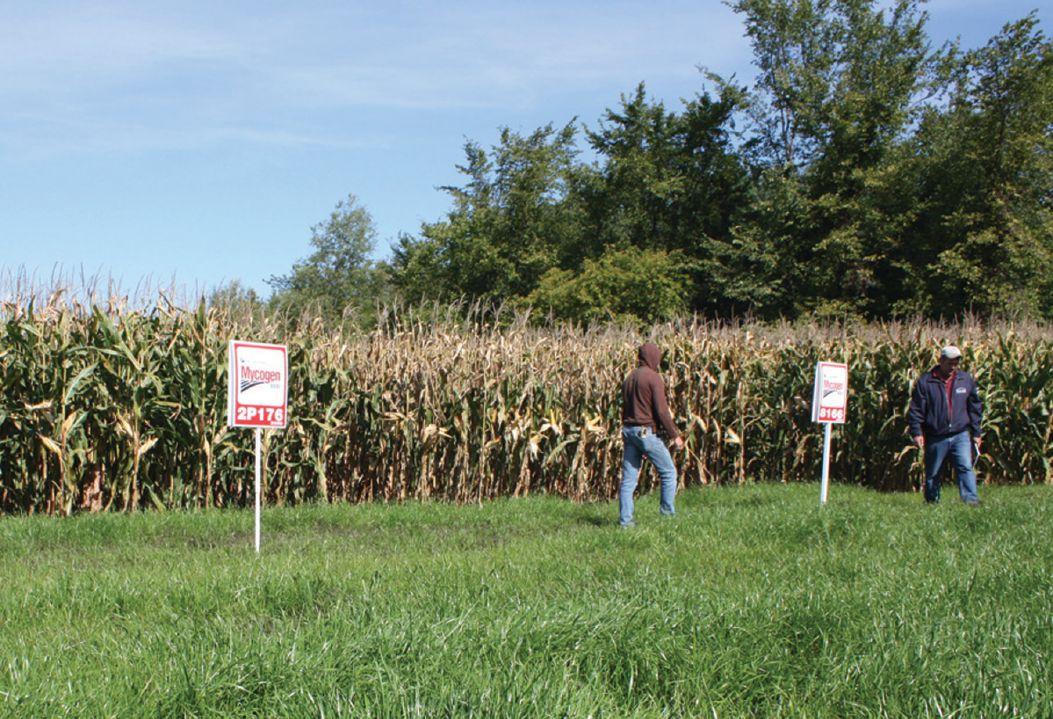
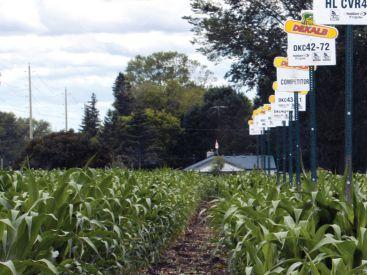
TOP: Mycogen test plot.
INSET: Dekalb test plot.
true field research. Years of careful fertility monitoring and supplementation have created rich soils that really do not reflect the average conditions of the commercial farm. Taking small plot trial results purely at face value, particularly when few sites are considered, can be very misleading. He says that one trial, with only one replication, demonstrating a 10 percent yield difference, only has a 52 percent chance of being a valid result.
To get a much better sense of how stable these results are, Johnson advises farmers to compare their own replicated strip plot results with small plot trial results across many different regions. But Dave Harwood, who is the technical services manager for Pioneer Hi-Bred, says that in his experience multiple sites without replications can predict real seed performance results better.
“Replications within sites are valuable when that’s all you have, but we find the most predictive data comes from multiple sites,” says Harwood. “In larger plot areas, you have the power of many smaller replications essentially within each large plot, which serve like replications do in small plots.”
Harwood suggests farmers look for test sites that feature the same characteristics and production practices they use and compare similar sites within a region for an apples-to-apples evaluation. Although this is an option for studying seed performance, he admits this isn’t always an option for other types of research. Having worked with public sector specialists like Johnson and academic researchers at the University of Guelph, Harwood knows these experts are working with finite resources, just like anyone else. Harwood says it is a bit of a balancing act to include these extra initiatives into daily activities, but it can be done if it’s well planned.
“Any sort of field testing process starts with a really good plan,” says Harwood. “I think doing field research is largely about good logistics.”
Ian McDonald, applied research co-ordinator of field crops for OMAFRA, only partly agrees. He agrees with both Harwood and Johnson that on-farm field scale trials can provide very powerful information when they are done well. But when they’re not done well, he says, they detract from the ones that are and it’s nearly impossible to identify the poor ones by a simple chart of results.
“A common struggle with on-farm trials is they’re started with good intentions but there isn’t always the follow through to complete them with the same rigour,” says McDonald. “Keeping good records is an often overlooked but critically important part of conducting high-quality on-farm trials.”
Without in-season monitoring, McDonald knows that it is easy to miss the whole story that a field plot is trying to tell. He says the worst thing that he sees is when plot co-operators take shortcuts and fail to disclose their methods when they offer their final results. Splitting a field into two parts is not a good way to conduct trials, nor is having a large number of random treatments without at least one duplicate variety across the plot area. Though he knows of many really great exceptions to cases such as these, McDonald says these sorts of trials are still far too common and there is no way to know if there is field variation distorting this information. John Heard, crop nutrition specialist with Manitoba Agriculture, Food, and Rural Initiatives (MAFRI), has conducted studies on the value of on-farm research, looking at several cases across North America. He says that, unfortunately, he had a very difficult time finding examples of on-farm research that had been done well and found most farmers would rather pay someone else to do the plot work than do it themselves.
Heard says he sees problems particularly when farmers want to have more than three strips in a field plot because it becomes difficult
to test each strip fairly across knolls or through wet spots, and replicate it three or four times in the same field. Instead, he likes to see farmers make use of independent sources of information. In Manitoba, one of those sources is Brent VanKoughnet of AgriSkills Inc.
As a farmer and consultant who is often hired by farm associations or large ag retail companies, VanKoughnet uses his operation to combine scientific methods in a farm setting. Like many farmers, he uses his yield monitor to gauge results, but unlike many other farmers, he calibrates it using a weigh wagon. He doesn’t do anything that isn’t replicated at least four times and particularly likes field-scale trials for disease testing. VanKoughnet says he thinks it’s important for farmers to constantly challenge the information they get from any source to continue to improve as managers.
“There needs to be an appropriate level of cynicism,” says VanKoughnet. “It shakes us out of our complacency.”
To VanKoughnet, on-farm testing is all about improving collective farming practices for everyone. It’s the same idea Mark Lawton, Monsanto’s technology development lead, expresses when he talks about his own company’s motivation to conduct research plots. Even within the seed industry, Lawton feels the right spirit exists behind the research that is being conducted, even if there is disagreement on the finer points of plot protocols.
Lawton says that in his experience, farmers are extremely curious and that is why they are willing to put in the time with so many researchers. How they decipher that data is up to them but everyone gains from the process and learns together. It’s what keeps agriculture interesting and makes the work fun, he says.
Trait Stewardship Responsibilities Notice to Farmers
Monsanto Company is a member of Excellence Through StewardshipSM (ETS). Monsanto products are commercialized in accordance with ETS Product Launch Stewardship Guidance, and in compliance with Monsanto’s Policy for Commercialization of Biotechnology-Derived Plant Products in Commodity Crops. This product has been approved for import into key export markets with functioning regulatory systems. Any crop or material produced from this product can only be exported to, or used, processed or sold in countries where all necessary regulatory approvals have been granted. It is a violation of national and international law to move material containing biotech traits across boundaries into nations where import is not permitted. Growers should talk to their grain handler or product purchaser to confirm their buying position for this product. Excellence Through StewardshipSM is a service mark of Excellence Through Stewardship. ALWAYS READ AND FOLLOW PESTICIDE LABEL DIRECTIONS. Roundup Ready® crops contain genes that confer tolerance to glyphosate, the active ingredient in Roundup® agricultural herbicides. Roundup® agricultural herbicides will kill crops that are not tolerant to glyphosate. Acceleron® seed treatment technology for corn is a combination of four separate individually-registered products, which together contain the active ingredients metalaxyl, trifloxystrobin, ipconazole, and clothianidin. Acceleron®, Acceleron and Design®, DEKALB®, DEKALB and Design®, Genuity®, Genuity and Design®, Genuity Icons, Roundup®, Roundup Ready®, Roundup Ready 2 Technology and Design®, Roundup Ready 2 Yield®, RIB Complete and Design™, RIB Complete™, SmartStax®, SmartStax and Design®, VT Double PRO™, VT Triple PRO™ and YieldGard VT Triple® are trademarks of Monsanto Technology LLC, Monsanto Canada, Inc. licensee. LibertyLink® and the Water Droplet Design are trademarks of Bayer. Used under license. Herculex® is a registered trademark of Dow AgroSciences LLC. Used under license. Respect the Refuge and Design is a registered trademark of the Canadian Seed Trade Association. Used under license. (3701-MON-E-12)
THE NEW DODGE RAM
Reduced fuel consumption with all the soul of what made it popular
by Howard Elmer
The Dodge Ram, or just Ram as it’s now called, was allnew in 2009. Since then Chrysler has pulled itself out of a financial hole and the newly minted Ram brand has steadily built a strong following, particularly in Canada. Now, four years in, the 2013 Ram is getting a mid-cycle refresh – one that may very well redefine that term. Why? Well, on first blush you’ll note the photos offer a bit of grille work and new sheet metal bends. This and a few interior tweaks (and maybe a few new paint colours) are the norm for most refreshes. But this Ram is doing so much more and frankly it’s what’s under the skin that has the truck world buzzing.
A new V6 engine and revolutionary eight-speed transmission is at its heart; and whether Ram says so or not, everything you’re about to read about here is on account of one word: EcoBoost. The competing V6 engine in the Ford F-150 has been a huge sales success – one that has necessitated this radical upgrade to Ram (a truck that has long built its reputation on the V8 Hemi engine
alone). And they’ve done it – yes, mechanically this 2013 Ram is anything but mid-cycle eye candy; it’s virtually a new truck.
Having heard the rumours of what Ram was up to I wrangled an invite to a very small, exclusive technical background briefing in Dallas, Texas. Spending hours with the engineers revealed a truck that boasts more than a dozen signifi cant changes, all aimed at reducing fuel consumption, while preserving the soul of this very popular pickup truck.
So the engine in this new Ram is the 3.6L Pentastar V6, which has been upgraded to make 305 horsepower and 269 pound-feet of torque. It’s coupled to this all-new eight-speed transmission (developed by ZF of Germany); and, while the power and fuel savings implications of this combination will be obvious to most readers, it’s the sum total of all the technical changes that has
TOP: The mid cycle refresh 2013 ram.
INSET: New interior details of the 2013 ram.
PHOTOS COURTESY OF DODGE
brand president and CEO Fred Diaz confident enough to flatly say his Ram will beat Ford’s EcoBoost.
Let’s look at what this engineering team has managed to do for the Ram. It starts with this eight-speed automatic transmission – definitely a first for pickups. Couple that to Chrysler’s Pentastar V6 for a 20 percent savings in fuel over the current Hemi powertrain. It also weighs 35 kilograms less than the V8. But the Hemi is not going away, it continues to be available and some six months after the Pentastar/eight-speed arrives late this year the Hemi too will get hooked up to the ZF for at least a 20 percent fuel savings.
Stop/start technology has been added to the truck. A proven system that has been used sparingly by various brands, this system stops the engine at lights and restarts it as soon as the foot is lifted off the brake. This addition alone increases fuel efficiency by up to 3.3 percent, says Ram.
Let’s look at what this engineering team has managed to do for the Ram. It starts with this eight-speed automatic transmission – definitely a first for pickups.
Active air shutters is another first on a pickup truck. Shutters are currently found on a few high-mile vehicles like the Chevy Cruise Eco. These vents open and close as needed for cooling; however, they also increase aerodynamics and fuel efficiency by around 0.5 percent. Engine warm-up time is also shortened.
A new electric power steering system adds five horsepower to the Pentastar output total while reducing fuel consumption by 1.8 percent. This is also a proven system – eliminating the constant power draw of a hydraulic pump as well as offering new steering effort calibrations matched to speed and road conditions, which in turn reduce driver fatigue.
VVT (variable value timing), another not-new idea added to the V6 (and the Hemi V8), saves fuel. Pulse-width modulation. This is one I hadn’t heard of. Seems that alternators produce way
more power than is needed by most of a truck’s electrically run components, so this system reduces that parasitic electrical draw by the fuel system and cooling fan. This, in turn, reduces fuel consumption (by 0.4 percent) and increases component durability. Even though this is a mid-cycle upgrade, the team couldn’t help redesigning parts of the frame. By using high-strength steel they reduced overall weight by 14 kilograms.
A fuel saver often overlooked is tires. To that end Ram is now kitted out with new low rolling resistance tires, standard. The front air dam has been lengthened to also increase aerodynamics, adding a 0.6 percent improvement to Ram fuel economy. The material is a rubberized polymer, which the guys assure me will take a beating and hold its shape.
The weirdest result comes by adding a new wheel-to-wheel side step; this was found to be aerodynamically more efficient delivering an added 0.5 percent fuel consumption improvement. It also offered a bonus – the longer step now provides a foothold for reaching into the front of the box.
The one thing missing from all the information I gathered in Texas is the new payload and towing figures. I asked and they wouldn’t say; however, Chrysler does confirm two things; first, they will use the new SAE towing standards to determine the weights, and second, by the time the “first drive” program comes around in August they’ll have the numbers. For my part, though, I feel confident in saying that with this Ram Pentastar/eight-speed taking on the Ford EcoBoost powertrain, Ram will have to match or exceed Ford – and Ford currently publishes a tow limit of 11,300 pounds for the EcoBoost equipped F-150.
For a mid-cycle refresh, this is a massive update, with fuel economy being the key target. However, there is more. For 2013, Ram has also added an air spring suspension. This system will automatically adjust to speed and load, while manually operated settings will be available for off-road operation and even a low-profile “park” mode. The truck will be able to lift and lower as much as four inches with the press of a button. With the new transmission also comes a new gear shifter –one that’s very different: a rotary dial on the dashboard. Also new is the availability of the Crew Cab with a longer six-foot, four-inch box. The 2013 Ram will arrive in dealer showrooms in the last quarter of 2012.
MISCONCEPTIONS ABOUT SOY
CONTINUED FROM PAGE 17
processing plant, and talk directly with farmers and food manufacturers. “We really want to highlight the local food system and show people that soy is grown in their backyard. By consuming it, you’re not only eating healthy but you’re also supporting local farmers and businesses, which is a win for everybody,” explains Cogger. Plans are also underway for the Council to be part of the “Food Innovations for Health” luncheon and forum at the Royal Agricultural Winter Fair for dietitians, nutritionists and others who work in food and health fields. Soy 20/20 participated in the successful event last year, which attracted over 140 participants and was part of the fair’s Journey to Your Good Health programming to promote healthy eating.
The Canadian Soy Food Marketing Council was created in 2011 by Soy 20/20, Grain Farmers of Ontario and Canadian soy food companies following the integration of the former Soyfoods Cana-
da organization into Soy 20/20. Membership is open to businesses in the soy value chain and new members are always welcome, says Schmalz.
“There are many opportunities to grow the soy industry in this country and we’re counting on both original and new supporting members to help us with those efforts,” he says. “It is rewarding to see the collaboration amongst Council members and the unity of purpose. We believe their collective input will result in new wealth creation for the entire Canadian soy value chain.” Council members include Pioneer Hi-Bred Ltd., SunOpta, Parrish & Heimbecker, Monsanto, Bunge North America, Whitewave Foods, London Ag Commodities, Solae, Sevita International, Hilton Soy Foods, Grain Farmers of Ontario, Manitoba Pulse Growers, Syngenta Seeds Canada, Hain Celestial Group, Sol Cuisine, Sunrise Soya Foods, Earth’s Own Food Company Inc., Soy 20/20 and Thompson’s Limited.
PESTS AND DISEASES
SOYBEAN RESPONSE TO FUNGICIDES
Researchers investigate Headline application in Roundup Ready soybeans
by Treena Hein
According to OMAFRA figures, the application of foliar fungicide has increased soybean yields for Ontario growers by about 2.1 b/ac since 2005. But fungicide efficacy with different soybean varieties is a question that needs answering, given the fact that some differences may exist for corn and cereal varieties, but no differences have been documented for other legume crops like dry beans. Disease tolerance varies for each soybean variety, so each variety should respond differently to an application of Headline,” says Chris Gillard, an assistant professor in the area of field crop agronomy and pest management at the University of Guelph-Ridgetown College.
Over the last three years, Gillard has conducted trials to investigate this question, with Ontario Ministry of Agriculture, Food and Rural Affairs (OMAFRA) soybean specialist Horst Bohner and collaborators Albert Tenuta (OMAFRA field crops pathologist) and Dave Hooker (field crop agronomist and assistant professor at the University of Guelph-Ridgetown College). Some additional assistance was also provided by Don Depuydt at the Huron Research Station. Gillard and his team chose one site in Chatham and one in Exeter and planted three experimental trials at each site with the same 20 Roundup Ready varieties – four each from SeCan, Hyland, Pioneer, Monsanto and Syngenta, all selected to provide a range in disease susceptibility.
Headline, a well-established BASF fungicide that is one of the most popular fungicides used by soybean farmers for plant health, was applied at all sites once at R2-3, early pod development on lower nodes. Disease ratings were done at mid-season, and again late in the season, with yield and agronomic data (on maturity, seed quality and seed weight) collected at harvest. “Septoria brown spot was the primary fungal disease we observed,” Gillard notes. “Others such as white mould, SDS, frog eye leaf spot were present at a few sites, but at very low levels.” Disease levels differed from year to year, in response to rainfall and temperature at each site. Overall, no interaction was found between fungicide and soybean variety in the study. “This means that collectively, the varieties acted the same as if the experiment was testing only one variety,” Gillard explains. While they did find a significant interaction between Headline application and soybean variety in terms of early disease control, this only occurred with a very small number of varieties. Gillard notes that the time at which they rated early fungal disease severity was very close to the application of Headline at most of the six sites, and concludes “I am not confident that Head-
line was the primary factor influencing differences between varieties at that point in crop development. The varieties we selected had a range in disease susceptibility, and that was likely the primary factor for the few differences we measured in early disease ratings.”
In five of six trials, the application of Headline delayed average plant maturity by 1.6 days (1.4 percent), compared to the untreated control. “This could be considered a plant health benefit, as a delay in maturity could result in increased yield,” Gillard says. “It was also observed that leaf defoliation of the soybean plants was 17.8 percent lower for Headline-treated plots, which is another indication of a delay in plant maturity.” As expected, in all six trials, the application of Headline increased the average seed weight (by 4.5 percent compared to the untreated control), and also increased the average yield (by 176 kg/ha, or 4 percent).
Growers should use their own average yield x four percent, to estimate Headline’s response on their farm.
“Using a 50 bu/ac crop, this translates to a boost of two bushels per acre,” notes Gillard. “Assuming soybeans valued at $12/ bu, this equals a gross economic benefit of $24.00 per acre. With Headline having a product cost of approximately $15 per acre, and an application cost of approximately $8 per acre, overall our study found that its use provides a net economic return of $1 per acre.” Growers should use their own average yield x four percent, to estimate Headline’s response on their farm. In addition, Gillard stresses that this calculation does not account for yield loss due to crop tramping from sprayer tracks during the fungicide application, or any additional cost of aerial application of the fungicide, to avoid tramping. “Tramping could easily result in a two percent yield loss, which would result in a net economic loss to the grower,” he says.
According to Gillard, several US studies have shown a larger yield response to Headline in soybeans, as well as a response to specific varieties. “This is the first replicated study conducted in Ontario, and growers will have to decide if they want a follow-up study,” he says, “or if this information is enough to decide how Headline fits in their crop.”
FROM WASTE TO FERTILIZER
Benefits of mechanical sludge application for agriculture
by D. Degenhardt, B. Drozdowski and R. Faught
Agricultural producers in and around Whitecourt and Slave Lake. Alberta, have been profiting greatly from what was once thought of as a “waste product,” mechanical pulp sludge, produced by Alberta Newsprint Company (ANC), Millar Western Forest Products and Slave Lake Pulp (SLP). This is all thanks to 20 years’ worth of research led by the Alberta Research Council (ARC) (now part of Alberta Innovates - Technology Futures) with support from the Mechanical Pulp and Paper Consortium Research Program.
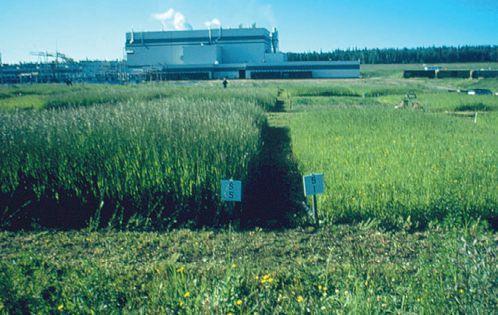
Mechanical pulp sludge, a byproduct of the pulping process, is an excellent source of organic matter, composed of short lignin fibres, high in carbon (45 percent) and containing plant nutrients such as nitrogen and phosphorus (total N ranges from 1.5 to 3.0 percent and total P ranges from 0.3 to 0.5 percent). It has a neutral pH and an electrical conductivity (EC) of approximately 2.2. Over the years, many research plots have been established to evaluate the impact of single and multiple applications of sludge from different mills to obtain long-term data relative to the impact on crop yields and soil quality. The benefits of sludge application on agricultural land have been overwhelmingly positive; sludge not only acts as a slow-release fertilizer but also provides many benefits as a soil amendment. In a long-term study established in 1992, it was found that 50 bone dry tonnes (BTD)/ha would increase bromegrass productivity fivefold compared to control plots. The increase in yield from mechanical sludge application was sustained for six growing seasons (Figure 1). Further, the soil analysis showed that the total N in the 30 and 50 BDT/ha treatments remained elevated for at least three years post-application.
In another project at the ANC Mayerthorpe site, it was demonstrated that a one-time sludge application of 50 BDT/ha would yield the same quality and quantity of barley as application of 200 kg/ha of 35-15-0 fertilizer annually over three years. Residual benefits from the sludge were seen even after five years from the initial sludge application. Sludge can supply a total of 15 to 30 kg N/tonne and most of the nitrogen in sludge exists in the organic form, and becomes available on a “slow-release” basis. The average cost savings associated with annual fertilizer application is significant for agricultural producers who have access to pulp sludge. Other beneficial aspects of sludge include the ability to improve soil structure and tilth, which thereby increases the soil’s water holding capacity. Standards and guidelines for the land application of mechanical pulp mill sludge to agricultural land in the Alberta area have been developed jointly by ANC, Millar Western Pulp, SLP, Alberta Environment and Water, the ARC, and Alberta Agriculture, Food and Rural Development. Application rates and recommended standard practices were developed to ensure that sludge is used in an environmentally responsible manner. For more information on the benefits of sludge in agriculture please visit www.SmartSludge.com.
TOP: Figure 1. growth in 50 bdt/ha sludge treatment (left) compared to 10 bdt/ha sludge treatment (right) in 1993, approximately one year after sludge application.
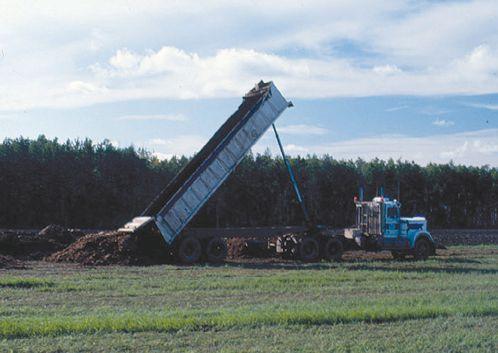
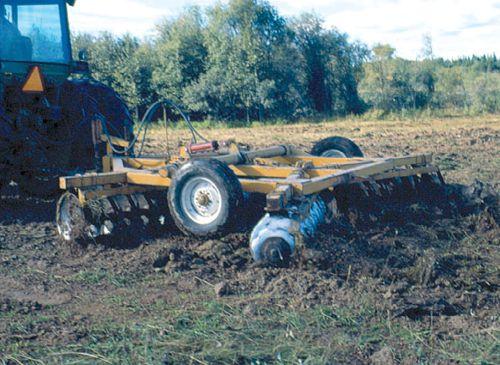
MIDDLE AND BOTTOM: Sludge delivery to the farmer’s field, sludge application and sludge incorporation using a conventional farm implement.
FOR BUILT-IN YIELD
SCIENTISTS TAP NATURE’S CHECKS AND BALANCES
TO FIGHT CANOLA PEST
AAFC studies damage and effects the cabbage seedpod weevil can have
by AAFC
The cabbage seedpod weevil’s love affair with canola appears to be headed for a major battle, thanks to a concerted effort from scientists at Agriculture and Agri-Food Canada (AAFC).
The invasive pest is the subject of a four-year project aimed at minimizing the damage it causes to canola. Given that this damage amounts to up to 35 per cent reduction in yields across Canada, AAFC is determined to rise to the challenge.
National research project
In 2008, AAFC initiated a four-year national research project, “Biological Control of Arthropod Pests of Brassicaceous Crops,” to minimize the damage of the cabbage seedpod weevil (CSW) ( Ceutorhynchus obstrictus ) on canola. AAFC colleagues Dr. Dave Gillespie in Agassiz, British Columbia, and Dr. Peter Mason in Ottawa, Ontario are the co-principal investigators managing the project. They’re working with Dr. Bruce Broadbent in London, Ontario, Dr. Guy Boivin in Saint-Jean-sur-Richelieu, Quebec, and Dr. Mark Goettel in Lethbridge, Alberta.
In addition, they’ve collaborated nationally and internationally with scientists at the University of Alberta and CABI Europe-Switzerland.
Classical biological control
In Europe, natural enemies have provided reasonable control of the cabbage seedpod weevil, which is why scientists are looking to the classical approach for Canada. Classical biological control involves introducing a beneficial insect to control a pest insect. By releasing one or more natural enemies for the biological control of cabbage seedpod weevil as part of an integrated pest management program, AAFC researchers aim to reduce yield losses in canola while preventing any increase to pesticide inputs.
The most promising biocontrol agent is a tiny wasp, a parasitoid that eventually kills its host. But before considering any foreign parasitoid, AAFC researchers studied our native parasitoids and their impact on cabbage seedpod weevil infestations. The results were not promising; in 2008 and 2009, field collections indicated that native parasitoids were having minimal impact on weevil populations.
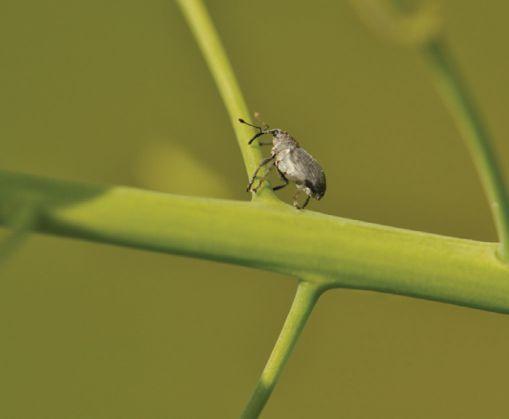
TOP: Adult cabbage seedpod weevil on canola.
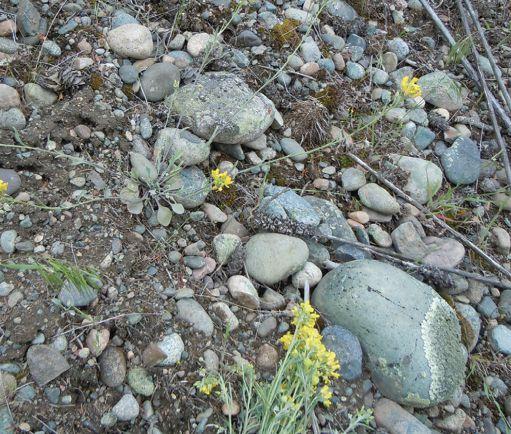
BOTTOM: In B.C., this is one of the plants (Lesquerella douglasii, Douglas’ bladderpod) that hosts a non-target, native weevil.
A Work In Progress
With a couple of years left in the national research project’s timeline, scientists are zeroing in on several goals. One is to generate baseline data on the mortality factors of the immature and adult stages of the cabbage seedpod weevil on canola in Ontario. This involves studying how many weevils die at each stage of life – larvae, pupae and overwintering adults -- to see when they’re most vulnerable.
Another goal is to study the various tiny parasitic wasps from Europe (in the one-millimetre size range) that could play an important role in minimizing cabbage seedpod weevil populations in Canada. One in particular – Trichomalus perfectus – is of particular interest to the AAFC researchers because of its relative success in Europe’s control of the pest.
Non-target studies
Additionally, in their efforts to make sure that the parasitoid only attacks the targeted pest, researchers are studying the possible effect of parasitoids on native species. “The pest has been well studied. We know its biology very well,” explains Dr. Mason. “But we don’t have detailed biology of the non-target species. We need to know if they occur in the same habitat as the cabbage seedpod weevil, and if so, there’s a good chance they’ll be attacked by the parasitoid too. We need to know if introducing the parasitoid will have a spill-over effect.” With increased environmental awareness and recognition of the importance of preserving biodiversity, the results of this study will be closely monitored.
Bringing a new parasitoid into Canada requires a rigorous protocol. The past two decades have seen vast improvements in these procedures. Regulatory agencies such as the Canadian Food Inspection Agency need detailed data on what constitutes a host range (number of species an insect feeds on), how you assess it, and what negative impacts might result from an insect feeding out of its host range, before allowing the introduction of a foreign insect into the country.
Canadian canola
Canola has established itself as a major player on the agricultural landscape since storming out of federal labs a few short decades ago and now rivals wheat as the largest and most profitable field crop grown in Canada. Since its introduction, it has grown by leaps and bounds; according to the Canola Council of Canada, it now adds $13.8 billion to the economy and generates more than 216,000 jobs in the country.
While Western Canada produces the majority of Canada’s canola crops with more than 15 million acres, canola production continues to climb in Eastern Canada and reached 70,000 acres in 2010 (figures: Canola Council of Canada, Statistics Canada).
Cabbage seedpod weevil
The name of this invasive pest comes from its habit of feeding on cruciferous crops, also known as Brassicaceae, a family that includes cabbage, canola and wild mustard. With a life span of around one year, a single adult just three millimetres in size can produce hundreds of eggs. This pest particularly impacts winter canola but can also impact early-planted spring canola.
The life cycle begins in early May when adults that have overwintered in the soil emerge. They then fl y to flowering canola and begin feeding on the floral buds. When the seedpods develop, the females lay eggs in the seedpods. The eggs hatch into larvae that
feed on the seeds and then drop onto the soil and pupate. It is the larvae feeding on the developing pods that cause the damage. About 20-30 percent of the seeds in a pod can be damaged and seed weight can be reduced by more than 16 percent.
“With increases in temperature due to climate change, there will potentially be a longer breeding season and better overwintering survival,” Dr. Broadbent explains. “This would exacerbate the damage done by this weevil in areas that it presently occupies and it will spread into new localities.”
In Eastern Canada, canola is currently grown in Ontario and Quebec. In Ontario, the main production is in a triangle from Owen Sound to London and Guelph, and occasionally fields farther east. In Quebec, the primary acreage is south of Quebec City and in the Lac Saint-Jean area.
It is the larvae feeding on the developing pods that cause the damage.
Monitoring the damage
In Canada, the cabbage seedpod weevil was first detected in British Columbia in 1931. It was later confirmed in Alberta in 1995 then spread eastwards into Saskatchewan in 2000 and was eventually found in Ontario in 2001. A separate introduction was also detected in Quebec in 2000.
The exact damage done in Ontario and Quebec by the cabbage seedpod weevil is hard to quantify. The only way scientists can monitor this invasive pest is to do sweepnet counts, a timeconsuming process that puts them in the field to hand-sweep the crop, observing any damage and counting the weevils they gather up.
“When a pest insect like the cabbage seedpod weevil comes into a new country or area without its parasites and predators, it has a huge advantage,” explains Dr. Broadbent. “With an invasive species, the key is finding its natural enemies in the country of origin.”
What’s next?
According to AAFC researchers, anywhere the cabbage seedpod weevil is found in Canada, the biological control (parasitoid) will definitely have an impact. “We already know that classical biological control of pests of crops works,” says Dr. Gillespie. “We will now have to focus on modifying pesticide applications to conserve parasitoids when they are active in the field.”
As to when producers can expect relief from the cabbage seedpod weevil, Dr. Mason states, “It normally takes about 10 years to do all the necessary screening before bringing a beneficial species into the country. We’re maybe half way through the process. It will probably be another five years before we can bring in a parasitoid for the cabbage seedpod weevil.”
A lot of progress has been made but AAFC will need to move forward with care as it takes all the necessary precautions before introducing a new species. The wait will be worth it though, as AAFC science is showing that within the near future the cabbage seedpod weevil will meet its nemesis.
GENERAL MANAGER, ONTARIO BEAN PRODUCERS’ MARKETING BOARD | TINO BREUER
SMALLER SECTORS WILL FEEL IMPACT
The recent decision by Agriculture and Agri-Food Canada (AAFC) to cancel the Canadian Agricultural Adaptation Program (CAAP) after March 2014 and to eliminate regional councils for delivery of these kinds of programs will have widespread consequences for Ontario agriculture. Particularly hard hit will be smaller sectors with limited resources of their own to devote to research.
Under the current system of regional councils, available program funds are distributed equitably across the country, ensuring that all regions have access to funding opportunities. Through this model, Ontario receives approximately $7 million per year (27 percent of the national total) in adaptation funding.
If the federal government decides to introduce new adaptation funding after March 2014, it will be administered centrally out of Ottawa and possibly without the current formula of regional allocations.
Along with the possible financial loss, the Ontario agricultural industry would also lose the successful industry-led review process responsible for vetting all projects up for funding to ensure there is no duplication and that projects address industry needs, particularly emerging challenges or issues, quickly and efficiently.
Another tremendous loss would be the frontline program staff in Guelph who provide project advice and support and turn claims and proposals around quickly. This is especially critical to smaller organizations – such as the one I am general manager of, the Ontario Bean Producers’ Association – without the budgets or human resources needed to prepare, manage and subsidize large projects.
members representing the various sector groups.
How will a program administered from Ottawa be as familiar with and responsive to local needs and be able to provide better value than that already provided? AAC board members are elected by their peers, ensuring that funding decisions are made by farmers for farmers – and are responsive to regional and sectoral needs. It is not clear if government officials in Ottawa understand our research needs compared to those employed at AAC who live and work with these issues on a daily basis.
This hands-on appreciation is critical for niche or smaller organizations within the broader commodity sectors. Edible beans are but one example. Under AAFC’s proposed centralized model, I can easily see future projects requiring a national focus in order to be funded. This likely won’t affect large commodities as much, but minor crops could suffer the consequences disproportionately. Research and innovation are critical to global competitiveness and without access to this kind of funding, minor crops will no longer be viable alternatives for farmers seeking sustainable farming operations through diversification.
AAC allocates less than 10 cents of every dollar to administration.
The government says centralizing program administration in Ottawa will help lower administrative costs, reduce the risk of duplicating projects and provide improved access by the agriculture and agri-food sector to “an integrated suite of AAFC programming to best meet their needs.”
Yet the current system already delivers all of that and more.
In Ontario, the Agricultural Adaptation Council (AAC) represents a very cost-effective method of program delivery. It allocates less than 10 cents of every dollar to administration.
To our knowledge, AAFC has not demonstrated what its administration costs are. Nor has it offered any base estimates to substantiate its claim to lowering admin costs. AAC’s program delivery administration rates are all inclusive, covering rent, salaries and office equipment. What costs can we expect the federal government to include or omit when calculating its administrative rates? AAC’s transparent cost structure means low expenses to taxpayers, and therefore more dollars invested directly into the industry.
The AAC works closely with all of its applicants to ensure projects approved for funding have merit, meet industry needs and aren’t duplicating existing efforts. This includes a thorough review by council staff, as well as thorough peer review by industry board
Timely delivery of services is another serious concern. The AAC board meets every six weeks to consider funding proposals for CAAP, and staff informs applicants of the outcomes within three business days of those meetings. Project agreements are turned around in seven to 10 business days and claims are reviewed, processed and paid out in 15 business days.
Compare this to Agriculture and Agri-Food Canada’s published service standards, which are 80 business days (four months) for review and funding decision once an application is submitted, 60 business days (three months) to send out a final contribution agreement once a project has been approved and 20 business days (one month) to send out a claim cheque.
We are without a doubt in tough economic times. All of us, government included, have to be prudent with how we spend the limited resources we have at our disposal. Periodically, it is good to reassess what we’re doing and the reasons for doing so, in order to make sure we’re funding projects and initiatives that will meet the future needs of both farmers and consumers. However, we have to make sure that the changes we’re making to help address short-term problems will not prove detrimental in the long run.
The Agricultural Adaptation Council with its industry-driven decision structure has served Ontario agriculture well, delivering value to government, farmers and taxpayers. The agri-food industry – and by extension Canadians – may not be better off if we move to centralized decision-making.
■ Seed-placed liquid orthophosphate
Immediately available in cold soils
Faster emergence; Larger root mass
Higher yields
■ NPK analysis with micronutrients A complete starter fertilizer
■ Convenient low rate liquid Easy set-up on large planters