Faster dry down maintains grain quality and market access. PG. 6
SPEEDING UP SCREENING
New mycotoxin testing platform has breeding and pathology advantages.
PG. 28
PLANT BREEDING CEREALS
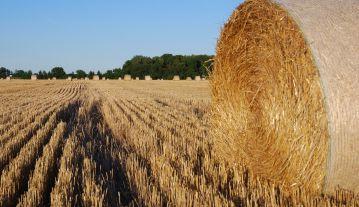
6 | Upping durum’s dry down game
Toward varieties with faster dry down to maintain grain quality and market access.
By Carolyn King
FROM THE EDITOR
4 Digging deep in a difficult year
By Stefanie Croley
AGRONOMY UPDATE
30 Fluroxypur-resistant kochia confirmed in Alberta By Bruce Barker
ON THE WEB
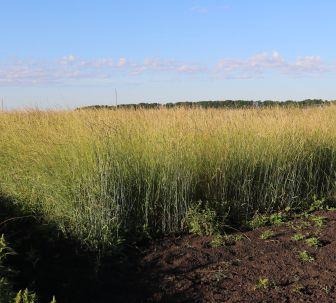
12 | Breeding perennial wheatgrass
Next phase of research will take agronomics as a starting point.
By Julienne Isaacs
STORAGE
10 Developing safe storage for soybean By Bruce Barker
HARVESTING
16 Are pre-harvest applications necessary for straight-cut canola? By Bruce Barker
SASKATCHEWAN INVESTS IN NOVEL STRAW PULPING TECHNOLOGIES
Innovation Saskatchewan is committing $395,000 to Red Leaf Pulp through its Saskatchewan Advantage Innovation Fund to develop novel wheat straw pulping technologies. In March 2021, Agriculture and Agri-Food Canada also announced their support for the project through the Agricultural Clean Technology Fund.
28 | Speeding up screening
A new mycotoxin testing platform provides an advantage to cereal breeding and pathology programs. By Donna Fleury
PESTS AND DISEASES
20 Watching for hidden pests in cereal crops By Carolyn King
PLANT BREEDING
24 Durum for dry, hot conditions By Carolyn King
Readers will find numerous references to pesticide and fertility applications, methods, timing and rates in the pages of Top Crop Manager. We encourage growers to check product registration status and consult with provincial recommendations and product labels for complete instructions.
STEFANIE CROLEY EDITORIAL DIRECTOR, AGRICULTURE
DIGGING DEEP IN A DIFFICULT YEAR
There’s no point in sugar-coating it: if you’re a crop producer in Western Canada, this has been a tough season.
Drought. Heat. Wildfires. Insects. Hail. Drought. Drought. Drought. According to Statistics Canada’s Normalized Difference Vegetation Index (NDVI), crop conditions in Western Canada are about the same, or worse, than when the region was last stricken by severe drought conditions in 2002. Statistics Canada also reports most of the Prairies have received anywhere between 40 and 85 percent of the average rainfall since April 1 (and the interior of British Columbia has received even less than 40 per cent).
Heat stress in crops manifests in different ways, depending on the crop being grown. In canola, heat stress can lead to smaller pods, fewer seeds per pod and lower yields. In cereal crops, heat stress can cause fewer seeds per head, or even blank heads that the plant aborts. As I write this in early August, harvest of fall cereal crops is already underway, with poor yields reported in many areas. And besides the uncertainty surrounding yield, many farmers are also facing the upsetting reality of being unable to feed their livestock, resulting in the sale of many animals across the Prairies.
The repercussions of a season like this one are felt long after the rain finally falls – or after a season ends. A poor yield has enormous impacts on grain markets, the value chain, mental health and a farm’s bottom line – and many of the contributing factors are often out of a farmer’s control. But seasons like this one also push the scientific community to dig deeper and discover new solutions that will, eventually, help farmers and industry combat some of the challenges that are felt at different points of the growing season.
A prime example of this is the work recently completed by Gopalan Selvaraj, a principal research officer with the National Research Council of Canada in Saskatoon. Selvaraj and his colleagues aim to develop molecular markers for drought-tolerant and heat-tolerant durum traits, which will be helpful to plant breeders to screen breeding materials in a lab setting, rather than having to grow the plants and evaluate their traits. You can read the full story written by Carolyn King on page 24. There is still work to be done, but Selvaraj’s work is just one of many promising advancements made toward preventing damage caused by drought and other factors.
If you’re one of the many folks affected by challenging conditions, our thoughts are with you as you prepare for your harvest. While we can’t change the conditions you’re faced with, we hope you’re encouraged by some of the progressive research highlighted in this issue.
Build Income
Build Flexibility
Build Connections
Build Opportunities
Build Results
Build Resilience
Build Success
Build Independence
Build Prosperity
BUILD SOMETHING BIG
Be
Sell
Diversify
UPPING DURUM’S DRY DOWN GAME
Toward
varieties with faster dry down to maintain grain quality and market access.
by Carolyn King
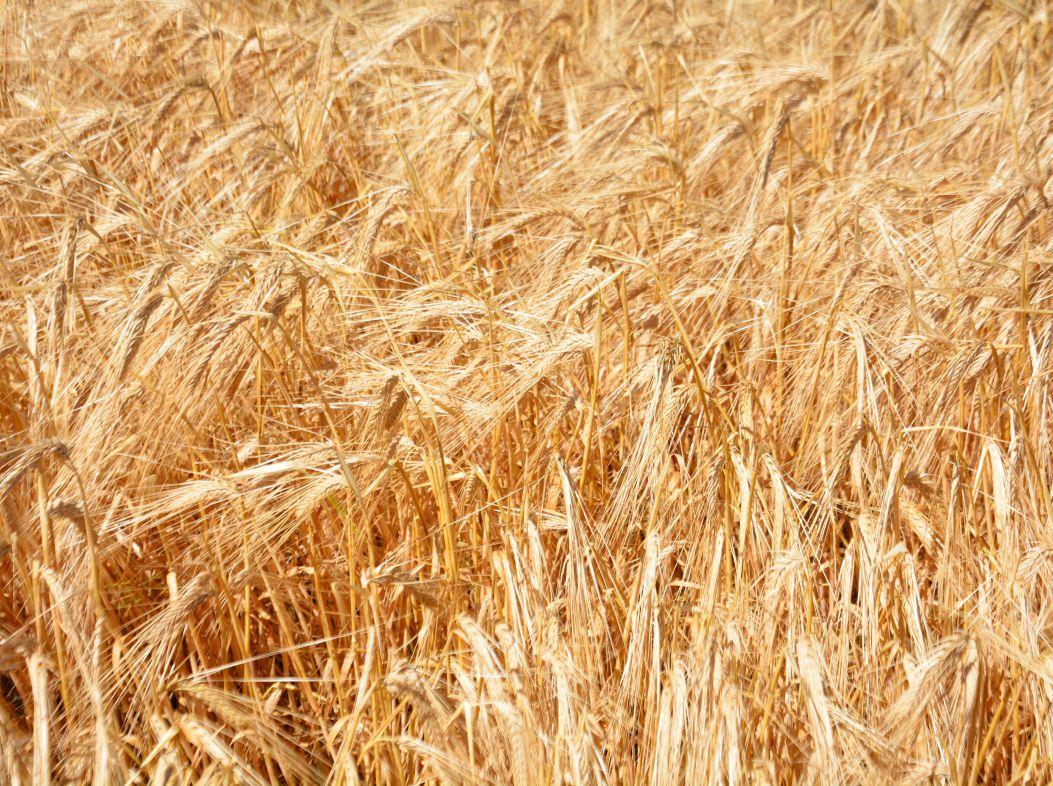
Ashort dry down period is a valuable advantage for timely harvesting, reducing the risk of weather damage to the grain, and decreasing the need for practices like applying a pre-harvest desiccant or using a grain dryer. Now Jatinder Sangha is leading a research project aimed at helping durum wheat breeders develop varieties with faster dry down potential.
Dry down occurs as the crop transitions from physiological maturity to harvest maturity. “Upon reaching physiological maturity, the dry matter, such as starch, nutrients and proteins, stops filling the grain, and the maximum yield potential is attained. After this stage, the grain begins losing moisture, going from around 37 per cent moisture at physiological maturity to less than 18 per cent at harvest maturity,” explains Sangha, a research scientist who is part of the wheat breeding team at the Swift Current Research and Development Centre of Agriculture and Agri-Food Canada (AAFC) in Saskatchewan.
His project was triggered by several factors. “Canada is a major durum-producing country and renowned in international markets. We are concerned about issues related to durum quality that might
affect Canada’s market share, which could impact farm income and [the whole durum value chain]. One of those issues is that some Eu ropean countries have voiced their concern over unwanted residues in grain resulting from the use of desiccants to facilitate early har vest. Having varieties with a short dry down potential would reduce or eliminate the need for such chemicals,” he notes.
The other trigger was that fast dry down varieties are already available for other crops such as corn. During the 2018 Durum Summit in Swift Current, a representative of Barilla, an international food company that produces durum products such as pasta, asked if durum varieties with faster dry down could also be developed.
“That question sparked discussions with Barilla and among the scientists at our centre about whether we have right now or could we develop durum wheat with short dry down potential,” Sangha says.
The first step for Sangha’s research group was to assess the duration of the dry down period in 235 durum lines from around the
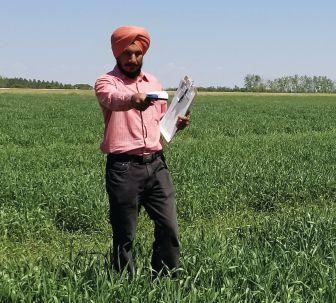
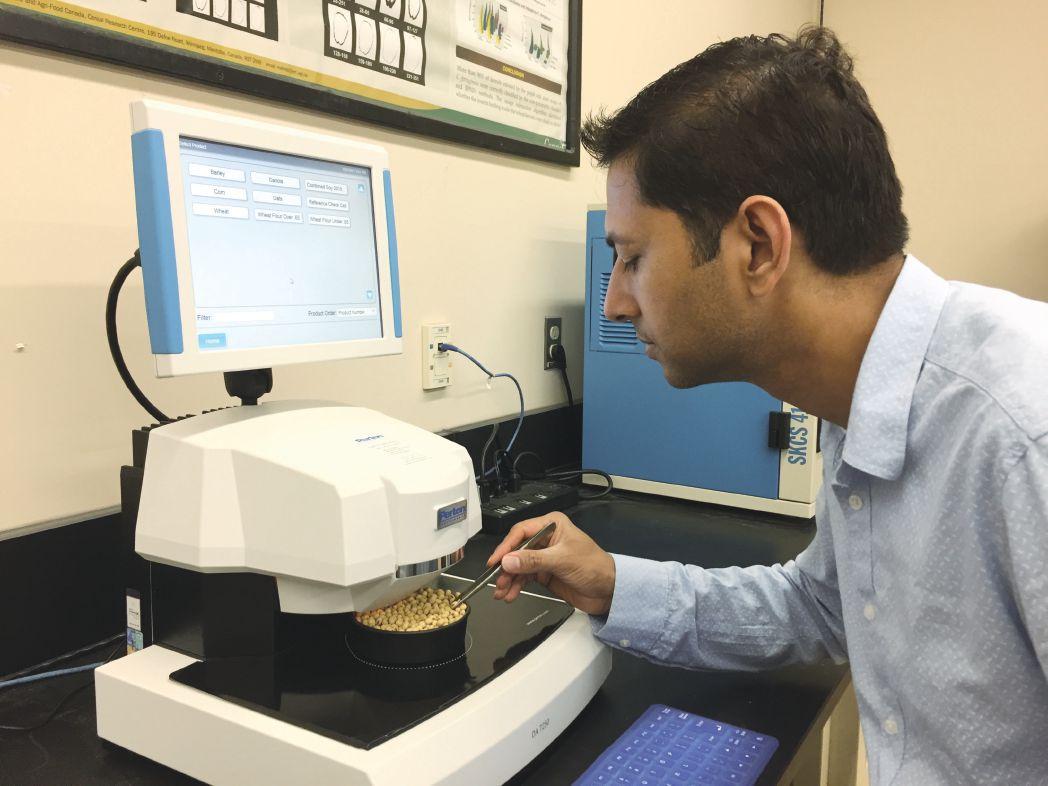
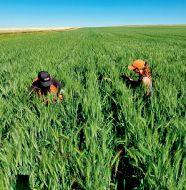
ABOVE: Jatinder Sangha is looking for quicker ways to assess dry down potential in durum, including using this sensor to determine a vegetation index called NDVI.
Your better beans are here.
Better soybeans. Better yields. Better for your community. That’s why we developed Enlist E3™ soybeans, a more advanced seed with high yield potential and a robust herbicide tolerance. Enlist Duo™ and new Enlist™ 1, with Colex-D™ technology for a better low drift, near-zero volatility solution that lands and stays on target.
Enlist E3 soybeans are available for 2022 planting. Talk to your local seed supplier.
Simply Better Soybeans. | Learn more at enlistcanada.ca
world. These lines are in the germplasm collection of Yuefeng Ruan, the durum breeder at AAFC-Swift Current, and they carry unique agronomic, genetic, physiological and disease-response characteristics.
Genetics and environment each play a role in the rate of grain dry down, so Sangha’s group evaluated the 235 lines under two environmental conditions – rain-fed and irrigated – at Swift Current in 2018 and 2019. They visually monitored grain development in each line to track the changing kernel moisture content from just after fertilization to harvest maturity. They also measured the moisture content of samples using an oven-drying method.
Out of the 235 lines, they shortlisted 110 lines that have potentially shorter dry down periods, ranging from 2.5 to 11 days, as well as other useful traits.
The project’s field work was postponed in 2020 due to COVID restrictions, but Sangha’s group is back in the field this summer. “We will be further characterizing those 110 lines at Swift Current under irrigated and rain-fed conditions and at Indian Head under rain-fed conditions,” he says.
“Out of those 110 lines, we will be selecting the 10 to 20 best contrasting lines with very clear dry down characteristics. And then we will put more effort into fully characterizing those lines.”
The results from that work will allow Sangha to identify which particular durum lines would be most suitable for breeders to use in developing elite durum varieties with shorter dry down potential.
Seeking quicker screening options
This characterization work involves tracking the grain filling and moisture dynamics in the developing kernels as the spike transitions from flowering through physiological maturity to harvest maturity. As part of this work, Sangha and his group are also looking for faster options to track these characteristics because these types
of measurements can be time consuming and labour intensive.
For instance, the oven-drying method is a common way to measure grain moisture content. It involves weighing a grain sample fresh from the field, oven-drying it, reweighing it, and then calculating how much moisture was lost. That is no problem if you have just a few samples. But Sangha explains that the rate of dry down is very dynamic and varies with changing weather conditions, so kernel moisture content needs to be measured frequently. Imagine the labour and lab space required to use that method for all the samples that would need to be collected from fertilization to harvest maturity in a breeding program where thousands of lines have to be evaluated.
Sangha’s group is comparing the oven-drying method with several other options. One of those options is a modified moisture meter. The commercial meters that are able to measure moisture in a single, developing seed are designed for crop types with large seeds, not for durum seeds. So Sangha’s group had to improvise – they modified a commercial meter to create a single-kernel moisture meter that works for developing durum seeds.
Some of the other methods they are comparing include: visually rating each line for kernel moisture; using the thumb-and-fingerpressing method to determine the moisture content of individual kernels; and a vegetation index called NDVI (normalized difference vegetation index). NDVI is a way to estimate leaf chlorophyll content, photosynthesis activity and yield potential, and it is determined using sensors to measure certain wavelengths of light reflected from the plant.
Then the researchers will relate these different measurements to the dry down potential and figure out which option is the best choice for screening breeding lines for this trait.
The grain fill and moisture data collected in this work will help increase understanding of physiological processes occurring as the kernel moves toward harvest maturity. Sangha notes, “By identifying
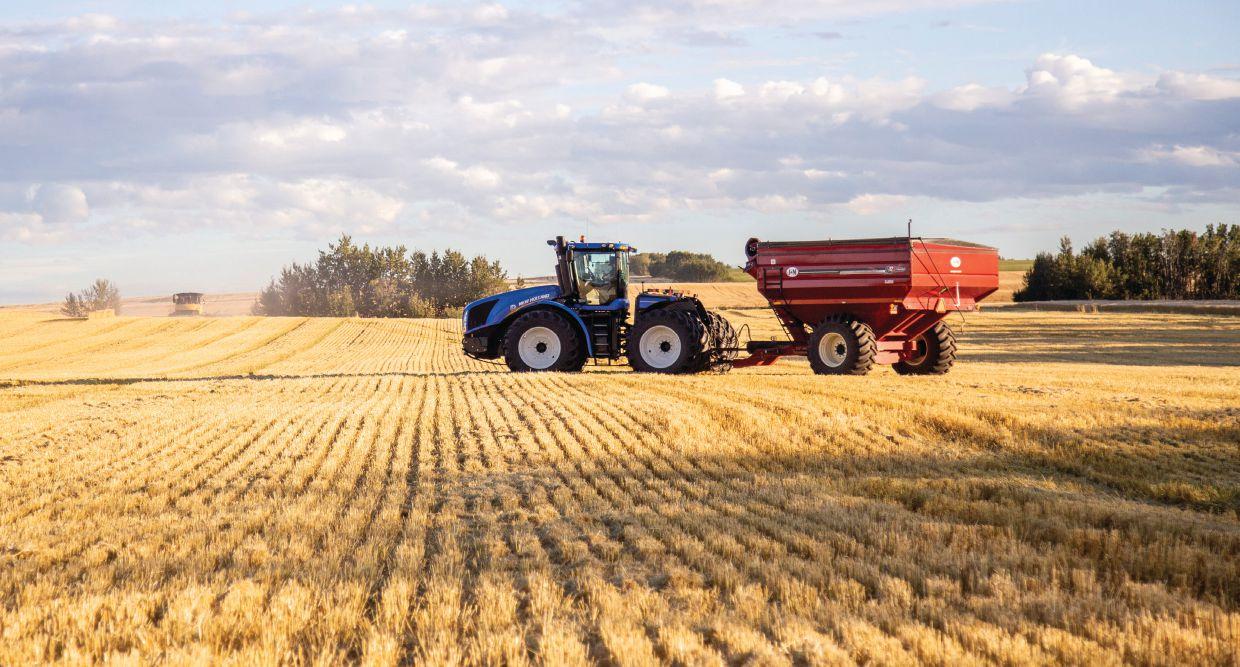
Canada’s durum reputation is strong, but as a major durum-producing country, quality issues may lead to compromised market share and potential problems across the entire value chain.
the physiological mechanisms that influence the rate of dry down in these durum lines, we’ll have a head start on knowing how those lines might react to different environmental conditions and understanding the genetic control of the trait.”
The main funders of this project are Saskatchewan’s Agriculture Development Fund, the Saskatchewan Wheat Development Commission and the Alberta Wheat Commission.
Looking ahead
The results from this research have the potential to benefit durum breeders, growers, exporters and processors. For breeders, the project is expected to identify durum lines with short dry down potential that could be used in their breeding programs, and to identify quicker ways to screen breeding lines for this trait.
For growers, durum varieties with fast dry down potential would increase the chances of timely harvesting and reduce the need for swathing or applying a desiccant or the need to use a grain dryer. And decreasing the need for these practices would lower growers’
input costs, reduce their energy consumption, decrease their environmental footprint, and help maintain or increase market access for Canadian durum.
For grain exporters, processors and consumers, Canada would continue to provide high-quality durum that meets the requirements of international markets.
Sangha points out that the project’s results could also contribute to further improvements in durum. For instance, the results could help Sangha and his AAFC colleagues in identifying the genes affecting the rate of dry down in durum and in developing molecular markers for those genes. Then breeders could use those markers to select germplasm with shorter dry down potential in the lab without field trials.
He also notes, “This project involves a lot of fundamental physiological research. These types of fundamentals will become more and more important for understanding crop responses to environmental stresses that arise because of climate change and for finding ways to improve yield and quality under such emerging situations.”
Smart Nutrition™ MAP+MST® granular fertilizer supplies your soil with all the sulfur and phosphate it needs, when your crop needs it. Using patented Micronized Sulfur Technology (MST), elemental sulfur oxidizes faster, allowing for eaxrlier crop uptake and utilization when your crops need it most.
Look inside to learn how Smart Nutrition MAP+MST can boost your soil’s performance and maximize your ROI.
Research developing equilibrium moisture content values for western soybeans.
by Bruce Barker
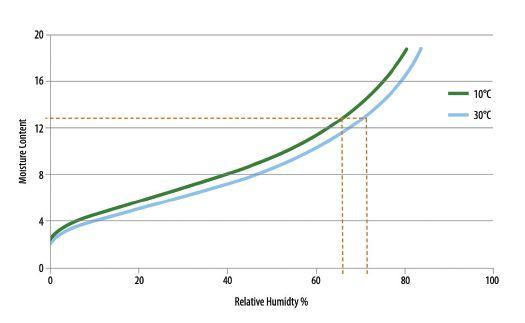
There is more to safely storing soybeans than putting the grain in a bin at the Canadian Grain Commission’s recommended less than 14 per cent moisture content. Air temperature and humidity come into play inside the grain bin to impact soybean storage.
“Although a considerable amount of information is available for other crops, the information available on the equilibrium moisture content (EMC) characteristics of soybeans grown in Canada is limited and outdated. This is especially true for new varieties of soybeans with short maturation periods that have been bred to grow in the North American prairies,” says Jitendra Paliwal, associate dean and professor in the faculty of agricultural and food sciences at the University of Manitoba. “Additionally, there have been no studies on the EMC and sorption isotherm properties of soybeans involving the effects of pre-treatments, such as drying-wetting and freeze-thaw cycles that take place during storage.”
Paliwal recently led a research study looking at the EMC values for three popular soybean varieties grown in Manitoba with funding from the Manitoba Pulse and Soybean Growers. The moisture
content at which grain will stabilize if the air temperature and humidity remain constant for a period of time is referred to as EMC. This can be used to help predict safe storage conditions for the grain, as well as predict how the ambient air used for natural air drying (NAD) will affect the moisture content of grain. For NAD, grain will dry down when the EMC of the ambient air is less than the moisture of the grain.
The research looked at different post-harvest scenarios where the three varieties were either subjected to three drying and wetting cycles or subjected to three freezing and thawing cycles, in addition to a control of freshly harvested seed without any treatments. These pre-treatments resulted in initial storage moisture content ranging from five to 17 per cent. They were also subjected to six different equalization temperatures ranging from 5 C to 30 C, and five different relative humidity (RH) values for a typical range in storage humidity.
ABOVE: Jitendra Paliwal has developed EMC charts for three popular Manitoba soybean varieties.
EMC values help guide storage parameters
Although the effect of soybean variety on the sorption isotherms and EMC was not statistically significant, each variety responded differently to the pretreatments simulating post-harvest conditions. Paliwal explains that the different responses were related to differences in seed coat rather than seed size.
“The differences amongst varieties can be attributed to their genetic differences. During plant breeding, different lines are bred to enhance specific traits such as drought, disease, herbicide or pest resistance, or to alter their yield/maturation period. These genetic differences also bring about bio-physio-chemical changes in the crops. Although not all of this is fully understood, it is known that these genetic changes cause differences in how the seeds respond to different pre-treatments in our study,” he explains.
The research created EMC charts for three of the most important soybean varieties grown in Manitoba. In general, the pretreatments resulted in lowering the EMC by up to 20 per cent compared to fresh soybeans.
Generally, the research found that keeping storage temperatures below 10 C is critical at any seed moisture content. At higher temperatures, the EMC has higher RH inside the bin, which can enhance mould growth, free fatty acids and volatile chemicals, resulting in deteriorating product quality and safe storage time.
For the soybeans subjected to pretreatments, the sorption characteristics were significantly different compared to fresh soybeans without the pretreatments. Repetitive changes in temperature and humidity during storage was found to have an impact on the moisture content of stored soybeans. The research highlights the im-
Comparison of the relative humidity of soybeans at % moisture content stored at 10 C and 30 C.
portance of monitoring bin temperature and moisture conditions for safe storage.
“A logical extension of this study will be to develop safe-storage guidelines for soybean growers. We are currently developing these for a number of pulses and will soon be applying for funding to do the same for soybeans. The development of such guidelines requires long-term storage studies and for any given variety it takes about six to eight months of experimental work,” Paliwal says. “Crucial storage management decisions such as aeration, cooling, and turning can then be taken to prolong the health of the stored crop.”
SEED YOU CAN COUNT ON.
Total Ration Solutions testing program used to identify hybrids with maximum silage yield potential and quality
Line-up includes EDF (Effective Digestible Fibre) and EDP (Effective Dual Purpose) hybrids for end use flexibility
BREEDING PERENNIAL WHEATGRASS
Next phase of research will take agronomics as a starting point.
by Julienne Isaacs
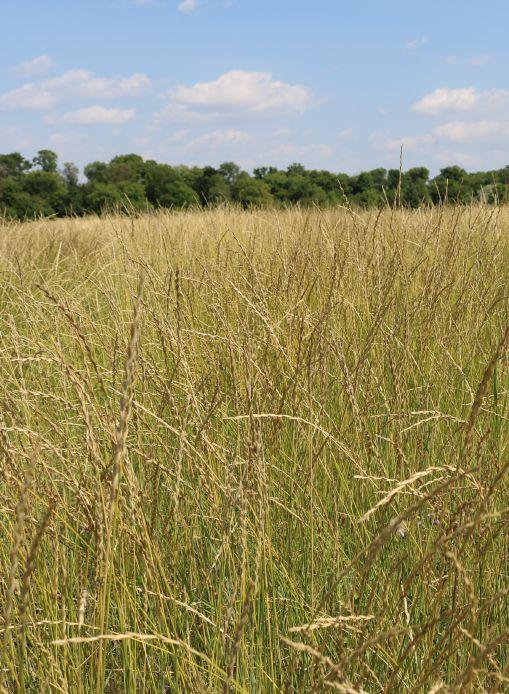
Perennial intermediate wheatgrass is a multifunctional crop that may as well come straight out of a fairy tale: it’s a hardy, soil-building option for producers that returns reliable yields for food grain and forage year after year.
At the University of Manitoba’s plant science department, breeder Doug Cattani has been working to develop Prairie-friendly intermediate wheatgrass (IWG) cultivars for the last decade.
One cultivar has begun its final stages: Cattani and his colleagues will gather breeder seed from a site near Carman, Man., this year, after which Cattani’s team can start to increase foundation seed. Within just a few years, producers should have access to seed for planting.
IWG was introduced to North America in the 1930s, Cattani says, but work on the crop was predominantly done in Alberta or Saskatchewan, where winterkill limited utility.
When he began the project, Cattani’s goal was to evaluate genetic materials that had been developed by The Land Institute in Salina, Kansas, over three cycles of selection.
“It took three harvests to ensure two things: that the plants were adapted to Manitoba’s very harsh environment, and that they could be productive over that period of time,” he says.
Once they’d ensured survival and productivity, Cattani’s team made crosses, increased seed and began evaluating it for agronomics. The result is the first University of Manitoba IWG cultivar.
There’s been a lot of interest in the cultivar, Cattani says, mainly from organic grower groups, for whom it represents a high-value option for food grain, but also from research groups across the Prairies, who are testing the cultivar’s regional performance alongside partner producers.
Agronomics
This as-yet unnamed cultivar is only the first. Cattani’s program has begun the next cycle of selection. But they’re taking it slow.
“We wanted to figure out the agronomics first,” he explains. “We’ll use the agronomics to inform the next selection process. The practices we use and our selection process influence what we get out of it at the end.”
For instance, fertilization: Cattani says that when you’re selecting for wheat and fertilizing at the recommended rate, you look for the materials that perform best.
“Instead of getting 10 per cent of your population that’s adapted to lower N, by expanding and going to a higher rate, you’re opening it up to a group that may comprise 30 per cent of
As perennial intermediate wheatgrass is an outcrossing crop, there is no genetic uniformity as is expected with hybrids and self-pollinating species.
your population,” he says.
“We have to get something adapted to see how it grows here, and what are its greatest influences, and then enhance that to get better surviving, higher yielding populations.”
The main agronomic considerations for IWG are N fertility rates and timing, Cattani says.
“Depending on the plot locations, we’re using mono-ammonium phosphate and urea as N sources and seeing whether it needs N right after harvest, or whether it’s better first thing in the spring?”
The last experiment looks at whether a split application influences seedhead numbers. Because density is determined during
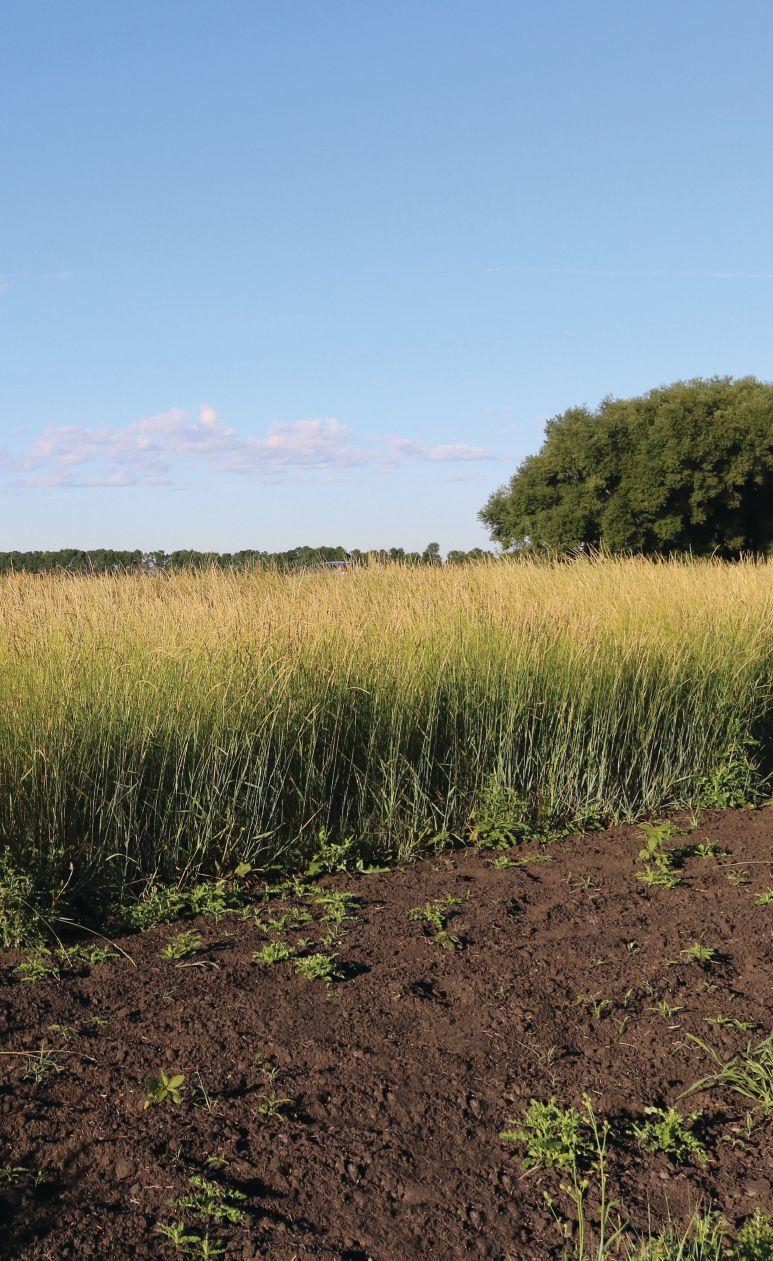
PHOTO COURTESY OF DOUG CATTANI.
vernalization the previous fall, with seedhead growth following in the spring, a fall/spring split application may influence yield.
“We’re trying to work out those components of production, and then we can inform producers what they need to do,” he says. “We’re trying to figure out where it fits into the overall scheme of perennial grass production. This will all be part of the marketing of the variety. And we can add what’s worked well for our producers in the past.”
Benefits
IWG yields a lot lower than its annual counterpart, in the range of 40 to 50 per cent that of annual wheat, but it has many other ben efits that could make it an attractive option for both conventional and producers.
While seed production is lower, producers may get five to six years out of a single crop before the need to reseed arises.
The benefits of the system for the soil are formidable: they in clude improved carbon sequestration and air and water infiltration, and better soil structure overall. Because live root systems are active through the year for multiple years, the plants can capture far more moisture and nutrients, making the crop – and the land – more re silient. After the second year, the crop shades out weeds, minimizing the need for herbicides under conventional production.
At the very least, the crop could be used as a soil remediation strat egy for severely eroded areas, Cattani says. “It’s not going to cure all problem areas, but over time it can reduce the impact annual crop production is having on our soils,” he adds.
In one Minnesota study, IWG was able to capture nitrates leaching into the groundwater. In another study in an artificial environment the root system of an IWG crop was measured at 22 feet deep; even under normal field conditions, the root system can easily reach two metres by the end of the second year, Cattani says.
Winter survivability has been very good on the Prairies – Cattani says a bigger potential stress on the crop is late spring frosts after a good period of growth. “The plants de-acclimate when there’s no frost. A frost after a week or two of warmer weather, and we’ve lost plants. What we’ve ended up doing is selecting plants that begin regrowth later in the spring – that’s the adaptation part,” he says.
IWG won’t pay for itself in the first year, because the first year is considered a “juvenile” year and producers won’t see many seedheads. Cattani’s team has another study looking at establishment methods, such as spring seeding or underseeding to wheat. The first year’s data of the study shows that seed yield was not affected by underseeding to wheat in the first year – so producers could get an annual crop off in the first year and be ready to go in the second.
Cattani’s program has looked at other possibilities for improving value for the farmer, including intercropping with legumes for a longterm N fertilization solution, and livestock integration; both methods can be successful.
Cattani’s breeding program actually “weeds out” material that expands and yields well in the first year, because these tend to perform less consistently later on. And consistency is important for this crop.
“You want a plant with a large seed that produces year after year after year,” he says.
All of this takes time, from a breeding standpoint. “We’ve got to remember we’re 60 years behind canola breeding and 5,000 years behind wheat breeding. Once we get a good understanding of how the plant grows and its production, it’ll be faster. But patience is a virtue,” he says.
A LONG WAY TOGETHER
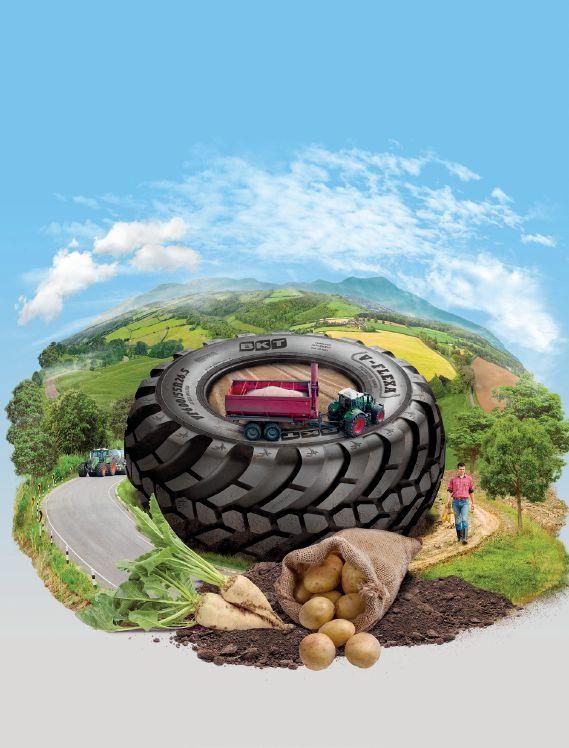
V-FLEXA
No matter how challenging your needs, V-FLEXA is your best ally for agricultural trailers, tankers and spreaders. This latest-generation product features VF technology, which enables the transport of heavy loads both in the fields and on the road at lower inflation pressure. V-FLEXA is a steel-belted tire with a reinforced bead that provides durability, excellent self-cleaning properties and low rolling resistance even at high speeds.
V-FLEXA is BKT’s response for field and road transport with very heavy loads avoiding soil compaction.
For info: Western Canada 604-701-9098 Eastern Canada 514-792-9220
YOU’RE THE REASON WE’RE ON THE MAP.
For over 25 years, you have trusted InVigor® hybrid canola. The innovation continues with our exciting lineup of 12 hybrids, 10 with industry-leading Pod Shatter Reduction technology, 9 with clubroot resistance plus two new hybrids – InVigor L343PC and InVigor L356PC. Of course, innovation alone didn’t put us on the map. You did.
Always read and follow label directions.
ARE PRE-HARVEST APPLICATIONS NECESSARY FOR STRAIGHT-CUT CANOLA?
The answer depends on your objective.
by Bruce Barker
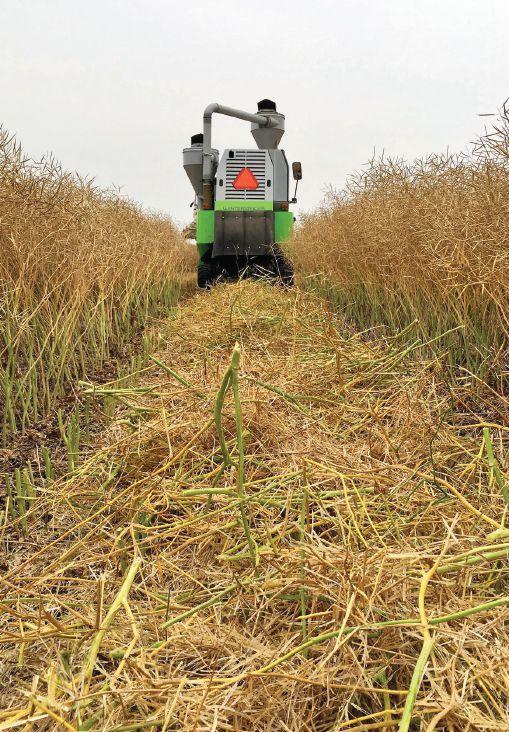
With roughly 50 per cent of canola now straightcombined, the practice has become common place with growers. What is lesser known is whether straight-combined canola needs a preharvest application or a desiccant to help make the operation more successful. A three-year research trial in Saskatchewan and Manitoba looked into that question.
“Whether there was a benefit to a pre-harvest application really depended on individual circumstances such as whether there was uneven maturity, perennial weeds present, lots of green straw or weeds, or if the harvest was entering into a stretch of wet, cool weather,” says lead researcher Chris Holzapfel with the Indian Head Agricultural Research Foundation. “What we did find was that going without a pre-harvest or desiccant application was a viable option for early seeded, relatively uniform and weed-free fields seeded to a pod shatter tolerant hybrid.”
Field trials were completed in 2017, 2018, and 2019 in Indian Head, Melfort, and Scott, Saskatchewan, and Melita, Manitoba. In each year, a Liberty Link and a Roundup Ready pod-shatter tolerant variety was grown. For the Liberty Link varieties, preharvest treatments included glyphosate, Heat (saflufenacil), glyphosate plus Heat, and the desiccant Reglone (diquat), along with an untreated control. In the Roundup Ready varieties, preharvest treatments included glufonsinate ammonium (unregistered application), Heat (saflufenacil), glyphosate plus Heat, and Reglone (diquat), along with an untreated control. These were applied in a minimum of 20 U.S. gallons per acre to ensure adequate coverage, except for glyphosate applied alone at lower water volumes.
Timing of the pre-harvest treatments were targeted for 60 to 75 per cent seed colour change for glyphosate and Heat applications or approximately 90 per cent seed colour change for glufosinate ammonium and Reglone. Holzapfel says that the wide range of environmental conditions and variation in treatment application and harvest timing provided a robust evaluation of the treatments.
Data collected include visual stem dry-down ratings, whole plant and seed moisture at harvest, seed size, percent green seed and yield.
Going without a pre-harvest or desiccant application can be a viable option.
Variable results by year and location
Using Indian Head results as an example, the three-year whole plant moisture average saw the untreated control with the highest moisture content at 36.2 per cent, and the lowest with Reglone at 26.8 per cent. This was to be expected since Reglone is the only true desiccant among the treatments. Glyphosate plus Heat was the next lowest at 29.8 per cent. Glyphosate alone and
PHOTO BY CHRIS HOLZAPFEL
THE HARVEST HUB PRESENTS
AVAILABLE ONLINE NOW
Did you miss out on some of the great content provided during The Harvest Hub?
Visit TopCropManager.com/harvest-hub to find readily available content such as:
WEBINAR:
Protect, connect & optimize the value of your stored grain
Sponsored by
WEBINAR:
Put data to work for you after harvest
Sponsored by
DOWNLOAD – Grain Bin Safety poster
LISTEN – 5 new podcast episodes focused around harvest
READ MORE ON:
• Safe storage guidelines for soybeans
• Repurposing crops as feed
• Data-driven farming, made easy
PRESENTING SPONSORS:
Heat alone were intermediate in whole plant moisture content. However, the results varied by year with 2017 showing no difference between treatments (including the control) with 2018 and 2019 showing some differences with Reglone always significantly lowest of all treatments.
Similar to whole plant drydown, seed moisture content at Indian Head during the dry 2017 harvest season was similar between treatments ranging from just under six per cent to around 7 per cent moisture content. 2018 and 2019 was variable between treatments. The three-year average showed that Reglone had the lowest seed moisture at 10.4 per cent, glyphosate plus Heat at 11.1 per cent, glyphosate alone at 11.4 per cent, Heat alone at 12.0 per cent and the untreated control at 12.6 per cent.
The effect on green seed at Indian Head was not statistically significant. All treatment including the control had similar green seed content averaging 0.3 to 0.6 per cent.
The trends in whole plant moisture content, green seed and whole plant drydown observed at Indian Head were similar at other sites, depending on year, weather and crop conditions.
Holzapfel says that seed yield was the least important measurement for this agronomic study. He says that none of the products that were evaluated should impact yield if used according to label directions and harvest is completed within a reasonably timely manner.
“Yield differences between hybrids cold be reasonably expected but pre-harvest treatment effects would indicate either improper timing, reducing yield when applied too early as an example,” Holzapfel says. “We monitored for pod shattering but no substantial losses or treatment differences were ever noted.”
Similarly, seed size should not be effected unless a treatment was applied too early ahead of recommended crop staging, similar to what happens if canola is swathed too early. The data showed that pre-harvest applications had no impact on seed size at 75 per cent of the individual site years. At the other 25 per cent, there wasn’t any consistent pattern to a reduction in seed size among pre-harvest treatments or varieties.
Advantages and disadvantages of the treatments
Each pre-harvest option brings advantages and disadvantages to the table. Glyphosate is relatively low cost, requires lower water volumes, provides excellent perennial weed control, and is unlikely to cause grading issues when applied at the correct timing. However, it has slow dry down activity and may not show any benefit for reducing green plant growth prior to harvest.
Tank-mixing glyphosate plus Heat increases the cost, but improves the speed of dry down compared to glyphosate alone. Glyphosate still provides excellent weed control in this tank mix. The research found that the dry down benefit was inconsistent on Roundup Ready hybrids, and higher water volumes are required for this product.
Holzapfel observed that with the Heat treatments, the upper stems and pods dried quickly, but the lower stems often remained green, likely due to lack of coverage.
Reglone, as the only true desiccant, provided the most rapid, consistent and complete dry down on both hybrid types. Holzapfel says the later application timing at 90 per cent seed colour change adds flexibility in the decision-making process so that if the crop
Pre-harvest application effects on plant moisture at Indian Head (Liberty Link®)
is already uniformly drying down and good harvest weather is on the horizon, an application might not be required. On the other hand, Reglone does not provide perennial weed control and requires higher water volume.
“The pre-harvest applications generally were more of a benefit in areas with shorter growing seasons and higher moisture conditions where the stems stayed greener. Under those conditions, the seed moisture can often be low enough to combine and store but the green material can be hard to put through the combine and potentially contribute to green dockage and subsequent issues in the bin,” Holzapfel says.
“What we did find was that going without a pre-harvest or desiccant application was a viable option for early seeded, relatively uniform and weed-free fields seeded to a pod shatter tolerant hybrid.”
efit from a pre-harvest application.
On the other hand, even in southern regions, conditions that drag out maturity could result in later, green crops that would ben-
“Whether to apply a pre-harvest application really depends on field conditions. If you are squeezed on harvest timing, an application could help speed dry down of the green material to help speed harvest. But if the field is clean, relatively uniform, and there is a reasonable harvest window ahead, you could get away without one,” Holzapfel says. “It can go either way.”
and is not accepted, click on the QR code. Take them to the
British Columbia: Okanagan, Interior, Kootenay – October 12 to 22
Go to: cleanfarms.ca/materials/unwanted-pesticides-animal-meds/
Northern Saskatchewan – October 4 to 8
CARROT RIVER
Tuesday, Oct. 5
Richardson Pioneer
306-768-8084
HUMBOLDT Thursday, Oct. 7
Humboldt Co-op
306-231-5915
LEADER Friday, Oct. 8
G-Mac’s Ag Team Inc.
306-628-3886
LIBERTY Friday, Oct. 8
Nutrien Ag Solutions Craik 306-847-2040
LLOYDMINSTER Tuesday, Oct. 5 Veikle Agro (Lloyd) Inc. 306-398-7516
LUSELAND
Wednesday, Oct. 6 Rack Petroleum
306-372-4411
MEADOW LAKE
Thursday, Oct. 7 Meadow Lake Co-op Service Center 306-236-3644
MELFORT Monday, Oct. 4 Paragon Ag Services Ltd. 306-752-3343
PRAIRIE RIVER Wednesday, Oct. 6 Nutrien Ag Solutions Prairie River 306-889-2172
ROSETOWN Thursday, Oct. 7
G-Macs AgTeam Inc.
306-882-2600
ROSTHERN Monday, Oct. 4
Blair’s Fertilizer 306-232-4223
SASKATOON Friday, Oct. 8 Saskatoon Co-op Agro Centre 306-933-3836
SHELLBROOK
Tuesday, Oct. 5 Lake Country Co-operative Association Limited 306-714-7803
SPIRITWOOD Wednesday, Oct. 6
G-Mac’s Ag Team Inc.
306-883-2476
UNITY Monday, Oct. 4
Unity Cargill
306-228-4144
WYNYARD Monday, Oct. 4 Cargill Ltd.
306-554-2244
YORKTON
Wednesday, Oct. 6
Richardson Pioneer Yorkton
306-786-5647
Southern Alberta – October 25 to 29
BROOKS
Thursday, Oct. 28
Nutrien Ag Solutions Brooks 403-362-2072
CARSELAND Friday, Oct. 29
Richardson Pioneer 403-934-9267
CARSTAIRS Friday, Oct. 29
CORE Ag InputsCarstairs 403-940-0472
CASTOR Thursday, Oct. 28 Meadowland Ag Chem Ltd. 403-882-2490
CLARESHOLM Tuesday, Oct. 26 UFA Claresholm Farm Store 403-625-3337
DRUMHELLER Friday, Oct. 29
Kneehill Soil Services Ltd. 403-823-4600
ENCHANT Wednesday, Oct. 27 Nutrien Ag Solutions Enchant 403-739-2012
FOREMOST Wednesday, Oct. 27
South Country Co-op 403-867-3200
HANNA Monday, Oct. 25 Fox Lake Agro Services Ltd. 403-854-2820
HIGH RIVER Monday, Oct. 25
South Country Co-op 403-652-4143
HUSSAR
Monday, Oct. 25
Richardson Pioneer - Hussar 403-787-3931
MAGRATH Friday, Oct. 29
Richardson PioneerMagrath 403-758-3162
MEDICINE HAT Tuesday, Oct. 26
Nutrien Ag Solutions Medicine Hat 403-526-9499
MILK RIVER Thursday, Oct. 28 Parrish and Heimbecker 403-647-3633
OLDS Thursday, Oct. 28
Richardson Pioneer Olds 403-556-6606
OYEN
Tuesday, Oct. 26
UFA Oyen Farm Store
403-664-3611
RED DEER COUNTY Wednesday, Oct. 27
Central Alberta Coop Innisfail Agro 403-227-3466
TABER Monday, Oct. 25 Taber Home & Farm Centre 403-223-8948
THREE HILLS
Tuesday, Oct. 26
Kneehill Soil Services Ltd. TH 403-443-2355
VETERAN Wednesday, Oct. 27
Richardson Pioneer 403-575-4600
WATCHING FOR HIDDEN PESTS IN CEREAL CROPS
Findings from an Alberta baseline survey for an emerging concern.
by Carolyn King
Cereal cyst nematodes (CCN) are very small, soil-dwelling pests with the potential to cause big impacts on cereal crop yields. These nematodes are gradually spreading in the western United States and could become a concern for Prairie cereal growers. So Shabeg Briar recently conducted a small survey to collect baseline Alberta data on this emerging issue.
“I wanted to have a quick look at what is going on and keep an eye on this issue,” explains Briar, a research agronomist at Olds College Centre for Innovation in Olds, Alberta.
CCN are spread by the movement of infested soil on field equipment, boots, root crops, and so on. The first report of these nematodes in western North America was in western Oregon in the 1970s. Since then, CCN have become well established in the cereal-growing areas of the Pacific Northwest states of Oregon, Washington and Idaho and have spread to other states including California, Michigan, Colorado, Utah and Montana. Two CCN species have been identified in the region: Heterodera avenae, which is the most common, and Heterodera filipjevi.
In severely infested fields in the Pacific Northwest, CCN have
been reported to cause up to about 50 per cent yield loss in winter wheat and barley and complete crop failure in spring wheat.
Before he came to Olds College, Briar was a research scientist at Montana State University’s Montana Agricultural Experiment Station, where he worked on nematology research. In Montana, Heterodera avenae was first found in 2006 and Heterodera filipjevi in 2015, so Briar is familiar with these nematodes, the damage they can cause, and the risk of their spread.
“Since I started working at Olds College Centre for Innovation in 2018, I was always thinking that if the cereal cyst nematode is moving north, Alberta may have some fields already positive for this pest. So I submitted a proposal to the Alberta Wheat Commission for a small study for one season,” he says.
“Because I was going to sample for cereal cyst nematodes, I decided to also look at the population levels of another important type of plant-parasitic nematode called root lesion nematodes; those
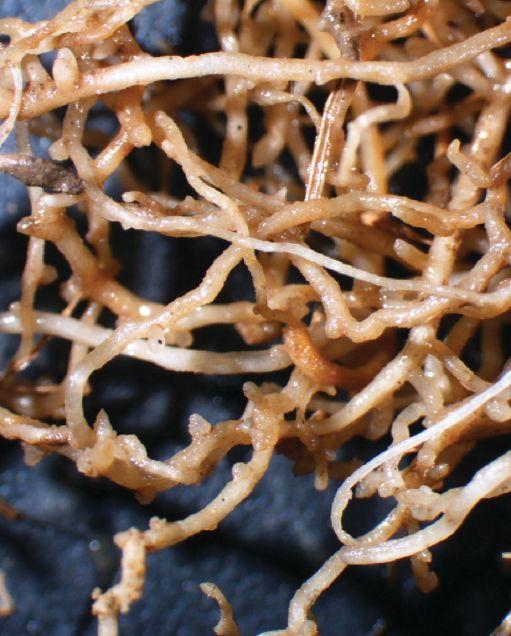
ABOVE: It has been reported that cereal cyst nematodes can cause up to 50 per cecnt yield loss in winter wheat and barley, and complete crop failure in spring wheat.
PHOTO BY TOP CROP MANAGER.
nematode species belong to the Pratylenchus genus. They have been reported in Manitoba, Alberta and several other Canadian provinces.”
A few basics
“Nematodes are very tiny roundworms, and they are present in every environment – in soil, plants, water,” Briar says. “The majority of nematodes in the soil are actually beneficial; they mainly help with organic matter decomposition and release of nutrients. However, some species can be parasitic to plants. Several of these plant-parasitic nematodes, including cereal cyst nematodes and root lesion nematodes, are important worldwide, and they can cause huge crop losses.”
CCN can infect the roots of cereal crops such as wheat, barley and oats, as well as grassy weeds. The nematodes steal nutrients from the plant and impede water uptake, resulting in poor plant growth.
“Cereal cyst nematodes undergo one reproductive cycle per growing season,” he explains. In general, CCN juveniles hatch in the spring. “After hatching, infective juveniles enter the roots of a susceptible host plant and start feeding. The males come out of the root system, but the females embed themselves in the root.”
The females become enlarged inside the root. By about the flowering stage of wheat, the female bodies are visible as glistening white cysts about the size of a pinhead protruding from the root.
The males fertilize the females, and each female carries several hundred eggs. Upon crop maturity and death of the root system, the female dies and her body forms a hardened dark-brown cyst around the eggs. The hardened cyst, which eventually drops off the root, provides a protective shell to help her offspring survive in the soil until a plant host is available. The eggs inside the cysts can stay viable for
many years.
CCN infestations can be tricky to identify. When the nematode population is low, the crop may not have any obvious symptoms. In highly infested plants, above-ground crop symptoms may include stunting, yellowing leaves and fewer tillers. The affected plants tend to occur in patches in a field.
Briar emphasizes, “The above-ground symptoms can be easily confused with the symptoms for lack of nutrients, lack of moisture or other problems [such as Rhizoctonia root rot].”
Below-ground symptoms include the cysts and shallow roots. Once the cysts turn brown and fall into the soil, they are very difficult to see. In wheat and barley, the roots may develop a bushy, knotted appearance. CCN feeding damage may make the plant more susceptible to other root pathogens, which may also make it hard to diagnose the nematode infestation.
Root lesion nematodes (RLN) are able to infest a wide range of plant species including crops such as cereals and pulses as well as common weeds.
“There may be four to five generations of root lesion nematodes within one crop growing season. The infective juveniles enter the root system. These nematodes don’t stay in one place, and they don’t form cysts. Instead, they move around as they feed on the root. As the crop matures, they may leave the root system or they may stay inside it for protection from dehydration or dry conditions,” Briar says.
“As their name says, they form lesions on the root, and they reduce root growth. The root damage predisposes the root system to other pathogens like Rhizoctonia or Pythium.” An RLN-infested cereal crop will have patches of poorly growing, yellowing plants, similar to the
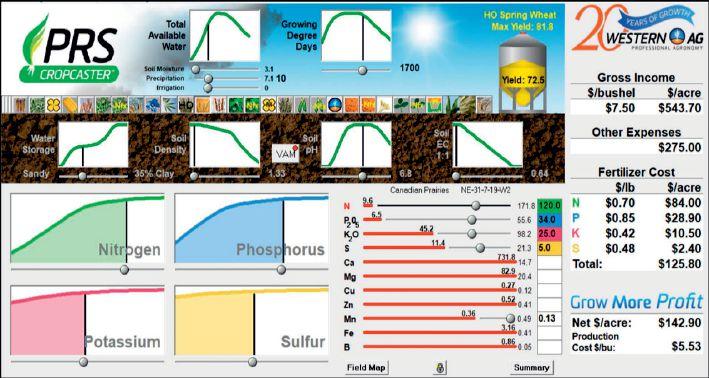
LET’S BUILD YOUR 2022 CROP PLAN
• Assess your soil nutrient supply potential.
• CropCast your yields for 27 different crops.
• Analyze ‘What if’ scenarios based on your projected climate, prices and costs.
above-ground symptoms for many other soil-related problems.
About the survey
Briar’s survey, which was conducted in 2020, primarily targeted spring wheat fields, but also included some winter wheat fields and a few barley fields. The survey focused on fields with a history of low cereal yields in spite of good management practices.
“We contacted wheat growers through our personal contacts, some research entities, and the Alberta Wheat Commission, so we could get permission to enter the growers’ fields and collect samples. We surveyed about 41 fields in southern Alberta. We also collected some samples from central Alberta. In addition, several applied research associations in northern Alberta sent samples to us from that region,” he says.
Briar and his team collected root and soil samples from each surveyed field. For the root samples, they dug the roots out of the soil carefully to avoid knocking off any cysts. They looked at the roots with the naked eye to search for any cysts, lesions and other root symptoms. Then they gently washed the roots and examined them with a low-power microscope to look more closely for any symptoms. They collected about 10 soil cores per field, mixed those cores and took a representative sample for the field. They divided that representative soil sample in half, using one half for RLN analysis, and the other half for CCN cyst extractions.
Cereal cyst nematodes form small white cysts that protrude from a cereal plant’s roots.
“However, I have to emphasize that trying to find a very low infestation of these nematodes is like looking for a needle in a haystack. This was a very small survey and the southern Alberta wheatgrowing region is a vast area so it would be very easy to miss a small infestation.”
“For root lesion nematodes, as expected we found pretty high populations in some fields particularly in southern and central Alberta,” he says. “These nematodes were widespread. We found them in 73 per cent of the samples in southern Alberta. However, we did not find any in northern Alberta; one reason might be the cold conditions there.”
Briar would like to see these surveys continue as a way to watch for nematode problems so cereal growers can take action if necessary. He also says changing climate conditions could influence the distribution of CCN and other plant-parasitic nematodes, another reason to monitor the situation.
As well, Briar has submitted a proposal for a joint project to explore whether root lesion nematodes, or plant-parasitic nematodes in general, might be making wireworm problems more severe in southern Alberta wheat crops. In the future, he would also like to identify the prevalent RLN species in Alberta cereal crops, which would be helpful if their population levels are high enough to require some control measures.
Tips for growers
Briar recommends that cereal growers be on the lookout for CCN. “If you see a wheat field that is performing poorly despite good management, then something may be going on in the soil.
But that could be many things.” A first step would be to work with your agronomist or crop pathologist to look at the below-ground and above-ground symptoms to try to identify what specifically is causing the problem.
“The only way to know for sure if a soil or crop is infested with nematodes is to have the samples analyzed,” Briar notes.
In Alberta, the Alberta Plant Health Lab (APHL) will be willing to accept cereal root samples for CCN testing starting in 2022. A soil sample testing option will follow sometime later. For inquiries about submitting CCN samples for testing, contact the APHL at planthealthlab@gov.ab.ca or 780-644-3436 (Jie Feng, APHL lead).
“If we do find cereal cyst nematodes in a field, there is no need to panic because once we have identified the problem, then we can do something about it,” Briar says. “On the other hand, if we don’t know about the problem and it goes undiagnosed, then it could become more widespread.”
Practices for managing CCN include adding non-host broadleaf crops like canola or pulses into a cereal rotation, controlling grassy weeds, and using sanitation measures like cleaning soil off field equipment and boots before leaving a field in order to limit the movement of infested soil. Also, breeding and variety testing programs could identify CCN resistant or tolerant cereal varieties.
Briar concludes, “It may be just a matter of time before we find a few fields that are positive for cereal cyst nematodes. So continued study and keeping an eye on the issue will be important.”
SEED YOU CAN COUNT ON.
Range of hybrid choices to meet your growing conditions
Robust breeding and testing process to assure quality
Trusted brand to deliver value and performance
DURUM FOR DRY, HOT CONDITIONS
Root and photosynthesis traits that help maintain yields despite these stresses.
by Carolyn King
Drought and heat already take their toll on Prairie crop yields. A future where that toll could become much higher is a gut-wrenching thought.
“Climate models predict the wheat-growing belt in the Prairie provinces – particularly in southern Alberta and Saskatchewan, where much of the durum is cultivated – will get hotter and face drought conditions,” says Gopalan Selvaraj, a principal research officer with the National Research Council of Canada in Saskatoon.
Selvaraj and his research group recently completed a project looking at the genetic underpinnings of drought- and heat-tolerant root and photosynthesis traits in durum wheat. Their findings are a step forward in helping durum breeders efficiently move these traits into their breeding lines.
The longer-term goal of Selvaraj’s research is to develop molecular markers for the drought- and heat-tolerant traits. Breeders can use such markers to quickly screen breeding materials in the lab, instead of having to grow the seeds into plants and assess them for the desired
traits. Markers are especially helpful when screening for traits like root characteristics that would otherwise require labour-intensive, time-consuming measurements.
Drought and heat: a double whammy
Selvaraj points out that drought and excessive heat limit crop yields more than all other crop stresses. He explains that the lack of water impairs a long list of vital functions that water performs in plants. Plants are about 90 per cent water, so water is part of a plant’s structure. Water is the medium in which most biochemical reactions happen in plants, and it is key to photosynthesis and cell growth. Water transports dissolved soil nutrients into the plant and transfers the sugars made by photosynthesis to different parts of the plant. Water
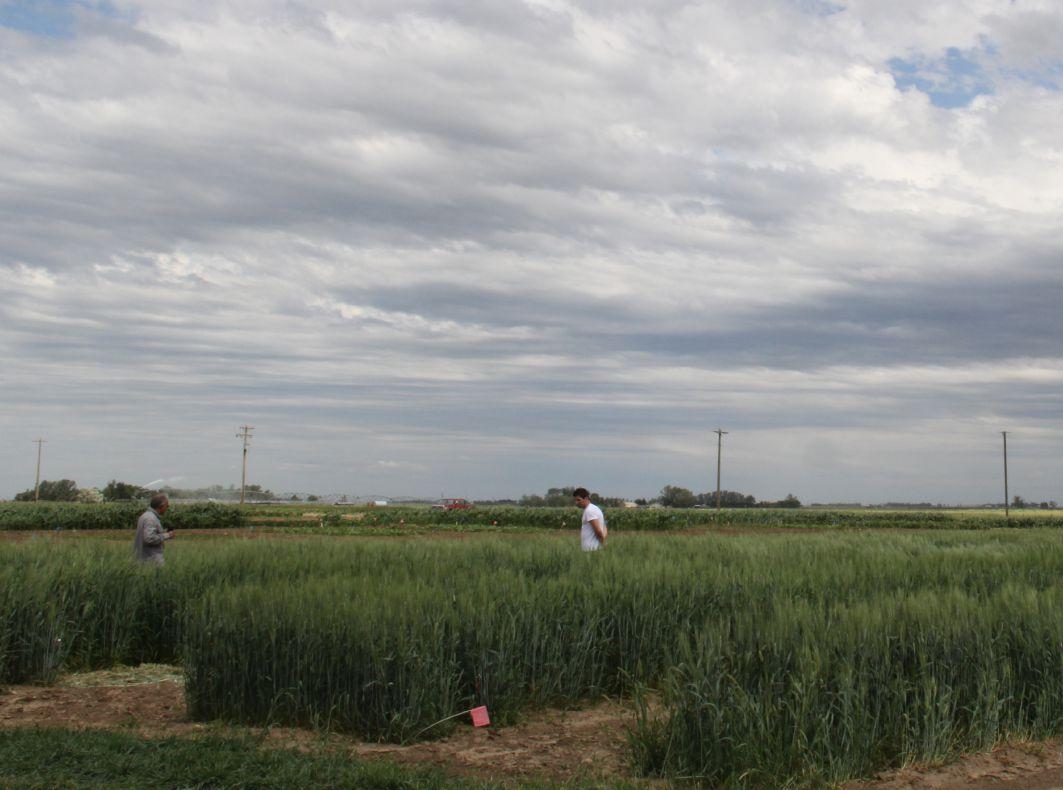
TOP: Selvaraj (left) and Hamid Shaterian (right) evaluating the traits of the different durum lines in the field.
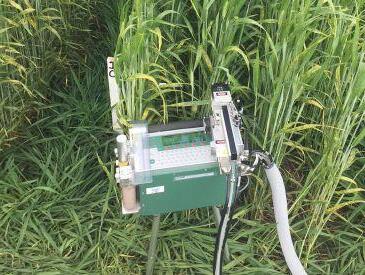
INSET: The researchers measured photosynthesis in the durum lines to compare performance under different growing conditions.
“Excessive heat reduces yields; some studies estimate as much as six per cent yield reduction for every Celsius degree above a plant’s upper limit [for heat tolerance].”
is slow to heat and cool, so it buffers the plant against temperature changes, and it also helps cool the plant through evapotranspiration.
“Excessive heat reduces yields; some studies estimate as much as six per cent yield reduction for every Celsius degree above a plant’s upper limit [for heat tolerance]. It can be a silent killer when it occurs at a sensitive point like flowering,” he notes.
“Also, heat makes drought worse, and drought exacerbates the ill effects of heat. If there is no water, the temperature will go up inside the plant cells and cellular function will come to a halt.”
A tale of two cultivars
To investigate the genetic underpinnings of a trait, researchers can create a genetic map – a map of chromosomes and genes – using contrasting breeding lines that differ in that trait. The researchers then map the trait onto the genetic map to look for genes associated with the trait and develop markers for those genes.
Selvaraj’s project contrasted two pivotal durum varieties – Pelissier and Strongfield – and a set of lines made by crossing these two varieties. “Pelissier comes from Algeria. It was brought into the U.S. about 120 years ago and then into Canada [in 1929]. It was used in Canada as a variety because it had superior grain protein strength for pasta,” Selvaraj says. Pelissier was grown on the Prairies for many decades, and Canadian durum breeders used it as a founder parent. Pelissier performs well under hot, dry conditions – not surprising, given its North African origins.
Strongfield was bred by Dr. John Clarke at Agriculture and AgriFood Canada’s Swift Current research centre and released in 2004. This variety was the first commercially successful Canadian durum variety with low cadmium levels, an important issue for export markets. “Strongfield is one of the most successful varieties in Canadian durum history and cumulatively it probably has had the largest acreage,” Selvaraj says. “Many subsequent durum varieties have Strongfield in their pedigree.”
The project’s work with Pelissier was built on foundations laid by some earlier Prairie researchers. Galvanized by severe droughts in the 1930s and early 1960s, those researchers tackled the challenge of investigating root characteristics in wheat to help in developing drought-tolerant varieties. “In the 1930s, scientists in Alberta compared the root systems of a number of different wheat varieties. They found that Pelissier had much more root biomass than non-droughtresistant varieties,” he notes.
“In the 1960s, Dr. Edwin Hurd, a durum breeder at the Swift Current centre, did outstanding, pioneering work in the world on drought tolerance in wheat, or any crop system for that matter, from a breeding perspective. He confirmed that Pelissier did indeed have a greater root biomass.
“He also crossed Pelissier with a drought-sensitive durum variety and then simply looked for yield improvement – not root characteristics – in the hundreds of progeny. In the early 1970s, he released two varieties from that work. Both varieties turned out to have extensive
root systems just like Pelissier.” In other words, selecting for high yields under dry conditions also selected for larger root systems.
Hurd reasoned that drought-tolerant varieties not only need a deep, extensive root system that can seek out and retrieve water under dry conditions; those varieties must also be able to use this water to drive photosynthesis under moisture-stress conditions so they can sustain their yield potential.
Selvaraj adds, “After those two varieties were released in the early 1970s, there was no directed effort to use root traits from Pelissier [to develop drought-tolerant varieties]. Breeders do their selections over time, in wet years or dry years. Unless one makes the selections only in dry years, drought-tolerance traits can be lost.”
Based on Hurd’s work, Selvaraj’s group selected Pelissier for their project’s example of a drought-tolerant variety with a deep, extensive root system. Strongfield made a good contrasting line because it had about half the root biomass of Pelissier in greenhouse trials under well-watered conditions.
The researchers were able to augment the genetic contrast of Pelissier and Strongfield with a set of lines made by crossing these two varieties. “Scientists at the Swift Current research centre had already crossed Pelissier and Strongfield and created 167 lines using a protocol called doubled haploidy. They kindly allowed us to use those lines in our research.” Each doubled haploid line is genetically distinct from the other 166 lines, and each line breeds true.
Using Pelissier, Strongfield and the 167 lines, Selvaraj’s group created a genetic map.
Mapping the traits
Selvaraj’s group measured the root and photosynthesis traits of the different lines so they could map those traits on the genetic map.
Regarding the root traits, they found that Pelissier and Strongfield have about the same amount of root mass in the plants’ early growth stages. However, Pelissier then makes a massive investment of photosynthate in root development just before or right at the time of flowering.
Selvaraj speculates that Pelissier’s root growth pattern could be advantageous in typical Prairie growing conditions. “Moisture availability is generally not a problem early in the growing season, but hot, dry weather often strikes around flowering time or later.” So Pelissier waits to invest a lot of energy into root growth until the plant will most likely need to start accessing water remaining deeper in the soil.
For photosynthesis under good growing conditions, Selvaraj’s group found that Strongfield has a better photosynthetic capacity than Pelissier. That was expected because Strongfield is a highyielding variety, and photosynthetic capacity can translate into yield. However, under dry conditions, Strongfield’s photosynthetic capacity drops while Pelissier’s remains stable or even rises slightly. Similarly, under hot conditions, Pelissier’s photosynthesis performance is superior to Strongfield’s, not only in the lab but also in the field.
The researchers have mapped the genomic regions associated with deep, extensive root systems and with superior photosynthesis capacity under hot and dry conditions.
Their work so far has resulted in some lower resolution markers. Selvaraj notes, “Those markers tend to fall at very large intervals
along the chromosome. Between one marker and the next there may be as many as 1000 genes.” That is far too many candidate genes to find an association between a specific gene and the trait of interest.
He outlines one of the issues causing these large intervals: “Pelissier has been used several times in the pedigree of Strongfield. As a result, chunks of Pelissier are already in Strongfield and that limits the number of markers you can find when you try to map Strongfield versus Pelissier.”
The next stage of this research will focus on reducing the intervals between markers. That way the researchers will have fewer candidate genes, making it easier to figure out which particular ones are controlling the traits of interest.
According to Selvaraj, multiple strategies are available to develop such higher resolution markers, but all are resource- and timeintensive.
This project has provided more information on Pelissier as a useful source of genes for an extensive root system with well-timed root growth, and for heat- and drought-tolerant photosynthesis. The researchers have also identified some doubled haploid lines with potentially interesting traits.
In the longer term, the genetics and genomics knowledge gained from this research will help to advance durum breeding so growers can be better prepared for a drier, hotter future. The research findings can also be applied to breeding other types of wheat.
Selvaraj emphasizes the importance of developing varieties that can tolerate dry, hot weather. “It is essential for wheat yields to be maintained or at least not reduced too much under dry conditions. Even in years where growing conditions are good across most of the Prairies, there are always places where a moisture deficit occurs. That moisture deficit causes economic hardship for the affected farmers. Then in some years, widespread drought impacts many farmers in many areas. And then the climate models say the southern Prairies will get hotter and drier, so these stress factors are likely to become worse in the years to come.”
Selvaraj notes that two people in his research group, Paula Ashe and Hamid Shaterian, deserve special recognition for their work on this project. The project’s funders included the Saskatchewan Wheat Development Commission, the Saskatchewan Ministry of Agriculture, the Alberta Wheat Commission, and the National Research Council of Canada.
CEREALS SPEEDING UP SCREENING
A new mycotoxin testing platform provides an advantage to cereal breeding and
pathology programs.
by Donna Fleury
Fusarium is a major economic threat for wheat and other cereal grains, not only because of the significant losses caused by infection, but also because of the production of harmful mycotoxins that can limit the end-use of harvested grain. Deoxynivalenol (DON), a mycotoxin, can cause significant harm to both animals and humans and has strict regulatory limits for sale into food and feed markets. Breeding for low-DON concentration in cereal crops is an important control measure for the disease, and researchers have developed new innovations to speed up screening and detection.
“In our research program, Fusarium in wheat and other cereals is a major priority,” says Randy Kutcher, plant pathologist and strategic research chair in cereal and flax pathology at the University of Saskatchewan. “Our efforts are focused on facilitating the cereal breeding program at the Crop Development Centre (CDC) in the development of Fusarium-resistant and low-DON accumulation varieties, and the use of integrated pest management (IPM) best practices to manage the disease. Our lab has recently developed a new toxin testing platform that is faster and more accurate than assay methods currently in use, and should prove to be a significant advantage for our plant breeding programs and plant pathology activities.”
“We have developed two platform innovations for identifying and quantifying mycotoxins in cereal grains in this project,” explains Lipu Wang, CDC research officer and project lead. “The main purpose of our initial project was to develop a new DON phenotyping highthroughput screening platform to support plant breeding programs. This new method uses a modified Liquid Chromatography tandem Mass Spectrometry (LC-MS/MS) assay, which helps breeders speed up the screening process and criteria selection for developing Fusarium-resistant varieties with low DON.”
This new high-throughput DON-testing method is simple, fast, efficient and less expensive than existing LC-MS/MS-based mycotoxin detection methods. Instead of running three samples per hour, this new method is capable of running a sample every two minutes, increasing the efficiency of screen large numbers of samples. Customized for wheat breeding programs, this method should significantly speed up the screening process for DON, reducing time and costs.
Wang adds they have achieved speed and efficiency while maintaining high accuracy and high sensitivity, following strict validation methods for every step. This new method is more accurate and more sensitive compared to existing measures that are currently being used, and can detect very low concentrations of mycotoxins in grain samples. The method is being expanded to other cereal crops, such as
University of Saskatchewan’s Randy Kutcher and his team have developed a new toxin testing platform for identifying mycotoxins in cereals.
barley, oat and canaryseed.
“We currently have collaborations with about 10 labs across Western Canada, including various universities, provincial and federal government labs,” Wang says. “We are working with several wheat and cereal breeding programs, but also food science and soil science labs. Along with grain sample testing, the protocols and assays we developed have a wide application and can be used to test mycotoxin levels in any contaminated samples, including soil, food and feed. We are in discussions with some startups and commercial companies interested in potential collaboration opportunities.”
Building on this successful method launched in 2019, Wang has developed a secondary platform to detect and quantify multiple mycotoxins simultaneously. “Fusarium produces several other my-
PHOTO COURTESY OF LIPU WANG.
cotoxins besides DON that are important considerations in disease management,” Wang says. “We have developed a second multiple-mycotoxin quantification assay that can detect multiple mycotoxins in one sample test and analysis. So far the assay includes seven different mycotoxins in wheat, and we are continuing to expand the mycotoxin diagnostic library. This assay is very useful to plant pathologists for monitoring mycotoxin types in Western Canada and the mechanisms of pathogen infection.”
For example, in Western Canada plant pathologists are seeing a significant shift from one type of mycotoxin to another, with the dominant chemotype 15-ADON shifting to the more virulent and aggressive 3-ADON chemotype. By understanding the shifts and trends in mycotoxin types, plant pathologists can help growers and industry understand the dominant chemotypes of the pathogen. This multiple-mycotoxin test will help plant breeders and industry respond more quickly to changing and emerging disease threats.
“We are working with several research colleagues who are using the method and continue to validate the system for accuracy,” Kutch-
er adds. “We have submitted a paper for publication that will make the method generally available to anyone who wants to use it. The LC-MS/MS equipment is standard, although expensive, but anyone with access to the equipment can use our new method for screening DON or multiple mycotoxin analysis.”
The new methods are also providing the foundation of an innovative machine learning collaborative project underway at the University of Saskatchewan. The DON and multiple-mycotoxin assays are being used to help develop and validate a new machine learning and artificial intelligence prototype to assist with screening Fusarium damaged kernels (FDKs). “We are leading the project in collaboration with the Computer Science and Mechanical Engineering departments at the university,” Wang says. “The goal is, through artificial intelligence and machine learning, to develop a software-enabled machine that is able to automatically recognize, sort and screen FDK infected kernels. Our lab and methods are making sure the system is consistent and accurate, and ultimately a useful tool for cereal researchers, industry and growers.”
BRUCE BARKER, P.AG CANADIANAGRONOMIST.CA
FLUROXYPYR-RESISTANT KOCHIA CONFIRMED IN ALBERTA
In a 2017 survey conducted in Alberta, 13 per cent of the kochia populations sampled were fluroxypyr-resistant. Only four per cent of the populations were both fluroxypyr- and dicambaresistant. When combined with estimates of dicamba resistance, about 28 per cent of kochia populations sampled in Alberta in 2017 were resistant to at least one synthetic auxin herbicide.
In Western Canada, kochia resistant to Group 2 (acetolactate synthase, or ALS inhibitor) herbicides was confirmed first in Saskatchewan and Manitoba in 1988, and subsequently in Alberta in 1989. Currently, nearly all kochia populations in Western Canada are considered to be resistant to Group 2 herbicides.
Glyphosate-resistant (Group 9) kochia was found in Warner County, Alta., in 2011, and a 2012 Alberta survey identified glyphosate resistance in four per cent of the kochia populations sampled. Further surveys found that Group 9 resistance occurred in 50 per cent of the populations sampled in Alberta in 2017. The 2017 survey of Alberta also reported dicamba (Group 4) resistance in 18 per cent of the kochia populations, while 10 per cent were triple herbicide-resistant to ALS inhibitors, glyphosate, and dicamba. Group 4-resistant kochia was confirmed first in Saskatchewan in 2015. Results from the 2019 Saskatchewan kochia survey are not yet available.
The research was conducted to understand whether Group 4 (auxinic) herbicide-resistant kochia populations in Alberta were resistant to dicamba only, or to other synthetic auxins as well. This understanding would help in the development of management options for kochia control.
A study of the 2017 randomized-stratified survey of 305 sites in Alberta was conducted to determine the status of fluroxypyr-resistant (Group 4) kochia. The samples were the same as those screened for resistance to tribenuron/thifensulfuron, glyphosate, and dicamba in earlier research.
Of the 305 sites sampled, kochia populations from 294 sites contained enough viable seed for resistance diagnostics. Overall, 13 per cent of the kochia populations were fluroxypyr-resistant, and were found in 10 of the 17 counties sampled. The greatest confirmation frequency of fluroxypyr-resistant kochia was along the Highway 2 corridor between Lethbridge and Calgary. Fluroxypyr-resistant kochia was found at the greatest frequency in small-grain cereal crops (23 per cent of populations were resistant), followed by canola (15 per cent), non-cropped areas (seven per cent), chemical fallow (6 per cent), and pulse crops (three per cent).
The majority of fluroxypyr-resistant populations, consisting of
nine per cent of total populations, had low resistance (incidence of one to 20 per cent). Low resistance within these populations is indicative of the early stages of resistance evolution. These populations often remain undetected by farmers or agronomists, but are segregating for resistance, indicating that problems with inadequate control are imminent. Moderate resistance (incidence of 21 to 60 per cent) was present in three per cent, and high resistance (61 to 100 per cent) was present in one per cent of the populations tested. Fluroxypyr-resistant kochia populations with moderate and high resistance would likely cause herbicide failures if fluroxypyr-based herbicides were used for control. Fluroxypyr is often mixed with other active ingredients, however, suggesting that the level of control will vary based on tank mix partners. Many of these partners do not provide adequate control of kochia when used alone.
Of the 294 kochia populations tested, 13 per cent were fluroxypyr-resistant, 19 per cent were dicamba-resistant, and 53 per cent were glyphosate-resistant. The exclusion of 11 populations with limited seed supply caused the slight discrepancy between these dicamba and glyphosate resistance frequencies and those reported in the earlier study.
Four per cent of the kochia populations tested were resistant to both fluroxypyr and dicamba, and 28 per cent were resistant to at least one of dicamba or fluroxypyr in 2017. This suggests that separate mechanisms may confer resistance to dicamba and fluroxypyr.
Even more challenging for growers: 16 per cent were triple herbicide-resistant to ALS inhibitors, glyphosate and a synthetic auxin.
With the development of triple-resistant kochia populations, limited herbicide options exist. Other research has been conducted looking at control of these resistant populations on chemfallow and in spring wheat. These options typically utilize alternative herbicide Groups – such as Group 14 applied pre-emergent, or a post-emergent Group 6 or 27 herbicide – depending on the cropping system.
However, reliance on these herbicides will place further selection pressure on herbicide resistance, and the development of further kochia populations resistant to these Groups.
To reduce selection pressure, farmers are also advised to implement alternative non-chemical weed control practices. Management of herbicide-resistant kochia should exploit its short-lived seedbank persistence by preventing seed production and return to the soil seedbank. In addition, the researchers suggest that a communitybased approach will be required to reduce the spread of herbicideresistant kochia from field to field. Bruce Barker divides his time between CanadianAgronomist.ca and as Western Field Editor for Top Crop Manager. CanadianAgronomist.ca translates research into agronomic knowledge that agronomists and farmers can use to grow better crops. Read the full Research Insight at CanadianAgronomist.ca.
If you can’t handle the stress, get out of farming.
talk to someone who can help
It’s time to start changing the way we talk about farmers and farming. To recognize that just like anyone else, sometimes we might need a little help dealing with issues like stress, anxiety, and depression. That’s why the Do More Agriculture Foundation is here, ready to provide access to mental health resources like counselling, training and education, tailored specifically to the needs of Canadian farmers and their families.
OCT. 19, 2021 12:00PM EDT
JOIN THE CONVERSATION
Register for a virtual mentorship event with some of the most influential leaders in Canadian agriculture.
This half-day virtual event will showcase select honourees and nominees of the IWCA program in a virtual mentorship format. Through roundtable-style sessions, panelists will share advice and real-life experiences on leadership, communication and balance working in agriculture.