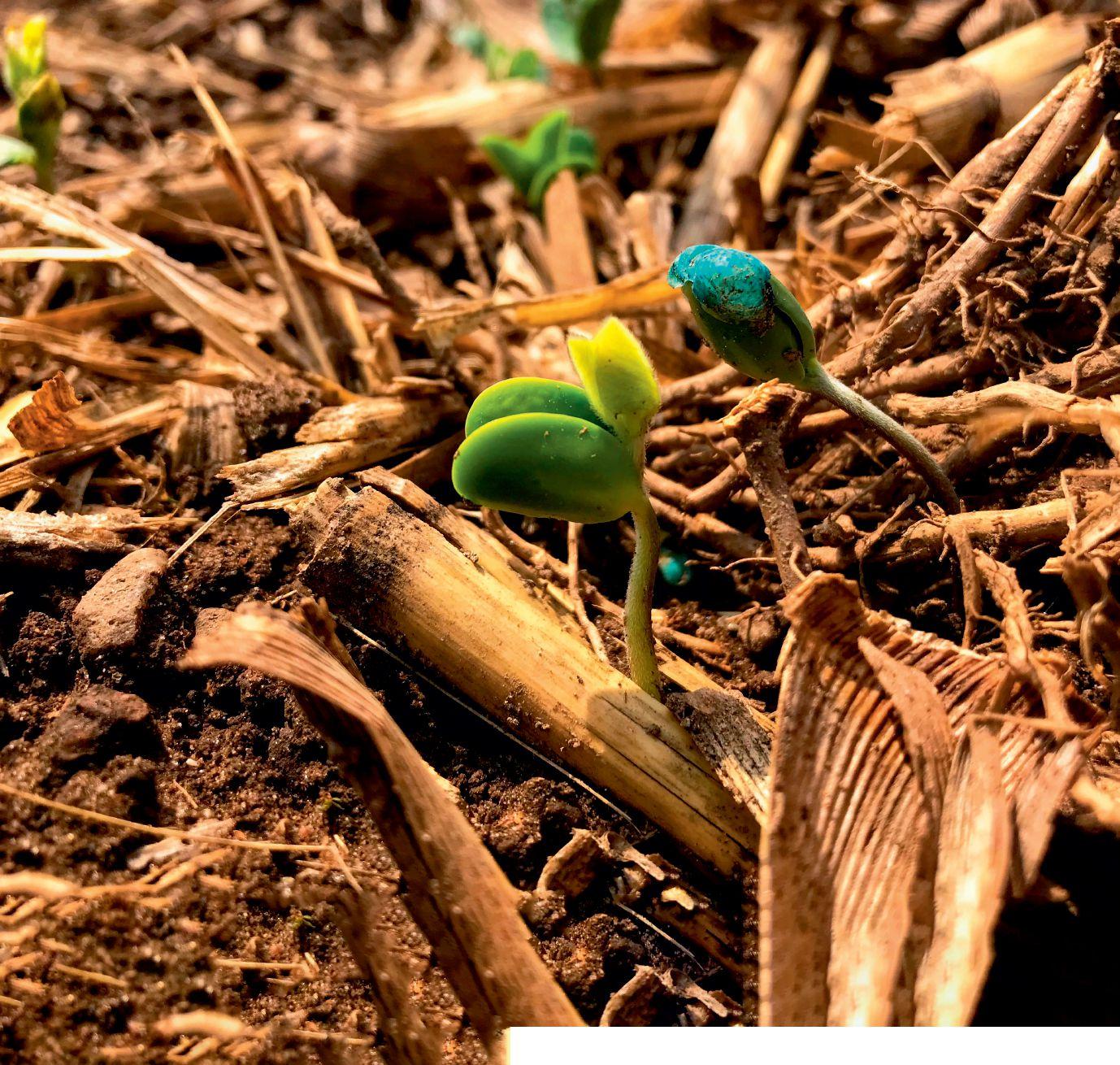
It’s time to get serious about your early season plant health. Lumiderm™ insecticide seed treatment is proven to enhance Flea Beetle protection and control cutworms, ensuring increased early season seedling stand establishment, plant vigour and biomass.
Order your canola with Lumiderm today. Ask your local seed supplier. lumiderm.corteva.ca
TOP CROP
MANAGER
HARVESTING
12 | Natural air drying and supplemental heat
Managing risk and defining best management practices
By Donna Fleury
HARVESTING
Straight
production?
Mark Halsall
HARVESTING
22 | Failing the grade
Bruce Barker
Do EEF nitrogen products fit on your farm?
ON THE WEB
Top Crop Manager’s first annual Harvest Hub featured a week’s worth of content, including new articles, resource roundups and bonus podcast interviews related to making better harvest decisions. Visit www.topcropmanager.com/harvest-hub to catch up.
Readers will find numerous references to
encourage
labels for complete instructions.
PHOTO COURTESY OF AAFC.
STEFANIE CROLEY EDITORIAL DIRECTOR, AGRICULTURE
THE ULTIMATE “CHOOSE YOUR OWN ADVENTURE”
When I was a kid, I loved reading Choose Your Own Adventure novels. It was a series of gamebooks that had reader choose their own fate. The novels were written in the second-person perspective with the reader acting as the protagonist. As the story continued, the pages would direct the reader to choose from two or three different scenarios by turning to a certain page. Each book has a variety of endings to land on, depending on the choices the reader made while working through the book. Part of the appeal of this was that you could read the same book more than once and the story would end differently each time. If farming isn’t a choose-your-own-adventure style of career, I don’t know what is. The ending of each season depends so much on the decisions made through the year, and one small change can impact the entire adventure. From seeding to harvest, the success of a season depends so much on choosing the right seed, chemicals and inputs – not to mention choosing the proper timing of it all. Weather will always be an uncontrollable factor and an early frost or extra wet year will throw you a curveball every once in a while. You won’t know if you’ve made the right choices until you’re done – there’s no magic 8-ball that will predict the perfect strategy. You could have a banner year with a bumper crop this year, but using the exact same strategy again next year could yield a completely different result. Talk about an adventure.
Decision-making doesn’t always come easy, but there are some tried-and-true ways to help you with the process. My personal strategy is a combination of research and gut feeling. I like to clarify my goals, gather my information and do my research – but ultimately, instinct plays a huge role. This edition of Top Crop Manager may help with the information and research side of things. We’re kicking off our fall publishing season with a harvest-themed issue, with articles about on-farm grain drying and the benefits of straight-cutting versus swathing canola. We’re also excited to introduce a new back-page column written by Bruce Barker, our Western Field Editor and the voice behind CanadianAgronomist.ca. Bruce will be sharing research insights every month in his Agronomy Update, aiming to translate research into knowledge that farmers and agronomists can use to grow better crops.
Perhaps the hardest part of making a decision is what happens afterward. You’ve made the choice – now it’s time to put it into play and focus on the follow through. Wishing you a safe and successful harvest season.
FARM-SAVED SEED/CERTIFIED SEED MATCHUP
A Saskatchewan study compares performance.
by Carolyn King
Can farm-saved seed perform as well as the same variety of Certified seed? A three-year study aims to answer this question for popular wheat varieties grown under Saskatchewan conditions.
“There were questions being raised by producers about the relative performance of Certified and farm-saved wheat seed, and this is an area that hasn’t been well documented in the past. So we were interested in providing more information for producers; we’ve got a mandate that supports research that contributes to profitable wheat production for our farmers,” explains Harvey Brooks, general manager of the Saskatchewan Wheat Development Commission (Sask Wheat).
“Many farmers choose to save and clean their seed to reduce costs. We want to make sure that they are doing that with the full information set.”
Through joint research project planning meetings with Saskatchewan’s Agri-ARM applied research organizations and crop commissions, this issue was identified by Sask Wheat as an area
of interest to study further. The Agri-ARM network took up the challenge of designing and implementing the study at the eight Agri-ARM sites.
“It wasn’t an easy request; I found that little research had been done to compare yields between Certified and farm-saved seed for wheat in Western Canada. But I think we came up with a way to get a reasonable comparison,” says Mike Hall, research coordinator for Parkland College and the East Central Research Foundation at Yorkton.
Hall is leading this Sask Wheat-funded study, which started in 2019. He is working with his counterparts in the other Agri-ARM organizations to carry out the work at the eight sites.
Brooks notes, “The study is comparing the vigour and the yield performance of farm-saved seed to Certified seed, and it is also determining if seed treatment improves the vigour and yield potential for
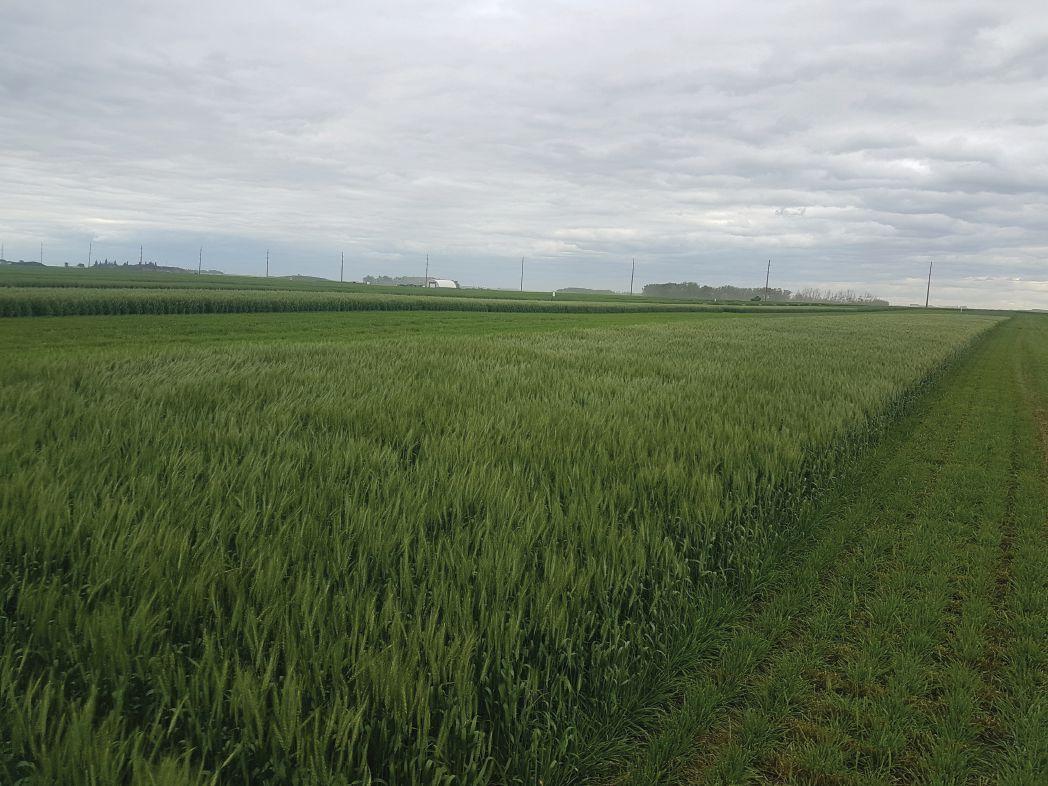
ABOVE: A study comparing farm-saved and certified wheat seed is taking place in Yorkton (shown here) and seven other sites across Saskatchewan.
farm-saved seed. Also, because the research is being performed at the eight Agri-ARM sites across the province, the results should give producers data that is applicable to their local conditions. We’re hoping that the findings will be another aid to producers as they plan their crops.”
Weighing the options
Farm-saved seed is much more widely used than Certified seed for cereal production in Western Canada. For example, a 2018 report, called Canada’s Seed System: Economic Impact Assessment and Risk Analysis, estimates that only about 20 per cent of commercial spring wheat acres in Western Canada were planted with Certified seed from 2012 to 2014.
Hall suspects that the current Certified percentage might be somewhat higher at present in Saskatchewan, based on his personal observation that quite a few producers are growing midge-tolerant wheat in 2020. “Producers buying midge-tolerant wheat seed must sign an agreement that limits the use of farm-saved seed to one generation past Certified seed [to help sustain the effectiveness of the midge resistance gene],” he explains. “So growing
more acres of midge-tolerant seed would mean less opportunity to save seed.”
Producers consider various factors when choosing whether to use Certified or farm-saved seed in a field. “I think the biggest reasons why producers use farmsaved seed are that it’s cheaper and it’s their own seed [so they are familiar with it]. Even though there are costs associated with getting your farm-saved seed cleaned, it is still cheaper than Certified,” Hall says. Certified seed costs more because of the extra steps and fees involved in meeting the strict requirements for certification.
“Producers using Certified seed benefit from the introduction of better genetics to the farm. Certified seed is valuable because it is ‘true to type,’ meaning it has retained all the genetic benefits developed by the breeder. This helps with quality assurance for the end-users, which is of increasing importance as the industry moves toward a value chain model. In addition, to be Certified, seed must meet high standards of germination and freedom from impurities, which are determined by an officially recognized third-party agency,” he says.
“[Furthermore, Certified seed purchases help fund variety development.] I think
most producers realize it is important to support a system that ensures the development of new varieties to keep Canadian wheat producers globally competitive. However, exactly how this support should be provided is currently under debate.”
Twenty-four comparisons per year
At each of the eight Agri-ARM sites, the study is comparing three different seedlots of farm-saved seed against three different Certified seedlots of the same variety. So each year, the study makes a total of 24 comparisons.
The Certified and farm-saved seedlots of each variety are generally obtained from producers local to each of the sites, which are at Yorkton, Redvers, Indian Head, Swift Current, Scott, Outlook, Prince Albert and Melfort.
The variety comparisons differ between sites depending on what is locally popular with growers. For instance, a site might have all three of the comparisons using different seedlots of the same variety or it might have a different variety for each of the three comparisons.
In 2019, the farm-saved seed used in the study was usually two to three years past Certified. Most of the varieties were hard red spring wheats, but some sites had some durum varieties. AAC Brandon was the most popular; this hard red spring variety was used in 13 of the 24 comparisons.
The farm-saved seedlots in the study are in the same condition as the farmsaved seed the producers plant in their own fields, so the seed is cleaned before seeding. All the study’s seedlots are tested for germination, vigour and five common seed-borne pathogens.
All the farm-saved/Certified comparisons are done with bare seed and with treated seed. The specific product used for the seed treatment depends on the site.
Key findings from 2019
“In 2019, seed quality was excellent for both the Certified and farm-saved seedlots. Seed vigour averaged 93 per cent across the 24 comparisons for both farm-saved and Certified seed,” Hall says.
“Seed-borne diseases were generally low for both Certified and farm-saved seed, although the disease levels tended to be somewhat more variable on the farmsaved seed. We did have one seedlot of farm-saved seed with total Fusarium levels
In the trial, both farm-saved seed and certified seed had the same average yield and protein.
beyond acceptable levels.”
He notes, “At all the sites, we had good growing conditions and good harvest conditions and not a lot of diseases on the seeds in 2019 and also in 2018, when the seed for 2019 was produced. Those conditions contribute to producing quality seed.”
In most cases, yield and grain protein did not significantly differ between the Certified and farm-saved seedlots in 2019. “This is not surprising, given that the seed quality was very good for both seed types in almost every case,” Hall says.
“Averaged across all 24 comparisons, both farm-saved seed and Certified seed had a yield of 64.9 bushels per acre and 14.2 per cent protein. So we had the exact same average yield and protein for the two types.”
He adds, “Even that one seedlot with a high level of seed-borne disease had pretty decent yields, probably in part because we were seeding into very good conditions. If you have a high amount of seed-borne disease and you’re seeding into cold, wet conditions –so the seed is not germinating or growing very fast – then certain diseases really start to go after the roots.”
In most instances, the seed treatment did not affect emergence, seedling vigour, yield or protein in the farm-saved seed or the Certified seed. He says, “If you have good quality seed and low disease in the field and very good growing conditions, it can be hard to see a benefit from seed treatment, in my opinion.”
Take-home messages from Year 1
“In 2019, most of the farm-saved seed used in this study was two to
three years removed from Certified, and its use didn’t seem to have any detrimental effects on wheat yield or quality compared to the Certified seed. This supports the strategy of growing farm-saved seed for a couple years and then buying Certified seed to introduce better genetics or seed that is true to type,” Hall says.
“These results do not mean that there is no value in purchasing Certified seed. They only mean there were no production risks from growing farm-saved wheat seed rather than Certified wheat seed in Saskatchewan in 2019.”
He notes, “Over the course of the study, we may see Certified seed outperform farm-saved seed under adverse growing conditions. We’ll have to wait and see.” Certified seed production follows strict production procedures and is tested to ensure that seed quality remains high no matter what growing conditions occur.
Hall recommends that producers have their farm-saved seed tested for vigour and seed-borne diseases, along with the usual germination test, especially if growing conditions are not very good. He explains that a vigour test gives a better indication of crop emergence and seedling vigour than the standard germination test, particularly in a cold, wet spring. And a test for seed-borne diseases can indicate whether it would be advisable to use a different seedlot or apply a seed treatment.
The study is continuing at all eight locations in 2020. Hall says, “The protocols are all the same, but the seedlots and varieties compared are different. By the end of the study in 2021, we should have 72 comparisons between farm-saved and Certified seed, with a seedlot never used in the study more than once.”
BREAK CEILING. THEYIELD
There’s only one InVigor®.
Since its launch, InVigor hybrid canola has been grown on over 160 million acres across Canada.
• 30 million acres have harnessed our patented Pod Shatter Reduction technology.
• 12 million acres have used our clubroot-resistant genetics. This year, we continue to earn your trust by adding two new hybrids to our 300 Series –InVigor L340PC and InVigor L357P. Featuring a range of innovative trait technologies and advanced genetics, you’ll nd an InVigor hybrid for every eld.
For more information, contact AgSolutions® Customer Care at 1-877-371-BASF (2273) or visit agsolutions.ca/InVigor.
Always
CHECK OUT OUR 2021 INVIGOR HYBRID CANOLA LINEUP.
Hybrid Hybrid Information
A 300 series Pod Shatter Reduction hybrid that fits in non-clubroot areas for growers looking to push for high yields with very strong standability. Also features exceptional blackleg resistance.
The 300 series hybrid for growers that want it all. A high-yielding, mid-maturing, Pod Shatter Reduction hybrid that offers 1st generation clubroot resistance and strong standability.
Offers a significant jump in yield potential over InVigor L233P and features our patented Pod Shattter Reduction technology plus 1st generation clubroot resistance.
Offers yield potential that exceeds InVigor L252. Along with outstanding yield, it also features 1st generation clubroot resistance. Ideal for growers that prefer to swath.
InVigor Choice hybrid with Pod Shatter Reduction and clubroot resistance. Features both LibertyLink® technology system and TruFlex™ canola with Roundup Ready® Technology. Perfect for growers looking for high-yielding InVigor genetics with the flexibiility of Liberty® herbicide or Roundup® herbicide applications.
This strong performer was grown on more acres in Western Canada than any other canola hybrid in 2019 & 2020.* Featuring patented Pod Shatter Reduction technolgy, this very early-maturing, high-yielding hybrid provides the harvest flexibitly you can count on.
This early-maturing Pod Shatter Reduction hybrid with 2nd generation clubroot resistance is a great fit for known affected areas. Grow it after two cycles of growing 1st generation clubrootresistant hybrids or when clubroot symptoms are noticed (whichever comes first).
InVigor L255PC offers Pod Shatter Reduction, 1st generation clubroot resistance and separates itself from other hybrids due to its very impressive standability. A great fit for growers in the mid to long growing zones.
You can expect strong standability and high yields from this mid-maturing hybrid with 1st generation clubroot resistance. Well suited to all clubroot-affected regions of Western Canada and for growers that prefer to swath.
A consistent top performer, InVigor L252 continues to offer incredible yield performance and strong standability with mid-season maturity. For growers that prefer to swath.
Early-maturing InVigor L230 displays outstanding yield potential with excellent standability. This hybrid is ideal for growers who prefer to swath.
Yield
112.9% of the checks
(InVigor L233P and Pioneer® 45H33) in 2018/2019 WCC/RRC trials
109.7% of InVigor L233P (n=39 trials, 2018/2019)
108.9% of the checks
(InVigor L233P and Pioneer® 45H33) in 2019 WCC/RRC trials
107.8% of InVigor L233P (n=16 trials, 2019)
111.9% of the checks
(InVigor 5440 and Pioneer® 45H29) in 2017/2018 WCC/RRC trials
111.4% of InVigor L233P (n=28 trials, 2018)
108.6% of the checks
(InVigor 5440 and Pioneer® 45H29) in 2017/2018 WCC/RRC trials
104% of InVigor L252 (n=28 trials, 2018)
104.1% of the checks
(InVigor L233P and Pioneer® 45H33) in 2018 WCC/RRC trials
103.6% of InVigor L233P (n=12 trials, 2018)
108.8% of checks
(InVigor 5440 and Pioneer® 45H29) in 2014/2015 WCC/RRC trials
104% of the checks
(InVigor 5440 and Pioneer® 45H29) in 2017 WCC/RRC trials
109% of the checks
(InVigor 5440 and Pioneer® 45H29) in 2016 WCC/RRC trials
102% of the checks
(InVigor 5440 and Pioneer® 45H29) in 2012/2013 WCC/RRC trials
110% of the checks
(InVigor 5440 and Pioneer® 45H29) in 2011/2012 WCC/RRC trials
103.9% of the checks (InVigor 5440 and Pioneer® 45H29) in 2014/2015 WCC/RRC trials
Mid to long growing zones ½ day later than InVigor L252
All growing zones 1 day earlier than InVigor L252
All growing zones 1 day earlier than InVigor L252
R (resistant) Very Strong Pod Shatter Reduction
R (resistant) Pod Shatter Reduction 1st generation clubroot resistance
R (resistant) Pod Shatter Reduction 1st generation clubroot resistance
All growing zones R (resistant) 1st generation clubroot resistance
All growing zones R (resistant)
Pod Shatter Reduction 1st generation clubroot resistance LibertyLink technology system and TruFlex™ canola with Roundup Ready® Technology
All growing zones R (resistant)
Pod Shatter Reduction
All growing zones R (resistant)
Pod Shatter Reduction 2nd generation clubroot resistance
Mid to long growing zones
All growing zones
R (resistant) Pod Shatter Reduction 1st generation clubroot resistance
(resistant) 1st generation clubroot resistance
All growing zones R (resistant)
All growing zones R (resistant) 1 Western Canadian Canola/Rapeseed Recommending Committee (WCC/RRC) trials.
THE BENEFITS OF CONSERVATION MANAGEMENT
Conservation management practices improve the quality and permanence of soil organic carbon in Saskatchewan.
by Donna Fleury
For more than two decades, the adoption of conservation agriculture management practices has resulted in increasing soil organic carbon (SOC) sequestration in Prairie soils. This increase in SOC contributes to soil health and nutrient cycling in cropping systems, and has important implications for climate change as a means of sequestering atmospheric carbon dioxide (CO2). Although past research has provided valuable information regarding the short-term efficacy of conservation agriculture management practices to increase SOC levels, limited work has been done to examine the longterm effects on the quality and stability of sequestered SOC in Prairie soils.
“We were interested in looking at the influence of the suite of conservation agriculture practices growers began to adopt in the 1990s, such as direct seeding, reduced tillage, extended and multicrop rotations and other practices, on the nature of SOC in fields over the long-term,” explains Jeff Schoenau, professor of soil science and SMA chair at the University of Saskatchewan. “Carbon in organic form is a major constituent of soil organic matter that is associated with numerous physical, chemical, and biological properties controlling soil productivity and a key metric of soil quality and health. As part of this long-term study, we wanted to determine the nature and permanence of SOC contained in contrasting Saskatchewan soils from across the soil zones that had been under long-term conservation management.”
This project was part of a collaboration between Schoenau and Ryan Hangs at the University of Saskatchewan, and Brian McConkey and Mervin St. Luce with Agriculture and Agri-Food Canada (AAFC) in Swift Current, Sask., who initiated the original study in 1996 to quantify and model changes in SOC content. Several commercial direct-seeded fields representing a diverse collection of soil types from within the five soil zones of the province were originally established and sampled in 1996 and again at the same locations in 2018, with ongoing monitoring throughout the study. Field crews from the University and AAFC collected representative soil samples (zero to 40 centimetres) in the spring of 2018 adjacent to the 1996 sampling locations for a total of 90 fields that still remained under direct-seeded annual crops since the start of the project.
Schoenau’s project focused on determining the nature and
A diverse collection of soil types from within the five soil zones in Saskatchewan.
permanence of SOC by comparing soil samples from the 1996 and 2018 collections for all 90 fields at his lab at the university. Surface soil samples (zero to 10 cm) from the 2018 sites and the corresponding 1996 samples were incubated for six weeks at 20 C and 75 per cent of field capacity. This incubation study included various components and measurements related to
30 ACRES AN HOUR
20% LESS FUEL IN WHEAT
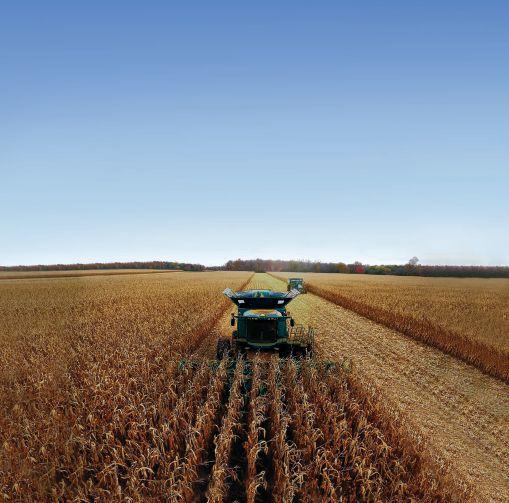
Introducing the X Series Combines. These new combines deliver more harvesting capacity, with no sacrifice in grain quality — all while using 20% less fuel. The X9 1100 can harvest up to 320 acres a day in wheat*. And to match the increased crop harvesting capacity of these new combines, we also redesigned our headers.
To learn more about whether an X9 combine is the right one for you, contact your local dealer or visit JohnDeere.ca/X9Combine.
That’s Harvesting to the Power of X.
NATURAL AIR DRYING AND SUPPLEMENTAL HEAT
Managing risk and defining best management practices.
by Donna Fleury
Under certain harvest conditions, producers may have to consider drying grain on-farm to minimize the risk of spoilage during harvest. With the right management and operational practices, natural air drying (NAD) systems with additional supplement heat can be a good intermediate system between heated air drying, which has higher capital and energy costs, and NAD systems.
Researchers at PAMI conducted a two-year project to define best management practices and provide practical information to help producers make management and operational decisions related to using supplemental heating. In particular, researchers wanted to determine how the use of supplemental heat affected the drying rate and storage conditions of two common crops, wheat and canola. In the first year, researchers used bench-scale drying trials and bench-scale test bins to evaluate the effect of air flow rate on supplemental heating with NAD compared to NAD alone. In the second year, researchers evaluated the rate of drying with supplemental heat at three different temperature increases (ambient, 5 C
and 10 C above ambient). The trials were conducted in mid-late fall to ensure the ambient conditions were representative of conditions where supplemental heating is typically used. Researchers also completed an economic assessment of using supplemental heating systems with NAD and with various fuel types.
“The results from the project reaffirmed that supplemental heat can be used when conditions aren’t favorable for drying without heat,” says Charley Sprenger, project leader with PAMI at Portage la Prairie, Man. “Conditions that are cool, rainy and later into the fall is when supplemental heat will be useful. We were able to provide some good information based on the project, and to develop some best management practices for producers. Supplemental heat can work great, but it has to be managed to be effective and efficient.”
One of the key considerations for using NAD systems, with or
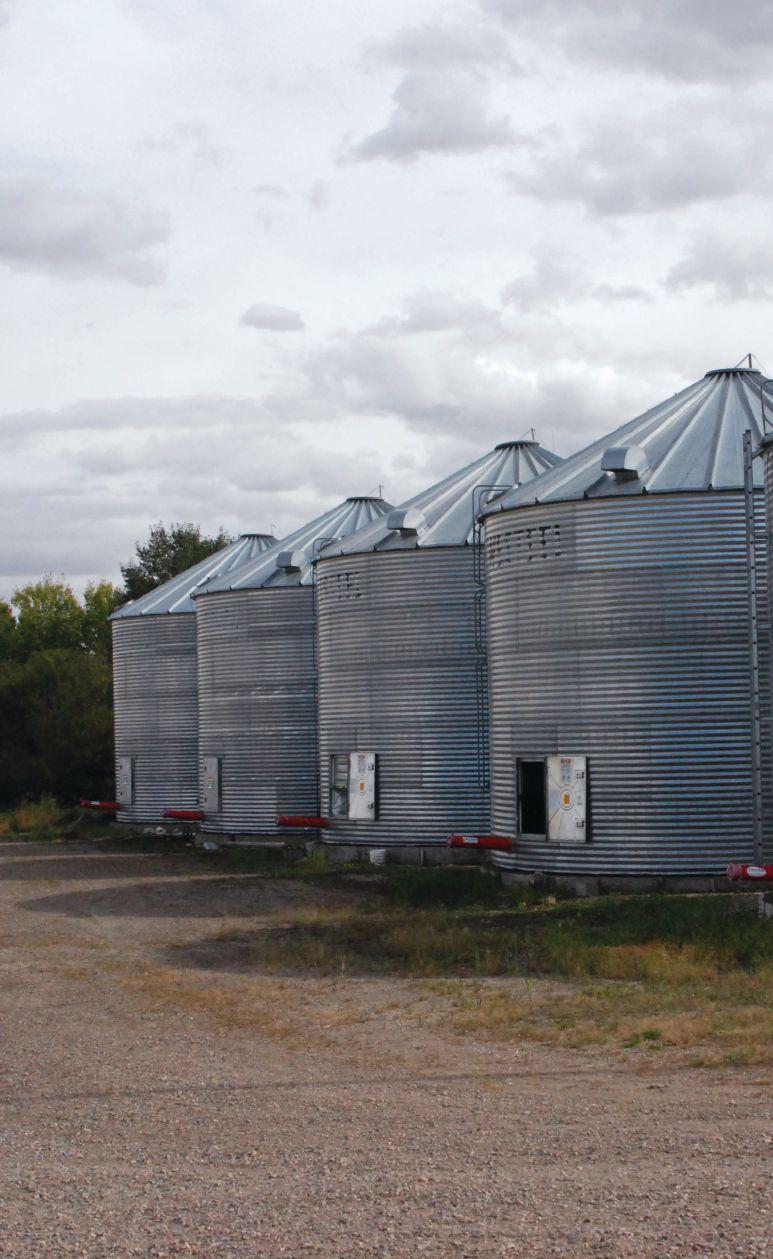
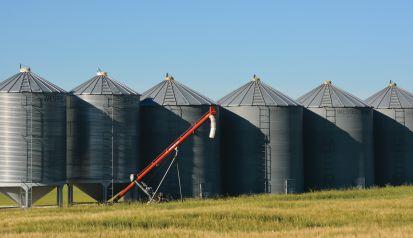
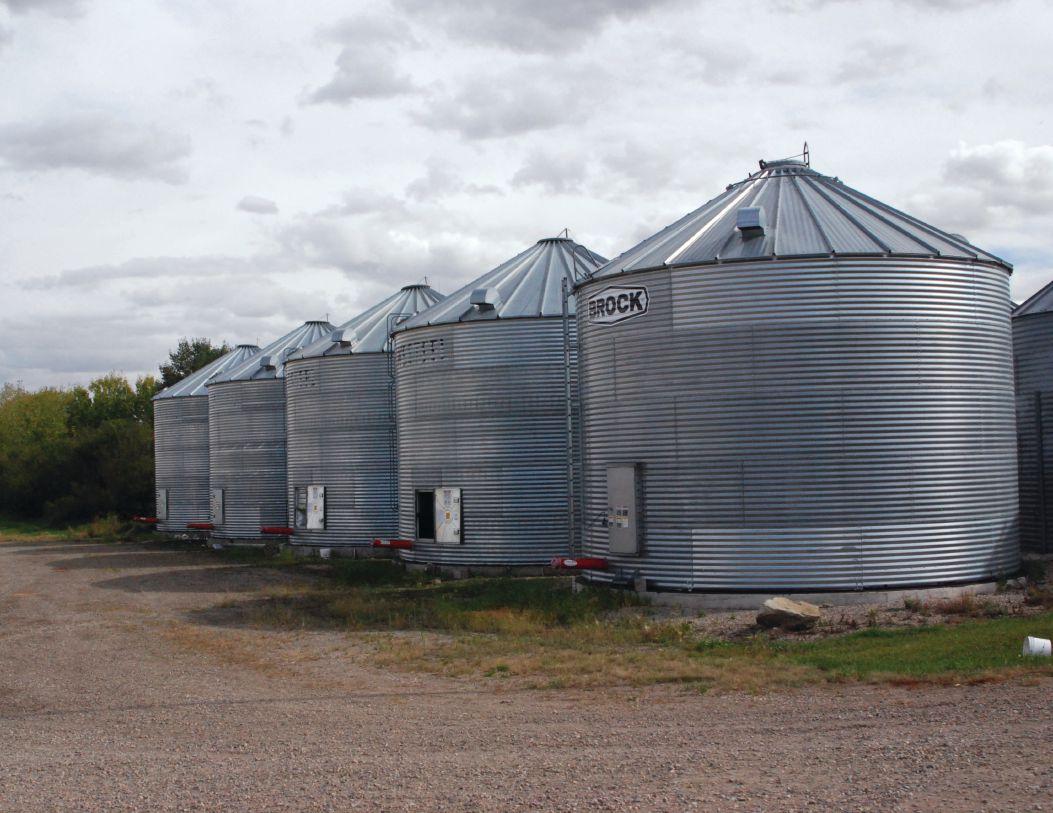
ABOVE: Smaller- to medium-sized bins are more suitable for drying efficiently based on the effect of grain depth on airflow rate and commercially available fan sizes.
PHOTO BY BRUCE BARKER.
without heat, is how damp the starting grain is; a heated air dryer is recommended for moisture contents more than three per cent above “dry” for any commodity. This rule of thumb is based on the achievable drying rates when implementing NAD and the risk of spoilage. Careful monitoring or reducing the grain bed depth to increase airflow rate can help to mitigate risk if a heated-air dryer is not available. Equilibrium moisture condition charts (EMC) for grain should be used to help guide when to add heat. Generally, a 10 C increase in temperature of the air going into the bin cuts the relative humidity (RH) of the air in half, which increases the air’s capacity to dry based on the EMC equations. The project results showed that a 10 C increase in temperature is adequate if that achieves a plenum temperature of greater than 5 C. Greater energy requirements and higher temperature increases would be required if sub-zero ambient conditions are being experienced for prolonged periods of time.
“One of the most important factors when managing grain drying in a bin is that the fan being used is large enough to get sufficient airflow through the bin,” Sprenger explains. “Look at the
size of the bin, and more importantly the depth of the grain, and then compare the fan size. The airflow rate (cfm) from the fan should be at least one cfm per bushel in order to get any drying in the bin. Smaller to medium size bins are more suitable for drying efficiently based on the effect of grain depth on airflow rate and commercially available fan sizes. If sufficient airflows can’t be achieved in a large bin and that is all that is available, it is recommended to dry grain in smaller batches and move to another bin for long-term safe storage. Grain must be cooled to less than 15 C after drying. It is also important to have at least one moisturetemperature cable monitor in the bin for monitoring both during drying and after, during grain storage.”
There are several fan manufacturers and increasingly more heaters available for grain drying, although the efficiencies of these systems are not all known. Producers are recommended to always use a certified CSA heater designed for use with grain storage fans for safety and grain quality reasons. There are various alternatives for implementing direct or indirect systems either upstream or downstream of the aeration fan; however, all
Smart Nutrition MAP+MST granular fertilizer supplies your soil with all the sulfur and phosphate it needs when your crop needs it. Using patented Micronized Sulfur Technology (MST), elemental sulfur oxidizes faster, allowing for earlier crop uptake and utilization when your crops need it most.
Look inside to learn how Smart Nutrition MAP+MST can boost your soil’s performance and maximize your ROI.
come with advantages and disadvantages unique to individual operations. “There can also be concerns about condensation and water dripping or freezing on the bin roof when adding heat to NAD systems in colder months,” she adds. “Make sure there is enough air flow to get the damp moist air moved right out of the bin. There are some new ventilation systems or strategies, such as raising the roof on the bins, to avoid this problem. This is one of the projects we are starting to investigate and work with manufacturers to find out more information.”
The project also included an economic assessment of using supplemental heating systems and various fuel types with NAD to summarize the capital and operating costs. The economic assessment showed that fuel type has the greatest impact on operating costs, with natural gas being the most inexpensive fuel, compared to diesel and propane. However, access to natural gas can be capitally hindering in certain regions. Drying system efficiency can also vary greatly. The efficiency of NAD systems with supplemental heat range from 50 per cent to 75 per cent, compared to efficiencies of 40 per cent to 55 per cent for dedicated heated-air drying systems.
“One of our key conclusions is that NAD with supplemental heat systems can work very well, but requires careful management and attention to the ambient conditions, otherwise it could be more inefficient and less effective than expected,” Sprenger notes. “It is really all about managing risk, and coming up with the management decision that makes sense for individual operations. If conditions outside are not favorable, then producers have to decide whether an in-bin with supplemental heat system makes sense or if a dedicated dryer system is required. Where it makes sense, supplemental heat can be a good in-between option if you don’t have access to a dryer, and can add a heater to existing aeration fans and turn poor drying days into good drying days. However, careful management is required to keep operating costs of a NAD system with supplemental heat comparable to that of a dedicated dryer system.”
General recommendations for implementing supplemental heating were developed and are available online at http:// pami.ca/storage.
Harvest is here and thankfully your TruFlex ™ canola with Roundup Ready® Technology left you with an amazingly clean crop.
STRAIGHT CUTTING VERSUS SWATHING
A
new agronomic study by Agriculture and Agri-Food Canada is examining how these two harvest management methods can affect canola production.
by Mark Halsall
Thanks to improved pod shatter-resistant canola hybrids and other factors, there’s a growing movement across the Canadian Prairies towards straight cutting canola rather swathing the crop at harvest time.
Brian Beres is an agronomy research scientist based at Agriculture and Agri-Food Canada’s Lethbridge Research and Development Centre who has undertaken numerous studies on enhancing crop production systems. He believes the swing towards straight cutting in canola is part of a larger trend in agriculture.
“One thing we’re seeing with other crops, like wheat and peas, is a move away from swathing and more towards straight cutting,” Beres says.
“It was probably a matter of time before that same goal to streamline operations was explored in canola, and now we have around 60 per cent of acres in Western Canada converted to straight cutting.”
Beres points out there are still farmers who remain committed to swathing for different reasons, as well as many others who may
be on fence on whether straight cutting or swathing canola is the way they should go.
“There won’t be a fire sale of swathers any time soon, as some growers point out prudently that harvest management decisions may be based on in-season factors,” he says.
Beres is currently leading a research study taking place in Alberta, Saskatchewan and Manitoba, which could help canola growers optimize the two harvesting options for their farming operation and under what conditions.
The project, which started two years ago, is examining how the interplay between seeding rates, hybrid maturity and harvest method and timing can affect canola yields. Two different pod shatter reduction canola hybrids, one a late-maturity and the other an earlier maturity hybrid, are being utilized in the study.
After two field seasons in 2018 and 2019, a third field season
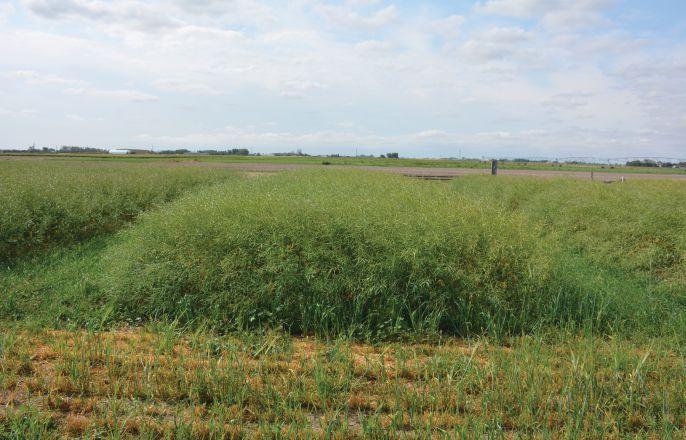
ABOVE: Canola research plot at Agriculture and Agri-Food Canada’s Lethbridge Research and Development Centre in Alberta.
was slated for this year but was suspended due to the COVID-19 pandemic. Beres says it’s not yet known whether there will be an opportunity to complete the final two growing seasons as originally planned.
Beres notes that one of the interesting findings from the study to date has to do with how canola hybrid maturity may affect straight cutting and swathing differently.
“What we’ve observed, which is a bit of a surprise and we don’t obviously have a full understanding of yet, is that we’re starting to see that hybrid maturity may interact with the harvest management system,” he says.
“For example, if you select an earlymaturing or medium-maturing hybrid, similar to the L233P hybrid that we’ve used, straight cutting could actually provide higher and more stable yields than if you were to swath instead,” he adds.
“And then interestingly, the opposite seems to happen if you’re using a later maturity hybrid like L255PC – you appear to achieve greater crop stability in terms of yield if you were to swath.
“So, while there is no apparent yield penalty with straight cutting this hybrid, there may be a cost in terms of consistent yield from field-to-field or year-to-year versus swathing.”
Beres notes some farmers may try to save some money by cutting back seeding rates when planting canola, but his study indicates that, while it is understandable from a crop input cost context, it may not be the wisest course.
“The caution here is that while there’s a temptation to reduce those seed rates, there must be greater awareness that those results may be highly variable across fields and calendar years compared to optimal seed rates,” Beres says.
“What we’re seeing from our study, so far, is that if you plant 60 seeds per square metre or six seeds per square foot, which was the lowest density we used, it can delay crop phenology,” he adds. “And if you’re delaying crop phenology, you’re probably creating crop uniformity issues and also probably, in the end, delaying harvest.”
Beres says when the seeding rate was doubled to 120 seeds per square metre, the result was a more uniform crop and significantly higher yields (the researchers found no improvements in yield with seeding rates above 120 seeds per metre).
Beres notes crop phenology was also shortened by one or two days using the higher seeding rate, which would likely lead to an earlier harvest.
“We see that with other crops too, not just canola,” he says. “We know that higher densities usually improve crop vigour and result in earlier harvest dates, and that tends to optimize and stabilize yield.”
Beres says there’s been another interesting finding thus far related to the pod shatter reduction trait shared by both the late-maturing and earlier maturing canola hybrids used in the study.
“We know that if your swath stays out too long, or you straight cut at the wrong time, there could be implications around seed loss and shattering,” he says. The researchers, however, found that the shatter reduction trait provided a buffer that helped keep that from happening.
“What we’re seeing is that the pod shatter reduction trait, combined with either straight cutting or swathing, provides excellent protection against seed loss,” Beres says. “We’re not finding any seed loss issues with either harvest method or hybrid type or seeding rate density factors.”
Beres summarized the main findings of the study so far as follows: “When we pull this all together, what we would say right now is that a canola production system [incorporating] 120 seeds per square metre or 12 seeds per square foot, coupled with timely straight cutting harvest management, will provide high and stable yield, particularly if it’s an earlier maturity hybrid.”
Beres found no seed loss issues with either straight cutting or swathing.
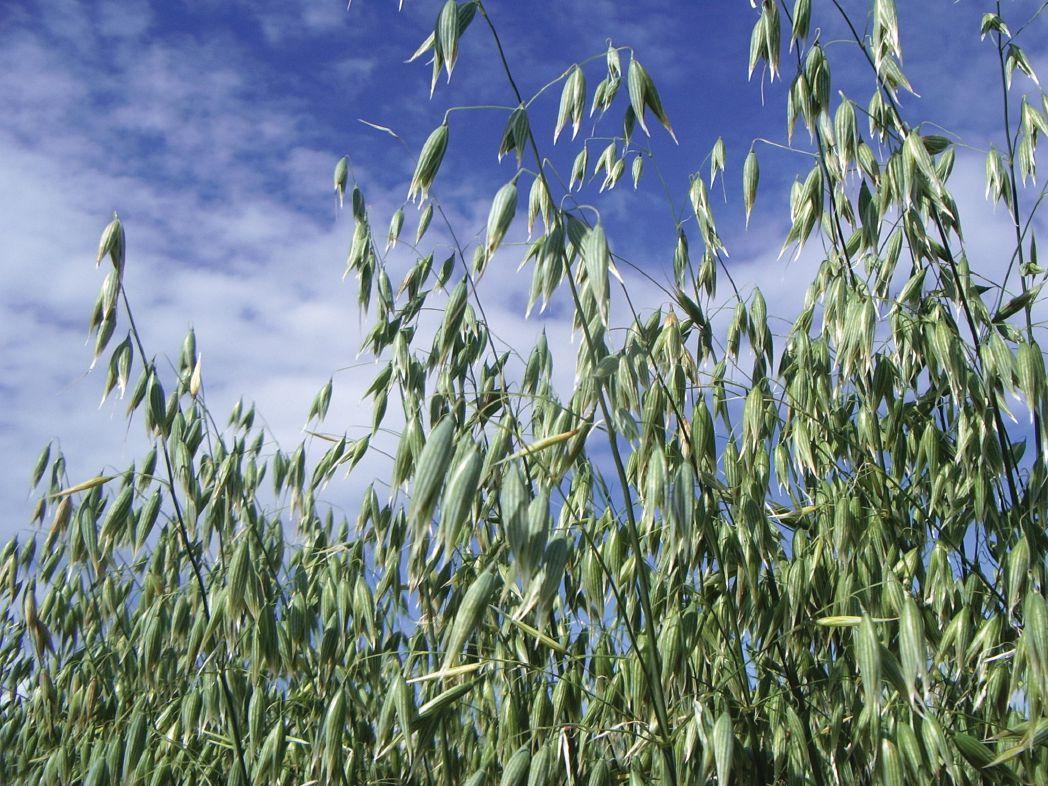
MAXIMIZING ECONOMIC RETURN IN OAT
Target 89 lb. N per acre for most consistent economic return.
by Donna Fleury
As demand for quality milling oats continues to expand, oat growers are looking for ways to increase yields and maintain better quality oat production. Some growers have expressed interest in combining higher nitrogen (N) rates with a fungicide application, even when disease intensity is low, as a way to help maximize economic returns in oat.
Bill May, crop management agronomist with Agriculture and Agri-Food Canada in Indian Head, Sask., led a two-year study to evaluate the effect of fungicide application and N rate on the grain yield and oat quality. The project also included an economic analysis to provide growers with information on the economic benefits of these inputs.
“Overall, if growers are using an oat cultivar with good disease resistance and there is little or no disease present in the crop, then there doesn’t seem to be a benefit to using a fungicide,” May explains. “The results of our study showed that an application of fungicide did not benefit the grain yield at the disease levels measured in this experiment. Disease was not high enough to affect grain yields significantly, and fungicide showed no benefits to improving
key quality variables such as test weights and groat percentage. At the low levels of leaf disease, fungicide was not warranted and would have resulted in a negative economic return in our study.”
The research trials included three fungicide treatments: a control, pyraclostrobin (Headline) and propiconazole plus trifloxystrobin (Stratego), applied after the flag leaf had fully emerged at Zadoks 45. Eight N rates were compared, ranging from 4.5 to 125 pounds per acre (lb./ac, or five to 140 kilograms per hectare), plus 20 lb. phosphorus pentoxide (P2O5) per acre (23 kg P2O5 per hectare), all side-banded during seeding. The study also included an economic analysis that calculated the change in gross return at three oat prices: $2, $2.50 and $3/bushel ($130, $162 and $194 per ton) and three N fertilizer prices, $0.45, $0.68 and $0.91/pound ($1, $1.5, and $2/kg).
“Although there are some growers who like to use a fungicide even if they don’t have disease pressure, we still haven’t been able to figure out the benefits so far,” May says. “However, if an oat
ABOVE: Growers aim to maximize economic returns in oat.
Dolores WILL THANK YOU.
COVID-19 has challenged community funded groups across Western Canada, and FMC wants to help. We are teaming up with your local retails to donate $0.10 per acre from our 2020 fall herbicide sales to organizations that serve local communities. It could be sports, arts, seniors or something else – if they help people, we’ll help them. Your post-harvest burnoff makes it happen. Visit FMCcrop.ca/giveback to learn more, and thank you. FMC IS
cultivar is susceptible to crown rust and if there is crown rust disease pressure, then using a fungicide is recommended. It will depend on what level of crown rust disease is present in the crop and the type of cultivar being grown. In Saskatchewan, most cultivars with moderate resistance have good enough resistance in most situations. In Manitoba, further east and south, there tends to be heavier disease pressure and growers will want to be growing a variety with crown rust resistance. For Alberta, crown rust is not really an issue for oats at this time.”
Another important finding of the study is that fungicides and N can be managed independently. There is no beneficial interaction between fungicide and N for growers using higher N rates at low disease intensity and resistant genotypes. “The study shows that although we can push the N rate up, economically it doesn’t always make sense,” May says. “The price of the crop is more sensitive than the price of N for picking an appropriate N rate. We found that a nitrogen fertilizer rate of 89 lb. N/ac provided the most consistent economic returns when oat prices were between $2.50 and $3 per bushel. This rate met most of the needs of the crop without pushing the test weights down very much.”
The study results showed oat yield was highly responsive to increasing fertilizer N at low rates but less responsive to higher N rates, with the 18 lb./ac N rate yielding 144 bushels/ac, while the 89 lb. N rate yielded 174 bushels/ac and the 125 lb. N rate yielded 177 bushels/ac.
May emphasizes that higher N rates beyond what yields require can push test weights down. Using enough N to optimize yields is
important, but don’t use too much. Lodging is also an important factor and can really knock the quality of the product. Not only do growers need to be concerned about the N rates lowering test weight, if it is in excess of what the crop needs, higher levels can start to lodge the crop through excess growth. Lodging multiplies the negative impacts onto the test weight, and this risk needs to be considered when deciding on an N rate. If the crop lodges, other quality parameters go down as well, such as poor colour, more thins and less plumps, and disease pressure may increase due to a tighter, denser canopy with less airflow.
Other studies have compared seeding rates for oat, and the recommended rate is 300 plants per square metre (/m2). However, if the field has heavy wild oat infestations, then a higher seeding rate of 350 plants/m2 is recommended. Currently there are no incrop herbicides registered to control wild oat in tame oat, therefore growers must rely on using other agronomic practices. May completed another study comparing the effect of phosphorus (P) and seeding rate on wild oat. The objective of this research was to determine if side-banded P in combination with seeding rate would increase the competitiveness of tame oat with wild oat, increasing yield and quality. The trials included two wild oat strips of either low or high wild oat density. The tame oats were seeded across the wild oat strips using seeding rates of 150, 250, 350, and 450 plants/m2 and compared three side-banded P rates of 0, 15, and 30 kg P2O5/ha.
BIGGER PICTURE SEE THE
The results showed that seeding rate and P fertilizer can be managed independently of each other to improve oat yields. Although increased seeding rate did improve tame oat competitiveness, wild oat competition still decreased grain yield. At the highest seeding rate, the tame oat biomass was lower in the highdensity wild oat treatment than in the wild oat free treatment, indicating that the wild oat is still competitive enough to impact the development of the tame oat even at a high seeding rate. The effect of seeding rate on wild oat is strongly influenced by the environmental conditions during the growing season. Both plump seed and thin seed were affected by seeding rate and year, but not by P rate.
“Our results did show that with increasing P rates, the competitiveness of tame oat with wild oat was also improved,” May explains. “We saw a reduction in wild oat seed production by 38 per cent with P fertilizer application, likely due to an increase in tame oat biomass. The application of P increased the competitiveness of tame oat by increasing crop biomass by 7.6 per cent and grain yield by 3.4 per cent. The side-band supplies the fertilizer preferentially to the tame oat over the wild oat, and the wild oat did not interfere with the uptake of side-banded P. Therefore, using P fertilizer is recommended especially in dry years because it has a benefit with improving competition with wild oat. A good practice is to use a seeding rate of 350 plants/m2 and at least 13.4 lb. P2O5/acre to improve wild oat competitiveness and increase tame oat yield.”
Oats are generally a good crop to have in rotation – they fit well with no real negative impacts to other crops around them in rotation. “For oats, test weight is still king for markets, so managing agronomics and inputs to maximize test weights and economics is key,” May adds. “Although most variables seem to be independent of each other, using recommended seeds rates, balanced fertility, disease-resistant cultivars and other good agronomic practices can help maximize economic return on oat.”
THE BENEFITS OF CONSERVATION MANAGEMENT
Continued from page 10
SOC quality and permanence, including an estimate of the respirable CO 2 carbon (CO 2-C), water-extractable organic carbon (WEOC), light fraction carbon (LF-C) and microbial biomass carbon (MB-C).
“One of the highlights from our study is there was significantly more total SOC in the top 10 cm after 21 years of conservation management,” Schoenau says. “This demonstrates that those conservation management practices adopted and employed over the long-term are increasing SOC and improving soil organic matter quantity and quality. We saw the greatest increase in SOC in the samples from the brown and dark brown soil zones, where SOC was the lowest to begin with. This follows the principle that soils with the lowest initial SOC content to begin with are the soils where the biggest increase or gains in SOC storage are typically achieved. We also used water-extractable C measurements and a light fraction test to assess the effects on easily decomposed fractions of SOC. The results showed a minor increase in water soluble organic carbon, while the light fraction component showed no significant change.”
“Where we did see a significant increase was from the microbial biomass carbon measurement, which is an active component of soil organic matter often used as an indicator of soil health. Our evaluation and comparison showed a significant increase of microbial biomass over time. This is good news showing a significant increase in an important part of the living component of soil that contributes to nutrient turnover and other important biological processes in the soil. Another positive finding was from the microbial respirable CO2 carbon measurements within each soil, which showed little difference between 1996 and 2018. There were also no changes in the light fraction measurements. This suggests a similar permanence of soil organic matter contained in the soil from both sampling times. These systems appear to be accumulating both active and more stable soil organic matter and SOC in the soil and the increases we are seeing in SOC do have permanence.”
Researchers also used ATR-FTIR spectroscopy to assess the nature of soil organic carbon components in surface soils via spectralbased speciation of SOC. The results tended to agree with the dynamics of carbon identified in the microbial respiration, indicating these conservation management practices are leading to improved quality and quantity of soil organic matter. It also indicates the long-term effects are increasing the stability of sequestered SOC in Prairie soils.
“The results of our study demonstrate that the long-term conservation management practices adopted are producing positive changes in the amounts and quality of the soil organic matter in Saskatchewan surface soils that benefit the storage and cycling of carbon,” Schoenau says. “As well, more of the SOC is present in an active, dynamic living fraction that contributes to soil health and nutrient cycling, and is sequestered in relatively stable forms. The adoption of conservation management practices is contributing to soil organic matter, soil health and nutrient cycling in cropping systems, a good news story for Western Canada.”
A LONG WAY TOGETHER
V-FLEXA
No matter how challenging your needs, V-FLEXA is your best ally for agricultural trailers, tankers and spreaders. This latest-generation product features VF technology, which enables the transport of heavy loads both in the fields and on the road at lower inflation pressure. V-FLEXA is a steel-belted tire with a reinforced bead that provides durability, excellent self-cleaning properties and low rolling resistance even at high speeds.
V-FLEXA is BKT’s response for field and road transport with very heavy loads avoiding soil compaction.
For info:
Western Canada 604-701-9098
Eastern Canada 514-792-9220
FAILING THE GRADE
Wheat Falling Number explained.
by Bruce Barker
The 2019 harvest was one to forget for many Prairie farmers. Rain, snow and frost caused a reduction in grain quality, which affected wheat, flour and end product quality. In addition to frost, mildew and Fusarium damage, a quality factor unfamiliar to many farmers resulted in downgrading of durum and spring wheat.
“Falling Number (FN) provides an indication of the level of sprout damage in wheat. It is a way to measure the amount of sprouting that may not always be visible on the kernel,” says Natalie Middlestead, a technician in analytical services at the Canadian International Grain Institute, the technical division of Cereals Canada, located in Winnipeg.
Sprout damage is a grading factor for durum and spring wheat. No. 1 Canada Western Red Spring (CWRS) can have up to 0.1 per cent Severely Sprouted and a total of 0.5 per cent Sprouted plus Severely Sprouted kernels. No. 1 Canadian Western Amber Durum (CWAD) can have up to 0.2 per cent Severely Sprouted and a total of one per cent Total Sprouted kernels.
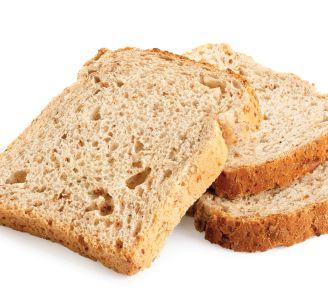
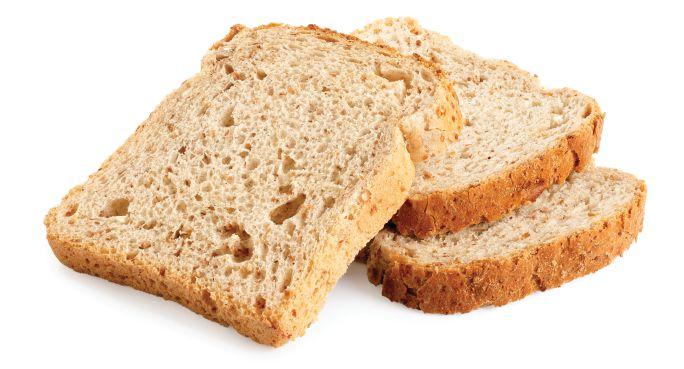
Flour milled from wheat that is sprouted can have poor dough handling properties during the breadmaking process, reduced loaf volume and poor crumb structure and colour. Flour produced from wheat with high levels of sprout damage may also impact the colour and texture of Asian noodles.
An indication of sprout damage comes from the Falling Number test that indirectly measures alpha-amylase activity. Alpha-amylase is an enzyme that breaks down starch in wheat kernels into sugars.
A Falling Number test is done by grinding 300 grams of a representative
wheat sample. A portion of the ground wheat (seven grams) is placed into a tube to which 25 millilitres of distilled water is added. The tube is mixed vigorously, placed in boiling water, and stirred for 60 seconds. A weighted stirrer is dropped through the ground wheat/slurry. The amount of time in seconds that it takes the stirrer to fall through the sample is the Falling Number. With no or low sprout damage (low alpha-amylase activity), there is less starch breakdown so the slurry will be thicker, resulting in a higher Falling Number.
Middlestead says that in the lab, a Falling Number greater than 250 seconds is considered sound and produces uniform bread that rises well and slices easily. A lower Falling Number, such as 62 seconds, will result in a loaf of bread that has poorer colour (darker) with poor crumb structure (the interior portion of the bread).
Wheat with a low FN produces bread
with a gummier texture that doesn’t slice easily. But Falling Number can be too high as well.
With a Falling Number of 400 sec onds, bread loaf volume is lower because there is not enough alpha-amylase activ ity to convert the starch into sugars to feed the yeast, which is necessary for bread with good loaf volume.
Sprout damage does not affect durum quality as seriously as it does for common wheat. Low Falling Numbers in durum wheat can lead to poorer pasta texture, and more starch may leach out of the pasta. Mildew damage is often associated with sprout damage and can cause dark specks in the semolina, which negatively impacts appearance in pasta.
For wheat classes that are used to produce flour for Asian noodles, sprouting can also lead to noodles with poorer texture when they are cooked, and they can be stickier because more starch leaches out of the noodle.
A Falling Number greater than 250 seconds will produce uniform bread that rises well and slices easily.
Your better beans are here.
Better genetics. Better yields. Better for your community. Introducing Enlist E3™ soybeans, a more advanced seed with high yield potential and a robust herbicide tolerance.
Enlist Duo™ and new Enlist™ 1, with Colex-D™ technology, provide you with the tools for a better low drift, near-zero volatility solution.
Enlist E3™ soybeans are available for 2021 planting. Talk to your local seed supplier.
Simply Better Soybeans. Learn more at enlistcanada.ca
SOYB
Grain buyers can blend wheat to achieve an acceptable Falling Number, although blending wheats isn’t as easy as it sounds. Alpha-amylase activity isn’t linear, so simple proportional blending doesn’t work. Perten Instruments, part of PerkinElmer, a company that developed the Falling Number method and equipment, has developed a blend calculation spreadsheet to help determine appropriate blends.
It’s important to understand that a high Falling Number can be easily corrected by blending in lower Falling Number wheat, but a low Falling Number cannot be easily corrected. For example, if wheat sample A has a 140-second Falling Number and wheat sample B has a 355-second Falling Number, the blend
would need to contain 9.2 per cent of wheat A and 90.8 per cent of wheat B to achieve a wheat blend with a 300-second Falling Number.
Falling Number can change over time, with the value rising with wheat under safe grain storage conditions. However, research has also found that wheat with a Falling Number lower than 150 seconds will not benefit from long-term storage.
Farmers are encouraged to ensure that representative samples are taken. One highly sprouted kernel in 2,500 sound kernels can decrease the FN result by 100 seconds. Researchers at North Dakota State University found that two visibly sprouted durum wheat kernels in 200 grams of sound wheat can decrease the FN by 100 seconds.
An acceptable Falling Number can vary by country and grain buyer. Information from PerkinElmer indicates that, “in the EU, the limit for intervention of bread (common) wheat is a minimum Falling Number of 220 seconds. Segregation limits at 250, 300 and even 350 seconds are commonly used for example by exporting countries for wheat or durum wheat.”
The Canadian Grain Commission conducts a Harvest Sample Program, and provides an unofficial grade and protein as well as Falling Number and DON results for wheat.
Planning to use grain bags?
ULTRA-EARLY SEEDING WHEAT
Seeding wheat at 2 C doesn’t compromise yield or quality.
by Bruce Barker
When should wheat go in the ground? April 25? May 8? When the temperature hits 10 C? Chances are, most farmers go by a calendar date based on experience. Most studies and crop insurance guidelines refer to calendar date rather than soil temperature when it comes to seeding deadlines. But would you believe wheat seeded at soil temperatures of only 2 C could thrive?
“In recent years, there is an opportunity to get on the land earlier because of earlier and warmer springs,” says Brian Beres, research scientist with Agriculture and Agri-Food Canada in Lethbridge, Alta. “In our research, we identified the optimal seeding time as between 2 C and 6 C soil temperatures. So, rather than abide by an arbitrary calendar date, we developed an approach where a prescriptive soil temperature of 2 C is the ‘trigger’, if you will, to commence with planting wheat.”
A benefit of seeding earlier is that the crop has a better chance of avoiding the negative effects of warmer, drier summers on grain fill. It also helps mitigate the longer days to maturity for new, higher-yielding varieties. While Beres is quick to concede that this won’t work at every farm every single year, producers from a range of locations and latitudes have adopted the strategy and reports have all been positive.
Seed into soils between 2 C and 6 C
Beres led several research studies to determine the feasibility of seeding ultra-early into cold soils. The first experiment was conducted in Dawson Creek, B.C., Edmonton and Lethbridge, Alta., and Swift Current and Scott, Sask., from 2015 to 2018 to prove that ultra-early seeded wheat could work. Three experimental wheat
lines with cold-tolerant traits were compared to AC Stettler. Wheat was sown when soil temperature in the top two inches (five centimetres) reached 0, 2, 4, 6, 8 or 10 C.
Ultra-early seeding resulted in no detrimental effect on grain yield. Grain protein content, kernel weight, and bulk density were not affected by ultra-early seeding, either.
“The sweet spot for optimal, stable yield was between two degrees and six degrees,” Beres says.
Experiment 2 - Yield Response to Soil Temperature and Seeding Depth
Soil Temp @ Planting (oC)
Seeding - Depth - 2.5
Seeding - Depth - 5
But what about spring frosts after seeding? Beres says a greater reduction in grain yield was observed from delaying planting until
ABOVE: Ultra-early seeded wheat, at the very least, yields as well as conventional seeding dates, and often with a yield benefit.
soils reached 10 C than from seeding into 0 C soils. This was despite extreme environmental conditions after initial seeding, including air temperatures as low as -10.2 C, and as many as 37 nights with air temperatures below freezing.
AC Stettler performed just as well as the cold-tolerant lines. Cold-tolerant wheat lines did not increase stability of the ultra-early wheat seeding system. “AC Stettler, and I suspect many of our CWRS varieties, have good tolerance to cold and frost given they were bred and selected in northern latitude environments,” Beres says.
Impact of agronomics
A second experiment looked at the interaction of several agronomic practices on ultra-early seeded wheat. Two cold-tolerant wheat lines were sown at 20 seeds per square foot (200 seeds per square metre) or 40 seeds/ft2 (400 seeds/m2). Seeding depth was one inch (2.5 cm) or two inches (5 cm). Soil temperatures at seeding were 0 to 2.5 C, 5 C, 7.5 C and 10 C.
In this experiment, Beres found that, generally, the optimum yield and stability
was at 2 C, and the worst yield was at 10 C with lower seeding rates. The higher seeding rate had increased yield potential and stability, and occurred more frequently with a shallow seed depth.
Graham Collier, as part of his PhD research, is working with Beres on further refining recommendations for ultra-early seeded wheat. In one experiment, Collier is looking at the effectiveness of fall-applied pre-emergent herbicides.
“When you switch to ultra-early seeding, you lose the opportunity to apply a pre-seed burndown. There can be a benefit of increased crop competition with the crop emerging before or at the same time as weeds, but it does not replace the full value of a burndown application, and there is increased pressure on in-crop weed control,” Collier says.
Collier looked at fall-applied flumioxazin (Group 14; Valtera/Chateau) and pyroxasulfone (Group 15; various herbicides) alone or in combination with each other (Fierce herbicide). With the field research completed, he is finalizing the data analysis. His preliminary results indicate the residual herbicides provided
good pre-emergent weed control the following spring.
“I think we have found that there is a nice complementary action between the residual weed control and earlier presence of crop competition from ultra-early seeded wheat,” Collier says.
Collier was concerned that there might be some crop tolerance issues because seeding early into cold soils can result in slow crop growth, which slows herbicide metabolism. He didn’t see any tolerance issues. “I had horrible conditions one year. We had a really late snowfall after we had seeded, and cold, saturated soil, but we saw next to zero phototoxicity.”
Another experiment looked at nitrogen sources and application timing. Urea, ESN and SuperU were banded in the fall or spring. Ultra-early seeded wheat at 2 C was compared to conventional seeding at 8 C. Collier didn’t see any difference within nitrogen sources between soil temperature seeding treatments.
“The preliminary results are telling me that if you want to band most of your nitrogen fertilizer in the fall for ultraearly seeded wheat in order to reduce fill times in the spring, that it is okay instead of banding in the spring while seeding,” Collier says. “We didn’t see our wheat run out of nitrogen during grain fill because of losses from the system.”
Collier is also screening conventional wheat varieties to see if lines can be identified that perform equal or better in ultra-early seeding compared to conventional seeding. The results based on the presence or absence of certain genes could provide the basis for selected varieties predisposed to ultra early seeding.
Beres initiated another study in 2019 looking at the effects of opener configuration, seed treatment and soil temperature in an ultra-early seeded wheat crop. Unfortunately, he was unable to conduct the trial in 2020 because of AAFC’s COVID-19 policy restricting field research until May 26.
“The biggest message I have is that this is easy to do. There’s no additional expense to seeding ultra-early, and there is a demonstrable grain yield benefit,” Collier says.
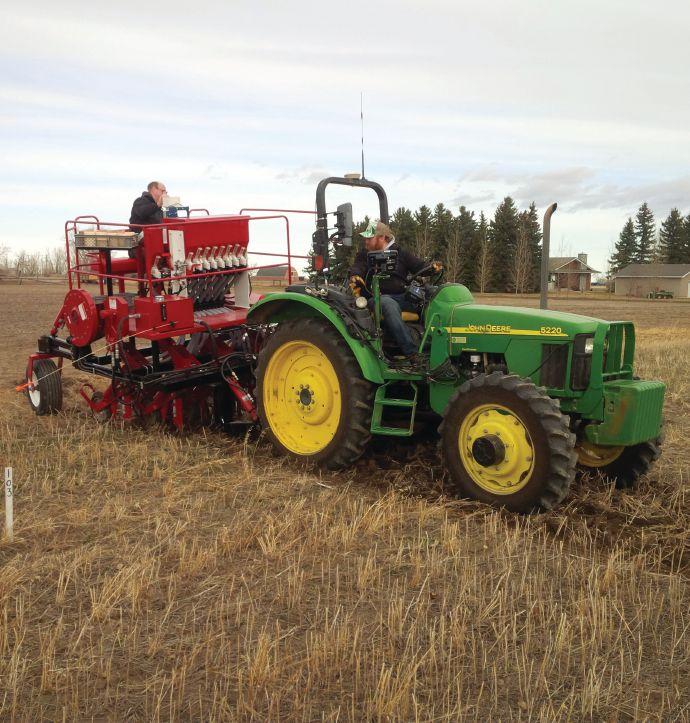
Seeding ultra-early wheat on February 16, 2016.
PHOTO COURTESY OF BRIAN BERES.
GOOD YEARS
DO EEF NITROGEN PRODUCTS
FIT ON YOUR FARM?
Meta-analysis of research reveals profitability drivers.
by Bruce Barker
Enhanced efficiency nitrogen (N) fertilizers are designed to improve crop N use efficiencies and reduce N losses. But when and where do they pay off for farmers? A research study led by Symon Mezbahuddin at Alberta Agriculture and Forestry in Edmonton looked into that question.
“We found that product price was the biggest driver of economic return,” says Mezbahuddin, a geomatics and modeling specialist. “That was the biggest learning from the project.”
The research conducted a meta analysis of grain yield data collected from researchers across Western Canada. It was funded by Western Grains Research Foundation, Alberta Canola, Alberta Barley, InnoTech Alberta, and Alberta Agriculture and Forestry. Mezbahuddin worked with 10 collaborators on the project.
More than 10,000 data entries from Alberta were collected on enhanced efficiency fertilizer (EEF) products, including controlled release urea (ESN), Super U, eNtrench, N Serve, and different blends of urea and ESN. Crops included
Soil Zone: DARK BROWN (SOUTHWEST) AND CYPRUS HILLS Average May-Aug Precipitation: 322 (253-405) mm
wheat, barley and canola, but Mezbahuddin says the most robust data set was for Northern Hard Red (NHR) spring wheat, covering a range of N fertilizer products, timing and placement across different soils and weather in Alberta.
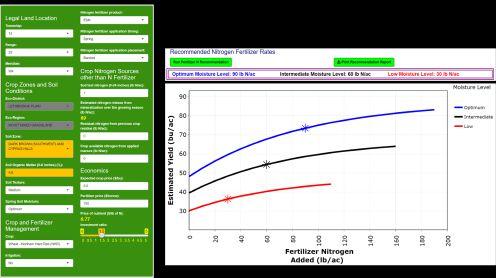
Mezbahuddin built crop yield response models with optimum, intermediate and low moisture levels for eight different agricultural soil zones across Alberta, and for different fertilizer N application timings and placements, and for the different EEF N products. Available N was based on soil test nitrate-N + N
Soil Zone: BLACK (NORTHEAST)
IR:1.5; $1.5 returns on $1 spent Expected crop price 6.56/bu Crop: Northern Hard Red (NHR) Spring Wheat
from previous crop residue + estimated N released through mineralization + manure N if any. He subsequently conducted cost-benefit and sensitivity analyses to determine the optimum fertilizer N rate or yield for each fertilizer product.
Generally, the meta analysis found that as fertilizer N price increased, as it does with EEF products, the economically optimum yield decreased. For example, the economically optimum yield for NHR wheat in the Dark Brown soil zone, with 322 millimetres of May-August precipitation, when fertilizer was applied in the fall, was approximately 80 bushels per acre (bu/ac) for anhydrous ammonia ($0.47/ lb. N), compared to around 75 bu/ac for ESN ($0.69 lb. N). At an expected price of $6.56 per bushel, that extra five bushels means $32.80 per acre higher profitability. For this example, Mezbahuddin chose an investment ration (IR) of 1.5, meaning that for each $1 spent on N fertilizer, the expected return would be $1.50.
An outlier was urea (46-0-0), which, while cheaper than EEF fertilizers, may have lost some yield due to N losses and didn’t perform as well as other fertilizer products.
Anhydrous ammonia was the most profitable N source, because it is lower priced than EEF fertilizers.
PHOTO BY BRUCE BARKER.
The modeling has been incorporated into the Alberta Farm Fertilizer Information and Recommendation Manager (AFFIRM). AFFIRM software will allow the user to evaluate fertilizer nutrient requirements for crop production based on Alberta research and production economics. Information specific to the user’s situation is entered into this decision support system to obtain a fertilizer recommendation and/or to test various
cropping scenarios. Based on the results of these scenarios, the user can make a final decision on fertilizer requirements. Location-specific data make these recommendations more accurate.
The AFFIRM-R companion version with the EEF modeling is found separately at: https://mezbahu.shinyapps.io/AFFIRM_R_ version_yield_response_nitrogen. The full AFFIRM v3.0 version that includes all micro- and macro-nutrient recommendations is found on the Alberta Agriculture and Forestry website and can be accessed through MyAlberta Digital ID.
Mezbahuddin says there are still significant gaps in data availability. More field research and data-sharing collaborations are needed to build a comprehensive database, including all major crops and fertilizer product interactions for Alberta.
“The majority of the results have already been implemented into AFFIRM v3.0 for use by Alberta growers, industry and public. The remaining information is also being implemented on a continuous basis to update the AFFIRM webpage in a timely manner,” Mezbahuddin says.