Making stripe rust resistance genes effective again PG. 5
FIELD PEA VARIETAL BLENDS
Blending semi-leafless and leafed peas has benefits PG. 18
THE ASPARAGINE CHALLENGE
Ensuring Canadian wheat can meet market requirements and outcompete competitors
PG. 22
Don’t miss the 2020 Traits and Stewardship Guide included in this issue!
TOP CROP
MANAGER
PLANT BREEDING
5 | Making defeated genes great again
Tweaking an old stripe rust resistance gene to make it effective again in fighting this disease. by Carolyn King
PLANT BREEDING
18 | Developing field pea varietal blends to improve yields
Blending semi-leafless and leafed peas showed slight yield increase, good lodging resistance and lower disease severity. by Donna Fleury
CEREALS
22 | Addressing the asparagine challenge
Ensuring Canadian wheat can meet market requirements and outcompete competitors. by Carolyn King
FROM THE EDITOR
4 The next best thing by Stefanie Croley
PESTS AND DISEASES
12 Advancing tan spot resistance by Carolyn King
RESEARCH
26 Talking plants by Bruce Barker
AGRONOMY UPDATE
28 Research continues on pulse root rots by Bruce Barker
NEW SEED TREATMENT PROTECTS AGAINST BLACKLEG AND SOYBEAN SDS
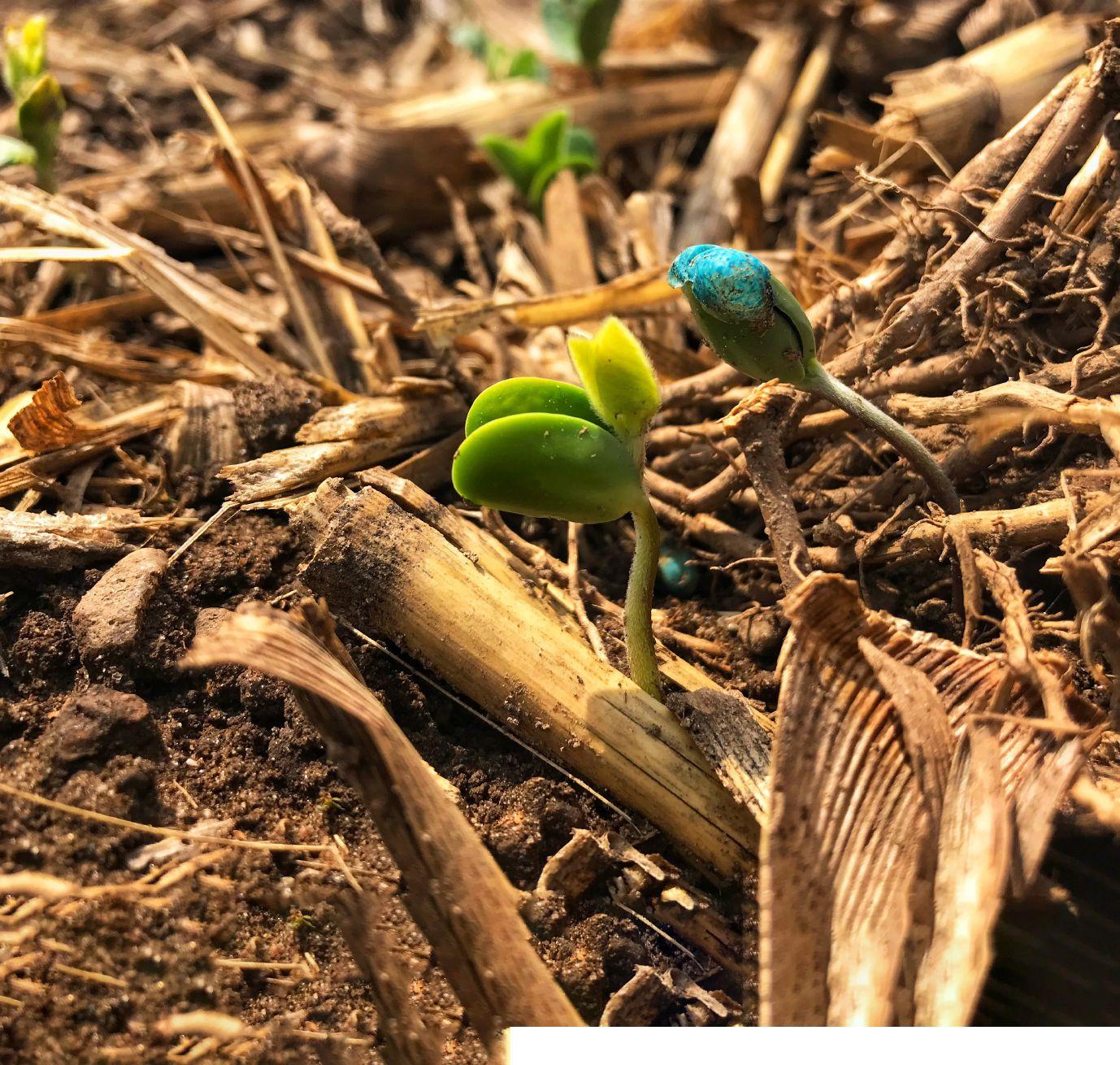
Saltro is the first commercially available canola seed treatment to protect against airborne blackleg infection at the cotyledon stage. It also protects against early season sudden death syndrome (SDS) in soybeans. Visit TopCropManager.com for the full story.
Readers will find numerous references to pesticide and fertility applications, methods, timing and rates in the pages of Top Crop Manager. We encourage growers to check product registration status and consult with provincial recommendations and product labels for complete instructions.
STEFANIE CROLEY EDITORIAL DIRECTOR, AGRICULTURE
THE NEXT BEST THING
Fall always feels like a really transitional time. For many of you, it likely means a jump back into the routine of harvest season, with meals in the field, early mornings and late nights. Throw in kids, school, sports, spouses, other work commitments and an inevitable frost (or worse – a snowfall) and soon the long, hot days and warm, bright nights of summer are a distant memory.
But summer 2020 was quite different from previous seasons, and this fall comes with even more transitions than years past as we move into the new “normal.” The coronavirus pandemic changed the way we operate, both in personal and professional manners. Compared to some industries, Canada’s agricultural sector got off easy – farmers generally work individually or in small groups, so few modifications had to be made to maintain physical distancing guidelines. But the industry had a noticeable challenge when it came to events –an integral piece of the ag industry puzzle.
I’ve worked in agriculture for quite a few years and I love to read and do my own learning about the industry, but field days, crop tours, trade shows and conferences are where I learn the most. The conversations that happen in the middle of a field, at a random breakfast table or inside the beer tent are irreplaceable. The face-to-face connections are hard to beat, and I know I’m not alone when I say I always walk away with more knowledge than I came with.
This summer, almost all of the events I regularly attend across Canada were cancelled, and a few were replaced with webinars, pre-recorded videos or live virtual events. Can these digital platforms provide the same experience? Not quite. But they’re still pretty darn good, and although it’s hard to replicate an in-person conversation, it was encouraging to see the industry come together to deliver the next best thing. The power of the Internet has a way of building connection when we can’t have it otherwise – and if the pandemic has taught us anything, it’s how much we as humans need connection. We’re lucky to live in an age where we can use technology to interact with people across the country during a time where we can’t travel to be there in person.
The pandemic is putting a pause on more live events this fall and winter, including the Top Crop Summit, traditionally held in Saskatoon each February. But, we’ve transitioned to a virtual version and we hope you’ll embrace this change as much as we have. The 2021 Top Crop Summit, will be held online on Feb. 23 and 24, 2021, but you’ll still receive the same great content we’ve presented at previous events. We’ll be sharing more details in the coming weeks and months, so stay tuned to topcropsummit.com for more information.
Change can be hard, but it can also bring great rewards. If you’re hesitating at the idea of an online conference, I challenge you to give it a shot. After all, if my 82-year-old grandmother can figure out how to use a video chat, I bet you can too.
OCTOBER
PLANT BREEDING
MAKING DEFEATED GENES GREAT AGAIN
Tweaking an old stripe rust resistance gene to make it effective again in fighting this disease.
by Carolyn King
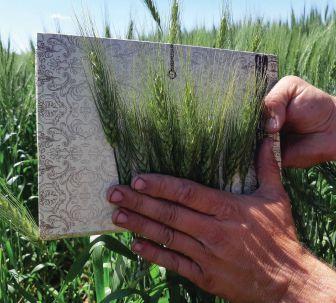
Researchers in Lethbridge, Alta., are working on an exciting possibility: a much easier, faster way to provide new sources of stripe rust resistance in wheat. By tweaking a couple of key parts of a defeated stripe rust resistance gene, they hope to be able to provide breeders with multiple new, top-quality resistance genes for durable resistance against this continually changing fungal pathogen.
If this approach works for stripe rust resistance, it could open the way to upcycling defeated genes for other crop diseases.
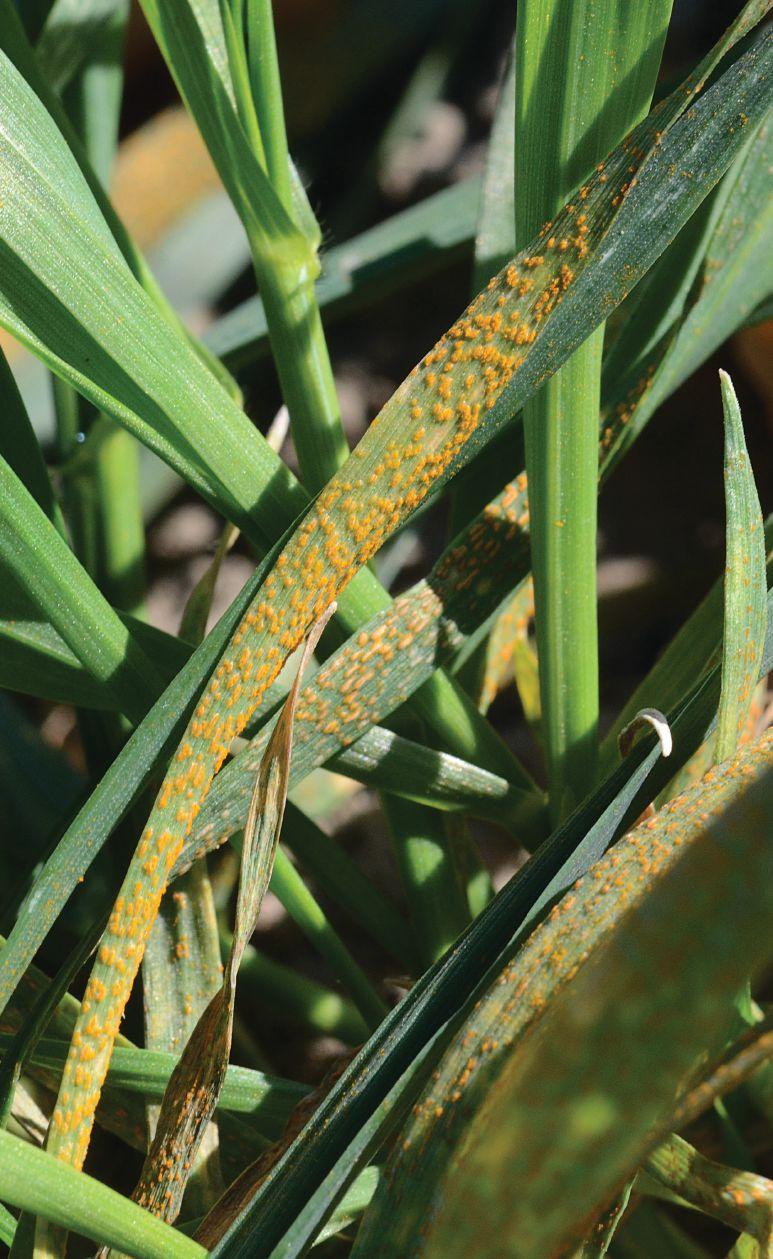
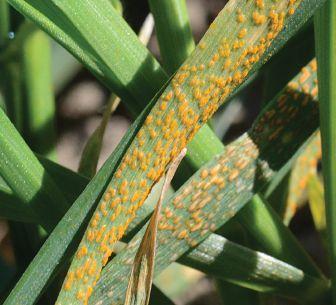
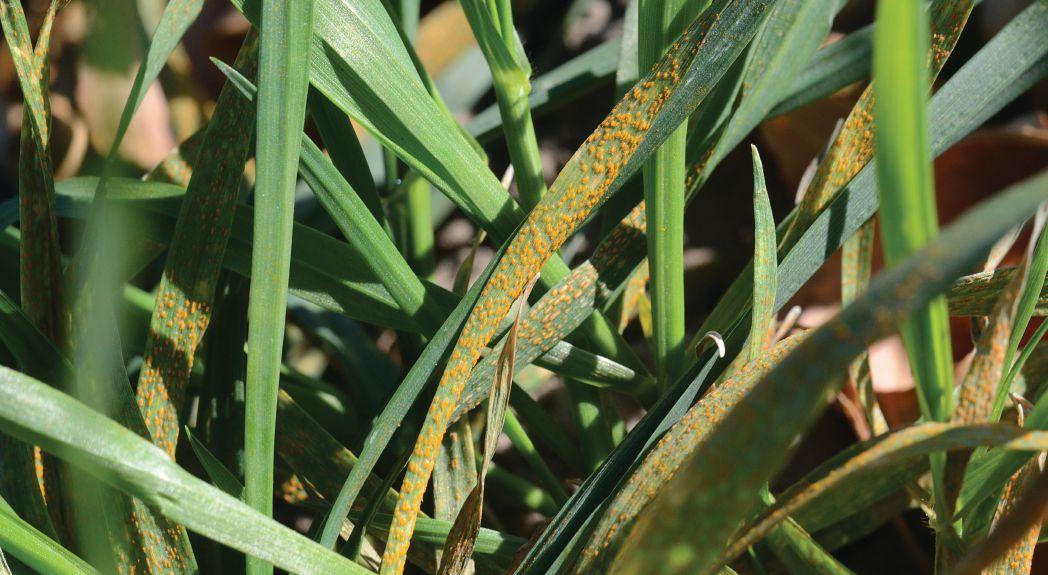
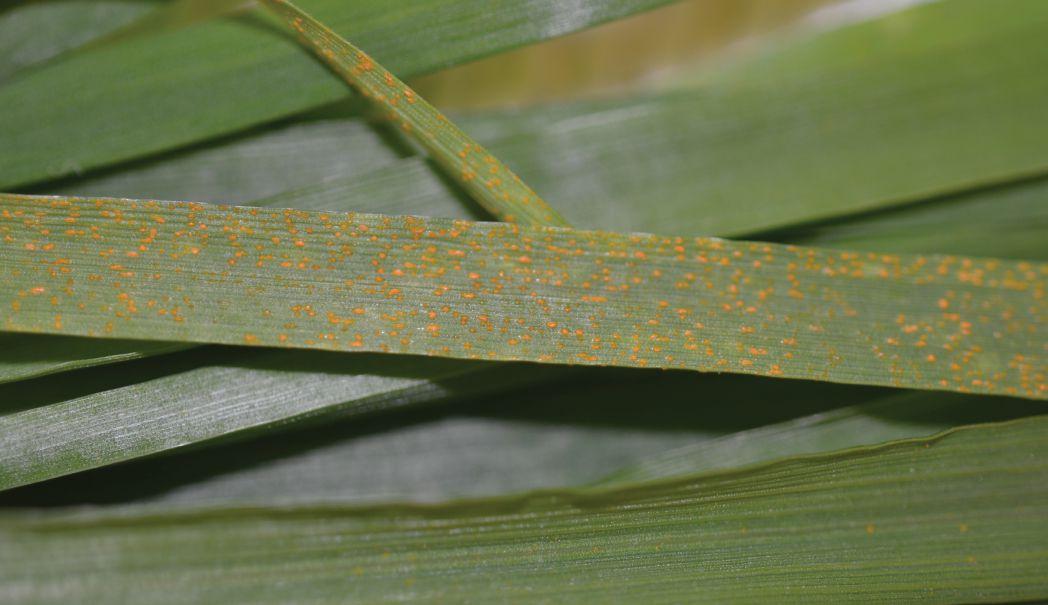
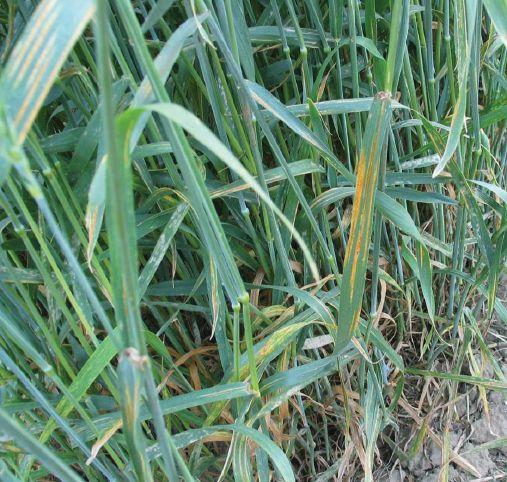
Stripe rust (Puccinia striiformis) can cause devastating yield losses in susceptible wheat varieties. This disease produces yellowish orange pustules on wheat leaves. Each pustule contains thousands of spores that can be carried for long distances by the wind. On the Prairies, stripe rust levels tend to be highest in southern Alberta.
The limited number of effective stripe rust resistance genes is a serious concern for wheat breeders and growers. “The stripe rust pathogen is very good at mutating itself and defeating single disease resistance genes in wheat. As time goes by, the pathogen defeats the available resistance genes one after the other,” explains André Laroche, a research scientist with Agriculture and Agri-Food Canada (AAFC) at Lethbridge who is leading this research.
“It takes time to obtain new resistance genes. They are often found in wild grass species, and it requires quite a bit of work over many years to bring them into wheat. It is difficult to make
crosses between a wild grass and a wheat plant, and hard to get fertile plants from those crosses. As well, there is always uncertainty about how these novel genes might interact with other disease resistance genes present in the wheat germplasm and whether they might bring negative impacts to the plant.”
He adds, “Currently there are only two known genes that provide strong, efficient resistance to all races worldwide of stripe rust. In addition, there are perhaps eight other genes that are functional in North America. So the number of effective genes is low, which is scary for the future.”
Although fungicides can be used to control stripe rust, the pathogen is also very good at evolving to withstand different fungicidal modes of action. So, frequent use of fungicides could lead to fungicide-resistant strains of the pathogen. That would leave very few options for protecting wheat against stripe rust. As well, fungicide applications increase input costs for growers and can potentially have environmental impacts.
Reinvigorating Yr10
“This idea to upcycle resistance genes wasn’t just a crazy dream,” Laroche says. “Researchers working in Arabidopsis [a ‘model’ plant
PHOTOS COURTESY OF ANDRÉ LAROCHE.
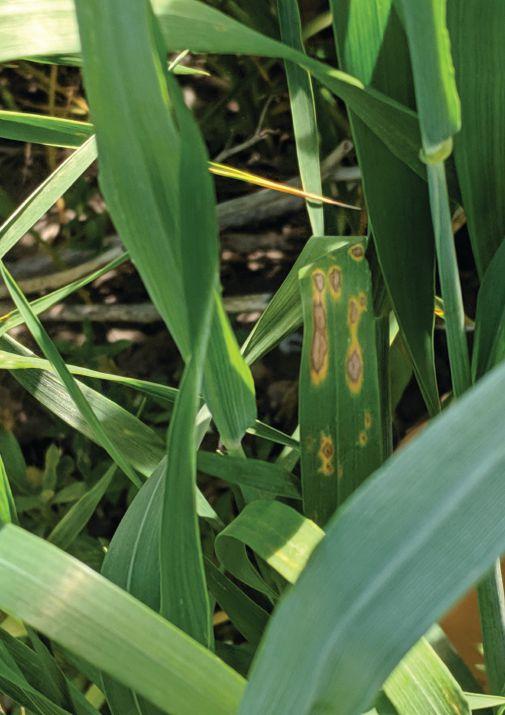
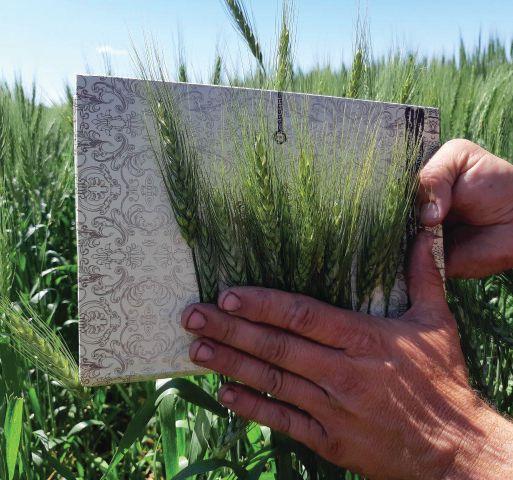
TOP: Stripe rust can cause serious yield losses in susceptible wheat varieties.
often used in research studies] have shown that, by making small mutations in key parts of resistance genes for other diseases, they could come up with a slightly different gene structure that was functional again. We wanted to mirror that work from Arabidopsis in a wheat disease resistance gene.”
Stripe rust resistance genes are called “Yr” genes because yellow rust is another name for the disease. Laroche’s project involves Yr10, a gene that has been available to breeders for many years. Although Yr10 still is effective in some parts of Canada, the pathogen’s strains in southern Alberta and in the U.S. Pacific Northwest (the main source of stripe rust spores blowing into Alberta) have evolved to overcome this resistance gene.
In the past, Yr10 was released in cultivars as a single resistance gene. A single resistance gene is much easier for a pathogen to overcome than multiple resistance genes pyramided in the same cultivar. “These days, to try to maintain the functionality of the resistance genes that we have available, no single resistance genes are released by themselves in new cultivars,” Laroche notes.
research group had previously worked with this gene and determined its complete DNA sequence. Plus they have a collection of stripe rust isolates that they can use to test against the modified Yr10 genes.
“Yr10’s DNA sequence has three adjoining regions that are very important in the functionality of that gene,” Laroche explains. “Our idea is to modify the first and the third regions slightly to see if we can make the gene functional again when challenged with stripe rust isolates that defeat the original Yr10 gene.”
Steps in the study
To try to maintain the functionality of the resistance genes we have available, no single resistance genes are released by themselves in new cultivars.
This project is a proof-of-concept study to confirm that it is possible to modify a defeated resistance gene in wheat and obtain useful, effective versions of that gene. For ease in proving the concept, Laroche’s group is using some shortcuts that involve genetic manipulation of Yr10. He says, “Genetic manipulation is not accepted by the wheat industry internationally. So, once we know for sure that the concept works, we will need to go back to a plant with the defeated Yr10 gene and use a different tool – genome editing – to tweak the Yr10 gene in situ based on the sequences that we have shown to be effective.” He is hopeful that the wheat industry will accept genome editing in wheat.
]
This need to pyramid several different Yr genes into a cultivar is another reason why it is vital for breeders to have access to more stripe rust resistance genes.
Stripe rust is a longstanding concern in the Lethbridge region, and Laroche has done many studies on this pathogen over the years. He chose Yr10 for this current project because he and his
Laroche and his group have almost completed phase one of this project. Their first step was to find DNA sequences in wild grasses that are very similar to Yr10, but with some differences in those two key regions of the gene.
Then, based on each of these wild genes, they are making very precise changes in a Yr10 gene to exactly match the sequence of nucleotides – the building blocks of DNA – in those two regions of the wild gene. Next, they sequence the modified Yr10 gene to
In the trial, both farm-saved seed and Certified seed had the same average yield and protein.
EVEN AFTER THREE SEASONS, IT’S NEVER TOO LATE TO GROW.
DEKALB® NOW OFFERS CANOLA HYBRIDS FEATURING LIBERTYLINK® TRAIT TECHNOLOGY AND TRUFLEX™ CANOLA WITH ROUNDUP READY® AND LIBERTYLINK® TECHNOLOGIES
You might get about 40 chances to achieve your best yield yet from the seed you choose. That’s why you need a canola with proven spray flexibility and next-level weed control. You need the proven performance of DEKALB canola. Developed with superior genetics to deliver yield and stand up against disease pressure, DEKALB canola is the choice you can depend on year after year to deliver an easier, faster and smoother harvest.
THE SEED FOR EVERY SEASON
Bayer CropScience, LP is a member of Excellence Through Stewardship ® (ETS). Bayer products are commercialized in accordance with ETS Product Launch Stewardship Guidance, and in compliance with Bayer’s Policy for Commercialization of Biotechnology-Derived Plant Products in Commodity Crops. Any other Bayer commercial biotech products mentioned here have been approved for import into key export markets with functioning regulatory systems. Any crop or material produced from these products can only be exported to, or used, processed or sold in countries where all necessary regulatory approvals have been granted. It is a violation of national and international law to move material containing biotech traits across boundaries into nations where import is not permitted. Growers should talk to their grain handler or product purchaser to confirm their buying position for these products. Excellence Through Stewardship® is a registered trademark of Excellence Through Stewardship.
The incredible nominations we received for the inaugural year of this program highlighted just how many influential women there are working within Canada’s agriculture industry.
To our Top 6 recipients, those who nominated an influential woman, those who offered support through social media or tuning into the podcast series on AgAnnex Talks, and to our generous sponsors:
RATULATIONS
M EN IN CANADIAN AGRICULTURE WINNERS
Sponsored by
Presented by
Peggy BrekveldBarbara Cade-MenunKristen Phillips
Karen SchuettKaren Schwean-LardnerLaura Van Eerd
By making some tweaks in a defeated stripe rust resistance gene, Laroche hopes to make the gene able to fight the disease again.
verify that they have made the intended modification.
“Right now, we have eight of these new sequences that we have made and verified. And each of these new sequences are in a piece of DNA that we call a vector that enables us to multiply the gene and also insert the gene into a susceptible wheat line, where we will test them against isolates of stripe rust. So, these eight are ready to go into wheat,” he explains.
“We have another six sequences that are almost ready to go. We have generated the new sequences and we just need a couple more weeks of lab work before we are ready to sequence and verify them. Once that is completed, we will be able to insert each of these six genes into a susceptible wheat.”
Laroche’s lab was closed on March 16 because of COVID-19 restrictions, and as of mid-July, it had not reopened. He says, “We are surely looking forward to when we will be allowed to go back to our lab to quickly complete this work and start phase two of the project, which is introducing these modified genes into susceptible wheat lines.”
To insert a modified Yr10 gene into wheat, they will bombard immature wheat embryos with that piece of modified DNA. Only about 1 or 2 per cent of the bombarded embryos will develop into a plant that expresses the modified gene.
Laroche’s group will select those few embryos that are most likely to have the gene. Then they will grow those embryos under carefully controlled conditions in growth chambers to ensure the stripe rust screening will be as optimal as possible and ensure the test material will not escape from the lab.
Once the plants reach the three-leaf stage, they will be inoculated with different stripe rust isolates to see if the plants are resistant to isolates that defeat Yr10
If some or all of the plants are resistant, this would prove that it is possible to upcycle a defeated stripe rust resistance gene.
Laroche’s group would then use genome editing in collaboration with John Laurie’s team, also at AAFC-Lethbridge, to tweak the Yr10 genes in existing elite wheat lines into the effective variants. All the other traits in these lines would be unaffected – a big
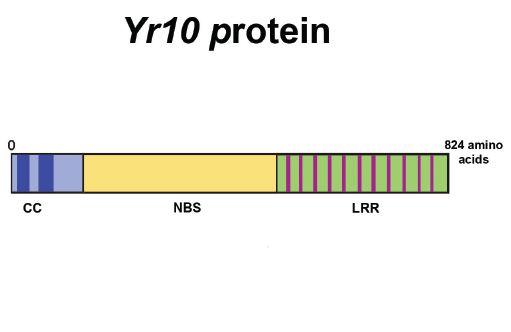
The protein encoded by Yr10 is made of 824 amino acids. It is composed of three sub-domains: coil-coiled (cc), nucleotide binding site (NBS) and leucine-rich repeat (LRR). The LRR domain, which includes 11 leucine-rich elements, interacts with one or more secreted proteins from the pathogen. Then the NBS domain binds ATP (cell’s fuel) and makes the protein active to enable the CC domain to interact with the host (wheat) machinery to launch the defence mechanism against the pathogen.
benefit for breeders who want to cross their breeding material with these lines.
Easier, faster, stronger
“Once the air is clearer about genome editing, we hope to have several Yr variants available to be channelled into the breeding pipelines of wheat breeders. It’s hard to predict, but we might have up to six or eight effective variants of Yr10 ,” Laroche notes.
“That would give wheat breeders a large source of resistance genes that they could pyramid together in their cultivars. And breeders are familiar with Yr10 – they know it doesn’t have any negative impacts on wheat with the type of germplasm they are using.”
He says, “This project would provide breeders with premium sources of stripe rust resistance that they could incorporate into their germplasm without affecting the quality in all the other parameters they have to work with.
“And growers would have new wheat varieties with new, durable stripe rust resistance genes in an optimized package.”
This research could also open up many opportunities to upcycle other defeated resistance genes for protecting wheat against other diseases where effective disease resistance genes are scarce.
“I think this approach is very promising. It is a lot easier and a lot faster to incorporate a tweaked gene into wheat than to move new genes from a wild species into wheat,” he says.
“The only requirement would be to have the DNA sequence for a given defeated gene. We already have sequences for some other stripe rust, leaf rust and stem rust resistance genes. And more resistance genes are being sequenced all the time. This is also true for other genes that provide resistance to other fungal diseases in wheat. And I think it could also be expanded to protection of wheat against insects as well in the near future.”
The Alberta Wheat Commission and Saskatchewan Wheat Development Commission are funding this project, and AAFC provides internal funding for Laroche and his research group.
Choose from 8 patented Pod Shatter Reduction InVigor® canola hybrids.
InVigor’s patented Pod Shatter Reduction hybrids help you adapt to conditions during harvest time, giving you one less thing to worry about. Here’s why growers choose InVigor Pod Shatter Reduction hybrids:
• Helps protect your yield by minimizing the impact of late-season wind, hail and snow
• Harvest exibility to delay swath or straight cut
• Reduces loss from late fall harvests and overwintered canola
• Longer pod ll resulting in larger seeds and maximized yield
• Reduces volunteer canola
For more information, contact AgSolutions® Customer Care at 1-877-371-BASF (2273) or visit agsolutions.ca/InVigor.
ADVANCING TAN SPOT RESISTANCE
New information on the resistance/susceptibility of Prairie wheat and fresh insights into the pathogen’s interactions with durum.
by Carolyn King
Sometimes what we think we know isn’t really so. Cereal pathologist Reem Aboukhaddour’s project on tan spot resistance in durum and winter wheat reveals that some long-standing assumptions about this fungus’s interactions with wheat don’t actually apply to all types of wheat.
Based on her previous research and hints in the scientific literature, Aboukhaddour had suspected that durum-tan spot interactions might be somewhat atypical. “But what sparked this project was when growers asked why durum seems to be more susceptible to tan spot than bread wheat,” she says.
Tan spot on the Prairies
Most wheat cultivars registered in Canada are susceptible to tan spot. The main goal of this project is to provide more and better information to help durum and winter wheat breeders develop tan spot-resistant varieties.
“Tan spot of wheat is one of the most destructive foliar diseases of wheat, not only in North America but worldwide,” says Aboukhaddour, a research scientist with Agriculture and Agri-Food Canada (AAFC) in Lethbridge, Alta.
Leaf symptoms include necrosis (tan-coloured lesions, the dead tissue) and chlorosis (yellowish lesions). As the infection progresses, all the lesions merge together and the leaf becomes necrotic eventually.
Tan spot is caused by Pyrenophora tritici-repentis. According to Aboukhaddour, scientists first described this fungus on wild grasses in the early 1900s, before it was known to attack wheat. Then in the late 1930s and early 1940s, some localized outbreaks of the disease in wheat were reported in Manitoba and Saskatchewan.
“This disease became an economic issue in wheat production in the U.S., Canada and Australia in the 1970s,” she notes. “Tan spot is a stubble-borne pathogen, and in the ’70s there was a strong trend to minimum tillage to prevent soil erosion. With more crop residue cover, the pathogen could overwinter and increase its inoculum. Also, at that time in North America and Australia, we had a few major cultivars that were grown over very wide areas, and those cultivars happened to be susceptible to the pathogen. With susceptible hosts, pathogen inoculum and conducive conditions, tan spot emerged as an important disease in North America and Australia.”
Race categories with a bread wheat slant
Like some other fungal species, Pyrenophora tritici-repentis produces what used to be called host-selective toxins and are now known
as necrotrophic effectors. A host-selective toxin or effector causes disease in a plant only if that plant has a specific receptor gene that corresponds to that particular toxin.
So far, three tan spot toxins have been identified: ToxA, ToxB and ToxC.
The race of a tan spot isolate depends on which toxin(s) it produces. Aboukhaddour notes that much of the tan spot research during the past 40 years has focused on spring bread wheat. As a result, the system to identify tan spot races is mainly based on bread wheat.
Researchers use a set of three bread wheat genotypes, called
Most wheat cultivars registered in Canada are susceptible to tan spot.
This ad isn’t flashy.
Because ads don’t deliver yield. All you need from us is the latest technology, locally tested, that delivers consistent results. So, get to your local Brevant™ retailer to get the seed you need, without the fluff.
We work hard to make your choice easy.
Visit your retailer or learn more at brevant.ca
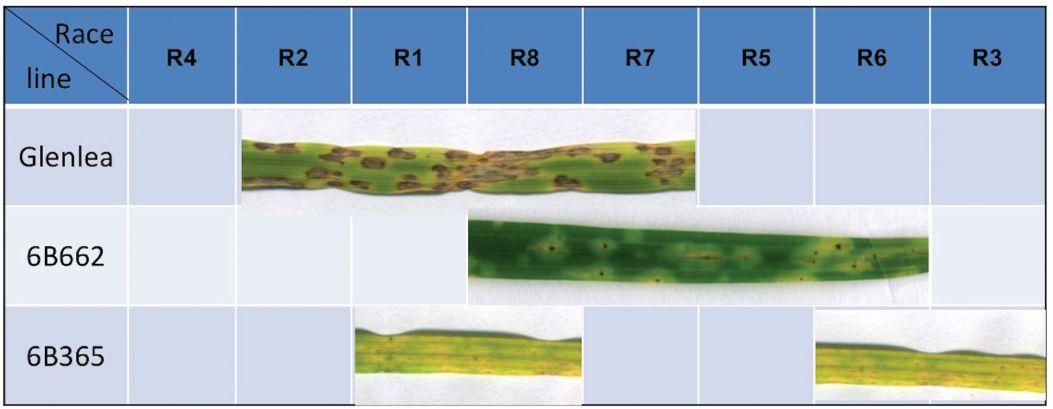
differential lines, to determine an isolate’s race based on the symptoms produced on each line. These lines are: Glenlea, 6B662 and 6B365. Each line is sensitive to one toxin only. ToxA causes necrosis on Glenlea, ToxB causes chlorosis on 6B662, and ToxC causes a different kind of chlorosis on 6B365.
Tan spot races and their toxins
Race Toxin
Race 2
Race 5
Race 3
Race 1
Race 6
Race 7
Race 8
Race 4
ToxA
ToxB
ToxC
ToxA + ToxC
ToxB + ToxC
ToxA + ToxB
ToxA + ToxB + ToxC
None of these three toxins
Based on the ability of the pathogen to produce combinations of these toxins, there are eight races. Some races produce only one toxin: race 2 (ToxA); race 3 (ToxC); and race 5 (ToxB). Other races produce two toxins: race 1 (ToxA and ToxC); race 6 (ToxB and ToxC); and race 7 (ToxA and ToxB). Race 8 produces all three toxins. Race 4 produces none of these toxins.
Tan spot surveys in Canada have mainly sampled bread wheat fields. In those surveys, five of the eight races have been reported. “Race 1 and race 2 are the most dominant. Race 3 is present at a much lower frequency. Race 4 and race 5 are extremely rare,” says Aboukhaddour.
So tan spot in Canada is mainly a ToxA and ToxC producer, while ToxB-producing isolates are almost absent. This is also true for tan spot in the U.S. and Australia.
“In Canada, the U.S. and Australia, ToxA is very significant; it can contribute to about 60 per cent of the disease on bread wheats,” she notes.
People have tended to assume that tan spot-wheat interactions are the same whether the wheat is bread wheat or durum. But durum is a different species from bread wheat, and Aboukhaddour noticed some indications that durum interactions were a little different.
“One indication was that some of the races found in these surveys, including race 3, race 4 and race 5, were not collected from bread wheat, but rather from durum or grasses,” she says.
“For instance, in 2013 when I was at the University of Alberta, I characterized tan spot races from across Alberta. They were mostly isolates from spring bread wheat. We found that 62 per cent of isolates were race 1, 36 per cent were race 2, and only 2 per cent were race 3. But all of those race 3 isolates were collected from the few samples we got from durum.”
As well, Aboukhaddour knew of examples in the scientific literature of tan spot isolates that didn’t fit neatly into the eight-race system. She gives one example: “Some isolates found in the U.S. and other countries cause a race 2 reaction on the differential lines, and yet those isolates lack the ToxA gene so they can’t be race 2.”
Aboukhaddour suspects these and other atypical isolates have probably been present in the pathogen’s population for years. They just haven’t been on our radar.
“I have found the eight-race system very useful and fundamental. It has led to a lot of fundamental understanding of the pathogen and the receptors in wheat corresponding to the toxins. However, it doesn’t explain everything,” she says.
She adds, “How can breeders develop resistance to something if we don’t know it is there?”
So, Aboukhaddour decided to try thinking beyond the assumptions in the eight-race system in her project on tan spot resistance in durum and winter wheat.
About the project
The project aims to: increase knowledge of tan spot’s race composition on spring durum, winter bread wheat and native grasses in Western Canada; identify sources of tan spot resistance in spring durum and winter bread wheat breeding lines; and increase understanding of durum-tan spot interactions.
Aboukhaddour targeted durum because of the signs that it might have atypical reactions to some tan spot races. She included winter wheat because it is an important crop on the southern Prairies and little information was available on tan spot resistance in western Canadian winter wheat lines.
She was also curious about tan spot races on native grasses. “We have many possible tan spot hosts on the Prairies – wheat, grasses
Reaction of the differential bread wheat lines to the eight tan spot races (empty cells indicate resistant reaction).
and other cereals. It is useful to understand the pathogen on all of these hosts. Recently, in collaboration with researchers at the University of Alberta and in the U.K. and Japan, we found a dominant susceptibility locus [a location on the genome] in barley that interacts with race 5 (ToxB). This is first to be described in barley and, although the interaction of race 5 on some barley lines is described as mild chlorosis, the unique specificity between tan spot and barley confirms the adaptability of the tan spot fungus on other Prairie hosts aside from wheat. So I wanted to learn more about the pathogen on other non-wheat hosts.”
Funding for this three-year project (2017 to 2020) is from the Alberta Wheat Commission and the Saskatchewan Wheat Development Commission, with in-kind support from AAFC.
In 2017, Aboukhaddour and Myriam Fernandez, a research scientist at AAFC-Swift Current, collected samples of tan spot-infected leaves in southern Alberta and Saskatchewan.
Aboukhaddour’s group isolated 144 tan spot isolates from these samples: 71 from durum, 54 from winter wheat, and 19 from native
grasses. They tested the isolates on the three differential lines to determine the race of each isolate.
Then they used PCR (polymerase chain reaction) methods to detect the presence of the genes for ToxA and ToxB in the isolates. (PCR tests are not yet available for the ToxC gene.)
Next, the researchers evaluated the response of durum and winter wheat lines to inoculation with race 2 (ToxA), race 3 (ToxC), and race 5 (ToxB). Then they used PCR tests to look for Tsn1, the dominant susceptibility gene for ToxA, in each line.
Aboukhaddour obtained the durum lines for the project from the durum breeder at AAFC-Swift Current, Yuefeng Ruan. He provided 40 durum genotypes that he often uses for crosses in his breeding program.
Robert Graf, the winter wheat breeder at AAFC-Lethbridge, provided 75 winter wheat lines for the project. These include the main western Canadian lines that he currently uses for crossing, as well as some eastern Canadian lines and some international germplasm, mainly European lines.
GROWING YOUR WORK OF ART
From almost any angle, the visionary design in Proven® Seed shines through. Our leading-edge technology offers a whole new perspective on canola, cereals, corn, soybeans and forages. Whether you’re looking for high yields and performance from every seed across all acres, or specific herbicide systems and disease management, we know there’s a Proven Seed that fits your vision of success. Only available at your local Nutrien Ag Solutions™ retail. Learn more at ProvenSeed.ca
Highlights of findings
Overall, the project’s results confirmed what Aboukhaddour and durum growers had suspected: tan spot’s interactions with durum are different from its interactions with bread wheat.
Race composition in the field: The race composition in the sampled winter wheat fields was similar to that found in previous surveys of Canadian spring bread wheat: about 60 per cent race 1 (ToxA + ToxC) isolates and about 30 per cent race 2 (ToxA) isolates. No race 3 was detected.
The race composition in the durum fields was somewhat different. Race 1 and race 2 each represented about 45 per cent of the isolates, and about 8 per cent of the isolates were race 3 (ToxC).
Susceptibility in breeders’ lines: About 60 per cent of the western Canadian winter wheat lines were susceptible to race 2 (ToxA), which was at least twice as high as the percentages in durum and in the eastern Canadian and European winter wheat lines.
Susceptibility to race 3 (ToxC) in the Canadian winter wheat and durum lines was almost equal, at about 20 per cent, which was twice the percentage in the European germplasm.
Susceptibility to race 5 (ToxB) was higher in the durum lines (33 per cent) than in the Canadian bread winter wheat lines (6 per cent).
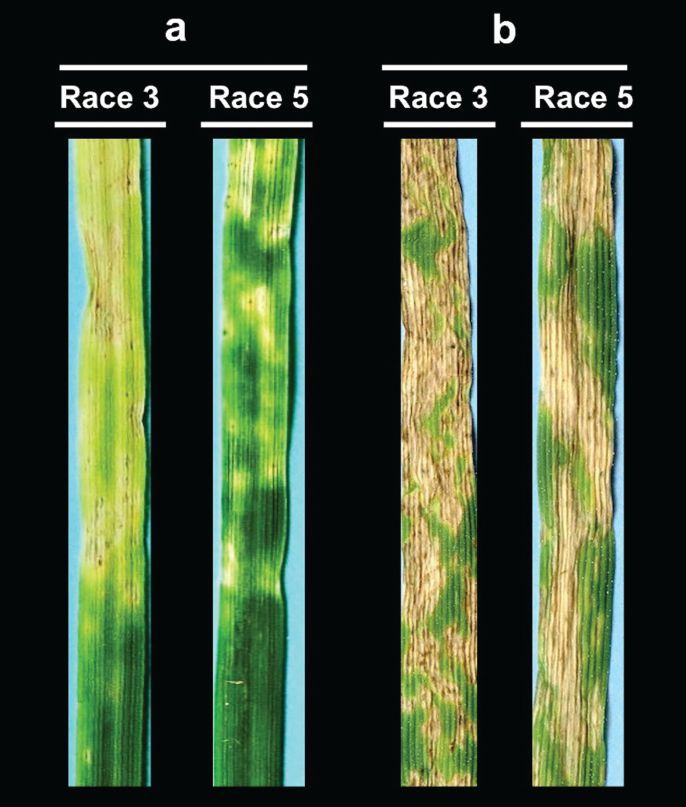
Symptoms in susceptible lines: As expected, race 2 caused necrosis on winter wheat and durum.
Races 3 and 5 caused the expected chlorosis on winter wheat. However, on durum, both races caused extensive necrosis on a considerable number of the tested lines.
So each of the three toxins caused necrosis on susceptible durum lines.
Tsn1 tests: “While in rust and other pathogens we often talk about dominant resistance genes in the wheat host, in tan spot we have the inverse case of dominant susceptibility genes in wheat conditioning the susceptible interaction. Tsn1 is the only gene conditioning sensitivity to ToxA in wheat,” Aboukhaddour explains.
“In this project, Tsn1 was more prevalent among the Canadian wheat genotypes (51.2 per cent in winter bread wheat and 59 per cent in durum) than in the European genotypes (21.7 per cent).
“However, half of the durum lines carrying Tsn1 were unexpectedly resistant to race 2, the ToxA-producing race.”
Interestingly, when some of the durum
lines with Tsn1 were injected with ToxA by itself, they showed susceptibility to ToxA.
But when those ToxA-sensitive durum lines were inoculated with an actual race 2 isolate, some proved to be resistant to race 2. So durum seems to have some different way of resisting race 2 that doesn’t involve the Tsn1 gene for sensitivity to ToxA.
“These results agree with recently published findings from a group of researchers at North Dakota State University and the USDA in North Dakota,” she notes. “Those researchers have concluded that the Tsn1ToxA interaction does not play a major role in tan spot susceptibility in durum wheat.”
Native grasses and race 4: “We collected samples from a single field with native grasses near our research centre at Lethbridge. Every one of the 19 isolates that we characterized from those native grasses was race 4,” Aboukhaddour says.
Race 4 does not produce any of the three known toxins and is considered non-pathogenic in the current race system. However,
the North Dakota research group recently reported that race 4 can cause extensive necrosis on durum wheat. They think race 4 likely produces some not-yet-identified toxins to which durum is sensitive.
“Until now, people hadn’t considered race 4 to be important. In over 40 years of tan spot surveys in Canada, only one or two race 4 isolates had been collected because the surveys have always concentrated on bread wheats,” says Aboukhaddour.
“Since we now know race 4 is part of the fungus’s population in Canada, it would be wise to look at race 4 in Canada, especially in relation to durum.” She is planning to test race 4 on Canadian durum lines.
New research areas opened up
Aboukhaddour is currently finishing up this project and preparing some papers on the results. As well, she is already working on some of the new research areas opened up by the project’s results.
As part of another leaf spot project, she
Aboukhaddour’s study found that races 3 and 5 caused the expected chlorosis on winter wheat (a), but caused necrosis on durum (b).
is investigating durum’s necrotic reaction to race 3. She sees a couple of possible reasons for durum’s atypical response to this race.
“One possibility is that durum is more susceptible to ToxC – perhaps it has more ToxC receptors – and durum’s reaction to ToxC is exhibited as necrosis, which is a stronger reaction than the chlorosis we find in bread wheat,” she hypothesizes. “Or perhaps, in addition to ToxC, race 3 produces some necrosis-causing toxin(s) to which durum is susceptible.”
She hopes to purify the necrosis-causing factor in race 3 and identify the durum loci that interact with it. Finding the loci would be the first step in developing markers so breeders could screen durum lines for susceptibility or resistance to the toxin.
Benefits, synergies, advances
Aboukhaddour is sharing the project’s results with wheat scientists. “The breeders will now know which of their lines are susceptible and which are resistant to tan spot,” she says. That information is critical for developing the tan spot-resistant lines that western Canadian crop growers need.
The project’s findings regarding durum’s atypical responses to the different races and the presence of race 4 on native grasses are increasing our understanding of the pathogen on the Prairies and its interactions with different hosts.
These findings also align with other projects in Aboukhaddour’s lab at AAFC-Lethbridge, her collaborative projects with other researchers, and studies by the North Dakota group. “Having all these parallel projects on tan spot-host interactions makes the project’s findings stronger,” she says. “I was thrilled to see other researchers looking into the unique interactions between tan spot and durum because it gave me more confidence and hope to open more doors for collaboration with different groups with same interest.”
She adds, “When I started this project, I was challenging some preconceived thoughts about tan spot. But it was very important to take into account the growers’ observations about tan spot in durum and the already reported observations in the literature. We don’t have to be bound by our previous definitions and assumptions.”
By thinking beyond the traditional eightrace system, Aboukhaddour and others have been able to work towards a deeper understanding of tan spot. And that deeper understanding will further help scientists in targeting effective resistance
SHIFT SHIFT SHIFT
DEVELOPING FIELD PEA VARIETAL BLENDS TO IMPROVE YIELDS
Blending semi-leafless and leafed peas showed slight yield increase, good lodging resistance and lower disease severity.
by Donna Fleury
Field peas are an important rotation crop in Western Canada and grown widely in conventional and organic cropping systems. Currently, most commercial varieties are semi-leafless peas with tendrils instead of leaflets, which were first introduced in the 1980s for their improved standability and resistance to lodging. However, with previous research showing that leafed varieties can out-yield semi-leafless pea where lodging is prevented, researchers wanted to know if pea varietal blends might offer some advantages.
“The results of some recent work in our program under organic cropping conditions showed blending leafed (CDC Sonata) and semi-leafless (CDC Dakota) pea varieties in a 75 per cent semi-leafless mixture increased yields by 10 per cent compared to either variety grown separately in a monoculture,” explains Steve Shirtliffe, a professor at the University of Saskatchewan.
“Led by graduate student Lena Syrovy, the results also showed improved weed competition and suppression, improved lodging resistance to the leafed types in the blend and increases in biomass. From this study, our next question was which varieties would work best in the blends and what would be the optimum blending ratio of leafed to semi-leafless peas for maximizing yields. Other research groups in France and other locations have looked at the same question and are evaluating similar blends.”
A new three-year study was initiated in 2018 by graduate student Yanben Shen to evaluate blends of semi-leafless and leafed peas and to determine the optimum blending ratio to
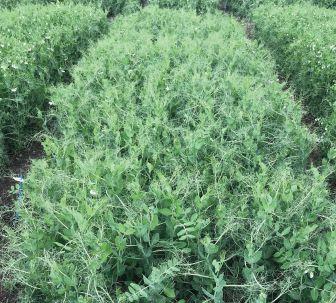
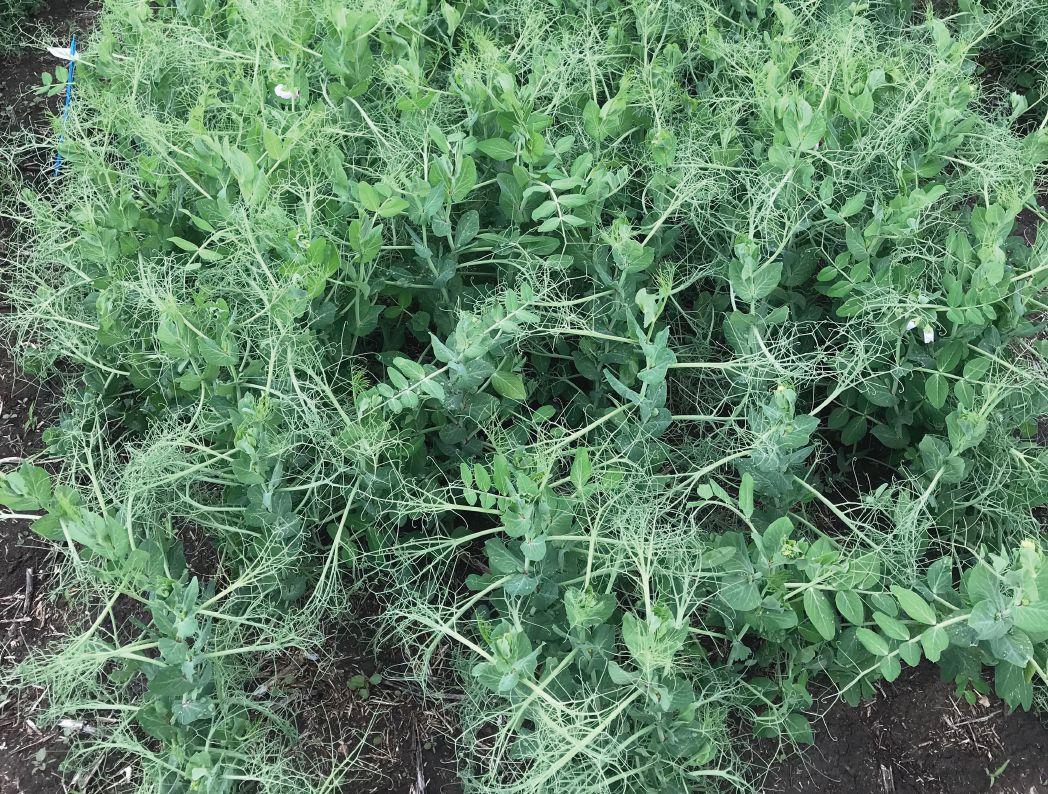
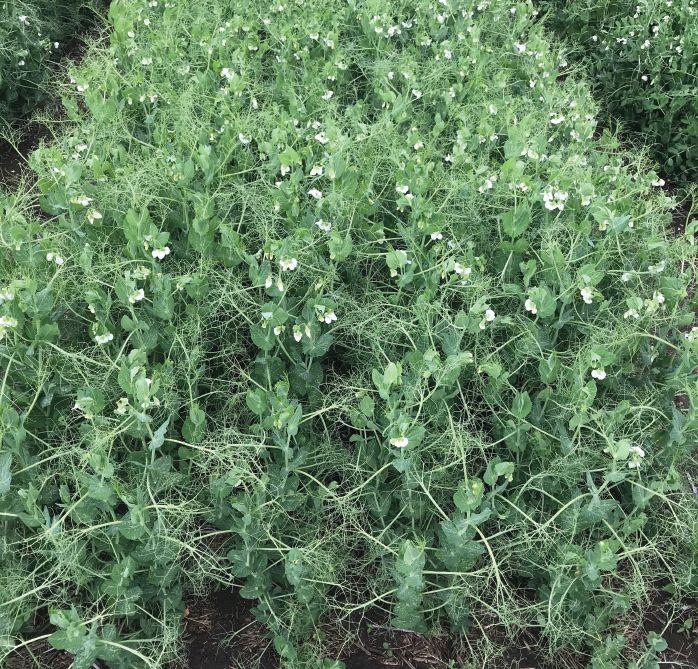
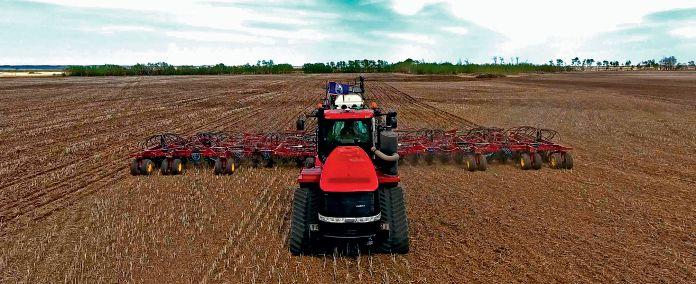
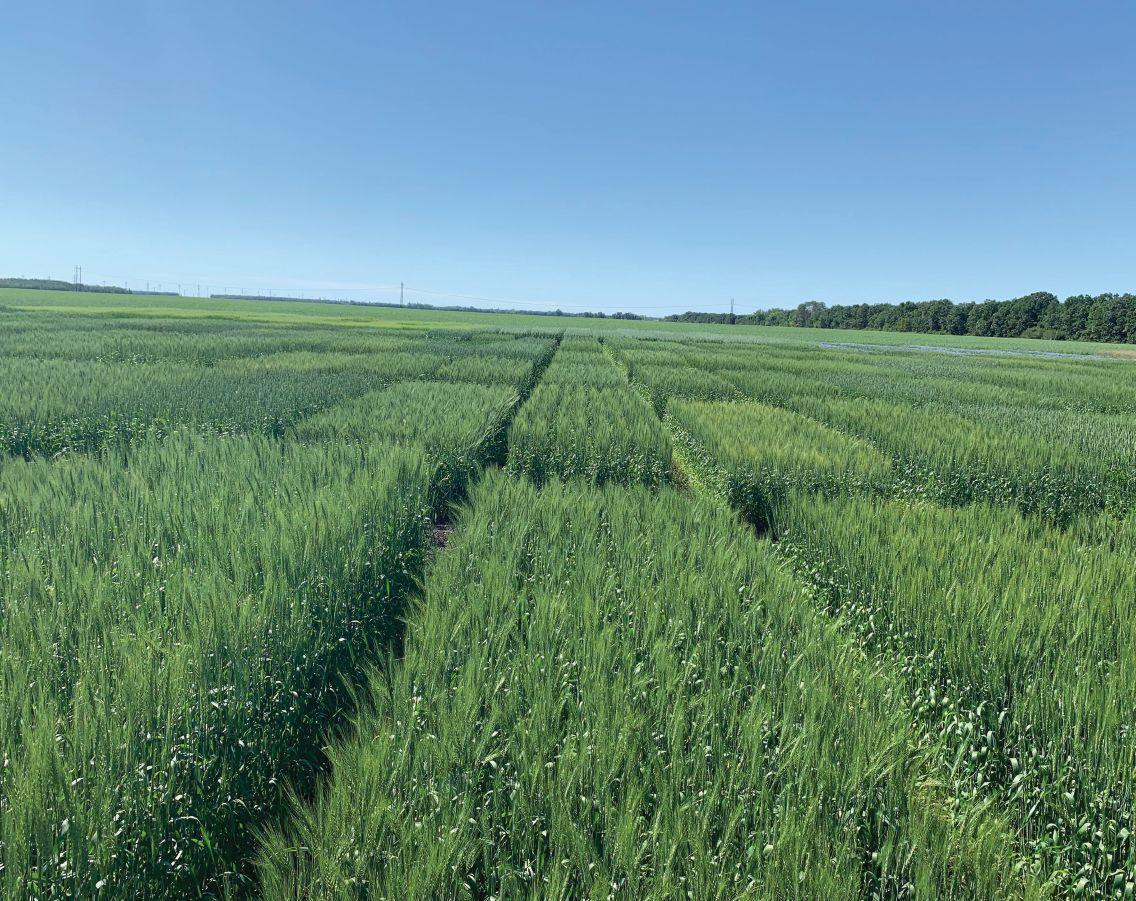
TOP: Varietal blends of leafed and semi-leafless field peas trials at the University Kernen Research Farm near Saskatoon.
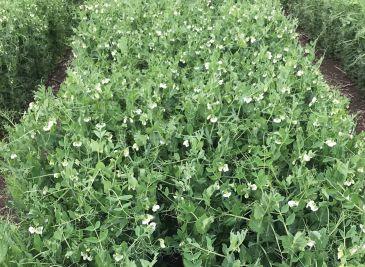
INSET: Leafed field pea plots at the University Kernen Research Farm near Saskatoon.
PHOTOS
maximize yield across different genetic backgrounds, locations, and years. An optimal blending ratio would provide increased yields, improved light interception and lodging resistance in peas. The yield and agronomics performances between blending ratios were evaluated for developing an optimal ratio. The study, which was conducted at the University Kernen Research Farm near Saskatoon, evaluated nine pairs of leafed and semileafless pea lines, grown together in three mixing ratios. The lines used were leafed and semi-leafless versions of the varieties CDC Amarillo, CDC Centennial, CDC Dakota, and CDC Striker that shared the same genetic background with the exception of leaf type. These lines were paired in all possible combinations, and grown in ratios of 50:50, 33:67, and 17:83 per cent leafed to semi-leafless peas, as well as in monocultures of each line grown separately. Various factors were evaluated, including yield, plant biomass, disease, standability, pea leaf development, and UAV phenotyping.
“We partnered with Tom Warkentin at the University of Saskatchewan Crop Development Centre to develop some NearIsogenic Leafed (NIL) lines that were almost genetically identical except for the leaf trait,” Shirtliffe says. “The isogenic lines were developed by backcrossing the four semi-leafless varieties with a normal leafed type variety CDC Sonata for several generations to breed the final lines used in the study. One of the key considerations was to develop these lines while still maintaining the lodging resistance of the semi-leafless varieties. We compared these NIL blends with near identical genetic backgrounds to the non-NIL blends with different genetic backgrounds to see if NIL blends did any better than the semi-leafless varieties grown. The results could be used to develop varietal blends of leafed and semi-leafless field peas for release by the Crop Development Centre.”
Shirtliffe explains that the results of the study didn’t show much of a yield advantage or significant differences between the leafed and semi-leafless blends, but interestingly enough there was also no yield reduction. “On average, blends of semi-leafless and leafed peas at the 83:17 ratio were four per cent higher yielding than monocultures of either leaf type. The conditions in the first couple
Semi-leafless field pea plots at the University Kernen Research Farm near Saskatoon.
of years of the project were drier, but in 2019 the growing conditions were very good, and even then we only saw a slight yield advantage in using the blends. The blends approached similar lodging resistance for semi-leafless types and disease severity was lower in some of the blends. We also wondered if a mixture that didn’t have the same parents would be better, so we tested pairs of isogenic lines that didn’t have as closely related parents. The results showed no difference at all in terms of parent’s yield potential. Overall there was a small yield advantage in some cases with the leafed mixture, but it is not a huge advantage. We also found that the NIL blends can adapt well in the pea blend, so going forward there may be an opportunity for future varietal blend releases.”
The project also compared the light interception of the blends. Although semi-leafless varieties are assumed to not be very good at light interception, the study showed that they are actually quite good at absorbing light. There was no difference between the semi-leafless and the leafless peas in how much light was absorbed. “This finding was quite surprising and it appears that the light can penetrate the canopy deeper and more uniformly through the tendrils than the leafed varieties, which could provide a photosynthetic advantage.”
One additional component of the study looked at lodging potential of the blends. “The positive result was that having a low proportion of leaf didn’t increase the tendency for lodging much compared to the semi-leafless monocultures,” Shirtliffe says. “One very successful aspect of the project was the development of a technique using a drone or unmanned aerial vehicles and UAV phenotyping to very accurately measure canopy height and lodging. This technique that Yanban developed as part of the project worked very well and we are hoping that it can be used by plant breeders to allow them to quantify the lodging a bit better in their research programs. The technique may be able to be expanded for use with more plant features in the future.”
Although researchers expected to see more of difference between the pea varietal blends, the results didn’t show significant benefits to the blends. Shirtliffe notes however that data is data, and it is important to do this kind of research
to answer questions like this. “We have had the best look we can over multiple site years and growing conditions, and although we expected to see bigger yield benefits and despite our significant efforts, the results didn’t show that. However, the results did show enhanced pea field characteristics with the blends, including lower disease severity, which
should promote a higher yield potential. On the positive side, the results showed there is no real disadvantage to having a small proportion of leaf in there. There may be other reasons to incorporate that trait into future lines that the breeders will want to pursue to bring other benefits to growers through varietal development.”
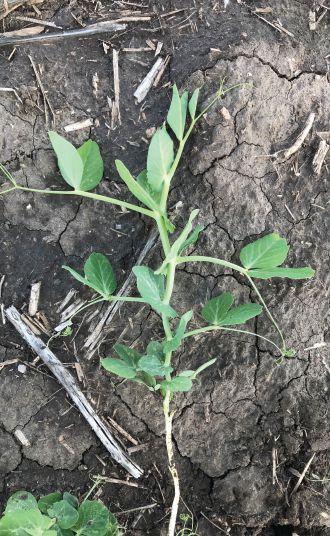
Leafed field pea plant.
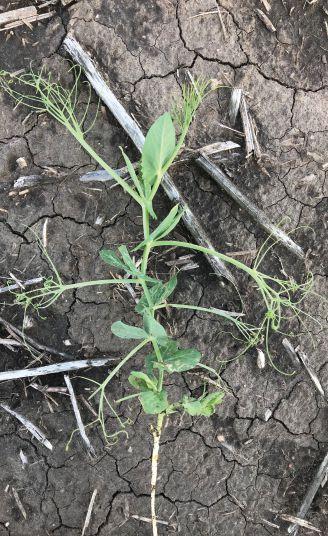
Semi-leafless field pea plant.
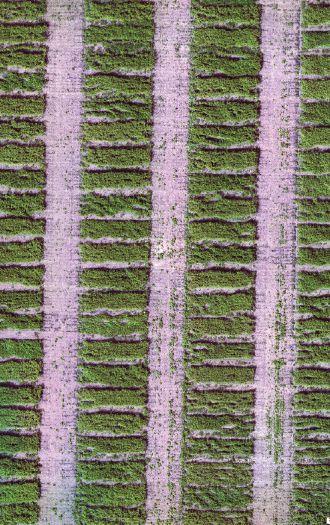
Multispectral map of field pea plots using UAV and high-resolution cameras to measure precise plant physiological features.
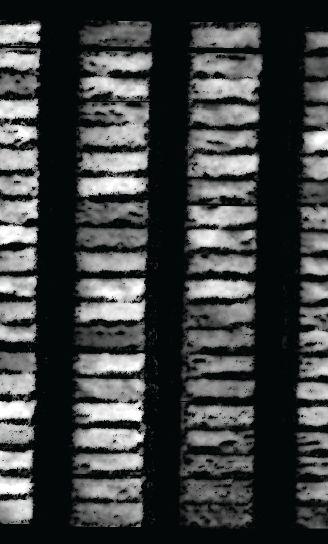
The relative canopy height of the field pea plots, determined by the normalized Digital Surface Model (nDSM).
TAKE YOUR FIRST STEP WITH US
We know that choosing the right product is only part of your success. Richardson Pioneer offers expert agronomic advice and fully integrated service to help you profitably increase your yields.
Book your 2021 seed today.
WITH YOU EVERY STEP OF THE WAY
ADDRESSING THE ASPARAGINE CHALLENGE
Ensuring Canadian wheat can meet market requirements and outcompete competitors.
by Carolyn King
Amultidisciplinary team of Canadian researchers is tackling a growing issue for the wheat industry: free asparagine. This naturally occurring amino acid is a key contributor to grain protein; however, asparagine that remains in the grain as a free amino acid – rather than bound up in the protein – looks to be the trigger for a potential food safety risk. The team’s goal is to help ensure Canadian wheat growers can produce top quality, safe wheat that competes successfully in the marketplace.
“Asparagine is an amino acid that plants generate. It is important for transporting nitrogen around the plant. Generally that free asparagine gets converted into protein in the wheat grain. The trouble is that the grain will also have a pool of some amount of free asparagine as the amino acid. When flour from the grain is baked into bread or cookies, for example, the high baking temperatures tend to cause a reaction between the free asparagine and sugars in the dough, which then forms acrylamide,” explains Martin Scanlon, a food scientist at the University of Manitoba who is leading this research.
Acrylamide has been shown to cause cancer in lab animals and is considered to be a potential carcinogen for humans. Acrylamide is not only an issue for wheat products. It can form in various other plant-based foods that contain asparagine and that are processed at high temperatures, such as potato chips, coffee and roasted almonds.
“Although acrylamide levels are low overall, the potential health risk has caused acrylamide and things such as asparagine to come under a lot of scrutiny from the European Food Safety Authority,” Scanlon says. “As recently as November 2019, the European Commission stated that all food business operators need to monitor the amount of acrylamide in their foods and to look at what measures might be taken in their whole supply chain to reduce the risk of acrylamide formation.”
For wheat-based foods, that includes trying to reduce the
ABOVE: Some plots for the eight wheat varieties grown under four fertilization treatments at Grosse Isle, Man., in 2020, in a study to see how agricultural practices affect free asparagine levels.
amount of free asparagine in the grain. “Canada exports a lot of wheat into Europe. We need to help customers who import Canadian wheat into Europe to monitor and control the amount of free asparagine in our wheat grain,” he says.
So, Scanlon and his team are determining the current levels of free asparagine in Canadian wheat varieties and identifying effective ways to reduce these levels.
His main collaborators on this research are: Lovemore Malunga and Nancy Ames with Agriculture and Agri-Food Canada (AAFC) in Winnipeg; Elaine Sopiwnyk at the Canadian International Grains Institute (Cigi); John Waterer with Paterson Grain; Richard Cuthbert with AAFC in Swift Current; and Belay Ayele at the University of Manitoba. Day-to-day research activities are led by Ali Salimi Khorshidi at the University of Manitoba, but many other collaborators and research personnel are also involved.
This research is funded by the Governments of Manitoba and Canada through the Canadian Agricultural Partnership program in partnership with: Manitoba Wheat and Barley Growers Association, Saskatchewan Wheat Development Commission, Alberta Wheat Commission, Warburtons, FP Genetics, SeCan, and the Natural Sciences and Engineering Research Council of Canada.
A first
look at Canadian wheats
“Absolutely nothing was known about the free asparagine levels in Canadian wheat varieties before this research was initiated in 2018,” notes Scanlon, who is dean of the university’s faculty of agricultural and food sciences and a professor in the department of food and human nutritional sciences.
“There had been no studies in Canadian wheats. The closest information was a North Dakota study in 2017 that included varieties like Glenn that are also grown in Canada.”
So, as a first step, Malunga, Ames and Scanlon and their labs assessed the free asparagine concentrations in the wholemeal and white flour milled from 30 Canadian red spring wheat varieties. Cuthbert, a wheat breeder, provided the varieties.
The study’s results, published in 2019, showed that the Canadian varieties had similar free asparagine levels to wheats grown in other countries. Another key finding was that the free asparagine level depended on the wheat variety.
The researchers are now delving into reducing free asparagine in our wheat. Their current project has three components: evalu-
ating the effect of agricultural practices on free asparagine levels in Canadian wheats; developing strategies for breeding wheat varieties with a low potential for free asparagine; and assessing the effect of free asparagine levels on breadmaking quality.
Agricultural effects
The project’s study on agricultural practices is evaluating the effects of wheat variety, growing location and fertilizer applications, three factors that are thought to influence free asparagine levels, based on research in other countries.
The eight varieties included in this study are mainly commercial lines of interest to Warburtons, a major British baking company and an important buyer of Canadian wheat. Six of the varieties are in the Canada Western Red Spring (CWRS) class (CDC Plentiful, AAC Brandon, AAC Cameron, AAC Starbuck, AAC Elie, Glenn), one is a Canada Prairie Spring Red variety (SY Rowyn), and one is a Canada Northern Hard Red variety (Prosper).
The varieties are grown at two Manitoba locations each year: Carberry (2018), Grosse Isle (2019, 2020), and Lilyfield (all three years). The plots are also comparing two nitrogen fertilizer rates (100 or 135 kilograms per hectare) combined with two sulphur rates (zero or 17 kilograms per hectare). These trials were designed in consultation with Adam Dyck of Warburtons, Waterer at Paterson Grain and Kevin Baron of Solum Valley Biosciences. Waterer’s group is managing the plots.
The grain from each plot is harvested and milled at Cigi, then the wholemeal flour is analyzed for its free asparagine concentration, and then the flour is made into bread, which is analyzed for its acrylamide content.
Graduate student Yi Xie has analyzed the wholemeal flour samples from the 2018 and 2019 plots, and she and the rest of the research team have submitted a paper on the results to a major cereal science journal.
“Overall, the asparagine levels in the Canadian varieties were bracketed within the ranges that we see in the European studies, with the Canadian varieties tending to be in the lower part of those ranges,” Scanlon says.
The most significant factor influencing free asparagine levels was the growing location and year. “The growing conditions in the year had a big effect, more than was seen in the North Dakota study.”
The effect of variety was also significant. “Some varieties
Kevin Baron, a collaborator on the project, examines spikes of AAC Brandon, one of the eight varieties in the study.
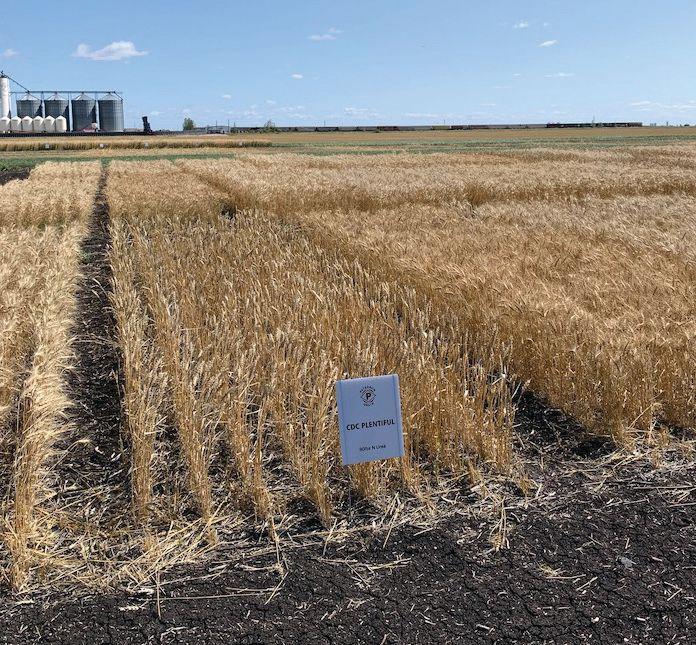
CDC Plentiful, another of the eight varieties, at the Lilyfield, Man., site in August 2019.
PHOTO COURTESY OF ALI SALIMI KHORSHIDI.
tended to have similar levels from year to year and site to site. For example, at both sites in both years, Glenn tended to have low amounts of free asparagine; that was also seen in the North Dakota study,” he notes. “But other varieties had asparagine levels that were all over the map, from very low to very high.”
Nitrogen fertilizer rates had a small impact, with higher rates tending to result in higher concentrations of free asparagine. Sulphur as a nutrient was not a significant factor, but soils at all locations were far from being sulphur-deficient.
The relationship between free asparagine and yield varied. “In 2018, when the weather was fairly normal, grain yield went up as free asparagine went up. Conversely, for 2019, which was a drier year and therefore we had lower grain yields, yield went up as free asparagine went down,” Scanlon says.
“The 2018 result seems more in line with what is known about the mechanisms involved in free asparagine formation. It will be interesting to see the trend of yield and free asparagine for 2020.”
Breeding strategies
One part of the project’s breeding-related component is to provide information to Cuthbert to help in selecting crosses for creating new varieties with low free asparagine potential. That information includes the data from the initial study on 30 varieties, the current study on eight varieties, and additional studies on lines provided by Cuthbert that have been grown at various locations in Saskatchewan.
The other part of this component is an examination of the expression levels in the genes associated with asparagine synthesis and the genes associated with asparagine breakdown. Ayele, who is in the University’s Department of Plant Science, is collaborating with Cuthbert on this work, which is being led by Salimi Khorshidi.
Using four of the project’s eight varieties, grown at two loca-
tions, they are determining if there is a relationship between the level of expression of the different genes when the plant is depositing protein into the developing grain and the amount of free asparagine that ends up in the harvested grain.
Scanlon explains, “From a breeding perspective, you can look at where those genes are located on the chromosomes and try to manipulate your crosses to either increase the amount of an enzyme that breaks down asparagine, or reduce the amount of an asparagine synthetase that may be contributing to free asparagine in the grain.”
Breadmaking quality
The project’s third component is looking at whether strategies to reduce asparagine levels might have unintended consequences for breadmaking quality. This study involves making dough from the white flour milled from the grain samples grown at the field sites, and then assessing the dough’s quality characteristics like elasticity and strength.
Due to COVID-19 closures of the food analysis labs at Cigi and AAFC, only some of the samples from 2018 and 2019 have been evaluated so far.
The preliminary results suggest that lower free asparagine levels are better for breadmaking, as well as being better for food safety. So if these results hold true, it would be a win-win outcome.
Looking ahead
The project team has a lot on its plate for the coming months. In part, they hope to catch up from the COVID-related delays.
For instance, they want to examine the relationship between the free asparagine levels in the wholemeal flour samples and the acrylamide levels in the bread from that flour. “Over the last two years, we have baked bread from the eight varieties at the two sites, but the analysis of that bread has been sideswiped by the COVID lab closures,” Scanlon says. “We want to see if there are differences between free asparagine conversion into acrylamide in Canadian breadmaking varieties compared with varieties grown in other regions.”
They also want to complete the dough quality analysis, and they will be analyzing all the grain samples from the 2020 fieldwork.
In addition, they are planning to evaluate grain samples from some other field trials conducted by Paterson Grain. These extra trials involve applying a portion of the nitrogen fertilizer later in the growing season to see how that affects the grain’s protein and free asparagine levels.
Scanlon believes the results from this free asparagine research could help Canadian wheat growers in many ways. “For wheat breeding, information from this research can be used to help breeders develop varieties with low free asparagine potential. From an agronomy perspective, we hope to have some concrete information for growers on variety selection and management practices to reduce free asparagine.
“And from a market access viewpoint, this research could enable major buyers of our wheat, like Warburtons, to show the European Food Safety Authority what they are doing to reduce the risk of acrylamide formation in their products through monitoring and controlling the amount of free asparagine in one of their primary sources of wheat.
“When you put all that together, it becomes a good news story for Canadian wheat growers.”
Yi Xie, an MSc student working on the project, weighs out a whole-wheat flour sample for evaluation of free asparagine content in Nancy Ames’ AAFC lab.
PHOTO COURTESY OF YI XIE, UNIVERSITY OF MANITOBA.
OCT. 20, 2020 12:00PM EDT
JOIN THE CONVERSATION
Register for a virtual mentorship event with some of the most influential leaders in Canadian agriculture.
This half-day virtual event will showcase select honourees and nominees of the IWCA program in a virtual mentorship format. Through roundtable-style sessions, panelists will share advice and real-life experiences on leadership, communication and balance working in agriculture.
TALKING PLANTS
Mycorrhizae help plants communicate, and more.
by Bruce Barker
Can crops gossip? Results of research on arbuscular mycorrhizal fungi show that some plants communicate through mycorrhizas.
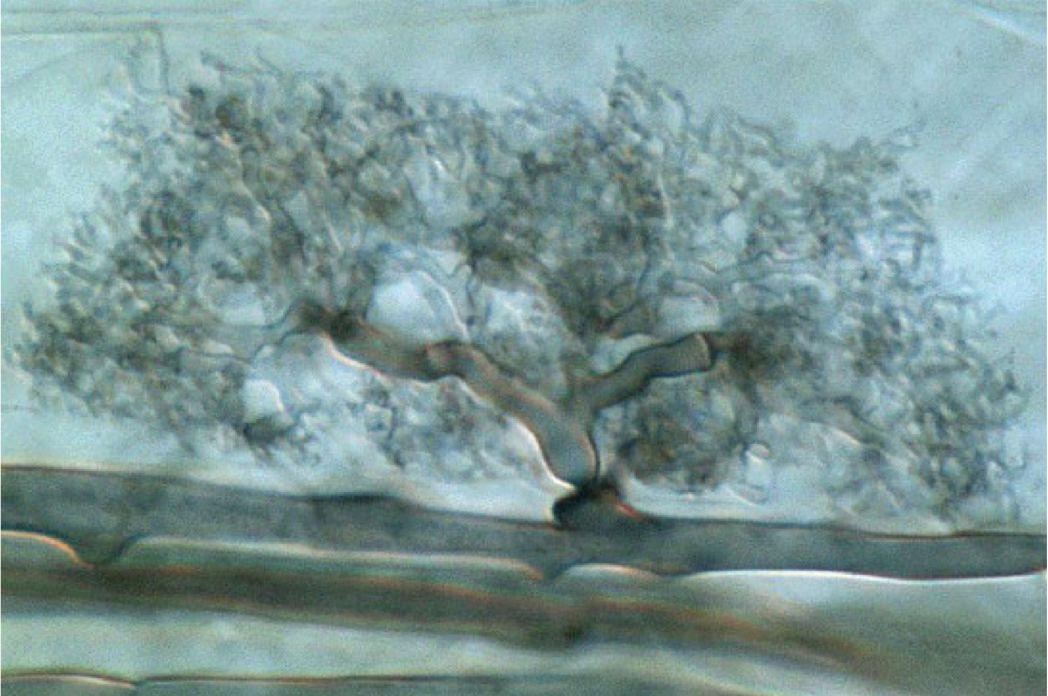
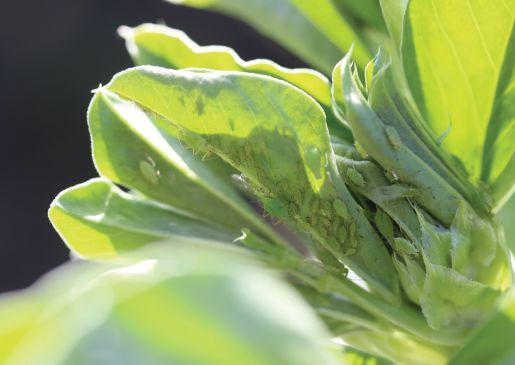
“One of the interesting findings on mycorrhizas is that they can link two plants together. Research on fababeans found that, when aphids attacked one plant, there was linked communication between plants within the mycorrhizae network telling the other plants to increase defense mechanisms,” says Monika Gorzelak, a soil fertility specialist with Agriculture and Agri-Food Canada (AAFC) in Lethbridge, Alta.
Arbuscular mycorrhizae are unique symbiotic root-fungi that mainly improve plant nutrient uptake. In crops that support mycorrhizal root growth, the mycorrhizae grow between the cell walls of the outer layers of the root to reach the xylem, where nutrients are transported upwards to the plant. Cereals, flax and legumes are host plants for mycorrhizae and are highly dependent on them, but crops such as canola and mustard are non-mycorrhizal.
Nutrients like nitrogen (N), phosphorus (P) and sulphur (S) are transported within the mycorrhizal network. This is especially important for a non-mobile nutrient like P. The mycorrhizal network can reach out beyond the root hairs to access P that the root hairs are unable to reach. Plants give up carbon in exchange for P from
the mycorrhizal fungi.
Gorzelak says commercial mycorrhizal inoculants have been developed to try to help improve the colonization of the fungi on plant roots.
“Lots of research shows huge benefits to inoculation in the greenhouse, but unfortunately it can’t be replicated in the field,” Gorzelak says. “A meta analysis shows these inoculants only work 50 per cent of the time in the field.”
Part of the reason that an inoculant doesn’t work is because it can’t adapt to the local environment when placed in the soil, Gorzelak says. The nuclei of the fungi in the inoculant are usually all the same, so there is no diversity or ability to adapt to the environment. Even if there are two nuclei types in the fungi inoculant, if they don’t recombine (similar to cross-breeding), then genetic diversity is still very limited. What is required is a mycorrhizal inoculant with several nuclei types that recombine as they grow to produce a genetically diverse network that can survive and effectively function as nutrient transporters.
“We are starting a bio-prospecting project in 2020 to go out and
look for recombining fungi. The intent is to be able to build a better inoculant that will help improve the mycorrhizal network,” Gorzelak says.
In the meantime
Gorzelak says farmers can implement management practices to help encourage native mycorrhizal fungi. The first is to keep living roots in the ground longer. Practices like continuous cropping, growing perennials and using cover crops can help.
Crop rotations including mycorrhizal builder plants like barley and alfalfa are also important for building a healthy network. Using fewer non-mycorrhizal plants like canola and mustard – or a poor host like wheat – in crop rotations can also contribute to a healthy network.
No-till or reduced till can also help maintain the integrity of the mycorrhizal network.
“Keep native grasses wherever possible. These sites have large genetic diversity, and are important sources for bio-prospecting,” Gorzelak says.
Research on fababeans found that, when aphids attacked one plant, there was linked communication between plants within the mycorrhizae network telling the other plants to increase defense mechanisms.
PHOTO COURTESY
AGRONOMY UPDATE
BRUCE BARKER, P.AG CANADIANAGRONOMIST.CA
RESEARCH CONTINUES ON PULSE ROOT ROTS
Root rot is a concern in the pea-growing areas of Western Canada and can cause significant yield loss. Pea root rot disease is caused by different pathogens, such as Fusarium species, Aphanomyces euteiches , Rhizoctonia solani , and Pythium spp. In Alberta, F. avenaceum has been identified as a predominant pathogen.
Syama Chatterton, a research scientist in plant pathology, led research conducted at AAFC Lethbridge to assess the ability of the main Fusarium species pathogens to cause root rot disease (pathogenicity) in pea, and to evaluate which crops/varieties can be infected by two Fusarium species.
Fusarium species isolates collected from earlier surveys of commercial pea fields in southern and central Alberta were used in this study. Forty-five isolates belonging to six species were selected to determine their aggressiveness on CDC Meadow pea under greenhouse conditions. These included F. avenaceum (19 isolates), F. solani f. sp. pisi (three isolates), F. redolens (seven isolates), F. culmorum (six isolates), F. oxysporum (eight isolates) and F. acuminatum (two isolates).
The majority of the examined isolates were pathogenic and showed a range of aggressiveness from weak (DS=1-3), intermediate (DS=4-5) to highly (DS=6-7) aggressive.
Fusarium avenaceum and F. solani f. sp. pisi showed the highest level of disease severity, followed by F. oxysporum , F. culmorum , F. redolens and F. acuminatum
Fusairum solani f. sp. pisi and F. avenaceum were chosen for further testing on common rotational crops grown in Alberta because of their ability to cause severe disease on pea. Ten cereal, oilseed and pulse crops were inoculated with isolates of those species in the greenhouse.
The overall findings indicate that F. avenaceum and F. solani f. sp. pisi found on pea are aggressive on some varieties of chickpea, fababean and dry bean. These species were not aggressive on cereals, soybean, lentil or canola, which suggest that these crops can be planted in rotation with pea even if Fusarium root rot pathogens are present. However, risk to fababean, chickpea and dry bean when grown in rotation with pea needs further testing in the field.
In addition to this research, Chatterton is involved in multiple studies looking at Fusarium root rot and Aphanomyces root rot. Surveys from 2014 to 2017 found that Aphanomyces was widespread across the Prairies. One study looked at the
effect of seed treatment to control Aphanomyces. She found no effect of most treatments over four years at four field locations.
Currently, the recommendation to manage root rots is a six- to eight-year rotation away from pea and lentil, but based on research from other parts of the world, Chatterton looked at several fields to assess Aphanomyces and Fusarium root rot infestations. One field at Red Deer had peas grown in 2011. Six year later, the disease severity was coming down and was low in 2018, producing very high yields – indicating that a six- to eight-year rotation without a susceptible pulse crop might be appropriate. A new rotation study was started in 2018, with one to eight year breaks between a pea crop, with or without an alternate pulse crop in the rotation. So far, soybean and fababean could be good pulse crop options for managing Aphanomyces, and chickpeas might be a good option as well. But with only two years of results, solid recommendations will have to wait.
Chatterton is also investigating biofumigation with cover crops. The cover crops being investigated are oats, rye, two mustards, fababean, clover and five different blends of Brassica crops that include mustards, tillage radish, Dwarf Essex rape, forage collards, forage rape, turnip rape and forage kale. The cover crop could reduce Aphanomyces oospore levels. First year results will be obtained in 2020.
Legumes in a cover crop mix are also being investigated. Vetches, clovers, lupins and peas were planted and then tested for the presence of Aphanomyces and disease severity.
The vetches were very susceptible to Aphanomyces. Crimson, Yellow blossom and Persian clovers didn’t get a lot of disease, but still supported Aphanomyces. White Dutch, Red, Subterranean and Berseem clovers and lupins didn’t get the disease, and didn’t support Aphanomyces colonization.
Chatterton has had some success in the greenhouse with liming to prevent oospores from germinating. Hydrated lime seemed to work the best. The next step is to try to replicate the results in the field.
Pulse growers who relied on a solid rotation of canola-barleypea-wheat have seen their pea crops collapse under root rot pressure after about 20 years of this rotation. These trials will help to develop new guidelines for pulse crop rotations, which will reduce the impact of Fusarium and Aphanomyces root rots – and help get back to diverse, profitable crop rotations. Bruce Barker divides his time between CanadianAgronomist.ca and as Western Field Editor for Top Crop Manager. CanadianAgronomist.ca translates research into agronomic knowledge that agronomists and farmers can use to grow better crops. Read the full Research Insight at CanadianAgronomist.ca.
THE RIGHT SEED, 16 SEASONS IN A ROW.
THE SEED FOR EVERY SEASON
You might only get about 40 chances to grow your yield of dreams, and with each passing season you learn a little bit more about how to make your next one the biggest yet. So when it comes time to choose a seed, choose the one that gets the job done. Because when you’re making every season count, you need a seed you can count on.
Bayer CropScience, LP is a member of Excellence Through Stewardship ® (ETS). Bayer products are commercialized in accordance with ETS Product Launch Stewardship Guidance, and in compliance with Bayer’s Policy for Commercialization of Biotechnology-Derived Plant Products in Commodity Crops. Trecepta® RIB Complete ® Corn has been approved for import into Australia/New Zealand, Colombia, China, Japan, South Korea, Mexico, Taiwan, United States and all individual biotech traits approved for import into the European Union. Please check biotradestatus.com for trait approvals in other geographies. Any other Bayer commercial biotech products mentioned here have been approved for import into key export markets with functioning regulatory systems. Any crop or material produced from these products can only be exported to, or used, processed or sold in countries where all necessary regulatory approvals have been granted. It is a violation of national and international law to move material containing biotech traits across boundaries into nations where import is not permitted. Growers should talk to their grain handler or product purchaser to con rm their buying position for these products. Excellence Through Stewardship ® is a registered trademark of Excellence Through Stewardship. ALWAYS READ AND FOLLOW PESTICIDE LABEL DIRECTIONS. Roundup Ready® Technology contains genes that confer tolerance to glyphosate. Roundup Ready 2 Xtend® soybeans contains genes that confer tolerance to glyphosate and dicamba. LibertyLink ® Technology contains genes that confer tolerance to glufosinate. Glyphosate will kill crops that are not tolerant to glyphosate. Dicamba will kill crops that are not tolerant to dicamba. Glufosinate will kill crops that are not tolerant to glufosinate. Contact your local crop protection dealer or call the technical support line at 1-888-283-6847 for recommended Roundup Ready ® Xtend Crop System weed control programs.