Breeding more resilient canola and wheat varieties.
PG. 12
MATCHING R GENE TO PATHOGEN RACE
The blackleg resistance genelabelling system works, if producers use it.
PG. 32
GROWING CONFIDENCE WITH RESULTS.
6 | Tapping into an emerging potential
Could we strengthen the defensive benefits of canola’s waxy outer layer?
By Carolyn King
Shifting forward
Stefanie Croley
38 Hydrated lime can help reduce clubroot disease
Bruce Barker
12 | Drought-tolerant crops on the horizon
Breeding efforts may bring more resilient canola and wheat varieties to market.
By Bruce Barker
Canola pan-genome map for better, more resilient varieties
Julienne Isaacs
Linking soil NIR measurements, fertility and crop yield
Donna Fleury
ON THE WEB
of
32 | Matching resistance gene to pathogen race
Canada’s new blackleg resistance genelabelling system works, but it’s up to producers to use it.
By Julienne Isaacs
Practical tech on the farm
Bree Rody
Teasing out the connections
Carolyn King
Investigating seed-placed phosphorus rates in canola
Bruce Barker
STEFANIE CROLEY EDITORIAL DIRECTOR, AGRICULTURE
SHIFTING FORWARD
When you spend the better part of two years at home, coping with strange adjustments to your regular routine, time starts to get a bit arbitrary. Throw in a challenging (to say the least!) growing season and things really start to feel like Groundhog Day.
Yet, time marches on, and somehow, it’s November again. As harvest wraps up and the end of the year draws close, many of us spend time reflecting on the events and decisions that shaped the way the year played out. It can be easy to look back and question why things happened the way they did, and feel frustrated, disappointed and even angry about the result. It’s OK to feel those feelings – they are valid and warranted. But as I was reminded in a recent interview, when you are ready to move forward, your reaction and attitude are what matter most.
That advice comes from Kelsey Banks, a farmer and agronomist in Ontario who publicly shared her experience fighting brain cancer on Twitter with the greater ag community. When she was diagnosed in January 2020, Kelsey was just 26 years old and had recently come back to her roots, farming with her family and working as an agronomist with Embrun Co-op. The diagnosis was a blow – as Kelsey shared in our conversation, “I thought at first that my career was over . . . I’ve worked so hard and I’ve done a lot, but I felt like my career was over because I [could not] continue to work.”
Kelsey said the support from her network and community was encouraging as she moved through her journey with cancer. So many people she had met throughout her career and life showed up for her, checking in and cheering her on. “I couldn’t control that I got cancer. It happened. But I could control my attitude and who I connected with still. It goes to show you, this is a great industry to be in.”
Through our Influential Women in Canadian Agriculture program, I’ve been fortunate to speak with Kelsey and several other women from across the country who work in various roles throughout the industry. These women have shared their experiences, wisdom and advice with us, answering questions about challenges, adversity, strengths and accomplishments. You can watch the interview with Kelsey and all of the other women at agwomen.ca. All of their stories are unique, and in some way, they have all faced obstacles and challenges that impact the next steps on their paths. Their words are reminders that each day, we are all faced with big and small challenges, and our attitudes determine the next steps.
This past season may not have yielded the results you hoped for, and it’s OK to admit that. There is always room to sit quietly with a challenge and give space to feelings and emotions. But when you are ready, you can choose to take steps to shift forward, reach out for help and continue on down the road.
topcropmanager.com
A leader in customer satisfaction for a reason.
Customers who grew Brevant™ seeds last season ranked us as a leader in customer satisfaction*. Why? We work hard to bring you high-yielding canola hybrids with clubroot resistance, harvest flexibility and marketing choice, and help protect your investment with industry-leading Lumiderm™ insecticide seed treatment.
Together with your local retailer, we work hard to make your choice easy.
Visit your retailer or learn more at brevant.ca
on
TAPPING INTO AN EMERGING POTENTIAL
Could we strengthen the defensive benefits of canola’s waxy outer layer?
by Carolyn King
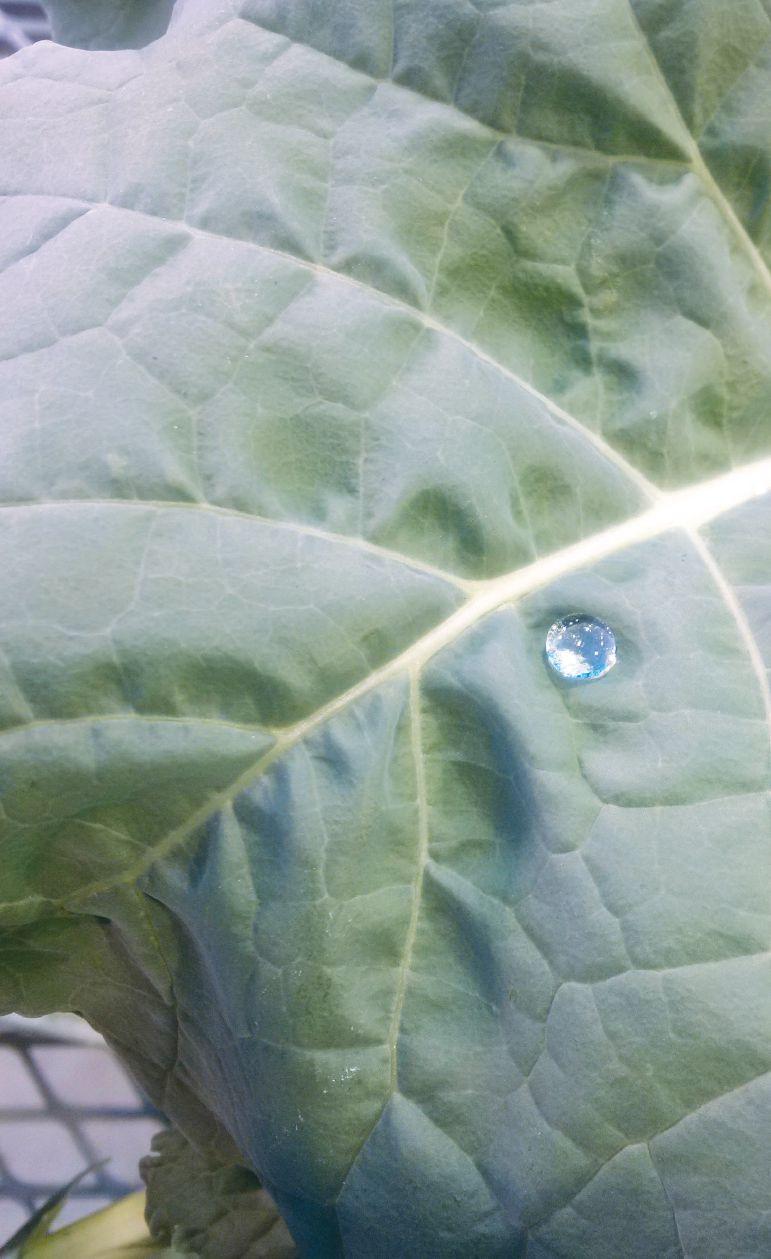
Arecently completed project has taken some key steps in an intriguing approach towards fortifying canola’s ability to withstand stress. The idea is to enhance canola’s natural defences by modifying its waxy outer layer through crop breeding.
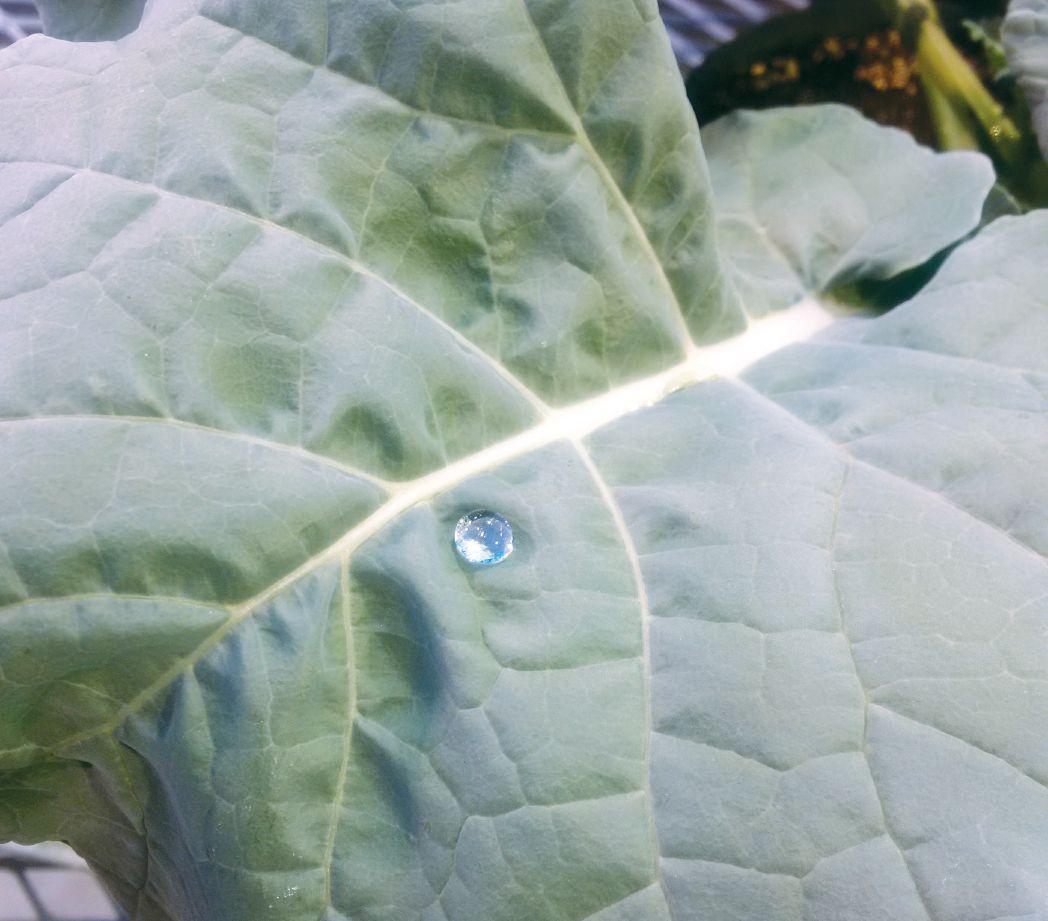
“Land plants have a waxy covering. The main function of this waxy layer is to provide a water barrier to stop the plant from losing water. But it is also the first line of defence for a plant against attacks by insects or pathogens. For instance, when a fungal spore lands on a leaf, the first contact it has with the plant is the wax layer,” explains Mark Smith, the research scientist with Agriculture and Agri-Food Canada (AAFC) who led this project.
“There is a lot of potential to use genetics and breeding to modify the wax layer to help protect the plant, but this concept hasn’t been explored in much detail until recently. However, now we have the tools to look for the genes and do the chemical analysis. I think we are in a good position to see how far we can go to use wax as a way to better protect the plant.”
A close look at canola wax
Smith’s two-year project was funded by SaskCanola under the Canola Agronomic Research Program. When he began the project in 2018, little was known about the chemical composition, function and synthesis of canola’s waxy layer.
The project team, composed of Smith’s research group and some of his AAFC colleagues, started by conducting a detailed analysis to determine the amount of wax and its chemical composition across the different parts of canola plants.
Using modern mass spectrometry tools, the project team analyzed the waxy layer on a wide assortment of Canadian canola varieties. “We included varieties from modern cultivars back to some of the earliest ones in the history of canola, with registration dates ranging from 1966 to 2019,” Smith notes.
Their analysis shows that canola’s wax is made of a complex
ABOVE: Mark Smith’s project included comparisons of the wax on canola and some of its Brassica relatives, like the Brassica carinata varieties shown here.
OUR POD IS MIGHTIER.
WE TAKE POD INTEGRITY SERIOUSLY.
With the new Pod DefendR® shatter reduction trait, you won’t second guess our dedication. Performance that’s competitive to other leading pod integrity traits means you’re defending yourself against pod shatter while enjoying harvest flexibility and high yields.
Seed BY 6211TF with Pod DefendR and experience next-level protection. Learn more brettyoung.ca/poddefendr.
mixture of hydrocarbons – like the hydrocarbons in gasoline but much heavier and denser. All the canola varieties in the study have similar wax chemical compositions, but the amount of wax varies somewhat between varieties. As well, the wax composition is similar across the different parts of a canola plant, with the only significant differences on the petals. However, the amounts of wax vary over the different plant parts.
“If you compare canola to a plant like wheat, the wax on a wheat plant is quite different on different parts of the plant; for instance, the wax composition can be very different on a wheat stem compared to a wheat flag leaf,” Smith notes.
“There is a lot that we don’t yet know about the wax on these plants. For example, why does wheat have a very different wax chemical composition compared to canola, and why does the wax composition vary on wheat and not on canola?”
Smith also wanted to know how the wax on canola, which is the species Brassica napus, compares to the wax on five of its Brassica cousins: cabbage (Brassica oleracea), Ethiopian mustard (Brassica carinata), Polish canola (Brassica rapa), brown mustard (Brassica juncea) and black mustard (Brassica nigra).
“We found that the wax of these other Brassica species is very similar to canola wax, but again there is variation in the amount of wax,” he says. “There is some variation in the chemical composition between the different species, but the difference does not involve a presence or an absence of particular components – just different ratios of the components.”
For four of these species, the team analyzed some representative varieties, but they conducted a more extensive examination of Brassica carinata varieties. That examination produced similar results to the canola analysis, including the fact that the petal wax has a different composition than the wax on the rest of the plant.
“There is a lot of potential to use genetics and breeding to modify the wax layer to help protect the plant...”
Connections to stresses?
Smith is curious about the difference in the petal wax because of a possible link to Sclerotinia infection.
“The canola petals are missing some of the
Smith is investigating canola’s waxy outer layer to see if it could be modified to enhance canola’s natural defences against different stresses.
Introducing a canola industry first The Heat Advantage™
You deserve less downside.
You shouldn’t be left holding the bag when heat blast hits, so it’s time to change the rules of the canola game. The Heat Advantage,™* new with Brevant™ seeds Nexera® canola, provides up to $100/acre of heat blast protection, right out of the bag.
Contact your grain contractor to book now and get The Heat Advantage.™ It’s part of our Total Grower Advantage; and it’s innovation where it matters –in your pocket.
DEADLINE IS OCTOBER 29, 2021.
Learn more about The Heat Advantage,™ available exclusively with Brevant™ seeds Nexera® canola, at brevant.ca/nexera.
main components of the wax on the rest of the plant. As petals are the primary site for Sclerotinia ascospore germination, I would be very interested in exploring whether the lack of some of the wax components makes the petals more vulnerable,” he says. If this hypothesis turns out to be correct, then perhaps canola breeding to modify the petal wax composition might be way to help reduce Sclerotinia in canola.
Smith’s project also included a preliminary look at how environmental conditions affect canola’s waxy layer. He notes, “Although we haven’t studied this in great detail, it is pretty clear from our work that, under hot and dry conditions, the plants definitely make more wax. It is a case of making more of the same wax, not a different wax composition.” Their initial findings suggest that further investigation of the environmental effects on canola wax could help in understanding the layer’s function and dynamics.
The genetics of canola wax
The project team used an innovative but labour-intensive method to identify canola genes involved in wax synthesis and regulation.
Smith explains that canola’s wax is produced by the outer layer of cells, called the epidermis. With the help of some co-op students, the team peeled the epidermis off of some canola petioles (leaf stalks). Then they determined which genes were expressed in those petiole peels and which genes were expressed by whole petioles that included the epidermis.
“By looking for genes switched on only in the epidermis, we were able to get a good handle on which genes are involved in wax synthesis,” Smith says.
“We have identified genes that encode enzymes that make the wax and genes that are involved in regulating the wax, like how much wax is made and what its composition is.”
The aim of this work is to build a collection of possible gene candidates that could be used by breeders to manipulate canola wax. Potentially, once the roles of the different genes are determined, breeders could target certain genes in order to change the amount or composition of wax in their canola lines in ways that would improve the crop’s performance.
Looking ahead
At present, Smith’s research group is continuing to do some work on canola wax diversity and chemical analysis. However, he is hoping to get funding for some next steps in this research towards possible practical applications that could benefit canola crops.
One key aspect he would like to investigate is the different functions of the wax and whether those functions could be improved by modifying the wax amount or composition. For instance, a study could look at the role of wax in drought-proofing canola plants during hot, dry weather and whether the wax might be more effective at reducing water loss if it has a slightly differ-
Smith is also keen on determining the role of the different wax components in the plant’s resistance or susceptibility to attacks by insect pests or pathogens. “One possibility we want to pursue is to isolate some of canola wax’s chemical components and then test those components in the lab against things like fungal spore
germination. For example, we could germinate some spores in the presence or absence of some of the chemicals extracted from the leaf to see how that affects how the spores germinate,” he explains.
“Another possibility is to compare the waxes between different plant species. For instance, camelina has wax with some components that are completely missing in canola, and camelina also has different responses to pathogens and particularly insects. So doing interspecies comparisons might give us some clues as to what can be done to try and improve canola.”
If Smith’s team can identify wax characteristics that could improve traits like drought tolerance or pest resistance, then they could work on determining the genes involved and developing DNA markers for those genes so breeders could screen their breeding materials for the genes.
“The waxy layer on plants has clear importance,” Smith con cludes. “If we can understand it better, then I think we can use it to make our crop plants more robust in their responses to challenging climate conditions and to disease and insect pressures.”
GROWING YOUR WORK OF ART
The visionary design of Proven® Seed shines through from every angle. Our leading-edge technology offers a whole new perspective on canola, cereals, corn, soybeans and forages. Whether you’re looking for high yields and performance from every seed across all acres, or specific herbicide systems and disease management, we know there’s a Proven Seed that fits your field. Only available at Nutrien Ag Solutions® retail. Visit ProvenSeed.ca to learn more.
DROUGHT-TOLERANT CROPS ON THE HORIZON
Breeding efforts may bring more resilient canola and wheat varieties to market.
by Bruce Barker
May you never have to live through another drought –but if you do, researchers are moving forward with drought-tolerant crops. While they wouldn’t be able to tolerate the 2021 drought that occurred in many areas of the Prairies, drought-tolerant canola and wheat varieties under development might help survive less severe droughts.
“What we are hoping for is that if a normal variety goes down in five or six days, then perhaps a drought-tolerant crop might last twice as long,” says Marcus Samuel, professor of integrative cell biology in the department of biological sciences at the University of Calgary. “Under water-stressed conditions, crop yield could be improved by at least 10 to 20 per cent.”
Samuel has been working on the technology for over a decade. In collaboration with the University of Toronto and the University of Tasmania in Australia, researchers uncovered the molecular mechanisms that control drought tolerance in a model plant species called Arabidopsis, a close relative of canola with 85 per cent similar genes.
Using genetic and molecular analysis, the researchers identified how drought tolerance is controlled by the interaction between two major plant hormones. The first hormone, abscisic acid (ABA), plays a role in drought tolerance and is important for closing stomatal pores found on the leaves. Stomatal pores regulate the exchange of gases, including water vapour, into and out of the plant. When ABA is increased in concentration, the stomatal pores are more closed and the plant loses less water.
The second is a group of steroid plant hormones called brassinosteroids (BR). These hormones interact with ABA, with higher levels of BR shutting down ABA activity, and the resulting stomatal pores remain more open. Plants with reduced BR levels were able to tolerate longer periods of reduced moisture.
The research team was able to figure out the molecular pathway involved in producing brassinosteroids, and how to target and modify them to achieve the right balance between ABA and BR. They were able to develop an Arabidopsis plant with normal plant growth but improved drought tolerance.
The next step was to put that research to work in canola. They developed a genetically modified canola plant, targeting the same molecular pathway found in Arabidopsis. Grown in the greenhouse, they compared these canola lines to normal lines to see if they functioned normally, and then selected the lines with the best drought tolerance. The researchers are in the process of developing nonGMO lines by using gene-editing technology.
“We had a proof of concept that showed we could develop a geneedited, non-GMO canola plant,” Samuel says. “After crossing, there wasn’t any trace of foreign DNA used for gene editing, essentially making the process non-GMO.”
The group’s research was funded by the Natural Sciences and Engineering Research Council of Canada, and Samuel’s lab was also supported by the Alberta Crop Industry Development Fund Ltd.
Samuel was then able to get funding from Nutrien Ag Solutions to develop and commercialize gene-edited, drought-tolerant canola. The funding was part of a larger project to develop shatter-tolerant
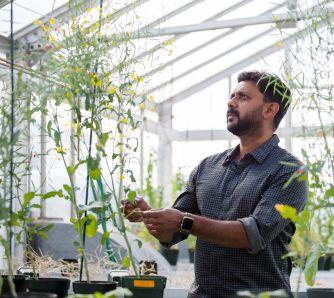
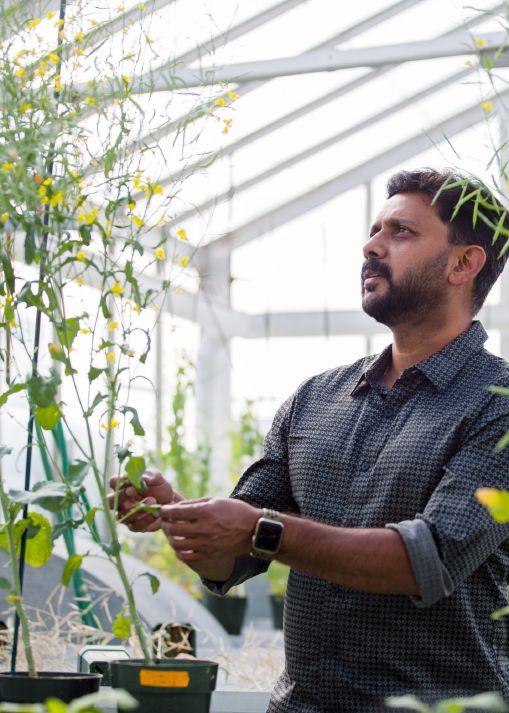
University of Calgary researcher Marcus Samuel is developing drought-tolerant canola and wheat lines.
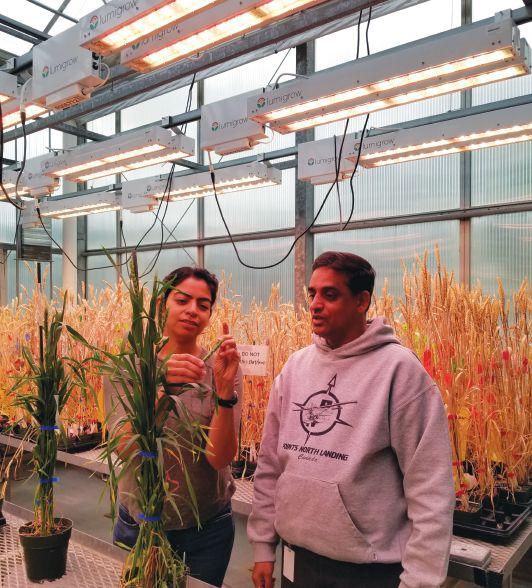
Research associate Neha Vaid and principal investigator Raju Soolanayakanahally (AAFC-Saskatoon) are collaborating on developing drought-tolerant wheat lines.
canola, with the added bonus of drought-tolerant traits built in.
Elite canola lines were selected in the greenhouse, but then COVID-19 hit and Samuel lost a lot of plants over the last two years. He is hoping that he will have his elite lines ready in 2022, and hopes to go to the field in another couple years.
Up next: wheat
“We asked ourselves, why stop at canola?” Samuel says. He received funding from Genome Alberta to develop a proprietary chemical screen in wheat to help develop drought-tolerant wheat.
In collaboration with Raju Soolanayakanahally and Neha Vaid with AAFC-Saskatoon, the Samuel group was able to develop a mutagenized wheat population. This non-GMO process is called mutagenesis, in which a chemical is used to create random mutations in the wheat genome. They treated AC Taber wheat seeds with chemical mutagens, grew the seeds out in the field, harvested them, and looked for different mutations that conferred drought-tolerance.
Samuel and collaborators have screened over 100,000 mutagenized wheat lines for plants that are more drought-resistant.
Samuel’s group has selected more than seven drought-tolerant lines from the screening and tested them in field trials in the Okanagan in 2020 and 2021. These seven strong lines are the ones that he hopes to move towards commercialization, with expected funding
from the Agricultural Development Fund in Saskatchewan and Agriculture Funding Consortium, Alberta.
“The idea is to move the traits into elite CWRS and CPS wheat lines,” Samuel says.
The drought-tolerant canola and wheat lines are still a few years away from farmers’ fields. In the meantime, here’s hoping the 2021 drought is an event that doesn’t occur again for many more years.
Knock on wood.
SEED YOU CAN COUNT
Total Ration Solutions testing program used to identify hybrids with maximum silage yield potential and quality
Line-up includes EDF (Effective Digestible Fibre) and EDP (Effective Dual Purpose) hybrids for end use flexibility
CANOLA PAN-GENOME MAP FOR BETTER, MORE RESILIENT VARIETIES
Sequencing of canola genomes a major step for breeders.
by Julienne Isaacs
An international coalition of researchers led by an Agriculture and Agri-Food Canada (AAFC) scientist, the Global Institute for Food Security (GIFS) at the University of Saskatchewan, and Israeli bioinformatics company NRGene has mapped the canola pan-genome, or its entire set of genes.
It’s a major step forward for the canola industry and will lead to advances in breeding, says Andrew Sharpe, director of genomics and bioinformatics for GIFS, who co-led the effort with AAFC research scientist and GIFS affiliate researcher Isobel Parkin.
The initiative, called the International Canola Pan-Genome Consortium, was established in 2019 and included contributions from key players in the canola industry based in Canada, the United States, Europe and Israel, including Bayer, Corteva, NuSeed and Nutrien Ag Solutions, as well as NRGene.
NRGene uses artificial intelligence-based genomics tools to accelerate breeding programs around the world. The genomics support was necessary to help assemble a huge amount of data, Sharpe says.
The project involved sequencing 12 canola and rapeseed varieties using NRGene’s DeNovoMAGIC software. Once sequenced, NRGene compared each of the varieties’ chromosome-level genome sequences to the others and built the pan-genome database.
Sharpe calls this resource “foundational.” He’s engaged in similar projects in wheat and camelina. For each crop, a completed pan-genome can be used for research “in perpetuity.”
“You can start to collect sequence data from other genotypes or lines for a particular crop and then align the data you’ve got from those genotypes against the reference pan-genome,” he explains. “That allows you to identify new genetic variation from diverse sources, which ultimately leads to variation in traits, which is of interest to breeders and breeding companies.”
Following publication of the pan-genome, the consortium will make it available to the entire canola research and breeding community, Sharpe says.
Breeding breakthroughs
Sharpe says the consortium wanted to characterize small- and large-scale variations between the genomes.
In other words, they wanted to analyze differences between
single nucleotides, where one single base in the sequence changes to another base, as well as larger differences, such as structural variation involving “chunks” of DNA in different varieties, where portions of chromosomes are duplicated, deleted, inverted, or even moved to another chromosome.
“This structural variation looks to be a very important type of variation, often associated with key traits, and which we struggled to characterize previously,” he says.
“With whole genome assembly, you end up with very long contiguous bits of genome, which provides you with an excellent framework for identifying larger structural events, particularly those that have impacts on traits like disease resistance and resistance to abiotic stress. We can look to see if there are strong associations with the traits.”
PHOTO COURTESY OF GIFS.
Andrew Sharpe with GIFS’ PromethION high throughput DNA and RNA sequencing device.
GIFS’ role in the project, Sharpe says, was to use its in-house informatics analysis and data storage capabilities to identify variation between the different lines, draw out comparisons across entire genomes, and compile that information in a database. GIFS, through the Plant Phenotyping and Imaging Research Centre (P2IRC) that it also manages on behalf of University of Saskatchewan, has genomeviewing platforms that can be used to compare variations between genomes in what he calls an “intuitive” visual format.
Breeders can use this database of genetic information to select particular genotypes that are associated with a major resistance response to a fungal pathogen or to environmental stress, to name two examples.
They’ll then select different combinations of genomes so they can find the sections that provide beneficial responses “in a single line,” he explains. This means screening potentially thousands of lines in the lab and selecting promising candidates before moving them to field trials. This kind of advanced access to information
about traits has the potential to dramatically accelerate breeding efforts.
Another example of how the pan-genome could be used is a project currently being led by Parkin, Sharpe says. It involved crossing fifty very diverse lines with the same reference line to achieve several thousand progeny. Because everything is crossed to the constant reference line, the researchers can see more robust associations with particular genotypes. “We can use the pan-genome information to develop better tools to interrogate the generated lines,” he says.
Sharpe believes the project will soon pay dividends for producers. Climate change will result in more extreme environmental conditions and tougher growing conditions, he says, and the accelerated development of new and more resilient varieties will increase the likelihood of stable yields even in tough years.
“What we want to see is the availability of new cultivars that will provide them with greater security.”
Smart Nutrition MAP+MST granular fertilizer supplies your soil with all the sulfur and phosphate it needs when your crop needs it. Using patented Micronized Sulfur Technology (MST), elemental sulfur oxidizes faster, allowing for earlier crop uptake and utilization when your crops need it most.
Look inside to learn how Smart Nutrition MAP+MST can boost your soil’s performance and maximize your ROI.
SHIFT Technology insights for the progressive farm SHIFT
SHIFT
LINKING SOIL NIR MEASUREMENTS, FERTILITY AND CROP YIELDS
Bringing the benefits of digital ag and big data to Prairie farmers to optimize productivity and profitability.
BY DONNA FLEURY
Tools for predicting soil productivity and estimating crop yields are improving, but addressing field and soil variability can still be a challenge. Researchers are interested in developing tools that would link soil near infrared (NIR) measurements, fertility and crop yields together with digital agriculture and big data to improve predictability of soil productivity and profitability.
“As a soil chemist, we have been really successful at building soil tests that relate the nutrient status of the soil to plant yields, and coming up with recommended fertilizer blends,” says Derek Peak, professor of soil science at the University of Saskatchewan. “In principle, agronomy does a good job but in practice soil testing is expensive, time-consuming and only provides a snapshot in time of a specific sample location in the field. We are not really doing a good job of capturing the variability you can often see across a field, knowing there are differences in upslope and downslope productivity, water availability, soil organic matter and other variables.
“With the increasing advancements in digital technology, big data and near infrared technology improvements, we are interested in determining if more sophisticated, faster and lower cost ways could be developed to test the productivity of soils.”
Over the past few years, NIR techniques have become more robust, easier to calibrate and less expensive, allowing researchers to use NIR on field-scale collection and analysis of spectra to relate to nutrient status. Although this strategy works well for individual plot research academically, there are challenges to wide-scale use across the Prairies.
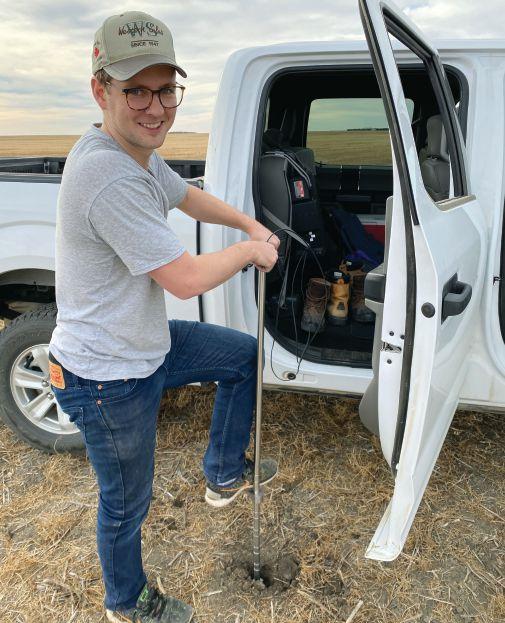
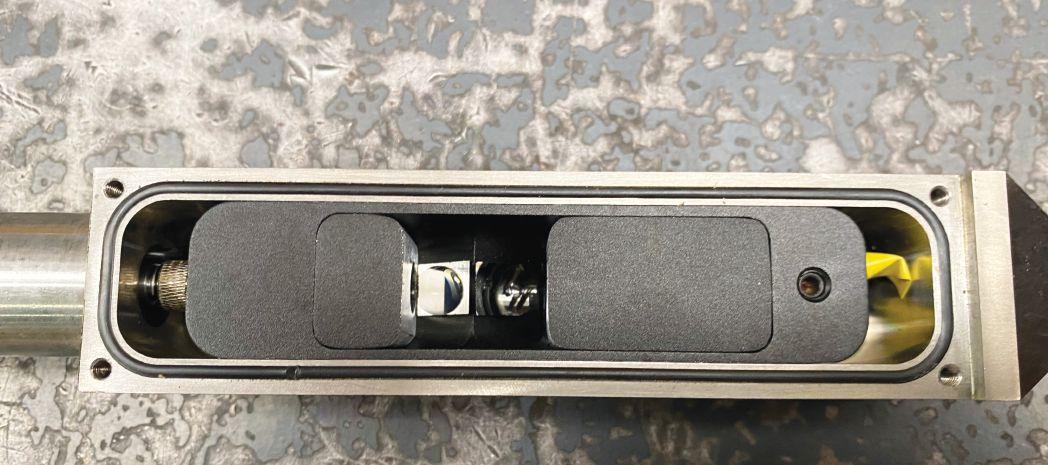
Field-scale soil NIR sample collection and measurements for the project.
BEFOREITHAPPENS.
To try to address some of those challenges, Peak initiated a threeyear project in 2021 to determine if combining NIR spectra collection with digital ag and big data analytics could result in enough data to take advantage of machine learning and artificial intelligence (AI) technology. The project is funded by SaskCanola, Sask Wheat and the Saskatchewan Agriculture Development Fund.
The objectives are to develop a methodology to link field NIR data and laboratory analyses, and to produce spatially resolved, soilbased yield potential maps. The overarching goal is to help agronomists and farmers use these tools to gain productivity insights and evaluate the likelihood of profitability when investing in inputs for their cropping systems.
“Using an NIR spectra dataset allows researchers to analyze several different soil properties [that are] important for producing crops to provide an overall prediction of yield across the field,” Peak explains. NIR spectroscopy involves the absorption or emission of light over a range of wavelengths to collect spectra.
“There are many interrelated soil properties that influence crop productivity, such as nutrient availability, organic matter, moisture holding capacity, soil texture, and cation exchange capacity. Using NIR, we can analyze and run regressions on all of the variables to-
This project is a key intermediate step, combining our NIR technique with building software tools and algorithms and the necessary correction factors to link soil NIR measurements, fertility and crop yields.
gether and provide an indication of yield potential and realistic yield goals. When combined with big data and AI software tools and algorithms, the ability to predict profitability will be greatly enhanced.
“Ultimately, we want a tool that can evaluate the likelihood that investing inputs and money into a particular field or yield mapped area will result in a profit, rather than just providing a specific fertilizer number.”
Peak has partnered with a company to develop a field probe prototype that would collect the spectra or data at the sample site and then transmit it to the cloud, where big data and AI machine learning could run in the background on servers. Adding more samples to the database further improves the results and predictability. They are on version three of the prototype, which is working well; the bigger challenge is the current cost, at about $10,000 per probe. Although the costs of optics and electronics continue to come down, it is still too costly for every agronomist or farmer to use this individually. So, the project team has pivoted to look at a hub where individual soil samples are currently sent for analysis and make the instrument available there, such as soil test labs or input retails and co-operatives.
“We are partnering with other crop science experts, including university researchers and commercial agronomists, who are already collecting soil samples and doing nutrient analysis to determine yield potential,” Peak adds. “We are working with them to insert our NIR screening technique into their workflow, which helps us get to the millions of spectra that data scientists tell us we need without investing millions of dollars in field trials.
“Using this screening tool, we are able to take tens of thousands of field samples to the lab and measure with NIR. This helps us understand how those samples cluster and behave, and allows us to select samples that make a more scientifically sound study, rather than having to rely on a limited set of samples more typical in classical soil fertility analysis.”
One of the factors that really affects the measurements and AI interpretations is the type of soil sample – whether it is direct from the field or the sample has been dried and ground for testing. Samples at both stages are being compared to develop a calibration method and correction factor to ensure the NIR lab tools using dried samples are able to accurately interpret what is happening in the field.
This technique has broader application beyond the Prairies and Canada. Peak also works internationally in developing countries and regions, such as West Africa, focusing on food security projects. He
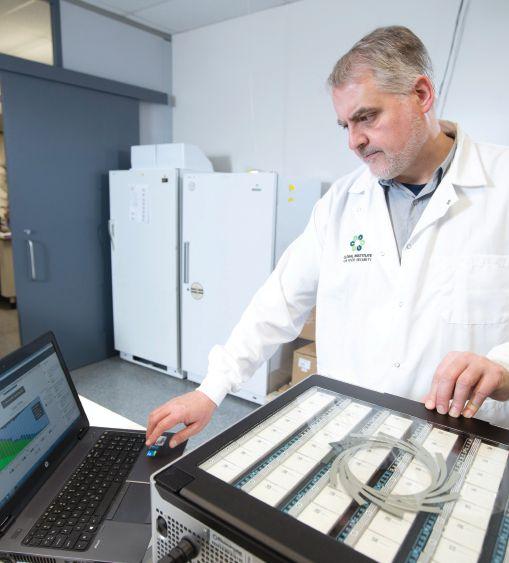
FT-NIR tools in the lab for soil and nutrient analysis.
has encountered even bigger challenges in trying to test soil productivity there, where soil testing labs and capacity were unavailable.
“If we could take a few research sites that have been characterized really well with modern techniques, combined with GIS or some mapping approach for climate, soil, vegetation, elevation and other variables, then we could take that data and scale it out – perhaps even to a regional scale. That would allow agronomists and farmers to compare their soils to the maps and match their fertilizer recommendations to sites that are similar. Although not perfect, this is a really important step towards doing better.”
An important component of the project is the unique training opportunity for students and research associates. Working on the project allows them to learn these advanced techniques, data analysis and computer machine learning applications, while also being able to go out in the field and interact with crop scientists and farmers.
Peak is also a researcher with the university’s Plant Phenotyping and Imaging Research Centre (P2IRC), managed by the Global Institute for Food Security (GIFS), where some of the machine learning and AI computing work will be completed. A complementary graduate student project uses a similar approach, but also includes synchrotron-based spectroscopy work at the Canadian Light Source (CLS) to compare to NIR.
“Our goal is to have an inexpensive field probe as a tool that every agronomist or farmer could use in the field and get results,” Peak says. “This project is a key intermediate step, combining our NIR technique with building software tools and algorithms and the necessary correction factors to link soil NIR measurements, fertility and crop yields. We will have done all of the upfront painful preliminary work so that, when the technical engineering hurdles are overcome and there is a lowering in price, then the tool is ready to use at a meaningful scale.
“We want the tool to be generally available and useful for those doing soil analysis, and to bring the benefits of digital ag and big data to Prairie farmers for optimizing productivity and profitability.”
Several soil properties influence crop productivity, including nutrient availability, organic matter and soil texture.
SHIFT Technology insights for the progressive farm
SHIFT SHIFT
PRACTICAL TECH ON THE FARM
There’s more tech available than ever. How does one evaluate the cost?
BY BREE RODY
With automation, artificial intelligence and enhancements that literally allow tractors and other pieces of ag equipment to “speak” to one another, growers are living in a world of limitless possibilities.
There is, of course, a difference between what is possible and what is practical. Besides the most obvious barrier to accessing technology – cost – there’s also matters of learning curve, compatibility and notoriously spotty rural Wi-Fi and cellular connections. In short, there is often a discrepancy between what is available versus what works for the average grower.
However, that doesn’t mean there is no room to adapt. As technologies popularized in the last decade come down in price, more producers have gotten their hands on advanced tech. Now, it’s become a matter of adapting – knowing not just what is available, but also how to make the most of it and ensure that your investment is worth it.
EYES ON EFFICIENCY
Alex Melnitchouk, chief technology officer of digital agriculture at Olds College in Olds, Alta., says even though technology is often thought of as a massive investment, the perfect analogy is sitting in
the hands of most Canadians.
“How many people use landlines these days?” he asks. “We use cell phones not because they’re cheap – they’re not, and certainly Canada is one of the most expensive countries. But [we use it] because it’s convenient.”
Melnitchouk oversees Olds College’s SmartFarm, where the team spends its days testing, analyzing and evaluating new tech for farmers. He also works closely with the local farming community – many of whom are alumni of the college – and consults with the college’s producer panel, which comprises a number of farmers from Western Canada. The college works with these producers to address everything from what he calls low-hanging fruit – solutions-based issues such as predictive analytics, rural internet coverage and use of satellites – to higher-level concerns such as sustainability.
“It’s not just about increasing profits,” he says. “It’s about making the whole industry more environmentally friendly and sustainable.”
Melnitchouk says he’s not in favour of excessive restrictions or regulations on the agriculture industry, and believes technological advancements can make better strides toward sustainability.
“If you think about innovative technologies in the ag industry, there is a direct way to reduce the amount of greenhouse gas emissions, use solar energies more efficiently, and so on.”
START WITH A CLEAN SLATE.
Crops thrive with our new pre-seed herbicide. Nothing sets peas, lentils and soybeans up for success like a clean field. Which is exactly where new Voraxor™ pre-seed herbicide excels. Combining the trusted efficacy of Kixor® with the new active, Tirexor®, it delivers high performance, broad-spectrum burndown, as well as enhanced residual* activity that eliminates tough weeds like volunteer canola, cleavers, kochia and wild mustard. So, clean the slate to make way for what could be your best crop ever. Visit agsolutions.ca/pre-seed to learn more about Voraxor and the rest of the BASF pre-seed herbicide portfolio, including Certitude® and Smoulder™
He says auto-guidance systems on tractors are a great example of quantifying the convenience factor in terms of payoff, noting these systems reduce overlaps between passes by up to five per cent. “If I were to translate that to the market, that means five per cent less fuel, five per cent less crop inputs and no regulations, just technology.”
He’s also seen enthusiasm for genetically modified crops. Resistances to certain pathogens, he says, “remove the necessity of additional application of crop protection products. Again, that means less fuel, more efficient usage of crop inputs and more sustainable crop production.”
Other solutions-based technologies and advancements he considers worth the investment are satellite crop monitoring and soil analysis. “Ultimately, it helps you reduce the amount of cropping and reduce expenses.” He doesn’t have a “magic number” at which an upgrade becomes worth the investment, because he says agriculture is no different than any other industry. “There’s no onesize-fits-all [solution] – it’s very different depending on the region [and] certain mentalities – but overall agriculture is not different than any other industry.”
USING TECH FOR A DIFFERENT VIEWPOINT
One piece of technology that has become more commonplace and come down in price in recent years is unmanned aerial vehicles (UAVs), more commonly known as drones. At a low price point,
consumer-grade UAVs can be found in the $200 to $400 range, but some come with a heftier price tag, reaching $1,000 to $2,000. For ag-ready setups, which can also include attachments for fertilizer or pesticides, they can range from $1,000 into the seven figures.
John Scott, extension co-ordinator for digital agriculture at Purdue University in Indiana, has been operating UAVs for ag since 2017. Initially, he attained his commercial licence while working with industry. Since moving into extension, much of his work has focused on using UAVs for research and teaching landowners how to do so.
Scott notes drones are used broadly across agriculture, but says his primary use for UAVs is for crop research. “Our focus is mainly corn and soybeans, because Indiana is about 50-50 corn and soybeans as our main cash crop. But we also have branched out into livestock production, forestry, using it to look for diseases or [at] overall health.”
Within the specific corn and soybean focus, Scott’s primary goals are to look for diseases, weed escapes and late-season weed popups, as well as other things that don’t get measured or killed when spraying pesticides.
“We’ve been looking at fertility as well,” he says. “You can tell where the corn just didn’t do as well in those areas – it turned yellow early, and you can see it in those areas. So we’ve been mapping that. And we’ve been able to identify things from up in the air that we wouldn’t have seen from the ground. It’s nice to get up high.”
Scott adds infrared technology has come down in price without
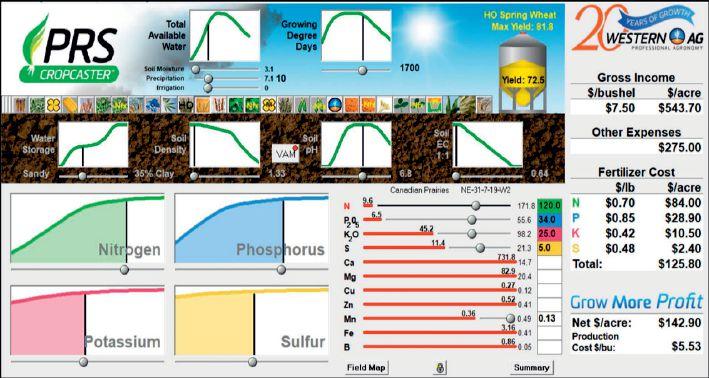
• Assess your soil nutrient supply potential.
• CropCast your yields for 27 different crops.
• Analyze ‘What if’ scenarios based on your projected climate, prices and costs.
sacrificing too much quality, making it more common to see it added onto drones. While it’s valuable to get an idea of heat levels in the field, he says the more practical use in the short term is for livestock, tracking lost or potentially sick animals. On the crop side, however, there are “spray and spread” attachments which allow growers to spray pesticides or water, or to even spread fertilizer. “We’ve got some rolling ground where you can’t get across safely with a tractor. And I know that from experience because I rolled one over last year. But I can get across it with a drone.”
Besides price, one of the hurdles to getting UAVs in the hands of more farmers has been regulations. In Canada, drones are regulated on a federal level; in 2019, Transport Canada updated regulations allowing drone operators to fly the devices as long as they are not in any federally controlled airspace or at least three nautical miles from any aerodrome. Additional certification is also required to trigger pesticides or fertilizer spreading from the drones.
“[In Indiana] it’s only been legal since 2017. Before that, you could do it through the [Federal Aviation Administration], but you had to go through all these applications and forms. They developed a process [for certification] in the fall of 2017.” There are additional certifications required for advanced capabilities – for example, the “spray and spread” models generally require additional certification.
But sooner or later, Scott says, the question comes down to cost. Besides UAVs, Purdue is also working on education programs on IOT,
data management, precision agronomy and more – these new machines and skillsets don’t tend to directly bring in revenue, but rather save money or create paths to new revenue over the longer term.
“The biggest question I get on that piece always goes back to ROI,” he notes. “I think that’s the biggest hurdle. If I go out and spend $3,000 on this drone, is it going to pay me back $3,000 worth of value?”
GETTING THE MESSAGE ACROSS
Both Melnitchouk and Scott say community outreach is one of the most important aspects of their jobs – meeting farmers where they are and helping them address their needs, whether it’s in analytics and software or equipment.
Scott says sporadic or prolonged closures and restrictions have also hindered that. “It’s been a challenge, especially in the last year [with COVID], to get information out to people, and get good information out to people. Within extension, we’ve pivoted to virtual. Prior to last March, extension was very much a face-to-face, handshake, tailgate of the truck business.”
And therein lies an added layer of complications – rural broadband Internet. “That’s our biggest hurdle in confidence and adoption,” he says. “Some of the stuff we have, I can’t use in the field.” And, with more education being virtual, he says it makes the education aspect more difficult. “I’d have to go to campus [in] Lafayette to actually upload images from the field.”
TEASING OUT THE CONNECTIONS
How are the higher yields under more diverse crop rotations linked to more diverse soil microbiomes?
by Carolyn King
Crop growers and scientists know that more diverse crop rotations are associated with better crop performance and better yields. As a soil microbiologist, Jennifer Town knows that, “Adding diversity in your crop rotation is one way that you can increase the diversity and change the composition of fungi and bacteria in your soil.”
But how does this more diverse microbial community contribute to those higher crop yields?
Town is one of the researchers involved in a project looking for answers to this question. “We want to try and tease out the role that the microbiome is playing when you see a more positive effect by having a more diverse rotation.”
She notes that soil microbes can have both positive and negative interactions with plants, which will influence crop yields. For instance, some microbes are pathogens that can cause plant disease, while others may provide benefits like increasing a plant’s nutrient absorption or boosting its immune system. The composition of the soil microbiome also plays an integral role in the availability of
nutrients for plants because certain microbes break down organic material, which leads to the release of nutrients in plant-available forms.
“This project is zeroing in on the role of the microbiome in decomposing biomass and the turnover of organic matter in the soil, and how both of those things and better activity in those areas can lead to better nutrient availability,” Town says.
The project is funded by Alberta Canola and SaskCanola through the Canola Agronomic Research Program. The project’s principal investigators are Bobbi Helgason with the University of Saskatchewan and Tim Dumonceaux with Agriculture and AgriFood Canada (AAFC) in Saskatoon. Town started working on the project when she was a postdoctoral researcher; she is now a research scientist at AAFC-Saskatoon.
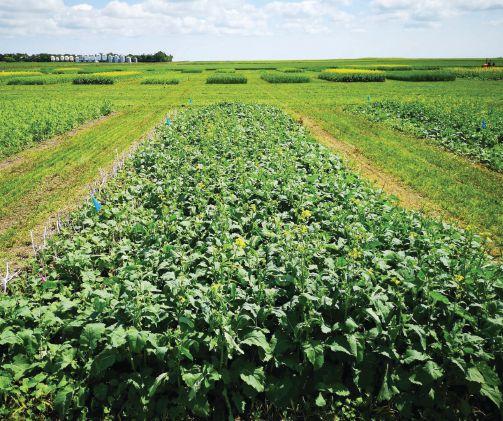
ABOVE: A project in Saskatchewan aims to determine how a diverse soil microbial community contributes to higher canola yields.
PHOTO BY TOP CROP MANAGER.
3 SEASONS FOR ME. GENERATIONS FOR MY NAME. BUT THE LEARNING NEVER STOPS.
GENERATION HYBRIDS FARMERS CAN COUNT ON: DEKALB® TRUFLEX™ CANOLA
At Bayer, every obstacle is a chance to learn. And to do better. We learn from the past, but don’t live there. We focus on innovation every day. Our advanced canola hybrids deliver next-level weed control and offer enhanced pod integrity to ensure clean straight cutting. So, for an easier, faster, smoother harvest, choose DEKALB. Plus, with the undeniably powerful flea beetle protection of BUTEO™ start seed treatment, you can be sure that DEKALB canola really is, the seed for every season. THE SEED FOR EVERY SEASON
Three rotations, three sites
The project had field sites in Scott and Swift Current, Sask., and Lacombe, Alta. Each site compared continuous canola, a canolawheat rotation, and a canola-pea-barley rotation. The field work took place in 2018 and 2019 in plots originally established in 2008 by Neil Harker and later managed by Breanne Tidemann, both with AAFC.
“For each rotation at each site, we used DNA sequencing to look at changes in the bacteria and the fungi in: the bulk soil, which is the area a little away from the plant roots; the rhizosphere, which is the area immediately surrounding the roots; and the microbes that are either really tightly adhered to the outside of the roots or inside the roots, which we call the endosphere,” Town explains.
The project team collected soil nutrient data from the plots using Western Ag PRS (plant root simulator) probes. “We put these probes in the soil in between the crop rows to measure the flux of plant-available nutrients,” she says.
As the name indicates, the probes simulate nutrient availability to a plant root. The team used these probes to measure levels of macronutrients like nitrogen, phosphorus, potassium, magnesium and calcium, and micronutrients including iron, copper, zinc, boron and aluminum.
“For us, nutrient availability is a measurement of how well the microbial community is functioning,” Town explains. “Is the com-
munity able to degrade the available plant tissues really effectively and make those nutrients available for future crops?”
Highlights of initial results
The project’s final results will be released this fall, but Town is able to share some of the findings so far.
In terms of the soil microbiome’s diversity, some key findings were consistent across all three sites. “We found that the fungal community was more diverse in the three-year rotation compared to continuous canola, particularly in the root and the rhizosphere – the communities really closely associated with the plant.”
Another interesting finding relates to a fungus called Olpidium brassicae. “This fungus has been observed throughout Western Canada [in previous research] and it is pretty abundant on the roots of canola. In our study, we found that it was really abundant at all the sites under all conditions, but in the continuous canola plots, this fungus was almost the only thing we saw in the root fungal communities, especially at Lacombe,” she says.
“To see a fungus so completely dominate the root environment is unusual. We are very interested in this because the root microbiome is the plant’s first line of defence against pathogens in the soil and it also plays a huge role in plant health.
“At this point, it is hard to say if this fungus is friend or foe. Is it excluding microbes that are beneficial? Is it excluding microbes that are pathogens? In previous studies, Olpidium brassicae hasn’t been found to cause disease and it hasn’t been associated with substantial yield losses. Some other fungi that are closely related to this fungus have been implicated in virus transfer to crops such as lettuce and cucumber, but not in canola. However, no one has really comprehensively studied Olpidium brassicae yet.”
“This project is zeroing in on the role of the microbiome in decomposing biomass and the turnover of organic matter in the soil, and how both of those things and better activity in those areas can lead to better nutrient availability.”
The project’s findings on nutrient availability varied from site to site and year to year, which Town suspects likely had to do with the moisture differences between the three sites.
She says, “Swift Current, which was the driest of the three sites, was where we saw
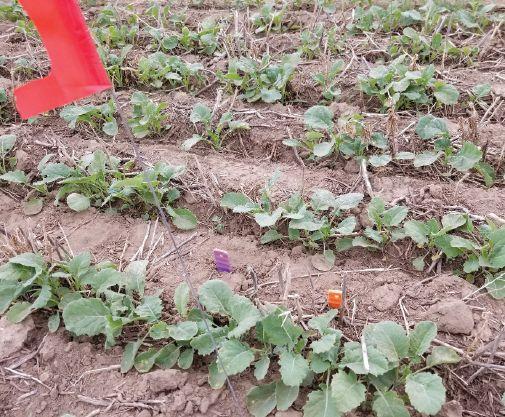
PRS probes, with their orange and purple tops sticking up above the ground, were used to measure the flux of plant-available nutrients at the three sites.
The project analyzes nutrient availability and microbial differences in three canola rotations at Scott (shown here), Swift Current and Lacombe.
the greatest differences in nutrient availability. Nitrate – which is a plant-available form of nitrogen – and magnesium and calcium were significantly higher under a more diverse rotation than under a shorter rotation at that site.”
Similarly at Scott, nitrate levels were higher under the more diverse rotations. Also, at Scott and Swift Current, potassium levels were higher but mainly after the canola-wheat rotation.
However, such nutrient availability differences were not found between the rotations at Lacombe, the wettest of the three sites.
These results suggest that a more diverse crop rotation could be especially important for nutrient availability under dry conditions. “If the growing conditions are really dry, then microbial activity generally is lower,” Town explains. “That means the microbial community tends to be slower at breaking down organic matter [so nutrient-cycling tends to be lower]. I think the problem of lower nutrient availability under dry conditions is worsened if the composition of the microbial community is less diverse.”
The researchers are currently finishing the DNA analysis and will
be finalizing their results and conclusions over the coming weeks.
Looking ahead, Town says, “In terms of future directions, we could certainly envision following up on some of the interesting patterns that we saw in the root microbiome that were consistent at all three sites.”
She emphasizes that this type of microbiome research has practical implications for crop growers. “Our goal is to make connections between how crop selection choices influence the microbiome composition and then understand how those changes in the microbiome translate into overall soil health and disease pressure,” she says.
“For example, this project’s three-year diverse rotation included pea, a nitrogen-fixing crop, and we found higher available nitrogen in the following spring after that diverse rotation. So, does that mean you will need less fertilizer? Or if the disease pressure is lower, does that mean you don’t need a fungicide application that year? Those are the kinds of practical management decisions that we are hoping to inform by doing this kind of work.”
INVESTIGATING SEEDPLACED PHOSPHORUS RATES IN CANOLA
Research was inconclusive in developing new rate guidelines.
by Bruce Barker
Fertilizer application is a big bottleneck at seeding because of the huge volumes of side-banded and seed-placed fertilizers required for today’s high-yielding crops. For canola growers, there are further restrictions on phosphate fertilizer placement because of lower tolerance to seed-placed fertilizers. This begs the question: can P fertilizer rates be pushed higher with increased seedbed utilization?
“For nitrogen, there are good guidelines for different combinations of row spacing and opener width,” says Patrick Mooleki, a research scientist at Agriculture and Agri-Food Canada’s Saskatoon Research Centre. “But for phosphate fertilizer, rates are based on a knife opener with a one-inch spread and nine-inch row spacing with good to excellent soil moisture. Producers are asking how much phosphate fertilizer can they apply with the seed if they are using wider than one-inch openers or if they are using a wider row spacing.”
Using a one-inch opener and nine-inch row spacing, the safe rates
of seed-placed P in pounds P2O5 per acre for canola are 15 for Alberta, 20 for Manitoba, and 25 for Saskatchewan. However, these rates are not adequate to meet P requirements of canola.
Mooleki headed up research in 2018 and 2019 to see if those rate guidelines could be updated with different seedbed utilizations. He hoped to find the maximum safe rate of P fertilizer at different opener widths and row spacings in order to provide guidance to farmers and agronomists. The research was funded by Alberta Canola and SaskCanola under the Canola Agronomy Research Program.
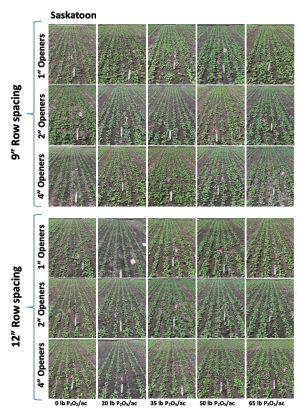
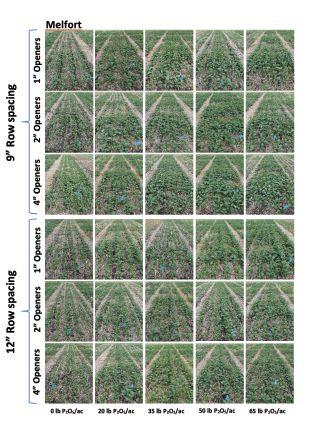
Research was conducted at Saskatoon, Melfort, and Scott, Sask., and Brooks and Lethbridge, Alta. Treatments included nine-inch and 12-inch row spacing, opener width of one, two and four inches, and seed-placed P rate of 20, 35, 50 and 65 pounds
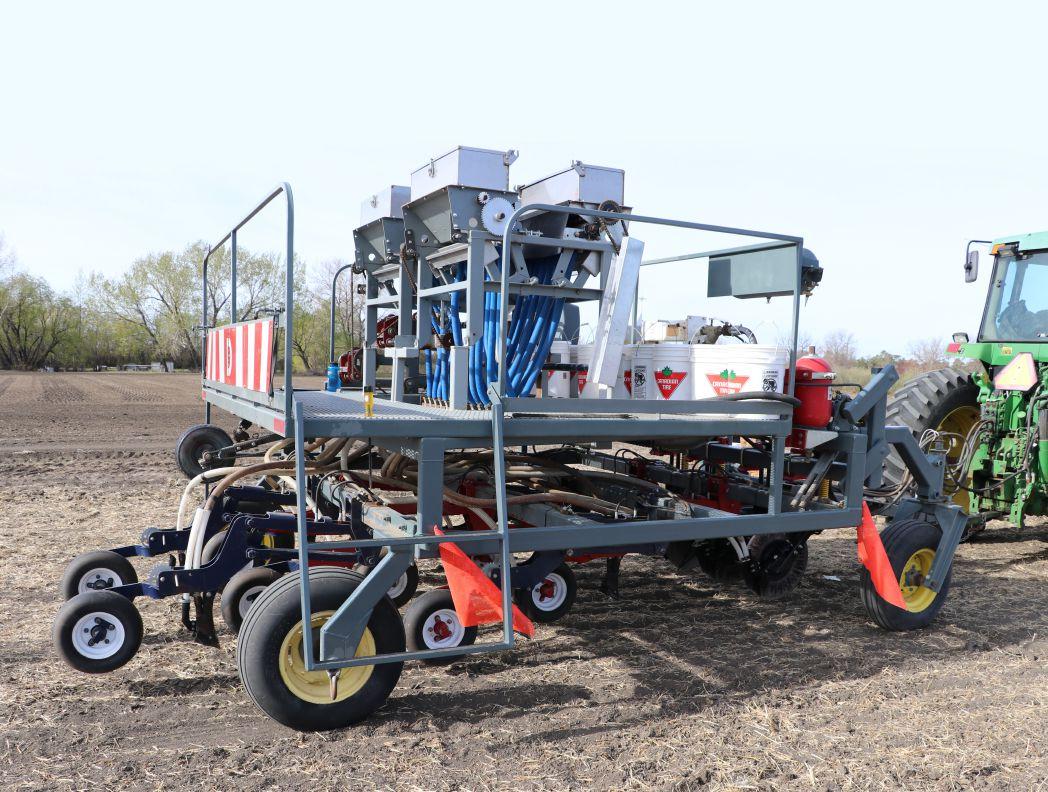
ABOVE: A custom-made plot drill with adjustable row spacing and openers was used to conduct the seed-placed phosphate trials.
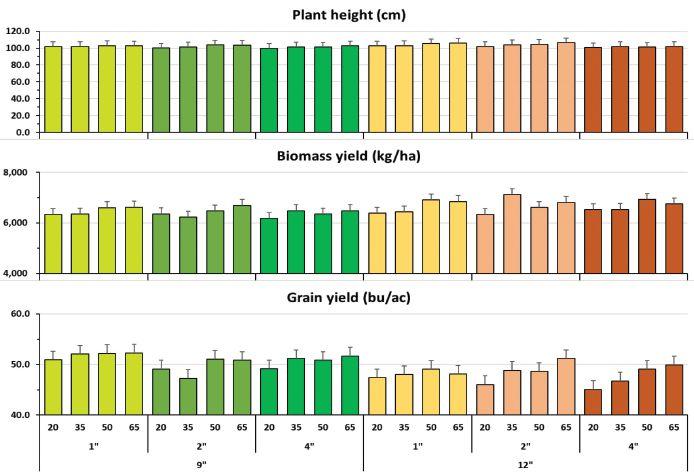
Plant height, biomass yield and grain yield averaged over two years and five locations.
P2O5 per acre. In the second year, a control treatment of zero pounds of P fertilizer was included.
Nitrogen and sulphur were banded prior to treatment applications on the same day. To ensure a uniform seedbed, rotary or tine harrowing was conducted prior
to seeding. Weeds and insects were controlled as needed.
Seedling toxicity observed
Plant establishment was affected by several of the treatments. Generally, decreasing row width or increasing opener width resulted
Trait Stewardship Responsibilities Notice to Farmers
Bayer is a member of Excellence Through Stewardship® (ETS). Bayer products are commercialized in accordance with ETS Product Launch Stewardship Guidance, and in compliance with Bayer’s Policy for Commercialization of Biotechnology-Derived Plant Products in Commodity Crops. These products have been approved for import into key export markets with functioning regulatory systems. Any crop or material produced from these products can only be exported to, or used, processed or sold in countries where all necessary regulatory approvals have been granted. It is a violation of national and international law to move material containing biotech traits across boundaries into nations where import is not permitted. Growers should talk to their grain handler or product purchaser to confirm their buying position for these products. Excellence Through Stewardship® is a registered trademark of Excellence Through Stewardship.
ALWAYS READ AND FOLLOW PESTICIDE LABEL DIRECTIONS. It is a violation of federal law to use any pesticide product other than in accordance with its labeling. NOT ALL formulations of dicamba or glyphosate are approved for in-crop use with products with Roundup Ready 2 Xtend® soybeans. NOT ALL formulations of dicamba, glyphosate or glufosinate are approved for in-crop use with products with XtendFlex® Technology. ONLY USE FORMULATIONS THAT ARE SPECIFICALLY LABELED AND APPROVED FOR SUCH USES. Contact the Pest Management Regulatory Agency with any questions about the approval status of dicamba herbicide products for in-crop use with Roundup Ready 2 Xtend® soybeans or products with XtendFlex® Technology. Roundup Ready® Technology contains genes that confer tolerance to glyphosate. Roundup Ready® 2 Technology contains genes that confer tolerance to glyphosate. Products with XtendFlex® Technology contains genes that confer tolerance to glyphosate, glufosinate and dicamba. Roundup Ready 2 Xtend® soybeans contains genes that confer tolerance to glyphosate and dicamba. Glyphosate will kill crops that are not tolerant to glyphosate. Dicamba will kill crops that are not tolerant to dicamba. Glufosinate will kill crops that are not tolerant to glufosinate. Contact your Bayer retailer, refer to the Bayer Technology Use Guide, or call the technical support line at 1-888-283-6847 for recommended Roundup Ready® Xtend Crop System weed control programs.
in greater stand establishment. Increasing seed bed utilization by either narrowing row spacing from 12 inches to nine inches and/ or increasing opener width from one inch to four inches resulted in reduced P toxicity of seed-placed P fertilizer, leading to increased plant populations. Increasing the rate of seedplaced phosphorus increased the toxic effect on seed and seedlings, leading to reduced plant population. Mooleki explains that this toxicity was reduced by increasing seedbed utilization, which reduced the concentration of P fertilizer near the seed.
One issue that was observed in 2019 on heavier soils was that the wider four-inch opener threw soil on rows of front openers, burying the seed deeply and affecting germination and emergence. This occurred more with the nine-inch row spacing than the 12inch row spacing.
“The 2019 drill operator was probably going faster than in 2018, so we saw some plant count reductions with the four-inch opener,” Mooleki says.
Averaged over the two years and five locations, plant counts at 14 and 21 days after seeding and at harvest showed a general trend of declining plant counts as fertilizer rates increased. However, at all rates, row spacing and opener configurations, plant counts remained above the minimum five to eight plants per square foot as recommended by the Canola Council of Canada.
“We observed less toxic effects of seedplaced P fertilizer at different seedbed utilization ratios than expected, indicating that canola can tolerate higher levels of seedplaced P when N and S (sulphur) are not placed with the seed. By banding the N and S fertilizer away from the seed, we removed a significant source of toxicity, which otherwise would enhance toxicity of seed-placed P in canola,” Mooleki says.
Even though plant counts declined with increasing P fertilizer rates, small but significant yield increases were observed. Mooleki says this could be attributed to individual plants branching out more to compensate for the reduced plant population. It also could have been attributed to the increased amount of available P to the growing crop.
Overall, there weren’t many yield differences between the three treatments. Grain yield was significantly lower with all opener sizes at 12-inch row spacing than the oneand four-inch openers with nine-inch row spacing. This showed the overall advantage of nine-inch row spacing over 12-inch row spacing in this study.
MOOLEKI
Several limitations prevented the development of new seed-place P fertilizer guidelines. The first was the exclusion of seed-placed N and S, which resulted in higher rates of seed-placed P looking safe.
The second limitation was the inability to separate the beneficial effect of increased P rate with the compensatory ability of a canola crop to increased seedling toxicity. The third limitation was the lack of adequate site-years to draw strong conclusions. There was a significant interaction effect by year with other factors, such as precipitation.
Still, the research did shed some light on the interaction of row spacing, opener width, and fertilizer rate.
“The research did show that phosphorus toxicity is real and can reduce canola plant populations, but doesn’t necessarily impact yield,” Mooleki says. “If farmers are applying nitrogen and sulphur separately, the research showed that canola can tolerate higher seed-placed phosphorus fertilizer without impacting seed yield and quality.”
GROW YOUR CANOLA MASTERPIECE
We think of seed design as both a science and an art. Proven® Seed offers a full range of leading-edge LibertyLink ®, TruFlex™ canola with Roundup Ready ® Technology ®, and Clearfield ® canola hybrids that are all designed for disease management, high yields, and consistent performance. No matter what traits you’re looking for, there’s a Proven Seed canola that fits your fields. Only available at Nutrien Ag Solutions® retail. Visit ProvenSeed.ca/canola to learn more.
The research found that high rates of phosphate could impact
MATCHING RESISTANCE GENE TO PATHOGEN RACE
Canada’s new blackleg resistance gene-labelling system works, but it’s up to producers to use it.
by Julienne Isaacs
We’ve had resistant [canola] cultivars for over 20 years, but we’re at the point of really understanding what they’re made of,” says Justine Cornelsen, agronomy specialist for the Canola Council of Canada.
Cornelsen is talking about resistance to blackleg, which represents a significant threat to canola production in Canada. Blackleg is caused by different races of the fungal pathogen Leptosphaeria maculans. Resistant cultivars have been available to western Canadian growers for decades, but resistance has begun to break down.
Cornelsen recently completed a graduate degree in plant pathology at the University of Manitoba, where she studied with plant pathologist Dilantha Fernando. She’s the first author on a recent publication validating the strategic deployment of resistant
(R) genes to combat blackleg in the field.
“This is how major genes work in any host-pathogen relationship: they are very specific to different pathogen races. When you deploy a specific major gene, it’s only going to be effective if it matches the correct pathogen race,” Cornelsen explains.
“If these don’t match, the plant doesn’t realize it’s being attacked and doesn’t mount a defense. Most of our cultivars have major genes and then another line of defense with minor resistance genes.”
Major and minor resistance genes work very differently in canola plants. Major genes, or R genes, mount a defense at the
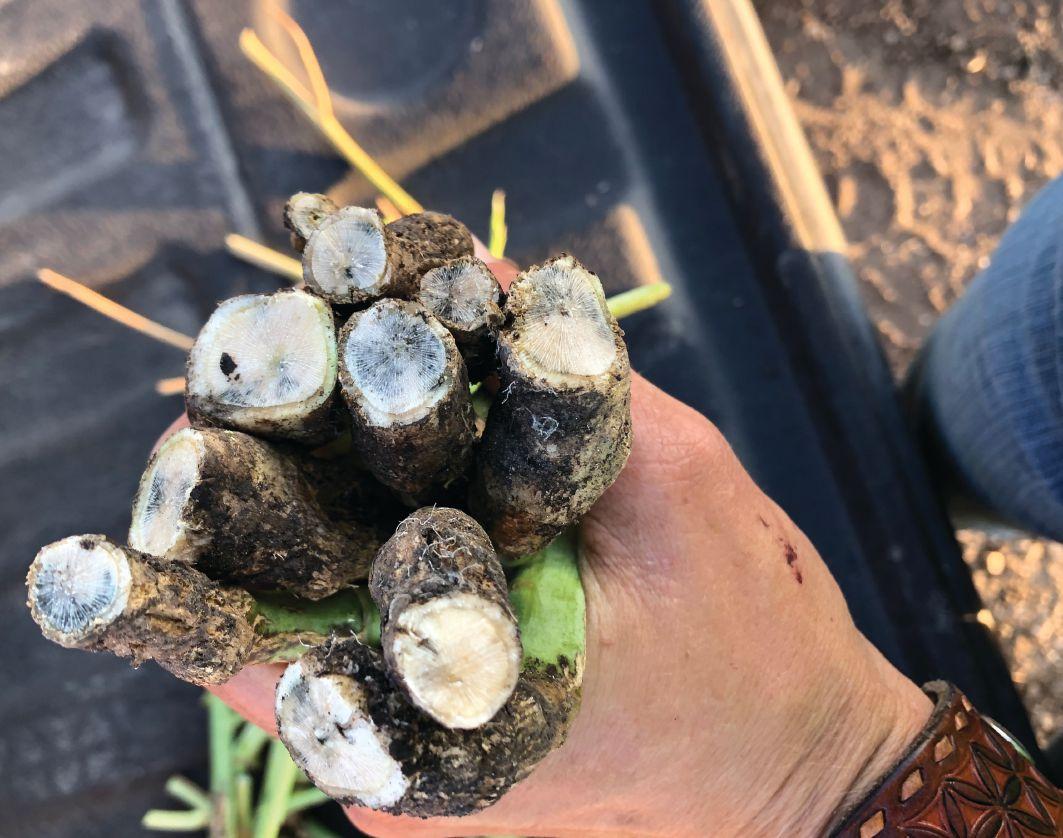
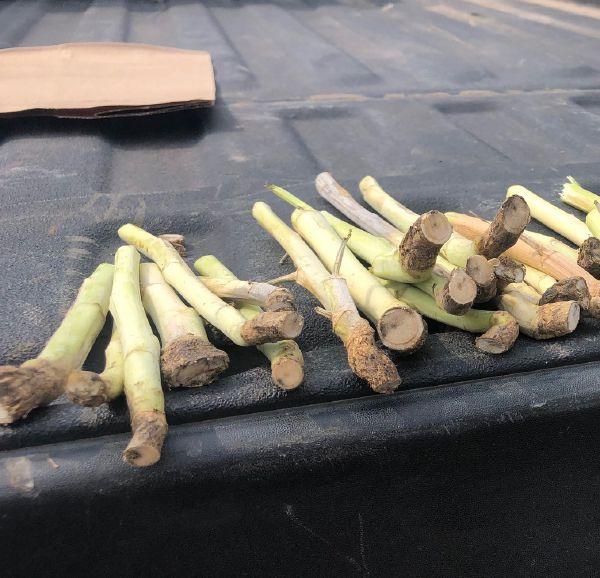
TOP: Canola stems damaged by blackleg.
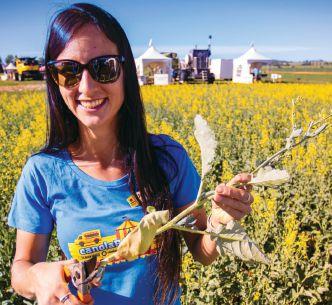
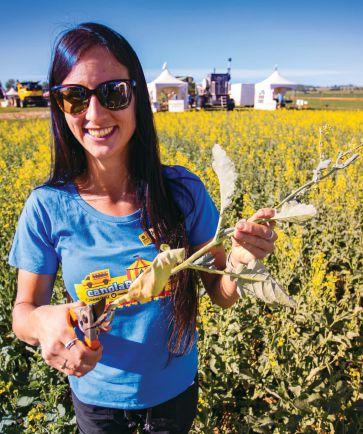
INSET: Justine Cornelsen holds a canola plant in the field.
site of infection, while minor genes offer quantitative resistance, meaning they mitigate and slow the damage inside the plant.
In 2015, Fernando led a major effort to characterize the R genes of Canadian germplasm. At that time, more than 86 per cent of Canadian canola germplasm had a combination of both major and quantitative resistance genes. Some seed companies stack up to three R genes in a single cultivar, Cornelsen says. Crucially, however, more does not equal better when it comes to blackleg resistance.
THE ART OF HIGH PERFORMANCE
Proven® Seed has always had a different perspective on corn. Every one of our hybrids is selected for Western Canada to work with your field’s unique conditions. Whether you need early maturity, fast dry down, silage quality or defensive trait protection, there’s a specific high yielding hybrid that’s perfect for your farm.
Only available at Nutrien Ag Solutions ® retail. Visit ProvenSeed.ca/corn to learn more.
“The cultivars with more genes do not perform better,” Cornelsen says. “What you need is just one to match the predominant pathogen population. The others aren’t doing anything if they’re not matching.
“Yes, you have diversity with three stacked genes, but [there is also] potential for a pathogen to overcome all three of those genes. You’re better off using one successfully. Over time, the pathogen will be able to overcome that gene, but that’s when you could deploy a new resistance gene.”
In Australia, the severity of blackleg pressure means new resistance genes need to be deployed every three to five years. In Canada, the rate of pathogen population shifts is much slower.
R gene labelling
An R gene labelling system has been used for several years in Australia. But Cornelson says that despite the fact it was modelled after Australia’s, Canada’s system, deployed in 2017, is more transparent. Genes are classified based on their interactions with a variety of factors, including other genes. Subgroups of genes are assigned letters, with each letter representing resistance to a particular avirulence gene of blackleg. The names of genes in each
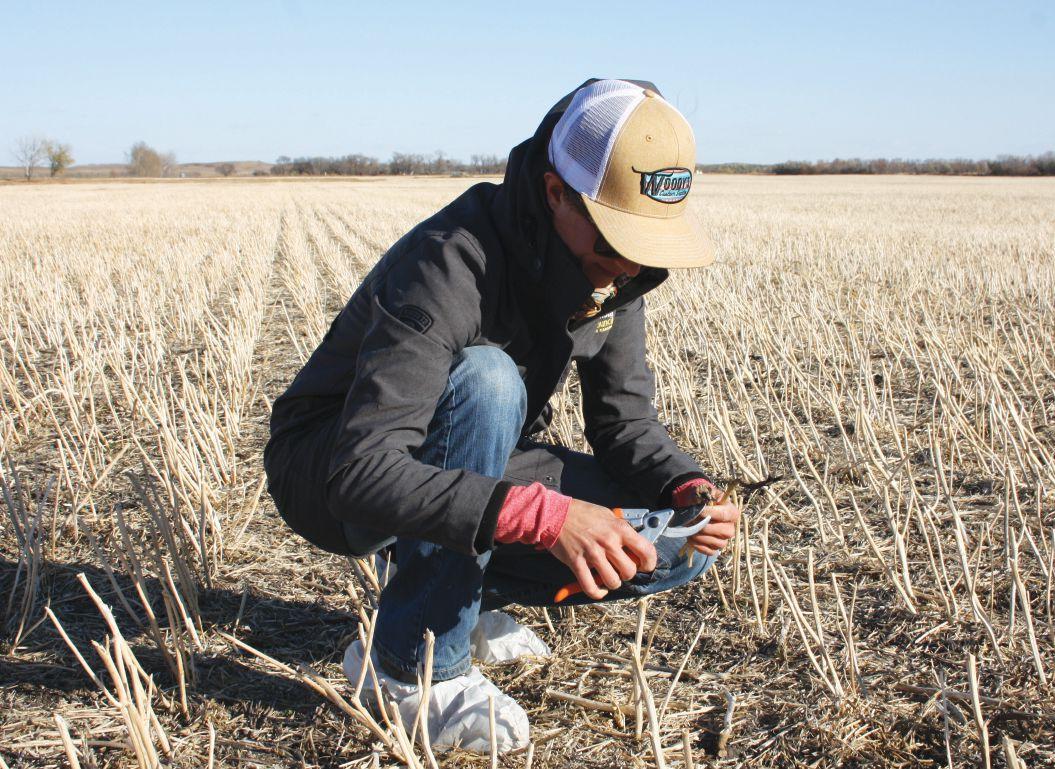
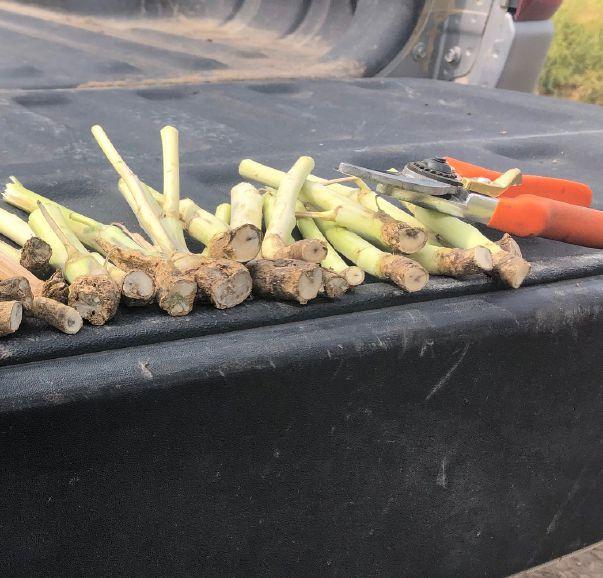
Sampling canola stems for testing.
CROSS
INTERLINE® Herbicide works fast, controlling a broad spectrum of grass and broadleaf weeds in glufosinate-tolerant canola. A unique, high-quality formulation provides outstanding crop safety, excellent flowability and minimal foaming. INTERLINE can also be tank-mixed with SELECT® Herbicide for enhanced control of problem grasses. Earn up to 20% cash back on your other UPL purchases when you buy INTERLINE and SELECT together. Go to UPLGrowerRewards.com for details. Talk to your retailer or visit interlineherbicide.ca to learn more.
group are disclosed to producers so they know, very specifically, what they’re working with.
The information is highly technical and hard to fully grasp without training in the subject area. That’s why the Canola Council of Canada (which hosts the R gene information) focuses on training agronomists to use the system and, in turn, guide producer decision making.
Producers don’t need to know the ins and outs of the system to use it in a simplified form. If a producer knows he or she is growing a particular cultivar from Group C, for instance, and they’re seeing a lot of blackleg in that field, they can simply switch to another group or combination of groups – such as Group E1.
But Cornelsen says producers can get more out of the system by taking a more advanced approach.
This starts with surveying and measuring disease levels in a particular field. Blackleg is widespread enough that it’s found across western Canadian canola fields in low levels. Over time, however, levels will compound if producers aren’t using a minimum three-year rotation between canola crops.
“Are you OK with the corresponding level of yield loss? What are you willing to do about it? The next step [would be to] deploy a hybrid strategically. That’s where you submit stem samples to know what the predominant race is in the field,” she says.
Further research
Before Cornelsen’s paper, no previous work had formally validated
the R-gene system in Canada, although it was assumed to be effective based on precedent in greenhouse studies and in other countries.
“We’ve seen it work in the greenhouse, and at the field level in France and in Australia, but we really wanted to know: will a system like this hold up, and will we see reduced severity and incidence when we have a cultivar that matches? The work did end up finding that,” she says.
SHIPPING SUPPLY SPECIALISTS
The next phase of research has already begun. Fernando’s lab is on year three of a five-year project analyzing gene rotation in a small-plot trial carried with collaborators in Manitoba, Saskatchewan and Alberta. They’re looking at six major genes, deployed singly and in combination. “From there, they’re looking at the isolates to see how the race is changing or adapting,” she says.
The research isn’t complete, Cornelsen says, but in the R gene system, producers already have an excellent tool to tackle
blackleg. It requires the extra labour involved in sending samples for testing, but the payoffs can be significant.
There are four labs across Canada that perform this kind of testing. Manitoba Canola Growers and SaskCanola fund testing on behalf of their membership, but even for producers who have to pony up for tests themselves, the cost is more than offset by yield gains.
“It’s still worth the money when you look at potentially spraying a foliar fungicide,” Cornelsen says. “Running the numbers on your cultivar selection, there are differences in cost between different cultivars, but they’re all close in range. And it doesn’t take a lot of disease to cause yield loss. Anything over a disease severity rating of 1.5, you’ll see yield loss.”
Growers with three-year rotations won’t see major problems with blackleg – at least, not yet, Cornelsen says. But producers in high-intensity canola areas – or “hot pockets,” meaning environments that are ripe for disease development – are great candidates for the program.
ENCYCLOPEDIC KNOWLEDGE
The Canola Council of Canada maintains up-to-date information on a range of issues facing canola growers, including blackleg, in its Canola Encyclopedia: www.canolacouncil. org/canola-encyclopedia/.
SEED YOU CAN COUNT ON.
AGRONOMY UPDATE
BRUCE BARKER, P.AG CANADIANAGRONOMIST.CA
HYDRATED LIME CAN HELP REDUCE CLUBROOT DISEASE
Clubroot prefers acidic soils, and the application of lime to increase soil pH may reduce disease. Limestone (CaCO3) is the main source for agricultural application to neutralize soil pH and improve plant growth. High-calcium hydrated lime is a dry powder produced by combining quicklime (CaO) with water, resulting in the product Ca(OH)2, containing approximately 75 per cent CaO and 25 per cent water. Once mixed with water, hydrated lime quickly dissolves, resulting in a highly alkaline solution.
Research trials were conducted by University of Alberta graduate student Nicole Fox and her supervisors, Stephen Strelkov and Sheau-Fang Hwang, to: evaluate the potential of hydrated lime for reducing clubroot disease development under field conditions; compare the efficacy of varying rates of hydrated lime and limestone for clubroot control at different inoculum levels under greenhouse conditions; and measure the effect of different lime treatments on P. brassicae proliferation in canola host roots.
Replicated field trials were conducted in 2017 and 2018 at two sites at Alberta Agriculture and Forestry’s Crop Diversification Centre North in Edmonton. In 2017, hydrated lime rates were calculated based on the targeted pH relative to the pre-treatment pH of the soil in the plots. The pre-treatment pH at site one was 6.3, and 5.1 at site two.
To increase pH by 0.5, a rate of 3.36 tonnes of lime per hectare (t lime/ha) was used for the calculations. At site one, the target pH values were 7.0 (4.7 t lime/ha required), 7.5 (8.0 t lime/ha) and 8.0 (11.4 t lime/ha). At site two, the target pH values were 6.0 (6.0 t lime/ha), 6.5 (9.4 t lime/ha) and 7.0 (12.7 t lime/ha).
To maintain consistency, the same amounts of lime were applied to the trials in 2018, and the plots were placed adjacent to the previous year’s plots.
The lime treatments were broadcast and incorporated immediately afterwards to a depth of three to four inches (8 to 10 cm). The trials were seeded to a clubroot-susceptible canola seven to eight days after lime application and incorporation.
In 2017, moderate to high rates of hydrated lime reduced the Index of Disease (ID) by 35 to 91 per cent in the susceptible canola cultivar eight weeks after seeding. The average ID for the control treatment (pH 6.3) at site one was 47 per cent. The high rate of lime reduced ID to four per cent, the moderate rate ID was 6.7 per cent, and the lowest rate of lime was 37.5 per cent.
In 2018, due to several environmental factors, no effect of lime treatment was observed in the field trials.
In addition to the field trials, a greenhouse study in 2017 and 2018 compared the efficacy of hydrated lime and limestone in reducing ID in susceptible and resistant canola cultivars at different application rates and inoculum concentrations.
Canola was planted into a potting medium with an initial pH of 5.3. The potting medium was inoculated with P. brassicae resting spores to target concentrations of 1 × 10³, 1 × 10⁴, 1 × 10⁵, and 1 × 10⁶ resting spores per gram of potting medium.
“Zero Grind” limestone or hydrated lime were applied and incorporated into the soil at rates equivalent to 4.7, 8.1, 11.4 or 14.8 t lime/ha, to adjust the pH to 6.0, 6.5, 7.0 or 7.5.
In 2017, ID was very high in treatments that did not receive lime, at 92 to 100 per cent in the susceptible canola, and low in the resistant canola at 9 to 13 per cent. The application of hydrated lime at all rates eliminated visible symptoms in both cultivars at all inoculum concentrations, with the exception of the rate 8.1 t lime/ha at 1 × 10⁶ spores/g medium, which developed an ID of 18 per cent.
Limestone was less effective in reducing ID. On the susceptible canola, significant reductions in ID were observed only at the two lower resting spore concentrations, and limestone treatment at any rate had no effect on ID at the two highest spore concentrations. Similar trends were observed with the resistant cultivar.
Overall, the trends in 2018 were consistent with those observed in 2017.
Root tissues from the greenhouse trials were analyzed by quantitative PCR to measure the amount of P. brassicae DNA present in the root tissue. These results followed a similar trend as observed with ID symptoms, where hydrated lime was much more effective than limestone, especially at a higher spore load.
While hydrated lime appears to provide superior clubroot control, at a cost of about $320 per tonne, it is considerably more expensive than limestone at $54 per tonne. In fields that are infested only mildly with P. brassicae, the application of limestone may be sufficient as a tool to manage the pathogen. Liming an entire field may never be economical, but the application of lime to P. brassicae-infested patches in a field, such as hot spots and field entrances, could be an important strategy for clubroot management in canola.