TOP CROP MANAGER
Filling knowledge gaps for better management
PG. 20
Weed seed predators can eat up to 90 per cent of shed seeds
PG. 42
Understanding profitability factors
PG. 50
Step up to a new level of cleavers control. For years, managing cleavers in canola has been a challenge. But not anymore. New Facet™ L herbicide puts you in control of cleavers to help safeguard the yield potential of your InVigor® hybrid canola. Visit agsolutions.ca/FacetL to learn more.
PULSES
20 | Tackling the pea leaf weevil Filling key knowledge gaps for better management of this pulse pest.
By
Carolyn King
6 Amp up your scouting game by Stefanie Croley
8 Know what’s in your canola field by Bruce Barker
MANAGEMENT 10 Exploring harvest weed seed management by Donna Fleur y
Look out for diamondback moth in 2019 by Julienne Isaacs
18 New sources of resistance for FHB in spring wheat by Donna Fleur y
PESTS AND DISEASES
MID-MARCH 2019 • WESTERN EDITION
42 | Eating into the weed seed bank Weed seed predators can eat up to 90 per cent of shed seeds.
By Bruce Barker
50 | Diverse rotations are more profitable A wheat-canola rotation is not the best.
By Bruce Barker
PESTS AND DISEASES
26 New canola flower midge officially named and described by Donna Fleur y
30 Next-generation fungicides for the Prairies by Carolyn King
SPONSORED CONTENT
34 Start the year off right with optimal seeding rates
PESTS AND DISEASES
36 Tackling wireworm in Alberta by Julienne Isaacs
PESTS AND DISEASES
40 C.S.I yellow pea by Bruce Barker
FOCUS ON: SEED AND INOCULANT
46 Rhizobia for fababean inoculants by Carolyn King
PESTS AND DISEASES
52 Digging into the root rot complex in peas and lentils by Donna Fleur y
SOYBEANS
54 Multiple factors for soybean planting decisions by Julienne Isaacs
SPONSORED CONTENT
58 Getting ahead of weeds this spring
SOIL
60 Grassland developed soils by Ross H. McKenzie PhD, P. Ag.
Readers will find numerous references to pesticide and fertility applications, methods, timing and rates in the pages of Top Crop Manager. We encourage growers to check product registration status and consult with provincial recommendations and product labels for complete instructions.


by Bruce Barker
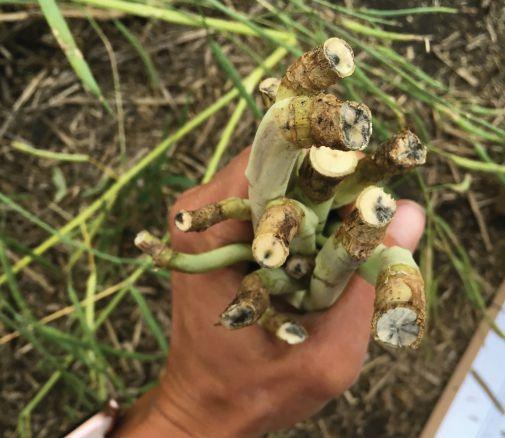
ALethbridge, Alta.-based canola grower had blackleg troubles on his hands. He was growing a canola hybrid with triple-stacked major gene resistance but still had severe blackleg. Canola stubble samples were sent in to a testing lab, and results showed that the resistant genes did not match up with the pathogen races in the field.
“That field was a great example of how the new blackleg race test and the voluntary use of gene labeling by seed companies can benefit growers,” says Justine Cornelsen, agronomist with the Canola Council of Canada. “The grower is able to look at other hybrids and select a variety with resistant genes that match up with the predominant pathotypes in the field.”
Cornelsen says if growers want to choose varieties that do not have the major gene labeled, she advises them to talk to their local seed rep to find the best solutions. Similarly, some fields may have unique strains where none of the major genes available correspond to the race.
The Western Canada Canola/Rapeseed Recommending Committee (WCC/RRC), as proposed by the Blackleg Steering Group, adopted the new blackleg labels during the winter of 2016-17. Up to 10 new blackleg labels are used, which correspond to the major resistant genes. They use letters to identify the major resistance genes present.
The blackleg resistance labeling will continue to include the resistance rating of R (resistant), MR (moderately resistant), MS (moderately susceptible) and S (susceptible). For example, if a variety was rated R (BC) this would mean it is rated Resistant with the variety containing the resistant genes Rlm2 and Rlm3
In 2018, Dekalb, Canterra Seeds and BrettYoung voluntarily included the major gene resistance labels in canola hybrid descriptions. For 2019, Cargill Specialty Canola is also providing resistance labels.
For growers who are practicing good blackleg management practices, such as diverse crop rotations with at least two years between canola, growing R- or MR-rated blackleg varieties and controlling brassica weeds and volunteer canola, blackleg resistance probably isn’t a major concern; a blackleg stubble test would likely not be warranted. But if yield loss is observed and blackleg severity is moving beyond 1.5 to 2, a stubble test could be considered.
“Growers should still be scouting for the disease every year,” says Cornelsen. “The decision to test or rotate resistant sources partly depends on how comfortable a grower is with the level of blackleg in his field and their management practices.”
The blackleg test is based on work spearheaded by Agriculture and Agri-Food Canada at Saskatoon, led by research scientist Hossein
Borhan. Cornelsen says genetic biomarkers were shared with public and private pathology labs across Western Canada. Discovery Seed Labs in Saskatoon, and 20/20 Seeds with locations in Nisku, Alta., and Winnipeg, currently conduct the tests. The labs first culture out the samples to confirm the presence of blackleg. If present, the grower can also request the race test to confirm the races of pathotypes present and the percentage of prevalence for each race. The cost is roughly $100 for each test. Additionally, Manitoba’s Pest Surveillance Initiative Lab, supported by Manitoba Canola Growers Association (MCGA), provides the blackleg race test. MCGA members can receive one free blackleg test valued at $200 each year, and growers can visit the MCGA website for more information on how to qualify and submit samples. SGS Biovision, with locations in Sherwood Park, and Grande Prairie, Alta., and Winnipeg also has access to the genetic biomarkers and is working to offer the blackleg race test to growers.
The best sampling time is at swathing when canola stubble can be cut off at ground level and assessed for blackleg symptoms. However, agronomists and growers could still collect samples before spring and submit them for testing because the pathogen overwinters on infected canola residue. Each laboratory has their own sampling protocol and should be contacted prior to submitting stem samples.


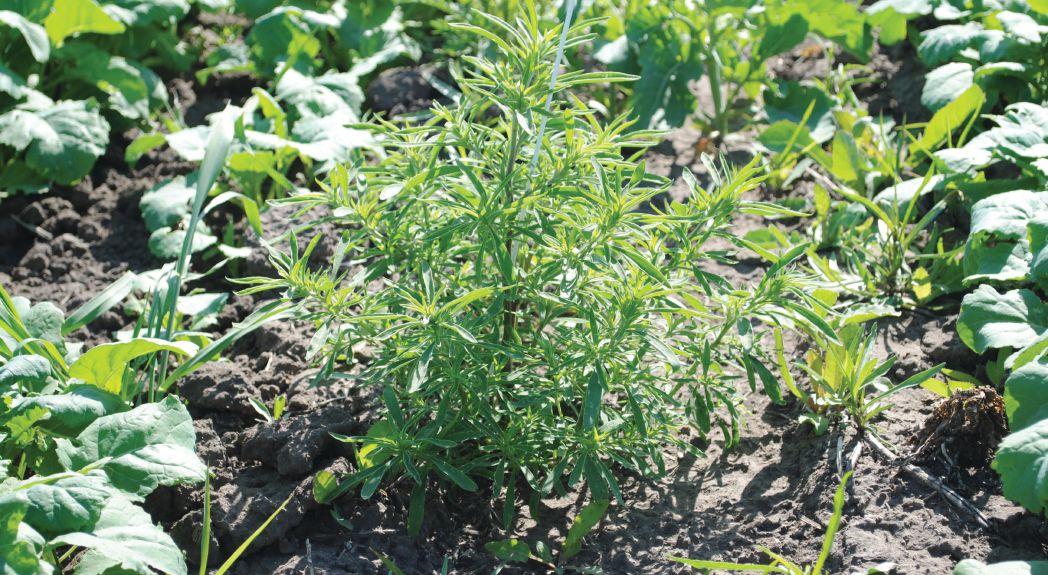
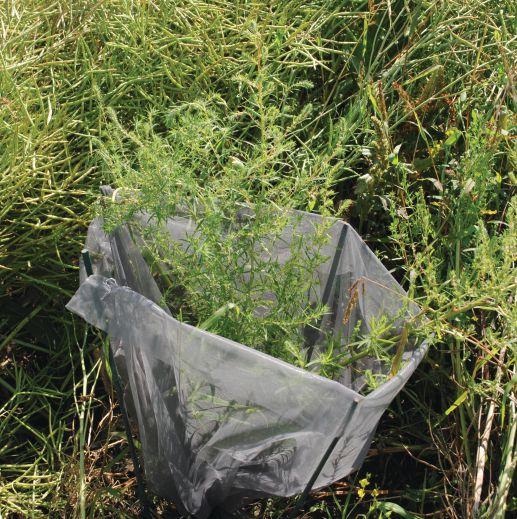
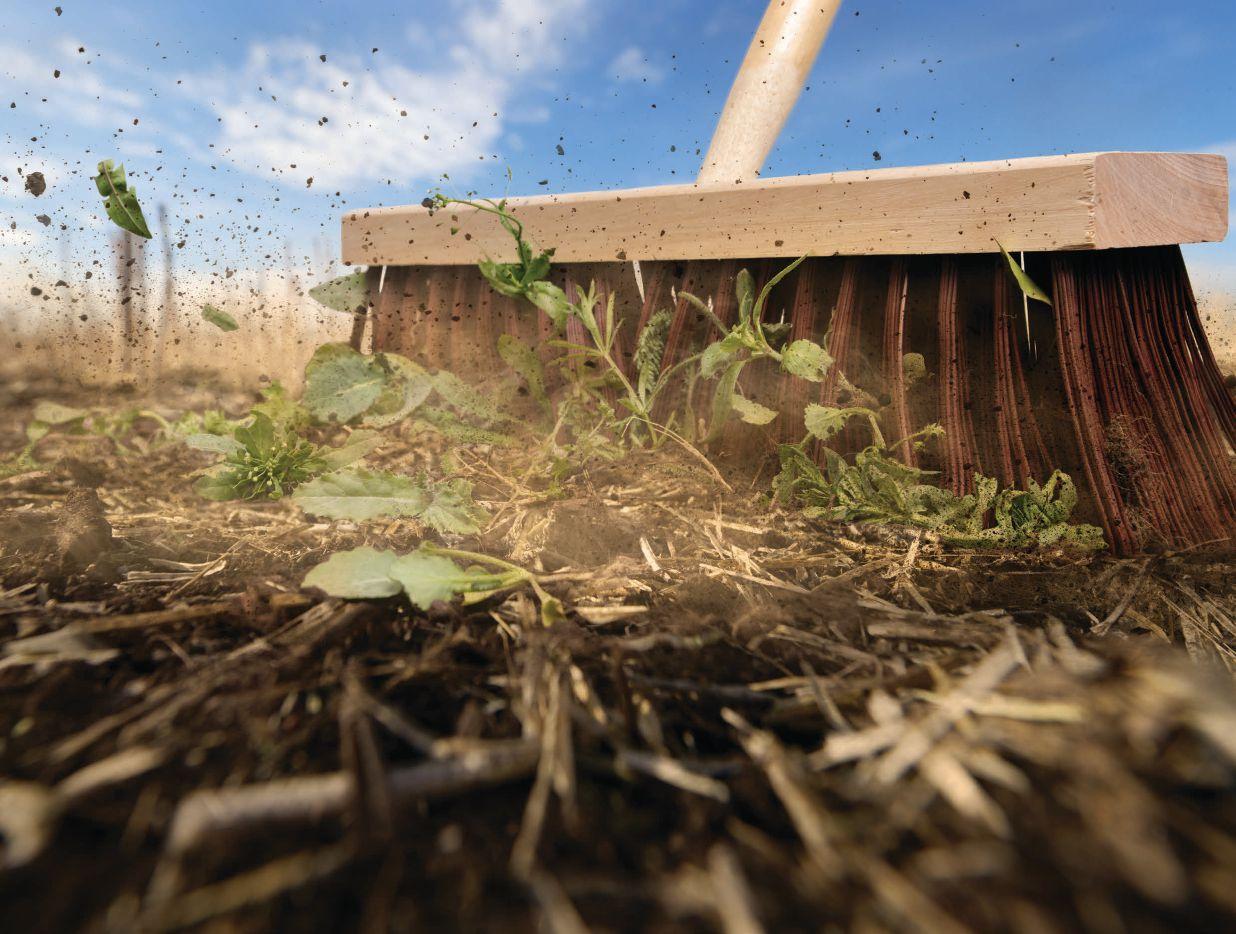
Relative timing of maturity of the weed and crop is important.
by Donna Fleury
Across the Prairies, recent weed surveys show that weed density has increased approximately three-fold as compared with a 2003 survey. Alongside the increase in density, in many crops the incidence of difficult to control and herbicide-resistant weeds is also increasing. Harvest weed seed management using various techniques has recently emerged as a strategy to help manage herbicide-resistant and hard to kill weeds.
“In a recent project led by Steve Shirtliffe, we evaluated the potential of harvest weed seed management techniques to manage seed production of three difficult weeds in canola including cleavers, kochia, and wild buckwheat,” explains Lena Syrovy, research assistant with the College of Agriculture and Bioresources at the University of Saskatchewan. “There has been previous research on managing weed seed production through techniques such as crop topping, weed seed destruction and chaff collection and we wanted to know if these strategies might also work with difficult to control weeds in conventional field cropping systems. In order to investigate various techniques, our first objective was to determine the timing of seed shed of cleavers, kochia, and wild buckwheat growing in canola.”
One of the key findings was that cleavers and wild buckwheat are losing seeds earlier than kochia, as well as produce fewer seeds than kochia. Over the course of the study kochia shed a much larger number of seeds than cleavers and wild buckwheat, averaging nearly 3,500 seeds, compared with 194 and 152 for cleavers and wild buckwheat, respectively. Researchers also found that the seed shed of cleavers,









Start the season stronger than ever with squeaky clean fields.
• Powerful pre-seed control: Clean out Group 2 resistant cleavers and hemp-nettle plus other tough broadleaf weeds with the most powerful pre-seed option for your wheat and barley.
• Just GO: Spray when you need – on big or small weeds or in cool, damp spring conditions.
• SoilActive™ technology: Controls the weeds you see and the weeds you don’t see for up to two weeks after application.
• GoDRI™: Paradigm confi dence after four years of fast mixing, complete clean-out and in-sprayer performance.
For more information call our Solutions Center at 1-888-667-3852 or visit corteva.ca
Contact your local retail to purchase Paradigm™. For more information or to sign up for rewards, visit flexrewards.corteva.ca
kochia, and wild buckwheat can be predicted based on growing degree days (GDD). Cleavers and wild buckwheat required fewer growing degree days than kochia to shed 10 per cent of seeds produced on the plants. Seed shed of cleavers and wild buckwheat began at approximately 1,390 GDD or on average towards the end of August, while kochia seed shed began at approximately 1,585 GDD, or on average mid- to late in September.
“Another important finding is that the relative timing of when a weed matures compared to when the crop is harvested can make a big difference in which weed seed management strategies would be most effective,” Syrovy adds. “All of the weeds tested will have lost more seeds if the crop is harvested later, compared with if the crop is harvested earlier. This means that even with a seed destructor or chaff collection more weed seeds would be left on the ground. If the canola crop was harvested as early as possible in mid-September, approximately 73, 65, and 90 per cent of seeds would remain on weed plants, while if canola harvest was delayed to the end of September, approximately 54, 32, and 56 per cent of total seeds produced would remain, on cleavers, wild buckwheat, and kochia plants, respectively. Therefore, harvesting as early as possible, with the use of chaff collection or weed seed pulverization techniques, will minimize the number of seeds returned to the weed seed bank. As well, early planting or growing early maturing varieties may aid producers in collecting more weed seeds at harvest.”
Researchers also investigated the possibility of using a pre-harvest herbicide application to see if that would stop the weeds from forming and producing seeds, or reduce seed viability. However, in the canola trials, most of the weed seeds were already mature by the time a preharvest application could be made so it wasn’t effective. This suggests herbicide application at canola swathing time is not early enough to prevent seed formation, nor reduce weed seed viability for the three weed species tested.
Syrovy adds in a separate project, they also investigated a pre-harvest herbicide treatment in an earlier maturing lentil crop to control wild mustard seed production. However, the results showed no reduction in wild mustard seed production because it is also earlier maturing, and had already finished producing mature seed by the time the crop could be desiccated.
“Although our project results didn’t show a benefit to using a pre-harvest herbicide application in canola or lentil as a weed seed management strategy for our target weeds, other research is
showing it may be a potential strategy for certain weeds in earlier crops such as lentils,” Syrovy says. “In a recently completed project in Christian Willenborg’s program at the university, graduate student Ethan Bertholet showed that pre-harvest desiccation in lentil can affect seed development of kochia, although it did not significantly reduce seed production. His study showed that kochia seeds collected after desiccation in lentil were smaller, and had reduced viability and vigour. This study highlights the potential for this strategy with an early maturing crop like lentil and a later maturing weed such as kochia, and emphasizes the importance of the relative timing of maturity of the crop and the target weeds.”
Syrovy adds their team is continuing this research work including extending it into pulse and other crops. One of the priorities is to look at ways of stopping weeds from forming seeds in the first place, rather than trying to collect and manage the seeds at harvest. For weeds such as wild oat or wild mustard, which tend to produce viable seeds before crops are mature, they could be good targets for management strategies such as clipping or wiping. If there is a good height differential between the crop and tall weeds such as wild oat, then strategies such as going in when the weeds have elongated above the crop and clipping off the panicles or flowers, or wiping a non-selective herbicide on those tall weeds above the crop may be effective. This can be a good solution for a pulse crop such as lentil or pea, where wild oat and wild mustard can be taller than the crop. However, this may not work with a taller crop such as canola, which may be as tall as the weeds by the time the weeds are flowering.
“This management strategy can have a good fit, particularly in crops where weeds may have escaped the earlier herbicide application, either due to lowered herbicide efficacy or herbicide resistance,” Syrovy says. “Using management strategies such as clipping or wiping can potentially stop the weeds from proliferating, so they aren’t as much a problem in future years. Although these techniques may not really help the current crop, they can be more of a long-term strategy in an integrated weed management program to try and reduce weed problems in the following years. We are continuing to look further at relative maturity of the crop and weeds, and also a number of management strategies that can either prevent weeds from producing seeds or delay their growth to reduce or stop seed development. These will provide additional tools for growers as they try to manage hard to kill and herbicide resistant weeds in their cropping systems.”

When it comes to blazing a trail toward higher-efficiency farming, the Case IH Steiger ® Quadtrac,® Steiger Rowtrac™ and Magnum™ Rowtrac tractors lead the way. Each is packed with innovation designed to make you more productive. Like our smoother-riding five-axle design. So you get more power to the ground with less berming and compaction. Plus, get an even more ideal fit for how you farm by choosing the transmission that matches your application requirements: the new CVXDrive™ continuously variable transmission or our proven PowerDrive powershift transmission. Learn more at caseih.com/tracks . 3-YEAR / 2,000-HOUR COMPLETE FACTORY WARRANTY*
Despite its short life cycle, this pest can cause big damage.
by Julienne Isaacs
Most Canadian canola producers are familiar with Plutella xylostella, or diamondback moth. It’s a pest of cruciferous vegetables and field crops, including canola, and one that can be particularly difficult to manage due to its short life cycle. In countries where it overwinters, such as the United Kingdom and the United States, the pest has developed insecticide resistance to a wide range of chemistries.
In Canada, diamondback moth does not overwinter well, according to John Gavloski, Manitoba’s provincial entomologist. Each summer, the pest establishes itself locally after moving in on the winds from sites in the southern United States.
“It would be more likely for an insecticide resistant population to blow in, rather than for resistance to develop locally,” Gavloski says. “Diamondback moth is not an insect that canola growers spray for annually in the Canadian Prairies, and cruciferous vegetable production is limited to a small number of acres. So the risk of diamondback moth populations developing resistance to insecticides locally would be small.”
Even with no confirmed cases of insecticide resistance to date in Western Canada, diamondback moth can still cause severe economic damage in canola and the pest remains on the scouting checklist in all three Prairie Provinces.
According to James Tansey, provincial specialist in insect management for Saskatchewan, diamondback moth can be a “very serious” pest of canola in the province. “Larvae feed on leaves, buds, flowers, seed pods, stems and seeds within seed pods,” he says. “Recent populations have luckily been pretty low.”
In Alberta, 2017 saw the largest recorded outbreak of the pest in Western Canada history, according to Scott Meers, insect management specialist for Agriculture and Agri-Food Canada in Alberta, “but for the most part this is an insect with sporadic outbreaks.”
In 2017, however, there were several suggested incidences of insecticide resistance, says Meers – most likely due to improper insecticide
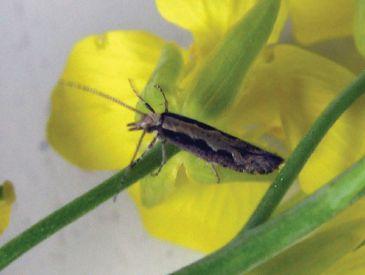
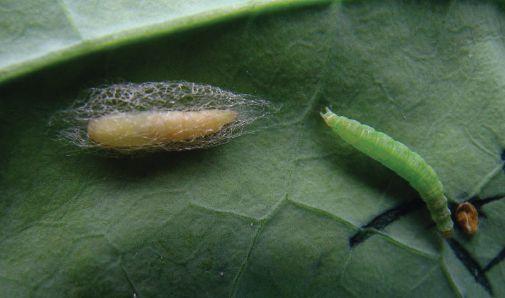
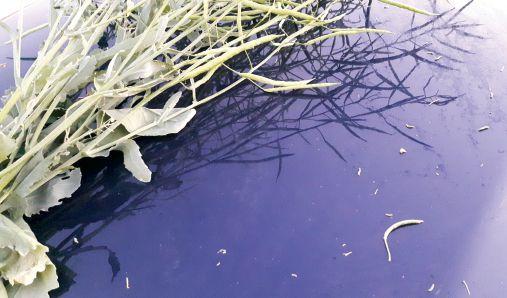
TOP: A diamondback moth and lygus in Alberta.
INSET: Most Canadian canola producers are familiar with Plutella xylostella, or diamondback moth.
application, for example the use of synthetic pyrethroids at too-high temperatures.
“Diamondback moth is certainly quite capable of developing resistance to insecticides,” Gavloski says. “It’s recommended to use economic thresholds and use insecticides only when necessary.”
Diamondback moth is generally detected when feeding becomes visible on leaves, says Keith Gabert, agronomy specialist based in Innisfail, Alta., for the Canola Council of Canada.
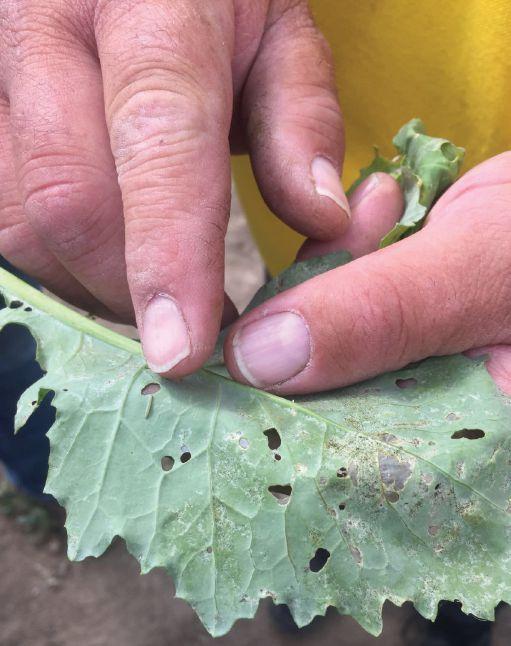
“Feeding damage and ‘windowpaning’ becomes evident very quickly,” he says. “On rare occasions it becomes a challenge for the grower to identify what pest is causing leaf damage to the plant, but diamondback moth damage and larvae are easily identified with repeated scouting due to the rapid lifecycle of the larvae through to adult moth.”
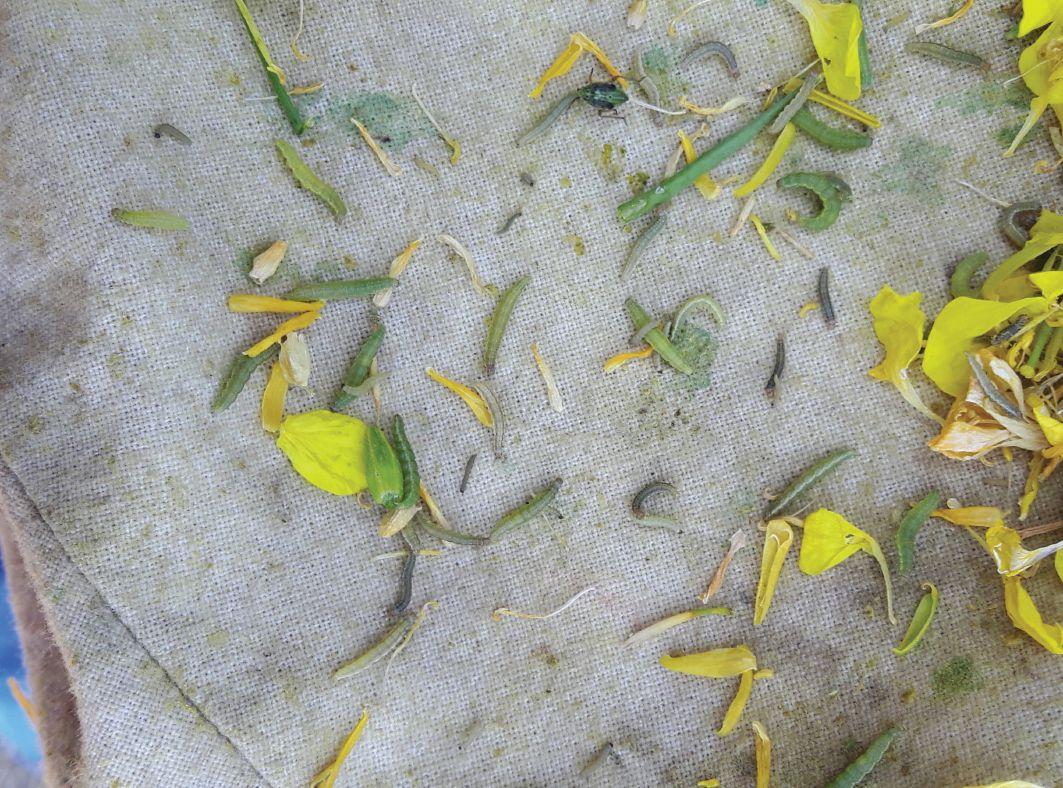
Because of the pest’s short life cycle, which can be completed in 21 days, “small larvae that are difficult to identify quickly become green half-inch diamondback moth larvae with a forked tail that wiggle conspicuously when disturbed,” Gabert says.
Meers says major yield loss happens after larvae move from feeding on leaves to pods. “Because the yield losses result from shattering if pod integrity is compromised by diamondback moth larval feeding, the thresholds are very high,” he says. “Spraying is recommended if numbers exceed 20 to 30 per square foot (200 to 300 per square metre).”
A healthy crop retains a canopy of leaves late into the season. If these leaves drop early or are already eaten by an insect pest, then rapid yield loss occurs with pod feeding and damage as these insects move upward, Gabert says.
Tansey says scouting in Saskatchewan should run from late May to early September, with weekly scouting in July and August. His recommended method is to beat plants from one square foot or one-tenth of a metre at five sites, catching the dislodged larvae in a tray, sheet or
net. The number of larvae can be multiplied by 10 to get a number per square metre. In immature and flowering fields, the economic threshold for spraying is 100 to 150 larvae per square metre, says Tansey; in podded fields, this number is 200 to 300 larvae per square metre.
Meers recommends sweep net sampling at early flowering to get a sense of relative risk after flowering.
“Presence of larvae in insect sweep nets when scouting for cabbage seedpod weevil (CSPW) or other pests may also indicate the need for further scouting,” Gabert adds.
Management decisions, however, cannot be made based on counts from a sweep net, Gavloski says. “Levels can often look alarming based on sweep samples, yet be below the thresholds when larvae are assessed by shaking plants,” he says. “Thresholds and management decisions are based on counts of larvae shaken from plants.”
While there are several options for chemical control, including Coragen, Decis 5EC/Poleci, Matador /Silencer, Voliam Xpress, Malathion 500, Malathion 85E and Chlorpyrifos, Tansey says natural enemies should be evaluated before spraying, as these can often offer effective control against diamondback moth and are sensitive to many sprays (especially the parasitoid wasp Diadegma insulare).
Gavloski and Tansey both run pheromone-based monitoring sites across Manitoba and Saskatchewan and post numbers to ministry websites to help producers assess diamondback moth risk.
“AAFC also models the wind trajectories to determine if conditions are right for movement of these animals from the U.S. to the Canadian Prairie Provinces. Keep an eye on these resources for up to date information on potential issues,” Tansey says.
Alberta Agriculture maintains an early warning system of traps in May and June, which offers a sense of population migration from the southern U.S., says Meers.
The Prairie Pest Monitoring Network offers coordinated insect surveillance across the Prairie Provinces. On the network’s blog, producers can search wind trajectories to find modeling results in season as an additional early warning tool, Gabert says.

RANCONA® TRIO seed treatment for cereals takes disease protection and improved crop emergence to new levels. By combining three powerful fungicides that provide both contact and systemic activity, with the superior coverage and adhesion of RANCONA advanced flowable technology, you have a seed treatment that delivers more consistent protection under a wider range of conditions. Because when more seed treatment stays on the seed, you get more out of your seed treatment. To learn more, talk to your Arysta LifeScience representative or visit ranconatrio.ca.
Researchers identify high priority FHB resistance genes with potential for improving Canadian wheat germplasm.
by Donna Fleury
Fusarium head blight (FHB) is a serious disease in wheat across Western Canada, causing substantial losses in some crops. This disease can significantly reduce yields and also result in downgrading or complete loss due to high toxin content in the grain. FHB creates a management challenge because highly resistant wheat varieties are not available and fungicides do not provide complete FHB control. Therefore, researchers and plant breeders continue to investigate new forms of FHB resistance.
Randy Kutcher, professor and chair of the Cereal and Flax Crop Pathology Lab at the University of Saskatchewan, in collaboration with Plant Gene Resources of Canada (PGRC) and the National Research Council (NRC), is investigating new sources of FHB resistance in spring wheat. “We recognize that host resistance,
coupled with other integrated pest management practices, is considered the best approach to control FHB,” Kutcher explains. “FHB is a difficult disease against which to develop resistance in wheat, as breeders have to bring in several resistance genes together because there isn’t a single gene offering strong resistance to FHB. Therefore, the objectives of our recent project launched in 2016 are to identify wheat germplasm with new sources of FHB resistance by screening PGRC accessions and evaluate them in our field FHB nursery. A second objective is to identify novel alleles for FHB resistance from a synthetic hexaploid wheat population.”
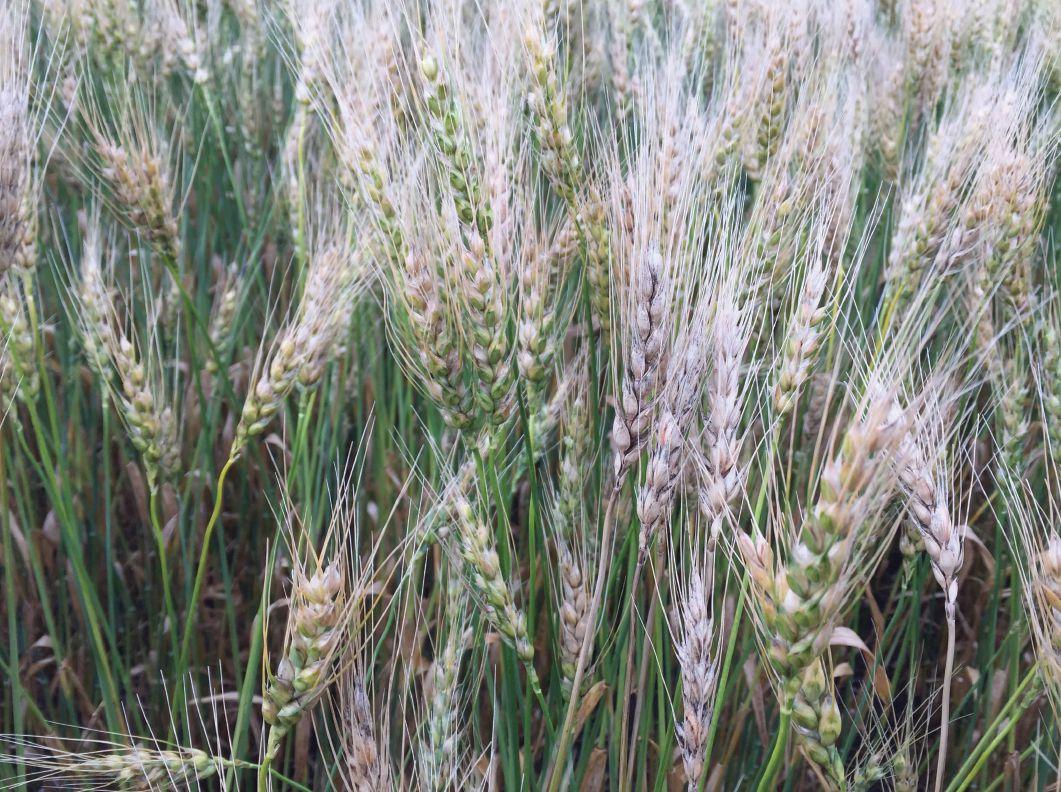
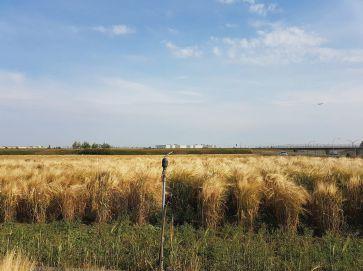
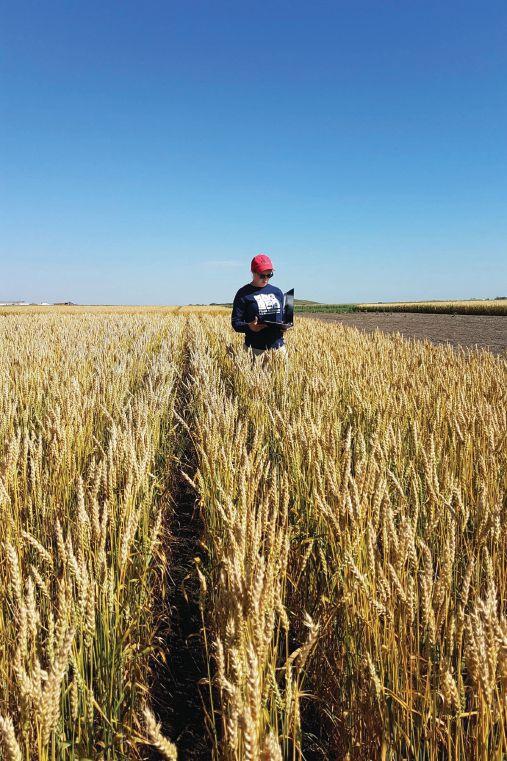
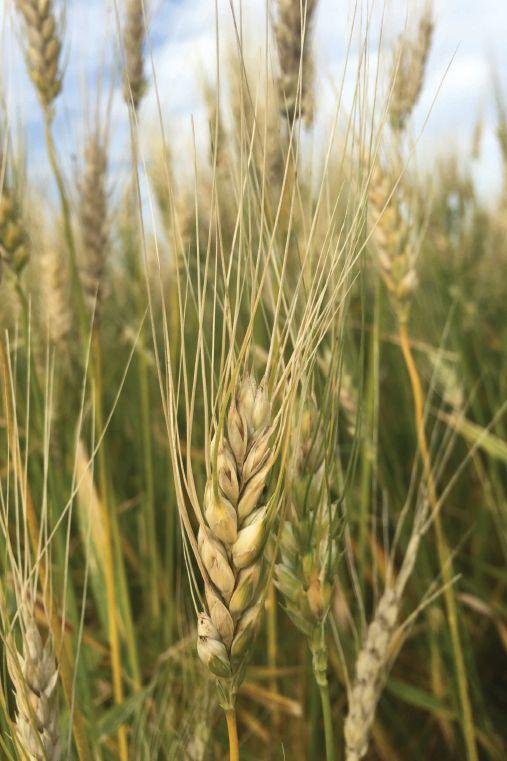
TOP: FHB disease in wheat in untreated field disease nursery plot in Saskatoon.
INSET: Mature wheat at the end of growing season in the field research trials.
The project began with an evaluation of 14,000 wheat accessions from the PGRC collected from all over the world. Researchers selected 4,000 lines for further screening. “We then evaluated these 4,000 PGRC lines, along with an additional 412 lines from a synthetic hexaploid wheat association mapping (SHW AM) panel in our FHB disease nursery at Saskatoon in 2016 and 2017,” says Lipu Wang, research officer at the University of Saskatchewan. “The FHB disease incidence and severity was assessed for each line to determine the FHB index. As a result, 400 lines with the lowest FHB index were selected for further genome-wide association study (GWAS) analysis.”
The GWAS analysis was applied to identify novel resistance alleles or markers associated with resistance from these 400 lines. “From the GWAS analysis in 2016 and 2017, we were able to identify seven high priority genes or QTLs that we can potentially utilize to introduce FHB resistance into our Canadian germplasm,” explains Wentao Zhang, assistant research officer with the NRC in Saskatoon. “We are continuing to conduct more high-resolution analysis on these 400 lines to identify additional interesting resistant QTLs.”
Zhang adds resistance breeding currently relies heavily on resistance from Asian sources and therefore the goal is to try to identify novel sources from other regions that may offer different resistance. Although resistance can be successfully moved from other sources to Canadian cultivars, the result can be lower yield and quality. “Therefore, we are trying to identify novel sources from bread wheat, amber wheat and tetraploid wheat that can provide improved Canadian cultivars and balance higher disease resistance with yield, quality and other agronomic traits. Many of the bread
wheat varieties currently available have moderate resistance to FHB, but we would like to be able to increase that to high FHB resistance. Durum wheat is still a big challenge for breeders, with efforts underway to move varieties from susceptible to at least an intermediate level of resistance.”
Researchers are continuing to further investigate the genetic structure of these new resistance sources and rescreening the levels of resistance of the most promising lines. Once the project is complete, the most promising lines and useful new sources of FHB resistance will be made available to wheat breeders. Eventually, these new resistances will be introgressed into elite Canadian spring wheat.
“We have recently started a new related project, and are taking the most promising lines and rescreening them for mycotoxins, such as deoxynivalenol (DON),” Wang says. “The ultimate goal in FHB resistance breeding is to develop productive cultivars with disease resistance and low mycotoxin contamination despite high infection pressure. In this project, we are working on identifying markers and developing a rapid, accurate and low cost DON diagnostic and quantification platform for high-throughput DON phenotyping. We are also developing tools to simultaneously identify and quantify DON and its derivatives, including D3G (deoxynivalenol-3- glucosides) and others. This approach will allow breeders and industry to screen and analyze a large number of samples faster, cheaper and more reliably for toxins in wheat infected by FHB. This project together with the development of new sources of FHB resistance will help researchers and plant breeders to improve FHB resistance in Canadian wheat cultivars in the future.”
Filling key knowledge gaps for better management of this pulse pest.
by Carolyn King
With a lot of the insects that we deal with on the Prairies, we have a pretty good idea of their biology and what is affecting their populations, but we have some knowledge gaps that we need to address. Pea leaf weevil is one of those pests where gaps exist,” says Meghan Vankosky, a research scientist in field crop entomology with Agriculture and Agri-Food Canada (AAFC) in Saskatoon.
Vankosky has been involved in many pea leaf weevil (Sitona lineatus) studies since the late 2000s, first in Alberta and now in Saskatchewan, that are advancing understanding of this pest under Prairie conditions. Her current research includes a three-year project to answer some key remaining questions mainly from a Saskatchewan perspective, where this pest is a relative newcomer.
“The pea leaf weevil is an invasive insect to Canada,” she explains. “It initially landed in Canada [in British Columbia] in the 1930s. But it then moved into the Pacific Northwest of the United States, and it has been a pest in the U.S. for a long time. In the late
1990s, it was detected in Alberta in the Lethbridge area. And in 2007, we had the first official detection of the pea leaf weevil in the southwest corner of Saskatchewan.”
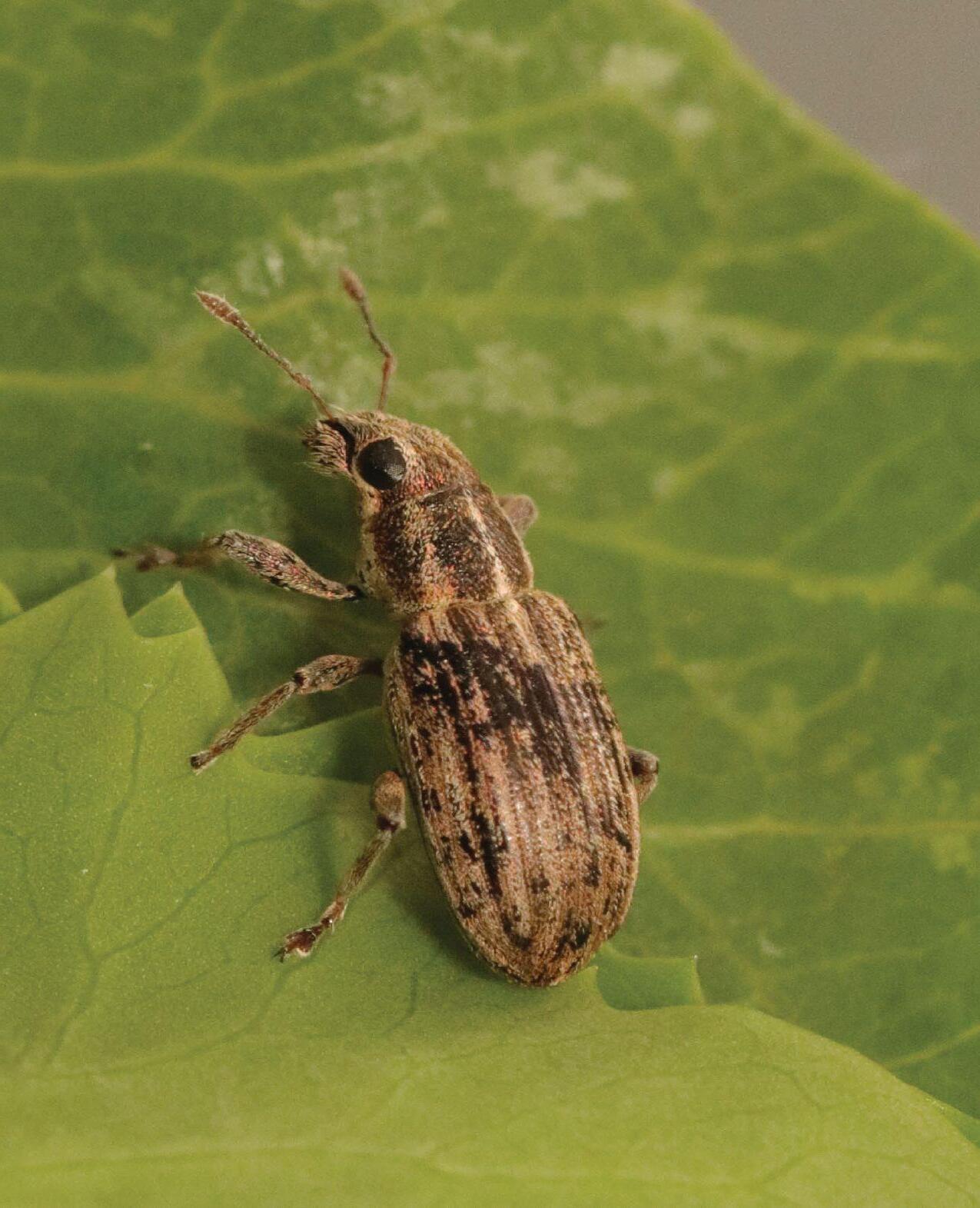
The weevil can cause serious problems, especially in field pea and fababean crops. Vankosky says, “In a year with high pea leaf weevil populations, the double impact of foliage damage by the adult weevils and root nodule damage by the larvae can lead to economic damage from the reduction of the photosynthetic area and the reduction of nitrogen fixation.” The weevils and their larvae essentially attack the plant from two fronts.
Since 2012, pea leaf weevil surveys have been conducted each year in Alberta and Saskatchewan in late May and early June. These surveys show the pest is gradually spreading east and north through the field pea and fababean growing areas of both provinces. In Alberta, the pest has been found in most of the province’s agricultural
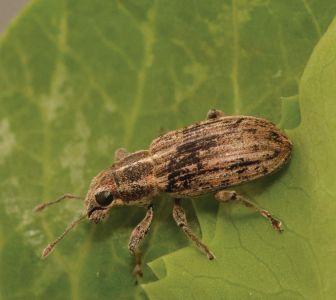
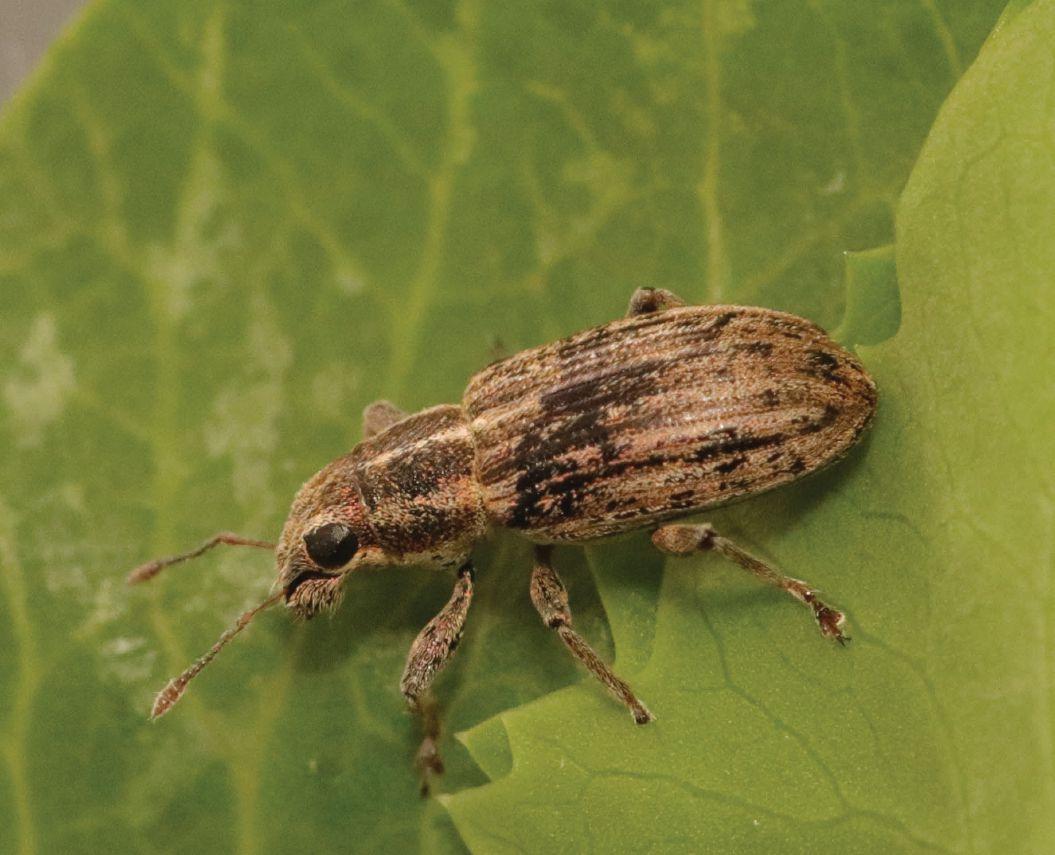
ABOVE: An adult pea leaf weevil.

when the going gets rough, you roll up your sleeves and get to work.
you’re not afraid of change, you crave it. you think big, work smart, and know that bold moves lead to great rewards. You’re a different breed. and so are we. let’s make it happen.
area, from the U.S. border to the Peace River region. In Saskatchewan, it has been found as far east as the Manitoba border and as far north as Saskatoon.
Feeding by the adults creates distinctive U-shaped notches, so the surveys count the number of notches as an estimate of the local population density. The survey maps are posted on the websites of the Alberta and Saskatchewan agriculture departments. Although these aren’t actual forecasts, growers can use the maps, along with their own experience, to help in making decisions on pea leaf weevil management, such as whether to apply an insecticidal seed treatment in the following spring.
So far in Saskatchewan, the weevil’s highest levels were observed in 2016, while in 2018 its population was quite low. Researchers don’t know for sure exactly what factors determine such population fluctuations. Vankosky says, “Some of us think some abiotic factors are playing a large role in weevil mortality between growing seasons. For instance, it could be winter weather conditions, or the dry condition of the soil, which might affect the weevils’ ability to emerge from their pupation chambers in the soil.”
Her three-year project, which started in April 2017, includes an insecticide study and an overwintering biology study. Saskatchewan’s Agriculture Development Fund and the Saskatchewan Pulse Growers are funding the project. Vankosky is also collaborating with the Alberta Pulse Growers on field-scale work under this project.
Researchers such as Vankosky and her AAFC-Lethbridge colleague Hector Carcamo have already done much of the groundwork about the pest’s life cycle in Alberta and Saskatchewan. The insect has one generation per year on the Prairies. The adults overwinter in perennial legume fields or leaf litter. Depending on the weather, they usually emerge around early to mid-May. They start feeding on the leaves and growing points of any nearby legume plants, but the weevils soon walk or fly to pea and fababean crops, which are their primary hosts.
Once the adults find a primary host, they mate and the females start laying eggs about a week later. After hatching, the larvae go to the root nodules and feed on the nitrogen-fixing Rhizobium teria. Only pea and fababean nodules support the weevil’s larval development. The insects pupate in the soil, and the new adults emerge in late July and August. They feed on the green leaves of legume plants, and then seek shelter for the winter.
Vankosky’s overwintering study aims to get a better understand ing of the factors that influence overwintering mortality in Sas katchewan and to use that new knowledge in forecasting the pest’s population.
“To forecast pea leaf weevil populations from one year to the next – like we do with grasshoppers and with wheat midge – we need overwintering information. Right now we don’t know what is happening during the winter that might be affecting populations,

There’s nothing quite like knowing the worst weeds in your wheat fields have met with a fitting end. Following an application of Luxxur™ herbicide, you can have peace of mind that your wild oats and toughest broadleaf perennials have gotten exactly what they deserve.
SPRAY WITH CONFIDENCE.
Preliminary Saskatchewan results are consistent with Alberta research showing that the foliar products provide no real benefit for pea leaf weevil management, and that the seed treatment reduces damage and may provide some yield benefits, depending on the size of the weevil population.
and that is a really big gap in our knowledge.”
The study involves three components. In one component, she and her research team are trapping the adults in the spring to figure out where they are overwintering, when they are emerging and to get an idea of the weevil populations early in the season. Another component involves lab experiments to see how well the adults withstand exposure to different cold temperatures for different lengths of time. And in the third component, they are placing weevils in the field over the winter in containers with very little insulation to assess survival under field conditions.
Vankosky is in the process of analyzing the results from the first two years of the overwintering study, and expects to be able to share some information on this in the next few months.
“Research work on different insecticide products has been done in Alberta, but none of that work has been done in Saskatchewan until now,” Vankosky notes. In fact, part of her master’s research with Carcamo in Alberta in the late 2000s was a study about the effectiveness of thiamethoxam (Cruiser), a systemic insecticidal seed treatment, for the control of the pea leaf weevil.
“So one of the drivers for the present study was to see whether or not the Saskatchewan data would agree with the data already collected in Alberta and to make sure that Saskatchewan recommendations are solid.”
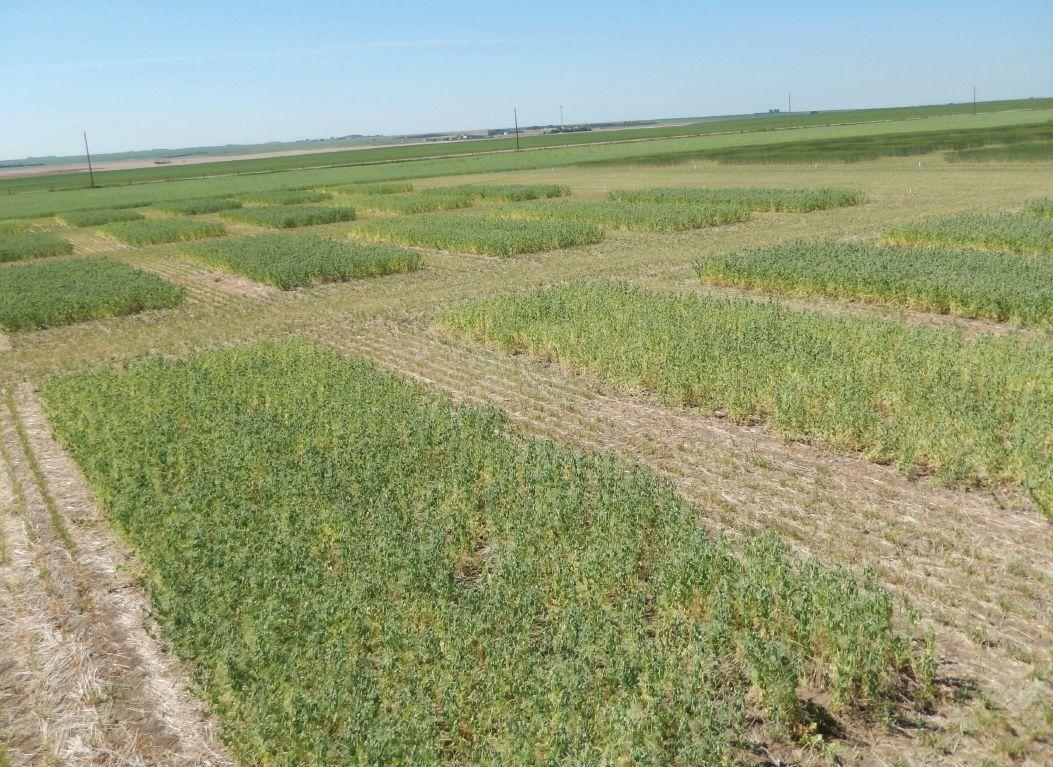
Her current insecticide study has two parts. One part is smallplot research at Swift Current comparing two products registered for pea leaf weevil in Saskatchewan: thiamethoxam seed treatment (Cruiser); and lambda-cyhalothrin (Matador), a foliar product. The treatments are: the seed coating at the label rate; the foliar at the label rate and timing; the seed coating plus the foliar; the seed coating plus a half rate of the foliar; and a control treatment with no insecticide. The objective is to evaluate the effects of the treatments in field pea on: the pest’s damage to the foliage; the pest’s damage to the root nodules; and yields.
The study’s other part provides a field-scale look at the effectiveness of the thiamethoxam seed treatment. Vankosky had challenges in getting plot space large enough to do replicated field-scale research in Saskatchewan, especially with the lower pea leaf weevil levels in the last two years. Fortunately, the Alberta Pulse Growers (APG) has developed a Plot2Field program, which involves bringing together growers and agronomists to test small-plot results in field-scale plots. APG was already using the seed treatment in this program, so basically all that was needed was to add control plots with no seed treatment. So Vankosky’s field-scale work took place at multiple sites across Alberta in 2018, and she hopes to continue this in 2019.
The Swift Current area had very low populations of the weevil
in 2018, so the small-plot findings so far are mainly for 2017. “The results for the smallplot trials at Swift Current in 2017 show that the systemic insecticide works as expected in terms of reducing foliar and nodule damage compared to the control plots or compared to plots that just received the foliar insecticide,” Vankosky says.
“There was no benefit to the foliar insecticide. Scott Meers, my colleague at Alberta Agriculture and Forestry, refers to this as ‘revenge spraying’ – it might make you feel better because you think you are killing some weevils, but there is no real benefit to it in terms of reducing foliar or root nodule damage, or improving your yield.” Plus, insecticide spraying could harm the natural enemies that attack the weevil and other crop pests.
These preliminary Saskatchewan results are consistent with Alberta research showing that the foliar products provide no real benefit for pea leaf weevil management, and that the seed treatment reduces damage and may provide some yield benefits, depending on the size of the weevil population.
She explains, “We’re seeing that, if the weevil population densities are really high like we saw in field plots in Lethbridge in 20082009, the weevils overwhelm the insecticide’s defensive ability. But if the weevil population densities are moderate, the seed treatment can reduce weevil damage and help prevent yield loss.”
In addition to her three-year project, Vankosky is involved in various other pea leaf weevil studies, often in collaboration with other Prairie entomologists. Such studies continue to be very important because, although researchers have been making progress on ways to manage this pest, more needs to be learned to achieve really strong, cost-effective control.
For instance, greenhouse studies by Carcamo showed that thiamethoxam only kills about 30 per cent of the adult weevils and only about half of the larvae. Research in the United States found that no-till systems help reduce weevil problems compared to conventional tillage. But many Saskatchewan and Alberta growers already use no-till and the weevil still causes problems. Crop rotation with non-host crops also helps, but adult weevils are able to fly for several kilometres so they can reach other fields. Delayed seeding can reduce weevil damage, but later-seeded pea crops in general tend to have lower yields than earlier-seeded crops. Some preliminary research by Carcamo and Ken Coles with Farming Smarter indicates that trap cropping might be an option.
So Vankosky has developed some new studies that are just getting underway to look into alternative ways to kill the weevil. “Can we kill them over the winter? How can we use trap crops to attract weevil populations in the spring or in the fall so that we can reduce their populations in more concentrated areas with less insecticide? Are there non-insecticide methods that we can use to kill weevils?”
She concludes, “Overall, we want to get a better understanding of what these insects do, what kills them, and what we can do to control them. All that information goes into developing a better pest management program for these insects, allowing growers to make more informed decisions, cost-effective decisions, and environmentally sustainable decisions for pea leaf weevil management.”

Powered by 2 modes of action, CONQUER® controls all types of volunteer canola, cleavers, and kochia (including Group 2-, 4- and glyphosate-resistant biotypes).
As the leading burndown product in canola, CONQUER delivers re-cropping flexibility, good value, and performance, when tank-mixed with glyphosate.
Don’t just control early spring weeds, conquer them.
Ask your local retailer for more information.
Don’t forget your reward savings at realfarmrewards.ca
Researchers continue monitoring this new-to-science Contarinia midge discovered on canola in the Canadian Prairies.
by Donna Fleury
In 2012, the first canola flower galls were observed on the Prairies. Early indications were that the galls and flower damage were caused by the swede midge, a serious pest of canola and other Brassica crops in Ontario. However, recent field survey observations, together with genetic and other evidence have convinced researchers that the Prairie midge is a different species.
“We have been investigating this new midge species over the past few years, and have just recently officially identified and named it,” explains Boyd Mori, research scientist in insect ecology with Agriculture and Agri-Food Canada in Saskatoon. “We discovered this Prairie midge is a new species never identified before and new to science. This new species has officially received a scientific name and is now formally identified and described.”
The common name is canola flower midge, because so far it has only been found on canola flowers. The new official scientific name is Contarinia brassicola, which is in the same genus but a different species than swede midge or Contarinia nasturtii. The formal description of C. brassicola will be published in The Canadian Entomologist journal, which will include behavioural, morphological, and genetic evidence that clearly indicates differences between the Contarinia sp. collected in Saskatchewan and Alberta and swede midge. Researchers speculate that C. brassicola may be a native prairie midge species that switched hosts as canola production expanded. Some of the genetic work suggests that this species has probably been around for some time, but went unnoticed.
Field survey results indicate that the canola flower midge is fairly widespread across the Prairies, particularly in the Dark Brown and Black soil zones, although so far damage is very minimal. In 2018, field surveys conducted in Alberta detected damage symptoms as far north as the Peace region, and as far east as Portage la Prairie, Man.
“So far the amount of damage we are seeing is like finding a needle in a haystack,” Mori notes. “In our field surveys we sample 10 locations in each field and collect 10 canola racemes [flower clusters] at each location. In most fields, we would find maybe one to three flowers in total across the 100 racemes with any symptoms. In an occasional field, we can find maybe upwards to 10 flowers of 100 racemes infested, which so far were only
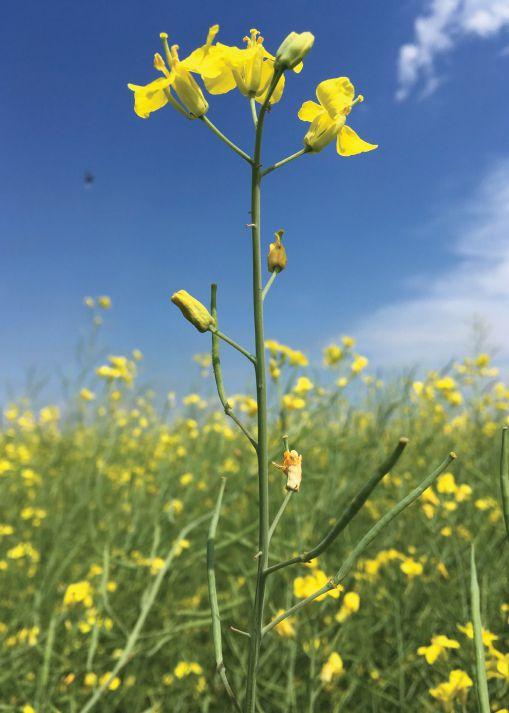
Canola flower midge damage on the canola raceme indicated by three damaged, galled flowers (unopened) part-way down.
observed in north-east Saskatchewan near the Tisdale, Carrot River and Nipawin area, and an Alberta site south-east of Edmonton near Wainwright. However, overall most sites had very low numbers and no measurable economic damage.”
The results of the field surveys over the past summer in 2017 and a few years prior have not detected any swede midge on the Prairies. So far, swede midge, which was first identified in North
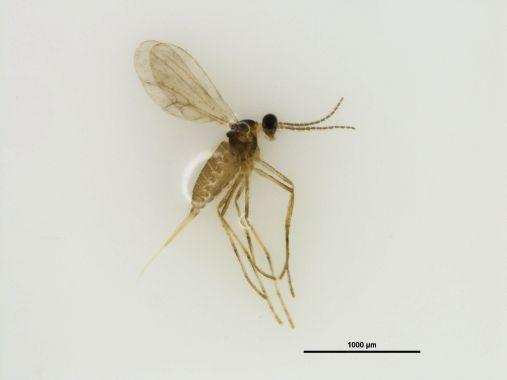
America in Ontario in 2001, is only found throughout Eastern Canada, the northeastern U.S. and as far west as Minnesota. Researchers expect that the earlier findings in the Prairies were likely mistakenly identified, now that more information and DNA testing have become available for comparison and identification of the new canola flower midge.
“Our current project will continue for one more year in 2019, which will include ongoing field survey monitoring and impact assessments,” Mori says. “We discovered early on that the swede
midge pheromone traps failed to attract the canola flower midge, so we have also been working with the University of Greenwich in the U.K. to develop a specific pheromone monitoring trap lure. Several components were identified and included in a trial lure in the field in 2018. Although we know we are on the right track, it did not work as well as expected as we did not attract high enough numbers in the areas we were testing. For 2019, we have added in some more minor components to the pheromone trap lure and expect that we will see higher numbers attracted to the traps.”
Mori notes, the good news is they have confirmed so far that swede midge is not found on the Prairies, and this newly identified canola flower midge, C. brassicola is not causing economic damage in canola crops. “We will continue to monitor populations across the Prairies and assess the impacts in 2019, and hopefully will eventually incorporate the monitoring into the Prairie Pest Monitoring Network program in the future. Once we have finalized the pheromone trap lure, we will be able to share it with colleagues across Canada, the U.S., Europe and elsewhere to find out if this midge has a broader distribution than the Prairies and to learn more about whether it is a native species or introduced. We will continue to keep a watch on this new canola flower midge through our monitoring and impact assessment program.”
For more on crop pests and management strategies, please visit www.topcropmanager.com.





Effective weed management is critical to maximizing yield. To ensure you’re utilizing the best strategy, look no further than the Advanced Weed Control program from BASF. It’s your best line of defense with both pre-seed and in-crop options for a range of crops, including peas, Clearfield® lentils, soybeans and corn. Combining multiple modes of effective action, herbicide layering and residual action, the Advanced Weed Control program helps you achieve consistent, reliable performance and resistance management all season long.
Applying a pre-seed herbicide gives your crops a cleaner, weed-free start to set you up for success.
Eliminate costly competition from weeds with a planned in-crop herbicide application.
We’re so con dent in the Advanced Weed Control Program, we provide additional re-spray support for weed escapes – even resistant biotypes. SOMETHING ELSE TO PLAN ON: PEACE OF MIND.
Visit agsolutions.ca/AdvancedWeedControl to learn more.
Always read and follow label directions. AgSolutions, ARMEZON, Clear eld, ENGENIA, HEAT, KIXOR, ODYSSEY, SOLO, and VIPER are registered trade-marks of BASF; all used with permission by BASF Canada Inc. © 2019 BASF Canada Inc.
by Carolyn King
RNA interference, or RNAi, is emerging as an important new technology that offers the potential for targeted, environmentally friendly control of diseases and insect pests in agriculture. Now research is underway at Agriculture and Agri-Food Canada (AAFC) in Saskatoon to develop this technology as a tool for fighting crop diseases in Western Canada.
“Our goal is to develop RNAi technology as an effective way to control diseases that affect our major crops on the Prairies. The diseases we are focusing on are FHB [Fusarium head blight] in wheat and sclerotinia in canola,” says Steve Robinson, the AAFC research scientist who is leading this research. “The idea is if we can demonstrate that it works, we can apply it to any disease.”
Robinson explains that RNAi is a natural process involved in gene regulation. RNAi occurs in many different organisms, including animals, plants and fungi. It involves using a gene’s own DNA sequence to shut off that gene. The process can be activated by double-stranded RNA (dsRNA).
RNAi technology exploits this natural phenomenon by delivering dsRNA specifically designed to silence a particular gene in a target organism. “Double-stranded RNA is a loop structure that is recognized by proteins in the cell. Then these proteins chop up the double-stranded molecule, and they use the sequence on that RNA as a template to specifically switch off genes which are complementary to that sequence,” Robinson explains.
“In simple terms, RNAi can be used to turn off target genes, and we can target the very gene that we want to turn off by using that sequence specificity.”
Robinson and his research team started this RNAi research program about eight months ago. Their approach involves topical applications of the dsRNA to crop plants, instead of transgenic plants genetically modified to produce the dsRNA. “So our technology is transgenic-free; there are no concerns about GMOs,” he notes.
At present, the team is working on in-crop sprays. However, in the longer term, they would like to develop seed treatments so the plant would be ready to fight the pathogen right from the beginning of the plant’s life.
Their current research is centring on FHB. As growers know, this fungal disease can result in serious yield and grade losses
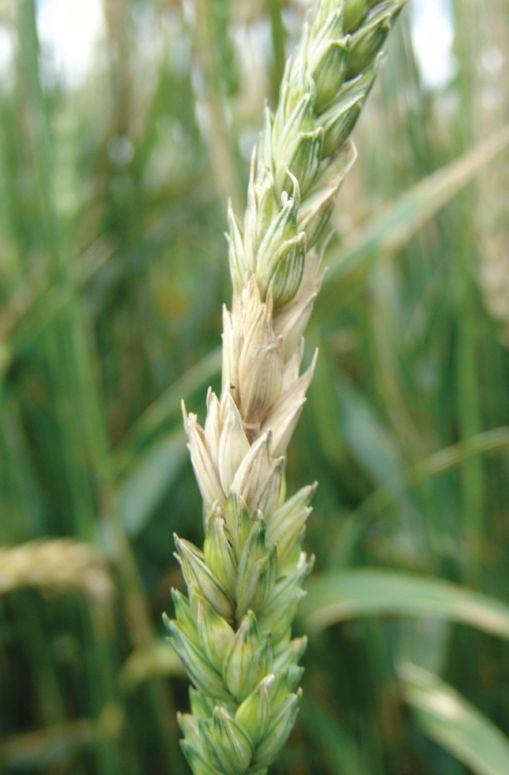
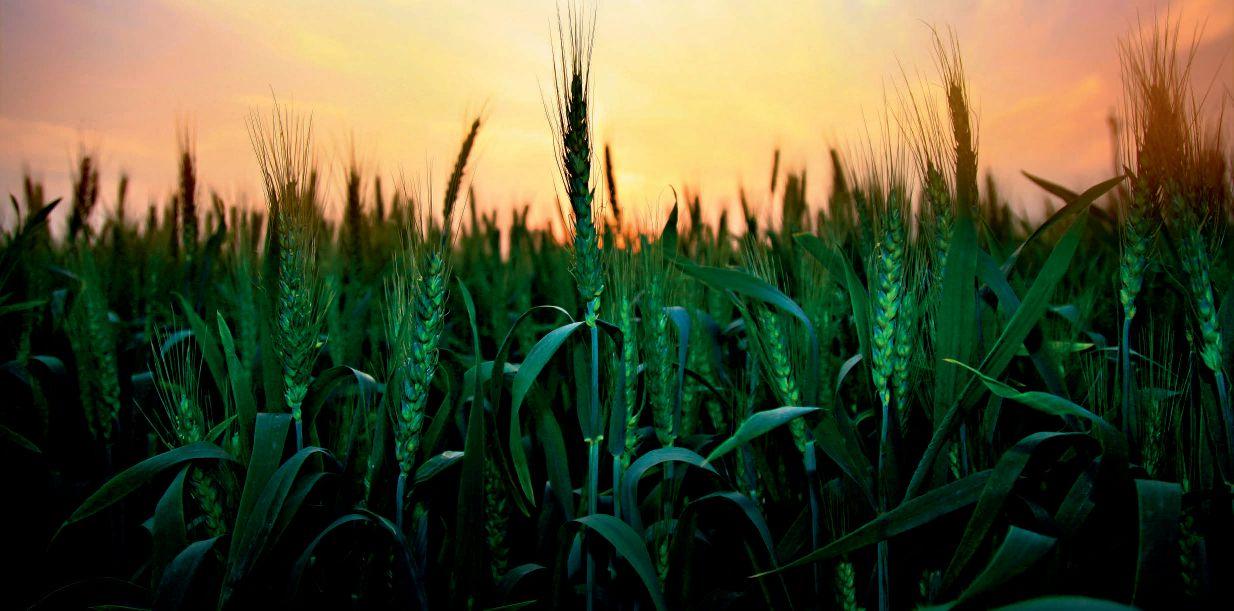
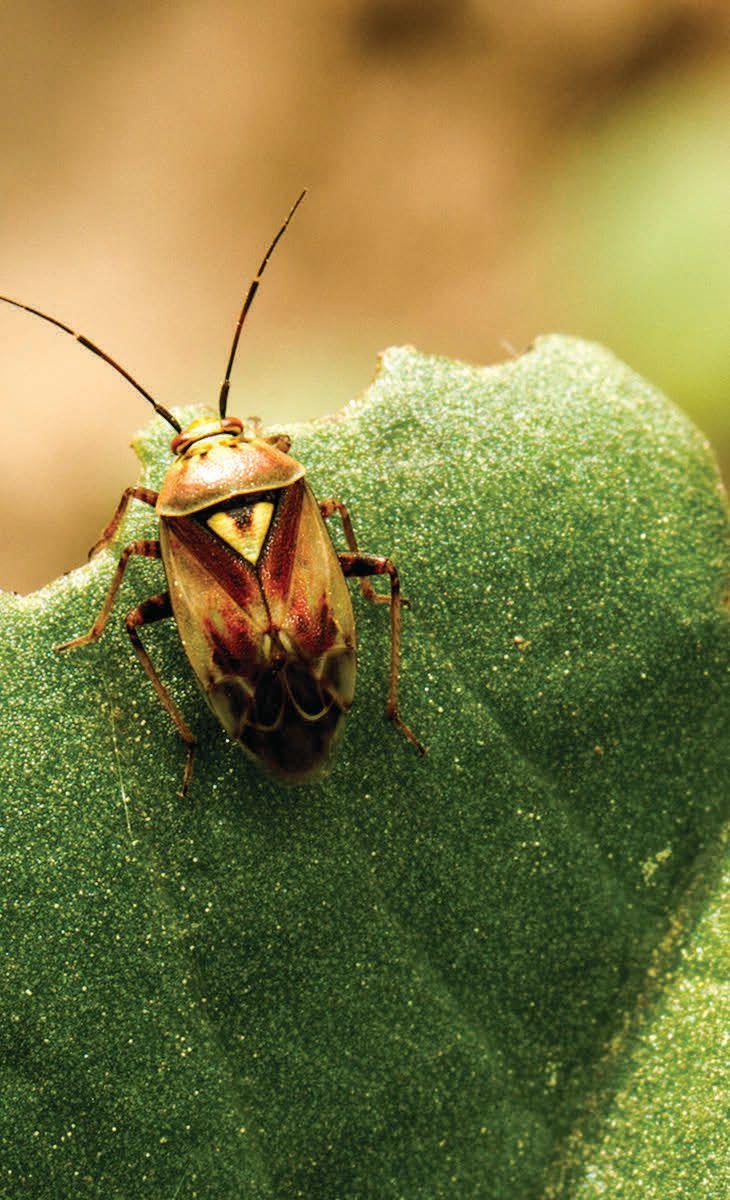
and can produce toxins that limit the end-uses of the grain. Robinson explains that FHB is a good choice for alternative disease management strategies because the conventional methods don’t provide strong control of the disease.
For instance, breeding wheat varieties for resistance to FHB is very difficult mainly because the plant’s resistance depends on
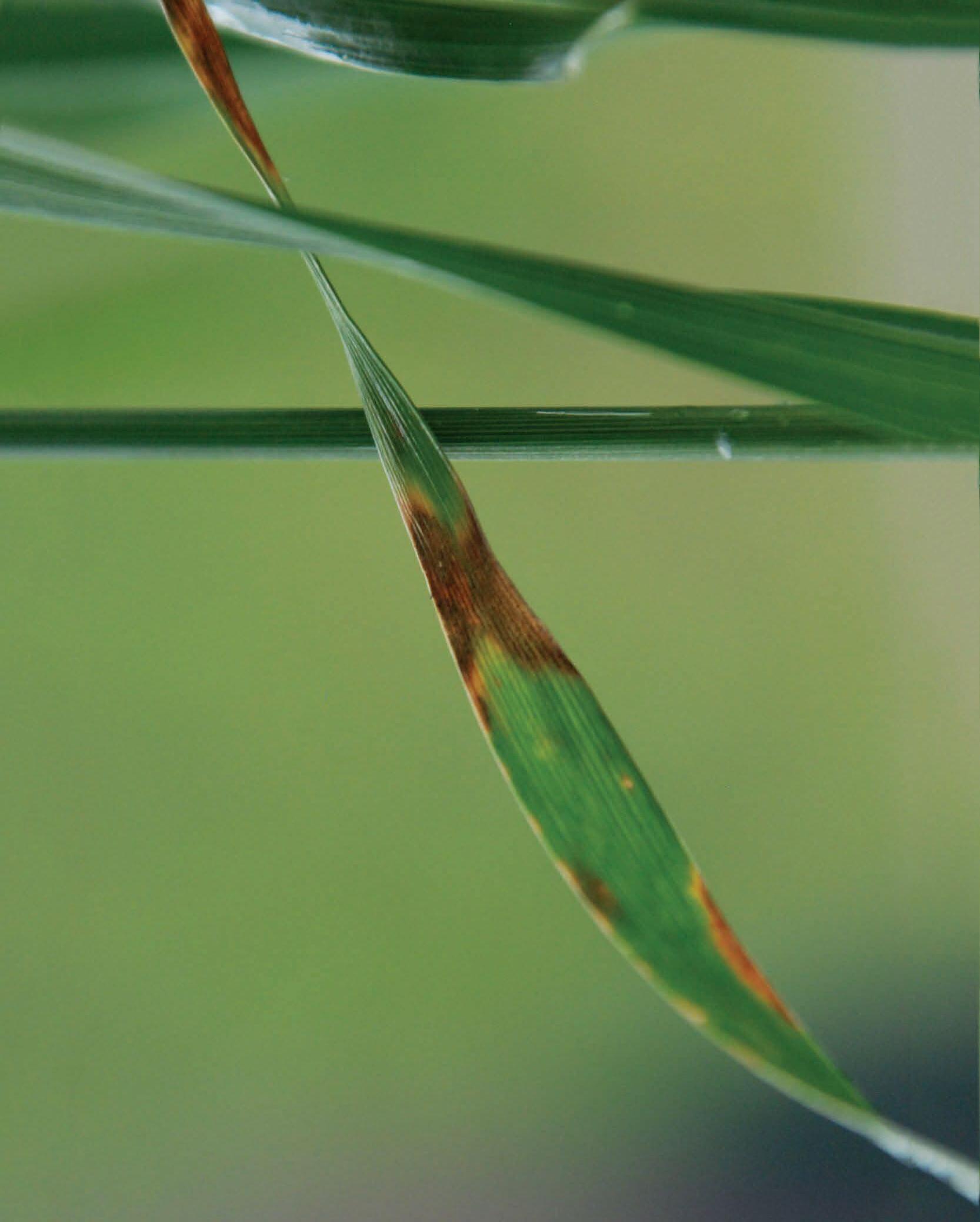
multiple genes, which each impart a little resistance, instead of single genes that provide really strong resistance. He adds, “In no way does our work replace what the breeders do. We are trying to establish a technology that can run in parallel and complement the work that the breeders do.”
Robinson also notes, “There are reasonable chemical controls for many pathogens, but for FHB the recommended fungicides are not terribly effective. Also, you have to spray the crop at a certain developmental growth stage, and the weather conditions have to be favourable to make those treatments effective.” In addition, chemical fungicides have the potential to harm non-target organisms.
At present, the team is working on in-crop sprays. However, in the longer term, they would like to develop seed treatments so the plant would be ready to fight the pathogen right from the beginning of the plant’s life.
According to Robinson, RNAi sprays could counter those problems. Such sprays could allow the grower to spray the crop earlier. And the sprays should also avoid impacts on non-target organisms. He says, “If what we do works, we’ll end up with a spray which targets a particular pathogen and only that particular pathogen. So you would no longer be spraying toxic chemicals that kill all kinds of fungi, including potentially beneficial microorganisms.”
Robinson sees his RNAi fungicide research as a three-phase effort: 1) identifying possible target genes and testing them in the lab; 2) optimizing and testing delivery of the dsRNA in the field; and 3) moving the fungicide product through the steps to commercialize it and make it available in the marketplace.
The research is funded initially for three years, with support from Saskatchewan’s Agriculture Development Fund, the Western Grains Research Foundation, and the Alberta Wheat Commission. This three-year project is focusing on phase 1.
Currently, Robinson and his team are selecting possible target genes in the pathogen, based on data they have been collecting over the last few years. They are choosing two types of pathogenspecific genes: genes that are highly expressed during the pathogen’s infection process; and genes that have a direct, fundamental role in the pathogen’s growth and development.
For the infection-related genes, they are targeting genes involved in the production of deoxynivalenol (DON), the most common toxin associated with FHB.
For the growth-related genes, they are targeting genes that are essential for the life cycle of the pathogen. “These genes are often in a single copy in the pathogen’s genome, so by shutting off that particular gene the idea is that it would be lethal to the pathogen,” he says.
Robinson and his team have also begun testing their candidate genes in the lab to see which ones would be good target genes – that is, to see whether silencing these genes would kill or suppress the pathogen. The genes that affect growth are the easiest ones to see and measure, so the team started testing those ones first. Evaluating the infection-related genes will be more laborious because they will have to measure DON production.
They have already found some growth genes that seem to be working as possible target genes.
After Robinson and his team have identified a number of growth genes and infection genes that work as target genes, they will test combinations of the two types. “We might end up with a reduction in disease by targeting one gene, but if we target two or three at the same time, then we will see either additive or multiplicative effects by applying these molecules,” he explains.
In addition, combining two pathways for attacking the pathogen in an RNAi spray formulation would make it more difficult for the pathogen to develop resistance to the spray, just like having two modes of action in a chemical product makes it harder for the pathogen to develop resistance. Also, having several different RNAi sprays that each target different genes would allow growers to rotate these products, another way to slow the development of resistance in the pathogen.
For phase 2, they plan to begin by experimenting with different spray formulations. Once they have the target genes and the spray delivery working in the lab, they will start field testing. That work will involve activities like scaling up production of the dsRNA for the target genes, optimizing spray formulations, and making sure the dsRNA will last long enough to be effective against the pathogen.
“Although DNA is relatively stable, RNA is relatively unstable in the environment. However, when these molecules form into that loop structure for double-stranded RNA, they are actually remarkably stable. There is evidence in the literature for dsRNA to persist for up to 30 days,” Robinson says.
He adds, “We will also be looking at releasing the doublestranded RNAs from nanoparticles over time. That would increase the stability even further.”
Phase 3 will involve steps like broad-scale field testing to confirm product effectiveness and safety, obtaining regulatory approval, scaling up production, and marketing the product. For this phase, Robinson will be looking to work with a commercial partner. He notes that some multinational agricultural input companies have a strong interest in RNAi technology, “so if we can demonstrate that it works in the field, it will be picked up no problem.”
Robinson concludes, “We’re excited that this approach seems to be working, and we hope that in the future RNAi fungicides will be part of the toolkit which is available for producers to protect their valuable crops.”

Three different powerful herbicide Groups have been combined to make one simple solution for cereal growers. Infinity ® FX swiftly takes down over 27 different broadleaf weeds, including kochia (up to 15 cm) and cleavers (up to 9 whorls). And if you’re worried about resistance, consider this: you’re not messing with one wolf, you’re messing with the whole pack.
Implement a targeted plant population for canola in 2019.
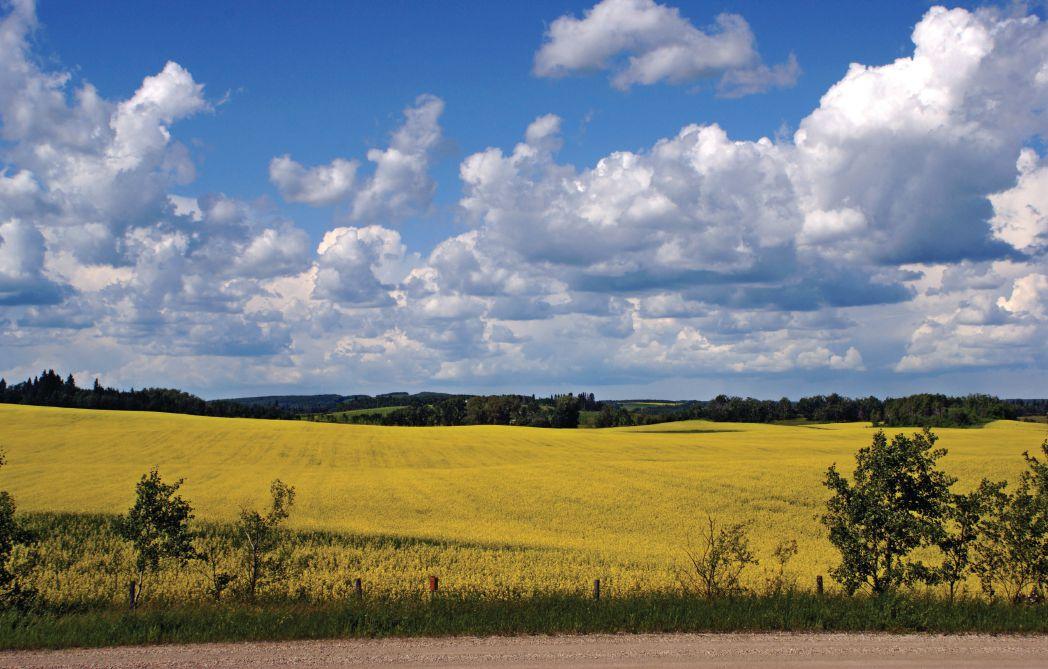
Producers don’t typically think in terms of plant population per square foot when seeding canola – but they should, according to industry experts.
Autumn Barnes, an agronomist and stand establishment lead for the Canola Council of Canada (CCC), says western Canadian producers typically seed based on pounds per acre, but this method is flawed if growers don’t first consider the seedlot’s thousand-seed weight (TSW).
“One pound of heavy thousand-seed weight seed contains fewer individual seeds than that same pound of seed with a lighter TSW,” Barnes explains, “so a grower targeting six plants per square foot and expecting 60 per cent emergence would need to seed 5.8 pounds per
acre (lbs/ac) to hit their target density if they had a six-gram TSW; whereas that same scenario with a four gram TSW would only require a seeding rate of about 3.8 lbs/ac to reach the same plant density.”
Many Canadian producers still struggle with poor emergence and survivability, and if fields are seeded based on pounds per acre, plant density is much harder to assess.
Canola crops are most likely to reach their yield potential when plant density reaches five to eight plants per square foot, Barnes says.
These figures are relatively new: until recently, the Canola Council recommended producers target seven to 10 plants per square foot. Following meta-analysis
of data including only higher-yielding, herbicide tolerant hybrid canola varieties, however, the Council and experts from the research community concluded that producers should target about six uniform plants per square foot, or between five and eight plants per square foot using an air seeder.
“If you want to get 100 per cent of yield potential, you probably want the bare minimum of about three to four plants per square foot, but if you start that low you don’t have the ability to lose a plant or two,” Barnes says. “Looking at it from a risk-reward perspective, a minimum of five is pretty key.”
Wade Stocker, canola seeds and traits manager for BASF, says extensive research
from the company’s Agronomic Services and Product Advancement team, which exists to offer agronomic support specifically for InVigor hybrid canola, suggests the ideal target is five to seven plants per square foot. “A target plant population can help maximize the yield, performance and consistency of InVigor canola,” Stocker says.
“If you have plant populations that are above the optimum rate, you get increased intra-crop competition among the canola plants, and this causes higher in-season mortality. Less vigorous plants, or later-emerging plants, will either die or survive and not produce yield,” he explains.
Additionally, at high plant populations, canola is more susceptible to lodging, which carries risks for disease and means the crop is more difficult to harvest.
With low plant populations – between two and four plants per square foot – weed competition can have negative impacts on yield as well as delayed flowering and maturity, Stocker says.
The Agronomic Services and Product Advancement team also noticed less lodging and plant mortality and improved maturity at the ideal rates of five to seven plants per square foot.
Both Barnes and Stocker argue that producers should put more focus on understanding plant population, in terms of both plant emergence (roughly how many seeds germinate and emerge from the soil surface per square foot) and plant survivability (roughly how many yield-producing plants make it to maturity on average per square foot) as well as the abiotic stresses in the field that might be impacting these rates.
“In general, we’re still only averaging about 50 to 60 per cent emergence, even though many producers assume it’s 70 per cent or better,” Barnes says. “Not assessing plant population is a problem.”
During the most recent Agriculture and Agri-Food Canada-led Prairie weed survey in Alberta in 2017, lead investigator Julia Leeson found most surveyed canola fields had fewer than four plants per square foot. If producers should be
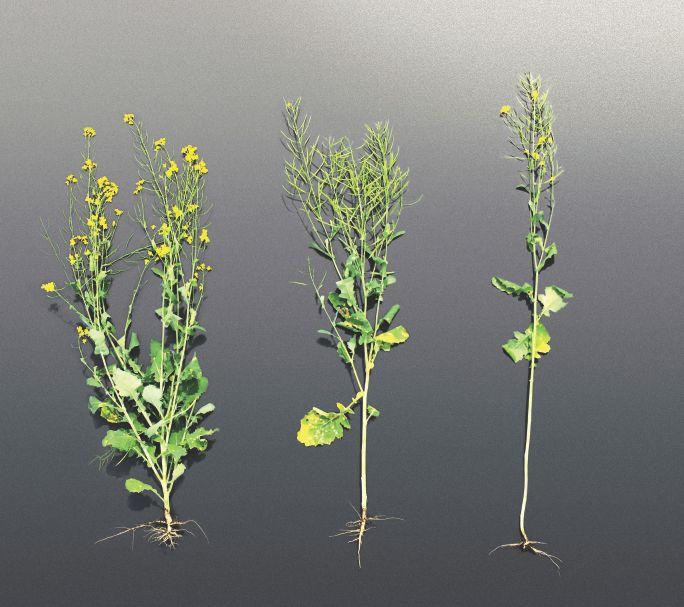
targeting five to eight plants per square foot, says Barnes, 75 per cent of fields surveyed were below that figure.
Stand establishment is a “messy area” with many factors influencing success, Barnes notes. Producers should assess conditions on their own operations and understand target plant populations rather than looking for specific planting prescriptions.
This is the reason industry experts are inclined to offer a range of target plants per square foot rather than one number for everyone.
“The best we can do is say, ‘This is a good range for you to be in. Look at your appetite for risk and decide where you want to be in that range. Understand what your target is and know if you hit that target or not. If you didn’t hit it, ask why not? What should I change for next year?’ If you’re not setting your target and measuring yourself, you’ll never know,” she says.
Stocker suggests that producers who
do not know the specifics of abiotic stresses in each field – amount of residue, low or high soil moisture or temperature, for example – can shoot for planting 10 seeds per square foot, so that with typical 50 to 70 per cent emergence rates under average conditions, they will end up with five to seven plants per square foot.
“After your first Liberty herbicide application, when volunteers are eliminated, go out and do some plant counts so you start to understand how many seeds you put in the ground and how many plants you’re getting,” says Stocker.
“In an ideal world, you’d go out again and do a stubble count after harvest –this will tell you how many plants you got through plant establishment and how many you lost during the course of the year,” he adds.
Good management doesn’t stop with seeding rate, but producers who pay attention to plant population are ahead of the game.
BASF is changing to seed count packaging for the 2020 season to assist growers in achieving their recommended target plant population rates. Producers who want to think about plant density before the packaging changes can refer to the seeding rate calculators on the Canola Council of Canada’s website or BASF’s website, agsolutions.ca/InVigorRATE.
Fields are still needed to help with the study for 2019.
by Julienne Isaacs
Alberta’s most ambitious wireworm management research project will enter its third year in 2019.
Haley Catton, a research scientist specializing in cereal crop entomology at the Agriculture and AgriFood Canada (AAFC) Lethbridge Research and Development Centre, is the project’s principle investigator.
The multi-year project is co-funded by the Western Grains Research Foundation and the Alberta Wheat Commission with inkind contributions from AAFC, and brings together collaborators from across Canada, including Kevin Floate and Hector Carcamo at AAFC Lethbridge, Wim Van Herk and Bob Vernon at AAFC Agassiz in British Columbia and Christine Noronha, an AAFC wireworm specialist in P.E.I., as well as Alberta’s provincial entomologist, Scott Meers, and AAFC Saskatoon’s Erl Svendsen.
Wireworm is the larval stage of the adult click beetle; the pest is difficult to control, partly due to the fact that its life cycle is so long—larvae can live in the soil for up to 11 years. In Alberta, damage to cereals ranges between one and 50 per cent annually, according to the provincial agriculture website.
In recent years, following the deregistration of key chemical controls, wireworm has emerged as an economically important
The causes and costs of glyphosate-resistant weeds have been well-documented and extensively communicated to growers. At one time, farmers were urged to rotate different chemical groups, from field to field and year to year to avoid resistance.
Reality check: Given the key role of glyphosate on most prairie farms – applied pre-seed, in-crop and post-harvest – rotating away from glyphosate was never in the cards.
Let’s Face the Facts. Resistant weeds will always be a challenge, and strategies to prevent and delay resistance must be implemented each growing season. Recent surveys have found that half the kochia population is resistant to glyphosate, and at least two dozen other weeds have been confirmed to be resistant to Group 2, 4 and 9 herbicides in Western Canada.
What then? “Many growers still apply glyphosate alone for their pre-seed weed control, but we’re seeing a tipping point,” says FMC Product Manager, Rob McClinton. “One reason is that glyphosate alone can only do so much against the toughest weeds. The second factor is that growers now want to add other herbicide groups, or modes of action, to glyphosate to help manage resistance.”
Aim® EC herbicide from FMC stands out among glyphosate add-ins for several key reasons: cropping flexibility immediately after application, a unique Group 14 mode of action, wide tank-mix options and burnoff enhancement of hard-to-control weeds. These problem weeds include glyphosate-resistant kochia, flixweed, lamb’s-quarters, redroot pigweed, wild buckwheat and cleavers. For many growers, rate flexibility is another key benefit.
Use the right rate to maximize your herbicide performance. “The great thing about Aim® EC herbicide is that it has three rate options,” says McClinton. “Having multiple labelled rates gives growers the freedom to choose the right rate for their weed spectrum.”
For example, if a grower is looking for a standard burnoff or to tank-mix an additional mode of action like an Express® brand herbicide, adding Aim® EC herbicide at the 15 mL/ac rate to glyphosate will give their burnoff an extra boost. If the weed spectrum includes moderate pressure or larger weeds to control, McClinton recommends going to the 24 mL/ac rate.
“At the high end, if a grower needs to control resistant weeds or volunteer canola, large overwintering cleavers or a heavy overall weed population, they should talk to their retailer about using the 30 mL/ac rate,” says McClinton.
Aim® EC herbicide: weed spectrum determines the right rate to use
burnoff - when used with a tank-mix
When weed spectrum includes moderate pressure or larger weeds
Glyphosate resistant weeds (kochia, volunteer canola)
Large overwintering cleavers
Heavy weed pressure or large weeds
Many uses, crops, partners. Aim® EC herbicide is one of those products you know you’ll use. It can be used in a pre-seed burnoff, for chemfallow, as a harvest aid and as a post-harvest burnoff. It’s registered in most major crops, including cereals, oilseeds, pulses, soybeans, beans and vegetables.
Another benefit of Aim® EC herbicide is its tank-mixability. Growers can tank-mix Aim® EC herbicide with additional modes of action, such as Group 4 products 2,4-D & MCPA, bromoxynil (Group 6) and FMC’s three Express® brand herbicides: Express® PRO, Express® SG and Express® FX. To maximize your burnoff results, Aim® EC herbicide should be applied with glyphosate when used for pre-seed weed control. However, don’t be afraid to look at the label for use patterns with the other registered tank-mix partners.
Controlling resistant weeds, managing future resistance. Adding Group 14 Aim® EC herbicide to glyphosate (Group 9) delivers two further benefits. “Kochia can be resistant to Groups 2, 4 and 9, and cleavers to Groups 2 and 4,” says McClinton. “Aim® EC herbicide controls these resistant weeds and provides another mode of action to help keep your future options open.”
Kochia and lamb’s-quarters control 7 days after application.


“As more growers in Western Canada see the benefits of a glyphosate add-in, the question is: which one to use?” says McClinton. “Beyond its fast-acting weed control and effective resistance management as a Group 14, Aim® EC herbicide also brings the most flexibility of any burnoff additive today. Mix what you want, seed what you want and get more weed control than glyphosate alone.”
Questions? Ask your retailer about Aim® EC herbicide today.
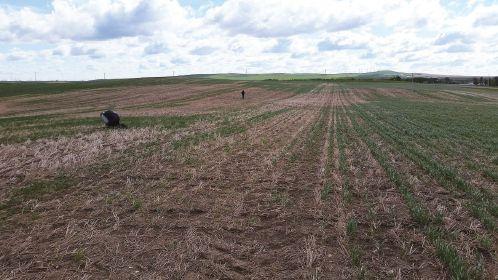
pest of cereals and horticultural crops.
But wireworm has been a pest on the Prairies since producers began growing cereals, Catton says. Research on control mechanisms for the pest actually began sometime in the 1920s before it “trailed off” in the 1970s, when pesticides registered against wireworm became available.
“Since Lindane was deregistered in Canada in 2005, farmers here have no effective chemical options for controlling the pest,” she says. “Neonicotinoid seed treatments are currently the only option, but they do not kill wireworms, they only intoxicate them for long enough to get a crop established. So the suspicion is that populations have been building up because there have been no chemical controls to kill them.”
Catton’s research program is focused on cereal crop
entomology, and she is especially interested in studying both pests and beneficial insects in crop fields.
“Both pests and beneficials affect crop production, they interact with each other, and management options can affect both groups,” she says. “The wireworm project operates on this theme.”
The project’s official title is “Managing wireworms in southern Alberta wheat fields with crop rotations and beneficial insects.”
It has four main objectives, according to Catton. Because it isn’t known how female beetles decide where to lay their eggs, or how wireworms select crops to feed on, the first objective is to study the effect of past rotations on current population structures of wireworm in the field.
“We are comparing fields seeded to spring wheat in the current year with different crop rotations the previous two years,” Catton explains. “We are looking for ‘newborn’ wireworms in canola and wheat stubble to determine if mother click beetles laid more eggs in one crop than the other. If we can figure out which crops attract click beetles to lay eggs, we could predict wireworm problems in future years.”
The second objective of the study is to compare a variety of traps for collecting wireworms and beneficial insects to aid monitoring.
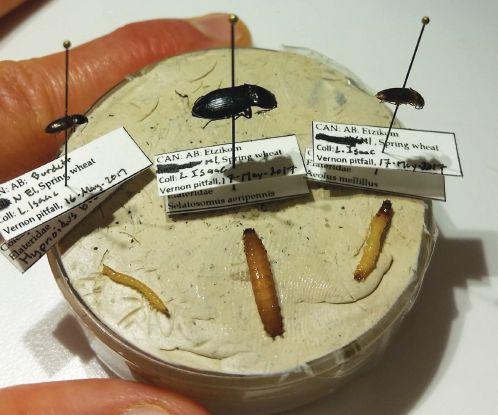
A third objective is to use advanced techniques to analyze the gut content of predacious beetles for wireworm DNA. This method has been used for other insects but never wireworm, says Catton, and could help researchers decide which beneficial insects offer natural controls against the pest.
The project’s final objective is to synthesize all of the project’s findings into a wireworm field guide for Alberta.
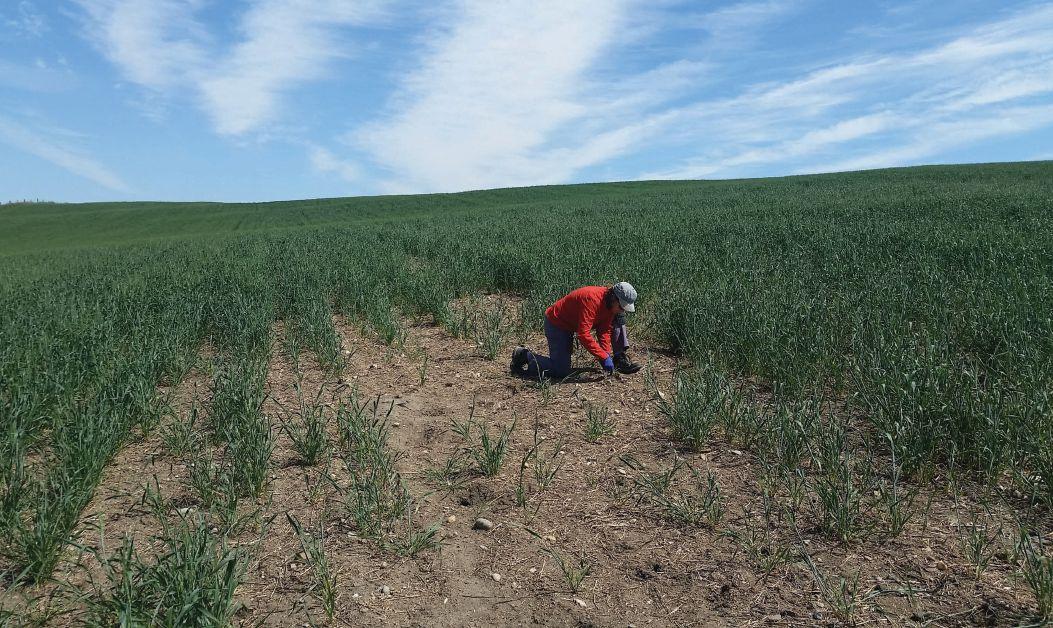
Each year, 12 commercial spring wheat fields are chosen for intense sampling. Field studies began in 2017 and will wrap up after the 2019 season. Once selected, fields are visited weekly between pre-seeding and harvest so researchers can collect 12 soil cores (for wireworm sampling) and six pitfall traps (for adult click beetle and beneficial insect sampling) from each.
The easy way to manage your farm
Analyze your data. Plan your strategy. Then track your performance. AgExpert Field gives you the details you need to know to make the best business decisions.
It’s all new. And seriously easy to use. Get it now and see.
fcc.ca/AgExpertField
“In 2017 and 2018 we took almost 2,000 soil samples each year and found 507 and 335 wireworms respectively,” Catton says. “So far we have confirmed previous reports that wireworms are very patchy. In 2017, 58 per cent of the wireworms we caught came from just four out of our 12 fields, and in 2018, 41 per cent of wireworms came from two out of 12 fields.
“We still have a lot of data to collect and analyze, so maybe we will find some patterns once it is all said and done, but why some fields have lots of wireworms, while the field next door may have only a few, is a mystery so far,” she says.
Catton and her colleagues are currently looking for farmers with eligible fields to volunteer for the study in 2019. To be eligible, fields must meet specific criteria: they must be located within a 90-minute drive of Lethbridge, they must be planted to spring wheat, have a wireworm problem, and have had rotations of cereal-cereal, cereal-canola, canola-cereal or pulse-canola in 2017 and 2018.
Interested producers should contact Catton at 403-317-3404 or haley.catton@canada.ca.
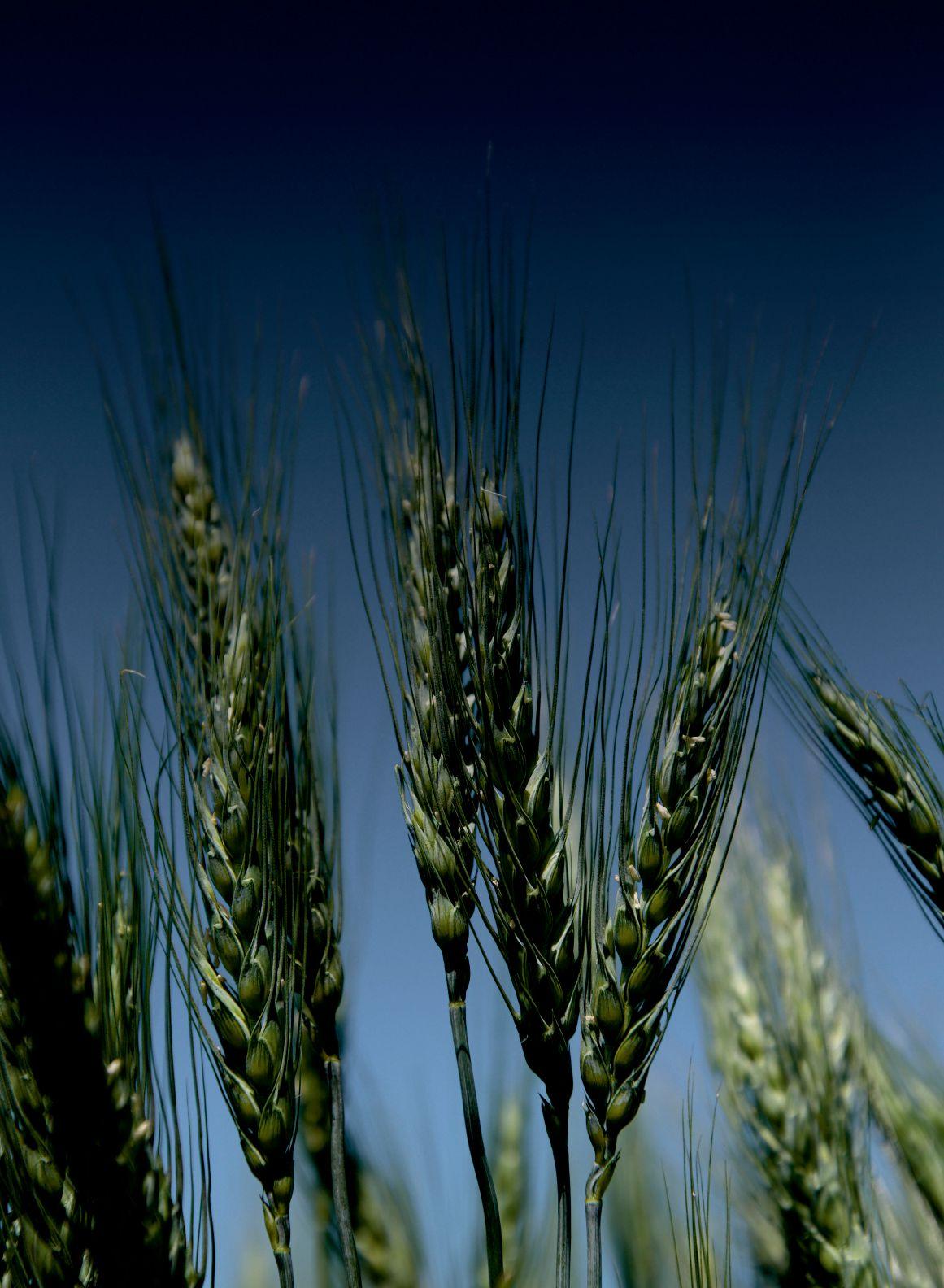
Together, Richardson Pioneer and Syngenta are bringing quality varieties to Western Canadian Farmers.
We are committed to providing you with reliable products and sound agronomic advice. That is why we have partnered with Syngenta, offering our customers products they can trust. SY Obsidian and SY Sovite are Canadian Western Red Spring wheat varieties which combine competitive yields with an excellent disease resistance package.
Book your seed with Richardson Pioneer today.
A case of mistaken identity.
by Bruce Barker
Amicroscopic worm that caused market access issues for yellow pea growers is not what it seems. The stem and bulb nematode, Ditylenchus dipsaci, is a quarantine pest and can attack a wide range of food crops including pea, lentil, onion, garlic, carrots, sunflower, and others. In 2004, when D. dipsaci was detected in Canadian yellow peas, India required every shipment of yellow peas from Canada to be checked for and certified free of the nematode. If the pest was found, the ship carrying the peas would have to divert to a third country to be fumigated to destroy the nematode before it could deliver its cargo to India.
“When the nematode was found in yellow pea by the Canadian Food Inspection Agency it was thought that the nematode was D. dipsaci. However, we suspected it was another species,” says Mario Tenuta with the department of soil science at the University of Manitoba.
Symptoms of D. dipsaci infestations on pea include swollen and distorted stems and petioles, with distinct lesions that are brown to black. Discoloration and distortion of pods and seeds are also observed.
In 2010 a Russian scientist identified a species of nematode that was very similar to D. dispaci. This species, D. weischeri, was found on creeping thistle (also known as Canada thistle). With funding from the three Prairie pulse grower associations and the Alberta Crop Innovation and Development Fund, Tenuta led a two-year project to determine the species of stem and bulb nematode and its frequency in fields of the Prairie Provinces.
A previous study across the Prairies had linked the presence of stem and bulb nematode with creeping thistle seed in yellow pea samples. DNA analysis by Tenuta’s lab confirmed that the Ditylenchus species in yellow pea harvest grain samples, and creeping thistle seed from pea fields and roadsides was D. weischeri.
Subsequently, CFIA conducted DNA testing on Canadian yellow pea samples dating back to the first detected nematode in 2004. All came back identified as D. weischeri. To date, no D. dispaci has been identified in Canadian yellow peas.
Greenhouse studies also looked into potential crop hosts and impacts by D. weischeri. The trials confirmed that D. weischeri readily parasitized and reproduced on Canada thistle but not yellow pea, large green lentil, Kabuli and Desi chickpea, garlic, spring wheat, and canola.
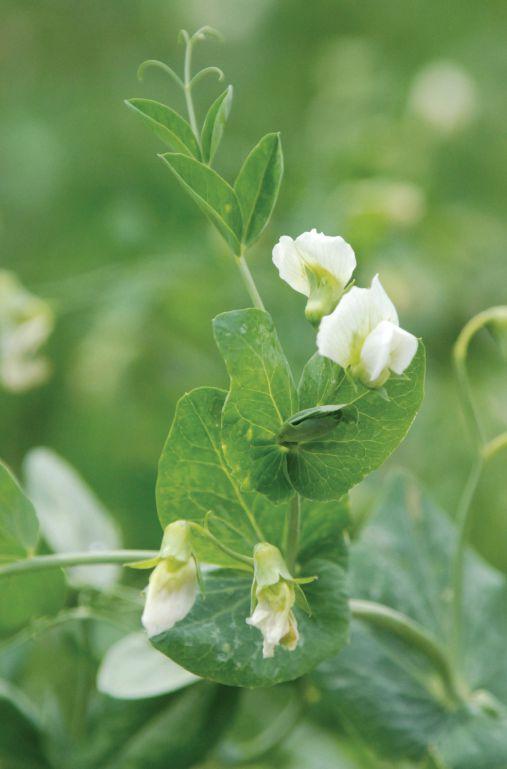
The good news for yellow pea growers is that D. weischeri is not a quarantined pest nor does it appear to cause damage to yellow pea. However, D. dipsaci is still a quarantine pest. In eastern North America D. dipsaci causes complete loss of garlic fields.
Tenuta adds, “It is important that pea farmers on the Prairies are vigilant and protect their fields from getting D. dipsaci, such as avoiding planting and having their fields near garlic and onion grown from contaminated seed.”


Multiple modes of action deliver both fast burndown and extended residual.
Just when you thought the best couldn’t get better. New Heat® Complete provides fast burndown and extended residual suppression. Applied pre-seed or pre-emerge, it delivers enhanced weed control and helps maximize the ef cacy of your in-crop herbicide. So why settle for anything but the complete package? Visit agsolutions.ca/HeatComplete to learn more.
Always read and follow label directions.






Weed seed predators can eat up to 90 per cent of shed seeds.
by Bruce Barker
Wanted: weed seed predators. Salary: work for room and board. Equal opportunity employer: invertebrates such as carabid beetles and crickets; earthworms; rodents such as mice and voles; birds like sparrows and chickadees. Employer willing to improve working and living conditions.
“Studies have shown that weed seed predators can be responsible for up to 90 per cent of all seed losses of a particular weed species. Other studies have shown 65 to 75 per cent seed loss can be attributed to seed predators for chickweed and shepherds purse,” says Chris Willenborg, associate professor with the College of Agriculture’s department of plant sciences at the University of Saskatchewan (U of S). “Because of our winters, total weed seed predation is probably lower than those studies.”
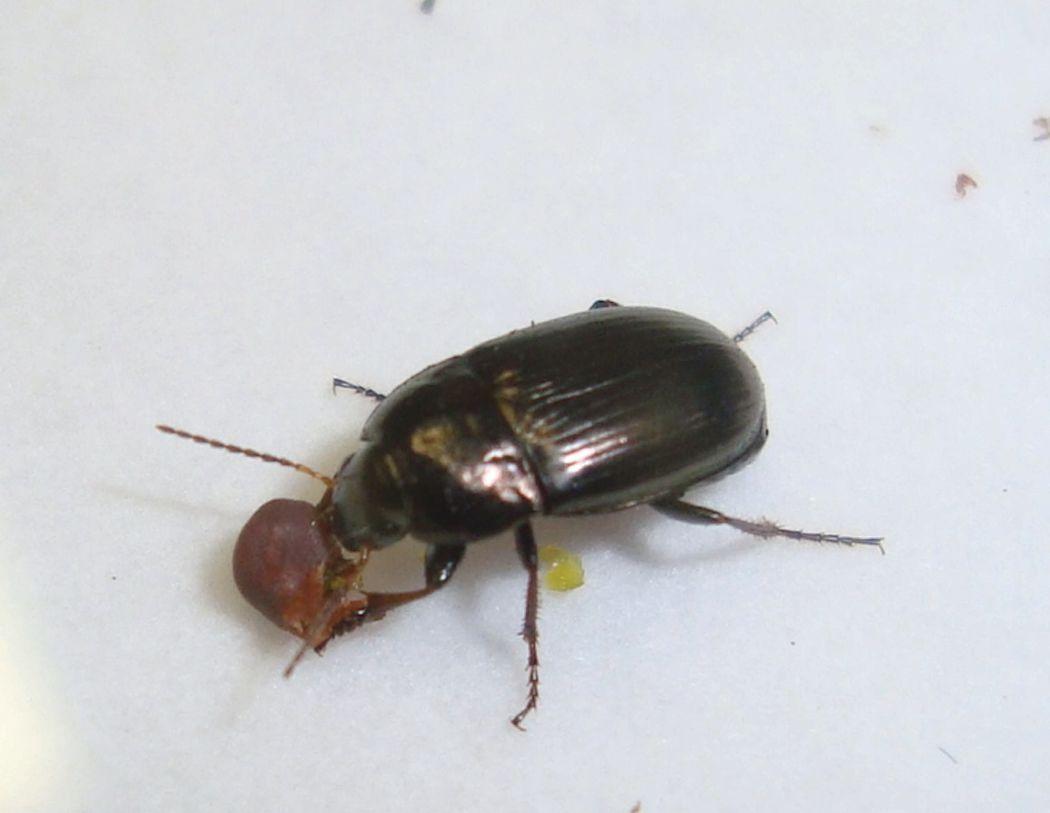
Willenborg says the greatest losses are due to beetles and in particular, a genus called carabidae. There are over 900 species of carabidae across Canada, and about 400 of these can be found in the Prairies.
At the U of S, Willenborg has two PhD students currently working
on several aspects of weed seed predation. The first project with PhD student Khaldoun Ali is looking at the interaction between predators and weed seeds. They are researching what attracts an invertebrate predator to a particular weed seed. Is the attraction smell? Taste?
In one study, conducted by his previous PhD student Sharavari Kulkarni (co-supervised with Dr. Lloyd Dosdall and John Spence), they monitored activity of five insect species that were actively feeding on canola seeds. Amara spp. and Pterostichus melanarius, another carabid, were found to be the most active in Alberta fields. Peak activity and density was in late July and early August.
The study also looked at spatial distribution across fields in Vegreville, Lacombe and St. Albert, Alta., over two years. The study asked the question, in which part of the field are the carabids concentrated? While carbid density was higher along field margins, they were also concentrated where weed patches were growing.
ABOVE: Seed predation by carabids is responsible for the greatest impact on the seed bank.

“We thought distribution would be a related to weed seed density in the soil seed bank, but this was wrong. The greatest association was with current weed patches,” Willenborg says.
Willenborg says there are several hypotheses on why the carabids were attracted to patches with growing weeds. The first could be that the carabids were attracted to those weedy patches because of the cache of weed seed still present on the soil surface from the previous year. Another reason, and probably more likely, is that the weed patches were providing shelter. A final thought is that the carabids were attracted to the patches by some mechanism and were waiting for the weeds to shed their seeds.
Research at Iowa State University by Van der Laat et al. (2015) found that carabids also had preference for certain weed species. The researchers found that carabids had a clear preference for waterhemp seeds over lamb’s quarters, giant foxtail and velvetleaf. However, these are very different seeds in almost every aspect. Willenborg wondered if they took seeds that were similar in size, shape, and color, would the beetles be able to choose between seeds? Would they exhibit preferences? So they chose the Brassicaceae, or mustards, family, which contains many weed species to work with.
Sharavari’s work, funded by the Natural Sciences and Engineering Research Council (NSERC) and the Alberta Canola Growers Commission, looked at carabid feeding preference on volunteer canola, wild mustard and stinkweed. She used ‘cafeteria’ experiments where beetles are offered a choice of possible seeds and they choose their preferences. “To our surprise, the beetles exhibited clear preferences for volunteer canola, removing almost 60 per cent of the seeds provided every week. They least preferred seeds of stinkweed,” Willenborg says.
To find out why carabids have feeding preferences, they set up an experiment with an olfactometer where the beetles get a choice between the smell of different seeds and make their choice by moving into an inlet where the smell is coming from. It’s like walking by four different restaurants and choosing between the smells of BBQ steak, fish, curry, or octopus. Willenborg says the result showed that in all cases, the carabids preferred the smell of canola over the others, and actually avoided stinkweed, but the choice depended on carabid species to some degree.
“We now think it is olfactory cues associated with seed selection and suspect that, in the case of wild mustard and stinkweed, the high levels of gluccosinolates and euricic acid
deters the beetles,” Willenborg says.
The other research project with PhD student Stefanie de Heij is looking at weed seed predation in pulse crops. Little research has been done in this area except in soybeans in the United States. This research is investigating what insect species are eating weed seeds in different pulse crops. They are also looking at when the predators emerge, when they are active, and how many weed seeds they are consuming. Additionally, with different levels of crop cover between pulse crops, the research is looking at what agronomic practices can be implemented to harbour weed seed predators. This work is being funded by Saskatchewan Pulse Growers, and would not have been possible without the support of growers.
Willenborg says that relatively little western Canadian information exists on how to encourage weed seed predators, but research in other areas of the world provide some strategies that farmers can implement. The first is to increase cropping system diversity. Different crops can harbour different seed predators at different times, so more diverse systems could lead to greater numbers of different seed predators feeding on more weed species.
The establishment of beetle banks could also help sustain populations. These can be shelterbelts, grassed water runways, fence lines and grass margins around sloughs.
“The idea of beetle banks is to create buffers in the fields that harbour beneficial organisms, including seed predators,” Willenborg says.
One of the fastest ways to increase populations of seed predators is with cover crops, Willenborg says. “We often think about cover crops as reducing weed populations but there is some debate about whether this is due to crop competition or the large increase in seed predators that are sheltered by the buffers.”
Cover crops also provide shelter to seed predators from their own predators. Avian predators feed on seed predators including insects, voles, and mice. Cover crops and other sheltering habitat provide cover for the seed predators to hide under. Similarly, reduced and no-till fields also provide shelter for seed predators, as well as provide a habitat for overwintering.
With the same logic, improved canopy closure can also help to provide in-season cover and a better habitat for seed predators. It can be accomplished with narrower row spacing; but moving to wider row spacing could have a negative impact on the level of seed predation. This is something that needs to be investigated as the trend to wider drills with fewer openers on wider spacings continues in Western Canada.
Willenborg says some insecticides can have a large negative impact on predators. This impact reinforces the importance of only spraying for insect pests by following economic threshold guidelines. He says many carabids are also omnivores, and besides eating weed seeds, they also eat the larvae of other insect pests.
Some herbicides, such as glyphosate, can also negatively impact carabids. For example, Brust (1990) reported that certain species of carabids were slower to return to glyphosate-treated areas compared to an untreated control. However, some of this impact may be due to the vegetation control provided by the herbicide.
Willenborg’s research is the first in the agroecosystem in Western Canada conducted on canola and pulse fields. “We know very little about seed predators here, especially with regard to pulse crops,” he says. “Predators can have an important impact on the seed bank, but we have much more to learn.”








Hot, cold, big, small, early, late?
Just GO with Pixxaro™ herbicide, the total annual broadleaf weed control that won’t slow you down. Only Pixxaro includes maximum crop, weed, weather and tank mix flexibility. PLUS the proven power of Group 4 resistance management.
For more information call the Solutions Center at 1-800-667-3852 or visit corteva.ca.
Contact your local retail to purchase Pixxaro™. For more information or to sign up for rewards, visit flexrewards.corteva.ca
With fababeans taken off the registration label for a specific inoculant, Diane Knight from the University of Saskatchewan looked for other options. To date, Knight has conducted several studies, some of which may have important implications for the future.
BY Carolyn King
Diane Knight’s research on rhizobial inoculant strains for fababean started back in 2013. “Fababean and pea had both been listed on the label of an inoculant from Novozymes. But then the company took fababean off the label, and I got phone calls from farmers asking about it,” explains Knight, a professor in the department of soil science at the University of Saskatchewan.
“So I looked into it, and I learned that the company had changed the strain of Rhizobium leguminosarum in the inoculant. The new strain worked with pea but not fababean. So I got interested in trying to see if we could find a rhizobial inoculant that would work for fababean.”
Since she started this research, commercial rhizobial inoculants specifically for fababean have come on the market, but Knight’s findings could have applications in the future.
Like any other legume, fababean needs to have a symbiotic relationship with rhizobial bacteria for root nodules to form and nitrogen fixation to occur. These bacteria belong to various genera such as Rhizobium, Bradyrhizobium, and Sinorhizobium. A specific legume species only forms a relationship with particular species or subspecies (biovars) of rhizobia. Rhizobium leguminosarum biovar viciae is used for commercial inoculants for pea, lentil and fababean, but a strain of this biovar that works well for one of the three crops may or may not be equally effective for each of the other two. Rhizobia found in a field without a current inoculated crop might have come from previous inoculated crops or they might be native species that evolved in association with native legumes.
Knight’s first step in this research was to screen diverse rhizobia strains to see which ones might be worth further investigation as possible inoculants for fababean. Her study, which ran from 2013 to 2016, had funding from Saskatchewan’s Agriculture Development Fund and the Saskatchewan Pulse Growers (SPG).
“We got 42 different rhizobia strains that had been isolated from fababean nodules. We didn’t know what species we were dealing with. The strains were from all over the place. Some were strains that we collected from the soil here in Saskatchewan, and some were from gene banks in Canada and the United States.”
For each of the 42 strains, Knight and her research team conducted extensive screening in the greenhouse, assessing things like nodule development and nitrogen content in the plants. They tested the strains on two fababean varieties: FB9-4 (large-seeded, normal tannin); and CDC Snowdrop (small-seeded, zero tannin).
“Very few breeders look at nitrogen fixation when they are breeding pulse crops, so we thought there was a possibility that different varieties might respond differently to the inoculants,” Knight explains. She wanted to compare largeseeded and small-seeded types: “One of challenges with fababean production is that the seed is so large that it is really hard to run it through a normal seeder. So Bert Vandenberg at the University of Saskatchewan’s Crop Development Centre was developing these smaller-seeded varieties that are easier to use with traditional seeders.”
Interestingly, 41 out of the 42 strains improved nodulation, biomass production, and nitrogen content in the fababean varieties, compared to the non-inoculated control. So almost every single strain had some potential.
Based on the study’s extensive measurements, Knight selected two strains that looked better than the rest. She notes, “Both of these strains worked on both fababean varieties. However, one strain worked better on FB9-4, and the other strain worked better on CDC Snowdrop.”
Next, Knight led a follow-up study (2016-2018), funded by SPG, to assess those two superior rhizobial strains in the field. “Lots of things work in controlled environments and then don’t work in the field. So we field tested the strains at two sites over two years.”
They used different field sites each year, and all four sites were in the Melfort area in the Black soil zone. At each
Incinerate your toughest weeds and manage resistance with glyphosate add-ins from FMC. Aim® EC herbicide provides the ultimate flexibility, allowing you to tank-mix with your partner of choice and no fear of cropping restrictions. Express® brand herbicides scorch your worst weeds right down to the root so they won’t grow back.
The hottest burnoff means the cleanest fields when you plant your next crop.
Thinking burnoff? Think FMC.
“At one of our sites in one year, we could actually tell which plots were inoculated and which ones weren’t just by looking at them, because the inoculated ones were greener and bigger,” Knight says. “Never have I experienced that before – I do a lot of work on pulses, and the comparison is always down to the measurements we make.”
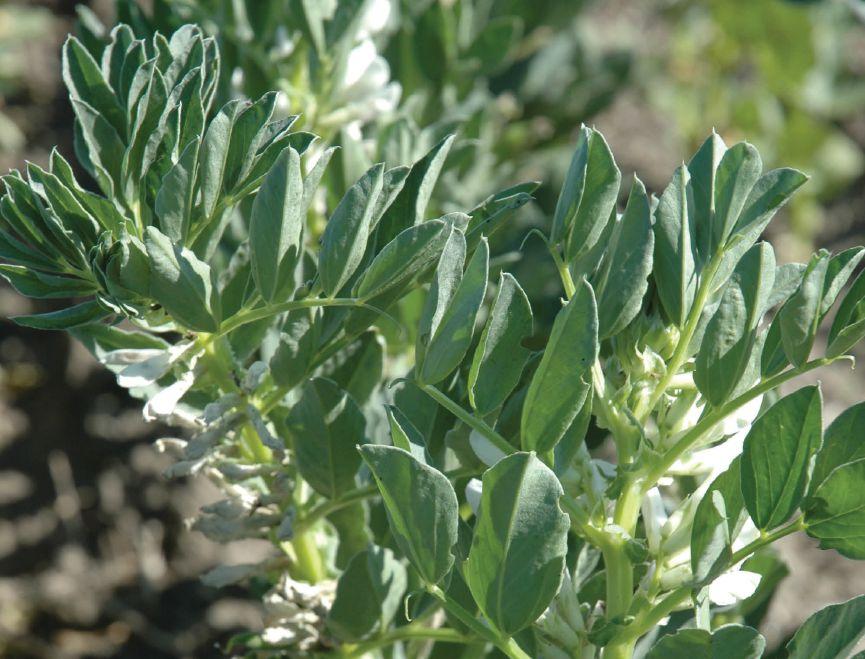
site, they ran one experiment with CDC Snowdrop and one with FB9-4. They measured things like nitrogen fixation, yield and harvest index.
“We didn’t compare our strains to commercial inoculants mainly because commercial inoculants have gone through a lot of R&D work so we know they are going to perform better,” she explains. “Ours are just lab strains; they haven’t been standardized and optimized for the field yet. For instance, we were dripping in liquid solutions whereas the commercial strains are using properly developed [delivery methods].”
Despite being lab strains, both performed very well. Knight adds, “At one of our sites in one year, we could actually tell which plots were inoculated and which ones weren’t just by looking at them because the inoculated ones were greener and bigger. Never have I experienced that before – I do a lot of work on pulses, and the comparison is always down to the measurements we make.”
For all site-years, the fababean plots inoculated with the rhizobial strains fixed more nitrogen than the ones inoculated with water or with heat-killed bacteria. She says, “While the improved nitrogen fixation did not always translate into higher yields, it does mean that more nitrogen is left in the soil for other crops in the crop rotation.”
Knight concludes, “There is potential to develop one or both of these strains into commercial inoculants that are adapted to Saskatchewan soils, giving farmers flexibility in inoculants for fababean crops.”
Although there is no longer an urgent need for rhizobial strains for fababean inoculants, the findings from Knight’s research might have future applications.
For example, her study confirmed that different crop varieties may respond differently to an inoculant. Knight says, “Where we thought this finding could possibly apply would be for some of the very
high-value pulse crops in niche markets. A company could find the best inoculant for a specific pulse variety and sell that inoculant with the variety’s seed. So they would be matched together to further the probability that the grower would get a really good crop and lots of nitrogen fixation.”
The top-performing strains from Knight’s research could be useful if there is room in the marketplace for more options for fababean inoculants.
A recently completed project compared the effects of different rhizobial inoculant treatments on fababean yield and growth at seven Saskatchewan locations. Garry Hnatowich with the Irrigation Crop Diversification Corporation led this three-year, multi-agency project, which was funded by SPG.
This project compared Nodulator (peat-based, seed-applied) and TagTeam (granular, in-furrow), which are the two currently available inoculants specifically for fababean. The treatments included: the peat inoculant by itself; and the granular formulation at 0.5, 1, and 2 times the recommended rate, with and without peat inoculant. The treatments were applied to two fababean varieties each year: CDC Snowdrop; and either FB9-4 or CDC SSNS1 (small-seeded, tannin). The trials took place at Swift Current (Brown soil zone), Outlook (Brown-Dark Brown transitional),
Scott (Dark Brown), and Melfort, Yorkton, Indian Head and Redvers (Black).
Only two of the 15 site-years had significant seed yield responses, although a combined site analyses showed an overall yield increase of about 3.5 bushels per acre. Inoculation had no statistically significant effect on things like seed protein or total seed nitrogen uptake.
Hnatowich’s report states, “The overall minimal response [to the inoculants] cannot be attributed to soil providing adequate nitrogen for fababean yield, as the majority of sites were low in soil nitrogen according to spring soil testing … Rather it is more likely that indigenous populations of Rhizobium leguminosarum were present at most trial locations and formed effective nodulation and subsequent biological nitrogen fixation to come close to optimizing fababean growth and seed yield production. All sites involved in the trial have an extended history of pulse crops within their rotations.” Most of the pulses in those rotations were field peas and/or lentils.
The report concludes, “Results from this trial suggest that inoculation of fababean should still be recommended; however producers can choose an inoculant formulation based on cost and convenience for their operation. A single dose of inoculant is sufficient to provide optimal fababean seed yield.”
These Saskatchewan results are consistent with the findings from an earlier Alberta study. That study compared eight commercial fababean inoculants in various formulations, at Beaverlodge, Westlock and Namao, from 2004 to 2006. The researchers found that: “Inoculation had no significant effects on nodulation, grain yield and seed weight of fababean in all site-years. Un-inoculated and inoculated plants
nodulated equally well, suggesting the presence of adequate populations of effective indigenous Rhizobium leguminosarum bv. viciae for nodulation of untreated plants.”
The species of Knight’s strains aren’t known at present, but perhaps the species information might be of interest in the future. Studies in various countries have determined that fababean can form nodules with other rhizobial species such as Rhizobium fabae, Rhizobium laguerrereae, Rhizobium etli, Agrobacterium tumefaciens, Rhizobium anhuiense, and Agrobacterium radiobacter. If her strains are Rhizobium leguminosarum biovar viciae, then they might also work with pea and/ or lentil. If they are some other species, then researchers might be interested if, for example, changes in fababean varieties, Prairie climate conditions and/or other factors mean that a different species or biovar is needed for better performance in the new circumstances.
One reason why researchers might become interested in developing fababean inoculants with a different rhizobial species relates to the pea leaf weevil. The larvae of this pest feed on the rhizobia associated with root nodules of pea and fababean plants, decreasing nitrogen fixation and reducing crop performance. Asha Wijerathna, a University of Alberta graduate student, is working on the weevil with Hector Carcamo of Agriculture and Agri-Food Canada. Through a greenhouse study, Wijerathna determined that larval development was only associated with pea and fababean inoculated with Rhizobium leguminosarum and not with other legumes inoculated with their corresponding rhizobial species. Perhaps using a different rhizobial species in fababean inoculants might help reduce or prevent feeding by pea leaf weevil larvae.


Wheat-canola rotation is not the best.
by Bruce Barker
Knowing the cost of production is the starting point of profitability, but estimating profitability over the longer term can be difficult. Add in different crop rotations and the analysis gets mind-boggling. But data from Manitoba Agricultural Services Corporation (MASC) holds a lot of answers for farmers looking for the most profitable crop rotations over the longer term – and it isn’t wheat-canola.
“Each year is different, but you need to look at the relationship between yield, commodity price and costs for your situation and risk,” says Roy Arnott, farm management specialist with Manitoba Agriculture in Killarney, Man. Each year, Manitoba Agriculture produces its resource Guidelines for Estimating Crop Production Costs in Manitoba. Crop production budgets are based on estimated costs, including operating, labour, investment and depreciation. Yields and prices are also based on the most current estimates. Using MASC yield data, Manitoba Agriculture conducts an economic analysis of various crop rotations. The 2019 Guidelines for Estimating Crop Production Costs in Manitoba utilizes yield data from MASC Harvest Production Reports from 2010 to 2015. It includes three example rotations over six years and if downloaded as an Excel spreadsheet, a fourth rotation that can be customized to suit growers’ own rotations.
For 2019, a wheat-canola rotation is estimated to provide a total marginal return over the six years of $44 per acre. This compares to a corn-canola-wheat-soybean-corn-canola rotation with a six-year total marginal return of $295 per acre. Moving from a wheat-canola rotation to one that includes soybeans, corn or confectionary sunflower significantly increases the total marginal return. In the 2019 guide, pino beans ranked as the first most profitable crop and corn is ranked second, followed by soybeans and confection sunflowers. Canola is seventh and wheat ninth. “It isn’t surprising that when you put higher-value crops into the rotation that the total marginal return over the six year rotation is higher,” Arnott says. “There are also yield benefits to having a more diverse crop rotation as well.”
Crop rotation, or lack of, has a very large impact on yield. Anastasia Kubinec, manager of Crop Industry Development with Manitoba Agriculture, says that data from MASC consistently shows lower yield when a crop is planted back on its own stubble. The data also shows where higher-than-average yields can be achieved when a crop is planted on different stubbles.
Manitoba Agriculture analyzed crop yields from 2010 through 2016, which compared yields for 12 different crops. For example, canola on canola stubble only yielded 87 per cent of average canola yield compared to 110 per cent if grown on grain corn stubble.
“There can be a lot of yield loss in short rotations from disease pressure, changes in weed pressure and spectrum, biological or physical interactions, and moisture conservation and use,” Kubinec says. “Knowing which stubble a crop yields the best on can help growers make choices as to where they can gain extra yield.”
Kubinec says other factors can also impact yield and profitability. Time of seeding has a large impact on yield. Manitoba Agriculture looked at yield and profitability of six crops. That data helps to guide which crops to plant first or last.
“After the third week of May, profitability starts to drop off. Think in terms of dollars per acre when planning out when to seed your various crops. Consider which seeding date will have the least dollar loss for various crops,” Kubinec says.
Manitoba Agriculture has a suite of decision tools and calculators to help growers plan their rotations and profitability. “The calculators help growers compare profit probability and agronomic risks. It’s vital to know the risks and rewards of the different crops, and to use good agronomics to improve your chances of increased profitability,” Arnott says.
Wild oats hanging above the crop canopy are like a billboard for poor weed control.
Varro® herbicide provides outstanding control of wild oats and other problem grass weeds to keep your wheat field looking great all season.
Varro – wild oat control that’s worth talking about.
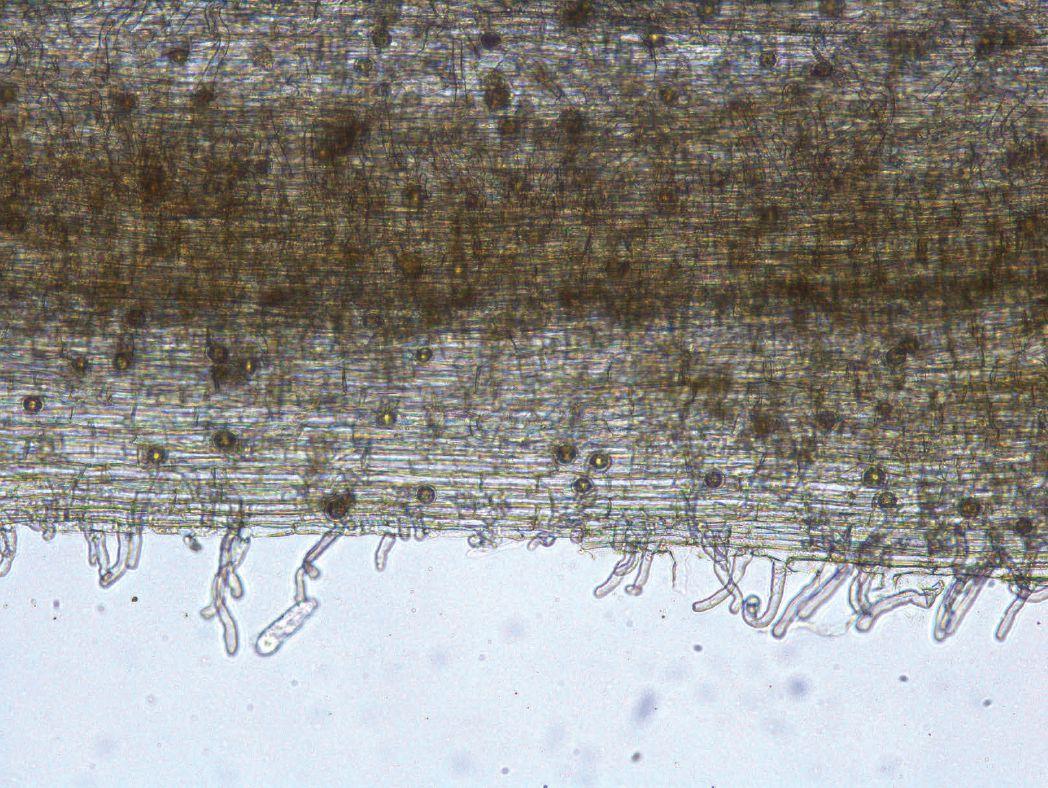
by Donna Fleury
Recent field surveys across the Prairies are improving the understanding around the widespread concern of root rot in pea and lentils. This disease complex includes serious pathogens like Aphanomyces, first confirmed in 2012 in Saskatchewan and in Alberta in 2013, and Fusarium that often occur together, increasing the risk of disease and yield loss. Researchers are building on this information through new projects and the development of decision-support tools to address disease risks.
“Over the past four years we conducted province-wide surveys of pea and lentil fields across Alberta, Saskatchewan and Manitoba to determine the distribution of Aphanomyces euteiches, and to determine what the primary root rot complex organisms are and their distribution and severity,” explains Syama Chatterton, plant pathologist with Agriculture and Agri-Food Canada (AAFC) in Lethbridge, Alta. “We discovered that Aphanomyces is now virtually anywhere that peas and lentils have been grown in the Prairie Provinces, including north into the Peace Region of Alberta. On average, 40 to 50 per cent of pea and lentil fields tested positive
for Aphanomyces, causing moderate to severe injury in many of these crops.”
The survey results also confirmed that Aphanomyces is typically occurring as a complex with many different Fusarium species. Researchers found that there is an interaction between these two pathogens, with higher disease levels when both Aphanomyces and Fusarium are present together compared to only one or the other. Across the Prairies, between 80 and 90 percent of pea and lentil fields tested positive for Fusarium, including F. avenaceum and F. solani, the two most virulent Fusarium species in pea and lentil. It is important to note that these are not the same pathogens that cause Fusarium Head Blight in wheat, which is caused by F. graminearum
A. euteiches is a highly aggressive soil borne (not seed borne) water mould or Oomycete affecting pea and lentils, producing long-lived resting spores (oospores). Although infection usually
ABOVE: Oospores (resting spores) of Aphanomyces euteiches in roots of an infected pea plant.
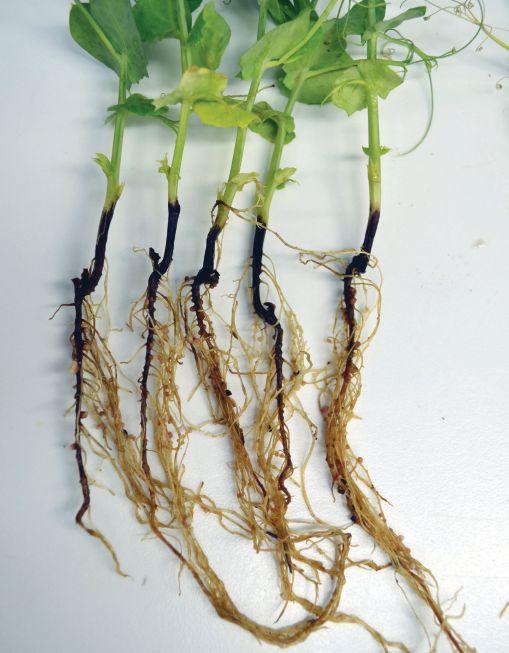
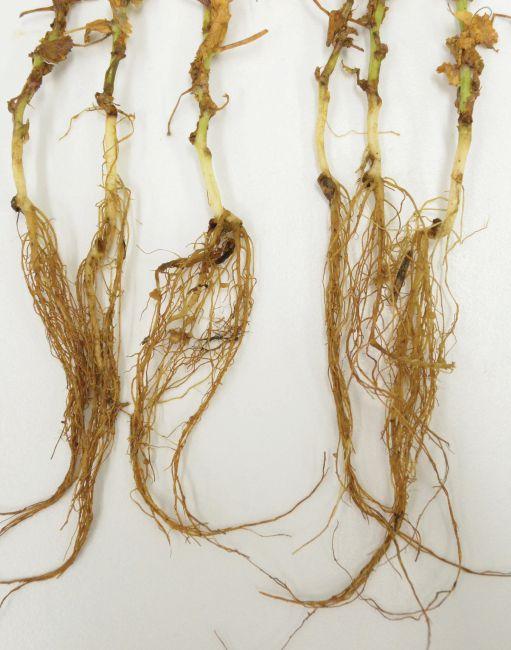
occurs during seedling emergence, infection can happen at any time during the growing season when soil moisture is available. Fusarium spp. are widely distributed with a broad host range, surviving on stubble and bridging from crop to crop. The most susceptible stage to infection seems to be at the seedling stage, and disease is favoured by high soil temperatures and moderate soil moisture. Classical Aphanomyces root rot symptoms include honey-brown discolouration of lateral roots, epicotyl pinching and cortical decay, while classical Fusarium root rot symptoms are a blackened tap root healthy lateral roots and reddening of the vascular bundle. However, in a root rot complex of both pathogens, it can be difficult to distinguish between them and above-ground symptom expression can vary greatly. As well, above-ground symptoms are not always a good indicator of root rot severity.
“Growers with a history of root rots should get their soil tested to confirm the presence of Aphanomyces, and if present then avoid planting peas and lentils in Aphanomyces-infested fields,” Chatterton says. “The recommended management strategy for Aphanomyces is for prolonged rotations of six to eight years between pea and lentils in infested fields. The best pulse crop option in infested fields are fababeans, soybean and chickpeas, which are considered to be nonAphanomyces hosts. We also recommend that growers consider using a seed treatment that targets the root rot complex. Because there is an interplay between Aphanomyces and Fusarium, seed treatments for Fusarium are recommended as that can help knock back the increased inoculum load of multiple pathogens and improve crop development. As well there is one seed treatment chemistry registered for early season suppression of Aphanomyces, however Aphanomyces can come in later and beyond the window of seed treatment.”
Researchers are now taking this wealth of information gained from the field surveys on the causal organisms and their distribution and moving into more specific research in the next phase of the project. “We have completed some preliminary work on developing a soil testing system and decision support tools for managing
Aphanomyces,” Chatterton adds. It is a difficult pathogen to isolate with conventional tools and requires specialized DNA testing. We have developed DNA detection methods that are good at detecting high inoculum loads, but we want to refine the methods to be able to detect lower pathogen loads. Current soil lab tests are only capable of confirming the presence or absence of Aphanomyces. It will also be important to develop a multiplex method that can look at different inoculum loads of different pathogens causing the root rot complex including Aphanomyces and Fusarium.”
Various agronomy trials are also underway, including a comparison of different seed treatments to determine if there may be any new chemistries that might offer promise. Other trials are exploring management strategies such as using cover crops with Brassica spp. in rotation and intercropping trials as potential disease management tools. Researchers are also conducting some pulse crop rotation trials across the Prairies to make sure other pulses such as fababean or soybean that are considered non-hosts of Aphanomyces are not increasing inoculum in the soil.
“There are also plant breeding efforts in progress to incorporate Aphanomyces resistance into pea and lentils,” Chatterton adds. “Plant breeders at the University of Saskatchewan are working on Aphanomyces resistance. However, the available resistance sources will only provide partial resistance to new cultivars. Because of the complex between the two pathogens causing root rot, in the long run resistance to both Aphanomyces and Fusarium will be important. Therefore, along with researchers at AAFC in Lacombe, Alta. we are looking at developing resistance to Fusarium pathogens, which at some point we will be able to pyramid with Aphanomyces resistance. Unfortunately, resistance development takes a long time through plant breeding work. Over the next three years, we expect to complete the development of a more refined decision-support tool and identify other management strategies to help growers better manage this widespread root rot complex in pea and lentil crops across the Prairies.”

Research shows that calendar date has a greater impact on yield than soil temperature.
by Donna Fleury
One study helped change official recommendations for soybean planting dates in Manitoba. Between 2014 and 2015, Yvonne Lawley, a University of Manitoba cropping systems researcher, and her then-graduate student, Cassandra Tkachuk, tested six different seeding dates based on soil temperatures ranging from six to 16 degrees. Western Grains Research Foundation and Growing Forward 2 funded the project.
Contrary to expectations, they found that beans seeded earlier saw higher yields regardless of soil temperature. They concluded that calendar date had a greater impact on yield than soil temperature.
These results challenged an old paradigm: beans are traditionally seeded when soils reach about 10 C, which typically happens around the end of May. Not that recommendations have changed radically: Tkachuk, who now works as a production specialist for Manitoba Pulse and Soybean Growers, says producers are still encouraged to take soil temperature into consideration.
“It’s called the time-of-seeding compromise,” Tkachuk says.
“Producers should consider all of these factors when determining planting date: calendar date, soil temperature, weather and personal risk. How many soybean acres are you putting in relative to other crops? If you have a lot of acres, you might want to start early and spread out the planting dates. But don’t put all the acres in early if you have other crops to plant or a high risk of frost.”
A new study at University of Manitoba will shed more light on this subject. Kristen MacMillan is an applied soybean and pulse research agronomist in the department of plant science. In 2017, she began a two-year study funded by Manitoba Pulse and Soybean Growers that will build on Tkachuk’s work.
“Instead of soil temperatures, we defined seeding windows based on calendar dates and we seed soybeans within these windows at all sites regardless of soil temperature,” MacMillan explains. “The aim is to further refine seeding date recommendations across a wider range of environments.”
ABOVE: The four factors to consider when making soybean seeding date decisions.



days
temperature at planting (ºC) Cool temperatures (6-12ºC)
The relationship between days to 50 per cent emergence and soil temperature for three combined site years in Cassandra Tkachuk’s study.
Tkachuk’s project was run on two sites in southern Manitoba. MacMillan’s study expands to four sites: Carman, Melita, Arborg and Dauphin.
“The initial work was done in Carman and Morden, which are located in the long season area of Manitoba, so in order for us to have more confidence in seeding date recommendations we wanted to expand outside that traditional soybean growing region,” MacMillan explains.
The new study will look at four seeding windows of five to 10 days each over a roughly six-week period. The first window is very early, roughly the last week of April into the first week of May, or as soon as producers can get into the field, says MacMillan. The second window is May 6 to 14 and the third window falls during the time producers traditionally seed soybeans, around May 16 to 23. The final window is the last week of May to the first week of June.
Two varieties are being tested at the four seeding windows at each of the sites: a short-season soybean variety and a longer season soybean variety.
MacMillan says the study was originally planned to run for two years, concluding in 2018, but very dry conditions over both years of the study have prompted her to consider adding a third year in hopes of more “normal” conditions in 2019.
Data from 2018 hasn’t yet been analyzed, but 2017 results show that the first three seeding dates had a statistically similar yield, which suggests that while there was no penalty or advantage to early seeding, there is a longer window for seeding soybeans than was originally expected.
“We didn’t see an advantage to the earliest seeding date, but we’ll see if that trend continues in 2018. We did see a 15 to 20 per cent yield drop with that late season seeding date, when we seeded in the last few days of May and into June,” she says.
According to MacMillan, the original study was prompted by farmers’ experience; they were already moving toward earlier seed-
ing with some success. She hopes to gain a better understanding of whether and how soybean yield responds to seeding date and if that response is consistent across environments.
“For now, if farmers are seeding earlier, I would remind them to know what their last spring frost date is, and stay within two weeks of that date,” she says. “You want to make sure the crop is not at risk of frost when it comes up.”
Lawley says that though there are tradeoffs in terms of slower emergence, seeding earlier in the year helps spread out planting dates.
“What I think will happen in the Red River Valley is that we’ll see more problems with root rots and early season soil borne diseases in time, so stand establishment may become more important for us. But at this point the biggest constraint on us is the length of the growing season,” she says.
Soil temperature and seeding date are intertwined with the risk of frost, Lawley adds, so producers are taking on extra risk when they seed earlier in the year or into colder soil temperatures. “The farmer is trading off the chance of reward with the risk of reseeding in the spring,” she says. But she wants farmers to consider not just soil temperature but the other factors involved in the decision: seeding date, weather and personal risk.
“Ultimately it’s a strategy – you don’t want to plant everything to one variety on one day, you want to takes steps to plant over a range of dates,” she says.
There are other strategies producers can use to get soybeans in the ground earlier.
Lawley points to her work with residue management using strip tillage before seeding soybeans to highlight the fact that there are ways of providing soil cover that help warm soils up earlier in the year. “This is a complicated story but the simple part is that we can manage residue to influence soil temperature,” she says.
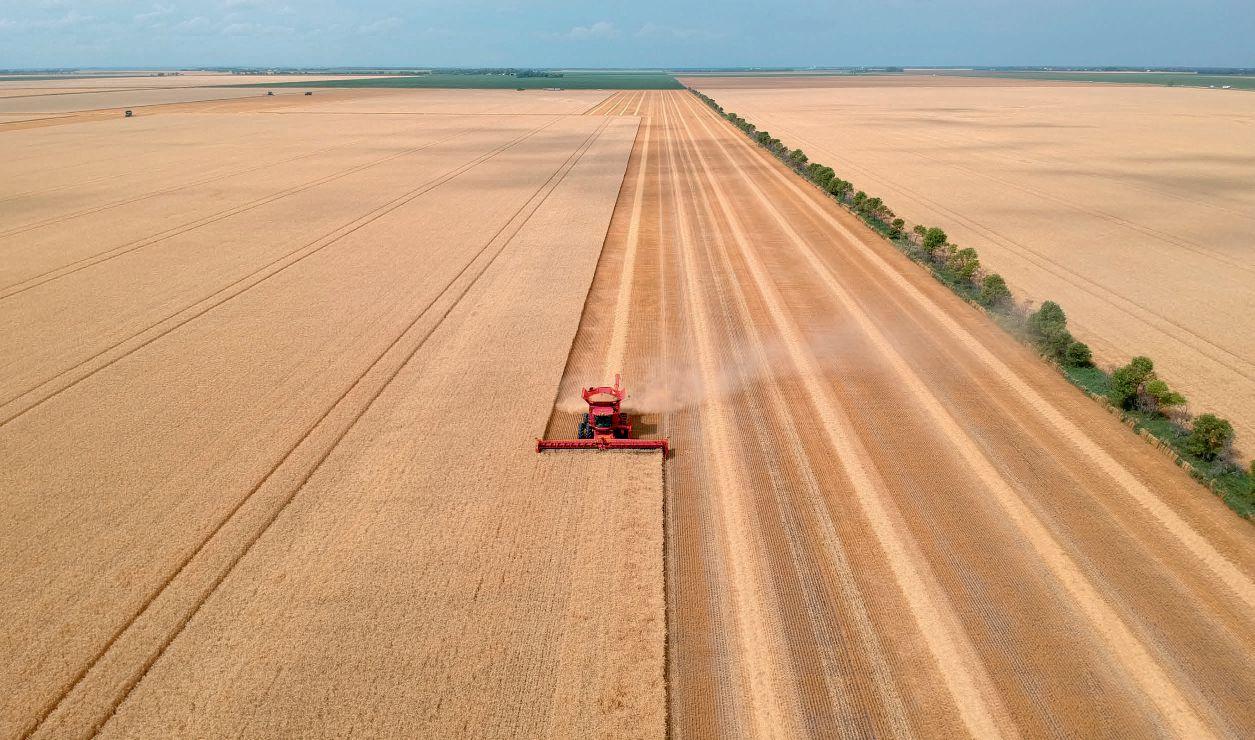
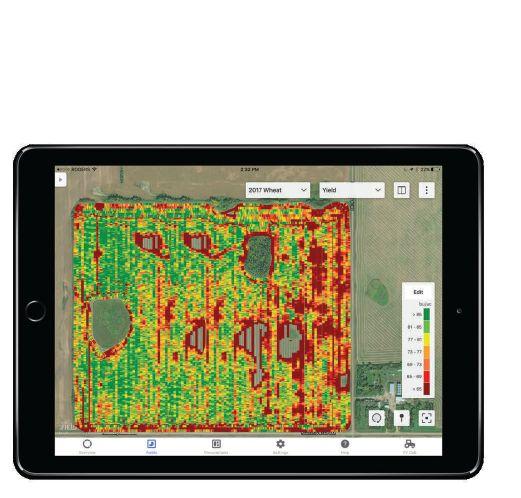

Managing weeds early and addressing weed resistance challenges should be top of mind.
Early weed control is important to ensure good crop emergence and stand establishment for most crops, especially in crops that are poor competitors with weeds, like pulses.
The timing of the critical weed control period – the growth stages in the crop that must be kept weed-free to prevent yield loss – is based on yield loss due to weed interference of no more than five per cent. This stage is important to increase the crop’s competitiveness and to maximize the crop’s yields and performance. Including a pre-emergent soil-applied herbicide can extend control through this critical weed-free period.
“The biggest benefit of using any type of pre-emergent soil-applied herbicide is the extended control and the development of that soil barrier that helps control emerging or germinating weeds . . . weeds that a burnoff (or contact herbicide) won’t touch,” says Krista Henry, marketing and communications manager, FMC Agricultural Solutions.
Timing is everything
Rachel Evans, technical sales manager, Eastern Prairies with FMC Agricultural Solutions, notes timing an important factor, however this can change depending on a grower’s location – even across Western Canada.
“Early application timing is important to try to catch the early spring rains that might be coming through, and also for managing weeds like kochia that can germinate very early in the season,” Evans says. “For example, in Manitoba in the Red River Valley area, where tillage is common and where seeding equipment might disturb more of the soil, going in after seeding but pre-emergent may be a better time. A higher disturbance system can kick up the soil and move the product away from the seed row, reducing the effectiveness of the extended weed control barrier. The timing of an application will depend on location, seeding system and weeds to be controlled.”
But understanding how a pre-emergent herbicide works, and what is happening in the soil and below the surface when the product is applied, is just as important as proper timing, according to Evans. The product works below the soil before the weeds even come up, controlling them underground, so there won’t be any evidence of dead weeds at the surface, for example.
Using a pre-emergent herbicide, such as Authority 480, is an important part of a grower’s herbicide layering strategy, as it can provide a way to manage weeds early and combat some weed resistance challenges. Jordan Brisebois, account manager for FMC Agricultural Solutions, says the product can be applied preseed or pre-emergent, depending on soil and moisture conditions and weed competition.
“Authority 480 can be soil-applied preseed very early because the product is photo stable,” Brisebois explains, adding it needs moisture to be activated. Growers can also apply the product pre-emerge, or closer to a pre-seed burnoff timing, when some weeds may already be up and can be tank-mixed with glyphosate (Group 9) and Aim EC herbicide (Group 14), to save multiple passes.
In addition, applying a pre-emergent herbicide, up to three days after seeding and before crop emergence, reduces the risk of moving the soil and reduces the efficacy of the extended weed control soil barrier formed by the herbicide.
As always, growers must consider several factors, such as soil type and weed spectrum, when choosing a product and the right application rate. A lower rate can be used for targeting specific weeds, like kochia, and for lower organic matter soils. Conversely, higher rates are recommended to control additional weeds like lamb’s-quarters, redroot pigweed, wild buckwheat and suppression of cleavers. A lower rate can also be used when soils have organic matter content higher
than three per cent and a pH level of less than seven.
When trying a new product, Evans notes it may be useful to leave a check strip or a field edge, or shut the boom off for a second, to provide a comparison in their field as a reference point. Additionally, Evans says choosing a herbicide with extended control can also help with staging of weeds for in-crop control applications. “If weeds do emerge as extended control starts to dissipate later in the spring, the staging of those weeds will be much more conducive to an in-crop application and provide a more efficacious timing.”
When applied under ideal conditions, Brisebois says a pre-emergent herbicide may also reduce the need for a pre-harvest application. “Last year, in flax for example, our Authority 480 application was timed right for the rains pre-emergent in the spring, and we went into harvest with a really clean field. In some years, kochia is a problem in some areas and a pre-harvest application is needed to make combining easier . . . last year, we didn’t have a fall kochia problem, so we saved ourselves an extra glyphosate application pre-harvest.”
Above all, protecting herbicide technologies is imperative, and growers need to be vigilant in their herbicide stewardship. Across Canada, it’s been confirmed that using multiple modes of action and practicing herbicide layering helps to slow the development of herbicide resistance.
“As a group 14, Authority 480 adds another mode of action to help manage resistance in multiple crop rotations for different weed resistance over multiple years,” Brisbois says. “It is a very critical part of our herbicide stewardship and protecting some of those other herbicide technologies.”
For more information, visit fmccrop.ca/products/ authority-480-west.



by Ross H. McKenzie PhD, P. Ag.
Most of the cultivated soils of Western Canada formed and developed under grassland vegetation. There are four major soil zones: Brown, Dark Brown, Black and Dark Gray. Each zone is characterized by uniquely different environmental conditions which influenced soil development. For example, soils in the Gray zone developed under boreal forest vegetation and are in the Luvisolic soil order. The Canadian System of Soil Classification classifies soils developed under grassland vegetation in the Chernozemic soil order. The word Chernozem comes from a Russian term meaning “black soil.”
Factors affecting soil formation
Western Canadian soils have formed and developed over the past 10,000 years as a result of the interaction of six major factors: climate, vegetation, parent material, topography, drainage and time. The relative influence of each factor varies, and the interaction of these factors determined the type of soil that developed at the local level.
Climate, specifically temperature and precipitation level, has strongly influenced the types of native vegetation that survived and flourished over the past 10,000 years. For example, the climate of Brown soil zone is typically relatively warm, with higher evapotranspiration and lower precipitation resulting in short, drought tolerant prairie grasses being the dominant native vegetation. The Black soil zone is relatively cooler with lower evapotranspiration and higher precipitation, resulting in lusher fescue native grass vegetation.
The type of vegetation strongly influenced soil development including the types and amounts organic matter added to the soil, which in turn influenced soil colour. Typically, the darker the soil colour, the higher the amount of soil organic matter.
Parent material refers to the various types of geological deposits which determined the minerals on which soil formed, and determined characteristics such as soil texture, soil nutrient levels and water holding capacity. For example, lacustrine parent material was deposited in glacial lakebeds. The deposited material tended to be fine textured clay and topography tended to be relatively flat to undulating and mostly stone free. This is in contrast to glacial till material with variable soil texture, gently rolling to hummocky topography and often with moderate level of stones.
Topography and slope position strongly influenced soil development. For example, soil development was minimal on the tops of a knolls versus lower slope positions. On the top knolls, water infiltration is limited and water runoff is greater versus lower slope positions with greater water infiltration and limited water
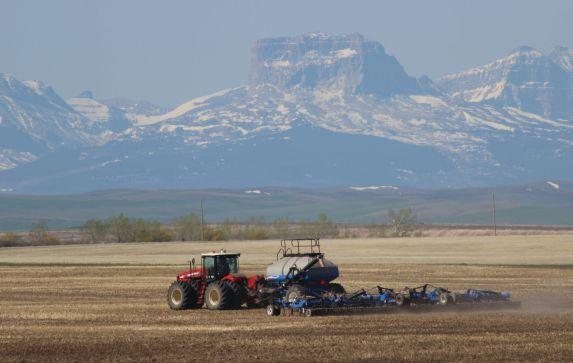
LEFT AND BOTTOM: In the past 30 years, the shift to continuous cropping, direct seeding and diverse crop rotations have had a profound improvement on soil quality.
<LEFT: The wheat-fallow system commonly used between 1920 and 1970 resulted in a significant decline in soil organic matter and contributed to extensive wind and water erosion of soil.
runoff. Variation in stored soil moisture influenced the amount of vegetation growth, soil development, and organic matter addition to soil.
Surface drainage and internal drainage influenced soil moisture, which in turn influenced vegetation types and amount of growth and soil development.
The processes of soil development in Western Canada have taken place slowly over time during the past 10,000 years. In the past 150 years, human influence has become a seventh additional factor that continues to influence subtle to significant changes to soil. For example, the wheat-fallow system commonly used between 1920 and 1970 resulted in a significant decline in soil organic matter and contributed to extensive wind and water erosion of soil. However, in the past 30 years, the shift to continuous cropping, direct seeding and diverse crop rotations have had a profound improvement on soil quality.
The Brown soil zone is located is southeastern Alberta and southwestern Saskatchewan. The Brown soil zone is the most arid of all the zones and is characterized by average annual precipitation in the range of 275 to 325 millimetres (mm). The growing season typically has high evapotranspiration, frequent droughts and hot dry winds. As a result, the dominant native vegetation was short and mixed prairie grasses. Limited growth of native grasses over 10,000 years after the glaciers receded meant less soil profile development and relatively small amounts of organic matter were added to soil. Top soil is brown in colour, indicating a lower level of soil organic matter in the range of two to 3.5 per cent. Brown soils have relatively low soil fertility.
Moisture is the primary limiting factor to crop production in this region. Only the more favourable soil types within this zone are considered to be arable. From the 1920s to 1970s much of the annual cropland was in a wheat-fallow rotation. Some of the worst wind erosion events on the Prairies occurred in the Brown soil zone. The majority of the land is now direct-seeded and cultivation is kept to a minimum to conserve soil moisture and leave protective crop residue on the soil surface. Direct seeding practices have evolved to provide for good soil moisture and soil conservation which has greatly reduced the use of summer fallow.
The longer growing season and higher growing degree-days make this region the most ideal for irrigated production on the Prairies, particularly for special crops. Hard red spring wheat and canola are the most commonly grown dryland crops. Some producers have replaced summer fallow in the cropping system with lower water-use crops such as peas. Pea
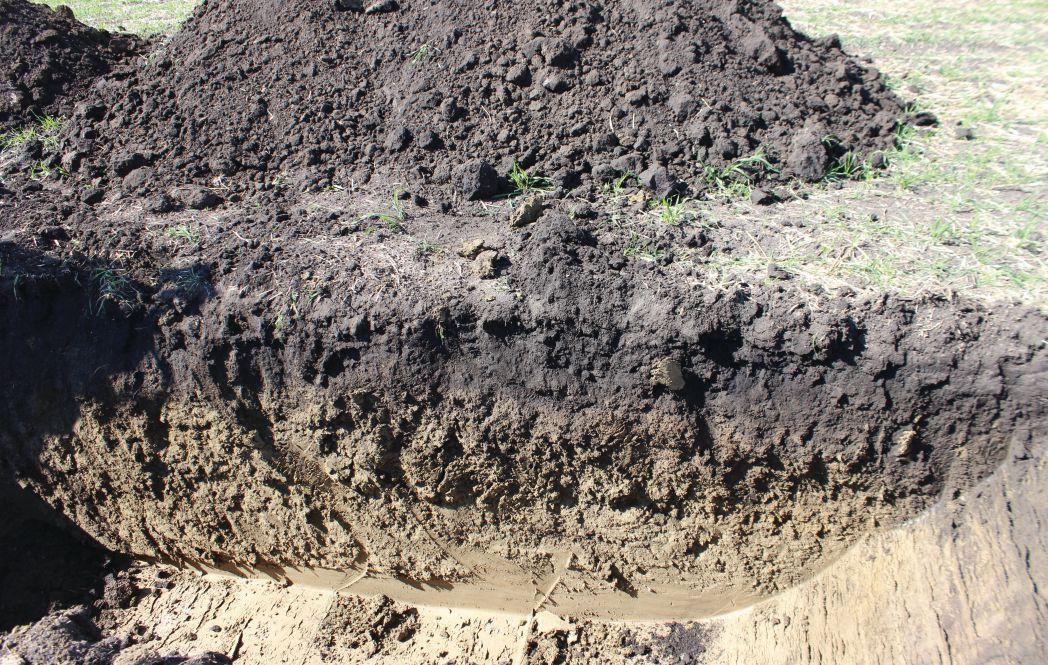
or lentil are commonly included in dryland crop rotations in recent years in this zone. Other drought-tolerant crops such as mustard are also grown in rotation with wheat. The poorer soil areas in this zone that are saline, sodic, or sandy, or that have other physical or chemical limitations, have been left as native rangeland or have been returned to permanent pasture. The highest agricultural use of these sensitive lands is for livestock grazing. Careful rangeland management practices are essential to ensure that these vulnerable soils are conserved and to maintain ecological integrity of the native plant community.
The Dark Brown soil zone is characterized by annual precipitation in the range of 325 to 375 mm, more than the Brown soil zone. The growing season typically has moderately high evapotranspiration, warm winds but less frequent droughts than the Brown Soil Zone. The dominant native vegetation was mixed prairie grasses. Soils are dark brown in colour, indicating a moderate level of soil organic matter in the range of 3.5 to five per cent, with moderate soil fertility. Moisture is the principal limiting factor to crop production. The more favourable soil types are arable. Similar to the Brown soil zone, the wheat-fallow rotation was commonly used up to the 1970s, however, with the adoption of direct seeding for moisture and soil conservation, most areas are now direct seeded and continuously cropped.
Many areas of this zone are also well suited to irrigated crop production. Irrigated cropping systems include fewer special crops than in the Brown soil zone and a higher portion of annual and perennial forage crops.
The majority of annually cropped land is direct-seeded and cultivation is kept to a minimum to conserve soil moisture and maintain protective crop residue on the soil surface. Most producers have shifted away from the wheat-fallow rotation in favour of more
diverse cropping systems that include cereal, oilseed and pulse crops in their crop rotation.
The Black soil zone is characterized by annual precipitation in the range of 400 to 475 mm, lower evapotranspiration and less frequent warm, dry winds than in the Dark Brown soil zone. The dominant native vegetation was fescue grasses, with the invasion of aspen. This region is sometimes referred to as parkland. The soil colour is black, indicating good levels of soil organic matter in the range of 5 to 10 per cent. These are the most fertile soils in the Prairie Provinces. The vast majority of land is arable and well-suited for annual crop production. Moisture is usually not a limiting factor to crop production. Wheat, barley, canola, and forages for hay and pasture are the most commonly grown crops, with lesser amounts of pulse crops. Direct seeding or reduced tillage has been adopted by the majority of farmers, but cultivation is sometimes used to manage crop residue.
The Dark Gray soil zone is characterized by quite variable annual precipitation ranging from 300 to 500 mm. The dominant native vegetation was a mixture of fescue grasses with both coniferous and deciduous trees. The colour of the Dark Gray soils varies depending on the level of leaching and the amount of soil organic matter accumulation in the soil. Leaching is caused by the organic acids that come from the forest leaf litter on the soil surface. The greater the leaching, the grayer the soil colour. The level of soil organic matter generally ranges from three to 4.5 per cent, similar to the Dark Brown soil zone. The majority of Dark Gray soils are arable and suitable for annual crop production. Moisture can sometimes be a limiting factor to crop production in some areas of this region. The majority of farmers have adopted direct seeding or reduced tillage, which has led to improved soil quality.
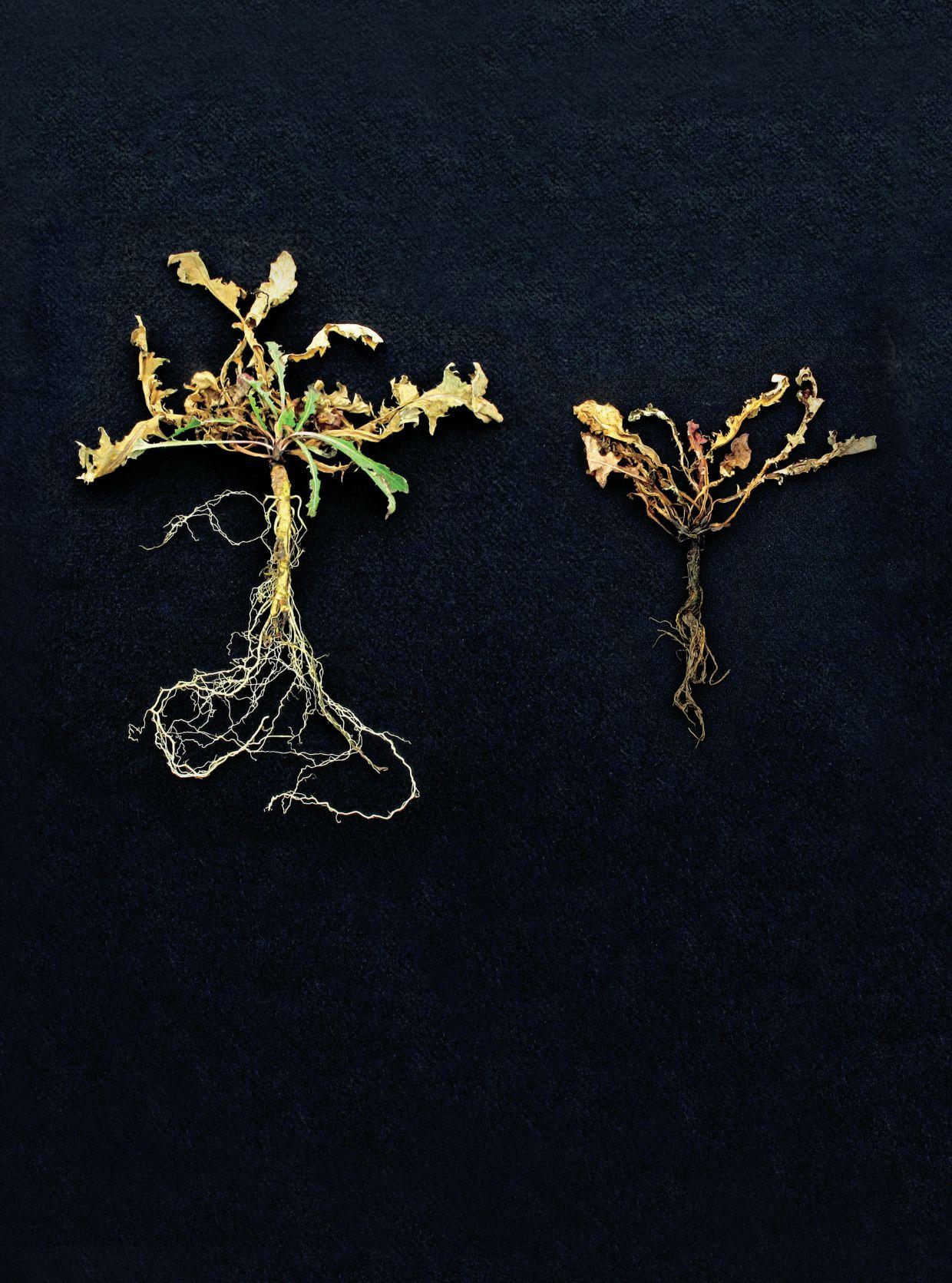
Before
Narrow-leaved