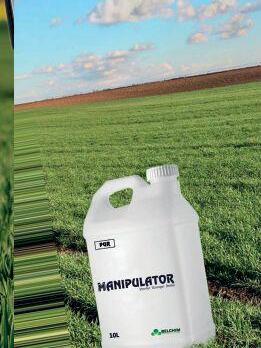
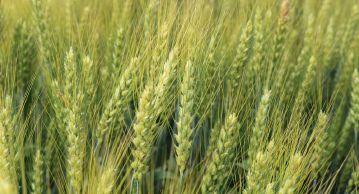
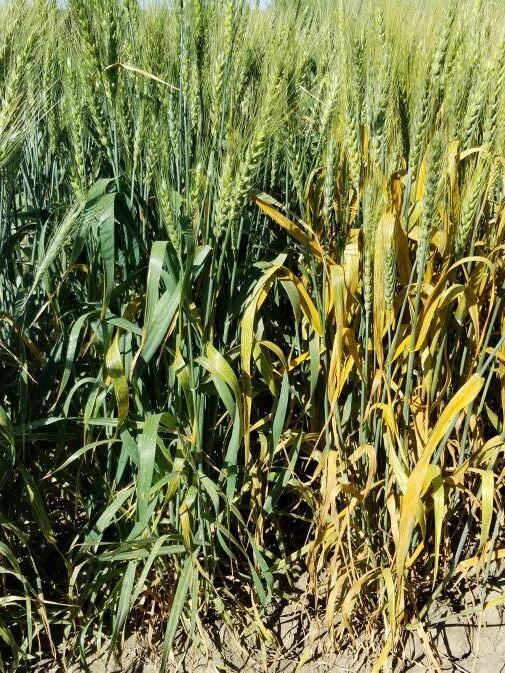
MANIPULATOR Plant Growth Regulator for Wheat, Barley & Oats lets you push for higher yield while reducing straw production.
MANIPULATOR has a flexible application window that helps you produce a high quality crop with shorter, stronger plants and reduced lodging.
MANIPULATOR has been proven effective through years of trials in Canadian crops.
A healthy cereal crop will save you time and fuel during harvest for a maximum return on investment.
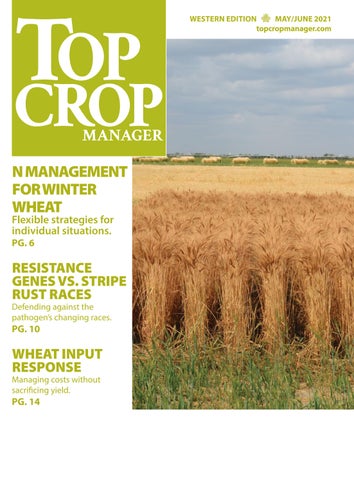
6 | Nitrogen management strategies for winter wheat
N management strategies can be flexible, depending on environmental conditions, yield targets and an operation’s goals.
By Donna Fleury
10 | Wheat resistance genes vs. stripe rust races
Ensuring Alberta spring wheat varieties can defend against the pathogen’s changing races.
By Carolyn King
14 | Wheat response to various inputs, alone and in combination
Carefully managing production costs without sacrificing yield can help maximize agronomic and economic returns.
By Donna Fleury
CEREALS
Planning for success
By Stefanie Croley
26 Controlling glyphosate-resistant kochia in chemical fallow
By Bruce Barker
18 Can winter wheat in rotation reduce greenhouse gas emissions?
By Donna Fleury
CEREALS
22 FHB control in durum requires integrated approach By
Bruce Barker
ON THE WEB
CWRC AND UNIVERSITY OF ALBERTA ENTER CORE BREEDING AGREEMENT
The Canadian Wheat Research Coalition’s investment of $2 million over five years will fund research activities through the University of Alberta’s wheat breeding program, with a specific focus on developing new Canada Western Red Spring and Canada Prairie Spring Red wheat varieties. TopCropManager.com
Readers will find numerous references to
labels for complete instructions.
STEFANIE CROLEY EDITORIAL DIRECTOR, AGRICULTURE
PLANNING FOR SUCCESS
It’s planning season at Top Crop Manager, and as this issue went to press, our team was at the height of planning for Fall 2021 and beyond. It’s an exciting process – we discuss ideas for the coming year, reflect on what’s working and where improvement is necessary, and share reader feedback we’ve collected.
Earlier this spring, I received a phone call from a long-time subscriber named Linda, who suggested we consider including recipes for some of the more non-traditional crops being grown in Canada, as sharing the versatility of the end-use product could show producers the value in growing these important crops. We had a great chat about how crop production has evolved so much and how these “newer” crops may one day be as common as growing wheat or canola.
Linda’s call had me thinking back to the early days of Top Crop Manager. The magazine started in 1973 as a series of editions, including Beans in Canada, Corn in Canada, Canola in Canada and Potatoes in Canada – the last of which still exists today. These editions, collectively part of what became Agri-Book Magazine, aimed to bring third-party crop production research to specific crop producers in Canada, before officially becoming Top Crop Manager in 1989. While our delivery methods have evolved to incorporate a website, weekly eNewsletter, social media accounts, live and virtual events and a podcast, we remain true to our mandate to provide well-researched and written articles about third-party crop production research and technology – these are the pillars of the Top Crop Manager brand.
Behind the scenes, our team discusses growth strategies almost daily. Some are a hit – look at western field editor Bruce Barker’s new Agronomy Update column, which we introduced in our September 2020 edition, or the many posters and resource guides we’ve developed over the years. Each new idea is carefully discussed (and sometimes heavily debated) before we decide to more forward, table it for another time, or scrap it altogether. I loved Linda’s idea, but I wasn’t able to convince the team to include recipes that use flax or quinoa. However, her suggestion was a good reminder to think outside the box and embrace the non-traditional as we plan for next year. As it so happens, the continued COVID-19 pandemic has given us a push in that direction as well. With that in mind, we’ve decided our 2022 Top Crop Summit will be held virtually again, as it was in 2021, out of an abundance of caution and given the continued uncertainty.
I can’t reveal all of the good stuff we have in the works just yet, but much like your strategy for each farm season, the recipe for success at Top Crop Manager includes a strong foundation, a lot of planning, open minds and a few calculated risks. We hope the articles in this issue, combined with your own methods, contribute to a successful season.
Editor’s note: Due to an unfortunate error, Top Crop Manager’s 2021 Fungicide Guide, published in April 2021, did not feature accurate information for certain products. We have corrected the Fungicide Guide online to include the most up-to-date information possible. Please visit www.topcropmanager.com/2021-western-fungicide-guide for the most recent version. We apologize for the error.
related groups whose products and services we believe may be of interest to you. If you prefer not to receive this information, please contact our circulation department in any of the four ways listed above.
N management strategies can be flexible, depending on the environmental conditions, yield targets and goals of individual operations.
by Donna Fleury
Winter wheat can be a good diversification cropping opportunity for growers in Western Canada, spreading out the seeding and harvest workload and providing rotational benefits for managing weeds, diseases and insect pests. Similar to other crops, nitrogen (N) is considered the biggest yield constraint for winter wheat, next to moisture. However, the growing season for winter cereals is much longer than for spring-seeded crops and can create unique challenges. Researchers are evaluating nitrogen management strategies to optimize winter wheat production.
At the Indian Head Agricultural Research Foundation (IHARF) in Indian Head, Sask., a two-year study was initiated to demonstrate winter wheat responses to various N fertilizer rates, timing and placement options. For the study, all of the N was applied as urea, the most widely used N source in Western Canada. The study compared three N fertilizer placement/timing strategies, including 100
per cent sideband at seeding, 100 per cent early spring broadcast, 50:50 split-application and five N fertilizer rates of 60, 90, 120, 150, 180 kilograms of N per hectare (kg N/ha). The study also included a control treatment where the only N fertilizer applied was seven kg N/ha from seed-placed monoammonium phosphate (11-52-0). The first winter wheat trials were seeded in the fall of 2018 and repeated in 2019, with a third and final trial established in the fall of 2020.
“Our results show that split applications between fall side- or mid-row band applications and an early spring surface broadcast application are best for optimizing both yield and protein over a range of environmental conditions,” says Chris Holzapfel, IHARF research manager. “Split applications tend to work fairly well regardless of
PHOTOS
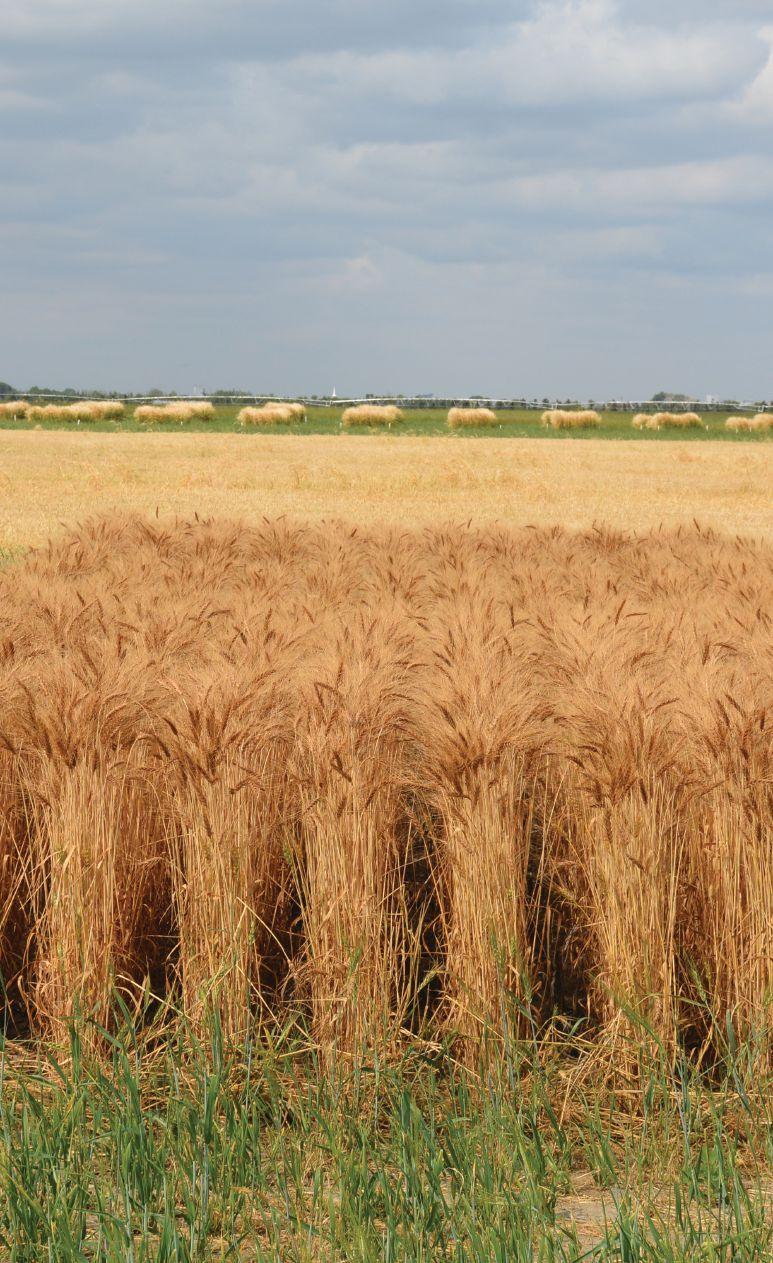
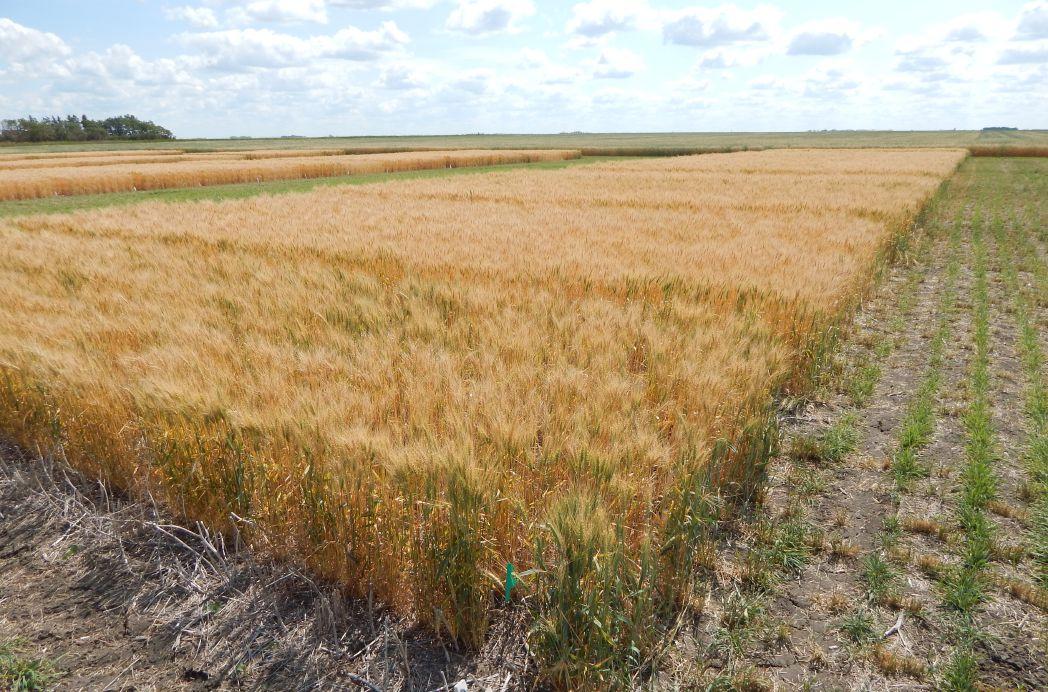
TOP: Overview of the trial area comparing winter wheat responses to various N fertilizer rates, timing and placement options in Indian Head, Sask., 2020.
ABOUT THE ONLY THING GROWERS TRUST MORE THAN OUR PULSE FUNGICIDES.
Innovative solutions you can always count on.
For years, BASF has provided some of the most advanced – and trusted – disease management solutions for pulse growers. And no matter what challenges you may face in the seasons ahead, you can count on us to be right by your side. Just think of us as your other best friend. To learn more, visit agsolutions.ca or call AgSolutions® Customer Care at 1-877-371-BASF (2273).
Always read and follow label directions.
specific environmental conditions that occur. This can be a good strategy if fall seeding conditions are dry or seeding is late and you aren’t sure what establishment will be like. That way, you can wait until spring to see the stand and winter survival before committing to the final fertilizer bill. However, there are some added application costs for split applications relative to placing everything as a sideband at seeding. There can also be a time crunch in the spring and the possibility of wet, muddy fields for spring broadcast.”
In some situations, side-banding all of the N at seeding tends to work quite well. This is especially true in drier environments and when combined with later seeding, both of which occur in southwest Saskatchewan and other parts of Saskatchewan and Alberta. The risk of denitrification or leaching and N losses is usually quite low in drier environments, Holzapfel adds. In some years, spring precipitation can be less reliable to move broadcast N into the rooting zone.
However, the opposite can occur in wetter portions of the Prairies, such as the northeast and eastern parts of Saskatchewan. In wetter locations, putting all of the N down at seeding can be riskier; even landscape and drainage can change the risk of denitrification or leaching losses in the spring. For growers in these wetter environments, applying a decent percentage of N in the spring can be a good management strategy. Indian Head tends to be more in the middle, with conditions varying from year to year, making split applications a better potential option in this area. At the other extreme, deferring the crop’s entire N requirements until spring is not recommended. Top-dressing as early in the spring as possible is critical for mitigating yield loss.
The recommended timing for a spring broadcast is as early as possible after the snow melts and the surface has dried off – usually sometime in mid-April. Although fields can be wet, it is really important to get out as soon as possible, when the winter wheat is starting to green up – normally before spring seeding operations. Holzapfel notes that if there is some uncertainty of winter survival and stand establishment, waiting until the stand starts to green up may be warranted. He says another advantage of a split application is that it does buy some time in the spring if conditions are wet or the stand is slow at greening up and lowers the risk of yield losses.
“The yield responses for our winter wheat trials looked a lot like what we traditionally see for spring wheat,” Holzapfel says. “However, it is important to note that both spring 2019 and 2020 were drier than normal, resulting in winter wheat yields averaging about 65 bushels per acre. Normally we would expect to see a yield advantage of about 20 per cent go to winter wheat, especially under wetter spring conditions when the crop is already established and can take advantage of the moisture, and heading and flowering can occur under cooler conditions.
“Under the conditions over the two years of the trials, the optimal N rate for maximizing yield was 120 to 150 kilograms of N per hectare, fertilizer plus soil residual N. As expected, protein generally peaked at slightly higher rates than yield, but the economic merits of fertilizing for maximum protein will vary depending on where the grain is marketed and whether any premiums or discounts are in effect.”
The overall trial results showed relatively consistent yields between the different timing and placement options. In 2020, the 100 per cent spring broadcast trial did suffer some yield loss due to the drier spring conditions, but made up for it in protein.
“Overall, the consistent yields between different timing and placement options indicate growers have a fair bit of flexibility in how they choose to manage N, depending on what works best for their operation,” Holzapfel says. “The split application does provide the most flexibility for assessing crop potential before committing to the full N requirements, as well as buffering against potential losses of fall-applied N and early season N deficiencies.”
“However, regardless of placement, a lot of time can pass between seeding and when crops are going to need N and start utilizing it, so during that window, N can be susceptible to losses. Although we didn’t include enhanced efficiency N formulations in this project for simplicity, some of these products can be a good fit with winter wheat.”
Comparing EEF products across Western Canada
In other recent studies, researchers with Agriculture and Agri-Food Canada (AAFC) compared different timing and placement options of various enhanced efficiency urea fertilizer (EEF) products in winter wheat across Western Canada. The studies were initiated to address gaps in knowledge and to better understand what the risks and benefits were of top-dressing N. Other studies are in progress comparing EEF products in spring wheat and canola.
“The question of how best to manage N in winter wheat, and whether putting all of it down at planting is operationally feasible or whether there are advantages of splitting applications has been going on for a long time,” explains Brian Beres, AAFC senior research scientist in agronomy in Lethbridge, Alta. “With the innovations around the introduction of EEFs and significantly higher attainable yield benefits with the latest genetics, we wanted to review N management systems for winter wheat. We have completed several studies at various sites across Western Canada representing the main soil zones over the past few years, all following a similar experimental design.”
The N management studies compared five different N urea types, including uncoated urea (46-0-0); ammoniacal N stabilized with a urease inhibitor NBPT (Agrotain); super-granulated urea with increased N stability derived from urease and nitrification inhibitor (SuperU); Environmentally Smart Nitrogen (ESN), a polymercoated urea; and urea ammonium nitrate (UAN; 28-0-0). More
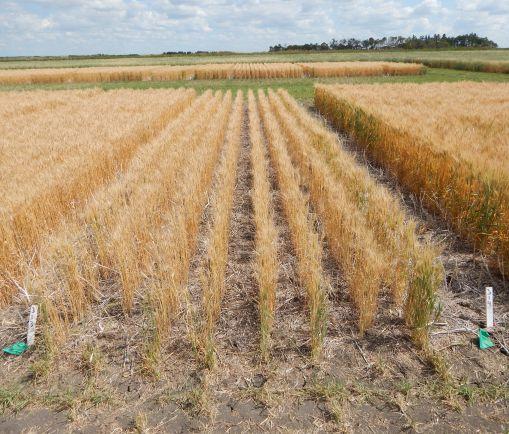
The winter wheat control plot in Indian Head, Sask., with the only N fertilizer applied of 7 kg N/ha from seed-placed monoammonium phosphate (11-52-0), 2020.
recently, ammoniacal N impregnated with a nitrification inhibitor (ENtrench) has been explored. In the studies, different timing and placement methods were also compared, including 100 per cent N side-banded at time of seeding, 100 per cent N broadcast in early spring at approximately Zadoks growth stage 30 (Feekes 4), and a 50:50 split application at seeding and in the spring. Various split application timing and placement possibilities were also compared.
“Overall, the results support flexibility in N management for winter wheat and depends more on how a producer wants to manage their operation and how intensively they want to manage the winter wheat crop phase,” Beres explains. “For producers who are hedging their bets on how intensively they want to manage the crop and the yield environment they are predicting, they may be better off to put all of the N down at planting. However, for producers who are anticipating a moderate- to high-yielding environment and are dedicated to managing that crop intensively, then split applications will deliver on those expectations. We have data to support both N management strategies. The decision is really around the function of intensity and yield expectations, along with the business case producers want to put around their winter wheat cropping system.”
ESN products are superior if there are seed safety issues, but otherwise appear to release too slowly in the northern Great Plains. Studies have shown a slight yield advantage with ESN side-banded at planting compared to 100 per cent uncoated urea. However, unless seed safety is an issue, research shows the same yield results can be achieved with a less costly 1:1 blend of ESN and uncoated urea.
Beres adds that the results clearly show benefits to EEF products with split applications when top-dressing. The results suggest split
applications of N might be most efficient for yield and protein optimization when combined with an EEF product, particularly with urease or urease plus nitrification inhibitors, and if the majority of N is applied in spring. The spring application should be made early in the spring, once the crop is actively growing at the Zadoks growth stage 30 (Feekes 4).
Similar results have been observed in unpublished research, where yield results were in the order of SuperU ≥ ENtrench ≥ urea ≥ ESN; the yield response to SuperU was significantly higher than ESN. For timing and placement, best yields were observed when N was all banded, and least with a 30 per cent banded/70 per cent late fall in-crop application. A split application of N in-crop at Feekes 4 produced similar yields to all banded. Moreover, Agrotain Ultra was superior to all other N sources with regards to wheat grain yield and agronomic efficiency.
“Managing N for winter wheat production can be flexible, depending on individual operations and their cropping system strategies, management intensity and yield goals,” Beres says. “Generally, applications made early in the vegetative stage are partitioning resources to yield, while applications at the reproductive stage are too late for yield and are mostly partitioning resources to protein.
“Some winter wheat producers have been aggressive with multiple split applications, such as at planting, followed by a small amount of N at the vegetative stage in early spring and once more at the reproductive stage. For these producers, this more intensive strategy is pencilling out for them. Producers will need to decide what works best for their operation, cropping system and environmental conditions.”
SHIPPING SUPPLY SPECIALISTS
WHEAT RESISTANCE GENES VS. STRIPE RUST RACES
Ensuring Alberta spring wheat varieties can defend against the pathogen’s changing races.
by Carolyn King
Alberta is a Canadian hotspot for stripe rust, a disease that can cause devastating yield losses in susceptible wheat varieties under cool, moist conditions. And the pathogen is notorious for its ability to quickly defeat resistance genes. So Alberta wheat breeders such as Dean Spaner and Harpinder Randhawa and crop pathologists like Reem Aboukhaddour are making sure the latest varieties can withstand Alberta’s current stripe rust races.
Spaner, a professor at the University of Alberta, breeds Canada Western Red Spring (CWRS) wheats, while Randhawa, a research scientist with Agriculture and Agri-Food Canada (AAFC) in Lethbridge, targets Canada Prairie Spring (CPS) and Canada Western Soft White Spring (CWSWS) wheats.
“Harpinder’s program and our program – the two spring wheat breeding programs in Alberta – have often worked together over the years,” Spaner notes. “That includes collaboration on resistance to stripe rust, one of our biggest wheat diseases in Alberta.”
Alberta has had multiple stripe rust epidemics over the years, especially in the past two decades, and stripe rust resistance is a priority for both programs.
“To be successful in our ongoing battle with stripe rust, we need to continually work on three interlinked components,” Randhawa explains. “One, we need to constantly survey for changes in the pathogen’s virulence. Two, we need to continuously screen wheat germplasm and characterize new sources of stripe rust resistance to replace defeated resistance genes. And three, we need to incorporate those new resistance genes into our breeding materials and eventually release new cultivars that are resistant to those new races.
“So you need to know your enemy, you need to prepare your arsenal, and then you need to fire.”
Knowing the enemy
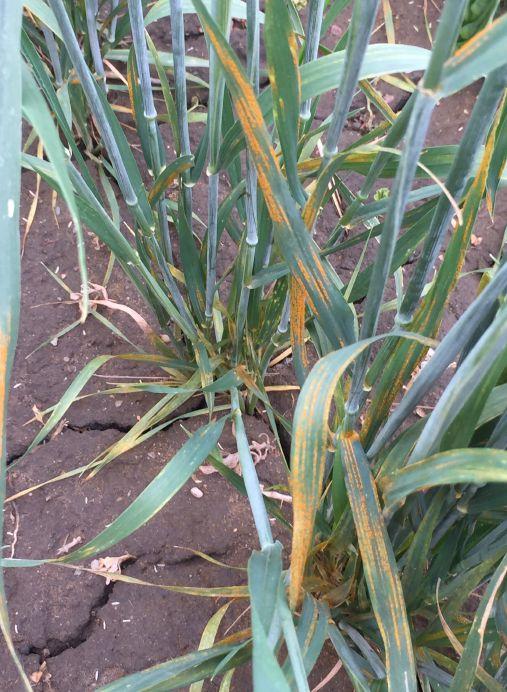
Stripe rust, also called yellow rust, is caused by the fungal pathogen Puccinia striiformis. It produces yellowish orange pustules on the leaves of wheat and some other grasses. The pustules occur in stripes parallel to the leaf veins. Each pustule contains thousands of spores that can be carried by the wind for long distances and stay viable to cause new infections.
“Stripe rust takes away green matter, and if it starts taking away the flag leaf of any grain crop it can diminish yield quite heavily,” Spaner says. “In severe infestations, you can have 50 per cent yield loss.”
The pathogen requires a living host to survive, so conditions across much of the Canadian Prairies are not usually suitable for the fungus to overwinter. For the most part, the spores are blown into Canada from the United States each year.
Aboukhaddour, a research scientist at AAFC-Lethbridge, explains that there are two wind pathways for the spread of stripe rust into Canada. Most spores arriving in Alberta are thought to come from the Pacific Northwest (PNW) states of Washington, Idaho and Oregon, a region that usually has favourable conditions for year-round survival of stripe rust. From there, the spores are blown into southern British Columbia and the Lethbridge area, and then into western PESTS
Stripe rust is notorious for its ability to quickly defeat resistance genes.
flag
Saskatchewan, central Alberta and sometimes northern Alberta.
In the other rust pathway, the spores are carried northward from Mexico and Texas through the central and eastern U.S. and into the eastern Prairies and Eastern Canada.
“In southern Alberta, the wind-blown spores shower down on our wheat crops with the rain. If the PNW has early season infection and southern Alberta has an early, wet, cool spring, the disease can quickly take hold in our winter wheat crops and spread from there into our spring wheats,” Aboukhaddour says. That scenario can lead to serious stripe rust epidemics, as the pathogen reproduces asexually over and over again during the growing season.
Stripe rust may also overwinter in Alberta. “The pathogen is able to overwinter in southern and central Alberta as a dormant fungus inside green tissue of winter wheat, volunteer wheat or wild grasses. However, it needs an insulating blanket of snow to allow it to survive when temperatures fall below about -5 C,” she says. When it overwinters, the disease can get an early start in the spring, increasing the risk for serious impacts.
Aboukhaddour is one of the pathologists providing the breeders with the latest information on stripe rust. As part of that work, her research group monitors the disease’s incidence and severity in annual surveys in winter wheat and spring wheat fields in southern Alberta. Her colleagues at Alberta Agriculture and Forestry, the University of Alberta and AAFC in Brooks, Lacombe, Edmonton and Beaverlodge conduct the surveys in south-central, central and northern Alberta.
An increasingly aggressive threat
The pathologists also monitor the virulence of the pathogen’s changing races on wheat lines carrying different stripe rust resistance
genes. That virulence is escalating.
Aboukhaddour notes that, although stripe rust was detected in the U.S. and Canada in the early 1900s, it only started to become economically important in the U.S. in the 1950s and 1960s. In Canada, the disease first became a serious concern in southern Alberta’s irrigated soft white wheat crops in the 1980s and in central Alberta in the 1990s.
Then in 2000, a new stripe rust lineage, which evolved either in East Africa or the Middle East, started replacing the older races in North America. This new group of races has been a game changer, ramping up the disease’s ability to impact wheat crops.
“These new races can cause infection at higher temperatures, which has enabled the pathogen to expand its geographic range into warmer regions,” Aboukhaddour explains. “Not only that, the new races have a wider spectrum of virulence, so they can defeat more resistance genes.”
She recently led a study to evaluate 140 Canadian stripe rust isolates collected from 1984 to 2017 against 18 stripe rust resistance genes. “Our evaluation showed the pathogen has increased in its virulence. Most of the isolates collected before 2000 were able to defeat no more than four resistance genes. Most of them since 2010 were able to defeat at least seven of the 18 genes.”
The recent increases in virulence are likely due in part to the incursion of new races around 2000 and the increased deployment of wheat varieties with stripe rust resistance genes. Deploying resistance genes puts selection pressure on the pathogen towards races that are able to overcome those genes.
Most of the races in the collection are very similar to the U.S. races. Although Canada does have some unique races, they are not more virulent than the U.S. races. Aboukhaddour adds, “We also found that the races in Alberta and B.C. were more similar to the PNW races, whereas the races in Manitoba and Ontario were more similar to those in the central and eastern U.S. This supports the hypothesis that the spores travel into Canada on two pathways.”
Checking for changing virulence
To monitor which resistance genes are breaking down and which are still effective, Aboukhaddour and other rust pathologists are using “trap nurseries” planted at various locations in Alberta, Saskatchewan and Manitoba each year.
These trap nurseries are composed of a set of wheat lines that are genetically the same except for their stripe rust resistance gene. She says, “One line is very susceptible to stripe rust, and each of the other lines has one resistance gene. We monitor these differential lines to see which become infected so we know which resistance genes have been defeated in each region.”
In 2020, Aboukhaddour also sent the trap nurseries to some colleagues in Manitoba, Ontario and Quebec. She hopes to expand the use of this tool to more Canadian locations in 2021.
In a related project, she is working on a way to make these trap nurseries more meaningful to Canadian wheat growers and breeders. “The differential lines were developed by Australian researchers, so they use an Australian wheat variety called Avocet. The Avocet lines are very useful for research purposes to communicate globally about the genes and races; it is like a coded language for rust pathologists. But our Canadian wheat varieties are different from Australian varieties,” she explains.
“Our current Canadian cultivars share a lot of the genetic background found in a few of the progenitor lines, like Marquis
The stripe rust nursery in Lethbridge has conditions that really favour the disease.
PHOTO COURTESY OF HARPINDER RANDHAWA.
and Thatcher, from when the settlers started to grow wheat.” So, Aboukhaddour is planning to screen a set of Canadian wheat varieties from the 1870s to the present day for resistance to different stripe rust races. Her goal is to expand the trap nursery lines to include some key Canadian varieties.
Preparing the arsenal
In their fight against stripe rust, Spaner and Randhawa focus on creating durable resistance against the prevalent and emerging stripe rust races in Alberta.
As part of that work, they evaluate all their breeding lines in their stripe rust disease nurseries and discard any susceptible lines.
Randhawa’s program has a stripe rust nursery at Lethbridge, which is managed by Aboukhaddour. “We get a very good stripe rust epidemic in our Lethbridge nursery every year,” Randhawa says. “We have irrigation and perfect weather conditions for the disease: cooler nights for infection and then relatively warm days and lots of dew. Lethbridge is also a good place to look for new races coming into the region, so we can see which resistance genes are still holding up and which ones are losing the battle.”
Both breeders also screen their lines at their shared stripe rust nursery in Creston, B.C., because new races coming from the PNW reach B.C. first.
Spaner’s program has a nursery in Edmonton. He notes, “When I started my breeding program, we didn’t reliably have stripe rust here in Edmonton, so we did our stripe rust screening in Creston. However, stripe rust has now become a major disease in central Alberta; if we plant some susceptible wheat lines around our field in Edmonton, we get stripe rust.”
Another key part of “preparing their arsenal” is the work of Rand hawa’s group to identify new resistance genes and develop molecular markers for those genes. “Once we screen the different germplasm lines at our nurseries and we are sure they have very good, durable resistance, then we try to identify the genetic control of that resis tance,” he explains.
“To do that, we develop a mapping population by crossing a resis tant parent with a susceptible parent. Then we screen the mapping population to look for the genetic control of the resistance. Then we develop DNA markers [associated with the resistance].”
These markers enable the breeders to screen breeding material in the lab for the resistance genes. Markers are particularly helpful when breeders are pyramiding resistance genes – stacking multiple resistance genes for the same pathogen in a single variety.
Both programs use pyramiding to increase the durability of the stripe rust resistance in their varieties. “It’s like constantly fighting in a battleground where if one fighter dies, a second one is right behind to continue the fight,” Randhawa says.
“When you are trying to put two different resistance genes in a plant, and the plant shows resistance in the field, you don’t know whether the resistance is because of gene #1 or gene #2 or both. The only way to determine that is to use a marker linked to gene #1 and a marker linked to gene #2.”
Firing a barrage of new varieties
All this work produces an ongoing benefit for Alberta spring wheat growers: a steady stream of stripe rust-resistant varieties.
“We have had projects for stripe rust resistance for at least a de cade, probably more,” Spaner notes. As a result, his program has re leased a long list of stripe rust-resistant varieties. For example, one
of his earlier varieties, Thorsby, brought novel world germplasm into the CWRS class and a very high level of stripe rust resistance. Since 2018, CWRS varieties released by the program include Sheba, which combines three major stripe rust resistance genes, as well as Ellerslie, Tracker, Jake and RedNet, which all have good stripe rust resistance. Two very recent varieties from the program also have high levels of resistance: CWRS line BW5065, which was registered in 2021, and the CPS line HY2082, which was registered last year.
Similarly, Randhawa’s program has been releasing new CWSWS varieties every few years – most recently AAC Paramount and AAC Indus, and a general purpose variety called AAC Awesome – which all have very good stripe rust resistance. And all his recent CPS varieties have very good resistance, including AAC Crossfield, AAC Entice, AAC Castle, HY2074 (licensed but not yet named), and HY2090 (supported for registration in 2021).
“Breeding for stripe rust resistance is a needed and long-term investment into the future,” Spaner says. “As soon as a new variety is out, the pathogen starts to evolve to defeat its resistance genes, so we have to work at it non-stop. Growers can spray a fungicide if their crop loses its resistance, but the most economical and environmentally friendly approach is for growers to have resistant cultivars.”
Over the years, Randhawa’s and Spaner’s breeding programs and Aboukhaddour’s pathology program have been supported by producer and government funding including the former Alberta Crop Industry Development Fund, Western Grains Research Foundation, Natural Sciences and Engineering Research Council of Canada, and the Alberta Wheat Commission and Saskatchewan Wheat Development Commission, through the Canadian Wheat Research Coalition.
WHEAT RESPONSE TO VARIOUS INPUTS, ALONE AND IN COMBINATION
Carefully managing production costs without sacrificing yield can help maximize agronomic and economic returns.
by Donna Fleury
Wheat is an important rotational crop for growers, and can be quite profitable when high yields and top grades are realized. However, consistently achieving both yield and quality while also managing input costs can be a challenge. Researchers are evaluating opportunities for selecting and managing inputs to maximize agronomic and economic returns.
In 2019 and 2020, researchers with the Indian Head Agricultural Research Foundation (IHARF) in Indian Head, Sask., developed field trials to demonstrate the agronomic and economic responses of Canada Western Red Spring (CWRS) wheat to numerous crop inputs individually and in various combinations. The project was designed to demonstrate the individual contributions and economic costs and benefits of several major inputs when brought into a low input system relative to the effects of applying all of the inputs together in a single, intensively managed system.
“We narrowed the scope of possible input combinations to include various combinations of seed treatments, higher seeding rates, enhanced fertility, plant growth regulators (PGRs) and foliar
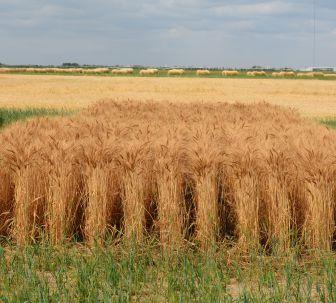
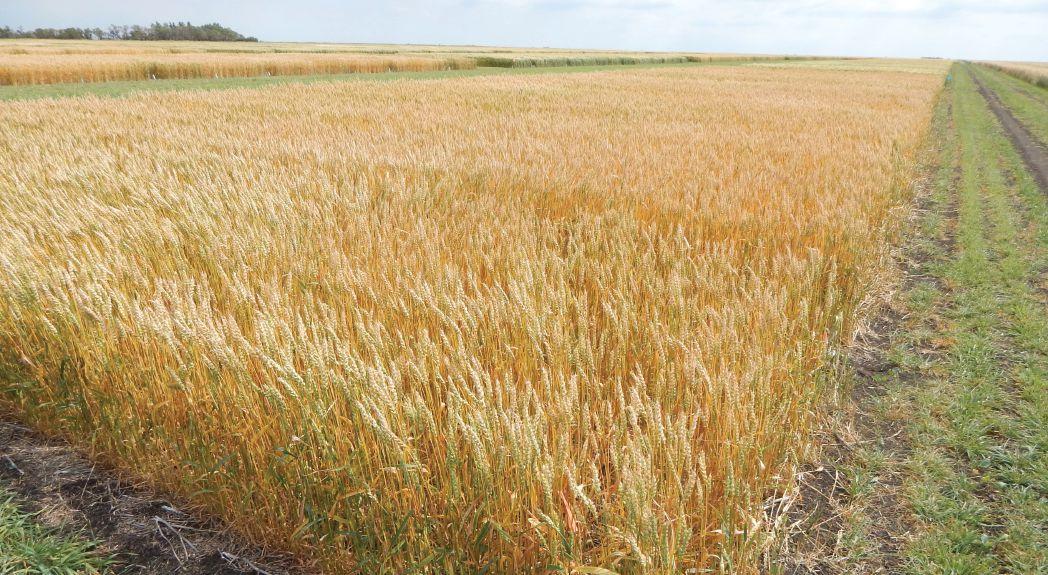
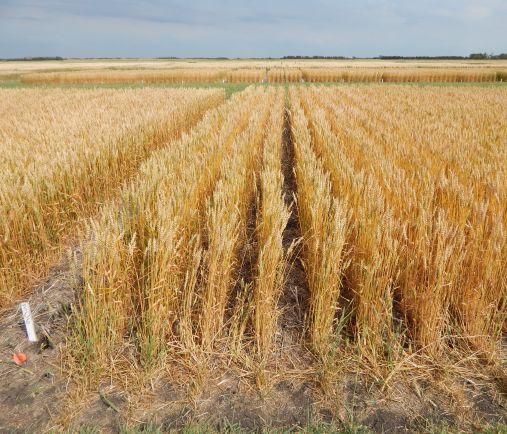
TOP: Field trials in Indian Head in 2020 demonstrating the agronomic and economic responses of CWRS wheat to numerous crop inputs individually and in various combinations.
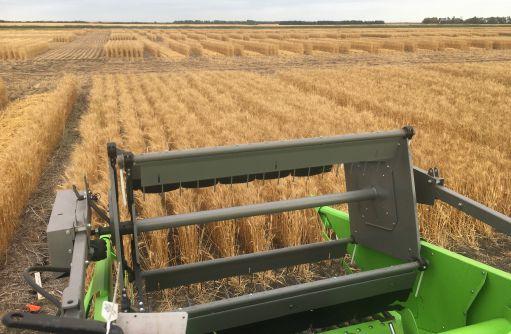
MIDDLE: Harvesting field trials in Indian Head, 2020.
Mental health isn’t something we talk about. to ignore
It’s time to start changing the way we talk about farmers and farming. To recognize that just like anyone else, sometimes we might need a little help dealing with issues like stress, anxiety, and depression. That’s why the Do More Agriculture Foundation is here, ready to provide access to mental health resources like counselling, training and education, tailored specifically to the needs of Canadian farmers and their families.
fungicide applications,” explains Chris Holzapfel, IHARF research manager. “There are too many possible variables to try and evaluate all of the potential inputs in all possible combinations, so we selected these specific ones and either added them to a low-input system or removed them from a high-input system. The variety CDC Utmost was selected for the trials because it is midge tolerant but also reasonably susceptible to both lodging and Fusarium head blight (FHB).”
Overall, the results from both years of the trials had a lot of similarities, although responses to some inputs varied from one year to the next. The yield potential was also higher in 2020, despite drier conditions in both 2019 and 2020. Disease pressure and lodging were not as big of an issue as compared to previous years under higher moisture conditions.
“Our results show fertility was the input with the biggest impact on yield, and the one that provided the most consistent benefits in both low (90-20-10-10 kilograms per hectare (kg/ha)) and high (135-40-20-20 kg/ha) input systems,” Holzapfel says. “It was interesting to note that fertility was beneficial whether adding it to the low-input system or when removed from the high-input system, and really showed up in the economics. The low-input system plus fertility showed the highest profit overall for all treatments. The average yield increase with extra fertility was eight per cent compared to five per cent for foliar fungicide and 2.5 per cent for PGRs.”
Over the two years, the study did not show any impact on yields from either seed treatments or higher seeding rates (400 seeds per square metre (seeds/m2) compared to 250 seeds/m2). Although higher seeding rates may not show a difference on their own, when combined with a well-timed fungicide application they can be important as part of an integrated management strategy to help manage disease.
Holzapfel notes that seed treatment benefits have been a bit elusive in small plot research trials, but growers may see some benefits, particularly in more spatially variable fields, and often consider seed treatments as a form of insurance. Seed treatments are more likely to be beneficial when using diseased seed and various research trials have shown more consistent benefits with winter cereals. Although occasional responses were detected, none of
the inputs evaluated had a consistent or agronomically important effect on test weight and there were no impacts on seed size, or thousand kernel weight (TKW).
“Although the traditional recommended range of spring wheat plant populations is 215 to 270 plants/m2, some growers are using more aggressive seeding rates targeting populations exceeding 300 seeds/m2,” Holzapfel says. “The reason for targeting higher populations is to reduce tillering and increase uniformity across the field, which can help with timing of fungicide applications. The higher seeding rate can reduce spatial variability across the field and may shorten up the window of when a crop is susceptible to disease infection. In some experiments we have seen strong benefits from higher seeding rates, however there have also been others that showed little benefits and possibly more harm than good. For example, higher seeding rates can lead to problem situations such as lodging and potentially lower yields, depending on the varieties.”
In the study, the PGR Manipulator 620 consistently showed good results in reducing plant height and increasing harvest efficiency. Officially launched for use in 2018, the product was evaluated in numerous trials dating back to 2013. Hozapfel notes that between 2013 and 2017, under higher moisture conditions, research showed on average a 10 per cent yield increase. Although the more recent results are still showing yield benefits from PGRs, it is not near to the extent under drier conditions as in some of the early years of testing. PGR application primarily affected plant height, resulting in a seven per cent reduction when averaged over the two seasons. However, there was essentially no lodging in any of the treatments under the dry conditions.
“With PGRs, we have seen better results at the later timing of the label application window at early stem elongation to flag leaf emergence,” Holzapfel adds. “With later applications, we still got really good control and good reductions in height. Targeting the early stem elongation stage is better rather than waiting until flag leaf emergence, which could end up being too late depending on circumstances or if there are unforeseen delays in application.
“The decision to use PGRs is really moisture driven. If it is a wet year and at the herbicide timing there is lots of moisture in the soil, lush vegetative growth and potential for more rain, then lodging could be an issue and the crop would likely benefit from a PGR
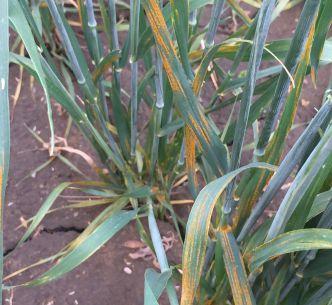
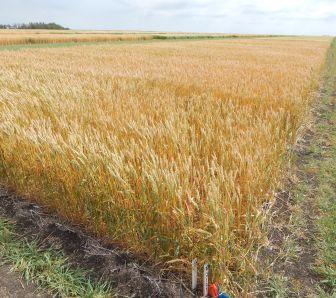
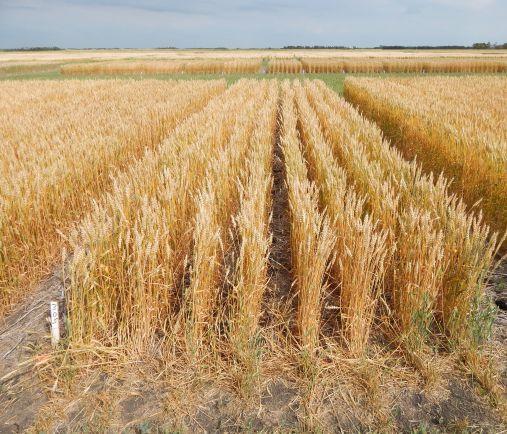
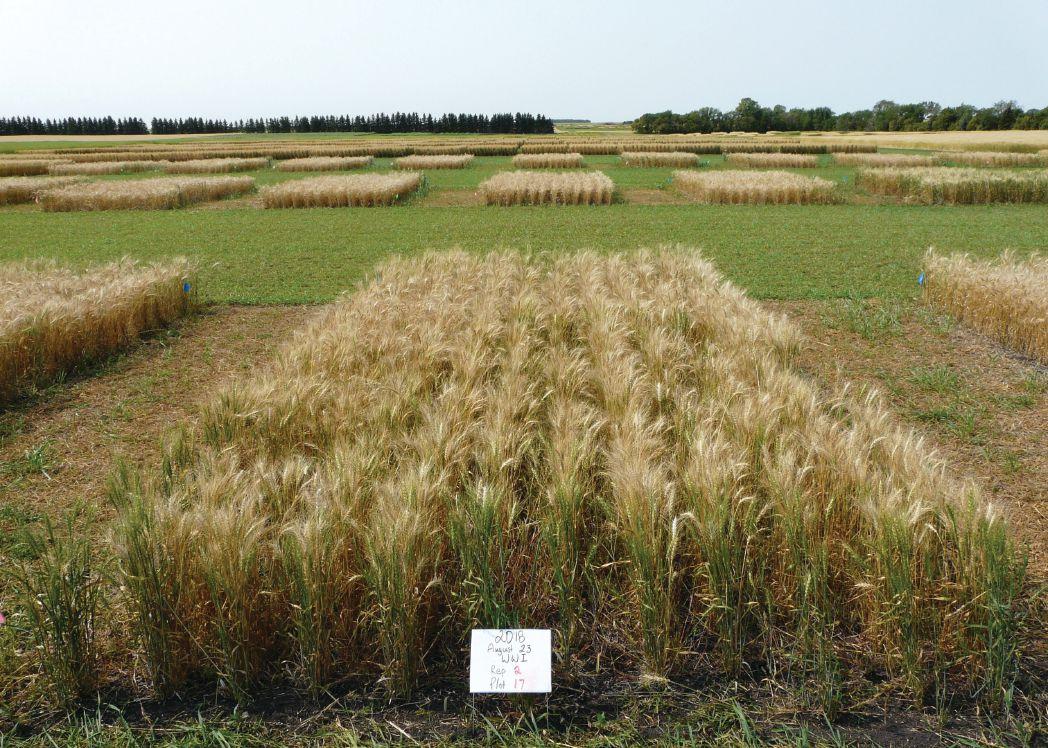
High-input treatments in field trials at Indian Head, 2020.
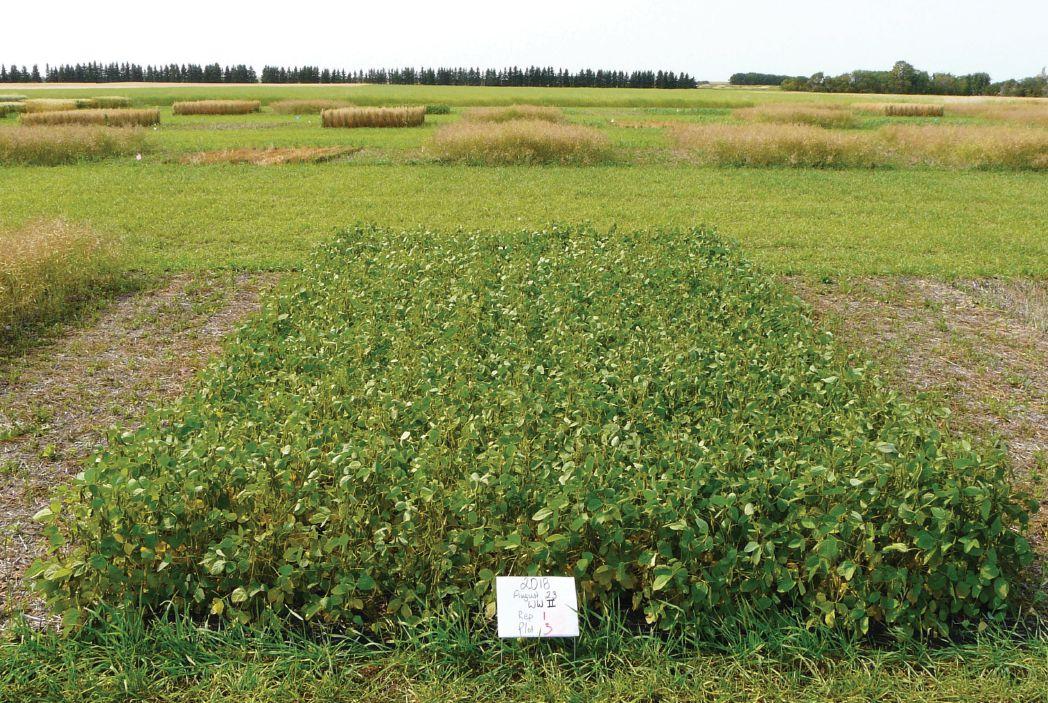
Low-input treatments in field trials at Indian Head, 2020.
application. However, if all indications are another dry year and lodging doesn’t look to be an issue, then that is one input you could likely safely back off on.”
During the study, FHB pressure was low and the only input to consistently affect FHB incidence was foliar fungicide, although higher seeding rates also reduced infection in 2020. However, even when FHB is not a yield-limiting factor, the products used to control this disease are also effective against leaf spot diseases. Holzapfel says in most cases a single later fungicide application at early heading will provide protection against both FHB and leaf diseases. In a year with heavy disease pressure, a dual application might be recommended, with a first application at flag leaf and a second at early heading.
With PGRs, we have seen better results at the later timing of the label application window at early stem elongation to flag leaf emergence.
fixed costs, but only the inputs that were varied in the trial.
Across the experiments, the economics and relative profit numbers were very interesting, although some caution should be used in interpretation. Past experience and practical knowledge are still key decision factors, and it is important to recognize that actual input costs, grain prices, and protein discounts or premiums, as well as environment, can vary from year to year and farm to farm.
Averaged over the two years, the low-input treatment was more profitable than the high-input treatment ($845/ha versus $766/ ha). Overall in 2020, adding fertility to the low input treatment was the most profitable ($1017/ha) and reducing fertility in the high input treatment was the least profitable treatment ($813/ha). Importantly, these values do not take into account all inputs or any
“Although the low-input treatments generally showed higher profits on average than the high-input systems, it is not to say that the extra inputs are just reducing profits without other benefits,” Holzapfel explains. “While specific responses will certainly vary and all of the inputs evaluated have their place and have been proven effective, these results show the importance of carefully managing production costs. The results show that adding every input you can think of to try and get the highest yield possible is not, under these circumstances, going to put the most money in your pocket.
“The trick is to figure out which inputs you need and which ones you don’t, and to manage the costs the best that you can without sacrificing too much yield. As a general recommendation, soil testing to determine fertility requirements and choosing crop protection products based on knowledge of past pest problems combined with frequent crop scouting will provide the best opportunity to optimize yields and quality while managing costs and maximizing economic returns.”
CAN WINTER WHEAT IN ROTATION REDUCE GREENHOUSE GAS EMISSIONS?
Potential on-farm strategies to reduce greenhouse gases and increase soil organic carbon and crop yields.
by Donna Fleury
Crop production is recognized as both a contributor to greenhouse gases (GHGs), such as carbon dioxide (CO2) and nitrous oxide (N2O) emissions, and also a GHG sink, capturing and storing CO2 in the soil. For N2O emissions, about 70 per cent are attributed to agricultural soils, with the main sources of nitrogen (N) coming from soil mineral N, applied fertilizer N and crop residue N. Previous research has shown that the impact of both crop and crop residue type are important factors influencing N2Oemissions; however, information is limited.
“We are interested in identifying strategies that could help farmers potentially reduce greenhouse gases in their crop production operations,” explains Reynald Lemke, a research scientist with Agriculture and Agri-Food Canada (AAFC) in Saskatoon. “Cropping practices that increase soil organic carbon (SOC) can help reduce atmospheric CO2 levels, so we want to at least protect the SOC that we have, but preferably implement strategies that can also increase SOC levels. We also wanted to assess the influence
that different crop types and sequences may have on N2O emissions on the Prairies.”
The main way to bring carbon into agriculture soils is through the carbon fixed by crops during photosynthesis. Therefore, researchers wanted to know if replacing spring wheat in rotation with winter wheat would extend the period of photosynthesis and improve the chances of increasing SOC, therefore reducing CO2 emissions. In the fall, there is hopefully active photosynthesis after the winter wheat emerges and sets crown. The following spring, the winter wheat crop is ready to begin photosynthesis as soon as the snow melts and soils warm, typically two to three weeks before spring wheat is seeded and growing.
Lemke initiated a study in 2017 to compare two core rotations – canola-spring wheat-canola with canola-winter wheat-canola –to estimate changes in SOC and N2O from the different rotations.
ABOVE: Winter wheat plots in phase two of the canola-winter wheat-canola rotation at site one, AAFC Melfort Research Farm.
Although these short rotations are not generally recommended, they provide a clean comparison for the scientific variables researchers are trying to measure. The study also included some “cash crop” alternatives to canola, such as soybean and oats, in the first year of the sequence, to see what other systems might work with winter wheat to provide potential GHG mitigation benefits. The goal is to measure inputs and outputs, combined with some simple modelling, to determine if there are any differences in impacts between the two rotations. The study was established at two adjacent sites, offset by a year to establish “replicate in time” and to spread out the monitoring and measuring workload.
In a second component of the study, researchers are also including cover crops between harvest and spring seeding as another strategy for increasing the opportunity for photosynthesis and carbon capture. Debate continues about the influence of cover crops on N2O emissions in the Prairie region, particularly because up to 70 per cent of annual N2O emissions can occur in the spring after snow melt. Therefore, the practices from the previous growing season set up the conditions for what will happen the following spring. Weather obviously plays a very large role in the outcomes. This canola-winter wheat-canola trial followed the same sequence, except in year two, after the winter wheat was harvested, cover crops of fall rye or faba bean were seeded to close that gap of no crop growth in the fall, and for fall rye, after snow melt during the next spring. In the final year, canola was seeded into the cover crop the following spring.
“Depending on weather conditions and the timing of getting the cover crops seeded, they can influence the cropping systems in a couple of ways,” Lemke explains. “Apart from adding more carbon to the soil, any residual nitrate after the winter wheat crop is harvested would likely be taken up by the cover crop, reducing the risk of N2O emissions following spring thaw. However, this process
also results in readily available carbon to the microbial community, which could actually increase those emissions in the spring. We recognize there may be a tradeoff, but we don’t know for sure what that looks like until we can get some actual measurements during the crop rotation.”
The greenhouse gas sampling started in 2019 on both sites, but unfortunately researchers were unable to conduct the sampling on site two due to COVID-19 in 2020. Lemke adds that they decided to add a barley crop in 2020 to extend the rotation to a four-year rotation instead of three years, followed by canola to start the crop sequence over again.
“We have received approval to delay some funding to extend the program for another complete three-year cycle on two replicates,” Lemke explains. “We also took soil samples at the start of the project in 2017 and have archived them, with plans to compare with soil samples collected at the end of the two crop sequences. This provides a good dataset to help develop some modelling to measure changes in SOC over the time of the project.”
The results so far are preliminary, but encouraging. Although there aren’t enough gas sampling measurements to do a complete balance, the first approximations are showing good responses and higher carbon returns for the canola-winter wheat-canola rotation, compared to canola-spring wheat-canola.
“By the end of the project, we hope to have a proof of concept of tools that farmers could use without a major investment in new equipment or radical change in management approach that would be beneficial for reducing greenhouse gases and, at the same time, accruing other benefits, such as increasing SOC and improving yields,” Lemke says. “Once we can show whether or not this strategy works from a greenhouse gas mitigation approach, then we can look at the economics and what might be needed to make this approach worth pursuing.”
A soybean plot in phase one of an alternative rotation soybean-winter wheat-canola at site two, AAFC Melfort Research Farm.
Focus on: FARM FINANCES
Insights to help position your farm for success
Annex Business Media’s agricultural publications are hosting four free, live webinars with industry experts discussing key topics in farm financial management.
Part 1: Business Risk Management – A fact-based review and analysis
Part 2: Transitioning Your Farm - Opening the door to your transition
Part 3: Using Data in Ag for financial management
Recorded sessions now available on-demand at www.topcropmanager.com/webinars
Part 4: Utilizing Benchmark Information to Focus Your Farm Operation
JOIN US - June 10 - 1pm MT/3pm ET
SCAN QR CODE with phone camera or visit link below to register today for the series! A reminder email will be sent to you for each webinar.
FHB CONTROL IN DURUM REQUIRES INTEGRATED APPROACH
No magic bullet with fungicide application.
by Bruce Barker
Durum wheat growers know the devastating impact that Fusarium head blight (FHB) can have on grain quality. Multiple years over the last decade saw high levels of FHB and downgrading of durum samples because of high levels of Fusarium-damaged kernels (FDK). In response, research at the University of Saskatchewan has investigated the impact of seeding rate and fungicide application timing on FHB in durum.
“One of the reasons we wanted to focus specifically on durum was because all varieties are either susceptible or moderately susceptible to Fusarium head blight,” says Gursahib Singh Sandha, PhD candidate, who conducted the research under the supervision of Randy Kutcher in the University of Saskatchewan’s department of plant science. “The recommendations at that time were based on either winter wheat, spring wheat or barley, so there was a need to see if the same recommendations applied to durum wheat.”
The research was carried out over three years from 2016 through 2018 in Saskatoon, Outlook, and Melfort, Sask., with funding from Saskatchewan’s Agriculture Development Fund, Sask Wheat, and
Western Grains Research Foundation (WGRF).
CDC Desire durum wheat (susceptible) was seeded at 7.5 and 40 seeds per square foot (75 and 400 seeds/m2). Sandha explains that the seeding rate component of the trial was to see if higher seeding rates would result in a more uniform crop with fewer tillers and a shorter flowering period. This would help with foliar fungicide timing and produce a crop with a narrower window of Fusarium infection – hopefully producing a crop with lower levels of Fusarium. The current recommendation is to use a seeding rate to target a plant stand of 21 seeds/ft2 (210 seeds/m2) – a rate of about 23 seeds/ft2 at 90 per cent germination.
“At 400 seeds per square metre seeding rate, the crop was more uniform than the lower seeding rate with a difference of two to three days earlier flowering. It was very easy to scout for fungicide application timing with the higher seeding rates,” Sandha says.
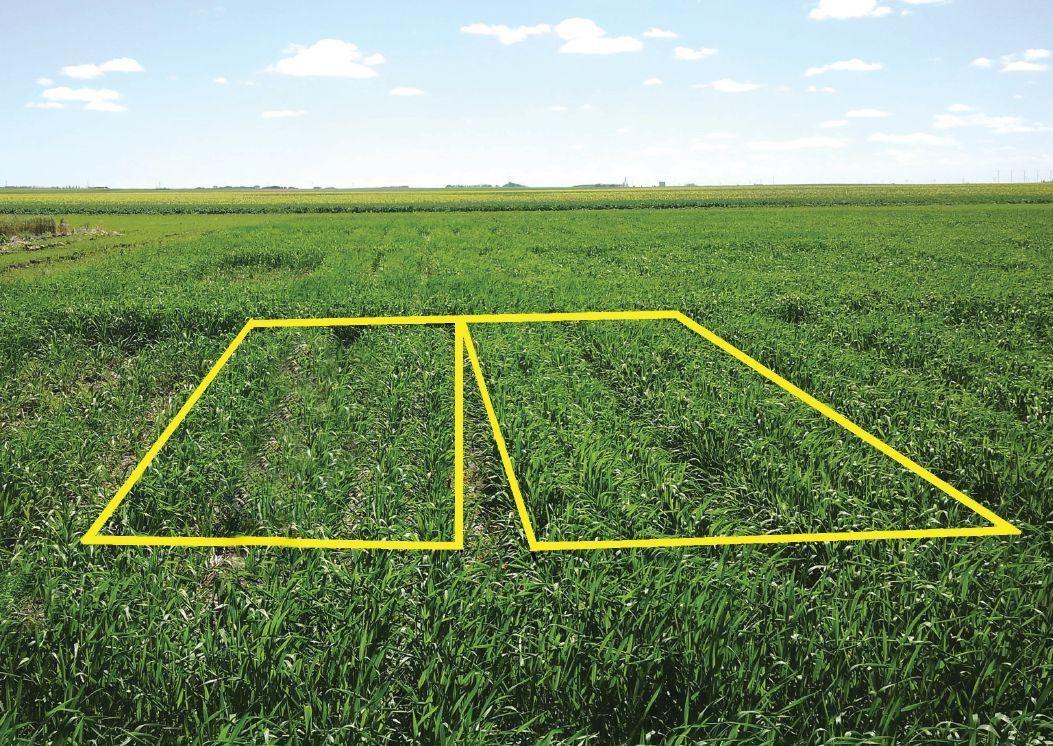
ABOVE: Seeding at a higher seeding rate (right) resulted in a more uniform stand and easier fungicide timing.
The fungicide treatments consisted of an untreated check (no fungicide), fungicide applications (metconazole fungicide Caramba) at BBCH59 (heading), BBCH61 (early anthesis), BBCH65 (50 per cent anthesis), BBCH69 (late anthesis), BBCH73 (soft dough), and one treatment with two applications: BBCH61 followed by BBCH73. A treated check with fungicide application at all stages was also included.
“We don’t expect farmers to spray five times to control Fusarium. We wanted to see if a disease and toxin-free check could be achieved with multiple fungicide applications,” Sandha says. “We couldn’t achieve disease-free plots even with those five applications – we still had some FDK.”
Current recommendations from Sask Wheat for the fungicide application spray window begins when most of the wheat heads on the main stems are fully emerged from the boot (BBCH59) and continues through the time when yellow anthers form on the heads until 50 per cent of the heads on main stems are in flower (BBCH65).
The impacts of seeding rate and fungicide timing were assessed by measuring FHB index, FDK percentage, deoxynivalenol (DON) accumulation, grain protein content and yield.
When analyzing the data, Sandha separated it out into high and low disease pressure site-years, although disease levels were quite high at all sites that were included in the analysis. For example, at four site-years with low disease pressure, FDK was 8.7 per cent for the high seeding rate and statistically similar, at 9.8 per cent, for the low seeding rate. At the two site-years with high disease pressure, the high seeding rate had 15.6 per cent FDK and the low seeding rate had 16.8 per cent FDK.
The Canadian Grain Commission sets Fusarium grading levels based on percentage FDK. Canada Western Amber Durum (CWAD) #1 and #2 allow 0.5 per cent FDK; #3 and #4 at 2.0 per cent FDK, and #5 at 4.0 per cent. None of the seeding rate treatments would have met even the CWAD #5 grading criteria.
The high levels of FHB can be explained by the experimental design of the research. The plots were all inoculated with Fusarium graminearum, the fungal pathogen that causes FHB. The Saskatoon and Outlook plots were irrigated beginning at early flowering to stimulate a conducive environment for disease development, and durum was seeded into wheat stubble.
“One of the reasons we wanted to focus specifically on durum was because all varieties are either susceptible or moderately susceptible to Fusarium head blight.”
“We had very high levels of Fusarium because we set up the trials to ensure we had conditions favourable for Fusarium head blight. As a result, we didn’t end up with very good quality grain in any of the treatments,” Sandha says.
At both high and low disease pressure sites, the higher seeding rate produced higher yield, but there was no statistical difference in FDK percentage. At the high disease sites, the higher seeding rate had 17 bushels per acre higher yield. At the low disease sites, the higher seeding rate had 3.5 bushels higher yield.
Fungicide helped, but…
All fungicide application treatments led to lower FHB index, DON accumulation and percentage FDK than the untreated check. Surprisingly, the research did not find any interaction between seeding rate and fungicide application treatments. This runs contrary to other findings in spring wheat and winter wheat, where higher seeding rate combined with a fungicide application reduced FDK and DON.
“We were expecting to see the same interaction in durum wheat, but we didn’t. Perhaps the high disease pressure overrode that interaction,” Sandha says.
In years with low disease severity, the BBCH65 application had lower FHB index, FDK and DON accumulation, Sandha says. The dual application at BBCH61+73 had similar FHB index, FDK and DON content to the BBCH65 application at all site-years, which would not justify the dual application.
At all high and low disease pressure site-years, none of the fungicide application timings reduced FDK to acceptable levels. Even at low disease pressure sites, the best application timing – at BBCH65
– reduced FDK to 6.9 per cent, compared to the unsprayed check’s 15.6 per cent FDK.
Under high FHB risk, all anthesis applications, starting at BBCH61 to BBCH69, had a similar effect on FHB index, FDK and DON accumulation, but yield was highest at BBCH65 application. These fungicide applications had statistically similar FDK levels, ranging from 14.3 to 17 per cent, but lower than the unsprayed check at 24.0 per cent.
There are lessons to be learned from the research, even though none of the treatments reduced FDK percentage to acceptable levels. Sandha would still recommend a higher seeding rate because the crop is more uniform, fungicide timing is easier, and yield was higher. Results of fungicide application timing in this research does not support current recommendation of BBCH59 through BBCH65. Rather, Sandha says that the research found that BBCH59 is too early, BBCH61 timing is the earliest, and BBCH65 timing is ideal, because that was where the highest yield was achieved.
“Under high disease pressure, we found that even spraying as late as BBCH69 can be beneficial – for example, if spraying is delayed because of wet weather,” Sandha says. “In drier years with more normal disease levels, our research found that one application at BBCH65 was ideal and significantly better than the other fungicide timings.”
But because even the best fungicide timing treatments didn’t reduce FDK percentage to acceptable levels, Sandha says durum growers should use an integrated approach to manage FHB: rotate out of cereal crops for three to four years to reduce Fusarium pathogens in the field; select durum varieties with the best Fusarium resistance (moderately susceptible); follow FHB risk maps for your area to help with fungicide application decisions.
Sandha and Kutcher will start a new research trial in 2021 that includes winter wheat, spring wheat, barley and durum, looking at fungicide application timings at BBCH61, 65 and 69, with a dual treatment at BBCH61 and 69. It will run for three years with funding from Sask Wheat and WGRF.
Seven women who are making a difference to Canada’s agriculture industry will be highlighted through podcast interviews on AgAnnex Talks starting June 14. Stay updated by visiting AgWomen.ca or subscribing to the podcast at AgAnnex.com
Platinum Sponsor:
Gold Sponsors:
Bronze Sponsor:
BRUCE BARKER, P.AG CANADIANAGRONOMIST.CA
CONTROLLING GLYPHOSATE-RESISTANT KOCHIA IN CHEMICAL FALLOW
In 2011, the first cases of Group 9 glyphosate-resistant (GR) kochia in Canada were confirmed in chemical fallow fields located in Warner County, Alta. Previously, all populations were considered resistant to Group 2 herbicides. Since then, GR kochia has rapidly spread across Alberta, increasing from an estimated five per cent of kochia populations in 2012 to 50 per cent in 2017.
In chemfallow, glyphosate is heavily relied upon for weed control, but with GR kochia spreading across the Prairies, alternative herbicide control options are required. A study was recently conducted in southern Alberta to assess herbicide mixtures with multiple modes of action to manage GR and glyphosate-susceptible (GS) kochia in chemfallow fields.
Field experiments were conducted near Lethbridge and Coalhurst, Alta. Plots were split between GR kochia and GS kochia. Kochia was seeded in early spring at a rate of 30 seeds per square foot (300 viable seeds/m2) in all environments, with the exception of Lethbridge in 2015, where it was seeded at 40 seeds/ft2 (400 viable seeds/m2).
The herbicide treatments tested included an untreated control and glyphosate applied alone or in mixture with 13 other herbicide combinations, which were either registered for kochia management in chemfallow, or to determine whether they would be effective for this usage. In all glyphosate mixtures, the rate was equivalent to the 0.33 litres per acre (L/ac) of Roundup Weathermax (450 g ae/ha). Herbicide treatments were applied post-emergence when kochia plants reached four inches (10 centimetres (cm)) in height.
The best glyphosate mixture treatments that resulted in acceptable (greater than or equal to 80 per cent) control and biomass reduction of GR kochia were Roundup + Banvel II (Groups 9+4), Roundup + Distinct (Groups 9+4/14), Roundup + Heat (Groups 9+14), and Roundup + Aim + Authority (Groups 9+14).
The label rate of Banvel II plus glyphosate suppressed GR kochia with less than 80 per cent control at the Lethbridge location, but had excellent GR kochia control (94 per cent visual control) at Coalhurst in both years. Two times the label rate of Banvel II provided excellent control of GR Kochia, averaging 91 per cent visual control at all four site years. The GR Kochia did not have any Group 4-resistant biotypes.
The label rate of Distinct plus glyphosate provided acceptable control at two of four site years. Two times the label rate of
Distinct showed excellent control with an average of 90 per cent, resulting in an up to 90 per cent reduction of GR kochia biomass at Coalhurst.
The low label rate of Heat plus glyphosate showed acceptable (greater than or equal to 80 per cent) visual control in three out of four environments, and reduced GR kochia biomass by 84 per cent. The high label rate of Heat plus glyphosate showed excellent GR kochia control with 91 per cent control among environments. This herbicide tank mixture provided an excellent, effective option for control of GR kochia in chemical fallow.
Glyphosate + Aim + Authority at the label rates resulted in an average of 90 per cent visual control but only a 72 per cent reduction in biomass in 2014. Doubling the rate of Authority in this mixture resulted in excellent visual control of GR kochia at an average of 96 per cent control and a 98 per cent reduction in kochia biomass in 2014. This combination was among the best mixture options for controlling GR kochia, in part because it included a quick contact herbicide resulting in rapid necrosis and plant cell death, in addition to extended residual activity to help control subsequent emergence of kochia seedlings. However, Authority is not registered for chemfallow application.
Glyphosate + 2,4-D (Group 4) did not provide acceptable control of GR or GS kochia in Lethbridge.
Glyphosate + Optica Trio (Group 4) provided acceptable control at three of four site years, with suppression rated at 79 per cent control for the fourth site year. This resulted in a 90 per cent biomass reduction in 2014. Optica Trio was applied at the label rate for post-emergent application in cereals, but is not registered as a chemfallow treatment.
Blackhawk (Group 14/4) plus glyphosate did not achieve commercially acceptable control of GR kochia at either site in 2015.
Due to the confirmation of triple-resistant kochia in Alberta (Group 2+4+9), glyphosate mixtures utilizing a Group 14 mode of action are required for successful and sustainable kochia management.
For this reason, farmers are urged to adopt a proactive approach to integrated weed management, with herbicides playing an important role supported by several other non-chemical tools. The use of cover crops, strategic spot tillage, mowing and patch management are all tools that could help prolong the efficacy of these herbicide mixtures by mitigating seed production and limiting the number of kochia seeds returned to the soil seedbank.
Bruce Barker divides his time between CanadianAgronomist.ca and as Western Field Editor for Top Crop Manager. CanadianAgronomist.ca translates research into agronomic knowledge that agronomists and farmers can use to grow better crops. Read the full Research Insight at CanadianAgronomist.ca.
Prosaro® XTR is better than ever. How much better? How about a whopping 14% over untreated† So regardless of disease pressure, in wet or dry weather, give your wheat and barley yields a big-time boost come harvest. Protect your cereals and your bottom line with Prosaro XTR.
†Source: 15 Bayer development trials with medium to high disease pressure (2014–2016). Your results may vary according to agronomic, environmental and disease pressure variables.
It’s as simple as this: If an eligible Bayer fungicide has a lower return on investment (ROI) than an eligible competitor fungicide under the terms of the 2021 Bayer Fungicide ROI Guarantee Program, Bayer will rebate the ROI difference on up to 160 acres to eligible participants*. For full terms and conditions visit:
Lose Inconsistency. Gain Control.
And gain ground with ExactApply™ Nozzle Control Technology Upgrade.
Reduce over-application with ExactApply Technology, available on new 400 & 600 Series Sprayers and select 4-Series or R-Series Sprayers. Enabled by a more constant spray pressure, ExactApply delivers industry-exclusive 30x per second pulse width modulation for a more consistent droplet size at all speed ranges. With individual nozzle control from the cab, get application accuracy down to 38.1- or 50.8-cm spacing. Automatically vary the rate across the boom to reduce input costs and possible crop damage while assuring the right spray rate even as you turn. Compatible with John Deere precision ag tools, ExactApply ensures that every droplet is doing its job to help you gain ground in your operation.