Smoulder® pre-seed herbicide was devised on the Prairies to control the most difficult weeds before seeding wheat and barley, including Group 2, 4 and 9 resistant biotypes of kochia.
Voraxor® wipes out tough weeds in a pre-seed burndown in peas, lentils, soybeans, corn, wheat and barley. Its innovative new active ingredient Tirexor® also delivers residual weed efficacy.
New Voraxor Complete provides the most consistent burndown on the market and extended residual activity to clean up fields prior to seeding peas, lentils, soybeans and corn.1
1 Source: Grower Applied Strip Trials, 2020, n=10
YOUR PRE-SEED TEAM.
Certitude® offers the first Group 27 chemistry for pre-seed use in canola to deliver exceptional control of challenging weeds like kochia and volunteer canola.
Drought risk in spring wheat
6 | Can split N applications in spring improve economics and maintain yields?
By Donna Fleury
Capturing ancestral diversity Cleavers in Western Canada
18 | Sifting through the gentic variation in canola’s progenitors for traits to help the crop be more durable.
By Carolyn King
22 | Developing strategies and tactics to improve cleavers management. By Donna Fleury
THE WEB
Canada and Manitoba governments through the Sustainable Canadian Agricultural Partnership are investing more than $1.5 million over the next five years to the Keystone Agricultural Producers for the FarmSafe Manitoba program to promote
in the
DEREK CLOUTHIER EDITOR
WEEDING OUT THE PROBLEM
Last year in our March issue – with the theme of weed control – I wrote about my ongoing challenge controlling dandelions in my front yard. I talked about how I felt bad (sometimes embarrassed), in the spring or early summer for my neighbour when these little yellow rascals take hold of my half of our yard, which at certain times they surely do get the best of me. My neighbour struggled with dandelion management when they first moved in as well but have since put a stranglehold on the wildflowers.
I have tried multiple products and even contemplated hiring a professional to take care of these relentless weeds. And last year I did make some headway against what I guess to be around 50-70 dandelions adorning my front yard. But not before another neighbour decided my yard too unsightly for our neighbourhood.
My mother was at my house when bylaw made a visit, but I was away from the house for a few minutes, so my mom talked with the officer when he arrived, and coming home to the smirk on her face was both amusing and annoying. Amusing because in any situation like this, I do try to find the funny side. And after having spent so much time in my front yard spraying, digging and likely cursing at these little yellow flowers, I wondered how anyone could feel the need to try and have me fined for an unsightly yard. Thankfully, the bylaw officer agreed. Apparently in the law, it is written that if there is evidence that the homeowner is trying to improve the yard’s situation, they cannot be fined. The wilted dandelions in my yard were enough evidence for him.
I am proud to say that I did get things under control last summer, mostly with tedious, hard work – digging the dandelions out of the ground. However, I’m not so naive to think there won’t be new dandelions making my yard their home this coming spring, so I know the work is not done.
And as I review the articles for this issue and prepare our 2024 weed control guide for printing, I know that farmers are also preparing to fight back against weeds this spring – aiming to reduce the competition for water, nutrients and sunlight, giving young crops the best chance for a strong start. Some of the articles you will find in this issue will address such concerns as cleavers, and how this problem weed has become a challenge for those in the Black soil zone. There is also a story on how to expand weed control options for chickpeas, and, of course, we can’t forget our March supplement Weed Control Guide, which features an article on weed control in lentil.
So, I guess the only piece of advice I would have, is if you do see weeds in your neighbour’s yard and they are out there trying to get control of the darn things, don’t call bylaw on them…I’m sure they’re trying to weed out the problem.
2024, VOL 50, NO. 2
Service Print and digital subscription inquires or changes, please contact Angelita Potal, Customer Service 416.510.5113 • apotal@annexbusinessmedia.com Mail: 111 Gordon Baker Rd., Suite 400, Toronto, ON M2H 3R1
Derek Clouthier • 403.470.4432 dclouthier@annexbusinessmedia.com WESTERN FIELD EDITOR Bruce Barker • 403.949.0070 bruce@haywirecreative.ca
Top Crop Manager West – 9 issues Feb, Mar, Mid-Mar, Apr, May/June, Sept, Oct, Nov and Dec – Canada 1 Yr $49.47; 2 Yr $79.05 (Canadian prices do not include applicable tax) USA 1 Yr $112.20 CDN; Foreign 1 Yr $134.13 CDN Top Crop Manager East – 5 issues Feb/Mar, Apr/May, May/Jun, Sep/Oct, Nov/Dec Canada 1 Yr $49.47; 2 Yr $79.05 (Canadian prices do not include applicable tax) USA 1 Yr $112.20 CDN; Foreign 1 Yr $134.13
Top Crop Manager will mail information on behalf of industry related groups whose products and services we believe may be of interest to you. If you prefer not to receive this information, please contact our circulation department in any of the four ways listed above.
Annex Privacy Office
privacy@annexbusinessmedia.com • Tel: 800
topcropmanager.com
DR. JASON HAEGELE NORTH AMERICAN AGRONOMY LEAD, ICL GROWING SOLUTIONS
RETHINKING STARTER FERTILIZERS & BIOSTIMULANTS
We asked ICL’s lead agronomist, Jason Haegele, for his insights into the influence of innovations on starter fertilizers. Jason is a certified Crop Advisor and a graduate of the University of Illinois (Ph.D. in Crop Science) and Iowa State University (M.S., Crop Production and Physiology).
How have new innovations changed your recommendations on starter fertilizers?
In my early agronomist days, starter fertilizer discussions focused on basics like orthophosphate versus polyphosphate and placement methods like in-furrow versus 2x2. While still valid agronomic considerations, my mindset has shifted to how early-season growth and vigour set the trajectory for late-season nutrient management and greater yields. Relying solely on starters is not a slam dunk, but integrating them into a full-season plan as a foundation enhances repeatability. I have started to challenge the paradigms of starter fertilizer use. With biologicals, biostimulants (like humic substances), and micronutrients exploding into the market, there are endless opportunities to explore improving root growth, nutrient use efficiency, soil health, and ultimately yield.
What do you think about the potential for biostimulants to improve nutrient uptake and crop outputs, even with the current criticisms?
Biostimulants hold real promise in enhancing nutrient uptake and crop outputs, but criticisms related to standardization, product claims, and input costs cast a shadow. This criticism prompts a fundamental question: Are we approaching biostimulants in a way that truly unlocks their benefits? In my opinion, the key lies in exploring our approach to biostimulants; an improved understanding of starter fertilizers may lead to more successful outcomes.
What does it mean to challenge the paradigm in starter fertilizers?
Challenging paradigms in starter fertilizers involves questioning the belief that the traditional way of doing things is the only and best approach. Commonly used starter fertilizers like 10-34-0 or high orthophosphate options like 9-18-9 are usually top of mind, widely accessible, and proven effective across various crops. However, compared to other agricultural inputs, innovation in our approach to starter fertilizers has been slow. These liquid starters, for example, typically have application rates between 3 and 5 gallons per acre, a common practice. Why is that? Especially considering that starters aren’t meant to fulfill a full season’s nutrient requirement. Can a starter application achieve equal or superior results with reduced phosphorus? I am eager to challenge the existing norms and explore
nutrient use efficiency alongside other starter-applied components like biostimulants.
How do biostimulants and starter fertilizers work together?
Phosphorus, as an example, plays a crucial role in improving early season root development and plant vigor when applied in a starter. Biostimulants and starter fertilizers could work synergistically to enhance root growth and nutrient availability, potentially leading to more productive crops, especially in the face of environmental stressors like cold soil temperatures.
What new research stands out?
ICL’s Nova® PeKacid™ 0-60-20, a unique water-soluble fertilizer, stands out for its ability to acidify water, improving nutrient compatibility and phosphorus availability, even when water contains a high concentration of dissolved calcium. Nova PeKacid has proven to be a superior source of orthophosphate and potassium across various applications, including fertigation and starter fertilizers. Extensive research and customer experience have shown enhanced availability of not only P and K but also micronutrients due to the reduced soil pH at the point of application.
What products are showing value?
Nova PeKacid shines as a starter fertilizer, especially when part of ICL’s Agrolution® pHLow™ 11-45-11 +2%Zn. This high-phosphorus starter, enriched with zinc, proves to be a well-balanced nutrient combination for early-season plant growth. Replicated field trials on corn, soybeans, and potatoes demonstrate equivalent or superior responses compared to grower standard rates of 10-34-0, achieving both efficiency and yield despite lower early-season P levels. Additionally, the integration of ICL’s BIOZ Diamond™ 10-0-1 biostimulant, containing fulvic acid and a yeast extract, shows substantial yield benefits when used alongside Agrolution pHLow, at times matching the yield increases observed with the standalone application of the starter fertilizer.
What are important things to consider for short growing seasons? In short growing seasons with cold early-season temperatures, ensuring the crop is uniform and off to a vigorous start can make the difference between an average and an outstanding yield. Do starter fertilizers always pay off? No, but I am confident that new research and approaches leveraging starter fertilizer nutrition and biostimulants will continue to elevate the importance of this crop management tool for driving increased yield and sustainability.
ICL Growing Solutions is a leading manufacturer of innovative plant nutrition products for the Agriculture market. Learn more at icl-growingsolutions.us.
MANAGING DROUGHT RISK IN SPRING WHEAT
Can split N application in spring improve economics and maintain yields?
by Donna Fleury
Reassessing nutrient management strategies under drought conditions to determine the most economical approach can be challenging. Researchers in Saskatchewan wanted to investigate whether split applications of nitrogen (N) in spring wheat might be more economical than the commonly recommended practice of banding all of the N beneath the soil surface at seeding.
“In some areas of Saskatchewan, dry conditions have persisted for a couple of years, raising questions about nutrient management and the opportunity to improve economics with different strategies,” says Mike Hall, research coordinator at the Yorkton AgriARM Research Farm, East Central Research Foundation and Suncrest College. “With high background reserves of N and drought conditions in spring, the question is whether holding back on N at seeding and top dressing more N if conditions improve is an economically effective approach to N management. In collaboration with other Agri-ARM sites across Saskatchewan, we conducted a one-year study in 2022 to demonstrate the efficacy of various rates and timings of split applied N relative to applying all of the N at seeding in wheat across a range of environmental conditions.”
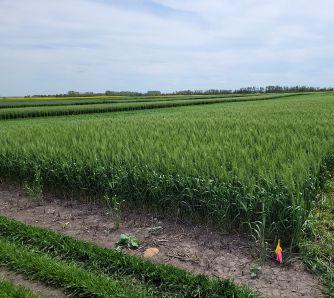
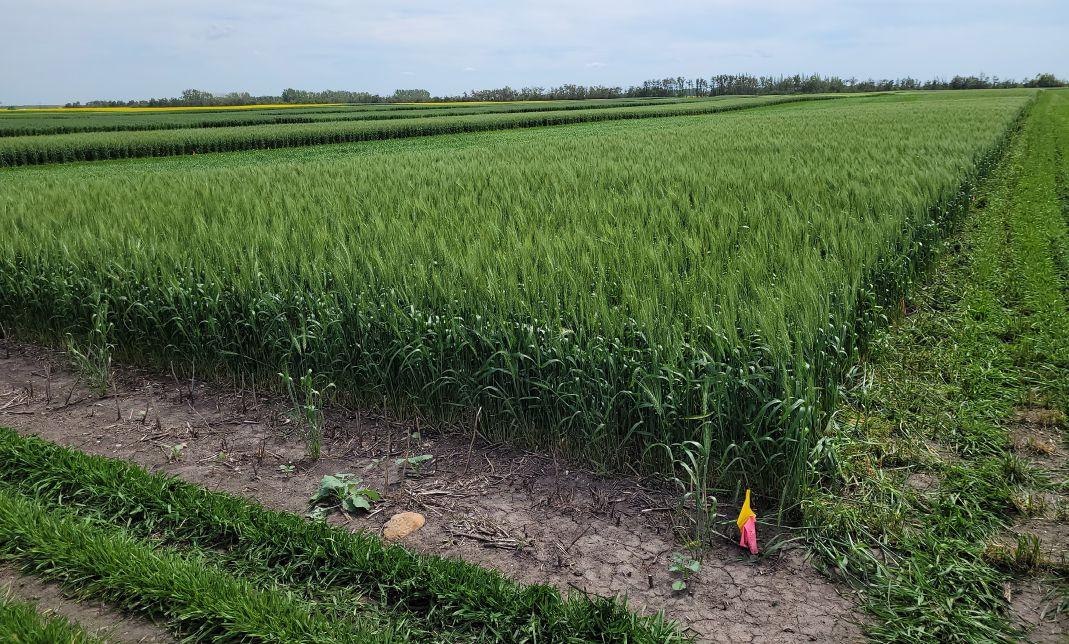
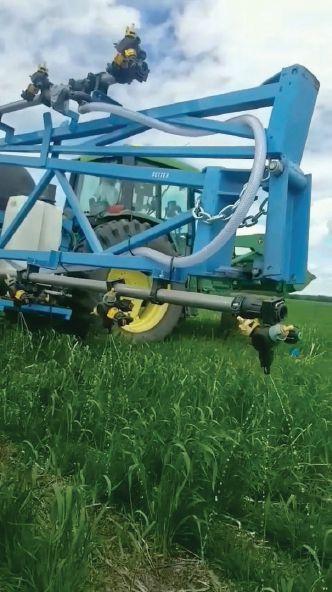
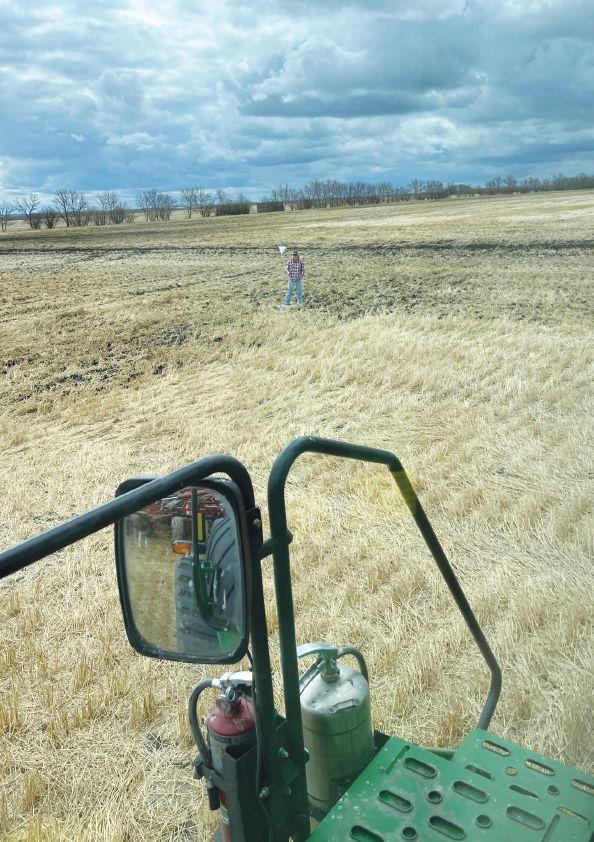
TOP: Study comparing the efficacy of various rates and timings of split applied N relative to applying all the N at seeding in spring wheat under drought conditions at Yorkton.
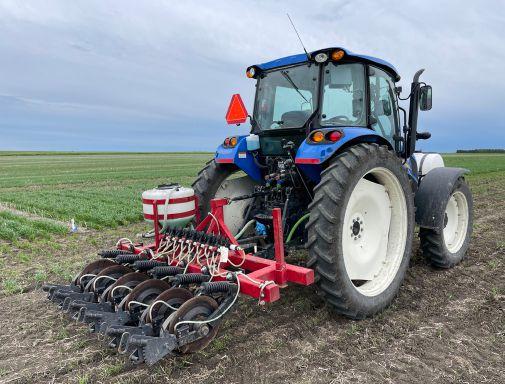
MIDDLE: Dribble band application setup for spring wheat split application plots at IHARF.
CONTROLLING WILD OATS AND YOUR TIME?
At the end of the day, it’s not just about weeds, it’s about peace of mind—that’s where new Varro FX cross-spectrum herbicide comes in. It combines Group 2 and Group 4 active ingredients to give you more control against the toughest weeds, including Group 1-resistant wild oats, kochia, cleavers, and more. This emulsifiable concentrate is the first of its kind in Western Canada, and it’s easier to handle and clean out of tanks. It also offers true flexibility when it comes to tank mixing and provides an even stronger broadleaf weed control boost for your spring and winter wheat crops when combined with partners like Buctril® M or Infinity®. So, once you spray, you can get back to what you do best. Farming.
The study was conducted at six Agri-ARM sites across Saskatchewan, including Indian Head (thin Black), Swift Current (dry Brown), Outlook (Brown), Scott (Dark Brown), Yorkton (Black) and Melfort (moist Black). Results from Yorkton and Melfort are not included due to environmental and technical issues at these locations. Outlook was the only irrigated site included for comparison to the dryland sites.
The targeted N rates at seeding included the background soil N in the top 24 inches, plus applied fertilizer. The background soil N varied greatly as expected. For the economic analysis, N treatment costs were $1.33/lb., and the application cost for dribble banding UAN was $10/ac. The protein premium or discount was calculated at $0.66/per cent /bu above or below 12.5 per cent protein.
The N response at Indian Head, Outlook, Scott and Swift Current was determined for five rates of soil + side-banded fertilizer N. Rates evaluated were soil N, 80, 110, 140 and 170 lb. N/ac. The 140 lb. N/ac. and 170 lb N/ac. levels of fertility, all side-banded, served as checks for the various split applications of N. Post-emergent split applications of N were dribble banded UAN mixed with Agrotain where possible to reduce the risk of volatilization loss. Application timing was either the three- to five-leaf-stage or early
flag. At Indian Head, Outlook, Scott and Swift Current, split application at the 140 lb N/ac level of fertility was achieved by either dribble banding 60 lb N/ac. on a base rate of 80 lb. N/ac. or dribble banding 30 lb. N/ac. on a base rate of 110 lb. N/ac. Likewise, 90 lb. N/ac. was dribble banded on a base rate of 80 lb. N/ac., or 60 lb. N/ ac. was dribble banded on a base rate of 110 lb. N/ac. for comparisons at the 170 lb. N/ac. level of fertility.
“The study results really showed that applying the recommended amount of N at seeding or holding back no more than 30 lb. N/ac., is still the best strategy under drought conditions,” adds Hall. “The risk of not being able to get out and apply the N should growing conditions improve, or if rains don’t materialize after the second split application, can result in substantial economic loss. For split application, the earlier application at the three- to fiveleaf-stage maintains yield potential much better than waiting until the flag leaf, which can significantly reduce yield potential. While split applications sometimes resulted in a protein boost up to 0.5, it was usually associated with a yield reduction that reduces economic returns even when assuming a generous protein premium.”
The drought conditions at Swift Current and Scott showed that holding back on side-banding N at seeding could be economical.
PHOTO COURTESY OF CHRIS HOLZAPFEL, IHARF.
Spring wheat plots at Indian Head on the early side of flag leaf in late June, and the timing of the second top dressing N treatments on selected plots.
The most economical rate of soil fertility was 80 lb. N/ac. at Swift Current and 110 lb. N/ac. at Scott. Although over-fertilizing by 30 lb. N/ac. at Scott and 60 lb. N/ac. at Swift Current did not greatly affect the bottom line, applying another 30 lb. N/ac. did result in significant economic losses for both locations. Increasing N fertility at Swift Current to 140 lb. N/ac. and 170 lb. N/ac. reduced economic returns by $8/ac. and $57/ac., respectively.
At Scott, supplying the same levels of N fertility reduced economic returns by $11/ac. and $58/ac., respectively. Applying split applications of N at these locations did not significantly increase yield and greatly reduced economic returns.
At Indian Head, which had wetter conditions, the most economic rate was 170 lb. N/ac., although 140 lb. N/ac. provided essentially the same return. If N was held back to the base rate of 80 lb. N/ac., and additional N was not dribble banded, the economic loss was $191/ac. Varying with rates, a split application of N at the threeto five-leaf-stage could result in modest increases in profit up to $14/ac. or a loss as
great as $41/ac. Delaying split applications to early flag always resulted in a loss ranging from $39/ac. to $95/ac.
“The results at Outlook under irrigation were a bit surprising,” notes Hall. “Our results showed that a split application of N when applied at the three- to fiveleaf-stage resulted in higher yields and economic returns under irrigation. Although this is common practice, for example, in England with winter cereal crops where they see much better N use efficiency under wet environments, we didn’t really expect to see that under irrigation in Saskatchewan. However, our results are only based on this one year, so we want to see the results replicated a few more times before determining if split applications under irrigation would be a good practice. The results showed that when split applications at Outlook were applied successfully at the three- to five-leaf-stage, economic returns were greatly improved at between $43/ac.
and $137/ac., compared to putting all the N down at seeding. However, holding back N to 80 lb/ac resulted in an economic loss of $113/ac.”
“Overall, the best approach to managing drought risk in wheat under dryland conditions is still to fertilize for a regular crop yield or hold back no more than 30 lb. N/ac., and if conditions look exceptional then consider dribble banding UAN in-crop at the three- to five-leaf-timing,” says Hall.
“The economic risk of holding back too much N at seeding and missing the opportunity to dribble band N in a timely manner and have rain move the N into the soil is much greater than the economic losses incurred from over fertilizing the crop by 30 lb. N/ac. during drought. Our experience over the years usually shows that side banding all of the urea at seeding provides higher yields and economic returns, but it can slow down seeding operations. Split applications under irrigation were beneficial in this study; however, these results need to be replicated before considering this a recommended practice. For now, I’d still suggest putting all the N requirement down at seeding. After all, under irrigation, you know there won’t be a drought.”
Financial support was provided under the Sustainable Canadian Agricultural Partnership, a federal-provincial-territorial initiative.
RIGHT: Post-emergent split applications of N were dribble banded UAN mixed with Agrotain where possible to reduce the risk of volatilization loss.
WEED MANAGEMENTWE’RE ALL IN THIS TOGETHER
MARCH 19, 2024 | 9AM MST / 10AM CST
Join a panel of farmers from across Western Canada as they discuss herbicide resistance and weed management options with three members of the Bayer Market Development Agronomy team. CEU credits available
Amanda Fedorchuk Market Development Representative
Kate Hadley Market Development Agronomist
REGISTER FOR FREE SPONSORED BY
Sam Clemis Market Development Agronomist
ON-FARM RESEARCH PROGRAM ADDRESSES
KEY QUESTIONS
Testing new or different products, technologies or practices on a commercial production scale.
by Donna Fleury
On-farm research programs can be a good way for farmers to test new products or practices and try to find farm-specific answers to important agronomic questions. Researchers, industry and farmers in Saskatchewan are collaborating to implement field-scale trials and collectively share the results and benefits across the network.
“We initiated an on-farm research program in Saskatchewan, working with farmers to conduct specific research projects on their farms to help answer various agronomic questions,” explains Christiane Catellier, research associate with the Indian Head Agricultural Research Foundation (IHARF). “We are collaborating with some of the Saskatchewan crop commissions to work with farmers across different crops and different parts of the province, including SaskBarley, SaskCanola, Saskatchewan Pulse Growers
(SPG) and Sask Wheat. What we are trying to do with this program is to collect and share the information among all the participating producers. This benefits the collective by having the same trials conducted across many different conditions in many different locations. Farmers are involved and participate directly in the research process, learning about research methods and utilizing technology and equipment to answer questions they care about.”
Catellier emphasizes that the on-farm research program is not trying to replace small-plot research. Rather, it is part of the research chain, helping to answer questions and provide more information closer to the commercialization end of the chain. The on-farm, field-scale research is informed by the earlier results of
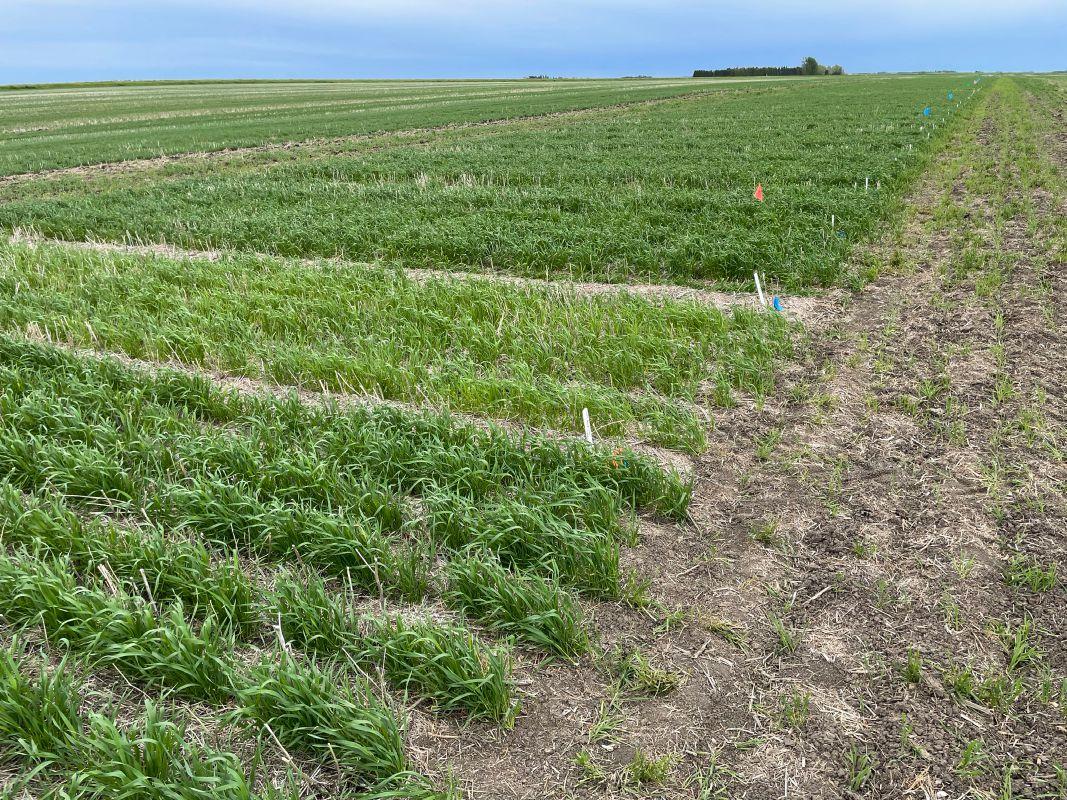
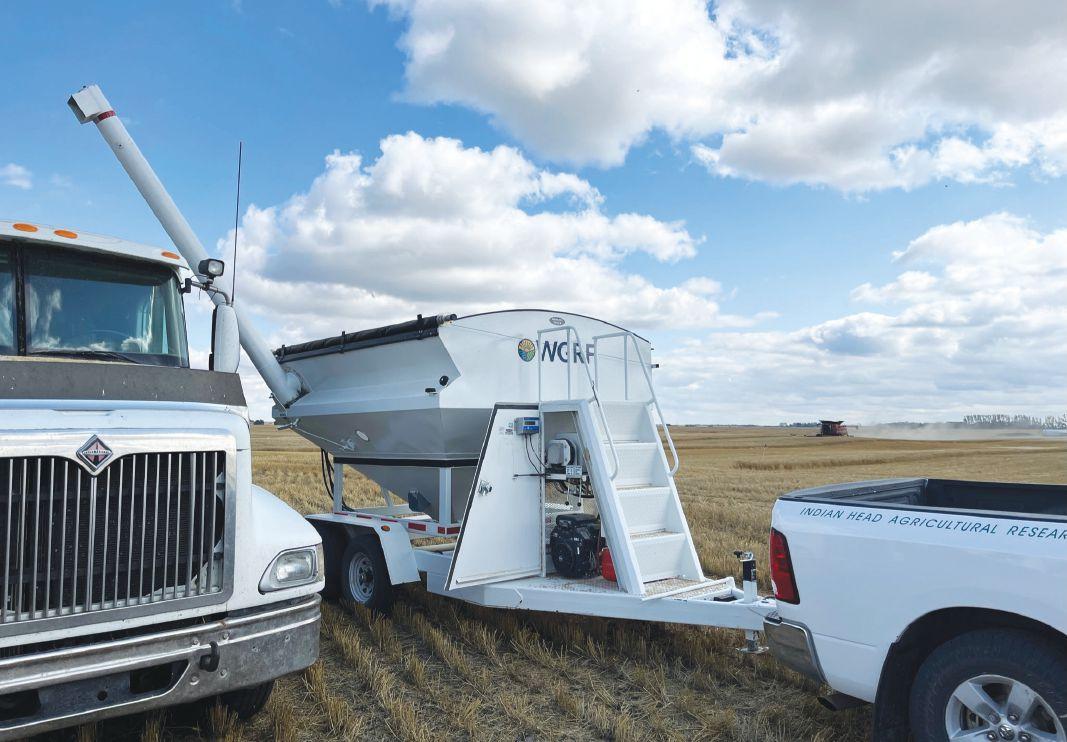
TOP: Harvesting wheat from the N-fixing biological products trials.
PHOTOS COURTESY OF CHRISTIANE CATELLIER, IHARF.
related small-plot research. The purpose of on-farm research is to test the success or failure of adopting new products, technologies or practices on a commercial production scale. The on-farm research allows farmers to have control over the research topics and helps them find farm-specific answers to agronomic questions.
“I’m supporting the programs by leading the research side of the project, getting the research protocols established and experimental design in place, as well as working with agronomists on implementing the field-scale trials and data collection,” says Catellier. “In 2023, participating farmers could select from four crop research protocols, including foliar-applied N-fixing biological products on wheat or canola, and testing seeding rates on red lentils or barley. Some farmers are also working with other organizations such as SPG on other on-farm research protocols and projects. The objective of the field-scale trials is to determine if farms can see agronomic and economic benefits from the protocols. Farmers who participate get to see what works on their farm using their own equipment and under the environmental conditions of their operation. Economic outcomes are usually the driver of many research questions, however, sometimes the research questions and objectives can be related to other important agronomic issues such as quality, standability, harvestability or logistics. Using on-farm research trials is a good tool to address any number of agronomic questions that arise when it is done effectively.”
For the on-farm research trials to be relevant, the protocols are
When recycling ag containers, every one counts
Great job recycling your empty pesticide and fertilizer jugs, drums and totes. Every one you recycle counts toward a more sustainable agricultural community and environment. Thank you.
2024 COLLECTION SITES OPEN APRIL 1.
Ask your ag retailer for an ag collection bag, fill it with rinsed, empty jugs and return jugs, drums and totes to a collection site for recycling. In Alberta and Manitoba, ask your ag retailer if it’s a jug recycling location. Details at cleanfarms.ca
NEW! Return empty seed, pesticide and inoculant bags for environmentally safe management.
based on good experimental design, including replication, randomization and statistical analysis. Using scientifically valid experimental design ensures the effects observed were a result of the treatment and not due to chance or natural variability. Repeating the same trial across many locations in the province and collectively analyzing the data provides a statistical advantage and confidence in the results.
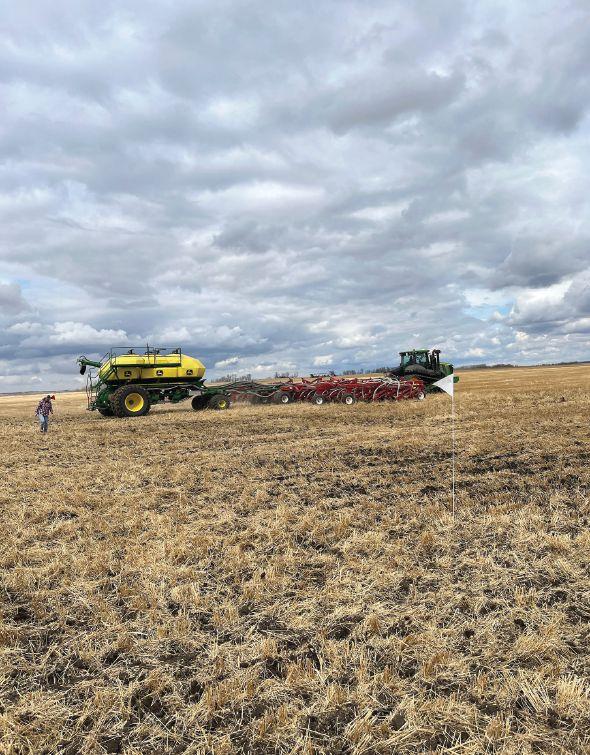
Catellier and the network of agronomists and trial managers worked directly with farmers through every step of the research process. At seeding or product application timing, agronomists helped farmers set the trials up in the field, marking the plots with flags or GPS, and ensuring the experimental design parameters were in place. Participating agronomists and trial managers then completed all the observations and data collection for the farmers throughout the growing season.
“Economic outcomes are usually the driver of many research questions, however, sometimes the research questions and objectives can be related to other important agronomic issues such as quality, standability, harvestability or logistics.”
trials. The final results will be shared with the participants over the winter. Farmers also now have a network of growers and agronomists interested in field-scale research and sharing on-farm results that benefit everyone.
Catellier worked with a number of farmers directly and is also responsible for collecting and analyzing all the data across all the
“For many farmers, I think the on-farm research process was not as hard as they originally thought it would be and hopefully will see that the results will be the big benefit,” says Catellier. “The growing season in 2023 was pretty good in terms of conditions for most areas, with enough time for seeding and harvest operations so no one really got behind. Most growers found that adding the on-farm research trials into their regular operations was fairly easy and didn’t take that much extra time. Once we have analyzed all the data, we can share the final results and comparisons across the province with participants. This information will help farmers make good management decisions relevant to their operation and be more confident in adopting successful outcomes or saving time and money by not adopting a practice that wasn’t successful.”
Catellier is pleased with the first year of the project and is looking forward to working with the participants and the commissions to establish the 2024 on-farm research trial protocols. For the coming year, Catellier also plans to develop more tools to make it easier to translate experimental design and research methods to field-scale applied research projects. This will make it easier for farmers and agronomists to develop trial management skills, implement research methods and realize the benefits and limitations of proper research methods.
“If farmers are interested to learn more or would like to participate in the 2024 on-farm research program, they can reach out to me directly or the crop commissions,” adds Catellier. “We encourage farmers to provide input and suggestions on what research trials they would be interested in over the next year or two. Over the winter, we will be sharing the results with participants across the province.
“In 2023, we held a tour in the northwest part of the province and in 2024, we plan to hold a tour of the on-farm research projects in the Indian Head area. This on-farm research program is helping to build a network of farmers and agronomists interested in field-scale research to share knowledge and expertise and find farm-specific answers to relevant agronomic questions. Farmers who participate in the program can have confidence in the research results and will hopefully realize the benefits and value for their time and resources invested.”
Power up your burnoff.
Doing your spring burnoff with glyphosate alone might seem effective enough – but watch what happens when you power-up by adding Aim® EC herbicide.
When tank-mixed with glyphosate or used alone with surfactant, this fast-acting Group 14 stomps the life out of tough weeds like kochia and cleavers, and even controls weeds resistant to other modes of action.
You can also keep your options open – Aim® EC herbicide has multiple tank-mix options and can be used prior to all major crops.
Power up your savings by mixing Aim® EC herbicide with Express®
Introducing Oxbow TM , a versatile cereal broadleaf herbicide that gets the job done. Powered by Duplosan ™ technology, Oxbow is your workhorse on resistant kochia (including Group 2-, 4-, 9- and 14-resistant biotypes) and other tough weeds. With flexibility in application timing, rates and re-cropping options, the path is clear with Oxbow. Find your way at
CAPTURING ANCESTRAL DIVERSITY
Sifting through the genetic variation in canola’s progenitors for traits to help the crop withstand challenging conditions.
by Carolyn King
ASaskatoon research team aims to increase the genetic diversity available in canola germplasm so breeders can develop Prairie canola crops that are more robust and resilient. The team’s strategy is to tap into a profusion of traits – from the roots up – in canola’s two progenitor species.
“Canola, or Brassica napus, is what is called an allotetraploid. It was formed by the fusion of two smaller diploid plants, basically a turnip [Brassica rapa] and a cabbage [Brassica oleracea],” notes Isobel Parkin, a research scientist with Agriculture and Agri-Food Canada (AAFC) in Saskatoon. Diploid means the plant has two complete sets of chromosomes. Brassica rapa has 10 pairs of chromosomes, and Brassica oleracea has nine pairs. And Brassica napus has 10 rapa pairs plus nine oleracea pairs.
Parkin explains, in nature, this hybridization of Brassica rapa and Brassica oleracea is extremely unusual. Almost all of the time, each species would only cross with others of its own species. The resulting allotetraploid was not only rare but also lucky for farmers. “It was then selected for because you got a bigger, beefier plant that produced more seed,” she says.
“However, since this hybridization event didn’t happen very often, you have immediately a genetic bottleneck where you have created a new species from a very small number of lines. In that way, you’ve reduced the amount of diversity or variation that is present.” As well, further genetic narrowing of the Brassica napus germplasm pool occurred through selection for particular characteristics desired in the cultivated crop.
“Canola’s diploid parents have carried on evolving in their own separate ways and in multitudes of environments. And there are a lot more representatives of the diploids than there are of the napus lines.” So, Brassica rapa and Brassica oleracea are great sources of new variations for canola breeding.
Resynthesizing napus
One key technique that Parkin’s research team and other scientists use to access the genetic variation in canola’s two parental species is known as resynthesis. In essence, they recreate that hybridization event in the lab, crossing a Brassica rapa plant and a Brassica oleracea plant to get a Brassica napus plant.
“We cross them and then we do what is called embryo rescue. As the embryos begin to form in the pods, we take them out and tissue culture them, and baby them along to get plants,” she explains.
“The other issue is that the fertility of the resynthesized lines can
sometimes be a little less than what you would hope for. But usually through several generations you can increase the fertility, or you can cross them back to natural napus, which is what we’ll be doing to stabilize the fertility.”
Parkin is currently leading a Brassica napus resynthesis project with a major focus on root traits for sustainable canola production. In addition, the project is on the lookout for other traits in the diploids like resistance to key disease and insect threats.
Crazy and useful diversity
“We have been doing canola resynthesis for many years in my lab, but we haven’t done it quite so extensively with so many lines as in this
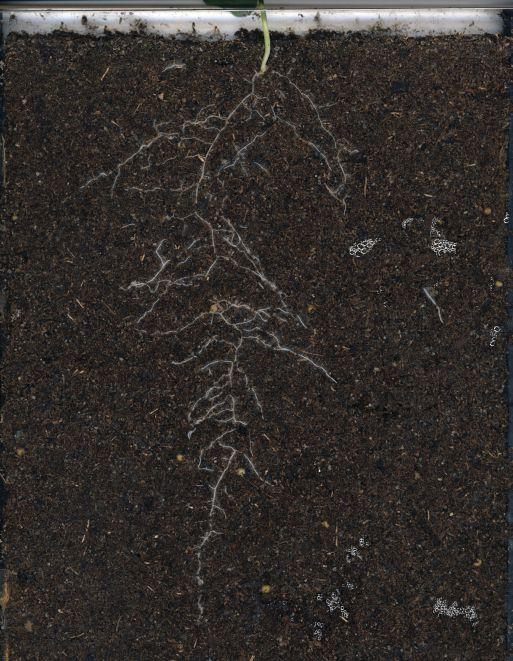
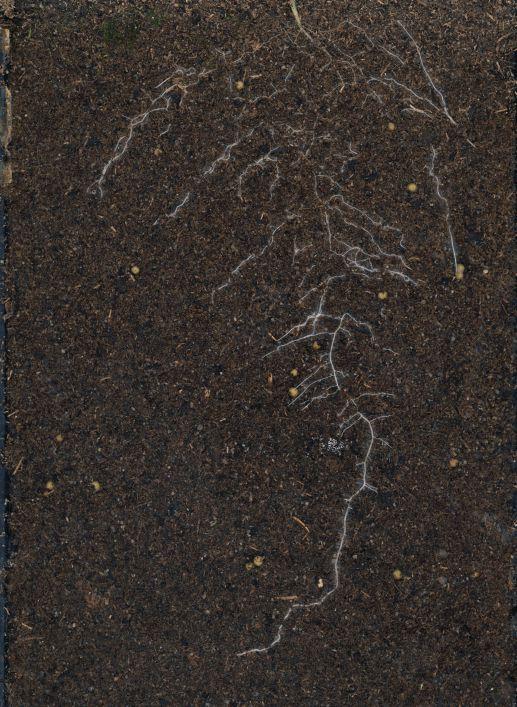
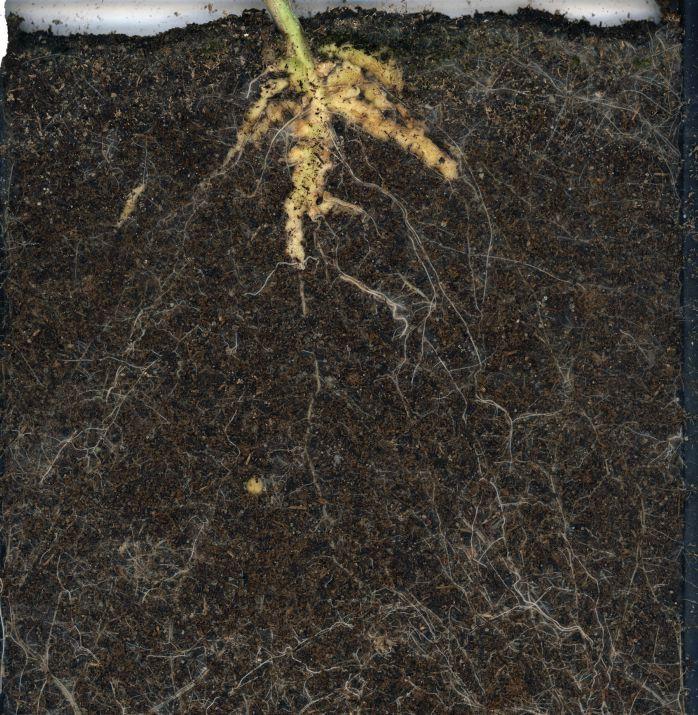
ABOVE AND RIGHT: Young Brassica napus roots grown in soil rhizobox.
project,” Parkin notes.
This project includes a very large collection of about 600 Brassica rapa lines from Plant Gene Resources of Canada’s national collection of seed germplasm in Saskatoon.
“We have fewer Brassica oleracea types. The reason for that is that there are a lot more oilseed rapa types than oilseed oleracea types –both produce oil, but rapa types produce more oil than most oleracea types,” she explains. Brassica oleracea has been bred mainly for use as vegetables, including crops like broccoli, Brussels sprouts, cauliflower and cabbage.
“Canola, or Brassica napus, is what is called an allotetraploid. It was formed by the fusion of two smaller diploid plants, basically a turnip [Brassica rapa] and a cabbage [Brassica oleracea].”
Fortunately, Parkin’s team has access to a remarkable collection of Brassica oleracea material from the University of Warwick in the United Kingdom.
“The University of Warwick has made a very interesting collection not only of Brassica oleracea material, but they have also crossed their oleracea lines with many wild relatives of oleracea. Those wild relatives are carrying even more crazy variations than the vegetable types that have been bred for a long time,” she says.
“As a result, we have this collection of about 150 lines that have mostly oleracea but then they have bits of genome from these really wild species. So the lines carry all this massive genetic variation.
“We’ve been growing the lines over the last few months, and they have variations of everything. For instance, they have variations in leaf morphology, with some lines having velvety leaves with tiny hairs on them. And they have various colours – they contain lots of
carotenoids [yellows, oranges, reds, blues] and anthocyanins [purples, blues, reds, blacks], so they’ve got purple pods and so on. They are really quite funky.”
Parkin notes, “Some of these variations may sound a bit crazy, but some of these wild species have been shown to have resistance to some of the diseases and insects that affect brassica crops. So these lines could be a source of other interesting variation, as well as variation in the root morphology that we’re looking at in this project.”
Revealing root traits, and more
“We are focusing on root morphology because of an emphasis on adaptation to problematic environments,” Parkin explains. She and her team want to identify root characteristics that will help with things like improving water-use efficiency to reduce drought impacts and increasing nutrient uptake so growers could reduce fertilizer inputs.
Root architecture is also important for traits like resistance to lodging. And root characteristics may play a role in the plant’s ability to fight certain root diseases or insect pests, and in storing carbon in the soil.
As you can imagine, roots are tricky to phenotype, especially if you are evaluating hundreds of lines. One option is to dig up the plants, wash off the roots, and then measure various root characteristics. As Parkin points out, that approach is really labor-intensive, and it damages the roots.
Her project is using an image-based method for high-throughput screening of the root characteristics of the different lines grown in what are called soil rhizoboxes. “We’re growing the plants between two glass plates in a thin layer of soil. Most roots as they grow, even in the soil, will cling onto things. So, they cling onto the glass, and you can see the roots,” she explains.
“The different lines will have very different root morphologies. For instance, they may have really big tap roots and very limited lateral roots or vice versa.” They will use various types of computer software to
extract particular root details from the images. Then, at the end of the experiment, they’ll remove the glass, wash the roots and measure other characteristics like root mass.
Parkin’s team will also be collecting data on how variations in root characteristics relate to the plant’s performance regarding traits like water-use efficiency.
They hope to identify Brassica oleracea and Brassica rapa lines with optimal root architecture. Then they’ll use the more promising oleracea and rapa lines to create resynthesized Brassica napus lines.
Next, they’ll screen those resynthesized lines for the desired root characteristics. And then they’ll cross the most promising resynthesized lines with elite canola lines to create pre-breeding materials.
The diploid, resynthesized and prebreeding lines will be evaluated under multiple growing conditions in the greenhouse, and the pre-breeding lines will also be tested in the field.
In addition, the team will be genotyping the different lines. Then, by combining
the genotype and phenotype data, they will identify the regions of the genome associated with the desired root traits and develop molecular markers for those traits.
Along with all this root work, Parkin and her team will be capturing some of the other interesting variations in the oleracea and rapa lines. “We’ll screen the diploids to see if we can find novel resistance for diseases like clubroot, blackleg and sclerotinia. And we’ll also probably screen them for resistance to flea beetles and various other common problems of Prairie canola crops.”
As part of this, Parkin’s team will be using the root imaging method to track clubroot gall formation on the roots between the glass plates. The team hopes to create a method to rapidly assess the lines for their response to clubroot.
Toward yield stability
This three-year project just began in 2023 so it is still pretty new. “We’ve started to explore the diversity within the diploids, growing all these interesting oleracea and rapa lines. And we have been doing testing of the root phenotyping methodology to get that going, and that is working quite well,” says Parkin. They have also been developing their clubroot screening method and are now doing a little fine-tuning so it will work perfectly every time.
The phenotype data, genotype data, markers and pre-breeding lines resulting from this project will be very important resources for canola breeders and researchers, helping in the development of improved varieties for more sustainable canola production.
“Overall, we’re hoping to identify genetic variation that will be useful in the Prairies,” says Parkin. “We’re focusing on some clear, useful traits, like clubroot resistance, and on identifying lines that are going to be more robust in tricky environments, like low nutrient or low moisture, but still yield well at the end of the season. That is the ultimate goal – to identify traits that will give canola growers much more yield stability.”
Parkin’s collaborators on this project include Hossein Borhan, a molecular pathologist at AAFC in Saskatoon, and Mark Eramian, a professor in Computer Science at the University of Saskatchewan. This project is funded by the Canola Agronomic Research Program and the Western Grains Research Foundation.
Clubroot galls growing on the roots of a clubroot-susceptible Brassica napus line, in a soil rhizobox.
Takes cabbage to make cabbage.
Welcome to the world of GFL Ag, a company dedicated to transforming compostable food into innovative fertility products for enhanced crop performance. We’re here to enrich the sustainability of modern agriculture—with the next generation of sustainable fertilizer. Using what we have. Creating more of what we need. And growing the biggest and best crops possible.
Learn about Bio-Sul Premium Plus, and how our newest next-gen nutrient source helps maximize crop performance, at gflagri.com.
UNDERSTANDING CLEAVERS POPULATIONS IN WESTERN CANADA
Developing strategies and tactics to improve cleavers management.
by Donna Fleury
Cleavers is a problem weed for many growers and can be particularly challenging for growers in the Black soil zone areas in central and northern Alberta and Saskatchewan. Cleavers is a serious contaminant of canola, with a similar seed size and shape, causing harvest difficulties and lowering seed quality. To better manage cleavers, researchers are investigating various populations to find out what factors affect their growth under different environmental conditions and in different locations.
“Cleavers are a very prominent weed on the Prairies, with increasing abundance in many of the provincial weed surveys over the past several years,” says Breanne Tidemann, research scientist with Agriculture Agri-Food Canada (AAFC) in Lacombe, Alta. “There are two species of cleavers that grow on the Prairies: Galium aparine (cleavers) and Galium spurium or false cleavers, which have similar growth patterns and are difficult to distinguish. Cleavers can be quite variable, and we are interested in what factors are causing that variability, such as the timing of emergence, seed production or location and environmental conditions. The goal of the project is to increase our understanding of cleavers biology and cleavers populations in Western Canada and use this knowledge to better inform management strategies.”
Tidemann initiated a project in 2021 in collaboration with AAFC research scientists Charles Geddes in Lethbridge and Shaun Sharpe in Saskatoon to evaluate cleavers populations from across the prairies to determine what is driving some of the differences between biotypes. Chris Willenborg, research scientist at the University of Saskatchewan (USask), has also provided some insights on the recent work his graduate student Andrea De Roo did on cleavers.
“For the project, we collected cleavers seed from across Western Canada and then grew the same seeds in three locations: Lacombe, Lethbridge and Saskatoon,” explains Tidemann. “We wanted to evaluate the differences and determine whether it was the location and environment they were growing in that was driving differences or was it more about the location where the seed originated. By growing the mixed populations in three different locations, we hoped to find out more about the biology and factors affecting the variability. Information such as emergence phenology, whorl/branch number, flowering, seed production, seed weight and over-wintering ability
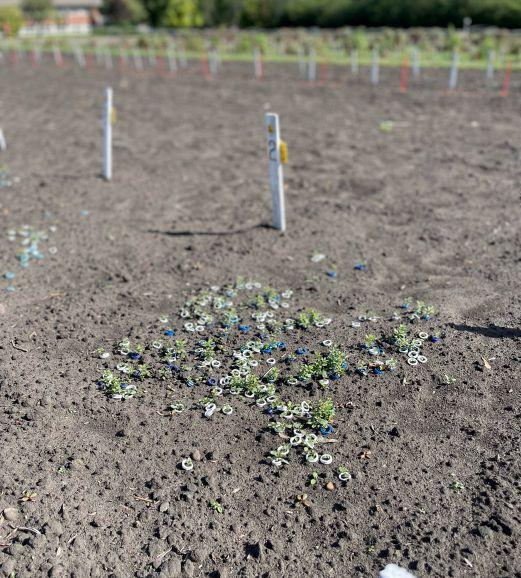
ABOVE: Seeds from all populations of cleavers were seeded in plots both in early spring, and at the end of July/early August at all three study locations.
are being measured.”
In the first year, researchers collected seeds from producer fields in Alberta, Saskatchewan and Manitoba. Due to drier conditions, cleavers were less abundant, and researchers ended up with 25 populations, including 12 from Alberta, eight from Saskatchewan and five from Manitoba. In the first field season, seeds from all populations were seeded in plots both in early spring and at the end of July/ early August at all three locations. One very noticeable difference came from that fall seeding.
“In the fall, Lacombe had fall-emerging cleavers pretty well established, and most survived over the winter,” says Tidemann. “In Lethbridge, the plots had fall-emerging cleavers, but they all died overwinter, and in Saskatoon, no cleavers emerged in the fall. In 2023, the dry conditions didn’t result in significant cleavers populations in producer fields, and lower densities than in 2022 in the plots. However, all locations had fall-emerging cleavers, with Saskatoon and Lacombe seeing hundreds of seedlings emerge in a week after receiving precipitation. This demonstrates that cleavers are very moisture responsive.”
Tidemann notes that for growers in a cleavers-dominant area like the Black soil zone, watching for seedling emergence after rainfall will be important. Similar to wild oat seedling flushes, cleavers does the same thing, although it has not been something that has been focused on in terms of cleavers management. Therefore, in a wet year, scouting and controlling cleavers in their lifecycle will be important. Group 2 resistance is increasing, with the 2017 weed survey in Alberta showing 40 per cent of cleavers resistant to Group 2 and in the most recent survey in Saskatchewan, 40 per cent of cleavers were resistant to Group 2.
“When considering an integrated weed management strategy, cleavers respond differently and don’t seem to be as susceptible as wild oats to tactics for cultural control,” explains Tidemann. “Cleavers are a bit trickier to manage than wild oats because of their biology. With wild oats, increasing seeding rates or growing winter cereals can be a good management strategy. However, cleavers don’t seem to be as responsive. Cleavers can climb up the crop and therefore don’t suffer the same reduction that a wild oat might from increased seeding rates. Winter cereals can be very competitive to wild oat, which generally emerges in the spring. However, because cleavers emerges both in the fall and spring, it is more competitive in winter cereals than wild oat. Cleavers that overwinter can get a jumpstart on the crop and are sometimes too large to be effectively managed with a pre-seed burnoff.”
One additional component of the project that is still underway is a baseline screening for quinclorac resistance and a very preliminary assessment of the frequency of resistance. In the mid-90s, a population of quinclorac-resistant cleavers was identified in Alberta, and recently, there are increasing applications of quinclorac on cleavers,
Estimating cleavers seeding emergence in the plots.
particularly in glufosinate canola. In the initial screening, some of the cleavers population continued to flourish after spraying with quinclorac. But after additional testing, resistance was not confirmed in those biotypes.
However, there is some reason those populations are not dying in the field, and it’s not clear if it is related to drier spring conditions or drought stress that is making them less susceptible, or something else that is going on. For now, growers should monitor closely, particularly if it’s a dry season and quinclorac is being used. Make sure to scout the field afterward to see if the cleavers have been controlled. Knowing that resistant biotypes were confirmed at one time, managing cleavers to minimize selection pressure is important to continue to reduce the risk of resistance.
The project will wrap up in 2024, with data collected on overwintering cleavers populations. After that, the large data analysis and final results of the project will be completed and made available.
“In a side-project, Sara Martin, with AAFC in Ottawa, is leading mapping of the cleavers genome,” adds Tidemann. “We were able to share the populations we collected from Alberta and Saskatchewan; unfortunately, we didn’t have the Manitoba collection in time. Dr. Martin’s analysis showed that all of the seeds she tested were G spurium or false cleavers, which agrees with the USask research that Andrea had done. We are hoping this research together with our results will help us understand the differences we are seeing in the populations and help develop strategies and tactics to improve cleavers management.”
DRONE MAPPING TARGETS KOCHIA PATCHES
Mapping provides the basis of site specific weed control.
by Bruce Barker
If ever there was a weed that called out for a targeted approach for control, kochia is the one. Prolific, with multiple flushes throughout the growing season, stress-tolerant, genetically diverse and resistant to four different herbicide Groups, including the mainstays of control – glyphosate, dicamba and fluroxypyr. Yet kochia is not very crop competitive, and so is often found in marginal areas of a field that are saline or around barriers in a field like power lines and wellheads, and even in hybrid canola production fields in strips where the male plants are mowed down.
“Kochia is a big concern right now. We wanted to look into whether we could manage it with variable-rate or site-specific strategies,” says Lewis Baarda, field-tested manager with Farming Smarter at Lethbridge, Alta. “We thought if we could narrow down the scope and manage kochia in 10 or 20 or 30-acre areas instead of the entire field, maybe it would be a little easier for growers to deploy the tools on the toolbelt to tackle it.”
A weed mapping and kochia management research project was set up with 75 per cent of funding coming from the Canadian Agricultural Partnership, and the remainder self-funded by Farming Smarter. FMC Canada also provided support and AJM Seeds provided field imagery. The project ran from 2019 through 2023. The objectives were to investigate tools for mapping kochia growth zones in a field and to evaluate site-specific kochia management using different control methods.
Farmer co-operators with three fields in southern Alberta at Burdett, Medicine Hat and Scandia were selected for the project. Soil samples, electrical conductivity, weed counts and yield maps were collected for each field. Drone imagery was used to map kochia growth in the fall.
Two processing techniques imagery types were used in the project. One used NDVI, which is a common index that uses the Red and NIR (near-infrared) portions of the spectrum to identify greenness.
The second was excess greenness (ExG). Excess greenness is a similar index but is computed differently. It uses band arithmetic to determine greenness in a way that doesn’t require an NIR band. You could use RGB bands to compute this. The most basic form of imagery gathering would be RGB (red, blue, green).
“Like TVs that use those three colours to produce all the colours that you see. So, ExG allows one to reproduce a facsimile of the more common NDVI using lower quality (fewer bands) drone imagery,” says Baarda. “We found ExG and NDVI to be equally effective for the purposes of our study.”
These approaches were used in the fall after the crop had matured and turned brown but kochia was still growing and green.
“At that time of year, this was an opportunity for us to fly drones over the fields and identify where kochia is,” says Baarda.
The technology worked well with crops that matured relatively early, but was less effective on later maturing faba bean.
Baarda says the imagery technology was relatively simple to use without the need to zoom in to distinguish between crop and weed or supervise the technology because it is well proven already. He says the only parameters required were georeferenced data and colour imagery collected by the drone.
“Our idea was to stay away from more expensive and high-tech drones to develop a tool that would be accessible to farmers in terms of price as well as expertise needed,” says Baarda.
The data layers collected were overlaid and integrated using geographical information systems (GIS) and spatial analysis using the ESRI ArcGIS program. Kochia management zones were identified and used for site-specific kochia management. Ground truthing with weed counts verified the mapping.
“In our case, the drone produced an NDVI map for us that we received from DroneDeploy software. This map can be directly input into whatever software a farmer would use to send a map to their sprayer. In the case of ExG, which we computed for the sake of the project, those calculations were done in ArcGIS, then exported to the farm software.
“Across the board, I would say we were 80 to 90 per cent accurate in identifying kochia,” says Baarda.
Site-specific control
The next step was to utilize the maps in a site-specific approach. One way was to use a site-specific herbicide application. Mapping was used to apply Authority herbicide (Group 14) pre-plant to only the areas of the field with kochia. This resulted in a savings of 70 to 75 per cent in herbicide and application costs. The results found similar control of kochia using a site-specific application as if the entire field had been treated, producing a significant cost savings.
Another example would be to take the same approach to chemfallow, targeting additional effective modes of action to areas of the field with kochia. This approach is even more timely, as the drone can be flown during the chemfallow season to target kochia patches in-season.
Eventually, the Holy Grail would be the use of drone spraying to target mapped weed patches. Currently, there are regulatory hurdles since the Pesticide Management Regulatory Agency has deemed that each herbicide must be assessed for drone spraying as an application method.
“H-E-double hockey sticks, this stuff works great.”
The speed and performance of new Intruvix™ II herbicide is so darn good, folks can hardly contain their excitement. By applying it with glyphosate before planting cereals, they’re saying goodbye and good riddance to narrow-leaved hawk’s-beard, volunteer canola, kochia and many other problem weeds. Enjoy cleaner fields, faster, while protecting your future glyphosate use. Cheese and crackers, how easy can you get? REWARD
Clean is good
WATER AVAILABILITY AND CROP OUTCOMES IN PRAIRIE CROPPING SYSTEMS
Building resilience into water-limited cropping systems on the Prairies.
by Donna Fleury
Several factors drive crop growth and production in Prairie dryland agriculture systems, including year-round hydrology and seasonal water balance. Researchers are interested in understanding the interactions of various hydrological factors and cropping practices that impact water availability and crop water use in water-limited cropping systems.
“There is a long-running interest in how we can better manage crop water availability with improved management practices,” says Phillip Harder, former research associate with the Centre for Hydrology at the University of Saskatchewan. Harder is now research director and hydrological scientist with Croptimistic Technology Inc., an agtech company specializing in SWAT MAPS for precision agriculture and variable rate mapping.
“There has been a lot of previous research focused on individual
practices such as conservation tillage, stubble and residue management and other practices that impact crop outcomes,” he says.
“However, we also recognize that crop water use in Prairie dryland agriculture systems depends on hydrology throughout all seasons, which requires a better understanding of complex snow-soil-energy-water interactions to describe the impact of changing management practices. With the recent developments in field-scale sensor technologies and more comprehensive modeling platforms, we are better able to evaluate the complex interactions of these individual management practices and hydrological processes, and ultimately
TOP: Research shows that hydrology, snowfall accumulation, snowmelt, spring and fall rains and their interactions are all very important factors driving crop growth.
Optimization of stubble to increase snow retention and crop residues to reduce soil evaporation has the potential to increase growing season water availability by up to 20 or 30 per cent.
quantify water availability and crop use.”
Water is limited on the Prairies, making water conservation an ongoing objective that requires consideration of the seasonal water balance and long-term water storage. “In a recent research project [as part of the USask-led Global Water Futures Program] at a site near Saskatoon, our objectives were to quantify the crop water use and the water balance in the field,” explains Harder. “We implemented very intensive field-scale observation trials on various crops grown in commercial fields to determine whether the water balance was coming from rainfall during the growing season, snowfall accumulation and snowmelt or other factors outside of the growing season. We also wanted to understand how stubble and residue management influences crop available water and if it can be manipulated with stubble and residue management. The project included significant efforts to quantify those terms and describe the processes, as well as to develop modeling capacity so we could pre dict or simulate impacts of crop production practices on the water balance.”
The results showed that hydrology, snowfall accumulation, snowmelt, spring and fall rains and their interactions are all im portant factors driving crop growth. Water is generally limited, and even in dry years like 2022, many growers saw good yields despite hardly any rainfall.
“This shows that crop growth wasn’t just a result of rainfall; a
KOCHIA CONTROL IN CANOLA ISN’T JUST A FALL OPTION
While Edge ® is a great option for kochia control in front of lentils, did you know that it is also registered for kochia control in front of your canola this spring? It also provides strong control of wild buckwheat, redroot pigweed and many of your toughest weedsEdge ® is up to the challenge.
For more information about Edge ® MicroActiv, please contact your local Gowan Representative!
significant amount of snowfall and snowmelt infiltration played a role,” adds Harder. “To understand crop potential, it is important to understand the long-term storage of water in the soil across the entire profile, not just in the top 10 cm. These are long-term cycles, but there can potentially be a lot more water available than expected.”
“There are some good examples from our research. In 2015 and 2016, field conditions were on the wetter side and overall rainfall matched crop water use. However, in 2017 rainfall did not match crop water use, with canola using 220 mm of water while in-season rainfall was 67 mm. Our observations demonstrated that winter processes tended to provide the most consistent water input, on average about 50mm, whereas summer precipitation tends to be at a deficit of 104 mm on average. Therefore, understanding where that available water is coming from over the long term and the impact of moisture accumulation from previous years is really important.”
Although growers can’t control the weather or the amount of snowfall or rainfall they receive, there are good practices that can impact crop water availability and build resilience into cropping systems. Long-term practices such as minimum and zero-till cropping systems, stubble and residue management have proven to be very important. Stubble heights and crop residues impact water availability and can be manipulated to improve crop available soil water. The continued implementation of these best practices and using those principles to maximize crop water availability is necessary. Growers can also expect significant hydrological benefits for particular technologies such as stripper headers, disc drills and others, although they may not be applicable to individual cropping systems.
“Our research projects, including 15 years of water balance observations, show stubble residue management impacts the complex interactions of snow-soil-energy-water,” explains Harder. “Increasing stubble height increases water input and increasing residue cover increases water retention. From a water balance perspective, optimization of stubble to increase snow retention and crop residues to reduce soil evaporation has the potential to increase growing season water availability by up to 20 or 30 per cent. Stubble height man-
agement for snow trapping continues to be one tool that can very effectively change the amount of water coming in or out of cropping systems. In earlier research comparing the impact of stubble heights on snow collected in fields in both Swift Current and Saskatoon, the results showed that on average, one millimetre of water is retained for every additional centimetre of stubble left behind. This is in addition to what other moisture may be collected, depending, of course, on the snowfall in that year with greater potential in heavy snow years. Under drought conditions, there may not be a lot of extra stubble or residue to manage in that particular season, but over the long term, those many benefits will be realized.”
“There are also new technologies, sensors, tools and services available to help understand soil moisture conditions; however, the challenge remains in interpreting all of the data collected into usable information,” says Harder. “Some technologies are not yet available, such as satellite remote sensing to predict root zone moisture at management scales. Growers can look to information, including soil moisture conditions, from the many weather stations located across the Prairies. However, the challenge of using soil moisture to try and make a decision is you can’t just use a regional number. Every single field will be different, depending on crop type, the stubble from last year, the crop residue status and other factors. Every field has a legacy of decisions on it that make it unique in trying to understand the actual soil moisture in individual field profiles.”
Harder emphasizes that hydrology, snowfall accumulation and snowmelt, spring and fall rains, and their interactions are all very important factors driving crop growth in water-limited dryland areas, particularly the southerly parts of the province. Minimizing disturbance and implementing practices to reduce soil evaporation and capture as much moisture as possible through the seasons should be built into planning decisions. Although the weather can’t be changed, building more resilience into cropping systems to manage the impacts of increasingly variable weather conditions and optimizing crop water availability in water-limited dryland agriculture in the Prairies is imperative.
Stubble height management for snow trapping continues to be one tool that can effectively change the amount of water coming in or out of cropping systems.
EXPANDING CHICKPEA WEED CONTROL OPTIONS
Research looked at a new herbicide active ingredient to improve weed control.
by Bruce Barker
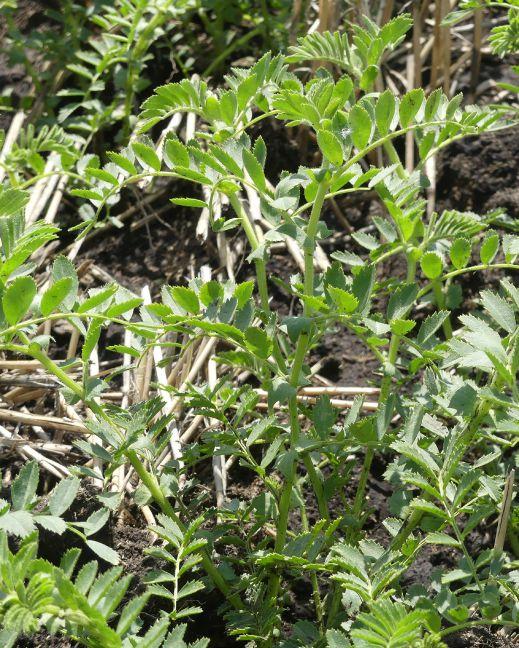
With funding from the Saskatchewan Pulse Growers, researchers at the University of Saskatchewan Plant Sciences Department are looking at how to improve weed control in chickpeas. Three recently completed studies looked at a new herbicide active ingredient in chickpeas and examined the crop safety of registered herbicides to gain a better understanding of how to improve weed control.
“Several cases of herbicide resistance pose a threat to pulse crop production, including Group 2-resistant cleavers, wild mustard, and hemp-nettle, and Group 9-resistant kochia,” says Chris Willenborg, professor and Plant Sciences Department head.The U of S research, led by Willenborg, sought to address these herbicide resistance challenges and to expand weed control options in chickpeas. It focused on two main topics. The first was whether the Group 6 active ingredient pyridate was safe to use on chickpeas and if it was effective on kochia. The second looked at chickpea variety tolerance to pre- and post-emergent herbicides.
A new chickpea herbicide
Pyridate is a Group 6 broadleaf herbicide that has been used in horticultural crops for many years. Willenborg says it was previously evaluated as a potential herbicide for chickpeas at both Scott, Sask., and the University of Saskatchewan. At that time, crop tolerance was very good, but Syngenta did not move ahead with registration. A few years ago, Belchim Crop Protection bought the product and was interested in pursuing registration.
Willenborg investigated chickpea tolerance to pyridate in 2019 and 2020 to revive the potential of this new chickpea herbicide. In 2019 at the U of S Kernen Research Farm, the trial included a hand-weeded untreated check, pyridate (1x rate; 900 g ai/ha), and pyridate (2X rate; 1,800 g ai/ha). Sencor 75DF herbicide was also included as an industry standard. Application was made at the twoto three-node stage.
In 2019, chickpea had good tolerance to both the 1x and 2x rates of pyridate. The visual injury ratings were consistently lower than the maximum acceptable level of crop injury of 10 per cent and also lower than the industry standard Sencor. No significant difference in yield was found between the pyridate treatments and the handweeded check.
Willenborg also conducted a weed control study looking at pyri-
date’s effectiveness on kochia. With the confirmation of Group 2, 4, and 9 herbicide-resistant kochia, an alternative herbicide group for kochia control would be a valuable tool. The trial was carried out at Kernen Research Farm from 2018 to 2020. Treatments included a weedy check, pyridate, Sencor and a tank mix of both applied postemergent at different rates. All herbicide treatments were applied when kochia height was between 0.4 to 1.6 inches (one to four centimetres) tall, and some treatments also included a sequential application when kochia was two to four inches (five to 10 cm) tall. There were 12 different herbicide treatments in total.
At the final rating date 56 days after treatment, three treatments
TOP: U of S research investigated new weed control options in chickpea.
provided greater than 82 per cent kochia control, although none reached 90 per cent. The first was an early application of pyridate (300 g ai/ha) + Sencor (101 g ai/ha) followed by a late application of pyridate at (600 g ai/ha). The second treatment to achieve commercially acceptable control was with early and late sequential applications of pyridate (300 g ai/ha) + Sencor (101 g ai/ha).
The third treatment was an early application of Sencor (200 g ai/ ha) followed by a late application of pyridate (900 g ai/ha).
“In general, chickpea has exhibited excellent tolerance to pyri-
date. The current herbicide combinations used in this study provided promising activity on kochia; however, testing and finding a more efficacious tank-mix partner would give chickpea growers more herbicide weed control options to rotate to and thus, better kochia herbicide-resistant management,” says Willenborg.
Pyridate has since been registered as Tough 600EC. In chickpeas, it has been registered for pre- and post-emergent control of black nightshade, redroot pigweed, kochia, lamb’s quarters, false cleavers and wild mustard.
Investigating the chickpea health issue
A third study looked into undiagnosed chickpea health issues in southern Saskatchewan that began in 2019. Chickpea variety and herbicide residue interactions were thought to be potential reasons for poorly performing chickpeas. To investigate this theory, Willenborg screened eight imi-tolerant chickpea varieties, both kabuli and desi types, for differences in herbicide tolerance for both pre- and post-emergence herbicides. The trials took place at the U of S Kernen and Goodale sites.
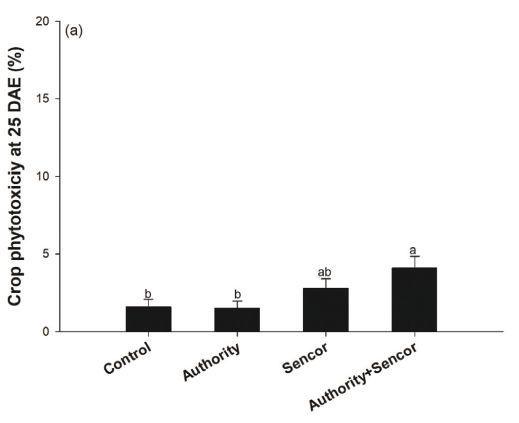
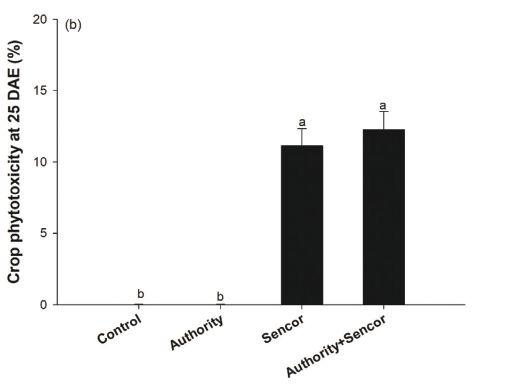
The three herbicide treatments tested were sulfentrazone (Authority) applied pre-emergent, metribuzin (Sencor) post-emergent and Authority pre-emergent + Sencor post-emergent. The treatments also included a hand-weeded, untreated check. Sencor was applied at the two-node stage of chickpeas.
Varieties compared were CDC Leader, CDC Orion, CDC Lancer, CDC Orkney, CDC Pasqua, CDC Consul and CDC Kala.
Data collection included the date of emergence, crop counts, visual ratings of crop phytotoxicity, crop yield and thousand kernel weight.
There were no differences between varieties for crop phytotoxicity or crop yield in response to the different herbicide treatments. However, there were some differences in crop phytotoxicity depending on the herbicide treatment.
At 14 days after treatment, applying Authority alone had similar crop injury as the untreated control – 0 phytotoxicity. Sencor applied post-emergent had an injury rating slightly less than the 10 per
cent tolerance level and was significantly higher than the control and Authority application. The Authority + Sencor sequential application had significantly the highest injury at 13 per cent.
Results of the ratings taken at 25 days application varied between sites. At the Kernen site, all herbicide treatments had less than 10 per cent phytotoxicity. At the Goodale site, Sencor alone and the Authority + Sencor treatments were statistically similar with a toxicity rating greater than 10 per cent.
Willenborg says this may be indicative of problematic tolerance to these herbicides on sandier soils with lower organic matter. Authority alone was statistically similar to the control.
Despite higher toxicity ratings for the Authority + Sencor application, this treatment produced the statistically highest yield. This was likely due to improved weed control both before and after crop emergence. Authority alone and Sencor alone also had statistically higher yields than the control. This is likely because despite hand weeding, some competition from weeds still impacted yield.
Chickpea health issues were not observed in this trial, so whether herbicide tolerance was a contributing factor is inconclusive.
Overall, the three research trials provide more insight into weed management in chickpeas. The active ingredient pyridate can provide commercially acceptable control, marginally better than 80 per cent, when used in combination with Sencor in a sequential application. And while layering Authority and Sencor sequentially produced higher crop injury, crop yield was 35 per cent higher than when either product was applied alone.
BRUCE BARKER, P.AG CANADIANAGRONOMIST.CA
INTEGRATED WEED MANAGEMENT TO CONTROL HERBICIDE-RESISTANT WEEDS
Herbicides remain the foundation of weed control, but additional tools are needed to provide alternative weed control strategies, which can also help to slow the development of herbicideresistant weeds. Over the years, integrated weed management strategies (IWM), such as increased seeding rates and more diversified crop rotations, have been researched to assess their impact on weed control.
The objective of a recent study led by weed scientists at Agriculture and Agri-Food Canada at Lacombe, Alta., was to further IWM strategies that had previously shown potential on some weed species to see if they could be used to help control the entire weed community. Additionally, the impact of harvest weed seed control (HWSC) was assessed as an addition to IWM.
Research was conducted at six locations from 2016 to 2020: Beaverlodge, Lacombe and Lethbridge, Alta.; Scott and Saskatoon, Sask.; and Carman, Man. Fourteen treatments using IWM strategies, such as rotational crop diversity including winter annuals and perennials, increased seeding rates, crop silaging and chaff collection were tested — with or without in-crop herbicides.
Each treatment was initiated in 2016 with all plots seeded to wheat at a seeding rate of 2× the normal rate, and no herbicide or HWSC was used in 2016. During the next three years, the IWM treatments were applied. In total, there were 14 different treatments.
Each year, the treatments were described by the crop grown, the seeding rate of the crop, whether or not herbicides were used, and whether or not harvest weed seed control was incorporated through the use of chaff collection.
One IWM treatment compared was crop seeding rate. Spring and winter cereals were seeded at 1× and 2× the typical seeding rates, and canola, field pea and faba bean at 1× and 1.5× the typical seeding rates. Alfalfa was seeded at 1× rate.
The HWSC strategy used in the trial was chaff collection and removal. This simulated the use of a physical impact mill that is of interest in Western Canada but not available for plot combines.
The standard crop rotation was wheat-canola with herbicides and no HWSC. Various diversified crop rotations included alfalfa, faba bean, pea, winter wheat, winter triticale, barley for grain and fall rye. For example, a diversified rotation utilizing spring crops included spring wheat/faba bean/barley/canola/spring wheat, and this rotation included treatments with and without herbicides, standard and increased seeding rates and with or without HWSC.
Another diversified crop rotation was spring wheat/pea/winter
wheat/canola/spring wheat. Again, this rotation included treatments with and without herbicides, standard and increased seeding rates, and with or without HWSC.
An IWM treatment in some rotations was early-cut barley silage harvested one week after head emergence (Zadoks 65) to control weeds prior to seed shed. An example of this crop rotation was spring wheat/ silage barley/fall rye/canola/spring wheat. This rotation utilized the high seeding rate for each crop, with and without herbicides and HWSC in non-silage years. The cumulative effects of the treatments were measured in the final year of the study in 2020. In this year, wheat was seeded at 2× rate with no herbicides or HWSC. This eliminated the confounding effects of different crop types and the reduction of weeds due to herbicides or HWSC.
Overall, the data analysis found success in managing some species of weeds, while other weeds were not successfully managed with these IWM strategies. Wild oat weed densities were lower with increased seeding rates, two years of early-cut silage barley and a rotation with competitive winter cereals, even when no in-crop herbicides were applied.
Conversely, IWM strategies that did not result in improved wild oat control were the use of winter cereals that had poor overwinter survival, increased seeding rate as a stand-alone IWM strategy and diversified spring annual crops. Similar results were found with green and yellow foxtail species.
The impact of IWM treatments on broadleaf weeds was more variable. Treatments with IWM had improved weed control of lamb’s quarters, cleavers, kochia, wild mustard and redroot pigweed.
However, IWM did not have an impact on roundleaf mallow, hempnettle, henbit and narrowleaf hawksbeard. Chaff collection was not a replacement for herbicides, but it did result in incremental control of weeds when incorporated into a weed control strategy.
The density of weeds was also an important factor in the success of IWM. Where weed densities were high, IWM was less successful in improving weed control and reducing the weed seed bank. This indicates the importance of implementing IWM sooner rather than later to help better manage weeds.
Overall, the research showed IWM strategies can be effective in reducing the reliance on herbicides and improving weed control for some weed species. It also illustrated the need for further research to understand how IWM can fit into farming practices in Western Canada and what specific strategies are best for which species.
Bruce Barker divides his time between CanadianAgronomist.ca and as Western Field Editor for Top Crop Manager. CanadianAgronomist.ca translates research into agronomic knowledge that agronomists and farmers can use to grow better crops. Read the full Research Insight at CanadianAgronomist.ca.
WHAT GOOD IS IT IF IT DOESN’T LAST?
1 Source: BASF
Get the pre-seed herbicide that takes out weeds and helps keep them out.
Lots of things can let you down. We won’t. New Voraxor® Complete herbicide takes out tough broadleaf weeds with the most consistent1 pre-seed burndown available. It also provides residual activity, to help make sure they stay out of your pulse elds. Powered by the chemistries you know and trust, including Kixor® and Zidua® SC, Voraxor Complete raises the bar with the innovative new active, Tirexor.® So you know you can count on it to perform when you need it. Visit agsolutions.ca/VoraxorComplete to learn more. Always read and follow label directions.