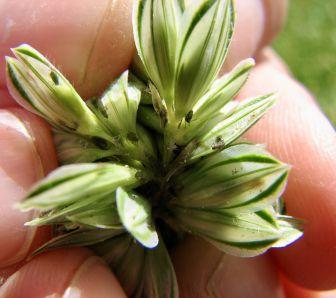
With three active ingredients working together, no single burndown product for wheat is more effective or delivers more value than new INFERNO® TRIO. Three active ingredients provide enhanced and extended control of hard-to-kill grass and broadleaf weeds. They also make INFERNO TRIO an exceptional resistance management tool, for today and tomorrow. Ask your retailer about INFERNO TRIO or visit infernotrio.ca.
TOP CROP
MANAGER
6 | Testing novel mechanical weeders How well do these tools work in narrowrow dry beans? by
Carolyn King
THE EDITOR 4 Diversifying the toolbox by Stefanie Croley WEED MANAGEMENT
20 Cover crops for dry beans by Julienne Isaacs
12 | Weeds to watch for in Manitoba And some for growers in Alberta and Saskatchewan, too. by
Bruce Barker
MANAGEMENT
Burnoff herbicide and crop injury by Bruce Barker FERTILITY AND NUTRIENTS 30 Updating the science base for phosphorus fertility recommendations by Bruce Barker
PESTS AND DISEASES
22 | Out with the old, in with the new Finding the thresholds for aphids in canaryseed. by
Jennifer Bogdan
MANAGEMENT
Battling Canada thistle with a bacterium by Carolyn King
INPUTS: THE PODCAST BY TOP CROP MANAGER Inputs is now available on its own channel! Subscribe to Inputs directly on Apple podcasts, Google Play, Spotify, or wherever you listen to podcasts. Visit TopCropManager.com/podcasts for the latest episodes.
Readers will find numerous references to pesticide and fertility applications, methods, timing and rates in the pages of Top Crop Manager. We encourage growers to check product registration status and consult with provincial recommendations and product labels for complete instructions.
PHOTO
STEFANIE CROLEY | EDITORIAL DIRECTOR, AGRICULTURE
DIVERSIFYING THE TOOLBOX
Every year, I flip the calendar to March with a healthy dose of cautious optimism. The month signifies the start of spring; a sign that the cold, snowy days will be fewer and farther between. Sunny, spring-like weather teases us for short time before winter comes back for another final blast or two.
Whether or not (or is it weather or not?) spring arrives in your corner of the country this month, preparations for the upcoming seeding season are no doubt at top of mind. We at Top Crop Manager focus on pesky plant populations at this time of year with our annual weedrelated issue.
The age-old expression “growing like a weed” may be cute when referring to young kids, but for producers, weed growth is no joking matter. Each year, new threats become problematic, and in some case, old issues become new again. By now, producers across Canada should know that herbicide resistance is a serious threat – according to the International Survey of Herbicide Resistant Weeds, Canadian producers battle at least 68 herbicide-resistant weeds every year, the third-largest number of weeds resistant to one or more herbicides behind Australia and the United States. And as you’ll read in our cover story on page 12, the list of “Dirty Dozen” weeds compiled by Tammy Jones at the University of Manitoba shows that even the weeds that have been on the radar for quite some time are becoming more and more prevalent.
Scientists have made some great advancements over the years to stop herbicide resistant weeds in their tracks, with non-chemical control tools being introduced and tested more regularly. A recent study from the University of Illinois, published in Weed Science, further proved the benefits of harvest weed seed control, a project often talked about among the pages of Top Crop Manager. The research team (led by Adam Davis, the study’s co-author and the head of the department of crop sciences at the University of Illinois) collected seeds from 10 weed species commonly found in soybeans in the United States Midwest. The seeds were fed through the Harrington Seed Destructor, an Australian-designed and built impact mill, and the small amount of undamaged seeds were germinated in a greenhouse and then a field in Illinois. According to Davis, fewer than 10 per cent of the seeds buried in the field and left through the winter survived – promising results for sure.
Non-chemical weed control is top of mind for scientists, industry and producers on our side of the border as well. On page 6, you’ll read results from a project conducted by researchers from the University of Manitoba and the Manitoba Pulse and Soybean Growers that evaluated the efficacy of mechanical weeders on dry beans integrated weed management approach with herbicide applications. And strategies like cover crops can provide more benefits than just weed control, as you’ll read about on page 20.
The weed control methods you choose will change from one season to the next, but one key message remains the same every year: a diverse toolbox will give you the best defense. We hope the strategies you read about in this issue will provide you with new ideas to try.
Fax: 416.510.6875 or 416.442.2191 Mail: 111 Gordon Baker Rd., Suite 400, Toronto, ON M2H 3R1
SUBSCRIPTION RATES Top Crop Manager West – 9 issues Feb, Mar, Mid-Mar, Apr, June, Sept,Oct, Nov and Dec – Canada - $48.50, US - $110 (USD $84.50) Foreign - $131.50 (USD $101) Top Crop Manager East – 6 issues Feb, Mar, Apr, Oct, Nov and Dec – Canada -
KOCHIA NEVER RIDES ALONE. GET THE WHOLE POSSE.
When you apply pre-emergent Authority® 480 herbicide, you’re after kochia and you mean business. But it’s not like the other weeds can jump out of the way. Yes: Authority® 480 herbicide controls kochia with powerful, extended Group 14 activity to protect peas, flax and other crops. It also targets redroot pigweed, lamb’s-quarters, cleavers* and wild buckwheat.
Authority® 480 herbicide. Gets more than kochia. But man, does it get kochia.
FIELD PEAS | FLAX | CHICKPEAS | SOYBEANS | SUNFLOWERS
Save on Authority® 480 with FMC Grower CashBack.
*Suppression.
TESTING NOVEL MECHANICAL WEEDERS
How well do these tools work in narrow-row dry beans?
by Carolyn King
Results from a two-year project on some mechanical weeders that are fairly new to the Prairies show that such tools can be a useful addition to the weed control toolbox for narrow-row dry beans.
“Traditionally, dry beans have been grown in wide rows to allow row-crop cultivation. Through communications with Manitoba farmers and the Manitoba Pulse and Soybean Growers (MPSG), we learned that there was increasing interest in the potential for narrow-row bean production,” explains Katherine Stanley, a research associate in Martin Entz’s research group at the University of Manitoba.
“Some of that interest came from growers who had not grown dry beans before and wanted to try the crop using their existing narrow-row equipment. Also, some preliminary research was suggesting that planting dry beans in narrow rows could provide various agronomic benefits, such as improved weed control. So, we and MPSG wanted to look at how to incorporate mechanical weeding in a narrow-row bean crop.
“On top of that, dry beans are not very competitive with weeds, and herbicide options are quite limited for this crop. That is concerning for the development of herbicide resistance. So, looking at some mechanical weed control options as a component of an integrated weed management strategy is super important both to improve weed control and to extend the efficacy of weed control into the future for this crop.”
Novel tools
The project evaluated two mechanical weeders that Entz’s group recently acquired through the Manitoba Government. Both tools are best-suited to controlling small weeds from germination/ emergence (white thread stage) to the cotyledon or first leaves stage.
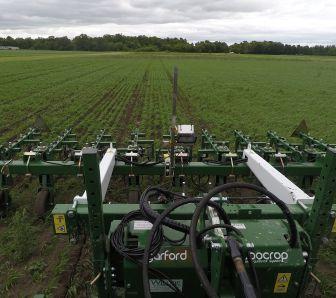
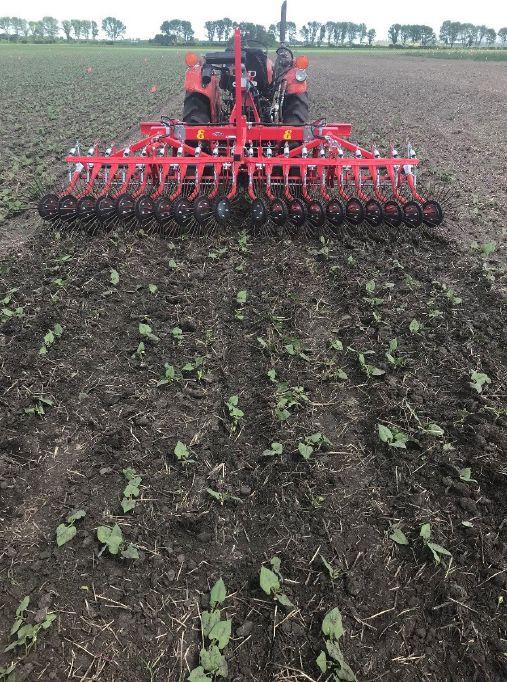
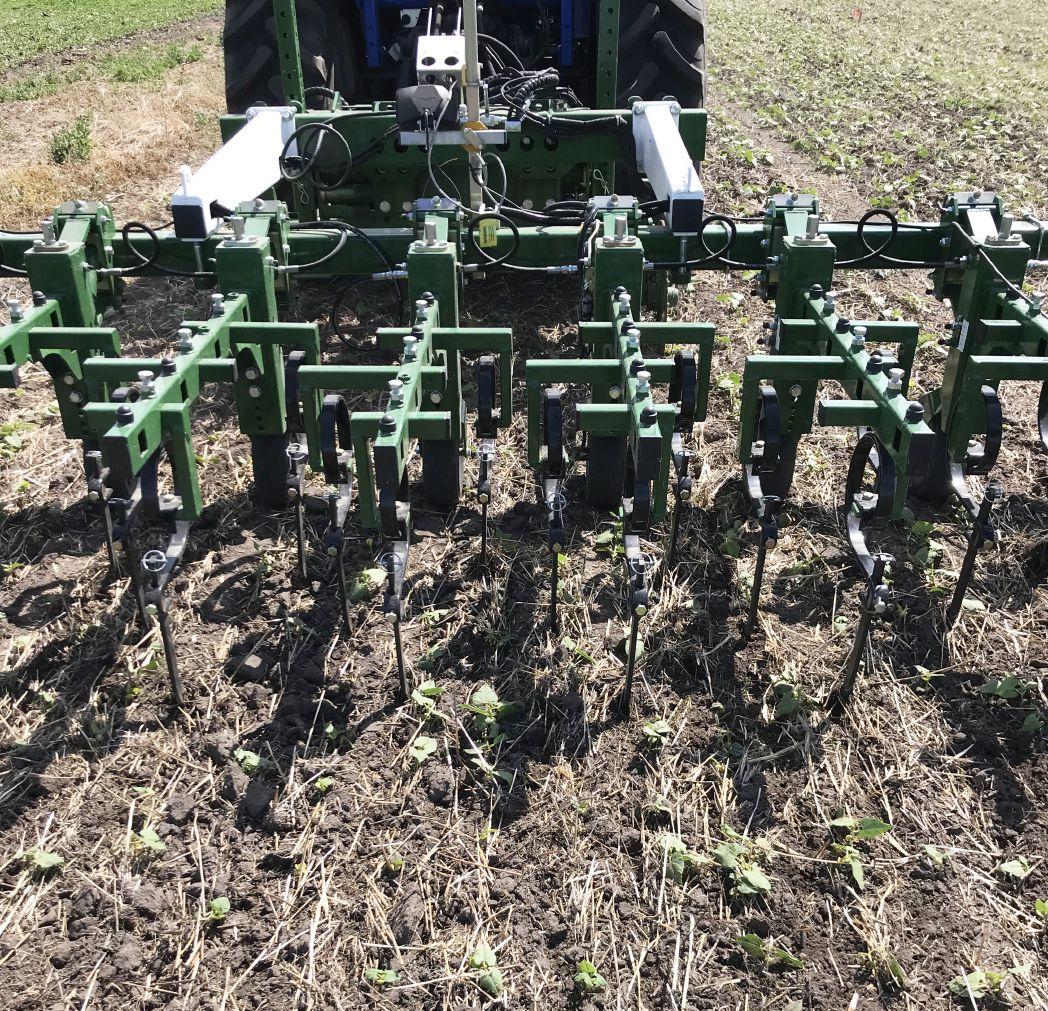
One of these tools is a type of inter-row cultivator. Stanley explains, “It works much like a wide-row cultivator that most farmers are quite familiar with, but it is designed to work in narrow rows as well as wide rows, and it is camera-guided.”
Its camera-based guidance system automatically keeps the sweeps in the inter-row spaces, avoiding contact with the bean plants. Stanley says that with crops like cauliflower or lettuce, where the foliage of one plant is quite separate from the foliage of the next plant, the cultivator’s sweeps are able to go in a full circle around each plant.
“We have seen this technology used on row spacings as small as 5.5 inches. That spacing still allows for operation at relatively high speeds for mechanical weed control operations,” she adds.
One tool tested in the project was this Einbock Aerostar Rotation, a type of rotary harrow.
Stanley notes, “A lot of engineering work has gone into designing these cultivators to maximize weed control and minimize soil disturbance. They are more of a minimum till tool because they are not inverting the soil. The amount of soil movement depends on the shape of your sweeps and how fast you’re going. A small amount of soil-throwing is desirable because it can bury some small weeds. So this tool can provide a dual action: burying the weeds, plus cutting the weeds just below the soil surface.”
Entz’s group has a Garford Robocrop InRow Weeder, but Stanley says other equipment companies have similar types of interrow cultivators.
The other tool in the project is an Einbock Aerostar Rotation, a type of rotary harrow. “It is similar to a rotary hoe except the
Start the season stronger than ever with squeaky clean fields.
• Powerful pre-seed control: Clean out Group 2 resistant cleavers and hemp-nettle plus other tough broadleaf weeds with the most powerful pre-seed option for your wheat and barley.
• Just GO: Spray when you need – on big or small weeds or in cool or dry spring conditions.
• Extended control: Provides trusted control of volunteer canola flushes.
• Convenient packaging: Paradigm’s innovative GoDRI™ formulation makes it easy to mix and handle.
For more information call our Solutions Center at 1-888-667-3852 or visit Paradigm.corteva.ca
design is slightly different. The tines radiate out from a rotating disk, but on the Aerostar, the disks are at about a 45degree angle from the tractor rather than straight behind it,” she says.
“This harrow has a dual action of flicking out small weeds and a little drag to cover some small weeds with soil.”
The tines come into contact with both the inter-row area and the crop plants. That means the harrow can provide weed control within the crop rows as well as in the inter-row spaces. However, it also means that there is only a certain window of time in the crop’s life cycle where the harrow can be used without damaging the crop. “Depending on the crop type, if the plant is too small or if it is too large it may be damaged by the harrow.”
Wide crop window for rotary harrow use
The project was conducted in 2018 and 2019 in Carman, Man. It involved two components: an evaluation of the tolerance of bean plants to the rotary harrow; and an integrated weed management study.
Both components were carried out in black beans (Eclipse), navy beans (T99095) and pinto beans (Windbreaker). These three bean classes are the ones most suited to narrow-row production.
To evaluate the crop’s tolerance to the Aerostar harrow, the project team tested this tool at different crop stages over several weeks, starting from ground crack. Stanley explains, “We hadn’t used this tool before, so this experiment was giving
us an idea of how aggressive it is on the crop itself.”
In both 2018 and 2019, they found that the harrow caused no significant yield loss or damage to the bean plants, no matter when the tool was used from ground crack to about the fourth or fifth trifoliate leaf stage.
In 2018, they tested the harrow right up to the first flower stage. In a practical situation, you wouldn’t use the harrow at such a late crop stage, but the team wanted to push the envelope just to see what could happen. At this stage, they ran into problems like the equipment getting tangled in the pinto beans and ripping out the plants.
The experiment’s results show that the window of time for crop-safe use of this
Researchers at the University of Manitoba evaluated some mechanical weeders, including this Garford inter-row cultivar, in narrowrow dry beans.
rotary harrow in beans is quite wide.
Stanley recommends using it at the bean crop’s unifoliate to first trifoliate leaf stage. “That is really the optimal time that you’ll have those small weeds that this tool controls.”
Herbicide and mechanical combos
For the integrated weed management study, the project team compared different combinations of herbicide applications and mechanical weed control in the three bean varieties.
The treatments included: a weedy control; a preplant incorporated herbicide on its own; a preplant incorporated herbicide plus two post-emergent herbicide applications; the rotary harrow on its own; the inter-row cultivator on its own; and various combinations of fewer herbicide applications and the mechanical tools. The mechanical tools were used when the crop was at about the first trifoliate stage.
In 2018, all the treatments were conducted in narrow (sixinch) row spacings. In 2019, the team not only repeated the narrow-row experiment but also added a second experiment on widerow (24-inch) beans that included treatments with an additional mechanical tool – finger weeders.
Stanley explains, “In 2018, we found that the inter-row
cultivator provided very good control of the weeds between the crop rows, but didn’t give effective weed control within the crop row itself. In a bean crop, the canopy takes a long time to close, so any weeds in between the individual bean plants can be very competitive. So we were really curious to see if adding finger weeders to the inter-row cultivar would help to control in-row weeds.”
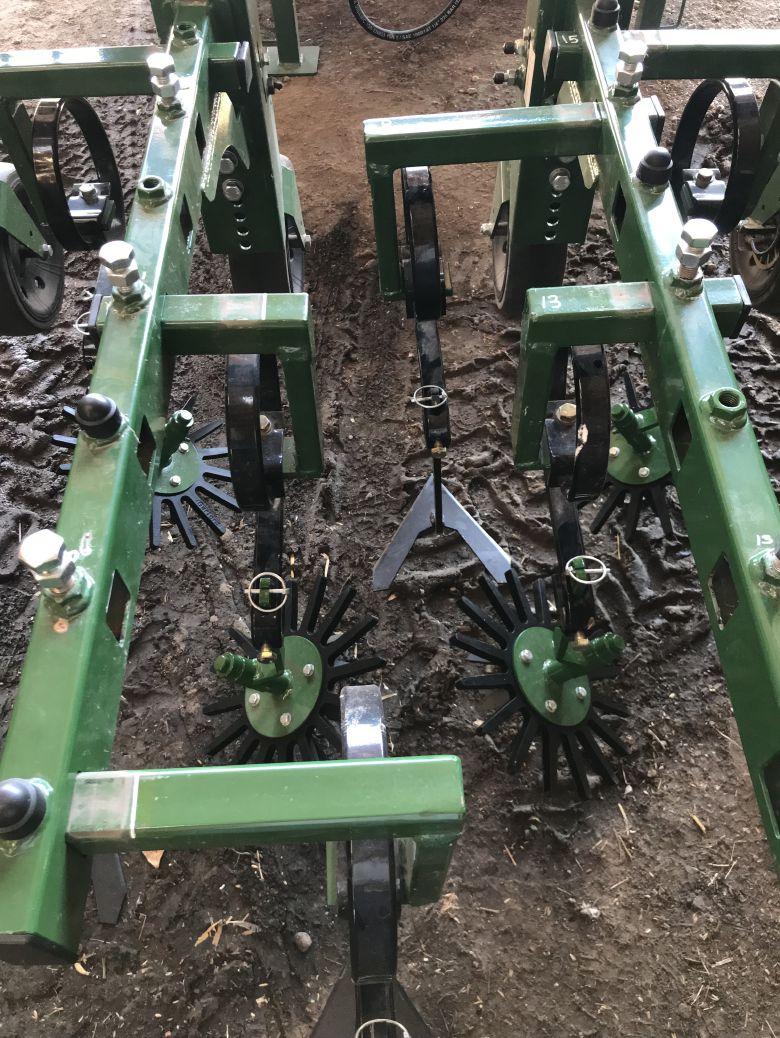
A finger weeder consists of a rotating steel disk with flexible fingers. Those fingers can dislodge or bury small weeds right in the crop row. With the current design of the equipment, the finger weeders can only fit onto the inter-row cultivator when the cultivator is set up for wide rows.
Stanley outlines the key results: “In general in 2018 and 2019, in both the narrow-row and wide-row beans, we found that all of the treatments that included a preplant incorporated herbicide – whether it was followed by a herbicide or by mechanical
AGRICULTURE NEWS
Hot, cold, big, small, early, late?
Just GO with Pixxaro™ herbicide, the total annual broadleaf weed control that won’t slow you down. Only Pixxaro includes maximum crop, weed, weather and tank mix flexibility. PLUS the proven power of Group 4 resistance management.
For more information call the Solutions Center at 1‑800‑667‑3852 or visit Pixxaro.Corteva.ca
Book by March 15, 2020 and save up to 18% with Flex+ Rewards.* The rewards program from Corteva Agriscience™ *Minimum 300 acres per category.
The researchers also tried adding finger weeders onto the inter-row cultivar to provide in-row weed control.
weeding – had the highest bean yields and the most reduced weed biomass. In some cases, the preplant incorporated herbicide on its own was just as effective as these other combined treatments.”
However, she notes that conditions were very dry during 2018 and 2019, and the effect of the preplant-only treatment might not be as long lasting in wetter years. “If you get a lot of rain, it encourages more weeds to grow. So rather than relying only on a preplant incorporated herbicide, you definitely want to have another weed control tool in your back pocket for later in the season,” she says.
“Certainly in 2019, there definitely was a benefit from following up the preplant incorporated herbicide with either more herbicide or a mechanical weed control tool.”
She emphasizes, “It didn’t matter whether you used an in-crop herbicide or a mechanical tool for the follow-up control.”
The finger weeder results were also very interesting. “When we used the inter-row cultivator with the finger weeders twice without any herbicide applications at all, we found that it was just as effective as the full herbicide treatment in terms of both bean yield and weed biomass.”
So, the finger weeder option could be of interest both to organic farmers and to conventional farmers who are using wider rows.
“Our big takeaway from this integrated weed management study was that a preplant incorporated herbicide was really important for early season weed control when the bean crop is very non-competitive with weeds,” Stanley says.
“Then you scout for weeds to decide on follow-up control measures. That follow-up could be done with either herbicides or one of these mechanical weed control tools. If you want to use a mechanical tool, then scout your field before applying the tool to make sure the weeds are at the appropriate stage for effective control by the tool.”
Excellent tools to add to your toolbox
“I’ve always had a little bit of a soft spot
for some of these different equipment options,” Stanley notes. In fact, her master’s thesis at the University of Saskatchewan looked at mechanical weed control in narrow rows in field pea and lentil production.
“The camera-guided inter-row cultivator is one of my favourite mechanical tools. The camera technology is fascinating, and I expect this type of equipment will become more and more available on the Prairies, especially as the technology becomes cheaper,” she says.
“I was interested to see that the Aerostar harrow performed well, but I wouldn’t necessarily say it is going to replace a classic set of spring tine harrows for organic farmers.”
Overall, Stanley says, “Whether you are an organic farmer or you are a conventional farmer trying to either reduce your selective pressure on developing herbicide resistance or you already have herbicideresistant weeds, it is worth considering some of these mechanical tools. There is good information out there about them –a lot of research has been done on all of the mechanical weed control tools that are available, not just the ones we used in our study. They are excellent tools to have in your toolbox for an integrated weed management strategy.”
Manitoba Pulse and Soybean Growers and the Manitoba Government provided funding for this project.
WEEDS TO WATCH FOR IN MANITOBA
And some for growers in Alberta and Saskatchewan, too.
by Bruce Barker
Weeds are a yearly challenge for farmers across the Prairies. Provincial weed specialist Tammy Jones with Manitoba Agriculture and Resource Development in Carman, and Robert Gulden, professor at the University of Manitoba in the department of plant science in Winnipeg put together a list of the “Dirty Dozen” of Manitoba weeds that should be on farmers’ radar screens.
“Some of the weeds on the list have been around for a while, but are getting more abundant and harder to control. Others are newly introduced, or ones we are concerned that might show up and are very difficult to control,” Jones says.
Wild oat
An annual weed that is usually in the top five weeds in the Manitoba weed surveys. One plant per square foot can reduce wheat, barley and canola yields by 10 per cent and flax yield by 20 per cent. The biggest challenge is herbicide resistance, with populations identified as being resistant to Group 1, 2, and 8, and mul-
tiple combinations of 1+2, 1+8, 2+8, 1+2+8, 1+2+8+25 in all three Prairie Provinces, and 1+2+8+14+15 in Manitoba.
“When you have five-way resistance, there isn’t much left for wild oat control aside from Group 3 pre-emergent herbicides and glyphosate and glufosinate in herbicide-tolerant crops,” Jones says. “And the big concern that Hugh Beckie identified when he was with Agriculture and Food Canada is that wild oats will likely be one of the first weeds to develop resistance to glyphosate.”
Kochia
Kochia is a Tier 3 weed under the Noxious Weeds Act of Manitoba and requires control for infestations causing harm. Kochia makes the list because Group 9 glyphosate resistance is rapidly spreading, with 59 per cent of surveyed populations showing resistance in Manitoba. Additionally, all kochia populations are assumed to
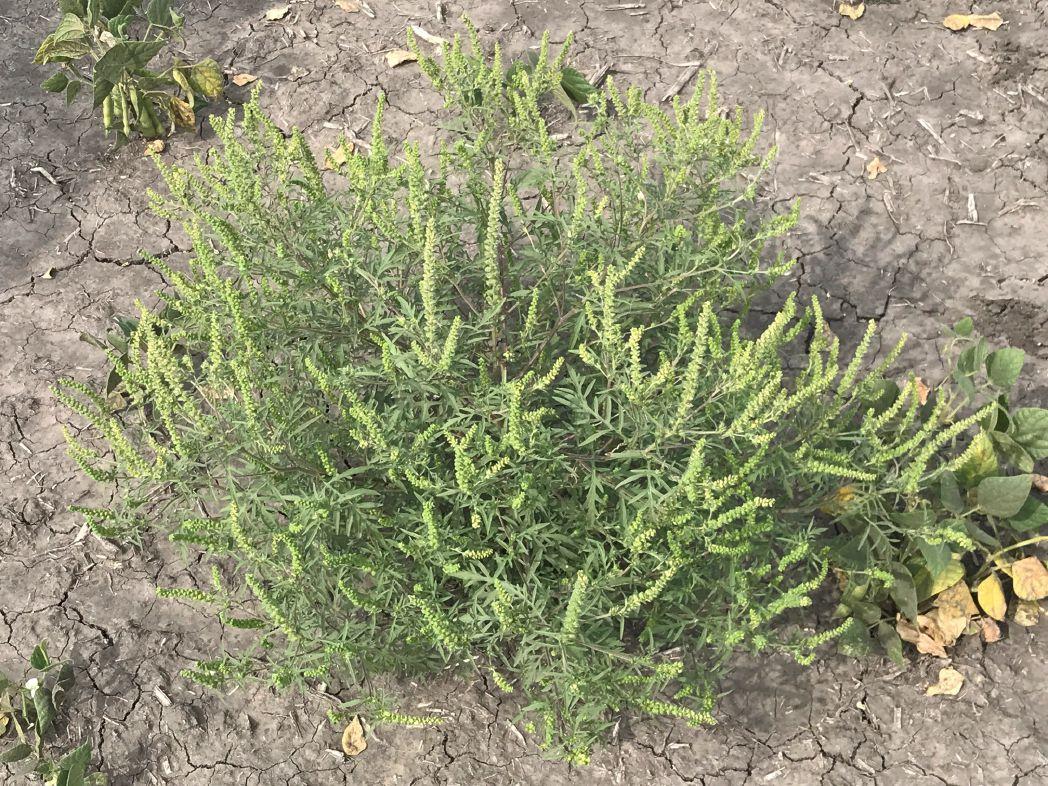
ABOVE: Common ragweed is a Tier 3 noxious weed in Manitoba, producing up to 60,000 seeds that can survive in soil for 80 years.
PHOTO COURTESY OF TAMMY JONES.
be resistant to Group 2 herbicides across the Prairies. In Alberta, populations resistant to Group 2+4+9 have been identified. Saskatchewan has confirmed populations of Group 2+4- and Group 2+9-resistant kochia.
“We probably have some Group 2+4+9-resistant populations in Manitoba, too. We have sent in samples for testing, but we don’t have the results back yet,” Jones says.
Kochia resistance can rapidly spread because it can outcross, allowing resistant genes to transfer to non-resistant kochia plants. It is also a prolific seed producer, with 15,000 to 30,000 seeds produced per plant.
Redroot pigweed
Redroot pigweed is a common weed, and is an alternate host for many insect pests. Under hot conditions, the seedlings can rapidly advance beyond recommended herbicide application stages. In the 2016 Manitoba herbicide-resistance weed survey, five per cent of samples had confirmed Group 2 herbicide resistance.
“I think we are under-reporting how much Group 2 resistance we have. In 2018, I submitted five samples for screening against Group 2 herbicides and four came back positive,” Jones says. “We rely on Group 2 imadizolinone herbicides more and more for broadleaf weed control, so that has me concerned.”
Biennial wormwood
Biennial wormwood was number 20 on the 2016 Manitoba Weed Survey, and doesn’t want to go away. It can be an annual or
YOU HAVE ENOUGH ON YOUR MIND.
Go into spring prepared with an Advance Payments Program CCGA Cash Advance.
Get a jump start on your spring and complete your 2020 application now.
Our experienced team makes it easy. Call 1-866-745-2256 or visit ccga.ca/cash
Barnyard grass has been increasing on the Manitoba weed survey, reaching third place in 2016.
biennial, germinate in the spring, summer or fall, and produce up to one million seeds per plant.
“Not only is it a very prolific seed producer, it doesn’t like to die. There aren’t a lot of good herbicides, and it is quite tolerant to most preplant incorporate and pre-emerge herbicides,” Jones says.
Lamb’s-quarters
A broadleaf weed that has been around for a very long time and usually in the top 10 Manitoba weed survey, lamb’s quarters is another Tier 3 in Manitoba. Twenty plants per square foot can reduce barley yield by 20 to 25 per cent.
“We are wondering what is going on with pre-seed glyphosate control of lamb’s-quarters. There isn’t any documented proof of resistance in Manitoba, but we don’t seem to be getting ahead of it,” Jones says.
Waterhemp
Waterhemp is a huge problem in Ontario and the U.S. Midwest Corn Belt, with resistance to multiple herbicides including Group 9 glyphosate. It can produce 500,000 to one million seeds per plant, allowing it to rapidly take over a field with its competitive growth that reaches up to eight feet high. It was found in Manitoba in 2019 in four municipalities with at least two fields in each. It is a Tier 1 noxious weed that requires all plant parts to be destroyed. Resistance hasn’t been confirmed with herbicide screening, but PCR analysis of the Manitoba populations shows Group 9+2 resistance.
Biennial wormwood is a prolific seed producer, producing up to one million seeds per plant.
“Waterhemp can spread so rapidly. It outcrosses so it has huge genetic diversity. I had a farmer who recalls having a couple unknown plants in his field two years ago. The next year there was a fairly large patch, and the third year, when I was finally called to identify the weed, it covered 35 acres with hardly a soybean plant visible,” Jones says. “This is definitely a weed that you want to immediately destroy patches with whatever means possible.”
Giant ragweed
Another Tier 3 noxious weed in Manitoba, giant ragweed can grow up to 13 feet tall. One plant per 10 square feet can reduce crop yields by 45 to 77 per cent. It has been confirmed in several fields in Manitoba.
“We expect there is herbicide resistance in those populations because it has survived glyphosate application in the field, but it has fairly dormant seed, so it is hard to grow from seed to screen with herbicides,” Jones says.
Palmer amaranth
Palmer amaranth, like waterhemp, is a concern because of its aggressive growth – up to seven feet tall – its ability to produce up to 600,000 seeds per plant and its genetic diversity. Resistance to multiple Groups including 2+3+5+9+14 have been confirmed in the United States. Jones says the weed is creeping upwards from North Dakota. As a Tier 1 noxious weed in Manitoba, she says growers should aggressively eliminate any patches that try to establish.
Common ragweed
Common ragweed is a Tier 3 noxious weed in Manitoba, and can produce up to 60,000 seeds that can survive in the soil for 80 years. It is an important cause of hay fever, because it produces a very large amount of very light pollen that can move more than 125 miles on the wind – the same reason glyphosate resistance has become a concern in other jurisdictions outside of the Prairies.
“We expect to see it move in and spread. The big advantage is that with our more diverse rotations with wheat, we can control common ragweed with a Group 4 herbicide,” Jones says.
Yellow foxtail
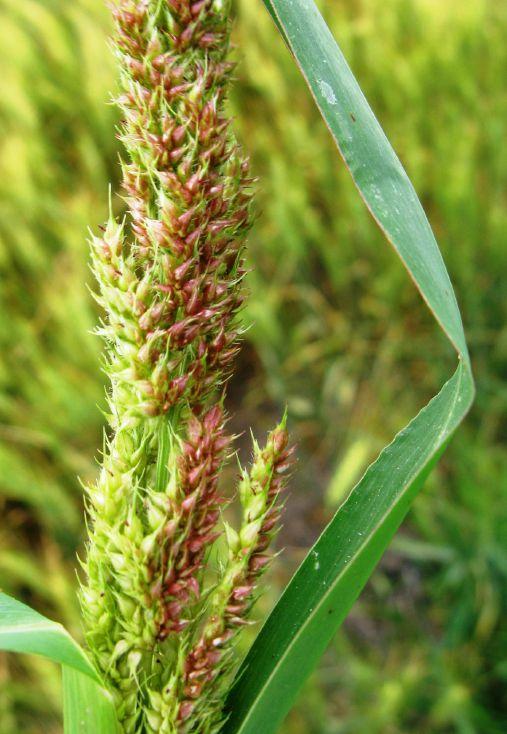
Previously a weed of little concern, yellow foxtail moved to sixth on the 2016 Manitoba Weed Survey. It can cause 16 per cent yield loss in wheat, 11 per cent in oats, and 15 per cent in soybeans. Group 1 and Group 2 resistance has been confirmed in Manitoba.
“We are starting to see a lot of it in corn because it likes the wide-row open spaces. It seems to be a little more aggressive than green foxtail,” Jones says.
Canada fleabane
Called Canada fleabane or horsetail, the weed is a major problem in Ontario and the U.S. Midwest. In Ontario, resistant populations are confirmed to Group 9, Group 2, Group 2+9 and Group 22. The seeds are carried long distances by wind on their attached pappus (parachute). It can produce up to 200,000 seeds per plant.
“We haven’t seen it here as a major problem, or with herbicide resistance, and that boggles my mind,” Jones says. “Definitely want to keep an eye out for this one.”
Barnyard grass
Barnyard grass has been one of the forgotten grassy weed competitors, but it has been increasing on the Manitoba weed survey to reach third in 2016, compared to being outside the top 10 in the 1970s, ’80s and ’90s. Compared to wild oat, barnyard grass produces a larger number of seeds, up to 7,200 seeds per plant. A growing concern is herbicide resistance, with Group 2 resistance confirmed.
“To manage all weeds and herbicide resistance, diversity is the key. “If it is working, change it up. We’ve heard it a million times, but that’s our best strategy,” Jones says.
Canada fleabane is a significant problem in Ontario and the U.S. Midwest, but hasn’t been seen as a huge concern in Western Canada just yet.
Group 9 glyphosate resistance in Kochia is rapidly spreading, with 59 per cent of surveyed populations showing resistance in Manitoba.
PHOTOS COURTESY OF TAMMY JONES.
WHAT YOU’RE REALLY GROWING IS YOUR
Unlock the power of four modes of action
Adding new Intruvix™ herbicide to glyphosate gives your burnoff the right combination of performance and resistance management.
Intruvix™ herbicide from FMC provides contact and systemic control of broadleaf weeds before planting cereals, including narrow-leaved hawk’sbeard, volunteer canola and many other target weeds. That means cleaner fields and great crops today and sustainable glyphosate use for the future.
SAVE ON INTRUVIX™ HERBICIDE WITH FMC GROWER CASHBACK.
COVER CROPS FOR DRY BEANS
A newly released study shows the many benefits of a fall rye cover crop in dry beans.
by Julienne Isaacs
Anewly published study from the University of Manitoba’s Department of Plant Science shows many benefits of planting fall rye cover crops before dry beans.
These include suppression of broadleaf weeds, including pigweed and lamb’s-quarters, as well as uptake of excess water in wet springs, and salinity and erosion control.
The study was completed over a decade ago by then-masters student Heather Flood and Martin Entz, a professor of cropping systems and natural systems agriculture. But its conclusions are more relevant than ever, Entz says.
“It’s only now that farmers are starting to think more about cover crops for dry beans,” he says. “The soil health theme was not as top-of-mind for producers back in 2008, so there was very limited uptake of the ideas. Now there’s a lot of interest.”
Study design and results
Four field experiments were set up, in Carman and Rosebank, Man., in 2006 and at Rosebank and the University of Manitoba Point research station in 2007.
Besides their focus on weed control, Flood and Entz wanted to examine the effect of the cover crop on soil moisture.
“Dry beans are a crop that has a number of challenges. One is water sensitivity. In wet years, like the one we’re coming up to in 2020, there is an increased risk of damage to the beans,” Entz says.
If rye is allowed to grow in the fall to early spring, some excess moisture can be drained, he says.
Plots were fall-seeded with a fall rye (“Remington”) cover crop and compared to a no-cover crop control. In a sub-plot treatment, soil tillage at two to three weeks prior to bean seeding was compared with tillage less than one week before seeding. Sub-sub-plots included the presence or absence of in-crop herbicide application.
In 2006, Carman (one of the four site-years) was dry, particularly in May. Under these dry spring conditions, the rye cover crop reduced soil water content in the zero to 50 centimetres (cm) soil depth by 22 millimetres (mm), compared with the no-cover control. Soil water in the zero to 10-cm zone was reduced by 13 mm.
At Rosebank in that same year, May precipitation was 25 mm more than at Carman, and the rye cover crop resulted in only seven mm less soil water in the zero- to 10-cm zone at bean planting. Under above-average moisture conditions at both locations in 2007, rye had no effect on soil water at planting in either the surface or subsurface soil depth.
Weeds were counted in each subplot following dry bean emergence in late June or early July.
Flood found the presence of rye significantly reduced broadleaf and grassy weed populations – between 44 and 72 per cent and between 43 and 88 per cent, respectively, compared with the no-rye control.
Rye significantly reduced broadleaf weed biomass by between 50 and 94 per cent, depending on the site, compared with the no-rye control; the effect of rye on grassy weed control was less consistent. When in-crop herbicides were used, the impact of the rye cover crop on broadleaf weed suppression was reduced.
There was no significant interaction between cover crop and tillage timing, which means that larger rye cover crop plants did not translate into better weed control.
In fact, Flood found that termination at the four-leaf stage
PHOTO BY TOP CROP MANAGER.
The presence of rye as a fall cover crop reduced broadleafed and grassy weed populations in a Manitoba study.
resulted in better bean establishment, more rapid bean development and greater bean seed yield (in three out of four site years) – with the same level of weed control.
Overcoming barriers
Entz says the negative results from the fourth site-year, in which the presence of fall rye resulted in reduced dry bean yield, could be attributable to drier-than-usual conditions.
“Farmers have a lot of competing ideas they need to manage,” Entz says. “One challenge is that if it’s a very dry year like the last two springs, will that rye reduce your soil water content and reduce yield potential?
“That’s a risk, but if you kill the rye at a young age it still provides a benefit.”
In terms of weed control, fall rye works on two levels: the crop provides natural competition through biomass, and has an allelopathic (or growth inhibition) effect on weeds. The allelopathic toxins are very potent against pigweed, Entz says, although their effect on newer weed threats such as waterhemp have yet to be investigated.
He adds that not much research has been published examining allelopathy in a Canadian context, and Flood’s work helped show that the allelopathic effect of fall rye injures weeds but not dry beans – compared with winter wheat, for example, which actively suppresses dry bean germination.
“Rye seems to be very compatible with pulse species – peas, soybeans and dry beans,” Entz says, adding that by far the most research has been published on soybean, with relatively little
published on dry beans to date.
Entz recommends that producers concerned about dry spring conditions should terminate the rye early to get some allelopathic benefits without using too much water. On the flip side, fall rye can be a boon in waterlogged areas or fields with salinity issues.
Producers should also be forewarned that fall rye can tie up nitrogen in the soil and fertilizer rates should be optimized.
They should also monitor weeds to understand what suppression of broadleaf weeds is actually happening in the field. “Don’t be in too much of a hurry to spray, because you’re going to reduce the population below threshold levels, so you may be able to reduce some of your herbicide use,” he adds.
Entz emphasizes that cover crops can make systems more complex – in a good way. “Anything that adds carbon over time will improve soil health and improve the microbial biomass community, and water-holding capacity and infiltration,” he says.
Farmers concerned that cover crops might dry out soil should also consider the fact that they shade the soil surface and increase humidity. Research shows they also dry soils out earlier in the spring and speed up the thaw period.
“There are nuances around using cover crops, and the more different scenarios farmers experience the better, because they’ll see how they affect the soil over time,” he says.
For more research on cover crops, visit www.topcropmanager.com/agronomy.
PESTS AND DISEASES
OUT WITH THE OLD, IN WITH THE NEW
Finding the threshold for aphids in canaryseed.
by Jennifer Bogdan
One benefit of growing canaryseed is that there typically aren’t a lot of insect issues compared to other crops planted on the Prairies. Cereal aphids are the main concern, especially during spring, when strong southerly winds may bring large aphid populations along with them. However, because there is no true economic threshold developed for cereal aphids in canaryseed, making the decision to spray or not isn’t black and white.
Tyler Wist, research scientist with Agriculture and Agri-Food Canada in Saskatoon, and Bill May, crop management agronomist with Agriculture and Agri-Food Canada in Indian Head, are attempting to make this grey zone a lot clearer with a project aimed at determining the true impact of aphids on canaryseed.
“Cereal aphids are a yearly occurrence in canaryseed, but their effects on canaryseed yields are virtually unknown. We’ve documented large yield losses in canaryseed before, from very high levels of English grain aphids confined to tents. The only threshold for aphids that is suggested is a nominal threshold of 20 aphids on half of the sampled tillers, but we were not sure what effect that level of aphid infestation had on canaryseed yield. Canaryseed growers
need to know the yield impact because aphids are the most common insect pest in their crop,” Wist says.
The current nominal threshold for aphids in canaryseed suggests that 10 to 20 aphids on 50 per cent of the heads prior to the soft dough stage may require an insecticide treatment. A nominal threshold is not one derived from research, but rather a “best guess” estimated by experts. For canaryseed, the nominal threshold was based on data from cereal aphids in wheat and barley in Australia and the United States from more than 20 years ago. Therefore, a level of uncertainty exists when using this threshold.
“A nominal threshold hasn’t been tested with that aphid species on that particular plant before in any kind of scientific detail. They are often based upon the effect of an insect on another crop, or in another region or even with a different species of insect,” Wist explains. “Different varieties are grown in different regions, so there
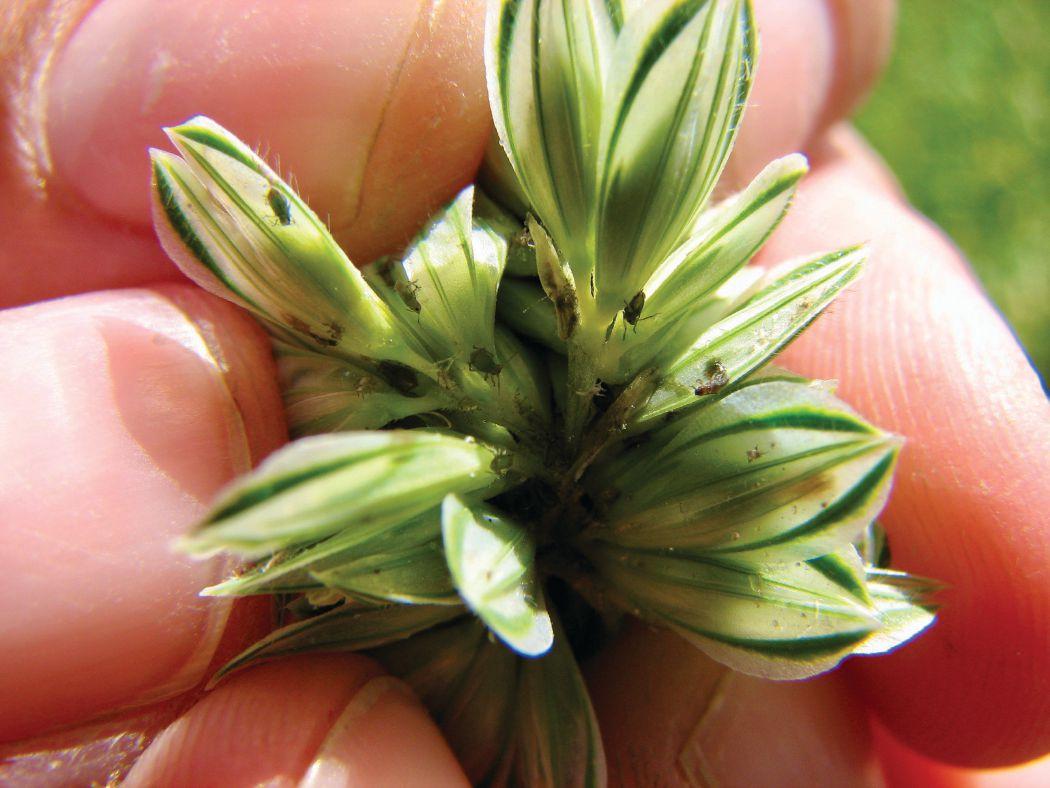
TOP: When scouting for aphids in canaryseed, bend the head back to expose the aphids for a more accurate count.
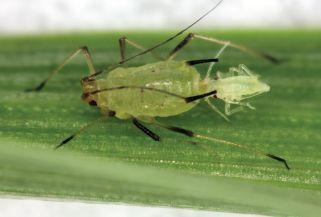
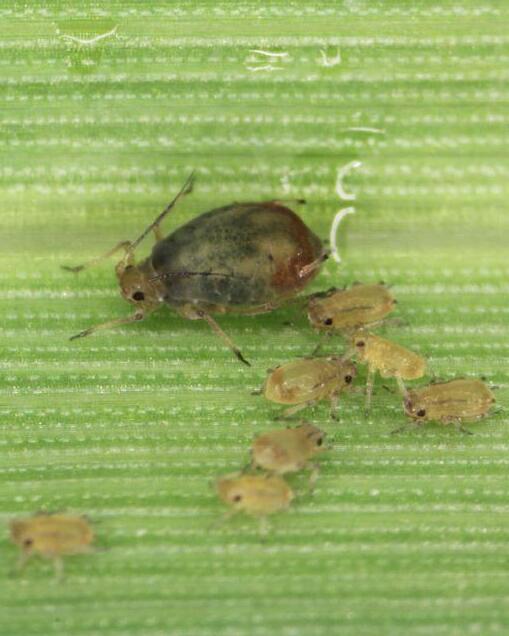
MIDDLE: English Grain Aphids are bright green with black antennae and cornicles (“tailpipes”).
TO OUR ATTENDEES, PRESENTERS, SPONSORS AND EXHIBITORS
GOLD SPONSORS
SPONSORS
SILVER
could be varietal differences in susceptibility or reaction to the same insects. Also, a threshold on one crop doesn’t translate well into another crop.”
The research is being conducted at two sites in Saskatchewan (Saskatoon and Indian Head), and involves both small plot experiments for natural aphid infestation and field cage experiments for introduced-aphid infestation at the milk stage of canaryseed. Data collected from lab experiments involving varying aphid densities on canaryseed heads and plants, in addition to differences in aphid species biology, will also be incorporated into the results.
Know thine enemy
The two most common aphid species to infest canaryseed on the Prairies are the bird cherry-oat aphid (Rhopalosiphum padi) and the English grain aphid (Sitobion avenae). Having two different species of aphids makes finding the economic threshold more complicated, since they may not behave the same way from a biological perspective.
“Over the years of the project in different locations, we’ve seen three aphid scenarios: bird cherry-oat aphid alone, English grain aphid alone, and the two aphids together in the same field,” Wist explains. “One year can be very different from the next in terms of the species composition of the aphid population. Instead of the question being, ‘What is the economic threshold for aphids in canaryseed?’, now the question has to be, ‘What is the threshold for English grain aphid in canaryseed? What is the threshold for bird cherry-oat aphid in canaryseed? And what is the threshold when both aphids are in the same field?’ The difference could be very important.”
From lab studies, Wist’s group found that bird cherry-oat aphid (BCOA) produced significantly more offspring per day than English
grain aphid (EGA) on both canaryseed leaves and heads. Offspring of BCOA also reached reproductive maturity one day earlier than EGA. With BCOA having higher reproductive capabilities, the potential exists for BCOA populations to increase more rapidly than EGA on canaryseed. These differences in species biology need to be considered when looking at thresholds and population growth, according to Wist.
Research is ongoing
The nominal threshold is based on aphids per 50 per cent of tillers. Since this way of expressing the threshold can be confusing when assessing aphid numbers, the new threshold will be based on the number of aphids per tiller. For the field cage and lab cage experiments, the aphid densities evaluated were zero aphids per tiller, 0.5 aphids per tiller (or one aphid on 50 per cent of tillers), 2.5 aphids per tiller (or five aphids on 50 per cent of tillers), five aphids per tiller, and 10 aphids per tiller. For the small plot experiments, the insecticide treatments were control (no spray), spray-on-sight (insecticide applied whenever aphids were detected), and five, 10, and 20 aphids per tiller. Either malathion or dimethoate – both of which are registered for use on canaryseed – was used for insecticide.
The first two years of the field experiments (2017 and 2018) were hampered by drought, as well as a low natural infestation of aphids on the primary tillers during the milk stage. Because of these external factors, there was no yield difference found on the primary tillers in any of the aphid density treatments at both locations. Although there was a significant yield decrease (approximately 20 per cent) on secondary and tertiary tillers under increasing aphid pressure, the overall yield was not significantly affected. These results suggest that when aphids arrive late, the main heads of canary seed, which typically account for the majority of the total yield, can escape damage. Later maturing side tillers are still prone to yield loss, but this decrease may not offset the total yield.
In 2019, the Saskatoon field plots reached all of their aphid thresholds; no yield losses were evident at 10 aphids per head, suggesting the current nominal threshold is too low. However, yield was lower once densities reached 10 aphids per head in field plots at Indian Head, so compensatory factors might be at play. Further data analysis will be completed over the winter to help draw firmer conclusions.
Aphid management tips
Until a true economic threshold for aphids in canaryseed is determined, growers should monitor aphid numbers and crop stage. Crops are most susceptible from early heading until the soft dough stage. Aphids do little damage past the soft dough stage in other cereals, so an insecticide application beyond this point is not recommended. Also, rainfall – especially heavy rains – can dramatically reduce aphid populations through direct effects and by promoting fungal infections in aphids.
Wist suggests growers use the Cereal Aphid Manager app (using “barley” as the crop) to help identify the aphid species present, count the number of aphids per tiller, and record the crop growth stage. Also, before spraying for aphids, determine if the aphid population is increasing or decreasing; the app can graph your aphid population over time to help make your decision. If an insecticide is applied, note the crop growth stage, and leave an unsprayed check strip to compare yield differences. Wist will gladly accept any field data involving aphids in canaryseed that growers wish to submit.
Bird Cherry-Oat Aphids are olive-green and have a reddishorange “saddle” between the cornicles on their rear end.
PHOTO COURTESY OF TYLER WIST.
BURNOFF HERBICIDE AND CROP INJURY
Preseed injury is usually because of environmental stress.
by Bruce Barker
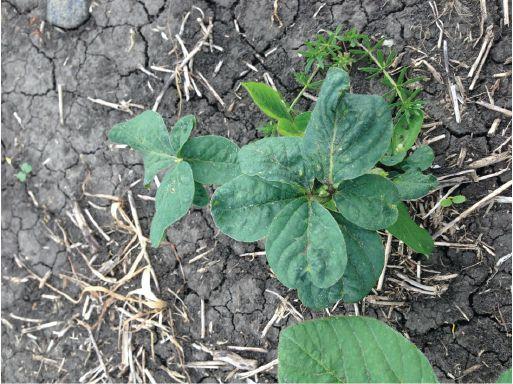
Crop injury from a pre-seed herbicide application can occur, and is even expected in some cases. For example, the label of Heat herbicide indicates that rainfall shortly after application can result in slight injury to the crop.
“Usually when we see crop injury from a registered pre-seed application it is generally due to an interaction with another stress, such as environmental conditions or seed placement issues,” says Eric Johnson, researcher with the University of Saskatchewan’s plant sciences department in Saskatoon.
Most crops are tolerant to herbicides based on metabolic resistance. The crop is able to break down the active ingredient before the herbicide can injure the crop. Johnson says if something is stressing the crop, like frost or drought or excess moisture, that stress can slow the metabolism of the crop and its ability to break down the herbicide.
Several of the pre-seed herbicides have warnings similar to Heat. Authority Supreme carries the caution: “Heavy rainfall shortly after application may reduce weed control and increase the risk of injury. Extremes in environmental conditions such as temperature, moisture, soil conditions, and cultural practices may affect activity.”
Express Pro herbicide is another example: “Do not use on highly variable soils that have gravelly or sandy areas, eroded knolls or
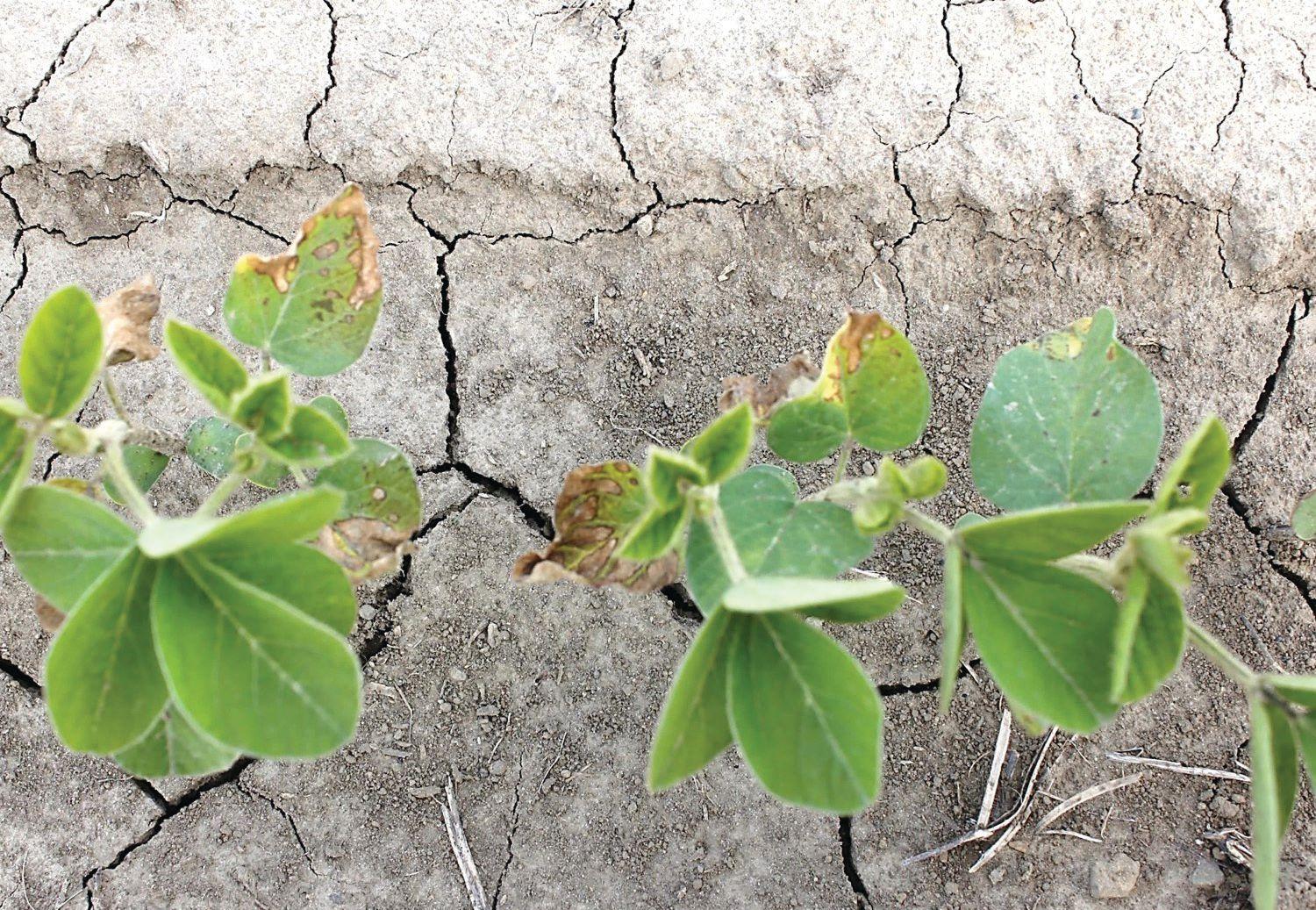
TOP: Crop injury on soybeans. Usually crop injury from a registered pre-seed application is due to an interaction with another stress, like environmental conditions.
MIDDLE: 2,4-D applied pre-injury to soybean.
calcium deposits. Heavy rainfall soon after application may result in visual crop injury or possible yield reduction.”
These examples aren’t used as an argument against using the herbicides. Rather, they illustrate that crop injury can occur due to an environmental stress.
“Crop injury from burnoff herbicides is not all that common. We do see it once in a while, but it isn’t a concern most of the time,” Johnson says.
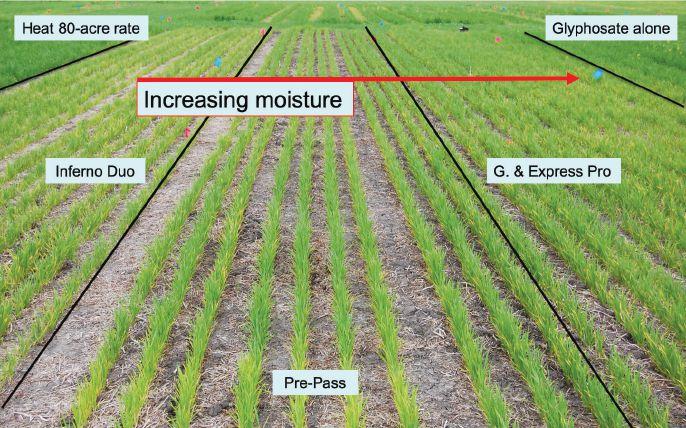
Agrologist Doug Fehr in North Battleford, Sask., saw the effects of excess moisture on pre-seed herbicide crop safety in a demonstration trial in the Nipawin, Sask., area. The intent was to show differences in residual weed control with pre-seed herbicides. Glyphosate alone, glyphosate plus Express Pro, Pre-Pass, Inferno Duo and Heat were applied in a preseed burndown application.
However, the demonstration site had very good soil moisture at seeding, and lots of rain occurred following application, resulting in waterlogged conditions. The site was gently sloping downwards across the plots, impacting some herbicides more than others.
Even glyphosate, which does not have soil residual, displayed what appeared to be crop injury at the seedling stage, but waterlogging caused the symptoms. The Heat application had relatively little evidence of crop injury, reflecting better drainage and little waterlogging.
“The demonstration helps to make the point that abiotic stress can result in crop injury,” Fehr says. “Over my career I’ve investi-
gated fields where the customer suspected a herbicide providing carryover weed control caused some negative crop response. Invariabl, issues such as excessive moisture, poor fertility or seed depth contributed to the possible stress from the herbicide.”
Fehr recommends that crop consultants, agronomists and farmers familiarize themselves with label precautions in order to understand the situations where crop injury
Licence to spray.
This season, elite growers are being briefed on a new secret weapon for barley in the fight against the prairie’s toughest weeds.
• Cross Spectrum Performance
Get leading Group 1 grass control plus unparalleled broadleaf control of cleavers, hemp-nettle, wild buckwheat, kochia and many more.
• Total Flexibility
With Arylex™ active fl exibility, you can apply on your own terms. Early, late, big or small.
• Easy Tank Mixing
Tank mixed with MCPA, count on 3 chemical families in the Group 4 mode of action for e ective resistance management. Get
Arylex™ Active
wild oats
might occur.
(when
Johnson conducted an experiment where Focus application resulted in lentil injury when seeded too shallow. The label states: “Under certain conditions, Focus can affect lentil growth. These conditions include high pH (7.5 and above), cool weather, prolonged and excessive moisture, seedling diseases, and any other conditions, including poor agronomic practices, that are unfavorable to vigorous crop growth. Such effects are often observed as stunting and discoloration. The duration of these effects is somewhat dependent on the duration of the adverse growing conditions.”
“Seed depth can be important. Lentil is somewhat of a sensitive crop anyway, and we have also seen that kind of injury with Sencor applied post-emergent to shallowseeded lentil,” Johnson says.
One label caution that surprised Johnson is for a 2,4-D or MCPA pre-seed application ahead of soybean. The recommendation in Iowa for the interval between pre-seed application and time of soybean planting is seven days for 2,4-D ester formulation and 14 days for 2,4-D amine – the ester formulation breaks down in the soil faster.
Damage doesn’t necessarily mean yield loss
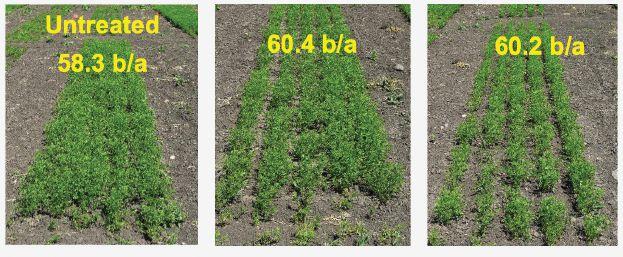
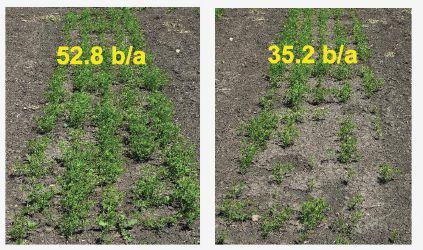
In his many years of research on herbicide application, rates and crop safety, Johnson has seen his fair share of crop injury. However, he says not all injury results in a yield loss. Sometimes the injury is transient and the crop recovers enough to sustain yield. The only way to know is with a comparison to a check strip.
“It is hard to convince growers that an injury early on at the seedling stage won’t result in a yield loss, but I have lots of experience that supports that the crop often recovers without a yield penalty,” Johnson says.
Not all crop injury results in yield loss. Maxim lentil injuries from fluthiacet-methyl and
Photo taken June 28, 2016.
UPDATING THE SCIENCE BASE FOR PHOSPHORUS FERTILITY RECOMMENDATIONS
4R management of phosphorus fertilizer.
by Bruce Barker
Right source. Right rate. Right time. Right place. Those are the 4Rs of fertilizer management, no matter the nutrient. For phosphorus (P), a new review of those principles was released in September 2019.
“The overall purpose of this review was to assemble and summarize the existing science base for 4R management of P fertilizer for crop production in the Northern Great Plains region of North America,” says Cynthia Grant, retired research scientist with Agriculture and Agri-Food Canada, who co-authored the review with Don Flaten, soil scientist at the University of Manitoba.
In the 2019 review, 4R Management of Phosphorus Fertilizer in the Northern Great Plains: A Review of the Scientific Literature, the authors built upon a 1993 publication that reviewed macronutrient research dating back to the early 1900s. The earlier publication, Impact of Macronutrients on Crop Responses and Environmental Sustainability on the Canadian Prairies, commonly called the “Red Book,” included a chapter on P fertility and fertilizer strategies.
Grant says the main goal of the new review was to update 4R principles to include research conducted since the early 1990s, and to provide a strong science base to ensure that 4R management of P fertilizer is agronomically, economically and environmentally sustainable. In addition, changes in farming practices over the last several decades, including the move to reduced tillage systems, introduction of new crops and high-yielding cultivars, intensification and extension of crop rotations and development of new fertilizer products, meant 4R practices needed updating.
Thirty-five soil scientists contributed to the review, and a Technical Advisory Group of nine soil scientists examined the publication for content and accuracy. The review also identified key gaps in knowledge and priorities for future research.
The review is focused only on management of synthetic fertilizers and does not address management of livestock manures, composts, biochars, or other amendments, even though these amendments may play important roles in management of P fertility in soil and P nutrition in crops, Flaten says. Furthermore, this review does not address beneficial soil and water management practices, which complement nutrient management practices for maintaining soil and water quality.
There are nine chapters in the 4R review. Each chapter includes a list of key messages, a short, approximately two-page summary of the chapter, detailed information for the chapter, a list of knowledge gaps, and a list of references for readers who want further information.
The chapters include:
1. Background of 4R Nutrient Stewardship
• History
• Background and principles
2. Role of P in Crop Production
• Functions of P in plants
TOP: The update ensures 4R management of P fertilizer is agronomically, economically and environmentally sustainable.
• P accumulation in plants
• Effects of P deficiency
3. P Behaviour in Soil
• The phosphorus cycle
• What happens when P fertilizer is added to the soil?
• Residual value of fertilizer P
• Assessing P use efficiency
4. Environmental and Sustainability Concerns Related to P Fertilizer
• P loss to surface water and eutrophication
• P depletion in soils
• Cadmium loading to soil
5. Phosphorus Fertilizer Rates
• Strategies for managing rates of P fertilization
• Short term sufficiency
• Long term sustainability
• Use of soil testing as the basis for selecting rates of P
• Selecting rates of P applications in the long-term sustainability strategy
• Selecting rates of P application in a short-term sufficiency strategy
• Differences in P response among crops
• Site-specific management
6. Phosphorus Fertilizer Sources, Additives and Microbial Products
• Traditional sources of P fertilizer
• Phosphate rock
• Commercial phosphate fertilizers
• Fertilizer special formulations, additives and coatings
• Reclaimed and by-product sources of phosphorus
• Microbial products
7. Phosphorus Fertilizer Placement
• Efficiency of band versus broadcast application
• Effect of band position
• Seedling toxicity issues related to seed-placed phosphorus
• Dual banding of N and P fertilizer
8. Phosphorus Fertilizer Timing
• Importance of early season supply
• Requirement for P supply during grain fill/flowering
• Factors affecting early-season supply of P to the plant
• Implications for P fertilizer management
9. Creating a Cohesive 4R Management Package for Phosphorus Fertilization
• The 4R package – fitting the pieces together
• Agronomic drivers for phosphorus management on the Northern Great Plains
• Tillage system and crop sequence
• Crop type, rotation and yield
• Weed competition
• Effects of other nutrients
• 4R management of P fertilizer for the environment
The review was funded by Fertilizer Canada with the support of the North American 4R Research Fund. The full 255-page review and a 42-page summary is posted on Fertilizer Canada’s website: fertilizercanada.ca/4r-management-of-phosphorus-fertilizer-inthe-northern-great-plains-a-review-of-the-scientific-literature/. The original “Red Book” and the new 4R P review are also freely available at CanadianAgronomist.ca/resources/.
Rexade™ performance.
Finally! One box, one pass, one easy decision.
Rexade™ is pure performance – today’s complete grass and broadleaf weed control for wheat and the only one pass decision you need to make.
For more information, visit Rexade.Corteva.ca
Book by March 15, 2020 and save up to 18% with Flex+ Rewards.*
BATTLING CANADA THISTLE WITH A BACTERIUM
Developing a common plant pathogen as a bioherbicide for this troublesome weed.
by Carolyn King
Canada thistle is a tough weed problem for both organic and conventional crop growers. So, a project is underway to develop a bacterium, which naturally infects this perennial weed, into a practical bioherbicide for use by all growers.
“The idea of harnessing natural pathogens of this weed to knock down populations is incredibly exciting,” says John Stavrinides, an associate professor at the University of Regina who is leading this project. “We are doing our utmost to develop a bioherbicide that is safe, effective, inexpensive and easy to use, and that can be used by organic farmers in particular, who don’t have as many weed control options available to them as conventional farmers.”
Stavrinides is collaborating with David Guttman from the University of Toronto on this three-year project, which started in 2018. The project is funded through Saskatchewan’s Agriculture Development Fund, with support from SaskOrganics and the Organic Council of Ontario.
Stavrinides’ interest in biocontrol of Canada thistle was sparked by a 2017 SaskOrganics report that identified weed control as one of the biggest challenges for organic field crop producers in Saskatchewan. As he dug into this issue, Stavrinides realized that Canada thistle was one of their most troublesome weeds. And when he explored possible biocontrol options for Canada thistle, he came across Pseudomonas syringae, a bacterium that he had worked with in his PhD research, when Guttman was his thesis advisor.
“Pseudomonas syringae is a very versatile plant pathogen, and it occurs pretty much everywhere. It infects a wide variety of crops and non-crop plants, causing diseases that range from little spots and specks all the way to things like blights and wilts,” Stavrinides explains.
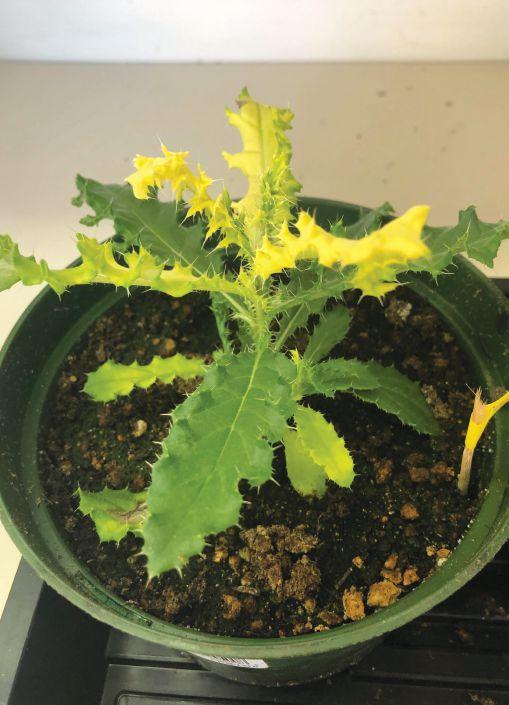
Pseudomonas syringae is divided into pathogenic varieties – called “pathovars,” or “pv.” for short – which are groups of strains identified based on the types of hosts they infect. Pseudomonas syringae pv. tagetis infects members of the daisy family (the Asteraceae family), including such plants as marigold, zinnia, sunflower, dandelion and Canada thistle. In Canada thistle, the tagetis pathovar can cause such symptoms as stunting of the plants, bleaching of new growth, and reduced seed production.
Stavrinides’ project is tackling diverse factors involved in creating a practical, effective tagetis-based bioherbicide for Canada thistle.
Testing local tagetis strains
A key project objective is to do thorough testing of multiple tagetis
ABOVE: Research at the University of Regina aims to develop a bioherbicide for Canada thistle using tagetis strains of a common bacterium, which can cause such symptoms as bleaching.
strains to find the most aggressive ones that very rapidly infect Canada thistle and produce very severe symptoms in the weed.
Stavrinides and his research group decided to use local tagetis strains in the project to increase their chances of having strains that are well-adapted to attacking the local populations of Canada thistle. Several Saskatchewan farmers identified diseased Canada thistle patches for the project, and Stavrinides and his group collected microbial samples from the diseased plants.
“We now have a collection of about 50 local strains that we
believe are Pseudomonas syringae,” Stavrinides notes. “We are using DNA-based methods to identify whether the strains are tagetis or some other pathovar. We haven’t confirmed them all, but we are fairly certain at least three are tagetis.”
The research group is testing each tagetis strain in plant assays in the lab. In these assays, they infect Canada thistle plants with different doses of the strain and then observe how quickly the symptoms develop and how severe those symptoms are.
“We’re trying to ensure that the strain we choose for the bioherbicide is incredibly efficient – that means you can use the lowest possible dose of bacteria to initiate an infection very, very rapidly,” Stavrinides says. That’s important, because strains that are more efficient are likely to perform better under field conditions.
Next, they will assess the host range of the more promising strains. Stavrinides explains, “We know that tagetis infects members of the Asteraceae family, but we have to ensure that any strain that we select doesn’t infect crop plants outside that family. So, we have to do host range assays that include crops like canola, wheat and various pulses to ensure that the infection is limited to members of the Asteraceae family and hopefully with very high specificity to Canada thistle.”
Strain combos for dual modes of action
Another objective of the project is to evaluate mixtures of tagetis strains to see if certain strain combinations will increase the
bioherbicide’s effectiveness and specificity in controlling Canada thistle. The idea is to try to maximize both the stunting and the bleaching impacts of tagetis infections.
“It turns out that some tagetis strains cause the bleaching effect but don’t necessarily stunt, and other strains that stunt don’t necessarily cause bleaching,” Stavrinides explains. “We think that perhaps if you combine a strain that is a good stunter and a strain that is a good bleacher, then Canada thistle would be attacked in two different ways.”
With the stunting effect, infected Canada thistle plants grow much more slowly. “The stunting effect is a really important weed control method,” he says. “If you can keep your Canada thistle short for a long enough time, then your crop plants can grow higher than the weed and shade it out. So, your crop will outcompete the thistle and keep it at bay.”
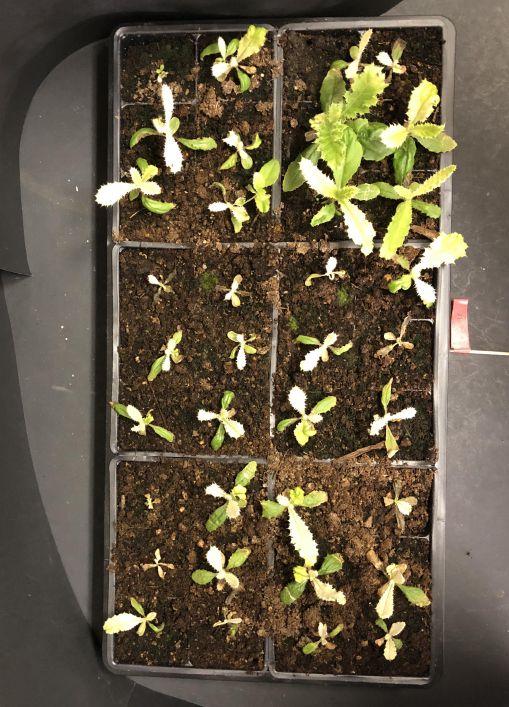
With the bleaching effect, the plant’s new growth is completely white instead of bright green. The bleaching is caused by a toxin produced by the bacteria.
TORONTO
“This toxin attacks the photosynthetic machinery of the plant, the parts of the plant that are involved in synthesizing nutrients for the plant,” he says. So, this mode of attack reduces the amount of food that the weed can make for its current needs, such as seed production, and for storage in its roots for the plant’s longer-term survival.
“The worst part of Canada thistle is its root system. The root systems can spread as much as 6 metres from any given plant in a season, and the roots can go down as deep as about 5.5 metres. So, these root systems are incredibly well-established in the soil. And there are buds about every couple of inches along the root system, and every bud can give rise to a new Canada thistle plant. So, when you cut down a Canada thistle plant, another bud simply differentiates and becomes another shoot that shoots up,” he explains.
“We’re hoping to starve the thistle’s root system. If you keep stressing the plant, it doesn’t make as much food and it doesn’t store as much in its roots. You make it deplete its carbohydrate reserves so it doesn’t come back the next year.”
Their initial experiments with this approach indicate that they will likely need to test many strain combinations with different relative doses to maximize both modes of action.
Low-cost, effective applications
Stavrinides and his group are also working on some of the practical considerations related to making and applying the bioherbicide.
“The great thing about using bacteria is that they are not that expensive to grow in culture; we can use very simple sugar solutions to grow our bacteria,” he says. “We have also tested some other
methods of growing them that would be efficient but also organic, so organic farmers could use the product.” They are also working on creating an easy-to-use formulation for foliar applications, which includes developing an organic wetting agent. “Wetting agents are things that break the surface tension of the leaves, because leaves are very waxy; if you spray water on a leaf, the water immediately beads and then runs right off. A wetting agent allows the leaf to be completely coated in the bacterial mixture. Wetting agents are often just detergents of sorts. So, we are trying to identify an organic detergent that we can use together with the microbes that maximizes the infection but also doesn’t have a negative effect on the bacteria.”
As well, Stavrinides and his group have been investigating at what growth stage Canada thistle is most susceptible to the bacterium. “It looks like young seedlings are much more susceptible. Fully grown plants tend to recover from the infection, whereas the seedlings either die or become incredibly sickly within days of the infection.”
And the researchers have started to explore the possibility of spraying the bioherbicide on the soil for pre-emergent thistle control. So as the young, highly susceptible thistle plants emerge from the soil, they would be infected with the bacteria.
Overall, this research effort is complex with many different considerations to address. But Stavrinides and his group have already identified some promising tagetis strains that produce dramatic effects in the infected plants. He says, “We are responding to the experiments as we get the results, and often there are some twists and turns and unexpected results. But we are hopeful that we’ll be able to run a pilot in the field fairly soon.”
Canada thistle plants sprayed with tagetis plus a surfactant (left) compared to plants sprayed with only water plus the same surfactant (right).
THE END IS HERE FOR FOXTAIL BARLEY
The Olympus System is the first step in controlling foxtail barley and wild oats. Simply apply Olympus™ with your pre-seed application of Roundup® and follow in-season with Varro® or Velocity m3 for season-long control of foxtail barley and other tough grass weeds.
WHEN YOU PURCHASE MATCHING ACRES OF VARRO OR VELOCITY M3