Economic and environmental benefits of this oilseed
PG. 12
PREPARING FOR THE FUTURE
Developing sustainable winter cereals for the Prairies
PG. 16
Six women who are making a difference to Canada’s agriculture industry have been chosen and will be highlighted through podcast interviews on AgAnnex Talks starting June 15.
Stay updated by visiting AgWomen.ca or subscribing to the podcast at AgAnnex.com
TOP CROP
MANAGER
CEREALS KNOW. GROW.
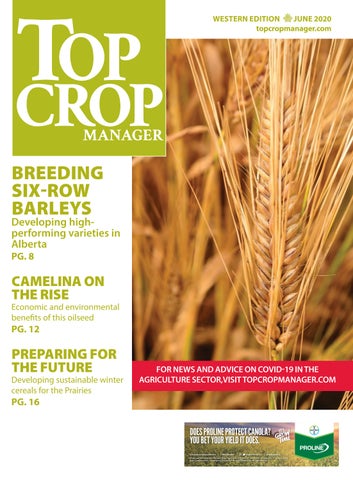
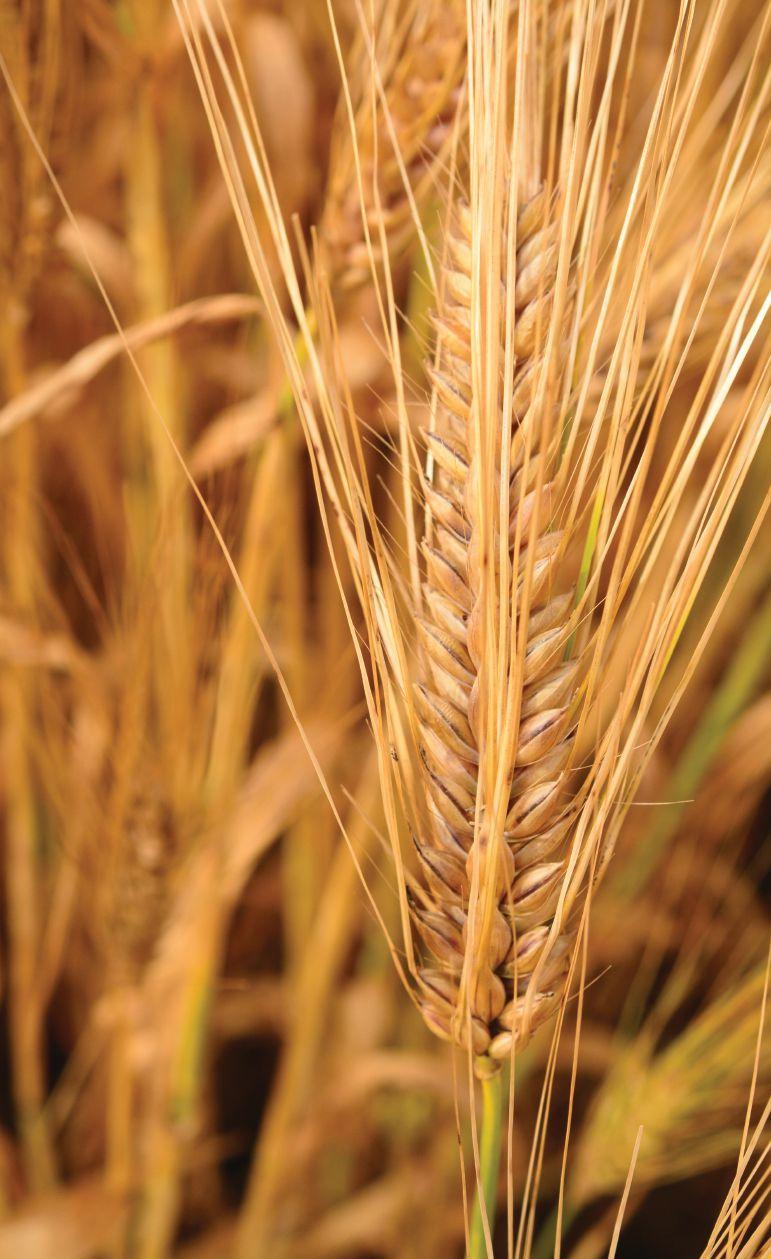
8 | Breeding six-row feed and forage barleys
Alberta researchers are developing highperforming varieties to meet the needs of this small but important barley market. by Carolyn King
FROM THE EDITOR
4 Finding the silver lining by Stefanie Croley
SPECIAL CROPS
12 | Camelina on the rise
JUNE 2020 • WESTERN EDITION
This oilseed provides economic and environmental benefits for industrial, feed and food applications. by Donna Fleury
PLANT BREEDING
5 Advancing cold hardiness of winter wheat and rye by Donna Fleury
CEREALS
16 | Preparing for a sustainable future
A Lethbridge researcher is developing winter durum and other winter cereals for the Prairies. by Carolyn King
SOIL AND WATER
20 Managing Gray Luvisolic soils by Ross H. McKenzie, P.Ag.
ON THE WEB
MANIPULATOR PGR NOW AVAILABLE FOR USE ON OATS AND BARLEY
Manipulator, a plant growth regulator (PGR) previously only registered on wheat, is now available for use on oats and barley for the 2020 growing season. Visit TopCropManager.com for the full story.
Readers will find numerous references to pesticide and fertility applications, methods, timing and rates in the pages of Top Crop Manager. We encourage growers to check product registration status and consult with provincial recommendations and product labels for complete instructions.
STEFANIE CROLEY | EDITORIAL DIRECTOR, AGRICULTURE
FINDING THE SILVER LINING
The first time I stepped into a grocery store after Ontario announced an emergency order in March (which mandated the closure of non-essential businesses and prohibited gatherings of more than five people), I was shocked at the state of the store’s shelves and food supply. The selection of fresh produce was slim; the meat and egg shelves were bare, and the freezers that once held frozen fruits and vegetables were completely empty. I’d heard about empty shelves in stores in larger city centres, but couldn’t believe how quickly my rural grocery store’s supplies had been depleted.
With a pantry full of beans and chickpeas, dried pasta and homemade jarred tomato sauce, a freezer full of meat from my butcher (who also happens to be my brother) and two dozen eggs from a local farm in my fridge, I wasn’t too worried about feeding my family of five (including three young kids who ask for snacks approximately every eight minutes).
But in the coming days and weeks, it became evident that food supply issues were going to become a major concern for consumers and industry alike during the pandemic. Despite messaging from federal and provincial governments reassuring Canadians that the country had ample food supply, and funding in certain provinces to help connect people with job opportunities within the agri-food sector, certain items are still hard to find. As I write this in early May, my local store had a decent selection of flour today for the first time in nearly eight weeks, and there were even a few packets of instant-rise yeast available.
While consumers may be happy to see the shelves restocked, it’s important to acknowledge how hard the industry is working to make that happen despite the myriad challenges it’s facing. Compared to the rest of the industry, crop farmers seem to be doing OK. The availability and delivery of seed and fertilizer inputs went relatively unaffected this spring, seeding is well underway (although in many places, the 2019 never-ending harvest from hell posed other challenges). But with restaurant closures resulting in an oversupply of eggs, milk and other products, and the closure of seven meat processing plants across the country, and in some cases, misguided government support (or lack thereof), the industry as a whole is feeling the effects.
If we’re looking for silver linings, here are two to consider. The pandemic has brought the importance of Canadian agriculture to the forefront: those who never considered how food landed on store shelves have a new appreciation for the essential work that farmers do. And the nature of farming naturally lends itself to physical distancing, so there won’t be too many added barriers to safe working as the season progresses.
There’s still a lot of uncertainty and unanswered questions, but Canada’s agriculture community is nothing if not resilient. We wish you clear skies, ideal conditions and better days ahead.
TOP CROP
ADVANCING COLD HARDINESS OF WINTER WHEAT AND RYE
Improving traits associated with greater winter survival and injury avoidance.
by Donna Fleury
Winter wheat is an important crop in some areas; however, overwinter survival – particularly under low snowfall conditions – can be challenging in some years. Winter hardiness is a complex trait that is heavily influenced by several environmental factors, such as the presence of snow cover, soil fertility, soil heaving or ice encasement, as well as biotic factors like disease pressure or insect damage.
Researchers continue to work on advancing cold hardiness of winter wheat and rye and improving traits associated with greater winter survival and injury avoidance. This work builds on previous studies conducted by C. Robert Olien from Michigan State University, Brian Fowler and Larry Gusta from the University of Saskatchewan, David Livingston from the United States Department of Agriculture’s Agricultural Research Service and Bryan McKersie from the University of Guelph.
“Although it is well known that the crown of winter wheat is critical to overwinter survival, until recently little was known
about the specific areas of the vegetative crown or different tissues that were important,” says Karen Tanino, professor in the University of Saskatchewan’s Department of Plant Sciences. “The crown was really a black box, and we are trying to break down the black box to better understand what the key critical tissues are that enable winter survival and avoidance of injury.
“We are developing a complete model of freezing behaviour in the critical crown organ to identify meaningful improvements in winter cereal cold hardiness,” she says. “We wanted to study the mechanisms of the parts of the winter wheat crown that were being injured or killed over winter. Once the mechanism of survival has been identified, breeders can then select for this trait.”
Tanino first studied winter wheat as part of her master’s thesis in the mid-80s, looking at eastern Canadian varieties and mechanisms of cold hardiness at the University of Guelph. Limited new
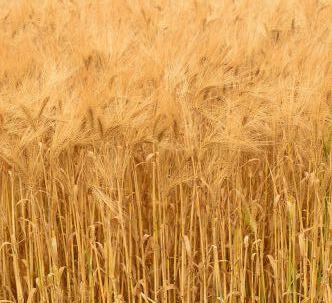
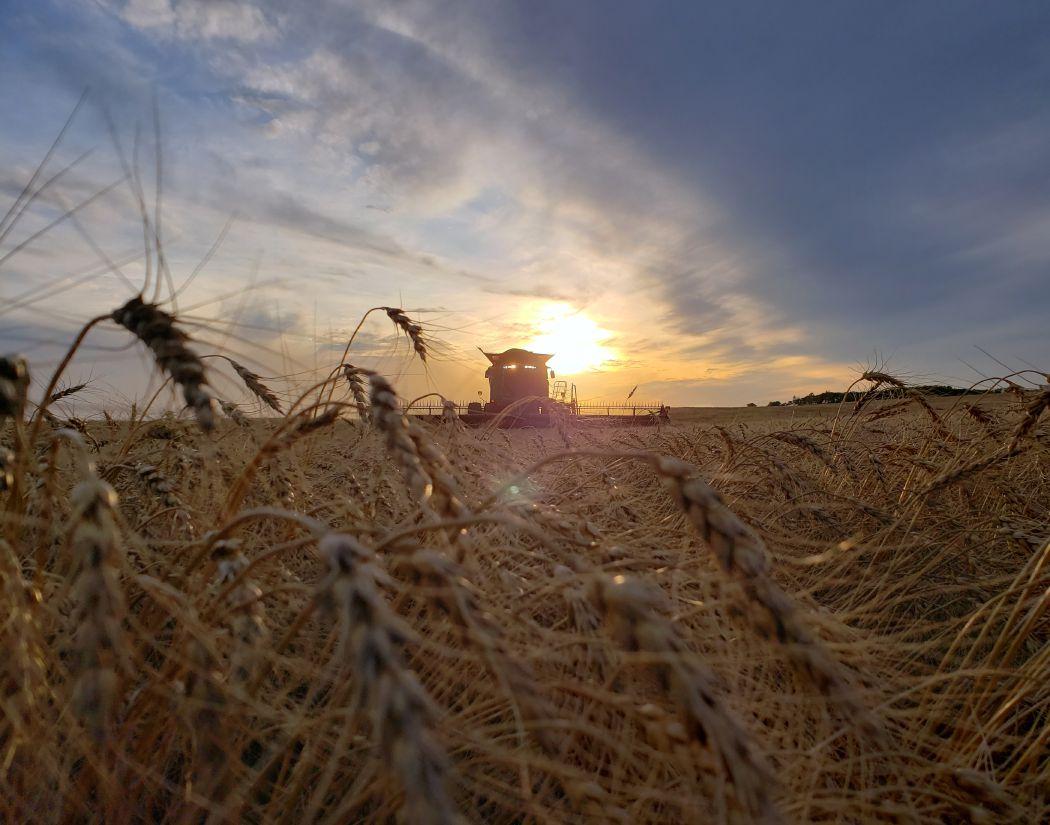
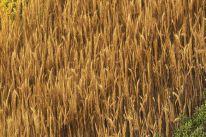
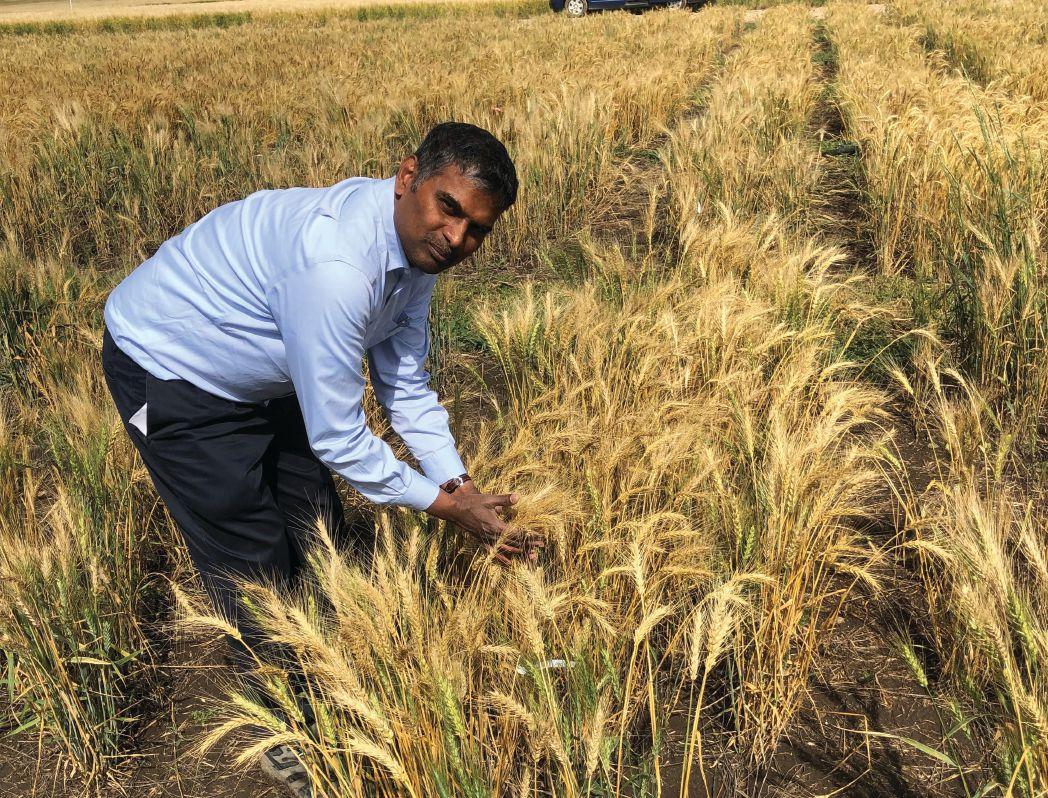
ABOVE: Wheat harvest at sunset in southeastern Saskatchewan.
research has been published in this specific area since then, leading Tanino and her PhD student Ian Willick to initiate a new project in 2013 focused on improving cold hardiness of western Canadian varieties of winter wheat. Norstar winter wheat and Puma and Hazlet winter rye were selected for the investigation of cold-acclimation and freezing behaviour responses in the crown. This project is funded as part of a larger program led by Brian Fowler at the University of Saskatchewan.
“The vegetative crown of winter cereals, which is a modified stem, is the key organ that survives the winter,” Tanino explains. “The leaves and roots eventually die over winter, but if the crown is alive then the plant can regenerate new roots and shoots in the spring. The vegetative crown organ is divided into two major constituents: the shoot apical meristem (SAM) and the vascular transition zone (VTZ). The
shoot apical meristem includes the apical meristem tissues as well as newly formed leaves. The vascular transition zone, which is located between the SAM and the base of the crown, is a complex tissue comprised of root meristem cells, pith and xylem responsible for the translocation of water from the roots to the above-ground organs. The leaf sheath, which is associated with the mature leaf aerial organs, encapsulates the crown.
“However, due to the complex nature of the vegetative crown, the critical organ for survival, not all these constituents achieve the same level of hardiness,” Tanino says. “The ability of the plant crown to withstand prolonged exposure to low temperatures can also substantially vary between winter cereals and different genotypes, with winter rye the most cold-hardy, followed by winter wheat, winter barley and oat.”
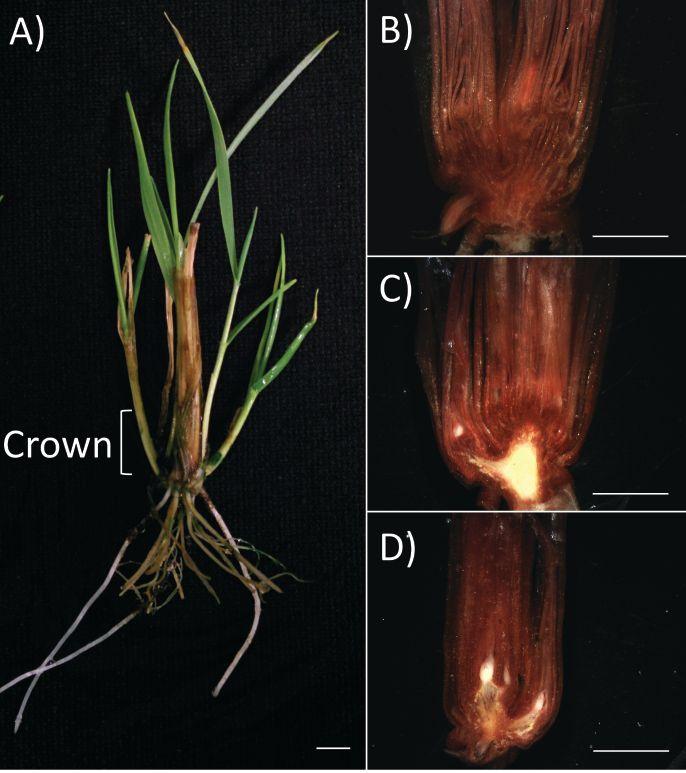
Further lab studies were conducted on the winter wheat and rye crowns to determine the tissue-specific differences in freezing survival. The tissues were subjected to controlled freeze testing and cold acclimation, and then sampled and tested for recovery. Tetrazolium chloride (TTC) vital staining was used to compare freezing survival on tissue samples, and is also a common method used for testing seed viability for germination. The TTC essentially assesses respiration of living tissues: the sample will turn a red colour for live cells/tissue, while the off-white and yellow tissue colour indicates injured or dead cells/tissue as a result of freezing.
The results confirmed that the lower region of the crown, or the VTZ, is the area where injury first occurs. However, the results also showed that the VTZ is not the most important tissue in the crown; rather, it is the apical meristem, or SAM. If the VTZ was injured, the injury was not lethal and the crown could recover; however, if the SAM was damaged, that was the final blow to the plant. This is in contrast to earlier findings on eastern Canadian varieties, where the VTZ appears to be the most important tissue in the crown.
Several approaches were used in lab trials to further identify how the freezing process results in injury to plants, including differential thermal analysis, ice nucleation, and spatial localization studies using the Canadian Light Source in Saskatoon. The objective was to understand how the plant managed freezing and ice propagation, including where freezing starts in the plant, how fast it develops and what the barriers are that may help the crown avoid or tolerate freezing.
“The results confirmed there is a differential pattern of freezing in winter wheat and rye, and it is the leaves that are the initial source of freezing in the fall,” Tanino says. “The ice then rapidly travels down the leaves into the crown. However, the crown has developed various barriers, including one shown by others to be located below the apical meristem, presumably preventing ice from reaching the apical meristem and preventing injury.
“Although this differential pattern of freezing injury has long been reported in other complex structures, such as overwintering tree bud organs, this is the first study that has proposed that cold-acclimated crowns of winter cereals utilize a similar strategy of translocating and segregating
Assessing winter wheat recovery from freezing. A) Winter wheat plant recovering from freezing injury that has developed new shoots and roots (white). B) Uninjured winter wheat crown stained with tetrazolium chloride. C) Winter wheat crown with injured vascular transition zone and meristem in a secondary tiller. D) Crown with injury to the vascular transition zone, tiller meristem and apical meristem. Injury depicted in D) is lethal. Scale bar = 0.6 cm.
IMAGE COURTESY OF IAN WILLICK.
ice into freezing-tolerant tissues and organs to avoid lethal injury.”
Tanino adds that in reviewing how overwintering tree buds manage water flow, freezing and thawing, it is the outer bud scales that are the first to freeze. A barrier between the scales and the bud tissue allows water to flow out of the bud to the scales, but prevents larger ice crystals from moving back into the bud. The apical meristem in the bud basically dehydrates, preventing freezing.
“As temperatures fall, the tree buds or crowns begin to reduce free water,” Tanino explains. “There is not a single process but rather a sequence of events that will vary depending on the tissue, degree of acclimation, temperature of initial ice nucleation, rate of ice growth, and physical and chemical factors that affect water activity and migration.”
In this study, three distinct freezing events were identified that correspond to the risk of injury to different parts of the crown. A high-temperature event at -3 C to -5 C corresponded with ice formation and high ice-nucleating activity in the leaf sheath encapsulating the crown. The leaf sheath appears to act as an ice sink by accommodating ice from the VTZ and SAM water vapour. A mid-temperature event at -6 C and -8 C corresponded with cavity ice formation in the VTZ, but an absence of ice in the SAM. A low-temperature freezing event, similar to buds, corresponded with SAM freezing injury and also corresponded with the killing temperature in winter wheat at -21 C and rye at -27 C. The findings show that cold-acclimated winter wheat and rye crowns likely survive freezing using an ice segregation freezing strategy, and rye is better able to survive due to higher SAM freezing avoidance.
“A proteomic analysis was also performed to understand tissuespecific differences in cold acclimation and freezing survival,” Tanino adds. “This component of the study was conducted in Japan at Iwate University. The results of the analysis indicate that the SAM and VTZ express two distinct tissue-specific barrier responses during cold acclimation, and show differences in how proteins are regulated in the crown and specifically in the cell walls.
“The analysis identified that dehydrins, vernalization-responsive proteins, and cold shock proteins preferentially accumulated in the SAM,” Tanino says. “In contrast, modifications to the VTZ centred on increases in pathogenesis-related proteins, anti-freeze proteins and sugar-hydrolyzing enzymes. These findings suggest that there may be some commonalities or overlap with other abiotic or biotic stress resistance such as diseases. For example, those plants that are more cold-hardy are known to be more disease-resistant, but the mechanism is not yet known.”
“The results from this project have provided a better understanding of cold hardiness in winter wheat and rye and the mechanisms for winter survival. This new knowledge helps inform and expand my program, which is focused on finding strategies to enable plants to overcome a range of abiotic and biotic stresses,” Tanino says. “In the field, crops have to survive everything, and we never know from one year to the next what will be more important: cold or drought tolerance, diseases, insect pests or other stresses. And ultimately, the results of the project have provided additional targets and tools for plant breeders in advancing cold hardiness in winter wheat and rye.”
BREEDING SIX-ROW FEED & FORAGE BARLEYS
Alberta researchers are developing high-performing varieties to meet the needs of this small but important barley market.
by Carolyn King
We believe there is a market for six-row barley varieties in Canada, given the estimated 500,000 acres planted each year. We have a small but strong six-row breeding effort that is now the only six-row breeding in Canada. If we end our six-row work, that option will disappear for Canadian farmers,” says Flavio Capettini, head of research at the Field Crop Development Centre (FCDC) of Alberta Agriculture and Forestry (AAF) in Lacombe.
The six-row feed and forage barley varieties developed by FCDC breeders have the characteristics needed by barley growers and endusers, such as higher yields, improved standability, better disease resistance and enhanced nutritional value for livestock. Capettini notes, “We have been very successful in releasing six-row varieties that have been placed in the commercialization process right away by seed companies.”
Until recently, FCDC generally separated the responsibilities of its barley breeders into two-row and six-row programs, but these responsibilities have now been refocused based on the target uses and separated into malting, feed and forage barley programs. However, the breeding lines from the different programs are also evaluated for the different end uses, to look for dual-purpose lines and for lines that fit a different target use, like a cross aimed at malting barley that results in a good feed or forage line.
These barley breeding programs tap into the overall synergy of expertise and resources at FCDC. The centre’s other breeders include Capettini, who leads the barley germplasm development research, and Mazen Aljarrah, who leads the triticale program. As well, FCDC has other expert teams whose work is essential as part of the centre’s breeding programs, and a capable group of technicians and other staff who carry out the meticulous, specialized and labourintensive activities involved in crop breeding.
For example, the plant pathology team, led by Kequan Xi, screens barley lines for resistance to economically relevant diseases, such as spot blotch, scald, stripe rust, two forms of net blotch, smuts, Fusarium head blight (FHB), and the Ug99 race of stem rust (a very virulent type of stem rust). Capettini says, “Barley breeding lines are screened in artificially inoculated or irrigated nurseries, at field experiments under natural infection, and in controlled conditions in greenhouses, growth rooms and growth chambers. Sometimes collections are sent overseas for testing where conditions are more favourable or uniform for disease screening. Diseases are also monitored in farmers’ fields every year.”
Some of FCDC’s disease screening activities are done in
Nyachiro’s latest six-row, called AB Tofield, is a smooth awned, high yielding feed and forage variety with a good disease resistance package.
collaboration with other research centres, such as AAF’s Crop Diversification Centre North in Edmonton, Agriculture and AgriFood Canada in Lacombe and Brandon, Syngenta in Manitoba, and Limagrain in Saskatoon, as well as collaborators in other countries.
Why feed and forage breeding?
In Canada, six-row barleys are grown for feed and/or forage. Many two-row barleys are malting varieties that are used for feed if the
grain does not achieve malting quality, although some two-rows are feed varieties.
On an ongoing basis, FCDC adjusts the amount of resources available to its different breeding programs, including its six-row work, based on present and future demand and input from stakeholders. Some people challenge the need for FCDC to conduct breeding specifically targeted to feed/forage uses, and some people challenge the need for six-row breeding.
Regarding malting versus feed/forage breeding, Capettini says, “There is a perception that malting barleys are yielding at similar levels as feed barleys; that is why some people recommend not breeding specifically for feed, but as a side-product of the malting program. However, we believe we can have quicker progress and higher-yielding varieties if we breed specifically for feed/forage.”
He explains that, in any type of crop breeding, every trait you add in the selection process may delay the genetic progress of other traits. “For example, reaching the quality requirements for obtaining a malting barley could delay progress in yield improvement. That is the challenge faced in malting barley programs, where forage and feed are sideproducts. The result is that around the world, feed varieties normally have higher yields than malting ones. This feed/malting gap has been narrowed in Canada; however, it is easy to see that feed barleys like Amisk usually have higher yields than even the newest malting varieties.”
Similarly, some people argue that FCDC should stop breeding six-rows because they think two-rows have yields similar to sixrows. However, six-rows still tend to yield higher than two-rows under favourable growing conditions.
Furthermore, six-row feed/forage varieties are targeting an important niche market. FCDC believes that the significant acreage in Alberta and Canada planted to feed and forage crops merits having the centre’s relatively small breeding effort dedicated to six-rows. Along with higher yields, sixrow feed and forage varieties are bred to have characteristics that make them more nutritious and palatable for livestock, like higher protein and higher starch digestibility in feed varieties, and smooth awns and higher fibre digestibility for forage varieties.
Nyachiro’s breeding work
“I find barley breeding very exciting when I look at the whole process starting from selecting the parents for making the cross.
Watching the cross through many generations to the final winner that makes the variety for commercial production in the farmer’s field is very interesting,” says Joseph Nyachiro, the research scientist responsible for FCDC’s feed barley program.
“My best reward is when I meet a farmer who is happy with a barley variety we have developed from either the six-row or tworow breeding program. We need crop genetic diversity in both the two-row and six-row barley types. Diversity is a strength in a barley production system.”
Until recently, he focused on six-row breeding, but his current feed barley program now includes both six-rows and two-rows. Top priority traits include: high yield potential for grain and forage, strong straw and good lodging resistance, early maturity and resistance to multiple diseases, such as scald, blotches, smuts, FHB, stripe rust and stem rust. Smooth awns are a plus for the dual-purpose feed and forage lines.
Over the past five years, Nyachiro’s six-row program has been very prolific, releasing four high-performing varieties that have been taken up by seed companies for marketing and commercialization. He summarizes the key features of those four varieties: Amisk, which is marketed by SeCan, is a dual-purpose feed and forage variety. “It is a semi-smooth awned, semi-dwarf barley with strong straw. It has better lodging resistance than Vivar and AC Ranger. Amisk has a high percentage of plump seed – 14 per cent higher than Vivar and 16 per cent higher than AC Ranger and even two-row types such as CDC Mayfair and Celebration. It has a better than average combination of disease resistance to stem rust, Septoria and spot-form net blotch.”
AB Cattlelac, sold by Alliance Seed, is another variety suited to both feed and forage. “This semi-smooth awned variety yields eight per cent more forage than Vivar, five per cent more than AC Ranger and equal to CDC Austenson. It has a higher test weight than Vivar and AC Ranger. AB Cattlelac has better lodging resistance than AC Ranger. It has good resistance to surface-borne smuts, moderate resistance to spot blotch and spot net-blotch, and intermediate resistance to scald, stem rust and loose smuts.”
AB Advantage, sold by SeCan, is a smooth awned feed and forage barley. “It has a grain yield advantage of six per cent higher than
AC Ranger, five per cent higher than Vivar and two per cent higher than CDC Austenson. It yields seven per cent more forage than AC Ranger and similar to CDC Cowboy. AB Advantage has higher plump seed percentage, test weight, and 1,000-kernel weight, and higher cow carrying capacity than AC Ranger or Vivar. Its lodging resistance is better than AC Ranger and similar to Vivar. AB Advantage has intermediate resistance to surface-borne smuts, loose smuts, stem rust, scald, spot blotch and spot-form net blotch.”
Nyachiro’s latest six-row is AB Tofield, which will be available from SeCan. “AB Tofield is a smooth awned feed and forage barley. It has a grain yield advantage of eight per cent higher than AC Ranger and seven per cent higher than CDC Austenson. It yields six per cent more forage than AC Ranger and three per cent more than CDC Austenson. AB Tofield has a relatively high plump seed percentage, test weight, and 1,000-kernel weight. It has a higher cow carrying capacity than AC Ranger, Vivar and CDC Austenson. Its lodging resistance is better than AC Ranger, Vivar, Amisk, CDC Mayfair and Celebration. AB Tofield has resistance or moderate resistance to stem rust and surface-borne smuts, and intermediate resistance to loose smuts, stem rust, scald, spot blotch and spot-form net blotch.”
Nyachiro has several promising six-row lines in his breeding pipeline. “We have a number of advanced lines entering into their second-year testing in the Western Six-Row Barley Cooperative Test in 2020. These lines are SR19542 and SR19543 with Sundre parentage/pedigree background, and SR19546 and SR19547 with Vivar parentage/pedigree background. We will see how the four lines perform in the 2020 testing before we decide which ones to move forward for registration in 2021.”
Funders for his breeding work include the Government of Alberta, Alberta Barley, Alberta Beef Producers, Beef Cattle Research Council, Alberta Innovates and the former Alberta Crop Industry Development Fund.
Kabeta’s breeding work
FCDC’s current forage barley breeding program, led by research scientist Yadeta Kabeta, involves six-rows and two-rows. “We are developing varieties with overall improved forage quality, which includes better fibre digestibility. Within that objective, we are
A young crop of AB Advantage breeder seed at Kittle Farms, with (from left to right) SeCan representative Trent Whiting, seed grower Andrew Kittle and barley breeder Joseph Nyachiro.
Kabeta’s latest release, SR18524, is a smooth awned, semidwarf variety with high grain and forage yields and high nitrogen-use efficiency.
PHOTO COURTESY OF MIRA VAN BURCK.
incorporating genes [into our breeding lines] that can decrease the amount of lignin in barley to increase the forage quality for ruminants.”
A key focus of his breeding work in recent years has been improving physiological traits like nitrogen-use efficiency (NUE). “Barley varieties with enhanced nitrogen-use efficiency require less nitrogen application. Reduced fertilizer input costs would make our Canadian barley more competitive in the global marketplace. These efficient varieties also protect yields when nitrogen inputs are limited. As well, these varieties have an environmental benefit because, with less nitrogen applied, there will be a lower risk of nitrogen losses to the environment,” Kabeta explains.
Breeding for increased NUE has been challenging. He notes, “We were probably one of the first organizations to start breeding crops for improved nitrogen-use efficiency, but now many other programs are launching NUE research in different crops. With many people working on this trait, the scientific information develops faster and we can make better progress.”
Kabeta started his NUE work with six-row barley, but he has since crossed the NUE six-row germplasm with two-row germplasm and is developing two-row varieties with improved NUE.
He emphasizes, “The nitrogen-use efficiency varieties that we develop are very good agronomically and have all the favourable traits that an enhanced variety would have, with the addition of NUE.”
His latest six-row release is a good example of that. “We have a new six-row line called SR18524 with the nitrogen-use efficiency trait. This line was supported for registration this year and we are
looking for a company to commercialize it. It showed six to 10 per cent higher nitrogen efficiency than the standard check varieties,” Kabeta says.
“SR18524 is a semi-dwarf type with good lodging resistance. It is a smooth awned line with three to seven per cent higher grain and forage yields over the currently available six-row semi-dwarf varieties.”
Kabeta also evaluates six-row and two-row lines for water-use efficiency. “The idea is to develop resilient varieties that are tolerant to both low nitrogen and low moisture regimes. I believe that concomitant improvement in nitrogen- and water-use efficiencies may stabilize yield and bring about greater profitability for farmers.”
Funding for Kabeta’s breeding work, especially for his NUE research, has come from Alberta Innovates, Alberta Barley and the former Alberta Crop Industry Development Fund.
Nyachiro’s and Kabeta’s six-row barley breeding activities are providing Albertans and other Canadians with feed and forage varieties that combine excellent agronomic performance with great traits for livestock uses.
Capettini concludes, “Superior varieties are the foundation of agriculture. Breeders have been working on improving crop traits for more than 10,000 years. Breeding is even more relevant now, with the highly competitive international markets for crops and with the unprecedented global challenge of feeding 9 billion people by 2050, while dealing with the impacts of serious climatic pressures. Having superior crop varieties will help Canadian crop growers continue to contribute to a stable, secure and successful agriculture and food industry in our country.”
Annual and perennial weed control with full crop rotational freedom.
Tridem provides control of both annual and perennial broadleaf weeds, plus Group 2 grass control of wild oats and Japanese brome with full crop rotational freedom the following year. Visit us at corteva.ca
CAMELINA ON THE RISE
This oilseed provides economic and environmental benefits for industrial, feed and food applications.
by Donna Fleury
Researchers continue to find new opportunities for camelina focused on improving functionality and traits for various applications. Also known by the name false flax, this versatile Brassica oilseed has potential across a wide range of applications, and interest in the crop is growing among Canadian researchers and several different industries. Camelina provides both environmental and economic benefits, including offering new cropping opportunities in more arid zones and marginal areas.
Researchers with Agriculture and Agri-Food Canada (AAFC) at the Saskatoon Research and Development Centre have multiple projects underway with various collaborators across the country. Breeding programs are focused on agronomic and quality improvements as well as genomic traits and functionality improvements.
“The key traits we are targeting for improvement of camelina are similar to those that are the focus of other oilseed breeding
programs, including high seed yield and high seed oil content as well as disease resistance – in particular downy mildew and sclerotinia stem rot,” explains Dr. Christina Eynck, a research scientist at AAFC Saskatoon.
“Another focus of our program is to increase the size of camelina seed, which for current varieties is small and about one-third of the size of canola seed. This small size can cause challenges for seeding, combining and crushing. In our experience, breeding lines with larger seeds have an easier time getting out of the ground resulting in better stand establishment, which is absolutely critical for a successful camelina crop.”
Another research priority is to develop germplasm with both high oil and high protein content. To expand functionality, researchers have examined camelina improvements from across
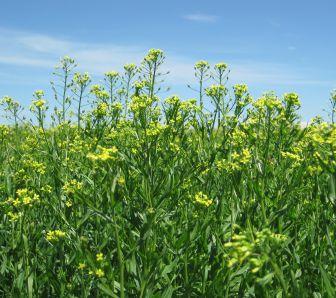
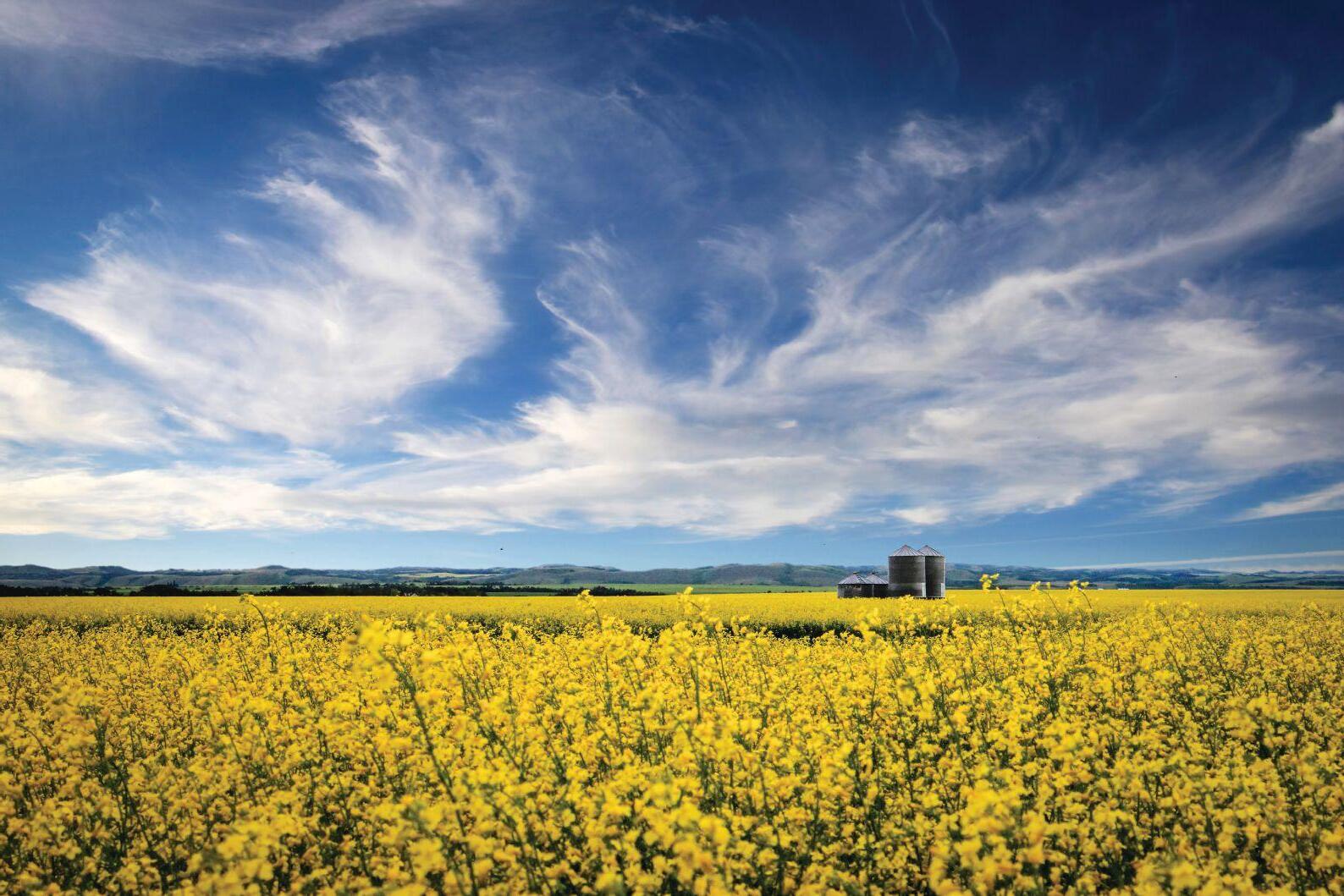
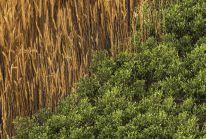
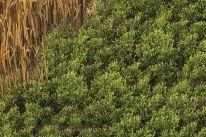
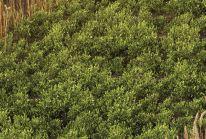
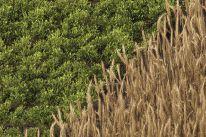
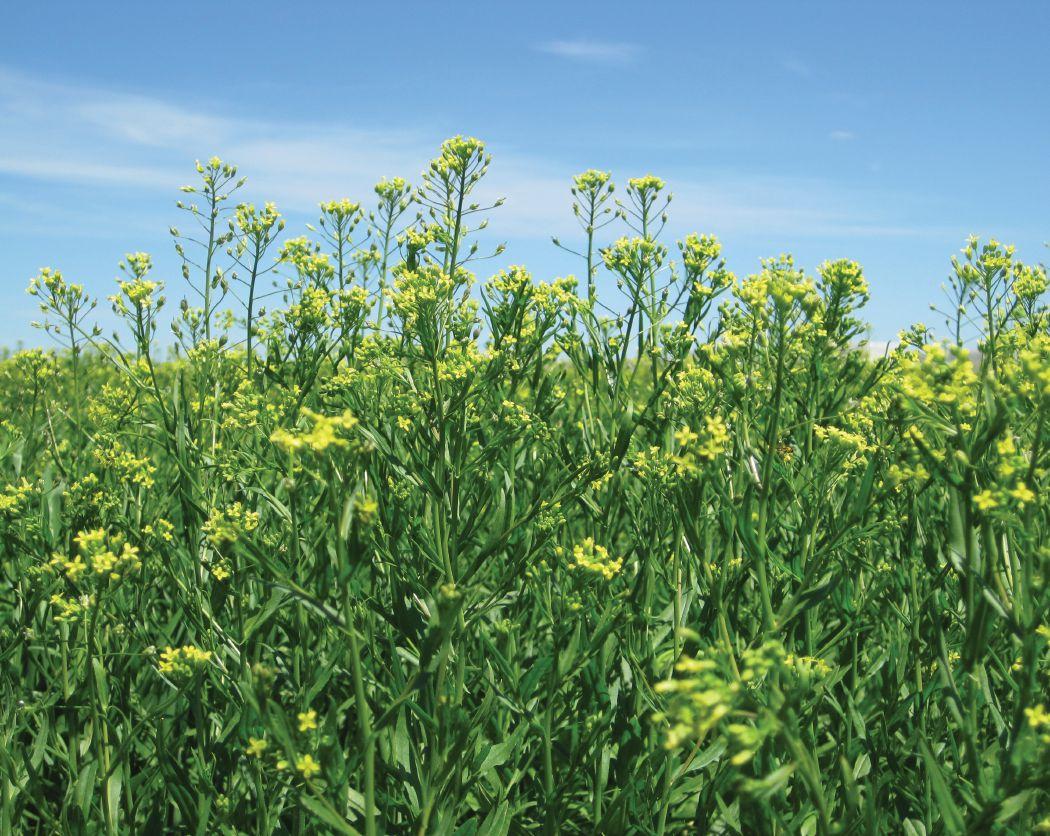
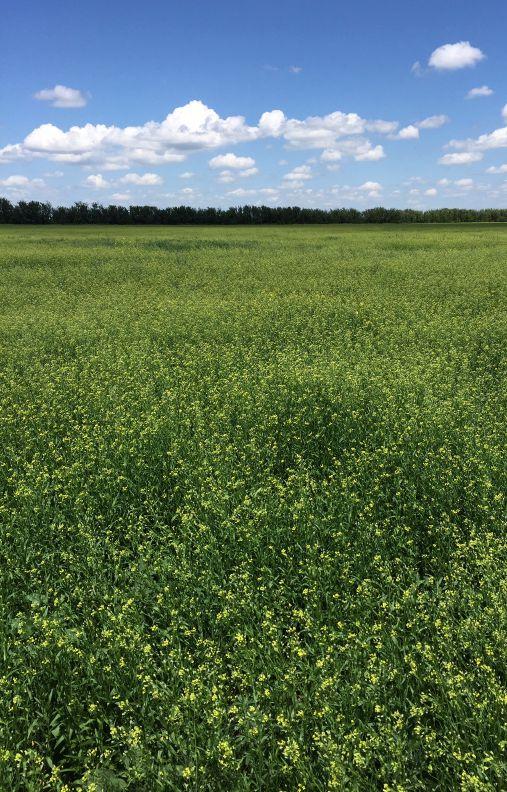
TOP: Camelina crop in flower.
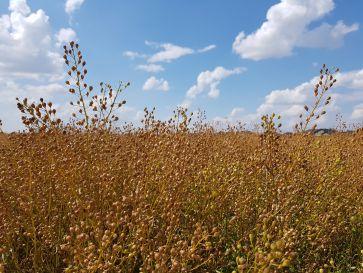
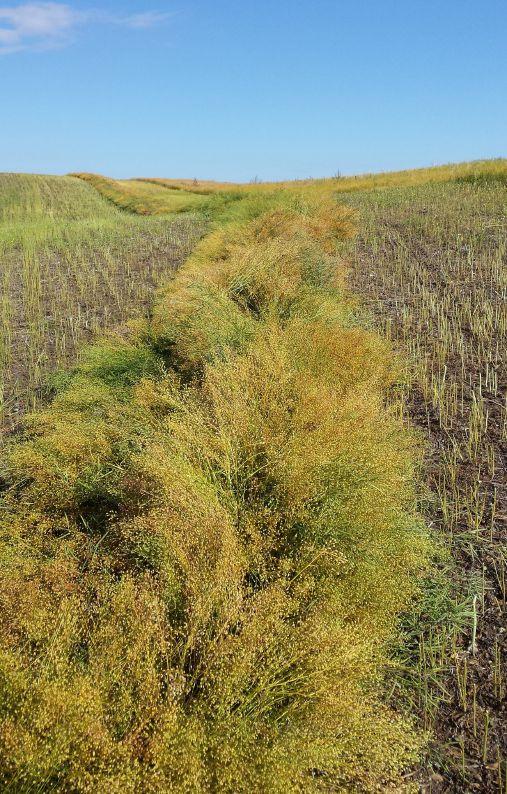
INSET: Camelina seed heads maturing in the field.
the globe for seed protein levels and the different types of proteins in the seed. Camelina is known for having a healthy oil profile, but researchers are working on improving the fatty acid profile for food and feed applications. The goal is to develop an even more favorable ratio of omega-3 to omega-6 fatty acids, mainly by increasing the content of linolenic (C18:3) acid and decreasing the content of linoleic (C18:2) acid.
Fish food and more
Along with oil functionality, camelina meal is also being explored as a source of protein in livestock, fish, and poultry feeds, and potential human food applications.
“A group of AAFC, Dalhousie University and Memorial University researchers with funding from the Atlantic Canada Opportunities Association recently obtained Canadian Food Inspection Agency (CFIA) approval to fully replace fish oil with camelina oil in farmed salmon and trout feed,” says Dr. Dwayne Hegedus, a research scientist with AAFC Saskatoon.
“Camelina oil contains precursors that fish can convert to docosahexaenoic acid (DHA) and eicosapentaenoic acid (EPA), both omega-3 fatty acids essential for human health. The group has also filed an application with CFIA to partially replace fish meal protein with camelina protein. Collectively, these will reduce the strain on wild-caught fish as a source of feed for the farmed fish industry – an annual $1 billion and growing fish feed market –at the same time as providing a growing market for camelina.”
Camelina seed meal has also been successfully approved in Canada as a feed ingredient for both broiler and layer hens.
While camelina is better than most oilseeds and grains used in animal feeds, it is deficient in certain essential amino acids to be a complete protein, specifically lysine. Lysine is one of the essential amino acids that the body cannot make in sufficient quantities itself and must be acquired from diet. Synthetic forms of this amino acid are often added to the diets of monogastric livestock, including pigs, chicken and fish. With support from the Global Institute for Food Security at the University of Saskatchewan, Hegedus and AAFC colleague Dr. Kevin Rozwadowski used genetic engineering tools to enhance lysine levels in camelina seed and incorporate this into camelina seed protein.
AAFC researcher Dr. Isobel Parkin worked with National Research Council of Canada (NRCC) researchers to sequence the camelina genome and make this resource available to the public.
“One of our AAFC research scientists, Dr. Janitha Wanasundara, was able to use this resource to catalogue the entire suite of storage proteins in camelina seeds and examine alternate uses for camelina protein or specific proteins from camelina,” Hegedus says.
“Some of these opportunities include use in foods, cosmetics and surfactants, which offer higher value and benefit than animal feed. Kevin and I took this another step further, using CRISPR gene editing to alter camelina seed protein profiles, resulting in a line with a unique protein profile and functional properties. This demonstration, one of the first of its kind, opens the door to creating
lines with protein profiles tailored to specific applications.”
Going places
Camelina is attracting commercial interest as an industrial feedstock crop platform for clean energy, biojet fuel, bioproducts and other industrial applications. Along with economic benefits, camelina provides environmental sustainability improvements, including reductions in greenhouse gas emissions.
“Our research program at AAFC also includes the sustainable development of camelina as a key dedicated oilseed feedstock crop for industrial applications,” explains Dr. Edmund Mupondwa, research scientist for bioproducts and bioprocesses at AAFC Saskatoon. “Sustainable feedstock development is a critical component of an assured supply chain. Canadian research is actively developing camelina as a dedicated industrial feedstock in a manner that meets environmental sustainability criteria for production and value-added processing.”
Camelina as a feedstock for aviation fuel is well-recognized by the aviation industry, and has the potential to address the growing demand for alternative renewable aviation fuels in Canada. Conventional aviation fuel contributes around two to three per cent of global carbon dioxide emissions, which can potentially be reduced by including camelina.
Numerous national and multinational companies have recognized this potential, and several extensive pilot-scale
collaborative demonstrations using biojet fuels from camelina have been completed. For example, test flights by several of the world’s major airlines (KLM Royal Dutch Airlines, Japanese Airlines, Air Canada, Lufthansa), aircraft manufacturers (Airbus and Boeing), and fuel developers and suppliers (UOP of the Honeywell Company, Accelergy Corp., Altair Inc., Biojet Corp., and Sustainable Oils, LLC.) have been performed. These tests have demonstrated the technical feasibility of camelina aviation fuel.
“To support the technical feasibility, we recently conducted life cycle assessment (LCA) studies to demonstrate how camelina meets environmental sustainability criteria for production and value-added processing,” Mupondwa says. “The results of the LCA studies showed that aviation fuel from camelina produced on the Canadian Prairies reduced greenhouse gas emissions by 84 per cent compared to petroleum jet fuel.
“Compared to other oilseeds, camelina jet fuel consumed less non-renewable energy. Overall, camelina jet fuel had significantly higher environmental benefit for resources, climate change, and ecosystem quality. As a drought-resistant, low-input oilseed feedstock for industrial and feed applications, camelina provides both environmental and economic benefits, including offering new cropping opportunities in marginal areas.”
Environmental and economic benefits
“In addition to our LCA camelina for clean energy applications, we
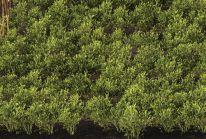
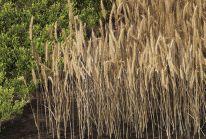
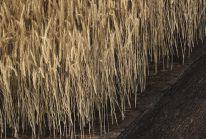
Camelina crop in the swath in west-central Saskatchewan.
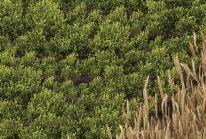
A flowering camelina crop in the field.
are also conducting additional related studies to demonstrate the environmental and economic contribution of camelina feed to the aquaculture sector,” Mupondwa adds. “This is particularly relevant in view of declining ocean fisheries stocks, coupled with increasing demand for fish driven by a growing world human population. As a result, there is a rapid expansion in aquaculture, making it one of the fastest growing markets for feed. Camelina could contribute to environmental sustainability and economic goals for this sector.”
Camelina is a crop that grows comparatively well on low quality land and under low precipitation. It also requires fewer inputs than other Brassica crops and has a comparatively high yield potential on poor quality land. Eynck notes that some important agronomic attributes of camelina include a short growing season (85-100 days), resistance to a number of Brassica pests and diseases, including flea beetles and blackleg, and shatter resistance, making it suitable for straight-combining. Camelina is also frost-tolerant in the seedling stage and drought-tolerant in later developmental stages. With these characteristics, camelina is a good choice for farmers that want to reduce the risks associated with production.
Some of the geographic areas most suited for camelina production on the Prairies are the sandy soils of west-central Saskatchewan and the brown soil zone in southwest Saskatchewan and southeast Alberta. Other areas work too, as long as the economics make sense. For example, camelina is successfully grown in southeast Saskatchewan by the Three Farmers company, who sell camelina oil as a high-end edible oil. Over the last few years, camelina acres in Saskatchewan have stayed around 5,000,
but are now increasing significantly with Smart Earth Camelina Corp. contracting more acres for the 2020 growing season. Currently, camelina is exclusively grown under contract and is covered under crop insurance in Saskatchewan.
As the new traits and functionality attributes improve, new elite breeding lines will be released and evaluated for commercialization potential. “We would like to have new varieties coming out of our breeding program and commercially available every two or three years,” Eynck says. “One exciting additional focus of our program is the development of true winter-type camelina varieties. Unique for a Canadian oilseed, camelina features not only annual spring-types, but also wintertypes with exceptional freeze hardiness that rivals that of winter rye and far surpasses that of winter canola.
“Trials in Manitoba and Saskatchewan have shown that winter camelina is hardy enough to survive well in the harsh winters of the Prairie provinces. With this, camelina has the potential to become the only winter-type oilseed that can be grown on the Canadian Prairies, offering a winter rotation alternative for winter cereals and providing a ground-breaking opportunity to finally facilitate the establishment of winter crops as a viable rotation option for farmers on the Canadian Prairies.”
Eynck concludes, “The cumulative efforts of crop breeding, agronomic and functionality improvements in cultivars, along with new genomic improvements for specific applications for food, feed and industrial applications, all add to the growing opportunity and potential of camelina on the Prairies.”
LICENCE TO CONTROL.
This season, elite growers are being briefed on a new secret weapon for barley in the fi ght against the prairie’s toughest weeds.
• Cross Spectrum Performance
Unparalleled control of the widest range of Group 2 and 4 broadleaf weeds, including kochia, narrow-leaved hawk’s-beard and wild buckwheat, alongside leading Group 1 grass control.
• Rotational Freedom
Defeat Canada thistle, perennial sow thistle and dandelion with safe rotational freedom to lentils and chickpeas the following year.
• Easy Tank Mixing
Tank mixed with MCPA herbicide, count on multi-mode of action control for e ective resistance management.
Get briefed at Avenza.Corteva.ca.
PREPARING FOR A SUSTAINABLE FUTURE
A
Lethbridge researcher is developing winter durum and other winter cereals for the Prairies.
by Carolyn King
Back when he was a student, one of Raja Ragupathy’s teachers used to quote the proverb: don’t start digging a well only after the house catches fire. Nowadays, making preparations to deal with a risky future is a cornerstone of Ragupathy’s winter cereal breeding programs.
“[Based on climate change scenarios,] I and most other researchers envision a future in which the availability of water will be a prime limiting factor in crop production. Winter cereals allow Prairie crop growers to take advantage of the moisture available in late fall and early spring. That gives them an advantage over spring-seeded cereals,” explains Ragupathy, a research scientist with Agriculture and Agri-Food Canada (AAFC) at Lethbridge.
Along with his main program to breed perennial cereals, he is breeding winter durum, fall rye and winter triticale. “To prepare for a future where drought will be the new normal and water availability for irrigation will be very limited, we will need a very diverse array of crops. We can’t rely on spring wheat or canola alone.”
In addition to moisture use benefits, winter cereals have other advantages. For instance, they tend to out-yield spring-seeded cereals. Winter cereals usually grow quickly in the spring, helping the crop to
out-compete weeds. They mature earlier than spring-seeded cereals, so they may have fewer problems with diseases promoted by warm weather. And winter cereals are valuable for preventing soil erosion in the fall and early spring.
Winter durum: a new crop for the Prairies
“Winter wheat has about a 15 to 20 per cent yield advantage over spring wheat, and durum wheat is a higher value crop. In my breeding program, I’m trying to combine the yield advantage of winter wheat with the price advantage of durum,” Ragupathy says.
He inherited his winter durum breeding program from Jamie Larsen, a research scientist now at AAFC Harrow, who started the program in 2015, and Jordan Harvie, a biologist who took care of the program in 2018. AAFC is an ongoing funder of this program. In addition, the Alberta Wheat Commission (AWC) and the Western Grains Research Foundation (WGRF) provided a three-year grant, starting in 2017, for the breeding work.
ABOVE: Ragupathy is evaluating his winter durum lines for winter hardiness at several locations, including this Saskatoon site.
“Durum wheat can fetch a price premium over spring wheat and represents yet another crop option for farmers,” notes Lauren Comin, AWC’s director of research.
“A major issue with growing durum is its susceptibility to Fusarium head blight (FHB). Durum wheat lacks the available resistance genes that have been found in the bread wheat gene pool. While the incidence of FHB is still low in Alberta, it is certainly established in the southern regions – the durum growing area. A crop is susceptible to FHB at flowering, and one benefit of a fall-seeded cereal is that the flowering window may occur before the flowering window of spring wheat. Therefore, a winter durum crop may flower before the presence of conditions that favour FHB, and may avoid infection.
“And fall-seeded cereals offer other benefits,” Comin adds. “They are able to make use of more moisture than spring wheat – a benefit in dry areas. They also can help you manage your time better during seeding and harvest.”
Although winter durum is produced in other parts of the world, it is not being grown in Western Canada. “Winter durum is literally a new crop for the Prairies,” Ragupathy says. “Systematic spring wheat breeding for the Canadian Prairies is about 150 years old. Winter wheat breeding for Western Canada started in 1948. But our winter durum program is just five years old. We need to develop winter durum lines that have all the desired agronomic characteristics, disease resistance traits, and also the quality profile – Canadian wheats are known for quality across the world.”
Larsen started the breeding program by assembling a collection of winter durum breeding lines and cultivars from various European countries and the United States. Most of these lines were developed for milder overwintering conditions than in Western Canada.
So, the breeding program’s most crucial task is to develop lines that can survive harsh Prairie winters. To help with that, the program is tapping into the winter hardiness genes in western Canadian winter wheat varieties.
“Fortunately, we have a well-established, successful winter wheat breeding program led by Robert Graf here at Lethbridge,” Ragupathy says. So, Larsen, Harvie and now Ragupathy have collaborated with Graf to source winter hardiness from Graf’s lines, as well as lines from previous AAFC winter wheat breeders and the University of Saskatchewan’s breeding program.
A key challenge in crossing winter durum with winter wheat is that they are two different species. Durum wheat is Triticum turgidum subspecies durum, while winter wheat is Triticum aestivum, the same species as spring-seeded bread wheat.
“Durum wheat is a tetraploid, which means that its genome is composed of two sub-genomes, known as the A and B genomes. Bread wheat is a hexaploid wheat, with three sub-genomes: A, B and D,” Ragupathy explains.
“When you make a cross between durum and bread wheat, you get durum types, intermediate types and bread wheat types. So, essentially I’m looking for plants that are durum types but with the genes that regulate winter hardiness from bread wheat.”
The program’s winter durum lines are mainly evaluated for winter hardiness in the field in Lethbridge, Vauxhall and Saskatoon. Freezing tolerance tests in controlled-environment growth chambers are being optimized for use in the future.
Ragupathy is drawing on the power of genomics to speed up the breeding for winter hardiness. He explains that, in durum, a single locus (a location on the genome) controls 91 per cent of the variation for cold tolerance. This locus is known as Fr-A2. The same locus
controls only 24 per cent of cold tolerance in winter wheat because of the impact of the genomic background. Ragupathy will be developing diagnostic DNA markers for this locus so he can screen lines for the trait.
He notes, “I want to genotype all the parental winter durum lines in our collection for the Fr-A2 locus. Then, I will correlate that genotype data with the results from the freezing tests and the field winter hardiness performance of the lines, and use that to identify the best parents for the crosses.”
As well, Ragupathy has a new three-year project that includes developing a genomic selection model for cold tolerance in winter durum. The idea is to be able to predict the cold tolerance behaviour of an individual winter durum plant based only on the plant’s genotypic profile. This approach allows a breeder to identify the most promising plants much earlier in the breeding process. WGRF and the Saskatchewan Wheat Development Commission are funding the project.
Once Ragupathy has a framework of winter-hardy lines, he will increase his emphasis on other traits. He is already on the lookout for lines with high yields, test weights and 1,000-kernel weights, shorter plant heights, and resistance to various diseases.
Since FHB resistance is a key trait, Ragupathy’s genomic prediction project also includes development of a model to predict FHB resistance in winter durum plants.
His research group is currently testing the winter durum lines for stripe rust resistance in Lethbridge. He plans to start testing for other priority wheat diseases – like leaf rust, stem rust, leaf spot and common bunt – in the coming years.
“For the quality traits, right now we are focusing on sprouting resistance, falling number, SDS-sedimentation per cent and grain protein content,” he says. Testing for other quality characteristics will be done on the program’s advanced lines as they come down the breeding pipeline.
Although the winter durum program is only five years old, some of the lines look promising in terms of characteristics like winter hardiness and yield. So when might the program start to release varieties?
“There is the possibility that some of these lines also have very good quality characteristics. If that turns out to be the case, then perhaps in eight to 10 years at a minimum, we might be releasing a winter durum variety,” Ragupathy says.
However, variety development will take longer if the quality traits need to be significantly improved. Even so, Ragupathy points out that recent advances in breeding tools can speed up the breeding cycle. For example, he is using a technique called microspore-based doubled haploid production in collaboration with John Laurie, a research scientist at AAFC Lethbridge. This technique is a way to create inbred breeding lines that is much faster than traditional methods.
Another possible factor influencing the timeline to variety release is that the constraints imposed to keep AAFC employees safe during the COVID-19 pandemic may slow the breeding work this year.
Fall rye: extra sustainability advantages
In addition to the benefits that all winter cereals offer, fall rye has some extra advantages. Ragupathy explains, “Fall rye has the best cold tolerance among all the winter cereals. It is also adapted to less intensive management than wheat, and to marginally productive lands and drought-prone areas. Its root system is deeper than wheat’s, allowing it to retrieve nutrients and water from deeper in the soil. And because of its large, vigorous root system, its carbon capture is better. Also, fall rye can be grown for grain or forage or as a cover crop.”
His fall rye breeding program’s priorities include grain yield, winter survival, heading date, plant height, standability, test weight, 1,000-kernel weight, falling number, grain protein and resistance to ergot, FHB and rust.
“We have a project with Anita Brûlé-Babel at the University of Manitoba. She is screening fall rye lines for FHB, stem rust and leaf rust. At Lethbridge, we are screening for stripe rust and ergot,” Ragupathy says. He is also optimizing practices like seeding rates and seeding dates to reduce ergot levels in rye.
AAFC is a key funder of the fall rye breeding program. The rye disease project is supported by Saskatchewan’s Agriculture Development Fund, WGRF, Western Winter Wheat Initiative, Saskatchewan Winter Cereal Development Commission, FP Genetics, Ducks Unlimited Canada, SeedNet and KWS.
Ragupathy’s research group works with open-pollinated ryes rather than hybrid ryes. He notes that private companies like KWS have produced some great, high-yielding hybrid varieties. But AAFC believes there is also a place for open-pollinated ryes, especially from a sustainable agriculture perspective.
“[Compared to hybrid ryes,] the lower cost seed, less intensive management and dual-purpose opportunity of open-pollinated ryes can mean that they are a good option for marginal lands,” Ragupathy says. He and his group are conducting various fall rye breeding activities related to sustainability considerations.
For example, he is part of a consortium of researchers working on a fall rye project under SusCrop, a European Union-funded research initiative on sustainable crop production. The project’s objective is to develop lodging-resistant and climate-smart rye as a contribution to sustainable cereal production in marginal environments. This project is currently in its first year.
“SusCrop sent us a hundred-plus lines, including lodging-resistant lines with a dwarfing gene,” Ragupathy notes. “Rye tends to be very tall; we need semi-dwarf lines in our open-pollinated ryes.” His group is now testing the SusCrop lines, and if these lines perform well, he will work on bringing the dwarfing gene into his Prairie lines.
Another of his sustainability-related projects looks at fall rye as a cover crop. This project is supported by the Canadian Agricultural Partnership-based Organic Science Cluster 3, co-ordinated by the Organic Federation of Canada in collaboration with the Organic Agriculture Centre of Canada at Dalhousie University, and funded by AAFC and organic sector partners. Duban Farms Ltd. in Coalhurst, Alta., is a partner in the cover crop project.
Fall rye cover crops can be used as an alternative to tillage for managing weeds in organic cropping systems. Organic growers are interested in no-till because frequent tillage can lead to problems such as soil erosion, nutrient loss and soil moisture loss.
In this project, fall rye is seeded in the fall and then terminated the following spring using a roller-crimper. Fall rye can quickly produce a lot of biomass in the spring, so this termination method results in a weed-suppressing mulch. A spring crop is seeded into the mulch.
“We are optimizing this method in collaboration with an organic farmer, Justin Duban,” Ragupathy says. “We are also identifying and developing fall rye lines that work well with this method, such as lines that have thin stems and a low regrowth capacity.”
Ragupathy is also making use of another sustainability advantage of rye. He explains, “With cross-pollinated crops like rye, you can use multiple parents, rather than just two parents. For instance, you
Some advanced breeding methods work exceptionally well with triticale, which speeds up progress in Ragupathy’s winter triticale program.
might use five or six parents. Multi-parent breeding strategies result in varieties with more genetically mixed populations.” This genetic diversity means that the polycross variety’s plant stand tends to be more adaptable and better able to tolerate various stresses.
“For our polycross breeding strategy, we have identified some lines that are good for FHB resistance, stripe rust resistance, ergot resistance, leaf rust resistance, yield, short plant height, and so on. And we have crossed those lines to create some elite derivatives, which will be advanced in the breeding pipeline.”
He adds, “Developing and releasing these types of synthetic and composite lines takes less time than your standard line development in a self-pollinated crop like wheat.”
Improving winter triticale
“Triticale is a manmade cereal, a fertile cross between wheat and rye. From wheat, triticale has yield and quality characteristics. From rye, it has a very good root system, cold tolerance, drought tolerance and disease tolerance. Like rye, triticale is suited to marginal lands and low-input management,” Ragupathy says.
“The problem is the market is not there, so this is a small breeding program. We are developing two kinds of winter triticale lines: one is dual-purpose for biomass and grain, and the other is exclusively for biomass [for silage, grazing and cover crops].” The grain is mainly used for feed, although there is a niche market for food uses like specialty breads.
Ragupathy’s winter triticale program is targeting traits like heading date, maturity date, shorter plant height, lodging resistance, winter survival, yield, test weight, 1,000-kernel weight, falling number
and ergot resistance. As well, the program is developing lines suited to roller-crimping as part of his organic agriculture project.
Interestingly, Ragupathy says the microspore-based method for developing inbred lines works exceptionally well with triticale. So even though his winter triticale program isn’t currently receiving much funding beyond AAFC’s support, it is making progress.
“In my breeding programs, the lines closest to release are in winter triticale. We have some winter triticale doubled haploid lines developed by Rob Graf and some from Poland that have good falling numbers, high test weights, and high grain protein contents of 12 to 13 per cent. Some lines have grain yields ranging from 4,700 to 5,080 kilograms per hectare under dryland conditions at Warner and as high as 8,000 kilograms per hectare under irrigation at Lethbridge. We also have some material in the pipeline with other interesting traits, such as awnless lines – a big plus for a forage cultivar.”
Ragupathy thinks it is important to keep working on this highyielding, low-management crop because it has such potential. He emphasizes that diversifying crop rotations by adding minor winter cereals like winter triticale, fall rye and winter durum could help improve the health and resiliency of Prairie cropping systems in the face of changing climates, freak weather extremes, and shifting disease, weed and insect pest pressures.
“I am very passionate about translating advances from the lab to the land,” Ragupathy concludes. “My experience in both breeding and genomics is really helping me to increase the precision and efficiency of breeding to deliver winter cereal varieties with traits that farmers want and need now and in the future.”
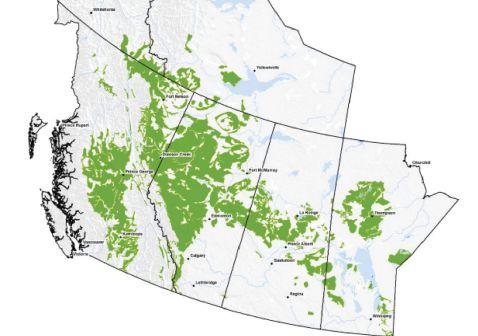
Agricultural soils of northern Alberta, Saskatchewan and Manitoba that formed under forest vegetation are called Gray Luvisolic soils (Figure 1). Historically, these soils were referred to as Gray Wooded soils because they were gray in colour and formed under forest vegetation.
Luvisolic soils occur most commonly in Alberta and are least common in Manitoba. These soils are, physically and chemically, very different from Prairie grassland-developed soils and require unique management.
Formation and characteristics of Gray Luvisolic soils
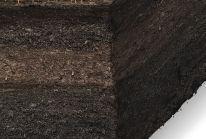
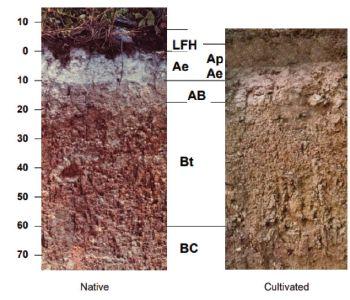
Over thousands of years, forest vegetation created a buildup of acidic leaf litter and debris on the soil surface (LFH horizon; Figure 2). Organic acids released from the leaf litter moved downward to bleach the top soil layer and leach clays downward into the subsoil. This process caused the top 10 to 15 centimetres of soil to be an ashy gray colour, with very low soil organic matter content, lower soil pH (often less than 6.0), and coarser soil texture with poor soil structure. This
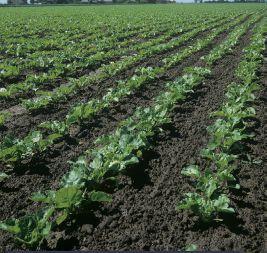
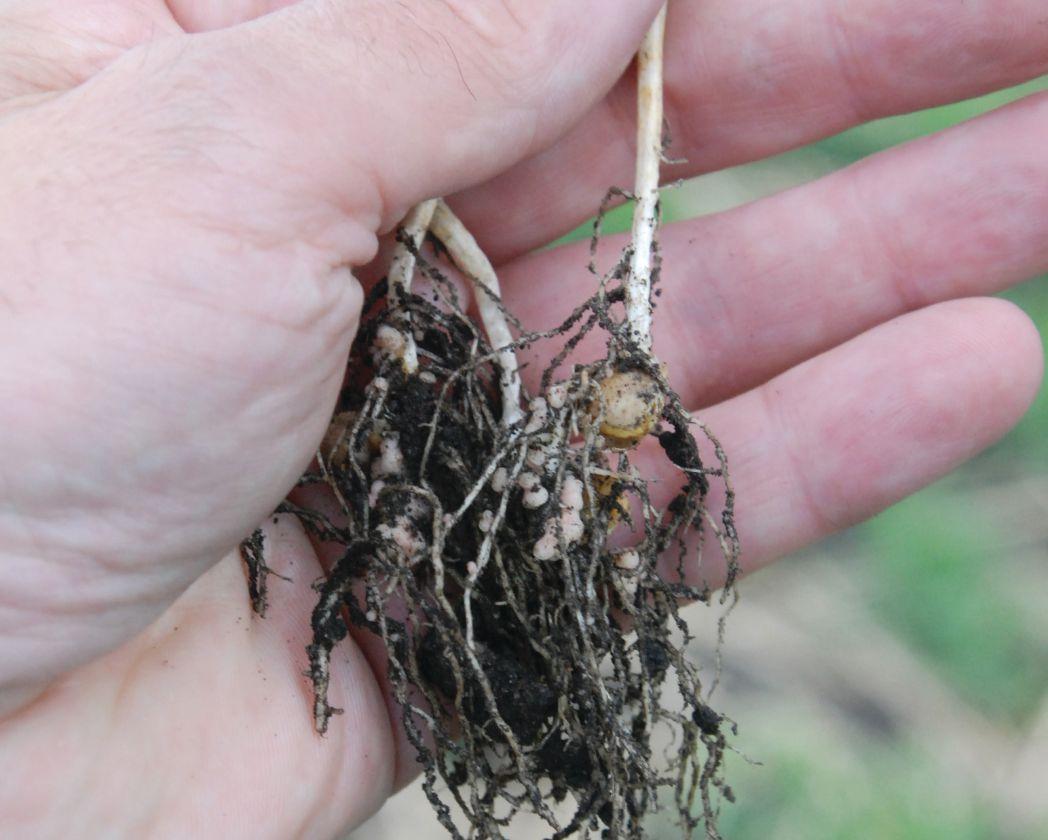
TOP: On Luvisolic soils, legume seed must be properly inoculated to ensure nodulation and nitrogen fixation will occur.
MIDDLE: Figure 1. Map showing the location of Gray and Dark Gray soils in Western Canada.
eluviated horizon is referred to as the Ae horizon (Figure 2). The loss of clay from the surface soil resulted in an accumulation of clay in the subsoil, to create a finetextured Bt soil horizon.
The clearing process of forest vegetation, followed by breaking to convert Luvisolic soils from their native state to cultivation, resulted in burning and burying the limited amount of soil organic matter (SOM). The conversion to agriculture affected surface soil physical conditions, causing very poor tilth, low SOM and lower water holding capacity. Low organic matter and poor soil structure make soil more susceptible to wind and water erosion, easily crusting after a heavy rain.
Chemical characteristics of surface soil include low pH (often ranging between 5.0 to 6.0), with low buffering capacity leaving the soil susceptible to further pH decline, very low fertility – often deficient in nitrogen (N), phosphorus (P), sulphur (S) and occasionally potassium (K) – and low mineralization potential to release N, P and S.
The accumulation of clay in the subsoil layer, referred to as the Bt horizon (Figure 2), cause this soil layer to be dense, with reduced water and plant root penetration. Low permeability of the B horizon can cause surface water ponding, water-logging of the surface soil and reduced oxygen availability to plant roots. When Luvisolic soils are wet, they are more prone to compaction when worked.
Luvisolic soils across Western Canada vary considerably in topography, soil texture, soil pH and other physical and chemical factors. However, long-term research has shown that a number of
Figure 2. Typical native and cultivated soil profiles of a Gray Luvisolic soil.
OBSERVATIONS FROM THE BRETON PLOTS
Some important observations from the Breton Plots include:
1. Use of N, P and S fertilizers have significant benefits to improved crop production and, over time, improve soil quality.
2. Use of manure and lime provide additional benefits to improve soil quality and crop production.
3. The average organic matter content in a five-year grain and forage rotation was 20 per cent greater than the wheat-fallow rotation after 50 years.
4. The five-year grain and forage rotation improved soil structure and reduced soil erosion.
5. Regular use of fertilizers and manure reduced the likelihood of soil erosion.
6. Inclusion of legume perennial forages into rotations benefited soil structure by enhancing aeration and water infiltration, and reduced susceptibility to soil erosion.
7. Returning straw to soil each year was beneficial, increasing the soil organic carbon and nitrogen levels. Therefore, straw should be retained in fields and not removed.
general management practices can be very helpful to improve soil quality and crop productivity.
Best management practices for Luvisolic soils
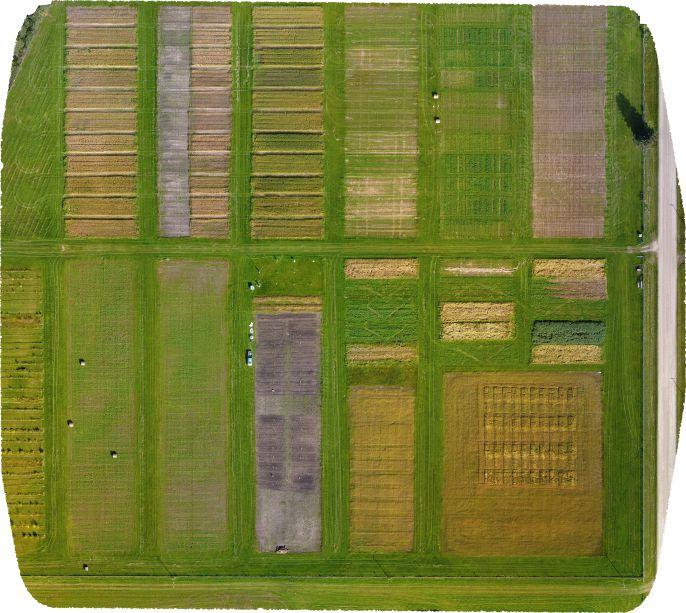
Considerable research has been conducted across Western Canada on the management of Luvisolic soils. Excellent long-term research has been conducted by the University of Alberta, particularly on the Breton Plots located southwest of Edmonton. The original plots were established in 1929 and provide 90 years of accumulated knowledge on best management practices.
Research has clearly shown that Luvisolic soils are frequently low or deficient in N, P and S nutrients. Often, all three nutrients are required as fertilizer to achieve optimum yields. Soil testing is important to ensure the optimum rate of each nutrient is applied each year, based on the crop being grown and the expected target yield. Oc-
casionally, K is also needed, and should be applied based on soil test results.
Providing adequate fertilizer alone is not enough. Other physical and chemical problems exist which must be considered and managed appropriately. For example, soil pH is often less than 6.0, and acid soil conditions can reduce the yield of forages, such as alfalfa or clover, or pulse crops such as pea. Luvisolic soils lack the specific rhizobia bacteria needed for effective legume nodulation. This means legume seed must be properly inoculated with the correct specific rhizobia bacteria for each crop to ensure nodulation and nitrogen fixation will occur. As soil pH declines and the soil becomes more acidic, rhizobia bacteria cannot survive. Most rhizobia bacteria are less viable when soil pH is less than 6.0, and survival decreases when pH declines to less than 5.5.
When soil pH is less than 5.5, elements such as aluminum and manganese become more soluble and may increase to toxic levels that restrict the growth of a number of crops. Other soil nutrients, such as P, are tied up by aluminum and reduce nutrient availability.
When surface soil pH is less than 5.5 to 6.0, application of lime should be strongly considered to raise soil pH to more than 6.0. Soil samples can be submitted to a soil testing lab to conduct a Lime Requirement Test
to determine the optimum rate of lime needed to raise soil pH to an ideal level. Lime application will make soil pH conditions more favorable to rhizobia bacteria for improved growth of legume crops, eliminate aluminum and manganese toxicity and increase plant availability of nutrients such as P. Low SOM and poor soil tilth can be significantly improved over time with more diverse crop rotations, particularly with rotations that include forages such as alfalfa or grass. In the long-term, forages in rotation with a range of cereal crops will result in a gradual increase in soil organic carbon (a component of SOM) and will greatly improve the tilth and health of soil. Direct seeding, coupled with reduction or elimination of cultivation, further help to improve SOM and soil quality.
Application of livestock manure is very helpful to improve soil tilth, SOM and greatly improve soil fertility. Research has clearly shown that using a wheat-fallow rotation is very detrimental to Luvisolic soils, resulting in a decline in soil fertility and soil quality, and increased frequency of soil erosion.
Increased SOM results in increased organic N, P and S, which in turn increases the ability of soil to mineralize and release available N, P and S for subsequent crops. The addition of livestock manure further adds to the buildup of organic and inorganic nutrients for subsequent crops.
Stitched aerial of the Breton Plots from images taken by Phantom 4 drone in September 2019.
PHOTO
Have the best of both worlds
The 325-hp John Deere R4044 Sprayer gives you the acre-eating productivity of an R4045 Sprayer with a 1,200-gallon (4500L) tank and boom widths up to 132 feet (40.2m) – all in a machine that’s 9-percent lighter. So, you can get into fields earlier…and spray later.
Now the R4044 can manage hills, wet spots and soft ground with ease with the CommandDrive all-wheel-drive system. It automatically reduces engine RPMs when possible to give you a quieter ride with better fuel efficiency. 1 Act now and you can save thousands of dollars on the R4044 and other select John Deere and Hagie Sprayers! Our early order pricing lets you upgrade your fleet and save. Contact your John Deere dealer or visit JohnDeere.ca/Sprayers to learn more. Nothing Runs Like a Deere.™