



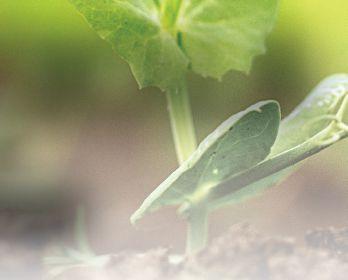






Bio-nutrition products from FMC can help your crops get off to a vigorous start by improving the availability of fertilizer and soil nutrients to the plant, maximizing nitrogen fixation and stimulating root growth and shoot development.
Five biological actives promote crop growth, helping maximize effectiveness of inputs and improve yield potential.
Specially selected rhizobia provide effective nodulation to enhance nitrogen fixation, even in cooler soils, in key crops.
TagTeam® inoculant provides balanced nutrition by combining the active ingredient from JumpStart® inoculant with a nitrogen-fixing bacteria to produce a dual-action inoculant.
Improves phosphate availability enhances early-season vigour for more uniform plant maturity.
Maximize your yields with Biologicals by FMC. See your local retailer today.
by Kaitlin Berger


Word of advice. Don’t do a web search on split pea soup recipes when you’re hungry – or when you’re supposed to be writing an editorial. What can I say? Pulses were on my mind.
contact Angelita Potal, Customer Service Administrator
Tel: (416) 510-5113 | Fax: (416) 510-6875
Email: apotal@annexbusinessmedia.com
Mail: 111 Gordon Baker Rd., Suite 400, Toronto, ON M2H 3R1
Editor KAITLIN BERGER
Western Field Editor BRUCE BARKER
National Account Manager QUINTON MOOREHEAD
National Account Manager REENA UPPAL
Account Coordinator JULIE MONTGOMERY
Group Publisher MICHELLE BERTHOLET
Audience Development Manager SERINA DINGELDEIN
Media Designer ALISON KEBA
CEO SCOTT JAMIESON
Printed in Canada ISSN 1717-452X
PUBLICATION MAIL AGREEMENT #40065710
SUBSCRIPTION RATES
(Canadian prices do not include applicable tax)
TOP CROP MANAGER WEST – 9 ISSUES
Feb, Mar, Mid-Mar, Apr, May/June, Sept, Oct, Nov and Dec – Canada 1 Yr $49.47; 2 Yr $79.05
USA 1 Yr $112.20 CDN; Foreign 1 Yr $134.13 CDN
TOP CROP MANAGER EAST – 4 ISSUES
Feb/Mar, Apr/May, Sep/Oct, Nov/Dec Canada 1 Yr $49.47; 2 Yr $79.05
USA 1 Yr $112.20 CDN; Foreign 1 Yr $134.13 CDN
POTATOES IN CANADA – 1 ISSUE Spring – Canada 1 Yr $17.85; 2 Yr $28.56
USA 1 Yr $40.29 CDN; Foreign 1 Yr $51.51 CDN
Occasionally, Top Crop Manager will mail information on behalf of industry related groups whose products and services we believe may be of interest to you. If you prefer not to receive this information, please contact our customer service department listed above. Annex Privacy Office privacy@annexbusinessmedia.com Tel: 800.668.2374
No part of the editorial content of this publication may be reprinted without the publisher’s written permission © 2025 Annex Business Media. All rights reserved. Opinions expressed in this magazine are not necessarily those of the editor or the publisher. No liability is assumed for errors or omissions.
All advertising is subject to the publisher’s approval. Such approval does not imply any endorsement of the products or services advertised. Publisher reserves the right to refuse advertising that does not meet the standards of the publication.
When I think of pulse crops, my first thought is peas and lentils because of the quantity produced here in Canada. For the 2024 growing season, StatsCan reported dry pea seeded area at 1.30 million hectares (Mha) in Canada – five per cent more than the previous season. With record lentil prices in the previous crop year, Canadian lentil seeded area was 15 per cent higher at 1.70 Mha in the 2024 growing season.
According to the Saskatchewan Pulse Growers (SPG), global pea export value has increased by 60 per cent over the past decade. China’s demand has increased significantly, and India continues to be a large market. However, Canadians are watching to see how Russia competes for both markets. When it comes to competition for lentils, India has the biggest demand, and the United States and Australia are competing aggressively with Canada to meet it.
While all eyes are on peas and lentils, there’s another pulse crop with a growing market in Western Canada. According to the SPG, fenugreek started on just a few hundred acres in the early 2010s and has grown to cover an estimated 4,000 to 5,000 acres more recently. The SPG has also launched several new projects to start tackling the limitations for growing this crop; they’re working towards adding fenugreek to product labels, developing improved varieties and increasing demonstrations to show how fenugreek performs in different areas of Saskatchewan (page 6).
With increasing demand for pulse crops, the same challenges still exist for Canadian producers trying to increase their production. Diseases such as Aphanomyces root rot continue to threaten pea production – and researchers are investing in developing better management strategies for it (page 12). For better root rot disease resistance, they’re looking into how larger root systems might help and how specific root traits in pulses could benefit yield and drought tolerance (page 4). There’s also an investigation on the impact of growing lentil on soil with high levels of nitrogen fertility (page 10).
Canada has a strong reputation as the world’s largest producer and exporter of lentils, and as the second largest pea producer and number one pea exporter (SPG). Continued research is essential for ensuring Canadian farmers have what they need to keep growing high-quality pulses for a global market.
It’s also a requisite for ensuring I have the ingredients I need to make that soup recipe that keeps popping up on my computer screen.
BY DONNA FLEURY
Pulses play an important role in sustainable cropping systems by improving soil health, reducing nitrogen fertilizer use and contributing to soil carbon sequestration. Researchers and industry are interested in identifying new traits that would contribute to developing improved varieties that would be better adapted and resilient to changes in climate and improve disease resistance.
Researchers at the University of Saskatchewan (USask) have initiated a long-term project to study root traits and dynamics in pulses, an area that is not as well understood as above-ground canopy dynamics. Larger root systems have the potential to contribute greater and better-quality carbon inputs for soil carbon sequestration and soil health in the Canadian Prairies. They also have the potential to result in greater and more consistent yields, especially in dry years. Larger root systems may also provide better resistance to root rot diseases such as Aphanomyces, which is a significant concern for pea and lentil production.
“In this project, our goal is to try and identify good genomic regions associated with specific root traits in pulses that could benefit yield, drought tolerance and better root disease resistance, which starts with good characterization of root systems,” explains Maryse Bourgault, assistant professor and Western Grains Research Foundation (WGRF) integrated agronomy research chair at USask. “In particular, we are combining phenotyping and genotyping methodologies related to root system dynamics, functions, morphology and genetics to help develop varieties for increased yield potential, as well as better adaptability and resilience to climate change. This focused physiological or trait approach to breeding could identify specific root traits and genetic markers that would help breeders improve varietal development.”
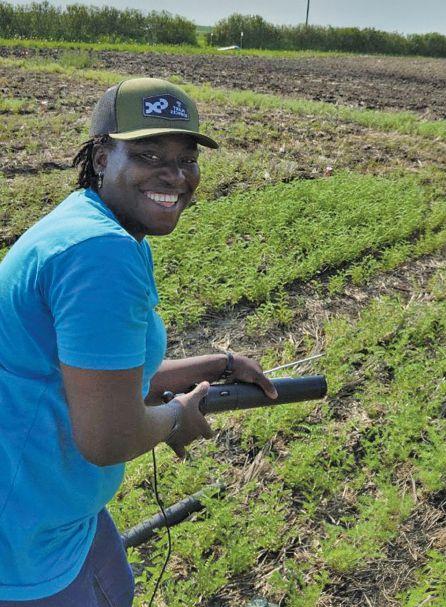
Bourgault is building the current research project on some of her earlier research that investigated root systems in pea and lentil in the field using mini-rhizotrons for non-destructive imaging of root systems. This was the first study to evaluate genotypic variability in pea and lentil under field conditions. The results showed enough genotypic variability in the size of the root systems and in the root depth distribution to select contrasting parents and investigate the genetic basis of these traits. The new project takes a further step and will be the first to























See what happens when you power up your spring burnoff with Aim® EC herbicide. When mixed with glyphosate or used alone with a surfactant, this fast-acting Group 14 herbicide tackles tough weeds like kochia and cleavers, even those resistant to other herbicides. Plus, Aim® EC herbicide offers flexibility—it has multiple tank-mix options and can be used prior to all major crops.




Power Up Your Savings with a $4.00/ACRE REBATE
Get $4 per acre back when you purchase matching acres of Aim® EC herbicide (30 mL/ac rate) or PrecisionPac® CF herbicides1 with Authority® 480 herbicide (43 acre/jug rate), PrecisionPac® SZ herbicide2, Express® brand herbicides3 and/or PrecisionPac® burnoff blends4


Research is paving the way for advancing fenugreek production in Saskatchewan.
BY CAROLYN KING
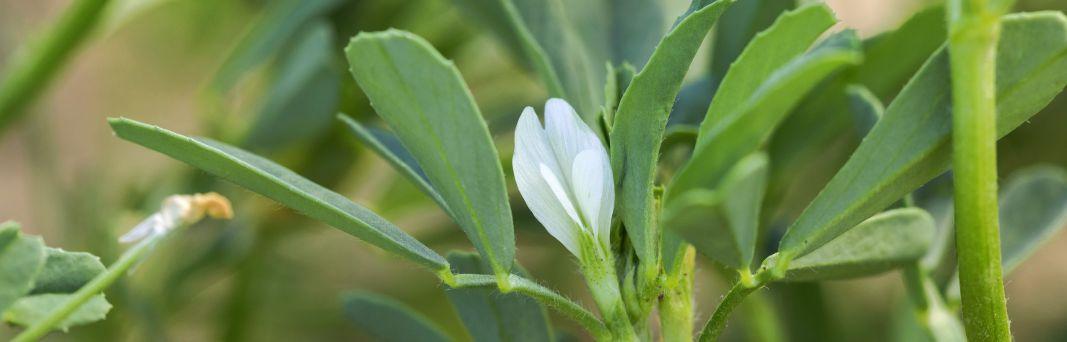
Fenugreek is an annual pulse crop with an intriguing potential for multiple end-uses. However, as a fairly new crop to the Prairies, it has limited options for registered crop protection products, rhizobial inoculants and crop varieties. Now, with the addition of fenugreek to the mandate of the Saskatchewan Pulse Growers (SPG) in 2020 and the initiation of a fenugreek levy, SPG has launched several projects to start tackling these limitations.
These projects include work towards expanding product labels to add fenugreek and developing improved fenugreek varieties, as well as demonstrations to show how fenugreek performs in different parts of Saskatchewan.
Sherrilyn Phelps, SPG’s director of research and development, says that about 2,500 to 5,000 acres are seeded to the crop in the province depending on the year.
She explains that fenugreek has a couple of advantages as a crop rotation option. It is a non-host crop for Aphanomyces root rot, a serious disease concern for pea and lentil production. It is also affected by different foliar diseases than Saskatchewan’s major pulse crops so it can provide a break in disease cycles.
Fenugreek can be used as a spice, herb or vegetable, or a forage legume. The seed can also be fractionated
ABOVE Fenugreek is a relatively new pulse crop for the Prairies.
There are now approximately 2,500 to 5,000 acres of fenugreek seeded in Saskatchewan, depending on the year.
for uses in food, nutraceuticals and other applications, which is the main focus for Saskatchewan’s fenugreek production.
A recently completed project by Insight Plant Health Corp., an agricultural service lab in Saskatoon, tested various rhizobia to see which ones work best for Saskatchewan-grown fenugreek.
The project was funded by SPG and the Agriculture Development Fund (ADF, funded by the Saskatchewan Ministry of Agriculture and the Canadian Agricultural Partnership). Aruna Wickramarathna, a senior scientist at Insight Plant Health at the time, did much of the work. Insight Plant Health also collaborated with Diane Knight from the University of Saskatchewan (USask). Others who helped with the project included Nathan Sudom from Emerald Seed, Chris and Rachel Buhler from Undercover Horticulture and Patrick Elia with the United States (U.S.) Department of Agriculture.
The project worked with Sinorhizobium meliloti (S. meliloti), a rhizobial species known to be able to fix nitrogen with fenugreek as well as alfalfa and sweet clover. The project’s first goal was to identify commercial inoculants able to fix nitrogen with Saskatchewan fenugreek varieties. The second goal was to see if any of the available pure S. meliloti strains
could result in much better nitrogen fixation than the commercial products.
The project team obtained six commercial S. meliloti inoculant products from Argentina, Canada, Lithuania, South Africa and the United States. These products were developed primarily for alfalfa and sweet clover. They also obtained 15 pure S. meliloti strains from Australia, Canada, South Africa, Spain and the U.S. Three of the tested strains were from fenugreek, two from sweet clover and 10 from alfalfa.
The rhizobia were tested in the lab and greenhouse on two fenugreek varieties: CDC Canafen and Fenucold. CDC Canafen, mainly grown for seed, is the most commonly grown variety in Saskatchewan. Fenucold is a French forage variety.
According to the project’s report, four of the commercial inoculants and 12 of the pure strains were able to initiate nodulation in at least one of the two varieties. Then the team tested the three commercial inoculants and four pure strains that were best at nodulation, to assess their ability to fix nitrogen in the two varieties.
“One key finding is that the fenugreek varieties grown here can fix up to 58 per cent of their required nitrogen after association with the right rhizobia,” says Dave Greenshields, president of Insight Plant Health.
“The second key finding is that the Rizobacter product RIZOLIQ TOP-Alfalfa, which is registered in Canada, produces a lot of functional nodules and it leads to a lot of nitrogen fixation in both the tested fenugreek varieties.”
With funding from SPG and ADF, research scientists Isobel Parkin and Christina Eynck are leading a project to develop new seed-type fenugreek lines for the Prairies.
The two researchers, who are both with Agriculture and Agri-Food Canada (AAFC) in Saskatoon, have obtained a very diverse collection of fenugreek germplasm, including over 100 lines from Plant Gene Resources of Canada. As well, Hari Poudel, who leads the AAFC-Lethbridge forage breeding program, has provided some fenugreek lines from his program to the project.
Plant breeder Eynck and her research group will be conducting field trials at Saskatoon to phenotype the fenugreek germplasm and breeding populations, characterizing disease levels, yields and other important traits of the different materials. Eynck and Parkin are also exploring the possibility of collaborating with Poudel to conduct some field trials at Lethbridge. In addition, they hope to perhaps build on the findings
from Greenshields’ inoculant project.
Eynck will be on the lookout for good parental lines for cross breeding. Parkin’s research group will be characterizing the fenugreek materials based on differences in the DNA, and conducting genomic analysis to develop molecular markers related to traits of interest.
“We are trying to build a foundation for a potential fenugreek breeding program,” notes Eynck.
FENUGREEK
“Fenugreek was part of the new and novel pulse demonstrations conducted at the eight Agri-ARM (Applied Research Management) sites in 2022 and 2023, led by Amber Wall with Wheatland Conservation Area out of Swift Current. This project showcased different pulse crops across Saskatchewan environments, with sites at Outlook, Scott, Indian Head, Melfort, Redvers, Yorkton and Prince Albert, as well as Swift Current,” notes Phelps.
In the 2022 demonstrations, the average fenugreek yields at the eight sites ranged from 390 kilograms per hectare (kg/ha) at Melfort to 3,970 kg/ha at Indian Head, with an average across all the sites of about 1,590 kg/ha.
In the 2023 demonstrations, the average fenugreek yields at the sites ranged from 146 kg/ha at Outlook to 2,770 kg/ha at Yorkton, and averaging 1,500 kg/ha across all sites.
Sometimes, the fenugreek yields were fairly similar to the red lentil yields for the same site-year, while yellow pea tended to outyield fenugreek in the same site-year.
Christian Willenborg with USask’s Department of Plant Sciences is leading an SPG-funded project to screen fenugreek for tolerance to various potential candidate herbicides.
SPG also initiated a project to collect data towards registering a seed treatment to manage early-season fungal diseases on fenugreek. Kayla Slind with Western Applied Research Corporation in Scott was the project’s principal investigator. The trials were conducted in 2023 at Scott, Indian Head, Prince Albert and Swift Current. They compared: an untreated check; Vibrance Maxx RFC at the labelled rate (1X); Vibrance Maxx RFC double the labelled rate (2X); and Apron XL at the 1X rate. At each site, the fenugreek variety was CDC Canafen, and Cell-Tech NS was the inoculant.
According to the project’s report, the seed treatment products reduced root rot severity; differences between the products were minimal. Root rot severity tended to be low for all treatments at all sites. Plant height (a measure of vigour) was lower with the 2X rate of Vibrance Maxx compared to the untreated control, suggesting that this high rate might hinder plant development. Grain yields were not significantly different between the treatments.
With research putting more and more of the pieces in place to further advance fenugreek production, Saskatchewan growers will have an improved foundation for increasing fenugreek production as market opportunities increase.
investigate the genetic basis of root distribution during flowering and grain filling for root growth in both pea and lentil. The research will be conducted both in the greenhouse and in the field.
“Much of the previous genomics research on roots was done at the very early stage with plant seedlings,” says Bourgault. “However, while seedling root assays are indeed much faster and easier than observing roots in the field, there is evidence that root traits at the seedling stage are not well correlated with root traits at the flowering and grain filling stages, which we think are crucial for yield formation in our environment. Therefore, in this research we are focusing on later stages of flowering and grain filling and are interested in seeing the differences in root traits and biomass when the crop starts to flower and through to harvest. We expect these might be the crucial stages of why we see better adaptation with some varieties compared to others. Based on our previous research and other research in the literature review, the optimal combination of root distribution and timing of root growth at different soil depths needs to be determined for each crop. This study will help us understand whether larger root systems or perhaps leaner and deeper root systems are the best goal for each crop.”
Using pea and lentil parent populations selected in previous research, and with the help of pulse breeders from the USask Crop Development Centre, Bourgault is developing recombinant inbred lines (RILs) through repeated backcrossing to evaluate the differences between these plant ‘siblings’ and to correlate genes specific to the differences. These RILs will be genotyped and root distribution and biomass carefully characterized, in order to subject this information to a genome-wide association study to identify genetic markers. Information for chickpea root characteristics and dynamics information is not available, so this project includes preliminary work with 12 selected cultivars to first collect data on the variability in the field. Then the best chickpea parent populations will be selected for developing RILs to identify the genes contributing to the differences.
Another objective is to better understand the decomposition of root systems in the soil and the contribution to soil organic carbon sequestration. There is increasing evidence that below-ground inputs such as root biomass and root exudates contribute much more to soil organic carbon than above-ground residues. This study, led by research scientist Bobbi Helgason, will investigate pulse root decomposition to determine the fate of root C inputs and how much is being sequestered as stable C in soil organic matter.
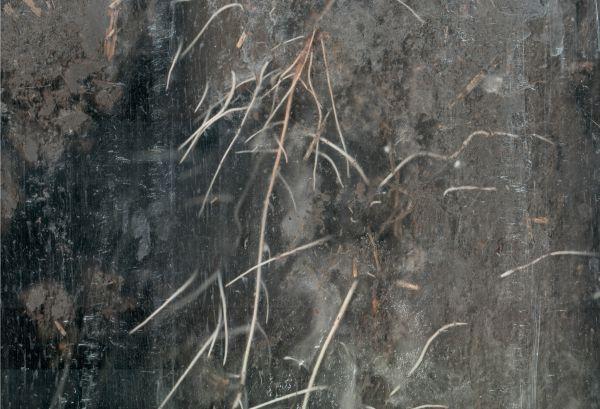
Increasing soil organic matter is an essential part of regenerating soil health and has added benefits for increased soil water holding capacity, both of which will be needed to improve adaptation to climate change in agricultural production. The results will contribute genetic markers that would help breeders develop cultivars that could provide considerably more C inputs, at the same time as producing yields as high as, or higher than, current varieties, particularly under drought conditions.
“We know that chickpea is more tolerant to Aphanomyces than pea or lentil, so we are interested in identifying root structures that may be different between the pulse crops. A better understanding of the root morphology and variability contributing to improved disease tolerance will help in future breeding activities.”
“We also have some preliminary data that suggest bigger root systems make plants a bit more tolerant to the root rot complex, in particular Aphanomyces disease,” explains Bourgault. “Aphanomyces impacts pea and lentil crops early in the season and has a long-lasting effect and impact on yield, with a rotation of at least six to eight years between crops currently required to manage the disease. One of our studies is focused on assessing the differences in morphology of root systems between pea, lentil and chickpea. We know that chickpea is more tolerant to Aphanomyces than pea or lentil, so we are interested in identifying root structures that may be different between the pulse crops. A better understanding of the root morphology and variability contributing to improved disease tolerance will help in future breeding activities.”
“This research project will continue to 2028 with the goal of finding genetic markers associated with beneficial root traits that would provide an efficient way of introducing these traits in pea, lentil and chickpea breeding programs. Pulses play a very important role in sustainable cropping systems and will continue to do so with the addition of new traits for better adaptation to climate change impacts and better root rot resistance.”



















It has little impact on yield or protein content.
BY BRUCE BARKER
Typically, pulse crops like lentil are grown in rotation on soils with low levels of nitrogen (N) to take advantage of their N-fixing benefits rather than relying on soil and fertilizer N. Economically, aligning fields with high levels of residual soil N with cereals and oilseeds that cannot fix their own N would be advantageous. But sometimes the best of plans can go awry. Research in Saskatchewan is looking at the impact of growing lentil on soil with high levels of N fertility.
“When we first initiated this work, we had just come out of an extremely dry growing season – multiple dry growing seasons in some areas – with crop failures being the reality for several regions of Saskatchewan,” says Chris Holzapfel, research manager with the Indian Head Agricultural Research Foundation (IHARF) at Indian Head, Sask. “The poor yields often resulted in unusually high nutrient carryover and residual N levels. With this, we felt that many farmers might have crops like peas or lentils as their preferred crop option based on their rotation plans but would be concerned about whether or not
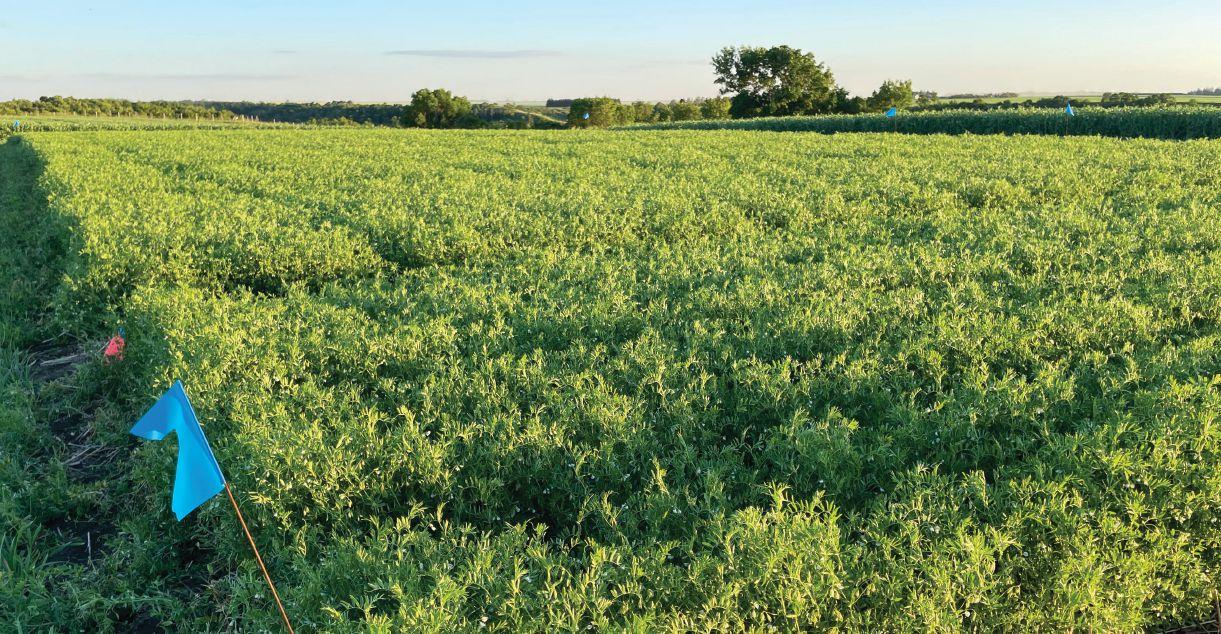
ABOVE Soils with high nitrogen fertility did not impact lentil production.
they would be viable due to excessive residual N levels.”
In high N soils, lentil will preferentially utilize soil or fertilizer N instead of expending energy and photosynthates required for biological N fixation. As a result, too much N supply may have a negative impact on lentil yield, maturity, lodging and disease. This concern may be even more important for large green lentils that have a longer maturity and larger biomass production.
A research project was initiated in the fall of 2022 with field trials at Indian Head, Scott and Swift Current, Sask. Three N treatment levels were compared. These were established by soil testing in the fall and, where necessary, broadcasting urea on the plots to pre-determined rates required to establish higher N levels. The three N treatments included a soil-N only ‘low’ treatment, ‘elevated’ treatment with soil N plus N fertilizer to equal 100 pounds N per acre (112 kg/ha) and an ‘extreme’ treatment of soil N plus N fertilizer equal to 200 lb. N/ac. (225 kg/ha).
Spring 2023 soil tests found that the low treatment nitrate-N ranged from a low of 10 lb./ac. (11 kg/ha) at Indian Head to 36 lb./ac. (40 kg/ha) at Swift Current. The elevated levels ranged from 44 to 71 lb./ac. (49 to 80 kg/ ha) and the extreme ranged from 75 to 83 lb./ac. (84 to 93 kg/ha).
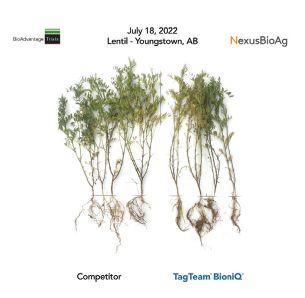
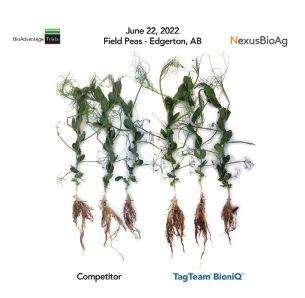
TagTeam ® BioniQ ® improves root establishment
TagTeam® BioniQ® combines five biological active ingredients that work alongside each other for improved nutrient availability in a variety of soil conditions. Plus, the improved granular formulation provides smooth, seamless and consistent flowability.
• Crops: Peas, lentils, chickpeas & faba beans
• Improved nodule formation and nitrogen fixation
• Greater opportunity for earlier nodulation with LCO
• Improved availability of nitrogen, phosphate and potassium
• Earlier, more uniform maturity and increased yield potential Hardness
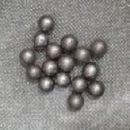
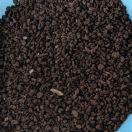
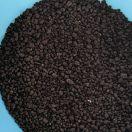
Peat particles bond together within the granule through APT’s proprietary polymerization process, resulting in high crush strength

Results:
Resistance to attrition test
• Simulates movement and vibration
• Measures particle size change before and after
Improved granule product has a 9% increase in granular hardness
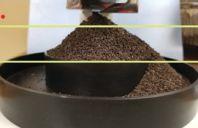

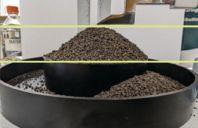
Results: Flowability improved by greater than 10%
Benefit: A lower angle of repose can lead to easier and more complete filling of tanks

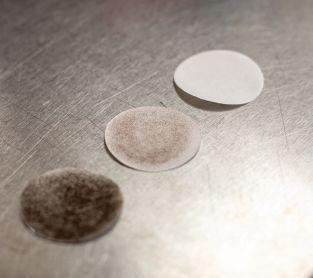
Results:
Improved granular product shows little to no dust in the Dustiness Assay test.
BY DONNA FLEURY
The threat of root rot diseases for pea production continues to intensify across the Prairies. Root rot is a complex of multiple soil-borne organisms with Aphanomyces euteiches being one causing significant risk with few management options. Researchers and industry continue to invest in developing integrated and innovative management strategies to mitigate the root rot threat in pea over the long term.
“We recently launched a large four-year study across the Prairies to try to tackle the three main components of any disease triangle, including disease resistance, pathogen variation and environment to help develop root rot management strategies for growers,” explains Syama Chatterton, plant pathologist with Agriculture and Agri-Food Canada (AAFC), Lethbridge, Alta. “The objectives of this project are to evaluate a wide range of pea germplasm lines for potential sources of genetic resistance, develop new tools for root rot phenotyping and gather information on root rot risk factors from the field.” The project is funded by the Saskatchewan Ministry of Agriculture, Western Grains Research Foundation (WGRF) and Saskatchewan Pulse Growers (SPG).
The first component is to evaluate a wide range of pea germplasm lines for potential sources of genetic resistance to Aphanomyces root rot. The study combines large-scale field screening of pea lines with genomic sequencing to try to identify genetic traits that confer broad-spectrum resistance to the pea root complex. Researchers have curated a number of pea lines for diversity, planting about 250 each year into the root rot nursery and then assessing the lines for root rot severity. The different lines are sent for genomic sequencing to collaborators at the National Research Council (NRC). Other collaborators at the University of British Columbia (UBC) are assessing the microbiome profile of all the
different lines. They are trying to determine which pathogens, and any beneficial organisms, that are associated with different genetics.
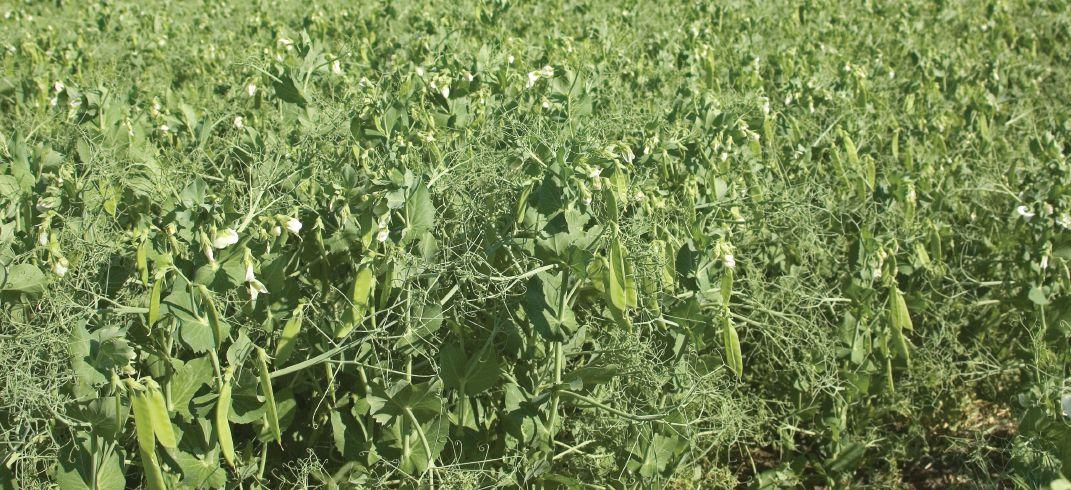
ABOVE Single row of pea plants in field screening trials assessing lines for potential root rot resistance.
“Through this genomics work, we are also trying to develop new screening tools including identifying markers for resistance that will make the screening of root rot traits easier and faster. We currently rely on a root rot rating system in the field, but it can be difficult to use and is subjective. New screening tools would allow researchers to apply markers at an earlier stage when screening lines rather than having to do everything in the field. Recently, this project component has been included in a very large Genome Canada PeaCE (pea climate-efficient) project, which will allow us to ramp up the screening to more than 2000 pea lines per year from 250 per year. Finding novel sources of resistance is really a numbers game, so the more lines we can screen the more likely we are to be able to find better root rot resistance sources.”
The second component is a pathogen study focused on the genomics of the pathogens to try to be able to predict root rot disease resistance. “We have collected various pathogen isolates from pulses in the Prairies including Aphanomyces euteiches and two Fusarium species, F. avenaceum and F. solani,” says Chatterton. “Collaborators at NRC are conducting pan genome sequencing on the isolates to screen for variations of the same pathogens. Their next step is to develop a pathogen enrichment sequence array or PenSeq array, which is a tool that can be directly applied to roots or soil to investigate the pathogen complex associated on the roots. We know some pea lines are infected by lower numbers of the
Identifying pea lines that have better partial resistance to root rot is an important step toward varietal advancements.
pathogen complex than others, so this provides another screening tool to help identify differences in the lines more quickly.”
In-depth studies of environmental and site-specific risk factors that drive root rot development is the third component. A pilot study using yield zone maps of commercial fields provided by producer collaborators in Manitoba, Saskatchewan and Alberta started with mapping pulse yields across the fields. Then detailed soil samples were collected from the different areas of low, medium or high yields. The soil samples were tested in the greenhouse for root rot severity and combined with the PenSeq array to identify the pathogen complex for the samples.
“Current management strategies for Aphanomyces root rot primarily rely on long-term rotations of at least six to eight years in between pea and lentil crops. In drier years, lentils can be a bit more drought resistant and may be impacted less than peas.”
“It has been very difficult so far to develop a yield loss model for root rot,” explains Chatterton. “By working with producers to understand yields across the field, then we can work backwards with the data collected to develop better models. We want to see if this technique will work on a small subset of three or four fields in each province and, if it does, then we will expand this approach by collecting a lot more data on many more fields across the Prairies.”
Current management strategies for Aphanomyces root rot primarily rely on long-term rotations of at least six to eight years in between pea and lentil crops. In drier years, lentils can be a bit more drought resistant and may be impacted less than peas. Faba bean and soybean crops can be good alternatives but are not as widely adapted across the Prairies. Chickpea is also another alternative but has other disease concerns that must be considered.
“Although the project is still at an early stage, we hope through these pre-breeding activities that we will be able to identify pea lines that have better partial resistance to root rot than we currently have and move those lines into breeding programs,” says Chatterton. “Breeding is a very long-term goal, but hopefully this project will help bring new integrated strategies and new varietal advancements to help mitigate root rot in pea in the future.”
“Given that the N fertilizer was broadcast quite late in the fall and the lentils were seeded relatively early in May, it is likely that some of the applied fertilizer N was still in the NH4-N form when the spring soil samples were collected and not measured in the spring soil tests but still available to the lentils over the course of the growing season,” explains Holzapfel. “Environmental losses such as volatilization and denitrification or immobilization into organic matter likely also accounted for some of the applied N that we were not able to detect in the spring soil samples.”
Responses of small red and large green lentil varieties were also compared. A granular inoculant treatment was compared to no inoculation.
All three locations experienced warmer than normal temperatures in 2023. Indian Head had good subsoil moisture to start, but received 49 per cent of average precipitation. Scott received 70 per cent of average precipitation and Swift Current was near normal at 95 per cent of average. Swift Current had a severe hail event on July 22, 2023 resulting in an estimated 60 per cent yield loss. However, the hail damage was uniform across the site and so the yield results were considered valid.
At Indian Head, there were no significant differences in plant density, biomass yield, maturity or seed yield between the three N fertility levels or between inoculated and un-inoculated treatments. There was a slight decrease in seed protein with the elevated and extreme N treatments.
At Scott, there were no significant differences in plant density, biomass yield, maturity, seed yield or seed protein for any of the N or inoculant treatments.
Swift Current responses were a bit more variable for some of the data collected. The elevated N treatment had the highest plant density, but this did not result in higher biomass yield measured later in the season. While statistically significant, the extreme N treatment had the longest maturity but only by 1.2 days later than the low N treatment. Seed yield was lowest for the low N treatment at 890 lb./ac. (1,000 kg/ha) followed by statistically similar yields with elevated and extreme treatments around 1,045 lb./ac. (1,175 kg/ha). The low N treatment had the lowest seed protein content at 24.5 per cent followed by the elevated treatment at 25.3 per cent and extreme at 26.1 per cent. No differences were observed between inoculated and un-inoculated treatments.
Overall, at all locations, the small red and large green varieties responded similarly to the N and inoculation treatments.
“I expect that the lentils were able to utilize the additional mineral N in the soil and, even if there were
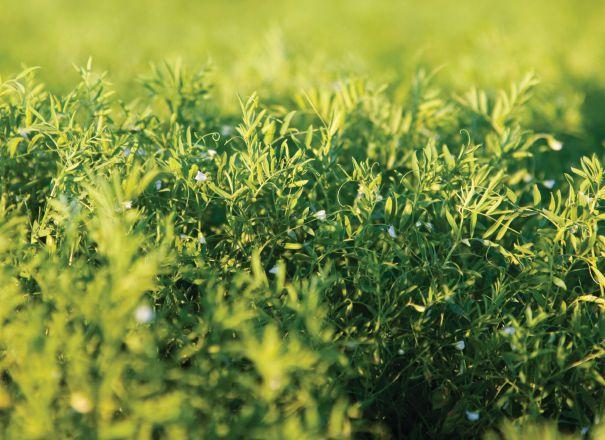
According to research from 2023, seeding lentil on high-N soils wouldn’t likely result in disastrous yield or protein loss.
negative impacts on nodulation and N fixation, these were largely offset by the extra N that they were able to extract from the fertilizer that was carried over,” says Holzapfel.
The researchers did not measure the impact of higher levels of nodulation for logistical reasons. But Holzapfel suspects that the reason for the lack of response to inoculation was that there were adequate populations of native Rhizobium leguminosarum to support nodulation and biological N fixation. He also says that while it makes sense that biological N fixation might play less of a role when residual N levels are extremely high, completely eliminating inoculant could be risky.
“I’m always reluctant to make the recommendation that a farmer can skip the inoculant when growing these crops and don’t think I’ve ever done so. Biological N fixation is simply too important and naturally occurring populations of the rhizobium could easily vary from yearto-year or across the landscape,” says Holzapfel.
Oilseed and cereal crops – or even a pulse crop that responds more consistently to fertilizer N like dry beans or fenugreek – are likely better options for benefiting from high residual N than an N fixing crop like lentils.
Overall, he says that the preliminary results from 2023 indicate that seeding lentil on high-N soils, while not ideal, would not likely result in a disaster when it comes to any yield or protein loss.
“There are other crop options that would be better able to benefit from the unexpectedly high residual N than an N fixing crop like lentils. For example, if switching out to an oilseed, cereal, or even a pulse crop that responds more consistently to fertilizer N like dry beans or fenugreek is a viable option, doing so could reduce fertilizer costs and allow farmers to more tangibly benefit from an otherwise unfortunate situation,” says Holzapfel.
The research was replicated in 2024 at all three locations, but Swift Current had another drought and Indian Head had problems with root disease. The 2024 results may or may not change the preliminary conclusions.






They say lightning never strikes the same place twice. Seeing Authority Strike™ herbicide in action in wheat, peas, flax and mustard shows otherwise. One application delivers a powerful one-pass burnoff now and extended control later – in exactly the same field. With two kinds of Group 14 action, Authority Strike™ herbicide lights up kochia, lamb’s-quarters, pigweed, Russian thistle*, wild buckwheat, waterhemp and more. WHEAT | FIELD





Put a charge, two actually, in your pre-seed weed control. *Suppression


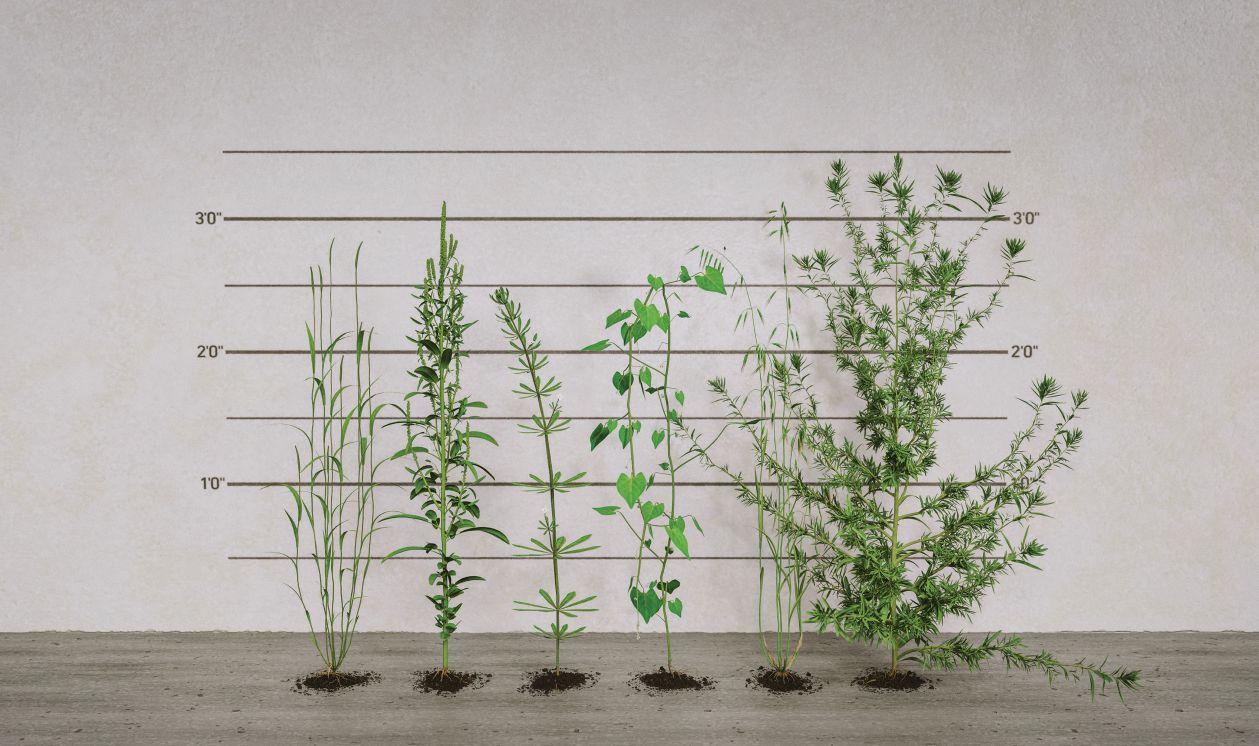
Early season weeds are a formidable opponent. Overrule by applying Focus® herbicide with glyphosate before lentils or wheat. Powerful burnoff tackles tough broadleaf weeds like kochia, cleavers and lamb’s-quarters. Continue to dominate with extended control of grassy and broadleaf weeds, including cleavers, Japanese brome, downy brome and even suppression of resistant wild oats. Then win tomorrow too, by managing resistance with dual modes of action from Groups 14 & 15.
Focus® herbicide from FMC Canada: It’s the complete weed control solution.