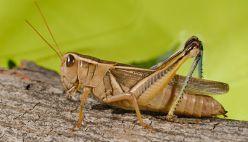
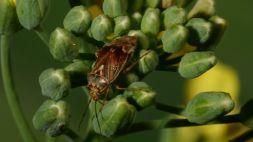
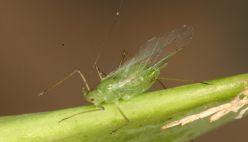
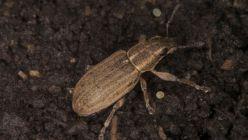
Set aside your beliefs about bees. While managed honey bees play an important role in producing honey and pollinating crops, wild or native bees are often better pollinators. They’re a key part of integrated crop pollination that combines the integration of pesticide stewardship, horticultural practices and habitat enhancement with the integration of wild bees, managed honey bees and alternative managed bees.
FROM THE EDITOR
by Kaitlin Berger
DANGER ON THE DEMPSTER HIGHWAY
It all started last January. Our friend told my husband and me she was moving to Arctic Canada to take a job as a paramedic manager in a town called Inuvik, just an hour south of the Arctic Ocean in the Northwest Territories. She also told us she was planning to drive up there by herself, a statement that sent shockwaves through some of our more rational friends. There’s one road to Inuvik - and it’s infamously called the Dempster Highway - a 736 km berm of gravel on top of the permafrost. There’s no cell service and rarely any satellite service for travellers on the Dempster.
It didn’t take long for my husband and me to recognize this was a terrifying adventure we did not want to miss. “We’ll go with you,” we said. We packed our friend’s truck with supplies to survive being stranded in freezing temperatures for four or five days – and I was glad we did. After driving 27 hours from Edmonton, Alta. to Dawson City, Y.T., we made it onto the Dempster Highway where the only other signs of life were a lynx and a man driving the road maintenance truck.
When we finally arrived at the single winter fuel stop on the highway, the road was closed ahead. A day passed. The road closed behind us. Four days passed. With twenty or so transport trucks also stranded with us, I began to wonder: What happens to Canada’s northern communities when supplies can’t get through?
There’s no doubt food security - adequate access to quality food - is a continuing concern in Canada. According to Statistics Canada, in the ten provinces, a report in 2022 said 6.9 million Canadians experience some level of food insecurity. Arctic Canada is no better. In Nunavut alone in 2022, 62.6 per cent of people experienced food insecurity.
There are many factors that go into improving food security – and most of them are out of our control. That said, I had a lot of time to think while I was stranded in the Arctic, to think about how food security is just one more layer to why we’re constantly trying to improve pest management practices (pages 6, 8,28) – and why we’re diversifying crop production (page 14).
Obviously, the short-term goal is to mitigate these pressures to improve yield and put money in the bank. But these improvements have the potential to take us much further than that – to ensure we have the tools we need to produce more and more food despite the challenges of pests, disease, weeds and weather.
Speaking of weather, the road finally opened on the Dempster Highway and we made it all the way to Inuvik. And while I’d highly recommend a road trip to Arctic Canada, I have one word of advice: Don’t go in January.
Group Publisher MICHELLE BERTHOLET (204) 596-8710 mbertholet@annexbusinessmedia.com
Audience Development Coordinator LAYLA SAMEL (416) 510-5187 lsamel@annexbusinessmedia.com
Team Lead/Media Designer BROOKE SHAW CEO SCOTT JAMIESON sjamieson@annexbusinessmedia.com
Insecticide resistance is real
There are still limited instances of insecticide resistance on the Prairies.
BY BRUCE BARKER
Insecticide resistance isn’t a new problem for growers. In fact, in response to growing insecticide resistance worldwide, the Insecticide Resistance Action Committee (IRAC) was formed in 1984. Its objectives were to communicate information on insecticide resistance, and to help develop resistance management strategies. Still, Prairie farmers have gotten off relatively easy when it comes to insecticide resistance with few species with resistance.
“With a proper insecticide resistance management plan, insecticide resistance on the Prairies should be avoided for years to come,” says Boyd Mori, assistant professor with the Department of Agricultural, Food and Nutritional Science at the University of Alberta.
Mori says resistance is defined as a reduction in the sensitivity of a population to an insecticide when used according to the label. Additionally, according to IRAC, to be considered true resistance, the resistant insects must be able to pass on the ability to resist the insecticide to their offspring – meaning it must be heritable. Tolerance is different from true resistance in that tolerance is the natural ability of an insect to withstand insecticide exposure and is not a result of selection pressure.
Mori explains that there are four main mechanisms for insecticide resistance. Target site resistance occurs when the site where the toxin (insecticide) usually binds in the insect has been genetically modified to reduce the active ingredient’s activity. This is similar to a lock and key, where normally a key will open the lock, but when the lock is modified, the key no longer works.
A second mechanism is called metabolic resistance. Susceptible populations are unable to naturally detoxify or destroy toxins, but resistant insects have many detoxifying enzymes that can break down the toxin before it kills the insect.
Some resistant insects adapt to insecticides physically. A mutation may help protect against an insecticide
through adaptations such as a thicker cuticle, extra waxy covering or faster excretion of waste.
Behavioral adaptation is a type of resistance where the resistant insect detects or recognizes a danger and avoids the toxin.
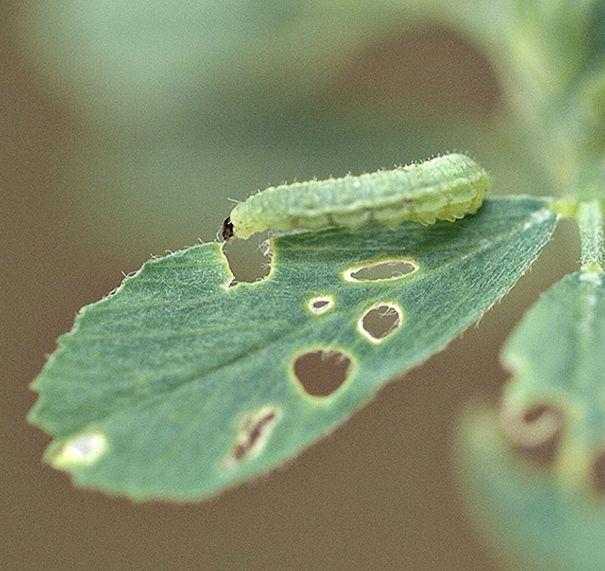
ABOVE Alfalfa weevil is one of the few insects with resistance to insecticides on the Prairies.
Several factors influence the development of insecticide resistance. These include the reproduction rate and the number of generations per year of an insect, as well as the migration of insects from other areas that increase the diversity of the populations. Host range is important, as a wider host range means the insect is present more often in the ecosystem. Insecticide residual, timing and number of insecticide applications also influence the selection pressure on an insect population.
Like herbicides and fungicides, insecticides are also classified according to their mode of action. The most common groups used on the Prairies include Group 1A carbamates, 1B organophosphates, Group 3 synthetic pyrethroids and Group 4A neonicotinoids.
INSECTS WITH RESISTANCE ON THE PRAIRIES
One of the first insects to be found with insecticide resistance was the alfalfa weevil (Hyera postica) to Group 3A deltamethrin. In 2015, Alberta Agriculture entomologist, Scott Meers, conducted a rapid test on a population in southern Alberta and concluded that pyrethroid resistance existed.
Mori followed up with research in 2018 on two alfalfa weevil populations with suspected resistance from near Rosemary, Alta. along with a susceptible population at Lethbridge, Alta. The full and one-half label rate never achieved more than 50 per cent control of the two
Photo courtesy of Larry Grenkow.
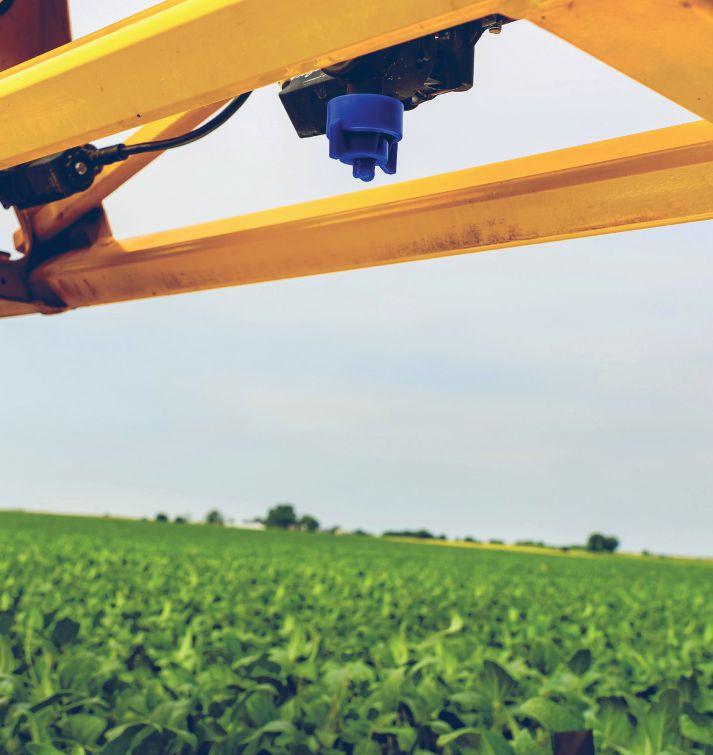
THE LEVEL OF PRECISION YOU’VE COME TO EXPECT FROM US IS NOW AVAILABLE ON YOUR SPRAYER.
Take charge of your spraying accuracy through independent control of rate and pressure with SymphonyNozzle™ and a Gen 3 20|20® monitor. Together they reduce over-application with swath control and level out inconsistent application on turns. Take your sprayer a step further and add ReClaim™, our recirculation system.
WE BELIEVE IN BETTER SPRAYERS WITH BETTER CONTROL.
The status of hairy canola
It’s still on the way but taking the long route.
BY LEEANN MINOGUE
Dwayne Hegedus, a research scientist at Agriculture and Agri-Food Canada (AAFC) Saskatoon Research and Development Centre, is developing a canola plant with trichomes, also known as hairy canola. The hairs protect the plant from flea beetles.
In 2020, Top Crop Manager reported how AAFC’s Julie Soroka, Margart Gruber and other scientists developed a hairy canola plant by inserting genes from related species into a Brassica napus plant. Hegedus isn’t redoing this. He’s working with species that naturally produce hairs to develop a new canola plant. It will take longer, but it could be the quickest way to a commercial canola variety with built-in resistance to flea beetles.
FEEDING THE FLEA BEETLES
Flea beetles, both striped and crucifer, feed on canola. Adults overwinter and emerge in spring to eat canola seedlings. Females then lay eggs, which hatch to produce insects that feed on canola plants again in the same growing season.
“You really couldn’t grow canola in Canada, without the use of some sort of form of insect control, and primarily that is insecticide,” Hegedus says. These insecticides are primarily neonicotinoids, delivered as seed treatments. To avoid reliance on one form of control, “we’re having to supplement with foliar insecticides,” Hegedus says.
Hairy canola is a natural solution. Soroka found that flea beetles are picky eaters. They follow a strict series of steps before eating, such as tapping and probing the plant. “If you disrupt them at any one of these steps, they’re highly programmed and they have to go right back to the first step,” Hegedus says. Hairs disrupt this routine, so flea beetles leave the plant without eating.
Soroka and Gruber developed hairy canola by inserting two genes from related plants into canola. One gene (GL3) promoted hair growth; the second (TTG1) was needed to maintain healthy plant growth. They had proof of concept. These plants deterred flea beetle feeding, but did not get to a commercial line of hairy canola.
The first reason was agronomic. The modified plant requires a constant ratio of GL3 and TTG1. Researchers found it hard to keep the genetics stable through many
generations. The other reasons were economic. Meeting regulatory requirements for a plant with one transgenic gene is difficult enough, without adding a second. Plus, Texas A&M university has a patent on the GL3 gene used in this process and would require financial compensation. Finally, at that time, there was difficulty convincing companies to invest in breeding a plant that could make an insecticide obsolete.
With transgenic hairy canola at a standstill, AAFC researchers, now including Hegedus, wondered if they could crossbreed their way to a similar result.
THE SEARCH FOR GENETIC MATERIAL
With funding from producers through the Canola Council of Canada and AAFC, they screened more than 1,000 Brassica lines for the ability to make hairs.
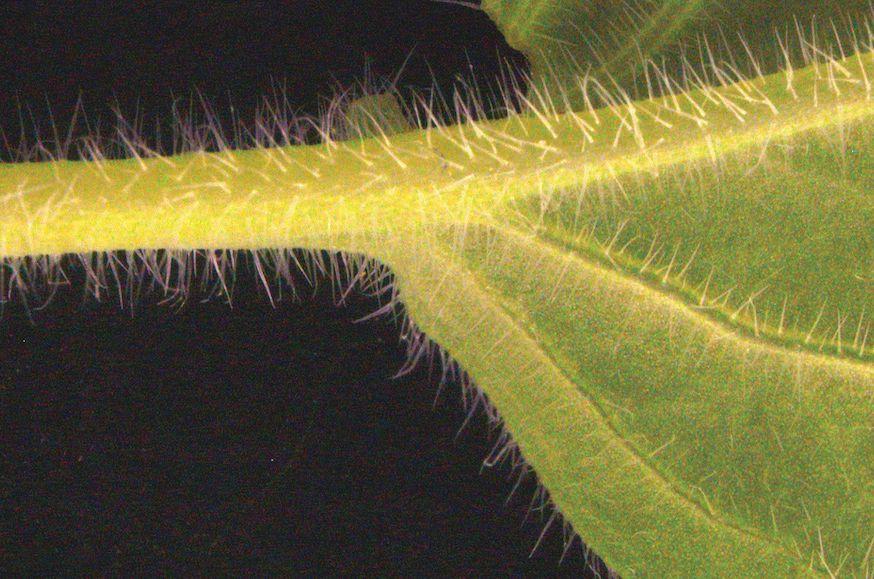
Hairiness was rare among the B. napus lines; however, Hegedus and longtime research associate, Zohreh Heydarian, found an area of genetic material that controls the amount of hair growing on plants. Some plants had a light hair covering, others had about 800 hairs on each leaf, a much more preventative scenario.
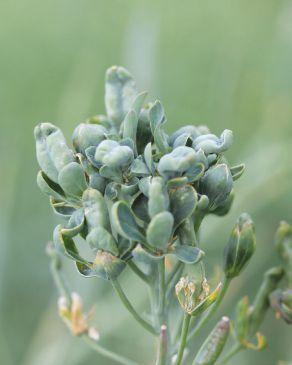
Not all trichomes are the same. B. napus and B. rapa have prickly hair, typically only on leaves, but this encourages the beetles to feed on their hairless stems and petioles which may lead to more severe damage. B.
CONTINUED ON PAGE 13
ABOVE Very hairy B. villosa/B. oleracea hybrid.
Photo courtesy of Zohreh Heydarian, AAFC.
Flea beetles, both striped and crucifer, feed on canola.
FEEL THE POWER
Early season weeds are a formidable opponent. Overrule by applying Focus® herbicide with glyphosate before lentils or wheat. Powerful burnoff tackles tough broadleaf weeds like kochia, cleavers and lamb’s-quarters. Continue to dominate with extended control of grassy and broadleaf weeds, including cleavers, Japanese brome, downy brome and even suppression of resistant wild oats. Then win tomorrow too, by managing resistance with dual modes of action from Groups 14 & 15.
LENTILS | WHEAT | FIELD PEAS | SUNFLOWERS | SOYBEANS
Focus® herbicide from FMC Canada: It’s the complete weed control solution.
Keeping the native vegetation in the field
Calculating the agronomic, environmental and financial value.
BY KAITLIN BERGER
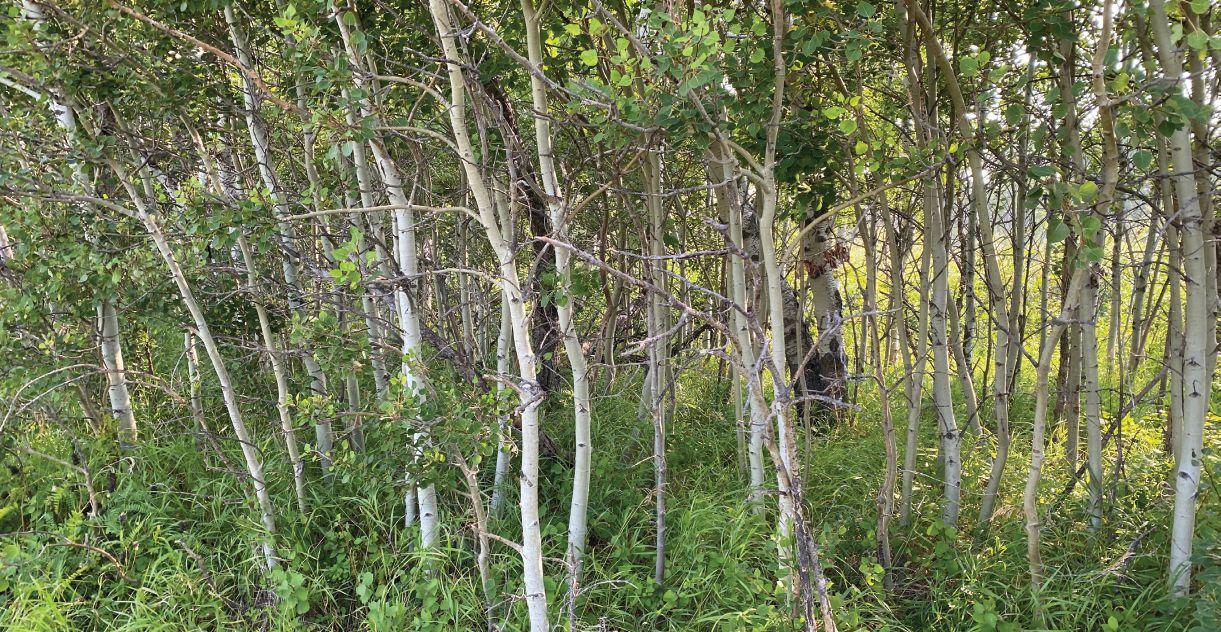
Many farms across the Prairies have little clumps of native vegetation in the fields – aspen trees, shrubs and grasses. It can seem like the right choice to eliminate them to make it easier to maneuver large equipment in the field and add to productive land, especially when crop prices are high. Besides the environmental and agronomic benefits of those patches, there could be long-term financial value to farmers.
Colin Laroque, head of the Department of Soil Science at the University of Saskatchewan, has already done extensive research on shelterbelts. “As you know, the government started giving trees out free in the early 1900s and then over a 100-year time period, they planted 63,000 kilometers of them in Saskatchewan, many of them are still growing, and they’re actually treed and they’re sequestering carbon,” he says.
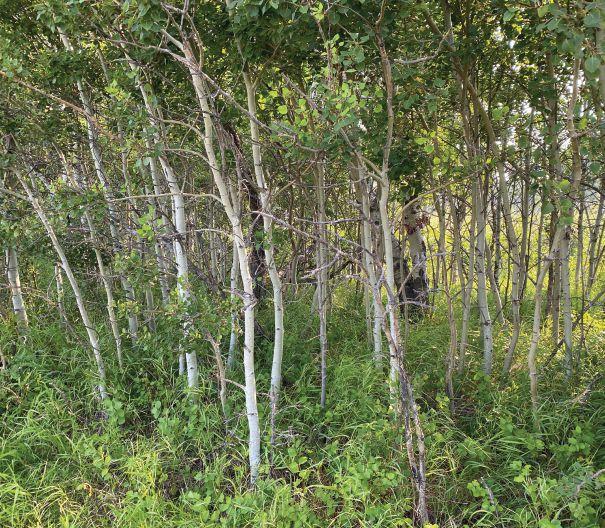
The new project Laroque started this year is examining the native vegetation in the field. “Every time you see aspen clumps in the middle of a field, they represent a whole bunch of trees that have been there for a lot longer than planted trees over the 100 years at best that a shelterbelt may have been on the land,” says Laroque. His theory is these patches of native vegetation have been sequestering carbon over a longer time, providing more benefit than shelterbelts – and there’s a lot more of them across the Prairies than people assume.
METHODS TO MEASURING
While Laroque and his team began discussions on this project two years ago, they received two-year funding from Environment Climate Change Canada (ECCC) in fall 2023 to start work on it this year. Using satellite imagery, the team of researchers identifies those native clumps of trees and determines their location and size. Then they visit a subset of the locations and, with permission from landowners, measure the height and width of the trees and the number of stems in a clump. They also take soil samples below the native vegetation.
To determine how much carbon is stored in each tree, the researchers are cutting down two trees per property to weigh them when allowed. So far, they have about 50 trees weighed. “About half of a tree is carbon and so we’re cutting down a tree, weighing it to figure out how much it weighs, how much biomass is there, and then from the satellites, we can guesstimate how many trees are there and what they weigh,” says Laroque, “and then we can multiply it by a carbon number to get how much carbon there is in all these little pools across everyone’s fields from province to province.”
They’ve already discovered that the little groups of trees have more soil carbon than the adjacent fields and they mostly consist of aspen.
Photo courtesy of Colin Laroque.
PRACTICAL IMPLICATIONS
Measuring the benefits of these patches of vegetation is important for multiple reasons. Most people are familiar with the negative aspects of carbon tax, but Laroque says private agencies are starting to put a price on carbon benefits – and he suspects the federal government will follow suit. “There’s agencies out there that you can contact and sell your carbon that you’re sequestering to them, but I think the governments are getting on it,” he says. Farmers will start seeing carbon credits showing up on their income tax. “Those are the types of mechanisms I think that are a few years away yet, but they’re coming.”
With greater emphasis on non-economic evaluations, Laroque is working with an agricultural economics team to map out non-monetary value of agricultural land. This includes factors such as birds, ducks, pollinators, bugs or wind breaks. “About a year from now, we hope that we’re at a place where you can go to anywhere in southern Alberta, Saskatchewan or Manitoba on an internet map in the agriculture area, click on your land, and we will be able to tell you more about the worth of the non-monetary values on your land.” The goal is to be able to see the more holistic monetary value of a wetland, pasture or marginal land to a farm.
While it’s hard to come to agreement on how much a duck is worth, for example, Laroque’s team is talking to experts at universities and non-profits to determine a dollar amount on these factors.When farmers are buying land or trying to determine whether to repurpose pasture or a tree line, they can have better information to figure out the various economic values at play.
MORE INFORMATION FOR MANAGEMENT
Whether it’s because shelterbelts add beauty to a landscape, block snow drifts or mitigate pesticide drift, people intuitively understand that trees have value. Intuition isn’t usually the way business decisions are made, however. “By cutting down some
trees or bulldozing them over and burning them, you’re gaining some cropland,” says Laroque, “but you’re losing a whole bunch of sequestered carbon that was worth a lot and, in fact, usually worth way more than however much you might get from year to year in a crop.”
The goal of Laroque’s project is to determine how much more it’s worth – and give
farmers the chance to make informed decisions for the community, the environment and their business. “What we’re trying to do is at least provide some information so that people can have more and both sides of the story [...], what are the benefits and what are not,” says Laroque, “and they can make up their own mind with better knowledge.”
GET A HEAD START.
Back up your instincts with data-driven decision making. AgExpert is your go-to for all the data on your farm, so you can stay one step ahead of the curve in the field and in your finances.
LEFT A group of young aspen trees coming up from the main mother tree underground.
Insecticide resistance is real |
Rosemary populations, but near 100 per cent control of the Lethbridge population.
Following up in the spring of 2022, 15 grower fields in southern Alberta were sampled for deltamethrin resistance. It found that mortality at the high label rate was less than 60 per cent.
Colorado potato beetle (Leptinotarsa decemlineata) is another insect with widespread resistance to insecticides across Canada. Research by Ian Scott with Agriculture and Agri-Food Canada from 2018 through 2022 looked at resistance to Group 4A neonicotinoids, Group 5 spinosyns and Group 28 diamides. For the Group 4A insecticides, most populations in Alberta were susceptible, but in Manitoba, the majority were either less susceptible or resistant. The Group 5 and Group 28 insecticides followed similar trends.
Soybean aphid ( Aphis glycines ) is a unique case of insecticide resistance because it is not known if it can overwinter on the Prairies, so the source of insecticide
resistance depends on where the population blows into the Prairies. Research by James Menger with the Department of Entomology at the University of Minnesota Saint Paul in 2017 looked at soybean aphid control with Group 3A lambda-cyhalothrin and Group 3A bifenthrin in soybean growing areas of Iowa, Minnesota, North Dakota and Manitoba. Provincial entomologist, John Gavloski, with Manitoba Agriculture helped with the Manitoba sites. At five sites in Manitoba, soybean aphid control ranged from around 30 per cent up to around 70 per cent for lambda-cyhalothrin. For bifenthrin, control in Manitoba ranged from around 10 per cent up to 60 per cent.
While not true resistance, the striped flea beetle (Phyllotreta striolate ) shows greater tolerance to clothianidin and thiamethoxam than the crucifer (P. cruciferea) flea beetle. Research by James Tansey, now provincial insect specialist with Saskatchewan Ministry of Agriculture, found that while these two insecticides provide over
90 per cent control of crucifer flea beetles, control fell to less than 70 per cent for striped flea beetles.
A couple of insects on Mori’s radar screen for potential to develop resistance are the diamondback moth (Plutella xylostella) and the cabbage seedpod weevil.
INSECTICIDE RESISTANCE MANAGEMENT
Management recommendations include avoiding repeated use of insecticides from the same chemical sub-group. When multiple applications per year are required, use alternate products from different chemical groups. Select insecticides and other pest management tools that help preserve natural enemies. Use economic thresholds to guide the need for insecticide application. Use insecticides at their full label rate. Target the most susceptible stage of an insect’s life cycle.
If there is an insecticide failure, do not apply the same active ingredient. Rotate to a different group.
Every day new challenges, obstacles, roadblocks and uncertainties threaten your farm’s progress. That’s why you need solutions that work. You need agronomists that know the industry. You need answers. Because regardless of the unknowns, you always have to make a decision. Make the most with what you’ve been given by tapping into the nutrient enhancing technologies from Koch Agronomic Services proven to create a positive impact in your fertility program.
PESTS AND DISEASES
villosa has soft, velvety hair covering the whole plant.
Researchers noticed other phenomena in plants with the GL3 gene. “Even the ones with no hairs were still resistant to flea beetles,” Hegedus says. The GL3 gene also controls the production of secondary metabolites, such as the red pigment anthocyanin, found in some cabbages. Anthocyanin can protect seedlings from insects. Cotyledons are embryonic material, not true leaves. They don’t have hairs, but they can make anthocyanin. “We were able to correlate the resistance of the cotyledons to flea beetles to elevated levels of these anthocyanins, and so the GL3 was doing two things in those plants. It was increasing the number of hairs in the real
leaves and increasing anthocyanin content in the cotyledons.”
Hegedus found that in addition to hairs, some B. villosa lines developed in this project also make anthocyanin and wax – a triple threat to flea beetles.
THE NEXT STEP
Hegedus hopes to introduce the hairy trait into a canola-quality B. napus line. He’ll use genetic markers, so these genes can easily be tracked through future generations.
“Canola is really complex. It’s undergone 50 years of breeding to get to where it is,” Hegedus says. On their own, trichomes aren’t enough. We also want high yields, disease resistance, blackleg tolerance, specific
fatty acid profiles and extra traits like pod shatter tolerance. The challenge is to breed in genetics that cause hair without losing any of canola’s other positive characteristics.
Another path to flea beetle resistance is to breed anthocyanin- and wax-producing traits from B. villosa into a B. napus canola line. Further mapping in this area will identify the responsible genetic material.
IT’S GOING TO TAKE A WHILE
If Hegedus can breed hairy genes into high-performing canola lines, the new lines will have to be tested in the field.
Moving anthocyanin- and wax-producing traits from B. villosa into a canola line will take longer. B. villosa can only be propagated through single
seed descent. These plants also flower very slowly – once every eight months, compared to six weeks for B. napus – adding to the time frame.
WHEN CAN WE BUY IT?
We’re a long way from a commercial variety of hairy canola, but crossbreeding continues.
At what point is the project turned over to commercial breeders? Some companies prefer to use genetic material in the early stages of development. “Some of the smaller breeding companies would prefer that we move this into more advanced germplasm, which is closer to canola quality,” Hegedus says. “I’m willing to do whatever it takes to get this into farmers’ fields the fastest.”
Crop diversification growing pains
What worked, what hasn’t and where are the opportunities.
BY BRUCE BARKER
Variety is the spice of life, and so is crop diversity. But while crop diversity brings many benefits, it is easier said than done.
“We have grown 145 different crops at Manitoba’s Diversification Centres over the years in an attempt to help diversify the number of crops grown in Manitoba,” says Scott Chalmers with the Westman Agricultural Diversification Organization (WADO) at Melita, Man. “Not all were winners and not all were losers.”
There are four Manitoba Diversification Centres that include the Manitoba Crop Diversification Centre (MCDC) at Carberry, the Parkland Crop Diversification Foundation at Roblin, the Prairies East Sustainable Agriculture Initiative at Arborg, and WADO. Their locations cover a wide range of soils and growing conditions. They are non-profit organizations that conduct applied research and demonstrations on crops, technology and best management practices.
One of the reasons Chalmers feels that research into crop diversity is so important are the projections in climate change. By 2050, the Climate Atlas predicts that southwest Manitoba will have an increase of almost 450 CHU but precipitation will not increase. “I feel we are heading into something we aren’t too sure about.”
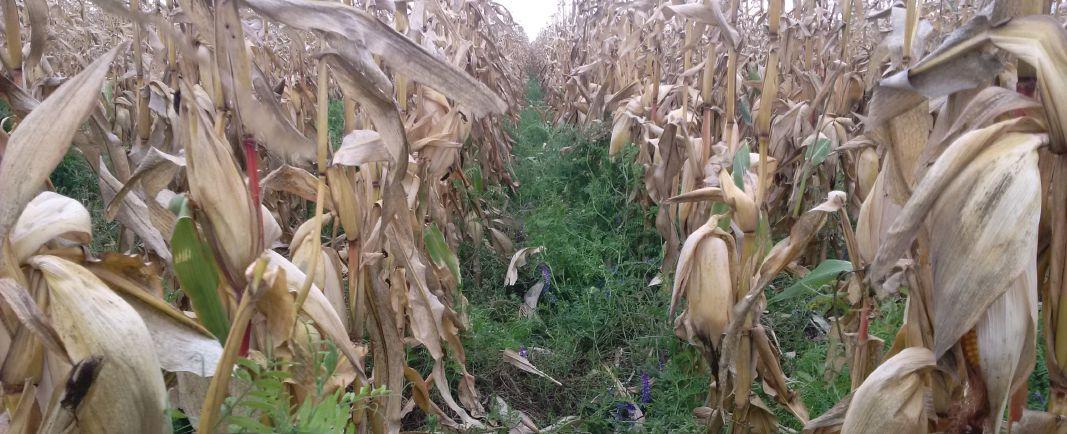
ABOVE Corn interseeded with hairy vetch was a profitable grazing crop.
In Manitoba in 2022, 11 crops are grown on 97 per cent of the 11,241,000 acres of cropland. This is dominated by spring wheat (27 per cent of acres) and canola (29 per cent). The remaining three per cent have over 100 crops grown on the 345,851 acres. These range from potato, flax and sunflower to hemp and proso millet.
Chalmers says crop diversification is important to help reduce environmental and economic risk, improve domestic self-sufficiency in food, provide a diversity in human and animal diets, and to improve economic development and gross domestic product.
Corn and soybean are success stories in Manitoba. Soybean went from basically no production in 2000 to over 2.2 million acres in 2017 before dropping back to 1.6 million acres in 2023. The large growth was due to the introduction of glyphosate-tolerant soybeans, and wet years during the mid-2010s when soybeans thrived. Corn has also seen a steady increase over the past 35 years in terms of both acreage (around 350,000 acres) and also yield (156 bu/ac 2022 yield).
Chalmers cites a corn and hairy vetch intercrop at Pierson, Man. as another one of the success stories he has seen. The two crops were sown in one pass with a SeedMaster UltraPro seed distribution system that
of Scott Chalmers.
FOR YOUR EYES ONLY: UNCOVER THE SECRET TO STRONGER CEREALS
The threat of yield loss is looming. It’s time to unlock the secret to stronger cereals and critical cereal seed protection.
Join the mission today. Equip yourself with the vital intel to safeguard your seeds this season.
Prairieland Park Trade & Convention Centre, Saskatoon, SK
Join this exciting two-day event and gain insight from researchers and industry experts to help you ace the season. You’ll hear the latest on gene editing, AI in ag,
THIS EVENT HAS BEEN APPROVED FOR 5.5 CCA-CEUS AND QUALIFIES FOR CCSC-CEUS.
Don’t miss hearing from these insightful speakers and many more.
The future of gene editing: Innovation, public trust, regulation and market access
Ian Affleck, CropLife Canada
Artificial Intelligence: Practical applications and future potential in agriculture
Dr. Felippe Karp, Olds College of Agriculture & Technology
Waterhemp – Know your enemy
Kim Brown, Manitoba Agriculture
Monitoring and integrated pest management of pulse and oilseed insects
Dr. Meghan Vankosky, Agriculture and Agri-Food Canada
Soil acidity and pH – the foundation of soil fertility
Dr. Miles Dyck, University of Alberta
Cover crops for the Prairies
Dr. Yvonne Lawley, University of Manitoba
Crop diversification growing pains
allowed the hair vetch to be sown between the rows of corn. The mature crop was grazed by bison and the rancher calculated a feed savings of $0.40 per pound gain per cow per day.
Industrial hemp is another success story. Grain yield is between 1,000 and 1,500 lb/ac and fibre yields vary from 3,000 to 15,000 lb/ac. The grain is used for oil and protein. The fibre has multiple uses from insulation to bedding, clothing and composites.
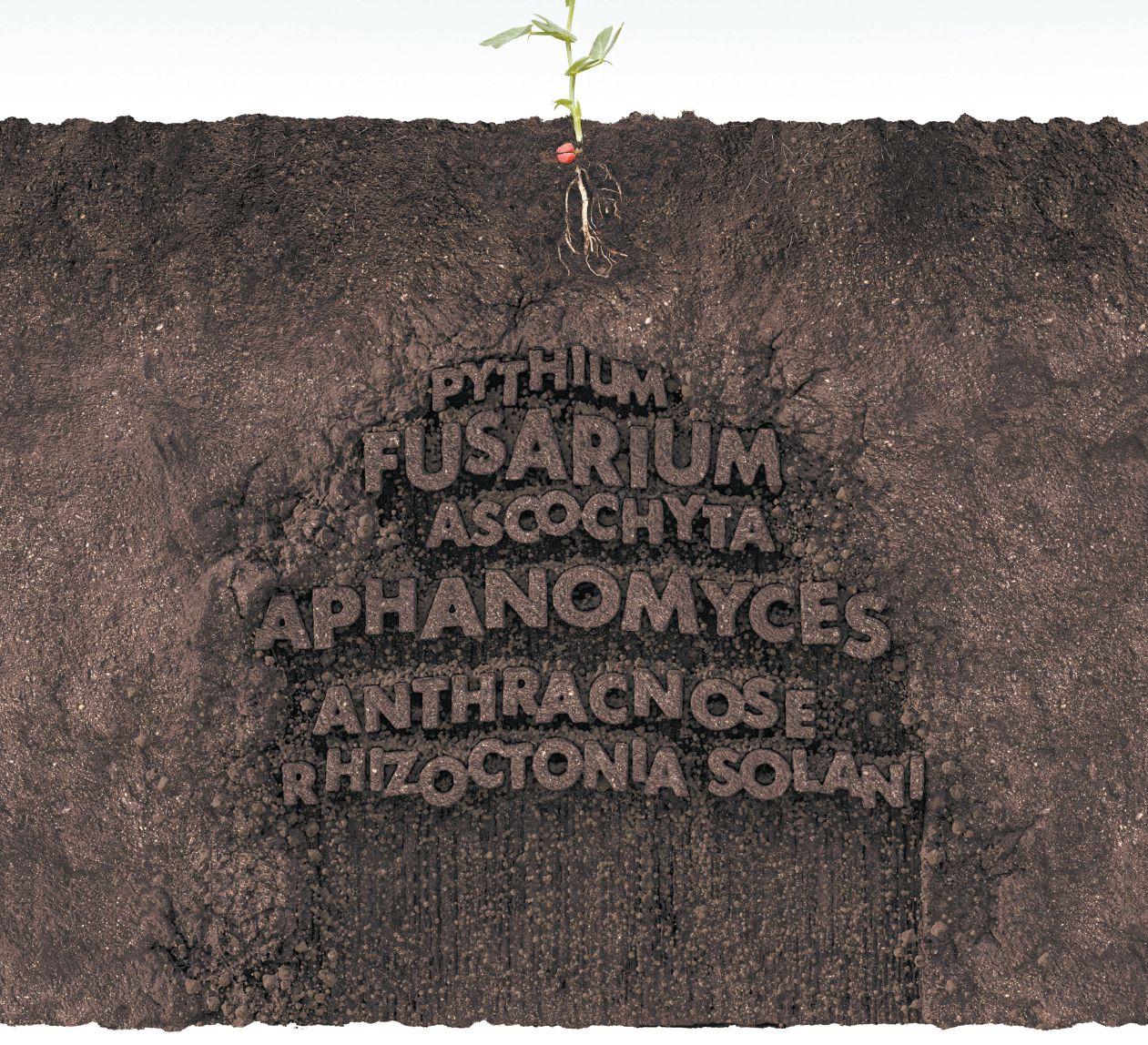
Field pea production has also expanded in Manitoba from what was once a niche crop. Average yield in Manitoba in 2022 was 54 bu/ac. At Portage la Prairie, Man., Roquette has opened the world’s largest pea protein plant creating a new market for pea growers. Pea production, though, is being challenged by root rots that require a long rotation of up to eight years between pea crops, and controlling herbicide resistant weeds is also becoming an issue.
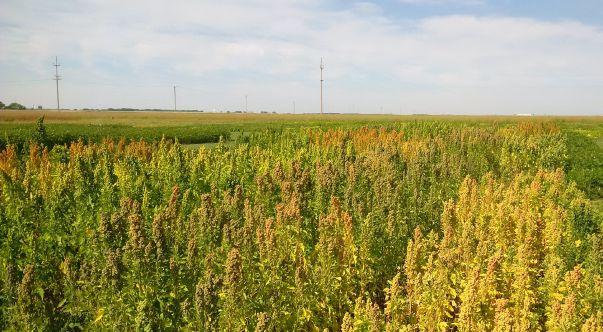
Quinoa is another crop that is showing potential in Manitoba. There is a local market for production at Prairie Quinoa at Portage la Prairie. The crop has yielded 1,000 to 1,800 lb/ac and its niche is as a gluten-free alternative. Chalmers says it is very drought tolerant. Production challenges include few weed control options, and susceptibility to several insects including Lygus bug and bertha armyworm.
Potato production in Manitoba has also been a success. Yield in 2022 was 330 cwt/ac and the production is used for both table and processing markets. Farmers have the assurance of price through the Keystone Potato Producers Association who negotiates farmgate prices. The crop has the support of MCDC research and local demand is high for the production. Concerns include verticillium wilt disease and Colorado potato beetles.
“What I think is cool is cover crop research with mustard as a biofumigant before potato. Mustard is grown up to flowering, and then plowed under. Isothiocyanates, the compound that gives mustard its spiciness, converts to cyanide which acts as a biofumigant,” says Chalmers. Mustard biofumigant has been shown to control a variety of soilborne pests, including verticillium, fusarium, rhizoctonia, sclerotinia, pythium, common scab, nematodes and wireworms.
FAILURES
Chalmers says it’s important to look at not only success stories, but also the failures.With a yield of zero bu/ac in Manitoba, rice diversification was a complete failure. Seed was planted in late May and the rice took two weeks to emerge. “The crop came up way too late for any kind of production,” says Chalmers. “It’s just too cold.”
Guar beans was another complete failure with the crop not reaching maturity or seed set. Guar beans are
used in food production, but the interest in Manitoba was for its use in oil field fracking to increase oil well productivity. It’s normally grown in Texas, Africa and India, but the Manitoba climate was found to be too cold. Niger seed showed potential, but low yields of 200 to 700 lb/ac meant it couldn’t compete with other commodities. It is used as bird seed, and in Chapati bread. It proved to be drought tolerant, but it has no registered herbicides and was difficult to get sieve settings on a combine set properly.
Calendula was also a flop. It had a low yield of 500 lb/ac and oil extraction was difficult. Chalmers conducted research on it because a Netherlands company wanted to move to Manitoba because the land was so cheap compared to in the Netherlands. Calendula is used as a hardener in lacquer paint and was supposed to help replace tung oil. The company didn’t relocate, and the potential was never realized.
OPPORTUNITIES
From his research, Chalmers sees some opportunities in other crops. Camelina, specifically fall-seed camelina, has potential as a very competitive, saline and drought-tolerant, early maturing crop. It is used in food oils, fish meal and animal care. It is susceptible to powdery mildew and fusarium wilt, and few herbicides are registered.
Flax grown for fibre is another opportunity. Biomass yields range from 3,800 to 4,550 lb/ac with a 30 per cent fibre yield. The challenge is the lack of a North American processor/market. “We can compete with cotton yields. We can do this with the right infrastructure.”
Hops, as most beer drinkers know, are grown for flavoring beer. “I think hops could be an opportunity. It yields 1,000 lb/ac and pays $20 per pound to gross $20,000/ac. It is very labour intensive, and bugs love it, but it could be very profitable,” says Chalmers.
Another gluten-free alternative, Chalmers says teff has high grain yield of 1,500 to 2,500 lb/ac or 8,000 to 10,000 lb/ac as a hay crop. It’s drought tolerant, provides two cuts of hay, and has potential for an intercrop with oats.
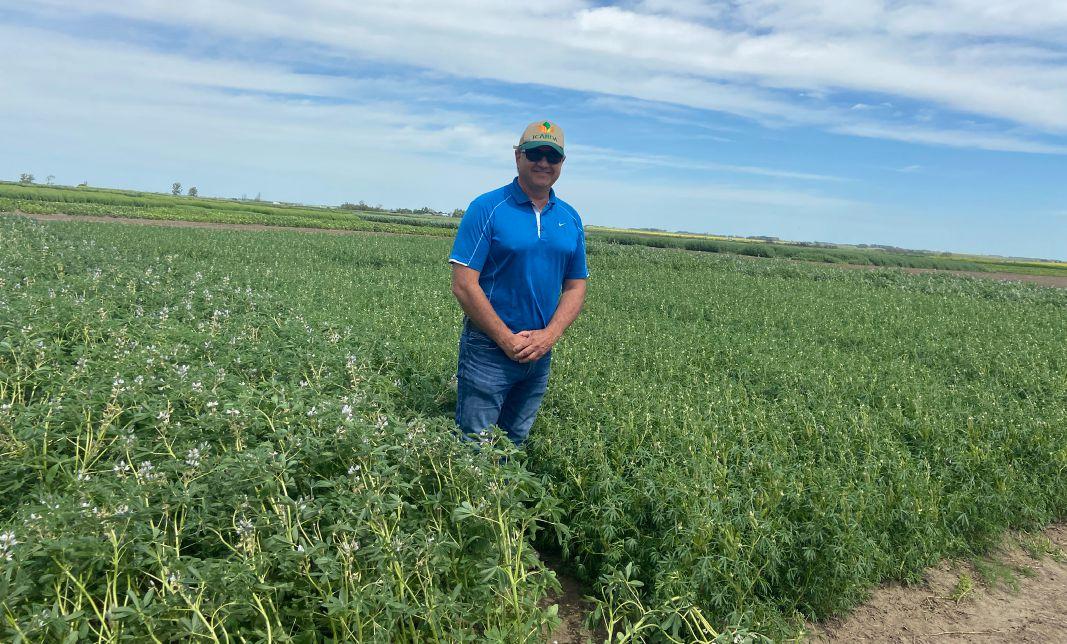
Lupins also show potential as a high-protein crop. While it yields lower than pea, its 36 per cent protein content makes up for the lower yield. Pea, by comparison, has 24 per cent protein. A major benefit is that lupins are Aphanomyces resistant, meaning it can be grown more frequently in rotation than pea’s crop rotational break.
Buckwheat as a nutraceutical is another opportunity. Forty-four per cent of the biomass production is leaves and flowers which contains rutin. Rutin is an antioxidant with anti-inflammatory properties. Holding production back is the lack of large-scale extraction plants, and a way to dry down the crop after cutting.
“It’s not easy establishing a new crop,” says Chalmers. “Big acre crops are stable industries and pay the bills more dependably, but fringe crops are more risky because they generally have greater challenges.”
ABOVE Quinoa is a gluten-free alternative that has potential in Manitoba.
Looking back and moving ahead on microbial inoculants: Part One
Biofertilizers for crop nutrition.
BY CAROLYN KING
Some of the microbes that live in, on or around plant roots have pretty amazing abilities to help those plants acquire nutrients. Microbial inoculants for crop nutrition, also known as biofertilizers, offer a way to harness those natural functions with exciting potential to boost crop productivity, reduce fertilizer input costs and decrease environmental impacts associated with chemical fertilizers.
The first microbial inoculants came on the market more than a century ago. Recently, the range of commercial biofertilizer products has mushroomed, and research continues to pursue many angles to further improve crop benefits from microbial inoculants. This is an ongoing challenge given the wide diversity of factors influencing inoculant effectiveness in any given field, such as soil properties, soil microbial community characteristics, inoculant strains, crop varieties and weather conditions.
TOP Pulse crop expert, Mark Olson, standing between white lupin (L) and narrow-leaved lupin (R) plots, is part of an initiative that is introducing lupin production into Western Canada.
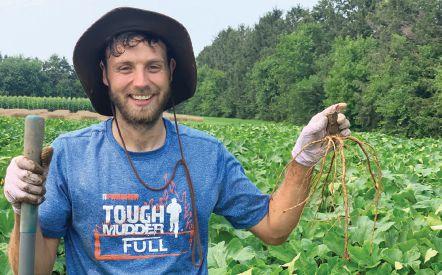
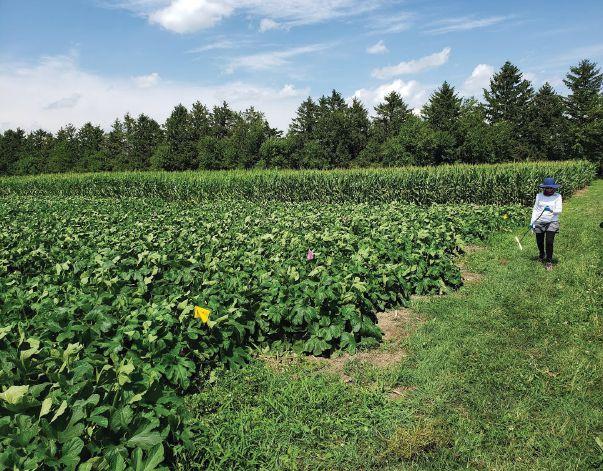
ABOVE Evan Mayer holds a squash root at Dunfield’s squash microbiome plots at Ridgetown.
A BIT OF MICROBIAL BACKGROUND
Kari Dunfield, a University of Guelph professor of soil and environmental microbiology, points out that beneficial soil microbes can help crops not only through nutrient acquisition but also through biocontrol functions to fight crop diseases and biostimulation functions to improve crop growth and tolerance to stresses like salinity and drought.
Top: Photo courtesy of Mark Olson. Inset: Photo courtesy of Kari Dunfield, University of Guelph.
“Looking just at the crop nutritional benefits, there are the obvious ones that most people have heard about, like nitrogen fixation – taking nitrogen from the air and converting it to a form that plants can use – and phosphorus mineralization or solubilization, making phosphorus available,” she explains. “But microbes are involved in all the biogeochemical cycles in the soil. So, they are also able to provide access to many other nutrients.” These nutrients include other macronutrients like potassium and sulfur as well as many micronutrients.
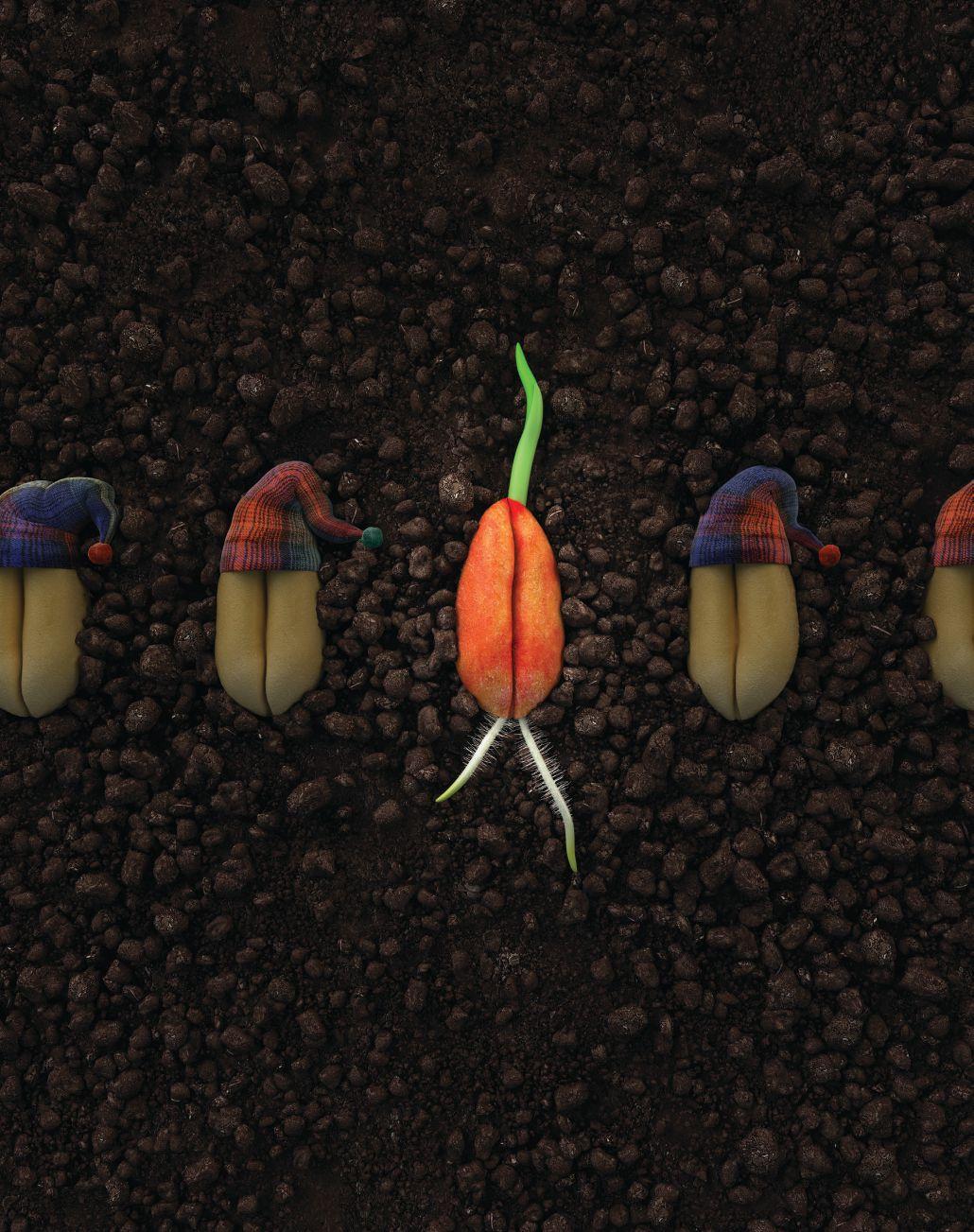
Microbial inoculants are formulations of one or more strains of living microbes. The best-known biofertilizer inoculants are rhizobia for nitrogen fixation in legume crops.
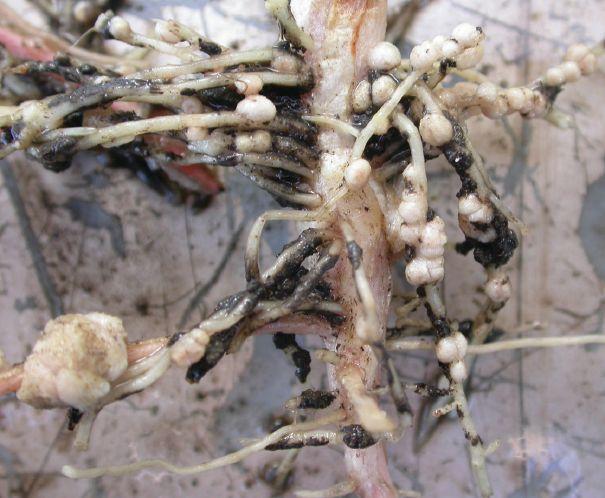
Legumes, like other plants, release compounds from their roots that play a big part in determining which particular microbes interact closely with the roots. In the case of rhizobia, these soil bacteria can form nodules on the roots of compatible legume hosts. In the nodules, the rhizobia fix nitrogen and provide nitrogen
compounds to the plant. In return, the plant gives the rhizobia some carbohydrates made through photosynthesis.
For some legumes, rhizobial inoculation can entirely replace the need for nitrogen fertilizers. Pulse crop consultant, Mark Olson, stresses the value of an effective partnership between a pulse crop and its rhizobial
UNCERTAIN ABOUT WHICH NOZZLES WORK BEST FOR PULSE WIDTH MODULATION CONTROL SYSTEMS?
TEEJET
www.teejet.com/pwm-nozzles
Photo courtesy of Kari Dunfield, University of Guelph.
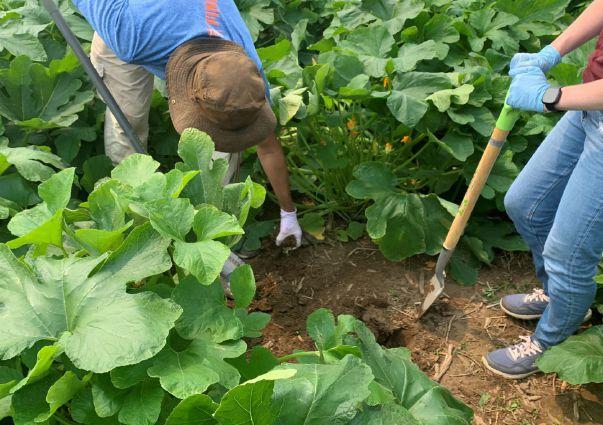
RIGHT Soil and root sampling for Dunfield’s squash microbiome project at Ridgetown.
partner. “Nitrogen is not only the nutrient required in the largest quantity by all crops but actually forms the basis for seed protein. Especially with the plant-based protein industry and how important pulse crops are for the fractionation plants that are appearing across the Prairies, proper inoculation is mission-critical for pulse growers.”
Many crop growers have also heard about arbuscular mycorrhizal fungi (AMF) and some apply AMF inoculants to their fields. AMF have thread-like arms, known as hyphae, that can colonize plant roots. The fungus grows inside the roots and develops hyphae that extend beyond the roots. The hyphae gather nutrients, such as phosphate and nitrate, for the plant. In exchange, the plant gives the fungus carbon sources like sugars and fats. AMF can form symbiotic partnerships with most types of land plants, including many crop types such as cereals and legumes.
Dunfield thinks several factors could be driving the current public and industry interest in biofertilizers. One issue is the rising cost of nitrogen fertilizers, and another is the limited supply of phosphorus in the world. Other factors are concerns around the environmental impacts of chemical fertilizers, including the high energy requirement for manufacturing nitrogen fertilizers and the resulting impact on the carbon footprint of cropping systems. Those concerns go hand-inhand with a keen interest in the potential for microbial inoculants to improve the sustainability of cropping systems through their biofertilizer, biocontrol and biostimulation benefits.
A QUICK LOOK AT THE HISTORY
Rhizobial inoculants first came on the market in North America in 1896 in the United States. For many of the following decades, peat-based formulations were the only option for these inoculants. That was still the case in the mid-1980s when Olson was beginning his career in Prairie pulse crop research and extension.
“Those peat-based powders were really difficult to use. Commercial sticking agents weren’t readily available, and farmers were experimenting with everything
from milk to corn syrup to honey to dissolved sugar and even nontoxic wallpaper paste,” he notes.
“Liquid inoculants soon came on the scene, which was wonderful. However, there wasn’t a really good understanding of the relatively short survival rates or longevity of those early liquid products once applied. So, around the mid-1990s, we saw some outright inoculant failures, resulting in yellow, obviously nitrogen-deficient pulse crops that yielded poorly,” says Olson.
“This led to the development of granular inoculants, both peat- and clay-based. Those inoculants had better survivability. But they had their own drawbacks. For instance, their consistency to begin with was like coffee grounds, and any dampness or humidity would cause problems with the product flowing through the air system and being delivered to where the inoculant was needed.”
“Nitrogen is not only the nutrient required in the largest quantity by all crops but actually forms the basis for seed protein. ”
In the late 1990s and early 2000s, understanding increased about using different formulations, and other improvements helped further increase inoculant success in the following years.
The next major advance Olson encountered was the addition of other types of microbes in rhizobial inoculants. “I think the first big one was Penicillium bilaiae, a naturally occurring soil fungus that was isolated by a Lethbridge researcher with Agriculture and Agri-Food Canada. This fungus is able to solubilize tightly soilbound phosphorus. Phosphorus is critical to root development and the inclusion of Penicillium bilaiae results in visibly more extensive root systems which, in turn,
ABOVE Mica Tosi at plots for a squash microbiome project led by Dunfield at the Ontario Crops Research Centre–Ridgetown.
Photo courtesy of Kari Dunfield, University of Guelph.
You can get a lot done when you’re the first one up
Get an early season advantage with broad-spectrum disease control and quick crop establishment
Some dream of cereal success, others get an early start and make it happen! Vibrance® Quattro fungicide seed treatment gives you consistently excellent protection from key early season diseases like Fusarium and Rhizoctonia. Plus, with Rooting Power®, your cereals get established and standing strong—faster.
Talk to your Syngenta Sales Representative or your preferred Retailer today to learn more about how Vibrance Quattro can fit on your farm.
FERTILITY AND NUTRIENTS
increase water, macronutrient and micronutrient uptake from the soil. That became TagTeam and JumpStart,” he says.
“In the last five years, there has been a proliferation of plant growth-promoting rhizobacteria (PGPRs) in combination with rhizobial inoculants on the market. Nodulator Duo SCG is just one example. It combines a Rhizobium leguminosarum strain for nitrogen fixation in pea and lentil and the bacterium Bacillus subtilis, which increases root and shoot biomass to enhance water and nutrient absorption and helps the crop survive in less than ideal growing conditions.”
“Another example is LCO, or lipochitooligosaccharide technology. LCO is a molecule that amplifies the communication between the plant and the rhizobia, initiating the formation of nodules regardless of poor environmental conditions. TagTeam BioniQ is an example of a product with LCO technology along with Rhizobium leguminosarum, Penicillium bilaiae, Bacillus amyloliquefaciens and Trichoderma virens . All these organisms are added to increase nodulation and root mass for enhanced water and nutrient uptake.”
And many other biofertilizer products are available nowadays.
For instance, there are products for legumes with other biological actives such as AMF strains, products for cereals and brassicas, and products containing more than one strain of a biological active to help the product be effective in more varied growing conditions.
“There are so many products on the market, but there is very little research independent of company data. The question I’ve asked numerous pulse growers when they use a product is: Did it actually work? What was the yield advantage over simply using a rhizobial inoculant alone? Are they actually getting a return for purchasing this product?” says Olson. “The thing is, to date, I hav en’t found a single pulse grower who has been able to give me a number to tell me that the product actually
worked. That is very concerning to me.”
ABOVE Rhizobial nodules on lupin, an emerging pulse crop option for Western Canada.
“We need independent, replicated, small plot trials for these products,” Olson emphasizes. “And we also need highly qualified people with a strong understanding of cropping systems in Western Canada doing the work and collecting all the data, like rainfall, soil texture, pH, topography, weed control and so on, to provide the context to explain why a product worked well or didn’t work well. Also, if a product works but the yield increase doesn’t cover the cost of the product and its application, then it isn’t paying for the farmers. So, we need economic analysis along with agronomic analysis.”
BIOFERTILIZER EFFECTIVENESS: IT’S COMPLICATED
Multiple studies have found the effectiveness of biofertilizers can vary significantly from field to field.
For example, various field trials in Alberta, Saskatchewan and Manitoba have found that rhizobial inoculation does not always make a significant difference in yields of some pulses. That can be because effective rhizobia remains in the soil from previous inoculations, effective native rhizobia are present or other
Photo courtesy of Alberta Agriculture and Irrigation.
2019 of phosphorus fertilizer management in the Northern Great Plains. They found mixed results for crop yield responses to the use of Penicillium bilaiae in field studies and only modest effectiveness at best for AMF inoculants in commercial cropping systems.
A large study in the north-central region of the U.S. recently assessed the effects of several non-symbiotic nitrogen-fixing bacteria inoculants marketed as providing nitrogen benefits to non-legume crops. The trials were conducted in corn, spring wheat, sugar beet and canola in 10 states. In 59 of the 61 site-years, the biofertilizer products did not increase yields compared to the yields with various nitrogen fertilizer rates, including no nitrogen fertilizer.
Dunfield sees a number of challenges in trying to predict when a biofertilizer will be effective in a field situation. “I think the key challenge is what also makes the potential of biofertilizers so great. There are so many different organisms and such a huge amount of diversity in soil systems that how an inoculant is going to react in those complex systems is very hard to predict,” she says.
“The inoculated microbe might be perfectly happy in a greenhouse or a lab situation or even in one
environmental situation in the field. But the microbe might not be equally efficient under all field conditions or soil types.”
As University of Manitoba microbiologist, Ivan Oresnik, points out, “If you add one microbe to the soil microbial community in a field, how will the newcomer fit into that community? Some of the interactions will be neutral associations, some might be antagonistic, some might be synergistic.”
Dunfield notes that another issue affecting inoculant success relates to challenges around commercial inoculant production and use. “Microbes living in the soil are living continuously in a community where, a lot of the time, they are working together with other microbes, such as one microbe producing a compound that is being used by another. Traditionally, the approach to inoculant development is to pull the microbes apart and try to find the one that is doing the thing you want it to do, and then grow it up in the lab. But it’s hard to get it to grow and survive on its own.”
As well, she emphasizes that getting plants to grow well involves a threeway partnership with the soil, the plant and the microbes working together. “Focusing only on the microbes is probably not the best strategy. We know plant genetics will define which microbes will interact with the plants. So, we need strategies around different plants and how they will interact with microbes. And we need strategies around the soil and the microbes native to the soil and how they will compete with the microbial inoculants.”
Editor’s note: Watch for part two of this story in the March issue.
Photos (from top left to top right) courtesy of Mike Dolinski; Frank Peairs, Colorado State University, Bugwood.org; Joseph Berger, Bugwood.org; Mike Dolinski.
Photos (from bottom left to bottom right) courtesy of Mike Dolinski; Mike Dolinski; John Gavloski, Manitoba Ag; Mike Donlinski. BERTHA ARMYWORM
LYGUS BUGS
PEA APHID PEA LEEF WEEVIL SEEDCORN MAGGOT
Defend your wheat fields against the toughest grass and broadleaf weeds and declare victory this season. A single pass of BATALIUM herbicide combines four active ingredients across three modes of action in one simple, co-formulated product. This versatile herbicide also has a wide application window, so it works when and where you need it, across all soil zones. Put an end to yield losses from grass and broadleaf weeds. Contact your UPL retailer today.
Keep an eye out for aster yellows this year
Aster yellows could affect canola and cereal crop quality and yield in 2025.
BY PETER HOHENADEL
Remember aster yellows? It’s the bacterial infection that decimated the canola crop in 2012, leading to a loss conservatively estimated at $270 million. Canola and cereal growers may think that threat is behind them now. However, aster yellows – and the aster leafhoppers that serve as the bacterium’s host – are still very much a threat to Western Canadian crop production, according to Karolina Pusz-Bochenska, who completed her PhD thesis on aster yellows at the University of Saskatchewan in 2024. Pusz-Bochenska says these simple, intracellular cellwall-less bacteria known as phytoplasmas barely qualify as living organisms. They’re “the best slackers of the bacterial world,” she says, yet they are still a threat to Western Canadian crops.
ASTER LEAFHOPPER LIFE CYCLE
Aster leafhoppers are a common sight in agriculture in the Prairies. The phytoplasma that causes aster yellows first infects these insects, and even a few infected aster leafhoppers can affect crop yield and quality. These tiny (2.7 mm) leafhoppers with a six-week lifespan travel north from Gulf states like Louisiana and Texas. They may stop along the way and regenerate in Great Plains states like Kansas and Nebraska. From those states, it’s a relatively short hop to the Canadian Prairies, where they usually show up by the end of May. Saskatchewan, Manitoba and Alberta can all expect to spot aster leafhoppers around that time. The insects typically feed on grasses in ditches and weeds like dandelion (which is in the same genetic family as Chinese asters), until they move into young crops.
Not every aster leafhopper is infected with the phytoplasma that causes aster yellows disease – and therein
ABOVE Aster yellows damage in canola.
Even a few infected aster leafhoppers can affect crop yield and quality.
lies the problem. Detecting phytoplasma in aster leafhoppers requires molecular analysis, a test that must be performed in a lab equipped to check for this bacterium. Unfortunately, “by the time you see symptoms in the field, then it’s already too late,” says Pusz-Bochenska.
ASTER YELLOWS OUTBREAKS SINCE 2012
Prairie farmers convinced that aster yellows are yesterday’s news should know that the 2023 crop year was the biggest outbreak of aster yellows since 2012, says Tyler Wist, a research entomologist with Agriculture and Agri-Food Canada (AAFC) in Saskatoon. About 65 per cent of Saskatchewan fields reported aster yellows in 2023. So why didn’t those numbers add up to widespread yield losses? Wist says that unlike 2012, when early season wet weather likely leached away some of the insecticidal seed treatments, a dry spring in 2023 contributed to longer-lasting protection from seed treatments.
While canola crops took a big hit in the 2012 outbreak, aster leafhoppers prefer to feed on cereal crops, according to Wist. The aster yellows disease symptoms also seem to be more prevalent in durum compared to spring wheat, based on previous work conducted by plant scientist Pierre Hucl at the University of Saskatchewan. In 2012, for example, cereal yields unexpectedly fell by about 10 per cent, a loss now attributed to aster yellows.
The likelihood of aster yellows infection depends on whether the aster leafhoppers are infected with the phytoplasma. Wist says 2020 was a big year for aster leafhopper populations. But tests showed that very few of the insects were infected with the phytoplasma that
Photo courtesy of Tyler Wist, AAFC.
causes aster yellows, so damage was minimal.
FEW CONTROL OPTIONS
Both Wist and Pusz-Bochenska agree that aster yellows is a complex problem with few control options. The bacterium can only be managed with antibiotics, which are not practical in large-scale agriculture. There is no proven benefit to controlling weeds in ditches and field borders because the presence of aster leafhoppers can vary so widely from year to year. Insecticidal seed treatments can provide some protection but, as 2012 demonstrated, a wet spring can reduce their effectiveness.
Testing for aster yellows has improved dramatically over the past 15 years but it’s still a complex process. Wist says that a loop-mediated isothermal amplification (LAMP) test can accurately detect the phytoplasma in about half an hour once the leafhopper has been frozen, tested and analyzed. But there are not many labs that can test for this pathogen. Notably, the Pest Surveillance Initiative (PSI), a Manitoba-based lab owned and operated by Manitoba Canola Growers Association, has the technology and expertise to run aster yellow tests. But since an aster leafhopper can infect crops with aster yellows within 24 hours, testing to diagnose a field level problem will likely be too little, too late. Tyler Wist adds that there is no silver bullet for chemical control of aster leafhopper within a crop. While some products are registered for that pest, the challenge is to identify whether the leafhoppers are infected. Chemical control may also affect beneficial insects.
ASSESS ASTER YELLOWS RISK IN 2025
So, what’s a grower to do in the face of the threat of aster yellows? It’s complicated. It’s mostly about watching weather and insect monitoring reports to determine if aster leafhoppers and the phytoplasma some of them carry are likely to cause a problem. Wet and windy conditions in May are likely to blow more leafhoppers into the Prairies from their stopovers in the Great Plains. A wet spring may also reduce the effectiveness of insecticidal seed treatments.
“If aster leafhoppers get concentrated in the ditches and the fields are not ready to seed, that’s when you should start to get some testing done to see if those leafhoppers are infected,” says Wist. Wist and his AAFC team plan to test some sites this spring to assess the level of aster yellows infection in the leafhoppers they find. They plan to publish their findings on social
media and through vehicles like the Prairie Pest Monitoring Network.
In the long term, the hope is that more labs will be able to test for this tiny pest. Until then, growers can stay informed about spring weather conditions and aster leafhopper sightings, and hope those tiny leafhoppers aren’t carrying an even tinier pest that could limit yields in 2025.
Level up your ag career one lesson at a time.
Take charge of your future with the FREE University of Guelph Foundations in Agricultural Management Course. Get started with eight self-paced lessons in ag business strategy, farm management, succession planning and financial fundamentals.
Sign up today at guelphagriculturalmanagement.com
by Bruce Barker, P.Ag | CanadianAgronomist.ca
What do Lygus like to eat?
The Lygus pest complex in the Canadian Prairies is dominated by Lygus lineolaris (L. lineolaris), L. keltoni, L. elisus and, to a lesser extent, L. borealis. While Lygus have a broad host range, faba bean becomes an attractive host when Lygus move from earlier maturing canola and mustard to faba bean fields. At this stage, faba bean are susceptible to feeding damage during the flowering and pod stages.
Lygus feeding damage on faba bean includes hull perforations, seed coat discolouration, pitting and tissue wilting. This can result in quality downgrade as the Canada Grain Commission quality standards for Grade No. 1 faba bean for human consumption is less than 1 per cent damaged seed.
Insecticide application is an option, but application at the flowering stage of faba bean is not recommended because it interferes with the pollination process and could harm beneficial predators. An alternative to broadacre spraying of faba bean is to use trap crops to lure Lygus for targeted insecticide application.
The primary objective of a study by researchers at the University of Saskatchewan and Agriculture and Agri-Food Canada (AAFC) in Lethbridge, Alta. was to evaluate Lygus preferences between faba bean and alternative crops. Laboratory experiments assessed the impact of four potential crops on Lygus behavior, and field trials assessed seven potential trap crops for Lygus control.
Faba bean, along with canola, pea, alfalfa and flax, were grown for four months in growth chambers at the University of Saskatchewan in two-gallon pots. Seeding times were adjusted so that all plants reached the pod stage at the same time. Once faba bean reached the pod stage, the pots were caged along with one of the trap crops. The plants were positioned on opposite corners of the cage.
One adult Lygus was released at the centre of the cage and was removed after 24 hours. This was replicated 10 times for each cage with male and female Lygus bugs for a total of 20 replications per crop. Faba bean were grown to maturity and assessed for feeding damage that shows up as black dots on seed. The percentage of perforated seed damage and
the weight of the perforated seed was calculated.
In the field study in 2022, canola, flax, safflower and pea were grown as trap crops. In 2023, mustard, hemp and sunflower were added to the original four crops. The plots were established near Lethbridge, Alta. Plot sizes were 30 feet by 33 feet (9 m x 10 m) for both faba bean and the trap crop. Half of each trap and faba plots were sprayed with flonicamid (Beleaf) in 2022 and lambda-cyhalothrin (Matador) in 2023 at the early pod stage. Harvested seed was assessed for incidence of damage and severity of damage.
In the choice bioassay greenhouse study with the control of faba beans vs. faba beans, it was found that males tend to feed on fully developed seeds, while females prefer feeding on pods with immature seeds. The only choice bioassay crop that presented less than one per cent seed damage and seed weight damage was alfalfa.
In 2022 field studies, Lygus populations in faba bean next to canola had a median of 30 per sample, which was significantly higher than flax, peas and sunflowers with a median of around 12 per sample. Application of Beleaf did not reduce Lygus abundance.
The incidence of necrotic seed damage in faba bean seed in 2022 only differed significantly with faba bean next to canola having higher damage than faba bean next to safflower. Yields ranged from three to four ton/ha and were not affected by trap crop or insecticide application.
In 2023, none of the seven crops tested affected Lygus abundance in adjacent faba bean plots, ranging in abundance from around eight to 12 per sample. Application of the pyrethroid insecticide Matador reduced Lygus abundance to very low numbers.
Necrotic damage in faba bean seed in 2023 was similar for all trap crops. Insecticide application resulted in much lower necrotic damage than in the unsprayed plots. Yield averaged around 3.5 ton/ha and was not affected by trap crop or insecticide application.
Overall, the field studies showed that faba beans adjacent to canola had higher Lygus abundance and damage compared to those next to peas, flax and safflower. The researchers didn’t rule out that the canola actually caused more damage rather than the other crops reducing it because it is possible that there were more Lygus in the canola that then moved to faba bean. Safflower and sunflower demonstrated potential as trap crops to reduce Lygus damage to faba beans.
The research did not include a treatment where only the trap crop was sprayed. Further research would be required to see if a sprayed trap crop would be sufficient to avoid Lygus necrotic damage.
Bruce Barker divides his time between CanadianAgronomist.ca and as Western Field Editor for Top CropManager. CanadianAgronomist.ca translates research into agronomic knowledge that agronomists and farmers can use to grow better crops. Read the full research insight at CanadianAgronomist.ca.
Canadian agriculture and food needs more talented people.
Each year, CABEF helps students to pursue rewarding agri-food careers through seven $2,500 scholarships. We’re looking for the future leaders who will help this industry meet tomorrow’s challenges.
Do you know someone who needs to fund their future in agri-food? Tell a student today.
Scholarship application deadline is April 30, 2025
Want to help support the next generation of agri-food leaders? Become a “Champion of CABEF.” This program allows your organization to directly sponsor a deserving student. Contact CABEF at info@cabef.org.
SKIP IMITATOR PRODUCTS FOR AGRONOMICALLY EFFECTIVE SOLUTIONS
Trusted solutions like TRIBUNE™ nitrogen stabilizer, ANVOL™ nitrogen stabilizer and SUPERU™ fertilizer deliver higher active ingredient concentrations that low-rate products can’t match. See how other stabilizers stack up to proven solutions that defend your nitrogen and your bottom line.