Evaluating conditions and risk factors for better management
PG. 6
CHICKPEA-FLAX INTERCROPS
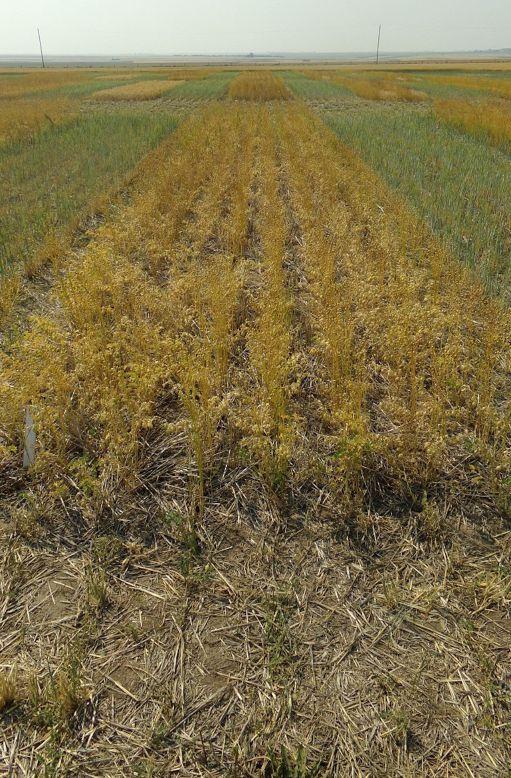
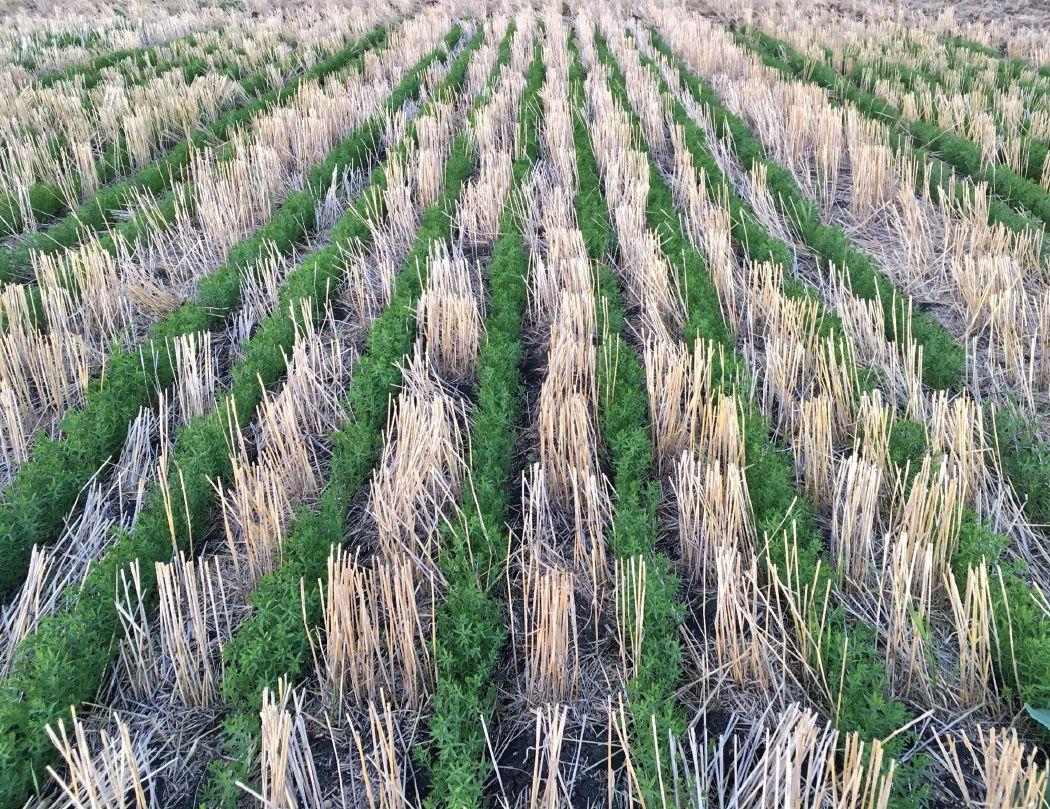
Intercropping can reduce disease pressure
PG. 28
FLAX FERTILITY
Higher N and P rates can achieve optimal yields
PG. 32
TOP CROP
MANAGER
PESTS
AND DISEASES
6 | Chocolate spot disease development
Researchers are evaluating conditions and risk factors to help growers with disease management. by Donna Fleury
14 When N budgets don’t add
18 Practical answers for fababeans agronomy by Carolyn King
26 Managing Ascochyta in field pea by Bruce Barker
ON THE WEB
28 | Chickpea-flax intercrops show promise
Reduced disease pressure is just one benefit of intercropping, but research has just begun. by Julienne Isaacs
FERTILITY AND NUTRIENTS
36 Fertilizer management of alfalfa by Ross H. McKenzie PhD, P. Ag.
FOCUS ON: STORAGE
42 Monitor straight cut canola in bins by Bruce Barker
PULSES
44 Lentil inputs for best returns by Donna Fleury
48 Beneficial impacts by Julienne Isaacs
FALL-WINTER WEBINAR SERIES WRAPS UP
Top Crop Manager’s webinar series has wrapped up and all four webinars are now available online. Learn about the latest cover crop best practices or new strategies for blackleg management. Review last year’s corn season and uncover new research that reveals earlier spring wheat planting dates. Catch up at www.topcropmanager.com/webinars.
CROP MANAGEMENT
32 | Optimal N and P management for flax
Higher nitrogen and phosphorus rates help achieve optimal yields for flax. by Donna Fleury
TRUCK REVIEW
52 GMC Sierra takes the title by Mario Cywinski
FERTILITY AND NUTRIENTS
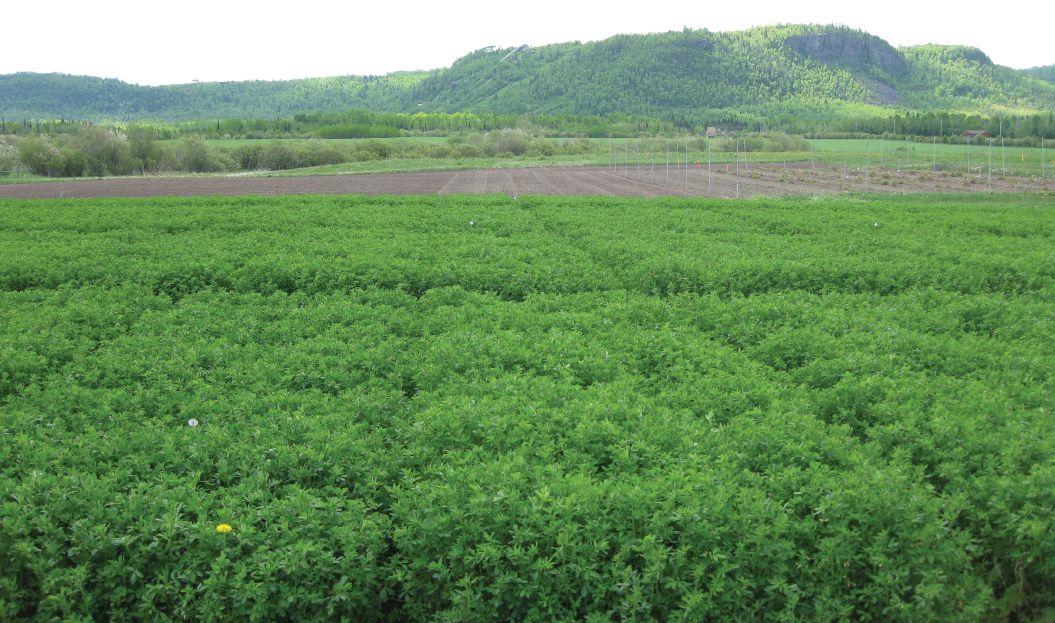
56 Soybean response to potassium by Donna Fleury
Readers will find numerous references to pesticide and fertility applications, methods, timing and rates in the pages of Top Crop Manager. We encourage growers to check product registration status and consult with provincial recommendations and product labels for complete instructions.
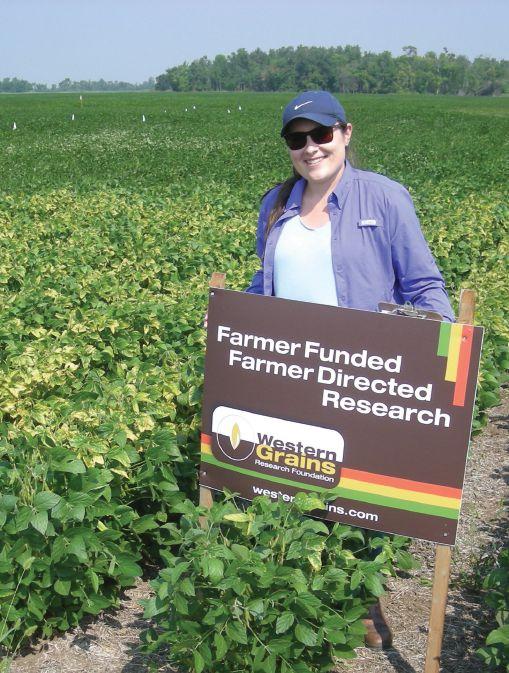
PHOTO COURTESY OF CHRIS HOLZAPFEL.
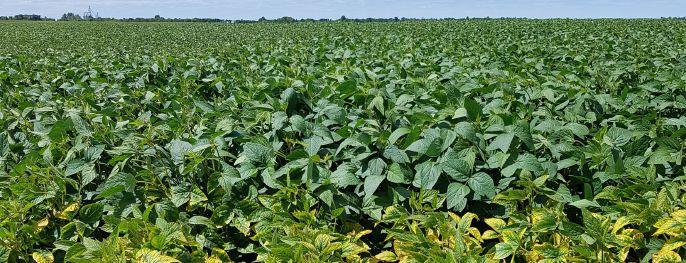
PHOTO COURTESY OF LANA SHAW.
STEFANIE CROLEY | EDITOR
MOVING AND SHAKING
We’re barely through the first two months of 2019, but it’s safe to say this growing season is kicking off on a strong note – a welcomed sign after the tough conditions Canadian farmers experienced in 2018. Several significant announcements have been made these last few weeks in terms of investments and new products for the coming year; a sure indication that research, innovation and stewardship are alive and well in agriculture. Here’s a quick recap . . .
Producers across the country breathed a collective sigh of relief in early January when Health Canada announced that after careful vetting of eight objections, the re-evaluation decision made in 2017 that glyphosate is safe when used according to product label direction will stand. Health Canada, in a statement, says the scientists involved “left no stone unturned in conducting this review,” adding those scientists had access to all pertinent information from multiple sources.
This good news was preceded by the news that China has granted regulatory approval of Bayer’s TruFlex canola with Roundup Ready technology. In a statement, Bayer’s trait launch lead Jon Riley noted the company has waited five years to introduce this product to farmers in Canada and the United States. Despite being approved in Canada since 2012, seed developers cannot commercialize traits until they are approved in major markets in order to align with the Canola Council of Canada’s Market Access Policy.
Further into January, Syngenta announced it had received registration for Tavium Plus VaporGrip Technology, a new herbicide for Roundup Ready 2 Xtend soybeans. The company says the dicamba-based pre-mix herbicide will provide broad-spectrum control of weeds including glyphosate-resistant Canada fleabane and common and giant ragweed. Corteva Agriscience also announced commercial sales of Enlist E3 soybeans to begin in 2019, introductory quantities of Qrome corn products through the United States Corn Belt, and the licensing of LibertyLink canola. And Nufarm’s GoldWing herbicide label expanded to include lentils, chickpeas, fababeans and other beans for pre-seed burndown control.
Plans for significant investments to Canadian agriculture research were also recently unveiled. Notably, the Alberta Wheat Commission announced more than $2.6 million in funding for 22 wheat research projects, aimed at improved farm profitability. These projects will be funded as part of the Canadian National Wheat Cluster, a five-year federal matching program under the Canadian Agricultural Partnership. Additionally, the Canadian Field Crop Research Alliance will receive an investment of $4.1 million over five years to support two national projects, one on oat and one on corn. This investment is funded under the AgriScience Program (Projects) and follows the Government of Canada’s investment of up to $5.4 million to the Canadian Field Crop Research Alliance for a soybean project.
These events taking place within the first six weeks of the year, combined with the many novel projects we’ve covered in this issue, speak to the current state of Canadian agriculture: our innovation game is strong. Though spring may not be on the horizon quite yet, producers will have an array of tools at their disposal come planting time. Here’s hoping the rest of the year continues to ride this positive wave.
#40065710 CIRCULATION email: rthava@annexbusinessmedia.com Tel: 416.442.5600 ext. 3555 Fax: 416.510.6875 or 416.442.2191 Mail: 111 Gordon Baker Rd., Suite 400, Toronto, ON M2H 3R1
SUBSCRIPTION RATES
Top Crop Manager West – 9 issues Feb, Mar, Mid-Mar, Apr, June, Sept, Oct, Nov and Dec – 1 Year - $48.50 Cdn. plus tax
Top Crop Manager East – 6 issues Feb, Mar, Apr, Oct, Nov and Dec – 1 Year - $48.50 Cdn. plus tax
Potatoes in Canada – 1 issue Spring – 1 Year $17.50 Cdn. plus tax
Occasionally, Top Crop Manager will mail information on behalf of industry related groups whose products and services we believe may be of interest to you. If you prefer not to receive this information, please contact our circulation department in any of the four ways listed above.
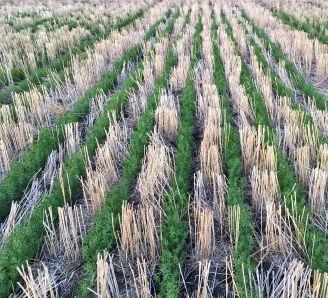
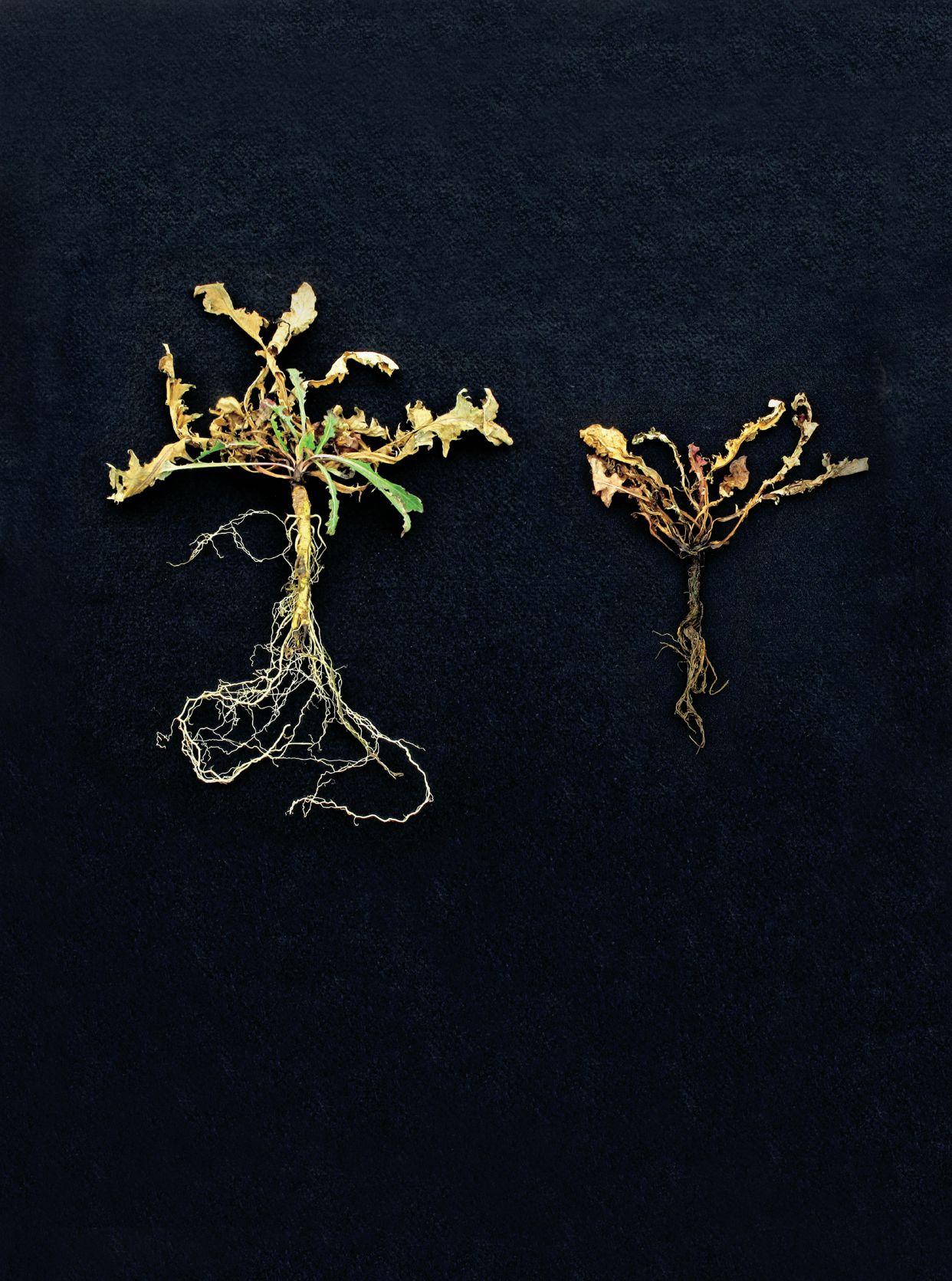
Narrow-leaved hawk’s-beard, volunteer canola and dandelions don’t stand a chance.
CEREALS | PULSES | SOYBEANS | & MORE
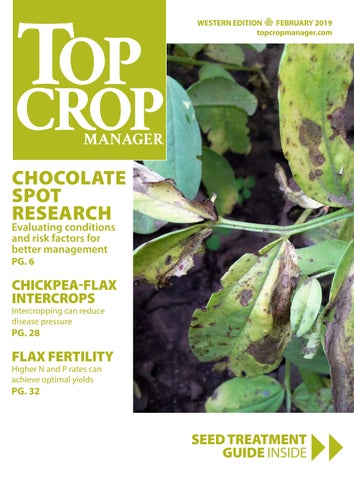
CHOCOLATE SPOT DISEASE DEVELOPMENT
Researchers are evaluating conditions and risk factors to help growers with disease management.
by Donna Fleury
Chocolate spot is one of the most important diseases of fababean, affecting its productivity in Alberta and Saskatchewan. Researchers are evaluating conditions for chocolate spot disease development under prairie conditions to help growers with disease management.
“We have a four-year multi-focused project on chocolate spot disease underway targeting three main areas,” explains Syama Chatterton, plant pathologist with Agriculture and Agri-Food Canada in Lethbridge, Alta. “One of the first priorities is to define how much chocolate spot disease there is in Alberta and Saskatchewan, and to determine if it is really a disease to be worried about. We are addressing this through field surveys, and pathogen identification and diagnostics of diseased samples from the surveys. We are also trying to identify the risk factors and environmental conditions in the field that are leading to chocolate spot development. Finally, we are taking what we learn from the field environment as the main drivers of disease, and then validating those under greenhouse and various environmental condi-
tions to develop a forecasting model for chocolate spot disease risk.”
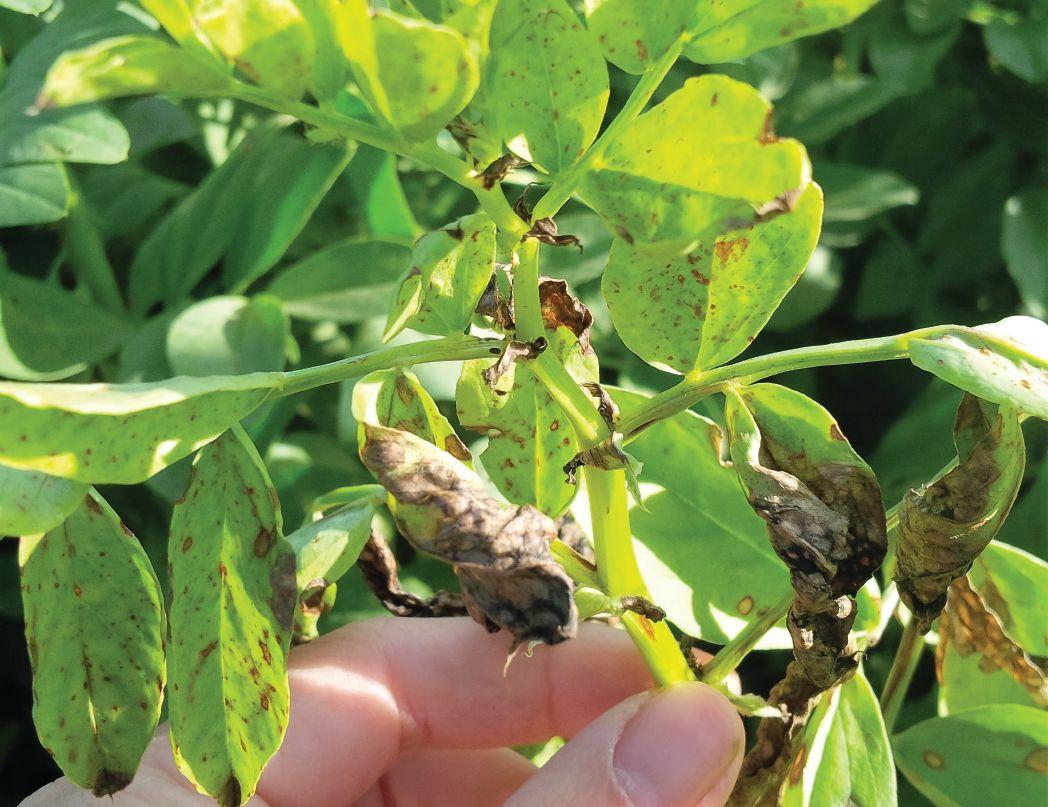
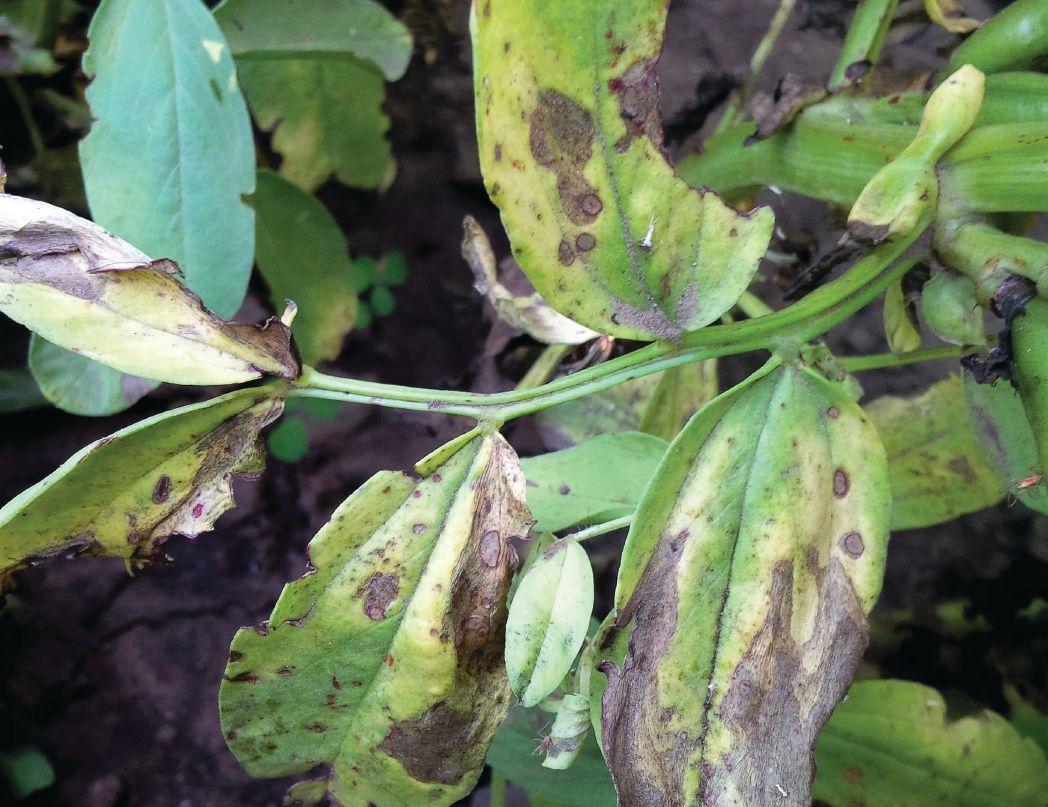
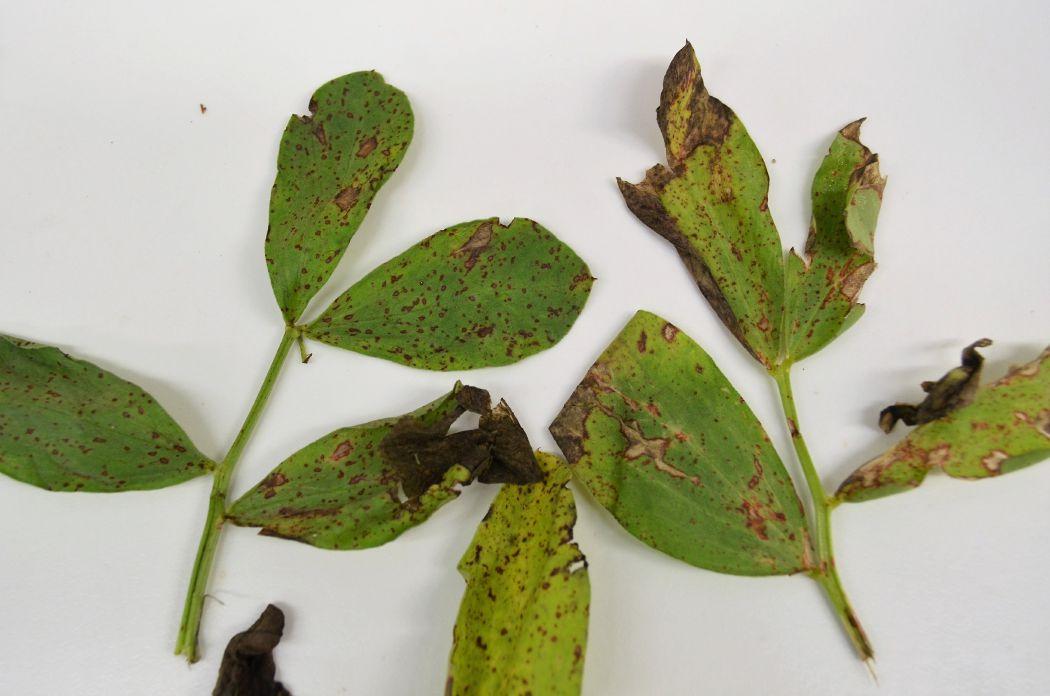
Chocolate spot disease on fababean is caused by two different pathogens, the more aggressive and specific to fababean Botrytis fabae, and Botrytis cinerea, a less aggressive pathogen that can also affect lentils and other pulses. Along with Botrytis, other pathogens can often be found at the same time in the field, including Alternaria sp, Fusarisum sp and Stemphylium sp. With Botrytis, the symptoms of B. cinerea are usually pinpoint lesions that never spread, whereas large spreading lesions caused by B. fabae are more of a concern. Spreading lesions caused by Botrytis are usually also colonized by the pathogen Alternaria sp.
In 2015, researchers initiated field surveys and began isolating pathogens, which has continued over the past three years. Field surveys are expected to continue in the future. Although field
PHOTOS
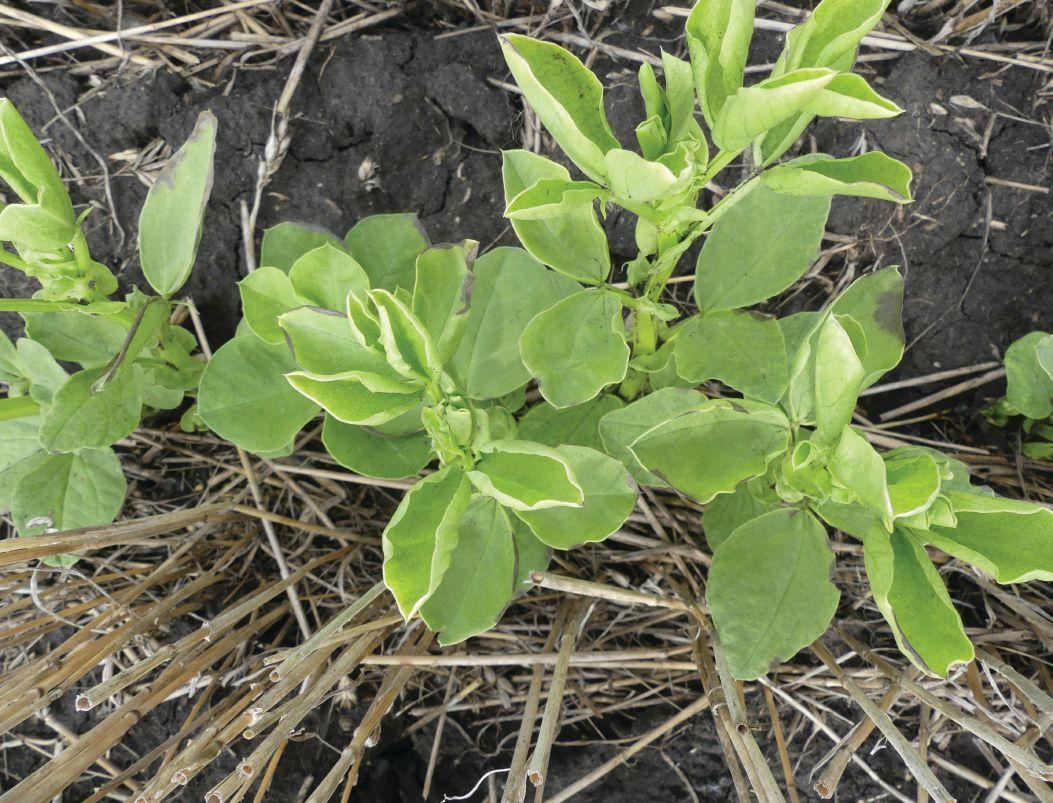
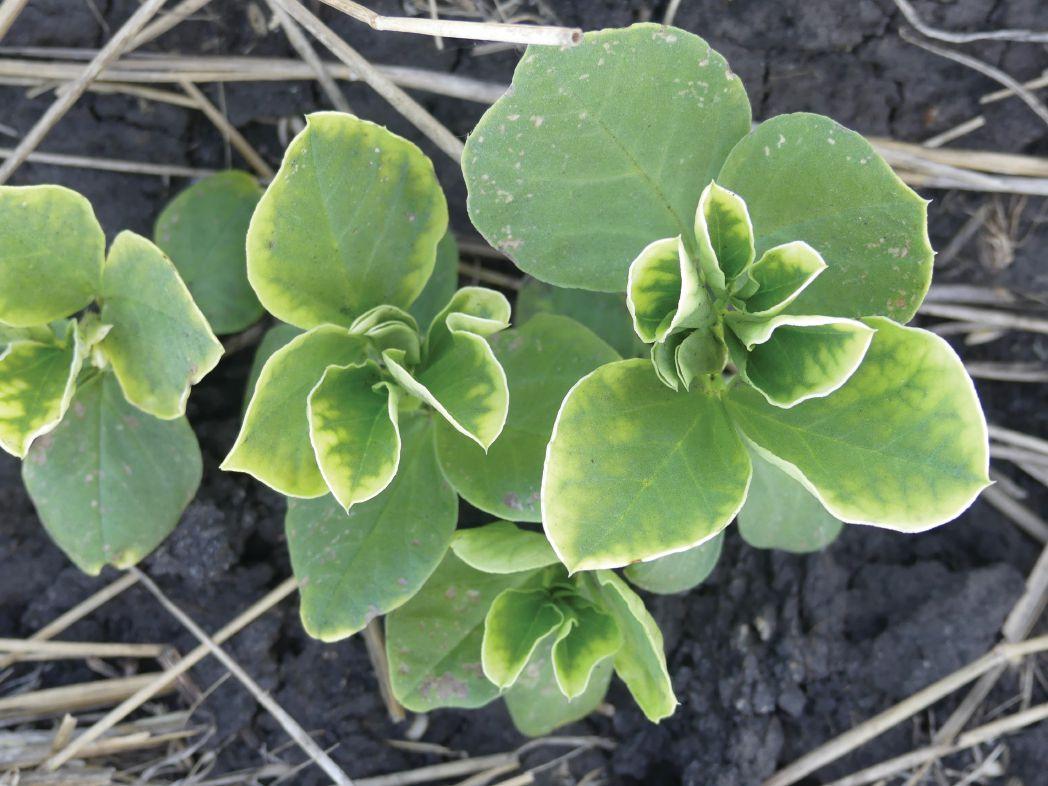
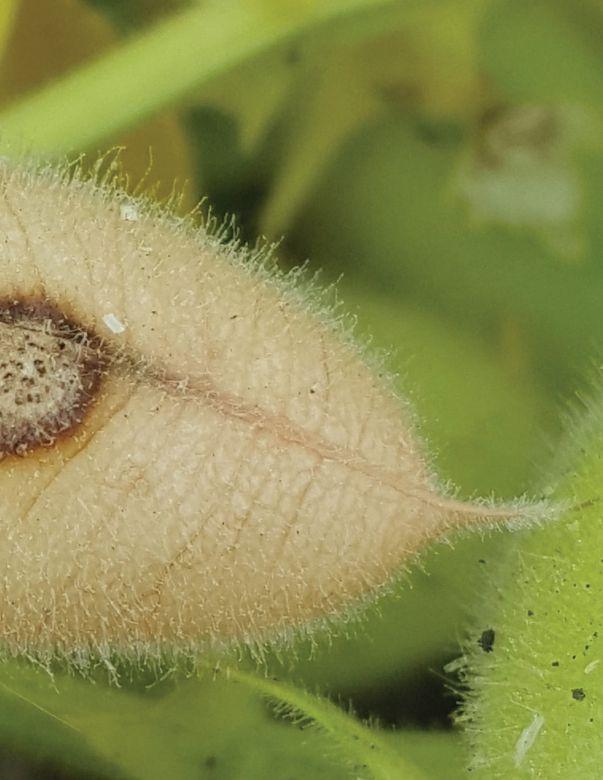
ABOVE: Smaller pinpoint lesions caused by Botrytis cinerea in fababean field.
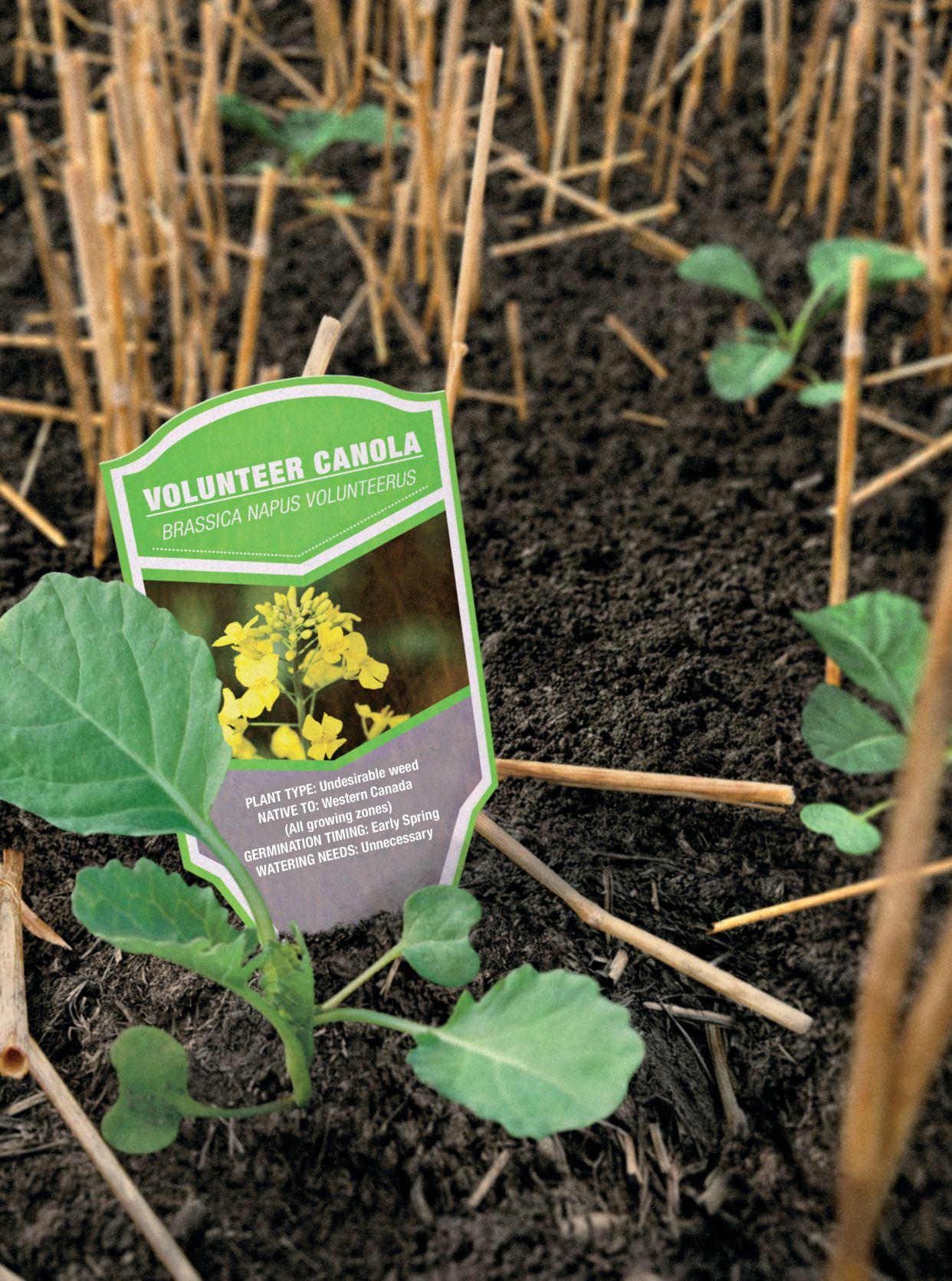
You’ve identified volunteer canola as a weed. Now it’s time to deal with it.
For control of all volunteer canola, tank mix Pardner® herbicide with your pre-season application of Roundup®. Make Pardner your first choice.
conditions were fairly hot and dry over the past couple of years, the disease has still been present every year, with higher levels measured in 2016 than 2015. “Even under these conditions, we measured some sort of foliar disease and leaf spots in 100 percent of the fields,” Chatterton says. “However, the severity has been pretty low, typically between five and 10 per cent coverage on the whole plant. Although overall the severity was quite low, there were a few wetter pockets in southern Alberta and near Saskatoon where the severity was higher and up to 100 per cent in a few fields. Defoliation begins once the fungus covers the entire plant and severity reaches higher levels.”
During the field surveys, 1,310 fungi were isolated from the fababean seeds collected in 2015 and 883 in 2016. Along with Botrytis sp., the different isolates were grouped into three main groups of fungal genera, Alternaria sp., Fusarium sp., Stemphylium sp., and other saprophytes. Testing showed that the Alternaria sp., Fusarium sp. and Stemphylium sp. isolates rated weak to moderately pathogenic on fababeans, while Botrytis sp. rated
moderate to highly pathogenic. Insect pests were also collected and identified in the field surveys.
“Another pest that is a problem in fababean is lygus bug, which we were concerned may be helping the Botrytis pathogen,” Chatterton explains. “However, in another project, we found that chocolate spot was typically seen on pods in the lower crop canopy, while lygus bug feeding was typically on the higher pods. In that project, the main seed damage occurred primarily in the top portion of the crop from lygus bug feeding and not chocolate spot. When we tested the damaged seed, we did find the Botrytis. However, we think that the lygus bug creates an entry wound and allows the pathogen to enter the pod. The damage, though, seems to be related to the lygus bug feeding.”
In the second part of the project, the objective was to determine the duration of inoculum discharge and infectious periods of B. fabae under field conditions. Researchers developed a more unique strategy of using trap plants to try to determine what the exposure period of the disease is and when crops are most likely to be infected by the disease. A total of 16 trap periods from mid-June to mid-August were assessed in 2017 at three locations in Alberta (two in Lethbridge and one in Lacombe) and three locations in Saskatchewan (Saskatoon, Melfort and Scott).
We expect to have a better understanding of the disease, risk factors and ultimately a forecasting model for disease risk to assist growers with economic management decisions by the end of the project.
“We grew fababean plants in the greenhouse, moved them into the field for three or four days and then returned them back to the greenhouse under conditions conducive to disease development to understand the chocolate spot disease risk periods in fababean,” Chatterton adds. “The
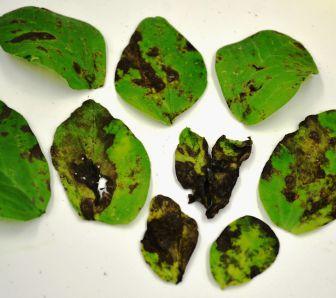
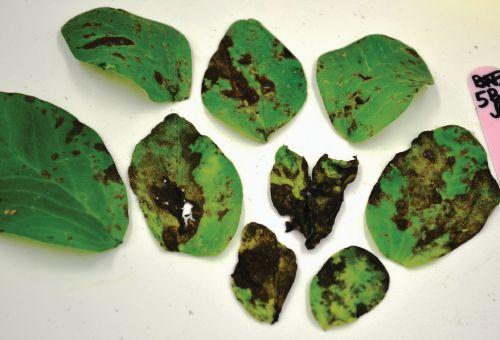
Severe lesions caused by Botrytis fabae in fababean field.
Accurate
plants were incubated in the greenhouse and chocolate spot severity was rated after 14 days. We developed this strategy because of the dry conditions and to help us better correlate when spores are being released and the exposure period to disease development with environmental conditions. Our trials worked surprisingly well, as we had good disease expression in the greenhouse, which confirms that there are still spores being released under dry conditions, and once moisture becomes available, the pathogen can infect.”
Early observations show that average temperature, dew point temperature, and time periods when temperature ranged between 15 and 25 C significantly affected chocolate spot disease severity. Chatterton notes that the real driver of the disease seems to be the leaf wetness time. During the growing season, when there are heavy dew conditions and more than four hours of continuous wetness, the disease is more prevalent. “We are trying to pull all of this information from the field data to help identify parameters we need to test under controlled environmental conditions to build a forecasting model. Leaf wetness and different time exposures to humidity under controlled conditions will help us determine the parameters for infection.”
She adds, “There are a lot of things going on in this project, but we expect to have a better understanding of the disease, risk factors and ultimately a forecasting model for disease risk to assist growers with economic management decisions by the end of the project. In the meantime, there are a few practices that growers can use to minimize chocolate spot disease risk in their fields. Because B. fabae is the more aggressive pathogen specific to fababean, then a crop rotation of three or four years is something that can help manage the disease and keep B. fabae levels low. Growers should also test seed for seedborne pathogens and ensure only highquality, disease-free seed is planted. When required, fungicides can be applied a bit later in the season during flowering or just past
flowering, similar to an application for diseases like sclerotinia.”
This project continues through 2019, which will include data analysis from all of the field surveys, field plot trials and lab ex periments. Further field trapping experiments will be conducted in Alberta and Saskatchewan to estimate the disease risk periods. Researchers expect that the results will provide an understand ing of the dynamics of chocolate spot disease epidemics in time and space and its management. The various parameters will also assist with the development of a forecasting model for disease in cidence and assist growers with making spray application and eco nomic disease management decisions. Final project information is expected to be available in spring 2020. Funding for the project includes matching funding from the Saskatchewan Ministry of Ag riculture, Saskatchewan Pulse Growers, Alberta Pulse Growers and Western Grains Research Foundation.
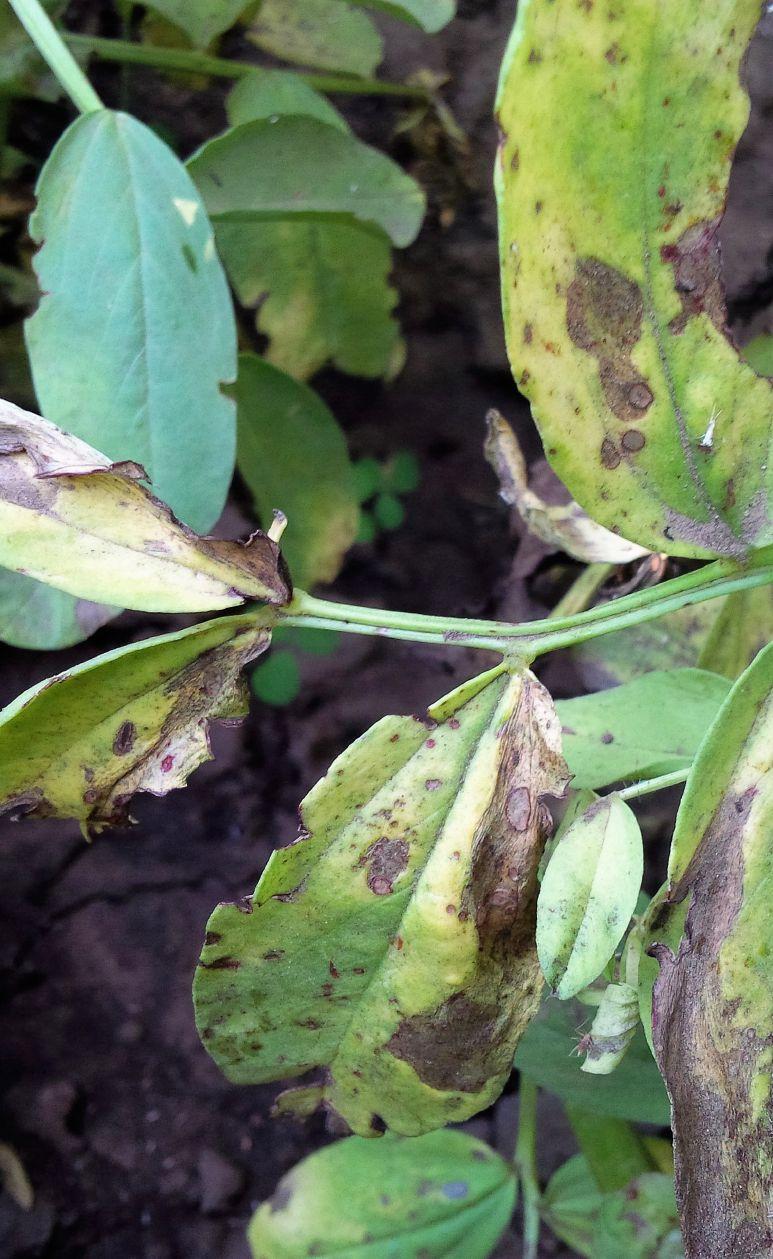
Pinpoint and spreading lesions of chocolate spot disease caused by Botrytis in fababean. Although B. fabae can start as pinpoint and then change to spreading lesions during the aggressive phase, B. cinerea does not.
Spreading lesions caused by Botrytis fabae in fababean.
There’s nothing quite like knowing the worst weeds in your wheat fields have met with a fitting end. Following an application of Luxxur™ herbicide, you can have peace of mind that your wild oats and toughest broadleaf perennials have gotten exactly what they deserve.
SPRAY WITH CONFIDENCE.
WHEN N BUDGETS DON’T ADD UP
Does no-till increase free-living microbial nitrogen fixation?
by Carolyn King
When people think about nitrogen fixation in crop production, rhizobial bacteria are probably the first microbes that come to mind. In partnership with legume plants, rhizobia convert nitrogen from the air into a usable form. But some soil microbes fix nitrogen without being in a relationship with a plant. A recently completed project has looked at the nitrogen-fixation contributions of these free-living microbes in Saskatchewan fields with different tillage histories.
“Free-living nitrogen-fixing microbes, or diazotrophs, are types of bacteria or archaea. They are everywhere in all soils and ecosystems. Some are anaerobic; some are aerobic. There are lots of different kinds. And people underestimate them,” says Diane Knight, the soil science professor at the University of Saskatchewan who led this project.
Her interest in the role of free-living diazotrophs in Prairie soils was sparked by a couple of intriguing research findings.
One was related to soil nitrogen budget research. “Many longterm studies in Alberta and Saskatchewan, particularly by Agriculture and Agri-Food Canada researchers, have been looking at nitrogen budgets in different fields. The researchers have taken really meticulous notes of all the nitrogen inputs [like additions from fertilizers and crop residues] and outputs [like losses due to harvest export, soil erosion and leaching]. And when they calculated the balance between the inputs and outputs, the nitrogen budgets have always come up negative. So on paper, the soils always appear to be losing nitrogen,” she explains.
“However, when the researchers went into the field and did
TOP: A recently completed study in Saskatchewan examined the nitrogen-fixation contributions of free-living microbes in Saskatchewan fields with different tillage histories, including annual till, minimum till and native prairie fields.
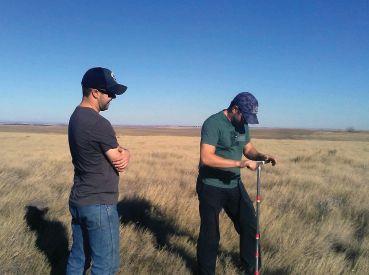
INSET: Knight’s staff collected soil samples at multiple sites to see if the transition to no-till in resulting in more free-living nitrogen fixation.
WINNING IN THE BIN
Taking the risk out of grain storage.
Deciding to store grain and waiting for the markets to pick up can be a stressful decision. Farming sometimes feels like risk after risk, with nothing helping farmers work towards a really great crop, and an excellent profit. Storage is one of the risks that traditional crop insurance has never taken into account.
On his 9,200-acre family farm, Jeff Bean grows lentils, canola, and durum wheat. From seeding to harvest, he sees his hard work paying off by the bushel, and in the fact that the next generation of his family are now involved in the business. But, along the way he realized that his crop insurance was limiting the way they farmed and making it difficult to plan ahead.
“Our old crop insurance was yield-based. We were finding that we just weren’t getting the coverage that we needed from it. We weren’t in a position to be looking to next year. We were wondering where the funds were going to come from to put the crop in.”
When Jeff compared his traditional crop insurance to what’s offered by Global Ag Risk Solutions, the decision
“Global Ag Risk just made sense. We went over both systems and realized we had to protect our farm in a different way.”
Jeff Bean, Farmer in Rouleau, Saskatchewan
was easy. “Global Ag Risk just made sense. We went over both systems and realized we had to protect our farm in a different way.”
Now when Jeff decides to store his harvest and try for a better price in the spring, he knows he’s covered. Global Ag Risk Solutions is gross margin insurance, which covers his input costs and revenue, including losses in the bin.
Global Ag Risk Solutions helps farmers unlock their agronomic potential by covering their three major inputs – fertilizer, seed, and chemicals. If input costs go up, like Jeff’s often do during wet years, coverage increases right along with it, with no change in premiums. Jeff and his family get to farm the way they want, without having to worry about the cost of that extra pass they hadn’t
planned for.
Even if heating threatens that bin of lentils, Jeff’s revenue is still protected. With insurance that works for him, the family farm can plan for success year after year with less risk and better profits.
“I mean, insurance is insurance –you hope you never have to use it. But I can sleep a lot better at night knowing that my bottom line is protected.”
physical measurements of the amount of nitrogen in the soil, the budgets actually came out positive – the soils have been gaining nitrogen.” And those gains tended to be highest for fields under continuously cropped, no-till, direct seeding systems.
“So we know there is some factor that is not being taking into
The easy way to manage your farm
Analyze your data. Plan your strategy. Then track your performance. AgExpert Field gives you the details you need to know to make the best business decisions.
It’s all new. And seriously easy to use. Get it now and see.
fcc.ca/AgExpertField
account in the nitrogen budgets,” Knight says. “It pretty much has to be a nitrogen input. And the only nitrogen input we could think of that isn’t really accounted for in these calculations is free-living nitrogen fixation.”
The other catalyst came from research by Knight’s colleague Sina Adl, a microbial ecologist who is a co-investigator on this project. Adl had done some work looking at different microbial populations in native prairie soils and cultivated soils. Free-living nitrogen-fixing microbes are much more plentiful in native prairie soils than cultivated soils, and tillage is one of the factors known to alter a soil’s microbial community. Adl had an idea that these diazotrophs were becoming gradually re-established as fields remained in no-tillage systems for longer and longer periods.
If correct, this idea would have practical implications. If the conversion to no-till is leading to higher free-living diazotroph populations which are resulting in higher soil nitrogen levels, then perhaps crop growers could reduce their nitrogen fertilizer inputs on long-term no-till fields.
So Knight and Adl conducted this project to see whether the transition to no-till has resulted in more free-living nitrogen fixation in Saskatchewan fields. The project funders were the Western Grains Research Foundation and Saskatchewan Pulse Growers.
The project’s main objective was to estimate the amounts of nitrogen fixed by free-living microbes in Saskatchewan soils under annual tillage systems and under minimum and no-till systems for different lengths of time. A second objective was to determine whether soil zone and soil texture affect free-living nitrogen fixation.
Knight and her research team used two different techniques to estimate the amounts of nitrogen fixation: an isotope method; and a DNA-based method, where they analyzed the DNA from the soil microbial community to pick out genes related to the ability to fix nitrogen.
The project involved five sites: Swift Current (Brown soil zone), Central Butte (Brown), Watrous (Dark Brown), Melfort (Black) and Dana (Dark Brown). At each site, the research team sampled a
Knight’s study estimated the amounts of nitrogen fixed by free-living microbes in Saskatchewan soils with different tillage histories.
variety of fields with different tillage management histories. For example, at Central Butte, they sampled four fields: an annually tilled field; a field that had been under minimum tillage for 10 years; a field under minimum tillage for 25 years; and a native prairie field.
Knight notes, “We were lucky enough to get permission to take soil samples from two native prairie sites. We looked at the diazotrophic populations in these native prairie soils to see how they compared to the numbers in the annual tillage and minimum tillage fields.”
Unfortunately, the project’s results did not show that no-till is leading to significantly higher nitrogen fixation.
“After all this work, we found that there is not very much freeliving nitrogen fixation [in any of the sampled crop fields]. The highest amount was about 1 to 3 kilograms of nitrogen per hectare per year. So the amounts were really low,” Knight says.
She adds, “One of the most interesting things about this study were the results for our native prairie site at Dana. The farmer told us that about 50 years ago his grandfather tilled up half of this
native prairie site to farm it. But then he changed his mind [and never cropped it]. So it was left to revert back to its original state. When we were at the site, we couldn’t tell which part had been tilled once 50 years ago and which part had never been tilled. But the farmer knew roughly where the dividing line was between the two, so we sampled both sides.”
They found that the never-tilled side had much more diazotrophic nitrogen fixation than the side that had not been tilled for 50 years.
“So it is going to take a very, very long time to revert back to the numbers [of free-living nitrogen fixation] found in native prairie soils. And even then, the numbers aren’t big enough to be of benefit to a farmer,” Knight concludes.
She doesn’t have any plans to dig deeper into this enigma. “I’m a Saskatchewan Ministry of Agriculture Research Chair and the vast majority of my funding is for very applied studies that are going to directly benefit farmers.”
So the mystery remains for now. But perhaps some other researchers will have an opportunity to pursue this further and figure out what factors are not being taken into account in the nitrogen budgets for Prairie soils. And maybe that work will be a springboard for fine-tuning nitrogen management.
PRACTICAL ANSWERS FOR FABABEAN GROWERS
A multi-site Alberta project provides up-to-date information on four key agronomic issues.
by Carolyn King
When Alberta’s fababean acreage leapt from about 8,000 acres in 2012 to 110,000 acres in 2015, Alberta Agriculture and Forestry (AF) researchers started to get a lot more questions about fababean agronomy. With so many new growers trying different products and practices in different growing conditions, many of the questions were about situations that AF had not encountered before.
“We hadn’t done research on fababeans since the 1980s and early 1990s, so when growers called, we had to say, ‘We don’t have any research to back this up, but this is what we think,’” notes Robyne Bowness, AF pulse research scientist.
Now, after completing a three-year research project, she has up-to-date, accurate information to answer growers’ questions on four crucial issues: herbicide residues, fungicides, desiccants and nutrients.
The Alberta Pulse Growers funded all four of the project’s studies, and the Alberta Crop Industry Development Fund (ACIDF) provided funding for the herbicide residue study. As well, the
project had in-kind donations from the herbicide, fungicide, fertilizer and seed companies.
The project’s research questions came directly from the calls from growers. And all the studies took place at four sites spread across Alberta’s fababean growing area: Falher (Gray Wooded soils); the St. Albert/Namao/Bon Accord area just north of Edmonton (Black soils); Lacombe (Black soils); and Lethbridge (irrigated Brown soils).
When might herbicide residues cause problems?
The herbicide residue study had two components: residual herbicides used in a wheat crop grown the year before fababeans, and pre-seed herbicides used as pre-emergence herbicides in fababeans.
ABOVE: When Express SG burndown treatments were applied later than recommended (shown above) or at higher rates than recommended, fababeans sometimes suffered damage.
PHOTOS COURTESY OF ROBYNE BOWNESS.
The wheat herbicide trials arose from producer calls about suspected herbicide damage. Bowness says, “When we looked at farmers’ fababean fields and asked about the preceding crop and the herbicides used in it, we identified three products used in wheat that we thought might be causing some problems in fababeans: Prestige (clopyralid), Infinity (pyrasulfotole plus bromoxynil) and Everest (flucarbazone).”
So in 2016, Bowness and her research team planted wheat plots and applied the different herbicide treatments. Each product was sprayed at its recommended label rate and at a double rate to represent situations where problems like overlap occurred. Then in 2017, they grew fababeans and evaluated the herbicide impacts.
With the pre-seed burndown products, the residue concerns related to off-label applications that growers were using because of time pressures in the spring. She explains, “Instead of following the label recommendations to spray their pre-seed burndown product and then seed the crop, they were seeding the crop and then coming back in five or six days later just before the crop emerged and spraying their pre-seed burndown product.”
Bowness and her team compared four burndown products: CleanStart (carfentrazone plus glyphosate), Heat (saflufenacil), Express SG (tribenuron-methyl) mixed with Roundup (glyphosate), and Express SG with 2,4-D. For each of these, the following treatments were used: the normal label rate and the proper timing; twice the label rate but the proper timing; the normal rate but applied five days late; and twice the label rate and applied five days
late. Then they evaluated the effects on the fababean crop.
The results depended in part on the trial location. “At Falher and St. Albert, we didn’t see any negative effects of any of the wheat herbicides applied the year before or any of the pre-seed burndown products applied in the year of fababean,” she notes. “That finding indicates to us that, with their higher organic matter and good moisture, these soils were able to tolerate the higher herbicide levels, and the fababeans were able to grow through any negative effect that they may have encountered early on.”
“For the wheat herbicides at Lacombe, some negative effects occurred with Infinity and Everest, but they weren’t major impacts. However, the negative effects coincided with drier years, so we weren’t sure what role the dry conditions had versus the soil characteristics at that location,” Bowness says. At Lethbridge, all three wheat herbicides caused some negative effects on fababean.
With the pre-seed burndown products, all of the CleanStart treatments and all of the Heat treatments were safe at all the locations.
“At Lacombe and Lethbridge, if the Express SG burndown treatments were applied at the label rate and the proper pre-seeding timing, we didn’t see much of an issue, except maybe a little yellow flash, wilting or crinkling of leaves,” she says. “But if we were applying double rates or spraying it later than recommended, we definitely saw some yellowing, curling and stunting at both sites.”
Her recommendations from the herbicide residue study are: “Be careful with your wheat herbicides because they could cause problems in fababeans particularly in a drier year. And apply your
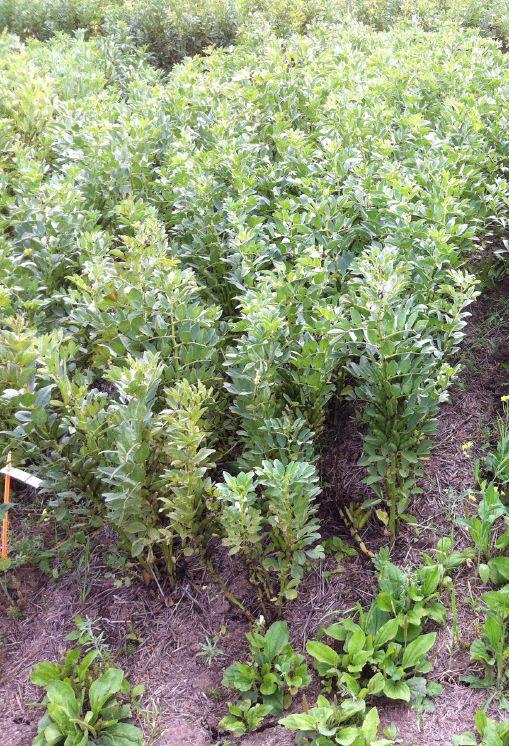
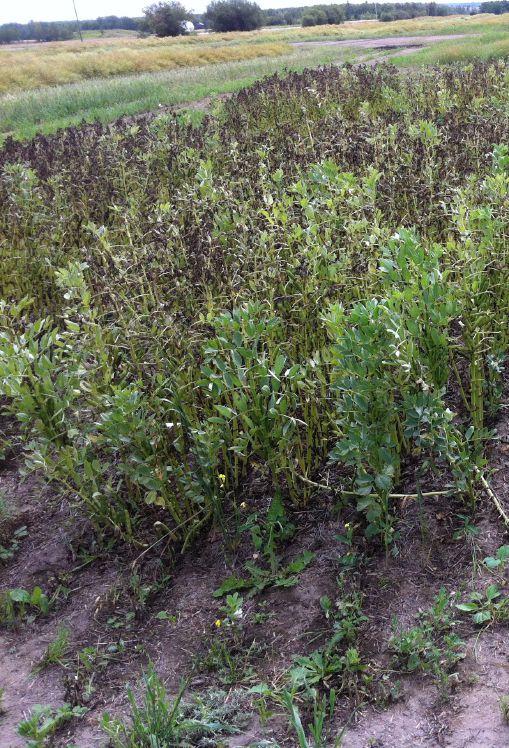
Trials comparing fababean with fungicides (left) and without (right) show these products could be good tools in a wet year with a lot of disease.
pre-seed burndown products properly, especially Express SG because of its residual effect in the soil.”
Are fungicides worthwhiele for chocolate spot?e
The fungicide study came from the grower question: are fungicides economical in fababeans? Bowness explains that the pathogen of concern in fababeans is chocolate spot (Botrytis fabae). Although she and her team hadn’t done any previous research on fungicide applications for chocolate spot, their impression from working with fababeans over the years was that there were probably not strong economic benefits from such applications.
However, they wanted to know for sure, so they tested six fungicides: Lance (boscalid), Acapela (picoxystrobin), Vertisan (penthiopyrad), Priaxor (fluxapyroxad plus pyraclostrobin), Delaro (prothioconazole plus trifloxystrobin) and Headline (pyraclostrobin).
At the time, few fungicides for fababean had chocolate spot on their labels. “These six products were registered on other pulses like chickpeas, peas, and lentils, but not necessarily on fababeans. We chose these six because they are popular fungicides and because some of them have proven activity on Sclerotinia in other crops. Sclerotinia and Botrytis are very similar pathogens,” Bowness says.
She adds, “Headline doesn’t have any activity on Sclerotinia but it is effective on another fababean pathogen, Ascochyta. We were anticipating Ascochyta to show up in fababeans because we have a problem with this disease in other pulse crops including chickpeas, lentils and field peas. So we included Headline to see if we could
get a handle on Ascochyta if it showed up.”
Overall, the study showed some benefit to applying fungicides, but results varied across locations and no particular fungicide necessarily worked better than another.
However, Bowness doesn’t have a lot of confidence in the strength of these results because the plots had very little disease in 2016 and 2017 due to the dry conditions, even though they inoculated the plots with the pathogen. The trials had a little more disease this past year, but she hasn’t finished analyzing the 2018 data.
Bowness’s recommendation on fungicides for fababeans is: “Like any other crop, if it is a wet year and you’re seeing a lot of disease, then fungicides might be a good tool. But I can’t say for sure that fungicides are a must. It would depend on the farm and the situation.”
What are the best practieces for desiccation?
Typically in Alberta’s fababean growing area, frost tends to move in around the second week of September. If fababeans are hit with a killing frost, the yield losses can potentially be significant. Bowness says, “Before we did the desiccant study, our message had been: when you see about 80 to 90 per cent of your pods starting to turn black, the leaves have fallen off, it is the second week of September and frost is imminent, then apply Reglone (diquat) at a high rate because you need to shut those plants down.”
The project’s desiccant study was sparked by Alberta’s late spring and really early fall frost in 2016 – a very challenging combination for fababeans, which need a fairly long growing season. “So we had a lot of questions from growers such as: What’s the best desiccant
Arylex™ Active
wild oats for barley
to use on fababeans and when should we put it on? Is 80 to 90 per cent black pods really the best time to apply it? How much yield do you lose if you apply a bit earlier than that?” she says.
“Of course, farmers really want to use Roundup as a desiccant so they can kill their perennial weeds and desiccate the crop at the same time. But with pulse crops, we have always said you should not use glyphosate as a desiccant.”
The study looked at both Reglone and Roundup and showed that Reglone was definitely the best choice. Reglone can dry down fababean within five days. The study’s results also showed that Reglone could be applied at about 75 per cent pod change, a little earlier than previously recommended, and still get good results with fairly minimal yield losses.
In most years, glyphosate is not a good choice for a fababean desiccant. “Usually we are trying to get fababeans to turn in the middle of September, and glyphosate simply takes too long,” Bowness explains. “Glyphosate takes three weeks to dry a fababean crop down under good conditions. If a frost comes before those three weeks are up, you could have yield loss.”
She adds, “In 2018, our fababeans sat in the snow for six weeks before we were able to get them off. We sprayed Reglone before the snow came on Sept. 10. They stood very well through the snow. And when the snow went away, we took the fababeans off and they were great quality. Had we sprayed glyphosate, we wouldn’t have had a crop.”
In a very dry year, glyphosate could be an option. “For example in 2015, it was extremely dry and the fababeans were naturally dry-
ing down on their own by the end of August. In that case, you could apply glyphosate because you have a window to wait for the crop to dry down,” Bowness says.
Her updated desiccant recommendation is: “Apply Reglone at about 75 to 80 per cent pod change. If frost is coming, spray Reglone three to five days before a killing frost. For fababeans, a killing frost is -4 C for more than four hours.”
Do micronutrients make a difference?
AF conducted micronutrient research on fababeans in the 1980s and didn’t find significant benefits from these fertilizers. Bowness decided to take another look because growers were asking questions based on what they had been hearing in recent years about micronutrients in other crops.
Bowness and her team decided to look at both macronutrients and micronutrients. The macronutrients in the study were phosphorus, potassium and sulphur. Nitrogen wasn’t included because it isn’t applied on pulse crops. They also chose to look at boron, molybdenum and manganese because AF’s previous research indicated fababeans might respond to these micronutrients. She says, “We thought boron might help with flowering, and molybdenum and manganese might help with root development, growth and overall development of the fababean crop.”
The research team applied the macro and micronutrients using the rates and placements on the labels. Phosphorus, potassium and sulphur were applied at seeding. Boron, manganese and molybdenum were applied at seeding and as a foliar spray at the
Licence to spray.
This season, elite growers are being briefed on a new secret weapon for barley in the fight against the prairie’s toughest weeds.
• Cross Spectrum Performance
Get leading Group 1 grass control plus unparalleled broadleaf control of cleavers, hemp-nettle, wild buckwheat, kochia and many more.
• Total Flexibility
With Arylex™ active fl exibility, you can apply on your own terms. Hot, cool, early, late, damp or dry conditions.
• Easy Tank Mixing
Tank mixed with MCPA, count on 3 chemical families in the Group 4 mode of action for e ective resistance management.
Get briefed at OperationRezuvant.Corteva.ca.
Book by March 15, 2019 and save up to 18% with Flex+ Rewards The NEW rewards program from Corteva Agriscience™
recommended leaf stage.
The results were in line with the findings from AF’s previous research.
“We confirmed that phosphorus is extremely important. If you don’t have enough phosphorus, no pulse crop is going to do well,” Bowness says.
“We saw a benefit to potassium only in the Lacombe area where the potassium levels were marginal to start with. We didn’t see any response in any of the other locations because the potassium levels were already sufficient. And we didn’t see any response to sulphur.
“We also didn’t see any response to any of boron, molybdenum or manganese.”
Her nutrient recommendations are: “Definitely make sure that your phosphorus levels are high enough, and that you’re not limited in potassium or sulphur. Although our research didn’t show a benefit to the micronutrients, if you are concerned and you have a soil test that has suggested these micronutrients would be beneficial, then trust the test results and the soil lab’s recommendations.”
Better information, hard numbers
The results from this project provide new information that researchers, extension agents and growers didn’t have before. Now, when producers call with questions, Bowness and others have some real numbers about the different practices. And that will
allow growers to make more informed decisions about managing their fababean crops.
“Now, if a producer says, ‘I hear a frost is coming in a few days on Sept. 15. My fababeans are still really green. What should I do?’ I can say, ‘I have some research that suggests if you go in with Reglone today or tomorrow before the frost hits, you can expect about a five to 10 per cent yield reduction. This is because your crops are still so green and you’re shutting them down. But if you wait, your yield loss will be higher, perhaps 30 per cent,” Bowness notes.
“And I can say, ‘There is a significant difference in a wetter year if you put fungicides on your fababeans during flowering, but in a drier year they are likely not necessary, and here are the numbers to prove it.’ So instead of just doing the best we can to make recommendations to producers based on what we’ve seen in other crops, we now have some actual research across the whole province.”
Bowness also offers one overall recommendation: no matter what practice you’re thinking of trying on your crop, be sure to leave a check strip.
“These are research trials; they are highly managed. Because we take all of the other factors out, we can show if a practice results in differences or not. But farmers are dealing with a number of factors, and none of these agronomic recommendations are going to be exactly the same for every single farmer across the entire province. So leave a test strip and then you’ll know.”
These effects of Infinity at a double rate show the need to be careful with wheat herbicides because they may cause problems in the following fababean crop, particularly in a drier year.
WHAT ARE YOU WAITING FOR?
You’re not just open to new ideas. You’re obsessed with them.
The latest ag tech doesn’t phase you. It excites you. And when
the going gets tough, you roll up your sleeves and get to work.
Because change isn’t easy, but progress is always worth the effort.
You’re a different breed. And so is our seed. Let’s make it happen.
MANAGING ASCOCHYTA IN FIELD PEA
Research found no connection between seeding rate and fungicide response.
by Bruce Barker
Ascochyta blight/complex is the most common disease of field pea in Western Canada. The disease can produce yield losses of more than 30 per cent. The disease is a complex of several fungi that cause leaf, stem and foot rot systems including Ascochyta pinodes, Ascochyta pinodella and Ascochyta pisi. The sexual stage of Ascochyta pinodes is Mycosphaerella pinodes, and the disease caused by this pathogen is also referred to as Mycosphaerella blight.
To help develop control recommendations for the Ascochyta complex in Manitoba, where field pea production has lagged behind Saskatchewan and Alberta, a combination of small-plot and On-Farm Network trials were conducted by the Manitoba Pulse and Soybean Growers (MPSG).
“What we found was that environmental conditions were definitely the driver for a yield response with foliar fungicide applications,” says Greg Bartley, On-Farm Specialist with MPSG in Carman, Man. “We had a wide range of growing conditions from 2015 through 2018, and years with high rainfall often meant high disease pressure.”
Seeding rate confirmed
The research looked at seeding rate and foliar fungicide application impacts on yield. The current Manitoba Agriculture seeding rate recommendation is to target 70 to 80 live plants per square metre (seven to eight per square foot). Some growers may increase seeding rate to improve weed competition or overcome root rot pressure on fields at high risk. Increasing seeding rate, however, may increase the risk of disease because of the denser plant stand.
Small plot research trials conducted in Minto, Man., (2015 and 2016) and Hamiota, Man., (2016) tested seeding rates of 60, 80, 100, 120, and 140 seeds per square metre. Foliar fungicide treatments included a no fungicide control, one application of Headline EC at 10 per cent flower, or an application of Headline at 10 per cent flower plus Priaxor 12 to 13 days later.
At the three site years of small plot research, the optimum plant population that reached 95 per cent of maximum yield was between 74 and 96 plants per square metre. This was similar to the current Manitoba recommendation.
The small plot research did not find any interaction between seeding rate and fungicide application. Yield response to fungicide application varied by year.
“One thing to keep in mind is the yield potential and disease pressure between the two years. 2015 was an excellent year for peas with high yield potential and minimal disease. One fungi-
cide application under these conditions was sufficient. In 2016, a very challenging year for field peas due to high rainfall and high disease pressure, two applications of fungicide was always beneficial,” Bartley says.
On-Farm Network trials reflect small plot fungicide findings
Manitoba Pulse and Soybean Growers conducts formalized OnFarm Network trials by involving farmers to test production practices using replicated strip trials. In 2017, a foliar fungicide trial was set up to compare no fungicide, one foliar fungicide application at early flower and two fungicide applications at early flower and seven to 14 days after the first application. Six farms participated in 2017 and five farms in 2018.
PHOTO COURTESY BARB ZIESMAN.
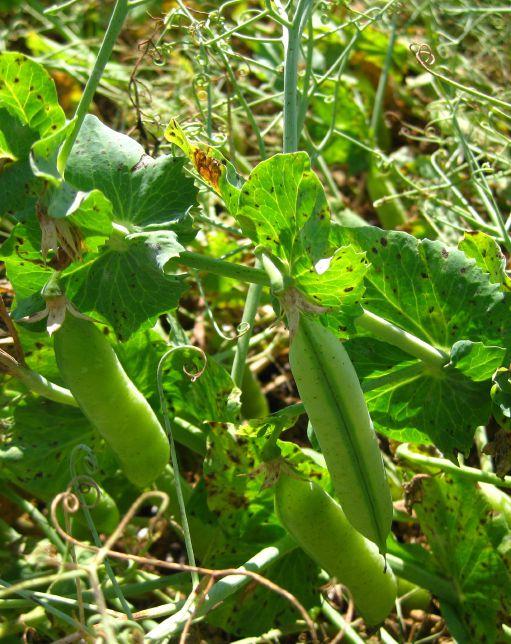
A yield response to foliar fungicide application for Mycosphaerella blight is environmentally driven.
Because you work in acres, not hours.
That’s the way growers, like you, live. You keep pushing, day after day, without ever punching in or out. All with one thing on your mind. Getting more out of every seed, row and field. So, if you’re in the business of higher yields, get there with Bayer fungicides. Especially when your best harvest is yet to come.
Find out more about Bayer fungicides at ItsGrowTime.ca
CHICKPEA-FLAX INTERCROPS SHOW PROMISE
Reduced disease pressure is just one benefit of intercropping, but research has just begun.
by Julienne Isaacs
According to data from Saskatchewan Crop Insurance Corporation (SCIC), 2018 saw 5,679 acres of insured chickpea-flax intercrop in Saskatchewan, says Lana Shaw, manager of the South East Research Farm near Redvers, Sask.
But those figures don’t tell the whole story. Shaw herself has recorded a total of 6,460 acres of intercrop in 2018, based on direct contact with producers. Some of these acres are known to SCIC, says Shaw, but at least a couple thousand of these producers are not customers of SCIC and wouldn’t be in their database.
“The total for Western Canada is likely around 8,000 acres of production when uninsured acres and Alberta and Manitoba are included,” she says.
What this means is that intercropping is increasingly practiced by producers in Western Canada, but the industry is still catching up in terms of agronomic resources and research.
Shaw is part of a team hoping to change that.
Replicated trials on intercropping chickpeas and flax ran at the
South East Research Farm between 2013 and 2018. The same trials were done at Indian Head Research Station from 2014 to 2018, and a scaled-down version of the trials ran at Swift Current in 2018 (Saskatchewan Pulse Growers funded trials between 2016 and 2017). In 2017 they began to examine the effect of crop placement, flax seeding rate and nitrogen rate on development and yield of both crops.
According to Bill May, crop management agronomist for Agriculture and Agri-Food Canada and the principle investigator of this study, the trials were fueled by three big questions.
“Can we manage chickpeas to expand geographic area by applying drought stress? Can we manage them better in adapted areas if we can impact disease development? And can we move flax into areas where flax isn’t currently grown or economical on its own by
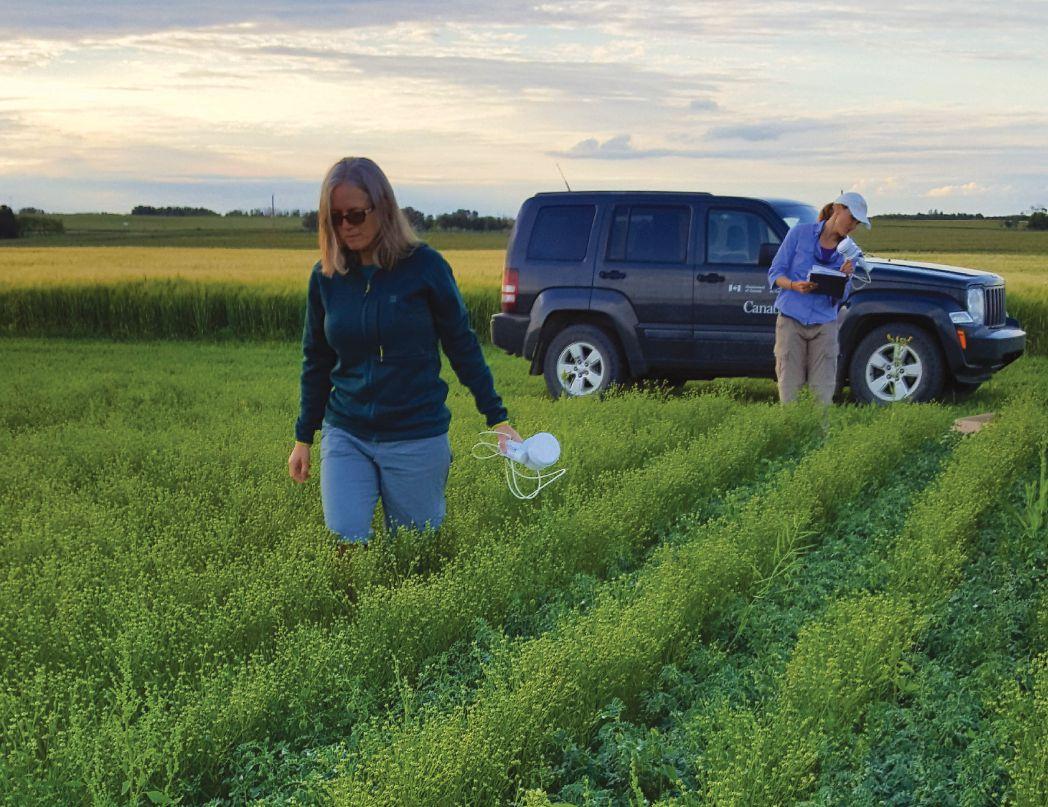
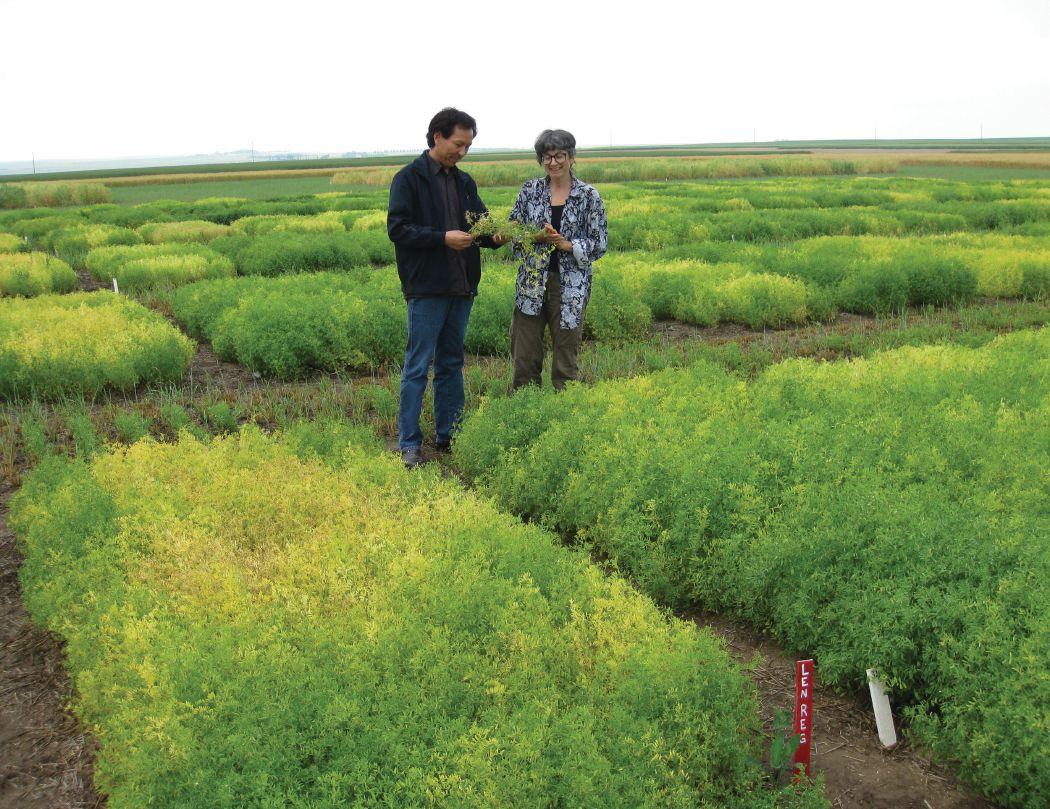
ABOVE: A photo of Michelle Hubbard and AAFC research scientist Syama Chatterton doing preliminary work with relative humidity and temperature data loggers in a small plot of alternating rows of chickpea and flax in Redvers in July 2018.
PHOTO COURTESY OF LANA SHAW.
SEED EVERYTHING AND THE KITCHEN SINK.
Get a more complete and faster burnoff when adding Aim® EC herbicide to your glyphosate. This unique Group 14 chemistry delivers fast-acting control of your toughest weeds. Aim® EC herbicide also provides the ultimate flexibility, allowing you to tank-mix with your partner of choice and no fear of cropping restrictions. Fire up your pre-seed burnoff with Aim® EC herbicide.
CANOLA I LENTILS I WHEAT I BARLEY I & MORE
Save up to $5.50/acre with FMC Grower CashBack.
intercropping it with chickpeas?” May asks.
“We’re also asking whether we can increase the overall income per acre because we’re getting some flax off the field as well as chickpeas,” he adds. “Maybe that’ll change as you move into wet areas – the chickpeas will be a second crop and flax will be primary. We don’t know yet.”
Data hasn’t yet been analyzed for the years of the study, but May hopes to release that information soon. So far, the flax seeding rate has had the biggest impact of the three agronomic practices.
In the meantime, May’s team has applied for Agriculture Development Fund (ADF) project funding to expand the study for another three years so they can bring in more researchers to expand the Swift Current site and add sites in Melfort and Saskatoon to the study. These sites would bring a valuable angle to the study: they didn’t get enough rain at the southern sites in 2017 and 2018, but even if those sites don’t get rain during the next three years, Melfort very likely will.
Study questions
Rainfall levels are a key consideration for whether producers can grow chickpeas, May says.
Chickpeas have a characteristic known as “an indeterminate growth habit,” meaning if they get too much rain at the end of the growing season they may fail to mature and fill seeds. This is one reason why chickpeas aren’t typically grown outside drier regions even though they’re a high value crop.
“In a normal wet year at Indian Head, we typically can’t get seed set,” May says. “This got me thinking – if we grow flax with chickpeas, and apply some stress to the crop by drying out the top two feet of soil with the flax, maybe the chickpeas can fill the seed.”
In 2015, in monocropped chickpeas, May had yields of about 3,000 pounds per acre (lb/ac) of chickpeas, but they were 50 per cent green. “With the flax, I got about 1,900 lb/ac of chickpeas, but they weren’t green. All of a sudden, the quality was much higher,” he says.
At the Indian Head and Redvers sites, researchers compared alternate rows with mixed rows, with and without nitrogen, with four different seeding rates of flax, plus a monocrop control with a flax and a chickpea, for a total of 21 different treatment comparisons with four replications. The Swift Current site was smaller, with paired rows instead of alternating rows, randomized separately from the mixed rows due to equipment constraints. There were only three flax seeding rates and no application of nitrogen fertilizer, besides what was presenting the phosphorous, in Swift Current.
At Indian Head, May says alternate rows seemed to perform better than mixed rows, while at Redvers, mixed rows may have a slight advantage. Flax seeding rate has a big impact on chickpea performance, with higher seeding rates negatively impacting chickpeas. Added N tended to boost flax while hurting chickpea yield. Beyond these preliminary observations, much more data is needed before researchers can make specific recommendations for seeding rate and N.
“We’re just at the beginning of this, but we know that flax seeding rate is a big driver,” May says. “I expect that the wetter your general conditions, the higher the flax rate will be.”
Disease
While rainfall is an important check for producers considering growing chickpeas, it isn’t the only one. Monocropped chickpea is highly susceptible to disease, especially ascochyta blight, which is
Michelle Hubbard is a pulse pathologist at the Swift Current Research and Development Centre, who brought her expertise in disease management to the study in 2018.
She says that, without treatment, ascochyta blight can devastate chickpea production, and though the disease is traditionally managed with fungicides, they’re expensive – and resistance is on the rise.
“I’m in the process of doing a survey on strobilurin (Group 11) fungicide resistance in chickpea, and in every site, the ascochyta has been resistant to strobilurin fungicides. This emphasizes the need for other control mechanisms,” Hubbard says.
While data isn’t yet finalized from the chickpea/flax trial, she says the results have been promising so far.
“This past year we looked for disease in all three sites and in Indian Head, when we did a rating in early September, there was virtually no disease,” she says. “In Swift Current there was very little disease and the severity was really low, so it wasn’t different between intercrop and monocrop, but when you looked at the incidence – pods with lesions versus clean pods – the monocrop chickpeas had more pods with disease.”
In Redvers, disease levels were moderate but severity was higher in the monocropped than in the intercropped plots, Hubbard says.
“Regardless of whether you use mixed or alternating rows, it’s worth investigating whether the use of intercrops is consistently able to lower disease in chickpea, and whether that could lead to less need for fungicide,” she says.
caused by the fungus Ascochyta rabiei
Increased diversity
Shawn Catherwood planted a chickpea-flax intercrop on 50 acres for the first time in 2018 on his Ceylon, Sask. operation.
Last spring, Catherwood graduated from the University of Saskatchewan with an agronomy degree. He found that there was very little emphasis on soil biology and regenerative agriculture in his program. Back home, he opted to try intercropping on a small scale on his family’s 3,500-acre operation.
“I farm with my father and uncle. They weren’t against the idea of intercropping, but maybe a bit skeptical,” Catherwood says. “Everyone was surprised – the outcome was awesome, so it kind of proved that this can work. My target yield for chickpea was 1,800 lbs/ac, and my yield goal for flax was eight bushels per acre (bu/ac). I wanted to get about 35 to 38 bu/ac gross. I got about 26 bu/ac gross –19 bushels of chickpea and seven to eight bushels of flax,” he says.
The results were better than Catherwood had hoped considering the fairly dry year.
He says the number one reason he’s interested in intercropping is profitability –growing two high-value crops together using fewer inputs overall. The first year was tough, Catherwood says, because he had to buy chickpea seed, but now that he has seed, costs will go down.
But other costs were offset. Ascochyta blight presents a big expense to producers in the form of multiple fungicide applications.
“Growing chickpeas on their own is a battle with ascochyta. My
neighbours pencil in three to four applications a year no matter whether it’s dry or wet. This year, some of my neighbours sprayed three times on their chickpeas,” he says.
Catherwood limited himself to spraying twice, but a check strip proved the second application was unnecessary. “There was zero disease on the check strip,” he says. “I guess it was a good thing, because now I have more confidence going forward.”
For Catherwood, the benefits of intercropping are not only economical.
“One of the things I’m trying to do is increase diversity on the farm. A perfect way to do that is to plant two crops at once. It’s increasing diversity both spatially and in time. You’re getting more diversity in each year of the rotation with the intercrops,” he says.
Catherwood says that while farmers can learn from each other and Lana Shaw’s work at the South East Research Farm, there are very few official resources for producers interested in intercropping, so new research is more than welcome.
In the meantime, he and many other growers are starting small and building their own experience – which is exactly what Bill May recommends.
“If producers are interested in growing chickpeas and aren’t in a chickpea area, they almost have to try an intercrop,” May says. “Just be aware that what works once in one year in one field doesn’t necessarily mean it’s going to work all the time. There’s a lot to learn before we can make concrete recommendations.”
Chickpea-flax in mixed rows at Swift Current in August 2018. Photo courtesy of Michelle Hubbard.
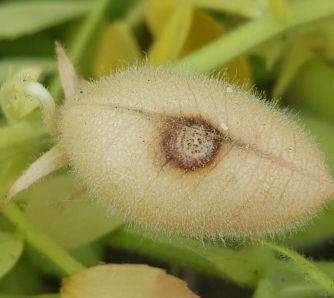
An ascochyta lesion on a chickpea pod at Redvers in August 2018. Photo courtesy of Lana Shaw.
OPTIMAL N AND P MANAGEMENT FOR FLAX
Higher nitrogen and phosphorus rates help achieve optimal yields for flax.
by Donna Fleury
Optimizing fertility can be a bit more challenging for such crops as flax, as responses can be variable depending on environmental conditions, moisture and other factors. Although not as consistently responsive as a crop like canola, optimizing nitrogen (N) and phosphorus (P) fertility requirements are important for maximizing yields and net returns. Researchers in Western Canada designed a project to re-evaluate fertility requirements for flax under a broad range of Western Canadian environments and using modern varieties and seeding equipment.
An extensive three-year study launched in 2016 included field trials at six locations in Saskatchewan (Indian Head, Melfort, Redvers, Scott, Swift Current and Yorkton), one in Alberta (Vegreville) and one in Manitoba (Brandon). At each location, various fertilizer treatments were compared, including four N rates of 13, 50, 100 and 150 kilograms of nitrogen per hectare (kg N/ha) of urea (46-0-0) and four P rates of 0, 20, 40 and 60 kg P 2 O 5 /ha of monoammonium phosphate (11-52-0). All of the
plots were direct-seeded into cereal stubble and all fertilizer was sidebanded during seeding, except at the Vegreville site, which included mid-row banded fertilizer.
“The project field work finished with the fall 2018 harvest, however the final data analysis is still underway,” explains Chris Holzapfel, research manager at Indian Head Agricultural Research Foundation. “Growing conditions were variable across the three years of the project, with 2016 seeing aboveaverage precipitation amounts and growing season temperatures at all sites. For 2017, conditions were much drier across most locations, although residual soil moisture from the previous year helped. Again in 2018, conditions were quite dry with some early season precipitation but little the rest of the growing season, resulting in variable responses and yields across the locations.”
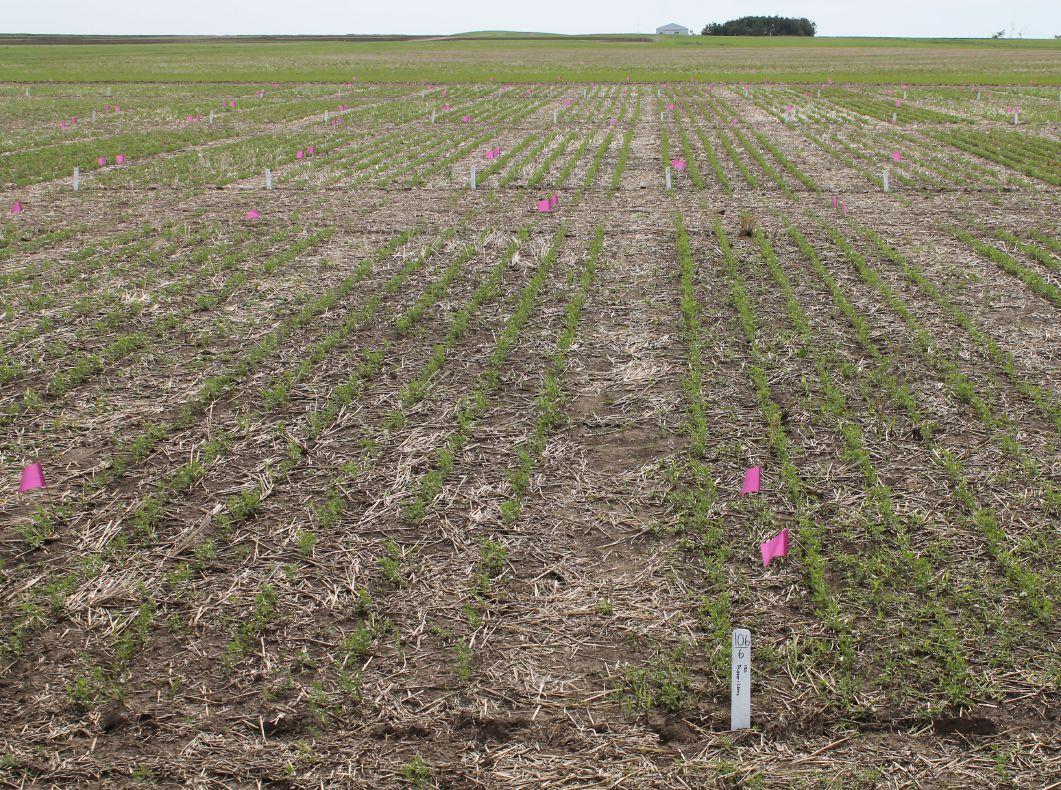
ABOVE: A project is underway in Western Canada to re-evaluate fertility requirements for flax under multiple environments and conditions.
STRAIGHT UP WILD OAT CONTROL
Wild oats hanging above the crop canopy are like a billboard for poor weed control.
Varro® herbicide provides outstanding control of wild oats and other problem grass weeds to keep your wheat field looking great all season.
Varro – wild oat control that’s worth talking about.
Preliminary results from the first two years of the study indicate that in most cases the optimum N rates are approximately 80 to 100 kg N/acre. Holzapfel notes these results generally support previous research work with flax, although this study did find some responses to slightly higher rates of N than previously documented. “We don’t always see a consistent response and some of the results can be fairly year specific. However, if growers are in an area where average flax yields of 30 to 40 bu/acre are achievable, then N rates of 80 to 100 lbs/acre of total N would in most cases be close to optimum yields. Across all sites, yields did not increase with N rates beyond 100 kg N/ha. Soil testing is recommended.”
Phosphorus responses were less frequent and generally smaller, however yields were approximately 10 per cent higher on average with P fertilization. There were no negative impacts on emergence detected at any of the locations at the higher rates of side-banded P.
Some sites were more responsive than others. The lack of response to P fertilization at many sites may be explained by contributions of residual inorganic P and organic P mineralization in addition to the strong arbuscular mycorrhizal fungi relationships that flax can develop to assist with P uptake. Applying P at rates as part of a longer-term fertility strategy for maintaining or building P in cropping systems so it is not limiting is recommended.
“Flax is known to be fairy sensitive to seed placed fertilizer, so you don’t want to compromise establishment with higher P rates and never seedplace N,” Holzapfel adds. “Flax is also quite suscep -
tible to injury from high rates of N, so ensuring the best seed/fertilizer separation possible when sidebanding is important. In the study, as sidebanded N rates increased, plant populations significantly declined. However, making sure that seeding rates are sufficiently high can offset the bit of a loss at higher N rates. Flax is also reasonably flexible and can compensate for some emergence loss. Seeding rates of 45 to 50 pounds per acre are typically recommended, with a minimum plant population threshold of 300 plants per square metre or 30 plants per square foot, which keeps the crop competitive with weeds, won’t limit yield or impact maturity.”
Although flax is sensitive to environmental conditions, and responses can be variable from year to year, the study shows that optimal N rates and P fertilizer can increase yields for flax. “Sidebanded N rates of approximately 80 to 100 kg N/acre will help get close to optimal yields,” Holzapfel says. “It is important to plot out the economics as well to determine if the increase in yield is worth the higher N costs. Also using sufficiently high seeding rates to offset any emergence losses due to higher N rates is important, along with ensuring the best seed and fertilizer separation possible during seeding.” The final study results will be available in the spring of 2019.
For more in-depth fertility studies, please visit www.topcropmanager.com.
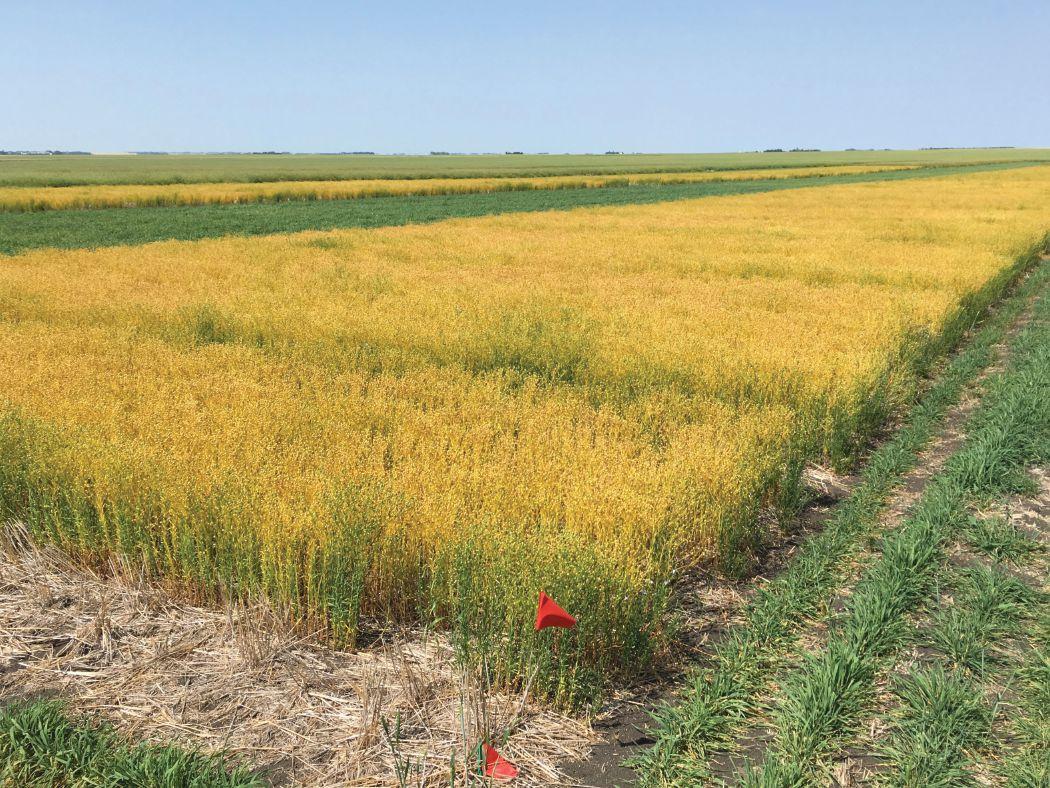
Flax is sensitive to environmental conditions, but optimal N rates and P fertilizer can increase flax yields.
I don’t crave special attention. But I got it when I needed it.*
I grow hybrid seed corn and have a tight window to harvest – or I get docked. Time equals money, so I couldn’t afford the downtime when a failed push rod caused severe engine damage. My John Deere dealership understood that. They quickly tracked down a short block and accessories, and two technicians worked through Friday night until 4 a.m. when missing parts halted progress. Still, the team kept going. They tracked down the missing parts on Sunday morning at one of their other stores, finished building the engine, and brought a mobile service crane truck out to my farm to install the engine.
I was back picking corn by Sunday afternoon.
I’m not the largest farmer in our area. But when I needed them, I was the most important person to my John Deere dealer.
FERTILIZER MANAGEMENT OF ALFALFA
Without proper inoculation of alfalfa seed, poor nitrogen fixation may occur.
by Ross H. McKenzie PhD, P. Ag
Alfalfa is an excellent yielding crop, but removes a relatively high amount of soil nutrients. Ensuring adequate soil fertility and wisely managing nutrient applications is key to growing alfalfa successfully. Alfalfa can produce from two to six tons per acre (ton/ac) of dry matter, depending on soil nutrients levels and environmental conditions such as stored soil moisture and precipitation.
Table 1 gives the approximate amounts of each nutrient removed per ton of dry matter alfalfa. A three-ton/ac alfalfa crop requires about 30 to 45 pounds per acre (lb/ac) phosphate (P 2O 5), 120 to 160 lb/ac potash (K 2O) and 15 to 20 lb/ac sulphate-sulphur (S). Various micronutrients are also required in relatively small amounts, but micronutrient fertilizers are rarely needed for alfalfa in Western Canada. Alfalfa also requires about four to five inches of water for each ton of dry matter produced.
Nitrogen (N)
Nitrogen fertilizer is rarely needed for a healthy alfalfa field. Alfalfa is a legume crop that can “fix” its own nitrogen requirements. Most prairie soils are low in naturally occurring nitrogen-fixing bacteria. So, alfalfa seed should always be inoculated with the proper rhizobium bacteria strain, Rhizobium meliloti , just prior to seeding. Alfalfa seed is often pre-inoculated before sale. If the inoculant is not viable or the seed is improperly inoculated, poor N-fixation may occur.
After alfalfa seed germinates, the rhizobium bacteria will develop nodules on the alfalfa roots and live in association with the roots. The bacteria convert nitrogen gas (N2) from the air into ammonium that alfalfa can use, and in return alfalfa provides carbohydrates, oxygen and a suitable environment to the bacteria to survive. A five-ton/ac alfalfa crop can fix up to 250 lb/ac of ammonium nitrogen per year.
Alfalfa’s ability to fix nitrogen often declines after a stand about five years old. When alfalfa yield starts to decline, the stand should be terminated and re-seeded to annual crops for several years before being re-established to alfalfa.
Managing alfalfa fields prior to establishment
Fertilizing alfalfa fields prior to establishment is a financial challenge because it is a long-term investment. Fertilizer decisions prior to planting are important, as that is the only opportunity to incorporate immobile soil nutrients such as phosphorus (P) and potassium (K). Good nutrient management prior to establishment can increase alfalfa yield and improve the
longevity of an alfalfa stand.
Prior to establishing alfalfa, soil sampling and soil testing is the best way to check soil nutrient levels and develop a fertilizer management plan. If either phosphorus or potassium is deficient, a larger batch application should be considered to build soil nutrient levels prior to establishing alfalfa.
As a general rule, most Western Canadian soils are relatively low in plant available P. Depending on soil zone and average yield potential, an application of 100 to 200 lbs/ac of phosphate (P2O5) should meet crop requirements for three to four years. In drier areas with lower yield potential, an application of 100 lbs/ ac of P2O5 may be enough. In higher production areas or under irrigation, an application of 200 lbs/ac of P2O5 should be considered. Phosphate fertilizer can be either banded or broadcastincorporated prior to seeding alfalfa.
Table 1. Approximate nutrient removal per ton of dry matter of alfalfa.
IT’S PAYBACK TIME.
Step up to a new level of cleavers control. For years, managing cleavers in canola has been a challenge. But not anymore. New Facet™ L herbicide puts you in control of cleavers to help safeguard the yield potential of your InVigor® hybrid canola. Visit agsolutions.ca/FacetL to learn more.
Most Brown and Dark Brown soils in Western Canada have adequate amounts of available soil potassium. If soil potassium level is greater than 200 to 250 lbs/ac in the zero- to six-inch depth (ammonium acetate-extractable K soil test), then no additional K is usually needed.
Black and Gray soils more frequently test low in soil potassium. Generally, potassium is most commonly deficient on very sandy, intensively cropped soils. Potassium fertilizer is definitely recommended if soil levels are less than 200 lbs K/ac in the zeroto six-inch depth. If soil is marginally deficient in K, an application of 200 lbs/ac of K2O may meet crop requirements for three to four years, but if severely deficient, a batch application coupled with annual application may be required.
Acid soils and lime
Soil acidity can be a deterrent to alfalfa production. A soil test is the only reliable way of determining whether a soil is acidic. Acid soils occur most commonly in the Dark Gray and Gray soil regions. Soil pH in the range from 5.6 to 6.0 is moderately acidic and less than pH 5.6 is strongly acidic.
Soil acidity can directly affect the growth and survival of rhizobium bacteria to limit N fixation. Acid soils can have soluble forms of aluminum (Al) and manganese (Mn). As soil pH decreases, soluble Al or Mn can increase to toxic levels reducing alfalfa yield.
When soil pH is less than 5.6, a lime requirement soil test should be conducted, and the application of lime should be
Phosphate (P2O5
Potassium (K2O) recommendation (lb/ac)
Table 2. Annual broadcast phosphate fertilizer recommendations for alfalfa based on the Modified Kelowna soil test method.
Table 3. Potash fertilizer recommendations for alfalfa, based on the ammonium acetate soil K test method.
YOU’VE NEVER SEEN A BAYERVALUE ™ PROGRAM LIKE THIS
We’ve now made it even easier to qualify for up to 18% savings, with 50+ brands and hundreds of products including qualifiers like Roundup Ready ® seed and Acceleron BioAg ™. You’ll be surprised how simple it is to qualify.
If soil test phosphorus is low or marginal in an established stand, an annual application of phosphate is needed (see recommendations in Table 2). Alfalfa has feeder roots near the soil surface that can take up broadcast P reasonably efficiently, as long as the surface soil is moist. Granular phosphate fertilizer can be broadcast applied or liquid phosphate can be dribble-band applied. Irrigation farmers have the option of fertigation application using liquid phosphate fertilizer. Phosphate fertilizer is most effective when applied very early in the spring.
Most Brown and Dark Brown soils in Western Canada have adequate amounts sulphate sulphur in the combined zero- to sixplus six- to 12-inch soil depths. However, Black and Gray soils more frequently test low in soil sulphate-sulphur. Generally, sulphate is most commonly deficient on sandy soils. Sulphatesulphur is mobile in soil, easily moves downward under higher precipitation conditions and can be variable across fields
considered. A lime requirement test will determine the rate of lime required to restore soil to non-toxic levels. Estimating crop response and cost of lime will help to determine if it is economically feasible to apply lime to a field. Lime should be applied and well incorporated at least one year before establishing alfalfa to allow time for the lime to interact with the soil to increase pH level.
Fertilizer management of established alfalfa
Applying N fertilizer to healthy alfalfa stands is not necessary and not recommended. However, as mentioned, alfalfa yield tends to decline as the stand gets older. Application of N fertilizer may provide short-term benefit on older stands, but the termination of the stand should be considered.
When a field is uniformly low in S, a soil test is useful to estimate S fertilizer needs. However, if only a portion of a field is low in S, it can be difficult to identify the deficient areas without intensive soil sampling.
Manure and compost
Manure and compost supply relatively large amounts of phosphorus and potassium. Both are excellent to build soil P or K levels prior to establishing alfalfa. Generally, it is best to apply and incorporate manure or compost one year before establishing alfalfa.
When manure is applied to established alfalfa, it may burn the leaves, reducing yield and quality. Also, manure application equipment can cause soil compaction and damage alfalfa crowns if soil conditions are moist. If manure is to be applied to alfalfa, ideally it should be in compost form and applied in early spring.
Table 4. General sulphur fertilizer recommendations for alfalfa in different soil zones
Alfalfa can have great yields, but it removes a high amount of soil nutrients.
PHOTO BY TOP CROP MANAGER.
Hard-to-kill grassy weeds are no match for EVEREST® 3.0. An advanced, easier-to-use formulation delivers superior Flush after flush control of wild oats and green foxtail. In addition, EVEREST 3.0 is now registered for use on yellow foxtail*, barnyard grass*, Japanese brome and key broadleaf weeds that can invade your wheat and rob your yields. You’ll still get best-in-class crop safety and unmatched application flexibility. Talk to your retailer or visit everest3-0.ca to learn more.
*Suppression alone; Control with tank-mix of INFERNO® WDG Herbicide.
With straight cutting canola gaining ground in Western Canada, more research is underway. But growers need to be aware of the unique storage challenges that often come along with straight cutting canola.
BY Bruce Barker
Straight cutting canola is becoming more popular across the Prairies, partially because of gains in harvest efficiency. Research by PAMI in Portage la Prairie, Man., found that straight-cut canola was often as profitable as swathing and combining. However, one area that canola growers need to be aware of is that straight cutting canola can pose some unique, although not unmanageable, storage issues.
“Depending on the year and condition of the crop, there may be more green material from stems, leaves and pods going into the bin with straight cut canola,” says canola grower Kevin Bender in Bentley, Alta. “We generally watch those bins more closely and run aeration to cool the grain down.”
A challenge with green plant material is that it typically moves to the outer walls as the bin fills, and is susceptible to heating and development of mould. Surprisingly, during the drawn-out harvest of 2018, Bender didn’t have much problem with green plant material. Because harvest was delayed and he harvested wheat first, the standing canola had time to dry down.
A second consideration for canola storage is that straight-cut canola often goes into the bin at a higher moisture content than swathed canola.
“Swathed canola generally dries down more uniformly so moisture content at harvest can be as low as six to seven per cent. When we straight cut canola, it is often close to 10 per cent, so we always aerate to
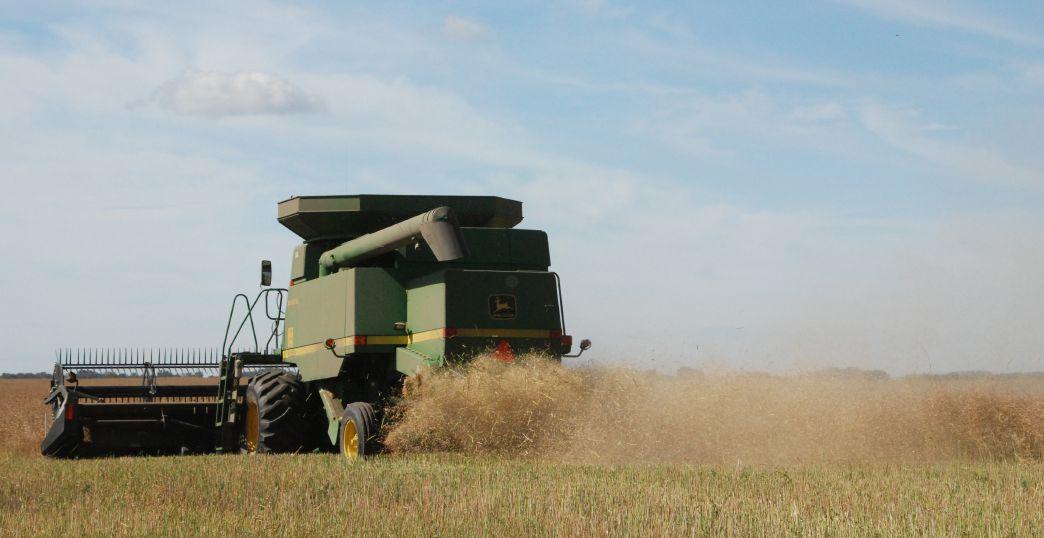
Whether straight cut or swathed, aerate and monitor canola once it goes in the bin.
PHOTO BY BRUCE BARKER.
condition the grain to prevent heating,” Bender says.
LIMITED RESEARCH FOUND FEW DIFFERENCES
A one-year study led by Lorne Grieger, program manager with PAMI, in Portage la Prairie in 2017, evaluated differences in storability of canola seed harvested by swathing, straight cutting with glyphosate, straight cutting desiccated with Reglone, straight cutting desiccated with Heat LQ and glyphosate, and straight cutting that was left to ripen naturally. The research was part of a larger study on straight cutting canola funded by Growing Forward 2.
Samples were taken from each treatment and sent to a lab for a third party analysis of green seed, dockage, oil content, moisture, and seed weight. There were no differences in dockage, green seed, oil content or bushel weight between treatments.
Seed moisture content and thousand kernel seed weight were significantly different between swathed and other treatments. Swathed canola was about one per cent lower in moisture content and seeds were smaller than the other treatments, except for glyphosate straight-cut canola, which had similar seed size to swathed canola.
Additional samples were sent to the University of Manitoba for respiration testing under the direction of Dr. Fuji Jian. Respiration rate was estimated by measuring the CO2 concentration built up over three days when stored at one of four constant temperatures: 20 C, 25 C, 30 C, or 35 C. At the end of three days, the air was exchanged and the process repeated over 10 weeks.
The preliminary results of the one-year study were not conclusive when comparing swathed to straight cut canola respiration rates. However, storage temperature had a strong effect on respiration rate at temperatures of 30 C to 35 C compared to 20 C for all treatments.
Unfortunately, the PAMI study did not receive funding to carry on the research into 2018. But the trend of greater respiration at higher temperatures certainly highlights the current canola storage recommendation – swathed or straight cut – to immediately cool down the canola to help prevent heating. Canola Council of Canada recommends that canola should be binned at a maximum of eight per cent moisture and cooled to 15 C or lower throughout the bin.
MANAGING ASCOCHYTA IN FIELD PEA
Continued from page 26
In 2017, the probability of a significant yield response to fungicide application was 75 per cent for one application and 25 per cent for two applications. 2017 was a dry year and disease pressure was low.
For 2018, Bartley says there was a yield response to fungicide at one out of five sites. He says yield potential was okay in certain areas but the lack of moisture reduced disease pressure for the most part.
What the small plot and On-Farm Network trials highlight is that environmental conditions impact disease development and the likelihood of a yield response to foliar fungicide application. To help guide the fungicide application process, Saskatchewan Pulse Growers has posted a fungicide decision support checklist on their website to help determine the risk associated with Ascochyta and Mycosphaerella blight in field pea. The crop is assessed at no later than the 10-node stage or 10 per cent flowering.
The checklist takes into consideration the crop canopy, leaf wetness/humidity, weather forecast and current visual disease symptoms. Farmers can use this checklist to help make spray decisions, or at least reference the checklist to think about the factors that influence disease development and the risk potential.
“Because Mycosphaerella blight is so weather-dependent, a yield response to foliar fungicide application really depends on environmental conditions and your risk tolerance. We will continue to explore this topic to refine recommendations in the future,” Bartley says.
Western Canada leads lentil production globally, with over 94 per cent grown in Saskatchewan. Red lentils are the most commonly consumed lentil worldwide, and dominate most of the global trade. Over the past few years, research has focused on improving lentil productivity in Saskatchewan, including studies on seeding rates, inoculants, other inputs and economics.
“In 2016, we conducted a one-year study at two sites at Scott and Swift Current to determine whether the findings from previous research on seeding rates and inoculants for lentils would be similar in our area,” explains Jessica Weber, research manager for the Western Applied Research Corporation (WARC) in Scott, Sask. “Our project objectives were to determine which combination of agronomic practices produce the greatest yield and to determine which inputs provide the greatest economic return.”
In the project, treatments included a comparison of the current recommended seeding rate of 130 seeds per square metre (seeds/
m2) with higher rates of 190 and 260 seeds/m2 for both small and large red lentils, which are the same seeding rates compared in recent research by Steve Shirtliffe at the University of Saskatchewan. Treatments also compared liquid and granular inoculants, building on research done by Yantai Gan at Agriculture and AgriFood Canada in Swift Current. Fungicides treatments included a comparison of no application to a single application. Information on plant densities, disease ratings and yield were collected at both sites.
“At the end of the one-year study, our results did line up quite nicely with previous findings,” Weber says. “Our results showed that with small seeded red lentils, a higher seeding rate of 190 seeds/m2 resulted in the highest yields. However, for large-seeded red lentils, there was no benefit to increasing the seeding rate and
PHOTOS COURTESY OF JESSICA WEBER, WARC.
TOP: Seeding rate of 130 seeds per square metre with pre-seed residual herbicides (left) and glyphosate only (right) at WARC in 2018.
INSET: Lentil input study plots at WARC 2018.
THE END IS HERE FOR FOXTAIL BARLEY
Introducing the Olympus System, the first step in controlling foxtail barley and wild oats. Simply apply Olympus® with your pre-seed application of Roundup® and follow in-season with Varro® or Velocity m3 for season-long control of foxtail barley and other tough grass weeds.
WHEN YOU PURCHASE MATCHING ACRES OF VARRO OR VELOCITY M3
Ask your retail for details
the current recommendation of 130 seeds/m2 is still the best rate. Higher seeding rates for small seeded red lentils also resulted in a denser canopy and may require a bit more reliance on fungicides depending on disease pressure.”
Granular inoculants resulted in higher yields with more nodulation compared to the liquid inoculants. Weber adds however, that a large difference between inoculant formulations may not always be detected. Although granular inoculants result in excellent nodule formation, a response may be muted depending on specific crop rotations and previous nodulation habits. For example, if there is a strong rotational background of pulses in a field, then there might not be as big of a benefit of granular over peat or liquid inoculants because there might not be as big of a benefit of granular over peat or liquid inoculants as there may already be a build up of the natural rhizobium within the soil. If budget allows and growers are comfortable using them, then granular inoculants are the way to go, but they are more expensive than liquid or peat options.
In 2017, researchers launched a larger three-year small red lentil input study to determine which combination of the common agronomic practices produce the greatest lentil yield, and which integrated production system is the most economically feasible. The study was conducted at five locations in Saskatchewan: Western Applied Research Corporation at Scott, Indian Head Agriculture Research Foundation at Indian Head, Irrigation Crop Diversification Centre at Outlook, Wheatland Conservation Area at Swift Current, and East Central Research Foundation at Yorkton (2017)/ University of Saskatchewan, Saskatoon (2018). Treatments included comparison of three seeding rates (130, 190 and 260 seeds/m2), three fungicide treatments (no application, single application, two applications) and two herbicide management practices (pre-seed burn-off vs. pre-seed residual) in each location. The crop response data collected included crop and weed density, crop and weed
biomass, disease ratings, days to flowering, days to maturity, seed yield, thousand kernel weights, and test weight.
“We have some preliminary results from the first year of the study, and are waiting to complete the analysis from the 2018 trials,” Weber explains. “The study will continue for one more year in 2019, with final results available after that. Overall, the preliminary results showed that best practice for seeding small red lentils includes higher seeding rates of at least 190 seeds/m2, which also resulted in optimal yields. Higher seeding rates improve crop competitive ability and canopy closure. Early results also showed that overall the pre-seed residual herbicide application was beneficial as it provided long-term weed control, reduced weed biomass and resulted in a slight yield increase.”
Increasing seeding rates also resulted in a denser canopy, increasing disease pressure as compared to lower seeding rates. However, with drier conditions over the first two years of the trials, disease pressure was very low across all sites. Dual fungicide applications tended to have the least amount of disease pressure compared to single applications and unsprayed lentils. However, in years where moisture is not a limiting factor and under high disease pressure conditions, management strategies including fungicide applications are expected to return the highest profit.
“Our preliminary economic analysis shows that a seeding rate of 190 seeds/mm2 provided a yield advantage and proved to be the most economically feasible overall,” Weber says. “Higher seeding rates also improved crop competitiveness, reduced weed biomass and improved canopy closure. An integrated approach using higher seeding rates of 190 seeds/m2, pre-seed residual herbicide and a fungicide application under higher disease pressure is so far proving to be the most economically feasible. Once we have completed the last year of the study in 2019, final results and a more complete economic analysis will be made available.”
Seeding rate of 190 seeds per square metre with pre-seed residual (left) vs. glyphosate only (right) at WARC in 2018.
The perfect blend of strength and durability. The patented Pod Shatter Reduction technology canola hybrids from InVigor ® help protect your yield potential and give you added flexibility at harvest, even when dealing with adverse weather conditions.
Stronger pod seams and stems protect you from potential yield loss –until you’re ready to harvest.
To learn more visit agsolutions.ca/InVigor or call AgSolutions® Customer Care at 1-877-371-BASF (2273).
Always read and follow label directions. AgSolutions, and INVIGOR are
BENEFICIAL IMPACTS
Lentil can boost soil strapped for water and nutrients.
by Julienne Isaacs
Lentil can enhance the productivity of agroecosystems suffering from lack of water and nutrients, according to new research out of Agriculture and Agri-Food Canada’s Research Centre in Swift Current, Sask.
Yantai Gan, a research scientist specializing in alternative crops and diversification, says lentil is ideally suited to these systems in semiarid areas.
Gan’s research program is focused on helping diversified or alternative cropping systems become more resilient to climate change and various abiotic and biotic stresses. He’s currently studying how farmers can extract maximum benefits from growing combinations of pulse and oilseed crops in place of conventional cerealbased cropping systems. One of the key elements is determining the impact of pulse-based rotation systems, primarily lentil, pea and chickpea, on soil microbiomes in the Canadian Prairies.
In one study that ran over three crop sequence cycles between 2007 and 2011, Gan compared the effect of eight lentil cultivars on soil water, residual soil nitrogen and crop yields to that of
continuous cereal and conventional summerfallow systems.
They found lentil-based cropping systems have the potential to boost total grain production over a three-year rotation period by an average of 30 per cent.
Study design
Gan’s study, which was funded by Agriculture and Agri-Food Canada and the Saskatchewan Pulse Growers, was set up in crop sequence cycles, meaning the three-year rotation sequences were repeated three times.
In the first year of each cycle, researchers planted hard red spring wheat variety AC Lillian; the following year, eight varieties of lentil from three market classes were planted between rows of standing wheat stubble, along with oilseed flax, barley and a summerfallow check, in a randomized block design with four
ABOVE: Cropping systems agronomist Yantai Gan and soil microbiologist Chantal Hamel examining lentil plants in Swift Current, Sask.
PHOTO COURTESY OF YANTAI GAN.
replicates. In the third year, durum wheat variety AC Strongfield was planted in all plots.
“In the experimental design, the inclusion of barley in the crop sequence created a continuous cereal monoculture system with different cereal species (hard red spring wheat in year one, barley in year two and durum wheat in year three), whereas the inclusion of oilseed flax in the crop sequence provided a system similar to lentilbased systems,” explain the researchers in a paper published in the journal Renewable Agriculture and Food Systems. “The inclusion of these two additional systems allowed us to assess the effectiveness of the lentil-based systems in comparison with the other systems.”
It was important to Gan to study a range of lentil types, so varieties of green and red lentils, as well as large, small and extra-small lentil varieties, were used in the study: Clearfield varieties Impact and Imperial, green lentils Glamis, Laird and Sedley, and red lentils Blaze, Robin and Roulea.
Soil samples were taken from each plot within three days of planting and within three days after harvest. Residual soil water and nitrogen were measured in detail at three key stages throughout the cycles.
Study findings
The study demonstrated that lentil can boost soil’s nutrient profile.
Soil available N at spring planting was 44 per cent higher in treatments preceded with lentil compared with those preceded by barley or flax.
Grain production in the three-year rotation averaged roughly 93 bushels per acre (bu/ac) per rotation for the wheat-lentil-durum system and roughly 101 bu/ac for the wheat-cereal-durum monoculture, averaging 36 per cent greater compared with the wheat-summerfallow-durum system. In their publication, the authors conclude the lentil system increased total grain production through the access of residual soil water and biologically fixed N.
Gan is doing similar work with pea in a trial that has run since
2010. He says lentil and pea share similar characteristics in terms of rooting depth in the soil profile, the way they use water and how much nitrogen they can fix from the atmosphere.
For this reason, he believes pea might have the similar beneficial effect as lentil on agroecosystems with limited water and nutrients.
But pea may suit all Western Canadian environments, while lentil is particularly suited to the drier areas such as southern Saskatchewan and southeast Alberta.
Lentil has a characteristic called “indeterminate growth,” meaning if soils have an abundance of water, the crop may continue to grow without maturing, or delay maturing. In drier areas, where there is less precipitation in July and August, the lentil will shut down and mature in time for harvest.
A similar principle applies for nutrients. “In general, if a soil has lots of nutrients, pulses will not fix as much nitrogen from the atmosphere,” he explains. “The plants get ‘lazy’ – they may take the nutrient from the soil rather than fix it from the atmosphere. But if the soil has less nutrients, the plants will work harder to fix as much nitrogen as they can from the atmosphere.”
Lentil can fix between 50 and 80 pounds of N per acre from the atmosphere, he says – the equivalent to what a farmer would apply to a lentil crop.
“You save money from nitrogen fertilizer, and these crops also provide a benefit to the soil microbial community, by improving its structure, functionality and diversity,” Gan says. “This improvement of soil characteristics will provide feedback to the crop to be grown in the following year.”
One year of lentil can have a beneficial impact on the following year’s cereal crop, Gan says, and over multiple years in a rotation, pulses can offer larger benefits to the soil. However, some evidence has shown pathogens that cause root rot might also build up in the soil with a high frequency of pulses in the rotation. Thus, a diverse rotation is warranted.
A year of lentil can have a positive effect on the following year’s cereal crop, according to Yantai Gan.
PHOTO BY BRUCE BARKER.
KOCHIA NEVER RIDES ALONE. GET THE WHOLE POSSE.
When you apply pre-emergent Authority® 480 herbicide, you’re after kochia and you mean business. But it’s not like the other weeds can jump out of the way. Yes: Authority® 480 herbicide controls kochia with powerful, extended Group 14 activity to protect peas, flax and other crops. It also targets redroot pigweed, lamb’s-quarters, cleavers* and wild buckwheat.
Authority® 480 herbicide. Gets more than kochia. But man, does it get kochia.
FIELD PEAS | FLAX | CHICKPEAS | SOYBEANS | SUNFLOWERS
Save up to $5.50/acre with FMC Grower CashBack.
*Suppression
GMC SIERRA TAKES THE TITLE
It’s a matter of fit for purpose and this challenge tests trucks through real-world situations.
by Mario Cywinski
The Canadian Truck King Challenge (CTKC) celebrated its 12th anniversary by crowning the 2019 GMC Sierra 1500 Denali as its champion. Sierra beat out five other challengers for the crown, marking the first time that General Motors has won in the half-ton (1500) category. Previously, GM has won the title in the heavy-duty (HD) category, including winning the challenge in 2018 with the Chevrolet Silverado 2500 HD.
CTKC is unique in that it tests the trucks using real-world situations. Trucks are driven empty, with payload and with trailers. Also, an off-road course is used to test each truck’s off-road capabilities. The two days of testing allowed for over 4,000 kilometres of total seat time for the five Automobile Journalists Association of Canada (AJAC) judges, who then scored each truck using 20 subjective test categories.
“The field of 2019 half-ton pickups was as competitive as ever this year, with brand new trucks from GM and RAM, while the F-150 received major upgrades, including offering a 3.0L diesel
engine, that we ran back-to-back with gas engines from RAM, GM, Toyota and Nissan. Towing is where the diesel feels best, but the raw horse power of GM’s 6.2L V8 is hard to ignore,” said judge Stephen Elmer, from The Fast Lane Truck. “The performance exhaust on the Toyota Tundra TRD Pro barks when you accelerate, while Nissan’s 5.6L V8 has a strong exhaust note with loads of power. In the end, the GMC Sierra came out on top, and the honours are well deserved.”
This year, manufacturers that took part were: General Motors with its GMC Sierra 1500 Denali and Chevrolet Silverado 1500 LTZ; Ford with the F-150 Diesel Lariat; FCA with the RAM 1500 Limited; Nissan with the Titan PRO-4X; and Toyota with the Tundra TRD Pro.
Both the Sierra and Silverado were equipped with a 6.2L V-8 engine with Dynamic Fuel Management and mated to a 10-speed
ABOVE: The Canadian Truck King Challenge provides the opportunity to evaluate the trucks in real-world use.
PHOTOS
STORM SEED TREATERS
SEED TREATING MADE EASY
STORM (Seed Treatment Optimized Rate Metering) is the latest innovation in seed treating equipment. The STORM series includes; STORM FX for the ultimate seed treating solution for a modern-day farming operation, and STORM PRO for commercial applicators who rely on speed, accuracy and flexibility to get the job done fast, while meeting new industry requirements for seed treating. Whatever your needs are, STORM has the seed treating solution for you.
automatic transmission. F-150 was equipped with a 3.0L Power Stroke V-6 diesel engine mated to a 10-speed automatic transmission. Ram 1500 featured a 5.7L HEMI V-8 engine mated to an eight-speed automatic transmission. Tundra offered a 5.7L V-8 engine mated to a six-speed automatic transmission. The Nissan Titan was equipped with a 5.6L V-8 engine mated to a seven-speed automatic transmission. All trucks were 4x4 models.
“Unlike typical road tests and reviews, the Canadian Truck King Challenge provides the rare experience of evaluating each entry as a working truck – not simply driving it around empty, but with a hefty payload and significant towing load,” said judge Clare Dear, with Autofile.ca. “This year, the format helped reveal characteristics that might otherwise have gone unnoticed, such as the towing capabilities of Ford’s new 3.0L diesel engine and the RAM’s unique load-levelling air suspension. For anyone considering the purchase of a new truck, the findings of the Truck King Challenge are a must-see resource.”
Third-party company, FleetCarma, used data recorders on each of the six vehicles to measure real-word fuel economy. The recorders sent data to FleetCarma with a final report showing the results for each vehicle under each part of the challenge (empty, payload and towing).
The winner of the Fuel Economy Challenge for 2019 was the Chevrolet Silverado 1500 with 6.2L V-8 engine that had the best fuel economy of all the trucks.
With trucks that are all new, trucks that offer new engine options, and trucks that offer new packages, there has never been a better time to be a pick-up truck customer. The days of one truck
CANADIAN TRUCK KING CHALLENGE FINAL SCORES
being better than others are over. The differences in engine, features and packages between trucks are getting smaller and smaller. Today, it’s a matter of fit for purpose, what are you going to use the truck for, and what is important to each individual buyer.
“This has to be the most difficult Truck King Challenge ever. I could not find a favourite at first glance,” said judge Éric Descarries, with Auto 123. “Each vehicle is really a modern piece of equipment. This time, the winner has to be the consumer.”
Mario Cywinski is Editor of Machinery and Equipment MRO magazine, a member of the Automobile Journalists Association of Canada (AJAC) and a judge for Canadian Truck King Challenge, with more than 15 years automobile industry experience. He can be reached at mcywinski@mromagazine.com.
The GMC Sierra, pictured here, is the winner of the 2019 Canadian Truck King Challenge.
THERE’S STRENGTH IN NUMBERS
Three different powerful herbicide Groups have been combined to make one simple solution for cereal growers. Infinity ® FX swiftly takes down over 27 different broadleaf weeds, including kochia (up to 15 cm) and cleavers (up to 9 whorls). And if you’re worried about resistance, consider this: you’re not messing with one wolf, you’re messing with the whole pack.
SOYBEAN RESPONSE TO POTASSIUM FERTILITY IN MANITOBA
Reports of soybean potassium deficiencies increasing as acreage expands.
by Donna Fleury
Over the past few years, reports of soybean potassium (K) deficiencies in Manitoba have been increasing. At the same time, soybean acreage and improvements in genetic yield potential are also increasing. However, K fertilizer recommendations for soybeans have not been updated for many years due to the lack of comprehensive research on potassium fertility for soybean production in Manitoba.
“With the recent dramatic increase in soybean acreage in Manitoba, there is a need to be concerned about removal rates of K compared to other crops in rotation,” explains Don Flaten, professor at the University of Manitoba. “Soybeans remove large amounts of potassium from the soil, and as acreage expands we are trying to develop updated fertility management strategies. Over the long term, understanding K removal and updating the current fertilizer recommendations is important, not just for soybean crops but also across the whole crop rotation system. Therefore, we set out to try to answer some questions about potassium rates and placement in soybean but so far we are being challenged by the research results. Our initial straight forward project is turning out to be much more complex than anticipated.”
A two-year project was initiated in 2017 including small plot trials at four sites in Manitoba on fields with low spring soil test K and also on-farm trials. Researchers set out to determine the frequency of soybean yield response to K fertilizer across a range of soil test potassium levels and soil types, and to assess the effectiveness of different combinations of potassium fertilizer rates and placements for increasing soybean seed yields. The combination of treatments in the small plot trials included untreated plots compared to plots with 30 or 60lb K2O/ac sidebanded and plots with 30, 60 or 120lb K2O/ac broadcast and incorporated. All small plots were planted at 30-inch row spacing.
“When we first started the project, we thought it would be much easier to find a responsive site to pull out the differences between combinations of rates and placement in the small plots,” explains Megan Bourns, University of Manitoba graduate student and project lead. “However, so far we are struggling to find any yield responses in both the small plot trials and the on-farm trials. In 2017, we took comparative samples between treated and untreated plots, including samples from untreated locations with K deficiency symptoms, and we still had difficulty finding any yield
response. This is quite surprising, as the plots were selected to be on soils considered to have quite low soil test K. What we did learn is how spatially variable K is across the field, which may be impacting our ability to predict a K response. We also had very dry growing conditions over both years of the project, which limited our yields and may also be impacting our outcomes.”
The small plot trials were conducted in collaboration with the Manitoba Pulse and Soybean Growers. “With the high removal rates of K by soybeans (1.1 to 1.4lb K2O/bu), we knew it was important for growers to keep an eye on K levels in their soils,” says Greg Bartley,
Megan Bourns at her soybean K fertility research plots near Long Plain MB.
on-farm specialist. “Although K has tended to be a forgotten nutrient, particularly on heavy textured soils with a good abundance, K is on the radar for a lot more growers now. We conducted on-farm trials for two years, starting in 2017.”
Growers had two opportunities to set up a trial depending on their operation and equipment capability. The on-farm trials compared untreated and treated strips, either a broadcast and incorporated treatment of 120lb/acre K2O, or a band application of 60lb/acre K2O. In addition to the harvest data collected for each entire strip, paired soil and plant samples were collected along treatment strips to determine the level of soil K and plant K uptake at midseason, as well as seed yield at maturity. Overall, the results from the on-farm sites in 2017 didn’t show much of a response at most of the sites. Although there were two that showed positive results and two with negative results, the research does not show any clear reason for these responses.
“We repeated the experiment again this year, although we had fewer locations so will have a bit more of a limited dataset for 2018 results,” Bartley adds. “So far in 2018 we have seen some fairly significant visual symptom differences between treated and untreated strips, but we do not yet have any harvest data to determine whether or not there was a yield difference. This is the final year of the on-farm trials under this project, so once we see the final results we will then decide what the next steps might be. Even if we don’t see a response for some reason, we need to see how K levels affect the fertility of other crops in that rotation and look at the whole cropping system. Although we don’t have a formal experiment as this time, we are keeping an eye on the crops following the on-farm trials from 2017.”
Bourns adds that so far, the results from both the small plot trials and the on-farm trials ended up raising more questions than answers. The results from the 2018 plots are not yet available. “The responses to K in the 2017 on-farm trails were infrequent and unrelated to soil test K, and in the small plot trials there was no significant K response at any site. One of the questions is whether soils may be releasing more K than first thought so the soybean crops don’t need to rely on K fertilizer applications as much. Or is it just a soybean crop ‘thing,’ similar to the challenges of getting a response with phosphorus (P). The other question that comes up is with the vari-
ability we are seeing across the fields with K deficiency is, does it pay to fertilize the entire field or only deficient patches?”
Another aspect of the project was to investigate the capacity for Manitoba soils to retain applied potassium in non-exchangeable forms that might not be available to crops. “The early results of this project emphasize the need to find a way to better understand K dynamics and how soybeans interact with K fertilizer,” Bourns says. “We also need to quantify how much K is actually bioavailable over the course of the growing season.” In 2018, Bourns also had plots comparing K responsiveness of soybeans with barley; however, the results are not yet available.
“Soybeans and their response to K and also to P based on some previous research is not as simple as we first anticipated,” Flaten says. “The question remains does the soybean root system have the capacity
to take up more K than other crops, similar to the results of our P trials where soybeans continued to yield very well even on extremely low soil test P levels and not respond to fertilizer. For now growers will have to continue to rely on the current soil test recommendations for K until we have better information. Crop scouting is extremely important to understand deficiencies and variability in fields. Growers who have loam or sandy soils with low soil test K levels could consider incorporating test strips for their own on-farm trials to evaluate K responsiveness of their particular soils and growing conditions. Stay tuned for more research, hopefully under better moisture conditions and a more typical growing season, so we can focus on the limitations of fertility and see more clear results.” The project was funded by the Manitoba Pulse and Soybean Growers, the Western Grains Research Foundation and Nutrien.
Annual potassium removal by Manitoba crops.
Comparison of untreated and K treated on-farm trials near Long Plain, Manitoba in 2018.
PHOTO COURTESY OF MEGAN BOURNS.
How do you beat the ultimate burndown? Extend it.
Multiple modes of action deliver both fast burndown and extended residual.
Just when you thought the best couldn’t get better. New Heat® Complete provides fast burndown and extended residual suppression. Applied pre-seed or pre-emerge, it delivers enhanced weed control and helps maximize the ef cacy of your in-crop herbicide. So why settle for anything but the complete package? Visit agsolutions.ca/HeatComplete to learn more.
Always read and follow label directions. AgSolutions, HEAT, and KIXOR
NOT ONE BUT TWO STAND-UP WHEATS!
NOW YOU’RE GOING PLACES.
Leading standability, ultra high yields and strong disease resistance will give you the highest ROI in the industry. And more profit means more time for other things – like fishing with the family.