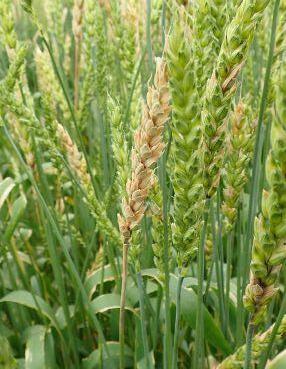
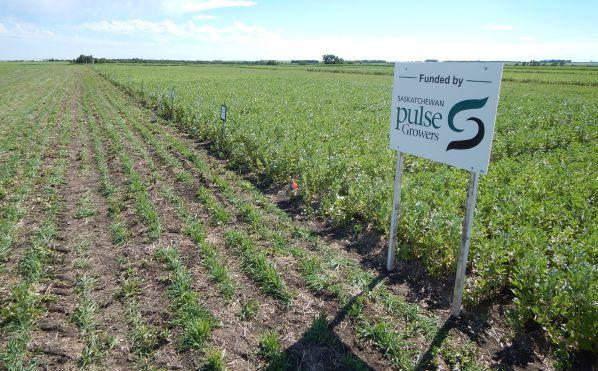
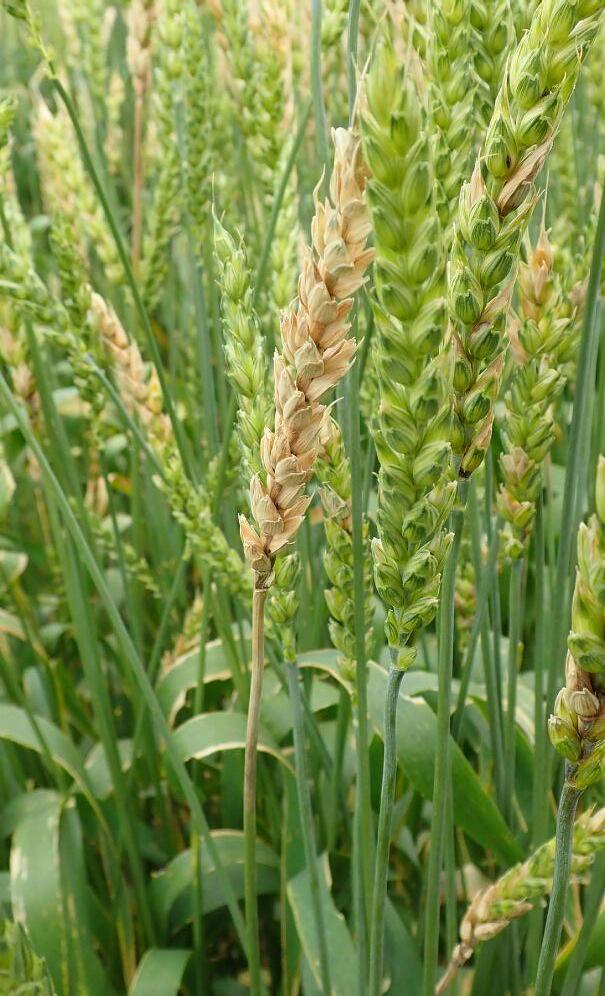
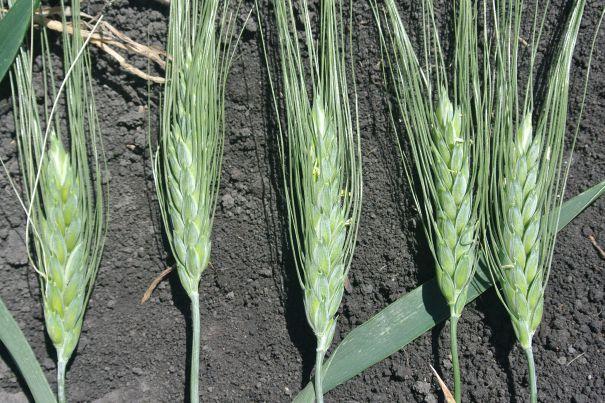
Get the best-looking fields with our new pulse fungicide.
Want to get revved about your next pulse crop? Try new RevyPro® fungicide. It helps deliver healthier*, better-looking elds that are sure to turn heads. Powered by our new active ingredient Revysol®, RevyPro provides broad-spectrum, long-lasting control of the toughest diseases, including Group 11 resistant strains. For pulses that’ll quicken yours. And everyone else’s. Go to agsolutions.ca/RevyPro to learn more.
*Subject to sound agronomic practices and environmental conditions. Always read and follow label directions.
INTEGRATED AND INNOVATIVE STRATEGIES FOR MITIGATING ROOT ROT THREAT IN PEA
Researchers continue to invest in developing integrated and innovative management strategies to mitigate the root rot threat in pea over the long term. Recently, they’ve launched a four-year Prairie-focused study to tackle the three main components of any disease triangle, including disease resistance, pathogen variation and environment.
PESTS AND DISEASES
6 Tacking ergot head on Ergot is on the increase.
14 Flea beetle monitoring in canola
Evaluating insecticide potential for resistance. 24 Management solutions for alfalfa weevils
Best way to find alfalfa weevils: simple sweep nets.
PULSES
10 Fungicide timing for Ascochyta blight
Control in chickpea.
12 Aphanomyces root rot decision support
DNA tests from soil samples could help.
18 Seed faba bean early
Benefits of higher yield and earlier maturity. CEREALS
20 Fine-tuning Fusarium head blight management
Flexibility in fungicide application is key. AGRONOMY UPDATE 26 Controlling stripe rust in winter wheat
Readers will find numerous references to pesticide and fertility applications, methods, timing and rates in the pages of TopCropManager . We encourage growers to check product registration status and consult with provincial recommendations and product labels for complete instructions. ON THE WEB
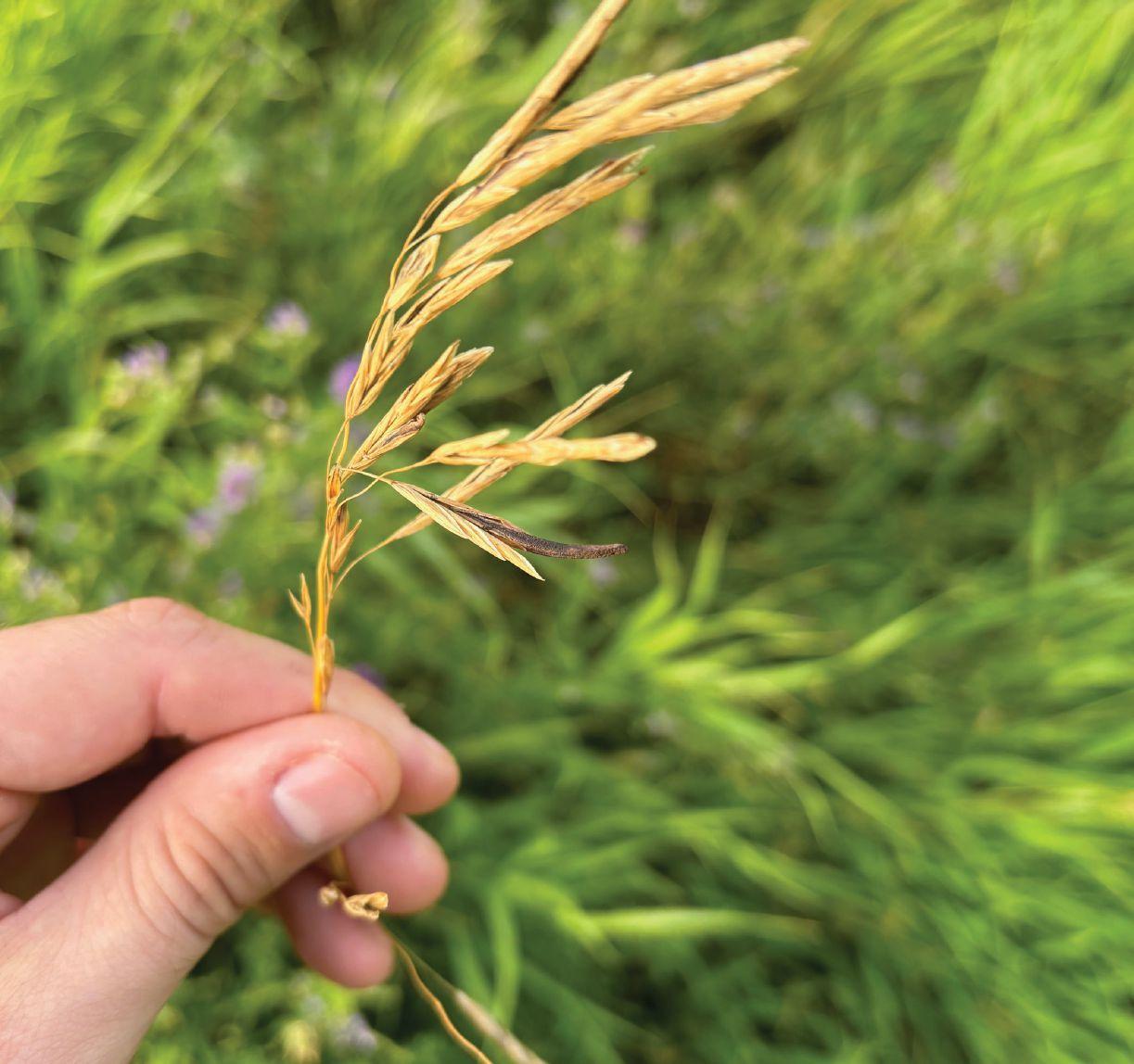
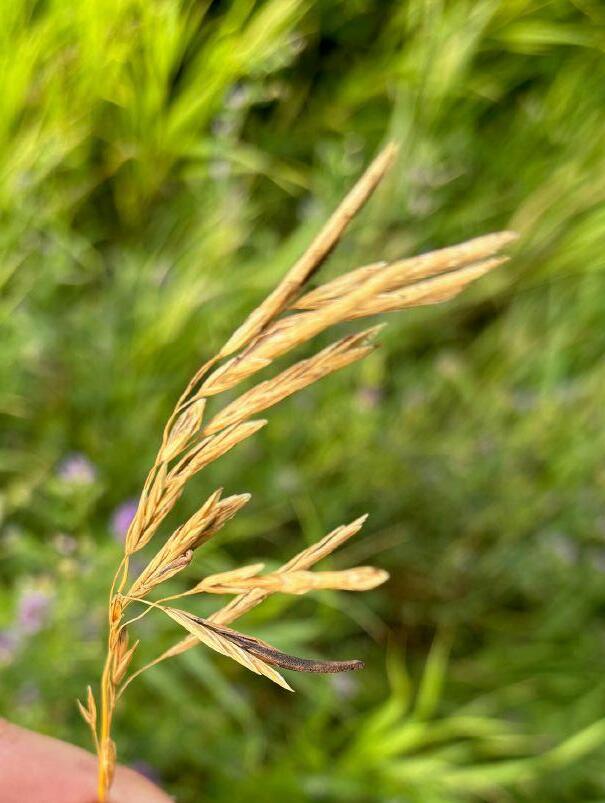
ON THE COVER: Ergot in wild grass, with the ergot bodies extending out of the florets. Photo courtesy of Skyler Shaw, University of Manitoba.
FROM THE EDITOR
by Kaitlin Berger
DEALING WITH DISEASE
It’s true that disease is an age-old problem on every farm. It’s also true there’s more to the story – much more. Advancements in technology are evolving, and management resources are continuing to grow. To start, when growers and agronomists pair effective tools – fungicides and resistant varieties – with scouting and effective crop rotations, it can make a big impact on disease challenges.
According to the Prairie Crop Disease Monitoring Network (PCDMN), field crop diseases correlate with three factors: climate, weather and agronomic practices. While no one can control the first two factors, understanding their connection with disease can help with predicting disease potential in certain crops and regions – and providing insight into improving management strategies. That’s certainly the goal of the PCDMN, a coordinated field crop disease monitoring program for farmers and agronomists on the Prairies.
The PCDMN is a good example of how monitoring resources have expanded over the years – from more than just the Prairie Pest Monitoring Network (PPMN) that began in 1997. The PCDMN provides timely insight on disease, so growers can make more informed management decisions. There’s also the Fusarium Head Blight Risk Mapping Tool, another helpful resource for evaluating FHB risk for certain crops and varieties based on weather conditions.
Part of the PCDMN initiative also includes downloadable PDF versions of scouting protocol for a wide range of diseases. Knowing how to scout for a specific disease is the critical first step to managing it properly. For example, as you’ll read on page 10, Ascochyta rabiei lesions in chickpea can be mistaken for dirt. That’s why it’s important to gently rub the leaf to see if it smudges. If it doesn’t, it’s likely a lesion.
The PCDMN scouting protocol was also recently updated to include a new resource for ergot. This aligns with trends of increasing ergot occurrence – and explains why researchers are looking into possible reasons for the increase (page 6).
Once you’ve finished scouting, a fungicide application is often an important next step and – you guessed it – researchers are continuing to look into how to make fungicide application as effective as possible. For example, plant pathologists are fine-tuning application timing for managing Fusarium head blight (page 20).
Disease is, perhaps, inevitable. But the more tools, technologies and resources available to manage it – and the more research that goes into disease management – the greater chance we have against it.
510-6875 Email: apotal@annexbusinessmedia.com Mail: 111 Gordon Baker Rd., Suite 400, Toronto, ON M2H 3R1
Group Publisher MICHELLE BERTHOLET (204) 596-8710 mbertholet@annexbusinessmedia.com
Audience Development Coordinator LAYLA SAMEL (416) 510-5187 lsamel@annexbusinessmedia.com
Team Lead/Media Designer BROOKE SHAW
CEO SCOTT JAMIESON sjamieson@annexbusinessmedia.com
FARM ON.
Make the most of every moment in the field and get the best after-sales support in the business with Brandt Agriculture.
More Equipment
A full range of Deere ag equipment and the most parts for more convenience and availability.
More Hours
Our shops are the first to open and last to close, delivering top-quality service when you need it.
More Locations
Our industry experts will give you advice on the best equipment upgrade for your operation.
Our Locations
Bassano, AB (403) 641-3813
Brooks, AB (403) 362-3486
Calgary, AB (403) 280-2200
Claresholm, AB (403) 625-4421
Coronation, AB (403) 578-3744
Creston, BC (250) 431-9002
Drumheller, AB (403) 823-8484
Hanna, AB (403) 854-3334
High River, AB (403) 652-7797
Melfort, SK (306) 752-9344
Nipawin, SK (306) 862-9344
Olds, AB (403) 556-6961
Pincher Creek, AB (403) 627-4451
Ponoka, AB (403) 783-3337
Red Deer County, AB (403) 343-2238
Prince Albert, SK (306) 763-6686
Rosthern, SK (306) 232-4852
Saskatoon, SK (306) 933-3303
Stettler, AB (403) 742-4427
Trochu, AB (403) 442-3982
Vulcan, AB (403) 485-2231
Watrous, SK (306) 946-3362
Tackling ergot head on
Ergot is on the increase and researchers are helping stay on top of the problem.
BY CAROLYN KING
Ergot, a fungal disease of cereal crops and wild grasses, has the potential to impact grain quality, value and safety, notes Sean Walkowiak, a research scientist at the Canadian Grain Commission (CGC). CGC monitoring data is showing some trends of increased ergot occurrence over time. Walkowiak is co-leading a project with Sheryl Tittlemier, another CGC research scientist, to address this issue.
“We are digging a bit deeper to try to understand why we’re seeing ergot occurring a little more, and then to see what can we do to help protect farmers and to make sure we’re on top of ergot as an industry,” he says.
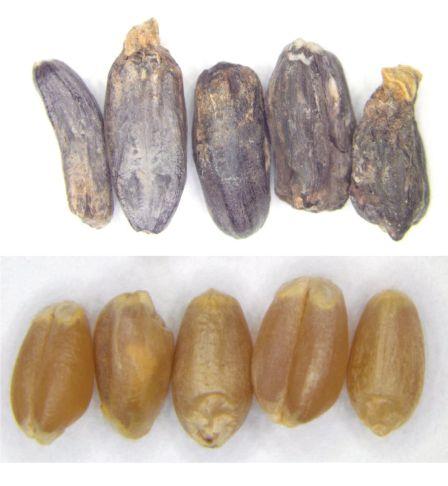
The ergot fungus infects the florets of flowering host plants. “When the plants get infected, kernels are replaced by dark ergot bodies, called sclerotia. The ergot bodies are usually a black to purple colour, and often they’ll be a different size or density than regular grain,” explains Walkowiak, who is with the CGC’s Grain Research Laboratory in Winnipeg.
“Ergot usually doesn’t impact crop yield very much, but it does cause contamination within the grain with these ergot bodies. If ergot bodies are present during grain processing, they can cause black specks in the flour and other products and change the quality of the products.”
A bigger concern is the presence of fungal toxins in ergot bodies. Eating grain contaminated with ergot toxins can cause very serious health impacts in humans and animals. Consequently, regulatory limits for ergot levels in grain have been set by Canada and other countries.
“If ergot is present in sufficient quantities, it can result in grade reduction,” he says. “By having grain inspected and screened for ergot, we make sure that ergot is kept out of the grain system and the grain is meeting end-use needs.”
BEST PRACTICES FOR SAMPLING AND ASSESSMENT
When grain is assessed for ergot, the sampling and testing methods must provide accurate, representative and reliable results. That’s why one of the project’s objectives is to evaluate ergot sampling and assessment methods in wheat.
“It’s really important that we are following best
ABOVE Ergot in wild grass, with the ergot bodies extending out of the florets.
practices for grain sampling and also using the best testing methods to evaluate the toxins,” Walkowiak says. “The equipment and tools for sampling and testing are always changing so we are revisiting that.”
Work on this objective includes evaluating procedures like how to properly divide a grain sample and what sample size is needed to get representative results.
Especially if the grain has only a few ergot bodies, an improper sampling method could make a significant difference in the results. “Because an ergot body has a
Photos courtesy of Skyler Shaw, University of Manitoba.
different size and density than grain kernels, it might float to the top or sink to the bottom. I often describe it like a gold nugget effect or a needle in a haystack effect,” he says. “So, we want to make sure that we’re sampling enough grain in the right way to get repeatable data that is representative of the grain.”
The project team will also be working to identify the most appropriate tools available to test the samples for the different ergot toxins that might be present. “For instance, some methods might be quick and easy, but you want to make sure that you’re not sacrificing the quality of the result. Other methods might be a little more tedious and much more expensive, so we want to see if such methods are actually needed to get accurate results or if they are a bit of overkill,” he explains.
CAUSES OF ERGOT TRENDS
Walkowiak notes that the CGC has been monitoring cereal grains across Canada for many decades. This substantial, long-term dataset includes information about each grain sample such as where it was collected, the crop type and variety, as well as the amount of ergot. It provides a great resource for identifying ergot trends.
“When we look at the trends in ergot over the years, we definitely
see differences between crops,” Walkowiak says. “Outcrossing crops like rye tend to have more ergot than crops like wheat, barley or oat.” Compared to self-pollinated plants like wheat, outcrossing plants tend to keep their florets open longer in order to catch windborne pollen, so they have a greater risk of ergot infection.
“We are also seeing trends of increased incidence or occurrence of ergot in some areas and in some crops over time. At present, we’re not quite sure why that is.”
One project objective is to assess the causes of these ergot increases.
Possible factors influencing these trends could include changes in
“We are digging a bit deeper to try to understand why we’re seeing ergot occurring a little more, and then to see what can we do to help protect farmers and to make sure we’re on top of ergot as an industry,”
farming practices, changes in weather and climate and/or changes in the ergot pathogen.
“We want to take a deeper look at ergot as a disease and see if there are changes, for example, in the pathogen over time and whether that might be one of the reasons for the trends. If that’s the case, then we can let plant pathologists and breeders know so they can develop strategies to better tackle the disease,” he explains.
A key part of the team’s work on this objective involves doing surveys of the ergot pathogen across different times and locations and then using DNA testing to get a good understanding of the diversity of the ergot pathogen across the Prairies.
For instance, they want to see if different ergot pathogen populations belong to different ergot toxin types, how the different toxin types are distributed and if that might be one of the reasons for some regional differences in ergot occurrence. They are also interested in which populations are increasing or decreasing over time and how that relates to trends in ergot occurrence over time.
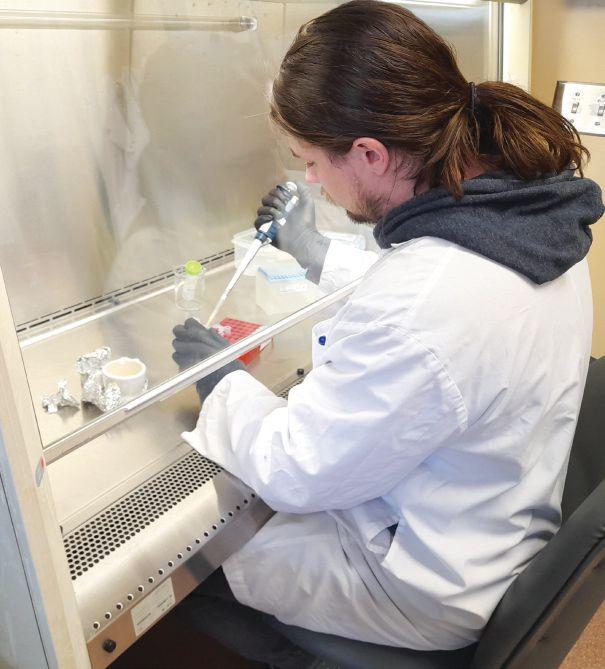
RIGHT Skyler Shaw extracts DNA from ergot samples in a biosafety cabinet.
IMPROVING TOOLS FOR FIGHTING ERGOT
The CGC’s grain dataset related to ergot provides a strong foundation for the project team’s analysis not only to identify likely causes of the ergot increases but also to identify opportunities for addressing those causes through improvements in breeding and management practices.
“With the emergence of new tools like [artificial intelligence] (AI), we can do some more complex data modelling to better understand – once we layer the cultivar, location, ergot level, climate and weather data – what are the factors that might be driving these increases in ergot,” says Walkowiak.
“For instance, from a cultivar standpoint, we could see if certain cultivars are performing better than others in different areas, with respect to ergot. Then we can pass that information on to the farmers so that, if they are experiencing ergot issues on their farm, they
validating the tests for doing our genetic study.”
would know which cultivars might be able to perform a little better against ergot in their area.
“And we could inform the breeders if certain cultivars seem to have lower ergot levels than the rest of the cultivars so breeders could use them as a starting point to bolster ergot resistance in their breeding materials. Or if certain cultivars seem to be doing quite a bit worse than most of the other ones, then maybe breeders could use that information to remove that susceptibility to ergot from that background.”
BENEFITS FOR CANADA’S GRAIN INDUSTRY
“The project has been underway for about a year now, and we hit the ground running. We have already started processing samples and evaluating different chemical testing methods to quantify the toxins from ergot,” says Walkowiak. “And we have been busy in the lab isolating the DNA from different types of ergot and developing and
He adds that Skyler Shaw and Chamali Kodikara, University of Manitoba graduate students, are carrying out much of this work. “We are training the next generation of scientists that are supporting grain quality in Canada.”
Walkowiak concludes: “Canada is known for its reputation for the production of high-quality grain. This research project helps to maintain and bolster our work in supporting grain quality research in Canada and the Canadian brand. We’re also developing methods to make sure that testing and sampling for ergot is done in the best possible way so grain transactions are as accurate and fair as possible.
“And we are working to better understand why ergot might be changing and increasing in occurrence, and what tools might be best to address some of those issues, to knock back the ergot levels and make sure that we keep ergot out of Canada’s grain handling system.”
The project is funded by Saskatchewan’s Agriculture Development Fund, the Saskatchewan Wheat Development Commission and Manitoba Crop Alliance.
TOP LEFT Chamali Kodikara with analytical instruments used to measure ergot toxins.
ABOVE Darkcoloured ergot bodies (top row) and normal wheat kernels.
Photos (right to left) courtesy of Chamali Kodikara, University of Manitoba and Sean Walkowiak, CGC.
A Novel Mode of Action Fungicide in Pulses
Introducing Zetigo™ PRM, a dual mode of action fungicide, with Adavelt™, a brand new Group 21 fungicide active ingredient. Zetigo PRM provides powerful disease control and elevated resistance management in pulses.
Add Zetigo PRM to your pulse disease management plan to Protect Today and Prosper Tomorrow.
Fungicide application timing for Ascochyta blight
Zeroing in on Ascochyta blight control in chickpea.
BY BRUCE BARKER
Go early and go often has been the mantra for foliar fungicide application to control Ascochyta blight in chickpea, but that can be expensive and also lead to fungicide insensitivity.
“Ascochyta can be very destructive, and it can spread very rapidly to wipe out a crop,” says Michelle Hubbard, plant pathologist with Agriculture and AgriFood Canada (AAFC) at Swift Current, Sask.
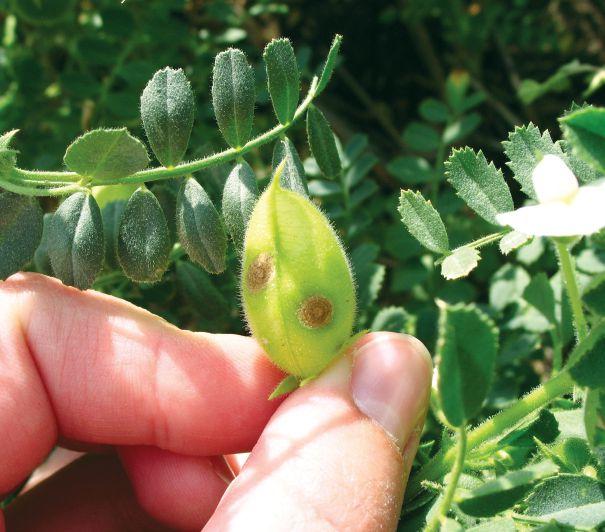
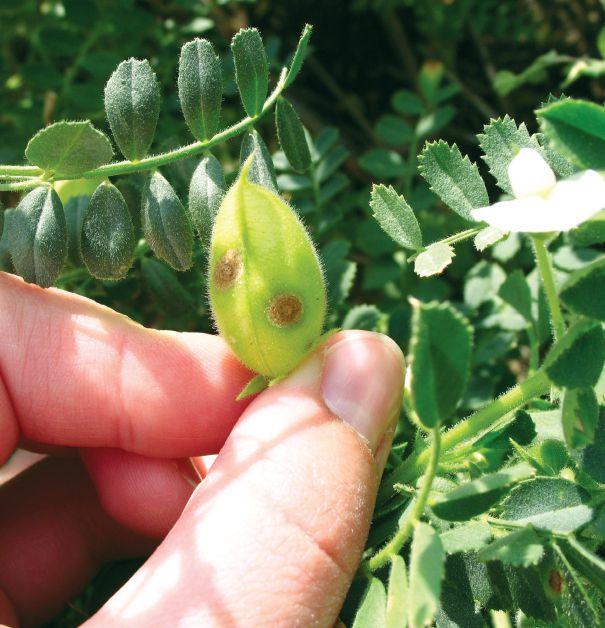
The pathogen that causes Ascochyta blight is Ascochyta rabiei. Chickpea is infected by spores that are either present in the field or blow in from infected fields. After spore infection takes place on the leaves and stems, those tiny black dotted lesions grow and expand. Dark brown pycnidia develop in concentric rings resembling a bull’s-eye target. Spores ooze out of the pycnidia and are spread by rain-splash onto healthy plant parts, causing new infections. The lesions can completely girdle a chickpea stem, cutting off the flow of water and nutrients. Multiple life cycles can occur throughout the growing season and are favoured under good moisture conditions and temperatures between 20 and 25 C.
When selecting foliar fungicides, Hubbard says that there are two types: curative and preventative. Preventative fungicides provide a protective barrier that prevents disease spores from germinating and infecting the chickpea plant. Preventative fungicides work best when applied prior to spore infection.
Curative fungicides can stop disease development but only in the first 24 to 36 hours after spore infection and they should be applied within 36 hours after a rainfall for best results. Curative fungicides cannot repair dam-
aged plant tissue.
Foliar fungicides are classified into groups based on their mode of action. Group 3, 7 and 11 are systemic and move into plant tissue through the xylem, moving upward and outward within the plant. Group M is a contact fungicide.
ABOVE As the A.rabieiinfection progresses, it develops pycnidia that oozes spores.
Hubbard says that fungicide insensitivity is a concern for the Group 11 strobilurins. She says it is widespread in the chickpea growing area of Saskatchewan. Fungicide insensitivity means that the pathogen has evolved, through repeated use of an active ingredient, so that the population is insensitive (resistant) to the active ingredient. A. rabiei can develop insensitivity quickly since it reproduces sexually with large genetic variability, can reproduce multiple cycles per growing season, infects multiple crop stages and produces a lot of spores. Of the fungicide groups, the Group 11 strobilurins are high risk for developing insensitivity, Group 3 and 7 are medium risk and Group M is low risk.
A key management strategy for fungicide insensitivity is to rotate between fungicide groups to reduce selection pressure.
SCOUT EARLY AND OFTEN
Hubbard says the key to staying ahead of A. rabiei is to scout early and often, to look for lesions that look like little black dots. Rub the leaf gently to see if the dot is actually dirt. If it doesn’t come off, the dot is likely an A. rabiei lesion. Scouting should start early after the plants have emerged and are starting to form rows. Continue scouting to keep track of disease progression even after
Photo courtesy of Saskatchewan Ministry of Agriculture.
fungicide application.
Understanding chickpea growth stages is important since counting chickpea growth nodes is a key part of fungicide application timing. The general recommendation is to apply the first foliar fungicide application at the seven- to 10-node stage. At this stage, chickpea plants are established in rows, but there is a lot of bare ground. “It can feel like you are just spraying the soil instead of chickpeas,” says Hubbard. After the first application, subsequent applications are recommended every seven to 14 days.
Hubbard conducted a research trial in 2019, 2021 and 2022 with four chickpea varieties, four fungicide treatments and two Group 2 (imidazolinones) herbicide applications. The objective was to try to better understand the impact of fungicide application timing and of IMI herbicide application on disease development.
Two kabuli types – IMI-sensitive CDC Orion and IMI-tolerant CDC Orkney – were compared. The two desi types in the trial were IMI-sensitive CDC Vanguard and IMI-tolerant CDC Cory. Desi type chickpeas are slightly more resistant to A. rabiei than kabulis.
The four fungicide treatments included a control, an ‘early’ treatment with the first application at 8 nodes before symptoms were evident followed by a second application at flowering, a ‘late’ application at the first sign of symptoms followed by a second application at flowering and four applications at early, late, flowering and podding. In the two application treatments, Dyax or
Priaxor (Group 7 + 11) was applied first followed by Proline (Group 3). In the four applications, Dyax or Priaxor was followed by Proline, followed by Delaro (Group 3 + 11) followed by Bravo (Group M5).
“If you are going to use a strobilurins, use it as one of the first applications. It can have a greening effect on chickpea, and the last thing you want to do is prolong maturity,” says Hubbard.
In the first two years of trials, disease levels were generally low and below 2.5 on the 0-9 disease scale. In 2022, disease levels climbed to 4 to 5. In this year, the control treatment without fungicide resulted in statistically higher disease levels around 5 in late summer. There was no statistical difference between two fungicide applications starting with early or late applications or the four fungicide treatments.
“Under low to moderate disease
There’s
and There’s when it comes to pre-seed burndown
FAST
pressure, there wasn’t any difference if you applied the first treatment before disease symptoms were present or if you started when you notice a few little black dots,” says Hubbard. “Under low to moderate conditions, you could probably afford to wait until those first few little black dots are found, but you don’t want to wait until there are those big, obvious black lesions.”
Hubbard says chickpea growers should also consider other factors when considering the risk of disease development. Drought stress might make chickpea more susceptible to A. rabiei infection. One experiment found that drought stress followed by rainfall increased disease severity. But another experiment found no impact. Metribuzin herbicide can cause injury to chickpea and could make it more susceptible to disease.
Other management factors to consider are four-year rotations between chickpea crops and to avoid planting chickpea close to previous chickpea fields as A. rabiei spores can travel several kilometers on the wind. Always plant clean, treated seed.
Weather also has a huge impact on the development of Ascochyta blight. While the research Hubbard conducted was under low to moderate pressure, under higher disease pressure, two applications may not be enough to keep the disease under control and up to four or five applications seven to 10 days apart may be required.
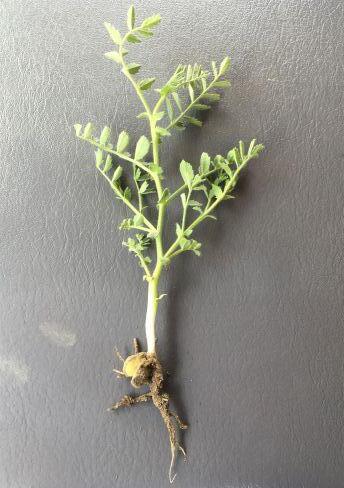
RIGHT Chickpea growth stages at early fungicide application.
Research is looking at DNA testing to help avoid Aphanomyces root rot infestations.
Searching for an Aphanomyces root rot decision support system
DNA tests from soil samples could guide pea and lentil cropping decisions.
BY BRUCE BARKER
Since Aphanomyces root rot was first identified in Saskatchewan in 2012 and Alberta in 2013, the disease has devasted pea and lentil crops across the Prairies. Frustratingly, if the Aphanomyces root rot pathogen is present in a field, the recommendation is to avoid planting pea or lentil on the field for a minimum of six but preferably eight years. Research at Agriculture and Agri-Food Canada (AAFC) at Lethbridge, Alta. is hoping to develop a decision support tool that can guide farmers on when they can plant pea or lentil on a field.
“Over the past three years of this project, we have analyzed soil samples from 80 fields, which translates to approximately 640 soil samples,” says Syama Chatterton, plant pathologist with AAFC Lethbridge who is leading the research.
Aphanomyces root rot is caused by Aphanomyces euteiches and is most damaging on pea and lentil crops. Faba beans have good partial resistance to Aphanomyces, and chickpeas are considered moderately resistant. Soybean is a non-host crop.
Aphanomyces is an oomycete or water mould. The resting oospores in the soil are thick-walled and can survive in the soil for over 10 years until soil conditions favour germination into zoospores that swim through water-filled pores to infect a plant root. High soil moisture conditions favour
the development of Aphanomyces root rot with optimum root infection occurring at a temperature of 16 C and at temperatures between 20 to 28 C for optimum disease development. Severe infections can destroy a crop.
Currently, several tests are available to see if A. euteiches is present in a soil sample. The most accurate test is a soil bait test. In this test, soil is collected from a field and a host plant is planted into the soil in a greenhouse or growth chamber. The roots are analyzed for Aphanomyces root rot severity 28 days after planting. Chatterton says the disease severity observed in the bait test is usually close to what can be expected in the field. The challenge is that a bait test is labour intensive and costly, and it doesn’t provide an estimate of inoculum levels in the soil.
Different types of DNA tests such as PCR, quantitative PCR and droplet digital PCR can be used to detect A. euteiches from soil samples. These tests can be reported as a positive or negative for the presence of A. euteiches presence in the soil. Some labs report as low, moderate or high levels. The tests based on DNA analysis are rapid, but the false negative rate can be high.
“The results from my lab’s research indicate that DNA results aren’t always accurate, especially as it pertains to
photos courtesy of Syama Chatterton, AAFC.
Canadian agriculture and food needs more talented people.
Each year, CABEF helps students to pursue rewarding agri-food careers through seven $2,500 scholarships. We’re looking for the future leaders who will help this industry meet tomorrow’s challenges.
Do you know someone who needs to fund their future in agri-food? Tell a student today.
Scholarship application deadline is April 30, 2025
Want to help support the next generation of agri-food leaders? Become a “Champion of CABEF.” This program allows your organization to directly sponsor a deserving student. Contact CABEF at info@cabef.org.
Flea beetle monitoring in canola across the Prairies
Researchers evaluate insecticide susceptibility and potential for resistance.
BY DONNA FLEURY
Flea beetles are an ever-present pest of canola grown on the Prairies. Management of flea beetles includes the use of treated seed and, when required, follow-up foliar insecticide applications. Growers primarily rely on neonicotinoid-treated seed, which continues to be available after a fairly recent regulatory review.
Recognizing that insecticides are the primary means of flea beetle management, researchers at the University of Alberta initiated a three-year project in 2022 to examine the resistance of flea beetles to insecticides across the Prairies. “With the reliance on neonicotinoid-treated seed, we are aware of the potential challenges should these products become unavailable and increase the reliance on more foliar applied insecticides,” says Boyd Mori, assistant professor with the Department of Agricultural, Food and Nutritional Science at the University of Alberta. “Although these products continue to be available in Canada, in places like the EU these seed treatments have been banned and they are beginning to see an increase in resistance to some of the foliar applied products. This study aims to assess if vast acres of canola across the Prairies have increased selection pressure on insecticide susceptibility of flea beetles.”
One of the study priorities was to better understand the two main flea beetle populations of concern, the crucifer (Phyllotreta cruciferae) and striped (Phyllotreta
The study results indicate there is no evidence of resistance developing in flea beetles across the Prairies.
striolata). Results of a 2008 study completed at the University of Alberta showed that striped flea beetles were more tolerant to neonicotinoids and have higher tolerance to cold temperatures and soil moisture compared to crucifer flea beetles.
“We thought it would be important to reevaluate those findings and to assess the susceptibility of crucifer and striped flea beetles to neonicotinoids and non-neonic insecticides across the Prairies and investigate mechanisms of tolerance,” says Mori. “Although neonicotinoids have been the most common seed treatment, several other groups of insecticides are also becoming more commonly used, but currently they are only sold combined with a neonicotinoid.”
This project included laboratory bioassays and genomic approaches to explore the impact of insecticides on flea beetles. Three separate experiments were conducted to assess the susceptibility of crucifer and striped flea beetles to neonicotinoid seed treatments and pyrethroid (deltamethrin) foliar insecticides across the Prairies. Three new seed treatments were also assessed to obtain baseline data. Flea beetles were collected across the Prairies in 2022-2024 and bioassays were conducted under controlled conditions.
The study also includes the sequencing of genomes and transcriptomes of both flea beetles to investigate the underlying genetic architecture which may contribute to differences in insecticide susceptibility.
Photo
“The field work was completed in 2024, and preliminary results from the surveys across Alberta, Saskatchewan and Manitoba showed that crucifer flea beetles were the dominant species collected in most regions, except in the Peace Region of Alberta where striped have historically been dominant,” explains Mori. “It was difficult to find striped populations in most areas surveyed and although we did find some striped in southern Alberta, they were not the dominant species. We aren’t sure what has changed since a previous project conducted a number of years ago led by [Agriculture and Agri-Food Canada] (AAFC) researcher Julie Soroka that showed a shift in populations with a higher number of striped moving south in Alberta. Other study factors were the early forest fires and a smoky air quality in 2023, where in some locations we could hardly find any flea beetles at all.”
The study included using a standardized vial bioassay in the lab for testing flea beetles for potential insecticide resistance. Both crucifer and striped flea beetles used for testing were collected from sites across most areas of the Prairies, including sites where locations had been sprayed but there were still high levels of flea beetles in those fields or where resistance was suspected. Bioassays were also conducted to observe the repellent or antifeedant effects of neonicotinoid insecticides against flea beetles.
“Overall, the study results indicate there is no evidence of resistance developing in flea beetles across the Prairies,” explains Mori. “The results of the bioassay also showed that across the Prairies, there is no evidence of flea beetle resistance to pyrethroid (deltamethrin) insecticides. In situations where fields with high levels of flea beetles remained after spraying, we
suspect that was likely from a reinvasion of the field from populations in surrounding fields. One of the other interesting findings, at least in the lab studies, is that at low populations of flea beetles of on average two beetles per plant, little damage was caused. This is the density applied in the earlier 2008 study. However, our study showed that a density of seven beetles per plant was required in order to show differences between the study treatments and controls.”
Mori adds that with the crucifer populations tested, both the existing seed treatments and new active ingredient seed treatments significantly lowered plant damage as compared to control treatments.
“We observed variation in seedling damage and beetle mortality across different flea beetle populations and years. Our lab also conducted a twochoice olfactometer bioassay that gave flea beetles a choice between plants grown from untreated seeds and plants grown from treated seeds. The results suggest that the seed treatments had a more significant antifeedant effect on flea beetles. It appears that the seed treatments are causing beetles to stop feeding or act as a repellant.”
“The early results of the study are positive, demonstrating no evidence of resistance to the foliar insecticide deltamethrin developing in flea beetles across the Prairies; all populations of flea beetles were still highly susceptible. Growers still have access to good neonicotinoid-treated seed and also foliar combinations. And for those with high flea beetle populations, those growers may want to consider using newer additional seed treatments that seem to be working quite effectively in the field.”
“Other good agronomic practices such as using recommended seeding rates is important for getting good emergence and stand
establishment,” adds Mori. “Although lowering seeding rates may be a consideration for lowering seeding costs, in fields with high flea beetle populations, thinner plant stands provide fewer plants to feed on and can increase the risk of feeding damage. Flea beetles are good fliers and can move through a field quickly, so regular field scouting up to the 3- to 4-leaf stage is important for making timely decisions on whether foliar applications could be needed.”
Now that the field and lab work have wrapped up, Mori and his team are analyzing the data, continuing with the genome sequencing for differences in insecticide susceptibility of crucifer and striped flea beetles and completing the final report. Ultimately, the findings will inform modeling and forecasting of flea beetle movement on the Prairies at different geographic scales. The baseline data on insecticide susceptibility from different regions also provides both farmers and industry with the information they need to successfully navigate the changing landscape of chemical pest management.
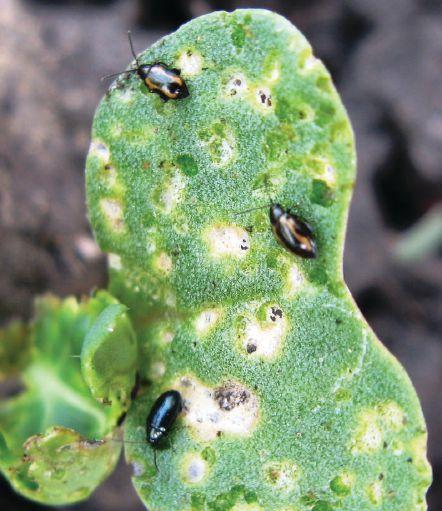
ABOVE Striped and crucifer flea beetles feeding on canola.
Searching for an Aphanomyces root rot decision support system |
determining quantity of the inoculum in the soil,” says Chatterton. “The DNA tests are good at indicating presence/absence, but the inoculum levels measured from these tests are usually too low.”
The basis for Chatterton’s current work comes from her earlier research in which she identified that 100 oospores per gram of soil was the level that A. euteiches became damaging to pea and lentil crops. In that research, soil samples were collected from fields without a history of pulse production in Saskatchewan and Alberta. The samples were inoculated with A. euteiches at oospore concentration levels of 0, 1, 10, 100, 500 and 1,000 oospores/g soil. Pea plants were grown in the inoculated pots and rated for disease severity after five weeks. Chatterton concluded that 100 oospores/g soil is the threshold level for disease development. Below that threshold, the disease did not develop to damaging levels.
“In the research that we did to establish the threshold of 100 oospores per gram of soil, we grew the oospores in the lab, used them freshly prepared and knew the exact amount that we were adding to the soils. In field soils, we are starting out with an unknown amount and so we don’t know if what we are ‘counting’ using DNA techniques is correct,” says Chatterton.
FARMER PARTICIPATION NEEDED
Chatterton’s research is now aimed at developing a better quantification tool and relating that to expected disease severity in the field. She is looking for more
farmer participation over the next three years to build a large database to develop an accurate prediction model. In this next phase of the project, Chatterton hopes to analyze 75 to 100 fields per year from across the Prairie provinces with good representation from all soil zones and from both pea and lentil crops.
A barrier that needs to be overcome is that DNA-based tests can underestimate actual oospore levels in the soil. The reason for this underestimation may be that DNA extraction of oospores in the soil is the limiting step because the thick double-cell walls of the oospores make them resistant to cracking open to remove the DNA. As a result, not all the DNA is extracted from all the cells that are actually present.
To get around this barrier, the research is ‘waking up’ the oospores first in the soil before performing the extraction step. Chatterton says this essentially means taking a small amount of soil and incubating it with pea seeds. As the pea seeds germinate, the oospores wake up and start to produce mycelia and zoospores that are much more amenable to DNA extraction. She then uses the soil at five, seven and nine days after incubation for DNA quantification.
A full 28-day soil bait test is also conducted, and cooperating producers are asked to send root samples from their pea and lentil fields from around flowering. Combining these results provides a measurement of disease severity from the greenhouse soil bait and the actual disease severity observed in the field. Statistical analysis and modelling are then performed to tie all those numbers together to determine how well they all correlate with each other and what the best incubation timepoint is for the most accurate DNA measurement of actual inoculum load in the soil and prediction of expected field disease severity, says Chatterton.
“By building a large database of DNA counts at various time points and their corresponding disease severity levels, we can come up with a new field-based threshold for disease severity. For example, if we’re finding from a field soil test that the 10 oospores that we can count with DNA analysis are consistently matching with a moderate disease severity level, then we would propose that as the field-based threshold,” says Chatterton. “In other words, we may never be able to definitively count the actual numbers of oospores in field soil, but if we can relate the amount that we can count to the disease severity observed in the field, then we can predict expected disease severity in fields based on our ‘inaccurate’ count.”
Farmers interested in participating in the research can contact Chatterton at Syama.chatterton@agr.gc.ca. The research is funded by RDAR and the Alberta Pulse Growers.
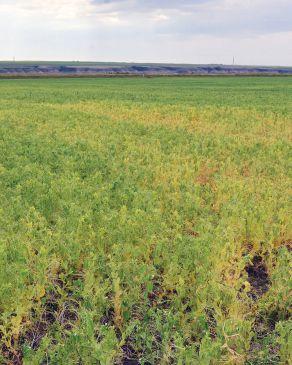
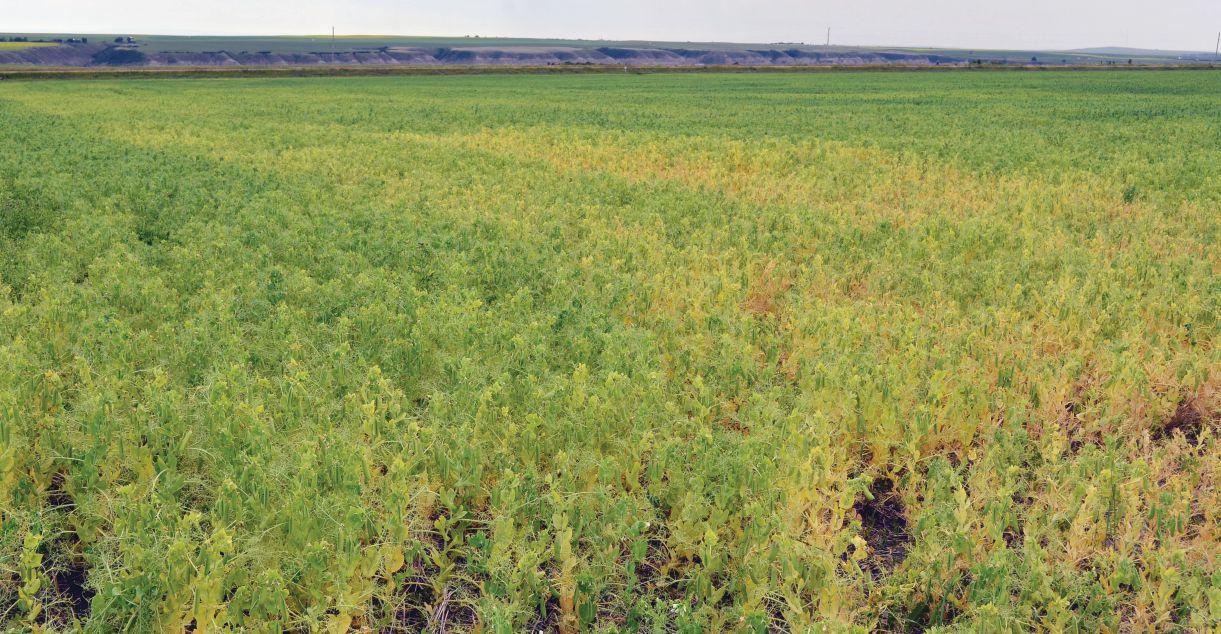
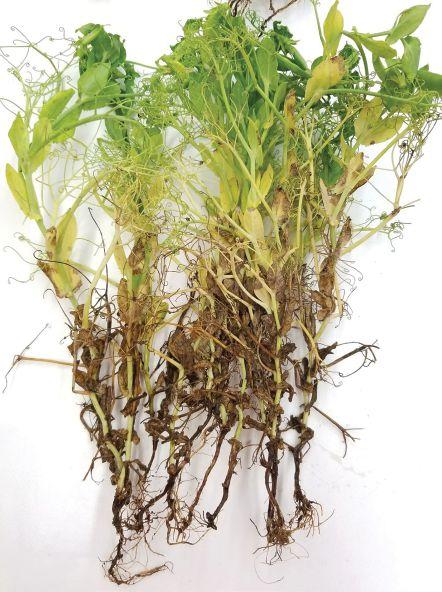
RIGHT Badly diseased pea plants.
Thick-walled oospores cause barriers for DNA testing.
Brought to you by DOES THE FUTURE OF AGRICULTURE SEEM GREY TO YOU?
Agriculture in the Classroom is cultivating curiosity by providing hands- on, immersive learning experiences to educate and engage students. The next generation of farmers, policy-makers, and innovators is in the classroom today. Together, we can inspire young people to drive our industry forward.
Change the future at aitc- canada.ca
Seed faba bean early
Benefits of higher yield and earlier maturity.
BYBRUCEBARKER
The early bird gets the worm in this faba bean research. Seeding early at recommended seeding rates achieved multiple benefits.
“Saskatchewan Pulse Growers identified issues with maturity and disease as high priorities for agronomic research for faba bean,” says Chris Holzapfel, research manager with the Indian Head Agricultural Research Foundation (IHARF). “Our research focused on those priorities at four sites across Saskatchewan.”
The research, funded by Saskatchewan Pulse Growers, had several objectives in addition to demonstrating the overall adaptability of faba beans across Saskatchewan. Early seeding was investigated to see if it would optimize yield and allow earlier maturity and harvest. Higher seeding rates were observed to see their effect on disease development, maturity and yield. Foliar fungicide application impact on disease, yield and maturity was also investigated.
The research was conducted over three years from 2021 to 2023. Brown soil zone locations included Swift Current and an irrigated site at Outlook. Black soil zone sites included Indian Head, Yorkton, Melfort and Prince Albert.
Seeding date treatments included an early date targeted for April 25 to May 7, and delayed seeding from May 20 to 30. Seeding rates compared were 4.5 and 6.5 viable seeds per square foot (45 and 65/m2).
Snowbird faba bean was grown at most sites, selected as a well-adapted variety in western Canada with good yield potential, reasonably early maturity and a smaller seed size than many high tannin types. At Swift Current, CDC Snowdrop was grown, which has a lower yield potential and smaller seed size than many of the other faba bean varieties, including Snowbird.
Foliar fungicide treated and untreated applications were compared. The fungicide was either Priaxor or Dyax (both fluxapyroxad + pyraclostrobin) applied approximately seven to 10 days after the initiation of flowering. Priaxor was discontinued in 2021 and was unavailable at some sites that year and was replaced with Dyax in the research. Dyax is registered for Ascochyta blight and anthracnose control, as well as white mould suppression.
Weeds were controlled using a combination of pre-emergent and in-crop herbicides. Pre-harvest herbicides or desiccants were applied at the discretion of individual site managers.
The three years were relatively hot and dry, which limited yield potential and disease development, but there was still a wide range in environmental conditions across the 16 site-years. Mean growing season
All photos courtesy of Chris Holzapfel.
temperatures were considered above average, defined as greater than 0.5 C, at 75 per cent of the sites and average at the remaining sites. Growing season precipitation ranged from a low of 42 per cent of average at Melfort 2023 to 121 per cent of average at Indian Head 2021.
As would be expected, faba bean establishment was impacted by seeding rate. Plant populations at the 4.5 seeds/ft2 target rate resulted in a plant population of 4.5 plants/ft2. The higher seeding rate of 6.5 plants/ft2 resulted in a population of six plants/ft2. There was slightly better stand establishment with the delayed seeding having 5.3 plants/ft2 compared to early seeding with 5.1 plants/ft2 – likely attributed to warmer soils and better seeding conditions.
Disease ratings prior to fungicide application were quite low, ranging from a low of 0 at Swift Current 2023 to a high of 1.5 at Yorkton 2022 on the 0-9 rating scale. Generally, most disease ratings centred around the 0.5 rating. There were slightly higher disease ratings with early seeding at nine of 16 sites, no difference at five sites and higher ratings with delayed seeding at two sites. Holzapfel says these differences were generally too small to be of much practical importance. Seeding rate did not impact the initial disease ratings. For the most part, disease was not a limiting production factor. Diseased samples submitted to the Saskatchewan Crop Protection Laboratory for positive identification found that chocolate spot (Botrytis spp.) was, by far, the dominant disease while Alternaria leaf spot (Alternaria spp.) was confirmed in a few cases and Alternaria/ Stemphylium leaf spot complex was identified in one case.
Foliar fungicide application did help reduce overall disease ratings, but with such low initial disease ratings, the reductions were small and not economical says Holzapfel. Additionally, Dyax is not registered for control of chocolate spot, so its impact on the disease would have been unknown.
“I think it is fair to say that you can afford to wait until you actually see disease symptoms or have conditions where the yield potential and likelihood of disease are sufficiently high to justify a more preventative application. In drier years particularly, I’m generally a lot more concerned about insects than disease with this crop.”
EARLY SEEDING PRODUCED HIGHER YIELDS
Early seeding brought several advantages. First and foremost, yield was 17 per cent higher with early seeding, and at some site years, even higher. Across the 16 site-years, early seeding averaged 46 bushels per acre (3,060 kg/ha) compared to 39 bu./ac. (2,621 kg/ha)
for late seeding. Early seeded faba beans were always ready to desiccate and harvest earlier, even though they took longer to develop and reach maturity.
Not surprisingly, overall yield was lowest at Swift Current with a low of 11 bu./ac. (749 kg/ha) in 2021 to a high of 22 bu./ac. (1,476 kg/ha) in 2022. “I wouldn’t recommend faba beans in Swift Current. We largely knew this going in; however, part of our objective was to document the overall adaptation and yield potential of this crop for the different growing areas of Saskatchewan,” says Holzapfel. “I never expected much for yield potential or disease at that location.”
The highest yield was at Prince Albert 2022 busting the bins at 99 bu./ ac., however, yield at this location was among the lowest in 2023. Weed control issues and residual herbicide damage were noted as possible yield limiting factors at Prince Albert 2023, and the site also had the highest overall disease ratings and confirmed Stemphylium complex.
Indian Head had intermediate yields but large variation depending on year. Under wetter conditions in 2022, yield was 50 bu./ac. (3,352 kg/ha), but 28 bu./ac. (1,855 kg/ha) in 2021 and 33 bu./ac. (2,235 kg/ha) in 2023 during the drier years. Melfort also had variable yields at 33 bu./ac. (2,235 kg/ha) in 2021, 63 bu./ac. (4,223 kg/ha) in 2022 and 59 bu./ac. (3,967 kg/ha) in 2023.
Under irrigation, yields were quite high despite coarser soil texture and high temperatures during the growing season. Yields ranged from 68 to 86 bu./ac. (4,575 to 5,782 kg/ha) and Holzapfel says that while faba bean may be adapted to irrigation, it has to compete with other high value crops for seeded acreage.
Holzapfel says Yorkton would normally be considered a location that should be well suited for faba beans, but the results from this research were challenged by drought, hail and pea leaf weevil. Yields in 2022 and 2023 were intermediate 34 to 35 bu./ac. (2,300 to 2,367 kg/ha) but low in 2021 at 16 bu./ac. (1,087 kg/ha). The 2022 yield potential was higher, but was substantially reduced by hail damage.
Overall, Holzapfel recommends seeding as early as possible with target plant populations of about four to five plants/ft2 and basing fungicide applications on the potential for disease and presence of symptoms.
“Seeding date had, by far, the biggest impact on when the crop would be ready to combine and also results in higher yields in the majority of sites,” says Holzapfel. “Higher seeding rates could hasten maturity and did occasionally result in slightly higher yields, but the impact on maturity was never enough to be all that important from a practical perspective and, depending on seed size, targeting higher plant populations can be logistically challenging and expensive.”
ABOVE Sask Pulse Grower funded research found early seeding produced the highest yield.
Fine-tuning Fusarium head blight management
Flexibility in fungicide application is key.
BY BRUCE BARKER
Plant pathologists have been beating the drum about using an integrated disease management approach for Fusarium head blight (FHB) control going back to the 1990s. Use the most resistant variety possible, avoid tight rotations of susceptible hosts and apply a fungicide.
“But by doing all those things, we still aren’t able to stay on top of Fusarium head blight when weather conditions are highly favourable and ample inoculum is available. We are still incurring some yield loss and grade losses moving from grades No. 1 through 2 or 3 or 4 or commercial salvage. And, of course, there is the issue with deoxynivalenol or DON,” says Kelly Turkington, plant pathologist with Agriculture and Agri-Food Canada (AAFC) at Lacombe, Alta.
Fusarium head blight is primarily caused by the Fusarium graminearum pathogen and is a fungal disease of small grain cereals including wheat, barley, oats, rye, corn, triticale, canary seed and some forage grasses. The pathogen overwinters as spores or as mycelium on seed and crop residue. During the growing season, spores are spread by rain and wind, and infection occurs when following cereal head emergence. Spore germination and infection require high humidity/rainfall for at least 12 hours, and temperatures between 15 to 30 C, with optimum temperatures of 25 to 28 C.
Turkington says the stage of infection during reproductive development impacts the amount of Fusarium damaged kernels (FDK). FDK is a grading factor – and for CWRS wheat, No. 1 is allowed 0.3 per cent FDK on a weight basis, No. 2 is 0.8 per cent, No. 3 at 1.5 per cent and CW Feed at 4.0 per cent. Early infection at anthesis results in shrivelled FDK while later infections at the milk stage and beyond result in progressively fewer FDK with later infections showing little to no
symptom development, but potential deoxynivalenol (DON) contamination.
“The thing to keep in mind is that DON production can happen at any stage of infection at levels well above the 1 PPM level that impacts malt barley production, human consumption or hog feed,” says Turkington.
ABOVE Fusarium head blight damaged wheat head.
Turkington says that one area of FHB management that can be fine-tuned is fungicide application timing. “One of the things I’ve seen over the last 20 years is that we get hung up on anthesis or flowering stage of application. Growers worry that the window of application is so narrow that they might miss it. I would say don’t focus on anthesis,” says Turkington. “The simple fact of the matter is that F. graminearum can infect that cereal head any time from when it comes out of the boot to senescence.”
Photo courtesy of Kelly Turkington.
RIGHT The smaller yellow arrow points to a small yellow anther on wheat at early flower. The longer yellow arrow shows the most effective growth stages to suppress FHB and DON in wheat.
BELOW The smaller yellow arrow points to a small yellow anther on durum wheat at early flower. The longer yellow arrow shows the most effective growth stages to suppress FHB and DON in durum.
The current label recommendation for fungicide application for wheat is for suppression only. The timing is typically when 75 per cent of the heads on the main stem are fully emerged to 50 per cent of the heads on the main stem are in flower. In barley, application is when 70 to 100 per cent of the main stem heads are fully emerged up to three days after full head emergence.
“What that means is that in wheat at 75 per cent head emergence, 25 per cent of the wheat heads do not receive any fungicide, so it is totally unprotected,” says Turkington. “In barley, it is even worse, and there has been a lot of hand-wringing because in many cases flowering in barley occurs while the head is still in or partially in the boot.”
Research coming out of the US is starting to show that the current label timing is not the best target to be hitting, says Turkington. In a four-year trial on winter barley by Christina Cowger at the USDA-ARS North
Carolina State University, late application significantly reduced DON levels compared to early and medium applications. Early application was at 50 per cent head emergence, medium application was at 100 per cent head emergence and the late application was six days after 100 per cent head emergence.
A trial on durum wheat at the University of Saskatchewan by Randy Kutcher and Gursahib Singh in 2016 at Saskatoon and Outlook found that DON levels were highest among treated plots when fungicide application occurred when head emergence was finished, which was statistically similar to the unsprayed control. Applications at the start of anthesis, 50 per cent anthesis, anthesis complete and early milk had statistically lower levels of DON.
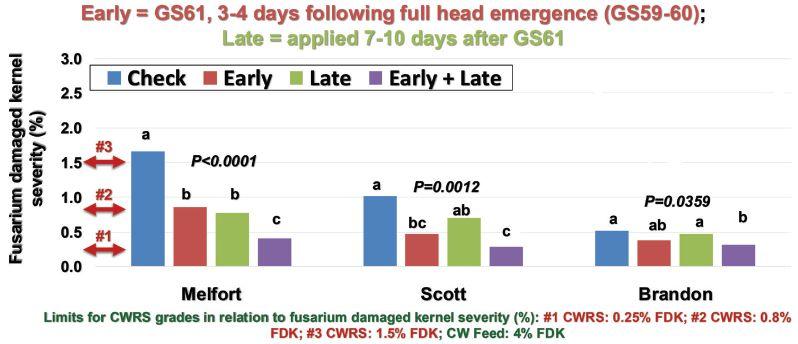
Another study by Turkington and AAFC colleagues on the Prairies at Brandon, Melfort and Scott in 2019 compared early fungicide application at three to four days after full head emergence to a late application 10 to 14 days after full head emergence. It found that the reduction of FDK was similar between the early and late applications. A dual application at both early and late usually had the highest reduction in FDK.
“The recent US and Canadian research shows you can go in too early while there is much more flexibility related to the latter part of the application window,” says Turkington.
Andrew Friskop, a plant pathologist at North Dakota State University, wrote in the NDSU Crop & Pest report in June 2024 that the best time for applying a fungicide to reduce FDK and DON in spring wheat and durum wheat is when the majority of the main stems are at early flowering and up to seven days after. He said some FHB suppression can still be achieved if fungicides are
Photos courtesy of Andrew Friskop.
Early-flowering
Early-flowering
applied on full headed wheat, but not as much if compared to early-flowering and up to seven days later.
On barley, Friskop wrote that the best time to apply a fungicide is when a majority of the main stems are at complete full-head emergence and up to seven days later. In barley, he says that it’s critical to wait until at least full-head emergence as very poor fungicide coverage will occur and poor FHB suppression on heads that are half-headed out or only showing awns.
Turkington also recommends that agronomists and farmers use the Prairie FHB Risk Mapping Tool. The risk maps are developed based on precipitation and temperature, and can be customized based
FDK SEVERITY AND FUNGICIDE TIMING OF PROSARO XTR
on crop, variety and calendar date. Risk is mapped out as low, moderate, high and very high.
“If the risk is high from flag leaf through to head emergence, you might want to get in with a fungicide application
soon after full head emergence. If the risk is transitioning from low to high, that is when you might want to look at the medium to later part of the application window,” says Turkington.
Bags need to be empty; jugs, drums & totes need to be rinsed Please prepare them properly so they can be accepted.
Keep it up! You are making a difference.
that FHB management still requires an integrated approach with longer crop rotations, the best resistant varieties and fine-tuned fungicide application timing, used in conjunction with FHB risk mapping.
Year a er year, Canadian farmers are keeping more ag plastics out of landfills. Bring your empty seed, pesticide and inoculant bags to a Cleanfarms collection site for responsible waste management and your pesticide and fertilizer jugs, totes and drums for recycling.
Most Alberta & Manitoba jug collections are now at retail; please use QR code to find out where.
2025 COLLECTION SITES OPEN APRIL 1
info@cleanfarms.ca @cleanfarms
Seeking management solutions for alfalfa weevils
The best way to find alfalfa weevils is actually the easiest: simple sweep nets.
BY LEEANN MINOGUE
For the 51,000 farmers growing 7.5 million acres of alfalfa in Canada (2021 Census), alfalfa weevils are one of the biggest pests they face. They are most problematic for farmers who produce alfalfa seed.Other alfalfa growers can cut hay stands early to get some control of alfalfa weevil populations.
Maya Evenden, a professor of biological sciences at the University of Alberta, wonders if there might be a non-insecticidal option for alfalfa weevil control. When she first started looking into this problem, she found a hint in the literature that alfalfa weevils may communicate using pheromones. This could make it possible to develop synthetic pheromones to disrupt the alfalfa weevils’ mating cycle, lowering the population without insecticides.
Evenden was intrigued, but it was early in the process. “It didn’t look like there were any pheromones identified,” she says. “What appeared to be necessary was just to figure out where the adult weevils were throughout the season, and what they respond to at different times of year.” With funding from RDAR and the Alberta Alfalfa Seed Commission, Evenden and a team of researchers designed a project to track the movement of alfalfa weevils in the field “as a precursor to trying to figure out what cues they might use to conduct that movement.”
WHERE ARE THE WEEVILS?
Adult alfalfa weevils (Hypera postica) overwinter in or near alfalfa fields. In the spring, females lay eggs in alfalfa plants. Larvae develop through four instars (the stage between molts). The first and second instars eat
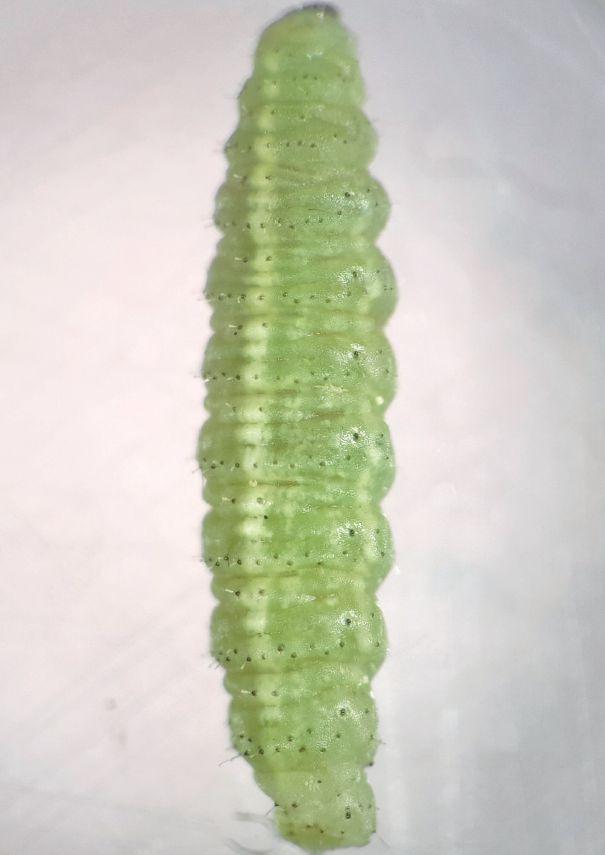
new alfalfa buds and newly emerged shoots, causing pinhole damage to the plants. Then, the third and fourth instars eat plant leaves. “The life stage that really causes the damage for alfalfa is the larvae,” Evenden says. Once they’re mature, the larvae fall to the ground for pupation. In late summer, the next generation of adult alfalfa weevils emerge.
Once the project team got to the field, they found the adult weevils hard to track. The team sampled 18 irrigated alfalfa seed stands from 2021 to 2023. They designed traps to count weevils and show their movements during the season. Specifically, Evenden wanted to find out if they left the alfalfa stands during the summer.
They set up emergence cages to catch the next generation of weevils coming out of the ground, both inside and outside alfalfa seed fields. They caught a few, but not that many. Pitfall traps were set up with directional barriers to indicate which way the alfalfa weevils travelled during the summer. These traps didn’t catch many alfalfa weevils. Evenden suspects this was because most of the weevils were on the foliage and didn’t spend much time on ground. They also looked for adults in soil samples. They didn’t find as many as they hoped; those they found were in the first couple of centimetres of soil.
The best way to catch adult alfalfa weevils? A simple sweep net. “On the
Photo courtesy of Priyatha Chennamkulangara.
ABOVE An alfalfa weevil at the third or fourth instar stage.
upside, that’s the tool that growers have been using to monitor the larvae anyway,” Evenden says.
SWEEP EARLY, ESPECIALLY IN OLDER STANDS
The best time to monitor with sweep nets is when the plants are 15 to 25 cm tall. At this point, the larvae should be at their third or fourth instar stage. The economic threshold, the number of alfalfa weevils present at which you might consider spraying, is 20 to 25 larval instars in one 90-degree sweep, sweeping foliage tips that are 35 to 50 percent damaged.
This research found that counting alfalfa weevils with sweep nets in the spring gives advance information about the number of larvae likely to be in fields later. This seems obvious, but it’s not. “Oftentimes in the development of insect monitoring programs, things get in the way like weather, natural enemies, like insecticide sprays.” The numbers of adults sampled do not always match the number of damaging larvae.
Evenden was happy to see the alfalfa numbers in this study follow a clear pattern. This makes early sweeping for adults a helpful tool. But high early-season populations don’t necessarily indicate a need to spray later.
They simply identify a need to keep an eye on the situation through the summer.
The team found more alfalfa adults in mature alfalfa stands than in young alfalfa stands. “That’s something producers thought was happening, but they wanted some confirmation. This finding suggests that, rather than leaving established stands and re-entering, they’re staying in the stands over winter.” This problem may be unique to seed growers, as weevils in seed fields aren’t disrupted by haying during the growing season.
WHAT’S NEXT
“We’re starting now to try and look at semiochemicals,” Evenden says. These are the chemicals organisms use to communicate with each other. “In the case of alfalfa weevils, we’re trying to look at pheromones, which are messages between individuals.”
Evenden and her team will also look at kairomones, semiochemicals that carry messages between individuals of different species. In this case, chemicals released by alfalfa plants to which alfalfa weevils respond. Evenden says there is lab evidence of this. Synthetic copies of these kairomones may one day help control alfalfa weevil populations.
Recent advances in biology are speeding up progress. “The genome of the alfalfa weevil has just been sequenced,” Evenden says. “We might be able to collaborate with people who can narrow down the genetics and tell us, in a reverse way, what we should be looking for in the chemistry.”
Stripe rust of winter wheat, caused by Puccinia striiformis f. sp. tritici Eriks. (Pst), occurs across western Canada in many years. While many of today’s western Canadian winter wheat varieties have improved resistance to stripe rust, some – moderately resistant (MR) – may benefit from foliar fungicide application as another strategy to help control stripe rust.
A research project was conducted at four locations in Saskatchewan and Alberta to evaluate the effects of fall and spring foliar fungicide application on stripe rust, as well as leaf spot severity, and impact on yield and quality of winter wheat. Sites were at the University of Saskatchewan (U of S) East Sutherland farm near Saskatoon and the Agriculture and Agri-Food Canada (AAFC) sites at Indian Head, Sask. and AAFC Lacombe and Farming Smarter at Lethbridge, Alta. The Lethbridge site was irrigated.
There were 11 site years, with the longest running research at the U of S from the 2013/14 winter wheat season through 2016/17 season. Indian Head had a trial in 2015/16, and Lacombe and Lethbridge ran from 2014/15 through 2016/17 growing seasons.
Four winter wheat cultivars – AC Bellatrix, Moats, CDC Osprey and Radiant – were selected to provide a range of resistance ratings against stripe rust and leaf spot diseases. AC Bellatrix and CDC Osprey were rated as susceptible to stripe rust, Moats as MR, and Radiant as either resistant, intermediate or susceptible depending on geographic location.
The foliar fungicide Twinline (metconazole + pyraclostrobin, Group 3 + 11) was used for stripe rust and leaf spot control at the recommended rate of 202 ml/ ac. (500 ml/ha) in nine gal./ac. (100 l/ha) of water.
Four fungicide treatments were made to each cultivar including an unsprayed control, a single application in the fall at the seedling stage (growth stage (GS) 15–19), a single application in the spring at the flag-leaf stage (GS 39–47) and a dual application in both the fall and spring.
In the fall and spring of each growing season at Saskatoon, field plots were inoculated with urediniospores of three Pst isolates. The other sites relied on naturally occurring pathogen infections.
Stripe rust severity varied among site years. At Saskatoon, trace levels of stripe rust were observed in the fall after inoculation in 2014, 2015 and 2016. At Lacombe, low severity levels of less than 10 per cent were observed in the fall in 2015 but not in 2014 or 2016. Stripe rust
At Saskatoon, trace levels of stripe rust were observed in the fall after inoculation in 2014, 2015 and 2016.
severity at Indian Head was very low. Lethbridge had consistently high stripe rust severity all three years.
In the spring, overwintering Pst was not detected on winter wheat in this study.
As would be expected, stripe rust severity measured in the spring at the soft dough stage (GS85) followed variety resistance ratings, with AC Bellatrix and CDC Osprey having the highest stripe rust severity followed by Radiant with intermediate ratings at some site-years and Moats with very low severity ratings.
Fall application of a foliar fungicide on the susceptible varieties did not reduce stripe rust severity when measured at the soft dough stage. For the susceptible varieties, stripe rust severity was reduced by a single spring or a dual fall and spring application when disease severity was high.
For the MR variety Moats, stripe rust severity was very low in the untreated plots. A foliar fungicide application did not significantly reduce severity any further. Further, the untreated Moats check has stripe rust severity statistically similar when compared to spring or dual foliar applications for the susceptible varieties. This highlights the value of using resistant varieties to manage stripe rust infestations without the need for foliar fungicides.
For more susceptible varieties, foliar fungicides provide a yield benefit when stripe rust infections were intermediate to high. For example, a single spring or dual fungicide application maintained yield potential for the susceptible variety AC Bellatrix by 16.9 to 229.5 per cent, compared to the unsprayed treatment.
Overall, a single spring application was beneficial on susceptible varieties in reducing stripe rust severity and protecting yield potential. The dual fall plus spring foliar treatment did not bring additional benefits in reducing stripe rust severity or protecting yield compared to a single spring application at the flag-leaf stage. A foliar application was not necessary on the MR variety.
The results will help encourage growers to use resistant varieties as the foundation of stripe-resistant control in winter wheat, but also provide growers with guidelines for foliar fungicide application if growing less-resistant varieties or if shifts in the strains of Pst occur.
Bruce Barker divides his time between CanadianAgronomist.ca and as Western Field Editor for TopCropManager . CanadianAgronomist.ca translates research into agronomic knowledge that agronomists and farmers can use to grow better crops. Read the full research insight at CanadianAgronomist.ca.
Innovation unleashed.
Viatude™ fungicide with Onmira™ active delivers best-in-class defence against sclerotinia. It’s advanced movement properties quickly and efficiently surround, penetrate, and protect the leaf and stem – even in dense canola canopies. With multiple modes of action, you can enjoy premium protection that keeps your canola healthy all season long.
Engineered excellence in every jug.
Disease out. Game on.
Enjoy more flexibility with your time, thanks to a wider window of application.
Want to take control of disease and your schedule? Sphaerex® fungicide provides reliable performance on most cereal crops and a wide range of diseases. With a flexible application window, you can apply when it works for you. Sphaerex delivers exceptional management of FHB, ergot and key leaf diseases for enhanced yield potential and crop quality. It all adds up to a better ROI1 and more flexibility to do what matters most to you. Visit agsolutions.ca/Sphaerex for details. 1Subject