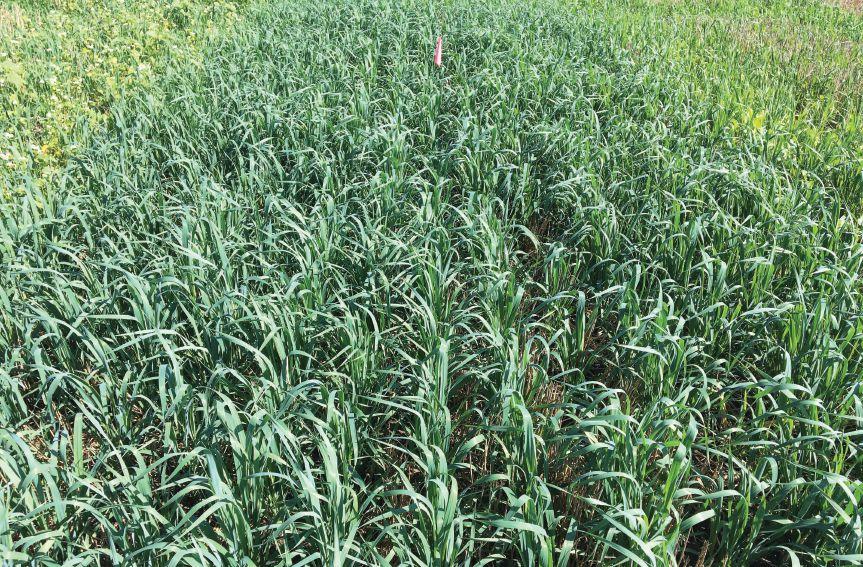
Re-domesticating wild barley to improve cultivated barley
PG. 5
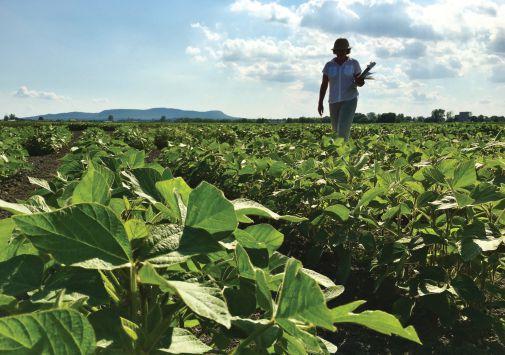
HARNESSING THE SOYBEAN GENOME
Improving yield and disease resistance in soybeans
PG. 22
Welcome to the world of Brevant™ seeds.
Welcome to a world of smart simplicity – welcome to the world of Brevant™ seeds. A place where decisions are easier and service is there when you need it. We’re bringing new life to the seed industry with a focused seed portfolio of corn, soybeans, winter wheat and alfalfa. We’re excited to bring you leading genetics specifically engineered for your local area and growing conditions. Our team is ready to grow with you and help make your business thrive.
For a peek inside the world of Brevant seeds, visit Brevant.ca.
TOP CROP
MANAGER
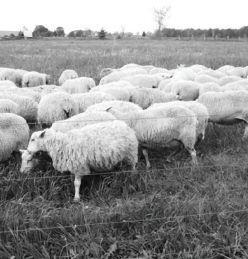
5 | Going back to go forward Re-domesticating wild barley to unleash its rich genetic diversity for improving cultivated barley.
By Carolyn King
18 | Intercropping wheat and soybeans: an intriguing gamble Intercropping in Ontario is a risky investment with the potential for profit in the long-term.
By Julienne Isaacs
22 | Harnessing the soybean genome Improving yield and disease resistance in short-season soybean.
By Carolyn King
By Julienne Isaacs
ON THE WEB
TOP CROP MANAGER’S 2018 COVER PHOTO CONTEST
You know what the words Top Crop Manager mean to us – now, we want to see what being a Top Crop Manager means to you. Enter our cover photo contest, sponsored by Meridian Manufacturing, for a chance to be featured on our December cover. For submission guidelines and full rules and regulations, visit topcropmanager.com/photo-contest
Readers will find numerous references to pesticide and fertility applications, methods, timing and rates in the pages of Top Crop Manager. We encourage growers to check product registration status and consult with provincial recommendations and product labels for complete instructions.
STEFANIE CROLEY | EDITOR
TIME TO SPEAK UP
The discovery of (and subsequent announcement about) a few unregulated genetically modified (GM) wheat plants on an isolated access road in southern Alberta raised dozens of questions from the ag community and the general public – and the confusion still remains.
The plants were discovered in 2017 but not announced to the public until June 2018. This is the first time unregulated GM wheat has been found in Canada (although other cases have happened over the past decade in Washington, Oregon and Montana), and the discovery prompted South Korea and Japan to temporarily suspend shipments of Canadian wheat (the countries resumed Canadian wheat purchases on June 26 and July 20, respectively). The wheat – discovered in the summer in 2017 when it resisted herbicide spraying treatment – was determined to contain a genetically modified trait developed by Monsanto, but was not linked to company field trials conducted several years ago in a different part of Alberta.
Though the story is still newsworthy, the hype around it seems to have died down a bit among the mainstream media. But against my better judgment, I decided to read comments on a national newspaper’s online article about the discovery, and the amount of comments from people who still have misunderstandings about genetically modified organisms is staggering. Terminology is misused and people are quick to make assumptions and place blame. And it’s not just happening on the Internet. At my local grocery store, I recently overhead a shopper comment about how she likes to purchase a certain brand of artisanal bread because it’s clearly labelled to be free of GMOs. The package doesn’t lie, but the marketing is clever – and it clearly works.
It’s disheartening to read and hear comments like this, but what’s more disappointing is to see the lack of commentary from the other side. It proves the disconnect between producer and consumer still exists, and I fear it’s going to get worse. I didn’t see a single comment on that article that clarified any of the misconceptions about genetically modified crops grown in Canada, and without commentary from the experts (read: you), misinformation spreads like wildfire.
My eldest son is not quite four years old, and can identify the crops grown around our house. He’s quick to point out a sprayer in the neighbouring field and will just as hastily correct you if you mistakenly call it a tractor. He’ll also be a part of the generation that won’t grow up with a landline phone in the house, but likely with more than one computer and tablet instead. He will have access to more information at his fingertips than he will ever need. I know I’ll have the ongoing task of helping him (and my other children) learn the difference between the “good stuff” and the “bad stuff” he encounters every day, but I hope he uses these tools wisely and continues to identify when something is wrong, and speak up when he has questions.
At least once a year, something prompts me to step up on the soapbox and use this short column to preach about the importance of educating the public about what you do. Maybe it’s the conviction with which my son talks about the differences between a combine and a tractor, or maybe it was that grocery store conversation – but here’s my annual reminder to you. The agriculture industry needs to work harder than ever to bridge the gap between producer and consumer, and everyone has a role to play. Channel your inner preschooler and use your voice to defend what you’re passionate about.
MANAGER
ext. 3555 Fax: 416-510-6875 or 416-442-2191 Mail:
Baker Rd., Suite 400, Toronto, ON M2H 3R1 SUBSCRIPTION RATES Top Crop Manager West – 9 issues February, March, Mid-March, April, June, September, October, November and December – 1 Year$47.50 Cdn. plus tax Top Crop Manager East – 7 issues February, March, April, September, October, November and December – 1 Year - $47.50 Cdn. plus tax
GOING BACK TO GO FORWARD
Re-domesticating wild barley to unleash its rich genetic diversity for improving cultivated barley.
by Carolyn King
The pool of genetic diversity in a domesticated crop like barley is much shallower than in the crop’s wild relatives. So researchers sometimes bring individual genes from a wild cousin into the crop to add crucial traits. But plant breeder Duane Falk is tackling the problem from the opposite direction: he is re-domesticating wild barley lines.
With this novel approach, he hopes to enable barley breeders to access much more of the vast diversity occurring in wild barley.
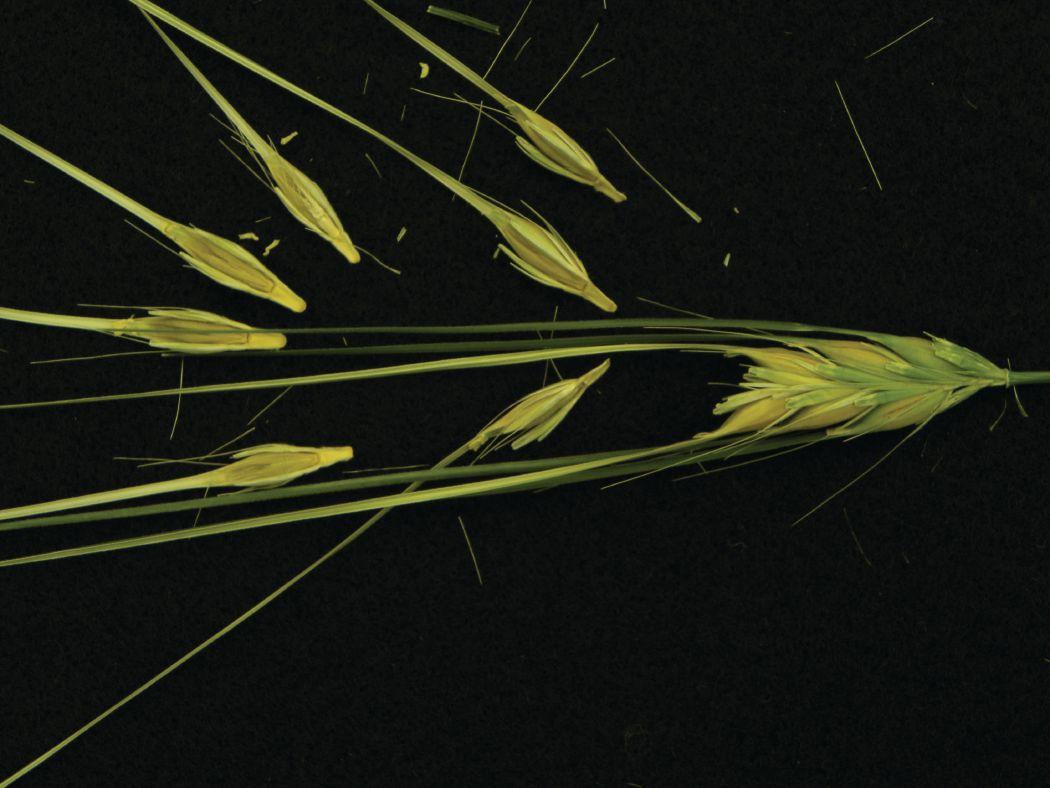
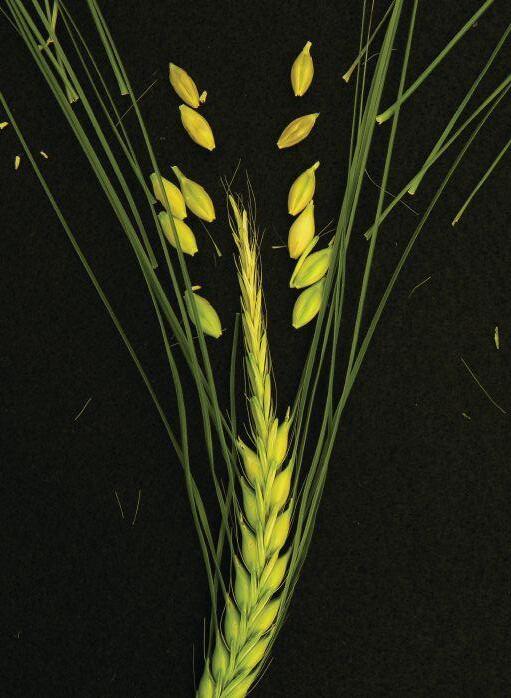
Wild barley is native to the Middle East and was domesticated about 10,000 years ago. Falk explains that the first critical step in the domestication process was selection for a non-shattering rachis. A rachis is the central shaft in the seed head. In wild barley, Hordeum spontaneum, the rachis shatters at maturity, providing natural seed dispersal. In domesticated barley, Hordeum vulgare, the rachis does not shatter so the seed stays on the plant, allowing people to harvest it easily. He says, “A barley plant with a fragile rachis is of no value to a cultivated situation. And a plant with a tough rachis doesn’t survive in the wild.”
The mutation for a non-shattering rachis is thought to have occurred at least twice in barley’s domestication history. “Each one of those two major domestication events would have involved literally a
single plant. And, as a self-pollinated species, that single plant would have been relatively homozygous [genetically uniform]. So, most of the variation that we have in our modern crop has occurred as mutations within those two original backgrounds. It’s easy to see why there is not much diversity in domesticated barley,” says Falk, who is a professor emeritus in Plant Agriculture at the University of Guelph. He led the barley and oat breeding programs at the university and has been breeding barley for more than 30 years.
“Domesticated barley differs from wild barley in at least 10 major characteristics, but all of those characteristics occurred by selection after it was domesticated,” he notes. These characteristics include things like larger seed size, more uniform maturity, stronger straw, and loss of seed dormancy. Modern breeding efforts have tended to narrow the diversity in cultivated barley even further.
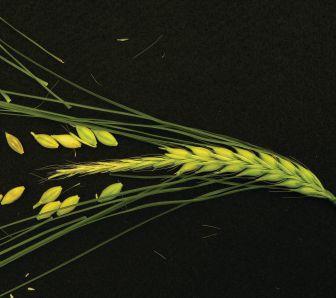
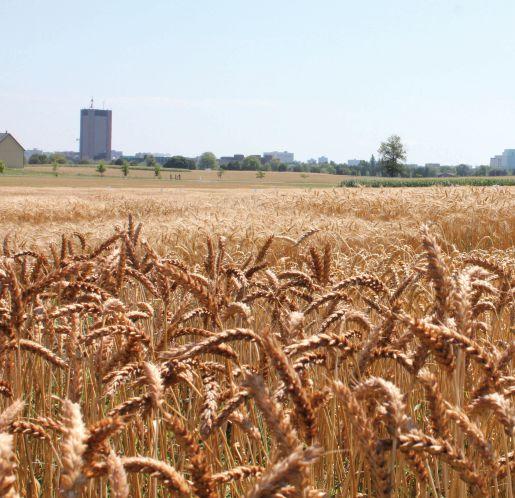
Bringing genes from wild barley into elite breeding lines helps broaden the diversity in cultivated barley a little. “Wild barley produces abundant pollen and crosses readily with domesticated barley,” Falk notes. “A number of breeding programs around the world have used wild barley in a limited way, mainly as a source of single genes for ABOVE: In wild barley, the seed head shatters at maturity, providing natural seed dispersal.
disease resistance.”
But a single gene for disease resistance is only a temporary fix because the disease organism needs only one mutation to overcome the plant’s resistance. Also, crosses with wild barley bring undesirable wild traits into the progeny, such as a shattering rachis, dormancy, weak straw and so on. So the progeny are troublesome to plant and harvest, and repeated backcrossing with the cultivated parent is needed to get rid of those unwanted traits.
Potentially, wild barley could offer much more than a few single disease resistance genes. “Wild barley has a lot of genes and gene complexes [for disease resistance and other valuable traits] that would be very difficult to bring into domestic barley, especially if a trait involves two or three genes that are independent of each other,” says Falk. “For instance, wild barley is adapted to a much wider range of environments than domestic barley. These adaptations are not simple, singlegene characteristics; they are quite complex. So if we want adaptations to much cooler conditions, much hotter conditions, better drought tolerance, we are not going to get them by trying to pull single genes out; that disrupts the whole complex.”
So Falk is turning the tables on the problem. “I thought, let’s put in a single gene into wild barley, instead of looking for single genes to pull out of wild barley.”
His idea is to move the non-shattering rachis gene into wild barley lines. The big advantage of this trait is that it allows a researcher to manage the breeding materials with standard equipment, planting them with a planter and harvesting them with a combine. “And as soon as we start handling the materials using current mechanical means, the characteristics that support the modern domesticated complex
will be automatically selected for,” he explains.
“For example, if some seeds have dormancy, the only ones you’ll be harvesting are the ones that did grow. You will automatically be selecting against the ones with high dormancy that didn’t grow. And only the ones that are easy to thresh will wind up in the seed bag; if they are not easy to thresh, they’ll go out the back of the machine.”
From idea to action
“Now that I’m retired, I don’t have any constraints on what I do or don’t do. So I decided to take on this re-domestication project. It is not expensive. It doesn’t require any technology other than some tweezers to transfer pollen. I have some funding in my account at the university to pay for growth room space, and I’m using some of the land on my farm for the field plots,” explains Falk. “The work is easy to do, but it takes time – I’ll need to backcross three or four or maybe five times to get the non-shattering rachis gene into the intact wild barley. Nobody else is doing it; they have too many pressures to do other things like teaching, research, breeding and so on. I’m interested in it, so I might as well do it.”
Falk’s first step was to contact his friend Dr. Brian Steffenson at the University of Minnesota, who has worked extensively with wild barley. He asked Steffenson to provide a set of wild barley lines that represent the full range of diversity in his collection.
“He gave me 14 different lines from 13 different countries. They cover the entire geographic range of wild barley from Morocco to Afghanistan. I have one from each country along the Mediterranean coast and into the Middle East, and two from Syria,” says Falk. “I’ve got lines from about 500 feet below sea level in Israel to about 4,000 feet above sea level in Iran. And I’m working on getting some wild barley lines from Nepal and Tibet that may be somewhat different from the ones that I already have.”
Falk received the 14 lines about a year ago. In the university’s growth room, he grew out those wild lines and some cultivated lines for crossing. Along with the non-shattering trait, the cultivated lines also have the male sterility trait. Falk explains, “I have used genetic male sterility as a crossing tool for my entire career because it makes crossing the plants so much easier [since it prevents self-pollination].”
The tremendous diversity in the wild lines was obvious right away: “There are tall plants, short plants, early maturing, late maturing, black seeds, brown seeds, white seeds, long awns, short awns.”
He made the initial crosses last fall in the growth room and grew the first generation (F1) over the winter. The first segregating generation (F2) is growing in the field now. Once the F2 plants mature, he will select the ones that don’t shatter. Then he’ll backcross those with their original wild parent.
Falk is also planning to try using molecular markers for the nonshattering rachis gene. Using these markers would increase his costs, but it could make the selection process more efficient because he wouldn’t have to wait for the plants to mature to see whether or not they shatter. This would save time and space in the growth room and so reduce costs on that side.
“The backcrossing work will likely take about four or five years. If everything goes well, I’ll end up with 14 derived lines that are almost identical to the 14 wild lines I started with except that they will have the non-shattering trait and probably the male sterility gene as well,” notes Falk.
“However, I will likely not be able to carry all 14 lines all the way through. For instance, I might not get crosses with one background, or one of the lines might be highly susceptible to disease and might
In domesticated barley, the seeds stay on the plant, allowing people to harvest them easily.
not produce seed from the field plots. But I should get at least 10 lines, and that will represent a dramatic increase in diversity compared to what we have now in cultivated barley.”
Having fun with a genetic treasure trove
Once he has created the re-domesticated lines, Falk will make them available to breeders, geneticists and other researchers around the world. “They’ll be able to plant and harvest them normally and cross them easily. So re-domestication will make a very useful population out of something that right now is hard to handle,” he says.
“It will open up a new set of materials that researchers should be able to utilize more efficiently. They can cross them with anything they want, expose them to the stresses in their growing region, pull out single genes, pull out more complex traits, try some very unusual combinations –have some fun. It’s something I wish I’d had 25 years ago.”
Crosses with these re-domesticated lines could lead to some pleasant surprises. Falk gives a couple of examples from his earlier breeding work when he made crosses with wild barley and then simply selected lines that he liked. “Wild barley is normally considered to have really small seed, and really poor, thin, weak straw. But some of the largest seed in barley that I have in my breeding program came from a cross with wild barley. And some of the strongest straw in my breeding lines came from crosses with wild barley,” he says.
“So perhaps there is something in wild barley that combines well with domestic barley or releases variation or produces new variation that we just don’t see in normal crosses. I’ve made thousands and thousands of barley crosses and I have never seen anything like the variation that shows up when you cross with wild barley.”
To take the project even one step further, Falk plans to intercross the derived wild barley lines with each other to potentially release even greater genetic variability. “[For instance,] by crossing re-domesticated wild barley from Iran with re-domesticated wild barley from Morocco, genes will be brought together that would never have had a chance to interact before. This may give rise to unique plant types, grain quality types and adaptation potential that has never been seen before. This is another unique opportunity made possible by this method of addressing the diversity issue in barley.”
Falk has already had enquiries from researchers interested in obtaining the re-domesticated lines. “An acquaintance of mine in Queensland, Australia, who studies starch said he would be very interested in looking at the starch profiles of these wild barleys because nobody has ever done it. He expects there will be some variation that might affect food quality, or feed quality, or malting quality in the derived lines.”
Since no one has tried re-domestication before, there’s no way to know how successful Falk’s project will be. “I’m taking three
steps back and hoping that I can take at least one step forward,” he says.
However, he is optimistic that this approach will work because the genetics of barley are relatively simple compared to a lot of other crops and because the male sterility gene will make crossing much easier.
Falk adds, “If this works for barley, theoretically it could work for any other crop that has a wild relative, especially crops where the domestication characteristics are fairly simple and the wild relatives are fairly closely related.”
The easy way to manage your farm.
Analyze your data. Plan your strategy. Then track your performance. AgExpert Field gives you the details you need to know to make the best business decisions.
It’s all new. And seriously easy to use. Get it now and see.
fcc.ca/AgExpertField
ROCK 'N' ROLLING SOYBEANS
How does rolling a soybean field affect your yield?
by Carolyn King
Rolling soybean fields immediately after seeding is not new. This practice has taken place in Ontario for many years to manage stones and improve harvestability. But in some years, there’s a rain or some other reason why we can’t roll right after seeding. So people have experimented with rolling after the soybeans come up,” says Horst Bohner, provincial soybean specialist with the Ontario Ministry of Agriculture, Food and Rural Affairs (OMAFRA). “And then occasionally you hear rumours that post-emergent rolling actually increases yield.”
Bohner is leading an Ontario project to try to nail down exactly how the timing of land rolling affects soybean yields and when is the best time to roll.
Research to evaluate soybean rolling at different crop stages has included studies in such places as Michigan, Illinois, Minnesota, Iowa and North Dakota. Some studies have found that rolling doesn’t provide a yield advantage, but others have shown higher yields with post-emergent rolling.
“The obvious reason for a yield benefit from rolling right after planting is that the roller pushes stones into the soil, flattens any uneven, loose soil, and pushes down crop residue,
allowing the combine header to do a better job of picking up the lowest hanging pods,” Bohner notes.
“A yield benefit from rolling after soybeans come up would be associated with early-season stress to produce more branching and stimulate more pods. The concept is that you are affecting the growing point – you’re trying to break that apical dominance to some extent and get more branching.”
He adds, “This concept is similar to the idea of spraying a post-emergent herbicide to actually hurt the beans a little to stimulate extra yield, which has been tried by many people over the years.” He explains that soybeans seem to actually perform better if somewhat stressed, but you need to apply just the right amount of stress at just the right growth stage. Otherwise, yields could suffer.
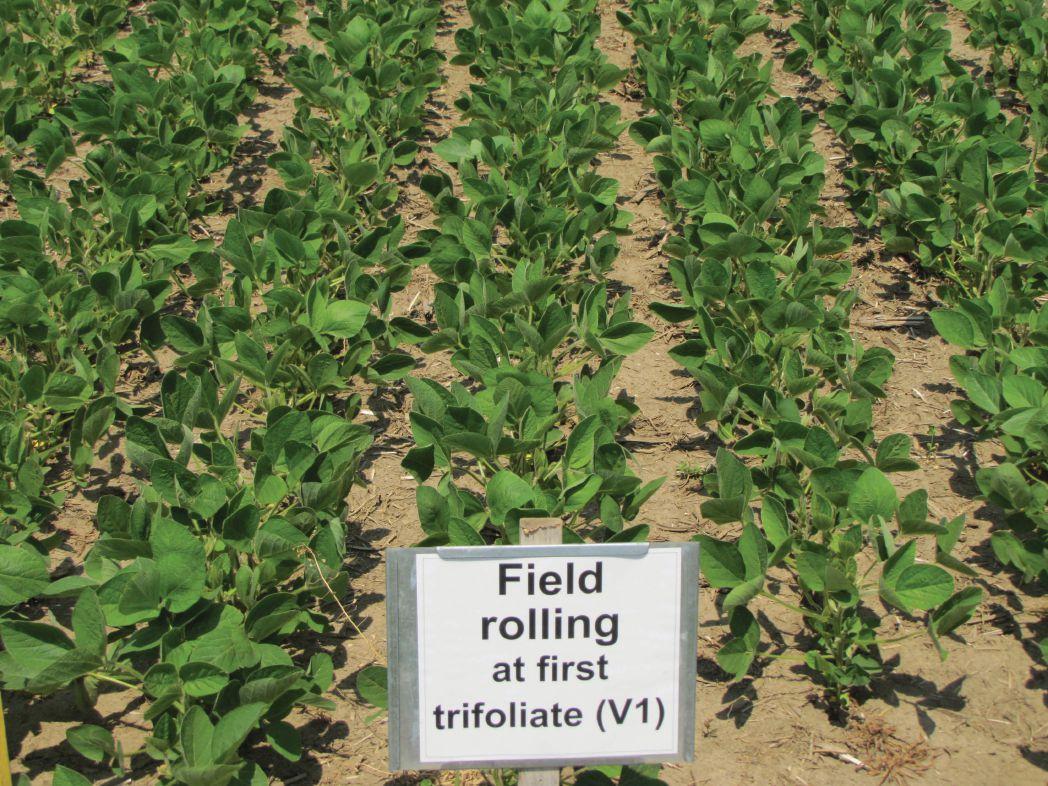
Bohner’s project is comparing five treatments: rolling immediately after seeding; rolling at the V1 growth stage (first trifoliate leaf stage); rolling at V2 (second trifoliate); rolling at V3 (third trifoliate); and an untreated control. He didn’t include
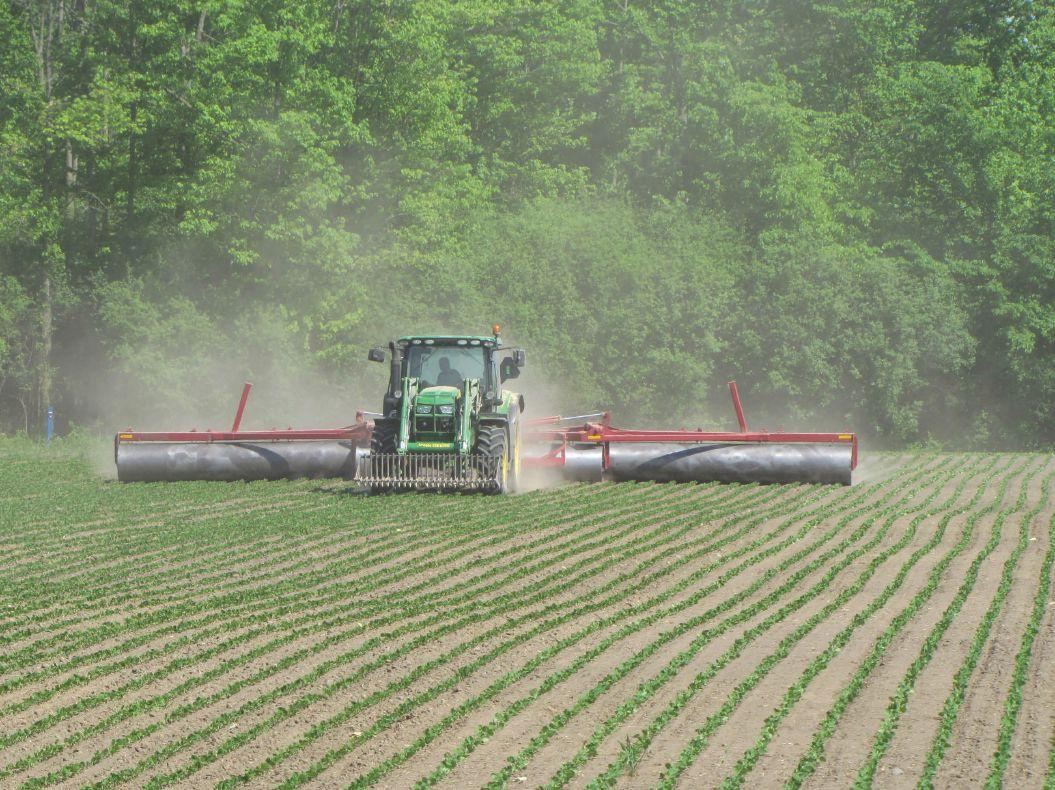
ABOVE: An Ontario project aims to find out if rolling soybean fields after emergence will increase yields.
PHOTO COURTESY OF HORST BOHNER.
rolling between emergence and the unifoliate stage or rolling once flowering starts because rolling at either of these stages tends to permanently damage to the crop.
His project team is using a 30-inch diameter, smooth roller. They roll the trials on warm afternoons so the plants will be limp and recover quickly from rolling.
In 2017, the project’s first year, they conducted four trials, with sites near Bornholm, Lucan and Winchester. Two trials were on no-till fields, and two were on conventionally tilled fields. Since crop residue can cushion the plants when they are rolled, Bohner wanted to find out if soybeans in the tilled fields would have greater plant damage and perhaps poorer yields.
The 2017 results showed a small yield advantage from rolling at V1 (see table), although the statistical confidence in this yield gain is not very strong. None of the other treatments were statistically
different from the untreated control. Rolling didn’t seriously impact the plant stands until V3. At V3, the stems broke off more easily, killing the plants and decreasing yields.
The yield results were fairly consistent between the four sites. Although the rolled plants at the tilled sites had more damage than those at the no-till sites, that greater damage didn’t translate into poorer yields.
“The good news from 2017 is that, if you do the rolling right, which means you use a smooth roller (not a packer or other more aggressive form of rolling), you run that on soybeans in the early vegetative stages, V1 maybe up to V2, and the beans are not extremely stressed, then there is no problem with rolling beans once they come up. They stand up very quickly again and yields don’t suffer,” he says.
“Now, to answer the question of whether post-emergent rolling actually improves yields, we need more data.
That’s the idea behind repeating the trials in 2018.” According to Bohner, it is highly unlikely that post-emergent rolling will increase yields by more than one or two bushels per acre.
This year’s trials are taking place at six Ontario sites, including both no-till and conventionally tilled fields, and involve the same treatments as in 2017.
From his observations so far in 2018, Bohner notes, “If you look carefully, there are some more branches on a certain percentage of the plants, so we are stimulating the effect we want with post-emergent rolling. Whether that translates to a yield increase will depend on several factors including the overall yield potential. This year is one of those years where beans are pretty stressed to begin with.” Once he analyzes the 2018 results, he’ll be able to see if the additional stress from rolling provided any yield advantage.
Both in 2017 and 2018, Bohner noticed that, at sites where growing
PHOTO COURTESY OF HORST BOHNER.
Results from the project so far suggest that V1 is likely the best time for post-emergent rolling.
Soybean yield response to timing of land rolling, average of four Ontario sites in 2017.
a. Sites near Bornholm, Lucan and Winchester; three replicates at each site.
b. Statistically, for any of these treatments to be significantly better than another, the yield advantage must be at least 1.6 bushels greater (LSD
of Horst Bohner.
conditions turned colder after planting, soybeans rolled right after planting tended to have a harder time emerging. The firmer soil after rolling made emergence a little tougher for the struggling plants. After harvest, he’ll be able to tell if this problem influenced yields.
Depending on how the 2018 trials go, Bohner will likely repeat the trials in 2019. Grain Farmers of Ontario have provided some funding for the trials, and Dupont Pioneer, Syngenta and DeKalb have provided seed.
Advice on rolling
“At present, my perspective on rolling is that, because of the improvement in header pickup, there’s a small but real benefit from rolling for many soybean growers,” Bohner says.
“Whether to roll them right after seeding or to wait until
greater injury. “If it has been very cool in the night and there’s lots of soil moisture and the soybeans are really growing vigorously, then they’ll be stiffer earlier in the day and become more flexible in the heat of the day. So it makes sense to roll them in the heat of the day,” he says. But he adds, “If the weather has been fairly warm over a number of days, then the time of day doesn’t seem to matter so much because the soybeans will bounce back quickly no matter when they are rolled.”
Moisture conditions have some influence on timing. Bohner notes, “If the field is too wet and there is anything sticking to the tractor tires or to the roller, then rolling may cause too much damage.”
Bohner explains that soybeans seem to actually perform better if somewhat stressed, but you need to apply just the right amount at the right growth stage.
after they come up will depend on a number of factors including soil type, how many acres you are planting, the weather, and other practical issues. So that will become more nuanced with respect to a specific grower.
“For example, in heavy clay soils, soybeans often struggle to emerge because the soil can crust over. [And rolling right after planting can increase the risk of crusting, especially if heavy rains occur soon after rolling.] In those soils, it may be better to roll after emergence.”
“On the other hand, if you have a sandy soil and it is very dry, you may want to conserve water and you’re not worried about crusting, then rolling right after seeding is by far the smartest idea. And right after seeding, of course, is also the time when you can push more rocks down because the soil is looser.”
If you’re new to post-emergent soybean rolling, Bohner offers some tips.
Regarding when to roll, V1 is likely the optimal crop stage for post-emergent rolling. Also, rolling during the heat of the day helps ensure the plants are limp; rolling stiff plants causes
He recommends using a smooth roller, not a packer, for post-emergent rolling. “The amount of pressure per square inch with these land rollers is relatively low. It is pretty gentle on the land.” The tractor tires will cause more plant damage than the roller. Try to avoid overlaps when rolling because double-rolled plants are often too severely damaged to recover.
“If you are nervous about rolling beans after emergence, I suggest that you roll once down the field and then get off the tractor and find something else to do for three or four hours. Then come back and compare the rolled beans to ones that you haven’t rolled,” Bohner says.
“If things are the way they should be, those beans will have stood up again and you will only have cracked off a relatively small percentage of the plants, maybe one in 20 plants. Then you’ll have some comfort that the beans will be just fine, and you can roll the rest of the field.
“If for some reason, a lot of the main stems are broken –maybe the tractor tire is too aggressive in that situation or the field is too wet or the beans are too stressed [because of additional stresses such as poor weather] – then it becomes obvious pretty quickly that you shouldn’t be rolling. But that typically is not the case.”
Courtesy
CEREALS
RAISING RESISTANCE IN WHEAT
Changing the game of wheat variety development with enhanced levels of disease resistance.
by Mark Halsall
FFusarium head blight (FHB) is a serious disease affecting yield and quality of wheat and other important cereal crops across Canada. Breeding for resistance continues to be a key strategy in the fight against FHB, and research scientists like George Fedak are helping to lead the way.
Fedak, who works at the Agriculture and Agri-Food Canada’s Ottawa Research and Development Centre, has been studying ways to boost resistance to FHB as well as leaf and stem rust in Ontario spring wheat. It’s part of a $25.2 million National Wheat Improvement Program funded by Growing Forward 2 and other industry partners such as the Western Grains Research Foundation and the Canadian Field Crop Research Alliance. The five-year program wrapped up in March.
During the project, Fedak and his team developed germplasm for a number of resistant lines for use in wheat breeding programs. It’s hoped that new varieties will be commercially produced that reduce reliance on fungicides to combat FHB and leaf and stem rust – something
that will benefit growers’ pocketbooks as well as the environment. “With resistance genes, the producer doesn't have to use as much in the way of fungicides,” Fedak says.
The germplasm developed by Fedak’s program was produced by crossing Ontario wheats with various wild relatives of wheat and other wild grasses to identify new genes for resistance to FHB and leaf and stem rust.
"We transfer the genes from wild species into wheat, and this usually requires a lot of backcrossing and a lot of testing to make sure that we have retained the desired resistance,” Fedak says, adding that it also takes time to eliminate undesirable traits from wild species during the gene transfer process.
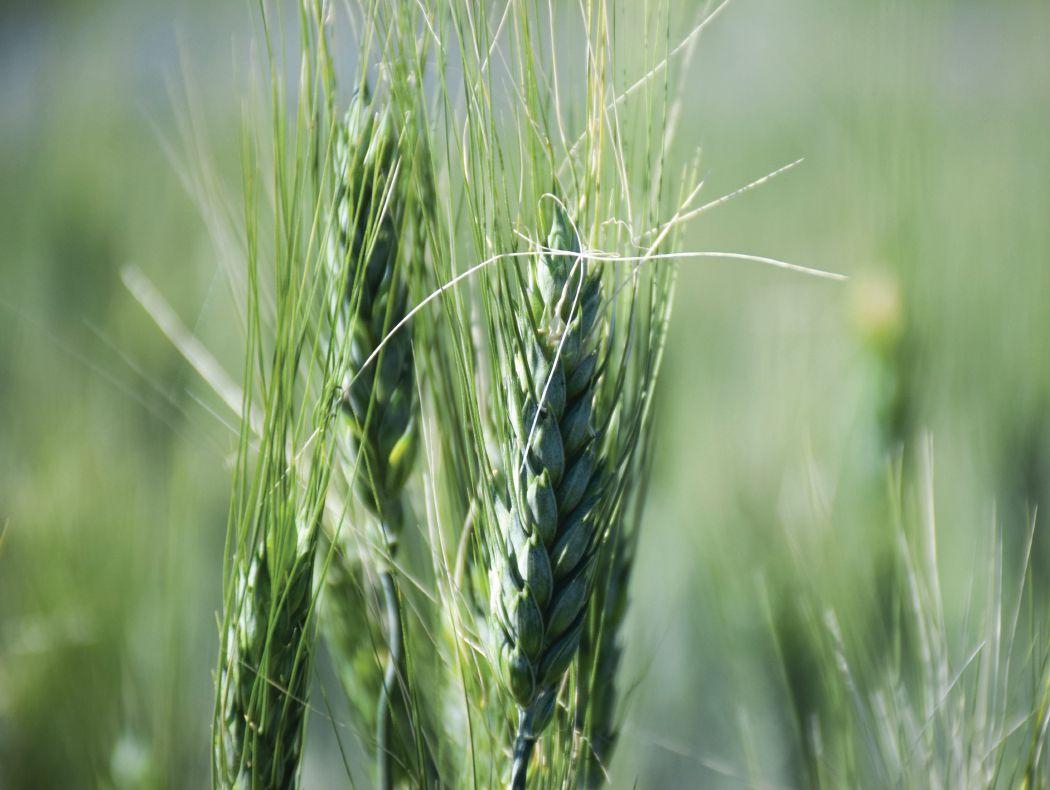
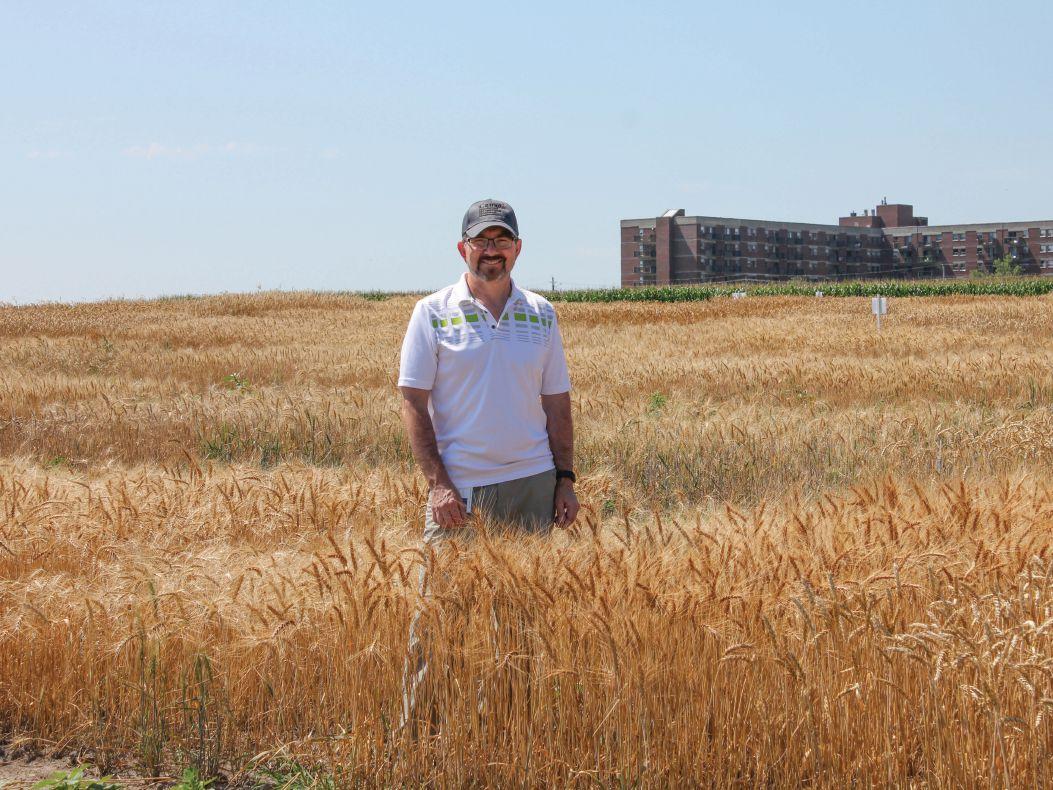
TOP: Breeding for resistance is a key strategy in the fight against Fusarium head blight, a serious disease affecting wheat and other crops across Canada.
INSET: George Fedak, research scientist at Agriculture and Agri-Food Canada’s Ottawa Research and Development Centre.
PHOTO BY TOP CROP MANAGER.
PHOTO COURTESY OF GEORGE FEDAK.
“We find the right genes and put them in the breeding material, and then the breeders will take it from there and eventually they’ll produce their own varieties with not only disease resistance but also with acceptable levels of yield, straw strength processing quality and so on."
Molecular markers
Fedak, who first started researching FHB resistance in wheat 10 years ago, says his team opted to go for crosses with wild species as a way to broaden their search for desirable traits beyond the primary gene pool of wheat. They went to secondary gene pool, which are the immediate wild relatives of wheat, and also the tertiary gene pool, which includes wild grasses.
The researchers identified FHB and leaf and stem rust resistant genes by relying on a technique called molecular mapping, which involves mapping the locations of resistant genes within the wheat chromosomes.
According to Fedak, the use of molecular markers provides greater efficiency and precision when manipulating desirable genes in wheat. It allowed the researchers to create pyramids consisting of combinations of up
to four resistance genes, which isn’t possible with conventional techniques.
“All it takes is one mutation on the part of the pathogen, and the resistance gene in the host can break down,” Fedak says. “If there are four different genes in there, this should last much longer than a variety that only has a single gene for disease resistance.”
Germplasm for several FHB and leaf and stem rust resistant lines developed by Fedak’s research team have now been released and are currently being used by wheat breeders in Ontario and elsewhere to develop new resistant varieties.
Fedak says he isn’t aware of any new wheat varieties on the market yet that are using germplasm produced by his program, but he’s not at all surprised given the prolonged nature of plant breeding.
According to Fedak, inheritance of FHB resistance is complex and screening for it is complicated by environmental factors, so breeding for resistance has been relatively slow. He believes that despite the challenges, wheat breeders are making inroads, especially in the past 10 years or so.
“The breeders are making very good progress,” Fedak says. “It's incremental, but they
are coming along. In fact, Fusarium-resistant varieties have recently been released.”
Fedak says a lot of resistance genes currently in use by Canadian wheat breeders have been developed by previous generations of plant breeders and geneticists.
In addition, wheat breeders in Canada are able to rely on valuable work on germplasm development for FHB and leaf and stem rust disease resistance that’s taking place outside the country.
"We are extremely lucky in the fact that the Americans have very strong programs ongoing in that respect and the Australians have strong programs as well,” he says. “In a lot of cases we can use their genes to complement our own."
Fedak believes he is one of the last geneticists in Canada doing this kind of work. He is nearing retirement, and he’s hoping others will pick up where he’s left off.
“I think a geneticist's work is never done,” he says. “We will always need additional genes for resistance to Fusarium head blight, leaf rust, stem rust and stripe rust. New races [of these diseases] always come along, so somebody has to continue doing this . . . We will always need this kind of activity."
THE CLIMATE FIELDVIEW™
EXPERIENCE JOIN US FOR
FALL BURNDOWN BENEFITS
A post-harvest herbicide application makes sense in many situations.
If you have weeds in your field after harvest, think about a fall burndown,” says James Ferrier, Nufarm’s technical services manager for Eastern Canada. A fall burndown can be an effective tool to manage many tough perennial and winter annual weed problems and provide a cleaner seedbed for your next crop.
Crucial control of perennial weeds
For many Ontario growers, fall is the ideal time to manage troublesome perennial weeds. “There are plenty of research trials across North America that show if you manage for dandelions, for example, in the fall you’ll get anywhere from 20 to 30 per cent better control than if you did the same tactic in the spring,” says Mike Cowbrough, provincial weed specialist with the Ontario Ministry of Agriculture, Food and Rural Affairs (OMAFRA).
“For instance, in Ontario it is pretty common if you are going to do a fall herbicide treatment to use glyphosate, and the rate most commonly used on dandelion is 1.34 litres/acre of a [glyphosate] product . . . You apply that in September, October or even into early November, depending on the weather, and
you’ll get much better control than if you took that same rate of product and applied it on May 1, as an example.”
Ferrier explains, “In the late summer and early fall, perennial weeds with tap roots, such as dandelion and perennial sowthistle, are sending photosynthates to their roots to enable them to overwinter. The herbicide can hitch a ride with those carbohydrates and other nutrients to effectively deliver that chemistry to the root and kill the root and the entire plant. So if we can apply a herbicide at that time, we are more likely to get control of those big tap-rooted perennial weeds.”
Cowbrough cautions that you shouldn’t expect to kill 100 per cent of the perennial weeds in your fields. “We’ve been trying to eradicate perennial weeds for a couple hundred years and that is not working out. But we do two important things with fall applications on perennials: We lower the weed’s population density, and we get dieback on the roots, so the shoots have to come from a little deeper in the soil and they emerge a little later in the spring than they normally would,” he says.
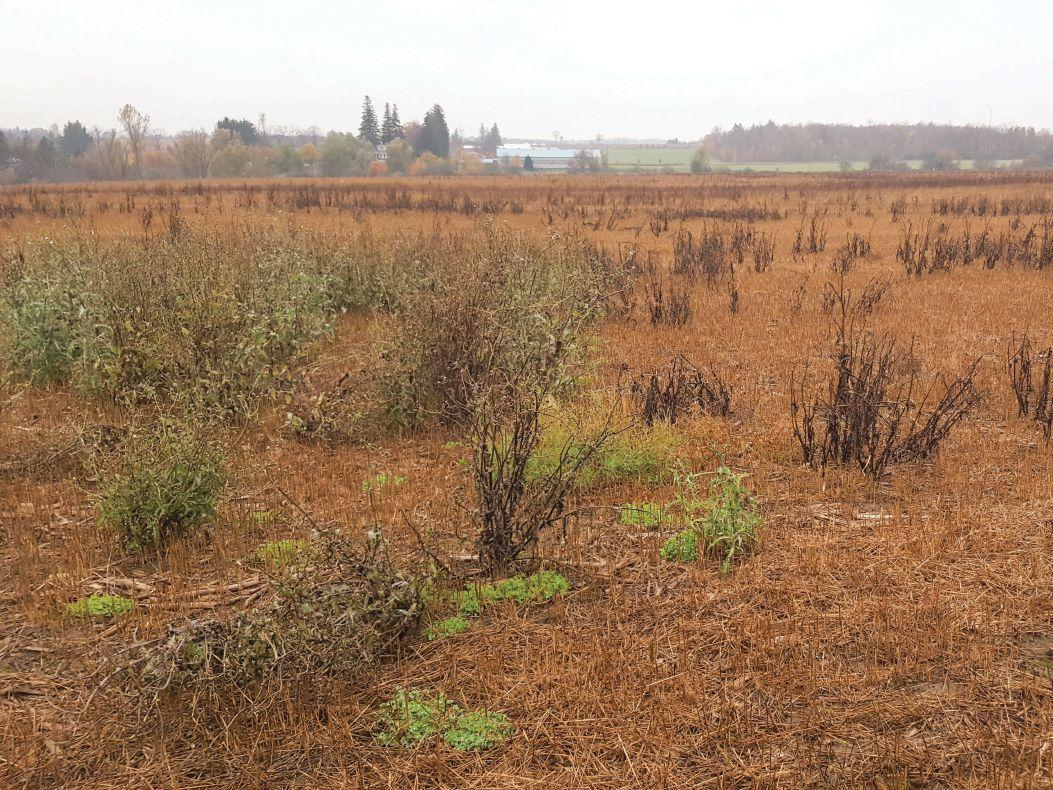
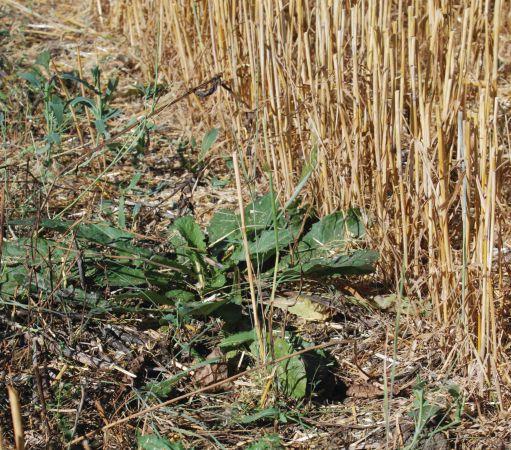
ABOVE: The sprayer miss with green plants (left) contrasts with the effective fall burndown on the rest of this wheat stubble field.
PHOTO COURTESY OF JAMES FERRIER.
“You always want to put your crop in a position to win, and if you can get your crop emerging before any weed, that is a win. With weeds like perennial sow-thistle, field bindweed and Canada thistle, we can get them to emerge later through fall herbicide applications.”
Along with spraying while the weeds are still actively growing, Ferrier notes another important factor for application timing: “Depending on things like the weed species and stubble height, growers may need to let perennials regrow a bit after harvest so they have enough leaf tissue for spraying. Growers who leave a lot of stubble in the field may not have to wait at all. Growers who cut low and take a straw harvest may want to wait a few weeks and allow some regrowth of the perennials so there will be enough vegetation available for uptake of the chemistry.”
Stop winter annuals while they’re small
Fall can also be a good time to control winter annuals. “We’re finding that growers are seeing a lot more winter annual weeds, especially with no-till cereals, no-till soybeans and so on. These weeds emerge in the fall, overwinter and then bolt, flower, and set seed in the next year. If you can get good control of them in the fall while they are still small, with either a pre-plant or preemerge for cereals or a post-harvest burndown, you’ll have fewer weeds to deal with as a burndown or in-crop in your spring crop,” Ferrier says. “Controlling weeds like Canada fleabane, stinkweed and shepherd’s purse in the fall can save you time and money in the spring.”
Cowbrough adds, “Controlling winter annuals in the fall makes more sense than waiting until spring when they will be bigger and more difficult to control. And the window is probably nicer in the fall versus the spring.”
A complicating factor is that some weed species that grow as winter annuals can also grow as summer annuals. “[For those weeds,] controlling them in the fall doesn’t necessarily mean that you won’t have to control [the spring-germinating plants] in the spring,” Cowbrough says. “Chickweed, for example, will germinate all year round if the weather is good. But chickweed can be an alternative host for cutworm. So managing chickweed in the fall is probably good from the perspective of reducing the pressure of the alternative host.”
soybeans come off. After corn can be trickier. Depending on the weather, in some years you could be harvesting corn as late as early December to January [when weeds will typically be dormant]. But there are years where producers have been able to take off corn in November and then they get a day or two in early December that is above 5 C and gets up to 8 C or 9 C [so the weeds are actively growing], and they take advantage of that window. And in the spring, they are glad they did.”
Pre-planting/pre-emergent before winter wheat
Controlling perennials and winter annuals before winter wheat helps protect yields. Cowbrough says, “If yield losses due to weeds occur in winter wheat, then it is because the weeds were there prior to the crop’s emergence [because once winter wheat is up and growing, it is relatively competitive against weeds]. So a lot of producers are finding that fall pre-plant applications ahead of winter wheat are very beneficial.”
Ferrier is also seeing this increasing trend of a fall application before winter wheat. “Growers are so busy in the spring planting their corn and soybeans that often they don’t want to take the time to get effective weed control in their winter wheat crop. But if they can put down a good burndown pre-emergent on their wheat, such as Nufarm’s BlackHawk [pyraflufen-ethyl and 2,4-D ester] with glyphosate, they can often avoid having to do an incrop application in the spring in their winter wheat. So it really helps them spread out their workload.”
For growers who are wondering about phenoxy products, like 2,4-D or MCPA, for pre-emergent applications on winter wheat, Ferrier explains, “Extensive work has been performed that shows the safety of products like BlackHawk or 2,4-D pre-emergent to winter wheat. As long as no plant tissue is poking up through the ground, these products can be applied.”
Herbicide resistance and fall burndowns
"If you manage for dandelions, for example, in the fall you'll get anywhere from 20 to 30 per cent better control than if you did the same tactic in the spring."
Post-harvest control before spring crops
“If you clean up the weeds in your field after harvest, you can start with a cleaner field in the spring,” Ferrier says.
Applying a herbicide after harvesting winter wheat is a common strategy in Ontario. “I think a lot of producers are very comfortable [with a herbicide to manage perennials] after winter wheat harvest because you have to manage the volunteer winter wheat and you’re going to use glyphosate to do that anyway. In fact, if you have perennial weeds in a field that just came off winter wheat, I can’t think of any reason why you shouldn’t try to manage those weeds in the fall,” Cowbrough notes.
“There is also plenty of opportunity for a fall herbicide after
“Herbicide resistance is a big topic in our industry. We know that the more often we apply a mode of action, the more likely we are to see resistance to it. We also know that if we can apply multiple modes at different times of the year, we can delay the advent of that resistance,” Ferrier says. “If you have a product like BlackHawk, which contains two modes of action, Group 14 and Group 4, and you apply that [in a tank mix] with glyphosate, you are getting three modes of action, all working on the weeds at the same time. So we strongly suggest that would help delay or avoid development of herbicide resistance in a grower’s field.” For example, he says a fall application of BlackHawk with glyphosate can help manage glyphosate-resistant Canada fleabane, a major weed concern in Ontario.
Canada fleabane is another one of those tricky weeds that can grow as either a winter annual or spring annual. According to Cowbrough, the number of Canada fleabane seeds in the seed bank can sometimes be so high that, despite really good control of the winter annual plants with a fall herbicide, the flush of new seedlings in the spring can be so strong that you also need a spring herbicide application. Another complication is that, in some years, winter annual populations of Canada fleabane can suffer serious overwintering mortality. “So, fall management of
Canada fleabane that is going to be winterkilled anyway would seem like a waste of time, but assuming the mortality is because of a harsh winter, how do we know when that is going to happen? We’re very poor at predicting that.”
Cowbrough says, “Dealing with Canada fleabane in the fall lowers your risk of having super-large plants at the time that you want to control them in the spring.” But he also reminds growers that including non-herbicide control measures in your overall weed control strategy is another important tactic for slowing the development of herbicide resistance. Current work by Cowbrough and University of Guelph researchers on glyphosateresistant Canada fleabane has identified a non-herbicide option. He explains, “We’re finding that the addition of a cereal rye cover crop seeded in the fall at a low seeding rate of about 50 pounds per acre either reduces the Canada fleabane population in the spring or at least keeps it smaller and more susceptible to herbicides.”
Cowbrough highlights another resistant weed problem:
waterhemp, a fairly new concern in Ontario. Waterhemp populations in the province have resistance to up to four different modes of action (Groups 2, 5, 9 and 14). This member of the pigweed family is an annual weed that has a very long germination window from May to September and can produce over a million seeds per plant. Cowbrough says, “You wouldn’t want this weed to produce seed into August or September for next season. So managing it in the fall makes sense.”
This fall, when you’re assessing the weed issues in your fields after harvest, think about tackling perennials and winter annuals with a fall burndown – before the weeds get bigger and tougher-to-control and before they start competing with your next crop for moisture, nutrients and light.
For more information, visit nufarm.com/ca/product/blackhawk-east-crops
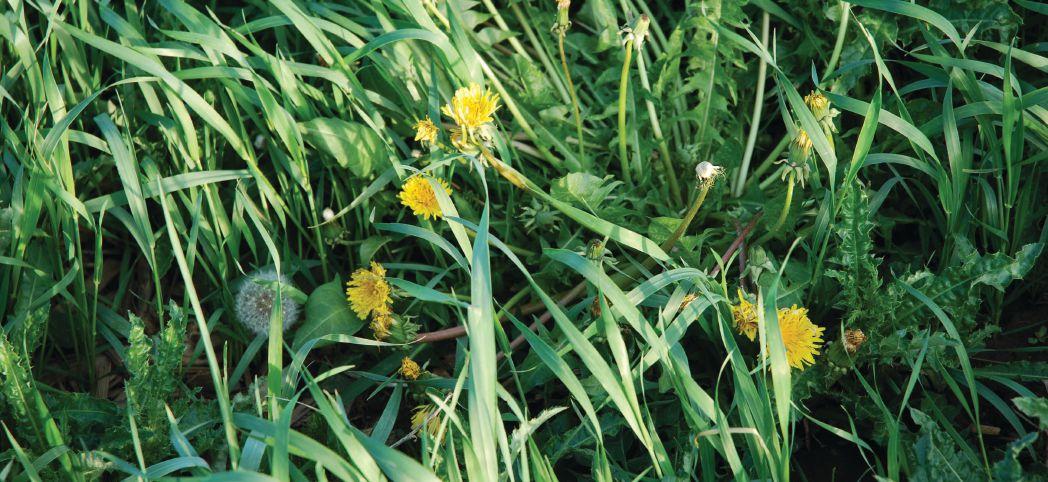
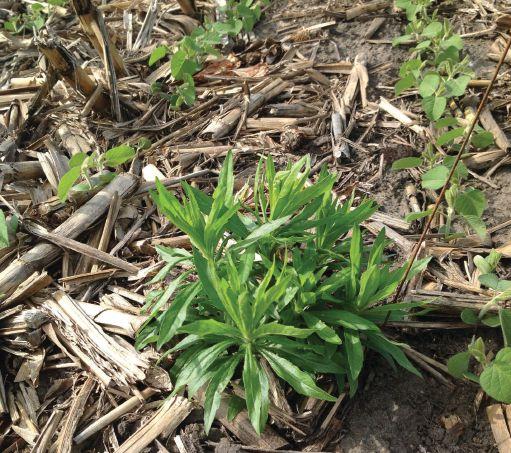
Fall herbicide application can control perennial weeds like dandelion or Canada thistle at the root, and control annuals like Canada fleabane so they are smaller in the spring.
PHOTOS COURTESY OF TOP CROP MANAGER.
TOP CROP MANAGER
INTERCROPPING WHEAT AND SOYBEANS: AN INTRIGUING GAMBLE
Excitement about intercropping makes its way out east. Currently, intercropping in Ontario is a risky investment with the potential for profit in the long-term. A three year wheat-soybean intercropping trial looks at whether two is better than one.
BY Julienne Isaacs
Good news stories from western Canadian farmers about the many benefits of intercropping have made their way to Ontario.
East of the Manitoba border, producers have to contend with very different growing conditions. But this hasn’t stopped producers from giving it a shot. This year, Peter Johnson, an independent agronomist, and a small “club” of other interested farmers spread across southern Ontario have started a three-year wheat-soybean intercropping trial. The trial will gather data on yield, as well as moisture, planting and harvesting dates, herbicide and fungicide programs and more.
The program has a small amount of funding from the Ontario Soil and Crop Improvement Association to purchase equipment, but for the most part, these farmers are hoping the project pays for itself in terms of decent yields, useful agronomic data and proof of principle that intercropping can be successful in Ontario.
In the trial, producers will relay intercrop soybeans into wheat, meaning winter wheat is planted in the fall in a twin-row format seven-and-a-half inches apart, with two rows blocked leaving a 22.5-inch gap, where the soybeans will be seeded in in the spring. A range of planting dates will be used from early May through to late May. The range of planting dates will be compared each year in the trial, tracking yearly results in addition to a range of planting dates. Wheat is then harvested during the summer, allowing the beans a chance to mature into the fall.
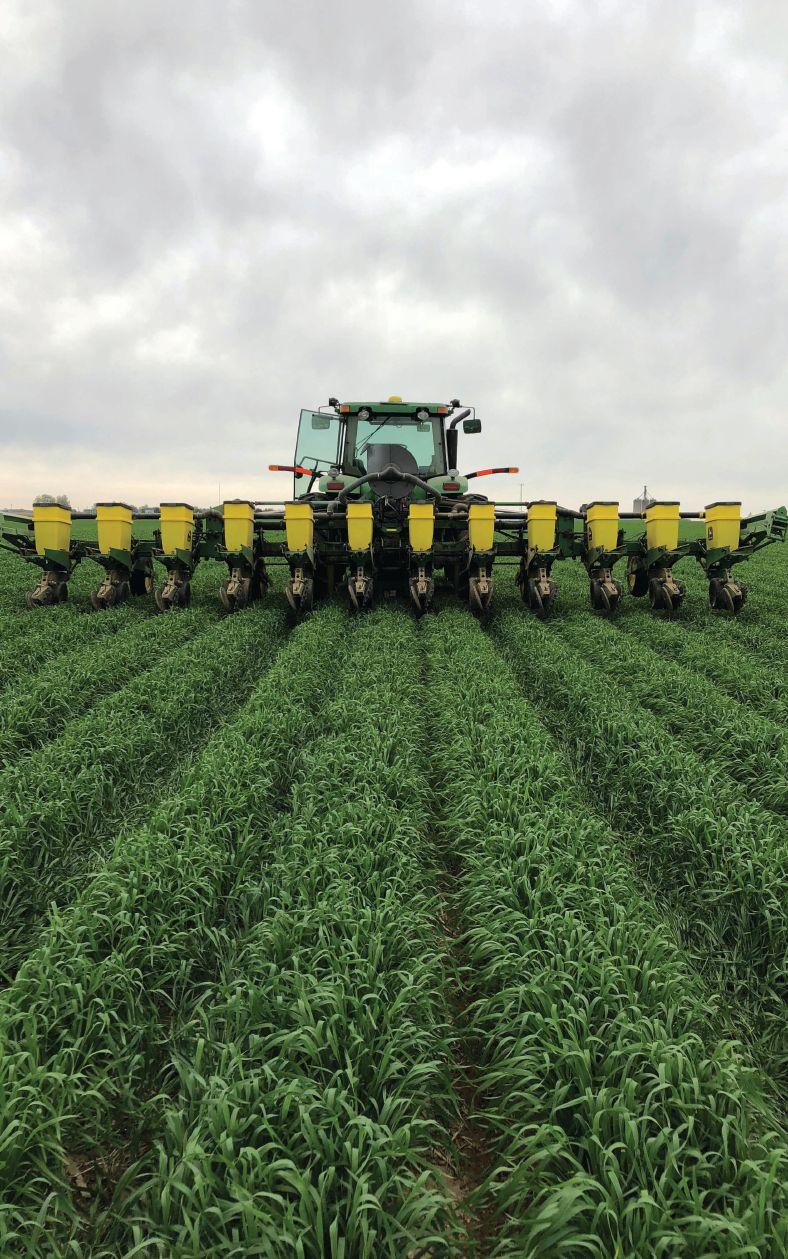
Planting beans between wheat rows on Rick Kootstra’s operation.
The biggest challenge facing this system is the length of the growing season, according to Horst Bohner, soybean specialist for the Ontario Ministry of Agriculture, Food and Rural Affairs (OMAFRA). “It’s no different than double cropping, in which a second crop is planted in the same growing season after the first crop comes off. We can’t double crop every year successfully because our season is too short,” Bohner says. “You can likely get both crops off many years when beans are intercropped. But the problem is that both the wheat and soybeans will be so impacted in terms of reduced yield that it doesn’t make economic sense to do it. There are scenarios where it may work, if the wheat comes off early and we have a long fall, that’s why it’s worth doing trials. But it’s a pretty high-risk scenario for much of Ontario.”
Johnson says Bohner has a very good point – producers need a good enough season that soybeans have a chance after the wheat is harvested. But he says the trial has already presented some intriguing results.
EARLY INDICATIONS
This past summer, Johnson ran three sites of the trial along with Middlesex Soil and Crop Improvement Association colleague Shane McClure – one on his own operation, another at the Perth County Soil and Crop Improvement demo farm, and a third at a producer’s farm in Foldens, Ont.
On sites where they saw good moisture, both crops were performing well at the time of writing; a site with less moisture saw good wheat but poor soybeans. On the third site, where wheat was planted late, the soybeans were looking very good.
“We’ve learned lots already,” Johnson says. He says the main reason why he is interested in studying intercropping is profitability. Many producers include wheat in a corn-soybean rotation to increase biomass and reduce pest pressure. But wheat often isn’t as profitable as corn and soybeans, and it is always a struggle to
keep it in growers’ rotations.
Mike Strang, an Exeter, Ont., producer involved in the trial, says the big question for him is not whether the soybeans will do well, but how well the twin-row wheat will yield. At the time of writing, his soybeans were not doing well due to lack of rain.
“But even if intercropping soybeans doesn’t work out, if I can get twin-row wheat to yield like regular wheat, I think that’s still a win,” he says. “It’s always a struggle to make wheat profitable in Ontario. That’s the main driver for us – can we keep wheat in the rotation and make money? We all grow wheat, or we grow it because it’s good for the soil, but you’re looking at almost a lost year. But if you could still get those benefits of having the wheat in the rotation and make it a profit, that would be a win.”
Mark Burnham, who is running the trial on his operation in Northumberland County, says he already grows wheat in his rotation. “But for us it’s a matter of trying to get more return out of the acres, trying to get two crops, two incomes,” he explains. “If you break even with wheat around here, you’re doing okay – if you make money, you’re doing excellent. The benefit for us is that the following year the
yields are better. To get wheat in the relay helps with cash flow and the economics of the whole program.” On Burnham’s operation, which has had a fair amount of rain, both the beans and the wheat were looking good at the time of writing [mid-July].
Rick Kootstra, who is running an independent intercropping trial on his Huron County operation, has planted 150 acres to a wheat-soybean relay intercrop. As far as Kootstra can see, he could be saving money by intercropping, because he’s saving on seed and still hopefully getting good yields. More than that, it’s insurance, because if the wheat crop fails (in yield or financially) he still has soybeans to fall back on. “The point is, with two crops in one field, the risk is mitigated,” he says.
Kootstra believes this trial is worth investing in – which is why intends to stick with an intercrop system for several years. “This is a way to add value to your operation. You have to make a commitment and run it for a few years so that you’re comfortable with the practice. You can’t do a three-acre trial and say, ‘Oh, it didn’t work, that’s it.’ I’m thinking about it in the long term,” he says.
COMMUNITY HEROES IN THE MAKING
that make a big difference.
Recycle your jugs and bags and lead the way for the next generation. cleanfarms.ca
KNOW YOUR COVER CROP GOALS BEFORE PLANTING
Interest in cover crops is increasing despite the extra management requirements for producers. Not all cover crops are the same, and a producer's reasons for planting cover crops determines what cover crop they use.
BY Julienne Isaacs
Aprofessor in the University of Guelph’s school of environmental sciences says producers should know their goals and set realistic expectations for cover cropping systems.
Laura Van Eerd, who studies vegetable-grain cover cropping systems, says producers should ask themselves why they are planting cover crops and how they will manage them in order to see maximum benefits.
In Ontario, the use of cover crops went up from roughly 12 per cent in 2011 to about 25 per cent in 2016 across the agriculture sector, according to Statistics Canada’s long-form census. Clearly, producers’ interest in cover crops is increasing despite the increased management requirements that go hand-inhand with the practice.
“There’s growing evidence that suggests over the long term, cover crops boost productivity,” Van Eerd says. “The caveat is that there’s immediate time and cost constraints, so that is something producers have to balance.”
In Ontario, vegetable and field crop producers alike use cover crops for a range of reasons, including protecting soil from erosion, maintaining a green cover in the “shoulder seasons” prior to planting and after main crop harvest, and sequestering nitrogen for subsequent plantings and lowering fertilizer costs.
But a producer’s reasons for planting cover crops dictate the type of cover crops they use. If a producer’s goal is to maintain or increase soil health, they’ll want to select a cover crop that will give them maximum biomass, says Van Eerd. If the goal is to have a living crop all year long, biomass isn’t as important, but rather the fact that living roots are feeding microbial communities.
Van Eerd has been running a long-term cover crop trial since 2007 in which a cover crop has been planted six times prior to soil sampling. She says soil health and soil organic matter levels have measurably improved with use of cover crops over that time, and yields have increased in vegetable crops.
“That is huge,” she says. “It’s not a lifetime, and we can show statistical improvements.”
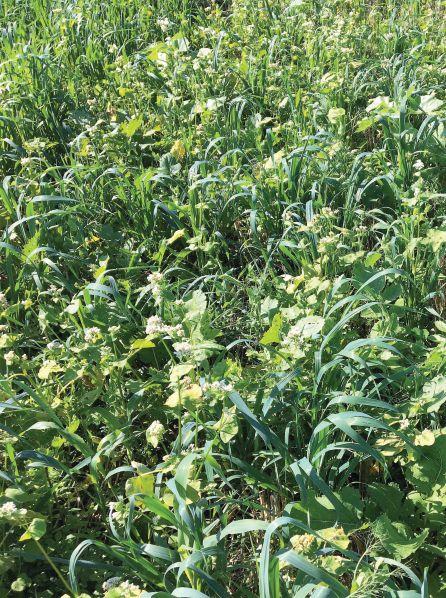
A 10-way cover crop mixture planted after wheat in Bill Deen and David Hooker’s study.
FITTING COVER CROPS INTO CORN-SOYBEAN ROTATIONS
Bill Deen, a professor in the University of Guelph’s department of plant agriculture, has been running long-term cover cropping trials at sites in Elora and Ridgetown with researcher David Hooker for several years.
He says field crop producers are interested in fitting cover crop rotations into corn/soybean rotations, in part due to a growing realization that there are agronomic, environmental and soil health concerns in this rotation compared to more complex rotations.
“Our trials at Elora and Ridgetown quite clearly demonstrate that when you’ve got a corn-soy rotation or a soybean intensive rotation, these rotations consistently have the lowest measures of soil health, the lowest soil organic matter and other problems,” he says.
He says these rotations likely score the lowest because they have the least amount of soil organic matter. Cover crops can theoretically add biomass to corn-soy systems.
But because both corn and soybean are long-season, competitive crops, it can be a challenge to get much biomass from cover crops.
“Growers are still interested in exploring this but the reality is that adoption of that practice is minimal to date,” he says.
What looks more promising for cover crop use is a corn-soywheat rotation, in which the cover crop is planted following wheat. Wheat already adds significant benefits to the rotation, says Deen, and the addition of a cover crop enhances that benefit.
In addition, corn-soy systems tend to be tillage-intensive, which makes it challenging to add a cover crop; but reducedtillage is more effective when wheat is added to the rotation.
Last year, Deen and Hooker began a six-year trial to compare short-term and long-term N impacts of cover crops in corn/soy and corn/soy/wheat systems.
“In corn/soy, we’re using cereal rye, a fairly common option. After wheat we’re using red clover, and that is intersee¬ded or frost seeded to wheat; and we’re using oats planted after wheat;
and then we have three-way mixture and a ten-way mixture,” he says.
Of the cover crop options Deen and Hooker will study, Deen is most optimistic about oats in terms of its potential appeal for producers.
Many producers believe that only cover crop mixtures produce any real benefit, says Deen, and though mixtures do result in more stable biomass, this also imposes management challenges that are hard to accept.
“By contrast, oats is relatively inexpensive, easy to establish, has good biomass potential in the fall, winterkills, and in the spring there isn’t much residue – it has a lot of benefits,” Deen says. “To convince a large producer who’s farming many acres to add the complexity of a mixture to that system is a hard sell, but oats represent a good entry point.”
Ultimately, Deen hopes the data will show that some of the benefits of cover cropping can be realized fairly rapidly; otherwise, it can be tough to convince skeptical producers to give it a try.
According to Van Eerd, an increase in soil health improves both crop productivity and soil resilience, which are goals worth striving for even if the payoffs aren’t immediate.
“In those dry years, or in extreme weather years, you’re seeing better yields. That’s where your soil is performing and you’ll see the benefits over the longterm,” she says.
COVER CROP RESOURCES
There’s a growing list of resources available for Ontario producers interested in cover cropping, according to Laura Van Eerd, associate professor in the University of Guelph’s school of environmental sciences.
Producers can start with OMAFRA’s website, which offers resources on choosing cover crops. Van Eerd has created a cover crop decision tool that sorts crop types by planting window and performance, which can be found at decision-tool.incovercrops.ca/
The Midwest Cover Crop Council offers a wide range of resources for producers interested in cover cropping. But the resource Van Eerd recommends most highly is the Midwest Cover Crops Field Guide, available from Purdue University. It includes information on all aspects of cover cropping across a range of systems including her Ontario research. This pocket guide is available via mobile app.
Photo courtesy of Tejendra Chapagain.
Oats planted after wheat in Bill Deen and David Hooker’s study.
HARNESSING THE SOYBEAN GENOME
Improving yield and disease resistance in short-season soybean.
by Carolyn King
Amajor research project called SoyaGen is tapping into the power of genomics to really boost Canadian soybean breeding advances.
According to project co-leader François Belzile, SoyaGen is tackling three key challenges in developing high-yielding soybean varieties for Canadian conditions: adaptation to Canada’s short growing seasons; enhance genetic resistance to three of the top yield robbers (phytophthora root rot; soybean cyst nematode; and sclerotinia stem rot); and addressing the challenge of adoption of soybean as a new crop by producers in Western Canada.
Belzile and Richard Bélanger, both of Université Laval, are leading this four-year project which started in 2015. The team of researchers put together come from Laval, Agriculture and Agri-Food Canada, Centre de recherche sur les grains (CÉROM), University of Guelph, University of Saskatchewan, and Prograin. Belzile and Bélanger have also brought together diverse agencies to fund SoyaGen, including grower organizations in both Eastern and Western Canada, Western Grains Research Foundation, seed industry companies, Genome Canada, Génome Québec and others. This collaborative initiative is addressing those three challenges through five activities.
Comprehensive Canadian genomic data
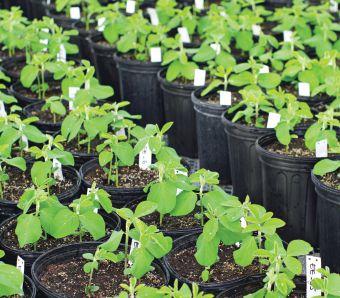
The team working on Activity 1 has already created foundational information about the genetic makeup of Canadian soybeans. “The Canadian soybean germplasm is now probably better known than any other country’s soybean germplasm, be it the U.S., Brazil, China, or anywhere else,” Belzile says. “Of course, we have a smaller set of soybean materials, but we’ve probably captured a better overall picture of what makes a soybean a Canadian soybean than anywhere else.”
The researchers used two approaches to capture that genetic information. “The most comprehensive examinations were what we call wholegenome sequencing – determining the entire sequence of all the DNA in a specific soybean variety. We did that for 102 different varieties that we felt captured the diversity present in the Canadian soybean crop,” he explains.
“Then in parallel, we developed methods that allowed us to do more of a genome scan. So instead of inspecting every single base in the nucleotides [the building blocks of DNA] – there’s a billion different [base pairs] in there – we wanted to do more of a spot check here and there, which would be a lot less expensive but would still yield a lot of useful information,” Belzile says. “By pulling these two together, we are able to provide breeders and research scientists with a very good idea of how varieties differ from each other, how closely related they are, and those sorts of things.”
This genomic information is invaluable for crucial tasks like the use of
DNA markers to rapidly screen breeding materials for traits of interest. Using markers is much more efficient than having to take weeks or months to grow seeds into plants and test them for the traits of interest.
In addition, the researchers have transferred their genetic characterization methods to the genotyping service already operating at Laval. “Now, if somebody from the private or public sector wants to have their soybean lines characterized using these technologies, this service is available,” Belzile says.
“In Canada, we have a [soybean breeding] system with really big players, the multinationals, and some companies that are more local. Typically these more local companies don’t have the full range of equipment and expertise that the multinationals might have. So for them, being able to outsource some of this high-level genetic analysis evens the playing field so they can be more competitive with the bigger players.”
High yields in early-maturing varieties
“Activity 2 is tied into the question of adaptation and maturity,” Belzile says. “We need a good understanding of the genes that regulate and hasten maturity in order to develop soybean varieties that reach maturity within the time frame that exists in the different regions of the country.”
So, some of the work in Activity 2 involves identifying and understanding the genes affecting maturity. Through characterizing the 102 lines in Activity 1, the researchers have been able to group those lines into five different maturity packages – different combinations of genes that control maturity.
PHOTOS COURTESY
Louise O’Donoughue of CÉROM walks through her soybean plots that are part of the SoyaGen maturity trials across Canada.
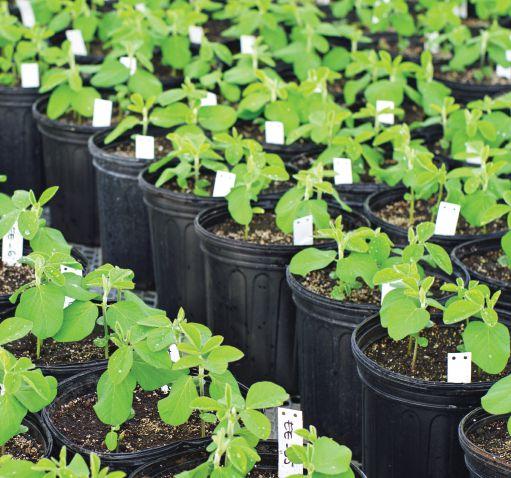
These young soybean plants in a Laval greenhouse will be tested for resistance to sclerotinia stem rot as part of SoyaGen’s search for new disease resistance genes.
The Activity 2 team is now testing those five packages at eight sites across the country to better understand how their genetic characteristics allow them to adapt to different regions. “At each site, we’re revealing what is the best package for that site. So, if you want a variety that is highly adapted and will yield better in Saskatoon, then you would need to put together this particular package, and if you want a variety for the Montreal area, it might be a different package,” he says. “So, in terms of information that is of immediate relevance and use to breeders in developing adapted and better adapted varieties, this is very concrete and very useful.”
Easier race identification
Activity 3 revolves around the races of soybean cyst nematode and of Phytophthora sojae, which causes phytophthora root rot. Knowing which specific races/pathotypes/strains of a pathogen occur in an area is important for both breeders and growers. Breeders need that information when using genes that confer resistance to only certain races of the pathogen. And growers need to be able to choose varieties with the right resistance genes for the races in their fields. However, current techniques to determine the races of Phytophthora sojae and soybean cyst nematode have limitations such as being time-consuming, complicated and/or unreliable.
For Phytophthora sojae, the Activity 3 team has developed a faster, more reliable way to determine the race of an isolate. Belzile says, “With phytophthora, we are right now in the phase of developing a diagnostic kit that we hope will be of interest to some diagnostic labs so they could offer the testing service to farmers in the future. A similar type of kit is also under consideration for soybean cyst nematode although it is more difficult to get to the level of precision needed.”
As well, the researchers hope to collaborate with government or industry to conduct systematic sampling for Phytophthora sojae in Canada’s soybean-growing areas. Then they’ll use the new diagnostic test and produce a map of the distribution of the pathogen’s races for use by growers and breeders. Ideally the map would be updated every few years to keep up with the pathogen’s race dynamics.
Better resistance genes
Activity 4 is developing new, more effective resistance genes to fight Phytophthora sojae, soybean cyst nematode and Sclerotinia sclerotiorum, the cause of white mould. For each of these pathogens, the research team is identifying soybean lines with new sources of resistance and developing DNA markers associated with these resistance genes. Breeders will use the
markers to bring the new resistance genes into their breeding materials.
In particular, the researchers hope to discover resistance genes that provide non-race-specific resistance. Belzile explains, “That would enable breeders to move away from the race-specific resistance genes that are always going to be subject to being overcome [as the pathogen adapts].”
Accelerating adoption on the Prairies
“In the fifth Activity, we’re trying to understand the barriers to soybean adoption in Western Canada,” he says. “For example, is it that farmers feel they don’t have enough information about how to grow the crop? Is it that there is a lack of adapted germplasm that will do well in their region? What are the issues facing farmers in terms marketing their crop, transporting it to crushing plants? These are the types of questions we are trying to answer.” This socio-economic work will be engaging growers, agronomic consultants, extension specialists and others in the research process, in the design of better extension tools and in the development of an extension strategy to increase the adoption and success of soybean production on the Prairies.
Leveraging the data to streamline breeding
The Canadian soybean genomic information and the genotyping methods developed in Activity 1 provide a powerful springboard for further soybean breeding work. One of the ways the researchers are working toward leveraging this effort is by developing a new method for selecting promising breeding materials.
“We want to use information on the genetic makeup of a soybean line to determine whether or not that line is promising or not,” explains Belzile. “Right now, a breeder makes a cross between individual A and individual B. At some point down the road, the breeder looks at the progeny of that cross and how the plants are behaving in the field and makes selections based on that.” It takes many years, a lot of plots, and a lot of data collection and analysis to assess something like the yield potential of a specific progeny.
“Our alternative method, which we call genomic selection, aims to predict the behaviour of a certain individual plant in the field based only on its genetic makeup. This method examines the genetic makeup of thousands and thousands of individuals and runs that through these models that we develop, and then provides predictions for the behaviour of these individuals if they were to be grown as a variety.”
So a breeder could determine the most promising plants much earlier in the breeding process, saving time and money – and bringing new varieties to growers faster. “We already use genetic information to select lines that have certain characteristics. For example, you might have a genetic test that will tell you that this line has the right gene to be resistant to soybean cyst nematode. That’s one test for one trait,” he explains.
“But with genomic selection, we’re examining thousands and thousands of DNA markers in all of our lines. And based on that, we are predicting the behaviour of many, many traits – yield, seed protein content, oil content, maturity, height and all these other associated traits that typically a breeder will rely on to make predictions.”
Belzile thinks one area where genomic selection is particularly promising is for complex traits like yield. “Yield depends on probably hundreds if not more different genes. You can’t find one marker for yield; you have to rely on a much, much wider array of markers. Genomic selection can capture all of that genome-wide information.”
The SoyaGen team is making substantial progress, developing practical results for Canadian soybean breeding programs, advancing the development of higher yielding, more disease-resistant, early-maturing varieties for growers, and providing a foundation for launching future breeding success. For more information on these projects, visit soyagen.ca.
THE NEXT REVOLUTION?
Breeders are close to developing the next generation of hard red winter wheat.
by Trudy Kelly Forsythe
If you have weeds in your field after harvest, think about a fall burndown,” says James Ferrier, Nufarm’s technical services manager for Eastern Canada. A fall burndown can be an effective tool to manage many tough perennial and winter annual weed problems and provide a cleaner seedbed for your next crop.
Wheat breeding has a long history in Canada, beginning in the late 1800s when researchers began looking at spring wheat varieties for Western Canada. The need at that time, in that region, was for an earlier maturing variety of wheat.
The answer then was Marquis which, says Agriculture and Agri-Food Canada (AAFC) wheat breeder Gavin Humphreys, “revolutionized wheat at the time and set the tone for all future wheat breeding in Canada.”
Fast forward to the 1930s when winter wheat breeding began in earnest with a strong focus on Eastern Canada. That early research laid the groundwork for the current AAFC winter wheat breeding program, which now has Eastern Canadian producers closer than ever before to having access to hard red winter wheat (HRWW) varieties specifically adapted to their region.
The program
Humphreys took over AAFC’s winter wheat breeding program in Eastern Canada in the spring of 2014, replacing the previous breeder, Radhey Pandeya, who was part of the team that registered Canada’s first Fusarium-resistant winter wheat variety in 2002. He arrived a year into the first phase of a five-year project initiated to develop HRWW varieties for Eastern Canada with funding from AAFC, the Grain Farmers of Canada and the Canadian Field Crop Research Association.
“We’re trying to serve the need for Ontario producers because the lion’s share of winter wheat is produced in Ontario,” says Humphreys, explaining that 60 per cent of Canadian winter wheat is produced in Ontario; of that, 80 per cent is soft red winter wheat, which is well served by private breeding organizations, eastern Canadian seed companies and the University of Guelph.
HRWW is a small class, only about 10 per cent of the winter wheat market, so it is less attractive to private breeding companies, says Humphreys. However, the HRWW class provides a valuable
ABOVE: When Gavin Humphreys took over the AAFC’s winter wheat breeding program in Eastern Canada, the breeders were beginning to use material from Western Canada to make the first crosses.
marketing alternative for Eastern producers who can deliver it directly to local mills for milling.
“In Quebec, some milling companies would like to source their hard milling wheat locally so they can market their products as locally produced. These are the producers and markets we are targeting.”
Phase 1
When Humphreys arrived, the program was very new with the breeders beginning to use material from Western Canada to make the first crosses. Because it was so new, there was a large learning curve for Humphreys to discover what would make good parents and who the key players were in the research.
The next step was to develop segregating populations and evaluate some of the advanced material from Western Canada to see if fit. “Unfortunately, it did not,” recalls Humphreys. “It did not grow well in Ontario.”
However, it was not wasted effort as they did find the material made very good parents, especially when addressing diseases like Fusarium head blight and yellow rust.
“The end-use product is also very good, so we have been able to improve winter wheat for Ontario using Western Canada material,” says Humphreys, explaining they have sent samples for bread wheat orthogonal testing for registration in Quebec and the Maritimes; so far
The goal
Wheat, Humphreys says, is a widely grown crop, but it is not necessarily an easily adaptive crop. “It doesn’t travel well. When we moved varieties that performed well in Western Canada, we had issues with powdery mildew, which can cause up to 40 per cent yield losses.”
The photoperiod (daylength) requirements are different as well, which Humphreys believes is the reason Western winter wheat varieties are later maturing when grown in Eastern Canada compared to locally adapted varieties.
“In Western Canada, the biggest challenge is the extreme cold. In Ontario, we see a lot of freezing and thawing, so we see a lot of icing damage that is not as much of a concern in Western Canada.”
As a result, the Eastern breeders select for better resistance against the type of icing they see in Eastern Canada as well as for varieties that are resistant to powdery mildew and Fusarium head blight.
“We want varieties adapted to Ontario conditions so we are selecting based on where they are going to be grown,” says Humphreys. “We need to develop varieties best suited for the photoperiod here and winter survival.”
One surprise came from material attained from the International Maize and Wheat Improvement Center that allowed Humphreys to see germplasm from various parts of the world.
“I’m surprised at how well some of the material has done here, how widely adapted some of the international material is,” he says. “Nevertheless, if we focus mostly on diseases and not on other areas like straw strength and maturity, it is shocking what can go wrong. This reinforced my knowledge that we need to focus on all aspects: agronomics, maturity, straw strength, height, disease resistance and end-use quality.”
The future
Humphreys’ focus is on releasing one winter wheat variety for farmers that will endure. He gives AC Morley, which was released 20 years ago but is still used as a check variety today, as an example.
“If I can’t do that, I want to produce good germplasm so the person after me has good material,” he says. “I want to move new genes into the program.”
Humphreys believes the program is doing that and is indeed on track to deliver varieties at the end of the second phase of the wheat cluster funding.
"We want varieties adapted to Ontario conditions so we are selecting based on where they are going to be grown."
nothing has been registered.
“But, we have developed a good pipeline,” says Humphreys. “The program is not mature but it is at the stage where we anticipate at the end of Phase 2 to produce lines for Ontario.”
Initial sites were in Ottawa and Harrow, Ont. At the sixth-generation stage, the program added sites in Quebec and Charlottetown attempting to determine what lines would be the best fit in terms of adaptability. The program is now in the first year of the second phase of funding from the Canadian Agricultural Partnership Program (CAP) through the wheat cluster.
“We have implemented DNA marker technology into the program that was not there before and introduced new genes for resistance of Fusarium head blight and powdery mildew that were not there before,” he says. “The next challenge is developing varieties that make half decent bread or can be when blended with other wheat varieties to make decent bread.”
Ultimately, the objective is to develop varieties in the near future so producers have HRWW varieties, if they want that option, and soft white winter wheat varieties that are better adapted to the Ontario environment, disease resistant and have better end-use quality so they can get a better price.
Humphreys is greatly appreciative of the funders’ continuing support to the research. “We need publicly funded plant breeding to continue,” he says. “It is important for the investment to continue to maintain Canada’s position as a world-class wheat producer and exporter.”
Wheat is a widely grown crop, Humphreys says, but it does not travel well and varieties that perform well out West do not perform well in Eastern Canada.
— Pamela W.
Now
you
have more ways to grow with BASF
We’re growing to help you grow better
Our recent acquisition gives us a broader portfolio to help you increase your yields, crop quality and profitability. Now with seeds and traits, advanced chemical and biological crop protection products, soil and plant health offerings, more digital tools and an experienced and expanding team, BASF offers you a real choice in the face of a consolidating industry. In times of change, you need a reliable, long-term partner. We’re here to connect innovative thinking and practical action to help your farm thrive today and in the future.