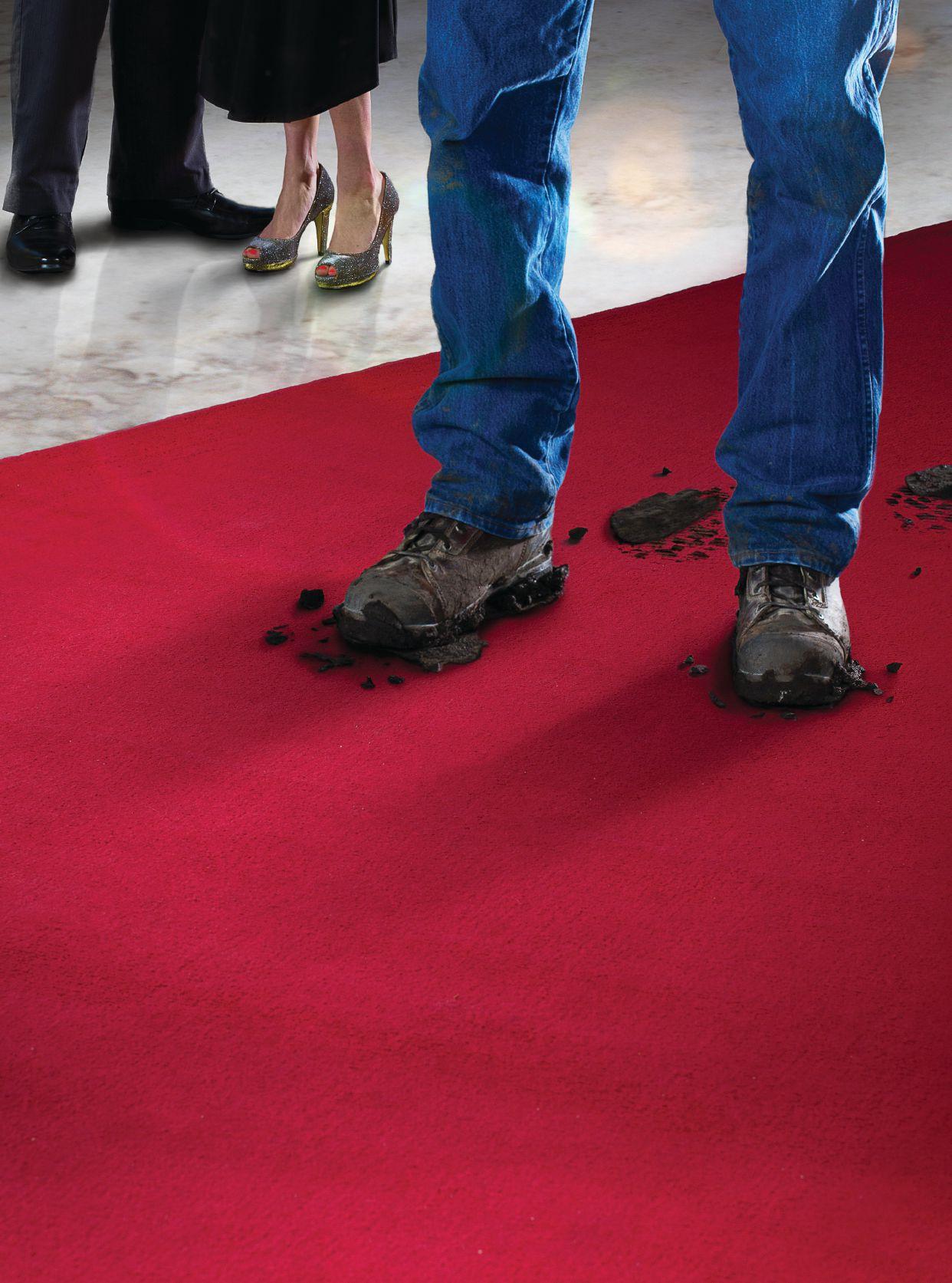
Somebody should set the record straight. Somebody should do something.
Well I’m somebody. You’re somebody. Everyone in ag is somebody.
So be somebody who does something
Somebody who speaks from a place of experience, with passion and conviction
Somebody who proudly takes part in food conversations big or small, so our voice is heard.
Somebody who tells our story, before someone else does.
Be somebody who does something. Be an agvocate.
AgMoreThanEver.ca
Somebody who builds consumer trust so our industry can meet the demands of a growing, and very hungry, world.
Somebody who shapes people’s relationship with agriculture
It can be done
But it’s a big job that takes co-operation, patience and respect for every voice in the conversation. We need to build lines of communication, not draw lines in the sand.
Be somebody who helps everybody see Canadian agriculture as the vital, modern industry it is. Somebody who helps everybody see people in ag for what they are – neighbours, friends, and family who share the same concern everyone does: providing safe, healthy food to the people we love
Our point of view is important Our story is important And people want to hear what we have to say So be somebody who takes, and makes, every opportunity to share it.
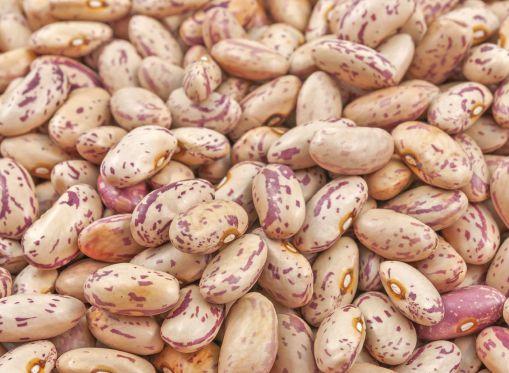
I’m somebody
You’re somebody
Together, we can tell everybody
or
TOP CROP
MANAGER
5 | Ontario’s worst weeds in 2016 Lamb’s-quarters, Canada fleabane and common ragweed get the most votes. By Carolyn King
8 | Impact of tillage on P losses in tile drains
By Helen Lammers-Helps PULSES
10 | Updating N recommendations Tracking the oat nitrogen response curve. By Julienne Isaacs
16 | Integrating technologies Finding middle ground between no-till and conventional tillage. By Julienne Isaacs
13 | Breeding hardy winter cereals By Julienne Isaacs
18 | Growing malt barley By Carolyn King
14 | Dry bean dry-down dos and don’ts By John Dietz TECHNOLOGY
22 | Exploring AgBots
By Julienne Isaacs
ON THE WEB
20 | Updating spring barley N recommendations By Julienne Isaacs PESTS AND DISEASES
Farmers in Northern Ontario have a short growing season. There’s little room for error and every bit of data helps. That’s why, for the past seven years, a research team has built a tool that gives both real-time and historic information that helps growers make more informed crop management decisions.
23 | Back to basics By Ross H. McKenzie PhD, P.Ag. FROM THE EDITOR
4 | Best management practices By Stefanie Croley, editor
Readers will find numerous references to pesticide and fertility applications, methods,
Manager.
labels for complete instructions. ISSUES AND ENVIRONMENT
PHOTO
PHOTO
STEFANIE CROLEY | EDITOR
BEST MANAGEMENT PRACTICES
In my daily search around the web for agriculture news, and every morning when I check my email, I come across multiple news releases about tools to help growers with crop management. From online forecasting tools to drought monitoring maps to cover crop recommendations, there is an abundance of information available –and so much of it can be found at a grower’s fingertips.
Crop management is truly an all-encompassing phrase used to describe the science of controlling or directing crop production, and its definition continues to expand with each growing season. The conditions Prairie producers faced this summer will drive management practices next year, and the domino effect will continue each year after that. Some situations, like disease or pest threats, can be anticipated and prepared for, while others cannot. But now more than ever, with thanks to the digital era that we live in, there’s no excuse for growers to become complacent.
At Top Crop Manager, as our name suggests, we aim to provide Canada’s top crop producers with the most up-to-date research and information about all aspects of field crop management. As this issue lands in your mailbox, harvest will be well underway, or possibly close to complete, depending on conditions and timing in your corner of the world. And as one growing season draws to a close, we hope you’ll find useful references within our pages to help you prepare for what’s to come.
Like many of our past September issues, our focus this month is on cereals, and on page 13 you’ll find an update on two research and breeding projects looking at cold tolerance and winter hardiness in winter cereals for Eastern Canada. Jamie Larsen, a research scientist looking at these issues, describes the subject as a “complex beast” and hopes answers are in sight.
Ontario barley growers will find a useful update on spring barley nitrogen recommendations from Peter Johnson and Shane McClure on page 20. The pair has just begun the final year of a trial examining potential synergies between nitrogen response and fungicide interactions in spring barley in Ontario. And for something a little different, a research scientist at Agriculture and Agri-Food Canada in Charlottetown shares details about a project on malting barley production in Eastern Canada. Aaron Mills calls this topic uncharted territory, and his project aims to examine how different production practices affect malting quality characteristics. You can read about his study, which spanned five sites in Quebec, upstate New York, Ontario and Prince Edward Island, on page 18.
You may also notice one slight change in this issue, as we welcome Brandi Cowen to the Top Crop Manager team. Brandi, a seasoned editor, joins me as co-editor of both the Western and Eastern editions of the magazine, and we look forward to working together to continue providing you with quality content, both in print and online. Please contact us at any time to let us know what you think, or to share any interesting tidbits or ideas, and follow us on Twitter @TopCropMag.
Best wishes for a safe and productive harvest season.
Crop Manager West – 9 issues February, March, Mid-March, April, June, September, October, November and December – 1 Year - $45.95 Cdn. plus tax
Crop Manager East – 7 issues February, March, April, September, October, November and December – 1 Year - $45.95 Cdn. plus tax
in Canada – 2 issues Spring and Summer – 1 Year $16.50 Cdn. plus tax
ONTARIO’S WORST WEEDS IN 2016
Lamb’s-quarters, Canada fleabane and common ragweed get the most votes.
by Carolyn King
What’s your worst weed? Pigweed? Canada fleabane? Field horsetail? Ontario farmers recently had the opportunity to vote on which weeds are the most troublesome. The results provide an intriguing glimpse into changing weed challenges in the province.
“Back in 2007, we decided to ask people what their worst weeds were, just to see what their concerns were. Then in 2016 we followed up with another survey,” says Dave Bilyea, a research associate in weed management at the University of Guelph’s Ridgetown campus. “Things are always evolving in agriculture, so we thought it would be interesting to see how things have changed given the almost 10-year span between the two surveys.”
Bilyea worked on the 2016 online survey with his Ridgetown colleagues Kristen McNaughton and Christy Shropshire. More than 300 people from 31 counties participated in the survey, which was publicized by various agricultural and government agencies.
Respondents were asked to identify and rank their five worst weeds from a given list. If their own worst weeds weren’t on that list, they could add their choices. They weren’t asked to give reasons for their choices. From all the votes, Bilyea determined the top 10 weed problems for Ontario-east, Ontario-west and Ontario-wide (see tables). Since more of the respondents were from the southwest than the east, the Ontario-wide results are tipped slightly toward weed concerns in the southwest.
Bilyea emphasizes that the survey results are just for people’s
interest, providing a way to create conversations about weed issues. Although the collected data are not comprehensive enough to draw any definitive conclusions, it’s interesting to speculate on what lies behind the results.
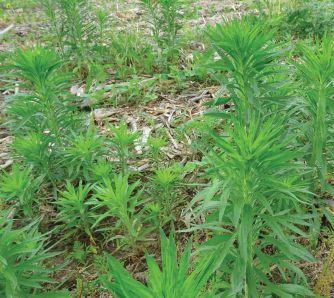
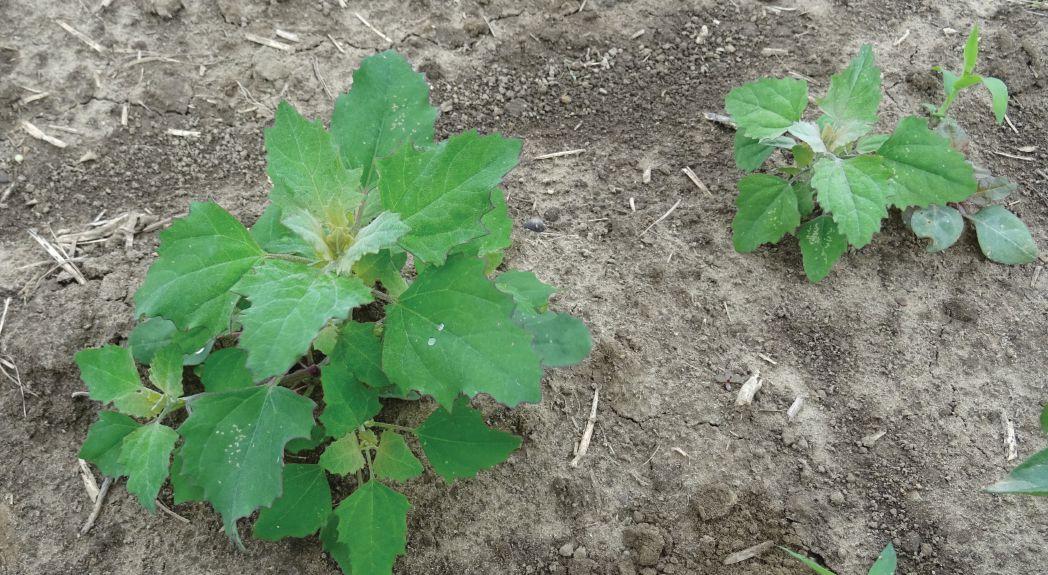
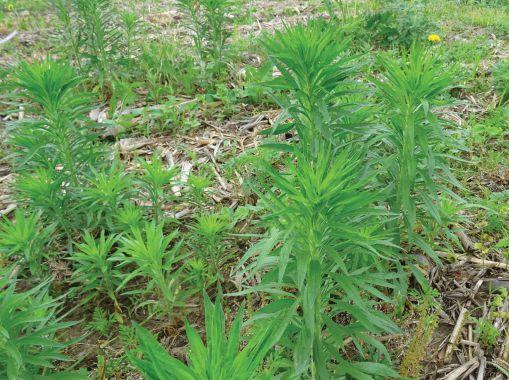
TOP: Lamb’s-quarters topped Ontario’s Worst Weeds list in 2016.
MIDDLE: Canada fleabane was in second place in 2016, but in 2007 it wasn’t even on the list.
In the 2016 survey, the Ontario-wide five worst weeds were, in order: lamb’s-quarters, Canada fleabane, common ragweed, eastern black nightshade and pigweeds. All five of these are broadleaf annual weeds with at least some herbicide-resistant populations.
Lamb’s-quarters Chenopodium album, which was in fourth place in the 2007 survey, is a very common weed that can grow up to 200 centimetres tall. “We can only surmise why people think certain weeds are the worst. In the case of lamb’s-quarters, it is probably one weed that touches all types of operations across Ontario whether they are horticulture or field crops, or even orchards and things like that,” Bilyea says. “It’s so pervasive; it’s everywhere.”
He thinks herbicide resistance might be an additional factor contributing to this weed’s top ranking, but it’s likely not the major reason. Ontario’s 2016 maps of herbicide-resistant weeds show lamb’s-
quarters populations with resistance to Group 5 herbicides (e.g. Aatrex, Sencor) or Group 2 herbicides (e.g. Pursuit, Pinnacle) have been found in 36 counties. But Bilyea points out that just because some populations of a weed species in a county are resistant, that doesn’t mean all populations are.
In the top 10 list, lamb’s-quarters was followed very closely by Canada fleabane Conyza canadensis. Canada fleabane is a winter or summer annual and can be up to 180 cm tall.
“Canada fleabane is obviously a major problem now in Ontario, but in 2007 it wasn’t even on the list,” Bilyea says. “Canada fleabane is not a new weed; it has always been around. It’s a problem particularly for growers who have no-till because it likes undisturbed ground. And now we have a certain part of the population that is resistant to glyphosate [Group 9 herbicide].”
Glyphosate-resistant Canada fleabane populations have been spreading rapidly in the province. Glyphosate-resistant biotypes were first identified in Essex County in 2010. By 2012, they were found in eight counties, and now they’re in 30 counties. Some counties have populations with multiple resistance to both Group 9 and Group 2 herbicides.
Bilyea thinks glyphosate resistance is very likely the key issue that earned Canada fleabane such a high ranking. In fact, in the survey column where respondents could add their own weeds, many respondents specifically stated resistant Canada fleabane was a concern, rather than ordinary Canada fleabane. “Glyphosate resistance makes Canada fleabane control very challenging for a lot of growers because glyphosate – the Roundups, the Touchdowns and herbicides in that group – are the major keystone for weed control across Ontario in corn and soybeans.”
Respondents indicated glyphosateresistant populations were the issue for common ragweed Ambrosia artemisiifolia, the third-place weed in 2016, and giant ragweed Ambrosia trifida, in eighth place. “Not all giant ragweed is resistant and not all common ragweed is resistant, but there are significant numbers of fields with glyphosate resistance,” Bilyea says. He adds, “In the 2007 survey when I mentioned ‘ragweed,’ we were just thinking of common ragweed. But now Ontario has giant ragweed, as well as common ragweed, which has always been in fields.” Common ragweed can be up to 150 cm high; giant ragweed can be up to about four metres high.
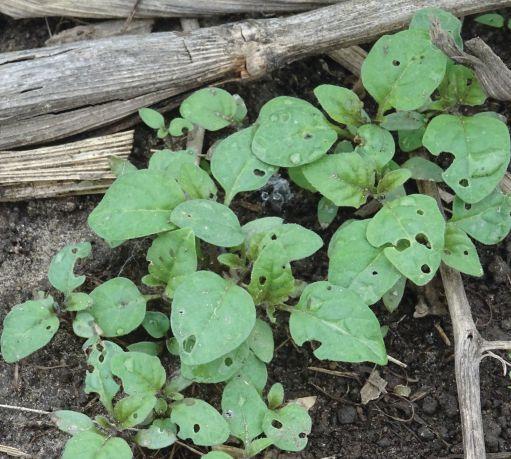
Fourth-place eastern black nightshade Solanum ptycanthum is another weed that can grow in many types of habitats. “Eastern black nightshade is especially an issue for growers who have beans. You can’t have nightshade in your bean crop for export for food-grade beans,” he notes. The juice from the nightshade berries can result in a discoloured coating on the beans, which is very difficult to clean off. “Also, after some of the early herbicide sprays have stopped doing their job, spots of nightshade will come up. I think the weed’s high ranking is also because nightshade goes right across the province, so it’s a very common, problematic weed for soybean and edible bean growers.”
The survey didn’t distinguish between different pigweed species (
Dave Bilyea, University of Guelph-Ridgetown.
Courtesy of Dave Bilyea, University
genus). Bilyea explains, “Green, redroot and smooth pigweeds are nearly impossible for most growers to tell apart. Also, for the most part, the control measures for them are similar.” These troublesome weeds can grow to between 150 and 200 cm tall. Redroot and green pigweeds are often in the same field. Many of the counties that have herbicide-resistant redroot pigweed also have herbicideresistant green pigweed; resistances are to Groups 2, 5, 6 or 7.
Bilyea suspects better weed identification has influenced the changes in some weed rankings from 2007 to 2016. “People now have cell phones and they can look up online on their cell phones in the field and identify a weed or at least send a picture to somebody to have it identified.” He thinks misidentification of grass species might have contributed to the very high ranking of quackgrass in 2007, with some people identifying any grassy weed as quackgrass. “Quackgrass has completely disappeared off the [Ontario-wide] top 10 list in 2016, and some of the answers about the kinds of grasses that people have are a little more definitive, at least in the east.”
For people who would like to improve their weed identification skills, Bilyea maintains the Weed Identification Garden at the Ridgetown campus. “It’s a self-touring garden of common weeds, not just for rural people but for urbanites too. It has 208 pots set up in four rows, including lawn weeds, wild flowers, problem weeds, poisonous weeds, and a lot of weeds that people don’t even realize are in the area.” This year is the garden’s 40th anniversary. It is open to the public from May to October so people can examine the specimens and learn more about the weeds’ properties.
Some people may be disappointed that their own particular weed nemesis didn’t make it into the top 10. “Each grower has their
own concern,” Bilyea says. “Just as an example, someone from the east was saying that they have a lot of bedstraw. Bedstraw is not a widespread problem, but for those growers in eastern Ontario who have the weed, it’s a huge problem. So that would be their number one problem, but there just aren’t enough of them across the region to put bedstraw into the top 10.”
Eastern black nightshade is a very common, problematic weed for bean growers.
IMPACT OF TILLAGE ON P LOSSES IN TILE DRAINS
Study shows phosphorus losses are not necessarily higher under no-till management.
by Helen Lammers-Helps
Does no-till increase the concentration of phosphorus in tile drainage water? That’s the question researchers set out to answer with plots on three farms in southern Ontario.
Despite efforts to reduce phosphorus levels in freshwater lakes in North America, phosphorus loads to lakes such as Lake Erie are still increasing, resulting in harmful algal blooms. This has led to increased pressure to reduce phosphorus from non-point sources such as agriculture.
While no-till has long been touted for its ability to reduce phosphorus (P) losses in field run-off by minimizing the amount of phosphorus leaving farm fields attached to soil particles, recent research raised concerns that phosphorus levels in tile drainage from no-till fields were higher than from conventionally tilled fields.
A group of long-time no-till farmers, called the ANSWERS group, wanted to see if this was the case on their own farms under their management practices. The farmers approached the government
and researchers in order to set up a scientific study.
Funding came from Environment Canada’s Lake Simcoe Clean-Up Fund, the Ontario Ministry of Agriculture, Food and Rural Affairs (OMAFRA), the Agricultural Adaptation Council’s Farm Innovation Fund and the Grain Farmers of Ontario. “It was a collaboration between researchers, farmers and government,” says Merrin Macrae, a researcher from the University of Waterloo. Macrae was involved in the project, along with Ivan O’Halloran, University of Guelph (Ridgetown), and Mike English, Wilfrid Laurier University.
The results were good news for farmers who have adopted no-till. There were no significant differences in the P losses between any of the tillage treatments, Macrae says.
The multiple-site, multiple-year project took place from 2011
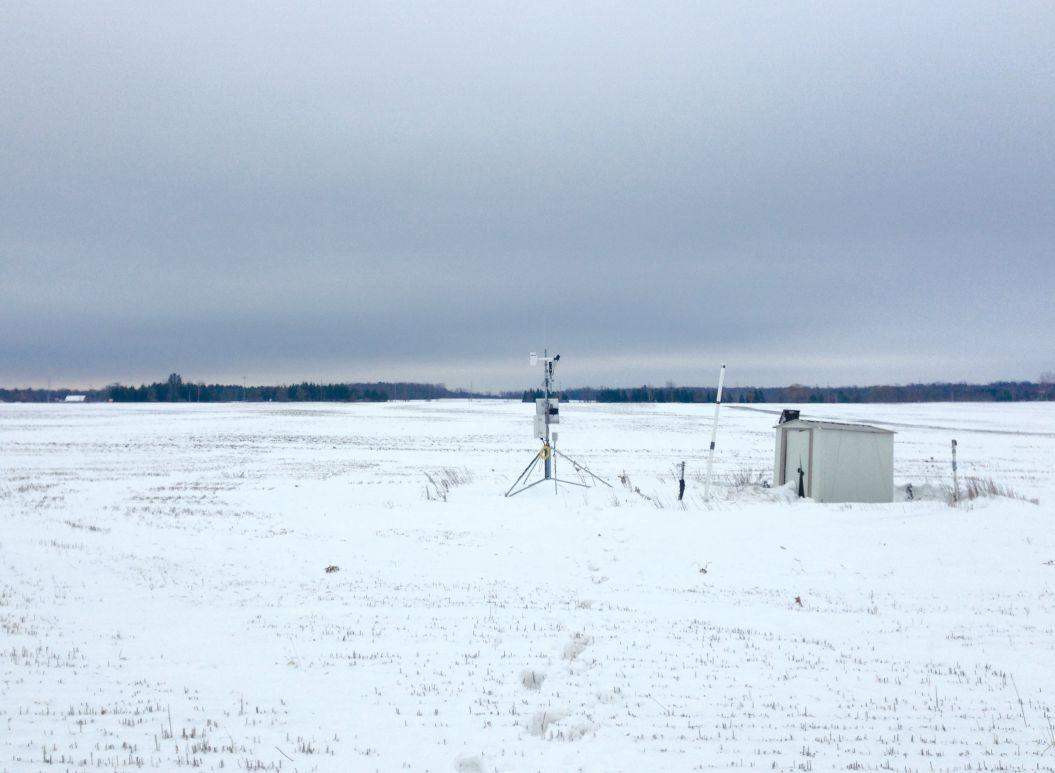
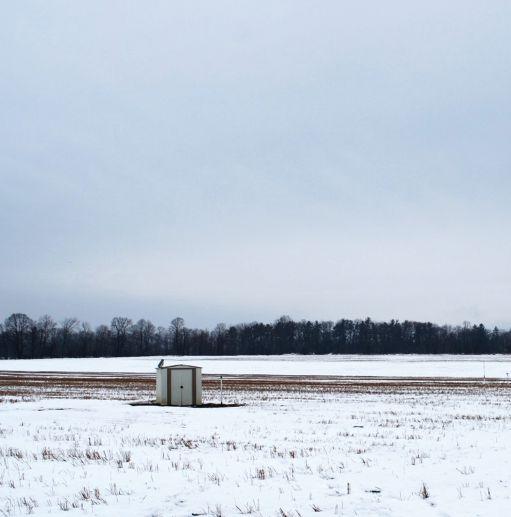
TOP: Meteorological station and shed housing sampling equipment tied to drainage tile at Innisfil research site.
INSET: Differences in snow cover between rotational till plot (left) and annual till plot (right) at the Innisfil research site.
to 2014 on farm fields near St. Marys and Innisfil under a cornsoybean-wheat rotation. A modified no-till system had been in place at both locations for several years prior to the study. This system is a predominantly no-till system but with some shallow tillage at one point during the three-year crop rotation, for example, following winter wheat. This tillage system is referred to in the study as reduced till (RT); the other two tillage systems in the comparison were strict no-till (NT) and annual disk till (AT) treatments.
Tile water was monitored for three years for each of the tillage treatments. The tile drains were intercepted at the field edge (below ground) to capture edge-of-field losses at each study plot. Discrete water samples were collected from each tile using automated water samplers triggered by tile run-off. The weather was also monitored.
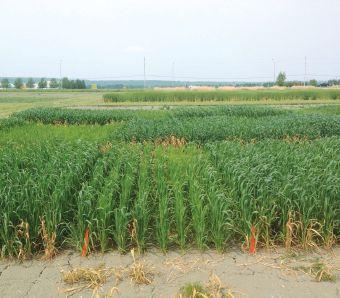
Tillage type did not affect either the dissolved reactive phosphorus (DRP) or total phosphorus (TP) concentrations or loads in tile drainage. Both run-off and phosphorus export were episodic across all plots and most annual losses occurred during a few key events under heavy precipitation and snow melt events during the fall, winter and early spring, Macrae explains. The study shows the importance of crop management practices, especially during the non-growing season, she says.
Both tile drainage flow and phosphorus losses were lower than the researchers expected, Macrae says. Previous studies suggested about 40 per cent of precipitation leaves cropland in tile lines but in this study that proportion was significantly lower.
Macrae admits the researchers were surprised there wasn’t more dissolved phosphorus in the tile drainage water from the NT and RT sites due to the increased presence of macropores and worm holes. However, she points out that these farmers also use best management practices (BMPs) for phosphorus application in addition to using a reduced tillage system. For example, the farmers apply only the amount of phosphorus that the crop will remove. The phosphorus fertilizer is also banded below the surface instead of being surface-applied.
Macrae believes soil type also plays a role in the amount of dissolved phosphorus leaving farm fields in tile lines. “These sites were not on clay soils,” she says. “Clay soils are more prone to cracking, which could lead to higher phosphorus concentrations in tile lines.”
The research highlights the importance of bundling BMPs, Macrae emphasizes. “It’s not just tillage. Farmers should adopt a 4R’s approach: right source, right rate, right time, right place.”
Macrae also says farmers should do what they can to ensure nutrients stay in place, such as maintaining good soil health, using grassed waterways, riparian buffer strips and water and sediment control basins (WASCoBs) where needed, and carefully choosing when and how to apply nutrients.
“Since most of the water movement occurred during the nongrowing season, the study showed the importance of how fields are left in winter and why it is important to not spread manure in winter,” she says.
The variability of rainfall intensity, duration and timing will also impact phosphorus losses, she adds.
In future, Macrae hopes to study the impact of tillage on phosphorus losses from clay soils as well as the impact of other management practices such as manure application and cover crops.
UPDATING N RECOMMENDATIONS
Tracking the oat nitrogen response curve.
by Julienne Isaacs
“Maybe that 50 pound nitrogen rate that grandpa used and dad used and you’re still using isn’t the right nitrogen rate,” says Peter Johnson, the Ontario Ministry of Agriculture, Food and Rural Affairs (OMAFRA) former provincial wheat specialist.
The claim doesn’t come out of nowhere: together with Shane McClure, a research lead for the Middlesex Soil and Crop Improvement Association, Johnson has wrapped up two years of an oat nitrogen response study in Ontario.
The study, which ran out of funding for its third year but will continue at several sites, aims to validate or update the provincial nitrogen (N) response recommendations for oats, with and without fungicide applications (except in southwestern Ontario, where fungicides were used for all aspects of the study due to the “unbelievably devastating” risk of crown rust in the region).
Field trials were set up across southern Ontario at two sites in 2014 and five sites in 2015.
The study’s results surprised the researchers. They saw a
significant response to oat N in some locations that far surpassed the provincial recommendations, sometimes by a factor of 50 per cent.
“In southwestern Ontario, the N recommendation is actually quite low, and we found response to higher rates of nitrogen. Essentially we’d suggest that we’d need to increase those rates,” Johnson says.
At their site in Winchester, the researchers observed a significant response to fungicide and a very low response to N, but at their site in New Liskeard they observed a shift in nitrogen response curves both with and without fungicides.
They concluded that 60 pounds of nitrogen (lb N) is the most economical N rate in southern Ontario and at Winchester; in New Liskeard, they recommend 80 lb N with fungicide and 65 lb N without fungicide. In all regions the researchers’ results indicated greater response than the official recommendations.
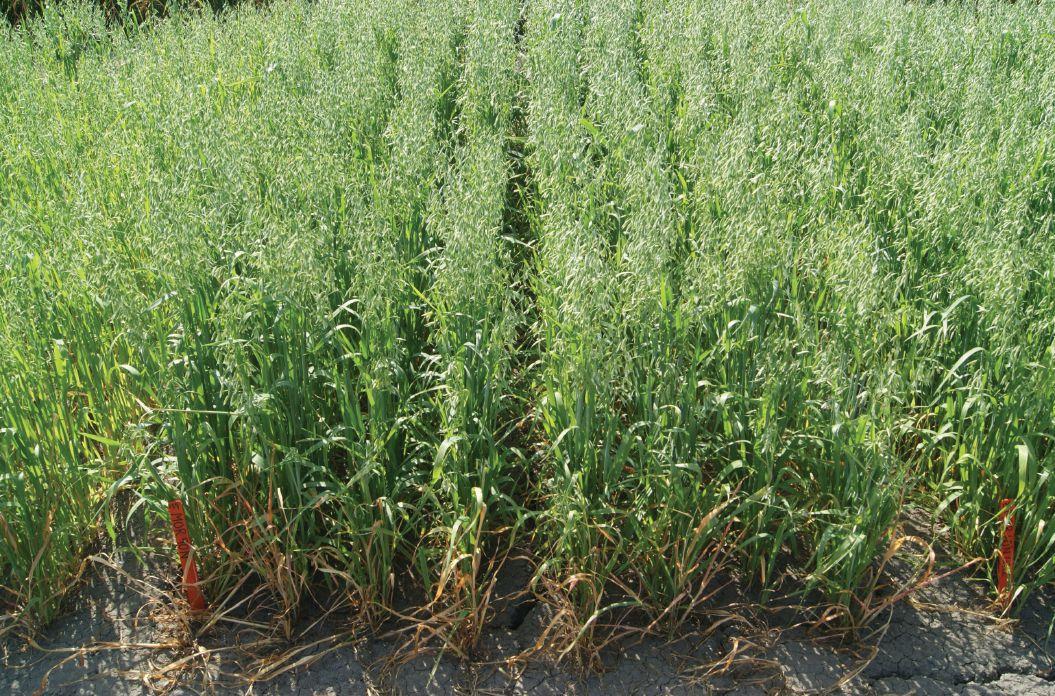
ABOVE: Researchers are looking to validate or update nitrogen recommendations for oats in Ontario.
Managing lodging risk
Farmers are generally slow to push oats due to the risk of disease and lodging, says John Kobler, an agronomy technician with the University of Guelph who headed up the New Liskeard trials. But the use of a combination of fungicide and growth regulator “pays for itself, and can guarantee the crop.”
In New Liskeard, growers have not yet lost resistance to crown rust, so the researchers were able to perform the study with and without fungicide (Twinline) applications.
Part of the study’s intention in that region was to push yields of three oat varieties (Dieter, Morrison and Camden) using different N rates, and to simulate a “huge” lodging problem, Kobler says. “Normally oats would be 55 lb N, but we’ve pushed it to the point where we’re going to almost surely have lodging,” he says.
“We saw a clear response from including fungicide, showing us more yield for the higher N rates. When we push a crop really hard the canopy gets to be really thick and the possibility for disease becomes more prevalent, and then you need the fungicide.”
Higher N rates
Further south, Craig Martin, an owner of Wintermar Grains and Cribit Seeds in West Montrose, says his company has historically recommended a higher N rate than was typically recommended by the provincial guidelines.
The company contributed data to the oat nitrogen response trial as a farmer co-operator, implementing Johnson and McClure’s protocol for N and fungicide applications on 16 plots. They’ll continue with the same protocol in 2016.
The effort of participating in the trial is worth it, Martin says, because the company relies on maintaining an up-todate “database” of information to keep its customers competitive. “The end response curve hasn’t been updated for a long time, and being in the cereal seed business and needing to know what recommendations to make to growers, we felt it would be worthwhile to know about the interactions between nitrogen and fungicides,” he says.
Johnson says the team’s research clearly indicates there is potential to increase oat yields with added N, though he cautions that conditions vary by region, and growers should make decisions based on
The research indicates there is potential to increase oat yields with added N, though conditions vary by region and growers should make decisions based on local assessments.
local assessments.
But he adds that the value oats can offer to the rotation is incalculable. “The research data is pretty clear that having a cereal crop in the rotation results in much
higher corn and soybean yields. The value of diversity in your crop rotation is really, really significant. It’s the impact on soil quality, higher organic matter, soil stability and soil structure,” he says.
Using a combination of fungicide and growth regulator on oats can guarantee the crop, says John Kobler, an agronomy technician at the University of Guelph.
BREEDING HARDY WINTER CEREALS
Examining temperature tolerance from west to east.
by Julienne Isaacs
Eastern Canada is Canada’s biggest winter wheat producer, with more than one million acres seeded for harvest in 2016, compared to Western Canada, which clocks in at about 600,000 acres. But winter cereal varieties have typically been bred for Western Canadian conditions – at least, until now.
Two research and breeding projects are underway looking at cold tolerance and winter hardiness in winter cereals in an Eastern Canadian context.
“Cold tolerance, winter survival and winter hardiness in Eastern Canada is a complex beast,” says Jamie Larsen, a research scientist in perennial cereals, fall rye and winter triticale breeding for Agriculture and Agri-Food Canada (AAFC).
Larsen is based in Lethbridge, Alta., but his research has an eastern angle. Five years ago, he was hired out of the University of Guelph to be AAFC’s perennial cereals breeder in Lethbridge. One of the focuses of his program is to develop a winter cereals breeding project – fall rye, winter triticale for Canada and durum wheat. Collaborations in Ontario have led to the testing of winter triticale varieties for three years, and plots in Harrow and Palmerston are testing out winter triticale varieties under Ontario conditions.
He says the differences between Western Canada and Eastern Canada are significant when it comes to winter hardiness. Where cereals are generally bred to be tolerant to long periods of freezing in Western Canada, Eastern Canadian varieties need to be both cold tolerant and tolerant to ice encasement, freeze-thaw cycles and frost heaving.
“In Western Canada we don’t get as much snow and icingover, thaws and water settling followed by freezing. In Ontario it comes and goes, so you get this puddling in the fields and it gets cold again and freezes,” he says.
Once the three-year project’s funding runs out, Larsen and his team hope to extend it to keep the study going. “From an Ontario perspective, there are concerns around eutrophication of the Great Lakes, and one way to deal with that is to plant more winter crops that can survive the winter, and to make use of those nutrients and limit run-off,” he says.
But the results from the triticale study are also extremely promising from a grain yield and biomass perspective. “The yields are incredibly high, much higher than winter wheat in Western Canada,” he says. “What we saw is a yield advantage as high as 50 per cent in the winter triticale over winter wheat. In some cases the only thing that could beat them is the hybrid rye that’s now out in the marketplace. We will find out shortly if the same holds true in Ontario.”
Larsen is especially optimistic about triticale’s potential as a biomass crop. “In the U.S., it’s used by dairies and livestock producers as a double crop in significant acreage and this practice, currently at approximately 1.2 million acres, is growing,” he says.
“Canadian varieties are not cold tolerant enough, but if we can select for varieties that work in Ontario there could be pretty quick uptake for this material, and I think we’re close.”
Response genes
At the University of Guelph, wheat breeder and associate professor Alireza Navabi, while breeding for winter-hardiness in wheat for Eastern Canada, is also working on two different characteristics of wheat that are important to cold tolerance – response to vernalization, and response to photoperiod, or day length.
Flowering and maturity of wheat are controlled by interactions between vernalization and photoperiod response genes in addition to earliness genes, Navabi explains. “Vernalization can
DRY BEAN DRY-DOWN DOS AND DON’TS
Lessons learned the hard way from the dry bean growing industry.
by John Dietz
After the pain, you could say there’s been some gain for the edible dry bean industry in Ontario.
“That rejected shipment in 2008 forced the entire industry to sit up and take notice,” says Chris Gillard, dry bean agronomy and pest management professor at the University of Guelph at Ridgetown.
That year, glyphosate was detected at more than two parts per million (ppm), which is the maximum residue level (MRL) for beans exported to Japan.
The incident prompted questions about desiccant application rates, timing and tank-mix combinations.
Eight years after the original incident, Ontario bean growers have new product options and much more information at their fingertips for the sensitive tasks associated with bean dry-down and weed control at harvest time.
Gillard was one of four scientists in three provinces who searched for dilemma-solving options on behalf of Canada’s bean industry in 2010 through 2012. Preliminary results of their efforts were available to growers in 2013, but it was June 2015 before final results were published in the Canadian Journal of Plant Science.
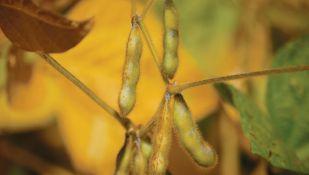
Ontario, Manitoba and Alberta are Canada’s major dry bean producers, responsible for about 45, 40 and 15 per cent, respectively, of the national dry bean acreage in 2014. They grow five classes of beans: navy, cranberry, kidney, pinto and great northern. In Ontario, six desiccants are registered to aid growers by drying down the mature bean crop for harvest.
In 2008, growers had the option of desiccating the bean crop with carfentrazone, diquat, glufosinate or glyphosate. Concerns over price and ability to control weeds at harvest led many growers to select glyphosate.
At the time, the stage was ripe for seed residues to create obstacles in exporting the bean crop.
Gillard and colleagues wrote: “Although desiccants have long been used to aid dry bean harvest, little [was] known about seed residue levels following application, relative rates of desiccation between harvest aids, and possible yield or quality impacts, making it difficult for producers and contractors to confidently choose a desiccant.”
Now, Canada’s dry bean growers have the science and data to confidently choose their product for the sensitive dry-down period.
“Glyphosate still is registered as a pre-harvest aid for weed control in dry beans, but it is not a true desiccant. True desiccants are relatively quick in their activity. Glyphosate is not a quick-acting chemical,
so it’s never been registered as a desiccant,” Gillard says.
Two new desiccants have been registered in Ontario since 2008. Flumioxazin (trade name Valtera) was registered in 2009 and saflufenacil (Eragon) was registered in 2013. Both were in the testing program that followed the MRL incident.
“They tend to be more expensive than glyphosate but have use rates much lower than several of the other desiccants on the market,” he says. “Both are in the same protoporphyrinogen oxidase (PPO) inhibitor class as a third chemical that was registered a few years before: carfentrazone-ethyl (Aim EC). All three are relatively fast acting and carry a low risk of residue because they don’t translocate within the plant.”
The three-province study used all six products at 11 sites and generated a lot of data. Three professional papers were published.
This research examined the speed of crop and weed desiccation for each registered product, alone and in combination with glyphosate. Impact on dry bean yield and quality was measured, and MRLs were examined.
Research results
One difference was speed of desiccation.
“Eragon probably is the fastest PPO-inhibitor, followed closely by Valtera,” Gillard says. “Guys have to be careful with using Eragon. In a timing study, we put it on early and at 70 per cent crop maturity it
Growers in Ontario now have the science and data they need to confidently choose products for bean dry-down.
caused a yield loss due to smaller seed. It’s so fast-acting that it can kill the plant before the seed finishes filling.”
A second reason for being careful with Eragon is that it can’t be used on any beans going to Europe. To this point, the European Union has not set MRLs for Eragon. However, it is accepted in the United States, Japan and countries that rely on the international Codex Alimentarius food standards for safety, quality and fairness.
“Diquat has been around forever. It’s relatively expensive and it has some issues. It’s fairly toxic to people, so it’s not as safe to use [as Eragon]. On the other hand, it is very fast acting. I think Eragon is as fast as diquat, and it doesn’t have the user exposure problems,” he says.
“Ignite has been around forever. It has an advantage in that it can be sprayed a little earlier. It’s halfway between a true desiccant and glyphosate in speed of activity. It can be put on the plants at about 70 per cent pod maturity.”
But, the residue analysis testing of seed samples identified an issue for Ignite.
“We actually found some residue issues with Ignite when it was applied a bit after its minimum application date,” Gillard says. “That generated some concern, because we can’t have residues on the seed that are above the MRLs allowed for end use markets.”
That leads into another point. Residue limits vary from market to market. Some markets don’t even have residue limits for some products. If residue analysis detects a product that isn’t listed for a residue limit, the country can reject the shipment.
“If you’re growing a crop that will be exported, you need to work with the processor to understand the MRLs for the country where the crop will end up,” Gillard says.
“You can use a product so long as it’s used properly. But, for instance, there is no MRL set in the U.S. for diquat on dry beans. If you use the product, and if they detect it, in their mind they can refuse delivery because you have used an unregistered product.”
For an exporter, the lack of an MRL for a product in a particular market can be seen as a non-tariff trade barrier.
While the industry here can encourage a market to set an MRL for each product registered here, in practice the responsibility for meeting market standards rests with growers.
“It’s a three-step process,” Gillard says. “First, start with the dealer or processor. Find out what products are available to use based on where the crop will end up. Second, look at the accepted products. See how fast-acting they are. Follow the label closely for timing and for water volume. Determine which one will do the best job of desiccating the crop. Third, look at weed control. What productivity do you want on the weed escapes that will be in the crop close to harvest? All of these desiccants are herbicides with unique advantages and disadvantages when it comes to the weed species controlled. That’s three-tiered decision-making.”
Online information
Data from the three years of study and two years of residue analysis is now bearing fruit. According to Gillard, today Canada’s pulse industry is stronger and better informed. Detailed information relating to MRLs, rates, timing and tank mixes are available through processors and contractors.
Summary information is available online at websites operated by Saskatchewan Pulse Growers.
TILLAGE AND PLANTING
INTEGRATING TECHNOLOGIES
Finding middle ground between no-till and conventional tillage.
by Julienne Isaacs
Growing corn in Ontario comes with a special set of challenges. Most Ontario growers rely on conventional tillage to ensure timely planting in the spring, but the practice has left fields increasingly vulnerable to erosion.
Ben Rosser, the Ontario Ministry of Agriculture, Food and Rural Affairs (OMAFRA) corn industry program lead, has a few ideas for changing that.
Rosser just wrapped up a two-year project developing a simple one-pass spring strip-tillage system with the ultimate goal of maintaining corn yields while reducing erosion in Ontario fields.
“Strip tillage offers a middle ground between conventional tillage and no-till,” he says. “Some guys don’t like no-till, because it might take too long to get out in the fields in a wet spring and plant. Strip tillage only works the part of the field that you’re going to plant. It leaves everything else untouched.”
Some early commercial designs became available in the 1980s, but interest has been relatively limited in Ontario until lately.
Rosser took over from former corn industry lead Greg Stewart last October. He says the project was a long-time interest of Stewart’s, who believed once a few barriers had been eliminated, more growers might be attracted to strip tillage.
Modern technology has made strip tillage more attractive. With GPS guidance systems, the planter can stay on the strips, and with the potential to deliver full season nitrogen (N) fertility with newer, physically protected forms of N such as Environmentally Smart Nitrogen (ESN), strip tillage may increase efficiency relative to having to return to sidedress, Rosser says.
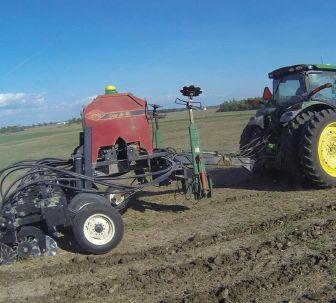
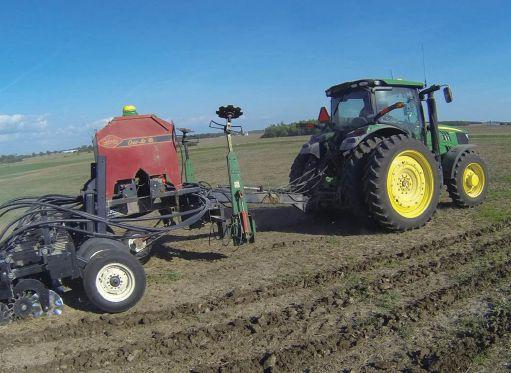
The study utilized a six-row Dawn Pluribus Strip Tiller mounted to a Yetter caddy cart with a Gandy Orbit-Air dry fertilizer box. In 2014, fertilizer was mixed between the coulters, but in 2015 Rosser included side band tubes, which delivered one-third of the fertilizer in a band to the outside edge of the coulter.
In 2015, six separate trials were performed at farms in Arthur, Belwood, Bornholm, Elora, Paris and Woodstock. A seventh looked at contour strip tillage near Belwood to develop guidance lines that would precisely follow the variations in the field.
Rosser’s key research concerns were evaluating the yield response of strip tillage versus conventional tillage or zero tillage and the yield impact of moving phosphorus (P) and potassium
(K) fertility treatments off the planter and on to the strip tiller. He also examined the safety of using urea or ESN blends through the strip tiller as a way to meet full-season N requirements.
Benefits and drawbacks
After two years the study showed strip tillage did not offer a yield benefit on any of the six sites, although data suggests there might be a yield benefit for medium to heavy soil types. But neither did the strip tillage yields show a decrease compared to those of notill or conventional systems.
The 2014 Field Crop Report for OMAFRA on the study offers an economical reading of the data from the trial, compared with conventional systems, which Rosser carried into the 2015 report. “One might argue that the elimination of other tillage practices is made possible ($35/acre); one broadcast application of fertilizer is eliminated ($12/acre), and a sidedress application of N may also be eliminated ($15/acre),” it reads.
In addition, it continues, the planter does not require any special conservation tillage modifications and does not need to apply fertilizer, which could represent savings of $5/acre. The strip tillage operation, if applying fertilizer, can be estimated to cost
A 2015 project explored contour strip tillage near Belwood, Ont., to develop guidance lines that would precisely follow the variations in the field.
PHOTOS COURTESY OF BEN ROSSER.
$25/acre, so potential, overall cost reductions are estimated at $42/acre.
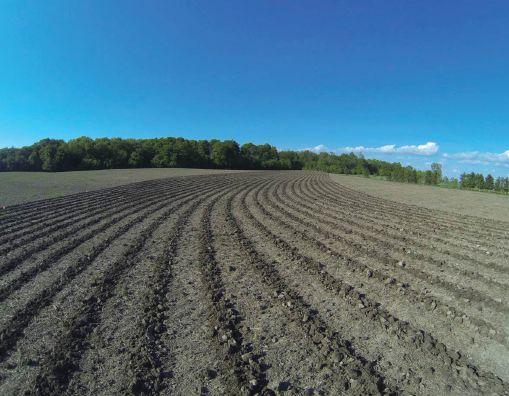
But the biggest benefit, says Rosser, is the reduction in erosion — with strip tillage, only a third of the field is disturbed.
Wes Hart, who grows corn, soy and wheat just north of Woodstock, was a farmer co-operator for both years of the study.
“I joined the study because I’d been interested in strip tillage for a while, and I’d just come into running our farm,” he says.
“One of the main things I was interested in with Ben’s system is that I wanted him to use my fertilizer in his strip till. We used my package in the strips, and we didn’t lose anything. The main difference is that there’s another pass on the field with a separate machine, but sometimes that’s worth it.”
The chief benefit of the system, for Hart, was the ability to put fertilizer down through the strip tiller. “That’s one of the holdups of my current setup,” he says.
Inspired by the study, Hart built a fertilizer banding rig that is “virtually a strip till piece of equipment.”
Rosser says a key benefit for the producer of using a strip tillage system — beyond erosion control — is the reduced number of passes over the field. But strip tillage is still more management intensive than conventional tillage, he says, because producers have to carefully plan when to hit their strips. “You have to match up strip and planter pass closely,” he says. “If you wait too long to plant, the ground may get too hard. This means more management, which might hold a farmer back relative to costs.
BREEDING CEREALS
from page 13
work as a survival mechanism,” he says. “Wheat makes the transition from a vegetative to a reproductive stage after it’s been exposed to cold temperatures. After the winter, when the vernalization requirement is met, winter wheat is ready to flower.”
Wheat responds differently to different photoperiods. Some varieties are sensitive to photoperiod while others are not.
Photoperiod insensitivity can be beneficial in breeding winter wheat varieties that are better adapted to northern contexts. In combination, vernalization and photoperiod response genes determine how quickly a particular genotype will make the transition to a reproductive state and therefore how they might adapt to a particular environment.
Navabi’s graduate student, Alex Whittal, has characterized a “very wide set of winter and spring wheat genotypes” in wheat for genes that control response to photoperiod and vernalization response genes.
“There are different genes controlling these two mechanisms,” Navabi says. “We now know exactly which alleles are present in each genotype tested, and based on which allele each genotype has, we can predict their response to vernalization if they are sensitive or insensitive to photoperiod. We also know that there is a frost tolerance gene in close association with vernalization genes.”
Currently, Navabi and Whittal are operating on an Ontario Ministry of Agriculture, Food and Rural Affairs-University of Guelph partnership project in collaboration with AAFC’s winter wheat breeder in Ottawa, Gavin Humphries.
“The work we are doing now is just a start, but we are building on other people’s experience,” Navabi says.
“If you feel you can manage that, our data suggests that strip tillage can be fairly competitive to conventional tillage.”
contour strip tillage near Belwood to
guidance lines that would precisely follow the variations in the field.
GROWING MALT BARLEY
Research could help growers tap into the craft malting and brewing boom.
by Carolyn King
“Along the entire eastern seaboard, craft breweries and craft maltsters are starting up, and everybody wants to know how to achieve malting quality with barley grown on the East Coast,” says Aaron Mills, a research scientist with Agriculture and Agri-Food Canada (AAFC) at Charlottetown.
Very little research has been done on malting barley production practices in Eastern Canada – Mills calls it “uncharted territory.” So he is leading a project to develop information that eastern growers need to produce this relatively high-value cereal crop either as a commodity or for craft brewery niche markets.
The impetus for the research came out of Mills’ longstanding interest in brewing.
“I’ve been brewing at home ‘all-grain’ [a brewing method] for over a decade, and I also worked in a craft brewery for six months after I finished my PhD. So I’m familiar with the industry and with the need for local ingredients. When I started
working here in P.E.I., I noticed there wasn’t a lot of malting barley being grown. So we decided to give malting barley a shot and see what we could do.”
He notes, “In P.E.I., we grow approximately 60,000 acres of barley. That is all feed barley. Malt barley and feed barley are almost like two different crops because the management is so different. You really have to baby the malting barley; a fungicide program is a very important part of growing malting barley on the East Coast.”
Mills’ five-year project (April 2013 to March 2018) is funded by the Alberta Barley Commission, the Brewing and Malting Barley Research Institute and AAFC under the National Barley Research Cluster.
The project’s main objective is to examine how different
ABOVE: The malt barley research site at Harrington has about 300 plots consisting of agronomy trials and evaluations of modern and heritage varieties.
production practices affect malting quality characteristics. “We would like to provide information for growers to make it easier for them to successfully produce a high quality crop. We want to generate some local data that can serve as a benchmark for local growers,” Mills says.
“We’re looking at the influence of seeding rate and fertility rate on two malting barley varieties from out west, and we’re looking to see if the response is similar at five sites in eastern North America.”
The five sites provide good coverage of the cereal growing region in the east: Princeville, in southern Quebec (with Semican); Ithaca, in upstate New York (with Cornell University); Ottawa, in eastern Ontario (with AAFC); New Liskeard, in northern Ontario (with the University of Guelph); and Harrington, P.E.I.
The two barley varieties are Newdale and Cerveza. Mills says, “Newdale was the industry standard [for malting barley] for a long time, and it seemed to do really well in some of the earlier disease screening trials that were done here. Cerveza is a newer variety that seemed to do really well under eastern growing conditions.”
The project builds on a previous malting barley study in Western Canada led by John O’Donovan, an AAFC research scientist, and follows similar methods. The treatments compare seeding rates of 200 and 400 seeds per square metre, and nitrogen fertilizer rates of zero, 30, 60, 90, and 120 kilograms per hectare.
The project team is examining the effects of these treatments on such characteristics as crop growth, yield, disease, lodging, days to maturity, percentage of plump seed, and protein content.
As well, the Canadian Grain Commission’s Grain Research Laboratory is malting the harvested grain and testing it for properties that are important for malting and brewing (such as fine-grind extract, Kolbach index, wort beta-glucan, diastatic power and alpha-amylase).
Mills explains that seeding rates between 200 and 400 seeds/ m 2 are generally recommended for malting barley. O’Donovan’s research in Western Canada found that 300 seeds/m 2 was the optimum seeding rate for malting barley yield and quality characteristics, such as protein level and kernel uniformity. Seeding rates that were too low tended to increase the number of non-uniform kernels and increase tillering, which could lead to delayed maturity. Seeding rates that were too high not only increased input costs but also tended to increase the risks of poorer yields and lower kernel plumpness and didn’t improve protein or kernel uniformity.
Nitrogen rates also tend to be a balancing act between too much and too little.
O’Donovan’s research showed higher nitrogen levels increased grain yield and kernel weight, but had a negative effect on malting quality characteristics such as protein content.
Mills’ results to date show higher nitrogen rates are not good for malting quality under eastern conditions. “The higher rates of nitrogen translate into a much higher protein level. For malting barley, you want the protein content to be around 11 to 13.5 per cent. With some of the higher rates of nitrogen, the protein content was at 17 per cent, so it automatically kicks the grain out for malting quality.”
He also notes, “It has been difficult to dial in the appropriate
level of fertility that is optimum for both yield and quality.”
Another important preliminary finding from Mills’ project is that the crop preceding malt barley seems to have a tremendous effect on malting quality. “For example, buckwheat seems to be a really good crop to precede malting barley. But crops like a clover are absolutely terrible for malting barley quality.”
He thinks the main factor in the poorer quality after a clover crop is likely the residual nitrogen in the soil, but he suspects some other factors may also be playing a role.
Mills is also taking part in some multi-agency research to test modern and heritage barley varieties in eastern North America. He explains that Ashley McFarland of Michigan State University has formed the Eastern Malt Barley Working Group, which stretches from Illinois to P.E.I.
“Everyone involved is working to find out how to get acceptable yield and quality to produce malt barley locally,” Mills says.
In one component of the group’s work, Richard Horsley of North Dakota State University is leading a Brewers Associationfunded project, the Eastern Spring Barley Nursery, to evaluate
Higher nitrogen levels increased grain yield and kernel weight, but had a negative effect on malting quality characteristics such as protein content.
about 25 spring barley varieties at about eight sites in the east.
Another component involves partnering with Chris Ridout from the John Innes Centre in the United Kingdom.
Mills notes, “This research institute has brought 80 barley accessions out of long-term storage. They’ve already fully developed the value chain for one heritage barley variety, ‘Chevallier,’ for modern use in the craft beer industry in and around Norwich, England, as well as a few larger craft breweries in the U.S., including Sierra Nevada and Goose Island.” Researchers in the working group are evaluating these U.K. heritage varieties at their sites.
He thinks heritage barley varieties could be of particular interest to craft brewers. “The varieties would have to be at least as good as the ones they are buying now. But if they can also attach a story to the barley, I think that’s part of the appeal for the brewers and the brewery owners. Craft brewers are also interested in developing beers with different flavour and aroma characteristics, and the use of heritage barley varieties may be one way to develop those qualities.”
Mills concludes, “We’re trying to evaluate these varieties and hammer out the agronomy as quickly as possible. For example, we have three craft maltsters that are hoping to open up this year in P.E.I., so there is going to be some local market demand in the near future. It would be nice if we had some locally grown barley to put through those maltsters and get our growers into that value chain.”
UPDATING SPRING BARLEY N RECOMMENDATIONS
Current nitrogen recommendations based on data from 1970s, 1980s.
by Julienne Isaacs
Peter Johnson has a theory: if you don’t invest dollars in spring barley breeding, you won’t get the results you want.
In Ontario, 110,000 acres were seeded to barley in 2014, with a farm value per bushel rated at $4.16, according to the Ontario Ministry of Agriculture, Food and Rural Affairs (OMAFRA).
Even if barley has yet to catch up to higher-value crops in Ontario, Johnson — OMAFRA’s former provincial wheat specialist — hopes to increase the value of the crop for growers by updating nitrogen (N) recommendations.
Along with Shane McClure, a research lead for the Middlesex Soil and Crop Improvement Association, Johnson has just begun the third year of a three-year trial looking at potential synergies between nitrogen response and fungicide interactions in spring barley in Ontario.
“What we’re hoping to find are ways to increase yields on spring
cereals to make them more competitive economically and keep them in farmers’ rotations,” Johnson says. “Spring cereals have a fit in Ontario agriculture, but the yield increases have not kept pace with corn, so acres continue to drop. We were hoping to find a good synergy between N and fungicides in barley, oats and spring wheat, so that we can find ways to increase yields and make them more profitable for growers.”
The nitrogen-fungicide synergy in winter wheat was “virtually proven” by 2010 in Ontario, says Johnson, following research he began in 2008 with colleagues David Hooker and Jonathan Brinkman. Since then, they’ve performed multiple studies to try to finish the response curve with and without fungicides.
For the spring barley study, four field scale trials were established across southern Ontario in spring 2014, followed by six in 2015,
ABOVE: Shane McClure and Peter Johnson want to determine how to increase spring barley yields in Ontario.
each using two replicate, randomized N rates, both with and without fungicides. Plots were also set up at New Liskeard and Winchester. The studies hoped to show — as in winter wheat — a strong synergy between nitrogen and fungicide applications.
This year, the funding dried up, but Johnson and McClure are continuing the study regardless.
“We’re essentially doing it for free. We thought it was important enough to do the third year,” Johnson says.
One plus one equals two
The results were different than expected: in most plots, the researchers did not observe a strong synergy between N and fungicide applications.
“In southern Ontario we saw a clear yield response to N, and we saw a clear yield bump to the fungicide, but with the synergy, it’s one plus one doesn’t equal two,” Johnson says. “In winter wheat on our best varieties we’ve seen one plus one can equal 3.5. In spring barley, one plus one equals two. Full stop.”
There are two potential reasons for this, Johnson believes: climate and genetics. The heat in southwestern Ontario tends to be a limiting factor. But genetics are even more telling.
“If you look at the trend lines in Ontario, winter wheat has gone up at about a bushel per acre per year over the past 35 years, while spring barley has only gone up at 0.2 bushels per acre per year,” he says. “The genetics aren’t there yet to show that synergy.
“We have AAFC breeders who are supposed to breed for all of Eastern Canada, but the barley breeder at the University of Guelph was rolled into the winter wheat breeder position. In terms of private interests, the one company doing that barley breeding has stopped doing it. The dollars invested in barley breeding in Ontario — there’s no comparison, compared to wheat.”
But the study’s results are not all negative. In New Liskeard, where the climate is much more suited to spring crops, a small synergy was observed between N and fungicide in spring barley.
The New Liskeard data set was small, but much higher final yields (115 bushels per acre) were observed there, along with evidence of a small synergy between N and fungicides. “That’s very hopeful, so now what we should be doing is looking at that synergy across varieties,” Johnson says.
“Based on the average data 80 pounds of N with fungicide was the most economical treatment in southwestern Ontario, while 50 pounds of N with fungicide had the highest rate of return at Winchester (eastern Ontario),” concludes Johnson and McClure’s Crop Advances Field Crop Report for the study. “New Liskeard had the highest response to N with 127 pounds of N and fungicide
being the most economical treatment.”
The report concludes N response was significantly greater than recommendations in the Agronomy Guide in both the southwestern and New Liskeard regions, and so the recommendations require further assessment.
The data from this study will be brought to the Ontario Soil Management Research and Services Committee (OSMRSC), which makes fertility recommendations for the province, in hopes they’ll update the rates.
“Growers are certainly looking at this data and asking if it can work for them — they’re experimenting with higher rates than the official recommendations,” he says. “The recommendations are based on old varieties and the climate from the 1970s and 1980s.”
McClure says he was surprised by the high yields — and the high maximum economic rate of nitrogen — in the two years of the trial. “I didn’t expect the maximum economic rate of nitrogen to be as high as it was. I think it might have something to do with how high the yields were in general over those two years. They were fairly cool summers. I’m interested to see what happens if we see the same results as we did the last two years in a hot, dry year,” he says.
For more information on cereals, visit www.topcropmanager.com
Trait Stewardship Responsibilities Notice to Farmers
Besides barley and spring wheat, Johnson and McClure are also hoping to find synergy between nitrogen and fungicides in oats.
EXPLORING AGBOTS
Is this the way of the future for Canada?
by Julienne Isaacs
Are AgBots the way of the future for agriculture in Canada, or simply the latest in a long line of products marketed as must-haves for Canadian producers?
Long used in the dairy industry for autonomous milking and herding, robotics technology is being applied in soil testing, data collection, fertilizer and pesticide application and many other areas of crop production.
“Robotics and automation can play a significant role in society meeting 2050 agricultural production needs,” argues the Institute of Electrical and Electronics Engineers’ Robotics and Automation Society on its website.
Farmers have a right to question the value of new technologies promising greater efficiency on the farm. But Paul Rocco, president of Ottawa-based Provectus Robotics Solutions, believes robotics offer a suite of potential new solutions for producers short on resources and averse to risk.
“In a perfect world, farmers would have a machine that could perform soil sampling at night, deliver a report in the morning, and be sent out the following night to autonomously spray,” says Rocco. “We’re a ways away from that, but the technology is maturing and the capabilities exist already – it’s about putting it into the hands of farmers and making sure it’s affordable.”
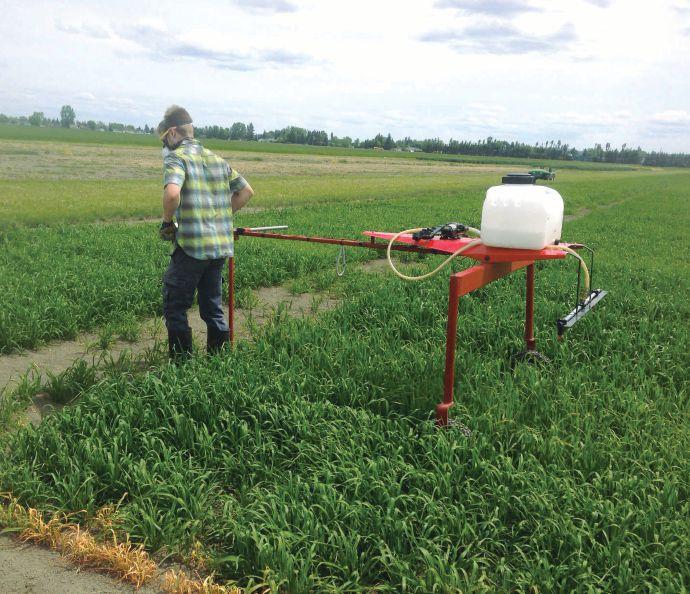
Provectus’ latest project involved problem solving for a banana plantation in Martinique, where human ATV operators are at risk of injury from chemical spray or even death due to unsafe driving conditions. The company recently developed a remotely operated ground vehicle that carries spray equipment and can be controlled by operators in a safe location.
“We see applications in Canada,” says Rocco. “Why expose people to hazardous substances and conditions when you can have an unmanned system?”
Robotics are not all bananas. For example, a Minneapolis-based company, Rowbot Systems, has developed an unmanned, self-driving, multi-use platform that can travel between corn rows – hence, “Rowbots” – to deliver fertilizer, seed cover crops, and collect data.
RowBots are not yet commercially available, but CEO Kent Cavender-Bares says there’s already been interest from corn growers across the United States as well as Canada.
As to whether the use of robotics is cost-effective for farmers, it’s almost too soon to say. But utility can be balanced against cost.
“In terms of cost effectiveness from the farmer’s perspective, there’s a strong story already for driving yields higher while reducing production costs per bushel. Of course, we need to bring down the cost on our side to deliver services while making a profit,” says Cavender-Bares.
He believes that as autonomy spreads within agriculture, there will
be a trend toward smaller, robotic machines.
“Not only will smaller machines be safer, but they’ll also compact soil less and enable more precision and greater diversity of crops,” he says.
Case study: ‘BinBots’
Closer to home, a group of University of Saskatchewan engineering students has designed a “BinBot,” an autonomous sensor built to crawl through grain bins and deliver moisture and temperature readings.
The students were part of a 2015 Capstone 495 design course, in which groups of four students are matched with industry sponsors to tackle specific problems.
Joy Agnew, a project manager with the Prairie Agricultural Machinery Institute (PAMI)’s Agricultural Research Services, stepped forward with a challenge: could students develop an improved grain bin sensor for PAMI?
“It came about from the first summer storage of canola project we did, and the data showing that in the grain at the top of the bin, the temperature stayed steady during the entire sampling period, but the temperature in the headspace grain was fluctuating wildly,” says Agnew.
“We realized the power of grain insulating capacity – there was less than 15 centimetres between the grain that was changing and the grain that wasn’t. That made us think: the sensors are really only telling you the conditions in a one-foot radius around the sensor – less than one per cent of all the grain in the bin.”
The problem she set to the students: can you design sensors with “higher resolution” sensing capabilities than currently available cables?
“We were looking at some high-tech ideas of how we could do that with radio waves or imaging, and we thought we needed more mechanical systems,” says Luke McCreary, who has since graduated. “We ended up with a track system in the bin roof with a robot on a cable. The robot has a couple of augers on it so it can propel itself through the grain, taking temperature and humidity measurements as it goes and sending that data to a logging source to create a 3D map of the temperature, humidity and moisture in the bin,” he says.
Once built, the robot will be six inches in diameter and 14 inches long, with the ability to move laterally, vertically and transversally.
Agnew says PAMI is applying for funding to build the robot, and has already had some interest from manufacturers. She says the technology could reach farmers’ bins between five and 10 years from now.
“We think this is the way of the future to avoid the risk of spoilage,” she says. “The technology is advancing, and costs are declining rapidly.”
PESTS AND DISEASES
BACK TO BASICS
Common-sense approaches to integrated pest management.
by Ross H. McKenzie PhD, P.Ag.
Integrated pest management (IPM) is simply the process of integrating the use of pesticides with cultural, mechanical and biological controls in a planned and systematic approach to control weeds, insects and diseases.
Ideally, we don’t want to kill plants, animals, insects or other organisms unless they are causing or likely to cause crop damage or loss. But cropping practices such as soil tillage, use of certain crop rotations or use of pesticides can inadvertently affect non-target organisms.
Most pest control programs focus on the use of chemical pesticides. Typically, pests are identified in the field to estimate their potential population and damage potential, then a decision on type of pesticide, time of application and application rate is made. Unfortunately, this commonly used approach neglects to anticipate future effects due to use of the pesticide. Pest control chemicals often kill non-target organisms. For example, an insecticide application will kill non-target insects, many of which are beneficial. Destroying the predators and parasites of crop pests can cause a rapid rebounding of the crop pest in numbers even greater than before application. Repeated use of an insecticide year after year can lead to development of insect tolerance or resistance to the insecticide.
Fungicide application can effectively aid in controlling fungal crop diseases. But, repeated use of a fungicide will lead to adaption and tolerance to the fungicide, causing it to become less effective.
Repeated applications of fungicides and insecticides over years may adversely affect soil microbial populations. Promoters of pesticides rarely mention this, but in the long-term, repeated applications could have significant effects on native soil organisms, which are critically important for soil health.
Herbicides have become very important for weed control. Frequent and repeated use of the same herbicide groups, however, has gradually resulted in development of herbicide-resistant weeds – a very serious problem for many farmers across the Prairies.
We must be very mindful and carefully consider both the positive and negative impacts of every practice we use to achieve optimum crop yields. Farmers must constantly try to balance short-term benefits to increase crop yield with long-term impacts on future crop production. The goal of IPM is to try to combine chemical, cultural, mechanical and biological controls together in a proactive crop production system to try to enhance long-term sustainable crop production.
The first step in IPM is to only use preventive treatments when actually needed. Often, chemical treatments are used on a scheduled basis. For example, spraying canola for cabbage seed pod weevils is often done at a scheduled time, rather than scouting, sweeping and monitoring fields to decide if and when to spray. Scouting and
TOP: IPM requires more careful pest monitoring, but it should enhance long-term sustainable crop production.
monitoring is time consuming, but chemical treatments are only applied in response to identified need if the insect is at a critical threshold level and chemical application is carefully selected for least disruption of the natural environment.
IPM does require more careful pest monitoring. A farmer must constantly monitor fields, develop action plans and analyze the results of treatments. Ideally, a farmer needs to understand why various pests are present in fields. For example, how were new weed types introduced onto the farm? How could this be avoided in the future? How can new weeds be managed? For some diseases, could cultural controls such as using a more diverse crop rotation to break disease cycles reduce the presence of the problem? For some diseases and insect pests, could the use of a tolerant or resistant crop variety be an option? To consider control options, farmers must develop a very good knowledge of the various pests in their region and understand the biology and life cycle of each pest. Awareness of changing pest trends is also important. To do this, careful recording of information for each field and crop is required every year on your farm.
Detailed field record keeping is time consuming, but over time this practice can provide valuable information on changing trends on your farm. Pest occurrences in a field or on the farm often occur due to events earlier in the season or the previous year. Most farms are large and the combination of numerous fields, crops, events and treatments are often complex and difficult to remember without the help of wellorganized, detailed field records. Using an electronic record-keeping system can be important for analyzing your IPM program.
There are many IPM practices a farmer can consider. I have summarized some important factors.
Seed and seeding
There is no substitute for excellent seed.
• Have you selected the best regionally adapted crop variety for your area? Disease resistance is constantly breaking down in older varieties, but breeding advances are constantly improving disease resistance and agronomic characteristics. Be sure to constantly review new varieties available that are well suited for your region and suit your growing requirements.
• Is your seed source free of weed seeds? A number of plant diseases are present on seed (seed-borne diseases). Be sure to use seed that is disease free and weed free. Ensuring seed is cleaned and tested for disease is very important. Using certified seed is a very good practice to consider.
• Select the most disease-resistant varieties for the diseases present in your area. This will help reduce the need for fungicides.
• Treat seed with the fungicide or fungicide/insecticide combinations for cost-effective control of pests present in your fields.
Crop rotations
Wisely rotating crops is extremely important for reducing pest problems.
• Rotating crops will help control less mobile insects.
• Rotating crops will reduce the presence of residue-borne fungal and bacterial diseases. Having a break of several years between crops susceptible to the same disease will reduce disease potential.
• Long-term crop rotations that include annual crops and perennial forage crops in the rotation are ideal. Forages are excellent for lowering disease risk of annual crops in a long-term rotation, and also reduce the presence of weeds. Forage crops are also very helpful
IPM includes several important practices, such as excellent seed, wisely rotating crops, tillage practices and sanitation of equipment and vehicles.
to improve soil quality and build soil organic matter.
• Shorter term crop rotations using annual crops should include at least two or three crop types, such as cereal, oilseed and pulse crops. Ideally, don’t grow the same crop more than once every four years. Don’t grow different crops susceptible to the same disease back to back. Sequence crops to your advantage. After growing a nitrogen-fixing crop such as pea, grow spring or durum wheat to take advantage of nitrogen release from pea residue to increase grain protein. A good diverse rotation can interrupt weed, disease and insect cycles. Rotating crops makes it easier for a farmer to rotate different herbicide groups to reduce the potential of developing herbicide-resistant weeds.
• Alternating winter wheat and spring wheat, with different life cycles, in a diverse crop rotation helps to disrupt the life cycle of weeds to control weed problems.
Conventional versus zero tillage
Reduced and zero tillage across Western Canada has contributed to soil moisture conservation, reduced fuel costs, reduced wind and water erosion, and greatly improved soil quality and soil health.
Zero tillage also means weed seeds are not incorporated into soil, which is helpful in terms of cultural weed control. But in situations when considerable disease infected crop residue remains on the soil surface, the use of tillage to bury diseased residue will promote residue decay to prevent infecting growing plants. There are times when tillage may be appropriate to assist with disease control, but always keep in mind the importance of soil conservation.
Sanitation
Sanitation is key for pest control. Practice excellent equipment sanitation by cleaning farm equipment to prevent spread of weed seeds and disease organisms from field to field. Insist custom application equipment, industrial equipment and vehicles or ATV’s of visitors that enter your farmland be thoroughly cleaned to prevent importing weed seeds or disease organisms onto your land.
This article just scratches the surface of the potential for IPM. Do your own research to understand as much as possible about the pests on your farm and the various control options.