It’s time to renew your subscription to Top Crop Manager Demographics
Please indicate your job title Total Acres Planted/Represented
Vol. 50, No. 3 topcropmanager.com
NOT ONLY IS IT FREE, BUT IT’S ALSO EASY AND YOU HAVE OPTIONS:
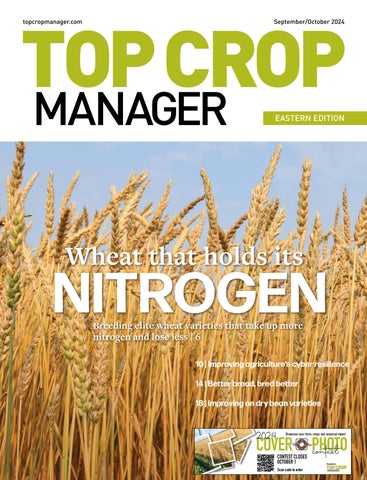
6 Help from a wild grass to increase wheat’s nitrogen-use efficiency
Canadian researchers hope to breed elite wheat varieties that have better nitrogen uptake and reduce nitrogen losses to the environment.
Scan the QR code and submit the short form online.
Fill out the form to the left, and email a picture of it to: customercare@annexbusinessmedia.com
18
Breeding for higher yields, increased disease resistance, enhanced seed quality.
PLANNING
10
Cybersecurity is one new frontier of agricultural security that producers should keep in mind – but they don’t have to go it alone.
The rise of Quebec wheat, from breeder to baker.
Call us at 1-416-510-5124 and mention you’re ready to renew. I promise, you’ll talk to a real human, from my team, and we won’t take much of your time.
I appreciate your timely attention to this.
Michelle Bertholet | Group Publisher, Agriculture www.topcropmanager.com/subscribe
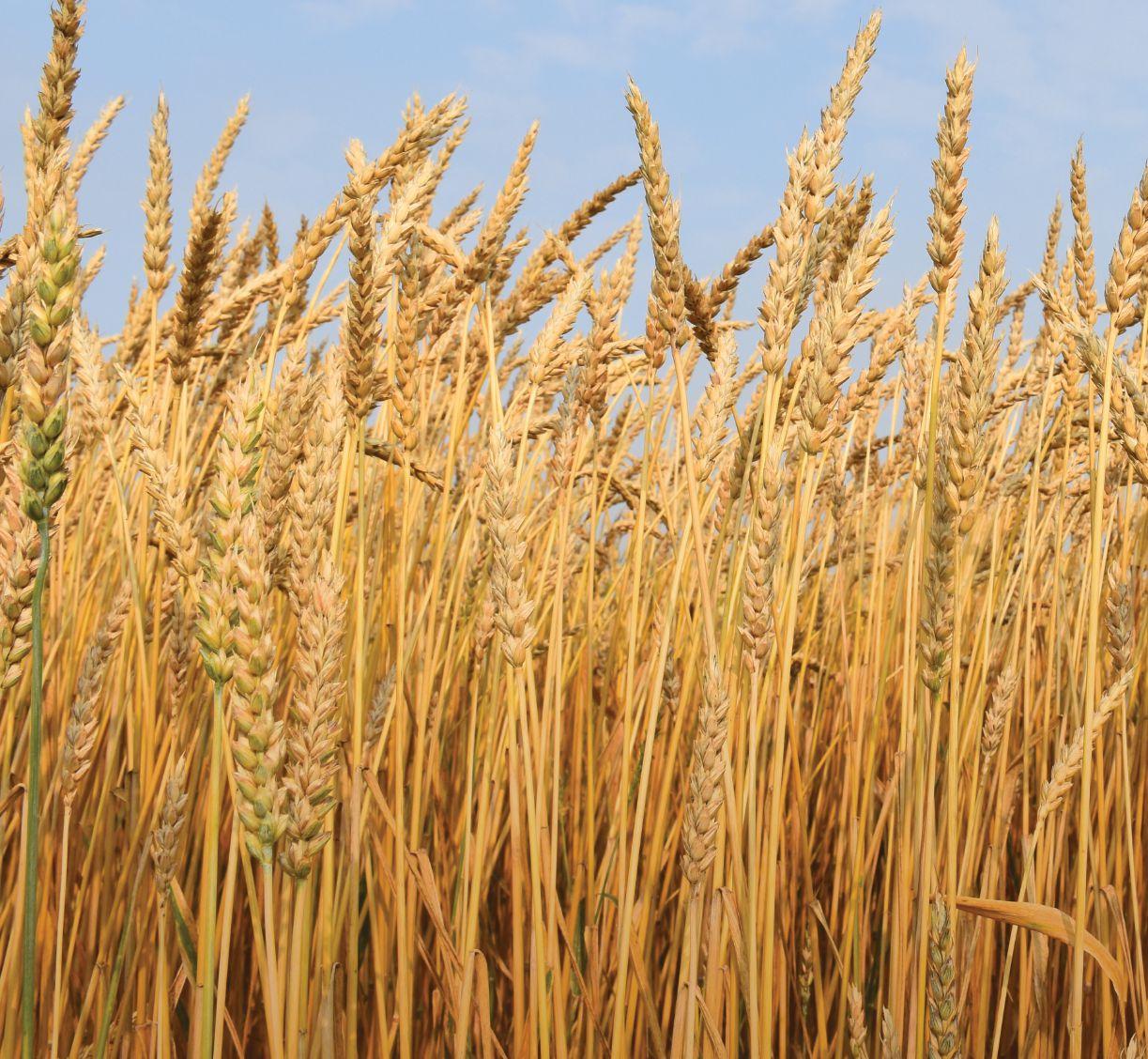
ON THE COVER: Breeding wheat that inhibits nitrification is an exciting prospect for Canadian researchers.
Photo: Claude Laprise/iStock/Getty Images Plus/Getty Images.
OF G
University of Guelph’s Ridgetown Campus has added a world-class field crop pathologist to its teaching and research repertoire. Gursahib Singh is Ridgetown’s new Grain Farmers of Ontario Professorship in Field Crop Pathology. Singh joins the university from Irrigation Saskatchewan (formerly ICDC), where he served as research director. topcropmanager.com
Readers will find numerous references to pesticide and fertility applications, methods, timing and rates in the pages of Top Crop Manager. We encourage growers to check product registration status and consult with provincial recommendations and product labels for complete instructions.


by Alex Barnard
Canadian agriculture is changing.
It’s an obvious statement – one of the few constants in agriculture is uncertainty. Every year has its peculiarities and differences. And I’m still new enough to the intricacies of the industry that I’m always hesitant to make sweeping statements. But even in my five years of working for this magazine, I’m seeing shifts.
Ontario has been declared a new hotspot for tornadoes, with a few warnings and a couple tornadoes touching down this summer in the corridor between Windsor and Ottawa. The long periods of hot, humid weather led to many an issue with disease pressure in crops. The warmer-than-average winter meant weeds and insect pests got an early start to the year in many regions. Wildfires haven’t been as plentiful this year as they were in 2023, but they were still a cause for concern for many. These problems have existed to some degree for years, but the intensity and frequency feel like they’ve increased. And, from what I’ve heard from climate scientists, it’s likely to keep trending that way.
The technological side of agriculture is also moving forward. Drones, autonomous harvesters and sprayers, scouting software, self-driving platforms you can train to follow you through a field or orchard rows – there is some very cool tech out there. While most of it isn’t ready to be used at the field scale, nor is the ROI yet where it would need to be for widespread adoption, it’s interesting to see where we’re likely heading.
As with all things, when something new is implemented or taken up more broadly, there are new challenges and risks to be managed. I’ll admit, my understanding of cybersecurity could use some work. I’d wager I’m not the only one. Thankfully, there are people like Janos Botschner, lead investigator with the Cyber Security Capacity in Canadian Agriculture initiative, working to improve our cyber resilience (see page 10).
It’s easy to consider it as something that happens to other operations, like agriculture equipment dealers – some of whom were hit by a cyber-attack in late June, reducing them to manual processes for several days. But an ounce of prevention is better than a pound of cure. Taking the time to think about your operation’s cyber safety now can prevent the frustrations or even monetary loss.
As Botschner said in our interview, it can be as simple as having computer passwords and information on a sticky note somewhere you and your employees can easily access it. The important thing is to have a plan in place and communicate it to your team and family. It’s all about taking that first step and starting somewhere.

No part of the editorial content of this publication may be reprinted without the publisher’s written permission © 2024 Annex Business Media. All rights reserved. Opinions expressed in this magazine are not necessarily those of the editor or the publisher. No liability is assumed for errors or omissions.
All advertising is subject to the publisher’s approval. Such approval does not imply any endorsement of the products or services advertised. Publisher reserves the right to refuse advertising that does not meet the standards of the publication.
topcropmanager.com
by Acadian Plant Health

The farming landscape constantly evolves, presenting new challenges each year. Erratic weather conditions especially impact farming and plant health. Growers must explore effective crop management methods to weatherproof crops, enhance production, and meet market demands.
Climate-smart agriculture provides innovative strategies to boost productivity while tackling crop stress and other climate-related challenges. Climate-smart agriculture focuses on three pillars: increasing productivity, enhancing resilience to climate change, and reducing greenhouse gas emissions. This approach helps create sustainable agricultural systems that adapt to challenges posed by shifting weather patterns.
Acadian Plant Health™ (APH) biostimulants play a role in this plant health strategy by stimulating growth, improving nutrient uptake, enhancing tolerance to abiotic crop stress and boosting soil health.
Acadian Plant Health’s biostimulant research reveals positive effects on plants’ nutrient use and efficiency, root absorptive function, and dissolved macro and micro-nutrient uptake.
“Our studies have shown that applications of our Ascophyllum nodosum biostimulants lead to enhanced root development, increased root mass, and a stronger root system. We’ve seen changes in gene expression that affect nutrient uptake and movement within the plant, so plants
grow better and are more productive under limited nutrition. When treated with Acadian’s biostimulants, plants exhibit increased nitrogen absorption, enhancing growth and productivity even with reduced fertilizer application.” - Dr. Holly Little, Director of Research and Development with APH.
through abiotic stress by…
• Reducing plant cell damage
• Enhancing stress tolerance
• Increasing antioxidant production
• Promoting root growth and branching
• Supporting water retention through heat, drought, or salinity
Climate-proofing crops begins with regenerative agriculture and improving soil health. Acadian’s biostimulants support the microbiome, soil structure, and overall contributions to soil organic carbon. Extensive research shows Acadian’s biostimulants support soil health by…
Environmental stress impacts yield 7-10 times more than diseases and pests. As crops confront greater abiotic stresses, the implementation of Ascophyllum nodosum biostimulants in crop management grows.
“With our unique extraction process, we can liberate numerous bioactive compounds such as mannitol, polysaccharides, and betaines. These compounds improve plant tolerance to stressful growing conditions, including, but not limited to, heat stress and drought.” - Dr. Holly Little
• Increasing arbuscular mycorrhizal fungi (AMF) growth
• Strengthening plant-microbe relationships
• Optimizing nutrient availability
• Improving soil aggregation and structure
• Improving CO2 absorption and carbohydrate production
• Increasing nodulation on the roots and root biomass
“Adaptability is crucial for farmers facing unpredictable weather patterns. Ascophyllum nodosum biostimulants are a valuable tool to allow growers to maintain consistent yields despite environmental challenges.” - Dr. Holly Little
Start building a climate-smart strategy and enhancing crop performance with Acadian Plant Health.
APH biostimulants work with plants’ internal systems to help maintain productivity and growth
Find out how at www.acadianplanthealth-na.com
Canadian researchers hope to breed elite wheat varieties that have better nitrogen uptake and reduce nitrogen losses to the environment.
BY CAROLYN KING
You may be familiar with nitrification inhibitor products that aim to keep more nitrogen (N) in the soil for the crop’s use and to reduce nitrogen losses to the water and air. Some plants naturally release compounds from their roots that can perform the same role in a process known as biological nitrification inhibition (BNI). Researchers are working to breed elite Canadian wheat varieties with enhanced BNI capacity, which offers potential benefits for both wheat growers and the environment.
One of the people involved in this work is David Pelster, a research scientist with Agriculture and Agri-Food Canada (AAFC) in Ottawa. “Nitrification is a biological process. There’s lots of bacteria, fungi and other microbes in the soil that can take an ammonium molecule and convert it to nitrate. This process is called nitrification. Nitrification inhibition is the slowing of that conversion,” he explains.
Both synthetic nitrification inhibitors and BNI root compounds act to slow the activity of those nitrifying soil microbes.
Pelster explains that plants can use both ammonium N and nitrate N. However, ammonium is not very mobile in the soil, while nitrate is much more easily lost. It is susceptible to losses through leaching, which
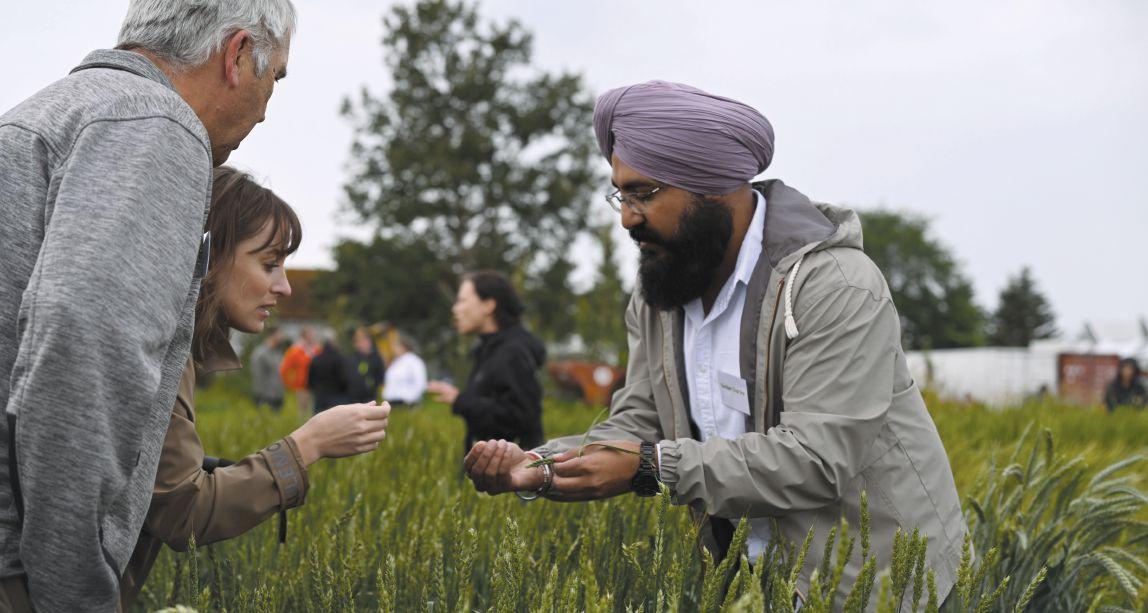
ABOVE Brar, shown here talking about his wheat breeding program, is one of the breeders involved in Canadian BNI wheat research.
contribute to nutrient pollution of lakes and rivers, and through conversion to various gases, including nitrous oxide, a potent greenhouse gas.
Pelster notes, on average, about half of the N fertilizer applied to crops globally is lost to the environment rather than being taken up by the crops. The N-use efficiency of wheat can be even lower.
He thinks BNI-enhanced wheat has the potential to be a win-win-win. “Saving money on fertilizers while getting the same yields would be good for farmers. Reducing algal blooms in lakes and rivers would make fishers, swimmers and others happy. Reducing greenhouse gas emissions would make many people happy. BNI wheat could be a good natural solution for a pretty big problem.”
Over the past two decades or so, more and more research has been done around the world on BNI in agricultural crops, including wheat. Researchers with the Japan International Research Center for Agricultural Sciences (JIRCAS), the International Maize and Wheat Improvement Center (CIMMYT) and their collaborators are key players in this work.
A study by JIRCAS and others published in 2007 found that BNI capacity was high in certain tropical pasture grasses and a few field crops such as sorghum, but it was not high enough in the tested lines of wheat, rice and















corn to suppress nitrification. However, another 2007 study reported a wild relative of wheat (Leymus racemosus) with high BNI activity.
Next steps included further studies on tropical grasses and sorghum. JIRCAS and CIMMYT researchers and their collaborators tackled the challenging task of crossing and backcrossing to introgress the BNI trait from the wild grass into elite wheat lines. Through that work, those researchers determined which part of the DNA in Leymus racemosus was associated with its BNI trait. And in a 2021 paper, they demonstrated the feasibility of moving that trait into several elite wheat varieties. Among the varieties able to express the trait, the best-performing one not only suppressed nitrification and reduced nitrous oxide emissions, it also had improved N uptake and better grain yields, with no negative impact on grain quality. These findings are spurring more BNI wheat work, including work in Canada, to see how well the trait works in other wheat lines and different field environments.
Other research has shed more light on BNI available in wheat. A 2016 study by the Commonwealth Scientific and Industrial Research Organisation (CSIRO) evaluated the BNI capacity of 96 wheat lines. Most lines had at least a little BNI capacity; several released root exudates that significantly inhibited nitrification rates. So, there’s the possibility of tapping into certain wheat germplasm sources for breeding to increase BNI in wheat varieties.
Other studies are investigating diverse aspects of BNI such as: BNI in other crops, identification of BNI compounds in different root exudates, analysis of how these compounds suppress nitrification, the effects of different growing conditions on BNI, and so on.
As a soil scientist whose research focuses on greenhouse gas emissions from agriculture, Pelster has a long-standing interest in BNI. From 2013 to 2018, he worked at the International Livestock Research Institute in Kenya, where his research included trials on BNI in tropical grasses. He was also aware of the international research on BNI in sorghum, so when he returned to Canada he proposed a sorghum BNI study, but was not able to obtain funding.
However, Pelster continued to follow progress in BNI research. “When I saw the paper that they’ve now bred the BNI trait into various commercial wheats, I jumped at the opportunity. I think it is a really good way to make wheat and then other cereal crops – if we could get the trait into other cereal crops – much more efficient in their nitrogen use,” he says.
He has teamed up with several Canadian breeders to breed BNI-enhanced Canadian spring wheat in collaboration with JIRCAS and CIMMYT, including: Silvia Rosa,
CÉROM (Centre de recherche sur les grains), Saint-Mathieu-de-Beloeil, Que.; Andrew Burt, AAFC-Ottawa; Santosh Kumar, AAFC-Brandon; Harpinder Singh Randhawa, AAFC-Lethbridge; and Gurcharn Singh Brar, University of Alberta, Edmonton. This national approach should help in developing multiple BNI-enhanced wheat lines and testing them under diverse growing conditions.
“Our goal is to breed varieties with sufficient BNI capacity to reduce nitrification by more than 10 per cent without sacrificing any of the other traits that make Canadian wheat sought after,” says Pelster. As a first step, he collaborated with CIMMYT to screen about 20 Canadian spring and winter wheat varieties for BNI capacity. The results showed these varieties had fairly small BNI capacities, with little variability in capacity between the different varieties. “But there is a little bit of BNI capacity, and hopefully we can use some of that when we look at which Canadian varieties to breed with the [BNI-enhanced] wheat from JIRCAS and CIMMYT.”
According to Pelster, AAFC has recently completed negotiations with JIRCAS and CIMMYT to use their BNI-enhanced wheat seed for research in partnership with those two agencies. The Canadian breeders now have the BNI seed and have started the crossing/backcrossing process to transfer the trait into Canadian wheat germplasm.
If the team is able to get funding for this research, they hope to have a few lines with the BNI trait ready for field testing in a few years. Those tests would include measurement of traits like yield, grain quality, disease resistance, and so on. Pelster’s research group would assess the lines in terms of characteristics like N-use efficiency, N leaching losses, and nitrous oxide emissions. The team also wants to screen other wild relatives of wheat to see if they can find material better suited to Canadian growing conditions than the Leymus lines used by JIRCAS/CIMMYT.
Like Pelster, Brar has been interested in BNI for several years. “I knew about this biological nitrification inhibition work in wheat when I was visiting CIMMYT as a PhD student back in 2018, before the work had been published,” says Brar, now an assistant professor and head of the Cereal Breeding Lab at the University of Alberta and an affiliate assistant professor at the University of British Columbia. “It was very exciting and very promising work. I saw a huge benefit if we could cut down on the nitrogen fertilizer input and suppress nitrous oxide emissions.“
His research group has been crossing Canadian hard red spring wheats with CIMMYT’s BNI-enhanced wheat lines for more than a year. “Our aim is to bring this trait into Canadian germplasm. We are hoping to develop some varieties with the trait within the next one or two decades,” he says.
Brar is collaborating with other researchers to study how this trait actually works. He and University of Alberta’s Linda Gorim will conduct an agronomic study to compare BNI-trait-carrying lines with regular hard red spring wheat lines in the field. He says, “We will apply different nitrogen fertilizer rates, measure nitrous oxide emissions and look at the yield and other traits and see how much lower we can go in terms of nitrogen input without losing yield, and whether this BNI trait actually helps reduce nitrous oxide emissions.”
He is also working with other University of Alberta colleagues to standardize the protocol for rapid screening of BNI capacity in wheat and barley, and with Curtis Pozniak at the University of Saskatchewan to develop markers for the trait to make it easier to breed for.
“Even if we can cut down nitrogen fertilizer input by just 10 per cent or even 5 per cent, I think [BNI-enhanced wheat] will be a big money-saver for farms and our country as a whole. And if it actually reduces nitrous oxide emissions, that will be a big plus. All I see is a big environmental and economic benefit from this. That’s the goal,” says Brar.
“Of all my projects, I’m probably most excited about this one,” notes Pelster. “I like the idea of finding natural solutions to these sorts of problems. All the nitrogen fertilizer we apply does create problems – acidification of soils, [nutrient pollution] of lakes and rivers, gaseous losses. Having a natural solution to all that would be really good.”
“You never know how well it will work until you try it in the field,” he cautions. But he is hopeful, given the promising results in international studies indicating the potential to decrease N losses, improve wheat’s N uptake, and even increase yields in some cases.
“Although the plant can take up both nitrate and ammonium, quite often in our modern agriculture systems it is almost all nitrates, and that one pathway almost gets saturated. By having more ammonium around, the plant
ABOVE Pelster collaborated with CIMMYT, an international research group, to screen about 20 Canadian spring wheat and winter wheat varieties for BNI capacity.
can actually become more efficient at getting nitrogen out of the soil and then use that to make more protein,” Pelster says. “So, there could be yield benefits, but I’m not counting on that. If we could get the same wheat yields with lower fertilizer inputs, I’ll be happy.”
Pelster is also excited by the possibility of developing other Canadian crop varieties with enhanced BNI. He thinks BNI-enhanced winter wheat might be especially helpful in reducing nitrous oxide emissions. “One of the times when we see high nitrous oxide emissions is in the spring. That’s because nitrate has been slowly accumulating over the winter and then you tend to have high moisture in the spring, providing good conditions for production of this greenhouse gas. Having [BNI-enhanced] winter wheat in place with active roots could make a big difference in decreasing these emissions.”
He adds, “I think the reason why we’re finding wild relatives with high BNI is because, before people started applying lots of fertilizer, nitrogen was quite scarce in the soil. So, plants evolved strategies to keep the nitrogen in place for a longer time and not having it disappear so quickly. There is probably a lot of potential [to enhance BNI] in other crops as well. We just need to figure out where to look for the trait.”

Nova
AMHERST
Amherst Co-op
Country Store
17 Lawrence St., B4H 3G4
ANTIGONISH
Antigonish Farm & Garden Co-op
91 Saint Andrews St., B2G 2G9
COLDBROOK
Scotian Gold Co-op Ltd. 7027 Hwy. 1, B4R 1C5
COLLINGWOOD
Bragg Lumber Company Ltd. 97 Bragg Rd., B0M 1E0
HALIFAX
Halifax Seed Company 5860 Kane St., B3K 5L8
KENTVILLE
Cavendish Agri Services 1205 Hwy. 359, B4N 3W4
MILFORD STATION Corridor Co-op
Country Store 2289 Hwy. 2, B0N 1Y0
SYDNEY
United Farmers Co-op 502 Keltic Dr., B1P 6H3
TRURO
Truro Agromart Ltd. 547 Onslow Rd., B6L 5L3
TRURO
Cavendish Agri Services 38 Wade Rd., B2N 6S9
WILMONT
Cavendish Agri Services 14062 Hwy. 1, B0S 1P0
New Brunswick
DRUMMOND
New Denmark Trucking Ltd.
194 Station Rd., E3Y 1W4
FLORENCEVILLEBRISTOL
McCain
16 McCain Produce Rd., E7L 3H5
GAGETOWN
Appleman Farms Ltd. 16 Fox Rd., E5M 1W6
HARTLAND
Agromart Hartland 40 Industrial Dr., E7P 2G6
MONCTON
South Eastern Farmers Co-op
200 Collishaw St., E1C 0E4
PETIT-ROCHER
Chaleur Fertilizers Ltd. 558 Industry St., E8J 1T2
SAINT ANDRÉ
Agromart Grand Falls
38 Després Rd., E3Y 2Z3

SAINT JOHN Halifax Seed Company
664 Rothesay Ave., E2H 2H4
SALISBURY
Cavendish Agri Services
3030 Fredericton Rd., E4J 3E2
SUSSEX
Sussex Co-op Country Farm Store
25 Union St., E4E 5L2
Cybersecurity is one new frontier of agricultural security that producers should keep in mind – but they don’t have to go it alone.
BY ALEX BARNARD
How secure is your farm? For most, this question likely brings to mind trespassers, equipment theft, and biological concerns like livestock or soil. Janos Botschner is working to get farmers to add another dimension to their security considerations: cybersecurity.
Botschner is the lead investigator with the Cyber Security Capacity in Canadian Agriculture (CSCCA) initiative, a multi-year project funded by Public Safety Canada and operated through the Community Safety Knowledge Alliance (CSKA) that aims to understand cybersecurity in Canadian agriculture. The initiative works to develop resources for producers, as well as identify opportunities for the sector, and the agri-food ecosystem as a whole, to be better prepared, more cyber-secure and more cyber-resilient.
“This is a real thing. It’s a real and significant threat to Canadian agriculture and our food system as a whole,” he says. “It’s not going to go away anytime soon.”
Botschner cautions that currently, Canadian agriculture as a critical infrastructure is underprepared for cyber threats. But he also notes that this isn’t very different from other critical infrastructures in terms of their journeys regarding cybersecurity.
“There are some practical opportunities to tackle cyber-related vulnerabilities as well as to de-risk, develop and sustain the benefits of digital agriculture,” he adds. “And, really importantly, producers shouldn’t have to go it alone. Help is available.”
Botschner likens cybercriminals to coyotes sniffing around a fence line. Identifying potential weaknesses they can exploit is a major part of keeping them out and reducing the harm they can cause to a farm operation and Canadian agriculture as a whole.
In terms of the landscape of cybercrime the sector faces, there are a few common types of bad actors.
“Largely, they’re what we might call opportunistic cybercriminals,” Botschner says. “They’re criminal
ABOVE Technology is a part of the modern Canadian farm, from tractors to barns to book-keeping, bringing new challenges and opportunities.
organizations that want to make a buck, and they’re very creative. It can be an individual or group that can buy something like ransomware as a service [on the dark web].”
Profit is a major motivator, with cybercriminals looking for new ways to squeeze money out of producers by attacking their operations.
“Some of these groups are really well resourced and big. Some of them are hosted in foreign countries that look the other way. And then there are times when these groups might have connections to foreign governments or foreign military, as well as criminal organizations,” he says.
CSKA recommends taking time to understand what information is critical to the farm business, where it sits and how it moves, and what would happen if it is corrupted or not available.
“The big thing is that people are seeing are ransomware attacks, and they’re not going to go away.”
Ransomware can be used to cause mischief for farms in a few ways. Using software exploits, or bugs, cybercriminals can go into a system and deny access to data – such as historical farm data. Botschner says they can lock up a system, making that data inaccessible and demanding the farmer to pay to have access. If the farmer pays, they’ll be sent a decryption key.
Cybercriminals can also use this technology to lock up a system on the farm. “Maybe it’s an automated irrigation system, maybe it’s a significant piece of harvesting equipment at a critical time of year,” Botschner says. “Or maybe, even worse, it’s a control system that regulates the environment that temperature the ventilation inside a livestock barn.”
This increases the time sensitivity of the issue, especially in the case of livestock barns. At particularly cold or hot times of year, there isn’t much of a margin before animal welfare is at risk. “The problem is they might come back,” he adds. “Even if you pay them, because now they have a sense of what your vulnerabilities are.”
The last possibility Botschner discusses is data poisoning. “Somebody could get into a data flow and make it look like something’s happened when it hasn’t,” he says. This can make it appear that, for example, a commodity is contaminated, when it actually isn’t, harming its reputation in the context of a trade negotiation. Conversely, it can prevent awareness of problems, like preventing a bio-surveillance system from recognizing a disease outbreak.
“It’s a little bit more extreme, but it’s in the realm of possible,” Botschner says. “We want to be aware of
Getting the most from your acres comes down to the smallest details, and we’re ready to prove we’re up to the challenge – even on your toughest acres. Whether it’s developing, researching, testing or getting to work in the field, PRIDE Seeds is there with you every step of the way.
these things so we can say, what can we do to manage business risk at the level of individual farms, and then bigger risks at the level of a critical infrastructure.”
There are a variety of cybersecurity resources on the CSKA website (cskacanada.ca) for increasing your cybersecurity knowledge and resilience. When it comes to your farm, Botschner says it’s “just about starting somewhere.”
“Start anywhere. Ask for help. If you feel that you need more help, and it’s not around, go to your federations and commodity associations and say, I think we could use some more help.”
Botschner also recommends doing a cyber fire drill. “Sit down at the kitchen table, pick a problem like a ransomware attack or a system lock-up, or even your IT service going down. What would you do next? Who would do what?” he says. “You don’t have to actually do anything – just sit there and talk through a scenario.”
It’s important to keep the benefits in mind if this new element of farm security and management seems a bit overwhelming.
“Digital technologies done well can create opportunities to better manage the bottom line and to have time to do other things that people want to do,” says Botschner. “It’s a personal choice. I’m neutral on whether or not somebody wants to adopt a particular piece of technology. But with everything, there are opportunities to make the most of and then there are risks to manage.”


OCT 22, 2024
12:00PM ET
The Influential Women in Canadian Agriculture program honours women who have created lasting impacts on Canadian agriculture. Since 2020, the program has recognized 33 women who have positively contributed to the industry, whether actively farming, providing agronomy or animal health services, completing research, leading marketing or sales teams, and more.
The program receives dozens of incredible nominations every year, highlighting just how many influential women are working within Canada’s agriculture industry.
Join us in our annual virtual summit on October 22 at 12 p.m. ET. Featuring our hand-selected group of honourees and other prominent ag trailblazers, this free event will provide a platform for the exchange of knowledge and ideas as our guests share their thoughts through interactive sessions.











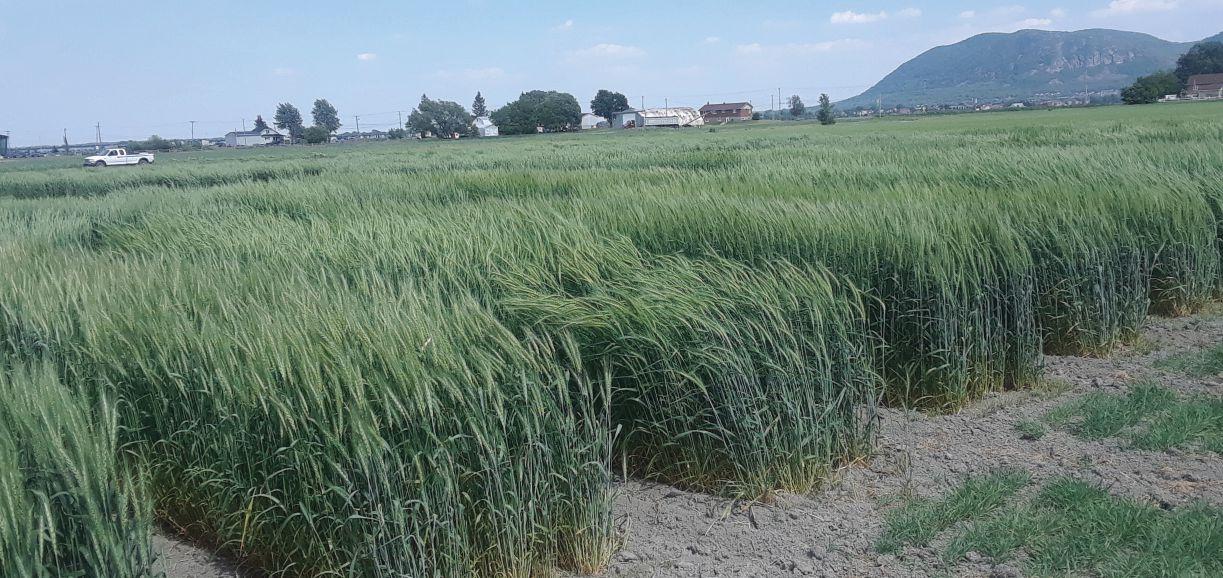
The rise of Quebec wheat, from breeder to baker.
BY J.P. ANTONACCI
Quebecers are picky about their bread. Only the finest loaves with the crunchiest crusts will do. And with consumer demand for homegrown specialty flour on the rise, millers need wheat that can’t be beat. That’s where Michel McElroy and his fellow wheat geneticists at the Centre de recherche sur les grains (CÉROM) come in.
Located a short drive from Montreal in Saint-Mathieude-Beloeil, CÉROM uses traditional breeding methods and cutting-edge genomic technologies to create wheat lines that resist disease and produce robust yields of sufficient quality to satisfy growers and bakers alike.
“The biggest issue, as always, is Fusarium head blight,” says McElroy, a plant breeder who specializes in winter wheat. Fusarium is wheat’s nemesis, and keeping the fungus at bay is a main concern for breeders.
“We’re pretty stringent in Quebec about Fusarium resistance in our cereals, because it’s such a problem here,” McElroy explains. “The period that we get around flowering here tends to be hot and humid, which is just the condition that Fusarium needs to be able to infect the head.”
CÉROM uses as its base material germplasm from a shuttered Agriculture Canada program that focused almost exclusively on Fusarium head blight, giving McElroy and his colleagues a competitive advantage. “There
ABOVE The push to increase wheat’s disease resistance through breeding complements growing consumer interest in organic food in Quebec.
are known genes that will add to resistance,” he says. “They’re not perfect, for sure, but there are a number of markers we use to make sure there’s a minimum resistance that our lines are going to have.”
Fusarium is complex and breeders must be nimble, testing various solutions through a number of techniques. “We’re taking a look at little bits of information from all around the genome to be able to predict whether a line is going to be resistant or not,” McElroy explains.
An ongoing project between CEROM and three winter wheat breeding programs in Ontario seeks to develop predictive computer models using genomic information that test single and combined wheat lines for Fusarium resistance, potential yield and quality. Lines that test poorly in the models can be safely excluded from field trials, saving years of work and expense.
In Quebec, new wheat lines must be registered and come before a provincial review committee that decides whether they offer sufficient agronomic advantage – in terms of higher yield or better quality – to be planted commercially.
“We submit potential lines to provincial trials, and then they’ll run agronomic trials on those for three years,” McElroy says.
Testers check for several diseases, but if the proposed line can’t hold its own against Fusarium, that’s a non-starter. “It has to show a minimum resistance to that disease, because if it’s too sensitive, then there’s too much risk to the farmer,” McElroy says. “There are a lot of really good lines that get submitted and fail on that point. They’re really good agronomically, they’re fine for quality, but just don’t have that Fusarium resistance.”
The stringent criteria highlights the importance of breeding wheat suited to Quebec’s unique ecosystem, McElroy says. “There’s plenty of varieties that will do fine in Ontario in terms of Fusarium resistance, and you bring them up here and it’s not the same story at all.”
The push to increase wheat’s disease resistance through breeding complements growing consumer interest in organic food in Quebec. “There is a strong organic movement here,” says McElroy. “From a breeding perspective, genetic resistance is always going to be the best option in terms of control against disease. Because it’s right there in the plant. There’s nothing about timing or getting the right product on at the critical period.”
Organics fit within CÉROM’s mandate “to promote sustainable grain production as much as possible,” he adds. “And part of that is making sure that genetic base is as strong as possible, so you don’t have to use chemicals systematically every year in order to control the fungi or insects or whatever it is.”
Reducing pesticide use is a key element of Agriculture Raisonnée, a movement spearheaded in Quebec by Les Moulins de Soulanges, millers of specialty flours in St-Polycarpe. Translating as reasonable or sustainable farming, Agriculture Raisonnée is a low-input philosophy with a tangible benefit for growers and the environment.
“Our program is advocating lowering the use of pesticides and working sustainably,” says Élisabeth Vachon, an agronomist with Les Moulins de Soulanges who co-ordinates the Agriculture Raisonnée project. Bringing
two decades of experience in organic farming to her current role, Vachon is a bridge between growers and the mill. She oversees agronomic monitoring and onfarm research projects while helping farmers make the switch to organic.
To sweeten the pot, Les Moulins des Soulanges pays bonuses for wheat that comes in pesticide, herbicide and pest-free. To qualify, seeds must be free of fungicide and pests. If no herbicide is added, farmers get a bonus of $15 per ton, and another $15 per ton if no fungicide is used.
“Some farmers are not used to not putting on any pesticides,” says Vachon, who educates growers about how to reduce inputs – and their costs – without sacrificing quality or yield. “There are varieties that perform as good if they have less fertilizer. We’re looking at varieties that are able to have an optimal yield and an optimal quality without a lot of chemicals.”
Realism should guide decisions about pesticide use, Vachon says. Reasonable agriculture means using fungicide when needed – such as after rainy weather leaves a wheat field humid and ripe for disease – but not as a default. “We say, if you think you’re going to have problems, just put the fungicide on,” she says. On the other
There is rising demand in Quebec for homegrown wheat from a market hungry for specialty bread – a trend driven by the province’s strong bread culture and new arrivals from France who demand a higher-quality baguette. “They’re very picky,” Vachon says with a laugh. “The quality of the bread in Quebec has to be good for bakers to prosper.”
There is a need for wheat grown for human consumption, especially in specialty breads a cut above the typical grocery-store loaf. Quebec farmers, therefore, have a market opportunity to supply local mills with hard red winter wheat, whose higher protein and gluten content makes it better suited for crusty loaves. But most of Quebec’s current wheat production is soft wheat and ends up as livestock feed for the province’s plentiful cow and pig populations.
hand, adding chemicals in sunny and dry weather as needless insurance against disease, “that’s not sustainable.”
From a breeding perspective, McElroy says it is “reassuring” for growers using less pesticide to know the wheat they grow has disease resistance in its genes. “Even if it is a bad year for Fusarium, they can count on at least a base level of resistance from the wheat that’s going in their fields, to give them that bit of protection,” McElroy says. “It’s a motivating factor for us here as well. I want to be able to produce varieties that go out there and give producers a chance to produce their wheat the way that they want.”
In Quebec, wheat is not bred in isolation. There is a constant conversation between breeders, growers and end users like mills and bakers to ensure all perspectives and needs are considered. “It’s a small community. We tend to get to know each other pretty well,” McElroy says, adding he and his colleague at CÉROM consult with local millers “on a regular basis” to ensure the wheat lines his team selects match the quality profile desired at the mill. “And we engage them to be able to test out some of our lines before we send them to registration trials,” he adds.
That collaboration helps, he explains, since it can take a decade for CÉROM to bring a new wheat line into being. “Our complete cycle is about ten years for a cross to be able to get a finished product,” he says.
Using doubled haploid breeding techniques – doubling the chromosomes of a haploid plant to affect a genetic change in fewer breeding cycles – is another “shortcut” breeders use to lessen the time and cost for trials, McElroy says. “This is a way where we can go directly from a cross to a fixed line within a generation,” he says. “It lets you go really fast, but you lose something in terms of not being able to select in subsequent generations before you get there.”
Along with producing flour, Les Moulins de Soulanges conducts research and advises growers, meaning Vachon has a hand in both worlds. The mill’s priorities are wheat lines that demonstrate high quality, sufficient resistance to Fusarium, and economically feasible yields. “We’re always looking at the beneficial margin of the farmer. This is priority number one,” Vachon says. “Because if the farmer doesn’t make money, well, the next year he won’t make wheat for us.”
“We’re a net importer of wheat, which I think is a rarity in most wheat-producing provinces,” McElroy says. “We have a very big need for grain to be able to feed hogs and dairy cows (and) we need to import a lot of that grain.”
Millers would like that to change.
“I feel like there’s a transition going on to raise the profile of Quebec wheat and really try to grow more quality wheats that get used here, and so we can export flour,” McElroy says. “There are a lot of specialty millers here in the province that are really looking for something that’s unique.”
Speaking for millers producing flour for human consumption, Vachon called the preponderance of wheat grown for animal feed “our biggest threat.” When the provincial review committee determines a new wheat line is promising but not of high enough quality for human consumption, farmers grow it for animal feed, where there is a guaranteed and uncomplicated market and the varieties have predictably higher yields. “They have a cheque every two weeks, so they’ve never been accustomed to selling their stuff,” Vachon says, explaining that many dairy farmers sold their quotas to produce cash crops.
Mills like Les Moulins des Soulanges must offer farmers a higher price for wheat grown for bread production to account for the lower yields. “A 25-per-cent less yield is acceptable with our prices,” Vachon says.
Research led by a cohort of farmers and agronomists tests different varieties, compares the yields, and gives Vachon the data to make a business case for why “a variety that produces less but has wonderful quality” needs a higher price point to make it financially feasible for farmers to grow.
Looking ahead, Vachon expects to see more wheat grown for human consumption in Quebec over the next decade. “Now the world is changing. We’re drinking less and less milk,” she says. “For me, let’s feed the world before we feed all these cows and swine. Let’s feed ourselves.”
One way for farmers to meet the demand for speciality flour is to plant more winter wheat.
There may not appear to breeders to be much of a quality between winter and spring wheats, but millers report there is, McElroy says. “Winter wheats tend to lend themselves better to that crusty bread, baguette-style sort of thing,” he says, citing the ability to tolerate a longer fermentation period as one possible reason.
As a cover crop, winter cereals are good for soil health and restoration, but Quebec has traditionally grown more spring wheat because of issues with winter survival and the shorter growing season. But things have changed, McElroy says. “We’re seeing winter wheat really start to take off right now. There’s a lot more producers that are interested in doing this and adapting techniques as well. Certainly around seeding, for example.”
Normally, wheat follows soybeans, which creates a problem for winter wheat. “The later you seed the winter wheat, the more difficulty it’s going to have in surviving the winter,” McElroy says. Seeding winter wheat earlier, directly into soy, helps with survival and yield. “Which means they can seed super early (and)
have really good establishment, and it gets through the winter a lot better, and they get better production out of it,” he says.
Farmers now seed winter wheat at the beginning of September, as compared to early to mid-October when Vachon started at Les Moulins des Soulanges 17 years ago. Starting earlier and seeding through soy using a broadcast technique – based on research at Laval University into seeding timing and modes – “made a really big difference for us” in terms of yield and mitigating winterkill, she says.
“That project really helped the mill to have more winter wheat, and to have farmers interested in producing for us,” Vachon says. “It was a real game-changer.”
Production of winter wheat has increased more than 10 per cent over the past six years, according to Statistique Québec. In 2023, there were 27,200 hectares of winter wheat seeded in the province, just over 29 per cent of all wheat seeded that year. While in 2017, winter wheat accounted for about 18 per cent of Quebec’s total wheat acreage. “There has been a shift toward winter wheat, definitely. We’re not the majority, but it’s increasing pretty steadily,” McElroy says.
Growers are cluing into the benefits of wheat in terms of overall farm production, adds Vachon. “Wheat makes so much sense in rotation,” she says. “It might not be the crop that pays the most, but in the long term, it is. Because it’s proven scientifically that after wheat, you have 10 per cent increase in your corn production, and 10 per cent in your soybean production also. That’s one thing that we don’t tell often.”


BY CAROLYN KING
Dry beans are a small but mighty part of the field crop sector in Manitoba. Acreage is rebounding after a dip in the 2010s, with the Manitoba government pulse specialist indicating growers were projected to plant 180,000 to 200,000 acres to dry beans in 2024. So, researchers are working to provide them with better dry beans varieties.
“There are many traits associated with dry bean yield, quality and disease resistance, and we have to consider all those traits. So, it takes a long time to build up elite breeding materials,” says Anfu Hou, who leads this program at the Morden Research and Development Centre (MRDC) of Agriculture and Agri-Food Canada (AAFC).
Established in 2004, the Morden dry bean breeding program is still a very young program, but Hou and the other researchers involved have been working hard to improve their breeding lines in that time.
The program’s primary goal is to develop dry bean varieties for the growers and the industry in Manitoba; these varieties can also be grown in neighbouring regions. Several different market classes are covered by the breeding program, but recently Hou’s focus has been on the major beans grown in Manitoba. This includes navy and pinto beans – the largest acreage beans in the province – and black beans, a popular market class in western Manitoba.
He adds, “We also try to generate new knowledge on the genetics of issues like disease resistance, seed quality and all the other important characteristics of bean varieties.”
Improving resistance to yield-limiting bean diseases is a big part of Hou’s program. To that end, Hou works closely with the MRDC pulse pathologist. Until recently, this was Robert Conner. Since his retirement three years ago, that role is now filled by Ahmed Abdelmagid, an oilseed pathologist supervising the pulse pathology team.
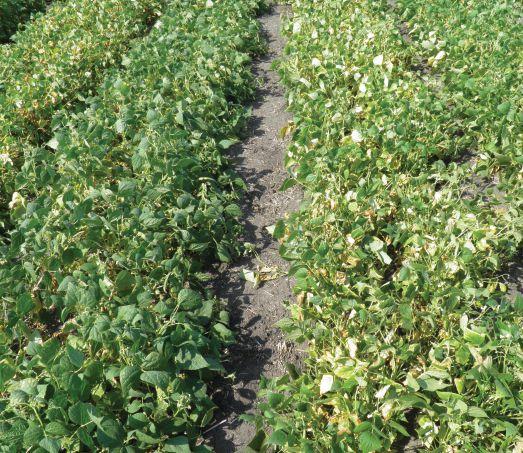
“Although quite a few different dry bean diseases occur in this region, I have really been focusing on resistance to common bacterial blight – the most common foliar disease in the area. And we spend quite a bit of time on anthracnose, which can cause significant yield
losses and quality reduction when conditions favour the disease,” he says. “Another focus in the last few years is root rot; it is always a serious concern for the growers, but it is very difficult to work with. White mould is another concern that is also difficult to work with.”
Hou and the pulse pathologist lead a dry bean disease survey every year in Manitoba. Hou says, “We monitor the dynamic changes of diseases and make sure we don’t miss any emerging concerns.” Along with helping Hou to target his program’s disease resistance work, the survey results also help bean growers and crop advisors to keep up to date on disease issues.







“Also, we work closely with the Manitoba Pulse and Soybean Growers [MPSG] on the different yield trials every year. I have been co-ordinating the variety registration trials in Manitoba. As part of that, we evaluate disease resistance.”
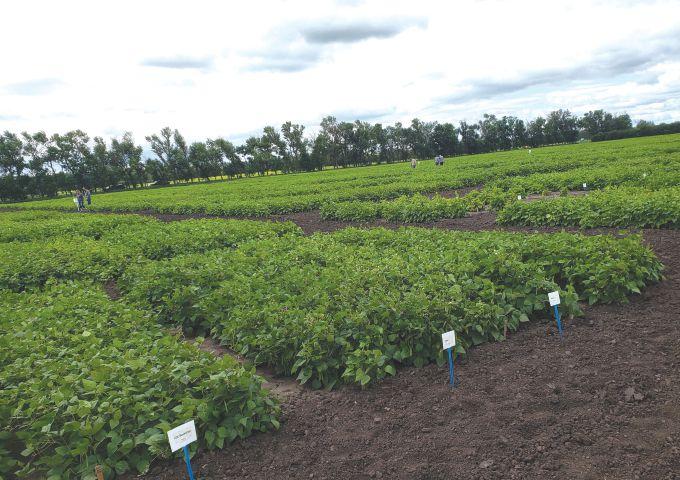
The pulse pathologist manages the MDRC disease nurseries used to assess the resistance levels in these dry bean varieties and in elite breeding lines developed by Hou’s program and other dry bean breeding programs. Screening for bacterial blight, white mould and root rot is done in the field nurseries; anthracnose-resistance screening takes place indoors in growth chambers.
Their research also includes mapping genes involved in resistance to the different diseases and developing molecular markers for screen-breeding materials for those resistance genes. Using such markers can really save time in the breeding process.
The breeding program’s most recently registered variety is a high-yielding cranberry bean with resistance to anthracnose named AAC Scotty by Canterra Seeds, which has been granted exclusive rights to the variety.
Another key objective of Hou’s program is to improve seed quality. “Years back, people didn’t really pay that much attention on the quality side, but we started working on it about 10 years ago and we are making progress,” he says.
When Hou started at Morden in 2008, he heard some concerns about seed hardness in some varieties, so he made improving this trait a priority.
Seed hardness problems can occur in dry bean seeds, as well as most other legume seeds. “Normal beans soak up water uniformly and pretty quickly before we cook them. But there are beans that do not absorb water very well even when you soak them overnight. We refer to those beans as ‘stone seeds’ because they are stone-hard,” he explains.
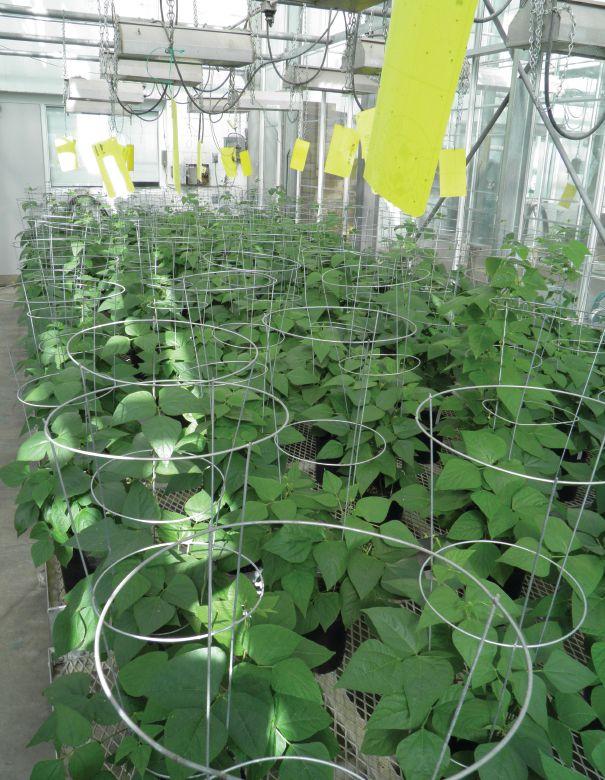
RIGHT Resistant (left) versus susceptible (right) bean lines in the common bacterial blight nursery at
This characteristic is called seed hardness – an undesirable trait for canning and other processing uses. For example, it can impact processing costs, cooking time, canning quality and nutritional quality.
Hou and his research group are also investigating the genetic and environmental factors affecting seed hardness. “We have studied different genetic populations of dry beans over the years, and we have been able to identify a few candidate genes or gene loci [locations on the dry bean genome] that are associated with this trait,” he says.
“Seed hardness seems to be a very complex trait. There are many genes involved in different bean populations, different bean types and different environmental conditions.” Hou and his group are continuing to study seed hardness to further increase understanding of this trait.
“We make sure our new breeding materials and new cultivars have much improved characteristics on this aspect,” he says.
Seed hardness –its ability to absorb water – affects processing costs, cooking time, canning quality and nutritional quality, making it a trait to prioritize for breeders.
Marsh spot is another seed-quality issue that the program is tackling through breeding and research. “Marsh spot is most commonly found in cranberry beans, but sometimes people also report it in kidney beans,” notes Hou. “If you crack open a normal, healthy cranberry bean seed, you’ll see that the centre is pure white or cream-coloured. But with marsh spot, you see a dark spot right in the core of the seed, which really reduces seed quality.”
He explains that marsh spot is thought to be associated with a mineral deficiency – most likely a manganese deficiency. It can be considered as an abiotic stress disorder connected with certain soil or growing conditions that limit manganese uptake by plants. But susceptibility to this disorder also has a genetic component.
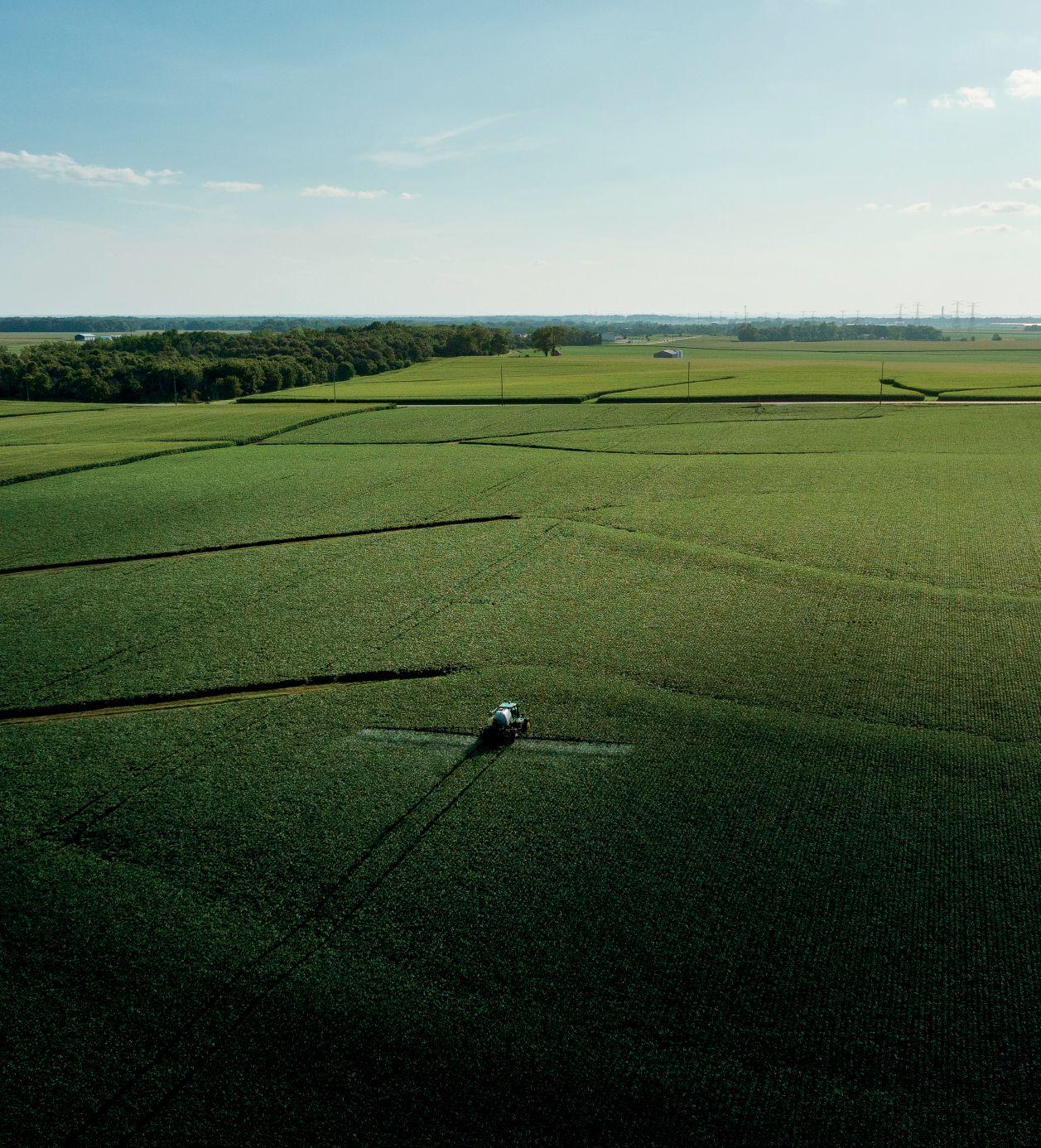
THE LEVEL OF PRECISION YOU’VE COME TO EXPECT FROM US IS NOW AVAILABLE ON YOUR SPRAYER.
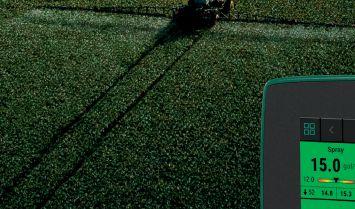
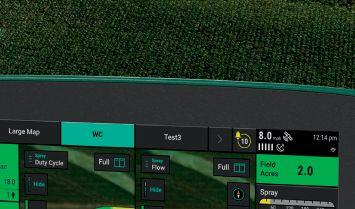
Take charge of your spraying accuracy through independent control of rate and pressure with SymphonyNozzle™ and a Gen 3 20|20® monitor. Together they reduce over-application with swath control and level out inconsistent application on turns. Take your sprayer a step further and add ReClaim™, our recirculation system. WE BELIEVE IN BETTER SPRAYERS WITH BETTER CONTROL.















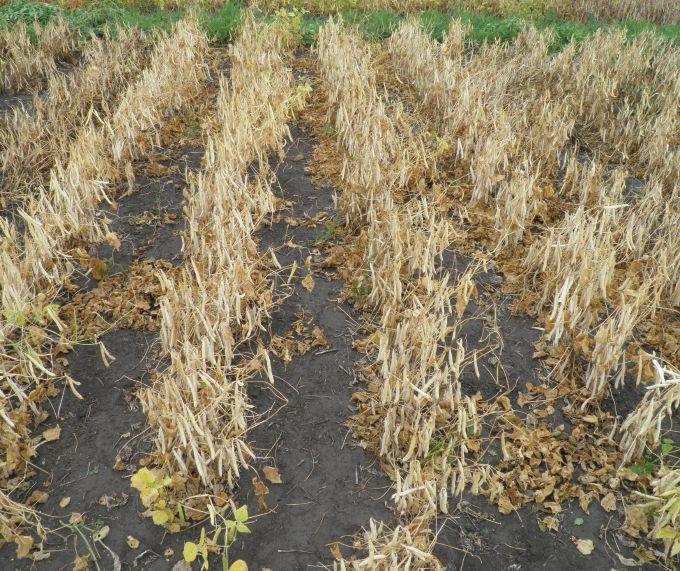
“On the breeding side, we screen for the trait in our breeding materials to make sure we don’t get that bad trait in our new varieties,” he says.
On the research side, they have been investigating the disorder’s genetics. “Through extensive screening of germplasm, Bob Conner found a couple of cranberry bean lines that have better resistance to marsh spot.”
Using this, they created genetic populations by crossing resistant and susceptible cranberry lines and examined them to look at the genetics of this trait.
Their results show that resistance to this disorder is controlled by multiple genes. In particular, they determined that marsh spot resistance is linked to two genes associated with manganese transport in the plant. Their findings are helping to increase understanding of this disorder as well as identifying candidate genes that could help in breeding for resistance to marsh spot.
“We are continuing to work on marsh spot to mine the germplasm for more potential resistance genes that we can stack to improve this trait,” Hou says.
“We are also trying to develop different protocols to speed up the evaluation of breeding materials for resistance to marsh spot because field screening for this trait takes multiple years. One of our goals is to develop molecular markers that we can use to quickly screen breeding materials for the resistance genes.”
One of Hou’s newest projects aims to develop dry bean varieties with a greater capability for nitrogen fixation,
which is the process by which a legume plant and its rhizobial bacteria convert atmospheric nitrogen into a form the plant can use.
Improved nitrogen fixation would reduce input costs for growers and improve the sustainability of bean production. “Dry beans are considered poor fixers of nitrogen, compared to other legumes like soybean. For instance, the application of nitrogen isn’t usually recommended in soybean production [because soybeans can fix enough nitrogen to meet their own needs]. But people say dry beans usually fix no more than 50 per cent of their nitrogen, so application of some nitrogen fertilizer is typically recommended for growing dry beans,” he explains.
Hou notes that previous research – for example, studies at Michigan State University and the University of Guelph – has shown there is genetic variation in the nitrogen-fixation capacity of dry beans, with certain lines being better than others at fixing nitrogen. However, there is little information about the range of variation in this trait in the early maturing germplasm suited to much of Manitoba’s dry bean-growing area.
“We have a large collection of dry beans and hopefully we can identify materials with a higher capability for nitrogen fixation that we can use in the future to improve this trait in our dry bean cultivars,” he says.
“But we believe nitrogen fixation is a very complicated issue, and many different elements may be involved, including growing conditions such as night temperatures. So, in addition, we also want to try to understand the mechanisms involved and find the genes associated with nitrogen fixation.”
For Hou, one of the most rewarding aspects of his dry bean breeding and research program is the opportunity to work with growers. “I’ve been the AAFC representative to the board of directors of the Manitoba Pulse and Soybean Growers. “I love to interact with the growers and listen to their concerns and suggestions for research, which help me tremendously in deciding my research directions and projects. Every year I love to see the growers’ harvest, and every improved harvest makes me so happy.”
He also enjoys collaborating with other researchers across Canada, including both private and public breeders, pulse pathologists and molecular biologists. And he really appreciates the ongoing support from MPSG and AAFC for the Morden dry bean breeding and pathology programs, as well as the efforts of the technicians and others involved in these two programs. “Without this support we wouldn’t be able to do this work to develop new knowledge and new dry bean varieties that can benefit the farmers and the industry in this region.”


To our valued readers, contributors and advertisers,
As we celebrate our golden anniversary of sharing trustworthy, research-focused crop production and agronomy insights and trends with Canada’s farmers, we extend our gratitude for your support and partnership throughout the decades.
Your trust in us has been our greatest reward, inspiring us to continually strive for excellence and relevance.
Thank you for being an integral part of our story, TheTopCropManagerTeam
This shirt has stories to tell. About amazing yields, once-in-a-hundred year storms and getting the last acre of seed in before the weather turns. It’s been there for you. And so has the name on the front. DEKALB ® will never stop delivering high-performing corn and soybean seed with the advanced genetics and traits you depend on, all backed by Bayer. No wonder it’s the brand farmers are most willing to recommend*.
Source: