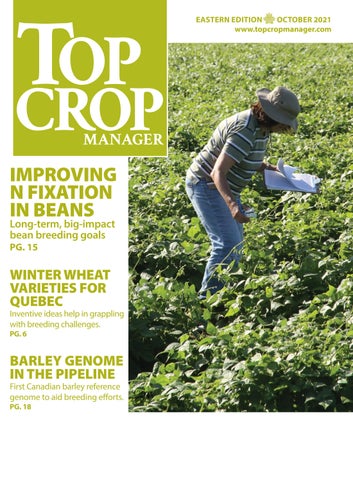
Inventive ideas help in grappling with breeding challenges. PG. 6
BARLEY GENOME IN THE PIPELINE
First Canadian barley reference genome to aid breeding efforts.
PG. 18
THE SOYBEAN SYSTEM YOU CAN’T RESIST
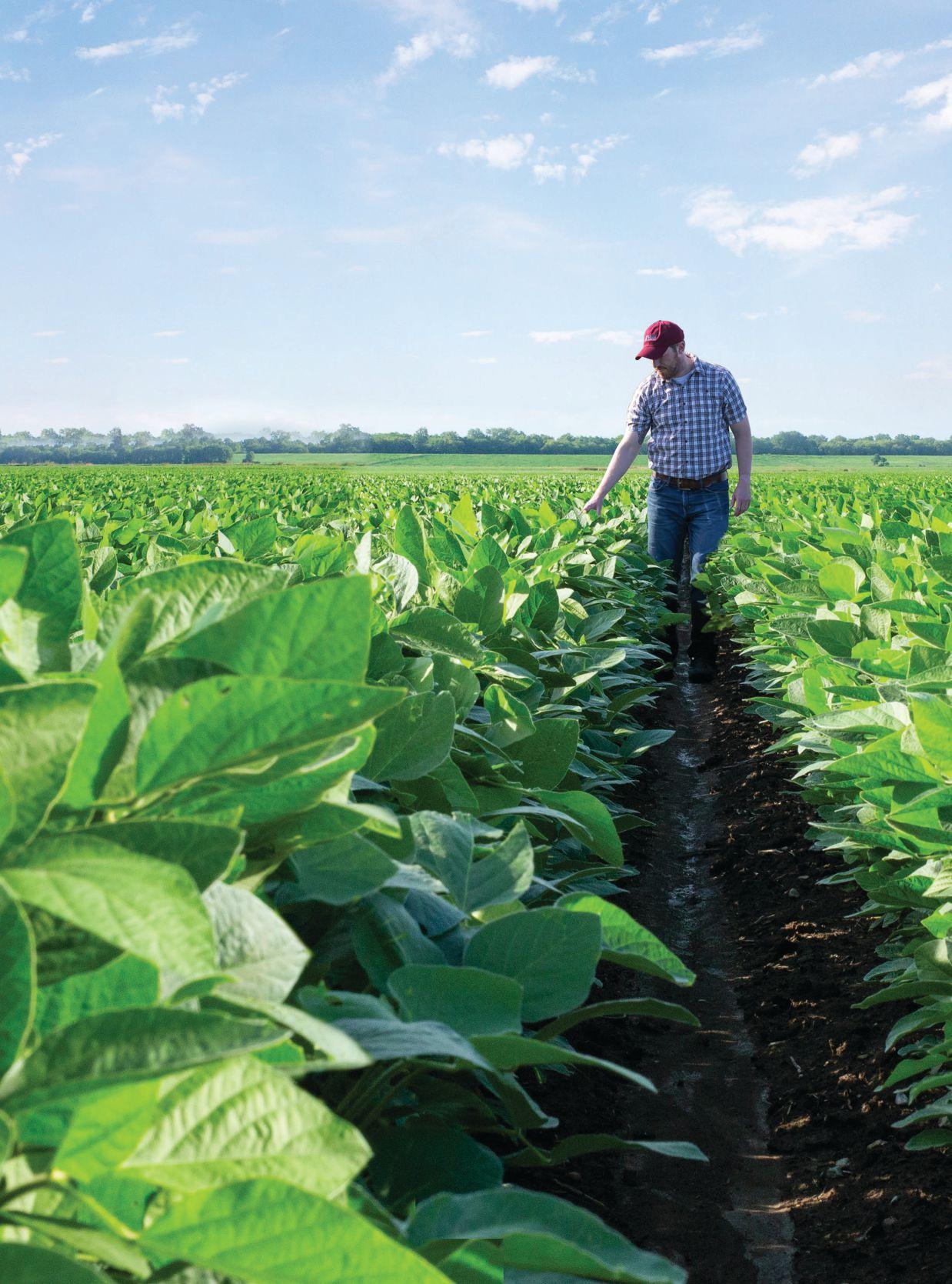
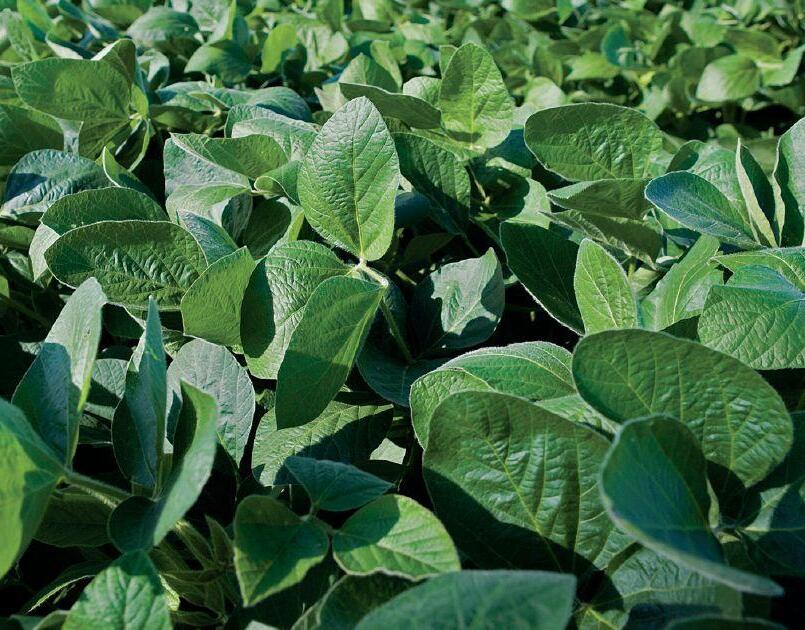
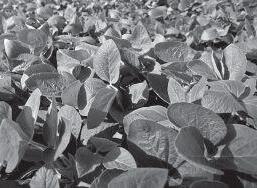
The Roundup Ready® Xtend Crop System combines the high yield potential of Roundup Ready 2 Xtend® soybeans with built-in tolerance to both glyphosate and dicamba chemistries.
Applying the higher rate of Roundup Xtend® in your rst pass provides short-term residual activity on small seeded broadleaves* with the added ability to effectively manage resistance concerns.
EARLY SEASON CONTROL TO GET AHEAD OF THE WEEDS AND STAY THERE.
traits.bayer.ca
*Performance may vary from location to location and from year to year, as local growing, soil and weather conditions may vary. Growers should evaluate data from multiple locations and years whenever possible and should consider the impacts of these conditions on the grower’s elds.
Bayer is a member of Excellence Through Stewardship ® (ETS). Bayer products are commercialized in accordance with ETS Product Launch Stewardship Guidance, and in compliance with Bayer’s Policy for Commercialization of Biotechnology-Derived Plant Products in Commodity Crops. These products have been approved for import into key export markets with functioning regulatory systems. Any crop or material produced from these products can only be exported to, or used, processed or sold in countries where all necessary regulatory approvals have been granted. It is a violation of national and international law to move material containing biotech traits across boundaries into nations where import is not permitted. Growers should talk to their grain handler or product purchaser to con rm their buying position for these products. Excellence Through Stewardship® is a registered trademark of Excellence Through Stewardship. ALWAYS READ AND FOLLOW PESTICIDE LABEL DIRECTIONS. It is a violation of federal law to use any pesticide product other than in accordance with its labeling. NOT ALL formulations of dicamba or glyphosate are approved for in-crop use with products with Roundup Ready 2 Xtend® soybeans. ONLY USE FORMULATIONS THAT ARE SPECIFICALLY LABELED AND APPROVED FOR SUCH USES. Contact the Pest Management Regulatory Agency with any questions about the approval status of dicamba herbicide products for in-crop use with Roundup Ready 2 Xtend® soybeans or products with XtendFlex® Technology.
Roundup Ready 2 Xtend ® soybeans contains genes that confer tolerance to glyphosate and dicamba. Glyphosate will kill crops that are not tolerant to glyphosate. Dicamba will kill crops that are not tolerant to dicamba. Contact your Bayer retailer, refer to the Bayer Technology Use Guide, or call the technical support line at 1-888-283-6847 for recommended Roundup Ready ® Xtend Crop System weed control programs.
Inventive ideas help in grappling with breeding challenges.
By Carolyn King
THE EDITOR 4 Considering careers in agriculture By
Stefanie Croley
15 | Breeding to improve nitrogen fixation in common bean
Developing beans with improved N fixation is a long-term goal with a big impact.
By Julienne Isaacs
AND
10 Tackling a tiny but tough canola pest
By Carolyn King
ON THE WEB
STATSCAN RELEASES MIDSUMMER PRINCIPLE FIELD CROP STOCKS DATA
The results of Statistics Canada’s tri-annual supply and disposition exercise indicate that stocks of wheat, oats, dry peas and lentils were all up as of July 31 compared with the same date a year earlier, while canola and barley stocks were down, largely due to higher exports, as global demand for Canadian grain remained high. TopCropManager.com
18 | Barley genomes in the pipeline
Publication of first Canadian barley reference genome will support breeding efforts.
By Julienne Isaacs
22 Simple biosensor for mycotoxins in grains
By Donna Fleury
Readers will find numerous references to pesticide and fertility applications, methods, timing and rates in the pages of Top Crop Manager. We encourage growers to check product registration status and consult with provincial recommendations and product labels for complete instructions.
PHOTO
STEFANIE CROLEY EDITORIAL DIRECTOR, AGRICULTURE
CONSIDERING CAREERS IN AGRICULTURE
Irecently listened in on a virtual roundtable discussion on the future of labour in agriculture, hosted by my colleagues at our sister publications, Greenhouse Canada and Fruit & Vegetable magazines. The discussion focused specifically on horticulture and greenhouse production, but many of the issues and suggestions presented – and the insight shared by the diverse group of grower, educator and industry panellists – are reflected in the field crop production sector as well.
At one point in the conversation, panellists were asked about attracting new folks outside of the industry to a career in agriculture. Pandemic aside, attracting and retaining new employees has been an industry-wide challenge for many years. Kim Wickwire, a horticulture instructor at Olds College, shared that enrolment numbers in many of the college’s agriculture classes and programs were continuously growing, but there seemed to be barriers in turning that education into a longterm career, including money (and the high cost of living) and misconceptions about what a career in agriculture actually entails.
While it’s encouraging to see the increased interest in ag education, retaining the interest –and bridging the education-to-career gap – is perhaps a greater challenge. Tania Humphrey, vicepresident of research and development at Vineland Research and Innovation Centre in Vineland, Ont., commented on the benefits of a career in agriculture that are often overlooked by those with no farming background.
“Agriculture needs to attract [not only] people who grew up on a farm, or who did an ag science degree or program. We [also] want the people in computer science and food and nutrition and other [disciplines],” Humphrey said. “[The sector is] not just about sitting on a tractor . . . there are so many types of jobs and so much need for people of all backgrounds and disciplines. [Agriculture] is technologically advanced, it’s interesting, it’s dynamic, it’s recession-proof, there’s economic growth…all these things that young people should find attractive, but I think they’re unaware.”
I’ll be the first to admit I didn’t consider a career in agriculture when I was in school, simply because I associated it with working on a farm, which wasn’t the right fit for me. But Humphrey is right – there is so much more to a career in ag besides working on a farm. This is reflected in each issue of Top Crop Manager, but this one especially, which focuses on plant breeding, genetics and research work done by seed and chemical companies and federal and provincial research partners. Outside of the farm and lab, there are exciting roles in sales and marketing, engineering and mechanics, and even in media. The next time you’re encouraging someone to consider a career in agriculture, remind them that while life on the farm is pretty great – there’s a whole other world of ag options beyond the farm gate, too.
Better soybeans. Better yields. Better for your community. That’s why we developed Enlist E3™ soybeans, a more advanced seed with high yield potential and a robust herbicide tolerance. Enlist Duo™ and new Enlist™ 1, with Colex-D™ technology for a better low drift, near-zero volatility solution that lands and stays on target.
Enlist E3 soybeans are available for 2022 planting. Talk to your local seed supplier.
Simply Better Soybeans. | Learn more at enlistcanada.ca
HARD RED WINTER WHEAT VARIETIES FOR QUEBEC
Inventive ideas help in grappling with breeding challenges.
by Carolyn King
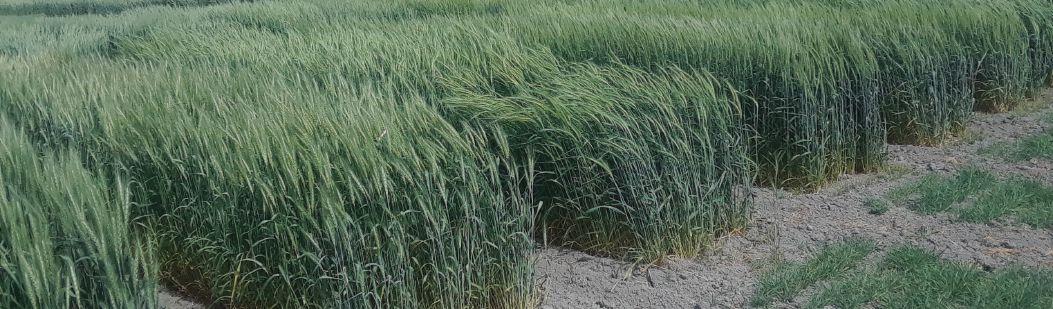
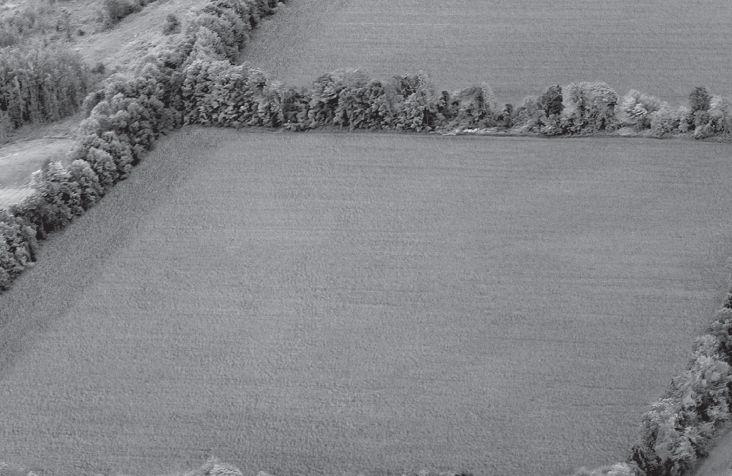
Winter wheat is not yet a major crop in Quebec, but breeder Michel McElroy is working to improve the crop’s potential for success in the province with the help of some innovations in germplasm sourcing, winterkill assessments and breeding selection strategies.
“Generally, winter wheat is about 10 to 15 per cent of all the acres seeded to wheat in Quebec – much less than spring wheat,” notes McElroy, a researcher with CÉROM (Centre de recherche sur les grains). “But winter wheat is definitely gaining some momentum here. More and more crop growers are finding out about the benefits of this crop, such as its increased yield potential, its tendency to have less disease [and fewer weeds], and its soil health benefits from providing soil cover during the winter.”
One key barrier to adoption of this crop is the risk of winterkill. “Winter wheat can be risky in a lot of areas in Quebec because there is the potential for complete wipe-out of the crop. We saw that in 2019 when about half of the seeded acres of winter wheat were wiped out by winterkill,” he explains.
However, he points out that breeders, agronomists and others are addressing that challenge. “We are improving survival through genetics and through new agronomic practices. Also, the Quebec crop insurance program (FADQ, La Financière agricole du Québec) recently changed the rules to allow claims for losses due to winterkill. That is giving a big boost to people who want to try winter wheat but are wary of the risk.”
Another barrier to adoption can be fitting a fall-seeded crop into a rotation. “Normally in Quebec, winter wheat follows soybeans,” McElroy says. “If producers choose later-maturing soybean varieties because of the higher yield potential, they may not have time to plant winter wheat after. But the producers who do recognize the benefits of winter wheat are figuring out strategies to integrate it into their rotations.”
Targeting yield, Fusarium and quality
McElroy’s program breeds hard red winter wheats. Milling-quality hard red winter wheats are used for products like French breads, flat breads and noodles, and Quebec has a good market for such varieties.
“There is also a pretty viable feed market in Quebec,” he adds. “It is as large as and sometimes even larger than the milling quality wheat market, and it has similar prices in some years, too. As a breeder, it is handy to have an alternative market. For example, if we have a line that is very high yielding and fits all the parameters except for milling quality, there is still a chance to get it onto the market.”
The breeding program focuses on three areas for varietal improvement. “First and foremost, we target yield because that is what producers are looking at and that is what they need to make it worthwhile for them. But yield is a complex trait. I tend to think of winter survival as being a major determinant of yield in Quebec; if half of your crop does not survive the winter, then your yield is going to reflect that. So, we work on yield and yield potential as well as factors that affect yield such as survival and lodging,” McElroy says.
“Second is resistance to Fusarium head blight, a disease that obviously has some very important impacts on yield and grain quality, both for the human market and the animal market. We take Fusarium resistance very seriously and we test a lot for it.
“And third is quality, making sure that our varieties meet the requirements of local millers. It is really fun working with them to figure out exactly what they need from our lines.”
Field evaluations of the program’s breeding lines take place in Quebec’s three zones for cereal production: the Montreal region, the Quebec City region, and the Bas-Saint-Laurent region. The program also has exchanges with the University of Guelph and
Agriculture and Agri-Food Canada (AAFC) in Ottawa to see how the lines perform in Ontario’s winter wheat belt. This year, the program also has a trial in New Brunswick because of interest in the potential for winter wheat production in that province.
The Quebec Grain Producers (PGQ, Producteurs de grains du Québec) and SeCan provide base funding for McElroy’s breeding program. CÉROM as a whole is funded by various partners including the Quebec Ministry of Agriculture, Fisheries and Food (MAPAQ, Ministère de l’Agriculture, des Pêcheries et de l’Alimentation).
Expanding germplasm resources
“We’re very lucky at CÉROM that the base of some of our germplasm came from a now-defunct Agriculture and Agri-Food Canada breeding program in Quebec City that was focused almost entirely on Fusarium resistance. As a result, we have a lot of really good material to work with for Fusarium resistance. We just need to integrate that trait into material that is also high yielding and high quality, and has all the other traits that producers are looking for,” notes McElroy, who has been leading the CÉROM winter wheat program since 2017.
“My predecessor at CÉROM spent a lot of time testing the germplasm from the AAFC program and crossing it into established cultivars from Eastern Canada and some material from Western Canada. I have continued on with that.”
McElroy is also seeking out some new sources of important traits. “I’ve sourced some germplasm from western Europe to see if we can find more interesting lines for milling quality, particularly for our specialty millers that are looking to produce baguettestandard flour,” he says.
“I have also been sourcing material from what I would call the frontiers of winter wheat production across the world – the northern boundaries of winter wheat production, like Scandinavia, the Baltic, Russia and northern Japan. We want to evaluate that material to see if there are winter survival traits that we can integrate into our program, particularly as it relates to tolerance to ice and freeze-thaw.”
Waterlogging, freeze-thaw and winterkill
“Sometimes people think of winter survival as just a cold temperature issue, but it is really a syndrome of all sorts of stresses, both biotic and abiotic. And the winter survival issues here in Quebec are not the same as in Western Canada or the United States,”
McElroy explains.
“From what I have observed in Quebec – and I’ve had my share of winter survival problems in the program for sure – you see the heaviest winterkill in those little depressions in a field where puddles form.”
Winter wheat plants that happen to be in these little puddles tend to be especially affected during late winter/early spring freezethaw cycles by stresses such as frost-heaving, ice encasement and waterlogging; they also have an increased risk of root diseases. All those stresses result in poorer survival.
McElroy would like to be able to breed winter wheat varieties with improved resistance to these waterlogged/freeze-thaw conditions. However, to do that he needs a consistent, reliable way to evaluate the response of different genotypes to these conditions.
“It is a very difficult problem to evaluate year after year. You are at the mercy of the weather and the patchiness of the stress,” he says. “In some years, all the lines might have good survival; in other years, all the lines might have poor survival. And even when you hit that nice middle point where some of the lines do well and some do badly, the patchiness of the stress is such that it is hard to say whether a particular line has survived because it has the genes that allow it to survive or it just happened to be in a lucky spot in the field a little above the other lines, so it didn’t get that accumulation of water.”
So, McElroy and Dave Hooker, associate professor of field crop agronomy at the University of Guelph-Ridgetown, are collaborating on a project to develop an inexpensive field method to evaluate the performance of winter cereal plants under excess water/ice stress.
Their idea is to modify the soil surface of their plots to deliberately create those little depressions. They create a series of furrows and hills, and then seed winter wheat in the bottom of furrows and the top of the hills so they can compare how each line performs in waterlogged versus non-waterlogged conditions.
“This was a completely novel idea, and I give credit to the Grain Farmers of Ontario and the Quebec Seed Producers (Producteurs de semences du Québec) for taking a chance on funding this project,” McElroy says.
“Our results so far have been mixed – the more you peel away at this problem, the more complex it seems to be. But that just inspires us to try new things to try to find something that will work.”
Continued on page 14
The breeding program is working to improve winter wheat’s potential for success in Quebec.
The program targets yield, resistance to Fusarium head blight, and quality.
The incredible nominations we received for the second year of this program highlighted just how many influential women there are working within Canada’s agriculture industry.
To our Top 7 recipients, those who nominated an influential woman, those who offered support through social media or tuning into the podcast series on AgAnnex Talks, and to our generous sponsors:
CONGRATULATIONS
WOMEN IN CANADIAN AGRICULTURE WINNERS
Andrea McKenna
Crystal Mackay
Ellen Sparry
Leona Staples
Noura Ziadi
Simone Demers-Collins
Tina Widowski
TACKLING A TINY BUT TOUGH CANOLA PEST
Highlights from some recent swede midge research.
By Carolyn King
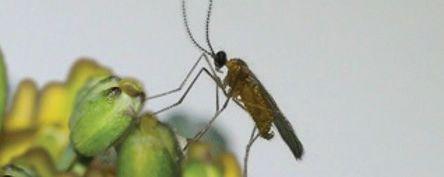
Swede midge is one of the newest and most serious concerns for canola production in Ontario. Since this tiny Eurasian fly was first confirmed in North America in 2000, Rebecca Hallett and her research group at the University of Guelph have been working on this extremely challenging pest. Their latest studies are making further advances in integrated pest management (IPM) options for growers.
A highly successful pest
Swede midge (Contarinia nasturtii) is a pest of cruciferous crops like canola, cabbage and broccoli, and cruciferous weeds like shepherd’s purse. After overwintering, the adult flies emerge from the soil. The females lay their eggs in areas of new growth on host plants. The larvae feed on the growing plant tissues. Then they pupate in the soil, and in a few weeks, the next generation of adults emerges.
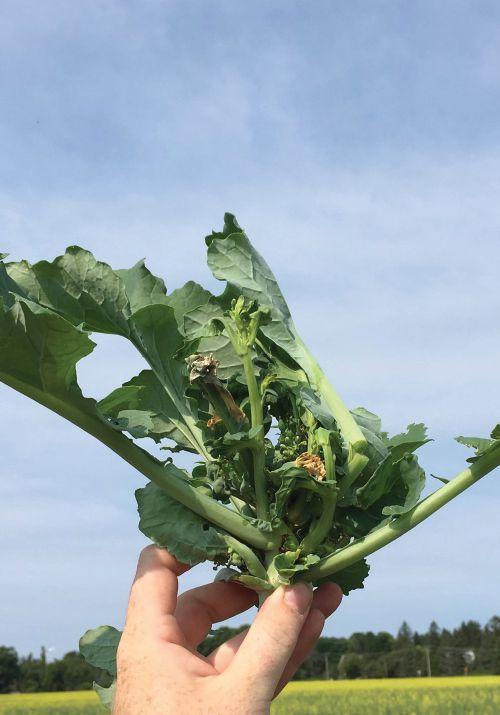
For many Ontario canola growers, symptoms of swede midge damage are all too familiar, such as crinkled leaves, malformed buds, bunching of pods, and stunted or dead plants.
“When the pest’s population is very high, the yield impact can be about 50 per cent. But that impact can be difficult to quantify because swede midge will attack canola throughout the season. Wherever there are growing points, canola is vulnerable,” Hallett explains.
“The actual impact will depend on the timing of the infestation, the number of swede midges on the plant, and the plant’s response. Our research shows canola will produce additional growth in response to swede midge damage, which might compensate for yield. However, this additional growth can lead to very variable maturation timing, which could complicate harvesting.”
Over the past two decades, swede midge has spread through the canola-growing regions of Eastern Canada and the eastern United States. Unfortunately, the pest has many characteristics that make it very tough to control.
“The larvae feed within swelling and twisting plant tissues, making insecticide penetration difficult,” Hallett says. “Also, the pest has multiple overlapping generations. [In Ontario] it is present from mid-late June to September. It has multiple emergence phenotypes, with the different types emerging from overwintering at different times. So, even if one very effectively controls all of the midges up to a certain point in the season, some could still emerge from overwintering later. Also, they go into diapause for overwintering at
ABOVE: An example of swede midge damage in canola.
different timings through the season, which means there will always be an overwintering population. This very variable life cycle allows the insect to persist in unpredictable environments, making it a really successful pest.”
Earlier research by Hallett’s group developed various tools for swede midge management, including insecticide strategies and several cultural control options. For example, crop rotation and crop diversification are really important. Early seeding of spring canola may help, unless cabbage seedpod weevil is a bigger problem than
swede midge in the grower’s area. Also, growing winter canola can be a good option for some growers.
In the last few years, Hallett’s swede midge-related research has included looking into how to encourage the presence of a natural enemy of swede midge, fine-tuning insecticide strategies, and improving a predictive tool.
Fine-tuning thresholds
Previous research by Hallett’s group developed pheromone trapbased thresholds for insecticide applications, with the first applications timed for the first peak of swede midge emergence.
Based on recent lab experiments and field trials, the researchers have now tweaked the thresholds for canola. “We had been using a tentative action threshold of waiting to make the first spray until there was a cumulative trap capture of at least 20 midges across four traps in a field. Once that threshold was exceeded, then subsequent insecticides would be applied when the threshold of an average of five or more males per trap per day had been reached, with at least a seven-day interval between applications,” she explains.
“We’ve lowered the application threshold from five males per trap per day, to three males per trap per day. From a canola grower’s perspective, it’s not a major change.”
One reason for lowering the threshold is that growers may want to avoid letting the pest’s population get to the point where the canola plants start compensating for the damage because of the potential for harvest complications.
The lower threshold also provides an earlier warning to growers. If swede midge populations are high, then trap counts can jump from three to five to 10 very quickly, and growers may need time to arrange for custom spraying.
Hallett’s group also compared the efficacy of threshold-based and plant stage-based approaches to timing insecticide applications. They found that both were effective at preventing swede midge damage and protecting yield. However, the plant stage approach would always result in three insecticide applications, whereas the threshold approach usually resulted in only two applications, making it more economical for growers.
Parasitoid versus pest
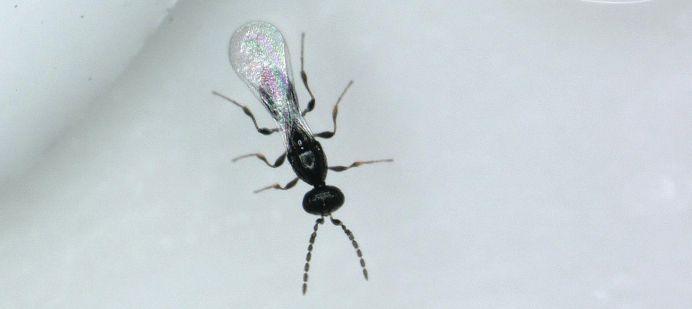
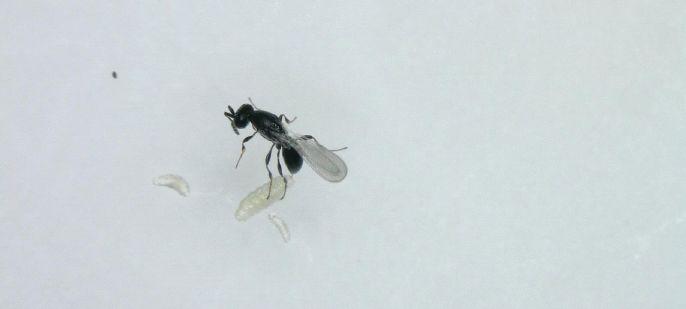
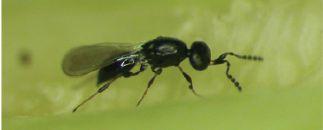
Much of Hallett’s recent research has focused on a natural enemy of swede midge called Synopeas myles. This wasp is native to Europe, where it parasitizes swede midge as well as other midges. The female wasps lay their eggs in swede midge larvae. Then the wasp larvae feed on the midge larvae, eventually killing the midges.
“Having a biological control component is a really important part of an IPM strategy. For many years, swede midge didn’t seem to have any natural enemies here,” Hallett notes. Then in 2016, her group found Synopeas myles in Ontario.
Since then, the researchers have been gathering information on things like the parasitoid’s life cycle in Ontario, its geographical distribution, and its effectiveness in controlling the midge. These studies have received support from the Ontario Canola Growers Association (OCGA), the Eastern Canada Oilseeds Development Alliance (ECODA) through the Canadian Agricultural Partnership and Agriculture and Agri-Food Canada (AAFC), the Ontario Agri-Food Innovation Alliance, Bunge and Bayer.
Hallett’s group is collaborating with several researchers on these studies, including Boyd Mori, now at the University of Alberta, Sebastien Boquel with CÉROM (Centre de recherche sur les grains) in
A LONG WAY TOGETHER
V-FLEXA
No matter how challenging your needs, V-FLEXA is your best ally for agricultural trailers, tankers and spreaders. This latest-generation product features VF technology, which enables the transport of heavy loads both in the fields and on the road at lower inflation pressure. V-FLEXA is a steel-belted tire with a reinforced bead that provides durability, excellent self-cleaning properties and low rolling resistance even at high speeds.
V-FLEXA is BKT’s response for field and road transport with very heavy loads avoiding soil compaction.
For info:
Western Canada 604-701-9098
Eastern Canada 514-792-9220
Quebec, and Meghan Moran with the Ontario Ministry of Agriculture, Food and Rural Affairs (OMAFRA). Their field surveys so far show Synopeas myles is very widely distributed across Ontario’s canola-growing regions, occurring in almost every county where canola is grown. The wasp is generally found around the edges of cruciferous fields, which makes sense because swede midge is an edge pest. The surveys have also found another parasitoid wasp in some samples, so more help in controlling swede midge larvae might eventually be available.
Flowers for a natural enemy
The researchers’ studies on the impact of Synopeas myles on swede midge populations have found average parasitism rates of about six per cent of the hosts, although the rates can be as high as about 30 per cent.
“A parasitism rate of six per cent is not enough to be a limiting factor for swede midge populations. But rates of 30 per cent or higher could become a more important part of an IPM strategy,” Hallett notes.
Therefore, the researchers have been investigating how to increase the wasp’s impact on swede midge numbers.
They have found that higher parasitism rates tend to occur in fields that are surrounded by managed land and have wildflowers in the field edges. “The adult wasps feed on nectar from flowering plants. We found that if we provided them with a sugar solution or with flowering sweet alyssum, which is a nectar-providing plant, then the adults would live longer than if they had access just to water, for example,” she notes. Their subsequent studies suggest that having a longer life allows the females to find more swede midge larvae in which to lay their eggs.
So, if growers are interested in increasing the wasp’s effectiveness at controlling the midge, they could deliberately plant nectar-producing flowers, such as sweet alyssum, along the field edges or simply allow wildflowers to bloom along the edges.
Insecticides and the parasitoid
Hallett’s group also examined how insecticides registered for use on canola affect the wasp. In lab experiments in Petri dishes, they compared the equivalent of half, full, and double the label rates of these insecticides.
This little wasp, called Synopeas myles, is a natural enemy of swede midge.
“First we looked at direct exposure to the insecticide. Matador (lambda-cyhalothrin) killed 100 per cent of the wasps at each of the rates. Coragen (chlorantraniliprole) had five to 15 per cent mortality, so it presents a lower risk than Matador. We also did the experiments with Movento (spirotetramat); it is not registered for use in canola, but is registered for use in cole crops. Like Coragen, direct contact mortality with Movento was five to 15 per cent. Then we looked at how long the residues remained toxic to the wasp. For Matador, we were still getting very high levels of mortality – 90 per cent plus – up to seven days later.” These lab estimates may be higher than the mortality levels that actually occur in the field.
“Growers who want to encourage the presence of Synopeas should likely avoid using Matador or at least avoid applying Matador when the wasp is likely to be most abundant,” Hallett advises.
“This fits with our recommendation that, if you are going to use Matador, then use it as the first spray in the season, because the wasp first starts arriving in canola fields a little later than the first arrival of swede midge.”
Predicting a very variable pest
About a decade ago, Hallett’s group developed an initial model of the midge’s life cycle, called MidgEmerge. “With that first model, we were only interested in predicting when the peaks of adult emergence would occur, so it could be used as a signal for growers to be prepared to start applying insecticides,” she says. “Back then, we were basically using information on swede midge life history, development times, and so on from studies in the United Kingdom in the 1960s. Our model was only somewhat accurate in predicting when the adults would emerge here.”
Since then, Hallett’s students have been
investigating many aspects of the pest’s life history and ecology in Ontario, such as the factors affecting the timing of emergence, egg-laying rates on canola, overwintering survival, mortality, and attacks on the midge by its natural enemies.
With this more comprehensive and directly relevant information, Hallett and her group recently looked at the temperaturerelated development and survival of every life stage of swede midge under Ontario conditions. Then they used that to develop a new model, MidgEmerge2.
According to Hallett, MidgEmerge2 is
very good at predicting the timing of the pest’s first emergence after overwintering and pretty accurate at predicting the timing of the first strong peak of emergence. So, for instance, the model could be used with regional weather forecasts to make regional swede midge projections. However, she emphasizes that growers should always use swede midge pheromone traps to confirm their local populations for spraying decisions.
The MidgEmerge2 research has also improved understanding of the pest’s biology and ecology in Ontario. Hallett gives one example: “For many years, we thought swede midge in Ontario had three to five overlapping generations with probably two emergence phenotypes – early and late emergers in the springtime – and maybe a third phenotype. However, this modelling shows that we definitely have three emergence phenotypes, two in the spring and one later in the summer. Also, it looks like we have two to three generations per year, not three to five.”
Her group is also looking at using MidgEmerge2 to predict regional outbreaks. Their research so far indicates that, when very high numbers of adults
Your better beans are here.
Better soybeans. Better yields. Better for your community. That’s why we developed Enlist E3™ soybeans, a more advanced seed with high yield potential and a robust herbicide tolerance. Enlist Duo™ and new Enlist™ 1, with Colex-D™ technology for a better low drift, near-zero volatility solution that lands and stays on target.
Enlist E3 soybeans are available for 2022 planting. Talk to your local seed supplier. Simply Better Soybeans. | Learn more at enlistcanada.ca
SOYBEA NS
A Synopeas myles adult wasp lays an egg in a swede midge larva.
coincide with high temperatures, egglaying will be higher than normal. This higher egg-laying results in greater damage in the current year and in outbreaks in the following year.
On the lookout for another midge Hallett’s group is also interested in the canola flower midge (Contarinia brassicola). This recently discovered species was first found on the Prairies, where it causes tubular flower galls in canola.
“We have been looking for the canola flower midge in Ontario for a number of years, but we have never seen those tubular flower galls. However, Boyd Mori has provided us with pheromone traps specific to the canola flower midge. We are now collecting samples and we still need to confirm identifications, but it does appear that this midge is in Ontario,” she notes.
If it is confirmed in Ontario, then Hallett would like to determine which plant species are hosts for the canola flower midge and whether Ontario growers need to be concerned about it.
“The canola flower midge appears to
Hallett’s research group is looking into ways to increase the effectiveness of Synopeas myles in controlling the midge. Swede midge is one of the most serious concerns for canola production in Ontario.
be a native species that, after intensive canola production on the Prairies for many years, has adapted to using canola as a host.
Whether this midge has always been present in Ontario and hasn’t made the shift to canola, or whether it has been spreading from the Prairies, we don’t know. We need to do those kinds of assessments.”
No silver bullets
“I’m certain that we’ll never have a silver
bullet for tackling swede midge. It will always require constant attention to a range of integrated pest management practices,” Hallett emphasizes.
The OCGA has provided funding for Hallett’s swede midge research for many years. “Swede midge has been an incredibly devastating pest in parts of Ontario on the spring canola crop…We are very fortunate to have someone of Dr. Hallett's expertise in our backyard,” says Jennifer Doelman, an OCGA director, farmer and Certified Crop Adviser. "Research like this is essential to the long-term sustainability of Canadian agriculture: gone are the days when all solutions come out of a bag or a jug – and I think that's OK. It's great to have these tools in our toolboxes.
“Today's farmers are leaders in being able to manage a myriad of changing factors – weather, markets, technology and ecology – to best navigate the challenges of each cropping season to help produce the safe, quality canola that Canada is recognized for around the world," Doelman adds. "We need research like this to help guide our decision-making processes.”
HARD RED WINTER WHEAT VARIETIES FOR QUEBEC
Continued from page 7
Genomic selection
In another interesting collaborative project, McElroy is working with Jaswinder Singh at McGill University to develop a more efficient selection process for his breeding program.
“This project involves genomic selection – a relatively new method that uses genomics to try and accelerate the selection process in plant breeding,” McElroy explains. “Genomic selection is a little like marker-assisted selection, where you check individual genotypes for the presence or absence of a DNA marker associated with a particular gene. But instead of focusing on one or a few single genes, genomic selection takes advantage of new technology to get markers from all across the genome and then makes predictions about plant performance based on the sum total of their contributions.”
McElroy worked on genomic selection in his post-doctoral research, and he is keen on integrating it into his
winter wheat breeding program.
“Our project is essentially a pilot to see how well we can predict key traits based on different genomic selection models,” he says. “And we also want to see how we can best apply genomic selection to the breeding program, whether it is better to use it for selecting individual lines, for selecting crosses, for figuring out which populations within segregating populations to move forward. So, the project is a fascinating combination of pure science and very applied work.”
This project is receiving funding support from the Consortium for Research and Innovations in Industrial Bioprocesses in Quebec (CRIBIQ, Consortium de recherche et innovations en bioprocédés industriels au Québec).
Promising lines
“We have two lines right now that have just completed their final year in the Quebec registration trials. One is
likely headed toward the feed market, but it has excellent yield and really good Fusarium resistance. The other is a milling quality line with good Fusarium resistance and competitive yields compared to the hard red wheat cultivars grown in Quebec right now,” McElroy notes.
“When it comes to winter cereals, every year is different in Quebec, so we can’t count any chicks before they hatch. But we’re really looking forward to seeing the results from the trials this year and finding out what the recommending committee thinks in early 2022.”
“I am excited for the future of winter wheat in Quebec,” he says. “Winter wheat growers are still a minority in the province right now, but they are really passionate about this crop. Their passion has really inspired me in my work on this crop. I’m very excited about the possibility of having one of my lines out there on the market and seeing it in a farmer’s field one day.”
COURTESY OF PAUL ABRAM.
BREEDING TO IMPROVE NITROGEN FIXATION IN COMMON BEAN
Long-term, big-impact goal of developing beans able to fix 50 per cent of their N requirements.
by Julienne Isaacs
In his lab at the University of Guelph, Karl Peter Pauls, a professor in the department of plant agriculture, is constantly identifying molecular markers for disease resistance and improved yield in a variety of crops, including corn, tomatoes and common bean (Phaseolus vulgaris).
The latter includes many commonly grown dry and fresh bean species, including kidney, navy, runner and broad beans, although Pauls' lab does not work with fresh beans. Most of Pauls’ efforts are geared at developing new and better dry bean varieties through breeding.
The work is supported by the Ontario Ministry for Agriculture, Food and Rural Affairs (OMAFRA) and the Food from Thought program at the University of Guelph, funded by the Canada First Research Excellence Fund.
Pauls says a major goal for the common bean program is to address the biggest “embarrassment” associated with the crop: it’s a poor nitrogen fixer.
“Although it’s a legume, it’s common for it to be produced with
added nitrogen,” he says. “If soybean can be produced without nitrogen, why can’t common bean?”
Common beans fix nitrogen by forming a relationship with nitrogen-fixing rhizobia, or bacteria, in the soil around their roots. These rhizobia then form nodules on the roots, in a process called “symbiotic nitrogen fixation (SNF).” The problem? They don’t do it very well.
Pauls says the development of common beans with the ability to fix up to 50 per cent of their own nitrogen requirements during the growing season would make a big difference.
“It’s a long-term goal but a big-impact one, particularly in the area we’re growing beans in, which is surrounded by lakes. Nitrogen runoff is a significant issue in our area. If producers could add less N, it would really make a difference,” he says.
Pauls believes Canada will likely follow Europe’s lead and make it commonplace to evaluate crops on a sustainability index.
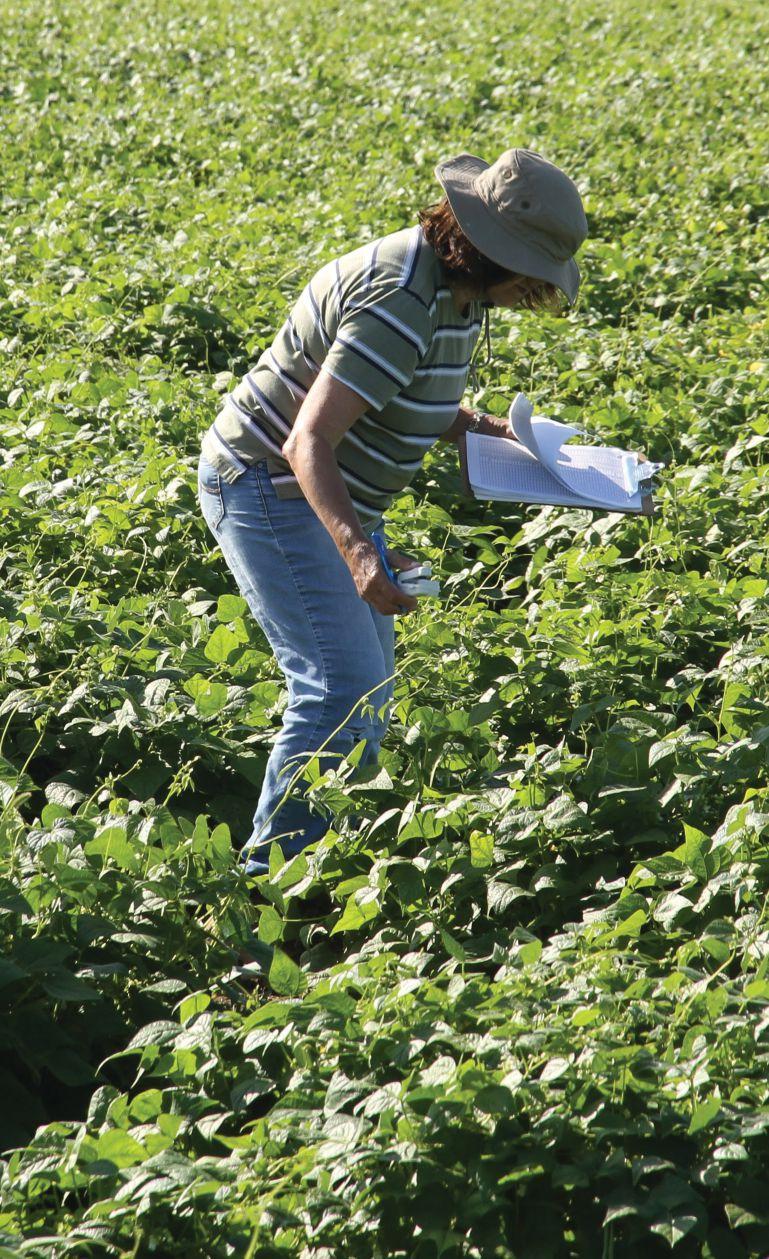
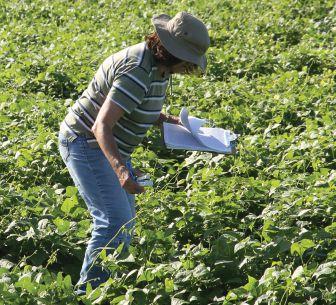
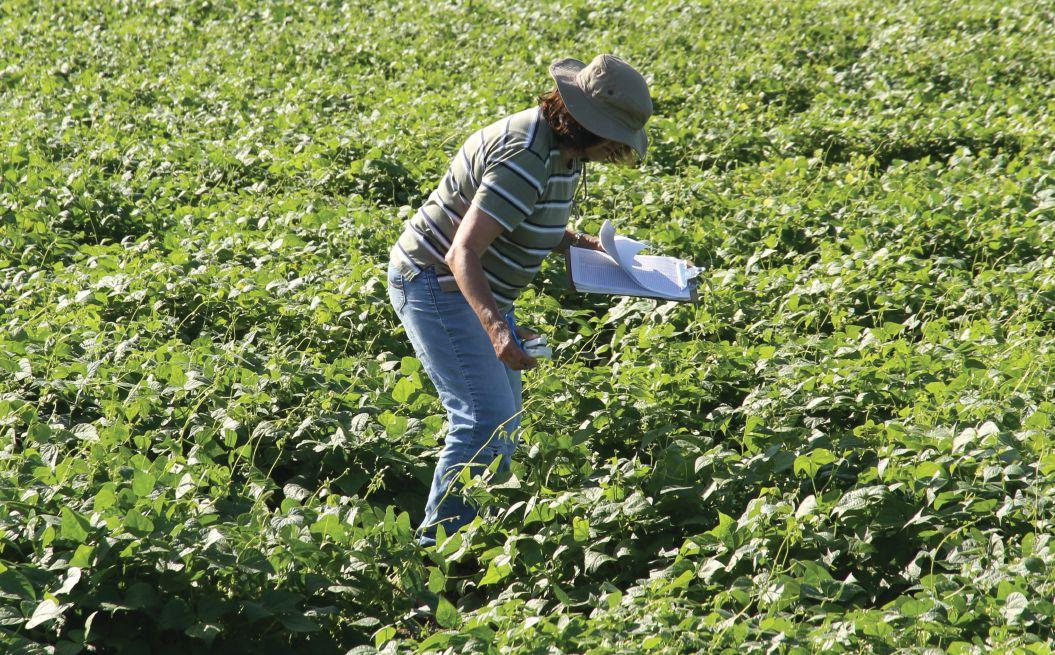
ABOVE: Yarmilla Reinprecht takes measurements in the field.
According to the Ontario Field Crops Agronomy Guide, dry edible beans obtain less than half of their nitrogen requirements from nitrogen fixation. Depending on the field history – for example, whether nitrogen-fixing legumes were planted on a field in the previous year – producers are advised to apply up to 100 lbs. of N – similar levels to what they’d use in corn, Pauls says.
What’s going on in the plants that prevents them from fixing their own nitrogen? Pauls says it’s an immediate physiological response to a nitrogen application. “If plants standing in a field are suddenly given a lot of available nitrogen, they’ll suppress the development of nodules on their roots, because it’s actually metabolically expensive for the plant to create those nodules,” he explains. “If they have N available, they don’t do it.”
But as common beans are poor N fixers, it doesn’t make sense for farmers not to apply N: they won’t get the yields they need.
The goal of Pauls’ program is to look among the broad collection of bean genotypes, including heirloom varieties, for that nitrogen-fixing capability; if it becomes possible to breed common bean cultivars that are better able to fix their own nitrogen, farmers can scale back N applications without yield losses.
Heirloom genetics
Some of Pauls’ program has analyzed the performance of heirloom bean cultivars under low- or no-N conditions. In a recent study led by Pauls’ then-graduate student Jennifer Wilker, the SNF ability of 42 heirloom and conventional types was compared under low-nitrogen field conditions.
What Wilker and Pauls found was that, on average, heirloom varieties did not fix more nitrogen than their conventional counterparts. A few, however, did: five heirloom genotypes fixed more than 60 per cent of their N from the atmosphere.
“Heirloom genotypes represent a useful source of genetics to
improve SNF in modern bean breeding,” Wilker concluded in a publication on the study.
In another study, Yarmilla Reinprecht, a postdoctoral researcher in Pauls’ lab, looked at the three-way interaction between common bean genetics, nitrogen and rhizobia to try to understand that relationship.
In the study, 22 genotypes were screened for their ability to fix atmospheric nitrogen on N-poor soils. Nitrogen application reduced SNF to different degrees in different genotypes, while applying rhizobia resulted in inconsistent results.
The study identified a few genotypes that could be grown in high- or low-N environments, or showed good potential for reducing inputs – and thus farmers’ dependence on N inputs.
Pauls says the ability to fix nitrogen has not been lost in modern lines – it’s still there. “We should be shopping in the whole mix of germplasm that we have for that capability.”
Turning to heirloom genetics can mean compromising the productivity of beans in other ways: researchers have worked hard to breed modern common beans that stand “upright and are combinable,” as Pauls puts it.
“Some of these heirloom varieties are terrible that way, and they’re very viney. So you do a lot of stepping back,” he says. “But if they have a trait that’s of value, in a long-term breeding program, we’ll incorporate them in.”
The most compelling reason to bring heirloom varieties into breeding programs, however, is not their nitrogen fixing abilities, but rather their connection with particular family recipes, and their visual appeal. Common beans, particularly dry beans, can be very beautiful and have dramatic variation in colour.
In his latest round of experiments, Pauls is running tests on genotype responses to added N in highly controlled environments in growth cabinets in the lab. In the field, background levels of N can make actual levels in the field less precise even under careful application regimens.
“We’re ranking their responses to that inhibition,” he says. “That helps us determine the threshold of inhibitory levels of N, and it helps us identify lines that have the attributes that we want. We’ll take them back out into the field later on. Ultimately, they have to prove themselves in the field.”
In another collaborative field experiment with Guelph researcher John Sulik, Pauls is measuring photosynthetic levels in small plots to see if differences in photosynthetic capacity –related to coloration – are helpful in predicting yield.
“We’re looking at whether we can pick up the differences among those plots established with different genotypes and treatments, looking at varying N levels and the rhizobia strains. Right now, we’re doing a lot of measurements in small plots with handheld instruments and simultaneously flying drones over them. Ultimately we are trying to use drone imaging technology to help us make some measurements related to photosynthesis and yield,” he says.
Each experiment represents a small – sometimes very small – advance toward the larger goal.
“Every year we try to advance it a little bit,” Pauls says. “On average, the goal is to increase yields by one per cent every year. I’ve been involved in this for 30 years – that means the yield expectation of the farmer is double what it was 30 years ago.
“It does add up.”
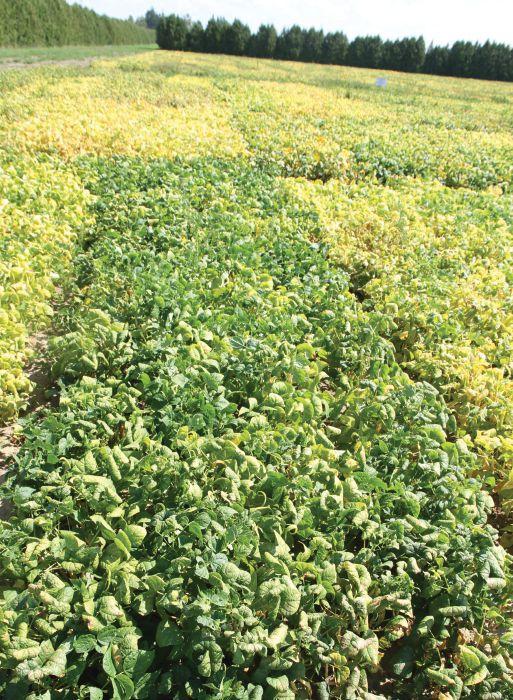
A nitrogen treatment in a common bean field.
BARLEY GENOMES IN THE PIPELINE
Publication of first Canadian barley reference genome to support breeding efforts.
by Julienne Isaacs
The barley genome is roughly 5.3 giga bases, and comprises five million nucleic acid base pairs. That’s almost twice the size of the human genome.
For this and other reasons, the recent assembly of the first Canadian barley reference genome represents a significant accomplishment, says Ana Badea, a research scientist in barley breeding and genetics for Agriculture and Agri-Food Canada based in Brandon, Man.
The genome for AAC Synergy, a two-row malting barley developed at AAFC's Brandon Research Station that is widely adapted to Canadian growing conditions, was published earlier this year.
“Assembling big genomes is not easy,” Badea says. “However, it is worth the effort since having a reference barley genome is like having a blueprint, and like with any blueprints, [once you have it], things get a lot easier.”
With Ottawa-based AAFC researcher Nick Tinker, Badea coleads TUGBOAT (targeted, useful genomics project for barley and oat), a five-year project that aims to support Eastern and Western
Canadian barley and oat breeding efforts.
The work for assembling the barley reference genome, which falls under the TUGBOAT umbrella, was led by bioinformatics expert Wayne Xu, who works at AAFC’s Morden Research and Development Centre, aided by a team of researchers across the country with expertise in barley and oat.
“These days, the process of sequencing an entire genome is easier than it was just a few years ago due to the new sequencing technologies available. However, assembling a large genome like barley is still not an easy task,” Badea says. “Doing this type of work requires bioinformatics experts and hardware that can compute these large data sets.”
TUGBOAT began in 2019 and will run until 2024. One of its main objectives, Badea says, is to complete genome sequences for barley and oat and use these to ease breeding efforts.
ABOVE: Molecular tools resulting from the project could mean that only breeding lines with improved malting qualities could make it to trials.
Work on the reference genome for AAC Synergy, a two-row malting barley, began in the fall of 2019, immediately after TUGBOAT was green-lit. By September 2020, the team had submitted a manuscript detailing genome assembly to a scientific journal; the paper was published in early 2021.
“It is safe to say that the work, which involved tissue material generation and collection, high molecular weight DNA extraction and sequencing, curation and assembly of sequencing data, just to name some of the main steps involved with this activity, took less than a year,” Badea says.
This spring, the team embarked on the second part of the project, which will characterize some of the differences between AAC Synergy and other barley genotypes. In past years, the ref erence genome for an American six-row barley cultivar called Morex has been used to aid Canadian barley projects. Badea says the differences between AAC Synergy and Morex, or AAC Synergy and the popular European variety Golden Promise, are
objectives, Badea says, is to complete genome sequences for barley and oat and use these to ease breeding efforts.
Farmers! Got unwanted pesticides or livestock/equine medications?
Cleanfarms 2021 Unwanted Pesticides & Old Livestock/ Equine Medications Collection
Safely dispose of unwanted or obsolete agricultural pesticides and livestock/equine medications – no charge! For information on what is and is not accepted, click on the QR code.
November 1 to 12
Take them to the following locations between 9 a.m. and 4 p.m.
New Brunswick
DRUMMOND
New Denmark
Trucking 194 Station Rd. 506-473-1086
FLORENCEVILLEBRISTOL McCain Produce 16 McCain Produce Rd. 506-392-3229
FREDERICTON Co-op Home & Farm 317 Saint Mary’s St. 506-458-9308
GAGETOWN
Appleman Farms Ltd. 16 Fox Rd. 506-488-2147
HARTLAND Hartland Agromart Ltd. 40 Industrial Dr. 506-392-7464
MONCTON South Eastern Farmers Co-op 200 Collishaw St. 506-858-6600
PETIT-ROCHER Chaleur Fertilizers Ltd. 558 Industry St. 506-783-4216
SAINT ANDRÉ Agromart Grand Falls 38 Després Rd. 506-473-1941
SAINT JOHN Halifax Seed 664 Rothesay Ave. 506-633-2032
Next Cleanfarms collection in this area in fall 2024 • COVID social distancing measures may be in place • For collection dates elsewhere, go to: cleanfarms.ca/materials/unwanted-pesticides-animal-meds/
“Canada is a world leader when it comes to barley. To maintain our position, we need to understand the genetic code of Canadian barley and what makes it unique,” she says.
“From our current primary genome comparison study, with either Morex or Golden Promise, we have learned that they share large genome-scale similarity, but we expect that there will be differences in small region-scale and gene levels related to quality, maturity, tolerance to biotic and abiotic stresses, et cetera, that could all have important implications for breeding.”
Additional reference genomes
Under the auspices of TUGBOAT, researchers have already begun work on three additional barley reference genomes for feed and malting cultivars AC Morrison, CDC Austenson and AAC Connect, Badea says.
These cultivars belong to different lineages, she explains, and are all core to Eastern and Western Canadian barley breeding programs; most likely, they contain important structural variations.
For example, AAC Connect, a two-row malting barley developed at Agriculture and Agri-Food Canada Brandon, is moderately resistant to Fusarium head blight (FHB) – currently the highest rating for a Canadian barley.
“FHB resistance is complex since it is quantitative and polygenic,” Badea says. This means its traits are produced by the cumulative effects of many different genes. “They can be affected by the environment, making breeding FHB-resistant varieties very challenging. We anticipate that the information generated in the coming years by our project will enable the breeders to conduct a first screening in the lab based on AAC Connect annotations for a given AAC Connect-derived breeding population,” she explains.
This means it’ll be harder to miss FHB-resistant genes, and it will make the breeding process more efficient by reducing the number of lines tested in the field nursery.
Across Canada, FHB is the top disease affecting wheat and barley; it reduces yield and also quality, as it contaminates grain with mycotoxins that are harmful for human and animal health. The mycotoxin of main concern to the industry is deoxynivalenol (DON), also
known as vomitoxin. In Canada, maximum residue limits of DON are set at one part per million (ppm), although Badea says levels as low as 0.5 ppm can result in shipments being rejected.
Given the high stakes for the industry, producers are used to deploying several strategies in FHB management, but Badea says that one of the best strategies is the use of barley varieties with in-built resistance – so the reference genome is good news for barley breeding.
But it won’t just come in handy for disease resistance breeding.
It might also help breeders develop varieties with improved yields and malting qualities. “Currently, in the malting barley breeding programs, testing for malting quality takes place only later in the process due to several limitations such as the high cost per malting analysis and the limited amount of grains for the breeding lines in the early generations,” Badea says. Molecular tools resulting from the project could mean that only breeding lines with improved malting qualities could make it to trials.
“The final goal is that the breeders will have access to new tools to use in their selection process and develop improved varieties for the benefit of the Canadian farmers, malt-makers, beer-makers and – why not – beer-drinkers,” Badea says. “For example, in the future, if the malthouses and breweries suddenly require malting barley with a different malting profile, we would be able to more quickly focus on that in our breeding, thanks to the genomic information that our team will be uncovering.”
Last year, an international consortium of researchers led by the Leibniz Institute for Plant Genetics and Cultured Plant Research published the genomes for 20 different barley genotypes, marking a first step toward publishing the barley pan-genome – or the genetic information for multiple varieties of a species.
Badea says that currently, international efforts are ongoing to further expand the barley pan-genome by 50 or more genotypes, which will radically improve understanding of different aspects of the barley genome. Canada’s progress with the barley reference genomes may be useful to these international efforts.
But the TUGBOAT researchers’ efforts are ultimately geared toward improving varieties for Canadian farmers.
Badea adds, “Better barley ultimately translates into benefits for our farmers and end-users and, of course, our economy.”
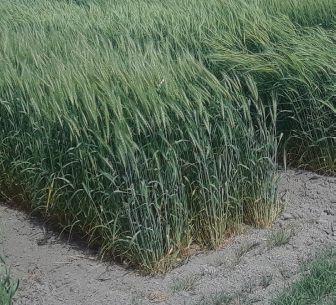
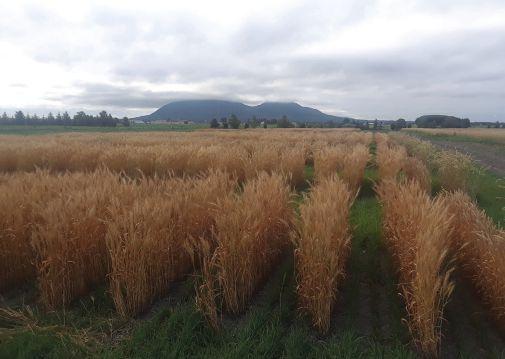
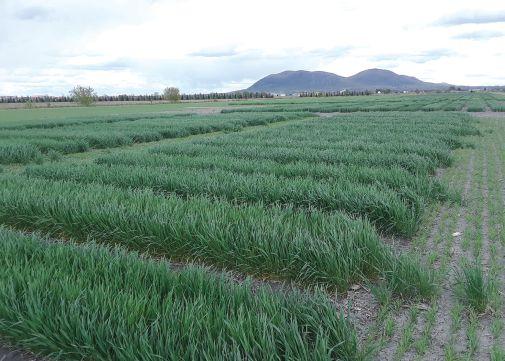
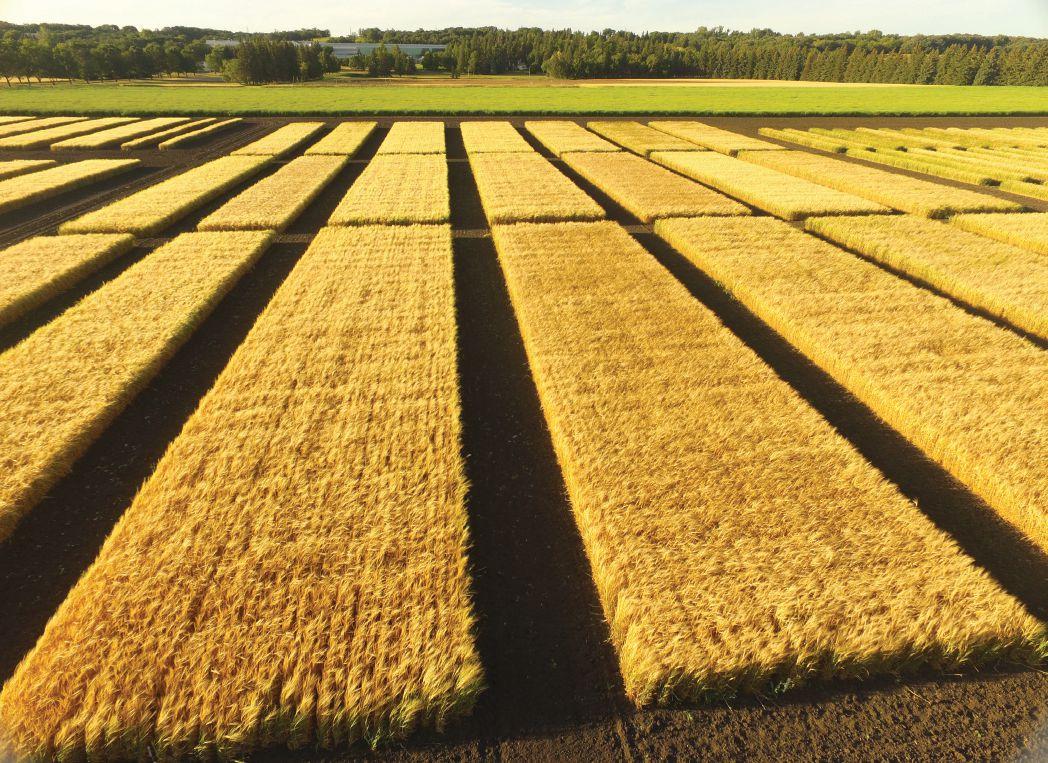
A field of AAC Synergy barley.
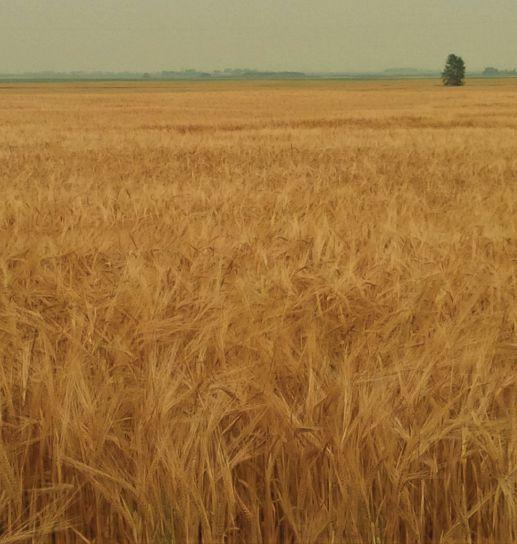
A field of AAC Connect barley.
If you can’t handle the stress, get out of farming.
talk to someone who can help
It’s time to start changing the way we talk about farmers and farming. To recognize that just like anyone else, sometimes we might need a little help dealing with issues like stress, anxiety, and depression. That’s why the Do More Agriculture Foundation is here, ready to provide access to mental health resources like counselling, training and education, tailored specifically to the needs of Canadian farmers and their families.
SIMPLE BIOSENSOR FOR MYCOTOXINS IN GRAINS
Taking a simple, inexpensive, strip-based test for mycotoxins from the lab to the grain elevator or farm.
by Donna Fleury
Researchers at Carleton University in Ottawa have made significant advances in their biosensors designed to detect mycotoxins in grains. In cereal grains, fungal diseases like Fusarium can cause infections such as Fusarium head blight in wheat, barley and corn, reducing grain yield and quality. These fungal diseases can also produce mycotoxins that can be dangerous and sometimes fatal to livestock and humans, and tend to be difficult and expensive to detect.
"One of the goals in my lab is to develop inexpensive aptamer biosensors for agriculture for detecting low levels of grain mycotoxins in a complex environment," explains Maria DeRosa, professor and head of the Laboratory for Aptamer Discovery and Development of Emerging Research (LADDER) at Carleton University.
"Aptamers are short sequences of DNA that can recognize and bind tightly to very specific molecular targets like toxins, viruses, bacteria or drugs. We took our discovery of specific aptamers that bind to mycotoxins in food and crop matrixes and are turning it
into a low-cost, easy-to-use technology and quick test at a grain elevator or farm, with minimal training or resources."
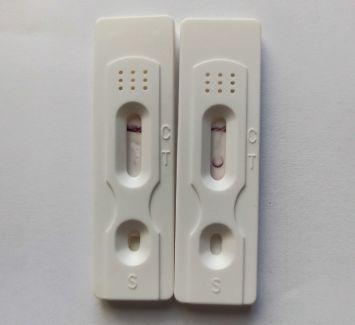
In an earlier project, DeRosa successfully developed a test kit for Ochratoxin A, a mycotoxin of concern in stored grain, using a small lateral flow assay test developed in her lab. This simple, inexpensive test is similar to a tiny pregnancy test; it has small paper strips in a plastic casing, with the results appearing as a coloured line or dot in another window.
"We put the initial prototype to the test by comparing the results of our test to sample results from a more expensive, advanced analytical technique for detecting Ochratoxin A. We were sent a small package of blind samples – some contaminated with
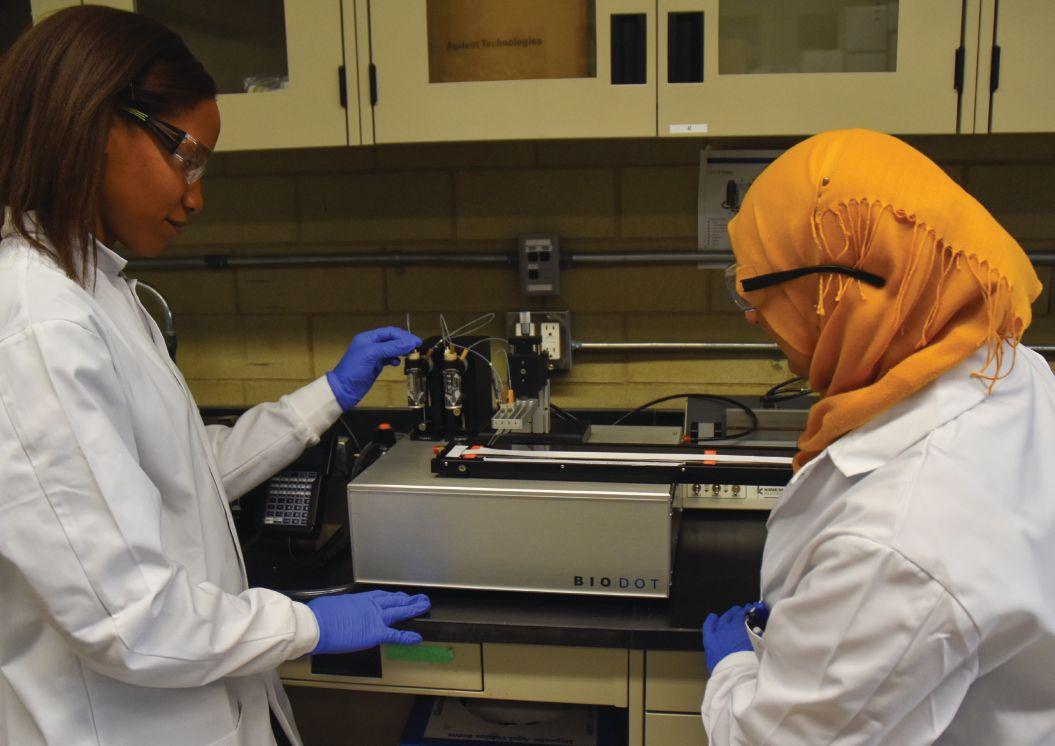
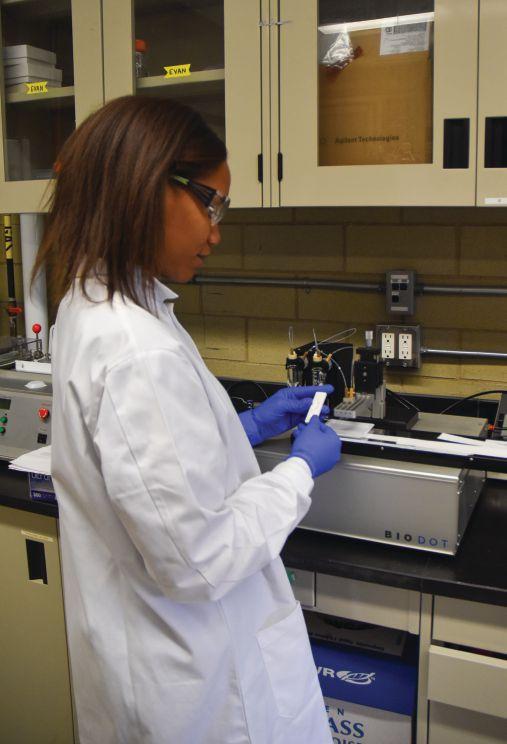
ABOVE: Fiona Ebanks and Shahad Abdulmawjood setting up the BioDot printer for producing the mycotoxin test kits in the Laboratory for Aptamer Discovery and Development of Emerging Research (LADDER) at Carleton University.
INSET: Testing strip biosensor for quick, simple test for mycotoxins such as Ochratoxin A in grains, developed by Maria DeRosa in the LADDER.
Ochratoxin A and others were not. Our results were very encouraging, as we were able to successfully detect contaminated samples down to 0.5 parts per billion (ppb) in a real sample using our very simple assays. We are now scaling these test kits in the lab and will be piloting and optimizing them in the field."
The next step for DeRosa is a new three-year project to take this successful technology and know-how and apply it to other challenging mycotoxins. "We have identified specific aptamers for other important mycotoxins in grains and are developing test kits for them,” she says. “Deoxynivalenol (DON) is an important crop mycotoxin that can be a problem throughout Canada in any given year for wheat, barley and corn growers. Aflatoxin B1-AFB1, although not yet a problem in Canadian grains, is definitely a problem elsewhere in the world and with climate change could be something to be concerned about. Aflatoxins are definitely a concern with some imported grains and other products.
“Another mycotoxin, Fumonisin B1-FB1 is sometimes an issue
for corn growers. Our objective in this project is to get these additional mycotoxin tests to the same stage as the Ochratoxin A test for pilot testing in the field in different environments across the country." This three-year project is funded by Western Grains Research
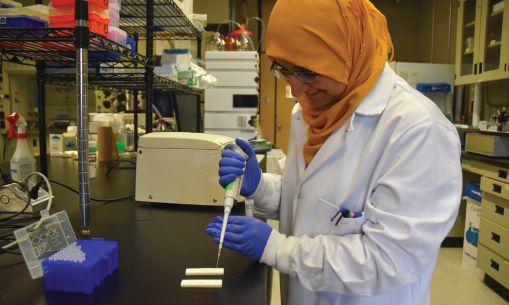
Shahad Abdulmawjood preparing the lateral flow assay for mycotoxin testing in Laboratory for Aptamer Discovery and Development of Emerging Research, or LADDER, at Carleton University.
Foundation, Saskatchewan Wheat Development Commission, Alberta Wheat Commission and Manitoba Crop Alliance.
One objective is to make things even easier by including all of the mycotoxins on one multiplex strip. Similar to a pool testing kit that includes several chemicals in one test, the mycotoxin test strip would be able to test several mycotoxins at once. A multiplex strip test can provide growers with peace of mind, whether they are selling to the grain elevator or another buyer, or importing grain into their operation.
DeRosa adds that another goal is to develop the test to be more quantitative, rather than just a visual test. With smartphone technology, there are ways to develop an app that could, for example, allow a user to take a photo of the strip that would provide more information about the results. This additional knowledge could help with decision-making, using a simple user-friendly test kit and a smartphone at the grain elevator or on the farm.
The test kits are currently being manufactured and assembled in the lab. "Once we can show all of the toxin tests work really well and reduce any risks to a very low level, then the manufacturing could be commercialized and scaled outside of the lab," DeRosa says.
"We are also trying to reduce the manufacturing costs as much as possible, which roughly pencil out to less than $1 each to make. The most expensive part of the kit is the aptamers, which use gold nanoparticles for the colour sensor. We are exploring whether we could use less volume of colour or perhaps other nanoparticles, such as those from copper, that might make it even less expensive.
“We ultimately want to make sure the technology is not just
in my lab, but easily accessible and available at a low cost to all Canadian farmers and industry."
This novel bionanotechnology is getting attention for other potential applications in agriculture. In June 2021, DeRosa was one of 24 scientists worldwide – and the only Canadian – to receive a Bayer 2021 Grants4Ag award for using aptamers to make agriculture more sustainable. The program received over 600 applications from almost 40 countries. This one-year grant supports researchers to see if their promising innovations could provide future solutions for agriculture. Along with funding, Bayer provides mentors and access to industry networks for advancing these innovations.
"In this project, we are trying to develop a totally different aptamer that could be useful for smart delivery of nutrients or herbicides," DeRosa explains. "For example, being able to selectively deliver nutrients to just the crop and not weeds, or deliver herbicides to target only the weed and not other plants.
“We do have evidence that this type of delivery can work in health, such as an aptamer that delivers drugs directly to cancer cells but not healthy cells, reducing side effects for patients. We also have aptamers for making drug delivery possible through the very challenging human blood-brain barrier, sort of a Trojan horse where the aptamer binds on a receptor and tricks the brain into letting it through. Agriculture often mirrors health, and these smart delivery systems could also work for crops. We are excited about the possibilities and the new innovations that will benefit agriculture – not just for mycotoxin detection, but for other applications in the future."
Fiona Ebanks preparing the mycotoxin test kits with the BioDot printer and lateral flow assay in the LADDER. The test kits are being manufactured and assembled in the lab before largescale commercialization will take place.
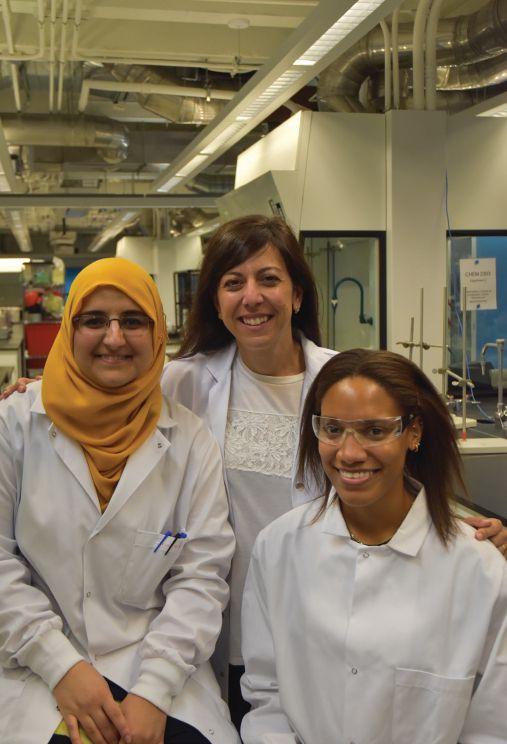
Maria DeRosa (centre) and students Shahad Abdulmawjood (left) and Fiona Ebanks (right) working in the LADDER at Carleton University. The goal, DeRosa says, is to develop the test to be more quantitative, rather than just visual.
OCT. 19, 2021 12:00PM EDT
JOIN
THE CONVERSATION
Register for a virtual mentorship event with some of the most influential leaders in Canadian agriculture.
This half-day virtual event will showcase select honourees and nominees of the IWCA program in a virtual mentorship format. Through roundtable-style sessions, panelists will share dvice and real-life experiences on leadership, communication and balance working in agriculture.
PLATINUM SPONSOR
GOLD SPONSOR
BRONZE SPONSORS
GAIN CONTROL ALL YEAR LONG.
And gain ground with multi-season tillage tools.
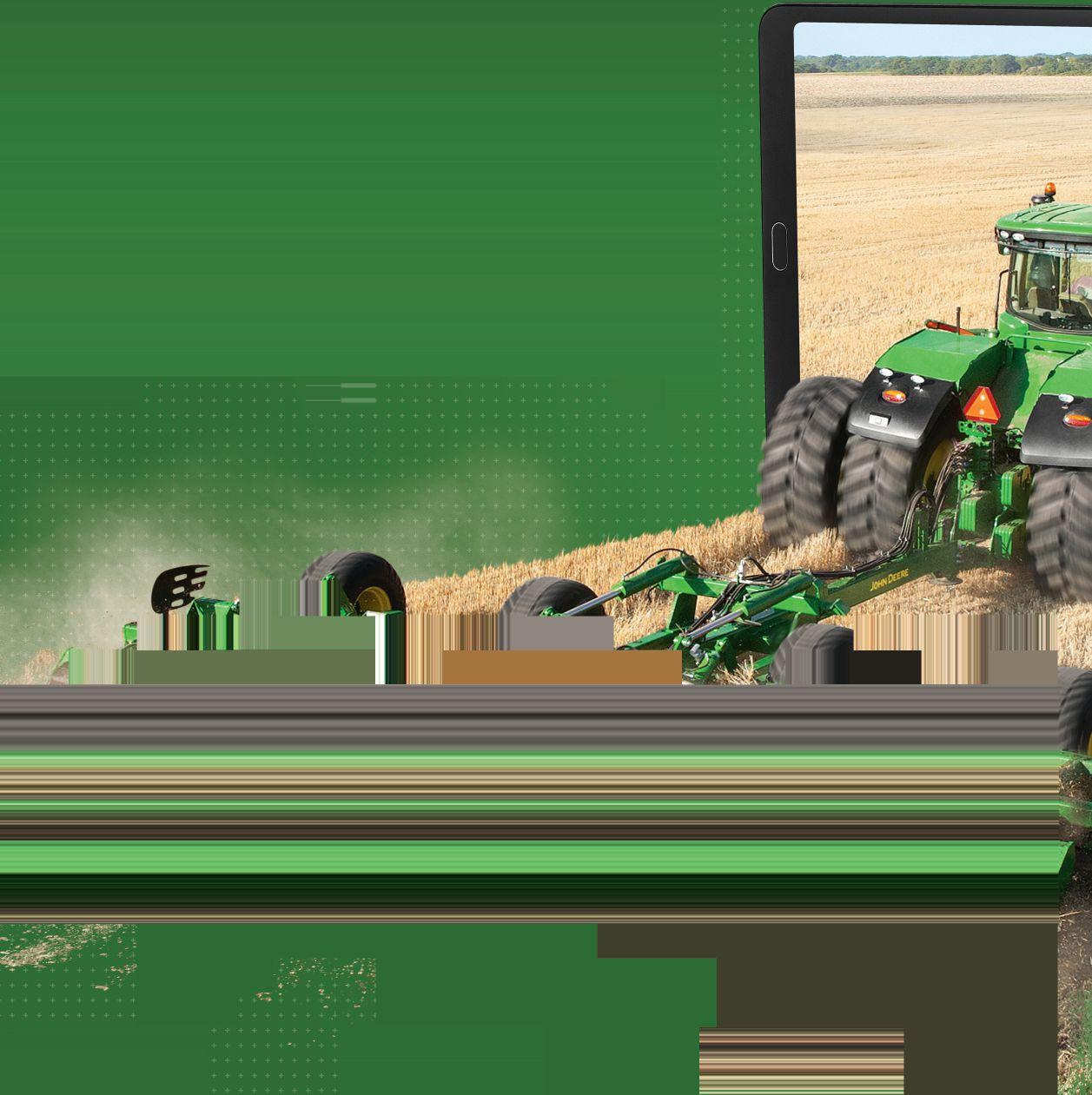
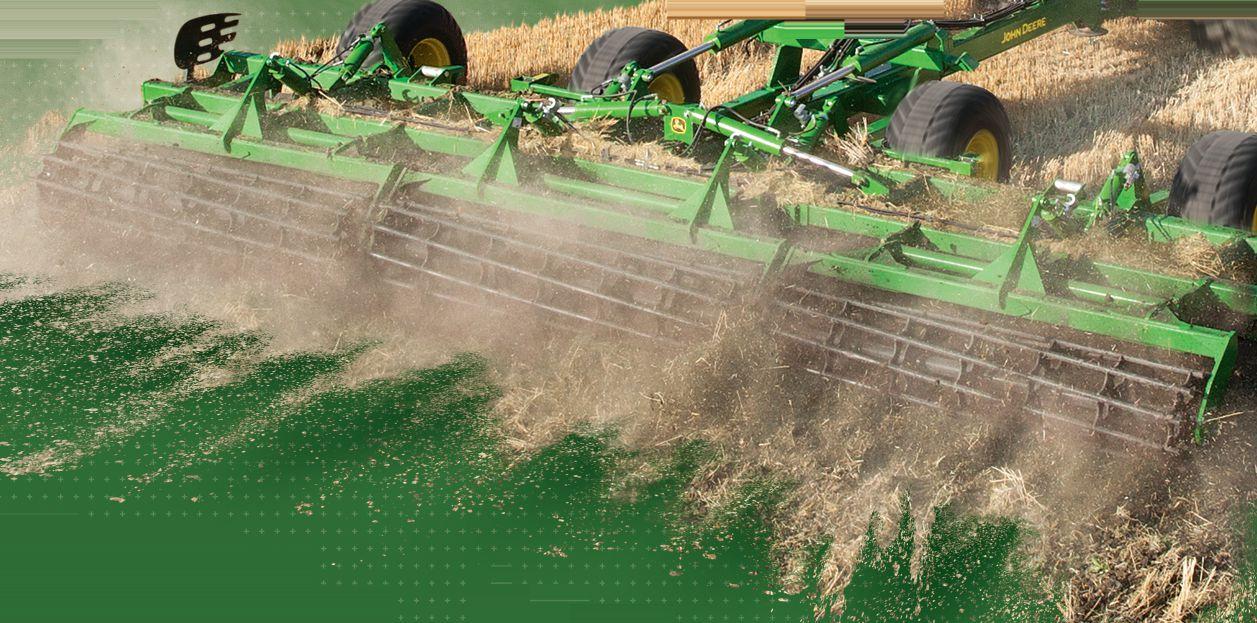
Ready to till wider, faster and smarter? Pair a trusted multi-season implement with a powerful row-crop tractor like the new 9 Series. Whether you require faster working speeds, multiple width options or simply need greater performance, you’ll be equipped to manage residue, create ideal seedbeds and prepare your fields for future seasons. Adjustable, versatile options are designed to make residue sizing, mixing and burial smoother and more efficient. Plus, with components of precision ag technology, you can make adjustments on the go – right from the cab.
No matter what point in the season, there’s a tool for your every tillage need. And that’s how you gain ground in your operation.