DO YOU RECYCLE YOUR PESTICIDE CONTAINERS? DO YOU RECYCLE YOUR PESTICIDE CONTAINERS?
WHY RECYCLING MATTERS
Much of the material going to landfill has a market value. Given the opportunities that exist within the waste recovery industry, should we be burying that value for long?
The concept of reducing, reusing and recycling is as old as waste itself. And farmers, particularly older farmers, are some of Canada’s most vociferous recyclers. But it’s often not because they’ve adopted a newfound ‘religion’ in recycling to save the earth. It’s because it’s something they know is necessary to survive. In fact, it’s interesting that many urban dwellers have only recently latched onto recycling as something new, something invented today to save our environment for future generations. Farmers have been doing it for as long as farming has been around. It’s not so much that recycling is chic, it’s that farmers know inherently that recycling means savings.
My father, growing up on a farm in Barnes Crossing, Saskatchewan, was taught the value of goods from an early age. Nothing that could be used was ever wasted. And a recent summer visit to his home workshop is a testament to that statement. Virtually every tool had the markings of reuse, whether it be used binder twine holding together a particular tool, a workshop bench made of old barn boards or a table saw manufactured from an old metal sewing machine frame. Virtually everything was cobbled together, yet perfectly usable and put to use over the years to manufacture and repair two loving homes, countless pieces of furniture, picture frames, you name it.
Yet in today’s economy, we often forget about the value of materials. Paper, plastics, wood, metals and even wastewater can be turned into something useful. Harnessing the value of waste as a resource improves environmental outcomes and the economy, and benefits all Canadians.
THE ENVIRONMENT
Unregulated storage of waste, illegal dumping and open-air incineration are particularly problematic as they can lead to pollution and pose certain health risks. Recycling helps reduce the strain on the environment and the size of our landfills. When we recycle products, we save energy and reduce greenhouse gas emissions and other potentially harmful contaminants that can enter our soil, ground and surface water. It is estimated that a recycling rate of 30 per cent is almost equivalent to removing 30 million cars off the roads. This translates into cleaner air and healthier communities.
JOB CREATION
Recycling heavily relies on manual labour to collect and sort material at a processing facility, and requires additional personnel in sales, operations and logistics. A number of studies show there are four to five times more jobs in recycling than in disposing of waste. The recycling business sector is growing into an extremely promising industry –one that generates jobs and revenue, boosts productivity and economic growth.
GREEN INNOVATIONS
Recycling and waste recovery help to stimulate the use of greener technologies as a way to further conserve energy and reduce pollution. The concept of alternative energy encompasses all those sources that do not consume fossil fuels, are widely available and environmentally friendly. Globally, the use of renewable energy sources like solar, wind and geothermal is on the rise with benefits poised to extend far beyond the needs of today.
Within the agricultural realm, Canada’s farmers are invested in reducing their environmental impact and they’ve certainly made substantial gains over the last decade. Recycling programs such as those run by Cleanfarms have developed as a result of strong industry demand for a solution that rapidly evolves the way things are done on the farm.
Across the country, farmers recycle many different kinds of agricultural waste. Everything from pesticide containers to twine, bale wrap, seed and grain bags. The material is cleaned, pelletized at a processing facility and transformed into a number of new products. These can include everything from farm drainage tile and horticultural trays to pallets, garbage bags, and more.
One in three Canadian farmers don’t return their pesticide containers for recycling. Are you one of them?
See how to rinse and recycle your pesticide containers the right way at cleanfarms.ca
The environmental benefits of recycling can be expressed in many ways, including savings in landfill space, energy and natural resources. And while the pros and cons of recycling are sometimes heavily debated, there’s never an argument over whether recycling is worth the effort.
One thing is for sure: however we choose to participate in the recycling programs available in our community, the impact of our actions will be felt for generations to come. And I can personally attest to the value of recycling after viewing our latest family picture displayed on a picture frame made from old boards that were cut from a table saw that used to be a sewing machine.
For more information on how to better manage on-farm waste, including agricultural plastics, visit cleanfarms.ca
Barry Friesen, General Manager, CleanFARMS
TOP CROP
MANAGER
5 | Understanding plant communication
Researchers discover the mere sight of competition is enough to stress crops.
By Madeleine Baerg
8 | Better barley for Ontario
Aiming for higher-yielding, Fusariumresistant cultivars for malting and feed.
By Carolyn King
14 | Fusarium-fighting bacteria
Fascinating insights and practical advances from University of Guelph researchers. By Carolyn King
Madeleine Baerg
20 BMPs pay dividends at corn harvest
Madeleine Baerg
FROM FARM KID TO FARM OWNER: HOW TO TRANSITION OWNERSHIP
There’s a lot to think about as families prepare the next generation to take over the family farm. An important aspect not to overlook is identifying the skills needed and then getting the training to develop or strengthen those skills – and they aren’t the same skills as in yesteryear.
Readers
BRANDI COWEN | EDITOR
UNINTENDED CONSEQUENCES
Invasive plant species can pose a serious problem for farmers. The lack of native competitors or predator species often allows invaders to spread virtually unchecked, so a minor challenge can quickly become a major problem facing farmers across a large area. With a lot of time, effort and resources, the spread of some invasive plants can be checked and in some instances, the plants can be entirely eradicated from an area.
However, according to research published in a recent issue of Invasive Plant Science and Management, the impact of these species can linger long after they have disappeared from the landscape. Researchers at the University of Wyoming and the Virginia Technical Institute eradicated Japanese stiltgrass – one of the worst invasive species in the eastern United States – and then spent three years studying what happened to the local environment in the plant’s absence. As they reported in the article, the results were surprising.
“While some soil nutrients began to shift towards an uninvaded state, they never fully recovered,” the team reported. “In addition, vegetation became less like the original native plant community. Many of the plants that emerged after Japanese stiltgrass was removed were themselves from weedy species, creating a new wave of control challenges.”
This finding underscores the importance of regular field scouting. Knowing what’s in your fields is an important step in combatting the spread of invasive plant species: only through routine scouting can you identify when an invader arrives. And, as the research proves, early identification is important in managing the long-term consequences that set in once an invasive species gains a foothold on your land. Investing a little time and money in scouting throughout the growing season can save you a lot of time and money down the road – and that’s good for the bottom line.
During this summer’s SouthWest Crop Diagnostic Days at the University of Guelph’s Ridgetown campus, research technician Dave Bilyea noted some of the invasive plants Ontario farmers should watch out for. He warned dog-strangling vine (Vincetoxicum rossicum) can have a big impact on the ecology of an afflicted area, owing to its ability to outcompete native plant species. Another one to watch is wild parsnip (Pastinaca sativa), which spreads quickly and makes skin UV-sensitive, resulting in burns similar to those caused by giant hogweed (yet another invasive plant causing problems across the province).
If you suspect you have these or other invasive plants popping up in your fields, you can report them by calling Ontario’s Invading Species Hotline at 1-800-563-7711 or by visiting Early Detection and Distribution Mapping System (EDDMapS) Ontario at eddmaps.org. The website offers photographs and information on more than 150 invasive species. Visitors can also view invasive species sighting reports and maps, and download records by invasive species and location.
If you’re already battling an invasive plant species on your land, the University of Wyoming-Virginia Technical Institute study offers some hopeful news. The researchers found the changes wrought by the recently arrived Japanese stiltgrass were shorterlived than those introduced by more established plant species in the area. According to Daniel R. Tekiela, a researcher at the University of Wyoming, “Newly established invasive populations don't produce the same level of lingering legacy effects as those that are long established. That makes early eradication an important imperative.”
Crop Manager West – 9 issues February, March, Mid-March, April, June, September, October, November and December – 1 Year$45.95 Cdn. plus tax
Crop Manager East – 7 issues February, March, April, September,
CROP MANAGEMENT
UNDERSTANDING PLANT COMMUNICATION
Researchers discover the mere sight of competition is enough to stress crops.
by Madeleine Baerg
Ateam of University of Guelph researchers at the cutting edge of discovering how plants communicate with one another has proven the stress of “seeing” weed competition causes a plant to significantly change growth patterns and drop yield.
According to the research, plants detect neighbouring plants by constantly analyzing the spectrum of light reflected from surrounding surfaces. When the reflected light indicates the presence of competition, plants rapidly alter everything from root structure to rate of leaf appearance. Seedlings that perceive competition via this form of communication lose yield incredibly quickly: a discovery that has enormous implications to crop production.
“From a breeding standpoint, scientists talk about insect and disease tolerance, but no one really asks if it’s possible to make a plant more tolerant to weeds. That was our starting point,” says Clarence Swanton, a weed scientist, crop physiologist and lead of the study.
The team began by analyzing integrated weed management strategies and plant competition. They quickly realized two key facts that directly oppose common understanding of plant competition.
First, there is no one, single, consistent trait that improves a plant’s ability to compete. The team looked at plant size, height, root structure, leaf density, planting density, row width and on and on, but could not find a single trait that universally improved a plant’s competitive edge.
“If you were asked to design a competitive plant, you’d choose fast germination, rapid leaf growth, lots of leaves. But none of that actually works. There’s nothing on the morphological side that actually improves a crop’s ability to compete,” Swanton says.
Second, they determined the most critical period for weed control occurs long before plants are actually competing for nutrients, or light or water resources. In fact, to maximize crop yield, the most critical period for weed control is in the earliest days of a seedling’s growth.
Back in the late 1980s, Swanton was part of a team that studied yield loss in corn. According to this research, a corn crop’s ultimate yield drops by between 0.5 and 3.3 bushels per day when weeds are present, depending on how early in the growth cycle the weeds appeared and how long the weeds were left growing.
“What we couldn’t understand is how could it happen that fast? If you’ve done your agronomy right, you’ve just put tons of fertilizer on, so there shouldn’t be any competition for nutrients. The crop should be up ahead of the weeds, so there shouldn’t be any competition for light. And in the spring, there’s generally lots of moisture. That’s when we started asking: can a plan actually detect its environment? Can a plant know who its neighbour is and respond to that neighbour?” Swanton says.
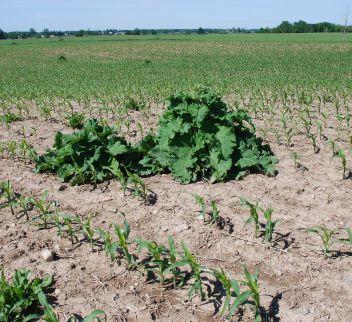
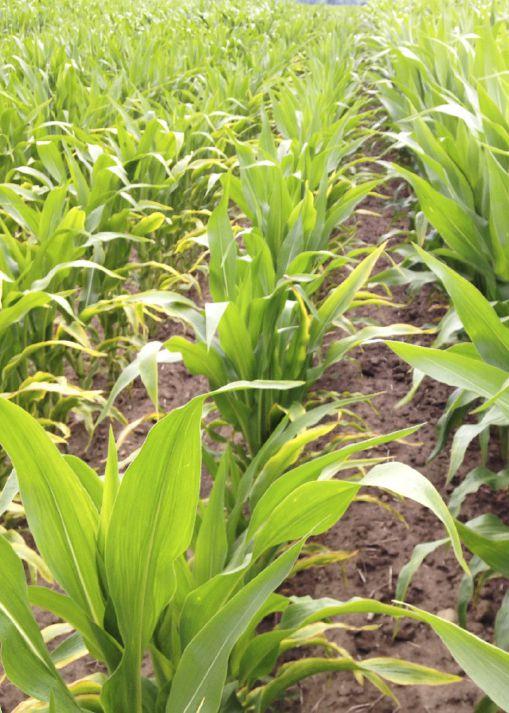
ABOVE: Corn does not show any response to its siblings but does show a response to weeds.
Fast-forward 30 years and Swanton finally has a clear answer. To test this hypothesis, Swanton and his team grew plants beside one another but isolated in separate pots so no actual competition or physical interaction could occur. Corn plants grown next to weed plants exhibited decreased synthesis of chlorophyll, decreased carbon dioxide assimilation, decreased sucrose levels, an altered root structure, decreased growth rate, changed leaf structure and –perhaps most interestingly – an explosion of free radicals in the cells.
Fascinated, the team then planted a tobacco plant right in the centre of, but entirely physically separated from, a ring of grass. In trial after trial, the tobacco plant became so stressed by the presence of the grass that it actually died.
the outside, but it is screaming on the inside,” Swanton says.
“Other stressors like drought, insect damage, etc., can cause similar physiological changes. We think that plants have a common toolbox when they are under stress. To change the stress response would probably mean a plant loses the ability to be plastic – to be able to alter growth. Plasticity is generally a survival mechanism.”
Currently, Swanton’s team is working to determine whether plants exhibit a stress reaction to individuals of their own kind, or only to plants that differ from themselves. So far, they have established that soybeans are able to recognize different plant species and alter their growth depending on the neighbour. Corn does not show any response to its siblings but does show a response to weeds.
“Even if you remove the weeds, the final yield will never come back to 100 per cent even though the plant has the whole growing season ahead of it.”
“I was gobstruck,” Swanton says. “This communication is for real and it’s powerful.”
A plant experiences physiological stress when surrounded by other plants. This stress causes an energy imbalance that results in toxic molecules of oxygen called free radicals. Typically, free radicals are contained inside cells and are removed via a cleanup crew of antioxidants. When their quantity exceeds a certain threshold, however, they spill out of the cells and become destructive. Free radicals cause damage by stealing electrons from cell proteins, DNA and other parts of a cell. This internal damage (called oxidative stress) requires significant energy to repair. Energy directed towards damage control is energy lost from seed production, translating to lost yield potential.
“We’ve proven plant competition is not about light, water or nutrient competition. It’s about causing an energy imbalance in cells. You don’t see this, of course. The plant looks totally normal on
The team has also proven that certain germinating seedlings are able to analyze and respond to neighbouring plants even before they break through the soil surface. As a seedling gets close to the soil surface, it begins to detect the light from above ground. In the presence of weeds, these soybeans will actually change how they are growing prior to emergence.
“What we are realizing is that plants have evolved to rapidly respond to their environment. Normally, you might think of a plant being sort of boring. The reality is that they are like a computer chipboard, reading and rapidly responding to inputs from the outside,” Swanton says.
There are currently no chemicals available in Ontario that can reduce a crop’s oxidative stress. That said, Swanton’s team has discovered one more fascinating fact about crops’ response to weed pressure: neonicotinoid seed treatments stop the oxidative process in its tracks.
“We found that if you had seeds treated with neonics, you negated all stress response. The seed treatment triggers the expression of antioxidants. All free radicals: gone. All evidence of stress: gone. Root structure: stable. All of [a] sudden, we’re seeing a seed treatment as a gene trigger. We had to do the test four, five, six times over because I didn’t believe the results when they first
Soybeans are able to recognize different plant species and alter their growth depending on the neighbour.
came in,” Swanton says.
“It’s sort of a dead-ender because no one will fund it. As soon as they see that it’s a neonicotinoid, they’ll toss it right out. That’s very unfortunate because it’s amazing chemistry. I don’t think there should have been an outright ban, there should have been a push for more research on neonics.”
Though this research is only in its early stages, it already offers important take home messages for producers. First and most obvious is the fact that early season weed control is absolutely critical.
“The presence of weeds causes stress that results in rapid and irreversible yield loss,” Swanton says. “The impact of stress early in the development of the crop determines its growth trajectory for the rest of the season. Even if you remove the weeds, the final yield will never come back to 100 per cent even though the plant has the whole growing season ahead of it.”
Second, a plant cannot differentiate between a “farmer-approved” neighbour, such as a cover crop, and a run-of-the-mill weed.
“Cover crops are definitely the flavour of the week right now. Farmers don’t view them as weeds and are more tolerant of them in amongst crops than they would be of weeds. Our data suggests you’d better see cover crops as weeds, because that’s how your crop sees them,” Swanton says. “This is particularly relevant to those who want to plant green or underseed too early into cover crops. If you don’t understand the critical crop growth period, you will always have yield loss.”
The research team’s next step is to determine whether plants experience stress when confronted with another member of their own kind.
Corn plants grown next to weed plants exhibited a number of symptoms, including decreased synthesis of chlorophyll, decreased carbon dioxide assimilation, decreased sucrose levels, an altered root structure, decreased growth rate and a changed leaf structure.
“Can a soybean recognize a sibling? No one knows what the physiological mechanism of this recognition ability really is. But whether they do or don’t could have major implications for factors such as seed spacing,” Swanton says.
He and his team hope that, once they more fully understand the communication and stress mechanisms in plants, they might eventually work with a breeder and molecular biologist to build more resilient crops.
“Once we understand what switches genes on and off, we can look at how we can make a plant more tolerant to weed stress,” he says. “It’s exciting, exciting work. It sure gets me out of bed every morning!”
NATURE’S DESIGN
BETTER BARLEY FOR ONTARIO
Aiming for higher-yielding, Fusariumresistant cultivars for malting and feed.
by Carolyn King
The area seeded to barley in Ontario has been trending downwards over the past two decades, from 325,000 acres in 1998 to only 85,000 acres in 2017. That decline has happened despite the upsurge in the province’s craft brewing industry, which prefers locally grown ingredients. So, in a three-year project, University of Guelph researchers are using several strategies to develop improved malting and feed cultivars suited to the needs of producers in Ontario.
Lewis Lukens and Alireza Navabi, who are both professors in the department of plant agriculture, are leading this project. In the project’s feed barley component, they are looking for higher yields as well as other positive characteristics, especially stay-green. In the malting barley component, the must-have traits are higher yields and lower susceptibility to Fusarium head blight (FHB).
FHB is one of the biggest challenges for barley growers in Ontario because the relatively moist climate favours this fungal disease. Along with reducing yields and grades, FHB produces toxins that limit the end uses of the grain for feed, food and malting.
Novel genetic variation in feed barley
“On the feed side of our project, we are primarily using a mutagenesis approach. This involves taking an existing barley variety and using a chemical mutagen [ethyl methanesulfonate] to induce novel genetic variation, and then selecting from that group,” Lukens explains. “This approach has an important advantage. We are starting with a variety that grows well in Ontario and, instead of crossing it with something that is unrelated and having offspring from that cross that are quite variable, using mutagenesis generates a population that will do well in Ontario and that will have fewer traits that are negative.”
The variety they used was Dignity, a high-yielding, six-row feed barley with lodging resistance, medium height and good kernel weight. “The higher the dose of the mutagen, the larger the genetic changes that will occur,” Lukens notes. “We tested different amounts of the chemical mutagen to get what we think is the correct dose.”
The research team carried out the mutagenesis treatment in 2016. “We now have on the order of 4,000 different lineages. These distinct lines arose from a single line that was mutagenized,” Lukens says. “For each one of these lines, we self-pollinate it and make it genetically uniform. Then we obtain a large number of seeds from the line and plant it in the field to be assayed.”
The team will plant the lines in field plots at the university’s research station in Elora, Ont.
Many valuable traits could emerge in the field evaluations. Lukens says, “One
<LEFT: By treating an elite feed barley variety with a chemical, the researchers have produced thousands of lines with novel mutations and will be searching for desirable mutations, among some pretty unusual ones.
BOTTOM: In a growth room, the research team is multiplying the seed for each mutagenized line.
<LEFT: University of Guelph researchers are evaluating a wide range of malting barley cultivars from other regions to see which ones perform well in Ontario.
trait that we will target first is called stay-green. Usually after seed is set, plants senesce and their leaves turn yellow. But in corn, stay-green has been introduced. This is when the leaves continue to conduct photosynthesis after pollination has occurred and the seed is developing, so the leaves continue to provide carbohydrates to the grain. Corn yields have increased significantly because of this stay-green trait. Our hope is to introduce it into barley.” From studies of stay-green in corn, the researchers know it is a heritable trait associated with better tolerance for water and heat stress, along with higher yields.
Although FHB resistance is not a direct target of the project’s feed barley component, the research team hopes to survey the plots for disease resistance and other useful traits.
Malting barley variety testing
The malting barley part of the project involves two-row varieties. Two-row barleys tend to have better malting quality and lower susceptibility to FHB, but they may be somewhat lower yielding than six-row barleys.
The research team is testing 230 malting varieties at the Elora research site. Lukens says the varieties being tested have been obtained through a major barley cultivar evaluation program, co-ordinated by the University of Minnesota and taking place at about a dozen locations in North America.
The team is also accessing germplasm from other barley growing regions in Canada and evaluating the performance of those lines across different locations in Ontario. The researchers will be evaluating the malting varieties for a range of traits, such as resistance to FHB and other diseases, resistance to insect pests like cereal leaf beetle, plant growth, days to maturity, lodging resistance and grain yield.
The varieties with the best performance in terms of both agronomics and malting quality may be entered into the official Ontario barley registration trials and/or used for crossing with other barley lines to develop even better varieties.
Lukens notes, “Growers get a significant revenue gain for malting barley compared to feed barley. Also, having more malting varieties for Ontario would be beneficial to the craft brewing industry. These breweries want to source locally grown varieties and source varieties that [give a distinctive character to their beer].”
Funding for this project is from Grain Farmers of Ontario, SeCan, Cribit Seeds, Wintermar Farms and Growing Forward 2, a federal-provincial-territorial initiative. The Agricultural Adaptation Council assists in the delivery of Growing Forward 2 in Ontario.
PHOTOS COURTESY OF NIA HUGHES.
STRIP TILLING FOR HIGHER YIELDS
Research shows the practice reduces phosphorus runoff and improves yield.
by Trudy Kelly Forsythe
Aresearch project in southwestern Ontario exploring the benefits of strip tilling is showing promising results in better managing fertilizer and improving crop yields by ensuring the fertilizer stays where it is most needed – with the plant.
Peter Johnson, senior research lead with Veritas, agronomist for RealAgriculture.com and self-proclaimed poster-child for seedplaced phosphorus on wheat, is hoping additional trials will offer real answers.
“We started in the fall of 2015,” he says. “In 2016, we collected yield data; we’re now in the second year and we’re generating additional information, so we’ll have data from this fall as well.”
The project started to find a better way to deal with phosphorus, to reduce any off-target movement to lakes and to keep it economical while still maintaining, or even increasing, crop yields. While strip till has been around for a number of years, farmer uptake has been slow.
“Is it not promoted enough? Is there not enough research to see what the answers are?” Johnson asks. “This study should address issues of phosphorus and maintaining yields. The agriculture sector needs to investigate.”
Big win potential
Strip tillage has the potential to be a big win for growers, agriculture-related businesses and the environment.
“We’ve done tillage for 10,000 years, since we domesticated wheat,” Johnson says. “We do it to manage moisture, deal with residue and control weeds. The problem with full-width tillage is it is costly and it is causing erosion problems that increase phosphorus movement as well as burning up organic matter.”
However, switching to strict no-till practices is a challenge.
“We struggle to replace fertility removed in the crop in a notill system,” he says. “With today’s yields, we can no longer put enough on at planting to replace what we remove. Strip till addresses this issue.”
The project
Strip tillage, also called zone tillage, is the process of building zones where soil is loosened and blackened in a strip. Typical zones are six to eight inches wide and four to six inches deep.
Johnson shared preliminary results of his research project on the benefits of strip tilling at the SouthWest Agricultural Conference this past January. Since then, a few ideas have solidified as
the team – which includes Veritas’ Aaron Breimer and Jason Van Maanen – sorts through the research results.
“Initial data shows up to a 25 per cent increase in available soil phosphorus in the strip versus the growers’ conventional system,” Johnson says. The key, based on the trial results, is to have the phosphorus available during early growth stages.
On the downside, with reduced tillage, the availability of potassium becomes more of an issue.
“If we’re going to go this route, we also need good potash levels in the field,” Johnson stresses. “Potash is a key component as soon as your reduce tillage. While we knew this was a concern, the
So far the trial results show it is important to have phosphorus available to the crop during early growth stages.
impact was surprising.”
The bottom line, however, was very positive: final yield of the strip-till trials was plus or minus two per cent. “I’m ecstatic,” he says. “That equals a positive environmental impact and decreased workload in the spring.”
However, he adds, “Keep in mind, that’s only one year of data on nine locations, but that’s a huge win nonetheless.”
Another win is that the strip-tillage method looks very positive, since farmers are not increasing the amount of soluble phosphorus available for off-target movement during the winter months.
“There was concern we would see an increase in the water extractable or soluble phosphorus in plant residues, but that does not appear to be the case.”
More lessons learned
Another lesson flowing from the project relates to the timing around when to refresh strips.
“We’ve learned refreshing strips in the spring can be negative, especially on heavier clay soils,” Johnson explains. “In those cases it is better not to refresh. However, a field with loam soil that was not refreshed turned out to be a mistake. Each situation needs to be assessed individually.”
While strip tilling isn’t a completely new tool to farmers, Johnson says they are still learning to make the system work.
“While we are focussed on phosphorus management, clearly potash is also part of the equation,” he says.
Another part of the equation is whether strip tillage works with cover crops. Johnson gets a lot of questions about cover crops and
says if producers strip through a cover crop early and build a good strip, the cover crop can grow and protect the strip without impacting the crop grown the following year.
Moving forward
With the first year of data looking promising and the second year of data on the way, the team is now trying to decide if they can find the wherewithal and funding to run the trials for a third year.
“We’ll continue to work with growers to fine-tune strip tilling,” Johnson says. “We’re definitely on the right track to manage phosphorus. We’re going to figure it out, so you can be the 240-bushelper-acre corn grower, replace the phosphorus and not have the lake go green. Strip tilling gives us the opportunity to apply fertilizer at removal rates and still do it with an environmental conscience.”
“If we talk about what we’re doing, people will understand how their food is grown and why we grow it the way we do.”
Strip tillage, also called zone tillage, is the process of building zones where soil is loosened and blackened in a strip.
Pattie Ganske, Agvocate Former Owner, Ag Retail
SPEAKERS
INCLUDE:
STATE OF HERBICIDE RESISTANCE IN CANADA
Hugh Beckie • Agriculture and Agri-Food Canada/University of Alberta
Sponsored by
Steve Shirtliffe • University of Saskatchewan
HERBICIDE USE IN CANADA: RESULTS FROM TOP CROP MANAGER’S INAUGURAL SURVEY
Gerald Bramm • Bramm Research
Sponsored by
EVOLUTION OF RESISTANCE: AMARANTH SPECIES AND GROUP 14 HERBICIDES
Franck Dayan • Colorado State University
GLOBAL EFFORTS TO PREVENT HERBICIDE RESISTANCE
Mark Peterson • Herbicide Resistance Action Committee
SPONSORS
Founding Member
CONTROLLING
GLYPHOSATE-RESISTANT WEEDS: AN ONTARIO PERSPECTIVE
Peter Sikkema • University of Guelph - Ridgetown
HARVEST WEED SEED CONTROL IN THE CANADIAN CONTEXT
Breanne Tidemann • Agriculture and Agri-Food Canada
MANAGING RESISTANCE WITH SPRAYER APPLICATION TECHNOLOGY
Tom Wolf • Agrimetrix Research & Training
Sponsored by NON-CHEMICAL WEED CONTROL METHODS
FUSARIUM-FIGHTING BACTERIA
Fascinating insights and practical advances from University of Guelph researchers.
by Carolyn King
When it comes to fighting Fusarium graminearum, our crops may soon have some new tiny but powerful allies. Research by Manish Raizada at the University of Guelph is providing the foundation for commercializing some anti-Fusarium bacteria as biocontrol products. As well, a student in his lab discovered an amazing mechanism that a bacterial strain called M6 uses to stop the fungus dead in its tracks.
These anti-Fusarium bacteria are all endophytes – microbes that live inside plants without causing disease. For about a decade, Raizada’s research group has been isolating and examining endophytes. Studies by his group and other scientists have shown endophytes can confer diverse benefits to their plant hosts. Depending on the specific endophyte and the specific host, these benefits may include things like suppression of plant pathogens, protection against insect pests, improved access to soil nutrients, enhanced plant growth and better drought tolerance.
Much of Raizada’s endophyte research focuses on controlling Fusarium graminearum. This fungal pathogen is the main cause of Fusarium head blight (FHB) in wheat and also causes Gibberella ear rot in corn. (The fungus’s sexual stage is called Gibberella zeae.)
The ‘lasagna’
defence
The M6 research at Raizada’s lab has produced some fascinating results. “The endophyte M6 originally was isolated from a landrace [a traditional variety] of finger millet. This ancient cereal crop is widely grown by subsistence farmers in Africa and South Asia,” notes Raizada, a professor in the university’s department of plant agriculture. “Finger millet appears to be tolerant to Fusarium graminearum. In the seeds and other tissues of finger millet, you will find spores of Fusarium graminearum and other Fusarium species, but the crop doesn’t develop the disease.”
Raizada and his lab were the first researchers to isolate endophytes from finger millet – a crop that is reported to be resistant to many pathogens. M6 is a strain of an Enterobacter species that has shown the ability to control F. graminearum
Walaa Mousa, who was a PhD student at the time, examined M6’s mode of action against the fungus. Understanding an endophyte’s mode of action can be helpful with things like obtaining regulatory approval to use the endophyte as a biocontrol product. Plus, in the case of M6, the mode of action has turned out to be really cool.
Because M6 was isolated from the roots of finger millet, Mousa chose to study the interaction between the pathogen and the endophyte in the plant’s roots. She used confocal microscopy to
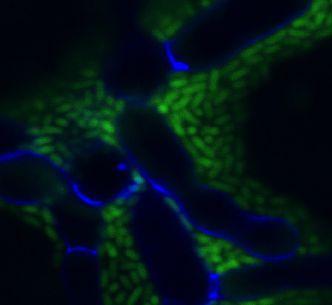
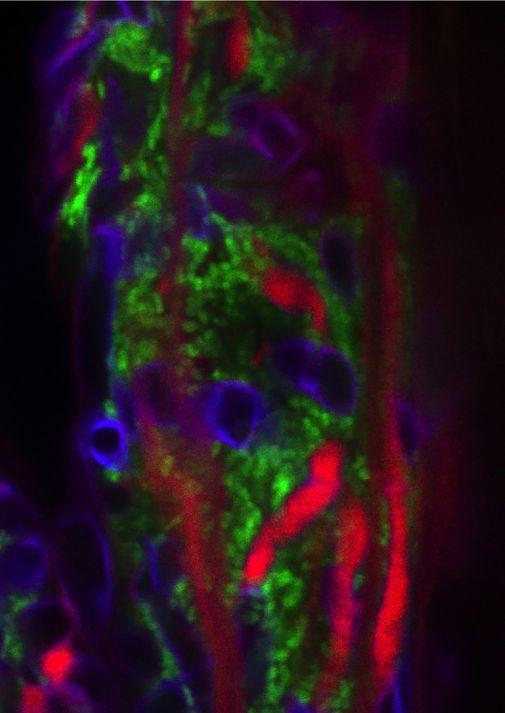
The long root hairs (red) and the M6 bacterial cells (green) form a “lasagna” that traps strands of Fusarium (purple, shown in cross-section).
examine this interaction in a test tube.
“In confocal microscopy, you can look at living cells in real time, without killing them; you can look inside the tissue without dissecting it,” Raizada explains. “Walaa was able to track the endophyte by inserting a gene coding for green fluorescent protein that enables the endophyte to give off a green light. The Fusarium graminearum was tracked with a stain that gave off purple light.”
From close observation of this colourful combination, Mousa saw that when the fungus wasn’t present, M6 lived quietly inside the root at very low levels.
But when she added the pathogen on one side of the root, the endophyte launched into action. Within 24 hours, M6 migrated to the outside surface of the root, where the pathogen had been added. As well, M6 multiplied from a few scattered cells to millions of cells and coated the entire root surface on the side with the pathogen. At the same time, the root hairs on that side of the root rapidly grew much longer than normal.
“Now, if you think of a lasagna, the root hairs would be the noodles, while the endophyte would be the filling between the noodles. Together they form stacks like a lasagna – root hair-endophyte-root hair-endophyte – laying parallel to the root’s surface. The root hairs form attachment sites for the endophytes and there are thousands of endophytes between the root hair layers, and altogether millions of endophytes,” Raizada explains.
“So there is a layer of the endophyte right on top of the root’s surface and then this root hair-endophyte lasagna. Walaa observed that it was very difficult for the pathogen to enter this lasagna barrier. On the few occasions when the strands of fungus were able to enter the lasagna, they were literally trapped. They were surrounded by the endophyte and root hairs and then killed.”
To figure out how this killing occurred, Mousa developed a set of differential lines of the endophyte. She created a mutation in every gene of the endophyte, with each line having a different single-gene mutation, for a total of about 3,000 lines. Then she tested each of those lines to see which ones no longer had the ability to suppress Fusarium graminearum. She found 10 of them.
Raizada says, “That work revealed the genes and mechanism for killing the fungus. One critical mechanism is that M6 produces a
For
well-known natural fungicide called phenazine and potentially two other potent natural fungicides.”
And M6 has another key trick up its sleeve. It turns out that Fusarium had evolved a way to counteract the endophyte’s phenazine strategy – and then the endophyte developed a way to counteract the fungus’s counteraction.
“Fusarium species secrete an antibiotic called fusaric acid that kills bacteria that try to kill the fungus. One of the things fusaric acid does is suppress phenazine synthesis. But one of the M6 genes that Walaa identified actually pumps the fusaric acid out of the cell, so M6 is resistant to what Fusarium is trying to do to kill the endophyte,” Raizada says.
These findings provide some evidence in support of the researchers’ hypothesis: “The endophyte and the pathogen coexisted in the same plant host for a long period of time and that there has been an arms race between these two microbes. Finger millet was first domesticated in East Africa [about 7,000 years ago], and there are reports that Fusarium may have also originated in Africa much earlier than finger millet. So we hypothesized that finger millet may be tolerant to Fusarium because it has endophytes that co-evolved to suppress the fungus,” Raizada says.
He adds, “Subsistence farmers are typically the ones growing finger millet in Africa and South Asia. We think that, as they have been selecting for healthy plants and healthy seeds, they may have inadvertently selected for M6.”
Even though M6 is a root endophyte, it was very effective in reducing DON on corn silks and on wheat heads in the greenhouse trials. Raizada suspects M6 is using a similar mode of action –
35 Years Actagro has been
the industry leader in
Soil and Plant Health Technology Solutions.
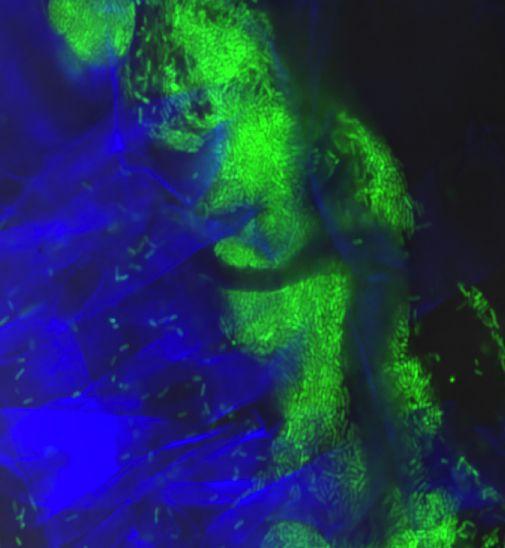
Fusarium strands (blue) are attempting to penetrate roots but are being blocked by a huge number of M6 cells (green) on the root’s surface.
forming a barrier against the fungus on the surface of the silks or heads and then using phenazine and its other natural fungicides to kill the fungus.
As a next step, Raizada is hoping to start a larger study to see if M6 is in five other finger millet landraces from different parts of East Africa, and to determine where in the plant the endophyte occurs.
Trait Stewardship Responsibilities Notice to Farmers
Monsanto Company is a member of Excellence Through Stewardship® (ETS). Monsanto products are commercialized in accordance with ETS Product Launch Stewardship Guidance, and in compliance with Monsanto’s Policy for Commercialization of Biotechnology-Derived Plant Products in Commodity Crops. These products have been approved for import into key export markets with functioning regulatory systems. Any crop or material produced from these products can only be exported to, or used, processed or sold in countries where all necessary regulatory approvals have been granted. It is a violation of national and international law to move material containing biotech traits across boundaries into nations where import is not permitted. Growers should talk to their grain handler or product purchaser to confirm their buying position for these products. Excellence Through Stewardship® is a registered trademark of Excellence Through Stewardship.
ALWAYS READ AND FOLLOW PESTICIDE LABEL DIRECTIONS. Roundup Ready 2 Xtend® soybeans contain genes that confer tolerance to glyphosate and dicamba. Agricultural herbicides containing glyphosate will kill crops that are not tolerant to glyphosate, and those containing dicamba will kill crops that are not tolerant to dicamba. Contact your Monsanto dealer or call the Monsanto technical support line at 1-800-667-4944 for recommended Roundup Ready® Xtend Crop System weed control programs. Roundup Ready® technology contains genes that confer tolerance to glyphosate, an active ingredient in Roundup® brand agricultural herbicides. Agricultural herbicides containing glyphosate will kill crops that are not tolerant to glyphosate.
Acceleron® seed applied solutions for corn (fungicides only) is a combination of three separate individuallyregistered products, which together contain the active ingredients metalaxyl, prothioconazole and fluoxystrobin. Acceleron® seed applied solutions for corn (fungicides and insecticide) is a combination of four separate individually-registered products, which together contain the active ingredients metalaxyl, prothioconazole, fluoxystrobin, and clothianidin. Acceleron® seed applied solutions for corn plus Poncho®/VOTiVO™ (fungicides, insecticide and nematicide) is a combination of five separate individually-registered products, which together contain the active ingredients metalaxyl, prothioconazole, fluoxystrobin, clothianidin and Bacillus firmus strain I-1582. Acceleron® Seed Applied Solutions for corn plus DuPont™ Lumivia® Seed Treatment (fungicides plus an insecticide) is a combination of four separate individually-registered products, which together contain the active ingredients metalaxyl, prothioconazole, fluoxastrobin and chlorantraniliprole. Acceleron® seed applied solutions for soybeans (fungicides and insecticide) is a combination of four separate individually registered products, which together contain the active ingredients fluxapyroxad, pyraclostrobin, metalaxyl and imidacloprid. Acceleron® seed applied solutions for soybeans (fungicides only) is a combination of three separate individually registered products, which together contain the active ingredients fluxapyroxad, pyraclostrobin and metalaxyl. Visivio™ contains the active ingredients difenoconazole, metalaxyl (M and S isomers), fludioxonil, thiamethoxam, sedaxane and sulfoxaflor. Acceleron®, CellTech®, DEKALB and Design®, DEKALB®, Genuity®, JumpStart®, Monsanto BioAg and Design®, Optimize®, QuickRoots®, Real Farm Rewards™, RIB Complete®, Roundup Ready 2 Xtend®, Roundup Ready 2 Yield®, Roundup Ready®, Roundup Transorb®, Roundup WeatherMAX®, Roundup Xtend®, Roundup®, SmartStax®, TagTeam®, Transorb®, VaporGrip®, VT Double PRO®, VT Triple PRO® and XtendiMax® are trademarks of Monsanto Technology LLC. Used under license. BlackHawk®, Conquer® and GoldWing® are registered trademarks of Nufarm Agriculture Inc. Valtera™ is a trademark of Valent U.S.A. Corporation. Fortenza® and Visivio™ are trademarks of a Syngenta group company. DuPont™ and Lumivia® are trademarks of E.I. du Pont de Nemours and Company. Used under license. LibertyLink® and the Water Droplet Design are trademarks of Bayer. Used under license. Herculex® is a registered trademark of Dow AgroSciences LLC. Used under license. Poncho® and VOTiVO™ are trademarks of Bayer. Used under license.
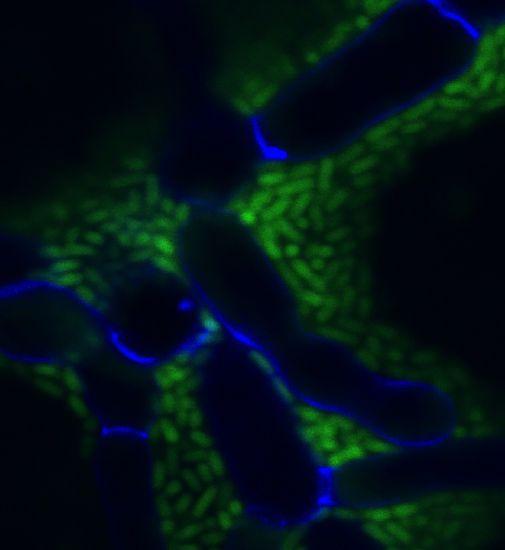
M6 cells (green) surround Fusarium strands (blue, in cross section), on a microscope slide in the absence of a plant.
He notes, “If subsistence farmers over generations have selected for this endophyte, then the endophyte has to be either residing in the soil or transmitted in the seed.”
Endophyte field trials lead to promising results
In another study, Shearer has been conducting field trials with five bacterial endophytes applied to corn and wheat. In the earlier greenhouse trials, these five endophytes were found to be the most effective ones for controlling Fusarium graminearum and reducing DON. The best of the five endophytes resulted in a 97 per cent reduction in DON.
One of the five endophytes was M6, isolated from finger millet. The other four were isolated from plants in the corn family, including wild relatives, ancient landraces and a modern corn variety.
Shearer conducted small-plot trials at Ridgetown, Ont., in 2015 and 2016, in collaboration with Limay-Rios. The wheat trial ran into a couple of difficulties and will need to be repeated, but the corn trials produced some promising results.
The corn trials were done under a misting system to try to sustain a high level of Fusarium. The treatments involved each endophyte individually and all five endophytes mixed together, and compared four application methods.
One method was to apply the endophytes as a seed coating before planting. Another method involved imbedding the endophytes in gel beads that were then broadcast over the soil around planting time. The other two methods involved in-crop spraying at different timings, either early or late in the window during which Fusarium graminearum enters corn through the silks. The trial also included a fungicide treatment (Proline) at silking and a check treatment with no endophyte and no fungicide applications.
The treatments were applied to two corn hybrids, one that is moderately susceptible to Fusarium and one that is very susceptible. The moderately susceptible one would be more representative of hybrids that farmers would use.
In addition, Shearer conducted a trial with field-scale strips in 2016, using the most promising endophyte from year 1 of the smallplot trials. The strip trials compared the four different endophyte
application methods, along with the relevant check treatments.
In the small-plot and field-strip trials, the researchers collected data on such factors as grain yield, Fusarium graminearum symptoms in the plants, and levels of DON and other Fusarium mycotoxins in the seeds.
Shearer is currently processing the data from 2016. Based on the results so far, the endophytes were not effective for the very susceptible hybrid. Raizada says, “The background levels of Fusarium were astronomically high in this hybrid, and we think the pathogen just overwhelmed the endophyte. But keep in mind that farmers would probably not choose such a hybrid.”
Focusing on the moderately susceptible hybrid, the results are quite promising. “In year 1 of the small-plot trial, two of the five endophytes were winners and three were not. By ‘winner,’ I mean they were convincingly a winner in all the replicated plots. These two winners very significantly outperformed the fungicide,” Raizada says.
“As expected, the general trend was that the endophytes’ performance in the field was not as good as in the greenhouse [because of field factors like variable weather conditions and much more competition with other microbes in the environment]. Even so, the best winner is spectacular compared to what we have currently [for controlling Gibberella ear rot].”
Based on the data analysis so far, each endophyte seemed to have its own optimal application method. Mixing all five endophytes together did not improve Fusarium control.
In the strip trial, the endophyte spray reduced DON by 65 per cent. “That is a really exciting result for a single spray application at silking,” Raizada says. “And keep in mind that this is the first time
we’ve done these sorts of trials and there are ways to optimize these applications, like optimizing the spray formulation. So the endophyte might be able to do even better.”
Even though Shearer has not completely finished his analysis, the next stage in this work is already underway.
“We’ve passed along this work to the private sector. The intellectual property was assigned to the University of Guelph, and Guelph has signed a licensing agreement with a well-known seed company,” Raizada explains. “This company will undertake multilocation, multi-year, multi-hybrid field trials. I’m hoping they will test all five endophytes [because the non-winning endophytes may become winners with other hybrids].”
The company will also probably work on things like optimizing product formulations and application methods, evaluating other possible plant benefits from the endophytes in addition to Fusarium control and assessing the potential for integrated management using both fungicides and endophytes.
Funding sources for these anti-Fusarium endophyte studies include Grain Farmers of Ontario, Ontario Ministry of Agriculture, Food and Rural Affairs, Natural Sciences and Engineering Research Council of Canada, International Development Research Centre, Global Affairs Canada, and the government of Egypt, which provided a scholarship for Mousa’s work.
Raizada and his lab are continuing to work on Fusarium-fighting endophytes. He notes, “We have started a new pipeline of discovery for new endophytes. We have a new strategy that I think will be more effective than what we have done in the past to discover antiFusarium endophytes.”
NATURE’S DESIGN
BE PREPARED
MINIMIZING HARVEST LOSSES UNDER WET CONDITIONS
Weeks of heavy rain and snow at harvest last fall left western Canadian farmers carrying a devastating 2.5 million acres of field crops unable to be harvested. Though that scenario is an extreme, climate change means anomalous weather may be our new normal. Successful farmers expect the unexpected and know planning in advance for adverse conditions can make a huge difference in ultimate crop returns. With excessively wet weather the reality throughout much of the season for many Ontario producers, at least some growers are already asking how they might minimize moisture-induced harvest losses if the wet weather continues.
BY Madeleine Baerg
No matter how wet fields are at harvest, growers should do everything they can to get their crops off in a timely fashion. Delaying harvest often results in a sacrifice of quality due to higher dockage and greater disease pressure, as well as a drop in test weights and a decrease in total yield.
“I would definitely encourage growers to harvest their wheat when they can and pay for necessary drying charges. In the end, that will be a more successful strategy than delaying harvest because of wet weather,” says Joanna Follings, a cereal specialist with the Ontario Ministry of Agriculture, Food and Rural Affairs (OMAFRA).
Leaving any crop to overwinter in the field is the poorest option. A crop like soybean will be entirely destroyed and research shows even a hardier crop like corn will lose significant yield due to lodging. Though some western Canadian producers were able to capture some value from certain crops that could not be harvested until this spring, Ontario’s heavier precipitation, especially in areas impacted by lake-effect snow, means most crops overwintered in Ontario retain very little value.
“If you can get that combine into the field, even if you mud it up some, you just have to get that crop off,” says David Hooker, a field crop agronomist at the University of Guelph.
At press time, the high earlier-season moisture in many parts of Ontario was promoting strong growth in some field crops.
“It could end up being a terrific crop for some growers,” says Horst Bohner, OMAFRA’s soybean specialist. “Some guys think it’s the best crop they’ve ever seen because of sufficient moisture throughout the growing season.”
That said, not all fields are equally successful. Many crops were planted late and some have poor establishment due to soil crusting or excessive moisture stress. Moisture also tends to bring disease. Late season moisture could promote deterioration in-crop due to diseases like white mould and root rot in soybeans, Fusarium in wheat, and gibberella, stalk rot and ear moulds in corn. Harvesting impacted fields as early as possible, limiting disease contamination by harvesting the worst-hit areas separately and cleaning harvested product where feasible can make an enormous difference in minimizing losses.
High-moisture grain will require additional drying to keep the grain sound and to reduce storage moulds. Keep a close eye on high moisture grain: it is often more difficult to dry and it may need additional aeration. Remember that crops like corn, when impacted by disease in the field, can be challenging to aerate in storage due to compromised, cracked and small seeds.
Should excessive moisture earlier in the season and/or at harvest decrease crop quality to the point of very significant losses, crop insurance will be available for those who opted in to programs.
“Most crops have been planted across the province and are looking good, but some areas of the province
have seen much more severe weather, such as Niagara, Meaford, Holland Marsh and other surrounding muck areas, Northumberland County, Prince Edward County, Halton, York and into Peel,” says Stephanie Charest, Agricorp’s manager of customer communications.
“Agricorp is here to help. We’ve been busy in the fields meeting with producers who are facing challenging conditions, answering questions about program coverage and helping them through the claim process.”
Producers should call Agricorp if they anticipate a delay in harvest, if they think their crops may be too damaged for the intended use, if they don’t think a crop will be worth harvesting at all, or if other conditions are putting their crops at risk, she says.
Agricorp delivers production insurance, which covers yield losses (as well as unseeded acres and reseeding). Currently, approximately five million acres of cropland are covered by production insurance in Ontario, including 2.5 million acres of soybeans, 1.5 million acres of corn and 700,000 acres of winter wheat.
Agricorp also offers AgriStability, which covers unexpected large income declines caused by production loss and increased costs. Producers with AgriStability coverage can request an interim payment now if they find themselves in financial distress. Agriculture and Agri-Food Canada delivers AgriInvest, which helps recover small income shortfalls.
In addition to purchasing crop insurance, there are several steps producers can take months or years in advance to minimize the negative effects of excessive moisture at harvest.
The very best management strategy in fields that are regularly over-wet is systematic tile drainage. In most years, the greatest return on tile’s investment occurs early in the season, when excess moisture would otherwise limit a producer’s ability to plant. In certain years, however, the return on investment of installing tile can be obvious right through harvest. Currently, about 50 per cent of fields are systematically tile drained in Ontario and many more producers plan to incorporate drainage in the near future.
“Tile drainage contractors are booked, some for a couple years, because growers see such huge benefit,” Hooker says.
Optimizing soil health can significantly improve a producer’s ability to harvest a crop in a timely fashion in wet conditions, he adds. “Growers who have adopted no-till or strip-till can get into a field in much wetter conditions because the improved soil structure can hold up heavy equipment far better than ground that has been tilled.”
Prioritizing soil health also minimizes compaction, which means each pass of the combine at harvest will produce much less negative impact to subsequent crops.
At press time, guessing at what fall clouds may or may not bring was largely futile. While pre-planning and being ready to mitigate challenges is always positive, Bohner reminds growers they should take the season a day at a time.
“What happens earlier in the season has no bearing on how much rain we’ll see later in the season,” he says. “So long as guys can get into their fields to harvest, and the crop moisture comes down to an acceptable range, we should be OK. If it ends up being really wet, growers may have to wait until the ground freezes. But, if August and September end up being dry, the conversation could be quite different in the fall and we might be talking about how to minimize bean harvest losses from excessively dry seed.”
Nature is very adept at throwing weather curveballs and feeling calmly prepared to best manage any eventuality improves a producer’s ability to be both judiciously proactive and rapidly responsive.
WHAT ABOUT WINTER WHEAT?
Wheat harvest conditions have been positive so far in most of Ontario. Though rain has stalled harvest for a few days in some areas and caused pockets of winter wheat lodging, most producers have been able to get into fields fairly easily this season. Hopefully, that trend will continue through September.
Should excess moisture occur as other crops enter harvest, it could negatively affect not only the current year but also the next for growers planning to plant winter wheat. When winter wheat seeding is pushed beyond its ideal dates, total planted acreage tends to decrease, winterkill generally increases and the subsequent year’s yields often drop. If heavy precipitation squeezes soybean harvest, producers should prioritize harvesting fields they intend to seed to winter wheat.
“Growers see the benefits of getting a winter wheat crop established in good time. But, some can be tempted to push it beyond ideal seeding dates, which often results in a reduction in yield,” says Joanna Follings, a cereal specialist with the Ontario Ministry of Agriculture, Food and Rural Affairs.
Photo courtesy of Joanna Follings.
Growers should do everything they can to get crops off in a timely fashion.
BMPS PAY DIVIDENDS AT CORN HARVEST
Ontario producers planted 2.2 million acres of corn this spring, up by more than 200,000 acres over each of the past three years. The huge acreage places corn second only to soybeans in total planted area and often first in total farm value in Ontario. Though these statistics prove corn is key to Ontario’s agriculture sector, producers are not yet capturing the crop’s per acre potential. Every corn grower should brush up on their pre-harvest and harvest-time best management practices in order to get the most from their crop.
BY Madeleine Baerg
There are certainly management opportunities in terms of harvesting a good quality corn crop. It all comes down to managing crops strategically – something that many growers should take additional time to consider,” says David Hooker, a field crop agronomist at the University of Guelph.
As every corn producer knows, successful harvest depends on one’s corn crop maintaining strong standability until harvest. A critical factor to limit lodging is minimizing stalk rot. Currently, research on how much fungicides counter stalk rot is limited. However, some data suggests a fungicide application at tasseling can help.
Much of eastern Ontario’s corn was very delayed this year due to late planting and slow early season growth. Whereas corn planted in western parts of Ontario grew ahead of significant leaf disease development, leaf diseases were present early in the development of many eastern Ontario corn fields. As Hooker explains, applying fungicide to counter leaf disease can have the added benefit of increasing stalk strength.
“A fungicide applied to control leaf disease pressure at pollination lasts two, three, maybe four weeks,” Hooker says. “This makes leaves stay green longer, which actually helps maintain stronger stalks later in the season. The fungicide isn’t controlling the stalk rot itself, but it reduces leaf senescence, especially when disease pressure is high, which keeps the stalks stronger.”
While a timely fungicide application can help limit lodging, standability can vary greatly from hybrid to hybrid, given various growing conditions. As such, Hooker recommends all farmers employ an ultra-simple harvest best management practice: the push test. As corn nears physiological maturity, stand in the corn row and push plants over to an angle of about 30 degrees (a simple rule is to push plants the length of one’s arm) at chest height. If many of the stalks break, standability is likely to be a significant issue at harvest.
While producers can’t fix a standability issue so late in the season, Hooker says they can minimize losses by opting to harvest fields with weaker stalks sooner. “I don’t think many producers do push tests but there is certainly an opportunity to capture additional value by strategically determining which fields to harvest first.”
Disease is likely to be a more significant issue than normal, given high moisture levels throughout the season in eastern Ontario. Most producers are rightfully concerned about Gibberella ear rot, which causes significant crop devaluing due to the mycotoxin it produces. Last year, a number of Ontario growers ran into issues trying to market grain contaminated with significant levels of mycotoxin, leaving them with much greater difficulty selling their product and, ultimately, far lower returns.
As western bean cutworm continues to move east across Ontario, expect increasing challenges from the virulent ear rot pathogen, since the cutworms’ burrowing creates avenues in which fungal organisms can flourish. The best line of defence is to scout carefully for western bean cutworm via pheromone traps and spray for cutworm and Gibberella when necessary at tasseling and silking.
Because the highest levels of mycotoxins are typically held in the kernels at the tips of cobs, combines that are set to capture a lot of cob or undeveloped kernels will tend to harvest much poorer samples. Producers harvesting in Giberrella-prone fields should set their combine blades to a concave shape so the small kernels on the tip of ears are left on the cob and dropped behind the combine.
2018 SUMMIT
HERBICIDE RESISTANC E
SURVEY OF HERBICIDE USE IN CANADA
SHARE how you use herbicides in your operation and help us tell the story of these important crop protection tools in Canadian agriculture.
WATCH for your exclusive survey invitation, emailing on November 8th!
ATTEND THE HERBICIDE RESISTANCE SUMMIT in Saskatoon on February 27 & 28, 2018, for full survey results.
QUICK TIPS FOR ISSUES AT HARVEST
Stalk strength
Applying fungicide to counter leaf disease can have the added benefit of increasing stalk strength. Conduct the "push test" later in the season. If there is a standability issue, harvest fields sooner.
Minimizing mycotoxin
Producers should set combine blades to a concave shape so small kernels on tips of the ears are left on the cob and dropped behind the combine. Set fan speed to blow as many small, late kernels as possible out of the back. Screen or clean grain to minimize small and cracked kernels.
Rot and mould issues
Harvest as early as possible and cool grain quickly. Check periodically throughout storage period to ensure temperature and moisture levels remain contstant.
Bird damage
Have outside rows harvested, handled and stored separately to minimize contamination.
Overwintering
Although this can decrease costs, research shows the negative consequences can outweigh any gain.
To have any chance for spring harvest, a corn crop must have excellent stalk strength and crop
“The first sightings of western bean cutworm in Ontario were in 2009 and 2010. Now it’s become a major pest in the southwest and it’s moving east. It’s just a matter of time,” Hooker says. “Producers should be reminded that combine settings are a relatively simple way to minimize losses in a field where vomitoxins are suspected.”
To further minimize mycotoxin levels in harvested grain, set the fan speed to blow as many small, late kernels as possible out the back. Ideally, screen or clean the grain to minimize small and cracked kernels. In addition to reducing mycotoxin levels, a thorough screening will speed drying time and improve storage efficiency by maximizing aeration.
Expect increased stalk rot and ear moulds across eastern Ontario in fields that have been stressed by excess moisture or, less commonly, by other pressures this season. In fields where rot and mould is an issue, growers should harvest as early as possible and plan to cool grain quickly following harvest.
Crops damaged by birds should have outside rows harvested, handled and stored separately to minimize contamination.
A cool, wet spring delayed many producers’ planting plans this year. The continuing cool weather across much of eastern Ontario means many corn fields are significantly behind an ideal schedule. So long as fall is relatively warm and open, harvest should be achievable for most producers. However, if the crop does not reach physiological maturity before the first fall frost, growers may face severe yield reductions and quality concerns.
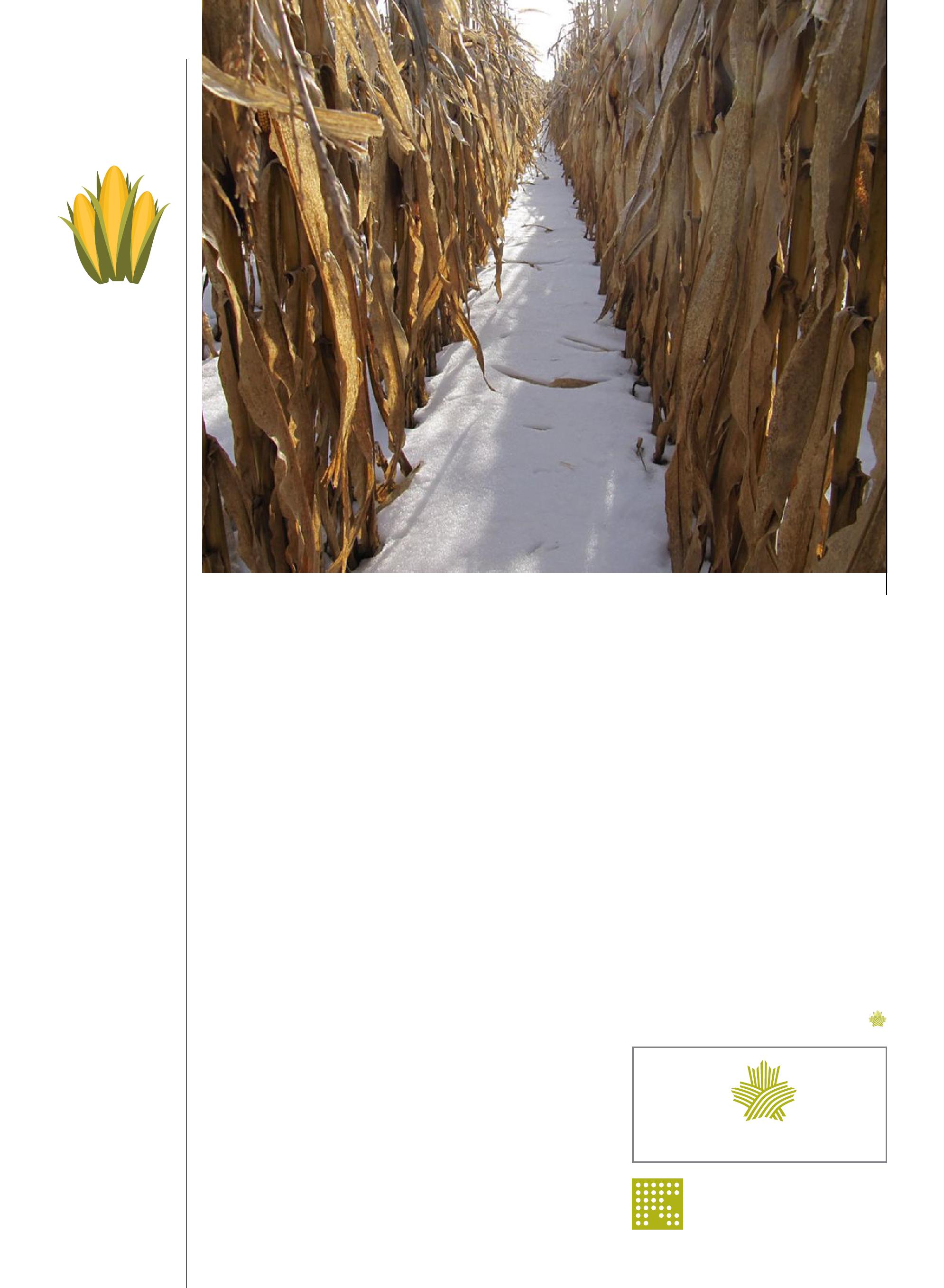
Every year, at least some growers are tempted to let their corn overwinter in order to allow it to dry. But be warned: Hooker says that although this management strategy does decrease costs, its negative consequences outweigh any gain.
“We’ve done some projects looking at leaving corn on
purpose over winter. What we saw was severe lodging, to the extent that the losses were so high they negated any savings from drying charges,” he says. “No grower plants corn saying, ‘I’m going to harvest it in the spring.’ Leaving it is always a consequence of the weather. If you’re into November and your grain moisture is still at 35, the chance of it coming down is very low because of the cold and humidity. My recommendation is to not leave a crop out over winter unless absolutely necessary.”
To have any chance for spring harvest, a corn crop must have excellent stalk strength and crop standability in the fall.
Finally, one last best management practice: cross your fingers for a warm, open fall. After all, Mother Nature ultimately retains the majority of control over every stage of the growing season.