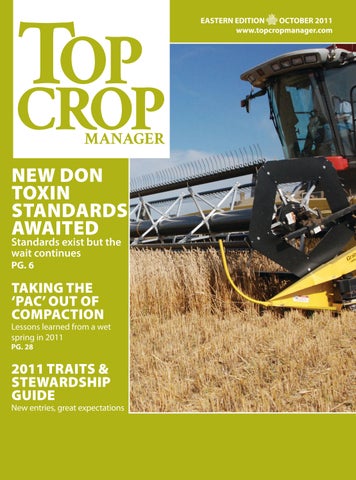
6 | New DON toxin standards awaited Standards for deoxynivalenol (DON) levels in wheat and other products are still under review.
By Heather Hager, PhD
14 | Diverse plant sources tapped for disease resistance in wheat
A sense of urgency is driving many of the searches, both near and far.
By Carolyn King
Expiry of patent on Roundup
Ready technology
Growers need to understand the timeline and any conditions for saving and growing off-patent seed.
By Blair Andrews
2,4-D herbicide-tolerant crops arriving soon
Dow AgroSciences develops Enlist Weed Control System for corn, soy and cotton.
By Donna Fleury
Pioneer. Pioneer.
10 | Increased interest in double-cropping soybeans
The conditions have to be right, but the benefits can be surprising if it works.
By Blair Andrews
26 | Heavier corn residue is the new reality
The quantity of corn residue is increasing, and managing it is ma must.
Taking the ‘PAC’ out of compaction
The wet spring of 2011 left most soils with some degree of the problem.
By Rosalie I. Tennison
Staying ahead of nematodes
Much-needed new methods of control coming to the Canadian market in the near future.
By Treena Hein
30 | Addressing the soil K decline
Regional declines in soil potassium (K) highlight the importance of maintaining fertility checks and balances.
By Heather Hager, PhD
It’s not new; it’s evolving New design, new look, but the same commitment to quality.
By Ralph Pearce
Study of large commercial producers
Extensive survey was done for retailers, but growers can learn plenty.
By Ralph Pearce
RALPH PEARCE | EDITOR
Iknow, I know; there is definitely something different about Top Crop Manager! A new cover, a new logo, and a new layout inside.
What’s going on?
Well, certain things about our magazine have, in fact, been changed. By the same token, some of our hallmarks have remained the same. Yes, we have a new cover. Yes, the logo has been changed, too. And both are a reflection of things we have been hearing from people in the industry for several years, now. Take the name, for instance; at trade shows and conferences, people approach me, shake my hand and ask, “So how are things at Top Crop?” It is as if the “Manager” is an understood. So the emphasis with the new logo is, fittingly, on “Top Crop.”
As far as the cover is concerned, yes, the previous design has been a standard for nearly 30 years, and some believe the time has come to try a fresh look. No doubt there will be those who prefer to stay with the familiar. However, there is a quote that reminds us all that, “one does not discover new lands without consenting to lose sight of the shore.” In these times, to stand still and do nothing is to stop growing.
Commitment to you remains the same
Besides, appearance is only part of the picture. We may be changing the brand, and what is on the outside, but what is inside – and what you have come to know and expect – is unchanged. Our short, one-sentence summation of what we do –“help growers grow a better crop” remains the same. We are still intent on providing you with insights and information on plant breeding, traits and technology, agronomics, the latest from the seed, chemical and equipment sectors, as well as market trends and farm business applications.
We know what you like about this magazine, and believe me, those things are not going to change.
A sign of the times
As you will see by this year’s edition of our Traits and Stewardship Guide there are some interesting changes there, as well. For instance, we welcome Dow AgroSciences as a new sponsor but we have also altered the layout of the guide. Gone is the hybrid refuge matrix, replaced by a significant growth of new technologies coming to the market in corn hybrids and soybean varieties. Interestingly, it is the addition of more “refuge in the bag” hybrids that has pushed the matrix right out of the guide.
Change can be very unsettling, especially when there is so much comfort that comes with familiarity. That is why we have left those aspects in which you find the greatest value intact and unchanged. As always, we welcome your comments and input on the scope, content and appearance of Top Crop. It is, after all, a reflection of what you want to see in a farm magazine.
PRESIDENT Michael Fredericks mfredericks@annexweb.com
RETURN UNDELIVERABLE CANADIAN ADDRESSES TO CIRCULATION DEPT.
Printed in Canada CIRCULATION
SUBSCRIPTION
n ew d On tOxin standards awaited
Standards for deoxynivalenol (DON) levels in wheat and other cereals are still under review.
by Heather Hager, phD
From field to plate, growers and processors all along the wheat products value chain are worried about the potential outcomes of Health Canada’s review of deoxynivalenol (DON) toxin standards. And it is no wonder. The absence of Canadian DON standards for hard wheat and the tightening of standards in the European Union have resulted in some regulatory misunderstandings. Wheat dumping, refusal to purchase harvests, potential food recalls –even the national regulatory agency responsible for enforcing the existing standards has seemed to be confused about which standards to use.
“In some written and oral communication to millers and further processors, CFIA (Canadian Food Inspection Agency) has advised that Health Canada intends to adopt the European Union (EU) guidelines for DON and that the agency is therefore applying a maximum limit of 0.75 parts per million. In other written and oral communication, CFIA has advised that since
there are no established guidelines for OTA [ochratoxin A] and DON, they are taking a zero tolerance approach…,” according to recorded testimony from Derek Jamieson, vice-president of p & H Milling Group, to the Standing Committee on Agriculture and Agri-Food in October 2009 (40th parliament, 2nd Session), at a meeting convened specifically to address DON standardsrelated issues.
A complete transcript is available at www.parl.gc.ca/Housep ublications/ p ublication.aspx?DocId=4157075&Language=E& Mode=1& parl=40&Ses=2.
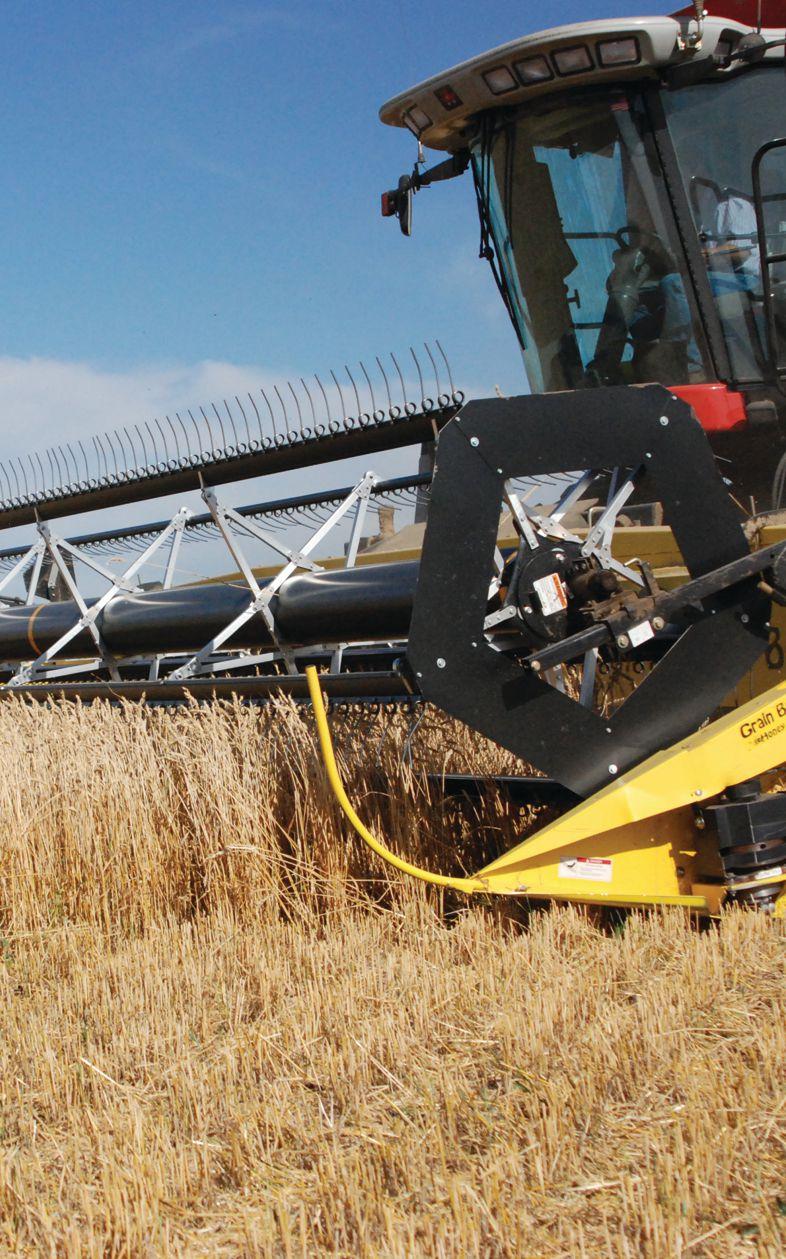
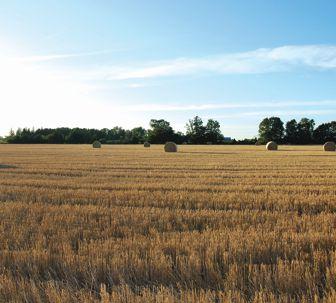
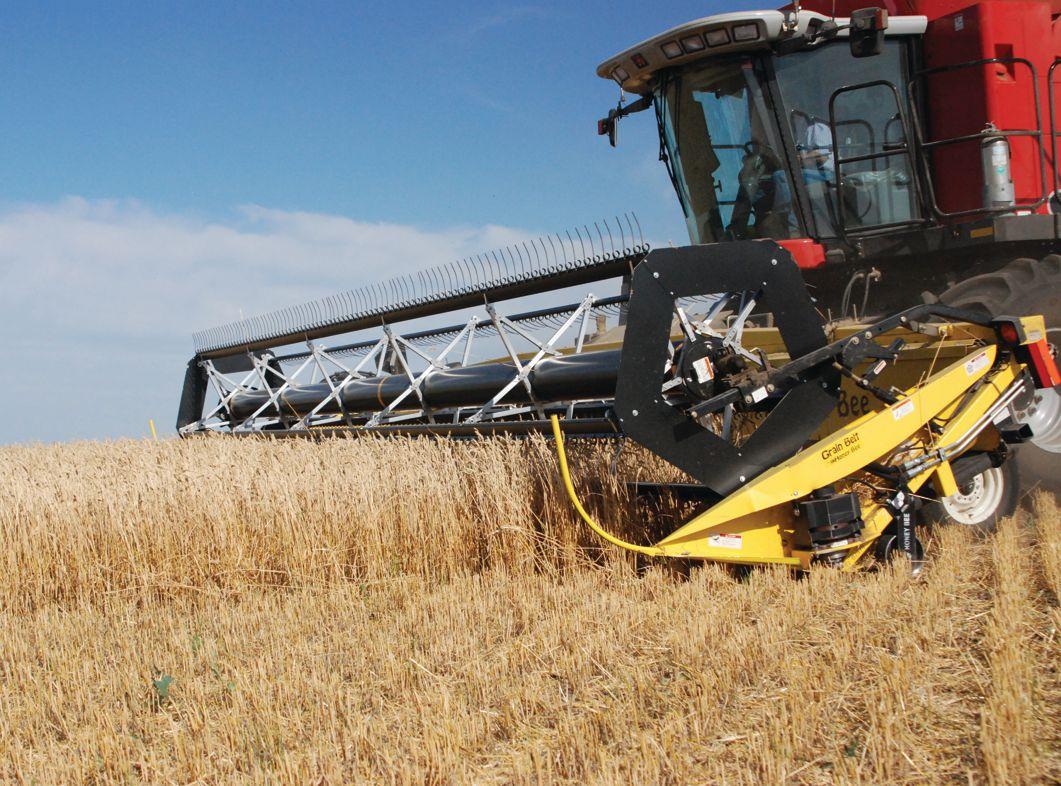
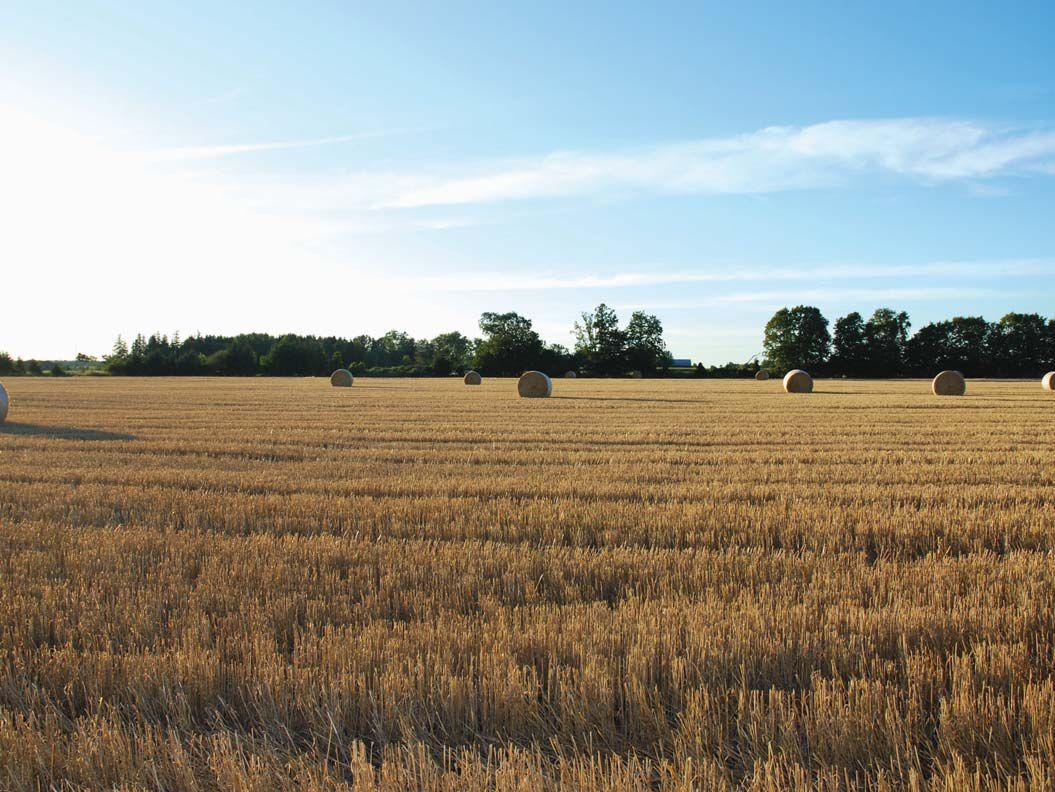
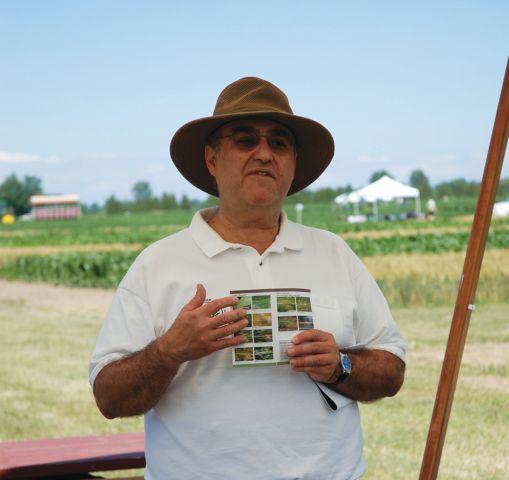
TOP: The prospect of DON limits becoming so stringent that a large proportion of wheat will not meet milling quality is of particular concern to growers in the traditional Fusarium head blight areas.
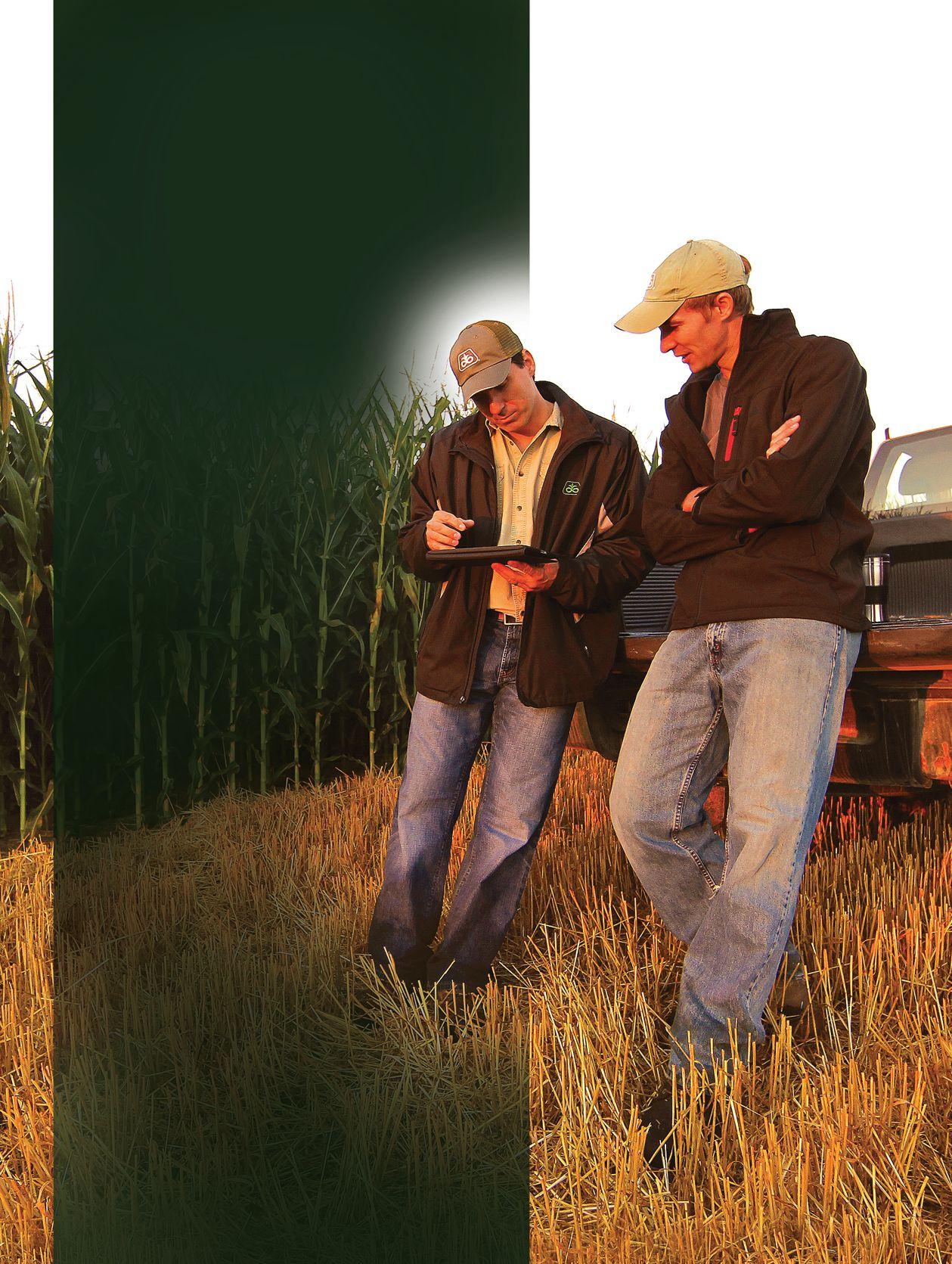
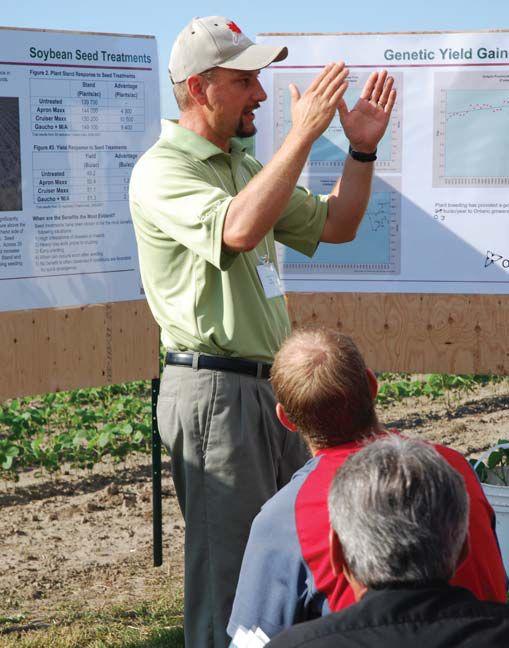
INSET: To be prepared for future crop production, farmers and millers need to be informed about the status of standards reviews, their timeFlines and potential Foutcomes.
Nothing has changed
In fact, Canadian DON standards have not yet changed. They remain under review by Health Canada, with a “revised health risk assessment anticipated to be completed by late this calendar year (2011) at the earliest,” according to Health Canada spokesperson Leslie Meerburg. DON standards are also under separate review by the Codex Alimentarius Commission, a joint Food and Agriculture Organization (FAO) and World Health Organization (WHO) body that develops international food safety guidelines.
However, there remains speculation, rumour and fear among Canadian growers that DON limits will become so stringent that a large proportion of their wheat will not meet milling quality. This is particularly a concern in traditional Fusarium head blight areas, where environmental conditions are often beneficial for the DON-producing Fusarium pathogen, and because crop resistance to the pathogen is not great.
It is also a concern for grain elevators and millers, as well as bakers, who particularly want to avoid food recalls, which can be damaging to their brand. “ people are saying, ‘Well, I don’t know if I can buy this grain or not’,” says Richard p hillips, executive director of the Grain Growers Association of Canada. “So it causes confusion and uncertainty all the way back through the value chain.”
That can lead to lower prices at the farm gate, he says, because each entity in the chain is taking more risk and must increase the profit margin to account for it.
To be prepared for future crop production, the industry needs to be informed about the status of these standards reviews, their timelines and potential outcomes.
International standards review
The international review of DON standards under the Codex Alimentarius Commission has been ongoing for some time. According to the most recent report of the Codex Committee on Contaminants in Foods (CCCF), consideration of maximum levels for DON was discontinued in 2007 because of a lack of data. The work was restarted in 2010, with Canada chairing the working group on DON.
The first draft recommendations were completed in January 2011, says Gordon Harrison, president of the Canadian National Millers Association. The 27-page document, titled Proposed Draft Maximum Levels for Deoxynivalenol (DON) and Its Acetylated Derivatives in Cereals and Cereal-based Products , summarizes much of what is currently known about DON, including toxicological effects, sampling methods, incidence and exposure data, milling and processing effects, and risk management considerations. The document proposes maximum limits for DON of 2 mg/kg (2 ppm) in “raw wheat, maize and barley, to be subjected to sorting or other physical treatment before human consumption or use as an ingredient in foodstuffs”; 1 mg/kg (1 ppm) in “all foods derived from wheat, barley and/or corn, including those intended for direct human consumption, except cereal-based foods for infants and young children”; and 0.5 mg/kg (0.5 ppm) in “cereal-based foods for infants (up to 12 months) and young children (12 to 36 months).”
As per procedure, the draft proposal was circulated to member countries and interested parties for comment and then discussed at a conference in the Netherlands in March 2011. The draft did not proceed to the finalization stage, but was returned to the working group for further development, including developing sampling plans, gathering additional data and reconsidering some of the proposed standards categories. It will be recirculated and reconsidered at the Committee’s next session, according to the Report of the Fifth Session of the CCCF
“As a member of the World Trade Organization, Canada is expected to review official Codex standards to determine whether they would also be appropriate for Canada based on a Canada-specific assessment,” says Meerburg. “They are reviewed in terms of achieving an appropriate level of health protection for people living in Canada.”
Any such Codex standards that are developed will be based on international data and a global-level assessment. Individual countries could still implement different standards. Meerburg says that Canada is not obligated to adopt the Codex standards or could adopt different standards, “provided that there is a defensible basis for doing so.” She adds, “Assessments on a national level will use
SolutionS for Don?
Growers will need to make optimal use of the tools they have for managing Fusarium in wheat to minimize deoxynivalenol (DON) levels. Traditional plant breeding for Fusarium-resistant varieties that also have good milling and other characteristics will remain a high priority. Growers will also need to stay on top of scouting and timely fungicide application.
Another tool that may need to be reconsidered is genetically modified (GM) wheat. Wheat with GM resistance against Fusarium would be viable for the industry, only provided that it receives consumer acceptance, notes Richard Phillips, executive director of the Grain Growers Association of Canada. “I think a case has to be made that this will make your food safer,” he adds.
“Modern biotechnology is not accepted for wheat at this stage,” notes Judy Shaw, who is head of corporate and government affairs for Syngenta. “There really has to be more of an acceptance demonstrated. There has to be the will and the pull-through by consumers demonstrated to bring that forward.”
In fact, almost a decade ago, Syngenta developed a GM trait for wheat that gives it resistance to Fusarium. Field trials were performed in several areas from 2002 to 2004 through agreements with Agriculture and Agri-Food Canada (AAFC) and the Canadian Food Inspection Agency (CFIA). Shaw says that although the trait looked promising, consumers and the industry were not prepared to accept GM wheat at that time, so the research was put aside. “There is really no effective tool currently available to farmers that will ensure lower levels of DON,” says Shaw. “That’s where this trait has been particularly outstanding; the DON levels are greatly reduced in the research trials.”
However, she notes that even if consumers and industry were to indicate that they would accept GM wheat, it would still take another 10 years or so to insert the trait into Canadian wheat varieties and complete the requisite testing and registration before those varieties would be available to growers.
scientific data that are more applicable to Canada and the Canadian population to address the specific national situation.”
Such data could include patterns of grain consumption and Fusarium occurrence and virulence in Canada.
National review
Meanwhile, Health Canada is conducting its own DON health risk assessment for Canada, after which it will develop risk management options. “A broad consultation will then ensue, during which time stakeholders will have the opportunity to comment on any proposed risk management options,” says Meerburg. “Health Canada will review the comments and modify the options, if warranted based on information submitted during the consultation, before adopting any revised risk management strategies.”
The current Canadian limits for DON that are under review are “2 ppm in uncleaned soft wheat intended for use in non-staple foods” and “1 ppm in uncleaned soft wheat for use in baby foods,” as listed on the Health Canada Bureau of Chemical Safety website. These do not differ greatly from the proposed maximum limits that were discussed by the Codex Committee.
Health Canada is conducting its own DON health risk assessment for Canada, although for now, the agency cannot give any indication of how the standards might change.
One of the major issues growers and processors have with the current Canadian limits is that they are not comprehensive enough, only covering soft wheat, but not hard wheat, flour or other products. According to Jamieson’s statement to the Standing Committee on Agriculture and Agri-Food, “The flour milling industry is on record as asking Health Canada for hard wheat guidelines since 1994.”
Because no direction has ever been given, the millers, through the Canadian National Millers Association, set their own standard in 2003 of 1 ppm maximum on flour, says Sheilagh Arney, Canadian director of quality assurance, research and development, and regulatory and technical services for ADM Milling. “And those are the levels that we continue to meet until Health
Canada and the Canadian Food Inspection Agency decide what levels they’re going to put in the regulations,” she adds.
But what those levels might be is anyone’s guess. Health Canada would give no indication of how the DON standards might change. “Health Canada’s review of the DON health risk assessment is not completed,” states Meerburg. “Therefore, we do not yet have a basis upon which to consider risk management.”
Factors to consider
The finalization of new DON standards for Canada would bring stability and reassurance to the country’s wheat value chain, but only if they are at a level that is achievable with the Canadian wheat crop. Arney says that millers must keep careful track of the DON levels in every lot of wheat they receive. Because Fusarium is so prevalent in eastern Canada, millers are often limited in the amount of eastern-grown wheat they can use at any given time, although it does differ by growing season. Millers meet their selfimposed DON standard of 1 ppm on flour by blending different lots of wheat. “I don’t know what Health Canada is going to decide is acceptable,” notes Arney, “but we’re hoping that 1 ppm is the level that they’ll agree to because it has been doable even in poor crop years because it’s able to be blended. Any lower than that and I think people would be hard pressed in years when most of the crop is grade 2s.”
p hillips concludes, “The biggest thing that has to happen is that the government has to talk to industry sooner so that we can see what’s coming down the road and be prepared and either make a case as to why it shouldn’t happen, or figure out how we’re going to adapt to it, and/or figure out what is a proper time frame for this to work itself into our system.”
Such upfront and continuing communication would go a long way in minimizing confusion and disruption within the industry.
t he result is exhilarating w he n two thi ngs are
Perfectly Matched.
With DEKALB ® brand’s pairing of genetics and traits, you can really go places.
A perfect pairing delivers more than the sum of its parts. That’s what happens when we bring together DEKALB brand genetics with Genuity® trait technology. With DEKALB® Genuity® VT Double PRO™ corn hybrids, farmers get the benefits of multiple modes-of-action for above-ground insect protection along with reduced refuge to just 5% of planted acres. Contact your DEKALB dealer today or visit us on-line at DEKALB.ca and see how exhilarating it is to have our combination of genetics and traits working on your farm.
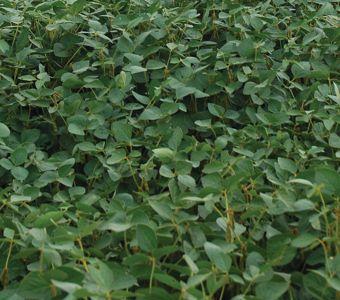
The conditions have to be right, but the benefits can be surprising if it works.
by Blair Andrews
Whenever a favourable growing season takes shape, growers can become a little more creative. In 2010, the excellent growing conditions sparked renewed interest in doublecropping soybeans after winter wheat, something that is not likely being considered in 2011. However, in 2010, with the potential of an early harvest looming, some farmers were weighing the options of returning to the wheat fields to plant soybeans.
Double-cropping soybeans in Ontario is viewed by many as a gamble, comparable to betting on a long shot. Several weather-dependent factors have to work to the farmers’ benefit: the wheat must be harvested early, adequate soil moisture is critical, and a warm fall is required to extend the growing season.
While these factors seem to heavily stack the odds against producing a feasible crop, careful management by some producers is improving their chances. Eric Richter, territory manager for Syngenta Seeds and a certified crop advisor, prefers to describe double-cropping as a calculated risk, rather
than a long shot. Richter experimented with the idea 10 years ago with the help of four farmers in northwestern Middlesex County in Ontario. Noting that double-cropping still carries some risk, Richter says three dates in July – the 10th, 15th and 20th –can help farmers determine whether they should take a chance on planting soybeans after the winter wheat harvest. “It’s very much a calculated gamble. If you can be on the earlier side of the 10th, it’s not a gamble: the odds are 75 to 80 percent in your favour of a feasible, profitable crop,” says Richter. “Once you pass the 15th, the odds drop, in my opinion, to 50 percent and they go against you 10 percent a day to July 20.”
If planting after the 20th, Richter says the chances of success are quite slim, adding that farmers should be resigned to the fact that they are planting a green manure crop by that time.
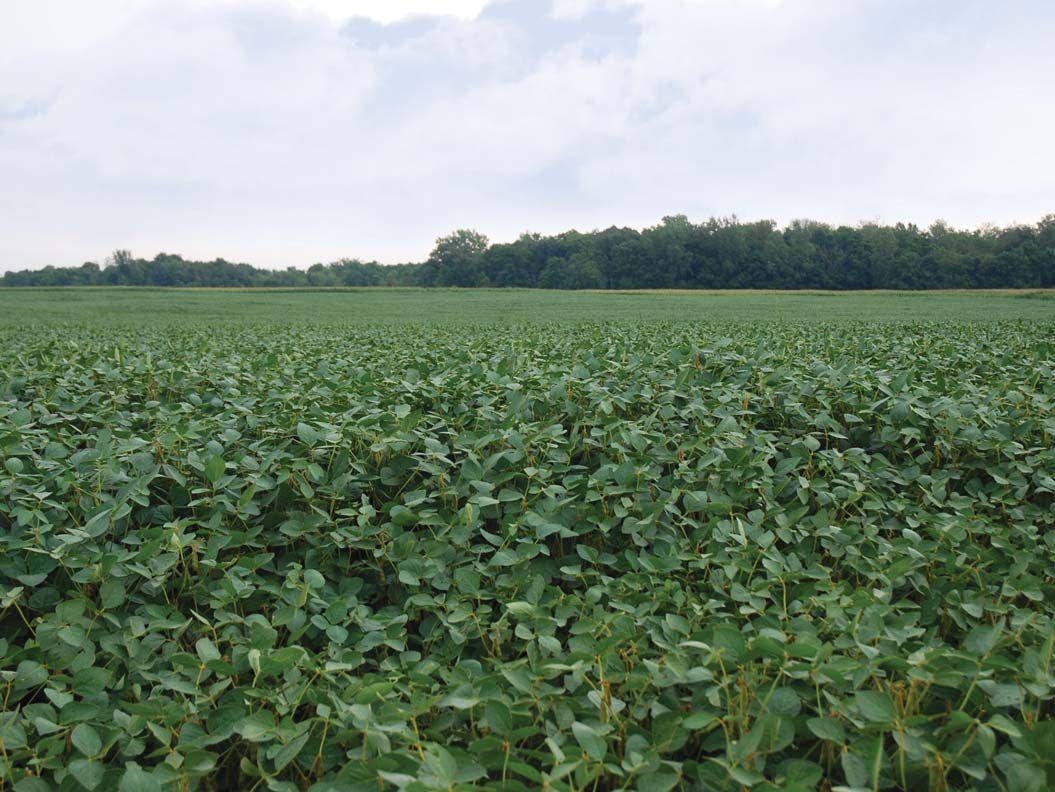
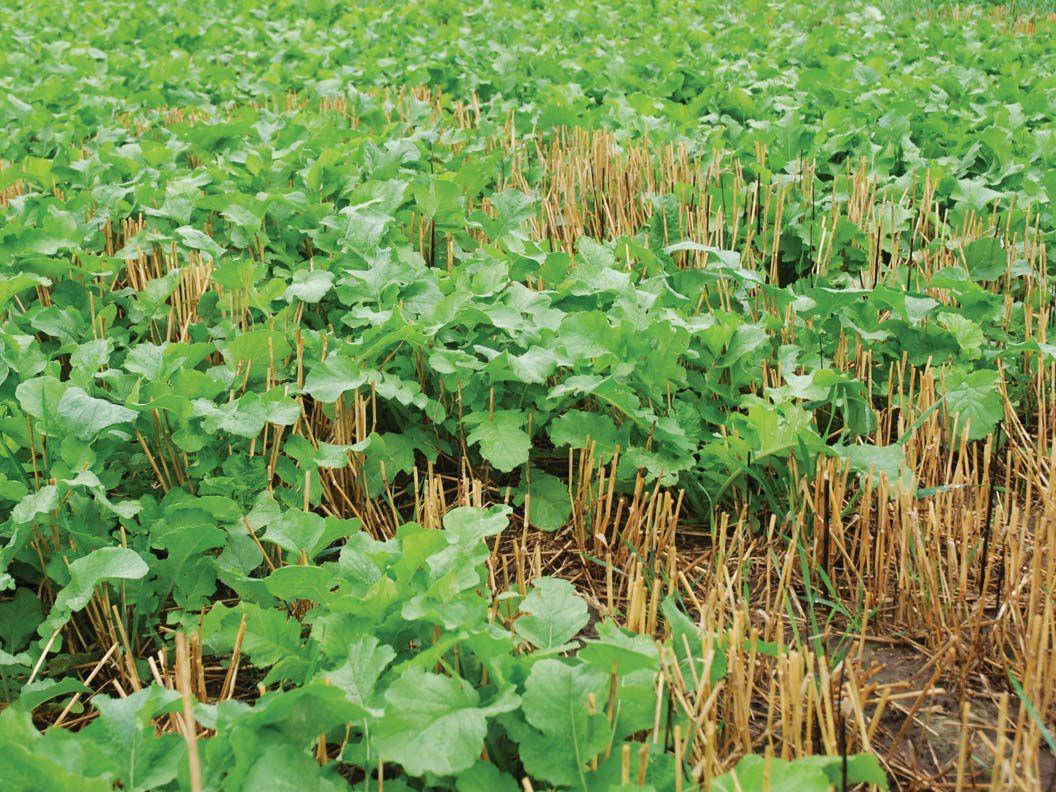
ABOVE: Planting soybeans into wheat stubble has its challenges, including wheat harvests after July 1 and hotter and drier conditions in July.
It’s easy to reach your goal when you team up the
Right Combination.
With dekalb ® brand’s combination of genetics and traits, you’re sure to create a winning soybean season.
Soybean farmers have discovered that something incredible happens when you bring together DEKALB brand genetics and Genuity ® trait technology. With DEKALB® Genuity® Roundup Ready 2 Yield® soybeans, farmers are finding more beans per pod, and more bushels per acre. It’s a combination that delivers a significant yield advantage over original Roundup Ready® soybeans. Contact your DEKALB dealer today or visit us on-line at DEKALB.ca and see how DEKALB genetics and Genuity® traits can help you achieve your yield goals this season.
The right conditions are imperative
The combination of an early harvest and timely rainfall lined up well in 2010 for Ian Matheson, a hog producer in Oxford County. It should be noted that Matheson double-crops soybeans after winter barley, allowing for an earlier harvest than winter wheat. Using a seeding rate of 300,000 per acre, Matheson’s soybeans were planted by July 9. They were harvested on Nov. 1 and 2, yielding 42 bushels per acre and 14 to 15 percent moisture. “We just had the ideal conditions: lots of heat and moisture at the right time to keep them coming along,” says Matheson. “We had rain two days after they were planted, and they were up in five or six days after they were in the ground.”
Matheson has enjoyed good success with double-cropping, noting that he has had only one failure since 2002. He says they lost one of their best-looking soybean crops two years ago because wet weather in late fall scuttled the harvest.
Another benefit
Although Matheson admits double-cropping is a gamble, he says the risk of not harvesting anything is reduced by a nitrogen credit resulting from the plowed down soybean crop. “The corn crop that goes into that field the next year usually ends up being our best corn. There’s a lot of residual nitrogen.”
Exactly how much is uncertain. But Matheson’s crop consultant, Wayne Currah of Trillium Agronomics in Hickson, Ontario, north of Woodstock, estimates the nitrogen credit at 20 pounds. Currah says it is also important to note that there is going to be a residual amount in Matheson’s fields from the hog manure from 2008 as well as from the 90 pounds of nitrogen that was applied to the winter barley.
There may be interest, but not always support Horst Bohner, soybean crop specialist for the Ontario Ministry of Agriculture, Food and Rural Affairs, is not convinced that doublecropping soybeans is worth the risk. “You are really shooting for yields of around 25 bushels per acre, so the economics in Ontario become pretty thin,” says Bohner. “It has certainly been tried before, and so far, I would say the success rate has been 50-50.”
In other words, Bohner says farmers have a 50 percent chance at growing a crop of 20 to 30 bushels per acre, if planting on July 1 in southwestern Ontario. “A quick rule of thumb is that you lose about one bushel per acre per day yield potential after July 1,” adds Bohner.
If farmers are fortunate enough to harvest their winter wheat early, the next critical requirement for a decent double-crop of soybeans is adequate soil moisture. “The soybean seed is a great big seed so it takes a fair chunk of moisture in order to get it germinated,” says Robert Moloney, sales and agronomy support for Syngenta Seeds. “In a perfect world, you’ve planted an inch and a quarter deep, and it gets rain within a day and it will all come up.”
For Moloney, receiving rain shortly after planting is paramount. With Ontario’s relatively hot and dry weather in July, Moloney suggests that there is inadequate moisture at one-inch deep. If farmers have to plant deeper to find moisture, he notes they run the risk of extending the time needed for the crop to emerge. “You have to get lucky with rainfall. To me that is the most critical thing in terms of actually getting something out of it, and to get the crop up and out of the ground,” says Moloney. “Then you have to hope that you don’t have an early frost that’s going to take it out at other end of the season.”
The views on the potential nitrogen credit are mixed. Echoing Matheson’s comments, Richter believes the return is significant, creating the equivalent of 70 to 80 units of nitrogen. “They have far more than what you what you would give credit for a corn crop following a soybean crop that has been harvested, because the double crop is knee high or higher and it’s got all those pods with immature beans in them,” says Richter.
Bohner and Moloney are more skeptical. Noting that there are not a lot of data available in Ontario, Bohner estimates that a nitrogen credit from the double-crop soybeans would be similar to a normal soybean crop, which is about 30 pounds. “The reason it’s not a whole lot more is because the yield potential is lower for double-cropped soybeans and much of the N credit actually comes from a lack of corn residue and not from stored N,” says Bohner.
Sounding a cautionary note, Moloney also is not as excited by the prospect of plowing down a soybean crop for a nitrogen credit. “We do give soybeans a little bit of a nitrogen credit into a corn crop but it’s almost a negative credit; soybeans don’t leave a lot of the nitrogen they fix behind. But since there isn’t much residue they don’t tie up much of the soil’s residual nitrogen. This leaves more of this soil residual nitrogen available for the corn crop,” reasons Moloney. “If you leave the wheat straw in the field, I would not give any N credit to the corn crop the following year simply because whatever nitrogen the soil is making available will be temporarily tied up breaking down the straw. Most guys probably aren’t going to give their soybeans a credit anyway, so I think it’s a wash. I do believe there is a credit there on all soybeans. It’s just that most growers don’t do it.”
When double-cropping soybeans after wheat, OMAFRA soybean specialist Horst Bohner cautions growers, delaying planting until after July 1 can mean a loss of a bushel per acre per day.
PHOTO BY RALPH PEARCE.
Additional factors to remember
Growers contemplating a double-crop have several other factors to consider. Crop insurance is not available. There is also the risk of increasing disease or soybean cyst nematode pressure by planting an extra crop of soybeans in the rotation.
In response to growers’ questions in the past, OMAFRA has of-
“The
seed, so it takes a
chunk
order to get it germinated,” says Robert Moloney.
fered a few guidelines, prefaced with reservations about the potential success of double-cropping soybeans.
After harvesting wheat as early as possible, OMAFRA says the chaff and straw should be spread evenly. An eight- to 12-inch stubble height is preferable to ensure stem elongation for higher bottom pod height without impeding early growth. Weeds should be controlled in the wheat, either before planting or before the emergence of soybeans. A herbicide program should also be planned around volunteer wheat.
The soybeans should be planted in narrow rows with seeding rates of 250,000 seeds per acre in 7.5-inch rows.
As for seed selection, small seeded varieties that produce tall plants are recommended, along with close to full season varieties. Full season beans will provide greater height and better pod set than shorter season varieties.
Richter says farmers should also keep the harvest season in perspective. Given the narrow window of opportunity, he suggests that farmers should plant a practical acreage and be prepared to switch from corn harvesting, if necessary. “It’s a lateOctober to November harvest, so no producer should do more than they can harvest in one to two days,” says Richter.
Given the questions from growers about double-cropping over the years, Richter says he is surprised more have not experimented with the idea. He cites the lack of crop insurance and the fact that farming is risky enough without trying something that may only have a 50 percent success rate as a couple of reasons why more have not tried it.
But Richter says farmers like Ian Matheson are finding ways to make double-cropping work in their favour. And much like veteran gamblers, they also know when not to push their luck. “They’re experienced enough now that they look at the calendar and if the wheat came off on the 18th of July, they don’t go running for the drill,” says Richter.
MORE BEANS
diverse plant sOurces tapped fOr disease resistance in wheat
A sense of urgency ins driving many of thne searches, both near and far.
by Carolyn King
Breeding programs may narrow genetic diversity by selecting the few plants with the best traits out of thousands of plants. But wider genetic diversity is needed for the crop to adapt to changing threats, like a new virulent strain of a pathogen. So wheat researchers are working to add vital new sources of diversity drawn from some exotic locations. “Genetic diversity is a determinant of genetic viability and vulnerability. When you have more genetic diversity, you have a better chance of adapting to different stresses in the changing environment,” explains Dr. Yong-Bi Fu at plant Gene Resources of Canada (pGRC) in Saskatoon, Saskatchewan. pGRC, which is part of Agriculture and Agri-Food Canada (AAFC), houses the national collection of plant germplasm – seeds and other plant tissues from which new plants can be grown.
Fu uses advanced molecular tools to assess the level of genetic diversity in Canadian crop breeding programs and in pGRC’s collections. As part of this effort, Fu and Dr. Daryl Somers, now with the Vineland Research and Innovation Centre in Vineland, Ontario, examined 75 Canadian hard red spring wheat cultivars released from 1845 to 2004. “We found that overall the genetic diversity has been reduced by about 20 percent. And the loss of diversity is not just in one particular spot on the wheat genome; the whole genome is losing genetic viability,” says Fu.
This result has important implications. He says, “One implication is that we have an increased risk of vulnerability to stresses like disease and drought. Another is that it shows the importance of germplasm conservation, to provide a source of diversity for crop
breeders. Germplasm conservation is like insurance; you never know when another epidemic, drought or some other catastrophe might be coming.”
The study gives wheat breeders feedback on exactly how much diversity has been maintained or lost, and reminds them of the importance of minimizing such reductions in their own breeding programs.
According to Fu, wheat breeding programs in other countries also show diversity reductions. programs in some European countries have gone through decades with drops in diversity followed by periods with increasing diversity, depending on the breeding strategies used. Examples of strategies that tend to cause larger reductions in diversity include: over-reliance on a few elite lines as parents; and intense selection pressure, for instance when breeders develop varieties to meet a very strict, narrow set of market requirements.
An important strategy to increase diversity is to bring new germplasm into a breeding program. Wheat researchers draw from a wide range of sources, such as other crop species, wild plants and landraces (very old, locally adapted lines, to find new genes for disease resistance. Fu notes, “If our breeders hadn’t been bringing in new material, the diversity reduction would have been much higher, and perhaps up to 50 percent.”
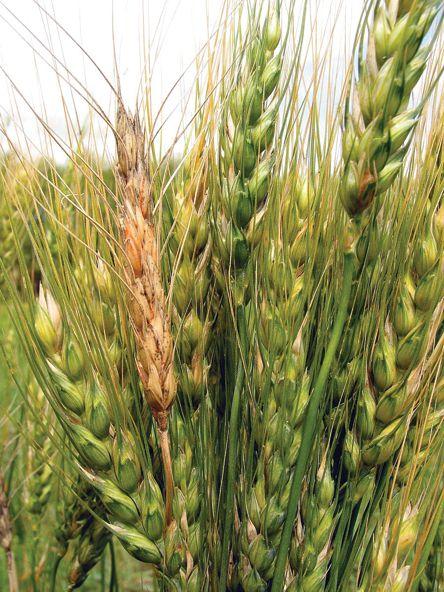
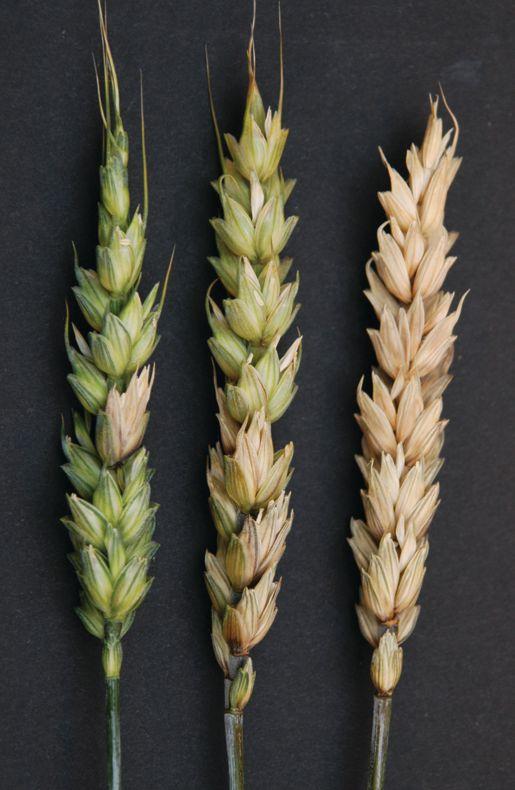
ABOVE: All three of these heads have been inoculated with FHB. The head on the right is the US wheat variety Clark, which is highly susceptible to FHB. The two heads on the left are Clark with added FHB resistance from a Chinese wheat; they show moderate to high resiFstance to FHB.
However, bringing in new genes from exotic sources is very challenging. It can be hard to make a cross between an elite wheat line and a wild species, and the cross results in offspring with a tangle of wanted and unwanted characteristics. So it requires backcrossing for many generations to get back to that elite quality. The development of molecular markers can be crucial in these efforts. Researchers use these markers to screen progeny to see if a specific gene or set of genes they want to transfer is actually present.
Fortunately, wheat researchers are meeting this challenge, producing wheat lines with resistance against two of the most significant disease threats to wheat: Fusarium head blight (FHB) and a virulent strain of stem rust.
FHB resistance genes from Asian landraces
Dr. Guihua Bai, a plant molecular geneticist with the Agricultural Research Service of the United States Department of Agriculture, is leading work on FHB resistance.” FHB reduces the yield and grade of cereal crops, and produce toxins that limit the use of the infected grain for food and feed.
Bai and colleagues at Kansas State University-Manhattan are screening diverse wheat lines, including landraces from China, Japan and Korea, to find new sources of FHB resistance. The researchers chose those Asian landraces because much of that region, especially southern China, has had high disease pressure from Fusarium for many years, so the surviving lines likely have some FHB resistance.
Additional sources of FHB resistance are needed for two key reasons. “Right now, the major source of resistance is a QTL, called Fhb1, from a Chinese wheat called Sumai 3. (A QTL – quantitative trait locus – is a chromosomal segment containing the gene for a trait.) That Sumai 3 QTL has been widely deployed worldwide and it has had great success, but it doesn’t completely give a desirable level of resistance. So we need additional QTLs from other sources to enhance the level of resistance,” explains Bai. “The other reason is, if we only use a single source of resistance, then one day the pathogen could evolve to overcome that resistance and we wouldn’t have any other alternative.”
Out of the first several hundred Asian lines screened, the researchers have found six very highly resistant lines, plus other lines with moderate to high resistance. All of the highly resistant lines have Fhb1 along with two or three other QTLs that contribute some resistance.
Bai is also leading in a major marker-assisted backcross program to transfer Fhb1 to popular US wheat varieties. He has taken a soft winter wheat variety called Clark that is susceptible to FHB and has created lines with high FHB resistance and yields equal to Clark’s. This is a very valuable advance because it is much easier for breeders to use one of these FHB-resistant US lines as parent material, instead of a Chinese line, which can carry a lot of unwanted traits.
Wide crosses for disease resistance in Ontario wheats
Another interesting effort involves crossing Ontario wheats with other plant species, including wild species, to introduce new genes for resistance to FHB, stem rust and leaf rust. This project is funded by the Grain Farmers of Ontario, AAFC and the Developing Innovative Agriproducts program. “The reason we go into crosses with wild species is to enrich the primary gene pool of wheat. There’s probably not enough variability in that gene pool for some traits, so we go to a secondary gene pool, which are the immediate wild relatives of wheat, and the tertiary gene pool, which includes some of the grasses like tall wheatgrass,” explains Dr. George Fedak, a wheat geneticist with AAFC’s Eastern Cereal and Oilseed Research Centre in Ottawa.
Fedak’s research team is finding new sources of FHB resistance in various wild species and is making good progress transferring these genes to wheat. He says, “For example, so far we’ve transferred resistance from Triticum monococcum, an early form of cultivated wheat, Aegilops speltoides, a wild cousin of wheat, Triticum timopheevii, a wheat species found in some parts of the Middle East, Aegilops cylindrical, jointed goatgrass, and Triticum miguschovae, a synthetic wheat developed from two wild species.”
The researchers have released the germplasm for some of these FHB-resistant lines, and for others, they are in the process of mapping the locations of the genes along the chromosomes and developing markers before releasing the germplasm.
Even quackgrass turns out to be a source of FHB resistance. Dr. pierre Hucl at the University of Saskatchewan made the difficult cross between quackgrass and wheat, and gave Fedak a bulk population from the seventh generation after the initial cross. Fedak’s team has screened all samples, found some lines with resistance to both Fusarium and stem rust, and is now mapping those genes.
They are also in the process of transferring FHB resistance from other crop species, like rye landraces from Brazil and an unusual triticale sample they found with FHB resistance.
Another major aspect of Fedak’s project involves resistance to Ug99, a virulent race of stem rust. This race was first detected in Uganda in 1999. Since then, the pathogen has mutated twice to overcome another two resistance genes. Ug99 has spread to many other countries and has the potential to reach the Americas. Fedak’s team is monitoring samples of the pathogen from Africa to watch for further mutations. All work with this pathogen is conducted under very strict containment protocols so it cannot escape into the environment.
Canada is fortunate to have two wheat varieties that already have resistance to Ug99, so Fedak’s team is moving those genes into other wheat varieties. As well, the researchers are putting various combinations of five known Ug99 resistance genes into Ontario wheats that have some FHB resistance. Developing varieties that carry at least two Ug99 resistance genes is very important because that means the pathogen cannot overcome the variety’s resistance in a single mutation step.
Fedak notes, “Four of those five Ug99 resistance genes that we’re using were actually produced many years ago by peter Dyck and Eric Kerber at Agriculture Canada’s Cereal Research Centre (CRC) in Winnipeg, Manitoba. They found the genes in wild relatives of wheat and produced these stocks. Other scientists at CRC such as Colin Hiebert are developing molecular markers for these genes. So the genes were sitting on the shelf, and now we’re using them to meet the threat of Ug99. “The pathogen is going to continue mutating and could eventually overcome these genes. So we have to continue going into wild species and finding new genes for resistance and have them ready and waiting.”
Fedak’s team is at work on that aspect, too.
The researchers are screening offspring from crosses between wheat and various wild relatives of wheat and other wild grasses, and believe they have found some new resistance genes. As well, the University of Minnesota sent Fedak 20 lines of rye and 20 lines of triticale that all appear to have different new genes for Ug99 resistance. Fedak’s team has started the first steps in bringing these new genes into Ontario wheat lines.
Fedak emphasizes, “This type of work should be ongoing, looking for more resistance genes in exotic sources, bringing them into a good wheat background, and having them ready as backup if and when the existing resistance genes break down.”
Company on the Move
Pride Seeds. Growing Through Performance and Technologies
With strong commodity prices, companies like PRIDE Seeds are receiving lots of interest in new technologies aimed at maximizing yield potential. “This year represents a breakthrough not only for yield potential but also refuge compliance simplicity,” says Stephen Denys, Vice President of Sales and Marketing with PRIDE Seeds.
“We have made a significant investment in our production facility to allow us to put in the same bag 95% of a PRIDE G8 h ybrid featuring Genuity SmartStax together with 5% of a matched refuge hybrid tolerant to both Roundup and Liberty herbicides,” says Denys. “This means growers will be automatically compliant with refuge requirements when planting PRIDE G8 RIB Complete hybrids and soon also with PRIDE G2 hybrids featuring Genuity VT Double PRO technology.” PRIDE Seeds will be marketing the production process under the 1BAG. ca label.
“Maximum yield potential, refuge compliance and maximum protection from insects including corn borer, corn rootworm, earworm and Western bean cutworm from one PRIDE G8 RIB Complete seed bag,” says Denys. “This addresses head on the needs identified by producers over the past several years.”
Denys notes that despite the bells and whistles and importance of new trait technologies, yield still starts with genetics. “Producers should meet with their PRIDE Seeds dealer to review what hybrids and technologies are best for their farm. With our complete PRIDE G Series of hybrids it is easy to match up the
best genetics and traits for a particular field situation.” Options range from the base PRIDE G3 package up to the premier protection and refuge simplicity offered by PRIDE G8 hybrids. “At the end of the day it is important to balance yield potential with agronomic needs.”
For soybeans, the PRIDE soybean variety portfolio is expanding again this year as the company remains focused on the PRIDE FX2 program featuring Roundup Ready 2 Yield technology combined with CruiserMaxx seed treatment and HiStick N/T or HiCoat S225 inoculant. “This combination is giving producers their best potential for maximum yields and return on the investment – we are seeing a real difference in the field.”
Growers need to understand the timeline and any conditions for saving and growing off-patent seed.
by Blair Andrews
When Monsanto introduced its Roundup Ready technology 15 years ago, it changed the way most farmers grew soybeans. With the expiry of the Canadian patent for the original technology in August 2011, the soybean growing landscape is about to shift again.
Officials with Monsanto and other seed companies say there are several implications for farmers as the first widespread plant biotechnology trait goes off-patent.
While the development may pave the way for farmers to save original Roundup Ready soybean seeds, without penalty, for the first time, there are still some limitations that farmers and seed dealers need to be aware of. Given the complexity of the development, Mike McGuire, Monsanto Canada’s president and general manager, says the company started preparing for the post-patent era as far back as 2006.
McGuire notes the first priority was to be clear about when people had the freedom to save the seed.
Although the patent ended in August 2011, the contract obliga-
tions to not save seed under Monsanto’s Technology Stewardship Agreement (TSA) remain in effect. “We don’t want people jumping the gun a year ahead and then finding out later they made a mistake,” says McGuire, adding that the company will continue to operate the Technology Protection Field Check program while the TSA remains in effect. “We want to avoid the scenario where we do a random check on a farm and find out a customer has made a bad decision (about saving seed at the wrong time) because he wasn’t informed,” says McGuire.
Since early January 2011, Monsanto has been promoting several key milestones associated with the patent expiry:
• In 2012, a farmer may decide to buy certified original Roundup Ready seed from a company holding a valid licence for original Roundup Ready soybeans, without any contractual obligations or royalty payment to Monsanto.
ABOVE: Growers are likely to continue growing the next generation of Roundup Ready soybeans, given the popularity of the original technology.
PHOTOS BY RALPH PEARCE.
• Also in 2012, a farmer may decide to save seed from the 2012 harvest for replanting in 2013, as long as the seed company from which they purchased the seed for 2012 planting does not have any contractual obligations preventing them from doing so.
• In 2013, a Canadian farmer may decide to plant original Roundup Ready soybeans saved from his own seed.
As for the second point about seed companies having contractual obligations preventing farmers from planting saved seed, McGuire strongly suggests that farmers check with their seed company because there are some that will impose obligations.
For example, pioneer Hi-Bred has always had obligations that limit seed to a single use. “preserving intellectual property by limiting seed to single use allows us to reinvest into research and product development,” says Dave Harwood, pioneer technical services manager, of the contractual obligations. “Research investment is driving yield gains that increase the profitability of Canadian farmers.”
In another case, Syngenta Seeds has contractual obligations for its aphid-resistant, glyphosate-tolerant Aphid Management System (AMS) soybean varieties. Dave Townsend says contracts are needed because the company must be able to track the aphid management system in order to preserve the gene’s resistance. “It’s a full system so that we’re making sure we’re not getting any aphid populations that are developing resistance to the aphid resistance gene that we’ve got in there,” explains Townsend. “We’ve got CruiserMaxx for early season protection and then we’ve put in the Rag1 gene for aphid resistance that works together with the beneficial insects. If we ever do go over aphid population thresholds, we need to be able to inspect it and go back out to the field and spray to control that population.”
In addition to AMS varieties, Townsend says farmers using varieties with the original Roundup Ready soybean technology will be contractually obligated not to save seed.
Moving forward
As the industry moves into the post-patent era, seed companies will be offering a number of new technologies that are touted to boost yields beyond the original Roundup Ready technology. Monsanto has moved to what it is calling the second generation
of soybean technology, Genuity Roundup Ready 2 Yield, which is covered by a different patent than the first generation. As a result, the changes affecting the use of original Roundup Ready do not apply to the Genuity Roundup Ready 2 Yield.
It will also form the platform for the other technological innovations the company is working on, including dicamba-tolerant soybeans, low saturate fat soybean oil and Omega-3 soybeans.
McGuire is confident that once growers make detailed comparisons, they will choose the new technology over original Roundup Ready saved seed. “Seed companies are not going to produce Genuity Roundup Ready 2 Yield if farmers are not going to buy them, and there are strong indications that most of what they are going to have for sale is the new technology because they’re just yielding better,” said McGuire. “It doesn’t take long until you get to 2014 when we’re going to launch the dicamba-resistance stacked with Genuity Roundup Ready 2 Yield, which we’ll really be anxious to offer as a weed resistance management tool.”
Townsend concurs, saying the new technology is producing higher yields. “We’re seeing around a two-to-four bushel per acre boost on average over our current lineup in our plots and we’ve been doing that for the last two years.”
While pioneer does not have plans to include the Roundup Ready 2 technology in its varieties, Harwood is quick to point out that he believes yield is a function of genetics and management, not a specific trait for herbicide resistance. “Our trial data shows pioneer’s Y series soybeans with the original Roundup Ready trait perform very well against competitive RR2 varieties,” says Harwood. “Our right product, right acre approach maximizes the yield potential of growers based on their unique management needs in conjunction with our genetics. We think our customers appreciate having a choice.”
pioneer is working on another technology, Optimum GAT, that is aimed to provide glyphosate and ALS tolerance, and would be stacked with the original RR trait. “It is our first choice as we look to expand our herbicide tolerance and we continue to pursue its commercialization,” Harwood explains.
Harwood says another technology in the pipeline is a trait profile that combines the Roundup Ready 1 trait with a 2-4-D resistance trait developed by Dow AgroSciences. “pioneer has a licence for that trait. So we have two emerging herbicide technologies that will come to the market in the latter part of this decade,” he says.
Beyond the key date of 2013, Monsanto will continue to provide global regulatory support for soybeans grown from the original Roundup Ready technology until 2021 to allow the harvested crops to be sold and processed in domestic and international markets.
As Canada moves into the new era, the shifting landscape is being gauged by crop industry watchers across North America. The reaction of Canadian agriculture could provide a preview for growers and seed companies in the US, where that country’s patent protection for original Roundup Ready soybean technology remains in place until 2014.
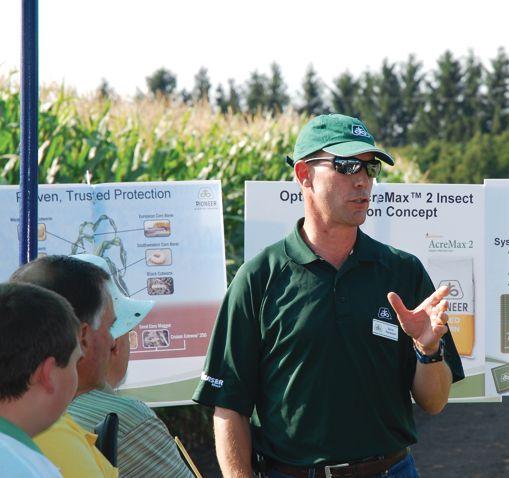
Yield is a function of genetics and management, not a specific trait for herbicide resistance, says Pioneer’s Dave Harwood.
staying ahead
Of nematOdes
Much-needed new method of control coming to the Canadian market in the near future.
by Treena Hein
Before long, a new method for battling nematodes will be available to Canadian farmers, and its arrival will come none too soon. “We’ve identified more types of nematodes in the US and Ontario and it’s a big concern,” says Albert Tenuta, field crops pathologist with the Ontario Ministry of Agriculture, Food and Rural Affairs. He notes that there has been a void in the overall crop management platform in terms of controlling these pests. For years, all that farmers have been able to do was rotate their crops and plant resistant varieties, but the former has been found to be almost completely ineffective on its own, and the latter needs improvement.
“ populations of the root lesion nematode, which affects corn, tobacco, wheat, potato and other crops, are not affected by crop rotation, and it’s also well known that rotating away from soybean doesn’t reduce the impact of soybean cyst nematode either,” says Luc Bourgeois, research and development manager for horticulture and row crops at Bayer CropScience Inc.(Canada). “Nematodes are a yield robber in many crops, but corn and soybean represent the biggest potential yield loss in field crops.”
The use of resistant varieties certainly helps, and switching varieties from year to year is a wise idea, but development of more resistant genetics is sorely needed. “It’s important to remember that no resistant variety will repel every type of SCN (soybean cyst nematode), and current resistant soybean varieties have one of two genes that confer some resistance, which is a rather precarious situation as nematodes are starting to overcome the resistance,” says Tenuta.
In corn, the situation is much more dire, however. Tenuta says corn hybrids have yet to be studied for the degree of resistance and resistant genes have not been identified either. “In the future,” he says, “hopefully that will be rectified, and in both corn and soybean, we’ll see more resistant genes and different genes incorporated into the same plant.”
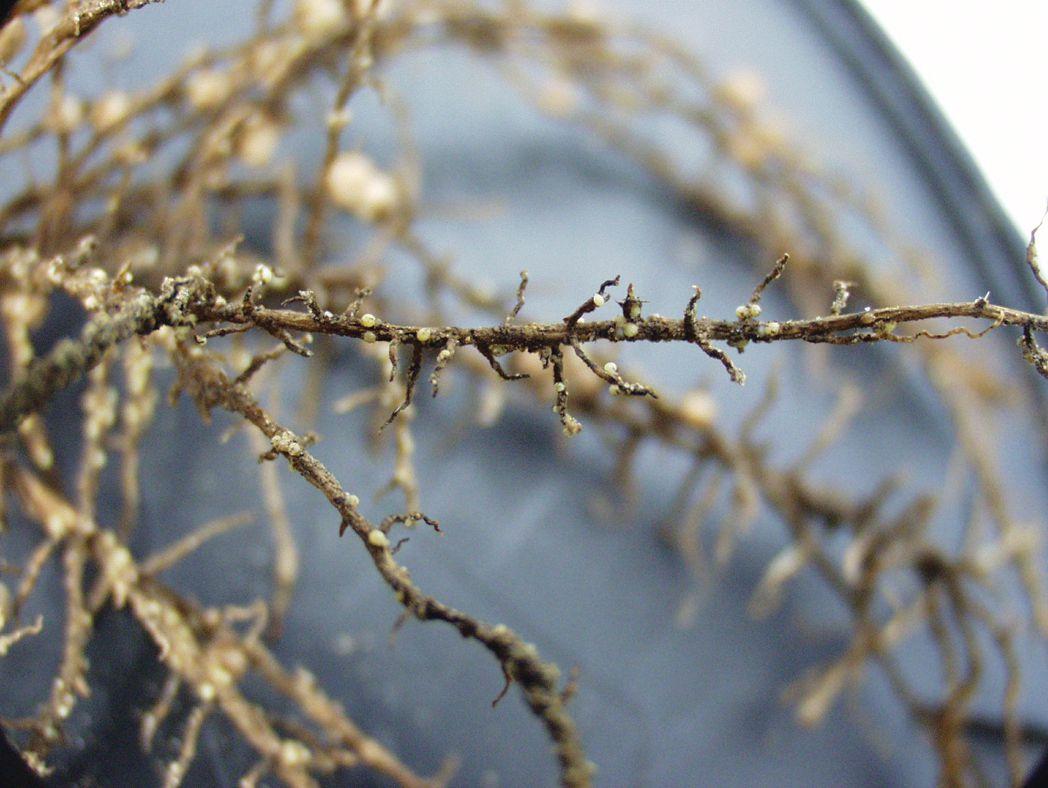
ABOVE: Soybean cyst nematode has become more of a yield robber in the past 10 years, and for now, growers can plant only resistant varieties or switch varieties from year to year.
the industry, says OMAFRA pathologist Albert Tenuta.
New control method
Nematicide seed treatments, a new mode of action, are therefore a promising and welcome new option. “The need from an industry standpoint is there, and the sooner we can get them registered in Canada, the better,” notes Tenuta. “Some work better than others, and there are a number of very promising ones.”
The decrease in nematode pressure that the treatments provide mean better plant health and, depending on variety and location, a yield improvement in corn and soybeans of up to 15 percent or better. Soybeans from nematicide-treated seed show reduced symptoms of stress and better maturation. Tenuta adds, “There is definitely a beneficial synergism with fungicides, insecticides and nematicide treatments. They seem to help each other.”
In participation with the US North Central Soybean Research program, and with funding provided by the Grain Farmers of
Ontario through the Farm Innovation program (a component of Growing Forward), Tenuta and colleagues in the US and Canada such as Agriculture and Agri-Food Canada’s (AAFC) Tom Welacky have just completed the first year of a three-year project to test various nematicide seed treatments against SCN. The study involves 26 sites in 12 US states and Ontario.
Some of the seed treatments in the study are experimental and some are registered for use in the US. Some of the treatments are chemical in their makeup, and attack nematodes directly, while others are biological. “Biological nematicides consist of bacteria, such as Rhizobacteria , that grow with the plant’s root system and protect the soil-root interface,” Bourgeois explains. “The bacteria feed on the root exudates, which are what attracts nematodes to the roots, so with the treatment, the signalling the nematode would usually get to let them know a root is there is not present.”
However, no biological treatments work perfectly, and nematodes can still run into the root by chance.
Since 2009, Bayer has developed a biological-based seed treatment called Votivo, which was registered in the US during the winter of 2010-11, and first sold in the US this past spring. It works in both corn and soybeans, and Canadian registration is hoped for in early 2012. When asked about cost, Bourgeois explained that Votivo is sold as part of Bayer’s poncho seed package, and it is therefore very hard to tease out how much of the total cost covers different seed treatments and the genetics of the seed itself. “It was a big learning curve to develop Votivo,” he notes. “Nematodes are tiny and hard to work with, and it’s also an area of research that is lacking in experts.”
He says many nematologists have retired, and hopes that universities and AAFC will place importance on starting to cultivate a new generation of expertise. Because nematodes are such a big concern, Bayer is also screening a range of other potential products, both biological and chemical.
the only thing growing in AlbertA SoybeAnS iS yielD
While growers, researchers and extension personnel in Ontario continue to grapple with various forms of nematodes in soybeans, their western Canadian counterparts are focused only on growing the crop.
In southern Alberta, 2010 was a year of disappointing yields, with a range of 17 to 40 bu/ac. Yet the lower yields were not enough to discourage growers, with acreage expected to double for the 2011 growing season, from 5700 in 2010 to 10,000 acres.
The biggest challenge for soybeans, even in southern Alberta, is the weather. Patrick Fabian of Fabian Seed Farms at Tilley, Alberta, has been growing soybeans since 2005, and was hit by three hard frosts between Sept. 6 and 17 in 2010. Based on pod counts, he estimated his yield should have been in the 46 to 52 bu/ac range.
For now, Roundup Ready soybeans are favoured, primarily for the ease of weed control. Familiarity with the crop makes it more challenging to try identity preserved (IP) varieties, although Fabian notes there are buyers in Lethbridge, Coaldale, and further east into Manitoba that are waiting for growers to develop the management skill
needed for IP production. “We had been struggling to develop more markets,” says Fabian. “The buyers are asking for more product before they start buying large volumes, and farmers have been hesitant to increase production without the markets. That is starting to change now with the increasing acres.”
One quality that is unique to southern Alberta production is the substantial use of irrigation, and not just in soybeans, but in corn and sugarbeets, as well. Fabian notes that partial irrigation is a requirement for southern Alberta, since moisture is not a certainty in August as pods begin to fill.
Additional research
The crop has advanced enough among growers that researchers are conducting variety performance trials for Alberta conditions, including partial irrigation and rain-fed production, seeding rates and plant densities for optimum yields. Dr. Manjula Bandara with Alberta Agriculture and Rural Development (AARD) believes 37 bushels per acre is well within reach of Alberta growers, and notes that Manitoba growers are capable of achieving 45 to 52 bu/ac.
Research into creating nematicides to battle pests in both corn and soybeans is both promising and welcome to
Extensive survey was done for retailers, but growers can learn plenty.
by Ralph Pearce
Asurvey is conducted that gauges trends, perceptions and practices among large commercial producers, yet the results and analysis are gathered for the benefit of companies that supply those producers. Such a survey and its results would be of little interest to any producers, right?
Wrong.
Actually, the 2010 Large Commercial Producers Study has plenty of information that would be of interest to many growers across Canada. The 280-page document, a joint effort of Agri Studies Inc. of Guelph, Ontario, and Ipsos Forward Research, contains an extensive amount of information on cropping practices, attitudes and perceptions about farming, Internet usage and business management skills. Even the role of government, at least where farmers are concerned, is outlined.
The online survey was conducted in March and April 2010, with 511 large commercial producers participating. Respondents
received a $25 incentive as well as a copy of the executive summary. “And that summary was seen as being much more valuable to them than $25 ever would be,” explains Justin Funk, managing partner with Agri Studies Inc. “The reason is that this particular segment of growers was very interested in learning how they answered these questions in relation to their peers.”
The final results were presented to various chapters of the Canadian Agri-Marketing Association in mid-2011. The study is a followup to an initial 1994 survey by the University of Guelph, which was a replication of a similar project carried out by the Center for Agribusiness at Purdue University in 1993. In that
TOP: Farming operations across Canada are becoming larger and involving more people, including family members, as well as larger equipment.
INSET: Risk management is a term that can encompass many facets of farm management, including succession planning and forward contracting inputs.
PHOTO BY RALPH PEARCE.
PHOTO COURTESY OF ARECA.
inaugural survey, four categories were established, based on gross sales:
• Small – $100,000 to $249,999
• Medium – $250,000 to $499,000
• Large – $500,000 to $1,000,000
• Super Large – more than $1,000,000
Sixteen years later, the Agri Studies/Ipsos survey revised the parameters of those four groups:
• Small – gross sales of $250,000 to $499,999
• Medium – gross sales of $500,000 to $999,999
• Large – gross sales of $1,000,000 to $1,999,999
• Extra Large – gross sales of more than $2,000,000
Key findings
Many of the summary items of the study were of little or no surprise to many. The results show, for example, that commercial farms in Canada are becoming larger, with the average farm size in all four categories nearly doubling when compared to sizes from the 1994 study; that 52 percent of growers consider increasing the size of their business as very important; that larger farms tend towards diversification, be they cropping operations moving to specialized or value-added production or cash crop farmers adding livestock to their operation.
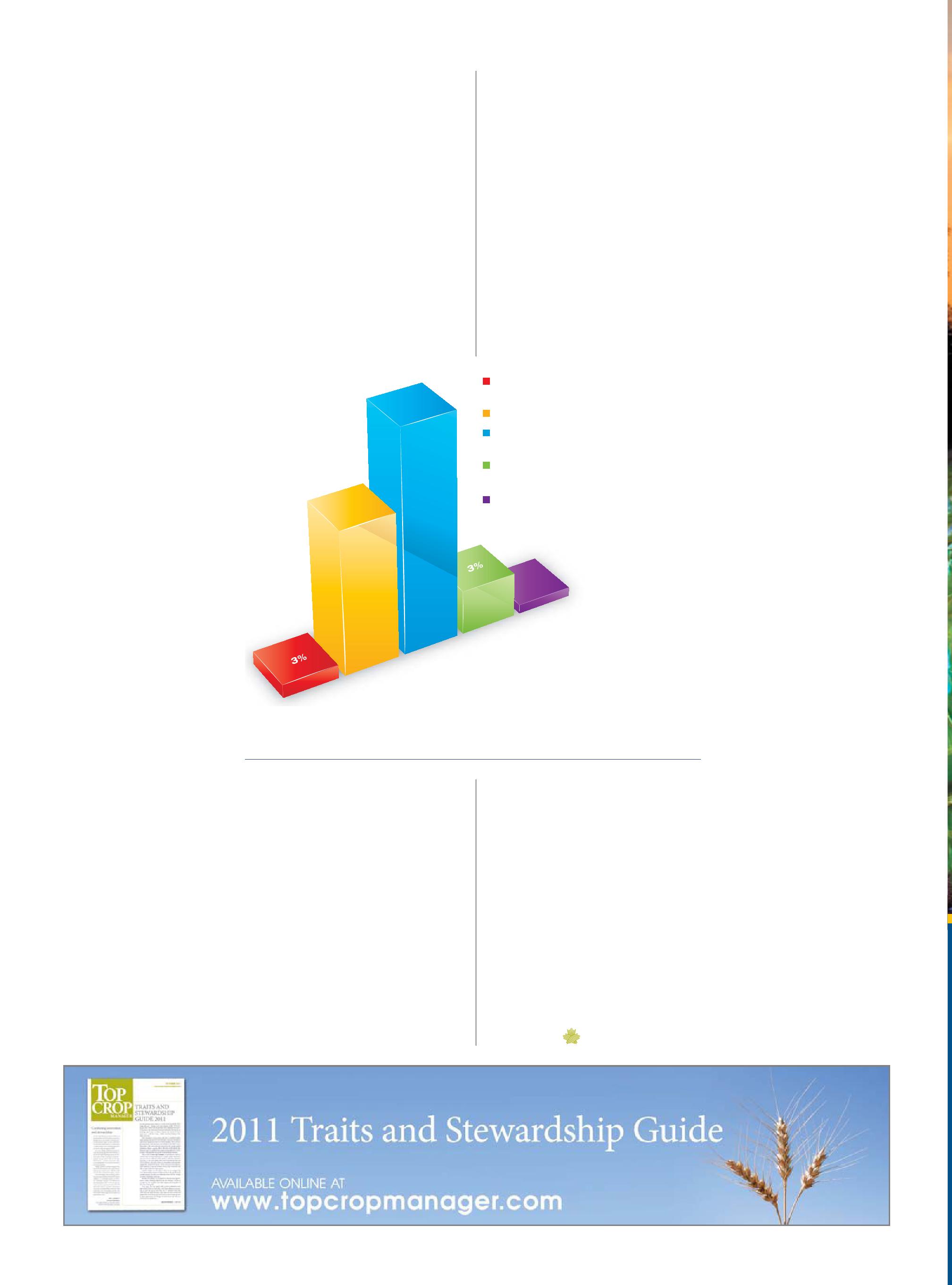
Oddly what has not changed significantly is the attitude of most farmers (see Figure 1). “There’s always going to be this group that sees farming as a business, and there’s always going to be a group that sees it as a way of life,” outlines Funk. “But there is this rather large chunk in the middle (66 percent) that says, ‘to me, farming is both a business and a way of life’ – and that is regardless of size. There was no evidence to say that a larger farmer is going to answer that question any differently than a smaller farmer.”
needs of the market in that period of time,” says Funk. “This is a study about buying behaviour and attitudes of the large commercial producer. In that, we are measuring certain pieces of demographic information, because this allows us to draw important relationships between who these people are and what they want.”
Other key points of interest from the study include:
• More commercial producers (54 percent) are networking with other producers, including expanding their use of social networking tools;
• Time management is becoming a challenge for many commercial producers;
• Large commercial operations are regarded by the farmers as “family businesses” with family members working full- or part-time on the farm;
• Many do not have a written business plan for their operations.
Is a quarter of a million dollars enough?
In terms of attaining even the lower income levels cited in the study, there are those who scoff at the idea of such “economies of scale.” In 2006, Dr. David Sparling, then the executive director of the University of Guelph’s Institute of Agri-Food Policy Innovation, identified the same $250,000 mark for gross sales, noting it was the level at which farmers should be positioning themselves and their operations, to cope with the conditions of the future.
What does stand out to Funk, who made the presentations to the CAMA chapters along with his father, Dr. Tom Funk, formerly a professor at the University of Guelph, is that such a balanced perspective of “farming as a business and way of life” provides a detailed look at people with an important set of goals and objectives to achieve. Those goals and objectives provide suppliers with the opportunity to help those growers get where they want to go.
And that is where the study offers not only a significant value to the suppliers but also a reflection and guideline to growers. Funk sees the study’s results as a benchmark – identifying Point A in 1994, then Point B in 2010 – and based on those two points of reference, can forecast conditions in five to 10 years for a Point C with a better, more-informed perspective. “And if we’re fairly confident in where that point is going to be in the next five to 10 years, then we can develop strategies that can help us meet the
But times, and prices, have changed, and that $250,000 is achievable on farm acreages that were previously thought to be too small. In Eastern Canada, for instance, a 400-acre farm with rotations of 200 acres of corn, 100 acres of soybeans and 100 acres of winter wheat can, with good yields and prices, achieve that $250,000 stratus, a level that was harder to achieve, even in 2010, much less 2006. That same sized operation in Western Canada would not be capable of producing crops with the same value, hence the propensity for larger farming operations in Manitoba, Saskatchewan and Alberta.
Different year, different conditions
Other parameters have shifted as well, including currency values, the cost of inputs, fuel, the use of genetically modified crops and perceptions of how valuable a farmer’s time is. And that change in mindset is set to alter the mindset of farmers, their families and how they manage their operations.
Also, it is important to keep in mind, with this particular study, that it was conducted more for the suppliers, and less for large commercial producers. The producers provided the insights, but it will be the suppliers that take home the majority
Figure 1: This indicates a strong tendency towards large commercial producers who view their operations as both a business and a way of life.
of the data. “What we’re seeing here is an opportunity to give suppliers information about their target market. It’s telling them how they can do a better job of providing products and services that are going to create value for this important (large-scale) segment,” says Funk. “If you don’t know this sort of thing about your target market, then you’re sort of shooting in the dark, so now, we have an opportunity to make sure that we’re in a position to create a unique fit for these varying segments that show up in the study.”
Government involvement and training
One facet of the study that could be viewed as something of a surprise was that many producers believe the government should be more involved in agriculture, including the concept of supply management. “Today, there are two issues: there’s government interference and there’s government involvement,” says Funk. “They don’t want a government telling them how to run their farm, or imposing a lot of regulations. But in terms of government supporting commodity prices, developing markets and doing research for the betterment of Canadian agriculture, this is where we hear of farmers wanting more.”
Funk adds that he does not believe the intent on this particular part of the study is to suggest that farmers want the government to make their lives more difficult; they want things made easier.
Another aspect that was a pleasant surprise was the large number of growers who want more training for marketing, agricultural production, succession planning, business risk management and financial planning. In the study in 1994, farm growth was the top priority for farmers. “Now, it’s on the lower rung of that particular group of goals, and what you’re seeing in its place is now running a more efficient and profitable operation,” says Funk. “We’re also seeing a greater desire now to have a more sustainable operation, which they will be able to effectively pass down to future generations.”
Of course, the other evolutionary trend on the farm is the recognition and attachment of a value on the farmer’s time. As operations become larger, more family members become involved in the day-to-day management of the farm, there is
a greater willingness to acknowledge that a grower’s time is worth some sort of dollar allotment. A grower may be able to perform accounting tasks or to scout his fields, yet hiring a professional gets the job done faster, with greater efficiency, all while allowing the grower to concentrate on what he or she does best, whether that is planting, calibrating equipment or marketing commodities. “There are opportunities for consultants in the areas where farmers just don’t have the competencies or the time to make them happen,” agrees Funk.
Redefining ‘risk management’
Another change worth noting when comparing the 1994 study to the 2010 edition is the definition of risk management and how that has become altered according to current pricing structures and input values. In 1994, when the price of corn was very near the cost of production, the term referred more to a support program: something that would establish a floor price, and secure the grower against losing money. But in 2011, risk management can address different aspects of farming, including locking in prices on inputs, writing a formal business plan or keeping detailed production records. “They don’t do all of this, and the reason?” poses Funk. “Because it’s too difficult or because they don’t have the time.”
I am just getting my farming operation established
I am expanding my farming operation
I am maintaining my farming operation at a steady level
I have started to reduce or scale down my farming operation
I plan to sell my farming operation in the near future
SOURCE: AGRI STUDIES AND IPSOS FORWARD RESEARCH.
Asked for his “35,000foot view” of Canadian agriculture, one he believes is as important to suppliers as it is to growers, Funk replies that there are three primary foci, looking to the future. The first is to ensure there is adequate credit with which farmers can adopt new technologies and grow at a reasonable pace. “If people are looking to do a better job of farming, let’s make sure they have the adequate capital to adopt these technologies,” says Funk. And if they’re interested in growing, let’s make sure they have the funds to do that appropriately.”
The second of his three pillars is to create efficiencies, and offer new markets and entrepreneurship opportunities. And third, as mentioned previously, provide the tools to reduce risk, on all sides of the operation. “Make sure that we’re not just farming for today, but that we’re farming for five, 10 or 15 years from now.”
Figure 2: According to the study, the majority of large producers in Canada are maintaining their operations at a steady level.
EZ-PILOT
The Trimble® EZ-Pilot™ steering system features a sleek design integrated into the steering column, providing clear access to instrument panels and controls. It turns the steering wheel—your vehicle’s original wheel or an optional wheel—using GNSS guidance from the CFX-750™ or the FmX® display.
Vehicle steering is immediately adjusted to compensate for rough terrain or slopes and hillsides with the new Trimble T3 ™ Enhanced Terrain Compensation Technology. And higher torque delivers better steering of vehicles with more rigid steering systems, such as floaters. Let the EZ-Pilot system keep you on line so you can focus on other important tasks. For more information, visit www.trimble.com/agriculture, or see your dealer.
h eavier c Orn residue is the new reality
The quantity of corn residue is increasing, and managing it is a must. Here are some pointers.
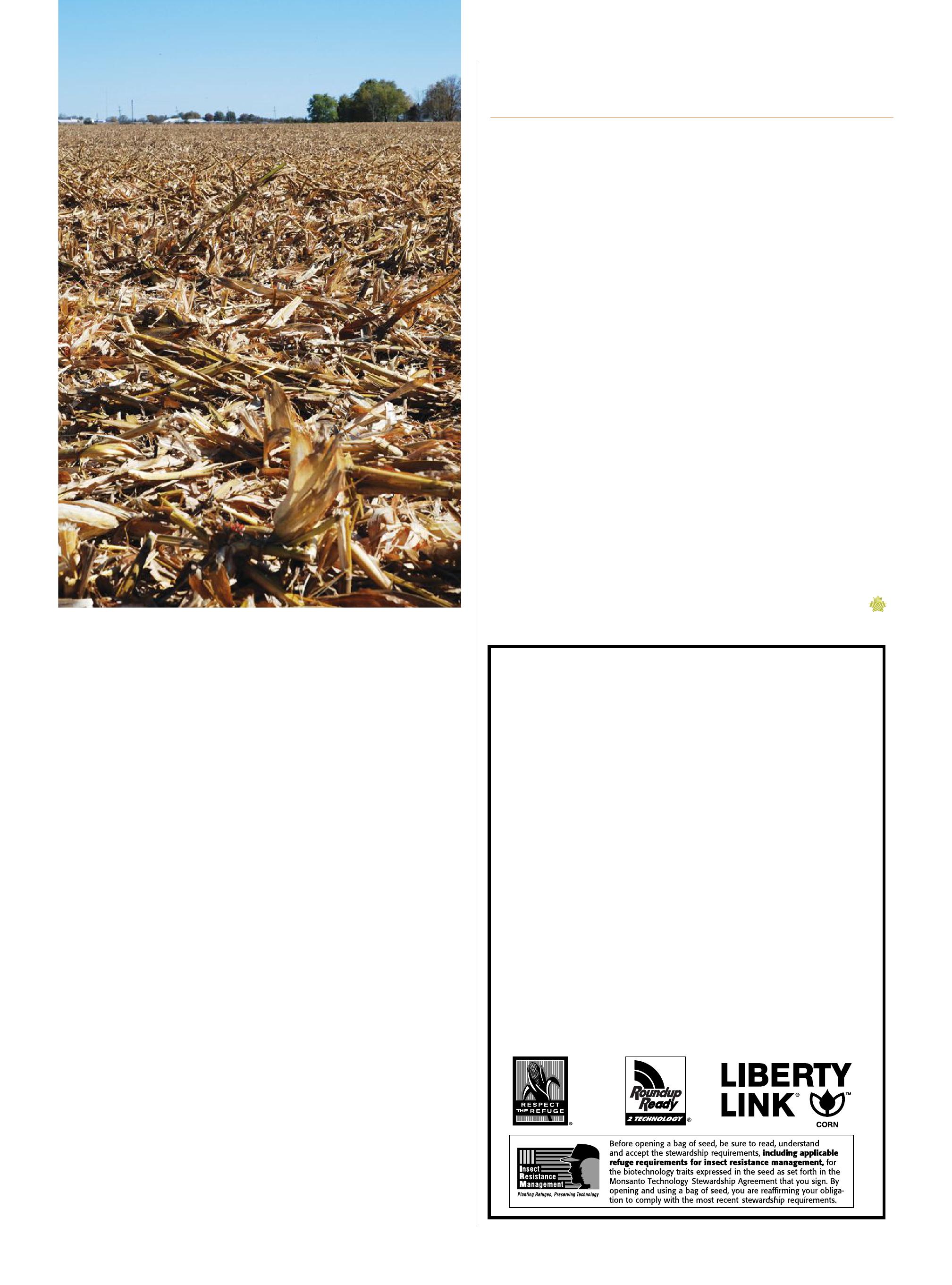
Although it is well established that leaving corn residue on fields provides important soil conservation benefits, heavy residues can also create some agronomic issues. In recent years, the level of corn residue remaining after harvest has increased significantly, due in part to higher plant populations and new hybrids that achieve much higher yields, says pioneer Hi-Bred agronomist Morris Sagriff, who is based in Tupperville, Ontario. Greater quantities of stover can also be attributed to the use of foliar fungicides and Bt traits that result in stronger stalks that better resist decomposition.
In addition, reduced tillage or no-till practices are leading to more soil-surface residues. Minimum tillage is recommended by some, such as OMAFRA provincial soybean specialist Horst Bohner, as the most reasonable approach to retain the environmental and soil health benefits of no-till soybean cultivation while gaining the soybean yield benefits provided by tillage. However, because leaving greater amounts of residue on the soil surface can have a host of negative repercussions (see sidebar), good residue management practices are becoming more critical in real-
izing the benefits of a reduced-tillage system.
For livestock farmers, corn crop residues may be of little concern because they are removed as forage. However, stover contains significant amounts of valuable plant nutrients such as nitrogen, phosphorus and potassium, says Sagriff, and if it is removed by cattle or by a farmer for other purposes, “Those nutrients will need to be replaced through increased fertilizer application.”
Options for the cash crop operator
“Hybrid selection is critical to establishing productive stands and achieving high yields,” says Sagriff. “pioneer annually conducts early planted emergence trials in high-residue fields to evaluate hybrid performance under early season stress. We provide growers with ratings for stress emergence and high-residue suitability on all our hybrids to help growers select the best hybrids for their fields.”
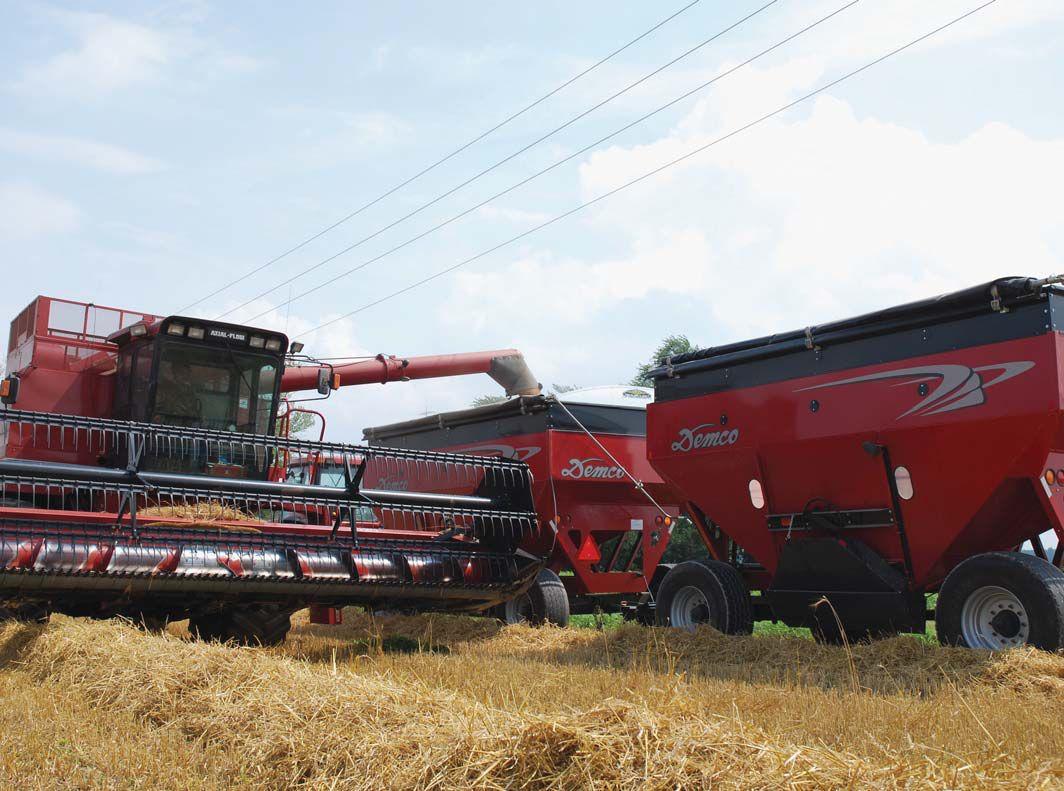
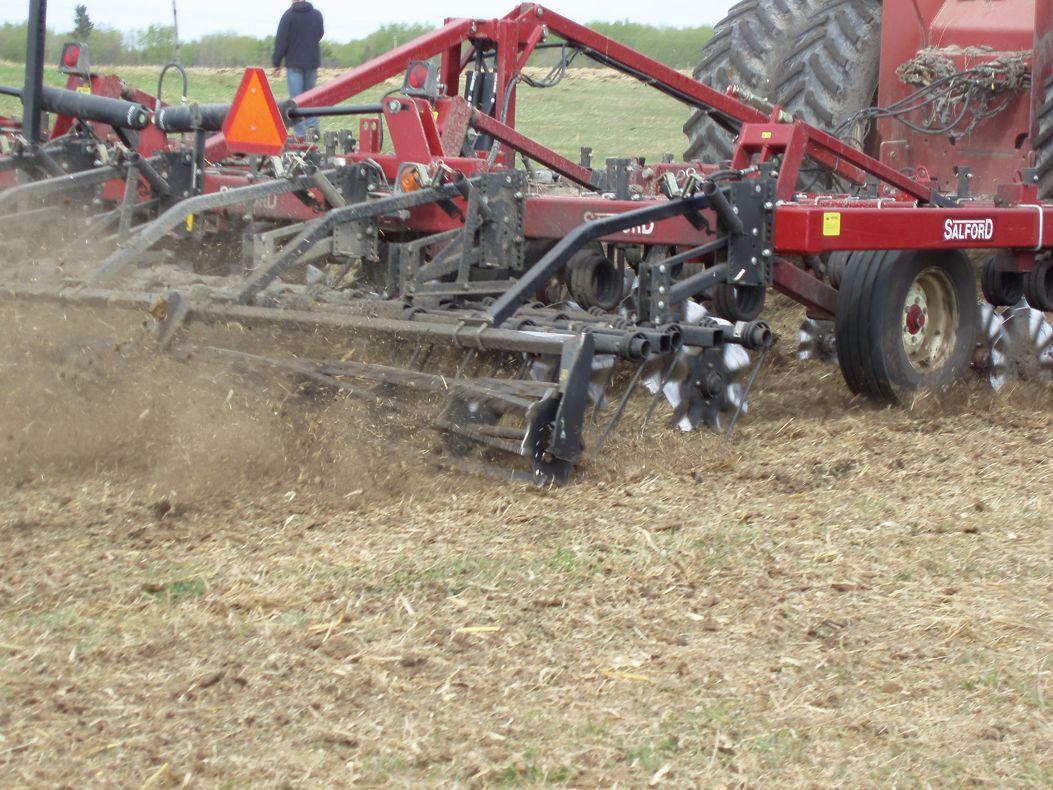
ABOVE: Several tillage units are available to help growers deal with higher residues, including units from Case IH, New Holland, Gregoire Besson, and this unit from Salford.
There is also an assortment of tillage equipment that deals with stalks post-harvest, and allows residues to break down more quickly and be incorporated into the soil. This means the soil benefits from both added nutrients and organic matter. “processing stalks at the corn head and distributing residue evenly behind the combine can be an initial step,” says Sagriff. “Following this up, where practical, with some form of primary fall tillage is important to begin the process of stalk decomposition.”
Spring tillage is another option to reduce stalk residue for successful planting. planters can be equipped with devices that cut and move residue so that a six- to 10-inch path in front of the planting unit is provided. “This allows for residue management and planting in one pass, which will help reduce compaction,” adds Sagriff.
Effective residue management is about long-term planning, stresses Dave Vandenbrink, owner of Vandenbrink Farm Equipment, near Sparta, Ontario. “There’s no magic bullet to solve the issue,” he says, “so it’s a matter of growers looking at their particular situation and taking a systems approach.”
That might include chopping stalks with a corn head or using vertical tillage.
Many tillage units are available on the market, including the Salford RTS vertical tillage unit, Great Lakes New Holland Landoll VT plus Amazone Catros, and the Gregoire Besson Disc 0 Mix. Vandenbrink says he has sold many Case IH 330 turbo vertical tillage units since they became available in 2007. “Conventional, minimum-till and no-till farmers use it,” he notes. “Customers are using it in the spring and fall, but it’s primarily sold as a spring implement for soybeans after corn or for corn after corn.”
Ryan Lofthouse, who runs a cash crop operation in Tillsonburg, Ontario, and also operates Lofthouse Custom Farming, says he has to manage heavy residues well because of his high corn plant populations
<LEFT: Higher plant populations in corn, newer hybrids, increased reliance on seed treatments and no-till soybean farming are all contributing to heavier corn residues.
(32,000-34,000 seeds per acre). “Also, where I use foliar fungicide, the plants stay healthier and greener longer and resist breaking down compared to where I haven’t sprayed, and residue is a problem that way as well,” he says.
Lofthouse finds the Case IH 330 mixes the residue with the soil in just the right amounts, not going as deep, or compacting the soil, like a disc harrow does. “I’ve found that with cutting and incorporating the pieces into the top two to three inches of soil, I get good breakdown and it increases the organic matter in our soil nicely,” he observes.
The farm’s soil ranges from sand to loam to heavy clay. “It allows us to till a little and chop the stalks at the same time, and there is decent soil structure when we’re done,” observes Lofthouse, “with a good smooth seed bed to plant into. We don’t have to cultivate.”
Before stepping up residue management practices, he was noticing significant plant stand problems with the farm’s no-till soybeans. “We were losing 25 percent of the plants,” Lofthouse says. “We couldn’t get good soil-to-seed contact, and the disease pressure from slugs was higher.”
He tried dealing with residue in the spring, but it was not enough to deal with those particular issues. “I found my soybean yields were better with chopping and mixing in the fall to start breaking the residue down,” he observes.
Lofthouse now leaves residue on his fields for a week to 10 days, or longer if weather permits, before he starts processing it. “It lets it dry out a bit,” he notes, “and makes it just that much easier to handle.”
Trait Stewardship Responsibilities Notice to Farmers
Monsanto Company is a member of Excellence Through StewardshipSM (ETS). Monsanto products are commercialized in accordance with ETS Product Launch Stewardship Guidance, and in compliance with Monsanto’s Policy for Commercialization of Biotechnology-Derived Plant Products in Commodity Crops. This product has been approved for import into key export markets with functioning regulatory systems. Any crop or material produced from this product can only be exported to, or used, processed or sold in countries where all necessary regulatory approvals have been granted. It is a violation of national and international law to move material containing biotech traits across boundaries into nations where import is not permitted. Growers should talk to their grain handler or product purchaser to confirm their buying position for this product. Excellence Through StewardshipSM is a service mark of Excellence Through Stewardship. ALWAYS READ AND FOLLOW PESTICIDE LABEL
DIRECTIONS. Roundup Ready® crops contain genes that confer tolerance to glyphosate, the active ingredient in Roundup® agricultural herbicides. Roundup® agricultural herbicides will kill crops that are not tolerant to glyphosate. Acceleron™ seed treatment technology for corn is a combination of four separate individually-registered products, which together contain the active ingredients metalaxyl, trifloxystrobin, ipconazole, and clothianidin. Acceleron™, Acceleron and Design™, DEKALB®, DEKALB and Design®, Genuity®, Genuity and Design®, Genuity Icons, Roundup®, Roundup Ready®, Roundup Ready 2 Technology and Design®, Roundup Ready 2 Yield®, RIB Complete and Design™, RIB Complete™, SmartStax®, SmartStax and Design®, VT Double PRO™, VT Triple PRO™ and YieldGard VT Triple® are trademarks of Monsanto Technology LLC, Monsanto Canada, Inc. licensee. LibertyLink® and the Water Droplet Design are trademarks of Bayer. Used under license. Herculex® is a registered trademark of Dow AgroSciences LLC. Used under license. Respect the Refuge and Design is a trademark of the Canadian Seed Trade Association. Used under license. (TR2054-E-06/11)
3 3/8 x 4 7/8
The wet spring of 2011 left most soils with some degree of the problem.
by Rosalie I. Tennison
Awet spring plus an anxious farmer is not a good combination. In order to get crops planted in a timely manner many growers went on the land far too early, which resulted in compaction problems. Although compaction often goes undetected, one bad year can spark renewed interest in the subject. To exacerbate the problem, the repercussions of compaction can be long term and, in those fields where it was a problem in 2011, it is certain to have an effect this fall and into spring 2012.
No soil type was spared compaction issues this year, according to the senior agronomist at Agris Co-operative in Chatham. “It’s important to wait for fields to be ready in spring,” explains Dale Cowan. “But, sometimes you have to go with what Mother Nature gives you and we have compaction issues now due to the wet spring.”
Cowan adds that some growers minimized the problem by reducing their axle loads or cutting back on the number of passes on the land. “These growers focused on planting and figured out other ways to apply fertilizer,” he says.
As a result, they are experiencing fewer issues due to compaction.
Cowan suggests that axle weight causes the most damage; however, if the weight and the number of passes can be reduced, along with use of radial tires and low air pressure, there may be some relief on the severity of soil compaction. “A six- to seven-ton axle should be the maximum,” he says.
Another cause of compaction this past spring, according to Ontario Ministry of Agriculture, Food and Rural Affairs (OMAFRA) corn specialist Greg Stewart, was spreading manure on wet ground. “Extra traffic on headlands can also result in compaction,” he adds. “These two situations may need some form of tillage to loosen the soil that may be compacted lower than the seed trench.”
Often compaction cannot be fixed with one tillage pass, says another agronomist, and may require a change in crop rotation
ABOVE: Although considered an option to red clover as the conventional cover crop, oilseed radish is garnering interest for its ability to break up plow pans.
PHOTOS BY RALPH PEARCE.
Time may be of the essence, but limiting traffic on the headlands and other parts of the field can go a long way to reducing compaction.
to get deeper-rooted plants into the mix. “Corn has lost its bad reputation as a cause of compaction,” Colin Smith of UAP in Dorchester comments. “In fact, corn has a good root system for breaking up soil. Canola has a good root system to work on compaction as well.”
Alfalfa is another crop that will help break up compaction if it can be worked into a management system, adds Doug Aspinall. “Alfalfa will push down through the compacted layer,” the OMAFRA land resource specialist says. “If left for a few years, a strong rooted plant, such as alfalfa, will begin the process of restoring soil structure to the compacted layer.”
The compaction problems experienced in 2011 may not be at the stage at which long term recovery operations are necessary, but, left unchecked, they could cause problems down the road. “Maintaining soils continually will minimize compaction,” advises Aspinall. “Definitely keep an eye on your soil if it is wet.”
“The combination of heavy snow load, heavy rains in the spring and impatience to get on the land to plant crops contributed to the compaction problem this year,” says Smith. “Those who waited to seed aren’t having the issues that result from compaction.”
Deal with compaction on a field to field basis, he suggests. “In an ideal world if money isn’t a issue, tracked vehicles are
better than wheels on soils to prevent compaction,” says Smith. But, if wheels are what is on the vehicle, consider ways to reduce the impact, such as using some conventional tillage to create some fracture lines. In minimum till or no-till, try to break up the soil in places to create some fractures to allow soil recovery. “Certainly, fields that are in a good rotation with lots of organic matter may heal themselves over time from tillage or shallow compaction,” comments Cowan. “But, you first have to know how serious the problem is and then take appropriate action.”
Other management options
Attention has focused recently on using cover crops, such as tillage radish, to break up hard pans. It remains to be seen how effective this may be in alleviating deep compaction. “There are tools available to break up compaction,” adds Stewart, but rather than buying, a grower may want to rent or borrow if the compaction is minimal. “Identify how serious or deep your compaction goes. Is it six inches or seven or eight?”
He cautions about being too aggressive in loosening the soil because, if broken up too much, the soil may not be able to carry heavy loads in the spring and the compaction problem could increase.
Cowan says to determine how big the compaction problem is in the fall you need to take a shovel or probe to the field and dig down to find the layers and determine how many there are and the depth of the restriction, then decide on tillage depth to break the layers. Use yield maps, if you have them, to find poor yielding areas and use that spatial information to pinpoint where the compaction may be limiting yield. Then, use those same maps to guide tillage operations in those areas only. “Find the areas that are problems and deal with them because the compaction might not be across the entire field,” advises Cowan. “At times, deep tilling a whole field may cause more issues than it solves.”
If compaction is identified, growers are encouraged to take steps to correct it. Reduce the load on the soil as much as possible even if it means having to do more than one pass to complete all your operations. Current use of RTK GPS guidance systems may offer the possibility to control traffic in the same spot and minimize the degree of tracking and confine compaction to a smaller area of the field. Taking action in the fall could make spring planting easier.
OLDER EQUIPMENT RESOLVES COMPACTION
Just because something is old does not mean it cannot have purpose on a farm. And bigger might not be better when dealing with compaction problems in modern agriculture. The larger, heavier equipment may be causing the compaction especially after the wet spring of 2011. A grower near Monkton, Ontario, found a solution for his compaction issues many years ago when he bought an older piece of equipment called a para plough. “Basically, it is a three-point hitch moldboard plough that has a shoe that can be sunk to quite a depth,” explains Dennis Wagner. “It shatters the soil and lifts it without too much disturbance.”
Wagner purchased the plough to deal with compaction issues that arose from spreading manure from his cattle operation. He no longer has cattle so he does not use the para plough much anymore, but it still comes in handy whenever compaction issues arise as they did in the spring of 2011. “The para plough works and it does make a difference,” Wagner says. “I still use it periodically, but it is old technology and it will trip if it hits a rock, so it has to be reset.”
There is other sub-soiling equipment on the market, but Wagner maintains his older para plough does the job just fine. He says he will not get rid of it because it still comes in handy now and then.
a ddressing the s Oil k decline
Regional declines in soil potassium (K) highlight the importance of maintaining fertility checks and balances.
by Heather Hager, phD
Despite the fact that Canada is one of the world’s foremost potash producers, soil test potassium levels in Eastern Canada have declined in recent years. The International plant Nutrition Institute (IpNI) surveyed soil test K levels from public and private laboratories across the provinces and US states in 2001, 2005 and 2010. It found that the proportion of samples showing soil test K levels less than 121 ppm in tests used for 2010 decision making increased over that in 2005 and 2001 in Eastern Canada. And soils testing at those levels are expected to show medium to high probabilities of an economic yield response to fertilizer application, according to Ontario Ministry of Agriculture, Food and Rural Affairs (OMAFRA) guidelines. “In Ontario, the proportion of soils testing 80 ppm or less in K grew from 15 percent in 2005 to 20 percent in 2010,” says a brief summary of the IpNI report. “Soils testing in this range are likely to produce K deficiencies in almost any crop in the absence of fertilization.”
The summary is available on the IpNI website (http://nane. ipni.net/articles/NANE0047-EN).
Given the high potash prices in 2008 and 2009, many people agree that it is not surprising to see a decline in soil test K. “In Eastern Canada, the decline is fairly consistent, particularly in Ontario and Quebec,” says Dr. Tom Bruulsema, director of IpNI for northeastern North America. “When potash prices went up, there was a significant reduction in potash fertilizer sales at that time; we knew less was going on, and we had some fairly decent crops. So we expect soil test levels to be down somewhat.”
Speaking of the past 10-year trend in fertilizing, Colin Smith, product manager at United Agri-products Canada, says, “When I started in the business, it wasn’t unusual to have a grower putting 600 to 800 pounds per acre of dry product down before he planted, as a broadcast, a mix of N, p and K. This last four or five years, what’s been going down is probably 200 to 300 pounds per acre, and most of that being N.”
Dale Cowan, senior agronomist for Agris Co-op, thinks the slide in soil test K has been an even longer-term phenomenon. He suggests that K levels have been declining for 15 to 20 years, and it is just now showing up in the overall trend line. “When I look at southwestern Ontario, where I’m operating right now, and I look at what’s been applied versus what’s been removed, and when you annualize, let’s say, a corn-soybean-wheat rotation, for every pound of
Under a standard rotation of corn and soybeans (and wheat) in southwestern Ontario, potassium levels are not replacing what crops are removing.
potassium that’s been removed in crop removal, we’re only putting back about 0.6 pounds. So we’re in a negative or a mining situation, on some of the farms anyway. We’re just not keeping pace with crop removal.”
Long-term IpNI figures for Eastern Canada would seem to support this idea. “In most of the past 40 years, the amount of K applied as fertilizer and recoverable manure has not been sufficient
to match crop removal,” says a report on crop potassium balance from 1969 to 2009 for Eastern Canada. This indicates a chronic mining of soil K that could be starting to show up as yield loss.
To see the report for Eastern Canada, visit http://nane.ipni.net/ articles/NANE0020-EN (for Ontario, http://nane.ipni.net/articles/ NANE0033-EN; Quebec, http://nane.ipni.net/articles/NANE0037EN; Atlantic Canada, http://nane.ipni.net/articles/NANE0040-EN).
Other considerations
Another potential factor in the K decline that is raised by both Smith and Pat Feryn, an independent certified crop advisor in the Stratford, Ontario, area, is the use of liquid starter or “pop-up” fertilizers. These agronomists suggest that there may be growers who think a starter fertilizer applied with the seed will be sufficient nutrition. This is not the case, however, as starters have lower N and P than the total crop requirement and often have no to low K. A 2010 Virginia Extension publication notes, “Potassium removal rates are such that not enough K can be supplied in starter or pop-up fertilizers to supply plant needs, and yield reductions will be seen if no other fertilizer is applied.”
For growers who are using starter fertilizers, Feryn notes that ongoing work by OMAFRA corn specialist Greg Stewart is showing that when soil test K is low, i.e., in the 60 to 80 ppm range, starter fertilizers containing N, P and K often produce an economical yield response over starters containing only N and P. And at one of the low-testing field sites, in Elora, Ontario, a starter with K boosted yield even when K was broadcast in the preceding fall.
Tracking soil K
With the current high commodity and lower fertilizer prices, Smith thinks that many growers are taking the opportunity to build fertility levels back up. A two-pronged approach is the best way to determine which direction K levels are going. A grower should look at both soil test K and estimates of crop removal, determined by multiplying yields by book values for K removal, for optimal management. “Essentially for each field, a grower should have a nutrient balance – what’s going into the field and what’s coming out,” says Bruulsema. “You want to be ensuring you have some checks and balances to ensure that you know what direction your soils are going.”
This way, a grower can track the effects of management over time. If the grower thinks adequate potash was added but soil test K continues to decline, then the replacement rate needs to be increased. Conversely, if soil test K is increasing, the replacement rate is allowing for some rebuilding of the soil K pool.
Bruulsema recommends taking a soil test at least every three years, at the same time of year, and following the same crop in the rotation for the most consistency. Changes in soil test K could be dramatic or slight, depending on a grower’s management regime. “For example, if you’re growing alfalfa and you’re not applying any potassium, and you’re removing several hundred pounds per acre per year, you’re going to expect to see fairly quick changes in the soil test. On the other hand, if you’re close to balancing removals with what you apply, you might expect to see little change in the soil test from one time to the next,” he says.
The number of producers that are soil testing regularly continues
REFUGE SOLUTION
to improve. The latest data, collected by Statistics Canada in 2006, show that seven percent of Ontario cropland is tested annually and about 60 percent is tested every two to three years. Across Canada, some 22 percent of farms could see improvement, with 10 percent having soil tested every six years or more, and 12 percent not testing.
How much is enough?
For growers who are putting K back into the soil, the main question is: How much is enough? Increasingly, agronomists are questioning whether the OMAFRA guidelines are still adequate or if they need to be revisited given today’s commodity prices, crop rotations, and higher yielding hybrids. “I think their research is based back in the ‘50s, ‘60s, and early ‘70s, and it hasn’t looked at the trends or changes that have occurred in the industry in the higher yields,” says Smith. “I think their ranges are too conservative.”
He cites an alfalfa operation he worked with that followed the guidelines to replace crop K removal but still saw soil test levels drop. “They needed to be putting more back on than what the guidelines were indicating,” he notes. Both alfalfa and silage corn are large draws on soil K because the leaves and stems are not returned to the soil.
However, a 1997 OMAFRA fact sheet says, “Since their initial establishment, the fertilizer requirement tables have been adjusted on numerous occasions based on information from response trials using current hybrids and management practices.” Since then, additional studies have examined the effects of higher K applications, says Bruulsema. One of these, a five-year study ending in 2006 by Drs. Bill Deen and John Lauzon (University of Guelph) and Bruulsema, did find increases in corn yields with a high potash application (180 lbs of K2O per acre), but it was not
more economically advantageous than the slightly lower yield at the lower level of potash application (30 lbs of K2O per acre, see www.ipni.net/ppiweb/bcrops.nsf/$webindex/82412D4419AA10 C0852572DE005BAF12/$file/07-2p20.pdf).
In addition, Stewart and Ken Janovicek, a research associate at the University of Guelph, have been collecting phosphorus (and some potassium) fertility data from the past 40 years to re-evaluate the OMAFRA recommendations. That analysis is complete, says Stewart, and communication details are being finalized.
Oilseeds also remove quite a bit of K, and rotations in Eastern Canada are seeing a lot more soybean than in previous decades. “It may still surprise some people that a 40-bushel crop of soybeans removes quite a bit more potassium than a 150-bushel crop of corn,” says Bruulsema. “The concentration of potassium in the seeds of soybeans is quite high, about 1.5 percent or so, and so you’re looking at fairly large removals there.” Comparatively, the amount of K removed in grain corn is “really not that big,” he says.
“The irony is that a 50-bushel soybean crop removes almost twice the potash that a 180-bushel corn crop removes, and yet we tend not to fertilize soybeans,” says Cowan. “We tend to work off the residual fertilizer from the corn.” If corn is not being fertilized at removal rates, that would leave even less available for the subsequent soybean crop, he notes.
However, Cowan also thinks that the newer corn hybrid genetics could be masking the effect of lower soil K. For example, by allowing for a larger, healthier root mass, the corn rootworm protection trait lets the plant mine a greater volume of soil. “When you look at an element like potassium, it’s not very mobile in the soil, so it requires an ever expanding root system to go out and get it. If the plant is occupying a much greater volume of soil with a massive healthy root system, it’s going to find more potassium, even at a low soil test level,” he suggests.
Rebuilding soil K
Rebuilding soil test K from a low level could be fairly expensive and take a number of years. “If you’ve gone from 120 ppm down to 80 ppm on a sandy soil, that could take 400 pounds of potash just to get your soil test level back,” estimates Cowan. “And in the meantime, you have to account for all the crop removal. So if you decide to do that over five years, that’s 80 pounds extra overtop crop removal that you’ve got to put on every year to get your soil test levels back up.”
Whether a grower needs to add or draw down K in a given year will depend on four things: soil test and crop removal K levels, commodity prices, and fertilizer prices. “If you’ve got really low soil test levels, commodity prices go against you, and the fertilizer price goes up, you’re kind of caught because if you cut back on fertilizer, you’re going to lose yield potential,” says Cowan. “A lot of farmers will manage with their soil test levels in the high category, and what that does is, at the end of the season, you don’t have to ask yourself the question: What would my yields have been if I’d just used a little bit more fertilizer?”
As crop yields have increased, K has become ever more critical than before, notes Bruulsema. However, commercial fertilizer prices have also increased. Growers who have access to low-cost manure will have an advantage in maintaining K fertility, as will those whose nutrient checks and balances allow careful, judicious use of fertilizers.
Ongoing work by OMAFRA’s Greg Stewart showed that in one low-testing field site, a starter fertilizer with potassium boosted yield, even though potassium was broadcast in the preceding fall.
PLANT BREEDING
Dow AgroSciences develops Enlist Weed Control System for corn, soy and cotton.
by Donna Fleury
The cavalry may be on the way, so to speak, to help farmers struggling with glyphosate resistance. Using 2,4-D as part of the Enlist Weed Control System, corn growers will be able to better manage and prevent glyphosate resistance.
Herbicide-tolerant cropping systems have been readily adopted by growers during the past decade. In the US today, herbicide-tolerant crops have been adopted on 85 to 95 percent of corn, soy and cotton acres, with similar rates in Canada on corn, soy and canola acres. “Many growers have adopted conservation tillage and Roundup technology, with about 85 to 95 percent of growers dependent on Roundup, or glyphosate, for weed control,” explains Tony Klemm, global business leader for Dow AgroSciences. “However, the results of widespread and consistent use of glyphosate have contributed to hard-to-control and glyphosate-resistant weeds, with the first resistance initially confirmed in the eastern US and now a pronounced problem in the southern US. This resistance is now spreading into the upper Midwest, and similar resistance problems are developing in Canada and Latin America.”
The number of resistant species in North America has increased from zero in 1995 to 19 in 2010. Recent studies show that up to onethird of all corn and soybean growers and two-thirds of all growers in the southern US have problems with weed resistance. Experts estimate one resistant weed species costs farmers an extra $25 to $100 per acre in manual labor to achieve weed control. “In key row crop markets, weeds are adapting, becoming more difficult to control, resulting in a decline of glyphosate herbicide performance and increased resistance,” says Klemm. “New weed management tools and technologies are critical to sustaining the long-term effectiveness of the current production systems. By partnering with and improving on the current glyphosate-tolerant cropping system, the Enlist Weed Control System will address growers’ needs while enabling exceptional weed control.”
2,4-D to the rescue
The Enlist Weed Control System will include a herbicide solution featuring Colex-D technology made up of a new 2,4-D product: 2,4D choline. The Enlist system is currently undergoing regulatory review. “It will be a new evolution in weed control based on sustaining the glyphosate system,” explains Klemm. “There are three key elements of the new technology, including a new trait, called Enlist, in elite seed genetics, a new herbicide solution in the 2,4-D product with the new Colex-D technology, and product stewardship offering a tremendous opportunity to meet the needs of to-
day’s farmers globally and for the environment. Enlist has ultra-low volatility, minimized potential for physical drift, decreased odour, plus improved handling and tank-mixing characteristics.”
The new 2,4-D technology will provide another mode of action in combination with glyphosate in a pre-mix formulation. The Enlist Weed Control System will allow for application in both early and midstages of crop development (pre-emergence and post-emergence).
“By integrating another mode of action with glyphosate, growers can continue to rely on conservation tillage while gaining new crop tolerance and application flexibility,” says Klemm. “Currently, if growers use 2,4-D as a burndown application in soybeans, they have to wait seven days before planting. However, this new product allows growers to plant immediately, with a wider window of application, particularly in wet years or seasons where timing is tight.”
By introducing multiple modes of action, Enlist will increase the effectiveness of the herbicides used while decreasing the potential for weeds to develop resistance to any one herbicide. Enlist will significantly improve control of glyphosate-resistant or hardto-control weeds, including morning glory, amaranthus species, lamb’s-quarters, giant and common ragweeds, horseweed, velvetleaf and others.
Billions of dollars at stake
“A recent research report released by Global Insight in co-operation with Dr. James E. Nelson assessed the impact of weed resistance on US agriculture with the potential impact Enlist could provide in the future for managing resistant and hard-to-control weeds” says Klemm.
The study showed that if a product such as Enlist is not available as the glyphosate-resistant weed problem expands, the use of the alternative herbicide and tillage programs is projected to reduce net farm income by $1.9 billion in 2011, up to $2.5 billion as early as 2017, and continue at that level every year through the rest of the simulation to 2020. The study projected that products such as Enlist could cut farm losses by 18 percent, with savings that translate into $4 billion for US farmers and $563 million dollars in consumer welfare.
The Enlist Weed Control System is anticipated to be commercially available in the US for corn for the 2013 crop year, with limited introduction in Canada. Enlist will be available in elite genetics combined with SmartStax Technology, which adds insect control for below- and aboveground pests in corn. Commercial launch in soybeans is expected to follow in 2015.
While other manufacturers scramble for long-term solutions, ours are already out there in the fields. And now, the same industry-leading Selective Catalytic Reduction (SCR) technology you’ll find in our high-horsepower tractors is available in our all new Axial-Flow ® combines and Patriot® sprayers. More power. More fuel efficiency. Lower emissions. Roll into your local Case IH dealer or visit caseih.com/efficientpower.