




We’re breaking new ground where it matters most: In your fields.

One seed at a time.


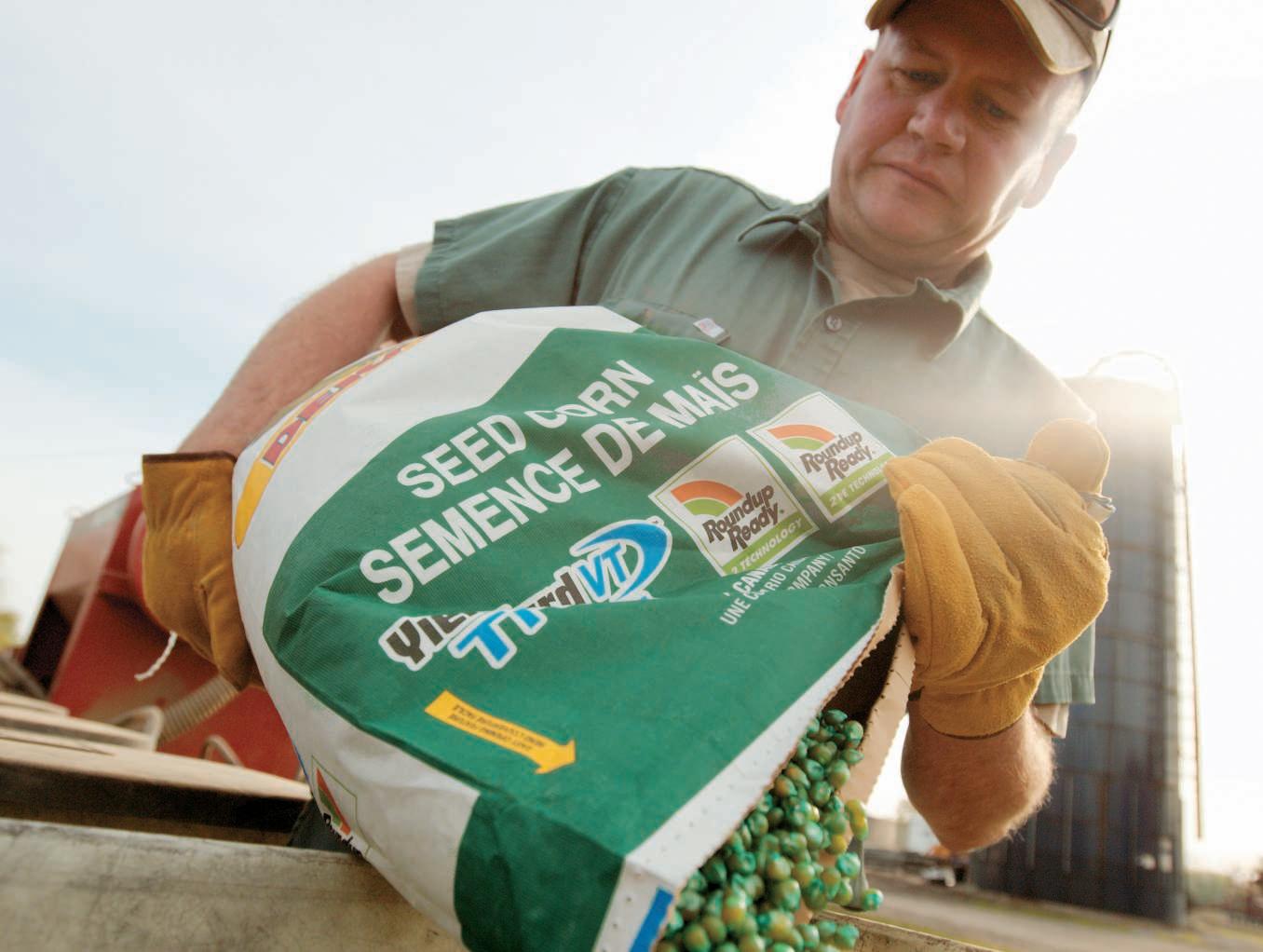
Pioneer Hi-Bred is breaking new ground in every field of the seed business. Our customers have challenged us to dig deep for results that will meet the next decade’s toughest market and cropping challenges. And our researchers are delivering.
Our dedicated field team works with you to determine the exact hybrid or variety that’s right for your individual fields. And with a broad selection of traits and maturities to select from, there’s a Pioneer ® brand seed product that’s perfectly suited to your soil and growing environment.
Pioneer Hi-Bred. We’re breaking new ground where it matters most:
In your fields.







7, 13 16 34
In our inaugural October issue, we look at several initiatives that hold considerable potential in responding to the threats of pests and diseases
Traits and Stewardship Guide
Similar to our annual Weed Control Guide, this table will help with management decisions to be made through the winter and into spring Plant breeding
A new trend of seed companies and trait providers banding together is taking shape with increasing frequency
New year, new voices, same focus on quality..........................6
Western bean cutworm now a threat in Ontario......................7
Interest in camelina gains momentum in Canada....................9
Latest research on aphids aims to curb appetites...................13
Traits and Stewardship Guide ..................................................16
Plan in place to prepare for arrival in Canada........................21
Brown mid-rib corn hybrids gain expanded foothold ..........29 Agreement could pave way to relief for drought-stressed crops.....................................................34
Farm Equipment Review: GPS monitors and displays.........38
Research Review: Of wind and oil, organics and learning.............................................................44
Reference information of this calibre is hard to find, so many growers choose to keep Top Crop Manager issues on file. If you have not kept issues for your library, you can find our stories, and more, on our interactive website.
Cover:
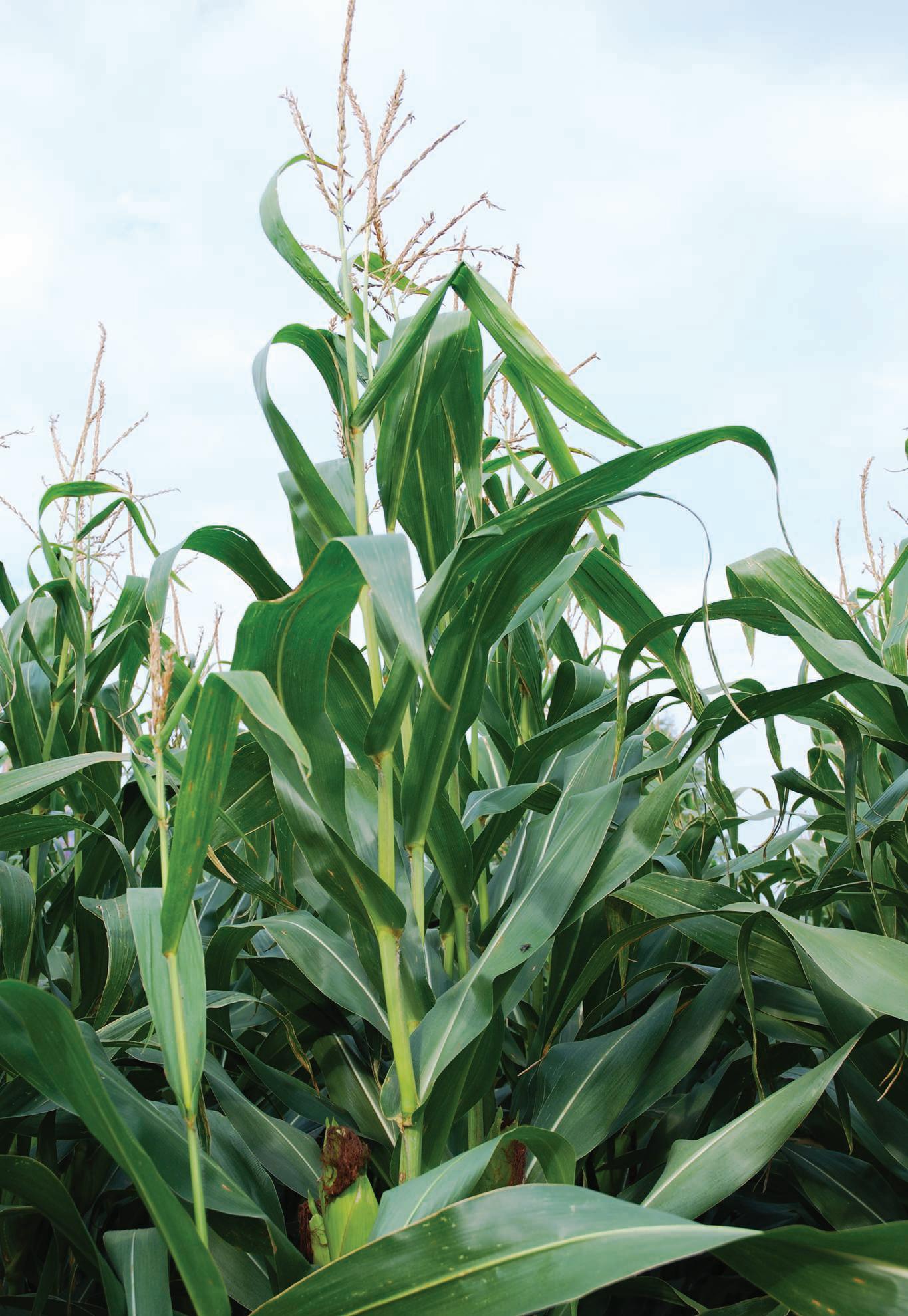
The phrase ‘Corn is King’ is well known in Ontario, and this month’s added bonus, the Traits and Stewardship Guide certainly highlights that sentiment.
Photo by Ralph Pearce
Readers will find numerous references to pesticide and fertility applications, methods, timing and rates in the pages of Top Crop Manager. We encourage growers to check product registration status and consult with provincial recommendations and product labels for complete instructions.
Top Crop Manager is published by Annex Publishing & Printing Inc., an independent publisher of specialty crop production and special interest publications. The magazine continues its tradition of keeping growers up-to-date in areas of plant breeding, agronomic advances, pest control, field techniques and management.
Top Crop Manager’s eastern editions appear in January, February, March, April, August, October and November.


Publishedby:
AnnexPublishing&PrintingInc.
105DonlyDriveSouth Simcoe,ON N3Y4N5
145ThamesRoadWest Exeter,Ontario,N0M1S3 (519)235-2400,Fax:(519)235-0798
Publisher PeterPhillips
Publisher DianeKleer dkleer@annexweb.com
Editor
Editor PeterDarbishire pdarbishire@annexweb.com
RalphPearce,519-280-0086 rpearce@annexweb.com
AssociateEditor
ChrisSkalkos
Contributors
TreenaHein
FieldEditor
BlairAndrews

YRalphPearce–(519)284-0345 ralphpearce@quadro.net
AssociatePublisher
KellyDundas kdundas@annexweb.com
AdvertisingSales
PeterPhillips
KellyDundas
ears ago, someone said something to me that at the time seemed a little more than silly. Yet intelligence allows for a change of mind, and I have come to regard the statement as a glimpse of genius.
WesternSalesManager
KevinYaworsky kyaworsky@annexweb.com
GerryHertz–(306)771-2686
ProductionManager
“Make Labour Day the new New Year’s Day.”
WesternFieldEditor
JulieTurkheim
ProductionCo-ordinator
BruceBarker bruce@haywirecreative.ca
ColleenBrennan
ProductionManager
CirculationSupervisor
AngelaSimon
ProductionArtist
AmyJohns ajohns@annexweb.com
GerryWiebe
Circulation
MarieWeiler,866-790-6070ext.211 mweiler@annexweb.com
Printed in Canada. All rights reserved. Editorialmaterialiscopyrighted.Permission toreprintmaybegrantedonrequest.
Subscriptionrates: Canada/USA Foreign WESTERNEDITIONS
Printed in Canada. All rights reserved. Editorialmaterialiscopyrighted.Permission toreprintmaybegrantedonrequest.
TopCropManager–sevenissues: January,February,March,April,July, NovemberandDecember
Subscriptionrates: Canada/USA Foreign Westerneditions
The more I have thought about this slogan, the more appropriate it has seemed. Labour Day heralds the start of a new school year, people seem more diligent with their resolutions of losing weight, learning a new language or starting yoga classes. The end of summer also brings a feeling of finality unlike any other season, as if autumn is the start of the land’s preparation for the long nights ahead.
1issue
TopCropManager–sevenissues: February,March,April(2),July,November andDecember
EASTERNEDITIONS
1issue
$9.00 $18.00
1yr. $50.00 $100.00
3yrs. $100.00 $200.00
Easterneditions
TopCropManager–sevenissues: January,February,March,April,August, OctoberandNovember
TopCropManager–fiveissues: January(Winter) February(EarlySpring) March(SeasonReady) August(Summer) November(Fall) 1issue
1issue
$9.00 $18.00
1yr. $30.00 $60.00
SPECIALTYEDITION
3yrs. $60.00 $120.00
February(PotatoesinCanada)
Specialtyedition
February(PotatoesinCanada)
1yr. $9.00 $18.00 3yrs. $20.00 $40.00
1yr. $9.00 $18.00
3yrs. $20.00 $40.00
ALLOFTHEABOVE13ISSUESOFTopCrop Manager
ALLOFTHEABOVE13ISSUESOF TopCropManager 1yr. $80.00 $160.00 3yrs. $160.00 $320.00
1yr. $80.00 $160.00
3yrs. $160.00 $320.00
Send cheque or money order to Annex Publishing & Printing Inc., Attn: Circulation.
Send cheque or money order to Annex Publishing&Printing,Attn:Circulation.
Claimsformissingissuesmustbemadein writingwithinthreemonthsofpublication and will be subject to the availability of backissues.
Claimsformissingissuesmustbemadein writingwithinthreemonthsofpublication and will be subject to the availability of backissues.
AssociatedPublications:
At Top Crop Manager, this “new year” after Labour Day is being markedbysomethingelsethatisnew: ourinauguralOctoberEarlyFallissue. Its focus is the Traits and Stewardship Guide, and we have laboured long on this venture through the last days of summer. It may not be completely new, since we introduced it in 2007, but its expanded format is something we want to continue, especially as the face of biotechnology continues to become increasingly complex.
•CanadianRentalService
•DrainageContractor
•GlassCanada
AssociatedPublications: •CanadianRentalService •DrainageContractor •GlassCanada •GroundWaterCanada
•GroundWaterCanada
PublicationsMailAgreement#40065543
•ManureManager
PublicationsMailAgreement#40065710
ReturnundeliverableCanadianaddresses to Annex Publishing & Printing Inc., 145 Thames Rd. W., Exeter, ON N0M 1S3 Canada.
Thereisoneothermajorcomponent of Top Crop Manager that is new with this issue: our complement of voices. With this October edition, we areintroducingtwonewcontributors. Treena Hein is a long-time freelance writer from Pembroke, Ont., and was recognized recently for her writing by the International Federation of Agricultural Journalists. Treena offers a unique blend of experience and knowledge of the agri-food industry, and a passion to learn more. Those two qualities are so refreshing to see in this day and age.
ReturnundeliverableCanadianaddresses toAnnexPublishing&PrintingInc.,P.O. Box530,105DonlyDriveS.,Simcoe,Ont. N3Y4N5.
PrintedinCanada
March2006,Vol.32,No.10 ISSN1717-452X
OCTOBER2008,Vol.34.No.12
Our other new contributor is Blair Andrews. A former radio broadcaster andseasonedwebcontentscribe,Blair is based in Chatham, Ont., and is also well connected and well versed in his
agricultural acumen. Like Treena, he shows a welcome sense of dedication to a subject, with a commitment that is evident in everything he does. Looking farther down the road, we have added a new field editor to the fold. Dr. Heather Hager comes to us after years of writing and editing for a variety of scholastic journals and publications. A Brantford-area resident with a doctorate in plant biology, Heather’s desire to get more science-based,agronomicinformation into the hands of growers makes her unique in her view of agricultural journalism. With all of this talk of newness, a new year and new contributors, one thing remains constant in our evolving world: Top Crop Manager’s commitment to you. That is one constant we have no intention of altering, regardless of which day we celebrate New Year’s. p
Ralph Pearce Editor
by Blair Andrews
Pace of arrival surprising to most
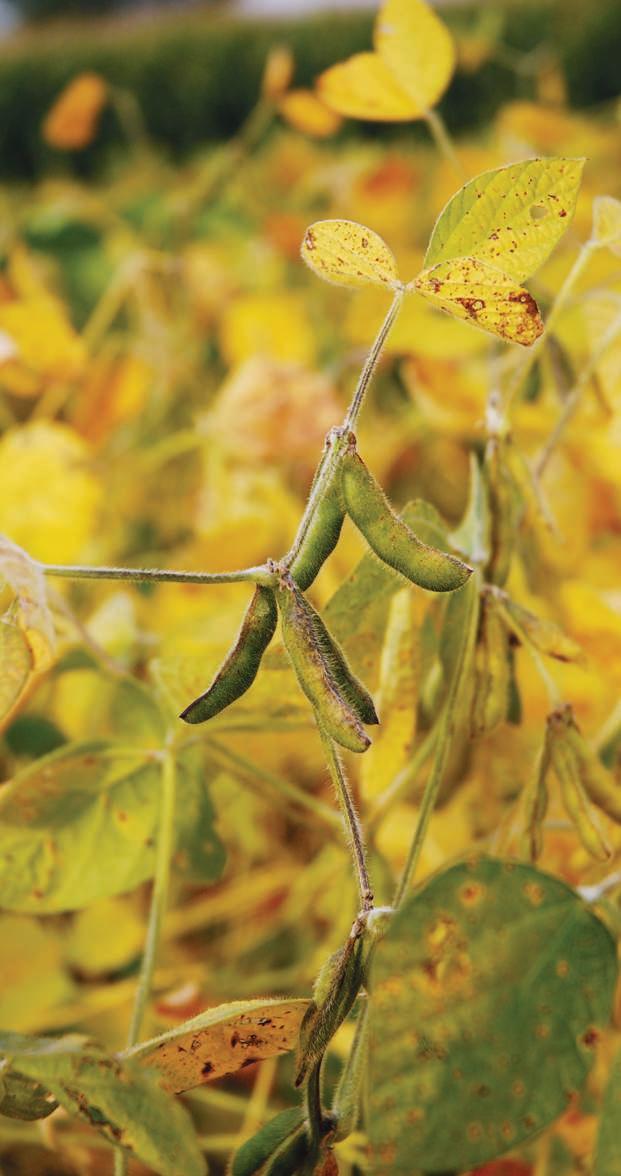
Ahighly destructive corn pest has made its debut in Ontario in 2008. The first western bean cutworm (WBC) moth was captured in early July in Lambton County. The discovery was made one week after pheromone traps were set up in the province. And it did not take long for the pest to introduce itself to the edible bean crop as a WBC moth was captured in a bean field in Blyth, Ontario in late July. Just days before the first capture Tracey Baute, field crop entomologist with the Ontario Ministry of Agriculture, Food and Rural Affairs, had cautioned farmers that it would only be a matter of time before WBC would be found in their fields. “We need to start monitoring for this because this is the next new species or pest that is going to come into Ontario and potentially impact both our corn and dry bean crops.”
The name, western bean cutworm, is somewhat deceiving because WBC is a pest of corn as well as dry beans. Traditionally, it has been a pest for several decades in Western Corn Belt states like Colorado and Nebraska. Since about 2000, however, it has been moving east and north into Iowa, Illinois, Ohio and Michigan.
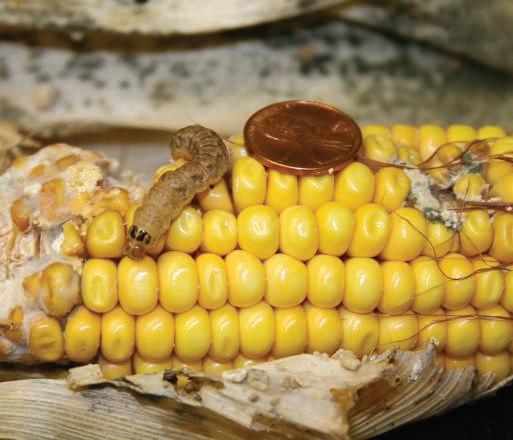
Similar to corn earworm, western bean cutworm is a late-season pest, with the larvae feeding on the ears of corn. Crop specialists are quick to point out that the key difference between the two is that corn earworms are cannibalistic, whereas the western bean cutworms are not, meaning that several WBC larvae can be feeding at the same time. Such a destructive scenario was on display in a few fields in the northwest part of Michigan in August 2007.
“It looks a lot like corn borer feeding in the ear, except instead of one or two larvae, you can have five or six of these critters in an ear,” says Chris DiFonzo, field crops entomologist at Michigan State University. Another giveaway is that the larvae sometimes chew through the husk into the side of the ear, so the
ear looks like it has been shot. “We had fields last August (2007) that were described as almost 30 percent to 100 percent of ears damaged.”
She suspects the WBC moths blew into that section of the state, possibly on storm fronts from Illinois and Wisconsin in July 2007, noting that the damage was worse in the northwest counties along Lake Michigan. In 2008, WBC egg laying and hatching were confirmed. Furthermore, some fields in northwest Michigan were over threshold for egg masses and small larvae.
While storm fronts may have accelerated the WBC arrival in northwestern Michigan, there are several factors that have contributed to the gradual spread across the U.S. Midwest. One theory is tied to the increasing use of certain Bt corn hybrids to ward off other pests. And while those hybrids have been an effective control for the European corn borer,theymayhaveprovidedanopportunity for the western bean cutworm.
“We believe the (WBC) populations were always held in check out in the Nebraskaareabecausethatiswherethey typically treated for corn borer prior to the discovery of Bt corn,” explains Ben Kaehler, traits licensing leader with Dow AgroSciences in Indiana. “Then in the mid-to-late ’90s Bt corn with YieldGard took off and was getting planted to more acres,” details Kaehler. “Therefore, the insecticide applications kind of ceased and, since YieldGard has no activity on WBC, we started seeing that pest move east.” Some Bt hybrids also control corn earworm, to the point of suppression only, which because of their cannibalistic nature, would be a natural enemy of western bean cutworm. Without corn earworm, WBC can now do well in the corn ear.
Climaticfactorssuchasmilderwinters and drier spring conditions are also cited as explanations for the eastward expansion. A third theory relates to the rise in reduced tillage acres, suggesting that less soil disturbance equates to larval survivorship.
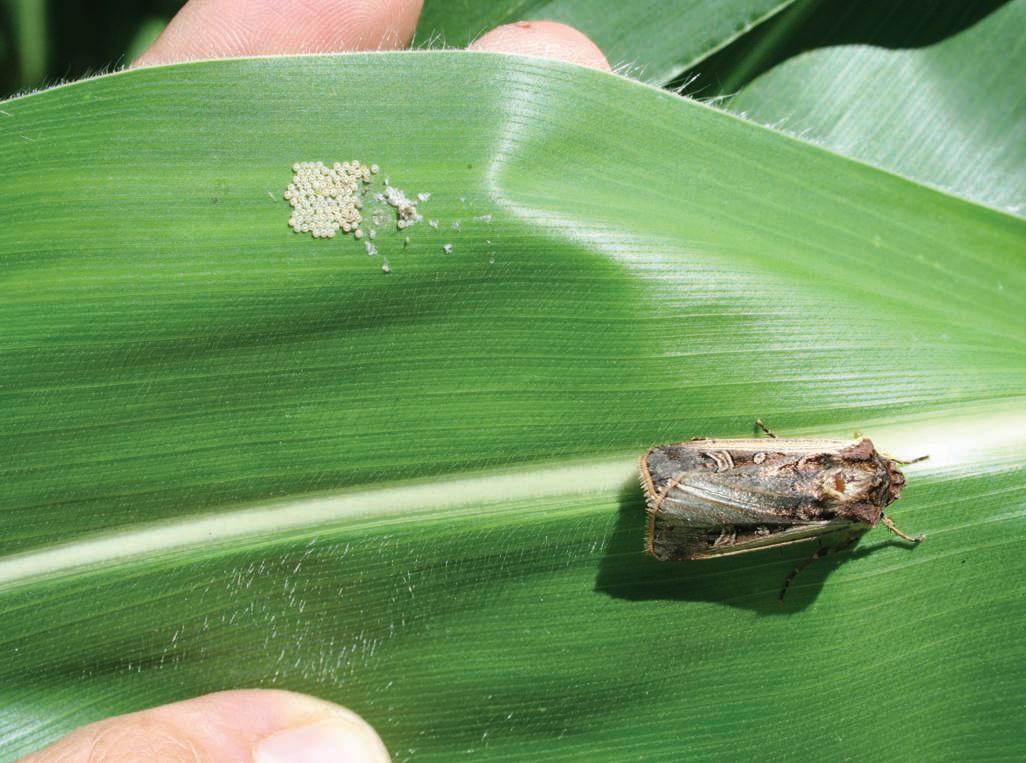
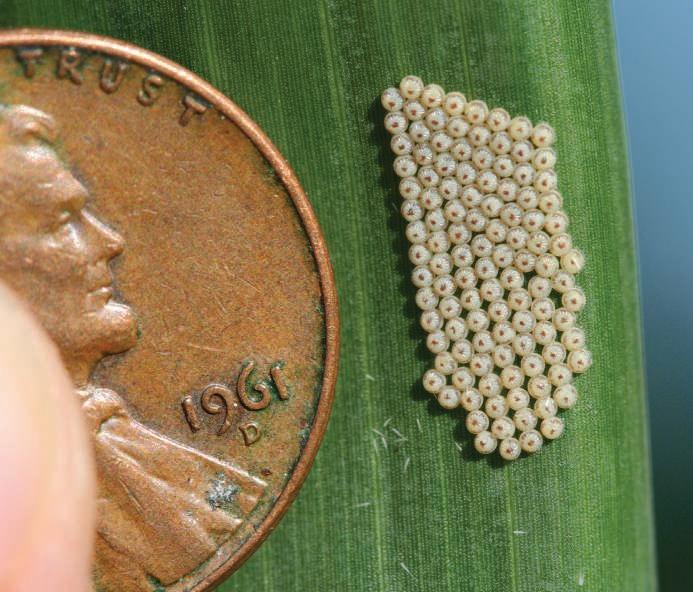
Although western bean cutworms can be confused with other corn pests, there are some distinctive characteristics. Adult moths are dark brown with a white stripe on their upper wings. There is a central white spot behind this stripe. And further down the body of the wing, there is a marking that is in the shape of a crescent moon. Adult moths emerge and are actively flying in late June. The moths are strong fliers and are known to travel several kilometres. After mating, eggs are usually laid on field corn, popcorn, sweet corn or dry beans. Tomatoes and fruits of nightshade are acceptable but are non-preferred hosts.
The cutworm larvae are tan to pink in colour and do not have wart spots or tubercles on them like European corn borer. The only distinguishing marking is located on the pronotum, the shield-like structure just behind the head. The WBC’s pronotum has two wide dark brown stripes.
In corn, Baute says the eggs are laid on the upper leaves of theplant.Fieldsnearingtasselemergenceorthoseplantedwith hybrids that hold their leaves upright are the most preferred. After the eggs hatch, the caterpillars move down into the whorl and feed on the developing tassel in the centre of the plant. The young larvae feed on the tassels and silks until they are large enough to tunnel into the ear and feed extensively on the kernels. As well as eating away at the yields, an impact to quality can be expected from ear rots and secondary pests that may come in and feed on the damaged ears.
Once the corn crop is tasselling, the moths prefer to switch and lay their eggs in dry bean fields. In dry beans, Baute explains that the moths lay their eggs on the underside of the leaves, opposite of what they do on corn. Larvae hatch and can disperse to several neighbouring plants. Initially they may feed on the leaves and flowers but as they grow, they mine into the pod of the plant and feed directly on the bean seed. It is too late to control them once they reach the pod because insecticides will not reach the larvae inside.
Western bean cutworm management
Scouting for WBC begins with the moth flight in late June to early July. The regime involves looking at plant leaves for
eggs and larval feeding. According to guidelines from the University of Nebraska-Lincoln, if five percent of field corn plants have eggs or newly hatched caterpillars and 95 percent of the corn has tasselled, an insecticide should be applied while caterpillars are exposed. The white, pin-head eggs are laid in masses of 20 to 100 eggs, usually on the upper third of the plant. As the eggs develop they darken to a dark purple just before hatching.
Using Bt hybrids may offer some relief. But again, the options are limited. In terms of transgenics, only Herculex I Bt corn (Cry1F) hybrids have been found to give protection from WBC. Kaehler says Herculex I is a different Bt strain than YieldGard, and it does a good job of controlling WBC. “In side-by-side trials with YieldGard versus Herculex, there is a night-and-day difference,” explains Kaehler. “We keep the damage under economic thresholds, so there will be a bit of feeding because they have to feed on the crop in order to ingest the Bt protein. But control is far better than any chemical application and you don’t have to worry about the timing or application costs.”
Michigan and Ontario are now part of an extensive trapping network that was initiated by Iowa State University. The purpose is to gain a better understanding of the distribution of the western bean cutworm and to provide information on the proper timing to scout for this pest. DiFonzo and Baute agree that the next steps are to learn more about the WBC migration and to gauge potential damage in the corn crop. While significant damage may not be an issue for the crops in 2008, Baute notes the potential to experience injury now exists in Ontario. She recommends that traps be monitored regularly to observe when peak flights occur and to scout the corn and bean crops to check for activity.
“I think the key with this one is that we’re not accustomed to scouting as much corn as we used to because of Bt corn,” explains Baute. “We should be watching our corn fields anyway, but this gives us a reason to be looking for eggs and any suspicious feeding.” p
by Treena Hein
In an era of rising input and transportation costs, the search for wonder crops, both in Canada and around the world, is on. Scott Chalmers, a diversification technician with Manitoba Agriculture, Food and Rural Initiatives (MAFRI), is just one among many on the front lines of that search. “We’re trying to look at everything and see what other options we have, in case we need those options,” he says.
But many are currently looking for crop alternatives, and Chalmers is one of them, have already found an ancient wonder crop that still dazzles today with numerous impressive attributes.
Enter camelina, a versatile, drought resistant and low-input crop. Its oil offers excellent human health benefits and its meal has outstanding nutritional value. As if that is not enough, the oil can be easily converted into fuel.
According to Dr. Kevin Falk, a crop research scientist with Agriculture and Agri-Food Canada in Saskatoon, archaeological evidence suggests that cultivation of camelina, of which Camelina sativa is among the most common species, began in southeast Europe in the late Neolithic era, and became well established in that region during the Bronze Age. Even that long ago, it was grown for its oil. Camelina then became common across much of Europe and Scandinavia. “The importance of camelina as a food crop declined during the Middle Ages,” state Falk and colleague R.K. Gugel in a 2006 research paper. “But cultivation has continued sporadically to this day.”
Camelina sativa was probably introducedtotheAmericasasaweedamongst flax seeds. The crop does not appear to have been cultivated, except perhaps in small isolated plantings. Falk and Gugel say interest in camelina as a potential oilseed crop for northern regions began to pick up in Canada after trials were conducted in the late 1950s. Recently, camelina has received renewed interest in Europe, North America and Australia, mostly due to its nutritional value.
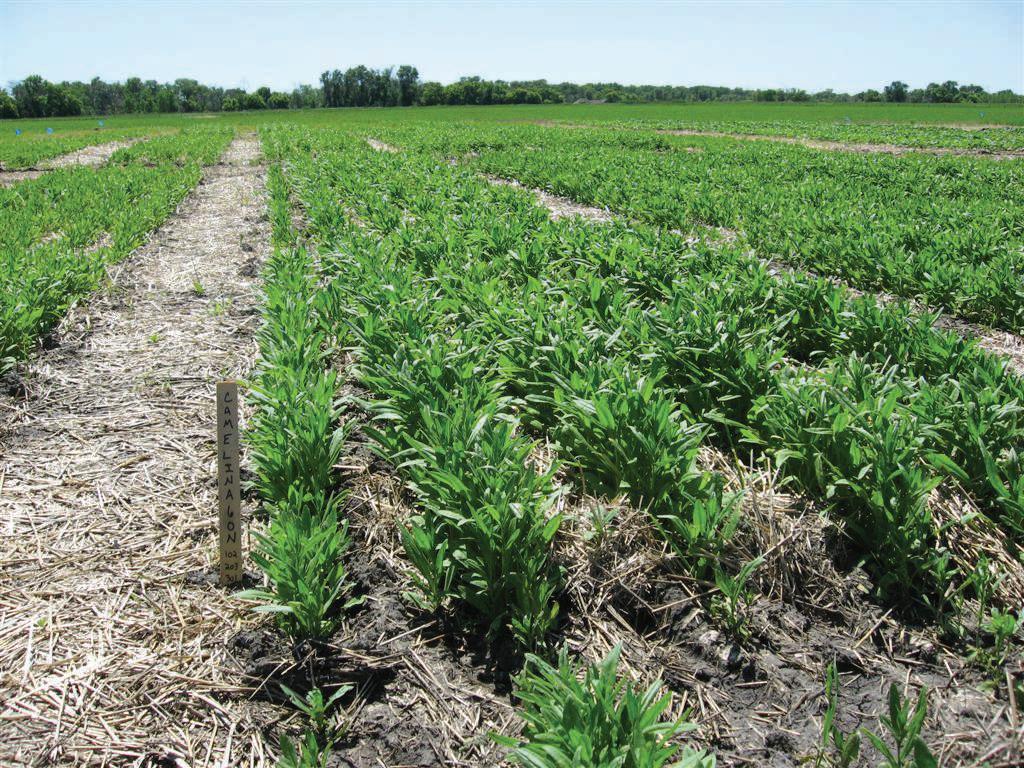
Although it is more common in Western Canada, Kevin Falk of AAFC-Saskatoon, believes camelina would adapt well to regions of Eastern Canada, including the Maritimes.
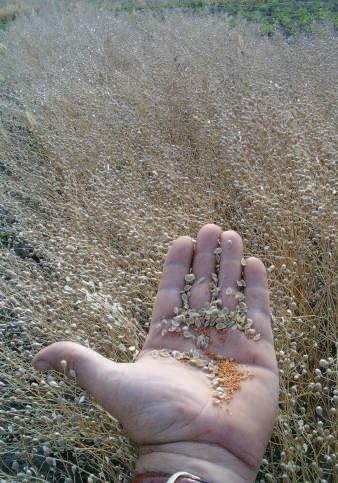
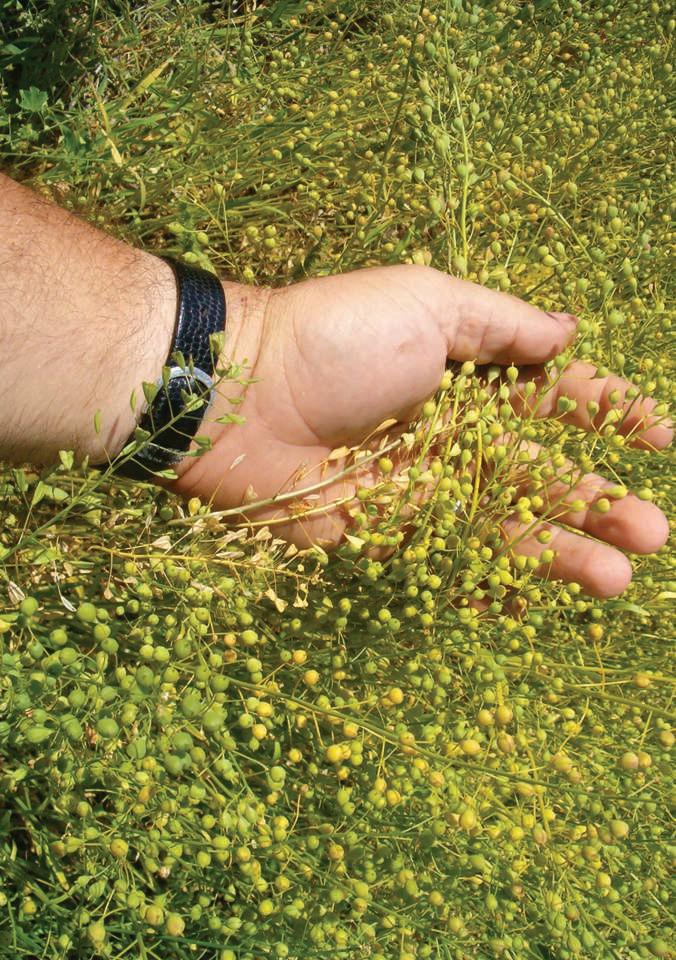
With its high levels of omega-3 fatty acid, camelina is coveted in food, feed and nutraceutical markets, as well as for its potential in the industrial sector.
Falk and his colleagues also have shown that camelina does well in both short and long growing seasons and adapts well to different areas, from PEI to the Prairies. “Our experience is that
yes, camelina could be grown in both Ontario and Quebec, based on what we’ve seen in New Brunswick and Nova Scotia,” he says. However, he points out that the climate in the Maritimes can


cause downy mildew. “The good news is that we are working on it. As for resistant varieties, to the best of my knowledge, there are none currently grown in Canada that are resistant, but we are looking.”
Falk says “We have chosen some lines and we’re making crosses this coming winter to start a breeding program.” He adds, “From an agronomic standpoint, the one issue we do have and are working on is the small seededness. Camelina has a thousand kernel weight of only 1.2 to 1.5 grams. This means it is only about half as large as canola.”
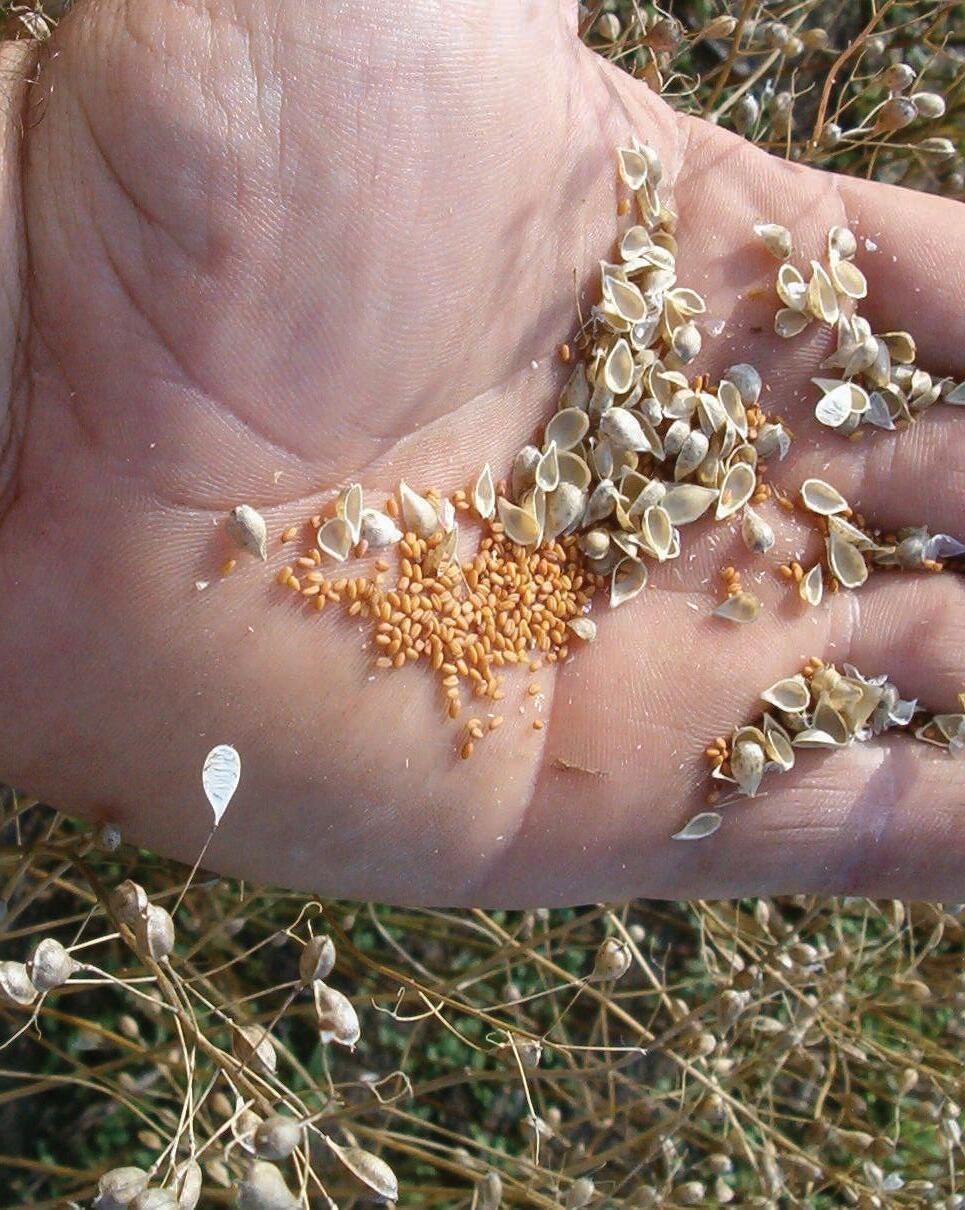
According to Falk and Gugel’s studies since 2004, camelina’s fatty acid composition is largely unsaturated (greater than 90 percent), with significant amounts (30 to 40 percent) of linolenic acid, an important omega-3 fatty acid. This profile is similar to that of flax, making camelina oil a perfect fit for the nutraceutical market, where foods contain added health benefits.
drought tolerant than canola and uses about half the fertilizer. Chalmers says grasshoppers, moths, worms, even deer ignore it.
Hugh Campbell, president of Seedtech-Terramax in Qu’Appelle, Sask., has been growing camelina and collecting seeds from many parts of the globe for 15 years. He says “There’s a lot of work to be done in terms of increasing oil content, but it’s a pretty good crop the way it is.”
In 2008, Terramax provided seed for MAFRI to grow demonstration plots featuring 28 varieties. Chalmers says “We are monitoring how they grow and also assessing how camelina interacts with crops such as canola and flax. Camelina apparently has a growth-regulating substance from bacteria on its leaves that washes off in the rain and promotes growth of other crops.”
Drawing on his experience with camelina since 2006, Chalmers observes “The earlier you seed it, the better it grows. Dormant seeding in the fall works better than spring seeding.”
Camelina ripens at the end of June and can be harvested until the end of July, which spreads out farm workload. Chalmers also notes, “It holds its pods better than canola, so you can let it stand. It swathes like wheat, so an old-style farmer can grow it. There’s no need for new and expensive equipment.”
In terms of disease and pests, Chalmers says, “I haven’t seen an insect yet. Wildlife don’t seem to go near it. I have noted some root rot Pythium sp. and found some Fusarium wilt. It doesn’t like wet feet.”
Since 2006, Campbell has had several farmers growing a select variety of camelina on a few thousand acres. “Most of these people believe it’s going to be an economically viable crop and want the growing experience,” he says. “We are not, however, encouraging widespread planting until there’s processing in place. We certainly could ship to existent oil crushing plants, but they’re busy crushing canola, 24 hours a day, seven days a week.”

Camelina’s profile also makes it a natural as an animal ration to produce products such as omega eggs. Furthermore, Falk says the seed meal is about 28 to 33 percent protein with a favourable balance of amino acids, making it a potentially valuable feed for poultry, swine and ruminants and fish. As an added bonus for both human and animal consumption, camelina oil contains significant amounts of vitamin E, which helps prevent rancidity.
Camelina also has good potential as a biofuel, industrial oil and lubricant. No bleaching or deodorizing of the oil is needed. “There are also other interesting bioproducts we are looking at,” says Falk, though he says those products must remain confidential at this time.
In terms of growing conditions, camelina is much more
Camelina Canada in Lethbridge, Alta., however, has been shipping camelina for biodiesel processing in Washington State for also since 2006. President Ryan Mercer says he received $7 per 50 pound bushel in 2007. Since approval for animal consumption is yet to come, the meal has been returned to Canada to be spread on fields.
Mercer plans to have about 50,000 acres with 28 varieties of camelina contracted for 2009. “Dan Kusalik, my full-time agronomist, introduced me to the crop and he is out helping our growers all over Alberta and Saskatchewan,” says Mercer. “The long-term plans are for a million acres. We are narrowing it down for which varieties grow best in different areas.” Mercer says camelina is allelopathic to weeds, preventing them from growing as well. He generally seeds five pounds per acre.
With such impressive characteristics, it would seem nothing can stop camelina from having a bright future in Canada. “The multitude of potential uses for the crop, combined with its favourable agronomics,” state Falk and Gugel, “suggests that cultivation of C. sativa may have a place in western Canadian agriculture especially now that growers are being encouraged to diversify their cropping strategies.”
“It’s got a very good carbon footprint compared to canola,” concludes Campbell. “With some action from the government, this could be a major crop, especially on marginal land.” p
by Blair Andrews
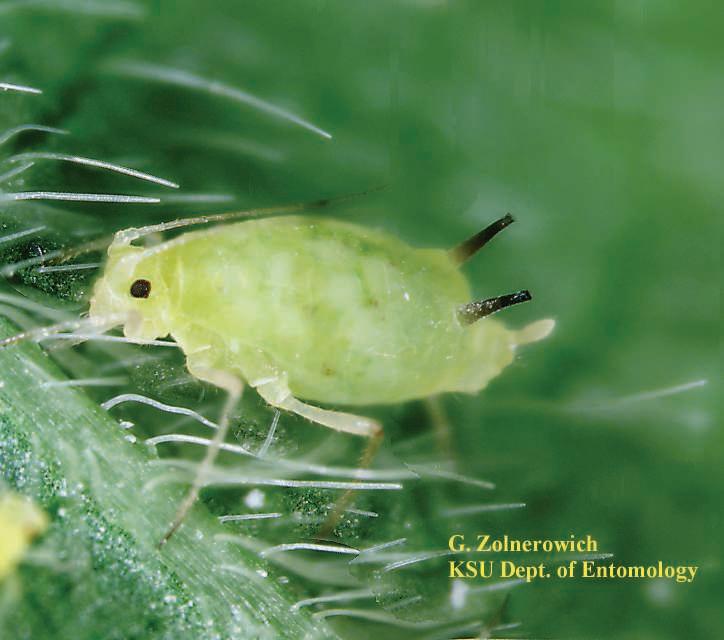
Scientists at Kansas State University may have found a way to curb a pest’s appetite for crops like soybeans, corn and wheat. The researchers discovered that by silencing a gene in the salivary glands of pea aphids, the insect could not live for more than a few days on its host plant. The findings could lead to new ways of controlling crop pests and reduce the need for chemical sprays. “It would not just increase the resistance level of the crop, it would turn that crop into a non-host for that species of aphid,” says Dr. John Reese, Kansas State professor of entomology.
The relationship between the aphids’
saliva and plants plays a key role in the research. Reese says they were so interested in salivary secretions because many aphids elicit striking responses in plants. Unlike chewing insects that crush cells,aphidshavesmallmouthpartsthey use to pierce and suck the juices from the plant. Although it may be a more delicate feeding method, Reese notes that it causes many reactions in plants. For example, greenbugs on sorghum leave behind spots of reddish discoloration, while Russian wheat aphids cause streaking on wheat, as well as causing the crop to droop. In a resistant plant, Reese says aphid feeding may induce many factors that contribute to the resistance. In a susceptible plant, the aphids may be overcoming the plant’s defences. “So we wanted to get at these salivary
secretions and see what was going on,” says Reese.
In their study, the researchers injected siRNA, a small strand of ribonucleic acid used to silence gene function, into adult pea aphids. In about six days, 100 per cent of the aphids that were injected were dead on the plant. While expecting that silencing the gene would have an impact, Reese says the injected aphids also exhibited some peculiar behaviour. “It’s not just that it takes them longer to get down to the sieve element in the plant where the nutrients are; it’s not just that it can’t stay in the sieve element, it’s affecting all sorts of things in their behaviour.”
Although silencing genes has been done in other insects, the work at Kansas State University is the first time anybody
The Farms.com Yield Data Center is your one-stop shop for Ontario corn and soybean yield information. The Farms.com Yield Data Center allows Ontario corn and soybean growers to access valuable yield information from numerous sources to help them select the right hybrids and varieties for 2009. At www.YieldData.Farms.com growers can access weigh wagon and research plot yield results from seed companies collected throughout the fall. They can also connect to the provincial performance trials for corn and soybeans and see the results of interesting eld scale projects conducted by various government research and grower organizations across the province.
has silenced an aphid gene. Reese says it could pave the way for others, through biotechnology, to develop plants that would deliver the gene silencer. He readily admits that the prospect of such a development will be a challenge, adding that there are several hurdles to overcome. “With Bt, it wasn’t too difficult to put Bt transcript into plants. Then chewing insects ingest it and it kills them off,” explains Reese. “But with this situation, to figure out a way to do something to the plant to enable it to block the gene in a piercing and sucking insect like an aphid – that’s a pretty good trick.”
Still, Reese believes the implications of the theory could be enormous, especially for controlling serious aphid pests that tend to have a narrow range of hosts. “Different species of aphids live on certain species of plants. Greenbugs can’t damage soybean plants, soybean aphids are never able to reproduce on a wheat plant or sorghum plant, and so forth,” says Reese. “But for that specific crop, you could theoretically turn it into a non-host.”
Exactly when that might occur appears to be many years away. Reese says it is definitely a long-term venture. For the
short term, Reese notes that the efforts to develop several resistant genes are becoming increasingly important. This assessment is particularly true for controlling the soybean aphid, which is starting to show signs of adapting to one of the stronger resistant genes. Reese says the major gene for soybean aphid resistance is Rag 1, discovered by researchers at the University of Illinois at Urbana-Champaign. Reese recalls that this gene appeared to offer powerful resistance against the soybean aphid. “We found aphids couldn’t just spend any time at all in the sieve element getting nutrients, so it was no wonder they weren’t reproducing and weren’t living very long. That was huge.”
However, a soybean aphid biotype, known as the Ohio biotype, has emerged and is breaking down the resistance offered by crops containing the Rag 1 gene. “Here, the soybean aphid has been in the US since 2000, and in 2008, there’s already a biotype that can overcome this one major gene for resistance.”
It is not known how far this biotype extends, but Reese expects that it will gradually spread across the soybean growing region. As a result, the development will likely spark new interest in breeding programs in North America. Kansas State University plant breeders have been working with materials that do not contain Rag 1. Reese describes these as having an intermediate level of resistance. “At first glance these materials didn’t look as exciting, but I thought this intermediate level is probably a different mechanism of resistance than the really strong ones.”
While perhaps less spectacular, Reese hopes the Kansas materials may carry resistance to the new biotype, as well as provide a more durable form of resistance, at least until the next biotype shows up.
“It’s never say never with insects,” says Reese, referring to insects’ amazing ability to adapt. “It’s a constant battle, back and forth.” p

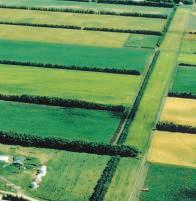


In the past five years, the pace of change of technology within the agri-food sector has been nothing short of breathtaking. The innovations, enhancements and processes by which seed and new chemistries are brought to market have altered the face of agriculture in just a few years.
And the story is only beginning.
At Top Crop Manager, we recognize the value of these innovations and leaps forward that are punctuating the passage of the growing seasons. As more of these achievements move out of the development stage and closer to their respective launches, growers find themselves in a
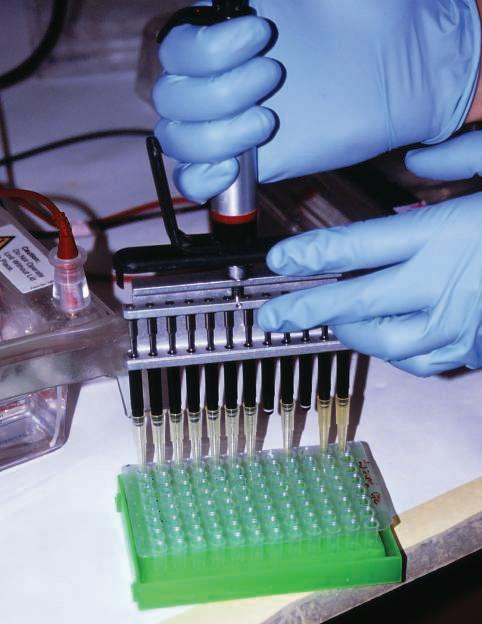
unique position. They have access to an increasing array of the latest in scientific advances in agriculture, yet they must contend with the complexities that each event and each product, brings to their farm.
With that idea in mind, Top Crop Manager is offering you our inaugural Traits and Stewardship Guide, an introductory glimpse of existing technologies and others that are poised to enter to the market in 2009 or beyond. Modelled on our annual Weed Control Guide, it is the goal of this Traits and Stewardship Guide to provide a qualitative and valuable resource for future reference. Of course, we recommend you speak to the seed and chemical company representatives that have these products to offer; they are the most knowledgeable individuals when it comes to their hybrids, varieties and chemical formulae.
In the Traits section, you will find listings for corn hybrids and soybean varieties. The guide indicates the Commercial Name, followed by the Genetic Event and the Companies offering the particular hybrids and varieties.
Included is a quick guide for hybrids as to the types of pests that are either controlled, suppressed or show no control. The soybean traits guide is very straightforward as to the events; however, the list of coming attractions for the future is quite extensive, and will drive further enhancements to this guide as we go forward.
With the Stewardship section, we have tried to simplify the issue of the use of certain hybrids for refuge. Only those hybrids that are on the market are listed in this part of the guide.
Again, it is important to note this really is a work in progress, especially given the pace of discovery and development of events and their subsequent use in hybrids and varieties.
As that profile shifts, so will our guide.
We hope you find this guide useful and worthy of consideration.
Ralph Pearce Editor Top Crop Manager
“In our most competitive field environments, we’ve lost as much as three bushels of corn per acre per day due to delayed application.”
Dr. Peter Sikkema, University of Guelph
For effective weed control, there’s no “one-size-fits-all” solution. Fortunately, the Roundup Ready® Corn 2 system offers the flexibility to help you tailor a program to address the challenges each individual field presents. “Weed management is always field-specific,” says Dr. Peter Sikkema, associate professor, Field Crop Weed Management at the University of Guelph, Ridgetown Campus. “The optimal strategy for one field may not be the best course of action for another. Before selecting a strategy, you need to consider factors such as weed spectrum, weed density, soil type and weed sensitivity to herbicides such as glyphosate.”
Sikkema says growers in eastern Canada have five possible strategies to choose from for controlling weeds in their Roundup Ready Corn 2 fields:
• A single early application – at the three- to five-leaf stage –of Roundup WeatherMAX® herbicide
• A single late application – at the six- to eight-leaf stage –of Roundup WeatherMAX
• A sequential application of Roundup WeatherMAX early, followed by a late application
• A pre-emergence application of a residual herbicide, followed by a late application of Roundup WeatherMAX
• A tank mix of Roundup WeatherMAX plus a residual herbicide

Sikkema points out there are five tank mixes approved for use in Roundup Ready Corn. “It’s important to choose your tank mix partner based on the weed spectrum in each individual field,” he says. “For instance, if annual grasses are a problem, you should use a tank mix of glyphosate with ELIM® or Primextra® II Magnum® herbicide. If you’re dealing with annual broadleaf weeds, then tank mix with Atrazine, Callisto® plus Atrazine, or Marksman® herbicide.”
Two additional factors Sikkema urges growers to keep in mind are timing and diversity.
“The timing of post-emergence herbicide applications is crucially important,” he emphasizes. “If your weeds emerge early and are nearly as tall as your corn, you need to apply as soon as possible… like yesterday. In our most competitive field environments, we’ve lost as much as three bushels of corn per acre per day due to delayed application. This is huge given the value of today’s corn crop.”
Sikkema also sees tremendous value in the diversity that helps differentiate growers in eastern Canada from their counterparts in the U.S. Corn belt.
“Diversity is the foundation for long-term sustainable crop production systems,” Sikkema notes. “I really believe glyphosate is one of the most amazing herbicides ever developed. It’s incumbent on all of us to continue to introduce diversity into our fields – through crop rotation and rotation of different herbicide chemistries – to ensure we have access to this valuable tool well into the future.”
TANK MIXTURES: The applicable labeling for each product must be in the possession of the user at the time of application. Follow applicable use instructions, including application rates, precautions and restrictions of each product used in the tank mixture. Monsanto has not tested all tank mix product formulations for compatibility or performance other than specifically listed by brand name. Always predetermine the compatibility of tank mixtures by mixing small proportional quantities in advance.
Elim is a registered trademark of E.I. Du Pont Company. Callislo, Primextra and Magnum are registered trademarks of a Syngenta group company. Marksman is a registered trademark of BASF. [34358-1 BF-TC]

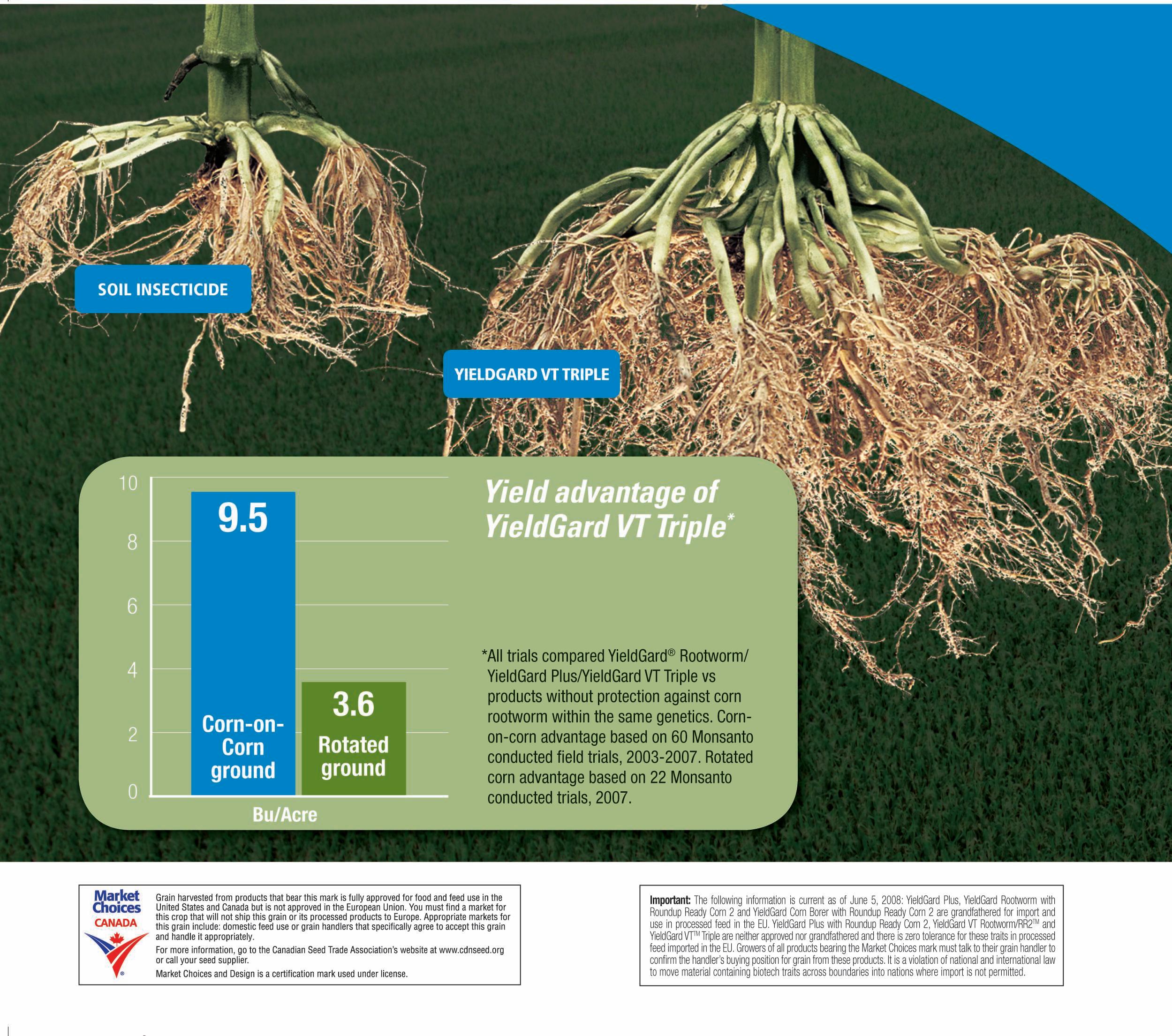
Looking for a high yielding refuge for your YieldGard VT TripleTM corn package?
Look no further than Roundup Ready® Corn 2. Manage all your acres with the same outstanding weed control, flexibility and crop safety of Roundup Ready Corn 2 system. Plus, Roundup Ready Corn 2 delivers up to 6.7 bu/ac more yield potential* – making it the highest-yielding refuge on the market.
vary
as local growing, soil
possible.
CountryFarmSeeds,Croplan,DeKalb,HylandSeeds, MaizexSeeds,MycogenSeeds,Pickseed,Pride
YieldGard®
CornBorer MON810
YieldGard®
CornBorer withRoundup
Ready®Corn2 MON810+NK603
YieldGardVT Triple™ MON810+MON88017
Roundup
Ready®Corn2 NK603
YieldGard®Plus withRoundup
Ready®Corn2 MON810+MON863+NK 603
HerculexI®+ Liberty TC1507
HerculexI® withRoundup
Ready®Corn2
HerculexXTRA®
HerculexXTRA® withRoundup
Ready®Corn2
TC1507+NK603
TC1507+ DAS-59122-7
TC1507+DAS-59122-7+ NK603
CountryFarmSeeds,Croplan,DeKalb,HylandSeeds, MaizexSeeds,MycogenSeeds,Pickseed,Pride Seeds
CountryFarmSeeds,Croplan,DeKalb,HylandSeeds, MaizexSeeds,MycogenSeeds,Pickseed, Pride Seeds
CountryFarmSeeds,Croplan,DeKalb, Hyland Seeds,MaizexSeeds,MycogenSeeds, Pickseed, PioneerHi-Bred,PrideSeeds
CountryFarmSeeds,Croplan,Dekalb,HylandSeeds, MaizexSeeds,MycogenSeeds,Pickseed,Pride Seeds
Co-opFederee,CountryFarmSeeds,Horizon Seeds,HylandSeeds,MaizexSeeds,MycogenSeeds, Pickseed,PioneerHi-Bred
Co-opFederee,CountryFarmSeeds,HylandSeeds, MaizexSeeds,MycogenSeeds,Pickseed,Pioneer Hi-Bred
CountryFarmSeeds,HorizonSeeds,HylandSeeds, MaizexSeeds,MycogenSeeds,PioneerHi-Bred
CountryFarmSeeds,HylandSeeds,MaizexSeeds, MycogenSeeds,PioneerHi-BredYesC
AgrisureCB/RWBt11+MIR604NKBrand
Agrisure3000GTGA21+Bt11+MIR604NKBrand
AgrisureGT/ CB/LL GA21+Bt11 NKBrand
PendingMIR162-PendingNKBrand
YieldGardVT TriplePRO™ MON88017+MON89034
SmartStax™MON88017+MON89034+ TC1507+DAS-59122-7
CountryFarmSeeds,DeKalb,HylandSeeds,Maizex Seeds,MycogenSeeds,Pickseed,PrideSeeds
CountryFarmSeeds,DeKalb,HylandSeeds,Maizex Seeds,MycogenSeeds,Pickseed,PrideSeeds
Mavera™(with lysine) PendingDeKalb
Optimum™ GAT™ PendingPioneerHi-Bred
Drought TolerantCorn
NitrogenUse Efficiency
YesNo
Yes No
TBDTBD NoNoNo
TBDTBD Yes NoNo
PendingCountryFarmSeeds,DeKalb,HylandSeeds,Maizex Seeds,MycogenSeeds,Pickseed,PrideSeeds
PendingCountryFarmSeeds,DeKalb,HylandSeeds,Maizex Seeds,MycogenSeeds,Pickseed,PrideSeeds
ColdTolerancePendingCountryFarmSeeds,DeKalb,HylandSeeds,Maizex Seeds,MycogenSeeds,Pickseed,PrideSeeds
GENETICEVENT
RoundupReady®
40-3-2AdvantageSeeds,CountryFarmSeeds,Croplan,Dekalb,HylandSeeds, MaizexSeeds, NKBrand,PioneerHi-Bred,PrideSeeds,ProSeeds,SeCan, SemencesPrograin
Vistive™40-3-2 Dekalb,HylandSeeds,PrideSeeds YesYesNoNo
RoundupRReady®2 Yield™ MON89788ToBeDetermined YesYesYesYes
LibertyLink®A2704 ToBeDetermined YesYesNoNo
Optimum™GAT™PendingPioneerHi-Bred YesYesNoNo
Improved-protein soybeansforfood PendingToBeDetermined NoYesNoNo
VistiveIIIlowlinolenic -midoleic PendingToBeDetermined
Omega-3 PendingToBeDetermined
HighoilforprocessingPendingToBeDetermined
HighBetaconglycininPendingToBeDetermined
DicambaTolerancePendingToBeDetermined
YieldGard® Corn Borer (MON 810)
YieldGard® Corn Borer with Roundup Ready® Corn 2 (MON 810 + NK 603)
YieldGard VTTM Triple (MON 810 + MON88017)
Roundup Ready® Corn 2 (NK 603)
YieldGard® Plus with Roundup Ready® Corn 2 (MON 810 + MON 863 + NK 603)
Herculex I ® + Liberty (TC1507)
Herculex I ® with Roundup Ready Corn 2 (TC1507 + NK603)
Herculex XTRA ® (TC1507 + DAS-59122-7)
Herculex XTRA ® with Roundup Ready ® Corn 2 (TC1507 + DAS-59122-7 + NK 603) Agrisure CB (Bt11)
YieldGard® Corn Borer (MON 810)NNNYNNNNNNYNNNNY
YieldGard® Corn Borer with Roundup Ready® Corn 2 (MON 810 + NK 603)NNNYNNNNNNYNNNNY
YieldGard VT™ Triple (MON 810 + MON88017)NNNYNNNNNNYNNNNY
Roundup Ready® Corn 2 (NK 603)YYYYYYYYYYYYYYYY
YieldGard® Plus with Roundup Ready® Corn 2 (MON 810 + MON 863 + NK 603)NNNYNNNNNNYNNNNY
Herculex I ® + Liberty (TC1507)NNNYNNNNNNYYNNNY
Herculex I ® with Roundup Ready Corn 2(TC1507 + NK603)NNNYNNNNNNYYNNNY
Herculex XTRA ® (TC1507 + DAS-59122-7)NNNYNNNNNNYNNNNY
Herculex XTRA ® with Roundup Ready ® Corn 2 (TC1507 + DAS-59122-7 + NK 603)NNNYNNNNNNYNNNNY
Agrisure CB (Bt11)NNNYNNNNNNYYNNNY
Agrisure GT (GA21)YYYYYYYYYYNYYYYN
Agrisure RW (MIR604)NNNYNYYNNYYNNNYY
Agrisure CB/RW (Bt11 + MIR604)NNNYNNNNNNYNNNNY
Agrisure 3000GT (GA21 + Bt11 + MIR604)NNNYNNNNNNYNNNNN
Agrisure GT/CB/LL (GA21 + Bt11)NNNYNNNNNNYYNNNN
Agrisure LL (T25)YYYYYYYYYYNYYNNN

by Treena Hein
Aform of wheat stem rust known as Ug99 is sending shockwaves of alarm in wheat producing areas around the world. However, with proper implementation of federal and provincial planning, it is hoped that the threat to Canadian wheat will be kept to a minimum.
At present, this virulent strain of black stem rust fungus, Puccinia graminis, has spread from Kenya and Ethiopia in Africa to Yemen and Iran in western Asia. It originated in Uganda in 1999, hence the Ug99 designation. Parts of the Indian subcontinent also are at risk.
Iran is considered a flashpoint in Ug99’s spread. The fungus normally reproduces asexually, releasing billions of spores. These spores are not identical, and there can be mutations in asexual populations of spores. If the spores drift onto a barberry bush, Berberis vulgaris, which is common in Iran, sexual reproduction, gene mixing with other stem rusts could occur. The resulting offspring could be much more virulent than their parents.
Even on its own, Ug99 continues to evolve. New derivatives of Ug99 were isolated in Kenya in 2006 and 2007.
There is general consensus that Ug99 will eventually arrive in North America. Albert Tenuta, crop pathologist and field crops program lead with the Ontario Ministry of Agriculture, Food and Rural Affairs, says, “The concern of course is that our varieties have little protection and today would be susceptible. We’ve probably seen more stem rust this past year than I’ve ever seen. It’s the same across North America.”
Although a lot of attention is on Ug99, there is also the possibility that a new stem rust race could develop in North America,” Tenuta also points out. “Our resistance genes have been effective for 44 plus years, and it’s only a matter of time until they’re overcome by stem rust.”
Despite that outlook, Tenuta is nonetheless optimistic. “One of the main differences between the 1940s and 1950s, when we last saw stem rust outbreaks, and now is the fact that we have some preparation time. We will hopefully have new high-yielding resistant varieties available. We also have fungicide products which are very effective against not only stem rust but other cereal rusts such as stripe and leaf rust.”
There is little time to lose for developing resistance. The standard amount of time to cross disease-resistant lines with wheat varieties adapted to local conditions in wheat-growing areas around the globe is generally considered to be at least five years. Mark Etienne of Hyland Seeds says “rust tolerance is one thing, but in Ontario and Canada, we are working with a quality crop that must ‘yield’ and be competitive within our current marketplace.” He adds, “We have been working on fusarium for more than twenty years in Ontario and are still striving to incorporate tolerance to infection and DON within our varieties. Based on fusarium, finding tolerance and
resistance can be a long-term, frustrating and somewhat expensive process.”
To mitigate the global threat of Ug99, the Bill and Melinda Gates Foundation has provided a grant of $26.8 million for three years of research into the extent of resistance in current varieties, and develop resistance in new varieties. The project, entitled “Double Rust Resistance in Wheat,” is based at Cornell University in Ithaca, NY, and directed by Dr. Ronnie Coffman, an international professor of plant breeding and director of International Programs at Cornell’s College of Agriculture and Life Sciences.
Program partners include research labs in Kenya, Ethiopia, US, Canada, China, Australia, and South Africa. Project support also will be provided by the Food and Agriculture Organization of the United Nations (UN-FAO). Three international agricultural research centers will also take part: the International Maize and Wheat Improvement Center
Continued on page 28

It’s because we produce such high quality premium products like our Canadian “Pearls of the East™” that we yield this kind of result. That’s what makes NK® seeds the ones the world is asking for. And it’s little wonder Ontario growers are asking for them too. For more information contact your NK dealer, call 1-800-756-SEED or visit www.nkcanada.com today.
NK, NK and Design are registered trademarks of a Syngenta Group Company.
In the search for resistance, 10 to 15 percent of spring cultivars from North America exhibit intermediate resistance with five percent showing high levels of resistance.
Continued from page 21
(CIMMYT) in Mexico, the International Center for Agricultural Research in the Dry Areas (ICARDA) in Syria, and International Rice Research Institute (IRRI) in the Philippines.
Kp"vjg"rtqlgevÔu"gzgewvkxg"uwooct{." Eqhhocp"uvcvgu"vjcv"Ñcdqwv";2"rgtegpv" of the wheat grown around the world is xwnpgtcdng"vq"ugxgtg"fcocig"vq"vjg"pgy" v{rgu"qh"uvgo"twuv"fkugcug"gogtikpi"qwv" qh"Gcuv"Chtkec0Ò"Kv"cnuq"jcu"dggp"tgrqtvgf" that up to 75 percent of all spring and ykpvgt"yjgcv"xctkgvkgu"itqyp"kp"vjg" WU"ctg"uwuegrvkdng"vq"Wi;;0"Kp"vgtou"qh" Ecpcfkcp"yjgcv"tgukuvcpeg."Ft0"Vqo" Hgvej"ecp"ikxg"vjg"oquv"ceewtcvg"cpuygt0" Cu"EcpcfcÔu"ngcfkpi"uvgo"twuv"gzrgtv" and a crop pathologist with Agriculture and Agri-Food Canada in Winnipeg, Hgvej"jcu"ugpv"cdqwv"92"urtkpi"ewnvkxctu" hqt"Wi;;"hkgnf"vguvkpi"kp"Mgp{c."cpf" hqwpf"vjcv"cdqwv"32/37"rgtegpv"jcxg" kpvgtogfkcvg"tgukuvcpeg"cpf"cdqwv"hkxg" rgt"egpv"jcxg"jkij"ngxgnu"qh"tgukuvcpeg0 Eqhhocp"uvcvgu"vjcv"vjg"Eqtpgnn"rtqlgev." of which Fetch is the lead Canadian, will
wug"ownvkrng"crrtqcejgu"vq"cejkgxg"nqpi/ ncuvkpi"uvgo"twuv"tgukuvcpeg"kpenwfkpi"c" uocnn"itqwr"qh"gnkvg"jkij/{kgnfkpi" dtggfkpi"nkpgu0"Qvjgt"uqwtegu."rctvk/ ewnctn{"htqo"yknf"tgncvkxgu."pggf"vq"dg" Ñengcpgf"wrÒ"d{"jcxkpi"nkpmgf"fgngvg/ tkqwu"vtckvu"tgoqxgf"dghqtg"vjg{"ecp" dg"wugf"ghhgevkxgn{"kp"yjgcv"dtggfkpi" rtqitcou0"Octmgt"cuukuvgf"vgejpqnqikgu ecp"urggf"wr"vjgug"dtggfkpi"crrtqcejgu0 ""Ft0"Fwcpg"Hcnm."cuuqekcvg"rtqhguuqt" qh"rncpv"citkewnvwtg"cv"vjg"Wpkxgtukv{" of Guelph, hopes that the high-tech strategy of inserting resistance genes, yjkng"eqpukfgtgf"Ñewvvkpi"gfig.Ò"ku"pqv" vjg"rtkoct{"hqewu0"ÑKvÔu"ujqtv/ukijvgf.Ò" jg"uc{u0"ÑYg"owuv"ceewowncvg"okpqt" tgukuvcpeg"igpgu"kp"dtggfkpi"rtqitcou." uq"vjcv"tgukuvcpeg"fqgupÔv"dtgcm"fqyp0" KvÔu"c"owej"dgvvgt"nqpi/vgto"uqnwvkqp0" Qpeg"{qwÔxg"fqpg"kv."{qwÔxg"fqpg"kv" hqt"iqqf0Ò
Canadian concerns Vjgtg"ctg"vyq"yc{u"Wi;;"eqwnf"urtgcf" vq"Pqtvj"Cogtkec."ceeqtfkpi"vq"Hgvej0" ÑYkpf"ku"vjg"pcvwtcn"yc{"twuv"urqtgu" oqxg.Ò"jg"uc{u0"ÑKh"kv"ygpv"vq"yguvgtp"
Chtkec."kh"yg"eqwnf"eqphkto"kv"ycu"qp"vjg" west coast, in August there are hurriecpgu"cpf"vtqrkecn"uvqtou"vjcv"oqxg" cetquu"vjg"Cvncpvke"vjcv"eqwnf"dtkpi" kv"jgtg0Ò"
ÑVjg"qvjgt"fktgevkqp"ku"vq"vjg"Gcuv.Ò" Hgvej"pqvgu0"ÑKh"kv"igvu"vq"Ejkpc."yg" mpqy"vjgtg"jcxg"dggp"gxgpvu"yjgtg"fwuv" rctvkengu"jcxg"dnqyp"cetquu"vq"Pqtvj" Cogtkec0"C"twuv"urqtg"ku"gswcn"vq"qt"gxgp" nkijvgt"vjcp"vjgug"rctvkengu0Ò"
Vjg"ugeqpf"ocppgt"Wi;;"eqwnf"vwtp" wr"kp"Pqtvj"Cogtkec"ku"vjtqwij"jwocp" vtcpuhgt0"ÑTwuv"urqtgu"ecp"dg"vtcpurqtvgf" qp"enqvjgu.Ò"uc{u"Hgvej0"ÑYg"vjkpm"vjcv" this is how stripe rust was introduced kpvq"Cwuvtcnkc0"Yg"fqpÔv"mpqy"jqy"uqqp" Wi;;"eqwnf"dg"kpvtqfwegf"kpvq"Pqtvj" Cogtkec"kp"vjku"ocppgt."dwv"vjg"oqtg" Wi;;"urtgcfu."vjg"itgcvgt"vjg"ejcpeg" vjcv"uqogqpg"eqwnf"dtkpi"kv"qxgt"jgtg0Ò" Cnvjqwij"Wi;;"ku"pqv"eqpukfgtgf"cp" koogfkcvg"vjtgcv"vq"Ecpcfkcp"yjgcv" hkgnfu."Vgpwvc"uggu"vjg"inqdcn"vjtgcv"cu" c"rqukvkxg"hqteg."d{"tckukpi"cyctgpguu0" ÑYg"jcxg"c"yjqng"pgy"igpgtcvkqp"qh" itqygtu"vjcv"jcxgpÔv"uggp"uvgo"twuv"cpf" ctgpÔv"cyctg"qh"vjg"korcev"kv"eqwnf"jcxg" qp"etqru.Ò"jg"uc{u0"ÑVjg"oqtg"rgqrng" nqqmkpi"qwv"vjgtg."vjg"dgvvgt0Ò"Vgpwvc" uc{u"QOCHTC"jcu"kpeqtrqtcvgf"Wi;;" kphqtocvkqp"kpvq"ocp{"tgegpv"rtgugpvc/ vkqpu."cpf"yknn"dg"rtqfwekpi"c"uvgo"twuv" dtqejwtg"vjcv"yknn"cuukuv"rtqfwegtu"kp" Qpvctkq"cpf"dg{qpf0
Kp"vgtou"qh"Ecpcfc/ykfg"rtgrctgfpguu." Fetch is leading the creation of a national cevkqp"rncp0"ÑVjgtg"ctg"vjtgg"vjkpiu" vjcv"ygÔtg"iqkpi"vq"vt{"vq"fq.Ò"jg"uc{u0" ÑQpg"ku"dcuke"rcvjqnqi{"yqtm."rctv"qh" the Cornell project, where the fungus ku"cpf"jqy"owej"kv"ku"owvcvkpi0"Yg" mpqy"vjg"qtkikpcn"kuqncvg"jcu"owvcvgf"cv" ngcuv"vykeg"vq"unkijvn{"oqtg"fcpigtqwu" hqtou0"Vjku"ku"xgt{"korqtvcpv"vq"mpqy" hqt"dtggfkpi"rtqitcou0Ò"
The second part of the national plan, says Fetch, is to identify resistance in Canadian wheat lines and incorporate mpqyp"tgukuvcpeg"igpgu0"ÑVjgtg"ctg"pqv"c" nqv"qh"nkpgu"ykvjkp"vjg"dtgcf"yjgcvu"ykvj" ukipkhkecpv"tgukuvcpeg.Ò"jg"uc{u0"ÑVjcvÔu" yjgtg"ygÔtg"hqewuukpi"qwt"yqtm0Ò ÑKp"vcpfgo"ykvj"vjcv.Ò"Hgvej"uc{u." Ñvjg"vjktf"vjkpi"yg"ycpv"vq"fq"ku"gpuwtg" pgy"ewnvkxctu"jcxg"cv"ngcuv"vyq"ghhgevkxg" tgukuvcpeg"igpgu"cpf"vjgp"wug"vjgo"kp" c"hkgnf"rtqitco0Ò"Vjg"cevkqp"rncp"yknn" hkpcnk¦gf"d{"vjg"gpf"qh"vjg"{gct0"ÑKp"vjg" ogcpvkog.Ò"jg"uc{u."ÑK"co"fqkpi"yjcv"K" ecp"qp"o{"qyp0"Vjku"rncp"yknn"gpjcpeg" vjg"yqtm0Ò"p
by Treena Hein
AUg99 wheat stem rust threat is being monitored closely around the world
form of wheat stem rust known as Ug99 is sending shockwaves of alarm in wheat producing areas around the world. However, with proper implementation of federal and provincial planning, it is hoped that the threat to Canadian wheat will be kept to a minimum.
At present, this virulent strain of black stem rust fungus, Rweekpkc"itcokpku, has spread from Kenya and Ethiopia in Africa to Yemen and Iran in western Asia. It originated in Uganda in 1999, hence the Ug99 designation. Parts of the Indian subcontinent also are at risk.
Ktcp"ku"eqpukfgtgf"c"hncujrqkpv"kp"Wi;;Ôu"urtgcf0"Vjg"hwpiwu" normally reproduces asexually, releasing billions of spores. Vjgug"urqtgu"ctg"pqv"kfgpvkecn."cpf"vjgtg"ecp"dg"owvcvkqpu" in asexual populations of spores. If the spores drift onto a barberry bush, Dgtdgtku"xwnictku. which is common in Iran, sexual reproduction, gene mixing with other stem rusts could qeewt0"Vjg"tguwnvkpi"qhhurtkpi"eqwnf"dg"owej"oqtg"xktwngpv" than their parents.
Even on its own, Ug99 continues to evolve. New derivatives of Ug99 were isolated in Kenya in 2006 and 2007.
"""Vjgtg"ku"igpgtcn"eqpugpuwu"vjcv"Wi;;"yknn"gxgpvwcnn{"cttkxg" kp"Pqtvj"Cogtkec0"Cndgtv"Vgpwvc."etqr"rcvjqnqikuv"cpf"hkgnf" crops program lead with the Ontario Ministry of Agriculture, Hqqf"cpf"Twtcn"Chhcktu."uc{u."ÑVjg"eqpegtp"qh"eqwtug"ku"vjcv" our varieties have little protection and today would be suscepvkdng0"YgÔxg"rtqdcdn{"uggp"oqtg"uvgo"twuv"vjku"rcuv"{gct"vjcp" KÔxg"gxgt"uggp0"KvÔu"vjg"ucog"cetquu"Pqtvj"Cogtkec0Ò"
Although a lot of attention is on Ug99, there is also the possibility that a new stem rust race could develop in North Cogtkec.Ò"Vgpwvc"cnuq"rqkpvu"qwv0"ÑQwt"tgukuvcpeg"igpgu" jcxg"dggp"ghhgevkxg"hqt"66"rnwu"{gctu."cpf"kvÔu"qpn{"c"ocvvgt" qh"vkog"wpvkn"vjg{Ôtg"qxgteqog"d{"uvgo"twuv0Ò"
Fgurkvg"vjcv"qwvnqqm."Vgpwvc"ku"pqpgvjgnguu"qrvkokuvke0" ÑQpg"qh"vjg"ockp"fkhhgtgpegu"dgvyggp"vjg"3;62u"cpf"3;72u." when we last saw stem rust outbreaks, and now is the fact that we have some preparation time. We will hopefully have new high-yielding resistant varieties available. We also have fungicide products which are very effective against not only stem rust but other cereal rusts such as stripe and ngch"twuv0Ò"
Vjgtg"ku"nkvvng"vkog"vq"nqug"hqt"fgxgnqrkpi"tgukuvcpeg0"Vjg" standard amount of time to cross disease-resistant lines with wheat varieties adapted to local conditions in wheat-growing areas around the globe is generally considered to be at least hkxg"{gctu0"Octm"Gvkgppg"qh"J{ncpf"Uggfu"uc{u"Ñtwuv"vqngtcpeg" is one thing, but in Ontario and Canada, we are working with c"swcnkv{"etqr"vjcv"owuv"Ó{kgnfÔ"cpf"dg"eqorgvkvkxg"ykvjkp" qwt"ewttgpv"octmgvrnceg0Ò"Jg"cffu."ÑYg"jcxg"dggp"yqtmkpi" on fusarium for more than twenty years in Ontario and are still striving to incorporate tolerance to infection and DON within our varieties. Based on fusarium, finding tolerance and
contends that developing resistance must include gene insertion as well as accumulating minor genetic resistance, to ensure longer-term success.
resistance can be a long-term, frustrating and somewhat gzrgpukxg"rtqeguu0Ò
Vq"okvkicvg"vjg"inqdcn"vjtgcv"qh"Wi;;."vjg"Dknn"cpf"Ognkpfc" Gates Foundation has provided a grant of $26.8 million for three years of research into the extent of resistance in current xctkgvkgu."cpf"fgxgnqr"tgukuvcpeg"kp"pgy"xctkgvkgu0"Vjg"rtqlgev." gpvkvngf"ÑFqwdng"Twuv"Tgukuvcpeg"kp"Yjgcv.Ò"ku"dcugf"cv"Eqtpgnn" University in Ithaca, NY, and directed by Dr. Ronnie Coffman, an international professor of plant breeding and director of Kpvgtpcvkqpcn"Rtqitcou"cv"EqtpgnnÔu"Eqnngig"qh"Citkewnvwtg" and Life Sciences.
Program partners include research labs in Kenya, Ethiopia, WU."Ecpcfc."Ejkpc."Cwuvtcnkc."cpf"Uqwvj"Chtkec0"Rtqlgev" support also will be provided by the Food and Agriculture Qticpk¦cvkqp"qh"vjg"Wpkvgf"Pcvkqpu"*WP/HCQ+0"Vjtgg"kpvgt/ national agricultural research centers will also take part: the International Maize and Wheat Improvement Center
Continued on page 28
When it comes aphid-resistant that you can expect for them too. For
to corn and soybeans, our portfolio has everything you need. From glyphosate-tolerant (GT) corn and corn borer traits soybeans and premium IP soybeans for specialty markets. So no matter where you farm, you can literally customize expect from the latest seed technology. Plus, we’re continually adding new and innovative traits to our line-up. That’ For more information, speak to your NK dealer, call 1-800-756-SEED (7333) or visit www.nkcanada.com today. so many
you might be tempted to try them all.
traits and quad stacks that include GT, LibertyLink®, and corn rootworm, to NK Roundup Ready® soybeans plus NEW customize your fields with us. And with proven NK® genetics come consistently higher yields and ease of production That’s what makes NK seeds the ones that Canadian growers are asking for. It’s little wonder the world is asking
In the search for resistance, 10 to 15 percent of spring cultivars from North America exhibit intermediate resistance with five percent showing high levels of resistance.
Continued from page 21
(CIMMYT) in Mexico, the International Center for Agricultural Research in the Dry Areas (ICARDA) in Syria, and International Rice Research Institute (IRRI) in the Philippines.
In the project’s executive summary, Coffman states that “about 90 percent of the wheat grown around the world is vulnerable to severe damage to the new types of stem rust disease emerging out of East Africa.” It also has been reported that up to 75 percent of all spring and winter wheat varieties grown in the US are susceptible to Ug99. In terms of Canadian wheat resistance, Dr. Tom Fetch can give the most accurate answer. As Canada’s leading stem rust expert and a crop pathologist with Agriculture and Agri-Food Canada in Winnipeg, Fetch has sent about 70 spring cultivars for Ug99 field testing in Kenya, and found that about 10-15 percent have intermediate resistance and about five per cent have high levels of resistance. CoffmanstatesthattheCornellproject, of which Fetch is the lead Canadian, will
use multiple approaches to achieve longlasting stem rust resistance including a small group of elite high-yielding breeding lines. Other sources, particularly from wild relatives, need to be “cleaned up” by having linked deleterious traits removed before they can be used effectively in wheat breeding programs. Marker assisted technologies can speed up these breeding approaches.
Dr. Duane Falk, associate professor of plant agriculture at the University of Guelph, hopes that the high-tech strategy of inserting resistance genes, while considered “cutting edge,” is not the primary focus. “It’s short-sighted,” he says. “We must accumulate minor resistance genes in breeding programs, so that resistance doesn’t break down. It’s a much better long-term solution. Once you’ve done it, you’ve done it for good.”
Canadian concerns
There are two ways Ug99 could spread to North America, according to Fetch. “Wind is the natural way rust spores move,” he says. “If it went to western
Africa, if we could confirm it was on the west coast, in August there are hurricanes and tropical storms that move across the Atlantic that could bring it here.”
“The other direction is to the East,” Fetch notes. “If it gets to China, we know there have been events where dust particles have blown across to North America. A rust spore is equal to or even lighter than these particles.”
The second manner Ug99 could turn up in North America is through human transfer. “Rust spores can be transported on clothes,” says Fetch. “We think that this is how stripe rust was introduced into Australia. We don’t know how soon Ug99 could be introduced into North America in this manner, but the more Ug99 spreads, the greater the chance that someone could bring it over here.”
Although Ug99 is not considered an immediate threat to Canadian wheat fields, Tenuta sees the global threat as a positive force, by raising awareness. “We have a whole new generation of growers that haven’t seen stem rust and aren’t aware of the impact it could have on crops,” he says. “The more people looking out there, the better.” Tenuta says OMAFRA has incorporated Ug99 information into many recent presentations, and will be producing a stem rust brochure that will assist producers in Ontario and beyond.
IntermsofCanada-wide preparedness, Fetch is leading the creation of a national action plan. “There are three things that we’re going to try to do,” he says. “One is basic pathology work, part of the Cornell project, where the fungus is and how much it is mutating. We know the original isolate has mutated at least twice to slightly more dangerous forms. This is very important to know for breeding programs.”
The second part of the national plan, says Fetch, is to identify resistance in Canadian wheat lines and incorporate known resistance genes. “There are not a lot of lines within the bread wheats with significant resistance,” he says. “That’s where we’re focussing our work.”
“In tandem with that,” Fetch says, “the third thing we want to do is ensure new cultivars have at least two effective resistance genes and then use them in a field program.” The action plan will finalized by the end of the year. “In the meantime,” he says, “I am doing what I can on my own. This plan will enhance the work.” p
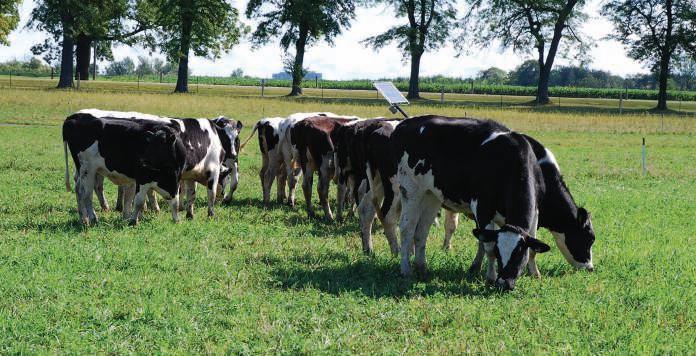
Brown mid-rib corn hybrids (BMRs) developed by Mycogen Seeds Canada are steadily gaining a foothold in Canada because of the boosted milk production they provide.
Jarek Nowak, Mycogen Seeds Canada Business Manager, says “Higher milk production is the most often stated benefit of using BMR in a dairy ration.” More than 300 dairy producers, mostly cattle but also some with goats, in Ontario and Quebec planted BMR hybrids in 2008.
Nowak says “Multiple return over feed cost (ROF) studies conducted in Canada by an independent consultant since 2005 over the last three years have demonstrated that on average, our producers realized a gain of around $1 per day per cow. We anticipate that the current grain pricing will result in even higher returns.”
These studies align closely with North Americanresearchconductedsince1999, says Nowak. “Sixteen university and independent reports indicate cows fed BMR corn hybrids produced an average of 2.1 litres more milk per cow per day than cows fed non-BMR hybrids.”
Increased fibre digestibility provides other benefits as well. Nowak says, “These broader benefits are directly related to increased forage content in the ration, making it a “healthier” diet for a ruminant animal. A higher forage diet leads to fewer problems with the digestive system and associated symptoms (e.g., acidosis, hoof issues), a better conditioned animal with improvedconceptionratesandextended productive life cycle of an animal. In addition, reduced manure production has been observed.”
Brown mid-rib hybrids were first discovered in the 1920s. Dr. Bill Weiss, a crop scientist at Ohio State University says in the late 1990s, companies began looking at it again. “Dairy cows tend to eat more because it’s more digestible
and doesn’t fill them up as much,” says Weiss. However, Weiss says the digestibility benefits come with higher seed costs and lower yields.
Karl Nestor, a scientist with Mycogen Seeds, says, “Our plant breeders have beenworkingtoeliminateyielddragand they’ve been very successful at it.” Yield is currently about four to five percent lower than other common corn hybrids. “I suspect that in the near future,” says Nestor, “it will be history. Even with the yield drag, it’s still more profitable for dairy farmers.”
Nowak adds, “The two year average yield for the leading BMR hybrid is around 18 tonnes per acre, based on 45 Canadian production sites. In high yield environments, it delivered average yields of around 22 tonnes per acre.”
Preparing for BMR success
“We emphasize three points when recommending BMR hybrids,” says Nowak. “First, plant it on your best land. BMR silage is the highest value forage crop you will be producing on your farm, so try to produce the most you


can. Second, test for moisture before you harvest as brownish plant pigmentationassociatedwiththebrownmid-rib gene makes them look more mature than they are.”
Finally, Nowak recommends harvesting BMR at an average chop lengthof3/4”-1”toensurethateffective fibre functionality is maintained. A longer chop length also helps prevent “over packing” or crushing and reduces seepage. Nowak adds “BMR hybrids from production and ensiling perspective are the same as other silage hybrids.”
Field issues aside, Nowak says the main challenges with BMR adoption have been found in the improper
incorporation of BMR silage in the dairy ration. “First, we found inconsistencies in near infrared (NIR) tests for neutral detergent fibre (NDF) digestibility, as BMR silage tests differently than a regular corn silage and requires its own calibration,” he says. This meant some nutritionists were using incorrect results to calculate and balance dairy rations. “In response to that challenge,” says Nowak, “we introduced a free-of-charge testing program utilizing in-vitro wet chemistry tests.
A second challenge has stemmed from the fact that not all nutritionists were recognizing BMR as different from a regular corn silage. In order to correct this and improve the understanding of
how to properly incorporate BMR silage as a feed component in dairy rations, Mycogen introduced a series of seminars in Ontario and Quebec led by Nestor over the last two years. “These presentations were directed at maximizing producers’ experiences with BMR,” says Nowak. “I believe that most nutritional companies are ready to assist BMR producers in taking a full advantage of this technology.”
Currently, Mycogen Seeds offers BMR hybrids in Ontario and Quebec. “Sales quadrupledfrom2006to2008plantings,” notes Nowak. Mycogen’s BMR selectionshaveimprovedsince2006whenthe
company sold only two hybrids, neither of which had any herbicide or insect traits. “This has changed significantly with the 2009 product lineup including five BMR hybrids,” says Nowak. Further enhancements, to include herbicide and insect traits, have been added, along with early maturing hybrids.
In looking even farther down the road, Nowak says “the mid-term objective is to increase the number of hybrids in earlier maturing zones and continue on expanding herbicide and insect trait choices. The breeding effort has been directed at maintaining digestibility and improving field performance consistency under stress conditions.” p

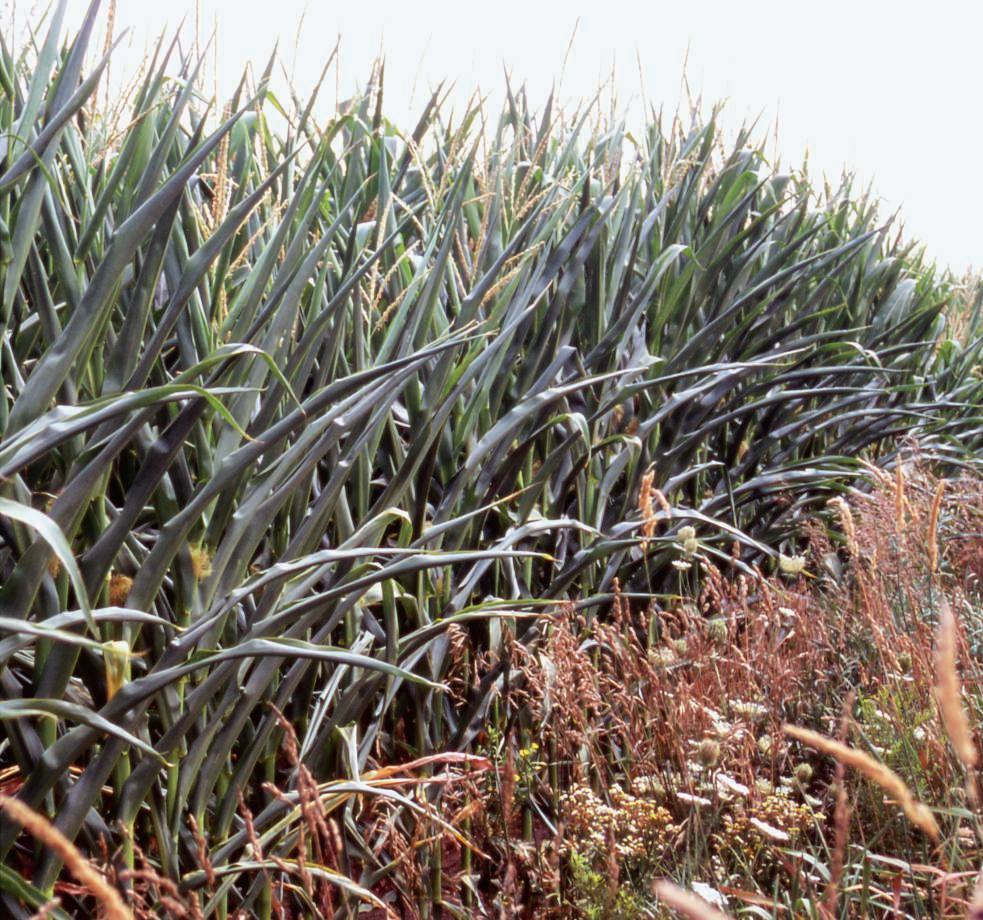
Farmers could soon have a way to calm down their crops during times of high temperatures and mild-to-moderate drought. Syngenta and AgroFresh Inc., a wholly owned subsidiary of Rohm and Haas, are teaming up to market a unique foliar spray that may be available for sale in the US by 2010. Plans for a Canadian launch are also in the works.
The product’s active ingredient is 1-methylcyclopropene (1-MCP). Bernd Druebbisch, brand manager with Syngenta Crop Protection, Inc., based in North Carolina, says the primary mode of action interferes with a signal from ethylene, a natural plant hormone that is produced when a plant is stressed by situations like high temperatures and drought. “And so the ethylene puts pressure on the plant and signals to the plant to slow down or shut down processes,” says Druebbisch.
Among other things, the response causes the crop to reduce its growth and development, to abort kernels, pods or bolls, and triggers premature leaf death. But Druebbisch says 1-MCP blocks receptors in the cell walls where the plant would normally recognize the ethylene. “That means that the plant, for certain times, will think that nothing is occurring, so it will keep growing normally, and the potential of yield loss is mitigated,” explains Druebbisch. “Of course, if the plant does not have a period to recover after a moderate heat or stress event, then there is still a yield loss, but maybe less than if no product had been applied.”
Field trials on corn conducted in the US, Argentina and Chile, have shown yield increases in the range of five to 15 percent from applications under mild to moderate heat and drought stress. Druebbisch notes that some testing is being conducted in Canada on corn, soybeans, canola and wheat. He hopes the results from extensive testing in the US will lead to expanded testing on this side of the border.
Although it was registered in the US, under the trade name Invinsa, in April
of 2008, 1-MCP is not being marketed yet. “We are still trying to define its use rate and the application timing. This is a very difficult undertaking, but we hope to introduce the product as quickly as possible in the US,” says Druebbisch, adding that process to register the product in Canada has not been started. While research is aimed at pinpointing the window of application, Druebbisch says the current thinking is to apply 1-MCP prior to the onset of crop stress and before flowering. “There’s no need, perhaps, to apply this product in the earlystagesofthecropcyclebecauseyou always hope that the plant will recover and there will be a rain coming,” notes Dreubbisch. “But if it’s at the change, when flowers are being set and when it’s pollinating, and you have a stress event, you’re probably going to lose more yield.”
In addition to defining the application rates and timing, the research will help the companies determine pricing.
Druebbisch says the product will be marketed with the intent to add value to growers. While it is no substitute for the “million dollar rains” that can come at the right time for certain fields, Druebbisch says if it is applied correctly, the technology could help reduce the potential yield loss at the critical times of crop development. “It’s not going to replace water; it’s just going to mitigate the lack of it to a certain extent.”
Agro-Fresh and Syngenta finalized their agreement to bring the technology to the market in March of 2008. At that time the companies said the goal was to commercialize it within two years.
Since 1999, AgroFresh has used its proprietary 1-MCP technology in products that help the specialty crop and floral industries manage ethylene to deliver fruits, vegetables and flowers with just harvested freshness. With this new alliance, the technology will be delivered to the preharvest market for the major field crops. p
100StoneRdWest,Suite201,Guelph,OntarioN1G5L3
Tel:519-767-6537Fax:519-767-9713www.ontariowheatboard.com
2008broughtarecordwheatacreageandwithitcamethe rains.Thecropwaslatematuring,pushingharvestback seventotendaysandmostproducerssawyieldsslightly aboveaverage.SouthWesternOntarioescapedtherains thathammeredtherestofOntarioinJulyandwereableto harvestavarietyofGrade1andGrade2wheat,although somewasdowngradedtofeed.RainresultedindeterioratingqualityinwheatacresinotherpartsofOntario.Much SoftWhiteWinterwheatwasdowngradedtofeedasaresult ofsproutingandmildewcausedproblemsinmuchofthe SoftRedandHardRedWinterwheatresultinginapredominantlyGrade3harvest.
Alongwiththeonslaughtofsproutingandmildew,wheat producerswerealsohitwithahighleveloffusariumpressure.However,asaresultofacombinationofnewgenetics andnewfungicides,fusariumtookamuchsmallerholdin Ontariowinterwheatfieldsthanexpected.ThisBoardconsidersthisahugesuccessfortheagricultureindustry.
Unfortunately,springwheatfaredworsethanthewinter wheatasaresultofthepoorweatherconditions.InWestern andCentralOntario,significantamountsweredowngraded asaresultoffusariumandergot.EasternOntariosaw50 percentofspringwheatharvestedasfeedorsampledue tofusarium.
Onapositivenote,logistically,theindustrywaswellpreparedfortherecordbreakingacreageandwheatdeliveries continuewithfewproblems.
March9-11,2009
LondonConventionCentre,London,Ontario PhoneLouiseBignellat519-767-4126toregister.
Fallplantingmaybeabitbehindthisyearasaresultofthe latesoybeanharvest.Strongpriceswilltemptproducersto plantwheataftercornorwheatinthecroprotation.Thisis notarecommendedpracticeduetoincreasedFusariumrisk. Althoughweatherandthesoybeanharvestarestillbigvariables,theboardispreparingfora2009cropbetween700,000 and900,000acres.Althoughthisestimateseemslikeadrastic cutinacrescomparedwiththe1.3millionacresplantedin the2008cropyear,thisacreagecloselyfollowsthetrendof thepastfiveyears.
TheBoardisalsocommittedtofindingexportmarketsforOntariowheatthatisnotuseddomestically.TheBoardmadea triptoEgyptinWinter2008andwelcomesdelegatesfromthe countrytoOntarioinOctober.Sofarthisyear,Egyptpurchased200,000tonnesofOntarioSoftRedWinterandthe BoardhopestocontinuethisrelationshipandcontinuetoexploreexportmarketsforOntariowheat.Tothisend,theBoard hasatripplannedtotheInternationalAssociationofOperativeMillersAnnualConferenceinTanzaniathisNovember.
AnerrorwasmadeonGradeDiscountsintheHarvest2008 Conveyor.ThefollowingarethecorrectGradeDiscounts:
1.SoftWhiteWinter(SWW)#3$10pertonne (PoolA)
2.HardRedWinter(HRW)#3$10pertonne (PoolB)-noproteinpayment
3.HardRedSpring(HRS)#3$10pertonne (PoolC)-noproteinpayment
4.SoftRedWinter(SRW)#3$10pertonne (PoolE)
5.HardRed(HR)#3$10pertonne (PoolF)
TheOntarioWheatProducers’MarketingBoardisexploringthequalityofOntariowheatandwhatthatmeansformillersand bakersthroughtwodifferentresearchprojects.TheHarvestSampleProgram,ajointprojectwiththeCanadianGrainCommission,hascollected500samplesofOntariowheattobeusedformillingandbakingtests.Thegoalofthisprojectistobuilda longterminventoryofdatathatdemonstratestoprospectivebuyersthequalityofOntariowheat.TheOWPMBcontracted WeatherInnovationsIncorporatedtocollectthesamples,utilizingtheiralreadyestablishednetworkthroughouttheprovince. ThesampleswerethensenttotheCanadianGrainCommissionlaboratoriesinWinnipegformillingandbakingtests.Currently, theresultsfromthetestsarebeingcompiledintoareporttobepublishedbytheCanadianGrainCommission.
Thesecondproject,theQualityScoopsProgramisacollaborationbetweentheOWPMBandtheCanadianInternationalGrains Institute(CIGI)andfocusesonmoreshort-term,immediatedata.Theprogramconcentratesonmillingandbakingtestson samplesfrom12locationsintheprovince.Duetothevariablequalityofthisyear’scrop,theQualityScoopsProgramisworking hardtodeterminehowmuchadifferencethegradeofwheatmakeswhenmillingandbaking.Wewillsoonbeabletosupply millersandbakerswithinformationaboutthedifferentgradesofOntariowheatandhowtheyperform.
Inadditiontothesetwoqualitybasedresearchprojects,theOWPMBhaslaunchedtheOntarioWheatInnovationSupportFund. Thefund,whichcanprovideupto$25,000tothreeOntariobakeries,hopestoencouragecompaniestodevelopnewandreformulatedbakeryproductsusingOntariowheat.Thefirstapplicantstotheprogramhaveexceededexpectationswiththeir proposals.Althoughprojectspecificscannotbediscussedindetailduetoconfidentialityatthisearlystage,theBoardisvery excitedthattheseprojectsdemonstrategreatpossibilitiesforOntariowheat.Producerscanlookforwardtoresultsfromthese firstinvestmentsandOntariowheatproductsongrocerystoreshelvesin2009.
When it comes to corn and soybeans, our portfolio has everything you need. From glyphosate-tolerant (GT) corn and corn borer traits aphid-resistant soybeans and premium IP soybeans for specialty markets. So no matter where you farm, you can literally customiz that you can expect from the latest seed technology. Plus, we’re continually adding new and innovative traits to our line-up. That’ for them too. For more information, speak to your NK dealer, call 1-800-756-SEED (7333) or visit www.nkcanada.com today.
aits and quad stacks that include GT, LibertyLink® , and corn rootworm, to NK Roundup Ready® soybeans plus NEW mize your fields with us. And with proven NK® genetics come consistently higher yields and ease of production hat’s what makes NK seeds the ones that Canadian growers are asking for. It’s little wonder the world is asking
Technology continues to change the face of agriculture, and so too are the faces of many of the GPS monitors and display panels now available. To help with the decision-making process, this feature provides a glimpse into some of the more-recent designs.
While Top Crop Manager editors make every effort to be objective when reporting on new products, they cannot be held responsible for claims made by companies. Readers are encouraged to contact the companies for more details. ■
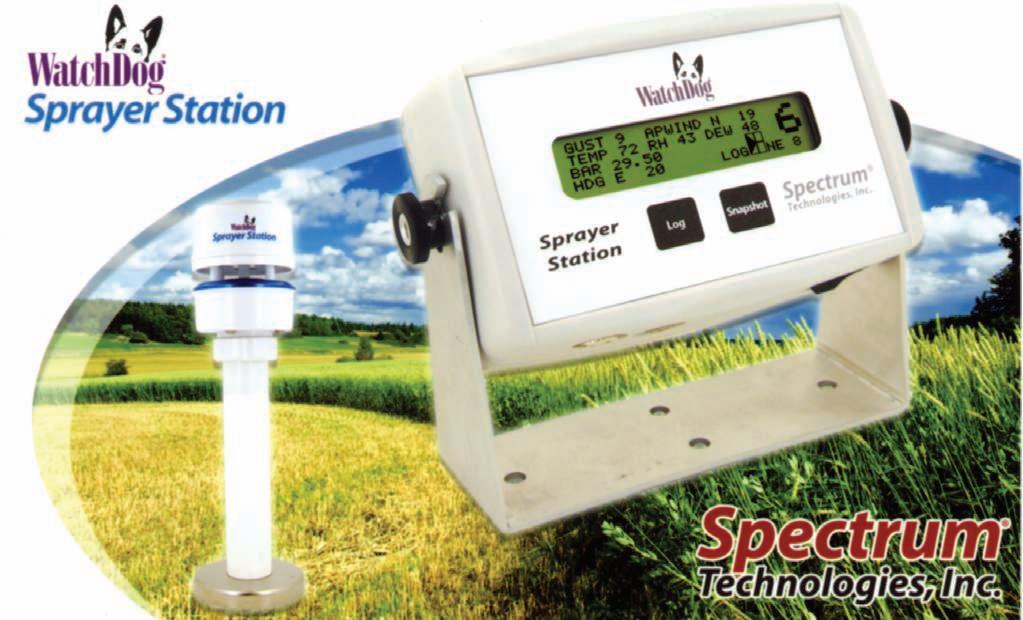
SpectrumTechnologiesnowoffersanafter-marketdisplayunit that connects easily to existing WatchDog Sprayer Stations. It is particularly suited to sprayer rigs that do not have in-cab computer systems or other monitoring devices.
The new display enables users to view and track wind speeds and direction, air temperature, humidity, dew point and barometric pressure, while on the go, using the WatchDog Sprayer Station. Weather data can be collected and downloaded to a personal computer with Console Sync software, which is also included.
The Sprayer Station handles adverse conditions with a UV stabilized, compact housing that is waterproof and resistant to chemicals. Reliability is enhanced by eliminating moving parts, replacing wind vane and cups with ultrasonic transducers. ■
Spectrum Technologies Circle 30 on reader reply card
Ag Leader Technology is adding new features to its DirectCommand application control system. The system now interfaces to the Raven Sidekick chemical injection pump for control of chemical injection applications. The InSight display and CAN module replace the Sidekick console, directly
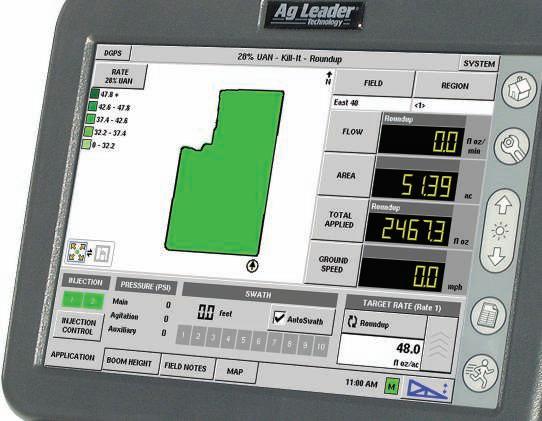


connecting to the injection pump. Automated prime and calibration routines, as well as advanced sensor diagnostics are part of the new direct injection module’s functionality. It can be used for herbicide, fungicide and insecticide applications, along with N-Serve injection applications.
DirectCommand now comes with three channels of granular product control within the spreader module, providing operators the capacity to apply as many as three products simultaneously at varying rates. DirectCommand simplifies spreader control by controlling the conveyor and spinner speed, along with monitoring bin levels. The system reads ground speed and automatically adjusts product flow to match target application rates. The spreader control system supports PWM, motorized servo, Mark IV.2, Mark IV.4 and Mark V hydraulic control values. ■
Ag Leader Technology Circle 31 on reader reply card
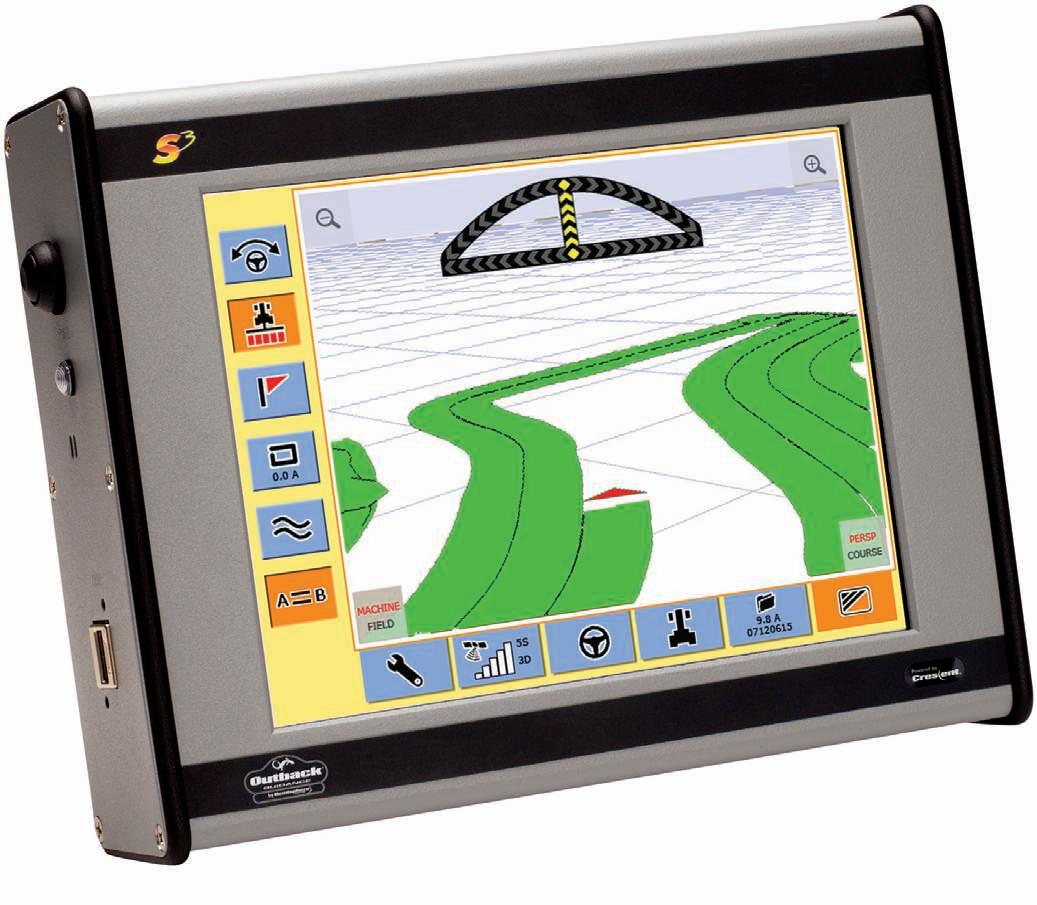
Hemisphere GPS recently introduced its Outback S3 system, the next generation in Outback Guidance products. It combines the most popular features of the Outback S2 and the

Outback 360 with the latest developments in Crescent GPS receiver technology, and has a large colour touchscreen for constant situational awareness.
The Outback S3’s 8.4in, high resolution touchscreen displays clear and easy-to-read data in real-time. There is a variety of basic guidance patterns with the ability to set multiple guidance lines and return points in a single task. The electronically integrated Outback Steering Guide uses GPS data and specific job details to display simple heading direction and provide precision guidance. It can also set perimeters, drop flag markers, create job templates and record job specifics such as the type of crop, wind direction and temperature. Such data can then be transferred to Field Notes personal computer software via a USB thumb drive to generate maps and reports.
Although Outback S3 is loaded with features and the latest technology, it is reported to be extremely user friendly.
The Outback S3 is also expandable to work with a variety of other Outback Guidance products and accessories. Outback eDrive TC GPS assisted steering system extends the functionality of the Outback S3 by utilizing GPS technology to aid in more uniform treatments and less waste. Combined with the Baseline HD, Outback S3 and eDrive TC can provide a higher level of accuracy, a necessity for precision applications. Outback S3 is also expandable to work with Outback Automate, an automatic boom control system that monitors and controls individual sprayer sections to help minimize overlaps and skips. ■ Hemisphere GPS Circle 32 on reader reply card
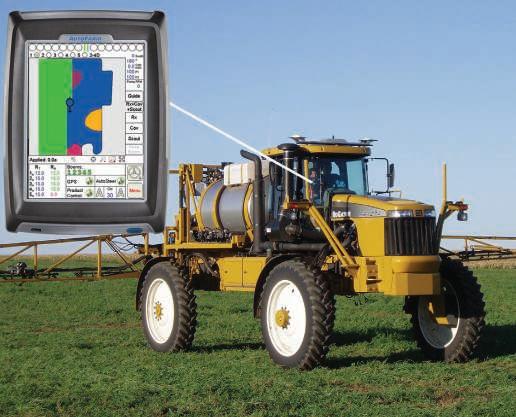
The FarmPRO GPS steering and application control system is a new product on the market, and a result of an ongoing collaborative effort between AutoFarm and Raven Industries.
The unit is designed for professional growers and custom applicators. It unites the Viper PRO display panel and control system from Raven with sub-inch accurate RTK AutoSteer from AutoFarm. The FarmPRO system offers a wide selection of steering and application control systems that is conveniently detailed for the operator on a single largescreen display. The design takes what have been multiple, but
separate, applications, and integrated them into a singlecontrols stream with just one terminal in the cab.
The list of automatic steering and application control functions available through the FarmPRO system includes: WAAS to RTK steering accuracy options, as-applied maps, variable rate control of as many as five products, automatic boom height and boom section controls, a 10.4in colour touchscreen display, Windows XP operating systems, a shape file format for exporting to office software, data transfer capability using a USB key and auto calibration of steering and application functions. ■
AutoFarm/Raven Industries Circle 33 on reader reply card
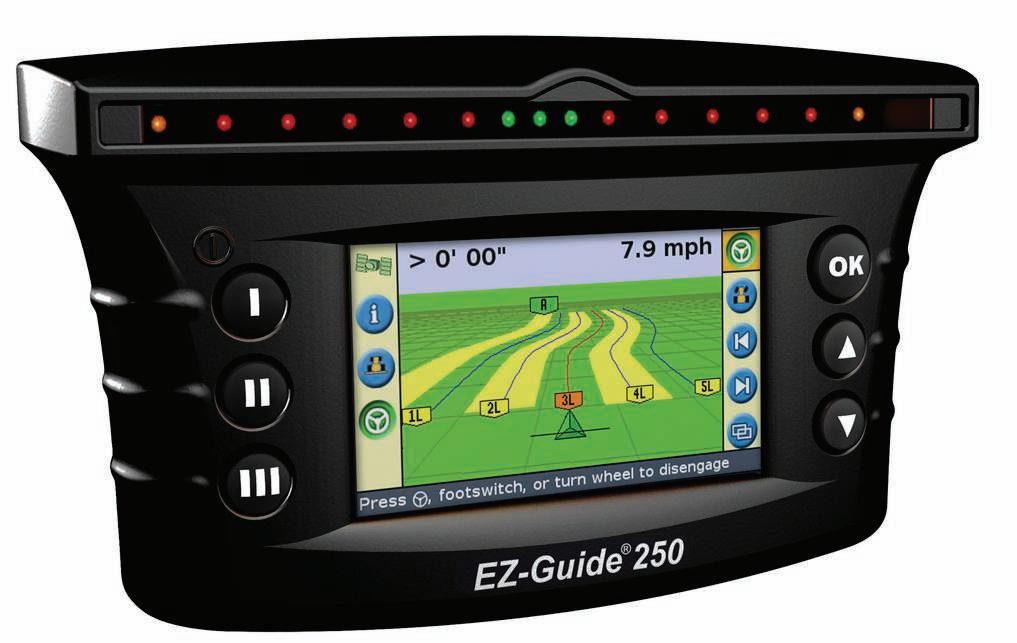
The AgGPS EZ-Guide 250 lightbar guidance system is one of the newest releases from Trimble. The AgGPS EZ-Guide 250 is an entry-level guidance system, which offers an economical choice for growers wanting to invest in precision agriculture, allowing operators to steer tractors, sprayers, harvesters and other farm vehicles. The system boasts an easy-to-use interface, an integrated WAAS/EGNOS GPS receiver with sub-metre pass-to-pass accuracy and real-time mapping capabilities.
The EZ-Guide 250 features a 4.3in colour display with 15 guidance LED lights. The high performance guidance pattern graphics are now equivalent to units which were more costly in the past. Users have the option of selecting overhead or perspective views of the operation, and data logged by the unit can be transferred to a personal computer using a USB flash drive. The system also supports multiple guidance patterns, including the FreeForm guidance system, which provides unlimited patterns and shapes enabling users to find the specific pattern that suits their needs for specific fields.
Also, the EZ-Guide 250 is compatible with Ag Leader’s EZ-Steer 500 assisted-steering system with T2 terrain compensation technology and the AG15 high accuracy antenna. In all, these systems provide operators with the ability to upgrade their guidance systems as the technology is enhanced. The EZ-Guide 250/EZ-Steer combination guidance system can be moved from one vehicle to another, offering users increased flexibility. And the unit’s rugged cast aluminum housing provides reliable operation and durability. ■
Trimble Circle 34 on reader reply card

Our corn hybrids are reaching new heights.
At Hyland we’re building leading corn hybrids that rise above the competition – on farm and in Ontario trials. And we take it up another notch by stacking a full-range of technology traits to give you hybrids that take corn performance to new heights on your farm. And our plans don’t stop there. We’re a local, independent company committed to agriculture. From developing leading varieties across a range of crops to creating market opportunities and helping ensure farmers are recognized for their contributions, Hyland is building with you. Visit hylandseeds.com or contact your Hyland seeds representative at 1-800-265-7403.

The Topcon PCS-100 is another of the lightbar guidance systems that are now available to growers, helping them increase their on-farm efficiency while reducing overlaps and extending hours of operation. It marks the next generation of operating simplicity in a lightbar guidance product. The design of the PCS-100 features a detachable lightbar for optimum ‘field of view’ placement and a 5.0in high visibility colour display that operates in separate ‘day’ and ‘night’ modes.
At just two pounds, the unit is lightweight and portable, yet rugged and easy-to-move from vehicle to vehicle. With visually-aided on-screen setup and push button controls, the PCS-100 is simple to operate, with minimal training or instruction. The full colour display and detachable lightbar allows optimum placement and visual reference. To aid in working longer hours, the large colour screen is backlit and the LED lightbar is adjustable.
Other features include multiple patterns including straight line, contour, pivot and last pass. The LED settings are adjustable to match a variety of working conditions, and its ambient light sensor maintains sharp display contrast. On-screen status indicators include row number, speed, area applied and field area. There are interchangeable field views including overhead plan and path view, and there is a functional zoom with features for swath, guidance and field views. There are also multiple language options available.
Operators can use data logging with field notes for simple file transfer via the USB port. The PCS-100 is also ethernet, CAN and RS-232 capable. ■ Topcon Circle 35 on reader reply card
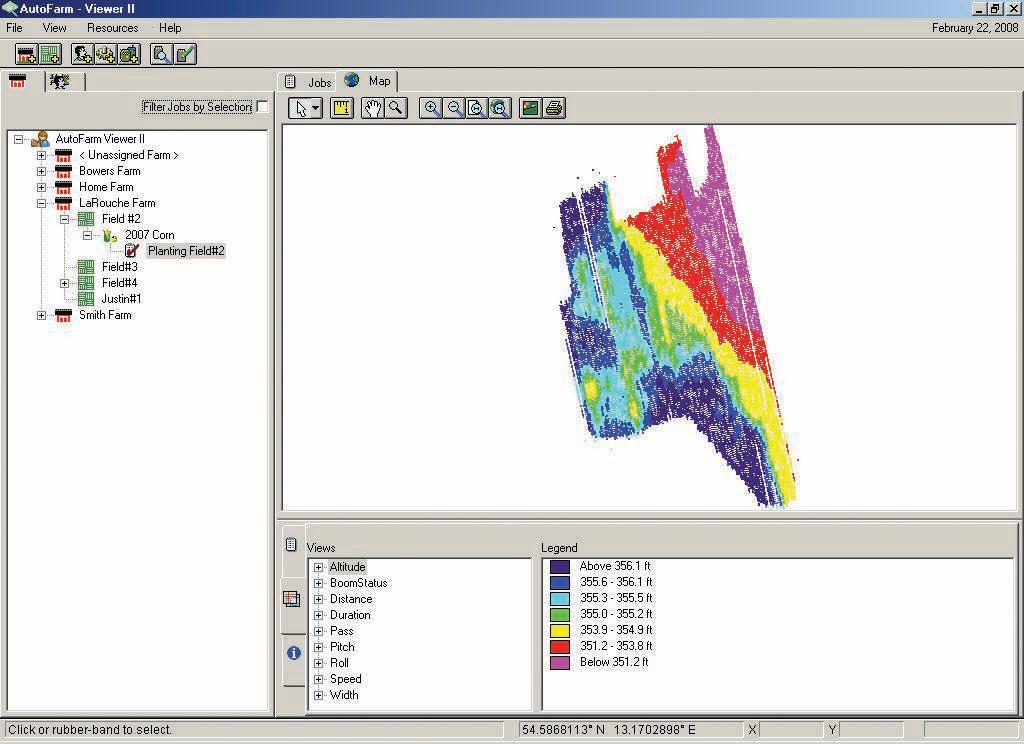
The AF-Viewer II is now available to growers, a joint offering from AutoFarm and developer Farm Works Software. The system is another of the many GPS steering systems to ease the collection and field-to-office transfer of GPS-generated farm management data.
AF-Viewer II software is compatible with virtually all AutoFarm GPS steering systems now in use, including the A5 RTK AutoSteer system, DGPS AutoSteer, RighTrac, OnTrac and ATC, as well as the FarmPRO GPS Steering and Application control system.
When the system was released early in 2008, the intention of AutoFarm was to make the AF-Viewer II software available to existing customers at no charge, provided they register their AutoFarm steering system with a product serial number.
The software is Windows-based and runs on Windows versions 2000 and higher. It is designed to collect and store field management data and allow users to Read and Write from any of the AutoFarm terminals via datacards or a USB key, depending on the products.
The AF-Viewer II also offers set-up files on farms, fields, crops, people, equipment and products or supplies like seed, fertilizer and chemicals, allowing customers to collect and save information in a structured archive. The software will read coverage maps and boundaries with AutoFarm hardware, with jobs and maps exportable via ArcView Shape File or an FODM (XML) file. It will work in standard or metric measure systems, and supports multiple languages, including English, French, Spanish, German and Danish. ■
AutoFarm
Circle 36 on reader reply card


Recent research by Agriculture and Agri-Food Canada’s (AAFC) agroforestry division has determined willow trees have an economic benefit when planted as buffers between farmland and streams. At AAFC’s Shelterbelt Centre at Indian Head, Sask., work has centred on planting willows along waterways and around wetlands. The trees have dense, fibrous root systems that help reduce erosion, and can have a positive impact on soil and water quality.
rom time to time, Top Crop Manager tries to assemble a collection of research work being conducted across Canada. Although these studies arenotlengthyorinvolved,theydoofferaglimpseofsome other facets of agricultural research being conducted. e n n AAAFC’

Sciences and Engineering Research Council of Canada (NSERC) and the Canola Council of Canada, researchers will investigatethenutraceutical and functional properties of antioxidants found in canola seed, oil and meal. Specifically, Dr. Usha Thiyam and her team at the University of Manitoba will focus on sinapic acid and tocopherols, and using novel extraction techniques, they hope to optimize the extracts to improve the stability of the oils as well as enhance the nutritive levels. As well, it will complement some of Dr. Thiyam’s previous work on the effects of canola oil on heart disease and Type 2 diabetes.
D N a c Willows filter and fix, and provide numerous other benefits



Additional studies underway in Prince Edward Island have indicated willows are opportunistic feeders of nitrogen, and they can make use of extra phosphorus. In cases of nutrient runoff from agricultural land into streams and other bodies of water, willows can effectively filter nutrients, thus improving water quality.
For producers, the good news is that willow trees require little land alongside streams and wetlands. And they can be harvested every three to five years without having any adverse effects on their health or their ability to act as biofilters for waterways. Research in Ontario in the early 1990s found willows to be an excellent source of fibre for use in paper production, so there could be the potential for such use in the near future.
Other benefits that willows bring include wildlife habitat, biodiversity enhancement, snow trapping, groundwater replenishment and sediment interception. On their own, each may not yield a significant return on investment, but together, the overall benefits become more obvious.
Researchers at the University of Manitoba recently received a funding grant to develop some of the lesser known functional benefitsofcanolaoil.WithaCollaborativeResearchandDevelopment Grant from varied interests including the Natural
Island agriculture attains a Canadian first in education l al es Canola oil has many benefits, and this research may show why



In all, a total of almost $1.0 million is being provided during a three year period, with $480,000 coming from NSERC, a matching amount from a private sector contributor and the rest from the Canola Council.
This kind of research is particularly important for the canola industry, with a recognition for the need to develop new solutions to health, environmental issues and production challenges in order to meet the goal of reaching 15 million tones of sustained market demand and production.

An important first has been initiated in Prince Edward Island: it is the first province in Canada to offer a farm apprenticeship program specifically for farm workers. It will be developed and then delivered in PEI by the Nova Scotia Agricultural College in Truro.
It is expected to start in January 2009.



The PEI Agricultural Sector Council began developing such a program in 2004, when a study found an increasing need for well-trained, well-rounded workers, particularly in recognition of the changing industry and global demand. The study revealed significant support from both producers and farm workers to designate ‘farm technician’ as a trade. And in May 2005, PEI’s government approved the designation.
A Farm Technician Trade Advisory Committee established a wide variety of skills that are required to be a farm technician. Among those were computer skills, equipment operation and maintenance, pesticide certification, first aid and theoretical
Ontario AgriCentre, Suite 201 • 100 Stone Road W. • Guelph, Ontario • N1G 5L3
Phone: (519) 767-1744 • Fax: (519) 767-2466
E-mail: cansoy@soybean.on.ca • Website: www.soybean.on.ca
By Mary Wiley, Ontario Soybean Growers
The idea of replacing petrochemicals with renewable soy is beginning to catch on in Ontario. OSG, Soy 20/20, the Ontario BioAuto Council and other industry stakeholders are working to develop new industrial uses for soy, with the goal of strengthening markets for producers.
South of the border, soybean industry funding has fostered development of first generation products such as soy plastics and foams, soy ink and soy methyl esters. The methyl esters can be used in a wide variety of products, ranging from paint strippers and oil spill clean-ups, to body lotions, safe household cleaners, and adhesives.
According to the Ford Motor Company’s Web site, on average, a vehicle includes 30 pounds of foam made from petroleum products. As a result of seed funding from the U.S.-based United Soybean Board and research in cooperation with parts suppliers, Ford’s 2008 Escape Hybrid has replaced a total of 12 per cent of the standard petroleum-based polyol with soy as the base. “We began this project in 2001 and launched production in August 2007. Within a year we will have soy foam in over one million vehicles,” says Dr. Cynthia Flanigan, a plastics engineer with Ford in Dearborn, Mich.
Here at home, there are also some interesting developments. For the past year, the Town of Caledon, Ont., has been using soy-based engine oil in part of their fleet, two cycle engine oil and chain bar lubricant for their chain saws, and cutting oils for their repair shop tools. Rod Halls, Resources Supervisor for Caledon, says although Renewable Lubricants soy-based products are a bit more expensive than their petroleum-based counterparts, they have an extended life cycle and are more environmentally friendly, making them less expensive in the long run.
Don Marentette, President of DM’s Bio-Based Fluid Supply Inc., of Bolton, Ont., distributor of Renewable Lubricants, says the products are beginning to sell in Ontario due to their environmental friendliness. Emerging customers range from golf courses wanting to avoid grasskilling oil spills from their lawn equipment, to precision machining companies avoiding amines, in the interest of improved workplace health and safety. Marentette’s line of products includes soy-based fuel additive, two-cycle engine oil, parts cleaner-degreaser, diesel fuel conditioner and a soybased alternative for WD-40™.
Thanks to support from the Government of Ontario, Woodbridge Foam Corporation in Mississauga, Ont., is making soy-based cushioning foam for car seats. The foam is made from Cargill’s BiOH soy polyol.
The Ontario BioAuto Council is working with Valle Foam of Brampton, Ont., to support development of their BioPlush™ Foams, which contain up to 25 per cent soy polyol content. The foams are used for furniture, bedding, packaging, carpet and children’s toys. Brentwood Classics, a Toronto-based upholstery manufacturer, is using the soybased foam in more than 90 different styles of furniture, with the marketing theme “Responsible Comfort”.
Several Ontario niche companies are using soy wax to make clean-burning, long-lasting, environmentally-friendly candles. Soy wax, made from hydrogenated soybean oil, can also be used for waxed corrugated cardboard packaging. According to Soy 20/20, paraffin wax is most often used to coat cardboard, but due to petroleum price and supply, interest in using soy wax is beginning to increase.
Clothing and bedding made from Azlon, a spun fibre from soy protein, is now on the market. North End Sport soybean golf shirts contain Azlon blended with cotton and spandex. They are promoted as being environmentally friendly, naturally anti-microbial, moisture-wicking, UV protecting, more luxurious feeling than cashmere, and breathable.
Nature’s Sleep Azlon/Soybean pillows are available online. They are promoted as having natural health benefits and superior ventilation, as well as being 100 per cent renewable, eco-friendly, naturally hypoallergenic and resistant to mildew, bacteria and dust mites.
By all indications, the above examples represent just the beginning for new industrial and specialty uses for soy. Stay tuned as this fascinating story unfolds.
concepts relating to crop and livestock production. In its current design, the program will offer a combination of formal learning, hands-on instruction and on-farm experience, and will consist of eight weeks of study blocks annually during the course of three winters. The remainder of the time will be spent working on farms.
The program will accept 15 workers each year, with no cost the participants. Human Resources and Skills Development Canada will cover training costs.
Seventeenyearsisalongtimetoworktodisproveaproduction practice. Yet Dr. Martin Entz, a professor at the University of Manitoba, has spent that much time trying to prove organic production could not be done in Western Canada. Since 1992, Entz has been comparing organic to conventional agricultural practices at various research farms around Winnipeg. It is now Canada’s oldest organic/conventional crop rotation study, and he has come to the conclusion that his original beliefs about organic farming were incorrect.
Among his findings, one important conclusion pertains to soil health, including the micro-organisms living in the
soil. Comparing conventional farming practices to organic, Entz and his students found fungal spore density and diversity in organic systems to be considerably higher than in conventional. What that leads to is a ‘laziness’ in mycorrhizal fungi, a part of a plant’s root system which normally extracts micronutrients from the soil. In the presence of higher levels of synthetic fertilizers, the fungi’s ability to extract those micronutrients atrophies, in effect, allowing the plant to ‘wait’ for fertilizer to feed it.
Researcher finds organic farming right, not wrong

As a result of the plant’s lack of activity, its immune system is reported to be not as robust as in organic production methods. And organic plants are better able to absorb zinc and iron.



Entz is now experimenting with green manures like legumes that can be tilled under and cycle nitrogen into the soil, with the hope of further reducing the reliance on synthetic fertilizers.

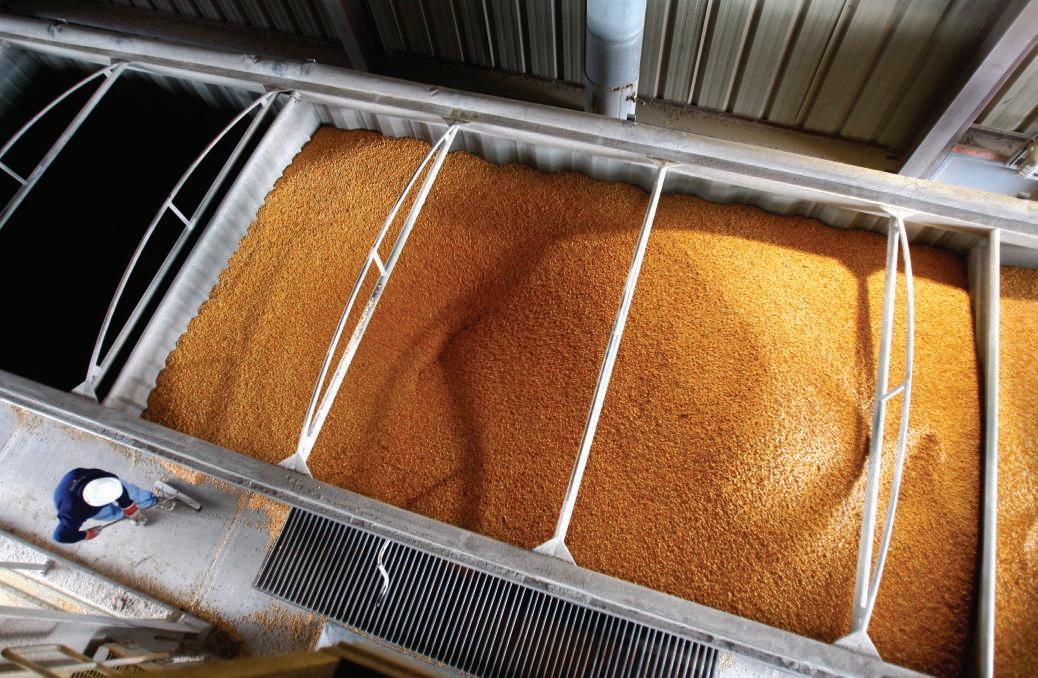

RIGHT SEED. RIGHT NOW. We don’t think growers should buy their seed early just for early’s sake. We believe that early seed sales allow growers to make the most of our expertise. Because of limited supply and environmental impacts, the earlier you buy, the broader the array of seed options that are available to you. More options mean that our local agronomists can find just the right seeds to match your unique growing challenges. To learn more, contact your AGROMART seed specialist or go to RightSeedRightNow.com.

www.RightSeedRightNow.com

Contact your nearest AGROMART dealer for CROPLAN GENETICS® seed in the 2009 season.
BELMONT FARM SUPPLY INC. Belmont, Ontario Telephone: 519-644-1650
BLUEWATER AGROMART LIMITED Ripley, Ontario Telephone: 519-395-2605
BRUSSELS AGROMART LIMITED Brussels, Ontario Telephone: 519-887-6273
CARDINAL FARM SUPPLY LIMITED Alliston, Ontario Telephone: 705-435-4368
FINGAL FARM SUPPLY LIMITED Fingal, Ontario Telephone: 519-769-2070
GRAND FALLS AGROMART LIMITED Grand Falls, New Brunswick Telephone: 506-473-1941
HARTLAND AGROMART LIMITED Hartland, New Brunswick Telephone: 506-375-4538
HOEGY’S FARM SUPPLY LIMITED Brodhagen, Ontario Telephone: 519-345-2941
LAKESIDE GRAIN & FEED LIMITED Forest, Petrolia, Strathroy, Ontario Telephone: 519-786-2106
MAPLE FARM SUPPLY LIMITED Bolton, Norval, Ivy, Ontario Telephone: 905-857-2000
MAX UNDERHILL’S FARM SUPPLY LIMITED Vienna, Alymer, Ontario Telephone: 519-866-3632
MUNRO AGROMART LIMITED Lancaster, Ontario Telephone: 613-347-3063
OXFORD AGROPRO LIMITED Hickson, Ontario Telephone: 519-462-2721
PEI AGROMART LIMITED Albany, PEI Telephone: 902-436-1600
SCOTLAND AGROMART LIMITED Scotland, Ontario Telephone: 519-446-2218
SETTERINGTON’S FERTILIZER SERVICE Leamington, Essex, Romney, Ontario Telephone: 519-326-9093
SPRUCEDALE AGROMART LIMITED Tara, Hanover, Gore Bay, Ontario Telephone: 519-934-2340
SUMMIT SEEDS Oxford Station, Ontario Telephone: 612-258-1653
TRI-COUNTY AGROMART/ O’NEILLS FARM SUPPLY Trenton, Ontario Telephone: 613-394-3371
TRURO AGROMART Truro, Nova Scotia Telephone: 902-895-2857
WELLBURN AGROMART LIMITED St. Mary’s, Ontario Telephone: 519-461-0020