Study shows little response to N application and seed treatment PG. 14
MITIGATE MHR WATERHEMP
Achieve better control with a two-pass system in corn PG. 16
Better soybeans. Better yields. Better for your community. That’s why we developed Enlist E3™ soybeans, a more advanced seed with high yield potential and a robust herbicide tolerance. Enlist Duo™ and new Enlist™ 1, with Colex-D™ technology for a better low drift, near-zero volatility solution that lands and stays on target.
Enlist E3 soybeans are available for 2022 planting. Talk to your local seed supplier.
Simply Better Soybeans. | Learn more at enlistcanada.ca
5 | Perennial possibilities
Evaluating perennial legume options for northern Ontario.
By Carolyn King
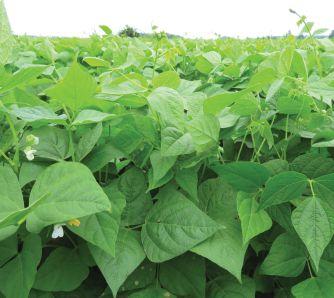
14 | Lower costs with less N in dry bean Study shows little response to N application and seed treatment.
By Julienne Isaacs
16 | IWM to mitigate multiple-herbicideresistant waterhemp
In corn, better control can be achieved with a two-pass system.
By Julienne Isaacs
STEFANIE CROLEY EDITORIAL DIRECTOR, AGRICULTURE
SHIFTING FORWARD
When you spend the better part of two years at home, coping with strange adjustments to your regular routine, things really start to feel like Groundhog Day.
Yet, time marches on, and somehow, it’s November again. As harvest wraps up and the end of the year draws close, many of us spend time reflecting on the events and decisions that shaped the way the year played out. It can be easy to look back and question why things happened the way they did, and feel frustrated, disappointed and even angry about the result. It’s OK to feel those feelings – they are valid and warranted. But as I was reminded in a recent interview, when you are ready to move forward, your reaction and attitude are what matter most.
That advice comes from Kelsey Banks, a farmer and agronomist from eastern Ontario who publicly shared her experience fighting brain cancer on Twitter with the greater ag community. When she was diagnosed in January 2020, Kelsey was just 26 years old and had recently come back to her roots, farming with her family and working as an agronomist with Embrun Co-op. The diagnosis was a blow – as Kelsey shared in our conversation, “I thought at first that my career was over . . . I’ve worked so hard and I’ve done a lot, but I felt like my career was over because I [could not] continue to work.”
Kelsey said the support from her network and community was encouraging as she moved through her journey with cancer. So many people she had met throughout her career and life showed up for her, checking in and cheering her on. “I couldn’t control that I got cancer. It happened. But I could control my attitude and who I connected with still. It goes to show you, this is a great industry to be in.”
Through our Influential Women in Canadian Agriculture program, I’ve been fortunate to speak with Kelsey and several other women from across the country who work in various roles throughout the industry. These women have shared their experiences, wisdom and advice with us, answering questions about challenges, adversity, strengths and accomplishments. You can watch the interview with Kelsey and all of the other women at agwomen.ca. All of their stories are unique, and in some way, they have all faced obstacles and challenges that impact the next steps on their paths. Their words are reminders that each day, we are all faced with big and small challenges, and our attitudes determine the next steps.
If the past few months, years, or even growing seasons didn’t yield the results you hoped for, it’s OK to admit that. There is always room to sit quietly with a challenge and give space to feelings and emotions. But when you are ready, you can choose to take steps to shift forward, reach out for help and continue on down the road.
topcropmanager.com
FORAGES
AND FEED
PERENNIAL POSSIBILITIES
Evaluating perennial legume options for northern Ontario.
by Carolyn King
What are the best options for perennial legume forages in northern Ontario? To answer that question, the Rural Agri-Innovation Network (RAIN) and the Lakehead University Agricultural Research Station (LUARS) partnered in two projects.
These two agricultural research agencies serve regions where forage production is a priority. “Forages are an integral part of the farming systems in the Thunder Bay area and northwestern Ontario, and they are an important part of our research at LUARS,” notes Tarlok Sahota, director of LUARS.
Research technician Mikala Parr with RAIN, which serves the Algoma District, says, “Hay grown for livestock feed is the most common crop in Algoma, making up about one-third of the total land and over three-quarters of cropland in current use. Algoma is also particularly invested in the raising of cattle. Since hay is such a vital crop in our area, we focused on projects looking at how to introduce new legumes to the area and how to improve stands.”
The two three-year projects, which both started in 2018, were funded by the Canadian Agricultural Partnership and FedNor.
Alternative legumes project
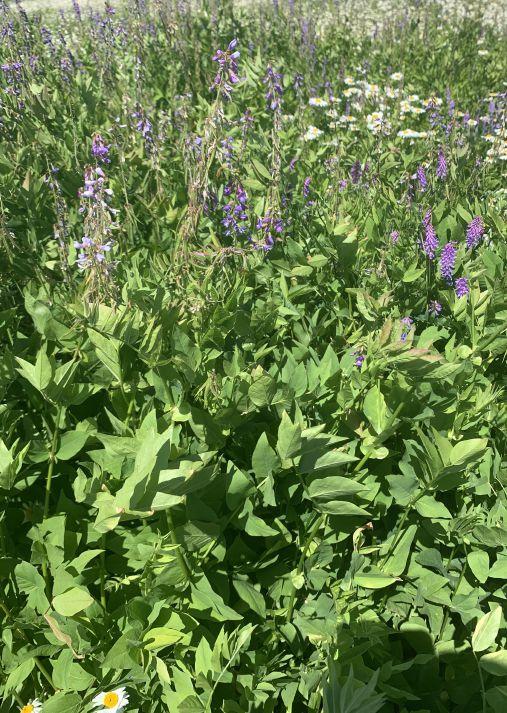
One of the projects compared five perennial legume forages: alfalfa, red clover, sainfoin, birdsfoot trefoil and galega, a fairly new crop for Northern Ontario. The project took place at two field sites, one conducted by RAIN and the other by LUARS.
“This project was a way to show what other forage options are out there for our producers,” Parr says. “Alfalfa is one of the most popular legumes in our area. Although there are not many pure alfalfa stands, most growers have alfalfa mixed into their hay stands. Red clover and trefoil are next in line in popularity. Sainfoin and galega are definitely not common.”
All five legumes have been tested before in the Algoma region, but this experiment was the first time that all were grown at the same location, allowing for direct comparisons of yield, quality and winter survival.
Over the years, LUARS has done quite a few trials with various alternative legumes, especially galega. The station has a galega stand, seeded in 2011, that is still producing great yields and quality. “Once galega gets established, it can overpower even perennial weeds such as dandelion and Canada thistle. The only negative point is that it cannot take competition in its establishment year. And if the stand is weak in the establishment year, then it will not produce a good crop in the next year,” Sahota says.
“Generally speaking, in our area, sainfoin can yield up to 90
per cent of alfalfa. However, it is not as persistent as alfalfa; after a few years, the sainfoin stand’s productivity will go down. The big advantage with sainfoin is that it doesn’t cause bloating. [Studies have shown that] if you have 25 or 30 per cent of sainfoin in an alfalfa stand, the bloating problem with alfalfa could be overcome.”
The RAIN experiment was conducted at the Algoma Community Pasture in Thessalon, and the LUARS experiment was at the research station. At both sites, the plots were plowed down in the fall, disked in the spring and then sprayed with Roundup (glyphosate) right before planting. The plots were fertilized according to the provincial recommendations for alfalfa.
PHOTO COURTESY OF MIKALA PARR/RAIN.
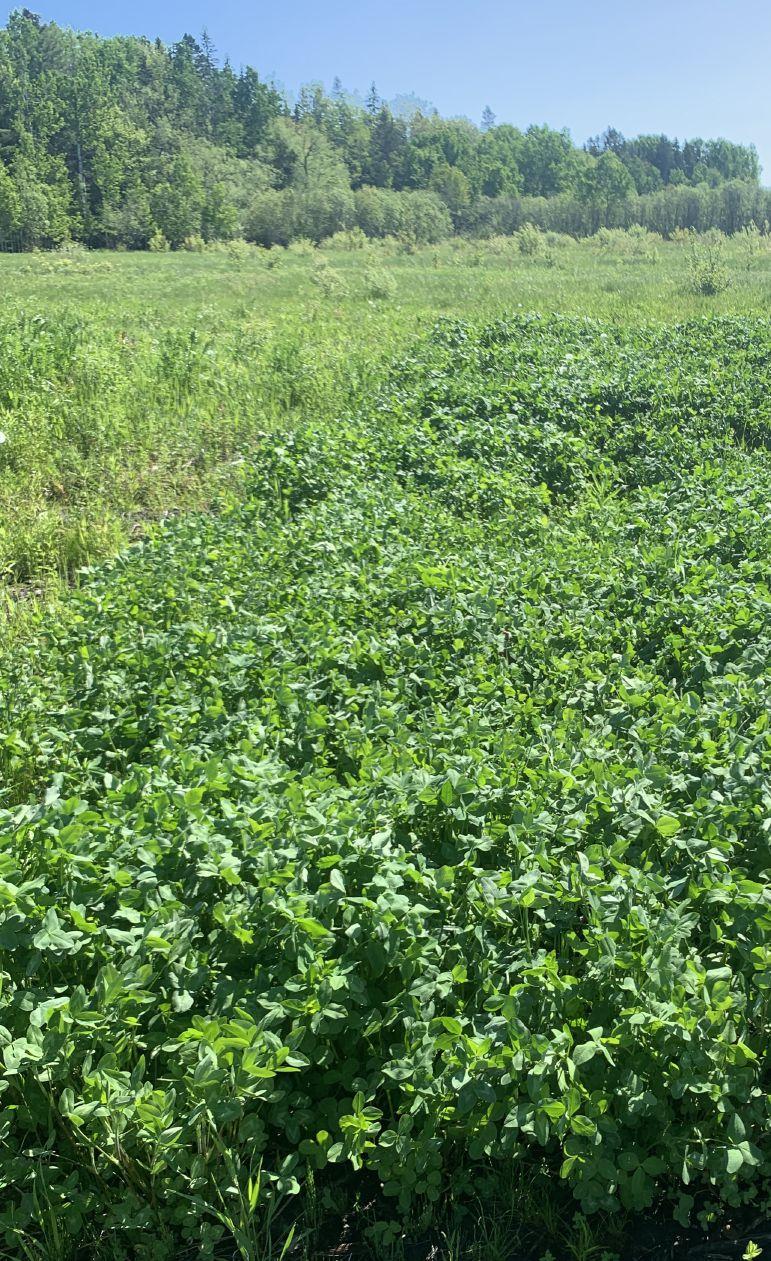
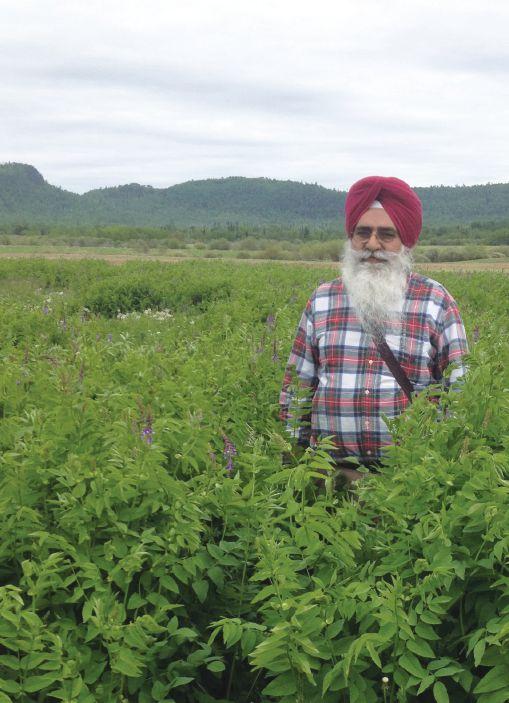
ABOVE: Galega is a weak competitor in its establishment year, so one project looked at weed control options in new galega stands.
The galega inoculant (Rhizobium galegae) is difficult to obtain and was not available for this project. To provide a consistent comparison, none of the legumes were inoculated.
At both sites, the plots were seeded at the following rates: alfalfa at 13 kilograms per hectare (kg/ha); galega at 35 kg/ha; red clover at 11 kg/ha; sainfoin at 30 kg/ha; and birdsfoot trefoil at nine kg/ha.
The plots were not harvested in the establishment year. Forage yield and quality data were collected in the second and third years of the experiments.
RAIN’s alternative legumes results
Parr summarizes the key findings for the RAIN project: “Red clover, trefoil and alfalfa were definitely the top legumes in yield quantity and forage quality. Galega’s performance wasn’t bad, but it wasn’t as great as the alfalfa, trefoil and red clover. Galega is known to be a poor competitor when it is becoming established, so that could be a factor in its lower yields. Sainfoin did not overwinter very well [in the 2019/2020 winter] and had a pretty poor yield in 2020.”
“Red clover, trefoil and alfalfa are used all over Ontario for a reason,” Parr concludes. “This project shows that those legumes are the top contenders for yield and overwinter survivability. My advice to growers in the Algoma area would be to have at least one of these three legumes in your hay mixes, depending on your end-goal.”
LUARS’s alternative legumes results
At LUARS, the plots were seeded on poor soils in 2018 and the weather was dry, so none of the plots did very well that year, which affected the 2019 results.
“In 2020, the dry matter yields were best for alfalfa followed
by red clover and birdsfoot trefoil,” Sahota says. “First-cut protein content was greater than 19 per cent in birdsfoot trefoil, sainfoin and red clover and was close to 19 per cent in alfalfa. The other treatments had 13.4 per cent or lower protein content. The relative feed value was highest in alfalfa, birdsfoot trefoil and sainfoin.”
Sahota and his team also decided to conduct this field experiment again in 2020, this time using relatively normal plot land. They will be analyzing the 2021 yield and quality data for these new plots this fall.
His advice on alternative legumes for growers in the Thunder Bay region: “Continue with alfalfa and experiment with other legumes, especially galega, in a small area – perhaps 20 to 30 acres – and expand the acreage if you get good results.”
“Our area has had successes and failures with alternative forages at the farm level over the years,” he adds. “Farmers can be reluctant to give an alternative forage a second try if it runs into a problem like winterkill. But winterkill can happen in any perennial forage, even alfalfa.”
Weed control in new galega stands: RAIN
The other project compared weed control options for new galega stands, but with some differences between the RAIN and LUARS experiments.
“The objective of the RAIN project was to find the optimum seeding time of galega in the establishment year in terms of weed control and yield,” Parr explains. “Since galega is a new forage to the Algoma area, we also wanted to see if it could be added into producers’ rotations or into their hay mixes.”
The RAIN plots were planted in 2018 at Bruce Mines. Using alfalfa as a check plot, the experiment compared two planting time treatments. In one treatment, galega (seeded at 30 kg/ha) was planted as early as possible, which was mid-June. Before seeding they disked the field and, if any weeds were present, sprayed them with Roundup, providing a clean seedbed. In the other treatment, galega (seeded at 30 kg/ha) was planted in mid-July, after allowing the weeds to come up and spraying them with Roundup.
In 2019, the early planted treatment had much higher yields but also a much higher percentage of weeds than the late-planted treatment. In 2020, the early planted treatment yielded 3,566 kilograms of dry matter per hectare (kg DM/ha) while the late-planted treatment yielded only 710 kg DM/ha.
She concludes, “Seeding galega in the spring as early as possible was an effective method of producing much higher yields with lower weed pressure.”
Weed control in new galega stands: LUARS
The LUARS experiment not only compared different planting times but also assessed the effectiveness of various herbicides. Sahota explains that no herbicides are currently registered for use in galega in Canada, so he wanted to test several possibilities to see which ones would work well enough in galega to make it worthwhile to pursue registration.
All the plots were disked in the previous fall. Alfalfa was seeded at 15 kg/ha as a check plot, and all the galega plots were seeded at 30 kg/ha. The treatments are listed in the table.
In the establishment year, the best weed control was provided by treatments 4 (seeded after barley), 5 (seeded in mid-July) and 9 (Basagran Forte, post-emergence), although 9 also caused some crop damage.
Sahota in 2016 in a galega stand seeded at LUARS in 2011.
PHOTO COURTESY OF TARLOK SAHOTA/LUARS.
Treatments in the galega weed control experiment at LUARS
1) Alfalfa, check plot
2) Galega, seeded after cultivating, in the spring as early as possible
3) Galega, seeded after allowing weeds to come up in the spring and spraying the weeds with Roundup
4) Galega, seeded after barley was harvested at the boot stage
5) Galega, seeded in mid-July after spraying the weeds with Roundup
6) Galega, seeded after pre-plant incorporation of Rival (trifluralin) at three litres/ha
7) Galega, seeded after pre-plant incorporation of Sencor (metribuzin) at 475 grams/ha
8) Galega, seeded and sprayed post-emergence with Sencor (metribuzin) at 275 grams/ha
9) Galega, seeded and then sprayed post-emergence with Basagran Forte (bentazon) at 1.75 litres/ha
10) Galega, seeded and then sprayed post-emergence with Pursuit (imazethapyr) at 210 millilitres/ha + Ag-Surf at 0.25 per cent volume/volume
“The effect of the herbicides on galega yields was seen mainly in the first harvest year (2019),” Sahota notes. In 2019, the top dry matter galega yields were: 6 (Rival) with 3,784 kg DM/ha; 9 (Basagran Forte) with 3,664 kg DM/ha; and 10 (Pursuit) with 3,533 kg DM/ha. Due to hot, dry weather in 2020, only one cut was taken, so the yields were low for all the treatments including the alfalfa check; 6 (Rival) and 10 (Pursuit) had the best galega yields.
Sahota is following up on the possibility of registration for Rival, Basagran Forte and Pursuit in galega.
Among the other treatments, all had statistically similar dry matter yields in 2019: 2 with 2,594 kg DM/ha; 3 with 3,149 kg DM/ha; 4 with 2,873 kg DM/ha; and 5 with 2,981 kg DM/ha. In 2020, 2 produced the highest dry matter yield (2,052 kg DM/ha for the first and only cut).
Sahota’s longer-term experience with galega is very positive. On average, LUARS’s 2011-seeded galega stand has outperformed alfalfa in both yield and protein content.
“I would encourage farmers to try galega on a small scale and see how it goes,” he says. “As long as you take care of the weeds in the establishment year, galega is a good crop. It has a lot of foliage and a high protein content. It has softer stems than alfalfa, making it more palatable. It starts growing earlier in the spring than alfalfa, which is how it is able to smother dandelions. Galega also has a wider window for harvesting; galega harvesting can start earlier than alfalfa, and if you need to delay harvest of galega, the forage quality doesn’t decline as quickly after the first bloom.”
If you are thinking of trying galega, both Parr and Sahota strongly recommend growing it as a pure stand, not as a mix, and planting it in a field with relatively low weed pressure. Sahota adds, “Galega is best seeded after cereal crops where the weed pressure will be less, and definitely do not plant it in fields with herbicide-resistant weeds.”
SHIFT
Technology insights for the progressive farm SHIFT
SHIFT
LINKING SOIL NIR MEASUREMENTS, FERTILITY AND CROP YIELDS
Bringing the benefits of digital ag and big data to Prairie farmers to optimize productivity and profitability.
BY DONNA FLEURY
Tools for predicting soil productivity and estimating crop yields are improving, but addressing field and soil variability can still be a challenge. Researchers are interested in developing tools that would link soil near infrared (NIR) measurements, fertility and crop yields together with digital agriculture and big data to improve predictability of soil productivity and profitability.
“As a soil chemist, we have been really successful at building soil tests that relate the nutrient status of the soil to plant yields, and coming up with recommended fertilizer blends,” says Derek Peak, professor of soil science at the University of Saskatchewan. “In principle, agronomy does a good job but in practice soil testing is expensive, time-consuming and only provides a snapshot in time of a specific sample location in the field. We are not really doing a good job of capturing the variability you can often see across a field, knowing there are differences in upslope and downslope productivity, water availability, soil organic matter and other variables.
“With the increasing advancements in digital technology, big data and near infrared technology improvements, we are interested in determining if more sophisticated, faster and lower cost ways could be developed to test the productivity of soils.”
Over the past few years, NIR techniques have become more robust, easier to calibrate and less expensive, allowing researchers to use NIR on field-scale collection and analysis of spectra to relate to nutrient status. Although this strategy works well for individual plot
BEFOREITHAPPENS.
FT-NIR tools in the lab for soil and nutrient analysis.
research academically, there are challenges to wide-scale use across the Prairies.
To try to address some of those challenges, Peak initiated a threeyear project in 2021 to determine if combining NIR spectra collection with digital ag and big data analytics could result in enough data to take advantage of machine learning and artificial intelligence (AI) technology. The project is funded by SaskCanola, Sask Wheat and the Saskatchewan Agriculture Development Fund.
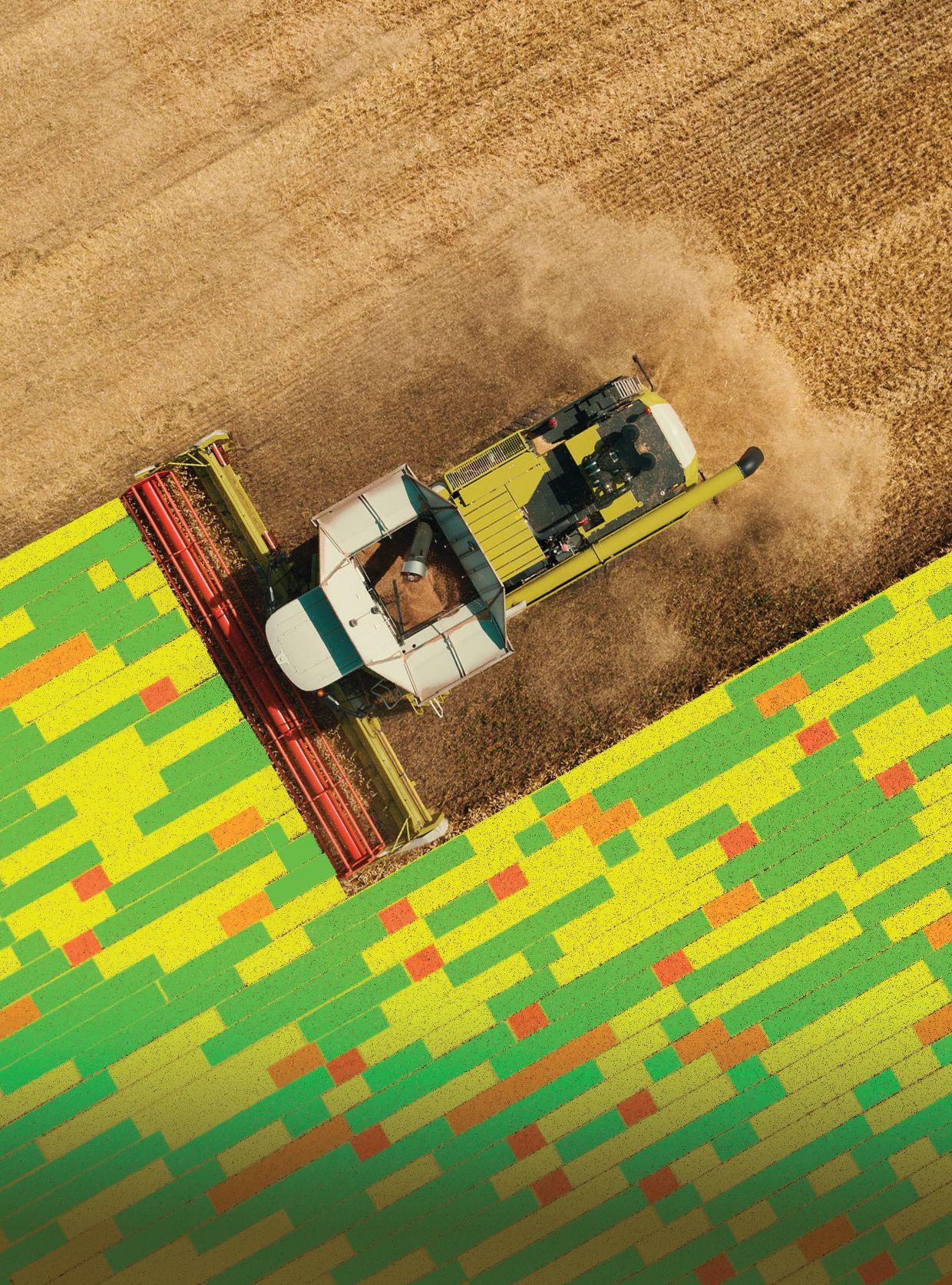
The objectives are to develop a methodology to link field NIR data and laboratory analyses, and to produce spatially resolved, soilbased yield potential maps. The overarching goal is to help agronomists and farmers use these tools to gain productivity insights and evaluate the likelihood of profitability when investing in inputs for their cropping systems.
“Using an NIR spectra dataset allows researchers to analyze several different soil properties [that are] important for producing crops to provide an overall prediction of yield across the field,” Peak explains. NIR spectroscopy involves the absorption or emission of light over a range of wavelengths to collect spectra.
“There are many interrelated soil properties that influence crop productivity, such as nutrient availability, organic matter, moisture holding capacity, soil texture, and cation exchange capacity. Using
This project is a key intermediate step, combining our NIR technique with building software tools and algorithms and the necessary correction factors to link soil NIR measurements, fertility and crop yields.
NIR, we can analyze and run regressions on all of the variables together and provide an indication of yield potential and realistic yield goals. When combined with big data and AI software tools and algorithms, the ability to predict profitability will be greatly enhanced.
“Ultimately, we want a tool that can evaluate the likelihood that investing inputs and money into a particular field or yield mapped area will result in a profit, rather than just providing a specific fertilizer number.”
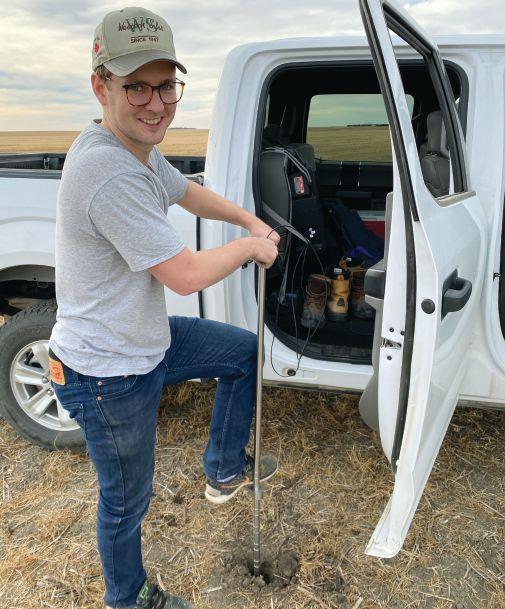
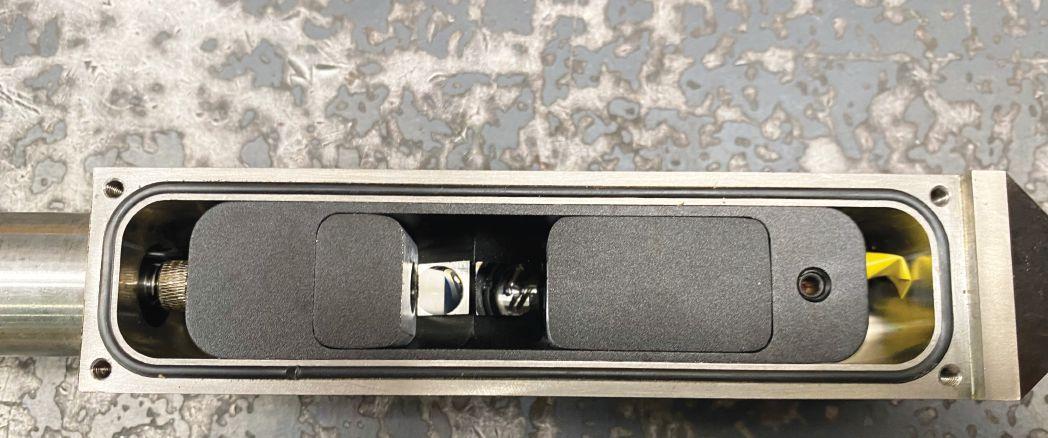
Peak has partnered with a company to develop a field probe prototype that would collect the spectra or data at the sample site and then transmit it to the cloud, where big data and AI machine learning could run in the background on servers. Adding more samples to the database further improves the results and predictability. They are on version three of the prototype, which is working well; the bigger challenge is the current cost, at about $10,000 per probe. Although the costs of optics and electronics continue to come down, it is still too costly for every agronomist or farmer to use this individually. So, the project team has pivoted to look at a hub where individual soil samples are currently sent for analysis and make the instrument available there, such as soil test labs or input retails and co-operatives.
“We are partnering with other crop science experts, including university researchers and commercial agronomists, who are already collecting soil samples and doing nutrient analysis to determine yield potential,” Peak adds. “We are working with them to insert our NIR screening technique into their workflow, which helps us get to the millions of spectra that data scientists tell us we need without investing millions of dollars in field trials.
“Using this screening tool, we are able to take tens of thousands of field samples to the lab and measure with NIR. This helps us understand how those samples cluster and behave, and allows us to select samples that make a more scientifically sound study, rather than having to rely on a limited set of samples more typical in classical soil fertility analysis.”
One of the factors that really affects the measurements and AI interpretations is the type of soil sample – whether it is direct from the field or the sample has been dried and ground for testing. So, samples at both stages are being compared to develop a calibration method and correction factor to ensure the NIR lab tools using dried samples are able to accurately interpret what is happening in the field.
This technique has broader application beyond the Prairies and Canada. Peak also works internationally in developing countries and
regions, such as West Africa, focusing on food security projects. He has encountered even bigger challenges in trying to test soil productivity there, where soil testing labs and capacity were unavailable.
“If we could take a few research sites that have been characterized really well with modern techniques, combined with GIS or some mapping approach for climate, soil, vegetation, elevation and other variables, then we could take that data and scale it out – perhaps even to a regional scale. That would allow agronomists and farmers to compare their soils to the maps and match their fertilizer recommendations to sites that are similar. Although not perfect, this is a really important step towards doing better.”
An important component of the project is the unique training opportunity for students and research associates. Working on the project allows them to learn these advanced techniques, data analysis and computer machine learning applications, while also being able to go out in the field and interact with crop scientists and farmers.
Peak is also a researcher with the university’s Plant Phenotyping and Imaging Research Centre (P2IRC), managed by the Global Institute for Food Security (GIFS), where some of the machine learning and AI computing work will be completed. A complementary graduate student project uses a similar approach, but also includes synchrotronbased spectroscopy work at the Canadian Light Source (CLS) to compare to NIR.
“Our goal is to have an inexpensive field probe as a tool that every agronomist or farmer could use in the field and get results,” Peak says. “This project is a key intermediate step, combining our NIR technique with building software tools and algorithms and the necessary correction factors to link soil NIR measurements, fertility and crop yields. We will have done all of the upfront painful preliminary work so that, when the technical engineering hurdles are overcome and there is a lowering in price, then the tool is ready to use at a meaningful scale.
“We want the tool to be generally available and useful for those doing soil analysis, and to bring the benefits of digital ag and big data to Prairie farmers for optimizing productivity and profitability.”
Get next-generation software for the next generation of farming
Several soil properties influence crop productivity, including nutrient availability, organic matter and soil texture.
SHIFT
SHIFT SHIFT
Technology insights for the progressive farm
Implementing technology on the farm is an investment, but some options are becoming more affordable every year.
PRACTICAL TECH ON THE FARM
There’s more tech available than ever. How does one evaluate the cost?
BY BREE RODY
With automation, artificial intelligence and enhancements that literally allow tractors and other pieces of ag equipment to “speak” to one another, growers are living in a world of limitless possibilities.
There is, of course, a difference between what is possible and what is practical. Besides the most obvious barrier to accessing technology – cost – there’s also matters of learning curve, compatibility and notoriously spotty rural Wi-Fi and cellular connections. In short, there is often a discrepancy between what is available versus what works for the average grower.
However, that doesn’t mean there is no room to adapt. As technologies popularized in the last decade come down in price, more producers have gotten their hands on advanced tech. Now, it’s become a matter of adapting – knowing not just what is available, but also how to make the most of it and ensure that your investment is worth it.
EYES ON EFFICIENCY
Alex Melnitchouk, chief technology officer of digital agriculture at Olds College in Olds, Alta., says even though technology is often thought of as a massive investment, the perfect analogy is sitting in the hands of most Canadians.
“How many people use landlines these days?” he asks. “We use cell phones not because they’re cheap – they’re not, and certainly Canada is one of the most expensive countries. But [we use it] because it’s convenient.”
Melnitchouk oversees Olds College’s SmartFarm, where the team spends its days testing, analyzing and evaluating new tech for farmers. He also works closely with the local farming community – many of whom are alumni of the college – and consults with the college’s producer panel, which comprises a number of farmers from Western Canada. The college works with these producers to address everything from what he calls low-hanging fruit – solutions-based issues such as predictive analytics, rural
internet coverage and use of satellites – to higher-level concerns such as sustainability.
“It’s not just about increasing profits,” he says. “It’s about making the whole industry more environmentally friendly and sustainable.” Melnitchouk says he’s not in favour of excessive restrictions or regulations on the agriculture industry, and believes technological advancements can make better strides toward sustainability.
“If you think about innovative technologies in the ag industry, there is a direct way to reduce the amount of greenhouse gas emissions, use solar energies more efficiently, and so on.”
He says auto-guidance systems on tractors are a great example of quantifying the convenience factor in terms of payoff, noting these systems reduce overlaps between passes by up to five per cent. “If I were to translate that to the market, that means five per cent less fuel, five per cent less crop inputs and no regulations, just technology.”
He’s also seen enthusiasm for genetically modified crops. Resistances to certain pathogens, he says, “remove the necessity of additional application of crop protection products. Again, that means less fuel, more efficient usage of crop inputs and more sustainable crop production.”
Other solutions-based technologies and advancements he considers worth the investment are satellite crop monitoring and soil analysis. “Ultimately it helps you reduce the amount of cropping and reduce expenses.” He doesn’t have a “magic number” at which an upgrade becomes worth the investment, because he says agriculture is no different than any other industry. “There’s no one-size-fits-all [solution] – it’s very different depending on the region [and] certain mentalities – but overall agriculture is not different than any other industry.”
USING TECH FOR A DIFFERENT VIEWPOINT
One piece of technology that has become more commonplace and come down in price in recent years is unmanned aerial vehicles (UAVs), more commonly known as drones. At a low price point, consumer-grade UAVs can be found in the $200 to $400 range, but some come with a heftier price tag, reaching $1,000 to $2,000. For ag-ready setups, which can also include attachments for fertilizer or pesticides, they can range from $1,000 into the seven figures.
John Scott, extension co-ordinator for digital agriculture at Purdue University in Indiana, has been operating UAVs for ag since 2017. Initially, he attained his commercial licence while working with industry. Since moving into extension, much of his work has focused on using UAVs for research and teaching landowners how to do so.
Scott notes drones are used broadly across agriculture, but says his primary use for UAVs is for crop research. “Our focus is mainly corn and soybeans, because Indiana is about 50-50 corn and soybeans as our main cash crop. But we also have branched out into livestock production, forestry, using it to look for diseases or [at] overall health.”
Within the specific corn and soybean focus, Scott’s primary goals are to look for diseases, weed escapes and late-season weed popups, as well as other things that don’t get measured or killed when spraying pesticides.
“We’ve been looking at fertility as well,” he says. “You can tell where the corn just didn’t do as well – it turned yellow early, and you can see it in those areas. So we’ve been mapping that. And we’ve been able to identify things from up in the air that we wouldn’t have seen from the ground. It’s nice to get up high.”
It’s about making the whole industry more environmentally friendly and sustainable.
Scott adds infrared technology has come down in price without sacrificing too much quality, making it more common to see it added onto drones. While it’s valuable to get an idea of heat levels in the field, he says the more practical use in the short term is for livestock, tracking lost or potentially sick animals. On the crop side, however, there are “spray and spread” attachments that allow growers to spray pesticides or water, or to even spread fertilizer. “We’ve got some rolling ground where you can’t get across safely with a tractor – and I know that from experience because I rolled one over last year. But I can get across it with a drone.”
Besides price, one of the hurdles to getting UAVs in the hands of more farmers has been regulations. In Canada, drones are regulated on a federal level; in 2019, Transport Canada updated regulations allowing drone operators to fly the devices as long as they are not in any federally controlled airspace or at least three nautical miles from any aerodrome. Additional certification is also required to trigger pesticides or fertilizer spreading from the drones.
“[In Indiana] it’s only been legal since 2017. Before that, you could do it through the [Federal Aviation Administration], but you had to go through all these applications and forms. They developed a process [for certification] in the fall of 2017.” There are additional certifications required for advanced capabilities – for example, the “spray and spread” models generally require additional certification.
But sooner or later, Scott says, the question comes down to cost. Besides UAVs, Purdue is also working on education programs on IOT, data management, precision agronomy and more – these new machines and skillsets don’t tend to directly bring in revenue, but rather save money or create paths to new revenue over the longer term.
“The biggest question I get on that piece always goes back to ROI,” he notes. “I think that’s the biggest hurdle. If I go out and spend $3,000 on this drone, is it going to pay me back $3,000 worth of value?”
GETTING THE MESSAGE ACROSS
Both Melnitchouk and Scott say community outreach is one of the most important aspects of their jobs – meeting farmers where they are and helping them address their needs, whether it’s in analytics and software or equipment.
Scott says sporadic or prolonged closures and restrictions have also hindered that. “It’s been a challenge, especially in the last year [with COVID], to get good information out to people. Within extension, we’ve pivoted to virtual. Prior to last March, extension was very much a face-to-face, handshake, tailgate of the truck business.”
And therein lies an added layer of complications – rural broadband Internet. “That’s our biggest hurdle in confidence and adoption,” he says. “Some of the stuff we have, I can’t use in the field.” And, with more education being virtual, he says it makes the education aspect more difficult. “I’d have to go to campus [in] Lafayette to actually upload images from the field.”
LOWER COSTS WITH LESS N IN DRY BEAN
Study shows little response to N application and seed treatment at Huron Research Station.
by Julienne Isaacs
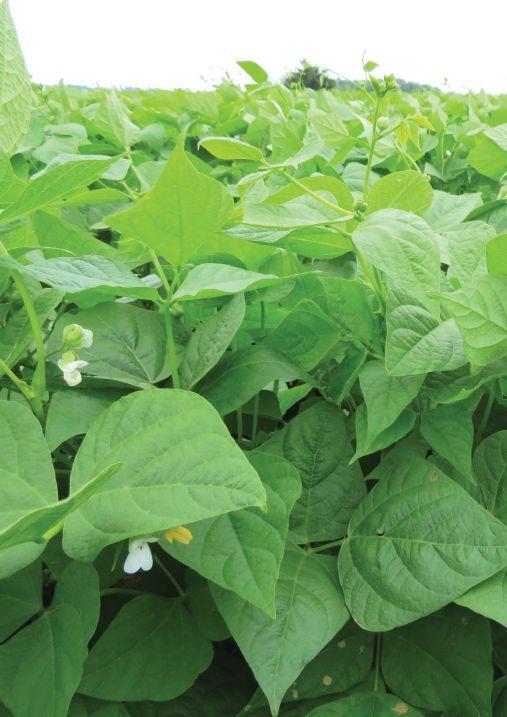
For years, Ontario dry bean producers have been encouraged to apply between 10 and 100 kilograms of nitrogen (N) per hectare in dry bean.
Ontario’s agronomy guide says N applied pre-plant has little impact on yield in dry bean unless the crop suffers from disease. A small amount of N – 10 kilograms per hectare (kg/ha) –may improve phosphate uptake.
“Where edible bean yields have traditionally been low due to bronzing or root rots, apply up to 100 kg/ha (90 pounds per acre, or lb./ac) of nitrogen before planting,” the guide suggests.
“Historically, it’s been argued that application of N will help plants combat root rot and that will help promote bigger root growth, bigger plant and higher yield,” says Chris Gillard, associate professor in the department of plant agriculture at the University of Guelph.
“Manitoba put a number to it and said the plant needs three to 3.5 kg N per 100 kg of seed yield,” he says. “Manitoba has done better work than we have, quite honestly, but we can’t use their data, because they’re a lot drier, soil types are different, and that all affects N utilization.”
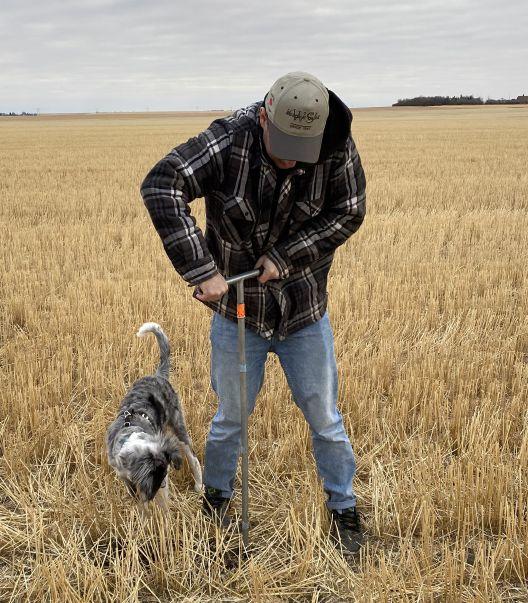
Gillard has just published a study looking at N and seed treatment applications in dry bean at the Huron Research Station. The study, entitled “Seed treatment and N rate do not impact dry bean (Phaseolus vulgaris L.) plant growth or grain yield in Ontario,” is based on data collected between 2008 and 2010. It’s the first of a series of studies that will be published on this work, he says, and the most comprehensive study on inputs in dry bean that had been done in a long time in Ontario.
“Our more recent data falls in line very closely with [these results], but I wanted to get this one out first because it’s the first chapter,” he says.
The paper argues that N applications and seed treatments are two strategies that Ontario growers have long used to maximize yields and minimize root rot, but dry beans won’t respond every year.
This is not to say producers shouldn’t be applying N or using seed treatments, Gillard says.
In the case of the latter, in one of the study’s three years, a couple of cold days and nights in the first week after planting slowed down emergence and increased disease pressure. That year, plots that had received a seed treatment (CruiserMaxx plus Dynasty) saw a nine to 27 per cent yield increase over the untreated plots. Averaged over three years, that shows a 33 per cent success rate.
“I expected seed treatment to have some effect [in the] early
season, and there’s lots in the literature to show that,” Gillard says, adding that, even so, the effect was lower than he’d expected to see.
The benefits of seed treatments drop dramatically after 10 to 14 days of planting, so they’ll be most effective in protecting seedlings from root rot damage under cold, wet early season conditions. Essentially, they’re insurance against low temperatures immediately after planting.
But there was less of an effect from the use of N over three years.
Nitrogen in dry bean
Gillard says the majority of Ontario growers are using some N in
Chris Gillard is working on a project at the Huron Research Station to prove dry beans won’t always respond to N application and seed treatments.
dry bean, from a “relatively small” amount – ranging to 10 or 20 kg/ha in rich soils – to an average average of somewhere around 50 kg/ha in most soils. This amount represents approximately half of what the dry bean plant needs throughout its life.
“Dry beans are a legume crop, so they fix N, and there’s probably not an acre in southern Ontario that hasn’t seen dry beans at some point or another, because this crop was grown by indigenous people 1,000 years ago, so we have those rhizobia bacteria in the soil naturally,” he says.
“Many people consider dry beans to be a lazy nodulator, but the plant will only nodulate if it can’t get nitrogen free from the soil. If it needs less in total, then it won’t nodulate more than it needs to. But the soil is producing N all the time.”
Gillard is not suggesting that Ontario producers are overapplying N. Nitrogen fertilizer promotes growth, and if the root system is struggling, it will help promote root growth, support a larger plant aboveground and potentially increase yields.
One southern Ontario grower Gillard knows saw his operation inundated by rain this summer. In July, he laid down a single strip of side-dressed N on his dry bean field, using a Y tube applicator that he used to side-dress corn. On that strip, he increased pod count by 50 per cent. Afterward he wished he’d applied on the rest of the field. “We rarely see that response, but extreme conditions can warrant additional N,” Gillard says.
“What I am saying is that in some situations, I don’t think you’ll get as big of a response as others. If you look at the soil N
levels that we measured at planting and harvest in our study, we measured relatively high soil nitrate levels, so we expected a relatively low response to applying N,” he says. Most growers have the same conditions in their fields because they plant dry beans in early June, when soils are warmer and soil N levels are higher. Gillard’s more recent unpublished work supports these initial findings. In that study, dry bean showed a significant response to N less than a third of the time on 27 sites. Most of these sites were in farm fields, across a range of crop rotations, tillage practices and cultivars. All of these sites had smaller replicated plots in one spot in the field, and larger replicated strips across the length of the field. Results in the small and large plots within the same field were similar.
Producers should take field history, soil type and soil N levels into consideration before applying, and “be cautious of the amount of N they’re applying,” Gillard says.
“If they have the ability to do variable rate, I encourage them to leave some lower N check strips in their fields, compare them and make their own decisions. I believe there’s an opportunity there for some cost savings for growers. They’re probably putting on a bit more N than they need to.”
Beyond immediate cost savings, there are other benefits: less N loaded into the environment and less risk of runoff to surface and groundwater. European Union customers have a strong interest in sustainable practices and see fertilizer use as a negative, so a reduction in N inputs also means greater marketability down the road.
21_2063_Top_Crop_NOV_DEC_Eastern_CN Mod: September 21, 2021 6:17 PM Print: 09/30/21 8:55:18 AM page 1 v7
IWM TO MITIGATE MULTIPLE-HERBICIDERESISTANT WATERHEMP
In corn, better control can be achieved with a two-pass system.
by Julienne Isaacs
It’s no exaggeration to say some Ontario grain farms harbour millions of multiple-herbicide-resistant waterhemp seeds per acre.
At a single commercial operation in southern Ontario in 2017, researchers counted 165 million waterhemp seeds per acre in the seedbank.
“This is real-life agriculture,” says University of Guelph plant agriculture professor Peter Sikkema, who leads the project.
Multiple-herbicide-resistant (MHR) waterhemp – that is, waterhemp that is resistant to some combination of herbicides in Groups 2, 5, 9 and 14 – can be found in at least 14 Ontario counties. Considering the speed of its travel, by 2022 it will likely be present in more.
In 2017, Sikkema began a nine-year project with an overall goal of reducing the number of MHR waterhemp seeds in the seedbank by 95 per cent through the use of an integrated waterhemp
management program including crop rotation, reduced crop row width, cover crops, and eight effective herbicide modes of action over a three-year crop rotation.
Study results so far
Sikkema’s previous research has looked at finding the most effective herbicides or combinations of herbicides to control tough weeds. But the nine-year project has a longer-term goal: to use a combination of strategies to dramatically reduce the number of waterhemp seeds in the soil seedbank.
The team designed a program based on practical techniques readily available to farmers.
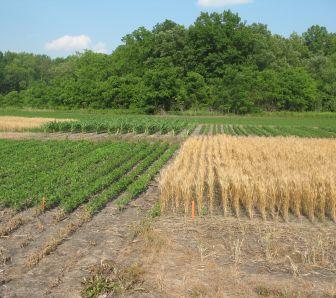
They looked at five treatments: a control plot of continuous soy-
ABOVE: Sikkema’s study aims to reduce the number of multipleherbicide-resistant waterhemp seeds in the seedbank.
bean, a soybean-wheat rotation, a corn-soybean rotation, a corn-soybean-wheat rotation, and finally a corn-soybean-wheat-cover crop rotation, with oats and tillage radish planted after winter wheat harvest.
In all the crop rotations except the continuous soybean treatment, soybeans were planted in 15-inch rows versus 30-inch rows.
In all, eight different modes of action were used in the three-crop rotation of corn-soybean-wheat.
“If farmers really stay on top of it, I’m optimistic that we can manage this weed such that it will not cause as severe yield reductions in a corn-soybean-wheat rotation.”
In the continuous soybean treatment, the Group 14/15 herbicide Fierce (flumioxazin/pyroxasulfone) was used pre-emergence, followed by Roundup Xtend (glyphosate/dicamba). Just by using four effective modes of action, Sikkema says, there was a 70 per cent decrease in MHR waterhemp seeds in the seedbank at the end of three years.
In the two-crop rotation of corn-soybean, Fierce was used pre-
emergence, followed by Roundup Xtend post-emergence in soybean; in corn, the Group 5, 15 and 27 herbicide Acuron (atrazine, S-metolachlor, mesotrione and bicyclopyrone), was applied preemergence, followed by the Group 4 and 5 herbicide Marksman (dicamba/atrazine) post-emergence. Weed seeds were depleted by 78 per cent with this two-crop rotation, Sikkema says.
The two-crop rotation of soybean-wheat saw less dramatic,
but still positive, results. The same herbicide regimen of Fierce pre-emergence and Roundup Xtend post-emergence was used in soybean, with Group 6 and 27 herbicide Infinity (pyrasulfotole/ bromoxynil) in wheat; Liberty (glufosinate), a Group 10 herbicide, was applied after winter wheat combining, and this treatment saw a 66 per cent reduction of MHR waterhemp seeds in the seedbank.
“In the three-crop rotation of corn-soybean-wheat, the herbicide was Acuron followed by Marksman in corn; Fierce followed by Roundup Xtend in soybean, and Infinity in wheat, and there was a 79 per cent decrease in the number of seeds,” Sikkema says.
Perhaps predictably, the most complex rotation – corn-soybeanwheat followed by a cover crop of oat and tillage radish – saw the best results, with an 82 per cent depletion of waterhemp seeds after the first cycle of this rotation.
“My ‘Reader’s Digest’ summary is that if farmers in Ontario implement a well-planned, diverse integrated waterhemp man-
BEST HERBICIDE COMBINATIONS IN CORN
Control of MHR waterhemp in corn ranged from 90 per cent to 100 per cent at four weeks, eight weeks and 12 weeks after application with the following combinations:
Source: Sikkema, P.“Early Postemergence HerbicideTank-Mixtures for Control ofWaterhemp Resistant to Four Herbicide Modes of Action in Corn.”Agricultural Sciences. 10.4236/ as.2021.124023]
agement program using weed management techniques that most farmers can implement on their farms without purchasing any new equipment, it can really reduce the number of waterhemp seeds in the seedbank,” Sikkema says.
“If they stay on top of it, I’m optimistic that it will result in greater than 90 per cent reduction of waterhemp seeds after six years and greater than 95 per cent reduction after nine years.”
Herbicides in corn
As part of this larger project, Sikkema ran a smaller study on five sites on Walpole Island, Ont., and near Cottam, Ont., looking at the efficacy of early post-emergence (EPOST) herbicides in corn. The project, which ran from 2019 to 2020, looked at 13 different herbicide tank mixtures containing multiple modes of action.
Earlier research led by Sikkema has shown that pre-emergence herbicides are more effective at controlling MHR waterhemp than most post-emergence herbicides. The objective of this study was to identify which EPOST herbicides offer early control of waterhemp escapes as well as season-long control in corn.
The researchers concluded that control of MHR waterhemp was similar for all herbicide programs, except glyphosate plus dicamba/ atrazine and glyphosate plus S-metolachlor/atrazine, which resulted in the lowest control at three of five sites – ranging from 63 per cent to 89 per cent and 61 per cent to 76 per cent, respectively.
But using other combinations (outlined in the sidebar), 90 to 100 per cent control of MHR waterhemp through the season was achievable in corn.
Sikkema’s findings so far tell a positive story about MHR waterhemp control for Ontario producers.
“If farmers really stay on top of it, I’m optimistic that we can manage this weed such that it will not cause as severe yield reductions in a corn-soybean-wheat rotation,” he says.
“Staying on top of it” is not a polite suggestion: it’s critical for long-term control of MHR waterhemp. But Sikkema says it’s an aggressive enough regimen that it should control the other weeds on the farm as well.
“I know nothing is ever foolproof, but this is a pretty aggressive weed management program, and I’d expect few escapes.”