Can’t decide?



Seed Focus
The end of another growing season brings more indications of what plant breeders and researchers are bringing to the fields, and our annual Seed Focus issue gives you a glimpse of a few of these advancements.
Weed Management
Dandelions and herbicide resistance are two subjects that growers are dealing with, and their frequency and intensity are on the rise. Top Crop Manager covers some of the latest ideas and insights on the issues.
Machinery Manager: Combines
Tractors pull it and drive it, planters put it in the ground, but the combine is what brings home true value, which is also what we bring, with our annual feature.
Substance must always trump appearance, especially in agriculture ...............................4
On the threshold of transformation .....................6
Success in satisfying buyers...........................10
Getting full value out of soybean seed .................12
Corn breeding at Agriculture and Agri-Food Canada ..................................20 New alfalfas show improved traits ....................21 Resistance an issue that must be addressed .............26 Machinery Manager: Combines .......................30 16, 26 6, 12, 20 30-34
Dandelions: On the rise ..............................16
www.topcropmanager.com
Reference information of this calibre is hard to find, so many growers choose to keep Top Crop Manager issues on file. If you have not kept issues for your library, you can find our stories, and more, on our interactive website.
Cover:
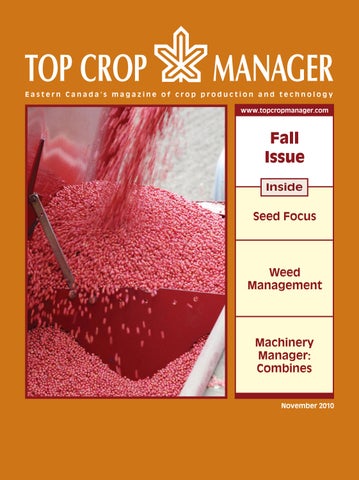
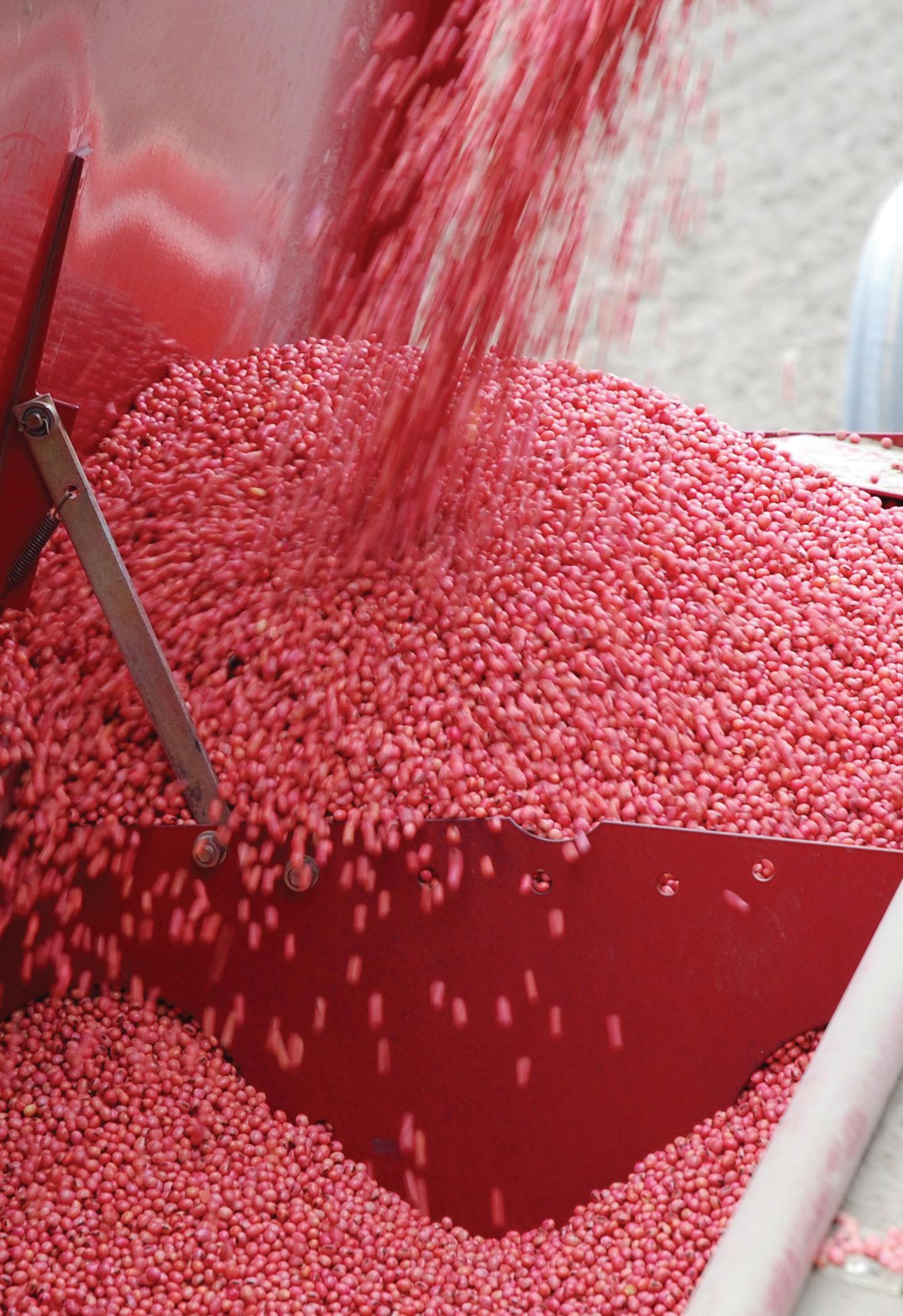
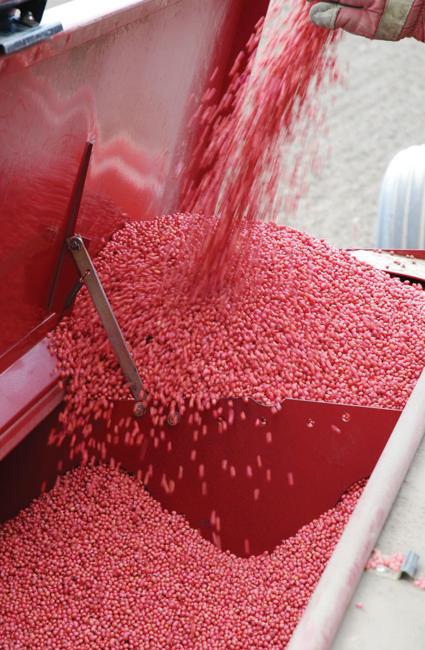
With seed treatments and inoculants, new traits and other innovations to come, the picture of seed has changed dramatically in recent years. Photo by Ralph Pearce.
Readers will find numerous references to pesticide and fertility applications, methods, timing and rates in the pages of Top Crop Manager. We encourage growers to check product registration status and consult with provincial recommendations and product labels for complete instructions.
Top Crop Manager is published by Annex Publishing & Printing Inc., an independent publisher of specialty crop production and special interest publications. The magazine continues its tradition of keeping growers up-to-date in areas of plant breeding, agronomic advances, pest control, field techniques and management.
Top Crop Manager’s eastern editions appear in February, March, April, August, October, November and December.
November 2010, Vol. 36, No.15
EDITOR
Ralph Pearce • 519.280.0086 rpearce@annexweb.com
FIELD EDITOR
Heather Hager • 888-599-2228 ext. 261 hhager@annexweb.com
CONTRIBUTORS
Treena Hein
Carolyn King
Rosalie I. Tennison
WESTERN SALES MANAGER
Kevin Yaworsky • 403.304.9822 kyaworsky@annexweb.com
EASTERN SALES MANAGER
Steve McCabe • 519.400.0332 smccabe@annexweb.com
SALES ASSISTANT
Mary Burnie • 519.429.5175 888-599-2228 ext. 234 mburnie@annexweb.com
PRODUCTION ARTIST
Gerry Wiebe
GROUP PUBLISHER
Diane Kleer dkleer@annexweb.com
PRESIDENT Michael Fredericks mfredericks@annexweb.com
PUBLICATION MAIL AGREEMENT #40065710
RETURN UNDELIVERABLE CANADIAN
ADDRESSES TO CIRCULATION DEPT.
P.O. BOX 530, SIMCOE, ON N3Y 4N5
e-mail: mweiler@annexweb.com
Printed in Canada
ISSN 1717-452X
CIRCULATION
e-mail: mweiler@annexweb.com
Tel.: 866.790.6070 ext. 211 Fax: 877.624.1940
Mail: P.O. Box 530, Simcoe, ON N3Y 4N5
SUBSCRIPTION RATES
Top Crop Manager West - 8 issuesFebruary, March, Early-April, Mid-April, June, October, November and December1 Year - $50.00 Cdn.
Top Crop Manager East - 7 issues - February, March, April, August, October , November and December - 1 Year - $50.00 Cdn.
Specialty Edition - Potatoes in CanadaFebruary - 1 Year - $9.00 Cdn.
All of the above - 16 issues - $80.00 Cdn.
INTRODUCTION
Substance must always trump appearance, especially in agriculture
The wisdom of the ages constantly reminds us to “never judge a book by its cover.”
For the past 30 years, I have grappled with many people concerning that adage, and as time moves on, I am no less willing to concede that sometimes, “dressing the part” is warranted. As I have observed many times before, you can dress any mindless stiff in a three-piece suit and all you really have is a politician or government consultant.
I’m reminded of this fact from two news items that could have a bearing on Canadian agriculture – if we are willing.
During the first week of October, it was announced that China is in the market for – well, everything. The country’s financiers were buying majority shares in hydro generation plants and oil projects around the world. But is this latest round of acquisitions, along with continued imports of iron ore and copper, an attempt to monopolize economies or part of an effort to balance a trade surplus estimated by some to be more than $2 trillion?
Then there was the uncertainty surrounding the Commonwealth Games in India. Would cancelling the Games be a backwards step for India in the eyes of the world?
“Never judge a book by its cover.”
For the better part of the past decade, China has tried to convince the world that it is a major player in the global marketplace. Yet many in North America view the country only as a Communist stronghold and cultural backwater, albeit with loads of cash to spend. Perhaps those in Canadian agriculture should be concerned more with the cash and less with the culture (or the communism).
The same can be said of India, where the world’s fastest growing middle-income sector is spending more, and with a penchant for
acquiring knowledge and using stateof-the-art technology, their aptitude and business savvy are growing as fast as their appetite for proteins.
The Games are done now, but 1.18 billion people remain, and many are ready to play on a different world stage.
All of that spells opportunity for agriculture here in the Great White North. Proceed with caution? Well, that’s a healthy bit of advice when dealing with any business interests. We certainly do not want melaminetainted products or lead-painted toys. But are we willing to sell value-added grains, oilseeds and plant-based proteins to two countries willing to pay top dollar?
I would think we should be.
Caution is always a wise companion in business. However, caution should not blind farmers, processors and manufacturers to the very real potential for doing business with a much larger market.
Besides, how many urbanites look to agriculture and unfairly see only overalls, dirty boots, a worn ball cap and the willingness to use “chemicals”? How many grasp the depth of knowledge, the years of experience and the commitment underneath the surface that farmers embody?
“Never judge a book by its cover.”
Beyond the introduction
Dig a little deeper into this edition of Top Crop Manager, and see more of what is happening in the plant breeding industry, including an introduction to Dr. Lana Reid, a rare individual, indeed, as she is a corn breeder with Agriculture and Agri-Food Canada. And our Machinery Manager for this edition gets down to business on the topic of combines.
That about “covers” it.
Ralph Pearce Editor









PLANT BREEDING
On the threshold of transformation
by Carolyn King
Genomics could bring about new advances and new opportunities.
Genomics, the study of an organism’s complete DNA sequence, is poised to transform the life sciences, including agriculture, forestry, human health and the environment. For crops, genomics could result in major leaps in varietal improvement. And it could open new doors into value-added markets such as nutraceutical, pharmaceutical and industrial uses for crops. “In the 1980s and early ’90s, we had learned how to identify and manipulate single genes and to transfer a single gene into a crop. For example, insect-resistant corn and herbicide-tolerant canola involved insertion of single genes,” says Dr. Wilf Keller. Keller has years of experience in cell genetics, plant biotechnology and crop genomics, and is currently president and chief executive officer of Genome Prairie. “However, many crop traits, including drought tolerance, cold tolerance and seed size, are far more complex and require the management and manipulation of many different genes. Without full knowledge of that system, it would be very hard to know how to direct a plant improvement or plant breeding strategy. The genomics approach gives an overview of the whole system.”
He draws an analogy: “If you are trying to improve the way a car works, the single gene approach is like putting in a better spark plug to get better performance. In the genomics approach where you map the whole genome, you stand back and look at the whole car; the size of the wheels, the types of tires, the size of the motor, the aerodynamic shape of the car, and so on. All of these things are combined in your analysis to design a vehicle that performs much better.”
Similarly, considering the whole genome of an organism, whether it is a plant, an animal or a human, could lead to significant advances. Keller says, “That’s why I’m excited about the future of the life sciences.”

Mapping and managing life’s building blocks
A central aspect of genomics is identifying what specific genetic material is where along an organism’s DNA. “DNA sequencing” is the process of determining the exact order of all the chemical building blocks that make up an organism’s entire DNA. “Genome mapping” identifies landmarks, specific DNA sequences known as “genetic markers,” along the DNA.
Keller explains, “Knowing the complete DNA sequence of an organism provides an understanding of how all the different genetic components interact with each other, and how they are involved in defining the properties of the organism. “Let’s use a crop as an example. Genetic information is required for a crop to grow from a seed through to
its development, maturity and producing another set of seeds. A lot of genetic elements or genes are involved during the life cycle of that crop; from the composition of the oil in the seed, to the resistance to diseases, to the ability to take up fertilizer out of the soil. By mapping the genome, you get an understanding of how all of these genes are ordered in sequence with each other, how many are ultimately required to exhibit a given trait.”
Once a crop’s genome is mapped or sequenced, this genomic information can be used along with conventional breeding or genetic engineering applications to develop varieties that meet the needs of growers, processors and consumers.
For example, researchers could determine which genes are associated with a
Genomics, the study of an organism’s complete DNA sequence, can be used along with conventional breeding or genetic engineering to develop significant improvements in crop traits.
PHOTO COURTESY OF GENOME PRAIRIE
PLANT BREEDING
desired trait and investigate how those different genes work together to express that trait. They could develop genetic markers to screen new breeding lines for the desired genes. They could use that information to produce improved crop lines more quickly or to enhance a trait by a much larger increment. They could identify very small variations in the DNA between individual plants, and explore how those small variations affect certain traits. They might discover novel traits in individual plants that could allow development of varieties with new strengths and new uses.
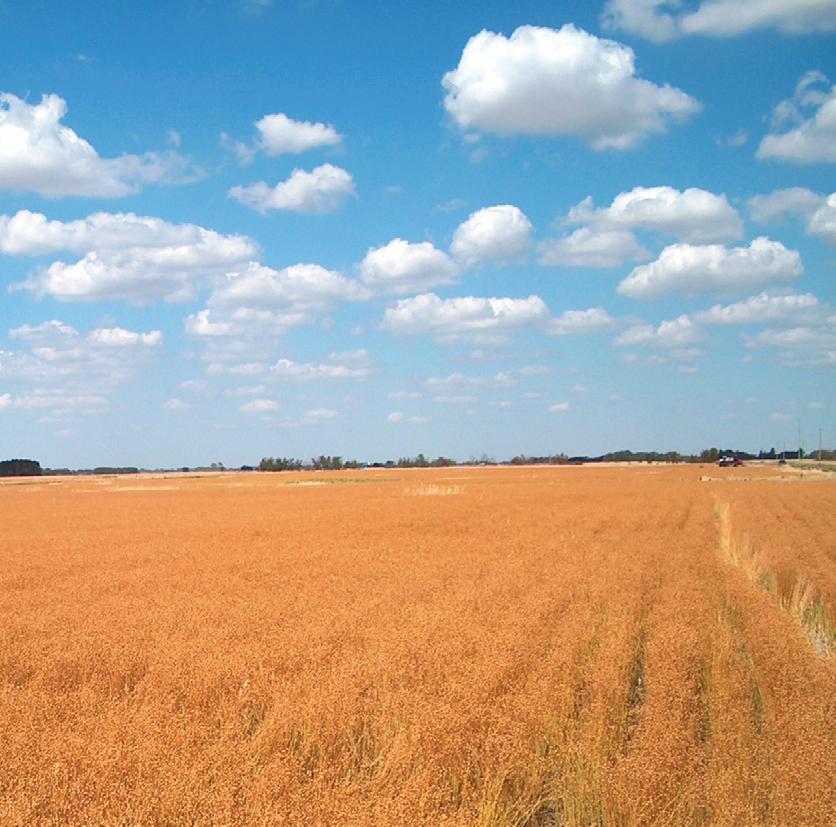
Flax seeds, from Dr. Gordon Rowland’s program, represent diverse flax collections and genotypes.
As well, genomic techniques are getting quicker and cheaper. For instance, in less than a decade, DNA sequencing costs have dropped from hundreds of millions of dollars to thousands of dollars. So, advances through genomics will likely come increasingly faster as scientists sequence the DNA of more and more organisms, as the library of genomic information grows, and as genomic tools are continually improved.
Keller says improvements in crops, livestock and human health through genomics could be “transformational” in our society. For crops, he envisions significant improvements in complex traits like yield, disease tolerance and drought tolerance within the next 10 to 15 years, as well as many other potentially farreaching advances. “I see a major transformation coming in terms of significant improvements in the quantity and the quality of our food; we need to feed nine
Sequencing as a wellspring for advancing canola
Although its acreage in Eastern Canada is small compared to what is grown on the Prairies, canola’s importance in Canadian agricultural circles is undeniable. As an oilseed crop used for food, feed, biofuel and other bio-products, canola’s success has spurred efforts by many agencies to sequence its genome. In October 2009, Bayer CropScience announced it had sequenced canola in collaboration with several partners; however that sequence is not publicly available. So other researchers are still working to sequence canola. One such project is the Canadian Canola Sequencing Initiative (CanSeq).
CanSeq is a partnership of Agriculture and Agri-Food Canada (AAFC), the Plant Biotechnology Institute of the National Research Council (NRC), Genome Alberta and several private companies. The project’s co-leaders are Dr. Isobel Parkin from AAFC and Dr. Andrew Sharpe from the NRC.
Canola, or Brassica napus, has a large, complicated genome with about 60,000 genes. Parkin says Brassica napus evolved from “the fusion of a turnip and a cabbage,” so it is effectively two genomes stuck together. “The turnip part of the genome is represented by Brassica rapa, and the cabbage part is represented by Brassica oleracea. These modern-day relatives are the best representations we have of the ancestors of B. napus. If you put B. rapa and B. oleracea together, you are effectively looking at canola.”
CanSeq, working with researchers in other countries, is sequencing Brassica rapa and B. oleracea to provide a foundation, and then sequencing canola. Parkin expects they will likely release the B. rapa genome to the public domain in fall 2010, B. oleracea in spring 2011, and canola by the end of 2011.
Along with sequencing these genomes, CanSeq is “re-sequencing” B. rapa and B. napus lines. Parkin explains, “When you sequence your first genome, you try to do the best job you can with the resources you have to get the best foundation. Then with re-sequencing you take a much quicker look at the genome of a number of different genotypes that vary in phenotype and try to associate any variation at the sequence level with
variation in phenotype.”
A genotype is an individual organism’s full genetic information; for example, if one canola plant has differences in its DNA compared to another canola plant, then they are different genotypes. A “phenotype” is an individual organism’s observable traits, like a plant’s seed colour or oil content. For example, a tall canola plant and a short one would be two different phenotypes. Phenotype is influenced by the organism’s genetics and environment.
In fact, if someone wanted to figure out which genes are associated with canola seed size (an observable trait), it would require re-sequencing many lines with large seeds and many lines with small seeds and then comparing their DNA sequences to see where they differ.
Parkin notes, “As soon as we’ve released the initial genome for canola, other people will also be able to look at their own lines of interest and start capturing the information in those lines and find out what it means. Hopefully other researchers will also contribute to data in the public domain, so that gradually there will be a database of sequences of different genotypes that people can access.”
Sequencing of the canola genome opens the way to using various genomic tools to speed the development of improved varieties. Parkin gives some examples: “When you’re trying to identify genes within a genome where the sequence is already available, then you don’t have to do upstream work to isolate the gene. You just search in a database to find your gene. And, as we start re-sequencing new genotypes, we will find associations between sequence variation and particular phenotypes of interest. Then we could facilitate the breeding process, using markers to rapidly identify the traits of interest and combine them in single lines. We could make lines that perform better in the field and do it more rapidly.”
She adds, “In canola it’s probably going to have value in hybrid development because it is often difficult to predict which lines are going to give you better hybrid potential. But if you have more information at the sequence level and information about which combinations work to give you good hybrids, then you could hopefully predict which lines to combine to make better hybrids.”
PHOTO COURTESY OF PRAKASH VENGLAT AND RAJU DATLA
PLANT BREEDING
billion people by 2040. By producing food with components that reduce the incidence of diabetes and cardiovascular diseases, we reduce health care costs through prevention rather than treatment. I see the opportunity for using plants to produce a wide range of environmentally friendly industrial products, including fibres, polymers, nylon and bio-plastics, and to produce drugs and pharmaceutical products. Plants might even be designed to remediate or detoxify contaminated soils where there have been serious spills or pollution.”

Canola’s importance as an oilseed crop for food, feed and bio-products has spurred canola genomic research by many public and private agencies.
Will all this potential opportunity become a reality for Canadian crop producers? Keller cautions, “Every discovery, if you want to turn it into a product, a treatment or a drug, or a new food product on your plate, has to involve an interface with companies and industries to pick up those ideas and to move forward with them. I think Canada needs to be very committed to looking at that pipeline going from discovery right through the various stages to product. I think we need to, as a society, figure out where we make the investments, and where we streamline our regulatory procedures so we can get these things through so that our citizens benefit from them, as opposed to losing the technology to other countries and then we import it back in.”
Enhancing value-added opportunities for flax through genomics
Another Prairie crop with a comparatively smaller profile in Eastern Canada is flax, which is becoming a more versatile crop, wherever it may be grown. Its seed and oil are nutritious food ingredients, its oil also has industrial uses in linoleum and other products, and the tough, durable fibre from its straw has applications in manufacturing. To make the most of all that flax can offer, a project is investigating flax at the genomic level.
Called Total Utilization Flax Genomics (TUFGEN), this four-year project started in fall 2009. Dr. Gordon Rowland of the University of Saskatchewan and Dr. Sylvie Cloutier of Agriculture and Agri-Food Canada (AAFC)’s Research Centre in Winnipeg are co-leading TUFGEN’s multiagency research team. The project is funded by Genome Canada/Genome Prairie and many other partners, including federal and provincial agencies and flax grower associations.
The researchers are sequencing the flax genome and mapping the position and relationships of the genes related to the crop’s oil characteristics, such as its fat composition and protein content, and its fibre characteristics, such as yield, extractability and quality.
And they are developing genomic tools to help flax breeders develop new varieties faster and more efficiently. For example, they are developing tools to quickly search for and isolate genes of interest. That is very helpful because a crop plant’s DNA contains thousands of genes, and those genes are only a small percentage of the plant’s total DNA.
Rowland explains, “Take, for example, oleic acid, one of the fatty acids in flax seed. If we can tag the portion of the DNA related to oleic acid, we then could develop a DNA marker to follow that particular trait through the various generations that arise out of crossing various flax plants. So, rather than having to look at the phenotype of the eventual plant, which in this example would be the actual oleic acid, we can follow that trait at the molecular level and follow it much earlier, and know which plants have a better probability of having a high oleic content. It would save a lot of time in the field or in multiple generations in the growth chamber for finding out whether a plant actually carries the desired trait.”
Sequencing the flax genome could also be a springboard for other scientific advances. “One reason DNA sequencing of flax is important is that flax is not closely related to any other crop plant that we know about. And from the way that it arranges itself genetically, we think is quite different from other plant species. So its genome will be of great interest to a lot of people, and may explain some of the things we haven’t understood about flax in the past,” says Rowland.
“For example, there’s a phenomenon in some fibre flax varieties; when they are grown under certain conditions, the flax will actually end up changing its appearance in the next generation, and these changes are then inherited and carry on generation after generation after that. We never could understand how this happens. The more information we get about the plant at the DNA level, I think the more we’ll come to understand how these changes actually occur.”
Rowland believes the potential of genomics to pinpoint specific traits, discover novel traits and make breeding more efficient could help flax breeders develop varieties tailored to specific market needs. “Right now we are producing flax really for just the oil market. I think a number of different markets will come out of this work, for both oil and fibre. For instance we could have flax types that are specific for human health or animal health. I think there will even be submarkets, with types that are high in linolenic acid and types that are high in a compound called lignan, for human health and nutraceutical uses.
“We’ll still have the traditional industrial uses for the oil, like linseed oil, paint and linoleum, but there may be other industrial applications for other mixtures of fatty acids produced in flax oil. On the straw side, there could be flax types with high fibre content, perhaps grown for the seed with the fibre as a byproduct or grown specifically for fibre markets.”
Canada is currently the world’s largest flax producer, and Rowland would like to see Canada maintain that strength. He says, “Flax is really important in Canada as a crop but not very important in most other areas of the world. So I think we need to learn as much about flax genomics as we can for this country.”
PHOTO COURTESY OF GENOME PRAIRIE
What it really grows is confidence.
Leading genetics, advanced traits, higher yields. That’s how DEKALB® brand is seeding confidence .

Success in satisfying buyers
by Rosalie I. Tennison
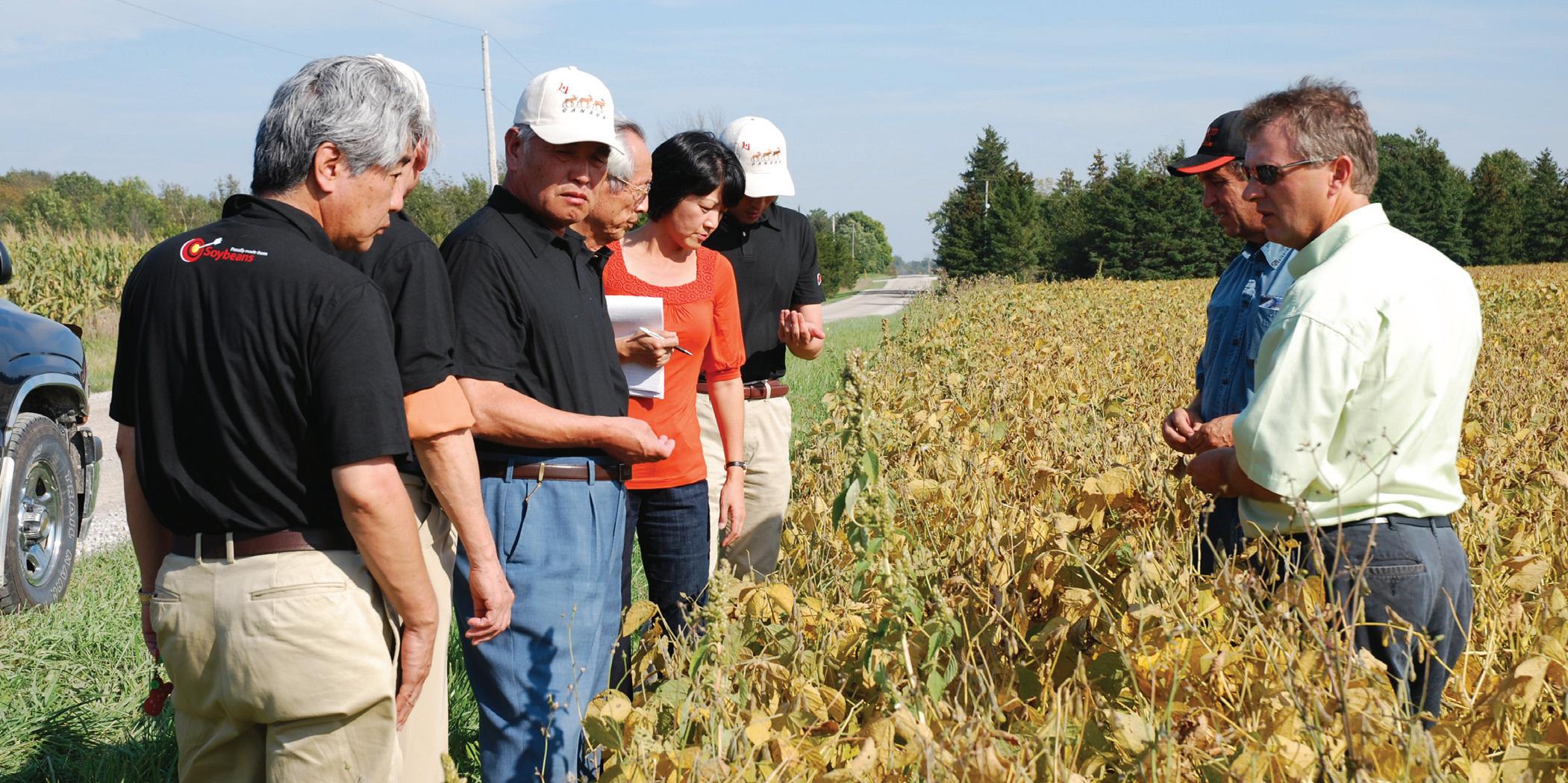
Soybean breeders are adept at developing varieties that buyers want.
When genetically modified (GM) soybeans were introduced, the industry went wild, but not all international buyers were equally enthusiastic. Instead, some, such as Japan, closed their markets to GM soybeans and went looking for conventional varieties with desirable traits. Gradually, the industry settled into two camps: GM and nonGM, and growers chose the camp they wanted to supply.
At first it was not clear if Canada’s breeding programs would be able to adjust to the changes. Not surprisingly, the breeders were, and are, adaptable and many are successful at developing what the market needs. The public breeders are focusing on food grade soybeans and some of the private breeders are filling a need for GM varieties; there are a few who do a little of both. “There is an opportunity to capitalize on transgenic varieties, but farmers need to be aware of their costs to grow GM versus the traditional food grade varieties,” comments Marc Ham, the director of international marketing for Semences Prograin in Quebec. “Japan imports 1.2 million tonnes of food grade soybeans each year and China is now importing oilseed varieties, so there are markets available for both types.” However, he continues, because each market is different, breeders and companies selling to these countries need to be aware of what each wants and breed varieties accordingly. Other countries that import Canada’s soybeans fall somewhere between China and Japan in terms of their needs.
By far, Japan is Canada’s largest market for food grade soybeans, and breeders are challenged to stay in tune with that country’s particular needs, further challenging the breeders to understand those needs and meet them. The Agriculture and Agri-Food Canada (AAFC) breeding program at Harrow, Ontario, focuses on Japan and other Pacific Rim countries that
prefer non-GM varieties. “Harrow has developed a reputation for producing premium-quality, high-protein, large-seeded food grade soybeans, such as Harovinton, the industry standard for nearly two decades,” explains Dr. Vaino Poysa, the AAFC soybean breeder at Harrow. For tofu and miso, however, they are now looking at breeding for slightly smaller seed size and lower protein. “We may have to sacrifice a little on seed size in order to push the yield up, but we are compromising by pushing up the quality of the protein.” He boasts that Harrow has one of the best facilities for analysing tofu and miso type soybeans in North America. He works closely with the Canadian Soybean Exporters’ Association to learn what the Japanese buyers are looking for, and then promising varieties are tested to see if the quality matches the desires of the buyers. If it does, the seed is released. With this system, it appears the Canadian breeders are always on the cutting edge of variety development.
Public program commendable
Dr. Istvan Rajcan is a soybean breeder at the University of Guelph, upholding the tradition of excellence established in the 1970s when the program was initiated. He says about 100 varieties have been released from the University of Guelph and the majority have been non-GM food grade, although the program is developing some GM varieties. “Our biggest market for Ontario-grown non-GM soybeans is Japan,” he says. “We have been able to build a solid reputation there for providing high-quality soybeans. We work closely with buyers to develop the types of qualities they want.” OAC Kent, released by the Guelph program, is a success story in the breeding world and, nine years after its release, it is considered a
Organizations such as the Canadian Soybean Export Association and the Canadian Soybean Council work to maintain good relationships with Japanese buyers of food grade soybeans.
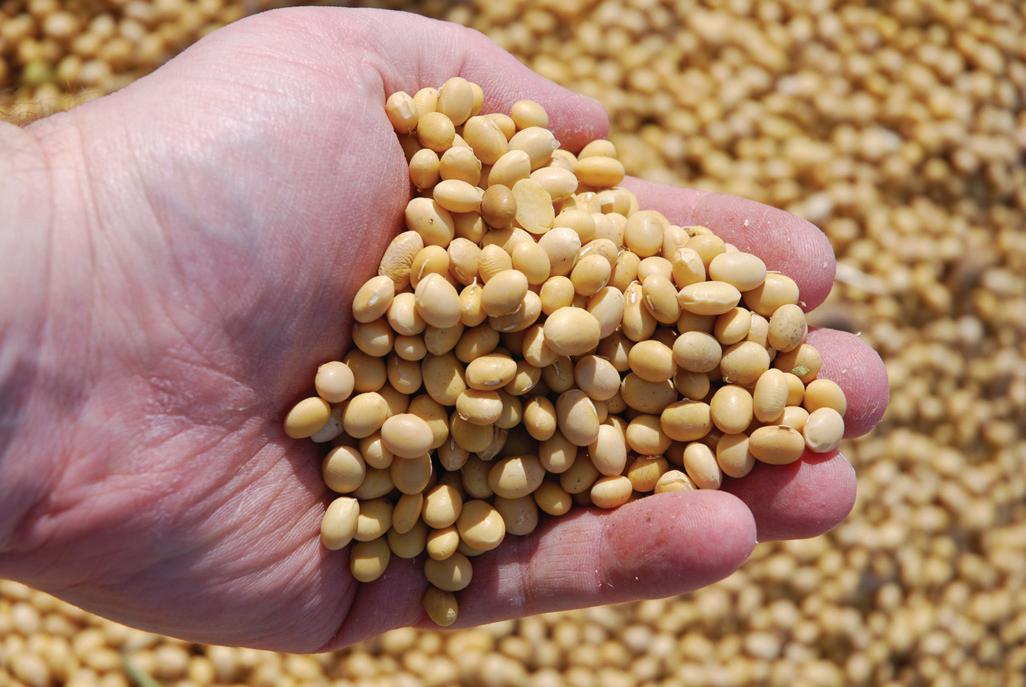
The balance of protein levels is arguably as much a concern to breeders as it is to growers.
PHOTOS BY RALPH PEARCE
standard because of its high and stable yield and higher-thanaverage protein, which makes it very good for tofu.
Canadian breeders are carving out a niche in the world soybean market and that is largely due to identity preservation of the varieties and the attention to breeding what buyers want. Ham says that in the US, the same variety can be released under many names, which can be confusing for growers and buyers. “In Canada it is one variety, one name,” he says.
Rajcan concurs with Ham’s assessment of why Canadian food grade soybeans are more welcome in world markets. “We still have a strict variety registration process in Canada, which the United States doesn’t,” he says. “Our seed and crop purity rules are appreciated by buyers of identity preserved Canadian soybeans.”
But how do breeders know what properties they should be breeding for? Poysa says that at any given time, he has many varieties exhibiting various traits in his program as he tries to anticipate what the market may want next. It can take as many as 10 years or more to get a promising variety to growers, which means, if a buyer asks for a trait that is not prominent in existing varieties, it cannot be developed in a short period. Some programs have arrangements to grow seed in Argentina or Chile during Canada’s winter, which speeds the breeding process by six months each year.
Staying ahead of what is wanted in the marketplace is the biggest challenge for breeders. “The best a breeder can do is keep their eyes and ears open, and network with buyers and processors of seed to know what they want,” concedes Rajcan. “We generally work with a number of traits combined with high yield as a given.” He says tastes change and breeders adapt. He adds that with food grade soybeans, high protein is important, but buyers who used to want 45 percent protein now want 43 percent. He says in his program, varieties are maintained with various levels of protein in the event that the protein requirement is changed to 42 or even 40 percent. “We have been plant breeding at Prograin since 1986,” says Ham. “All our breeds come from our breeders using greenhouses and winter nurseries in Argentina. We have many programs underway, each focusing on a particular trait that is needed for the intended use.” In this way, he says, Prograin is able to satisfy customers and produce seed with desired traits. His is one of the few private companies that stuck with breeding programs for food grade soybeans when other companies began to focus on GM varieties.
It would be a generalization to suggest that private companies breed GM varieties and public programs focus on food grade because there is some crossover. It is possible that what drives any given program is the customer base that supports what is being developed. “My breeding program is driven by the Japanese market,” says Poysa. “Whatever Japan prefers is often followed by other Pacific Rim countries. There really is no single Japanese market; it’s complex with a variety of end uses.”
Ham agrees. He says he spends a good deal of time with his Japanese buyers because he believes that building relationships is important in keeping a market. “The Japanese love Canada and all things Canadian and, when they become long-term friends, they are very loyal,” he adds. Ham also points out the Japanese like the small field size common in Eastern Canada because they can see the entire crop under development.
With other countries such as the US and Argentina looking north to Canada’s success in the food grade soybean market, breeders understand that they can never relax, that they must continue to strive to satisfy the needs of the marketplace. But, ultimately, according to Rajcan, the goal is to improve the crop for Canadian growers. He adds that giving farmers the tools they need to get an adequate premium on contracts to grow soybeans for Japan is an ongoing challenge as each breeding program finds its niche and provides Canada’s best customer with the quality soybeans it wants.
Trait Stewardship Responsibilities Notice to Farmers
Monsanto Company is a member of Excellence Through StewardshipSM (ETS). Monsanto products are commercialized in accordance with ETS Product Launch Stewardship Guidance, and in compliance with Monsanto’s Policy for Commercialization of Biotechnology-Derived Plant Products in Commodity Crops. This product has been approved for import into key export markets with functioning regulatory systems. Any crop or material produced from this product can only be exported to, or used, processed or sold in countries where all necessary regulatory approvals have been granted. It is a violation of national and international law to move material containing biotech traits across boundaries into nations where import is not permitted. Growers should talk to their grain handler or product purchaser to confirm their buying position for this product. Excellence Through StewardshipSM is a service mark of Excellence Through Stewardship.
ALWAYS READ AND FOLLOW PESTICIDE LABEL DIRECTIONS. Roundup Ready® crops contain genes that confer tolerance to glyphosate, the active ingredient in Roundup® agricultural herbicides. Roundup® agricultural herbicides will kill crops that are not tolerant to glyphosate. Acceleron™ seed treatment technology for corn is a combination of four separate individually-registered products, which together contain the active ingredients metalaxyl, trifloxystrobin, ipconazole, and clothianidin. Acceleron™, Acceleron and Design™, DEKALB®, DEKALB and Design®, Genuity®, Genuity and Design®, Genuity Icons, Roundup®, Roundup Ready®, Roundup Ready 2 Technology and Design®, Roundup Ready 2 Yield®, SmartStax™, SmartStax and Design™, VT Double PRO™, and YieldGard VT Triple® are trademarks of Monsanto Technology LLC, Monsanto Canada, Inc. licensee. Liberty Link and the Water Droplet Design are trademarks of Bayer. Used under license. Herculex is a registered trademark of Dow AgroSciences LLC. Used under license. Respect the Refuge and Design is a trademark of the Canadian Seed Trade Association. Used under license. TR2026-E-07/10
PLANT BREEDING
Getting full value out of soybean seed
by Treena Hein
Although soybean performance has lagged behind corn, progress has accelerated due to a change in thinking.
The cost of all seed keeps rising, but the price of soybean seed seems to rankle growers the most these days. Many crop farmers are not convinced they should be paying as much as they do, based on the modest performance improvements soybeans have demonstrated since the mid-1990s. Corn performance, in comparison, has increased by leaps and bounds, and a bit of frustration is natural.
However, there are many legitimate reasons why corn has seen such exceptional production advances and soybeans have not. “Firstly, because corn is a hybrid, it’s easier to breed for better yield,” says Michael Strang, a cash crop farmer and owner of Better Cropping Solutions, a consulting firm near Exeter, Ontario.
Hybrids also represent an inherently better investment for companies, so there is a lot more incentive to improve performance. “Wheat or soybeans don’t provide nearly the return that corn does because corn seed has to be purchased every year,” says Martin Harry, eastern marketing manager at SeCan.
“It’s well known in the seed industry that a company needs to start in corn, establish itself, and then introduce a soybean line,” adds Strang.
In addition, government research has been somewhat heavier in corn. Strang theorizes this is because it is a larger user of environmentally sensitive nutrients like nitrogen and phosphorus. “Also,” he notes, “traditionally, corn has been a more important crop in Ontario, and that mentality continues today.”
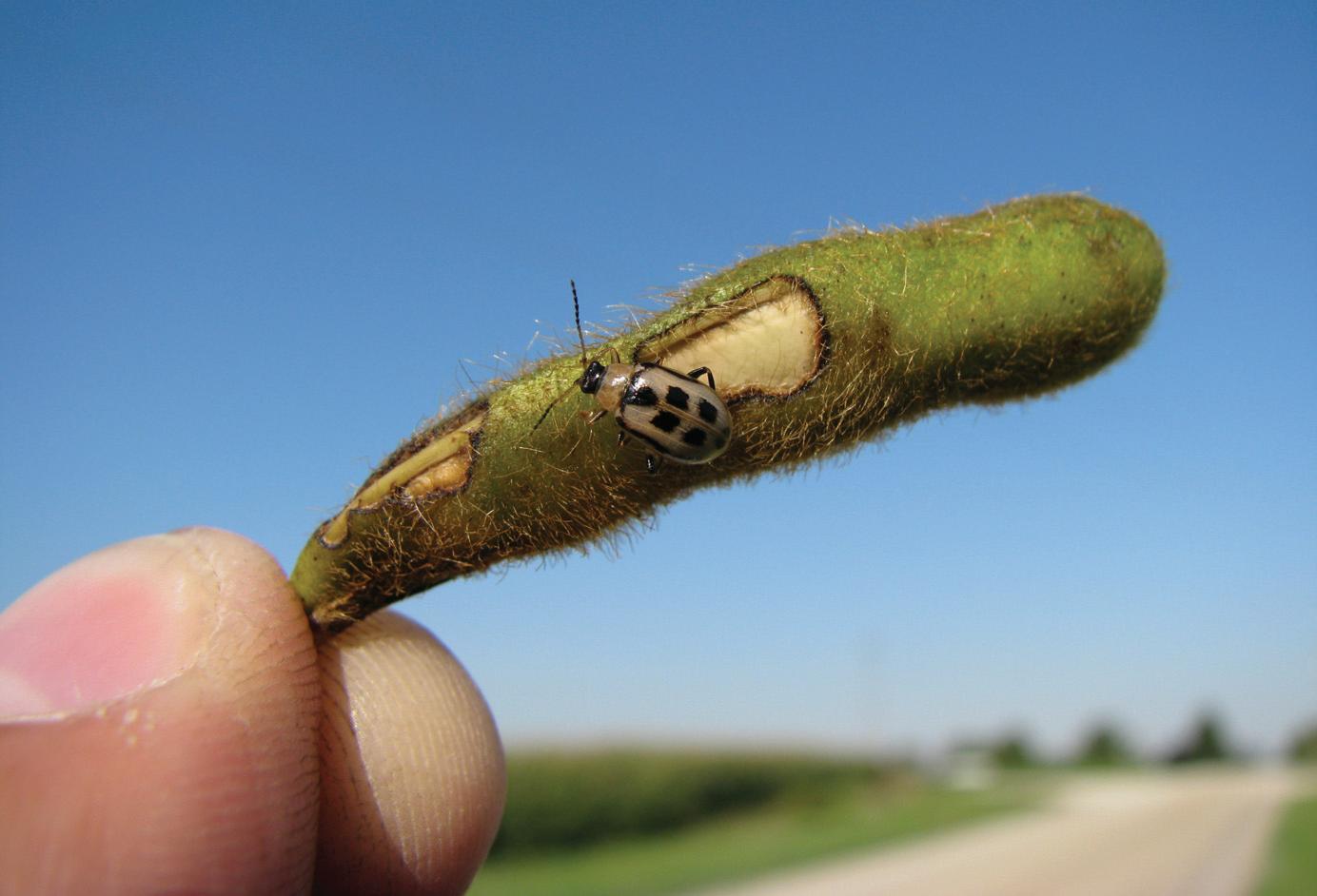
Lastly, corn has not faced the same pest challenges as soybeans have, providing it another avenue to better performance. “There has definitely been a fairly dramatic increase in the pest spectrum of soybeans, which is not the case for corn,” says Strang. That spectrum includes aphids, soybean cyst nematode and bean leaf beetles.
Work the system
However, Doug Alderman, national sales manager at Pride Seeds, says that 2009 and 2010 have shown that the tides are shifting for soybean performance. Yields have increased significantly, and in his opinion, this is due to farmers changing their practices as well as recent marked improvements in genetics. “Corn has benefited from a ‘systems thinking approach’ for a long time,” Alderman says. “Some have applied this thinking to soybeans recently with great results, and we need to continue that trend.”
Simply put, “systems thinking” involves combining technology advances in a more intensive management approach. By working the system approach, Alderman observes, “growers have realized 15 to 20 percent better yields, and I believe we’re at the tipping point of huge advancements to take us to the next level.”
Strang agrees. “I believe if producers paid as much attention to their soybean crop as they do to their corn crop, they would be rewarded with much better yields,” he says. “The robustness of the soybean plant works against it, in that it lends itself to be managed less intensively.”
The first step in moving to a systems approach with soybeans, says Alderman, is to pay attention to seed populations, managing this according to row widths, soil types and agronomic conditions. “We also want to protect the seed,” he adds. “Like corn, we need to look at giving the seed a real chance to combat soilborne pests and pathogens in its first days of life, as well as early season insect stresses such as aphids and the bean leaf beetle.” Technologies in seed treatments can be used to give the young plant a good start, as well as pre-inoculants to ensure nitrogen fixation and improved nodulation. This approach, combined with new genetics, allows for lower seeded populations, thus managing seed costs, and ultimately gives greater yields and higher net returns from every acre.
Another part of the systems approach is weed control. “Glyphosate resistance in Canada is the direct result of not using a rotation and of relying exclusively on glyphosate,” Alderman notes. “Growing crops such as wheat and corn in a rotation provides the option to use low-cost herbicides that are effective in controlling a broad spectrum of broadleaf weeds.”
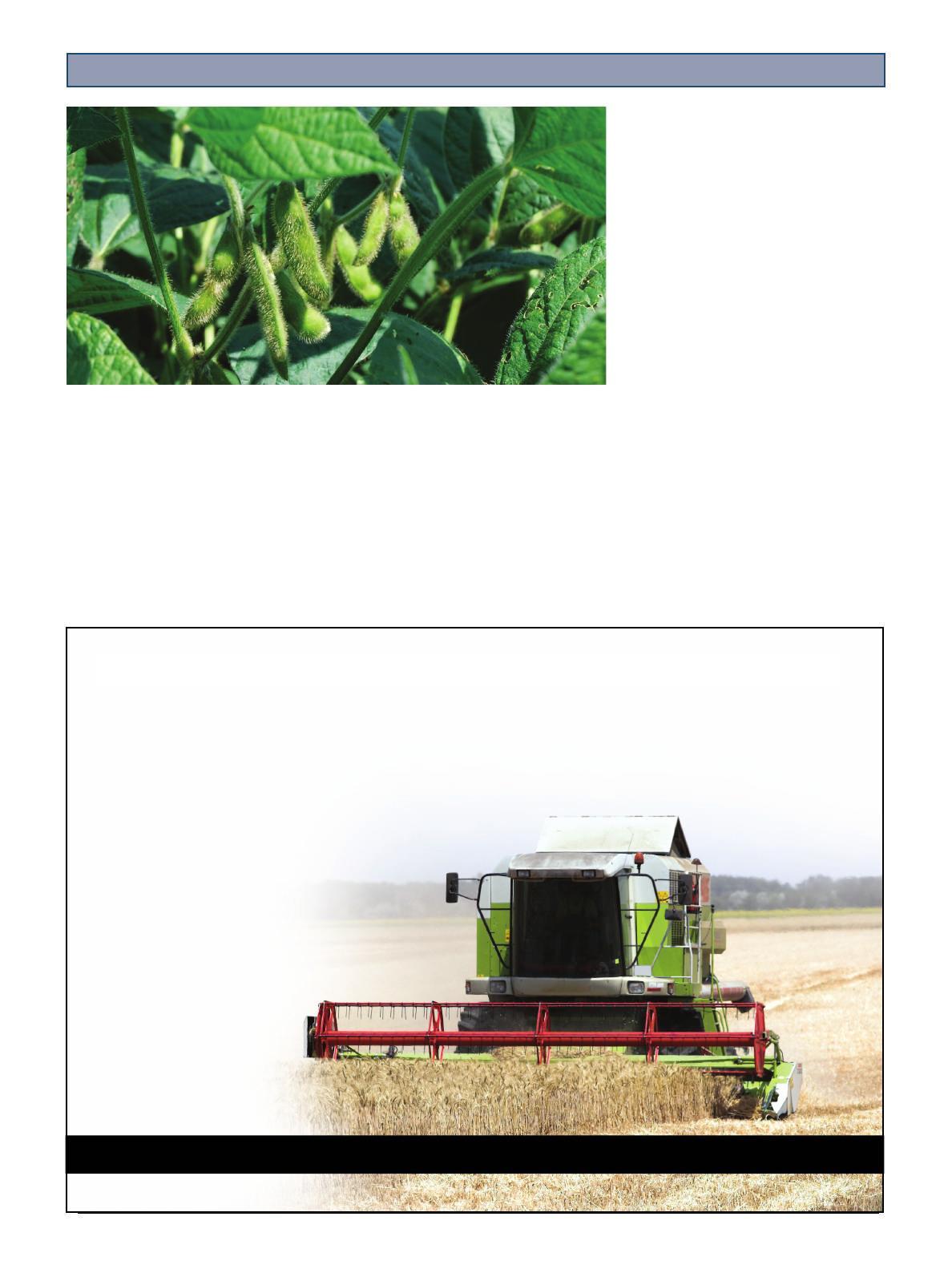
Soybean yields have not advanced the same as for corn for a number of reasons, including the increasing presence of insect pests such as bean leaf beetles.
PHOTO COURTESY OF HORST BOHNER, OMAFRA.
With the low cost today of glyphosate today, he adds, “There’s no reason why producers should not be using the full rate.”
Getting back to basics and spreading risk
Strang says that as with any crop, producers should also have a strong focus on soil structure and nutrients; making sure the seed is going into a good seed-
bed. “Growers should manage their corn residue more effectively, starting with looking at how your combine distributes residue and also how the planter handles the residue,” he says. “Basically, with notill beans, I believe that the planter openers should experience as little residue as possible, so that may mean the use of row cleaners and duals on the combine and grain buggy to leave the stalks standing. The result would be more uniform
It is the robust nature of the soybean, that is, its ability to withstand various stresses, that can lead to less intensive management by growers.
Photo by ralPh Pearce
planting depth, better emergence, less slug damage, and hopefully, better yields.”
SeCan’s Harry says growers should also look at how they buy seed. “If you buy in volume, buy corn as well and buy earlier; soybean seed will be cheaper with whatever company you go with,” he notes.
Working with a system will maximize return on soybean seed cost, but do not expect seed prices to stay level. “The advancements in genetics, traits and technologies come at a cost,” Alderman says. “Everything related to advancements in yield-driven technologies is in or on the seed. In order to improve on this front, companies need to invest in seed research, and growers need to invest in certified seed to have access to these technologies. It’s a two-way street, and at the end of the day, it’s about increasing yield.” n
Machinery Manager – OnLine
Machinery manager tables have been expanded, with direct links from our print version to give our readers a quick reference of machinery specifications. The following categories are available:
• High Clearance Sprayers
• Irrigation Systems
• Four-wheel Drive Tractors
• Front-wheel Drive Assist Tractors
• Combines
• Air Seeders and Drills
• Precision Agriculture Systems More machinery specifications will be posted throughout the year.
Best Genetics
Weed Control Simplicity
Improved Plant Health and Nodulation
More Beans per Pod Yield
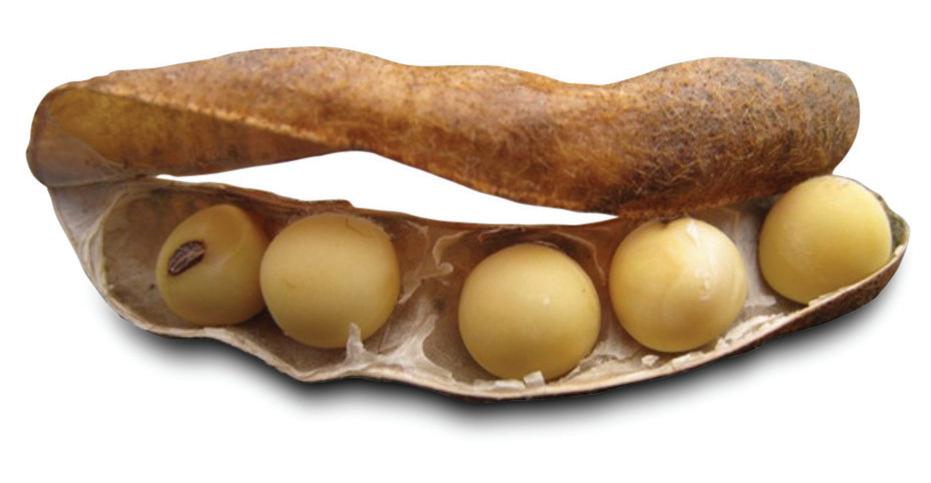
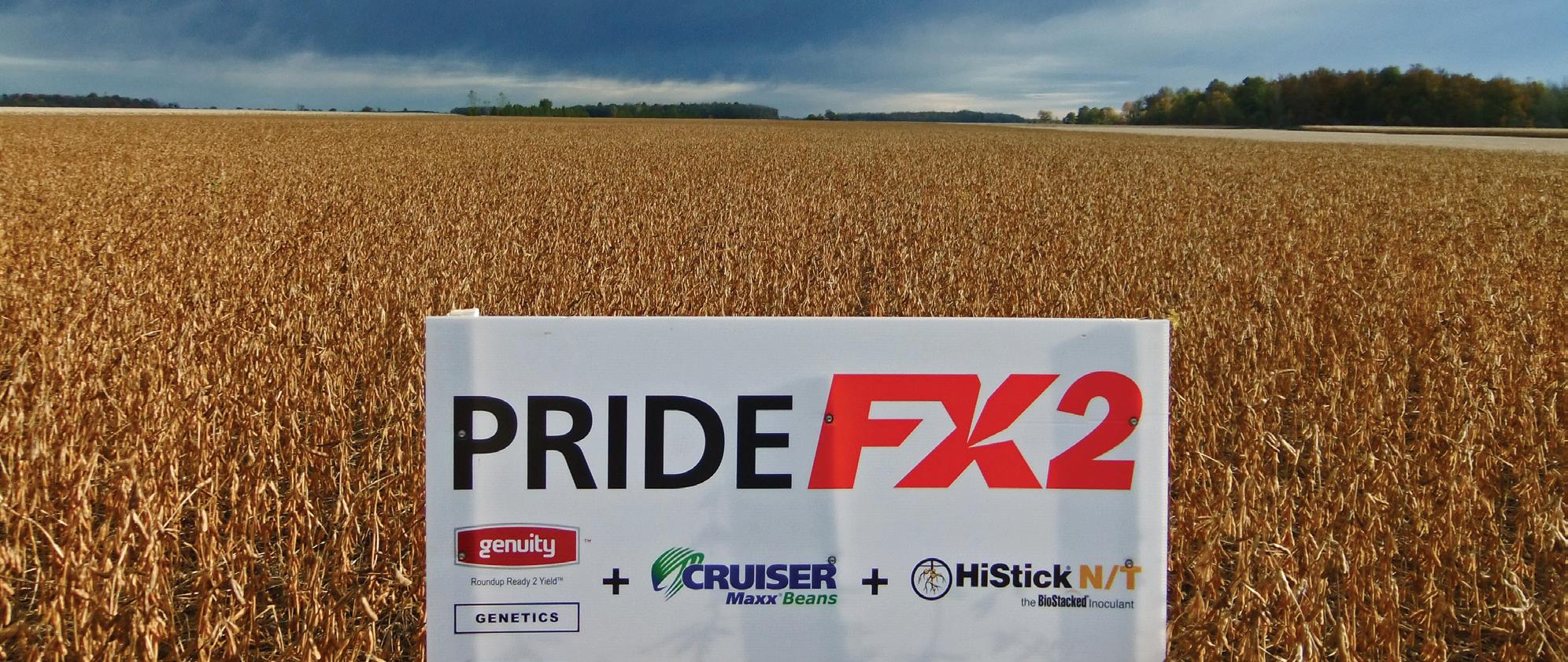
Producers have been looking for new ways to increase their soybean yield potential. The PRIDE FX2 soybean system featuring Genuity® Roundup Ready 2 Yield® technology along with Cruiser Maxx® broad spectrum insect and disease protection and HiStick® N/T biostacked inoculant provides growers with higher yields to increase your bottom line. With any other combination you may be leaving yield in the bag. Maximize your savings by contacting your PRIDE Seeds’ dealer today.
All products are subject to availability. All orders and sales are subject to the terms and conditions of sale of PRIDE Seeds as set out in the sales literature, on the PRIDE Seeds order form and on the bags and tags of the products. Beyond the limited warranty and remedy set forth on the container of the seed, PRIDE Seeds makes no representations or warranties of any kind, either express or implied, as to any matter, including without limitation, any express or implied warranties of merchantability or of fitness of the seed or seed crop for any particular purpose. Please be reminded that the use of traited seed may be contingent on the signature of technology agreements. Please check with your seed representative. PRIDE is a registered trademark of Limagrain Genetics Inc. used under license. P & design are registered trademarks of AgReliant Genetics.
ALWAYS READ AND FOLLOW PESTICIDE LABEL DIRECTIONS. Always follow grain marketing and IRM requirements. Details of these requirements can be found in the Trait Stewardship Responsibilities Notice to Farmers printed in this publication.
1-800-265-5280 www.prideseed.com
Dandelions: On the rise
Knowing the plant is the key to effective management.
Dandelions are among the toughest of weeds. Deep-rooted, perennial and robust, they are a particular problem right now due to a combination of factors. “The last three seasons have been next to ideal for dandelions,” says Gilles Quesnel, field crop integrated pest management program lead at the Ontario Ministry of Agriculture, Food and Rural Affairs (OMAFRA). “We had the third wet June in a row in 2010, and if seeds blow on to wet soil in June, they will establish. If it’s dry, there’s less chance of germination. The crop will also have covered the ground, shading late-emerging dandelion seedlings. It all comes back to moisture in June.”
Brian Woolley, sales manager for row crops at Bayer CropScience, agrees that dandelions are definitely a growing issue in Ontario. However, he sees this development as being more of a function of management practices, principally the continued decrease in the use of deep tillage and a significant increase in the amount of glyphosate used on an annual basis at annual weed control rates. He adds that, “It’s natural that increased dandelion populations will create more seed for the seed-bank, and thus, the problem will continue to at least maintain itself.”
In winter wheat, Woolley believes that increased dandelion presence is resulting from seeding primarily in a no-till fashion almost immediately after soybean harvest. “A large number of the dandelions seen in the spring in the winter wheat crop were already present in the field at soybean harvest or very soon thereafter. They begin to grow dramatically when the soybean canopy is removed,” Woolley says. “They can be quite large by the time winter arrives.”
The only option left for growers in this situation, says Woolley, is a springapplied post-emergence herbicide such as Infinity or Estaprop. “But this isn’t a silver bullet,” he cautions. “Dandelions are very hard to kill in the spring because they’re drawing on large taproots to push up fast and produce flowers.”
Excellent top-growth control is still possible if the weeds are not too big,
by Treena Hein
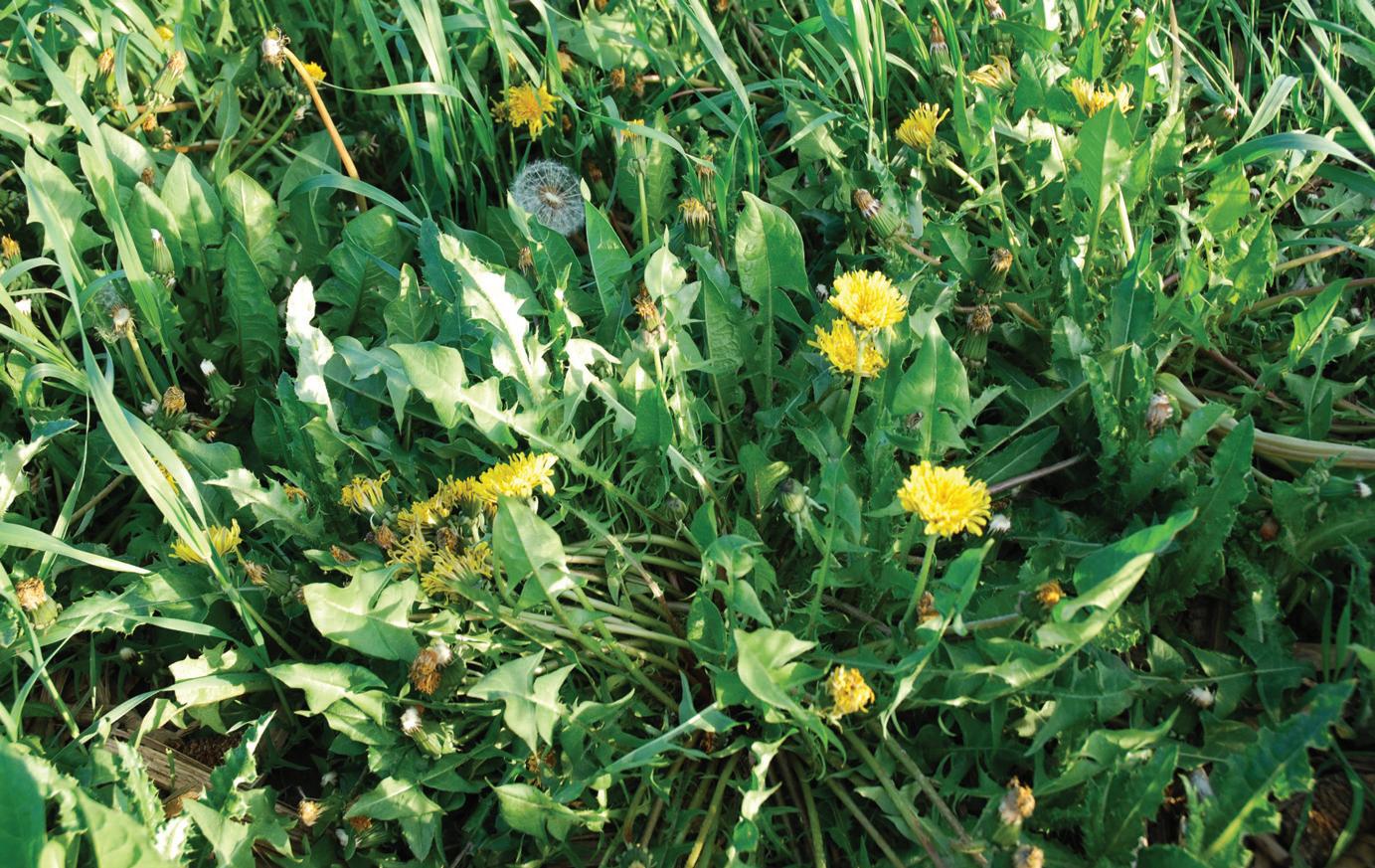
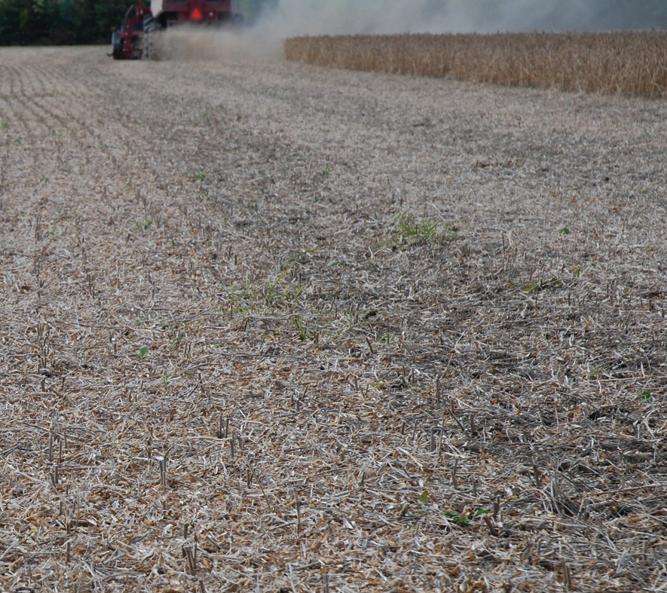
ABOVE: Dandelions are harder to kill in the spring because they draw on large taproots to grow fast and produce flowers.
RIGHT: Shortly after soybean harvest, when the dandelion is building its root system, is the best time for herbicide to penetrate the taproot and kill the plant.
PHOTOS BY RALPH PEARCE
he says, but control of the whole plant to the point that it does not regrow and reflower is not possible. “This is mainly because we’re not getting herbicide to the root system,” he notes. “Even glyphosate does not do its best job in the spring on dandelions because insufficient product gets to the roots.”
Farmers facing large dandelions in the spring should therefore use two times the standard Roundup rate, says Mike Cowbrough, OMAFRA weed management field crop program lead. “You’ll also need to use a residual to deal with germination of new seedlings in corn and soybean,” he stresses.
Fell dandelions in the fall
It is strongly recommended instead to control dandelions before winter sets in. “In the fall, dandelions are building their root system to create as much energy reserve as possible,” says Woolley. “At this time, herbicide is taken deep into the root system and the plant is killed. So I suggest holding off on planting wheat, letting the dandelions green up after soybean harvest and hitting them with a
significant dosage of glyphosate.” Cowbrough agrees. “The only chance of penetrating the taproot is in the fall,” he adds. Cowbrough says that based on all the work that Dr. Peter Sikkema, professor of field crop weed management at the University of Guelph’s Ridgetown Campus and his colleagues have done, the most effective means of controlling dandelion are fall applications of glyphosate applied at 1350 to 1800 gai/ha (which equals 1 to 1.5 L/ac of the “old” 360 g/L glyphosate concentrations).
Woolley concludes that applying a high rate of glyphosate will result in a much cleaner winter wheat crop during the over-wintering period and allow spring post-emergence herbicides to be far more effective because the majority of annual weeds will be easier to kill. “However,” he advises, “application should occur prior to freezing temperatures so that dandelions are still actively growing.”
EASY GUIDANCE REDEFINED

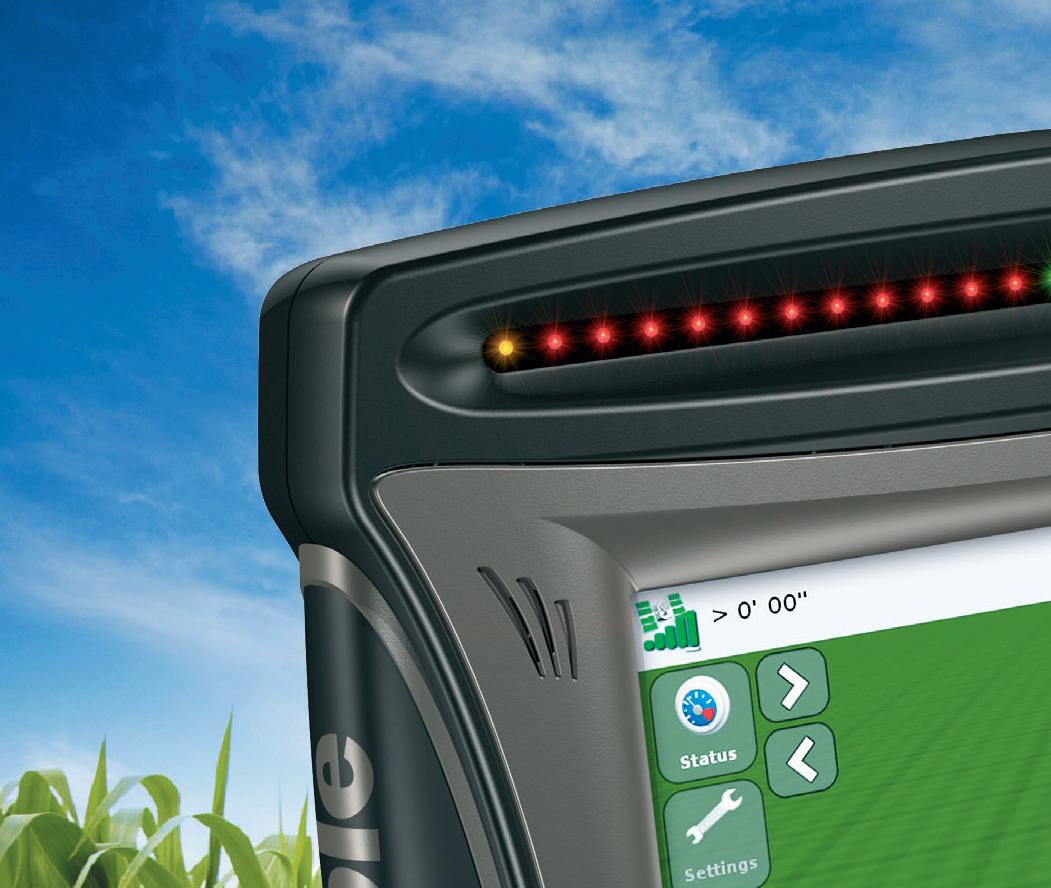
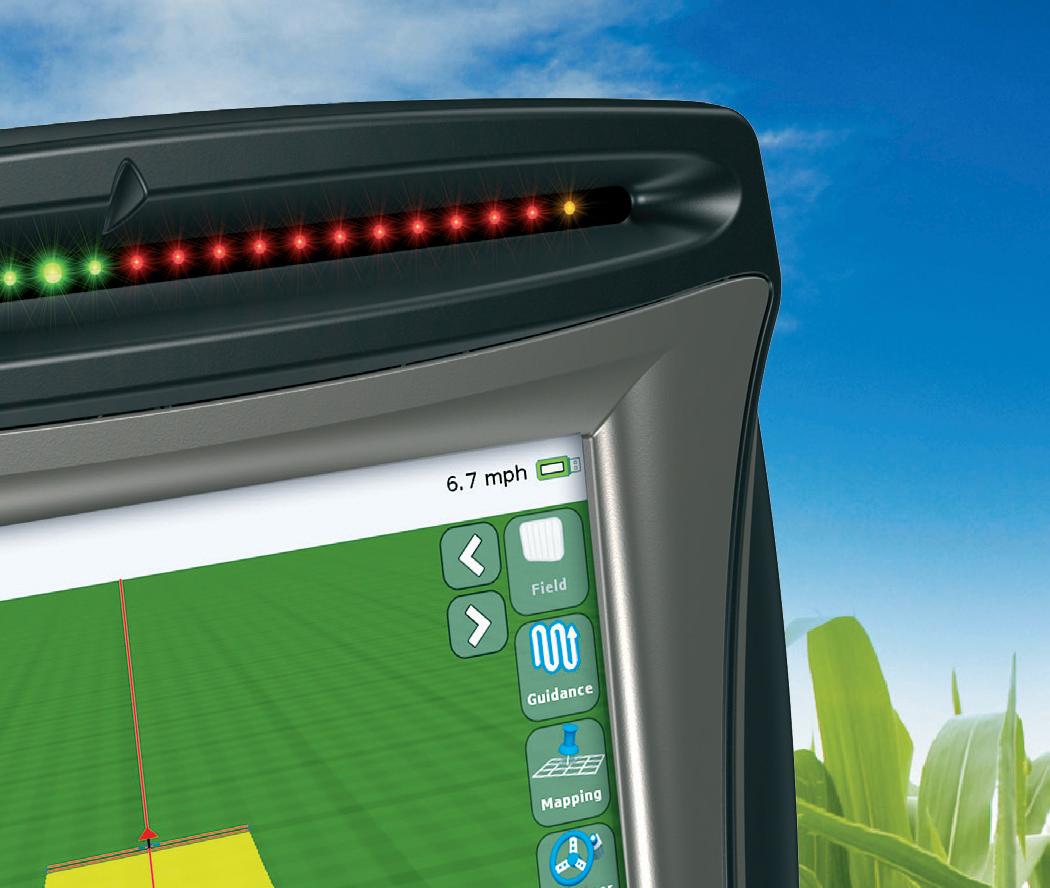
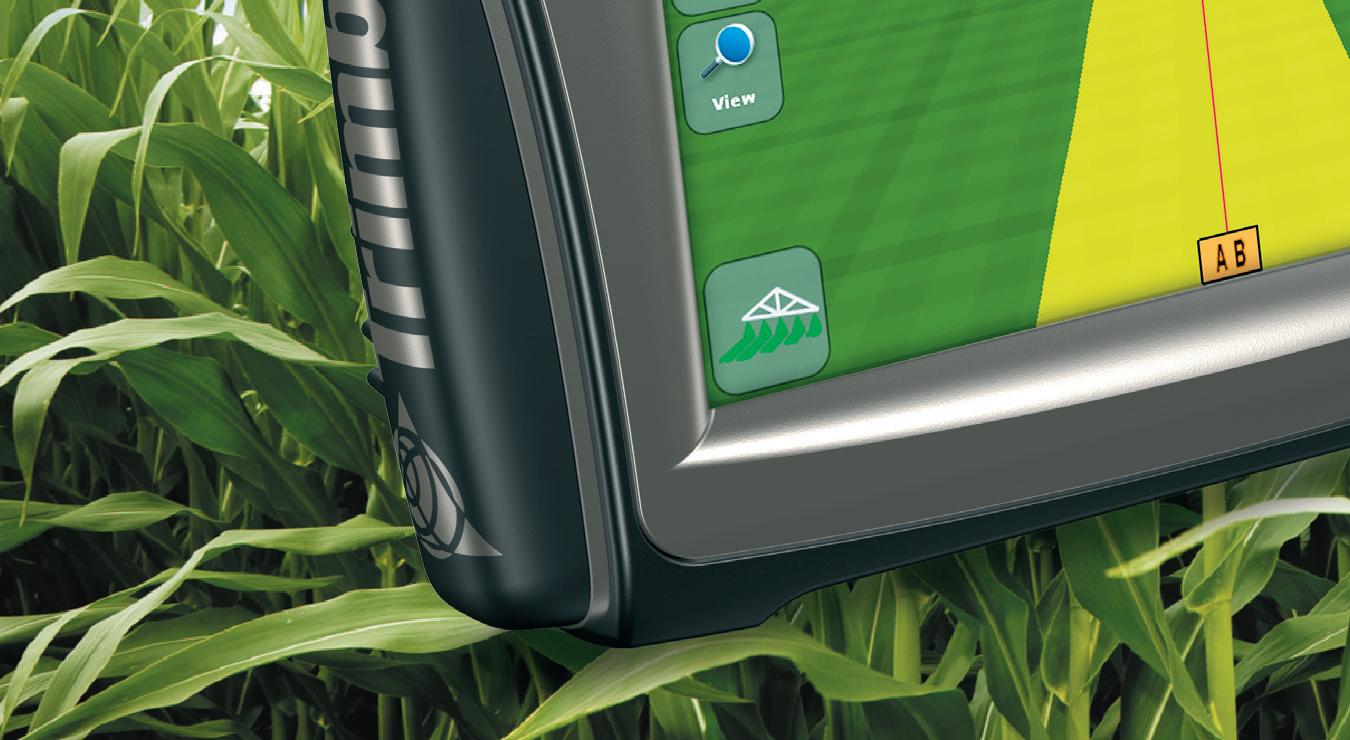
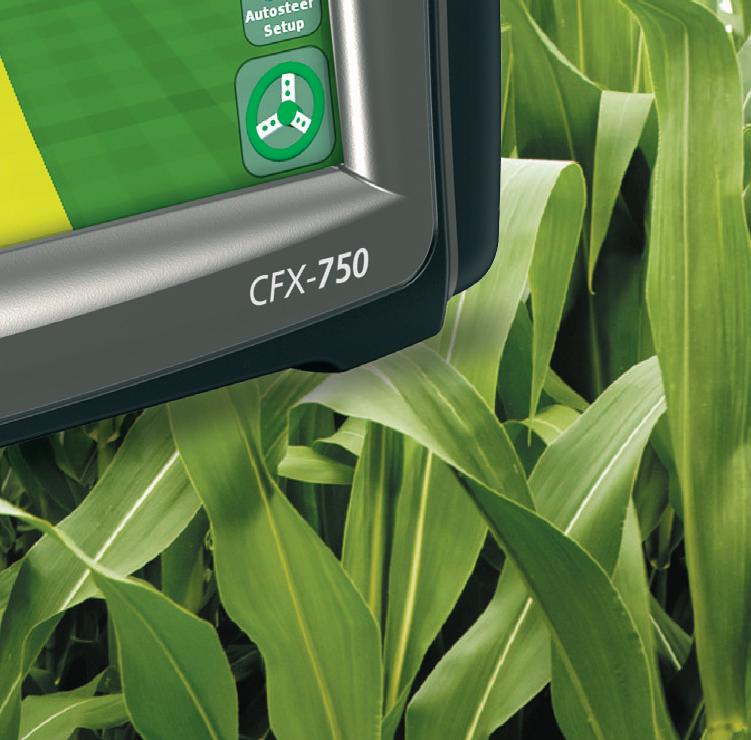

The CFX-750™ display is the newest touchscreen display from Trimble offering affordable guidance, steering and precision agriculture capabilities. Building on past successes, the CFX-750 display elevates guidance to the next level with its easy-to-use 8" color touchscreen.
Upgrade the CFX-750 display to receive GLONASS satellites and increase your satellite availability. Add the Trimble® Field-IQ™ crop input control system to provide section and rate control when planting, spraying, spreading and strip tilling. You’ll farm more precisely, more productively and more profitably.
For more information, visit www.trimble.com/agriculture or see your dealer.

We’re stack hybrids in your favou
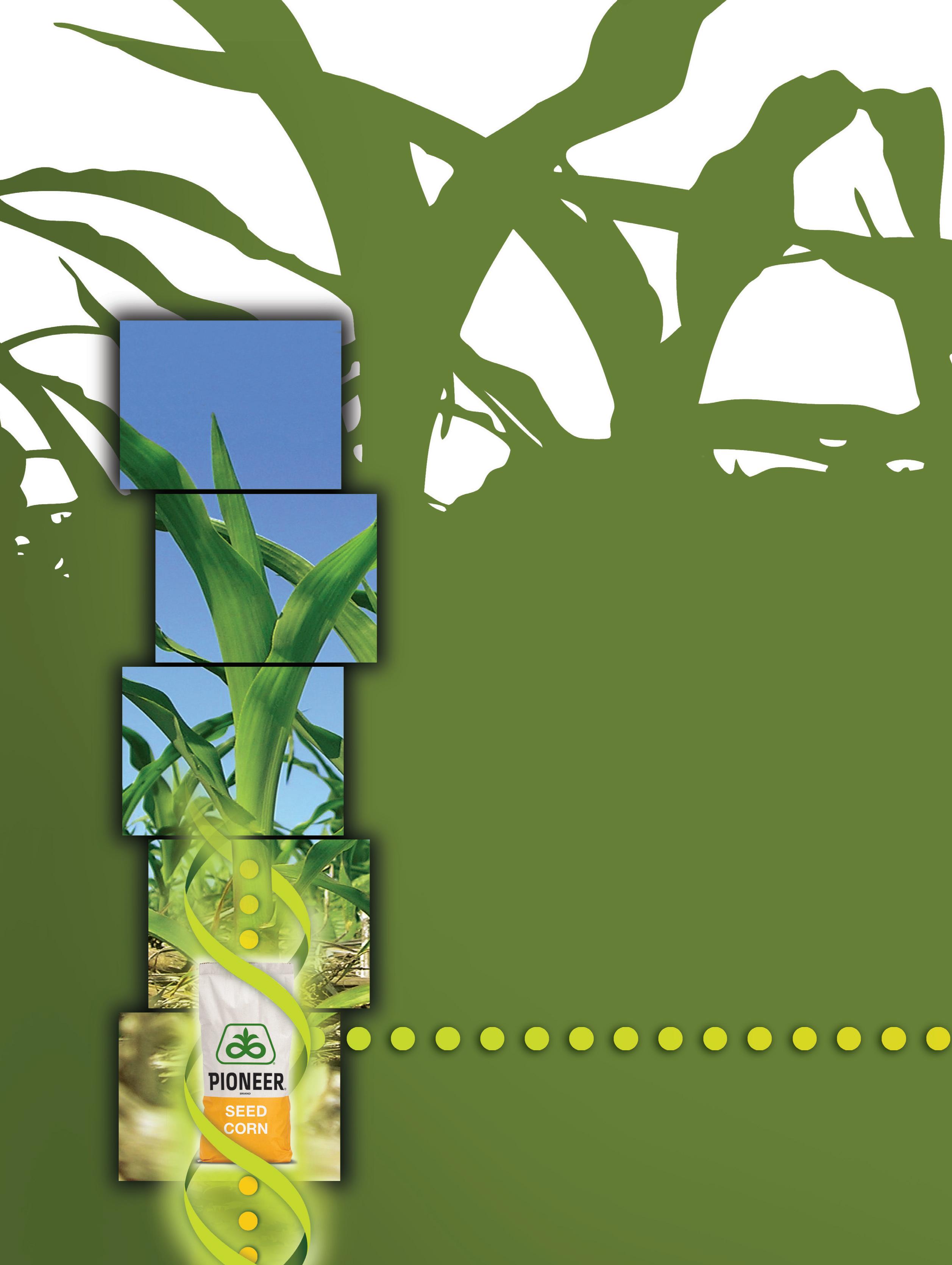

r.You’re hearing a lot about stacks these days. It’s important that your seed supplier is stacking hybrids in your favour.
At Pioneer, we offer a diverse lineup of hybrids so you can select the right combination of genetics and traits to fit your farm operation. Your Pioneer sales representative will work with you to customize hybrid recommendations for your fields, acre by acre.
Because we know, as you do, that no hybrid is right for your farm unless it can consistently put higher yields and quality grain in your bin, and more cash on your bottom line.
Get the genetics, stacks and service you want. From your local Pioneer sales representative.
Corn breeding at Agriculture and Agri-Food Canada
by Treena Hein
The work of Dr. Lana Reid focuses on some aspects of corn less emphasized by private industry.
Dr. Lana Reid, the only corn breeder at Agriculture and Agri-Food Canada (AAFC), is hooked on corn. Based at the Eastern Cereals and Oilseed Research Centre in Ottawa, she says “Once you start working on corn, it’s difficult to work on anything else.”
With a military father, Reid grew up in various locations across Canada, but the majority of her life has been spent in the Ottawa Valley, and she now lives on a small hobby farm near Almonte. Her fascination with corn began during a plant biochemistry undergraduate course at the University of Ottawa. “I was learning about how plants defend themselves against pests,” she remembers, “and I was so interested that I went to talk to my professors about doing a fourth year honours project.”
They helped her organize a project on resistance to the European corn borer, which brought Reid to the Central Experimental Farm (CEF) in Ottawa to meet Dr. Robert Hamilton, the AAFC corn breeder whom she would eventually come to replace. “The project rapidly evolved into a masters thesis for me,” she recalls. With the assistance of a grant from Pioneer Hi-Bred, Reid later relocated to Macdonald College of McGill University and started a PhD with Dr. Diane Mather. The campus was only 90 minutes’ drive away from the CEF, which allowed her to stay in close contact with the scientists and travel there for summer field research. “My PhD thesis focused on the role of silk in resistance to gibberella ear rot caused by Fusarium graminearum,” Reid notes. “Six months before I finished my thesis, I was hired by AAFC to continue this research and expand the ear rot breeding program. Pioneer Hi-Bred, the Ontario Corn Producers Association and Ontario Pork all contributed to funding of this research, getting me off to a fantastic start. I was eventually offered the position of corn breeder and eagerly accepted it.”
New traits
Many pressures bear down on today’s corn crop, notes Reid. “Historically, corn cropping was concentrated in regions in Canada with the highest available heat units and adequate moisture supply, but there is a need to expand the production of corn into areas with much less heat,” she says. “In addition, despite the high demand for corn for so many things, many producers find it difficult to make a substantial profit.”
Although corn yields have increased substantially since the late 1970s, they did so during a time when energy inputs like fertilizer, pesticide and drying costs were relatively inexpensive. Reid notes that an increase in the number and severity of diseases has occurred in the meantime. There is therefore constant pressure to improve traits relating to higher yield and better disease resistance, among other attributes.
Since corn breeding began at AAFC in 1927, many new genotypes have been produced that have helped expand corn pro-

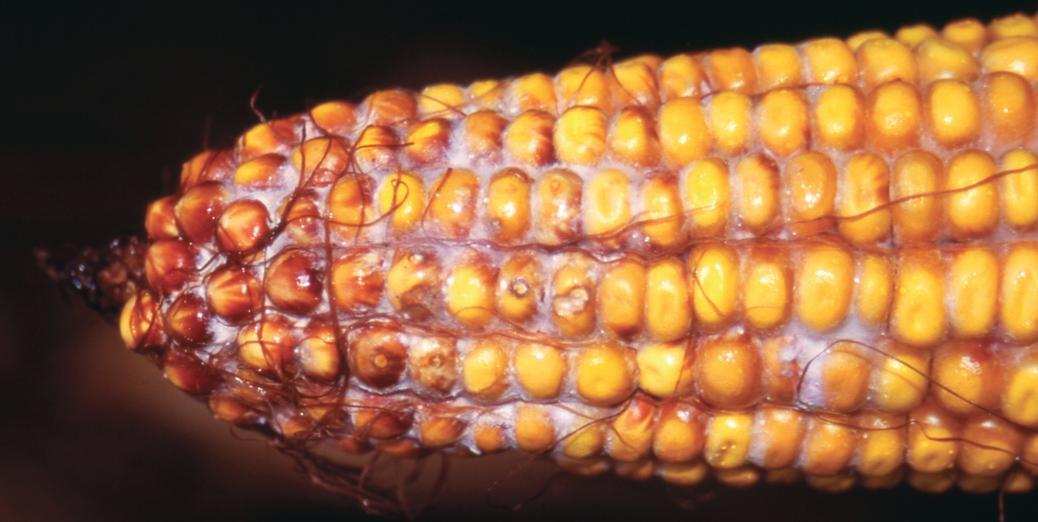
Research into resistance for gibberella ear rot has evolved into the development of some of the most resistant public inbred lines of corn.
duction in eastern Ontario and Quebec. “AAFC is recognized as an international leader in the development of corn with value-added traits,” Reid notes. “Demand for AAFC inbreds increases every year.”
The goals of AAFC’s corn program are ambitious, encompassing continued investigation and incorporation of many traits.
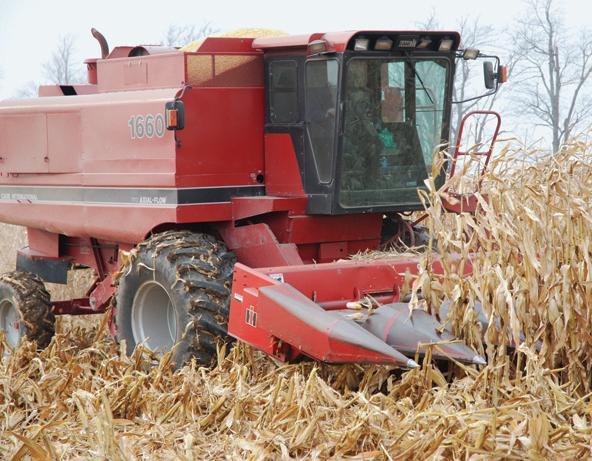
For example, developing corn with improved drydown traits is important, she says, because most Canadian corn producers must harvest their corn at 25 to 28 percent moisture, compared to US producers who harvest at or below 20 percent. “Hybrids with faster drydown rates will allow producers to reduce drying costs and/or grow longer-season hybrids that may have a greater yield potential,” she says. “In this area of research, we’re completing the standardization of a hand-held moisture meter for non-destructive kernel moisture measurement and collecting genotypes from international sources with rapid drydown traits.”
Early maturity and cold tolerance at the seedling stage are
When not assessing one of the inbred lines she is researching, Dr. Lana Reid can be found at her computer, analyzing data or writing papers.
PHOTO COURTESY OF DR. LANA REID, AAFC.
PHOTO BY PETER DARBISHIRE
PLANT BREEDING FORAGES AND FEED
also important breeding foci. To develop new elite corn inbreds and populations with these traits, Reid is obtaining public corn germplasm from international sources and integrating suitable genotypes into the AAFC breeding program. “Before release, we test inbreds for combining ability as a hybrid in multiple location yield trials,” Reid notes. “We’re also doing collaborative studies on the inheritance of specific traits in order to determine breeding strategies, and maintaining the AAFC corn inbred seed bank.”
Developing corn with improved drydown traits is important to Dr. Lana Reid’s research, especially because most Canadian growers harvest their corn at 25 to 28 percent moisture.
PHOTO BY RALPH PEARCE
The program also involves collecting and adapting new genetic sources to improve resistance to diseases such as gibberella ear rot, fusarium stalk rot, eyespot, common rust, northern leaf blight, grey leaf spot and common smut. “We’re refining our disease-screening techniques and making sure to test extensively to ensure that hybrids have both resistance and yield performance,” says Reid.
Annual disease surveys are conducted in collaboration with provincial researchers. As if that were not enough, Reid is investigating the potential of developing new traits for the biofuel industry, drought resistance and reduced plant height/ high harvest index.
All in a day
There is no “typical day” for Reid. “My daily schedule changes with the seasons,” she says. “From May to October, I spend some, if not all, of the day outdoors, and at peak times, my staff and I work seven days a week.” Reid cannot ever take a summer holiday, as she must pollinate experimental stands on a daily basis from early July until the end of August. From November to April, she spends a lot of time on the computer analyzing data and writing papers. “During that period, I also attend meetings and conferences and prepare for the next year’s planting,” she notes. “We also have a winter nursery in New Zealand that must be organized and shipped at the same time that we are harvesting our nurseries in the fall.”
Reid says the most satisfying aspect of her research so far has involved the development of some of the most resistant public inbred lines of corn for Fusarium graminearum, the same pathogen that causes Fusarium head blight in wheat. These inbreds were developed using conventional breeding techniques over a 10-year period. “We knew we’d developed excellent resistance, but didn’t know what the mechanism of the resistance was,” she recalls. “We had a PhD student from France, Antoine Bily, who worked with us and with Dr. John Arnason from the University of Ottawa, and in a very short time, he discovered which plant biochemicals appeared to be playing a role in this resistance and thus what we had been indirectly selecting for all this time.”
“It’s very gratifying as a breeder to develop something with so much potential,” Reid adds. “These inbreds have gone on to be used by many researchers around the world.”
New alfalfas show improved traits
by Treena Hein
Finding the right variety is key to balancing nutrients, yield, and disease and pest resistance.
The high cost of fertilizer facing producers means that forage and pasture crops are more important than ever for N-fixing in the rotation. With that in mind, companies are producing new forages with better yields, regrowth and disease/pest resistance than ever before.
Every year, the Ontario Forage Crops Committee (OFCC) conducts tests on actively marketed forages. The OFCC is made up of representatives of the Canadian Seed Trade Association (CSTA); the Ontario Forage Council (OFC); the Ontario Ministry of Agriculture, Food and Rural Affairs (OMAFRA); Ontario Soil and Crop Improvement Association (OSCIA); the University of Guelph; and several others.
Registered OFCC alfalfa varieties for 2009 were “Evermore” (ProRich Seeds Inc.), FSG400LH (Quality Seeds Ltd.), and “Marvel” (Pacer Seeds). Registered 2008 varieties were WL348AP (Growmark Inc.) and 4A421 (Dow Agrosciences Canada Inc.). Year-two composite yield index scores were 106
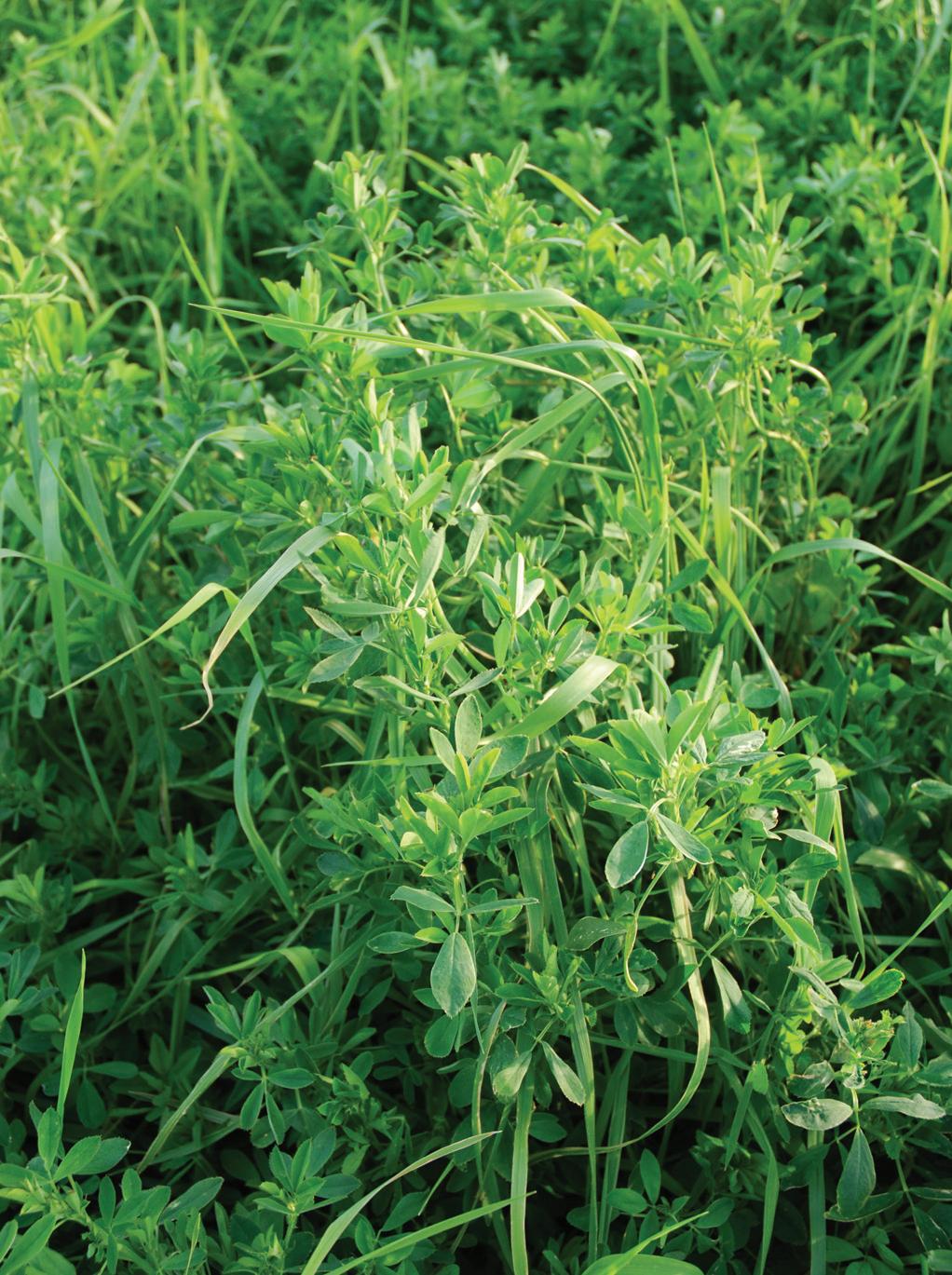
Recent trials by the Ontario Forage Crops Committee yielded some interesting results, including improved yield indices and some variation in disease and pest resistance. PHOTOS BY RALPH PEARCE
FORAGES AND FEED
for Evermore, 101 for FSG400LH, 108 for Marvel and 103 for WL348AP.
Pioneer Hi-Bred’s 54H11 has been tested in OFCC trials as a 2005 variety with a four-year composite yield index score of 104. This is a first-generation lodgingresistant variety that is now available for purchase in Canada.
Pickseed’s Vision, a new release that has not been entered into OFCC trials, placed first in Pickseed’s 2005 Eastern trials and fourth in Western trials that involved 48 varieties from various companies.
All the above varieties were found “highly resistant” to verticillium wilt, phytophthora root rot and bacterial wilt (except 54H11, which is “resistant” to bacterial wilt). However, all were found “susceptible” to potato leafhopper, except Quality Seeds Ltd. FSG400LH, which was found to be “highly resistant.” “This pest is an issue for some growers, especially in the Lake ErieNiagara area,” says Joel Bagg, forage specialist with OMAFRA. Newer varieties, all from 2007, also found “highly resistant” to the insects included TrailBlazer 4.0 (Pickseed and Pride Seeds), WL345LH (Growmark Inc.) and 53H92 (Pioneer Hi-Bred).
Bagg also points to aphanomyces root rot as a concern to forage growers.
“It’s caused by a fungus-like pathogen similar to phytophthora root rot, and considered a major cause of disease in alfalfa seedlings, particularly in wet soil conditions,” he says. Aphanomyces also attacks adult alfalfa plants and can dramatically reduce yield and vigour of established stands.
Bagg notes that it has been confirmed
in a widespread area in the Midwest and northeastern United States, and is likely underestimated as an alfalfa pathogen in Ontario. An OMAFRA survey was initiated in 2009 to determine the extent, geography and race (Race 1 or Race 2, with the latter being more virulent), but no results are available yet. Aphanomyces is managed by using resistant varieties. “Many varieties are resistant to Race 1,” says Bagg. “But far fewer are resistant to Race 2.”
Varieties 53V52 and WL348AP are both resistant to Race 2, which means they are also resistant to Race 1.
New findings
The Ontario Forage Council, a non-profit organization composed of producer associations, companies and other agribusiness interests, has funded many years of alfalfa research headed by Dr. Stephen Bowley, an associate professor in the Department of Plant Agriculture at the University of Guelph.
In their April 2009 OFC report, Bowley, graduate student Aaron Bowman and research technician Donna Hancock presented the results of three seasons of studying tolerance to machine traffic, tolerance to liquid manure application and stem physical characteristics.
The team found that maturity and stem diameter differed among all the varieties tested, but that herbage yield, maturity and stem diameter were not correlated. This means that producers for whom maturity and/or stem diameter is an issue in producing a product with certain characteristics, both management (harvest timing) and variety selection should
be considered.
The researchers also found two applications of 4500 gallon per acre liquid manure (applied in each of the first two study years) led to an increase in yield for all varieties. The average yield increase was 14.5 percent, with some varieties showing increases as high as 27.4 percent during the three-year experimental period. Manure application without aeration resulted in higher yields than aeration in combination with liquid manure. “For producers, this provides for two additional times of the year (late May/early June and mid-late July) for application or disposal of liquid manure for livestock farms,” the researchers note. They add, however, that although these application times may also cause less nutrient loss compared to late fall or late winter applications, “the impact of these applications of liquid manure on the nutritional composition of the feed and changes in the soil system also need to be assessed.”
Bowman and his team also found that in general, some varieties were very sensitive to machine traffic in terms of yield, while others were relatively unaffected by traffic.
For more information:
Ontario Forage Council: (see 2009 Bowley report under ‘Research’ section): www.ontarioforagecouncil.com
Recent Ontario Forage Crops Committee trials: www.plant.uoguelph.ca/performance_recommendations/ofcc/pdf/ofcc_performance.pdf
One of the topics researched in 2009 by the Ontario Forage Council was tolerance to machinery traffic.
Connect to a world of








When you deal with Cargill, you are connecting to a team of thousands of agri-business professionals, a vast network of hundreds of business partnerships and a world of countless opportunities.

When it comes to the business of farming, Cargill is dedicated to finding and delivering solutions that meet your needs.


Resistance an issue that must be addressed
Ignoring the potential will have farmers chasing technologies and accelerating resistance.
Some growing seasons bring the optimism of a new year, with the potential for high yields, low disease or pest pressure and rising commodity prices.
Then reality sets in.
In the US Mid-South, growers in Tennessee, Arkansas, Mississippi and Missouri have been forced to deal with the fact that resistance to herbicides, specifically glyphosate, is a problem across that district, and if they are to deal with it effectively, the time to act is now.
Herbicide resistance is a growing problem across all agricultural regions of North America. In Western Canada, kochia has been resistant to ALS inhibitors since the late 1980s. In Ontario, there are now eight different weed species that are resistant to multiple modes of action. And Tennessee saw the first incidence of glyphosate-resistant Canada fleabane (known as marestail in the US) in 2000, a trend that has since spread into Indiana, Ohio and points further north.
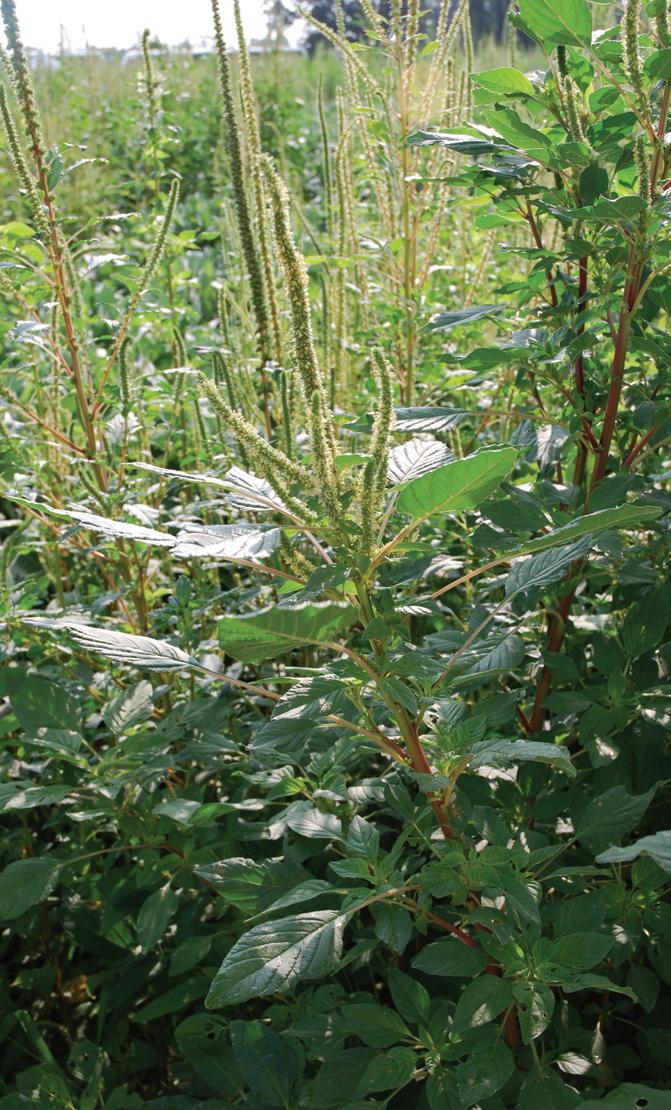
But it is the Mid-South region along the Mississippi River that has become a hallmark of sorts. In that part of the US, the primary crops are soybeans and cotton, and almost all of the varieties grown in that region are glyphosate tolerant (Roundup Ready). The resulting reliance on that technology has given root to a biotype of Palmer amaranth (Palmer pigweed) that is now resistant to glyphosate. Reliance on Roundup Ready technology has grown to the point where no amount of glyphosate is sufficient to kill various weed species. That leaves growers to rely on frequent spray applications with other, less-effective herbicides, as well as manual labour to physically remove the plants. In fact, one local farmer spent $250 per acre on weed control in 2009, including manually cutting the weeds out of the field.
Glyphosate still a viable option
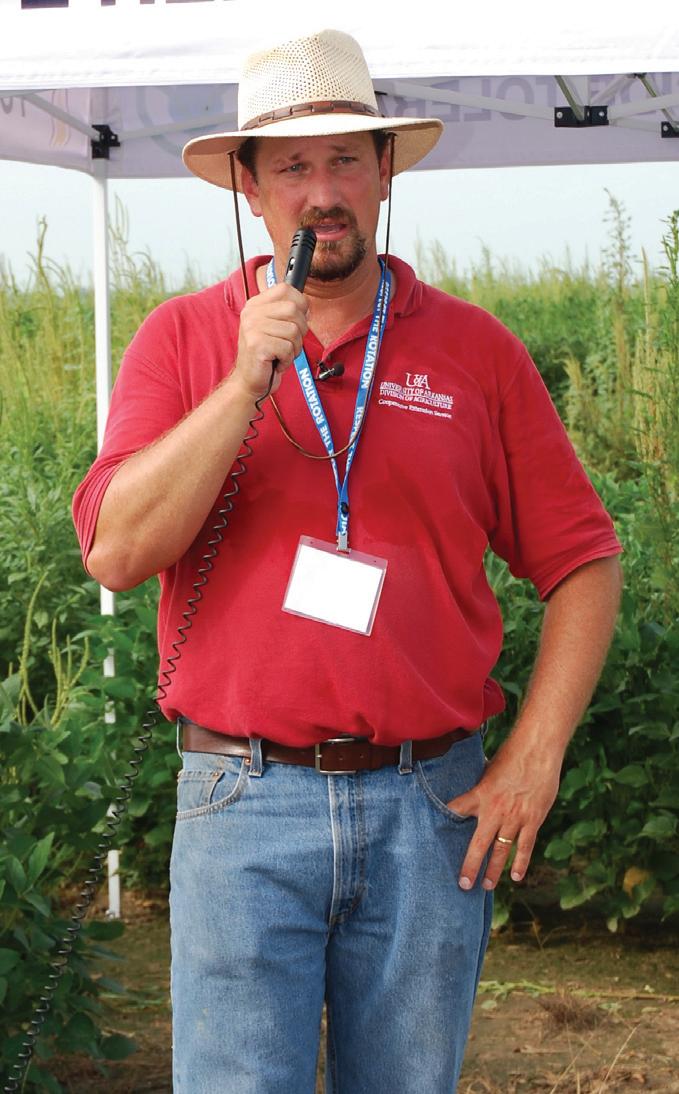
In July 2010, Bayer CropScience hosted the “Respect the Rotation” conference and tour in Memphis, Tennessee. The
by Ralph Pearce
gathering was a follow-up to the company’s Pan-American conference on weed resistance, held in January 2010 in Miami, Florida. The three-day event in Tennessee included presentations, field tours and one-on-one sessions with researchers and extension personnel. The main premise behind the conference was to promote integrated weed management principles while promoting the company’s new LibertyLink soybean system.
The last thing that organizers and speakers wanted to do was criticize or blame anyone for allowing the development of glyphosate resistance. Presenters during the field tours and press conferences repeatedly praised glyphosate, calling it revolutionary and a “one in 100-year event.” Yet the field tour offered a contrast of cautionary tales of what can happen with the extent of glyphosate resistance that has spread across the region, together with a sense of optimism that acknowledges the problem of weed resistance as a first step towards dealing with the issue.
The genesis of the problem
According to Dr. Jason Norsworthy, an associate professor with the University of Arkansas, the first sign of glyphosate resistance in the region was detected in a soybean field in the northeastern part of the state in 2005. It is now to the point where Norsworthy says it is widespread across Arkansas, with the majority of Palmer amaranth in any field being resistant to glyphosate. “You’re not necessarily going to have Palmer amaranth in every acre, and basically, what we’re telling our farmers is, if you learn you have Palmer amaranth, you’d better treat it as if it’s resistant,” says Norsworthy, who was also part of the field tour, held just west of Memphis, near Widener, Arkansas. “Let’s say you make an application on six- to eight-inch Palmer amaranth, and you come back seven to 14 days later and realize that it was resistant. Then you’re looking at an 18- to 24-inch Palmer amaranth. And we really don’t have any option for controlling that.”
The reason for the virtual explosion of Palmer amaranth, adds Norsthworthy, is a blend of factors. Part of it is the relatively aggressive and prolific nature of the plant itself; one plant head can produce as many as half a million seeds. Another contributor is the rotation pattern for the two dominant crops, soybeans and cotton. In Arkansas, there are 1.5 million acres of rice rotated with 3.5 million acres of soybeans, yet only about 500,000 acres of cotton. Most of those cotton acres have been monocultures for the past 30 to 35 years. To add to the challenge, between 1996 and 2000, Roundup Ready cotton became the technology of choice. “It’s quite obvious that we have soybean acreage that is not rotated with any other crop,” notes Norsworthy, adding that some regions are not conducive to growing rice or cotton. “So farmers are going to roll the dice and try their best at getting a crop of soybeans, and these fields have had 10 to 15 years of Roundup Ready soybeans.”
Irrigation of rice fields, poorly managed levies (where Palmer amaranth often grows unchecked), frequent flooding along the Mississippi River basin, and the spreading of seed through cotton gin trash have exacerbated the issue further.
In the US Mid-South region, Palmer pigweed can grow to a height of four to five feet. ALL PHOTOS BY RALPH PEARCE


Order now andyoucould winan Arctic Cat ATV*

Compare your production cost with
AgExpert Analyst accounting software
Take the guesswork out of selling You can document historical prices and truly understand your expenses With AgExpert Analyst, you’ll see your profit margin and know when to capitalize. Find out for yourself. Use the industry standard for ag accounting software 1- 800 -66 7-7893 | www.fcc



Although the US Midwest and southern Canada are not seeing the same spread and degree of glyphosate resistance in the short term, Norsworthy believes it will increase over time.
Mindset is also a factor
Another of the contributors to this situation is the continued belief that the chemical industry will be there to bail out farmers, regardless of reliance, or in this case, over-reliance, on glyphosateresistant technologies. By all accounts, glyphosate’s development dramatically changed the whole approach to weed management, with a corresponding sense of trust that scientists and researchers will find something as good as glyphosate, despite repeated assurances that no such “silver bullet” is in the pipeline. “We’ve never faced losing a technology that’s revolutionized farming like this one has, and the LibertyLink technology is very good in a lot of ways,” explains Ford Baldwin, a weed management consultant with Riceland, a farmer co-operative based in Stuttgart, Arkansas. “But we’ve abused the Roundup Ready technology to the point it’s going to force us to abuse the







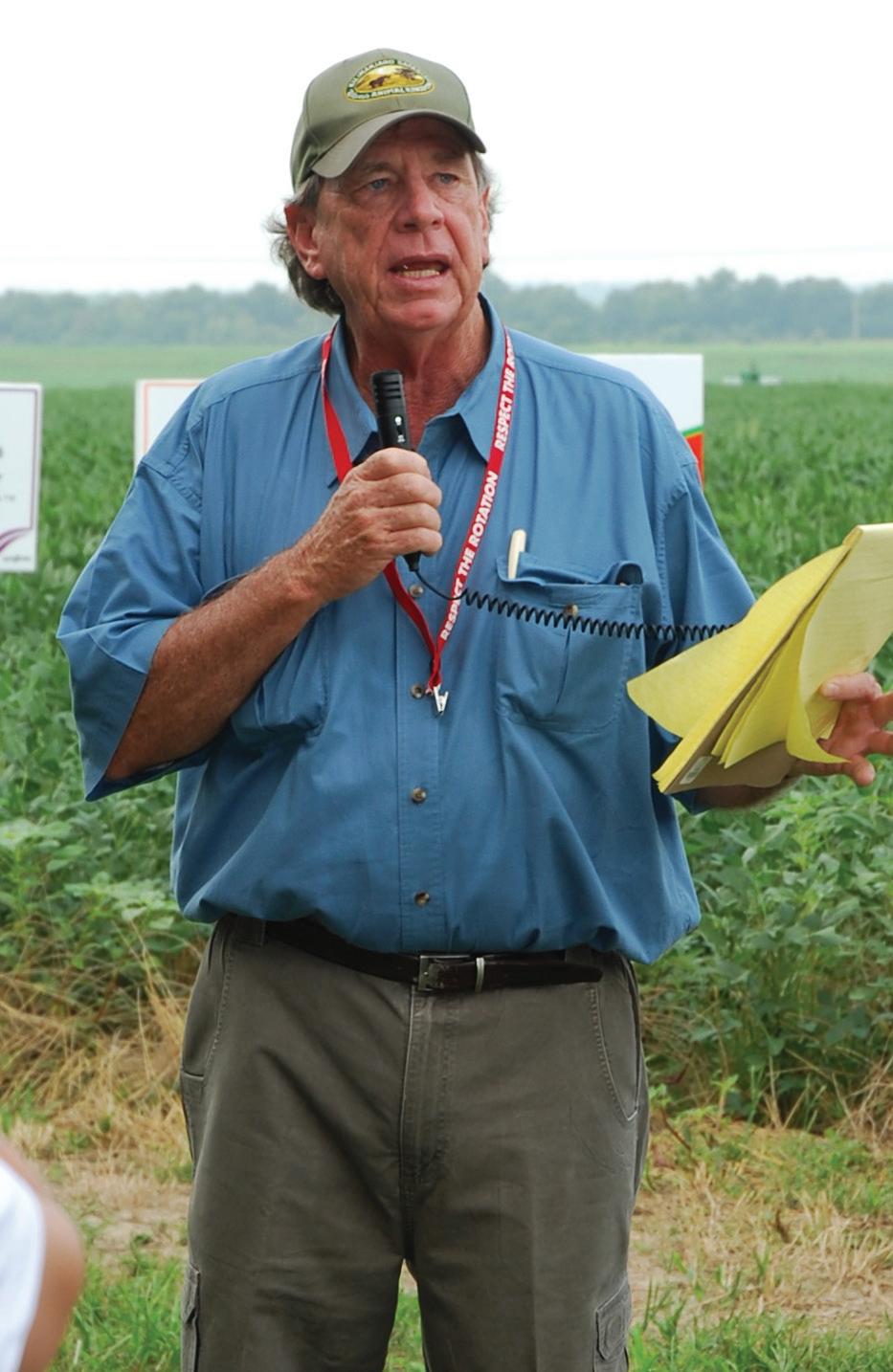
Although growers in Canada have multiple technologies to guard against resistance, weed management consultant Ford Baldwin warns against becoming complacent and relying too much on one technology.







LibertyLink system, and so we are just going to start chasing traits now instead of chasing herbicide modes of action.”
During the winter of 2004-2005, Baldwin wrote continuously of the impending “train wreck” of Roundup Ready resistance, and while he concedes he might have done more to inform farmers and the industry, he also points out that people have to be willing to listen. “Some of that complacency’s wearing off,” says Baldwin, who was also with the recent tour in Widener, Arkansas. “The difference between our farmer awareness from 2009 to 2010 has been a huge step forward, and I’m hoping that we’ll get the snowball effect now, and they are finally going to see that ‘Hey, we’ve got to do something, we’ve got to listen, we can’t depend on somebody now to swoop in with a magic bullet,’ because that’s not going to happen.”
Canadian growers have time, for now There is little room for debate when the topic of herbicide-resistant weeds is raised, even in Canada. Despite colder climates (which Norsworthy contends is not as much of a limiting factor), it is the longer rotations together with either separation of technologies or rotation of different technologies that has done more to delay the onset of resistance. That growers in Eastern Canada can interrupt their Roundup Ready reliance with wheat or a forage crop is a tremendous advantage, and farmers in Western Canada can seed wheat and rotate four different canola technologies (InVigor/LibertyLink, Roundup, Nexera and Clearfield) to break the cycle. “We need to diversify the system as much as we can, and Canada is a good example of that,” says Dr. Stephen Powles, director of the Herbicide Resistance Initiative at the University of
NK ® delivers real solutions for real growers.
The NK brand has always stood for innovation – from the first Bt corn to the latest Genuity™ Roundup Ready 2 Yield® soybeans, and NK Agrisure Viptera™ that manages the Multi-Pest Complex™. We’re committed to bringing you real innovation that helps you grow.
WEED MANAGEMENT
Western Australia, and considered one of the foremost authorities on the subject of herbicide resistance.
Reliance on glyphosate has led to an inability to control Palmer amaranth in the US Mid-South, but Powles posed one particular question during the field tour at Widener: If we put our reliance in LibertyLink now, what is to prevent a similar gathering in the same field, five years from now, with everyone asking, “How do we counter resistance to LibertyLink?”
“Thus far, there are no examples where Roundup Ready resistance is evolving on the Prairies, or if there are, they‘re very few. And why is that? Because there’s diversity in the system, and glyphosate is only being used in part of the system.”
As diverse a cropping system as it may be, some, like Mike Cowbrough, maintain that resistance is only a matter of time, thus the need for vigilance now.
As the weed management lead with the Ontario Ministry of Agriculture, Food and Rural Affairs, Cowbrough is author of and contributor to several factsheets and circulars detailing the “obnoxious eight” weeds in Ontario that have shown resistance to multiple modes of actions.
“Weeds are incredibly adaptive and they’ve lasted millions of years, so it’s foolish of us to think that we can harness and control them,” notes Cowbrough. “We’ve been trying to do that in agriculture for hundreds of years, and we’re unsuccessful.”
On the plus side, however, Cowbrough points to Ontario researchers such as Drs. Peter Sikkema, Clarence Swanton and Francois Tardiff, all from the University of Guelph, whom he says are very responsive to the onset of resistance.
“Look at giant ragweed, for example. Peter’s been looking at that for
two or three years, and eventually, it will become more widespread,” details Cowbrough. “When that does happen, do we know how to manage it?
If you’re complacent, then you don’t have a chance, but we also have a very good culture that exists in the province, where agronomists and growers are sharing issues and are really helpful in determining how we move forward.”
In the final analysis, it is not the technology itself that provides the answers. Kate Barrie, technical support representative with Bayer CropScience in Guelph, Ontario, acknowledges that LibertyLink is part of the answer, but so too is partnering with the best people in an effort to get the necessary information into the hands of farmers. “A movement or an event like “Respect the Rotation” is a tool and an idea to help growers be aware of what’s going on,” she says. “Saying ‘Respect the Rotation’ over and over isn’t going to get guys to change from Roundup to something else; that’s not the point. The point is to educate and let them know that it could happen if they’re not aware.”











COMBINES – MACHINERY MANAGER
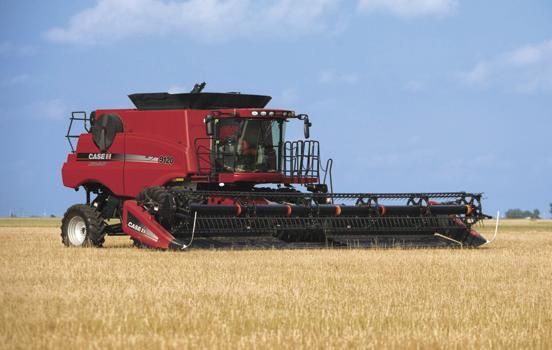
For more than 30 years, farmers have trusted Case IH, the inventor of single-rotor technology, to keep harvesting simple. Available in every combine class, Axial-Flow technology continues to meet the demands of every operation. Case IH Axial-Flow models include two Class VII machines – the 7088 and the redesigned 7120 – as well as the Axial-Flow 9120 harvesting behemoth.
The 20 Series combines are designed for larger operators looking for high-end features like CVT drives and rotor-reversing. The 88 Series models are redesigned with more horsepower and grain tank capacity. Both series have a similar, modern family look, with interchangeable headers.
Regardless of series, size or class, six core principles drive every Axial-Flow combine:
• Simplicity – Fewer moving parts for better reliability and easy service
• Grain quality – Gentle grain-on-grain threshing minimizes grain damage
• Grain savings – Through thorough threshing and efficient separation
• Crop adaptability – Harvests more than 80 types of grains
• Matched capacity – Optimizes crop flow and productivity
• Resale value – Impressive resale value maximizes investment

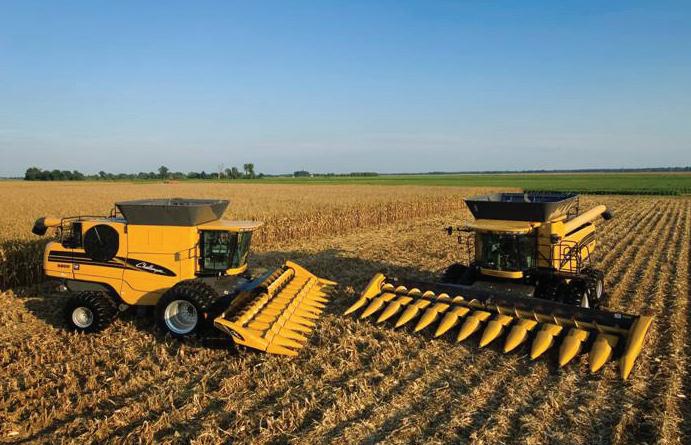
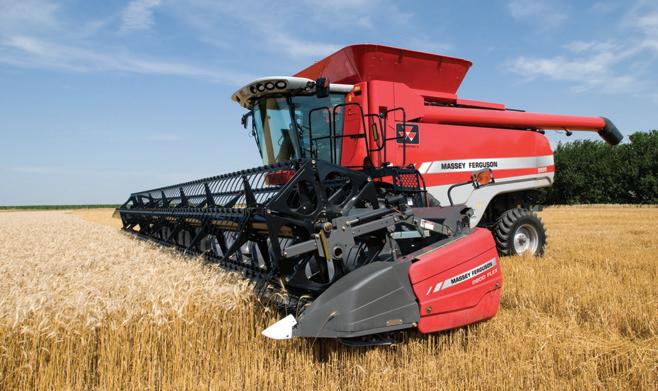
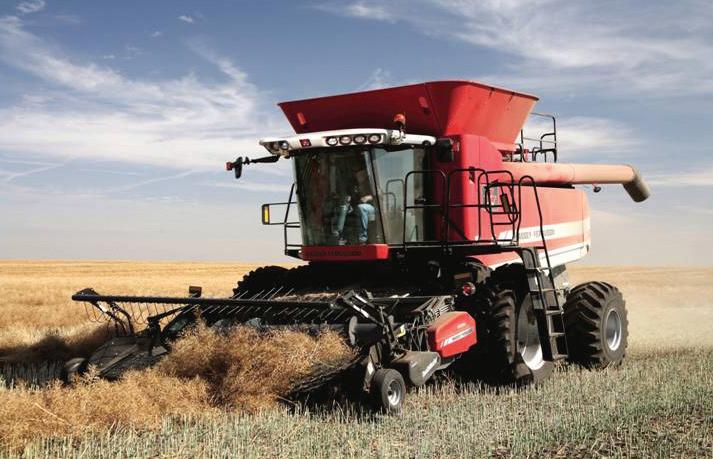
All from AGCO, the Massey Ferguson 9005, Gleaner A6 and Challenger 600B series axial combines share the same platform and many of the same features across brands and models.
The Class VI machines feature a 44-inch feederhouse, while the Class VII and VIII machines have a 55-inch feederhouse. The exclusive helical-vane feed conveyor receives the crop from the feederhouse and feeds the crop centrally from the bottom while depositing any stones into the rock trap.
The Class VI and VII machines feature a 140-inch-by-27.5-inch rotor, while the Class VIII machines have a 140-inch-by-31.5-inch rotor. The long rotor is gentler during threshing and reduces grain damage.
The in-line cleaning system eliminates any need for auger beds or discharge beaters. The cleaning system incorporates grain pan technology with opposing shoe motion to create a simple and reliable system, which provides a nice, clean grain sample. The new perforated cascade pan provides a pneumatic cleaning area that is 14 percent larger, with additional material-handling capacity within the cleaning system in heavy load situations. Fan speed has been increased by 10 percent, providing 14 percent more air volume to the cleaning shoe. Optional electric chaffer and sieve adjustments can be made on the ground from the rear left side of the combine or by using the C2000 terminal while seated in the cab.
A 300-bushel grain tank is standard on the Class VI and VII machines. Class VII machines can be equipped with an optional 350-bushel grain tank while that option is standard equipment on the Class VIII machine. Both sizes can be equipped with a powerfold option that provides a quick and simple system to go between transport and work modes. The “Direct High Volume” unloading system provides an industryleading 4.5-bushel-per-second peak unloading rate and averages 4.0 bushels per second through the entire unloading cycle. The clean grain elevator system features a 12-inch-diameter bin-fill auger that provides more capacity for high-yielding conditions.
Go to www.machinerymanager.ca for further specifications and links to combine manufacturers.
COMBINES – MACHINERY MANAGER




COMBINES – MACHINERY MANAGER

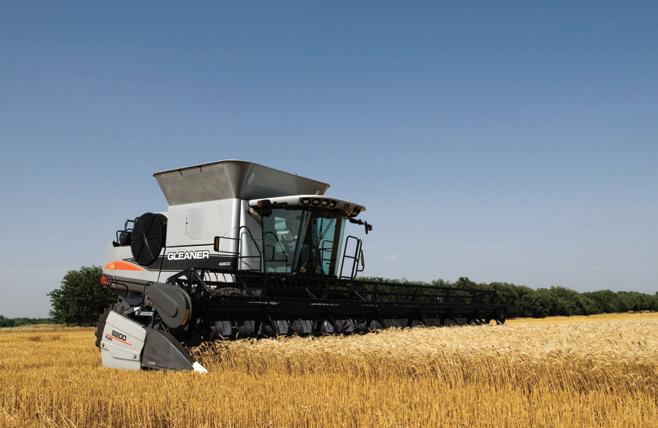
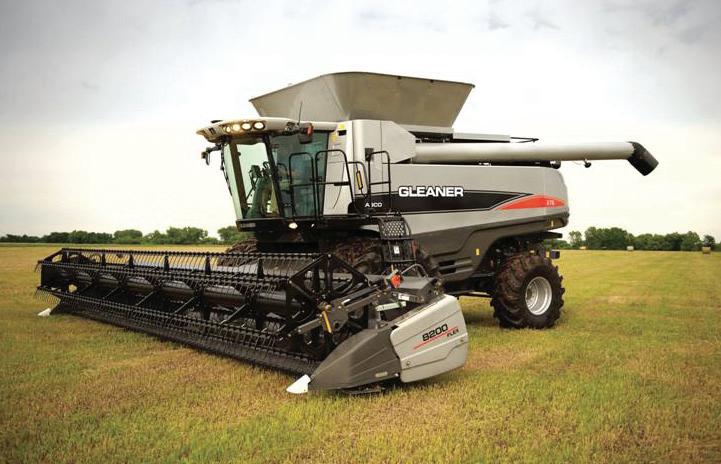
New from AGCO is the Gleaner Super 7 Series transverse rotor combine. The next generation of transverse machines from Gleaner, these two new supersized models package proven technologies with innovations to deliver added harvest capacity, capability and efficiency.
The first fully Tier IV interim-compliant combine on the market, the S7 Series is powered by the dependable AGCO SISU POWER 8.4 CWA-4V liquid-cooled, turbocharged engine, featuring AGCO’s exclusive e3 SCR clean-air technology.
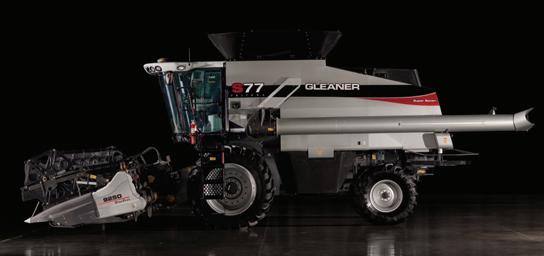

More fuel efficient at higher horsepower ratings than previous models with deep power reserves, the Model S77 delivers 370 hp at 2,100 rpm with a power bulge at 1,950 rpm that jumps to 398 hp, and the Model S67 with 314 hp at 2,100 rpm with a power bulge of 344 hp at 1,950 rpm.
These Class VI and Class VII transverse combines come with the industry’s largest standard 330-bushel grain bin on the S77, and an optional 390-bushel grain bin available on the S67 and S77 models. Gleaner’s “Direct Flow” two-auger unloader design features a 12-inch grain bin cross auger that feeds a 14-inch unloader auger to deliver an average unloading rate of 4.0 bushels per second.
COMBINES – MACHINERY MANAGER
Built upon the success of the 500 series, CLAAS proudly introduces the LEXION 700 series – 10 new models ranging from Class VI to the newest Class X.
All rotary LEXION combines contain the award-winning APS HYBRID SYSTEM, joining the Accelerated PreSeparation (APS) threshing system and the ROTO PLUS separation system, to form the most productive threshing and separation system available. In addition to faster hydraulics and electrics, the LEXION 700 series features a new cab, offering unmatched freedom of movement, controls that move with the operators’ actions and increased visibility with the sleek open view design to better see the header and returns.
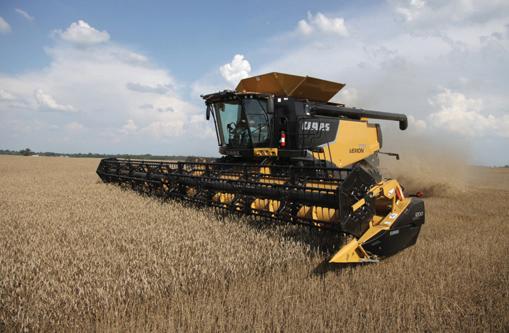

The new LEXION can be equipped with the next generation of TERRA TRAC, enabling growers to get from field to field faster than any other track combine, up to 25 mph (40 km/h) 750TT only. All components (drive wheel, idler wheel and bogie wheels) are fully and independently suspended, reducing shocks to the operator and combine.
Couple many additional industry-exclusive features with new options in residue management and all new heads, and producers have all that they need to reach their highest levels of efficiency.
595/590R585R/580R575R/570R560R570
John Deere combines are available in two harvesting separator configurations: T670 (tangential-tine separator) and STS (single-tine separator) combines.
The 70 Series STS combines provide outstanding rotary threshing and separating performance and capacity in all crops and conditions. The unique single-tine separator and exclusive TriStream crop-flow design provide superior material-handling performance in all conditions and higher levels of crop-harvesting capacity, as well as excellent grain quality. Four models ranging from Class V to Class VIII capacity size are available to match customers’ individual harvesting needs.
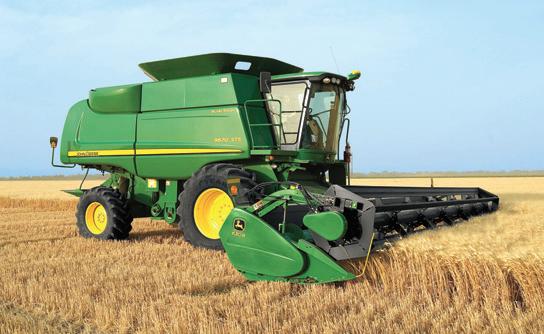
The T670 provides customers with high-quality straw residue while delivering the highest productivity capable of a walker combine. The T670 is sized to deliver Class VII size combine capacity specifically geared to small-grain harvesting.

All 70 Series combines have built-in performance, safety, service and reliability features to make harvesting easier and more profitable for the customer.
John Deere 70 Series combines deliver performance that endures through advanced integrated technology, distinctive quality and reliability, and definitive performance.
From a larger header that maximizes harvesting operations to combine enhancements that increase performance, customers will appreciate the 70 Series STS combines’ ability to get more done, in less time with less effort.
COMBINES – MACHINERY MANAGER
New Holland’s CX8000 Super Conventional combines feature the industry’s fastest unloading rate and a cab that provides superior comfort and control. The CX8000 harvesting system’s massive capacity includes unique threshing and separating systems. Nearly all the grain is separated by a patented rotary separator before it is delivered to the straw walkers. The rotary separator removes 50 to 70 percent of the grain passing over the cylinder/concave before it moves to the straw walkers. Two speeds and two clearance settings allow the operator to adjust to changing conditions and crops.
A state-of-the-art Harvest Suite cab features an industry-leading 110 cubic feet of interior room for unrivalled control and comfort, and a clear view to the headers and stubble.
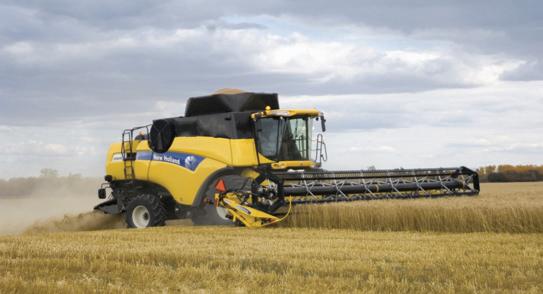

New Holland CR9000 Twin Rotor combines deliver the industry’s largest harvesting capacity along with impressive grain quality. The CR9090 model is the industry’s largest combine, delivering the most horsepower and capacity in North America. The exclusive Twin Rotor design generates more centrifugal force than any other rotary combine for faster separation, higher grain quality, larger capacity and more even grain distribution on the cleaning system.
With 10,075 square inches of cleaning area and the SLS self-levelling cleaning system, CR9000 Series combines deliver incredible cleaning efficiency on flat ground and on slopes of up to 15 percent. A fast 3.2 bushels per second unloading rate and 21- or 24-foot unloading augers accommodate the largest headers to save valuable time.
A best-in-class feeder/header reverser system operates in forward or reverse, independent of the threshing unit, to control slug feeding into the rotors. CR9000 Twin Rotor seriesCX8000 Super Conventional CR9040CR9060CR9065CR9070CR9080CR9090CX8070CX8080CX8090
Total threshing/separating area (sq. in.) 3,766 3,7663,7664,7434,7434,74311,08211,08211,082
Total cleaning sieve area under fan control (sq. in.)








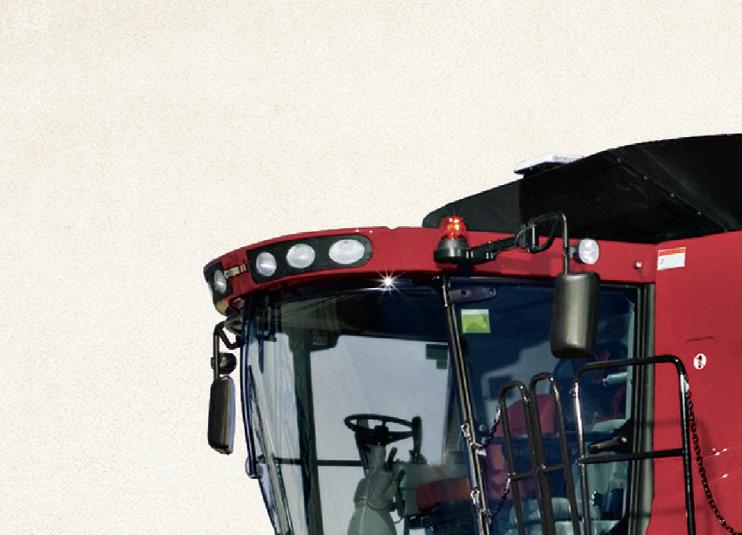
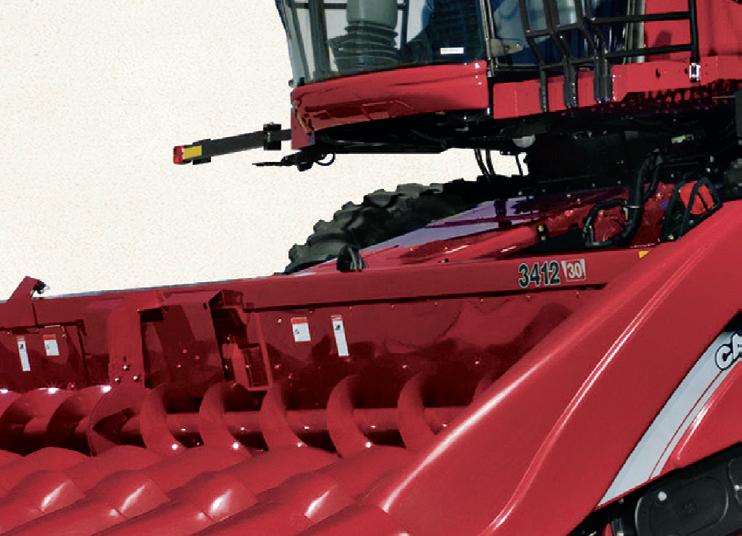

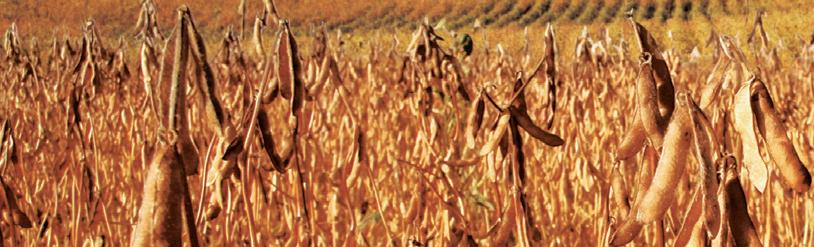





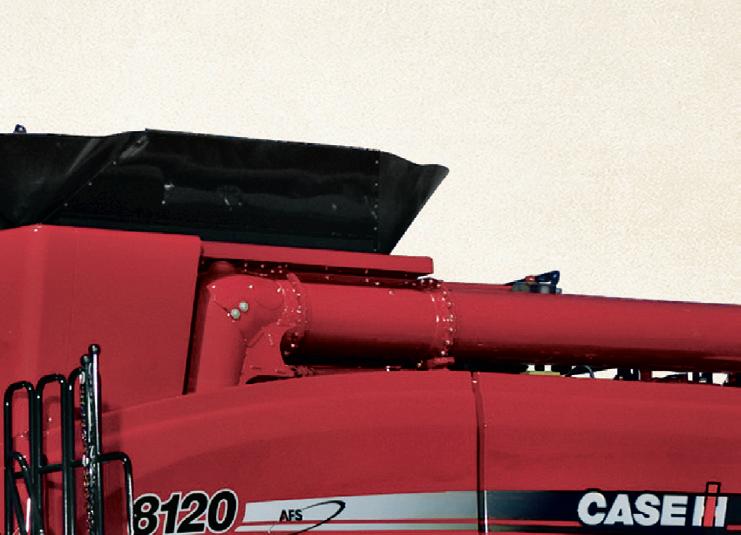
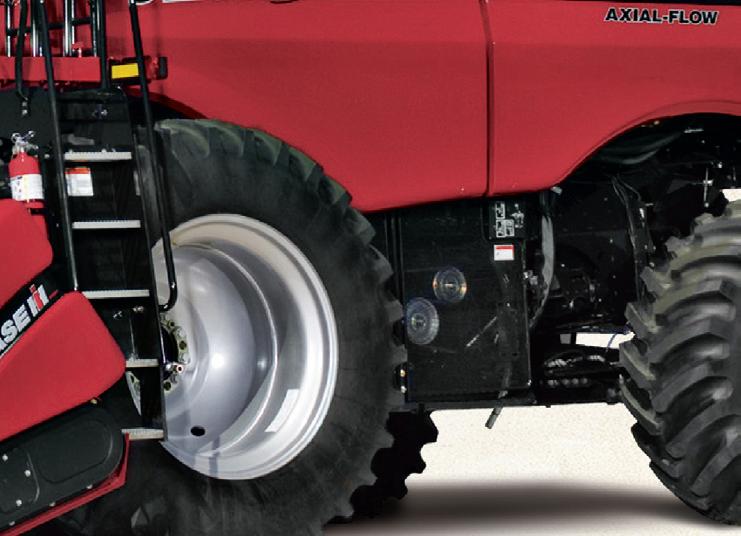

At Case IH, we know that successful farming is about being ready, with the right equipment, the right technology, the right support. And we’re helping you be ready for next season in a big way. At the Case IH Big Red Event going on now, pre-order new 2011 Steiger ® and Magnum™ tractors, Axial-Flow ® combines and Patriot® sprayers at some of the biggest savings of the year. And every remaining 2010 model is priced right and ready to go from the lot to your farm. Like we said–it’s big.