The latest in soybean varieties for Eastern Canada.
Check out the latest corn varieties available in Eastern Canada. PHOTO CONTEST
The sights of the season
The Top Crop Manager photo contest brought us snaps from across the country, from planting to harvest. You’re looking good, Canada.
PESTS AND DISEASES
A nationwide study is giving us a better handle on current and emerging soybean root diseases.
A project examines the effects of different practices on grain quality.
CORN CROP
Corn ear moulds such as Gibberella and their corresponding mycotoxins occur every year in Ontario. These mycotoxins, particularly deoxynivalenol (DON), can be disruptive when fed to livestock, especially hogs. The 2024 survey found 94 per cent of samples tested low (below 2.00 ppm) for DON, and is one of the lowest DON level years compared to the 10-year average.
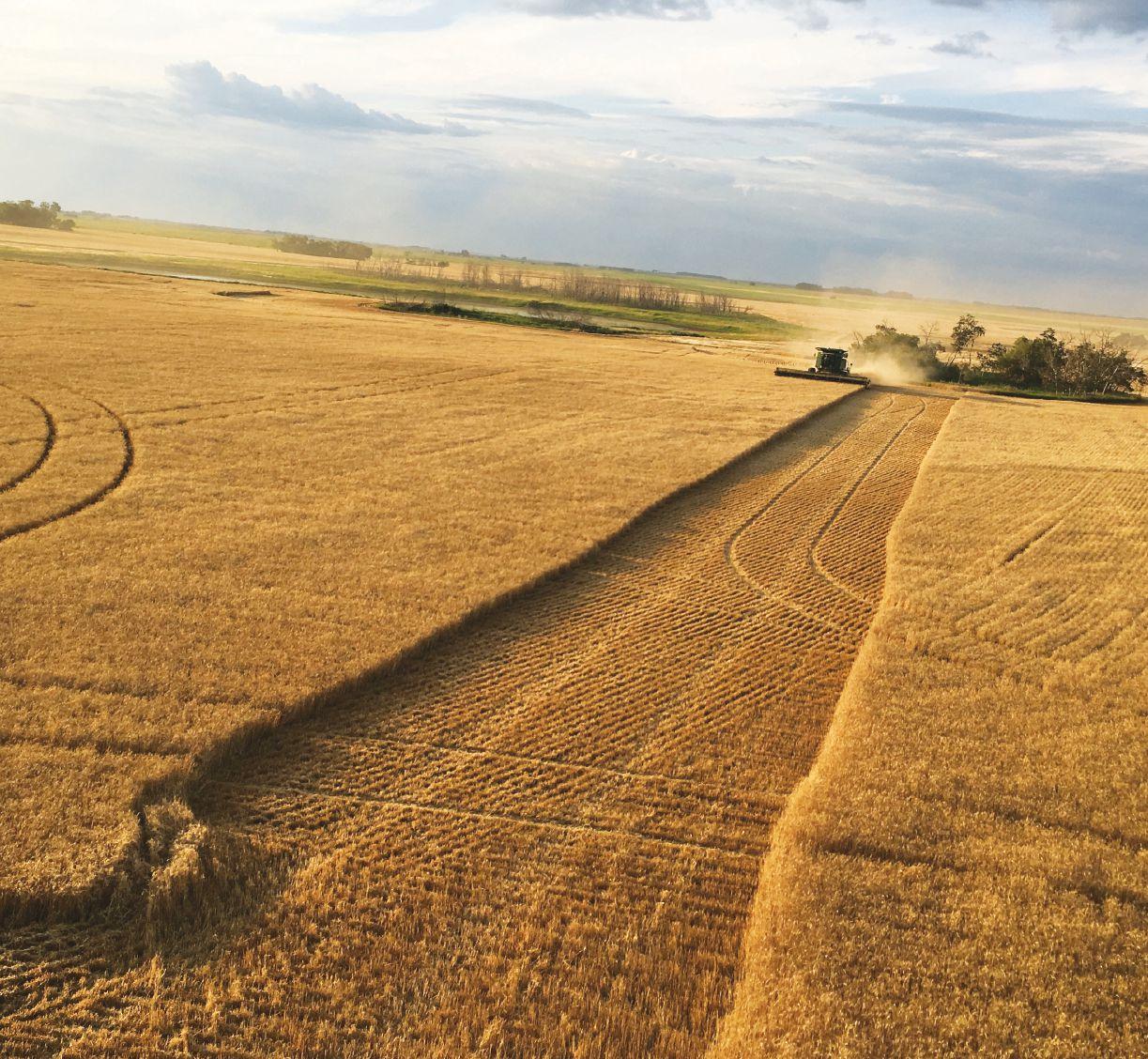
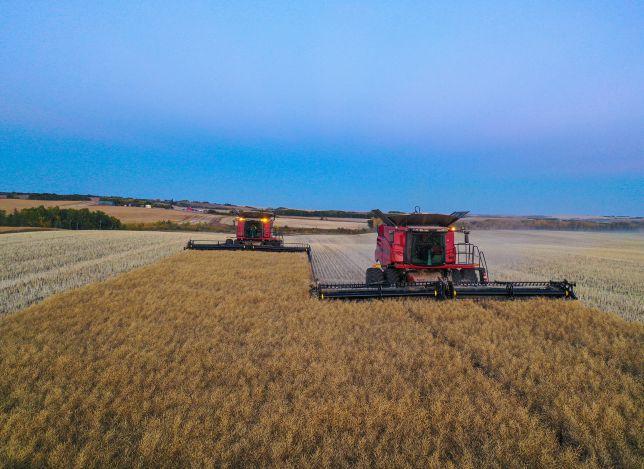
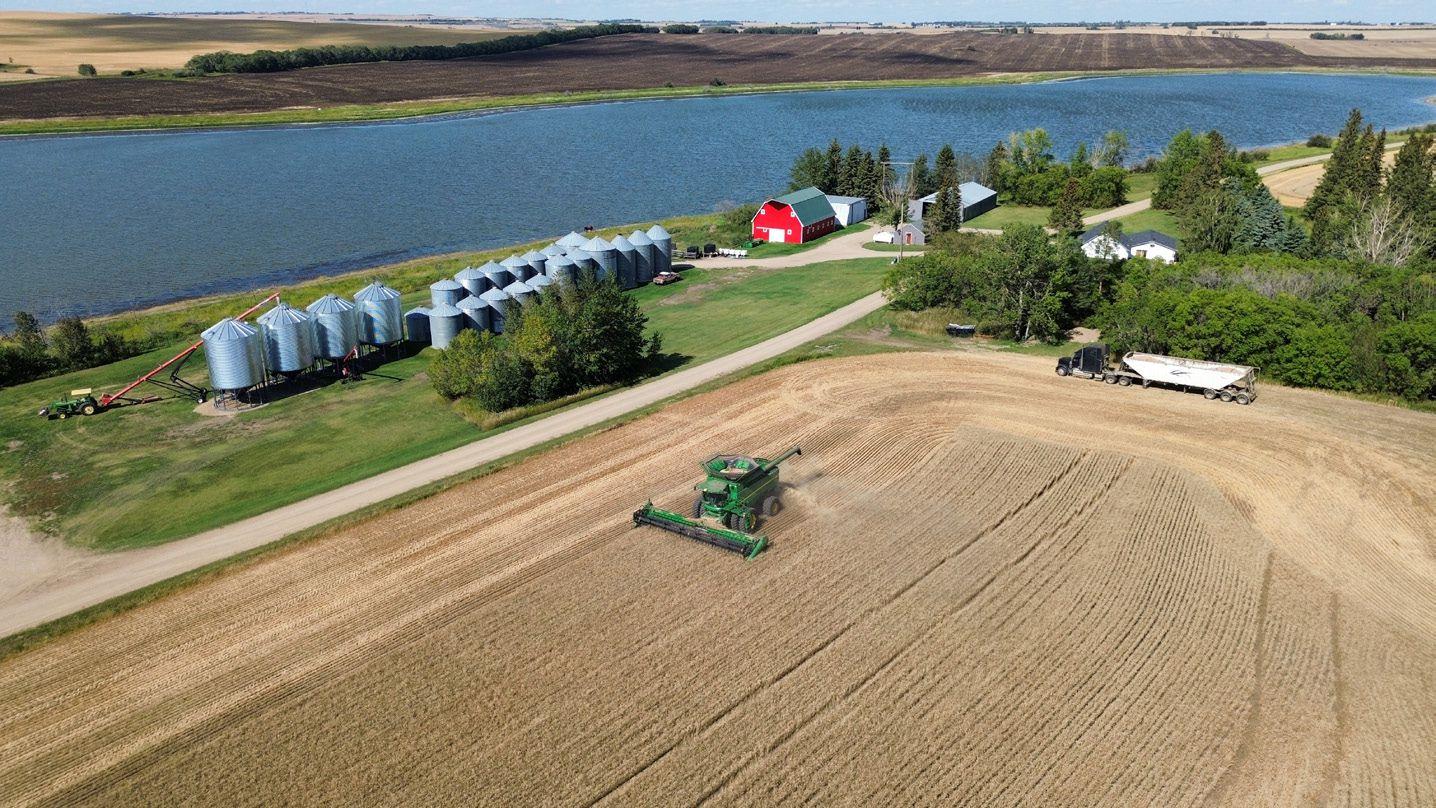
This season’s wheat harvest. Photo courtesy of Robin Nell.
by Alex Barnard
Rounding out the year
Temperatures are dropping, harvest is complete (or, if not, hopefully nearing completion), and Christmas decorations have been in stores for a couple weeks already – as the growing season wraps up, our magazine’s season is starting up.
The past five years have been tumultuous, to say the least, and we’ve seen a lot of change and pivots happen quickly in response to extreme weather conditions, national and international events, and – of course – the COVID-19 pandemic. With the end of 2024 approaching rapidly, it seems a good time to reflect on the challenges we’ve faced and how we’ve overcome them – or simply adjusted to them, as the case may be.
This summer, we ran our first photo contest in five years. From May to September, growers and other folks involved with Canadian agriculture sent in photos of the rhythms and sights of their growing season. We’ve received snapshots of farms from the Prairies and Ontario, and even a couple from Italy! (Buongiorno to our Italian readers!) It’s such a treat to see the season as you do. Thank you for sharing a window into your world with me and our other readers.
I must admit, this is one of my favourite projects our magazines do. There’s something so energizing about checking my email and seeing a field at harvest, or the Northern Lights, or a Prairie sunrise. It makes me feel connected to the industry and our readers in a way that can only be achieved when the communication goes both ways. It’s a good reminder for me to seek out the knowledge and viewpoints of readers and the industry more broadly, as that’s the best way to learn.
So, I’ll take this opportunity to say: If there’s something you want to see us cover, or think we should know, drop me a line. I want to know what’s important to you and what I might be missing. My contact information is in the sidebar. If there’s anything I’ve learned over the years, it’s that if you have a question or a concern, you’re almost certainly not the only one. Sometimes it takes being the brave person to broach the topic in order to improve the understanding of everyone else, too.
We also brought back our New Varieties section for this issue. It’s been many years since we last featured the new seed varieties available to producers in Eastern Canada, so be sure to check out what’s new in soybean and corn varieties for the 2025 season.
Since this is the last issue of 2024, I’ll take this time to wish you a very merry Christmas or happy holiday – as fits your celebrations – and a wonderful new year. May 2025 bring us all fair weather, bountiful crops, and the warmth of good friends and family.
THE HERBICIDE EQUIVALENT OF A SNEAK ATTACK.
Introducing residual control for corn that’s unlike any other.
This is no ordinary residual. SurtainTM herbicide is a first-of-its-kind formulation that unleashes a sneak attack on broadleaf and grassy weeds in corn. Applied from pre- to early post-emerge, this powerful combination of Group 14 and 15 chemistry offers residual endurance, making Surtain an excellent tank-mix partner. And when it strikes, emerging weeds won’t know what hit them. Visit agsolutions.ca/surtain to learn more.
What’s new in soybeans?
The latest in soybean varieties for Eastern Canada.
BY ALEX BARNARD
Which soybeans will best suit your field conditions, climate and growing season length? We at Top Crop Manager have gathered a list of soybean varieties that will be available for the 2025 growing season. All information comes from the respective seed companies.
BREVANT
B054EE has excellent yield potential, PI88788 soybean cyst nematode resistance and above-average white mould tolerance; an Enlist E3 variety.
B144EE is an Enlist E3 variety with PI88788 SCN resistance and very good harvest standability.
B214EE is an Enlist E3 variety with Peking SCN resistance. Strong field emergence and agronomics.
MAIZEX
Hulk R2X is a Roundup Ready 2 Xtend variety with a 00.8 RM. It is a tall bushy plant with great white mould tolerance, great Phytophthora field tolerance, and excellent first-pod height for ease of harvest.
Titan XF is an XtendFlex variety with a 2.4 RM. It offers strong top-end yield performance and features excellent white mould tolerance and great Phytophthora field tolerance.
Prosper XF is an XtendFlex variety and a 2.7 RM. It offers top-end yield performance and features excellent tolerance to sudden death syndrome (SDS) and great white mould tolerance.
Emerald E3 is an Enlist E3 variety with a 3.2 RM. It is a big bushy plant with excellent standability and a strong disease package, with excellent frogeye tolerance. It offers excellent performance across soil types.
Suga is a conventional variety with a 1.7 RM. It has excellent yield
potential across soil types and features excellent tolerance to white mould, as well as great standability that keeps its height on tougher soils. It is an I.P. variety offered through the SojaCan network, of which Maizex is a partner.
PIONEER
P003Z08E is an Enlist E3 soybean (2350 CHU) with strong standability and excellent lodging rating. Great yield potential.
P004Z87E is an Enlist E3 soybean (2375 CHU) with above-average tolerance to white mould. Good Phytophthora field tolerance.
P006Z63E is an Enlist E3 soybean (2425 CHU) with outstanding tolerance to white mould. Excellent harvest standability.
P01Z13E is an Enlist E3 soybean (2550 CHU) with above-average tolerance to white mould. Good Phytophthora field tolerance with the 1k gene, which makes this a good option for poorly drained soils.
P05Z60E is a mid-group 0 Enlist E3 soybean (2650 CHU) with SCN resistance and very good tolerance to white mould. Good Phytophthora field tolerance and average iron deficiency chlorosis.
P06Z90E is an Enlist E3 soybean (2675 CHU) with great yield potential. Very good Phytophthora field tolerance with the 1k gene, which makes this a good option for poorly drained soils. Above average white mould tolerance and very tolerant to brown stem rot.
P09Z79E is an Enlist E3 soybean (2750 CHU) with great yield potential and outstanding tolerance to white mould. Good harvest standability.
P11Z72E is an Enlist E3 soybean (2800 CHU); an
Photo courtesy of Bruce Barker.
early group 1 leader variety with Peking SCN resistance . Very good tolerance to white mould and brown stem rot. Good Phytophthora field tolerance.
P13Z28E is an Enlist E3 soybean (2850 CHU) with a solid agronomic package and increased yields. Provides very good tolerance to iron deficiency chlorosis and white mould. Nice plant height and wider canopy width
P17Z39E is an Enlist E3 soybean (2950 CHU); a yield leader with Peking SCN resistance and strong SDS tolerance Above-average white mould tolerance. Larger plant stature with average plant height and wider canopy width.
P18Z01E is an Enlist E3 soybean (2975 CHU) featuring Peking SCN resistance coupled with above-average white mould tolerance. Nice plant stature with average plant height with good canopy closure. Outstanding SDS tolerance.
P21Z88E is an Enlist E3 soybean (3050 CHU); an early group II Leader with tremendous yield potential and Peking SCN resistance. Robust plant type. Above-average white mould tolerance and very good SDS tolerance.
P23Z58E is an Enlist E3 soybean (3100 CHU); an early group II variety with Peking SCN resistance and outstanding standability at harvest. Very good iron deficiency chlorosis and above-average white mould tolerance
P26Z78E is an Enlist E3 soybean (3175 CHU); a broadly adapted variety with outstanding harvest standability. Excellent yield potential with very good iron deficiency chlorosis tolerance and above-average white mould tolerance.
P28Z30E is an Enlist E3 soybean (3225 CHU) with above-average white mould tolerance and exceptional harvest standability, which make this variety a great choice for high yield environments Widely adapted leader with very good tolerance to iron deficiency chlorosis, brown stem rot, SDS and charcoal rot.
P28Z89E is an Enlist E3 soybean (3225 CHU); a widely adapted leader. Offensive Group 2 variety with Peking SCN
CONTINUED ON PAGE 13
READY, GO, SET.
Plant when you’re ready with PROTIVATE™
Ready with essential nutrients straight out of the planter box, PROTIVATE is a talc replacement that makes early-season planting a go. Maximize emergence and set your season up for more success from the start.
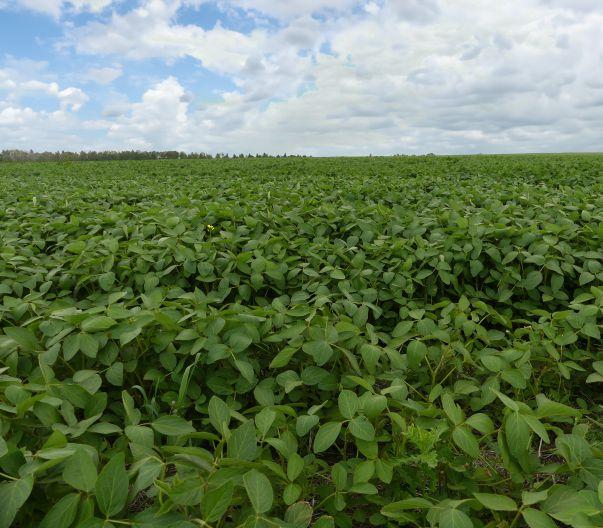
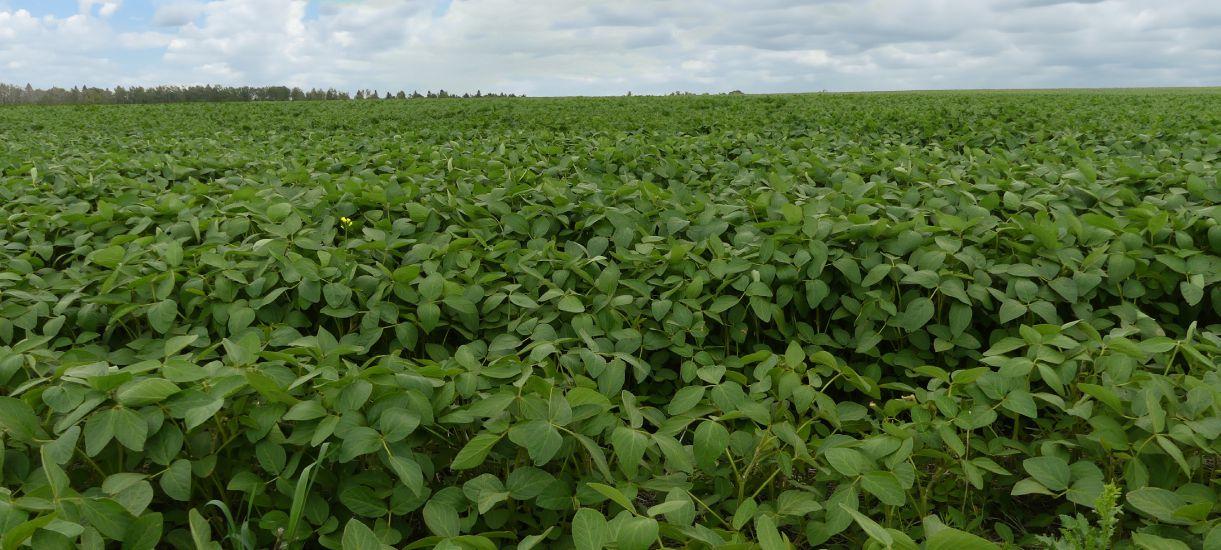
LEFT Soybean field.
Corn, new and improved
Check out the latest corn varieties available in Eastern Canada.
BY ALEX BARNARD
Considering which corn variety to plant for the 2025 growing season? Top Crop Manager has compiled a list of some of the newer options available. All information comes from the respective seed companies.
BREVANT
B86J43AM (2525 CHU) is an 87-day, medium-statured hybrid with high yield potential and strong agronomics. Strong roots with above-average drought tolerance.
B96A41PCE (2850 CHU) is a 96-day grain corn with a strong combination of agronomics and yield potential. Strong stress emergence and above average drought tolerance.
B99A24V (2950 CHU) is a new Vorceed Enlist hybrid with excellent yield potential. Tall plant stature, above average test weight.
B05D47PCE (3150 CHU) is a new PowerCore Enlist hybrid grain corn with excellent yield potential. Strong root and stalk strength, and above-average drought tolerance.
B05D47V (3150 CHU) is a new Vorceed Enlist hybrid with excellent yield potential. Strong root and stalk strength, with above-average drought tolerance.
B94B44Q (2825 CHU) is a new Bovalta hybrid silage corn with highly digestible fibre and tonnage. Medium-statured plant type with strong roots.
B03B45Q (3100 CHU) is a new Bovalta hybrid silage corn with highly digestible fibre and tonnage. Medium-statured plant type with strong roots.
MAIZEX
MZ 1231DBR (2050 CHU) is a VT Double PRO hybrid grain corn with elevated yield performance. It has excellent fall intactness that promotes an efficient harvest, as well as strong stay-green with open husks at harvest.
MZ 2344DBR (2500 CHU) is a VT Double PRO hybrid grain corn with yield-leading performance across environments. It has superior grain quality and test weight with excellent stress tolerance.
MZ 2575DBR (2775 CHU) is a VT Double PRO hybrid grain corn with strong early-season vigour for a
rapid stand establishment. Its open husks promote rapid grain drydown, and it maintains leading performance under lower- to moderate-yield environments.
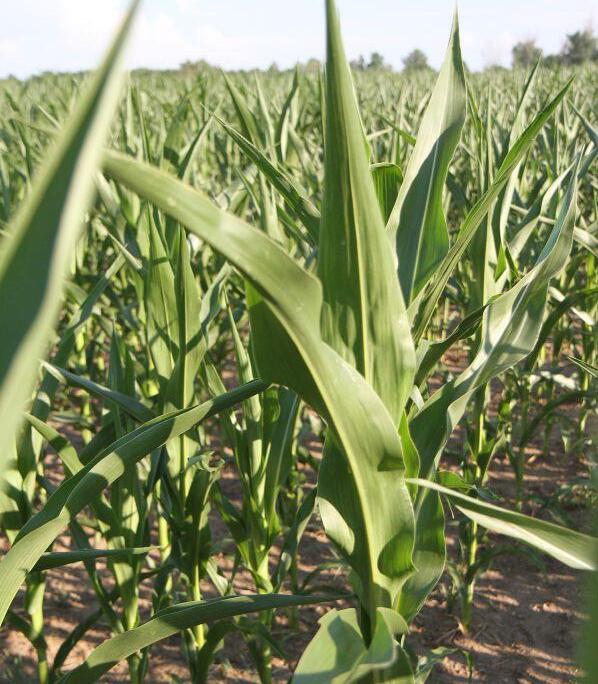
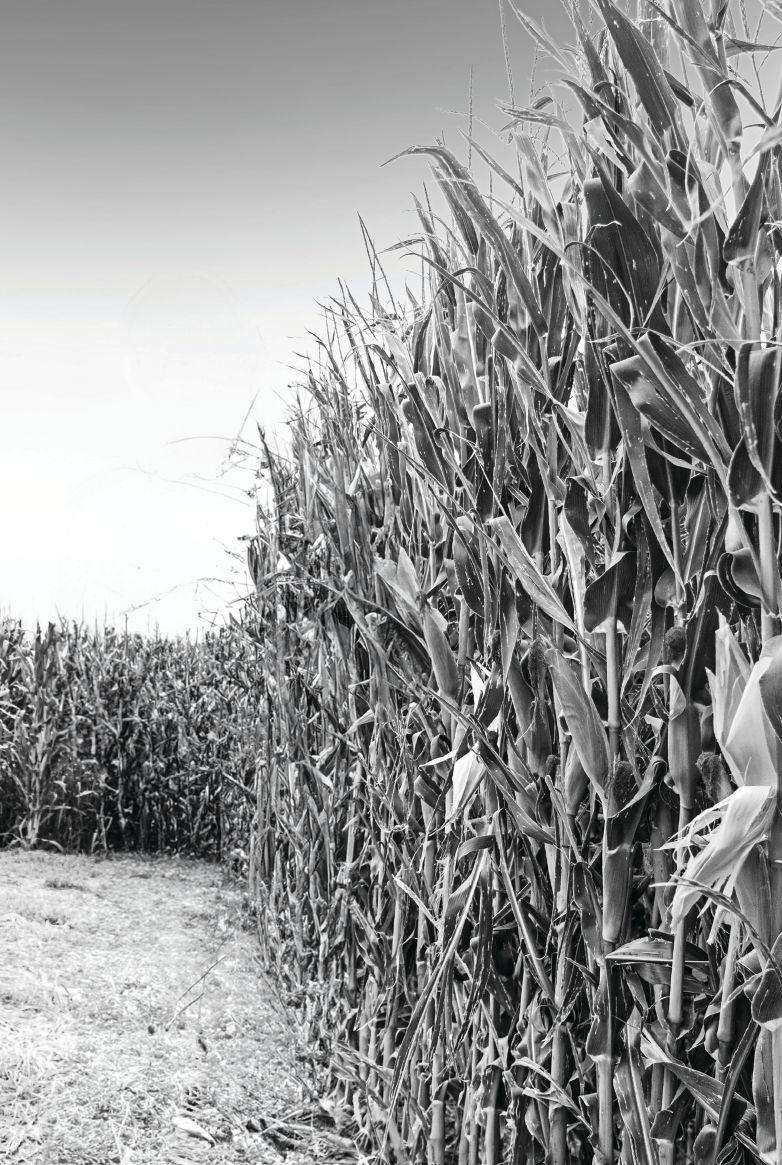
Corn field in southwestern Ontario.
MZ 3432TRE (2800 CHU) is a Trecepta hybrid grain corn with industry-leading above-ground insect control, including Western bean cutworm. It is broadly adapted for flexible positioning and offers industry-leading yield potential.
MZ 3704VT4 (2900 CHU) is a VT4 PRO hybrid grain corn with RNAi technology to provide additional control of corn rootworm. With industry-leading aboveground insect control – including western bean cutworm, combined with rootworm control – it offers strong performance in variable-yield environments. Its open husks promote rapid grain drydown.
MZ 3717SSP (2900 CHU) is a SmartStax PRO hybrid
ABOVE
Photo by Alex Barmard.
grain corn with RNAi technology to provide additional control of corn rootworm. It offers industry-leading corn rootworm protection and impressive fall intactness that promotes ease of harvest. It also has exceptional stay-green to promote full yield potential.
MZ 4026SSP (2950 CHU) is a SmartStax PRO hybrid grain corn with RNAi technology to provide additional control of corn rootworm. It offers industry-best corn rootworm protection, with strong seedling vigour to establish stands quickly. Its solid stalks allow for a flexible harvest.
MZ 4703DBR (3250 CHU) is a VT Double PRO hybrid grain corn with high yield potential and excellent grain quality and test weight. Its impressive fall intactness promotes ease of harvest, and it also has improved DON tolerance.
MZ 4799SMX (3250 CHU) is a SmartStax hybrid grain corn with market-leading DON tolerance. Its open husks promote rapid drydown, with leading stress tolerance in moderate- to lower-yield environments.
MS 7711R (2175 CHU) is a Roundup Ready Corn 2 hybrid silage corn. Its early flowering allows movement north, with solid agronomics promote yield and an industry-leading tonnage for its maturity.
MS 782 (2250 CHU) is a high-tonnage conventional hybrid silage corn with MS 8022R genetics. Its early flowering allows northern adaptation, with impressive stay-green that optimizes feed quality.
MS 7822DBR (2250 CHU) is a VT Double PRO hybrid silage corn with MS 8022R genetics. It features above-ground insect protection for corn borer, a rapid grain set for early geography, and a large harvest window.
LFG 999 (2800 CHU) is a leafy/floury conventional hybrid silage corn. Its floury gene offers early starch availability at harvest, and it has large ears enhance starch quantity as well as strong leaf-disease tolerance.
LFG 9999R (2800 CHU) is a leafy/floury Roundup Ready Corn 2 hybrid silage corn. Its floury gene offers early starch availability at harvest, and it has large ears enhance starch quantity as well as strong leaf-disease tolerance.
PIONEER
P76843PCE (2200 CHU) is a 76-day dual-purpose hybrid that has excellent yield with above-average stalk strength. New PowerCore Enlist trait for above-ground pests and flexible weed control.
P82288PCE (2400 CHU) is a leading hybrid grain corn for the 80 to 85 CRM zone. New PowerCore Enlist traits for above-ground pests and flexible weed control.
P87040 (2550 CHU) is an 87-day conventional hybrid grain corn that offers good yield and stability, with good northern corn leaf blight resistance.
P87040PCE (2600 CHU) is a versatile 87-day hybrid grain corn that offers more yield and stability for the
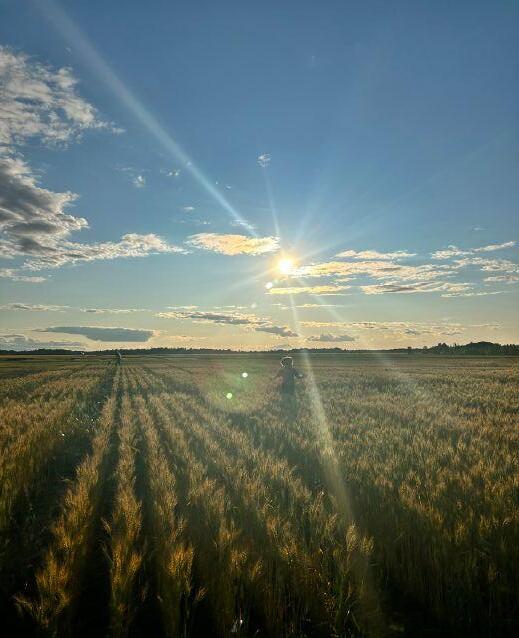
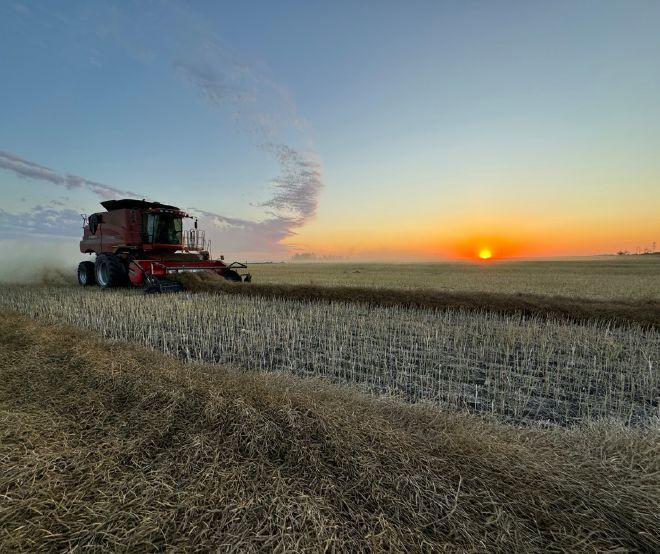
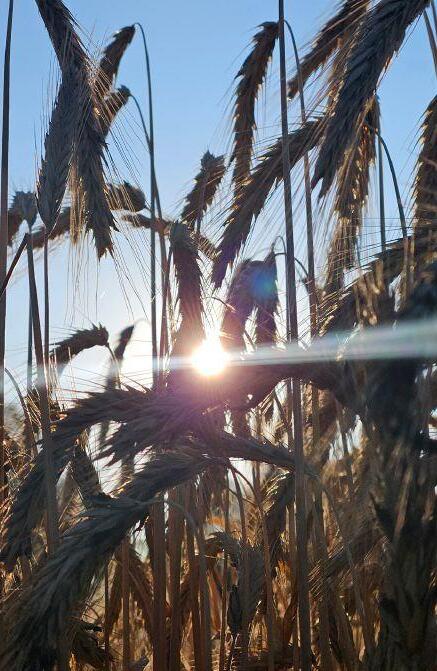
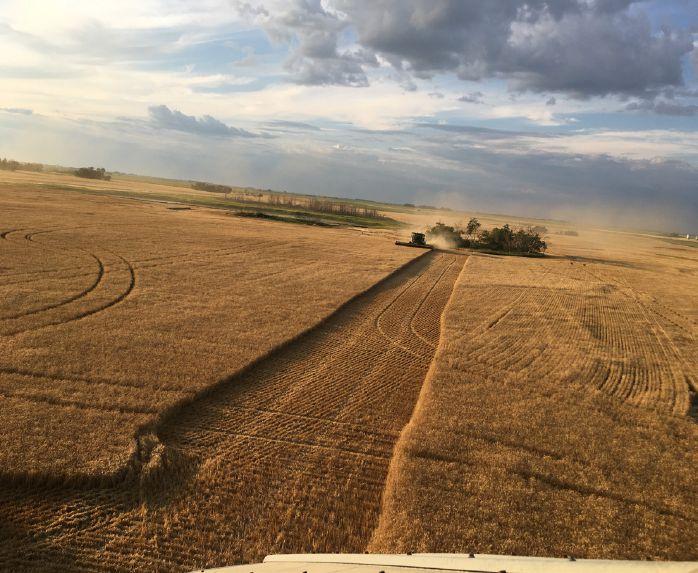
The TopCropManager photo contest brought us snaps from across the country, from planting to harvest. You’re looking good, Canada.
A close-up of fall rye plants before harvest, with sunlight filtering through the stems and heads
(Clockwise)
Photos courtesy of Megan Wong; Brooke Peden; Sweet Aurestelle Selma; Sara Olexsyn.
Child running in a wheat field
Harvest time
Brought to you by DOES THE FUTURE OF AGRICULTURE SEEM GREY TO YOU?
Agriculture in the Classroom is cultivating curiosity by providing hands- on, immersive learning experiences to educate and engage students. The next generation of farmers, policy-makers, and innovators is in the classroom today. Together, we can inspire young people to drive our industry forward.
Change the future at aitc- canada.ca
Wheatharvest2024atBexfieldFarms Ltd. in Saskatchewan
Like father, like daughter
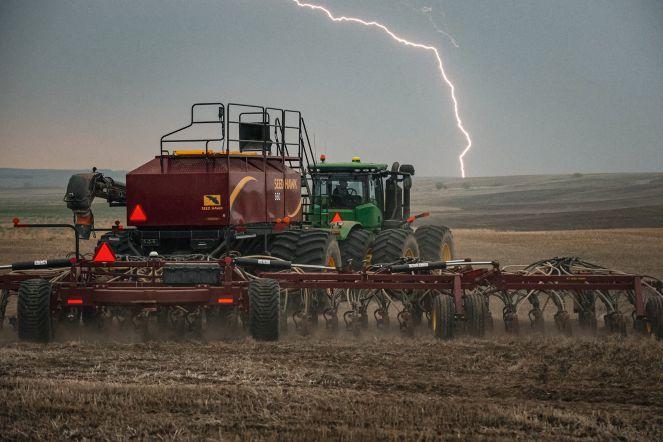
Getting the canola put in before the storm hits
(Clockwise)
Photos courtesy of Robin Nell; Melissa Snyder; Kali Richardson; Jacob Bexfield.
Wheat harvest near Odessa, Sask.
SOYBEANS
resistance . A great choice for high yield environments . Above-average white mould tolerance and exceptional harvest standability.
P31Z32E is an Enlist E3 soybean (3300 CHU) with outstanding harvest standability and very good white mould tolerance Excellent yield potential with good Phytophthora field tolerance with 1k, which make this a good option for poorly drained soils.
P32Z91E is an Enlist E3 soybean (3325 CHU) with double-stacked Phytophthora genes, which make this a good early planting option. Exceptional harvest standability and above-average white mould tolerance; a great choice for high yield environments.
SECAN
Alouette R2X is a new, early maturing 2325HU (RM 00.1) Roundup Ready 2 Xtend soybean variety, offering a great yield potential for its maturity.
Myers E3 is a new 2700HU (RM 0.6) Enlist E3 soybean variety with great genes including SCN, Phytophthora and white mould tolerance.
Cullen XF is an XtendFlex soybean variety with a full package of resistance genes, including SCN and a double-stack of Phytophthora genes. It also offers great early season vigour.
WINFIELD UNITED
CP0324X is a group 0.3 with 2625 CHU. This variety has nice yield potential, with consistent performance. It has strong white mould tolerance, medium plant height and excels in narrower rows. It also has good standability in high fertile soils.
CP0624WPXF is a group 0.6 with 2700 CHU. This new WinPak consists of CP0621XF and CP0624XF. It’s an industry leader in white mould tolerance and a great option for variable soils. This variety has SCN protection for acres where cyst pressure is growing.
CP1923X is a group 1.9 with 3050 CHU. An all-around performance variety with excellent early season vigour for no-till situations. Strong Phytophthora root rot (PRR) and SDS tolerance, along with great
standability for fertile soils.
CP2424WPXF is a group 2.4 with 3175 CHU. This WinPak consists of CP2424XF and CP2524XF. Great on heavy and lighter soils, has an excellent overall disease package and above-average SDS tolerance.
CP2624XF is a group 2.6; 3225 CHU. Leading yield potential and a good defensive profile. Stable performance across
environments, above-average vigour and early season growth, which makes it a great no-till bean.
CP2724E * is a group 2.7 with 3250 CHU. Medium-tall plant with excellent standability. Quick drydown for wider harvest flexibility. Above-average white mould tolerance and good stress tolerance. *Pending registration.
A widespread and increasing concern
A nationwide study is giving us a better handle on current and emerging soybean root diseases.
BY CAROLYN KING
Earlier studies showed that soybean root diseases are becoming more widespread and problematic in Canada, with new diseases emerging. In order to address this, we needed to expand co-ordinated soybean root disease surveys nationwide,” explains Yong Min Kim, a research scientist with Agriculture and Agri-Food Canada (AAFC) in Brandon, Man.“This surveillance helps us identify emerging risks early and develop science-based solutions, which are crucial for effective risk management and reducing production losses.”
Kim is describing a key aspect of a recently completed five-year project, launched in 2018. Along with this national survey, the project included an assessment of soybean varietal responses to key root rot pathogens and an investigation of the genetic diversity and distribution of those pathogens. Also, the project monitored the spread of sudden death syndrome (SDS) in Ontario and established a disease nursery to screen soybean lines for SDS tolerance.
The project’s key investigators were Stephen Strelkov from the University of Alberta, Debra McLaren (now retired) at AAFC-Brandon, Owen Wally with AAFC-Harrow in Ontario, and Kim. However, Kim emphasizes that many researchers across the country collaborated on this major project.
FEARSOME FOES
As growers know, soybean root diseases are difficult enemies. The plant’s problems begin underground, so these diseases may go unnoticed until plant stand and yield losses become serious. As well, root diseases can
be caused by various pathogens or complexes of interacting pathogens, but these different diseases may have similar aboveground symptoms, like wilting, stunting and yellowing, making diagnosis a challenge.
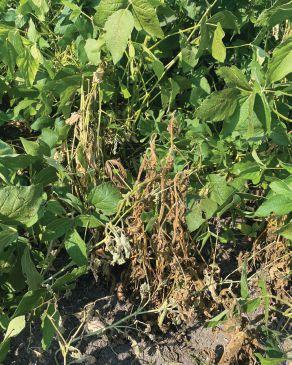
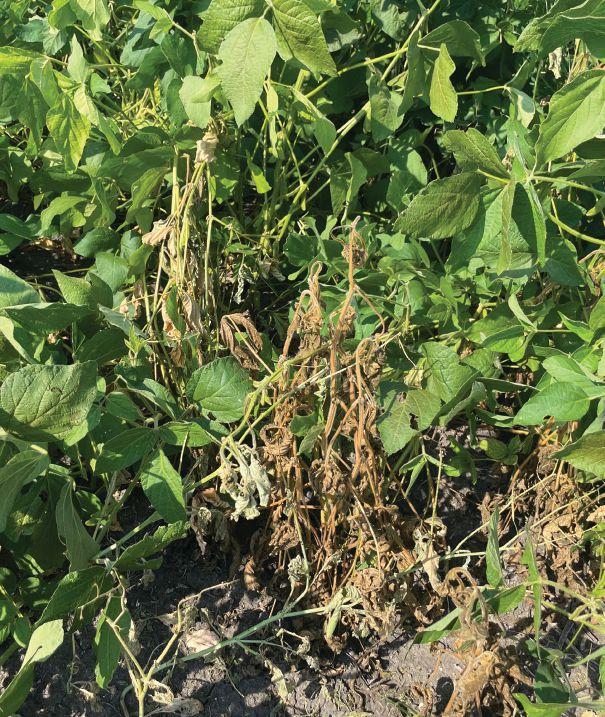
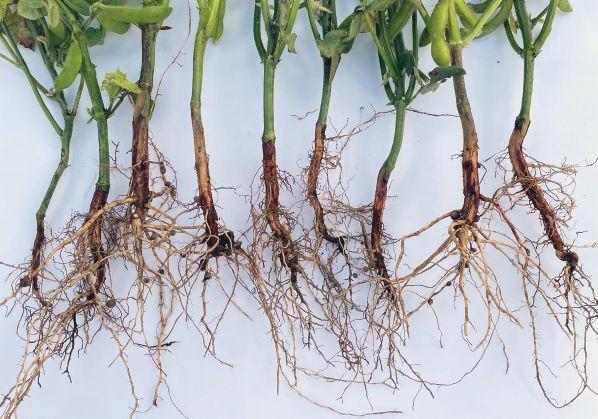
ABOVE Soybean plants showing symptoms of Phytophthora root and stem rot; significant wilting and yellowing of leaves indicate severe stress due to the infection.
Although resistant soybean varieties are available for some root diseases, new pathogen strains may overcome that resistance. Other root diseases have more limited management options, such as increasing the length of rotations with non-host crops and using other practices for healthy crops, like proper fertilization and seed treatments, which can help reduce the disease but may not completely control it.
In addition, root diseases can spread into new areas, for instance, by the movement of infested soil on equipment. And an existing disease may expand from a minor problem to a more serious threat if changing growing conditions, such as shifting weather patterns, favour the pathogen.
A GROWING CONCERN
The project’s surveys were carried out from 2018 to 2022 in Alberta, Saskatchewan, Manitoba, Ontario, Quebec and Prince Edward Island. Kim notes, “The goal was to survey about 160 soybean fields per year. However, due to some challenges related to the pandemic, not all provinces were sampled every year.”
To identify the pathogen species, the project team
All photos courtesy of Yong Min Kim, AAFC.
Soybean roots showing symptoms of Fusarium root rot, characterized by reddish-brown discoloration and necrosis, with a reduced number of nodules.
analyzed the collected samples in the lab, using morphological/microscopic and molecular methods.
Overall, the survey results show that soybean root diseases are indeed a growing problem.
“It’s safe to say that root diseases are becoming an increasing concern in Canadian soybean production. The impact can vary year to year based on environmental conditions, susceptible hosts and pathogen levels, but there are notable trends,” he says.
“For instance, Phytophthora root and stem rot is becoming more problematic in Manitoba, and soybean sudden death syndrome (SDS) is rapidly spreading in southern Ontario, where the disease’s range is progressing north and east. Interestingly, we found that root disease severity tends to be higher in Eastern Canada – especially Ontario, where soybeans have a longer growing history.”
ROOT ROT IN EVERY SURVEYED FIELD
Root rot was confirmed in 100 per cent of the surveyed fields. Kim notes that several factors contribute to the widespread occurrence of root rots even in regions with shorter histories of soybean production.
One factor is that “many pathogens have evolved to infect a wide range of commercial crops including soybeans. Fusarium species can infect multiple crops and were found in all the surveyed soybean fields across Canada,” he says.
On the other hand, “some soybean root diseases, such as Phytophthora root and stem rot, were less common in provinces with a shorter soybean-cropping history.”
On a national basis, the predominant root rot pathogens found in the surveys were: various Fusarium fungi, including complexes of multiple Fusarium species; and Phytophthora sojae, a fungus-like microbe known as an oomycete, which causes Phytophthora root and stem rot.
Across Canada, the most common Fusarium species were Fusarium oxysporum, Fusarium acuminatum, Fusarium avenaceum and Fusarium redolens, with F. redolens being more prevalent in Western Canada than Eastern Canada. Less commonly found Fusarium species included Fusarium solani, Fusarium graminearum, Fusarium equiseti, Fusarium culmorum, Fusarium tricinctum and Fusarium sporotrichioides
ASSESSING SOYBEAN RESISTANCE
In greenhouse experiments, the team tested the effects of six different Fusarium species on 20 Canadian
soybean varieties. Those six species were: Fusarium oxysporum, Fusarium avenaceum, Fusarium acuminatum, Fusarium redolens, Fusarium graminearum and Fusarium solani
As expected, the response to the different Fusarium species varied depending on the soybean variety. None of the varieties had complete resistance to any of the pathogens, but some tolerant varieties were identified for each pathogen. “We found that two cultivars, ‘P15T46R2’ and ‘B150Y’, consistently showed tolerance to several Fusarium species including Fusarium oxysporum, Fusarium redolens, Fusarium graminearum and Fusarium solani,” notes Kim.
“This suggests that these two cultivars might have broad-spectrum resistance or tolerance towards multiple Fusarium root rot pathogens.”
Another interesting finding from the greenhouse work is that the Fusarium root rot severities measured in the experiments were generally greater than the severities reported in previous studies. That might mean that these root rot species are becoming increasingly aggressive in some cases.
AN EMERGING ROOT ROT DISEASE
One of the project’s unexpected findings was the detection of the fungus Macrophomina phaseolina in Manitoba. This pathogen, which causes charcoal rot, was already known to be present in Ontario and Quebec, and the project’s surveys found it in those two provinces, as expected. However, Macrophomina phaseolina had not been previously reported in Manitoba.
Kim says, “We published this as the first report of charcoal rot on soybeans in Manitoba and Western Canada. This discovery is significant because it highlights the need to consider this pathogen when developing resistant soybean varieties and screening for host resistance.”
He points out that charcoal rot is the sixth most destructive disease causing soybean yield losses in the United States. Although he notes that charcoal rot is not yet a major concern for Canadian soybeans, it could become a more serious problem if, for example, the hotter, drier conditions that promote this disease occur more often in our soybean-growing areas.
SDS AND SCN
SDS and soybean cyst nematode (SCN) are both major soybean disease concerns in Ontario, capable of causing very high yield losses when conditions favour the pathogens.
SCN has been spreading across Ontario’s soybean growing areas since this microscopic roundworm was first detected near Chatham in southwestern Ontario in 1988. SCN was first found in western Quebec in 2013 and in Manitoba in 2019; in both cases, the nematode was at very low population levels.
The project’s surveys showed that SCN continues to be a serious issue in
RIGHT
Ontario, but the pest was not identified at quantifiable levels in any of the field samples collected from outside of Ontario. This indicates that the nematode is only slowly expanding into newer soybean-producing areas.
SDS, which is caused by Fusarium virguliforme, was first found in Ontario a few years after SCN’s initial detection. Since then, the fungus seems to have been following in SCN’s footsteps across the province’s soybean fields.
“We observed that SDS has been steadily spreading across southern Ontario, including previously unaffected areas. And the number of positive samples have increased in counties where the disease was already present,” notes Kim. “We also observed severe SDS outbreaks consistently occurred in regions with high SCN pressure. And we found that environmental factors – particularly the timing of moisture – played a crucial role in the disease’s spread and severity.”
Owen Wally led the project’s work on SDS in Ontario; the SDS disease nursery was set up at AAFC-Harrow by his research group. Using SDS inoculation and irrigation, the nursery provides uniformly high SDS disease pressure, which is really useful for soybean breeders and growers who want to know which soybean lines have the best ability to withstand SDS attacks. From 2020 to 2022, they screened almost 300 soybean lines at the SDS disease nursery as well as at a pre-existing SDS-infested field near Chatham.
Kim says, “Overall, these results highlight the benefits of a thorough approach to understanding SDS and finding resistant varieties, which is crucial for managing the disease in Ontario soybean production.”
INFORMATION AND INSIGHTS
“The results from this project offer valuable insights into the incidence and spread of root rot diseases, particularly those related to Fusarium species complexes and other important pathogens,” he says.
“This knowledge can help in developing effective management strategies for these diseases, which are affecting soybeans across Canada. Additionally, the results enhance knowledge transfer and technology sharing, supporting farmers and the industry in adopting innovative disease management practices.”
The project’s findings have also prompted Kim and his colleagues to start a couple of follow-up studies. One study is evaluating the effects of seed treatments and field tolerance to Phytophthora sojae in soybeans; the other is assessing Macrophomina phaseolina resistance.
The Government of Canada’s AgriScience Program funded the project through the Canadian Agricultural Partnership, with industry support from the Canadian Field Crop Research Alliance. Kim thanks collaborators in Eastern and Western Canada, as well as Manitoba Agriculture, Manitoba Pulse & Soybean Growers, Saskatchewan Ministry of Agriculture, Saskatchewan Pulse Growers and Alberta Agriculture and Irrigation.
Boosting corn test weights in the Maritimes
A project examines the effects of different practices on grain quality.
BY CAROLYN KING
Arecently completed project has generated some practical tips for enhancing corn test weights on the East Coast.
From talking with local grain elevators, researcher Dan MacEachern knew that low corn test weights could be an issue in the Maritimes. So, with Atlantic Grains Council funding, he initiated this five-year project in 2018, to identify agronomic factors that could help increase test weights.
“Test weight [which is the weight of a given volume of grain] is important for a couple of reasons. The main one is that it is a good indicator of the quality of the corn kernel. A higher test weight often correlates with good grain fill, including higher starch content and overall a healthier grain. It is also an indicator of how well the corn matured and dried down, which is critical for storage and processing,” explains MacEachern, who is with Agriculture and Agri-Food Canada in Charlottetown, P.E.I.
“Test weight also affects the economic value of the corn. Many grain buyers and elevators use test weight as one of their key criteria. Obviously when you’re grading corn, there are other factors that come into play, but test weight is something that can be quickly determined, with a higher test weight generally indicating a higher quality grain, which fetches a higher price.”
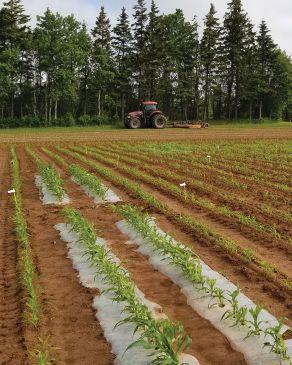
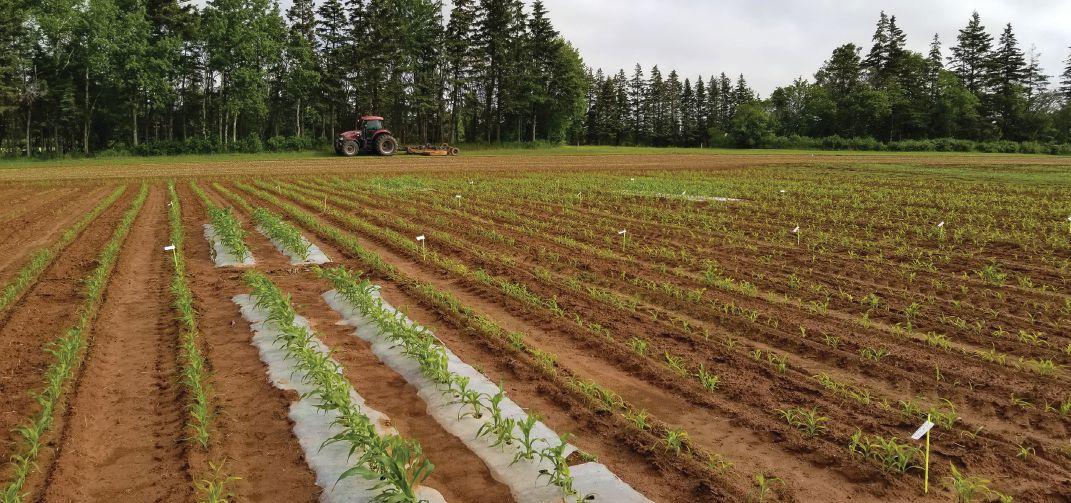
TOP The Phase 1 treatments included biodegradable row covers, which really improved corn test weights but didn’t increase yields significantly.
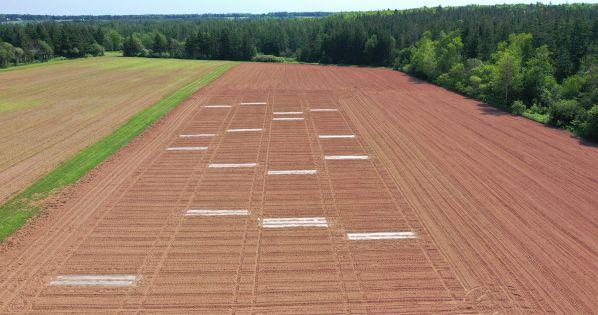
AOBVE Phase 1 treatments at planting time at the Harrington Research Farm.
MacEachern notes that multiple factors – like nutrient management, stand density, hybrid selection, weather and so on – can influence corn test weights. That made it tough to decide which ones to target in this project. So, in the project’s first three years (Phase 1), he and his research team assessed a broad scope of factors, selected in part based on discussions with corn producers. They found some factors that stood out for test weight and yield effects, and used those findings to target the Phase 2 (years 4 and 5) trials.
Both phases were conducted at three sites: Harrington, P.E.I., managed by MacEachern’s team; Knightville, N.B., managed by the New Brunswick Department of Agriculture, Aquaculture and Fisheries; and
Berwick, N.S., managed by Perennia Food and Agriculture Corporation.
PHASE 1 TREATMENTS AND RESULTS
For Phase 1, MacEachern and his team evaluated the effects of three nitrogen (N) sources: ammonium nitrate (AN), urea ammonium nitrate (UAN), and ammonium sulphate (AS). For all the treatments, they applied 50 kilograms of N per hectare (kg N/ha) at planting as AN. Then they applied 100 kg N/ha as a top-dress at the V4 growth stage as either AN (the control treatment), UAN or AS. They also evaluated the effect of splitting the top-dress, applying 50 kg N/ha at V4 and 50 kg N/ha at R1.
These N treatments were applied to four different hybrids at each site. The hybrids were all ones that are commonly grown in the Maritimes and encompass a range of crop heat unit (CHU) ratings. The hybrids were grouped as early maturity (2050 to 2200 CHUs), mid-season maturity (2300 to 2400 CHUs), and late maturity (2500 to 2650 CHUs), for the growing conditions in the Maritimes.
As well, the team assessed the effects of plastic row covers with the control fertilizer treatment.
Test weight findings: The plastic row covers really increased test weights. AS was the only N source that tended to result in higher test weights than the control treatment. The mid and early maturing hybrids produced higher test weights than the later hybrids. Splitting the top-dress did not make a significant difference. Yield findings: The AS treatments produced significantly higher yields than the AN or UAN treatments. The hybrid also made a big difference, with the midrange hybrids having the highest yields, followed by the early and then the late hybrids. The row plastic was not a significant contributor to yield. Splitting the top-dress did not make a significant difference.
Initial conclusions: Given the AS benefits for both yield and test weight, MacEachern decided to focus on sulphur (S) in Phase 2.
The Phase 1 findings show that, for the
Maritimes, an early or mid-season hybrid (2050 to 2400 CHUs) is better for both yield and test weight than a later maturing hybrid (2500 or more CHUs).
MacEachern notes that frost damage to corn before the crop reaches maturity results in lower test weights because starch accumulation in the kernels stops when the plant freezes. He adds that
some of his fields at Harrington have experienced frosts even in late August. So, he decided to limit the Phase 2 trials to hybrids in the 2050 to 2400 CHU range.
The biodegradable corn starch-based row covers used in the project were effective, acting like mini greenhouses. The result was a dramatic increase in test
CROP MANAGEMENT
weight. Also, the covers biodegraded really well, completely disappearing by the next year.
But the covers weren’t practical from an economic perspective. First of all, they did not increase yield significantly. “Also, a big investment is involved. It would cost about $60,000 or so to buy the application equipment. And the biodegradable plastic that I used costs about $500-plus per acre,” he notes.
“These covers are more intended for high-value crops, like sweet corn. The technology isn’t quite there yet for grain corn. So, we decided to drop row covers from Phase 2.”
PHASE 2 TREATMENTS AND RESULTS
“From the Phase 1 results, we knew sulphur had a positive effect on corn yield and test weight. The main objective of Phase 2 was to dial in on the sulphur rate,” says MacEachern.
In Phase 1, they had only one sulphur rate, which was the very high rate of 114 kg S/ha. That’s because they applied the AS, which is 21-0-0-24, based on the N rate they wanted to achieve, not the S rate.
Therefore, in Phase 2, they compared six S rates of 114, 80, 45, 34, 25, and 10 kg S/ha, plus a control with
Test weight [which is the weight of a given volume of grain] is important for a couple of reasons. The main one is that it is a good indicator of the quality of the corn kernel.
no applied S. AS was the S source for most of the treatments, although a liquid form of S was used for the lowest rates. All the treatments received 150 kg N/ha. A SPAD chlorophyll meter, which measures leaf greenness, was used to check for yellowing leaves that can indicate S deficiency.
In addition, they evaluated three N sources (calcium ammonium nitrate (CAN), Environmentally Smart Nitrogen (ESN) and urea treated with Agrotain) applied at two rates (150 and 200 kg N/ha).
At each site, they compared one early and one mid-season hybrid.
S findings: “In Phase 2, we found that the sweet spot for corn yields lay between 34 and 45 kg S/ha, with the maximum yield coming from 45 kg S/ha. It was pretty huge to find that we didn’t need anything close to 114 kg S/ha to provide a yield benefit,” he says. “For test weight, we saw an improvement at 45 kg S/ha, but the largest increase in test weight came from 80 kg S/ha.”
None of the plots had any leaf yellowing that would indicate an S deficiency. “The plants were experiencing what is known as hidden hunger. Essentially, the sulphur levels were just low enough that the plant could not grow to its full potential, but not low enough to
cause visual signs of deficiency.”
N findings: Another key result of the project was that “we achieved the same yields and same test weights utilizing 150 units of nitrogen versus 200 units,” says MacEachern. “Some people might assume that ramping up the nitrogen would be better, but here it was best to stick with 150 kg N/ha.”
The two enhanced efficiency fertilizer products tended to slightly outperform CAN in terms of yield, but there were no significant differences in test weights.
Hybrid findings: In Phase 2, the mid-season hybrids had the highest grain yield. There was no significant difference in test weights between the early and mid-season hybrids.
Overall findings: In summary, the project’s results show that, for good yields and test weights, corn growers in the Maritimes should choose a hybrid in the 2050 to 2400 CHU range, go with the recommended N rates, and consider boosting S rates.
MORE ABOUT SULPHUR
“I am not suggesting that corn producers apply loads of sulphur to their fields because there could potentially be impacts from doing that – lowering pH is one
PARTNERS IN YOUR FIELD
Getting the most from your acres comes down to the smallest details, and we’re ready to prove we’re up to the challenge – even on your toughest acres. Whether it’s developing, researching, testing or getting to work in the field, PRIDE Seeds is there with you every step of the way.
BECAUSE PARTNERSHIP IS OUR PURPOSE.
possibility,” MacEachern explains. “However, sulphur is very important for producers here in the Maritimes.”
Corn crops require S all season long, and the sulphate form of sulphur is at risk of losses through leaching. Another important consideration is that S levels in agricultural soils have been declining in recent decades. He notes that the main reason for this decline is that regulations to reduce acid rain by lowering air-borne S emissions have also reduced the amount of S supplied to the soil through atmospheric deposition.
MacEachern’s top choice for an S source is manure, which also provides other nutrients and organic matter. “Manure is just an amazing way to get your sulphur. Dairy farmers don’t have to worry about insufficient sulphur levels when they are applying manure. Liquid dairy manure has about 2 to 8 pounds of sulphur per 1,000 gallons, and they are applying as much as 10,000 gallons or so per acre, so they are able to get plenty of sulphur.”
If manure applications are not an option, MacEachern says ammonium sulphate tends to be a good S source. The sulphate form is readily available to plants and it is not as much of a problem for lowering soil pH as elemental sulphur. He does not recommend using elemental sulphur because of the soil acidification risk.
Axan (27-0-0-3.7), a compound of ammonium nitrate and calcium sulphate, is also an option. “Axan is another source of sulphur available here on the East Coast. Looking at the cost per kilogram of sulphur, ammonium sulphate is approximately $3.58 per kilogram, and Axan, which is really popular, is very close to $7 per kilogram. On the other hand, when
it comes to nitrogen, ammonium sulphate is around $4 per kilogram and Axan is about $3.50.”
MacEachern recommends soil testing to determine S levels. However, his project’s findings suggest that higher than the currently recommended S levels might be needed for corn to reach its full potential. For instance, in the PEI soil test recommendations for corn, a medium amount of S is 12 parts per million (ppm) and a very high amount is 26 ppm. “Looking at baseline levels of sulphur, the soils in this project were around 15 ppm, and we saw the maximum yield effect from sulphur at about 45 ppm. So, even if your soil test says your sulphur levels are adequate, perhaps they are not.”
Producers could consider doing test strips with some extra applied sulphur to determine the effects on their corn test weights and yields. “If applying sulphur makes a difference between your corn making grade 2 versus grade 1 – essentially being useful as feed versus not useful – you may want to consider looking into the economics of purchasing additional sulphur for your crop,” says MacEachern.
He adds, “One thing I always go back to is Liebig’s Law of the Minimum, one of the fundamental laws of soil science and crop science. It states that plant growth is limited by the scarcest nutrient. So, even if you supply tons of nitrogen, potassium and so on, it doesn’t help the crop if you don’t have enough of some other nutrient that you might not be thinking about. In this project, it happened to be sulphur, but it could be some other nutrient such as one of the micronutrients.”
MacEachern concludes, “So my advice is to perform a soil test and talk to your extension professionals and try to make sure you have a good nutrient base before you start growing anything.”
maturity. New PowerCore Enlist trait for above-ground pests and flexible weed control.
P87040V (2600 CHU) is a versatile 87day hybrid that offers more yield and stability for the maturity. New Vorceed Enlist trait for your corn rootworm acres, with multiple modes of action and flexible weed control.
P91083PCE (2650 CHU) is a 91-day hybrid grain corn with high yield potential and solid agronomics. New PowerCore Enlist trait for above-ground pests and flexible weed control.
P91083V (2650 CHU) is a 91-day hybrid with high yield potential and solid agronomics. New Vorceed Enlist trait for your corn rootworm acres with multiple modes of action and flexible weed control
P9466PCE (2800 CHU) is a 94-day hybrid with well-balanced agronomics and high yield. Strong stress emergence, above-average northern leaf blight tolerance.
P96760PCE (2850 CHU) is a 96-day hybrid grain corn with solid agronomics and yield potential. New PowerCore Enlist trait for above-ground pests and flexible weed control.
P96760V (2850 CHU) is a 96-day hybrid with solid agronomics and yield potential. New Vorceed Enlist trait for your corn rootworm acres with multiple modes of action and flexible weed control.
P96567AM (2850 CHU) is a 96-day hybrid grain corn with excellent yield potential and good Gibberella tolerance.
P96567Q (2850 CHU) is a 96-day hybrid grain corn with excellent yield potential and good Gibberella tolerance.
P9823V (2925 CHU) is a 98-day hybrid with excellent yield potential for maturity. Best positioned on highly productive acres. High response to foliar fungicide to help late-season plant health.
P1136AM (3400 CHU) is a 111-day hybrid grain corn, featuring next-level yield with above average Gibberella tolerance and tar spot resistance.
P9884Q (2600-2900 CHU) is a new, 98day Bovalta BMR hybrid with high yield, excellent disease resistance and solid agronomics.
WINFIELD UNITED
CP1225VT2P/RIB* is a 71-day hybrid that has impressive performance against later checks. It has excellent emergence, early season vigour and sits at 2050 CHU. This hybrid has good test weight, stalks and roots. The plant height also indicates silage yield potential.
CP2324VT2P/RIB* is an 83-day hybrid that works across all yield environments. It has strong seedling vigour for early planting and sits at 2500 CHU. It has better than average plant health and excellent drydown. This hybrid performs well under low and medium plant density.
CP3143VT2P/RIB* is a 91-day hybrid that has high yield potential for productive soils with good stress tolerance for tougher acres. It has 2775 CHU, strong early vigour for early planting and strong stalks late into the season. This hybrid has good ear flex for planting at reduced populations, as well as excellent grain quality with high test weight.
CP3330VT2P/RIB* is a 93-day hybrid with 2800 CHU. It is a broadly adapted hybrid with outstanding agronomics and yield. It has strong emergence, stalks, roots and is drought tolerant. This hybrid has low response to nitrogen and response to fungicide and is flexible and economical to manage. It has medium to early flowering with fast drydown.
CP3790VT2P/RIB* is a 97-day hybrid with 2925 CHU. This is a tall VT2P hybrid with outstanding yield potential. It has strong agronomics across the board, along with high response to fungicide, making it a good candidate for fungicide application. Take advantage of the terrific ear flex of this hybrid and plant at low to medium plant populations.
CP4377TRE/RIB* is a 103-day hybrid with 3100 CHU. This hybrid has very strong roots and stalks, along with very good emergence and early season vigour. It has strong heat and drought stress tolerance, and it has consistent performance across all soil types.
*Follow IRM guidelines and refuge configurations to preserve the benefits and insect protection of these technology crops.
Meet the next generation of Canadian agri-food leaders
These exceptional students are the winners of the 2024 CABEF Scholarships. We are proud to support each of them with $2,500 for their ag-related post-secondary education.
Help us empower more students to pursue diverse careers in agri-food. Strengthen the future of Canadian agriculture and food by investing in the cream of the crop.
Become a Champion of CABEF and directly support a scholarship for a Canadian student.
Emma Pflanz
Vancouver, BC
Brooke-Lynn Finnerty Sturgeon County, AB
Lee McNeil Alameda, SK
Faryal Yousaf Brandon, MB
Goodyear Ottawa, ON
Bishop Round Hill, NS
Congratulations to this year’s CABEF scholarship recipients.
Contact CABEF today to learn how you can become a “Champion of CABEF” at info@cabef.org
Mary
Allison
Emma
This shirt has stories to tell. About amazing yields, once-in-a-hundred year storms and getting the last acre of seed in before the weather turns. It’s been there for you. And so has the name on the front. DEKALB ® will never stop delivering high-performing corn and soybean seed with the advanced genetics and traits you depend on, all backed by Bayer. No wonder it’s the brand farmers are most willing to recommend*.