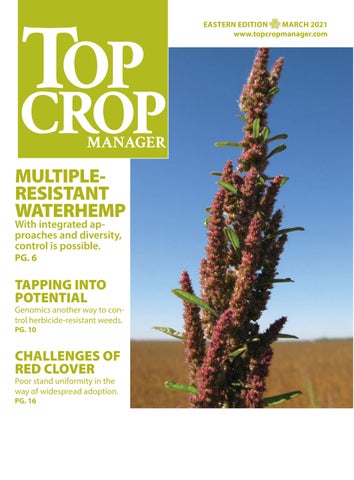
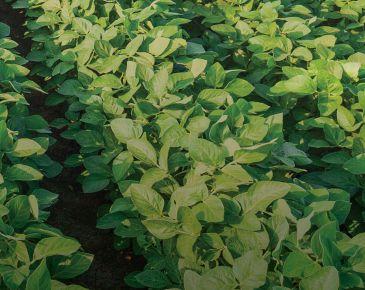
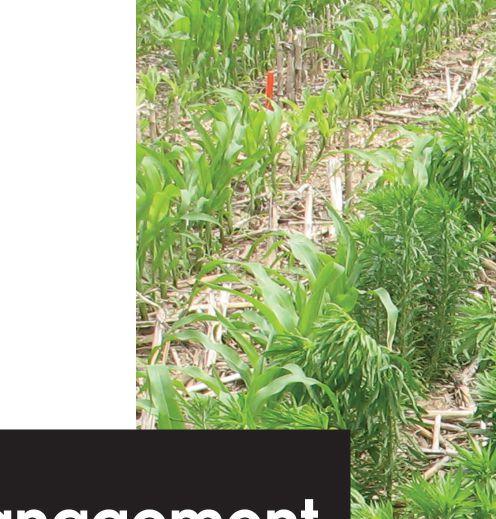
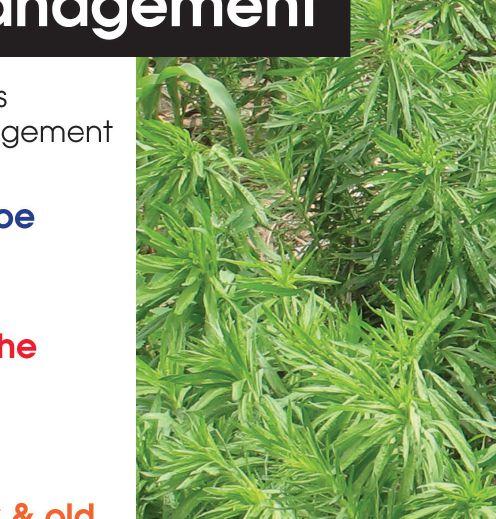
With integrated approaches and diversity, control is possible.
PG. 6
TAPPING INTO POTENTIAL
Genomics another way to control herbicide-resistant weeds.
PG. 10
CHALLENGES OF RED CLOVER
Poor stand uniformity in the way of widespread adoption.
PG. 16
Get the go-to resistance management tool for soybeans.
If you’re using advanced soybean technology, doesn’t it deserve protection to match? Engenia® is exclusively designed for Roundup Ready 2 Xtend® soybeans. Its highly concentrated liquid formulation offers easier handling and a lower use rate. Engenia is also an effective tool for managing Group 2-, triazine- and glyphosate-resistant biotypes. In other words, it seems tough weeds have also met their match. Visit agsolutions.ca/htsoybeans or contact AgSolutions® Customer Care at 1-877-371-BASF (2273) for more info.
Always read and follow label directions.
6 | Managing multiple-herbicideresistant waterhemp With integrated approaches and greater diversity, control is possible.
By Julienne Isaacs
10 | Tapping into powerful potential Weed genomics could be another pathway towards new ways to control herbicideresistant weeds.
By Carolyn King
16 | Challenges adopting red clover Poor stand uniformity is one major obstacle in the way of more widespread adoption of this leguminous cover crop.
By Julienne Isaacs
As part of its $32 million Capacity Initiative, the Western Grains Research Foundation (WGRF) is pleased to announce a $266,942 infrastructure investment for field equipment at the Chinook Applied Research Association (CARA) in Oyen, Alta.
PHOTO BY SYDNEY MELOCHE, AAFC.
STEFANIE CROLEY EDITORIAL DIRECTOR, AGRICULTURE
HONOURING A RICH LEGACY
One of the things I love most about my job is getting the opportunity to meet and chat with folks from all over the country, about all kinds of topics. As someone who didn’t come from an agriculture background, I value all of the tidbits and insights that come from even a five-minute chat. But the best conversations happen with those who are just as passionate about their work as they are knowledgeable about it, and I’d wager a bet that you won’t find a group of people more passionate than the agriculture research community. Their excitement is contagious.
If you’ve been a Top Crop Manager reader or follower for a long time, you’ll know our mandate is to focus on agronomy research. It’s been our niche for many years – long before I joined the brand in 2013 – and while we’ve dipped our toes into new things here and there, we’ve always gone back to what we know: transferring the most up-to-date agronomic information straight from the source to you, our readers. Frankly, without the incredible work done by researchers, professors, extension staff and the myriad people within the agricultural scientific community – and their willingness to share it with us – Top Crop Manager wouldn’t be the same. Take, for example, our cover story on waterhemp; a threat we’ve followed for years as it continues to evolve. Without the work of weed scientists like Mike Cowbrough, weed specialist at the Ontario Ministry of Agriculture, Food and Rural Affairs, Dr. Peter Sikkema, professor of weed science at the University of Guelph Ridgetown Campus (who will be inducted into the Ontario Agriculture Hall of Fame later this year), and many others, we wouldn’t be able to provide you with updates, control and prevention strategies for this important weed.
In recent times – the past year, in particular – the research community has been affected in a number of ways. Like other industries, the pandemic has changed the way trials are carried out – in many cases, fieldwork has been postponed or cancelled altogether, forcing results to be delayed. The landscape of Canadian agricultural research has changed too, with funding cuts and shifting models. But as you’ll see in this issue and many others, in spite of the challenges, Canadian agronomy research continues to thrive, with ground-breaking developments and encouraging new trials. As March is our annual weed issue, you’ll read lots about developments in the world of weed science among these pages, but there’s so much more going on the scenes in the agronomy research world. We look forward to highlighting those projects in future issues.
In the age of “fake news” and misinformation, it’s more important than ever to learn from reliable sources. As you read through this issue, take some time to appreciate the work it takes for those credible sources to turn their questions into answers, helping you do your job better.
MANAGING MULTIPLEHERBICIDE-RESISTANT WATERHEMP
With integrated approaches and greater diversity, control is possible.
by Julienne Isaacs
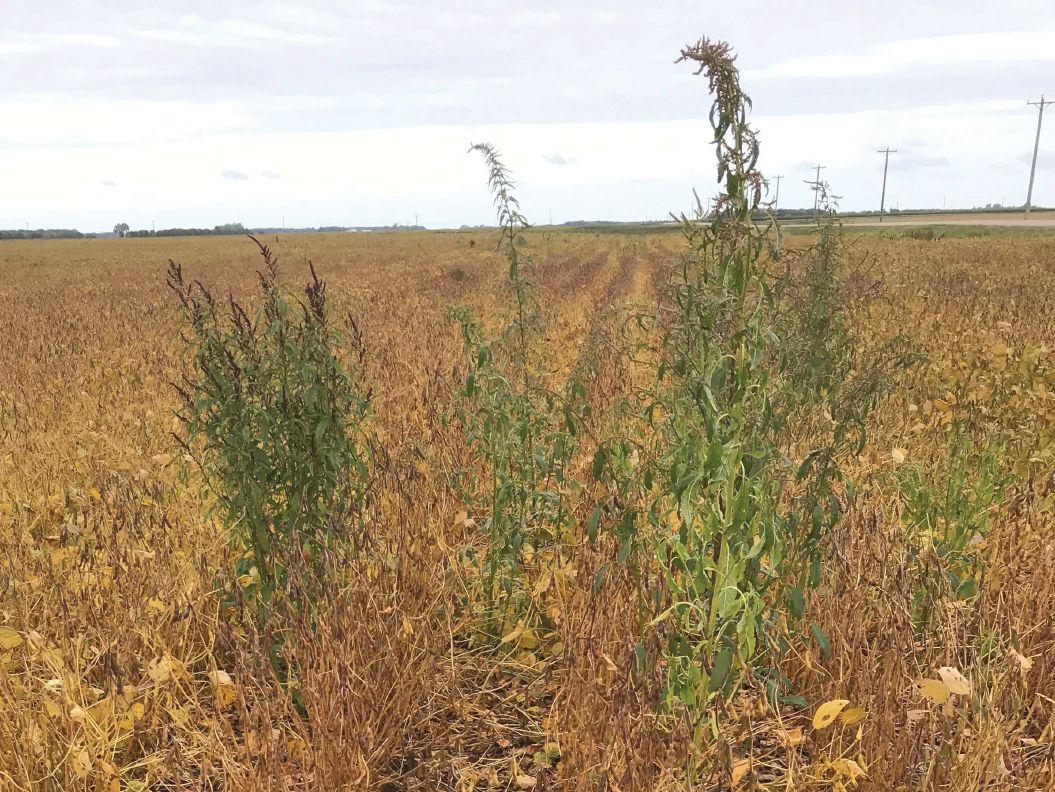
Waterhemp is proving a formidable weed threat for Ontario producers.
It’s a summer annual in the amaranth family that grows rapidly and produces a huge amount of seeds each year. These facts alone would make waterhemp a tough opponent, but it’s also evolved resistance to many herbicide groups.
“Pretty much every waterhemp plant that’s being detected is resistant to two or more modes of action,” says Mike Cowbrough, weed specialist for the Ontario Ministry of Agriculture, Food and Rural Affairs (OMAFRA). In fact, many counties have confirmed four-way-resistant waterhemp populations.
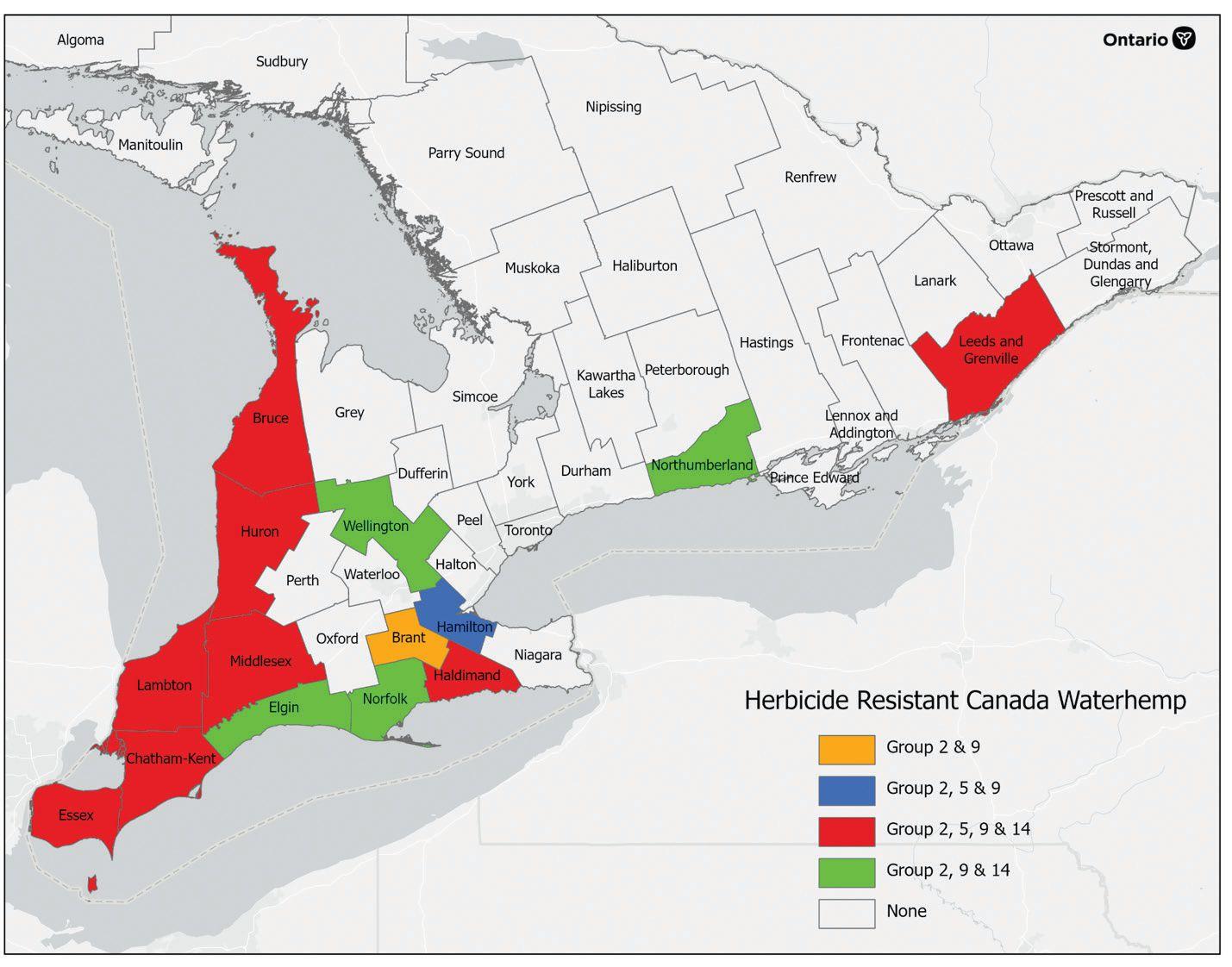
Peter Sikkema, a professor of weed management at the University of Guelph, Ridgetown Campus, says glyphosate-resistant (GR) waterhemp was first confirmed from seed collected in Ontario in 2014. Over the ensuing six growing seasons, GR waterhemp is now found in 14 counties over a distance of 700 kilometres.
Eight of these counties have four-way-resistant waterhemp (to herbicides in Groups 2, 5, 9 and 14); five counties have three-way resistance (to Groups 2, 5 and 9 or Groups 2, 9 and 14), and one county has two-way resistance (to Groups 2 and 9), Sikkema says.
Cowbrough says waterhemp plants were first found in the province in 2002, and even then, some populations were resistant to two herbicide groups.
Unlike other forms of pigweed, waterhemp does not selfpollinate, but requires cross-pollination between male and female plants to produce seed. Because of this, the plant is inherently able to rapidly spread genetic traits that are valuable for survival.
“What’s unique about waterhemp is that ultimately you select for resistant populations,” Cowbrough says. “It’s a plant that
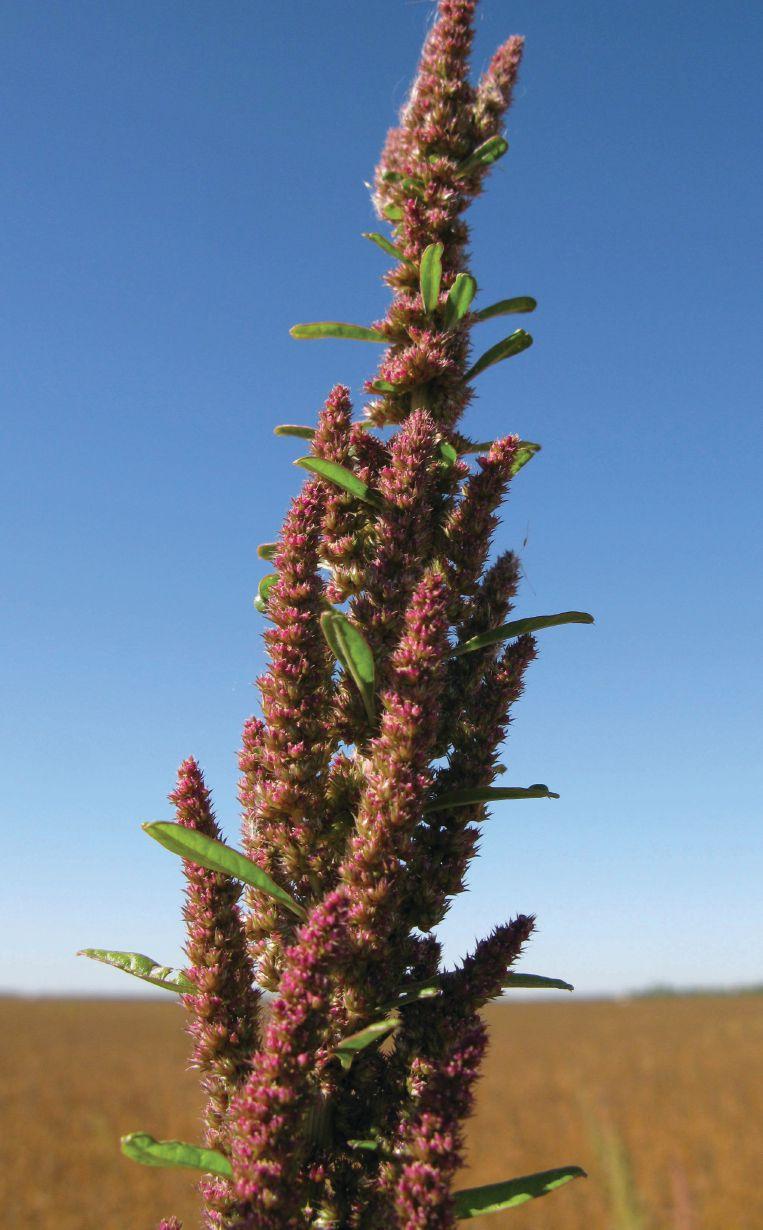
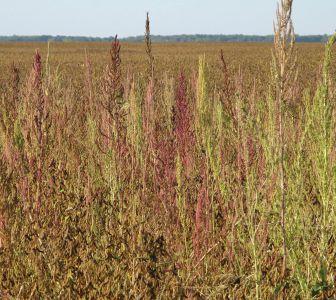
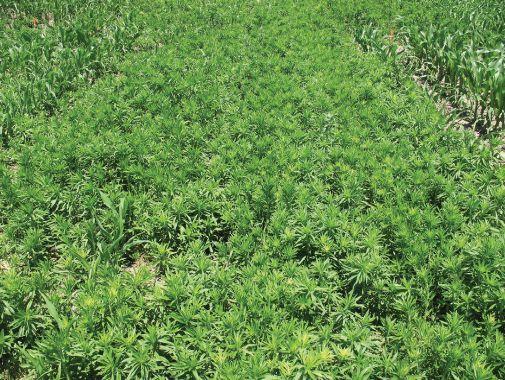
TOP: Waterhemp in a soybean field in Manitoba.
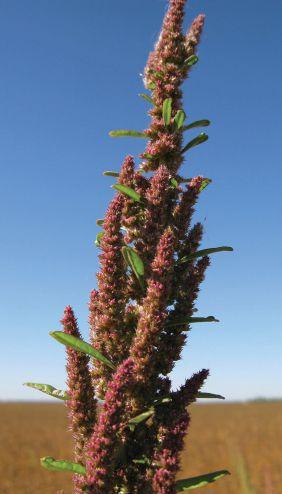
INSET: Waterhemp seed heads vary in colour from dark to light red.
PHOTO
Start clean, stay clean and finish strong with Nufarm. Achieve more with a portfolio of superior pre-emergent weed control products designed to help you get the most out of your soybeans. Nufarm has the solutions you need, whether you’re adding to glyphosate, managing resistance or looking for the right combination to tackle the toughest weeds. Because like you, we’re all in for higher performance, improved yields and a better bottom line.
Graphic shows the spread of herbicide-resistant waterhemp in Ontario. Counties in red have Group 2, 5, 9 and 14 resistant populations.
can make adaptive changes in response to its environment very quickly. Say it’s resistant to two groups, and you use a third group to kill it – that might work, but only for a couple of years. It boils down to a numbers game. There are lots of plants and lots of genetic traits, and there’s bound to be one that can survive.”
In Ontario, the crop most affected by multiple-herbicideresistant waterhemp is soybean, followed by dry bean (although Cowbrough says that, as yet, there’s less waterhemp in counties that grow the latter). There are few control options for these crops, unless producers want to switch to newer herbicide traits such as the Extend system, potentially losing access to food-
grade marketing opportunities and upping input costs.
But Cowbrough makes it clear that switching herbicides is a short-term solution. “By the time you figure out you have herbicideresistant waterhemp, it’s probably too late to manage it. It requires you to be proactive. I think we’ve finally got to a stage where everyone can recognize that – we don’t have 2,4-D resistant waterhemp in Ontario yet, but it’s only a matter of time. That time horizon is less than we’d typically see in other weed species,” he says.
Cowbrough’s point: in the short term, producers are in a decent position, but in the long term, the problem of herbicideresistant weeds can’t be overcome with more herbicides.
Integrated management approaches
It boils down to a numbers game. There are lots of of [waterhemp] plants and lots of genetic traits, and there’s bound to be one that can survive.
In 2017, Sikkema began a nine-year research project looking at integrated weed management approaches in managing multiple-herbicide-resistant waterhemp.
The goal of the experiment is to reduce the number of waterhemp seeds in the seedbank by 95 per cent, using methods every farmer can implement and requiring no special equipment.
The project is being conducted on two commercial farms; one farm had a count of roughly
165 million waterhemp seeds per acre in the seedbank when the study began; the second site had 16 million waterhemp seeds per acre.
Sikkema’s research team is comparing five crop rotations: continuous soybean (the control); a corn-soy rotation; a soywheat rotation; a corn-soy-winter wheat rotation; and the most complex rotation, a corn-soy-winter wheat rotation followed by a cover crop of oats and tillage radish.
The team is looking at two soybean row widths (of 15 and 30 inches), and seven effective modes of action over the three-year period of the most complex rotation.
No data is available yet, but Sikkema says that with the most complex weed management programs, the team is already getting greater than 95 per cent control of multiple-herbicideresistant waterhemp.
“I’m optimistic that we’ll see a dramatic depletion in the number of waterhemp seeds in the seedbank during the course of the study,” he says.
Essential to the management of difficult weeds is the introduction of greater diversity to cropping systems.
“I think herbicides will continue to be one component of a diversified, integrated weed management program,” he says. “However, I think that farmers should not rely exclusively on herbicides.”
Sikkema believes control of multiple-herbicide-resistant waterhemp is achievable by Ontario producers if they adopt an integrated weed management strategy. Most already have at
minimum two-year rotations of corn-soy or soy-wheat, he says, and would not have to dramatically alter existing programs to implement the new system.
“I think what it really requires is that farmers proactively plan their crop/weed management programs three to five years into the future,” he says.
“Farmers can do it – I think they have to put a lot of planning into their long-term diversified crop and weed management programs, and if they do, I’m not saying these problems will go away, but I do think they will become more manageable.”
RESOURCES
OMAFRA’s 2020 Guide to Weed Control (Publication 75) is a useful resource for Ontario producers. The publication includes management strategies for problem weeds and lists control options by crop type. The guide can be downloaded here: http://www.omafra.gov.on.ca/english/crops/pub75/ pub75A/pub75Atoc.htm.
Cowbrough has released a waterhemp biology and control update on the Field Crop News website, updated in 2020: https://fieldcropnews.com/2020/07/waterhempbiology-and-control/.
TAPPING INTO POWERFUL POTENTIAL
Weed genomics could be another pathway towards new ways to control herbicide-resistant weeds.
by Carolyn King
Although weed genomics has lagged behind genomics research on crops and crop insect pests and pathogens, work in this area is beginning to accelerate. This growing effort includes advances by a group of weed scientists at Agriculture and Agri-Food Canada (AAFC).
These researchers recently produced a complete map of Canada fleabane’s genome – an invaluable tool for understanding fleabane’s different mechanisms of resistance to glyphosate (Roundup) and a possible first step in developing novel ways to control this tough weed.
A bit about weed genomics
So far, complete genomes, called reference genomes, have been published for a limited number of weed species. Many other weed species have draft genomes where researchers have sequenced a number of pieces of the genome, but more work is needed to complete the mapping and assemble to pieces in the correct order.
For some research purposes, a sequenced portion of a genome or a draft genome is sufficient. However, for more comprehensive, detailed analyses, a complete genome is needed.
In addition to Canada fleabane (Conyza canadensis), some other herbicide-resistant weeds that are important in Canada also have complete genomes or very good draft genomes. Examples include waterhemp (Amaranthus tuberculatus), kochia (Kochia scoparia), green foxtail (Setaria viridis) and bird rape (wild Brassica rapa, the same species as Polish canola and various cruciferous vegetables).
“Often, where a weed genome has been sequenced is where the weed has a crop relative with a sequenced genome,” notes Eric Page, a weed ecologist and crop physiologist with AAFC in Harrow, Ont., and a member of the AAFC weed genomics group. “For example, the genomes for some pigweeds, such as waterhemp, have been assembled against the genome for grain amaranth.”
Martin Laforest, a lead researcher in the genomics group, notes that a key reason for the lag in weed genomics is that, in the past, there was little practical incentive to sequence weed genomes.
“As long as you are able to control weeds, why invest in doing genomics research on them? It’s important to know the genome of a crop so we can improve its yield, tolerance to pests and so on, but for a weed?” says Laforest, a molecular weed scientist with AAFC in Saint-Jean-sur-Richelieu, Que.
Page points out that other crop pest management disciplines, like pathology and entomology, have more readily adopted genom-
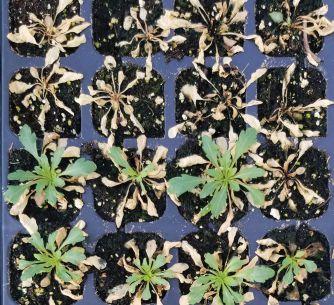
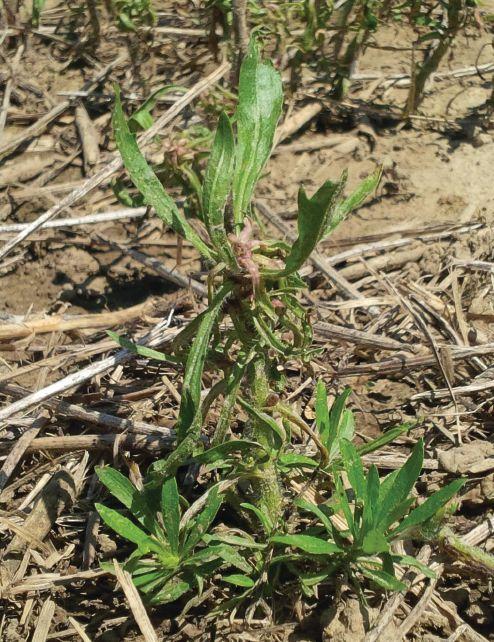
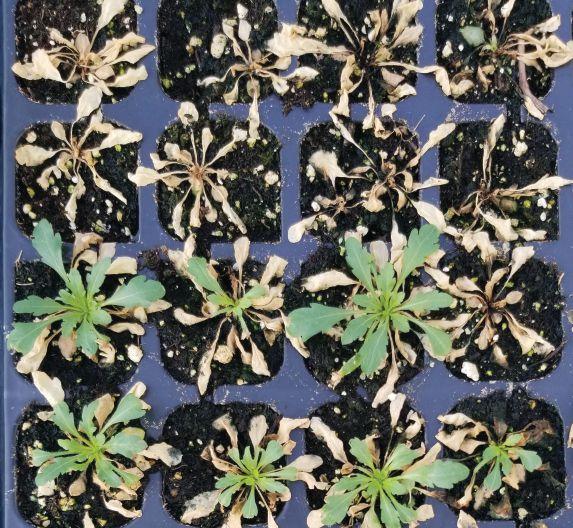
ABOVE: Resistant Canada fleabane after a glyphosate application. Canadian researchers have completely sequenced fleabane’s genome, which could help in developing new control options.
ics because genome sequencing is so useful in identifying and characterizing the organisms of interest to them.
Drivers for weed genomics’ growth spurt
However, these days there is a strong motivation for weed genomics, Laforest explains, due to “the increasingly serious problem of herbicide-resistant weeds and the need to find new ways to control these weeds.”
Genomics might prove helpful at improving weed management in other ways. For instance, some researchers are using genomic
PHOTO COURTESY OF SYDNEY MELOCHE, AAFC.
approaches to understand shifts in weed populations. Such studies might provide insights into how to modify crop management practices to discourage unwanted shifts. Laforest highlights another possibility: “This is a very long-term goal, but if we can learn more about how weeds are so competitive – they are hard to kill, hard to control – maybe we can apply this knowledge to improve the competitiveness of our crops. That could mean we would use less pesticide in the future.“
Another key catalyst for the upswing in weed genomics is the rapid rise in accessibility of genomic technologies.
“In the 30 years since the Human Genome Project was initiated, there has been a revolution in sequencing technologies. It seems like there is a new sequencing platform every couple of years that is able to deliver longer and longer reads [of adjoining parts of a genome] at cheaper and cheaper prices. In some cases, the cost of sequencing has finally gotten down to the point where it is within our budgets as weed scientists,” Page says.
Laforest adds, “When the human genome was sequenced from scratch it cost roughly $2.7 billion in 1993 dollars. In 2002, sequencing the maize genome cost about $52 million dollars. Nowadays sequencing a genome from scratch can cost anywhere from $25,000 to $50,000, depending on the size of the genome.”
Current sequencing technologies, called third-generation or long-read sequencing, make it much easier to assemble a complete genome, compared to earlier technologies that were only capable of reading short pieces of DNA. “Quite often a genome has repetitive DNA, which makes it really hard to assemble the pieces of the puzzle to create the complete genome,” Page explains. “A short-read sequence is like having a normal-sized puzzle piece, while a long-read sequence is like having three or four puzzle pieces already correctly assembled.”
However, he notes, “Having the platforms to do whole-genome sequencing is one thing; having the expertise to handle the very large and complex datasets thereafter is a whole other ballgame. [Few weed scientists have this expertise at present.] My colleagues Sara Martin [another member of the AAFC weed genomics group] and Martin Laforest are well-versed in bioinformatics, but they have backgrounds in other fields of study where they received that training.” Addressing this training gap for the next generation of weed scientists will help towards ongoing progress in weed genomics.
Mapping resistance genes
regating populations – old-school crossing of plants, growing them up, screening them, counting their numbers – to use the genome to map the location of genes associated with specific traits.”
Mapping a herbicide resistance trait has practical implications. For instance, it enables researchers to develop DNA markers for the trait. Those markers are not only useful in further genomic studies but also for rapid screening of weed samples. So, rather than conducting laborious, time-consuming greenhouse tests of samples, testing facilities can much more quickly let growers know if resistant weed populations are in their fields.
Deciphering Canada fleabane resistance
Although a draft genome for Canada fleabane was published in 2014, the whole genome was not mapped until the AAFC research-
ers conducted their work.
“We used third-generation and second-generation sequencing to create a complete map of the genome,” Laforest says.
“Completely sequencing a genome is only the first step in genomics research,” Laforest says. “You have to use this reference genome as a blueprint where you can place the markers associated with the different traits.”
A top priority for many weed genomics researchers is to map the genes responsible for herbicide resistance. To do this, they compare populations of the weed that are resistant and populations that are not resistant to pinpoint the locations in the genome associated with the resistance.
“An interesting aspect of this revolution in sequencing technologies is that, once a fully sequenced genome is available, we have to go back to very old science to create the germplasm necessary to use the very new genomics data,” Page says. “We have to create seg-
“I compare it to a map of Canada. Before, we had a map of the cities, but we didn’t have the information about where the cities were located in relation to each other. Now we have basically mapped all the cities onto a bigger map, so if we want to go from Edmonton to Ottawa for example, we now know the best way to do that.”
Laforest and Page are particularly interested in traits associated with fleabane’s glyphosate resistance. Their research is investigating both types of resistance: target-site, and non-target-site.
Laforest explains target-site resistance: “Herbicides work by blocking a function within the plant cells. Generally, the active ingredient in the herbicide will bind to a protein and block its action. So, the herbicide’s target is the protein. Target-site resistance is a mechanism where the protein no longer binds the active ingredient.
“This can be because of a mutation in the gene that codes for
PHOTO COURTESY OF SYDNEY MELOCHE, AAFC.
Segregating populations of Canada fleabane after a herbicide application, like the one shown here, can be compared to locate the genes associated with the resistance.
Canada fleabane is a problem across North America and other parts of the world; glyphosate-resistant Canada fleabane is widespread.
the target protein. Or it can be because the plant has decided to make more of the target protein; if there is more of that protein, then the herbicide will not be enough to block the total function of the protein.”
According to Laforest, the target sites of the most commonly used herbicides (Groups 1, 2, 5 and 9) are already known. So researchers just need to sequence a very small region of the genome where the target gene is located and look for mutations that provide the resistance. Weed scientists have been doing this type of work for a number of years.
“Non-target-site resistance is resistance that is not related to the target protein. For most non-target-site resistance, we don’t yet know what gene is responsible, although we may have certain clues,” Laforest says.
Page adds, “In non-target-site resistance, you have a whole plethora of possibilities as to what has changed in the weed to make it resistant. It could be anything from something that metabolizes the herbicide, to a transporter that sequesters the herbicide or doesn’t allow the herbicide’s translocation to the target site. Having a complete picture of the genome can really help with the identification of these resistance mechanisms.”
Identifying the resistance mechanism is an important step in beginning to answer applied questions around how to avoid or overcome the resistance.
The AAFC researchers have annotated their Canada fleabane sequence with the locations of genes known to be associated with glyphosate resistance in the weed, but this task is ongoing.
“In the United States, where resistance to Roundup was first reported in Canada fleabane, it was reported as a non-target-site mechanism. They suggested it was a transporter-based mechanism, but they could not nail it down to a specific transporter. That was in part because they didn’t have a high-quality reference genome,” Page explains.
Since then, Page and his colleagues have found that glyphosate resistance in this weed is actually more complex than a single non-target-site mechanism. In a 2018 paper, they were the first researchers to report target-site glyphosate resistance in Canada fleabane.
“I know for certain from our research that there are multiple mechanisms of Roundup resistance in Canada fleabane in Ontario,
and this is probably the case in the United States as well. More and more we are finding that often there are multiple resistance mechanisms in a single biotype. So it might do you no good to try to overcome one of those mechanisms, when multiple mechanisms are involved,” he notes.
“Genomics may help us unravel these complexities. So one of the things we are working on is fine-scale mapping to identify Canada fleabane’s other mechanisms for resisting Roundup.”
Page stresses the importance of this work: “Canada fleabane is widespread across almost all of North America and around the world, and resistance to Roundup is also widespread, particularly in Canada and the United States. Regaining even a portion of the product’s efficacy would be a very significant gain.”
Towards new tools for fighting weeds
“The genomics work that we have been doing is a continuum,” Laforest says. “First, we need to understand what is going on in the plant when you apply a herbicide and the plant doesn’t die. Then we can say, ‘OK, it’s this gene that causes the resistance.’ Then we can develop a test for the gene and advise producers if this resistance is present in their field. And then they can act on that information.”
Page gives another example: “Some non-target-site mechanisms, such as something that metabolizes herbicides, can result in crossresistance to different herbicide modes of action. That might result in advice to crop growers: this specific herbicide group is no longer effective on the weed, plus this other group is also not effective.”
Laforest notes that the next logical step in the continuum is to devise new ways to control the weed based on the knowledge gained from genomics. The AAFC researchers are starting to look into this next step.
In fact, Laforest has already proposed a project to try to develop a weed control method based on the use of RNA interference, or RNAi, to silence key genes in the weed.
“For instance, you could design an RNAi that will take down the expression of a weed’s mechanism of herbicide resistance. Then you could add that RNAi to a herbicide spray. By applying the spray, you would negate that mechanism of resistance and recover the herbicide’s activity,” Page explains.
Laforest emphasizes that developing RNAi weed control is a longterm effort. “Of course, if it was easy it would already be done!”
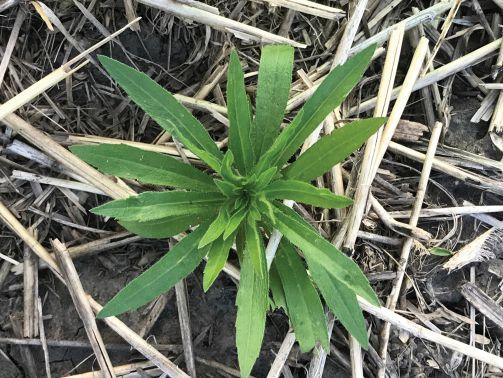
Although a draft genome for Canada fleabane was published in 2014, the whole genome was not mapped until recently by the group of AAFC weed researchers.
CONSERVING CARBON
Additional factors to consider for successful production.
by Mark Halsall
For years, agriculture has been targeted as one of the contributors to climate change. Louis-Pierre Comeau believes it can be part of the solution.
Comeau is an Agriculture and Agri-Food Canada (AAFC) research scientist who specializes in the study of soil carbon sequestration – the process by which carbon dioxide is removed from the atmosphere and stored in soil organic matter.
“Back when I was a student, I realized there was a great potential in the soil to mitigate greenhouse gas emissions,” says Comeau, who studied soil science at universities in Canada and Mexico before earning a PhD in soil science from the University of Aberdeen in Scotland.
“There is so much that’s still unknown in soil science. So many discoveries will be made in the future with the new technologies that are being developed, so it’s a very exciting field of study to be in.”
Comeau says one thing scientists do know is that if soil is managed correctly, carbon can remain there a very long time.
“We know that in soil, there can be organic carbon that’s been sitting there for thousands of years. But we don’t really understand why some carbon molecules can remain stable in the soil
for so long or exactly what is happening,” he says.
Carbon is the main component of soil organic matter in farmer’s fields, so when soil is degraded through agricultural practices that cause soil organic matter to break down, this releases carbon dioxide back into the atmosphere. Comeau says in total, farming generates about eight per cent of Canada’s greenhouse gas emissions.
Comeau, who joined AAFC’s Fredericton Research and Development Centre in New Brunswick four years ago, is working with other AAFC scientists across Canada to assess beneficial practices that not only result in more productive soils and better yields but also reduce the carbon footprint of farming.
One possible solution is diversified crop rotations. Comeau is leading a national AAFC study looking at how using pulses and other legumes in rotations can lead to more nitrogen (legumes are known to be excellent nitrogen fixers) and carbon from crop residues being put back in the soil – something that not only improves soil health and fertility, but also helps mitigate climate
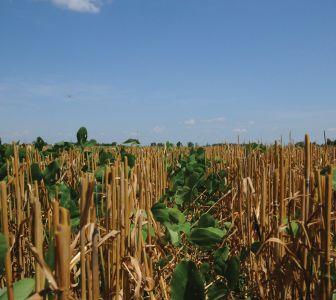
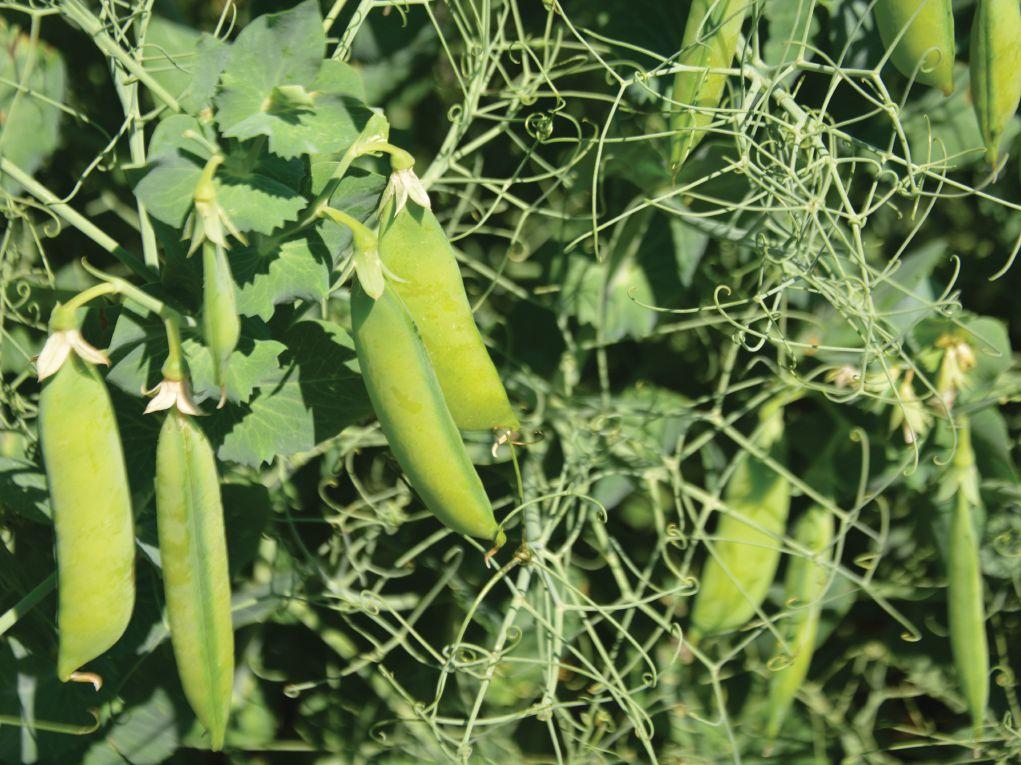
ABOVE: Pea, pictured, and faba bean, are two pulse crops being tested in Prince Edward Island and New Brunswick.
PHOTO BY TOP CROP MANAGER.
change by contributing to soil carbon sequestration.
The project involves field trials at AAFC research centres in three different regions: the Prairies (Lethbridge, Alta., and Swift Current, Sask.), northern Quebec (Normandin), and the Maritimes (Fredericton and Charlottetown).
Faba bean and pea are the two pulse crops being examined in the P.E.I. and New Brunswick trials. It is hoped that including these legumes in a rotation with potato (the main commercial crop in Atlantic Canada), along with wheat or barley (popular rotation crops in the region), will result in a boost of soil organic matter and also provide Maritime farmers with more options for growing cash crops.
Comeau says the trials, which started in 2018 and run to 2021, have already shown higher carbon levels, albeit only slightly, in the plots with the pulses in the rotation. He says that’s in line with similar crop rotation studies on the Prairies that indicate soybean, an oilseed legume, can lead to an increase in soil organic matter.
While the carbon increase has been small to date, Comeau expects it to rise over time, to the point where it could provide a benefit to farmers with respect to carbon taxation.
“We are just starting to process the results,” he says. “We need more data, and we hope that after five or 10 years, we will see a total carbon increase that will have a value for carbon pricing.
“If farmers can increase the amount of carbon in the soil thanks to those legumes, that carbon would have an ecosystem value but also an economic value.”
Comeau notes the first few years of the trials have been a learning experience for Maritime researchers, since faba beans and peas aren’t established crops in the region.
“We’ve run into a few challenges,” he says. “We’ve had a lot of bad weather here lately, and because these legumes are not adapted to this area, we’ve had issues with fungi attacks, disease and plant establishment.
“We are hoping that as we continue with the projects, we will
be able to find the right agricultural practices for those legumes to be able to produce a good cash crop.”
Convinced of the long-term value of the legume trials, Comeau’s goal is to obtain sufficient funding to extend the project for many more years.
“[Carbon sequestration] is a very important field. And it becomes more and more important every year as we see more and more global warming,” he says.
“I hope these legume rotation trials will continue for as long as I’m at AAFC, and that there will be people here who continue with these experiments long after I’ve left.”
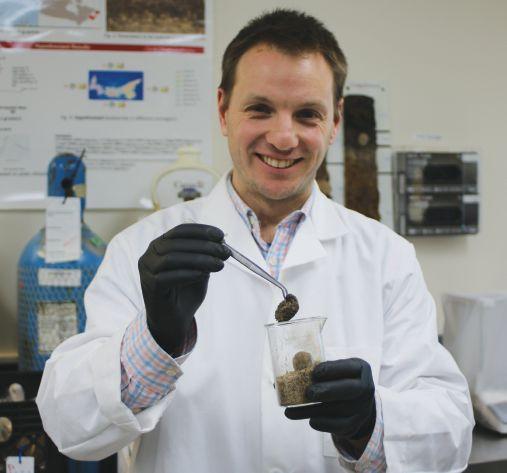
Louis-Pierre Comeau, AAFC soil scientist in Fredericton, is leading a study assessing the impact of legume crops on carbon levels in the soil.
CHALLENGES ADOPTING
RED CLOVER
Poor stand uniformity is one of the major obstacles standing in the way of more widespread adoption of this leguminous cover crop.
by Julienne Isaacs
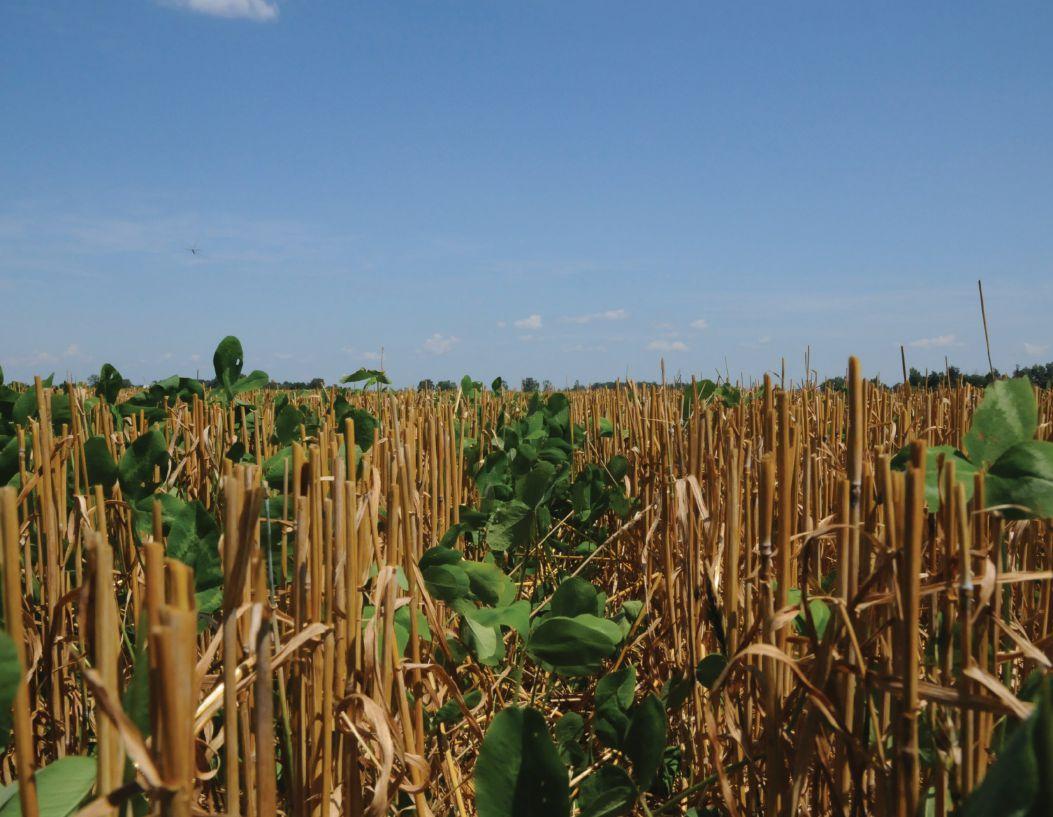
Asurvey of producers who have interseeded red clover with wheat has found that stand uniformity is the number one problem they identify with the system.
At the same time, survey respondents suggested that some form of tillage, wider winter wheat row spacing and higher red clover seeding rates seemed to improve red clover stand uniformity.
The survey offers a missing piece in the puzzle of red clover: for all its well-researched benefits, from improving soil health to offering a nitrogen credit to subsequent crops, comparatively few producers are using the leguminous cover crop.
The survey was developed by researchers Ralph Martin, Cora Loucks and Heather Beach in the department of soil science at the University of Guelph.
Cameron Ogilvie, knowledge mobilization co-ordinator for Soils at Guelph, the university’s soil health outreach initiative, recently published the survey results in the Canadian Journal of Plant Science. He says that for decades, Ontario wheat growers were using a winter wheat-red clover (WWrc) system, but as wheat acreage has increased over the past decade the number of acres interseeded with red clover has decreased.
“A growing number of wheat farmers were talking about how they experience challenges with red clover, particularly patchy stands and poor establishment, and we were not entirely sure of the reasons why,” Ogilvie says. The survey’s goal was to get a picture of producers’ management choices around red clover.
Working with RealAgriculture agronomist Peter Johnson, the team distributed the survey to wheat producers in the province. Out of 179 responses, 142 respondents were currently using a winter wheat-red clover; the rest had used WWrc in the past. Respondents farmed in 28 out of Ontario’s 49 counties.
Overwhelmingly, the top perceived disadvantage of the WWrc system was non-uniform stands (73 per cent of respondents), followed by limitations to herbicide selection and possible difficulties at harvest when there is excessive red clover growth.
“The main disadvantage that growers talked about was nonuniform stands,” Ogilvie says. “I think that is the overarching concern that I hear expressed. They’re saying, ‘We can’t count on the [nitrogen] credit or yield benefit so we have to do something else.’”
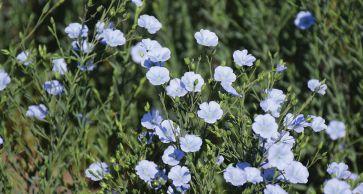
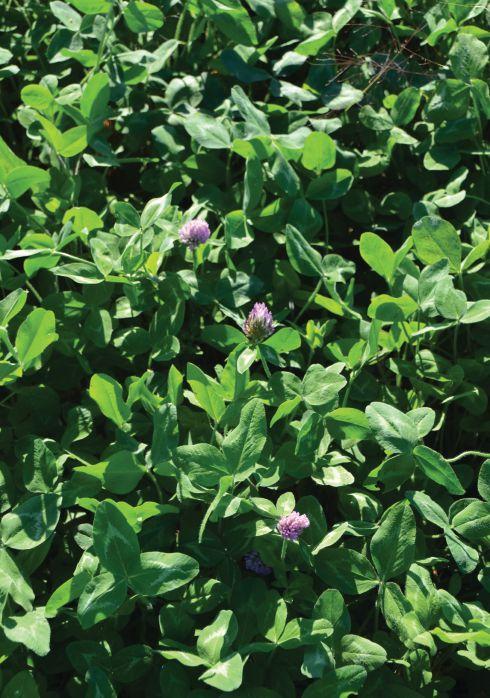
ABOVE: Red clover has many well-researched benefits.
Overcoming limitations
Understanding producers’ concerns with red clover is key to figuring out how the system can be better used in future.
Red clover comes with a host of benefits, says Mike Cowbrough, weed specialist in field crops at the Ontario Ministry of Agriculture, Food and Rural Affairs (OMAFRA). There’s a significant yield bump to subsequent crops; it increases soil organic matter, makes soils more resilient to drought and it adds residual N to the soil.
“I remember (retired Guelph professor) Bill Dean saying 15 years ago that if we could get red clover underseeded to wheat on every acre, it would make cropping systems more resilient and able to handle the ups and downs of environmental stresses and provide some stability,” Cowbrough says.
Ogilvie says part of red clover’s particular advantage is that it provides a N credit to the following corn crop at the right time; other clovers or legumes, such as hairy vetch, also offer a credit, but that N isn’t soil-available until later.
“Red clover is unique that way,” Ogilvie says. “Also, it’s easy to get a cover crop down if you’re frost-seeding it in March and you’re making the most of your time. If you get a good catch, it can really help with weed control, erosion and soil structure, and a bunch of other things.”
The survey’s story wasn’t all negative: producers who had best success with the system suggested that wider winter wheat row spacing, some degree of tillage and higher red clover seeding rate
all seemed to improve emergence and stand uniformity.
Ogilvie says the seeding rate discussion highlights an important weakness with the survey results. Most respondents were using very similar practices; for example, the majority used a lower red clover seeding rate – between seven and nine kilograms per hectare – “but we started to see more success around the 10 kg/ha rate, rather than on the lower end of the spectrum,” Ogilvie says.
“There are so many similarities with how Ontario wheat growers are growing their wheat that it’s hard to compare with practices that aren’t so typical,” he says.
“For example, are you more likely to have better success with clover if you’re using certified seed versus common seed? It’s hard to get at that question because, of the respondents, only 22 people used certified seed. And about 70 per cent of these identified non-uniform stands as an issue” – roughly the same percentage as those producers who did not use certified seed.
Similarly, 87 per cent of respondents frost-seeded rather than
seeding later in the year – not enough of a sample to truly compare. Frost-seeding is preferable to seeding later in the spring because the snow helps work the seed into the soil, but by some accounts tine tilling might improve this by increasing seed-to-soil contact, Ogilvie says.
Cowbrough says weed control presents another problem with the WWrc system, because herbicides that are effective against broadleaf weeds like Canada fleabane and giant ragweed would wipe out the red clover.
“There’s only one herbicide that is mainly used – Buctril M,” Cowbrough says. MCPA sodium and MCPA/MCPB also provide control, but are less cost-effective and rarely used. “So producers will say, ‘I have a good red clover stand but a bunch of Canada
fleabane coming through.’ You have to decide what’s more important to you. It’s a crappy decision to make.”
Ogilvie says producers looking for weed control shouldn’t necessarily choose red clover, but the weed control aspect doesn’t rule out red clover for everyone. He says it’s helpful to think of cover crops as service crops.
“You don’t just grow them to cover the ground; you grow them for the particular services they provide,” he says. “If your goal is weed control, I wouldn’t look to any legume to accomplish that for you – I’d look to grasses. If your goal is to improve soil fertility and provide a N credit, I’d go with legumes like red clover.
“I think if you don’t have a clear goal in mind and manage the cover crop according to that goal, you’re less likely to realize the benefits of cover crops,” Ogilvie says. “But there’s a lot of opportunity with cover crops to tailor them to your goals and what you’re trying to achieve for your land.”
Understanding producers’ concerns with red clover is key to figuring out how the system can be better used in the future.
A discussion and link to Ogilvie’s research publication can be found on the Soils at Guelph website: https://soilsatguelph.ca/whats-the-matter-withred-clover/.
Producers who have interseeded red clover with wheat have noted stand uniformity is the number one problem they identify with the system.
PHOTO COURTESY OF ANNE VERHALLEN, OMAFRA.
Mental health isn’t something we talk about. to ignore
It’s time to start changing the way we talk about farmers and farming. To recognize that just like anyone else, sometimes we might need a little help dealing with issues like stress, anxiety, and depression. That’s why the Do More Agriculture Foundation is here, ready to provide access to mental health resources like counselling, training and education, tailored specifically to the needs of Canadian farmers and their families.